Tag: Bucks County

  • Democrats sweep Bucks County law enforcement races, ousting a sheriff who sought controversial ICE partnership

    Democrats sweep Bucks County law enforcement races, ousting a sheriff who sought controversial ICE partnership

    Democrats swept two law enforcement races in Bucks County, ousting the incumbents and signaling the swing county has soured on President Donald Trump just a year after voting for him.

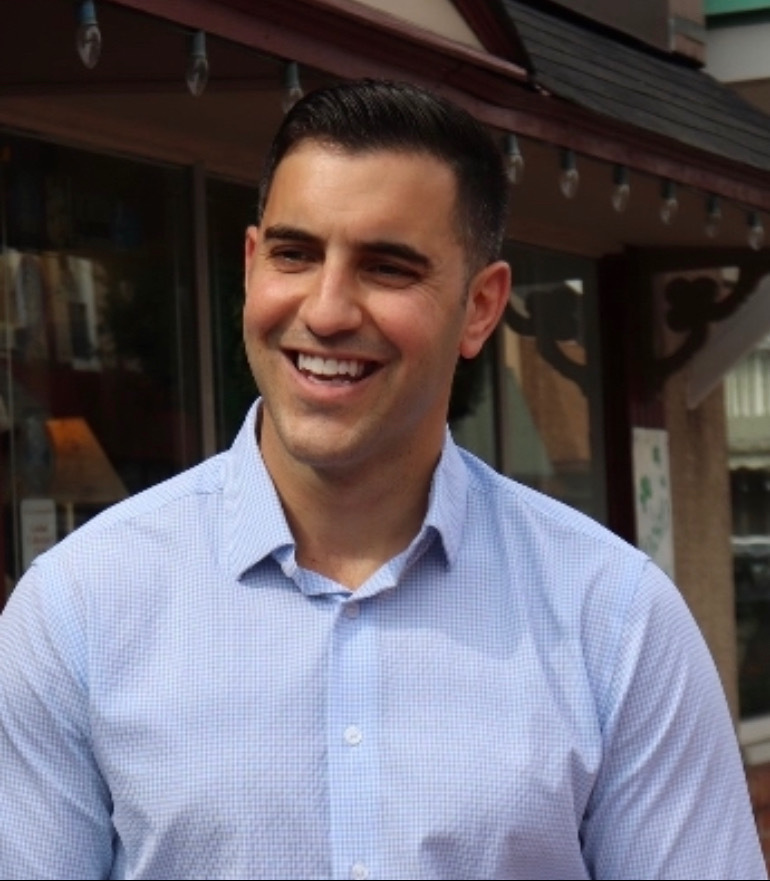
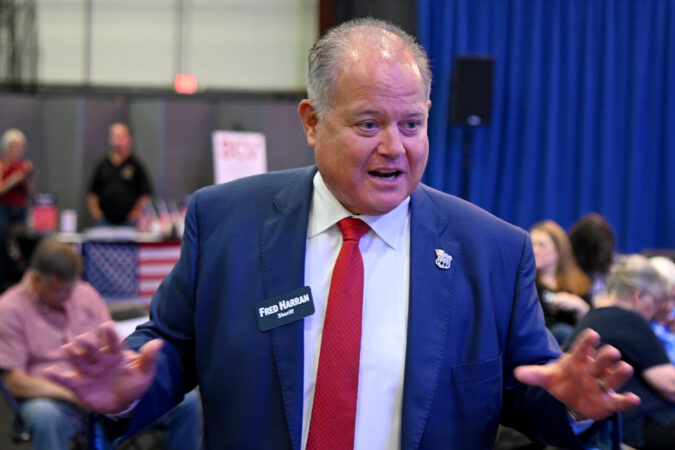
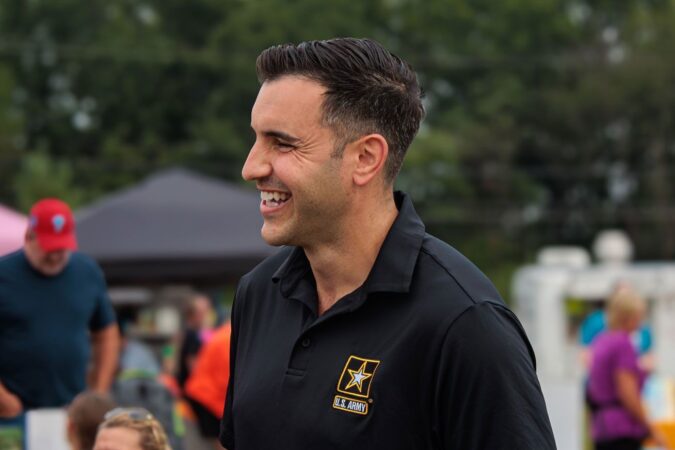
    Democrat Danny Ceisler, an Army veteran who held a public safety role in Gov. Josh Shapiro’s administration, led Republican Sheriff Fred Harran by 12 percentage points with all precincts reporting Wednesday morning. The sheriff race centered on Harran’s controversial decision to partner his agency with ICE as Trump ramps up immigration enforcement nationwide.

    And former Bucks County Solicitor Joe Khan led Republican District Attorney Jen Schorn by eight percentage points. Democrats believe Khan is the first member of their party to ever be elected to the office.

    Bucks County Democrats declared victory just after midnight Wednesday morning — sweeping every countywide race. The victories came in what appeared to be a blue wave election as voters rejected Republican candidates in Pennsylvania, New Jersey, and Virginia.

    “What’s going on with our federal government is not normal, and voters saw that creeping into local offices, and they overwhelmingly rejected it,” Ceisler said Wednesday. “Bucks County doesn’t let extremism come inside.”

    The hotly contested Bucks County races centered on some of the most contentious issues in national politics — Trump, crime, and immigration. Democrats sought to paint the incumbents as Trumpian ideologues, while Republicans warned voters of an influx of “Philly crime” if Democrats took office, even as the violent crime rate in the city has dropped from its pandemic peak.

    Voters opted for a change, delivering both offices to Democrats and, as result, spelling the end to a controversial partnership between the sheriff’s office and U.S. Immigration and Customs Enforcement.

    Bucks was the only county in the Philadelphia area to go for Trump last year and will be a key battleground in 2026 when Shapiro runs for reelection. Tuesday’s wins will give Democrats momentum going into the midterms.

    Democrats, Khan said, had to work to prove to voters they could be trusted with public safety. They were aided by a favorable dynamic as voters rejected Trumpism.

    “It was a campaign not about attacking somebody else but, really, making really clear that we deserve better than what we’ve got,” Khan said.

    Voters at the polls persistently expressed frustration with Trump, and a sense that anyone from his party should not be trusted in office.

    “They’re subject to his control, regardless of how they feel on issues,” said Stephanie Kraft of Doylestown. “And that affects everything, from our local courts on up to the higher courts in the state.”

    Harran attributed the GOP losses to Democratic enthusiasm for retaining three left-leaning state Supreme Court justices.

    “We woke a sleeping giant. When I say ‘we,’ I don’t mean me; I mean the Republican Party at the state level,” Harran said Wednesday.

    “I also worry for Bucks County,” he added. “We’re going to have Philadelphia policies and politics in Bucks County, and that’s extremely dangerous.”

    Democrats control the Bucks County Board of Commissioners, but Trump narrowly won Bucks last year, marking the first time the purple county had gone for a Republican in the presidential race since the 1980s. There are more registered Republicans than Democrats in Bucks County, but Democrats hoped the president’s low approval ratings, and Harran’s decision to partner with ICE, would drive angry voters to the polls in high numbers.
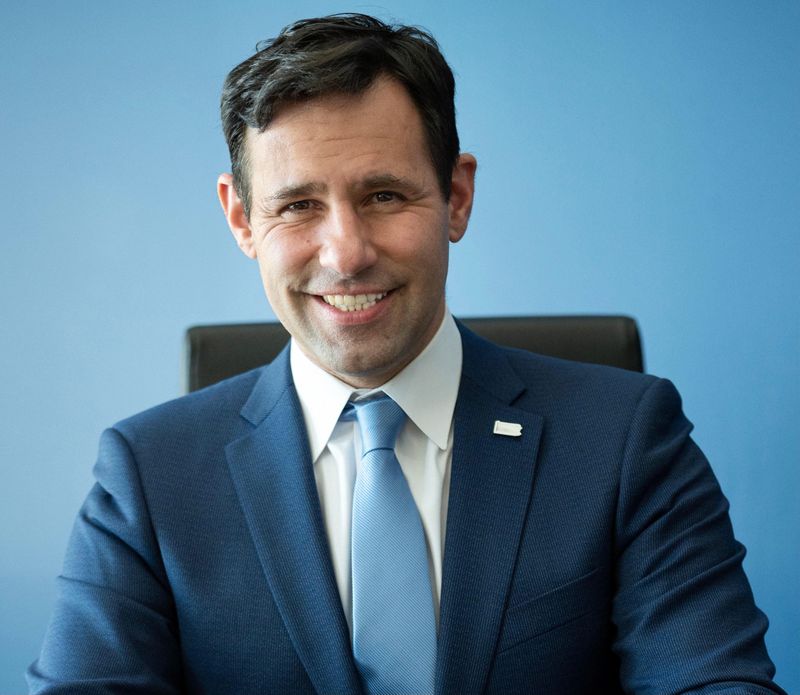
    Joe Khan

    The effort succeeded, indicating that Bucks voters are already disenchanted with the president they voted for just a year ago. The vote may set off alarm bells among Republicans as they prepare for next year’s election, when Republican Treasurer Stacy Garrity seeks to oust Shapiro and Republican U.S. Rep. Brian Fitzpatrick stands for reelection.

    The Democratic victory is “on everything that Trump is doing to undermine the institutions of democracy, but it’s also on Trump’s failure to really reverse inflation,” said State Sen. Steve Santarsiero, the chair of the Bucks County Democratic Party.

    Even so, for several voters, Harran’s partnership with ICE was the final straw.

    Jill Johnson worried it would result in the targeting of Latino citizens, including her half-Mexican son, who is away at college.

    “My biggest fear is that someone in a mask is going to come up and grab him because they think he’s here illegally,” Johnson said. “It’s scary. These are law-abiding people who have done nothing wrong.”

    The partnership, which recently became active after months of planning, provoked backlash, including a lawsuit, public demonstrations outside the courthouse, and a repudiation by the Democratic-led board of commissioners.

    Ceisler said Wednesday that he will issue a moratorium barring deputies’ cooperation with ICE on his first day in office. From there, he said, he will figure out how to disentangle the sheriff’s office from the agreement signed by his predecessor.

    For his part, Harran said Wednesday that Ceisler will “have to answer for a person who becomes victimized by an individual that should have been deported. And he’ll have to sleep with that, and it’ll be on his head, not mine.”

    Officials with U.S. Immigration and Customs Enforcement declined to comment.

    Harran, an outspoken Republican who endorsed Trump last year and frequently clashes with the Democratic commissioners, was elected sheriff in 2021 after more than a decade leading Bensalem’s police department.

    The Republican has expanded the role of the sheriff’s department, adding a K-9 unit and partnering with immigration officials, but faced criticism that he was failing to complete the basic duties of his job, such as executing warrants and protecting the courthouse.

    Ceisler advocated taking politics out of the office, saying he would focus on domestic violence and pledging to end the partnership with ICE. He argued his experience in the Army and in a public safety leadership post under Shapiro prepared him to serve as sheriff — though Harran argued Ceisler would be unprepared for the job, having never worked in a sheriff’s office or police department.

    “Being the sheriff isn’t on-the-job training,” Harran said at a Bristol polling place Tuesday. “You need knowledge and experience.”

    Ceisler said he had spoken to Harran after the results came in and the incumbent promised to assist with a smooth transition.

    Schorn, a veteran Bucks County prosecutor, lost in her bid for a full term after being appointed district attorney last year when her predecessor became a judge.

    She had been an assistant district attorney in the county since 1999, prosecuting some of the county’s most high-profile cases. When she became district attorney, Schorn started a task force in the county to investigate internet crimes against children.

    Khan, a former county solicitor and federal prosecutor, argued Schorn ran the office under “Trump’s blueprint” and criticized her decisions not to recuse herself when a Republican committeeperson was charged with voter fraud and not to prosecute alleged child abuse at Jamison Elementary School.

    Schorn has said she was unable to discuss the details of the Jamison Elementary School case due to rules governing prosecutors, but Khan argued her explanations were insufficient as parents sought answers.

    Meanwhile, Schorn accused her opponent, who had unsuccessfully run for Philadelphia district attorney and Pennsylvania attorney general, of playing politics when he understood the rules prosecutors were bound by.

    Schorn performed slightly better than her GOP counterparts in Bucks County on Tuesday. But, while many voters said they had no issue with Schorn’s policies, her political party was a turnoff.

    “I just feel the Democrats would be better right now; I’m down on all Republicans,” said Marybeth Vinkler, a Doylestown voter who said she had no problems with how Schorn had run the district attorney’s office. “Everything happening in D.C. is trickling down around us.”

    Schorn did not immediately comment on the results Wednesday.

    Jim Worthington, who has run pro-Trump organizations in Bucks County, said Republicans failed to turn out voters on Election Day even as data showed Democrats held a significant lead on mail voting ahead of Tuesday.

    “This is where the GOP was asleep at the wheel,” Worthington said.

    Traditionally, voters trust Republicans more with law and order. The resounding victories for Democrats defied that trend.

    “We now have an obligation to deliver and to show that Democrats can lead on the issue of safety,” Ceisler said.

    “The ball is in our hands, and we’re ready to run with it.”

    Staff writer Jeff Gammage contributed to this article.

    This suburban content is produced with support from the Leslie Miller and Richard Worley Foundation and The Lenfest Institute for Journalism. Editorial content is created independently of the project donors. Gifts to support The Inquirer’s high-impact journalism can be made at inquirer.com/donate. A list of Lenfest Institute donors can be found at lenfestinstitute.org/supporters.


  • He helped defeat a plan to sell the sewer utility in his South Jersey town last year. Now, he’s running for mayor.

    He helped defeat a plan to sell the sewer utility in his South Jersey town last year. Now, he’s running for mayor.

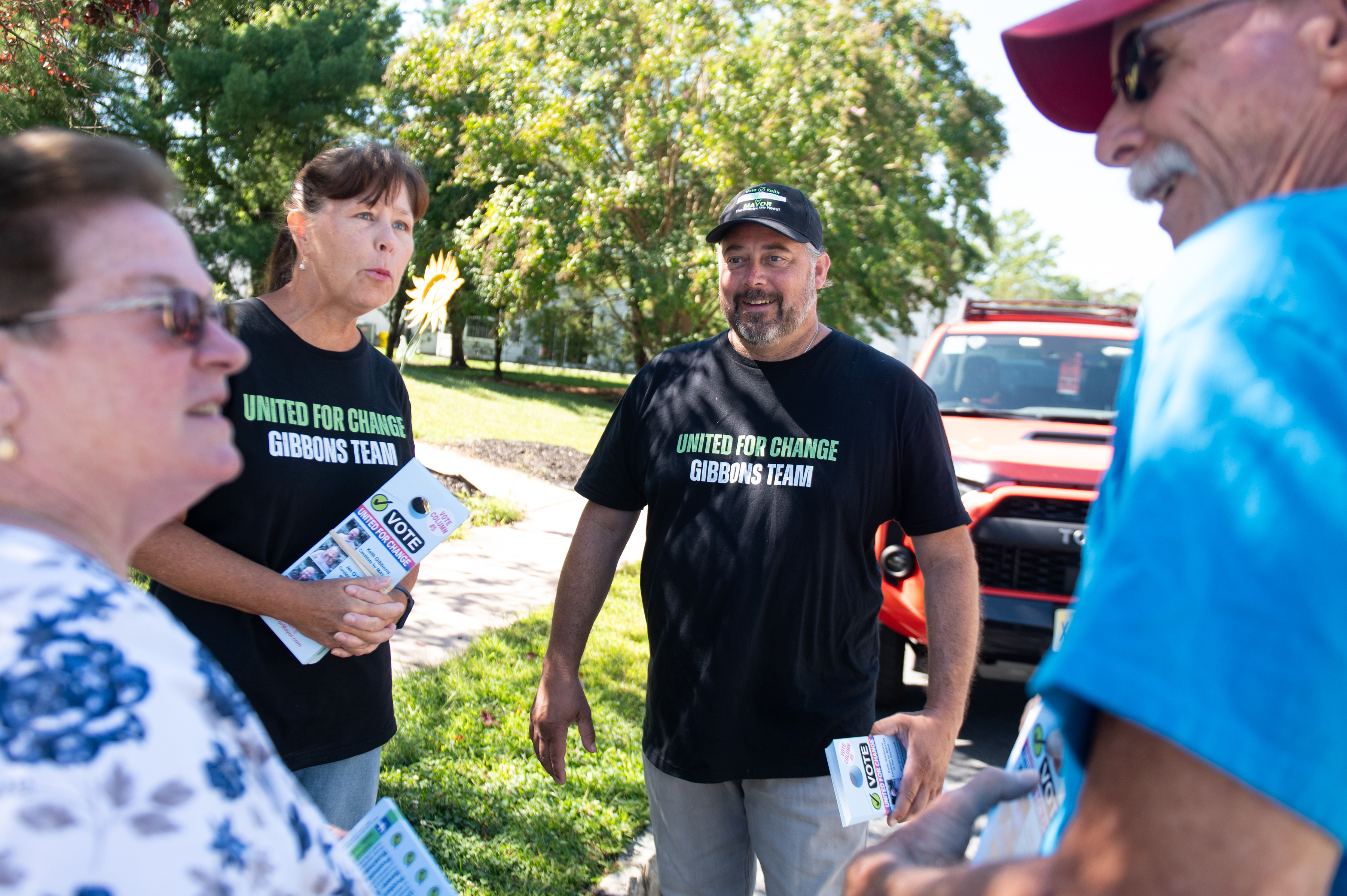
    Keith Gibbons entered politics by accident.

    A few years ago, he was driving with his then-11-year-old daughter when she asked where roads came from.

    “The government,” Gibbons responded.

    “What’s the government?” his daughter asked.

    That led to a longer explanation and eventual father-daughter trip to a Gloucester Township meeting so she could see the government in, ah, action. Having covered many local government meetings and school boards long ago, I can attest that Gibbons went beyond any parental or civic duty.

    Gibbons continued to attend the meetings when a proposal to dissolve the Municipal Utilities Authority (MUA) caught his attention. He feared the township was planning to sell the water and sewer system.

    But during sworn oral testimony in a May 2023 teleconference, an attorney representing the township said there was no expectation the utilities would be sold within the next five years. Mayor David Mayer agreed.

    Yet, a year later, the township council voted to sell the sewer system to the highest bidder.

    “They lied to us,” Gibbons said.

    The township received two bids from large for-profit water companies: Aqua offered $52 million, and New Jersey American Water bid a whopping $143 million, plus a promise to make an additional $90 million in capital improvements to a system that only needed an estimated $25 million in repairs.

    Something didn’t smell right. Even for a sewer system.

    Keith Gibbons (middle) joined Ira Eckstein and Denise Coyne at a rally opposing a plan to sell a South Jersey sewer and water utility in October 2024.

    Coincidentally, Mayor Mayer worked for American Water. In addition to his job as director of government affairs at the water company, his mayoral salary is $52,000.

    To guard against any conflict of interest, Mayer recused himself from any discussion regarding the sewer sale.

    Even still, American Water’s lucrative offer raised eyebrows. But generous bids are part of the for-profit playbook. Aqua offered Bucks County $1.1 billion for its sewer system, but the commissioners backed away after fierce public opposition.

    For-profit water companies have been throwing big money at small towns in New Jersey, Pennsylvania, and beyond in an effort to scale up. The utility systems may not seem sexy, but they are mini monopolies that generate steady cash flow.

    In Pennsylvania, a 2016 change in the law essentially opened the door for local utilities to be sold at higher prices. Local politicians are often happy to get the utility systems off the books and use the windfall to fund other projects or avoid tax increases.

    But often left out of the negotiations are the ratepayers.

    After the sales go through, the for-profit companies often jack up the rates. In some towns, after a brief rate freeze, the water bills have increased by 100%.

    Rates have also increased at government-owned utility companies, but not by nearly as much. For example, Philadelphia recently increased water rates by 9%.

    As utility bills grow, residents have nowhere to turn. Aging infrastructure, climate change, and increased demand, including to cool computer data centers, are expected to further drive up water prices in the years to come.

    From left: Denise Coyne, Nancy Kelly Gentile, Gloucester Township independent mayoral candidate Keith Gibbons, and Ira Eckstein canvass supporters in Clementon, N.J., in September.

    For-profit companies say they offer professional management and resources to make long-deferred upgrades, as well as the ability to purchase materials in bulk and spread the risk across systems as they grow.

    Mayer said in an interview that the sewer sale would have enabled Gloucester to reduce property taxes, eliminate its debt, and make other improvements.

    But critics argue that handing control to for-profit companies seeking quick returns on investments is shortsighted and results in higher costs to consumers. After all, water and sewer utilities are supposed to be a long-term public good, not a profit center.

    To its credit, Gloucester Township scheduled a referendum last November to let residents vote on whether to sell the sewer system or not. A public vote should be a requirement, but most towns avoid referendums because the last thing they want is for taxpayers to have a say in the utility system they own.

    The referendum gave Gibbons time to mount a grassroots campaign against the sale. He knocked on doors, handed out yard signs, and used a podcast to raise awareness.

    But Gibbons seemed overmatched. His group spent roughly $3,000 opposing the sale, while New Jersey American Water spent about $1 million.

    Yet, David beat Goliath in a landslide. More than 80% voted against the sale.

    Gibbons, 48, a Cinnaminson High grad, who ran a Christmas tree farm and worked for Live Nation but is now self-employed and serves on the school board, became somewhat of a local hero in a town of 66,000 residents.

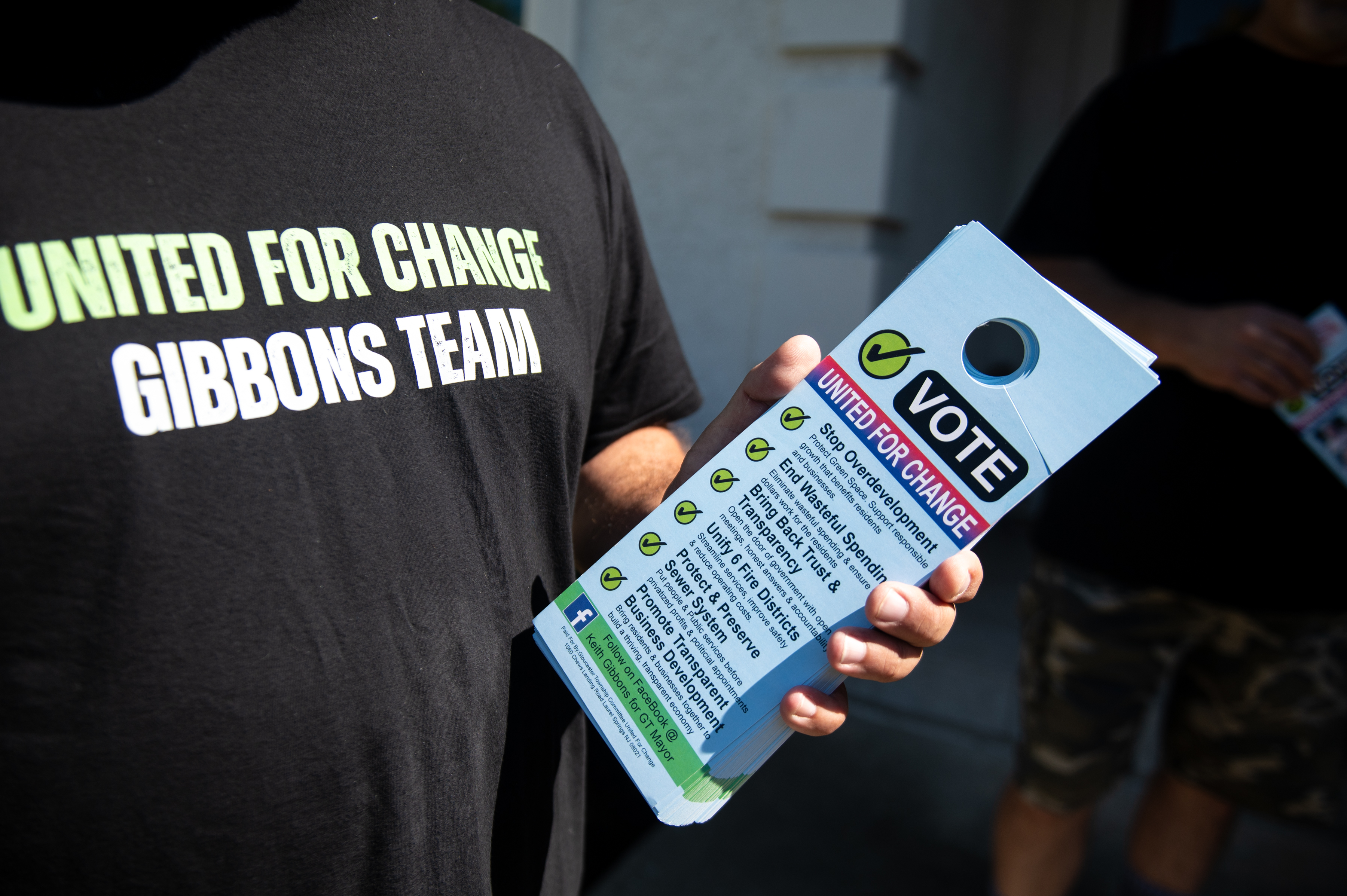
    Gloucester Township independent mayoral candidate Keith Gibbons holds promotional materials encouraging constituents to vote for him.

    Residents soon urged him to run for mayor.

    Gibbons, a former Republican, is running as an independent against Mayer, who has spent his life in South Jersey politics, working for former U.S. Rep. Rob Andrews in the 1990s before becoming chief of staff in the Camden County Clerk’s Office.

    He also served as a New Jersey assemblyman before getting elected mayor in 2010. Mayer’s wife is a Camden County freeholder.

    Mayer is part of the Democratic machine that has controlled South Jersey for decades, but has recently shown signs of losing its grip on power. In Gloucester Township, there are still twice as many registered Democrats as Republicans.

    The election has turned nasty. There are allegations that the Democrats tried to recruit a “phantom candidate” to run as a Republican to siphon votes away from Gibbons.

    Mayer said Gibbons has been on the school board for three years, and “I don’t know what he’s touting as his accomplishments.”

    Other attempts to muddy Gibbons indicate that the Democratic establishment may be nervous.

    Is it because Gibbons has a sophisticated field operation?

    “I don’t even have a campaign manager,” he said.

    Does Gibbons have deep-pocketed donors?

    “I’ve spent about $5,000 on the election,” he said.

    What’s his campaign message?

    “I’m not a political person,” Gibbons said. “I just want to fix local problems.”

    Can an outsider with no political experience win?

    Gibbons believes voters are fed up with South Jersey’s entrenched political machine, in which jobs and contracts often go to cronies. He argues no one is looking out for taxpayers who are often too busy to get involved, or believe they can’t do anything to change the system.

    But his efforts to block the sewer sale show that one person — and a motivated electorate — can make a difference.

    Mayer counters that he is proud to be a Democrat, and that the party’s strength has benefited South Jersey. He pointed to a list of accomplishments as mayor, from creating community policing to adding open space, attracting new businesses, and opening an office for veterans, adding that no party boss tells him what to do.

    For his part, Gibbons said he supports term limits and smart development. He plans to focus on fiscal responsibility and government transparency. If elected, he promised the water and sewer system would not get sold to a for-profit company whose main mission is to maximize shareholder value.

    “I don’t claim to know everything, but I do know enough,” Gibbons said.

    Now there’s a campaign slogan for an accidental candidate.

  • Massive Bucks data center spurs call to protect consumers from getting hit with power grid costs

    Massive Bucks data center spurs call to protect consumers from getting hit with power grid costs

    An independent monitor has asked federal officials to ensure consumers don’t get stuck with the bill if the electric grid can’t handle power needs of a massive data center planned for Bucks County.

    The monitor, Joseph Bowring, filed comments with the Federal Energy Regulatory Commission (FERC) last week, asking that a Sept. 23 transmission service agreement between Peco and Amazon Data Services be rejected.

    The agreement is regarding the 2 million-square-foot “digital infrastructure campus” Amazon plans for the Keystone Trade Center, an 1,800-acre property once owned by U.S. Steel, according to Falls Township. The data center, meant to handle computing needs of the wildly increasing demand for AI, has been heralded by Pennsylvania Gov. Josh Shapiro and the Trump administration.

    But Bowring, the independent market monitor for the region’s grid operator PJM, questioned the agreement, which is designed to protect power customers from economic risks associated with the cost of upgrading systems to handle the new load.

    In the agreement, Peco sought to ensure, among other things, that consumers don’t get stuck with the bill for grid upgrades if Amazon never builds the data center.

    However, Bowring said that the agreement does not “address the key question of whether there is sufficient capacity to serve the identified large new data center load without imposing significant and unacceptable reliability- and capacity-related cost impacts on all PJM customers.”

    He’s not alone in concerns about the cost data centers could impose on homeowners and other power customers. Many have already seen utility bills rise rapidly in the past few months.

    PJM, Peco, and the grid

    Montgomery County-based PJM manages the electric grid for all or parts of 13 states and the District of Columbia. PJM is responsible for maintaining grid reliability, coordinating electric flow, and assessing capacity. It is the largest regional transmission organization in the U.S.

    The data center lies in Peco’s service territory within the PJM grid.

    The capacity and reliability of electrical grids across the United States has emerged as a major issue as data centers rush to go online.

    David Mills, chair of the PJM Board of Managers, wrote in an August letter to stakeholders that PJM is forecasting peak load growth of 32 gigawatts by 2030. Of that, 30 gigawatts is projected to come from data centers.

    Grid operators and power companies like Peco are scrambling to evaluate whether they can provide continuous electricity with the massive new loads without expensive upgrades such as new transmission lines and substations — costs that advocates fear will be passed onto consumers.

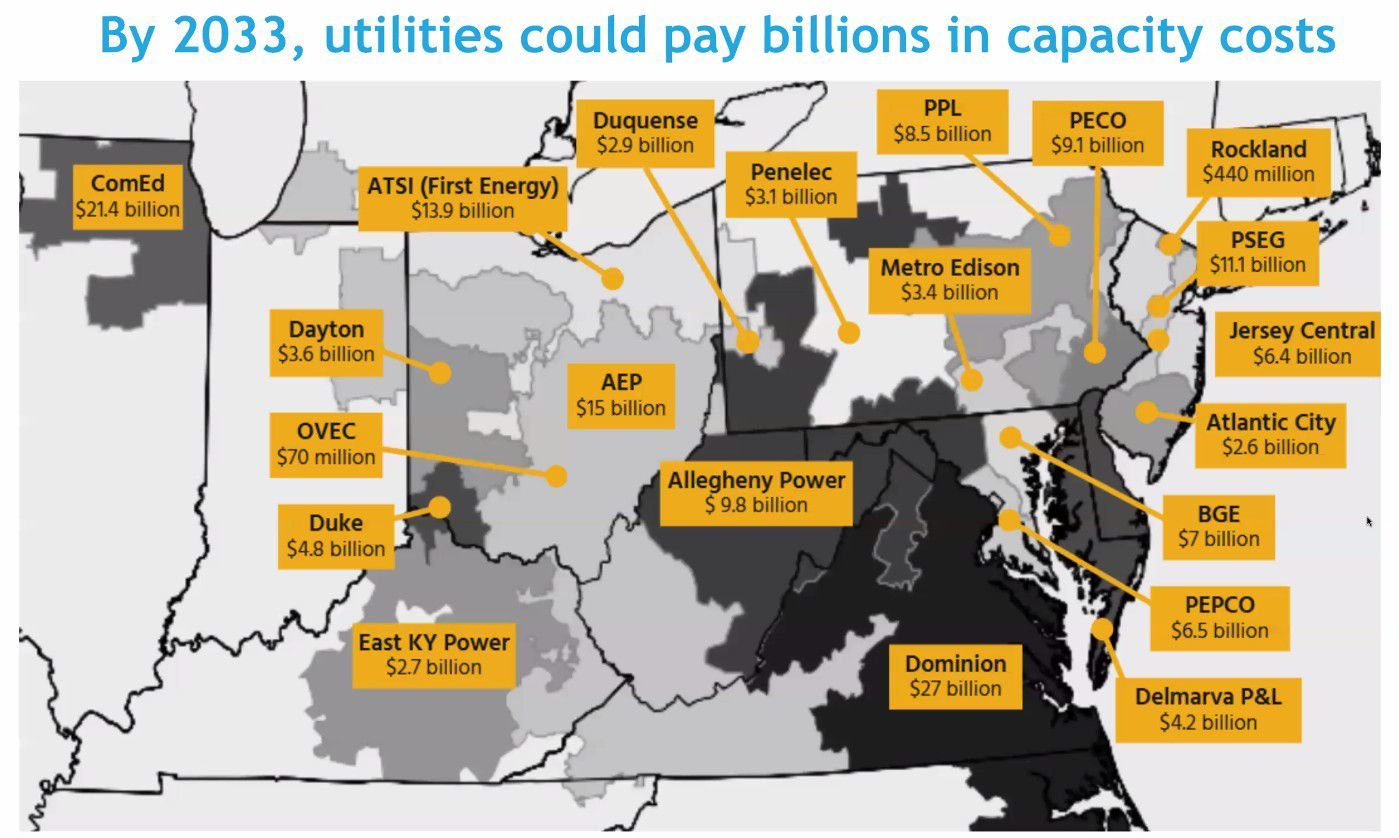
    Map produced by the National Resources Defense Council estimates electricity capacity costs to utility companies based on PJM forecasts through 2032.

    Protecting consumers

    Making sure power consumers don’t get stuck with the cost of upgrades has been a key point of consumer advocates.

    Bowring wrote that while the agreement does include some important provisions to protect energy customers from risk, it does not go far enough.

    “The Market Monitor recommends that the agreement not be approved unless Peco can demonstrate that the referenced new data center load can be served reliably and economically,” Bowring wrote to FERC.

    The Falls Township data center is one of two big projects Amazon has planned in Pennsylvania, Shapiro announced in June.

    The company plans to invest at least $20 billion in the construction of data center complexes in Pennsylvania, in what officials called the largest private-sector investment in the state’s history. The second complex would be built alongside a nuclear power plant in Luzerne County.

    Both would require enormous amounts of power.

    For example, FERC has already rejected one Amazon “behind-the-meter” power connection of 480 megawatts for the Luzerne County data center. That’s more power than is consumed by some small cities.

    Bowring addressed the data centers during a summit on PJM at the National Constitution Center in September that was attended by multiple governors, including Shapiro.

    “PJM has a problem: Capacity,” Bowring said at the summit. “There’s no extra capacity, and there’s lots of data centers that want to join. … It cannot be handled by the market as it exists.”

    PJM has said it does not have the authority to deny the interconnection of new data center loads even if it does not have the capacity. Bowring disagrees but is asking FERC to clarify the matter.

    Peco’s ‘extensive planning’

    Greg Smore, a Peco spokesperson, said the utility is working with Amazon.

    “We have done extensive planning to ensure we can deliver the energy needed to power this data center through our transmission and distribution system,” Smore said. “That data center, like any other large customer, is responsible for procuring electric supply, through an energy supplier or the existing PJM energy market.”

    Smore said that knowing there’s “an adequate supply of energy to serve all our customers at a reasonable price is a real concern.”

    So Peco, which is owned by Exelon, is working with stakeholders, he said, to add more generation to the grid while ensuring reliability and help address rising energy supply costs.

    He said the agreement with Amazon “protects all customers in Southeastern Pennsylvania from bearing greater transmission service costs if the data center does not make the sizable contribution to our system costs that would be expected.”

    Advocates fear costs to public

    The nonprofit Natural Resources Defense Council (NRDC), an environmental advocacy group, estimates Peco could pay $9.1 billion in costs by 2033 related to the need for greater capacity.

    “The projected demand from data centers is vastly outstripping the amount of new supply in PJM,” said Claire Lang-Ree, an advocate with NRDC.

    “It will cause power bills to rise and stay high for the coming decade, mainly through capacity cost increases,” Lang-Ree said.

    The NRDC estimates cumulative costs could result in a $70 monthly rise in average electric bills in coming years across the PJM grid.

    In addition, she said it would lead to a decline in reliability and an increased risk of blackouts for the general public. And, she said, the power demand could undermine states’ clean energy and air quality goals.

    “It’s really hard to overstate what’s at stake here,” Lang-Ree said.

    Clara Summers of Consumers for a Better Grid, a nonprofit watchdog, said states should impose tariffs to be paid by data centers to support the large power loads they require and ensure that costs of new utility infrastructure doesn’t fall unfairly on consumers. And data centers should provide their own electric supply.

    Summers likened not taking action to allowing the wealthiest acquaintances at a restaurant gathering to order the most expensive food, then, “dining and dashing.”

    “Unless something is done, everyday people will be left holding the check for some of the wealthiest companies in the world, and that’s unacceptable,” Summers said.

    This story has been updated to reflect comments from Peco.

  • ‘Philly crime’ and the specter of Donald Trump are dominating two Bucks County law enforcement races

    ‘Philly crime’ and the specter of Donald Trump are dominating two Bucks County law enforcement races

    Bucks County Republicans are stoking fears about crime in Philadelphia even as violent crime in the city steadily drops from its high during the pandemic.

    Digital ads Republicans have circulated for the county’s sheriff and district attorney races since August tell voters to “keep Philly crime out of Bucks County,” borrowing a tactic from President Donald Trump, who regularly promotes exaggerated visions of crime-ridden liberal cities.

    Republicans in the purple collar county hope the message will boost the GOP incumbents, District Attorney Jen Schorn and Sheriff Fred Harran, as they face off this fall against their respective Democratic challengers, Joe Khan and Danny Ceisler.

    “We’re letting anarchy take over our country in certain places, and that’s not something we want in Bucks,” said Pat Poprik, the chair of the Bucks County Republican Party.

    Meanwhile, Democrats are eager to tie the GOP incumbents to Trump, portraying them as allies of a president whose nationwide approval rate is dropping.

    Khan, a former county solicitor and former federal prosecutor who unsuccessfully ran for attorney general last year, is seeking to portray himself as less politically motivated than Schorn, a veteran prosecutor who is running for a full term as district attorney after being appointed to the position last year.

    Ceisler, an Army veteran and an attorney who worked for Democratic Gov. Josh Shapiro’s administration, has taken a similar approach in his race against Harran, the outspoken Republican sheriff who has sought a controversial partnership with U.S. Immigration and Customs Enforcement.

    “Democrats are far more enthusiastic about voting precisely because they see what’s happening on the national level. They are really infuriated by what Donald Trump is doing,” State Sen. Steve Santarsiero, who chairs the Bucks County Democratic Party, said. “They’re going to make their displeasure heard by coming to the polls.”

    The local races in the key county, which Trump narrowly won last year, will be a temperature check on how swing voters are responding to Trump’s second term and will gauge their enthusiasm ahead of the 2026 midterms, when Shapiro stands for reelection.

    As the Nov. 4 election approaches, early signs indicate Democrats’ message might be working — polling conducted by a Democratic firm in September found their candidates ahead, and three weeks before Election Day, Democrats had requested more than twice as many mail ballots as Republicans.

    “I think the Republican Party has the same problem it always does. … They turn out when Trump’s on the ticket, but when he’s not, there’s less enthusiasm,” said Jim Worthington, who has run pro-Trump organizations in Bucks County. “Truth be told, the Democrats do a hell of a job just turning out their voters.”

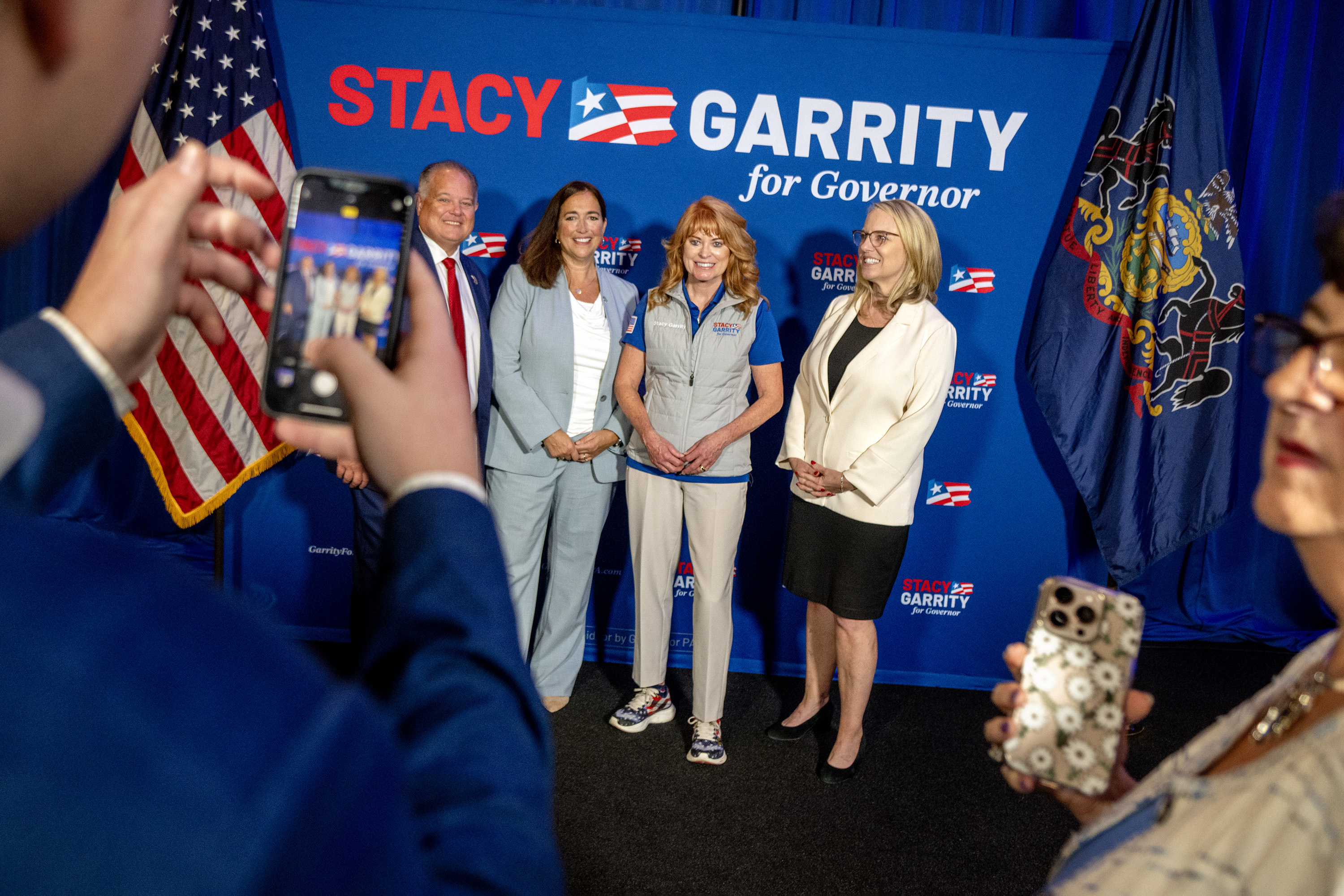
    State Treasurer Stacy Garrity, a Republican running for Pa. governor, poses with Bucks County elected officers following her campaign rally Sat the Newtown Sports & Events Center. From left: Bucks County Sheriff Fred Harran; Bucks County District Attorney Jennifer Schorn; Garrity; and Pamela Van Blunk, Bucks County Controller.

    GOP warns of ‘dangerous’ policies

    Republican messaging in the two races focuses on the idea that Bucks County is safe, but its neighbors are not.

    GOP ads, which have run over the course of four months, suggest that Khan and Ceisler would enact “dangerous” policies in Bucks County such as “releasing criminals without bail” and “giving sanctuary to violent gang members.”

    Democrats reject these ads as scare tactics. The ads make implicit comparisons to Philly’s progressive District Attorney Larry Krasner, who is poised to win a third term in the city but remains a controversial figure in the wider region even as violent crime rates have fallen in the city.

    They frame Harran and Schorn in stark contrast to their opponents as lifelong Bucks County law enforcement officers with histories of holding criminals accountable.

    “I think it resonates beyond the Republican base,” said Guy Ciarrocchi, a Republican analyst, who contended frequent news coverage of Krasner makes the message more viable.

    Khan, a former assistant Philly district attorney who unsuccessfully ran against Krasner in the 2017 primary, has noted that he campaigned “very, very vigorously” against Krasner and challenged his ideas on how to serve the city.

    “I accept the reality that I didn’t win that election,” said Khan, whose platform in 2017 included a proposal to stop prosecuting most low-level drug offenses. “Unlike my opponent, who seems to basically enjoy the sport of scoring political points by sparring with the DA of Philadelphia.”

    Schorn, however, is adamant that politics has never played a role in her prosecutorial decisions. Her mission, she said, is “simply to get justice.”

    A lifelong Bucks County resident who has been a prosecutor in the county since 1999, Schorn handled some of the county’s most high-profile cases and spearheaded the formation of a task force for internet crimes against children.

    Bucks County District Attorney Jennifer Schorn speaks at a Republican rally at the Newtown Sports & Events Center in September.

    “This has been my life’s mission, prosecuting cases here in Bucks County, the county where I was raised,” she said. “I didn’t do it for any notoriety. I didn’t do it for self-promotion. I did it because it’s what I went to law school to do.”

    Harran spent decades as Bensalem’s public safety director before first running for sheriff in 2021. He is seeking reelection amid controversy caused by his decision to partner his agency with ICE, a move that a Bucks County judge upheld last week after a legal challenge.

    “Being Bucks County Sheriff isn’t a position you can learn on the job. For 39 years, I’ve woken up every day focused on keeping our communities safe,” Harran said in an email to The Inquirer in which he criticized Ceisler as lacking experience.

    Although Ceisler has never worked directly in law enforcement, he argues the sheriff’s job is one of leadership in public safety. That’s something he says he’s well versed in as a senior public safety official in Shapiro’s administration who previously served on the Pentagon’s COVID-19 crisis management team.

    Harran, who described his opponent as a “political strategist,” criticized “politicians” for bringing “half-baked ideas like ‘no-cash bail’” into law enforcement. The concept, which is repeatedly derided in the GOP ads, sets up a system by which defendants are either released free of charge or held without the opportunity for bail based on their risk to the community and likelihood of returning to court.

    Khan and Ceisler each voiced support for the concept in prior runs for Philadelphia district attorney and Bucks County district attorney, respectively.

    Both say they still support cashless bail. Neither, however, would have the authority to implement the policy if elected, though Khan as district attorney could establish policies preventing county prosecutors from seeking cash bail in certain cases.

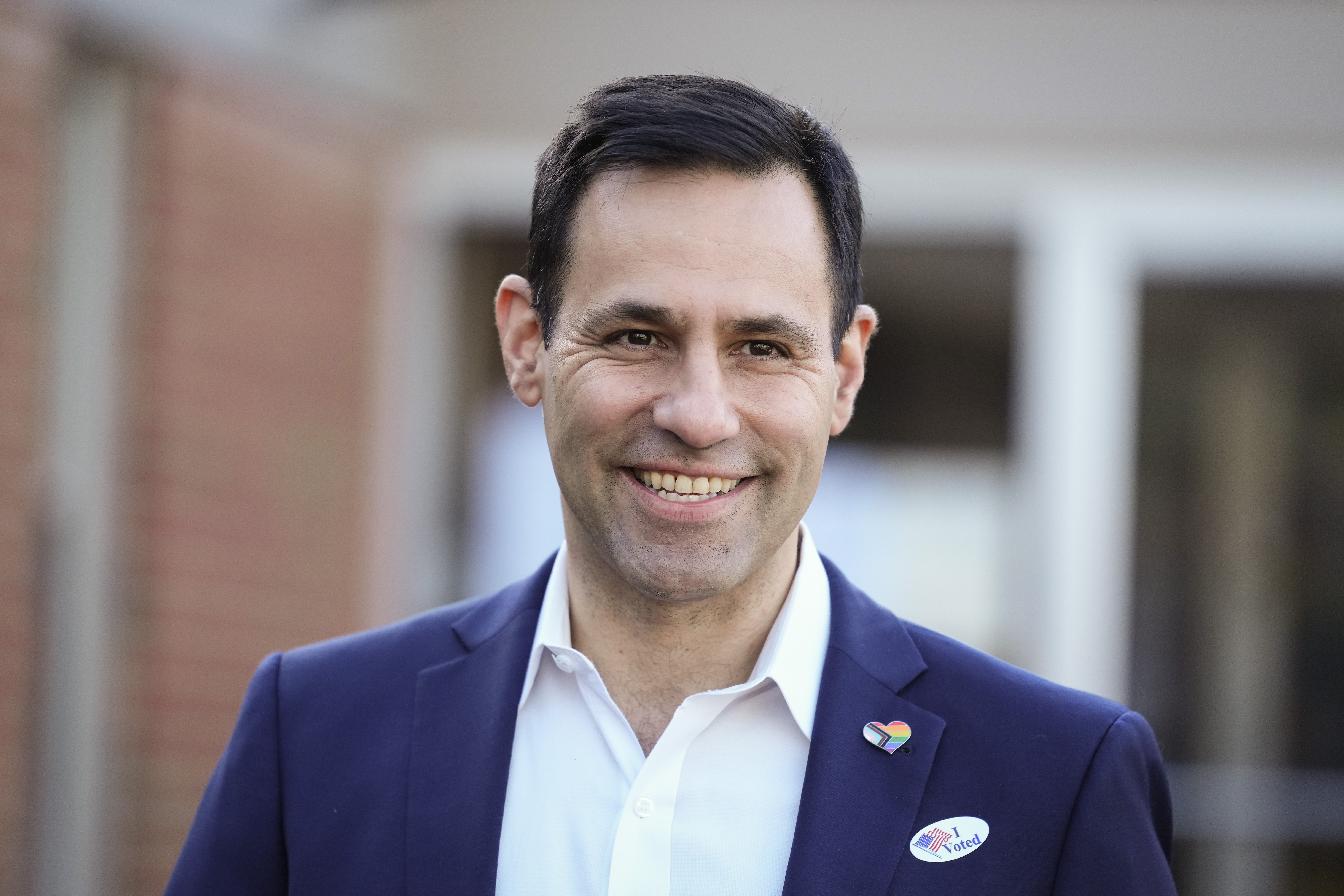
    Joe Khan, a Democratic candidate running for Bucks County DA, walks from his polling place in Doylestown, Pa. in April 2024 when he was running for attorney general.

    “When a defendant is arrested and they come into court, every prosecutor answers this question: Should this person be detained or not?” Khan said. “If the answer is yes, then your position in court is that this person shouldn’t be let out, and it doesn’t matter how much money they have. And if the answer is no, then you need to figure out what conditions you need to make sure they come to court.”

    Democrats claim to ‘keep politics out’

    Even as Democrats view voter anger at Trump as a key piece of their path to victory, they are working to present themselves as apolitical.

    Democratic ads attack Schorn for not investigating a pipeline leak in Upper Makefield and Harran as caring about nothing but himself. Positive ads highlight Ceisler’s military background and Khan’s career as a federal prosecutor.

    Khan and Ceisler, the Democratic Party’s ads argue, will “stop child predators, stand up to corruption, and they’ll keep politics out of public safety.”

    Khan has described Schorn as a political actor running her office “under Trump’s blueprint.” He has focused on her decisions not to prosecute an alleged child abuse case in the Central Bucks School District or investigate the company responsible for a jet fuel leak into Upper Makefield’s drinking water.

    The jet fuel case was turned over to the environmental crimes unit in Pennsylvania Attorney General Dave Sunday’s office. And prosecutorial rules bar Schorn from discussing the alleged abuse.

    “During the last, I don’t know, 13 years when [Khan] has been pursuing politics, I’ve been a public servant,” Schorn said. “For someone accusing me of putting politics first, he seems to be using politics to further his own agenda.”

    But Schorn appears in GOP ads alongside Harran, a figure who has frequently invited political controversy in fights with the Democratic-led Bucks County Board of Commissioners, his effort to partner with federal immigration authorities, and his early endorsement of Trump last year.

    At a September rally in Newtown for Treasurer Stacy Garrity, a Republican running for governor, Harran cracked jokes about former President Joe Biden’s age as he climbed onto the stage and falsely told voters that they will “lose [their] right to vote” if they don’t vote out three Pennsylvania Supreme Court justices standing for retention.

    Harran has long contended that his decision to partner with ICE was not political.

    “I’m a cop who ran to keep being a cop. This isn’t about politics for me — it’s about doing everything I can to keep my community safe,” Harran said.

    Harran’s opponent, Ceisler, paints a different picture as he draws a direct line between the sheriff and the president.

    Danny Ceisler, a Democrat, is running for Bucks County sheriff.

    Trump, Ceisler said, has inserted politics into public safety in his second term, and he contended that Harran has done the same.

    “[Harran] used his bully pulpit to help get the president elected, so to that extent he is linked to the president for better or worse,” Ceisler said in an interview.

    Ceisler has pledged to take politics out of the office and end the department’s partnership with ICE if elected.

    At an event in Warminster last month, voters were quick to ask Ceisler which party he was running with. Ceisler asked them to hear his pitch about how he would run the office first.

    “Don’t hold it against me,” he quipped as he ultimately admitted to one voter he’s a Democrat.

    Staff writer Fallon Roth contributed to this article.

    This suburban content is produced with support from the Leslie Miller and Richard Worley Foundation and The Lenfest Institute for Journalism. Editorial content is created independently of the project donors. Gifts to support The Inquirer’s high-impact journalism can be made at inquirer.com/donate. A list of Lenfest Institute donors can be found at lenfestinstitute.org/supporters.
  • Penn Medicine is investing more than $500 million in new cancer facilities

    Penn Medicine is investing more than $500 million in new cancer facilities

    The University of Pennsylvania Health System, the Philadelphia region’s biggest provider of cancer care and a national leader in developing new treatments, is spending more than $500 million on two new cancer facilities in Philadelphia and central New Jersey to keep growing.

    Those big projects — a fourth proton center at Presbyterian Medical Center in University City and a large cancer center at Princeton Medical Center in Plainsboro — follow years of expansion through outpatient centers in communities like Cherry Hill and Radnor. Its newest is a relocated, $18.5 million infusion center in Yardley that opened in June.

    “What we’ve seen pretty consistently is that demand is there to meet any capacity increases,” Julia Puchtler, the health system’s chief financial officer, said in an interview about fiscal 2025 financial results.

    Penn is not alone in its push to expand cancer services. Jefferson’s Sidney Kimmel Cancer Center, Temple’s Fox Chase Cancer Center, and the MD Anderson Cancer Center at Cooper are pushing into the suburbs to reach more patients.

    The same thing is happening nationally as financially pressured health systems are looking for ways to increase revenue in a growing and lucrative market for cancer care.

    Penn stands out locally for the scale of its investment in a strategy to deliver cancer care seamlessly across its seven hospitals and a growing network of outpatient clinics, with the expectation that patients will keep coming back for their ongoing health needs.

    Penn sees an opportunity to expand its market share even more, as cancer diagnoses rise. The U.S. is expected to see a nearly 40% increase in cancer diagnoses between 2025 and 2050, according to the Philadelphia-based American Association of Cancer Research.

    Experts attribute the rise to a wide variety of factors, from better early detection, to longer life spans, and to environmental exposures that are poorly understood.

    Much of Penn’s investment is in outpatient facilities, including a $270 million center being built in Montgomeryville that will have radiation oncology and an infusion center. “More and more patients want to receive care closer to home,” according to Lisa Martin, a senior vice president at Moody’s Rating. “All of that is really what’s behind all of this investment.”

    Cancer treatment overall is profitable. At Penn, cancer services account for up to 60% of the system’s operating margin by one simple measure that subtracts direct costs from direct revenue and excludes back-office expenses and other centralized costs.

    Puchtler attributed the profitability of cancer care to the prevalence of drugs, such as chemotherapy, that Penn can buy at a discount, while getting the full price from insurers, and the higher percentage of younger cancer patients with better-paying private insurance than is typical for many healthcare services.

    The expansion efforts are expensive in an industry where the consumers both benefit from advances and pay ever-rising healthcare costs. Proton therapy, in particular, costs more, but has not yet been proven to have better outcomes across a wide range of cancers.

    The intensifying competitive landscape

    Penn treats about one-third of adults with cancer in its market area, which stretches from central New Jersey to the Susquehanna, according to Robert Vonderheide, who is director of Penn’s Abramson Cancer Center and leads all of Penn’s efforts in oncology treatment and research.

    Penn counted 47,053 new cancer patients in the 12 months that ended June 30, up 40% from five years ago, according to Penn. The system has 14 locations where patients can receive chemotherapy and even more radiation oncology sites.

    Competitors are also trying to expand their reach, and Temple’s Fox Chase Cancer Center is succeeding.

    window.addEventListener(“message”,function(a){if(void 0!==a.data[“datawrapper-height”]){var e=document.querySelectorAll(“iframe”);for(var t in a.data[“datawrapper-height”])for(var r,i=0;r=e[i];i++)if(r.contentWindow===a.source){var d=a.data[“datawrapper-height”][t]+”px”;r.style.height=d}}});

    Fox Chase had 21,442 new patients in fiscal 2025, up 148% from 2020, the nonprofit said. Fox Chase has added suburban offices in Voorhees and Buckingham, Bucks County, and is expanding its infusion capacity at its main campus on Cottman Avenue. Fox Chase has a significantly smaller footprint than Penn, with six locations for infusions and four for radiation.

    The MD Anderson Cancer Center at Cooper said it had 4,326 new patients last year, up 27% over the last five years. Cooper has taken the MD Anderson Cancer Center brand to the former Cape Regional Medical Center, which it acquired last year and which used to be part of the Penn Cancer Network. Cooper also offers cancer services at its new Moorestown location.

    Jefferson Health’s Sidney Kimmel Cancer Center did not respond to requests for patient data, but has in recent years opened cancer center locations at its Torresdale and Bucks County Hospitals. Jefferson’s cancer center also attained the highest designation from the National Cancer Institute last year — the Philadelphia region’s third comprehensive cancer center, matching Penn and Fox Chase.

    Virtua Health, Penn’s partner in a proton therapy center in Voorhees, is exploring a merger with ChristianaCare, which has already been expanding from its Delaware base into Chester and Delaware Counties. Another South Jersey system, AtlantiCare, has signed a contract with the Cleveland Clinic to boost its competitiveness in cancer care.

    How Penn is trying to build a ‘cancer system’

    Lancaster County resident Susan Reese, 56, said she experienced smooth cooperation between her doctor at Penn’s Lancaster General Hospital and the team at HUP during her treatment for non-Hodgkin lymphoma.

    “I never had any question in my mind that one doctor didn’t know what the other doctor was doing,” said Reese, who received CAR-T therapy at HUP in September 2022. Penn has since started offering CAR-T at Lancaster General.

    After she relapsed in early 2023, she came back to HUP for a stem cell transplant. She could have gone to Penn State Health’s Hershey Medical Center for that. It’s significantly closer to her home in Willow Street, but she wanted to stay within the Penn system.

    Reese’s experience of integration of services at HUP and Lancaster General is what Penn is aiming for in a territory that stretches from central New Jersey to central Pennsylvania.

    Oncologist Robert Vonderheide, director of Penn Medicine’s Abramson Cancer Center, oversees all Penn’s cancer services and research.

    Electronic medical records help with the integration needed to ensure the thousands of cancer patients Penn physicians treat annually get the most advanced care possible, according to Vonderheide, whose research focuses on cellular immunotherapies.

    “We treat patients’ cancers now in a very precise way; the precise mutation, the precise type of chemotherapy, the precise dose” are the focus for doctors, Vonderheide said. “This is no longer appropriate for the telephone game. This has to be data-driven.”

    Reese’s decision to stay within Penn is part of a broader trend of patients tending to receive all their care within one health system, according to Rick Gundling, a healthcare expert at the Healthcare Financial Management Association in Washington, D.C.

    That’s particularly important in oncology, which typically involves multiple specialties, such as medical oncology, radiation oncology, and surgical oncology, he said.

    “Seamless coordination across all those disciplines really makes it a better patient experience and clinical experience because it reduces delay, improves access,” Gundling said.

    Taking advanced treatments from HUP to the network

    Part of Penn’s strategy is to begin offering advanced services at locations beyond HUP. That’s where Penn pioneered CAR-T cell therapy, which harnesses the immune system to attack cancer, and for years that was the only place Penn offered it.

    HUP still performed the bulk of the CAR-T treatments for blood cancers, 123 inpatient cases and 14 outpatient cases last year, but now CAR-T is also available at Lancaster General and at Penn’s Pennsylvania Hospital in Center City.

    Fox Chase was the next biggest center in the region for the relatively new treatment that Penn scientist Carl June and his research teams helped develop. For the fiscal year that ended June 30, 2025, Fox Chase had 21 inpatient cases and 67 outpatient cases, the center said.

    In the Penn system, certain kinds of bone marrow transplants also used to be available only at HUP. “Now we do them at HUP and Pennsylvania Hospital,” Vonderheide said.

    Even the most complicated pancreatic surgeries are going to be done at Princeton, in conjunction with experts at HUP, Vonderheide said. Penn held a ceremonial groundbreaking Monday for the hospital’s $295 million cancer center.

    Remaining only at HUP are bone marrow transplants that use another person’s cells to treat blood cancers, Vonderheide said. HUP performed 118 of those so-called allogeneic bone marrow transplants on the top floor of its $1.6 billion patient pavilion, now known as the Clifton Center.

    Pennsylvania’s next-biggest provider of the treatment was Hershey Medical Center, near Harrisburg, with 71, according to state data.

    window.addEventListener(“message”,function(a){if(void 0!==a.data[“datawrapper-height”]){var e=document.querySelectorAll(“iframe”);for(var t in a.data[“datawrapper-height”])for(var r,i=0;r=e[i];i++)if(r.contentWindow===a.source){var d=a.data[“datawrapper-height”][t]+”px”;r.style.height=d}}});

    Penn started offering proton therapy at HUP in 2010, and expanded its availability in the last three years to Lancaster General and Voorhees, through a joint venture with Virtua Health. Those two centers only have one proton machine each, compared to five at HUP.

    It’s a type of radiation that is designed to precisely target tumors and do less damage to surrounding tissues. That makes the treatment, which costs more, particularly helpful for children, and it is proving beneficial for treating certain neck and throat cancers. The use of proton therapy for the more common prostate cancer has been more controversial.

    Penn’s fourth proton center, with two machines, is under construction and is expected to open at Presbyterian in late 2027. When that $224 million center opens, Penn will have more proton treatment rooms than the entire West Coast, said Jim Metz, chair of radiation oncology at Penn.

    Currently about 10% of Penn’s roughly 10,000 annual radiation oncology patients are treated with protons, though it’s a higher percentage at locations with proton machines, Penn said.

    Penn officials have noted that some cancer patients come to Penn for proton therapy. Even when it’s not appropriate for them, they tend to stay within Penn. “We have seen, when we build protons, our market share increases, ” Metz said.

    Editor’s note: This article has been updated with more recent Fox Chase data.

  • State Sen. Sharif Street has early fundraising lead in Philly congressional race, but his competitors are close behind

    State Sen. Sharif Street has early fundraising lead in Philly congressional race, but his competitors are close behind

    State Sen. Sharif Street has an early fundraising lead over his competitors in next year’s Democratic primary for a storied Philadelphia congressional seat, according to new campaign finance reports.

    But the race is in its early stages, and candidates who entered the race after Street still have plenty of time to catch up before the May 2026 primary.

    Street, the son of former Mayor John F. Street, entered the race for Pennsylvania’s 3rd Congressional District in early July, days after U.S. Rep. Dwight Evans (D., Philadelphia) announced he would not seek reelection. Street’s campaign launch coincided with the beginning of the campaign finance reporting period, allowing him three full months to solicit contributions and seek endorsements.

    He took in about $352,000 from July 1 through Sept. 30, according to the Federal Election Commission. His campaign spent $33,000 during that time, and he finished the period with $372,000 in cash on hand, which is also the most of any candidate in the race. (Street’s cash reserves are higher than his fundraising because he carried over money from a previous campaign account.)

    “Our strong fundraising results put us in a commanding position,” Street campaign manager Josh Uretsky said in a statement. “We’re building a strong campaign that will hit every neighborhood in the Third District by leveraging our broad-based coalition.”

    window.addEventListener(“message”,function(a){if(void 0!==a.data[“datawrapper-height”]){var e=document.querySelectorAll(“iframe”);for(var t in a.data[“datawrapper-height”])for(var r,i=0;r=e[i];i++)if(r.contentWindow===a.source){var d=a.data[“datawrapper-height”][t]+”px”;r.style.height=d}}});

    State Rep. Chris Rabb, an anti-establishment progressive, who raised $257,000, also announced his campaign in July.

    Rabb’s haul was notable for a candidate with little support among Philadelphia’s established political organizations, such as the deep-pocketed building trades unions that endorsed Street this week. As he has in past runs, Rabb said he is eschewing contributions from corporate-backed political action committees, and tapping into a national network of progressive small-dollar donors.

    “This is a robust, grassroots campaign that’s fueled and funded by a growing movement of Philadelphians and citizens far & wide who want a bold, independent-minded and accountable Democrat to represent the bluest congressional district in the nation,” Rabb said in a statement.

    His campaign spent $76,000, and carried forward $181,000.

    State Rep. Morgan Cephas, a West Philly Democrat who chairs the Philadelphia delegation to the state House, collected $156,000 in contributions, a respectable sum given that she entered the race about a month before the reporting deadline. Her campaign spent $37,000 and had $119,000 in cash.

    In a statement, Cephas said “the excitement about our campaign is palpable.”

    “I understand the problems of Philadelphia because I’ve lived them for the last 41 years,” Cephas said. “Together we can deliver real results for our community.”

    Political outsiders aim to shake up race

    David Oxman, a physician who lives in South Philadelphia, brought in $107,000, spent $35,000, and had a healthy $332,000 in the bank.

    “Since day one, this campaign has been fueled by healthcare professionals, small business owners, and working families across Philadelphia who are ready to take power back from leaders bought by corporate interests,” Oxman said in a statement.

    David Oxman, an intensive care doctor and medical school professor at Thomas Jefferson University Hospital, is running for Congress. Oxman, 58, of Bella Vista, joins a race that includes State Reps. Sharif Street and Chris Rabb to replace retiring U.S. Rep. Dwight Evans.

    The campaign for Temple University professor Karl Morris raised $28,000, spent $26,000, and had $12,000 in cash on hand.

    “As a scientist, teacher, and a non-politician running an outsider campaign, my focus is on connecting with everyday Philadelphians,” Morris, a computer scientist, said in a statement. “Career politicians and the donor class want politics as usual. I’m prepared to make sure everyone in Philadelphia receives equal benefits and equal protections.”

    One notable candidate, physician Ala Stanford, entered the race after the close of the reporting period and has not yet submitted a campaign finance filing. Stanford was a founder of the Black Doctors COVID-19 Consortium and has been endorsed by Evans.

    “In just a few weeks in the race, Dr. Stanford has generated significant momentum — in contributions, volunteer engagement, and community enthusiasm,” Stanford campaign manager Aaron Carr said in a statement.

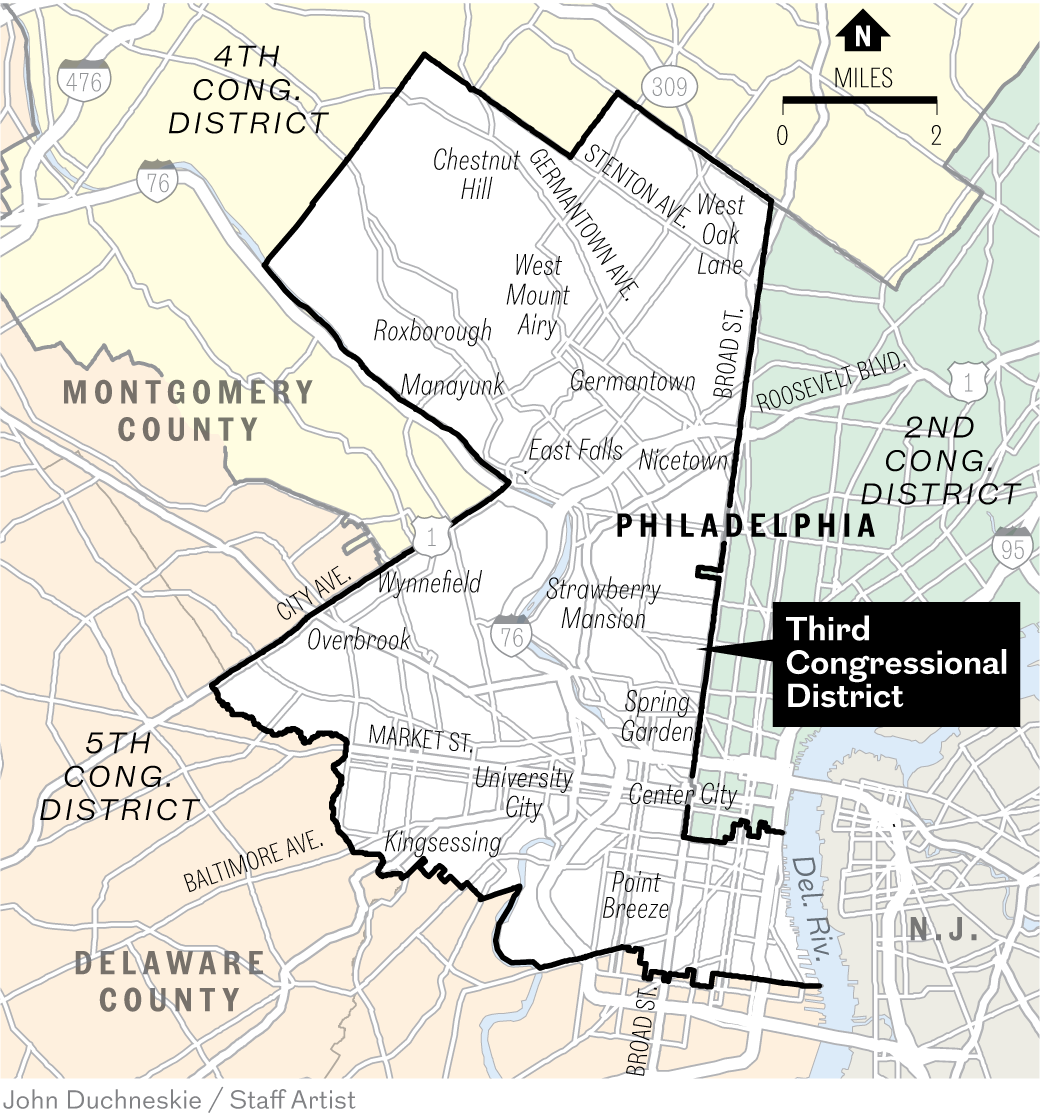
    Pennsylvania’s 3rd Congressional District, which includes parts of North, Northwest, West, and South Philadelphia, is one of the most Democratic seats in the nation. With Evans retiring from the seat he has held for nearly a decade, the field could still be in flux as more Philly politicians eye the potentially once-in-a-generation ticket to Washington.

    Map of Pennsylvania’s Third Congressional District.

    While the race remains competitive, Street’s early fundraising lead will help cement his status as the favorite of the local political establishment. Democratic City Committee chair Bob Brady said this week that party ward leaders will likely vote to endorse Street after this year’s election cycle wraps up next month.

    “We’re fully prepared to take advantage of this early lead,” Uretsky said.

    Brian Fitzpatrick outraises competitors in Bucks County congressional race

    In Pennsylvania’s 1st Congressional District, where Democrats have made ousting Republican U.S. Rep. Brian Fitzpatrick a top priority, the incumbent outraised his leading Democratic challenger by a nearly 4-1 ratio, bringing in $886,049 this quarter.

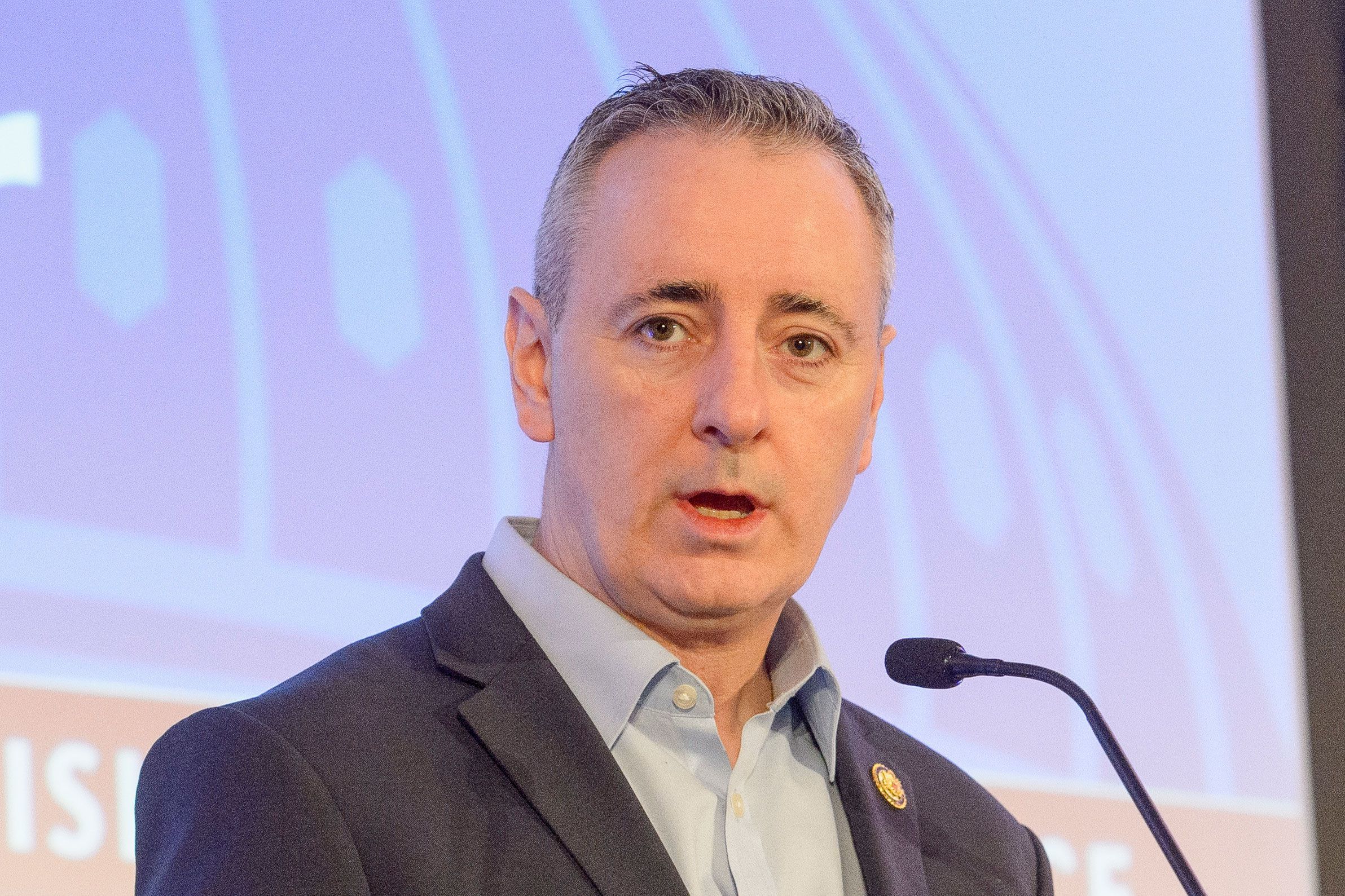
    Rep. Brian Fitzpatrick (R., Bucks and Montgomery) speaks during the opening session of the National Treasury Employees Union (NTEU) Legislative Conference in Washington in March.

    Unlike the deep-blue 3rd District, the fate of the 1st District will likely be decided in next year’s general election, and not the primary. The district, which includes all of Bucks County and a part of Montgomery County, is the only Philadelphia-area congressional seat represented by a Republican.

    Democratic County Commissioner Bob Harvie announced plans to challenge Fitzpatrick earlier this year.

    Harvie, viewed as the favorite to win the Democratic nomination, raised $217,745 last quarter. The other Democrat in the race, attorney Tracy Hunt, raised $36,692.

    This suburban content is produced with support from the Leslie Miller and Richard Worley Foundation and The Lenfest Institute for Journalism. Editorial content is created independently of the project donors. Gifts to support The Inquirer’s high-impact journalism can be made at inquirer.com/donate. A list of Lenfest Institute donors can be found at lenfestinstitute.org/supporters.
  • Judge rules Bucks County sheriff’s agreement to cooperate with ICE was ‘reasonable and necessary’

    Judge rules Bucks County sheriff’s agreement to cooperate with ICE was ‘reasonable and necessary’

    Bucks County Sheriff Fred Harran acted legally in signing up to have his deputies help ICE enforce federal immigration laws, a judge ruled Wednesday in a case that has riled residents on both sides of a contentious issue.

    Bucks County Court Judge Jeffrey Trauger said Harran’s cooperation with the agency was “clearly lawful under Pennsylvania jurisprudence,” and both “reasonable and necessary” in fulfilling his lawful duty to keep the citizens of Bucks County safe.

    What the judge called “intergovernmental cooperation of law enforcement” is no different under the law at the county, state, or federal level, he wrote.

    The ACLU of Pennsylvania and other plaintiffs had asked Trauger to issue an injunction blocking the partnership from moving forward.

    Reached by phone Wednesday, Harran said he was pleased with the decision and expected his partnership with U.S. Immigration and Customs Enforcement to be fully operational by the end of next week.

    “I knew from the time I started this that I was in the right, that the county commissioners do not control the office of the sheriff,” Harran said.

    A spokesperson for Bucks County said the county intended to appeal.

    Those who sought to block Harran’s efforts said they would continue to battle.

    “This decision doesn’t mean that we’ll stop fighting to hold Sheriff Harran accountable,” said Diana Robinson, co-executive director of Make the Road Pennsylvania, an advocacy group that was one of the plaintiffs. ”Indeed, we will redouble our efforts in this case and continue to fight for what is right.”

    She said an alliance between Harran’s department and ICE was aimed at “turning our neighborhoods into surveillance zones” and “weaponizing local law enforcement to carry out ICE’s harmful agenda.”

    Community members rally in Bucks County before civil rights groups asked a judge to block Sheriff Fred Harran’s controversial partnership with ICE.

    In his opinion, the judge said it did not appear that Make the Road, NAACP Bucks County, or Buxmont Unitarian Universalist Fellowship as organizations had clear standing to sue under Pennsylvania law.

    While individual members might have standing if they were caused harm by the sheriff’s office, he said, the injuries they alleged were “not immediate or substantial,” and their complaint was based in part on speculation about what might happen.

    ACLU of Pennsylvania attorney Stephen Loney, who helped lead the court fight, said Wednesday that he disagreed with the decision.

    “In the most respectful way I could possibly say it, I think the judge got it totally wrong,” he said. “It’s unfortunate.”

    He said the ACLU would appeal the decision.

    ICE officials did not immediately offer comment.

    Melanie Goldstein holds a sign as demonstrators rally outside the Bucks County Administration building before a hearing last month during which the ACLU and other organizations sought an injunction to stop the Bucks County sheriff from going through with his plan to help ICE enforce immigration laws.

    Laura Rose, an organizer with Indivisible Bucks County, said the group was “deeply disappointed in Judge Trauger’s decision” to let Harran proceed “without guardrails.”

    She called the ruling “a profound failure to protect both the immigrants and taxpayers of Bucks County.”

    Rose called on voters to end the local alliance with ICE by voting Harran out of office on Nov. 4.

    Harran’s lawyer, Wally Zimolong, called the decision “a victory for the rule of law and for the safety of Bucks County residents,” and accused the ACLU of maligning the sheriff with false claims.

    “Frankly,” he said, “it is mind-boggling that anyone would oppose this. It is also a vindication for Sheriff Harran, a good and honorable man and dedicated public servant. … It is a proud day when people of good character, like Sheriff Harran, prevail over those that lack it.”

    In the spring, Harran and ICE officials signed what is called a 287(g) agreement, a controversial program named for a section of a 1996 immigration law. It enables local police to undergo ICE training, then assist the agency in identifying, arresting, and deporting immigrants.

    The number of police agencies participating in the program has soared to more than 1,000 under President Donald Trump. Seven states, including New Jersey and Delaware, bar the agreements by law or policy.

    Shortly before the government shutdown, ICE was poised to begin backing its recruitment efforts with money, announcing that it would reimburse cooperating police agencies for costs that previously had been borne by local departments and taxpayers.

    Harran, who is seeking reelection in November, has pledged “zero cost” to local taxpayers.

    He insists the alliance with ICE will prevent crime and keep people safe. Civil rights groups say the sheriff is inviting racial profiling, taxpayer liability, and a loss of trust between police and citizens.

    Bucks County’s sheriff Fred Harran, outside the courthouse in Doylestown, PA, June 9, 2025.

    Contentious legal hearings have come against a backdrop of name-calling and rancor outside the courtroom.

    The Democratic-led Bucks County Board of Commissioners has disavowed Harran’s actions, voting 2-1, with the lone Republican opposed, to approve a resolution that declared the agreement with ICE “is not an appropriate use of Bucks County taxpayer resources.”

    The ICE issue has become central to Democrats’ effort to oust Harran, a Republican, while the sheriff says his intentions have been misconstrued by political opponents and the news media.

    “A judge ruling that he has the authority to enter into this deportation agreement does not make this any less dangerous,” Harran’s Democratic opponent, Danny Ceisler, said in a statement Wednesday.

    The last opportunity to end the partnership, Ceisler said, is by winning the election next month.

    A key issue has been the difference between what Harran says he intends to do and the much broader powers conferred within the agreement with ICE.

    Harran signed up for the “Task Force Model,” the most far-reaching of the three types of 287(g) agreements. It allows local police to challenge people on the streets about their immigration status and arrest them for violations.

    Harran said his officers won’t do that.

    Wednesday’s ruling, Harran said, recognized the limited scope of his plans, and he suggested that every county should partner with ICE.

    “I’m only interested in making the county safer, and I’m only interested in dealing with those folks that are in this country illegally that have committed crimes,” Harran said. “I am not the immigration police. I am not Immigration and Customs Enforcement.”

    Harran has said staff will electronically check the immigration status of people who have contact with the sheriff’s office because of alleged criminal offenses. Those found to be in the country illegally will be turned over or transported to ICE, if the federal agency desires, he said.

    Harran testified in court last month that he planned to create a sheriff’s office policy to specify the limits of his deputies’ powers but had not yet done so.

    He insisted that his office would take only the actions he has described.

    “We will not be stopping people to ask them on immigration status,” he said under cross-examination. “I know what I am doing, and that’s all I intend to do.”

    This suburban content is produced with support from the Leslie Miller and Richard Worley Foundation and The Lenfest Institute for Journalism. Editorial content is created independently of the project donors. Gifts to support The Inquirer’s high-impact journalism can be made at inquirer.com/donate. A list of Lenfest Institute donors can be found at lenfestinstitute.org/supporters.