Tag: Burlington County

  • 1,100 dead or sick geese in N.J. spark bird flu warning, prompt lake’s closure

    1,100 dead or sick geese in N.J. spark bird flu warning, prompt lake’s closure

    At least 1,100 dead or sick birds, mostly Canada geese, have been reported across New Jersey in an outbreak that started on Valentine’s Day, according to state officials.

    At least 50 geese have died at Alcyon Lake in Pitman, Gloucester County. Officials have closed the lake and the adjoining Betty Park out of precaution.

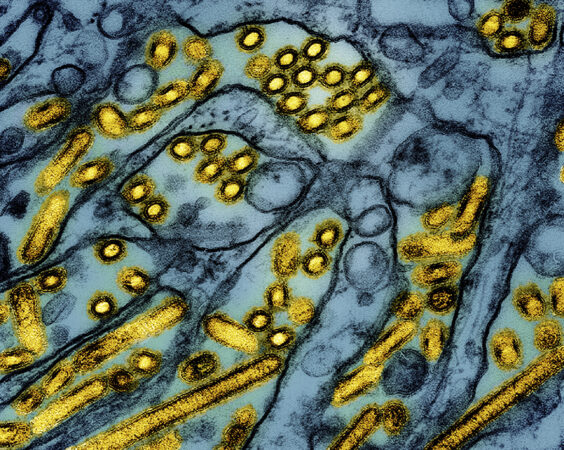
    The fish and wildlife division within the New Jersey Department of Environmental Protection (DEP) and the U.S. Department of Agriculture are tracking them as suspected cases of highly pathogenic avian influenza (H5N1), or bird flu.

    Bird flu is not new. But it began to spread in the U.S. in January 2022 and has infected wild and domestic birds in every state.

    While bird flu can infect humans, the U.S. Centers for Disease Control and Prevention has said it is primarily a threat to animals and poses little risk to the public.

    State officials say large numbers of dead geese may be concentrated in areas where birds gather to look for open water as ice melts. They said that the 1,100 dead or sick wild birds were reported between Saturday and Monday.

    Where have dead geese been found?

    The DEP says it has received reports of dead Canada geese in South Jersey, including in Hainesport, Burlington County; Sicklerville, Camden County; and Pitman.

    Annmarie Ruiz, Gloucester County’s health officer, said the dead geese were noticed in Pitman on Tuesday. She said that there were probably more than 50 at Alcyon Lake, but that there were reports of dead geese elsewhere in the municipality.

    “Right now, we have to presume that it is bird flu based on the signs the birds were exhibiting,” Ruiz said.

    The New Jersey Department of Agriculture took some of the birds for testing. The results could take weeks, she said.

    “Right now, we’re just erring on the side of caution,” Ruiz said.

    Ruiz said workers use face shields and gloves when handling the birds, which are triple-bagged before being disposed.

    She said people can report sick or dead wild birds to Gloucester County animal control at 856-881-2828 or the DEP at 877-927-6337.
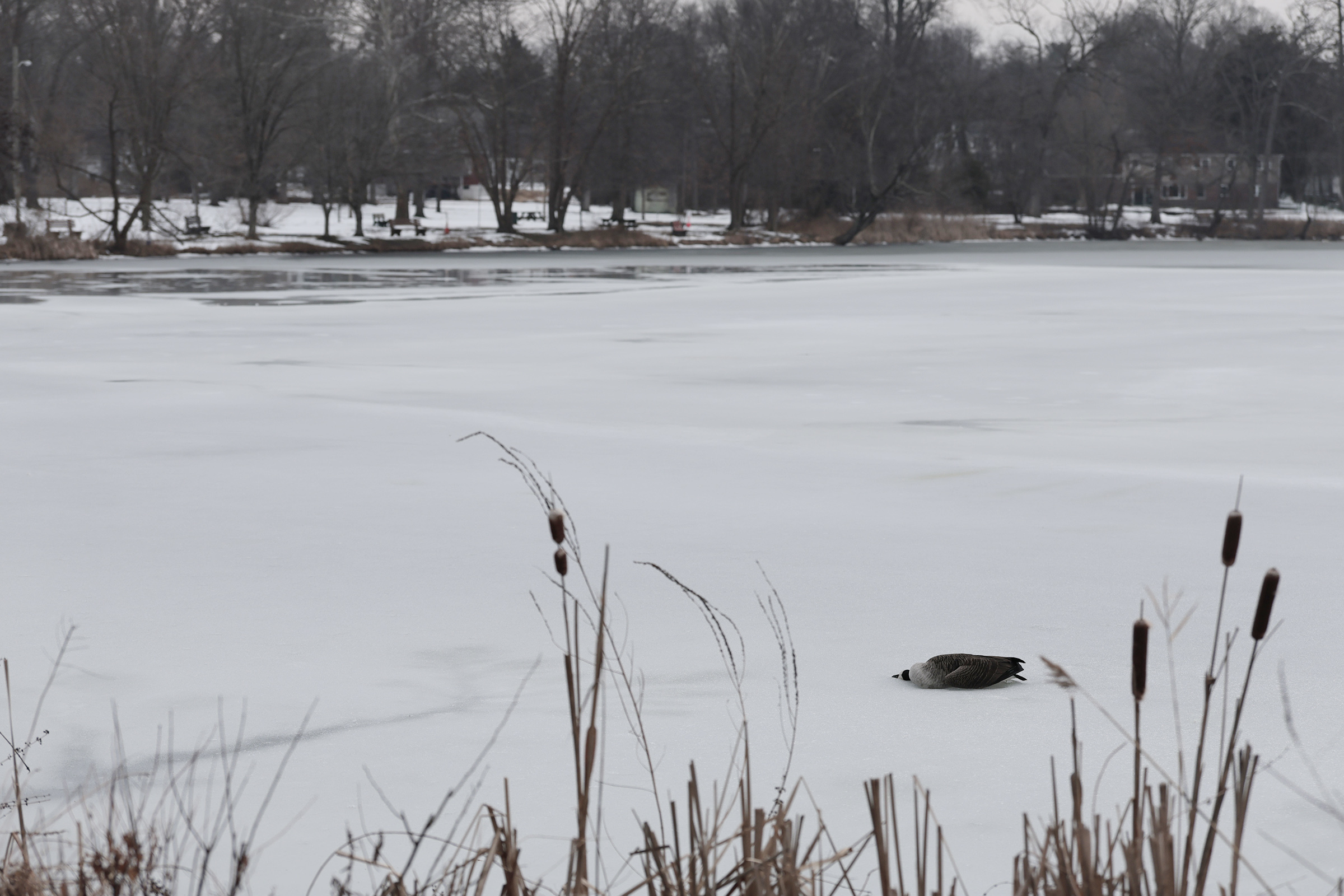
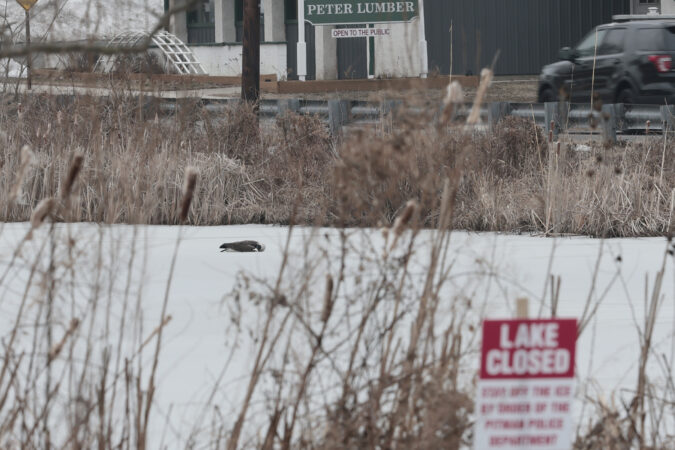
    A lifeless bird lays on the ice at Alcyon Lake in Pitman, N.J. on Wednesday, Feb. 18, 2026. Two adjacent parks, Betty Park (in background) and Alcyon Park (not in photo) are closed as a result of the mysterious birds deaths.

    Caryelle Lasher, Camden County’s health officer, said there have been only a small number of reports of dead birds in the county.

    Those were concentrated in the lake off Mullen Drive in the Sicklerville section of Gloucester Township, she said.

    Overall, however, the county has not seen a spike in reports, she said.

    Ruiz and Lasher — as well as state officials — stress that people should not touch sick or dead wildlife of any kind. And they should keep pets away.

    Even though the risk is low, the potential for human infection exists.

    The DEP also has an online form to report sick or dead birds.

    H5N1 is a respiratory bird disease caused by influenza A viruses. Wild birds, such as ducks, gulls, and shorebirds, can carry and spread these viruses but may show no signs of illness, according to the DEP.

    The disease can kill domestic poultry such as chickens. Typical symptoms include diarrhea, nasal discharge, coughing, sneezing, and incoordination.

    It continues to infect not only birds, but also mammals.

    Tips to prevent infection:

    • Do not touch sick or dying animals, or bring them into your home.
    • Keep pets away from them, as well as away from droppings.
    • Wash hands frequently if you are near wildlife.
    • Do not eat undercooked eggs, poultry, or beef.
    • Prevent cross-contamination between cooked and raw food.
    • Avoid unpasteurized milk or cheese.

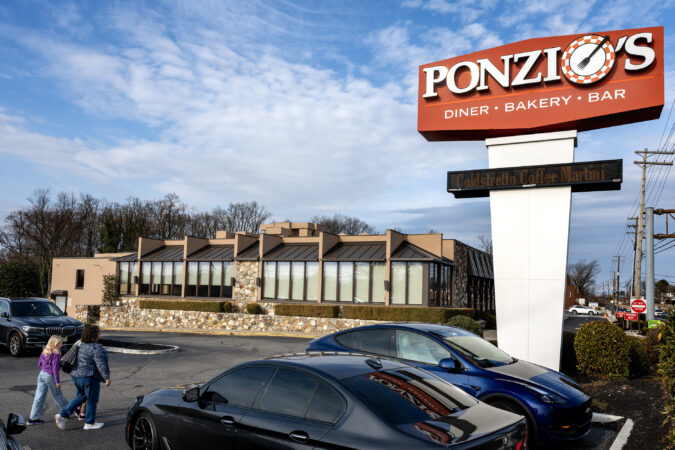
  • Jersey’s historic diners keep closing. This legislation aims to keep more alive.

    Jersey’s historic diners keep closing. This legislation aims to keep more alive.

    There may be new hope for diners in New Jersey.

    In recent years, a string of the state’s iconic diners have shuttered their doors. New state legislation aims to keep the lights on at those still in business.

    The bill, which was introduced in the New Jersey Senate in January, would provide some diners and other historic restaurants with tax benefits.

    “Diners, and specifically historic diners, are a cornerstone of our great state, having served residents and visitors for many decades. They are part of our culture and our history, and we have a duty to help them thrive,” State Sen. Paul Moriarty of Gloucester County, a sponsor of the bill, said in a statement Thursday.

    The legislation, which would establish a registry of historic diners and restaurants, would give the businesses a tax credit of up to $25,000. Only diners and family-owned restaurants operating for at least 25 years will qualify.

    The bill has been referred to the Senate Budget and Appropriations Committee.

    “It has been heartbreaking to see so many of these well-known establishments close or dramatically cut their hours,” Moriarity said.

    Where have diners closed in New Jersey?

    The origin of the modern diner can be traced back to a horse-drawn lunch wagon in 19th-century Rhode Island and the model has evolved since then. New Jersey has been coined the “diner capital” of the U.S. but has seen closures in recent years due to increased operating expenses, the challenge of finding employees, and the impact of the pandemic.

    The Cherry Hill Diner closed in 2023 after 55 years in business and following the co-owner’s unsuccessful search for a buyer. South Jersey’s Gateway Diner in Gloucester County closed that same year amid construction of the Westville Route 47 Bridge and the state’s acquisition of the site. The Red Lion Diner in Burlington County also sold, making way for a Wawa.

    In January 2024, the Star View Diner in Camden County closed. Last year, the Collingswood Diner shut its doors in August, to be replaced by a marijuana dispensary.

    The trend extended in Philadelphia where the Midtown III closed in 2020. Last year, the Mayfair Diner in Northeast Philadelphia was listed for sale.

  • My opioid addiction-related weight loss drew praise. Regaining during recovery? Not so much.

    My opioid addiction-related weight loss drew praise. Regaining during recovery? Not so much.

    A normal, healthy weight for me was 120 pounds. In the late 1990s, before addiction reshaped the course of my life, I was a model — someone whose world revolved around silhouettes, styling, and self-expression through fashion.

    My metabolism kept me effortlessly consistent in size, my confidence steady, my presence bold. In Philadelphia, style carried currency, and I spent mine generously. I was known — and crowned — as the “Queen of Fashion,” a title that suggested a life stitched together with glamour, ease, and admiration.

    I hired two of my very own fashion designers, and they made leather tops and pants specifically for me. I shopped at the most exquisite stores on South Street for shoes, clothes, and designer sunglasses. I kept my hair done and went to a nail salon in Center City on a regular basis — all part of the architecture of how I showed up.

    Chekesha Lakenya Ellis was a 29-year-old model in 2000, the year her addiction to opioids began.

    I looked healthy, controlled, and admired, even as addiction was quietly taking hold. I looked like someone who had mastered the runway. No one knew that soon I would be fighting a battle that fashion couldn’t tailor, metabolism couldn’t manage, and praise couldn’t heal.

    No one knew the story would shift from being known for how well I wore clothes to how bravely I rebuilt the body inside them.

    By 2001, that admiration extended beyond aesthetics. I worked as therapeutic support staff — a job that demanded attentiveness, emotional intelligence, and care. I delivered it well. My clients felt seen. My coworkers felt supported. Respect followed me into rooms before I even sat down.

    On the surface, my life looked like momentum — until prescription opioids quietly stepped in and dismantled the foundation beneath it.

    I became what many called “functional” — a person whose addiction was masked by productivity, routine, and public reliability. But functionality is not the absence of illness. It is often the art of hiding it. And I practiced that art for nearly a decade.

    Chekesha Lakenya Ellis during the self-described “party era” at the beginning of her opioid addiction in 2001, after a dramatic weight loss when she went from a size 5/6 to a 1/2 very quickly. The weight disappeared, she said, and the applause appeared.

    I went from a size 5/6 to a 1/2 very quickly — a dramatic drop that unfolded faster than most narratives could keep up. The weight disappeared. The applause appeared. The concern stayed absent. People praised the result without recognizing the cause.

    Compliments met me at the door before questions ever did: You look amazing. You’re so small now. What are you doing?

    Chekesha Lakenya Ellis in 2008 in active addiction at a party. “I was very frail,” she remembered.

    But I wasn’t doing anything admirable. I was enduring something dangerous. The shrinking they celebrated was not transformation. It was toxicity — a body under neurological attack, nutritional depletion, depression, and a decade-long prescription opioid addiction that pulled more from me than pounds. It eventually cost me my hearing.

    As my body grew smaller, the praise grew louder. At the same time, as I declined medically, physically, mentally, and emotionally, the world grew quieter about the part that mattered. They applauded the appearance of wellness while I was privately collapsing.

    Skinny equaled praise to them.

    To me, it was evidence that I was fading.

    In 2010, recovery finally became my rescue. It demanded rebuilding, not shrinking — a process slower, quieter, and far less visible than what the world celebrates.

    Chekesha Lakenya Ellis in 2010, her first year in recovery. Weight gain can mean restoration, healing, and survival, Ellis says. It deserves compassion and applause, but is rarely celebrated the way weight loss is.

    As my brain healed from the damage of long-term opioid use, my body began reclaiming the signals addiction had silenced: appetite, rest, regulation, safety, nourishment. The pounds I regained were not a reversal of progress. They were proof of it.

    There was no applause for that rebuilding. No celebration for the return of sleep, nourishment, or neurological stabilization. The world didn’t honor restoration because restoration didn’t look like reduction. It looked like progress that challenged how we measure wellness.

    At times, rebuilding invited commentary that echoed the same shallow math that once praised me: You used to be so small. Are you OK? The irony was painful. The same shrinking that was celebrated when it was harming me was questioned when it was saving me.

    Today, the cultural conversation around weight has grown louder, faster, more pharmaceutical, and more celebrated. Medications that promise shrinking have become shorthand for “wellness” in the public imagination.

    But in recovery communities — including those quietly healing in our own region — weight gain often signals restoration. It signals life returning to a body that nearly didn’t survive the war addiction waged on it.

    Bodies in crisis don’t need applause for shrinking. They need care for surviving. And bodies in recovery don’t need shame for rebuilding. They deserve compassion.

    Recovery doesn’t always show up as loss. Sometimes it shows up as strength. Sometimes it shows up as nourishment. Sometimes it shows up as life returning to places addiction tried to erase.

    Chekesha Lakenya Ellis in 2024. As she recovered from addiction and regained weight, she says people would say: You used to be so small. Are you OK? The irony was painful. The same shrinking that was celebrated when it was harming me was questioned when it was saving me.

    If you or someone in your life is walking the path of recovery, understand this: Healing does not always match what society rewards. Progress may look unfamiliar or misunderstood. A body that is stabilizing is not disappearing — it is reclaiming itself.

    Culture may applaud reduction. Recovery teaches something different: renewal, resilience, and the quiet work of staying alive.

    That work matters. And it deserves dignity and recognition.

    Chekesha Lakenya Ellis is a certified peer recovery specialist. The Burlington County resident uses Facebook to raise awareness about addiction and recovery.

  • Shareholders approve merger of American Water and Essential Utilities, which serve Pa. and N.J.

    Shareholders approve merger of American Water and Essential Utilities, which serve Pa. and N.J.

    Shareholders of Camden-based American Water Works and Bryn Mawr-based Essential Utilities, which owns the Aqua water and sewer companies, voted overwhelmingly Tuesday to merge and create a combined company with nearly $30 billion in yearly water and sewer sales.

    More than 99% of the 161 million American Water shares that were voted were cast in favor of the deal, the company told the Securities & Exchange Commission. Essential’s online proposal to merge was approved by around 95% of voting shareholders.

    The planned combination of these rivals, which have competed for more than 100 years to manage water and sewer for the small number of U.S. communities that allow for-profit operators, still needs approval from state public utility commissions.

    The combined companies’ sales are concentrated in Pennsylvania and New Jersey. In suburban Philadelphia, Aqua serves West Chester, northern Delaware County, parts of Lower Bucks, and Main Line communities. American Water serves Abington, King of Prussia, Norristown, Phoenixville, and nearby towns.

    New Jersey American Water serves towns along the PATCO rail line in Camden County, in northern and central Burlington County, and in Shore communities such as Absecon and Ocean City. Aqua New Jersey has customers in the three suburban South Jersey counties and at the Shore.

    American Water’s 14 million U.S. customers include systems in 12 other states, and on 18 U.S. military bases. Essential has around 3 million customers, including systems in six other states, and Pittsburgh-based Peoples Gas, which serves 750,000 in western Pennsylvania and Kentucky.

    American Water is already the nation’s largest private operator of water and sewer systems, and the deal will make it a larger player in competition with Florida-based NextEra Water Group and France-based Veolia’s U.S. operations, among other private systems that have been seeking to expand.

    A separate vote on an Essential executive pay package drew some opposition, with 85%approving.

    That package included more than $17 million in severance compensation and stock grants for departing Essential CEO Christopher H. Franklin, plus medical benefits and up to three years’ professional assistance helping him land another job, plus millions more for his four top deputies.

    The merged company’s larger size, as big as many of the leading natural-gas companies that dominate utility stock-index funds, will boost its visibility to investors, John C. Griffith, the American Water chief executive who will run the combined companies, said in announcing the deal last fall.

    The companies disclosed the approvals Tuesday afternoon and said more details on the vote and their plans would come later this week.

    Deal backers say the combination should enable Griffith to cut management costs, boost profits, drive up the share price, and could ease pressure to keep raising water rates.

    Regulators in New Jersey and Pennsylvania are weighing the company’s latest rate increase requests. American Water’s New Jersey affiliate is asking the state Board of Public Utilities for an average 10% water and 8% sewer rate hike on Jan. 16 for 2.9 million customers, which it said would fund improvements to aging water and sewer systems. Customers would pay an average of $18 more a month.

    Pennsylvania’s Public Utility Commission said last month that it would consider the company’s request to boost water and sewer rates on 2.4 million customers by an average 15%, or $20 a month.

    Critics had urged Essential to seek rival buyers to drive up the share price and shareholder profits from the sale, noting that both stocks had dropped after the merger was proposed last year.

    Tim Quast, founder of Colorado-based ModernIR, a consultant the companies hired to help explain the merger, said share price declines are now typical, even for merger-target companies like Essential whose shares command a premium from buyers like American Water because index-fund investors such as Vanguard and BlackRock tend not to buy more shares of merging companies until a deal is completed.

    Even after long competition from U.S. and foreign utility owners, private water companies serve only about one in six Americans. In recent years, customers of public utilities serving parts of Chester, Delaware, and Bucks Counties have defeated privatization campaigns, though some towns in Pennsylvania and New Jersey have signed on. Pennsylvania also has asked private operators to take over small, troubled public systems.

  • $29M in federal and private funds to go toward Delaware River watershed projects

    $29M in federal and private funds to go toward Delaware River watershed projects

    Federal and private grants totaling nearly $29 million were announced Wednesday for conservation projects within the Delaware River Watershed, including a South Philadelphia wetlands park, a water trail in Camden County, and support of the Lights Out Philly program to keep birds from crashing into buildings.

    The money comes from nearly $12.5 million in grants to the Delaware Watershed Conservation Fund from the National Fish and Wildlife Foundation (NFWF) and the U.S. Fish and Wildlife Service. An additional $17 million comes in matching funds from nonprofits such as the Philadelphia-based William Penn Foundation.

    The total is about $9 million less than last year’s grant awards of $38 million. A representative for the two federal agencies did not state a reason for the decline.

    However, the reduction comes as many federal grants have been cut or reduced by President Donald Trump’s administration.

    What’s being funded?

    In all, the new funds will flow to 30 conservation projects, including local trail creations, stream restorations, shoreline enhancements, and wildlife habitat improvements. The money will go toward planning, hiring for, and construction of projects in Pennsylvania, New Jersey, Delaware, and New York.

    Jeff Trandahl, executive director and CEO of NFWF, said the projects “demonstrate the impact that public-private partnerships can have at a landscape scale and will help ensure a healthier and cleaner future for the Delaware River watershed and the communities and species that depend on it.”

    The watershed is within a densely populated corridor but remains 50% forested. Four hundred miles of it is classified as a National Wild and Scenic River, largely undeveloped but accessible for recreation.

    The grants cover a wide range of projects.

    For example, $498,800 will go toward reducing migratory bird collisions into buildings throughout the Delaware Watershed, which includes Philadelphia and New Jersey. The project of the Wildlife Management Institute, along with Bird Safe Philly, will identify and retrofit buildings to be bird-friendly, inform the public about built-environment hazards, and how to mitigate them.

    Leigh Altadonna, coordinator for Bird Safe Philly, a collaborative of five organizations, welcomed the grant.

    “These funds will reinforce Bird Safe Philly’s continuing work with nature centers, libraries, arboretums and other buildings as part of our mission to mitigate bird collisions with glass,” Altadonna said.

    She said money would go toward educating the public about how to make their homes and communities bird-friendly.

    Bird Safe Philly coordinates with owners of the city’s skyscrapers to turn off or dim lights, which can attract birds during the spring and fall migration seasons.

    A sample of grants with total federal and private funding

    Pennsylvania

    • $650,000 for South Philadelphia Wetlands Park II, a project of the Delaware River Waterfront Corp. The money will go toward completing needed documentation for the park located just south of the base of Tasker Street through Pier 70. The goal is to restore wetland habitat and increase public access to piers and berths, add a kayak launch and a natural pier park, and restore two acres of forested upland, meadow and wetlands.
    • $2 million for stream channel restoration in the south branch of French Creek, a project of the French and Pickering Creeks Conservation Trust. The stream channel and surrounding wetland will be improved as a habitat for brook trout and bog turtle, restore 6.7 acres of riparian buffer, and more than 13 acres of surrounding wetland and flood plain.
    • $900,400 to reintroduce wild brook trout in restored agricultural watersheds in Chester County, a project of the Stroud Water Research Center, which will monitor the re-establishment effort and implement agricultural best management practices to give trout the best chance of recovery.

    New Jersey

    • $3.5 million for horseshoe crab and shorebird habitat at the Kimbles Beach and Bay Cove area in Cape May Court House, a project of the American Littoral Society. The money will go toward restoring one mile of critical habitat along the Delaware Bay, by placing 49,000 tons of sand to stabilize the beach, reverse coastal erosion, and protect the shoreline.
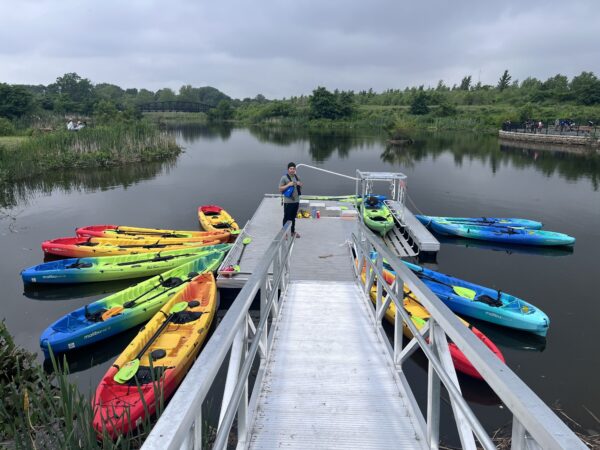
    • $1.2 million for restoration and recreational projects on the Cooper River Water Trail, which is spearheaded by the Upstream Alliance. The money will go toward engaging 3,000 community members through hands-on recreational programming, hiring local youth, and promoting public access on the new trail in Camden County. It will include paddling and fishing programs for the community and create a Friends of the Cooper River Water Trail group.
    • $487,400 for ecological restoration and wildlife habitat improvements at Swede Run Fields in Moorestown, Burlington County, for a project by the township to eradicate invasive species and establish native plant communities within the wetlands, riparian forest, and upland meadow buffers.
  • Gloucester County warehouse project has been undermined by a ‘rogue’ employee and rival firm, lawsuit says

    Gloucester County warehouse project has been undermined by a ‘rogue’ employee and rival firm, lawsuit says

    The developer behind a massive mixed-use project in South Jersey has filed a lawsuit accusing a “rogue” employee of derailing municipal approvals and plotting to steer the property to Rowan University and a rival firm.

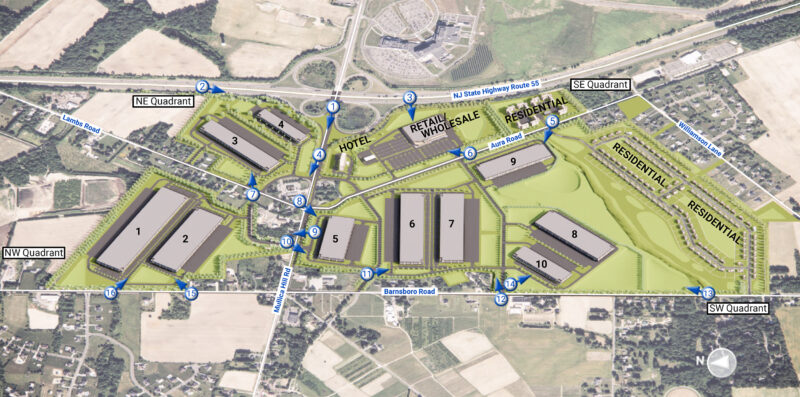
    For more than two years, Seth Gerszberg and his Englewood, N.J.-based firm Active Acquisitions have been pursuing a development at the intersection of Route 322 and Route 55 in Gloucester County including proposals for 10 warehouses, a wholesale retail club, a hotel, and 117 single-family homes.

    An affiliate of Gerszberg’s firm agreed to buy the property — totaling 429 acres, about 29 times the footprint of Lincoln Financial Field — in May 2023 for $23 million from Madison Richwood Village LLC, the suit says.

    But the government approval process hit a snag in recent months, the suit alleges, as Gerszberg’s project manager, Sean Earlen — a land-use consultant, former mayor of Lumberton, and chair of the Burlington County GOP — “leveraged his close personal relationship” with Harrison Township’s mayor, Republican Adam Wingate, “to sow doubt within the township” about the viability of the development.

    Yearslong saga

    It’s the latest twist in a development saga that dates to 2008, when plans for a walkable town center in Harrison’s Richwood section were unveiled, including talk of a new elementary school and liquor licenses for restaurants in what had been a dry town.

    But development efforts went nowhere, and the new push for warehouses — in a region that’s added tens of millions of square feet of warehousing space in recent years to meet demand for online shopping — has faced some resistance from residents in the affluent rural town of 14,000.

    Now those plans could be in question.

    According to the suit, Earlen has been pushing the current property owner, Madison Richwood, to do a deal with Rowan and Ohio-based Fairmount Properties LLC, which has been pursuing a “wellness district” at the university featuring proposals for a headquarters for Inspira Health, a hotel, as well as shops and restaurants.

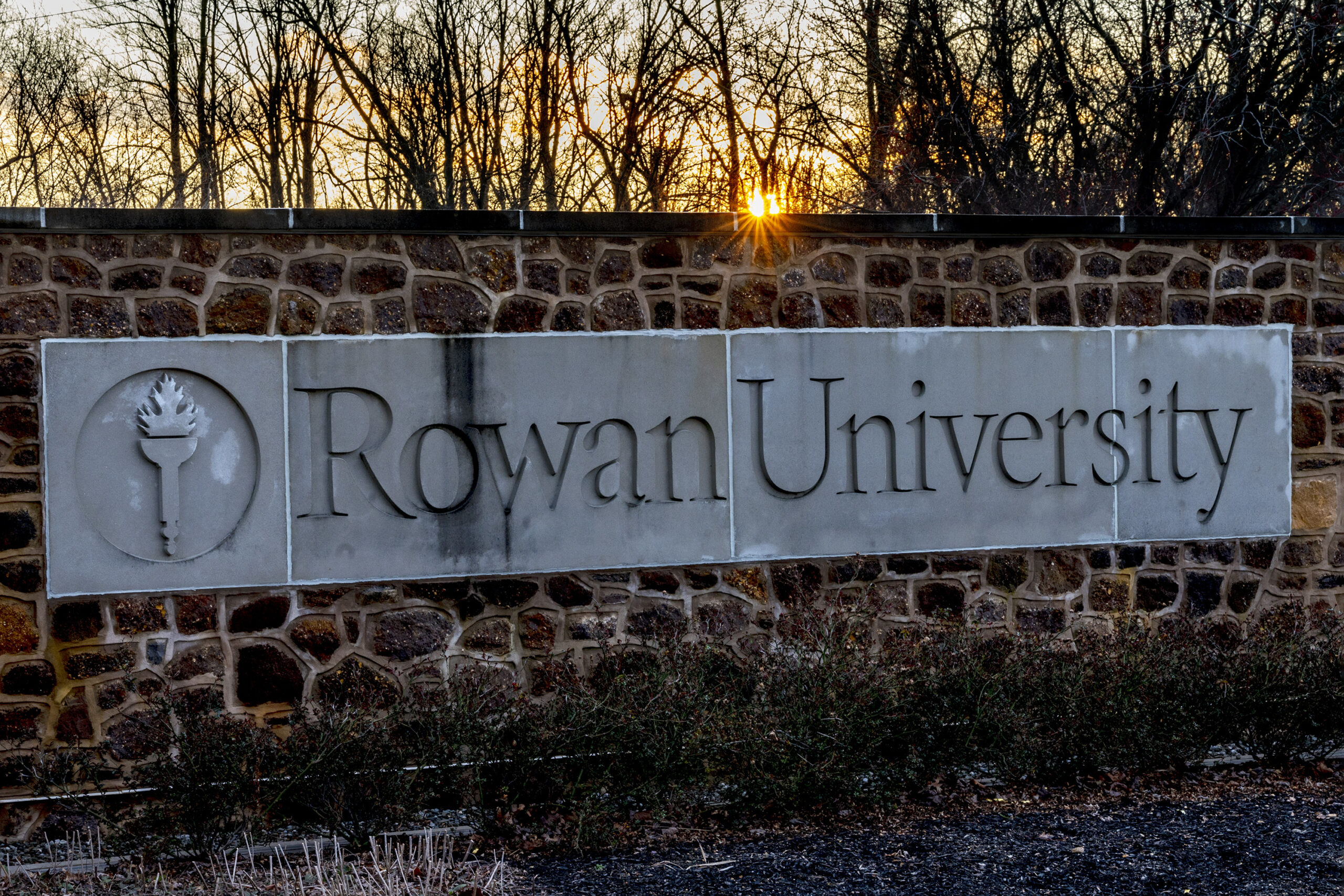
    Rowan University in Glassboro.

    At some point last year Rowan negotiated a deal with Madison Richwood to buy the property for $31 million, plus another $10 million in 2026, the complaint says, in an effort to “fulfill the university’s vision for a comprehensive plan at the Route 55/Route 322 interchange.”

    As the township’s confidence in the warehouse project has eroded, the suit alleges, a neighboring property owner filed a lawsuit in October challenging Active’s government approvals.

    The developer — which has industrial and residential projects across New Jersey — has sunk roughly $4 million to obtain the necessary approvals for the project and $7 million in “consultant and development expenses,” according to court records.

    Gerszberg, who before his work in real estate was cofounder and president of hip-hop fashion brand Marc Ecko Enterprises, didn’t respond to requests for comment.

    What does Rowan say?

    The most recent suit, filed this month in Bergen County Superior Court by Active affiliate ActiveRWHA Property LLC, names Earlen and Fairmount Properties as defendants. It alleges interference with contractual rights, misappropriation of trade secrets, and defamation, among other counts.

    Representatives for Fairmount and Rowan — a public research institution that isn’t a party to the suit — did not directly answer questions about whether they intend to buy the property. Neither Earlen nor Wingate — who took office as mayor last year — responded to requests for comment.

    Randy Ruttenberg, a Fairmount principal, said the suit is “completely without merit” and called it an “ill-advised attempt to disrupt the very straightforward development process we continue to diligently pursue for the benefit of the entire region.”

    “Fairmount Properties is focused fiercely on executing their own world-class development, and no matter what obstacle is placed in our path, we will not be distracted, bullied or deterred,” he said in a statement.

    Joe Cardona, a spokesperson for Rowan, said it would be inappropriate to comment on pending litigation. “Rowan remains focused on its academic mission and on conducting all institutional planning activities responsibly and in accordance with applicable laws and governance standards,” he said in an email.

    Madison Richwood affiliate Madison Marquette — a Washington, D.C.-based real estate investment and operating company — said in court papers that Gerszberg’s concern about a sale to Rowan is “without merit.”

    Madison Marquette “will not sell the property, as defined in the [purchase and sale agreement], to Rowan, Fairmount, or any other entity while the PSA is in full force and effect,” firm president and managing principal William Sudow said in a court filing in a related case that has since been resolved.

  • How much snow, and when will it begin snowing in the Philadelphia region?

    How much snow, and when will it begin snowing in the Philadelphia region?

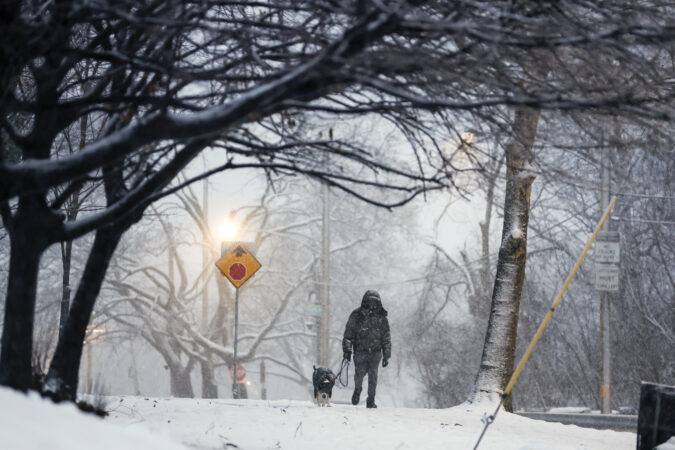
    Philadelphia is expected to see its most significant winter storm in years this weekend, with nearly a foot of snow and ice expected from a formidable low-pressure system sweeping across the eastern United States.

    Official National Weather Service forecasts say six to 18 inches of snow is possible across most of New Jersey and Pennsylvania, including Philadelphia as the storm pushes through the region Saturday night to early Monday morning. More than 21 states are expected to experience at least moderate impacts from the storm, the weather service said.

    Forecasters said that mixing with sleet and freezing rain could hold down overall snow totals across Philadelphia and South Jersey, but the storm is likely to hinder if not halt most travel on Sunday, regardless.

    The National Weather Service puts out forecasts for every few square miles of land in the United States four times a day through a system called the National Digital Forecast Database.

    The maps below display that data. Use it to find how much snow is expected anywhere in the eastern United States. It will show the most recent forecast for the next three days.

    (function () {window.addEventListener(‘message’, function (e) { var message = e.data; var els = document.querySelectorAll(‘iframe[src*=”‘ + message.id + ‘”]’); els.forEach(function(el) { el.style.height = message.height + ‘px’; }); }, false); })();

    A considerable amount of freezing rain and sleet may also fall during the storm, leading to icing concerns. The map below displays the forecast for ice accumulation, or accretion, over the next three days.

    (function () {window.addEventListener(‘message’, function (e) { var message = e.data; var els = document.querySelectorAll(‘iframe[src*=”‘ + message.id + ‘”]’); els.forEach(function(el) { el.style.height = message.height + ‘px’; }); }, false); })();

  • New Jersey officials confirm 2026’s first case of bird flu in a commercial flock

    New Jersey officials confirm 2026’s first case of bird flu in a commercial flock

    Federal and state agriculture officials announced Thursday that they have identified a case of highly pathogenic avian flu on a commercial bird farm in Burlington County.

    The New Jersey Department of Agriculture said in a news release that the case was the first confirmed in the state in 2026.

    The farm’s owner contacted agriculture officials after birds on the farm began dying, and highly pathogenic avian influenza was later found in samples submitted to state officials.

    The farm has been quarantined and no new birds will arrive there until a “thorough cleaning and disinfection” to eliminate the virus, officials said in a news release.

    Health and agricultural officials have been monitoring outbreaks of HPAI in commercial flocks across the country since 2022, including in the Philadelphia area. Though the virus has also spread in dairy cattle elsewhere in the country, it has not been detected in cattle in Pennsylvania or New Jersey.

    HPAI has infected humans, although none in either state, and New Jersey officials said there is little risk to the public.

    Human infections typically occur after close or lengthy unprotected contact with infected birds or cattle, or the places they have touched, officials said.

    People who have had unprotected contact with infected birds should monitor themselves for symptoms for 10 days, including fever, cough, a sore throat, eye irritation or redness, aches, and diarrhea. If symptoms emerge, they should call a doctor.

    Poultry farmers should notify state officials if they notice their birds exhibiting symptoms of avian flu, including coughing, sneezing, lethargy, eating or drinking less, or dying suddenly, officials said.

    State officials said they are also monitoring cases of avian flu in wild birds after “an outbreak of wild bird deaths in various parts of the state.”

    The rise in cases in wild birds, which started in November, affects a number of species of wild birds, “including but not limited to waterfowl, raptors, and scavenger birds,” officials said.

    The New Jersey Department of Environmental Protection asked residents to avoid directly touching sick or dead wildlife. If they find a dead wild bird on their property and want to dispose of it, residents should wear personal protective equipment and thoroughly wash their hands and disinfect non-disposable gear afterward.

    Dead birds should be double-bagged in trash bags with a zip tie and placed in an outdoor trash can that pets or other wildlife cannot access.

  • Long under fire, Pemberton mayor resigns after being called uninsurable

    Long under fire, Pemberton mayor resigns after being called uninsurable

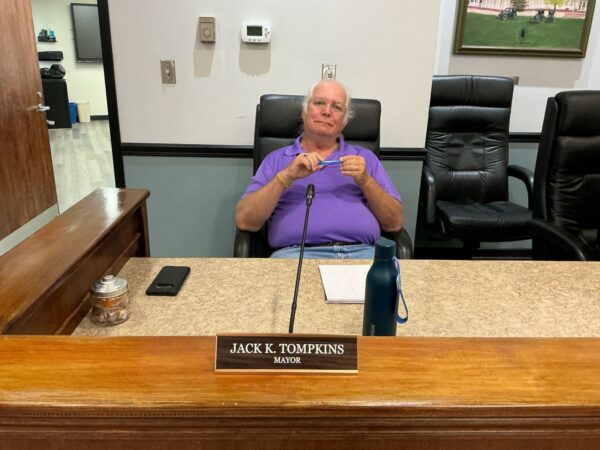
    Former Pemberton Township Mayor Jack Tompkins revealed in a rare interview this week that lawsuits stemming from allegations of misconduct against him made him uninsurable, compelling him to resign to avoid financial ruin.

    The township’s insurance carrier “decided to cancel my insurance,“ said Tompkins, 64, who resigned on Dec. 31. ”They notified me and the township in October. I weighed my options and the smartest thing to do was to resign. Withdrawal of insurance coverage would have financially devastated me.”

    Tompkins, a Republican, was long under fire for alleged sexual harassment and other behavior over the last two years.

    On Wednesday, the five-member township council of the Pine Barrens community in Burlington County — all Republicans — will choose one of three GOP candidates to replace Tompkins. The three candidates were selected by the Republican municipal county committee last week to serve the balance of the year. The committee didn’t release the candidates’ names.

    Tompkins was the subject of a highly critical independent investigation in April 2024 that was commissioned by township officials and conducted by a Hackensack law firm, Pashman Stein Walder Hayden.

    Some of the report’s more serious allegations included inappropriate interactions with female lifeguards under age 18; sexual harassment of the township’s recreation director, who sued Tompkins and the township, winning a $500,000 judgment.

    He was also accused of a pattern of misconduct — such as poking a woman in the head, or discussing rape in township offices — that was sometimes accompanied by obscene language and “retaliatory” outbursts, fostering what the investigators who wrote the report termed a “severe chilling effect” that silenced anyone who felt wronged and allowed Tompkins to continue his aberrant behavior.

    Tompkins said that while he was mayor, he worked in a “toxic environment created by [township] council, and I was walking on eggshells.

    “Things got really ugly and nasty.”

    He added that his time in office left “such a dirty taste in my mouth about politics, I want nothing to do with it anymore.”

    In office since January 2023, Tompkins, 64, a retired Air Force veteran, refused to quit during his tumultuous tenure despite calls from members of both political parties for him to do so, including Gov. Phil Murphy.

    Over time, the township council officially censured Tompkins, whose pay was cut from $13,000 annually to $4,000, to $1.

    Tompkins told The Inquirer on Monday he relented after the Burlington County Municipal Joint Insurance Fund, which covers the township, informed him of their decision to no longer insure him. The fund cited “numerous claims resulting from your interaction with Pemberton Township employees over the past several years.”

    Township officials said last summer that more lawsuits connected to Tompkins were expected.

    In the interview, he said that inappropriate behavior with lifeguards “never happened.” He also said that any alleged misconduct “toward [other] females never happened.” He declined to comment on additional allegations.

    Tompkins said there have been “zero criminal charges” leveled against him. He added, “Everything has been civil allegations, and nothing’s been proven.”

    Asked why these allegations were made in the first place, Tompkins said, “You’re looking for an answer to something I don’t know. I don’t know what they were trying to do.”

    Accused on several occasions of cursing and being harsh to staff, Tompkins explained, “Sometimes when you’re the boss and tell somebody they need to get something done, I guess they wanted me to ask ‘pretty please.’ With my military background, that wouldn’t always happen.”

    Tompkins said he’s survived the experience with the support of friends and family “who knew this was nonsense.”

    Sherry Scull, a former Democratic township council member, has publicly supported Tompkins, and continues to do so. “I’ve never seen signs of him doing what he was accused of,” she said. “I think his resigning is sad.”

    Others contacted this week didn’t agree.

    “This has been a total embarrassment for the town,” said Republican council member Dan Dewey.

    Abby Bargar, Republican municipal chair for Pemberton Township, said, “I always liked Jack, but I think he made some bad decisions. It was the best thing for the party that he stepped down.”

    Throughout town, the reaction to the end of Tompkins’s administration is “overwhelmingly positive,” said Marti Graf Wenger, president of the Browns Mills Improvement Association. Browns Mills is an unincorporated section of Pemberton Township; the association works to improve and promote the area, once a “Gatsby-esque” locale with chic hotels that drew well-off Philadelphians vacationing in the woods, Wenger said.

    She added, “Tompkins treated this town like his dictatorship. There’s just a sense of relief now, a feeling that we can start fresh and hope our leadership will be better.”

    Asked whether lingering resentments will make it difficult to remain in town, Tompkins said he’s not going anywhere.

    “I just want to go into retirement and put this chapter behind me,” he said. “I’ve traveled the world, and I’ve settled here. I once said I’m going to die in this house. So this is where I’ll be.”

  • Bring in the new year with these local hikes, from Marsh Creek to the Pine Barrens

    Bring in the new year with these local hikes, from Marsh Creek to the Pine Barrens

    With First Day hikes surging in popularity, Pennsylvania and New Jersey are rolling out a full slate of outings to welcome 2026 — from daybreak rambles to sunset treks, and nearly every hour in between for those easing into the new year.

    Many of the guided hikes require advance registration and fill quickly.

    The Jan. 1 hikes are offered through the Pennsylvania Department of Conservation and Natural Resources (DCNR) and the New Jersey Department of Environmental Protection (DEP). Some are guided by rangers, others by volunteers.

    For example, you can set out with “Ranger Kim” for a 1.5-mile walk at Marsh Creek State Park in Downingtown, Chester County. Or venture two to three miles through pine barrens at Black Run Preserve in Evesham Township, Burlington County.

    Another option: Join the Friends of Ridley Creek State Park in Media, Delaware County, for a 3.5-mile loop featuring creek views and a stop at historic hilltop Russell Cemetery.

    Or, for a spectacular bird’s-eye view of the Pinelands at daybreak, you can tackle a 2.5-mile round trip, starting at 6 a.m., to Apple Pie Hill in Wharton State Forest, where hikers climb the 79 steps of the fire tower at sunrise. The only drawback: The hike has become so popular that the DEP holds a lottery at 1 p.m. on Dec. 31 to select participants.

    Apple Pie Hill Tower offers a dramatic view of the Pinelands.

    First Day Hikes began in Massachusetts in 1992, and went nationwide in 2012 under an effort by the National Association of State Park Directors.

    Ian Kindle, environmental education regional program coordinator for DCNR’s Bureau of State Parks, said the hikes in Pennsylvania started not long after that. But, he said, they have become increasingly popular since the pandemic, when many people took to the outdoors.

    “I think people have really taken to the idea of making getting outdoors on the first day of the year a tradition.” Kindle said. “I know that some of the first ones I led at Delaware Canal State Park, we could have 100, 150, and upward of 200 people, which is a challenge to lead.”

    Last New Year’s Day, 2,488 people — and 224 dogs — participated in Pennsylvania. They gathered for 74 hikes at 47 state parks and one state forest, accumulating 6,478 miles.

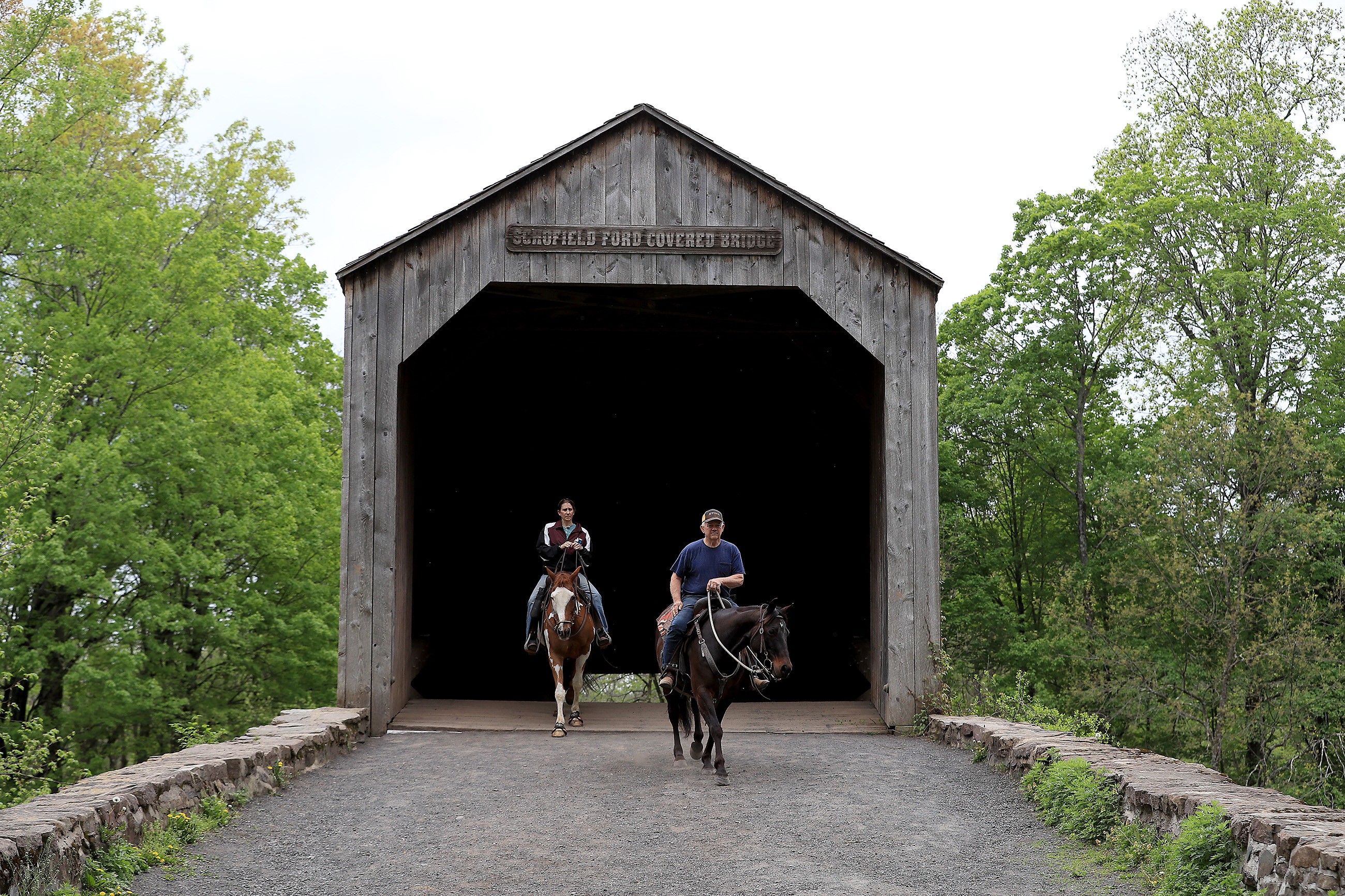
    Cheryl and Gary Moore, of Bucks County, ride their horses over the Schofield Ford covered bridge in Tyler State Park in Newtown, Bucks County in this 2021 file photo.

    The two most attended hikes were at Beltzville State Park in Carbon County in the Poconos (175 people) and Tyler State Park in Bucks County (170 people).

    This year, DCNR has organized 60 free guided hikes in 49 state parks and three forest districts, choosing to make the walks more focused.

    Kindle said an “almost full moon” hike is set for Delaware Canal State Park in Yardley, Bucks County, at 4 p.m. He noted a two-mile hike around Militia Hill at Fort Washington State Park in Montgomery County.

    He said other hikes will take place at White Clay Creek Preserve and French Creek State Park, both in Chester County.

    Here’s a list of all hikes in Eastern Pennsylvania.

    Meanwhile, New Jersey is offering 30 hikes and one lighthouse climb.

    The hikes include: walks at 10 a.m., noon, and 2 p.m. through historic Revolutionary-era Batsto Village in Wharton State Forest; a more rigorous six-mile hike at Brendan T. Byrne State Forest on the Cranberry Trail that includes Pinelands cedar swamps and Pakim Pond; and a two-mile hike at Washington Crossing State Park in Mercer County where you can learn about the famed feat by the Continental Army that routed the Hessians at Trenton.