Ben Vaughn is a man of many moods, and an equal number of career twists.
The Camden County native and radio host’s hourlong show The Many Moods of Ben Vaughn — “broadcasting weekly from the Relay Shack, from parts unknown” — airs Saturdays at 6 p.m. on WXPN-FM (88.5). It’s also heard on 19 other stations in the U.S. and one in France.
The singer-guitarist has released 20 albums, starting with his 1986 debut, also called The Many Moods of Ben Vaughn, and including one, 1997’s Rambler ’65, recorded entirely in his car.
His collaborative album with Providence, R.I.-based band and Ben Vaughn fanboys Deer Tick is due in October, and his first U.S. tour in nearly three decades will follow. (He plays regularly in Spain, France, and Italy.)
In the 1990s, the Mount Ephraim-native moved to Los Angeles and worked as a music composer for the hit TV sitcoms 3rd Rock From the Sun and That ‘70s Show. His credits as a record producer include legends and eccentrics such as Charlie Feathers, Alex Chilton, Los Straitjackets, Nancy Sinatra, and New Hope duo Ween.
Along the way, he’s accumulated a lifetime of stories, from his encounter with Billy Joel’s hippie band Attila in Philly head shop 13th Street Conspiracy to playing harmonica with Lynyrd Skynyrd at the Spectrum in the 1980s.
Ben Vaughn’s new podcast with Laura Pochodylo is “Straight From the Hat.”
This week’s episode of the pod, which debuted in January with episodes released every other Thursday, concerns a subject dear to Vaughn’s heart. Philly DJ Jerry Blavat — the Geator with the Heater, the Boss with the Hot Sauce — was Vaughn’s “mentor without knowing it” for years until the two became close friends and then collaborators late in the life of Blavat, who died in 2023 at 82.
Straight From the Hat took shape because Sonny Bono brought Vaughn and Pochodylo together.
In 2022, Vaughn was digging into the Sun vaults to curate a compilation for the storied label’s 70th anniversary. With songs by Feathers, Harmonica Frank, and the Prisonaires, it shows the flair for unearthing musical gems that Vaughn displays in the 552 Many Moods episodes that have aired since launching on Valentine’s Day 2009. (Over 300 are available on podcast platforms.)
Speaking from Many Moods headquarters near Joshua Tree in California’s Mojave Desert, Vaughn says that “even though she’s a lot younger than me” — he’s 70, Pochodylo is 33 — “her record collection is almost identical to mine.”
They bonded over “non-ironic appreciation” of Bono, the late singer, actor, and politician famed for his work with his wife Cher. Bono also wrote songs recorded by Sam Cooke, Jackie DeShannon, and the Rolling Stones. Pochodylo calls herself “a Sonny Bono evangelist.”
Vaughn told Pochodylo stories about musicians in Sun Records’ collection who he had worked with.
“And then we came up with the idea to write all these names down and throw them in a hat. She picks one out, and I say whatever comes to mind. No preparation, no planning.”
In this week’s episode, Pochodylo pulls out Blavat’s name, and Vaughn has plenty to say about the Philadelphia life force he first felt at age 10 in 1965, when he tuned into Blavat’s afternoon TV show The Discophonic Scene.
“I started going to these dances he would put on at gymnasiums and Knights of Columbus Halls,” Vaughn said. “The first song I ever played lead guitar on in front of an audience was ‘Sheba’ by Johnny and the Hurricanes because the Geator was using it as a theme song.”
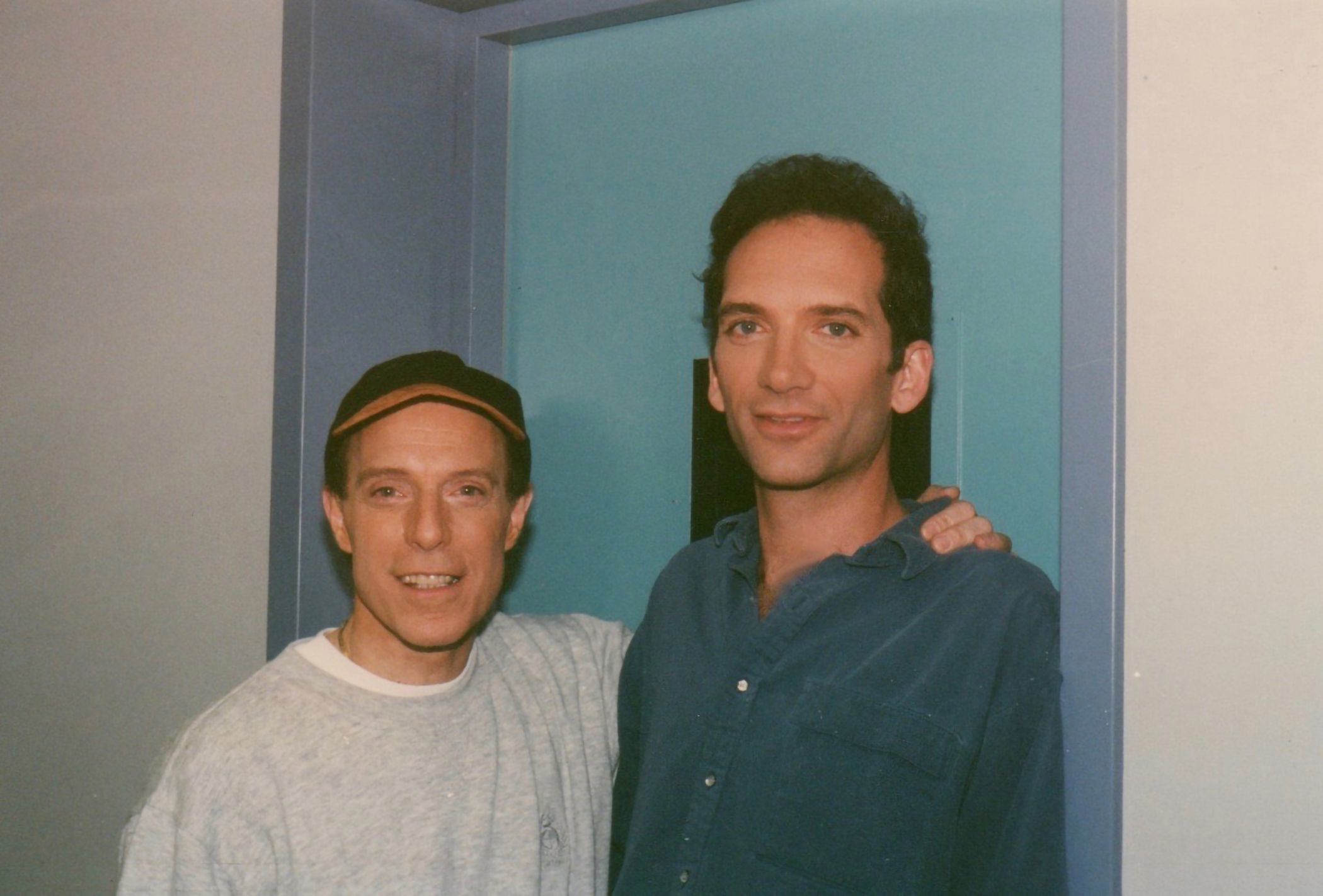
Jerry “The Geator” Blavat with Ben Vaughn in 1997.
Vaughn played drums in his first band when he was 12, and got a South Jersey musical education at Blavat package shows seeing vocal groups like the Dells and Delfonics.
A Four Tops performance at the Steel Pier in Atlantic City “spoiled me,” he said, “because the Four Tops were one of the most professional acts in the history of entertainment. So everything was perfect.
“And then I saw Canned Heat [at the Pier], and I remember they were very high, and couldn’t keep their guitars in tune because of the salt air. I remember thinking: ‘There are several ways to go as an entertainer, and this is one way I will never go!’”
The free-form nature of The Many Moods, which last week featured songs under two minutes by artists like Francoise Hardy, Bob Dylan, and Nina Simone, was shaped not by Blavat but by early 1970s Philly DJs like David Dye and Michael Tearson on WMMR-FM (93.3).
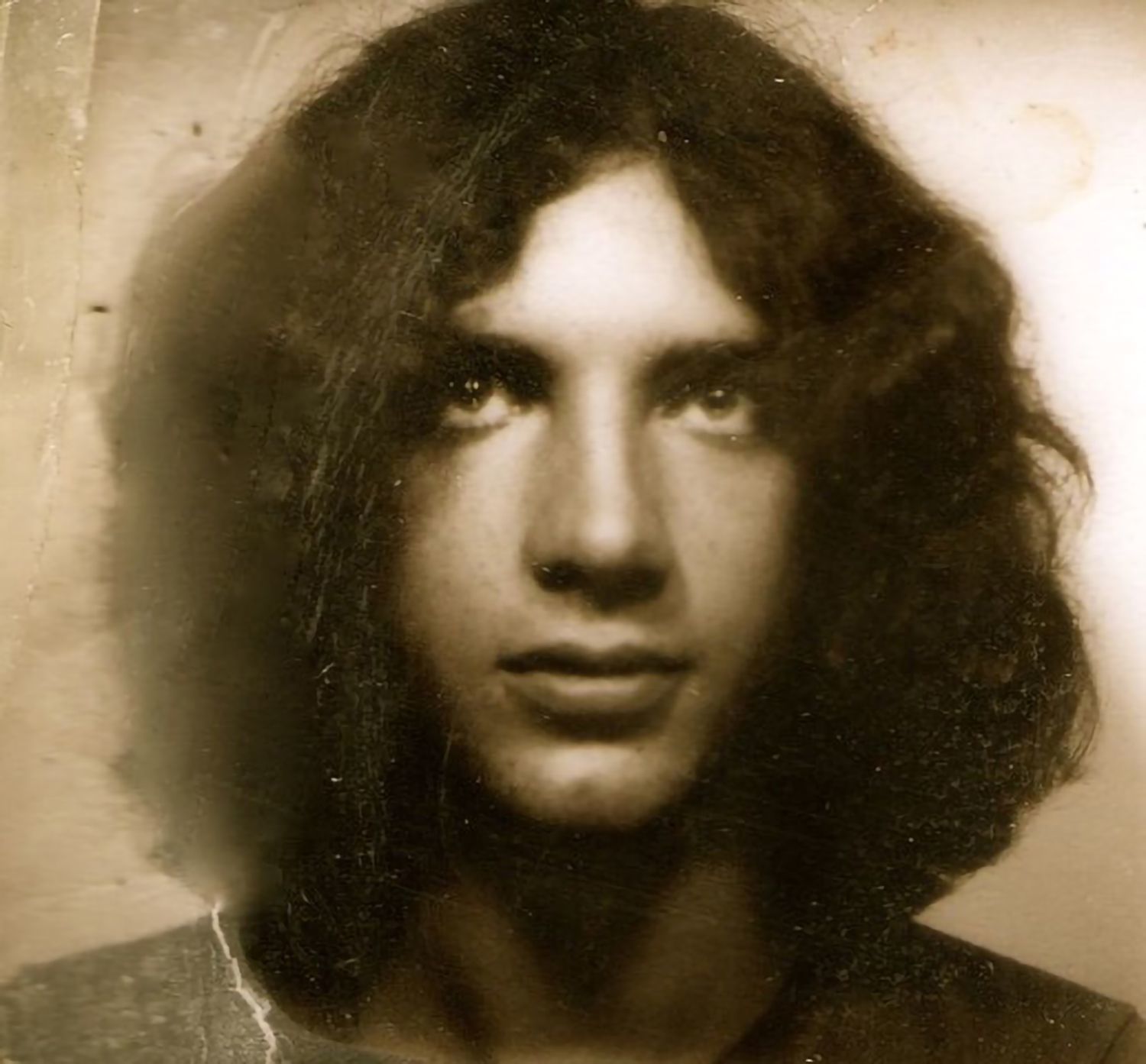
Ben Vaughn in Philadelphia in the summer of 1970.
But the unstoppable self-confidence and business acumen of Blavat, who Vaughn got to know in the 1980s, shaped Vaughn’s career.
“There was a way the rest of the world did things, and a Geator way,” Vaughn said. “He told me I should own my own show, which I do.” Blavat emphasized self-belief. Whatever Vaughn did would have value, as long as it was truly unique.
“The Geator would buy time on the radio, and sell ads himself. I would drive around with him to pizzerias and shoe stores and car dealerships and watch him. And then we’d drive away with a car with his name on the side. The Geatormobile!”
Philly musicians in future Straight episodes include “Mashed Potato Time” singer Dee Dee Sharp and rock and roller Charlie Gracie, who befriended Vaughn in the 1970s at the Mount Ephraim club Capriotti’s, where Gracie was nightly entertainment and Vaughn a dishwasher.
“I watched it and you can hardly hear me. But I show up in the close captions and they spell my name right. So that’s a victory.”
In 2021, Vaughn helped Blavat move out of his office on East Market Street and found unopened letters from 1964 with song requests to play on Blavat’s WCAN-AM (1320) radio show. Blavat and Vaughn opened them on air on XPN in 2021 in a show called The Lost Dedications.
“The Geator created something that never existed before,” Vaughn said. “Geatordelphia! It was a subculture. The way he talked, the kind of records he played, the way he had of communicating with the audience.
“He connected so many human beings, and made everybody feel good. He made us all feel like we were better looking than we really were. Only South Philly could have produced a guy like him. It didn’t make sense to anyone outside of a 90-mile radius. The Jersey Shore, Trenton, Wilmington, that’s it.
“That was the great thing about doing the podcast. Laura is originally from Detroit, and she didn’t know anything about the Geator. And trying to explain the Geator to an outsider is an amusing thing.”
“Straight From the Hat” episodes are at straightfromthehat.com and on all podcast platforms.
At least 1,100 dead or sick birds, mostly Canada geese, have been reported across New Jersey in an outbreak that started on Valentine’s Day, according to state officials.
At least 50 geese have died at Alcyon Lake in Pitman, Gloucester County. Officials have closed the lake and the adjoining Betty Park out of precaution.
The fish and wildlife division within the New Jersey Department of Environmental Protection (DEP) and the U.S. Department of Agriculture are tracking them as suspected cases of highly pathogenic avian influenza (H5N1), or bird flu.
Bird flu is not new. But it began to spread in the U.S. in January 2022 and has infected wild and domestic birds in every state.
While bird flu can infect humans, the U.S. Centers for Disease Control and Prevention has said it is primarily a threat to animals and poses little risk to the public.
State officials say large numbers of dead geesemay be concentrated in areas where birds gather to look for open water as ice melts. They said that the 1,100 dead or sick wild birds were reported between Saturday and Monday.
Where have dead geese been found?
The DEP says it has received reports of dead Canada geese in South Jersey, including in Hainesport, Burlington County; Sicklerville, Camden County; and Pitman.
Annmarie Ruiz, Gloucester County’s health officer, said the dead geese were noticed in Pitman on Tuesday. She said that there were probably more than 50 at Alcyon Lake, but that there were reportsof dead geese elsewhere in the municipality.
“Right now, we have to presume that it is bird flu based on the signs the birds were exhibiting,” Ruiz said.
The New Jersey Department of Agriculture took some of the birds for testing. The results could take weeks, she said.
“Right now, we’re just erring on the side of caution,” Ruiz said.
Ruiz said workers use face shields and gloves when handling the birds, which are triple-bagged before being disposed.
She said people can report sick or dead wild birds to Gloucester County animal control at 856-881-2828 or the DEP at 877-927-6337.
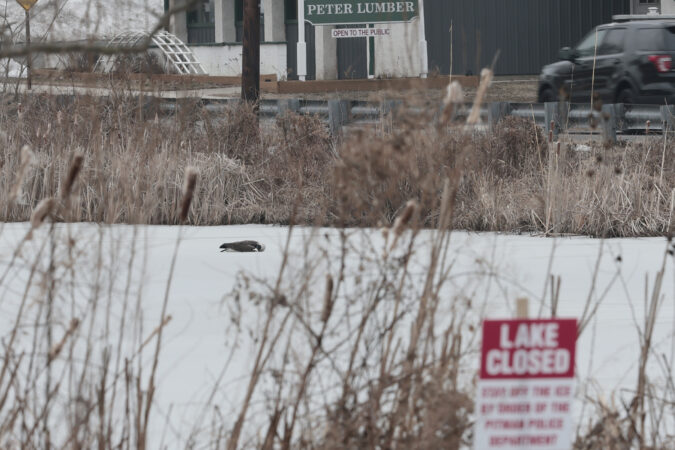
A lifeless bird lays on the ice at Alcyon Lake in Pitman, N.J. on Wednesday, Feb. 18, 2026. Two adjacent parks, Betty Park (in background) and Alcyon Park (not in photo) are closed as a result of the mysterious birds deaths.
Caryelle Lasher, Camden County’s health officer, said there have been only a small number of reports of dead birds in the county.
Those were concentrated in the lake off Mullen Drive in the Sicklerville section of Gloucester Township, she said.
Overall, however, the county has not seen a spike in reports, she said.
Ruizand Lasher — as well as state officials — stress that people should not touch sick or dead wildlife of any kind. And they should keep pets away.
Even though the risk is low, the potential for human infection exists.
H5N1 is a respiratory bird disease caused by influenza A viruses. Wild birds, such as ducks, gulls, and shorebirds, can carry and spread these viruses but may show no signs of illness, according to the DEP.
The disease can kill domestic poultry such as chickens. Typical symptoms include diarrhea, nasal discharge, coughing, sneezing, and incoordination.
It continues to infect not only birds, but also mammals.
Tips to prevent infection:
Do not touch sick or dying animals, or bring them into your home.
Keep pets away from them, as well as away from droppings.
Wash hands frequently if you are near wildlife.
Do not eat undercooked eggs, poultry, or beef.
Prevent cross-contamination between cooked and raw food.
I was cranking out the newsletter in Tuesday’s predawn darkness when we learned that the Rev. Jesse Jackson Sr., who’d been our greatest living bridge to the civil rights heroics of the 1960s and ‘70s, had died at age 84. Covering his groundbreaking 1984 campaign as a cub reporter at the Birmingham News is still a career highlight four-decades-plus later — a memory that was reinforced recently listening to Abby Phillip’s excellent new book on Jackson. He leaves us right when his victories for African Americans in arenas such as corporate hiring and college admissions are under attack, and it challenges us to fight to preserve them. RIP to an American original.
How ICE protest by ‘an average Joe’ from Haddon Heights went viral
“I never want to see a child run away from our own government again,” said this self-described first-time protester, Joseph Zobel from Haddon Heights, at a rally in Lindenwold, N.J., the day after children ran from a school bus stop after ICE appeared to conduct an operation in the area.
Last Friday, “an average Joe who grew up in Haddon Heights” named Joseph Zobel was at work when he saw a viral video from the nearby South Jersey town of Lindenwold that shocked the nation, and shocked him.
The clip from a Ring doorbell camera showed a gaggle of fourth and fifth graders running in a panic, screaming, “ICE! ICE!” as masked federal immigration agents had approached their morning bus stop the day before.
“I just thought, ‘How can that be happening here in the United States?’” Zobel told me Monday in his first media interview, conducted by email. When he got home from work, he saw online that the group Cooper River Indivisible was holding an “ICE Out” protest at the Lindenwold municipal building at 4 p.m.
He looked at the clock. It was 3:58.
“Something inside of me said, ‘Go up there and stand with these people,’” said Zobel, a 36-year-old school coach who said he’s never been to a protest before in his life. “I wanted to stand for what is right.” As he dashed out, Zobel also grabbed one thing — the American flag he flies in front of his house most of the time (except during football season, when an Eagles flag replaces it).
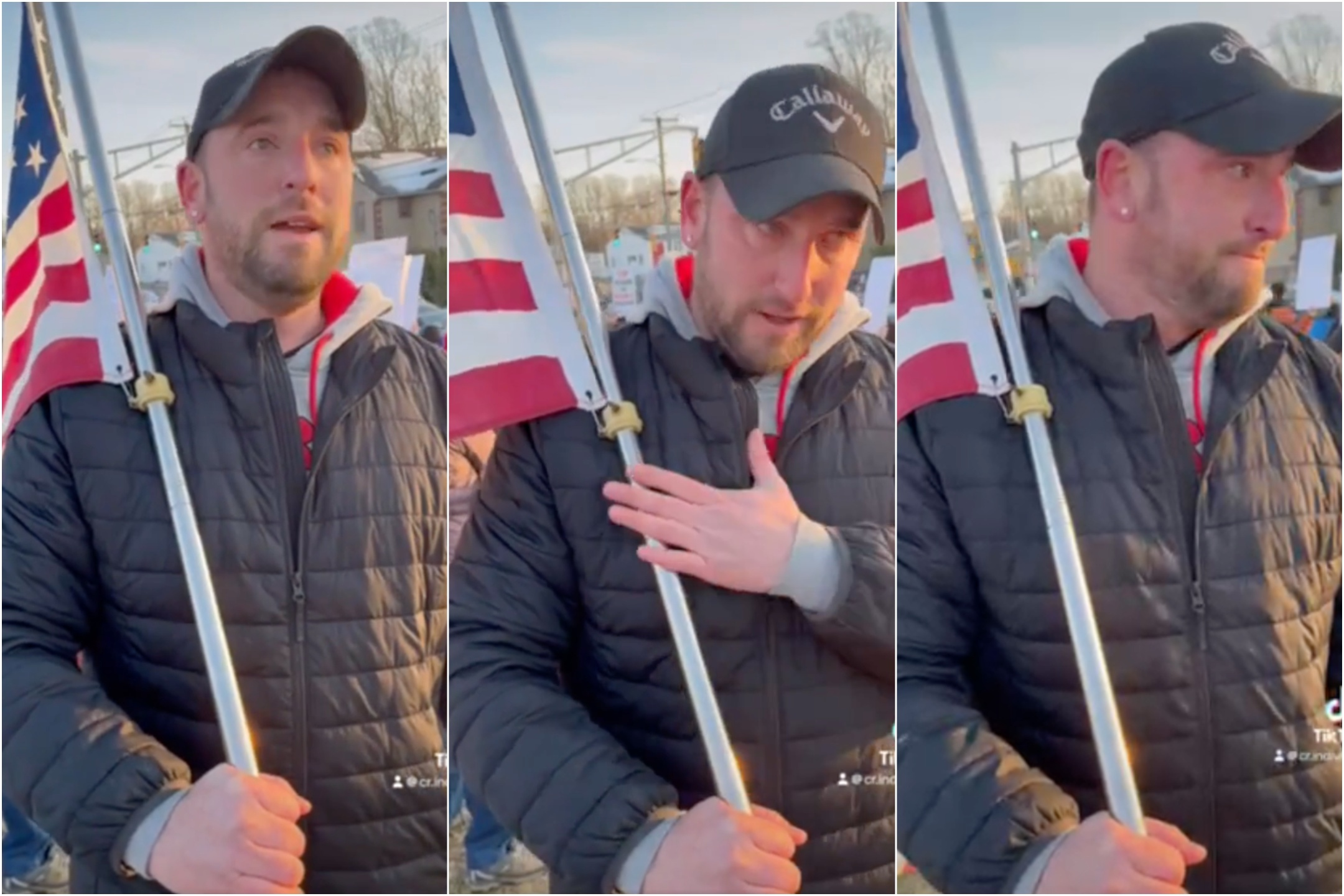
As many as 300 people were at the protest, as Indivisible organizer Amber Clemments asked the flag-bearing Zobel if he’d be willing to film a video. Zobel’s raw emotion, choking back tears as he said, “I watched fourth- and fifth-grade kids run away from our own government,” soon ignited across social media over the long Presidents Day weekend.
By Tuesday morning, the 47-second clip of Zobel had been watched an astronomical 2.9 million times on TikTok — and liked by some 709,000 viewers — even as it also went viral on Bluesky, X, Threads, and other social media platforms.
It’s not hard to understand why. Zobel, who described himself as a patriotic regular voter but never very political, instantly became the bearded, baseball hat-wearing, anguished face of a new American majority — an Everyman shocked into action by the horror of immigration raids, wondering how best to protect his neighbors.
The two South Jersey viral videos — the one depicting the raid itself and Zobel’s raw reaction — revealed how both the terrorizing tactics of masked immigration cops and the powerful reaction from often nonpolitical Americans, dubbed “neighborism,” are spreading far beyond the Minnesota tundra where this battle was initially met.
Indeed, local activists say Lindenwold — last stop on the heavily traveled PATCO line, just over 15 miles southeast of Philadelphia — has been under a relentless siege from U.S. Immigration and Customs Enforcement (ICE) and other federal agents since last spring, not long after Donald Trump became president. The transit hub has become a magnet for immigrants in recent years, with a local school population that is just under 60% Latino.
Craig Strimel, a leader of Cooper River Indivisible, a local chapter of the group that organized the large “No Kings” protests, said activists first learned of the ICE activity when a Lindenwold immigrant couple escaped agents last year by taking refuge in the local high school, where the principal blocked the feds at the doorway. Since then, Strimel said, ICE watchers have seen frequent activity in and around a cluster of five apartment complexes with large immigrant populations, but few known arrests.
“It was becoming apparent early on that this was all about creating terror,” said Strimel of the frequent ICE sightings. Some local residents stopped leaving their apartments, he said, and a once-popular restaurant in Lindenwold just closed its doors amid rumors that the couple that owned it has returned to Mexico.
All of this set the stage for last Thursday, when masked federal agents wearing tactical gear arrived early in the morning at Lindenwold’s Woodland Village Apartments just as 44 elementary school kids were waiting for their school bus. The sighting triggered a panic that saw some kids running away and others frantically hustling onto the bus as the driver arrived. No one was apprehended or reported hurt.
On Monday, U.S. Department of Homeland Security officials said the agents went to the complex hoping to arrest a Honduran immigrant who’d once been convicted of aggravated assault. The man was not taken on Thursday and remains free.
Although some outlets reported the large protest was in response to the high-profile raid — which has been covered by the CBS Evening News, MS Now’sMorning Joe, and elsewhere — that took place just a day and a half earlier, the rally actually had been in the works for several weeks.
It had been organized by a young woman from Lindenwold named Tatiana — a 20-year-old business major at Camden County Community College who spoke with me Monday on the condition that I not use her full name — who’d been seeing the ICE activity in her hometown and felt it was time local people spoke out.
Tatiana told me that the idea behind the Lindenwold protest was “to give the community a voice — to be able to say, ‘No, we don’t stand for this.’ That’s the most important thing for me. It’s just bringing community together and deciding we’re not OK with this at all.” But she agreed the bus stop raid had given the event a boost from residents believing “that children should not be scared of federal law enforcement.”
Zobel was one of those neighbors. In the email interview, he described himself as “just your average Joe who grew up in Haddon Heights.” He did volunteer that he’s voted in every election since he turned 18, and that his first ballot was cast for Barack Obama, “and I felt proud walking out of the booth that day.”
Fittingly, Zobel sounded somewhat Obama-esque when he described his dismay over America’s bitter partisan divide. “We as a nation are so angry with one another, and that makes me so sad,” he said. Not surprisingly, he’s as stunned as anyone at the millions of views for Friday’s video, and somewhat concerned about the impact, saying, “I just hope this video does not divide people.”
But Zobel’s words and teary-eyed emotion went viral because it was such a shot of hope — that in a moment when hate is on public display in the streets of the United States, “your average Joe” who’d once stood on the sidelines is now grabbing the American flag and taking the field to fight for their neighbors. An authoritarian movement dependent on rage simply never counted on the brotherly love that sent this nonpolitical Eagles fan to his first protest.
It might not be his last. “I am always happy,” he said, “to help support humanity.”
Yo, do this!
With several inches of snow still on the ground, it might shock you to hear this, but American soccer is back! The Philadelphia Union — despite winning the 2025 Supporters Shield and boasting Major League Soccer’s best winning percentage in the 2020s — radically shook things up during the offseason. With new strikers Ezekiel Alladoh and Agustín Anello looking to amp up their attack, the Union’s quest for the CONCACAF Champions Cup begins Wednesday in Trinidad against Defence Force FC at 6 p.m. on FS2. Saturday night at 7:30 p.m., it’s back to the chillier climes of Washington for the MLS opener against DC United on Apple TV (with no need in 2026 for an additional Season Pass subscription, as in past years).
In the quest for what’s new in American popular culture, sometimes we take for granted the established jewels in our midst. I’ve long felt that MS Now’s 9 p.m. (now just on Monday nights) host Rachel Maddow is our best TV commentator because of the way she weaves the historical past into the headlines of America’s tortured present. But since last summer, she has upped her game. Maddow’s coverage of two stories underreported in most of the mainstream media — grassroots resistance to the Trump regime, and now the push for a nationwide network of warehouse concentration camps — has created appointment television every Monday.
Ask me anything
Question: What is your take on the latest CBS censoring of [Stephen] Colbert? — @bcooper82.bsky.social via Bluesky
Answer: Another Tuesday morning breaking story on deadline: The CBS overseers of Late Night with Stephen Colbert — the top-rated talk show that’s nevertheless ending this year in what critics see as genuflecting to the Trump regime that the program frequently mocks — would not air a recorded interview with Texas state lawmaker and Democratic Senate primary candidate James Talarico. The backstory here is that the Federal Communications Commission has long exempted late-night talk shows from its equal time rule about political candidates on licensed broadcast outlets, but last month, FCC chair Brendan Carr — a pro-Trump MAGA pit bull — said this is changing. That apparently was enough for CBS’s new Trump-friendly management, which would not broadcast the interview (available on YouTube, now certain to get more views than if it hadn’t been censored). This new flap just highlights what a perilous moment this is for the First Amendment and American democracy writ large. Government limits on what viewpoints you can see or hear are a sign of dictatorship, full stop.
What you’re saying about …
Last week’s question about a winning Democratic strategy for the 2026 midterms drew a robust response, and almost all of the replies were thoughtful and nuanced. If there was a consensus, it was that Democrats should tailor their candidates to the divergent views of the congressional districts they hope to win. As Naomi Miller stated, “I think progressive candidates should run in progressive districts, and mainstream democrats in mainstream, purple, and red districts.” Still, a number of you think America’s bad experience with MAGA extremism means a sharp left turn is warranted in response. “I’d like for the Democrats to become more progressive and combative toward Trump than they already are,” wrote Benjamin Spohn, voicing an opinion many share these days.
📮 This week’s question: Tuesday’s passing of the Rev. Jesse Jackson is one more reminder that many icons of America’s tumultuous 20th century are disappearing. So who do you think is the current greatest living American, and why? Please email me your answer and put the exact phrase “greatest living American” in the subject line.
Backstory on the main reason the media is not trusted
Exterior images of CNN headquarters in Atlanta and the New York Times Building in Manhattan.
It’s rare these days to write something that everyone can agree on, but here goes: Public trust in the media has never been lower than it is today. How low? A Gallup poll last fall found that public trust in the ability of newspapers, TV, and radio to fairly and accurately report the news had plunged to 28%, the lowest ever recorded. Why? It’s complicated. The people’s faith in every major institution has declined in the 21st century, after all. And it’s clear that in a deeply divided America, rage against the media machine looks different from the left than it does from the right.
This weekend, in a New York Times piece largely about the broken promises of one media-mogul billionaire — Washington Post owner and Amazon founder Jeff Bezos — columnist Lydia Polgreen put forth an explanation for sinking media trust that jibes with a lot of what I’ve witnessed since graduating into full-time journalism back in 1981. I believe it’s not the only reason — but the biggest, and maybe the most misunderstood.
Polgreen noted that the common theory for the public turning against Big Media — that journalists grew more partisan and biased after the tumult of the 1960s and ‘70s — doesn’t comport with the bigger reality. The era that peaked with the publication of the Pentagon Papers and the Watergate scandal launched a decades-long golden era of profitable news organizations spending big on investigative and accountability journalism — exactly what viewers and readers claimed they wanted.
Yet, trust declined as that happened. Polgreen cited a study in the late 1990s that compared then-contemporary media to 1960s newspapers and found the earlier times were “naïvely trusting of government, shamelessly boosterish, unembarrassedly hokey and obliging.” Polgreen wrote that moving “away from deferential stenography and toward fearless investigation … led to declining trust in the news media. Aggressive, probing and accountability-oriented journalism held up a mirror to American society — and many Americans didn’t like what they saw.”
I think this explanation is spot on, but before readers jump all over me, let me quickly add a couple of caveats. Starting way back in Ronald Reagan’s 1980s, there was also a response to the growing backlash — especially in elite, Beltway journalism — that resulted in too much groveling to authority, and thus stenography around government lies like the 2003 Iraq War. This has only gotten worse with the current wave of billionaire owners like the Post’s Bezos. This means many liberals now also distrust the media, but not for the same reasons as conservatives, who’ve long loathed journalism for probing America’s inequities around race or gender.
The explanation offered by Polgreen jumped out at me because it fit with what I explored in my 2022 book, After the Ivory Tower Falls, which looked at Americans losing trust in another large institution: colleges and universities. The liberal ideas that were nurtured on campuses in the postwar college enrollment boom — including the civil rights movement — triggered the same grievance-filled, largely white working-class backlash as did journalism about social injustice. Today, the only road back for the media is to hold the powerful to account — and understand that not everyone is going to like it.
What I wrote on this date in 2022
People can’t say they didn’t see America’s current crisis coming. On this date four years ago, I expressed my shock and amazement that little more than one year beyond Donald Trump’s attempted coup to stay in power, the right-wing’s creation of a political fantasy world was spiraling out of control, with lies about Hillary Clinton spying on Trump’s 2016 campaign and Joe Biden giving out free crack pipes (?!!). I wrote, “[Historian Ruth] Ben-Ghiat told me that the failure of the Jan. 6 insurrection only forced the GOP to double-down on embracing alternate realities, because ‘they have to reckon with the fact that [Trump] lost, that he’s no longer the leader.’”
There’s been no rest on themass deportation beat. In my Sunday column, I looked at the out-of-control lying from the Trump regime, with unbelievable fictions about everything from shootings and rampant brutality by masked immigration officers to Commerce Secretary Howard Lutnick’s whoppers about his friendship with Jeffrey Epstein. I argued that government lying is fundamentally unconstitutional and that the perpetrators need to be punished, including prison time. Over the weekend, I wrote about how, while Minneapolis was a victory for the forces resisting American authoritarianism, that won’t stop Homeland Security from putting thousands of new officers on the street and expanding its concentration camps. The fight for the soul of the nation has only just begun.
What was I saying higher up in this newsletter about accountability journalism? Ever since Lyndon B. Johnson’s Great Society push in the mid-1960s, community nonprofits have been a valuable source of urban renewal, yet aresometimes dragged down by waste, fraud, and abuse. It’s a problem that sadly persists, as shown last week by a major Inquirer investigation into Philadelphia’s NOMO Foundation, one of the best-funded nonprofits attacking youth violence and crime. Ace reporters Ryan W. Briggs and Samantha Melamed found that the foundation has received more than $6 million in public funds in recent years, but faced an IRS lien and eviction lawsuits while it was forced to close its housing program. This is why we have a First Amendment, so that a free press can report on the problems a corrupt or inept government refuses to deal with. Subscribing to The Inquirer gives you access to this type of essential journalism, and you’ll also feel good about supporting this vital work.
By submitting your written, visual, and/or audio contributions, you agree to The Inquirer’s Terms of Use, including the grant of rights in Section 10.
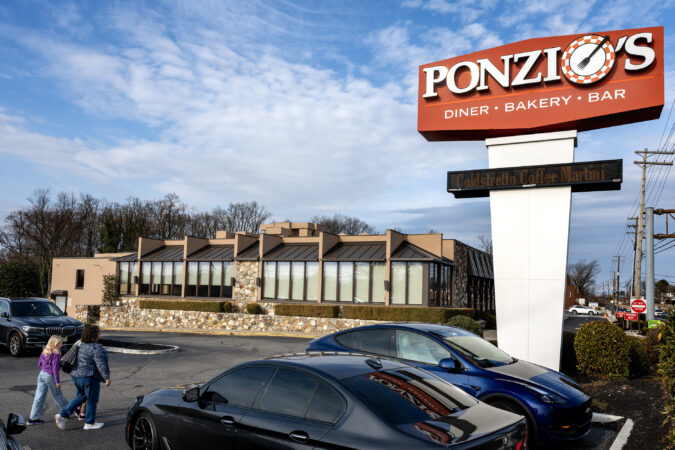
In recent years, a string of the state’s iconic diners have shuttered their doors. New state legislation aims to keep the lights on at those still in business.
The bill, which was introduced in the New Jersey Senate in January, would provide some diners and other historic restaurants with tax benefits.
“Diners, and specifically historic diners, are a cornerstone of our great state, having served residents and visitors for many decades. They are part of our culture and our history, and we have a duty to help them thrive,” State Sen. Paul Moriarty of Gloucester County, a sponsor of the bill, said in a statement Thursday.
The legislation, which would establish a registry of historic diners and restaurants, would give the businesses a tax credit of up to $25,000. Only diners and family-owned restaurants operating for at least 25 yearswill qualify.
The bill has been referred to the Senate Budget and Appropriations Committee.
“It has been heartbreaking to see so many of these well-known establishments close or dramatically cut their hours,” Moriarity said.
Where have diners closed in New Jersey?
The origin of the modern diner can be traced back to a horse-drawn lunch wagon in 19th-century Rhode Island and the model has evolved since then. New Jersey has been coined the “diner capital” of the U.S. but has seen closures in recent years due to increased operating expenses, the challenge of finding employees, and the impact of the pandemic.
The Cherry Hill Diner closed in 2023 after 55 years in business and following the co-owner’s unsuccessful search for a buyer. South Jersey’s Gateway Diner in Gloucester County closed that same year amid construction of the Westville Route 47 Bridge and the state’s acquisition of the site. The Red Lion Diner in Burlington County also sold, making way for a Wawa.
In January 2024, the Star View Diner in Camden County closed. Last year, the Collingswood Diner shut its doors in August, to be replaced by a marijuana dispensary.
The trend extended in Philadelphia where the Midtown III closed in 2020. Last year, the Mayfair Diner in Northeast Philadelphia was listed for sale.
Shareholders of Camden-based American Water Works and Bryn Mawr-based Essential Utilities, which owns the Aqua water and sewer companies, voted overwhelmingly Tuesday to merge and create a combined company with nearly $30 billion in yearly water and sewer sales.
More than 99% of the 161 million American Water shares that were voted were cast in favor of the deal, the company told the Securities & Exchange Commission. Essential’s online proposal to merge was approved by around 95% of voting shareholders.
The planned combination of these rivals, which have competed for more than 100 years to manage water and sewer for the small number of U.S. communities that allow for-profit operators, still needs approval from state public utility commissions.
The combined companies’ sales are concentrated in Pennsylvania and New Jersey. In suburban Philadelphia, Aqua serves West Chester, northern Delaware County, parts of Lower Bucks, and Main Line communities. American Water serves Abington, King of Prussia, Norristown, Phoenixville, and nearby towns.
New Jersey American Water serves towns along the PATCO rail line in Camden County, in northern and central Burlington County, and in Shore communities such as Absecon and Ocean City. Aqua New Jersey has customers in the three suburban South Jersey counties and at the Shore.
American Water’s 14 million U.S. customers include systems in 12 other states, and on 18 U.S. military bases. Essential has around 3 million customers, including systems in six other states,and Pittsburgh-based Peoples Gas, which serves 750,000 in western Pennsylvania and Kentucky.
American Water is already the nation’s largest private operator of water and sewer systems, and the deal will make it a larger player in competition with Florida-based NextEra Water Group and France-based Veolia’s U.S. operations, among other private systems that have been seeking to expand.
A separate vote on an Essential executive pay package drew some opposition, with 85%approving.
That package included more than $17 million in severance compensation and stock grants for departing Essential CEO Christopher H. Franklin, plus medical benefits and up to three years’ professional assistance helping him land another job, plus millions more for his four top deputies.
The merged company’s larger size, as big as many of the leading natural-gas companies that dominate utility stock-index funds, will boost its visibility to investors, John C. Griffith, the American Water chief executive who will run the combined companies, said in announcing the deal last fall.
The companies disclosed the approvals Tuesday afternoon and said more details on the vote and their plans would come later this week.
Deal backers say the combination should enable Griffith to cut management costs, boost profits, drive up the share price, and could ease pressure to keep raising water rates.
Regulators in New Jersey and Pennsylvania are weighing the company’s latest rate increase requests. American Water’s New Jersey affiliate is asking the state Board of Public Utilities for an average 10% water and 8% sewer rate hike on Jan. 16 for 2.9 million customers, which it said would fund improvements to aging water and sewer systems. Customers would pay an average of $18 more a month.
Pennsylvania’s Public Utility Commission said last month that it would consider the company’s request to boost water and sewer rates on 2.4 million customers by an average 15%, or $20 a month.
Critics had urged Essential to seek rival buyers to drive up the share price and shareholder profits from the sale, noting that both stocks had dropped after the merger was proposed last year.
Tim Quast, founder of Colorado-based ModernIR, a consultant the companies hired to help explain the merger, said share price declines are now typical, even for merger-target companies like Essential whose shares command a premium from buyers like American Water because index-fund investors such as Vanguard and BlackRock tend not to buy more shares of merging companies until a deal is completed.
Even after long competition from U.S. and foreign utility owners, private water companies serve only about one in six Americans. In recent years, customers of public utilities serving parts of Chester, Delaware, and Bucks Counties have defeated privatization campaigns, though some towns in Pennsylvania and New Jersey have signed on. Pennsylvania also has asked private operators to take over small, troubled public systems.
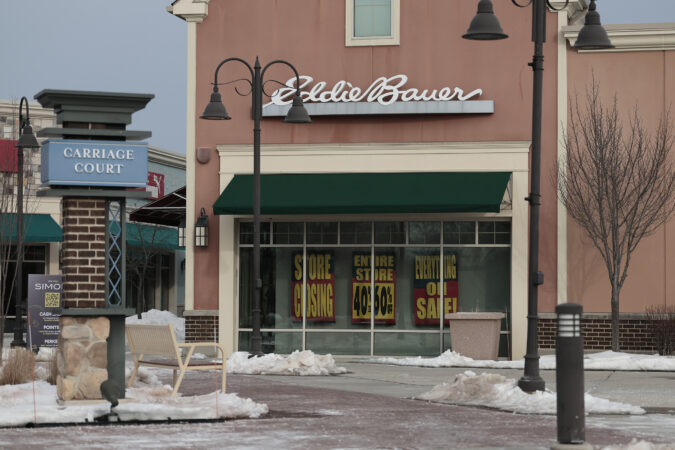
Over 60 years ago, the first American to climb Mount Everest sported an Eddie Bauer coat. Now the company behind the outdoor apparelfinds itself conducting liquidation sales.
The operator of Eddie Bauer filed for Chapter 11 bankruptcy in the U.S. Bankruptcy Court for the District of New Jersey on Monday and is winding down stores as it seeks a buyer.
Eddie Bauer is laying off some 58 employees in New Jersey at locations in Burlington, Gloucester, Middlesex, and Monmouth Counties, according to a layoff notice filed with the state.
“In an effort to rightsize the company’s store footprint and close underperforming stores, the company will be closing a number of retail locations in N.J.,” reads the notice.
In Pennsylvania, a spokesperson for the state’s Department of Labor and Industry said they had not received a layoff notice for Eddie Bauer stores as of Tuesday morning.
Before filing for bankruptcy, the company chose not to renew leases for 49 stores that had leases ending Jan. 31. Those locations have since closed, bankruptcy documents indicate.
The company is liquidating the remaining 175 stores as it seeks out a buyer.
In the Philadelphia area, Eddie Bauer stores are located at the Gloucester Premium Outlets in Camden County, at the Philadelphia Premium Outlets in Montgomery County, as well as in Concordville in Delaware County.
As of Tuesday, the Fashion District location in Center City appeared to be closed, according to the Eddie Bauer website.
What led to the bankruptcy?
Eddie Bauer stores have been operated by Catalyst Brands, which was formed in January 2025 in a merger that brought together brands including Aéropostale, Brooks Brothers, and JCPenney.
The CEO of Catalyst Brands, Marc Rosen, said in a news release Monday that the Eddie Bauer operator had been in a “challenged situation,” even before the new parent company was formed last year. The company was dealing with declining sales and supply chain challenges amid other issues, he said.
“Over the past year, these challenges have been exacerbated by various headwinds, including increased costs of doing business due to inflation, ongoing tariff uncertainty, and other factors,” Rosen said. “While the leadership team at Catalyst was able to make significant strides in the brand, including rapid improvements in product development and marketing, those changes could not be implemented fast enough to fully address the challenges created over several years.”
Federal and private grants totaling nearly $29 million were announced Wednesday for conservation projects within the Delaware River Watershed, including a South Philadelphia wetlands park, a water trail in Camden County, and support of the Lights Out Philly program to keep birds from crashing into buildings.
The money comes from nearly $12.5 million in grants to the Delaware Watershed Conservation Fund from the National Fish and Wildlife Foundation (NFWF) and the U.S. Fish and Wildlife Service. An additional $17 million comes in matching funds from nonprofits such as thePhiladelphia-based William Penn Foundation.
The total is about $9 million less than last year’s grant awards of $38 million. A representative for the two federal agencies did not state a reason for the decline.
However, the reduction comes as many federal grants have been cut or reduced by President DonaldTrump’s administration.
What’s being funded?
In all, the new funds will flow to 30 conservation projects, including local trail creations, stream restorations, shoreline enhancements, and wildlife habitat improvements. The money will go toward planning, hiring for, and construction of projects in Pennsylvania, New Jersey, Delaware, and New York.
Jeff Trandahl, executive director and CEO of NFWF, said the projects “demonstrate the impact that public-private partnerships can have at a landscape scale and will help ensure a healthier and cleaner future for the Delaware River watershed and the communities and species that depend on it.”
The watershed is within a densely populated corridor but remains 50% forested. Four hundred miles of it is classified as a National Wild and Scenic River, largely undeveloped but accessible for recreation.
The grants cover a wide range of projects.
For example, $498,800 will go toward reducing migratory bird collisions into buildings throughout the Delaware Watershed, which includes Philadelphia and New Jersey. The project of the Wildlife Management Institute, along with Bird Safe Philly, will identify and retrofit buildings to be bird-friendly, inform the public about built-environment hazards, and how to mitigate them.
Leigh Altadonna, coordinator for Bird Safe Philly, a collaborative of five organizations, welcomed the grant.
“These funds will reinforce Bird Safe Philly’s continuing work with nature centers, libraries, arboretums and other buildings as part of our mission to mitigate bird collisions with glass,” Altadonna said.
She said money would go toward educating the public about howto make their homes and communities bird-friendly.
Bird Safe Philly coordinates with owners of the city’s skyscrapers to turn off or dim lights, which can attract birds during the spring and fall migration seasons.
A sample of grants with total federal and private funding
Pennsylvania
$650,000 for South Philadelphia Wetlands Park II, a project of the Delaware River Waterfront Corp. The money will go toward completing needed documentation for the park located just south of the base of Tasker Street through Pier 70. The goal is to restore wetland habitat and increase public access to piers and berths, add a kayak launch and a natural pier park, and restore two acres of forested upland, meadow and wetlands.
$2 million for stream channel restoration in the south branch of French Creek, a project of the French and Pickering Creeks Conservation Trust. The stream channel and surrounding wetland will be improved as a habitat for brook trout and bog turtle, restore 6.7 acres of riparian buffer, and more than 13 acres of surrounding wetland and flood plain.
$900,400 to reintroduce wild brook trout in restored agricultural watersheds in Chester County, a project of the Stroud Water Research Center, which will monitor the re-establishment effort and implement agricultural best management practices to give trout the best chance of recovery.
New Jersey
$3.5 million for horseshoe crab and shorebird habitat at the Kimbles Beach and Bay Cove area in Cape May Court House, a project of the American Littoral Society. The money will go toward restoring one mile of critical habitat along the Delaware Bay, by placing 49,000 tons of sand to stabilize the beach, reverse coastal erosion, and protect the shoreline.
$1.2 million for restoration and recreational projects on the Cooper River Water Trail, which is spearheaded by the Upstream Alliance. The money will go toward engaging 3,000 community members through hands-on recreational programming, hiring local youth, and promoting public access on the new trail in Camden County. It will include paddling and fishing programs for the community and create a Friends of the Cooper River Water Trail group.
$487,400 for ecological restoration and wildlife habitat improvements at Swede Run Fields in Moorestown, Burlington County, for a project by the township to eradicate invasive species and establish native plant communities within the wetlands, riparian forest, and upland meadow buffers.
February’s crop of restaurant openings includes two restaurants’ expansions to Narberth, a reopened brewery in South Jersey, a chic restaurant/lounge in Center City, an intriguing wine bar/bottle shop in Chestnut Hill, and two French newcomers.
Restaurants can take awhile and owners are often hesitant to pinpoint an opening date. I’ve listed the targeted day where possible; for the rest, check social media.
Duo Restaurant & Bar (90 Haddon Ave., Westmont): Brothers Artan and Arber Murtaj and Andi and Tony Lelaj, who own the Old World-style Italian Il Villaggio in Cherry Hill, are taking over Haddon Avenue’s former Keg & Kitchen with a pub serving a bar menu supplemented with seafood.
Eclipse Brewing (25 E. Park Ave., Merchantville): Last August, food trucker Megan Hilbert of Red’s Rolling Restaurant became one of the youngest brewery owners in New Jersey when she bought this 9-year-old Camden County brewery, open as of Friday.
Lassan Indian Traditional (232 Woodbine Ave., Narberth): The second location of the well-regarded Lafayette Hill Indian BYOB takes over the long-ago Margot space in Narberth.
LeoFigs, 2201 Frankford Ave., as seen in January 2026.
LeoFigs (2201 Frankford Ave.): Justice and Shannon Figueras promise the delivery of their long-awaited bar/restaurant, with an urban winery in the basement, at Frankford and Susquehanna in Fishtown. The food menu will be built around comfort-leaning small plates.
The bubbly selection at Lovat Square in Chestnut Hill.
Lovat Square (184 E. Evergreen Ave.): Damien Graef and Robyn Semien (also owners of Brooklyn wine shop Bibber & Bell) are taking over Chestnut Hill’s former Top of the Hill Market/Mimi’s Café property for a multiphased project: first a wine shop with indoor seating, then a courtyard with a full dinner menu, followed later by a cocktail bar/restaurant component. Opens Feb. 12
Malooga (203 Haverford Ave., Narberth): The Old City Yemeni restaurant is expanding to Narberth with lunch and dinner service plus a bakery, with expanded indoor/outdoor seating and space for groups.
Mi Vida (34 S. 11th St.): Washington, D.C.-based restaurant group Knead Hospitality + Design is bringing its upscale Mexican concept to East Market, next to MOM’s Organic Market. Target opening is Feb. 18.
Napa Kitchen & Wine (3747 Equus Blvd., Newtown Square): A California-inspired restaurant rooted in Midlothian, Va., opens in Ellis Preserve with an extensive domestic and international wine list in a polished setting. Opens Feb. 9.
Ocho Supper Club (210 W. Rittenhouse Square): Chef RJ Smith’s Afro-Caribbean fine-dining supper club starts a six-month residency at the Rittenhouse Hotel, tied to the Scarpetta-to-Ruxton transition, serving tasting menus through July. Now open.
Piccolina (301 Chestnut St.):A low-lit Italian restaurant and cocktail bar at the Society Hill Hotel from Michael Pasquarello (Cafe Lift, La Chinesca, Prohibition Taproom). Targeting next week
Pretzel Day Pretzels (1501 S. Fifth St.): James and Annie Mueller’s pretzel-delivery operation is becoming a takeout shop in the former Milk + Sugar space in Southwark. Expect classic soft pretzels plus German-style variations (including Swabian-style) and stuffed options.
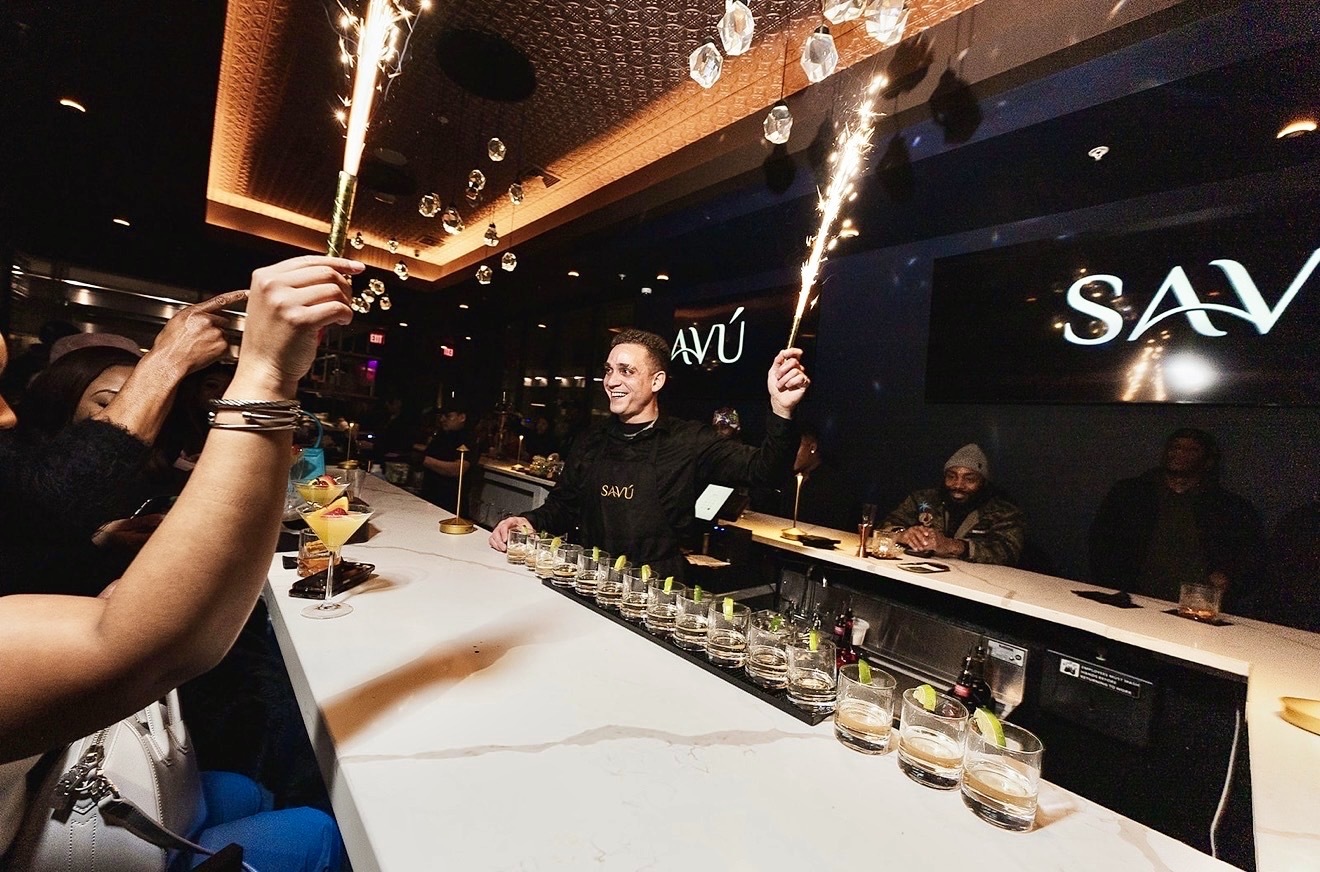
Merriment at the bar at Savu, 208 S. 13th St.
Savú(208 S. 13th St.): Kevin Dolce’s Hi-Def Hospitality has converted the former Cockatoo into a modern, bi-level dining and late-night lounge with a New American menu from chef Maulana Muhammad; it just soft-opened for dinner Thursday through Sunday and weekend brunch.
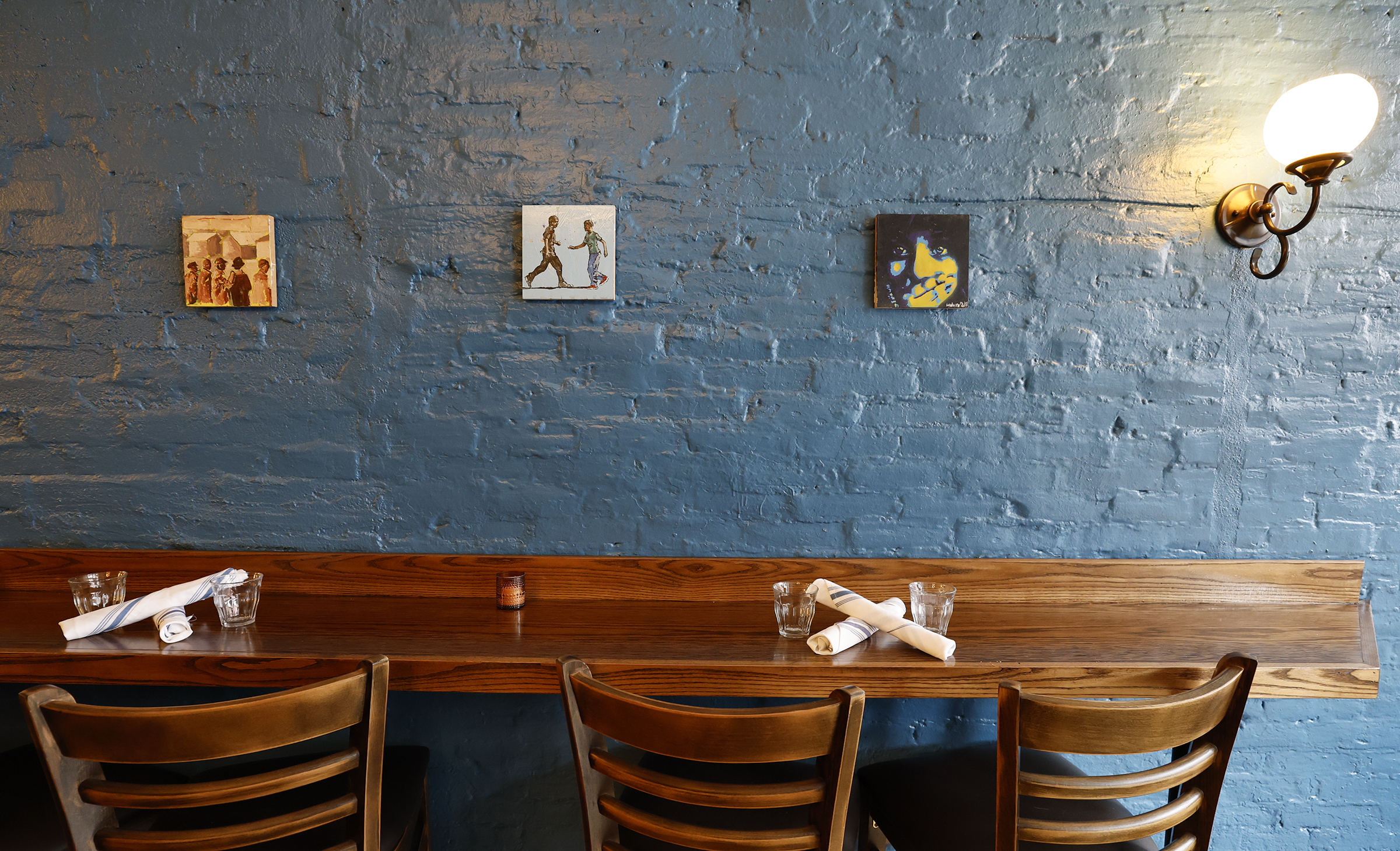
Bar-adjacent seating at Side Eye.
Side Eye (623 S. Sixth St.): Hank Allingham’s all-day neighborhood bar takes over for Bistrot La Minette with “French-ish” food from chef Finn Connors, plus cocktails, European-leaning wines, beer, and a late-night menu. Opens 5 p.m. Feb. 7 with 50% of the night’s proceeds going to the People’s Kitchen.
Soufiane at the Morris(225 S. Eighth St): Soufiane Boutiliss and Christophe Mathon (Sofi Corner Café) say there’s a 90% chance of a February opening for their new spot at the Morris House Hotel off Washington Square. It’s billed as an elegant-but-approachable restaurant inspired by classic French bouillons/brasseries, with a menu spanning small plates and full entrées alongside Moroccan-influenced tagines. Expect evening service indoors, daytime service outdoors.
South Sichuan II(1537 Spring Garden St.): A second location for the popular Point Breeze Sichuan takeout/delivery specialist, near Community College of Philadelphia; this one will offer more seating.
March openings are in the offing for the much-hyped PopUp Bagels in Ardmore, as well as the long-delayed Terra Grill (a stylish room in Northern Liberties’ Piazza Alta) and ILU (the low-lit Spanish tapas bar) in Kensington.
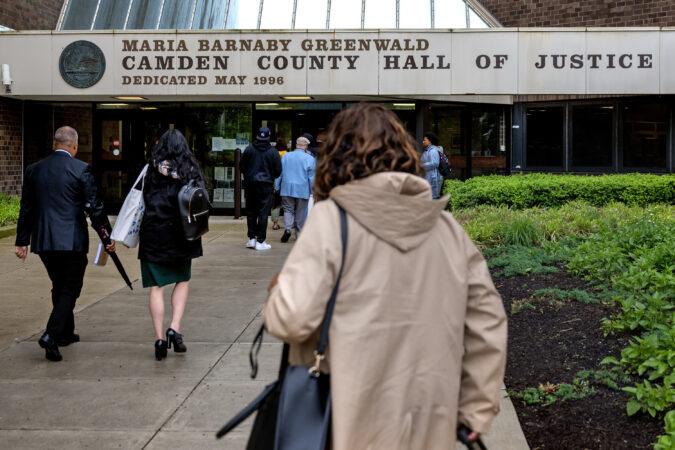
The Camden County Hall of Justice is closed through at least Wednesday after a sprinkler system pipe froze and then burst at the facility Sunday afternoon, said New Jersey courts spokesperson Pete McAleer.
The damage to the building was significant, McAleer said. Parts of the first floor and lower-level areas of the building were flooded. However, the courtrooms were unaffected, he said.
Courtroom operations will be held remotely as tests are conducted to assess if the damage created any environmental hazards.
The judiciary staff will continue coordinating with county officials and the county sheriff’s office as they relocate services temporarily, McAleer said.
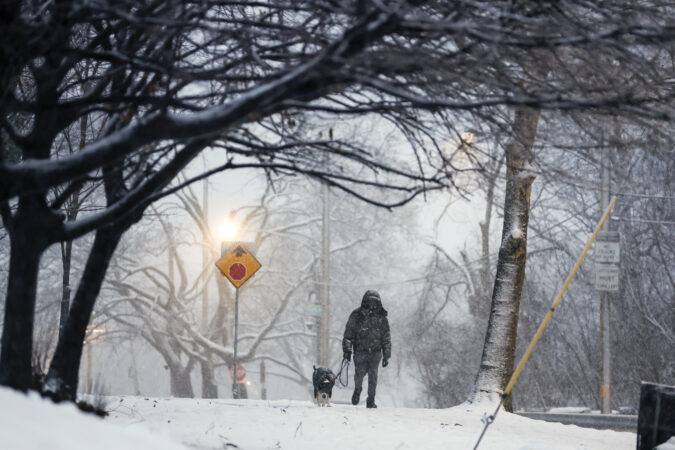
Philadelphia is expected to see its most significant winter storm in years this weekend, with nearly a foot of snow and ice expected from a formidable low-pressure system sweeping across the eastern United States.
Official National Weather Service forecasts say six to 18 inches of snow is possible across most of New Jersey and Pennsylvania, including Philadelphia as the storm pushes through the region Saturday night to early Monday morning. More than 21 states are expected to experience at least moderate impacts from the storm, the weather service said.
Forecasters said that mixing with sleet and freezing rain could hold down overall snow totals across Philadelphia and South Jersey, but the storm is likely to hinder if not halt most travel on Sunday, regardless.
The National Weather Service puts out forecasts for every few square miles of land in the United States four times a day through a system called the National Digital Forecast Database.
The maps below display that data. Use it to find how much snow is expected anywhere in the eastern United States. It will show the most recent forecast for the next three days.
(function () {window.addEventListener(‘message’, function (e) { var message = e.data; var els = document.querySelectorAll(‘iframe[src*=”‘ + message.id + ‘”]’); els.forEach(function(el) { el.style.height = message.height + ‘px’; }); }, false); })();
A considerable amount of freezing rain and sleet may also fall during the storm, leading to icing concerns. The map below displays the forecast for ice accumulation, or accretion, over the next three days.
(function () {window.addEventListener(‘message’, function (e) { var message = e.data; var els = document.querySelectorAll(‘iframe[src*=”‘ + message.id + ‘”]’); els.forEach(function(el) { el.style.height = message.height + ‘px’; }); }, false); })();