Whatever doubts Union fans had about the team’s starting lineup in Trinidad on Wednesday, it wasn’t surprising that manager Bradley Carnell had none.
“We knew that at some point, with the type of intensity we could play at, it could be too much for them,” he said a day after his team’s 5-0 rout of Defence Force FC. “And that did prove to be the truth.”
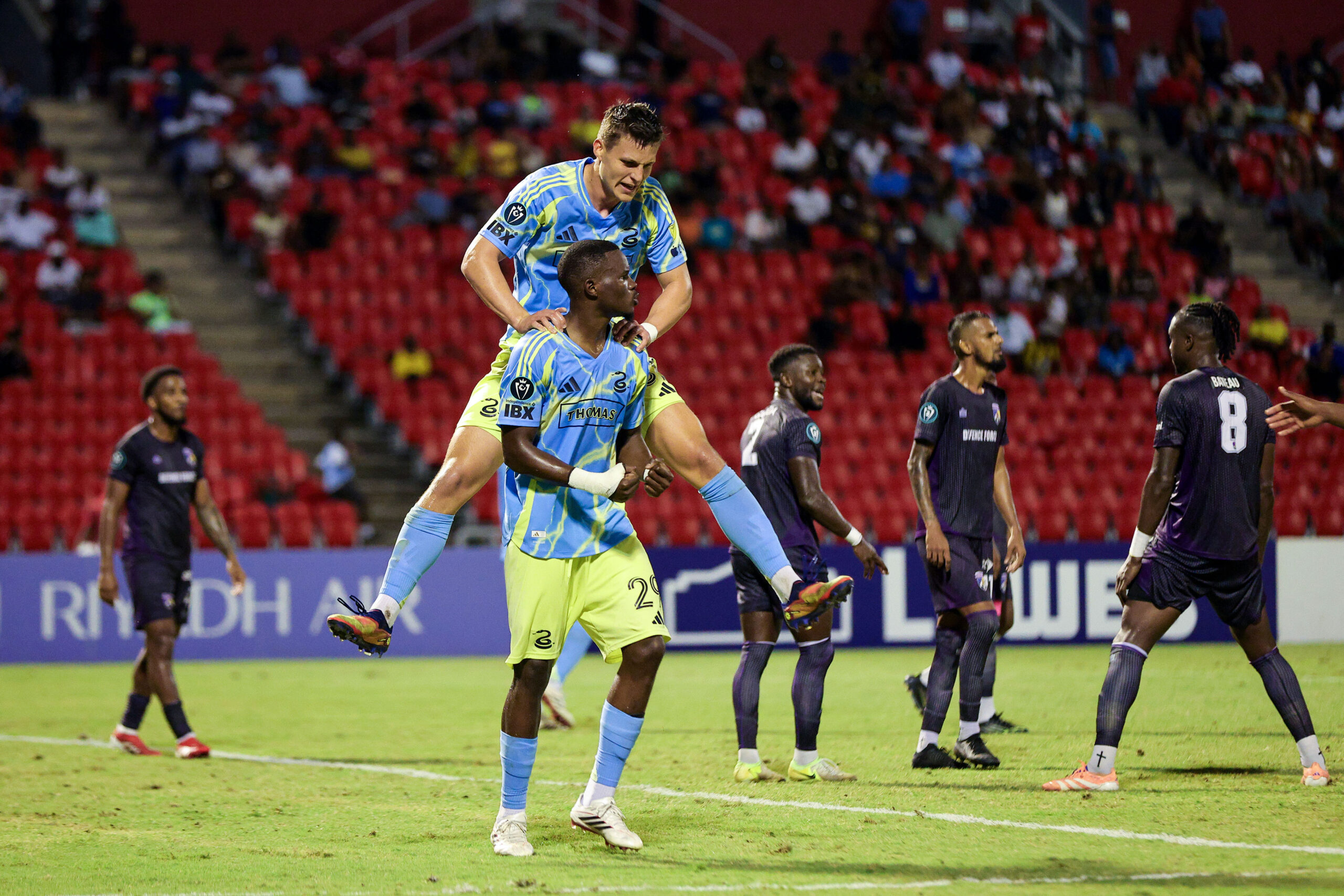
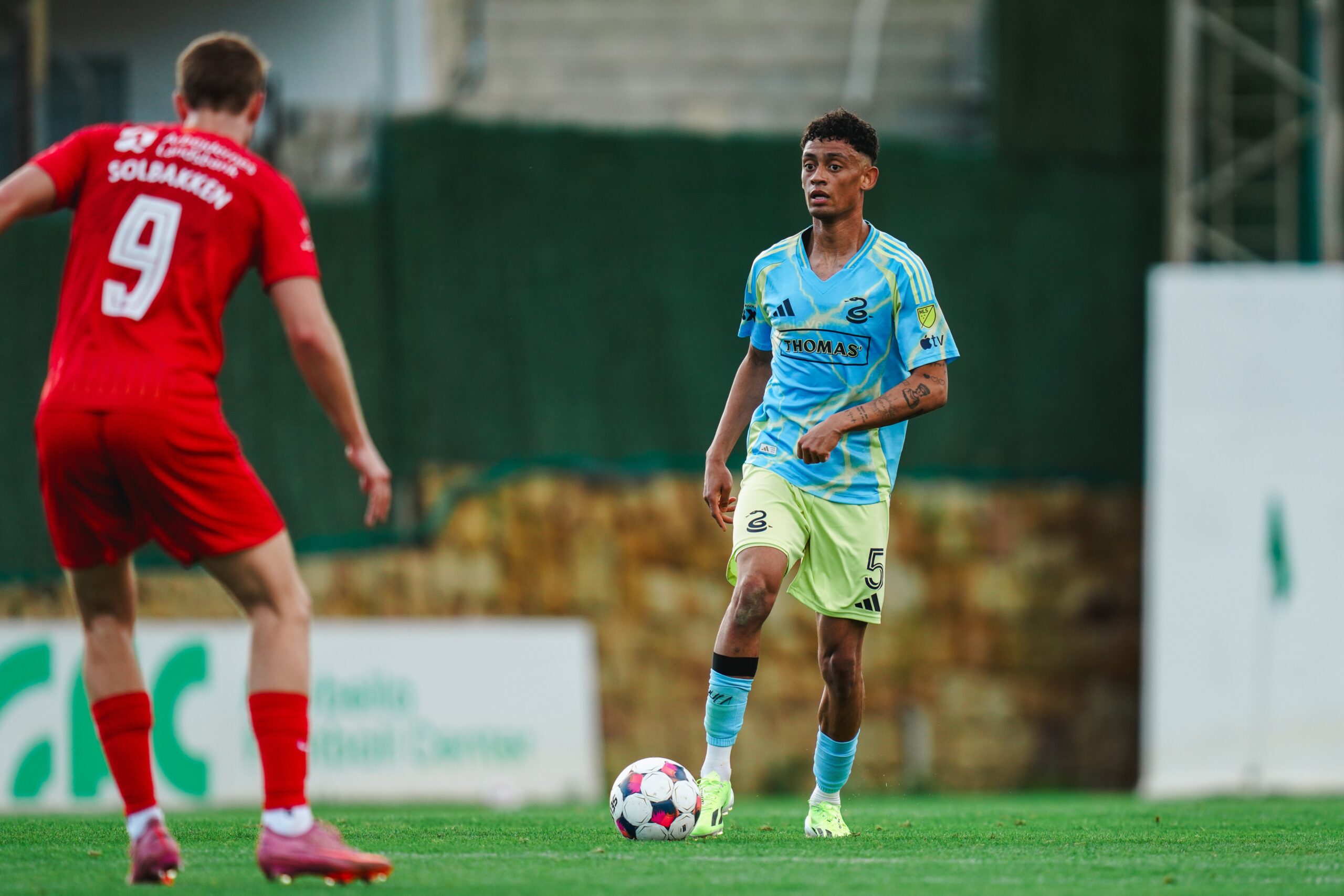
The biggest decisions were putting Stas Korzeniowski at striker in his first game with the Union’s first team, and attacking midfielder Jeremy Rafanello at right back. Both worked out fine, helped by their teammates’ cavalcade of goals.
“We’ve been training a couple weeks with Stas alongside Bruno [Damiani], alongside Ezekiel [Alladoh],” Carnell said. “So, I mean, for us, that was a no-brainer. It didn’t even come into thought that there’s anything doubtful or risky going on there.”
Stas Korzeniowski jumps to celebrate with Olwethu Makhanya after Makhanya scored the Union’s third goal of the game.
He praised Rafanello for being “always ready for a game, and he can always run for days, and he always puts his best effort forward.”
But while Carnell praised “a lot of good things” in Rafanello’s game, he also admitted that playing Rafanello in that position was in part “by necessity.”
“We’ve been challenged over the last couple of days with a couple of … day-to-day type of scenarios,” he continued.
Those “scenarios” included minor injuries to midfielders Ben Bender and Jovan Lukić along with forward Agustín Anello. Carnell also confirmed that new centerback Geiner Martínez is temporarily on a visa status that makes it difficult for him to leave the United States and promptly return.
But right back Olivier Mbaizo’s absence was Carnell’s choice, one he said he made “just basically through preseason performance. Nothing much to question there.”
That choice left the manager with no outside backs on his bench. Both players with experience there started, Frankie Westfield on the left and Nathan Harriel at centerback. Westfield grabbed at a hamstring midway through the second half, but Carnell said he “should be good.”
As debut goals go, Alladoh’s was pretty impressive. He watched teammates circulate the ball to Westfield, then charged up the middle, split two centerbacks, and slammed in a leaping header from close range.
“New environment, new teammates, he has to figure things out, wasn’t able to get on the score sheet in preseason, but he worked really hard,” Carnell said. “And then in the big games and in the games that matter most, he showed up. So I’m really happy for that, and hopefully he takes that energy and confidence into the next couple of games.”
That was the second of three goals the Union put on the board before Carnell started a raft of substitutions. Cavan Sullivan was one of the entrants, and immediately started shredding Defence Force’s back line.
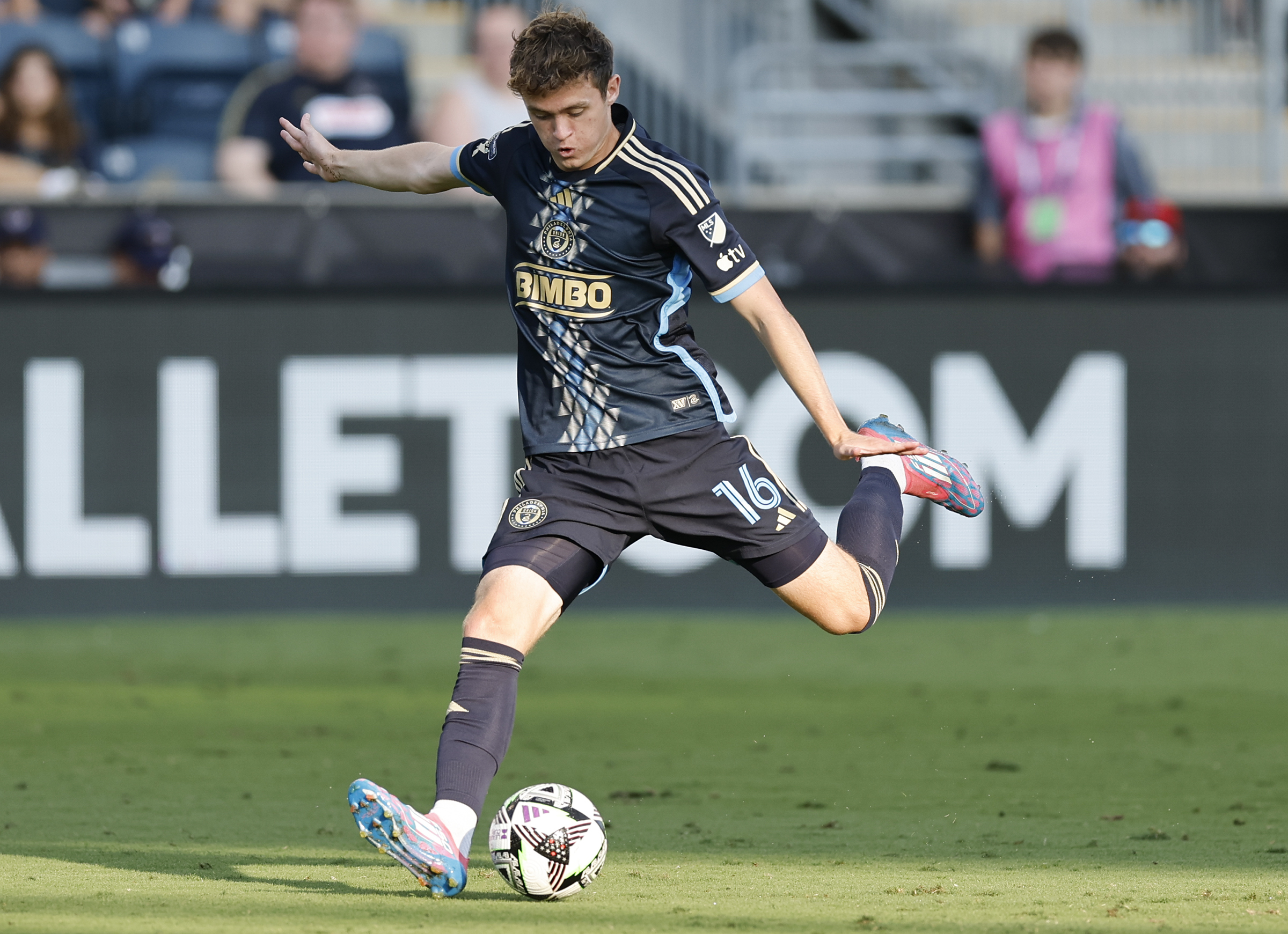
The 16-year-old made multiple surging runs forward, including three that drew payoffs: a great assist to fellow substitute Bruno Damiani in the 69th minute, a penalty kick in the 78th, and a red card to former Seattle Sounders defender Joevin Jones in the 92nd.
“I’ve seen a lot more maturity from Cavan over the last couple of weeks, and he’s worked his way into being a contributor,” Carnell said. “I speak about the environment, just think about the young kid coming in there and running rings around Defence Force. So I was really happy with his performance.”
Sullivan had some longer runs as a starter last year in the U.S. Open Cup, but quality-wise this might have been his best outing in a Union jersey so far.
“It was a very mature performance, I would say,” Carnell said. “He kept it simple when he needed to, he accelerated and got on the dribble when he had to, and then he draws crucial moments and puts the opponents under pressure. … I thought that was his best performance over the last 12 months.”
The Union’s next game is their MLS season opener on Saturday at D.C. United (7:30 p.m., Apple TV), headlined by an early reunion with former leading striker Tai Baribo.
Then it’s back to Chester for the finale of the Defence Force series next Thursday (7 p.m., FS1), followed by a rematch of last year’s playoff loss to New York City FC on March 1.
As we do every year to start a Union season, here’s a player-by-player look at the team’s roster.
The list at each position is in order of what looks to be the depth chart heading into the campaign, which starts Wednesday in the Concacaf Champions Cup at Defence Force FC of Trinidad & Tobago (6 p.m., FS2, TUDN). The regular-season opener follows on Saturday at D.C. United (7:30 p.m., Apple TV).
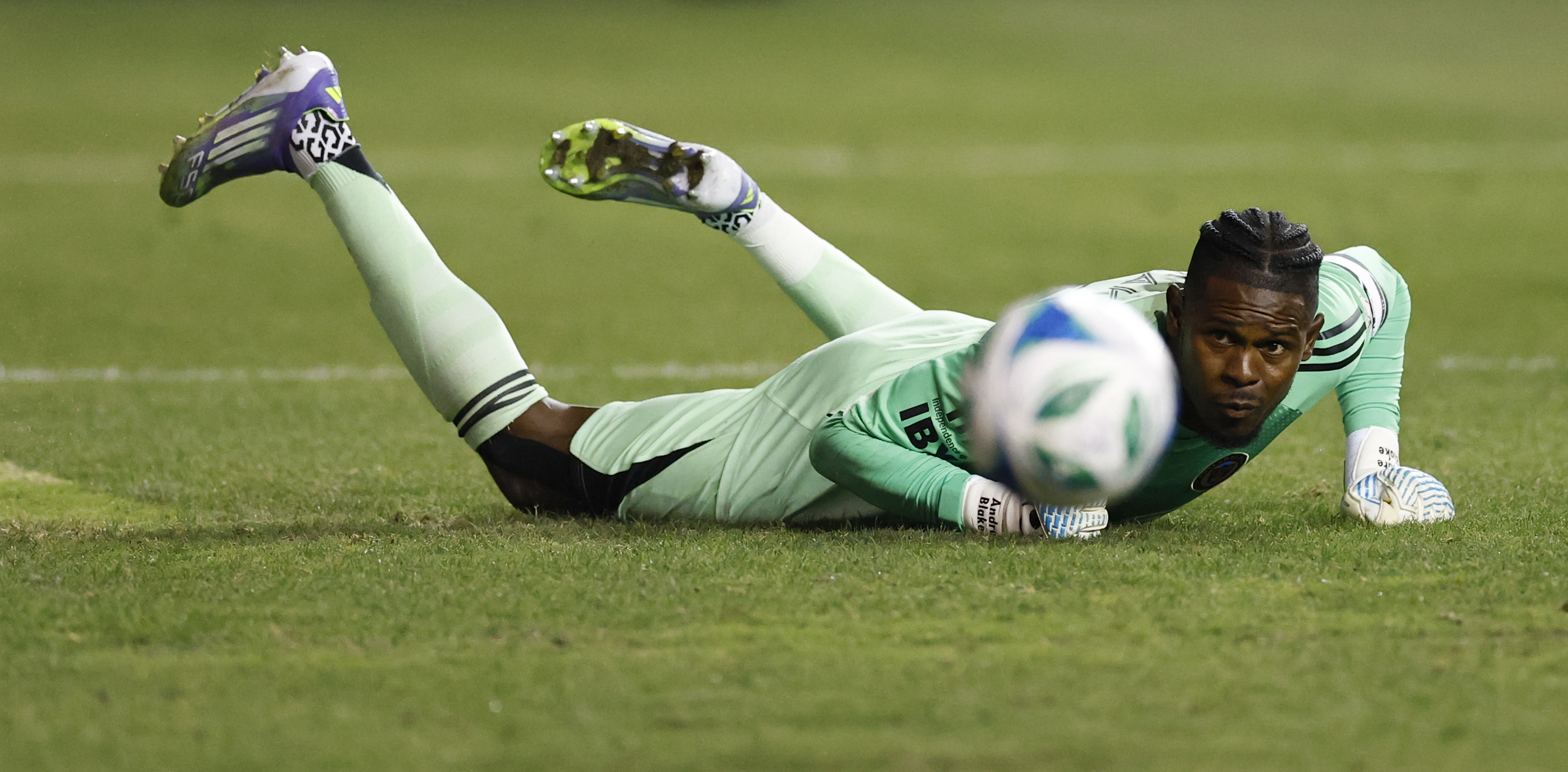
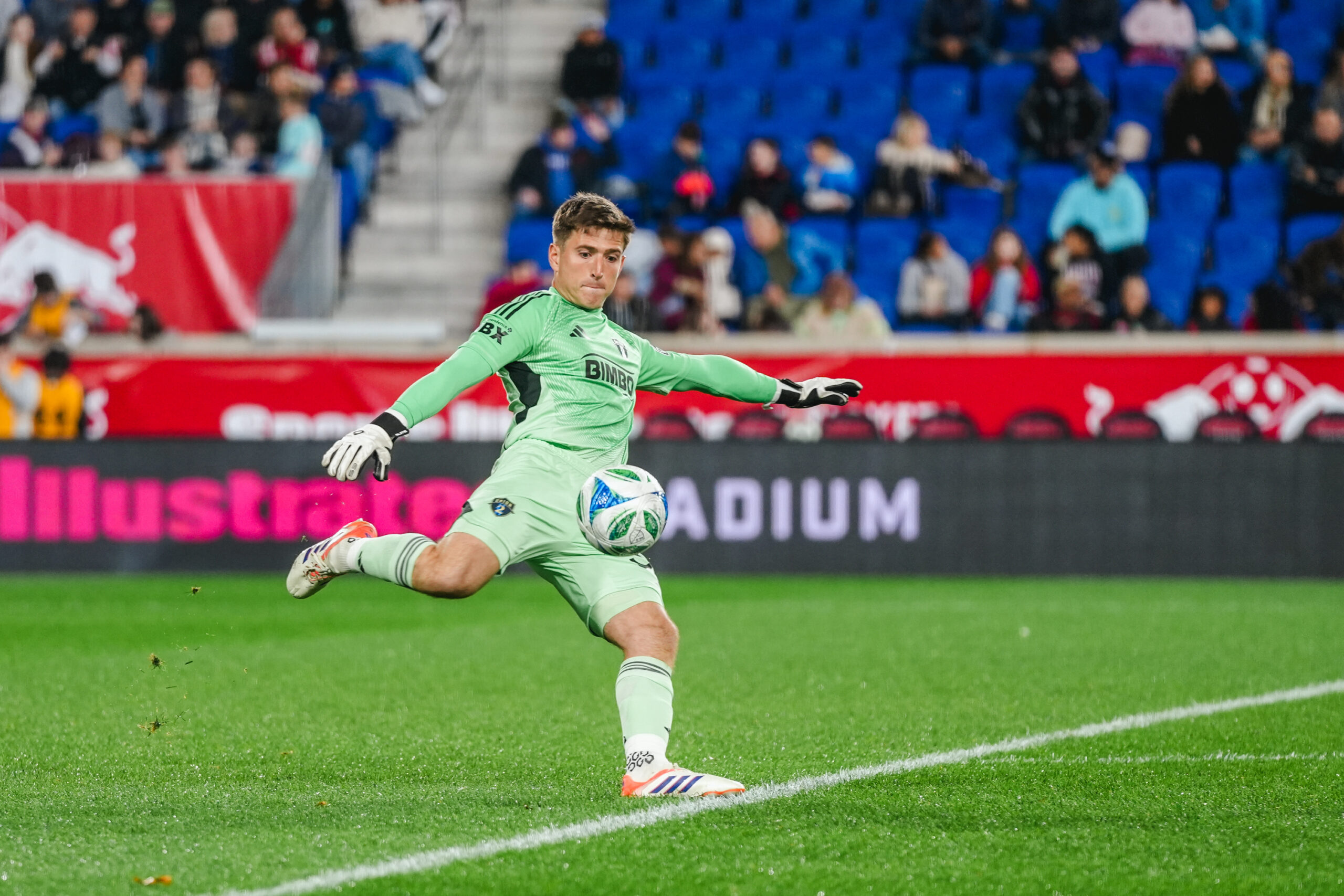
Andre Blake has won MLS’s goalkeeper of the year award three times.
Andrew Rick
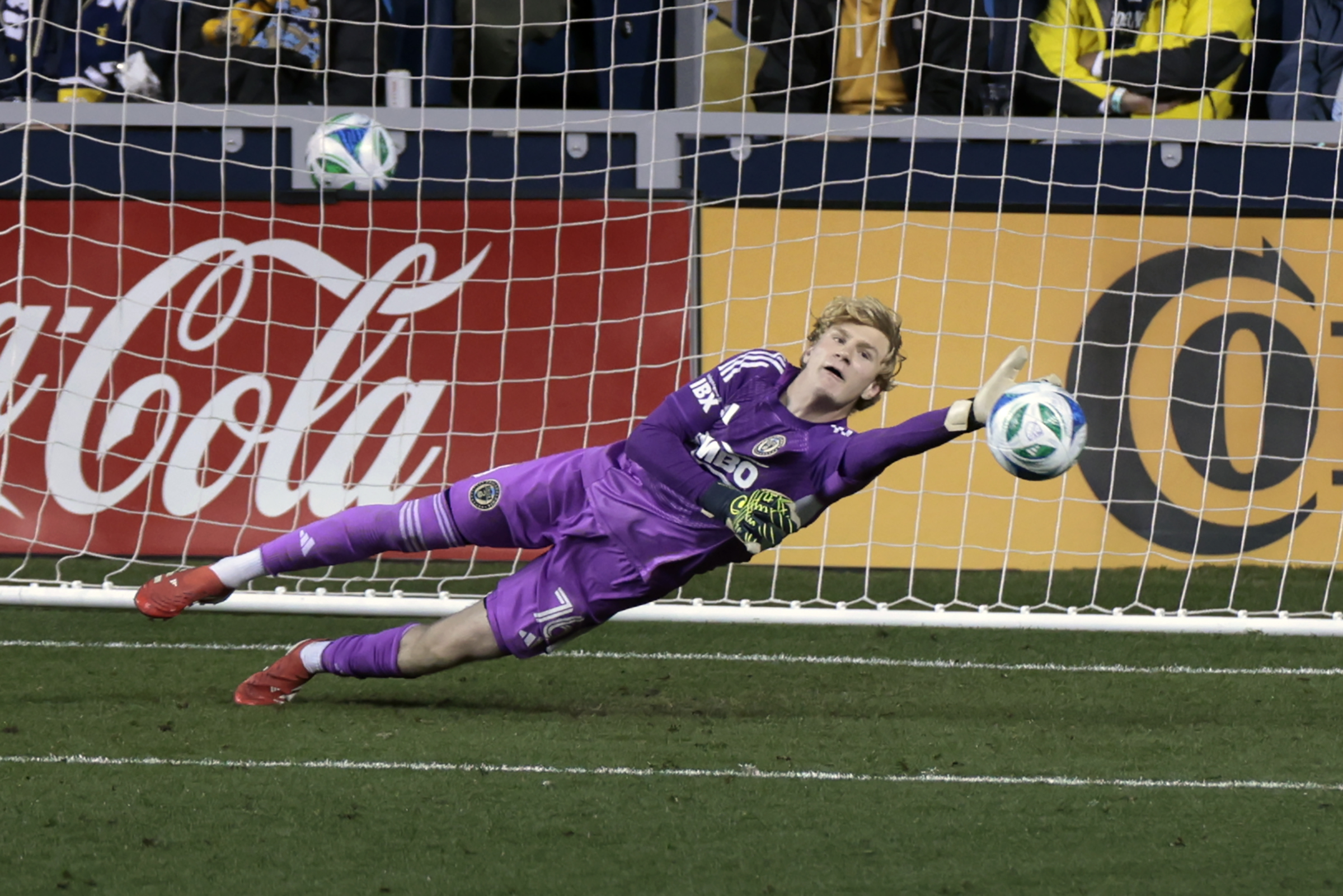
He showed again last year that he’s a safe pair of hands as the backup, and he’s still only 20 years old. The question will be if he’s willing to wait longer than Matt Freese did — understandably — to get more playing time. If he is, his time will come, but Blake isn’t going anywhere yet.
George Marks in action for the Union’s reserve team last year.
Left back
A player who hasn’t been signed yet
There’s no other way to put it right now. The Union are shopping for a new starter, and are close to sealing a deal for that player to be 20-year-old Philippe Ndinga from Swedish club Degerfors. But as Yogi Berra might say if he was a soccer fan, it’s not official until it’s official.
Jon Scheer, the Union’s head of academy and professional development, has been the face of the front office this winter with Ernst Tanner on leave.
Frankie Westfield
Until Ndinga settles in, Westfield is likely to do the job. The rise of the Northeast Philadelphia native last year was one of the season’s great stories.
Frankie Westfield was one of the Union’s breakout players last year.
Right back
Nathan Harriel
He has definitely earned the starting job, even though his attacking contributions are still limited. Once Ndinga gets going, Harriel might start platooning with Westfield to play in certain matchups.
Nathan Harriel played 31 games last year, often stepping in at centerback when the Union were short there.
Olivier Mbaizo
He’s highly regarded in the locker room, especially as part of the unofficial welcoming committee for new players who come from abroad. But that doesn’t guarantee playing time, and it’s tough to tell how much he’ll get this year.
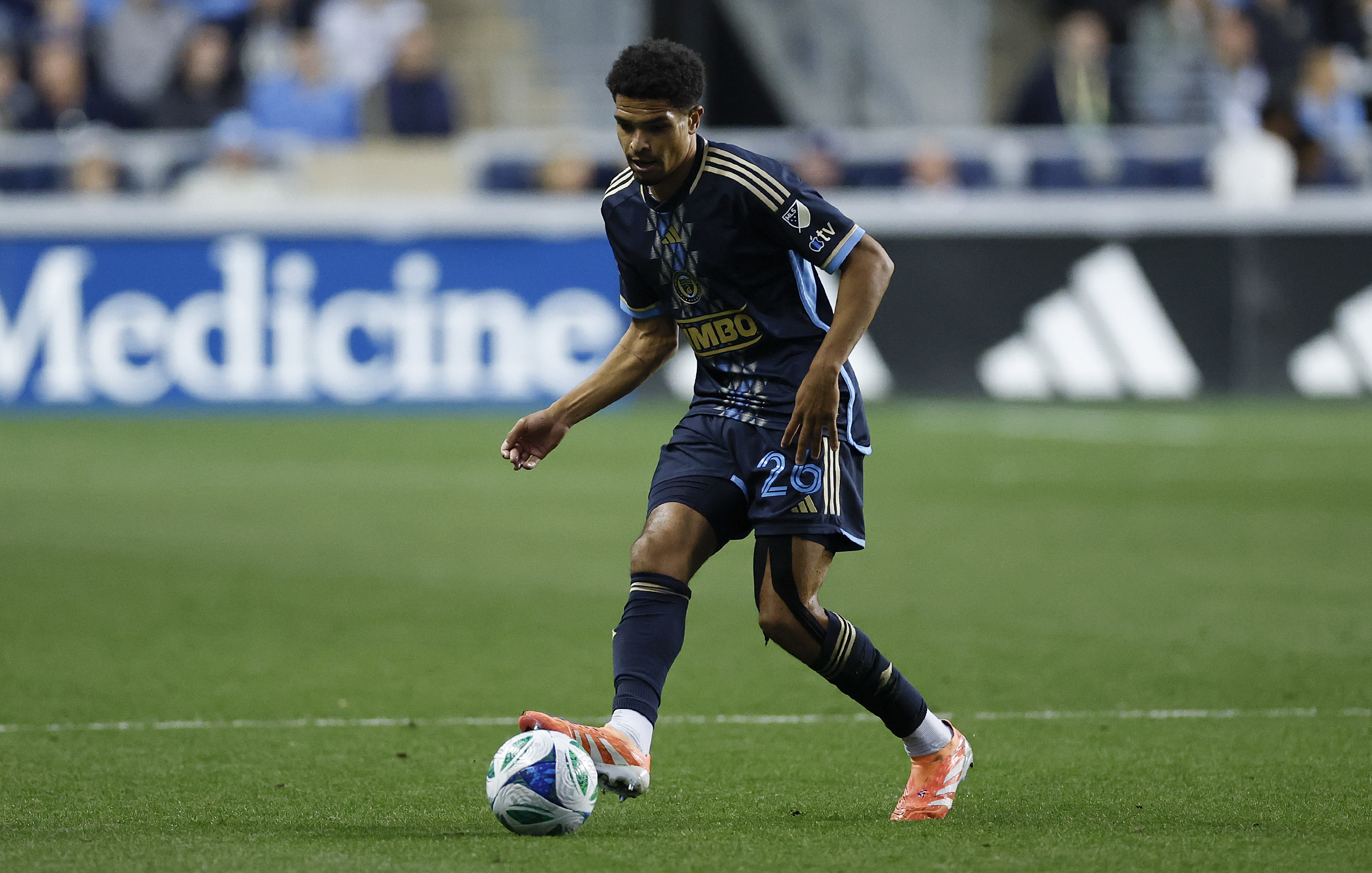
Olivier Mbaizo is going into his ninth season with the Union’s first team.
Centerback
Olwethu Makhanya
He hadn’t played a second for the first team at the start of last year, but Bradley Carnell trusted his fellow South African to step up. Now the 20-year-old is a stalwart, and importantly the only returning player in the centerback group. That, perhaps, makes his role even bigger.
Olwethu Makhanya was one of last year’s most impressive players.
Japhet Sery Larsen
The Union don’t often sign experienced players from abroad, preferring to find underrated names they can develop and sell. But they knew they needed a veteran to replace Jakob Glesnes, and the 25-year-old Denmark native fits the bill. Now, can he handle the physicality of MLS?
Japhet Sery Larsen is expected to have a big role on the Union’s back line this year.
Geiner Martínez
We haven’t seen much of the 23-year-old Colombian yet, but it’s a safe bet that we will in time. The Union have a busy schedule with the Concacaf Champions Cup, Leagues Cup, and compressed stretches of the regular season around the World Cup. Rotating centerbacks will be as important as ever.
Geiner Martinez during one of the Union’s preseason games.
Finn Sundstrom
A 19-year-old prospect who grew up with North Carolina FC of the second-tier USL Championship, Sundstrom is a name for the future, and likely will spend more time with the Union’s reserves than the first team this year.
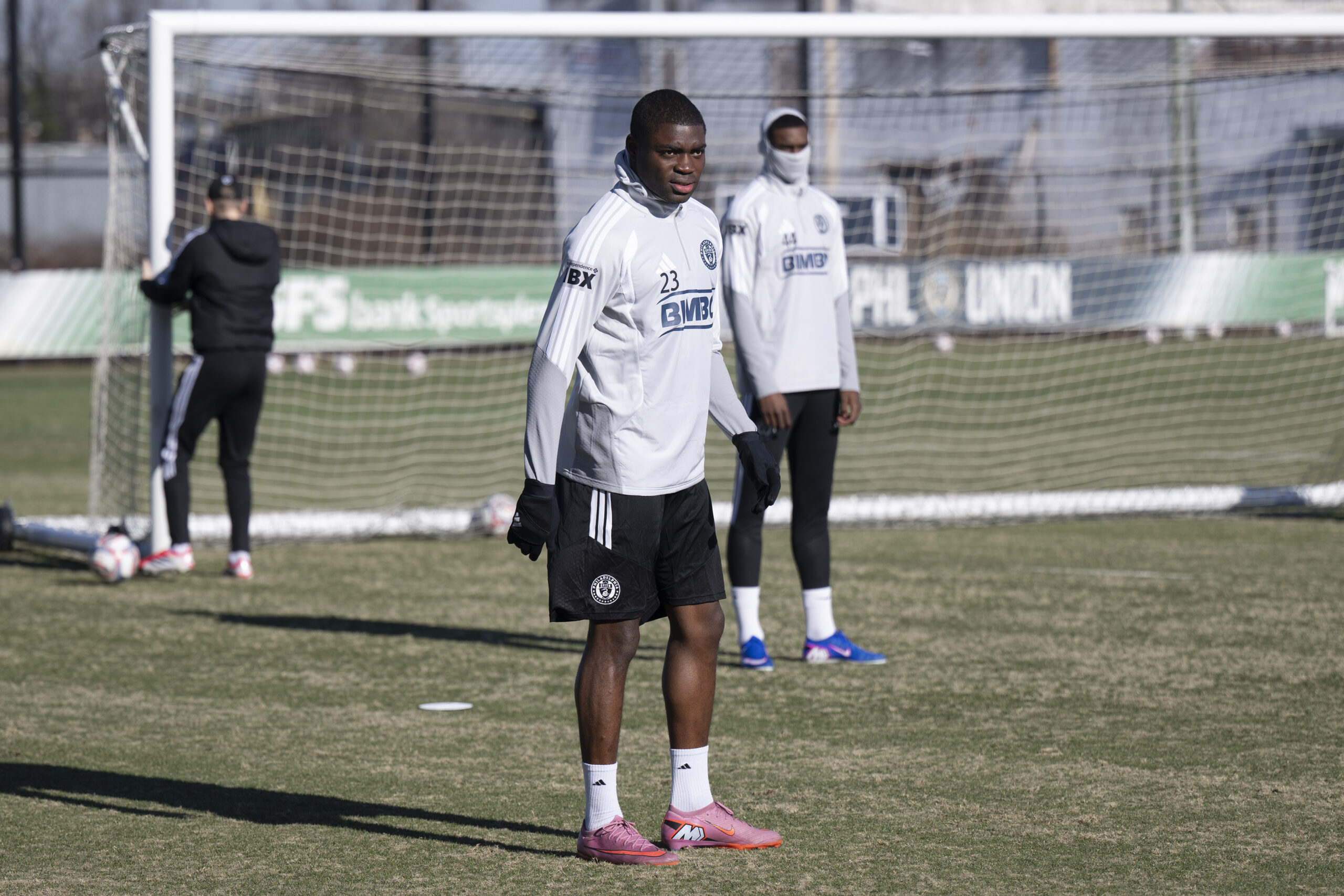
Finn Sundstrom working out during a preseason practice.
Neil Pierre
The best centerback prospect in the Union’s academy pipeline is on loan to Denmark’s Lyngby, where the Union own a stake, through June. Hopefully he will be closer to ready for first-team minutes when he returns.
Neil Pierre (right) made his Union first-team debut last year.
Defensive midfielders
Jovan Lukić
Perhaps the best of last year’s signings, Lukić jumped effortlessly into the midfield engine room. His tackles and his talking can be a little too robust sometimes, but the total package has been great.
Jovan Lukić getting stuck during a game last summer.
Danley Jean Jacques
A great partner to Lukić, Jean Jacques is now set for a true star turn with Haiti at the World Cup. It can’t be said enough how special it will be if he plays in Philadelphia against Brazil this summer.
Danley Jean Jacques also had a strong season in the Union’s midfield last year.
Alejandro Bedoya
The longtime captain is in his 11th season in Chester, and third in a series of one-year contracts. The mental side of his game is as sharp as ever, but the clock is inevitably running on a body that will turn 39 in April.
His arrival in August was the turning point in the Union’s season. They likely would not have won the Supporters’ Shield without him. Carnell likes playing Iloski at forward sometimes, but the team as a whole is clearly better when he’s in midfield. That forces opposing defenses to open up.
Early on in his time in Chester, it looked like most of his contributions would come from industrious pressing. But over the course of last season, he blossomed into more, and finished last year with seven goals and four assists.
Indiana Vassilev (center) celebrates scoring a goal for the Union in August.
Quinn Sullivan
When he returns from a torn ACL in July, after the World Cup break, it will give the team a huge boost. He’s been greatly missed on the field, although he’s fortunately been able to stay a vibrant presence off it.
The Union greatly missed Quinn Sullivan (left) after his ACL injury in September, especially during the playoffs.
Cavan Sullivan
With two years to go until he leaves for Manchester City, the now-16-year-old is running out of time to make an impact on his hometown club. Or perhaps it’s better to say the club is running out of time for him to impact it. Will this be the year he breaks out?
Lots of people around the soccer world are waiting for Cavan Sullivan to truly break out on the field.
Jeremy Rafanello
The Delran native has become the unofficial closer for Union wins, but he isn’t likely to overtake the players ahead of him here. It also bears saying that time given to him is time that Cavan Sullivan could get instead.
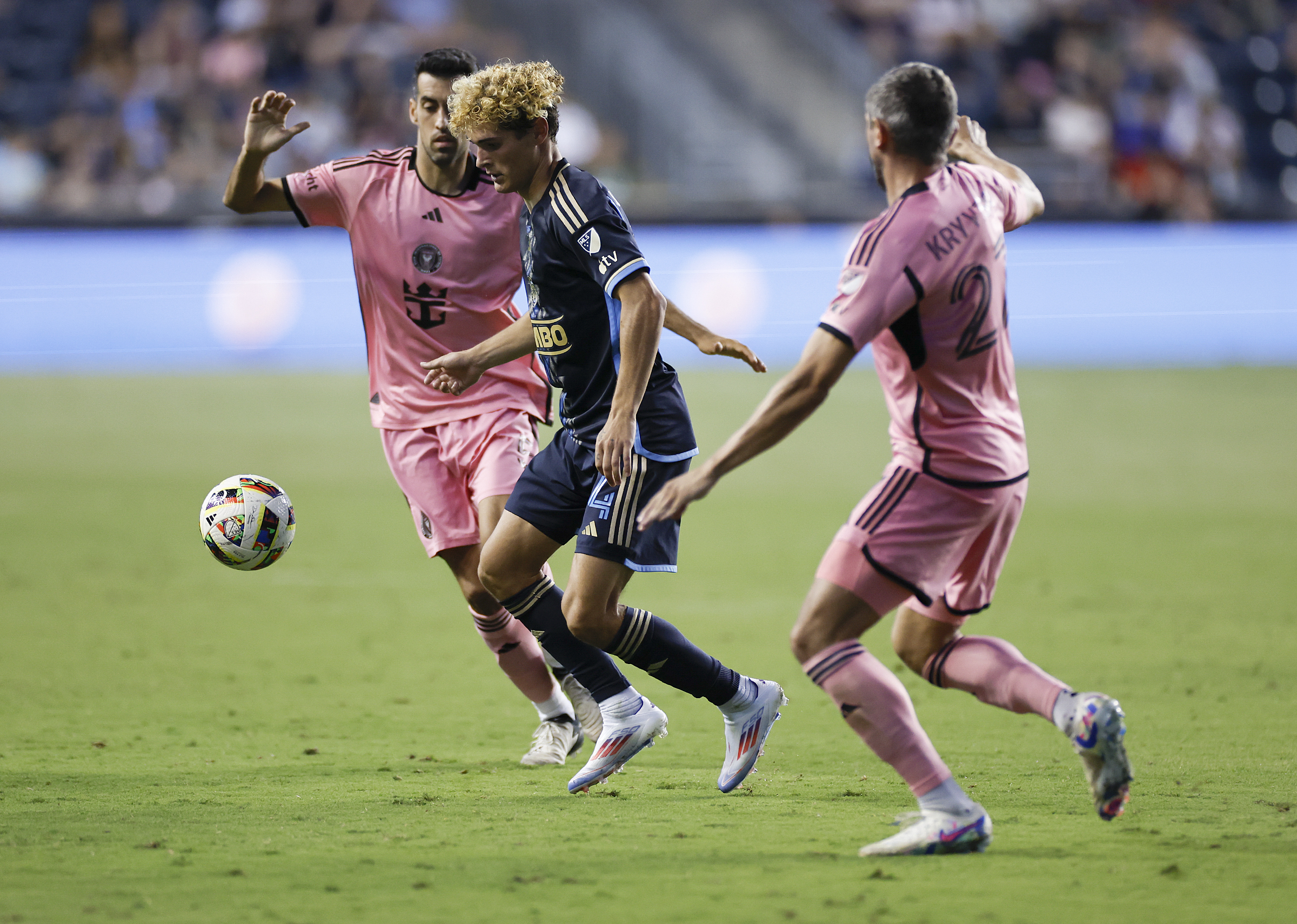
Jeremy Rafanello (center) on the ball against Inter Miami last year.
Ben Bender
Carnell likes his willingness to sacrifice, which has led to testing the 24-year-old as an emergency left back. That doesn’t look likely to stand for the long term, but at least he has the manager’s respect.
It was easy to see his strengths in his first season here: size, speed, physicality. But in the stats that mattered most, he tallied only nine goals and one assist in 40 games. That has to change this year, especially with Tai Baribo and Mikael Uhre gone.
You can tell just from practices why the Union broke their transfer fee record to sign the 20-year-old Ghana native. He’s still raw, though, and Carnell has preached patience. Alas, only so much will be given if he doesn’t find the net.
The Union paid a team record $4.5 million to sign Ezekiel Alladoh.
Agustín Anello
He’s an intriguing signing: born in Florida to Argentine parents, raised in Spain, and a pro career in four countries by age 23. Even better, he played with Harriel and Damiani at some of his stops along the way. He projects as the No. 3 striker right now but should still see significant playing time.
It’s well-known by now that the Union have a big reputation for player development, perhaps the best of any American soccer club at the moment.
So it shouldn’t be too surprising that a lot of people in that world would like to know how they’ve done it.
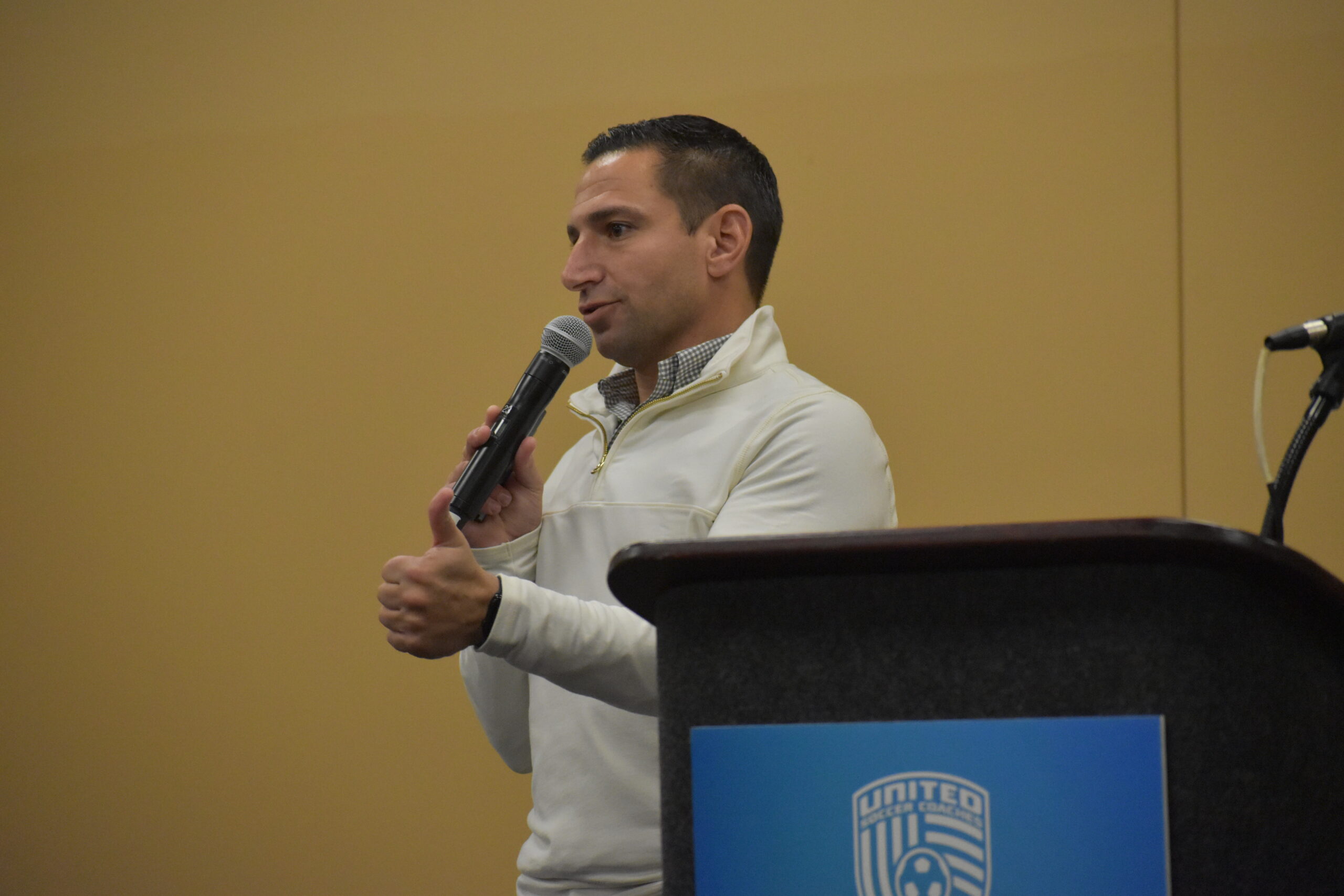
At the United Soccer Coaches convention earlier this month in Philadelphia, a presentation by Jon Scheer, the Union’s head of academy and professional development, drew a healthy crowd that hoped to learn the club’s secret sauce.
Scheer didn’t give up all the recipes, but he was happy to take the attendees into the kitchen.
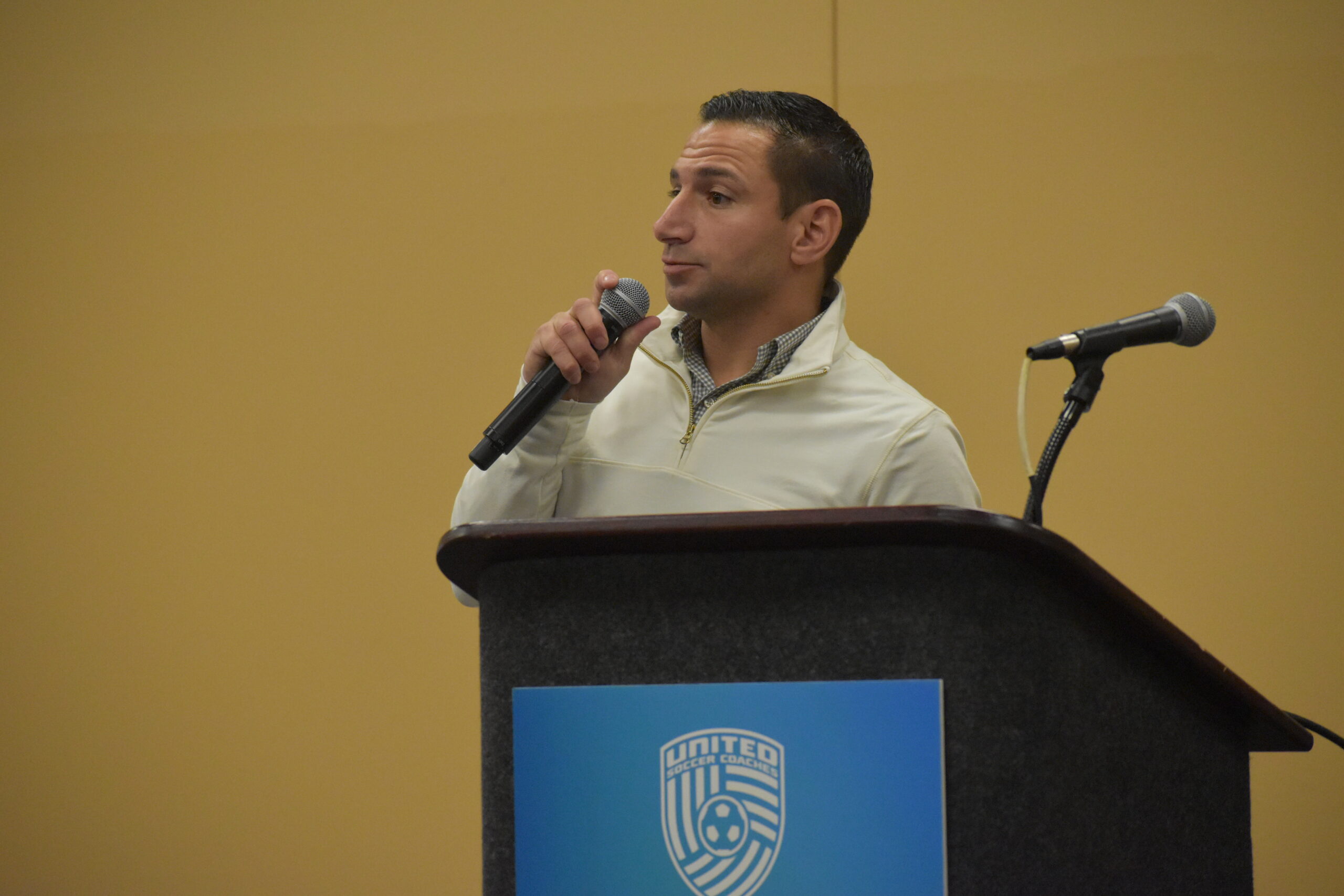
Union director of academy and professional development Jon Scheer speaking at the United Soccer Coaches Convention in Philadelphia earlier this month.
He claimed that the Union “invests more in our academy than any MLS club in the country.” That hasn’t been independently confirmed for a few years, but there’s no question that the Union spend a lot.
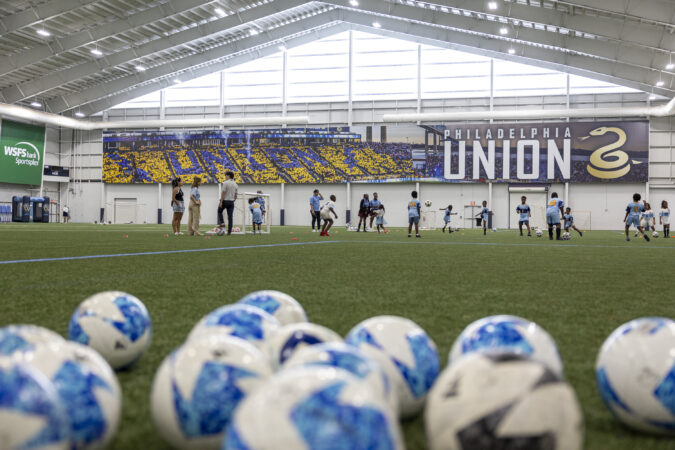
Along with youth teams in many age groups, there’s a full-time high school, YSC Academy, across the parking lot from the training facilities in Chester. Those facilities were expanded significantly last year, to much acclaim.
“The value of the young players being able to see the stadium every day, but also being able to look through the fence at the grass on Field One where the first team trains — they can feel it every single day,” Scheer said.
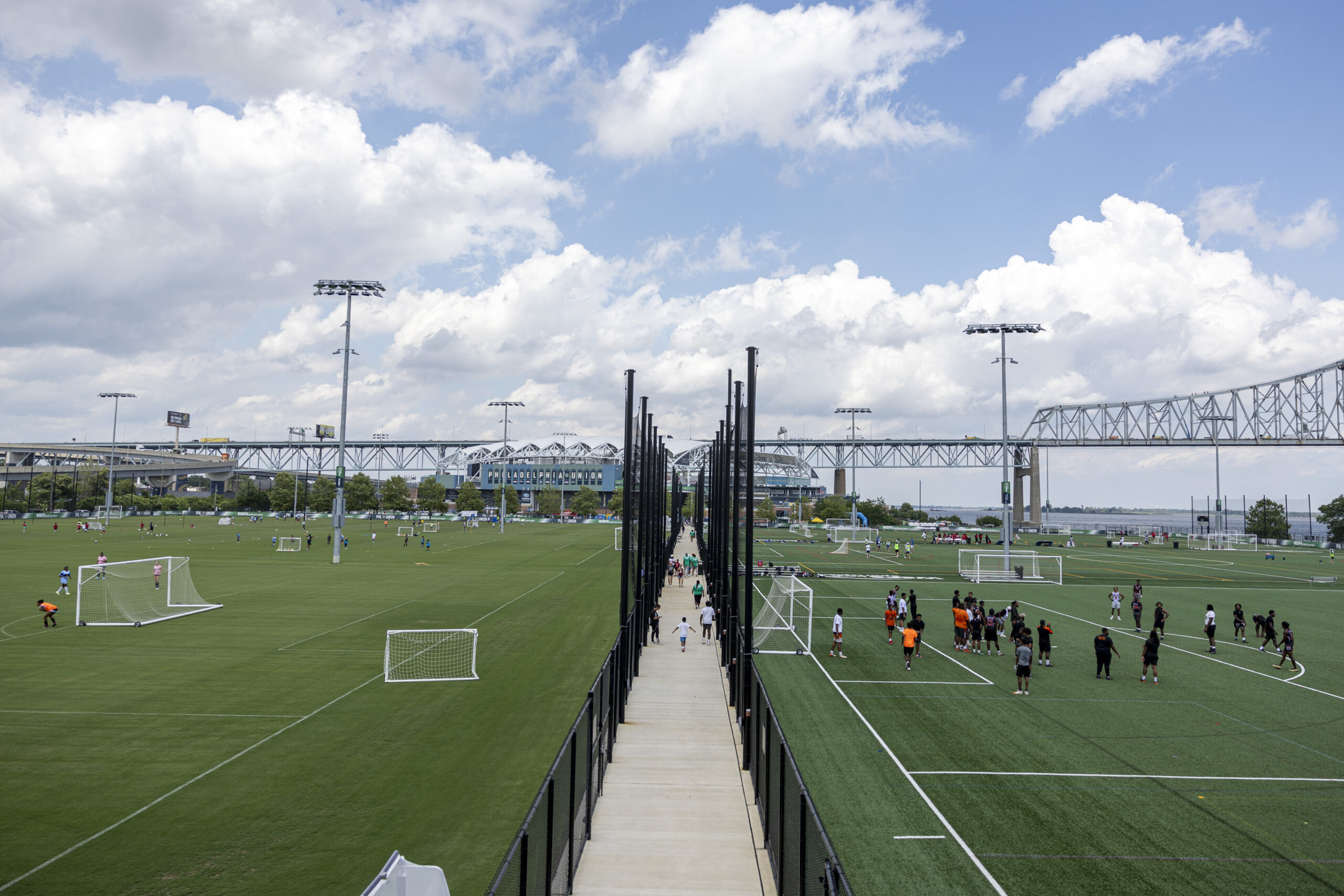
The Union’s training fields in Chester. The grass one on the left is where the first team trains.
There’s high tech all over the campus, from the “Striker Lab” that tracks a player’s kicking technique to a medical scanner called SonicBone that measures a person’s biological age.
“If they’re two years advanced [compared] to their peers and having success only because of their physique, that gives us information,” Scheer said. “Potential for our academy is more important than performance level.”
Scheer echoed a longtime Union talking point when he spoke of “looking for marginal gains that will allow us to have sustainable success in MLS.”
“We think that if we invest in data, we’re not going to have to try to outcompete and outspend the LAFCs, the Torontos, the Atlanta Uniteds of the world,” he said.
Those words did not prompt the kinds of boos from this crowd that they would have from the River End stands. But Scheer, who has become the public face of the front office with sporting director Ernst Tanner on administrative leave, isn’t ignorant of that, either. He’s a West Windsor, N.J., native who played and coached at the University of Delaware, and scouted for U.S. Soccer before joining the Union’s staff eight years ago.
Jon Scheer spoke for more than an hour about the inner workings of the Union’s academy.
Trophies count most for measuring the club, of course, but below that is another way to measure success. The Union now aren’t just viewed as the top American club for developing U.S. national team talent; they can put numbers behind it.
Last year, a total of 57 Union players and prospects were called up to U.S. youth national teams. That is easily the best of any MLS club, with the Los Angeles Galaxy second at 52 and the Chicago Fire third at 40. It’s also a long way past the league’s former standard-bearers, FC Dallas (32) and the New York Red Bulls (24).
“We want to use that as a recruitment tool for the next wave of kids to say if you come here, we’ll be able to push you on to a higher level — whether that be for the national team or beyond,” Scheer said.
“Ultimately, if we have a bunch of kids in youth national teams and nobody in the senior national team, then that’s good, but our goal is to get them into the senior squad,” he said.
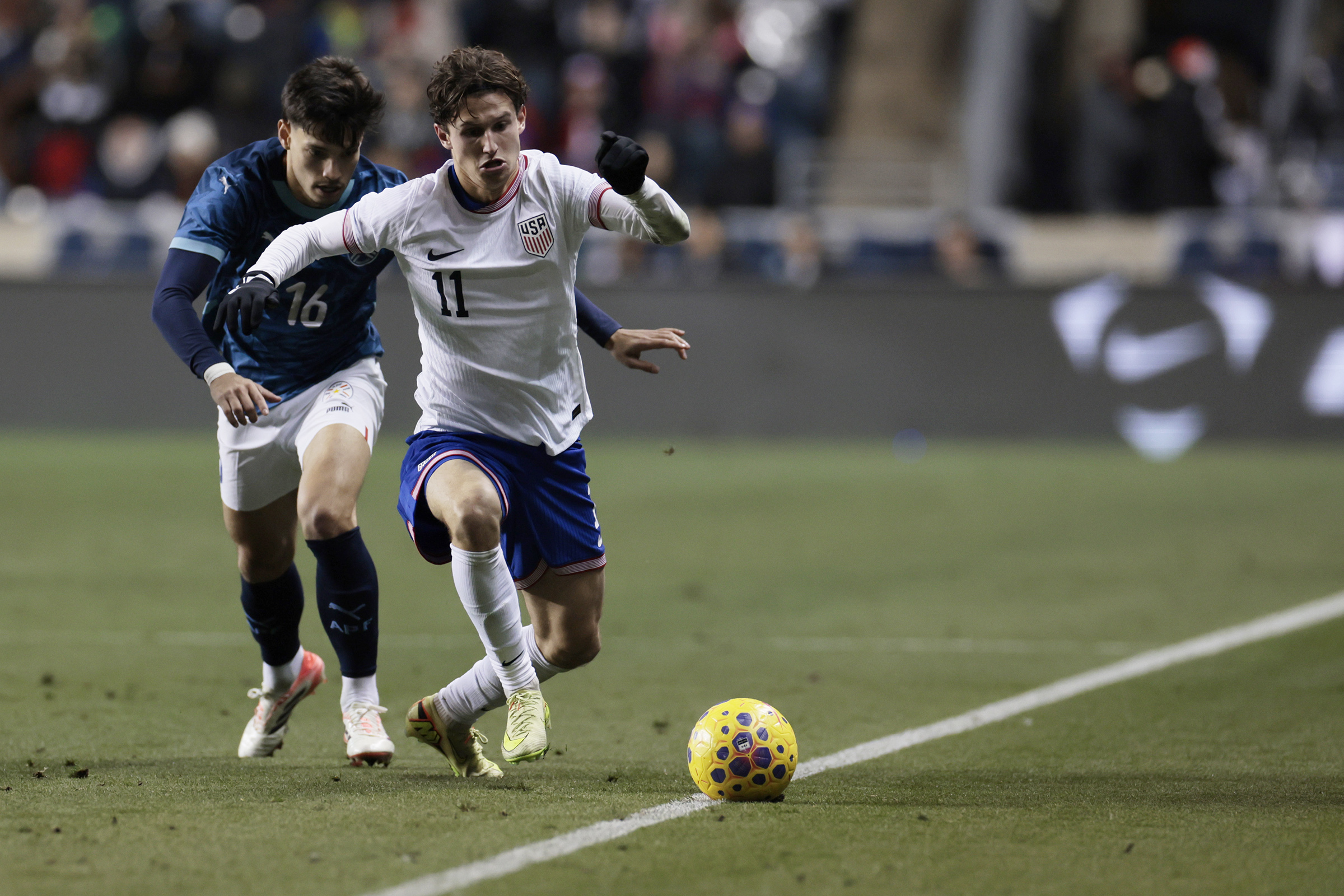
Medford native Brenden Aaronson (11) is the best example of a Union product who has made it big on the world stage. Aaronson plays for Leeds United in the English Premier League and the U.S. national team.
‘Everybody has a plan’
It’s also, of course, a goal to have them play for the Union. And yes, it’s another goal to sell players on to European clubs, ideally for big sums.
“If our goal was just for our academy teams to win [youth tournament] championships, that would shape how we would build our rosters week after week,” Scheer said. “But [we’re] knowing that we need to, for our strategy, develop players, place them in the first team, showcase them to the world, transition them on to bigger clubs, and then use those resources to reinvest.
“Not just in the academy, also into player scouting and recruitment for the first team.”
Scheer went deep on how the high school works. He talked about the philosophy of the place, the teachers, and how they educate kids on a combination of soccer and serious academics. Some of the graduates who haven’t turned pro have gone on to major colleges, including Ivy League ones.
He showed a slide with the students’ typical daily schedule, with blocks of training and blocks of classes. He also detailed the residency aspect, for which the Union bought a house in South Jersey not far from the Commodore Barry Bridge. Twelve players and two adults who oversee them now live there.
“About 80% of our academy is from the Greater Philadelphia region,” Scheer said. “We never see it becoming 50-50.”
Union forward prospect Sal Olivas is an example of a player who came to the team’s youth academy from afar — in his case El Paso, Texas.
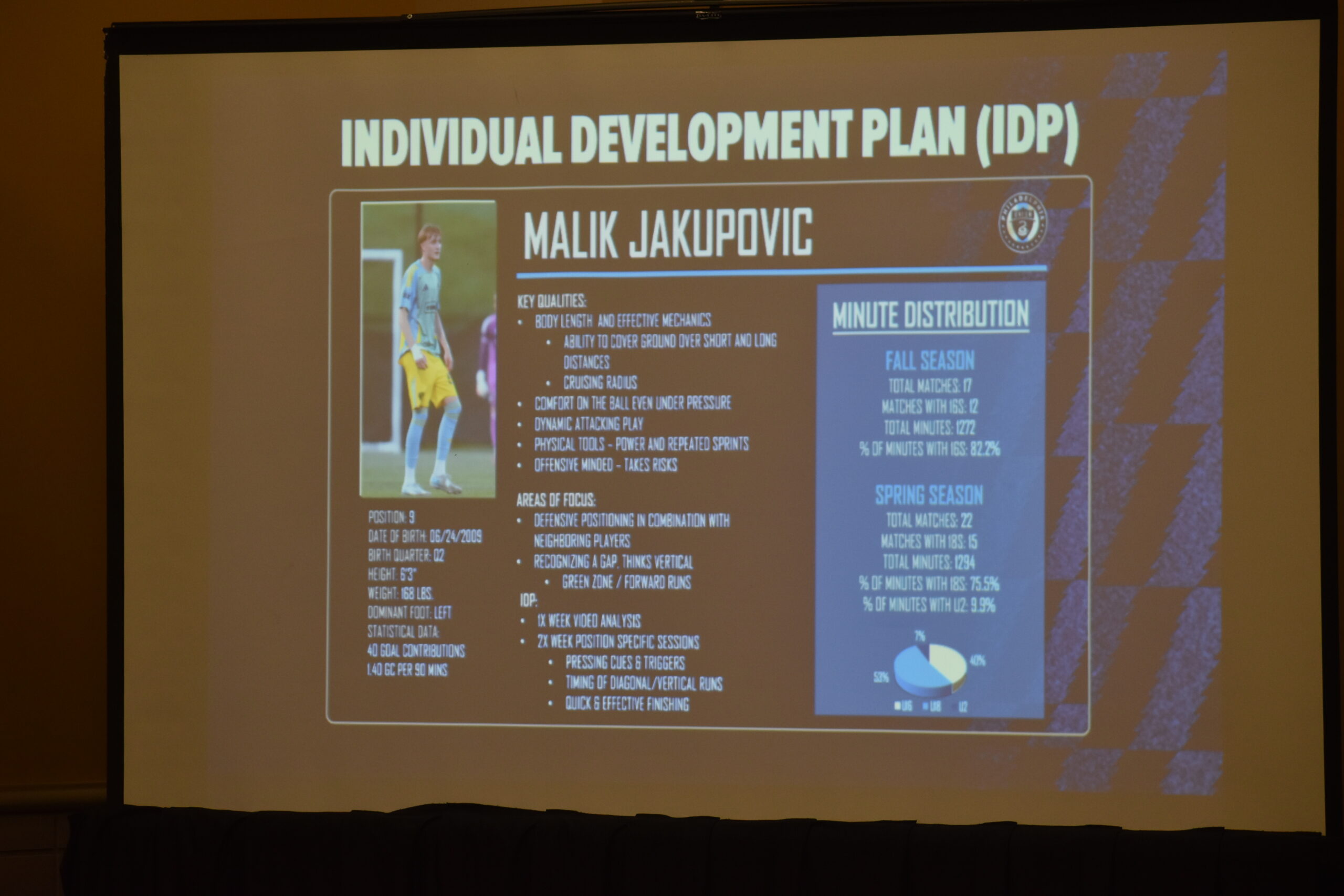
Later in the presentation, he posted a detailed slide showing an example of an Individual Development Plan. The player on the slide happened to be 16-year-old striker Malik Jakupovic, the team’s second-most-hyped prospect right now after Cavan Sullivan.
“Yes, our top talents have a little bit more of an advanced plan, and a little bit more focus — of course, because that’s our goal, to push players into the first team,” Scheer said. “But everybody has a plan, and this is something we’re trying to improve.”
He talked about Sullivan, too, after an audience member asked.
“At the end of the day, Cavan has to do well here in order to play, in order to maximize his opportunity to try to play in the Premier League for Manchester City, and that’s what we all want,” Scheer said, a rare instance of the Union directly mentioning the future move.
“There’s things that we do, that we talk about, that they’ve taken; and there’s things that they do that selfishly we can take and maybe apply to our environment.”
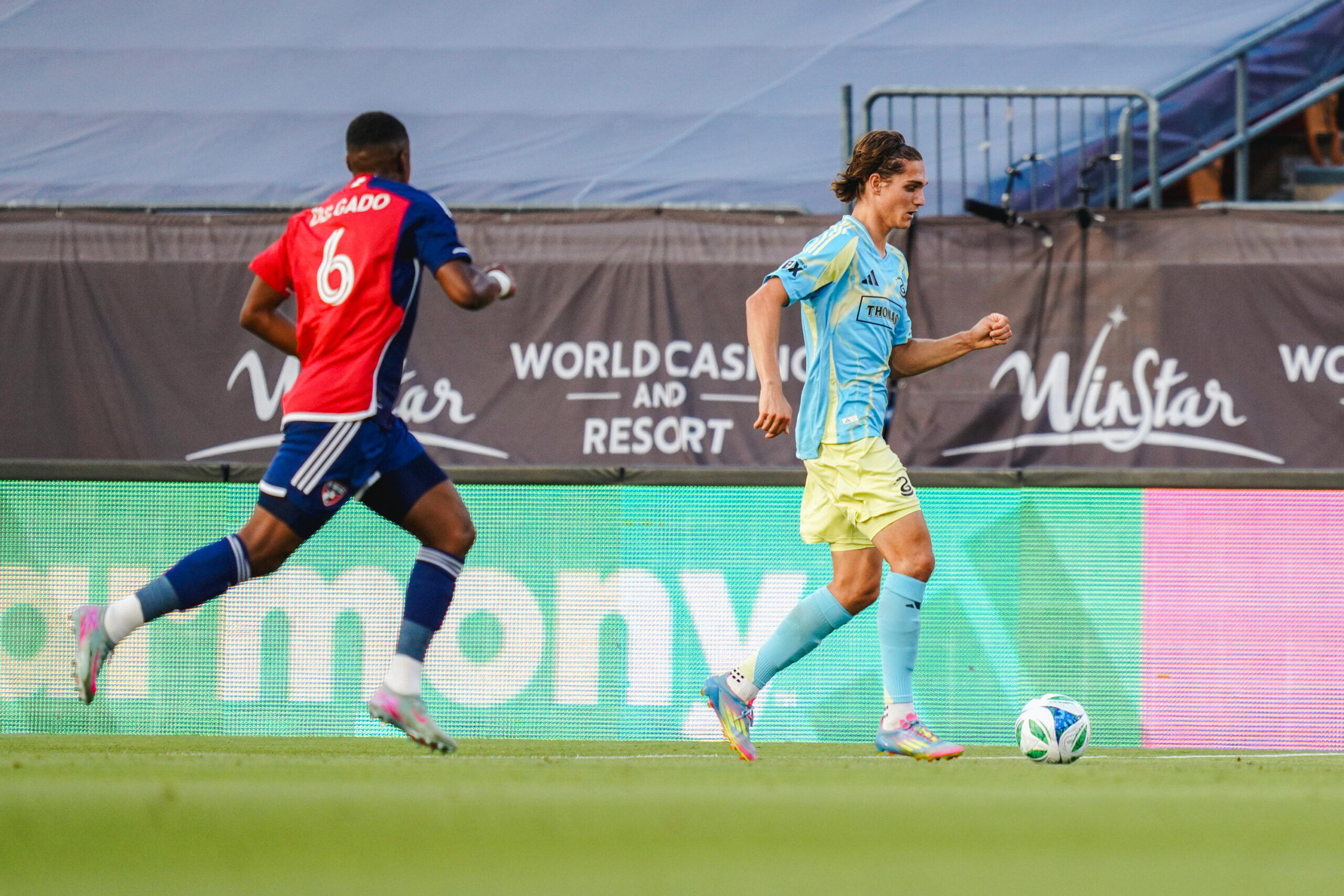
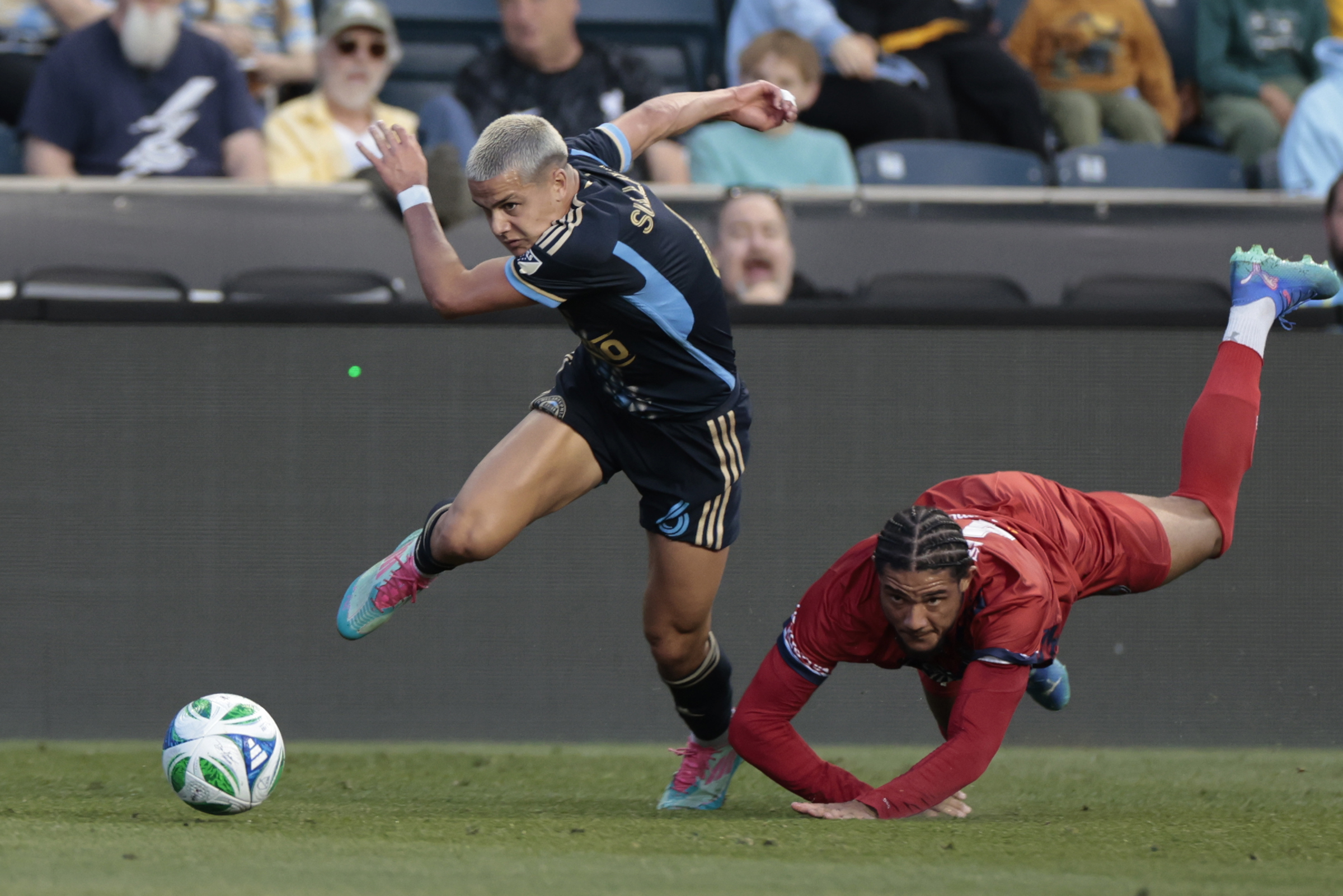
Cavan Sullivan (left) in action for the Union last year.
And for as much as the Union “want to develop him individually really, really well,” Scheer also made a clear point about the present.
“Cavan’s got to focus on every day,” he said, “and be a good teammate, and be competitive, and play in a great way, to be playing in MLS.”
Some of the coaches in the room surely wanted insight on the Union’s tactics and playing style. Scheer gave it to them, with slide headlines like Active vs. Reactive, Forward First, and Synchronized Sprinting.
Another slide listed six key qualities for a prospect, aligned in a circle: Comfort On The Ball, Psychosocial Characteristics, Game Understanding & Decision Making, Ball Recovery, and Physical Qualities.
Then, over in the corner, there was another: Special Weapon. Scheer stopped there for a moment.
Jon Scheer’s slide detailing much-touted Union striker prospect Malik Jakupovic.
“We value a special skill set [with] talent that might be innate — something that differentiates a player from their peers,” he said. “We think that might give them a better chance to get them through the door of MLS.”
And if that one skill comes with deficiencies elsewhere?
“We’d rather invest time in that player, because that one characteristic is so unique, to then see how they develop in the other areas,” Scheer said. “And we approach our scouting overseas for our first team in the same way as well.”
‘There’s no magic pill’
Those words might have turned on a light in some Union fans’ heads, because they seemed to match the fates of Jack McGlynn and David Vazquez. Both are wonderfully skilled players, but their tenures in Chester were cut short for not ultimately fitting what the first team’s manager wanted.
The Union sold Jack McGlynn to Houston afer deciding he wasn’t going to be a long-term fit in their playing style.
“It doesn’t mean that special weapon is just going to guarantee playing time,” Scheer said. “But a lot of times we’ll interact with the first team manager, they’ll see the player, they’ll provide opinion on the player for years to come, and then they’ll work with the player.”
He added that the coaching staff and front office are doing their best “to try and maximize and make sure we’re aligned on the player pool. If things aren’t working, “it’s about just evaluating each individual and trying to make the best decision.”
At every level of the Union, there’s a balance to strike between the system and the individual. It’s Scheer’s job to find it every day.
“You don’t want the individual to feel like they’re always dispensable, and it’s only the game model that’s valuable,” he said. “You also want players that have personality and that can make mistakes. If we’re going to play forward first, you have to be brave in order to be able to do that.”
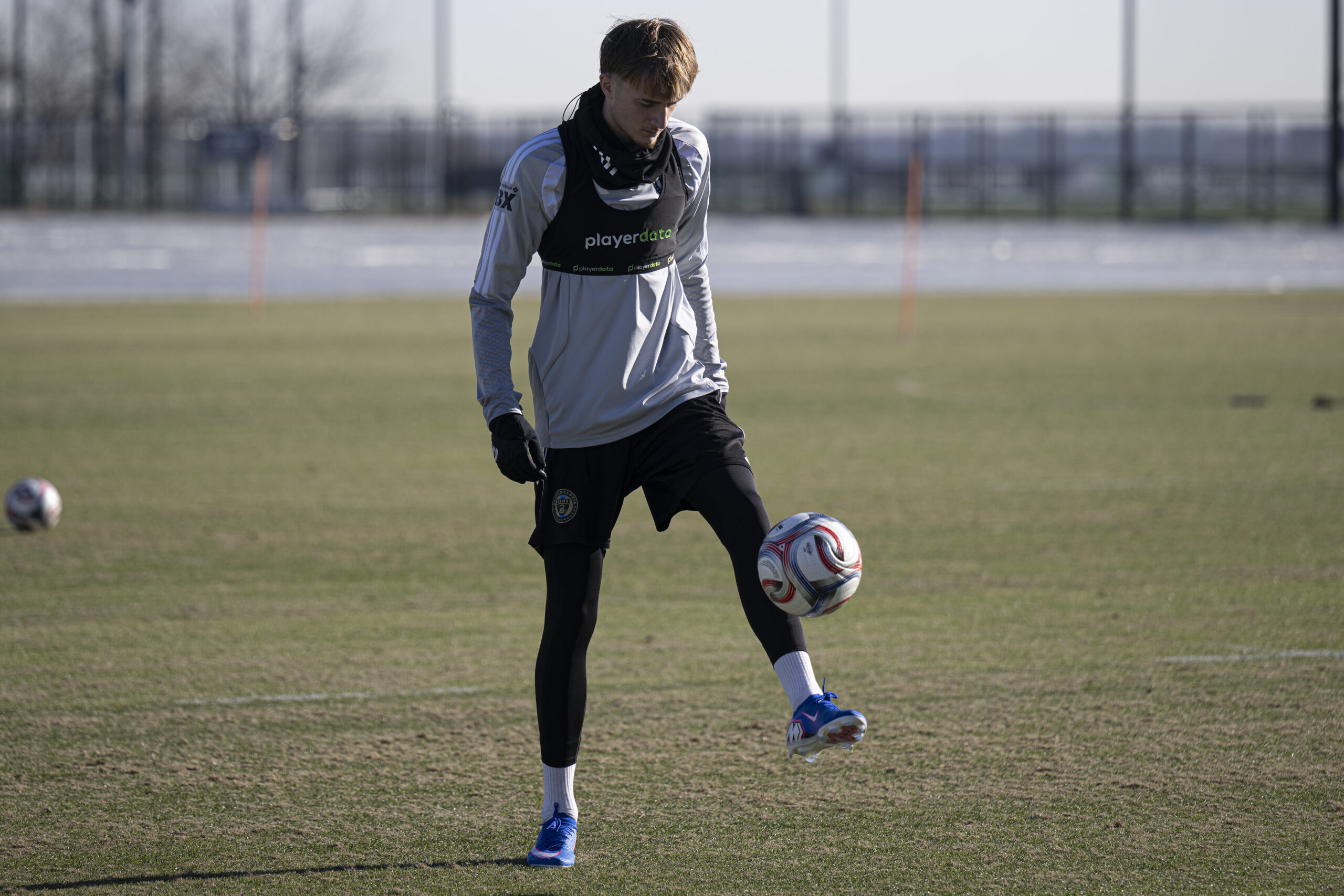
Malik Jakupovic has been training with the Union’s first team during this preseason.
The same goes for coaches.
“If we’re screaming at our kids every session and game, or we’re always being deliberate and explicit in terms of the information we give them, that is going to stifle creativity and decision-making, that will affect development,” Scheer said.
“So how we go about teaching, how we go about running our sessions, how we can carry ourselves on the sideline, how we educate ourselves in the ages and stages of development, that’s really, really important.”
He concluded his point on a philosophical note, one that might make sense well beyond soccer.
“There’s no magic pill,” he said. “There’s no magic answer.”
There are times when it seems, even as young as he is, that Cavan Sullivan has been prepared for the spotlight all his life.
But there still are times, even if they’re fleeting, when he’s clearly a 16-year-old trying to make his way in the world as a professional athlete.
One came last week, a few days before the Union left for their preseason training stint in Spain. Sullivan was asked what it’s been like growing into that spotlight, and he had a lot to say.
“The spotlight can be great, but at the same time, especially now, it’s really not something I’m caring about,” he said. “Like, literally all I want to do is play games and play the sport I love. Media is great, but I just want to show what I can do and be the player I know I can be, and [I’m] not really focused on the media or spotlight right now.”
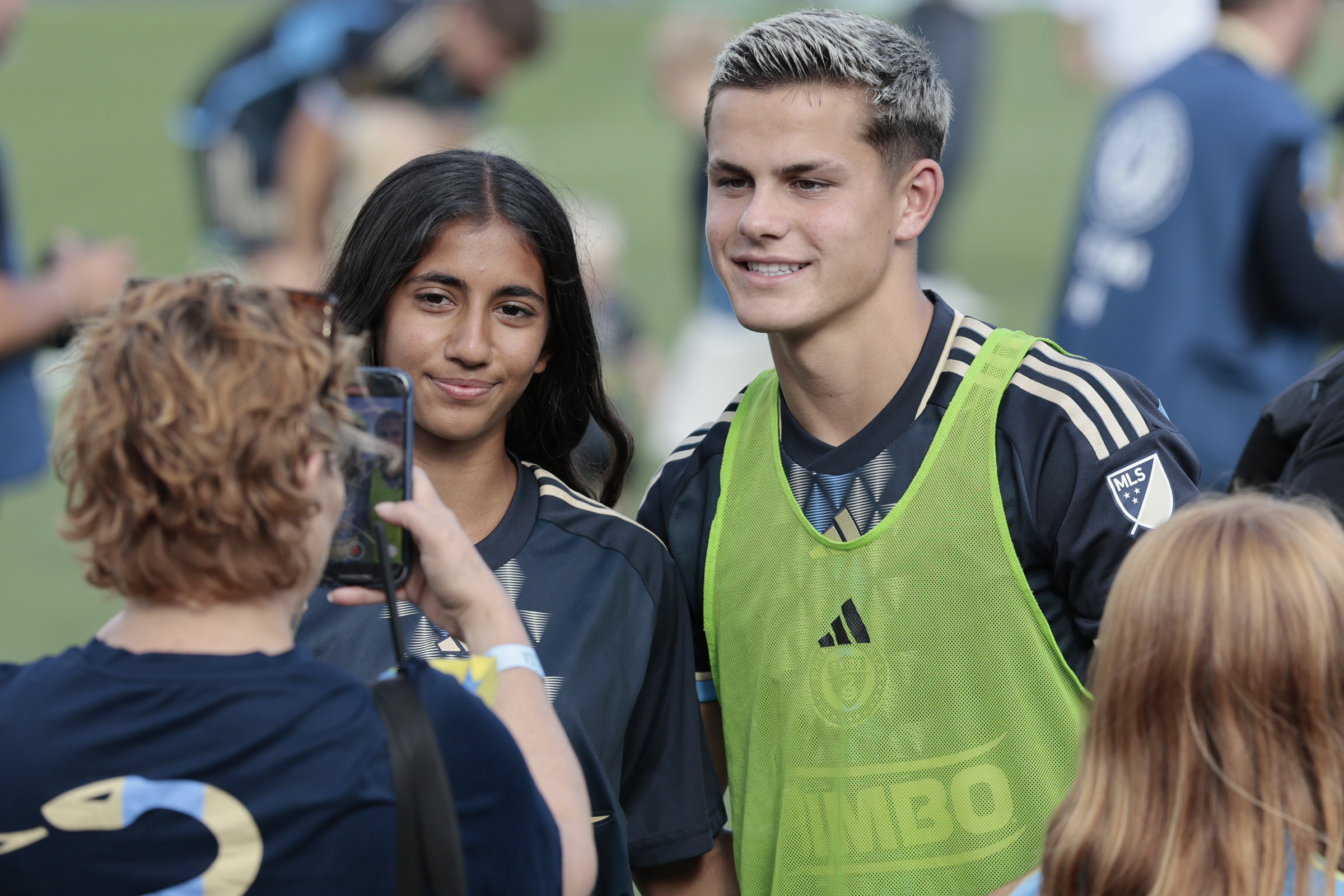
Cavan Sullivan posing for a photo with a fan at a Union game in September.
But with his next breath, he acknowledged how much he gains from it. Sullivan’s fame has earned him endorsement deals with fashion brand Aéropostale and sportswear giant Adidas, the latter linking him to a collection of stars, including Lionel Messi and Trinity Rodman.
As he continues to grow on the field toward a preset move at the end of 2027 to English Premier League power Manchester City, his stature off the field likely will keep growing, too.
“You also have to acknowledge that I’ve prayed for moments like these, and I’ve been dreaming about the spotlight,” he said. “It’s weird how it contradicts at certain moments in your life. But as a kid, I’ve dreamed of having jerseys on kids’ backs and being [in] cool interviews and meeting my heroes, and it’s awesome.”
Sullivan should be ready for regular first-team playing time this year. Though his listed height and weight are 5-foot-7 and 150 pounds, both unofficial counts are higher now. He continues to grow in size and physique and looks ready to play against grown men.
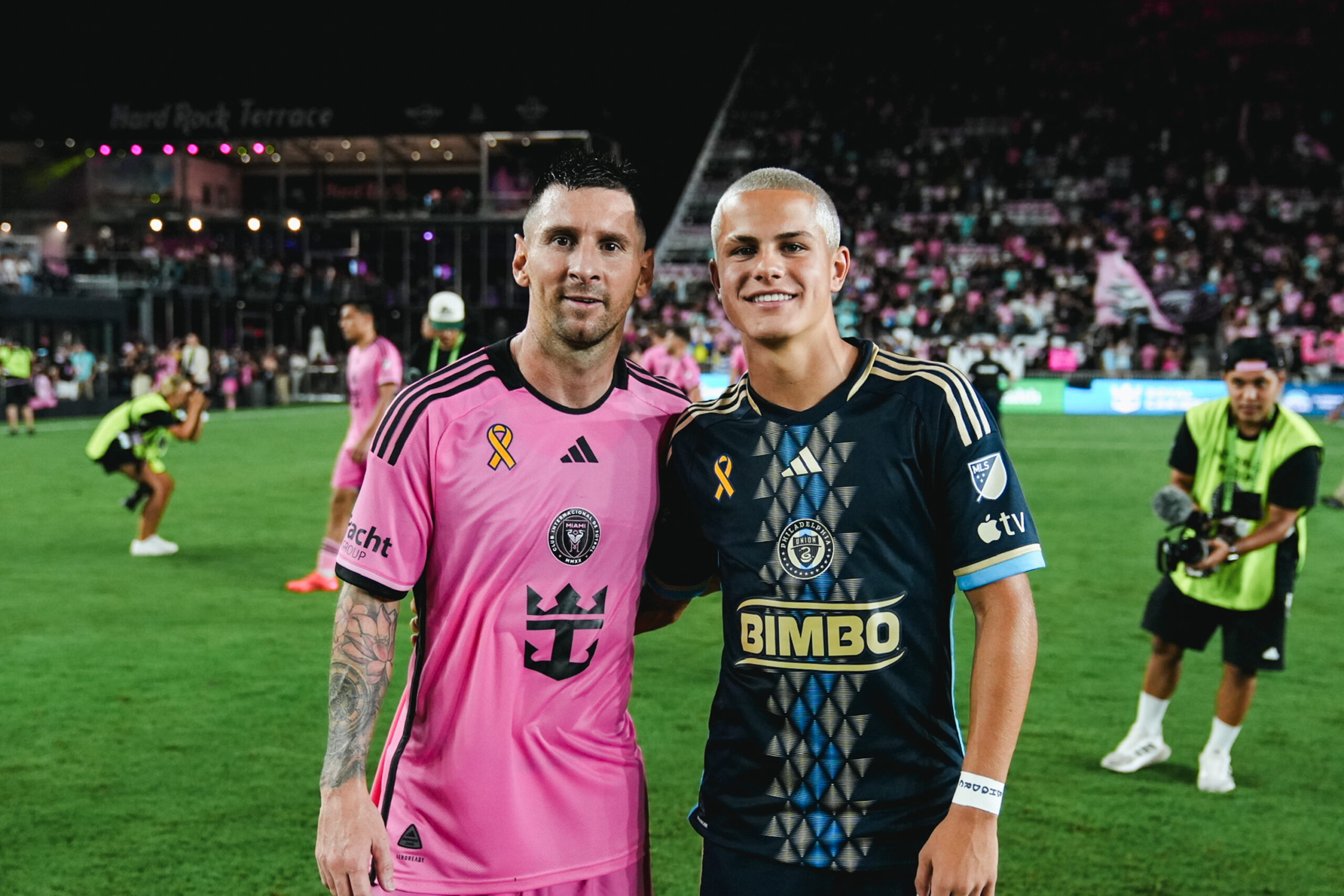
Cavan Sullivan (right) with Lionel Messi in 2024.
That last clause bears emphasizing. As much hype as Sullivan has gotten already, there’s a big difference in any human body from age 14, as he was when he turned pro, to 16.
The Union’s roster overhaul this winter also remains on everyone’s mind. As a new team starts to come together, one thing that quickly has become clear is its youth. New striker Ezekiel Alladoh is 20, centerback Finn Sundstrom is 19, and rumored centerback target Geiner Martínez is 23.
New Union striker Ezekiel Alladoh is 20 and is the club’s latest record signing.
Japhet Sery Larsen, the top new centerback signing, is a relative veteran at 25. He’ll likely start next to Olwethu Makhanya, who was excellent last season at 21. (He turns 22 in April.) And as usual, the preseason squad includes some academy products.
“It’s awesome to see the youth come in and try and earn their stripes and do their thing and showcase what they have,” Sullivan said. “But, obviously, you’re going to miss the older guys that were here when I originally started out with the team. … It’s definitely sad to see, but that’s part of the game. You’ve got to learn new teammates, learn their ins and outs, and how they play.”
If there was another hint of lament, it came when he added: “People move, and people come in.” It also was a statement of fact.
“Obviously, we’re affected by them, and we miss them, but we’re going to try our best to keep the same locker room experience as it was last year,” Sullivan said. “Because that was the best locker room I’ve been a part of. It obviously helps when you’re a winning team, no doubt about it, but I think Philly as a club and as a city will keep that same passion and energy throughout the whole year.”
Cavan Sullivan (left) on the ball during the Union’s U.S. Open Cup game against Indy Eleven in May. It was his first start for the Union’s first team.
With just under a month until the season begins, the Union need a new starting-caliber left back and are shopping for one. Beyond that, what’s the right number of signings before the team’s young prospects lose their shots at playing time?
This always is a major question for the club, and it feels especially important now.
Another attacking midfielder could help until Quinn Sullivan returns from his torn ACL but could take minutes from Cavan afterward — and before, too. Another starting-caliber striker certainly would be useful, but Sal Olivas showed in his limited first-team run last year that he deserves another shot.
Eddy Davis and Malik Jakupovic also are moving up the pipeline, and Jakupovic is getting a lot of buzz. The 16-year-old from suburban Detroit currently is with the first team and could earn a first-team contract, even if he spends most of this year with the reserves.
“He’s athletic, a goal scorer, can use his feet well,” Sullivan said. “I’m excited to see what this year has in store for him. He’s obviously a friend of mine, and someone I worked with a lot with the second team when I was playing games. He’s come into a lot of second-team games and made instant impacts.”
Indeed he did, scoring eight goals in 19 games. Though many of them were at the tail end of blowouts, that didn’t stop fans and scouts from paying attention. Jakupovic stood 6-3 and 168 pounds when he turned pro on a reserve team deal last May, and, as with Sullivan, the numbers have risen healthily since then.
“Hopefully he can start some games with the second team this year,” Sullivan said. “You never know what could happen in this game — first-team minutes could be available for him as well. I’m excited to work with him even more.”
‘Stuff to prove’
There’s no question that Sullivan exudes confidence. He’s fearless taking on defenders and knows he’ll get kicked, even though he doesn’t always take it well.
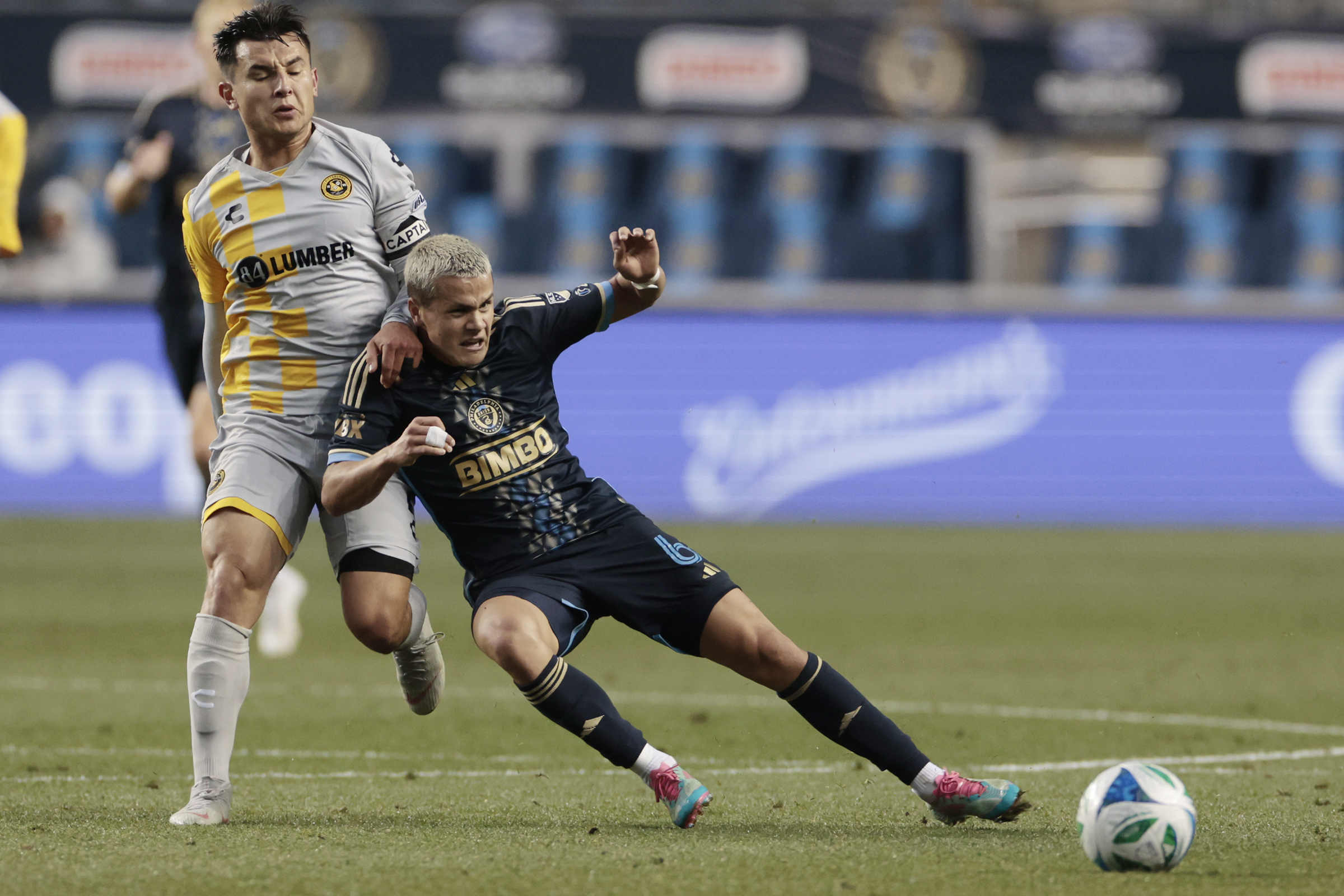
Cavan Sullivan (right) takes a challenge from the Pittsburgh Riverhounds’ Daniel Griffin in May.
In the Union’s preseason opener on Tuesday against Czech club SK Sigma Olomouc, Sullivan played the second half of a 1-1 draw. At one point, he was pushed over as he charged down the right flank. The defender had a word in Sullivan’s face, and Sullivan jawed right back at him before the referee reminded them that it was a scrimmage.
That moment also illustrated why it’s so important that Sullivan turned pro with the Union instead of getting thrown into the deep end in Europe. Along with having coaches here who care about his development, he gets to live at home with a family that keeps him grounded.
You feel that when he says things like, “At the end of the day, it’s about what I can do on the field and not the behind-the-camera side of things.”
And again when he talks about the upcoming season.
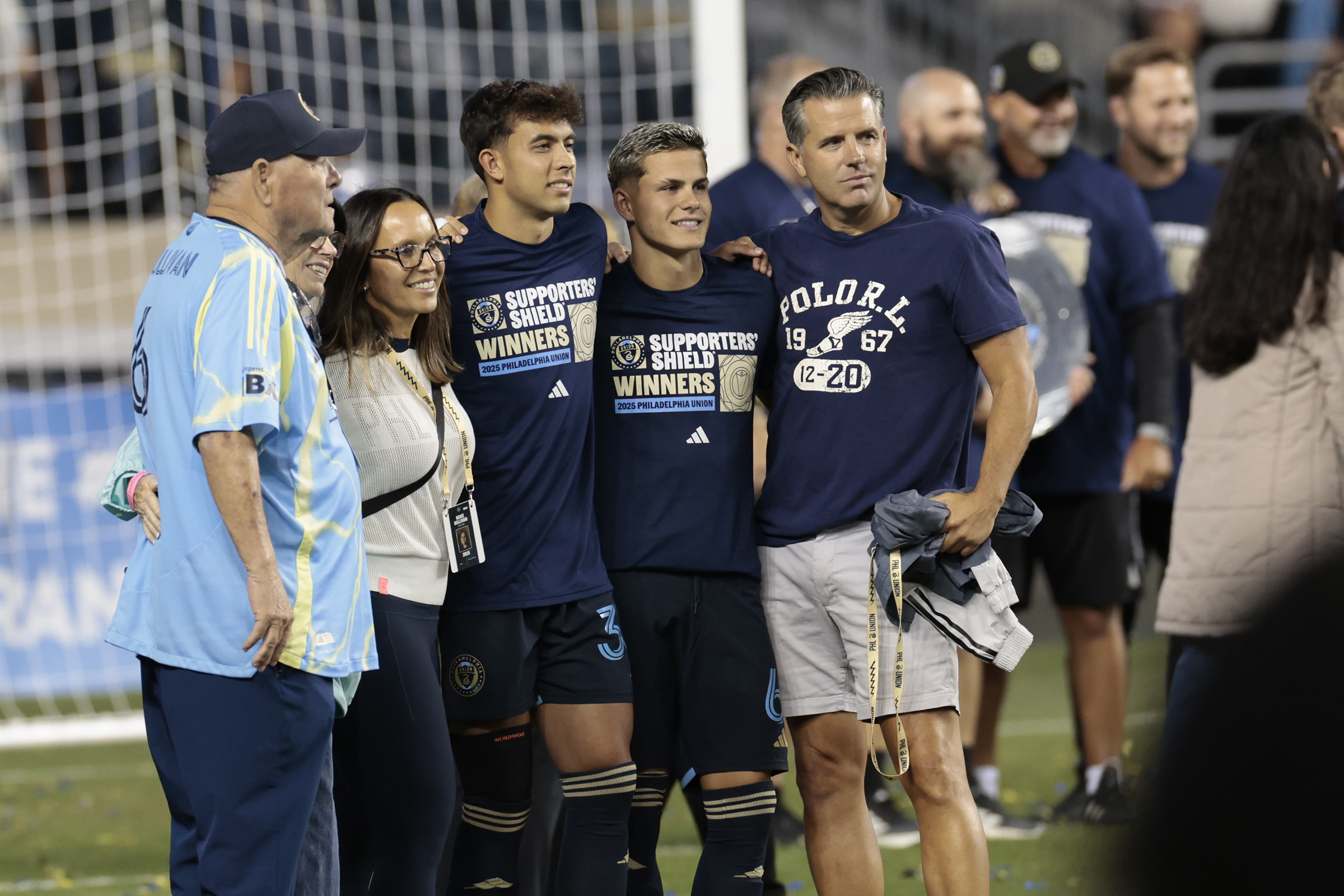
Cavan Sullivan (second from right) with family including father Brendan (right), brother Quinn (next to Cavan), and mother Heike (next to Quinn) after the Union clinched the Supporters’ Shield in October.
“It’s a big year for me,” Sullivan said. “It’s exciting, but I’m not going to get ahead of myself. I know there’s still work to do and stuff to prove. So I’m not going to get too excited — just stay grounded, just be humble, and continue to work really hard.”
Union manager Bradley Carnell sees that. Not for nothing did he call Sullivan’s mindset “one of his biggest strengths.” But Carnell also knows the influence he has over Sullivan’s playing time.
“That Cavan has the outlook on doing all these great things, that’s a target,” he said. “And in his mind, that’s now a cycle of work, a body of work that has to go into each and every single training session, scrimmage, recovery session, and on forth. So, yeah, we hope that will be great. What a story that would be.”
Carnell continued: “It’s our job now to push Cavan in the best way possible, to make sure that we hold each other accountable to the development of Cavan and every other player in the roster.”
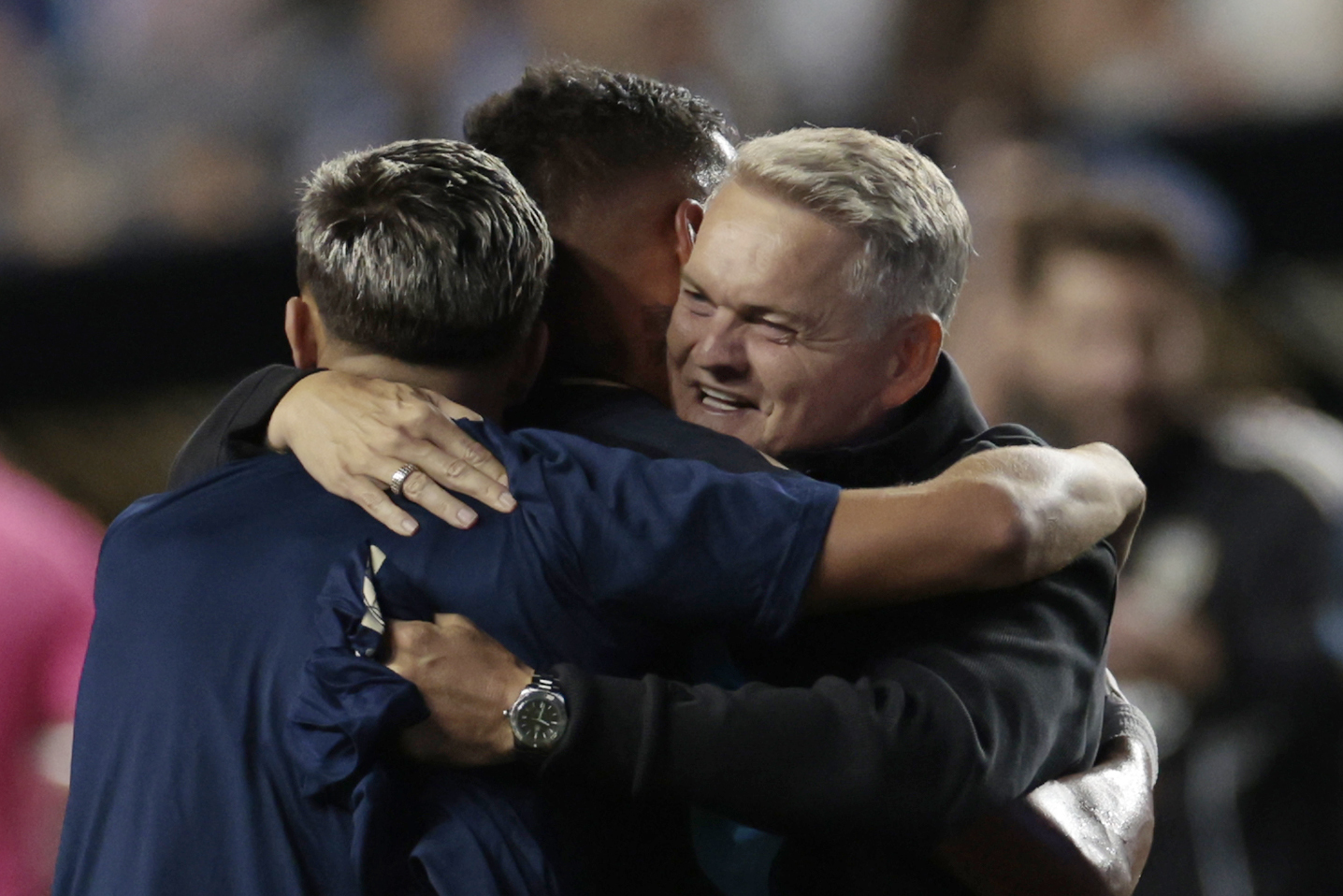
Bradley Carnell (right) embracing Cavan Sullivan (left) and Jesús Bueno after the Union won the Supporters’ Shield.
Sullivan said the team’s goal for this year “remains the same: We’re going for the MLS Cup no matter what.”
His personal goals, he said, also are “similar” to the last two years.
But then he stepped right back into that spotlight and knew it.
“I’m going to work my [butt] off,” he said, “trying to earn my spot, [and] be a consistent player on a team basis.”