Tag: Chestnut Hill

  • Moore College will consider opening undergraduate programs to men

    Moore College will consider opening undergraduate programs to men

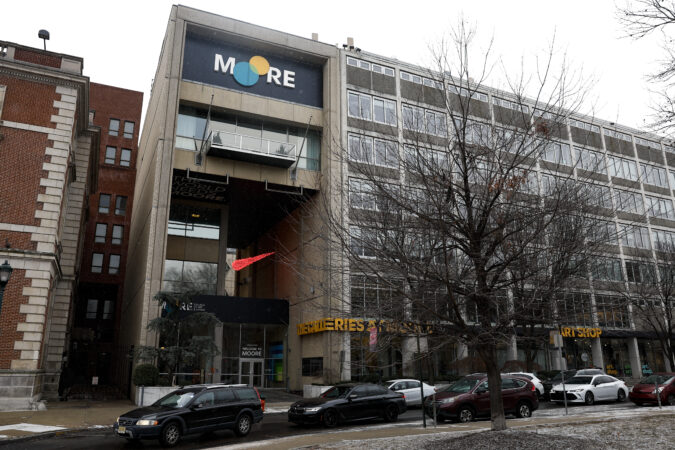
    Moore College of Art and Design will consider opening its undergraduate programs to men for the first time in its 177-year history.

    The Philadelphia school, which touts its role as “the first and only historically visual arts college for women in the nation,” cited the need to make arts programs more accessible in the region and the expected national decline in the available pool of high school graduates.

    The college, which enrolls about 500 students, will study and discuss with its community the prospect of admitting men over the next four months and make a decision by June, the school announced in emails to alumni, faculty, and students Monday. If the school decides to admit all genders, the first class admitted would be for 2027.

    “We will explore all of this together in an inclusive way for students, faculty, staff, and alumni,” wrote Moore president Cathy Young and Frances Graham and Art Block, chairs of the school’s board of trustees and board of managers, respectively. “Your voices are essential. No decision has been made at this time. The boards want your feedback.”
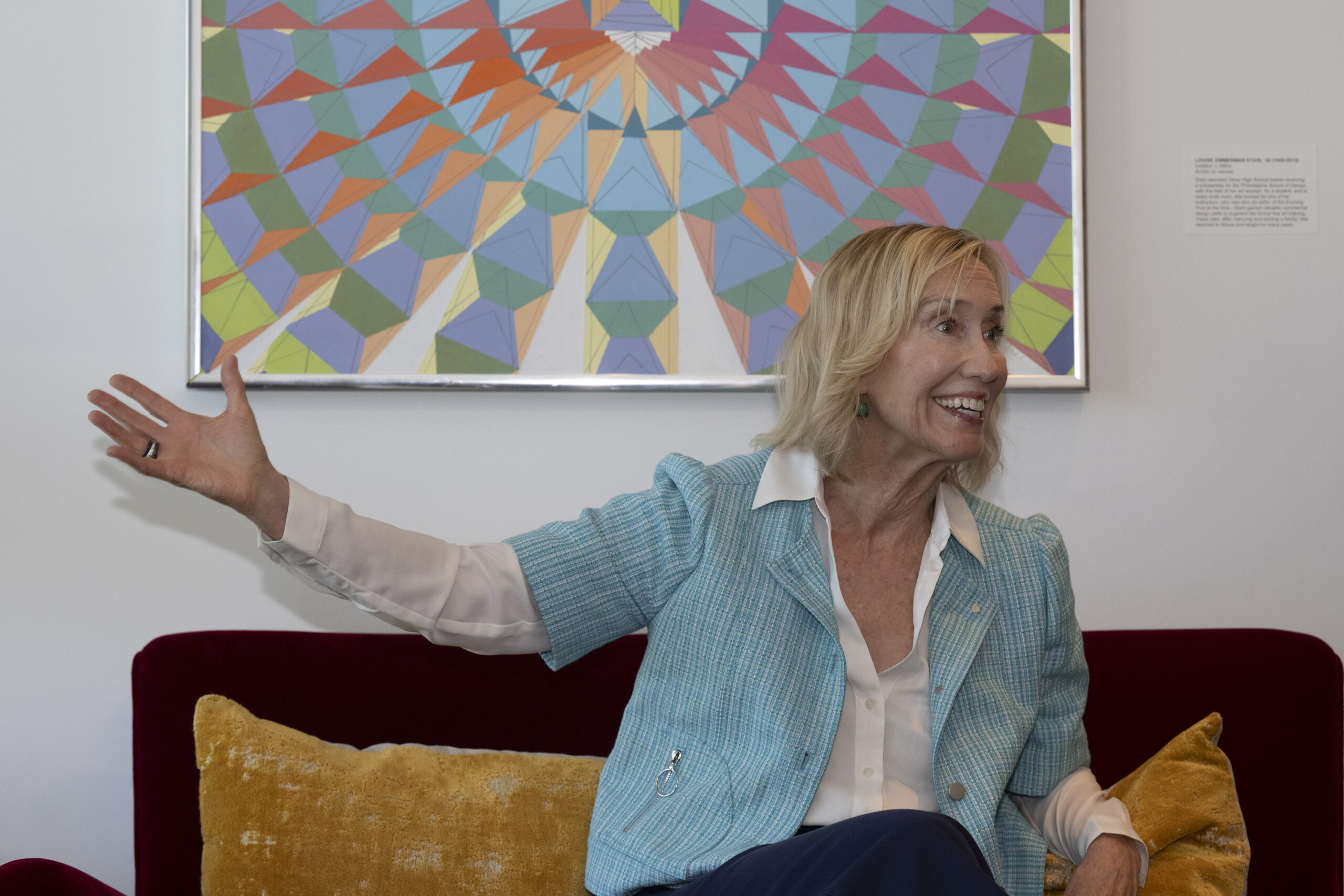
    Moore College of Art and Design president Cathy Young.

    If Moore goes coed, Bryn Mawr College would be the only remaining women’s school in the Philadelphia region. (In Allentown, Cedar Crest College remains primarily a women’s college.)

    Several other colleges in the region that were formerly for women have gone coed over the last decades, including Rosemont on Philadelphia’s Main Line in 2008, Immaculata University in Chester County in 2005, and Chestnut Hill College in Philadelphia in 2003.

    Nationally, the number of women’s colleges has been declining from a high of over 200 to just 31 as of 2022, according to a 2025 report by the Pew Research Center.

    It wouldn’t be the first change in Moore’s admissions policy in recent years.

    In 2015, Moore began admitting “all qualified students who live as women and who consistently identify as women at the time of application.”

    Then in 2020, Moore also began accepting nonbinary and gender-nonconforming students. Since then, the number of those students has been growing. They made up 6% of the first freshman class under the new policy in 2021. By fall 2022, they accounted for 21%, and by fall 2023, 26%. Last fall, that grew to one-third of the freshman class.

    Moore’s graduate programs and most of its continuing education programs already include men.

    Moore officials said they are making the decision from a position of financial and academic “strength.” The school has had operating surpluses for the last 24 consecutive years, a school spokesperson said. Many small schools have faced financial strain in recent years, but Moore fared among the top small private colleges in the Philadelphia region for financial health in a 2024 Inquirer review.

    Moore’s net tuition climbed from $10.8 million to $12.7 million in fiscal 2024 and to $16.5 million in fiscal 2025, financial records show. The school also saw a big gain in private gifts and grants last year to $2.2 million, up from $885,383 the year before.

    This year’s enrollment is the school’s second highest behind fall 2024, when the college accepted 112 students from the University of the Arts, which abruptly closed in June 2024. The school also took 12 students that year from the Delaware College of Art and Design, which closed that year, too.

    Moore opened a new residence hall in Rittenhouse Square last fall, which is just a seven-minute walk from campus and will allow the school to guarantee students housing for all four years.

    In announcing the possibility of accepting all genders, Moore officials noted UArts’ closure and the end of degree-granting programs at the Pennsylvania Academy of Fine Arts.

    “There is a void in Philadelphia’s higher ed creative landscape, and that begs the question: Shouldn’t all creatives, regardless of gender, have access to Moore …” they wrote. “The answer doesn’t have to be “yes,” but it is our responsibility to explore it.”

    College surveys of applicants have shown that the school’s status as a women’s college isn’t a big draw. Only 6% cited it as important to their decision out of 885 survey respondents over the last dozen years, the school said. Meanwhile, a quarter said it was one of the important reasons they didn’t choose Moore.

    Moore officials also cited the expected drop in the high school graduate population beginning this year because of declining birth rates. A decline of 10% is expected by 2037, they noted.

    “There are simply fewer students,” they wrote. “No responsible institution can ignore factors like these. And we won’t.”

    They said they will discuss ways “to preserve and activate in new ways” Moore’s history and legacy as part of the exploration.

    Between February and April, Moore plans to host about 20 sessions for faculty, staff, and alumni to share their thoughts, as well as providing an opportunity for online comments.

    Staff writer Harold Brubaker contributed to this article.
  • A Main Line town leads the charge of new Philly-area restaurants for February

    A Main Line town leads the charge of new Philly-area restaurants for February

    February’s crop of restaurant openings includes two restaurants’ expansions to Narberth, a reopened brewery in South Jersey, a chic restaurant/lounge in Center City, an intriguing wine bar/bottle shop in Chestnut Hill, and two French newcomers.

    Restaurants can take awhile and owners are often hesitant to pinpoint an opening date. I’ve listed the targeted day where possible; for the rest, check social media.

    Duo Restaurant & Bar (90 Haddon Ave., Westmont): Brothers Artan and Arber Murtaj and Andi and Tony Lelaj, who own the Old World-style Italian Il Villaggio in Cherry Hill, are taking over Haddon Avenue’s former Keg & Kitchen with a pub serving a bar menu supplemented with seafood.

    Eclipse Brewing (25 E. Park Ave., Merchantville): Last August, food trucker Megan Hilbert of Red’s Rolling Restaurant became one of the youngest brewery owners in New Jersey when she bought this 9-year-old Camden County brewery, open as of Friday.

    Lassan Indian Traditional (232 Woodbine Ave., Narberth): The second location of the well-regarded Lafayette Hill Indian BYOB takes over the long-ago Margot space in Narberth.

    LeoFigs, 2201 Frankford Ave., as seen in January 2026.

    LeoFigs (2201 Frankford Ave.): Justice and Shannon Figueras promise the delivery of their long-awaited bar/restaurant, with an urban winery in the basement, at Frankford and Susquehanna in Fishtown. The food menu will be built around comfort-leaning small plates.

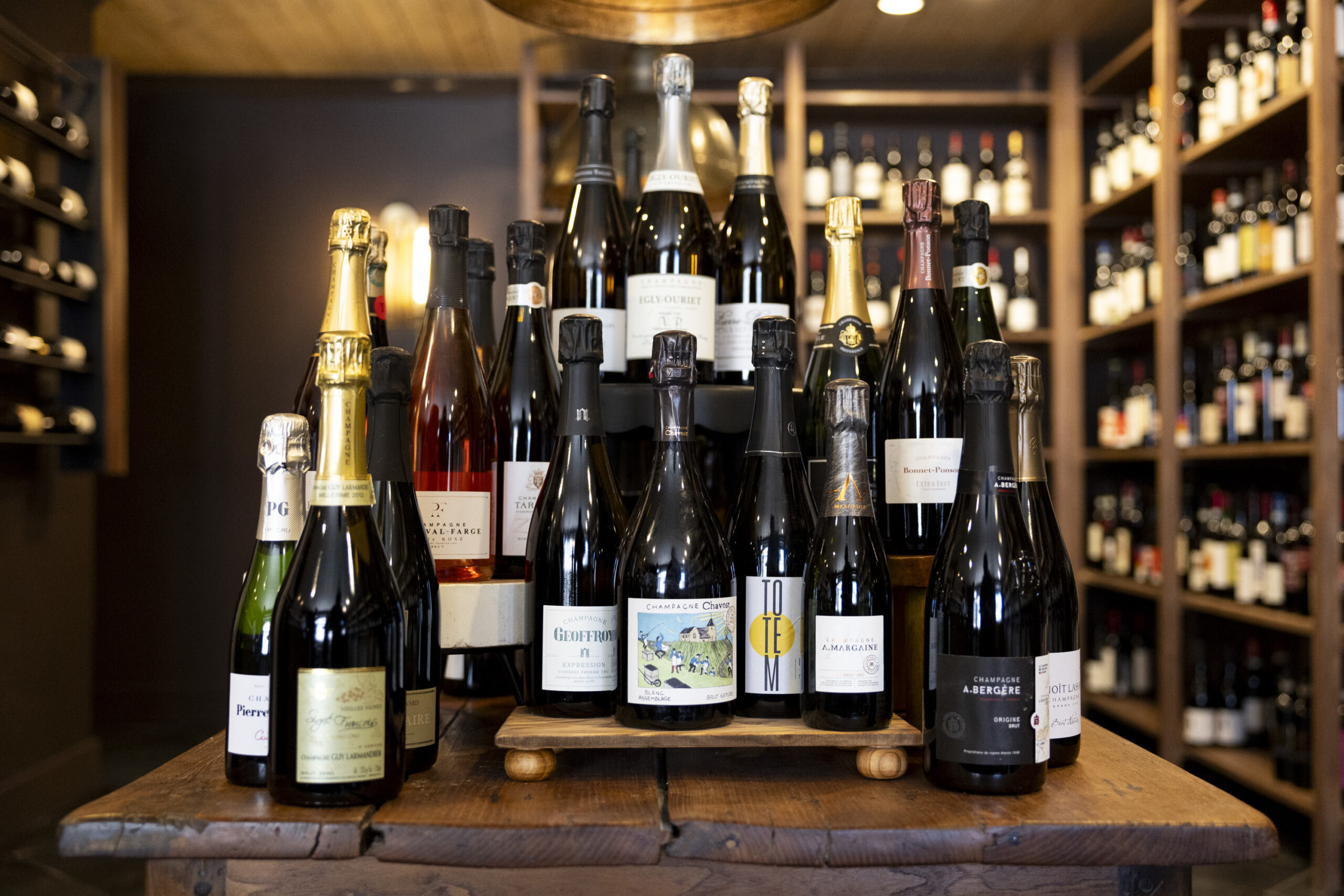
    The bubbly selection at Lovat Square in Chestnut Hill.

    Lovat Square (184 E. Evergreen Ave.): Damien Graef and Robyn Semien (also owners of Brooklyn wine shop Bibber & Bell) are taking over Chestnut Hill’s former Top of the Hill Market/Mimi’s Café property for a multiphased project: first a wine shop with indoor seating, then a courtyard with a full dinner menu, followed later by a cocktail bar/restaurant component. Opens Feb. 12

    Malooga (203 Haverford Ave., Narberth): The Old City Yemeni restaurant is expanding to Narberth with lunch and dinner service plus a bakery, with expanded indoor/outdoor seating and space for groups.

    Mi Vida (34 S. 11th St.): Washington, D.C.-based restaurant group Knead Hospitality + Design is bringing its upscale Mexican concept to East Market, next to MOM’s Organic Market. Target opening is Feb. 18.

    MOTW Coffee & Pastries (2101 Market St): Mahmood Islam and Samina Akbar are behind this franchise of Muslims of the World Coffee, offering a third-space experience at the Murano.

    Napa Kitchen & Wine (3747 Equus Blvd., Newtown Square): A California-inspired restaurant rooted in Midlothian, Va., opens in Ellis Preserve with an extensive domestic and international wine list in a polished setting. Opens Feb. 9.

    Ocho Supper Club (210 W. Rittenhouse Square): Chef RJ Smith’s Afro-Caribbean fine-dining supper club starts a six-month residency at the Rittenhouse Hotel, tied to the Scarpetta-to-Ruxton transition, serving tasting menus through July. Now open.

    Piccolina (301 Chestnut St.): A low-lit Italian restaurant and cocktail bar at the Society Hill Hotel from Michael Pasquarello (Cafe Lift, La Chinesca, Prohibition Taproom). Targeting next week

    Pretzel Day Pretzels (1501 S. Fifth St.): James and Annie Mueller’s pretzel-delivery operation is becoming a takeout shop in the former Milk + Sugar space in Southwark. Expect classic soft pretzels plus German-style variations (including Swabian-style) and stuffed options.

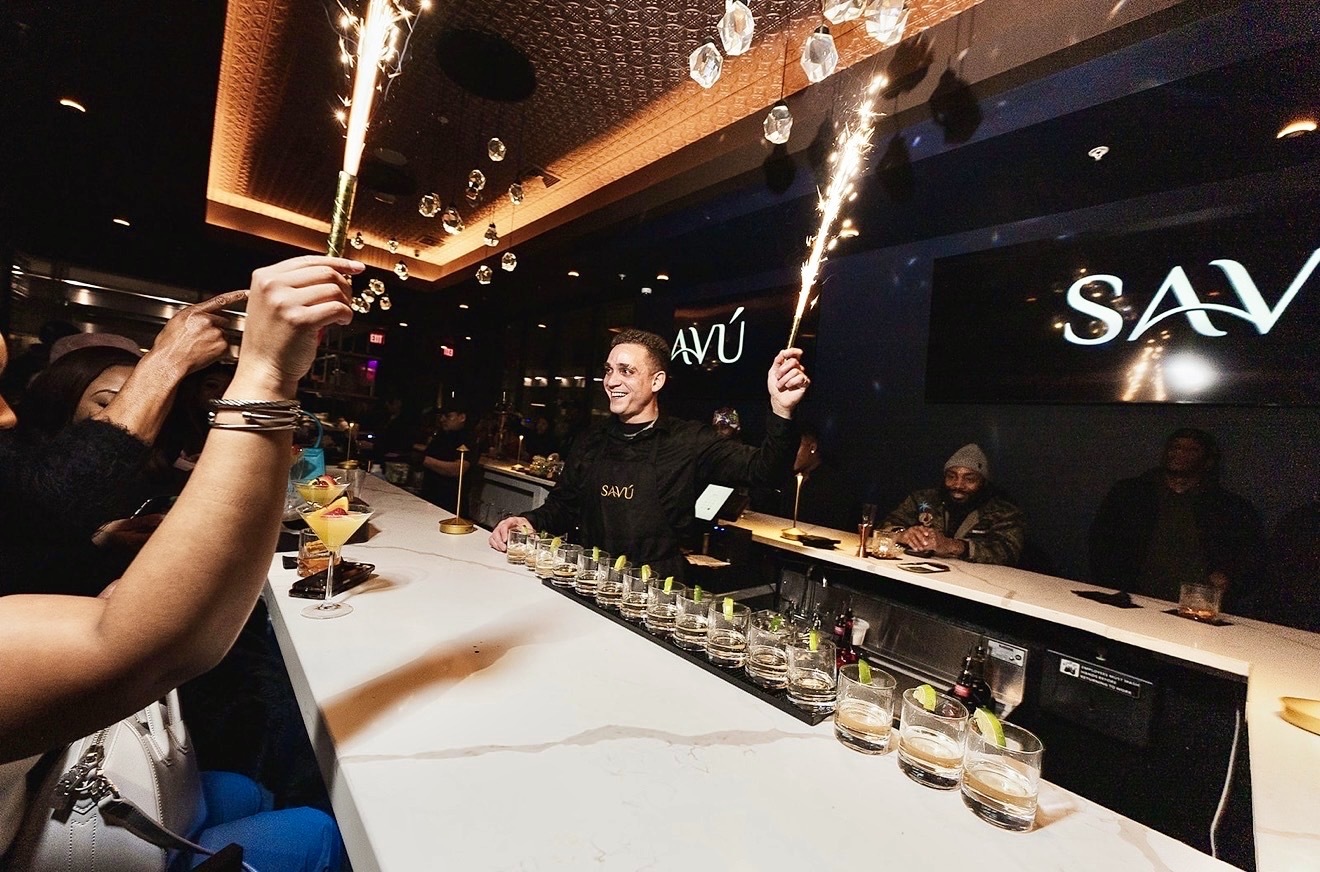
    Merriment at the bar at Savu, 208 S. 13th St.

    Savú (208 S. 13th St.): Kevin Dolce’s Hi-Def Hospitality has converted the former Cockatoo into a modern, bi-level dining and late-night lounge with a New American menu from chef Maulana Muhammad; it just soft-opened for dinner Thursday through Sunday and weekend brunch.

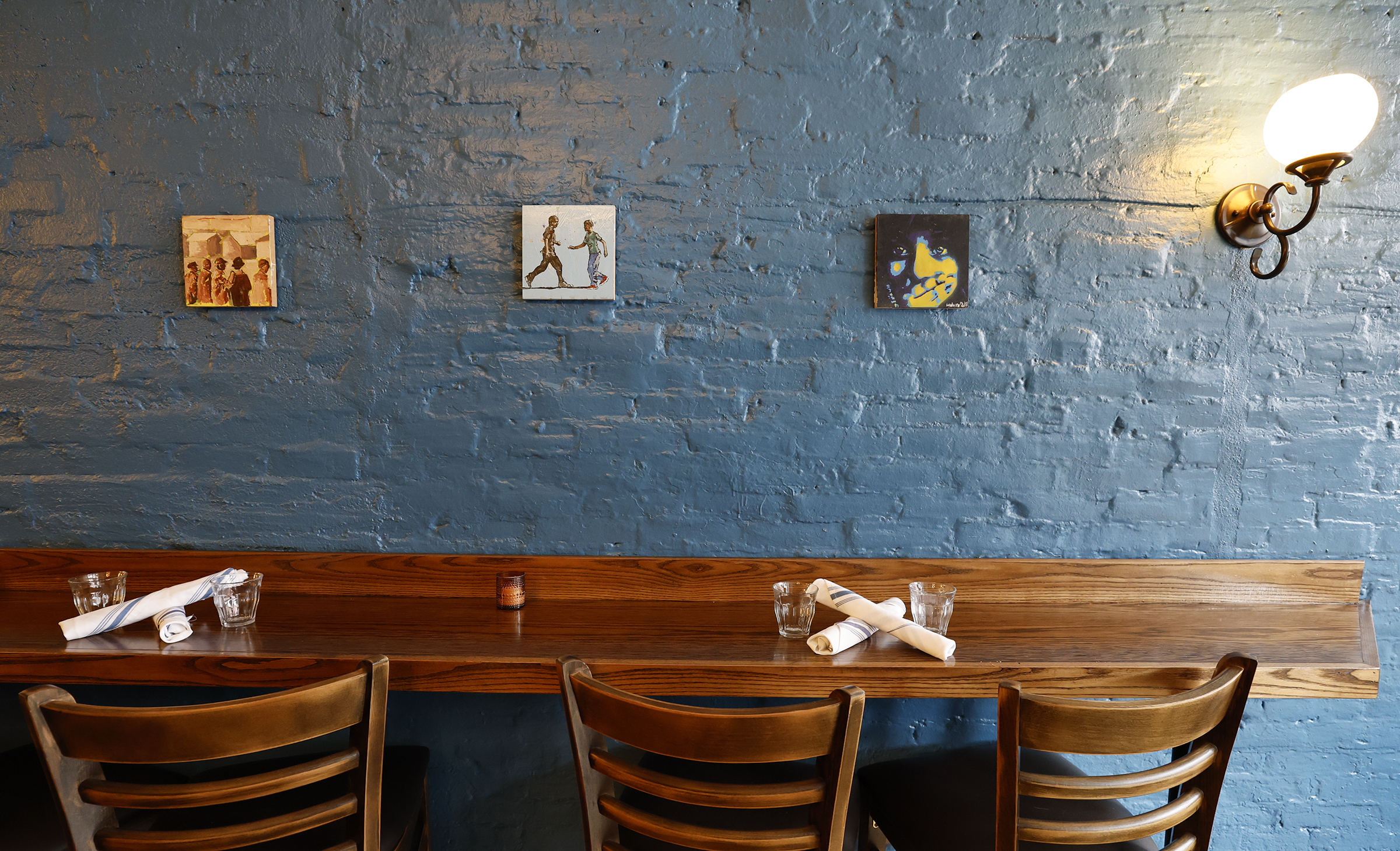
    Bar-adjacent seating at Side Eye.

    Side Eye (623 S. Sixth St.): Hank Allingham’s all-day neighborhood bar takes over for Bistrot La Minette with “French-ish” food from chef Finn Connors, plus cocktails, European-leaning wines, beer, and a late-night menu. Opens 5 p.m. Feb. 7 with 50% of the night’s proceeds going to the People’s Kitchen.

    Soufiane at the Morris (225 S. Eighth St): Soufiane Boutiliss and Christophe Mathon (Sofi Corner Café) say there’s a 90% chance of a February opening for their new spot at the Morris House Hotel off Washington Square. It’s billed as an elegant-but-approachable restaurant inspired by classic French bouillons/brasseries, with a menu spanning small plates and full entrées alongside Moroccan-influenced tagines. Expect evening service indoors, daytime service outdoors.

    South Sichuan II (1537 Spring Garden St.): A second location for the popular Point Breeze Sichuan takeout/delivery specialist, near Community College of Philadelphia; this one will offer more seating.

    Zsa’s Ice Cream (6616 Germantown Ave.): The Mount Airy shop’s end-of-2025 “grand closing” proved short-lived after a sale to local pastry chef Liz Yee. Reopened Feb. 7.

    Looking ahead

    March openings are in the offing for the much-hyped PopUp Bagels in Ardmore, as well as the long-delayed Terra Grill (a stylish room in Northern Liberties’ Piazza Alta) and ILU (the low-lit Spanish tapas bar) in Kensington.

  • Dozens of surveillance videos and cell phone data led Philadelphia police to Kada Scott’s accused killer

    Dozens of surveillance videos and cell phone data led Philadelphia police to Kada Scott’s accused killer

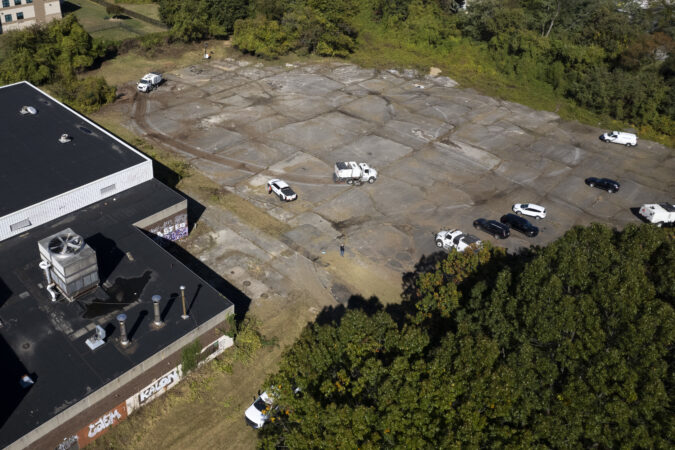
    Two weeks after Kada Scott vanished, Philadelphia Police Detective Joseph Cremen stood over a patch of disturbed ground in a wooded stretch near an abandoned school in East Germantown.

    He pushed aside a layer of loose twigs and pressed a six-foot branch into the soil. It sank only a few inches before stopping short.

    That, Cremen testified Monday, was when he realized he’d found a shallow grave.

    The Oct. 18 discovery ended a two-week search for Scott, 23, who disappeared on Oct. 4 after leaving the Chestnut Hill senior living center where she worked. An autopsy later determined that she had been shot in the head.

    Cremen testified that the location of the grave was not discovered at random, but emerged from weeks of reviewing surveillance footage, digital data, and tips that helped authorities trace a path from the Awbury Arboretum to the wooded area where Scott was buried — and that linked her killing to Keon King, who is charged with murder, abuse of a corpse, and related crimes.

    During a preliminary hearing Monday that stretched nearly five hours, prosecutors methodically laid out that evidence, replaying video after video on a courtroom TV as detectives testified about how they tracked Scott’s final movements and King’s efforts, they say, to conceal her death.

    At the conclusion of the hearing, Common Pleas Court Judge Karen Simmons ruled that prosecutors had presented sufficient evidence for the case to proceed and ordered it held for court.

    An attorney for Scott’s parents, Brian Fritz, called the ruling a “first step” in getting justice for their daughter.

    “Kada Scott’s family is grieving,” he said. “In fact, their grief is unimaginable. But, so is their commitment for accountability and justice for Kada.”

    Detectives testified that surveillance cameras at the Awbury Arboretum recorded a silver hatchback vehicle pulling into a parking lot less than an hour before Scott’s Apple Watch transmitted its final location at 1:14 a.m. on Oct. 5. Footage from the same cameras appeared to show two men removing an object from the car and walking in the direction investigators later followed to Scott’s burial site.

    An anonymous tip helped lead investigators into the woods nearby the Ada H.H. Lewis Middle School in East Germantown.

    Kim Matthews (second from left), mother of Kada Scott, holds a image of her daughter before a Domestic Violence Awareness walk at the Philadelphia Art Museum on Oct. 26, 2025.

    Additional street cameras, prosecutors said, captured the same hatchback parked in a driveway behind homes on the 2300 block of 74th Avenue. Moments later, video showed a sudden flash of light and flames as the car was set on fire, destroying what authorities believe may have been physical evidence inside.

    Investigators did not rely on any single camera, prosecutors emphasized. Instead, detectives testified that they reconstructed the timeline by stitching together footage from dozens of surveillance systems across the city. That effort, they said, led them to King, 21.

    Street cameras recorded a 1999 gold Toyota Camry registered to King traveling in the vicinity of the arboretum around the same times activity was captured there, they said. Police also tracked the movements of one of Scott’s Apple devices after she left work, comparing its location data with license plate readers and surveillance video, detective Robert Daly testified.

    “Everywhere this device went, Mr. King’s car went,” Daly said.

    Cell phone records presented at the hearing showed that King and Scott had exchanged text messages in the hours before her disappearance, Daly testified.

    The last message Scott sent asked King to call her when he arrived at the senior living center. The final incoming call on her phone, at 10:12 p.m. on Oct. 4, was from King, according to police.

    Before Simmons ruled, King’s defense attorney, Robert Gamburg, argued that the prosecution’s case relied too heavily on circumstantial evidence and failed to place his client directly at the scene of the killing.

    The surveillance footage, he said, did not clearly identify any faces and could not establish who was inside and around the vehicles.

    He also pointed to testimony from a senior living center employee who said she saw Scott leave work that night and noticed a dark-colored Jeep parked outside the facility, not a silver hatchback.

    “There is absolutely nothing connecting this young man to what happened to Ms. Scott,” Gamburg said, urging the judge to dismiss the case.

    “At this level, with this quantum of evidence, for this type of case, it should be discharged today,” he said.

    Assistant District Attorney Ashley Toczylowski countered that investigators had assembled a detailed and corroborated account of Scott’s final hours, one that showed not only King’s proximity to her disappearance, she said, but also steps taken afterward to destroy evidence.

    “This isn’t coincidence,” she told the court. “It’s corroboration.”

  • SEPTA hopes Regional Rail cars rented from Maryland will alleviate overcrowding

    SEPTA hopes Regional Rail cars rented from Maryland will alleviate overcrowding

    As Train 9710 pulled out of the Trenton Transit Center at 7:25 a.m. Monday, something looked out of place.

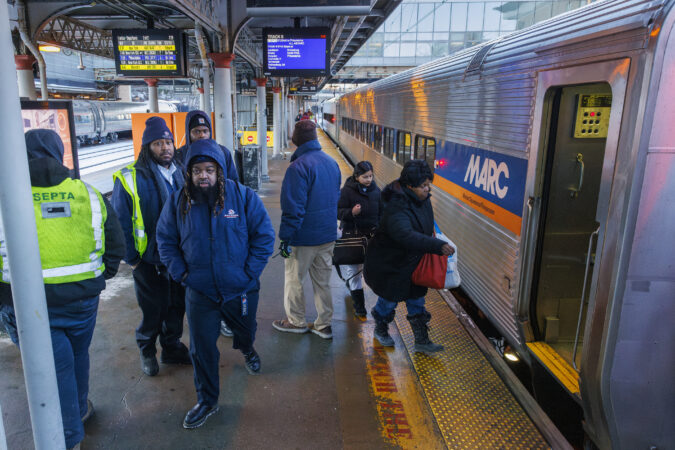
    Five passenger coaches in the Philadelphia-bound Regional Rail train bore foreign “MARC” logos and orange-and-blue markings, all pulled by a properly labeled SEPTA electric locomotive.

    It was the first day of service for 10 coaches rented from Maryland’s commuter railroad to add capacity to SEPTA’s service as it works through the fallout of last year’s Silverliner IV fires.

    The substitute cars initially will be running on the Trenton and West Trenton lines, where riders for months have endured packed trains due to a shortage of available 50-year-old Silverliner IVs.

    In October, the Federal Railroad Administration ordered SEPTA to inspect and repair all 223 of those cars after five of them caught fire earlier in the year.

    The transit agency is paying $2.6 million to lease the new coaches for a year.

    SEPTA’s records show it canceled at least 2,544 Regional Rail trips in the last three months of 2025. Delays and skipped stops also have plagued commuters for months.

    SEPTA is using its ACS-64 electric locomotives, which it bought in 2019, to pull the MARC coaches and its own fleet of 45 coaches.

    Silverliner cars do double duty; they carry passengers and have motors that provide their own locomotion through electricity drawn from overhead wires.

    The addition of new cars coincides with new Regional Rail schedules that went into effect Sunday.

    SEPTA said in a statement that the schedules will add trips on the Wilmington, Trenton, and Chestnut Hill East lines and increase the frequency of service from Wayne Junction directly to the Philadelphia International Airport on the Airport line.

  • House of the week: A five-bedroom end-of-the-row house in East Falls for $652,000

    House of the week: A five-bedroom end-of-the-row house in East Falls for $652,000

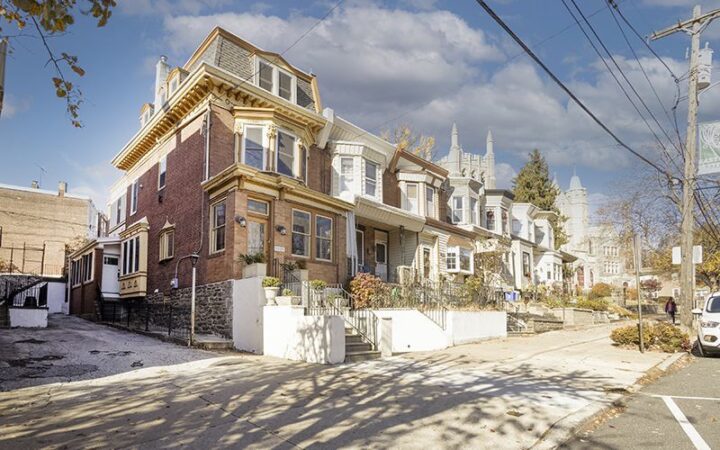
    When Hope Coleman and Nathan Fong were looking for a larger East Falls rowhouse for themselves and their two young sons, they settled on a house that combined character and practicality. It had a garage, very rare for a rowhouse in that neighborhood.

    The couple — Coleman is a veterinarian and Fong a marketing professor at Rutgers University — moved into the house in 2019 but have now left for a larger house in Bala Cynwyd to accommodate aging parents on both sides.

    “The stuff that gave it character was original,” said Coleman, describing the East Falls house.

    The five-bedroom, 2½-bathroom home is 2,288 square feet.

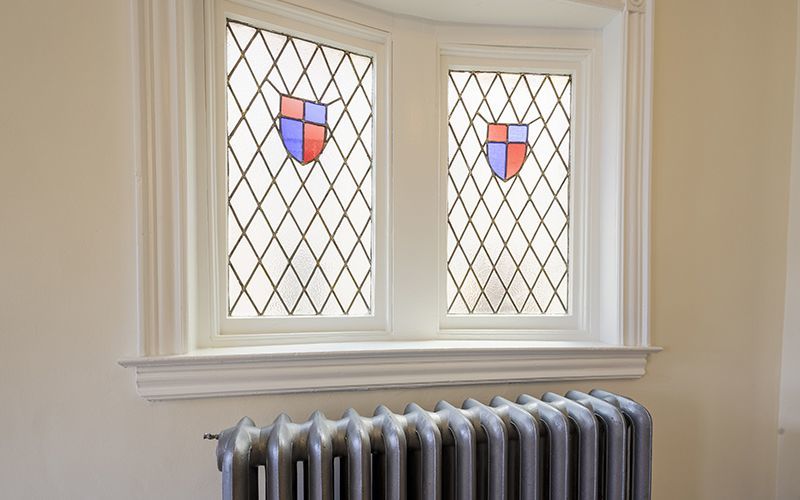
    The heated, window-lined front porch provides entrance to the living room with original cathedral glass and stained-glass windows, high ceilings, and hardwood and Second Empire architectural style indicate it is considerably older. Documentation says the house was built in 1925, but Coleman believes that the mansard roof and architectural style indicate an earlier construction date.

    The living room features original cathedral glass and stained-glass windows.

    The dining room has a butler’s cabinet and a powder room with a pocket door.

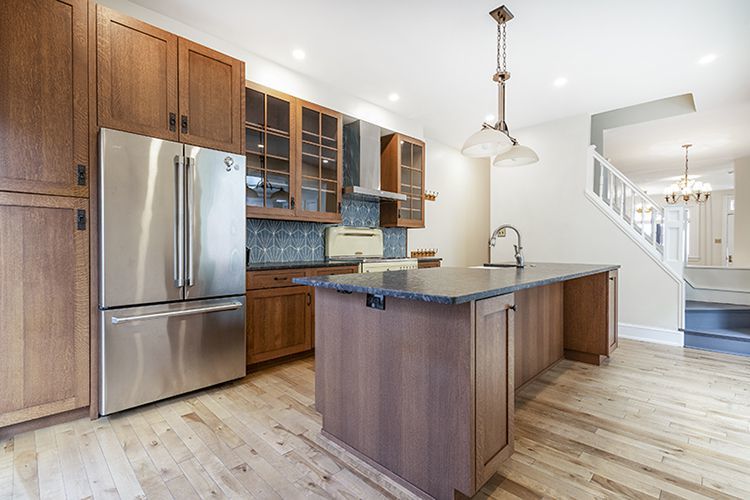
    The renovated eat-in kitchen has solid oak cabinetry, granite countertops, a wide island with seating for four, and a beautifully restored Chambers stove complete with built-in warmer and broiler and griddle, vented to the exterior.

    The wide kitchen island can accommodate seating for four.

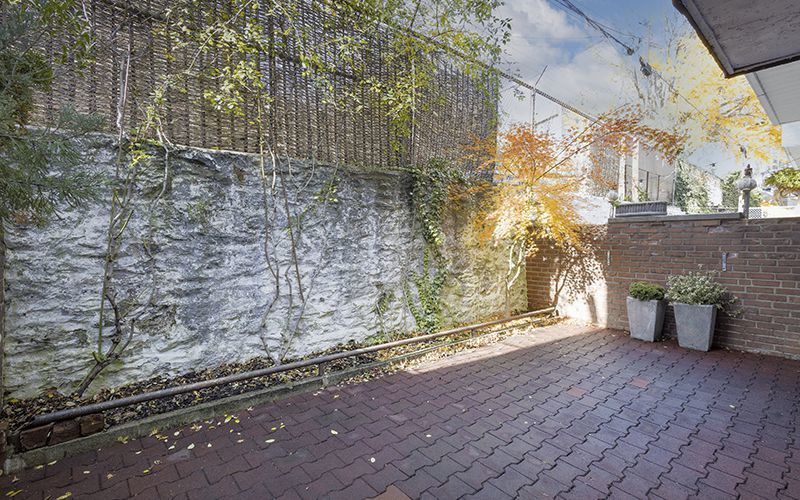
    Glass doors open from the kitchen to a private patio. A sunroom, added by the couple and connected to the kitchen, has underfloor heating, two skylights, and additional access to the backyard and side entrance, creating seamless indoor-outdoor flow.

    Glass doors open from the kitchen to a private patio.

    A back staircase leads directly from the kitchen to the second floor, which has three bedrooms, including a spacious front room that is used as a family room but can also serve as a large second-floor primary.

    The hall bath has a stained-glass window and a laundry room, which has built-ins, closet space, and the home’s original porcelain sink hutch.

    The third floor has two additional bedrooms and a newly added full bath. The rear bedroom could serve as a walk-in closet, office, private retreat, or a primary suite.

    The house is listed by Lisa Denberry of BHHS Fox & Roach Chestnut Hill for $652,000.

  • A look back at Philly-area businesses that didn’t survive 2025

    A look back at Philly-area businesses that didn’t survive 2025

    Last year, you may have celebrated Christmas or New Year’s with a meal at an Iron Hill Brewery.

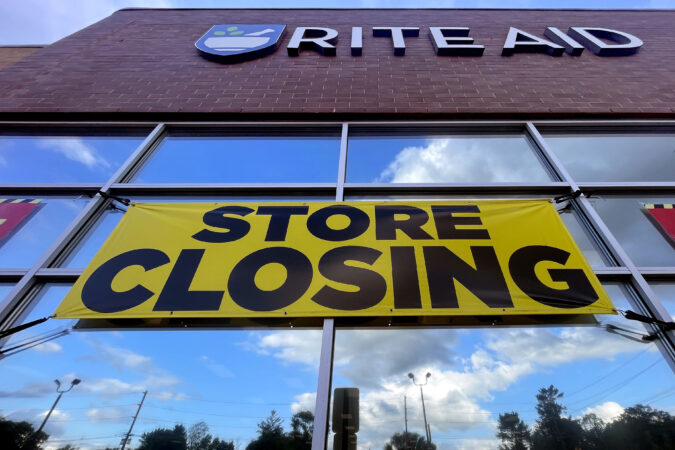
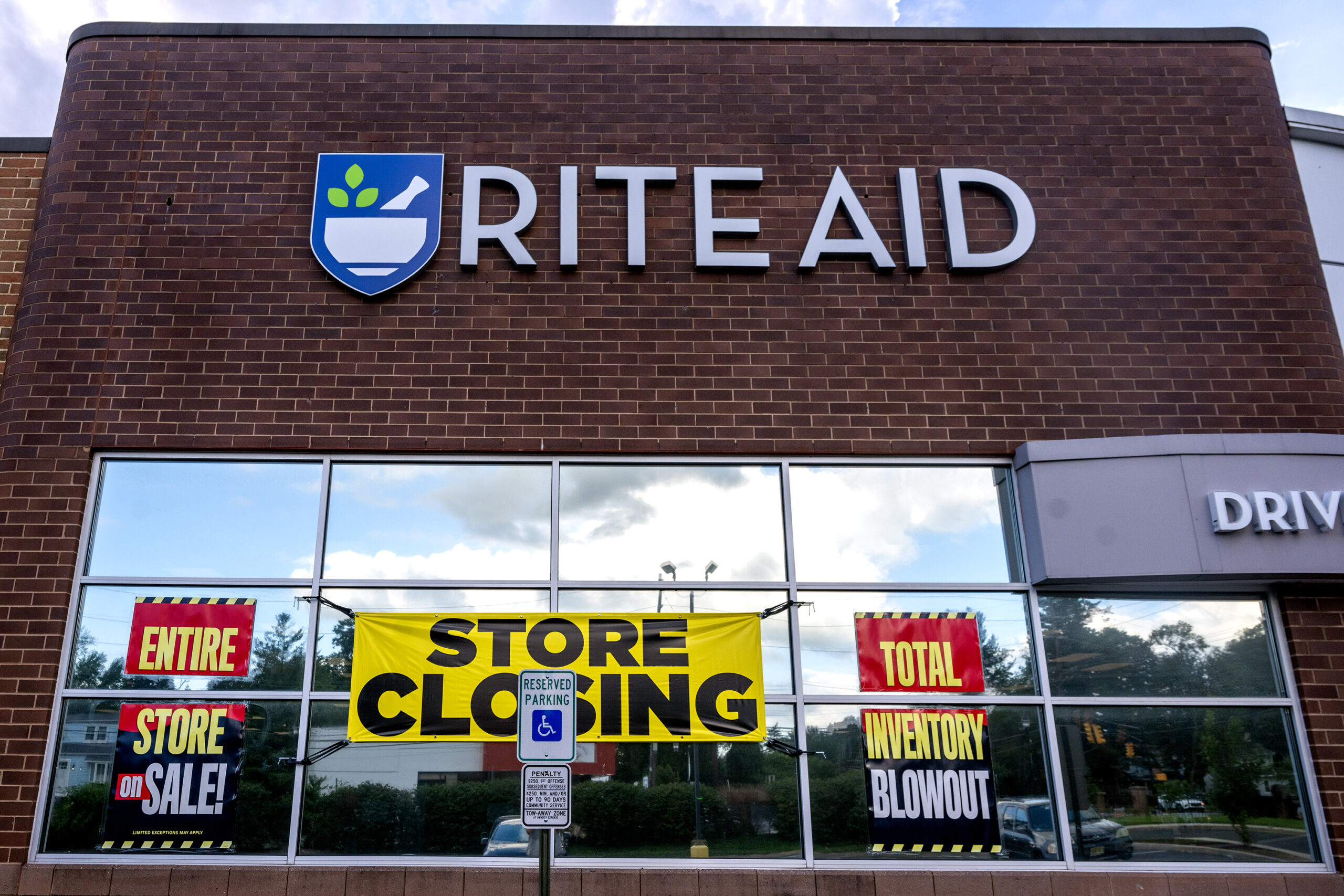
    At the time, your holiday preparations may have included trips to Joann fabrics or Party City, which was having its going-out-of-business sale. You may have stopped for medicines and other toiletries at Rite Aid.

    This year, however, you can’t go to any of those places: All of these businesses served their last customers in 2025.

    Here’s a look back at a few of the notable Philly-area businesses that closed in the past year.

    RIP to Rite Aid

    The then-still open but scheduled to be closed Rite Aid store on Clements Bridge Road in Barrington on July 13. The store’s pharmacy closed on July 7.

    It didn’t come as a total surprise when Rite Aid filed for its second bankruptcy in less than two years.

    The Navy Yard-based pharmacy chain had closed dozens of locations in recent years. Even after it emerged from its first bankruptcy in September 2024, shelves meant to be filled with drugstore essentials — such as cold medicines and pain relievers — remained bare at some stores.

    In filing for bankruptcy again, Rite Aid announced that it would be closing or selling all locations. At the time, it had about 1,000 stores nationwide, including about 100 in the Philadelphia region.

    Across Pennsylvania and New Jersey, thousands of Rite Aid workers lost their jobs. Some, like Angela Gardin, also said bittersweet goodbyes to regular customers.

    Gardin, assistant manager at the Queen Village Rite Aid, was moved to tears by customers’ handwritten thank you notes, which were scrawled on pieces of paper and taped to the store’s front window in its final months.

    By late August, all Pennsylvania and New Jersey Rite Aids had shut their doors for good, sending prescriptions to CVS, Walgreens, or other local pharmacies of a customer’s choosing.

    The closures further exacerbate pharmacy access issues, especially for lower-income Philadelphians who don’t have cars. People in more isolated rural areas are also impacted: The 46,000 residents of Perry County, west of Harrisburg, lost half their pharmacies when their three Rite Aids closed.

    Adieu to Iron Hill Brewery

    A view from the outside looking in of a shuttered Iron Hill Brewery in West Chester in October.

    Iron Hill Brewery’s closure was so abrupt that fans didn’t even get to raise one last pint to the regional chain.

    On a Thursday morning in late September, the nearly 30-year-old company, considered by many to be a pioneer of the local craft-brewing scene, announced that its brewpubs had closed their doors for the last time.

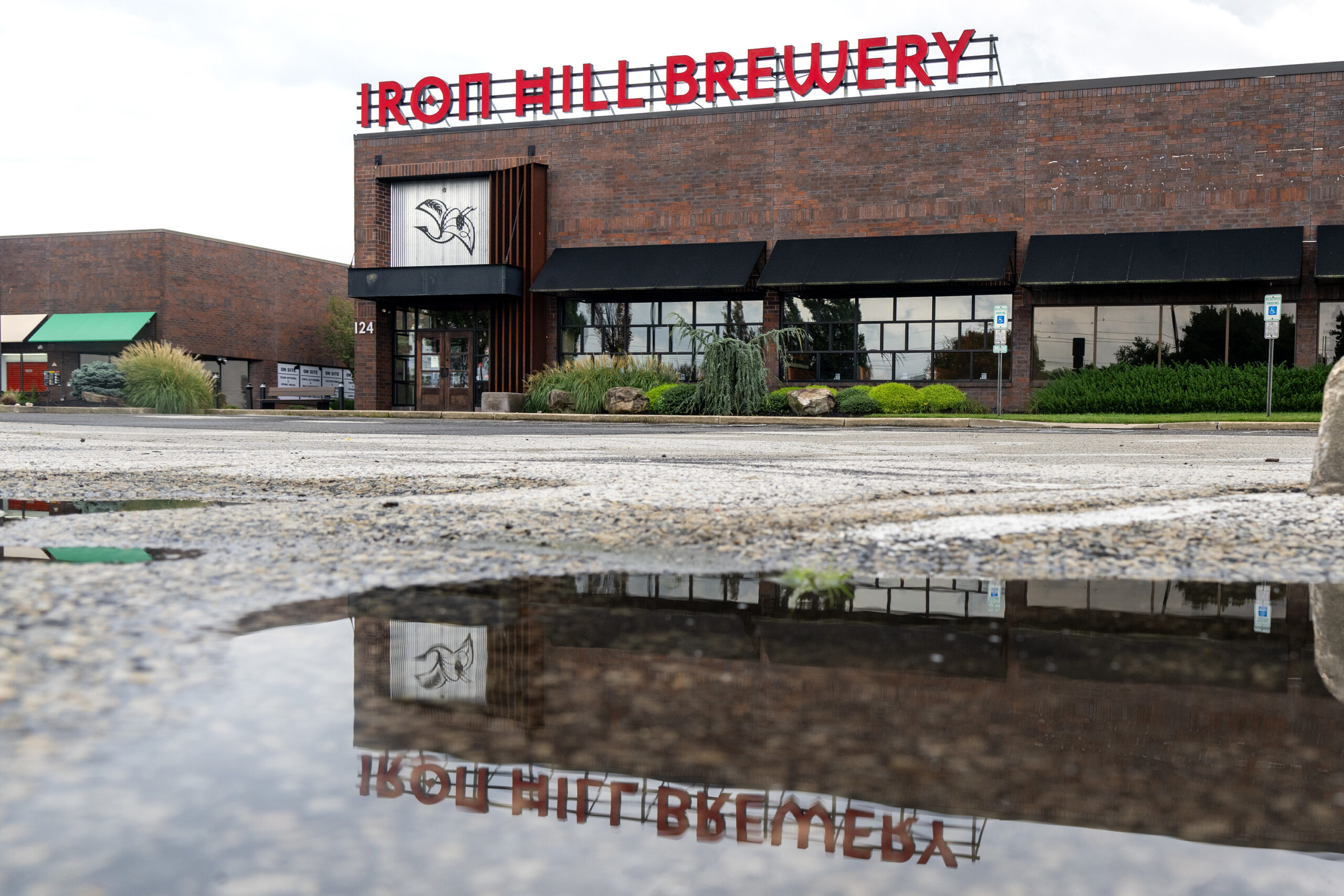
    The news left 16 massive Iron Hill shells, including in Center City, Exton, Huntingdon Valley, Maple Shade, Media, Newtown, North Wales, West Chester, and Wilmington. Earlier in September, the company had closed locations in Chestnut Hill and Voorhees, as well as its flagship brewery in Newark, Del.

    The closed Iron Hill Brewery in Maple Shade in September.

    Bankruptcy filings shed more light on the Exton-based company’s financial straits: Iron Hill owed more than $20 million to creditors and had about $125,000 in the bank.

    In November, a bankruptcy judge approved an offer by Jeff Crivello, the former CEO of Famous Dave’s BBQ, to resurrect 10 Iron Hills, including in Center City and West Chester, pending landlord negotiations. The restaurants could be reopened as Iron Hills or as other brands.

    Crivello said he plans to reopen the Rehoboth Beach brewpub — as well as the Iron Hill restaurants in Columbia and Greenville, S.C. — as locations of Virginia-based Three Notch’d Brewing Co.

    The fates of the other ex-Iron Hills will be determined in the bankruptcy process. Brewing equipment, furniture, and other items from the closed restaurants were auctioned off earlier this month.

    Mainstays say goodbye in the Philly burbs

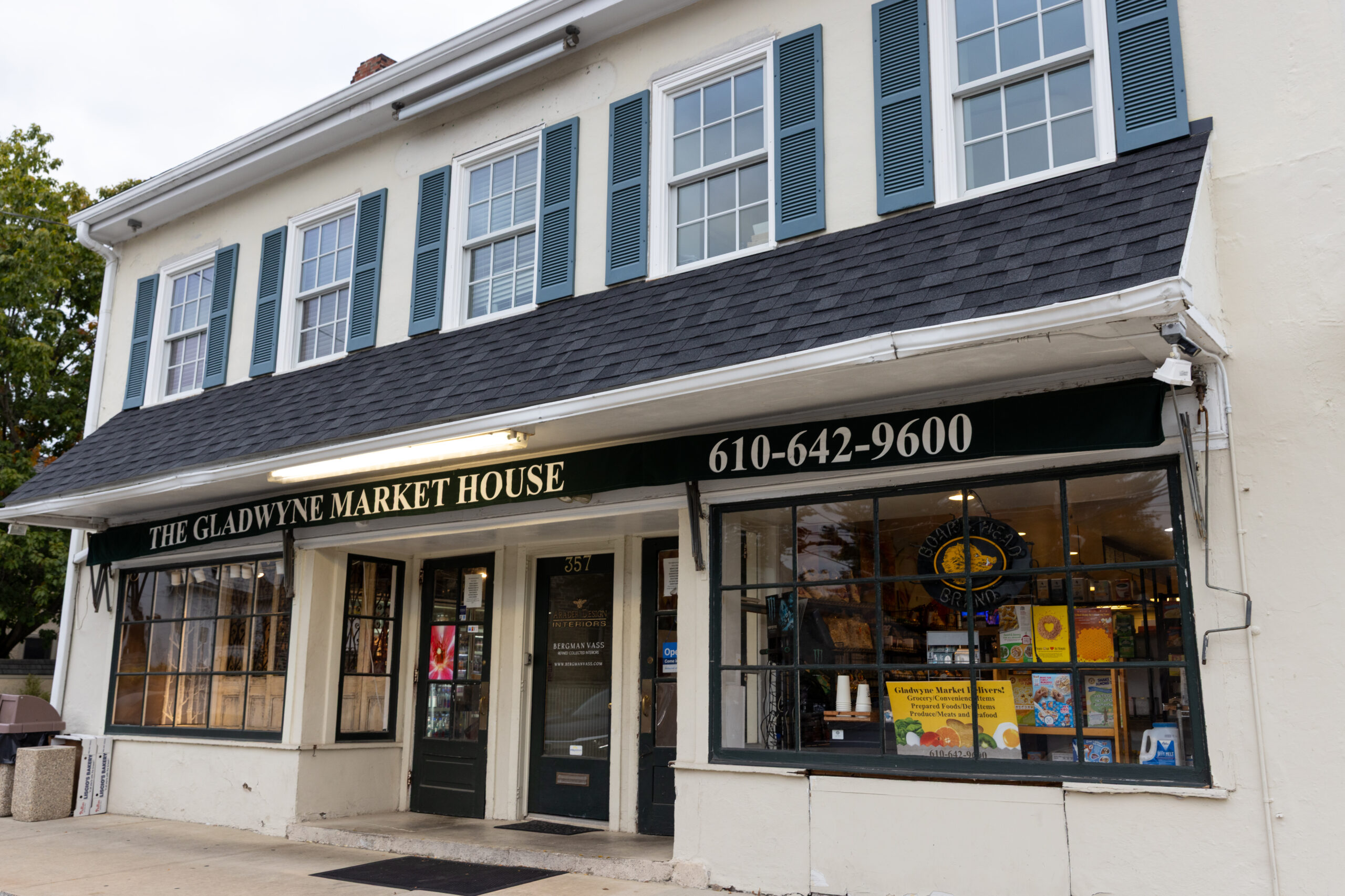
    Gladwyne Market as pictured in October.

    Local chains weren’t the only business casualties of 2025.

    Main Line residents lost Lower Merion-based Maxwell Taxi Cab Co. in February, marking the end of an era for suburban-based cabs. Maxwell, which had operated for more than 50 years, was later acquired by a Bryn Mawr-based limo service called ML Car Service Ltd.

    Also in Lower Merion, consumers lost the Gladwyne Market, a community grocery store.

    In South Jersey, the Bistro at Cherry Hill, a beloved restaurant that operated in a 1,200-square-foot mall kiosk for 27 years, closed abruptly in July.

    At the time, the restaurant’s president, Andy Cosenza, said the closure was due to a communication “breakdown” that had resulted in his voluntary Chapter 11 bankruptcy petition being converted to a Chapter 7, or liquidation, without his knowledge. Since then, however, Cosenza has been indicted on charges of tax fraud. The Bistro has remained closed.

    In the city, the Macy’s in the Wanamaker Building closed in March, as did the Macy’s at the near-dead Exton Square Mall. And the latest iteration of Olde Bar, most recently an event venue in the historic Bookbinder’s building, shut its doors this summer.

  • A man died driving on Northwest Philly’s winding, wet roads. The neighborhood has tried addressing the danger for decades.

    A man died driving on Northwest Philly’s winding, wet roads. The neighborhood has tried addressing the danger for decades.

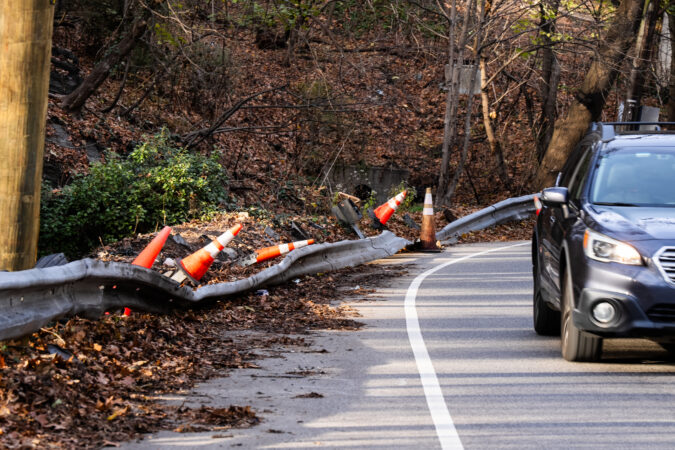
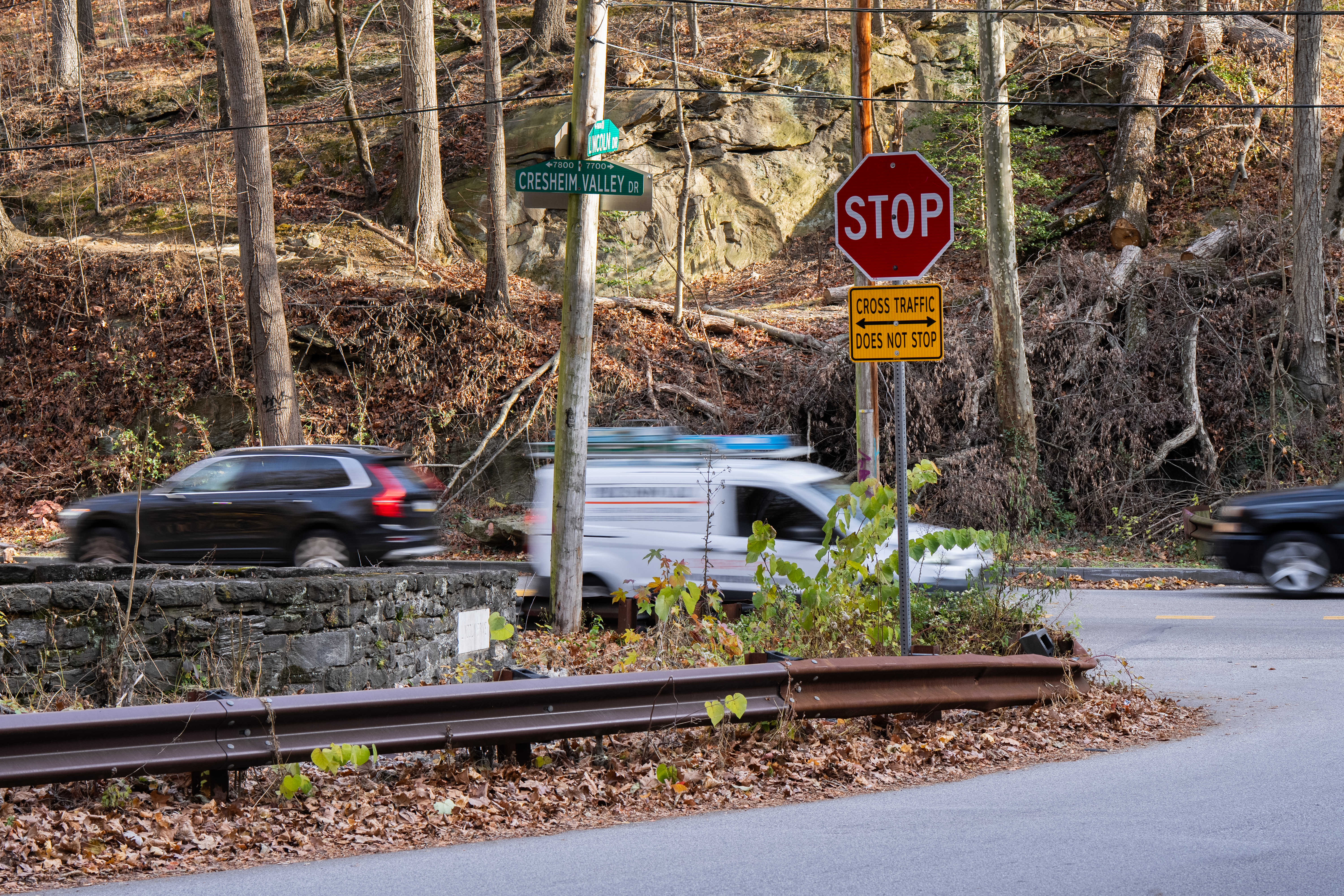
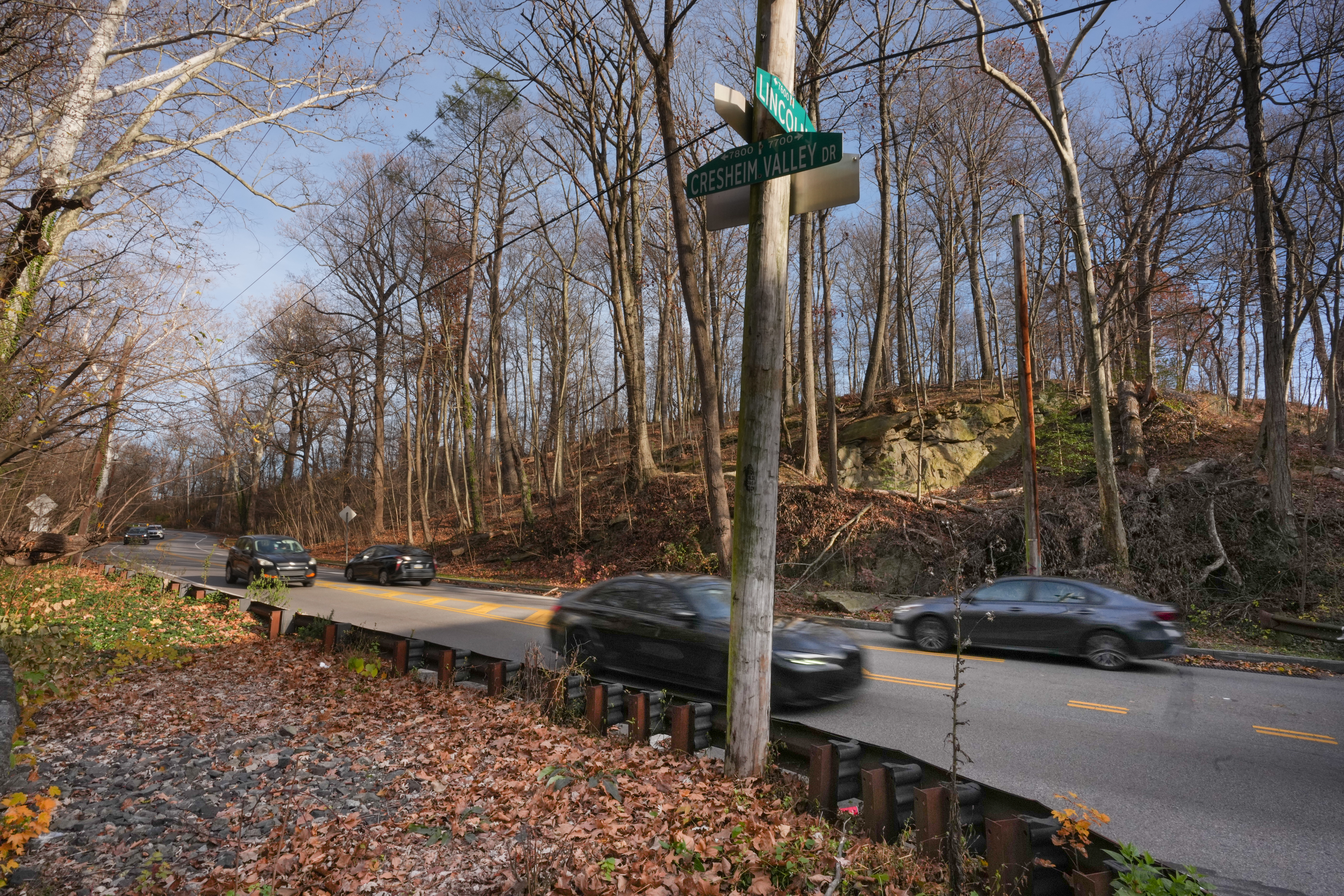
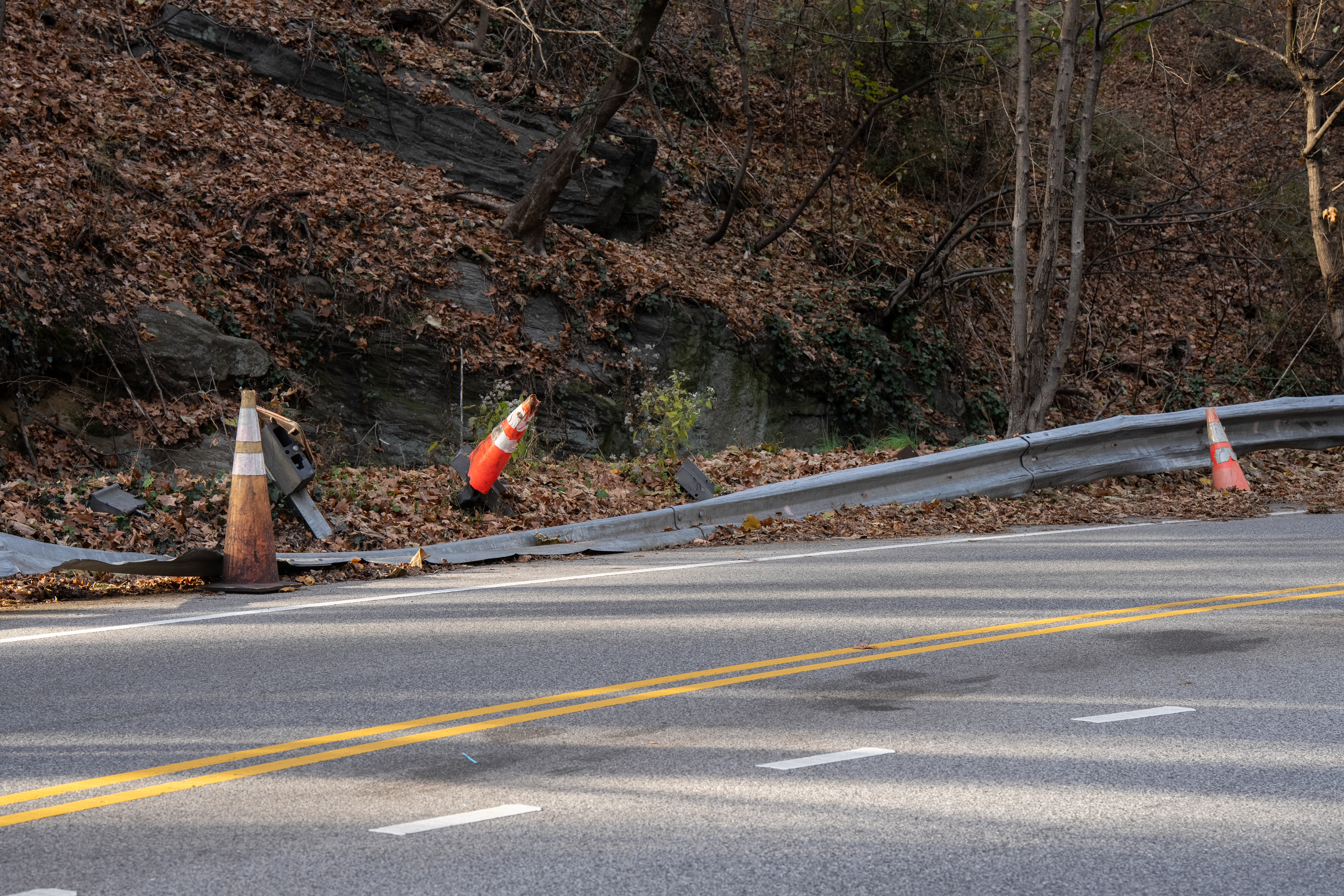
    A 65-year-old man died Sunday after he lost control of his vehicle on Cresheim Valley Drive in Chestnut Hill, striking a downed guardrail and flipping the car upside down into a creek. Just weeks before, another driver veered off the same road but survived.

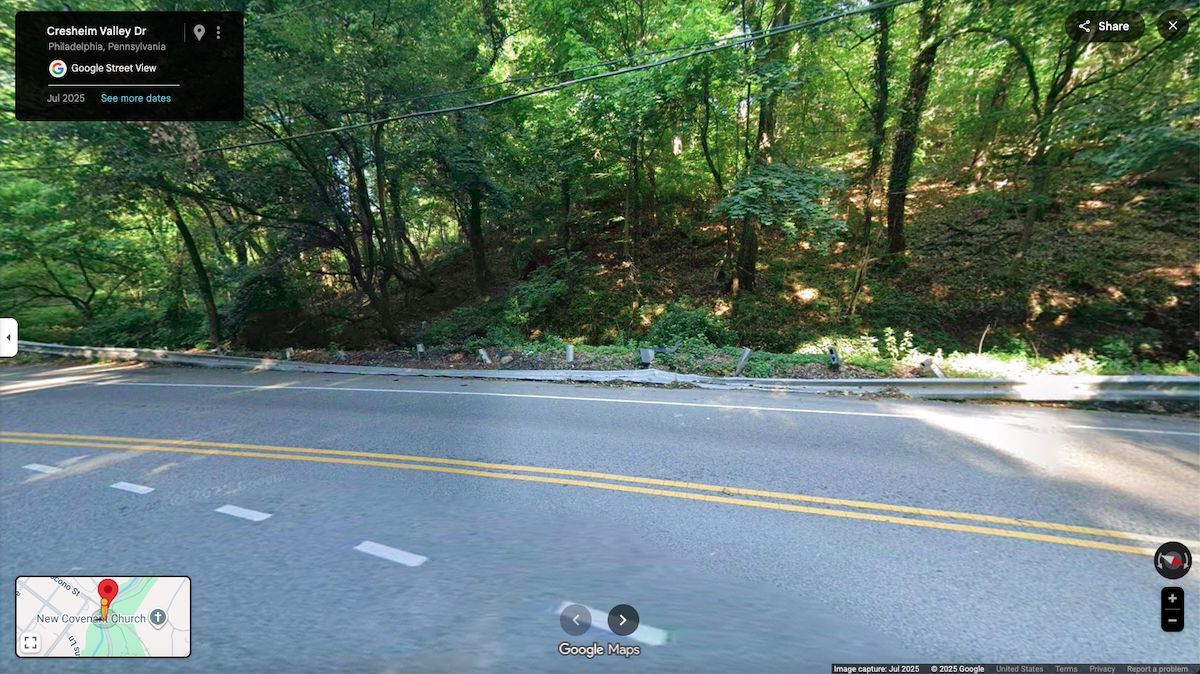
    Compounding this latest traffic death is the fact that the guardrail meant to prevent cars from swerving off the road was broken and nearly flattened from previous crashes, leaving a gap in the guardrails for months, said Josephine Winter, a Mount Airy resident and executive director of West Mount Airy Neighbors (WMAN). “The guardrail was down, and it was previously crumbled so it’s a frequent site of crashes,” she said. Images from Google Maps show the guardrail down as far back as July.

    The Philadelphia Streets Department is aware of the recent crash and is conducting an assessment of the guardrail on Cresheim Valley Road. “The streets department’s top priority is public safety,” a spokesperson said.

    A screenshot of a Google Map’s street view captured in July 2025 shows the downed guardrail on Cresheim Valley Drive in the Chestnut Hill neighborhood of Philadelphia. On Nov. 30, 2025, a 65-year-old man crashed and went over the guardrail, later succumbing to his injuries.

    Neighbors say accidents, sometimes fatal, have plagued the winding roadways in Chestnut Hill and Mount Airy for decades. These traffic safety concerns came to a head with Sunday’s deadly crash.

    “It’s a curvy, tricky road, especially when it’s wet, and people tend to speed on that road,” Winter said of roadways like Lincoln and Cresheim Valley Drives, which are lined with trees, have swooping dips and hills, and are prone to flooding.

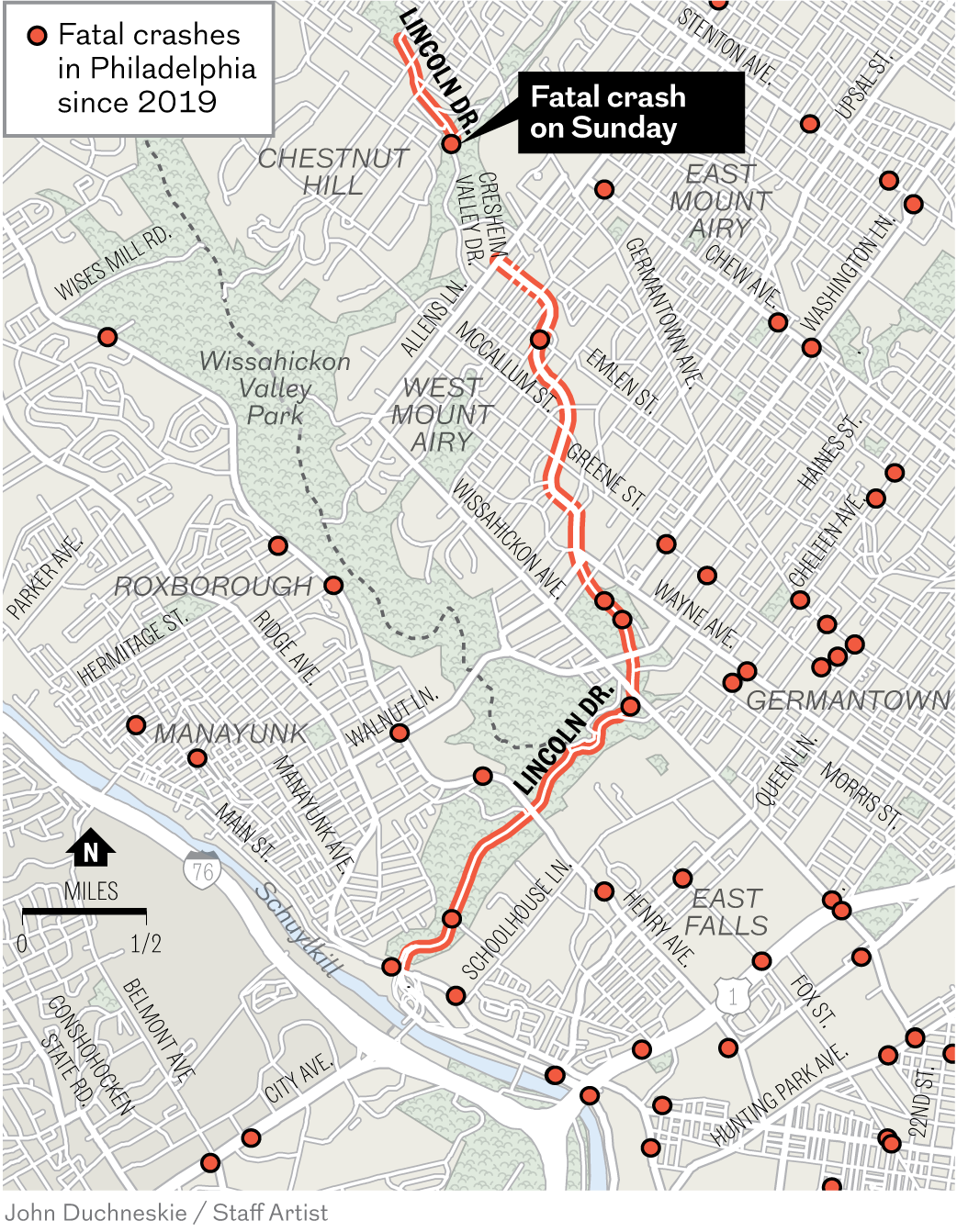
    Map of fatal crashes in Northwest Philadelphia since 2019.

    Since 2019, according to city crash data, at least five people have died while driving on the dark, winding sections of Lincoln Drive, which intersects with Cresheim Valley Drive, prompting many neighbors to fear walking down their street or leading them to invest thousands on giant boulders to protect their home and lawn.

    Winter, who leads WMAN’s traffic-calming committee, and other neighborhood organizations have petitioned for city support, urging the streets department to slow the speed of traffic on Cresheim Valley Drive, Lincoln Drive, and Wissahickon Avenue. The group’s efforts are so ingrained in the fabric of the neighborhood that, when digging through Temple University’s Urban Archives, Winter found an advertisement from 1968 stressing the need for cars in Mount Airy to “slow down to keep kids safe.”

    The intersection of Cresheim Valley Drive and Lincoln Drive, in Philadelphia, PA, Dec. 1, 2025.

    The streets department installed “speed slots,” traffic-calming structures similar to speed bumps, earlier this year along Lincoln Drive between Allens Lane and Wayne Avenue. Along the same stretch of road, the Pennsylvania Department of Transportation installed rumble strips and speed tables to slow drivers down in 2023, in addition to traffic lane separators to keep drivers from using center lanes to pass other vehicles.

    In addition to the recently completed speed slots and traffic-calming measures on sections of Emlen Street, which becomes Cresheim Valley Road, signal upgrades are planned for Lincoln Drive as well.

    However, the work to improve these streets is not over, Winter said. Additionally, the streets department plans do not include changes to Cresheim Valley Drive, where Sunday’s crash happened.

    “We’ll need a collaborative approach as soon as possible to temporarily address the downed guardrail, and then see what the options are moving forward,” Winter said.

    The intersection of Cresheim Valley Drive and Lincoln Drive, in Philadelphia, PA, Dec. 1, 2025.

    Throughout the last decade, locals have suggested better-timed signals, more speed tables, and reducing the number of driving lanes from two in either direction down to one. They also want to see more roundabouts and curb bump-outs in the neighborhood to keep traffic flowing, but at a reasonable speed.

    A mere 50 to 100 feet from Cresheim Valley Drive is a parallel bike trail, where trail organizers like Brad Maule are accustomed to the crashes on the road nearby. Before Sunday’s fatal crash, he remembers two other cars that drove off the side of the road in recent months, not counting the crashes on the roadway itself. The city recently installed pedestrian crossing signs and repainted the crosswalk on nearby Cresheim Road, but Maule hopes speed bumps will follow.

    Cresheim Valley Drive near where it intersects with Lincoln Drive, in Philadelphia, PA, Dec. 1, 2025.

    While Winter said that engineers from the Philadelphia Streets Department were among the first calls she received Monday morning responding to the crash, and that the community appreciates the response, she, Maule, and other neighbors hope that more safety improvements will be considered to save more lives.

    “I’m just looking forward to the new measures of safety that come here,” Maule said. “Hopefully, people will abide by them.”

    Staff writers Max Marin and Dylan Purcell contributed to this article.
  • How Chestnut Hill’s main street is staying relevant in the Amazon era

    How Chestnut Hill’s main street is staying relevant in the Amazon era

    At lunchtime on a Thursday, a week before Thanksgiving, Chestnut Hill was buzzing.

    Inside the newly expanded Matines Café, almost every table was full. People sipped warm drinks from large mugs and ate Parisian croissants and quiche. Bottles of prosecco sat on ice by one large table adorned with Happy Birthday balloons.

    McNally’s Tavern was bustling, too, with regulars sitting at the bar and at tables inside the cozy, nearly 125-year-old establishment atop the hill. Multiple generations gathered — a son taking a father out to lunch, a mother with a baby in a stroller, and two sisters, Anne and Meg McNally, running the place.

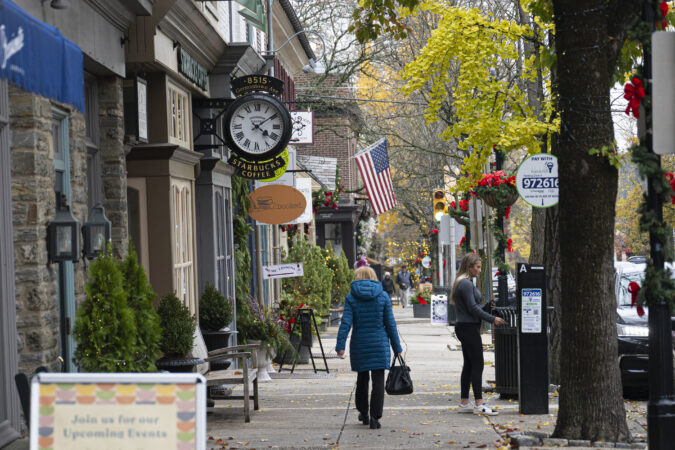
    Behind the storefronts along Germantown Avenue’s main drag, some people perused the boutiques, while others typed away on laptops in coffee shops.

    In the northwest Philadelphia neighborhood known for its wealth and postcard-picturesque aesthetic, the small-town charm of longstanding establishments — four are more than 100 years old — is now complemented by the shine of some newer shops and restaurants. Several Chestnut Hill business owners said the variety has helped both old and new spots succeed despite broader economic challenges, including inflation and tariffs, and the loss of a few restaurants.

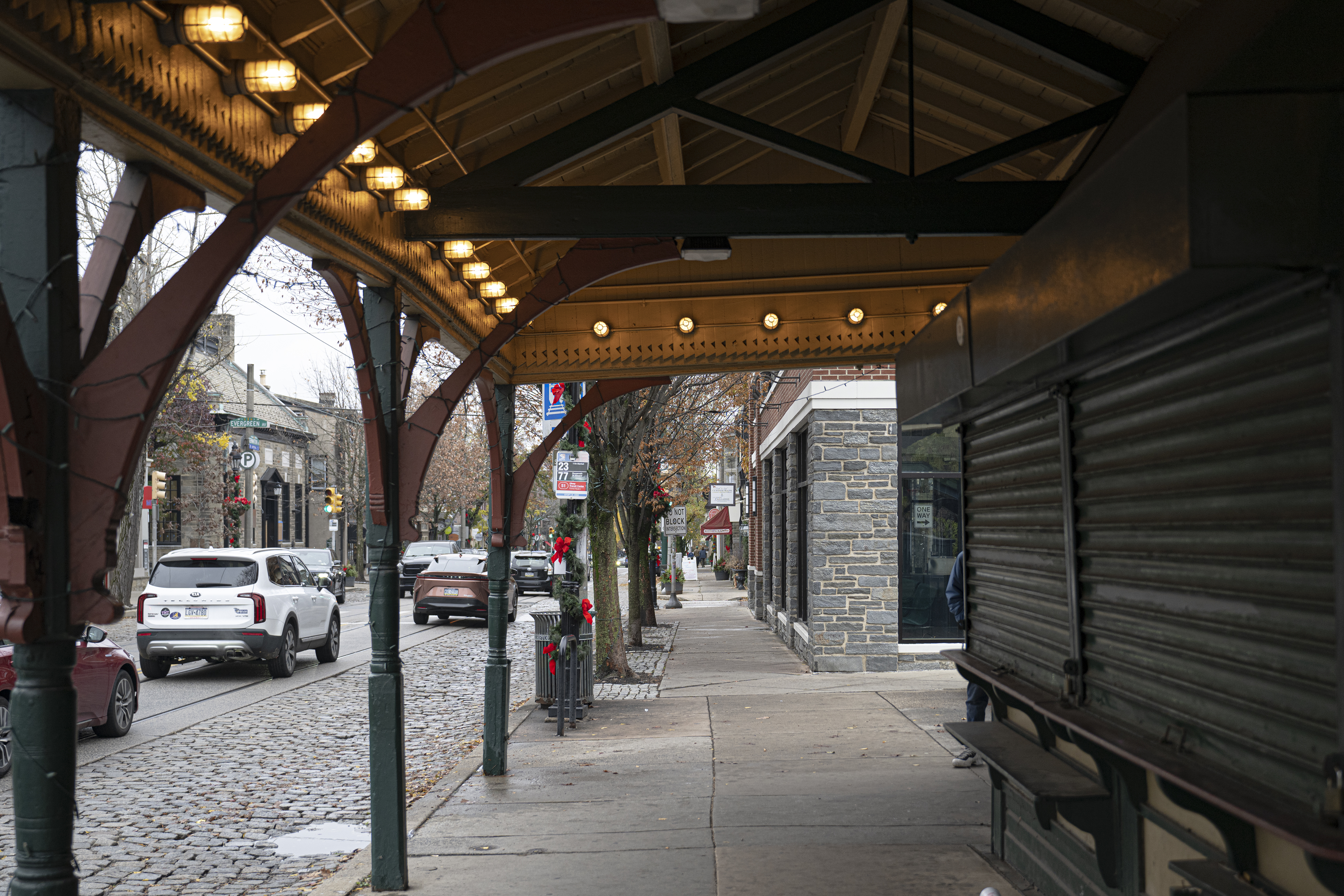
    A view down Germantown Avenue from the Chestnut Hill SEPTA Regional Rail station.
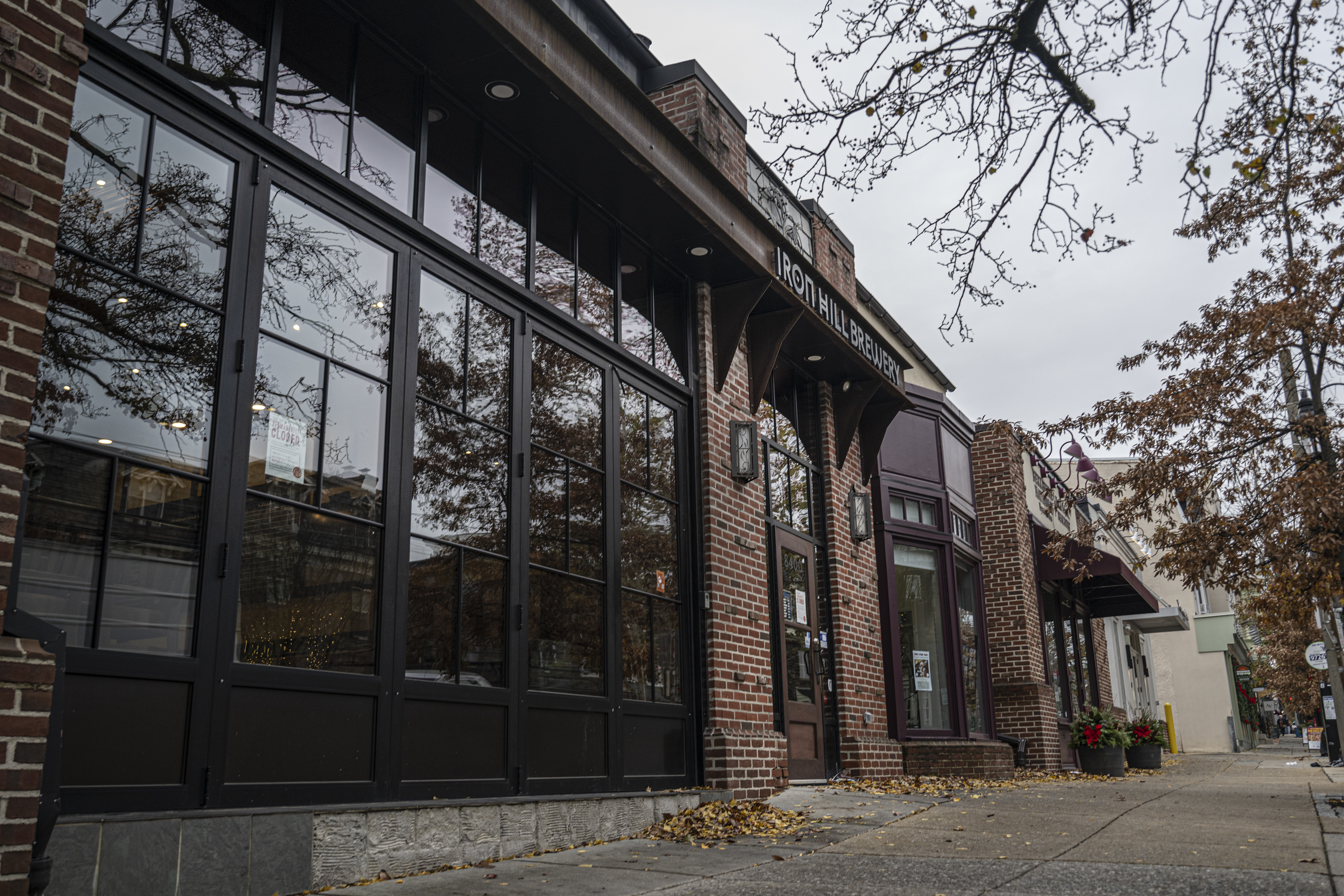
    The closed Iron Hill Brewery is shown in downtown Chestnut Hill on Nov. 19.

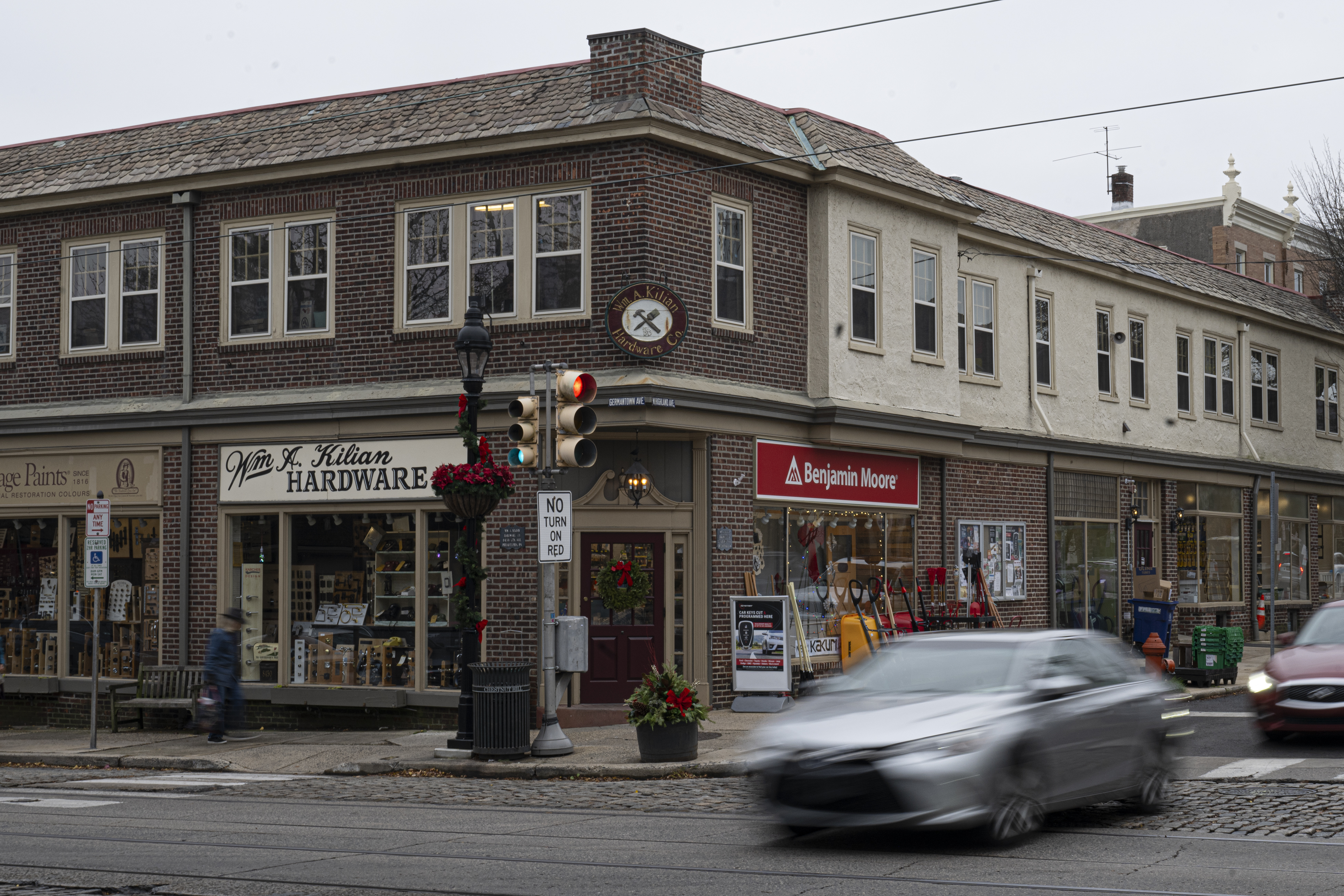
    As the owner of Kilian Hardware, which has been in business for 112 years, Russell Goudy Jr. has watched the avenue change. Fifty years ago, he said it was “basically like a shopping mall,” a one-stop shop for everyday needs.

    In recent years, however, the neighborhood has focused on attracting and retaining unique food and beverage businesses, “quaint, specialty shops,” and service-oriented businesses, which Goudy said offer experiences Amazon and other e-commerce platforms can’t replicate.

    “If you’re not giving people an experience in today’s economy, it’s very tough to compete,” said Nicole Beltz, co-owner of Serendipity Shops, which for a decade has had an expansive store on Germantown Avenue. And providing a memorable experience is never more important than during the lucrative last few months of the year.

    “When you come to Chestnut Hill over the holidays, you get what you came for,” Beltz said. “You get that charming feeling of being somewhere special for the holiday.”

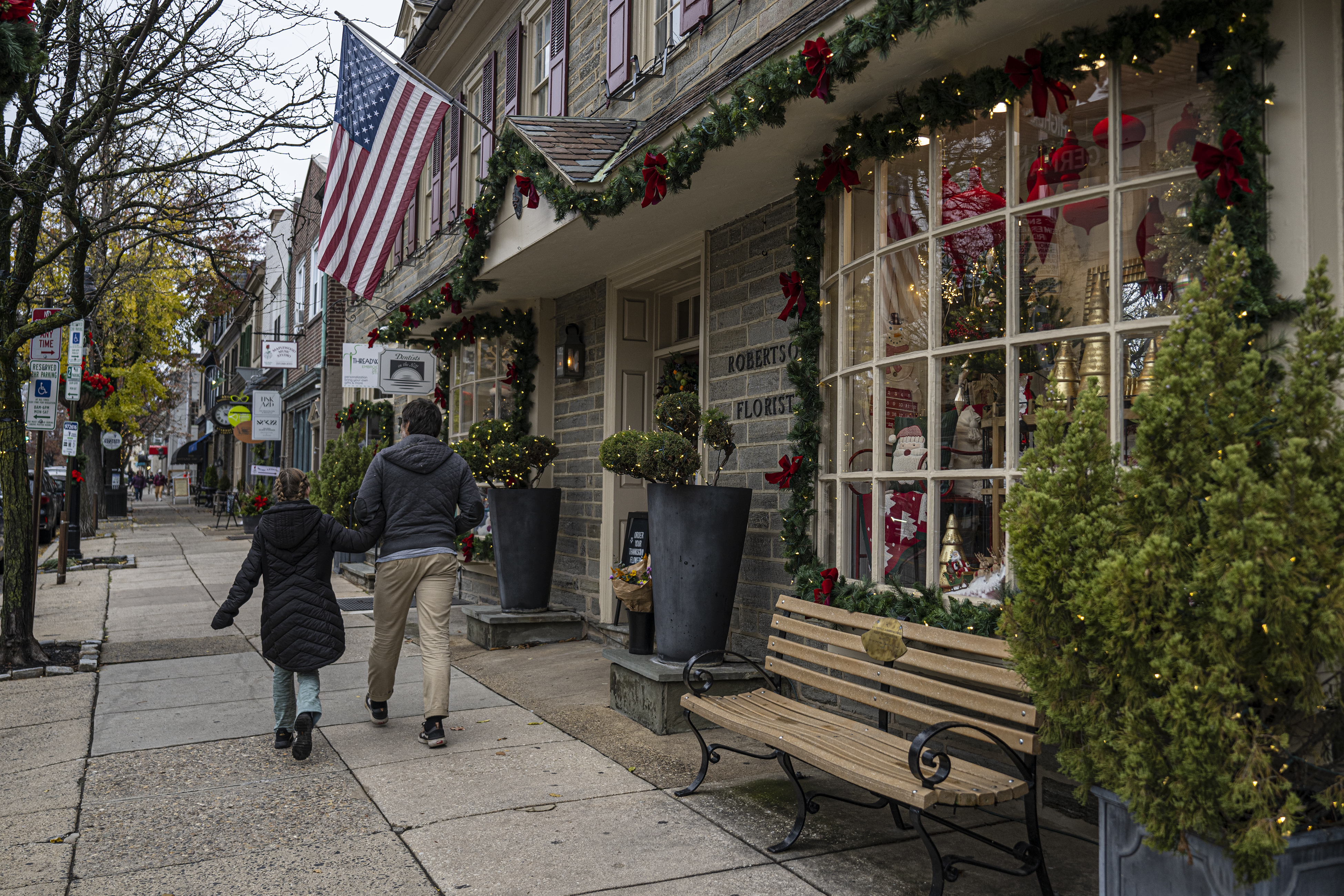
    People walk by holiday decor outside Robertson’s Flowers & Events in Chestnut Hill earlier this month.

    ‘New vitality’ coming to the Chestnut Hill restaurant scene

    During the holidays and all year long, Chestnut Hill business owners said they’re grateful that the neighborhood has held onto its charm despite recent challenges.

    During the pandemic, “it definitely felt a little grim and dark,” said Ann Nevel, retail advocate for the Chestnut Hill Business District. “The impressive thing is the old-timers, the iconic businesses, and some of the newer restaurants … pretty much all were agile enough to tough it out.”

    And a slew of other businesses have moved into the community since then. In the last four years, 20 retail shops, 20 service businesses, and 10 food and beverage spots opened in Chestnut Hill, Nevel said, while several existing establishments expanded.

    Among them was Matines Café, which opened a small spot on Bethlehem Pike in 2022 and expanded this fall to a second, much larger location on Highland Avenue. The café serves 500 people or more on weekdays, according to its owners, and even more on weekends.

    Sitting inside their original location, which is now a cozy children’s café, Paris natives Amanda and Arthur de Bruc recalled that they originally thought they’d open a café in Center City, where they lived at time. Then, they visited Chestnut Hill and fell in love, despite “a lot of empty spots” there around 2022, Amanda de Bruc said.

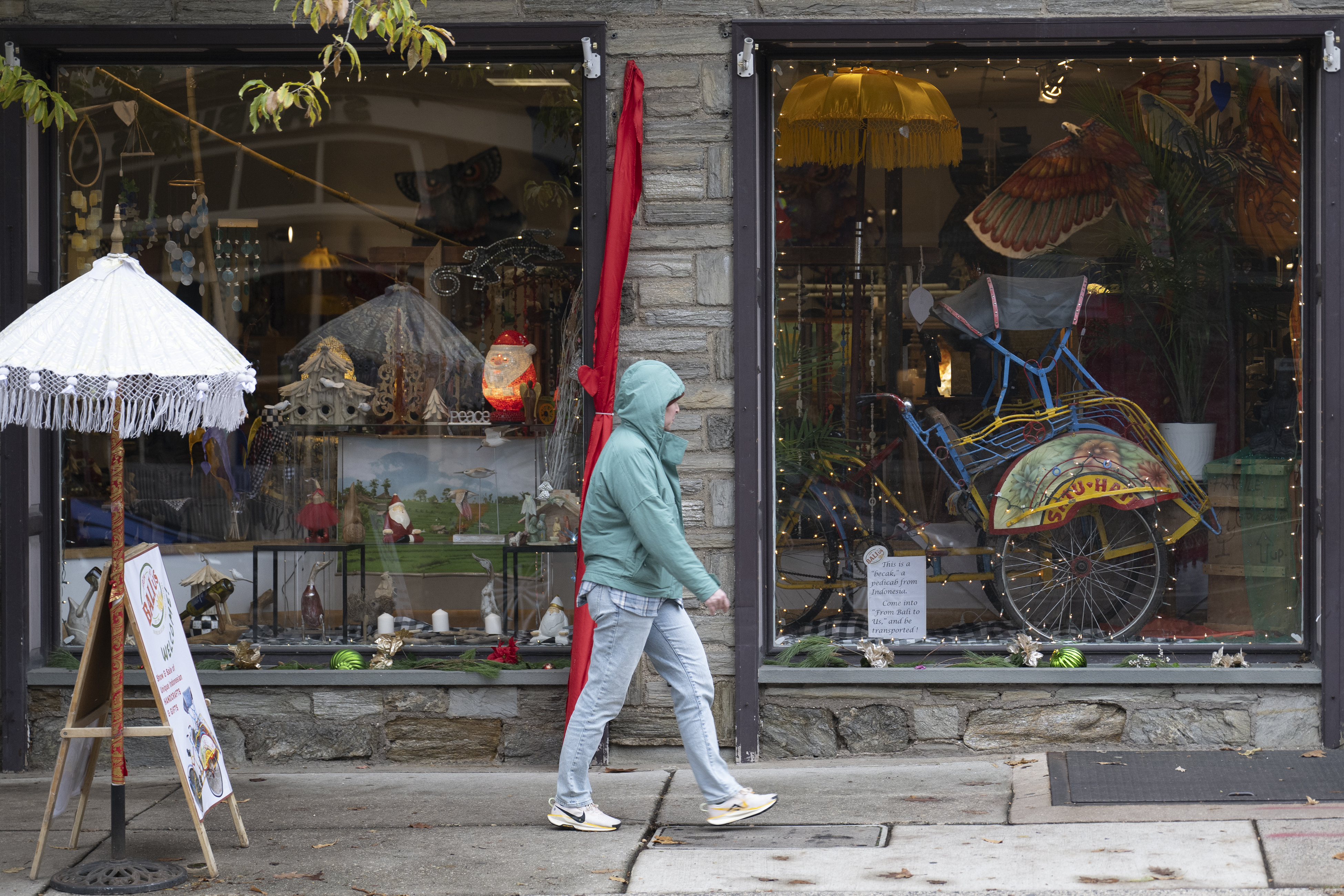
    A colorful storefront along Germantown Avenue in Chestnut Hill.

    “We liked the idea of living in the suburbs, which technically Chestnut Hill is not the suburbs, because it’s still Philly,” she said. But “we were looking for something that we were more used to, like Paris. There are so many boutiques in such a small area,” and everything is walkable.
    The opening of shops and cafés like Matines became a “catalyst for this new vitality, a new, more contemporary energy that has taken hold in Chestnut Hill,” Nevel said. Soon, “we’re going to see that new vitality in the restaurant scene,” including in some long-vacant storefronts.

    In 2026, former Four Seasons sommelier Damien Graef is set to open a wine bar, retail store, and fine-dining spot called Lovat Square off Germantown Avenue, Nevel said. On the avenue, a café-diner-pub concept called the Blue Warbler is under construction and also slated to open sometime next year.

    Kilian Hardware in Chestnut Hill has been in business for 112 years.

    In downtown Chestnut Hill, there are still a few empty spots, including those left by Campbell’s Place, a popular restaurant that closed this summer; Diamond Spa, which closed this fall; Iron Hill Brewery, which closed in September (right before the regional chain filed for bankruptcy); and Fiesta Pizza III, which closed last year.

    Kismet Bagels, a popular local chain, was set to fill one of the spots this summer, but its deal fell through, co-owner Jacob Cohen said in a statement. He said they could “revisit the Chestnut Hill neighborhood” in the future.

    While the future of Iron Hill will be dictated by bankruptcy proceedings — which include an auction of assets set for next month — stakeholders say conversations are ongoing about some of the other vacancies.
    Steve Jeffries, who is selling the Campbell’s building for $1.5 million, said he’s gotten a lot of interest from people who want to revive the nearly 3,000-square-foot space as a neighborhood pub, but one that is “more cutting edge.” Perhaps, he said, one that is not focused on craft beer, which has decreased in popularity, especially among younger generations.

    “The town is just screaming for other opportunities for nightlife and sports bars,” said Jeffries, executive vice president of Equity CRE. “There has been a connotation in the market that Chestnut Hill was kind of older, stuffy, that it wasn’t a nightlife town.”

    But that’s changing, Jeffries said.

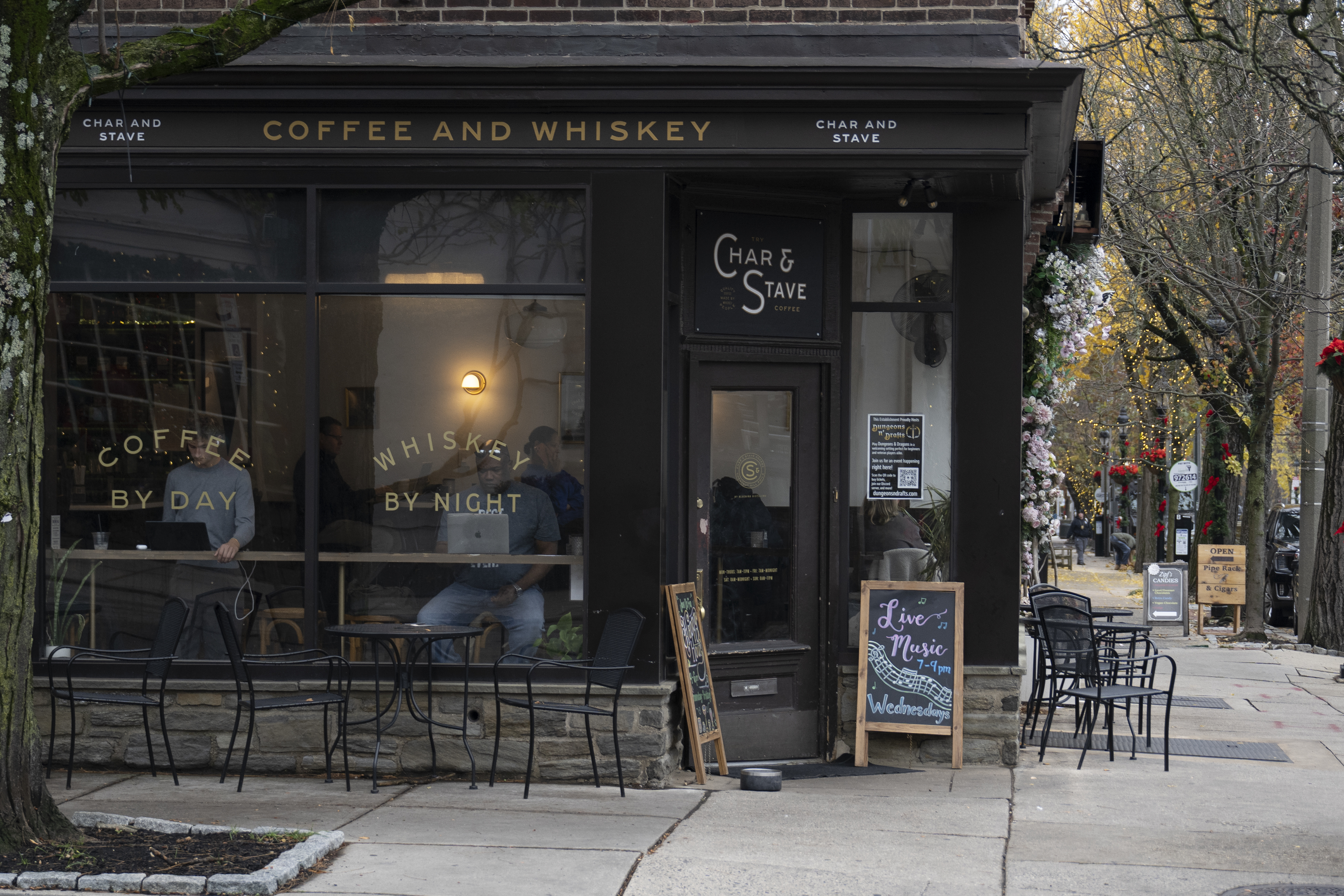
    Char & Stave, an all-day coffee and cocktail bar, has done great business since moving into Chestnut Hill, its owner, Jared Adkins, said.

    Just ask Jared Adkins, owner of Char & Stave, an all-day coffee and cocktail bar at the corner of Germantown and Highland Avenues.

    After Nevel visited Ardmore and saw the success of Adkins’ original Char & Stave, she recruited him to open a Chestnut Hill location. It started as a holiday pop-up in 2022, then became a permanent presence the next year. Since he moved into town, Adkins said, business has been booming.

    “We’re really just busy all day long,” said Adkins. The café is open until 11 p.m. during the week, midnight on the weekends, and it often brings in musicians and hosts events.

    Adkins describes Char & Stave as a place where drinkers and nondrinkers alike can spend time together, and where people can get work done with coffee or a cocktail beside them: “It’s really a gathering place that fills a niche of a nice cocktail place.”

    More changes to come for Chestnut Hill

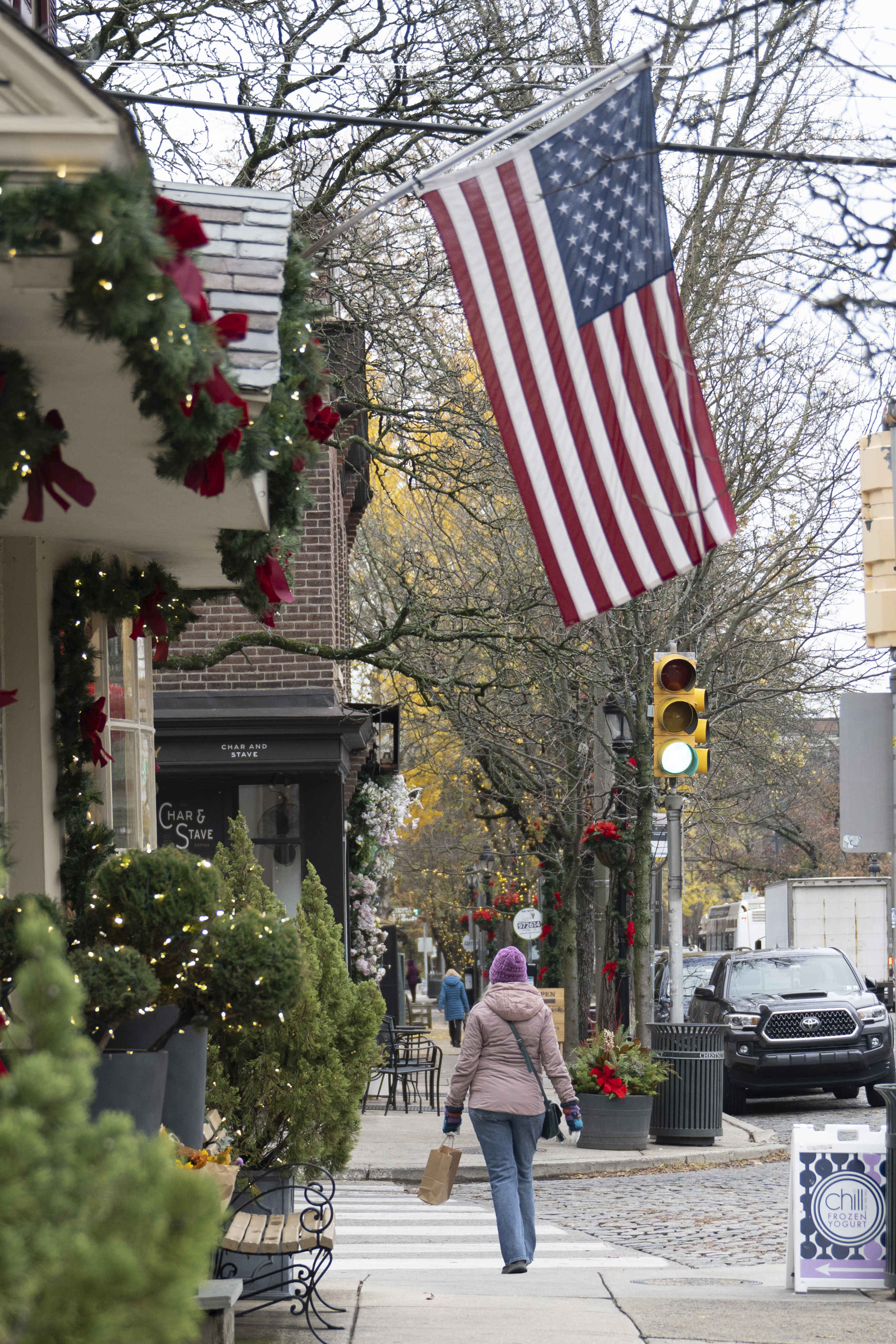
    Businesses along Germantown Avenue in Chestnut Hill are decorated for the holidays.

    Chestnut Hill business leaders and community members say they’re optimistic about the neighborhood’s continued evolution.

    As Brien Tilley, a longtime resident and community volunteer, ate lunch inside Cosimo’s Pizza Cafe, he said the community is doing well. But, he added, “it could always do better. It’s always in transition.”

    Nevel noted that restaurants require more capital to open than other businesses, so it can take awhile to fill those larger holes downtown.

    “The economy is tough,” said Anne McNally, a fourth-generation owner of McNally’s, as she sat by the tavern’s front window overlooking Germantown Avenue. But in Chestnut Hill, she gets the vibe that the community “wants us to be successful.”

    McNally and Goudy, of Kilian’s, both noted that their families bought their buildings decades ago. That has contributed to their longevity, both said, as has evolving with the customer base.

    For the McNally family, that meant transitioning from a “bar-bar,” with no clock or phone, to a bar-restaurant that closes at 10 p.m. For Goudy, it meant soliciting online orders and walk-in business from out-of-town and even out-of-state customers whose older homes require unique hardware.

    “Everything is changing,” Goudy said. “It’s important to keep changing and not to try to go back to where you were before.”

  • When mom-and-pop businesses struggle, it’s everyone’s business

    When mom-and-pop businesses struggle, it’s everyone’s business

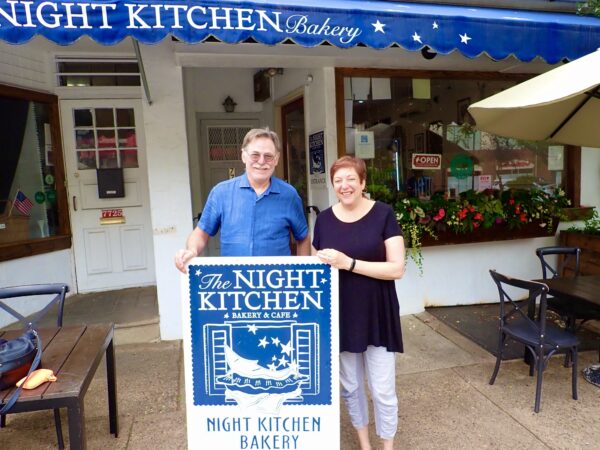
    Twenty-five years of running a small business teach you a lot. I have owned the Night Kitchen Bakery since 2000, and worked in the food business for over 40 years, at hotels, restaurants, and for caterers. In that journey, you start to see patterns as to how the economy and major events affect the business.

    We have had struggles over the years. The economic dip after 9/11. The Great Recession of 2008 to 2009. The COVID-19 pandemic and subsequent shutdown. Bird flu outbreaks that significantly increased the price of eggs.

    To me, the current struggle is real — and likely avoidable.

    Anyone who has ever worked in the food and/or hospitality business will tell you it is incredibly hard work, but often rewarding and sometimes exciting. Anyone who has owned a food business will tell you that owning one is even harder, but can also be the most satisfying work.

    Food is love

    Feeding people is a beautiful love language. For those of us lucky enough to keep our small businesses going for so long, we know that, as my grandmother used to say, “It is a nickel-and-dime business.” The bottom line is so small that price fluctuations in raw product, broken equipment, or increases in other business expenses can be the difference between a tiny profit, zero profit, or a significant loss.

    Large losses can be impossible to recover from for a mom-and-pop shop, or even a medium-sized restaurant. We learn to keep an eye on the small details every day. We often change the way we operate with new technologies to help become more efficient. Our staff often have skills and knowledge we learn from to improve our operation. We watch as sales patterns emerge every day of the week, every season, every holiday, and every year.

    Most people love to have a treat or entertain on weekends, so most food businesses are busier Friday through Sunday. Our biggest expense is staffing, and we adjust schedules to account for slow and busy times of the year. Much of it is an educated guessing game.

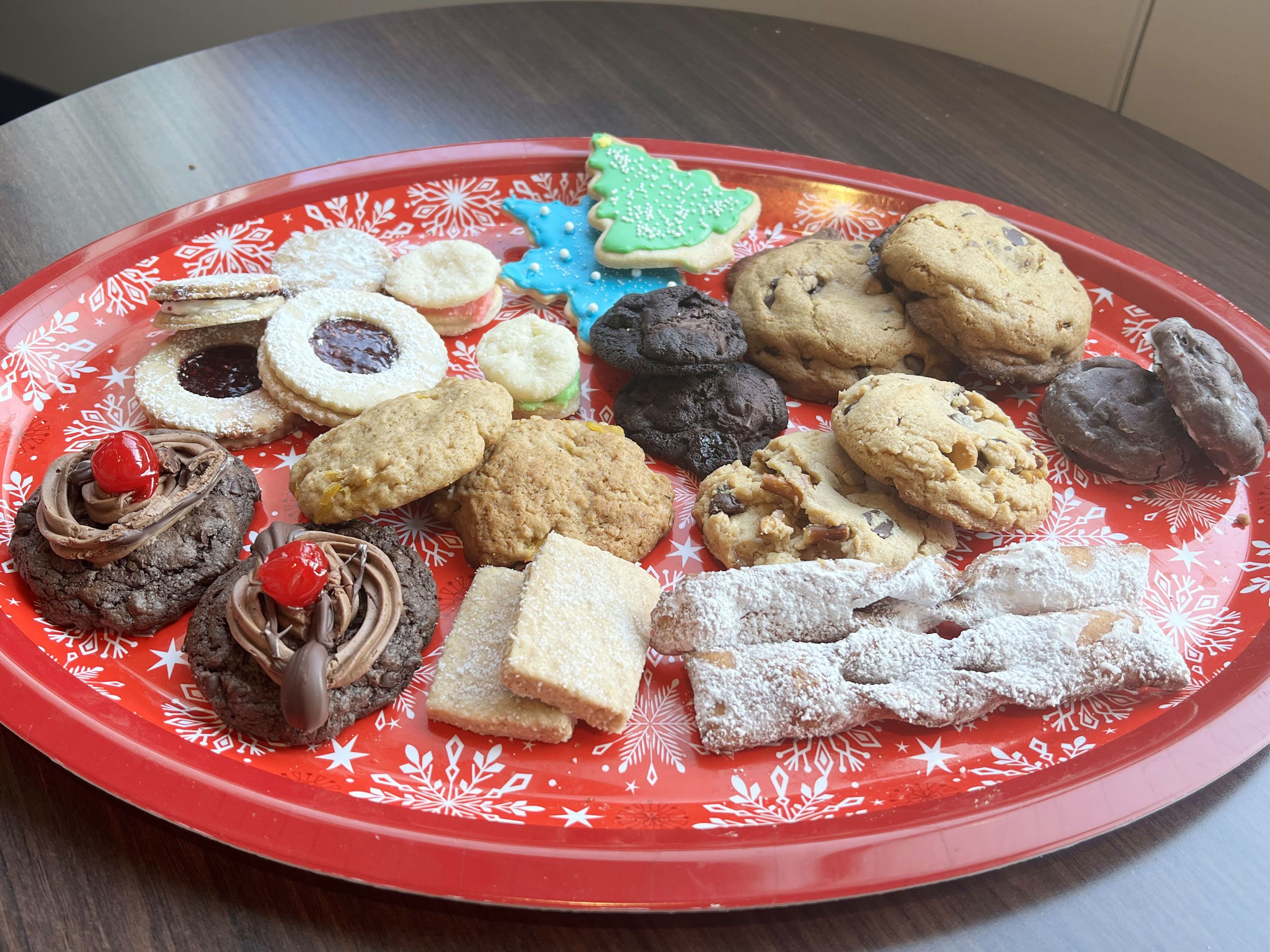
    The 12 finalists in the 2021 Holiday Cookie Challenge.

    People tend to celebrate holidays at the same time, and want pies for Thanksgiving and cookies in December. Spring and warmer weather demand fruitier flavors. Buying seasonal products helps keep costs lower. Raw products constantly fluctuate, so we adjust our prices when we can without alienating our customer base. All this is challenging, but I’m used to it.

    These days, however, are different.

    We have not been able to increase the prices of some of our products to match the rise in the cost of ingredients. In my 25 years here, I have never seen costs fluctuate so wildly and frequently. The cost of raw products, such as chocolate, coffee, jams, and other imported ingredients, is going through the roof. My vendors tell me this is largely due to tariffs.

    We cover the cost of health insurance for some employees, which is also one of our biggest monthly bills. We just received our rate sheet for 2026, and the increase is over 20% — the largest hike I have ever seen. This is another expense that will make doing business extremely difficult. Other business owners I know are also struggling.

    Growing stress

    I see the job market changing fast, and I am seeing more applicants than ever before. Several customers have confided in me that they have government jobs and are worried they will not receive back pay when they return to work. It is very stressful for them, and stress has a trickle-down effect.

    This all adds up, not only in expenses for the business, but in time spent adjusting to all the factors. We are lucky. We have a loyal customer base and, so far, have been able to accommodate ourselves to the changing market, if barely.

    But it can’t go on forever.

    Small businesses make up the vast majority of all U.S. businesses. So I offer this not as a personal problem, but an alarm about what is happening to the economy as a whole.

    What can be done? Everyone has to decide this for themselves, but I think action is needed. I am in touch with our government representatives regularly to express my concerns. Whatever your situation, everyone is affected and burdened by the choices our politicians are making.

    After all, our business is your business, too.

    Amy Beth Edelman has been co-owner of the Night Kitchen Bakery and Cafe in Chestnut Hill for 25 of the shop’s 44-year history. She lives in Bala Cynwyd.

  • Philadelphia’s ‘great masterpieces’ find a new home in Woodmere Museum’s Frances M. Maguire Hall

    Philadelphia’s ‘great masterpieces’ find a new home in Woodmere Museum’s Frances M. Maguire Hall

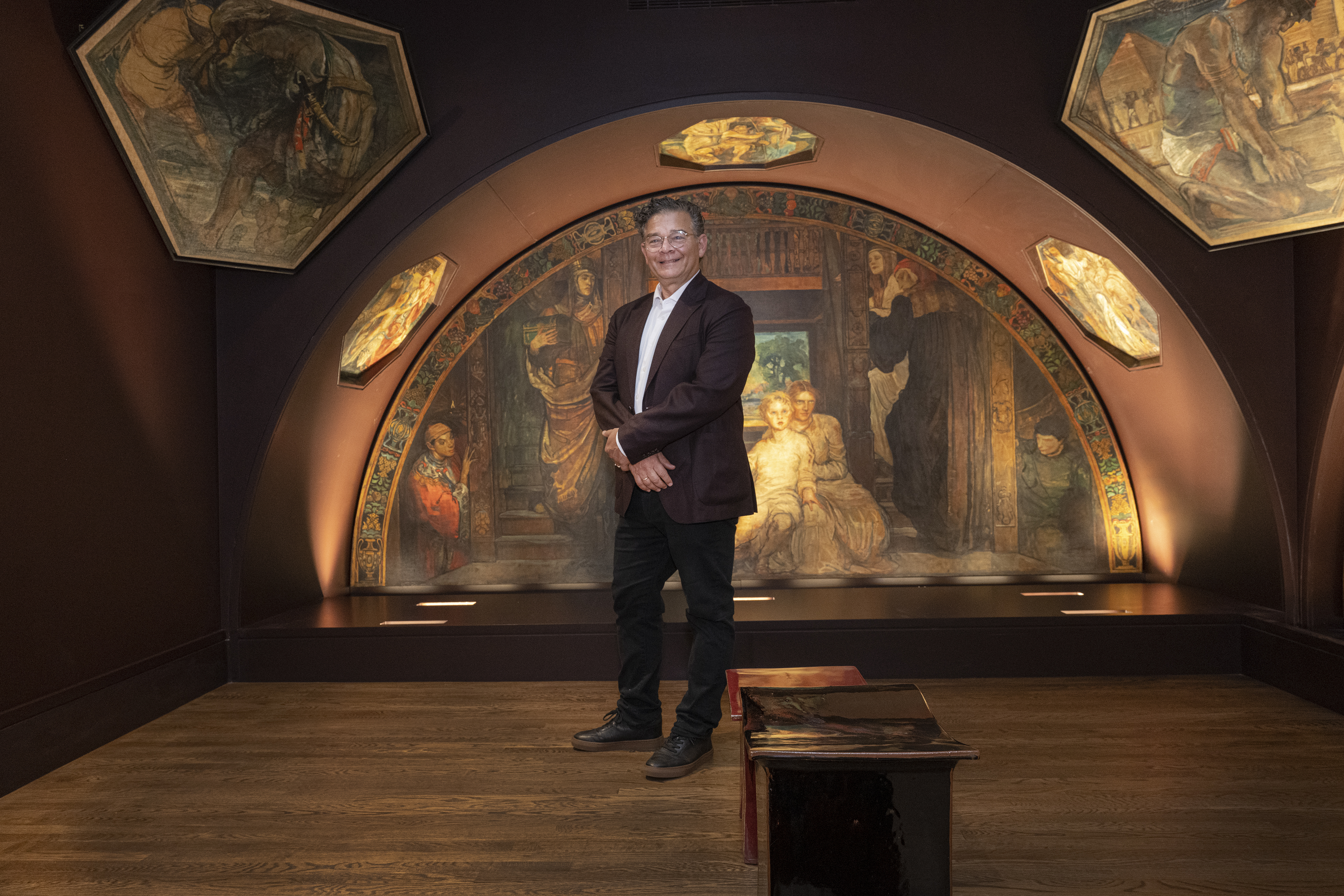
    Woodmere Art Museum director and CEO William R. Valerio never thought he’d be standing in a former second-floor bedroom turned into a cozy, copper-hued art gallery, admiring Violet Oakley’s famous series of paintings: Building the House of Wisdom.

    Yet, there he was.

    Two weeks before the new Frances M. Maguire Hall for Art and Education opens on Nov. 1, Valerio was brimming with excitement.

    The Victorian mansion and former convent is the new home to the 112-year-old Chestnut Hill museum’s permanent collection, the most definitive group of paintings, sculptures, and prints by Philadelphia artists in the region — if not the world.

    William R. Valerio surrounded by Violet Oakley’s seminal work “Building the House of Wisdom” in the Frances M. Maguire’s second floor Violet Oakley Gallery. Valerio recreated this gallery as a replica of Charlton Yarnall’s early 20th century Rittenhouse Square home where the 12-piece series was commissioned for the mansion’s music room.

    “I’ve been at the museum for 15 years and I’ve always wanted to build a space to show House of Wisdom the way Oakley intended it to be shown,” Valerio said. “But I never could have imagined this.”

    This is a four-story, 17,000-square-foot, gleaming house museum.

    The Violet Oakley Gallery is particularly noteworthy. The 375-square-foot space is a recreation of early 20th-century banker Charlton Yarnall’s music room, where Oakley’s vibrant murals were nestled in the Rittenhouse Square mansion’s vaulted ceilings.

    At Maguire Hall, Oakley’s allegorical interpretations of wisdom in the arts and sciences are fixed in lunettes positioned at eye level, allowing museumgoers to sit in a meditative gaze under a glowing replica of Italian designer Nicola d’Ascenzo’s stained glass dome.

    Oakley’s House of Wisdom has been on and off view at Woodmere since 1962, when the museum’s then director — and Oakley’s life partner — Edith Emerson brought the 12-piece series to the museum. Yarnall’s mansion was being converted to an office building, and Emerson feared her late partner’s seminal work would be carelessly discarded.

    The House of Wisdom is among the roughly 11,000 pieces of art we’ve acquired over the decades that now have a place to shine like never before,“ Valerio said.

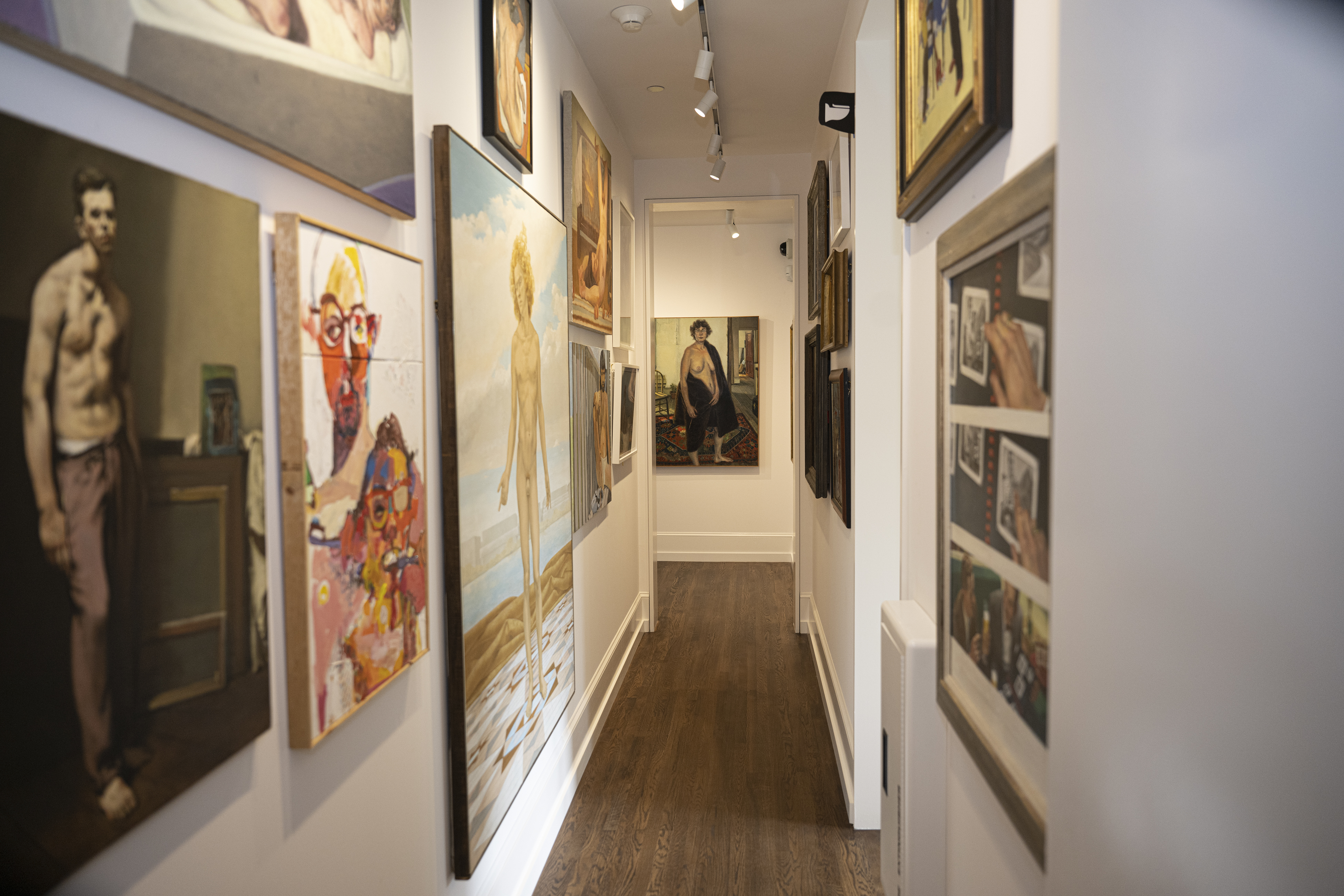
    View of hallway between six second-floor galleries at Woodmere’s soon-to-be-opened Frances M. Maguire Hall.

    ‘Philadelphia’s great masterpieces’

    Charles Knox Smith opened the Woodmere Museum — what is now the museum’s Charles Knox Smith Hall — in 1913. It holds Woodmere’s vast 18th- and 19th-century collections, including Smith’s beloved Philadelphia landscapes, and is open Wednesday to Sunday.

    A few houses down and across the street, Maguire Hall’s 14 galleries hold paintings, sculptures, illustrations, photographs, and mixed media murals centering 20th-century Philadelphia artists.

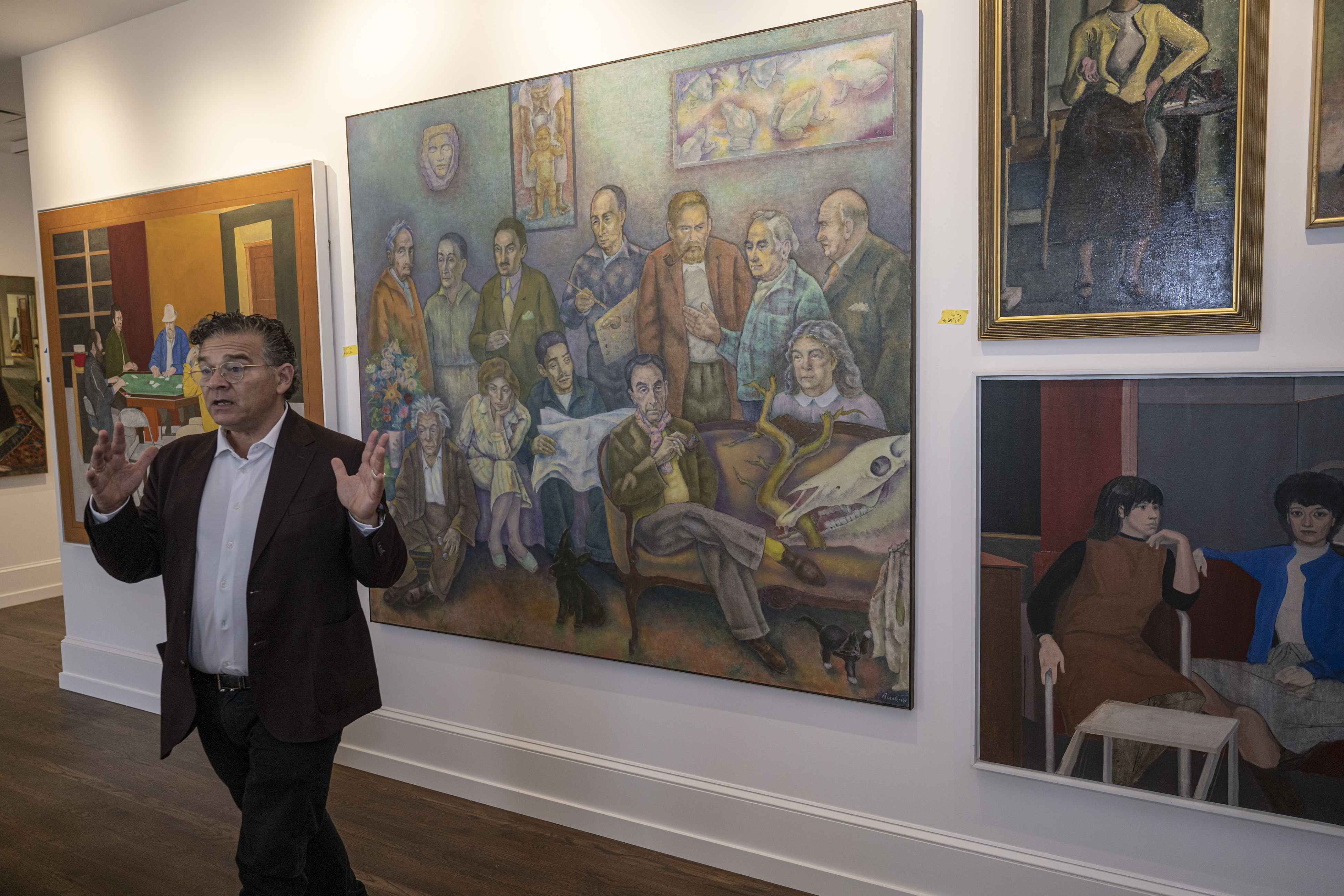
    William R. Valerio, director and CEO of Woodmere Museum, chatting in front of George Biddle’s 1966 oil on canvas “Evocation of the Past.”

    “The idea is to show off Philadelphia’s great masterpieces,” Valerio said.

    He and his four-person curatorial team spent months mounting golden frames on the monochromatic walls, so closely together they nearly touched. It gives Maguire Hall the intimate vibe of a 19th-century home.

    Every major 20th-century art movement is represented, but the curation is a nod to 21st-century diversity.

    African American realist Ellen Powell Tiberino’s striking nude Repose shares gallery space with Martha Mayer Erlebacher’s stunning life-size portrait The Path. Both are only a few feet away from a work by George Biddle — of the illustrious Philadelphia family that traces its roots to the 17th century — the thoughtful Evocation of the Past.

    Black Pennsylvania Academy of the Fine Arts scholar Charles Jay’s meticulous floral still life paintings from the early 1980s line Maguire Hall’s grand staircase. It leads to the second-floor galleries, where lauded 1920s impressionist Walter Elmer Schofield’s bucolic renderings of snowy Wissahickon trails coolly hang.

    William R. Valerio, director and CEO of Woodmere Art Museum in conversation with Syd Carpenter’s arresting “Frank as the Sun King,” paying homage to Carpenter’s brother who served in the Army during the 90s during Desert Storm and returned to Philadelphia as a quadriplegic.

    An entire gallery is dedicated to female artists, featuring portraits by Oakley and Emerson. They are in conversation with an arresting sculpture by Syd Carpenter, Frank as the Sun King, an homage to Carpenter’s brother, who served in Desert Storm and came home to Philadelphia as a quadriplegic. Carpenter curated the Colored Girls Museum’s Livingroom Garden in 2024.

    “These diverse backgrounds and social experiences reshape and expand the canon of 20th-century art through a Philadelphia lens,” Valerio said.

    A major gift

    Maguire Hall was built in 1854 as a country estate for the family of William Henry Trotter, an importer of steel, copper, and tin. In the 1890s, the house was renovated by sugar merchant Alfred C. Harrison.

    The Sisters of St. Joseph bought the stately home from developers in the 1920s to serve as the Norwood-Fontbonne Academy dorm. The nuns lived there until 2021, when Woodmere purchased it for $2.5 million.

    “It gave us the opportunity to take items out of storage and show the beauty of Woodmere to the world,” Valerio said.

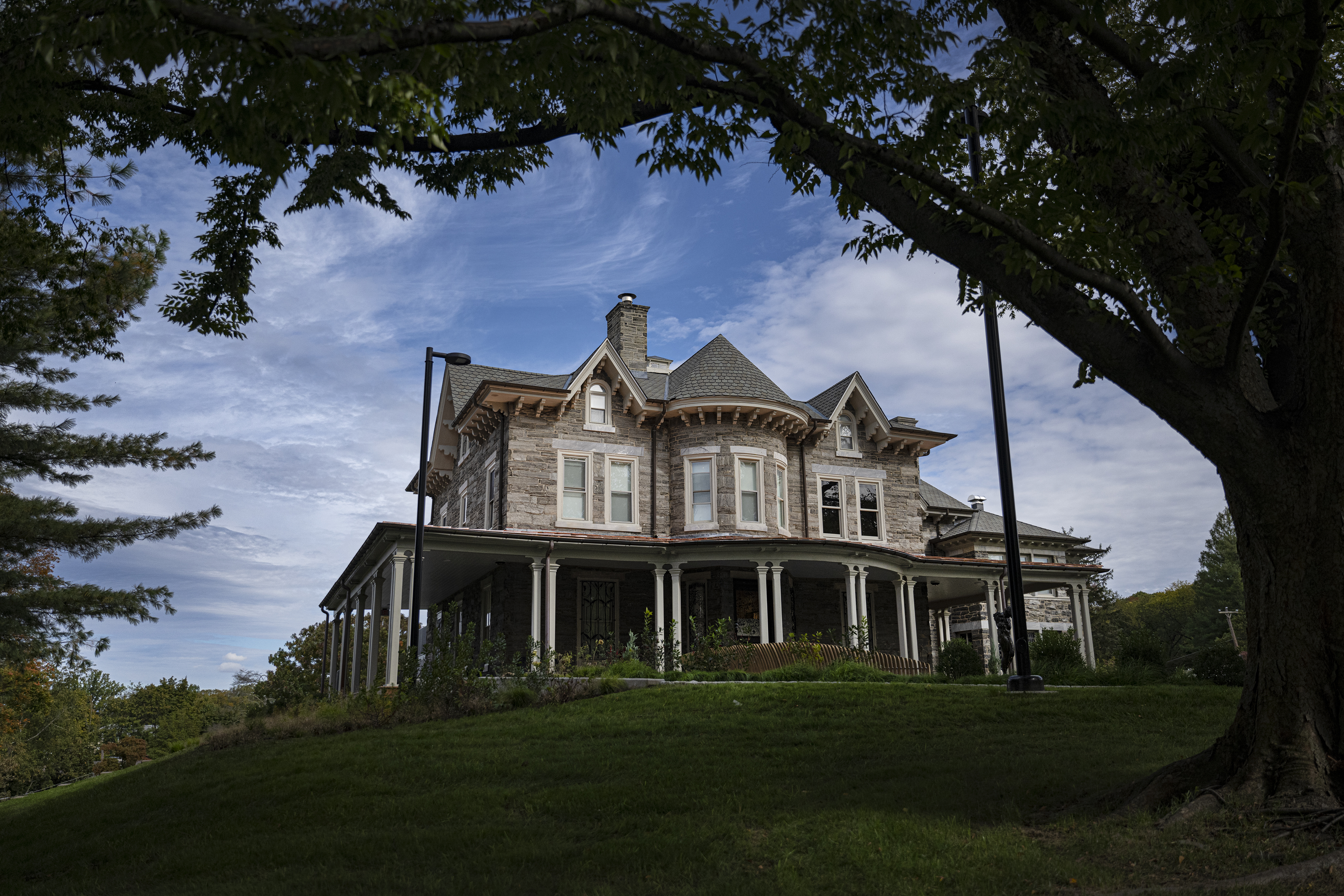
    Overview of the former Sisters of St. Joseph Convent that’s been transformed to Woodmere’s Frances M. Maguire Hall for Art and Education in Chestnut Hill.

    James J. Maguire Sr. built a string of small insurance companies into a national conglomerate in the mid- to late 20th century. In 2008, he completed a $5 billion merger with a Japanese firm and, with his wife, Frances, became one of the region’s largest philanthropic donors.

    An artist and patron of the arts, Frances Maguire died in 2020. Three years later, the Frances M. Maguire Art Museum was opened at the former home of the Barnes by St. Joseph’s University, which had received a $50 million donation from the Maguire Foundation in 2017.

    Frances Maguire also spent a lot of time at Woodmere, taking classes and serving on the board of trustees. In her honor, the Maguire Foundation gave the museum $10 million. Valerio raised an additional $18 million from donors, state, and federal funding. The $28 million was used to renovate the mansion and start an endowment.

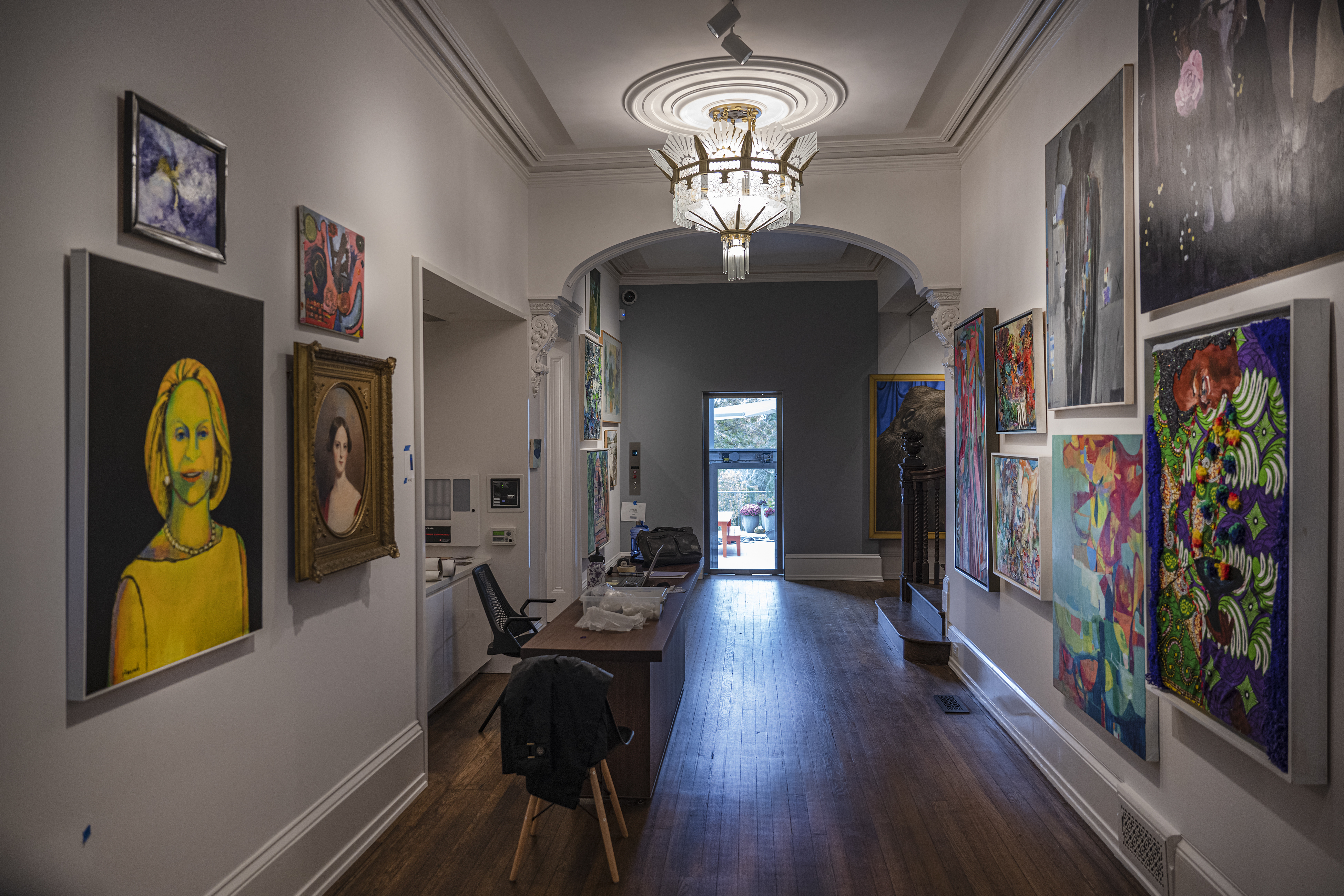
    Entrance way of the Frances M. Maguire hall. To the left is a portrait of Maguire by Kassem Amoudi. The chandelier Chestnut Street’s Boyd Theater open from 1928 to 2002.

    A portrait of Frances Maguire by Kassem Amoudi hangs in the foyer.

    “In creating the Frances M. Maguire Hall and supporting Woodmere, we are assuring that her legacy is shared with current and future generations,” said Megan Maguire Nicoletti, one of the Maguires’ nine children and CEO of the Maguire Foundation.

    All the details

    Krieger Architects worked with New York-based Baird Architects to turn the ramshackle convent into a modern museum, complete with wheelchair-accessible ramps and a shiny glass elevator overlooking the art trail connecting Maguire Hall to Charles Knox Smith Hall.

    Mammoth sculptures by 1959 Penn graduate Robinson Fredenthal are visible from the elevator as well as chokeberry, bayberry, and pawpaw trees, planted in Woodmere’s perennial Outdoor Wonder garden in honor of the Lenape Indians. Maguire Hall boasts a brand-new porch dotted with bright Adirondack chairs that once belonged to the University of the Arts.

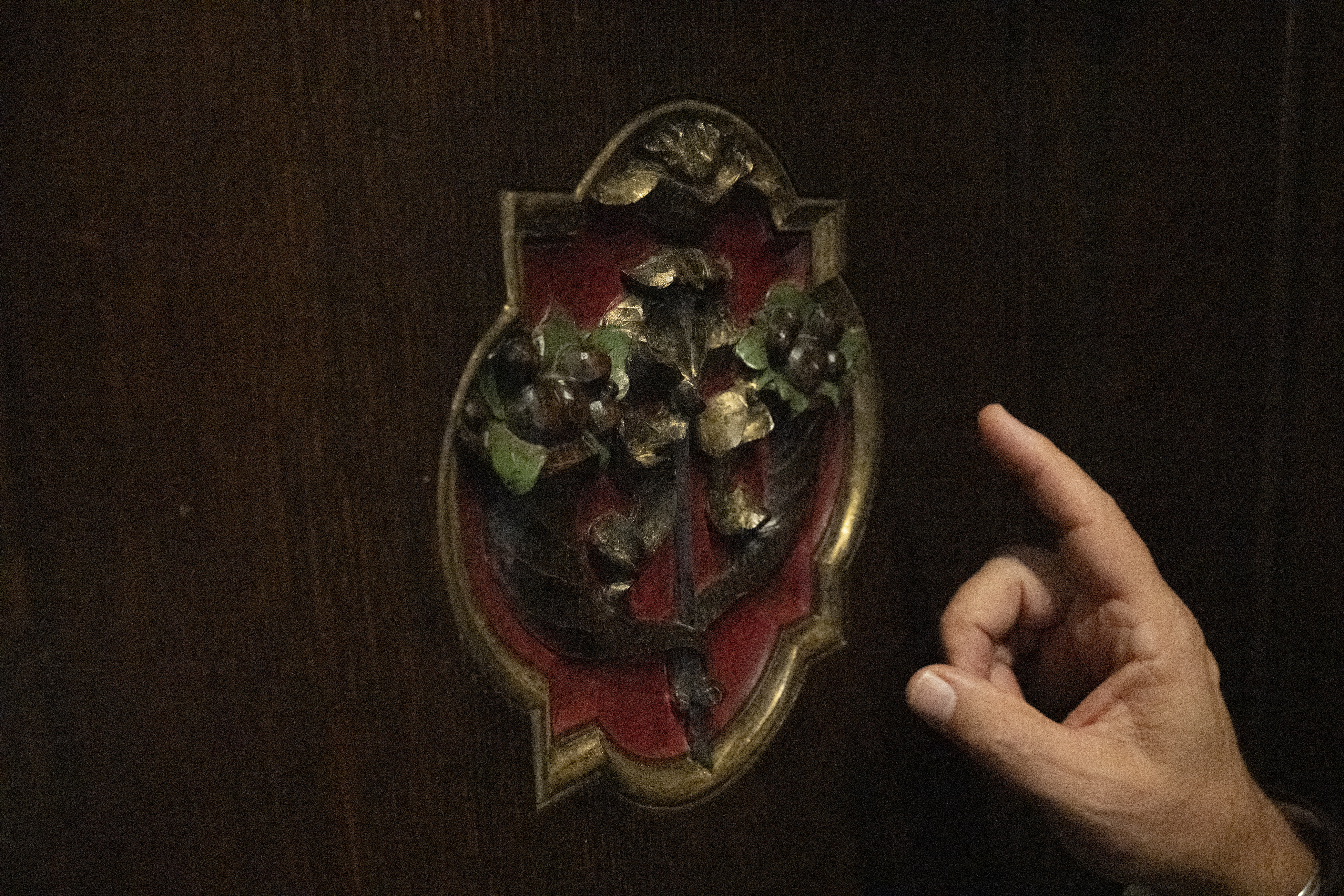
    Detail of Belgium carver Edward Maene’s work in The Frances M. Maguire Hall breakfast nook. During the renovation, the carvings original red, green, and golden hues were discovered.

    In the mansion’s dining room, breakfast room, and central staircase are exquisite woodcarvings from 20th-century master and Belgium immigrant Edward Maene.

    “He went all out and carved fantastical medallions with images of fish that turned into birds and humans that turned into lions,” Valerio said of Maene’s work.

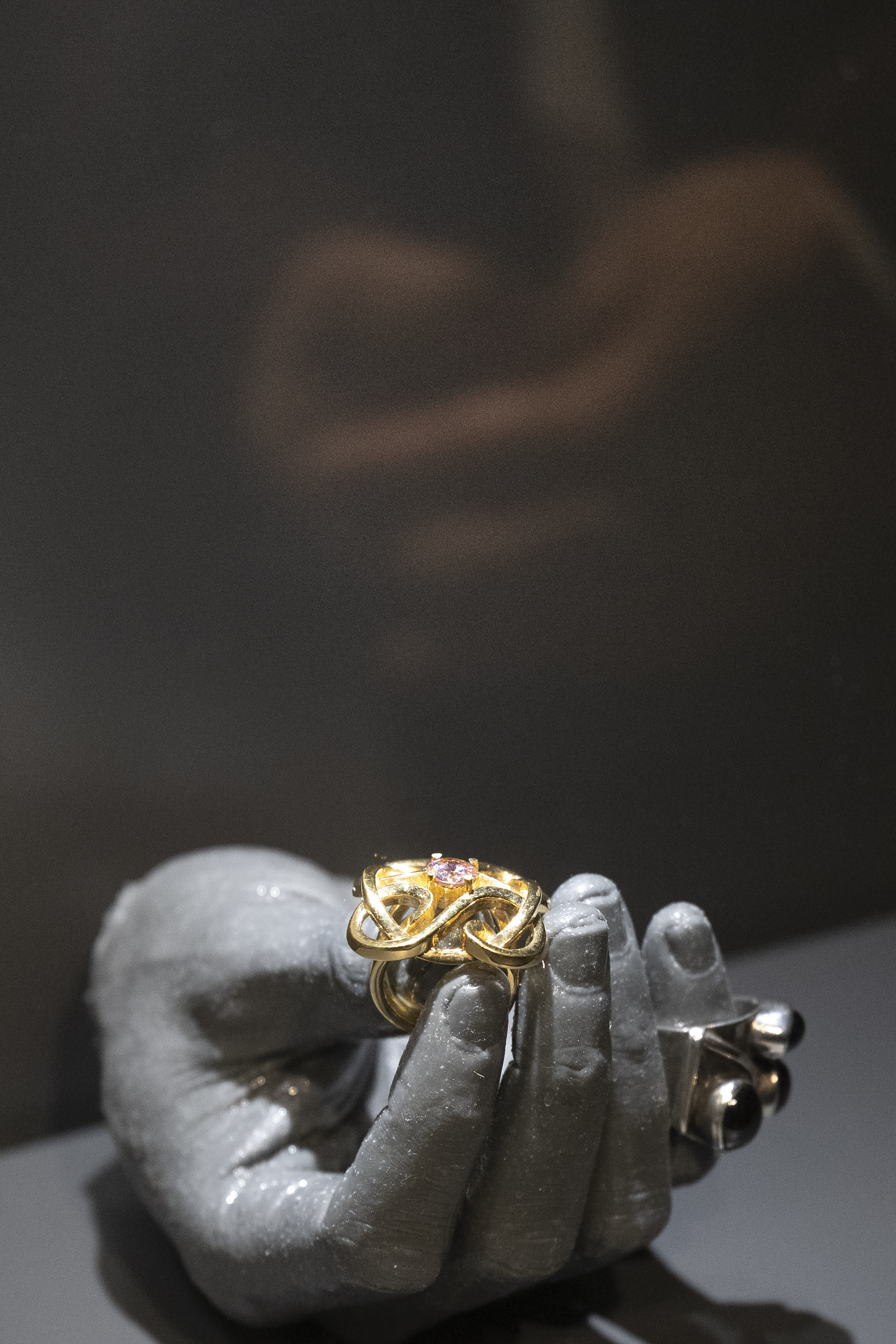
    There is the MacDonald Family Children’s Art Studio, where little ones can try their hands at finger painting, watercolors, and perhaps a bit of jewelry making. Right across from it is a jewelry vault, where an ankle-length Henri David coat sparkles with jewels from local Victorian-era jewelry houses: Bailey, Banks & Biddle and Caldwell.

    Tyler School of Art and Architecture graduate Theophilus Annor fashioned hand mannequins for the baubles. (Annor also carved Adinkra symbols into John Rais’ decorative wrought iron)

    Jewels shown on a hand mannequin fashioned by Ghanian artist Theophilus Annor in the Frances M. Maguire jewelry vault. (L) Theophilus Annor, Holding On, 2024, Gold & faceted gemstone. (R) Richard Reinhardt, Ring, date unknown.

    Housing history

    The second-floor illustrative arts rooms feature wartime drawings from 1940s issues of the Saturday Evening Post and framed TV Guide images of Kojak’s Telly Savalas and Columbo’s Peter Falk. (TV Guide was owned by former Inquirer and Daily News publisher Walter Annenberg.)

    “This part of our history is often forgotten,” Valerio said. “But it was important to artists who lived here and made a living in what was then a big media city.”

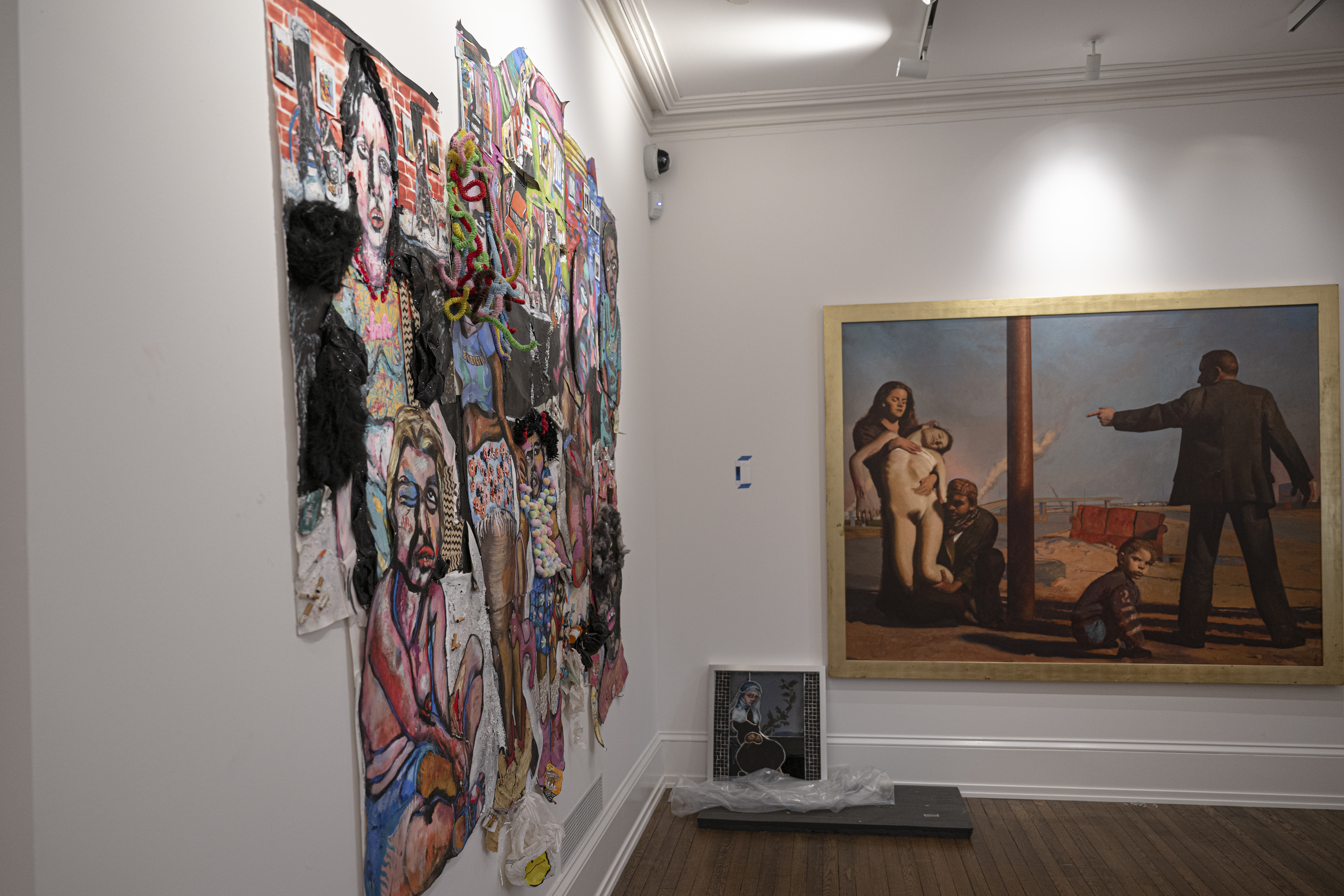
    The first floor gallery of the Frances M. Maguire Hall featuring (left) Ashley Flynn’s stark mural of drug culture in Kensington and “Madre del Nene” a1990, oil on linen from Bo Bartlett

    But the bottom floor is the star. Housed here are Maguire’s most evocative pieces, like an abstract collage by Danny Simmons — brother of hip-hop luminaries Russell and Joseph “Run” Simmons — titled Hocus Pocus, which interrogates magic in the Black community. Ashley Flynn’s gripping mural depicting drug abuse in Kensington and gay artist and collage maker Stuart Netsky’s Have Your Cake and Eat it Too, which puts a naughty twist on Victorian-era prudishness, radiate under the Boyd Theatre’s chandelier.

    With this work, Valerio hopes Maguire Hall plays a role in shaping a more inclusive future in Philadelphia — and around the world — through the arts.

    “We do what no other museum does in exploring the art and culture of this city in depth,” Valerio said. “And we welcome everyone to take part in the conversation.”

    Woodmere’s Frances M. Maguire Hall for Art and Education, 9001 Germantown Ave., opens to the public on Nov. 1 and 2. Charles Knox Smith Hall is located at 9201 Germantown Ave. Both are open Wednesday to Sunday, 10 a.m. to 5 p.m. Tickets are $10. Free on Sundays. woodmere.museum.org

    The article was updated to reflect the new name of the children’s art studio at Woodmere Museum, and the last name of Maguire Foundation’s CEO.