The saucer in LOVE Park finally has a timeline for its revival.
After years of seeking ideas from business owners and other Philadelphians, city officials expect work on the historic building to begin in May, the city’s Parks & Recreation Department says.
But officials are still working to select a partner for the project.
In May, the city issued a “request for expressions of interest” (RFEI) from “visionary businesses, particularly those in food, beverage, retail, or hospitality,” who wanted to partner on the saucer.
City officials said the interest exceeded expectations, with more than 50 applicants submitting ideas. They included “coffee and cafe concepts, casual food offerings, beer garden hybrids, and informal meeting spaces,” according to Parks & Recreation spokesperson Ra’Chelle Rogers.
Among applicants, there was a focus on “flexible, welcoming concepts that function as a true public amenity, encouraging people to meet, linger, and connect in the park,” Rogers said.
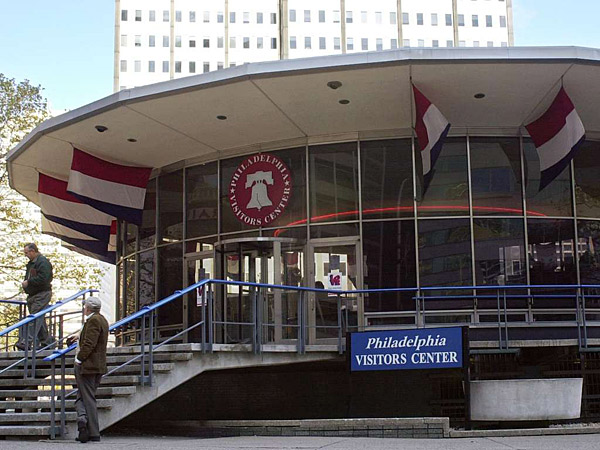
The saucer building in LOVE Park is pictured in March 2019, amid early renovations for a bar-restaurant concept that never panned out.
In light of the demand, the city is moving into its next stage, requiring prospective partners to visit the saucer at 3 p.m. on Feb. 18 and submit a proposal online by March 18.
Prospective partners do not need to have submitted an idea in the spring, Rogers said. Any experienced food, beverage, hospitality, or community operator with the capacity to “generate sustainable revenue to support the park” is encouraged to apply, Rogers said.
“The saucer has always been envisioned as a people-first space — one that complements the park, supports programming, and welcomes both residents and visitors,” said Susan Slawson, the city’s parks & recreation commissioner. The RFEI process has given officials “confidence to move forward with a flexible, inclusive model designed for the way people actually use LOVE Park.”
The saucer, also referred to as the UFO, was added to the Philadelphia Register of Historic Places last year. Built in 1960, the building predates LOVE Park, and first served as the city hospitality center. It later housed offices for park staff.
An undated file photo of LOVE Park’s saucer building when it served as the Philadelphia Visitors Center.
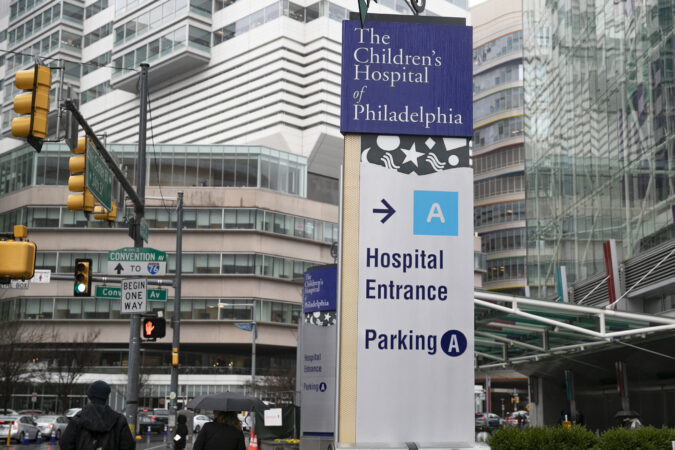
For more than a decade, however, the circular structure near 16th Street and JFK Boulevard has largely sat dormant (the building has opened to the public for the Festival of Trees, a Children’s Hospital of Philadelphia fundraiser, during recent holiday seasons).
In March 2019, city officials applauded the early construction of a bar-restaurant that was set to fill LOVE Park’s saucer building. The pandemic later caused the restaurateurs to bow out of the project.
As for this latest request process, city officials said they plan to select a partner by April, and begin work a month later. The timing could coincide with Philly’s celebration of America’s 250th birthday, as well as the city’s hosting of World Cup matches and the MLB All-Star game.
The office of Councilmember Jeffery Young, whose district includes LOVE Park, is set to fund “key utility and infrastructure improvements” at the saucer, according to the city statement, and public grants are being sought to offset other upfront costs.
“Bringing an active, public-facing partner into the saucer is a milestone for LOVE Park and for Philadelphia,” Young said. “I’m proud to support improvements that make the saucer a welcoming hub for years to come.”
Inside a heated tent on the Children’s Hospital of Philadelphia campus, 17-month-old KJ Muldoon wiggled around in his mother’s arms, smiling and clinging to a multicolored toy.
He was there to celebrate a 26-story patient tower at CHOP that his father, Kyle Muldoon, a longtime construction worker, is helping build. Called Roberts Children’s Health, the new inpatient complex is set to launch in 2028 and significantly expand the number of beds available for patients at CHOP’s main campus.
KyleMuldoon had joined the project back in December 2024, when KJ was still hospitalized at CHOP, where his life-threatening genetic condition was successfully treated with a first-of-its-kind personalized gene-editing therapy.
But in the months before the treatment developed by doctors at CHOP and the Hospital of the University of Pennsylvania sparked international attention, KJ’s father was recently unemployed. The Clifton Heights father of four had accepted a layoff to focus on his sick son.
Muldoon joined the crewin December 2024, allowing him to stay close by during KJ’s 307-day stay and contribute to a project that feels meaningful to him.
“Every day when I get up, I know what I’m doing this for,” Muldoon said.
KJ Muldoon, left, and his father Kyle Muldoon, right, at a news conference at CHOP.
His son KJ was born in August 2024 with a metabolic disorder that puts babies at risk of severe brain damageand is fatal in half of cases. Called severe carbamoyl phosphate synthetase 1 (CPS1) deficiency, it prevented KJ’s liver from being able to process protein.
Doctors Kiran Musunuru and Rebecca Ahrens-Nicklas useda gene-editing technology known as CRISPR to create a personalized drug that would fix the genetic mutation that was driving KJ’s disease. After receiving three doses, he was able to go home last June.
“This pipe dream that sounded like it came from a sci-fi movie became a reality,” Muldoon said.
The medication is not a cure, but it has dramatically improved KJ’s liver function and made the effects of his disease milder.
The treatment approach has been hailed for its potential for rare-disease drug development. The U.S. Food and Drug Administration in the fall announced a new approach to clinical trials to test novel drugs like the one designed for KJ, who was called “a trailblazing baby” by the British scientific journal Nature when it named him to its year-end list of the top 10 influential people.
With dietary restrictions and daily medication to keep his ammonia levels down, the toddler has been able to meet milestones, like walking and saying some words (currentlya lot of “mama” and “dada”).
These days, KJ likes playing catch, eating, and chasing his siblings around.
“Sometimes you got to sit back and take it all in, because we never knew if that was going to be a possibility,” Muldoon said.
The new tower’s construction is funded in part by a $125 million donation from Comcast CEO Brian Roberts and his wife, Aileen, whose name will be on the new building.
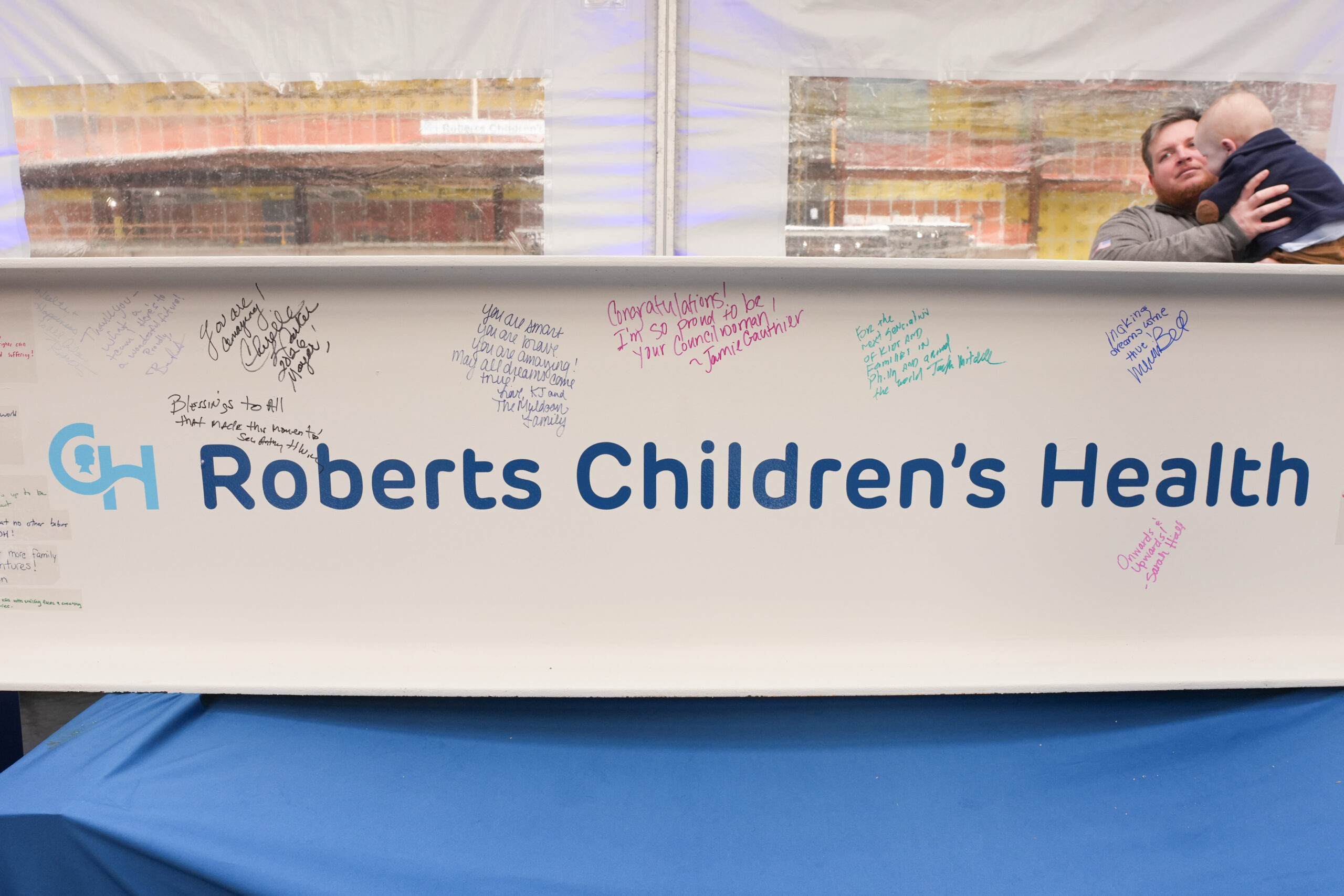
Wednesday’sevent included signing and raising the final structural beam of the building’s frame.
The event included signing and raising the final structural beam of the building. It was signed by patients at CHOP in Philadelphia.
On the beam were colorful messages from patients at CHOP who were asked to write down their dreams.
Brian Roberts read some of their notes at the event.One girl said she wanted to become a nurse anesthetist so she “can help people and own a Porsche.” Another said, “My wish is that every kid that goes to Roberts Children’s Health comes out better and stronger.”
Roberts read aloud messages from patients at CHOP that were signed onto the beam.
Editor’s note: This story was updated to clarify the message a child wrote on a building beam and shared at the event.
The Children’s Hospital of Philadelphia and Denver-based Soar Autism Centers have opened in Newtownthe first of five planned early childhood autism centers in the Philadelphia region and expect the network could grow to more than 30 centers, officials said.
The 50-50 joint venture is designed to reduce wait times for therapy and to make it easier for families to access multiple types of therapy at one location while remaining connected to CHOP specialists.
“It can take a year to get into therapy on a regular basis,“ an extremely long time in a young child’s neurological development, Soar cofounder and CEO Ian Goldstein said.
Such wait times continue to frustrate families despite dramatic growth in the autism-services sector over the last 15 years or so, as states mandated insurance coverage and diagnosis rates soared with more awareness and an expanded definition of autism.
Nationally, applied behavioral analysis, commonly known as ABA therapy, has become popular for autism treatment, increasing nationally by 270% between 2019 and 2024, according to Trilliant Health, a Nashville data analysis firm. The volume of services provided locally — where companies including ABA Centers, Helping Hands Family, and NeurAbilities Healthcare have expanded — was not available.
The increase in diagnoses has outpaced the growth in available services, said Matthew Lerner, an autism expert at Drexel University, who is not involved with the newly launched CHOP-Soar Autism Centers.
When Lerner moved to the Philadelphia region from Long Island in 2023 and started getting plugged into the autism network, a few clinicians here would ask if he could connect patients with services in New York.
“I was coming from eastern Long Island, two hours east of New York City, and people were like, do you know anyone closer to you?” he recalled.
CHOP’s road to a joint venture with Soar
The freestanding, 10,000 square-foot clinic that opened on Jan. 5 in suburban Bucks County near CHOP Pediatric Primary Care Newtown has 35 to 40 rooms and an indoor playground for therapeutic uses.
CHOP, among the largest children’s health systems in the country, has longbeen concerned about limited access to autism care in the region, said Steve Docimo, CHOP’s executive vice president for business development and strategy.
The nonprofit hasprovided diagnostic services, but not the forms of therapy that the CHOP-Soar centers will offer. “The threshold to doing this on our own has always been high enough that it hasn’t been a pool that we’ve jumped in,” he said.
CHOP was in talks with Soar for three years before agreeing to the 50-50 joint venture with the for-profit company.CHOP’s investment will be its share of the startup costs for CHOP-Soar locations.
The partnership plan calls for five locations in the first two years. The partners did not say where the next four centers will be.
Soar has 15 locations in the Denver area, which has about half the population of the Philadelphia region, Goldstein said.
That comparison implies that the CHOP-Soar partnershipcould grow to30 centers, Goldstein added. He thinks the region’s needs could support additional expansion, sayingthe total could reach “into the dozens.”
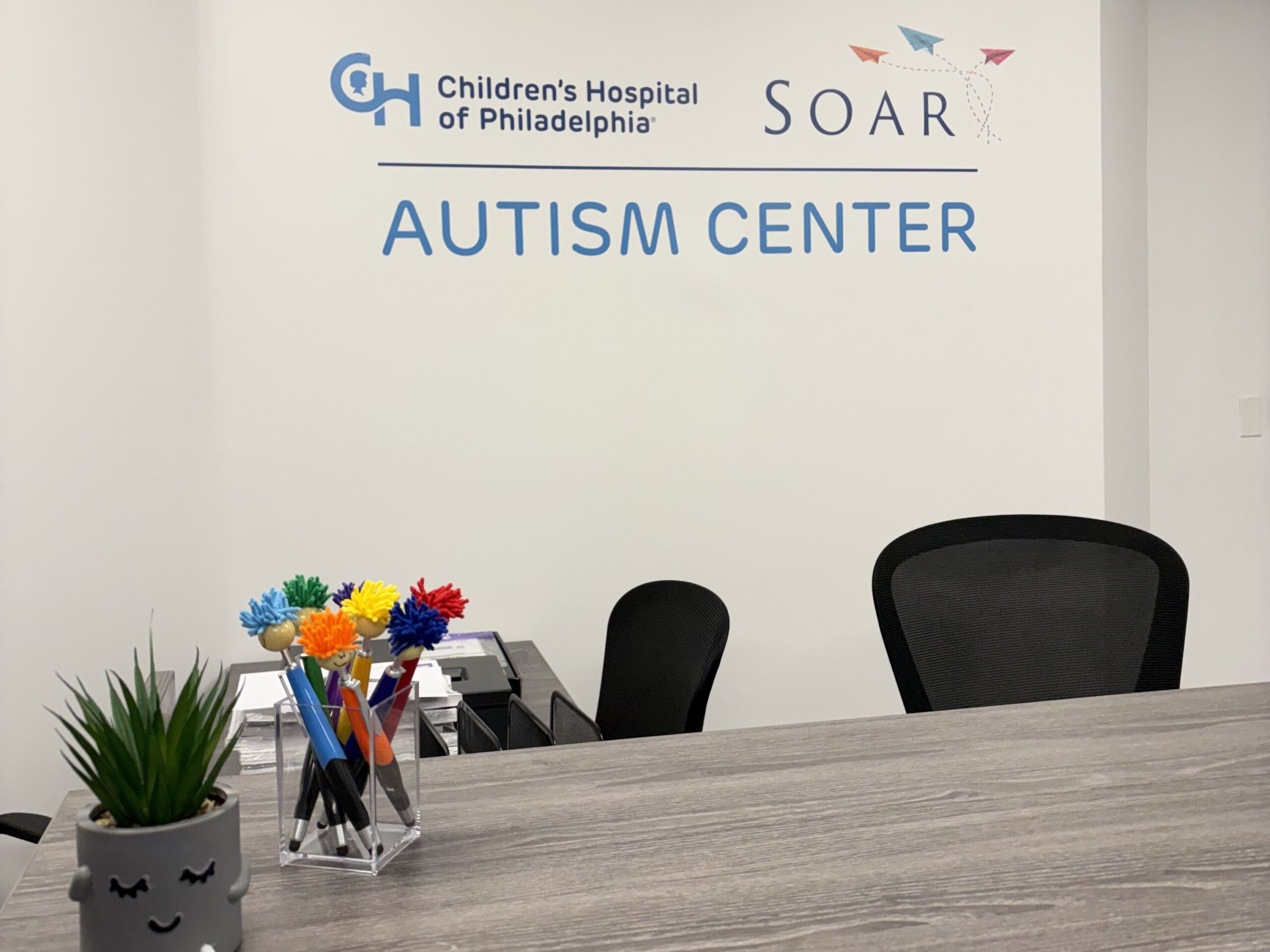
The first CHOP-Soar Autism Center opened this month in Newtown. Shown here is the reception area.
That’s assuming CHOP-Soar provides high quality care for kids, an appealing family experience, and a system of coordinated care: “There will be a need to do more than five, and I think we’re jointly motivated to do so,” Goldstein said.
The CHOP-Soar approach
Families seeking care for an autistic child typically have to go to different places to get all the types of therapy they need.
Families “get behavioral analytics in one place, occupational therapy somewhere else, and speech language pathology in another place,” Docimo said.
Soar brings all of that together in one center. “If it can be scaled, this will fill a gap in our region in a way that I think will work very well for these families,” he said.
CHOP-Soar centers will emphasize early intervention and treat children through age six. “The brain has its greatest neuroplasticity” up to age 3, “so waiting a year is a really big deal,” Goldstein said. “You’re missing out on that opportunity to really influence the child’s developmental trajectory at a young age.”
Some autism services providers focus on ABA therapy, which breaks social and self-careskills, for example, down into components and then works discretely on each.
But Soar offers what Goldstein described as “integrated, coordinated care for the child.” That includes speech, occupational, and behavioral therapies.
With CHOP, medical specialties, such as genetics, neurology, and gastrointestinal care, can be tied in as well, Goldstein said.
It’s rare for autism providers to offer a wide variety of commonly needed services under one roof, said Lerner, who leads the A.J. Drexel Autism Institute’s Life Course Outcomes Research Program.
He said Soar’s evidence-based, multidisciplinary approachhas a lot to offer the region.
“A person diagnosed with autism will have complex care needs throughout their life, and a one-size-fits-all, one-intervention approach will not work,” he said.
In the end, the pressure on the family simply became too great.
Johny Merida Aguilara, the detained immigrant father of a 5-year-old son with brain cancer, has decided to drop efforts to stay in the United States and accept deportation to Bolivia.
His wife and three American-citizen children will also leave the country, though they are not required to do so, departing their Northeast Philadelphia home to reunite with their husband and father in the central Bolivian city of Cochabamba.
The decision to go comes as Merida Aguilara, 48, approaches his fifth month in immigration detention ― with no end in sight. The family’s forced separation has been emotionally devastating, friends and supporters said. And with Merida Aguilara in custody and unable to work, the financial situation for his wife and children was growing desperate.
Merida Aguilara had been a main caregiver for his son, Jair, who has been treated at Children’s Hospital of Philadelphia, and whose future is now deeply uncertain. Quality healthcare can be lacking in Bolivia, where the U.S. State Department warns that “hospitals cannot handle serious conditions.”
Jair has autism and a severe eating disorder, surviving on PediaSure nutrition drink delivered through a plastic syringe. He generally would accept food only from his father, and Merida Aguilara would leave work during the day to feed his son.
The father was arrested by ICE for an immigration violation during a September traffic stop on Roosevelt Boulevard near Hunting Park Avenue, having lived in the United States without official permission for nearly 20 years.
“I am tired,” Gimena Morales Antezana, his wife, said in an interview with The Inquirer. “We have been trying to survive, but it is difficult with the children because they miss their dad so much.”
U.S. Immigration and Customs Enforcement officials did not reply to a request for comment on Thursday.
The family has received strong community support, Morales Antezana said, but that could not continue indefinitely, and at this point she can no longer afford rent, water, or heat,
Son Matias, 7, cries himself to sleep most nights, calling out for his father to come home. His sadness deepened after Christmas, turning into anger when Morales Antezana finally revealed that his father was not away on an extended work trip, but was being held by immigration authorities at the Moshannon Valley Processing Center, an ICE facility in central Pennsylvania.
Gimena Morales Antezana and Johny Merida Aguilar’s wedding photos hang on the wall at their home in Northeast Philadelphia.
Daughter Melany, 13, now feels unsafe in the U.S., her mother said. Teenage insecurities have bloomed into a persistent sense of danger, and she told her mom that leaving might be the only way to feel comfortable again.
Jair cries inconsolably every time he sees or hears his father on the phone, asking why his dad can’t be home, Morales Antezana said.
All three children were born in this country and are U.S. citizens by law.
Some good news came this month. Doctors told Morales Antezana that Jair’s brain tumor had not grown, allowing time to try to find care in Bolivia.
“This is going to be a constant struggle every day until God decides,” Morales Antezana said. “It’s scary to think that if something happens we don’t have a hospital to take him to, but knowing his dad will be there makes it a little lighter to bear.”
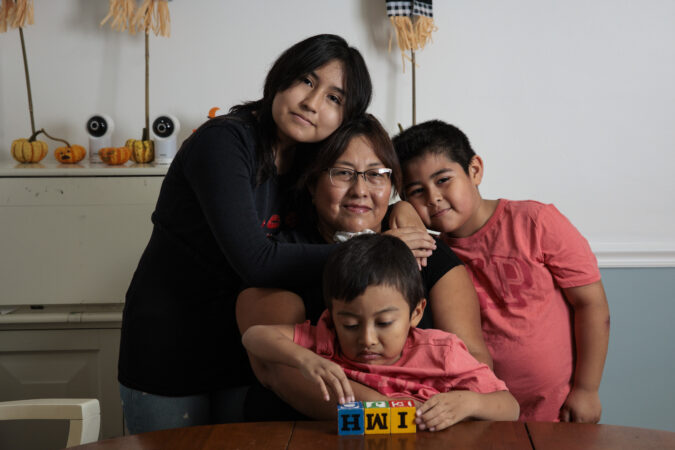
Jair Merida, 5, posed for a portrait at home in October. His father, Johny Merida Aguilar, was stopped and arrested by ICE in September.
She has not been ordered deported while she has pursued legal means to stay in the country. Mother and children plan to voluntarily depart this month, while the precise timing of Merida Aguilara’s deportation is uncertain.
“He couldn’t do it anymore; he reached his limit,” said Philadelphia immigration attorney John Vandenberg, who represents the family. “It’s a tough environment in the jail.”
Vandenberg won relief in the U.S. Court of Appeals for the Third Circuit, which issued a Sept. 30 order to temporarily block Merida Aguilar’s deportation. The lawyer also applied on Morales Antezana’s behalf for a T visa, which can bestow a path to citizenship on victims of human trafficking and their families.
But time has gone on with no sign from the government as to when that visa application might be considered.
Vandenberg said Merida Aguilar has no criminal record in the U.S., and Bolivian authorities provided documentation showing he had committed no offenses in that country.
His efforts to remain in the U.S. have been complicated by a previous deportation, when he tried to enter the U.S. east of San Diego in 2008. Immigration officials sent him to Mexico, but Merida Aguilar secretly crossed back into the U.S. almost immediately.
Now he and his wife want their children to be in Bolivia in time for the new school year, which starts in February.
“I want to make sure our kids can study,” Morales Antezana said, “so they can decide who they want to be in the future, and come back [to the U.S.] as professionals with a different story than us.”
Her parents, and a son from a previous relationship, are eager to see them in Bolivia.
She said she is looking forward to what many people might take for granted ― hugging her partner, watching him play with their children, enjoying a meal as a family. That helps ease the pain of saying goodbye to a city she sees as home and to the friends who tried to help.
“They kept me strong and helped me not get more depressed,” Morales Antezana said. “I’m going to miss everything about Philadelphia. It hurts a lot to have to leave because there are good people here.”
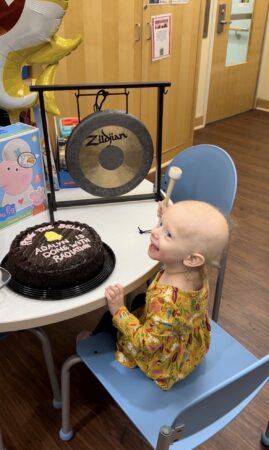
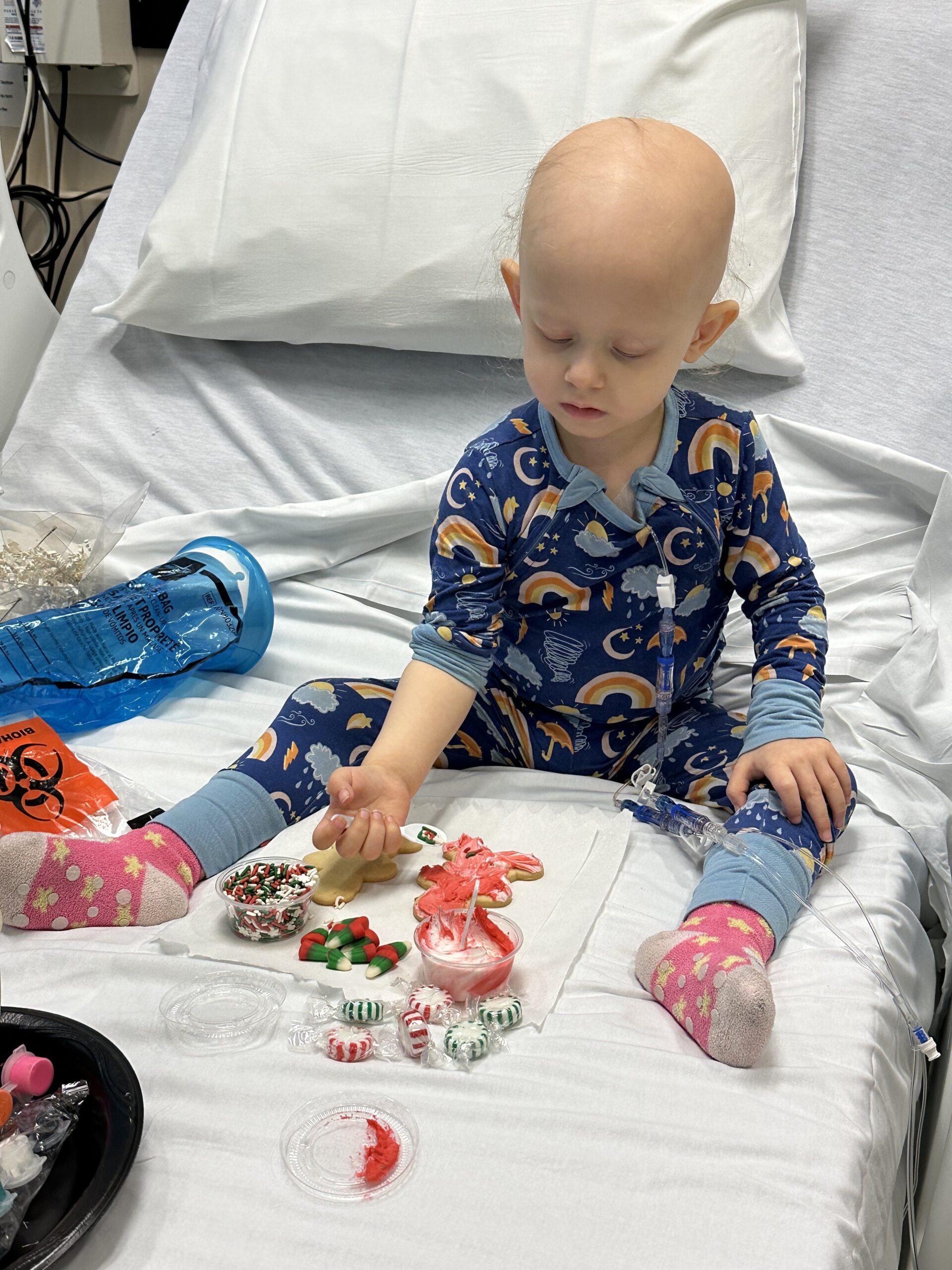
Adalyn Hetzel had just celebrated her second birthday in the spring of 2024 when doctors at Children’s Hospital of Philadelphia diagnosed her with an aggressive soft tissue cancer.
She endured 40 weeks of aggressive chemotherapy and a month of daily proton radiation therapy on her road to remission.
Now, the Bucks County toddler will spend the next year sharing her story as one of five ambassadors for the St. Baldrick’s Foundation, one of the nation’s largest childhood cancer charities.
The California-based organization has awarded more than $369 million in research grants since 2005, with $18 million going to Philadelphia-based institutions.
The selected children and their families will attend advocacy days in D.C., to appeal to lawmakers, share their stories with the public, and spread awareness on social media.
Kristopher Hetzel, Adalyn’s father, said their goal will be to advocate for research into more effective, less toxic treatments.
While more than 80% of kids diagnosed with cancer in the United States now survive the disease, many sustain long-term side effects due to the harsh therapies. One study found that by age 45, 95% of survivors had at least one chronic health condition, and 80% had one that was disabling or life-threatening.
Adalyn will likely have severe dental issues, limited jawbone growth, and an increased risk of developing secondary cancers due to the treatment later in life.
The threat of recurrence also still looms.
“It can’t be like that for these kids. We got to come up with better treatment,” Hetzel said.
Hetzel first noticed a small nodule on Adalyn’s tongue in April 2024.
After appointments with her pediatrician, dentist, and two oral surgeons left the family without a diagnosis, they went to CHOP, where a biopsy confirmed she had a highly aggressive form of soft tissue cancer called rhabdomyosarcoma.
“All of a sudden your world becomes so small and it’s just your kid. Nothing else matters,” Hetzel said.
Adalyn and her parents, Kristopher Hetzel and Allison Verdi.
Doctors started Adalyn immediately on an intense chemotherapy regimen combining three drugs. She also received a month’s worth of daily proton beam radiation, requiring general anesthesia each session due to her age.
By the end of the 40 weeks of chemotherapy, Adalyn dropped down to the 0.4th percentile of weight. She was so immunocompromised due to the treatment that when she contracted the flu, a critical response team at CHOP had to rush in.
Doctors withheld her final chemotherapy session for fear it could be life-threatening.
Adalyn Hetzel, a 3-year-old from Southampton, Pa., received 40 weeks of chemotherapy to treat her rhabdomyosarcoma.
Being an ambassador
In April, nearly a year after her diagnosis, Adalyn was declared to be in remission. She still receives scans every three months due to the potential for recurrence.
“[Adalyn] turned back into this playful, happy, joyful toddler who finally has the energy to be herself,” Hetzel said.
Her family decided to get involved with St. Baldrick’s after benefiting from their services firsthand. Right after Adalyn’s diagnosis, Hetzel recalled being given a binder with their logo on the front that laid out a “game plan of what our life was going to look like.”
That resource, called the Children’s Oncology Group Family Handbook, is funded by St. Baldrick’s and is given to newly diagnosed families around the country.
The St. Baldrick’s Foundation funds the Children’s Oncology Group Family Handbook.
Given her age, her father said he is cautious of not crossing the line in their advocacy and making her uncomfortable, and hopes that when she is older, she will understand the importance of sharing what she went through.
Jane Hoppen, director of family relations at St. Baldrick’s, said the family always has veto power. The foundation focuses on highlighting each child’s unique personality and interests to “serve as the face and voice of the foundation.”
For example, Adalyn, who loves chocolate-dipped croissants, will be featured on its social media for National Croissant Day.
“What we want for every kid who’s diagnosed is the ability to just go back and enjoy being a kid again,” Hoppen said.
Adalyn Hetzel, a 3-year-old from Southampton, loves croissants.
Escalating President Donald Trump’s fight against transgender rights, a top official at the Department of Health and Human Services on Thursday asked the department’s inspector general to investigate two Philadelphia-area children’s hospitals over their gender-affirming carefor transgender children.
Children’s Hospital of Philadelphia (CHOP) and Nemours Children’s Health in Wilmington are among a dozen hospitals that HHS general counsel Mike Stuart said in posts on X he had referred to the agency’s Office of the Inspector General (OIG) in recent days.
A CHOP spokesperson declined to comment on Friday,and Nemours did not respond to a request for comment.
Both hospitals treat children and teens with gender dysphoria — a medical condition in which a person’s body does not match their gender identity. Doctors can prescribe hormone therapy and puberty blockers to treat the condition, although Nemours has already limited its use of these treatments in response to threats from the Trump administration.
The administration hastargeted CHOP and other hospitals that treat transgender youth with subpoenas demanding patients’ medical records, including their dates of birth, Social Security numbers, and addresses, as well as every communication by doctors — emails, voicemails, and encrypted text messages — dating back to January 2020.
CHOP filed legal action in response, asking a federal judge in Philadelphia to block the parts of the subpoena that sought detailed medical records of patients. In November, the judge ruled in CHOP’s favor.
The Trump administration appealed the decision Friday. It has argued that it needs the records as part of its investigation into possible healthcare fraud or potential misconduct by the hospitals.
Stuart said in a Thursday post on X that the administration is investigating hospitals in order to safeguard children from “sex-rejecting procedures,” adding: “There is no greater priority than protecting our children.”
Corinne Goodwin, executive director of the Eastern Pennsylvania Trans Equity Project, called Stuart’s post part of the Trump administration’s ongoing efforts to intimidate doctors and hospitals that provide gender-affirming care to those under 19.
“This action by the Department of Health and Human Services is yet another attempt to intimidate healthcare providers and to harm young people who simply want access to proven healthcare that helps them to live happy and productive lives,” said Goodwin, whose nonprofit organization provides services to transgender people in 42 counties, including Montgomery, Bucks, and Delaware.
The administration has said it recognizes only two genders, limited research into LGBTQ+ health, and phased out gender-affirming care at the Department of Veterans Affairs.
Directly targeting children’s hospitals, HHS Secretary Robert F. Kennedy Jr. issued a declaration in December rejecting gender-affirming procedures for minors, including puberty blockers, hormone therapy, and surgeries.
The American Academy of Pediatrics and other major medical associations, citing research, widely accept such care as safe, effective, and medically necessary for the patients’ mental health.
HHS’s OIG declined Friday to confirm or deny the existence of an investigation.
Last month, the U.S. Senate confirmed Thomas “March” Bell to serve as inspector general over HHS. During his confirmation hearing, Bell submitted written testimony saying, “If confirmed as inspector general, I will examine, evaluate, audit, and investigate to support the initiatives of President Trump and Secretary Kennedy.”
An ongoing legal battle
CHOP runs one of the nation’s largest clinics providing medical care and mental health support for transgender and nonbinary children and teens and their families. Each year, hundreds of new families seek care at CHOP’s Gender and Sexuality Development Program, created in 2014.
Nemours’ Gender Wellness Clinic, launched in 2018, provided hormone therapy and puberty blockers, as well as mental health support, to transgender patients in Delaware, and Nemours is the only hospital in the state that provides gender-affirming care for children.
Starting last July, its clinic began accepting only new patients who need behavioral healthcare. Existing patients receiving hormones or puberty blockers at the clinic were allowed to continue their treatment, the hospital said at the time.
On Thursday, Stuart wrote on X that CHOP and Nemours “appear to continue to operate outside recognized standards of healthcare and entirely outside @SecKennedy’s declaration that sex-rejecting procedures for children and adolescents are neither safe nor effective.”
Kennedy’s Decemberdeclaration says that these procedures “do not meet professionally recognized standards of health care.” Doctors who perform such procedures could be barred from participating in federally funded healthcare programs like Medicaid and Medicare, he said.
The lawsuit says that Kennedy has no authority to define “a national standard of care,” and that any substantive changes to Medicare rules are legally required to be subjected to a decision-making process that includes 60 days of public comment.
Officials at the Centers for Medicaid and Medicare Services have started that process, announcing alongside Kennedy’s declaration that they are proposing a rule that would bar hospitals from Medicaid and Medicare if they offer gender-affirming care to children under 19. They also proposed that Medicaid should not cover gender-affirming care for minors.
But those rules have not yet been instituted, and the lawsuit alleges that Kennedy’s declaration is skirting the law by immediately imposing restrictions on gender-affirming care in hospitals.
The Public Interest Law Center, a Philadelphia-based nonprofit that advocates for the civil, social, and economic rights of marginalized communities, is representing five parents of transgender children in legal motions seeking to protect their medical records.
Mimi McKenzie, PILC’s legal director, said the federal judge in Philadelphia was “very clear and on firm ground” when he ruled in November that the DOJ had no authority to issue the sweeping subpoena and that it violated the privacy rights of children.
She noted that six other courts around the country have similarly ruled that DOJ “has no right to rifle through children’s medical records.”
“Gender-affirming care is legal in Pennsylvania and endorsed by every leading medical association,” McKenzie said. “This is just another tactic in their ongoing attack against providers and patients.”
In 2000, Aaron Deede was an 18-year-old Delaware college student who enjoyed acting and had dreams of becoming a playwright.
But a car accident left him paraplegic with a traumatic brain injury that upended his plans.
“It was a little detour,” Deede said.
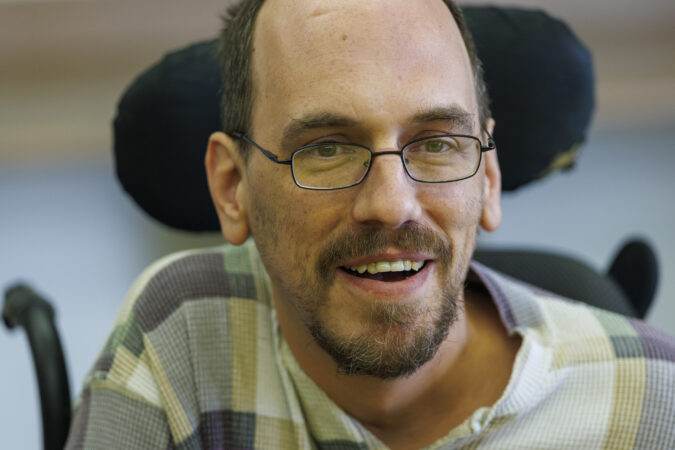
Now, at 43, he is returning to college along with four other residents of Inglis House, a nursing facility in Philadelphia’s Wynnefield sectionfor people with severe physical disabilities who use wheelchairsand haveconditions such as multiple sclerosis, cerebral palsy, spinal cord injuries, or challenges following strokes.
Deede and three other Inglis residents on Monday started online classes — some may go in person in subsequent semesters — at Community College of Philadelphia, with a fifth student scheduled to start this summer. Inglis pays for the students’ education from a donor-supported fund.
“I love it. I can’t wait,” Deede said Friday during a celebration Inglis held for the new students at its Belmont Avenue complex, giving each of them a backpack to start their journey.
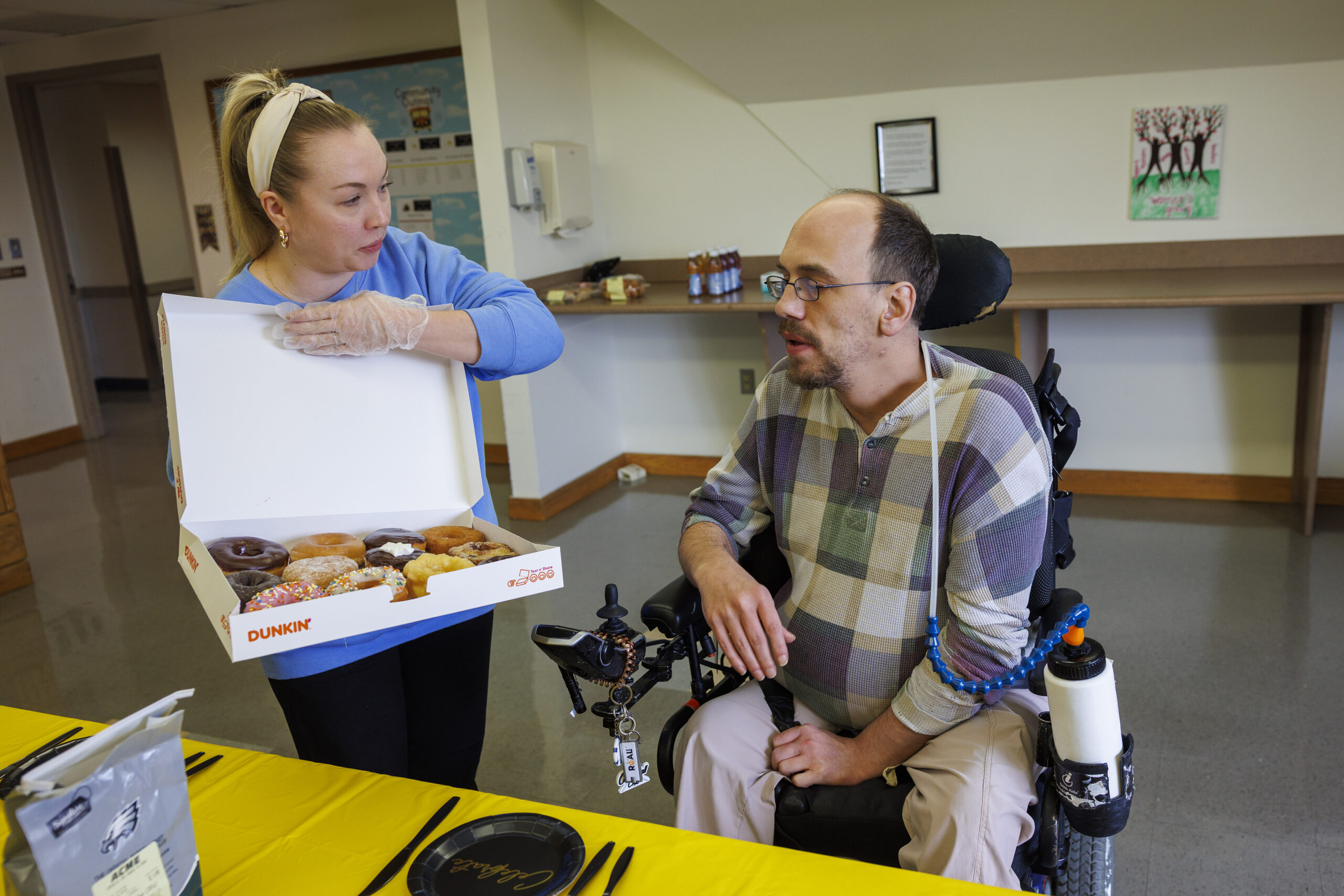
At right is Aaron Deede a resident of Inglis House. He is starting to take classes at Community College of Philadelphia. At left, Jaclyn Monaco, director of Therapeutic Life Enrichment, offers treats during the celebration for students.
Dozens of Inglis residents — who range in age from 18 to their 70s — have taken college classes over the years, and some have earned degrees. Butthis is the largest group to start together since the 1990s, said Jacklyn Monaco, Inglis’ director of therapeutic and life enrichment.
“Things sort of ebb and flow as far as the types of resident who move in and their personal goals,” she said. “Sometimes they’re recreational goals. Sometimes they’re physical goals. Sometimes they’re educational goals. At this point in time we have a lot of younger folks who are really interested in pursuing higher education.”
Nikos Rapach, 21, had been planning to join either the Army or the Coast Guard when he was in a car accident and lost the use of his legs and the mobility of his fingers.
Nikos Rapach, a resident of Inglis House, sets up at his workstation in the computer lab.
“I’m not going to be able to swing a hammer, so I have to start using my brain more,” said Rapach, who is from Hazleton.
He is taking English and trigonometry classes at CCP. He will use the computers at Inglis thathave adaptive technology to assist with note-taking.
“Everything here is a stepping stone for me,” said Rapach, who moved to Inglis in May. “I want to go back home. I want to get a job. I basically want to get my life back on track.”
“Like they say, if you don’t know your history, you are doomed to repeat it,” he said.
Deede, who came to Inglis in 2023, also would like to become a teacher, preferably at the elementary level.
Another resident who is taking classes at CCP aims to become a social worker at Children’s Hospital of Philadelphia, said Jeremy Ault, Inglis’ therapeutic education instructor. Another hopes to become an Urdu-to-English translator.
Stephanie Shea, 59, who is from Maryland and has a genetic neuromuscular condition, is taking liberal arts classes with the goal of getting a degree.
“It’s kind of a bucket-list thing,” said Shea, who recently got married to another resident. “It’s something I’ve always wanted to have.”
Founded in 1877, Inglis House currently serves about 180 residents, nearly 40% of whom are involved in educational activities — not just college. Classes are offered at Inglis in subjects such as history, law, science, poetry, and creative writing, as well as foundational skills like reading and personal finance.
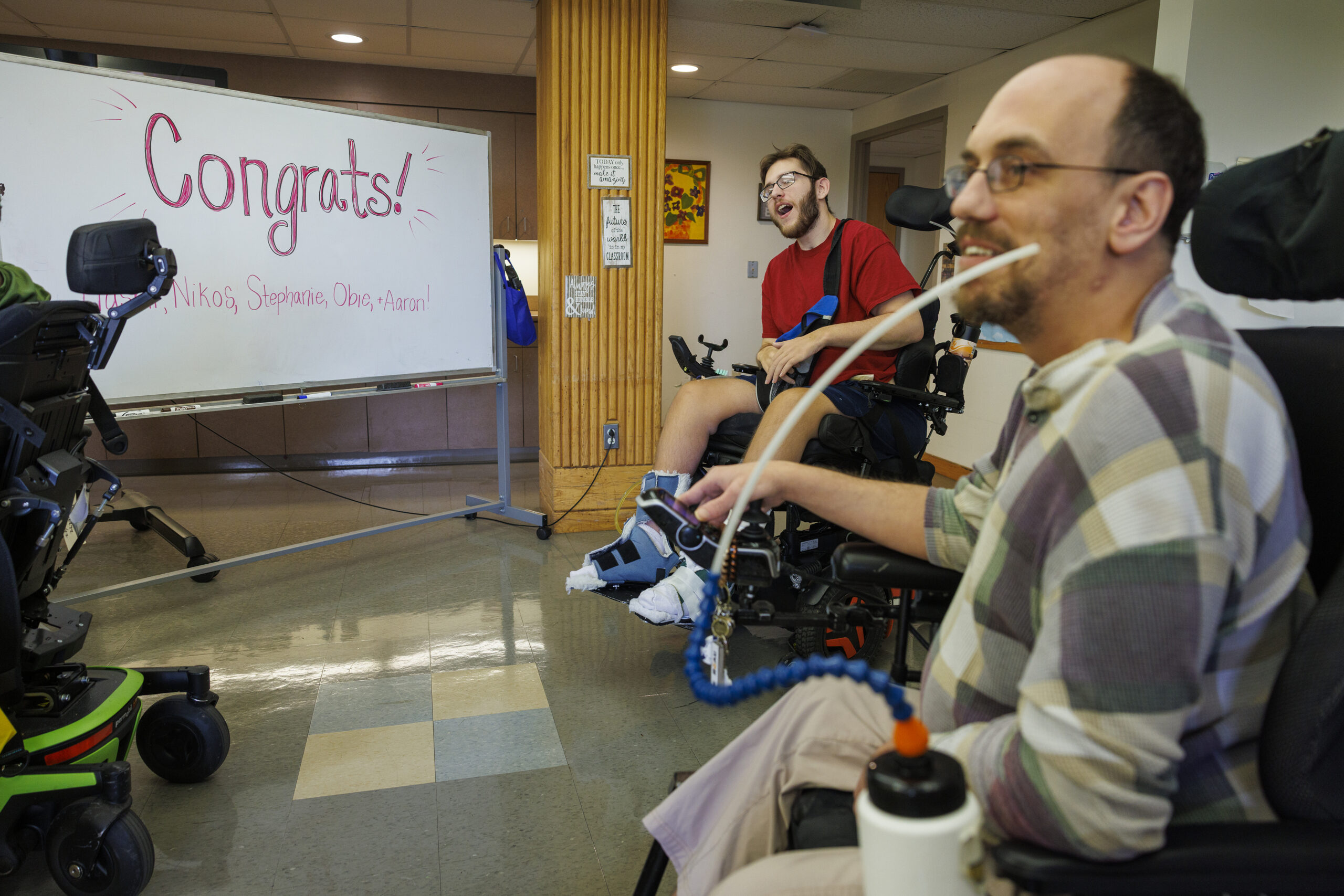
Aaron Deed (right) and Nikos Rapach are starting taking classes at Community College of Philadelphia.
Inglis staff accompanied the students to CCP’s campus to take their placement tests, register for classes, and visit’s CCP’s Center on Disability, the office that helps students with disabilities.
“We suggest accommodations based on their needs,” said Lisa Papurt, coordinator of disability services at the center, which typically serves 400 to 500 students with disabilities per semester.
Those services could include extra time for tests or technology to assist with note-taking or assistance in communicating with professors.
Papurt said she is excited to see the Inglis students start their educational journey.
“I hope to be able to support them through getting degrees, graduating, and moving on to a four-year institution,” she said.
When students entered their surprise celebration Friday, Ault, the therapeutic education instructor, told them it was time for them to celebrate.
“I’m so proud of you guys for doing so well this past year,” he said. “You guys have been such a pleasure to teach and be part of your lives really.”
Ault is helping students prepare for entry into college.
“I’m working on my writing skills and grammar,” Rapach said. “Jeremy has been giving me essay prompts to help me be a better writer so that when I get to college, I’m not trying to relearn everything.”
More Philadelphians are visiting emergency departments with the flu than a year ago, as cases are surging across Pennsylvania.
Flu cases in late December hit higher counts locally and statewide than at this time last year, according to city and state data. It’s too early to say whether flu has peaked for the season, or whether cases will continue to rise, health officials say.
window.addEventListener(“message”,function(a){if(void 0!==a.data[“datawrapper-height”]){var e=document.querySelectorAll(“iframe”);for(var t in a.data[“datawrapper-height”])for(var r,i=0;r=e[i];i++)if(r.contentWindow===a.source){var d=a.data[“datawrapper-height”][t]+”px”;r.style.height=d}}});
Philadelphia-area physicians say they’re dealing with an increased flu caseload, including patients suffering from severe complications.
COVID-19 and respiratory syncytial virus (RSV) cases are also rising, but flu is the biggest concern right now, said Brett Gilbert, Main Line Health’s infectious disease chief.
“We’ve been fighting COVID for the last five years, while flu took a back seat,” he said. “But flu is in the driver’s seat this year.”
One reason for the high number of flu cases this early in the flu season, which runs from winter to early spring and typically peaks in December to February, is a new flu variant that emerged this summer.
World health experts meet twice a year to determine which flu variants are circulating and recommend seasonal flu shots to target them.
The variant causing the most cases right now, subclade K, was detected after flu shots for the Northern Hemisphere had already been selected this year, Gilbert said. “There is some degree of vaccine-disease mismatch,” he said.
window.addEventListener(“message”,function(a){if(void 0!==a.data[“datawrapper-height”]){var e=document.querySelectorAll(“iframe”);for(var t in a.data[“datawrapper-height”])for(var r,i=0;r=e[i];i++)if(r.contentWindow===a.source){var d=a.data[“datawrapper-height”][t]+”px”;r.style.height=d}}});
But that doesn’t mean that the current flu vaccine is not effective, especially in preventing hospitalizations and deaths.
“It may not be so great at preventing the illness itself, but [with a vaccine], it may be a mild illness, easily treatable with antivirals or supportive care,” Gilbert said.
Childhood flu vaccination rates in Philadelphia were even higher than the statewide rate, with about 56% of children vaccinated this season.
Some of the most serious cases of flu that pediatrician Daniel Taylor sees are among unvaccinated children.
At St. Christopher’s Hospital for Children, where Taylor sees patients, the outpatient sick clinic is filled with children with severe cases of flu and RSV.
Some are suffering from dehydration and require care in the ER at the North Philadelphia hospital.
Taylor stresses the risk of serious complications from the flu in conversations with parents about vaccination. (Taylor also regularly writes about his experiences as a physician for The Inquirer.)
The flu can trigger severe health crises that can cause brain damage or temporary paralysis from inflammation of the spinal cord. Taylor has seen two children this flu season with benign acute childhood myositis, a rare complication of an upper respiratory infection that causes swelling and muscle damage in the legs, and in even rarer cases can lead to kidney failure.
“They’re not able to walk, and in so much pain from the swelling of the legs,” he said.
Nine children have died nationwide from the flu this season. The season before, flu deaths among children were the highest since 2004, when the Centers for Disease Control and Prevention began tracking them, the American Academy of Pediatrics noted. Among Americans of all ages, the CDC has estimated 5,000 total flu deaths so far this season.
Taylor said that President Donald Trump’s chaotic upheaval of longstanding vaccine policy — with the CDC changing recommendations around flu vaccines and slashing six vaccines from the routine childhood immunization list — makes it harder for physicians to help patients.
He said he had recently met with a mother who told him she’d previously vaccinated her children, but now was avoiding vaccines because she was “scared of giving her kid vaccines with everything going on in the government.”
“They hear something different from the government and the CDC, and they question the relationship” with their doctor, Taylor said.
About 47% of Philadelphians have been vaccinated so far this season, above the national rate.
Patients who are feeling sick can get tested for the flu at a hospital or a doctor’s office, and home tests are also available. Antiviral treatments can help ease symptoms. Wearing a mask can also protect others from contracting the flu.
window.addEventListener(“message”,function(a){if(void 0!==a.data[“datawrapper-height”]){var e=document.querySelectorAll(“iframe”);for(var t in a.data[“datawrapper-height”])for(var r,i=0;r=e[i];i++)if(r.contentWindow===a.source){var d=a.data[“datawrapper-height”][t]+”px”;r.style.height=d}}});
In Philadelphia, residents can get free flu and COVID vaccines at five health centers, and the health department regularly conducts vaccine outreach in the city, said Gayle Mendoza, a spokesperson for the Philadelphia Department of Public Health.
“People might say ‘We’re past the holidays, what’s the point in getting vaccinated?’” she said. “Sure, winter break is behind us, but the influenza virus is still forging ahead.”
Sweeping changes to the United States’ childhood vaccine schedule announced Monday by federal officials will decrease the number of recommended childhood immunizations from 17 to 11.
Outraged pediatricians and infectious disease experts say the move will increase cases of preventable illnesses, hospitalizations, and deaths. Among the vaccines affected is an immunization for rotavirus whose co-inventor, Paul Offit, directs the Vaccine Education Center at the Children’s Hospital of Philadelphia.
Now, vaccination for the serious gastrointestinal illness is among those no longer universally recommended by the Centers for Disease Control and Prevention.
The guidance change also affects immunizations for flu, respiratory syncytial virus (RSV), meningococcal disease, hepatitis A, and hepatitis B. The CDC now recommends them for children at high risk of serious illness, or when parents of otherwise healthy children decide with their doctor to give their child vaccines for these diseases.
The CDC’s move is the latest in a chaotic upheaval of the nation’s vaccine policy overseen by Health and Human Services Secretary Robert F. Kennedy, Jr.
“I think the goal of RFK Jr. is to make vaccines optional,” said Offit, a longtime critic of Kennedy, saying the anti-vaccine activist “is doing everything he can to make vaccines less available, less affordable, and more feared.”
Other experts said the decision was made without transparency and had little scientific backing. It comes at a time when more Americans are refusing vaccines; in Pennsylvania kindergarteners’ measles vaccination rates have dipped below the critical 95% threshold required to prevent the disease from spreading widely.
The Infectious Disease Society of America called the move “the latest reckless step in Secretary Kennedy’s assault on the national vaccine infrastructure that has saved millions of lives.”
Ronald G. Nahass, a New Jersey-based physician and IDSA’s president, said in a statement that Kennedy’s actions “put families and communities at risk and will make America sicker.”
The American Academy of Pediatrics, a leading professional medical society, said it would continue to recommend that all children be vaccinated against rotavirus, hepatitis, and other diseases removed from the CDC’s routine immunization list.
Under the new guidelines, the CDC will continue to recommend that all children get vaccinated for diphtheria, tetanus, whooping cough or pertussis, haemophilus influenzae type b, pneumococcal conjugate, polio, measles, mumps, rubella, human papillomavirus or HPV, and chickenpox.
The agency will also recommend that children at high risk for serious complications receive vaccines for respiratory syncytial virus (RSV), hepatitis A, hepatitis B, dengue, and two meningococcal diseases.
Previously, an independent committee that advises the agency in November recommended delaying hepatitis B vaccines for newborns.
“This framework empowers parents and physicians to make individualized decisions based on risk, while maintaining strong protection against serious disease,” said Mehmet Oz, a physician and administrator of the Centers for Medicare & Medicaid Services, in a statement.
Federal officials said that insurance will continue to cover vaccinations, the Associated Press reported.
President Donald Trump is joined by Health and Human Services Secretary Robert F. Kennedy Jr., left, and Centers for Medicare & Medicaid Services administrator Dr. Mehmet Oz in the Roosevelt Room of the White House in September.
Vaccine policy around the world
Offit spent 26 years developing a rotavirus vaccine after treating children with the illness during his medical residency in Pittsburgh — including one patient who died. Rotavirus causes vomiting and diarrhea that can lead to dehydration and is particularly dangerous for young children. There are two vaccines available, one of which Offit helped to develop.
“I try not to take this personally,” he said of the new federal guidance.
“But what we hadn’t eliminated was the virus,” he said.
HHS officials said that their review of worldwide vaccination policies found that the United States vaccinates for more diseases than other developed countries.
But, they said, many countries that recommend fewer vaccines still achieve “strong child health outcomes” and “maintain high vaccination rates through public trust and education rather than mandates.”
Denmark may have better health outcomes, but it also has a national healthcare system, a lower childhood poverty level, and free childcare, Offit noted in a recent blog post.
And, he said, Denmark — which does not recommend routine rotavirus or RSV vaccination — sees children hospitalized from those viruses at higher rates than the United States.
“Denmark is nothing to emulate. They should be emulating us,” Offit said.
Likewise, AAP president Andrew Racine said in a statement that America is a “unique country” with different health risks and public health infrastructure than Denmark.
“This is no way to make our country healthier,” Racine said.
Pennsylvania Gov. Josh Shapiro said that the state will “continue to rely on evidence-based guidance” including vaccine recommendations from the AAP.
“RFK Jr. is once again trying to sow chaos and confusion among parents — but know this: these changes at the federal level do not affect Pennsylvanians’ access to vaccines in our Commonwealth,“ he said in a statement. ”Pennsylvanians should continue to consult with their doctors and make informed decisions based on the best scientific evidence.”
New Jersey’s Acting Health Commissioner Jeffrey A. Brown said in a statement that the state sets vaccine requirements for school and childcare, and that those have not changed despite shifts at the federal level. He added vaccines in the state remain covered by insurance and the state is committed to protecting residents’ health.
“Federal efforts to reduce the number of vaccines recommended for all children in the United States are not supported by the available data nor the consensus of public health and medical experts,” Brown said. “Instead, deterring participation in vaccination risks leaving children vulnerable to serious and preventable infections.”
Changing public attitudes
In a December survey, the Annenberg Public Policy Center at the University of Pennsylvania found that more than a third of 1,006 Americans polled were more likely to trust the American Medical Association, a leading professional medical society, over the CDC if the two conflicted on vaccine policy.
At the time of the survey, the CDC had recently changed its website to suggest — against decades of evidence showing otherwise — that there could be a link between vaccines and autism.
Asking the public to make their own decisions on whether to vaccinate their children can make people vulnerable to misinformation, Annenberg director Kathleen Hall Jamieson said in an interview with The Inquirer last week.
“The public doesn’t have time to do research on its own, on average, and in the process, they can get lost in a mire of misinformation and confusion very easily,” she said. “It’s easy to think one is doing one’s research when one is way down the rabbit hole.”
In the poll, the preference to trust the AMA over the CDC held true across political parties and was particularly pronounced among older Americans. The only age group more likely to accept the CDC over the AMA in the event of conflicting vaccine advice was 18- to 29-year-olds.
“The fact that, as the CDC began to change statements, the public shifted its trust to other organizations on consequential issues — that’s a statement that says the public intelligence is real,” Jamieson said.
The AAP’s Racine reiterated Monday that the society will continue to publish its own vaccine recommendations and help physicians to advise parents.
“Your child’s pediatrician has the medical training, special knowledge, and scientific evidence about how to support children’s health, safety, and well-being. Working together, you can make informed decisions about what’s best for your child,” Racine said.
Offit cautioned parents against avoiding vaccinations, as high rates do not just protect healthy children — they’re also vital for children with immune disorders who cannot be vaccinated.
And, he said, parents shouldn’t discount the risks of hospitalization or death from vaccine-preventable diseases.
“There’s this sort of myth of invulnerability — you never think it’s going to happen to you, until it happens to you,” he said.
Despite being one of the rockiest years yet for science — marked by millions of dollars in funding cuts and controversial shake-ups to the federal infrastructure — Philadelphia scientists still managed to celebrate many wins in 2025.
They also won national and international honors for work in physics, cancer research, and drug repurposing. And although no local scientists won a Nobel Prize this year, two at Monell Chemical Senses Center were recognized by its satirical counterpart, the Ig Nobel Prize.
Here are five notable Philly science wins from 2025:
1. Baby KJ is successfully treated with personalized gene editing therapy
Philadelphia-area child KJ Muldoon,now 16 months old, has already been called a “trailblazing baby” by the top scientific journalNature and recognized by the publicationas one of 10 people who helped shape science in 2025.
This international recognition came after his life-threatening genetic condition was successfully treated with a personalized gene editing therapy earlier this year by doctors at Children’s Hospital of Philadelphia and the Hospital of the University of Pennsylvania.
Baby KJ was born in August 2024 with a metabolic disorder that prevented his liver from being able to process protein. Called severe carbamoyl phosphate synthetase 1 (CPS1) deficiency, the disorder puts babies at risk of severe brain damage and is fatal more than half the time.
With few options to treat him, the CHOP and Penn team — led by doctors Kiran Musunuru and Rebecca Ahrens-Nicklas — opted for a gene-editing technology known as CRISPR to create a customized drug for KJ that would fix the genetic mutation that was driving his disease.
After receiving three doses, KJ was able to return home in June — ending his 307-day-long stay at the hospital. Though not a cure, the medication has dramatically improved his liver function and made the effects of his disease milder, doctors say.
2. Penn physicists share the Breakthrough Prize in Fundamental Physics
Penn particle physicists (from left) Joseph Kroll, Brig Williams, and Elliot Lipeles, pictured in 2011. They are part of the ATLAS research team that helped discover the Higgs boson, an elementary particle, and were honored with the 2025 Breakthrough Prize for their ongoing Higgs research.
This year, Penn physicists shared one of science’s biggest honors: the Breakthrough Prize.
They were among 13,000 scientists across more than 70 countries to be recognized for their involvement in particle physics experiments at the European Organization for Nuclear Research, known as CERN, in Switzerland.
These decades-long research collaborations have explored the fundamental structure of particles that make up the universe, using CERN’s Large Hadron Collider, a 17-mile-long particle accelerator.
The Penn team — consisting of more than two dozen scientists, including Joseph Kroll, Evelyn Thomson, Elliot Lipeles, Dylan Rankin, and Brig Williams — was specifically part of the ATLAS Experiment, which played a key role in the discovery of the Higgs boson particle, a critical particle in modern particle physics theory. The Higgs discovery helped confirm how fundamental particles acquire mass.
3. David Fajgenbaum honored for drug repurposing research
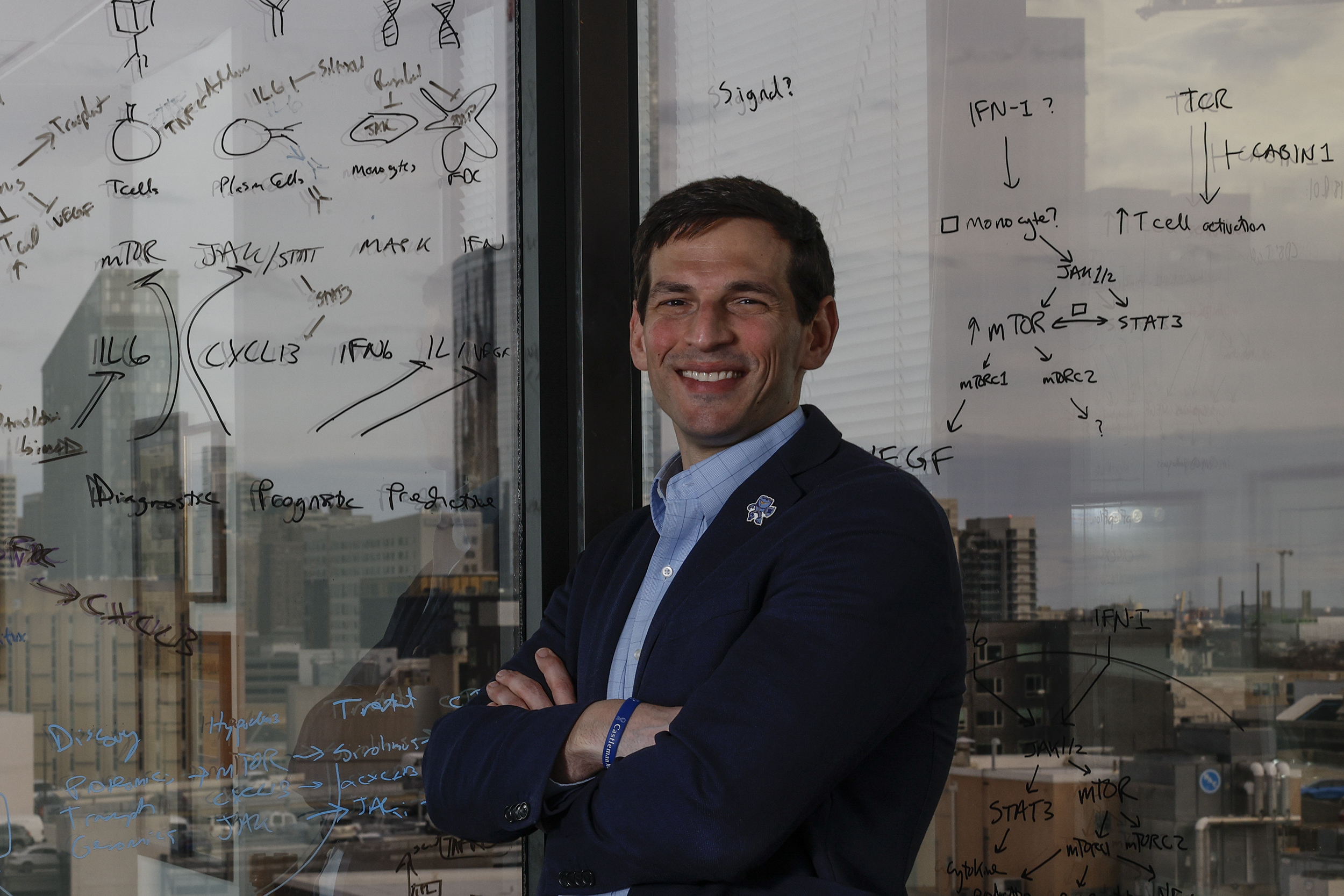
David Fajgenbaum was diagnosed with Castleman disease, a rare lymph node disorder with limited treatment options. When chemotherapy didn’t work, the third-year medical student worked with his doctors to discover that a medication approved for preventing organ rejection in transplant patients could help him, too.
Penn immunologist David Fajgenbaum received one of the nation’s oldest science prizes, the John Scott Award, this year for his pioneering work repurposing existing drugs for new uses.
He entered this field 15 years ago after a rare and deadly diagnosis of idiopathic multicentric Castleman disease nearly killed him. The disease had no approved treatment nor any treatment guidelines at the time.
Then a medical student at Penn, Fajgenbaum started collecting samples of his blood to test for abnormalities. The data helped him identify an existing drug called sirolimus — primarily given to organ transplant recipients — which has put him in remission for the last decade.
Now through his nonprofit Every Cure, Fajgenbaum has made it his mission to use AI technology to match available medications with rare, hard-to-treat diseases.
He published a case study in the New England Journal of Medicine in February, where his AI tool helped identify an off-label treatment for another patient with Castleman disease who, at the time, was entering hospice care after all available treatments had failed. As of that study’s publication, the patient has been in a yearslong remission.
4. Lilly Gateway Labs biotech incubator coming to Philly
Eli Lilly is opening a branch of Lilly Gateway Labs, an incubator for developing biotech companies, in Philadelphia, the Indianapolis company announced Wednesday. The site, in a new life sciences building at 2300 Market St. in Philadelphia, is the fifth in the United States for the pharmaceutical giant.
Pharmaceutical giant Eli Lilly & Co announced in November its plans to open a Lilly Gateway Labs site — an incubator for early-stage biotech companies — in Center City.
The incubator, which will be Lilly’s fifth in the United States, will span 44,000 square feet on the first two levels of 2300 Market St. Since the program’s launch in 2019, companies at the other locations (in Boston, South San Francisco, and San Diego) have raised more than $3 billion from investors toward more than 50 therapeutic programs, according to Lilly.
Lilly plans to house six to eight companies at the Philadelphia location, with the goal of welcoming the first startups in the first quarter of 2026.
5. Carl June wins international honors for CAR-T research
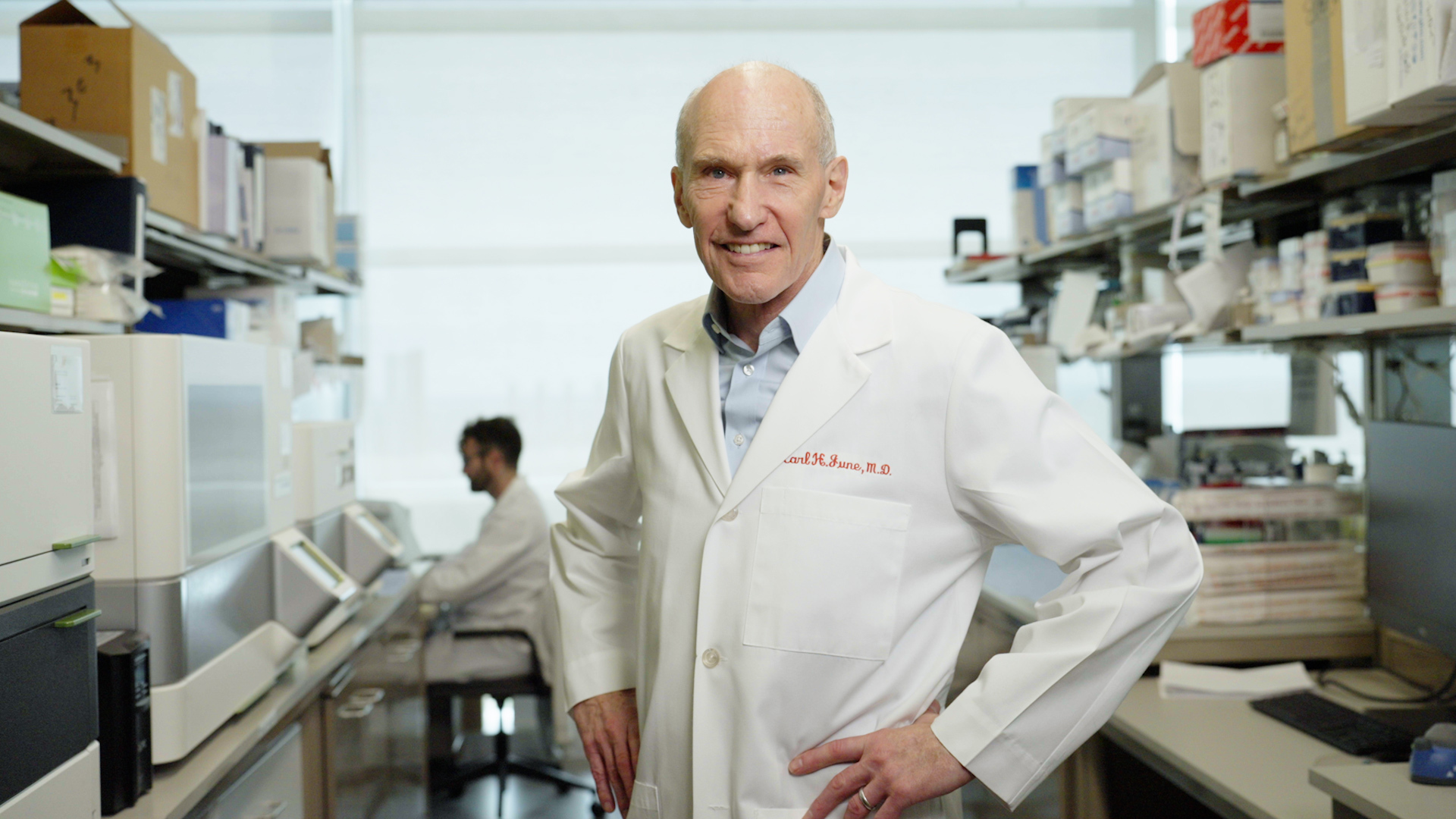
Carl June won international prizes for his cancer research at the University of Pennsylvania.
Penn cancer scientist Carl June added two more international prizes to his trophy case in September for his pioneering work engineering the body’s immune system to fight cancer.
June is known for developing the first FDA-approved CAR-T therapy, an immunotherapy in which regular immune cells are genetically modified to become cancer-killing super soldiers. It has revolutionized treatment for blood cancers, saving tens of thousands of lives since its first use in a 2010 clinical trial he co-led at Penn.
Though his past work is what won him the inaugural Broermann Medical Innovation Award and the 2025 Balzan Prize for Gene and Gene-Modified Cell Therapy this year, his lab has remained busy, working on ways to apply CAR-T to solid cancers, enhance the therapy for lymphoma, and even re-engineer cells inside the body.
June has also made moves on the biotech front: A company he co-founded with the purpose of applying CAR-T to autoimmune diseases, Capstan Therapeutics, was bought by AbbVie this summer for $2.1 billion.