Tag: Children’s Hospital of Philadelphia

  • CHOP faces threat as Trump administration proposes rules to stop gender-affirming care for minors

    CHOP faces threat as Trump administration proposes rules to stop gender-affirming care for minors

    President Donald Trump’s administration proposed a sweeping set of rules Thursday designed to prevent hospitals from providing gender-affirming care to minors, a move that could have consequential implications for Children’s Hospital of Philadelphia.

    CHOP runs one of the nation’s largest clinics providing medical care and mental health support for transgender and gender-nonbinary children and teens and their families. Each year, hundreds of new families seek care at CHOP’s Gender and Sexuality Development Program, created in 2014. The information of CHOP patients who have sought gender-affirming care had been the target of a recent unsuccessful lawsuit from the Trump administration.

    The proposals constitute the most significant moves the administration has taken to restrict the use of puberty blockers, hormone therapy, and surgical interventions for transgender people under the age of 18 — including cutting off federal Medicaid and Medicare funding from hospitals that provide gender-affirming care to children and prohibiting federal Medicaid dollars from being used to fund such procedures.

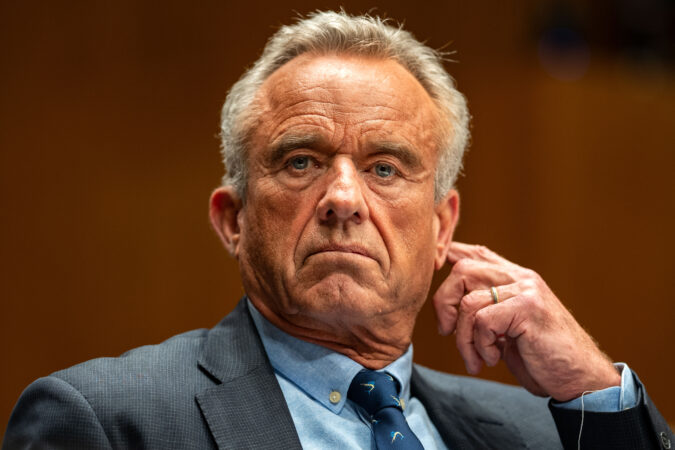
    “This is not medicine, it is malpractice,” Health Secretary Robert F. Kennedy Jr. said, referring to gender-affirming procedures, at a news conference Thursday. “Sex-rejecting procedures rob children of their futures.”

    CHOP, like most other hospitals in the country, participates in both Medicare and Medicaid.

    CHOP declined to comment Thursday.

    The renowned pediatric hospital treats children and teens with gender dysphoria — a medical condition in which a person’s body does not match their gender identity. Its doctors prescribe hormone therapy and puberty blockers.

    The American Academy of Pediatrics and other major medical associations, citing research, widely accept such medications as safe, effective, and medically necessary for the patients’ mental health.

    CHOP has said its doctors do not prescribe any medication before its patients undergo extensive medical and psychological evaluations.

    Gender-affirming care is legal in Pennsylvania, and states, not the federal government, regulate medicine and doctors.

    But Trump has sought to criminalize this care for minors, saying doctors are engaged in “chemical mutilation,” akin to child abuse, and he has called the research “junk science.”

    Just days into his second term in office, the president issued an executive order titled “Protecting Children from Chemical and Surgical Mutilation,” which contains inflammatory and misleading descriptions of largely medically approved transgender care. Kennedy has followed the president’s lead, signing a declaration Thursday rejecting these procedures.

    Other actions proposed Thursday include the U.S. Food and Drug Administration issuing warning letters to 12 manufacturers and retailers for what an HHS news release claims to be “illegal marketing of breast binders to children for the purposes of treating gender dysphoria.”

    The court battle over gender care for minors

    In June, the U.S. Department of Justice issued subpoenas to CHOP and at least 19 other hospitals that treat transgender youth as part of an investigation into possible healthcare fraud. The federal subpoenas demanded patient medical records, including their dates of birth, Social Security numbers, and addresses, as well as every communication by doctors — emails, voicemails, and encrypted text messages — dating back to January 2020.

    The subpoenas touched off a wave of legal battles that continue to play out. Several hospitals around the country, including CHOP, filed motions asking federal judges to block the release of private patient information.

    So far, federal judges in Philadelphia, Boston, and Washington state have sided with the hospitals, ruling the subpoenas were politically motivated.

    In Philadelphia, U.S. District Judge Mark A. Kearney last month determined that the “privacy interests of children and their families substantially outweighs the department’s need to know” such confidential and sensitive information. The federal government has 60 days to appeal the Nov. 21 ruling.

    In September, patients and their parents joined the legal fight to limit the scope of the subpoenas issued to CHOP and UPMC Children’s Hospital of Pittsburgh. The Philadelphia-based Public Interest Law Center (PILC) filed separate but similar legal relief on behalf of families with children and teens who have received gender-affirming care at CHOP and in Pittsburgh.

    The federal judge presiding over the Pittsburgh hospital’s case has yet to issue a ruling. Earlier this week, however, DOJ lawyers said they are willing to accept redacted medical records. They argued that would solve the dispute over patient privacy rights.

    On Thursday, Mimi McKenzie, PILC’s legal director, said the center “strongly disagrees” and would fight the release of redacted medical records.

    “These records are so deeply personal and contain such highly sensitive information about these young patients,” McKenzie said. “There is no anonymization or redaction that can protect their privacy interests.”

    McKenzie said the proposed federal rule to ban all federal funding to hospitals that treat transgender youth would “face a myriad of legal challenges.” She described gender-affirming care as “lifesaving” for many children.

    “The notion that our federal government would tell hospitals to pick which children you want to save — the children who need gender-affirming care or all the other children — is despicable. The cruelty of this administration knows no bounds.”

    Other institutions have recoiled in the face of the Trump administration’s threats.

    Earlier this year, Penn Medicine and Penn State Health cut back gender-affirming care for youth. Nemours Children’s Hospital in Delaware and UPMC Children’s Hospital of Pittsburgh announced they will no longer provide gender-affirming care beyond behavioral health services to new patients.

    All cited fear of federal funding cuts.

  • Why Philadelphia loses promising biotech firms to Boston, San Francisco, and San Diego

    Why Philadelphia loses promising biotech firms to Boston, San Francisco, and San Diego

    Capstan Therapeutics’ sale this year for $2.1 billion, the highest price paid for a private early-stage biotech company since 2022, was a triumph for its founders at the University of Pennsylvania.

    Unfortunately for Philadelphia, the company is based in San Diego. Investors wanted an executive who lives there to be CEO.

    Capstan was a miss for Philadelphia, said Jeffrey Marrazzo, who cofounded a high-profile regional biotech company, Spark Therapeutics, and is now an industry investor and consultant.

    If Philadelphia had a bigger talent pool of biotech CEOs, “it would have and should have been here,” he said.

    The company, which aims to treat autoimmune diseases by reengineering cells inside the body, most likely would have been sold wherever it was based, but keeping it here would have boosted the local biotech ecosystem, experts said.

    The Philadelphia region has lagged behind other biotech centers in landing companies and jobs, but industry experts are working to close the gap and better compete with Boston, the San Francisco Bay Area, and San Diego.

    According to Marrazzo and others, the Philadelphia region’s relatively shallow pool of top biotech management is a key challenge.

    Big investors go to managers who have proven ability to deliver big investment returns, said Fred Vogt, interim CEO of Iovance Biotherapeutics, a California company with a manufacturing facility in the Navy Yard.

    “They want the company to perform. They’ll put it in Antarctica, if that was where the performance would come from,” he said.

    A positive sign for Philadelphia is Eli Lilly & Co.’s recent decision to open an incubator for early-stage biotech companies in Center City.

    The Lilly announcement last month also reflects Philadelphia’s national biotech stature. It’s the fourth U.S. city to get a Lilly Gateway Lab, behind Boston, the San Francisco Bay Area, and San Diego.

    Those places have far outpaced Philadelphia in the creation of biotech research and development jobs, even as the sector’s growth has slowed.

    From 2014 through last year, the Boston area added four biotech research and development jobs for every one job added here, according to an Inquirer analysis of federal employment data.

    window.addEventListener(“message”,function(a){if(void 0!==a.data[“datawrapper-height”]){var e=document.querySelectorAll(“iframe”);for(var t in a.data[“datawrapper-height”])for(var r,i=0;r=e[i];i++)if(r.contentWindow===a.source){var d=a.data[“datawrapper-height”][t]+”px”;r.style.height=d}}});

    Penn’s role in Philadelphia biotech

    Philadelphia’s reputation as an innovation center — boosters like to call the region “Cellicon Valley” — starts with the University of Pennsylvania, which has long been a top recipient of National Institutes of Health grants to advance scientific discovery.

    Penn scientists’ 21st-century accomplishments include key roles in figuring out how to arm immune cells to fight cancer, fixing faulty genes, and modifying mRNA to fight disease.

    Research at Penn has contributed to the creation of 45 FDA-approved treatments since 2013, according to the university.

    “Penn discoveries help spark new biotech companies, but we can’t build the whole ecosystem in this area alone,” said John Swartley, Penn’s chief innovation officer. “Great science is just one ingredient. We also need capital, experienced leadership, real estate and manufacturing infrastructure, and strong city and state support.”

    Penn was one of two Philadelphia institutions receiving more than $100 million in NIH funding in the year that ended Sept. 30. The other was the Children’s Hospital of Philadelphia.

    Katalin Karikó and Drew Weissman spoke at a University of Pennsylvania news conference after they were named winners of a 2023 Nobel Prize in medicine. Their work was instrumental to modifying mRNA for therapeutic uses, such as the rapid development of lifesaving vaccines during the COVID-19 pandemic.

    By contrast, the Boston area was home to 10 institutions with at least $100 million in NIH grants, generating more spinoffs and jobs.

    The Philadelphia region has a healthy number of biotech spinouts, but the biggest markets have more from a larger number of research institutions, said Robert Adelson, founder Osage University Partners, a venture capital firm in Bala Cynwyd.

    That concentration of jobs and companies in the Boston area — where nearly 60,000 people worked in biotech R&D last year — makes it easier to attract people. By comparison, there were 13,800 such jobs in Philadelphia and Montgomery County, home to the bulk of the regional sector.

    If a startup fails, which happens commonly in biotech, “there’ll be another startup or another company for me to go to” in a place like Boston, said Matt Cohen, a managing partner for life science at Osage.

    Another challenge for Philadelphia: It specializes in cell and gene therapy, a relatively small segment of the biotech industry, whose allure to investors has faded in the last few years.

    Such market forces shaped the trajectory of Spark, a 2013 Children’s Hospital of Philadelphia spinout that developed Luxterna, the first FDA-approved gene therapy, used to treat an inherited form of blindness. The promise of Spark’s gene therapy work for a form of hemophilia spurred its 2019 acquisition by Swiss pharmaceutical titan Roche for $4.8 billion.

    This year, Roche laid off more than half the company’s workforce as part of a restructuring and a rethinking of treatments for blood diseases that it had been developing.

    The company still employs about 300 in the city, a spokesperson said, and work continues on its $575 million Gene Therapy Innovation Center at 30th and Chestnut Streets in University City.

    The long arc of biotech

    A handful of companies dominated the early days of U.S. biotech. Boston had Biogen and Genzyme, San Francisco had Genentech, San Diego had Hybritech, and Philadelphia had Centocor. All of them started between 1976 and 1981.

    Centocor started in the University City Science Center because one of its founders, virologist Hilary Koprowski, was the longtime director of the Wistar Institute. Centocor’s first CEO, Hubert Schoemaker, moved here from the Boston area, where he had gotten his doctorate at the Massachusetts Institute of Technology.

    Centocor was one of the nation’s largest biotech companies when Johnson & Johnson bought it for $4.9 billion in 1999. Its portfolio included an anticlotting drug called Reopro and Remicade for Crohn’s disease.

    Another drug still under development at the time of the sale, Stelara, went on to become J&J’s top-selling drug as recently as 2023 with $10.9 billion in revenue. Stelara, approved to treat several autoimmune disorders, remains a testament to Centocor’s legacy.

    Despite its product success, Centocor didn’t have the same flywheel effect of creating new companies and a pipeline of CEOs as peer companies did in regions outside of Philadelphia.

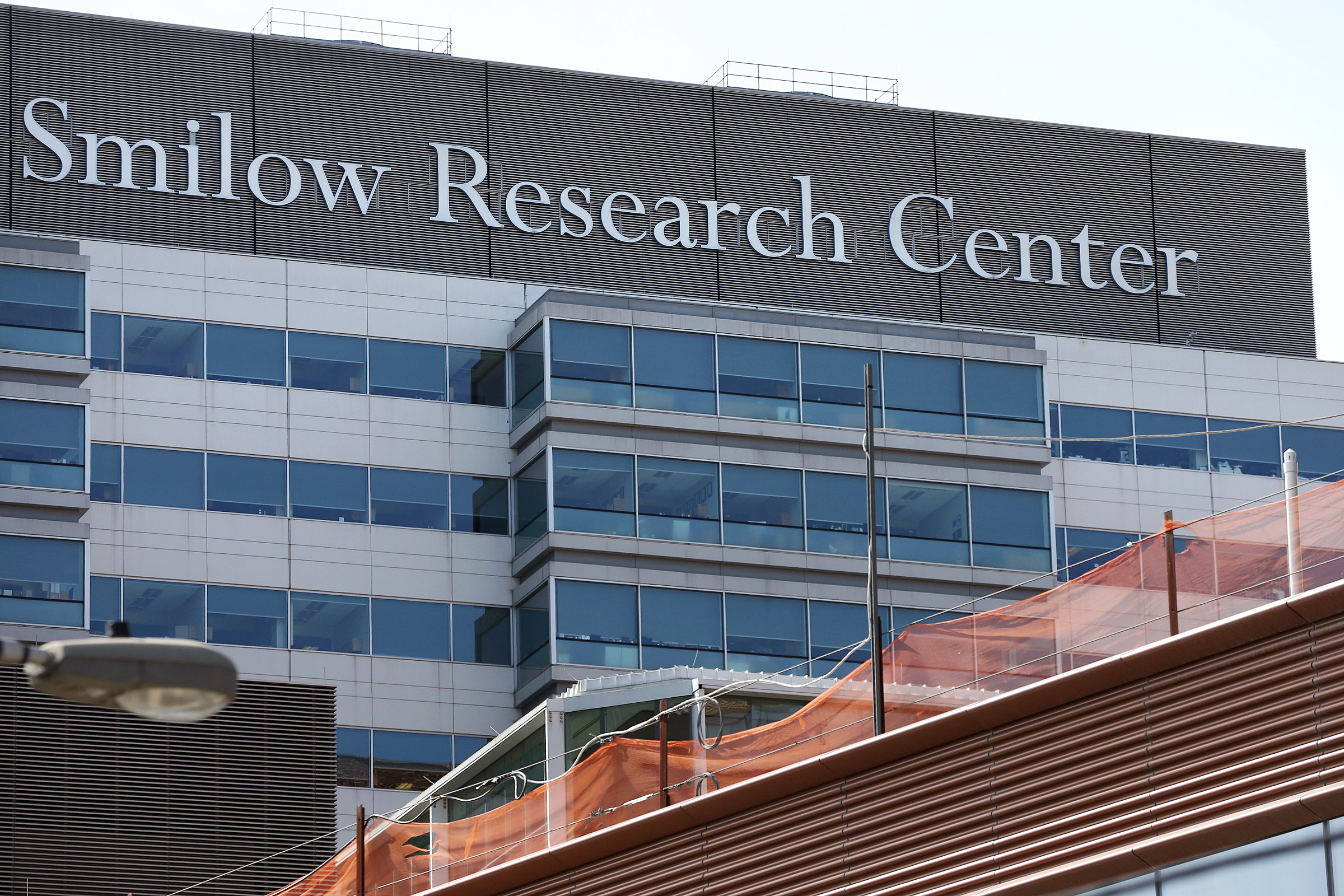
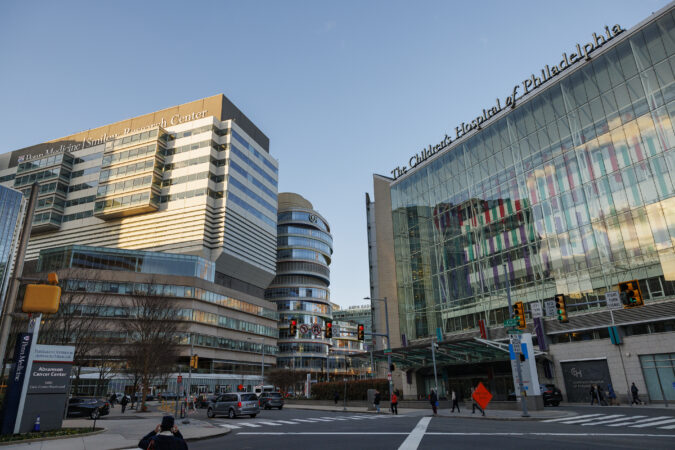
    The University of Pennsylvania’s Smilow Center for Translational Research, shown in 2020, is one of the school’s major laboratory buildings.

    “There are a lot of alums of Centocor that are really impressive, but they seem to have wound up elsewhere,” said Bill Holodnak, CEO and founder of Occam Global, a New York life science executive recruitment firm.

    Among the Centocor executives who left the region was Harvey Berger, Centocor’s head of research and development from 1986 to 1991. He started a new company in Cambridge, Mass.

    At the time, the Philadelphia area didn’t have the infrastructure, range of scientists, or management talent needed for biotech startups, he said.

    Since then, he thinks the regional market has matured.

    “Now, there’s nothing holding the Philadelphia ecosystem back. The universities, obviously Penn, and others have figured this out,” Berger said.

    Conditions have changed

    Penn’s strategy for helping faculty members commercialize their inventions has evolved significantly over the last 15 years.

    It previously licensed the rights to develop its research to companies outside of the area, such as Jim Wilson’s gene therapy discoveries and biochemist Katalin Karikó and immunologist Drew Weissman’s mRNA patents. Now it takes a more active role in creating companies.

    Among Penn’s latest spinouts is Dispatch Bio, which came out of stealth mode earlier this year after raising $216 million from investors led by Chicago-based Arch Venture Partners and San Francisco-based Parker Institute for Cancer Immunotherapy.

    Dispatch, chaired by Marrazzo, is developing a cell therapy approach that uses a virus to attach what it calls a “flare” onto the cells it wants the immune system to attack.

    Marrazzo said in July that he wasn’t going to be involved in Dispatch if it wasn’t based largely in Philadelphia. As of July, 75% of its 60 employees were working in Philadelphia. Still, Dispatch’s CEO is in the San Francisco Bay Area.

    The Philadelphia region is increasingly well-positioned for the current biotech era, said Audrey Greenberg, who played a key role in launching King of Prussia’s Center for Breakthrough Medicines about five years ago. The center is a contract developer and manufacturer for cell and gene therapies.

    “You no longer need to move to Kendall Square to get a company funded,” she said, referring to Cambridge’s biotech epicenter. “You need good data, a credible translational plan, experienced advisers, and access to patient capital, all of which can increasingly be built here.”

    Greenberg now works as a venture partner for the Mayo Clinic, with the goal of commercializing research discoveries within the health system’s network of hospitals in Minnesota, Arizona, and Florida.

    She plans to bring that biotech business to the Philadelphia region.

    “I’m going to be starting my companies all here in Philadelphia, because that’s where I am. And I know everybody here, and everybody I’m going to hire in these startups that are going to be based here,” she said.

  • As we search for autism’s cause, we ignore those living with it

    As we search for autism’s cause, we ignore those living with it

    Top federal officials talk about finding a cause for autism, generating more buzz by the day. More substantively, the owner of the Philadelphia Eagles gave an extraordinary sum — $50 million — to a local hospital to discover its cause and develop new treatments.

    While such gifts deserve praise, another urgent crisis goes largely unnoticed: how to care for the millions of adults already living with autism.

    Each year, more than 120,000 young people with autism turn 18 and “age out” of pediatric medicine. They enter an adult system that is unprepared to help them. They enter a world with no standardized guidelines for care, no specialized training for physicians, and far less support. Families must navigate a cliff, not a bridge. More than five million adults now push past herculean obstacles for what is often worse care.

    I view this crisis as a pediatric emergency medicine doctor and as the mother of a transition-age autistic son.

    Fear for the future

    We parents are terrified by what will happen to our adult children when we are no longer around to care for them. Parents weep — and sometimes wail — when I refer them to an alternate site for adult care. Our system can no longer remove an appendix or mount a crisis intervention once these children cross over.

    As a doctor, I know how this change can cause unnecessary admissions and a loss of social work and case management. Caregivers must suddenly educate the provider on the patient’s basic needs. As a parent, I watch my son Alexander and others hop from one tiny island of support to another.

    When Alexander broke his arm at age 6, surgeons were called in to pin his shattered bone and clean the wound where the disrupted muscle had burst through the skin. Alexander was ridiculously compliant and poised; I was less so.

    His surgeons accidentally cut one of the three main motor nerves in the arm when they tried to stabilize his floppy elbow. It took many visits over eight weeks to get proper attention. By then, his arm was floppy from a medical error.

    In our home, we work hard to protect him: Trampolines are forbidden, helmets always on, seat belts firmly buckled. Yet, I failed to anticipate how Alexander’s autism could hurt him. This label — his scarlet letter “A” — kept his surgeons at a dangerous distance.

    Could it happen again when I am no longer around?

    We know autistic adults suffer more illness and death compared to their peers. They are more likely to be misunderstood, dismissed, or undertreated. The data are abundant — and damning. We fail these people.

    Deserve tailored care

    I continue to teach Alexander to be responsible for his care so he will thrive when I cannot be beside him. In 2023, the National Institutes of Health formally designated people with disabilities as disadvantaged. I am relieved to see a growing acknowledgment of autistic people as a vulnerable group, at risk for health disparities, deserving of tailored care.

    Justin Pierce (center), who has autism and is an account support associate, meets with his team at Ernst & Young offices in Chicago.

    I have also gained confidence in my voice as an advocate for Alexander. I’ve become a “gang member.”

    Senior staffers for Gov. Josh Shapiro respectfully dubbed my fellow autism advocates as “the mom gang.” It is reassuring only in this context that I present as intimidating. Our band of six wants to make sure that half-baked federal plans to create a national autism registry never happen in Pennsylvania without privacy safeguards.

    Meanwhile, the autism community holds diverse opinions on what to do. Should profound autism be classified separately from other presentations? Is “cure” the right goal? Is Tylenol a risk factor?

    While these conversations pull us in different directions, we must not lose sight of a common purpose to create a better system.

    Autistic adults deserve accessible and affirming change. There are models, tools, and innovations in which to invest:

    • Training emergency, inpatient, and outpatient teams to recognize how autism presents in adults
    • Designing calming public environments that ease communication
    • Creating dedicated consult services — including behaviorists, communication specialists, and caregivers — available in person and via telehealth
    • Prioritizing prevention and de-escalation over restraint
    • Highlighting the voices of autistic individuals in policy decisions that affect them
    • And, critically, funding and scaling programs that treat autism across the lifespan

    Lack of resources

    Resources are scarce. Historic gifts fill some gaps from interrupted government funds pulled from disability and diversity programming. Casualties include the Department of Education’s “Charting My Path for Future Success” transition program, a research-based effort to help high school students with disabilities enter the workforce or higher education.

    We may all agree there is an immediate need to build better supports for adults with autism.

    I worry for my son. I need to know I have pushed every edge of possibility to smooth his way forward. I do this for my daughters, too, who learned from their earliest days their brother needs the same supports they are accustomed to, but he is often denied.

    One day, they will take my place slaying this dragon.

    Eron Friedlaender is a public health investigator, an emergency medicine physician at Children’s Hospital of Philadelphia, and a board member of the Institute for Human Centered Design.

  • Aaron Goldblatt, award-winning museum planner, exhibit designer, and sculptor, has died at 70

    Aaron Goldblatt, award-winning museum planner, exhibit designer, and sculptor, has died at 70

    Aaron Goldblatt, 70, of Philadelphia, award-winning museum services partner emeritus at Metcalfe Architecture & Design, former vice president for exhibits at the Please Touch Museum, exhibit designer, sculptor, adventurer, and mentor, died Sunday, Dec. 7, of lung cancer at his home.

    Mr. Goldblatt was an expert in conceiving and constructing environments of all kinds that encouraged play and what he called “informal learning.” He said in a 2019 article on the Metcalfe website that “novelty and a sense of risk” were the “social lubricator” in public spaces that “invokes a little nervousness and inspires social interaction.”

    He joined business partner Alan Metcalfe in 2002 and specialized in constructing canopy walks, glass floors, elevated walkways, net bridges, abstract playgrounds, multimedia exhibits, and other unique designs in prominent locations. Visitors encounter their creations at the Museum of the American Revolution, the Independence Seaport Museum, Children’s Hospital of Philadelphia, the National Museum of Industrial History in Bethlehem, Pa., and the Whiting Forest at Dow Gardens in Michigan.

    He and colleagues built the Lorax Loft on the Trail of the Lorax at the Philadelphia Zoo, the innovative garden and playground at Abington Friends School, and the lobby at Wissahickon Charter School. At Morris Arboretum, they built the celebrated Out on a Limb and Squirrel Scrambletreetop experiences” that Inquirer architecture critic Inga Saffron called “an irresistible allure, to young and old alike.”

    He earned bachelor’s and master’s degrees in sculpture, hitchhiked from adventure to adventure around the country and South America after high school, and said in 2019 that “learning, laughter, and creating genuine connections between people, nature, and history … really inspire my design.”

    Play, he said, is one of those genuine connections. “Wherever people are, as long as they are there long enough, play will happen,” he said in 2019. “It happens in schools, museums, and even prisons. Play is fundamental to being human.”

    Together, Mr. Goldblatt, Metcalfe, and their colleagues earned design awards from the local chapter of the American Institute of Architects, the American Association of Museums, and other groups. In 2022, they earned the Wyck-Strickland Award from the historic Wyck house, garden, and farm for outstanding contributions to the cultural life of Philadelphia.

    In a tribute, colleagues at Metcalfe said Mr. Goldblatt “transformed our studio into the place we are today.” They said: “His generosity, wisdom, and passion for play emanated throughout every conversation, punctuated only by his wit and sense of humor.”

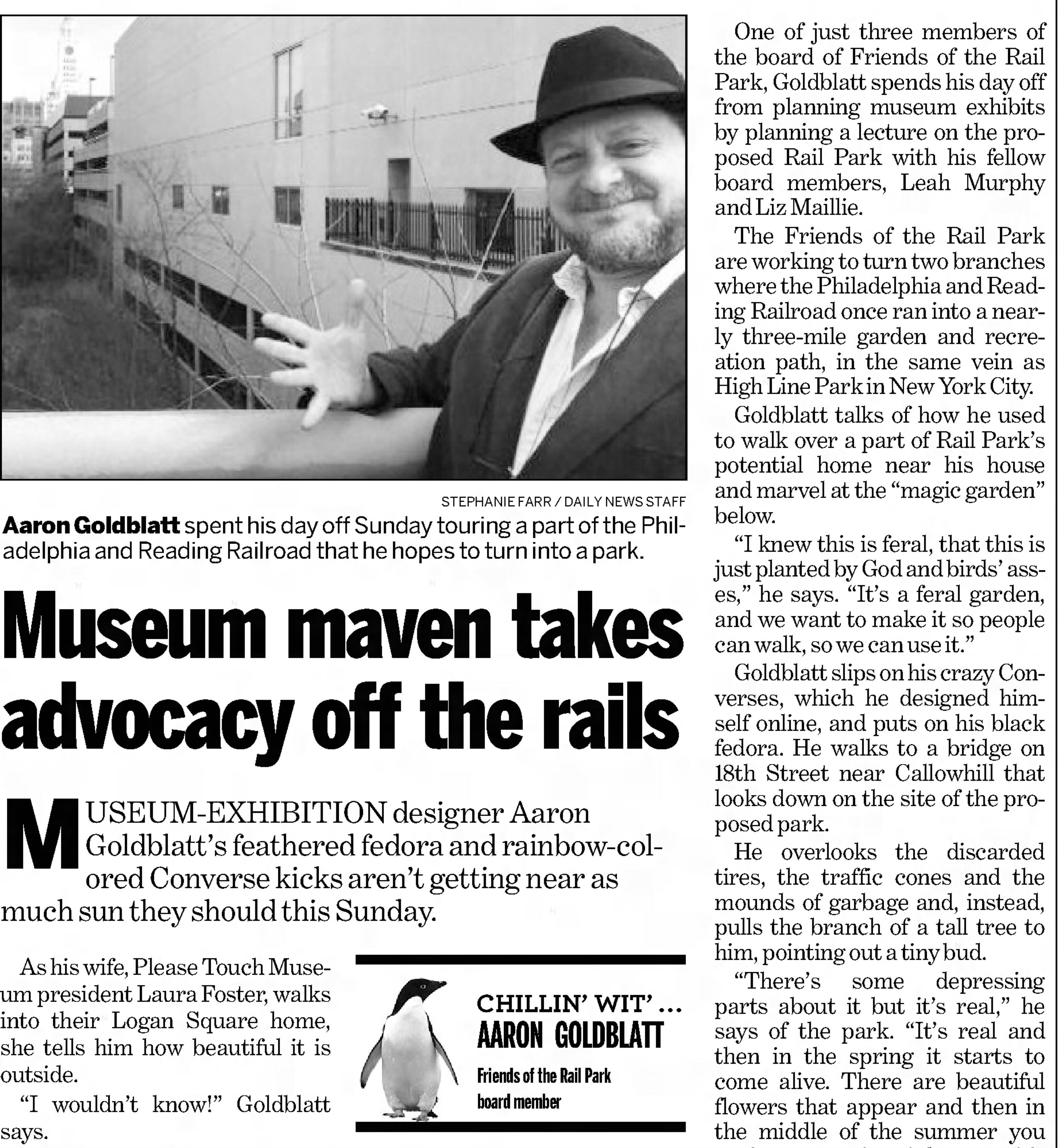
    This photo and story about Mr. Goldblatt appeared in the Daily News in 2013.

    From 1990 to 2002, he designed and developed exhibits at the Please Touch Museum. Earlier, he was director of exhibits for the Academy of Natural Sciences, assistant director at the Wagner Free Institute of Science, and studio assistant to sculptor Alice Aycock and other artists.

    He helped design the Rail Park and was a cofounder and longtime board member of Friends of the Rail Park. He served on boards at the Print Center, the Wagner Free Institute of Science, and other groups, and taught postgraduate museum studies at the University of the Arts for 20 years.

    “He developed a love of the process and philosophy of building,” said his daughter, Lillian. His wife, Susan Hagen, said: “He was always engaged, always asking questions. He was curious, funny, and extremely smart.”

    Friends called him “lovely, smart, and witty” and “warm, wise, and creative” in Facebook tributes. One friend said: “He always had a spark.”

    Aaron Shlomo Goldblatt was born March 22, 1955, in Cleveland. His father was in the Army, and Mr. Goldblatt grew up on military bases across the country and in Germany.

    Mr. Goldblatt and his wife, Susan Hagen, married in 2023.

    He graduated from high school in Maryland and earned his bachelor’s degree at Philadelphia College of Art in 1982 and master’s degree at Rutgers University in 1990. Before settling in Philadelphia, he worked on farms, painted houses, and spent time as a carpenter, a welder, and a potter.

    He married Diane Pontius, and they had a daughter, Lilly. After a divorce, he married Laura Foster. She died in 2019. He married fellow artist Susan Hagen in 2023, and they lived in Spring Garden.

    An engaging storyteller and talented cook, Mr. Goldblatt enjoyed all kinds of art, music, and books. He watched foreign films, wrote letters to politicians and the editor of The Inquirer, and visited the Reading Terminal Market as often as possible. He and his wife started birding during the pandemic.

    “Aaron led with his heart, engaging deeply with the people and ideas around him,” his daughter said. “He could burst into song at any moment.”

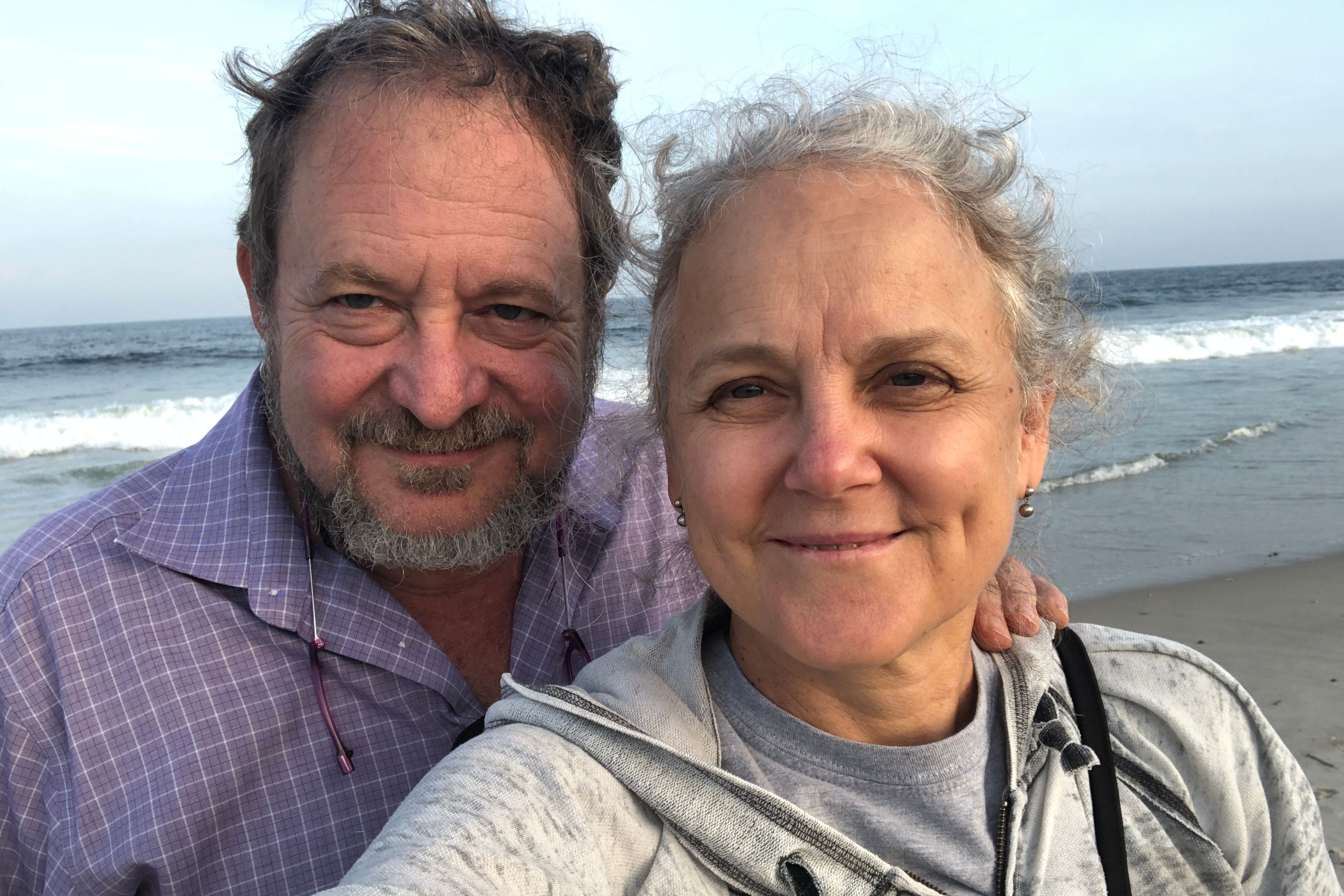
    Mr. Goldblatt smiles with his daughter, Lilly.

    His wife said: “He was a family person, and everyone talks about his love and kindness.”

    In addition to his wife and daughter, Mr. Goldblatt is survived by a grandson, a sister, a brother, his former wife, and other relatives.

    A celebration of his life is to be held later.

    Donations in his name may be made to the Aaron Goldblatt Fund at Tree House Books, 1430 W. Susquehanna Ave., Philadelphia, Pa. 19121; the Wagner Free Institute of Science, 1700 W. Montgomery Ave., Philadelphia, Pa. 19121; and the Print Center, 1614 Latimer St., Philadelphia, Pa. 19103.

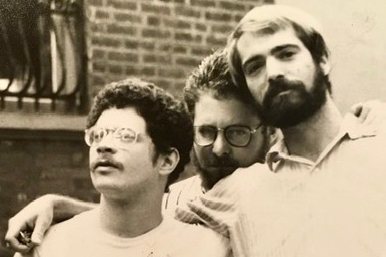
    Mr. Goldblatt (center) enjoyed time with his brother, Eli (right), and friend John Landreau.
  • CHOP was Southeastern Pa.’s most profitable nonprofit health system in first quarter of fiscal 2026. Four systems lost money.

    CHOP was Southeastern Pa.’s most profitable nonprofit health system in first quarter of fiscal 2026. Four systems lost money.

    Children’s Hospital of Philadelphia was the most profitable nonprofit health system in Southeastern Pennsylvania during the three months that ended Sept. 30, according to an Inquirer review of financial filings.

    CHOP reported $70 million in operating income in the first quarter of fiscal 2026, up from $67 million the same period a year ago. The nonprofit’s revenue climbed nearly 9% to $1.3 billion.

    The biggest loss in percentage terms was at Redeemer Health, the region’s smallest health system and the only remaining operator with a single hospital. Redeemer had an $11.7 million operating loss on $103.4 million in quarterly revenue. That was an improvement over an $18.9 million loss last year.

    Jefferson Health had the most patient revenue following its acquisition last year of Lehigh Valley Health Network. The 32-hospital system had $2.9 billion in patient revenue, $100 million more than the $2.8 billion at the University of Pennsylvania Health System, which has seven hospitals.

    window.addEventListener(“message”,function(a){if(void 0!==a.data[“datawrapper-height”]){var e=document.querySelectorAll(“iframe”);for(var t in a.data[“datawrapper-height”])for(var r,i=0;r=e[i];i++)if(r.contentWindow===a.source){var d=a.data[“datawrapper-height”][t]+”px”;r.style.height=d}}});

    Here’s a recap of selected systems’ results for September quarter:

    Jefferson Health

    Jefferson Health reported a $104 million operating loss, as its insurance business continued to drag down results. The loss included $19.4 million in restructuring charges for employee severance related to earlier job cuts and moves designed to make the system more efficient.

    University of Pennsylvania Health System

    University of Pennsylvania Health System had an operating gain of $109.3 million, up from $49.3 million in the same period a year ago. This year’s results include Doylestown Health, which Penn acquired April 1. Total revenue was $3.3 billion, up from $2.8 billion a year ago.

    Temple University Health System

    Temple University Health System’s loss in the quarter was $15 million, an improvement over a $17 million loss last year. Total revenue was $800 million, up 13% from $712.5 million a year ago. Outpatient revenue increased by nearly $62 million, much of it from the health system’s specialty and retail pharmacy business.

  • Hospital-based anti-violence programs get $3 million in state funding

    Hospital-based anti-violence programs get $3 million in state funding

    Several Philadelphia-area violence prevention efforts will benefit from nearly $3 million in newly released state funding to help hospitals address a leading cause of death and injury.

    The new funding for hospital-based violence intervention programs (HVIP) was announced by Pennsylvania Lt. Gov. Austin Davis on Wednesday at Penn Presbyterian Medical Center. One of the recipients, the Penn Trauma Violence Recovery Program, is based at the Penn Medicine hospital in University City.

    Other local awardees include Temple University Hospital in North Philadelphia and the Philadelphia-based nonprofit Urban Affairs Coalition. The coalition received funding on behalf of the Chester Community Coalition to relaunch a program that had been at the now-shuttered Crozer-Chester Medical Center.

    The University of Pittsburgh Medical Center also received funding. The amounts awarded to each program were not announced.

    The Pennsylvania Commission on Crime and Delinquency, which Davis chairs, received 15 applications in total seeking nearly $12 million in funding — four times what was available.

    “Addressing the epidemic of gun violence is a top priority for our administration,” Davis said.

    Lieutenant Governor Austin Davis speaks at a press conference announcing the $3 million in grants for hospital-based violence intervention programs.

    The programs aim to connect patients at risk of repeat violence with resources while they are in a hospital, so they leave with a safety plan. Services can include long-term community-based case management, mentoring, and home visits.

    Since the first HVIP was established in the mid-1990s, dozens have spread around the country and abroad, including in Philadelphia.

    Several local institutions have these programs, including Temple Health, Children’s Hospital of Philadelphia, Penn Medicine, Jefferson Health, and Drexel University. The City of Philadelphia, in conjunction with the area’s Level 1 trauma centers, launched an HVIP Collaborative in 2021.

    Studies have shown these programs reduce rates of repeat violent injuries and recidivism among participants.

    After shootings spiked during the COVID-19 pandemic, gun violence is now declining in Philadelphia. As of July, shootings for the year were at their lowest total since at least 2015.

    Davis noted that Philadelphia has seen a 15% decrease in homicides this year, with roughly four in five gunshot victims surviving their injuries.

    The new funding will allow the Penn Trauma Violence Recovery Program to increase its community presence and mental health programming, said its director, trauma surgeon Elinore Kaufman.

    Through her experience treating victims of violence, she has learned that injuries can be deeper than the physical wounds.

    The program was launched to address social factors often involved in violence by providing psychosocial support and connecting patients with services to help with education, job training, and housing.

    “We’ve worked with patients long enough now that we have high school graduation photos, we have baby pictures,” Kaufman said. “We have patients who want to give back and have joined our patient advisory board to help push us forward.”

  • Baby KJ’s gene-editing treatment lands him on Nature’s top 10 list

    Baby KJ’s gene-editing treatment lands him on Nature’s top 10 list

    A Philadelphia-area infant named Baby KJ made international headlines after doctors at Children’s Hospital of Philadelphia and Penn Medicine successfully treated his rare, life-threatening liver condition with a gene-editing drug earlier this year.

    Now back home with his family in Drexel Hill after more than 300 days in the hospital, KJ Muldoon has been named one of 10 people who helped shape medicine in 2025 by Nature, a British scientific journal.

    Nature’s 10 is rounded out by career scientists and public health champions, including a neurologist treating brain disorders, an entomologist unearthing new details about mosquito-borne illnesses, and a data researcher who drew attention to troubling patterns in research retractions. The publication honored Baby KJ as a “trailblazing baby.”

    KJ was born with a rare disorder that prevented his liver from processing protein. He was at risk of dangerous levels of ammonia, a byproduct of protein, building up in his bloodstream, traveling to his brain, and causing irreparable damage. The condition, called severe carbamoyl phosphate synthetase 1 (CPS1) deficiency, is deadly in more than half of cases.

    With few treatment options and limited time, KJ’s doctors proposed a novel treatment using experimental gene-editing technology: They would analyze KJ’s genetic profile to find the genetic mutation that prevented his body from producing a key enzyme that breaks down protein. Then they would infuse a medication laced with bits of genetic code to find the misspelling and fix it, dramatically improving his chances of recovery.

    Within six months, researchers at CHOP and Penn had developed a customized drug specifically for KJ using CRISPR, the buzzy shorthand for a scientific tool that works like a find-and-replace command. It is named after a stretch of genetic code utilized — clustered regularly interspaced short palindromic repeats.

    KJ received three doses of the medication, and in June, he returned home after 307 days in the hospital. He will need ongoing care, but doctors say the treatment has dramatically improved his liver function.

    “This is the future of medicine, a step toward using gene-editing for diseases for which there are few treatments,” Kiran Musunuru, director of the Penn Cardiovascular Institute’s Genetic and Epigenetic Origins of Disease Program and one of the lead doctors on KJ’s case, said during a call with reporters in May.

    Baby KJ’s treatment was a first-of-its-kind drug customized to a unique genetic mutation. It will never be used for another patient, but Philadelphia researchers believe the CRISPR framework could be used to customize drugs for other patients.

    Musunuru and Rebecca Ahrens-Nicklas, the director of CHOP’s Gene Therapy for Inherited Metabolic Disorders Frontier Program, are developing a new clinical trial to test the CRISPR framework for treating customized gene therapies for urea cycle disorders related to any one of seven genes.

    The mechanism will remain the same, but the injection each patient receives will be customized to target their unique genetic mutation.

    They are hopeful that their work will make bespoke treatments available to more people with rare diseases, Ahrens-Nicklas told Nature.

    “Everyone saw the possibility and thought, ‘Why isn’t this available for my child?’”

  • Mental health workers in Philadelphia unionize following changes in their workplace and patient care

    Mental health workers in Philadelphia unionize following changes in their workplace and patient care

    Mental health professionals at Rogers Behavioral Health in West Philadelphia have formed a union, citing increased workloads and business changes that diminished patient care.

    The nonprofit mental healthcare provider last year transitioned from individual patient sessions to a group care model, said Tiffany Murphy, a licensed professional counselor and therapist at the facility. Some workers there were also moved from salaried to hourly positions then forced to reduce hours, their union has said.

    Some patients and workers have left amid the changes, says Murphy, estimating that 22 of her colleagues have quit in the past year.

    “A lot of us sort of put our jobs on the line by [unionizing], because we believe in the organization, but more so, we believe in our patients. We wanted to provide the best patient care that we possibly could for them,” said Murphy.

    The 19 West Philadelphia Rogers employees, including therapists and behavioral specialists, filed their petition last month to unionize with the National Union of Healthcare Workers. Rogers voluntarily recognized the union, according to NUHW, marking the union’s first unit in Pennsylvania.

    NUHW represents some 19,000 healthcare workers, primarily in California.

    Sal Rosselli, NUHW president emeritus, said the union is pleased that Rogers accepted the petition. “All too often, employers do the opposite and put together very anti-union campaigns, spending all kinds of patient care dollars to prevent their workers from organizing,” he said.

    The Philadelphia metro area, which also includes Camden and Wilmington, has the fifth-highest number of working therapists among U.S. metros, according to the Bureau of Labor Statistics. This region employs just over 500 therapists, with average salary of $79,510.

    A spokesperson for Rogers declined to comment on employees’ organizing efforts and remarks on workplace changes.

    Rogers provides addiction treatment and mental healthcare with facilities in 10 states. In Philadelphia, the nonprofit offers outpatient treatment and partial hospitalization, treating patients with depression, anxiety, and obsessive-compulsive disorder.

    In recent years, Rogers workers in California also unionized with NUHW. Their recently forged union contract includes caseload limits and a cap on how many newly admitted patients can be assigned to each therapist or nurse.

    Thousands of healthcare workers in the Philadelphia area have moved to unionize in recent years.

    Within the past few years, residents at Penn Medicine and the Rutgers University health system finalized their first contracts with their health systems, and attending doctors at ChristianaCare became the first group of post-training physicians in the region to unionize. Residents at Temple University Hospital, Thomas Jefferson University Hospitals, ChristianaCare, and Jefferson’s Einstein Healthcare Network also voted to unionize in early 2025. Residents at Children’s Hospital of Philadelphia narrowly voted against joining a union.

    The organizing push means that about 81% of the city’s resident physicians are unionized.

    What do workers want?

    When Murphy first started working at the Rogers facility in Philadelphia 4½ years ago, she said there was “a really good work-life balance.”

    At the time, clinicians had four patients per day, provided individualized care, and led group sessions. As the organization moved toward group counseling, she said, caseloads have grown, with up to 12 patients in each group.

    The organization hired behavioral specialists to support therapists, said Murphy, but “it was difficult to provide the patients with the care that they really needed and deserved with the new structure.”

    Some patients and staff left because of the new model, said Murphy.

    This year, some salaried workers were switched to hourly, and Rogers started sending workers home due to low patient demand, leaving the rest with larger workloads, according to the union. That meant some used paid time off to avoid going without pay, said Murphy.

    When Philadelphia Rogers employees heard their colleagues in California were unionizing, “That became a bit enticing to us,” said Murphy, noting the workplace had become challenging and sometimes “unbearable.”

    Now, she says, the union members want more manageable caseloads — or pay increases to account for the larger caseloads — and a return to the old pay model for those who were switched to hourly work.

    “We are unionizing to have a voice at work that will allow us to promote a healthier work-life balance as well as high-quality sustainable patient care,” therapist Sara Deichman said in a union news release.

    Where else have mental health workers unionized?

    The organizing in Philadelphia comes as the U.S. faces a shortage of mental healthcare professionals, and in the wake of a demand surge from the pandemic.

    “The industry is forcing fewer providers to care for more and more patients because the focus is on the bottom line,” said Rosselli.

    Staffing concerns plague the healthcare industry generally, said Rebecca Givan, an associate professor at Rutgers University’s School of Management and Labor Relations.

    “If the facility wants to hold down costs, it tries to keep staffing levels as low as possible,” said Givan. “In the case of mental health providers, it can be about shortening appointment times or increasing caseloads so that each provider has a very large number of cases or clients.”

    She says there’s not “a huge amount of union representation” in stand-alone behavioral health facilities, but some public hospitals are unionized.

    Private practice mental health workers can’t unionize because they’re self employed, Givan noted, but “one could argue that they might benefit from collectively negotiating, for example, with the insurance companies that determine their reimbursement rates.”

    NUHW is leading efforts to organize independent providers. The goal, Rosselli says, is to “establish an employer for them so that they can have leverage against insurance companies to increase pay and increase access to patient care issues.”

    The union has already done this in the home care industry in California, Rosselli noted.

    Staff reporter Aubrey Whelan contributed to this article.

  • One year of inspections at Children’s Hospital of Philadelphia: October 2024 – September 2025

    One year of inspections at Children’s Hospital of Philadelphia: October 2024 – September 2025

    Pennsylvania’s Department of Health investigated several complaints at the Children’s Hospital of Philadelphia between October 2024 and September of this year but did not cite the hospital for any safety violations.

    Here’s a look at the publicly available details:

    • Oct. 30, 2024: Inspectors came to investigate a complaint but found the hospital was in compliance. Complaint details are not made public when inspectors determine it was unfounded.
    • Jan. 27, 2025: Inspectors came to investigate a complaint but found the hospital was in compliance.
    • Feb. 18: Inspectors came to investigate a complaint but found the hospital was in compliance.
    • March 11: Inspectors came to investigate a complaint but found the hospital was in compliance.
    • May 15: Inspectors came to investigate a complaint but found the hospital was in compliance.
  • Federal judge hands CHOP victory in its fight to protect medical records of transgender children

    Federal judge hands CHOP victory in its fight to protect medical records of transgender children

    A federal judge in Philadelphia has blocked President Donald Trump’s administration from obtaining the private medical records of youth who sought gender-affirming care at Children’s Hospital of Philadelphia.

    The decision, issued Friday by U.S. District Court Judge Mark A. Kearney, was a victory for patients’ privacy rights and for CHOP, which had waged a legal battle to limit the scope of a sweeping federal subpoena that sought the names, dates of birth, Social Security numbers, addresses, and parent/guardian information of patients who had been prescribed puberty blockers or hormone therapy.

    In a 54-page opinion, Kearney found that the medical records sought by the U.S. Department of Justice were “beyond the authority granted by Congress” under the Food, Drug and Cosmetic Act, and that “the heightened privacy interests of children and their families substantially outweighs the Department’s need to know” such confidential and sensitive information.

    Neither CHOP nor the DOJ responded to a request for comment late Friday.

    In addition to protecting the identities of patients, Kearney also denied the part of the DOJ subpoena seeking documents related to how doctors make decisions in prescribing medications that help patients to have a body that matches their gender identity, including details such as “clinical indications, diagnoses, or assessments.” Kearney also blocked federal investigators from obtaining documents related to “informed consent, patient intake, and parent or guardian authorization for minor patients.”

    CHOP runs one of the nation’s largest clinics providing medical care and mental health support for transgender and gender-nonbinary children and teens and their families. Each year, hundreds of new families seek care at CHOP’s Gender and Sexuality Development Program, created in 2014.

    Along with CHOP, five parents of transgender children also filed a motion asking the federal court to intervene on their behalf. Kearney’s ruling rendered that motion moot since it sought similar legal relief as CHOP. The motion was filed by the Public Interest Law Center, a Philadelphia-based nonprofit that advocates for the civil, social, and economic rights of marginalized communities.

    Mimi McKenzie, the center’s legal director, said the judge’s ruling was “a complete rebuke” to the DOJ and an affirmation that the federal government has “no authority to root through” private medical records.

    “The court recognized that the Department of Justice is using its subpoena power not as a tool for legitimate inquiry, but as a tool for intrusion, and it’s not allowing that,“ McKenzie said late Friday. ”This is an important victory. Under this court’s ruling their privacy is protected, their medical records are not going to be turned over, and this court is just not going to condone this type of government overreach.”

    The CHOP case against the DOJ has become part of a broader legal battle playing out across the country. As part of an investigation into possible healthcare fraud or potential misconduct, the DOJ had issued subpoenas to CHOP and at least 19 other hospitals nationally that treat transgender youth. In September, a federal judge in Boston blocked the Trump administration’s attempt to subpoena medical records of patients who received gender-affirming care at Boston Children’s Hospital, ruling it was “motivated only by bad faith.” The DOJ has appealed the Boston ruling.

    The Trump administration has said doctors who prescribe to children and teens medications commonly used for gender-affirming care, such as puberty blockers and hormones, are engaging in chemical mutilation, likening it to child abuse. Teenagers are not mature enough to make such major decisions, the administration has argued.

    The American Academy of Pediatrics and other major medical associations, citing research, widely accept such use of these medications as safe, effective, and medically necessary for the patients’ mental health.

    In his ruling, Kearney said the DOJ subpoena was part of the Trump administration’s strategy to end gender-affirming care for minors. Kearney noted a “charged political environment” in which the federal government views “their medical treatment to [be] a radicalized warped ideology.” He concluded that the state and not the federal government has the authority to regulate medical care, and gender-affirming care for minors is legal in Pennsylvania.