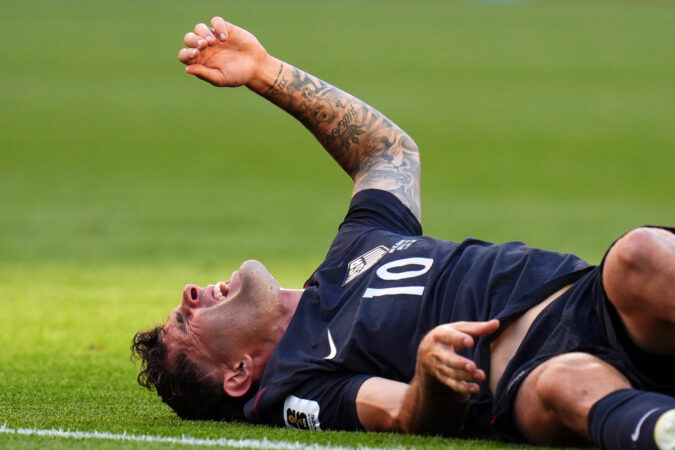
U.S. star Christian Pulisic fractured his right leg during the Americans’ World Cup loss to Belgium and will be sidelined for several weeks, a person familiar with the injury said Thursday.
The person spoke to the Associated Press on condition of anonymity because the diagnosis, first reported by the Athletic, had not yet been announced by the U.S. Soccer Federation.
Pulisic has a bone bruise and a microfracture of his tibia and fibula, the person said. He is expected to be able to resume training before AC Milan’s Serie A opener at Torino on Aug. 23, the person added.
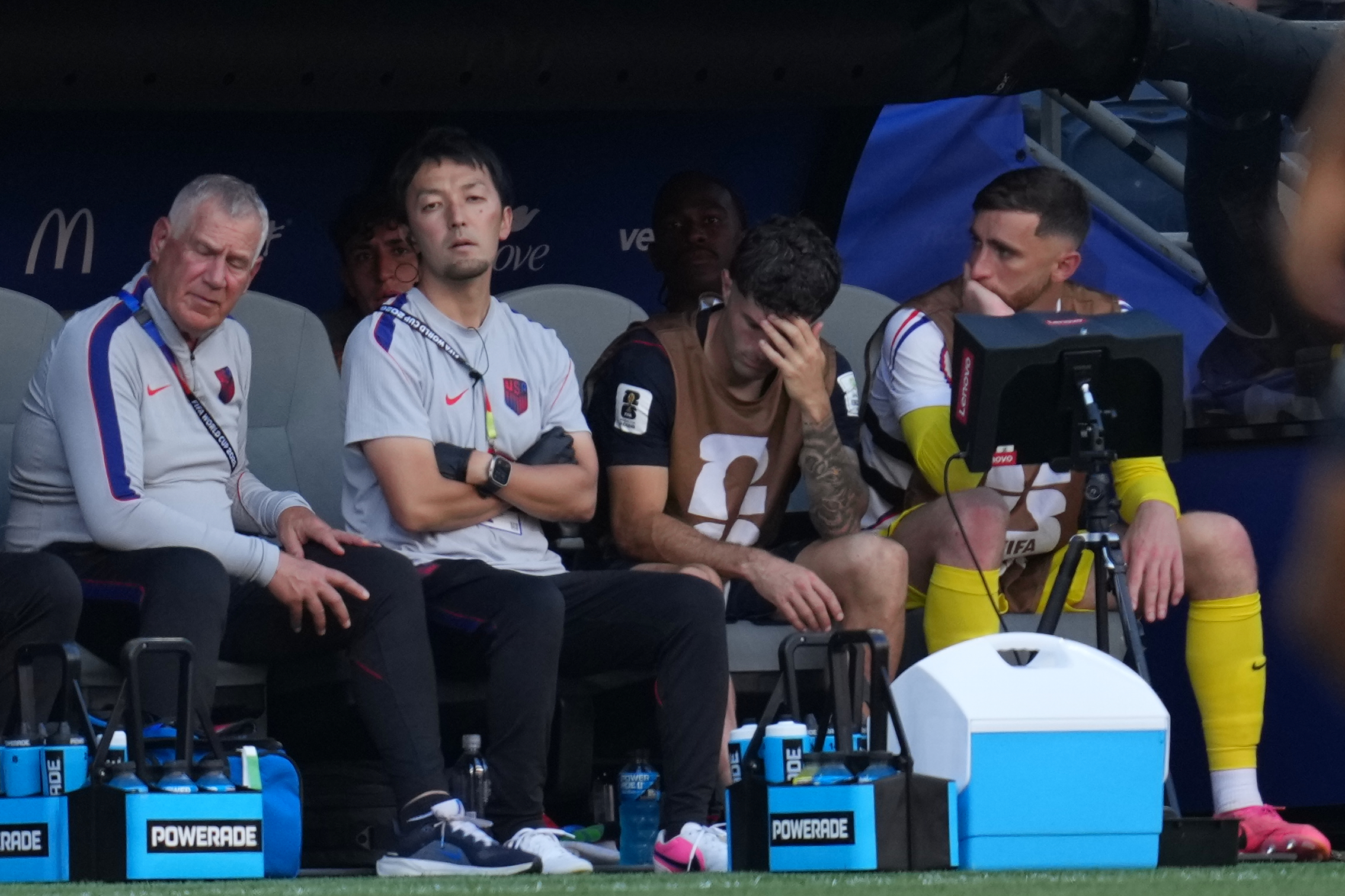
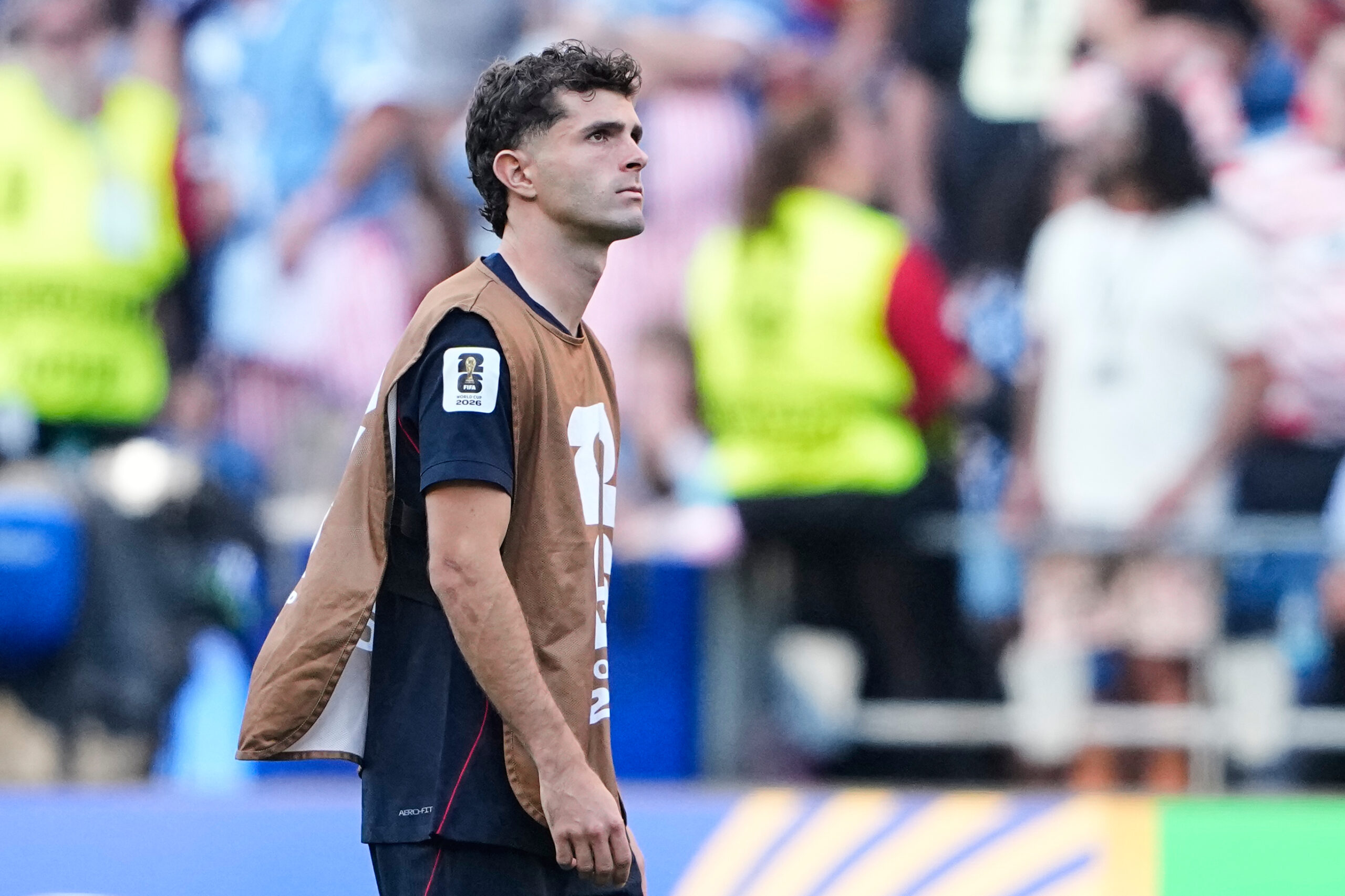
Christian Pulisic (second from right) on the bench after leaving the U.S.-Belgium game.
Pulisic hit a leg of Belgium captain Youri Tielemans while attempting a shot in the 52nd minute of Monday’s 4-1 round of 16 loss in Seattle. He remained in the game but was hobbling, and Sebastian Berhalter replaced him in the 59th minute.
The Hershey native failed to score in the World Cup, missed one of the Americans’ five matches because of a calf injury, and left two other games early. He has 33 goals in 90 international appearances.
Pulisic, who turns 28 in September, is entering his fourth season with Milan.
SEATTLE — The hype around this World Cup didn’t just start when the last one ended four years ago. It took off as soon as the U.S. was picked as host, on the eve of the 2018 edition for which they failed to qualify.
By the time this summer arrived, there was enough evidence to believe these players could make the history they dreamed of, wanting to do things no U.S. men’s team had done before on soccer’s biggest stage.
So a bar was set for them. The program had just one knockout game win in its history. Winning two would mean a quarterfinal berth. It also presumably would mean toppling a giant somewhere along the way.
Once the draw was made last fall, the name of that giant was Belgium, the nation that sent the U.S. home in 2014. That made an easy measuring stick for this generation. If they were that much better, they’d do what their predecessors hadn’t.
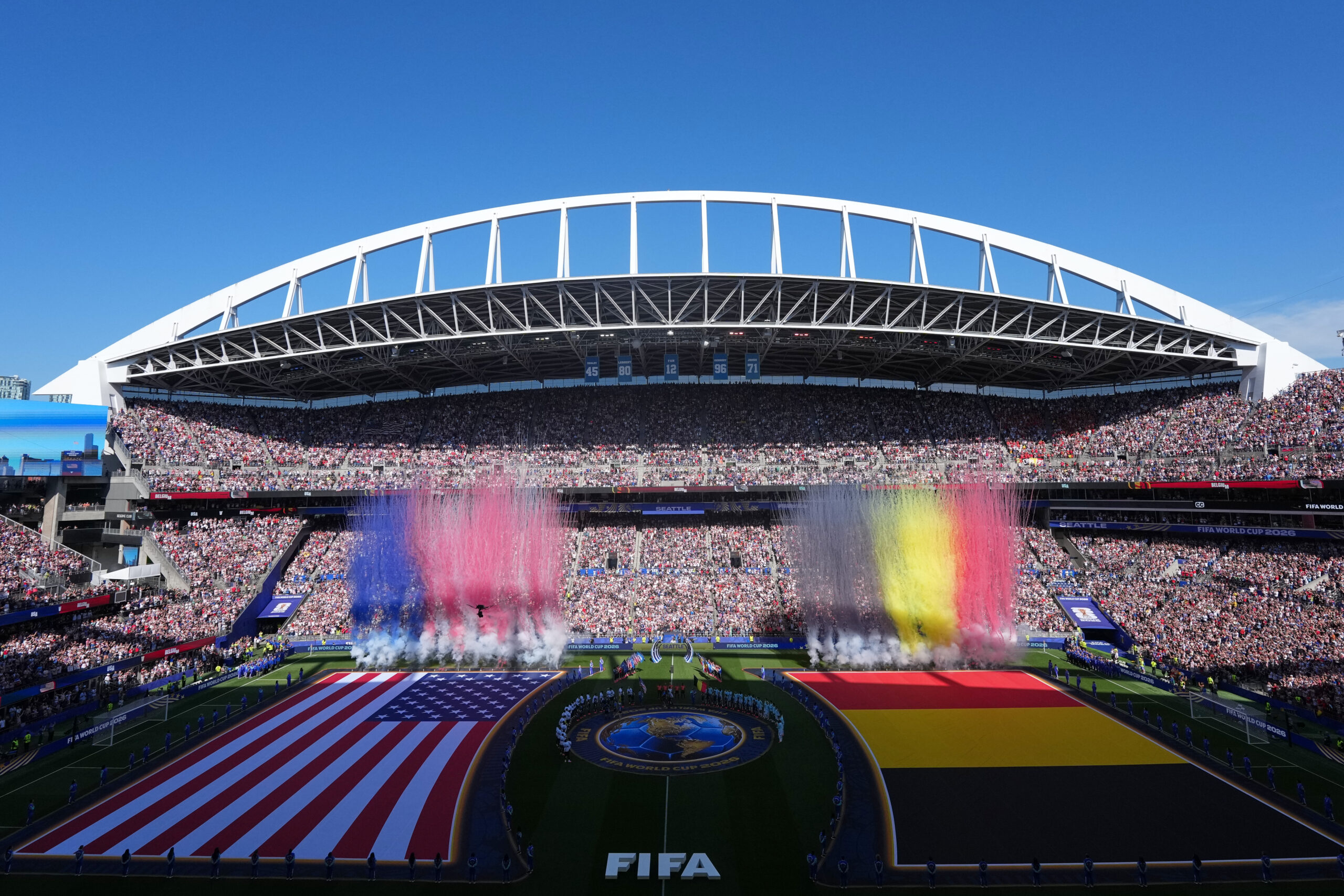
The scene just after the national anthems in Seattle, when the packed crowd of U.S. fans hoped for a historic win.
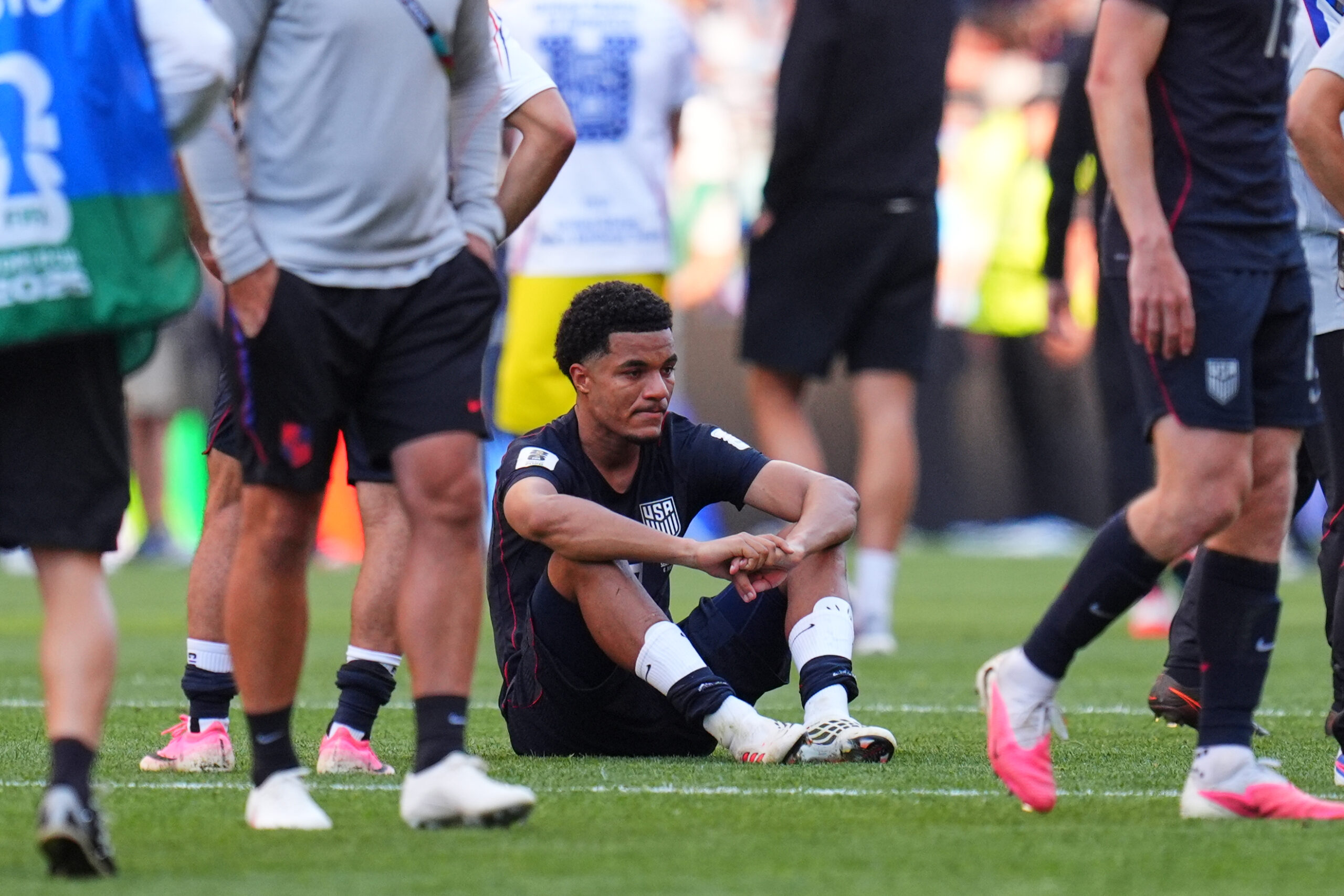
For this game turned out to not be just about Balogun on the American side. The whole squad blew it on the biggest stage, and they knew it.
“This moment hurts more, stings more, than probably any other moment in my life,” Wayne-born goalkeeper Matt Freese said after a horror game, especially on Belgium’s third goal that blew the game open, when he was stripped of the ball after straying out of his 18-yard box.
“Yes, it stings,” midfielder Tyler Adams said. “This was a moment to have the opportunity to advance and really try and do something special, and we fell short.”
Asked why the team was so flat, he answered: “It’s a great question. I wish I had the answer right now. I don’t know.”
Christian Pulisic tried to lift the mood, but he took some tough questions after leaving a game injured for the second time in this tournament. Along with that, the team’s most important attacker didn’t play the entirety of any game, though at least in the Bosnia win he played 88 minutes.
Christian Pulisic played 224 minutes across four games in this World Cup.
“I didn’t quite have the moments I was hoping to, to try to help us to really push and get over this next step of beating a really good team,” he said. “So I’m disappointed with myself, of course, but I’m going to try to stay positive. I did a lot of good things, and the team did as well.”
Gio Reyna also was underwhelming. After earning enough of Pochettino’s affection to make the World Cup team, he played just 131 minutes over the five games, took two shots, created one chance, and scored a goal that was beautiful, but in a game that already was won.
“If we lose to Bosnia, it’s obviously a big disappointment, and then if we win today, it’s probably a very big achievement for the group,” he said. “So it felt like we kind of just almost did what was expected. … It’s hard to say, I guess, what’s needed to make the next steps to really push through.”
One thing would be the biggest stars delivering in the biggest moments. That has happened for Kylian Mbappé’s France, Lionel Messi’s Argentina, Jude Bellingham’s England, and Erling Haaland’s Norway.
But it did not happen for the United States.
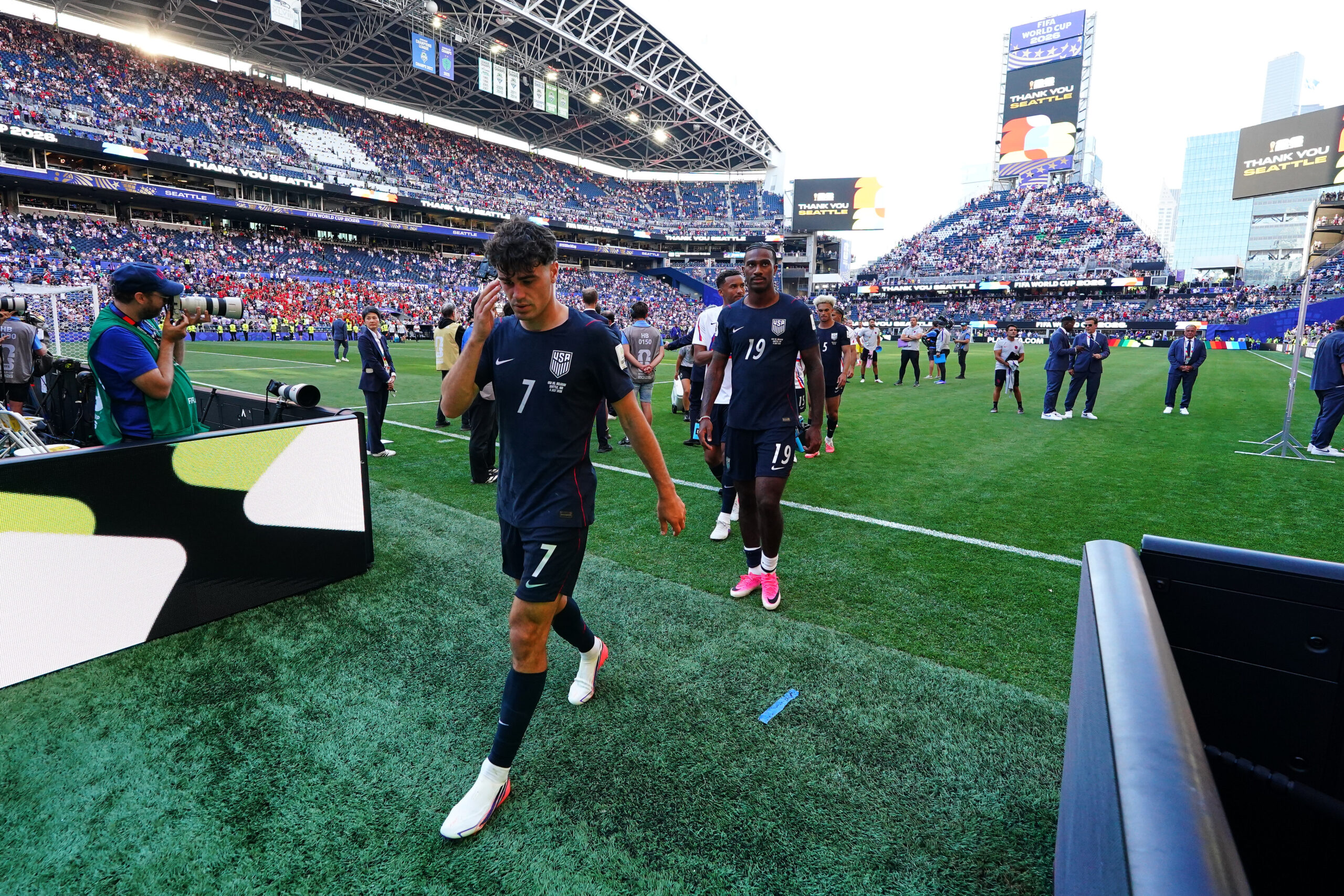
Gio Reyna (left) walks off the field after the loss to Belgium.
Will it be worth splashing cash on another big name? Or, since he wasn’t clearly better in the biggest moments than his American predecessors, should there be a serious conversation about whether it’s necessary?
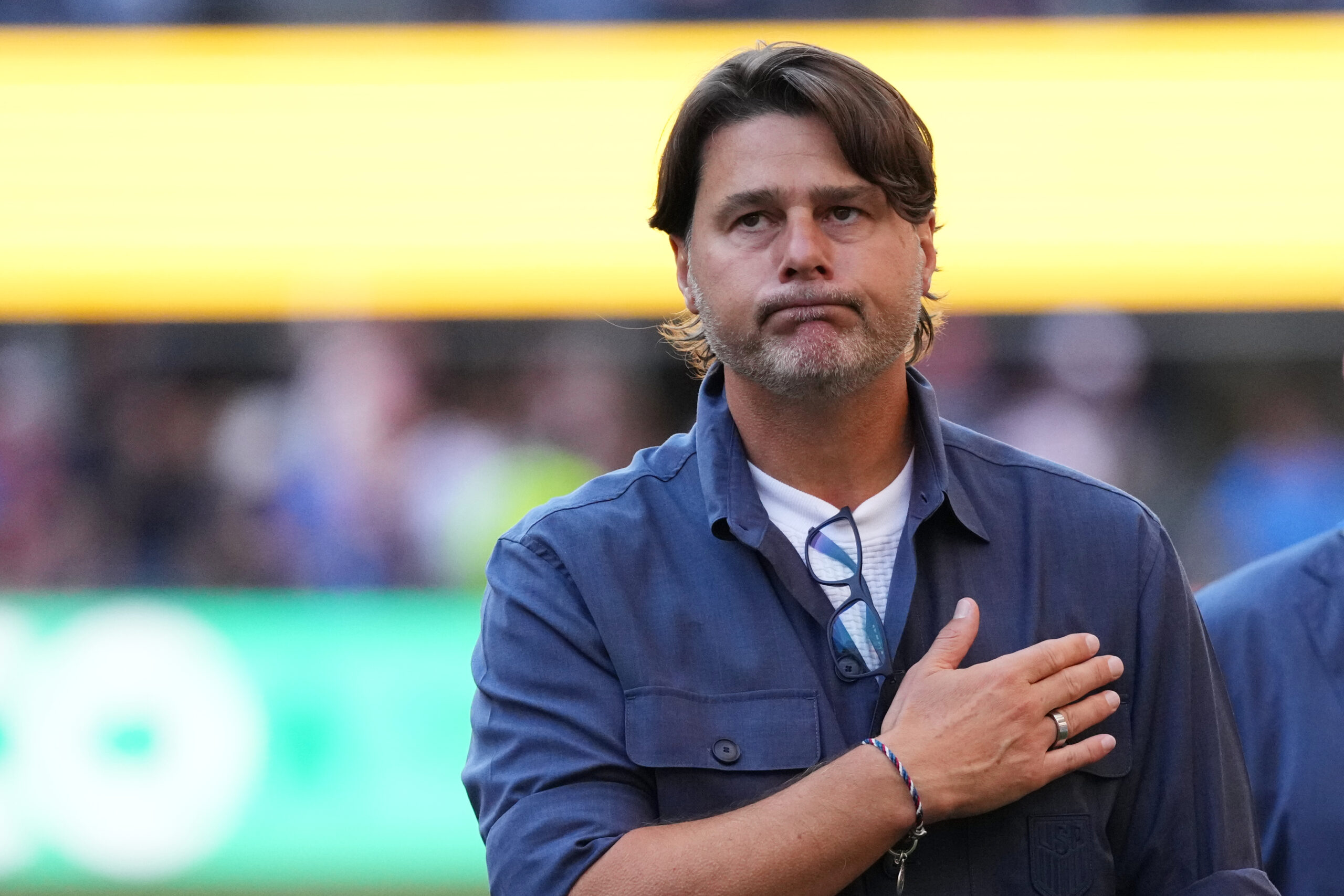
Mauricio Pochettino’s gesture of thanks to U.S. fans after the final whistle.
Former Los Angeles FC manager (and longtime stalwart U.S. player) Steve Cherundolo also is on the list. New Jersey native Pellegrino Matarazzo, who has made his coaching name at European clubs, is too, though he might want more time overseas before coming home. Former Union coach Jim Curtin would be on the list if he hadn’t just been hired by Austin FC.
But will the donors lean on U.S. Soccer to go for another famous name?
One of those donors, Scott Goodwin, has quite a few friends in the soccer world — and some at the White House, too: The New York Times reported that he called them to complain about Balogun’s red card.
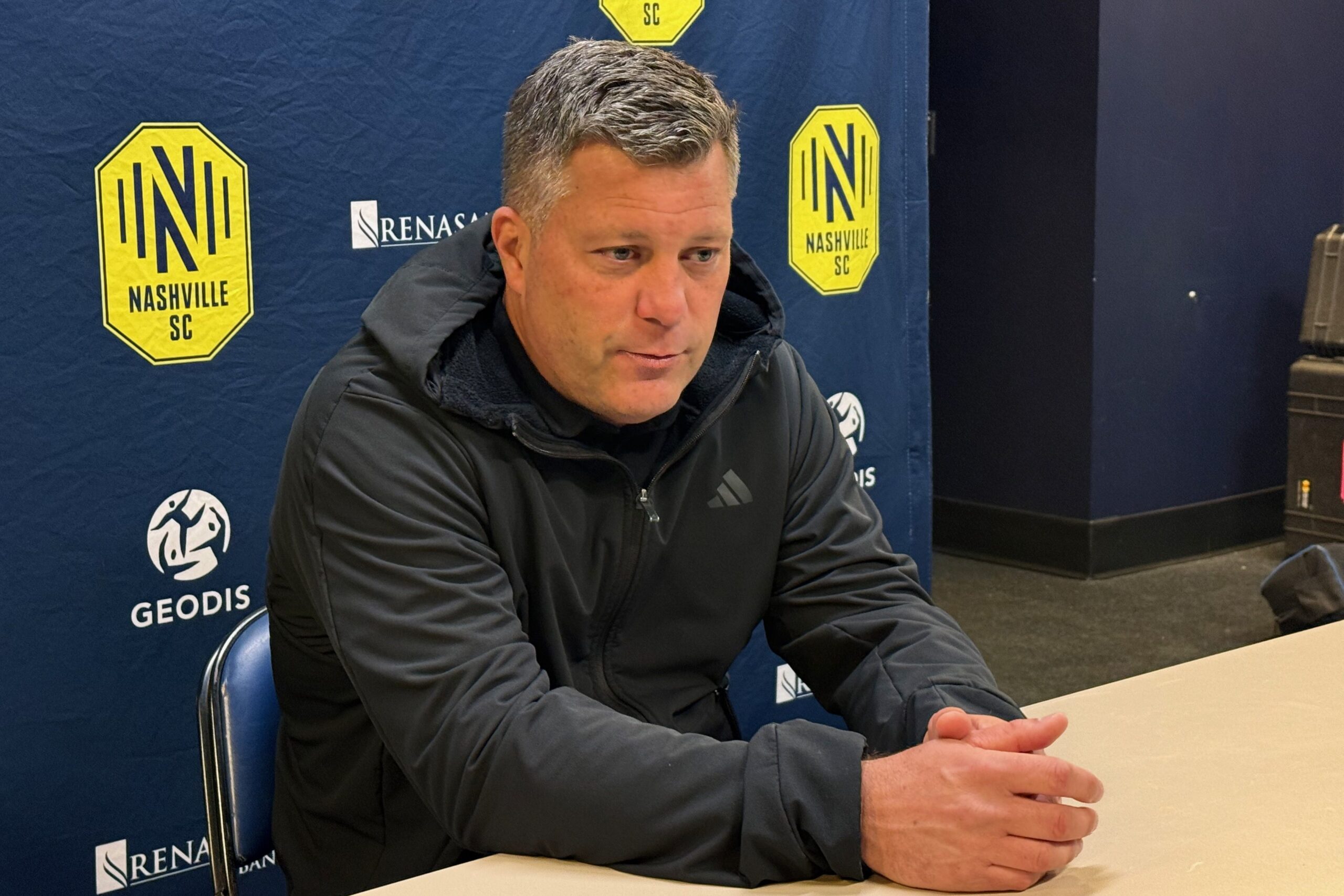
B.J. Callaghan talking with the media when Nashville SC visited the Union earlier this year.
Two years ago, Goodwin called his soccer friends to complain about the U.S. team’s flop at the Copa América. They included two former U.S. players who remain well-known in soccer circles, MLS executive Alecko Eskandarian and broadcaster-turned-investor Kyle Martino.
Goodwin was so angry at the U.S. team’s performance that he said, as he recalled to the New York Post last month: “This is a chance to get an amazing coach.”
Then, as The Athletic put it just before the World Cup started, “To Goodwin, there were three names that fit the bill: Klopp, Pochettino and Manchester City’s Pep Guardiola.”
None of them were American. None had ever coached in the United States. Was there an implicit view there that no American could be good enough for the job?
Good questions for U.S. Soccer CEO JT Batson and chief operating officer Dan Helfrich: Do they think the difference between a big-name foreigner and a qualified American is worth another $6 million bet? And how much sway will the donors hold this time?
U.S. Soccer declined to make leadership available to the media on Tuesday. A spokesperson told The Inquirer that there might be an availability in the coming days.
And what about a second term for Pochettino, who’s now out of contract? The players grew attached to him, but that happens with almost any manager. He has talked with U.S. Soccer about another term, but there also have been plenty of hints that he’d like to go back to Europe.
“I think now, because we were talking with the federation, it’s about to rest a little bit, to think, to have conversation, and then see what the decision is from the federation and from us,” Pochettino said Monday night. “I think we’ve built a very good relationship, but now is not a moment to talk about that. … For sure, in the next weeks, we can start to talk — if the federation wants to talk.”
Late Tuesday morning, U.S. Soccer issued a statement about its side of those talks.
“We had positive conversations with Mauricio before the World Cup about the future,” the federation said. “We agreed we would continue those conversations following a chance to rest and reflect post-World Cup.”
It hinted at the future, but only barely.
“We have a great deal of respect and gratitude for Mauricio, his staff and everyone part of the program,” it said. “We have shared excitement about our potential and also shared clarity about the amount of work at all levels still required to achieve our ambition.”
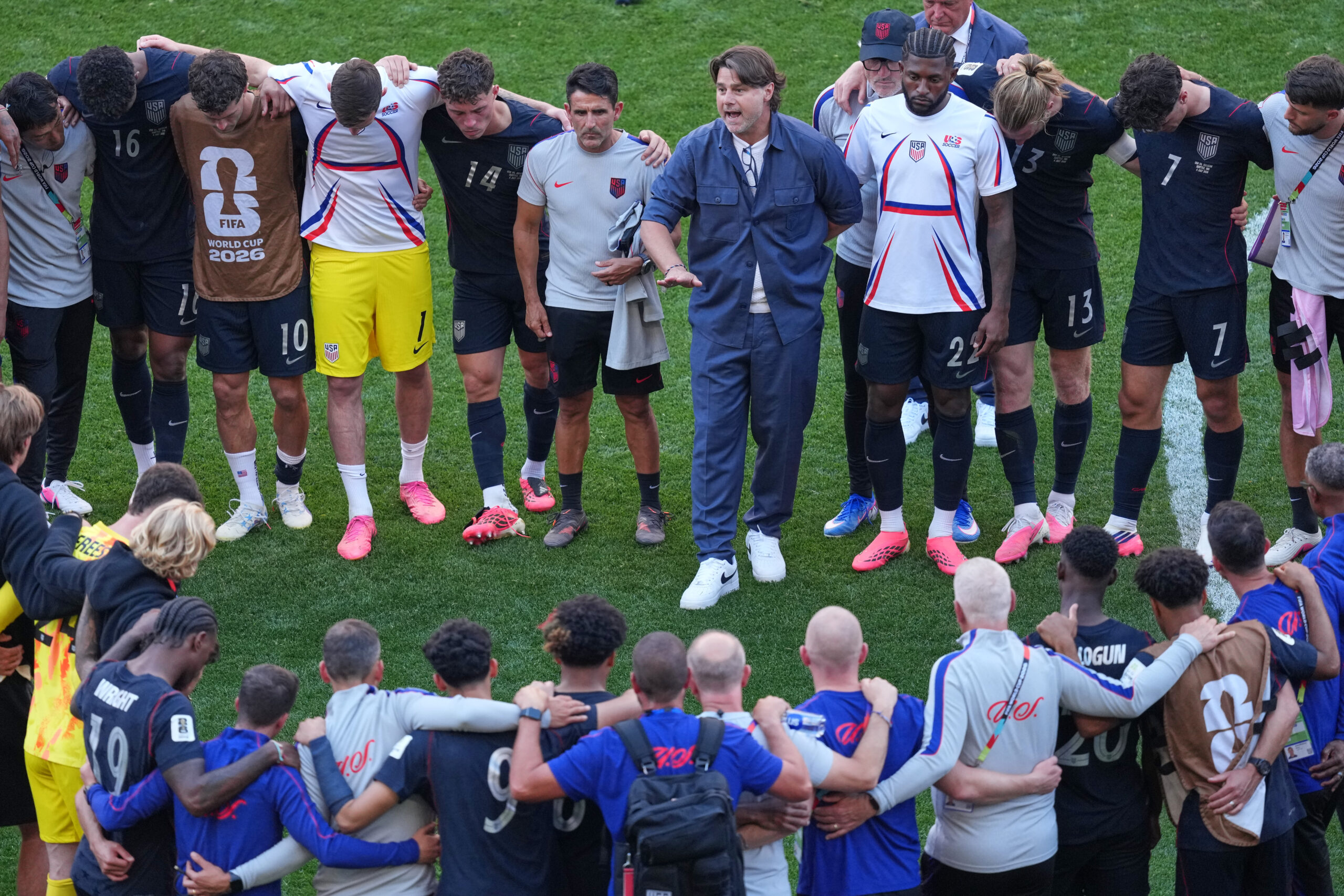
Mauricio Pochettino (center) addressing players and staff after the loss.
If the Phillies end up taking a pitcher with the No. 36 pick in the upcoming draft, the MLB network will have the perfect analyst on hand to break it down.
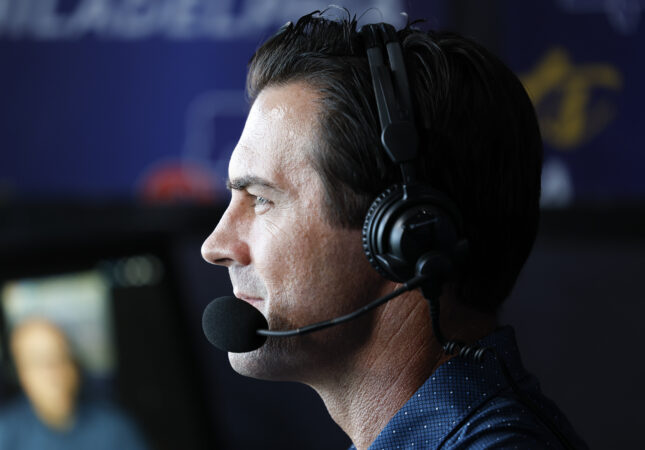
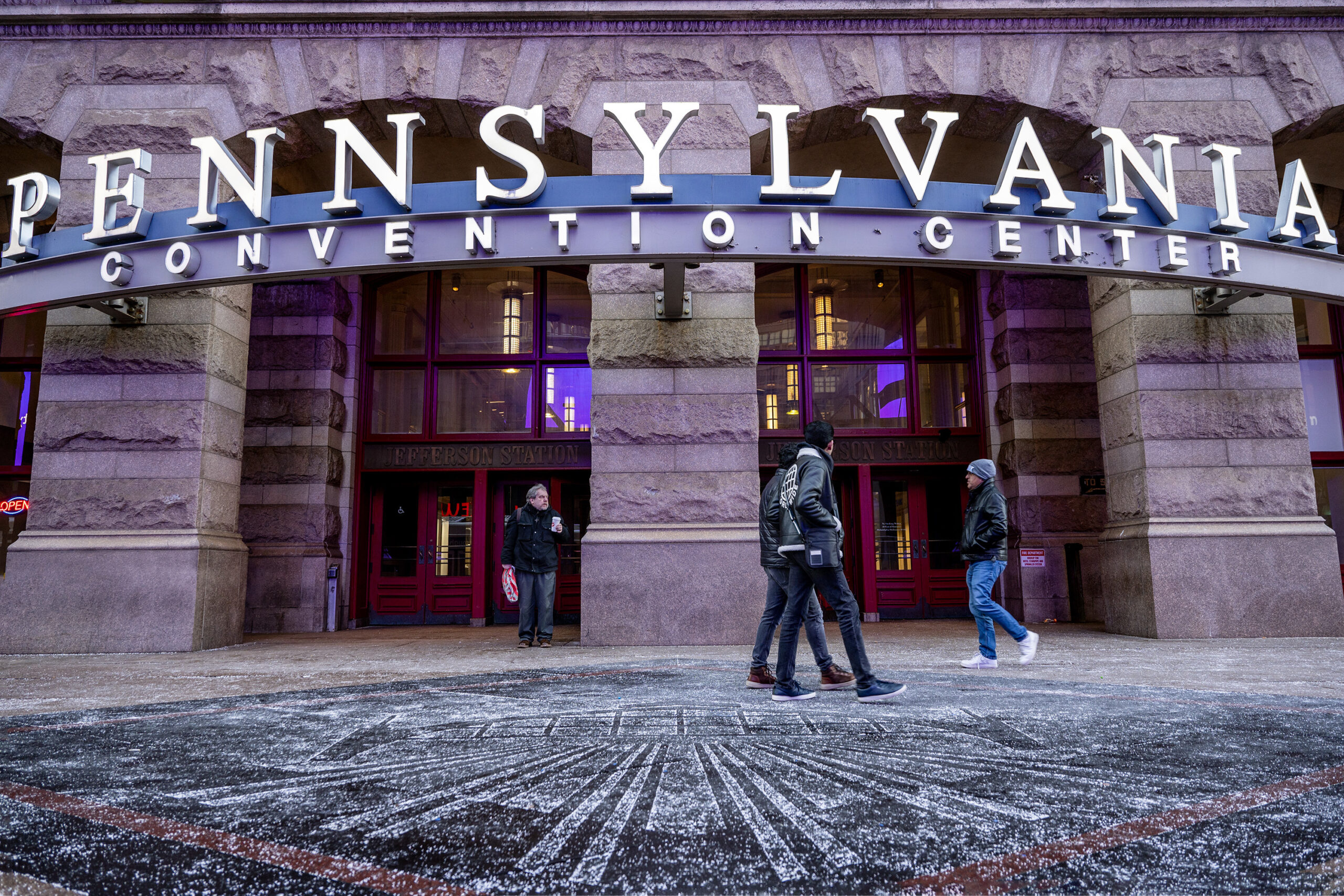
Cole Hamels, the 2008 World Series MVP and current NBC Sports Philadelphia broadcaster, is joining MLB Network’s live coverage of the 2026 MLB draft, which kicks off Saturday afternoon at 1 p.m. at the Pennsylvania Convention Center.
Longtime MLB Network coordinating producer Chris Roenbeck, who is working his fourth draft, said they’re always looking to add a “special wrinkle” to their coverage. With this year’s draft taking place in Philadelphia, the stars aligned to add Hamels to their broadcast.
“When we started brainstorming months ago, we quickly thought of Cole, given his decorated career with the Phillies and being a first-round pick,” Roenbeck said. “We’ll go to him early and often for pitching insights, relying on his unique perspective, which will only enhance our broadcast.”
Hamels is the only new addition to MLB’s Network’s draft coverage, which will be hosted by Greg Amsinger and feature analysis by Mark DeRosa, Harold Reynolds, and former Colorado Rockies general manager Dan O’Dowd.
“We’re beyond excited to have Cole part of our draft team,” Amsinger said, noting Hamels’ “draft experience and pitching expertise will take our show to the next level.”
“Certainly, we would love to have him every weekend,” Alexandra Matcham, the vice president of content for NBC Sports Philadelphia, told The Inquirer in March.
Hamels won’t be the only Philly addition. The opening of MLB Network’s draft coverage will be voiced by Black Thought (aka Tariq Trotter), lead MC of the Philly hip hop group The Roots.
NBC will broadcast the first 10 picks of the MLB draft
The 2026 MLB draft will take place at the Pennsylvania Convention Center in Center City.
Hamels and company will be on hand to discuss the Phillies’ No. 32 pick, but MLB Network won’t air the first 10 picks of the draft
Why? Because NBC will be broadcasting the first hour and a half of this year’s MLB draft as part of their three-year TV rights deal with MLB, taking over for ESPN.
As a result, the MLB draft will begin at 1 p.m. Saturday on NBC before coverage shifts to MLB Network at 2:30 p.m., picking things up with the No. 11 pick.
NBC will carry MLB Network’s production, so you won’t see Mike Tirico and crew this weekend.
The entire draft will stream on Peacock, which will simulcast MLB Network’s coverage after NBC cuts away to cover the American Century Championship, often described as the Super Bowl of celebrity golf tournaments.
The draft streaming on Peacock is good news for YouTube TV subscribers, where MLB Network has remained dark for three years due to a contract dispute. The network is also available to stream as part of MLB+, beginning at $5.99 per month.
The MLB Network has broadcast the draft since 2009. ESPN was the first network to broadcast the draft, which aired the first round live on ESPN2 in 2007.
Quick hits
Malik Tillman reacts after the U.S. was eliminated from the World Cup by Belgium Monday.
“This doesn’t have to be the last soccer you watch for the next four years.” That was John Strong, Fox’s lead World Cup announcer, pleading with American fans after the U.S. was eliminated from the World Cup by Belgium Monday.
Credit to Delran native and two-time World Cup champ Carli Lloyd, who wasn’t afraid to criticize U.S. star Christian Pulisic after the United States’ disappointing loss.
On a brighter note for American football fans, the NFL preseason is less than a month away. The annual Pro Football Hall of Fame game, featuring the Arizona Cardinals and Carolina Panthers, kicks off Aug. 6. The Eagles’ first preseason game against the Baltimore Ravens is one week later on Aug. 15.
What amazes me about the fact that America turns 250 on Saturday is that I’ve been alive now for 27% of U.S. history. When I was 17 and watched the Bicentennial parade of tall ships down the Hudson River from my dad’s conveniently located Manhattan skyscraper office on July 4, 1976, I thought I was celebrating ancient history. I was wrong. In a big, diverse world, the United States remains a young adult among nations. Like most young adults, we have a lot of issues.
Trump thinks anything besides stealing the election is ‘a big yawn’
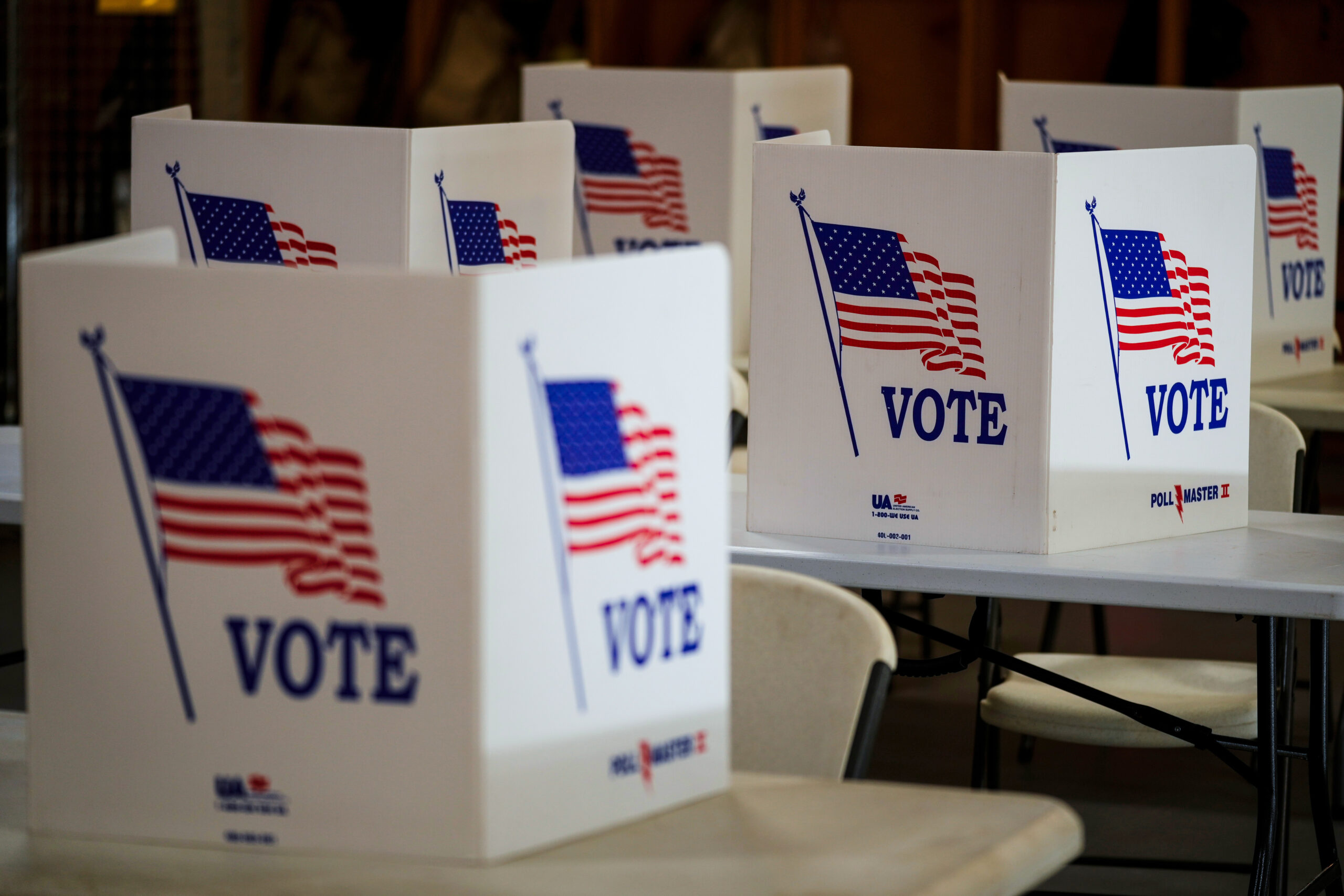
Voting booths are set up at a polling place in Newtown in 2024.
Donald Trump gets a lot of flak, and deservedly so, for telling so many lies. On Monday, he held an Oval Office press availability, and much of what he said — false claims that other nations don’t have birthright citizenship or mail-in voting — was flat-out untrue.
But nothing is scarier than when the 47th president speaks the truth about what’s really on his mind. Because the only thing that’s in Trump’s brain right now is stealing the November midterm election by changing the rules in his favor … or worse. If Trump’s vocal cords were not so weak and diminished, he’d have been screaming the quiet part out loud.
“Here’s what I would like to say,” Trump said of the still-unsigned housing bill, which passed in the House by a 396-13 vote. “It’s a yawn. Some people say it’s wonderful. To me, compared to the SAVE America Act, just about everything is a big yawn.”
In quainter times, Trump’s disrespect for the housing bill — a grab bag of measures all geared toward encouraging contractors to build more units, which would lower both purchase prices and rents — might be the political gaffe of the year. Currently, only 29% of Americans think it’s a good time to buy a house, and nearly two-thirds are more likely to vote for a Congress member who helped lower prices. Republicans who voted for the bill are desperate for a win.
Trump doesn’t care. He’s forgotten his “forgotten Americans” who think the rent is too damn high, not to mention the GOP members of Congress who’ve followed him off the cliff. But that’s not even close to the most alarming thing about Trump’s Oval Office moment of truth.
The president says the only thing he cares about — even with his conflict in Iran becoming another “forever war,” and with the economy down the toilet for everyone who’s not a tech trillionaire — is a bill that critics say would be a disaster for free and fair U.S. elections. One report found that some 12 million people who fairly and successfully voted in the 2020 presidential election don’t have the documentation — such as a birth certificate or passport — that the bill requires.
We don’t know how such a massive drop in turnout would change the election results, or whether a weakened Trump can pressure theGOP to find a way to pass a bill with zero Democratic support. But we do know this: The president’s maneuvers are not even the worst thing Trump has done this month on the steal-this-election front. Not by a long shot.
The Trump regime has been signaling for months that it sees the U.S. intelligence community — spy agencies like the CIA — not as a tool for finding out what comes next in the Persian Gulf, or if or when China is invading Taiwan, or when Vladimir Putin’s Russian empire will fall. No, Trump wants secret agents who can creatively invent theories of foreign-born election fraud that would demand a strongman response.
We saw this coming back in January, when the regime dispatched Trump 47’s first director of national intelligence, Tulsi Gabbard, to Fulton County, Ga., to oversee an FBI raid of voting materials from the 2020 election that Trump, with no evidence, continues to dispute. That link made it clear the regime is looking to create links to foreign actors.
When Gabbard left the administration this spring, Trump named a temporary replacement who can serve through the November election: Bill Pulte, who also continues to lead the Federal Housing Finance Agency. Pulte lacks a key prerequisite for his new job — any experience in intelligence whatsoever — but has the only quality that matters to Trump: undying loyalty. Pulte’s main focus in the housing job has been combing through the mortgage records of the president’s political enemies, looking for undotted i’s and uncrossed t’s that could be used to manufacture criminal charges from nothing.
In just a few days at intelligence, Pulte has not disappointed his boss. He showed up Monday and immediately began firing current staffers, with a rumored list of hundreds. The steep reduction in eyeballs on the world’s trouble spots is disturbing, but what’s even more alarming is the one person Pulte has hired.
The newsletter SpyTalk described Pulte’s new chief of staff, Christina Norton, as “a party-loving MAGA activist with no background in national security issues but who last year boasted of running ‘the largest election integrity operation the Republican Party has ever seen’ …”
The pairing of Pulte and Norton is an alarm bell that the national intelligence team under Trump will have one job: investigating fantastical “foreign election plots” that will be cited to justify radical measures like sending troops to polling places, seizing voting machines, or worse.
SpyTalk noted that Norton, in her active Instagram feed, “talks about supervising more than 200,000 Republican poll watchers ‘standing guard’ at polling booths and vote-counting stations across the country” during her 2024 stint at the Republican National Committee.
Yet, intelligence is just one of many tools in the federal government that the obsessive Trump is working to activate ahead of a November election that polls suggest will be a “blue wave” for Democrats hoping to retake Capitol Hill. Trump has issued several executive orders seeking to assert federal control over voting, which has been a state and local function throughout 250 years of American history.
That effort suffered a bit of a setback Monday, when the U.S. Supreme Court ruled that states can continue to count mail-in ballots that are postmarked before Election Day but arrive after the polls have closed. But that will not stop the Trump regime from politicizing the U.S. Postal Service ahead of November.
Last week, Postmaster General David Steiner told Congress that USPS plans not to deliver mail-in ballots in states that don’t turn their voter rolls over to the Trump regime, a demand many governors have resisted so far. “President Trump does not believe that elections he loses are valid,” Democratic Michigan Sen. Elisa Slotkin said after the hearing. “It’s all part of his authoritarian playbook.”
This all feels very familiar. In the lame-duck days after Trump’s 2020 election loss to Joe Biden, the 45th president — instead of packing up to return to Mar-a-Lago — got busy putting in a new team at the Pentagon, ordering the U.S. Department of Justice to probe alleged voter fraud, challenging vote count certifications in court, and urging state lawmakers to seat rival slates of electors. Most pundits laughed this off, but I wrote a column — “So, is President Trump staging a coup, or what?” — that ran on Nov. 10, 2020, nearly two months before the actual attempted coup on Jan. 6, 2021.
Now Trump is not only staging another coup, but he is yelling about it, in your face. There is nothing he won’t try over the next five months to prevent a Democratic Congress from investigating how he and his family have made billions of dollars off the American presidency.
When Trump says anything that’s not election meddling is a “big yawn,” this should be our wake-up call. The time for a full-court press — lawsuits, public hearings, and investigative journalism — can’t wait until after the election. The new putsch has already begun.
Yo, do this!
If you didn’t think I raced to download the new audiobook of Zayd Ayers Dohrn’s tale of growing up in the radical Weather Underground in the 1970s and ’80s — Dangerous, Dirty, Violent, and Young: A Fugitive Family in the Revolutionary Underground — then you must be new around these parts. Dohrn had already used his unique access to his parents — Bernardine Dohrn and Bill Ayers, revolutionary royalty — and their friends to tell a history of that era’s far left in 2022’s award-winning podcast, Mother Country Radicals. His new book aims to go deeper into the psychology of what it was like to be raised as a toddler on the run from the FBI, or whether bombings and bank robberies can change the world. That’s a question — also explored in this viral essay — with new resonance in the Trump era.
A few weeks ago, I suggested that folks see the new movie The Sheep Detectives. The film is already streaming on Amazon Prime (which produced it), and Sunday’s rare night off for the World Cup offered the excuse to finally watch. I can now highly recommend it. The movie — with an adapted script by the acclaimed showrunner of HBO’s Chernobyl, Craig Mazin — manages to merge police procedural cliches with moving thoughts about prejudice, existentialism, and what it means to belong to a flock. Even a flock of talking sheep.
Ask me anything
Question: Is Markwayne [Mullin, the Homeland Security secretary and former Oklahoma senator] the least qualified cabinet level official in American history? — Richard McGovern (@richardmcgovern.bsky.social) via Bluesky
Answer: Good question from Richard, a fellow long-suffering Philadelphia Union fan. Not because I know the answer, when there are rivals for the title like Donald Trump’s war-losing “Secretary of War” Pete Hegseth, to name just one. But Mullin is now behind a move so outlandish that it showed me I haven’t lost my capacity for shock after all. This weekend, Trump nominated a previously unknown former Oklahoma state trooper named Lance Schroyer to run U.S. Immigration and Customs Enforcement, a powerful agency with 22,000 agents and a budget of around $30 billion a year. It turns out that just recently, Schroyer was heading a security detail for Mullin in Washington, D.C., and has become a close enough friend that he is an occasional dinner guest. Yes, he hired his bodyguard to run the equivalent of a large corporation. Stay tuned for all of this to unravel.
What you’re saying about …
I guess we’re not as close as we thought, as very few of you were eager to share your July Fourth plans with me or discuss what America’s 250th birthday means at such a dark moment. The ones who did reply are looking forward to spending time with family and friends, but all that patriotic jazz, not so much. “Probably, we will have our usual picnic and take the grandkids to see the local fireworks, but I have no intention to watch any special programming or parades, etc.” Marianne Zollers wrote. “It will just make me sad. Such a different feeling compared with the Bicentennial which was such a joyous and happy occasion for my entire family.”
📮 This week’s question: One of the big stories of 2026 that’s finally getting a lot of attention is the success of more progressive Democrats, including democratic socialists, in key primary races against party moderates. Is this a good thing, lifting up candidates who’ll fight against Trump and for the working class? Or do you worry Republicans will capitalize against their opponents with more left-wing views? Please email me your answer and put the exact phrase “2026 progressive Democrats” in the subject line.
Backstory on crossing the World Cup off my bucket list
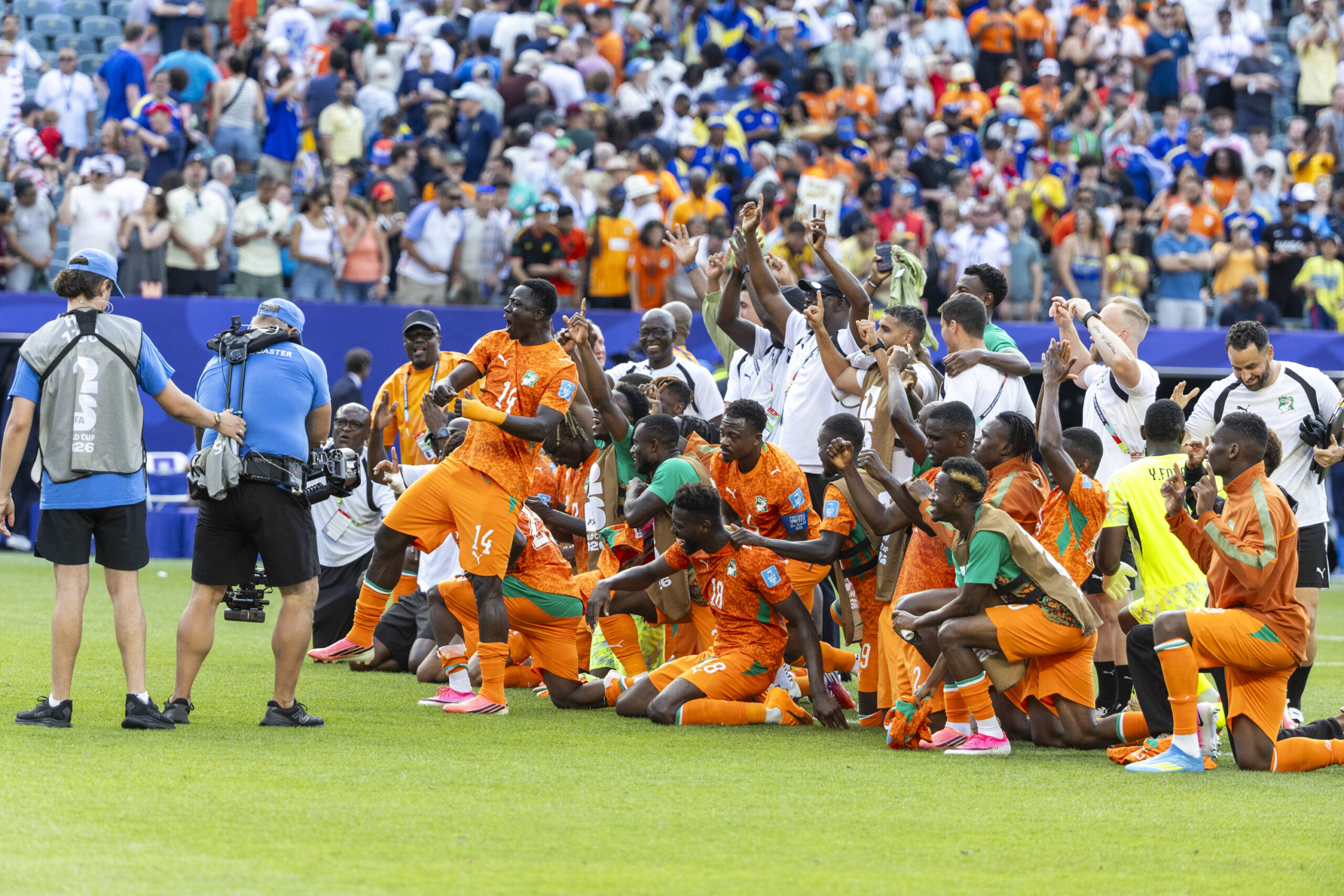
The Ivory Coast team celebrates their win in the middle of the field against Curaçao with a score of 2-0 for the FIFA World Cup at the Lincoln Financial Field in Philadelphia on Thursday.
I can’t say exactly when, but at some point during my first-ever in-person World Cup match between Côte d’Ivoire and Curaçao, watching from the thin air of the top deck of the temporarily renamed Philadelphia Stadium, it struck me: My decades-long dream of being there for the world’s greatest sporting event was not like what I’d imagined.
And yet, in some weird, quasi-religious acid test kind of way, it was even better.
I’ve been to countless sporting events going back to 1968, but never one where the vibe was basically: So happy to be here. I’ve certainly never been to a game where the PA announcer uttered something before the match about giving a big hand to both teams — and the sold-out crowd obliged. Fans would have burned down Section 220, Row 27, where I was sitting, if this had happened during an Eagles-Cowboys game. During a tense match with a place in the Round of 32 on the line, the gathering repeatedly did the wave and threw their vocal cords more behind the halftime singalong of the Bruce Channel 1961 oldie “Hey! Baby” than either of the two decisive goals by Côte d’Ivoire’s Les Éléphants.
Up in nosebleed country, many of the fans repped soccer jerseys, but they were for club teams like Liverpool or Christian Pulisic’s USA No. 10, joined by me in my Philadelphia Union T-shirt. We were Philly’s soccer aficionados, desperate to be a part of maybe the only time in our lives the World Cup would take place in the City of Brotherly Love. A match pitting the smallest nation to ever qualify for the FIFA tourney (Curaçao, population 158,000) and an African underdog was pretty much the only way to crash the party without a bank loan. (Full disclosure: I paid about $280 apiece for two seats on StubHub — much like buying a stock, it could have been more or less, depending on how one timed it.)
No, this wasn’t much like the Eagles games played here, where excitement merges with pins and needles of anxiety. On a picture-perfect late afternoon in June, bookended by the Philadelphia skyline and a lazy Delaware River, it felt more like a rock concert. It wouldn’t have seemed out of place if folks had started batting a beachball around at this soccer Woodstock. There was a mind-meld of the faithful, who saw FIFA and its commercialization as the devil, with the loudest boos for the TV-ad-laden “hydration breaks,” but with — I swear to God — a loud roar for the announcement of the attendance: 68,324. In a city where a 1976 Bicentennial match of some of the world’s best players took place in a mostly empty stadium, soccer is indisputably here to stay.
Fans walked out of Philadelphia Stadium beaming less over the final score and more about the instant karma of the afternoon. After years of tavern taunts and ridicule from sports-talk radio, localsoccer die-hards lived long enough to see America’s founding city become the world’s co-capital of the sport that, for its true believers, passes all understanding. It was all too beautiful. If I can somehow make it to Spain or Portugal or Morocco in 2030 (because, hey, I need a new bucket list now), I will be sure to wear some flowers in my hair. Soccer time will be a love-in there.
What I wrote on this date in 2019
I’ve been writing about the topic of journalism reform since the mid-2000s, or around the time it became clear to me and a lot of other folks that newsrooms needed to change or die. My fear, circa 2006 or so, was that we’d start seeing entire communities without newspapers or the accountability journalism that flows from that — which is exactly what happened in Youngstown, Ohio, when its paper closed seven years ago. I wrote: “The loss of the Youngstown Vindicator every morning doesn’t mean that the region’s 200,000 people will no longer be getting information. It just increases the likelihood they’ll be getting bad information — intentionally manipulated, and sometimes out-and-out fakery.”
Only one column this week, as I took a well-deserved day off to attend the World Cup. In that piece, I looked at the sorry state of justice in America on the eve of its 250th birthday, with an emphasis on the outrageous sentences — ranging from 30 to 100 years — handed down to left-wing anti-ICE protesters convicted of rioting in North Texas. The U.S. Department of Justice that pushed these virtual life sentences is also pardoning the right-wing rioters of Jan. 6, 2021, as well as billionaire fraudsters who donate money to MAGA players and causes. They’ve made a mockery of liberty and justice for all.
Let’s be honest: People — not to mention sheep (see above) — can’t get enough of a murder mystery, especially a real-life true crime. It’s been a while since a crime saga has riveted Philadelphia readers as much asthe stench of possible foul play that is growing at a home on West Chew Avenue in the city’s Olney section that police have branded a crime scene as they search for clues in the disappearance of two local women. Since the case broke open last week, nearly a dozen Inquirer reporters have produced riveting articles about the discovery of drugs, chemicals, and “a significant amount of blood” at the Horsch family residence, profiles of the two missing women — Amy McHale and Blair Tonzelli — and interviews with neighbors who talked about living next door to “a house from a scary movie.” The backstory here is that — whatever you may have heard about AI — it still takes a lot of human shoe-leather to get to the bottom of a story like this. Subscribing to The Inquirer is a twofer: You get to hurdle the paywall to read compelling journalism and feel good about being a supporter.
By submitting your written, visual, and/or audio contributions, you agree to The Inquirer’s Terms of Use, including the grant of rights in Section 10.
Over the last several weeks, Philadelphia has become a hub of World Cup activity. Folks are packing bars, some of which are open until 4 a.m., for watch parties, hosting rallies on the Art Museum steps, and making their way to South Philly for a match at Philadelphia Stadium or to Lemon Hill for FIFA Fan Fest.
Most of that excitement has revolved around the nations and players descending on the city for games. But now, as the U.S. men’s national soccer team was to play its final group stage game on Thursday, against Turkey outside Los Angeles, the Hershey Co. has brought another World Cup experience to the city, one that focuses on USMNT star and Hershey, Pa., native Christian Pulisic.
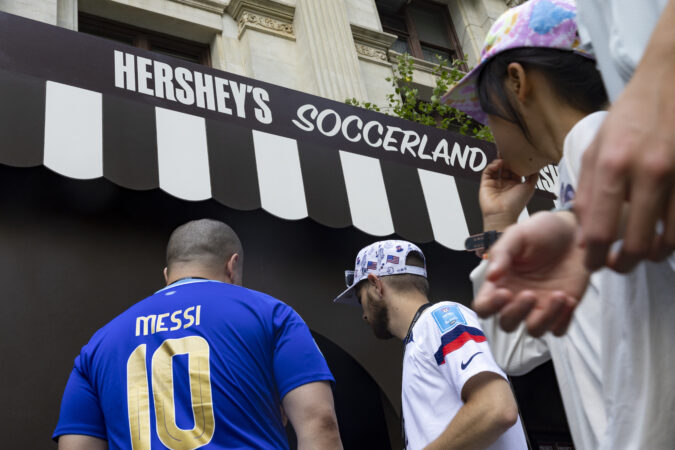
A family waits in line to participate in the final soccer station at the Hershey’s Soccerland pop-up event at Dilworth Park on Thursday.
On Thursday, the candy company based in Hershey unveiled its Soccerland at Dilworth Park next to City Hall, a celebration of all things Pulisic.
“Hershey Soccerland represents our efforts to really support Christian Pulisic as he’s on the biggest world stage for the World Cup,” said Hershey senior brand manager Katrina Vatter. “He’s a Hershey native. So we want him to know that no matter the fact that he’s playing on the world’s biggest stage, we are here to have his back.”
With the smell of chocolate in the air, the pop-up event features a three-hole golf circuit played by kicking a ball, giving fans a chance to score limited-edition Hershey’s Pulisic’s bars that feature custom wrappers with his printed signature, as well as a “Pulisic’s Playground” T-shirt.
There’s also a paint-by-numbers station, allowing fans to contribute to a mural of ChocolateTown’s hero.
“No matter where soccer has taken me, my story started in Hershey,” Pulisic said in a press release. “Growing up there shaped who I am, and knowing that support is always behind me gives me a sense of comfort and confidence wherever I play. Being able to celebrate that connection with Hershey’s means a lot to me.”
An Ivory Coast fan kicks a soccer ball on the second station of the pop-up event at Dilworth Park, outside City Hall on Thursday.
“Philly is right in the neck of the woods from Hershey, about an hour away,” Vatter said. “So we thought it was a great way to rally the state of Pennsylvania to continue to support Hershey’s and really show everybody what Christian’s hometown is all about.”
Soccerland is open until 6 p.m. on Thursday and continues Friday from 11 a.m. to 7 p.m. and Saturday from 9 a.m. to 2 p.m.