In recent years, a string of the state’s iconic diners have shuttered their doors. New state legislation aims to keep the lights on at those still in business.
The bill, which was introduced in the New Jersey Senate in January, would provide some diners and other historic restaurants with tax benefits.
“Diners, and specifically historic diners, are a cornerstone of our great state, having served residents and visitors for many decades. They are part of our culture and our history, and we have a duty to help them thrive,” State Sen. Paul Moriarty of Gloucester County, a sponsor of the bill, said in a statement Thursday.
The legislation, which would establish a registry of historic diners and restaurants, would give the businesses a tax credit of up to $25,000. Only diners and family-owned restaurants operating for at least 25 yearswill qualify.
The bill has been referred to the Senate Budget and Appropriations Committee.
“It has been heartbreaking to see so many of these well-known establishments close or dramatically cut their hours,” Moriarity said.
Where have diners closed in New Jersey?
The origin of the modern diner can be traced back to a horse-drawn lunch wagon in 19th-century Rhode Island and the model has evolved since then. New Jersey has been coined the “diner capital” of the U.S. but has seen closures in recent years due to increased operating expenses, the challenge of finding employees, and the impact of the pandemic.
The Cherry Hill Diner closed in 2023 after 55 years in business and following the co-owner’s unsuccessful search for a buyer. South Jersey’s Gateway Diner in Gloucester County closed that same year amid construction of the Westville Route 47 Bridge and the state’s acquisition of the site. The Red Lion Diner in Burlington County also sold, making way for a Wawa.
In January 2024, the Star View Diner in Camden County closed. Last year, the Collingswood Diner shut its doors in August, to be replaced by a marijuana dispensary.
The trend extended in Philadelphia where the Midtown III closed in 2020. Last year, the Mayfair Diner in Northeast Philadelphia was listed for sale.
A popular gluten-free bakery is coming to the Main Line.
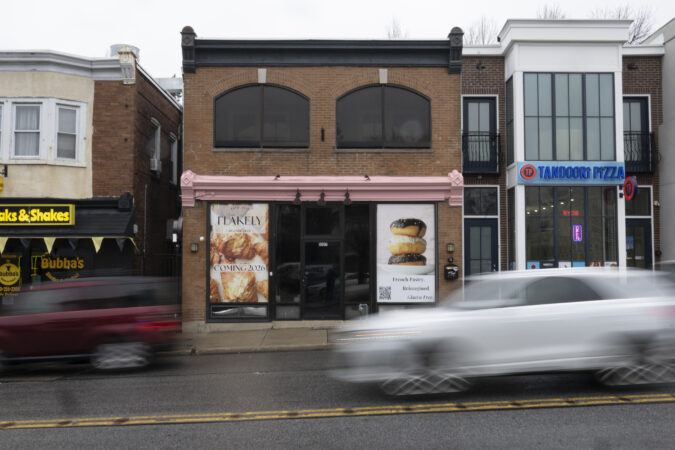
Flakely is moving from behind the bright pink door at 220 Krams Ave. in Manayunk to a Bryn Mawr storefront in early February, said owner Lila Colello. The new takeout-only bakery will replace a hookah lounge at 1007 W. Lancaster Ave.
“We’ve really outgrown our space,” Colello told The Inquirer. Manayunk “wasn’t ever meant to be for retail.”
A trained pastry chef who worked for the Ritz Carlton and Wolfgang Puck Catering, Colello was afraid she’d have to give up the best things in life — bread and her career — when she was diagnosed in 2010 with celiac disease, an inflammatory autoimmune and intestinal disorder triggered by eating gluten.
Instead, Colello spent the next seven years finding ways to get around gluten, a protein found in grains like wheat, rye, and barley (and thus most breads, bagels, and pastries). She perfected kettle-boiled bagels and pastry lamination before starting Flakely in 2017 as a wholesaler.
Colello moved into the commercial kitchen at Krams Avenue in 2021, where customers have spent the last four years picking up buttery chocolate croissants, brown sugar morning buns, and crusty-yet-chewy bagels from a takeout window in an industrial parking lot. Inquirer restaurant critic Craig LaBan has called Colello’s bagels “the best he’s tasted outside of New York,” and in 2024, Flakely was voted one of the best gluten-free bakeries in the United States by USA Today.
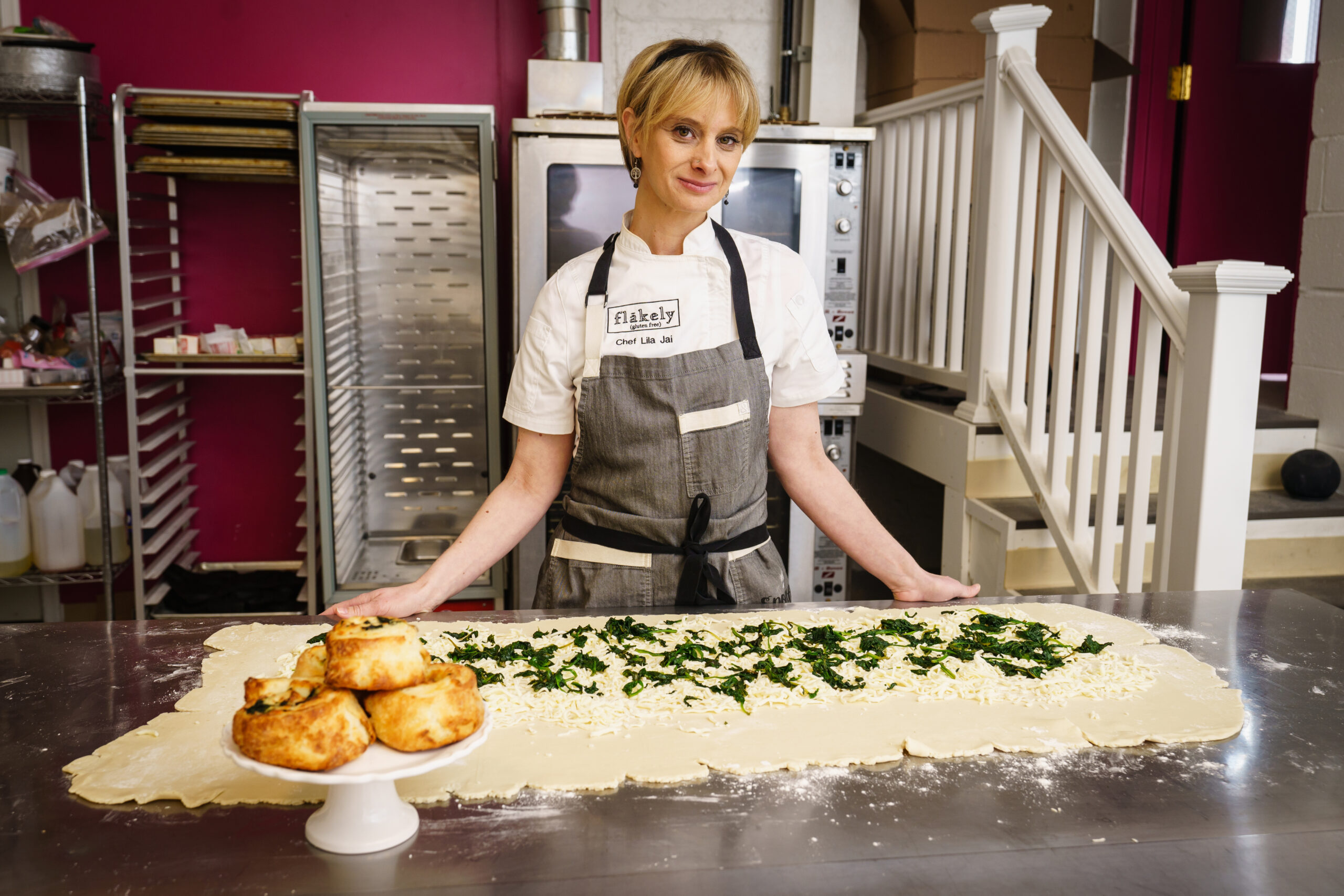
Lila Colello, owner and head baker at Flakely, helped patent a way to laminate gluten free dough for croissants.
Flakely’s industrial Manayunk location has required some concessions, Colello said: The majority of their goodies are par-baked and frozen by Colello and three full-time employees for customers to take and bake at home. Otherwise, Colello explained, the lack of steady foot traffic would lead to lots of wasted product.
In Bryn Mawr, Flakely will be a fully functional takeout bakery with a pastry case full of fresh-baked goods, from full-sized baguettes and browned butter chocolate chip cookies to danishes and Colello’s signature sweet-and-savory croissants. A freezer will also include packs of Flakely’s take-and-bake doughs, bagels, and eventually, custom cake orders.
Once she’s settled in, Colello said, she hopes to run gluten-free baking classes and pop-up dinners out of the storefront — offerings (besides the ingredients) that she hopes will differentiate her from other bakeries in the area.
“My vision is for this to be a magical space where people can come in and leave with a fresh croissant, which people can’t really do” when they’re gluten-free, said Colello, who lives in Havertown. “We offer our customers things they miss. That’s kind of our thing.”
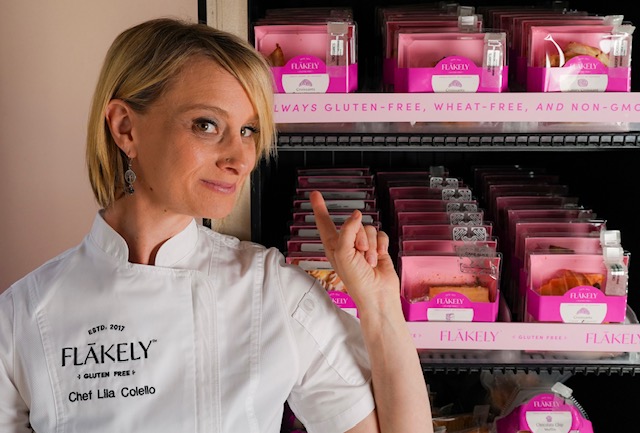
Flakely owner Lila Colello poses in front of one of Flakely’s pink gluten free pastry ATMs, which vend take-and-bake goods at four locations in the Philly area.
What about the pastry ATMs?
The permanent storefront does not mean Flakely’s signature pink pastry ATMs will disappear, said Colello. But they will move.
Colello installed Flakely’s first pastry vending machine inside South Philly’s now-shuttered Salt & Vinegar. With the tap or swipe of a credit card, the smart freezer would open to let customers choose their own take-and-bake pack of croissants, pop-tarts, muffins, or danishes. Using it felt like a sweet glimpse into the future.
Flakely currently operates pastry ATMs inside Collingswood grocer Haddon Culinary, the Weaver’s Way Co-op in Ambler, Ardmore smoke shop Free Will Collective, and Irv’s Ice Cream in South Philly, where enterprising customers top their pastries with scoops fresh out the freezer.
Irv’s ATM will make the move to Reap Wellness in Fishtown on Jan. 5 when the ice cream shop closes for the season, Colello said. And come February, the smoke shop’s ATM will transition to Lucky’s Trading Co., a food hall at 5154 Ridge Ave. in Roxborough. The hope, Colello said, is to space the locations out enough so she’s not competing with herself.
“We’re finally in the middle of where everything is,” Colello said. “And that’s kind of the goal.”
Flakely, 1007 W. Lancaster Ave., Bryn Mawr, 484-450-6576. Hours: 9 a.m. to 4 p.m. Tuesday to Saturday.
The buyers: Brandon Balcom, 44, vice president of product operations at BCD Travel; Dane Cox, 39, owner of Dane Cox State Farm Insurance Agency
The house: A 3,767-square-foot, ranch-style home in Collingswood with three bedrooms and three baths built in 1955
The price: Listed for $695,000; purchased for $735,000
The agent: Amy Telfair, Telfair Collective
The Ask: Brandon Balcom and Dane Cox were not looking to buy a new house. They had just purchased a fixer-upper on a beautiful oversized lot in 2021. “It was in the perfect spot,” Balcom said, “and they always say, ‘you can’t move your house.’”
But it turned out their perfectly located house needed to be rebuilt from the foundation up and the lengthy zoning process was wearing them down. Two years into a renovation with no end in sight, their friend,real estate agent, Amy Telfair, suggested they buy a new house instead. In fact, she knew just the one.
“We chuckled and rolled our eyes, because she’s a Realtor with vested interest,” said Balcom. But the couple agreed to check out the listing anyway.
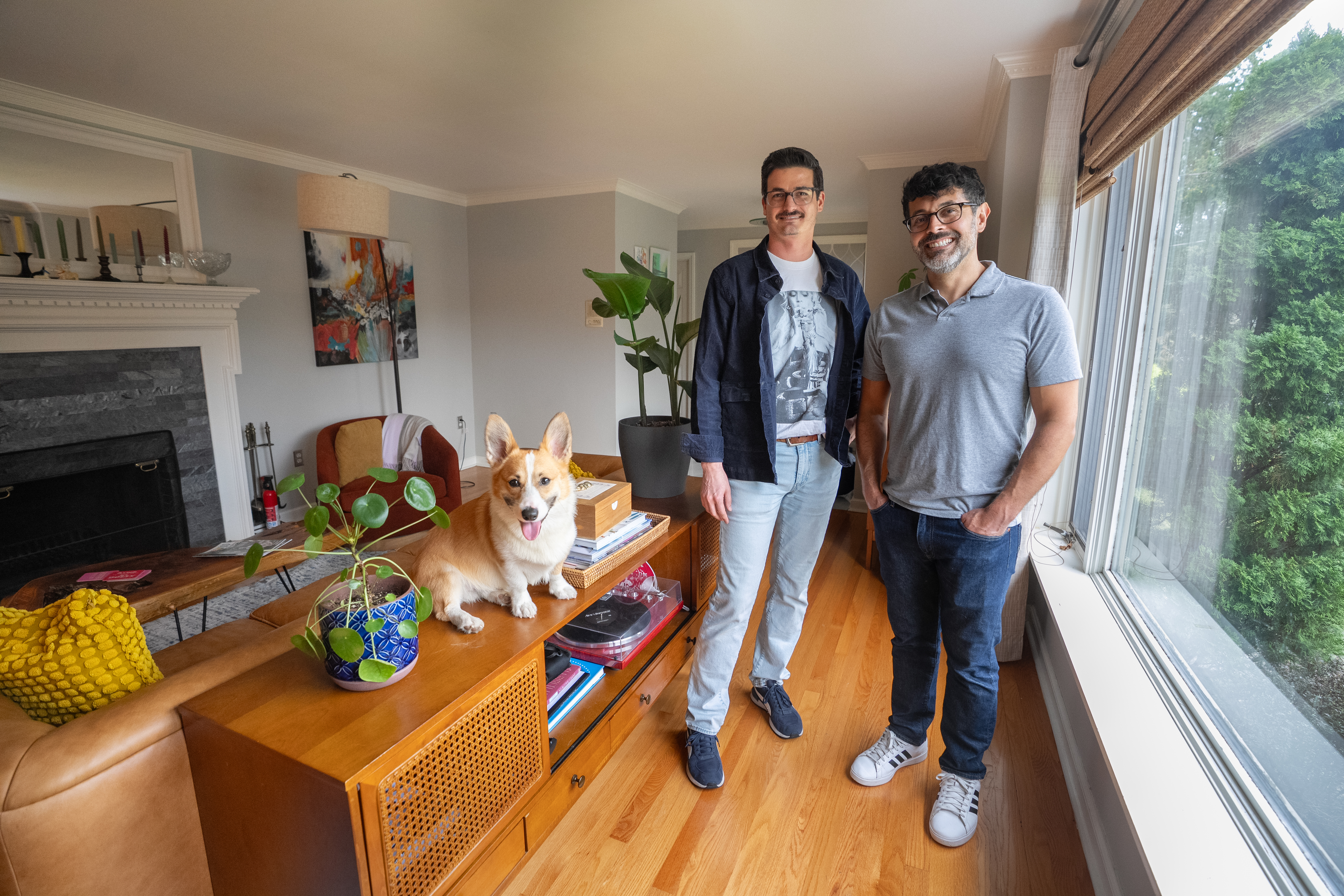
Dane Cox and Brandon Balcom in their living room with their beloved corgy.
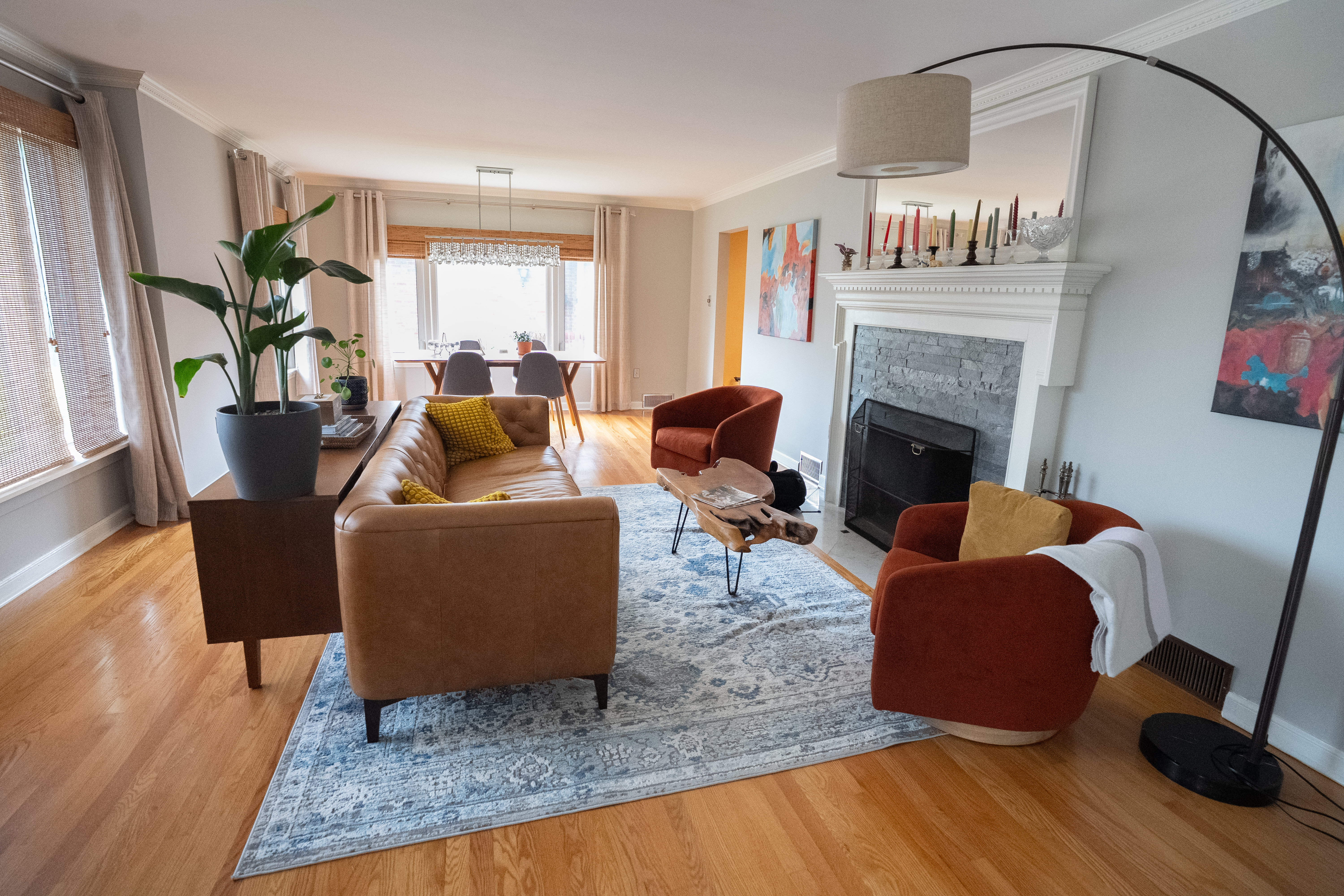
The appeal: The house was designed in the midcentury style they loved, and, unlike their current place, it didn’t need any work. “We started dreaming very quickly about skipping all these steps,” said Balcom. The new house even had a pool, which Balcom said was part of a “years-down-the-line vision” for their current home.
Balcom’s favorite thing was that it was perfect for entertaining, from the bar in the finished basement to the grand fireplace in the living room. When Cox heard his husband gasp at the fireplace, he knew the deal was done.
“I was like, ‘There’s nothing I can say at this point that’s going to convince him otherwise,’” Cox said.
The search: To get ahead of other potential buyers, the couple used a trick they learned while selling their previous house in Minneapolis: they brought their inspector to the showing.
“We wanted to know when we left that day if there was an issue,” said Balcom. Knocking out the inspection early allowed them to waive it as a contingency, which the couple knew from experience would appeal to the sellers.
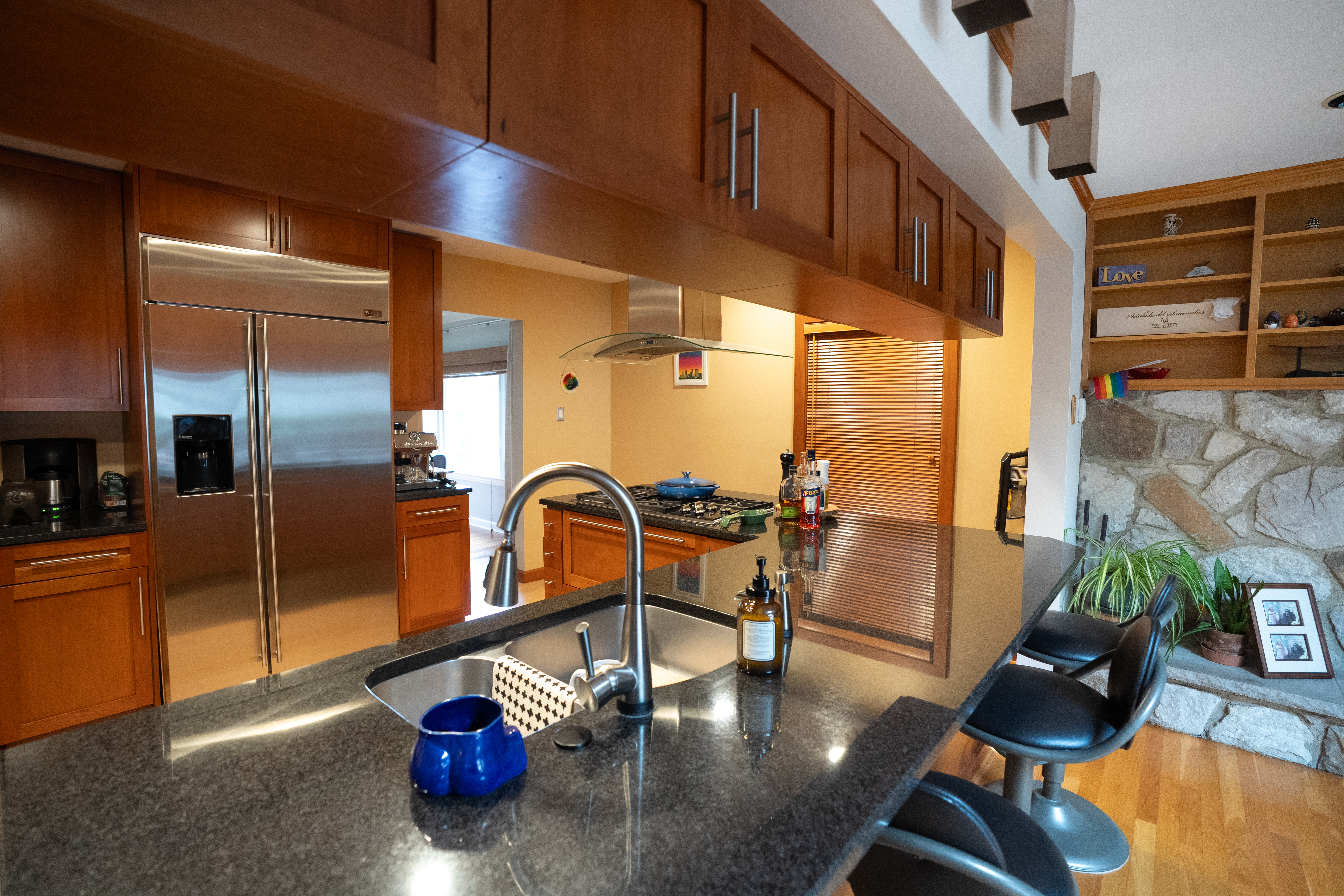
The kitchen of the couple’s home, which is designed in the midcentury style they love.
The couple’s inspector gave them the go-ahead, so they went to Cox’s office and “started scheming,” said Balcom.
The deal: The couple called Telfair, whose first instinct was to get the house off the market. She didn’t want the sellers to show it over the weekend, so she asked what it would take to get the listing taken down that day. They requested an all-cash offer of $735,000 — $40,000 above the asking price. Cox and Balcom agreed, and a legal contract that required the seller to cancel upcoming showings was speedily signed.
The money: Balcom and Cox didn’t have to hand over $750,000 in cash the day they signed the contract. They just needed to “give up any contingency on the need for financing to buy the home,” said Balcom. Documentation showing that they could pay in full would suffice.
They had over $400,000 in savings and brokerage accounts that they could show as proof of funds, and a letter from their parents confirming another $300,000 was available if needed. “You have to have a promissory note or something from your family that says, ‘I will give this amount for the purchase of the home,” Balcom said.
One of the main selling points was the giant fireplace in the living room.
But they didn’t end up borrowing money from their parents. “We just needed it for a moment to show we’ve got cash,” Balcom said.
Instead, they took out a home-equity loan on their fixer upper. “Between when we signed the contract and when we closed, we had time to pull the equity out of our existing house,” said Balcom. The loan provided them with enough cash to cover the remaining cost of their new home.
The move: Balcom said the actual close was anticlimactic. The sellers were out of town so they pre-signed everything for the couple, who left for a family vacation the day after the paperwork was done.
By the time they returned, the sellers had officially moved out. But they left several items that excited Balcom and Cox — including a pool table and a hot tub.
The couple moved in over two months, taking their time to bring each room “online,” said Balcom. “Once we got the furniture, it was like, ‘OK, now we’re using this room.’”
Any reservations? Balcom was surprised that several of the house’s nice-looking appliances were 20 years old. The previous owners “kept such good care of things,” he said.
Some amenities, like the infrared sauna with wireless speakers in the basement, were actually pretty old.
To listen to music, Balcom has to use the sauna’s built-in CD player, because the speakers were made before Bluetooth technology was common. “It’s like a circa-2000s car stereo,” he said, laughing.
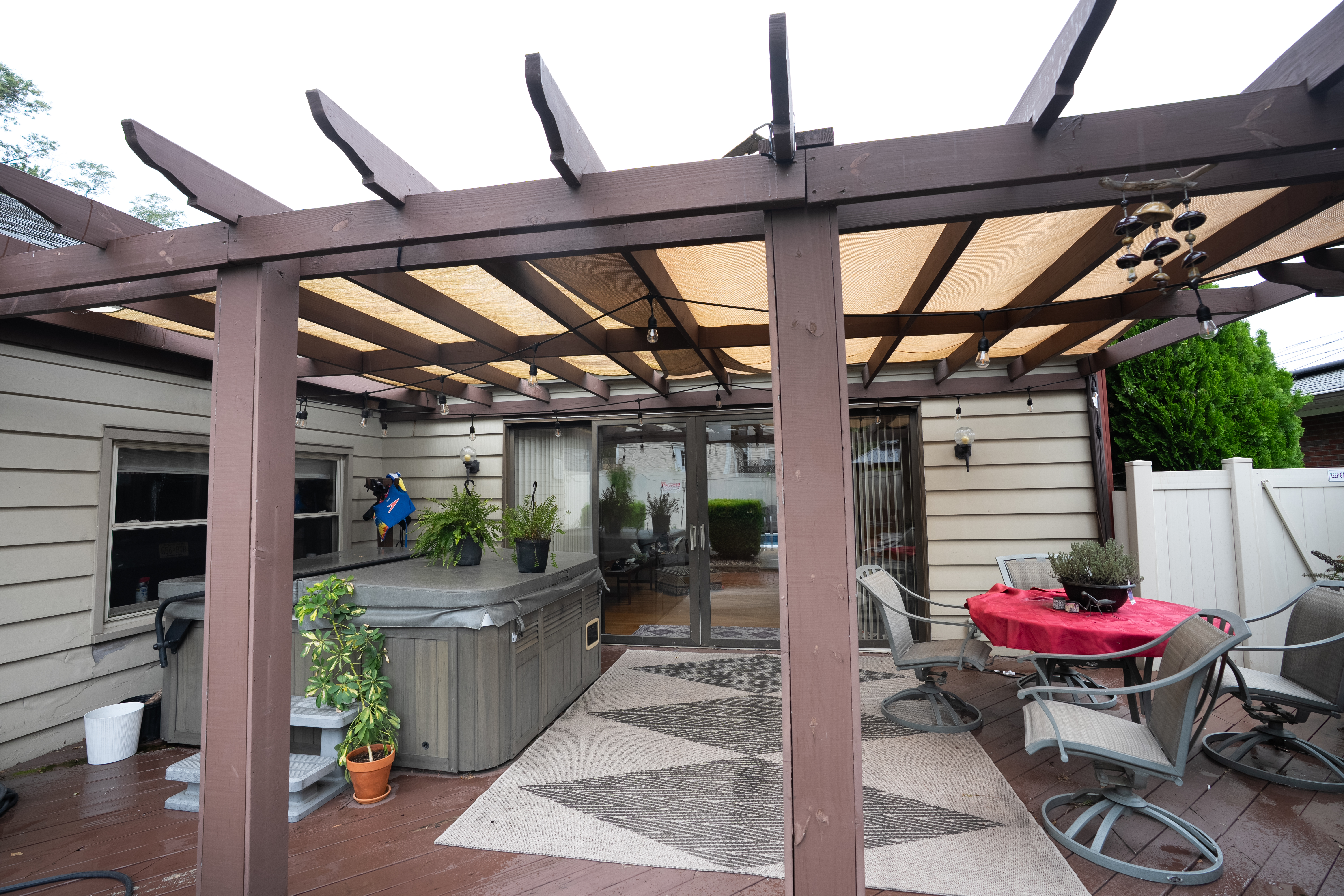
Balcom was excited that the previous owners left the hot tub, even though it only lasted a few months.
The hot tub is 20 years old, too. “It ended up failing at the end of winter,” Balcom said. “I was hoping we’d get two years out of it.”
Life after close: Cox and Balcom haven’t changed anything since they moved in.
“This house doesn’t need anything,” said Cox. Indeed, that’s why they bought it.