Tag: Collingswood

  • Collingswood residents have spent years fighting for backyard chickens. This time, they think they might win.

    Collingswood residents have spent years fighting for backyard chickens. This time, they think they might win.

    Any Collingswood resident over the last 18 years can remember the fight to legalize backyard chickens. Or the second attempt. Or the third.

    Gwenne Baile, 77, knows the efforts well. A Haddon Township resident and the unofficial “Chicken Lady of South Jersey,” Baile initially became interested when she saw Martha Stewart showing off her chickens on TV. After retiring in 2009 from a long career as an ob-gyn nurse, Baile decided she needed a hobby.

    “I started looking into it,” Baile said, “but it was illegal here.”

    Since then, Baile said, she has played some part in changing the ordinances in 35 municipalities across South Jersey, including in her hometown. She keeps a list of places with pro-chicken zoning rules, including the 19 municipalities in Camden County that allow them. Baile now has five hens, taken in as fosters, including those injured by predators or forced from owners whose municipalities do not allow coops.

    One hen with arthritis lives indoors. Baile calls her a “mini me” since she hates the heat, doesn’t like exercise, and has golden feathers that match Baile’s hair.
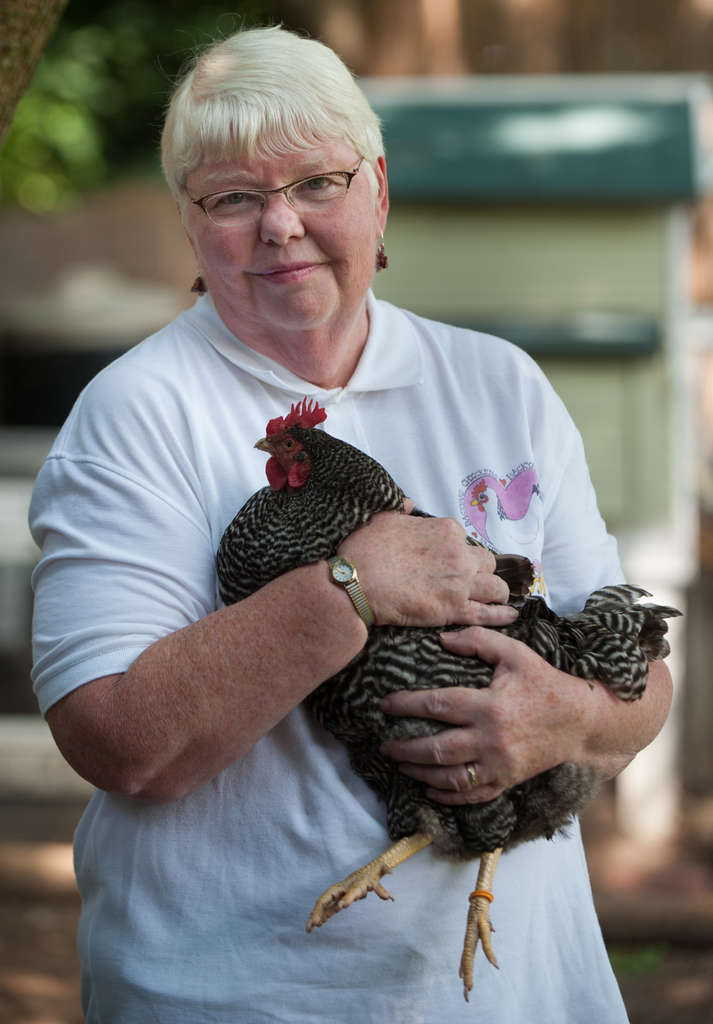
    Gwenne Baile, an advocate of backyard chickens, holds Mimi, a family’s hen in Audubon.

    Baile and a small group of hopeful Collingswood residents have frequented Collingswood Borough Board of Commissioners meetings in recent months. At its last working meeting on June 17, the group handed over proposed language that they hope the board will use in a future ordinance supporting backyard chickens, informed by Baile’s years of advocacy.

    The last major push for residential hens fizzled out in 2019 after several Collingswood residents spent more than a year regularly attending meetings to champion an ordinance that never saw the light of day.

    But this time feels different, Baile said, and some locals and officials agree.

    Dan DiVito, 42, has lived in Collingswood for six years and owns Front Yard Food, a business that teaches people how to grow their own crops and helps design the backyard infrastructure to do it. If Collingswood passes an ordinance, DiVito said, he will get chickens himself and join the new Backyard Chicken Advisory Board — a five-member commission that would oversee the initiative and investigate complaints.

    “Chickens are a no-brainer,” DiVito said. “It’s a pet that makes you breakfast.”
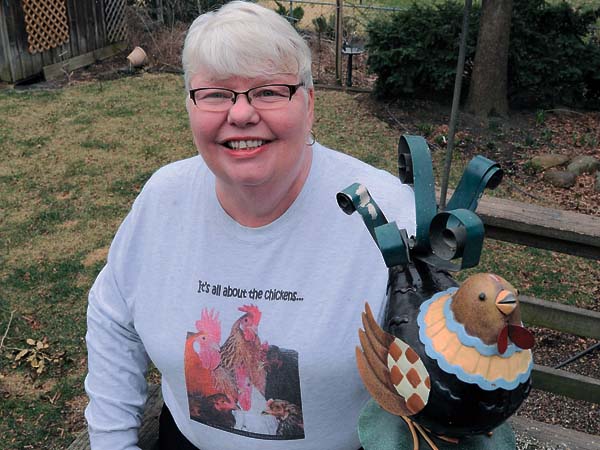
    Gwenne Baile in her backyard in 2014.

    ‘A change and an opportunity’

    Collingswood did not always ban chickens.

    But in 2008, Collingswood’s three-person board of commissioners — made up of a mayor, deputy mayor, and a commissioner — adopted measures prohibiting residents from keeping or breeding a long list of livestock and fowl, including chickens.

    Local news records from 2008 do not give a clear explanation why the rules were adopted, other than comment from then-Mayor Jim Maley that the board wanted to “head off a problem before it presents itself.”

    The maximum penalty for violating the ordinance is a $500 fine.

    Repeated attempts to end the ban have been unsuccessful, even as neighboring municipalities passed ordinances to allow chickens. Some residents voiced concerns about the smell or the noise, or about Collingswood properties being too small to house chicken coops. Collingswood Chicken Uprising, the local Facebook group for the chicken resistance, was created 16 years ago and is up to 234 members.

    But a recent political shift in Collingswood has meant hope for some local chicken advocates.

    Maley’s 28-year tenure as mayor ended last May, when two progressive challengers joined Maley to win seats on the board of commissioners.

    Daniela Solano-Ward became the first female and Latina mayor of Collingswood in 2025, and Deputy Mayor Amy Henderson Riley became one of only a handful of women to serve on the board in the borough’s history. That shuffling was one factor that brought on the chicken resurgence.

    “Advocates and community members saw that this was a change and an opportunity to try this out with the new team and see what could happen,” Henderson Riley said.

    Maley, who has said that he would not want chickens living next door or support a backyard chicken pilot program, would be one of three votes if an ordinance makes it to the floor. It takes only a majority to pass.

    Passing an ordinance takes time. There must be two separate readings of the proposal, and time must be given for residents to comment. The next commissioners meeting is not until July 15, and Henderson Riley said Tuesday that she was unsure whether the proposal drafted by Collingswood residents would make it to the agenda.

    But with an organized, citizen-led group, Henderson Riley said, she suspects this is the most favorable effort thus far. Plus, with concerns like the cost of living and gas prices, she said, there are bigger things to worry about than banning chickens.

    “Let the chicken people have their thing,” she said.

    Maley and Solano-Ward did not respond to requests for comment.

    What advocates are proposing
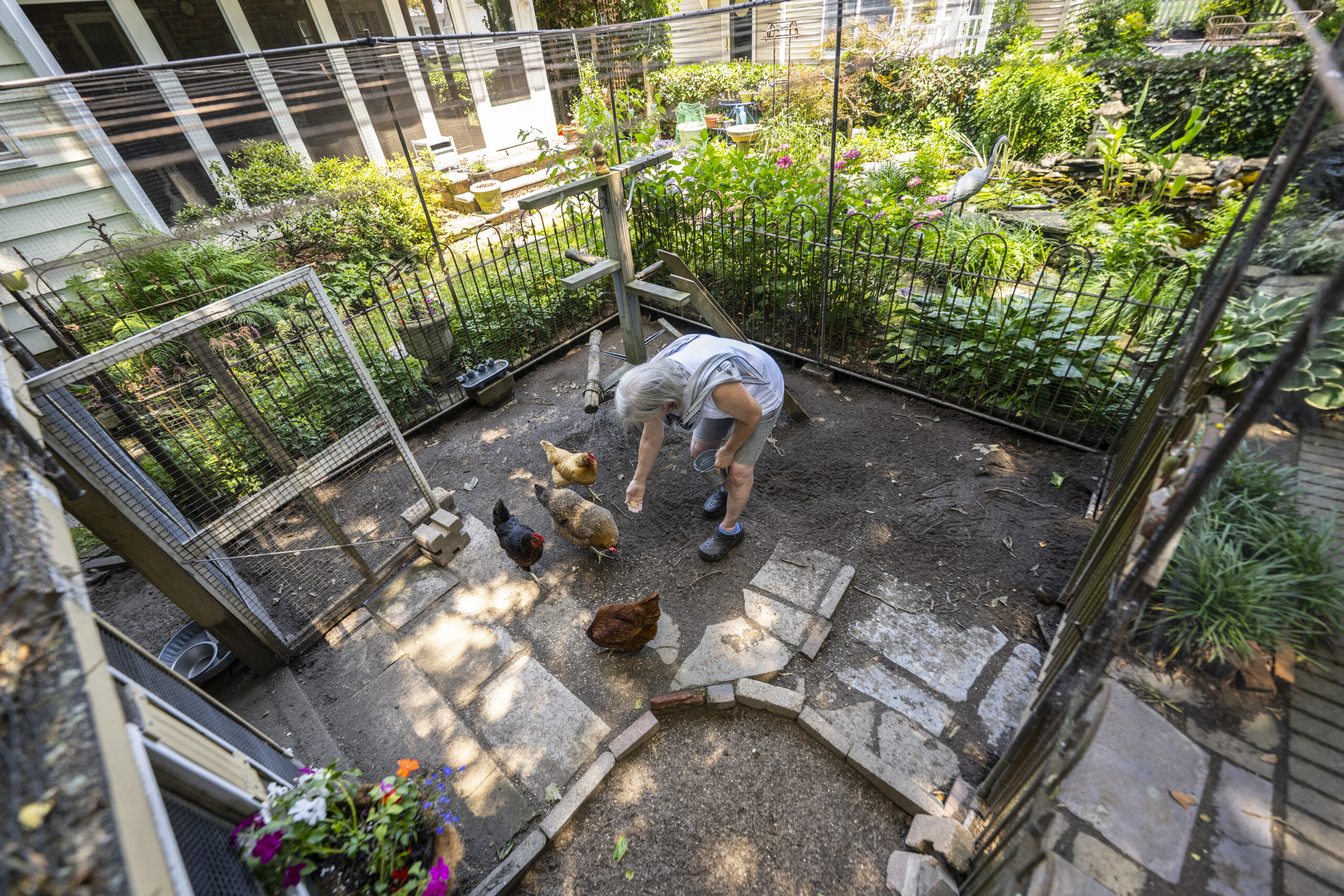
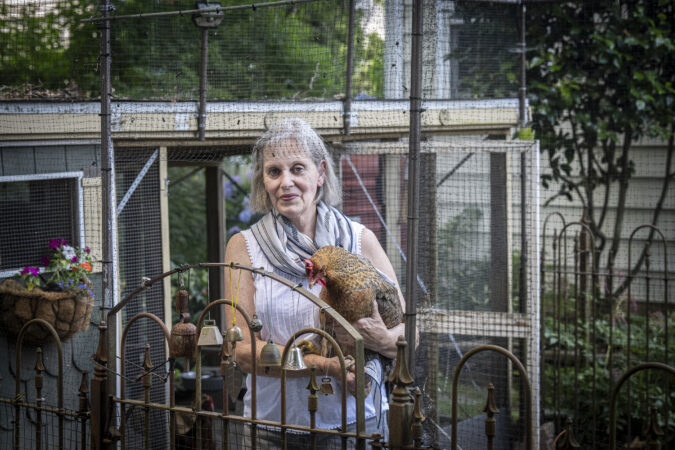
    Suzanne Passante feeds her chickens inside the chicken coop in the backyard of her home in Haddon Township, N.J., on Wednesday, June 24, 2026.

    Every municipality’s backyard chicken ordinance is slightly different. Most have strict requirements, including that coops are predator-proof, set a certain distance from other properties, and kept dry and clean.

    Collingswood residents’ pitch to the commissioners would ban roosters, forbid residents from selling their eggs, and require completion of an online course teaching applicants how to care for hens. Collingswood could have only 30 households with hens at a time (of the 6,900 estimated housing units the U.S. Census Bureau estimates are in Collingswood), and new licensees would be capped at four chickens.

    Chicken owners would have to pay $10 fees annually to renew their licenses. The Backyard Chicken Advisory Board would investigate complaints and help relocate chickens that are no longer wanted, since the advocates are calling for a ban on slaughtering hens.

    Any violations could result in a fine of up to $1,250 or imprisonment of up to 90 days, a more severe punishment than the current ordinance gives for keeping chickens.

    Henderson Riley, who has a doctorate in public health, took the three-hour backyard chicken course to learn more about the potential process residents would have to go through to get a coop.

    She passed, but not without a bunch of red markings and a reality check that owning chickens takes time, money, and energy that she does not have. Henderson Riley said she thinks the long list of requirements, along with the difficulty of raising hens, will dissuade the vast majority of people from partaking in the hobby.

    “It’s not like the hens are going to take over Collingswood.”

    Words of wisdom

    Lynn Parker, 52, has 10 hens in her backyard in Stratford Township, Camden County. When Stratford passed its ordinance allowing chickens in 2023 (an effort Baile helped with), Parker was the first person in line for a chicken permit.

    She now chairs the township’s Hen Advisory Commission, which inspects new coops and educates residents. Fourteen homes in Stratford have chickens now, Parker said, and there have been no complaints.

    Her advice to people who want to change their municipality’s chicken law is simple.

    “Even if you get a no, do it again,” Parker said.

    Suzanne Passante, 71 and Baile’s neighbor, chairs Haddon Township’s Backyard Chicken Advisory Board. She has four chickens and averages a dozen eggs per week.

    It took time to educate residents about the benefits of hens and to quell misconceptions, like chickens attracting rats, but she said complaints have been nonexistent in recent years.

    “Now, after 11 years, people don’t even think about it,” Passante said.
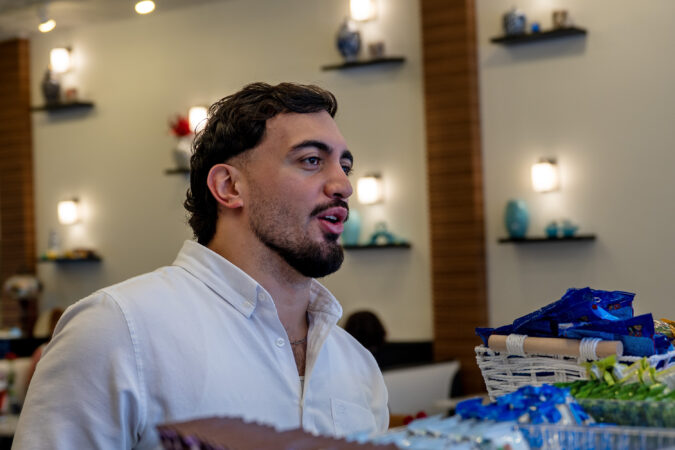
  • The son of the Jersey Kebab restaurateurs now faces his own fight to stay in the U.S.

    The son of the Jersey Kebab restaurateurs now faces his own fight to stay in the U.S.

    The son of the Jersey Kebab restaurant owners whose ICE arrests sparked wide condemnation last year now confronts his own battle to stay in the United States.

    Muhammed Emanet, 26, said he is trying to be upbeat as he faces the prospect of being separated from his wife and two sons, ages 4 and 1, all American citizens.

    “I try not to dwell on what I can’t control,” said Emanet, who with his parents operates the popular South Jersey eatery in Collingswood. “I still have a restaurant to run, employees that depend on me, customers, family. I have no other choice but to be positive.”

    Still, his situation feels disorienting, as what seemed to be settled is now newly unsettled.

    In spring the Department of Homeland Security ended its effort to deport Emanet, which seemed to clear the path for him to stay in the U.S. But this month, a different federal immigration agency told him it plans to deny his request for legal permanent residency, what is known as a green card.

    That intended denial carries a 30-day window for Emanet, who came here from Turkey as a boy, to present new or additional evidence to try to change the minds of officials at U.S. Citizenship and Immigration Services.

    The government also told him that under a new Trump administration policy, he and other immigrants who are pursuing green cards while living in the U.S. must leave the country and apply from their home nations. Emanet hasn’t been in Turkey since he was 12.

    It’s unclear what will happen when the 30-day deadline expires around July 2.

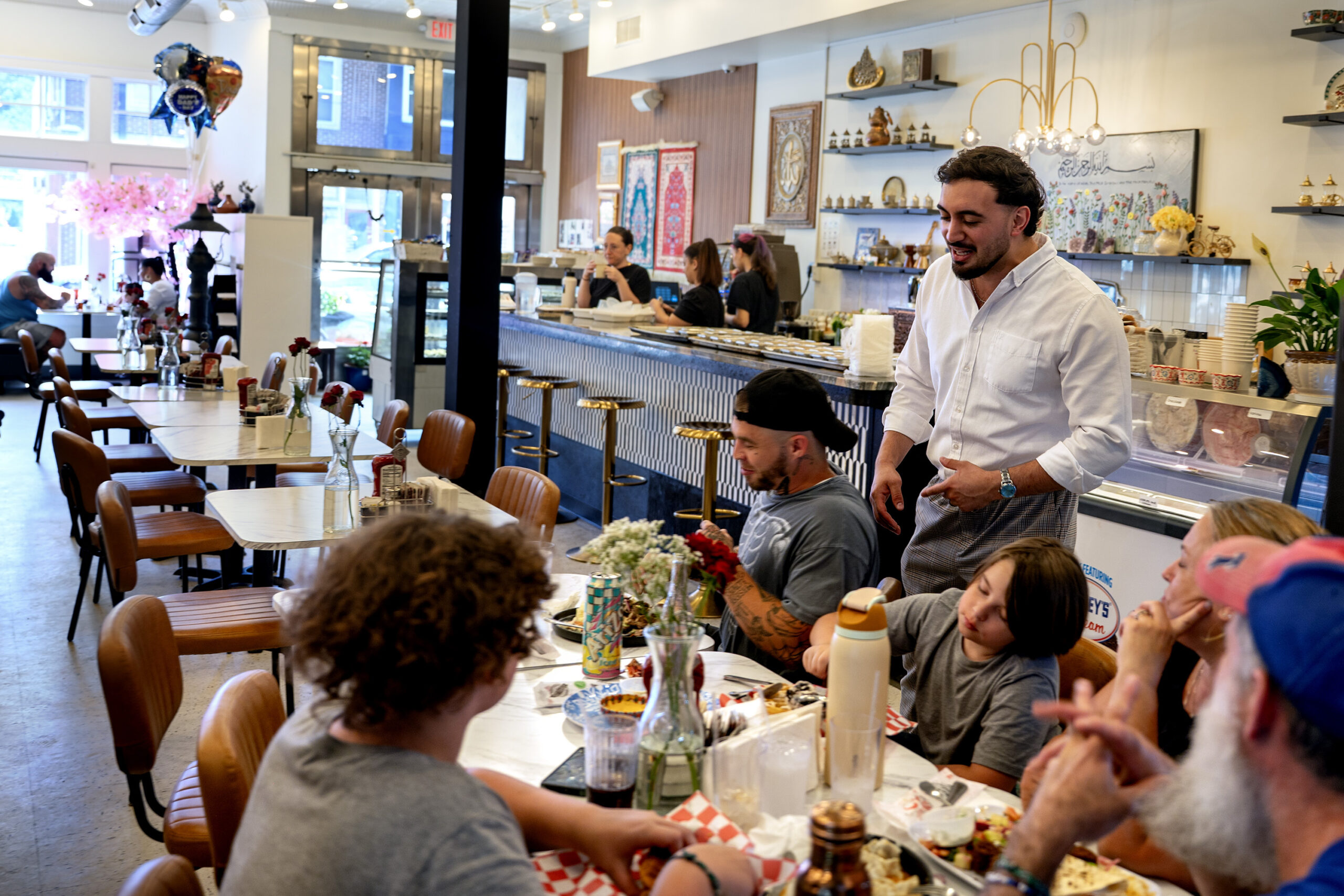
    Muhammed Emanet greets Elijah Brown, a friend from high school, and his family, at Jersey Kebab in Collingswood on Sunday.

    A little more than a year ago, on Feb. 25, 2025, the small Mediterranean restaurant on Haddon Avenue generated national headlines. Immigration advocates and local leaders railed against what they saw as government injustice, after ICE agents arrested owners Celal Emanet and his wife, Emine.

    Celal Emanet was released after being fitted with an electronic ankle monitor ― later removed ― while his wife was held at an ICE detention center in Elizabeth. She was released on bond after two weeks and a day.

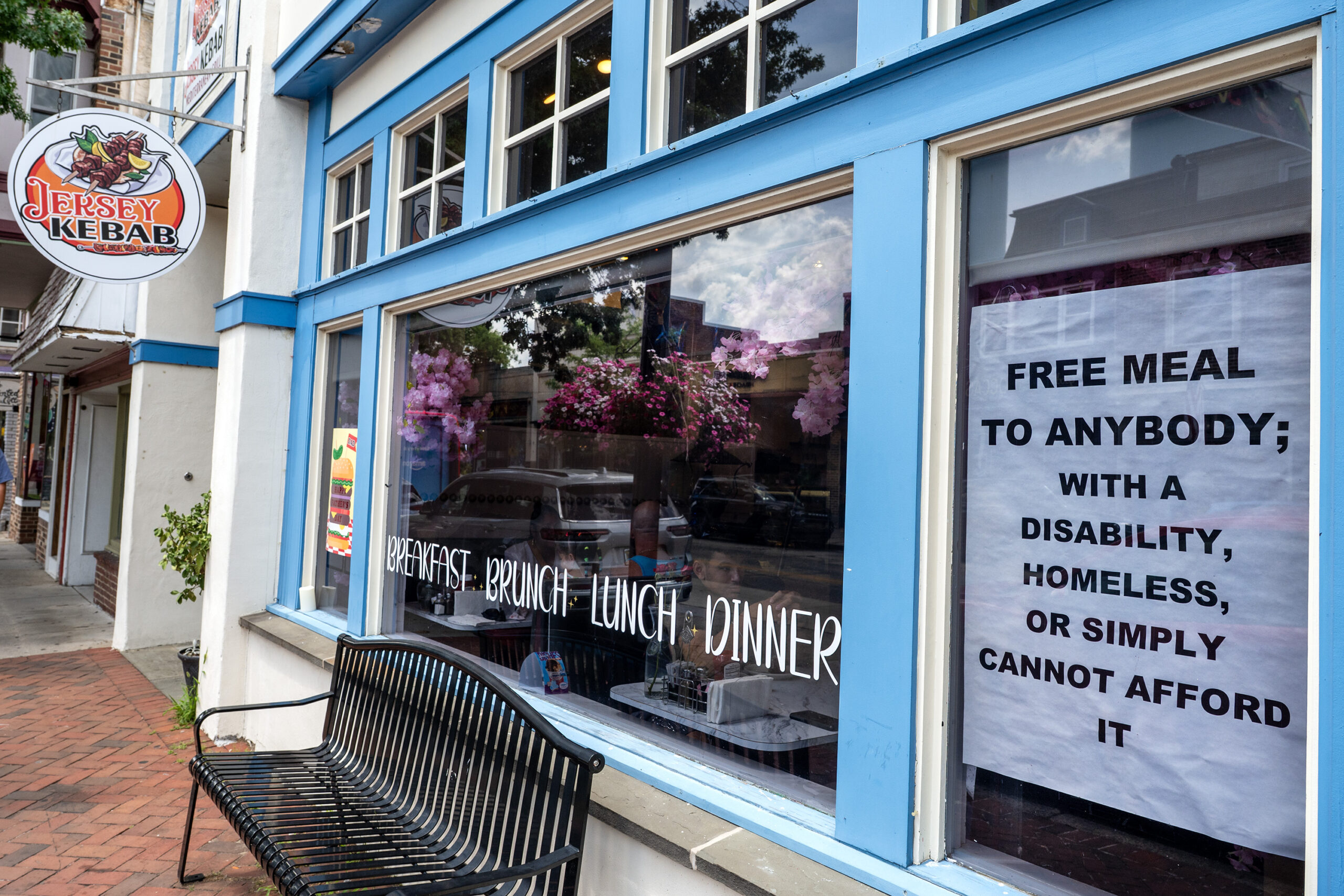
    Their arrests angered a South Jersey community that has long known the couple as caring people who offer free food to the hungry. A GoFundMe campaign to pay family costs and expenses raised $327,000, drawing donations from across the country and beyond, including from Ireland, Germany, and England.

    Now, a community effort to help Muhammed Emanet is driving a new letter-writing campaign, with person after person attesting to his good character and his importance to his neighbors. Hundreds of letters have been signed and gathered to be presented on his behalf, said Lori Leonard, who organized the GoFundMe campaign last year.

    “People are rallying behind Muhammed,” she said.

    State Assemblyman Bill Moen, a Democrat who represents parts of Camden and Gloucester Counties, signed a letter of support. He said on social media that Emanet “has touched the lives of many people throughout South Jersey” as a husband, father, neighbor, friend, and businessperson.

    “While I don’t make immigration decisions,” Moen said, “I do believe decision-makers should understand the character of the people whose lives are affected by those decisions.”

    U.S. Rep. Donald Norcross, a South Jersey Democrat, met with the family soon after Emine Emanet was released from ICE detention, and as her son’s situation emerged this month he stressed in a statement that the family had been long “rooted in our community.”

    In response to questions on Muhammed Emanet’s situation, USCIS said it does not comment on individual immigration cases.

    Being removed to Turkey would likely separate Emanet from his wife and children for years. It also could subject him to reprisals from the Turkish regime, where repressive human-rights conditions under President Recep Tayyip Erdogan has driven an exodus.

    Marriage to a U.S. citizen by someone who legally entered the country ― as Emanet did ― has long been a reliable route to an adjustment of status and acquisition of a green card.

    But the Trump policy change announced in May said adjustment should be an “extraordinary” relief, one that depends on government discretion, not merely on having a valid marriage and submitting the proper forms. Failing to depart the U.S. under the policy can by itself be treated as a negative factor in the government’s decision-making.

    Emanet’s immigration lawyer, Joseph Best, said that change in administration policy does not alter the law around eligibility for green cards.

    “If USCIS follows the law,” Best said, “he will attain his lawful permanent resident status just as Congress intended. It is not some fluke or exceptional ‘ask’ here.”

    Discretionary factors, he said, all favor Emanet, who was brought legally to the U.S. as a child, was admitted under a valid visa, and has no criminal history. He is loved in his community, and a key person in a successful family business that is known for helping others, Best said.

    The Jersey Kebab restaurant in Collingswood where Muhammed Emanet works is seen on Sunday, June 21. It offers the same “Free Meal” policy as at the prior location in Haddon Township.

    Celal and Emine Emanet came legally to the United States with two young children in 2008, entering under a religious visa that allowed the father to work at a New Jersey Islamic center.

    They said that they sought green cards before that visa expired in 2013, but that the application has been in government limbo for years.

    In 2021, they founded Jersey Kebab in Haddon Township, and the restaurant recently moved west on Haddon Avenue to a new location in Collingswood.

    The couple’s immigration cases continue. Celal Emanet’s next hearing is scheduled for December, while his wife is to appear in April 2027.

    The family stands among roughly 386,000 Turkish immigrants and people of Turkish ancestry who live in the United States, according to Inquirer computations of U.S. Census figures. That includes about 15,000 in Philadelphia and surrounding suburban Pennsylvania and New Jersey counties.

    Turkey is a longtime U.S. ally, a rectangular land bridge between Europe and Asia that is surrounded by sea on three sides. It is a Muslim nation, a country of tea drinkers, the place where Julius Caesar is said to have immortally proclaimed “Veni, vidi, vici” ― “I came, I saw, I conquered” ― after a decisive battle victory near what is now the modern town of Zile.

    Today, people are leaving the country amid economic instability and political purges, with many trying to get to the United States.

    U.S. government apprehensions of Turkish nationals at the Mexican and Canadian borders surged from 67 in 2020 to more than 15,000 in 2022 and another 15,000-plus in 2023, dropping to 10,500 in 2024. Figures for 2025 were not immediately available.

    President Donald Trump is expected to be in Turkey next month to attend the NATO summit in Ankara.

    Muhammed Emanet works at his family’s restaurant, Jersey Kebab, in Collingswood on Sunday, June 21.

    During Trump’s second term, USCIS has repeatedly paused the processing of applications for all types of immigration benefits, including those for legal permanent residency.

    Last month, the administration announced it would require foreigners who are living in the U.S. and want to obtain green cards to leave the country to do so. The administration said they must now apply in their homelands, a departure from longstanding policy that has sowed confusion and concern.

    For decades, foreign nationals who meet requirements have been able to complete the green-card process in the United States, including those married to U.S. citizens, holders of work and student visas, and refugees and asylum seekers.

    USCIS spokesperson Zach Kahler said in a statement that entering the U.S. on a visa should not be a first step toward obtaining a green card, that tourists and temporary workers are permitted to come here for limited times.

    “Our system is designed for them to leave when their visit is over,” he said.

    Making people leave the country to apply for green cards “reduces the need to find and remove those who decide to slip into the shadows and remain in the U.S. illegally,” he said.

    The administration instructed immigration officers to consider violations of immigration laws, including overstaying a visa, as negative factors in their decision-making.

    Since the uproar, though, USCIS has seemed to walk back the policy, saying it would be implemented on a case-by-case basis. That could mean that some immigrants will be able to stay in the U.S. while they seek green cards.

    Emanet said his immigration case started in 2020, when two plainclothes ICE officers arrived at the family home and said he was in the country illegally.

    In spring, his attorney persuaded an immigration court in Newark to terminate Emanet’s court case ― with no opposition from the DHS Office of the Principal Legal Adviser, the ICE prosecutors. That termination seemed to clear the way for Emanet to adjust his status.

    Instead, on June 3 he received a Notice of Intent to Deny from federal immigration officials, indicating they plan to reject his application to adjust his status. He is not sure what will happen when the 30-day deadline for new information expires.

    “I have children here who need my support ― American citizens who depend on me,” Emanet said. “I thought I was that one, that I did everything exactly how I was supposed to, that I should receive my green card. … It feels like a punch in the gut.”

  • Jersey’s historic diners keep closing. This legislation aims to keep more alive.

    Jersey’s historic diners keep closing. This legislation aims to keep more alive.

    There may be new hope for diners in New Jersey.

    In recent years, a string of the state’s iconic diners have shuttered their doors. New state legislation aims to keep the lights on at those still in business.

    The bill, which was introduced in the New Jersey Senate in January, would provide some diners and other historic restaurants with tax benefits.

    “Diners, and specifically historic diners, are a cornerstone of our great state, having served residents and visitors for many decades. They are part of our culture and our history, and we have a duty to help them thrive,” State Sen. Paul Moriarty of Gloucester County, a sponsor of the bill, said in a statement Thursday.

    The legislation, which would establish a registry of historic diners and restaurants, would give the businesses a tax credit of up to $25,000. Only diners and family-owned restaurants operating for at least 25 years will qualify.

    The bill has been referred to the Senate Budget and Appropriations Committee.

    “It has been heartbreaking to see so many of these well-known establishments close or dramatically cut their hours,” Moriarity said.

    Where have diners closed in New Jersey?

    The origin of the modern diner can be traced back to a horse-drawn lunch wagon in 19th-century Rhode Island and the model has evolved since then. New Jersey has been coined the “diner capital” of the U.S. but has seen closures in recent years due to increased operating expenses, the challenge of finding employees, and the impact of the pandemic.

    The Cherry Hill Diner closed in 2023 after 55 years in business and following the co-owner’s unsuccessful search for a buyer. South Jersey’s Gateway Diner in Gloucester County closed that same year amid construction of the Westville Route 47 Bridge and the state’s acquisition of the site. The Red Lion Diner in Burlington County also sold, making way for a Wawa.

    In January 2024, the Star View Diner in Camden County closed. Last year, the Collingswood Diner shut its doors in August, to be replaced by a marijuana dispensary.

    The trend extended in Philadelphia where the Midtown III closed in 2020. Last year, the Mayfair Diner in Northeast Philadelphia was listed for sale.

  • Gluten-free bakery Flakely levels up with a new and bigger storefront in Bryn Mawr

    Gluten-free bakery Flakely levels up with a new and bigger storefront in Bryn Mawr

    A popular gluten-free bakery is coming to the Main Line.

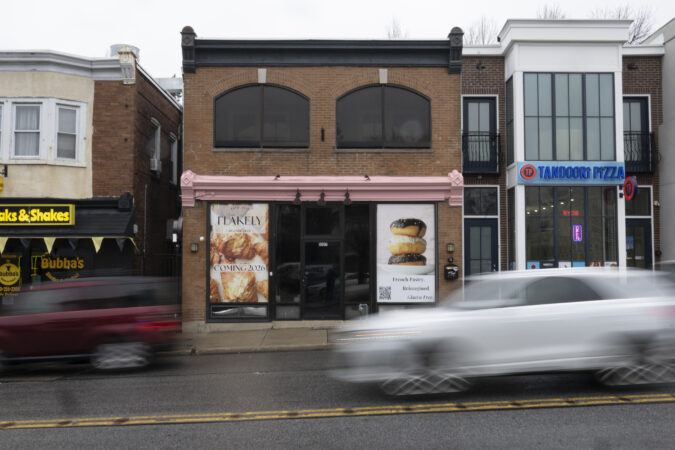
    Flakely is moving from behind the bright pink door at 220 Krams Ave. in Manayunk to a Bryn Mawr storefront in early February, said owner Lila Colello. The new takeout-only bakery will replace a hookah lounge at 1007 W. Lancaster Ave.

    “We’ve really outgrown our space,” Colello told The Inquirer. Manayunk “wasn’t ever meant to be for retail.”

    A trained pastry chef who worked for the Ritz Carlton and Wolfgang Puck Catering, Colello was afraid she’d have to give up the best things in life — bread and her career — when she was diagnosed in 2010 with celiac disease, an inflammatory autoimmune and intestinal disorder triggered by eating gluten.

    Instead, Colello spent the next seven years finding ways to get around gluten, a protein found in grains like wheat, rye, and barley (and thus most breads, bagels, and pastries). She perfected kettle-boiled bagels and pastry lamination before starting Flakely in 2017 as a wholesaler.

    Colello moved into the commercial kitchen at Krams Avenue in 2021, where customers have spent the last four years picking up buttery chocolate croissants, brown sugar morning buns, and crusty-yet-chewy bagels from a takeout window in an industrial parking lot. Inquirer restaurant critic Craig LaBan has called Colello’s bagels “the best he’s tasted outside of New York,” and in 2024, Flakely was voted one of the best gluten-free bakeries in the United States by USA Today.

    Lila Colello, owner and head baker at Flakely, helped patent a way to laminate gluten free dough for croissants.

    Flakely’s industrial Manayunk location has required some concessions, Colello said: The majority of their goodies are par-baked and frozen by Colello and three full-time employees for customers to take and bake at home. Otherwise, Colello explained, the lack of steady foot traffic would lead to lots of wasted product.

    In Bryn Mawr, Flakely will be a fully functional takeout bakery with a pastry case full of fresh-baked goods, from full-sized baguettes and browned butter chocolate chip cookies to danishes and Colello’s signature sweet-and-savory croissants. A freezer will also include packs of Flakely’s take-and-bake doughs, bagels, and eventually, custom cake orders.

    Once she’s settled in, Colello said, she hopes to run gluten-free baking classes and pop-up dinners out of the storefront — offerings (besides the ingredients) that she hopes will differentiate her from other bakeries in the area.

    While the Main Line only has one dedicated gluten-free bakery (The Happy Mixer in Wayne), Lancaster Avenue is already lined with sweet shops: Malvern Buttery opened up a coffee and pastry combo down the street from Flakely in June, and Colello’s storefront is on the same strip as The Bakery House and an outpost of popular Korean-French chain Tous Les Jours.

    “My vision is for this to be a magical space where people can come in and leave with a fresh croissant, which people can’t really do” when they’re gluten-free, said Colello, who lives in Havertown. “We offer our customers things they miss. That’s kind of our thing.”

    Flakely owner Lila Colello poses in front of one of Flakely’s pink gluten free pastry ATMs, which vend take-and-bake goods at four locations in the Philly area.

    What about the pastry ATMs?

    The permanent storefront does not mean Flakely’s signature pink pastry ATMs will disappear, said Colello. But they will move.

    Colello installed Flakely’s first pastry vending machine inside South Philly’s now-shuttered Salt & Vinegar. With the tap or swipe of a credit card, the smart freezer would open to let customers choose their own take-and-bake pack of croissants, pop-tarts, muffins, or danishes. Using it felt like a sweet glimpse into the future.

    Flakely currently operates pastry ATMs inside Collingswood grocer Haddon Culinary, the Weaver’s Way Co-op in Ambler, Ardmore smoke shop Free Will Collective, and Irv’s Ice Cream in South Philly, where enterprising customers top their pastries with scoops fresh out the freezer.

    Irv’s ATM will make the move to Reap Wellness in Fishtown on Jan. 5 when the ice cream shop closes for the season, Colello said. And come February, the smoke shop’s ATM will transition to Lucky’s Trading Co., a food hall at 5154 Ridge Ave. in Roxborough. The hope, Colello said, is to space the locations out enough so she’s not competing with herself.

    “We’re finally in the middle of where everything is,” Colello said. “And that’s kind of the goal.”

    Flakely, 1007 W. Lancaster Ave., Bryn Mawr, 484-450-6576. Hours: 9 a.m. to 4 p.m. Tuesday to Saturday.

  • The trick these homeowners used to act fast on an in-demand Collingswood rancher with a pool | How I Bought This House

    The trick these homeowners used to act fast on an in-demand Collingswood rancher with a pool | How I Bought This House

    The buyers: Brandon Balcom, 44, vice president of product operations at BCD Travel; Dane Cox, 39, owner of Dane Cox State Farm Insurance Agency

    The house: A 3,767-square-foot, ranch-style home in Collingswood with three bedrooms and three baths built in 1955

    The price: Listed for $695,000; purchased for $735,000

    The agent: Amy Telfair, Telfair Collective

    The Ask: Brandon Balcom and Dane Cox were not looking to buy a new house. They had just purchased a fixer-upper on a beautiful oversized lot in 2021. “It was in the perfect spot,” Balcom said, “and they always say, ‘you can’t move your house.’”

    But it turned out their perfectly located house needed to be rebuilt from the foundation up and the lengthy zoning process was wearing them down. Two years into a renovation with no end in sight, their friend, real estate agent, Amy Telfair, suggested they buy a new house instead. In fact, she knew just the one.

    “We chuckled and rolled our eyes, because she’s a Realtor with vested interest,” said Balcom. But the couple agreed to check out the listing anyway.

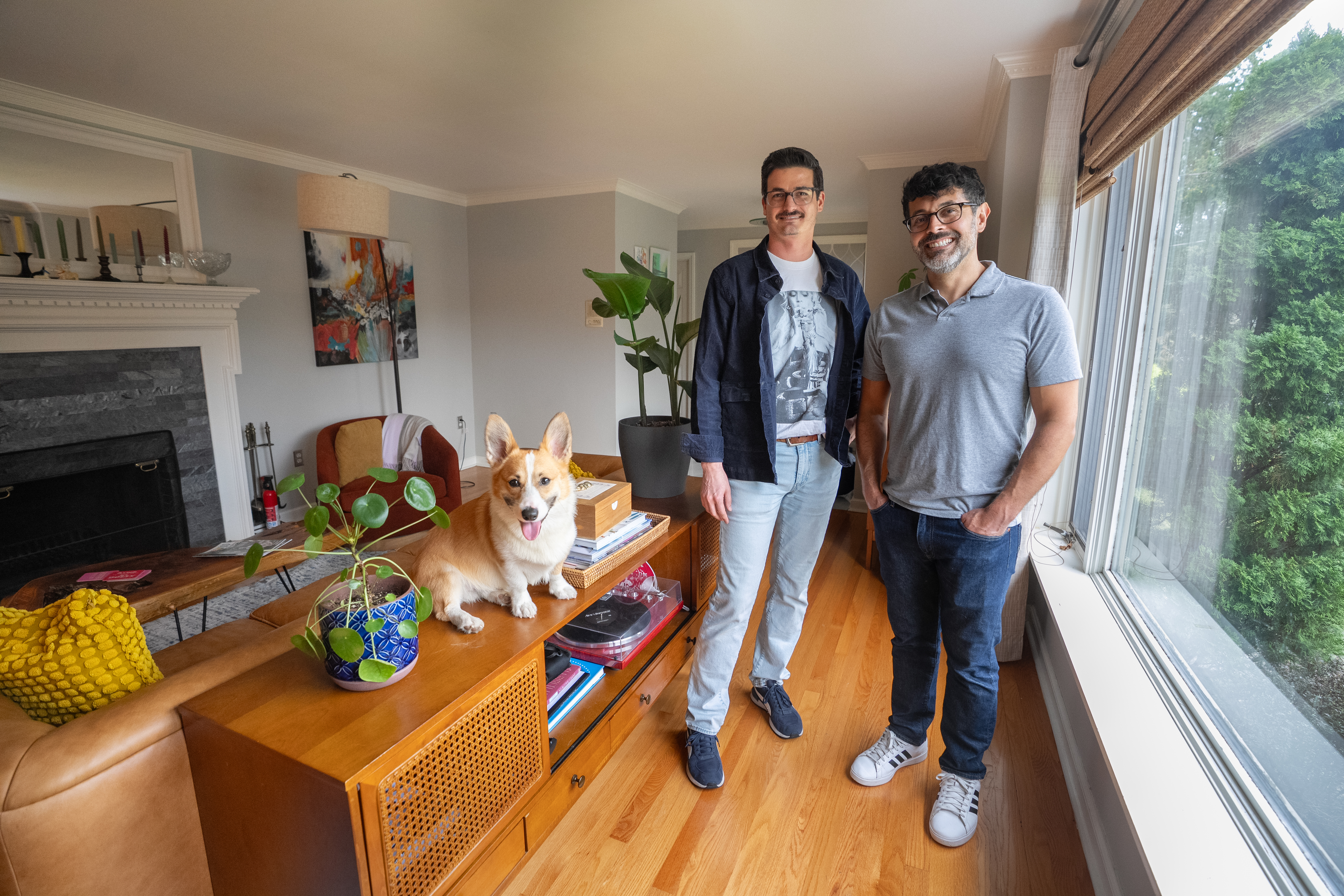
    Dane Cox and Brandon Balcom in their living room with their beloved corgy.

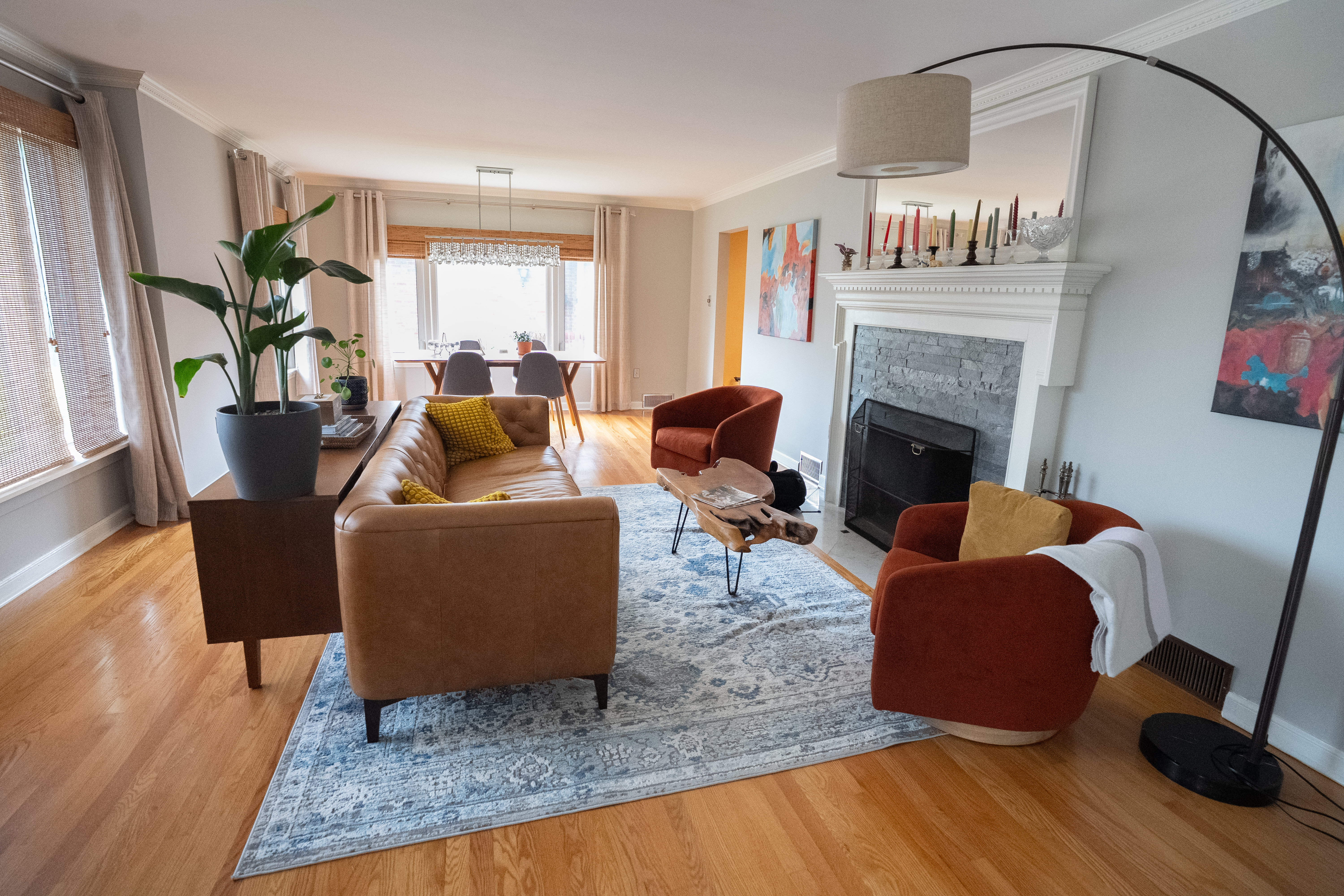
    The appeal: The house was designed in the midcentury style they loved, and, unlike their current place, it didn’t need any work. “We started dreaming very quickly about skipping all these steps,” said Balcom. The new house even had a pool, which Balcom said was part of a “years-down-the-line vision” for their current home.

    Balcom’s favorite thing was that it was perfect for entertaining, from the bar in the finished basement to the grand fireplace in the living room. When Cox heard his husband gasp at the fireplace, he knew the deal was done.

    “I was like, ‘There’s nothing I can say at this point that’s going to convince him otherwise,’” Cox said.

    The search: To get ahead of other potential buyers, the couple used a trick they learned while selling their previous house in Minneapolis: they brought their inspector to the showing.

    “We wanted to know when we left that day if there was an issue,” said Balcom. Knocking out the inspection early allowed them to waive it as a contingency, which the couple knew from experience would appeal to the sellers.

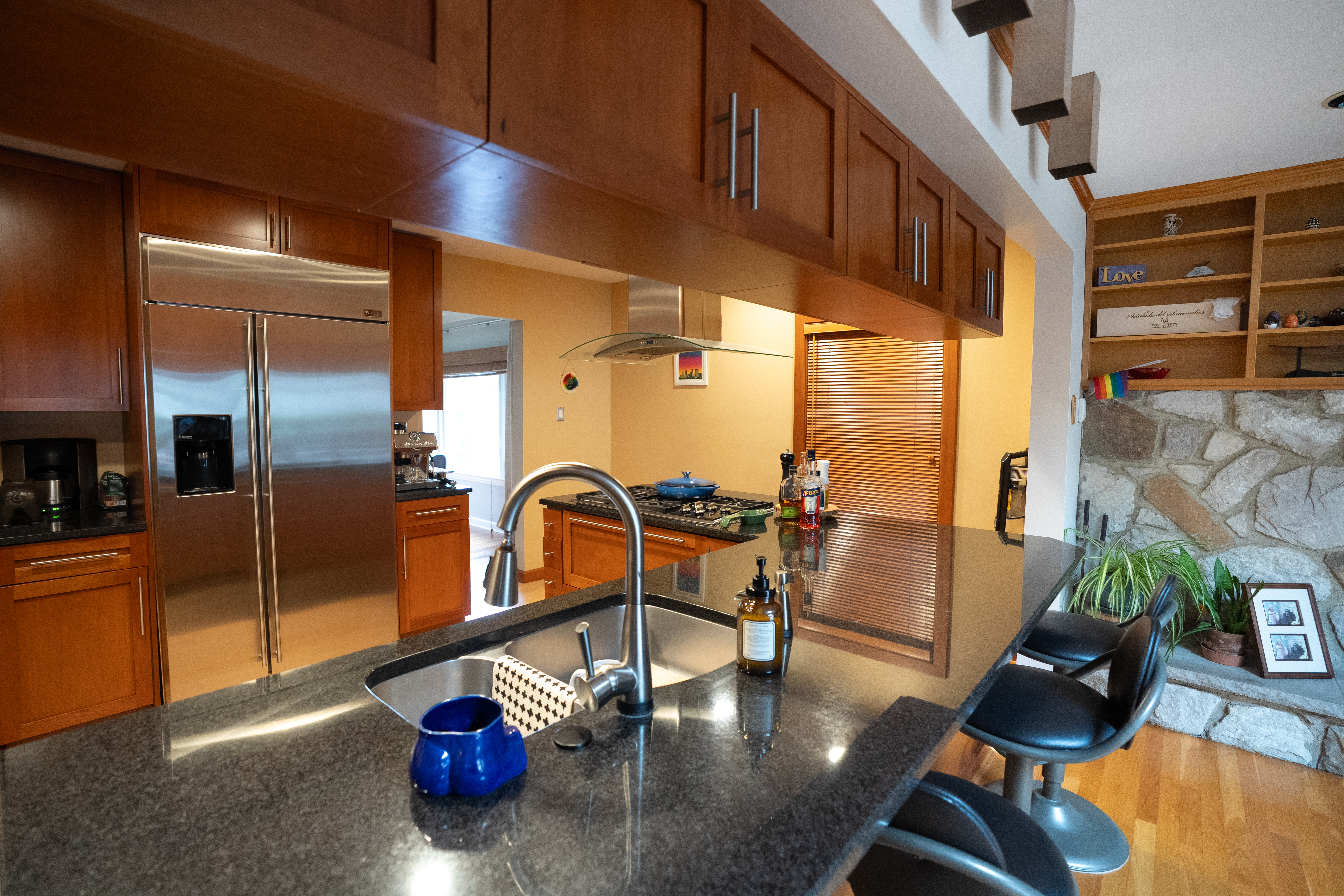
    The kitchen of the couple’s home, which is designed in the midcentury style they love.

    The couple’s inspector gave them the go-ahead, so they went to Cox’s office and “started scheming,” said Balcom.

    The deal: The couple called Telfair, whose first instinct was to get the house off the market. She didn’t want the sellers to show it over the weekend, so she asked what it would take to get the listing taken down that day. They requested an all-cash offer of $735,000 — $40,000 above the asking price. Cox and Balcom agreed, and a legal contract that required the seller to cancel upcoming showings was speedily signed.

    The money: Balcom and Cox didn’t have to hand over $750,000 in cash the day they signed the contract. They just needed to “give up any contingency on the need for financing to buy the home,” said Balcom. Documentation showing that they could pay in full would suffice.

    They had over $400,000 in savings and brokerage accounts that they could show as proof of funds, and a letter from their parents confirming another $300,000 was available if needed. “You have to have a promissory note or something from your family that says, ‘I will give this amount for the purchase of the home,” Balcom said.

    One of the main selling points was the giant fireplace in the living room.

    But they didn’t end up borrowing money from their parents. “We just needed it for a moment to show we’ve got cash,” Balcom said.

    Instead, they took out a home-equity loan on their fixer upper. “Between when we signed the contract and when we closed, we had time to pull the equity out of our existing house,” said Balcom. The loan provided them with enough cash to cover the remaining cost of their new home.

    The move: Balcom said the actual close was anticlimactic. The sellers were out of town so they pre-signed everything for the couple, who left for a family vacation the day after the paperwork was done.

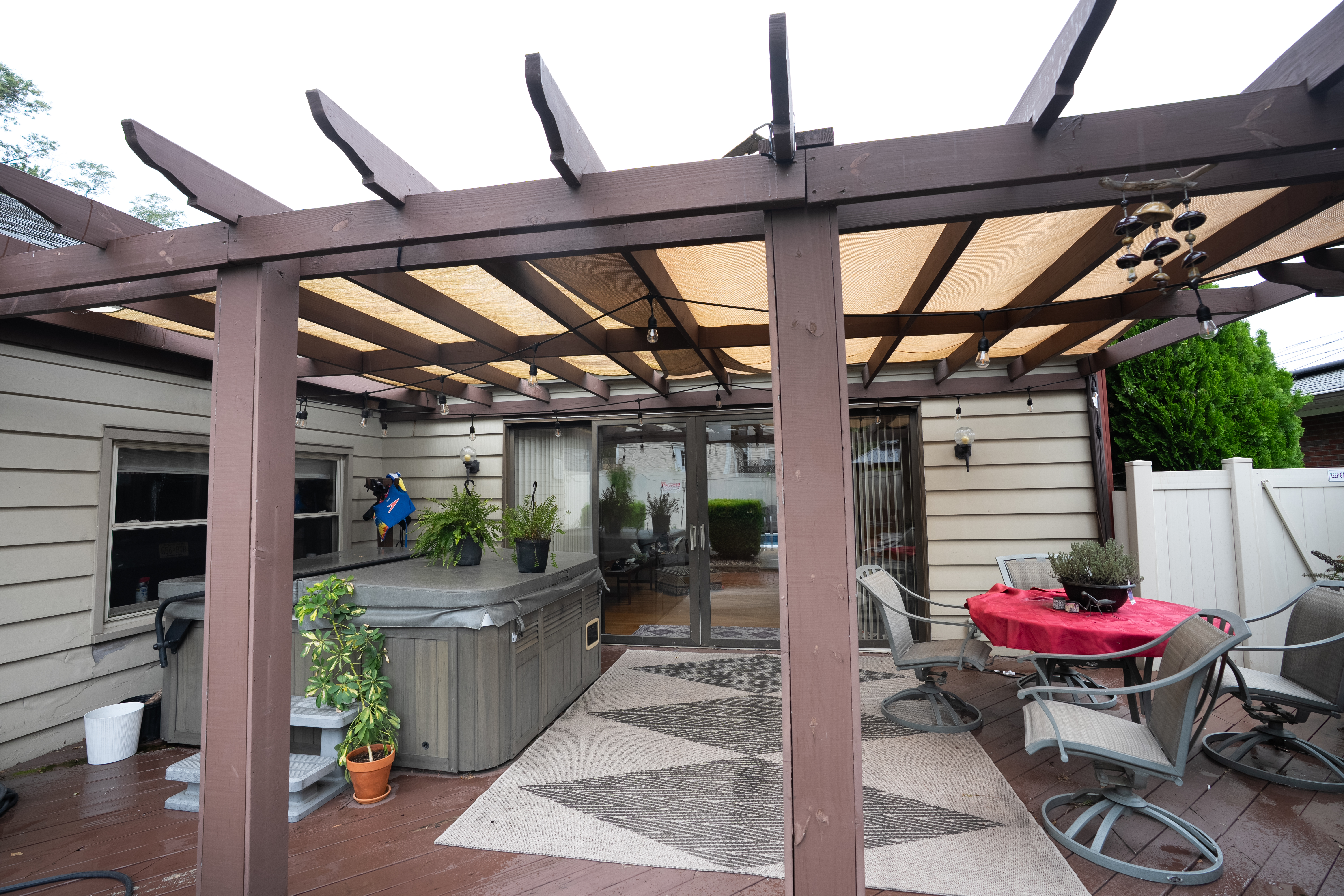
    By the time they returned, the sellers had officially moved out. But they left several items that excited Balcom and Cox — including a pool table and a hot tub.

    The couple moved in over two months, taking their time to bring each room “online,” said Balcom. “Once we got the furniture, it was like, ‘OK, now we’re using this room.’”

    Any reservations? Balcom was surprised that several of the house’s nice-looking appliances were 20 years old. The previous owners “kept such good care of things,” he said.

    Some amenities, like the infrared sauna with wireless speakers in the basement, were actually pretty old.

    To listen to music, Balcom has to use the sauna’s built-in CD player, because the speakers were made before Bluetooth technology was common. “It’s like a circa-2000s car stereo,” he said, laughing.

    Balcom was excited that the previous owners left the hot tub, even though it only lasted a few months.

    The hot tub is 20 years old, too. “It ended up failing at the end of winter,” Balcom said. “I was hoping we’d get two years out of it.”

    Life after close: Cox and Balcom haven’t changed anything since they moved in.

    “This house doesn’t need anything,” said Cox. Indeed, that’s why they bought it.

    Did you recently buy a home? We want to hear about it. Emailacovington@inquirer.com.