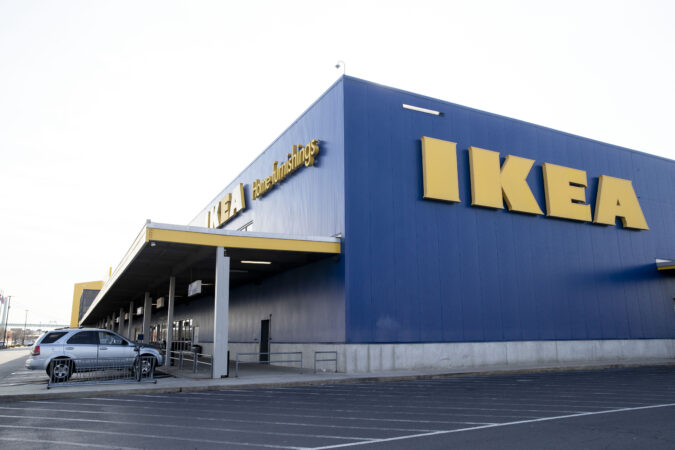
Ikea has opened its first Delaware County location, though it doesn’t look like its massive stores in Conshohocken and South Philly.
The home design company’s “plan and order point” in Media opened Wednesday. At less than 4,000 square feet, the outpost is a fraction of the size of its typical stores, with square footage in the hundreds of thousands.
Ikea, which has its U.S. headquarters in Conshohocken, said in a statement this fall that the location would provide design consultation services for more complex projects like kitchens, bedrooms, and bathrooms. But the space doesn’t contain inventory. Instead, customers can order items for delivery or on-site pickup.
For some Delaware County residents, the new location means “no more trekking through that notorious I-476 ‘Blue Route’ traffic” to get to the Conshohocken or South Philly stores, Ikea U.S. market manager George Holtkamp said in an October statement.
But if those customers get a craving for the popular Ikea meatballs, they’ll still have to make the longer trip, as the Media site does not have an in-store Swedish bistro.
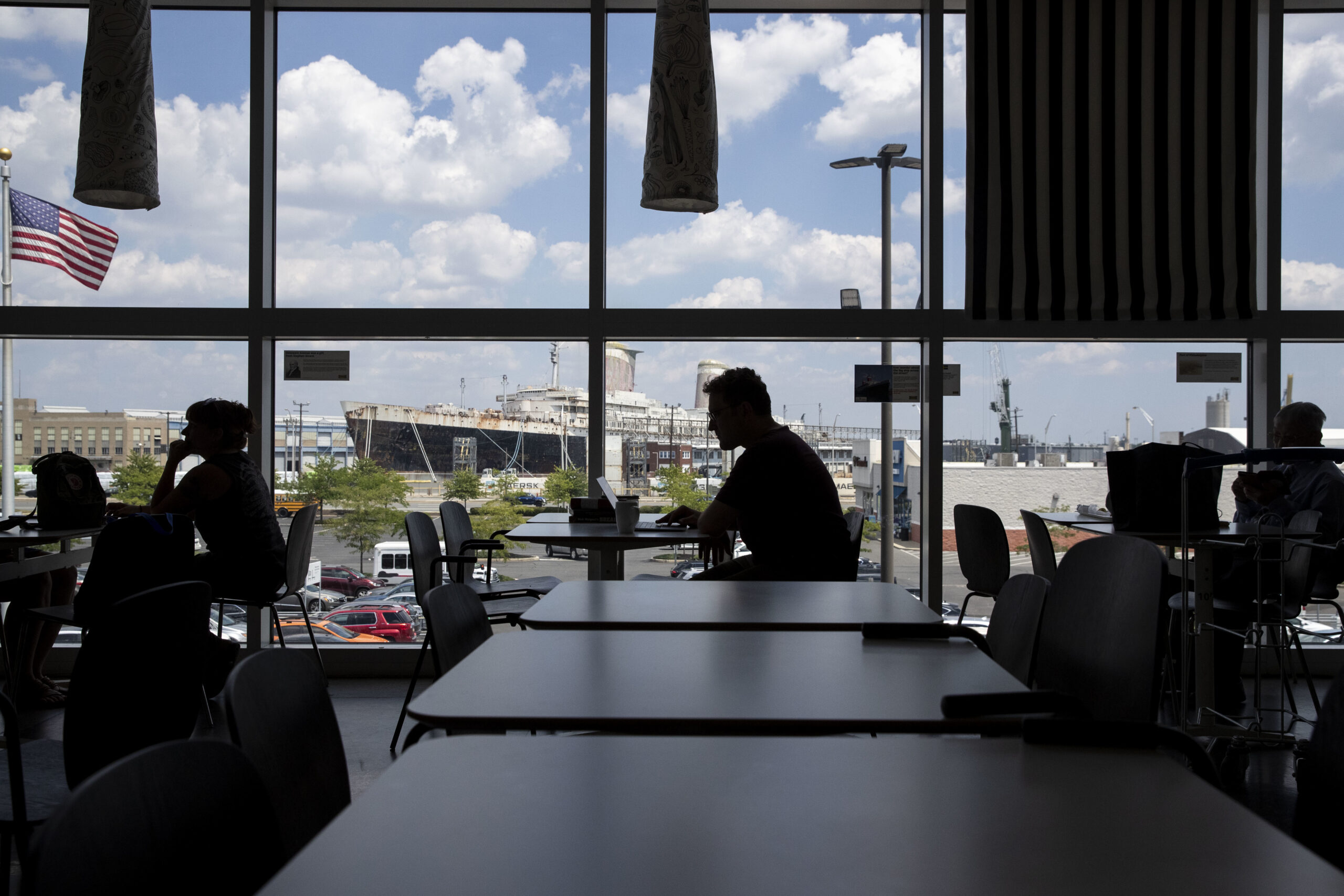
People worked in the cafeteria of the 300,000-square-foot Ikea in South Philly in 2022.
Ikea has been adding more locations after its U.S. arm reported $5.3 billion in sales last year, the majority of which were made in-person. Over the same period, about 61 million people visited its physical stores, while more than 457 million people browsed the website.
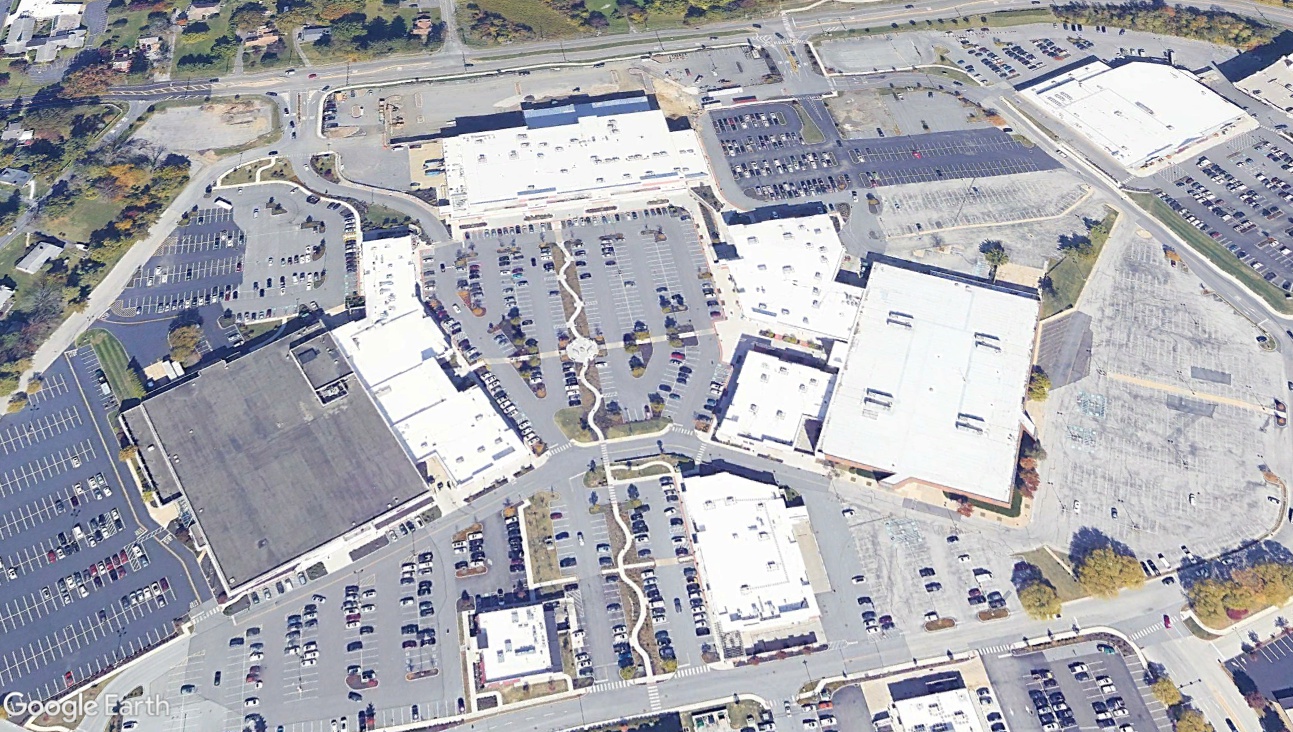
In Media, Ikea joins Michaels, TJ Maxx, Kohl’s, Boscov’s, and a slate of other stores that occupy the 830,000-square-foot retail section of the Promenade at Granite Run. The complex exemplifies how struggling malls can be reborn.
After the Granite Run Mall closed in 2015, BET Investments spent more than $100 million to demolish the building and build the open-air town center in its place, according to president Michael Markman. Along with an array of retailers, the complex now contains 400 luxury apartments, as well as several restaurants and medical offices.
An aerial photo shows the Promenade at Granite Run in June 2022.
Markman said in April that the retail portion of the complex is almost fully leased.
“Its only gotten better since we originally tenanted it,” Markman said at the time. “We signed a Nordstrom Rack. We signed a small-scale Ikea.”
We knew that a list of 76 iconic Philadelphia foods would leave something out. It did. After hearing from readers — and revisiting a few of our own debates — we had to mention six items that deserve a place in the city’s culinary canon. They don’t replace the original 76; they just expand the conversation.
The ‘combo’: Hot dog and fishcake on a roll
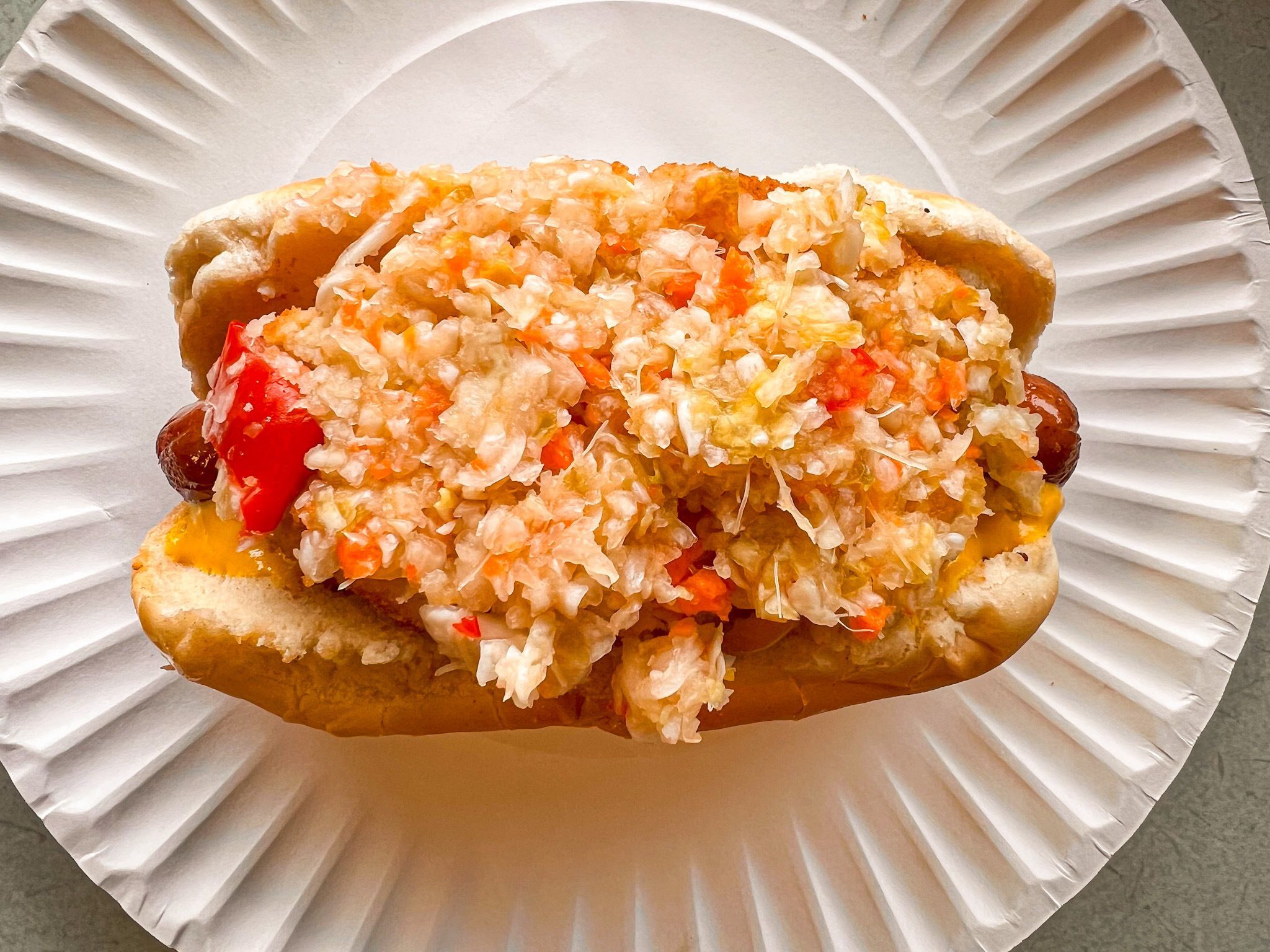
The hot dog-fish cake combo topped with pepper hash at Lenny’s Hot Dogs in Feasterville.
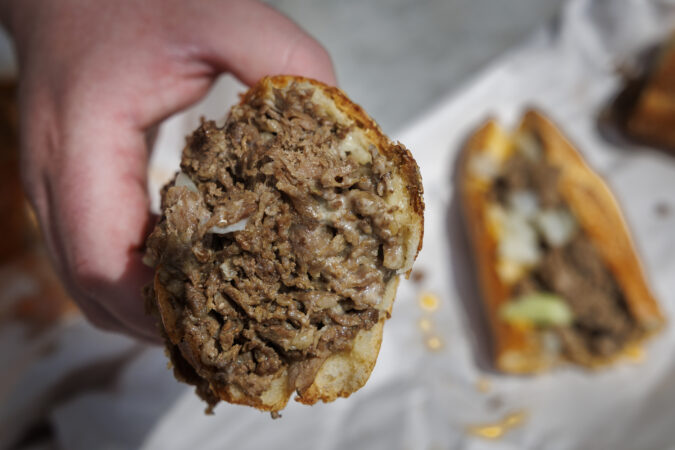
Long before Philadelphia claimed the cheesesteak as its signature sandwich, another pairing drew a following: the hot dog and fishcake combo. Culinary historians generally agree that Abe Levis (rhymes with “crevice”) created it in 1895 by pressing a fried fish cake atop a grilled frank on the same bun at his luncheonette on Sixth Street near Lombard.
Instant surf-and-turf!
Levis also created Champ Cherry, the bright-red, cider-like soda that became the combo’s traditional companion. The Old Original Levis shop changed hands several times, spawned a few short-lived offshoots, and finally closed in 1992 under owner Elliott Hirsh, who later revived Levis as a store in Abington from 2012 to 2017 while marketing Champ Cherry in cans.
But tastes have changed and the brands are moribund, as Hirsh, now 80, acknowledged: “I’ve been actively trying to find someone that wants to take it over. And not even sell it. Just take it over. I’d hate to die and take it with me, but that’s what we’re going to do.”
The hot dog-fishcake combo, at least, survives. Just after World War II, Levis rival Lenny’s Hot Dogs also sold them from a stand nearby at Fifth and Passyunk.
Lenny’s secret sauce was the pepper hash — a sweet-and-sour relish of cabbage and bell peppers that cuts through the richness of the dish— created by owner Lenny Kravitz’s mother, Ida.
Kravitz expanded Lenny’s to several locations from Mount Airy to Margate, N.J. In the 1980s, he sold his final shop, at 6620 Castor Ave. in the Northeast, to Wayne Knapp. Kravitz died in 1998.
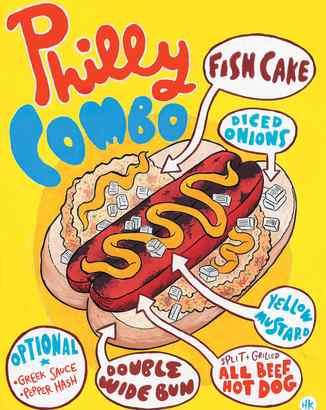
Hawk Krall’s illustration of the “surf ’n turf” Philly combo (fishcake and frank) was originally done for SeriousEats.com.
Knapp later relocated Lenny’s to Feasterville. That shop as well as Johnny Hot’s, John Danze Jr.’s truck stop on Delaware Avenue in Fishtown, are among the few standard-bearers of this classic. Be sure to add a squirt of yellow mustard and a smattering of diced onions, as illustrator Hawk Krall suggested in his 2009 poster print of the sandwich.
Chicken salad and oysters
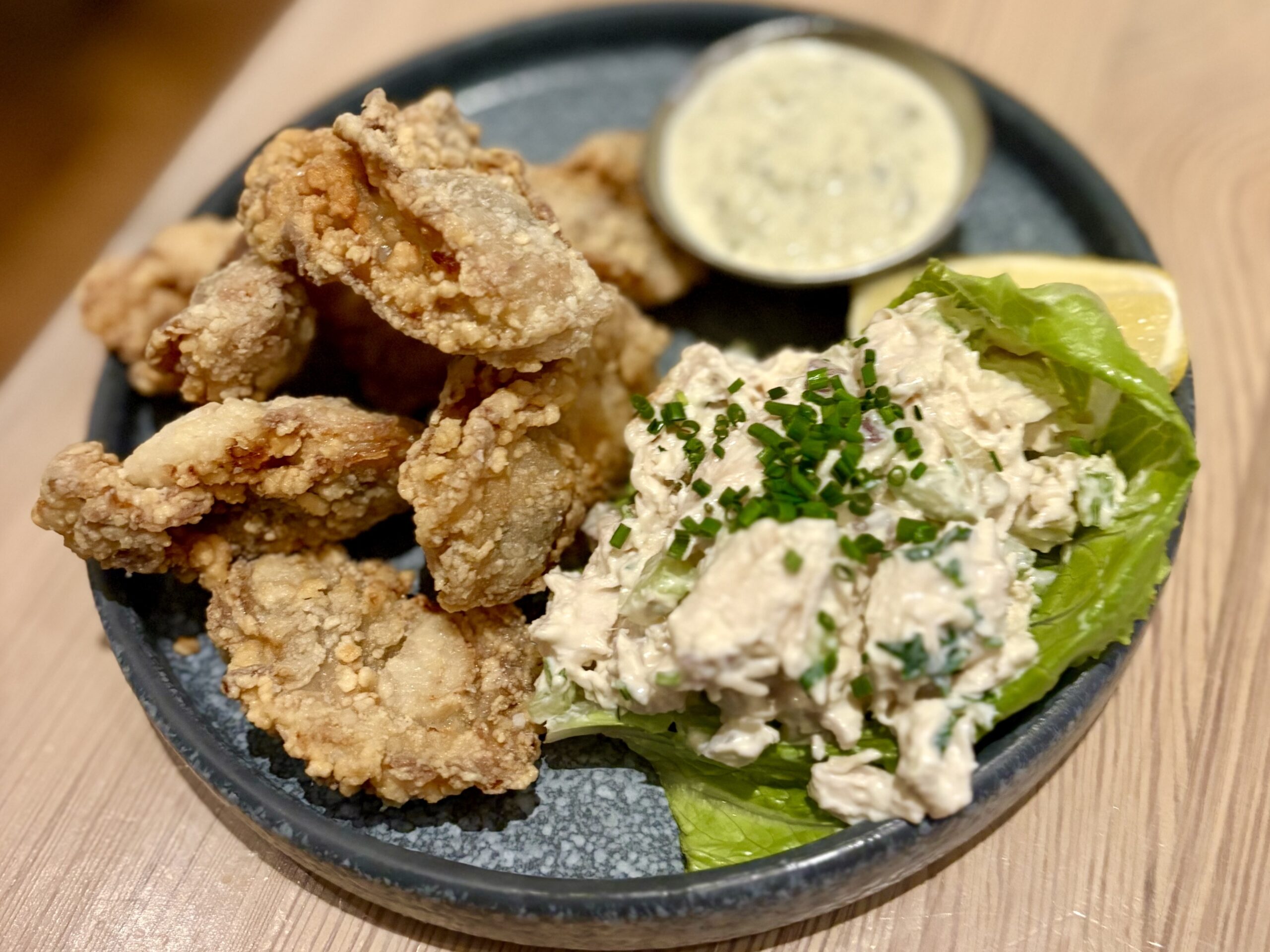
Fried oysters with chicken salad from Oyster House.
As for another curious combo, only in Philadelphia would someone look at cool, creamy chicken salad and crunchy fried oysters and think, “Of course those belong together.”
The unlikely pairing has been a local specialty for well over a century, dating to the city’s grand oyster houses, hotels, and taverns in the late 1800s. One popular explanation of its origin holds that tavern keepers paired cheap, plentiful oysters with more expensive chicken to stretch a serving. Food historian William Woys Weaver has noted that Philadelphia’s finest hotels elevated the dish, serving chicken salad dressed with tarragon mayonnaise and encircled by crisp fried oysters. More humble versions turned up in neighborhood brew houses and lunch counters across the city.
Similar dishes appeared in New York, Baltimore, and Boston, and some historians believe that Philadelphia’s influential Black catering families helped popularize the combination. What is certain is that chicken salad and oysters were served at an organizing meeting of Philadelphia’s Union League in 1862.
The combo’s popularity has ebbed in recent years, and its primary home is now Oyster House near Rittenhouse Square, whose family ownership dates back nearly 80 years.
Crazy Richard’s Peanut Butter
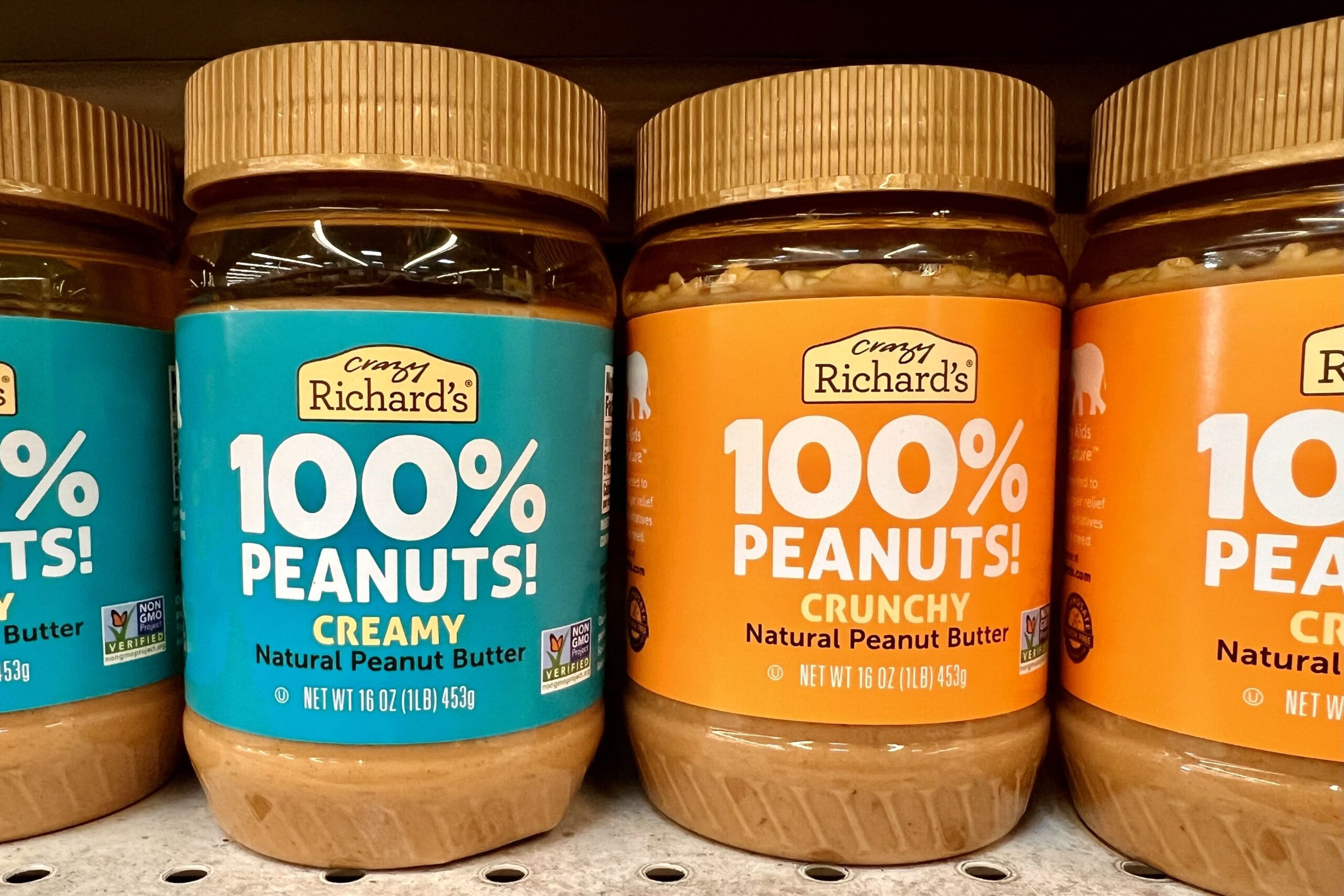
Crazy Richard’s Peanut Butter, founded in 1972, is still available on grocery shelves.
Life was all Skippy and Jif in the early 1970s when a Philadelphia music teacher decided to grind peanuts in his kitchen because he couldn’t find peanut butter that tasted the way he remembered.
Richard Marcus was a conductor, pianist, radio host, and founder of the Society Hill School of Music & Art. Frustrated by the sweetened, homogenized spreads that dominated grocery shelves, he bought five pounds of peanuts at Reading Terminal Market, roasted them, and blitzed them in his blender. The result was nothing more than peanuts — no sugar, salt, or oils.
Friends loved it. By 1972, they convinced him to package it. Marcus produced an initial run of about 144 jars, selling them through Philadelphia delis and health-food stores. He called it Crazy Richard’s, his wink to skeptics who thought he was nuts for marketing a peanut butter that separated naturally and required stirring.
Word of mouth did the rest. Marcus eventually gave up his music school to run the business full time, first contracting production in Conshohocken before opening plants in Pennsauken and later Bellmawr. At its peak under his ownership, Crazy Richard’s sold about 750,000 jars a year throughout the Mid-Atlantic and Northeast and by mail. Marcus insisted that there was no secret recipe: “It’s just ground peanuts.”
In 1991, Ohio’s Krema Nut Co. bought Crazy Richard’s and kept Marcus’ one-ingredient recipe intact. Today, 12 years after his death, the brand is sold nationwide. The “Crazy Richard” on the label is still the Philadelphia musician who proved that sometimes the simplest ideas stick.
Fishtown Iced Tea
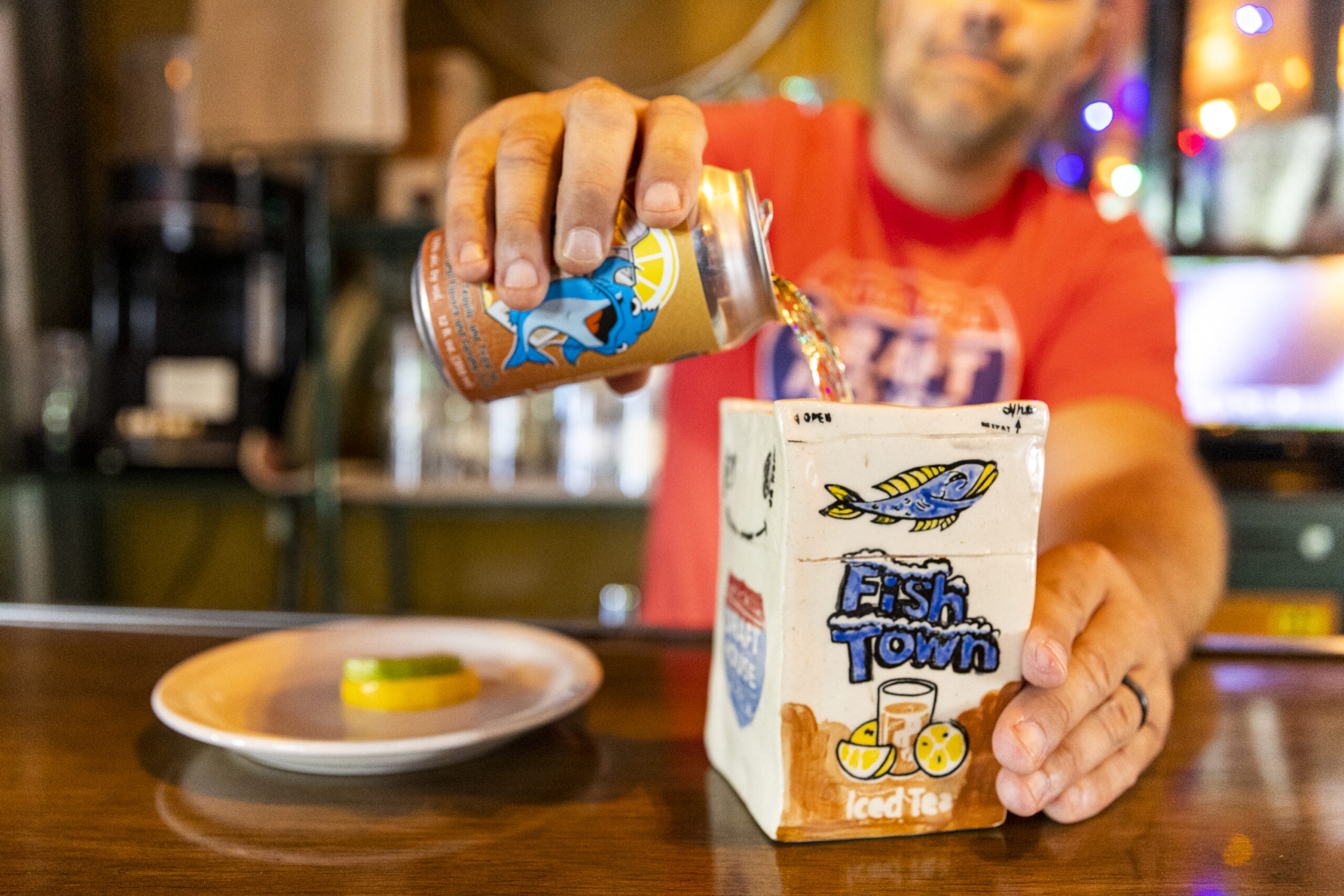
Canned Fishtown Iced Tea is poured by Interstate Drafthouse co-owner Mike McCloskey into a custom-made ceramic carton.
Long Island has its iced tea. Why shouldn’t Fishtown? Created in 2013 at Interstate Drafthouse on Palmer Street, Fishtown Iced Tea spikes a 16-ounce carton of Arctic Splash iced tea with a shot of Jim Beam bourbon, turning a childhood lunchbox staple into an adult version of the sugary, dangerously smooth cocktail. Its roots are distinctly regional. Besides milk, Lehigh Valley Dairy, Wawa, Swiss Farms, and Turkey Hill also sold iced tea in pint cartons that generations of Philadelphians grew up drinking.
During the pandemic, when Pennsylvania temporarily allowed to-go cocktails, Interstate sold enough Fishtown Iced Tea to keep the bar afloat. In 2022, the popularity inspired a canned version from Rectified Spirits, made with vodka, rum, tequila, and triple sec instead of bourbon.
In a twist, the ready-to-drink cocktail debuted just as Lehigh Valley discontinued Arctic Splash cartons, ending an era for the drink that inspired it.
Edamame dumplings from Buddakan
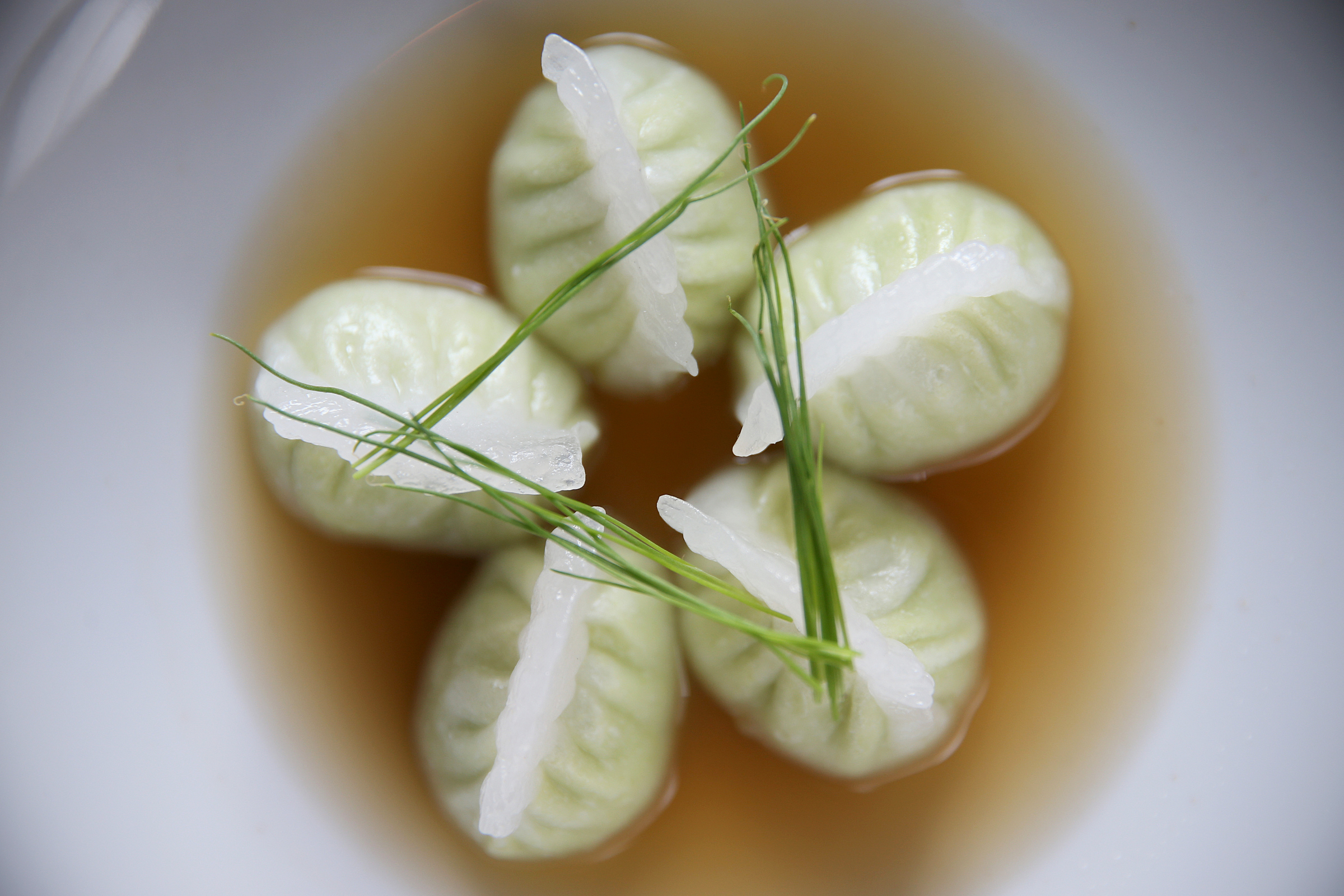
The edamame dumplings at Buddakan.
One of Buddakan’s signature dishes is the edamame dumpling, filled with mashed soybeans and served in a truffled Sauternes-shallot broth. Michael Schulson, then chef de cuisine at Stephen Starr’s Old City destination, came up with the idea in 2000 while developing the menu for Starr’s next project, Pod, whose opening in University City was six months away. “Every dish I made, Stephen would say, ‘We’re putting this on the menu at Buddakan,’” Schulson said. “I’d say, ‘What about Pod?’”
The original version was an edamame ravioli, featuring a yellow pasta wrapper in a caramelized Sauternes-shallot broth, transforming what was then an unfamiliar ingredient to many American diners — young Japanese soybeans — into one of Buddakan’s signature dishes. (It made it onto Pod’s menu, too.) When Buddakan New York opened in 2006 with Schulson leading the kitchen, the ravioli evolved into the translucent har gow-style dumpling that has since become its best-known form, before it later arrived on the menu in Philadelphia. It’s still a bestseller.
After leaving Starr, Schulson adapted the concept at his restaurant Sampan, serving edamame dumplings in a caramelized shallot and sake broth, and later at Double Knot with truffles.
Cheesesteak egg rolls
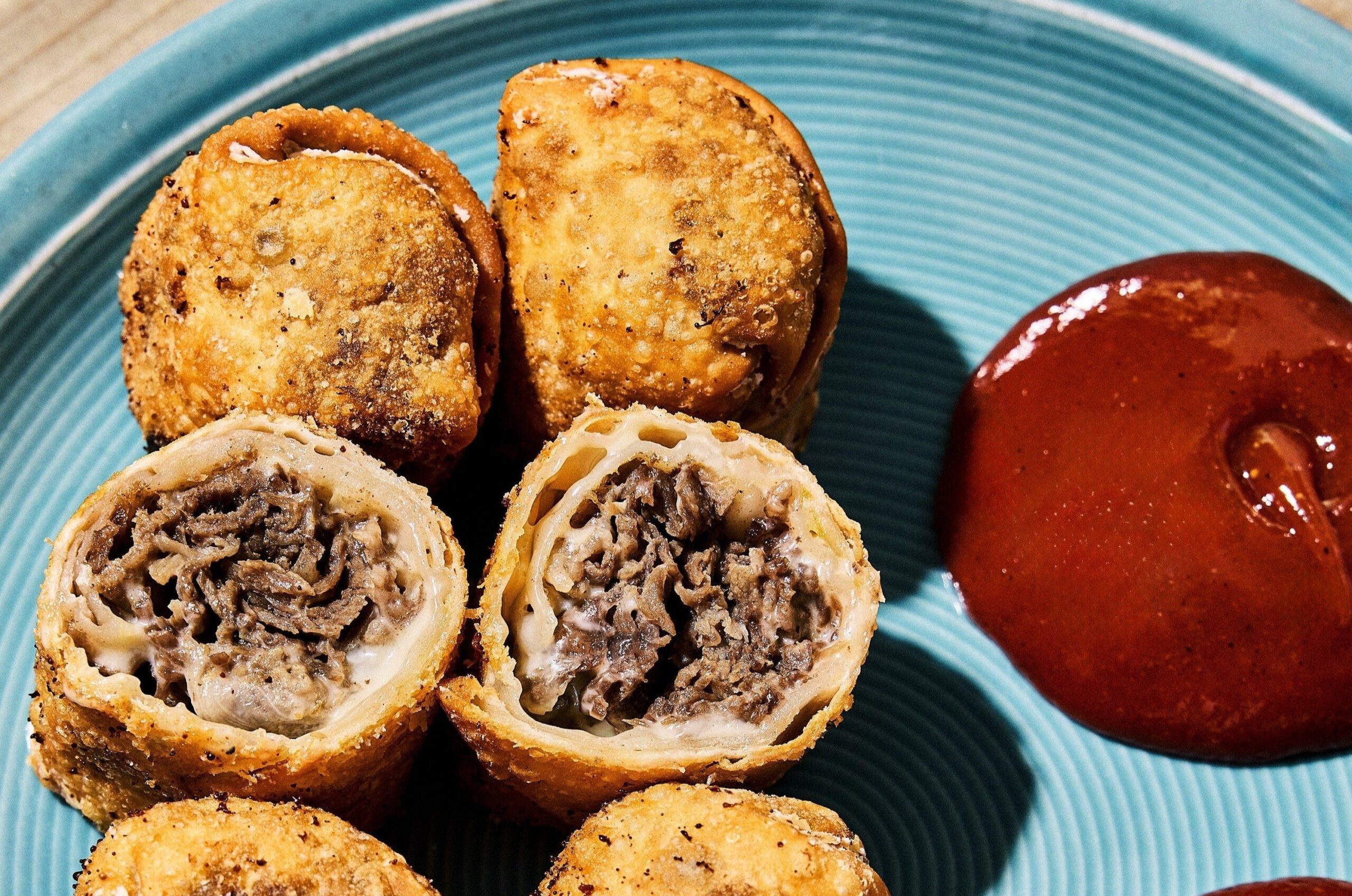
The cheesesteak egg roll from Continental Mid-town.
Stuff steak and cheese into an egg-roll wrapper, deep-fry it, and you’ve got one of Philadelphia’s signature mashups: the cheesesteak egg roll.
They’re everywhere now, from neighborhood pubs to white-tablecloth steakhouses, and go by “spring rolls” at some places, but their rise can be traced to two nearly simultaneous Philadelphia stories in the mid-1990s.
One unfolded at the old Four Seasons Hotel on the Parkway. Former chef David Jansen said that after preparing a banquet for the New York Rangers in 1994 or 1995, prep cook Mui Lim put leftover cheesesteak filling into spring roll wrappers and fried them as a snack for the kitchen crew. They went on the menu soon after at the hotel’s Swann Lounge. Today’s Four Seasons Philadelphia, now at the Comcast Technology Center, serves wagyu cheesesteak spring rolls with sweet-and-spicy pepper relish.
The other story played out in Old City, where the novelty became a menu staple at the Starr-owned Continental. In 1996, Starr hired Sam “Chef Sammy D” DeMarco to develop dishes for the year-old restaurant. DeMarco already served a Philly cheesesteak dumpling at First, his New York restaurant, but Starr wanted something original.
DeMarco turned the dumpling into a cheesesteak spring roll. “It was taking a classic, nostalgic American snack and presenting it in a fresh way,” said DeMarco, now executive chef at Bungalows Resort in Scottsdale, Ariz.
Like the old Buzz Aldrin cocktail, the roll became a classic. Starr said Continental Mid-town, near Rittenhouse Square, now sells 500 a week.
From the Continental, the idea spread rapidly. Davio’s owner Steve DiFillippo was joining staff for a preshift meal at his former Center City Philadelphia location shortly after it opened in 1999 when chef David Boyle served cheesesteak egg rolls that his wife had made at home. DiFillippo insisted that they be added to the bar menu, overruling managers who felt that they were too déclassé for a posh steakhouse. The Boston-based Davio’s turned the line into a frozen-food item, selling millions through supermarkets and QVC until rising beef prices during the pandemic made them impractical, DiFillippo said. They’re still on the restaurant menus in King of Prussia and elsewhere.
Though DiFillippo copyrighted the name “Philly Cheese Steak Spring Rolls” in 2002, “I’m not going to claim I invented anything,” he said. “But I was the first one to take them into stores and really commercialize them.”
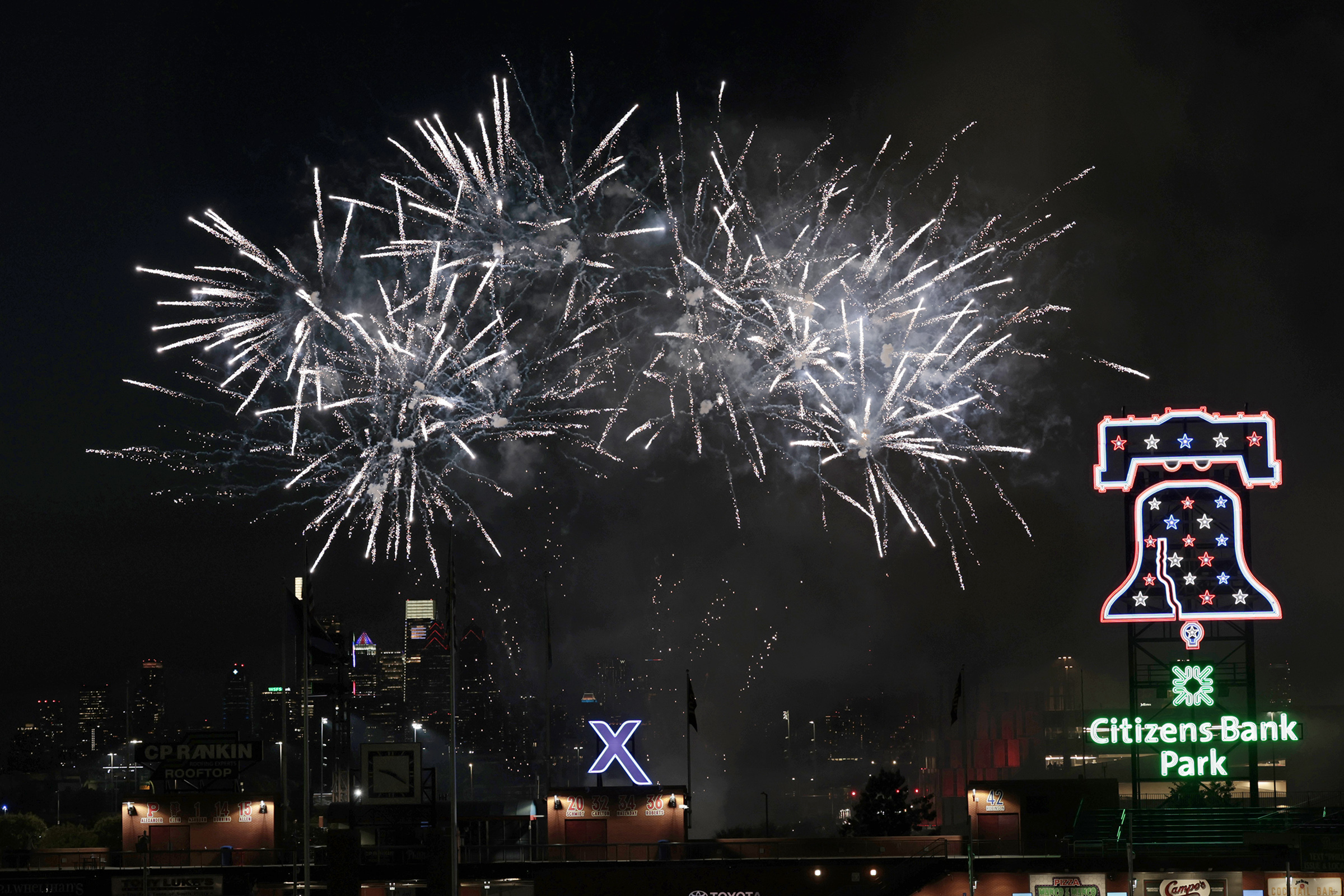
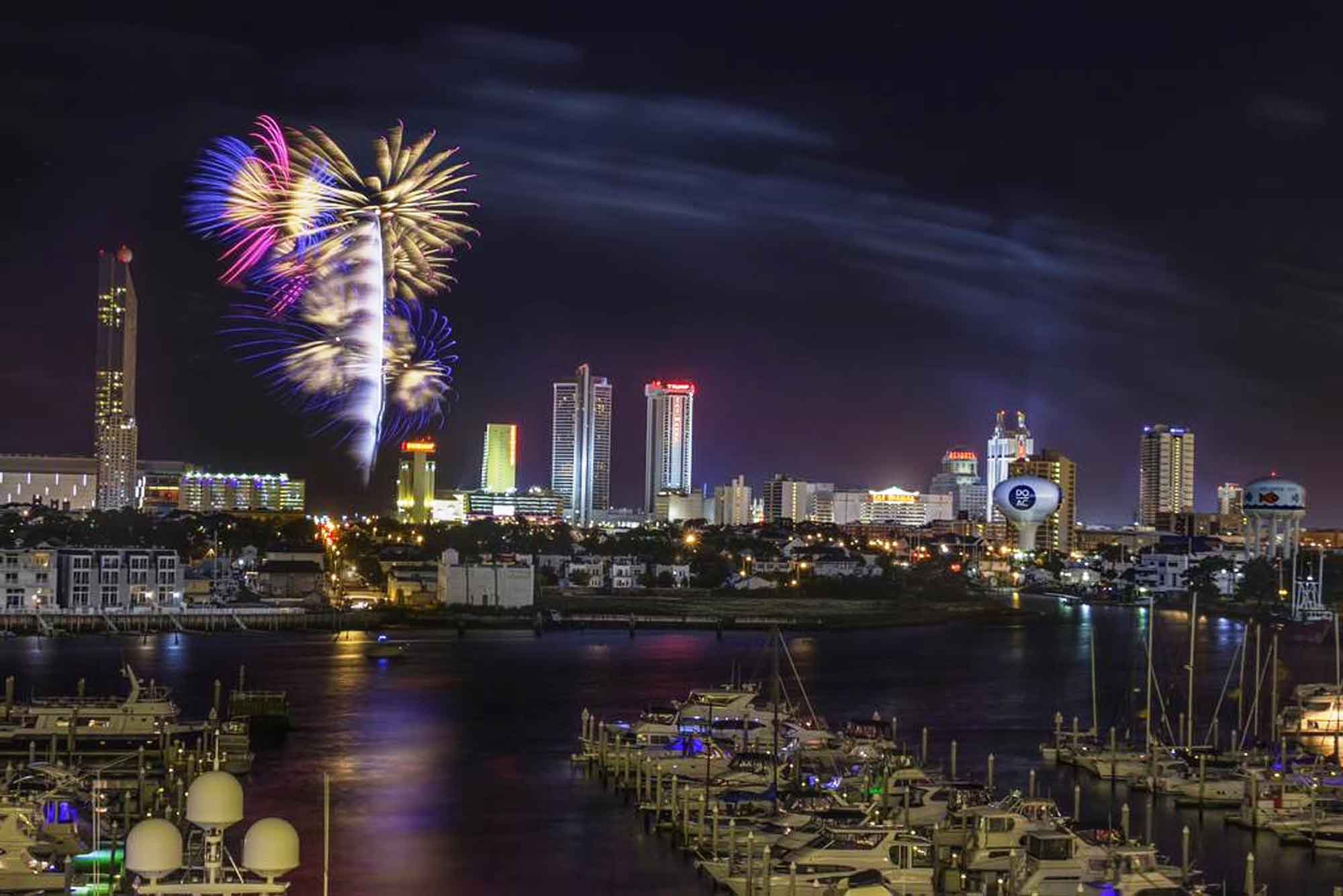
This Fourth of July will be unlike any in recent memory. As the nation marks its 250th anniversary, Philadelphia and the surrounding region are packed with celebrations — and fireworks displays. From the city and suburbs to South Jersey and the Shore, there are dozens of opportunities to catch a show.
Whether you’re staying in Philadelphia, heading to the suburbs, or spending the holiday down the Shore, here’s where to find Fourth of July fireworks across the region.
Wawa Welcome America: 🕙 July 4, 5 p.m. 📍Christina Aguilera and Philadelphia native Jill Scott headline a concert followed by fireworks, 2600 Benjamin Franklin Parkway, Philadelphia, Pa., 19130, 🌐 july4thphilly.com
Conshohocken Fireworks Display: 🕙 July 3, 9:15 p.m., 📍The fireworks will take place at Sutcliffe Park, but the borough is closing the park and surrounding areas to the public due to the size of the display. (They advise you to watch the show from another vantage point in town.), 🌐 conshohockenpa.gov
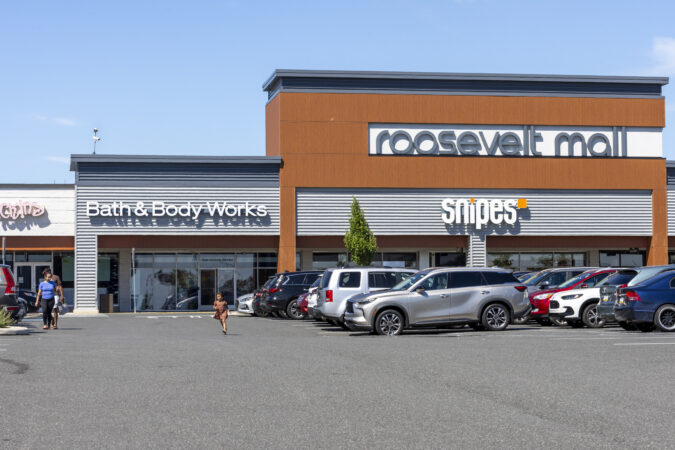
As Brixmor Property Group executives began transforming the Roosevelt Mall, they briefly debated whether to change the name.
After all, the 60-year-old Northeast Philly shopping center is undergoing a more than $70 million makeover that promises to bring it into the modern age with new tenants, upgraded facades, and a better layout.
As Brixmor executives walked around the 620,000-square-foot complex on a recent day, they said they already see the outdoor mall becoming a community hub — with a gym, an organic grocer, and new fast-casual dining options.
Despite these changes, they have decided the Roosevelt Mall should not be rebranded.
“It’s an iconic name,” said David Vender, Brixmor Property Group’s executive vice president for the north region, who is based in Conshohocken. “People know it as a landmark.”
Brixmor operates about 350 shopping centers nationwide, but some of its top executives — including new CEO Brian Finnegan, who grew up in Roxborough — have soft spots for Philly, forged by personal or family connections to the region.
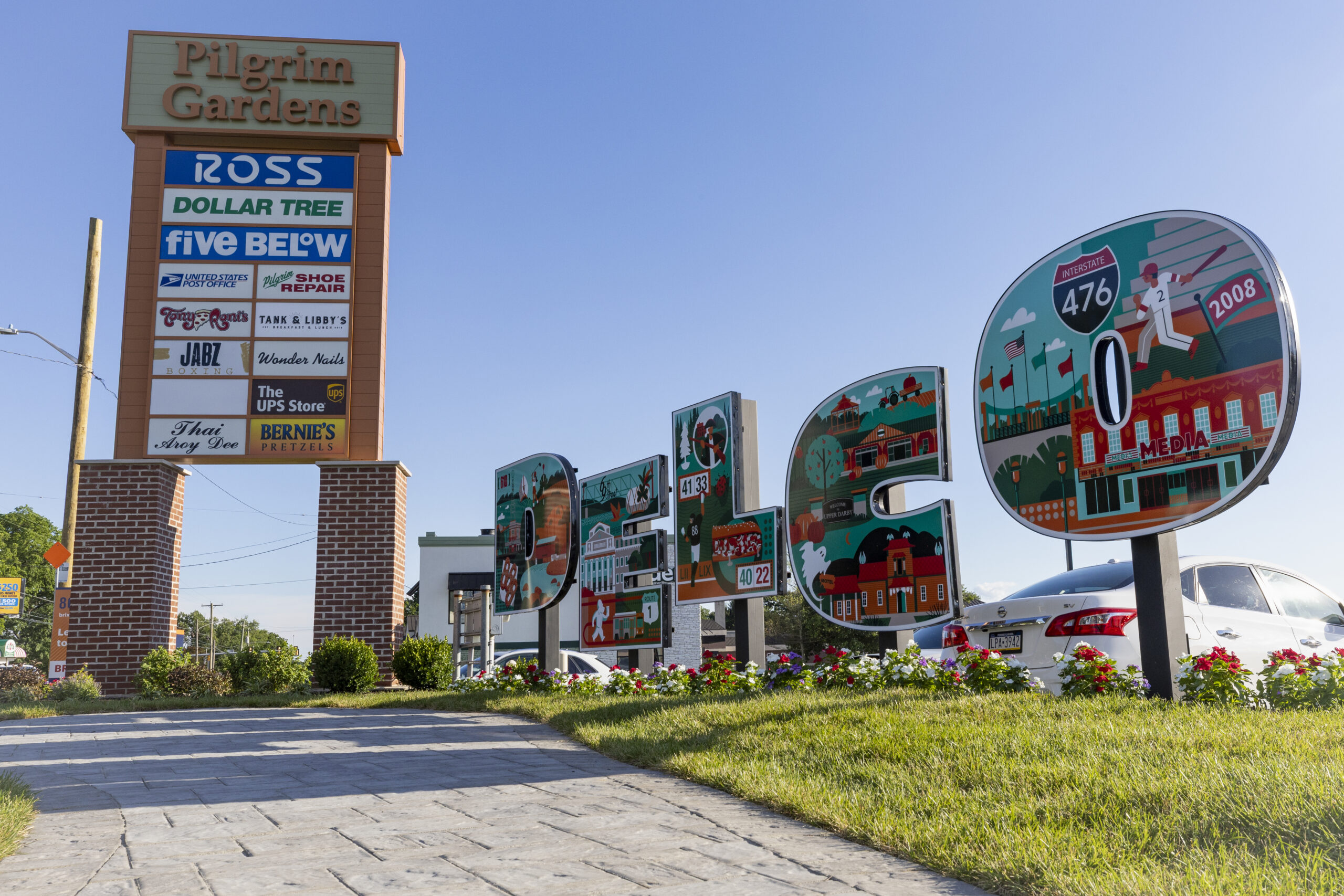
A new Delco sign is shown at Pilgrim Gardens in Drexel Hill on June 16.
And they said their connection to the community around the Roosevelt Mall has only grown stronger since last year’s plane crash, which killed eight people, injured two dozen, damaged nearby homes, and left an 8-foot-deep crater in front of the mall.
Even before the tragedy, they said, they considered how their local redevelopments affected the Philly-area residents who shop, eat, and drive by their centers every day.
At the Roosevelt Mall — which sits on 36 acres between Cottman Avenue, Roosevelt Boulevard, and Bustleton Avenue — these decisions have begun to pay off.
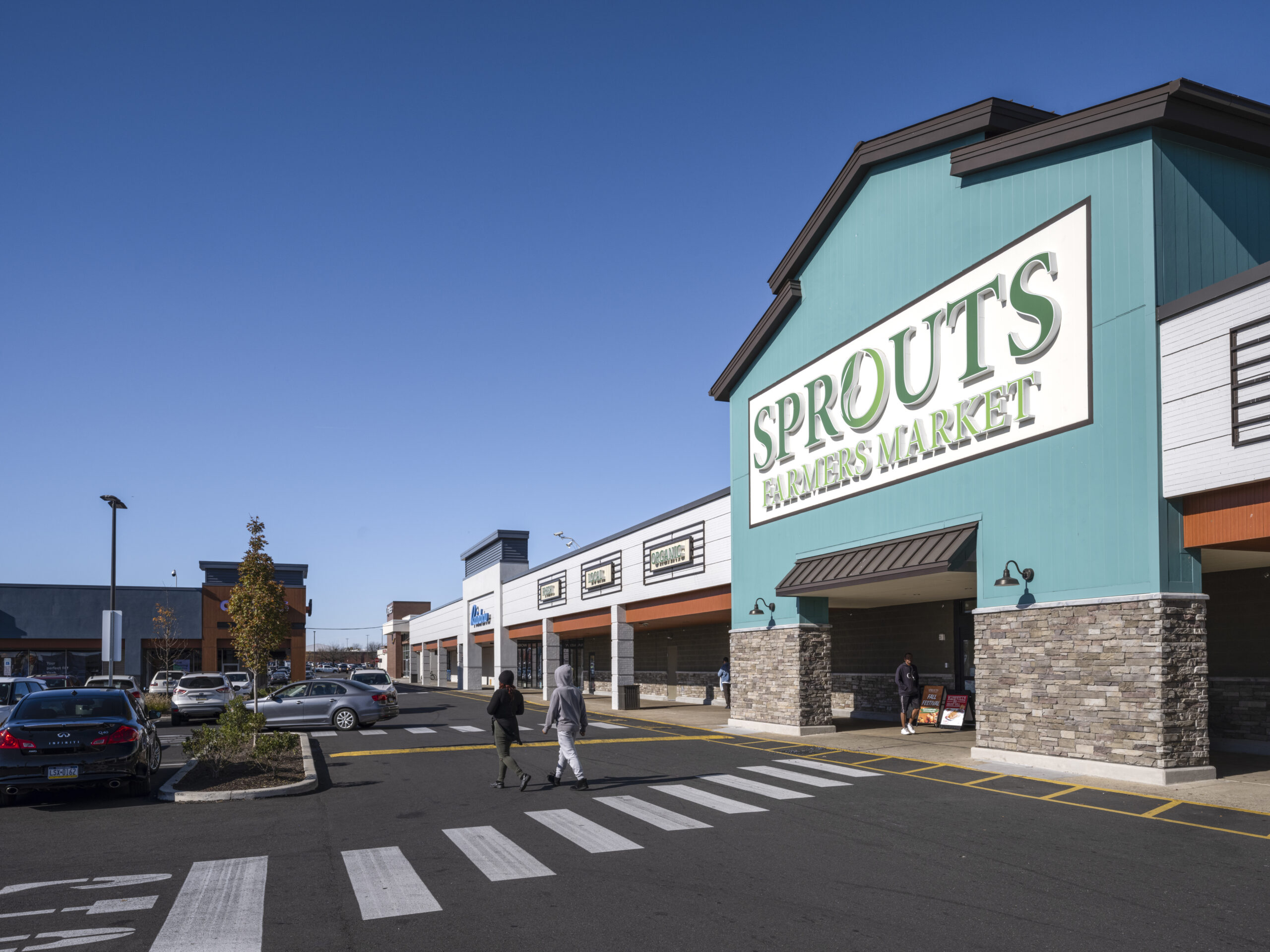
In the last year, the center logged 6.3 million visits, a 5% year-over-year increase and a 19% jump when compared with the 12 months before Sprouts Farmers Market’s 2024 opening, according to company executives.
Occupancy was over 98% this spring, they said, and customers spend about 35 minutes there on average, on par with the national average for all Brixmor complexes.
When you’re able to bring together “higher-quality food and beverage, fitness, service … then you’re also able to attract more elevated retail” stores, said Finnegan, noting that Ulta Beauty and Victoria’s Secret are among the tenants signed on for the next phase of the Roosevelt Mall’s redevelopment.
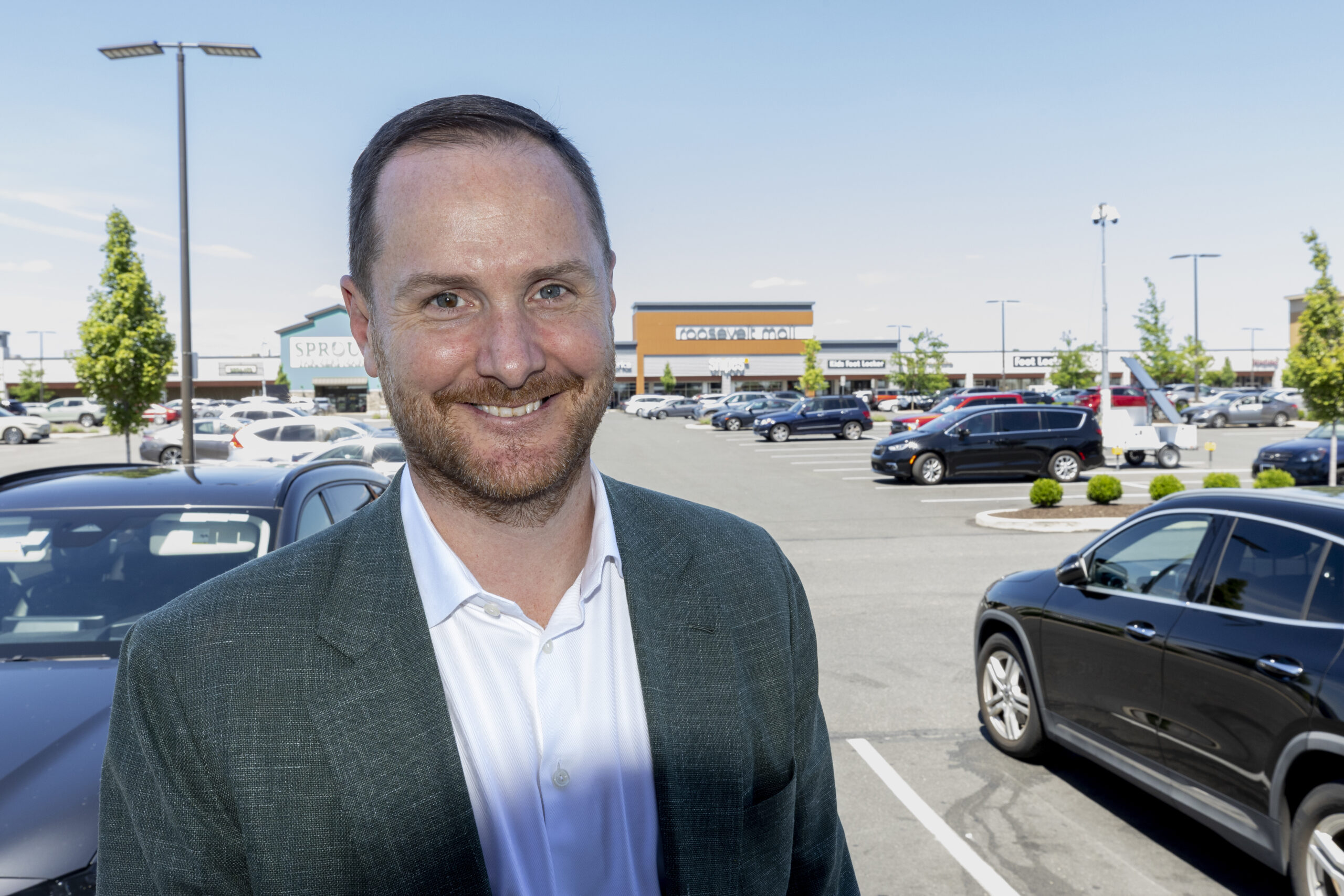
Brian Finnegan, CEO and president, at Brixmor Property Group, at the Roosevelt Mall in Northeast Philadelphia.
Achieving the tenant mix of a modern shopping center
When the Roosevelt Mall opened in 1964, its main promenade was referred to as “Chestnut Street Northeast,” with several outposts of Center City clothing stores, according to an Inquirer article from the time.
The shopping center had apparel shops, such as Baker Shoes and Famous Maid, as well as “the Cavalier, a cafeteria-style restaurant with a game room and a retail bakery,” The Inquirer reported. It was anchored by an S. Klein’s discount department store.
The Roosevelt Mall was built as part of the Roosevelt Boulevard shopping complex, bordered by Cottman and Castor Avenues. The larger development — which also had Gimbels and Lit Bros. department stores — was called the country’s largest “in-town” shopping center at the time.
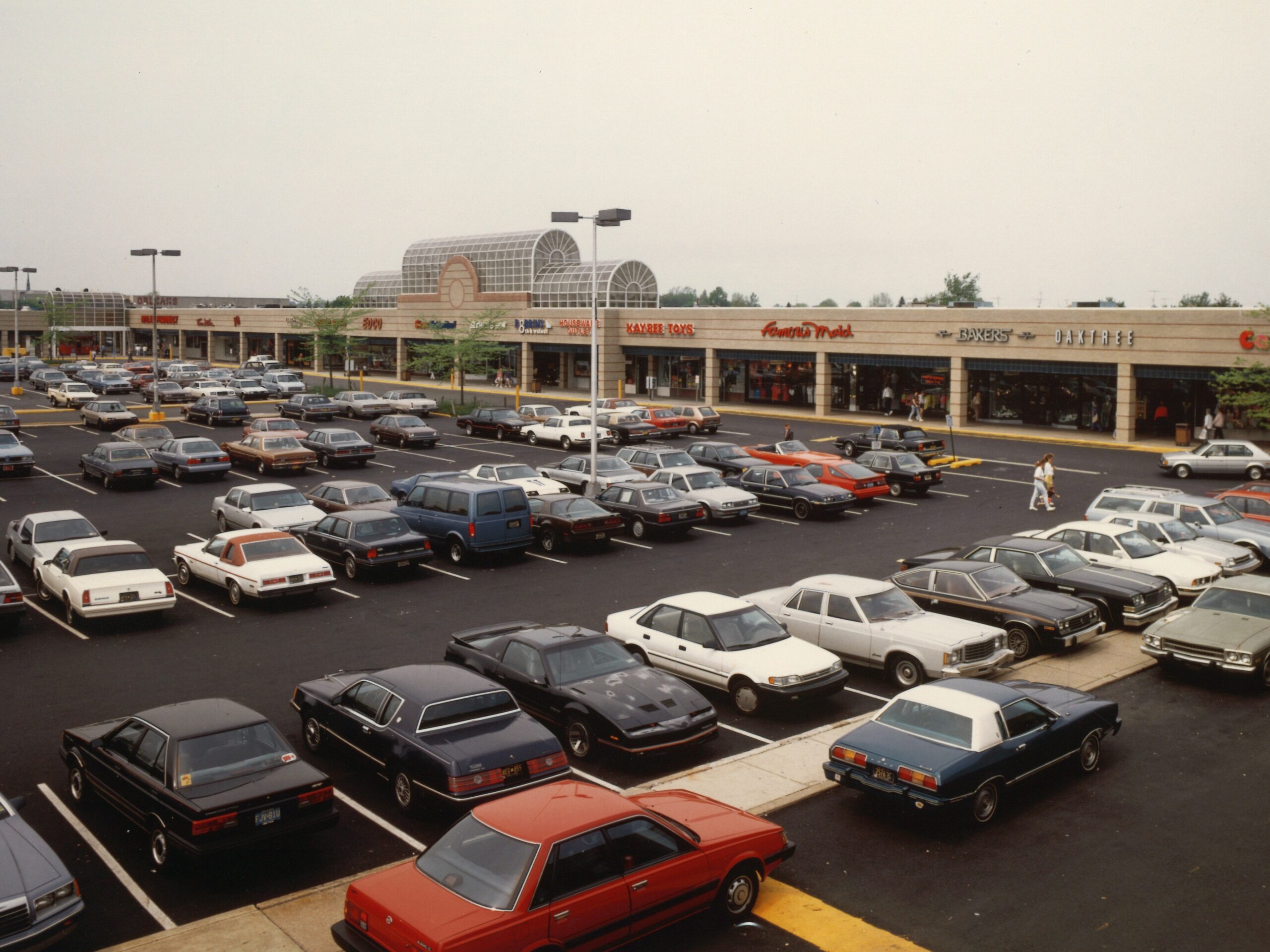
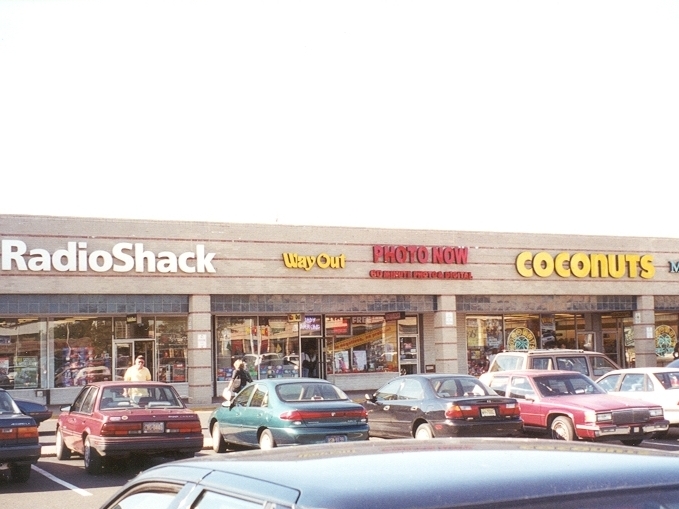
Roosevelt Mall in Northeast Philadelphia is shown in earlier days, long before Brixmor Property Group remodeled the property.
They said they have intentionally brought in tenants that customers may visit multiple times a week and added more pedestrian walkways, open-air plazas, and outdoor seating.
“Historically, shopping centers were very utilitarian, and now they’re really becoming more community assets, so we’re really careful about our merchandising mix,” said Ryan Guheen, Brixmor’s senior vice president of development.
Roosevelt Mall in Northeast Philadelphia is shown in earlier days, long before Brixmor Property Group remodeled the property.
The latest redevelopment push began around 2020, when Brixmor opened an LA Fitness outpost on the site of a former Turf Club off-track betting venue, near a new Oak Street Health clinic.
Since then, the company has constructed buildings in underused sections of the parking lot and filled them with popular chain eateries like Raising Cane’s chicken; the American-Chinese food spot Panda Express; and Tous les Jours, a Korean-French bakery and coffee shop.
Annual customer visits to Roosvelt Mall have increased 13% since Sprouts organic grocer opened there in 2024.
The 37,000-square-foot under-construction building, set to house a Victoria’s Secret and an Ulta, will also include fast-casual staples like Shake Shack and Cava, which serves Mediterranean bowls and pitas.
Tenants like these, Guheen said, provide “multiple opportunities for people to stay on property to shop retail, get their workout in, go to the bakery, get a coffee.”
Some mall retailers have found homes in shopping centers
As Brixmor executives diversify the tenant mix at their shopping centers, they say they do not see retail stores going extinct.
Elsewhere in the Northeast, the Franklin Mall, formerly Franklin Mills, has been in decline for years and was recently listed for sale. Real estate investor Dean Adler has said he wants to buy the 137-acre mall and turn it into a youth sports complex with a hotel and Margaritaville-themed water park.
Seven miles away, the Roosevelt Mall is home to several shops that were once found almost exclusively in enclosed malls, such as Bath & Body Works, Foot Locker, and the forthcoming Victoria’s Secret. These companies’ higher-ups have pivoted in recent years, adding more locations in open-air centers.
“It’s not like retailers are leaving malls en masse … at least in the best malls,” Finnegan said. But “as they open stores in open-air shopping centers with grocery stores, with fitness uses, with elevated food and beverage, they’re seeing the sales performance” — and then want to keep investing in shopping centers.
Longer-standing retail tenants are continuing to see success, too. Finnegan said the Roosevelt Mall’s 300,000-square-foot standalone Macy’s is among the company’s top-performing locations in the region, rivaling the King of Prussia Mall store.
The department store is the center’s largest driver of traffic, recording more than 900,000 annual visits, said Brixmor executives, who are not worried about the department store closing as the Center City store did last year.
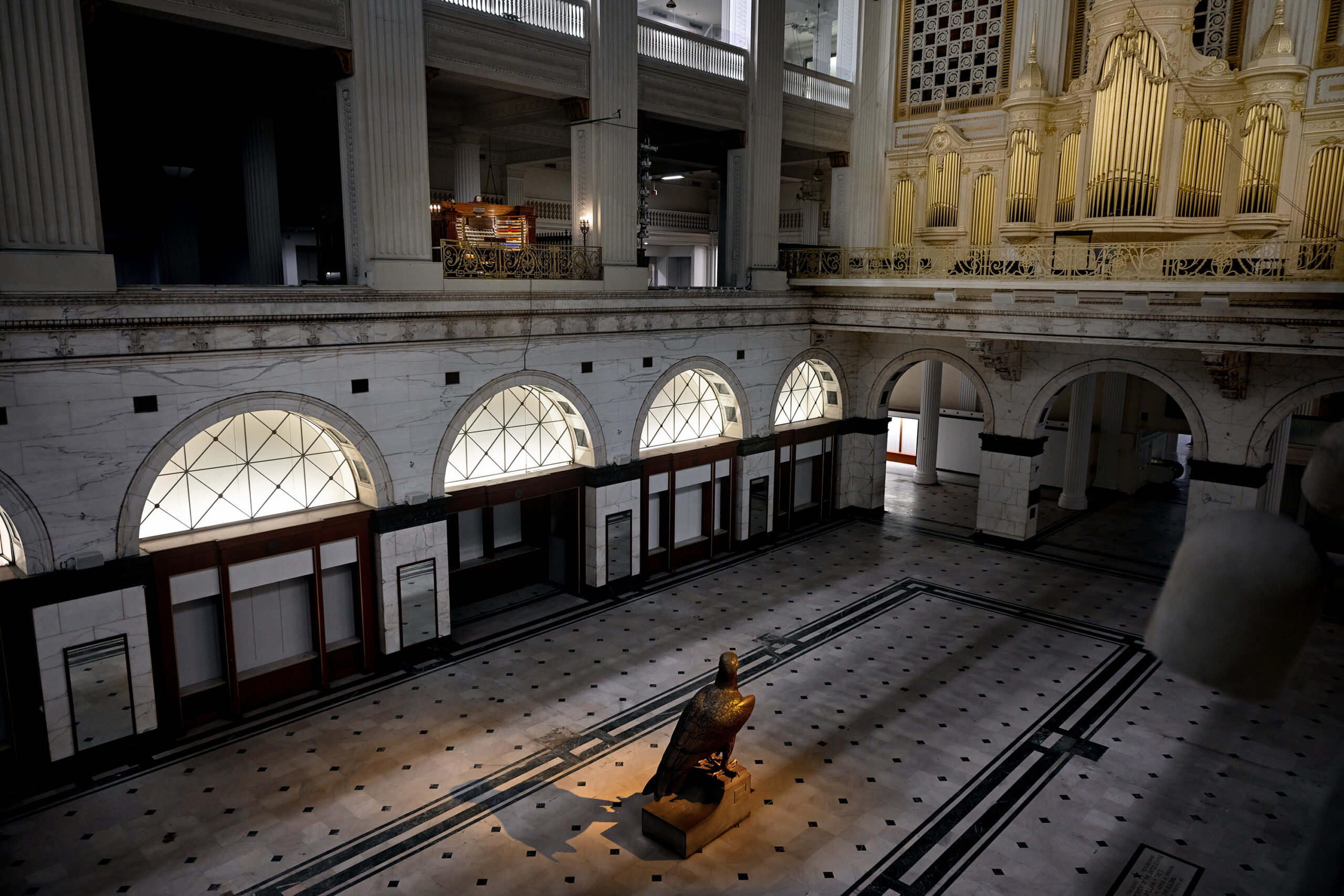
As seen in September, the Macy’s in the Wanamaker Building in Center City now sits empty. It closed last year.
Company executives said they are optimistic this momentum will continue. Along with the under-construction section, redevelopment plans also include another standalone building that has yet to break ground — and the cost of which is not included in the current price tag.
Finnegan put it simply: “Opportunity begets opportunity.”
Angelo’s Pizzeria owner Danny DiGiampietro has been pursuing two ambitious goals: reviving a landmark Montgomery County bakery and opening a branch of his Michelin-recommended pizza-and-sandwich operation in South Jersey, where it all began.
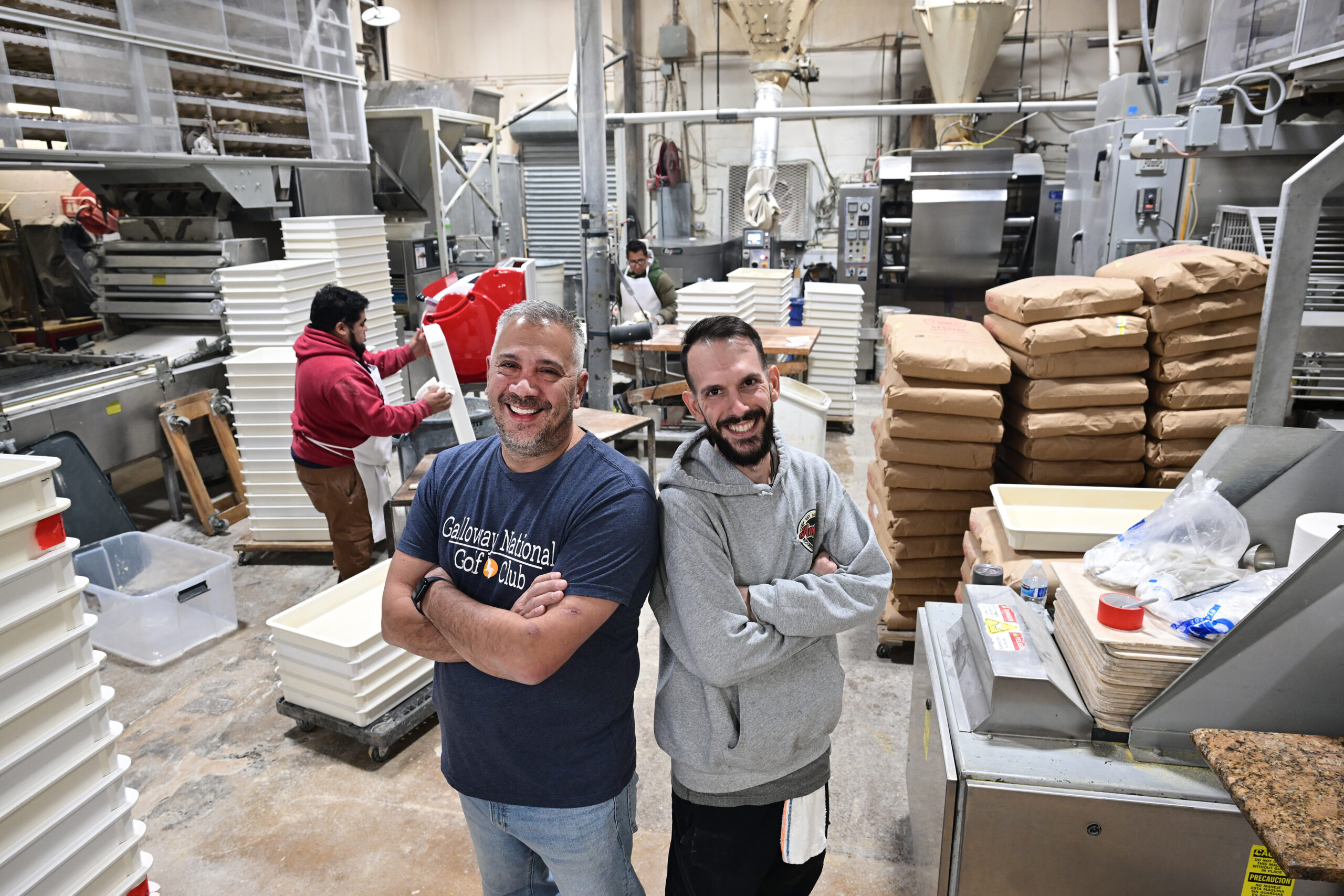
Both projects now appear to be gaining momentum. While Angelo’s vaunted rolls are being baked at the former Conshohocken Italian Bakery property, which DiGiampietro purchased last year, the long-held plans to reopen the bakery’s counter to retail customers remain on hold. DiGiampietro said the building requires additional work, which he declined to specify. “Every time we fix one thing, something else comes up,” he said.
Danny DiGiampietro (left), owner of Angelo’s Pizzeria, with partner Jared Braunstein at the bakery in Conshohocken in December 2024.
But Angelo’s is moving into wholesale bread production, the backbone of Conshohocken Italian Bakery’s business under the Gambone family for more than a half-century before its 2024 closing.
A key piece of the puzzle is on the way: a massive Polin oven imported from Italy to give his bakers more flexibility, DiGiampietro said.
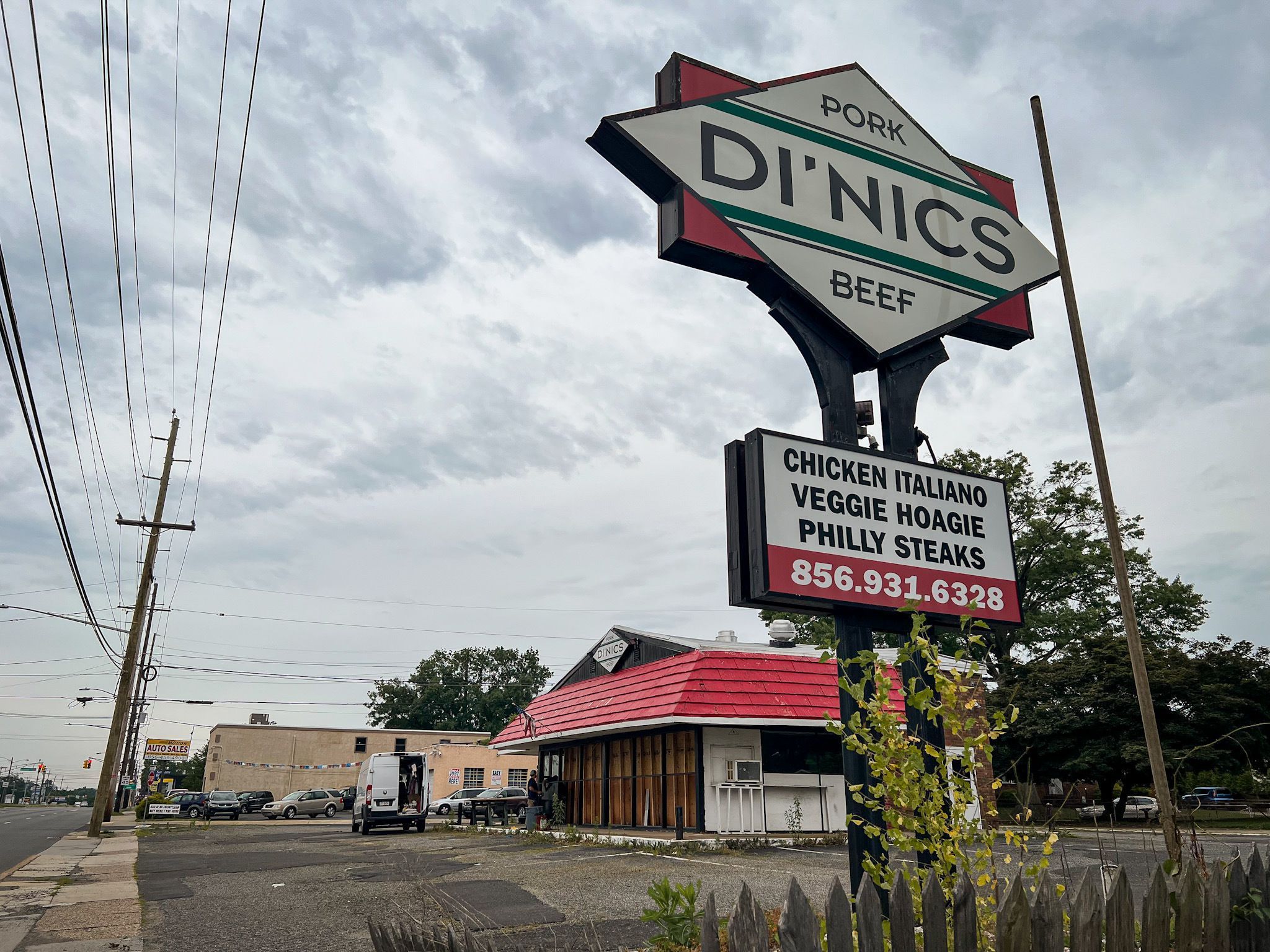
The future location of Angelo’s Pizzeria in West Collingswood Heights, previously Di’Nics, on June 18, 2026.
At “Conshy,” as the Jones Street bakery was known, the Gambone family supplied rolls and bread to hundreds of restaurants and sandwich shops throughout the region. Its closing created a frenzy among customers and competitors.
DiGiampietro said the new oven will allow bakers to create a line of kaiser rolls, potato rolls, steak rolls, and hoagie rolls. Although he will in effect be selling to his sandwich shop competitors, he likens it to giving shops “the canvas to make their art,” DiGiampietro said. “Everyone’s different.”
A return to wholesaling was not in the initial plans for DiGiampietro, who owned a bread bakery in South Philadelphia about 20 years ago. “I went bankrupt the first time. So hopefully I don’t go bankrupt again.”
Meanwhile, demolition and rebuilding are underway at the future Angelo’s Pizzeria location at 310 Black Horse Pike in the West Collingswood Heights neighborhood of Haddon Township, Camden County. The stand-alone building was formerly Di’Nics.
Crews recently gutted the building, which DiGiampietro hopes to transform into a full-service Angelo’s within the next several months.
The project will mark his return to New Jersey. DiGiampietro opened his first Angelo’s in Haddonfield in 2013 before closing it in 2018 to focus on the Ninth Street location in South Philadelphia, which opened in 2019 and helped turn Angelo’s into one of the region’s most sought-after pizzeria and cheesesteak shops.
The Angelo’s in West Collingswood Heights, about 10 minutes from the Walt Whitman Bridge, will include table seating as well as a counter overlooking the kitchen. Initially, DiGiampietro wanted more seating. Then he began talking about a takeout-only operation.
“But people love the show,” he said. “They like to see everything happening.”
The build-out still requires installation of a pizza oven, walk-in refrigeration, and other equipment. Even so, DiGiampietro believes the compact space can work.
“We think we can keep a dining room and still fit everything we need in there,” he said. “It’ll be tight, but we work on Ninth Street in basically a submarine, so how much tighter can it get?”
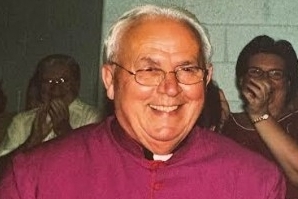
Philip C. Ricci, 90, formerly of Conshohocken, retired Catholic monsignor, founding pastor emeritus at Mary, Mother of the Redeemer Parish in North Wales, talented pianist, singer, artist, and mentor, died Saturday, Feb. 14, of complications after a fall at Villa St. Joseph senior living community in Darby.
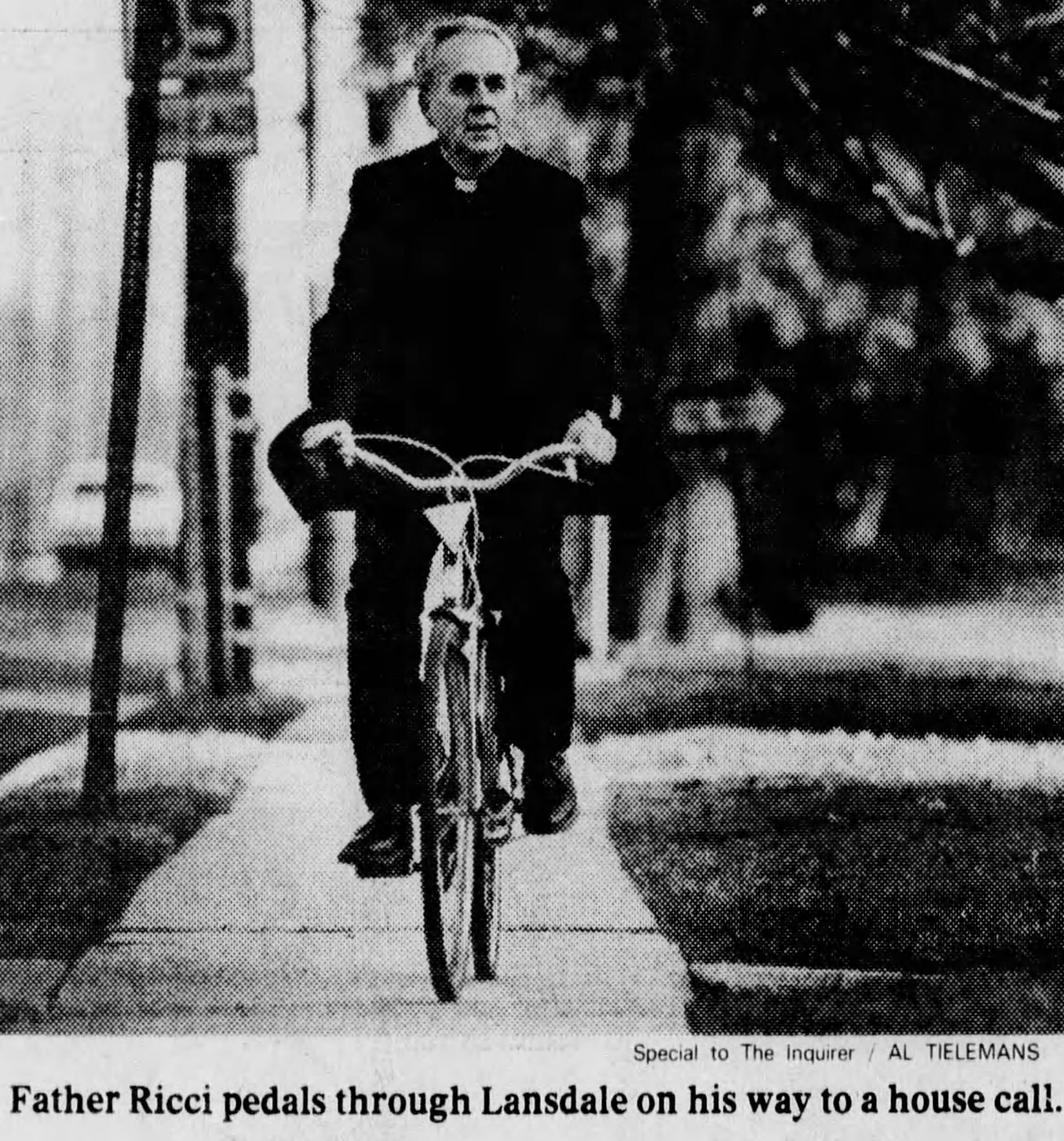
Ordained in 1965 by Cardinal John Krol, Msgr. Ricci was named founding pastor of Mary, Mother of the Redeemer Parish in 1987. Over the next 23 years, until his retirement in 2010, Msgr. Ricci worked many 16-hour days, made spiritual house calls on bicycle, spurred significant fundraising, and helped grow the Montgomery County parish from 600 founding families to 3,500.
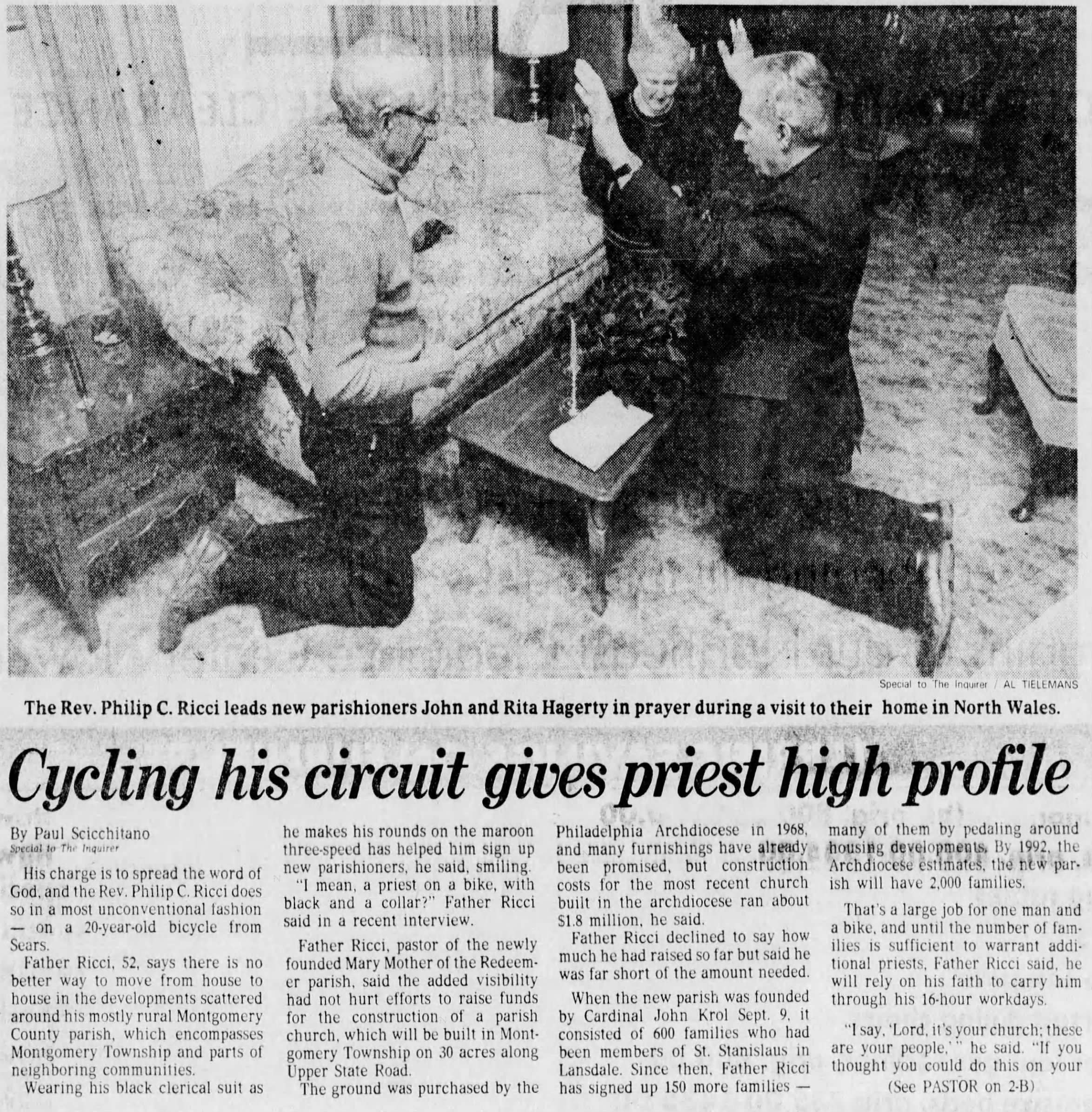
The Inquirer wrote about his house calls in 1987 and opened the story with: “His charge is to spread the word of God, and the Rev. Philip C. Ricci does so in a most unconventional fashion — on a 20-year-old bicycle from Sears.”
His niece, Christine, said: “He could talk to anybody about anything.”
Msgr. Ricci lived and held services in a 200-year-old farmhouse from 1987 until the new church building was completed. Pope John Paul II elevated him to monsignor in 2003.
He was active with school activities, and his homilies were often about mercy and compassion. In 2010, he told members of his congregation at a retirement celebration: “We must always accept people where they are and then allow God’s grace to work in patient understanding.”
In an online tribute, colleagues at St. Matthew Parish in Conshohocken said his “kindness, wisdom, and steady presence touched countless lives.” Others called him “the perfect priest” and “the epitome of what a Catholic priest should be.” One friend said: “He was without a doubt the nicest person I have ever met.”
In a tribute, his family said: “His priesthood was not simply a role. It was the core of who he was.”
Msgr. Ricci first served in the 1960s as a chaplain at the old Holmesburg Prison in Philadelphia and pastor at the Riverview Home for the Aged and St. Margaret’s Home for Girls. He went on to be assistant pastor at St. Joseph Parish in Ambler, St. Stanislaus Parish in Lansdale, St. Anastasia Parish in Newtown Square, and St. Margaret Parish in Narberth.
In 1974, he became spiritual director of the college division at St. Charles Borromeo Seminary. He also earned a master’s degree in spirituality from Creighton University in Nebraska.
Ministering to people, no matter where he was, he told the Main Line Times in 2010, was personal. “You don’t go out forming community,” he said. “You go out and form one-on-one. I can’t separate who I am as a man, as a Christian, and as a priest.”
The Inquirer published a story about Monsignor Ricci making spiritual house calls on his bicycle in 1987.
Msgr. Ricci played piano and sang before church services and after Communion. He directed choirs, and friends presented him with his own piano at his retirement.
He returned to his family home in Conshohocken after leaving Mary, Mother of the Redeemer but continued to assist others at nearby parishes and visit those in hospitals and nursing homes. “Father was a Renaissance man, an artist, musician, writer, deep thinker,” a former colleague said on Facebook. “He could speak about the liturgy or the Eagles, the football team or the band. He related well to everyone regardless of age, religion, or background.”
Philip Cosmo Ricci was born Sept. 26, 1935, in Conshohocken. He graduated from the old Conshohocken High School, took night classes at the University of Pennsylvania’s Wharton School, and, inspired by his parents, entered St. Charles Borromeo Seminary to study the priesthood.
“When the Lord wants you, he gets you,” he told the Main Line Times. “I couldn’t fight it. It was always there.”
Monsignor Ricci’s house calls were featured in this 1987 Inquirer article.
He played piano in a dance band when he was young and enjoyed gardening. He was good at drawing and cooking. He followed the Eagles, Phillies, and 76ers, and invented a beanbag toss game the family played at gatherings.
It was fitting, his niece said, that he died on Valentine’s Day because he embraced love and service to others. “Faith for Uncle Phil was never theoretical,” she said. “It was lived. It was action. It was presence.”
In addition to his niece, Msgr. Ricci is survived by his brothers, John and Francis, and other relatives. A sister died earlier.
David’s Bridal, the King of Prussia-based wedding dress retailer, is getting into the documentary business.
Next week, the company will drop the first episode in its new series Breaking Bridal, which follows real-life couples and focuses on unique elements of their weddings.
The show’s trailer teases some of the stories: One couple said, “I do,” on an active volcano, and another tied the knot at a Universal Studios theme park.
“‘Breaking Bridal’ reflects how we’re evolving David’s Bridal into a content-driven, culture-focused ecosystem, not just a retailer,” company president Elina Vilk said in a statement.
Company executives said in a news release that the show represented the start of a “new era” for the company and would be “the first installment in a growing slate of original programming to come.”
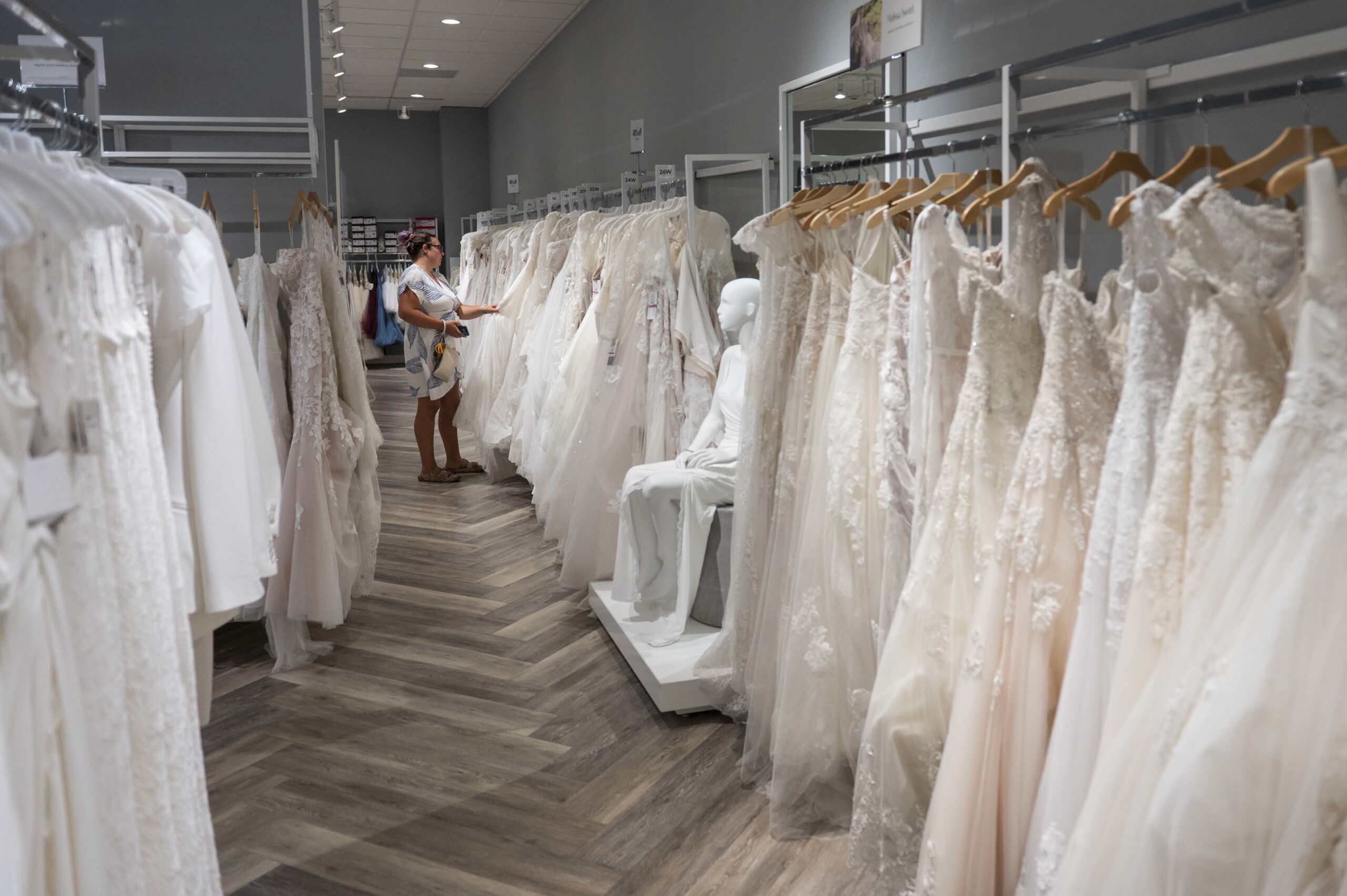
A woman shops for a wedding dress at David’s Bridal in Feasterville in 2023.
Cook, formerly David’s Bridal’s president of brand, technology, and finance, took over as chief executive officer in April and has spearheaded a new AI-fueled personalization of the wedding planning experience. The company calls the strategy “Aisle to Algorithm.”
“We’ve done an AI analyzer on your Pinterest boards,” Cook told the New York Times in June. “So we’re taking AI and we’re building an experience around everything that you’ve told us that you want to see.”
Cook added: “We have a machine learning tool that’s saying, ‘OK, when girls watch Aruba videos and then they search for beachwear and then they buy a dress with no sleeves, the odds are they’re going to want these kinds of other dresses and these shoes.’”
Cook told the Times that she wants future David’s Bridal customers to be able to see a lifelike mock-up of their wedding day on a digital screen using augmented reality.
As part of the company’s strategy shift, it has also rolled out an AI-powered wedding planning platform called Pearl By David’s and a targeted-ad system called Pearl Media Network. Next week, it will add streaming series to the list.
“We’re leaning into original programming because modern couples aren’t following a template; they’re writing their own,” Cook said in a statement.
New episodes will be released every other Wednesday, according to the company. Later this year, plans call for the show to be available for streaming on Amazon Prime Video, Sling, Roku, and Tubi.
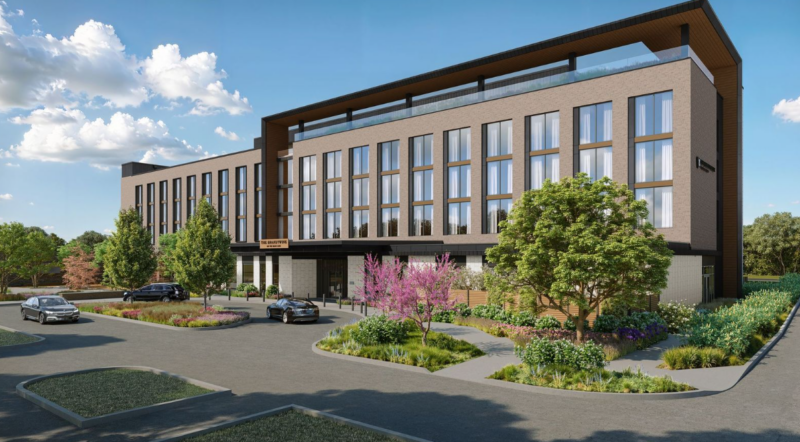
Brandywine Realty Trust plans to open a 121-room Marriott Tribute Portfolio hotel this spring in Radnor.
The company is the region’s largest office building owner, and the five-story project at 165 King of Prussia Rd. is meant to cater to their tenants in the suburbs.
Dubbed The Brandywine, itcost $60 million to develop and will include an expansiveroof deck and two restaurants with almost 260 seats between them.
The 80,000-square-foot hotel will be in the midst of the company’s 2.1 million square feet of holdings in Radnor, its largest suburban cluster.
“We were constantly hearing from our tenant base that as they were bringing people in from out of town, there was no real high-end, luxury hotel for them to spend time in,” said Jerry Sweeney, Brandywine’s CEO.
Brandywine’s other large suburban office holdings are in King of Prussia and Conshohocken.
“We saw a real window of opportunity to really upscale the hospitality experience available on the Main Line,” Sweeney said. “That’s very important to us because we have 3 million plus square feet of office space in the Pennsylvania suburbs, and over 2 million is concentrated within walking distance of this hotel.”
Sweeney estimates that over a quarter of the hotel’s business will come from Brandywine’s tenants in their Radnor office buildings, which include Lincoln Financial Group, Arkema, and Penn Medicine among many others.
In Brandywine’s second-quarter earnings call last year, Sweeney said he anticipates additional demand will be drawn from the seven colleges, including Villanova University, that are within a five-mile radius and from nearby healthcare facilities.
The Brandywine is expected to be open in time for graduation this year, and the company anticipates a boost from sporting events and celebrations this summer, which include World Cup games, a PGA tournament, the MLB All-Star Game, and the 250th anniversary of the United States.
The hotel’s ground floor will include the 114-seat Merrick’s Tavern, serving regional American dishes, a cocktail list anchored by bourbon and rye, local beer, and what is billed as a wine program. It’s intended for everyday dining and groups.
The 145-seat Pomelo Rooftop Terrace will operate year-round, serving botanical-forward cocktails and a locally sourced menu.
Merrick’s Tavern is named after Samuel Vaughan Merrick, the first president of the Pennsylvania Railroad and a founder of the Franklin Institute.
“With this hotel we really used the historical evolution of the Main Line as a theme, which is tied to the history of the Pennsylvania Railroad,” Sweeney said. “Even some of the motif and interior space designs we have are very reminiscent of the great age of American railroads, where travel was upscale.”
A rendering of Merrick’s Tavern within Brandywine Realty Trust’s new hotel, opening this spring in Radnor.
The hotel is next to the Radnor stop on SEPTA’s Norristown High Speed Line and close to two Regional Rail stations.
The building’s architect is the DLR Group, while interior design is by Restoration Hardware and Bergmeyer. The Brandywine will be operated by Aimbridge Hospitality.
As part of the Marriott Bonvoy Tribute portfolio, the brand is a boutique hotel within the larger chain, which allows more flexibility for decor and furnishings.
Brandywine Realty Trust has developed hotels before, notably the AKA University City in the FMC Tower, in partnership with Korman Communities.
“For us, it was really brand building, expanding our tenant service program to our tenants and creating more connective tissue between us and our customers,” Sweeney said.
“We saw a great window of economic opportunity to build a high-end hotel that was positioned along two interstates, two train lines that would appeal to a much broader base of customers beyond just the Brandywine universe,” he said.
The Brandywine will be just the latest hotel added to the Main Line.
New venues have been opening in recent years in municipalities like Newtown Square and Conshohocken.
“It wasn’t all that long ago when you just had the [65-year-old] Radnor hotel, but wherever there’s a big business presence, you’re going to need hotel rooms,” said Ed Grose, CEO of the Greater Philadelphia Hotel Association. “These aren’t your typical limited-service hotels. They’re nice. They’re hotels that cater to businesses that are also growing in that area.”
Erin Mooney, executive director of the Schuylkill Center for Environmental Education, slipped out of a sweltering sauna last weekend wearing only a bathing suit and strode barefoot straight into the coldest day of the winter.
“I never thought that I would find myself in a bathing suit laying down in the snow on a 15-degree day, and I found myself doing that at the Schuylkill Center,” Mooney said.
It marked the opening weekend of a new experience that the Schuylkill Center, on Hagy’s Mill Road in Philadelphia, is offering along with a local sauna company, Fiorst — one that already has had solid booking off social media views, despite having just opened Saturday.
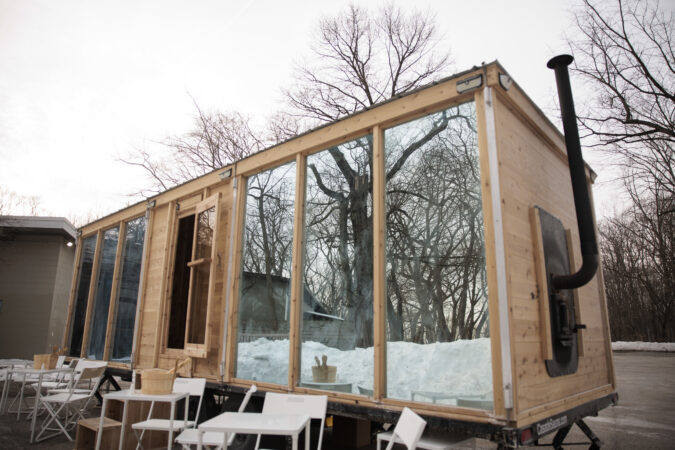
Visitors will have the chance to relax ina glass-walled, wood-fired sauna overlooking a snowy field and woods in Northwest Philly, paired witha cold plunge.
Mooney said the idea to host a mobile sauna on the preserve’s grounds grew from a desire to keep the center lively through winter and draw in new visitors. She was inspired by a sauna exhibit by the American Swedish Historical Museum in FDR Park and began looking for a way to bring that Nordic tradition of “hot and cold” to her own facility.
She spotted Fiorst, a mobile sauna venture run by Jose Ugas, on social media, reached out, and the two forged a near-instant partnership. They spoke on Jan. 30, a Friday; by the next Friday, a custom sauna unit from Toronto rolled onto the grounds.
By last Saturday, the fire was lit, and guests arrived.
“It was, you know, kind of kismet, in a way, we were able to have this shared vision,” Mooney said. “And with him doing this servicing of the saunas on site, it makes it so much easier for us.”
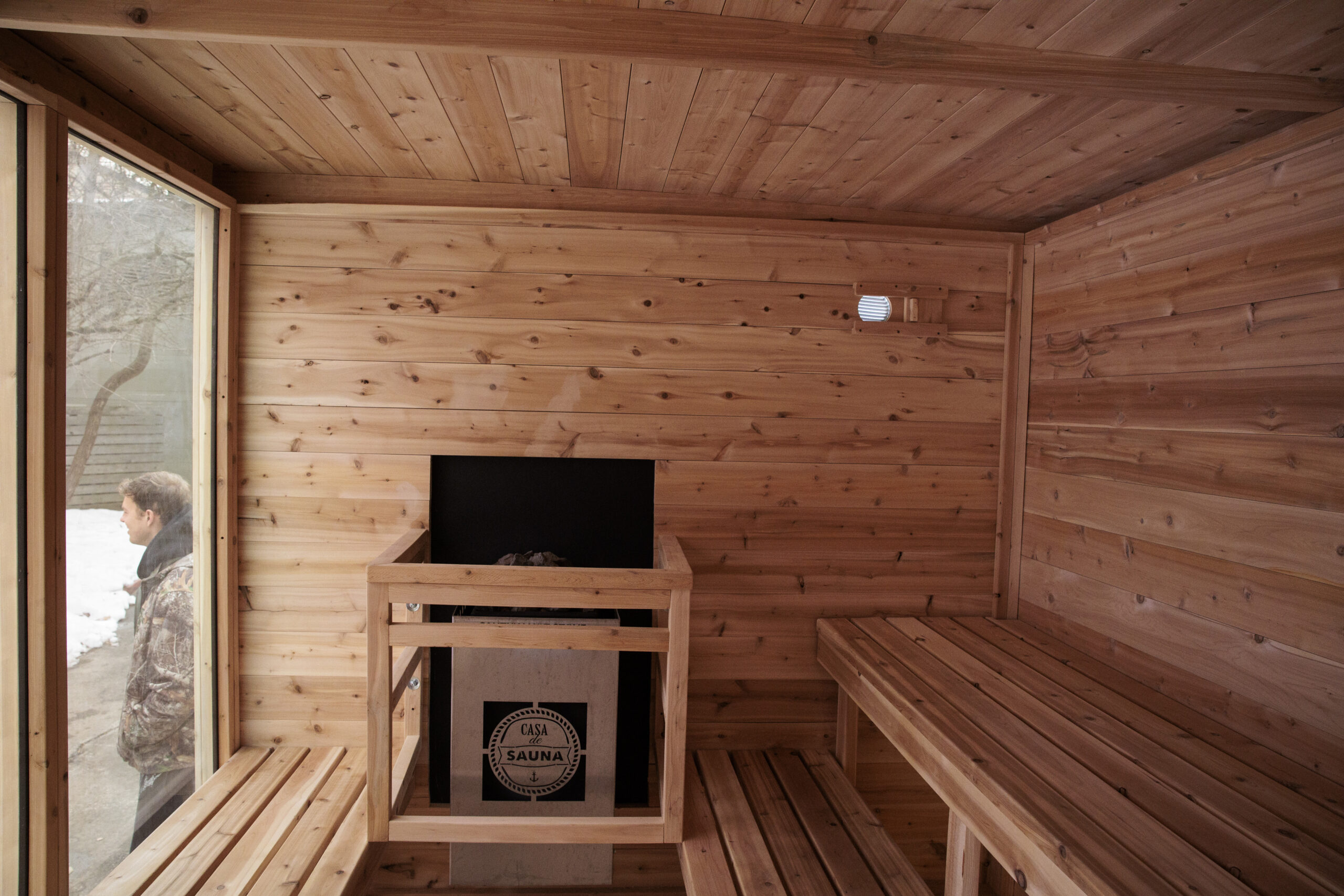
The interior of the Nordic-style sauna at the Schuylkill Center for Environmental Education.
How does the sauna work?
Nordic-style wood saunas are notable for their minimalist design and high heat, which participants couple with either a plunge into a cold shower, tub, or lake or a step outdoors.
Fiorst’s installation overlooks the center’s main wooded area, framing the winter landscape through a glass wall as guests sweat it out inside the sauna’s170- to 190-degree temperatures. Each 90-minute session allows participants to cycle at their own pace through intense heat and biting cold, a contrast Mooney found invigorating.
The sauna is modeled on a concept popular across Nordic countries, including Norway, Finland, Denmark, and Sweden.
Mooney said the project has already pulled in new visitors from neighborhoods like Fishtown or outside Philadelphia who might not typically visit for hiking or birdwatching.
She believes the sauna fills a niche for “clean, wholesome, healthy fun” that is alcohol-free.
However, unlike the typical Nordic experience of being nude during the sauna, the Schuylkill Center experience is strictly “bathing-suit friendly,” a choice tailored to American comfort levels.
The collaboration operates on a revenue split, with a charitable twist. During February, the center’s share of the proceeds goes to its Winterfest for Wildlife campaign to support the on-site wildlife clinic.
For now, the sauna remains a seasonal experiment, but it will stay in place as long as demand — and winter weather — holds up.
“I think it will stay seasonal,” Mooney said. “We live in a sauna already in the summer in Philadelphia.”
The sauna is open on weekends at the Schuylkill Center from 9 a.m. to 5 p.m. and is booked through the Fiorst website. The cost for a 90-minute session is $75. You can add a friend for $25. Private sessions of up to 16 cost $600. For now, bookings can be made only one week in advance.
The Schuylkill Center is expecting Valentine’s Day weekend to book quickly.
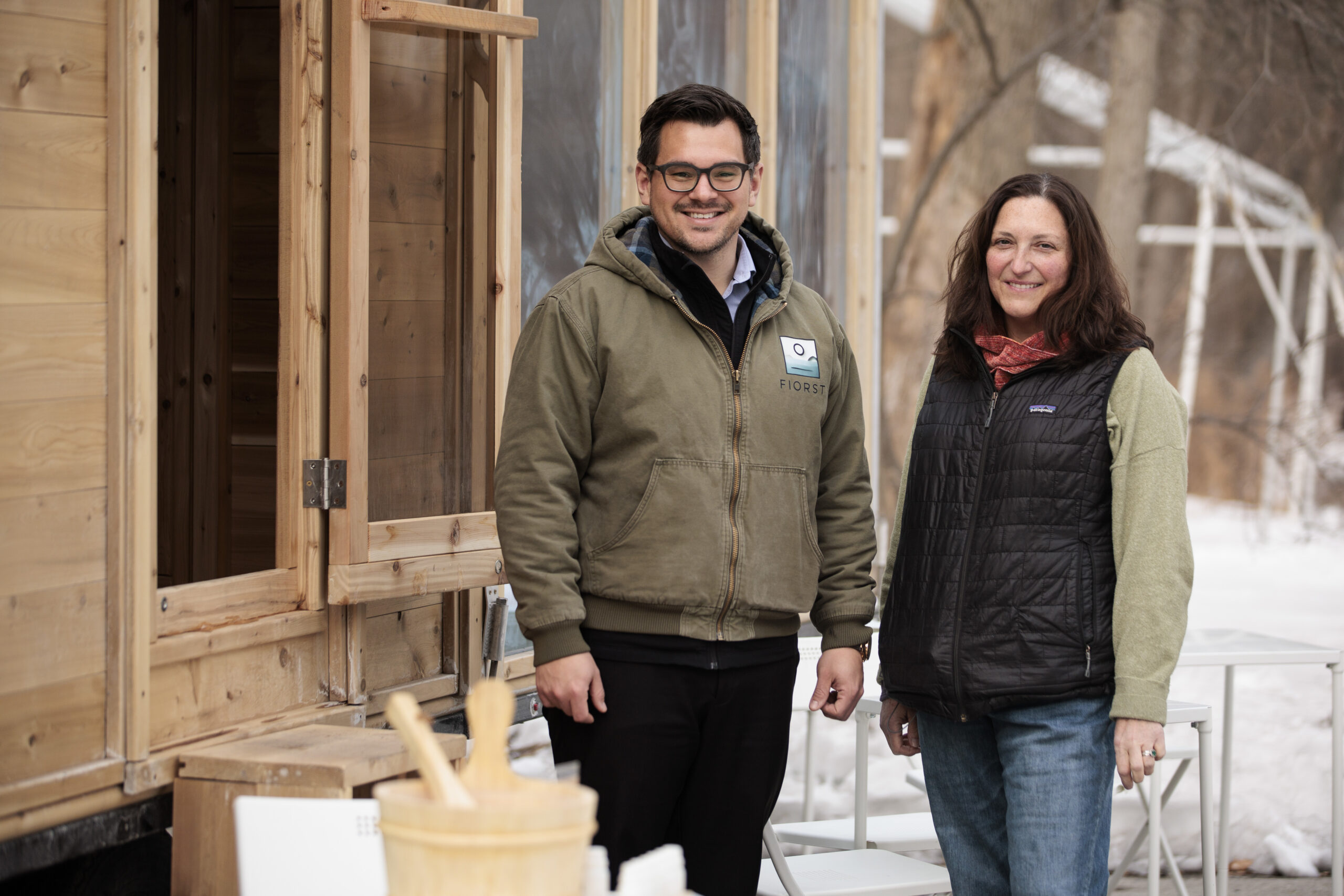
Jose Ugas (left), founder of Fiorst, and Erin Mooney, executive director of the Schuylkill Center for Environmental Education, at the sauna.
‘A moment of clarity’
Ugas, a bioengineer at Johnson & Johnson who lives in Whitemarsh Township, felt compelled to bring a Nordic-style sauna experience to the region after a triphe took to Sweden following the loss of his mother to brain cancer in 2023. There, friends introduced him to a traditional Scandinavian ritual: enduring searing dry heat inside a wooden sauna, followed by a plunge into icy water or a cold shower.
What began as a distraction soon crystallized into a moment of clarity, Ugas said.
“Just that time together and kind of going between the hot and the cold just was like a mental reset for me,” Ugas said.
Ugas, who will graduate with an MBA from Villanova University this spring, wanted to replicate the nature-immersive element that had grounded him overseas.
Hefound a Toronto company that builds portable glass-fronted wooden saunas andordered a custom unit equipped with a wood-fired stove, hot stones, steam, aromatherapy, and a cold-plunge tub. Ugas launched Fiorst in 2024, describing it as “nomadic” at first.
The venture first hosted sessions overlooking Valley Forge and at Fitzwater Station in Phoenixville. Ugas then established a more permanent site, which he calls Riverside, on River Road in Conshohocken where he still books sessions.
Ugas calls the partnership with the Schuylkill Center a natural fit given its location amid nature, merging his wellness goals with the venue’s environmental focus.
“At the core of our mission and their mission is to get people out in nature,” Ugas said.
So far, he has relied on social media to market the sauna, which has drawn hundreds of visitors to its locations.
The Nordic-style sauna at the Schuylkill Center for Environmental Education in Philadelphia.
‘Social sauna’
Serena Franchini, a nurse and founder of Healing Fawn Inner Child Work & Somatic Therapy, has taken sauna sessions at Ugas’ other locations. She sees it as a tool to help with nervous system regulation while offering an immersion in nature.
“I loved the idea that it was outside,” Franchini said.
She likes the relaxed atmosphere compared with some traditional saunas that often enforce strict time limits on heating and cooling cycles. Instead, she cycles between the sauna and cold-plunge tub at her own pace.
Franchini highlighted the mental wellness aspect of Ugas’ “social sauna” sessions, noting Friday night events as “skip the bar” alternatives that allow strangers to gather for a healthy, communal experience.
“It’s a great way for community to connect with people that are interested in the same things that you are,” Franchini said.
But this time it’s not with new physical stores. The home design company is entering the virtual world.
The retailer, which has its U.S. headquarters in Conshohocken, announced this week that it is testing an immersive product experience on the Roblox platform.
Sweden and Australia are the first two pilot countries, according to the company, and the tests there “will better inform future decisions.” Ikea spokespeople did not respond Friday to questions about whether there were plans for similar pilots in the U.S.
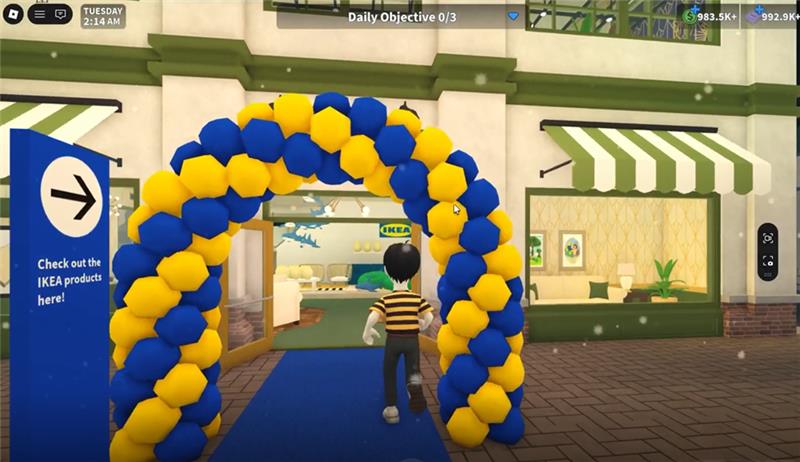
What users of “Welcome to Bloxburg,” a Roblox game, will see when they go to search for Ikea digital products in the simulation.
“We’re delighted to bring some of our most loved Ikea products into this digital space,” Sara Vestberg, home furnishing direction leader at Ikea Retail, said in a statement. “With curiosity, we’re looking forward to seeing the home furnishing ideas people create, and how our products feel at home in their digital lives.”
During the Ikea pilot, the company is making six of its popular products available in virtual form to Welcome to Bloxburg users in the select countries. The digital items include the Stockholm sofa, the Elsystem rug, and the Blahaj stuffed shark.
The virtual experience can collide with the in-real-life shopping experience, too, if customers scan QR codes hidden around physical stores in these countries. The QR codes unlock extra virtual products, according to Ikea. In Sydney, Roblox users can compete to win real products at in-store events next week.
“This pilot is very much about learning and exploring,” said Parag Parekh, chief digital officer at Ikea Retail. “We’re using it to better understand how digital environments can enrich the Ikea experience, while continuing to stay true to our values and what customers expect from us.”
Ikea was founded in Sweden in 1943, and is currently based in the Netherlands. Its U.S. headquarters in Conshohocken employed more than 800 people as of June. Nationwide, Ikea has more than 50 stores, including in Conshohocken and South Philadelphia.