Tag: Curtis Jones Jr.

  • These Philly schools are slated for big upgrades as the district works to modernize buildings

    These Philly schools are slated for big upgrades as the district works to modernize buildings

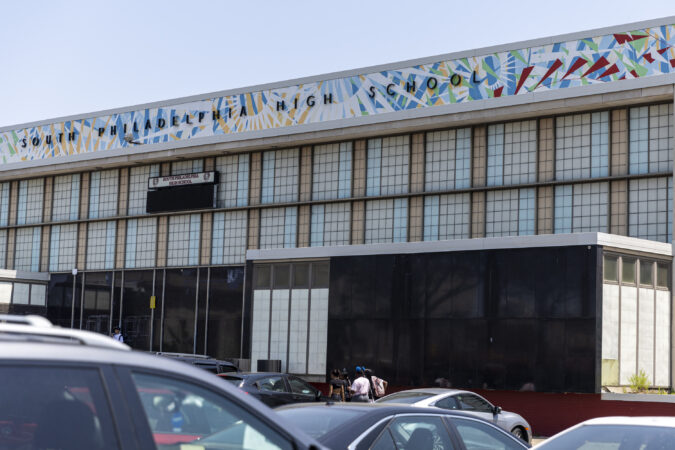
    Nearly $58 million for South Philadelphia High School. Over $27 million for Forrest Elementary in the Northeast. Almost $55 million for Bartram High in Southwest Philadelphia.

    Ahead of a Tuesday City Council hearing on the Philadelphia School District’s proposed facilities master plan, district officials have dangled the carrot that would accompany the stick of 20 school closings.

    The district released Monday morning how much it would spend on modernization projects at schools in each City Council District if Superintendent Tony B. Watlington Sr.’s plan is approved by the school board this winter.

    The totals range from $443 million in the 9th District — which includes parts of Olney, East and West Oak Lane, Mount Airy, and Oxford Circle — to nearly $56 million for the 6th District in lower Northeast Philadelphia, including Mayfair, Bridesburg, and Wissinoming.

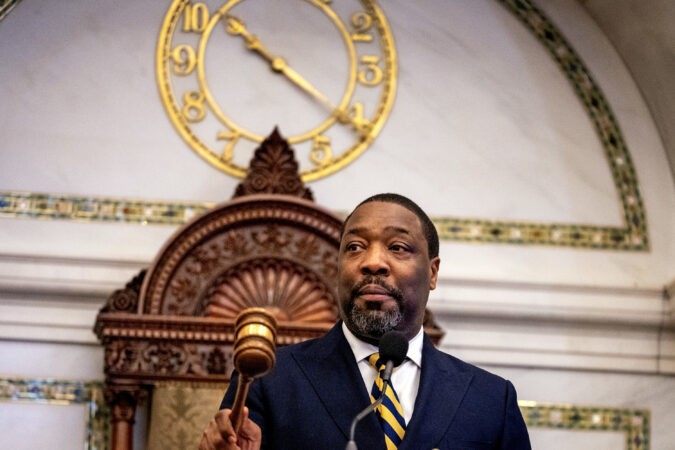
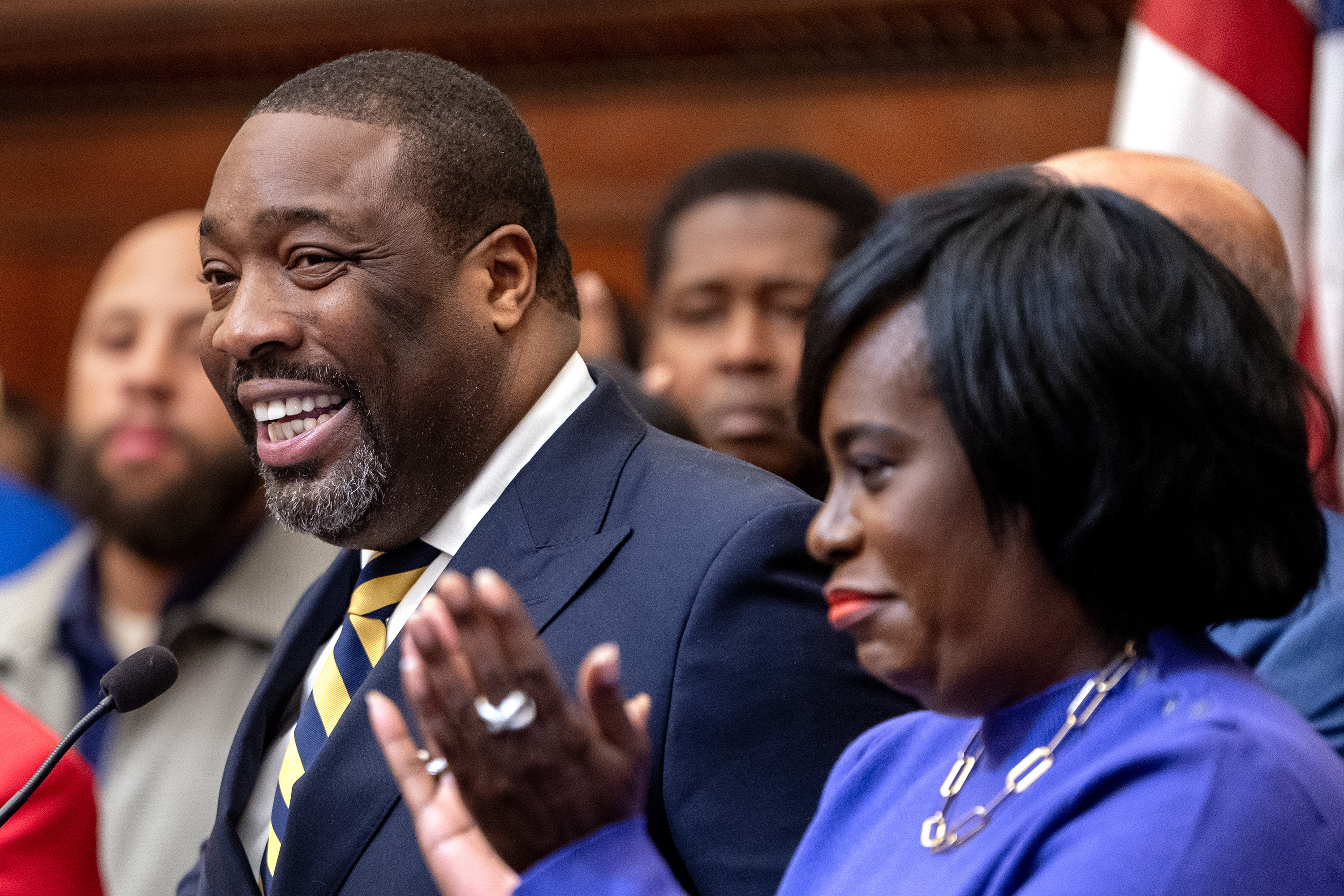
    The district’s announcement comes as the plan has already raised hackles among some Council members, and City Council President Kenyatta Johnson has said he’ll hold up the district’s funding “if need be” if concerns are not answered to Council’s satisfaction.

    Tailoring the release to Council districts — including highlighting one major project per district — appears to be an effort to calm opposition ahead of Tuesday’s hearing.

    Details on every school that would get upgraded under Watlington’s plan — 159 in total — have not yet been released.
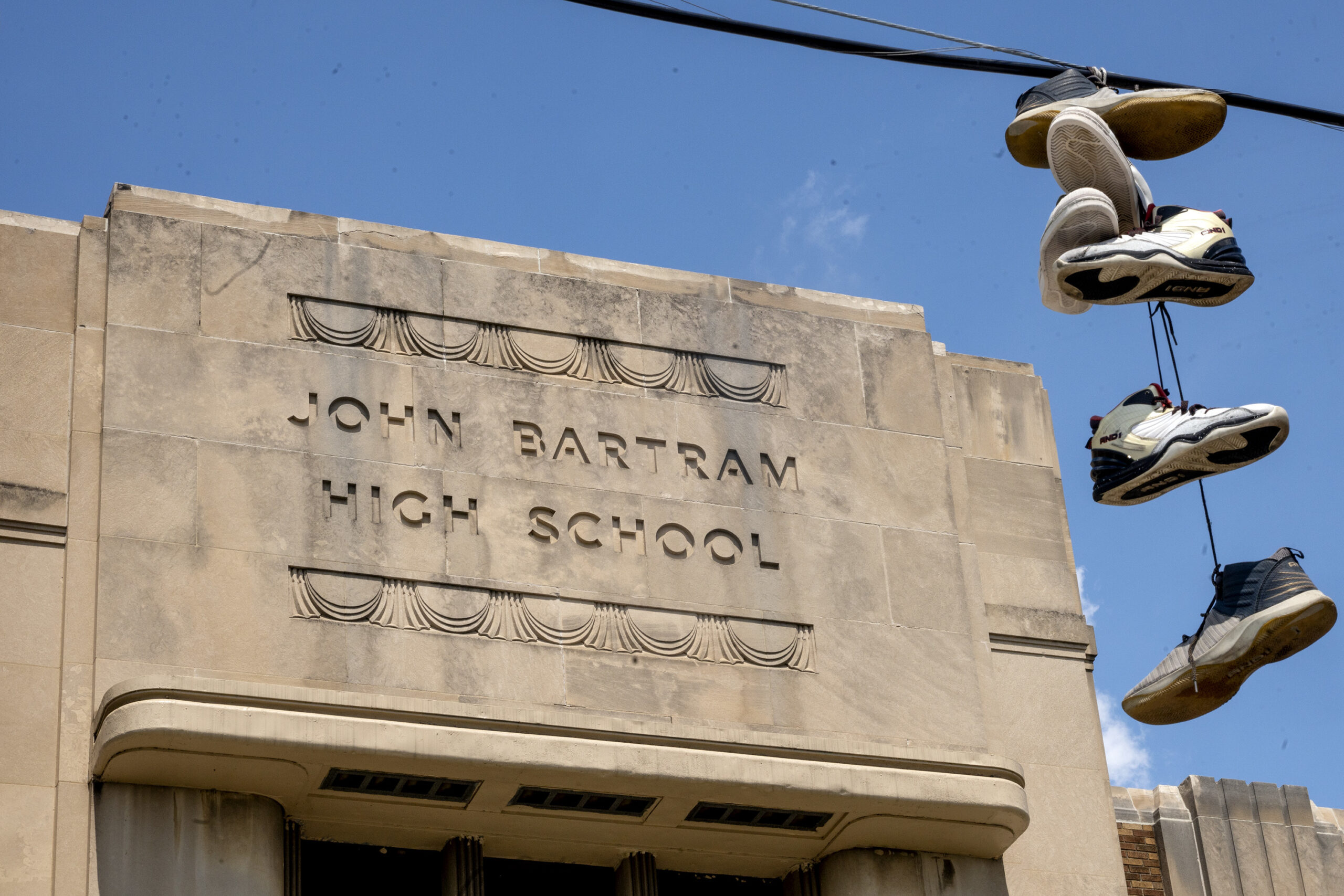
    John Bartram High School at 2401 S. 67th St in Southwest Philadelphia.

    Watlington has stressed that the point of the long-range facilities plan is not closing schools, but solving for issues of equity, improving academic programming, and acknowledging that many buildings are in poor shape, while some are underenrolled and some are overenrolled.

    “This plan is about ensuring that more students in every neighborhood have access to the high-quality academics, programs, and facilities they deserve,” Watlington said in a statement. “While some of these decisions are difficult, they are grounded in deep community engagement and a shared commitment to improving outcomes for all public school children in every ZIP code of Philadelphia.”

    But at community meetings unfolding at schools across the city that are slated for closure, Council members have expressed displeasure about parts of the plan — a preview, perhaps, of Tuesday’s meeting.

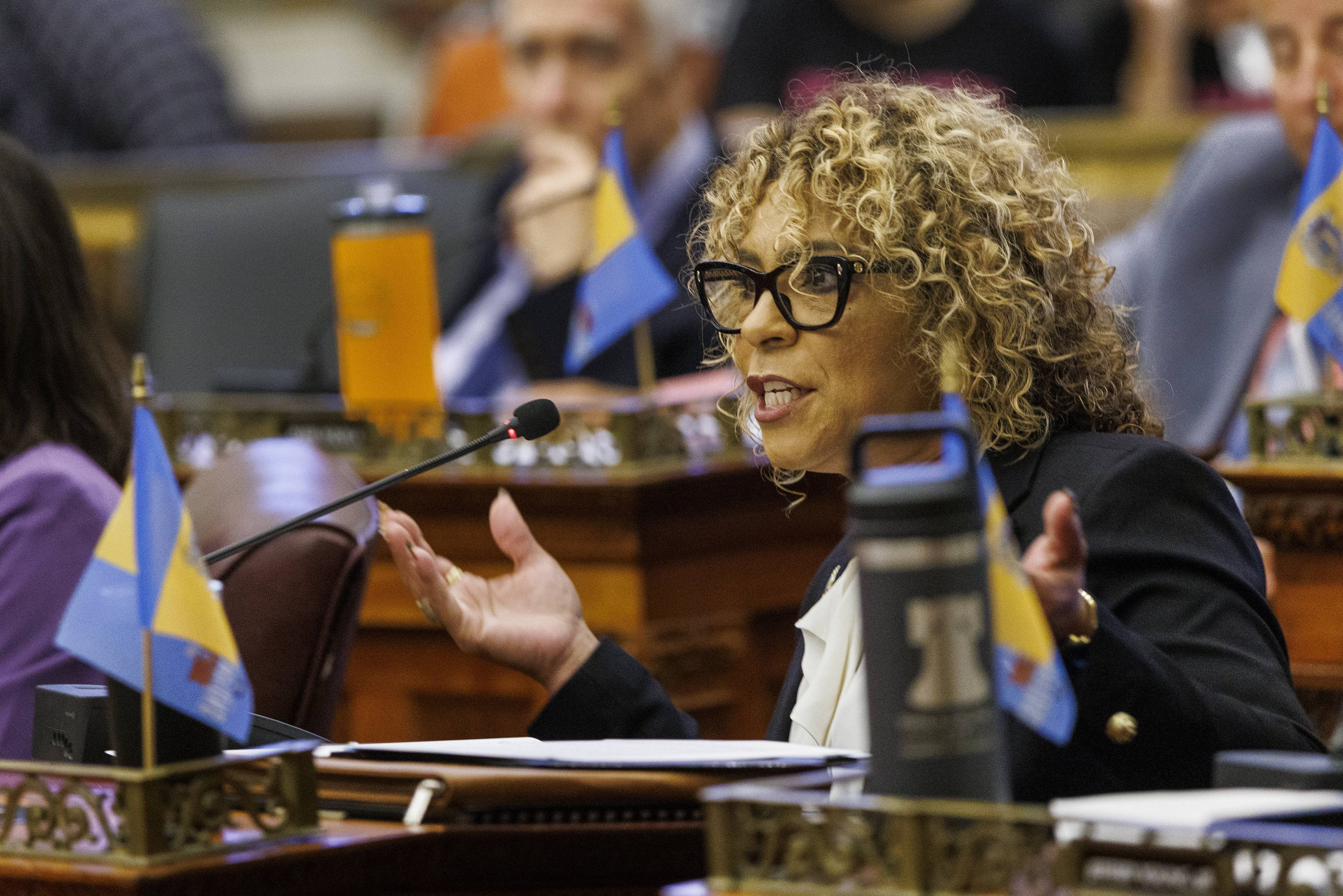
    Councilmember Quetcy Lozada, represents the 7th District, including Kensington, Feltonville, Juniata Park, and Frankford. Four schools in her district — Stetson, Conwell, Harding, and Welsh — are on the chopping block.

    “The fact that they are being considered for closure is very concerning to me,” Lozada said at a meeting at Stetson Middle School on Thursday.
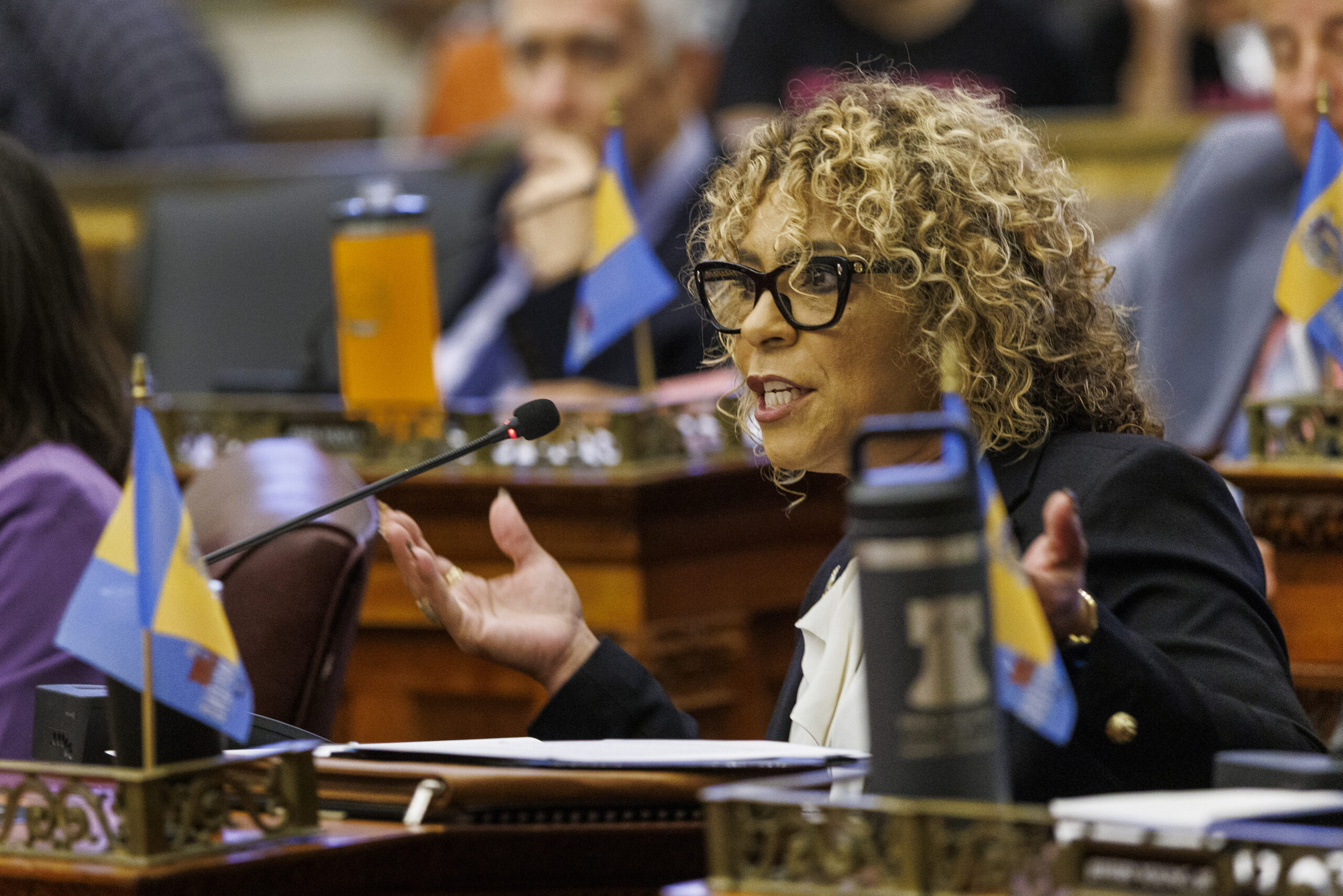
    Councilmember Quetcy Lozada is shown in a 2025 file photo.

    Councilmember Cindy Bass, speaking at a Lankenau High meeting, objected to closing schools that are working well. (Three schools in Bass’ 8th District, Fitler Elementary, Wagner middle school, and Parkway Northwest High School, are proposed for closure. Lankenau is in Curtis Jones Jr.’s district but has citywide enrollment.)

    “I do not understand what the logic and the rationale is that we are making these kinds of decisions,” said Bass.

    While Council members will not have a direct say on the proposed school closures or the facilities plan, Council wields significant control over the district’s budget. Funding for the district is included in the annual city budget that Council must approve by the end of June.

    Local revenue and city funding made up about 40% of the district’s budget this year, or nearly $2 billion. Most of that is the district’s share of city property taxes which, unlike other school systems in Pennsylvania, are levied by the city and then distributed to the district.

    (function() {
    var l2 = function() {
    new pym.Parent(‘schools_districts2’,
    ‘https://media.inquirer.com/storage/inquirer/projects/innovation/arcgis_iframe/schools_districts2.html’);
    };
    if (typeof(pym) === ‘undefined’) {
    var h = document.getElementsByTagName(‘head’)[0],
    s = document.createElement(‘script’);
    s.type = ‘text/javascript’;
    s.src = ‘https://pym.nprapps.org/pym.v1.min.js’;
    s.onload = l2;
    h.appendChild(s);
    } else {
    l2();
    }
    })();

    Where will the money go?

    Despite city and schools officials saying in the past that the district has more than $7 billion in unmet facilities needs, Watlington has said the district could complete its plan — including modernizing 159 schools — for $2.8 billion.

    Officials said further details about modernization projects and the facilities plan will be released before the Feb. 26 school board meeting, where Watlington is expected to formally present his proposal to the school board.
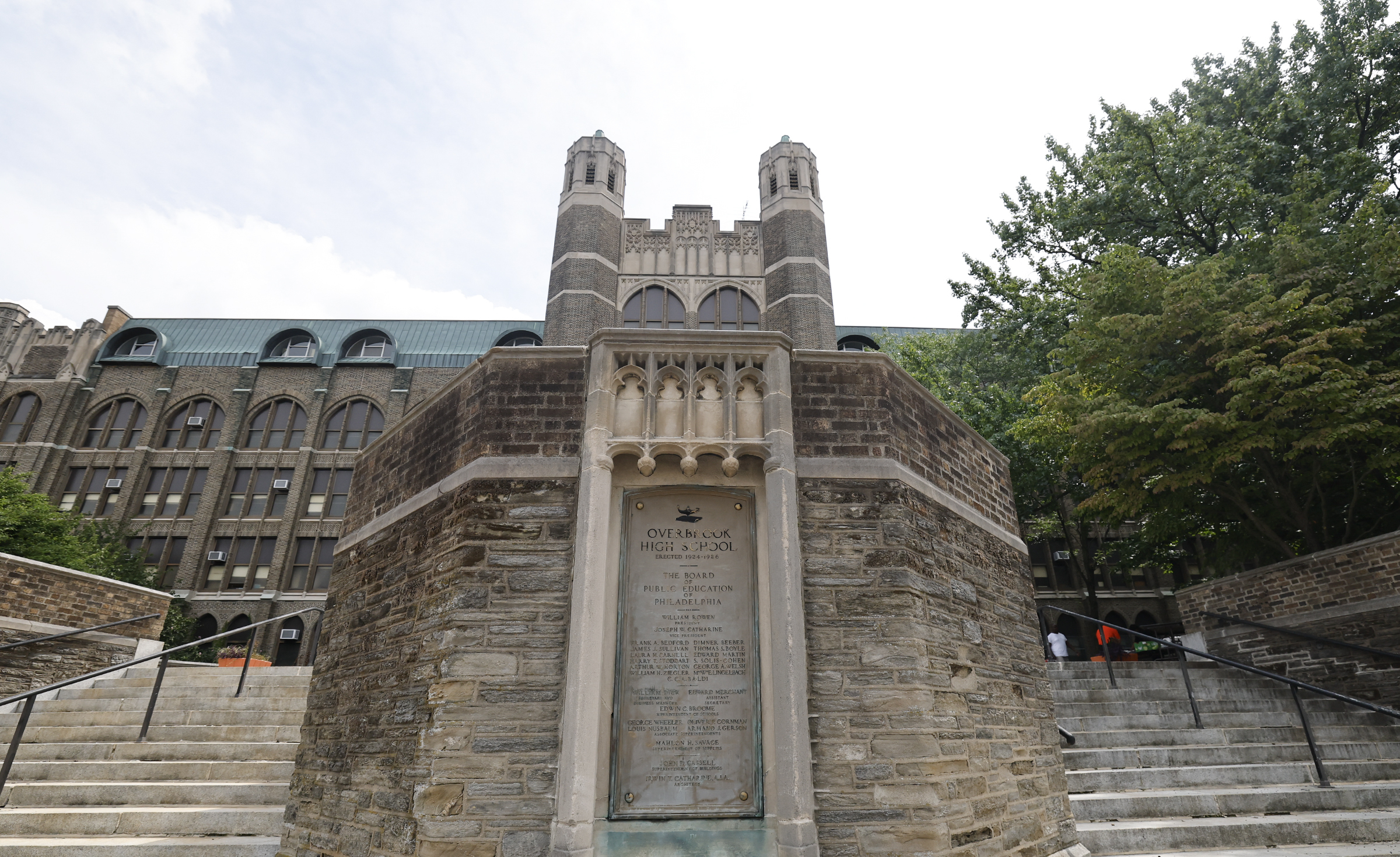
    Overbrook High School, in West Philadelphia, will get major renovations in preparation for The Workshop School, a small, project-based district school, colocating inside the building.

    Here are the total proposed dollar amounts per Council district and the 10 big projects announced Monday:

    • 1st District: $308,049,008. Key project: $57.2 million for South Philadelphia High, turning the school into a career and technical education hub and modernizing electrical, lighting, and security systems.
    • 2nd District: $302,284,081. Key project: $54.6 million for Bartram High, to renovate the school and grounds, career and technical education spaces, restroom and accessibility renovations, new painting, and new athletic fields and facilities (on the site of nearby Tilden Middle School, which is slated to close). Motivation High School would close and become an honors program inside Bartram.
    • 3rd District: $204,947,677. Key project: $19.6 million for the Sulzberger site, which currently houses Middle Years Alternative and is proposed to house Martha Washington Elementary. (It currently houses MYA and Parkway West, which would close.) Improvements would include heating and cooling and electrical systems, classroom modernizations, and the addition of an elevator and a playground.
    • 4th District: $216,819,480. Key project: $50.2 million for Overbrook High School, with updates including new restrooms, accessibility improvements, and refurbished automotive bays. (The Workshop School, another district high school, is colocating inside the building.)
    • 5th District: $290,748,937. Key project: $8.4 million for Franklin Learning Center, with updates including for exterior, auditorium, and restroom renovations, security cameras, accessibility improvements, and new paint.
    • 6th District: $55,769,008. Key project: $27.2 million for Forrest Elementary, including modernizations that will allow the school to grow to a K-8, and eliminate overcrowding at Northeast Community Propel Academy.
    • 7th District: $388,795,327. Key project: $32.3 million at John Marshall Elementary in Frankford to add capacity at the school, plus a gym, elevator, and schoolwide renovations.
    • 8th District: $318,986,215. Key project: $42.9 million at Martin Luther King High in East Germantown for electrical and general building upgrades and accommodations for Building 21, a school that will colocate inside the King building.
    • 9th District: $442,934,244. Key project: $42.2 million at Carnell Elementary for projects including an addition to expand the school’s capacity, restroom renovations, exterior improvements, and stormwater management projects.
    • 10th District: $275,829,539. Key project: at Watson Comly Elementary in the Northeast, an addition to accommodate middle grade students from Loesche and Comly, and building modernizations. District officials did not give the estimated cost of the Comly project.

    What’s next?

    The facilities Council hearing is scheduled for 10 a.m. Tuesday at City Hall. It will also be livestreamed.

    Members of the public also have the opportunity to weigh in on the facilities plan writ large at three community town halls scheduled for this week: Tuesday at Benjamin Franklin High from 4:30 to 6:30 p.m., Friday at Kensington CAPA from 4:30 to 6:30 p.m., and a virtual meeting scheduled for 2 p.m. on Sunday.

    Meetings at each of the schools proposed for closure continue this week, also; the full schedule can be found on the district’s website.
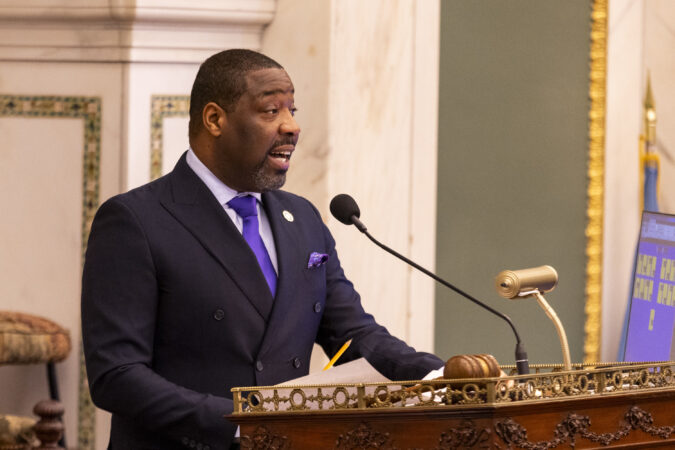
  • The Philadelphia school district’s facilities plan did not go over well in City Council

    The Philadelphia school district’s facilities plan did not go over well in City Council

    City Councilmember Jamie Gauthier said the Philadelphia School District showed “just a complete lack of thought and consideration for really important programs” when crafting its long-anticipated facilities plan, released Thursday.

    Council President Kenyatta Johnson said his members had “a lot of concerns.”

    And City Councilmember Jeffery “Jay” Young Jr. went so far as to propose amending the city Home Rule Charter to allow Council to remove the school board members who will consider the proposed closures.

    “If you are closing schools during a literacy crisis, then you should be held directly accountable to the people you serve,” Young said.

    To put it mildly, the district’s plan did not go over well in Council.

    In many ways, it’s unsurprising Council members would speak out against a plan that would close or consolidate schools in their districts. But the pushback from lawmakers Thursday was notably strong, and Young’s proposal to allow Council to remove school board members could dramatically reshape the politics of the district.

    (function() {
    var l2 = function() {
    new pym.Parent(‘school_closing1’,
    ‘https://media.inquirer.com/storage/inquirer/projects/innovation/arcgis_iframe/school_closing1.html’);
    };
    if (typeof(pym) === ‘undefined’) {
    var h = document.getElementsByTagName(‘head’)[0],
    s = document.createElement(‘script’);
    s.type = ‘text/javascript’;
    s.src = ‘https://pym.nprapps.org/pym.v1.min.js’;
    s.onload = l2;
    h.appendChild(s);
    } else {
    l2();
    }
    })();

    Currently, the mayor appoints the nine members of the school board, and Council votes to confirm them. Allowing lawmakers to remove board members would shift the balance of power toward the legislative branch and effectively leave the district’s leaders with 18 bosses — the mayor and the 17 Council members.

    Significantly, Johnson immediately endorsed Young’s plan, which would have to be approved by city voters in a ballot question.

    “It’s a good check-and-balance in terms of the process, and also allows us to have the ability and the opportunity to make sure that anything that the school board does is done with transparency,” Johnson told reporters. “I‘m always for, as members of City Council and this body in this institution, having the opportunity to provide accountability.”

    Left unsaid was that the long-awaited facilities plan did not come from the school board — its members have yet to approve the proposal, which was presented to lawmakers this week by Superintendent Tony B. Watlington Sr.

    Still, the pushback was notable in part because it came from lawmakers who are often on opposite sides of debates about education policy. Johnson is an advocate for charter schools, while Gauthier is a progressive ally of the teachers union who is often critical of the so-called school choice movement.

    Gauthier said the plan would limit opportunities in her West Philadelphia-based 3rd District. She pointed to changes including Robeson High School and Parkway West ceasing to exist as standalone schools (Robeson would merge into Sayre and Parkway West into SLA Beeber), and the Workshop School colocating with Overbrook High. (The Workshop, however, would remain a distinct school, just in a new location.)

    “What are people supposed to do for good high school options in West Philadelphia?” Gauthier said in an interview.

    Jamie Gauthier. First day of fall session, Philadelphia City Council, Thursday, September 11, 2025.

    Gauthier added that while Watlington has talked at length about the district avoiding the mistakes of its widely criticized 2012 school closure plan, it appears doomed to repeat that history.

    “That’s a great thing to hold up every time we have this conversation, but how are you solving for it?” Gauthier said. “You can’t state all of the things that went wrong and then present a plan that seems to lack care in the same way as the plan in 2012.”

    Johnson said the discussion over the plan was far from complete.

    “I’m sure it’s going to be a very, very robust process,” he said. “These are only recommendations. This isn’t the final product.”

    Watlington’s plan will touch every part of the city. It includes 20 school closures, six colocations, with two separate schools existing inside a single building, and more changes. It also includes modernizing more than 150 schools over 10 years, though officials have not yet revealed which buildings will get the upgrades.

    In total, the blueprint would cost $2.8 billion — though the district is proposing funding only $1 billion of that with capital borrowing. The rest of the money would come from the state and from philanthropic sources, and if those dollars don’t come through, fewer repairs could happen.

    Nearly all Council members on Thursday said they understood the need to consolidate schools, but each had concerns about how individual closures would affect the communities they serve.

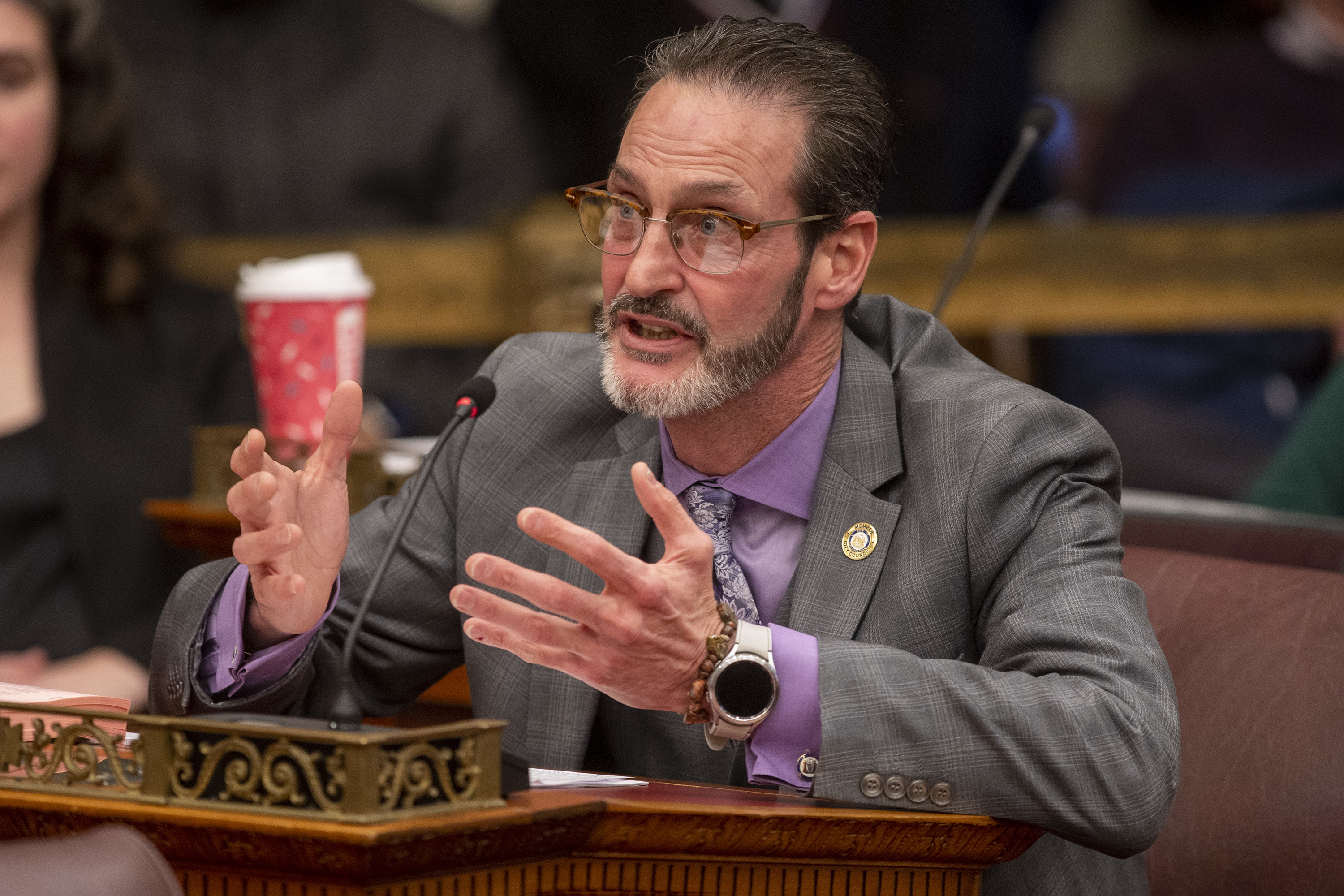
    Councilmember Curtis Jones Jr., whose district includes parts of West and Northwest Philadelphia, said some of the changes are encouraging, including an expansion of career and technical education planned for some schools, including Overbrook High.

    But, he said, others could combine students who come from different neighborhoods and backgrounds, and the district must consider the social impacts of merging those populations.

    “The places where the kids come from, that is always a dynamic that is under-considered,” Jones said. “If I live in this neighborhood and got to travel to that neighborhood, what are the historical dynamics?”

    And Councilmember Cindy Bass, who represents parts of North and Northwest Philadelphia, said two of the schools in her district slated for closure — Fitler Academics Plus School and Parkway Northwest High School — “are models of great public education.”

    “I don’t understand why they are targeted when they are very well-regarded and lots of kids want to go there,” Bass said. “If it’s not broken, why are we trying to fix this?”

    It’s unclear how much sway members will have over where the district ultimately lands. Councilmember Isaiah Thomas, who chairs the Education Committee and represents the city at-large, warned of a “long and emotional” journey ahead.

    “There’s always an emotional attachment to schools,” he said. “They are a pillar in a lot of neighborhoods.”

    Staff writer Jake Blumgart contributed to this article.

  • Sharif Street could become Pa.’s first Muslim member of Congress. But don’t make assumptions about his politics.

    Sharif Street could become Pa.’s first Muslim member of Congress. But don’t make assumptions about his politics.

    When State Sen. Sharif Tahir Street converted to Islam 30 years ago, he already had a Muslim name.

    His father, John F. Street, who would go on to become Philadelphia’s mayor, gave his son a Muslim name when he was born in 1974 despite raising him in the Seventh-day Adventist Church, an evangelical Christian sect in which members of the Street family hold leadership roles to this day.

    As the senator tells it, his father initially considered adopting the name Sharif himself — not because he was considering converting to Islam but because he wanted to embrace the movement of Black Americans reclaiming pre-slavery identities.

    Instead, the elder Street, who had already built a reputation as a rabble-rousing activist, kept his name and dubbed his son Sharif, which in Arabic means noble or exalted one.

    The story would be surprising if it weren’t from the idiosyncratic Street family, which has played a unique outsider-turned-insider role in Philly politics for decades. The late State Sen. Milton Street was the senator’s uncle, and Common Pleas Court Judge Sierra Thomas Street is his ex-wife.

    This year, with Sharif Street a frontrunner in the crowded Democratic primary to replace retiring U.S. Rep. Dwight Evans, the family could make more history: If elected, Sharif Street would become the first Muslim member of Congress from Pennsylvania.

    A Street win would mark another milestone in political representation for Philadelphia’s large Muslim community, an influential constituency that already includes numerous elected officials and power players.

    But in characteristic Street fashion, that potential comes with a twist. Street has relatively moderate views on the conflict in Gaza and would likely stand out from Muslim colleagues in Congress like U.S. Reps. Ilhan Omar (D., Minn.) and Rashida Tlaib (D. Mich.), progressives who regularly denounce Israeli aggression.

    To be sure, Sharif Street, 51, is highly critical of Israeli Prime Minister Benjamin Netanyahu and the war in Gaza. But he is also quick to defend Israel’s right to exist as a Jewish state, favors the two-state solution, and counts many prominent Philadelphia-area Jews among his friends and political supporters.

    “Guess what? Benjamin Netanyahu is not the only leader of a major country in the world that’s committed war crimes, because Donald Trump has done the same thing,” Street said last week at a Muslim League of Voters event. ”But none of us would talk about getting rid of the United States of America as a country.”

    For Muslim voters who view the Middle East crisis as a top political concern, this year’s 3rd Congressional District race sets up a choice between one of their own and a candidate whose politics may more closely align with their views on Gaza: State Rep. Chris Rabb, a progressive who has been endorsed to succeed Evans by the national Muslims United PAC.

    “F— AIPAC,” Rabb said at a recent forum, referring to the American Israeli Public Affairs Committee, which has spent large sums and wielded aggressive tactics to unseat lawmakers it views as antagonistic to Israel. “They are destroying candidates’ lives because they don’t like that we’re standing up to them, that we are actively and consistently acknowledging that there is a genocide in Gaza.”

    Rabb, who is not religious and said he respects all faiths, is hoping that Muslim voters will embrace his stance on the issues.

    “Making history is not the same as being on the right side of history,” Rabb said in a statement.

    ‘Embrace all of the texts’

    Street said his Adventist upbringing immersed him in an Old Testament-rooted Christianity that led to a growing curiosity about all the Abrahamic faiths. As he got older and read more, he realized that he didn’t view Judaism, Christianity, and Islam “as separately as other people do.”

    “I do believe that the Abrahamic religions were all correct. In no way were they all supposed to be separate religions,” he said. “Islam allowed me to embrace all of the texts, which I had already decided to do.”

    Before converting, Street said he was embraced by the Muslim community in Atlanta when he was a student at Morehouse College. He officially converted after returning to Philly to earn his law degree at the University of Pennsylvania.

    Street’s Shahada, the creed Muslims take when joining the faith, was administered by Imam Shamsud-din Ali, his father’s friend. (Years later, Ali was one the elder Street’s associates being targeted by federal investigators when an FBI listening device was discovered in the mayor’s office in 2003. The episode created a firestorm around John Street’s ultimately successful reelection campaign that year, and Ali was later convicted on fraud and racketeering charges.)

    For many Muslim converts, the religion’s dietary strictures, such as abstaining from pork and eating Halal food, take some getting used to, Sharif Street said. That wasn’t a problem for him.

    “Islam has a lot of rules — unless you were Seventh-day Adventist,” he said, referring to the denomination discouraging followers from eating pork, shellfish, and numerous other foods.

    Street said his faith has guided him as an individual and public servant.

    “Islam, for me, focuses on my personal responsibility,” he said, and “the idea that man’s relationship with God is and always was.”

    His views on the unity of the Abrahamic religions also guide his perspective on the Middle East, he said.

    “I recognize that there won’t be peace for the state of Israel without peace for the Palestinian people, but there won’t be peace for the Palestinian people unless there’s peace for the state of Israel at some point,” he said.

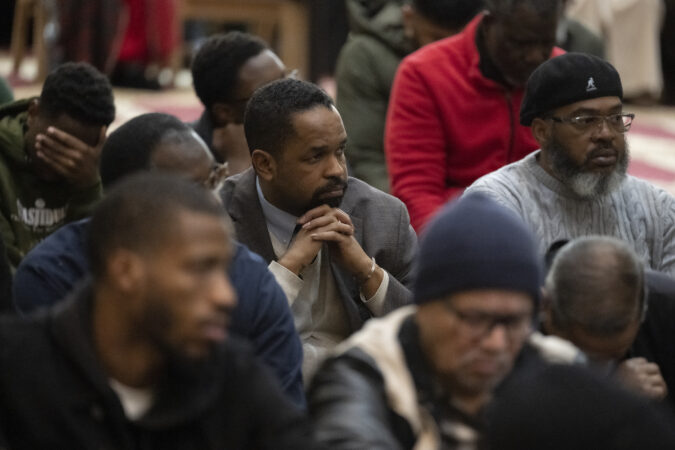
    Sharif Street participates in Friday prayer at Masjidullah mosque recently.

    Like elected officials of other religions, Street’s politics do not perfectly align with the teachers of Muslim leaders.

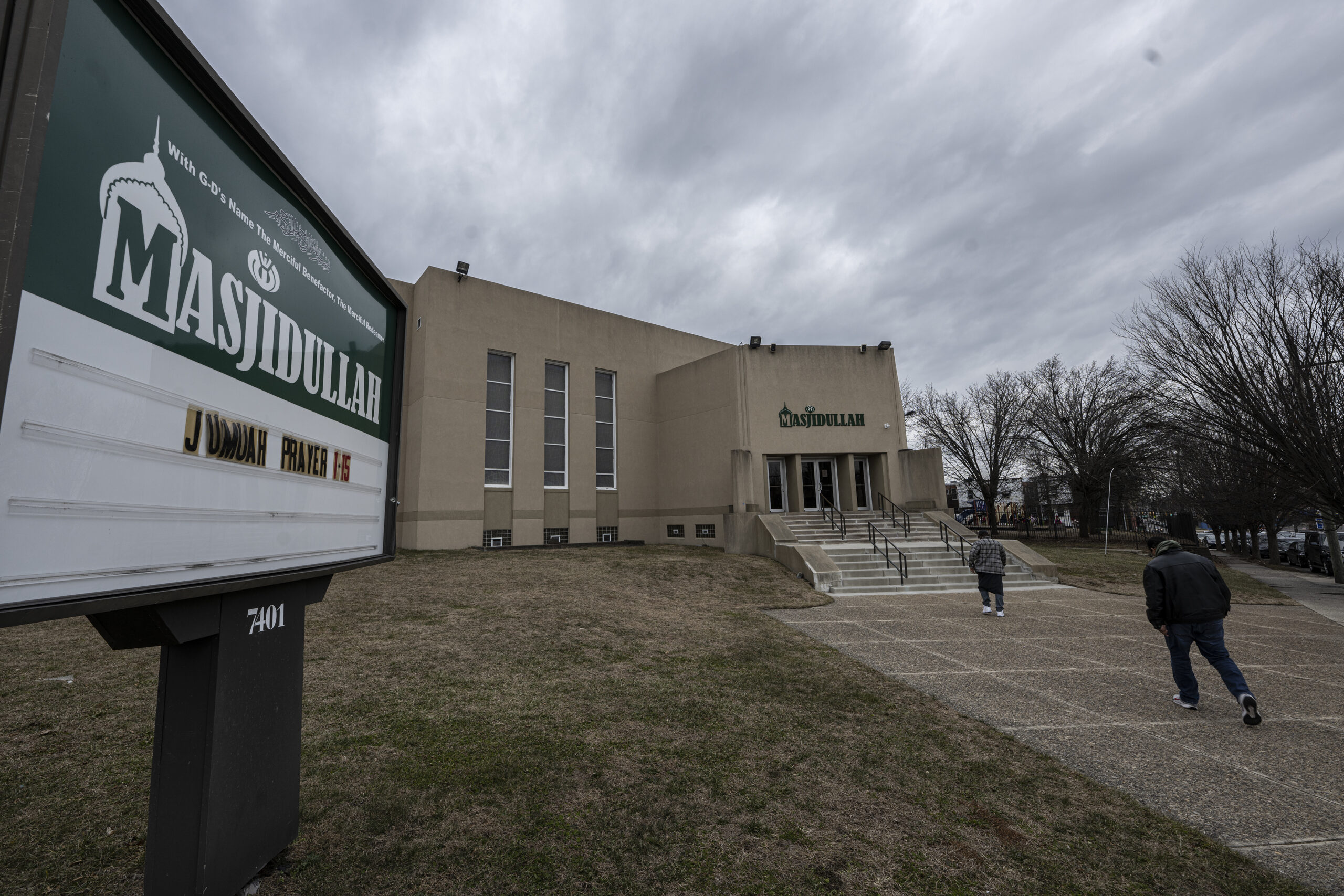
    On a recent Friday, Street attended Jumu’ah, the weekly afternoon prayer service, at Masjidullah in Northwest Philadelphia. A sign at the entrance reminded Muslims that abortion and homosexuality are against Islam’s teachings.

    “Almost every one of Philadelphia’s Muslim political leaders … are all pro-civil rights, including LGBTQ [rights] and pro-choice,” he said. The sign, he said, represented “some members of the faith leadership who are reminding us … that is not the stance of the official religious community.”

    For Street, that type of dissidence hits close to home.

    His father, he said, became Baptist after being “kicked out” of the Seventh-day Adventist Church for officiating a same-sex marriage in 2007 between Micah Mahjoubian, a staffer for Sharif Street, and his husband, Ryan Bunch.

    The Seventh-day Adventist Church in North Philadelphia did not respond to a request for comment.

    ’One of the most Muslim urban spaces’

    Ryan Boyer, who heads the Philadelphia Building and Construction Trades Council and is Muslim, likes to say he’s proud that members of his faith are so integrated into local politics that their religious identities are often overlooked.

    “We’re a part of the fabric,” said Boyer, whose politically powerful coalition of unions has endorsed Street. ”To me, it’s not that big of a deal. We’re here.”

    For Boyer, that means Muslim candidates like Street are judged based on their merits, not their identities.

    “He’s Muslim,” Boyer said of Street. “Well, is he smart? Does he present the requisite skills and abilities to do the job? … The answer is yes.”

    Other Muslim leaders in the city include: Sheriff Rochelle Bilal; City Councilmembers Curtis Jones Jr. and Nina Ahmad; former Police Commissioner Sylvester Johnson; and City Commissioner Omar Sabir, who is Boyer’s brother.

    Philly has also sent several Muslim lawmakers to Harrisburg, including current State Reps. Keith Harris, Jason Dawkins, and Tarik Khan.

    Although the community is less well-known nationally than those in Michigan or Minnesota, Philadelphia has one of the nation’s oldest and largest Muslim populations, with about 250,000 faithful in a city of 1.6 million, according to Ahmet Tekelioglu, executive director of the Council on American-Islamic Relations’ Philadelphia branch.

    By some estimates, Philly’s Muslim community has the highest percentage of U.S.-born followers of any major American city, thanks to the conversion of thousands of Black Philadelphians in recent decades. While many came to the faith through the Nation of Islam movement, a vast majority of Black Muslims in Philadelphia now practice mainstream Sunni Islam, Tekelioglu said.

    Add in thriving immigrant communities from West Africa and the Middle East, and Philadelphia is “one of the most Muslim urban spaces” in the country, he said.

    “Within a few minutes of walking in the city, you come across a visibly Muslim individual,” said Tekelioglu, whose nonprofit group does not make political endorsements. “Halal cheesesteak, ‘the Philly beard,’ and such — these also have overlap with the Muslim community and [the city’s] popular culture.”

    The Middle East and the 3rd Congressional District

    As a lawmaker, Street has been instrumental in forcing the Pennsylvania Interscholastic Athletic Association to allow Muslim girls competing in sports to wear hijabs and in leading the School District of Philadelphia to recognize Eid al-Adha and Eid al-Fitr as official holidays.

    That record is part of why he bristles at the Muslims United PAC’s endorsement of Rabb.

    “We cannot allow other people to hijack our community and hijack our issue because it’s Black people, it’s Muslims dying in Philadelphia right now, and some of these candidates don’t have anything to say about that,” Street said at the Muslim League of Voters event. “Some of them even got some fugazi Muslim organizations to endorse them.”

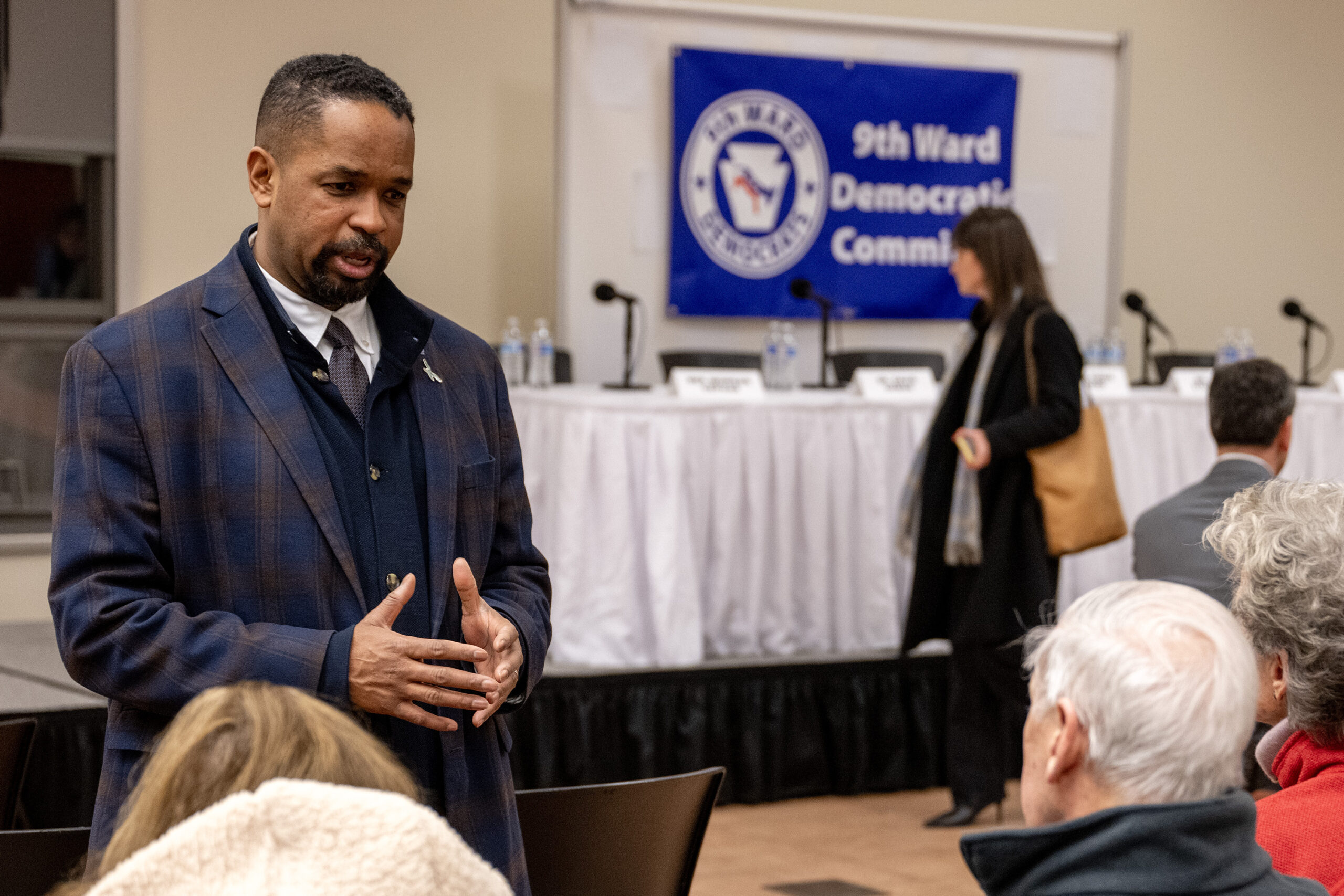
    State Sen. Sharif Street appearing at a forum hosted by the 9th Ward Democratic Committee in December.

    At another recent forum, the 3rd District Democratic candidates were asked whether they support legislation stopping U.S. weapons shipments to Israel after more than two years of conflict that has seen an estimated 70,000 Palestinians die in Gaza.

    Street, who traveled to Israel and Palestine in 2017, said the one-minute response time wasn’t enough to unpack the complicated issues, and none of the other candidates gave straightforward answers — except Rabb, who said he supported the proposal.

    “There are no two sides in this when we see the devastation,” Rabb said.

    In an interview, Street said his comparatively moderate views on the crisis and his relationships with Jewish supporters will allow him to “play a really constructive role” in Congress.

    “We need more people who can talk to both the Jewish and Muslim communities,” he said. “We need people who can have a nuanced conversation and do it with some real credibility.”

    Tekelioglu said he has observed Muslim voters moving away from “identity politics” and toward “accountability-based political stance.” That evolution has accelerated during Israel’s war in Gaza following the Hamas attacks on Oct. 7, 2023, he said.

    “Oct. 7 and everything that’s going on has made everything a bit more clear,” he said. “This doesn’t make it such that the Palestine issue is the main dealbreaker, but overall I see a trend of moving away from the identity politics.”

    The real question, he said, is, “Are they going to represent our interests?”

    Staff writer Anna Orso contributed this article.

  • Philly’s Greyhound station gets city’s OK to be resurrected

    Philly’s Greyhound station gets city’s OK to be resurrected

    City Council passed legislation Thursday to restore the abandoned Greyhound terminal on Filbert Street as Philadelphia’s new intercity bus station in time for an expected flood of tourists in 2026.

    Under the measure, the Philadelphia Parking Authority will operate the station on behalf of the city, collecting fees from bus companies to pay costs.

    A refurbished facility is scheduled to open in May 2026, which would resolve more than two years of chaos after Greyhound ended its lease, forcing the city to allow the bus companies to operate at the curbs of public streets with few amenities and no shelter for riders.

    The saga was embarrassing, and it became more untenable for city leaders with Philadelphia set to host celebrations of the 250th anniversary of the Declaration of Independence, and a round of international FIFA World Cup soccer matches.

    The plan came together over the last few months as at least three city departments collaborated and reached an agreement with the parking authority. Mayor Cherelle L. Parker’s administration sent a bill to Council.

    Councilmember Curtis Jones Jr. said in a Finance Committee hearing last week that he found the speed of “galvanized” departments working together impressive.

    “You can’t put that genie back in the bottle. I know you can cooperate now, and that’s going to be the expectation from now on,” Jones said.

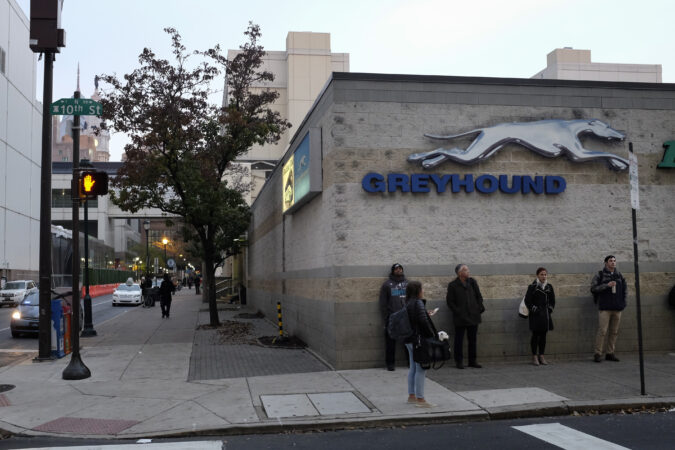
    Greyhound ran the terminal at 10th and Filbert Streets for 35 years but ended its lease in June 2023 as the bus line (and its corporate parent) began shedding real estate and leases in the U.S. to cut costs.

    First, the buses operated along the 600 block of Market Street. Since November 2023 they have loaded and unloaded passengers in the open along Spring Garden Street.

    “This is an opportunity that kind of came from the heavens,” said Mike Carroll, the city’s assistant managing director for transportation.

    PPA has a 10-year lease agreement with the property’s owner, 1001-1025 West Filbert Street LLC, with an option to extend it.

    Bus companies would pay a $40 fee for each stop in the city until the terminal is open, when it would be increased to $65. A smaller number of buses subsidized by the Pennsylvania Department of Transportation under a program to provide rural service would pay $16 a stop.

    Operating the renovated terminal will cost $4.7 million to $4.8 million annually, Carroll said.

    City officials say they plan to keep researching other possible locations for an intercity bus station but note the lease provides stability.

    PPA will provide 24-7 security, 16-hour daily custodial coverage, maintenance staff, and an on-site program manager under terms of an intergovernmental agreement with the city that is part of the legislation.

    It also will be responsible for enforcing rules, such as one that will require buses to bypass the heart of Chinatown.

    Since the parking authority regulates rideshare and taxi services, its enforcement officers will help keep traffic flowing around the station, officials said.

    Councilmember Nina Ahmad pressed city officials to plan for retail tenants and other ways to generate municipal revenue.

    “There’s an element of rush,” Ahmad said during the Dec. 3 hearing. “I understand the urgency, but I hope we don’t overlook things that we should be doing to make it really a transit-oriented development.”

  • Philly Council votes against Mayor Parker’s vision for her signature housing plan, signaling a win for progressives

    Philly Council votes against Mayor Parker’s vision for her signature housing plan, signaling a win for progressives

    For almost two years, Mayor Cherelle L. Parker has dominated Philadelphia City Hall with an unbending approach to negotiations.

    On Wednesday, City Council signaled those days may be over.

    During a combative hearing on legislation related to Parker’s signature housing initiative, Council President Kenyatta Johnson on Wednesday afternoon refused to allow a vote on an amendment brought by the Parker administration and instead advanced Council’s version of the proposal over the mayor’s objections.

    In a voice vote, Council’s Committee on Fiscal Stability and Intergovernmental Cooperation approved its own changes to the legislation — authorizing the city to take out $800 million in city bonds to fund Parker’s Housing Opportunities Made Easy, or H.O.M.E., initiative — without considering the mayor’s requested tweaks.

    Councilmembers Brian O’Neill, Anthony Phillips, and Curtis Jones Jr. signaled their support for Parker’s vision by voting against the measure, which now heads to the Council floor for a final passage vote or further amendments, either of which could come as soon as January.

    It is unclear how Johnson’s handling of H.O.M.E. will change the tight working relationship Parker and Johnson have maintained since both took office in January 2024. Wednesday’s vote marked their most contentious public disagreement during their tenures. Both officials still agree on many policy goals and have plenty to gain politically from maintaining their alliance.

    Philadelphia Mayor Cherelle L. Parker stands beside Council President Kenyatta Johnson (left) after finishing her budget address to City Council in Philadelphia City Hall on Thursday, March 13, 2025.

    The dispute between Parker and Council centers on income eligibility thresholds for two of the housing programs that will be funded by bond proceeds: the Basic Systems Repair Program (BSRP), which provides funding for needed home improvements to eligible owners who might be displaced by costly repairs, and the Adaptive Modification Program (AMP), which funds projects to improve mobility for permanently disabled renters and homeowners.

    Parker had structured the H.O.M.E. initiative with unusually high income cutoffs to make its programs more easily accessible to middle-class households, saying they are often left out of city assistance programs despite being crushed by rising costs.

    “The whole debate over income eligibility limits for BSRP and Adaptive Modifications is to make sure that we leave no working Philadelphian and no qualifying Philly rowhome owner excluded from these vital programs,” Parker said in a statement Wednesday. “If we don’t save Philly rowhomes, we’re going to become a city of used-to-be neighborhoods, blocks that used to be nice but now are showing signs of age and decline. I will not allow that to happen — not on my watch as Mayor of Philadelphia.”

    In a win for progressives, Council instead stuck to its plan of prioritizing lower-income Philadelphians.

    Councilmember Jamie Gauthier, who chairs the Committee on Housing, Neighborhood Development and the Homeless, said Wednesday’s vote sent the message “that Council takes its job seriously as a steward of taxpayer money in the city of Philadelphia, that we are not here to just rubber-stamp in a proposal, that we’re here to work together.”

    Change in fortunes for Parker

    Wednesday’s vote appears to mark the first instance of Parker’s hard-line negotiating tactics failing her since she took office. Even when she could not get negotiating counterparts to bend to her will in the past, Parker has largely prevailed.

    Last year, for instance, Council declined to vote on one of Parker’s school board nominees. But the nominee, incumbent board member Joyce Wilkerson, then pulled out a letter from Parker instructing her to remain on the board until the mayor names a replacement, which she still has not done.

    And in July, when the largest union for city workers went on strike to try to squeeze larger raises out of the administration, Parker stuck to her guns amid increasing pressure to fold as trash piled up across the city and 911 wait times grew longer. The union ultimately folded after an eight-day work stoppage with a new contract that closely aligned with Parker’s last offer before the strike began.

    But this time, Parker appears to be out of options to prevent Council from getting its way because she cannot veto another key piece of legislation to keep the housing initiative in motion that needs to pass before the city can issue the bonds. That measure — a resolution setting the first-year budget for H.O.M.E. that received preliminary approval in a Council committee last week — could see final approval as soon as Thursday.

    In a last-ditch effort to rally public support for her version of how the H.O.M.E. bonds should be spent, Parker on Sunday barnstormed across 10 Philadelphia churches.

    “We’ve got to take care of the people who are most in need, but we can’t penalize the people who are going to work every day, pay their taxes, contribute to the city, and they can’t benefit from home improvement programs,” she said.

    Mayor Cherelle L. Parker speaks to the crowd at The Church of Christian Compassion in the Cobbs Creek neighborhood of West Philadelphia on Sunday, Dec. 7, 2025. Parker visited 10 churches in Philadelphia on Sunday to share details about her H.O.M.E. housing plan.

    That maneuver did not appear to go over well with lawmakers, who likely did not appreciate the mayor encouraging their constituents to oppose Council’s version of the plan.

    Even before chief of staff Tiffany W. Thurman presented Parker’s amendment at Wednesday’s hearing, lawmakers sounded off, with Gauthier saying the administration was spreading “misinformation” and Councilmember Nicolas O’Rourke calling Parker’s approach “Trumpian.”

    “It was in response to misinformation being spread during that tour,” said Gauthier, who, along with fellow progressive Councilmember Rue Landau, led the charge to lower the income eligibility thresholds included in H.O.M.E.

    Gauthier noted that Council’s version of the bill still increases those thresholds beyond what is offered in existing programs.

    “Obviously, the mayor, all of us, have the right to go and talk to our constituents,” she said, “but we have to be operating from a fact-based perspective, and telling folks that the Council proposal excludes them is not factual.”

    No vote on Parker amendment

    The legislative process for approving the city bond issuance — the centerpiece of Parker’s H.O.M.E. initiative, which she first proposed in March — has been long and tortured.

    Council initially approved the bond authorization in June, but lawmakers at that time inserted a provision requiring the administration to get their approval for annual budget resolutions determining how the proceeds will be spent.

    Johnson delayed a vote on the first H.O.M.E. budget resolution for months before allowing it to be approved last week by the Committee of the Whole. But lawmakers made major changes over the mayor’s objections, including granting themselves the right to set income thresholds for the initiative’s programs.

    It was the first sign that Council was serious about enacting its own ideas even if Parker was not on board and, in Council’s view, would not negotiate. In a twist, lawmakers took their latest stand Wednesday at a time when the mayor’s team came to the table with a significant, albeit last-minute, counteroffer.

    Council’s changes to the eligibility requirements for BSRP and AMP would require 90% of the H.O.M.E. bond proceeds for those programs to be spent on households making 60% of Philadelphia’s area median income, which is about $71,640 for a family of four.

    Thurman on Tuesday proposed a compromise in which only 60% of bond money would be set aside for those households. She told lawmakers that Parker, in part, wants to ensure H.O.M.E. helps city workers, who are required to live in Philadelphia but often struggle to make ends meet on municipal salaries. (Parker pointed to the H.O.M.E. plan during the strike as evidence she backed city workers despite opposing higher wages.)

    Johnson responded that he hopes “one day our city workers are getting paid enough where they don’t have to sign up” for assistance programs.

    “You know as well as I do we agree,” Thurman replied, prompting Johnson to cut her off.

    “I’m not acknowledging you yet,” Johnson said, referring to a Council hearing procedure in which the chair must recognize speakers.

    Tiffany Thurman, Mayor Parker’s chief of staff, takes questions from Council members in 2024.

    Parker’s latest offer, which came months into the standoff over H.O.M.E., appears to have been too little, too late.

    Phillips — who voted for the Council budget resolution last week but said he has since changed his mind to support Parker’s vision — wanted to call up the administration’s amendment for a vote, he said in an interview.

    “This week I changed my mind because that’s where my mind really has been,” said Phillips, who represents the Northwest Philadelphia-based 9th District that Parker held when she was on Council. “The 9th District neighbors — they’ve made abundantly clear that our housing policy needs to reflect them. … They’re long-term homeowners, residents who are on fixed incomes, multigenerational families.”

    Under Council rules, only Johnson can call on members to put forward amendments in committee. But instead he blocked it, prompting Jones, Parker’s most vocal ally on Council, to protest.

    “We should do the right thing always, even in spite of its inconvenience and time,” Jones said during Council. “Resolutions and amendments need to be introduced so that they can get the light of day and be heard.”

    Johnson said he pushed through Council’s version because the mayor’s administration did not engage with him about its new proposal ahead of the meeting.

    “Just for the record … I had not officially seen any official amendment prior to this actual hearing,” Johnson said. “The administration just showed up.”

    Despite Wednesday’s vote, the fight over H.O.M.E. may not be over. Councilmember Mike Driscoll, a Parker ally who voted to advance the bond authorization, signaled there may be further changes.

    “I wanted to keep the HOME initiative process moving,” Driscoll said in a statement, “but still hope to influence a reasonable solution which includes program support for row home Philadelphians.”

  • Philly lawmakers approved $800M for Mayor Parker’s housing plan in June. Now they have to redo it. | City Council roundup

    Philly lawmakers approved $800M for Mayor Parker’s housing plan in June. Now they have to redo it. | City Council roundup

    Call it a H.O.M.E. repair.

    City Council President Kenyatta Johnson on Thursday introduced legislation that will amend a bill lawmakers approved in June that authorized the city to take out $800 million in debt to fund Mayor Cherelle L. Parker’s Housing Opportunities Made Easy, or H.O.M.E., initiative.

    It’s the latest development in a saga that has seen several procedural squabbles, the most significant public dustup between Johnson and Parker to date, and a monthslong delay in the administration’s plan to issue city bonds to launch the housing initiative.

    The fix was needed because Council earlier this week amended a separate but related piece of legislation — called the H.O.M.E. budget resolution — that sets the first-year spending levels for the housing programs funded or created by the initiative.

    Council’s changes, which Parker largely opposed, were significant enough that the budget resolution no longer aligns with the bond authorization bill Council approved in June, meaning the administration cannot rely on the original legislation as its legal basis for taking out city debt.

    The new bond bill introduced Thursday reflects Council’s changes, which include increasing the first-year H.O.M.E. budget from $194.6 million to $277.2 million and changing eligibility requirements for some programs to make sure the lowest-income Philadelphia households were prioritized.

    “We want to make sure that this is a H.O.M.E. plan that supports everyone, but obviously members of Council had an issue and concern about making sure those most in need are supported throughout this process,” Johnson said.

    The bill now heads to committee, and Johnson said negotiations could lead to further changes. Next week is Council’s final meeting of the year, and Johnson on Thursday ruled out adding an extra session, meaning the bill likely will not pass until January at the earliest.

    Parker originally had hoped to issue the first of two planned $400 million tranches of H.O.M.E. bonds this fall. She said Tuesday that the legislative delays mean they might not go to market until March or later.

    “Working with Council President Johnson and the Members of City Council, we are laser-focused on building, repairing and restoring 30,000 units of housing and making H.O.M.E. a reality for the people of Philadelphia,” Parker said in a statement Thursday.

    ‘That’s my sister’: Johnson says relationship with Parker still strong

    Parker-Johnson pact intact: The Council president on Thursday downplayed his spat with Parker that saw both issue pointed statements Tuesday night blaming the other for delays in issuing the bonds.

    The exchange was notable because the two city leaders, who meet in person weekly, have forged an unusually close working relationship since both took office in January 2024.

    But Johnson said Thursday their relationship remains the same and has always involved disagreements — just not ones that have spilled out into public view.

    City Council President Kenyatta Johnson and Mayor Cherelle L. Parker have maintained a close working relationship.

    “That’s my sister,” Johnson said. “Most of the time, when we do have disagreements, y’all just don’t see it. We meet every week, so you don’t get a chance to see the back-and-forth. But at the end of the day, the mission is to move the city of Philadelphia forward together.”

    Council makes it harder to open convenience stores and pharmacies in Kensington

    No new nuisances: Members passed legislation Thursday that aims to make it significantly harder for convenience stores and pharmacies to open in Kensington and sections of North Philadelphia.

    The bill, authored by Councilmember Quetcy Lozada, forces any new “sundries, pharmaceuticals, and convenience sales” businesses in her 7th District — which covers much of Kensington and parts of North and Northeast Philadelphia — to get approval from the Philadelphia Zoning Board of Adjustment. That process is notoriously long and can be expensive for applicants.

    Lozada has said that the bill is targeted at corner stores and smoke shops, not chain businesses like CVS and 7-Eleven.

    The legislation is part of the body’s broader war on so-called nuisance businesses, which lawmakers say attract crime and disrupt neighborhoods. And it comes in addition to a controversial 11 p.m. business curfew in Lozada’s district that took effect earlier this year.

    City Councilmember Quetcy Lozada represents Kensington.

    It’s one of several legislative remedies lawmakers have undertaken to curb small businesses like smoke shops and convenience stores that have unregulated slot machine-like “skill games,” sell marijuana-like products, and peddle drug paraphernalia without a license to do so.

    Seriously … no nuisances, please: Lozada was not the only lawmaker taking aim at “nuisance” businesses Thursday, when Council approved two bills by Majority Leader Katherine Gilmore Richardson on the same topic.

    One measure makes it easier for the Philadelphia Department of Licenses and Inspections to issue stop-work and cease-operations orders to businesses violating city regulations. The other is aimed at closing loopholes that “let nuisance business owners avoid enforcement by changing their name or ownership, ensuring those with similar ownership or operations remain accountable for past violations,” Gilmore Richardson’s office said.

    The measures, which were both approved 16-0, were aimed at stopping “the spread of dangerous and destructive businesses and the need for further action to address their impact on our communities,” Gilmore Richardson said.

    “While I am encouraged by the steps we are taking today, I am also working on additional legislation to more aggressively crack down on these businesses and the bad actors behind them,” she said.

    Quote of the week

    Councilmember Jim Harrity in December 2023.

    Fond farewell: City Councilmember Jimmy Harrity gave an emotional speech in Council lamenting the loss of his friend Paul Staico, who died suddenly Sunday and was the owner of Big Charlie’s Saloon in South Philadelphia.

    Staico stood by Harrity when the future lawmaker was struggling with addiction, Harrity said.

    “Anybody that knew Paul will tell you he really was that guy, that guy who would give you the shirt off his back,” Harrity said. “He’s the only person I truly knew never lost faith in me, even when I was at my lowest 10 years deep in my addiction.”

    Councilmember Curtis Jones Jr. thanked Harrity, who often gives impassioned speeches, for his heartfelt tribute to Staico.

    “I want to shout out Jimmy Harrity for making crying in Council cool,” Jones said. “Nobody does it better, brother.”

    Staff writer Jake Blumgart contributed to this article.

  • City Council took a rare stand against Mayor Parker by allotting more housing funds to the poorest Philadelphians

    City Council took a rare stand against Mayor Parker by allotting more housing funds to the poorest Philadelphians

    Philadelphia City Council on Tuesday amended the initial budget for Mayor Cherelle L. Parker’s signature housing initiative to direct more money to programs that will help the lowest-income Philadelphians, a move that sparked one of the most notable confrontations between Parker and city lawmakers since she took office almost two years ago.

    The amendment, which followed a weekslong standoff between the executive and legislative branches, represents a rare act of defiance for a Council that has otherwise been largely compliant with Parker’s agenda, and it appeared at first to be a major win for Philly progressives.

    But Parker is not giving up the fight, and she said Tuesday night that the amendment may have had unintended consequences that could hold up much of the housing initiative for months.

    The changes to the legislation, she said, may trigger additional procedural steps that will prevent the city from issuing $400 million in bonds to fund the initiative until March or later. The mayor did not hold back from laying the blame for the delays at Council’s feet.

    “The resolution that City Council passed out of the Committee of the Whole today contained language that our bond lawyers have repeatedly advised would prevent the administration from being able to issue the bonds,” Parker said in a statement. “That means homes are not being restored. It means homes are not being built or repaired.”

    In an unusually blunt statement late Tuesday night, Council President Kenyatta Johnson pushed back against the administration’s analysis of the situation.

    “Council’s responsibility is not to rubber-stamp legislation, but to ensure that any multi-billion-dollar public investment is legally sound and targeted to the Philadelphians who need it most,” Johnson said.

    But he also vowed to have Council quickly introduce new legislation that could ameliorate the procedural problem Parker identified, tacitly conceding that additional legislation was needed hours after lawmakers approved the resolution with no mention of that possibility.

    Johnson said Council would “resolve remaining legal and policy issues swiftly,” and that a new measure to legalize lawmakers’ most recent changes could be introduced this week.

    Council wants “shovels in the ground” and “homes repaired,” he said, but ”refuses to rush into issuing $800 million in debt without iron-clad legal protections and clear guarantees.”

    “Council members repeatedly raised concerns — directly and in good faith — about accountability, neighborhood equity, homeowner protections, and the long-term impact of the H.O.M.E legislation,” he said. “Council’s action today strengthened the H.O.M.E resolution, not sabotaged it.”

    The late-night war of words between Parker and Johnson came hours after a celebratory Council committee meeting in which lawmakers took a victory lap for standing up to the administration.

    After the vote, Councilmember Jamie Gauthier and Councilmember Rue Landau, respectively the chair and vice chair of the Committee on Housing, Neighborhood Development and the Homeless, said the amended resolution means “working and low-income families will finally be able to get the support they need sooner.”

    “With roughly $30 million in federal homelessness funding at risk, it is more important than ever that this multiyear, $800 million investment begins by prioritizing the more than 200,000 Philadelphia households on the brink of losing their homes,” Gauthier and Landau said in a joint statement, referring to a federal policy change proposed by President Donald Trump’s administration that could cost the city millions in funding for anti-homelessness programs.

    Council pushes for policy changes

    Parker, who has long championed the city’s “middle neighborhoods,” structured her sweeping Housing Opportunities Made Easy, or H.O.M.E, initiative to ensure that the myriad programs funded or created by the program would be available to homeowners and renters at a variety of income levels.

    But Johnson — in an unexpected break from his usual alignment with Parker — stood with Gauthier and other progressives who fought to ensure the neediest city residents were prioritized in the budget resolution, which sets the first-year spending allocations for H.O.M.E. The distribution of funding must be approved by Council before the administration can issue the first of two planned $400 million tranches of city bonds that will finance much of the initiative.

    Council’s Committee of the Whole, which includes all members, approved the amendment and advanced the resolution in a pair of unanimous voice votes Tuesday afternoon following hours of testimony.

    The measure would now head to the Council floor for a final passage vote in the next two weeks. Parker’s statement, however, could mean Council has additional work to do before getting the measure over the finish line. Johnson’s office said the vote is still scheduled for Dec. 11.

    “The majority of the members of City Council want to focus on the issues of those who are poor here in the city of Philadelphia when it comes to housing and equality,” Johnson told reporters after the vote.

    It’s unclear whether the vote represents a serious rupture in the tight relationship between Parker and Johnson, who have worked closely together since both took office in January 2024. Council approved the most important pieces of legislation Parker proposed as part of the H.O.M.E initiative earlier this year, and the changes adopted Tuesday do not alter the fundamentals of the program, which Parker hopes will achieve her goal of creating or preserving 30,000 units of housing in her first four-year term.

    “We support the H.O.M.E. plan,” Johnson said. “And I think the mayor did a good job in investing close to $1 billion … in supporting the issue of housing inequality here in the city of Philadelphia. This amendment represents the will of the members. … We want to specifically focus on those who are the most least well-off, those who are poor.”

    But after reading about Parker’s statement in the evening, Johnson’s attitude toward the administration sharpened. His lengthy statement included the most critical language the Council president has directed at the mayor since they were inaugurated.

    Mayor Cherelle L. Parker unveils her long-awaited plan to build or preserve 30,000 units of housing during a special session of City Council Monday, Mar. 24, 2025. Council President Kenyatta Johnson is behind her.

    Johnson rejected Parker’s claim that the legislative delays could cause the popular Basic Systems Repair Program to temporarily run out of funding, saying that there is plenty of money in the current city budget to cover shortfalls.

    “Threatening residents with a shutdown of the Basic Systems Repair Program and assigning blame does not move this process forward,” he said. “Collaboration and working together does.”

    The amendment increases the first-year budget for spending the bond proceeds from $194.6 million to $277.2 million. The increased price tag, however, does not represent new money in the housing budget; it merely allows the administration to spend more of the $400 million in bond proceeds in the initiative’s first year.

    The changes include increases in funding for housing preservation from $29.6 million to $46.2 million, and housing production from $24.3 million to $29.5 million. Additionally, the amendment boosted funding for homelessness prevention programs from $3.8 million to $8.8 million.

    But perhaps more importantly, Council altered the income eligibility levels for several programs.

    Parker, for instance, had proposed that the H.O.M.E. funding for the Basic Systems Repair Program, which subsidizes critical home improvements to prevent residents from being displaced by the costs of needed repairs, be open to any homeowner who makes Philadelphia’s area median income, or AMI, which is about $119,400 for a family of four.

    Council’s amendment, however, requires 90% of the new funding to go to families making 60% of AMI or less, about $71,640 for a family of four.

    The administration initially planned to issue the first $400 million in bonds this fall, and Parker sent Johnson’s office a first draft of the budget resolution in July. Council then delayed the committee vote on the resolution several times as Johnson negotiated with Parker on potential changes.

    The amendment adopted Tuesday appears to largely mirror Gauthier’s priorities for the spending plan, rather than a negotiated compromise, the first sign that Johnson had moved forward despite not reaching a deal with Parker.

    Bond sales potentially delayed again

    Parker’s plan to sell the initial round of bonds this fall appeared to be on schedule when Council in June approved the most important pieces of legislation associated with the H.O.M.E. initiative, including an $800 million bond authorization.

    But lawmakers at that time inserted a provision into the bond legislation that required the administration to get Council approval of its H.O.M.E. budget each year before it can spend the bond proceeds. For the initiative’s first year, that provision means the city cannot take the bonds to market at all without Council signing off on the budget resolution, city Finance Director Rob Dubow has said.

    The latest potential delay, which could set Parker’s schedule back months more, stems from the amendment approved in committee Tuesday.

    Parker did not elaborate on the procedural issue that could cause the latest delay, but her comments indicated what it may be: Because the resolution, which dictates how the bond proceeds can be spent, now includes significant differences from the bond authorization bill Council approved months ago, the city may not be able to rely on the original bill as its legal basis for taking out debt and selling the bonds.

    To make them align, Council may have to approve a new bond authorization bill, or abandon some of its changes to the spending resolution.

    In his statement Tuesday night, Johnson indicated Council has chosen the former route.

    “City Council is preparing to introduce an amendment to the H.O.M.E bond ordinance as early as this week’s Council session,” he said.

    It’s unclear if the resolution could pass by the end of the year. But Johnson’s reference to the potential of the current city budget’s surplus covering shortfalls in housing programs indicates that might not be possible.

    Council’s last meeting is scheduled for Dec. 11. Lawmakers can vote to suspend Council rules and fast-track legislation as needed.

    This story was updated to include Council President Kenyatta Johnson’s response to Mayor Cherelle L. Parker’s statement.