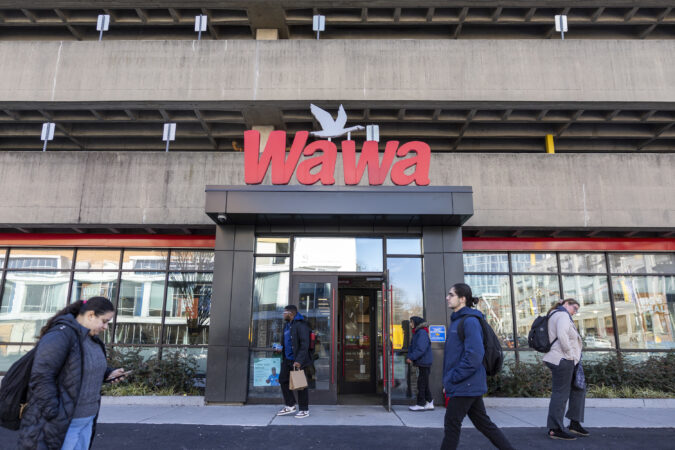
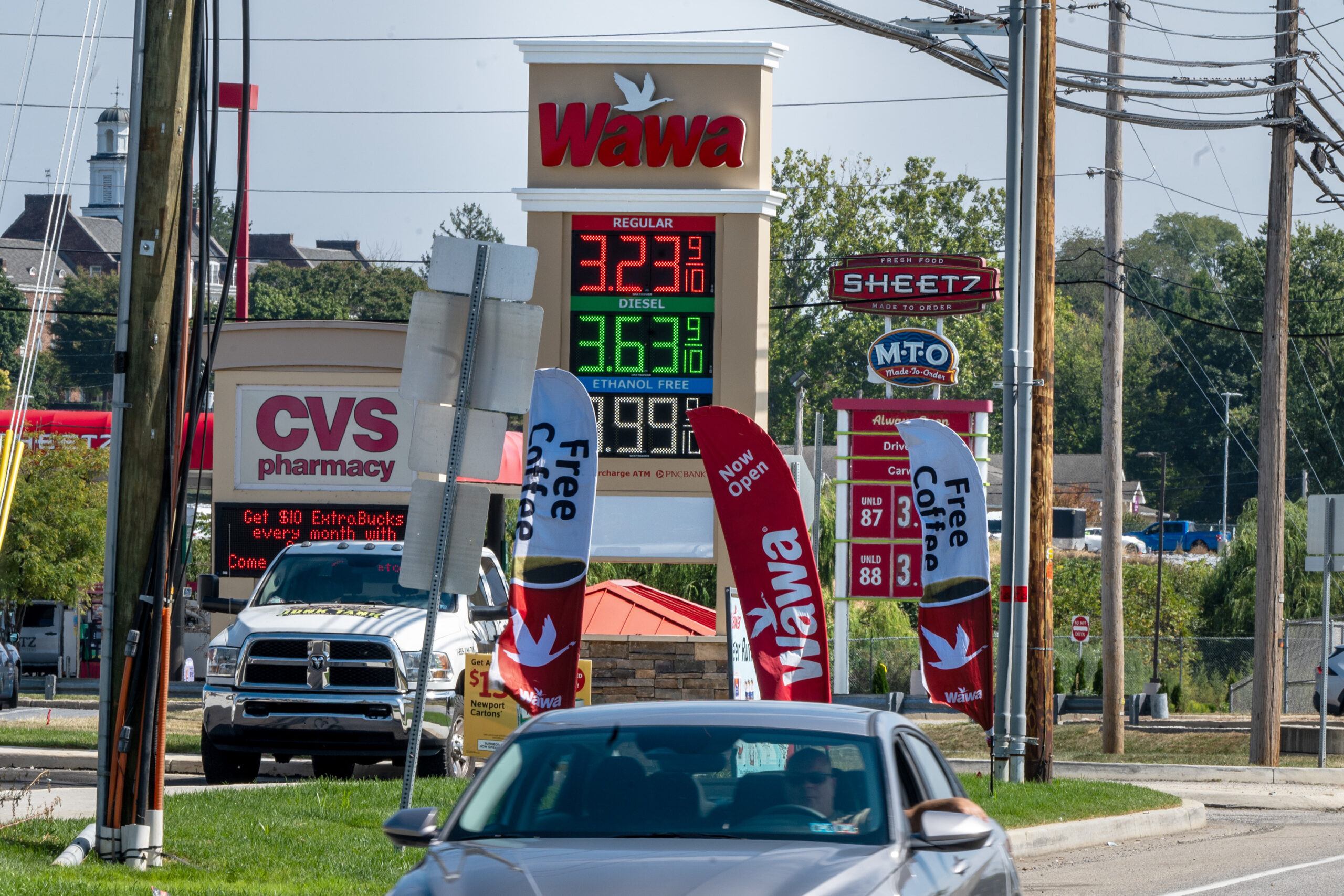
Wawa is closing a store on Drexel University’s campus, nearly three years after remodeling to a digital-order-only concept with no products on shelves.
The 3300 Market St. location, which has been open since 2018, is set to close Jan. 21.
It was remodeled in 2023 to test the new store format, which required customers to order all items on a touch screen, with no shelves of product to browse. The pilot was not a success, leading to the store’s planned closure, said a company statement shared by Wawa spokesperson Lori Bruce Tuesday.
Prior to the pandemic, this store saw more food-service than any other Wawa, CEO Chris Gheysens previously told the Philadelphia Business Journal.
“Over the years, we have made several attempts to address business and operational challenges at this location,” said the company statement shared by Bruce, which did not provide details about those challenges.
That effort “includes partnering with property owner, Drexel University, in an attempt to address some of these issues, and most recently making investments in our store design to test a fully digital format. Unfortunately, this test did not adequately improve performance or deliver an enhanced customer experience, which ultimately led to the decision to close the store‚” Wawa’s statement said.
Wawa had informed Drexel about its plans to close the location, university spokesperson Niki Gianakaris confirmed Tuesday in a statement from the university. Drexel did not respond to a question about what will occupy the space going forward.
Employees will be offered positions at other nearby Wawas. Nearby stores include those at 36th and Chestnut Streets, and 38th and Spruce Streets.
The Wawa at the corner of 34th and Market Streets near Drexel University will close this month.
Wawa has closed a number of stores in the city in recent years.
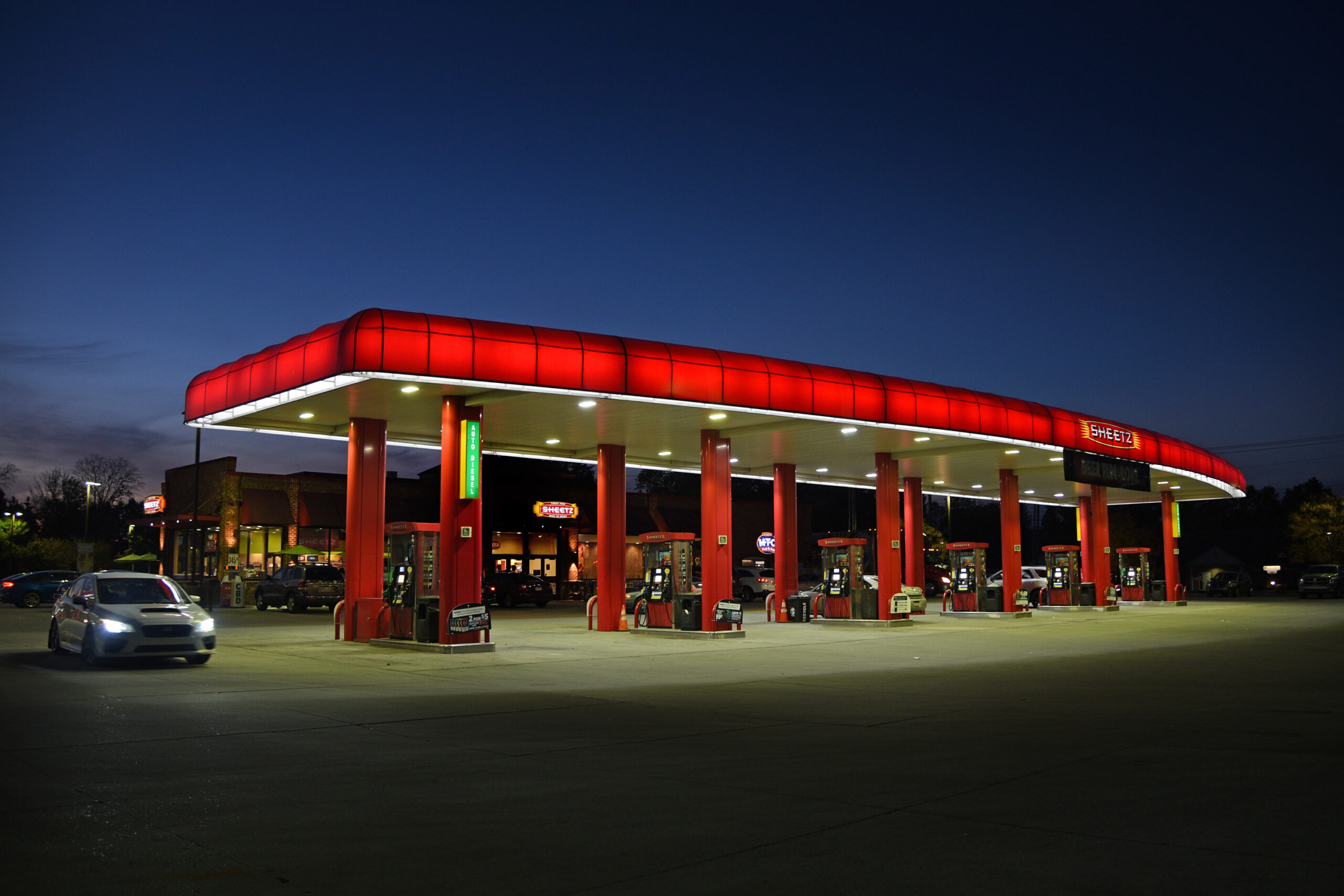
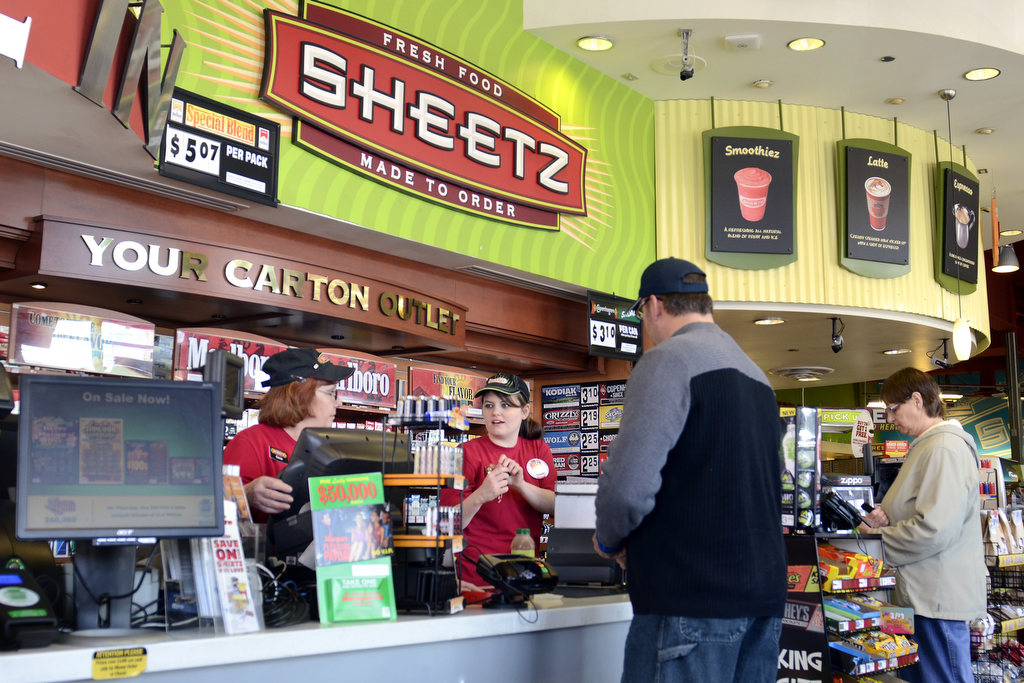
Sheetz’s encroachment into Wawa territory has an official ETA.
The Altoona-based convenience store chain is set to open its first Philadelphia-area store on Feb. 12 in Limerick Township, Montgomery County, according to Sheetz public affairs manager Nick Ruffner.
It will be located at 454 W. Ridge Pike, across the street from an existing Wawa.
Sheetz presented its site plans to Limerick’s board of supervisors about a year ago. The area was already zoned for this type of development, officials said at the time, and no other township permits were required.
“As Sheetz continues its expansion into communities near its existing footprint, we remain committed to being the best neighbor we can be and delivering the convenience, quality, and service Pennsylvania communities have come to expect from us for more than 70 years,” Ruffner said in a statement.
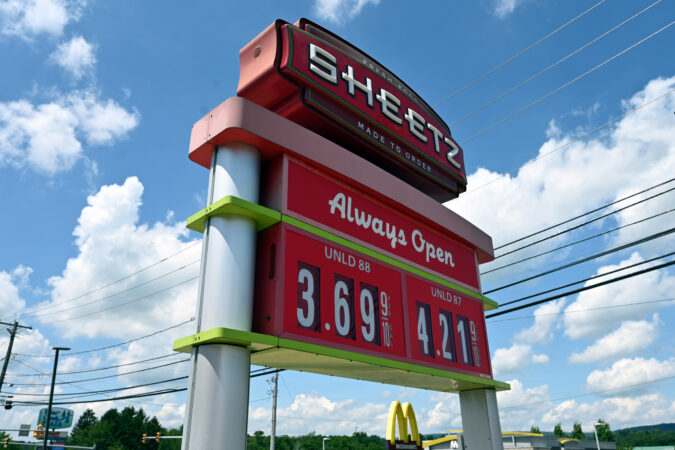
A Sheetz convenience store and gas station near Carlisle, Pa. in 2020.
For decades, Sheetz opened its convenience-store gas stations in the western and central parts of the Commonwealth, while Wawa added locations in communities near its Delaware County headquarters.
Over the years, both companies expanded into other states: Wawa has more than 1,100 locations in 13 states and Washington, D.C., while Sheetz has more than 800 stores in seven states.
In 2024, Wawa moved into Dauphin County, just 0.3 miles down the road from a Sheetz.
By this October, Wawa announced it had opened its 10th central Pennsylvania store. At the time, the company said in a news release that it planned to add five to seven new locations in the region each year for the next five years — to “reach new Pennsylvania markets along the Susquehanna River.”
For awhile, Sheetz, shown here in Bethlehem, Pa. in 2018, and Wawa expanded in different parts of the state, never overlapping into the other’s territory. That’s changed.
This fall, Sheetz presented Caln Township officials with a sketch plan for a store on the site of a former Rite Aid on the 3800 block of Lincoln Highway in Thorndale, according to the township website.
Sheetz’s namesake, Stephen G. Sheetz, died Sunday due to complications from pneumonia. The former president, CEO, and board chairman was 77.
“Above all, Uncle Steve was the center of our family,” Sheetz president and CEO Travis Sheetz said in a statement. “We are so deeply grateful for his leadership, vision, and steadfast commitment to our employees, customers, and communities.”
Toll Brothers, the luxury homebuilder based in Fort Washington, will have a new CEO this spring.
Karl K. Mistry, an executive vice president who has been with the company for 22 years, is set to be promoted to CEO effective March 30, Toll Brothers announced Wednesday. Mistry will succeed Douglas C. Yearley Jr., who will become executive chairman of the board.
Mistry joined Toll Brothers in 2004 and went on to hold leadership positions in the Houston and Washington, D.C., markets. Since 2021, Mistry has managed the company’s homebuilding operations in 15 states in the Eastern U.S.
“Karl has honed his skills in both strong markets and challenging ones. He has run numerous homebuilding divisions and has overseen our expansion into several major markets,” Yearley said in a statement. “With Karl at the helm partnering with our other seasoned leaders and operating teams, the company’s future is in excellent hands.”
Mistry is set to receive a base salary of $1 million, with annual cash bonuses of around $2.25 million, according to the company’s recent filing with the U.S. Securities and Exchange Commission.
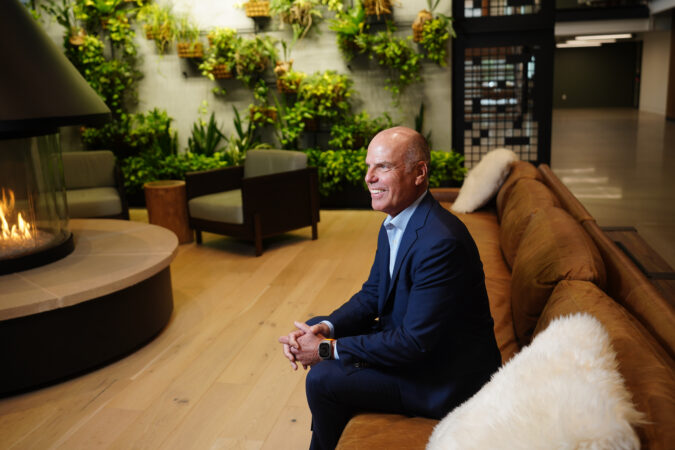
Karl K. Mistry, an executive vice president at Toll Brothers, is set to become the company’s next CEO starting March 30.
As executive board chair, Yearley’s base salary is set to remain at $1.2 million, according to the recent filing, and his total annual compensation is expected to be $6.6 million, including cash bonuses and long-term equity, starting in fiscal year 2027.
Toll Brothers was founded in 1967 by brothers Bob and Bruce Toll, who grew up in Elkins Park and were the sons of a homebuilder. Their company has since expanded, now building in more than 60 markets nationwide.
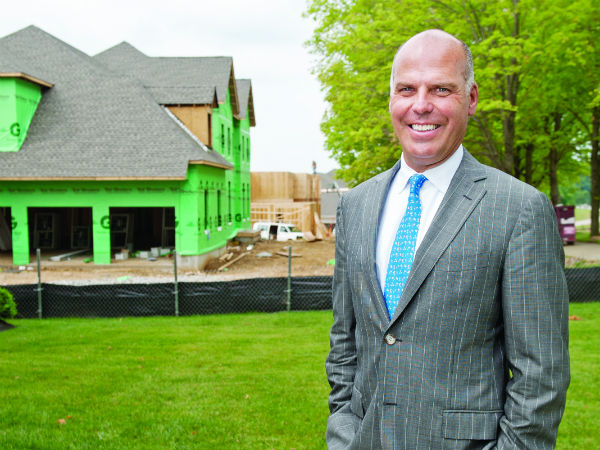
Douglas C. Yearley Jr., CEO of Toll Brothers, outside a model home in Newtown Square in this 2015 file photo.
Last year, Toll Brothers “executed well in a choppy environment” that saw “soft demand across many markets,” Yearley said in a statement accompanying the report.
During that time, Toll Brothers sold more than 11,000 homes for $960,000 on average, according to the report. The company described its customer base in a recent news release as “first-time, move-up, active-adult, and second-home buyers.”
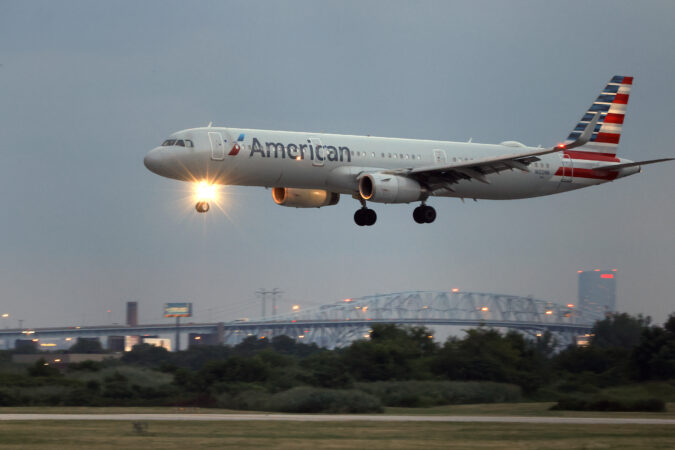
American Airlines, the largest carrier out of Philadelphia International Airport, is bringing free Wi-Fi to its fleet for members of its rewards program. The service is sponsored by AT&T and launches this month, the airline announced Tuesday.
“Free high-speed Wi-Fi isn’t just a perk; it’s essential for today’s travelers,” said Heather Garboden, American’s chief customer officer. “Once rollout is completed, every AAdvantage member can stay connected, stream, and share almost anywhere their journey takes them for free.”
American is not the first PHL airline to tout free onboard Wi-Fi for travelers with reward memberships. Southwest Airlines started doing so last year through a partnership with T-Mobile, and Delta announced a similar offering in 2023. United offersWi-Fi to rewards members on some planes, provided by Elon Musk’s Starlink, and announced in October that it plans to install the service on several more aircrafts.
American Airlines estimates that by early spring, free Wi-Fi will be available on “nearly every” one of its flights.
Travelers need an AAdvantage account, which is free to join, to access the free Wi-Fi. The membership also allows customers to earn points and miles toward flights. Onboard, travelers must log in at aainflight.com and select the “Free Wi-Fi” option.
Previously, all passengers using Wi-Fi had to pay for a pass or subscription. Non-AAdvantage members can still do so, said company spokesperson Bri Harper.
Philadelphia International Airport is a hub for American Airlines, PHL’s largest airline by passenger volume, which carried nearly 20 million passengers through the airport in 2024. That’s more than five times the second largest carrier, Frontier.
PB Bankshares, the holding company for Presence Bank, has been merged into Norwood Financial Corp., the holding company for Wayne Bank.
“We are pleased to welcome PB Bankshares’ shareholders, customers and employees to our Norwood family,” Jim Donnelly, president and CEO of Norwood, said in Monday’s announcement. “We expect this combination will allow us to offer expanded products and services to the communities in our combined market areas.”
Norwood’s Wayne Bank, based in Honesdale, had $2.4 billion in assets at the acquisition. Wayne Bank was founded in 1871, and Norwood Financial Corp, the holding company, was created in 1996. It has grown to 15 offices in Northeastern Pennsylvania and 12 in the Southern Tier of New York.
PB Bankshares had $467 million in assets from its Presence Bank when the deal closed.
Presence Bank first opened in 1919 in Coatesville, Chester County, as Coatesville Federal Savings & Loan Association, and in 2021 was renamed Presence Bank.
Over the years, the bank added branches in Oxford, Chester County, and in New Holland and Georgetown, both in Lancaster County. Presence Bank also has an administrative office in Lancaster and a loan office in Harrisburg.
Norwood has said the strategic combination allows the company to expand its footprint “into higher growth markets in Central and Southeastern Pennsylvania” while “enhancing Presence Bank’s capacity to provide exceptional service and solutions to its existing customers.”
Janak M. Amin, president, CEO, and director of PB Bankshares, is now executive vice president and chief operating officer for Norwood and Wayne Bank.
“We will be able to provide more products and services to our customers given Wayne Bank’s strength in retail banking,” Amin said.
He added that Wayne Bank’s larger capital base will allow Presence Bank to “take better care of commercial customers with growing needs and the increased lending limit will allow us to retain and attract more customers.”
It’s your city. It’s your (Ritten)house. It’s your Rally House.
The sports apparel store with the earworm of a jingle plans to open its first Center City location in a former Rite Aid near Rittenhouse Square.
The Kansas-based chain has asked the city’s art commission for approval to put up signage outside the nearly 13,000-foot storefront at 17th and Chestnut Streets, according to its application, which is set to be reviewed at a Wednesday meeting. Rally House spokespeople did not return requests for comment Tuesday.
The company’s application was first reported Monday by the Philadelphia Business Journal.
Since the Rittenhouse Rite Aid closed, Spirit Halloween has occupied the storefront in the months leading up to Halloween.
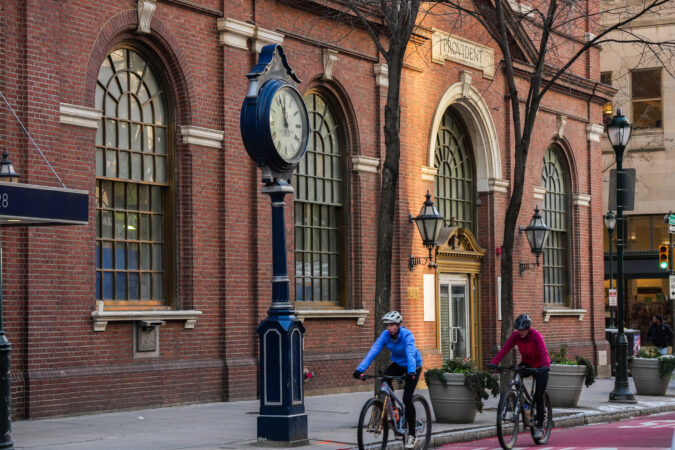
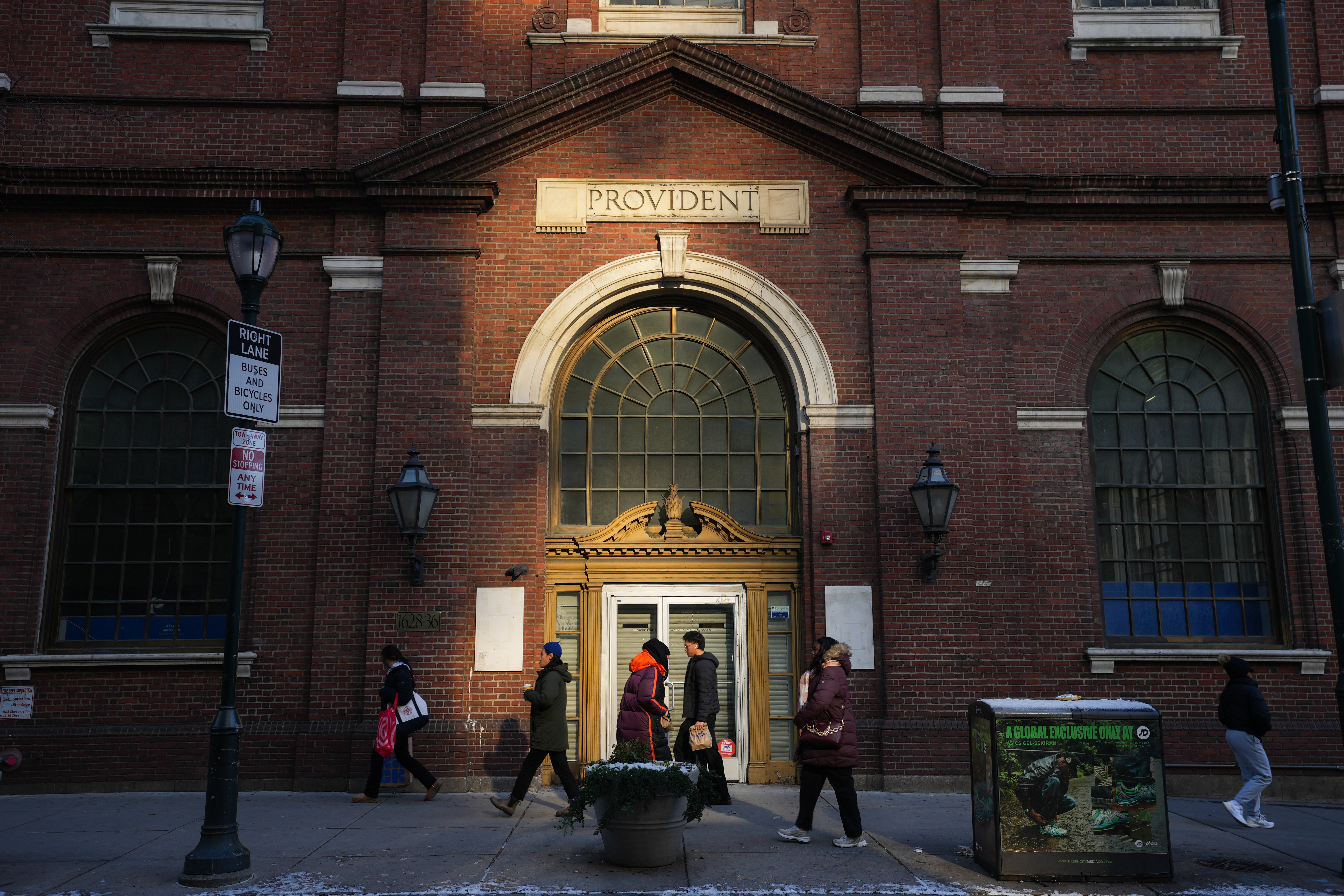
Since Rite Aid closed two years ago, the ground-floor retail space in the Provident Trust Co. building has been occupied seasonally by Spirit Halloween, but is otherwise vacant.
The building is owned by a partnership registered to Philadelphia-based developer Neal Rodin, according to property records. Rodin did not return requests for comment Tuesday.
Rally House already has about two dozen locations in the Philadelphia region, but the vast majority of them are in the suburbs. It has three city locations — on Temple’s campus, in West Philadelphia near Drexel and Penn, and in Roxborough.
If Rally House opens at 17th and Chestnut, it would bring continued momentum to the retail corridor around Rittenhouse Square, which has recently welcomed a slew of new businesses, including the luxury women’s fashion company Aritzia and North America’s first Nike Jordan World of Flight store.
It would also mark the latest example of how zombie Rite Aids can be resurrected.
Over the past three years, more than 170 Rite Aids have shuttered across the Philadelphia region, with dozens of stores closing even before the chain announced it was going out of business.
Like the Rittenhouse space, former Rite Aids are often 8,000 to 16,000 square feet, which is not ideal for many potential tenants, experts say. But some of these pharmacy shells have found new life as small grocers, discount stores, and medical offices.
Soon, sports apparel store may be added to that list.
According to the new survey, 38% of all Pennsylvanians support data centers being built in the Commonwealth, while 35% oppose, and 27% are neutral or have no opinion. But when asked about data centers being built in their area, residents’ opposition grows: 34% support, 42% oppose, and 24% are neutral or have no opinion about centers being built in or near their communities.
And opposition to close-to-home data center construction is among the strongest in the southeast part of Pennsylvania, second only to opposition in the northeast, a hot spot for data center construction. In Southeast Pennsylvania, 45% of respondents strongly or somewhat oppose data centers, while 54% strongly or somewhat oppose them in the northeast.
Among Pennsylvanians’ worries about data centers, 70% are concerned about the amount of water data centers use, and 71% are concerned about the amount of electricity data centers use.
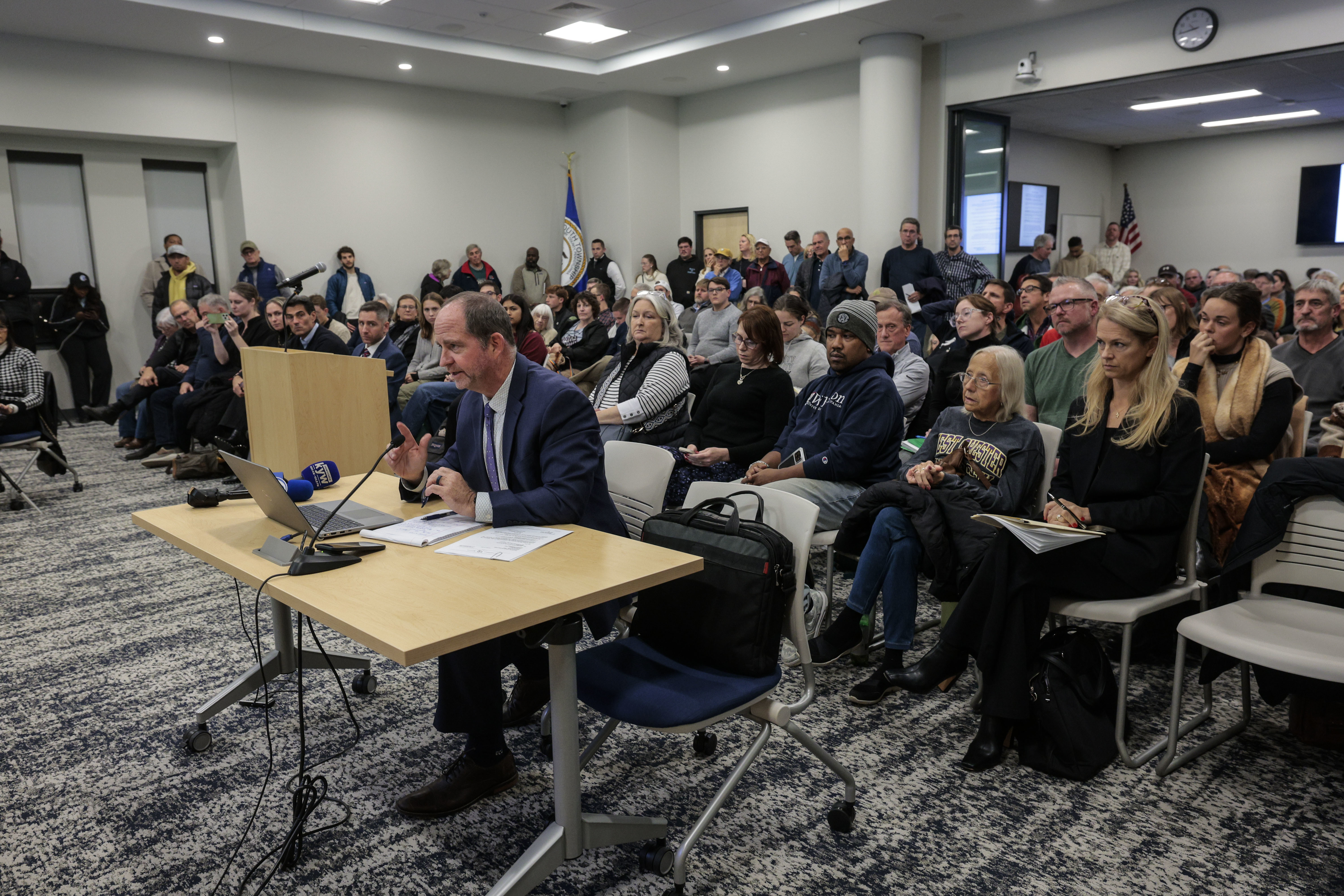
Edmund J. Campbell, attorney for developer Brian O’Neill, spoke to the Plymouth Township zoning board in November before abruptly withdrawing the application for a Conshohocken-area data center over legal issues. Residents, some of whom had rallied against the proposal, packed the room.
Seventy percent of Pennsylvanians strongly or somewhat support requiring data centers to provide their own energy generation, rather than get electricity from the grid.
When it comes to AI more broadly, just over half of Pennsylvanians told pollsters they believe AI will decrease the number of available jobs in their industry, while 16% said they think it will increase the number of jobs (29% said they thought it would have no impact).
Nearly twice as many residents think AI will have a net negative impact on the economy compared to how many think it will have a positive impact (48% said negative, 25% said positive). When respondents were asked about the environment, the results were similar (46% vs. 21%).
The survey of 2,000 Pennsylvania adults was conducted online and via text between Nov. 19 and 23.
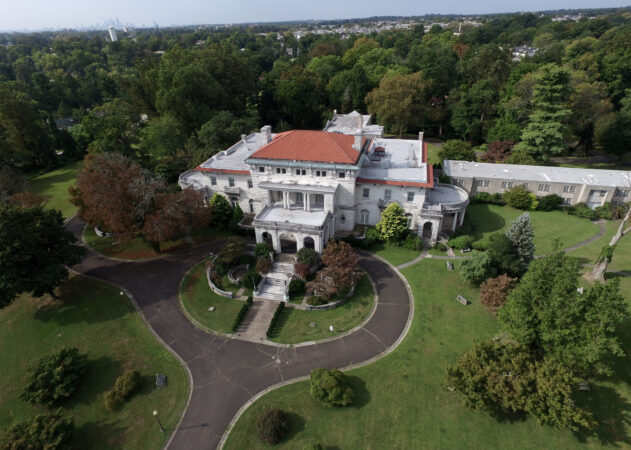
The Elkins Estate, which already hosts weddings in its main mansion, is set to add a boutique event space and a distillery in the new year.
In the fall, the Tudor-style Chelten House will open for smaller gatherings of 100 or fewer people, and include 16 guest rooms, said Jeanne Cretella, cofounder of By Landmark hospitality.
“We’re really looking forward to our next phase,” Cretella said, noting that the Chelten House “will be the perfect setting for those much more intimate events, whether it’s seminars or retreats or business meetings.”
In 2019, Jeanne and Frank Cretella’s company, By Landmark, bought the sprawling Cheltenham property for $6.5 million from the Dominican Sisters of St. Catherine de Ricci, who had used the grounds for religious retreats. At the time, the couple said they intended to spend $20 million to restore six historic buildings on the site.
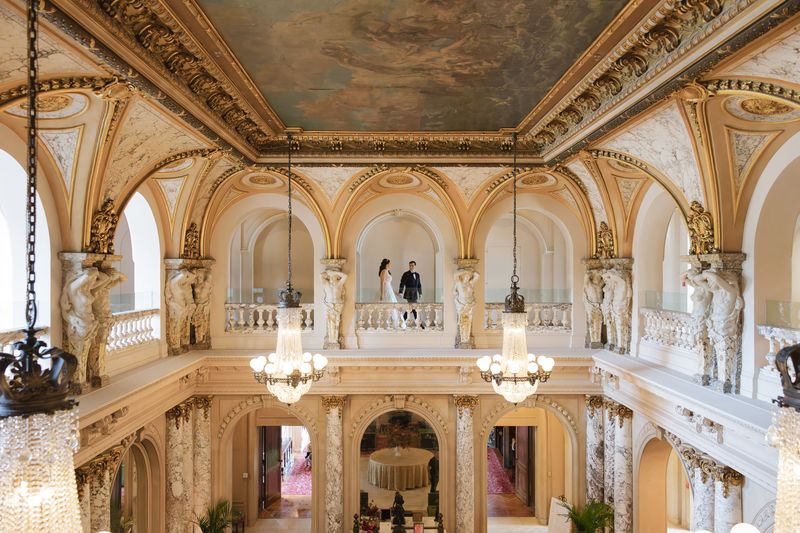
A couple walks through a room in the Elstowe Manor at Elkins Estate.
By Landmark’s final investment numbers were not available Friday, according to a spokesperson, as renovations are ongoing.
The Cretellas initially envisioned a luxury boutique hotel with more than 100 guest rooms, a spa, a restaurant, and other amenities. At one point, they even considered installing a heliport on the site.
Then the pandemic happened, Jeanne Cretella recalled Friday.
Despite the challenges of that time, “we are so proud that we were able to open up Elstowe Manor,” the estate’s 70,000-square-foot centerpiece that required extensive plumbing, electrical, heating, and ADA upgrades to be brought up to code, Cretella said.
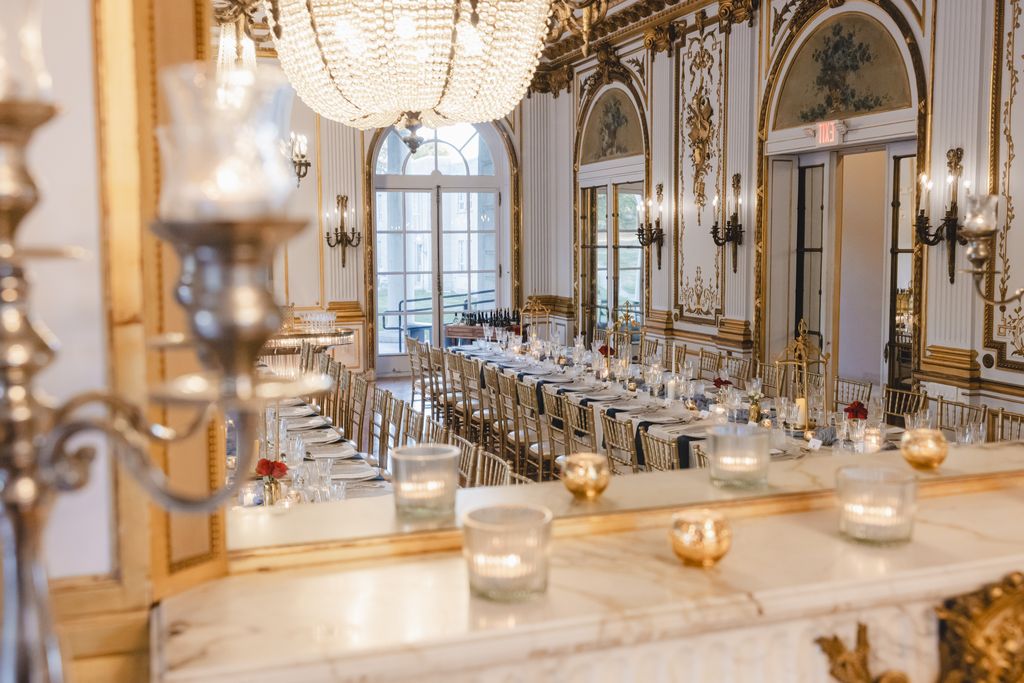
A room at the Elkins Estate’s Elstowe Manor, its main mansion, set up for a wedding reception.
“We made the decision after COVID that it would be best … to have the rooms only open to event guests,” she said.
With 50-foot frescoed ceilings and a grand ballroom with a glass skylight, Elstowe Manor can host 300-person events and includes 69 guest rooms.
More than 100 weddings and events have been held at the manor in the past two years (The venue also hosted weddings in the early 2010s when it was briefly owned by a nonprofit that went bankrupt).
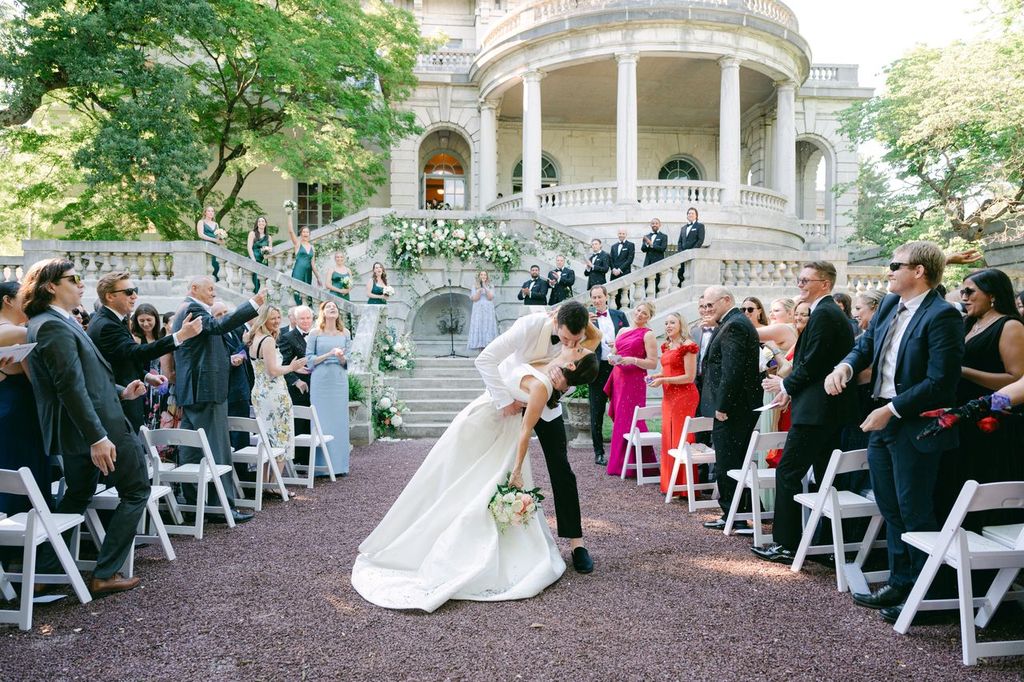
A couple kisses during their wedding ceremony outside the Elkins Estate’s Elstowe Manor.
At the estate these days, couples and their guests feel like they “are somewhere really special, and have the ability to really enjoy utilizing the estate for the whole weekend,” Cretella said.
With its more intimate setting, the Chelten House is meant to complement the Elstowe Manor, Cretella said. The home features Italian Renaissance Revival designs, with terracotta roof tiles, large arched windows, wood-paneled rooms, and marble fireplaces.
While each part of the property is set apart and has its own entrance, Cretella said she foresees the Chelten House being busy during the week (when most corporate retreats occur) and the Elstowe Manor bustling with wedding festivities on the weekends.
Some larger weddings may use both the manor and the Chelten House for their events and accommodations, she said.
Cretella said they don’t foresee adding more amenities to the property in the near future.
“The original plan to have a restaurant was definitely in conjunction with having a hotel that was open to the public,” not just event guests, she said. So “opening up a restaurant is not on the horizon.”
But, she added, “we won’t say never.”
For now, Cretella said they are focused on their events, including opportunities to welcome the public onto the historic site.
Earlier this year, the estate opened a podcast recording studio and demonstration kitchen, which Cretella said they hope local school students can use. They are also looking to bring professional actors and creators into the space.
In November, By Landmark opened the estate up for paid public tours. A tour in early January, which costs $30 a person, is already sold out.
Cretella said the estate plans to host a Valentine’s Day dinner, open to the public, with an optional overnight stay after the meal.
For the Chelten House, booking for small private events will open in the new year, Cretella said.
Based in North Jersey, By Landmark operates nearly 30 venues in Pennsylvania and New Jersey. They include the Hotel du Village and the Logan Inn in New Hope.
In the late 1800s, the Elkins Estate was built as a countryside retreat for railroad magnate William Lukens Elkins, who is credited with helping to form what would eventually become SEPTA and the Philadelphia Gas Works.
The U.S. is turning 250 next year, and among its birthday gifts will be newly designed quarters, dimes, and half-dollar coins.
On Wednesday evening, the U.S. Mint unveiled the new coins at the National Constitution Center in Philadelphia, to commemorate the 250th anniversary of the Declaration of Independence.
“The designs on these historic coins depict the story of America’s journey toward a ‘more perfect union,’ and celebrate America’s defining ideals of liberty,” said Kristie McNally, the Mint’s acting director. “We hope to offer each American the opportunity to hold our nation’s storied 250 years of history in the palms of their hands as we connect America through coins.”
Several coins feature Philadelphia-area landmarks.
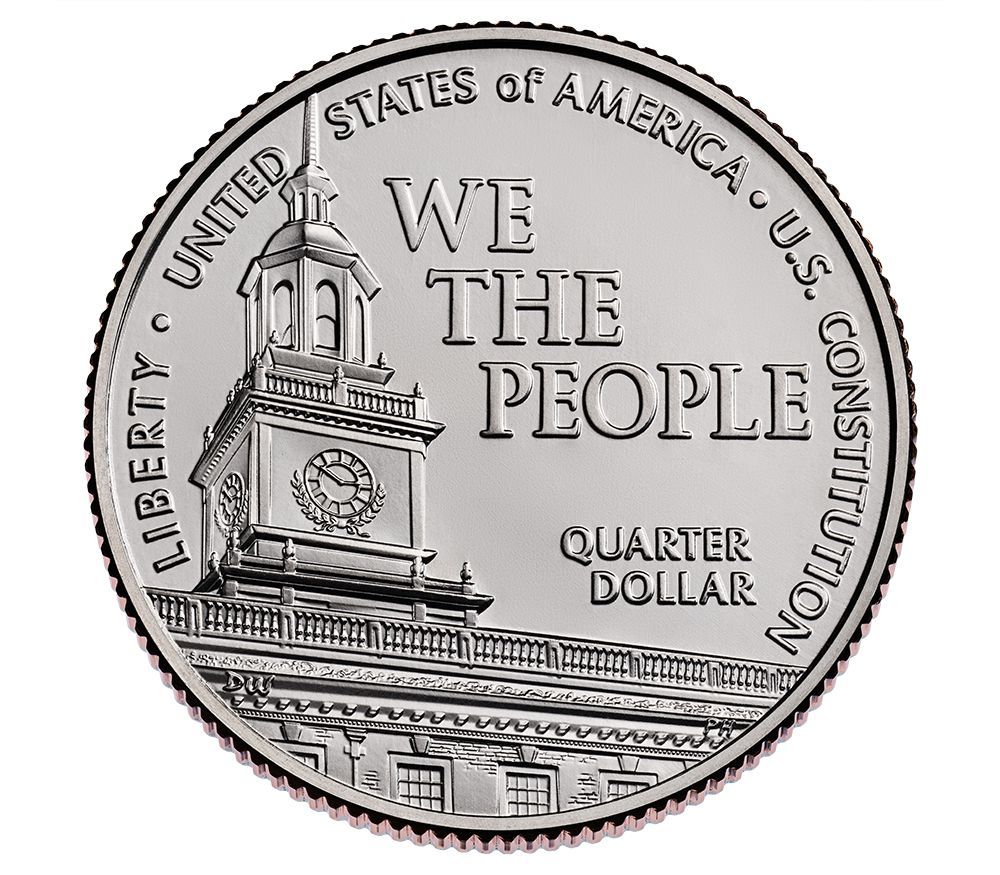
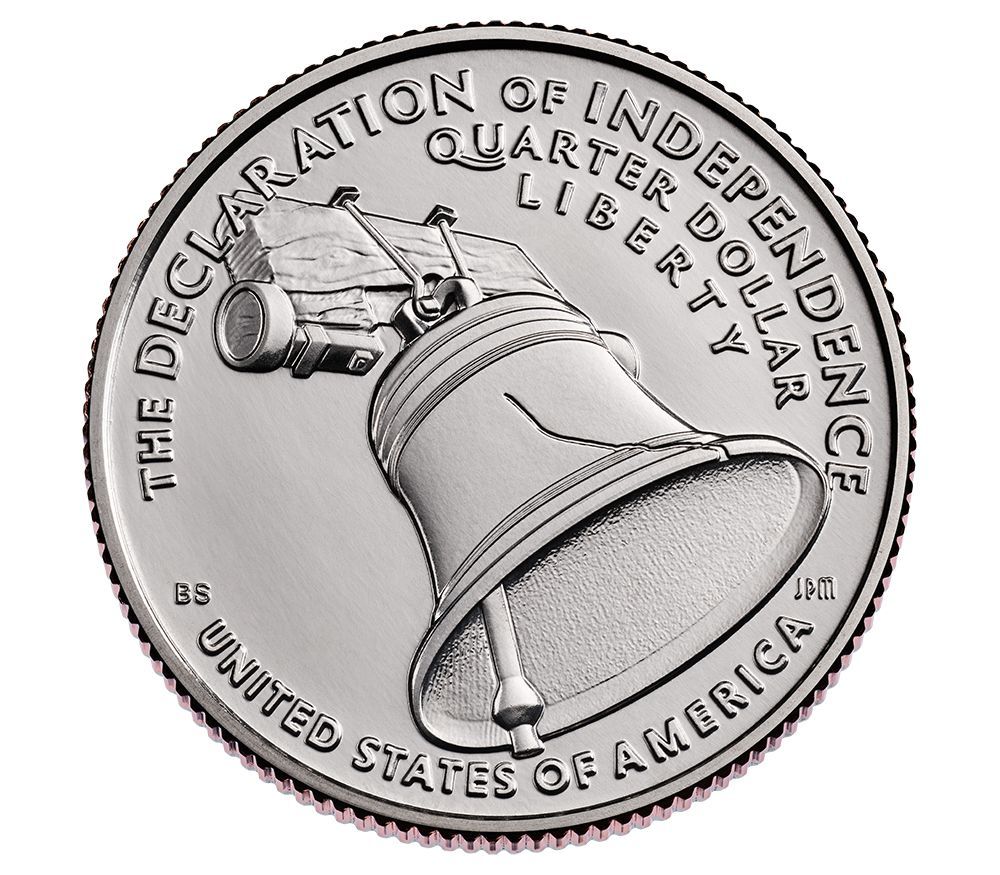
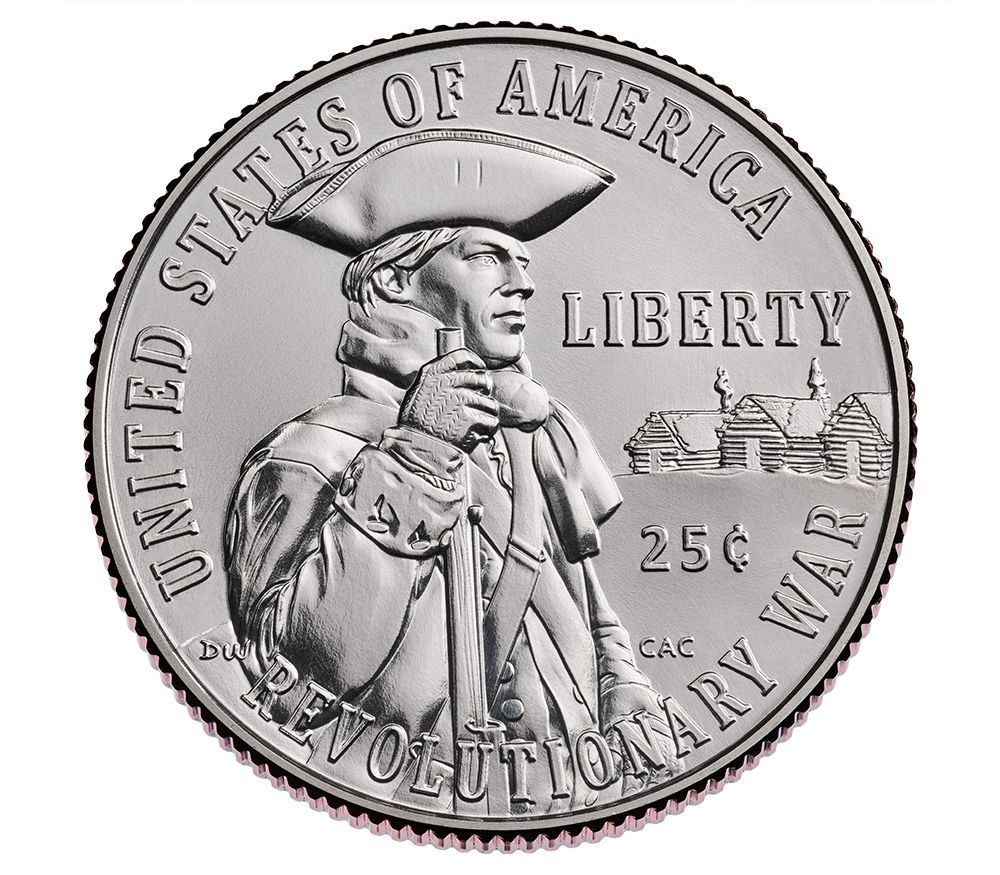
Three separate quarter designs include images of Independence Hall, where the Declaration of Independence was signed; the Liberty Bell, housed and managed by the National Park Service in Philadelphia; and a Continental Army soldier at Valley Forge commemorating the Revolutionary War.
This new design for the quarter commemorates the U.S. Constitution and depicts Independence Hall in Philadelphia, where the Declaration of Independence and U.S. Constitution where signed. The other side of this quarter has a depiction of President James Madison.
The new dime represents the founding era of the country. Its design includes Liberty depicted as a woman wearing a cap patterned with stars and stripes. The other side of the dime will feature an American eagle, which was on early dimes that circulated in 1796, and it hasn’t appeared on the coin since 1837, according to the U.S Mint.
In addition to the Philadelphia-area landmarks, the quarters also don images of pilgrims and the Mayflower. The five new quarters reference the Mayflower Compact, the Revolutionary War, The Declaration of Independence, the U.S. Constitution, and the Gettysburg address, and also feature images of Presidents James Madison, Thomas Jefferson, George Washington, and Abraham Lincoln.
This new design for the quarter commemorates the Declaration of Independence, and depicts the Liberty Bell, housed in Philadelphia. The other side of this quarter features President Thomas Jefferson.
The half-dollar coin is intended to look to the future of the country with an image of the Statue of Liberty on one side, and on the other, a torch being passed from her hand to another hand.
The coins will be produced at the U.S. Mint facilities in Philadelphia and Denver and begin circulating in 2026. The new designs are authorized under legislation signed by President Donald Trump just before he left office in 2021. It noted that these coins can be issued for a one-year period starting in January 2026.
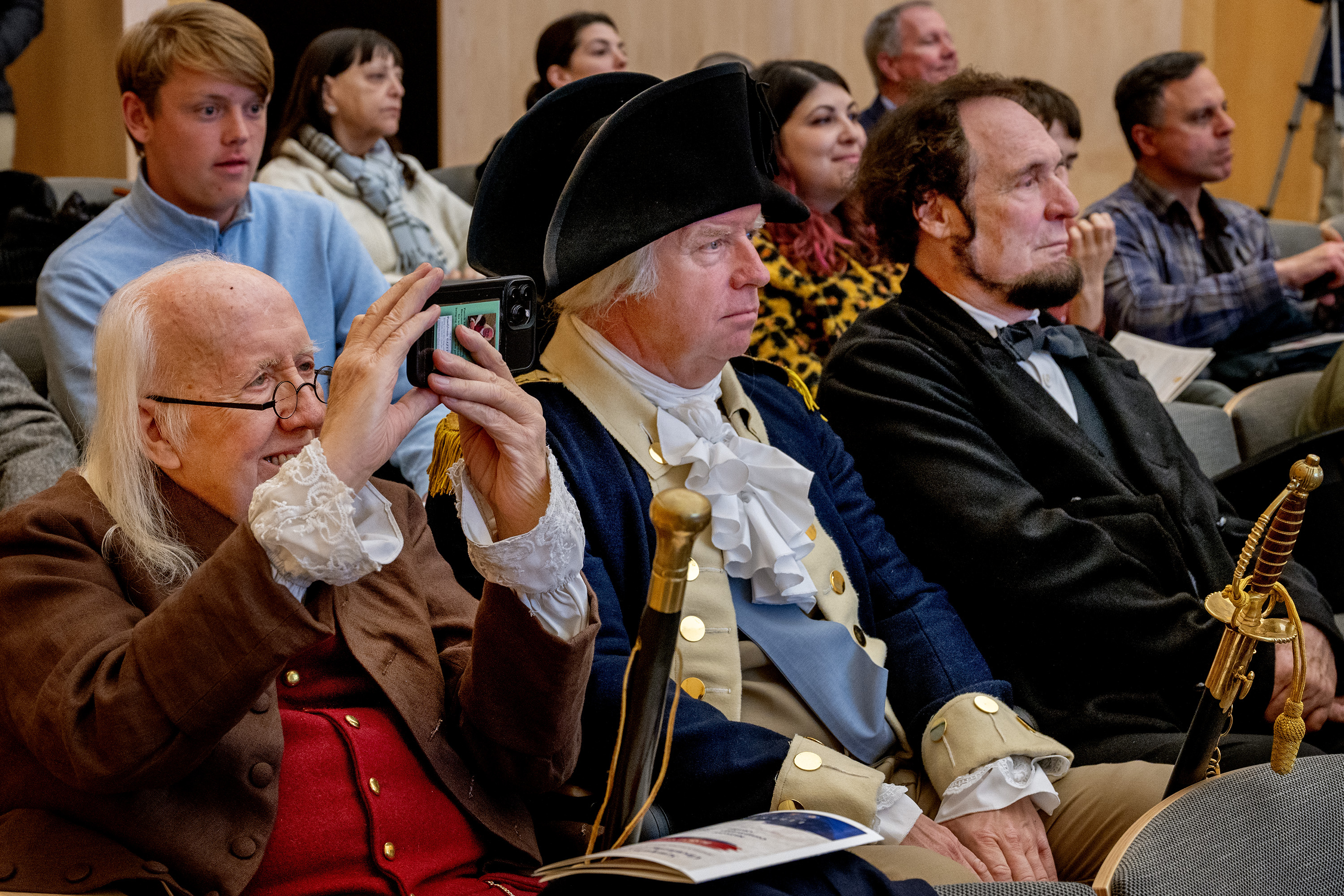
Historical interpreters Benjamin Franklin (from left) Gen. George Washington, and President Abraham Lincoln are in the audience as the U.S. Mint unveils new coins for the Semiquincentennial at the National Constitution Center in Philadelphia Wednesday.
Philadelphia is expected to see an influx of visitors in 2026 for the Semiquincentennial.
This year, the U.S. Mint, which had 389 employees in Pennsylvania in 2024 according to federal database FedScope, stopped producing pennies in Philadelphia. The one-cent coins are more expensive to make than they are worth due to inflation and the high cost of metals.
A newly designed quarter for the 250th anniversary of the country commemorates the time of the Revolutionary War. It depicts a Continental Army soldier at Valley Forge, Pa. The other side of this quarter features President George Washington.
The Brown family, which operates a dozen local ShopRites, recently purchased the Shoppes at Wissinoming for $30.8 million, according to JLL real estate, which represented the seller. The nearly 98,000-square-foot complex in Northeast Philadelphia is anchored by one of Brown’s ShopRites.
“We think it’s important to own the real estate where our supermarkets are located, so we can ensure the long-term healthy food access for the local community and the overall sustainability of our stores,” Brown, executive chairman of Brown’s Super Stores, said in a statement. “We are excited to add the Shoppes at Wissinoming shopping center to our real estate properties.”
Brown said he owns the shopping centers surrounding his ShopRites in Cheltenham, Brooklawn, and Roxborough.
The ShopRite in Roxborough, pictured in 2020, is run by Jeff Brown and located in a complex owned by the longtime grocer.
The family also runs ShopRites in Eastwick, Nicetown, Parkside, Port Richmond, South Philadelphia, Bensalem, Fairless Hills, and Mullica Hill..
The ShopRite at the Shoppes at Wissinoming opened in 2018, and was acquired by Brown earlier this year. The grocery store anchors the center, occupying about 68,000 square feet.
The complex is 98% occupied, according to JLL. Other tenants include Wawa, Popeyes, and AT&T.
“The transaction reflects broader trends in the retail investment market, where investors continue to prioritize grocery-anchored properties with proven tenant performance,” said Jim Galbally, JLL senior managing director. “Shoppes at Wissinoming has an ideal combination of dominant grocery anchor, diverse tenant mix, and strategic location within one of Philadelphia’s most densely populated submarkets.”
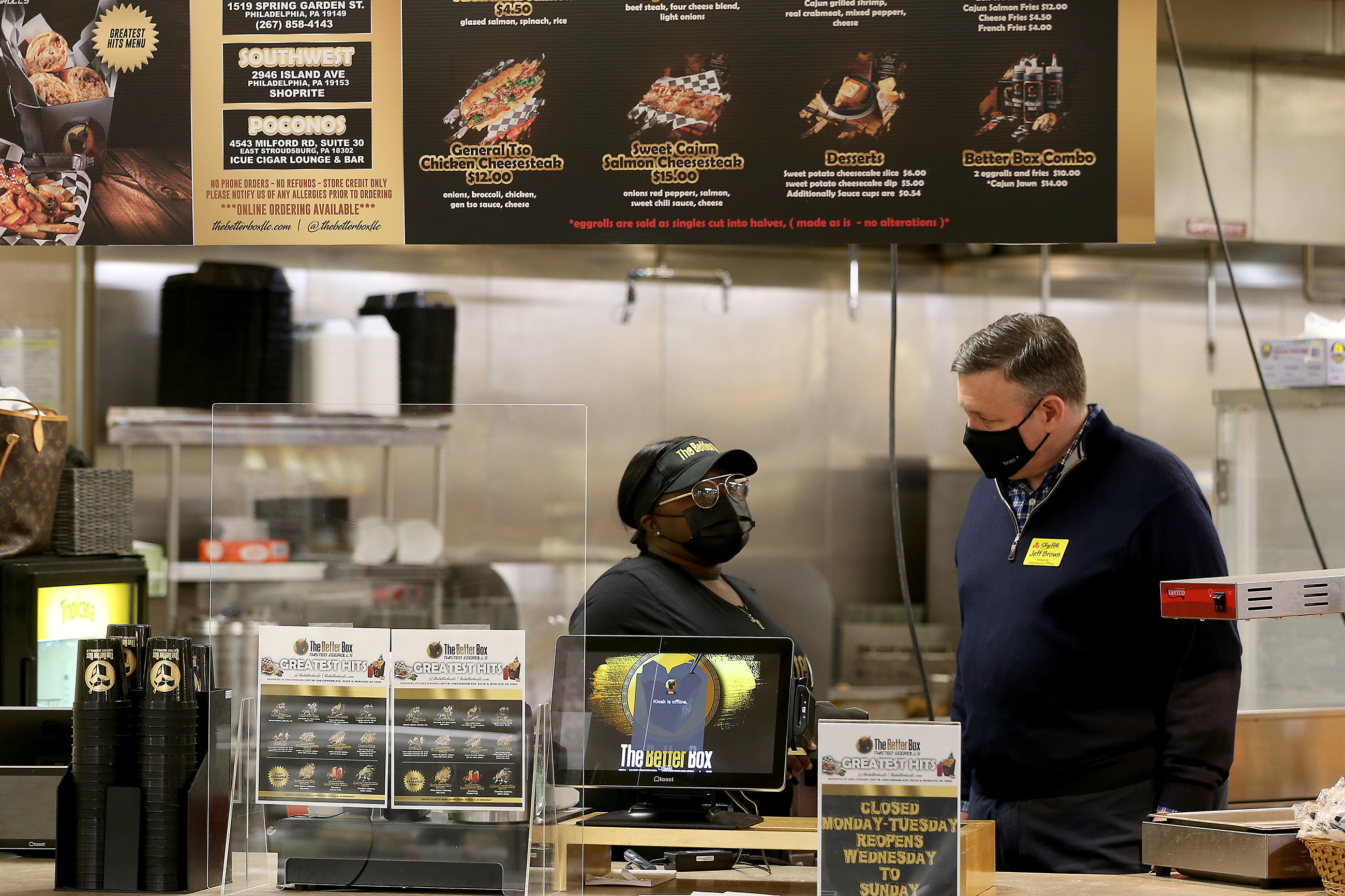
Better Box owner Tamekah Bost (left) talks with ShopRite owner Jeff Brown at the Cheltenham ShopRite in 2021. Brown has brought local restaurateurs into his stores.