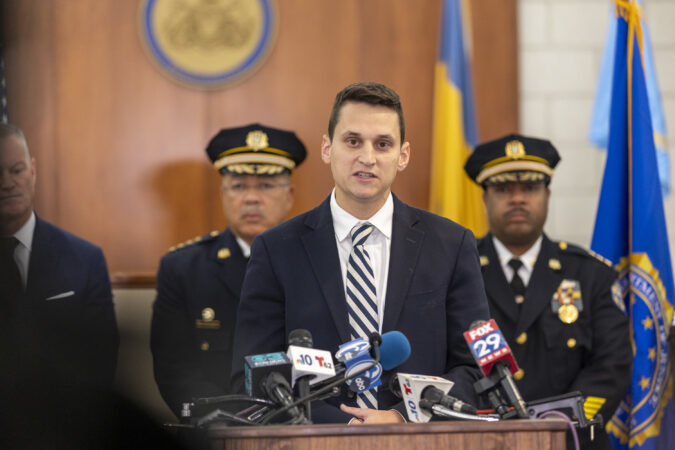
Tag: Dave McCormick

  • Philly’s new U.S. attorney has largely avoided the chaos swirling around other parts of Trump’s Justice Department

    Philly’s new U.S. attorney has largely avoided the chaos swirling around other parts of Trump’s Justice Department

    When President Donald Trump announced earlier this year that he was nominating David Metcalf to be Philadelphia’s U.S. attorney, it initially seemed as if the move was in line with Trump’s chaotic and contentious attempt to upend the nation’s justice system.

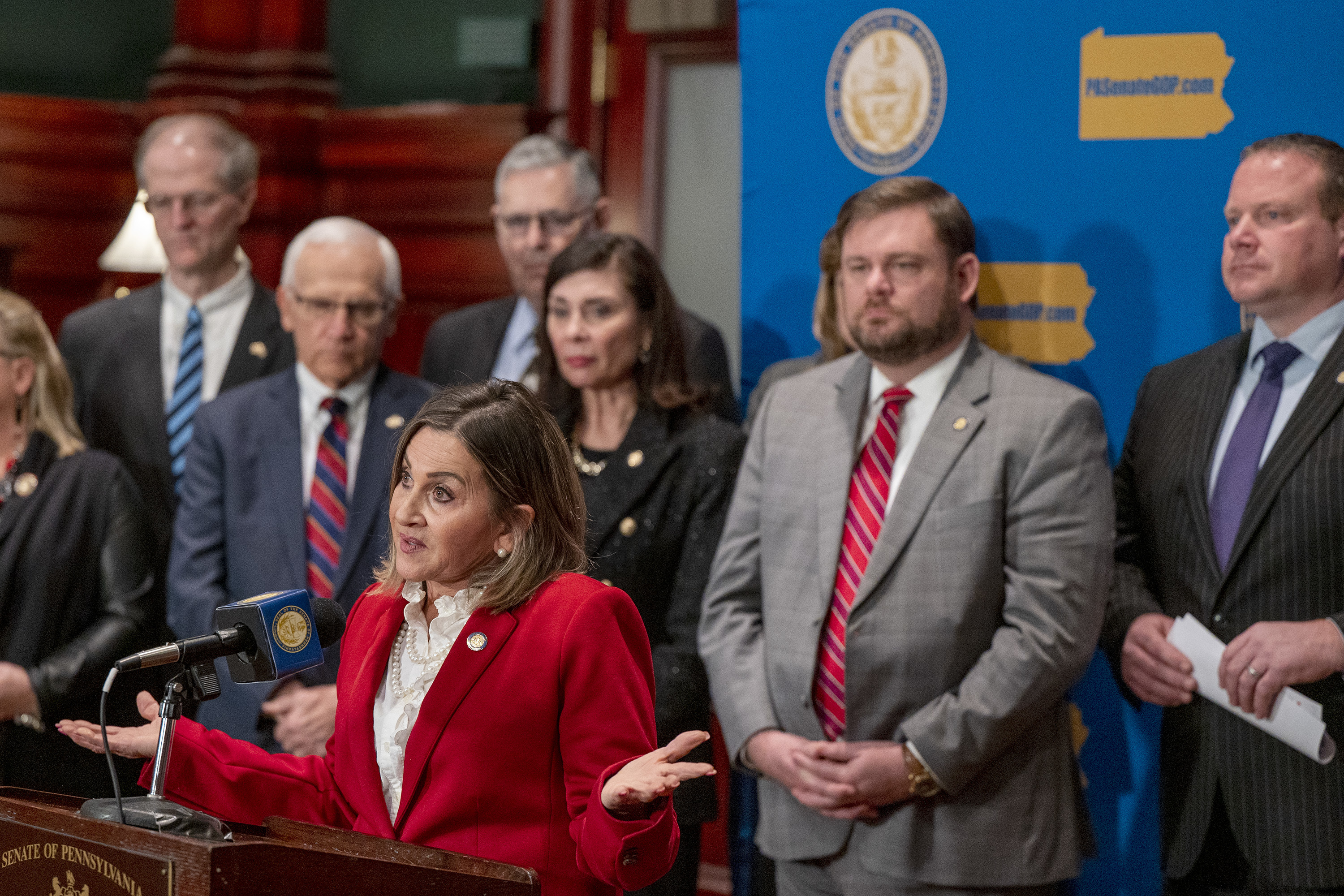
    The decision was abrupt, apparently made without advanced input from Sen. Dave McCormick (R., Pa.), who’d set up a commission to identify candidates to serve as the region’s top federal prosecutor.

    Metcalf was 39 and, unlike many of his predecessors, didn’t have deep roots in the region — but did have some reported ties to officials who’d sought to help Trump adviser Roger Stone years earlier.

    And the appointment was announced as Trump was openly pledging to “clean house” in the Justice Department and pull the agency more directly in line with the White House.

    But in the months since Metcalf has assumed control over the office and its 140 lawyers, what has stood out so far has been the serious temperament the veteran prosecutor has brought to the role, and the relative lack of drama he’s overseen — particularly in comparison to nearby jurisdictions, where U.S. Attorney’s Offices have been embroiled in controversies over leadership appointments and whether to indict Trump critics.

    During a recent interview with The Inquirer at his Center City office, his first since being appointed in March, Metcalf said his deliberate approach toward his first few months in the job has been influenced by his decade-plus career as a Justice Department lawyer — one that included stints in Baltimore, Philadelphia, and Washington, D.C.

    He has met with a host of other local stakeholders since taking over — including Police Commissioner Kevin J. Bethel, District Attorney Larry Krasner, and federal judges — and has avoided ushering in drastic upheaval within his office.
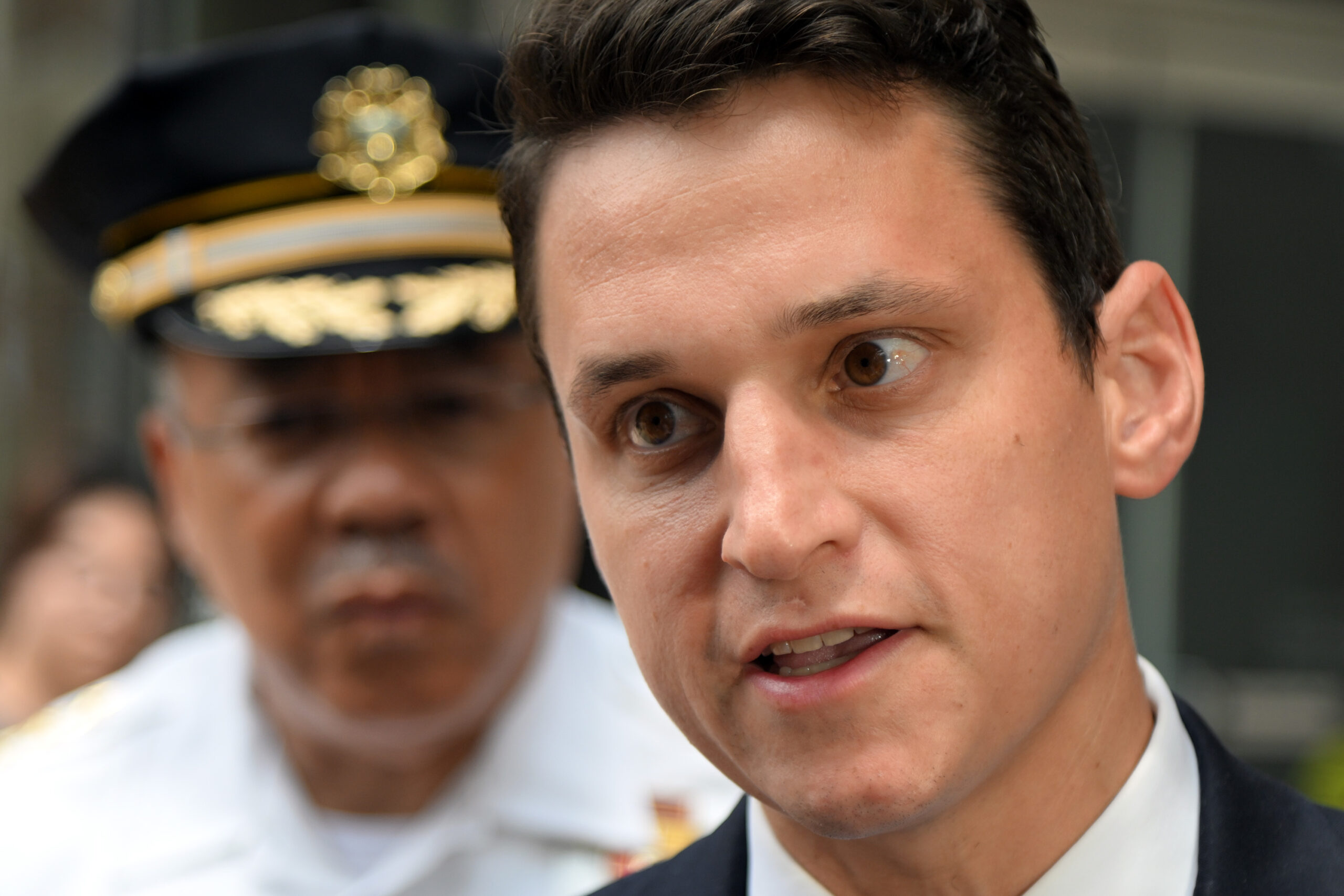
    U.S. Attorney David Metcalf outside the federal courthouse in July, with Police Commissioner Kevin Bethel standing behind him.

    Instead, he said, a key focus has been to encourage his prosecutors to pursue large, ambitious, complex investigations targeting violent crime, synthetic opioid abuse, and healthcare fraud — subjects he said were critical to public safety in the Philadelphia region.

    “I do not feel some personal impulse to burn my brand on this office by restructuring and reorganizing it,” he said, later adding: “The greatest offices and the greatest cases come from prosecutors who are hunting them down and competing for them … and that’s the breed of prosecutor we’re trying to create here.”

    Composed and self-assured, Metcalf was uninterested in commenting on the broader political landscape surrounding his job. He instead concentrated on the work of his office, whose lawyers prosecute matters including drug trafficking, political corruption, and terrorism across nine counties from Philadelphia to Allentown and west past Reading. They also litigate civil matters on behalf of the federal government.

    “I don’t want to say that I’m … bound by precedent or a devotee to the status quo,” he said. “But I do believe in stability, and I’m certainly not going to change things just for the sake of changing them.”

    That approach has been generally well-received by many lawyers in his office, particularly given the volatile environment across other parts of the Justice Department.

    Even Krasner — an outspoken progressive Democrat who rarely misses an opportunity to criticize Trump, and who was engaged in a long-running feud with a Trump-appointed U.S. attorney four years ago — said he had a “professional and pleasant lunch” with Metcalf earlier this year.

    “We have always worked well with the career prosecutors at the U.S. Attorney’s Office, and our teams seem to be continuing to work well together,” Krasner said in an interview.

    Rod Rosenstein, who was the deputy attorney general during Trump’s first term, said in an interview that he hired Metcalf a decade ago, when Rosenstein was the U.S. attorney in Maryland. And their paths continued to intersect over the years as their careers wound through the Justice Department.

    Rosenstein said Metcalf had “superb legal skills” and “excellent judgment” — two qualities he views as critical for leading a U.S. attorney’s office.

    “I think people recognize he’s got the right qualifications,” Rosenstein said.
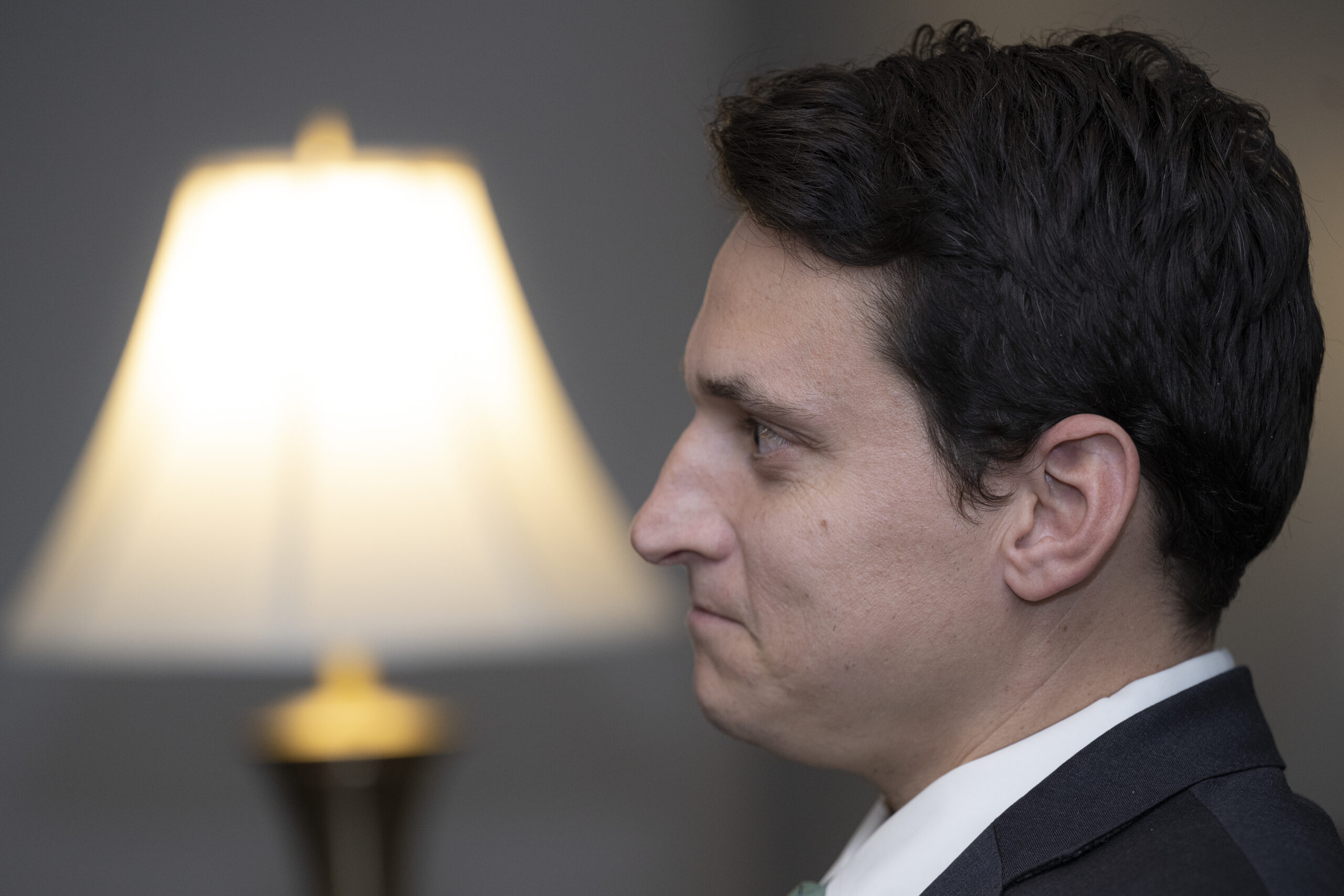
    U.S. Attorney David Metcalf in his Center City office.

    ‘An exhilarating vocation’

    Metcalf grew up in northern Virginia and graduated from The Wakefield School, a private prep school about an hour west of Washington, D.C. His father was once an Army colonel, he said, and his grandfather was Joseph Metcalf III, the Navy vice admiral who led the 1983 invasion of Grenada.

    Metcalf was a standout soccer player in high school, and was recruited to play by more than 80 college teams, the Washington Post reported in 2003. He used the situation to his advantage, the paper reported — making a deal with his mother that he could let his hair grow down past his shoulders once Division I colleges started sending him letters.

    He ended up attending Princeton — playing soccer all four years — and then went on to graduate from the University of Virginia’s law school.

    After clerking for U.S. Circuit Judge Albert Diaz, Metcalf spent a few years in private practice before becoming an assistant U.S. attorney in Maryland under Rosenstein.

    Metcalf said he didn’t have a single epiphany that made him realize he wanted to become a prosecutor. But he said he was quickly drawn to the work, which he found more interesting and important than other legal jobs.

    “I thought it was really just an exhilarating vocation in a profession that doesn’t always have the most glamorous applications,” he said.

    High-profile connections

    From 2015 through 2022, Metcalf worked as a line prosecutor in Baltimore and, later, in Philadelphia — the office he now leads. The two years he spent here were unusual, he said, because they unfolded during the peak of the pandemic, when many aspects of the court system were disrupted and most people were working from home.

    Metcalf also spent time during the first Trump administration in Washington, D.C. While there, he worked closely with prominent Justice Department officials including Rosenstein; Deputy Attorney General Jeffrey A. Rosen; Timothy Shea, the onetime U.S. Attorney for Washington, D.C.; and then-Attorney General William Barr.
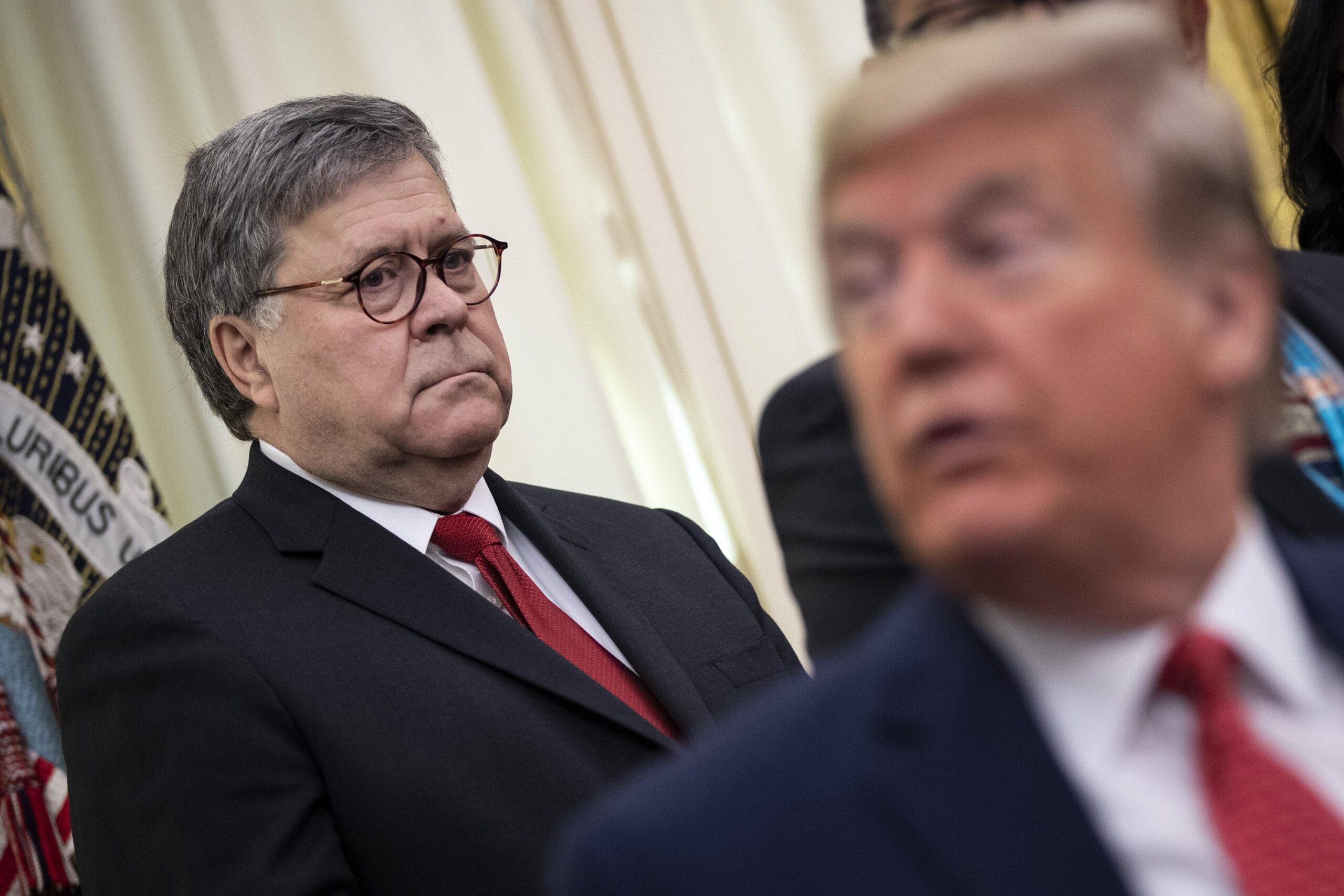
    Attorney General William Barr and President Donald Trump in the Oval Office of the White House on Nov. 26, 2019.

    Metcalf’s name was briefly in the news in 2020, when Barr and Shea, Metcalf’s then-boss, intervened in the prosecution of Stone, Trump’s longtime ally, who had been convicted of lying to Congress. After the trial prosecutors wrote in court documents that Stone should be sentenced to at least seven years in prison, Barr and Shea ordered them to walk that back and reduce their recommendation.

    Some assigned to the case viewed that as political interference and an attempt to placate Trump. A Justice Department investigation later faulted “ineffectual” leadership by Shea for how the episode unfolded, not politics.

    In 2022, Metcalf left the public sector and went to work as a corporate counsel for Amazon. But this March — after Trump was reelected for a second term — Metcalf was suddenly thrust back into the Justice Department, as the White House announced it was nominating him to be Philadelphia’s U.S. attorney.

    From nominee to confirmation

    The decision came as something of a surprise.

    McCormick, Pennsylvania’s newly elected GOP senator, had made a point of publicly announcing that he’d formed a committee to review and vet potential candidates for federal law enforcement positions across the state. And other GOP-connected lawyers in the region had been jockeying for months to try to figure out who might be able carve a path toward the coveted position.

    When the White House named Metcalf its permanent nominee, the process was effectively short-circuited.

    Metcalf said he couldn’t speak to how or why the process played out the way it did. He said he applied for the job, and “had relationships with folks in the Trump administration” due to his time in Washington during Trump’s first term.

    He didn’t specify who those people were. And some of his former bosses — particularly Barr — had fallen out of favor with Trump after his first term.

    But Rosenstein said “it’s a mistake to think that people are the people they work for. It’s a big government, and not everyone agrees all the time.”

    And in any case, Rosenstein said, he believed Metcalf was nominated “on merit, not on connections.”
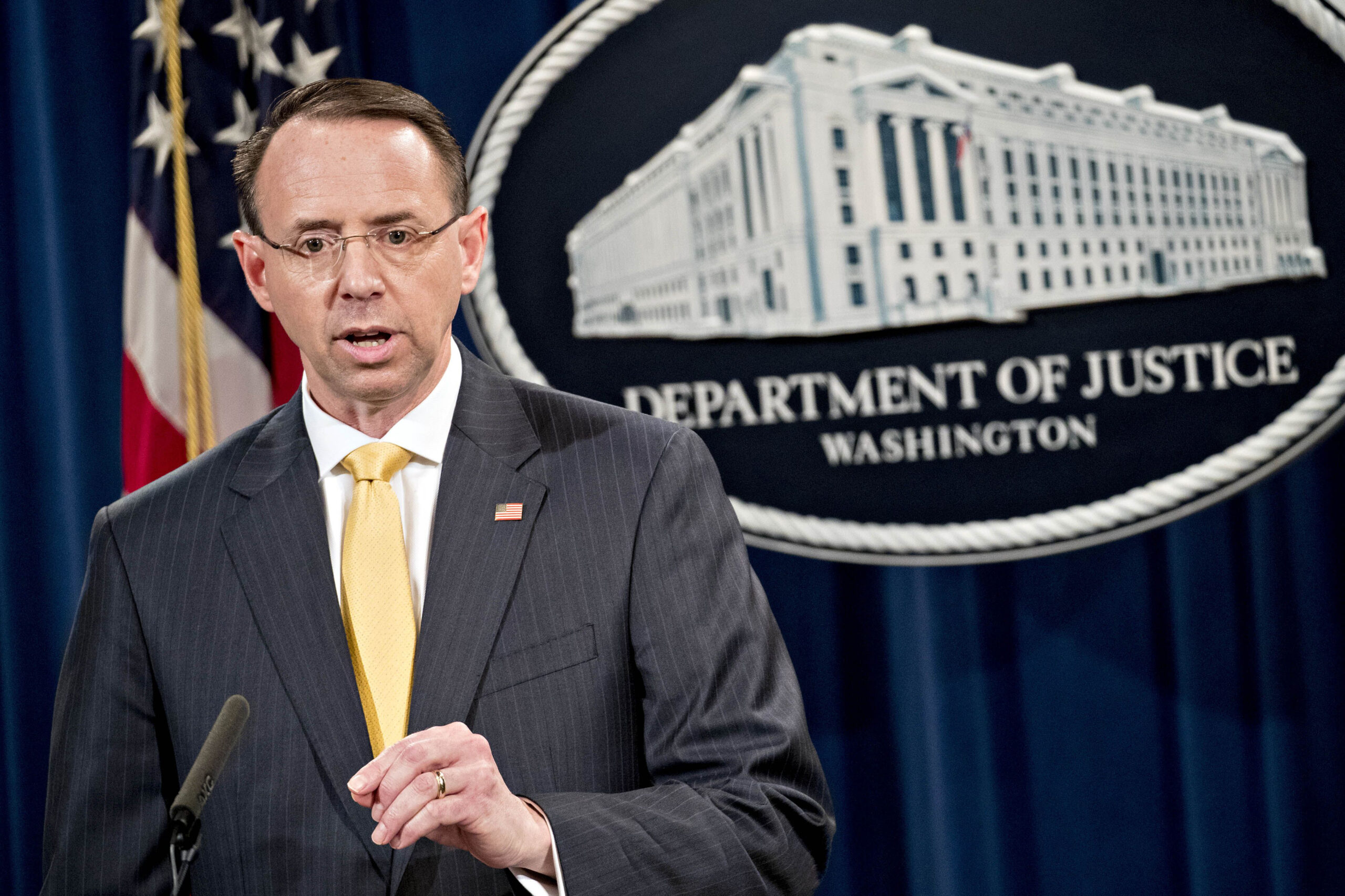
    Rod Rosenstein, deputy attorney general during President Donald Trump’s first term, says Metcalf has “superb legal skills” and “excellent judgment.”

    William McSwain, who served as U.S. attorney during Trump’s first term, said he believed Metcalf was “extremely well-qualified for the position.”

    It took the U.S. Senate six months to vote to confirm Metcalf along with a host of other Trump nominees, but by then, the Philadelphia region’s federal judges had already voted to extend Metcalf’s appointment indefinitely while the process played out.

    That move stood in contrast to several other jurisdictions, including New Jersey, where the judiciary declined to extend the tenure of Trump’s nominee, Alina Habba. For months afterward, that office was thrust into turmoil as questions swirled about who could legally serve as its leader.

    Pursuing notable cases

    During his tenure so far, Metcalf said, he’s been seeking to focus his prosecutors on finding what he called “nationally significant” cases, particularly those targeting violence, drugs, and healthcare fraud, which he views as priorities for the region.

    One of the first big indictments he announced was in October when FBI Director Kash Patel visited Philadelphia to help reveal that 33 people had been charged with being part of a Kensington-based drug gang. Metcalf said the case was the largest single prosecution in the region in at least two decades.
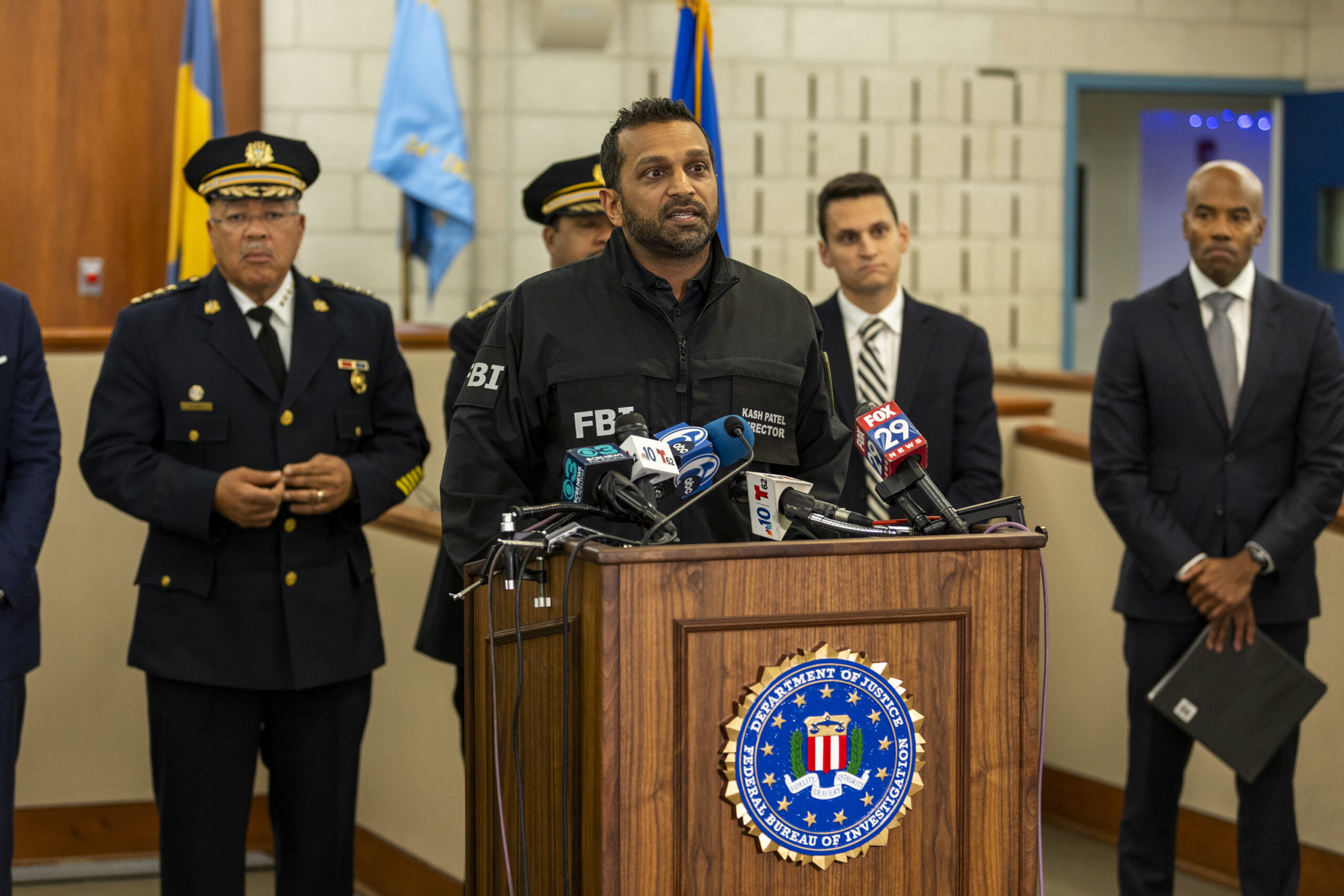
    FBI Director Kash Patel helping announce the arrest of dozens of suspects in a Kensington drug case.

    He also helped create a new program dubbed PSN Recon, an initiative designed to help Philadelphia Police more readily share intelligence with state and federal agencies about which groups or suspects should be investigated.

    Prosecutions overall have increased on his watch, according to the Transactional Records Access Clearinghouse (TRAC), a research organization that collects federal courts records.

    So far this fiscal year, prosecutions in the Eastern District of Pennsylvania were up 32% compared to last year, TRAC found, and were on their highest pace since 2019. The most common types of cases charged this year were immigration violations, drug offenses, and illegal firearm possession, according to TRAC.

    Earlier this year, Metcalf was reportedly involved in one particularly significant case: an investigation into former CIA Director John Brennan and his role in producing an intelligence assessment about Russian interference in the 2016 election. Brennan went on to become a prominent Trump critic.
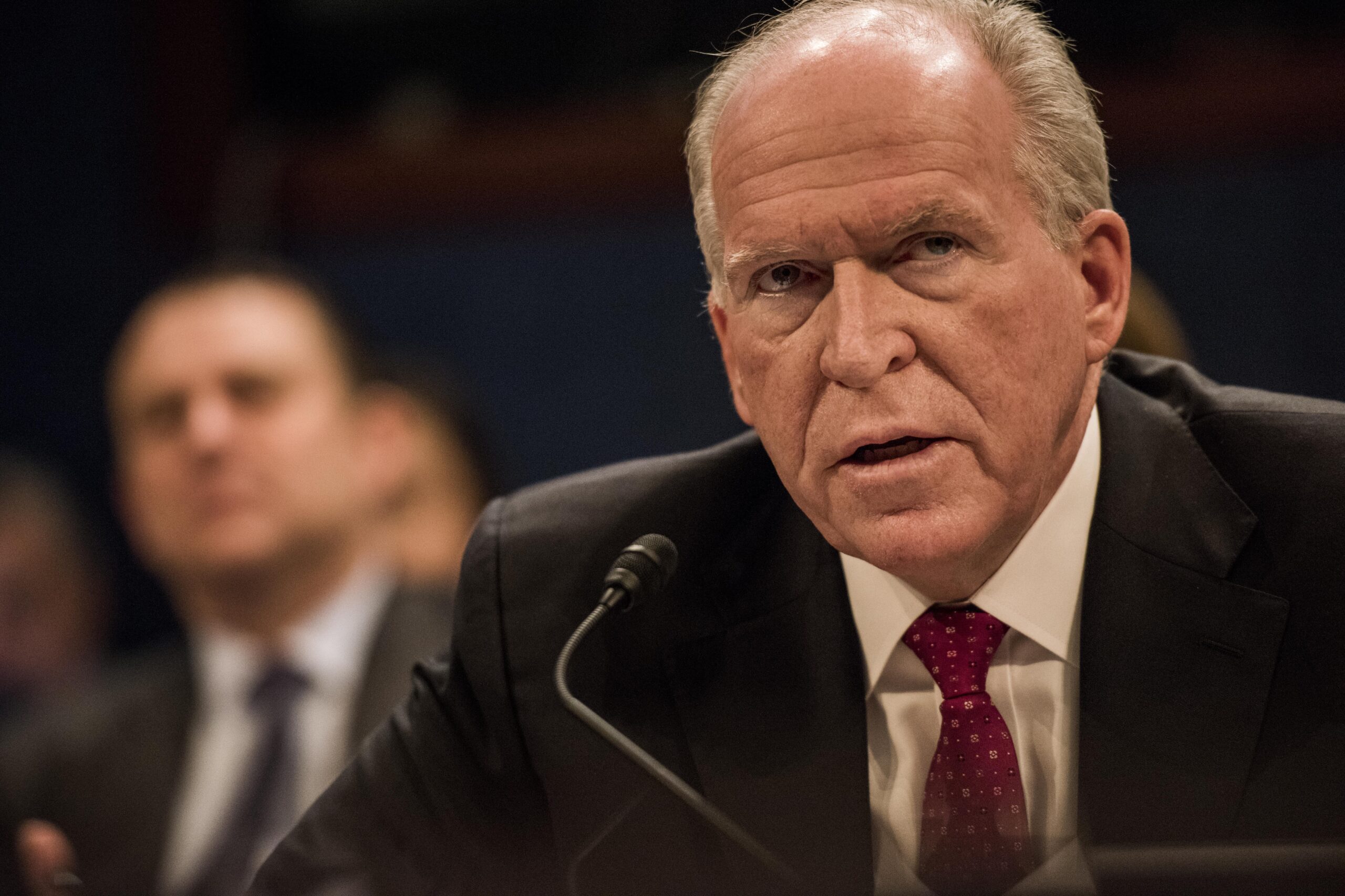
    Former CIA director John Brennan testifies before the House Intelligence Committee in 2017.

    National outlets including Axios and the New York Times reported that Metcalf had been leading the probe, and that he had concerns about its viability — a notable development given Trump’s public demands to prosecute other adversaries, including former FBI Director James Comey.

    Metcalf never commented publicly on his purported involvement in the Brennan case, and declined to do so again during his interview with The Inquirer. The investigation is now reportedly being handled by federal prosecutors in Florida.

    Metcalf did allow a short peek into his professional mindset when he was asked more broadly if he’d ever felt pressure from Washington to sign off on a decision he didn’t agree with.

    After declining to comment on any discussions he may or may not have had with Justice Department leaders, he paused for a moment and added one final point.

    “I will also say that I would be very surprised if that ever happened to me,” he said. “I don’t see it as a problem here.”
  • Top Pennsylvania Republicans are projecting relative calm amid 2026 national party panic

    Top Pennsylvania Republicans are projecting relative calm amid 2026 national party panic

    The same week Republican National Committee chair Joe Gruters said history predicted “almost certain defeat” for his party in the 2026 midterms, Pennsylvania Republicans partying in Midtown Manhattan projected relative calm about the election cycle.

    Gruters, President Donald Trump’s handpicked chair to run the party, said on a conservative radio station last week: “It’s not a secret. There’s no sugarcoating it. It’s a pending, looming disaster heading our way. We are facing almost certain defeat.”

    He added that the goal is to win and he “liked our chances in the midterms,” but noted “only three times in the last hundred years has the incumbent party been successful winning a midterm.”

    Pennsylvania could decide which party controls the U.S. House next year, as Democrats eye four congressional districts that Republicans recently flipped while the GOP fights to maintain its majority.

    But Pennsylvania Republicans in New York City for the annual Pennsylvania Society glitzy gathering of politicos last weekend had a less hair-on-fire view.

    “At this point when I was running [for Senate in 2024], the betting market said there was a 3% chance I was going to win,” Sen. Dave McCormick (R., Pa.) said after addressing a bipartisan audience at the Pennsylvania Manufacturer’s Association luncheon on Saturday.

    “We’re a million miles from Election Day, and we’ve got a great track record of things to talk about and a great vision for how the president’s policies are going to make life better for working families,” McCormick said. “We just got to go out and make that message happen, but also continue to make the policies that are going to make that a reality happen.”

    The political environment was, of course, far more favorable to Republicans in 2024, when Trump won Pennsylvania by a larger margin than he did in 2016. But with Republicans in power and popular Democratic Gov. Josh Shapiro on the ballot for reelection, the headwinds in 2026 in the Keystone State are different.

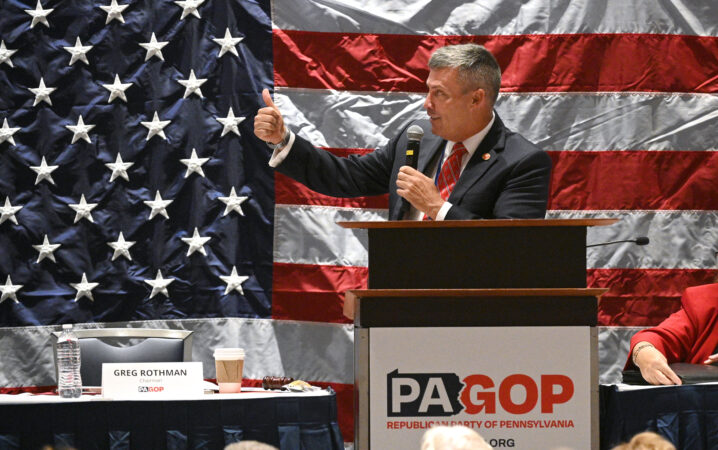
    Pennsylvania GOP chair Greg Rothman, in an interview outside the PMA event on Saturday, called Shapiro “one of the greatest politicians of my generation” but noted that upsets have happened across various political environments in state history.

    “Anything can happen and the voters are smart, and all I can do is prepare the party to ride the waves and ignore the crashes, but I’m optimistic,” he added.

    Shapiro will likely face a GOP challenge from State Treasurer Stacy Garrity, who is a popular politician in her own right and holds the record for receiving the most votes of any candidate for statewide office in Pennsylvania.

    Meanwhile, Rothman predicted that the four Pennsylvania congressional incumbents running for reelection in swing districts will sink or swim based on how Trump and his policies land with voters come November.

    “They will be judged by the national economy and by immigration,” he said, and by Trump’s ability to end some international conflicts.

    But U.S. Rep. Rob Bresnahan, a GOP incumbent running for reelection in Pennsylvania’s Eighth Congressional District, which includes Scranton, had a more local view of how to win in 2026.

    “Everything about our job as a member of Congress is about northeastern Pa.,” Bresnahan said.

    “Northeastern Pennsylvania has always been our North Star. We know our district. We are out in our district. We’ve done over 250 public events. Our constituency case work is, in my opinion, one of the best offices in the country.”

    Bresnahan appeared at a rally with Trump in Mount Pocono last week. He was also one of just 20 House Republicans to sign a successful discharge petition to force a vote for collective bargaining to be restored for federal workers.

    “At the end of the day that might have been going against party leadership, but it was what’s right for northeastern Pennsylvania,” he said.

    Democrats have begun a full court press. That was evident at the Pennsylvania Society, where attendees seen mingling with other politicians included: Janelle Stelson, who is running for a second time against U.S. Rep. Scott Perry in the 10th Congressional District, as well as firefighter Bob Brooks and former federal prosecutor Ryan Croswell, both of whom are running for the Democratic nomination to take on U.S. Rep. Ryan Mackenzie in the Seventh.

    Bresnahan’s challenger, Scranton Mayor Paige Cognetti, also attended the soiree and walked through the Rainbow Room atop Rockefeller Center with U.S. Sen. Chris Coons (D., Del.) on Friday night. Coons said the time is now for Democrats to get involved in these races.

    “Given the margin, if there were to be four new Democrats in the House this cycle, as there were in 2018, that’d be the difference maker for the country,” Coons added.

    Staff writer Gillian McGoldrick contributed to this article.

  • Josh Shapiro doesn’t need Pa. Society, the Parker-Johnson relationship, Kim Ward’s budget ballad, and more takeaways from Pa.’s weekend in NYC

    Josh Shapiro doesn’t need Pa. Society, the Parker-Johnson relationship, Kim Ward’s budget ballad, and more takeaways from Pa.’s weekend in NYC

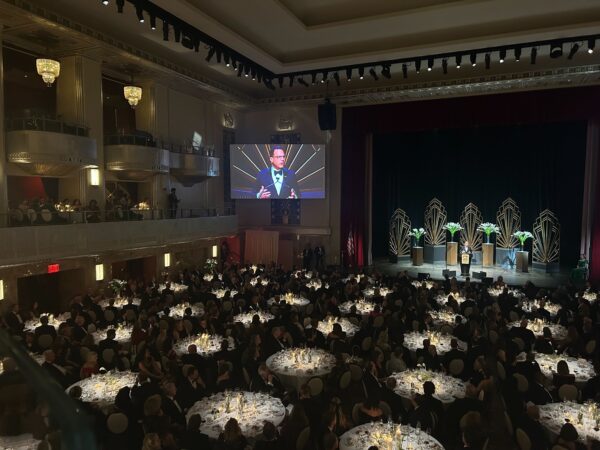
    NEW YORK — Pennsylvania’s political class schmoozed their way across Midtown Manhattan this past weekend, bouncing from cocktail parties to swanky receptions organized to woo the elite ahead of a big midterm election year.

    Hundreds of Pennsylvania politicos made their way for the state’s annual weekend of civility, bipartisanship, fundraising, and more than a few hangovers.

    Four Inquirer political writers were among those who traveled to the Pennsylvania Society gathering, chatting with lawmakers and interviewing candidates inside the moody bars and penthouse parties. Here are our takeaways.

    Maybe Shapiro doesn’t need Pa. Society anymore

    Gov. Josh Shapiro this year has hosted fundraisers in New Jersey and Massachusetts for his unannounced reelection campaign.

    But he didn’t need to make the rounds this weekend among Pennsylvania’s political elite as he emerges as a top contender for the 2028 Democratic nomination for president.

    Shapiro traveled to New York City only to deliver his annual speech to the Pennsylvania Society and honor former U.S. Ambassador to Canada, David L. Cohen, who received the society’s top award.

    Instead of handshaking and fundraising like most incumbent governors would, Shapiro has largely avoided Pennsylvania Society mingling during his time as governor. His reelection campaign did not appear to change that.

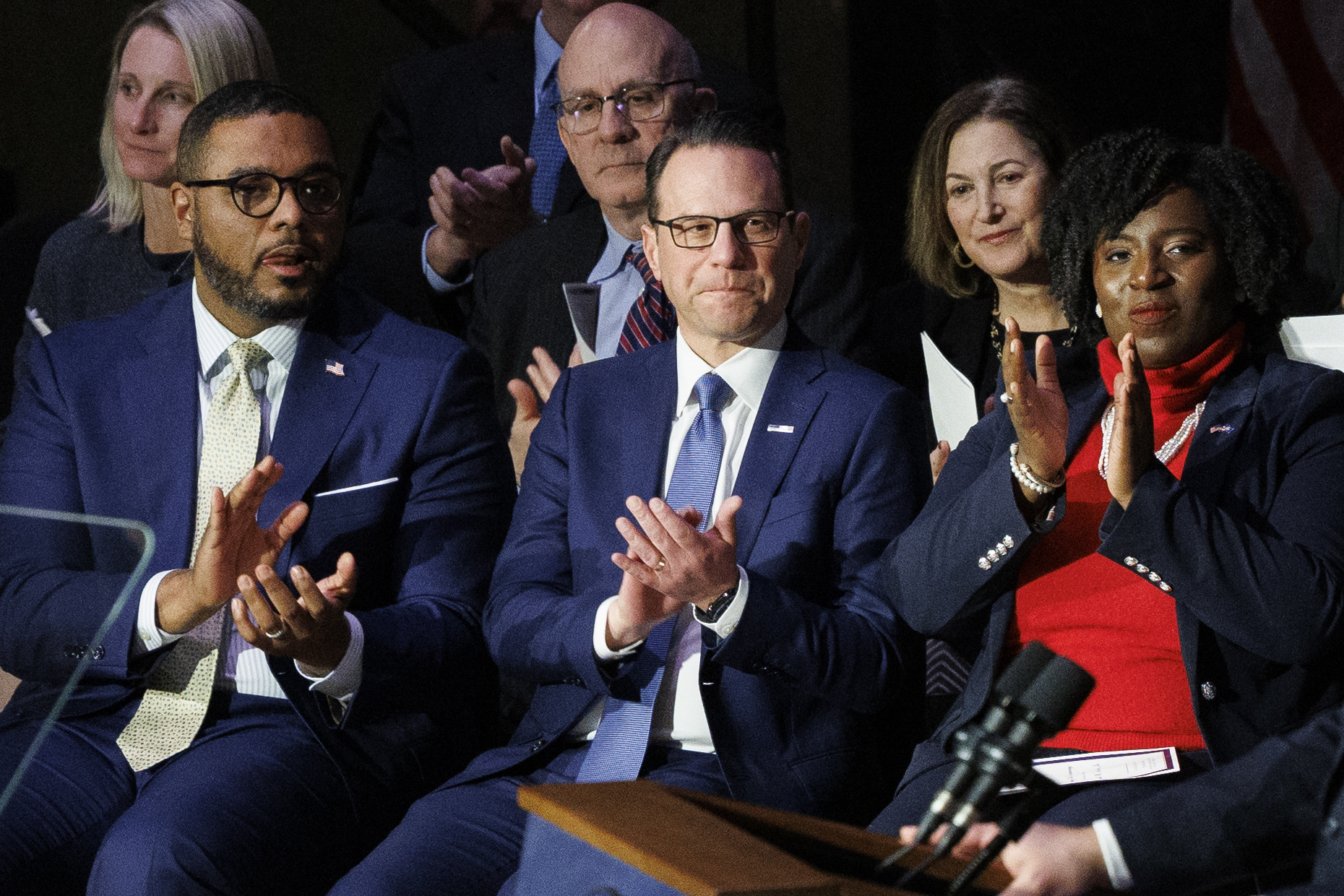
    Pennsylvania politicians (from left) Lt. Gov. Austin Davis, Gov. Josh Shapiro and State House of Representatives Speaker Joanna E. McClinton last January attending the swearing-in ceremony of Attorney General David W. Sunday, Jr. in Harrisburg.

    Instead, Lt. Gov. Austin Davis hosted a solo fundraiser for their joint reelection ticket.

    “There’s a lot of demands on the governor’s time,” Davis said following a speech at the annual luncheon hosted by the Pennsylvania Manufacturers’ Association.

    The Third Congressional District race was the talk of the town

    Three of the candidates vying to replace retiring U.S. Rep. Dwight Evans in the Third Congressional District had a busy weekend in New York. State Sen. Sharif Street, pediatric surgeon Ala Stanford, and State Rep. Morgan Cephas made the rounds.

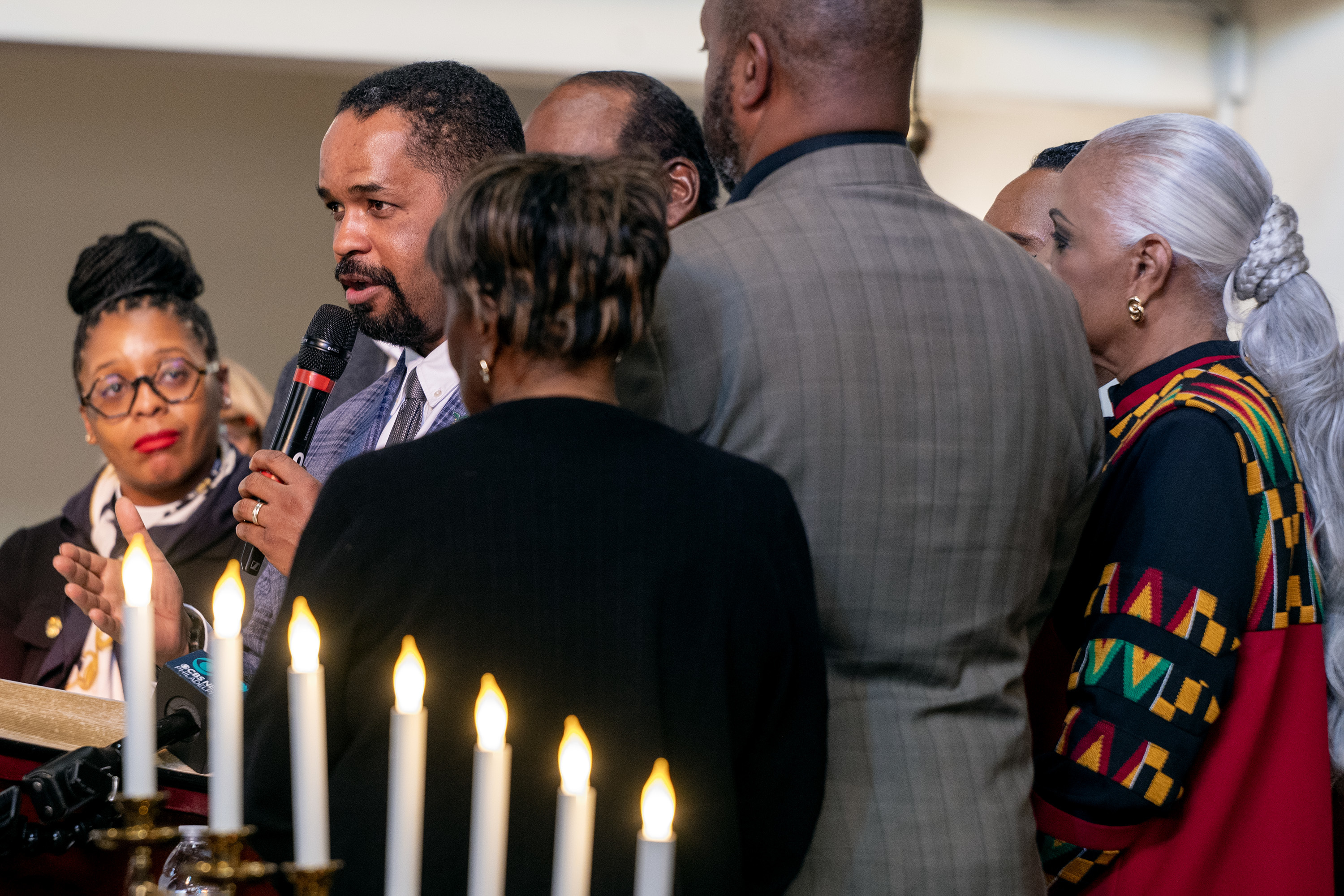
    Sharif Street speaks from the pulpit of Mother Bethel A.M.E. church Sunday, Nov. 2, 2025 as the Black Clergy of Philadelphia and Vicinity holds a press conference with other community and political leaders to discuss the negative impacts of the ongoing government shutdown. Mother Bethel Pastor Rev. Carolyn Cavaness is at left.

    Stanford held a somewhat star-studded fundraiser Thursday evening, hosted, according to a posted listing for the private event, by Hamilton actor Leslie Odom Jr. (who did not attend but lent his name).

    Street, the former state party chair and a longtime attendee at Pennsylvania Society, held two fundraisers in Manhattan, fresh off his endorsement last week by former Gov. Ed Rendell.

    Not spotted: State Rep. Chris Rabb, who is running as an anti-establishment progressive.

    “That’s not really my thing,” he said in a text message.

    The Parker-Johnson relationship was a hot topic

    Philadelphia City Council wrapped up its final meeting of the year the day before the Pennsylvania Society began, and the lawmakers gave the chatterati plenty to talk about in Manhattan, with a dramatic close to the session.

    One major topic of conversation in New York: What did Council’s recent conflict with Mayor Cherelle L. Parker over her housing plan mean for the unusually tight relationship between Council President Kenyatta Johnson and the mayor?

    The consensus: Mom and Dad were fighting, but they’ll probably patch things up.

    “Disagreements between Council and mayor — it happens,” said Larry Ceisler, a Philadelphia-based public affairs executive whose firm hosted a packed party in Midtown on Saturday. “It’s the way the system is set up.”

    But Ceisler said he’s not worried that Parker and Johnson will abandon their goal of emulating then-Mayor Rendell’s close working relationship with Council President John F. Street in the 1990s.

    “The fact is they’re certainly in sync more than they’re not,” Ceisler said.

    City Council president Kenyatta Johnson speaking with Philadelphia Mayor Cherelle Parker in June 2024.

    Johnson, he said, likely improved his standing with members by holding firm against a last-minute amendment Parker proposed to alter Council’s version of the housing plan’s budget.

    Parker and Johnson both made the trek to Manhattan, along with Councilmembers Rue Landau, Nina Ahmad, Jamie Gauthier, Jeffery “Jay” Young Jr., Kendra Brooks, Katherine Gilmore Richardson, Jim Harrity, Cindy Bass, and Quetcy Lozada.

    The mayor also took the opportunity to engage in a bit of bipartisanship. She has often touted her ability to build relationships across the aisle, despite Philadelphia politics being dominated by Democrats.

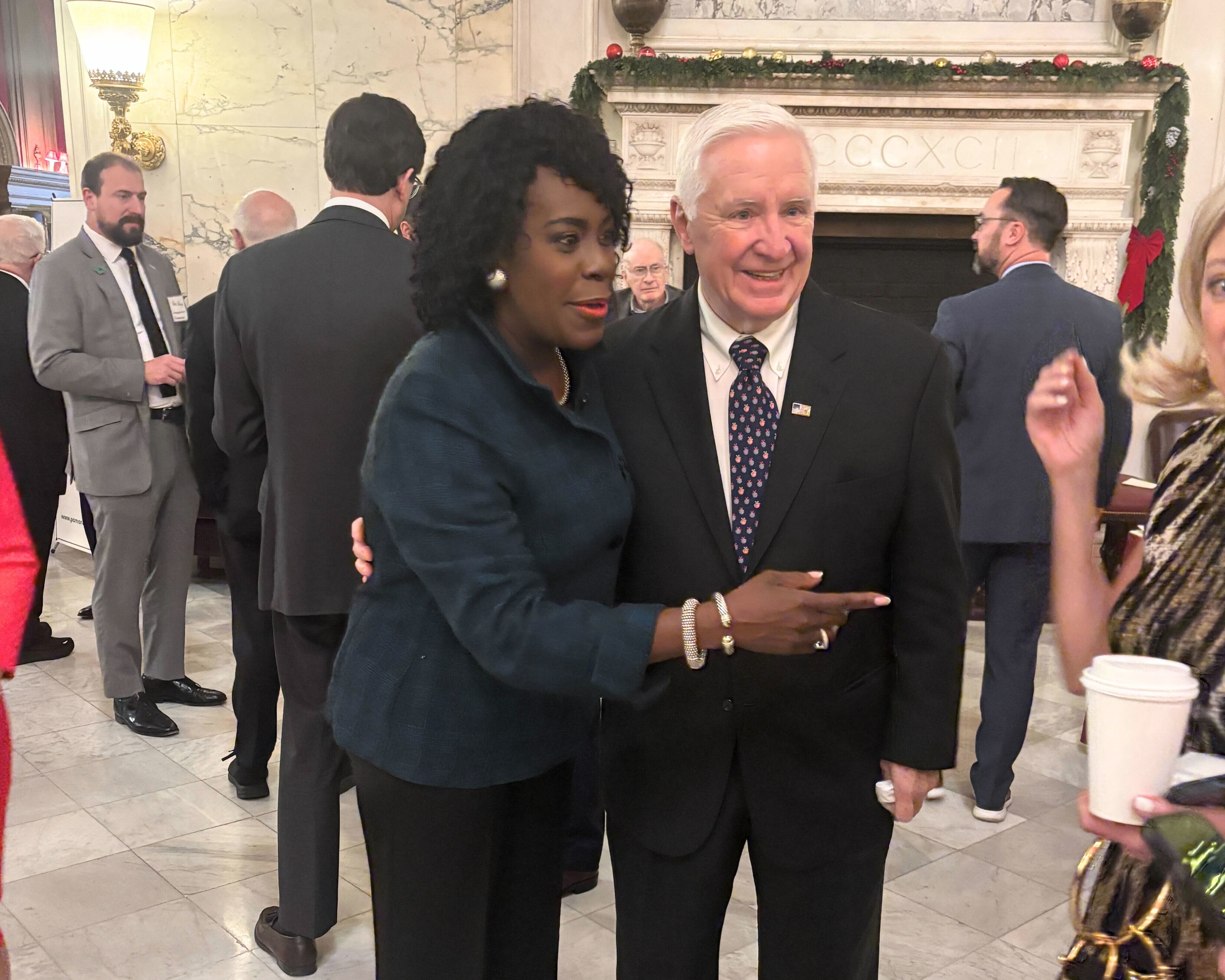
    At the PMA luncheon, Parker embraced former Gov. Tom Corbett and gave a warm greeting to Auditor General Tim DeFoor, both Republicans.

    Mayor Cherelle L. Parker (left) and former Gov. Tom Corbett at the luncheon hosted by the Pennsylvania Manufacturers’ Association on Saturday in New York.

    At the same event, Republican U.S. Sen Dave McCormick shouted out Parker multiple times during his prepared remarks. The pair have forged a working relationship despite their partisan differences.

    “We talk about challenges in the city that we’re facing right now, and the hope is that we can count on some folks as allies,” Parker said of meeting with members of the GOP.

    She added: “It’s great to try to maintain those lines of communication.”

    Special interests woo political elite

    Many of the events were hosted by special-interest groups and corporations that have business with the government and are looking to win influence over glasses of Champagne.

    There were the usual suspects and big law firms: Duane Morris always hosts a marquee late-night event on Friday in the sprawling Rainbow Room atop Rockefeller Center. Other firms including Cozen O’Connor, Ballard Spahr, and Saul Ewing also hosted cocktail parties.

    One notable newcomer to the party scene was Pace-O-Matic, the Georgia-based operator of “skill games” at the center of negotiations over regulation and taxing of the machines.

    The company, which has spent millions on political contributions and lobbying, threw a cocktail reception Thursday night at an Italian restaurant attended by a sizable contingent of state lawmakers.

    Legislators have yet to agree on how to regulate and tax skill games, which remain entirely unregulated and untaxed.

    But solutions seemed possible at the Pace-O-Matic party, as Central Pennsylvania Republicans and Philadelphia Democrats milled about the bar in an unlikely alliance.

    Another bipartisan event — this one in a sunny room atop the vintage Kimberly Hotel — was hosted by Independence Blue Cross and AmeriHealth Caritas, insurance companies that have Medicaid contracts with the state.

    Lawmakers often credit the weekend of partying in New York as a time for civil conversations in a neutral territory that ultimately benefit a philanthropic cause at the Pennsylvania Society’s annual dinner.

    But Rabbi Michael Pollack, who leads the government accountability group March on Harrisburg, said the civility seems to come only when special interests are footing the bill.

    “It’s absolutely embarrassing that our legislators can only interact with each other when a lobbyist sets up a playdate for them,” he said.

    A Christmas budget ballad by DJ Ward

    Senate President Pro Tempore Kim Ward debuted a hidden musical talent on stage at the annual bipartisan Pennsylvania Chamber of Business and Industry breakfast: She can write a Harrisburg holiday hit.

    “I did live in Nashville for six years and no one discovered me,” she joked, before launching into a three-minute budget balladto the tune of “Deck the Halls.”

    Ward (R., Westmoreland) debuted her song after an ugly budget battle that lasted 135 days and ended just last month. Punctuated by fa-la-las, she called out each of the top leaders who were in the closed-door budget talks.

    Senate President Pro Tempore Kim Ward (R., Westmoreland) speaking in February 2024 at the Capitol in Harrisburg.

    Ward is among Shapiro’s top critics. The two had hardly spoken since 2023 until Ward joined in-person budget negotiations at the end of October.

    During those negotiations, Ward has said Shapiro gave her a special heart-shaped cookie to break the ice. And it appears that she’s not yet letting that go, dedicating a moment in her song to the encounter:

    Mr. Shapiro give me a break

    You know you gave me that heart cookie cake

    Why are you saying that you didn’t do it?

    Ward’s jingle wasn’t the first time a Pennsylvania Republican leader leaned on the power of song during the bitter budget battle.

    At the peak of the clash over transit funding in August, Senate Majority Leader Joe Pittman quoted heavily from the lyrics of John Mellencamp’s “Small Town” in recalling his upbringing in rural Western Pennsylvania.

    Shapiro will propose a new budget in February, restarting the budget negotiation process. Ward urged the group of leaders to take a break from fighting during the holiday season.

    It’s Christmas and we’re all here together

    Republicans and Democrats, and all who matter

    Let’s celebrate the birth of Jesus

    For the next three weeks, let’s not be egregious

    Perhaps next budget season will inspire a mixtape.

  • Trump strays from script at Poconos rally, calling affordability a ‘hoax’ and Pa. a ‘dumping ground’ for immigrants

    Trump strays from script at Poconos rally, calling affordability a ‘hoax’ and Pa. a ‘dumping ground’ for immigrants

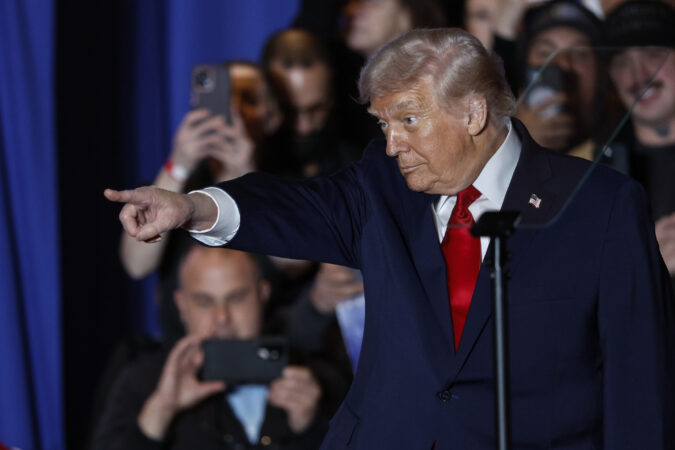
    President Donald Trump’s raucous rally Tuesday night in Pennsylvania was billed as the launch of a national tour focused on easing voters’ economic anxieties that threaten Republicans’ hold in Washington with the 2026 midterms looming.

    But the economy couldn’t maintain the president’s interest for the duration of the speech.

    Instead, he rallied the crowd at the Mount Airy Casino Resort in Mount Pocono by fomenting anger at Democratic U.S. Rep. Ilhan Omar and other Somali immigrants who live in Minnesota and teasing a 2028 run, despite constitutional limits on a third term.

    Employing a method he calls “the weave,” Trump darted back and forth between cost-of-living issues and entirely unrelated material, such as claiming credit for the use of the phrase “Merry Christmas” during the holiday season.

    “If I read what’s on the teleprompter, you’d all be falling asleep right now,” Trump said.

    It was Trump’s third trip to Pennsylvania since he began his second term, following a campaign in which he spent a considerable amount of time in the Keystone State, winning it back in part by promising to cure a beleaguered economy. It’s the president’s first return to Northeast Pennsylvania, where he saw his biggest gains in the region during the last election, and which will be a crucial battleground in next year’s election, when the GOP’s razor-thin House majority is on the line.

    “America is winning again. Pennsylvania is prospering again. And I will not rest until this commonwealth is wealthier and stronger than ever before,” Trump proclaimed at the large casino and hotel complex tucked in between ski resorts in the Pocono Mountains.

    The speech comes as many Americans lament the cost of living, workers have lost power in the job market and with their employers, and people are bracing for Affordable Care Act tax credits to expire at the end of the year.

    The casino stayed open Tuesday and gamblers played slots and card games on the floor upstairs as Trump spoke in the ballroom below.

    Trump, in a speech that stretched over an hour, blamed high prices on his Democratic predecessor, former President Joe Biden. He argued gas prices are down and car prices are dropping thanks to relaxed fuel-efficiency standards. The stock market is up this year and overall growth for the third quarter is strong. Trump also has signed agreements to reduce list prices on prescription drugs.

    While Trump again called concerns about affordability a “hoax,” the event itself was at least an acknowledgment that frustrations with the economy are damaging the Republican brand ahead of the midterms. He spoke in front of a large “lower prices, bigger paychecks,” banner.

    “Democrats talking about affordability is like Bonnie and Clyde preaching about public safety,” he said.

    The most compelling part of the evening came more than an hour in, when the president called up members of the local community, including a waiter and an EMT to share personal stories about how no taxes on tips or overtime would benefit their families when tax returns are filed next year.

    Trump played to the Pennsylvania crowd, noting his connections to the state as a graduate of the University of Pennsylvania’s Wharton School. “I love Philadelphia. It’s gotten a little rougher, but we will take it,” he quipped.

    He then reminisced about hosting the Philadelphia Eagles at the White House earlier this year following their Super Bowl win. He hailed coach Nick Sirianni as a “real leader” and marveled at running back Saquon Barkley’s muscles.

    “It’s like I hit a piece of steel. … He’s so strong,” Trump said about patting the Eagles player on the back.

    But despite these light-hearted moments, Trump repeatedly went after Omar and the Somali immigrant community.

    Trump asked if anyone from the crowd was from Somalia and asked them to raise their hands before tearing into Omar, the progressive Minnesota Democrat who left the African country as a refugee.

    “She comes from a country where, I mean, it’s considered about the worst country in the world, right?”

    Later in the speech, Trump complained about immigration from Somalia, Afghanistan and Haiti — instead of countries like Norway and Denmark — as he recounted and affirmed his use of the phrase “shithole countries” during his first term, something he denied at the time.

    He also accused Democrats of making Pennsylvania a “dumping ground” for immigrants.

    Despite this incendiary rhetoric, Trump also celebrated his performance with Black and Latino voters in the last election. He put up the strongest Republican performance with these demographic groups in decades, though a majority both went for Vice President Kamala Harris.

    “Black people love Trump,” Trump said. “I got the biggest vote with Black people. They know a scam better than anybody. They know what it is to be scammed.”

    ‘Everyone’s paying a lot more’

    Nationwide, prices and inflation have increased this year — with many experts saying that the president’s tariff policies have contributed.

    In his speech, Trump touted his tariffs as bringing in “hundreds of billions of dollars,” and noted his administration would be steering $12 billion to farmers through that revenue. The money is meant to help agriculture producers cope with retaliatory measures taken by China and other trading partners in response to Trump’s tariffs, which Trump did not mention in his remarks.

    “We gave the farmers a little help … and they are so happy.” Trump said.

    Poll after poll shows Americans see rising home prices, groceries, education, and electricity costing more. Gallup’s Economic Confidence Index found a 17-month low in terms of trust in the economy, and the survey found Americans’ views of the job market are at their most negative since the end of Trump’s first term during the height of the pandemic.

    For the average Pennsylvanian, there is a “financial struggle” with higher prices on food, childcare, healthcare, and electricity, among other expenses, said Mark Zandi, chief economist at Moody’s Analytics.

    He attributes it to Trump’s tariffs and immigration policies, including deportation, which he said limits the number of people working and has “hurt growth and raised inflation.”

    “Everyone’s paying a lot more for basic necessities, most everything,” Zandi said.

    Zandi noted Trump’s economic policies include a few positives for workers and employers, including tax breaks for businesses from Trump’s Big Beautiful Bill Act, as well as the tax cuts on tips and overtime.

    “But net, I think the policies have contributed to the financial hardship of the typical Pennsylvanian,” Zandi said.

    Pennsylvania, however, is the only growing economy in the Northeast, according to Moody’s Analytics. The state has secured $31.6 billion in private-sector investments since Democratic Gov. Josh Shapiro took office in 2023, according to his administration.

    Shapiro has been quick to argue the state’s relative fiscal health has come in spite of federal policies he argued are hurting Pennsylvanians. He called Trump “a president who seems to want to blame everybody else, whose economic policies are failing,” in an interview Monday night on MS NOW.

    “I mean, if he comes to Pennsylvania and spews more B.S. … I think what you’re ultimately going to find are people tuning him out,” Shapiro, a potential contender for the presidency in 2028, said ahead of Trump’s visit.

    Sen. John Fetterman (D., Pa.) told MS NOW in a separate interview on Tuesday that polling shows the president, “he’s really kind of losing the plot with a part of his own voters now front and center.”

    A key battleground

    The setting for Trump’s speech is also one of the most closely watched battlegrounds in the state, home to freshman Republican U.S. Rep. Rob Bresnahan’s district, which Democrats are targeting to flip. Bresnahan won by 1.5 percentage points last year.

    Bresnahan was more on message in brief remarks. He said he and Trump have heard the call for relief.

    “The message is the same everywhere we go: Lower the cost, higher-paying jobs, keep our community safe, and listen to the people during the work,” he told the crowd in Mount Pocono.

    He argued policies authored by Trump and passed by the Republican-led Congress, like tax credits for working families and seniors, are already helping people.

    The Democratic Congressional Campaign Committee seized on the visit to blast Bresnahan in ads on the Wilkes-Barre Times Leader website, highlighting his penchant for stock trading. And Scranton Mayor Paige Cognetti, a Democrat running to unseat Bresnahan, took the moment to call him “the exact kind of self-serving politician that Northeastern Pennsylvanians … all agree we need to get rid of.”

    Whether Trump’s message resonates in this part of the country will be telling. Monroe County, home to Mount Pocono, flipped to Trump in the 2024 election after backing Biden in 2020.

    The region is home to a large number of New York City transplants who have moved here seeking more-affordable housing in a region that largely relies on Pocono Mountains tourism as the main source of jobs.

    While views on the economy were mixed on the casino floor, attendees in the ballroom gave the president a warm welcome back to the state. The Secret Service had to turn people away, and many who got in had waited more than four hours outside on an 18-degree day.

    Trump’s ongoing response to affordability woes could have major implications for other vulnerable Republicans hoping to be reelected in the state. In last month’s election, Democrats successfully ran on affordability in the New Jersey and Virginia gubernatorial races — and picked up a slew of local seats in Pennsylvania.

    The DCCC has its sights on the seats of three other Pennsylvania Republicans, along with Bresnahan: U.S. Rep. Brian Fitzpatrick of Bucks County; U.S. Rep. Ryan Mackenzie of Lehigh County; and U.S. Rep. Scott Perry of York County.

    Attendees in the crowd Tuesday night held “Keep the House, Keep the Country,” posters.

    Trump told the crowd he’d be back on the trail for Republicans in the midterms, and reflected, that like his off-the-cuff speech, he enjoys stumping.

    Whether the current state of the economy affects Republicans’ chances in 2026 could depend on how those future appearances go and how willing the party will be to keep acknowledging that many Americans are struggling.

    Marc Stier, executive director of the Pennsylvania Policy Center, who was a leading advocate for the establishment of the ACA, argued that “voters are not fools, particularly when it comes to their pocketbook.”

    “How they talk about it will determine in some ways how badly they get hurt,” Stier said. “If they acknowledge a problem and, say, come up with ideas to deal with it, they will probably be hurt less. If they followed Trump’s line … I think they’re gonna get clobbered.”

  • Chrissy Houlahan says she is ‘profoundly disappointed’ in lack of support from GOP colleagues after Trump’s sedition accusation

    Chrissy Houlahan says she is ‘profoundly disappointed’ in lack of support from GOP colleagues after Trump’s sedition accusation

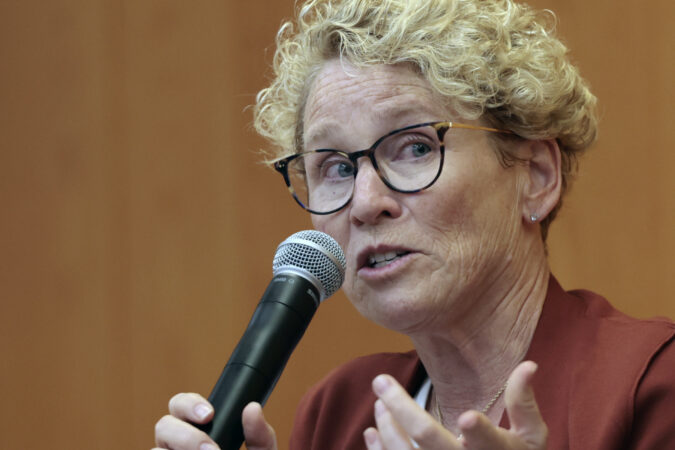
    U.S. Rep. Chrissy Houlahan, a Chester County Democrat, said Friday she is “profoundly disappointed” in her Republican colleagues for not speaking up after President Donald Trump accused her and five other Democratic lawmakers of sedition.

    Houlahan was one of six Democrats in Congress — all military veterans or members of the intelligence community — featured in a video urging members of the military and intelligence community to “refuse illegal orders.”

    In response, Trump went after the Democrats in a string of posts on Truth Social Thursday, accusing them of sedition that he said is “punishable by DEATH.”

    Early Friday evening, a spokesperson for Houlahan posted on the representative’s X account that her district office in West Chester was the target of a bomb threat.

    “Thankfully, the staff there, as well as the office in Washington, D.C., are safe. We are grateful for our local law enforcement agencies who reacted quickly and are investigating,” the post said.

    A spokesperson for Rep. Chris Deluzio, a western Pennsylvania Democrat also on the video, posted on X late Friday afternoon that the representative’s district offices were targeted with bomb threats as well.

    Houlahan lamented at a Friday news conference in Washington that “not a single” Republican in Congress “has reached out to me, either publicly or privately” since Trump’s post.

    “And with this, I am profoundly disappointed in my colleagues,” she added.

    In addition to calling for the lawmakers to be arrested and tried for sedition, Trump shared posts from supporters calling for retribution against the Democrats, including one that said “HANG THEM GEORGE WASHINGTON WOULD !!” and another calling them domestic terrorists.

    “This is not normal political discourse,” Houlahan said Friday alongside other veteran members of Congress. “Indeed, it is, in fact, a explicit embrace of political violence against the opposition.”

    “As a member who has spent my entire career calling for civility and decency and building relationships with the other side of the aisle, I’m dumbfounded by the silence,” added the Air Force veteran.

    Beyond not reaching out to her specifically, Houlahan broadly said that “not a single Republican member has condemned this call for violence, not publicly, not privately.”

    When reached by The Inquirer on Thursday, U.S. Rep. Brian Fitzpatrick (R., Bucks), a former FBI agent, condemned Trump’s rhetoric, but he did so without naming the president

    “This exchange is part of a deeper issue of corrosive divisiveness that helps no one and puts our entire nation at risk,” he said. “Such unnecessary incidents and incendiary rhetoric heighten volatility, erode public trust, and have no place in a constitutional republic, least of all in our great nation.”

    When asked for clarification, his spokesperson added that “He is 100% opposed to the president’s comments and 100% stands with all men and women who wear the uniform.”

    Sen. Dave McCormick (R., Pa.) said, “There is no place in either party for violent rhetoric and everyone needs to dial it down a notch,” in a follow-up statement to The Inquirer after initially placing blame solely on the Democrats.

    Some Republicans justified Trump’s response by saying the Democrats who made the video were in the wrong — even if the president’s rhetoric was over the top.

    House Speaker Mike Johnson (R., La.) said that he did not think the six Democrats committed “crimes punishable by death or any of that,” but criticized the Democrats’ video as irresponsible, Politico reported.

    “The point we need to emphasize here is that members of Congress in the Senate [and] House should not be telling troops to disobey orders,” Johnson said. “It is dangerous.”

    Karoline Leavitt, the White House press secretary, responded to a reporter asking if Trump wanted to “execute” members of Congress by saying “no,” and criticized the video put out by the veterans.

    The video that inspired Trump’s ire did not point to any specific order from Trump as illegal, despite urging troops to resist such an order.

    However, the video follows high-profile debates about the legality of Trump’s deployment of National Guard troops in U.S. cities and his ordering of strikes on boats in the Caribbean. Trump alleges that the boats are carrying drugs from Venezuela, but experts have said his claims about them are misleading.

    “He has shown time and time again that when he threatens to abuse his power, he acts on it,” Houlahan said Friday at the news conference announcing a bill that would prohibit funds for military force in or against Venezuela without congressional approval.

    Houlahan said Congress has not received intelligence on the strikes. She said that Trump’s administration has “repeatedly shown disregard for the military process.”

    U.S. Rep. Seth Moulton (D., Mass.), one of the bill’s sponsors, said military leaders who have expressed concern about the legality of the strikes have been “sidelined.” He also pointed out that threatening a member of Congress is against the law.

    “So put yourselves in the shoes of a young lieutenant or sergeant who’s in uniform right now watching the commander-in-chief threaten members of Congress to death for telling you to follow the law,” he said. “You’re watching him orchestrate legally dubious military strikes while sidelining military lawyers and commanders who say that those actions may be illegal and could therefore get you prosecuted for following those orders.”

    Moulton was not one of the six lawmakers featured in the video, but he shares a similar background, having served four tours in Iraq as a Marine.

    He said Congress should learn from its failure to question that war as it confronts the legality of Trump’s strikes in the Caribbean.

    “I’ve seen what being in a moral and legal gray area means in war,” he said.

    Staff writers Julia Terruso and Robert Moran contributed to this article.

  • Pennsylvania’s Working Families Party pledges to support a primary challenger against Sen. John Fetterman

    Pennsylvania’s Working Families Party pledges to support a primary challenger against Sen. John Fetterman

    Pennsylvania’s Working Families Party is recruiting candidates to run against Pennsylvania’s Democratic senator, John Fetterman.

    Fetterman has not announced whether he will run for reelection in 2028, but the progressive party put out a public declaration Tuesday pledging to endorse — and, if necessary, recruit and train — a challenger.

    The announcement, first reported by The Inquirer, is a remarkable step for the left-leaning organization to take more than two years before an election and speaks to the degree of frustration with Fetterman among progressives.

    “At a time when Donald Trump and Republicans in Congress are doing everything they can to make life harder for working people, we need real leaders in the Senate who are willing to fight for the working class,” Shoshanna Israel, Mid-Atlantic political director for the Working Families Party, said in a statement.

    “Senator Fetterman has sold us out, and that’s why the Pennsylvania Working Families Party is committed to recruiting and supporting a primary challenge to him in 2028.”

    Fetterman did not immediately return a request for comment about the Working Families Party’s announcement.

    The Working Families Party is a progressive, grassroots political party that is independent from the Democratic Party, but it often endorses and supports Democratic candidates.

    Israel noted in her statement that Fetterman voted last week in support of the Republican plan to end the government shutdown — along with seven other Senate Democratic caucus members who crossed the aisle.

    Democratic lawmakers in the House, including several from Pennsylvania’s delegation, railed against the decision as caving to the GOP and President Donald Trump without any substantive wins on healthcare, rendering a 35-day shutdown pointless.

    Though he supports extending federal healthcare subsidies, Fetterman has long said he is against government shutdowns as a negotiating tactic and will always vote to get federal coffers flowing and federal employees paid.

    “I’m sorry to our military, SNAP recipients, gov workers, and Capitol Police who haven’t been paid in weeks,” Fetterman said in a post on X after the vote. “It should’ve never come to this. This was a failure.”

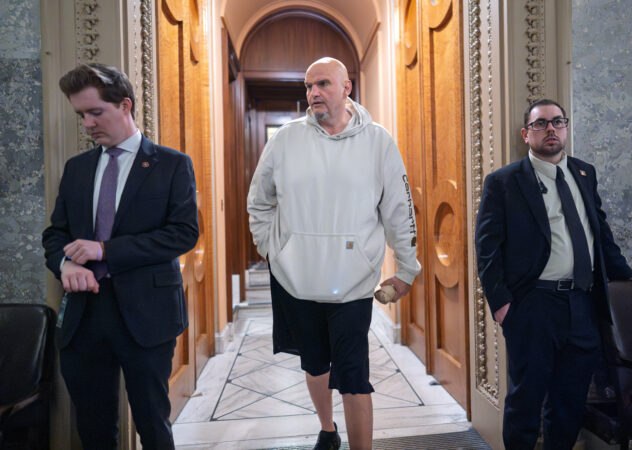
    Already one of the most well-known and scrutinized senators in Washington, Fetterman was back in the spotlight this week as he returns to work following a hospitalization after a fall near his home in Braddock. His staff said he suffered a “ventricular fibrillation flare-up” and hit his face, sustaining “minor injuries.”

    Ventricular fibrillation is the most severe form of arrhythmia — an abnormal heart rhythm — and the most common cause of sudden cardiac death.

    It’s the latest in a string of serious health incidents that have marked the Democratic senator’s time in the public eye. The fall comes three years after he recovered from a near-fatal stroke just days before he won the 2022 Senate primary, which was caused by a blood clot that had blocked a major artery in his brain.

    He spent Thursday and Friday in the hospital and was released Saturday, saying he was feeling good and grateful for his care with plans to be back in the Senate this week.

    Working Families on the offensive

    Israel said in addition to the online portal, the party will hold a number of recruitment events across Pennsylvania in the coming months to train candidates and campaign staff on the basics of running for office and managing a campaign with hopes of finding quality candidates for a variety of races ahead of 2028.

    The party is also pledging a robust ground game and fundraising for a potential challenger it supports.

    It wouldn’t be the first time the Working Families Party has opposed Fetterman. In the 2022 Democratic Senate primary, WFP endorsed State Rep. Malcolm Kenyatta (D., Philadelphia) over Fetterman, who was lieutenant governor at the time.

    The Working Families Party has grown its influence in the region since then. In 2023, WFP became the minority party on Philadelphia’s City Council, defeating Republicans in seats the party had held for over 70 years by electing Councilmembers Kendra Brooks and Nicolas O’Rourke.

    Fetterman has been promoting his book, Unfettered, recounting his stroke during the 2022 Senate run, subsequent struggles with depression, and adjustment to life in the U.S. Senate.

    The book makes no mention of a reelection bid but laments the ugly politics he experienced in both the Democratic primary and his general election race against Mehmet Oz.

    Fetterman said in the book that Oz’s attacks during his rehabilitation from his stroke became so mentally crushing he felt he should have quit the race.

    And he grapples with criticism he faced during the primary surrounding a 2013 incident in which he wielded a shotgun and apprehended a Black jogger he suspected of a shooting. Fetterman calls the backlash an early trigger of his depression.

    Fetterman has said he will remain a Democrat even as Republicans have lauded his independent streak and willingness to work with the GOP.

    Earlier this year, Fetterman was the first Senate Democrat to support the Laken Riley Act, a Republican immigration bill that requires U.S. Immigration and Customs Enforcement to detain and take into custody individuals who have been charged with theft-related offenses, even without a conviction. Critics of the law say it severely cracks down on due process for immigrants.

    Fetterman was the sole Senate Democrat to vote to confirm Attorney General Pam Bondi, who was one of Trump’s attorneys when he tried to overturn the results of the 2020 election.

    And he has been the Senate’s most outspoken defender of Israel during its war in Gaza, sponsoring a resolution with Sen. Dave McCormick (R., Pa.) against antisemitism and appearing for the first time since his fall at an event hosted by the Jewish Federations of North America in Washington on Monday.

    He also received recognition from Israeli Prime Minister Benjamin Netanyahu, who called him the country’s “best friend” and gifted him a silver pager inspired by Israel’s attack on Hezbollah in Lebanon that exploded pagers.

    “He has repeatedly shown disregard for the rights of Palestinians,” the Working Families Party release said. “Refusing to support a two-state solution and breaking with the rest of the Democratic caucus on Israel’s illegal annexation of the West Bank.”

    Staff writer Aliya Schneider contributed to this article.