Tag: Devon

  • Roadside bakeries are growing in Chester County: ‘It’s that home-sweet-home comfort food’

    Roadside bakeries are growing in Chester County: ‘It’s that home-sweet-home comfort food’

    When Jacqueline Spain’s now-grown kids were having a bad day, she would sit them down at the kitchen island and bake them something. Now, she has opened up that kitchen island to her community with her roadside home bakery, Devon Road Made.

    “Food is love, love is food,” Spain said, standing in her kitchen recently, bread in the oven and cookies on the counter. “I like to put a lot of heart and soul into it. I feel if you’re going to put good energy into that, people are going to feel that. They’re going to taste it; they’re going to like it.”

    Devon Road Made is one of the newer additions to a trend of microbakeries that are cropping up in Chester County, some with roadside carts and stands dotting residential roads in Paoli, Downingtown, West Chester, and elsewhere.
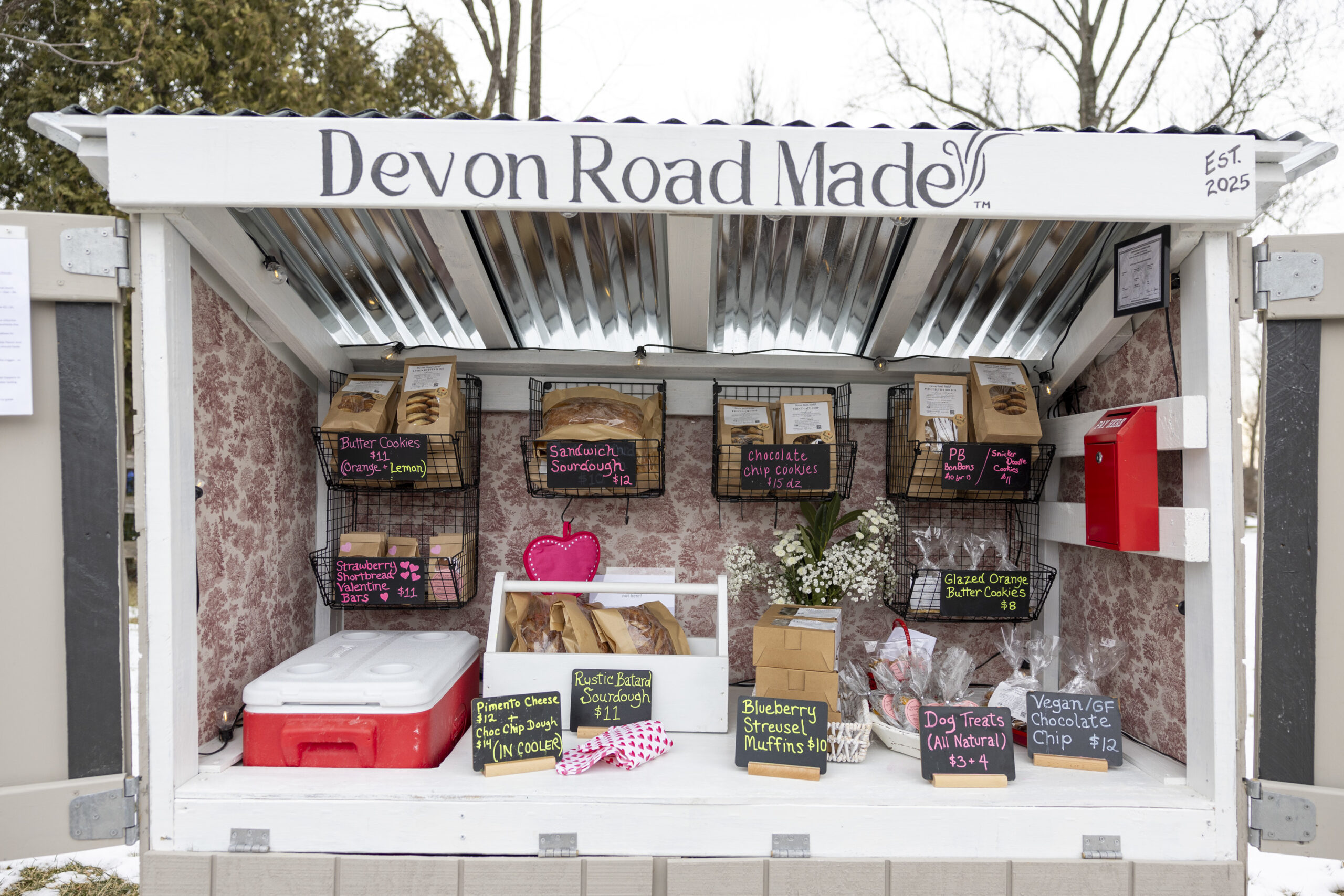
    The Devon Road Made bakery cart outside the home of David and Jacqueline Spain for folks passing by to buy some home baked goods in Willistown, Pa., on Friday, Jan. 23, 2026.

    Statewide, interest in selling home-baked goods has been growing. Pennsylvania had 361 licensed home bakeries in 2023. That nearly doubled, to 663, in 2025, according to the state agriculture department, which oversees the inspections and licensing of food businesses that operate out of home, rather than commercial, kitchens. There has been a general bakery boom, too, in Philly.

    Chester County appears to be a growing incubator of such little bakeries: It had 28 licensed home bakeries in 2025, compared with 16 in 2023, the department said.

    Before issuing a license, the department inspects the baker’s food production site. Bakers must verify they have zoning approval to have a business on their property, submit ingredient labels, restrict pets or not have them, and have an approved water supply. It costs $35 to register.

    In the few weeks since, Spain, 59, and her husband, David, 60, rolled their bakery cart to the foot of their yard at 60 Devon Rd. in Willistown, the community has indeed seemed to like it. Jacqueline Spain’s cookies and David Spain’s sourdough loaves continually sell out. People knock on their door to ask if things will be restocked. One woman sat at the Spains’ kitchen island, sampling freshly baked cookies, while awaiting her pickup order.

    “Everything we make, she has been making for years,” David Spain said. “That’s kind of part of our DNA. It’s got to taste really good — something that we would only serve our friends and family.”

    David Spain, of Willistown, Pa., and his wife Jacqueline Spain, chat with Inquirer Reporter Brooke Schultz about their Devon Road Made bakery cart at their home on Friday, Jan. 23, 2026.

    And Chester County seems like a place perfectly ripe for these little bakeries to thrive, several home bakers said: It’s not a wholly rural community, nor is it totally Main Line. There is an affluent clientele (Chester is the wealthiest county by median income in the state) with an interest in homemade, quality ingredients.

    But they do face some headwinds: A number of municipalities restrict such carts through zoning codes, even if the bakers are licensed to sell.

    Alexa Geiser, 28, of Lulu’s Bread & Bakery in West Chester, opened her home bakery in October, originally selling her sourdough first come, first served from her porch. But then the borough told her she was not permitted to sell from her residential porch, and she moved entirely online to sell her bread and the occasional chocolate chip cookie batch.

    Though it’s a bummer — she said it was nice to talk with people stopping by for a peaceful hour on Fridays — she felt supported by the community, who offered their businesses for her to host her pickups.

    “I think people really value homemade goods that people put a lot of effort into, and good quality ingredients,” she said. “I use all organic flours and filtered water and good salt in my bread, which is something I personally value. It’s what I want to give to my customers as well.”

    The Devon Road Made bakery cart outside the home of David and Jacqueline Spain for folks passing by to buy some home baked goods in Willistown, Pa., on Friday, Jan. 23, 2026.

    But the stands are a niche the bakers feel they are filling.

    “I noticed around here, at least where I live specifically, there aren’t really that many,” said Maddy Dutko, of Maddy Makes. “I’ve seen a couple that sell honey or some that sell flowers, but I haven’t really seen any that sell baked goods. I was like, why not? It’s a way for me to connect with people around here. Maybe bring them something that they didn’t know was necessarily in their community.”

    Dutko’s stand, at 623 Sanatoga Rd. in East Coventry Township, is open on the weekends from spring to fall. Dutko sells bread loaves, coffee cakes, cinnamon buns, cookies, and dry mixes for pancakes or cornbread. She tries to keep things fresh and interesting, but also consistent for loyal customers. Dutko, 29, also sells orders online and at markets.

    The physical presence has led to customers hiring her to bake for kids’ birthdays, or people approaching her at markets to tell her they always stop by for a treat when they end their walk on a nearby trail.
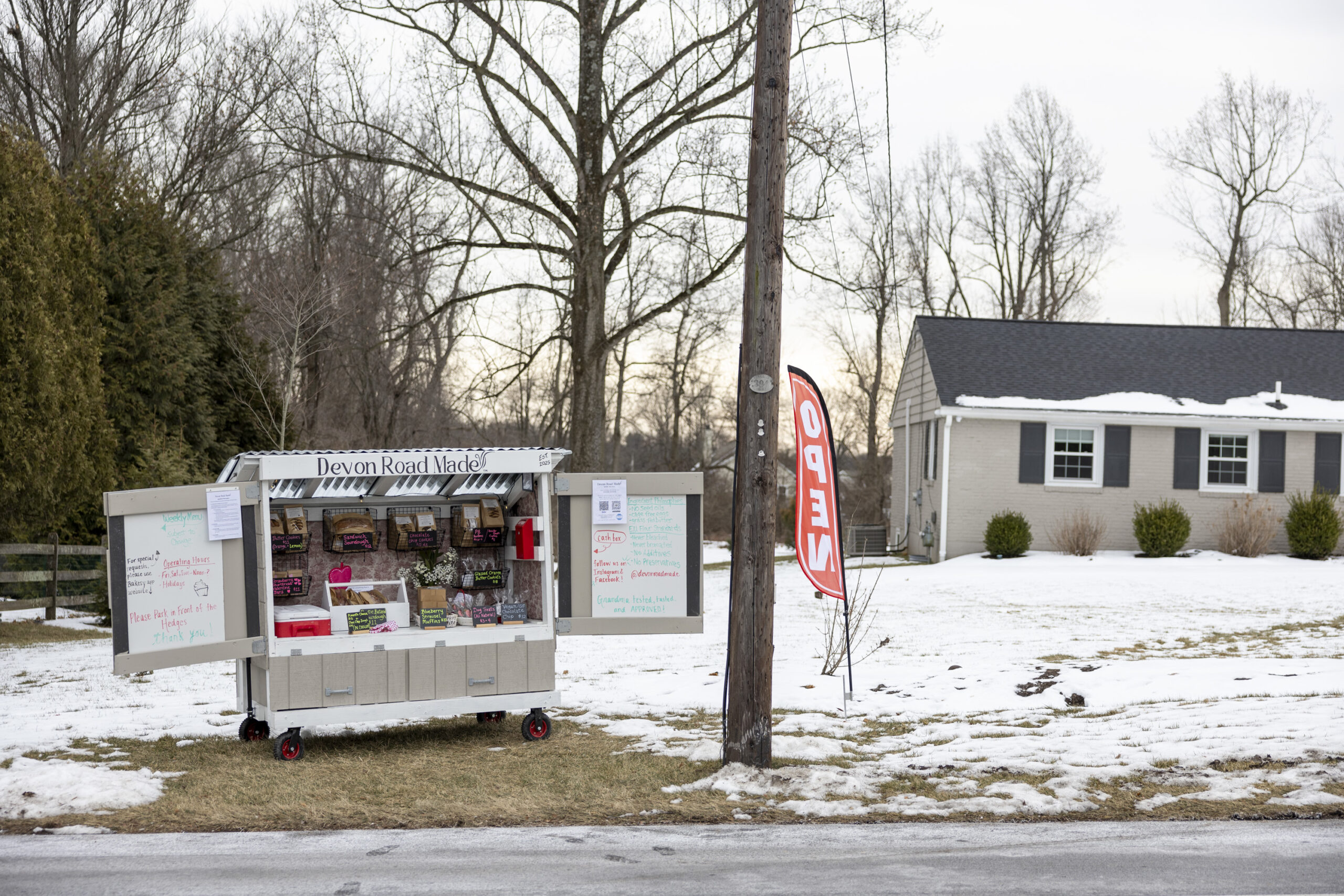
    The Devon Road Made bakery cart outside the home of David and Jacqueline Spain for folks passing by to buy some home baked goods in Willistown, Pa., on Friday, Jan. 23, 2026.

    There’s something to be said for products baked with love in someone’s home, Jacqueline Spain said.

    On a recent Friday afternoon in Willistown, the Spains stocked the baskets of their cart with baggies of cookies, breads, and dog treats — a customer request that their daughter, a veterinary nurse, fulfilled. A red open flag commenced their weekend hours of “noon-?” People pulled up onto the lawn to shop.

    “It’s feel-good, it’s warm, it’s friendly, it’s inviting,” Jacqueline Spain said. “It’s that home-sweet-home comfort food.”
  • 70,000 Pennie customers have dropped their plans as price hikes loom for health insurance

    70,000 Pennie customers have dropped their plans as price hikes loom for health insurance

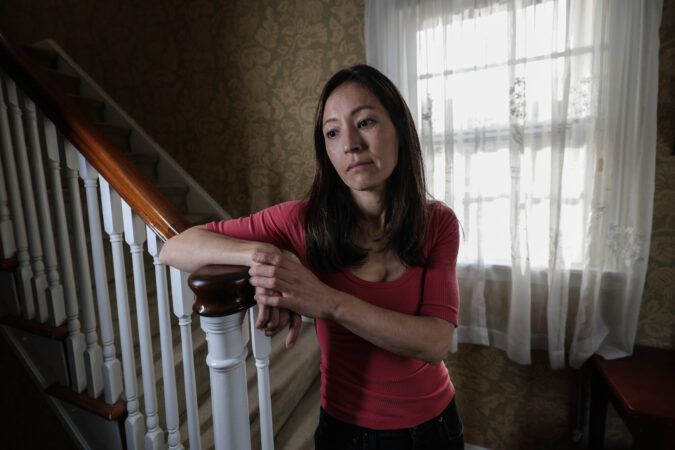
    Sasha Kinney fears she cannot afford the $750 a month it will cost to keep her Affordable Care Act health plan in 2026. But she will put the insurance bill on a credit card before risking a medical emergency without access to the doctors she sees regularly.

    The 42-year-old Drexel Hill resident’s insurance costs soared this year, after Congress did not extend a federal incentive program that ensured that no one paid more than 8.5% of income on health coverage.

    She earns enough doing freelance work for nonprofits, while serving as her mother’s primary caregiver, that she is not eligible for Medicaid, the publicly funded health program for low-income people.

    A private health plan through Pennsylvania’s Obamacare marketplace, Pennie, was a major expense, but one she prioritized to help manage her chronic headaches and stress-related pain. But the incentive program expired at the end of last year, leading to skyrocketing ACA insurance costs in Pennsylvania and across the country. Kinney will now pay an extra $250 without the added tax credit.

    “I will go into debt because of these increasing costs,” she said. “But it still seems better than not having coverage.”

    Congress has failed so far to strike a deal to bring back tax credits that have helped record numbers of Americans get health insurance. The U.S. House of Representatives approved legislation last week that would renew the program for three years, but it is unclear if the Senate will act.

    President Donald Trump on Thursday announced a healthcare plan that White House officials said would help address rising healthcare costs by creating new drug price controls and sending health subsidies directly to consumers. The sparsely detailed plan is intended to serve as a framework for Congress, though officials did not say which lawmakers are actively working on new healthcare legislation, the Associated Press reported.

    Meanwhile, people who are covered by Obamacare plans are running out of time to decide how to handle massive price hikes that doubled the average cost of the health plans in Pennsylvania.

    The deadline to enroll in a plan for 2026 in Pennsylvania and other states is Jan. 31. After that date, people can drop their coverage if they find it is too expensive, but they will not be able to select a new plan until the fall enrollment period.

    In Pennsylvania, about 70,000 people who bought Pennie plans in 2025 have decided they cannot afford the price increase and dropped their coverage. The dropout rate is unprecedented — about 1,000 people a day, said Devon Trolley, Pennie’s executive director.

    Nationally, about 800,000 fewer people have selected Obamacare plans compared with this time last year, a 3.5% drop in total enrollment so far, according to the AP.

    With just weeks to go in the enrollment period, marketplace leaders are urging people to think carefully about whether they can afford their plan for the full year and to look at other Pennie plan options. If Congress ultimately renews the enhanced tax credits, they have said, they would work quickly to adjust prices.

    “At this point, we are telling people they should make the best decision for their family based on the current cost,” Trolley said. “We want to make sure people who currently have coverage aren’t staying with a plan they can’t afford.”

    Trolley worries that people will stick with a plan they like, not realizing they can no longer afford it, only to be forced to drop the coverage and become uninsured partway through the year.

    window.addEventListener(“message”,function(a){if(void 0!==a.data[“datawrapper-height”]){var e=document.querySelectorAll(“iframe”);for(var t in a.data[“datawrapper-height”])for(var r,i=0;r=e[i];i++)if(r.contentWindow===a.source){var d=a.data[“datawrapper-height”][t]+”px”;r.style.height=d}}});

    Congress considering tax credit extension

    The add-on tax credits that expired at the end of 2025 were introduced in 2021 and have been renewed by Congress annually since then.

    In Pennsylvania, the federal incentive program ensured the vast majority of enrollees qualified for at least some amount of financial help, driving peak marketplace enrollment of 497,000 in 2025.

    The program became a major sticking point in federal budget discussions last fall, with Democrats forcing a government shutdown after Republicans refused to include the tax credits without significant restrictions.

    The budget ultimately passed without the tax credits after key Senate Democrats, including Pennsylvania’s John Fetterman, voted with Republicans to end the shutdown.

    Last week, 17 House Republicans — including Pennsylvania Reps. Brian Fitzpatrick, Robert Bresnahan, and Ryan MacKenzie — sided with Democrats to approve legislation that would reinstate the tax credits for three years. The measure must be approved by the Senate, and would need to return to the House to consider any changes.

    While the incentive program’s expiration is a major blow to the Obamacare marketplaces, Trolley, Pennie’s executive director, urged people not to rule out finding affordable coverage.

    President Barack Obama’s landmark health law also included income-based tax credits for people who earn less than 400% of the federal poverty level — about $60,000. These tax credits cannot expire because they are part of the law.

    “We have been encouraging people to not assume it’s too expensive,” Trolley said.

    Devon Trolley, executive director of Pennie, has been outspoken about how cuts to ACA tax credits are affecting people who buy Pennie health plans. Pictured during a 2025 roundtable with Pennsylvania lawmakers, stakeholders, health systems at the University City Science Center in Philadelphia.

    Health insurance decisions

    While some parts of Pennsylvania are seeing prices three to four times higher than in 2025, Philadelphia’s collar counties are seeing more moderate cost increases, ranging from an average 46% price hike in Chester County to a 70% average increase in Delaware County.

    Other factors that affect cost include household size, age, and income. People who are generally healthy and use insurance sparingly may be able to save money by opting for a plan that has a low monthly cost and a higher deductible (the amount of money spent out-of-pocket before the plan begins covering a greater share of costs).

    Sasha Kinney, 42, of Drexel Hill, considered switching to a high-deductible health plan to lower her monthly premium, but ultimately stuck with her old Pennie plan because it offered better coverage.

    In Drexel Hill, Kinney considered switching to a cheaper plan when she saw how much it would cost to keep her current coverage.

    Her current plan has a low deductible, and even so, Kinney said, she still spends hundreds on co-pays and other costs not covered.

    She worried that if she switched to a plan with even higher out-of-pocket costs, she would end up skipping appointments and avoiding needed care.

    She routinely sees doctors and physical therapists, and didn’t want to risk having to find new providers.

    “In the end I think it washes out — you can lower your monthly cost, but if the deductible and co-pays are higher, you’re paying the same,” she said. “There’s basically no way to save money.”

  • For every person who enrolls in ACA coverage through Pennie, two drop their plans

    For every person who enrolls in ACA coverage through Pennie, two drop their plans

    For every person who signed up for Obamacare health insurance in Pennsylvania last month, two others dropped their plans in anticipation of skyrocketing costs.

    The average cost of a health plan through Pennsylvania’s Affordable Care Act marketplace, Pennie, is expected to double, on average, with some people paying several times more in 2026, if Congress allows a key financial incentive program to expire at the end of this year.

    Pennie leaders say sticker shock for 2026 is undermining a program they credit for driving historically low uninsured rates.

    Nearly 31,000 people canceled their Pennie health plan in November, the first month of open enrollment, which runs through the end of January. About 16,000 people signed up.

    Pennie administrators previously estimated that roughly 150,000 of the nearly 500,000 people who bought plans in 2025 will drop out because they find their options for 2026 unaffordable.

    Some level of turnover is normal, as people move out of state, find new jobs, or become eligible for other government programs, such as Medicare or Medicaid. But the sharp rise in plan cancellations — more than the marketplace saw in all of 2025 — shows that cost remains a driving factor in health decisions.

    “People want health coverage, and when it can fit in their budget, they buy it,” said Devon Trolley, Pennie’s executive director.

    A partisan divide over the so-called enhanced premium tax credits was at the center of this fall’s longest-ever federal government shutdown. The subsidies have helped offset the cost of Obamacare premiums, ensuring no one spends more than 8.5% of income on health insurance through Democrats’ signature health coverage reforms implemented under President Barack Obama.

    The federal budget ultimately approved by the current Republican-controlled Congress did not include an extension of the tax credits, and it is unclear whether Democrats or Republicans will be able to secure enough votes for the fixes they have proposed.

    U.S. Rep. Brian Fitzpatrick, a Bucks County Republican, is proposing legislation that would extend the tax credits for two years, with some restrictions.

    The subsidies have been particularly beneficial to working individuals and families who earn too much to qualify for other, income-based Obamacare tax credits, but who cannot afford to pay full price and do not have access to insurance through an employer. Income-based tax credits for people who earn below 400% of the federal poverty rate are part of the original ACA law and will not expire.

    The add-on tax credits have been approved annually by Congress since 2021, and the vast majority of people who buy coverage through Pennie qualify for at least some amount of financial assistance.

    Pennie will work to update rates as quickly as possible if Congress renews the tax credits before the end of the year.

    In the meantime, marketplace leaders are urging people to consider all the plan options — which range from high-deductible plans with low premiums to plans with steep monthly costs but fewer out-of-pocket expenses — before canceling their coverage entirely.

    Plan costs and expected increases vary, depending on age, income, and geography, which is why it is important for people to review their options, Trolley said.

    Philadelphia’s Pennsylvania suburbs are expected to see costs increase an average of 40% to 70%, while costs are rising an average of 400% or more in rural communities in the middle of the state.

    Increased outreach amid tax credit confusion

    State-based marketplaces and their partners have ramped up marketing and outreach in an effort to make sure people are aware of the cost increases.

    Pennsylvania Health Access Network has doubled the amount of text messages, phone calls, and emails it is sending past clients. Messages remind people of the deadline to enroll and urge them to review their plan online — even if they intend to keep it.

    The nonprofit has seen an increase in people reaching out early for information, compared with past enrollment seasons, as well as more people waiting to make a final decision about coverage, said Antoinette Kraus, the organization’s executive director.

    “We’re seeing fewer people say, ‘All right, sign me up today,’” Kraus said. “They’re taking time to figure out how this fits in the budget.”

    New Jersey announced it was expanding outreach efforts for its marketplace, Get Covered New Jersey, with more than three dozen enrollment events at shopping malls and grocery stores across the state.

    New Jersey has not released enrollment data for 2026.

    Justin Zimmerman, commissioner of New Jersey’s Department of Banking and Insurance, urged people not to put off buying a plan, despite uncertainty about tax credits. In New Jersey, people must sign up by Dec. 31 for coverage to take effect Jan. 1.

    “It is especially important for consumers to shop and compare plans to find the best options for them,” Zimmerman said in a statement announcing outreach plans.

    Fitting health insurance into the budget

    People who are used to their plan automatically renewing at the end of the year may be particularly surprised by the new prices when insurers begin sending January premium bills by mid-December.

    Pennsylvania’s deadline for insurance that begins in January is Dec. 15, but people have until the end of January to make any changes to their coverage.

    That means people who are automatically reenrolled in their existing plan still have time to change it, if they realize after getting their first bill that they cannot afford it and want to look for a less expensive option.

    And people who canceled their coverage earlier in the enrollment period can still sign up if they change their mind.

    As of Feb. 1, when the enrollment period ends, people can still cancel their plan, but they will not be able to pick a new one until the coming fall.

    The marketplace’s enrollment specialists work with people to price out all their options. But Pennie’s executive director fears that without an extension of the add-on tax credits, many will not find an option they can afford.

    “We are doing the best we can to provide people with the best information,” Trolley said. “But ultimately, we cannot fill the hole of federal funding.”

  • Chesco residents may dodge a tax hike in 2026 | Inquirer Chester County

    Chesco residents may dodge a tax hike in 2026 | Inquirer Chester County

    Hi, Chester County! 👋

    Welcome to the first edition of The Inquirer’s new weekly newsletter, bringing you community news, important school district and municipal updates, restaurant openings, as well as events throughout the county.

    Chester County residents may avoid a property tax hike despite increased spending in next year’s proposed budget. Also this week, Chester County is home to the region’s most flood-prone waterway, a new Chester County Prison program is helping inmates find second chances, plus, a mixed-use development is being planned on former farmland in Kennett Square.

    As we start this journey together, we’ll want your feedback. Tell us what you think of the newsletter by taking our survey or emailing us at chestercounty@inquirer.com. Thanks for joining us!

    If someone forwarded you this email, sign up for free here.

    Chester County is poised to avoid property tax hikes in 2026

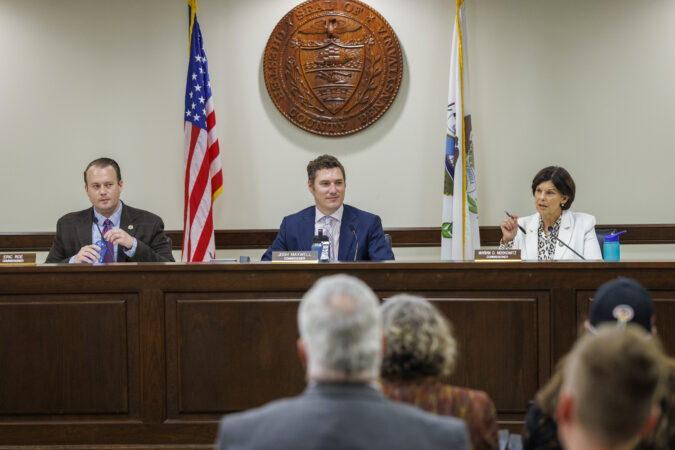
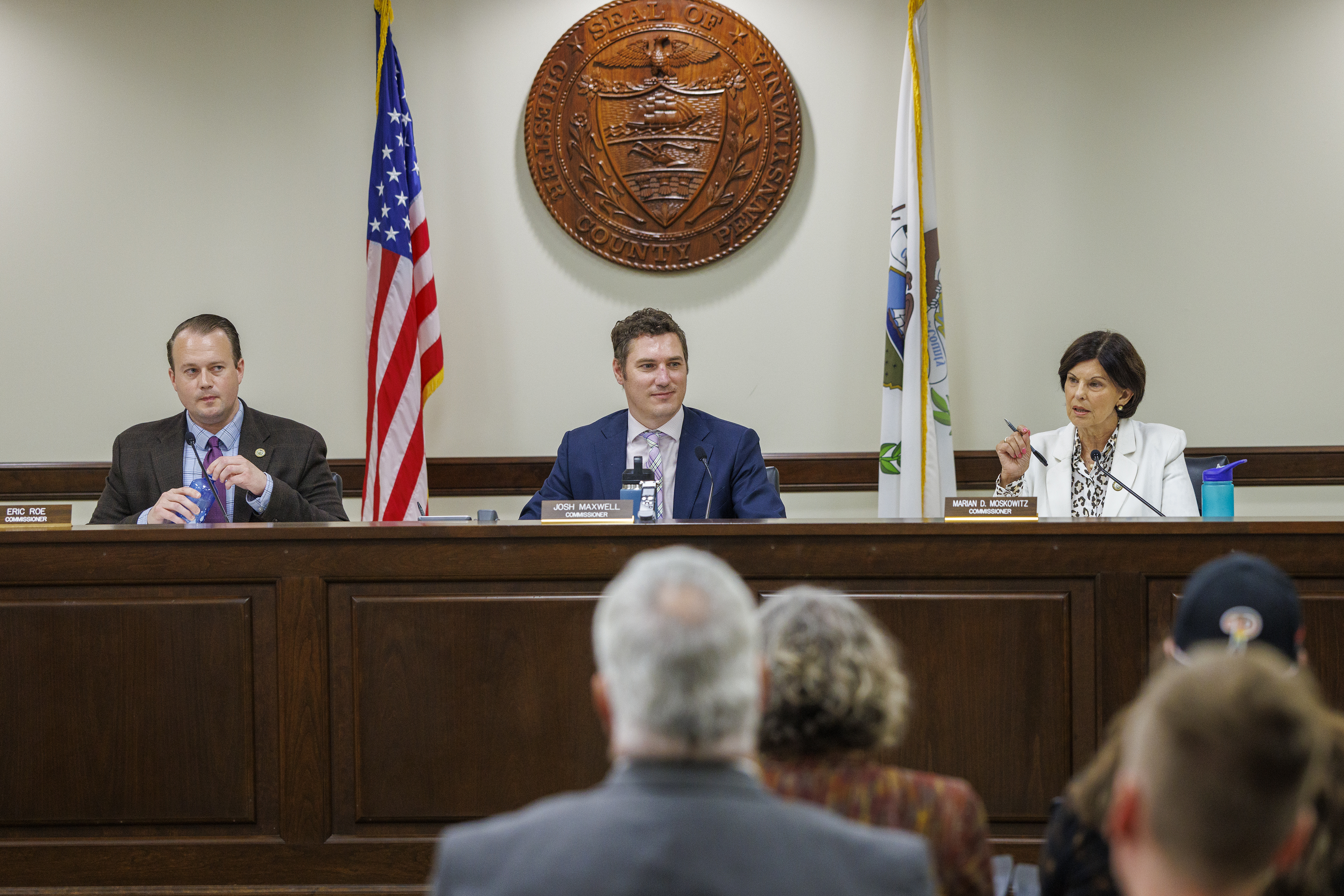
    Chester County Commissioners Eric M. Roe, Josh Maxwell, and Marian D. Moskowitz are expected to pass a 2026 budget that includes no property tax hikes.

    Chester County residents may be the only ones in Philadelphia’s suburbs to dodge a property tax hike in 2026.

    While the county’s proposed budget for next year has a 4.7% spending increase, officials don’t expect to pass that on to taxpayers. That’s thanks to non-personnel budget cuts initiated earlier this year across departments, as well as delayed projects.

    While still navigating financial uncertainty, the bipartisan Board of Commissioners tasked officials with holding “the line in terms of tax increases,” county CEO David Byerman said. The budget is expected to pass doing just that.

    Read more about how the county maintained property taxes for 2026.

    💡 Community News

    • An Inquirer analysis of U.S. Geological Survey data found that the East Branch Brandywine Creek near Downingtown is the most flood-prone waterway in the Philadelphia area. Between 2005 and 2025, it had 11 major and 22 moderate floods, including a record 19.1-foot surge in September 2021 from Hurricane Ida.
    • A portion of former mushroom farmland near the intersection of Routes 41 and 1 in Kennett Square is being eyed for development. Baltimore-based Stonewall Capital is looking to turn the 235-acre site into 622 residential units and shops. The developer plans to begin work on the $300 million White Clay Point project next fall. (Philadelphia Business Journal)
    • Main Line Health opened a new outpatient facility in Devon on Monday. The $13.8 million, 22,700-square-foot center at 80 W. Lancaster Ave. offers primary care, rehabilitation, imaging, and laboratory services.
    • In case you missed, HBO series Task, which was created by Berwyn native Brad Ingelsby, has been renewed for a second season. The crime drama scored a record $49.8 million tax credit from the state to film locally, the largest amount Pennsylvania has given to a single production.
    • Heads up for drivers: Peco will continue performing utility construction roadwork on Newtown Road between Sugartown and Waterloo Roads in Easttown Township on weekdays from 9 a.m. to 3 p.m. through Dec. 19. And in Caln Township, Pennsylvania American Water will continue water line installation that will shut down Olive Street between South Caln Road and 13th Avenue from 8 a.m. to 4 p.m. through February.
    • In other transportation news, PennDot is hosting a virtual meeting tomorrow at 7 p.m. to discuss proposed improvements to the intersection at Newark Road and Baltimore Pike in New Garden Township.
    • Avondale and West Grove Fire Companies recently voted to merge into a single department. They will operate under a combined name, which is yet to be announced, and continue to provide fire and EMS services to over 120 square miles in southern Chester County. The merger is expected to take about 12 months to complete. The newly formed department will have a mix of both career and volunteer responders.
    • In other emergency services news, Westtown-East Goshen Police Commission last week named a new chief of police for the Westtown-East Goshen Regional Police Department. David Leahy, a 26-year veteran of the department, has been elevated from his role as interim chief and will be sworn in on Dec. 19.
    • Chester County is home to three of the region’s most magical holiday light displays: In West Chester, there’s the Griswold display and the Lights Up Holiday Weekends, while in Nottingham, the Herr’s Holiday Lights Display dazzles with more than 600,000 lights.
    • Those heading into West Chester this season can expect plenty of crowds. The Greater West Chester Chamber of Commerce estimates 40,000 people will visit the borough throughout the holiday season, including for this weekend’s tree lighting, which features a new 28-foot tree. (Daily Local Times)
    • In Downingtown, borough parking lots will be free through Jan. 1.

    📍 Countywide News

    🏫 Schools Briefing

    • Kennett Consolidated School District is considering redistricting its elementary schools due to uneven enrollment and ongoing housing development. The district is drawing up a comprehensive map of planned attendance areas. (Chester County Press)
    • Kindergarten registration for the Coatesville Area School District is now open for the 2026-27 school year.

    🍽️ On our Plate

    • The Local opened its doors yesterday at 324 Bridge St. in Phoenixville, taking over the former Your Mom’s Place. It’s launching this week with breakfast and plans to expand to lunch service shortly. Menu items include breakfast sandwiches, omelets, pancakes, and French toast.
    • Several holiday-themed pop-ups have opened or will soon throughout the county. In West Chester, Station 142 has transformed into Miracle on Market Street; Hotel Indigo has converted its basement speakeasy Room 109 into the North Pole Social; and Slow Hand has added Sleigh Bar. Grain in Kennett Square is serving up holiday sips at its North Pole KSQ pop-up and on Saturday, a Christmas-themed pop-up is taking over 10 N. Main St. in Phoenixville.

    🎳 Things to Do

    🎁 Several holiday markets are popping up this weekend, including Historic Sugartown’s Holiday Craft Market & Biergarten on Saturday. Kennett Square’s Holiday Village Market kicks off its two-weekend run this Saturday and Sunday at The Creamery, and for the first time, Fitzwater Station in Phoenixville is hosting a Christmas Village. It takes place Saturday and Sunday and returns for two more weekends after that.

    Here’s what else is happening around Chester County:

    🎭 A Christmas Carol: Catch People’s Light’s adaptation of the Charles Dickens classic. ⏰ Through Jan. 4, days and times vary 💵 Prices vary 📍 People’s Light, Malvern

    💎 A Longwood Christmas: This year’s annual holiday display is inspired by gems. Timed reservations are required. ⏰ Through Sunday, Jan. 11, 10 a.m.-11 p.m. 💵 $25-$45 for non-members, free for members 📍 Longwood Gardens, Kennett Square

    🎄 West Chester Hometown Christmas Parade and Tree Lighting: The beloved events kick off with the tree lighting at the historic courthouse at 6:30 p.m., followed by the parade at 7 p.m. ⏰ Friday, Dec. 5, 6:30 p.m. 💵 Free 📍 Downtown West Chester

    ❄️ Coatesville Christmas Parade and Christmas Wonderland: Kick off the day with a parade. Later, Santa will help light the city’s tree. ⏰ Saturday, Dec. 6, parade starts at 10 a.m., Wonderland is 4-7 p.m. 💵 Free 📍 Downtown Coatesville

    💃 The Phoenixville Christmas Spectacular: Catch one of three performances of this dance-forward show celebrating Phoenixville’s holiday charm. ⏰ Saturday, Dec. 6, 2 and 7 p.m., and Sunday, Dec. 7, 2 p.m. 💵 $18-$25 📍 The Colonial Theatre, Phoenixville

    👸 Rodgers + Hammerstein’s Cinderella: The Broadway adaptation of the beloved fairytale comes to life on stage on Fridays, Saturdays, and Sundays. ⏰ Saturday, Dec. 6-Sunday, Dec. 28, select days and times 💵 $40-$50 📍 Uptown Knauer Performing Arts Center, West Chester

    🏡 On the Market

    A Chadds Ford home perfect for entertaining

    The kitchen features an island and looks out on the living room.

    This Chadds Ford home is ideal for a home chef or host, featuring double ovens, a Sub-Zero refrigerator, and a 10-foot island with seating in the kitchen, plus a butler’s pantry with a bar sink and additional storage and prep space between the kitchen and dining room. The updated home, originally built in 1952 from a Sears kit and since expanded, has four bedrooms, including a first floor primary suite. Other features include a large deck and a suite with a kitchenette and a private entrance.

    See more photos of the property here.

    Price: $1.1M | Size: 4,129 SF | Acreage: 2

    🗞️ What other Chester County residents are reading this week:

    By submitting your written, visual, and/or audio contributions, you agree to The Inquirer’s Terms of Use, including the grant of rights in Section 10.

    This suburban content is produced with support from the Leslie Miller and Richard Worley Foundation and The Lenfest Institute for Journalism. Editorial content is created independently of the project donors. Gifts to support The Inquirer’s high-impact journalism can be made at inquirer.com/donate. A list of Lenfest Institute donors can be found at lenfestinstitute.org/supporters.