Some yarn shops around Philadelphia are running low on skeins of red wool, as local knitters and crocheters turn out scads of “Melt the ICE” caps in solidarity with protesters in Minnesota.
The hats don’t feature a patch or logo that says “Melt the ICE.” In fact, they carry no written message at all. What they offer is a deep scarlet hue, a dangling tassel, and a connection to an earlier, dangerous time, when a different people in another land sought to silently signal their unity.
“The hat is really a symbol and reminder,” said knitter Laura McNamara of Kensington, who is making two caps for friends. “People are looking for a sense of community.”
She refused her friends’ offers of payment, asking instead that they not let their involvement start and end with a hat ― but find a means to stand up for civil rights in some specific way.
The original hat was a kind of conical stocking cap, known as a nisselue, worn in Norway during the 1940s as a sign of resistance to the Nazi occupation. The Germans eventually caught on to the symbolism and banned the caps.
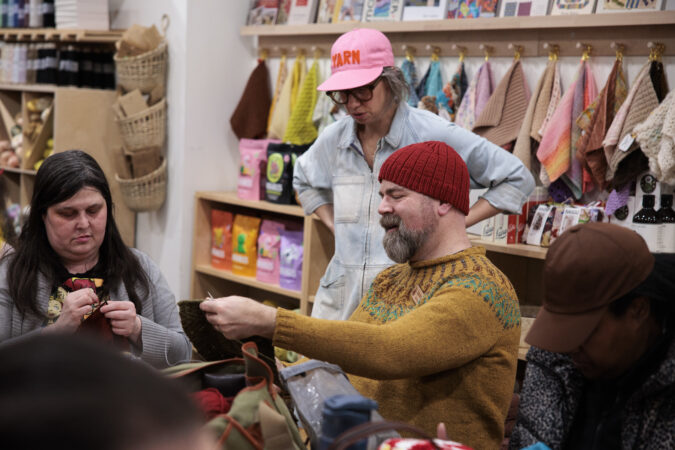
Amanda Bryman works on a red wool hat known as a “Melt the ICE” hat, during Fiber Folk Night at Wild Hand yarn shop in Philadelphia on Wednesday.
Now the new version that originated in a suburban Minneapolis yarn shop is spreading across the country. The hats signal opposition to U.S. Immigration and Customs Enforcement, which surged thousands of agents into Minneapolis, and sadness and anger over the deaths of Minnesotans and U.S. citizens Renee Good and Alex Pretti, who were shot to death by federal agents.
Today, comparisons of ICE agents to Nazis have become both frequent and contentious in American politics, with even some Democrats, including Gov. Josh Shapiro, who is Jewish, rejecting that equivalence as wrong and unacceptable.
ICE officials did not respond to a request for comment.
This is not the first time that the Philadelphia region’s craftivist movement, as it is known, has brought its knitting needles and crochet hooks to bear.
On the eve of Donald Trump’s first inauguration, artisans here turned out scores of cat-eared headgear known as pussy hats, a feline symbol of protest worn at the Women’s March on Washington. The hats aimed to tweak the then-president-elect over his comment about grabbing women by their genitals.
The Melt the ICE caps carry some controversy within the fiber community, as it calls itself. There have been online complaints that it’s easy to tug a red cap over one’s ears, but unless that is accompanied by action it holds no more significance than clicking a “Like” button on Facebook.
“It is just preening,” one person wrote in an internet forum.
Another said that “if your resistance is only this hat, then you have not actually accomplished anything except make a hat.”
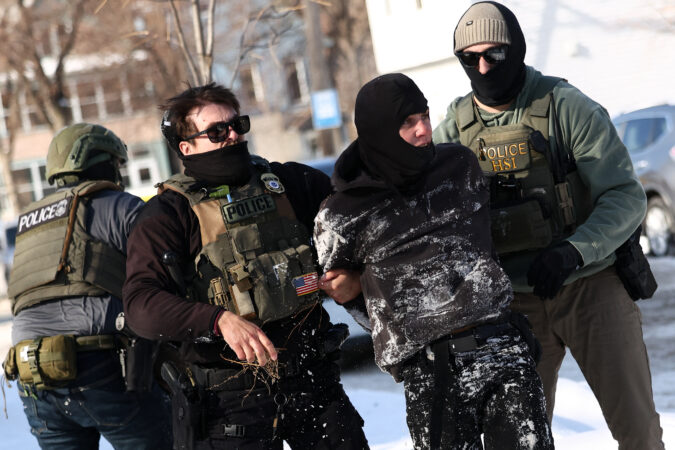
Law enforcement officers detain a demonstrator during a protest outside SpringHill Suites and Residence Inn by Marriott hotels on Jan. 26 in Maple Grove, Minn.
Liz Sytsma, owner of Wild Hand in West Mount Airy, has heard the criticism.
But “the people in our community who are participating in making the hats, this is one of many things they are doing,” she said. That includes taking part in protests, calling elected leaders, and giving money to causes they support.
On Wednesday, more than a dozen people gathered at Wild Hand for the weekly Fiber Folk Night, where crafters gather to knit, crochet, and chat ― and, now, to work on hats.
Damon Davison traveled from Audubon, Camden County, having developed his own hat pattern, with sale proceeds to go to the activist group Juntos in South Philadelphia.
He wants to show solidarity with people “who are expressing resistance to what has been happening in Minneapolis, but also what’s happening here in Philly,” he said. “The idea is to make it a little bit more local.”
The shop has seen a rush on red, sought by about 70% of customers whose purchases have depleted stocks during the last couple of weeks.
“We’re really low,” said store manager Yolanda Booker, who plans to knit and donate a hat. “I want to do whatever small part I can do to help out.”
A single hat can take two or three days to make, though the best and fastest knitters can complete one in a couple of hours.
Store Manager Yolanda Booker, standing, laughs with attendees during Fiber Folk Night at Wild Hand yarn shop in Philadelphia on Wednesday.
In West Mount Airy, Kelbourne Woolens closed its physical doors during the national “ICE Out” strike in late January and donated its onlineprofits of $4,000 to Asian Americans United, Juntos, and New Sanctuary Movement of Philadelphia, said team member Bailey Spiteri. She estimated the store has sold enough red yarn to retailers to make 500 or 600 hats.
At Stitch Central in Glenside, customers donated $1,000 during the strike and the store matched it, with the $2,000 going to Nationalities Service Center in Philadelphia.
“Sometimes people are skeptical. How does wearing a hat or even making a hat make a difference?” asked Allison Covey of Drunken Knit Wits, a local knitting and crocheting organization. “But look at the donations. It does make a difference.”
Veteran knitter Neeta McColloch of Elkins Park thinks the same. She has ordered enough yarn to make eight hats. And she is curious to see how the phenomenon will develop.
“This is probably bigger than I think,” she said. “Knitters tend to be the type of people who in my experience have a strong moral compass. If they can combine something they love to do with something in which they can make a statement, that’s important to them.”
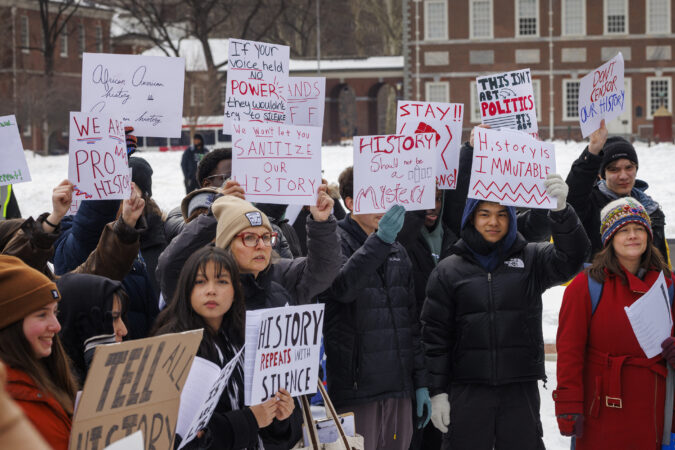
Students and teachers from two Philly area private schools joined up with activists and protesters Friday morning at the President’s House in Independence National Historical Park to demand that the site’s slavery exhibit be restored after it was abruptly dismantled last month.
“Whitewashing history is a totalitarian gimmick,” read one sign in a crowd that included young and older people. “All our stories must be told,” read another.
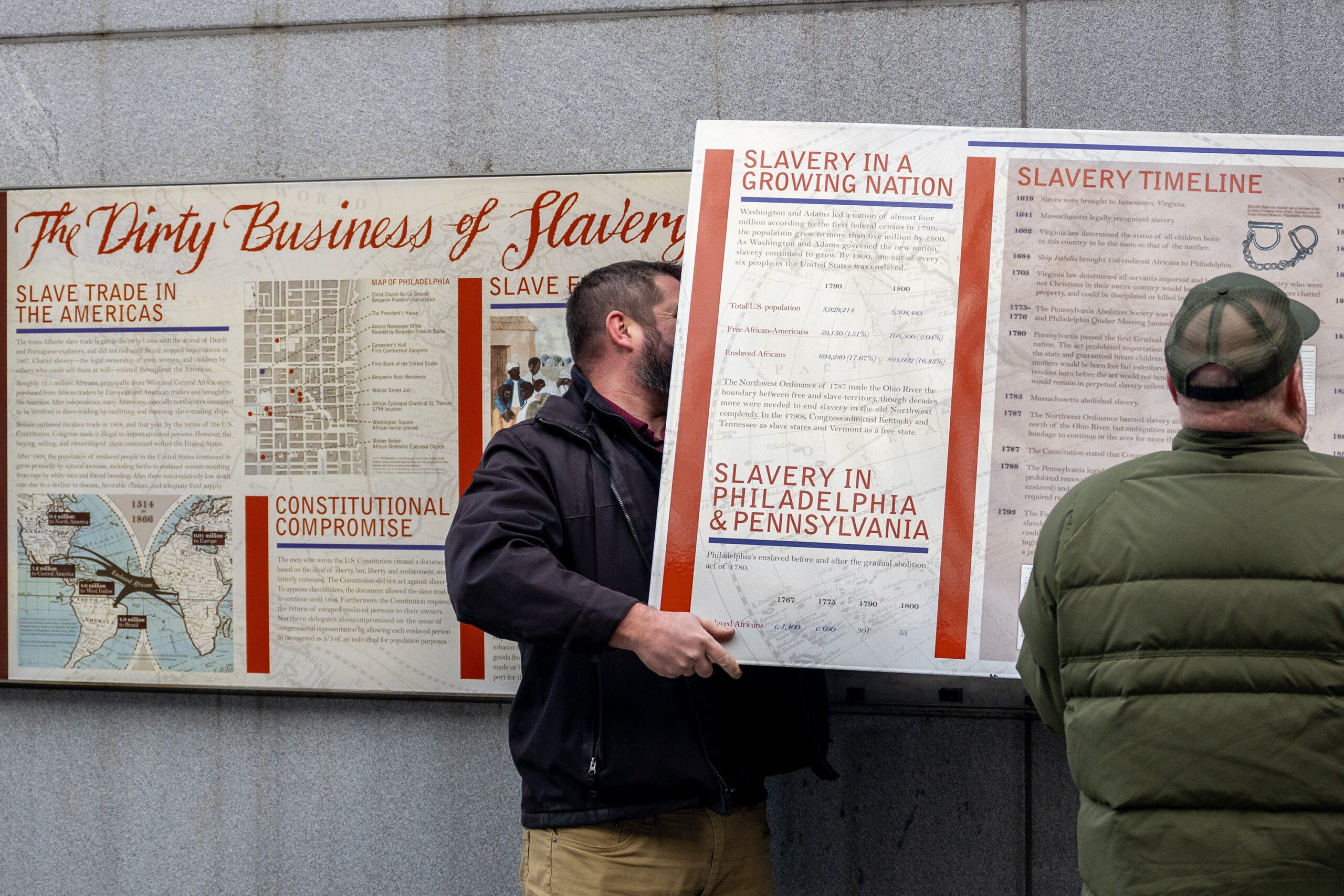
The “teach in” was held in front of a granite wall etched with the names of nine enslaved people owned by U.S. founding father and first president George Washington. The wall is one of the few remnants of the slavery exhibit that was dismantled by order of the Trump administration.
Standing at a lectern, the students, from Solebury School in Bucks County and Friends Select in Center City, read the biographies of the enslaved whose names had been etched on the wall.
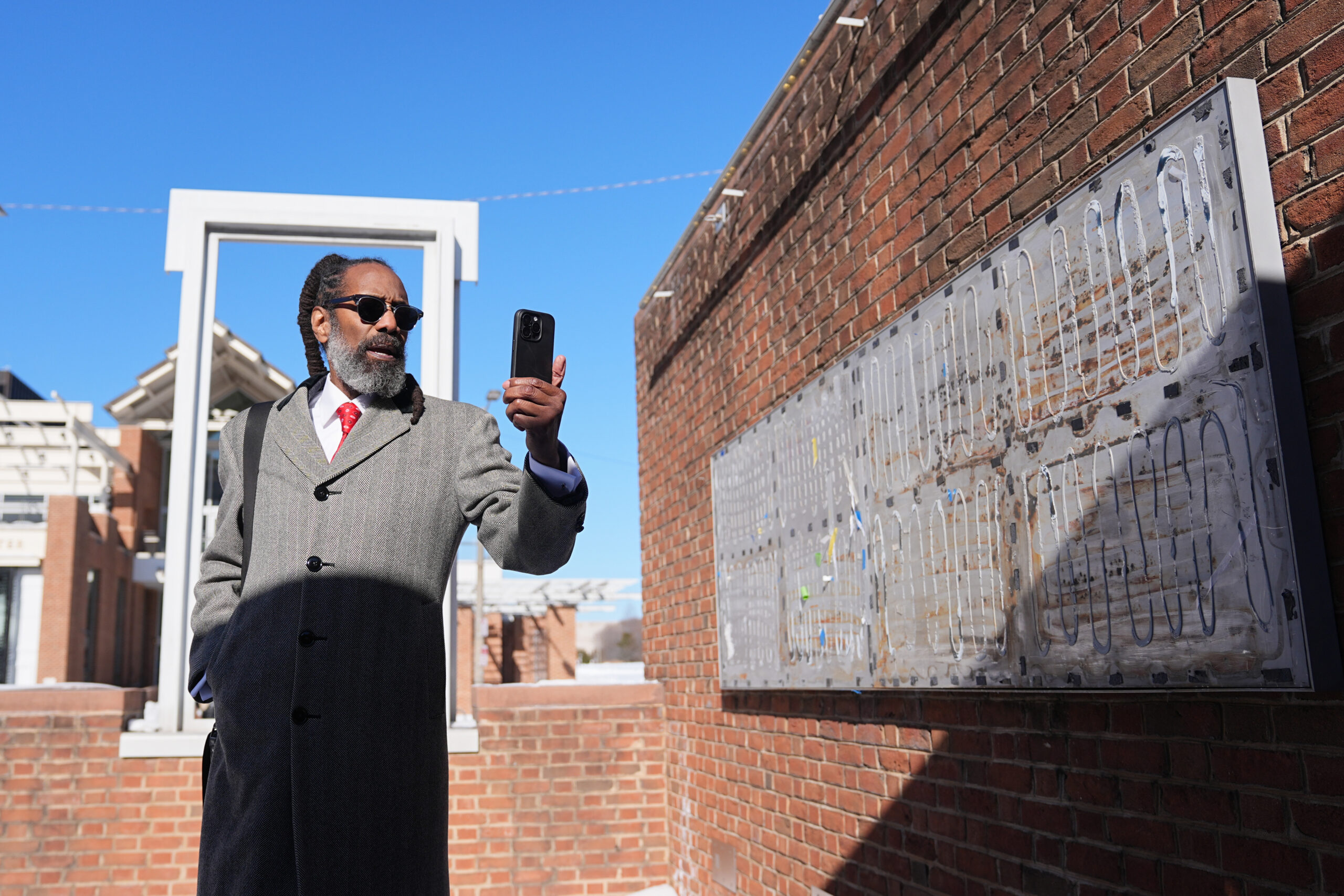
Activist and criminal defense attorney Michael Coard told the crowd he helped to create the slavery exhibit after learning that Washington owned enslaved people — and realizing that his educators had failed to teach him about it.
“When I learned about that, I was enraged, because I’d never heard about it,” Coard said.
With the help of elected officials, the President’s House Site became a reality in 2010, Coard said.
But when the Trump administration issued its “Restoring Truth and Sanity to American History” executive order last March, Coard knew that the exhibit could be targeted. The order calls on the U.S. Department of the Interior to remove historical exhibits that “perpetuate a false reconstruction of American history” or “disparage Americans past or living.”
Attorney Michael Coard makes a social media post at the now removed explanatory panels that were part of an exhibit on slavery at President’s House Site in Philadelphia, Friday, Jan. 30, 2026. (AP Photo/Matt Rourke)
“Anything pertaining to Black people, he was opposed to it,” Coard said of President Donald Trump.
Since then, Coard said, there’s been a furious legal battle to have the site restored. Philadelphia Mayor Cherelle L. Parker sued the federal government. A judge ordered the government to safeguard the exhibits, which are currently in storage, while the issue plays out in federal court.
Coard encouraged people to sign a petition, attend protests, and stay involved in future protests.
“Just because you can’t do everything, that doesn’t mean you shouldn’t do anything,” Coard told the crowd, quoting poet and musician Gil Scott-Heron.
Solebury School college counselor Erin Wallace joined the 50 students who traveled by bus to the site for the teach-in.
Wallace said the students are “very active” in following national politics, and were eager to attend the protest. About 25% of the student body attended, Wallace said.
“It was an overwhelmingly positive response,” Wallace said.
Workers remove the display panels about slavery at the President’s House Site in Independence National Historical Park Thursday, Jan. 22, 2026. The fate of exhibits at the site, which serves as a memorial to the nine people George Washington enslaved there during the founding of America, had been in limbo since President Trump’s executive order, “Restoring Truth and Sanity to American History,” directed the Department of the Interior to review over 400 national sites to remove or modify interpretive materials that “inappropriately disparage Americans past or living.”
Solebury School history teacher Don Kaplan of Elkins Park attended the first vigil after the site was shuttered. Kaplan said he organized the teach-in student protest because it is relevant to what he teaches his 9th- and 11th-grade students.
“I just thought to myself, we need to address this,” Kaplan said.
Kaplan asked that his students not be quoted directly. But after the rally, he struggled to keep his 11th graders from weighing in as he was interviewed for this story.
“We should teach all history,” two students said.
They explained that in Kaplan’s class, their research often shows that historical figures are not purely good or evil and were shaped by myriad forces.
To Kaplan, that stands in contrast to the Trump administration’s perspective on teaching history, which seeks to eliminate “negative” stories about America’s founders.
“That’s not what we do,” Kaplan said. “We have to teach every possible perspective.”
The late Maya Angelou had a saying that goes, “When people show you who they are, believe them the first time.”
She’s gone now, but that was some really good advice.
I am reminded of the late author’s wisdom after watching and rewatching a blatantly racist video that President Donald Trump posted on Thursday on Truth Social. It includes AI-generated imagery depicting former President Barack Obama and his wife as dancing primates.
I am so disgusted.
Anything to make the Obamas look bad. I wish I could share a photo of it with this column, but it’s too offensive. I’d tell you to go see his Truth Social account and look it up yourself, but I learned while writing this column that he has taken it down.
Trump’s boorishness is no surprise. He has been showing us who he is and what MAGA is about since even before he came down that escalator at Trump Tower in 2015 and called Mexicans rapists and drug dealers.
So it’s entirely fitting that night he would reshare a video repeating false claims about the 2020 presidential election, which he lost, that includes vile imagery about the 44th president.
For many of 44’s supporters, the Obamas represented America at its best. And no matter where one stands politically, it would be hard to argue that Obama himself ever succumbed to the kind of impulsivity, rudeness, and disrespect we regularly see these days out of 1600 Pennsylvania Ave.
But Trump is a petty, vindictive man whose obsession with the Obamas goes way back. It began in 2011, when Trump deliberately started a campaign of lies about Obama, claiming he wasn’t born in America and therefore ineligible to occupy the Oval Office.
Some pundits argue that Trump’s Obama envy helped fuel his own run for the presidency. And now that he is in the White House for a second term, you’d think he’d be over it. But judging from the way he keeps disparaging Obama, he’s not.
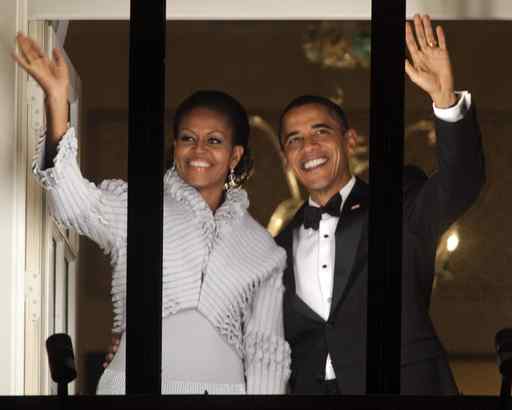
President Barack and Michelle Obama wave to the crowd from a balcony at the Grand Hotel in Oslo, Norway, after he accepted the Nobel Peace Prize at the city hall in 2009.
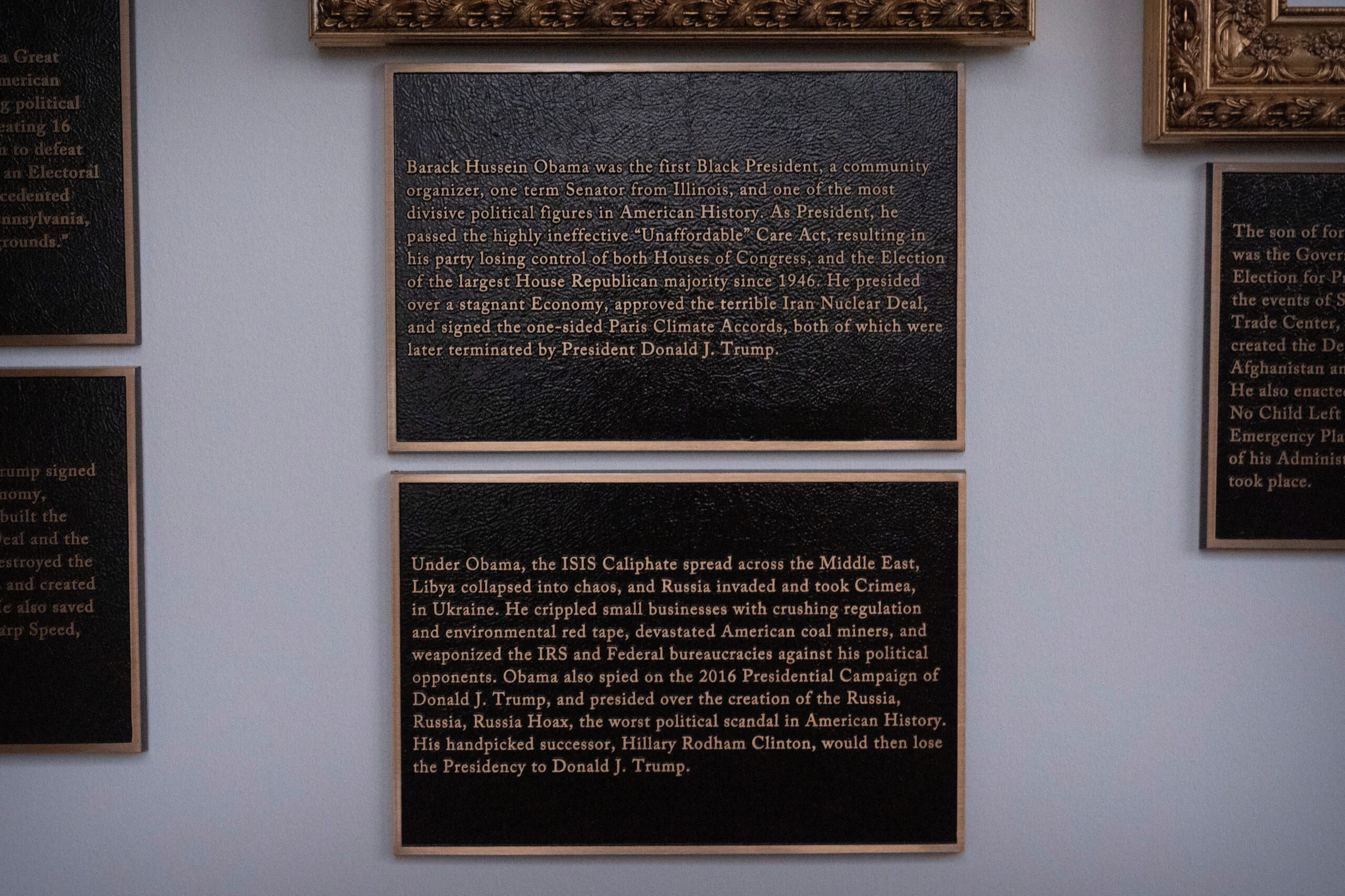
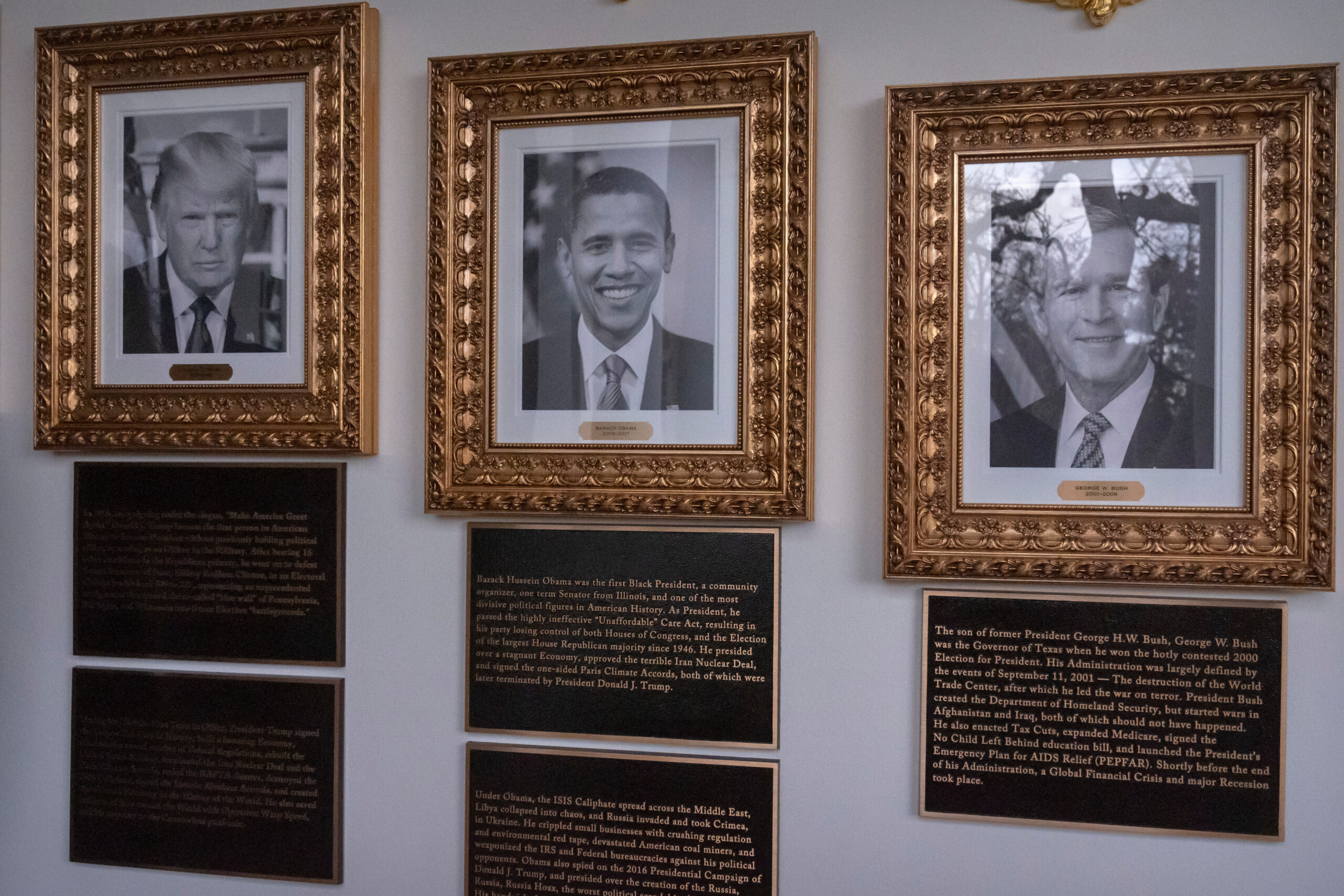
Trump also ordered the installation of plaques under the photos of his presidential predecessors, and used the one under Obama’s to bash his legacy, calling him “one of the most divisive political figures in American history” and making other false claims.
Plaques of explanatory text are seen beneath a framed portrait of former President Barack Obama on the Presidential Walk of Fame on the Colonnade of the White House, Wednesday, Dec. 17, 2025, in Washington. Portraits of President Donald Trump and former Presidents Barack Obama and George W. Bush with plaques of text below are seen on the Presidential Walk of Fame on the Colonnade of the White House, Wednesday, Dec. 17, 2025, in Washington.
White House press secretary Karoline Leavitt tried to walk Trump’s post back, writing, “This is from an internet meme video depicting President Trump as the King of the Jungle and Democrats as characters from the Lion King.”
She added via text, “Please stop the fake outrage and report on something today that actually matters to the American public.”
There’s nothing fake about our outrage. We see Trump. We know what he’s doing by pulling out that old racist trope. Even Black Trump supporters like Sen. Tim Scott (R., S.C.) see this for what it is. “Praying it was fake because it’s the most racist thing I’ve seen out of this White House. The President should remove it,” Scott wrote on social media.
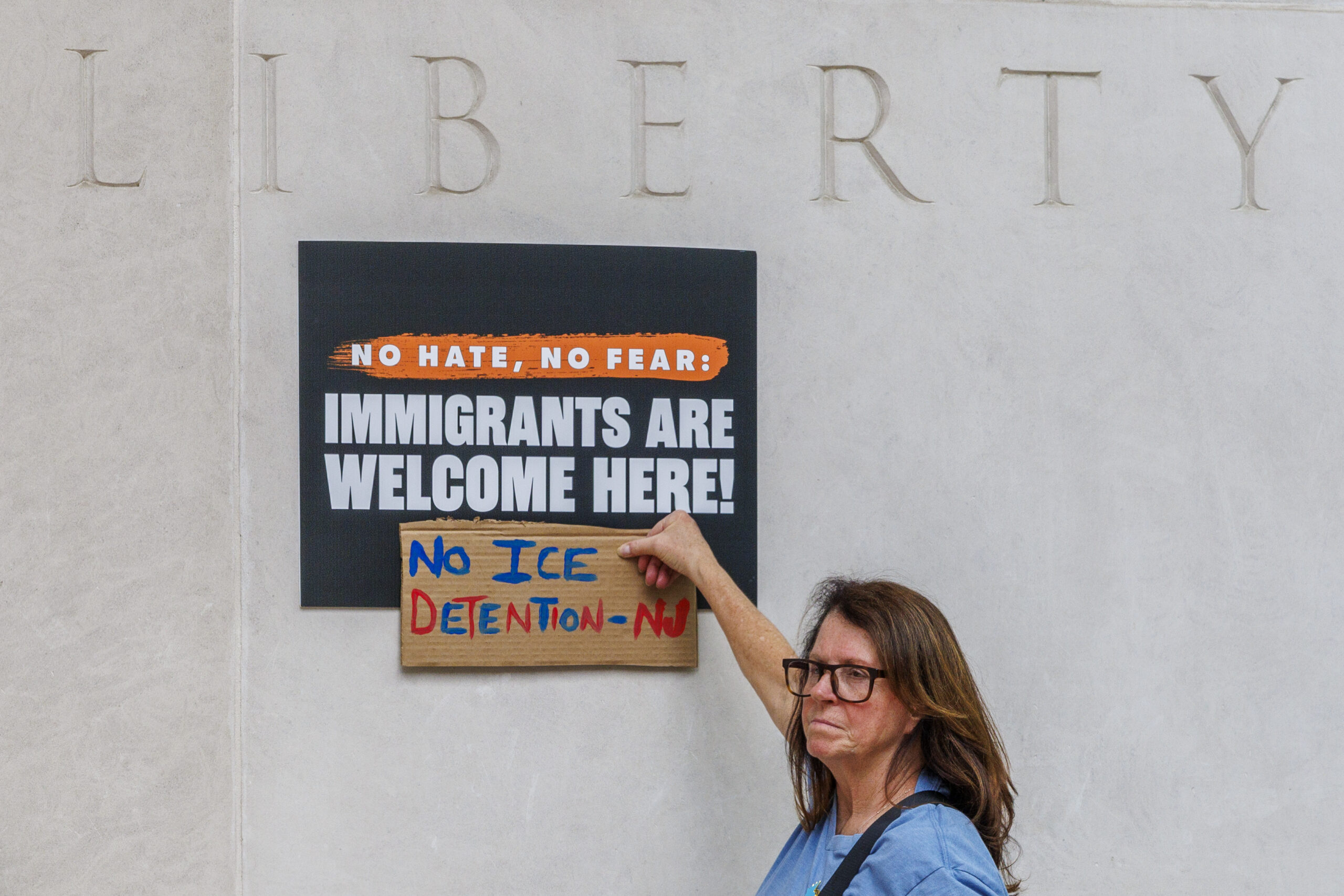
Gov. Josh Shapiro blasted U.S. Immigration and Customs Enforcement (ICE) Friday for buyinga Berks County warehouse that may be used to detain people.
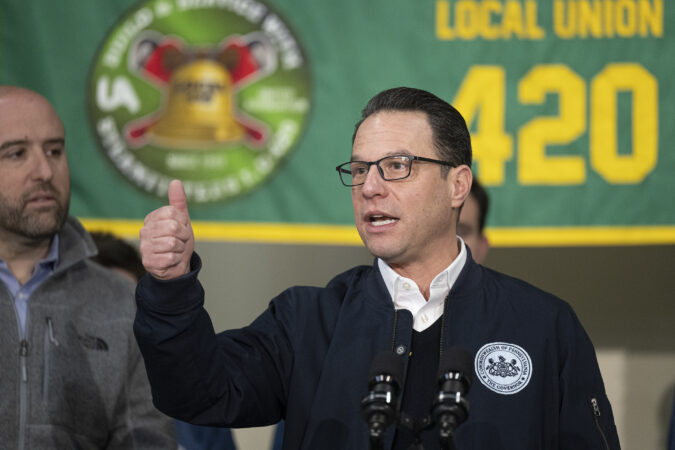
“I’m strongly opposed to the purchase,” Shapiro said after speaking at an event at the Steamfitters Local 420 in Northeast Philadelphia.
Shapiro said the facility is “not what we need anywhere in Pennsylvania,” adding that he was not alerted ahead of time of ICE’s $87 million acquisition of the warehouse on 64 acres in Upper Bern Township.
“The secretive way the federal government went about this undermines trust,” Shapiro said.
Shapiro has grown increasingly vocal in his criticism of ICE and President Donald Trump in recent weeks as he’s toured the East Coast promoting his new memoir. In addition to voicing his opposition to the warehouse, Shapiro criticized Trump for sharing a racist video attacking former President Barack Obama and former first lady Michelle Obama.
The Democratic governor, who is widely seen as a contender for the White House in 2028, is in the midst of a reelection campaign against Trump-endorsed Republican Stacy Garrity, who has urged cooperation with ICE.
He said the commonwealth is exploring “what legal options we may have to stop” the ICE procurement, but he acknowledged “those options are very slim, given that the federal government is the purchaser.”
Shapiro told this audience of union workers and apprentices that the Berks County building would be better used for economic development.
At the same event, Shapiro announced a new $3 million Redevelopment Assistance Capital Program (RACP) grant to expand the Steamfitters Local Union 420 Training Center, which he said would help “train the next generation of workers.”
Shapiro criticizes Trump over racist anti-Obama video
Duringthe union hall event, Shapiro also leveled criticism at the Trump administration for sharing on social media a racist video depicting Obama, the first Black president, and his wife, as apes.
When asked for a reaction, Shapiro said, “I actually agree with [Republican] Sen. Tim Scott of South Carolina that it’s racist.”
Scott, the only Black Republican in the Senate, called the video “the most racist thing I’ve seen out of this White House,” after Trump shared it to his Truth Social account Thursday evening.
Shapiro said thatTrump “seems to always find a lower and lower common denominator. We’re not going to get sucked down into the depths that this president seems to reach for each day.”
Trump took down the video early Friday afternoon.
The governor also strongly chided Trump for recently saying the federal government should be in charge of elections.
Specifically, Trump named Philadelphia, along with Detroit and Atlanta, as cities where the federal government should step in to run elections. The predominantly Black cities are in swing states and have long been targeted with Trump’s false claims of voter fraud.
“The president of the United States doesn’t run our elections,” said Shapiro. “County officials run our elections, Republican and Democrat alike.”
“We’re not going to have interference from the White House,” added the governor, who served as attorney general when Trump tried to overturn Pennsylvania’s election results in 2020.
One of the lasting images of President Donald Trump’s mass deportation campaign will be the masks worn by federal immigration agents.
The widespread use of facial coverings by U.S. Immigration and Customs Enforcement officers is among the suite of tactics — agents dressed in plainclothes, wearing little identification, jumping out of unmarked cars to grab people off the street — that have fueled immigration advocates’ use of terms like “kidnappings” and “abductions.”
Now Philadelphia lawmakers appear poised to pass legislation that would ban all officers operating in the city — including local police — from concealing their identitiesby wearing masks or conducting enforcement from unmarked cars.
The question is whether the city can make that rule stick.
Legal hurdles loom for municipalities and states attempting to regulate federal law enforcement. Local jurisdictions are generally prohibited from interfering with basic federal functions, and Trump administration officials say state- and city-level bans violate the constitutional provision that says federal law reigns supreme.
There are also practical concerns about enforcement. Violating the mask ban would be a civil infraction, meaning local police would be tasked with citing other law enforcement officers for covering their faces.
“No doubt this will be challenged,” said Stanley Brand, a distinguished fellow at Penn State Dickinson Law. “This ordinance will be a protracted and complicated legal slog.”
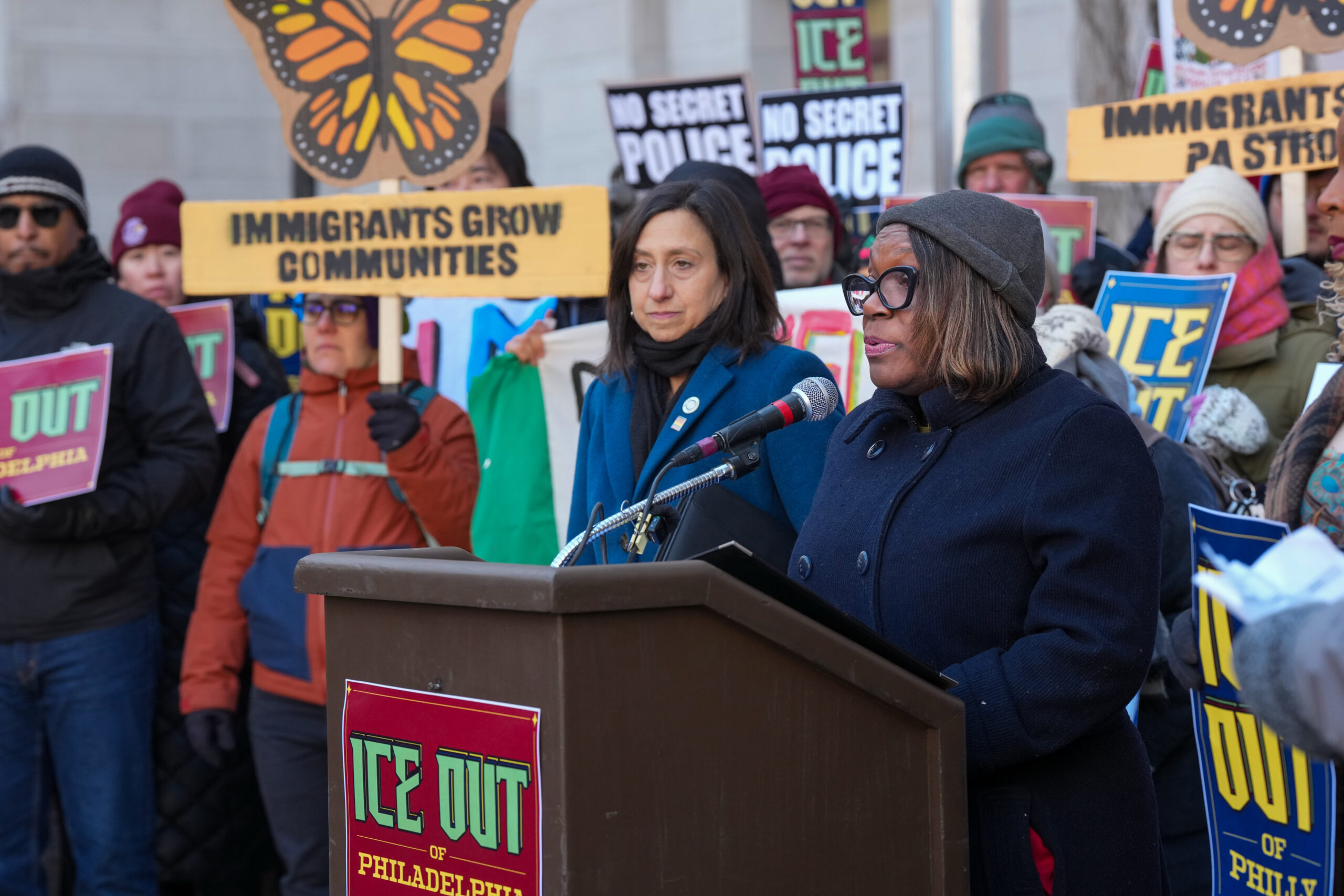
Councilmember Kendra Brooks speaks during a news conference at City Hall to announce a package of bills aimed at pushing back against ICE enforcement on Jan. 27.
Advocates for immigrants say that unmasking ICE agents is a safety issue, and that officers rarely identify themselves when asked, despite being required to carry badges.
Mask use can also spur impersonators, they say. At least four people in Philadelphia have been arrested for impersonating ICE officers in the last year.
“You see these people in your community with guns and vests and masks,” said Desi Bernette, a leader of MILPA, the Movement of Immigrant Leaders in Pennsylvania. “It’s very scary, and it’s not normal.”
Democrats in jurisdictions across America, including Congress and the Pennsylvania General Assembly, have introduced legislation to ban ICE agents from concealing their faces. California is the furthest along in implementing a mask prohibition, and a judge is currently weighing a challenge filed by the Trump administration.
Senate Democrats negotiating a budget deal in Washington have asked for a nationwide ban on ICE agents wearing masks in exchange for their votes to fund the Department of Homeland Security.
And polling shows getting rid of masks is popular. A recent Pew Research Center survey found that 61% of Americans believe federal agents should not wear face coverings to conceal their identities while on duty.
ICE officials say agents should have the freedom to conceal their faces while operating in a hyperpartisan political environment.
Last year, ICE head Todd Lyons told CBS News that he was not a proponent of agents wearing masks, though he would allow it. Some officers, he said, have had private information published online, leading to death threats against them and their families.
“They could target [agents’] families,” Fetterman said in an interview on Fox News, “and they are organizing these people to put their names out there.”
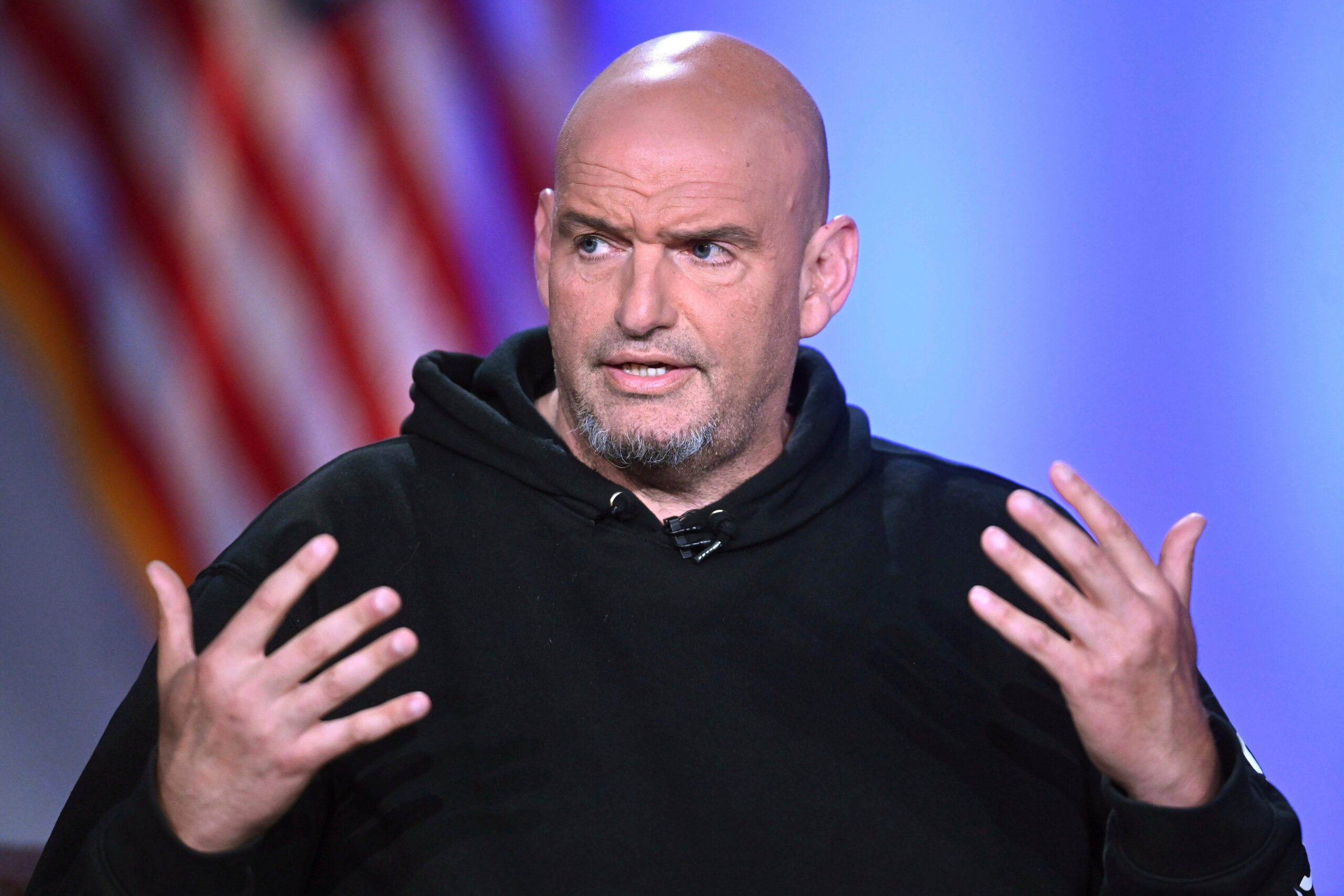
Sen. John Fetterman, D-Pa., participates in a debate on June 2, 2025, in Boston.
The Council authors of the Philadelphia bills say they are responding to constituents who are intimidated by ICE’s tactics, and they believe their legislation can withstand a legal challenge.
“Our goal is to make sure that our folks feel safe here in the city,” said City Councilmember Kendra Brooks. “We are here to protect Philadelphians, and if that means we eventually need to go to court, that’s what would need to happen.”
The constitutional limits on unmasking ICE
The bill introduced last week by Brooks and Councilmember Rue Landau is part of a package of seven pieces of legislation aimed at limiting how ICE operates in Philadelphia. The proposals would bar Philadelphia employees from sharing information with ICE and ban the agency from using city property to stage raids.
Fifteen of Council’s 17 members signed on to the package of legislation, meaning a version of it is likely to become law. Passing a bill in City Council requires nine votes, and overriding a mayoral veto takes 12. Mayor Cherelle L. Parker has said her team is reviewing the legislation, which can still be amended before it becomes law.
Anti-ICE activists demonstrate outside U.S. Sen. John Fetterman’s Philadelphia office, Jan. 27, calling for an end to federal immigration enforcement policies.
One of the two members who did not cosponsor the package was Councilmember Mike Driscoll, a Democrat who represents parts of Lower Northeast Philadelphia. He indicated that he had concerns about whether the “ICE Out” legislation would hold up in court.
Brooks said Council members worked with attorneys to ensure the legislation is “within our scope as legislators for this city to make sure that we protect our folks against these federal attacks.”
Brand, of Dickinson Law, said the legislation is a classic example of a conflict between two constitutional pillars: the clause that says federal law is supreme, and the 10th Amendment, which gives states powers that are not delegated to the federal government.
He said there is precedent that the states — or, in this case, cities — cannot interfere with laws enacted by Congress, such as immigration matters.
“If I were betting, I would bet on the federal government,” Brand said.
But there is a gray area, he said, and that includes the fact that no law — or even regulation — says federal law enforcement agents must wear masks.
Kermit Roosevelt, a law professor at the University of Pennsylvania who is an expert on the Constitution and conflict of laws, said if there is no agency policy, that is “free space” for states and cities to regulate.
Roosevelt said Brooks’ legislation steers clear of other constitutional concerns because it applies to all police officers, not just federal agents.
“If they were trying to regulate only federal agents, the question would be, ‘Why aren’t you doing that to your own police officers?’” he said. “If you single out the federal government, it looks more like you’re trying to interfere with what the federal government is doing.”
Applying the law to local police
Experts say part of the backlash to ICE agents covering their faces is because Americans are not used to it. Local police, sheriff’s deputies, and state troopers all work largely without hiding their faces.
“Seeing law enforcement actions happening with federal agents in masks, that’s extremely jarring,” said Cris Ramon, an immigration consultant based in Washington. “Why are you operating outside of the boundaries of what every other law enforcement agency is doing?”
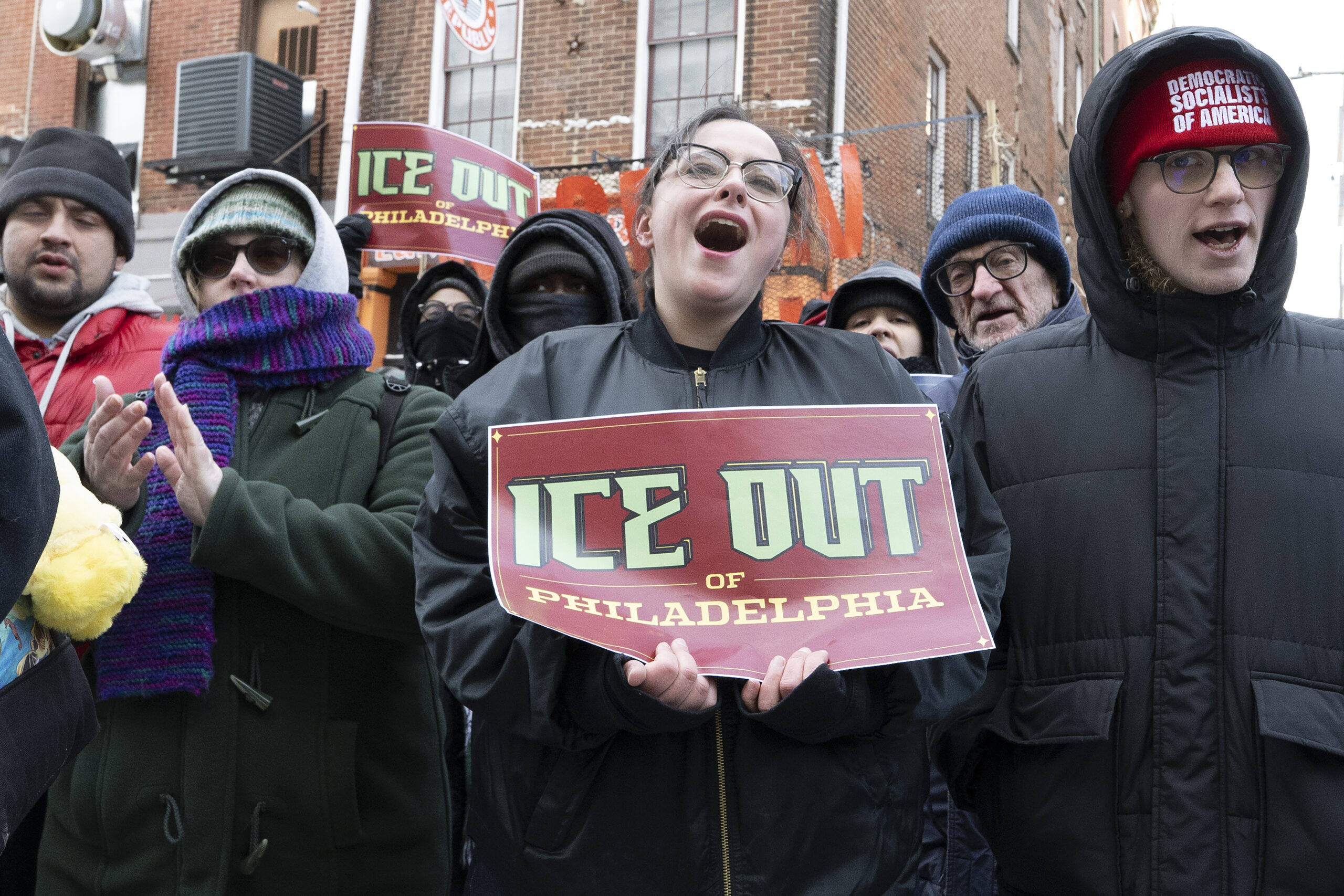
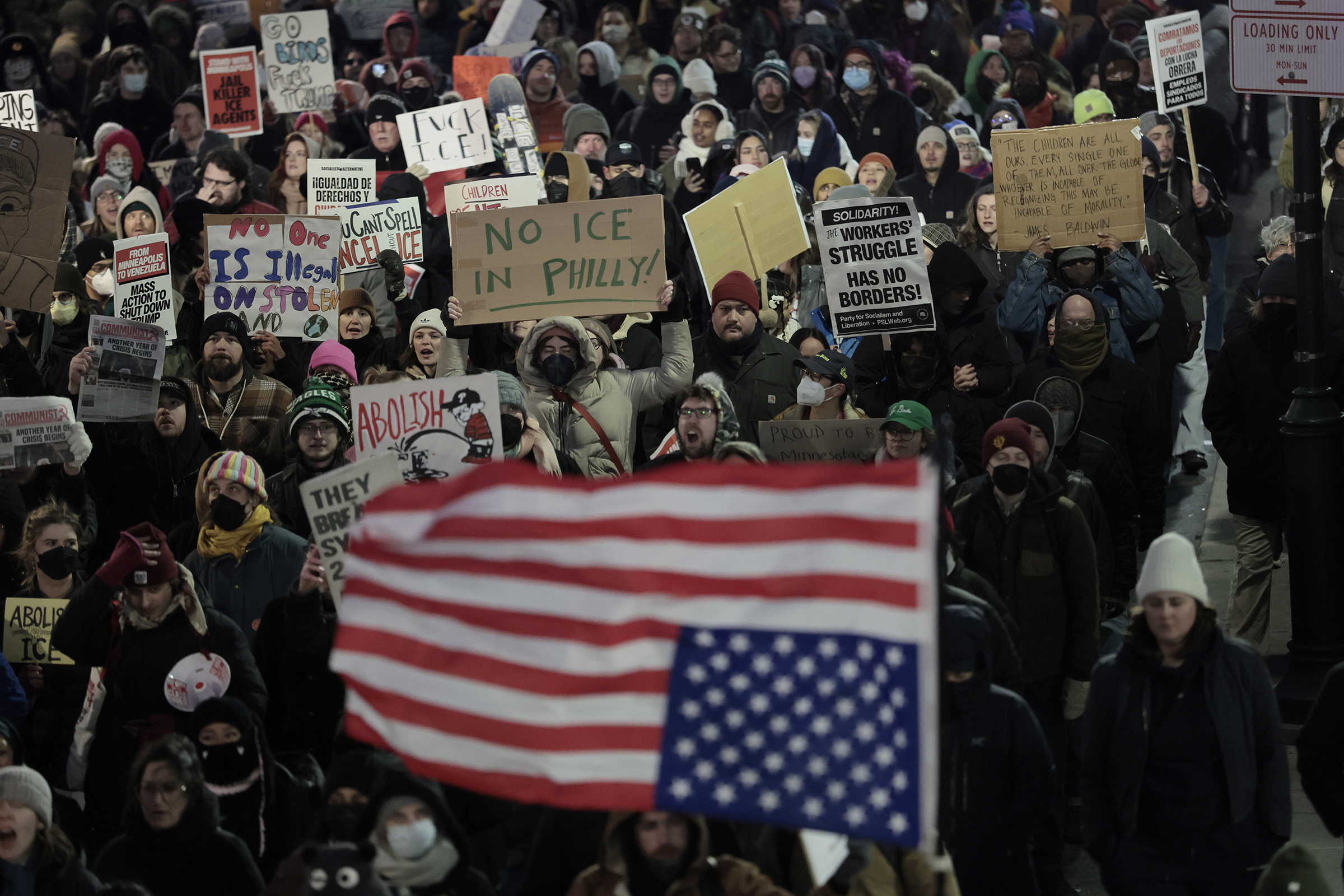
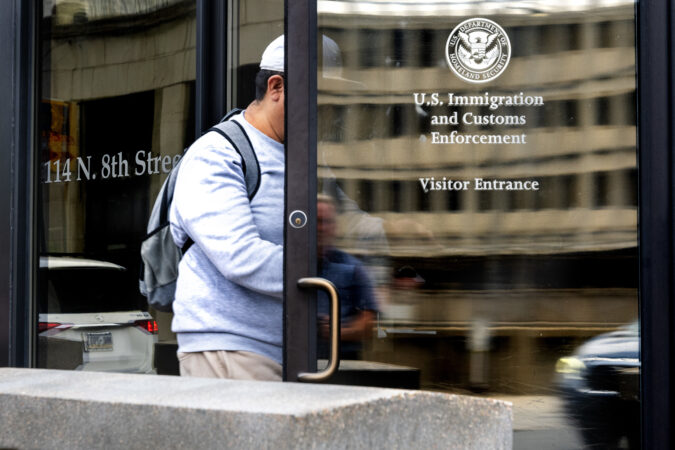
Protesters march up Eighth Street, toward the immigration offices, during the Philly stands with Minneapolis Ice Out For Good protest at Philadelphia City Hall on Jan. 23.
The Council legislation includes exceptions for officers wearing medical-grade masks, using protective equipment, or working undercover. It also allows facial coverings for religious purposes.
However, the federal government could still raise First Amendment concerns, said Shaakirrah R. Sanders, an associate dean at Penn State Dickinson Law.
The administration, she said, could argue that the city is only trying to regulate law enforcement officers and claim that would be discriminatory.
Sanders said defending the legislation could be “very costly” and the city should consider alternatives that fall more squarely within its authority. She pointed to efforts like New Jersey Gov. Mikie Sherrill’s announcement that the state would create a database for residents to upload videos of ICE interacting with the public.
“It looks like the city wants to wield big legislative power,” Sanders said. “My alternative is more in the grassroots work, where you are the first ear for your citizens, not the regulator of the federal government.”
When Philadelphia temperatures dipped to near zero last week, the frigid weather was so unbearable that most of us retreated indoors. Of course, our homes were warm and well-lit, although the threat of losing power was unnerving.
For my friend Maisie, whose family lives in the Philly area but who is doing research in Kyiv, Ukraine, on blast injuries and coordinating international programs to help amputees, there is no escape from subzero weather.
When I spoke to her on the weekend, she was huddled in two down parkas, under a mountain of blankets, and hugging her dog, Olly, for warmth, having had no heat for three weeks.
Thanks to Vladimir Putin, Kyiv and other major Ukrainian cities have been under massive missile and drone attacks deliberately aimed at civilian heating and power infrastructure. All in an effort to freeze Ukrainians into submission.
Such attacks on civilians are a war crime.
Donald Trump is helping Putin weaponize winter. The president echoes Russian propaganda, claiming Putin agreed to a weeklong pause in bombing energy infrastructure — even as Putin was raining down record numbers of missiles on apartment buildings, a maternity hospital, and power grids. Kyiv is only expected to receive four to six hours of power daily for the rest of February.
To make his pro-Russian stance clear, Trump had a framed photo of himself and the Kremlin leader, taken at the failed Alaska summit last August, put up in the White House Palm Room, above one of him and a grandchild. Only Trump could consider it appropriate to hang a photo of a modern-day Adolf Hitler in the White House visitors’ area.
Moscow, of course, loves it. To quote the X post of Putin’s special envoy, Kirill Dmitriev (who has brainwashed his White House counterpart, Steve Witkoff, into adopting Moscow’s positions): “A picture is worth a thousand words.” Indeed.
Other pictures to consider are those of mothers and children clinging to each other in underground subway stations — reminiscent of the London Blitz — because they fear repeated Russian drone attacks on apartment blocks, or because they simply have no heat.
“Even if you can get food, you don’t need a refrigerator,” Maisie, whose last name I’m not using from safety concerns, told me via WhatsApp. “Any food you have freezes.” Her electricity is sporadic, she told me, barely giving time to charge power banks, a small heater, her laptop, and her phone.
“It got so bad these past weeks that I remember a moment when I realized I hadn’t felt my toes in so long, I took off layers of socks to realize they had blistered so much from the cold that they were bleeding.
“A lot of grocery stores were closed, and it was a mad rush when they were open. Sheets of ice are coating every street, which makes it particularly difficult for the elderly.
“Despite all this, Ukrainians are still holding on, adapting, supporting one another and enduring conditions that should never be normal in the civilized world,” she said.
What infuriated Ukrainians this week was Trump’s repeated claims that his deal-making skills had persuaded Putin to stop bombing energy infrastructure for a week, until the trilateral talks in Abu Dhabi, United Arab Emirates. Putin “kept his word,” Trump told White House reporters on Tuesday.
No, Putin did not keep his word.
Drones and missiles on power distribution sites halted for barely two and a half days, during which Russia kept hitting residential buildings — along with workers repairing damaged energy infrastructure. Then, with the missiles saved up from the two-day “energy ceasefire,” Russia launched a massive strike against energy targets even as Trump was touting that he had talked Putin down.
Any president with minimal smarts would have grasped by now that the Russians are trolling him.
Trump has been pushing since the Alaska summit for a direct meeting between Putin and Ukrainian President Volodymyr Zelensky, and the Kremlin recently offered one — if it took place in Moscow. The slimy Russian foreign minister, Sergey Lavrov, said his country would guarantee Zelensky’s safety.
Needless to say, Zelensky — whom the Russians have tried to assassinate many times — declined the honor. One doesn’t have to be a fortune teller to imagine poisoned soup (a tactic used by Russia against a previous Ukrainian president) or a sudden fall from a window. Yet, no doubt, Trump will soon be criticizing Zelensky for refusing this golden opportunity.
Similarly, the U.S.-Ukraine peace talks pushed by Trump — along with this week’s trilateral meeting of U.S., Ukrainian, and Russian officials — are a farce. That’s because Trump refuses to press Putin to make any concessions, and the Russian leader has yet to veer from his position that Ukraine slash its army, change its president, give up unconquered territory, and refuse any strong Western guarantees.
In fact, chief White House negotiator Witkoff, an ill-informed real estate mogul who seems to be Trump’s main emissary to everywhere — from Israel to Iran to Russia — insists Kyiv cave to Putin’s key position: give up a belt of Donetsk that Ukraine still holds, which is the main fortified barrier that prevents Russian troops from moving into central Ukraine.
Witkoff, who, like Trump, thinks only of land deals, might as well be calling on Ukraine to commit suicide. He has actually proposed that this armed Ukrainian territory could become a “free trade zone.” As with the “energy ceasefire,” Putin would respect that zone for about five minutes before sending his troops in.
Yet, through sheer grit, Ukrainians are enduring and preventing serious Russian gains on the front, as the Kremlin’s war economy sags and Russia suffers staggering numbers of military casualties. I believe if Ukraine can get through this winter, with European help, Russia will be unable to continue the war at this level.
So now would be the perfect time for Trump to push back strongly against Putin’s “energy war” on civilians. Having basically halted military aid to Ukraine, the president could still help Kyiv by selling Europe desperately needed air defense weapons that it would then pass on to Ukraine. The president could also finally stop blocking a vote on bipartisan congressional legislation to impose more sanctions on Russian oil sales.
By turning up the heat on Putin, Trump could help turn the heat back on for Ukraine. But don’t hold your breath.
The only slight opening I can imagine is if the president finally grasps how weak and foolish his bow to Putin makes him look on the world stage, and how dangerous his links to Putin are to his own legacy.
Rather than be awarded the Nobel Peace Prize, Trump looks more likely to be tarred by his subservience to the greatest war criminal of the 21st century, who played him like a military drum.
Federal judges in Philadelphia have been unusually outspoken in recent weeks about what they call the “illegal” policy by ICE of mandating detention for nearly all undocumented immigrants — and have been sharply critical of the “unsound” arguments by government attorneys seeking to justify the approach.
U.S. District Judge Harvey Bartle III has overturned the government’s attempts to detain people in six cases over the last two months, writing in one opinion that Immigration and Customs Enforcement “continues to act contrary to law, to spend taxpayer money needlessly, and to waste the scarce resources of the judiciary.”
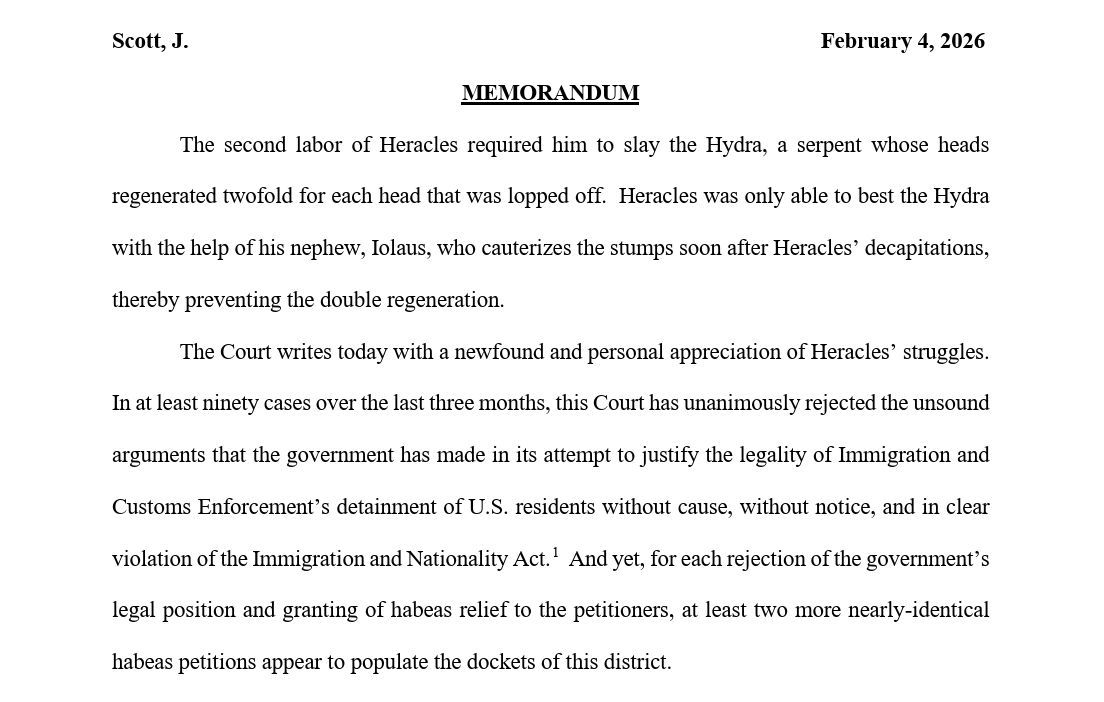
And U.S. District Judge Kai N. Scott became the latest jurist to equate the ongoing legal battle with the government to Greek mythology, saying she and her colleagues on the bench have been squaring off with the Justice Department in a manner similar to Heracles’ confrontation with Hydra, the serpentlike monster that grew two heads every time one was chopped off.
Although the region’s federal judges have “unanimously rejected” the government’s attempts to rationalize ICE detention of immigrants “without cause, without notice, and in clear violation” of federal law, Scott wrote, the government has continued to detain people in the same fashion day after day. And after each rejection, she wrote, “at least two more nearly identical” petitions seeking relief pop up on the court’s docket.
“The Court writes today with a newfound and personal appreciation of Heracles’ struggles,” she said.
District Judge Kai N. Scott’s Feb. 4, 2026 memo granting another habeas petition filed by an immigrant, and expressing frustration with the federal government’s arguments.
The judicial rebukes come as immigration authorities have continued sweeping the nation to fulfill President Donald Trump’s promise of mass deportations. The number of detained immigrants has exploded — as has the number of court petitions from people seeking immediate release, which are known as habeas petitions.
The enlarged legal workload has put a corresponding strain on the nation’s U.S. attorney’s offices, which typically defend ICE’s actions in federal court. Prosecutors from the New Jersey U.S. Attorney’s Office, for example, requested an extension in January to handle part of a class-action suit in order to deal with a surge in immigration release petitions.
“This Office continues to handle an unprecedented volume of emergent immigration habeas petitions, which we continue to prioritize because of the liberty interests at issue,” the letter said.
And in Minnesota this week, a federal prosecutor said she wished the judge would hold her in contempt so she could get some sleep in jail. Julie Le seemed exasperated when the judge pressed her on why the government had been ignoring his release orders.
“What do you want me to do? The system sucks. This job sucks,” Le said, according to a court transcript.
The issue at the center of each incident involves ICE’s mandatory detention policy. The policy was rolled out over the summer, and it requires that nearly all undocumented immigrants be held in custody as their cases wind through the country’s backlogged and complex immigration system.
That upended decades of government practice, which typically allowed people who entered the country illegally, but who were otherwise law-abiding, to at least receive a bond hearing and determine if they could remain in the community as their cases moved forward.
Jeanne Ottoson with Cooper River Indivisible attends an Immigrant rights groups rally outside the Third Circuit Court of Appeals to defend the New Jersey state ban on immigration-detention contracts on May 1, 2025.
Some of those detained as a result of the policy have filed habeas petitions, arguing that their detention violates the Constitution. And in the Eastern District of Pennsylvania, Philadelphia’s federal court, judges have granted challenges to the policy at a near-universal rate.
Still, those decisions have been made on a case-by-case basis, with relief extended only to one petitioner at a time. The U.S. Court of Appeals for the Fifth Circuit, which is based in New Orleans and is considered one of the country’s most conservative jurisdictions, heard a broader challenge to the policy. A divided 2-1 court ruled Friday that ICE can detain undocumented immigrants the agency is seeking to deport, even those who have been in the country for years.
The ruling covers only federal courts in Louisiana, Mississippi, and Texas, and many legal experts expects the matter to ultimately end up before the U.S. Supreme Court.
In Philadelphia, Scott’s expression of frustration came this week in response to the release petition of Franklin Leonidas Once Chillogallo. The 24-year-old from Ecuador came to the United States in 2020, lives with his partner and his 6-month-old twin daughters in Upper Darby, and works as a construction worker. He has no criminal history.
After ICE arrested Once Chillogallo outside his home on Jan. 13, he was held in the Philadelphia Federal Detention Center without the opportunity for an immigration judge to review his case.
Just as happened in the previous 90 cases, Scott rejected the argument that Once Chillogallo, an immigrant who has been in the country for years, was subject to the same bond rules as those who were caught entering without permission. The judge ordered Once Chillogallo’s release, which took place the following day, according to the court docket.
Inside the federal courthouse Thursday, judges held three hearings on arcane legal questions surrounding habeas petitions.
Dozens of other habeas petitions remain pending, court records show. In many that were recently decided, judges used terse or brusque language to point out that the government’s interpretation of the law has been repeatedly rejected.
“Across the board, there is frustration. There is frustration from attorneys. There is frustration from the judges,” said Kimberly Tomczak, an immigration attorney who represented Once Chillogallo. “Nothing seems to be changing on the immigration side in response to the flood of habeas grants across the nation.”
A massive 1.3 million-square-foot Schuylkill County warehouse that just 13 months ago bustled with 505 workers moving cheap overstock goods like shower curtains or pet cleaners for now-bankrupt retailer Big Lots sits utterly abandoned, its dozens of truck bays fenced off and surrounded by a silent shroud of snow.
It’s hard to imagine, but in the very near future, this white behemoth could be warehousing thousands of desperate human beings behind its bland, baby blue-trimmed concrete walls. On Monday, U.S. Immigration and Customs Enforcement filed a county deed that confirmed its $119.5 million purchase of the Big Lots facility — one more island in an American gulag archipelago of detention camps for the undocumented immigrants ICE is aggressively arresting from coast to coast.
“It hurts my heart,” the Rev. Brian Beissel, pastor at Christ’s United Lutheran Church in nearby Ashland, told me, choking up a bit, as we sat in a car outside the warehouse entrance.
When I asked him to expand on the source of that pain,Beissel’s response epitomized what other local residents have been saying about the stunning ICE news — a blend of small-town fears about stressed infrastructure with spiritual unease over the images of violent immigration raids in Minneapolis and elsewhere. He invoked Schuylkill County’s deep resentment of the 20th-century coal barons who took the money and the minerals and then ran. “They’re promising jobs, but how long are they going to be here?”
But then Beissel — a Schuylkill County native who sees himself as a not very political preacher, in a county that Donald Trump won in 2024 with nearly 71% of the vote— pivoted to his moral dismay over a citizenship-seeking restaurant owner and father of a 2-year-old he knows from nearby Danville who was arrested by ICE and agreed to return to Mexico. “The Bible is pretty darn clear,” he said, “that we welcome the stranger.”
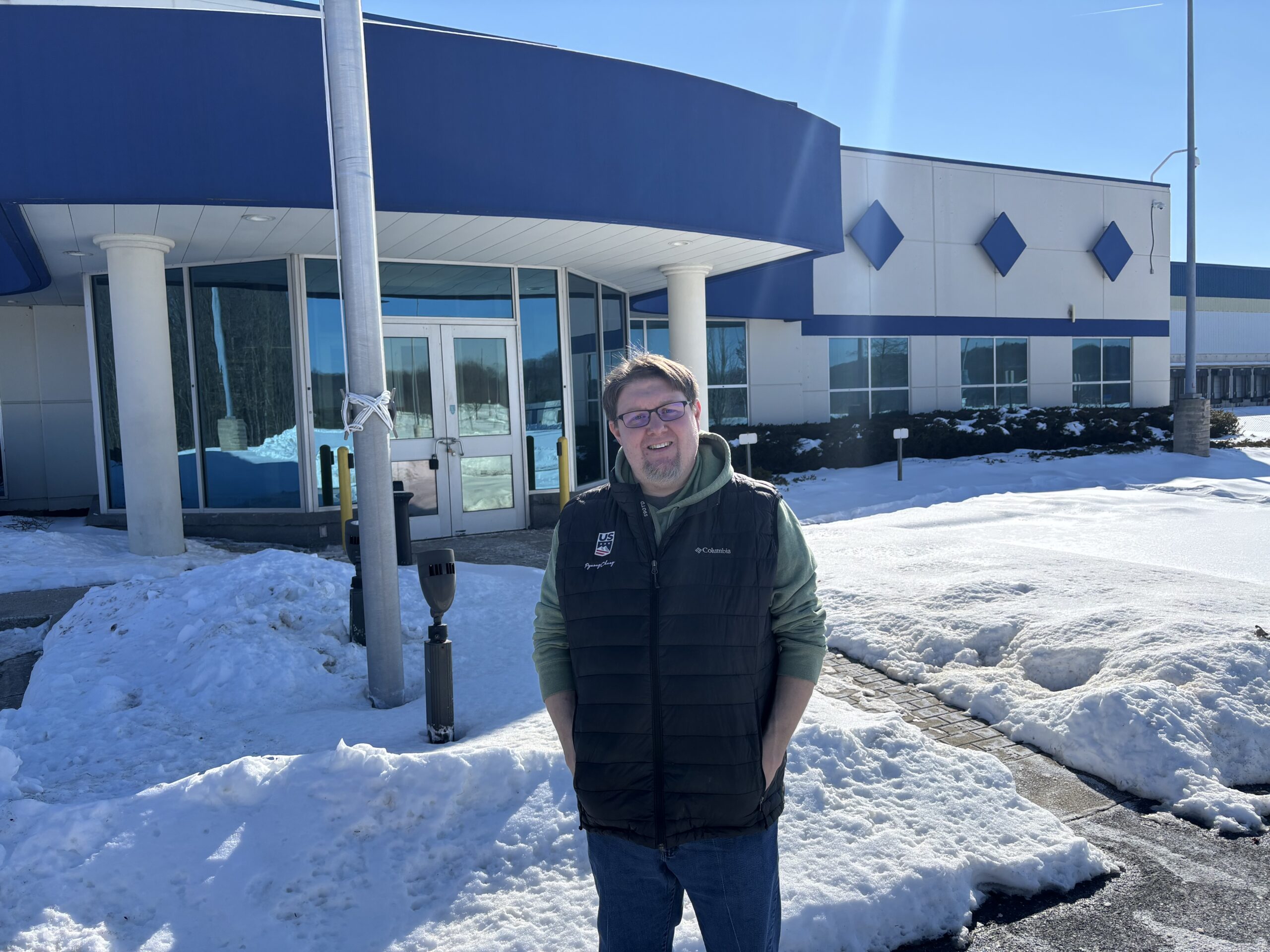
Brian Beissel, pastor at Christ’s United Lutheran Church in Ashland, Pa., stands in front of the former Big Lots warehouse in Tremont, Pa., that has been purchased by U.S. Immigration and Customs Enforcement (ICE), on Wednesday.
The Trump regime told America this day was coming. Its acting ICE director, Todd Lyons, said in an April interview that he wanted to run the agency like a business, with a deportation process “like [Amazon] Prime, but with human beings.”
Ironically, the soon-to-be ICE detention center in Schuylkill County, about 100 miles northwest of Philadelphia, is less than a mile from a massive new Amazon fulfillment center that opened in 2023. Soon, trucks carrying consumer bric-a-brac to Tremont will be jostling on Interstate 81 with buses carrying day laborers or restaurant servers in handcuffs to those reborn rows of truck portals.
ICE, flush with a whopping $45 billion in cash from Trump’s so-called Big Beautiful Bill to construct its human supply chain, is currently racing to buy sites for 23 detention centers with as many as 76,500 beds from coast to coast — often keeping communities like Tremont in the dark to thwart the inevitable opposition.
In fact, the Schuylkill County deal is the second ICE facility in east-central Pennsylvania announced just this week. A different warehouse location, which ICE envisions as a kind of feeder camp for 1,500 detainees, was also purchased for $87 million in Hamburg, Berks County — only 25 miles from Tremont.
Even if you could somehow put the morality of what many see as concentration camps on U.S. soil to the side, the government’s scenario for tiny Tremont — a coal-country hollow of two-story brick homes and faded American flags with just 2,000 residents — boggles the mind.
The Big Lots site could soon see a community of nearly 10,000 people — the 7,500 detainees and an estimated more than 2,000 workers to oversee them — that would instantly become the second-largest city in Schuylkill County (after Pottsville, the county seat). It’s just 300 yards from the largest daycare center in a township where the water and sewer system is already at capacity, with no local police force or nearby hospital to deal with the inevitable emergencies. The U.S. government won’t be paying the roughly $1 million a year in annual property taxes that propped up local schools and county and municipal services.
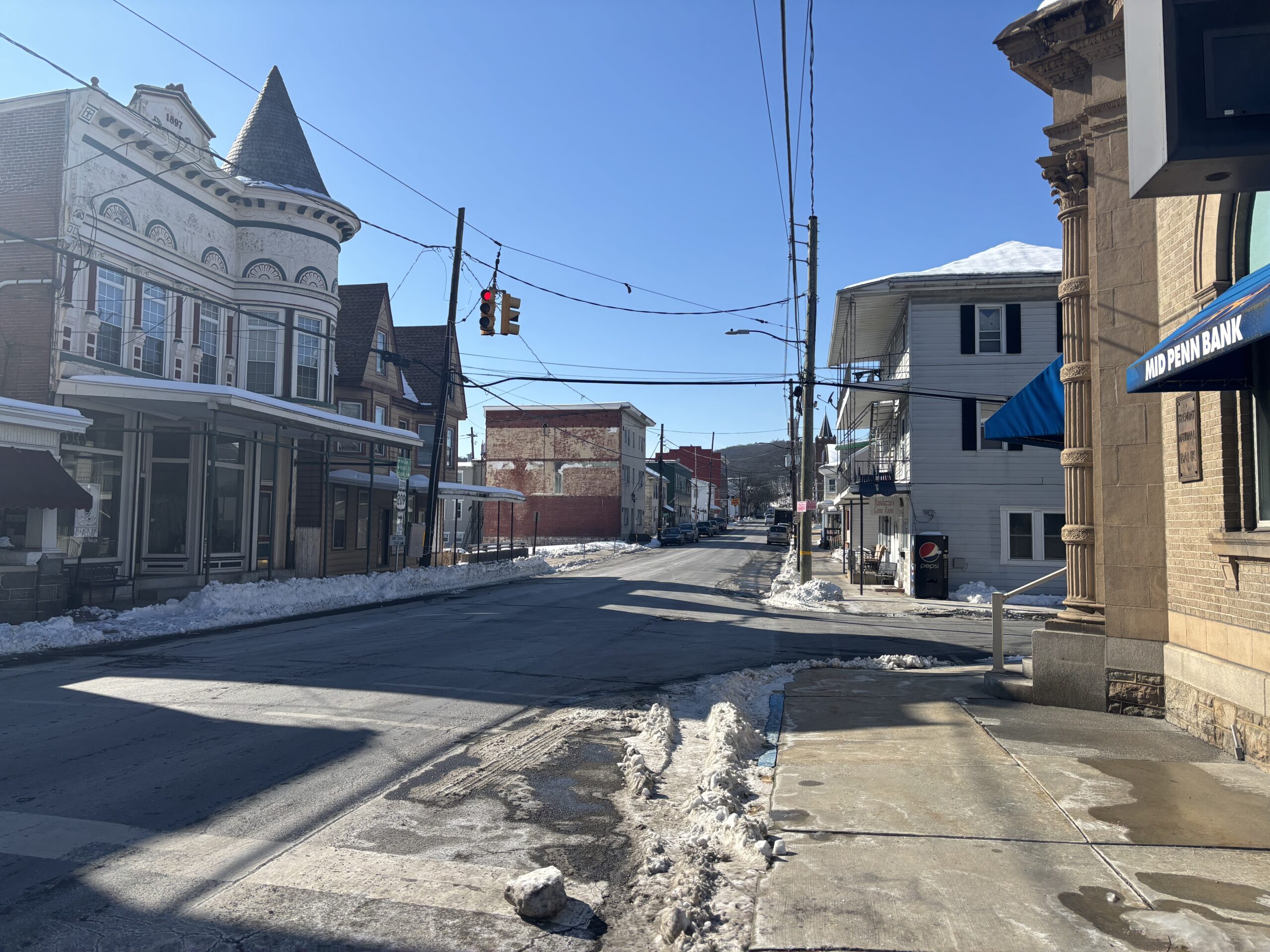
The empty streets of downtown Tremont, Pa., on Tuesday. The 2,000 people of the coal-country borough and its surrounding township would be dwarfed by 7,500 potential detainees at a planned ICE facility on the edge of town.
It’s these kinds of not-in-my-backyard worries that are driving a lot of the initial concern in Schuylkill County, especially from politicians who are cautious in talking about the fraught immigration issue in blood-red Trump country. “I am not going to get into a debate over the overarching immigration policies of the United States of America,” the GOP chair of the county commission, Larry Padora Jr., told a meeting on Wednesday, where he confirmed the ICE purchase of the warehouse.
But a growing number of neighbors do want to talk about those immigration policies, and the stench of inhumanity.
“I’m scared,” Tana Smith, a 24-year-old server at Behm’s Family Restaurant, the local wood-paneled breakfast hangout, told me about the pending ICE project. She, too, blended fears about the daycare site and possible escapees from a detention center with empathy for those same would-be detainees. “People’s families are just being, you know, ripped apart,” she said. “It’s really sad.”
Smith said she’d already gently lobbied her dad — a Republican who said, “I guess it’s just taking care of the illegal people” — against the ICE plan. “I was like, I don’t feel like that’s true at all,” she said. “I feel like they’re going after everyone.”
Andrea Pitzer, author of the definitive history of global concentration camps, One Long Night, said Tremont residents like Smith are right to be alarmed. She told me her research found that authoritarian regimes frequently rely on existing sites like abandoned warehouses or factories as they launch a growing network of gulags.
“The U.S. is clearly echoing previous history with these warehouse acquisitions,” she said. “Dachau — not a death camp, to be sure, but one of the earliest Nazi concentration camps — took over a converted factory when it began its heinous existence in 1933.”
A massive new ICE detention center is coming to Tremont Township in Schuylkill County. At full capacity, it would have a population roughly equivalent to 30 times the Township’s current population: https://t.co/Zp385ZKcjJ
Pitzer asked, “What things will they do on this new, huge scale behind barbed wire?” She noted that the warehouses are a massive expansion of a system that’s already at a record for detainees, with more than 73,000, and is already plagued by squalid conditions, a measles outbreak at the family detention site in Texas, and a death rate as much as 10 times as high as during the Biden administration.
No wonder ICE has moved to buy up new sites — including the two Pennsylvania warehouses — with a practically Soviet level of state secrecy. There are no public hearings. Top lawmakers from both parties have been left in the dark. “This was quiet,” the Democratic county commissioner, Gary Hess, told the meeting. “It was silent. And then, bango! There it was.”
“These will not be warehouses — they will be very well-structured detention facilities meeting our regular detention standards,“ the U.S. Department of Homeland Security insisted in a statement Wednesday. It added that the federal acquisitions “should not come as news,” as ICE expands its nationwide dragnet.
Yet, arguably the region’s most powerful politician, Republican U.S. Rep. Dan Meuser, who voted for the $45 billion fund, has sounded, fittingly, like TV’s fictional German prison camp guard, Sgt. Schultz: He knows nothing, nothing! His spokesperson said Meuser, with both planned facilities in his 9th Congressional District, “has requested a call with … [ICE], and our office has reached out for additional information to better understand the details of the situation. We have not yet received a response.”
Instead, it fell on Meuser’s likely Democratic opponent in November — Rachel Wallace, a former chief of staff for the U.S. Office of Management and Budget who has returned to her native Pottsville — to organize a town hall last week when the project was still rumored.
Lisa Von Ahn (left) and Josephine Kwiatkowski, members of the Schuylkill County chapter of Indivisible, attend a county commissioners meeting in Pottsville on Tuesday to speak out against a proposed ICE detention center in Tremont, Pa.
Most of the 100 or so peoplewho packed a fire hall voiced opposition, but for a variety of reasons. The local GOP state representative, Joanne Stehr, attended and agreed with the not-in-my-backyard concerns, but then drew loud boos when she reportedly said: “I’m saying ICE has a job to do, and it’s going to get done. We are taking out the trash.”
The growing uproar in Schuylkill County echoes brewing battles in many of the 21 other locations, even in areas that voted heavily for Trump in 2024. In Ashland, Va., a Canadian-based warehouse owner canceled its planned deal with ICE after economic pressure and opposition from county commissioners. Elected officials in Roxbury, N.J., and other proposed sites are also fighting to keep ICE out, but it’s unclear how much traction such an effort will get in red rural Pennsylvania.
“We want economic development, and we want good businesses that are part of the community,” Wallace, the congressional candidate, told me as she decried the process and her opponent Meuser’s silence. “And this is the opposite of that.”
And a growing number of Schuylkill County residents say their biggest alarm is less over the NIMBY concerns and more about the idea of their backyard hosting an American concentration camp.
“We have seen firsthand the brutality that government agents are using to detain American citizens, legal immigrants, and law-abiding immigrants without legal status, and the violence in our streets caused by masked, heavily armed agents,” Josephine Kwiatkowski, an Army veteran and retiree from Pottsville, told the commissioners. She said these scenes and “the civil rights violations, the lack of humanitarian conditions [in current ICE facilities], and the discounting of the Constitution are the same issues that I was willing to sacrifice my life to oppose.”
Pitzer, the concentration camp historian, said the time to act is now, before these proposed gulags are up and running.
“Those who made excuses for or ignored these kinds of camps in Russia in the 1920s or Germany in the 1930s couldn’t know how much more vast and lethal those systems would become a decade later,” she said. “But we, who have those examples and other horrors from around the world in our rearview mirror, have no excuse.”
This should be a five-alarm fire, not just for the politicians who’ve been trusted with keeping an American republic, but for citizens who are beginning to grasp a monstrous reality that was set into motion when Trump’s xenophobic demagoguery won a narrow plurality on Nov. 5, 2024. The image of our neighbors shipped in a supply chain like patio furniture and disappeared into the bowels of a Big Lots warehouse should have all of us asking a fundamental question.
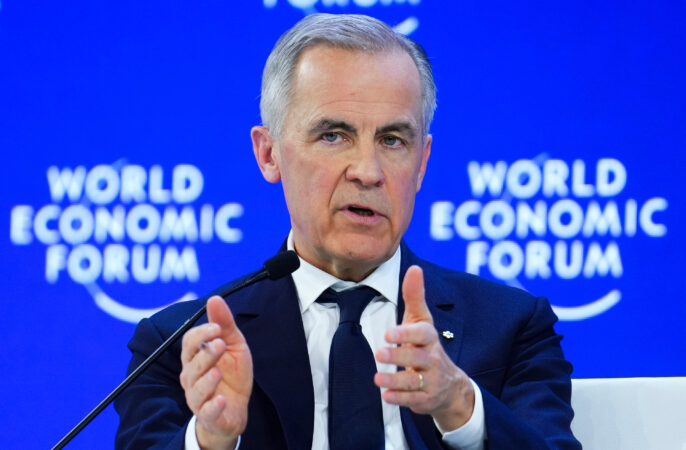
Canadian Prime Minister Mark Carney may have given the most important economic speech of all the attendees at the World Economic Forum in Davos, Switzerland.
In it, he addressed the changing face of world economic relationships with a clear, challenging conclusion: “Let me be direct: We are in the midst of a rupture, not a transition.”
His statement made it clear that the imposition of rules by the world’s most powerful nations will no longer be accepted quietly.
On behalf of Canada, the tenth largest economy, Carney threw down the gauntlet, saying the pattern of trade and economic relationships that has persisted for decades will undergo great changes, led not by the world’s superpowers, but by the midsize nations who trade with them.
The potential economic consequences for the U.S. are massive, though it could take many years before the impacts are clearly understood.
Many countries will alter their U.S. trade
While trade is a country-to-country activity, it is no different from a business-to-business relationship.
If your business partners work well with you, the relationship is long-lasting. But if your partner becomes abusive, a change in the nature of the collaboration is inevitable. You diversify.
After all the tariffs and threats, our trading partners realize they cannot remain overly dependent on the U.S. They must spread their exports and imports across a larger number of nations.
Already, Canada, Britain, and the European Union are discussing or finalizing deals with China and India on a variety of goods. These are just the start.
Agriculture in the crosshairs
China has cut back on soybean purchases from U.S. farmers. For the five months ending in October 2025, China bought no soybeans.
Given that China has been purchasing about 55% of U.S. production, U.S. soybean farmers have been devastated, requiring a multibillion-dollar bailout.
And to make it clear this is not a one-time reduction, China is working to expand its agricultural relationships with South American nations to more permanently diversify its farm supply chain.
The Canadian call to arms indicates other nations will likely follow the Chinese playbook to escape the political/tariff consequences of disagreeing with U.S. policy.
There is no coming back from that, to the long-term detriment of U.S. farmers.
Other key industries at risk
The military industrial complex is one. Europe purchases a significant amount of U.S. military products because its defense industry cannot supply the continent with enough weapons to go it alone. Instead, it has been hiding behind the U.S. defense shield.
With U.S. support for NATO in question, Europe now understands it must expand its domestic defense production and diversify its military supply chain.
While in the near-term, much of the growing European military demand might be met by U.S. suppliers, over the next five to 10 years, a whole new European defense industry is likely to be developed, putting sales to NATO nations by U.S. manufacturers at risk.
In China, EV sales topped 50% of the market last year, while in Europe, EV demand exceeded gasoline-powered vehicles in December for the first time. Sales growth in areas such as South Korea and South and Central America were up by about 50% in 2025.
Placing tariffs on products being embraced by the rest of the world, while disincentivizing their purchases domestically, is shifting the EV supply chain to countries where it is welcomed.
Similarly, the antagonism toward renewable energy is also creating competitive issues for U.S. companies.
Europe blew it badly when it decided to depend on Russian oil and natural gas for a significant portion of its energy needs. That has changed dramatically.
Europe is in a race to diversify its energy supply chain. But instead of ramping up demand for U.S. petroleum products, it is making agreements with energy companies based in the Middle East, North Africa, and Canada, and is rushing into renewable energy sources such as wind and solar.
As long as the U.S. wants to dictate to foreign countries how they should behave, the search for more dependable trading partners will continue. That will affect not just the industries highlighted but the entire economy.
The delinking of Europe and other countries from the U.S. will, over time, reduce foreign demand for our exports. They will have other sources of supply. That slows growth.
Prices and interest rates may rise
Interestingly, this change in the world’s trade patterns could force some manufacturers to return to the U.S.
That may sound positive, but it’s not. The reason goods aren’t produced domestically is that they can be produced more cheaply outside the U.S.
The only way previously imported products can be manufactured here is if the tariffs are high enough to make foreign goods more expensive than the domestically produced ones.
If the price we pay for the made-in-America goods is higher than what we paid when they were imported, replacing imported goods with tariff-protected domestic production is inflationary.
Higher prices also reduce consumer spending power.
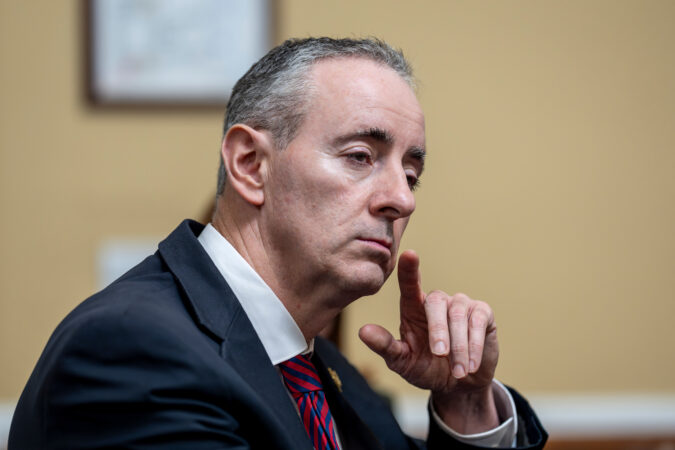
U.S. Rep. Brian Fitzpatrick has more cash on hand than any other GOP incumbent in a swing district nationwide as the party prepares for a tough election.
The Bucks County lawmakerraised about $4.3 million in the most recent cycle, more than any other House candidate in the state and the 21st most of all the candidates running for the 435-member House in 2026. He ended 2024 with nearly $4.4 million when removing debt and had more than $7.3 million cash on hand as of Dec. 31. That haul makes him the best-funded of the 16 candidates on the National Republican Congressional Committee’s Patriots program, a group of vulnerable incumbents in key swing districts, according to Federal Election Commission data.
“Brian Fitzpatrick has years of electoral success under his belt and will continue to be unbeatable in Bucks County because Pennsylvanians know he’ll always put them first in Washington … this race was over before it began,” NRCC spokesperson Reilly Richardson said in a statement.
But Fitzpatrick’s district is one of four in Pennsylvania that could determine the control of the U.S. House and has long been coveted by Democrats because of its purple electorate. It is one of nine GOP-held districts in the country that former Vice President Kamala Harris won in 2024.
Bob Harvie, a Democrat who chairs the Bucks County commissioners, has emerged as the front-runner to face Fitzpatrick in the 2026 election.
Harvie, who would need to win the May primary to face Fitzpatrick,raised nearly $930,000 last year and has more than $400,000 cash on hand. He surpassed $1 million after getting $100,000 in the first few weeks of the year, according to his campaign.
“Based on the outpouring of support we are receiving, it’s clear voters agree and are fired up to be a part of this campaign,” Harvie said Wednesday in a news release about his fundraising.
Harvie made history flipping the Bucks County board six years ago, has strong name recognition in the district, and has the backing of national Democrats. But Fitzpatrick ended the year with nearly 20 times more cash on hand.
Fitzpatrick received more money from each of New York and Florida than from in-state donors in 2025, according to FEC data. Harvie received the vast majority of his money from Pennsylvania.
Fitzpatrick could be less vulnerable than other swing-state Republicans
He recently joined Democrats and two other swing-district Republicans in the state to vote to extend Affordable Care Act subsidies, which Republicans quashed. Fitzpatrick criticized House Speaker Mike Johnson (R., La.) and called some of his Republican colleagues “intellectually dishonest.” But Democrats have argued that Fitzpatrick has not been critical enough of the president, whom he often avoids naming when challenging his policies.
Jim Worthington, a GOP mega-donor in Pennsylvania and owner of the Newtown Athletic Club, said that Fitzpatrick’s approach makes him “the perfect representative for a purple county.”
“Everybody that’s moderate and people that are independents, they love him because he votes to what best represents his constituents, and by the way, sometimes he takes some votes that make me cringe a little bit, but I understand why he does it,” Worthington said.
Heather Roberts, a spokesperson for Fitzpatrick’s campaign, attributed the incumbent’s fundraising success to his ability to break the partisan mold.
“Strong fundraising follows strong leadership — and Congressman Fitzpatrick has built a broad coalition of Republicans, Democrats, and Independents who are rejecting the extremes and backing two-party, patriotic, common-sense solutions,” Roberts said in a statement.
Fitzpatrick “is no maverick and no John McCain — he is a doormat for Trump’s worst instincts and a greenlight for D.C. Republicans’ dangerous agenda that is hurting our community,” Harvie said Wednesday in a statement to The Inquirer.
“Pennsylvanians deserve a Congressman who will stand up to Trump and actually do something to lower prices — but Fitzpatrick is weak and caves to his own party when it matters most,” said Eli Cousin, a spokesperson for the Democratic Congressional Campaign Committee, in a statement.
Harvie has less cash on hand than the other Democratic front-runners in the state’s swing districts.
Janelle Stelson, a second-time challenger to Perry, ended 2025 with about $1.5 million cash on hand. Scranton Mayor Paige Cognetti, who is challenging Bresnahan, ended the year with a little more than $800,000 cash on hand. Former federal prosecutor Ryan Croswell, Mackenzie’s Democratic challenger with the most cash, has $612,000 for the Lehigh Valley race.
Does name recognition make Harvie a ‘formidable’ challenger?
Harvie’s campaign is confident that he can cash in on name recognition, having won two countywide commissioner races in the last seven years that could help raise his profile among voters in the 1st Congressional District, which includes all of Bucks County and a sliver of Montgomery County.
Provided he wins the primary, Harvie would be the first Democratic challenger to Fitzpatrick’s seat who has held countywide elected office.
But will that help Harvie’s chances?
“The starting point that Bob Harvie has with his name ID as a commissioner is just a much better starting point,” said Brittany Crampsie, a Democratic consultant in Pennsylvania, noting that he would not need to spend as much money introducing himself to voters in an expensive Philadelphia-area media market.
“He has a lot of advantages going into this race, not the least of which is his name ID, but he would be probably the most formidable matchup we’ve seen against Fitzpatrick in his tenure,” she added.
“Maybe,” GOP consultant Christopher Nicholas said as to whether Harvie has valuable name recognition, adding that “among hardcore Democrats his name ID is decent because they’re hardcore Democrats.”
“But if you stood out on the streets of Tullytown or Riegelsville or Dublin and said, ‘Who are your county commissioners?’,” residents may be unfamiliar, Nicholas said.
As of October 2025, 43% of respondents to an internal Harvie campaign survey conducted by Public Policy Polling could identify Harvie, with 26% giving him a favorable rating and 17% an unfavorable. That poll had the commissioner and Fitzpatrick tied at 41%.
This article has been updated to include a comment from Fitzpatrick’s campaign received after publication.