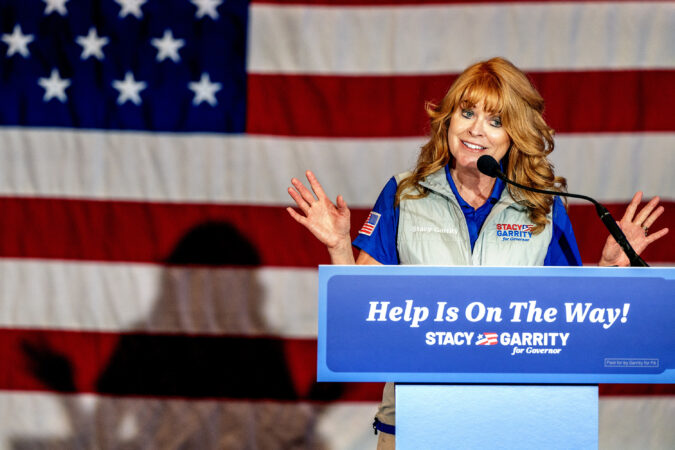
President Donald Trump endorsed Pennsylvania Treasurer Stacy Garrity for governor Tuesday evening, awarding her the coveted nod from the leader of the Republican Party as she tries to unseat the popular Democratic incumbent Gov.Josh Shapiro in November.
In a post on his Truth Social platform, Trump declared Garrity “WILL NOT LET YOU DOWN” and stated that as governor, she would work to grow the economy, strengthen the military, keep borders secure, and safeguard elections, among other priorities.
“Stacy is a true America First Patriot, who has been with me from the beginning,” Trump wrote.
Garrity, the state’s second-term treasurer,has led the low-profile office without controversy and boasts that her staff has blocked nearly $2 billion in improper payments. The retired U.S. Army colonel in 2024 broke the record for highest number of votes received in a state-level race in Pennsylvania, and she quickly earned the support of the state party establishment last year.
In a statement Tuesday, Garrity said she was honored to receive Trump’s endorsement, adding that the president has “been a voice for hardworking Americans who have been left behind.”
“Josh Shapiro is President Trump’s number one adversary, and I am looking forward to working with President Trump and his team to defeat Josh Shapiro this November,” Garrity said.
At right is Pennsylvania Governor Josh Shapiro listening to Stacy Garrity, 78th State Treasurer, Forum Auditorium, Harrisburg, Pa., Tuesday, Jan. 21, 2025.
Garrity is a longtime Trump supporter from rural Bradford County, who in 2022 at a Trump rally repeated his false claim that he won the 2020 presidential election — a position she has since walked back, telling reporters earlier this month that she had gotten carried away in the moment when she said that.
Last summer, Trump said he would support another potential candidate — U.S. Rep. Dan Meuser (R., Pa.) — if he ran.Weeks later, the Northeast Pennsylvania Republican declined to run andannounced he would seek a fourth term in Congress instead. Meuser quickly endorsed Garrity once she formally joined the race, and she continues to capture more GOP officials’ endorsements as Pennsylvania’s May 19 primary election inches closer.
Garrity is currently running unopposed as the Republican candidate for governor, after State Sen. Doug Mastriano announced he would not run again this year after losing by nearly 15 percentage points to Shapiro in 2022. However, Garrity has yet to announce who she wants as her running mate for lieutenant governor, with largely far-right conservatives — including Mastriano — interested in the job.
Still,Trump’s endorsement of Garrity could draw needed eyes and checkbooks to her campaign, as her fundraising in the early months of the race has lagged far behind the $30 million war chest Shapiro has amassed over the last few years. Earlier this month, Garrity announced that her campaign had raised nearly $1.5 million from August through December.
Republicans are hopeful that Garrity can drive enough enthusiasm at the top of the state ticket to motivate GOP voters to come out to vote throughout Pennsylvania, boosting candidates up and down the ballot in a year where control of Pennsylvania’s General Assembly and the U.S. House of Representatives is on the line.
“Pennsylvanians deserve better than a Governor who is nothing more than a rubber stamp for Trump’s chaos and higher costs, and that’s why she will be soundly rejected this November,” Pennsylvania Democratic Party chair Eugene DePasquale said in a statement.
Helicopter manufacturer Leonardo has nearly doubled employment at its Northeast Philadelphia factory since the Rome-based multinational aerospace company began winning U.S. military orders for that factory in the late 2010s.
But the company, whose owners include the Italian government and U.S. investment funds such as BlackRock and Vanguard, has learned what dominant U.S. defense contractors like Boeing have long known: Military planners, policy, and political shifts can stop, delay, or revive long-term contracts, leaving managers scrambling to keep workers and factories busy.
Given the complexity of parts supply, skilled labor, and other aspects of helicopter production, “it is destabilizing and difficult if you don’t know if you are going to build two or 16 aircraft for a given program year after year,” said Andrew Gappy, vice president of Leonardo Helicopters USA Inc., a retired Marine whose duties included flying Presidents Bill Clinton and George W. Bush on Marine One helicopters.
Grey Wolf is based on Leonardo’s civilian, two-engine AW139, part of a movement by military planners to speed production and streamline costs by basing more big-ticket military machines on large-production civilian products and private-sector construction managers. It’s a model that Korea-based Hanwha hopes to use in winning Navy contracts for its shipyard in Philadelphia.
More than half the Grey Wolfs would defend nuclear weapons bases in several western U.S. states. Most of the rest would be used to ferry political leaders around Washington in case of an attack on the nation’s capital, replacing aging UH-1N Huey helicopters on duty since the 1970s.
So far, 19 of those helicopters have been paid for and delivered. Another 12 are funded and nearing completion. But funding for future construction hit unexpected snags.
After Air Force design changes and a challenge by Lockheed Martin’s Sikorsky unit, which had proposed rival helicopters of its own, Leonardo and Boeing said they started production on the first Grey Wolfs in 2023.
They planned to keep building a dozen a year for seven years — about a quarter of the Leonardo plant’s annual output. They hoped to win more contracts along the way.
Last year, the partners had expected to fund future production with $173 million in appropriations as laid out in President Donald Trump’s 2025 budget, plus $210 million in his Big Beautiful Bill, backed by the two Republican senators from North Dakota, home to Minot Air Force Base.
But those payments didn’t materialize on schedule. The Big Beautiful Bill payments were held up, frustrating the Grey Wolf partners.
And then in November, Congress’ new National Defense Authorization Act listed more than $100 million retrofitting previously-delivered Lockheed-built helicopters to transport VIPs but just $10 million for the Grey Wolf program — not enough to build a single helicopter.
The Air Force had justified upgrades of unused aircraft in a budget proposal earlier last year as a cheaper way to acquire helicopters. Grey Wolf defenders objected that the Air Force studies had already verified the new helicopter would be much less expensive to operate.
The cuts would “starve” the Grey Wolf program, Mike Cooper, Leonardo’s government relations chief, said in December. “It’s hard for businesses to plan, when competitively bid procurements can be abruptly and unilaterally changed.”
Last fall, a bipartisan group of five Congress members, headed by Rep. Donald Norcross (D., N.J.), whose South Jersey constituents include workers at Boeing and Leonardo, sent Air Force Secretary Troy Meink a letter that they were “troubled” to hear reports that the Air Force was now planning to update old helicopters for VIP transport and evacuation missions, instead of funding the new ones.
They noted that the Air Force already had selected the Boeing-Leonardo aircraft over two proposals from Lockheed Martin.
They called the switch an “unprecedented change in procurement,” which “undermines the integrity of the acquisition process, calls into question the criteria” for the original selection, “and raises concern about why an otherwise performing program would be truncated without clear explanation to Congress” or the companies that agreed to the contract.
They asked the Air Force for any studies it had made to justify the more expensive Jolly Green program, which they said would cost far more to buy and operate. They also noted the impact on workers, suppliers, and finances at Boeing in Ridley Park, Leonardo in Northeast Philly, Leonardo’s Florida testing site, and contractors who had already invested in the program the Air Force has now failed to fund.
Congress members who represented districts that include additional Boeing or Leonardo facilities support Norcross’ effort. They are Reps. Carlos Gimenez (R., Fla.), Salud Carbajal (D., Calif.), Robert J. Pittman (R., Va.), and John J. McGuire III (R., Va.).
Lockheed Martin officials said they hadn’t taken business from Leonardo. The military planned to convert older helicopters to VIP carriers by adding new seating at Air Force bases, not at the company’s Sikorsky military helicopter factories in Connecticut or New York.
Sikorsky’s civilian helicopter plant in Coatesville, Pa., closed in 2022. It was taken over in 2024 by Piasecki Aviation, a Delaware County-based company that has had its own federal contracting and hiring hopes deferred by government and private-sector contracting delays, according to industry sources. Piasecki didn’t respond to inquiries.
“The MH-139 Grey Wolf is vital to our national defense and supports American jobs,” Norcross said in a statement Jan. 15. “Congress funded the MH-139 because it offers major improvements in speed, range, and survivability.”
He said the Air Force had not directly responded, “but I will continue pressing the administration.”
The same week, a key Air Force commander confirmed in an Air Force publication that the first Grey Wolfs had completed their first Minuteman III convoy operation between two Western air bases, noting they are significantly faster, fly farther, and lift more than the helicopters they replace.
Two sources familiar with the program said the first payments from Congress’ $210 million have been received since that test.
And on Jan. 20, a new federal appropriations proposal added $60 million to the Grey Wolf program — not the whole $173 million, but more than the $10 million in the earlier law.
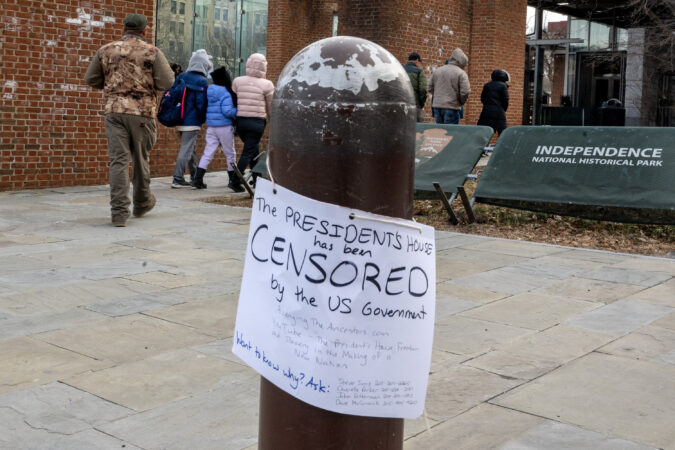
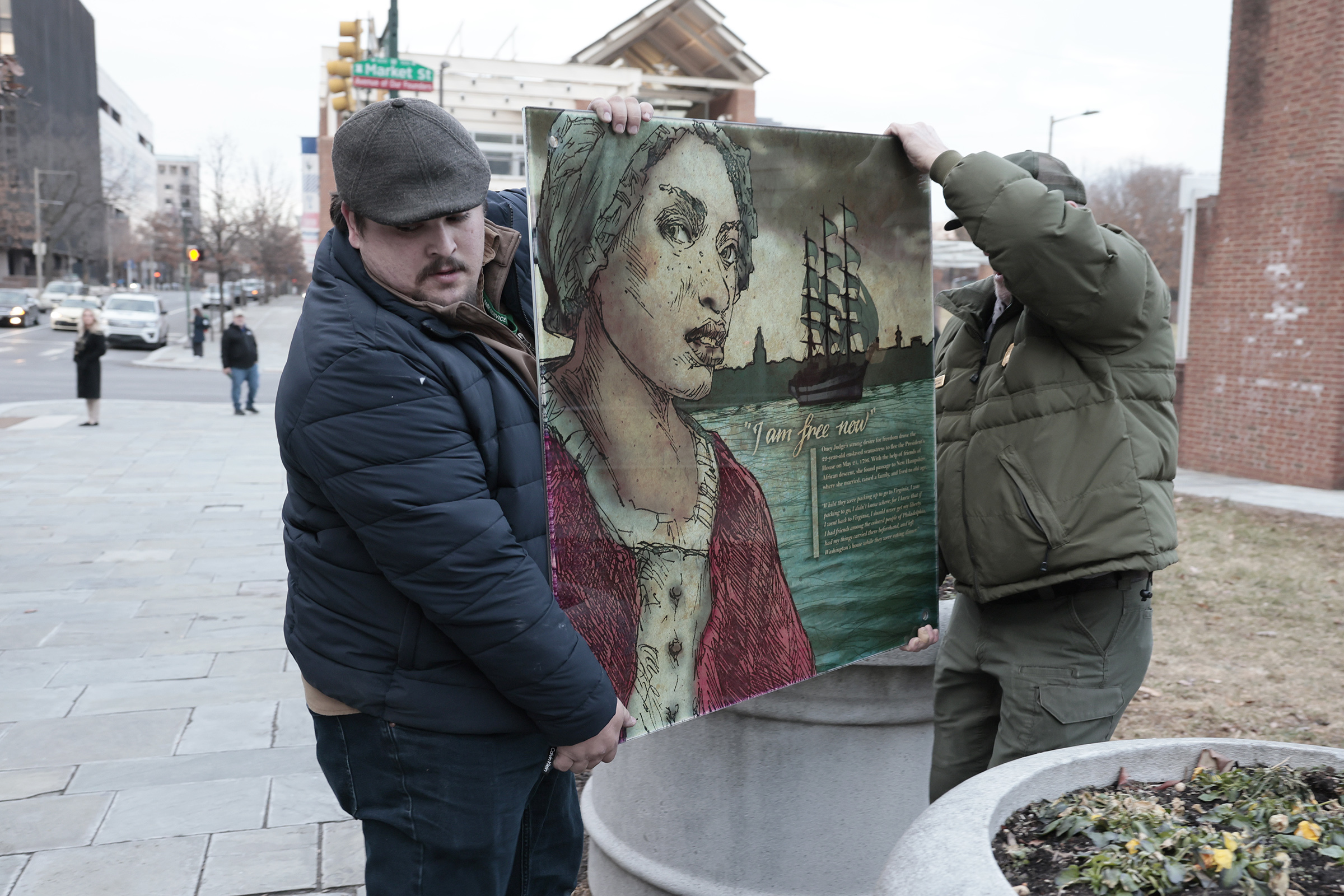
In the span of a roughly an hour and a half, years of hard work from a group of artists, architects, historians, attorneys, and writers who helped create the President’s House in the early 2000s were ripped off the walls and hauled into the back of a pickup truck to be dropped off who-knows-where.
This brazen demise of the exhibits,which memorialized the nine people George Washington enslaved at the site, was never supposed to happen, said Troy C. Leonard, partner and principal at the Philadelphia-based Kelly Maiello Architects, who helped design the President’s House almost two decades ago.
“Because the panels were not meant to be removed, they were very violently taken down, you know, ripped from their backgrounds,” Leonard said in an interview Monday.
“I would suspect that they did a lot of damage, physical damage, to the site in taking those panels down,” he added.
Workers remove the displays at the President’s House site in Independence National Historical Park Thursday, Jan. 22, 2026.
Leonard is one of many stakeholders who helped create the President’s House and are now grappling with its sudden removal last week after a monthslong review by President Donald Trump’s administration.
In the early 2000s, the site was developed at Independence National Historical Park as a memorial intended to highlight the horrors of slavery that took place during the founding of a nation based on liberty. It featured numerous educational exhibits. Everything at the site was historically accurate.
“Just sort of slithering onto the site was a very cowardly way of doing it without any mention that it was going to happen, notifying anyone, just coming in and starting to take the panels down,” Leonard said.
It’s all in connection with orders from Trump and Interior Secretary Doug Burgum, who called for the review and potential removal of content at national parks that could “inappropriately disparage Americans past or living.”
Independence Park employees were also given talking points that evade visitors’ questions about the site.
At Independence Park, Leonard said he is concerned about the future of the site. After last week’s takedown, the open-air exhibit is now a bunch of blank, faded brick walls. All that is left of the memorial is the site’s original archaeological dig from the 2000s and a wall with the engravings of the names of the nine people Washington enslaved.
The City of Philadelphia has sued Burgum, acting National Park Service Director Jessica Bowron, and their respective agencies to restore the panels. Gov. Josh Shapiro’s office filed an amicus brief in support of the city’s suit Tuesday.
“To leave it the way that it is, I mean, to me, it’s sort of now a memorial to the death of democracy and truth,” Leonard said. “That’s what it is now. It’s sort of just these blank walls that are just sitting there. It’s sort of a ruin, but it’s a pathetic ruin because part of its heart has been ripped out.”
Snow falls at the Presidents House on Sunday, January 25, 2026, after the National Park Service took down slavery exhibits several days earlier.
History is ‘lost and found’
Around two decades ago, more than 1,000 miles away from the Sixth and Market home of the President’s House, a Kansas City-based exhibit design firm crafted the illustrations and graphics seen throughout the site.
All of which were torn down last week.
Gerard Eisterhold, president of the firm, Eisterhold Associates Inc., said in an interview that he got a slew of texts and emails when the exhibits were taken down. He said this incident proves a “thesis” that designers were trying to portray to the public through the President’s House — that history goes through cycles of being lost and then found.
“There were the history of the enslaved that was sort of forgotten for a long, long, long, long time, and that’s a conscious thing that people do. … There’s a heck of a lot more people that are aware of the history of President’s House this week than there was last week,” Eisterhold said.
In fact, there was a sign at the President’s House called “History Lost + Found,” which outlined the juxtaposition of liberty and slavery during the early days of the United States.
“History is not neat,” the History Lost + Found panel at Independence Park read. “It is complicated and messy.”
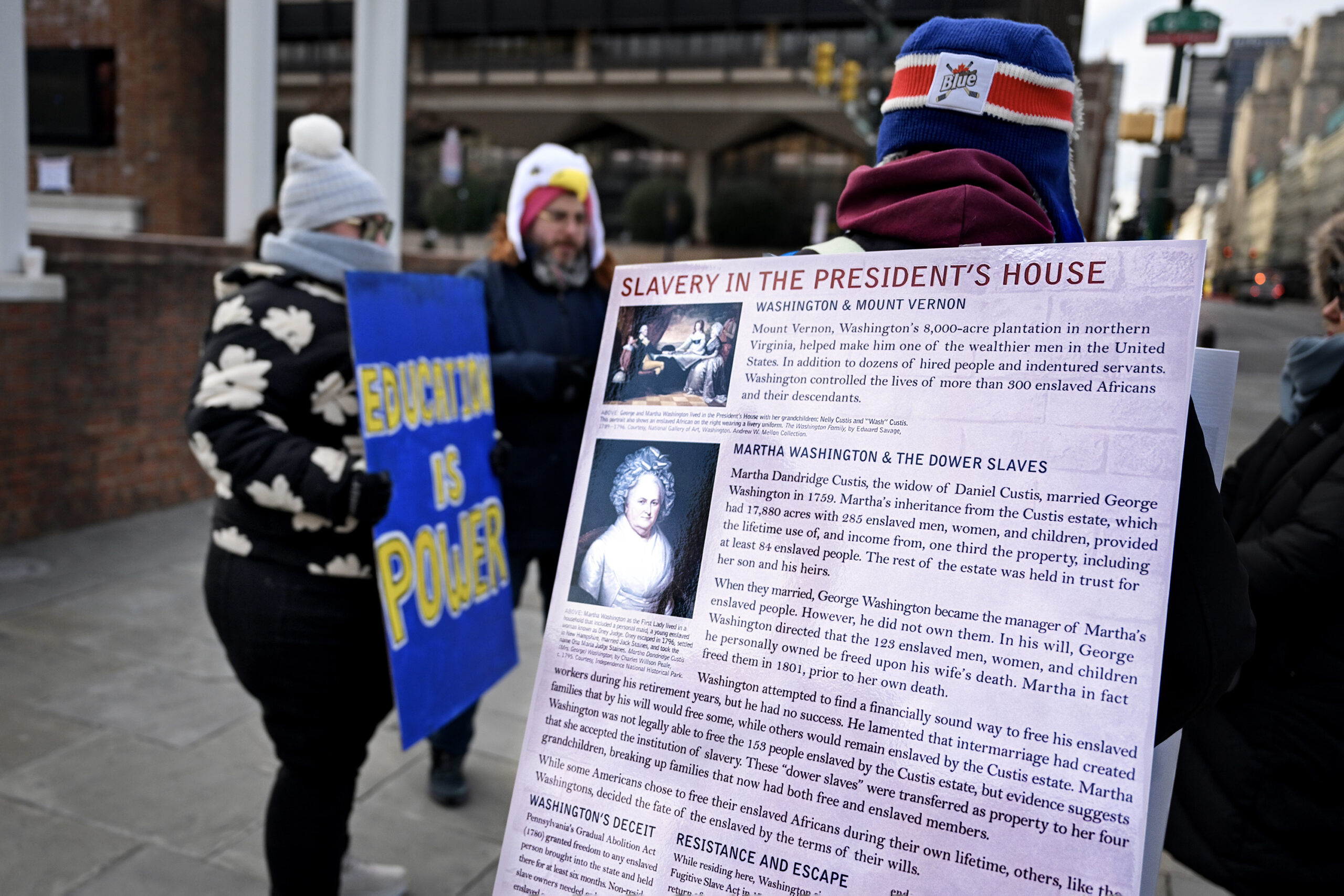
This panel was one of dozens that were taken down last Thursday. Others were titled “Life Under Slavery” and “The Dirty Business of Slavery.” And there were illustrations of important figures, like Oney Judge, who was enslaved as Martha Washington’s personal maid before she escaped. Hercules Posey, who was enslaved as a cook, also later self-emancipated.
“But here we are. Because how dare we write their names, the nine enslaved Africans at the first American presidential residence. … How dare we encode instructions to the future by writing about the two who escaped?” author Lorene Cary, who helped with storytelling at the President’s House along with documentary filmmaker Louis Massiah, wrote on her Substack last week. “The names are still there, carved into stone.”
National Park Service workers remove the displays at the President’s House site in Independence National Historical Park in Philadelphia on Thursday, Jan. 22, 2026.
The creation and display of these panels were the product of collaboration across disciplines, Cary wrote.
“So many people — scholars and passionate non-scholars — worked, argued, met, studied, wrote, agitated, and created art for this unique and necessary American project.”
Leonard said his firm has been working with Michael Coard, attorney and leader of the Avenging the Ancestors Coalition, which has been helping leadefforts to defend the President’s House from the Trump administration. The coalition, through its advocacy, helped shape the President’s House roughly 20 years ago.
If the city wins its lawsuit and the panels are restored, the site will likely needa refurbishment and stakeholders will need to ensure that the panels are still in good condition.
Ted Zellers (right) wears a sandwich board with a replica of one of the removed slavery panels as people visit and protest at the President’s House site in Independence National Historical Park Saturday, Jan. 24, 2026.
Some Philadelphians have floated the idea of moving the displaced panels to another location if the site faced the ire of the Trump administration. But for Leonard, Sixth and Market is the rightful, historically important home for the exhibits.
“The place is equally important,” Leonard said. “It is not complete without being located at that site. So it’s important to the fight to make sure that that memorial is restored at that location. It cannot be relocated.”
In Harrisburg, a top Democrat floated making Pennsylvania a so-called sanctuary state to protect undocumented immigrants.
And in Washington, senators faced mounting pressure to hold up funding for the Department of Homeland Security, an effort that could result in a government shutdown by the end of the week.
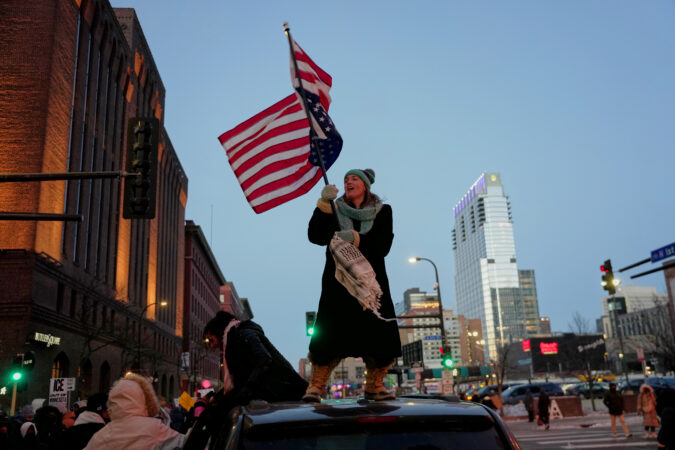
Across the nation, lawmakers are fielding calls to rein in U.S. Immigration and Customs Enforcement after President Donald Trump’s administration surged forces into Minneapolis as part of his aggressive nationwide deportation campaign. Frustration with the agency reached new heights Saturday after agents fatally shot protester Alex Pretti, the second killing of a U.S. citizen there this month.
Democrats nationwide slammed ICE and called on Trump to pull the forces out of Minnesota. Sen. John Fetterman, the Pennsylvania Democrat who has at times sided with Trump on immigration matters, said DHS Secretary Kristi Noem should be fired.
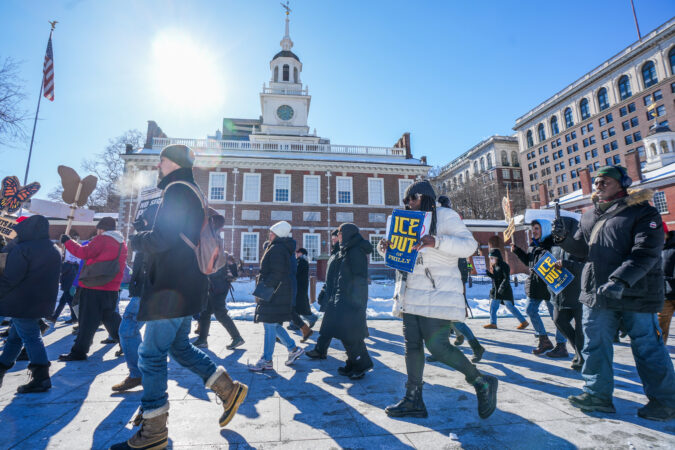
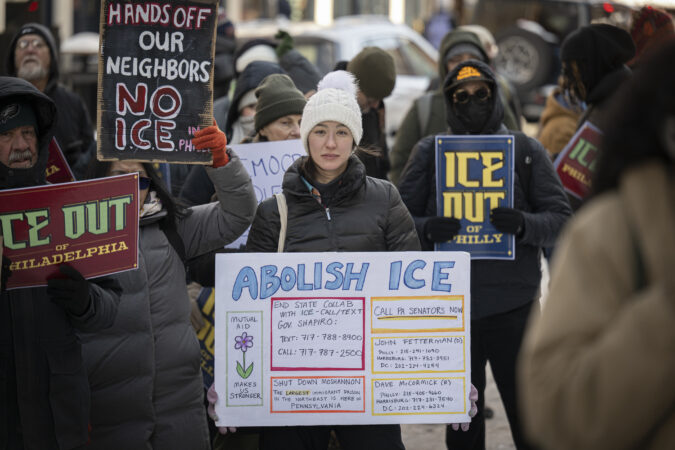
Anti-ICE activists demonstrate outside U.S. Sen. John Fetterman’s Philadelphia office on Monday, calling for an end to federal immigration enforcement policies.
A growing number of Republicans have also signaled their discomfort with the Minneapolis operation, including Trump allies who called on members of the administration to testify before Congress. Sen. Dave McCormick, a Pennsylvania Republican, has called for an independent investigation into Pretti’s killing.
Trump, for his part, showed some willingness to change course, sending border czar Tom Homan to Minneapolis to meet with Democratic leaders there. The president on Tuesday called Pretti’s death a “very sad situation.”
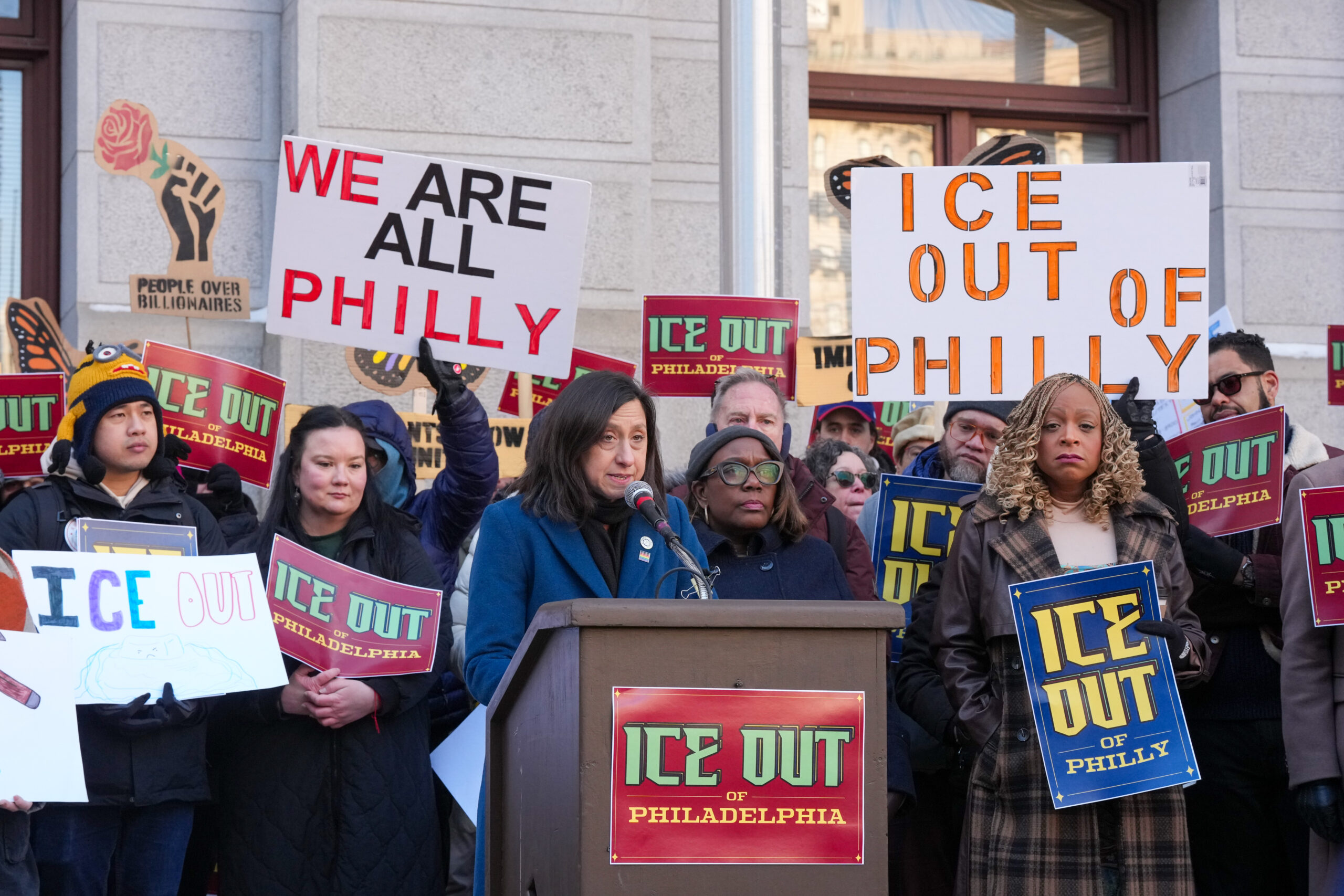
Rue Landau shown here during a press conference at City Hall to announce a package of bills aimed at pushing back against ICE enforcement in Philadelphia on Tuesday.
However, a chorus of Democrats and activists said Tuesday that the agency needs to change its tactics and be held accountable for missteps. And local leaders said they are laying out plans in case a surge of immigration enforcement comes to Philadelphia, home to an estimated 76,000 undocumented immigrants.
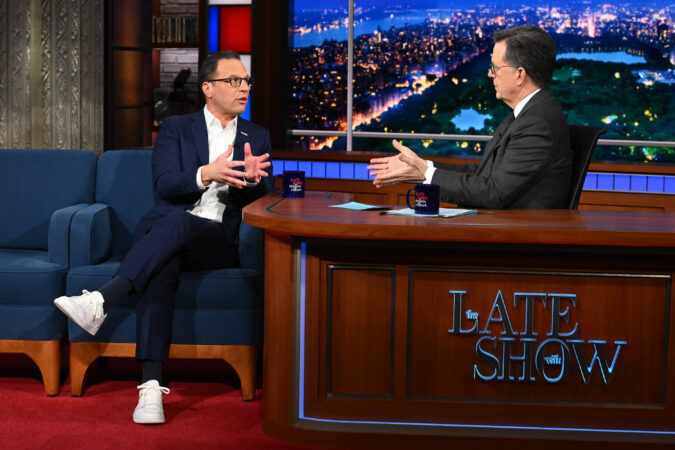
“We have spent hours and hours and hours doing tabletop exercises to prepare for it,” Gov. Josh Shapiro, a Democrat, said during a Monday night interview on The Late Show with Stephen Colbert.
Philadelphia officials said the best way they can prepare is by limiting the city’s cooperation with federal immigration enforcement.
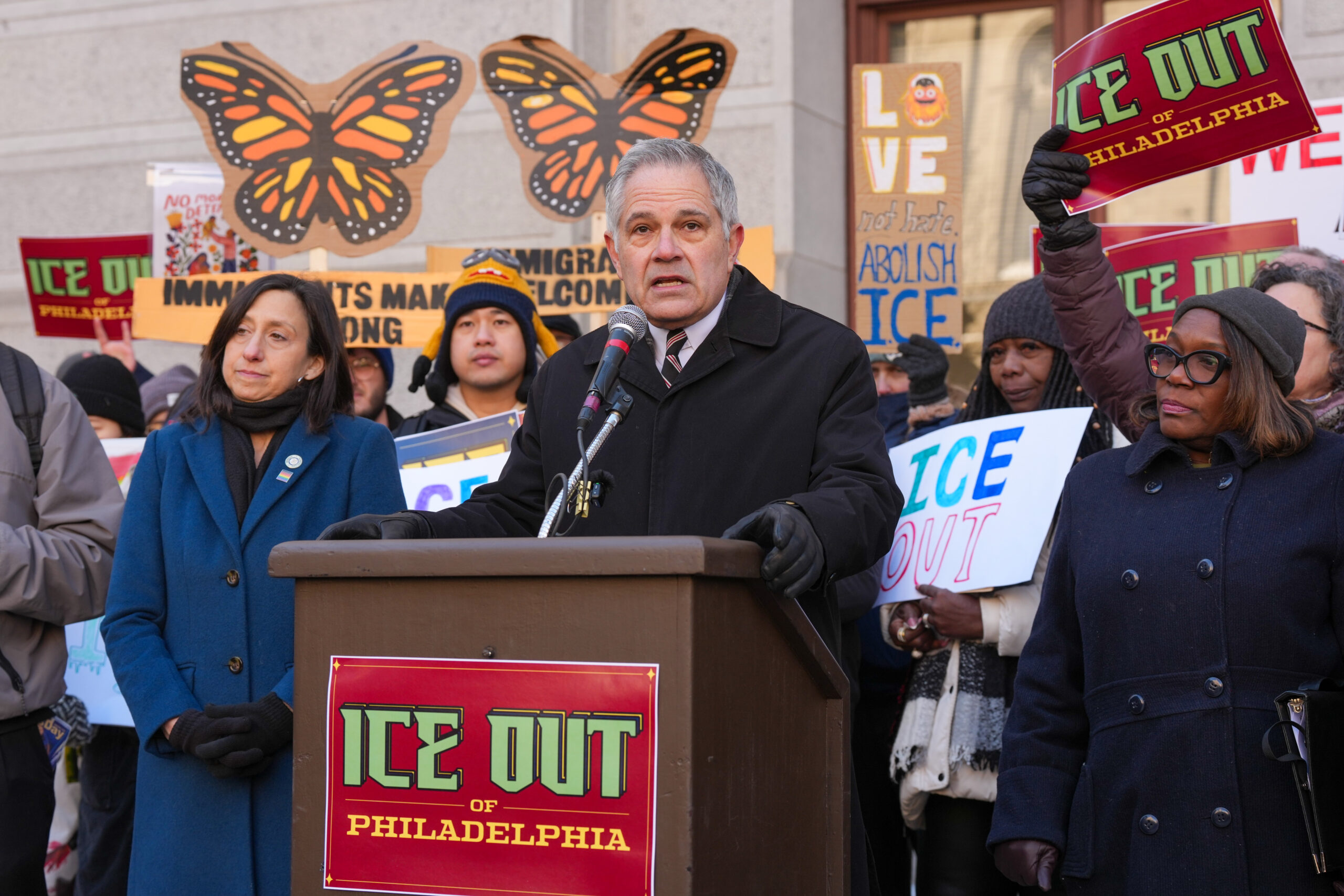
City Councilmember Kendra Brooks, of the progressive Working Families Party, and Councilmember Rue Landau, a Democrat, were joined by dozens of activists and other elected officials during a news conference Tuesday to unveil a package of legislation aimed at codifying into law the city’s existing “sanctuary city” practices.
Those policies, which are currently executive orders, bar city officials from holding undocumented immigrants in custody at ICE’s request without a judicial warrant.
Landau and Brooks’ legislative package, expected to be introduced in Council on Thursday, goes further, preventing ICE agents from wearing masks, using city-owned property for staging raids, or accessing city databases.
Erika Guadalupe Núñez, executive director of immigrant advocacy organization Juntos, said the legislation “goes beyond just ‘We don’t collaborate.’”
Juntos gets regular calls about ICE staging operations at public locations in and around Philadelphia, and people have been worried, despite official assurances, whether personal information held by the city will be secure from government prying.
“We deserve a city that has elected leadership that’s willing to step forward with clear and stronger protections,” Núñez said.
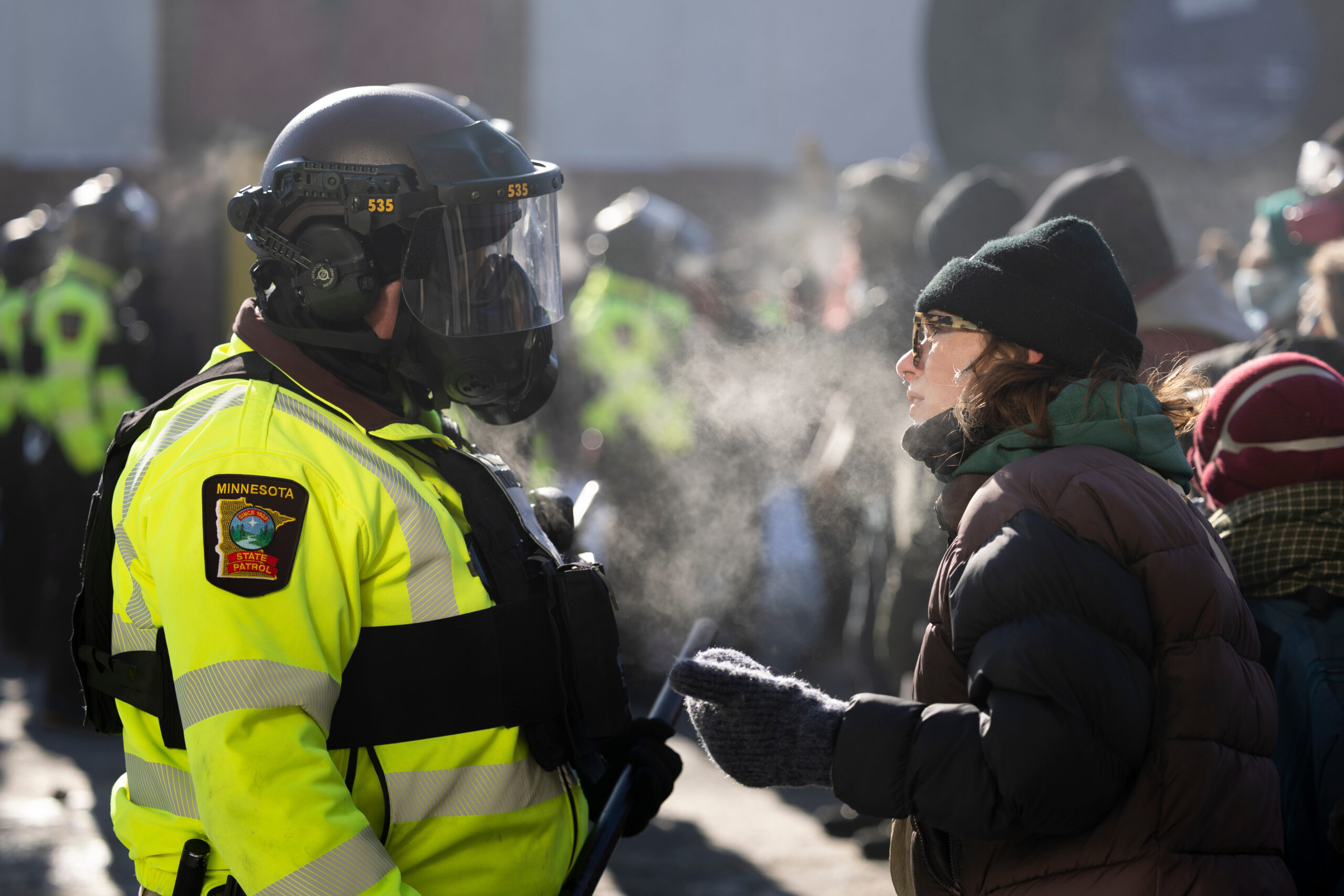
A protester speaks to a Minnesota State Patrol officer near the site of the fatal shooting of 37-year-old Alex Pretti by federal agents in Minneapolis on Saturday.
If the legislation is approved, Philadelphia would have some of the most stringent protections for immigrants in the country.
Oregon has especially strong restrictions against cooperation with federal immigration authorities, including barring local law enforcement from detaining people or collecting information on a person’s immigration status without a judicial warrant.
In Illinois, local officers “may not participate, support, or assist in any capacity with an immigration agent’s enforcement operations.” They are also barred from granting immigration agents access to electronic databases or to anyone in custody.
California, New York, Colorado, Vermont — and individual jurisdictions in those states — also provide strong protections for immigrants.
In New Jersey, Gov. Mikie Sherrill, a Democrat who was sworn in last week, has kept the state’s sanctuary directive in place as lawmakers seek to expand and codify the policy into law. Legislators came close in the final days of former Gov. Phil Murphy’s administration, but he killed a related bill that had won approval in Trenton, saying he worried that enacting a law that included changes to the state’s current policy would invite new lawsuits.
Meanwhile, some conservatives say bolstering sanctuary policies risks community safety.
“If an illegal immigrant breaks the law, they should be dealt with and handed over to federal law enforcement, not be released back into our neighborhoods to terrorize more victims and commit more crime,” said James Markley, a spokesperson for the Pennsylvania Republican Party.
He added: “Sanctuary policies don’t protect communities, they endanger all of us by shielding criminals from accountability for their crimes.”
Democrats are taking varying approaches
The widespread outrage over ICE’s tactics in Minneapolis has exposed sharp divisions in elected Democrats’ responses.
“There will be accountability now. There will be accountability in the future. There will be accountability after [Trump] is out of office,” Krasner said Tuesday. “If we have to hunt you down the way they hunted down Nazis for decades, we will find your identities.”
District Attorney Larry Krasner speaks during a news conference at City Hall on Tuesday to announce a package of bills aimed at pushing back against ICE enforcement in Philadelphia.
Somewhere in the middle is State Sen. Sharif Street, a Philadelphia Democrat and former head of the state party who is running for Congress.
Street does not have Krasner’s bombast, but this week he announced plans to introduce legislation to prevent state dollars from funding federal immigration enforcement. The bill has less of a chance of becoming law in Pennsylvania’s divided state legislature than similar measures would in Philadelphia, where City Council is controlled by a supermajority of Democrats.
“Who knows the amount of money that the state could incur because of Trump’s reckless immigration policies?” Street said in an interview Tuesday. “I don’t think state taxpayers should be paying for Donald Trump’s racist, reckless policies.”
The mayor’s critics have said her approach is not responsive to the city’s overwhelmingly Democratic residents.
“To the people of Philadelphia, I want to say: I hear you. You want ICE out of our city, and you want your local government to take action,” Brooks, the Council member, said Tuesday. “Some people believe that silence is the best policy when dealing with a bully, but that’s never been an option for me.”
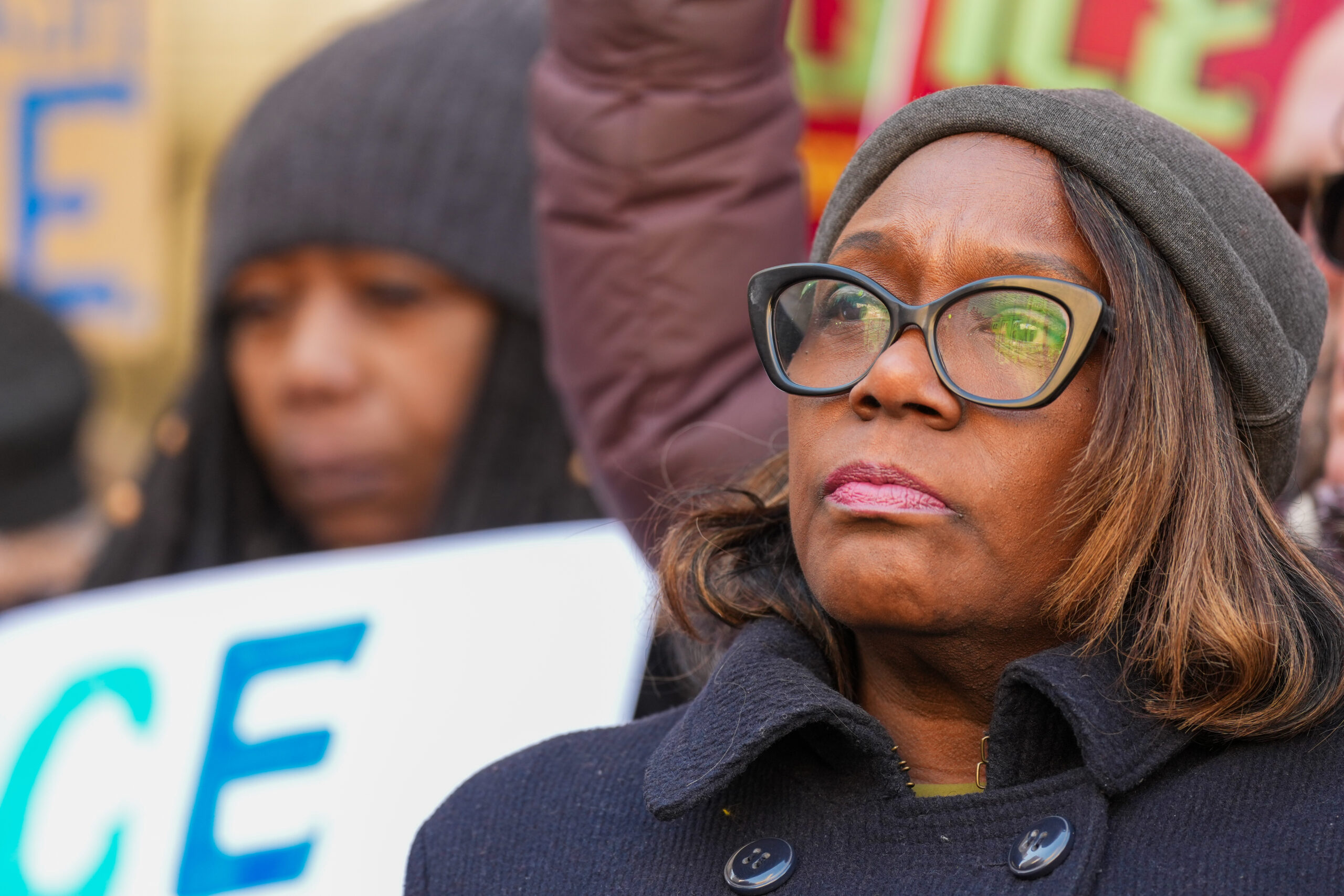
Kendra Brooks shown here during a news conference at City Hall on Tuesday to announce a package of bills aimed at pushing back against ICE enforcement in Philadelphia.
Others say Parker’s conflict-averse strategy is appropriate.
“All of us have different roles to play,” Street said. “The mayor has to manage the city. She’s got to command law enforcement forces. … As a state legislator, we make policy.”
Rafael Mangual, a fellow who studies urban crime and justice at the right-leaning Manhattan Institute in New York City, said legislative efforts to erect barriers between federal and local law enforcement could backfire.
“If you don’t engage at all, and you do something that seems to actively frustrate the federal government,” Mangual said, “that would seem to be an invitation for the federal government to prioritize a city like Philadelphia.”
Staff writers Alfred Lubrano, Aliya Schneider, and Gillian McGoldrick contributed to this article.
All seven Democratic members of the U.S. House representing Pennsylvania cosigned a letter to Sens. John Fetterman and Dave McCormick on Tuesday calling on them to vote against funding for the Department of Homeland Security, which oversees both ICE and the Border Patrol.
The letter, which was first obtained by The Inquirer, comes a day after Fetterman, their Democratic colleague, said he would not vote against funding the agency, which could trigger a partial government shutdown.
“We urge you to stand with us in opposing any DHS funding bill that does not include critical reforms,” the lawmakers said in the letter, delivered Tuesday. “We look forward to working together to advance legislation that both keeps our nation secure and upholds our fundamental values.”
The effort was led by U.S. Rep. Chris Deluzio, whose Western Pennsylvania district includes parts of Allegheny County. Deluzio has been floated in Democratic circles as a potential primary challenger to Fetterman in 2028.
Deluzio was joined by Democratic U.S. Reps. Brendan Boyle and Dwight Evans, who represent Philadelphia, as well as U.S. Reps. Madeleine Dean, Mary Gay Scanlon, and Chrissy Houlahan, whose districts include the Philadelphia suburbs. U.S. Rep. Summer Lee, a progressive Democrat whose district includes Pittsburgh, also signed the letter.
Boyle, another potential contender for Fetterman’s seat and the dean of the delegation, said in a statement that “ICE is currently operating like a lawless, out-of-control agency.”
“We cannot send it another blank check,” he added.
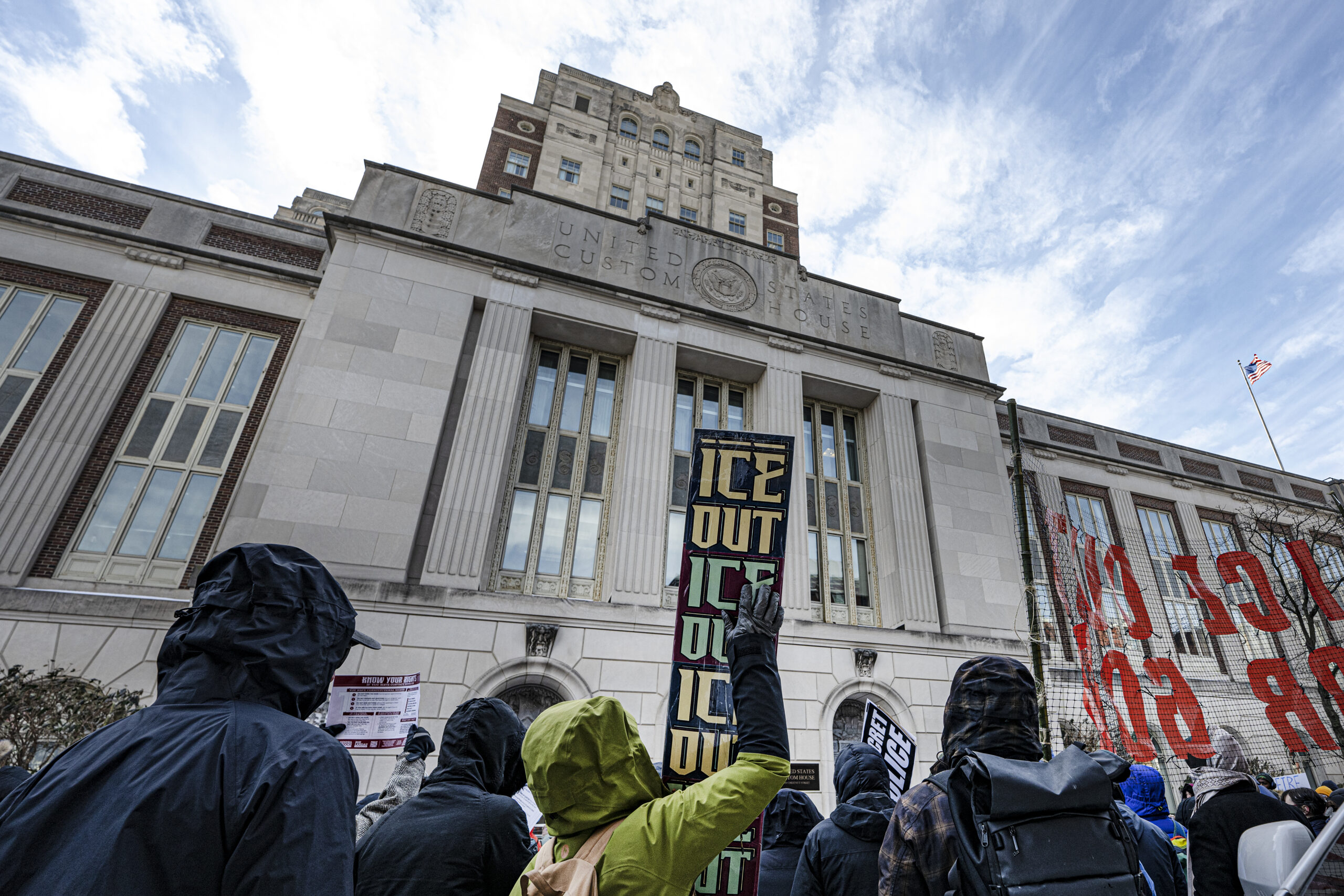
Anti-ICE activists demonstrate outside U.S. Sen. John Fetterman’s Philadelphia office, Jan. 27, 2026, calling for the senator to vote against DHS funding.
The House Democrats urged the senators to vote against any bill that funds the department “without first securing meaningful, enforceable reforms to U.S. Immigration and Customs Enforcement (ICE) and related DHS agency activity.”
Fetterman spoke out against ICE’s operation in Minneapolis and called for DHS Secretary Kristi Noem’s firing on Tuesday but said he “will never vote to shut our government down, especially our Defense Department.” He said that allowing a partial shutdown would not defund ICE, since the agency was granted $178 billion in funding from the One Big Beautiful Bill Act, which he did not support.
“I reject the calls to defund or abolish ICE,” Fetterman said Monday. “I strongly disagree with many strategies and practices ICE deployed in Minneapolis, and believe that must change.”
He said he wants “a conversation” about the DHS appropriations bill and supports taking it out of the spending package, but said “it is unlikely that will happen.”
McCormick, a Republican, affirmed his support for Border Patrol and ICE on Sunday while also calling for “a full investigation into the tragedy in Minneapolis.”
Only a handful of House Democrats — none of whom represent Pennsylvania — joined Republicans last week in passing a bill to fund DHS. It was sent to the Senate as a package with other appropriations bills.
“We voted against this bill last week and ask that you do the same,” the lawmakers say in the letter. “Funding without adequate reform risks endorsing current approaches that undermine public safety and due process, erode American liberties, and weaken public trust.”
After a second U.S. citizen was fatally shot by ICE in Minneapolis over the weekend, Senate Minority Leader Chuck Schumer (D., N.Y.) said Democrats would not vote for the forthcoming appropriations legislation if funding for DHS is part of it.
Democrats have pushed for provisions in the spending bill to increase training for ICE agents, to require warrants for immigration arrests, to require agents to identify themselves, and for Border Patrol to stay on the border instead of helping ICE elsewhere.
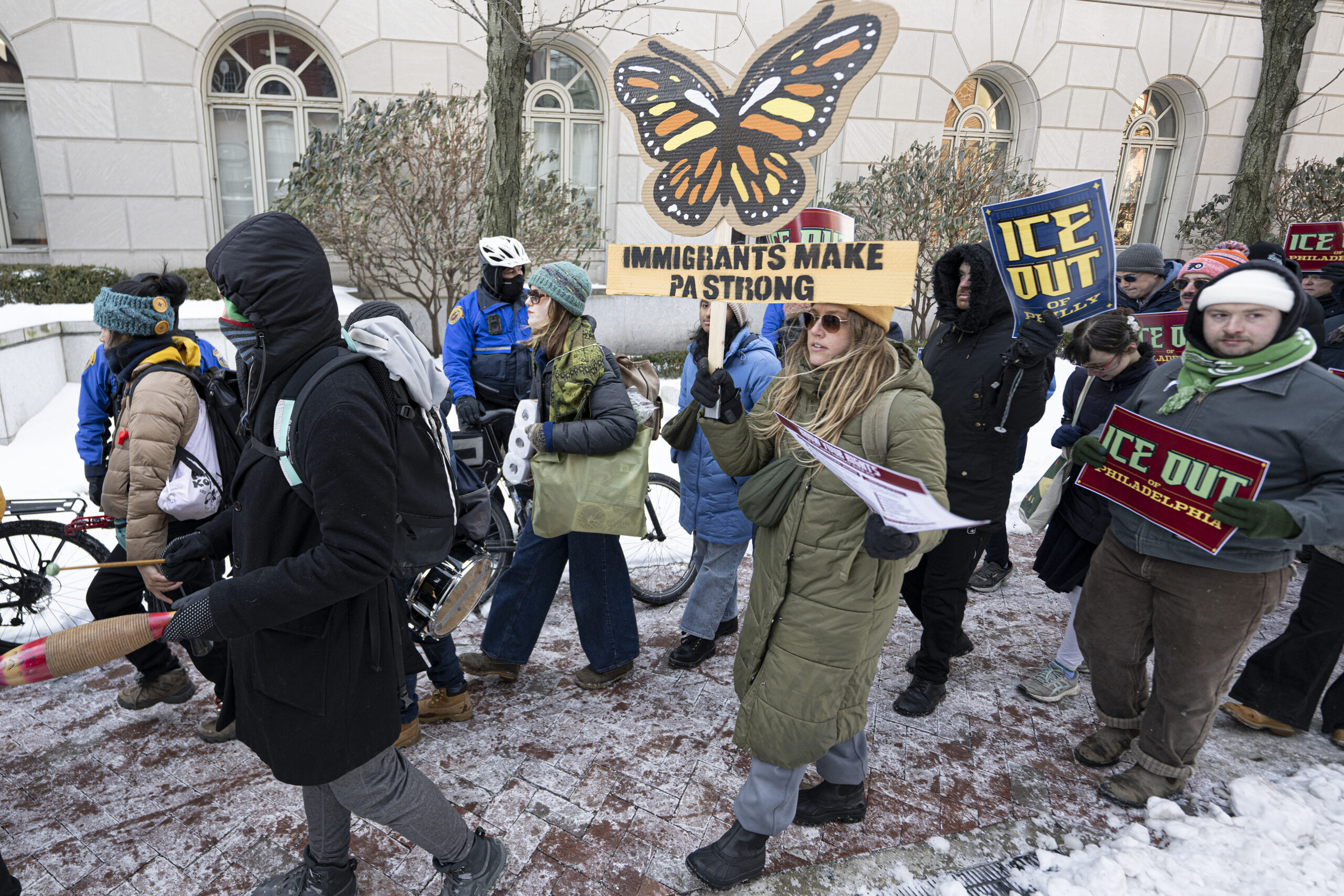
Upward of 150 protesters gathered in front of Fetterman’s Philadelphia office in the cold on Tuesday to urge him to vote against the funding. One protester held a sign saying “listen to your wife,” referencing Gisele Fetterman, who was undocumented as a child before becoming a citizen and posted on X for the first time in nearly a year on Sunday to speak against ICE.
“Sen. Fetterman, we’re here to remind you: You work for us in Philadelphia. We don’t want ICE in Pennsylvania,” Tiffany Chang, an Asian and Pacific Islander Political Alliance activist, said into a microphone.
“We want ICE out of the government spending bill,” Chang added. “So today, we need everyone listening to tell Sen. Fetterman: ‘Vote no on funding an agency that kills with impunity.’”
After the protest, participants said they did not feel that Fetterman was listening to his constituents.
“I thought a show of people in front of his building might actually get some attention,” said Stefanie Nicolosi, 39, a Phoenixville resident and member of Indivisible Chester County.
Saying the Trump administration is using the federal government for “pure evil” in its immigration crackdown in Minneapolis, Gov. Josh Shapiro revealed on late-night television Monday that he’s preparing Pennsylvania to respond should the state face such an incursion.
Shapiro’s wide-ranging remarks on The Late Show With Stephen Colbert — which included Shapiro deriding Vice President JD Vance as a “sycophant” and a “suck-up” — sounded at times like a speech before a studio audience that applauded him vigorously. Making the rounds to promote his new book, Where We Keep the Light: Stories from a Life of Service, Shapiro also appeared on CBS Sunday Morning, Good Morning America on Monday, and The View on Tuesday.
On Colbert, the governor sharply criticized the Trump administration’s actions in Minneapolis, where he said “untrained” agents from U.S. Immigration and Customs Enforcement (ICE) have been creating “chaos” by fatally shooting two American citizens.
“I think Americans are outraged by what they see,” Shapiro said, adding: “The mission in Minnesota must be terminated immediately.”
When Colbert said there are “rumors” that federal troops will be sent to Philadelphia “to foment fear,” Shapiro nodded. On The View, he said troops could show up in Philadelphia, Pittsburgh, or Lancaster.
“We have spent hours and hours and hours doing tabletop exercises to prepare for it,” Shapiro said, without being specific. The governor did not elaborate.
He added that “it’s a sad day in America that a governor of a commonwealth needs to prepare for a federal onslaught where they would send troops in to undermine the freedoms and the constitutional rights of our citizens. This is un-American.”
“But I want the good people of Pennsylvania to know — I want the American people to know — that we will do everything in our power to protect them from the federal overreach.”
Asked for comment, Abigail Jackson, a White House spokesperson, said Tuesday: “It’s pure evil when Democrat leaders provide sanctuary to dangerous criminal illegal aliens who assault, murder, and rape innocent American citizens. President Trump is keeping his promise to the American people to deport criminal illegal aliens.”
Referencing ICE agents wearing masks, Shapiro said that members of the Pennsylvania State Police “have strict rules on when they can wear a mask. You want to be identified as folks who are keeping people safe.”
He added, “Of all the tools that we give our law enforcement in Pennsylvania, the most important tool you need to have is trust with the community that you police.”
When the conversation turned to Vance’s statement that the ICE officer who shot andkilled Minneapolis resident Renee Macklin Good on Jan. 7 has “absolute immunity,” Shapiro retorted that it was untrue.
He added that Vance is “such a sycophant, such a suck-up. He embarrasses himself daily as he seeks the affirmation of Donald Trump.”
ICE agents “are not above the law,” Shapiro added moments later. “I don’t care what B.S. Vance [says.]”
The governor’s reelection bid this year, as well as rumors that he may be a presidential candidate in 2028, did not come up. Instead, Colbert touted Shapiro’s book.
Shapiro said that the courts, Congress, and public opinion need to be marshaled to prevent the Trump administration from sending more troops to U.S. cities.
“All of you have powerful voices,” Shapiro told the audience. He added: “The story of America is ordinary Americans rising up, demanding more, seeking justice.”
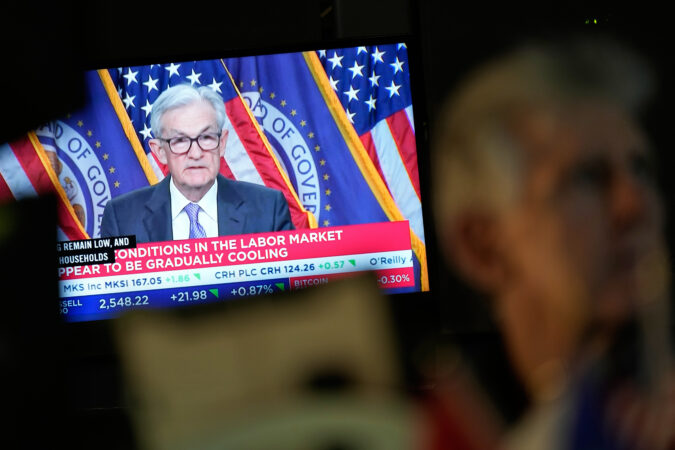
The Federal Reserve cut interest rates by a quarter of a percentage point on Wednesday for the third time this year, seeking to shore up a softening labor market even as inflation builds and leaving the prospect of more cuts next year unclear.
“It’s a labor market that seems to have significant downside risks,” Fed Chair Jerome Powell said at a news conference following the meeting.
Although Fed officials tentatively penciled in at least one more rate cut before the end of next year, estimates about where the economy is heading varied significantly and Powell suggested the central bank might wait before returning to any additional cuts.
“We are well positioned to wait and see how the economy evolves from here,” he said.
Wednesday’s widely expected move lowers the Fed’s benchmark rate to a range of 3.5 to 3.75 percent, the lowest level in about three years. But officials remain sharply divided over how to respond to an economy sending mixed signals: Inflation remains above the Fed’s target, which would typically argue for holding rates steady, while slower hiring and a modest uptick in unemployment suggest a case for easing.
Investors cheered the news, with major financial indexes ending the day higher on Wednesday afternoon.
Nine Federal Reserve officials backed Wednesday’s cut while three dissented. Two officials — Chicago Fed President Austan Goolsbee and Kansas City Fed President Jeffrey Schmid — favored no rate reduction, while Fed governor Stephen Miran preferred a larger, half-point cut. It was the most dissent since September 2019.
In another sign of division among top Fed officials, the latest economic projections also released on Wednesday showed seven officials penciled in no additional cuts next year, while 12 favored at least one or more.
Fed policies influence what households and businesses pay for mortgages, credit cards and other loans, and investors are watching closely for guidance on the central bank’s next steps.
The Fed’s job is to keep prices stable and to maximize employment, but it is split on howto navigate what some describe as a light version of stagflation — elevated inflation alongside a labor market that is slowing but far from collapsing. Those divides were exposed at the Fed’s last gathering in October, where officials expressed “strongly differing views about what policy decision would most likely be appropriate,” according to the meeting minutes.
Further complicating the decision, the Fed received far less official data about the health of the economy, because of the government shutdown that delayed or canceled the release of reports on the jobs market and consumer prices. Some Fed officials, relying on alternative data or surveys of the business community, argued that progress on inflation had stalled and warned that cuts risked undermining hard-won gains. Others countered that rising unemployment and weakening consumer demand suggested a need for action.
Powell defended cutting rates now rather than waiting for the Fed’s next meeting in late January, when officials will finally have a better sense of the status of economy thanks to a trove of upcoming official reports. Wednesday’s call reflected mounting evidence of a cooling job market, he noted, saying that after readjustments and revisions, job growth may have been slightly negative since spring.
“I think you can say that the labor market has continued to cool gradually, maybe just a touch more gradually than we thought,” Powell said.
With unemployment rising to 4.4 percent in September, the Fed no longer characterized that rate as “low,” in a statement announcing the rate cut.
Former Philadelphia Fed president Patrick Harker said this week that Wednesday’s move is shaping up to be a “hawkish cut” — a rate reduction paired with a signal that policymakers may soon pause further easing. Harker said the Fed’s internal divergence reflects an unusual degree of economic “fog,” with inflation not worsening as much as feared, unemployment claims relatively stable, and labor-market signals increasingly difficult to interpret. He noted that monthly job gains below 100,000 would normally be a red flag, but demographic trends and uncertain immigration patterns complicate the baseline.
Those disagreements are unfolding amid unprecedented political pressure from President Donald Trump, who has repeatedly criticized the Fed for not moving quickly enough to lower rates and has threatened to fire Powell. Trump renewed those attacks ahead of this week’s meeting, telling Politico that support for aggressive rate cuts is a litmus test for whoever he taps to succeed Powell, whose term as chair expires in May. The president plans to nominate a successor early next year, though he has already signaled he knows who he is likely to pick.
Former Pennsylvania Sen. Pat Toomey, who was top Republican on the Senate Banking Committee, said he is perplexed by Trump’s push for cuts, because inflation remains above target and the broader economy continues to expand. The data shows cooling — not collapsing — labor conditions, which wouldn’t normally justify an urgent push for easing rates, Toomey said.
Toomey warned that the president is taking a much bigger political gamble than he appears to realize. If inflation were to spike again, he said, Trump would “completely own” the fallout after pressuring the Fed when “there’s no obvious need to ease.” That makes the campaign for faster rate cuts “surprising,” Toomey said.
Although Powell secured enough board support to approve Wednesday’s cut, future easing would depend on keeping that alliance.
The split appears to pit a “hawkish” coalition of regional Fed presidents focused on preventing inflation from resurging against a group of governors in Washington who see the greater risk in a softening economy. Officials such as Cleveland Fed President Beth Hammack, who said she would have preferred not to cut rates in October, have argued that inflation remains stubbornly above the bank’s 2 percent target and warned that reducing rates too soon could keep prices rising.
Meanwhile, other officials continue to emphasize that a cooling labor market and softening consumer demand call for cuts, to ensure the economy does not slip further.
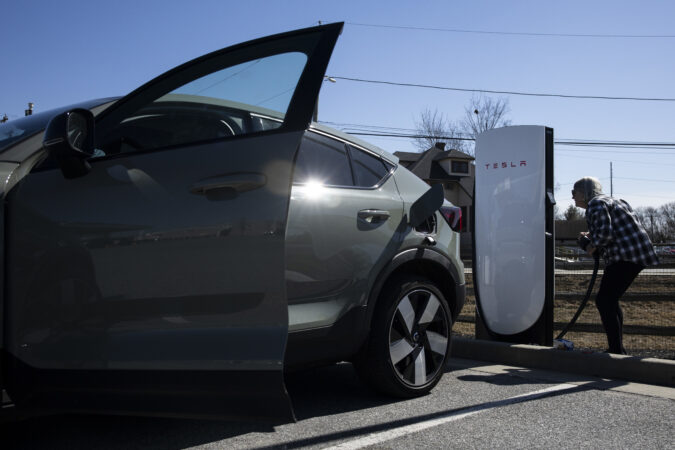
New Jersey and Pennsylvania are poised to regain roughly $244 million in federal funding for electric‑vehicle charging stations after securing a legal victory over the Trump administration.
New Jersey announced this week that it expects $73 million to be reinstated.
Pennsylvania had planned on $171.5 million in EV‑charging funds last year, according to Alex Peterson, a spokesperson for Gov. Josh Shapiro.
“This ruling guarantees that these obligated funds cannot again be interrupted,” Peterson said.
On Friday, a U.S. District Court sided with 20 states that filed suit last year demanding restoration of the National Electric Vehicle Infrastructure Formula Program (NEVI). New Jersey and Pennsylvania were among the plaintiffs.
In her decision, Judge Tana Lin, who was appointed by former President Joe Biden, prohibited the Department of Transportation from withholding funding for approved state EV‑charger deployment plans.
Lin concluded from Seattle that the Federal Highway Administration (FHA) overstepped its authority by halting funding already authorized by Congress. She described the agency’s action as arbitrary and capricious.
“This win puts New Jersey back on track for $73 million in funding unlawfully stripped away through the Trump Administration’s illegal actions,” Jennifer Davenport, New Jersey’s acting attorney general, said this week in a statement. “New Jerseyans want sustainable transportation options.”
New Jersey, Pennsylvania, and Delaware were among plaintiffs in the suit against a Trump administration freeze on the $5 billion. It’s unclear whether Trump administration officials will appeal.
The states’ legal challenge stemmed from an executive order President Donald Trump signed on his Inauguration Day to eliminate EV mandates — which the suit states never existed.
Regardless, the suit stated, the administration used the order to “immediately pause the disbursement of funds” for EV infrastructure appropriated through the Inflation Reduction and Infrastructure Investment and Jobs acts signed by Biden.
Other states that joined the suit included Washington, Colorado, California, Arizona, Delaware, Hawaii, Illinois, Kentucky, Maryland, Minnesota, New Mexico, Michigan, New York, North Carolina, Oregon, Rhode Island, Vermont, and Wisconsin.
Davenport called the Trump administration’s refusal to spend funds approved by Congress “unlawful.”
This story has been updated to include newer figures on Pennsylvania’s plan to fund EV charging infrastructure.
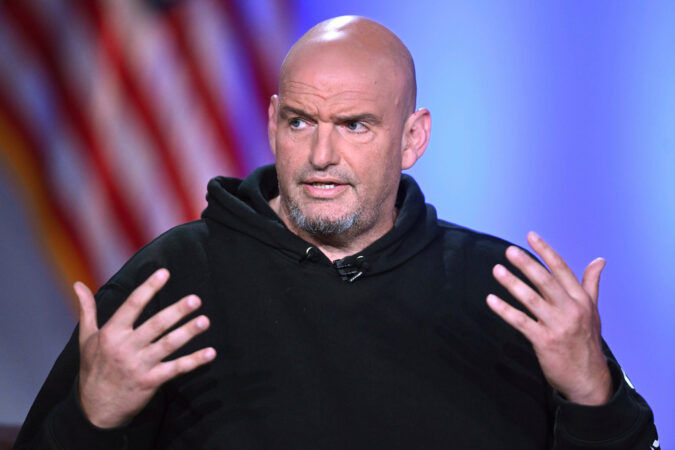
Sen. John Fetterman on Tuesday urged President Donald Trump “to immediately fire” Homeland Security Secretary Kristi Noem after federal agents killed two citizens in Minneapolis this month during an immigration enforcement operation.
“Americans have died,” Fetterman (D., Pa.) said in a statement. “She is betraying DHS’s core mission and trashing your border security legacy.”
The senator’s call for Noem’s firing comes after federal agents killed two Americans during the Minneapolis operation. On Saturday, a Border Patrol agent shot and killed Alex Pretti, an intensive care nurse at a VA hospital. An ICE agent shot and killed Renee Nicole Good, a 37-year-old poet and mother, on Jan. 7.
Fetterman referenced Noem’s predecessor, Alejandro Mayorkas, who served under former President Joe Biden and faced impeachment by the Republican-led House in 2024 amid a backlash over increased border crossings under Biden.
Sen. Andy Kim (D., N.J.), who also voted for Noem, joined the growing chorus of Democrats calling for Noem to step down on Tuesday. The South Jersey lawmaker has previously called the vote a mistake.
Fetterman’s plea to fire Noem comes a day after he called for the withdrawal of federal agents from Minneapolis. And it comes as the U.S. Senate is poised to vote this week on funding for the Department of Homeland Security, which oversees both ICE and the Border Patrol.
Senate Minority Leader Chuck Schumer said Democrats would vote against it, which could trigger a partial federal government shutdown.
About 150 protesters gathered outside Fetterman’s office in Philadelphia in the snow on Tuesday to urge him to join the effort, but the senator said on Monday that he will never vote to shut down the government. He also argued that doing so would not pull the $178 billion dedicated to DHS through the One Big Beautiful Bill Act, which he did not support.
“I would like him to listen and actually represent us, because that’s his job,” said James Pierson, 42, an Exton resident attending the demonstration.
Fetterman suggested pulling the DHS bill from the package of bills under consideration by the Senate this week rather than another shutdown vote.
“I reject the calls to defund or abolish ICE,” he said. “I strongly disagree with many strategies and practices ICE deployed in Minneapolis, and believe that must change.”
Prominent Republicans and gun rights advocates helped elicit a White House turnabout this week after bristling over the administration’s characterization of Alex Pretti, the second person killed this month by a federal officer in Minneapolis, as responsible for his own death because he lawfully possessed a weapon.
The death produced no clear shifts in U.S. gun politics or policies, even as President Donald Trump shuffles the lieutenants in charge of his militarized immigration crackdown. But important voices in Trump’s coalition have called for a thorough investigation of Pretti’s death while also criticizing inconsistencies in some Republicans’ Second Amendment stances.
If the dynamic persists, it could give Republicans problems as Trump heads into a midterm election year with voters already growing skeptical of his overall immigration approach. The concern is acute enough that Trump’s top spokeswoman sought Monday to reassert his brand as a staunch gun rights supporter.
“The president supports the Second Amendment rights of law-abiding American citizens, absolutely,” White House press secretary Karoline Leavitt told reporters.
Leavitt qualified that “when you are bearing arms and confronted by law enforcement, you are raising … the risk of force being used against you.”
Videos contradict early statements from administration
That still marked a retreat from the administration’s previous messages about the shooting of Pretti. It came the same day the president dispatched border czar Tom Homan to Minnesota, seemingly elevating him over Homeland Security Secretary Kristi Noem and Border Patrol chief Greg Bovino, who had been in charge in Minneapolis.
Within hours of Pretti’s death on Saturday, Bovino suggested Pretti “wanted to … massacre law enforcement,” and Noem said Pretti was “brandishing” a weapon and acted “violently” toward officers.
“I don’t know of any peaceful protester that shows up with a gun and ammunition rather than a sign,” Noem said.
White House deputy chief of staff Stephen Miller, an architect of Trump’s mass deportation effort, went further on X, declaring Pretti “an assassin.”
Bystander videos contradicted each claim, instead showing Pretti holding a cellphone and helping a woman who had been pepper sprayed by a federal officer. Within seconds, Pretti was sprayed, too, and taken to the ground by multiple officers. No video disclosed thus far has shown him unholstering his concealed weapon -– which he had a Minnesota permit to carry. It appeared that one officer took Pretti’s gun and walked away with it just before shots began.
As multiple videos went viral online and on television, Vice President JD Vance reposted Miller’s assessment, while Trump shared an alleged photo of “the gunman’s gun, loaded (with two additional full magazines!).”
On Tuesday, Trump was asked if he agreed with Miller’s comment describing Pretti as an “assassin” and answered “no.” But he added that protesters “can’t have guns” and said he wants the death investigated.
“You can’t walk in with guns, you just can’t,” Trump told reporters on the White House lawn before departing for a trip to Iowa.
The National Rifle Association, which has backed Trump three times, released a statement that began by casting blame on Minnesota Democrats it accused of stoking protests. But the group lashed out after a federal prosecutor in California said on X that, “If you approach law enforcement with a gun, there is a high likelihood they will be legally justified in shooting you.”
That analysis, the NRA said, is “dangerous and wrong.”
FBI Director Kash Patel magnified the blowback Sunday on Fox News’ “Sunday Morning Futures With Maria Bartiromo.” No one, Patel said, can “bring a firearm, loaded, with multiple magazines to any sort of protest that you want. It’s that simple.”
Erich Pratt, vice president of Gun Owners of America, was incredulous.
“I have attended protest rallies while armed, and no one got injured,” he said on CNN.
Conservative officials around the country made the same connection between the First and Second amendments.
“Showing up at a protest is very American. Showing up with a weapon is very American,” state Rep. Jeremy Faison, who leads the GOP caucus in Tennessee, said on X.
Trump’s first-term vice president, Mike Pence, called for “full and transparent investigation of this officer involved shooting.”
A different response from the past
Liberals, conservatives and nonpartisan experts noted how the administration’s response differed from past conservative positions involving protests and weapons.
Multiple Trump supporters were found to have weapons during the Jan. 6, 2021, attack on the U.S. Capitol. Trump issued blanket pardons to all of them.
Republicans were critical in 2020 when Mark and Patricia McCloskey had to pay fines after pointing guns at protesters who marched through their St. Louis neighborhood after the police killing of George Floyd in Minneapolis. And then there’s Kyle Rittenhouse, a counter-protester acquitted after fatally shooting two men and injuring another in Kenosha, Wisconsin, during the post-Floyd protests.
“You remember Kyle Rittenhouse and how he was made a hero on the right,” Trey Gowdy, a Republican former congressman and attorney for Trump during one of his first-term impeachments. “Alex Pretti’s firearm was being lawfully carried. … He never brandished it.”
Adam Winkler, a UCLA law professor who has studied the history of the gun debate, said the fallout “shows how tribal we’ve become.” Republicans spent years talking about the Second Amendment as a means to fight government tyranny, he said.
“The moment someone who’s thought to be from the left, they abandon that principled stance,” Winkler said.
Meanwhile, Democrats who have criticized open and concealed carry laws for years, Winkler added, are not amplifying that position after Pretti’s death.
Uncertain effects in an election year
The blowback against the administration from core Trump supporters comes as Republicans are trying to protect their threadbare majority in the U.S. House and face several competitive Senate races.
Perhaps reflecting the stakes, GOP staff and campaign aides were reticent Monday to talk about the issue at all.
The House Republican campaign chairman, Rep. Richard Hudson of North Carolina, is sponsoring the GOP’s most significant gun legislation of this congressional term, a proposal to make state concealed-carry permits reciprocal across all states.
The bill cleared the House Judiciary Committee last fall. Asked Monday whether Pretti’s death and the Minneapolis protests might affect debate, an aide to Speaker Mike Johnson did not offer any update on the bill’s prospects.
Gun rights advocates have notched many legislative victories in Republican-controlled statehouses in recent decades, from rolling back gun-free zones around schools and churches to expanding gun possession rights in schools, on university campuses and in other public spaces.
William Sack, legal director of the Second Amendment Foundation, said he was surprised and disappointed by the administration’s initial statements following the Pretti shooting. Trump’s vacillating, he said, is “very likely to cost them dearly with the core of a constituency they count on.”