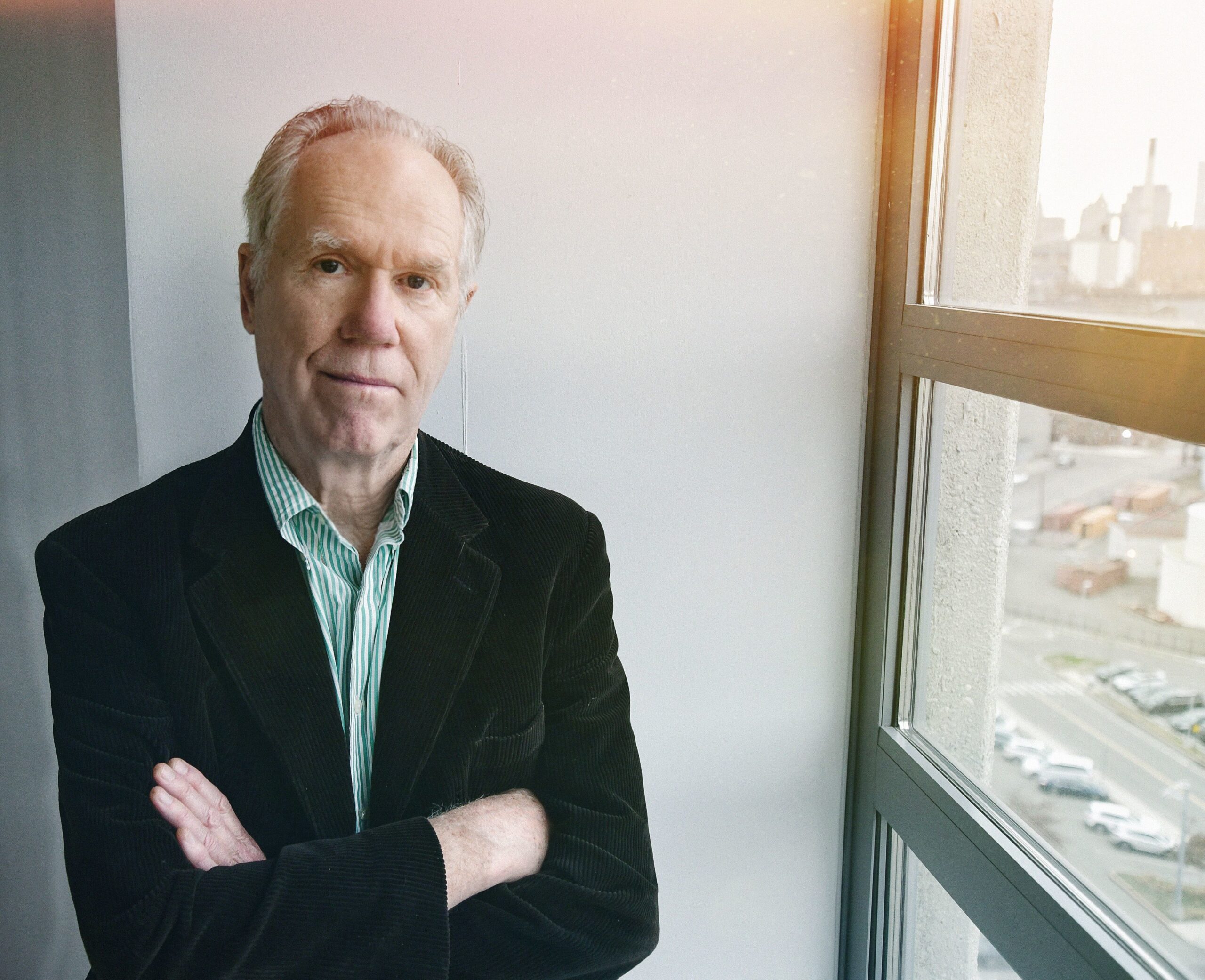
This week in Philly music features a busy week at the Met with Jason Isbell, Miguel, and Mariah the Scientist. Plus, R.E.M. guitarist Peter Buck’s new supergroup, two dates with Alejandro Escovedo, and ‘Hard Headed Woman’ Margo Price and her country band playing on South Street.
Wednesday, Feb. 18
Say She She
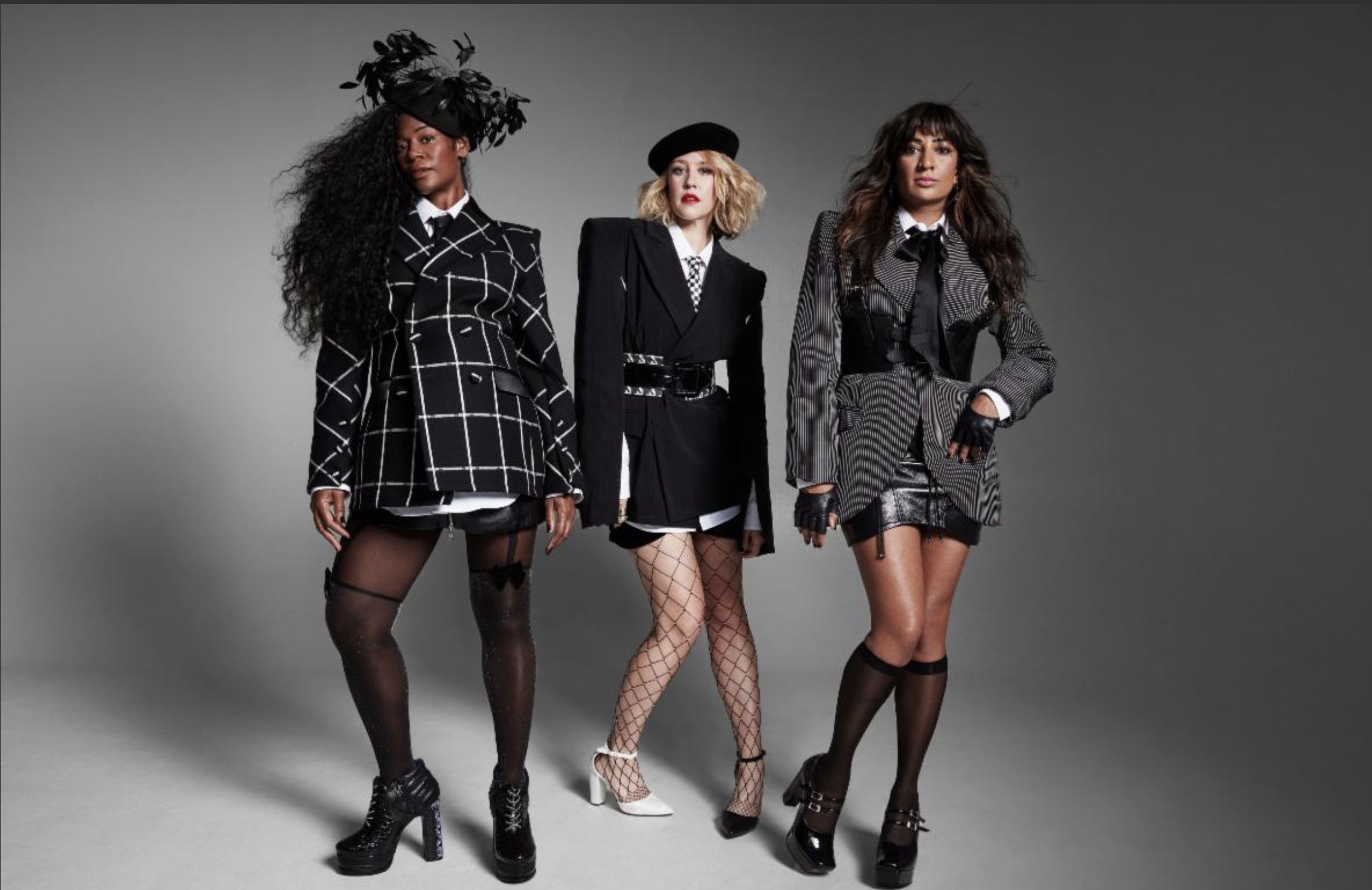
Say She She is the nomadic vocal trio Piya Malik, Sabrina Mileo Cunningham, and Nya Gazelle Brown — who have connections to New York, London, and Los Angeles. The band name is a play on the “Le Freak? C’est chic!” lyric from Chic’s 1978 disco hit “Le Freak.” On Say She She’s third album, Cut & Rewind, tracks like “She Who Dares” and “Disco Life” qualify as subtle protest music as the band members stand up for diversity and express feminist prerogatives while deftly moving listeners to the dance floor. With Katzù Oso. 8 p.m., Ardmore Music Hall, 23 E. Lancaster Ave., Ardmore, ardmoremusichall.com
Say She She plays Ardmore Music Hall on Wednesday. The disco group’s new album is “Cut & Rewind.”
Jason Isbell & the 400 Unit
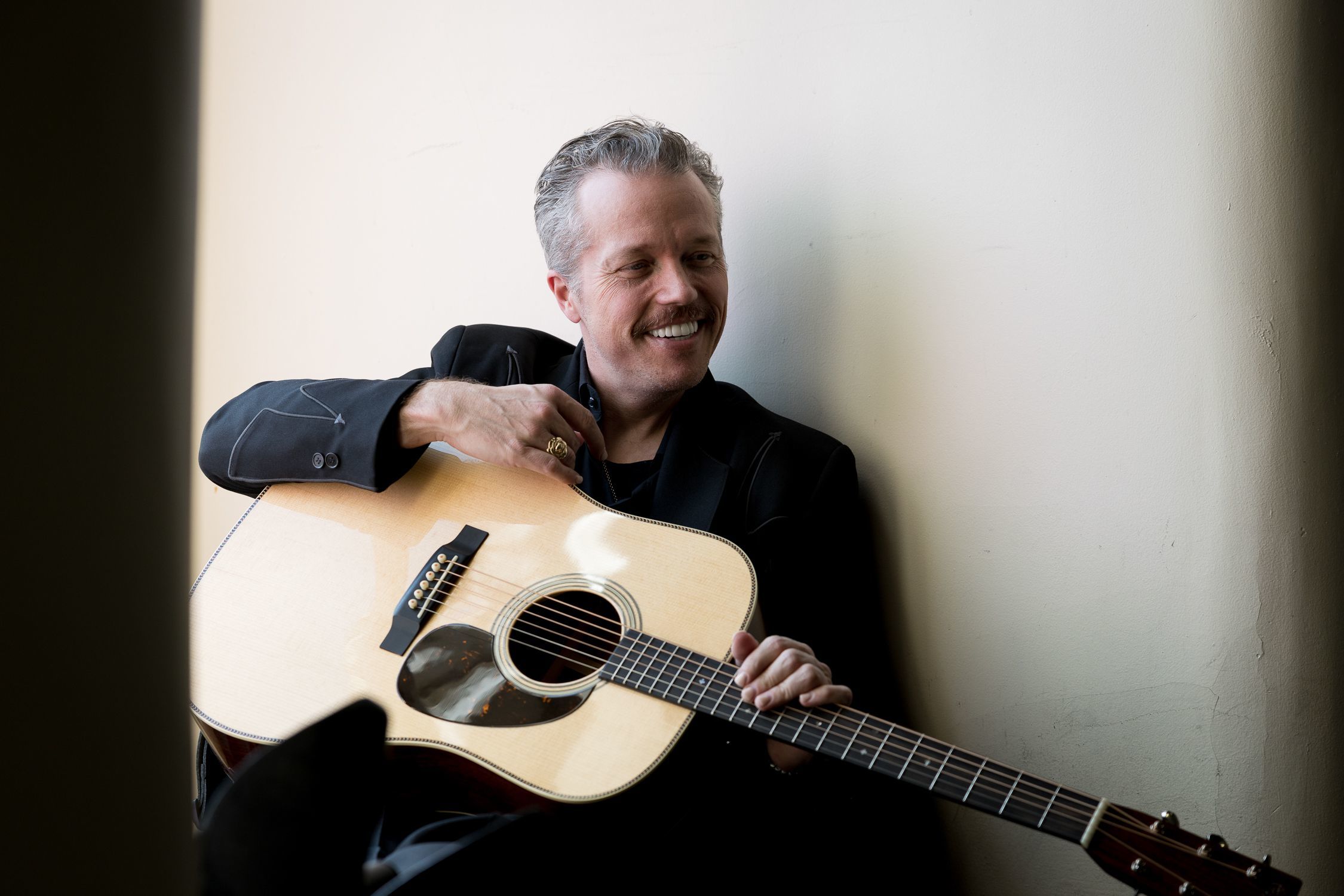
Jason Isbell never made it to town on his 2025 tour behind his stark, solo acoustic album Foxes in the Snow. So this full band show will be the first Philly opportunity to hear those break-up songs written after Isbell’s split from then-wife Amanda Shires, played live. They will be mixed in with the impressive body of work that Isbell — a terrific guitarist, singer, and bandleader as well as a masterful storytelling songwriter — has amassed going back to the 2000s with the Drive-By Truckers. 8 p.m., Met Philly, 858 N. Broad St., themetphilly.com.
Jason Isbell & the 400 Unit headline the Met Philadelphia on Wednesday.
The Rural Alberta Advantage / The Barr Brothers
Fans of Canadian indie bands are facing a Wednesday night dilemma. Toronto’s Rural Alberta Advantage, which tends to rock out, headlines Johnny Brenda’s. The band’s most recent album is 2023’s The Rise & The Fall. Meanwhile at Underground Arts, there’s a show by Toronto’s Barr Bothers, which leans more toward the folk, with singer-guitarist Bad Barr and his drummer brother Andrew. Their new album is Let It Hiss. 8 p.m., Johnny Brenda’s, 1201 N. Frankford Ave., johnnybrendas.com; and 8 p.m., Underground Arts, 1200 Callowhill St., undergroundarts.org.
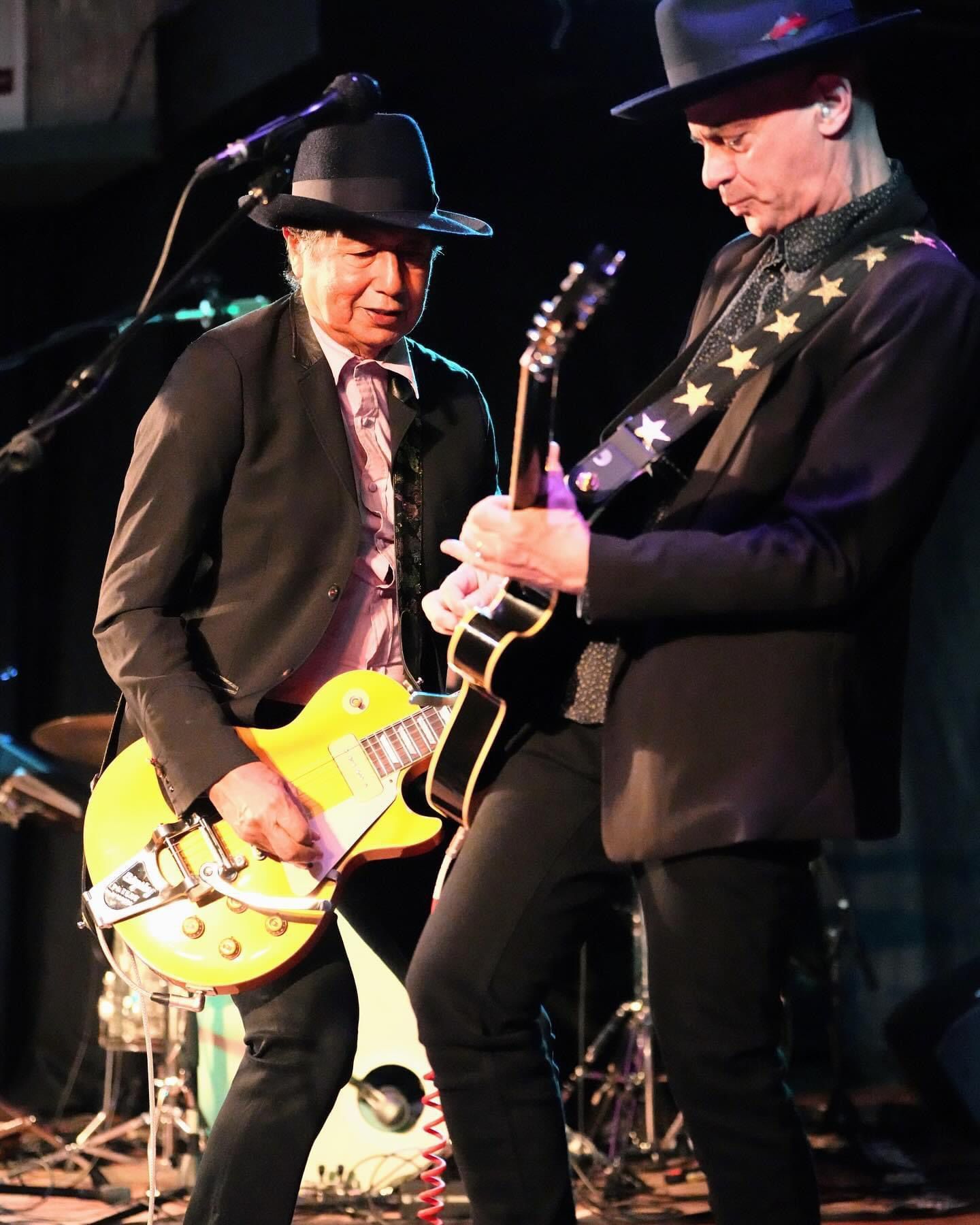
Alejandro Escovedo and James Mastro, who will play separately and together in Sellersville and Wilmington.
Thursday, Feb. 19
Drink the Sea
Peter Buck of R.E.M. is a serial collaborator. The long list of the uber-influential guitarist’s side projects have included Tuatara, the Minus 5, the Baseball Project, Filthy Friends, and others. Add to the list Drink the Sea, which is the second supergroup Buck has formed with Barrett Martin of the Screaming Trees. The band, which is influenced by global rhythms that reach beyond rock, makes its Main Line debut this week. 8 p.m., Ardmore Music Hall, 23 E. Lancaster Ave., Ardmore, ardmoremusichall.com.
Alejandro Escovedo
The great Austin, Texas, songwriter Alejandro Escovedo played Philly last year on a solo tour, while working up a theater show that chronicles his 50-plus year music career. Now he’s back, plugged in, and ready to rock with his band Electric Saints. Further good news is that his opening act is North Jersey veteran rocker and Health and Happiness Show leader James Mastro. He will be joining Escovedo for a few songs on stage , just as he did with Patti Smith’s band at the Met last November. 8 p.m. Thursday, Sellersville Theater, st94.com, and 8 p.m. Friday, Arden Gild Hall, 2126 The Highway, Wilmington, ardenconcerts.com.
Friday, Feb. 20
Ben Arnold & the 48 Hour Orchestra
Philly songwriter Ben Arnold, just back from a European tour with his band U.S. Rails, is home promoting his excellent new solo album XL, which he showcased with an impressive show in Wayne back in October. Noon, World Cafe Live, 3025 Walnut St., xpn.org.
Margo Price
Margo Price was positioned as a country — or at least alt-country — artist when she debuted with Midwest Farmer’s Daughter in 2016. She then expanded her sound in a rock direction, even adding psychedelic touches in three subsequent albums. Now she’s again focused on country on Hard Headed Woman, the Grammy-nominated collection that will bring her to the TLA on her “Wild At Heart Tour.” Hot tip: Last time she played Philly, Kurt Vile showed up to jam. Pearl Charles opens. 8 p.m., Theater of Living Arts, 332 South St., tlaphilly.com.
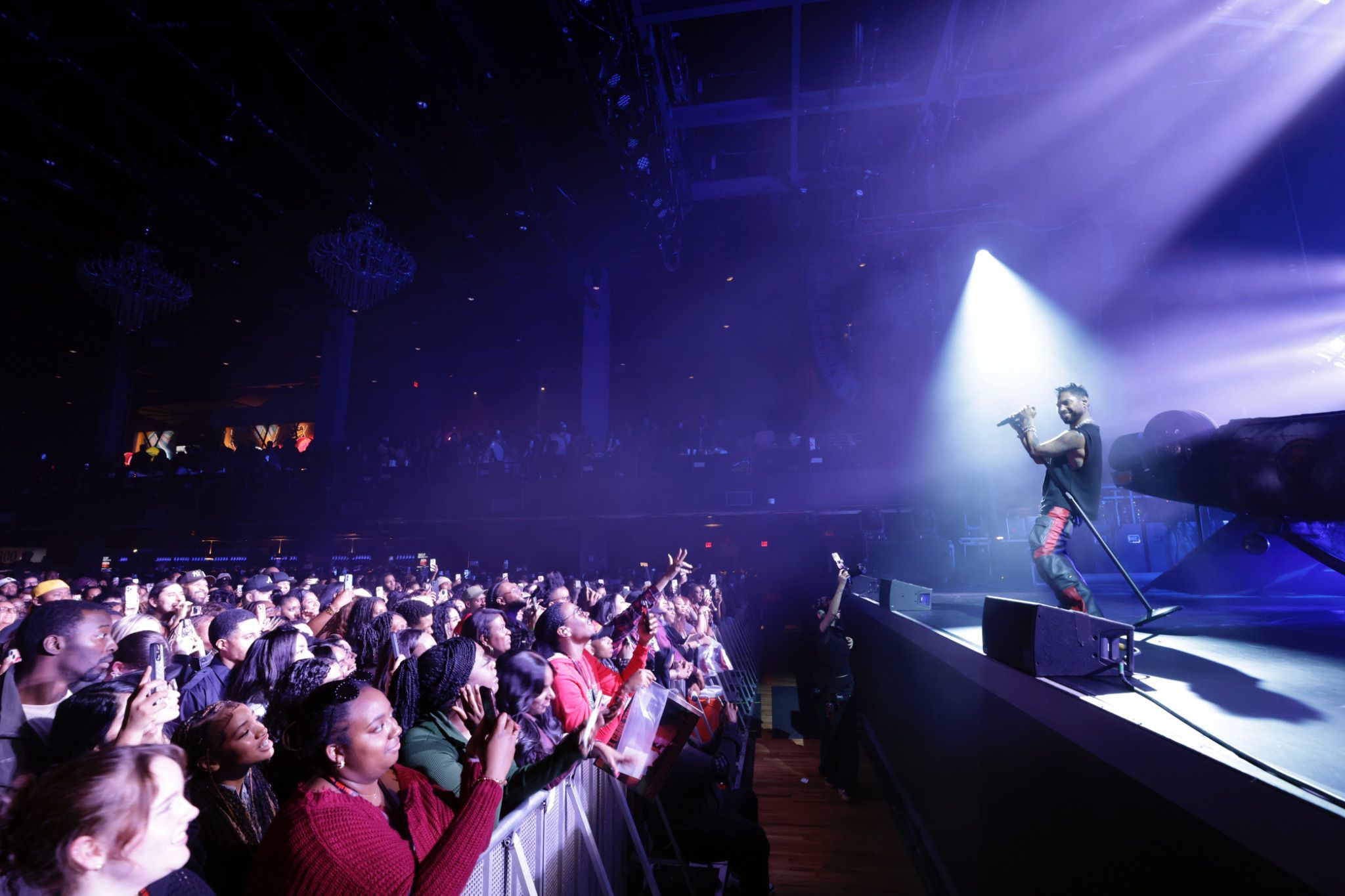
Miguel at the opening night his CAOS Tour in Atlanta on Feb. 10. He plays the Met Philly on Saturday.
Saturday Feb. 21
Miguel
Miguel Jontel Pimentel has been a frequent visitor to Philly, between multiple visits to the Made in America festival in addition to regular tour stops. Now the R&B love man with vocal chops beyond reproach and a frisky, subversive sensibility is headlining the Met on tour for his 2025 album CAOS. 8 p.m., Met Philly, 858 N. Broad St., themetphilly.com
Roger Harvey / Roberta Faceplant / Maxwell Stern
This is another quality multiband bill upstairs at the Khyber Pass pub. Nashville songwriter Roger Harvey is the headliner, with rising Philly acts Roberta Faceplant and Maxwell Stern also playing the Old City venue. 8 p.m., Upstairs at the Khyber, 56 S. 2nd St., khyberpasspub.com
Mariah the Scientist plays the Met Philly on Tuesday.
Tuesday Feb. 24
Mariah the Scientist
Mariah Amani Buckles was studying to be a pediatric anesthesiologist at St. John’s University before she dropped out to concentrate on her music full time. Thus, she became Mariah the Scientist! The R&B-hip-hop singer — who is engaged to rapper Young Thug — sings about conflicted love affairs, sometimes to chilling effect, on her fourth album, Hearts Sold Separately, which features a sultry duet with Kali Uchis on the hit “Is It A Crime.” 8 p.m., Met Philly, 858 N. Broad St., themetphilly.com.
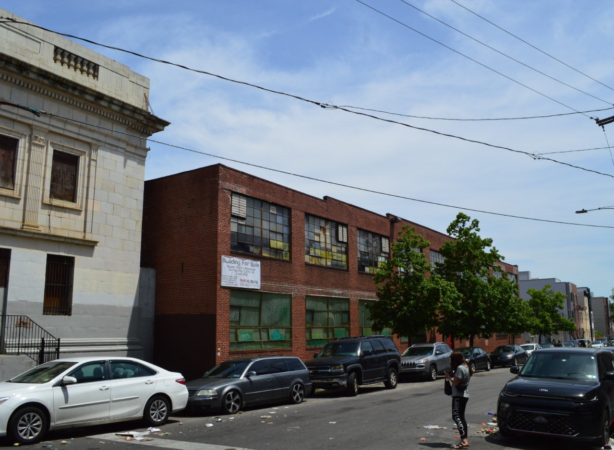
The long vacant industrial building at 1807 Huntingdon St. in East Kensington is moving toward redevelopment after seven years of setbacks.
Philadelphia-based Smith & Roller has been eyeing the faded brick structure since 2019 but struggled with funding following the COVID-19 pandemic and the loss of a lender after Silicon Valley Bank’s collapse in 2023.
But last week New Jersey-based Ellavoz Impact Capital announced that it was acquiring the building in partnership with Smith & Roller, allowing the developers to move forward with their plans near SEPTA’s Huntingdon stop on the Market-Frankford line.
Developers Tayyib Smith and Jacob Roller see the project as a catalyst for change around the elevated train station, which is haunted by the opioid crisis.
“I’ve always imagined connecting nodes of vitality and then seeing how it almost has a regenerative spring of people looking at a neighborhood differently,” Smith said.
“I can imagine that block having a different feel, a different type of lighting, a different type of walkability, more socio-economic diversity, more eyes on the corridor,” he added.
The developers plan to break ground on the project in about six months.
Smith & Roller’s neighboring development, 1801 Huntingdon, will transform a historic bank building into a banquet hall and commissary kitchen for Black-owned caterer Strother Enterprises, which has been expanding elsewhere in the city recently. That development will need approvalby the city’s Zoning Board of Adjustment and is on a longer timeline.
Over the years, the project at 1807 Huntingdon has added more housing and cut back on space for businesses.
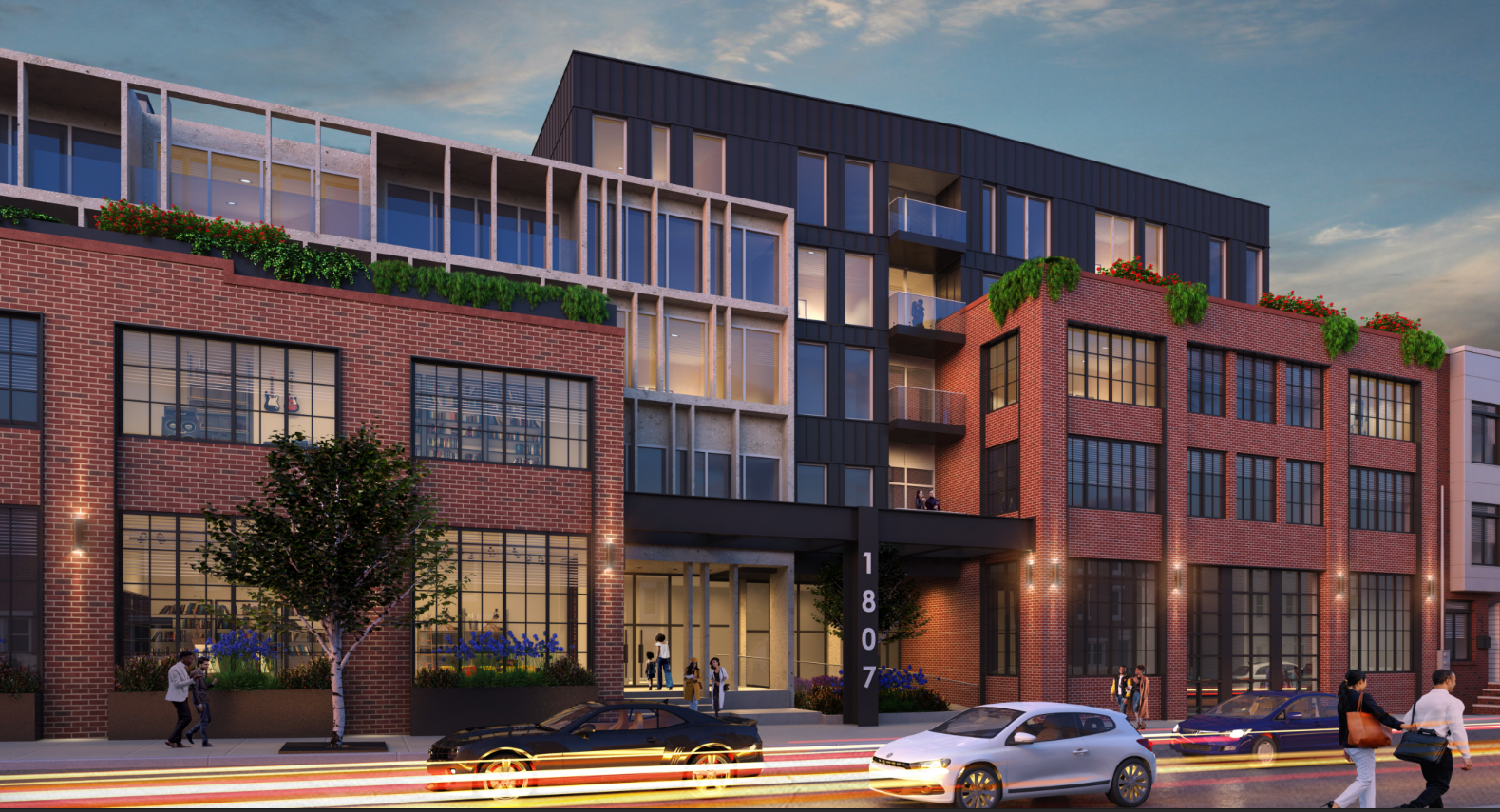
The current version of the project includes 109 residential units and 8,600 square feet of commercial space. According to Ellavoz Impact Capital’s news release, the commercial space has been preleased, but the tenant list is not public yet.
A rendering of the redeveloped factory building, as a mixed-use apartment building.
An earlier version of the project, reviewed by the city’s Civic Design Review committee in 2022, would have contained 80 apartments and 38,000 square feet of light industrial space.
That’s partly because the federal program Smith & Roller originally planned to use, New Market Tax Credits, requires that at least a fifth of a mixed-use project be devoted to commercial development.
But the project at 1807 Huntingdon has been in process for so long that this part of Kensington no longer qualifies for the federal incentive, which is meant to spur investment in struggling areas.
The project is still in a Keystone Opportunity Zone (KOZ), however, which will give state tax breaks to businesses at the 1807 and 1801 Huntingdon projects.
That policy is also meant to incentivize development in lower-income areas, but there are many examples of its application to parts of Philadelphia like the Navy Yard and University City.
“I don’t know many [KOZs] that are in neighborhoods like Kensington,” Smith said, “where there’s somebody trying to use it in the spirit and intent of how the legislation was written.”
The project will include both the redeveloped factory with additional space above it and an adjacent parking lot, which will have multiple stories of housing on top.
It will include a mix of studios, one-bedroom, and a few two-bedroom apartments, along with loft-style units that can be rented out as either short-term rentals or office space.
Sixty percent of the units will be set aside for households earning 80% of area median income, or almost $67,000 for one person.
“We don’t have a direct subsidy, like a Low Income Housing Tax Credit or anything like that,” Roller said. “In some cases, it’s not that different a number than a market rent in the neighborhood.”
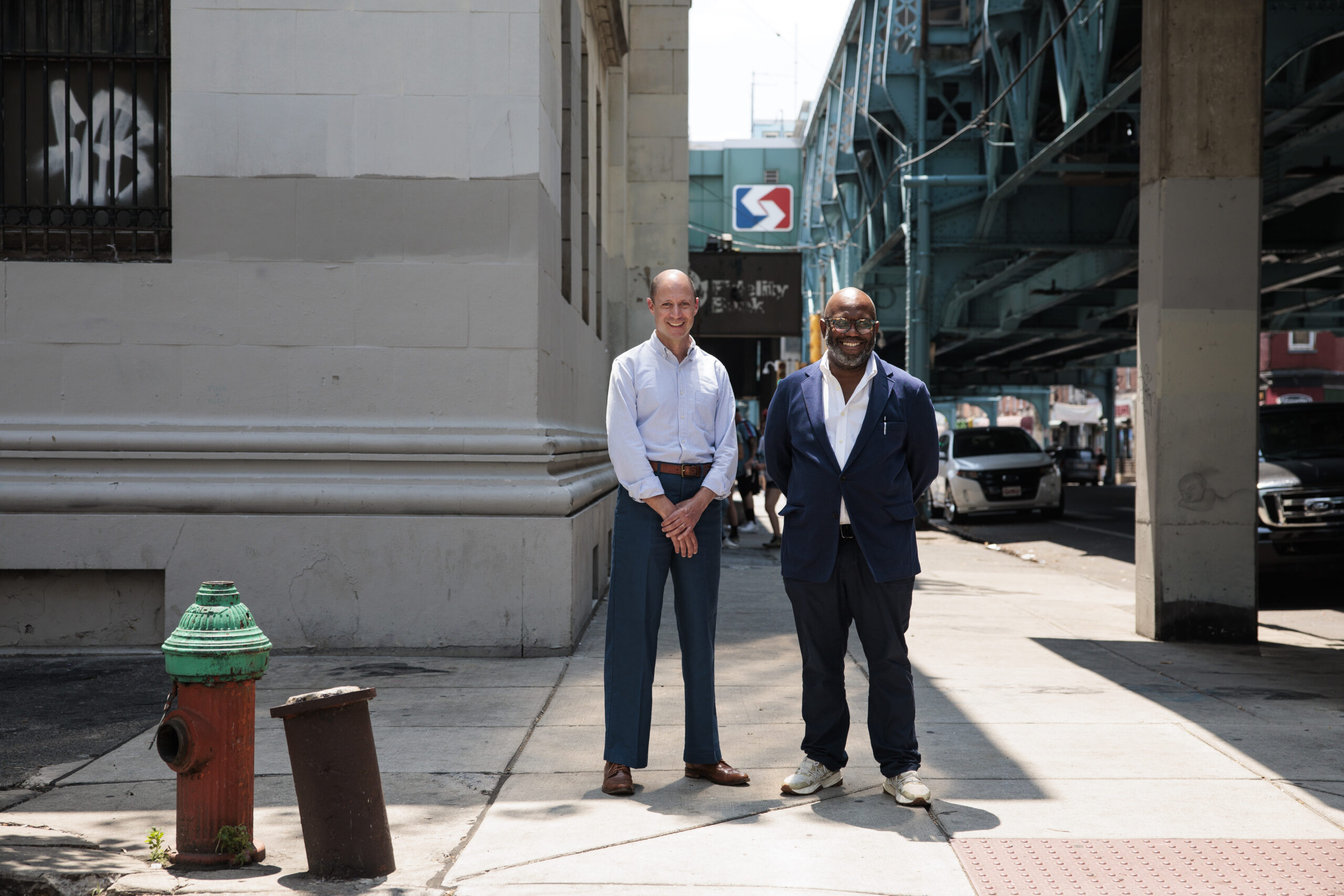
Jacob Roller (left) and Tayyib Smith last June outside the historic bank they plan to turn into a base for Black-owned businesses, which is next to the apartment project farther down Huntingdon Street.
Roller said the project is inspired in unit mix and general location by the success of Shift Capital’s mixed-use project at 3400 J St., home to Càphê Roasters. Smith & Roller was a junior partner in that project.
The Huntingdon Street project will be the firm’s largest project by unit count.
“I am extremely impressed by the work of Smith & Roller,” Jeffrey Crum, president of Ellavoz Impact Capital, said in the news release. “They have proven themselves as professional and experienced urban redevelopers who have a unique vision for revitalizing neighborhoods in partnership with local communities.”
The proposal has been presented to the East Kensington Neighbors Association several times over the years, and the community group is supportive of Smith & Roller’s proposal.
The group also sees the development project as a means to bring new life to the block, where the current dilapidated state of the buildings often attracts opioid users from nearby open-air drug markets on Kensington Avenue.
“The block has been challenged for a long time,” said John Theobald, president of the East Kensington Neighbors Association. “It’s really where a lot of the Kensington Avenue activity impacts the neighborhood, so hopefully more people living there and less vacancy will help.”
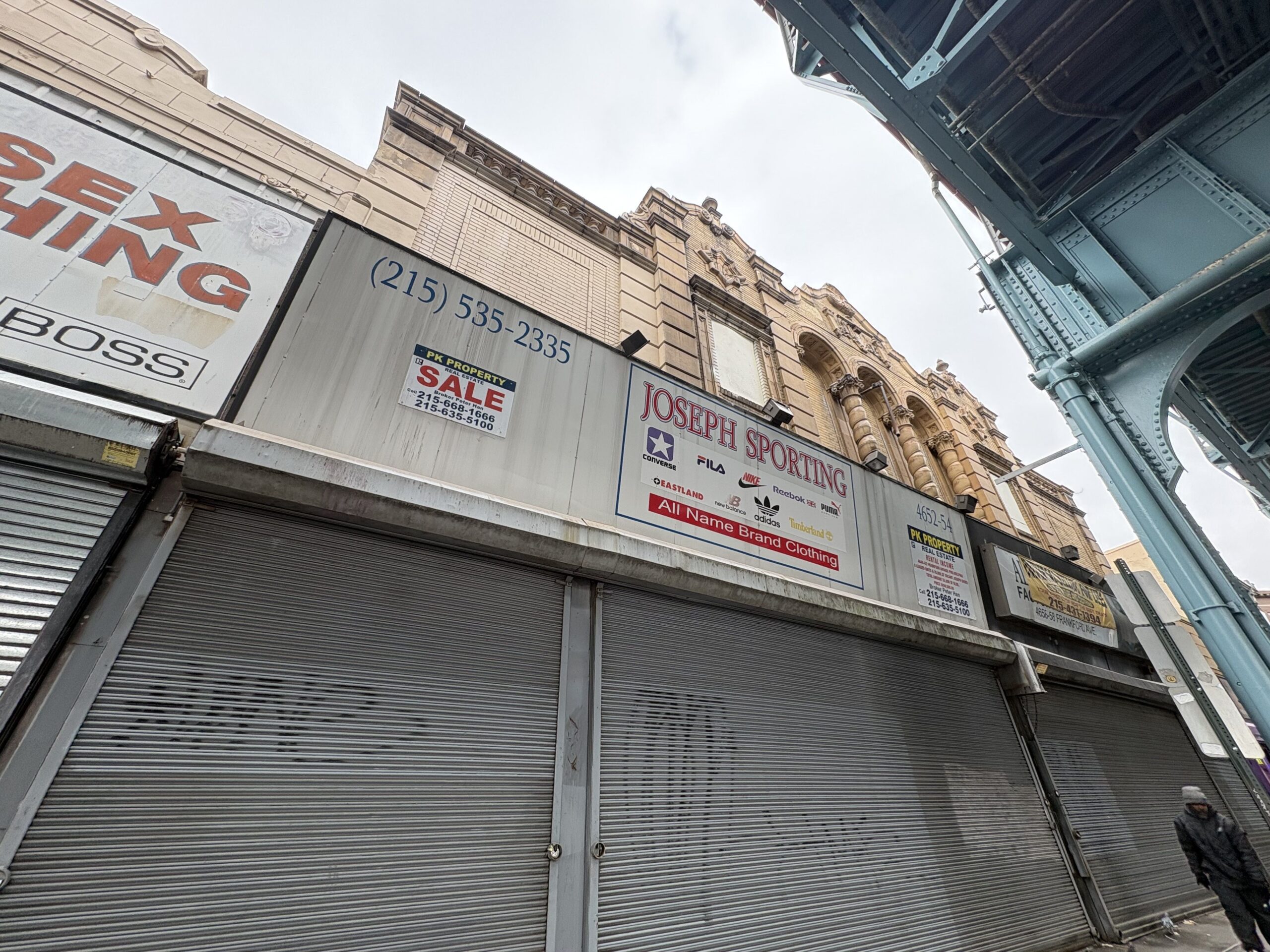
The Circle Theatre in Frankford, built in 1929 for what was once the largest movie theater chain in the country, is now officially recognized as historic.
According to the nomination, the Circle Theatre is “a significant surviving example of a neighborhood theater from a period when many were built” in the 1910s and ‘20s. The theater’s architects, Hoffman-Henon Co., “significantly shaped Philadelphia’s built environment through their commissions for theaters and Catholic institutions,” such as churches and schools.
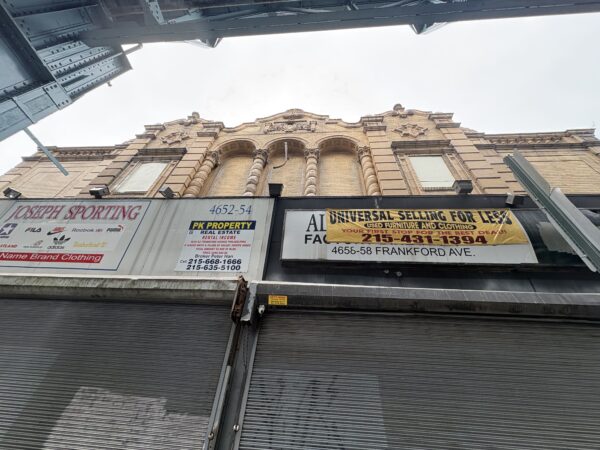
The decorative facade of the Circle Theatre includes architectural terracotta with ornamental details and columns that have been preserved. The structure was a movie theater from the time it opened in 1929 until 1953, according to the nomination. The building, which included some commercial space, was then converted exclusively for commercial use and now includes both occupied and vacant storefronts.
“The Circle Theatre is absolutely a landmark, and there’s still people who remember coming up [Frankford Avenue] to go there,” Ellie Devyatkin, director of economic development and neighborhood planning at the Frankford CDC, said during Friday’s Historical Commission meeting.
According to the nomination, “while Philadelphia once had over 400 movie theaters, the Circle is one of relatively few survivors with significant architectural integrity.”The theater was nominated for designation by Historical Commission staff.
The Hoffman-Henon architectural firm designed the Circle Theatre for the major movie theater chain Stanley Co. of America. The firm designed theaters for the company in Philadelphia, Atlantic City, Baltimore, and smaller municipalities throughout the tri-state area. Hoffman-Henon designed four Stanley theaterson Market Street in Philadelphia that the historic nomination called “movie palaces” that were “characterized by a large seating capacity and opulent interiors.”
The Circle Theatre and the Warner Theatre, also known as the Embassy Theatre, on the Atlantic City boardwalk “included the most flamboyant interiors in the firm’s catalog,” according to the nomination. Both opened in 1929 after Warner Bros. acquired the Stanley Co.
Emily Cooperman, a member of the Historical Commission and chair of its historic designation committee, said the committee was “very enthusiastic about this nomination” and appreciated the creation of an inventory of historical theaters by commission staffer Ted Maust.
The Frankford CDC supported historic designation for the building, which is across from the community development corporation’s office. Through a Philadelphia Department of Commerce program, the organization worked with the owner of a produce market in the building to improve its facade and is working now with the owner of a salon, Devyatkin said.
The Circle Theatre building now includes both vacant and occupied storefronts.
Historic designation protects buildings from demolition but also requires permission for certain exterior changes. Building materials that preserve historic character and adhere to city guidelines can be expensive.
“Particularly in neighborhoods where rents and property values are low, these designations can be difficult… when they do not come with financial assistance,” Devyatkin said. “There are other parts of the city where you can justifiably command a higher rent or a higher sales price for doing the right type of restoration or preservation work. But without subsidy, that’s really difficult… in many neighborhoods in Philly.”
Oscar Beisert, a preservationist with the Keeping Society of Philadelphia, said he agreed and would like the city to show some “leniency, especially in areas where the economic viability is a lot lower.”
He thanked staff at the Historical Commission for nominating the Circle Theatre for inclusion on the city’s historic register.
“Frankford has a lot of great buildings,” Beisert said, “and it’s great to see one of them designated.”
Nearly $58 million for South Philadelphia High School. Over $27 million for Forrest Elementary in the Northeast. Almost $55 million for Bartram High in Southwest Philadelphia.
Ahead of a Tuesday City Council hearing on the Philadelphia School District’s proposed facilities master plan, district officials have dangled the carrot that would accompany the stick of 20 school closings.
The district released Monday morning how much it would spend onmodernization projects at schools in each City Council District if Superintendent Tony B. Watlington Sr.’s plan is approved by the school board this winter.
The totals range from $443 million in the 9th District — which includes parts of Olney, East and West Oak Lane, Mount Airy, and Oxford Circle — to nearly $56 million for the 6th District in lower Northeast Philadelphia, including Mayfair, Bridesburg, and Wissinoming.
The district’s announcement comes as the plan has already raised hackles among some Council members, and City Council President Kenyatta Johnson has said he’ll hold up the district’s funding “if need be” if concerns are not answered to Council’s satisfaction.
Tailoring the release to Council districts — including highlighting one major project per district — appears to be an effort to calm opposition ahead of Tuesday’s hearing.
Details on every school that would get upgraded under Watlington’s plan — 159 in total — have not yet been released.
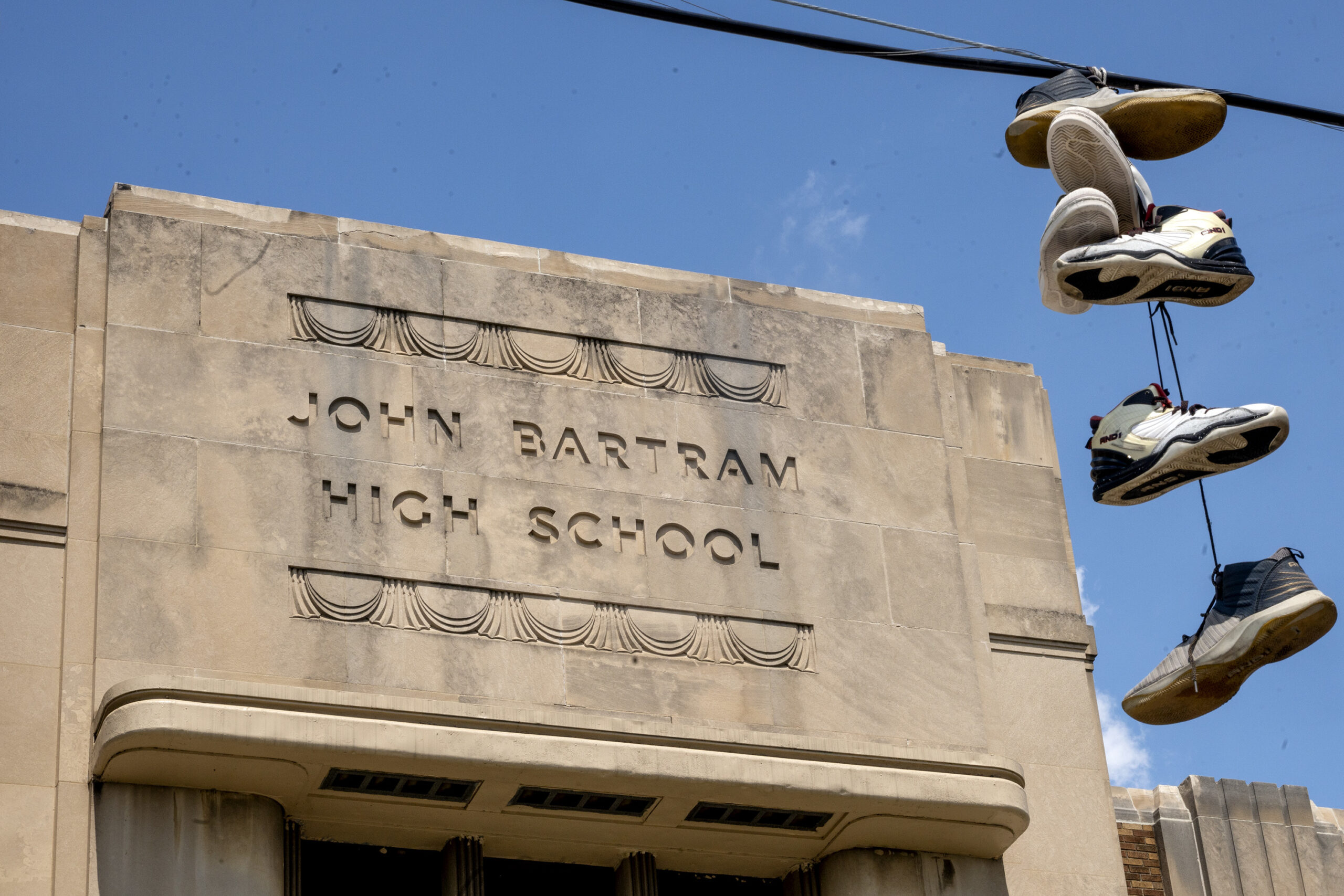
John Bartram High School at 2401 S. 67th St in Southwest Philadelphia.
Watlington has stressed that the point of the long-range facilities plan is not closing schools, but solving for issues of equity, improving academic programming, and acknowledging that many buildings are in poor shape, whilesome are underenrolled and some are overenrolled.
“This plan is about ensuring that more students in every neighborhood have access to the high-quality academics, programs, and facilities they deserve,” Watlington said in a statement. “While some of these decisions are difficult, they are grounded in deep community engagement and a shared commitment to improving outcomes for all public school children in every ZIP code of Philadelphia.”
But at community meetings unfolding at schools across the city that are slated for closure, Council members have expressed displeasure about parts of the plan — a preview, perhaps, of Tuesday’s meeting.
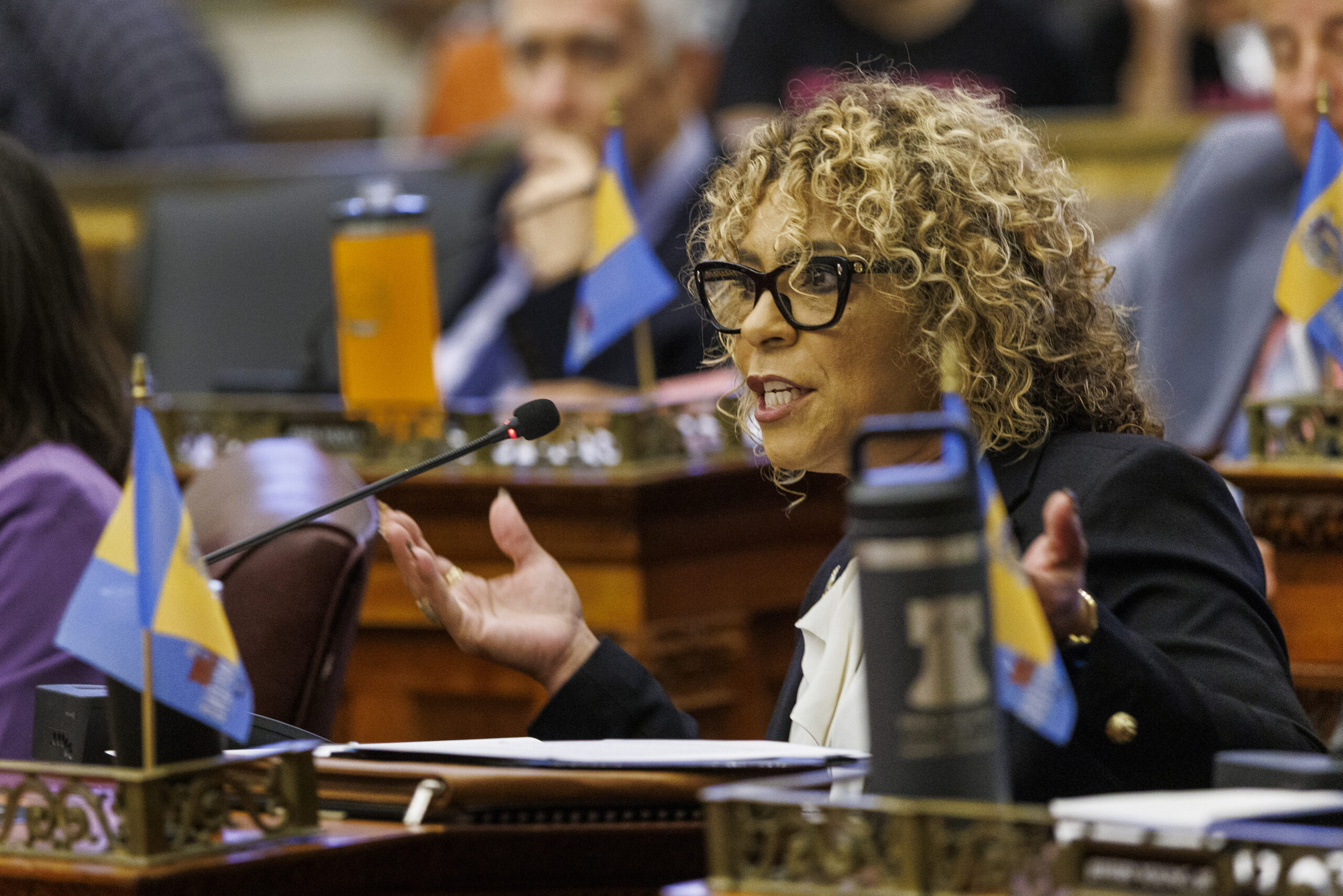
Councilmember Quetcy Lozada, represents the 7thDistrict, including Kensington, Feltonville, Juniata Park, and Frankford. Four schools in her district — Stetson,Conwell, Harding, and Welsh —are on the chopping block.
“The fact that they are being considered for closure is very concerning to me,” Lozada said at a meeting at Stetson Middle School on Thursday.
Councilmember Quetcy Lozada is shown in a 2025 file photo.
Councilmember Cindy Bass, speaking at a Lankenau High meeting, objected to closing schools that are working well. (Three schools in Bass’ 8th District, Fitler Elementary, Wagner middle school, and Parkway Northwest High School, are proposed for closure. Lankenau is in Curtis Jones Jr.’s district but has citywide enrollment.)
“I do not understand what the logic and the rationale is that we are making these kinds of decisions,” said Bass.
While Council members will not have a direct say on the proposed school closures or the facilities plan, Council wields significant control over the district’s budget. Funding for the district is included in the annual city budget that Council must approve by the end of June.
Local revenue and city funding made up about 40% of the district’s budget this year, or nearly $2 billion. Most of that is the district’s share of city property taxes which, unlike other school systems in Pennsylvania, are levied by the city and then distributed to the district.
(function() {
var l2 = function() {
new pym.Parent(‘schools_districts2’,
‘https://media.inquirer.com/storage/inquirer/projects/innovation/arcgis_iframe/schools_districts2.html’);
};
if (typeof(pym) === ‘undefined’) {
var h = document.getElementsByTagName(‘head’)[0],
s = document.createElement(‘script’);
s.type = ‘text/javascript’;
s.src = ‘https://pym.nprapps.org/pym.v1.min.js’;
s.onload = l2;
h.appendChild(s);
} else {
l2();
}
})();
Where will the money go?
Despite city and schools officials saying in the past that the district has more than $7 billion in unmet facilities needs, Watlington has said the district could complete its plan — including modernizing 159 schools — for $2.8 billion.
Officials said further details about modernization projects and the facilities plan will be released before the Feb. 26 school board meeting, where Watlington is expected to formally present his proposal to the school board.
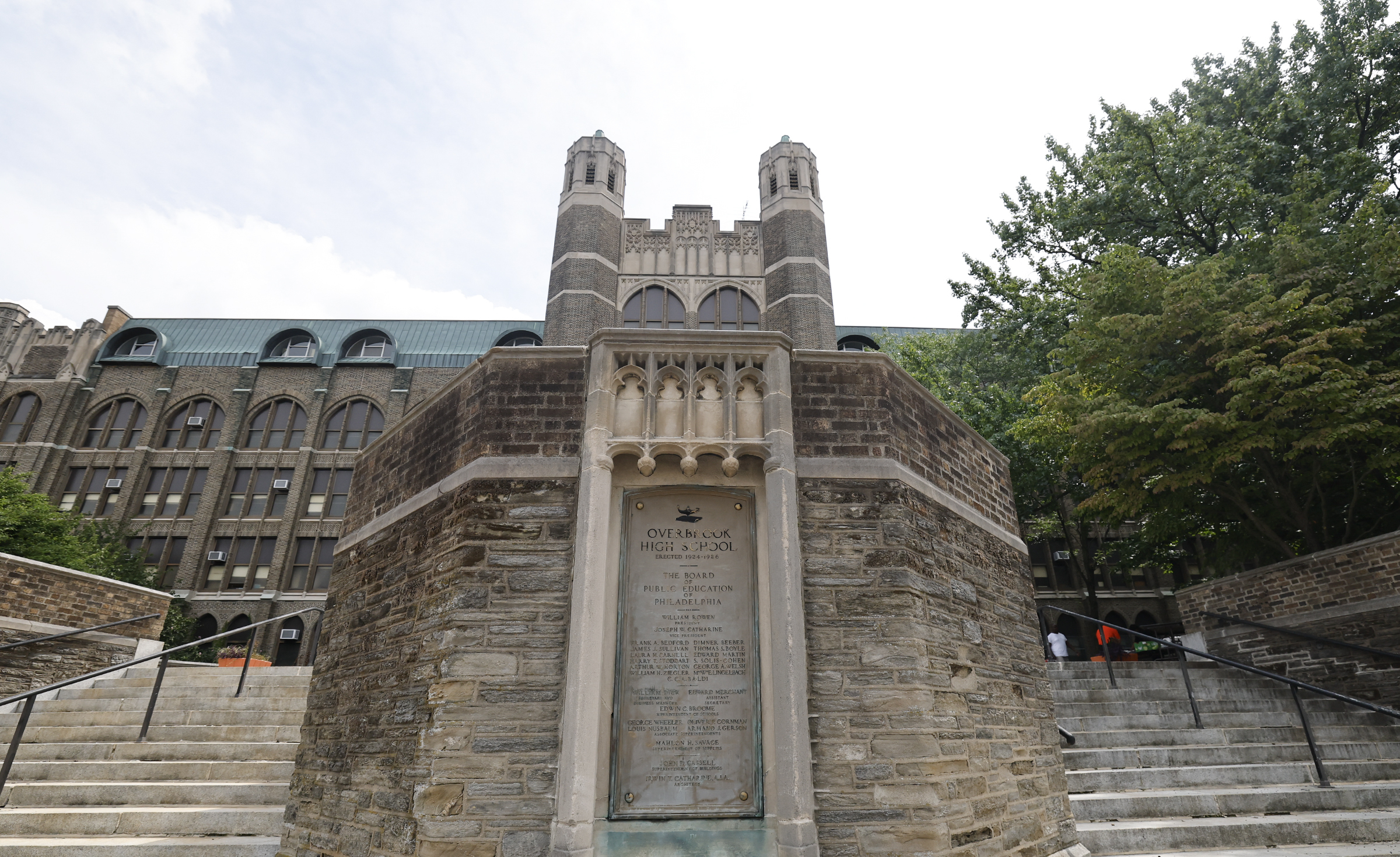
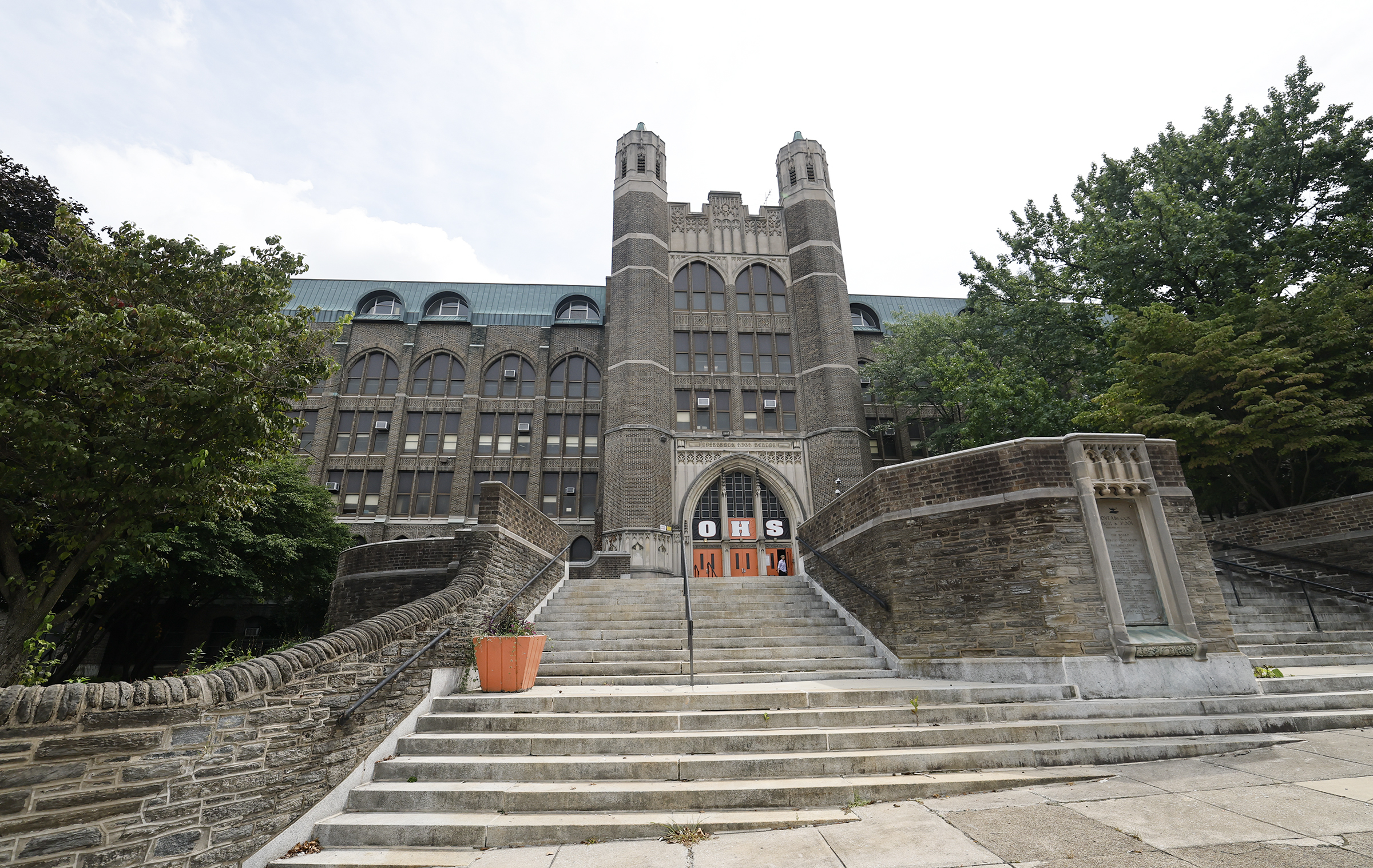
Overbrook High School, in West Philadelphia, will get major renovations in preparation for The Workshop School, a small, project-based district school, colocating inside the building.
Here are the total proposed dollar amounts per Council district and the 10 big projects announced Monday:
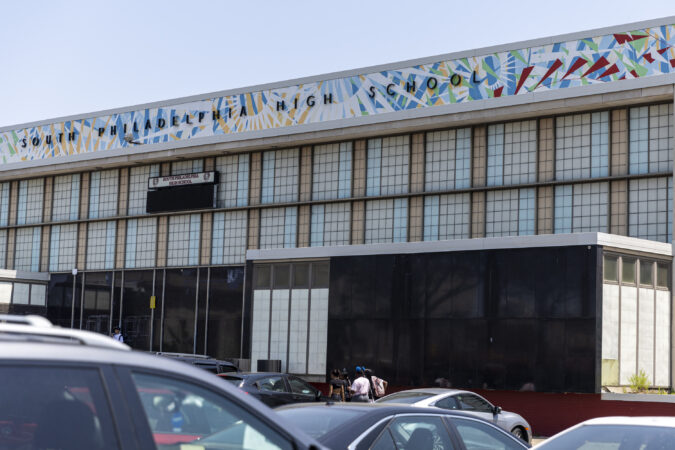
1st District: $308,049,008. Key project: $57.2 million for South Philadelphia High, turning the school into a career and technical education hub and modernizing electrical, lighting, and security systems.
2nd District: $302,284,081. Key project: $54.6 million for Bartram High, to renovate the school and grounds, career and technical education spaces, restroom and accessibility renovations, new painting, and new athletic fields and facilities (on the site of nearby Tilden Middle School, which is slated to close). Motivation High School would close and become an honors program inside Bartram.
3rd District: $204,947,677. Key project: $19.6 million for the Sulzberger site, which currently houses Middle Years Alternative and is proposed to house Martha Washington Elementary. (It currently houses MYA and Parkway West, which would close.) Improvements would include heating and cooling and electrical systems, classroom modernizations, andthe addition of an elevator and a playground.
4th District: $216,819,480. Key project: $50.2 million for Overbrook High School, with updates including new restrooms, accessibility improvements, and refurbished automotive bays. (The Workshop School, another district high school, is colocating inside the building.)
5th District: $290,748,937. Key project: $8.4 million for Franklin Learning Center, with updates including for exterior, auditorium, and restroom renovations, security cameras, accessibility improvements, and new paint.
6th District: $55,769,008. Key project: $27.2 million for Forrest Elementary, including modernizations that will allow the school to grow to a K-8, and eliminate overcrowding at Northeast Community Propel Academy.
7th District: $388,795,327. Key project: $32.3 million at John Marshall Elementary in Frankford to add capacity at the school, plus a gym, elevator, and schoolwide renovations.
8th District: $318,986,215. Key project: $42.9 million at Martin Luther King High in East Germantown for electrical and general building upgrades and accommodations for Building 21, a school that will colocate inside the King building.
9th District: $442,934,244. Key project: $42.2 million at Carnell Elementary for projects including an addition to expand the school’s capacity, restroom renovations, exterior improvements, and stormwater management projects.
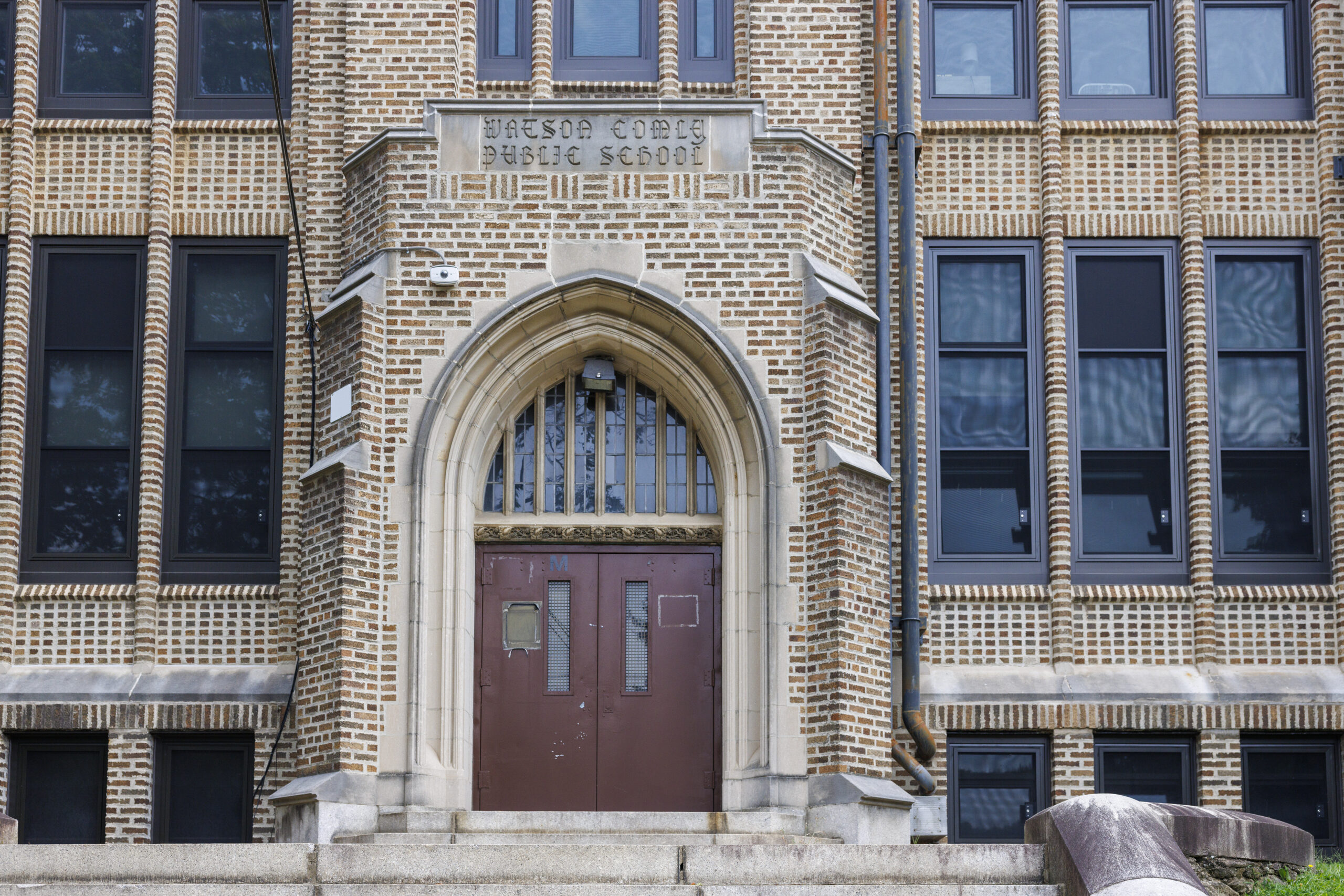
10th District: $275,829,539. Key project: at Watson Comly Elementary in the Northeast, an addition to accommodate middle grade students from Loesche and Comly, and building modernizations. District officials did not give the estimated cost of the Comly project.
What’s next?
The facilities Council hearing is scheduled for 10 a.m. Tuesday at City Hall. It will also be livestreamed.
Members of the public also have the opportunity to weigh in on the facilities plan writ large at three community town halls scheduled for this week: Tuesday at Benjamin Franklin High from 4:30 to 6:30 p.m., Friday at Kensington CAPA from 4:30 to 6:30 p.m., and a virtual meeting scheduled for 2 p.m. on Sunday.
Meetings at each of the schools proposed for closure continue this week, also; the full schedule can be found on the district’s website.
Philadelphia is getting $13 million to support six traffic-safety projects in Philadelphia, courtesy of speeders caught and fined by automated enforcement cameras.
The Pennsylvania Department of Transportation announced the grants Wednesday for an array of city projects, including $2 million for traffic-calming measures on Lincoln Drive between Kelly Drive and Wayne Avenue.
Some of that money will help pay for speed humps at 100 additional public, parochial, and private schools in the city, PennDot said.
Since taking office in 2023, the Shapiro administration has invested $49.7million in city traffic-safety projects, all from revenues raised by speed cameras.
Calming speeders
Under the automated speed-enforcement program, grants are plowed back into the communities that generated the revenue. Philadelphia is so far the only municipality in the state where speed cameras are authorized.
Pennsylvania also has automated speed enforcement in highway work zones, but that revenue goes to the Pennsylvania State Police for extra patrols and more troopers, the turnpike for safety projects and speeding counter-measures, and the general treasury.
The new grant is meant to continue traffic-safety work on Lincoln Drive that began a couple of years ago.
That includes speed humps, speed slots, new phosphorescent paint, flexible lane delineators, a smoother merge point where the road narrows, and marked left-turn lanes.
“It’s made a huge difference,” said Josephine Winter, executive director of the West Mount Airy Neighbors civic group, which organized residents.
“People that live along Lincoln Drive are feeling positive,” she said — though there is a split between people who are angry at what speed bumps have done to their cars’ undercarriages and those who support what they say are life-saving improvements.
“The city was wonderful, very responsive,” Winter said. “We’re been fortunate to get something done here.” Next up: working with other Northwest residents to get improvements on side streets, Wissahickon Avenue, and others.
Other grants
$1.5 million for planning work to upgrade traffic signals, better lane and crosswalk markings, and intersection modifications.
$5 million for design and construction of safety improvements along commercial and transit corridors. Those include curb extensions, concrete medians, bus boarding bump-outs, and new crosswalks. Locations include: Frankford Avenue (Tyson Avenue to Sheffield Avenue); 52nd Street (Arch Street to Pine Street); Hunting Park Avenue (Old York Road to 15th Street); and Germantown Avenue (Indiana Avenue to Venango Street).
Najee Williams, 27, is considered armed and dangerous, police said. Homicide investigators say Williams is connected to the fatal shootings of 20-year-old David Garcia-Morales in December and 25-year-old Aaron Whitfield in January.
Williams faces charges of murder, conspiracy, and related crimes. There is a $20,000 reward for information that leads to his arrest and conviction.
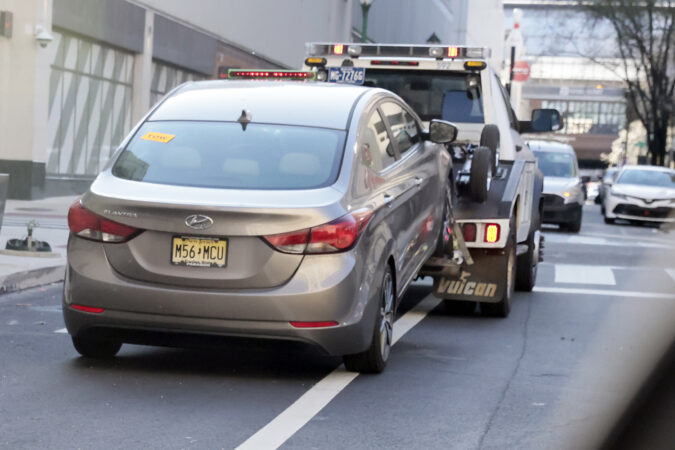
The killings of Garcia-Morales and Whitfield, who police say worked for the Jenkintown-based towing company 448 Towing and Recovery, rattled the city and put a focus on the competitive business of towing.
Williams is the owner and operator of N.K.W Towing and Recovery, of North Philadelphia, according to a police source who asked not to be identified to discuss an ongoing investigation.
A Facebook page for N.K.W features photos of car accidents and messages urging potential customers to call the company.
“INVOLVED IN A ACCIDENT OR SEE ONE CALL ME” one message says.
Another post from 2024 says: “Left the streets in a patty wagon, came back home and got right to it! Been home for 2 years now & as I sit here and think how bless I’m to have my freedom back.”
It was not immediately clear who made the post.
Staff Inspector Ernest Ransom, commanding officer of the homicide unit, said forensic evidence collected from a stolen Honda used in the shooting of Whitfield led investigators to Williams.
The department’s fugitive task force and U.S. Marshals are assisting in the search for Williams, whose last known whereabouts were in Montgomery County, authorities say.
On Dec. 22, police were called to 4200 Torresdale Avenue to find Garcia-Morales shot and injured inside a Ford F-450 towing vehicle. He was struck in the neck and thigh, and died four days later at Temple University Hospital.
The second shooting, which took place on Jan. 11 on the 2100 block of Knorr Street, left Whitfield dead at the scene after he was struck by gunfire in the head and body.
Whitfield had also been sitting in a tow truck, according to police. His 21-year-old girlfriend was shot in the leg and survived her injuries.
Philadelphia’s towing industry is competitive and drivers often traverse the city in search of car accidents, hoping to be the first to arrive at the scene.
That practice persists despite a city policy that requires police and dispatchers to cycle through a list of approved towing companies to contact when responding to accidents.
February’s crop of restaurant openings includes two restaurants’ expansions to Narberth, a reopened brewery in South Jersey, a chic restaurant/lounge in Center City, an intriguing wine bar/bottle shop in Chestnut Hill, and two French newcomers.
Restaurants can take awhile and owners are often hesitant to pinpoint an opening date. I’ve listed the targeted day where possible; for the rest, check social media.
Duo Restaurant & Bar (90 Haddon Ave., Westmont): Brothers Artan and Arber Murtaj and Andi and Tony Lelaj, who own the Old World-style Italian Il Villaggio in Cherry Hill, are taking over Haddon Avenue’s former Keg & Kitchen with a pub serving a bar menu supplemented with seafood.
Eclipse Brewing (25 E. Park Ave., Merchantville): Last August, food trucker Megan Hilbert of Red’s Rolling Restaurant became one of the youngest brewery owners in New Jersey when she bought this 9-year-old Camden County brewery, open as of Friday.
Lassan Indian Traditional (232 Woodbine Ave., Narberth): The second location of the well-regarded Lafayette Hill Indian BYOB takes over the long-ago Margot space in Narberth.
LeoFigs, 2201 Frankford Ave., as seen in January 2026.
LeoFigs (2201 Frankford Ave.): Justice and Shannon Figueras promise the delivery of their long-awaited bar/restaurant, with an urban winery in the basement, at Frankford and Susquehanna in Fishtown. The food menu will be built around comfort-leaning small plates.
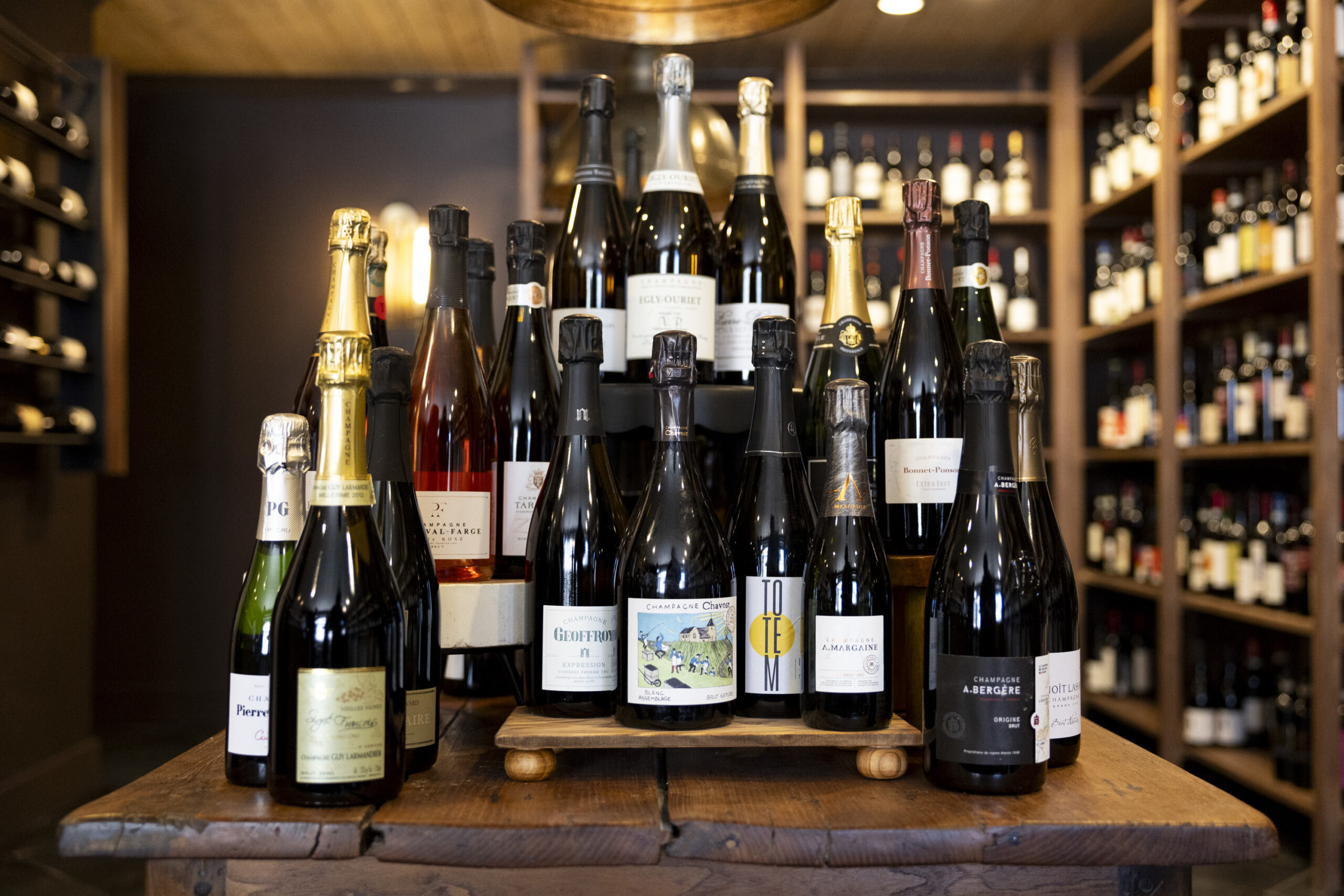
The bubbly selection at Lovat Square in Chestnut Hill.
Lovat Square (184 E. Evergreen Ave.): Damien Graef and Robyn Semien (also owners of Brooklyn wine shop Bibber & Bell) are taking over Chestnut Hill’s former Top of the Hill Market/Mimi’s Café property for a multiphased project: first a wine shop with indoor seating, then a courtyard with a full dinner menu, followed later by a cocktail bar/restaurant component. Opens Feb. 12
Malooga (203 Haverford Ave., Narberth): The Old City Yemeni restaurant is expanding to Narberth with lunch and dinner service plus a bakery, with expanded indoor/outdoor seating and space for groups.
Mi Vida (34 S. 11th St.): Washington, D.C.-based restaurant group Knead Hospitality + Design is bringing its upscale Mexican concept to East Market, next to MOM’s Organic Market. Target opening is Feb. 18.
Napa Kitchen & Wine (3747 Equus Blvd., Newtown Square): A California-inspired restaurant rooted in Midlothian, Va., opens in Ellis Preserve with an extensive domestic and international wine list in a polished setting. Opens Feb. 9.
Ocho Supper Club (210 W. Rittenhouse Square): Chef RJ Smith’s Afro-Caribbean fine-dining supper club starts a six-month residency at the Rittenhouse Hotel, tied to the Scarpetta-to-Ruxton transition, serving tasting menus through July. Now open.
Piccolina (301 Chestnut St.):A low-lit Italian restaurant and cocktail bar at the Society Hill Hotel from Michael Pasquarello (Cafe Lift, La Chinesca, Prohibition Taproom). Targeting next week
Pretzel Day Pretzels (1501 S. Fifth St.): James and Annie Mueller’s pretzel-delivery operation is becoming a takeout shop in the former Milk + Sugar space in Southwark. Expect classic soft pretzels plus German-style variations (including Swabian-style) and stuffed options.
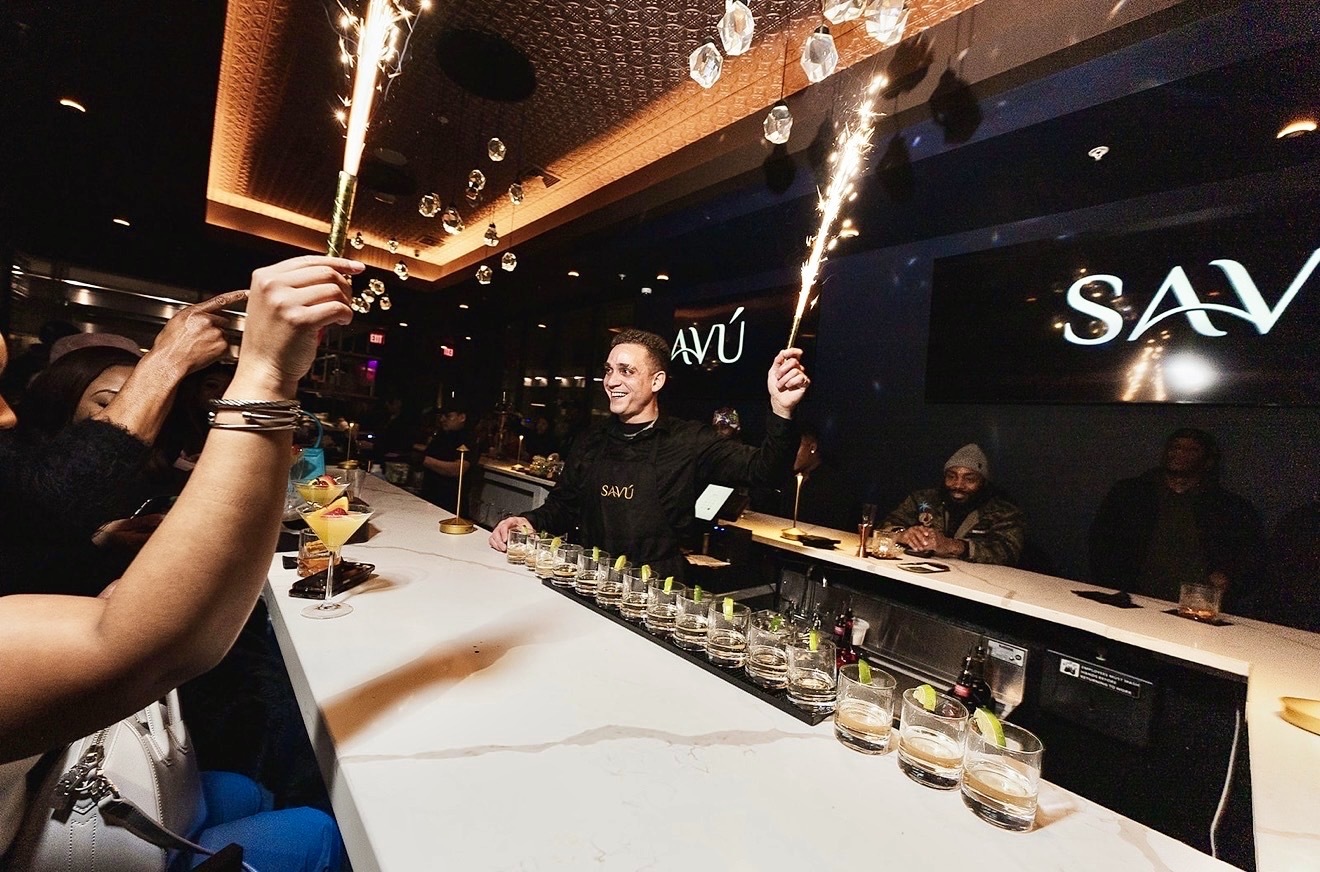
Merriment at the bar at Savu, 208 S. 13th St.
Savú(208 S. 13th St.): Kevin Dolce’s Hi-Def Hospitality has converted the former Cockatoo into a modern, bi-level dining and late-night lounge with a New American menu from chef Maulana Muhammad; it just soft-opened for dinner Thursday through Sunday and weekend brunch.
Bar-adjacent seating at Side Eye.
Side Eye (623 S. Sixth St.): Hank Allingham’s all-day neighborhood bar takes over for Bistrot La Minette with “French-ish” food from chef Finn Connors, plus cocktails, European-leaning wines, beer, and a late-night menu. Opens 5 p.m. Feb. 7 with 50% of the night’s proceeds going to the People’s Kitchen.
Soufiane at the Morris(225 S. Eighth St): Soufiane Boutiliss and Christophe Mathon (Sofi Corner Café) say there’s a 90% chance of a February opening for their new spot at the Morris House Hotel off Washington Square. It’s billed as an elegant-but-approachable restaurant inspired by classic French bouillons/brasseries, with a menu spanning small plates and full entrées alongside Moroccan-influenced tagines. Expect evening service indoors, daytime service outdoors.
South Sichuan II(1537 Spring Garden St.): A second location for the popular Point Breeze Sichuan takeout/delivery specialist, near Community College of Philadelphia; this one will offer more seating.
March openings are in the offing for the much-hyped PopUp Bagels in Ardmore, as well as the long-delayed Terra Grill (a stylish room in Northern Liberties’ Piazza Alta) and ILU (the low-lit Spanish tapas bar) in Kensington.
The house: A 960-square-foot townhouse in Norris Square with two bedrooms and one bath, built in 1920.
The price: Listed for $255,000; purchased for $255,000
The agent: Kate McCann, Elfant Wissahickon
Todtz saw potential in the house’s flexible floor plan.
The ask: Evan Todtz was tired of commuting from Baltimore to Washington, D.C. He didn’t want to live in the latter, and he couldn’t find work in the former, so he considered the next-closest big city: Philadelphia.
“I’ve always really loved Philly and wanted to spend more time in it,” Todtz said. When his company approved a transfer to its Philadelphia office, Todtz moved north and rented an apartment in Norris Square. A year later, he was ready to make it official. “I felt like I was getting into a groove in Philly,” he said, “and I wanted to invest in a place and make this my home.”
Transit access was Todtz’s top priority. He frequently travels along the east corridor for work, so being close to the Market-Frankford line, which could take him directly to 30th Street Station in the “wee hours of the morning,” was a nonnegotiable. He wanted two bedrooms, enough space to host visitors, and an outdoor space. Everything else was flexible. “I’m particular, but I’m not picky,” he said.
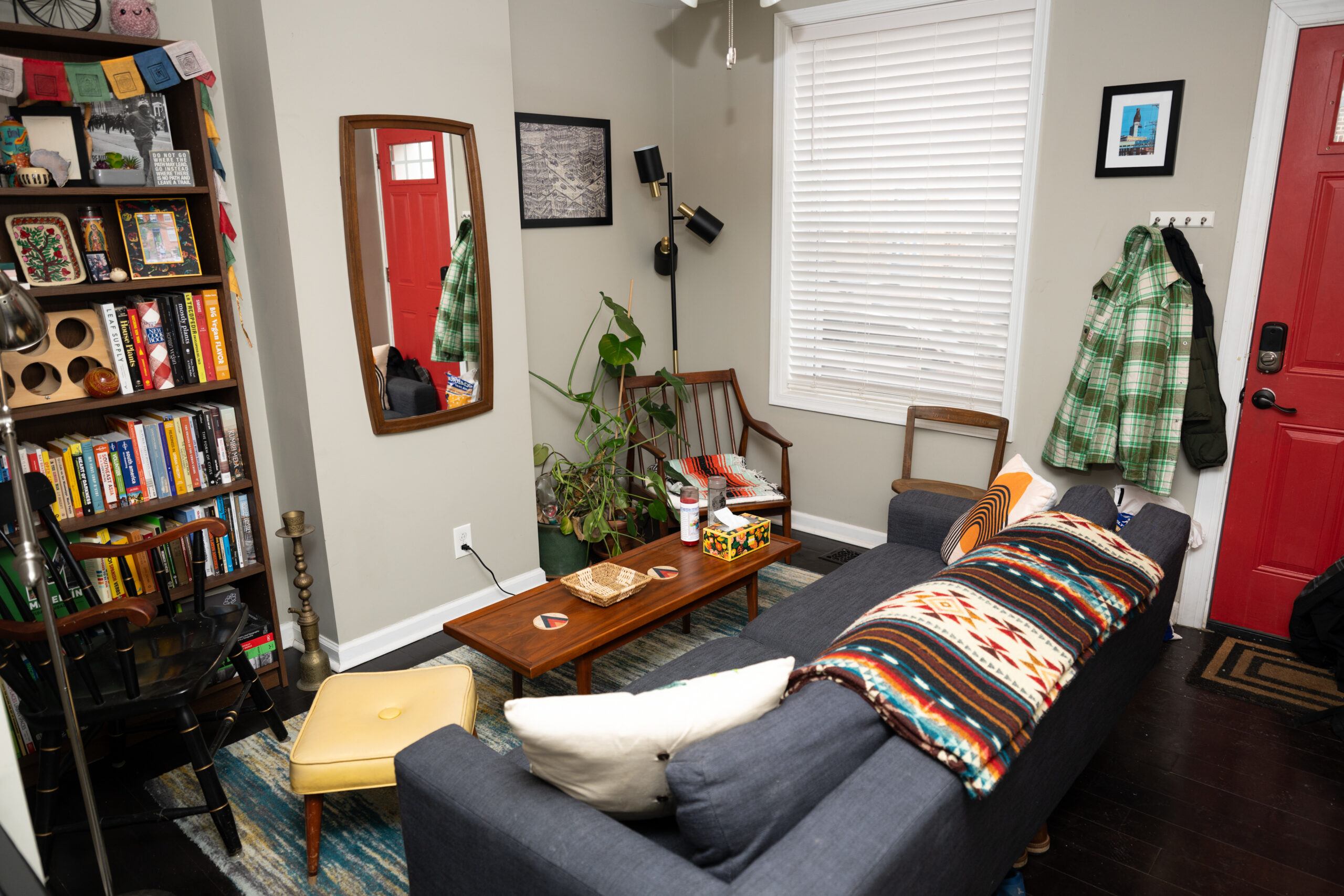
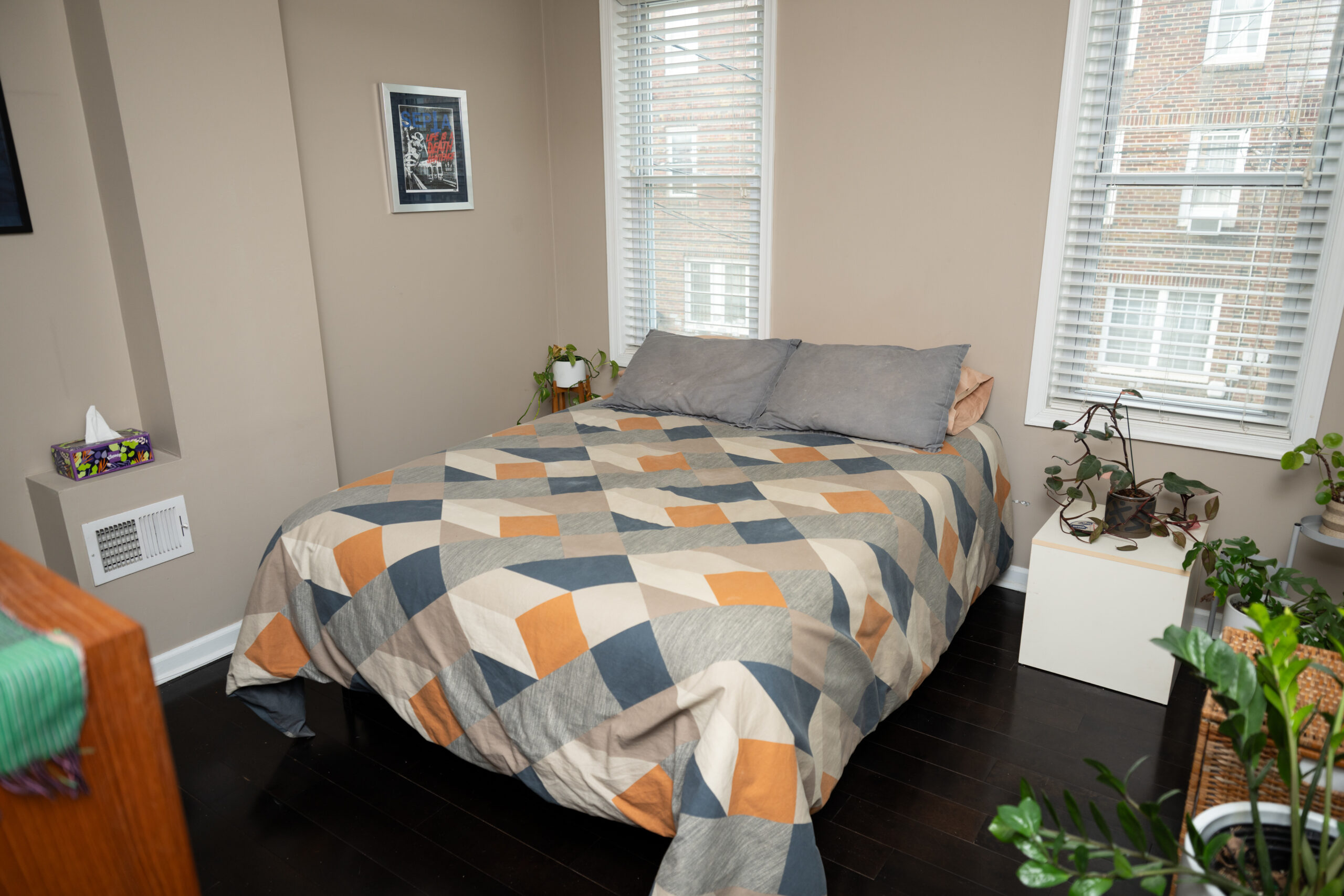
Todtz liked the living room’s tan walls and dark floors. They made the room feel cozy.
The search: Todtz began looking seriously at the end of 2023, after attending a first-time homebuyers workshop hosted by Philly Home Girls. Over a month, hesaw several homes on weekends and evenings. He saw the house he would eventually buy early in his search, but it felt out of reach. Originally listed at $280,000, it hovered just above what he felt comfortable paying. He put it on a mental “maybe” list and kept looking. One month later, the price dropped to $255,000. “That’s when it felt within striking distance,” Todtz said. “It was closer to comps in the market.”
The appeal: Todtz immediately noticed the quality of the renovation. The house looked polished but not flashy, neat but not boring. “There weren’t super high-end finishes I wasn’t going to appreciate,” Todtz said, “and there wasn’t the gray-washed millennial nothingness design that so many new houses have.”
Instead, the house felt solid and lived-in, with dark wood floors and warm-colored walls. “It was very cozy and pretty,” Todtz said. He also liked the flexible floor plan and could see “potential in the footprint,” he said. Mostly, he liked that there wasn’t anything glaringly wrong with it. “It just felt very manageable,” he said. “It didn’t feel like I was taking on a massive project that I didn’t know how to start.”
Todtz said he would be happy with any kind of outdoor space.
The deal: By the time the price dropped to $255,000, the house had been sitting on the market for months. Todtz and his agent sensed the seller was “eager to get it off his books,” so they offered the asking price and requested a 3% seller’s assist. The seller agreed. “That was a huge win,” Todtz said. It effectively lowered the price to $247,000.
The inspection turned up only minor issues. The silver coating on the roof was wearing, and the seller, a small-time developer from Queens, N.Y., offered to address it without hesitation. “He was very chill,” Todtz said. “It was great to work with him.”
The money: All in, Todtz spent about $21,000 on closing costs and upfront expenses. Todtz’s mortgage is through the Keystone Home Loan Program, which required only a 3.5% down payment, provided he paid mortgage insurance. The money came primarily from his long-term savings.
One of two bedrooms in Evan Todtz’s house.
“Every paycheck since graduating from undergrad, I’ve been putting money away,” Todtz said. “However modestly, whether it was 50 bucks or 100 bucks.” Eventually, he transferred some of those savings into a mutual fund that he let grow for a decade. He put the rest in a high-yield savings account. He also received a few thousand dollars from his grandmother’s estate.
The move: Todtz closed on April Fools’ Day, which he feared was a bad omen. His agent reassured him it wasn’t. He spent the next month moving small items in his car, then hired movers to handle the bulk of the work over a weekend in May. He didn’t ask his friends to help him move. “I want to keep my friends,” Todtz said. ”I don’t want to make them stop talking to me.”
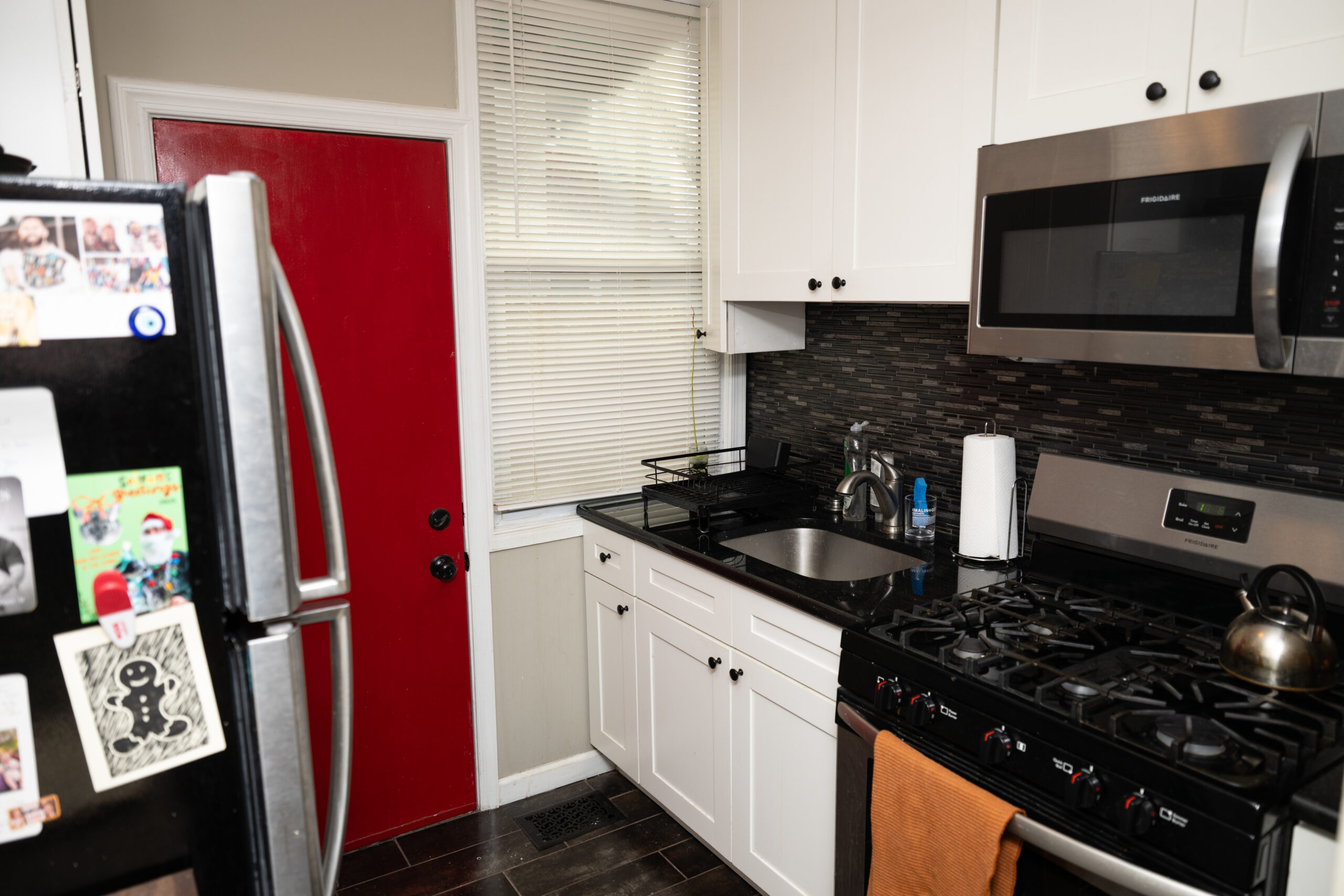
Todtz loves his kitchen even though it’s “a little small,” he says.
The move was mostly smooth, except for one casualty: a box spring that couldn’t fit up the new house’s narrow staircase.
Any reservations? Todtz doesn’t regret buying, though he acknowledges that homeownership comes with new anxieties. Given the current state of the economy, “renting and being able to flee is kind of attractive,” he said.
Still, he’s glad he made the leap. “I’m happy to own,” he said, “and I feel comfortable learning as I go.”
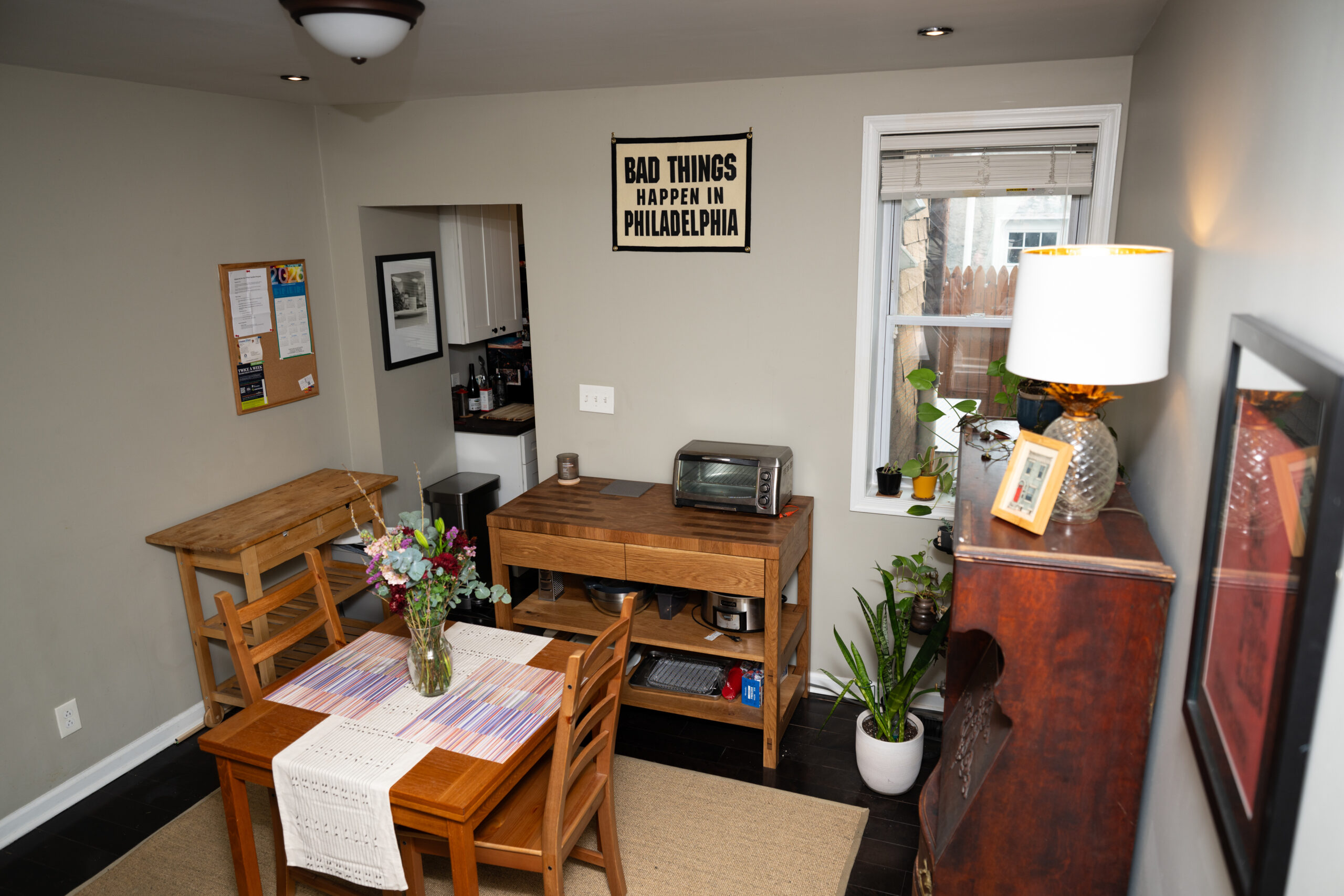
The custom wood butcher block Todtz built with the help of the Philadelphia Table Co.
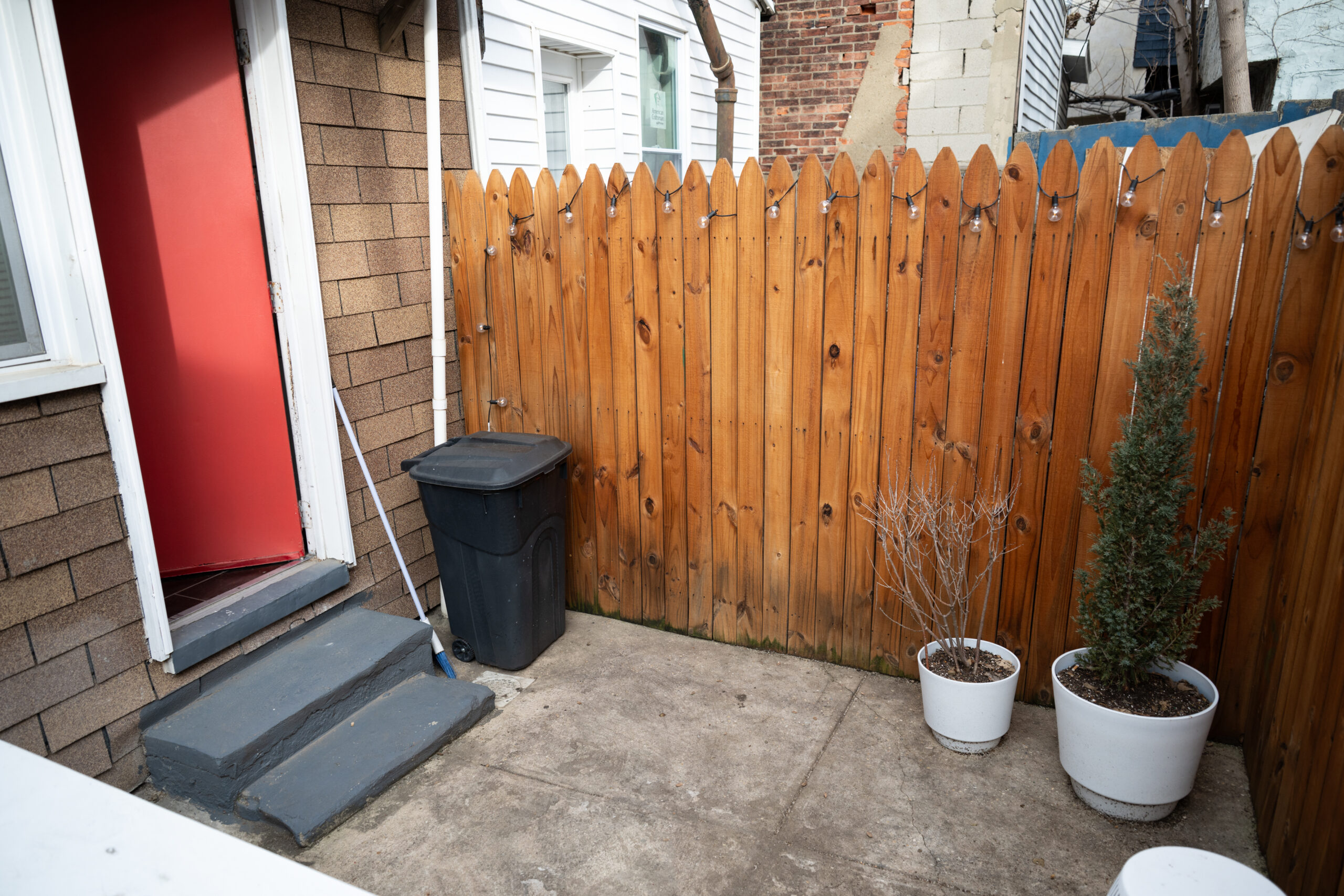
Life after close: Most of the changes Todtz has made have been cosmetic. “I didn’t want to bite off more than I could chew,” he said. He tackled the patio first, pressure-washing the concrete, re-staining the fencing, and adding cafe lights. After that, he partnered with Philadelphia Table Co. to build a custom wood butcher block that has doubled the counter space in his kitchen.
He has a couple of larger projects he plans to tackle next year, such as a full HVAC upgrade, but for now, he’s focused on rebuilding his savings. “I’m happy with the investment,” he said, “but I’m very much in a house-poor moment right now.”
An Inquirer analysis of the decisions and the data behind them shows the proposed closures would disproportionately affect Black students. And despite efforts to minimize the impact, schools in the most vulnerable sections of Philadelphia would also be disrupted.
The closures would mostly address buildings with hundreds of unused seats, though some largely empty buildings were spared. And eight of the closures would affect schools given the district’s worst building condition rating — though 30 more buildings in that category would stay open and receive upgrades of some kind.
Monique Braxton, district spokesperson, said the facilities plan was “designed to provide access to high-quality academic and extracurricular programs across every neighborhood regardless of zip code.”
Most affected students — 90% — would be reassigned to schools with similar or better academic outcomes, and all would be reassigned to schools with either similar or better academics or comparable or better building conditions. Receiving schools will get additional supports, Braxton said.
Overall, the proposal would shake up at least 75 schools, with 20 closing entirely, four leaving their current buildings to colocate within other schools’ buildings, and three moving to new buildings. It would create new schools and, in one case, result in a new building. Nearly50 other district schools would take in displaced students from the closing schools, with some adding grades and others modernizing to fit new programming needs.
Collectively, about 32,000 district students learn in the 75 affectedschools — more than a quarter of the district’s total enrollment — not counting children in pre-K programs.
And those are just the changes Watlington introduced this month. Other shifts, some of them major, district officials said, are expected to be announced by the time he presentsthe planto the school board next month. A final vote is planned for later this winter.
Superintendent Tony B. Watlington (center) speaks about his proposal this month for the Philadelphia school facilities master plan.
The racial impact
The 20 schools that could close have twice as many empty seats as the district’s other schools. But The Inquirer’s analysis found that the closures will hit Black students disproportionately.
Among the closing schools, about 68% of the student population is Black, compared with 40% for the rest of the district’s schools — not including disciplinary or other specialized schools.
window.addEventListener(“message”,function(a){if(void 0!==a.data[“datawrapper-height”]){var e=document.querySelectorAll(“iframe”);for(var t in a.data[“datawrapper-height”])for(var r,i=0;r=e[i];i++)if(r.contentWindow===a.source){var d=a.data[“datawrapper-height”][t]+”px”;r.style.height=d}}});
Of the district’s schools where at least 90% of the students are Black, more than half are scheduled to close or take in more students from the closures.
Overall, amajority of students in the 75 schools that could close, take in students, or change in some way are Black, at about 54% of enrollment.
Some majority-Black schools, however, are earmarked for upgrades. Bartram High would get a modern athletics facility after nearby Tilden Middle School in Southwest Philadelphia is closed and upgraded for that purpose.
Nysheera Roberts is the parent of multiple children who attend Waring Elementary, in Spring Garden, which landed on the closure list. Waring now educates under 200 students; its pupils would be sent to Bache-Martin.
Roberts is stunned that her school — which educates mostly Black students like her kids — could close.
She worries about the logistics of getting her kids to school safely further away, then getting to her job in home care in Frankford on time. She worries what will happen to her children, including the niece and nephew she now raises who have lived through significant trauma and have behavioral and learning needs, if they have to adjust to a new and larger school.
“It’s not fair,” Roberts said. “They’re hurting Black kids more.”
Paying attention to vulnerable neighborhoods
In deciding which schools to close or expand, the district considered the vulnerability of the surrounding neighborhood.
Two dozen neighborhood elementary schools were labeled “very high risk,” meaning they have likely dealt with a previous school closure, or the community is otherwise vulnerable to high poverty, housing concerns, or other factors.
(function() {
var l2 = function() {
new pym.Parent(‘school_closing1’,
‘https://media.inquirer.com/storage/inquirer/projects/innovation/arcgis_iframe/school_closing1.html’);
};
if (typeof(pym) === ‘undefined’) {
var h = document.getElementsByTagName(‘head’)[0],
s = document.createElement(‘script’);
s.type = ‘text/javascript’;
s.src = ‘https://pym.nprapps.org/pym.v1.min.js’;
s.onload = l2;
h.appendChild(s);
} else {
l2();
}
})();
Welsh, in North Philadelphia, was the only school building in a neighborhood labeled “very high risk” to land on the closing list.
Bethune in North Philadelphia and Martha Washington in West Philadelphia will colocate with other schools.
But three schools with building conditions considered unsatisfactory, poor programming options, and “very high risk” neighborhood ratings were left off the closure list. Those schools are Philadelphia Military Academy in North Philadelphia, Sheppard in West Kensington — which has successfully fought off closure in the past — and Francis Scott Key in South Philadelphia, the district’s oldest building, constructed in 1889. Sheppard and Francis Scott Key are both majority-Hispanic schools.
Sheppard Elementary School in West Kensington has faced the threat of closure in the past but was spared in the latest proposal.
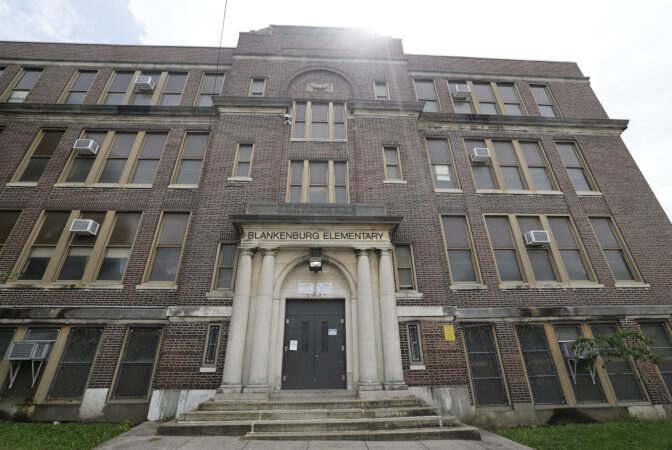
The district plan calls for closing five schools in neighborhoods it deemed to have a “high risk” of vulnerability, the level below “very high”: Blankenburg, Harding, Stetson, Tilden, and Wagner.
Watlington has made it clear that the district is phasing out middle schools when possible, in favor of the K-8 model — and of that list, four are middle schools. Only Blankenburg, in West Philadelphia, is an elementary. Also, of those schools in vulnerable neighborhoods, four of the five are rated as having “unsatisfactory” buildings, the district found.
Perhaps no section of the city faces as much disruption from the recommendations as the lower part of North Philadelphia.
Fourteen schools with a combined enrollment of 5,400 students could be affected, including the closures of Ludlow, Morris, Penn Treaty, and Waring.
“If you are closing schools during a literacy crisis, then you should be held directly accountable to the people you serve,” Young said last week.
Right sizing mostly empty buildings
Underused space was a factor in the district’s decision-making, an Inquirer analysis found.
Data released by the district last year identified about 60 schools that were more than half empty. The recommendations attempt to realign some of these schools by taking significant action on 31 of the 60 half-empty schools.
Of the 20 schools the district wants to close, 14 are currently at less than half capacity.
window.addEventListener(“message”,function(a){if(void 0!==a.data[“datawrapper-height”]){var e=document.querySelectorAll(“iframe”);for(var t in a.data[“datawrapper-height”])for(var r,i=0;r=e[i];i++)if(r.contentWindow===a.source){var d=a.data[“datawrapper-height”][t]+”px”;r.style.height=d}}});
AMY Northwest, Conwell, Robert Morris, Motivation, Tilden, and Welsh are all recommended for closure, with each educating fewer than a quarter of the students they have room for.
Overbrook High in West Philadelphia — a 100-year-old school with roughly one in four seats filled — would remain open but begin sharing space with the Workshop School, a small, project-based high school located nearby.
Overbrook has received millions in funding from the state for remediation and a new roof. It also has a strong alumni association.
Overbrook High School in West Philadelphia has thousands of empty seats but was not tapped for closure. Instead, The Workshop School, a small, project-based high school now located in another West Philadelphia building, will colocate with Overbrook.
Having a more robust enrollment, however, did not save some schools from landing on the closure list. Harding, Parkway Northwest, Pennypacker, Robeson, and Stetson operate at 50% to 74% of capacity but would still close.
Besides shutting down underused schools, the plan would alter an additional 17 half-empty schools by moving them into colocations, adding grades, or otherwise expanding their use by taking in students from the closing schools.
To make it work, the district’s recommendations often involve a series of logistical steps. A pair of North Philadelphia neighborhood schools built in the 1960s are one example.
Hartranft, a K-8 school in North Philadelphia with a building rated in “good” condition but only 37% occupied, would take in students from Welsh, a school marked for closure. Welsh teaches the same grades but in a building rated “poor” about a half a mile away. The district would then convert the Welsh building into a new year-round high school.
John Welsh Elementary school is on the list of 20 schools proposed to close by the 2027-28 school year.
Getting students out of (some) fatigued buildings
By one city estimate, district schools need about $8 billion in repair costs for 300-plus buildings that are about 75 years old on average. Watlington’s plan calculates the district could do it for $2.8 billion.
Even with some investments over the last decade, many schools still have asbestos, lead, or mold issues. And many schools that don’t have bad building quality ratings still need improvements.
Eight schools recommended for closure are in buildings rated “unsatisfactory” by the district, its lowest score.
An additional 30 schools also rated “unsatisfactory” would remain open under the plan, including some expected to see an increase of students.
window.addEventListener(“message”,function(a){if(void 0!==a.data[“datawrapper-height”]){var e=document.querySelectorAll(“iframe”);for(var t in a.data[“datawrapper-height”])for(var r,i=0;r=e[i];i++)if(r.contentWindow===a.source){var d=a.data[“datawrapper-height”][t]+”px”;r.style.height=d}}});
Watlington wants the district to pay for $1 billion of the plan’s price tag with its own capital funds over the next decade. That would leave $1.8 billion unfunded, and he wants the state and philanthropic funders to cover the rest.
If the full $2.8 billion plan is funded, Watlington said, the district could improve every building labeled “poor” or “unsatisfactory.”
To achieve this, some buildings could get the same kind of treatment Frankford High received — a $30 million major renovation project to remedy significant asbestos damage. Students had to relocate into an annex and another building for two years while the work was done.
The district plan calls for some of the buildings in the worst shape to receive more students. Bache-Martin, Catharine, Howe, John Marshall, and Middle Years Alternative are in buildings that need significant upgrades, according to the district’s analysis, but all would take on more pupils.
In the case of Howe, the district wants to add grades to keep students who would have attended Wagner, a middle school that is proposed to close.
The district has said Bache-Martin would receive upgrades if the plan is adopted. For other schools, neither the timeline nor the fixes they would receive are clear.
The recommendations so far only mention a handful of schools set to modernize.
Among them is Comly, a K-5 in the Somerton neighborhood.
Comly now has 660 students enrolled, putting it at 107% of its capacity. But the district recommends modernizing the school and accepting middle grades students from the Comly and Loesche catchments. Students who now attend Loesche, another K-5, go to Baldi Middle School, which is also overcrowded.
Watson T. Comly Elementary School in Somerton. It’s slated to be modernized and accept more grade levels under the district’s proposed plan.
What appears to set schools like Bache-Martin apart from some of the closures is higher occupancy. Together, about two dozen schools that are more than half occupied would remain open, even though the buildings are “unsatisfactory.”
Schools on this list — like Barton Elementary, which runs at about 80% of its capacity — are harder to shutter or colocate if no nearby school has low attendance. That makes building upgrades a more logical solution.
But those two dozen schools are not the only ones in need of significant building upgrades.
An additional 45 schools currently operate in buildings rated slightly better at “poor,” the category just above “unsatisfactory.” The district recommends closing seven of them and colocating two.
And beyond that large number of fatigued schools, many others in poorly rated buildings will remain unchanged for now, with about 10 even taking in more students.
Watlington has said that in total, 159 schools would modernize over a decade if the plan is approved and fully funded, but absent extra state and private money, that number could drop.
This week’s Philly music options include 1990s R&B hitmakers 112, newsman-turned-singer Ari Shapiro, pop-punks Say Anything and Motion City Soundtrack, K-pop girl group Unis, and Philly hip-hop blues band G. Love & Special Sauce. Plus, some terrific folk tandem with Loudon Wainwright III and Chris Smither. And the kick off for Black History Month programming at the Fallser Club.
Wednesday, Jan. 28
Tashi Dorji
Bhutan-born, Asheville, N.C., guitarist Tashi Dorji makes alternately tuned instrumental music that never settles for being merely pretty. Sometimes it reads as politically defiant, as on songs like “And the State Sank into the Abyss” and “Meet Me Under the Ruins” on his most recent album on the Drag City label, We Will Be Wherever the Fires Are Lit. 8 p.m., Asian Arts Initiative, 1219 Vine St., r5productions.com
Thursday, Jan. 29
Sunny Day Real Estate
1990s Seattle emo band Sunny Day Real Estate re-formed in 2022 and has stayed busy since with a lineup that included original members Jeremy Enigk, Dan Horne, and William Goldsmith. 8 p.m., Brooklyn Bowl, 1009 Canal St., brooklynbowl.com/philadelphia
Atlanta R&B vocal group 112 play the Met Philly on Friday.
Friday, Jan. 30
Dave P.’s Juntos benefit
Making Time impresario David Pianka is DJing an all-night “All I Want for 2026 is PLURT” party for Juntos, the South Philadelphia organization “fighting for the human rights of the Latine community as workers, parents, youth, and immigrants.” PLURT takes “Peace, Love, Unity, and Respect” and adds a Dave P. favorite word: “Transcendence.” 8 p.m., The Dolphin, 1539 S. Broad St, ra.co/events/2351165
Ari Shapiro
Former NPR host Ari Shapiro’s “Thank You for Listening” is a cabaret show adapted from his memoir, The Best Strangers in the World. He’ll flex the musical muscles previously put to use in collaborations with Alan Cumming and Pink Martini. 7:30 p.m., City Winery, 990 Filbert St., citywinery.com/philadelphia
112
R&B’s 112 — pronounced “one twelve” — is the Atlanta group that signed to now-disgraced music executive Sean Combs’ Bad Boy label in the 1990s. In addition to hits like “Cupid” and “It’s Over Now,” the band joined Combs on vocals on “I’ll Be Missing You,” the 1997 megahit that eulogized the Notorious B.I.G. 8 p.m., Met Philly, 858 N. Broad St., themetphilly.com
Unis
K-pop girl group octet Unis comes to South Street, supporting 2025’s album Swicy. The band fronted by lead singer Hyeonju triumphed on the Seoul Broadcasting System reality show Universe Ticket in 2024. 8 p.m., Theatre of Living Arts, 332 South St, tlaphilly.com
Jobi Riccio plays Free at Noon at the World Cafe Live on Friday.
Jobi Riccio
Colorado songwriter Jobi Riccio won praise for her 2023 debut album, Whiplash. That same year, she was awarded the John Prine Fellowship at the Newport Folk Festival. She has a new single, “Buzzkill,”which along with the previously released protest song “Wildfire Season” will be on a forthcoming album. Noon, World Cafe Live, 3025 Walnut St., xpn.org
The Naked Sun
Philly rock quintet the Naked Sun will celebrate a new album, Mirror in the Hallway. It was produced by Brian McTear and Amy Morrissey at Miner Street Recordings. McTear’s Bitter, Bitter Weeks plays a rare full band set as openers. 8 p.m., Fallser Club, 3721 Midvale Ave., thefallserclub.org
Saturday, Jan. 31
Wild Pink
Brooklyn indie outfit Wild Pink comes through for an early show, still touring behind the excellent 2024 album Dulling the Horns. The band then needs to make way for a Taylor Swift DJ night that follows. 6 p.m., MilkBoy Philly, 110 Chestnut St., milkboyphilly.com
G. Love plays the Sellersville Theater on Saturday with his band, Special Sauce.
G. Love & Special Sauce
G. Love’s 2006 album Lemonade was a solo affair, but he’s celebrating its 20th anniversary with Special Sauce, the band with whom he recorded 215-proud staples such as “Philadelphonic” and “I-76.” Hawaiian surfer Makua opens. 8 p.m. Sellersville Theater, 24 W. Temple Ave., Sellersville, st94.com
Pine Barons
KC Abrams’ Philly experimental rock trio Pine Barons released its fourth album TV Movie in September. This week, the band headlines a show in Fishtown, with Special World and Rentboy. 9 p.m. Johnny Brenda’s, 1201 N. Frankford Ave. johnnybrendas.com
Dave P. will DJ all night long in a benefit for Juntos on Friday at the Dolphin in South Philly.
Say Anything / Motion City Soundtrack
Two emo-adjacent bands that emerged in the early 00s are touring together. Los Angeles’ Say Anything’s latest is The Noise of Say Anything’s Room Without …, while Minneapolis’ Motion City Soundtrack recently returned after a decade with The Same Old Wasted Wonderful World. 7:30 p.m., Fillmore Philly, 29 Allen St., thefillmorephilly.com
Riverside / My Favorite / Polaroid Fade
A top-notch trio of indie bands, headlined by 1990s Philly veterans Riverside. Also on the bill are Brooklyn’s My Favorite and Ocean City, N.J.’s, Polaroid Fade, fronted by 20-year-old singer Nicoletta Giuliani, whose sounds draw from shimmery ‘90s bands like the Sundays and the Ocean Blue. 8:30 p.m., PhilaMoca, 531 N. 12th St., PhilaMoca.org
Loudon Wainwright III plays the Zellerbach Theatre at the Annenberg Center with Chris Smither on Sunday.
Sunday, Feb. 1
Loudon Wainwright / Chris Smither
From his 1970 self-titled debut to Lifetime Achievement in 2022, Loudon Wainwright III has always been an unflinching and unfailingly funny songwriter whose acute observations never spare himself or his family members. Pairing him with ever-soulful folk blues guitarist and songwriter Chris Smither, who has had a fruitful career of equal length, is a masterstroke. Hopefully, they’ll play together. 8 p.m., Zellerbach Theatre, 3680 Walnut St., pennlivearts.org
Reef the Lost Cauze
West Philly rapper Reef the Lost Cauze is first up at “A Month of Black Excellence at the Fallser Club,” with an afternoon event featuring “vendors, food, art, community actions.” The series includes African Friends: Bakithi Kumalo, Tanyaradzwa Tawengwa, and Youba Cissokho on Feb. 6 and V. Shane Frederick and Rev. Chris on Feb 17. 4 p.m., Fallser Club, 3721 Midvale Ave., thefallserclub.org
Jon Spencer
Jon Spencer has been playing high-volume blues with exaggerated gusto for three decades. Along with a recent show by Richard Lloyd and Lenny Kaye, this booking is another sign that Nikki Lopez, the South Street venue on the site of the former JC Dobbs, is becoming a welcome home for veteran acts who can still kick out the jams as well as young punk and metal bands. 8 p.m., Nikki Lopez, 304 South St., instagram.com/nikkilopez/philly
Monday, Feb. 2
Ye Vagabonds
Full-on Irish music season doesn’t arrive until March, when Emerald Isle musicians will blanket the Philly region. Get a head start with this stellar band, led by brothers Brian and Diarmuid Mac Gloinn who make haunting music that sounds ancient and brand new at the same time. Philly bluegrass songwriter Daphne Ellen opens. 8 p.m., Johnny Brenda’s, 1201 Frankford Ave., johnnybrendas.com
Concert Announcements
Shows that announced in the past week include a number of enticing double bills.