New Jersey officials have given three public colleges $3.5 million in state funding to train aviation professionals, amid a national shortage of certified air traffic controllers that has led to mounting safety concerns and flight delays.
The state Office of the Secretary of Higher Education announced Tuesday that Kean University and Atlantic Cape Community College got $1.5 million each, and Warren County Community College received $500,000 under a grant program intended to grow New Jersey’s pipeline of aerospace professionals.
Those schools offer curricula aligned with the Federal Aviation Administration’s Air Traffic-Collegiate Training Initiative, which gets graduates to on-the-job training faster by allowing them to bypass some standard FAA Academy requirements.
School administrators will use the money to expand aviation and aerospace programs.
Kean plans to create a new FAA-aligned bachelor of science degree in aviation management, expand its drone minor into a drone operations major, house a Center for the Study of Unidentified Aerial Phenomena, create a similar center focused on drones at its Skylands campus, and partner with K-12 schools to develop a pre-college aviation and drone pipeline program, according to the Office of the Secretary of Higher Education.
Atlantic Cape Community College plans to expand its FAA-aligned curriculum, add advanced simulation training, and expand teaching staff. Warren County Community College plans to develop an air traffic control certificate program and add an airport management and operations course.
“By supporting institutions to build programs and enhance training opportunities that feed into FAA certification pathways, we are developing routes into well-paying, stable careers for residents who will serve New Jersey and the nation over the decades to come,” Acting Secretary of Higher Education Margo Chaly said in a statement.
The funding came from former Gov. Phil Murphy’s final budget and was distributed last month.
The Trump administration announced a plan last year to “supercharge” hiring to reduce a shortage of 3,000 air traffic controllers nationally. The move came after a deadly air crash in Washington, D.C., and chaos from coast to coast, including at Newark Liberty International Airport.
The number of applicants spiked, but the shortage persists due to an increase in flights, high workforce attrition, difficult and lengthy training requirements, and the lingering impact of pandemic and government shutdowns, the U.S. Government Accountability Office found in January.
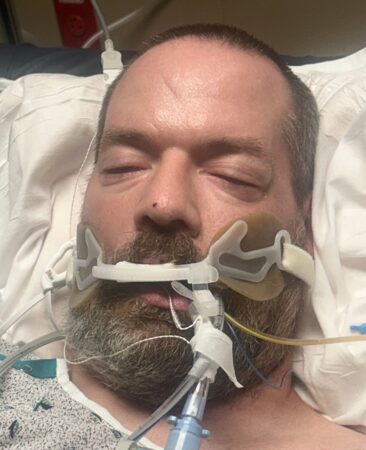
Editor’s note: The patient has been identified, Temple officials said Wednesday afternoon.
Temple Health seeks help from the community identifying a patient at its main hospital in North Philadelphia.
The health system on Wednesday released a photo of the patient, who appears to be in his 50s and was admitted to Temple University Hospital on June 8. Ithopes to locate his friends and family.
There are lots of air conditioned spaces you can go to for relief. Organizations like the Pennsylvania Department of Health have always recommended going to air-conditioned spaces — like a mall or library — to protect yourself from heat-related problems.
“With extreme heat, it is always important to remain cool, possibly in air-conditioned atmospheres,” state health department of health press secretary Maggi Mumma said in 2020.
There are, however, some things you can do at home to keep a little cooler if you are AC-less this summer. Here is what you need to know:
How to cool your body down
Let’s start with the basics: One key way to fight heat-related discomfort is to drink lots of cool water, which can both keep you hydrated and help cool you down. Sugary or alcoholic beverages can cause you to lose more body fluids. Dr. Joseph Teel, an associate professor of family medicine and community health at Penn Medicine, says you should drink water frequently.
How much? There is no one-size-fits-all answer. How much you need to drink can vary if you have health conditions such as congestive heart failure, Teel says, or be exacerbated by your environment, level of exercise, and overall health. One tip: Don’t wait until you are thirsty to drink, the state health department says.
When someone suffers heat exhaustion on a sports field, Teel says an ice bath can help bring down their temperature. You can take the same approach. A cold bath or shower, he says, can help but is not a permanent solution because “you can’t stay in the shower all summer.”
You can use cool compresses, Mumma says, to help cool down. Making one is simple: Just wet a washcloth or towel in cold water, and put it on your body. Where should you put it? Some of the most effective areas, Teel says, are around your neck and on your groin, and if you’re at home, you can try using them with minimal clothing on to hit a few areas at once.
You can step up that technique by using fans to make it an “evaporative process,” Teel says. “If we have water on our skin and it evaporates, it takes with it some heat,” he says. Put on your cold compress and use a fan to blow air across your skin, which Teel says can “cool you down a little faster than just a cold cloth itself.”
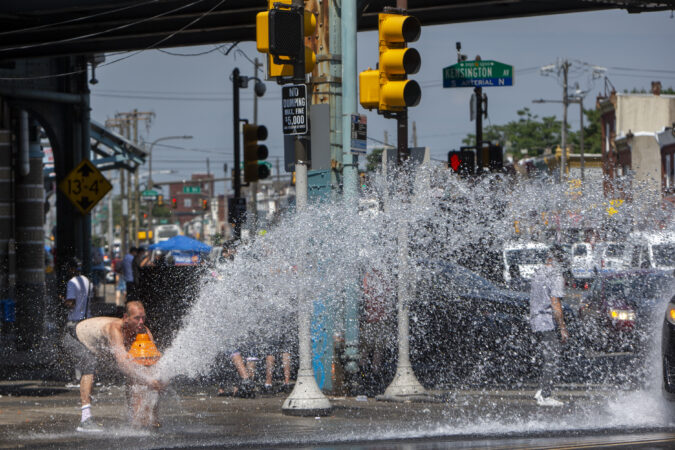
Beating the heat in Love Park fountain, during a hot summer day in Philadelphia.
How to cool down your house
Use fans wisely. Fans can be one of the best ways to keep cool — but there are right and wrong ways to use them. The city, for example, says you should never use a fan with your windows closed, which can create an “oven effect” by circulating hot air inside your home.
Fans can be more effective when the heat of the day is over, and you can open your windows to allow the cool night air in, Teel says. One of the best ways to create airflow is to put a box fan in an open window at one end of your space blowing air in, and another fan in a window blowing air out at the other end.
And if your home has ceiling fans, make sure the blades are rotating counterclockwise during hot weather. That way, the fan will push air down into your space to create a breeze. (Many ceiling fans have a directional switch on their motor that controls the direction in which they spin.)
There are more ways to keep your home cool.
Think about when you use your appliances.The Pennsylvania Utility Commission, for example, says that you should wait to use any appliances that generate heat — such as dryers, dishwashers, and ovens — until after 7 p.m. to avoid heating up your home unnecessarily. Turning off other nonessential appliances and lights is also a good idea.
Keep your blinds closed during the day. The sun, Teel says, can heat up your home faster, like a greenhouse. The PUC recommends spending time in rooms that are not hit with direct sunlight during the day.
City pools were closed in 2020, but will reopen for the 2021 summer.
If you’re going to buy an AC
Window air conditioners are much cheaper and more convenient to install than central air, and if you can afford one, it may be a good time. However, there are some things to consider when buying a window unit.
As Consumer Reports points out, you will want to get an AC that is appropriately sized for the room you are trying to cool. If it’s too small, it will have trouble cooling the room; if it’s too big, it will cool the room quickly but leave too much moisture behind. A good rule of thumb is for the unit to have 20 BTUs (British Thermal Units) of cooling power for every square foot of space in the room.
And if you need help with utility costs this summer, funding from the Low Income Home Energy Assistance Program is available for qualified residents, a city spokesperson says.
Think about when you go out
The health department recommends staying indoors as much as possible and limiting exercise during the hottest parts of the day, Mumma says. However, if you have to go out, stay in the shade as much as possible and wear sunscreen, a ventilated hat, and sunglasses.
If you need to go shopping, Teel says, “look ahead in the week, and pick a cooler day. Avoid the time when you will be subjected to midday heat.”
At home, Teel says, wear as little clothing as possible. When out and about, consider using light-colored, loose-fitting clothes made of breathable, light materials like cotton that let air to circulate around you.
As police increasingly rely on a controversial investigative tool called facial recognition technology to identify crime suspects, New Jersey’s top court gave defense attorneys a win Wednesday, ordering prosecutors to more fully explain how they used the technology in a Jersey City murder case.
New Jersey Supreme Court Justice Douglas Fasciale, in a unanimous ruling, wrote that prosecutors were wrong to deny Tybear Miles’ discovery demand for details on which facial recognition software investigators relied on to arrest him in the June 2021 shooting death of Ahmad McPherson and how exactly they used it.
The technology is controversial because misidentifications have resulted in at least eight wrongful arrests nationally, with research showing it most often fails at identifying people of color, women, children, and elderly people. It also has gone largely unregulated both in New Jersey and nationally, alarming civil rights advocates.
Wednesday’s ruling builds upon a 2023 state appellate decision that required prosecutors to hand over 13 items related to the facial recognition software police used to charge Francisco Arteaga in a West New York armed robbery case.
Fasciale rejected any “mechanical application” of the Arteaga decision to other cases involving facial recognition technology, saying judges must decide such challenges based on case specifics.
Still, he said, fairness demands that defendants be able to scrutinize which tools police used to criminally charge them, both to challenge the tools’ reliability and to determine how police identified them as a suspect, examine whether the investigation was thorough, and demonstrate the possibility of another culprit.
“Although we reject a rigid checklist for [facial recognition technology] discovery, we note that such basic information will, in most cases, constitute the minimum necessary to safeguard a defendant’s right to a fair trial,” Fasciale wrote.
Attorney Dillon Reisman, who had argued before the court on behalf of the ACLU of New Jersey, called the decision “a really big win against the use of secret, opaque technology by law enforcement.”
“It’s a really positive sign that our court takes really seriously that new technologies are subject to constitutional safeguards,” Reisman said.
Tamar Lerer, deputy of the New Jersey Office of the Public Defender’s forensic science unit, had argued the case in court, too, and also applauded the ruling.
“Facial recognition technology may be novel, but the ability of people accused of crimes to find out how and why they were investigated is not,” Lerer said.
In Miles’ case, none of the crime’s eyewitnesses identified him as the shooter or even placed him at the scene, according to the ruling.
Instead, police identified him as a suspect after showing a confidential informant footage from surveillance cameras of six Black men seen nearby. That informant, who was not at the scene and did not see the slaying, identified Miles on the footage by his nickname (“Fat Daddy”) and Instagram handle, according to the ruling. Miles’ sister and ex-girlfriend also identified him as one of the men caught on camera.
Police then ran two facial recognition technology searches using Miles’ Instagram profile picture, according to the ruling. One search returned 10 possible matches and listed Miles as the eighth-likeliest match, while another search also produced 10 possible matches, the first five of which pictured Miles, the decision says.
After defense attorneys demanded more details about the facial recognition technology investigators used, a trial judge ordered prosecutors to turn over the same 13 items the appellate panel in Arteaga’s case specified. Prosecutors appealed, a state appellate court denied their motion, and the Supreme Court agreed to consider the case.
Fasciale upheld most of the lower court’s rulings, ordering prosecutors to hand over “basic information,” including the name and manufacturer of the software police used to search for suspects and its performance metrics, including error rates. He also directed prosecutors to provide “straightforward items” related to how investigators used the technology, including the original photograph police used as the “probe photograph,” edited copies of that probe photograph, and the photographs the technology identified as matches.
He reversed one particular part of the lower court’s rulings, though, rejecting the defense’s request for proprietary information, including the software’s source code. Miles’ attorneys had not proved a need for that information, Fasciale said. But if they do as the case progresses, the court can reconsider that request then, he added.
Lerer cheered that part of the ruling, too, saying it recognizes that “commercial concerns must yield to constitutional rights.”
Reisman noted that New Jersey still has not regulated facial recognition technology more than four years since the attorney general’s office solicited public input as a first step toward shaping statewide policy on its use by law enforcement.
Former Attorney General Gurbir Grewal in 2020 barred agencies from using one specific facial recognition technology app, Clearview AI, but little is known about how many of the state’s 500-some law enforcement agencies use the technology and how.
Dan Prochilo, a spokesperson for Attorney General Jen Davenport, called facial recognition technology “a valuable tool for investigating and solving crimes.”
“We welcome today’s Supreme Court ruling, which thoughtfully accounts for constitutional rights while confirming that defendants are not automatically entitled to unnecessarily burdensome, proprietary information that would short-circuit vital, well-conducted investigations and prosecutions that make New Jerseyans safer every day,” Prochilo said.
In Miles’ case, officers used a facial recognition system that is part of a multiagency initiative to crack down on illegal drugs in New Jersey and New York. That effort, known as a high intensity drug trafficking area task force, involves officers from federal, state, county, and local agencies in New Jersey and New York.
Those multiple jurisdictions and diffused investigations have made it tough for people arrested through the task force’s efforts to understand how they became criminal defendants, Reisman said.
“We still don’t even really know what government agency is ultimately responsible for the facial recognition system,” he said. “We don’t know anything about it, and because of that, we can’t even hold it accountable.”
While state and federal lawmakers have blasted the Trump administration for deplorable conditions at Newark migrant jail Delaney Hall, New Jersey’s prisons watchdog has issued a new report detailing overcrowding, intolerable heat, and other deficiencies at Bayside State Prison in Cumberland County.
Bayside, one of the state’s largest lockups, now houses almost 1,300 people, more than twice its capacity, according to the report released Tuesday by the state corrections ombudsperson’s office. The mixed-security prison, which opened in 1971 in Leesburg, was built to hold 504 people.
“Turning single-occupancy rooms into double-occupancy rooms … leaves each incarcerated person with significantly less storage and personal space,” the report says.
The crowding is compounded by the closure of Bayside’s dining hall, which is now used for storage, the report says. That closure forces prisoners to eat all three meals while perched on their beds or foot lockers in their cramped cells, which at 70 square feet are about the size of a parking space.
Inspectors from the ombudsperson’s office also found old, thin mattresses; birds in the kitchen and housing units; and dirty showers, among other problems.
The prison lacks air conditioning, so inspectors also encountered stifling heat during summer inspections, with temperatures reaching 94 degrees in cells and shared spaces and 116 degrees in the kitchen, according to the report.
State health inspectors, who last inspected Bayside in November 2023, also dinged the prison for a “repeat deficiency” for the presence of insects or rodents, the report says.
The ombudsperson’s office recommended that Department of Corrections officials allow people to eat meals outside their cells in a courtyard area or day rooms if they cannot reopen the dining hall, and to improve cleaning of kitchen equipment and showers, among other things.
Officials have tried to improve some problems, such as replacing mattresses and exhaust fans and vents in shower areas, as well as putting up barriers to keep out birds, the report says.
Reopening the dining hall, which has been closed since 1997, is “not logistically feasible” because of cost, staffing, and security concerns, the department said in a response to the report. They said they won’t move meals to common areas, also citing security reasons.
A hunger and labor strike by detained immigrants at Newark migrant jail Delaney Hall that drew national attention and sparked weeks of violent protests outside the detention center has effectively ended, immigration advocates said Monday.
The detainees ended their strike because of the actions taken by the jail’s guards, and not because conditions behind bars have improved, the advocates said.
“Because of the intimidation tactics, the disciplinary consequences for folks to be placed in segregation, [detainees] have now resorted to going back to job assignments and eating,” said Sally Pillay, an advocate with Eyes on ICE who has spent months outside of the migrant jail aiding families of detainees.
A request for comment from the U.S. Department of Homeland Security was not immediately returned. Federal officials have said for weeks that detainees never engaged in a hunger or labor strike.
More than 300 detainees inside the immigration detention center said they launched the strike May 22 to call attention to what they called inhumane conditions, including inedible food and poor treatment by guards. Delaney Hall soon became a national flashpoint, attracting members of Congress, state officials, and sustained crowds of protesters to Doremus Avenue in Newark on a near-daily basis.
Amy Torres, the executive director of New Jersey Alliance for Immigrant Justice, speaks outside Delaney Hall on Tuesday, Dec. 23, 2025.
Amy Torres, executive director of the New Jersey Alliance for Immigrant Justice, said the tactics used to break the strike are nothing new. Some detainees were transferred out of the facility as a “means of punishing them for being part of that dissent,” she said.
Torres said among those transferred was a 20-year-old man who crossed the border at 18. He was transferred in the last two days and his location remains unknown as of Monday, she said.
“There are hundreds more that have disappeared,” Torres said. “There’s no way to account for where they are. Are they OK? What’s going on with them? It’s pure heartbreak.”
Pillay said activist groups have tracked detainees to facilities in Louisiana, Texas, Pennsylvania, California, Arizona, and Colorado.
“These transfers have had devastating consequences,” she said. “We know that these facilities are in remote locations where people do not have access to their lawyers, to their families, and their support networks.”
She noted that detainees in the units most active in the strike were deliberately broken up, with people dispersed throughout the facility. Detainees have also raised new concerns inside the jail, like discolored drinking water and weeks without access to hot water, Pillay said.
Family visitation, which was briefly suspended during the strike, was reinstated with sharp restrictions. Pillay said visitations have been cut to 30 minutes, are only offered twice a week in some units, and are limited to immediate family members on an approved list. She said Geo Group — the private company that runs the detention center — has not posted information about the new visitation schedule online, so families show up expecting the old schedule and are turned away.
Detainees have also been blocked from speaking with members of Congress conducting oversight visits. Detainees must now sign a privacy waiver, provided only in English, before a member of Congress can speak with them, and forms must be submitted in advance of the visit, a process Pillay said is “to probably intimidate and use retaliatory tactics against the individuals who speak out.”
On Father’s Day, Pillay said of the 80 family members who arrived to visit loved ones, more than 30 were turned away.
“We saw heightened emotions, distraught families, and loved ones outside,” she said.
Dozens showed up for a protest Sunday. Some tied neckties to the fence outside the jail in honor of the fathers who remain detained and some held up signs that read, “Free the dads.”
One protester holding an upside-down American flag near the driveway of the prison was hit by a car entering the jail parking lot, video shows. Newark Public Safety Director Emanuel Miranda said the incident is under investigation.
“Federal agents are brutal, abusive, and reckless with the public,” Torres said. “We can only imagine what they’re doing to people in detention behind closed doors.”
RINGOES — The first time Ozgur Tunceli planted hazelnut saplings on her Hunterdon County farm, deer came through and ate them to the ground.
The next time, her goats did the same.
“Imagine me sitting there and crying and regretting everything that I did,” she said. “I said, ‘I should sell this farm and just go back to my suburban life.’”
Instead, she got an electric fence. Now, four years after she set out to become a hazelnut farmer, Tunceli has close to 1,000 trees planted on her hilly, sprawling property in Ringoes. She’s part of a small but widening group of pioneers who are working to make hazelnuts as much of a signature New Jersey crop as tomatoes, blueberries, corn, and cranberries.
“We are really trying to build an entire industry here,” Tunceli said.
The state wants to help, said Ed Wengryn, the state’s agriculture secretary.
Officials are eyeing incentives to offset high startup costs and entice more farmers into growing the trees, Wengryn said.
And Sen. Andrew Zwicker (D-Middlesex), whose district office is just up the road from a hazelnut farm in Hillsborough, is seeking $6.5 million in state funding to help growers buy equipment to sort, shell, and package nuts for sale and secure a processing site. He envisions hazelnuts at every Garden State farm stand and a New Jersey version of Nutella on supermarket shelves someday.
“The potential for New Jersey to become a major player in hazelnut production is enormous,” Zwicker said. “I don’t think New Jersey peaches, blueberries, and tomatoes are going away, but I think if we get this right, we will be known worldwide as a hazelnut producer.”
Ozgur Tunceli shows one of the few of her hazelnut trees that is taller than she is on June 5, 2026, at Our Farm by the Creek, her hazelnut farm in Ringoes.
Some hazelnut history
Turkey produces about 70% of the world’s hazelnuts, and until recently, Oregon’s Willamette Valley was the only place in the U.S. to grow the nutrient-rich, round nuts also known as filberts.
The seeds for New Jersey’s fledgling filbert industry were first planted, literally, by Rutgers University.
Tom Molnar was a Rutgers student about 30 years ago hunting for a Ph.D. topic when he decided to focus on hazelnuts, which are native to New Jersey but had been decimated by disease decades ago. Molnar’s mentor was the late C. Reed Funk, Rutgers’ famed turfgrass breeder whose work made the school millions in royalties and a global powerhouse in grass development. Funk saw better breeding as key to growing nuts in the Northeast, Molnar said.
“We had land, we had funding, and he knew how to run a breeding program,” said Molnar, who’s now a professor of plant biology at Rutgers.
Molnar rejected nut trees like walnut, pistachio, and pecan, not wanting to compete with big U.S. producers like California and Georgia. He picked hazelnuts because, besides being native to New Jersey, they need less water, are more compact, and produce faster than other nut trees, he said.
He started by collecting hazelnut seeds from around the world and eventually planted tens of thousands of trees at Rutgers’ research farm in East Brunswick, observing and experimenting to create disease-resistant, higher-yield trees.
By 2020, his research had progressed enough that he wanted to see how his trees would do around the Garden State. He partnered with several farmers to plant Rutgers-bred varieties whose names honor their Jersey roots: Raritan, Somerset, Monmouth, and Hunterdon. Those farms still serve as living laboratories, with new growers adding to their ranks since Rutgers licensed a Columbus nursery to sell their cultivars.
“This has been a dream to grow hazelnuts in the eastern U.S. for 200 years,” Molnar said.
Ed Clerico was one of the “early adopters,” as Molnar puts it.
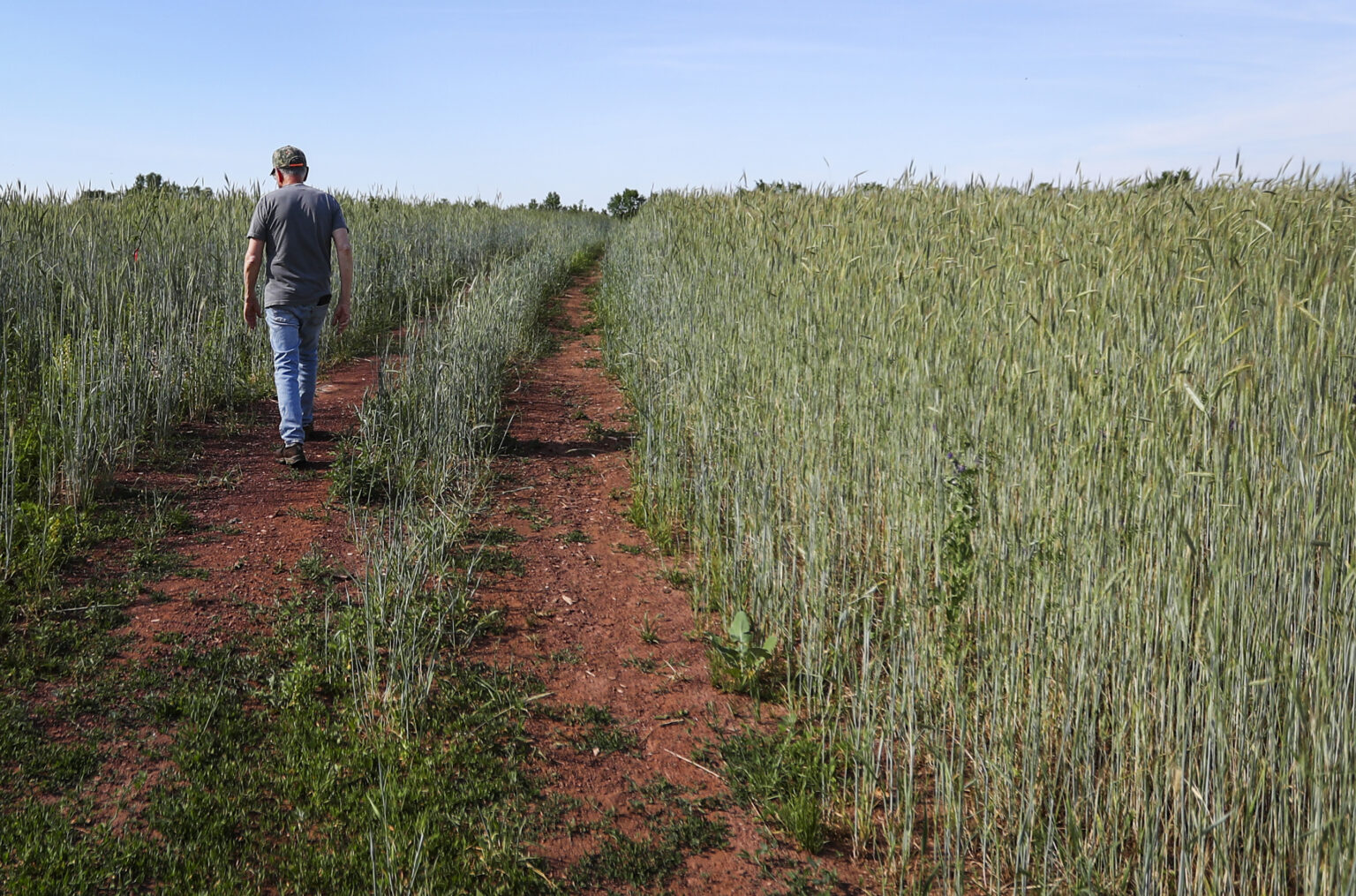
Farmer Ed Clerico walks the fields of his farm in Hillsborough on June 6, 2026.
Clerico is a third-generation farmer whose family ran a dairy farm in Hillsborough (the one near Zwicker’s office), but who pivoted in retirement to perennial crops that don’t require annual tillage and planting.
He also had a career in water resource management, an experience that has deepened his dedication to filbert farming.
His 38-acre farm sits along Royce Brook, which feeds the Millstone and Raritan rivers, two waterways that flow through nearby Manville and Bound Brook and that sometimes catastrophically flood. He regards hazelnut trees, as well as thirstier breeds like the persimmons and pawpaws he’s planting in a floodplain beside the brook, as pulling double duty.
“There’s just a lot of benefits to agroforestry. Growing trees sequester a lot of carbon, so there’s greenhouse gas benefits. And they help with water quality and flood mitigation,” Clerico said. “This could be one of the best stormwater management and water quality advancements. When you hear about stormwater management, people are very oriented towards man-made infrastructure, but we could be using the environment as infrastructure too.”
Wengryn already is a convert, for the trees’ ecological benefits alone.
“They create a shade canopy, reducing ambient air temperatures in and around the orchard area. When we get these intense storms that drop a quarter to a half inch of rain in 15 minutes, the leaf canopy breaks that up, so it actually falls more gently to the soil and we get less soil erosion from this kind of agriculture,” Wengryn said.
Molnar ticks off a long list of other perks he hopes will persuade more farmers to plant Rutgers’ hazelnuts. They don’t require as many fungicides or insecticides, or as much pruning, as the peach, apple, and other fruit trees more commonly grown in New Jersey. They’re harvested by machine so don’t need as much labor as hand-picked crops. The trees are more climate-resistant and can live for over 50 years, making them both less susceptible to weather extremes that can destroy less-hardy crops and a good long-term investment. And hazelnuts aren’t as perishable as other crops; harvested unshelled nuts can be stored and stay fresh for over a year.
“That means you could sell them throughout the winter into the spring,” Molnar said.
But several hurdles have kept the industry small so far.
The high land costs that can make farming a pricey profession in New Jersey have hindered hazelnut expansion, farmers agreed.
The costs and logistics of processing are another barrier, Molnar added.
With most filbert farming occurring on other continents, U.S. growers must look to Europe and beyond for the machinery to harvest, sort, and get the nuts to market. Tunceli, Clerico, and two other farmers formed an agroforestry cooperative to process, promote, and sell their nuts. The co-op recently bought some equipment, funded by a federal grant, that they’ll house at Tunceli’s 89-acre farm until they find funding to open a separate processing facility.
Farmer Ed Clerico bought specialized equipment, including this mower, to harvest hazelnuts on his Hillsborough farm.
At the same time, it takes five years for young hazelnut trees to produce their first nuts and seven to eight years for them to come into significant production, Molnar said. That means farmers see little to no return on their investment for years.
“Younger farmers don’t really have that much money to invest, while older farmers don’t have that much time,” Tunceli said.
Tunceli, who’s 56 and has kept her job in the healthcare insurance industry, hopes her orchards will thrive enough for her to live wholly off her land, but she expects that could take another five years.
Because hazelnuts have not been a U.S. crop outside of Oregon, some local farmers also see challenges in who to sell them to, fretting that a market might not exist here.
Tuncheli is not one whit worried about that.
She grew up in Turkey and immigrated here for college about 30 years ago. In Turkey, every bit of hazelnut trees gets used, she said. The kernels become nut butters, oils, flour, milk, candies, desserts, and other foods; the trees’ leaves can make herbal teas; their limbs can be used to weave baskets; and nutshells can be used for exfoliating scrubs, cosmetics, and even clean-burning fuels.
“That part is really easy,” she grinned.
Wengryn doesn’t see that as a problem either, noting a “global craze” for treats like Italian company Ferrero’s Nutella and Ferrero Rocher chocolate-hazelnut bonbons.
“People love this product,” he said of hazelnuts. “There’s very little domestic production of it, and this is an opportunity to enter that market.”
The future of filberts
Zwicker has submitted two budget resolutions that, if approved, would provide $298,200 in state funding to the agroforestry cooperative to support hazelnut automation, cold storage, food safety compliance, and commercial-scale infrastructure and nearly $6.3 million for the cooperative to build a processing facility and establish grower incentives.
Wengryn said he aims to work with the state Economic Development Authority to tailor more “business builder” funding to sustainable agriculture like hazelnut farming. He also thinks New Jersey could designate money collected under the Regional Greenhouse Gas Initiative, a multistate effort to reduce the power sector’s emissions that worsen climate change, for agroforestry.
“This type of agriculture really complements that carbon sequestration and really does improve our air quality and our water quality,” he said.
Whether or not New Jersey becomes a hub for hazelnuts, Rutgers’ cultivars now grow beyond the Garden State. Their trees are planted on about 300 acres across New Jersey, Pennsylvania, New York, and Ohio, Molnar said.
His work has made him somewhat of a celebrity in agriculture, at least elsewhere, in places where hazelnuts are a major, prized crop.
“In New Jersey, I’m an anonymous nobody, and like, nobody cares what I do,” he said with a laugh. “I guess agriculture isn’t really cool.”
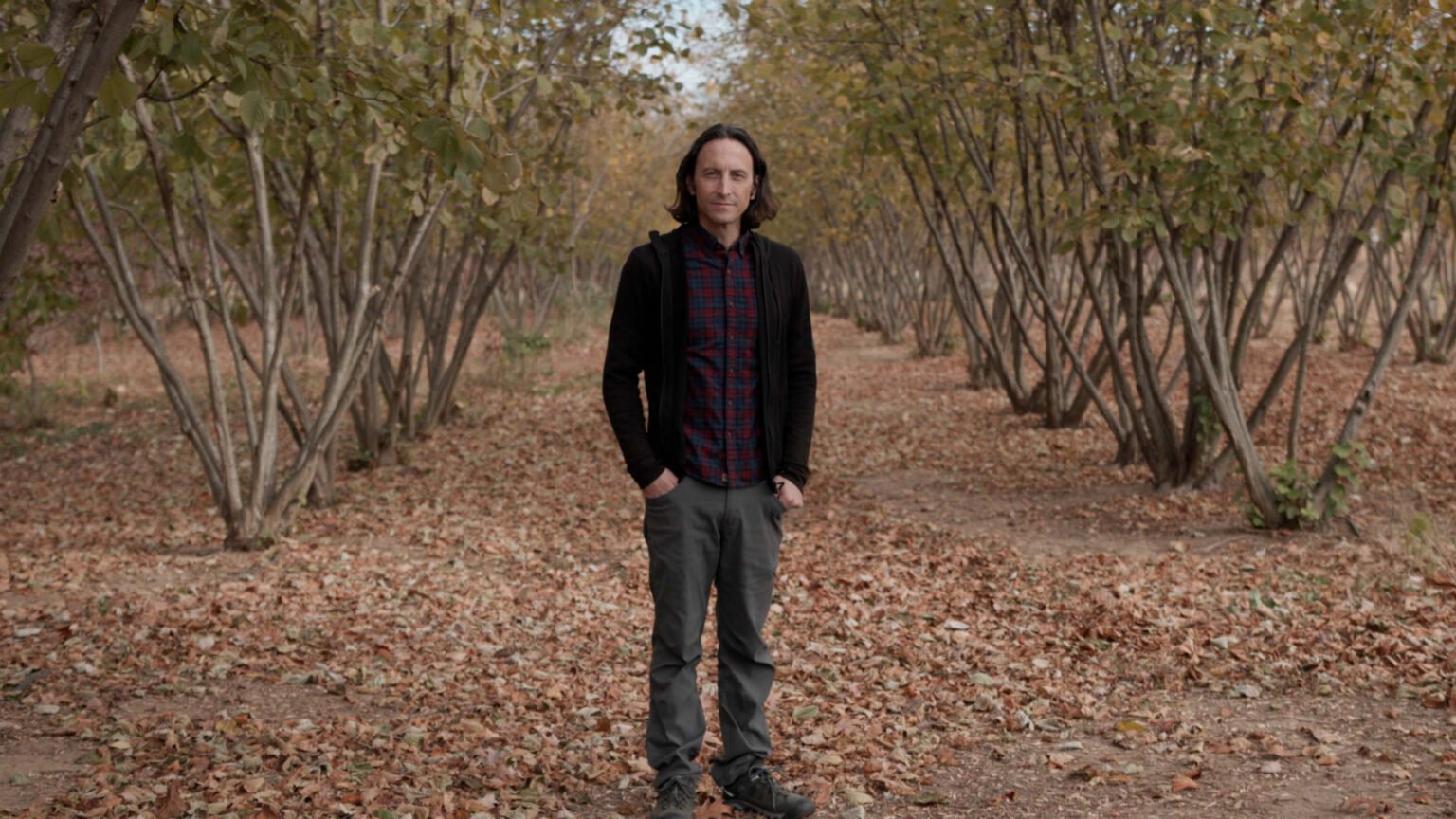
Thomas Molnar stands in front of hazelnut trees cultivated by his team at Rutgers Horticultural Farm 3 in East Brunswick.
But Clerico expects Molnar’s research, like the trees on his own Hillsborough farm, will outlive them both.
“Rutgers’ work isn’t just leading-edge in terms of New Jersey. What they’ve done in their breeding programs to produce trees that have multiple gene resistance to diseases could benefit everywhere in the world,” Clerico said.
Some state legislators clearly agree and aren’t waiting on the industry to scale up to brag about New Jersey’s role in the hazelnut tree’s return to the region’s soils.
They want hazelnuts to be the official state nut.
The Assembly passed the proposal Thursday, despite opposition from most of the chamber’s Republicans that drove some to voice their objections for the record.
Assemblywoman Aura Dunn (R-Morris) said anointing hazelnuts the state nut was a few decades premature, Assemblyman Gregory Myhre (R-Ocean) said the American chestnut should get the honor, and Brian Bergen (R-Morris) blasted the the bill as a “moronic, awful, stupid, crazy, nutty piece of legislation.”
“Why on earth do we need a state nut?” Bergen said, before imploring Assembly Speaker Craig Coughlin: “I just really wish that, Mr. Speaker, you would do a better job selecting the bills that come to the floor, because this is useless.”
Bill sponsor Assemblyman Sterley Stanley (D-Middlesex), whose district includes Rutgers’ research farm, remained undeterred.
In a sweeping statement on the Assembly floor with Molnar standing at his side, Stanley hailed hazelnuts as “the most promising engine for economic development offered to rural communities in decades.”
“These trees represent a monumental achievement for our state, a true breakthrough in science that reinforces why we are known as the Garden State,” he said. “These hazelnuts are testament to the balanced spirit of innovation and resilience that lies at the heart of what it means to be a New Jerseyan.”
AJ Brown’s future…Sean Mannion’s hiring as offensive coordinator…Jeff Stoutland’s awkward exit…the Eagles’ strategy for free agency and the draft. These have been the dominant storylines of the Eagles’ offseason. More than a month after the team’s unceremonious exit from the playoffs, its top two decision makers finally weighed in publicly on these topics. Ahead of this week’s NFL combine, The Philadelphia Inquirer’s Jeff McLane and Olivia Reiner participated in beat reporters-only interview sessions with general manager Howie Roseman and head coach Nick Sirianni. With the embargo lifted, Jeff and Olivia discuss their main takeaways.
00:00 Roseman and Sirianni speak!
01:13 Roseman and Sirianni address the AJ Brown situation
10:26 Sirianni indicates that offense will be different under new coordinator Sean Mannion
20:15 Sirianni gives his side of the Jeff Stoutland story
26:34 How will coaching changes affect Howie Roseman’s offseason personnel strategy
unCovering the Birds is a production of The Philadelphia Inquirer and KYW Newsradio Original Podcasts. Look for new episodes throughout the season, including day-after-game reactions.
The offseason is about to blast into full swing and, unlike this time a year ago, the Eagles are surrounded by question marks. On the heels of the team’s failed bid for another Super Bowl, coaching changes ensued, which are expected to usher in a significant philosophical pivot on offense. But with next week’s scouting combine approaching, the Eagles, along with the rest of the NFL, will start to focus more on personnel decisions. The Philadelphia Inquirer’s Jeff McLane has covered plenty of combines, and knows where and how to dig up juicy intel. He and Inquirer colleague David Murphy examine Eagles storylines that figure to be front and center when the league descends on Indianapolis.
00:00 Getting gossip at the NFL’s biggest power broker mixer of the year
02:36 Forecasting A.J. Brown’s future
13:34 Which Eagles free agents could stay, go
20:55 Contract extensions and their implications on the defensive line
29:45 Diving into Sean Mannion and his scheme
37:01 How much will the Eagles change the offense?
44:20 Closing the book on Jeff Stoutland’s exit, Chris Kuper’s hiring
unCovering the Birds is a production of The Philadelphia Inquirer and KYW Newsradio Original Podcasts. Look for new episodes throughout the season, including day-after-game reactions.
Philadelphia and its suburbs are forecast to receive 16 to 22 inches of snow and face blizzard conditions beginning Sunday and continuing into Monday, with weather prediction models sharpening their focus as the storm approaches.
“Mother Nature has spoken again and made it clear that winter is not over,” said Mayor Cherelle L. Parker during an emergency press conference, declaring a citywide snow emergency, starting 4 p.m Sunday. “Yet another big winter storm is coming. It’s a major snow storm with real accumulation anticipated, and it’s heading our way .”
City government and courts will not open Monday, while public schools will switch to virtual learning. SEPTA riders should expect significant service disruptions over the next three days, said officials, who implored drivers to stay off the road Sunday.
Dominick Morales, the city’s emergency management coordinator, described the expected storm as “dangerous,” adding that heavy, wet snow could threaten trees and power lines.
“Dangerous because of the amount of snowfall that is being forecast in about a 24-hour period, but it’s also dangerous because of high winds — and for Philadelphia — near blizzard conditions. When this storm picks up, we have to take it seriously,” he said.
When all is said and done, the total snowfall may be closeto 18 inches in the city, and could surpass20 inches in South Jersey, where high winds are forecast to create blizzard conditions, according to the National Weather Service. Early Sunday morning, the weather service extended a blizzard warning to cover Philadelphia and Bucks and Delaware Counties, as well as eastern Montgomery County and all of South Jersey.
“It does look like it’s going to be quite an impactful storm for the whole [I-]95 corridor and further east,” said Sarah Johnson, warning coordination meteorologist at the weather service’s Mount Holly office, on Saturday.
This will lead to potentially dangerous driving conditions starting Sunday into Monday. And the Shore and Delaware Bay could experience flooding duringhigh tide Sunday evening.
While forecasters saw trouble brewing for several days, it was not clear how heavily the storm would affect Philadelphia, Johnson said.
“Pretty much throughout the week, we were aware that there was going to be this storm system off the coast. The question was just going to be how close to the coast it came,” she said.
The storm is expected to begin with a mix of snow and rain Sunday morning, with the potential for only rain falling before dawn. By early to midafternoon, that is forecast to change over entirely to snow, Johnson said.
The blizzard warning is in effect from 10 a.m. Sunday to 6 p.m. Monday.
“We are also going to be seeing some gusty winds with the heaviest snow amounts,” Johnson said. Wind speeds of up to 45 mph late Sunday and early Monday have the potential to cause blowing and drifting snow that may make it difficult to keep roads clear, according to the weather service.
The blizzard warning is in effect from 1 p.m. Sunday to 6 p.m. Monday.
Johnson emphasized that whatever the storm brings, it will be significant for Philadelphia.
“The period that we are most concerned about in terms of both snow rates and wind is Sunday evening through the morning on Monday,” she said.
The storm arrives while the administration is still stinging from criticism over what many perceive as a slow and ineffective response to the January snowstorm, the biggest to hit the city in a decade, which left many neighborhood streets and byways encased in snow and ice for 25 days.
On Saturday, Parker said the city would be ready.
More than 1,000 emergency city personnel, 800 snow removal vehicles, and a reserve of 25,000 tons of salt will be deployed, she said.
“I want to be very clear,” Parker said. “We will do whatever it takes, for however long it takes, to ensure that we have cleared our streets and are keeping Philadelphians safe.”
Snowfall rates could intensify to as much as two inches per hour Sunday afternoon into evening, Parker said.
“It’s going to be a big one, and we’re going to be ready for it,” said Carlton Williams, city emergency management director.
Williams said two high-powered melters, often capable of melting 135 tons of snow per hour, would be strategically placed near residential locations, where snow removal proves difficult, though he did not exactly say where. He said the city is also adding more locations for residents to pile snow.
Williams and other officials requested the public’s help, asking drivers not to block corners, which prevents ploughs from accessing snow-clogged streets. Deputy Police Commissioner John Stanford was clear about parking:
“You cannot save parking spots,” he said. “If we are called to a location for any cones, chairs, or any other items out there, we will remove them.”
All Philadelphia public school activities will be canceled Monday, officials said.
SEPTA is expecting major delays.
“There are going to be significant disruptions to service all throughout the duration,” said SEPTA General Manager Scott Sauer.
<iframe src="https://media.inquirer.com/nws-snow-map/inq-snow-map.html" scrolling="no" frameborder="0" width="100%"></iframe><script type="text/javascript">(function () {window.addEventListener('message', function (e) { var message = e.data; var els = document.querySelectorAll('iframe[src*="' + message.id + '"]'); els.forEach(function(el) { el.style.height = message.height + 'px'; }); }, false); })();</script>
In contrast to the very low temperatures for days after the Jan. 25 storm that dumped a foot of snow in areas around Philly, temperatures are expected to rise above freezing on Monday afternoon.
Higher temperatures later in the week may help melt the snow, as opposed to the long-lasting snowpack after the January storm.
Pennsylvania Gov. Josh Shapiro and New Jersey Gov. Mikie Sherrill urged residents in their states to stay off the roads during the storm.
On social media, Shapiro said state agencies are prepared to respond to the weather in Eastern and Southeastern Pennsylvania.
Our teams at @PEMAHQ, @PennDOTNews, and @PAStatePolice are prepared to respond to snow and winter weather across much of East and Southeast Pennsylvania beginning tomorrow afternoon and continuing through the overnight hours into Monday morning.
Sherrill on Saturday declared a state of emergency ahead of the storm.
She said at an afternoon news conference that it was the first time since 2022 that the National Weather Service had issued a blizzard warning along the coastline.
The state of emergency will go into effect at noon Sunday.
“I know we just got through a historic winter storm just a few weeks ago — we all did it together by heeding warnings, staying off the roads, and taking public safety seriously,” Sherrill said. “Now we have another serious winter storm on our hands, and my top priority is your safety.”
Officials urged people to stock up on essentials ahead of the storm, keep electronics like cell phones charged, and avoid driving once the snowfall begins.
NEWS: In preparation for the severe winter storm, I am declaring a State of Emergency across all 21 counties in New Jersey – effective at 12:00 PM on Sunday, February 22.
I urge New Jerseyans to use caution, stay off the roads, and follow all safety protocols during the storm.
Sherrill advised New Jerseyans to stay home and suggested watching the U.S. men’s Olympic hockey team play for gold Sunday, doing a puzzle, and eating chili.
Staff writer Stephen Stirling contributed to this article.