Tag: gentrification

  • Killing of Kada Scott prompts hearing on Philly’s handling of domestic violence cases | City Council roundup

    Killing of Kada Scott prompts hearing on Philly’s handling of domestic violence cases | City Council roundup

    City Council will probe the Philadelphia justice system’s procedures for “protecting victims of abuse and domestic violence” following the killing of 23-year-old Mount Airy resident Kada Scott.

    Prosecutors have charged Keon King with murder and other crimes for allegedly kidnapping Scott, shooting her, and burying her body behind a closed East Germantown school in early October.

    King was arrested in two separate incidents in December and January in which authorities allege he violently assaulted an ex-girlfriend. In the second incident, he is accused of kidnapping her and choking her in his car.
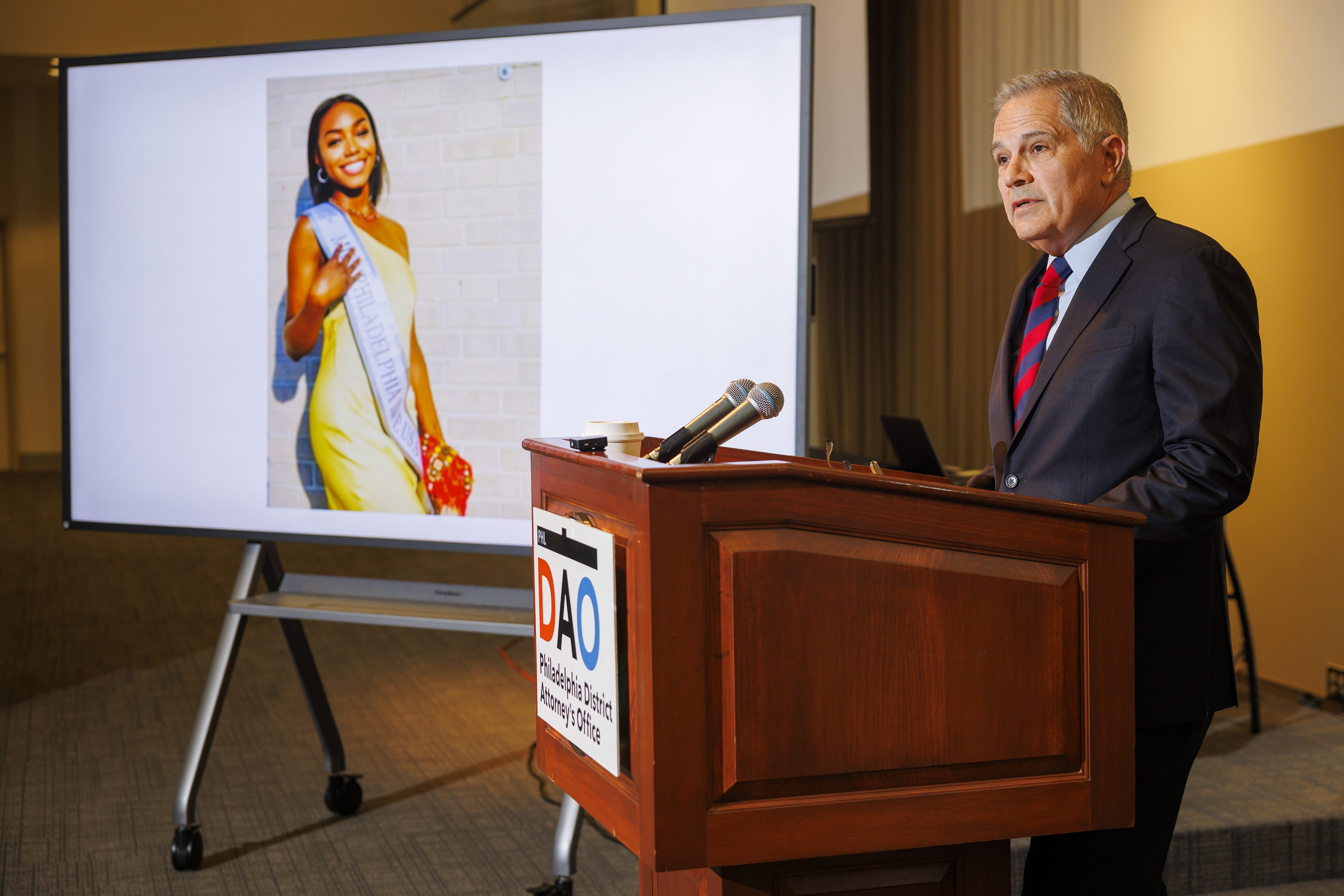
    Philadelphia District Attorney Larry Krasner held a press conference at his office regarding the death of Kada Scott on Monday, October 20, 2025.

    District Attorney Larry Krasner’s office requested bail to be set at just under $1 million in that case. A judge instead set bail at $200,000, allowing King to be released after posting the necessary $20,000. Krasner’s office did not appeal the bond decision.

    Prosecutors then withdrew both cases after the victim and witnesses failed to appear in court. Krasner has admitted that dropping charges against King for the second incident was a mistake because there was enough video evidence to proceed with the prosecution. But he also directed blame at the courts for letting King out on bail following each arrest.

    “As the City of Philadelphia, I think we failed the young lady, right?” Council President Kenyatta Johnson told reporters Thursday. “You got two agencies, two city departments, pointing fingers at one another, and at the end of the day, that’s not going to bring resolution to the family. And so at the end of the day, that needs to be addressed. And so we’ll look at the system as a whole.”

    Council approved a resolution authored by Johnson that will allow the Committee on Public Safety to hold hearings on how the courts, sheriff’s office, district attorney’s office, and police department work to protect domestic violence victims.

    Kada Scott ‘a beacon of light and love’

    Remembering Scott: Council also approved a resolution by Councilmember Anthony Phillips honoring Scott’s life and legacy, describing her as a “a beacon of light and love, remembered for her faith, kindness and countless lives she touched.“

    Scott, who opened a beauty spa in Mount Airy when she was 19 years old, “was the kind of person who made others feel seen,” said Phillips, whose 9th District includes Mount Airy.

    Prosecutors have charged Keon King with the murder of Kada Scott, pictured.

    “Kada was a young woman whose light and kindness reflect the very best of us,” Phillips said in a speech on the Council floor. “She had vision and determination. She believed in the power of self-care, community, and purpose.”

    Councilmember Cindy Bass, whose 8th District includes the school where Scott’s remains were found, added that “it’s never been more important that we get our young men together.”

    “There is a vulnerability that exists, and protection is needed. Protection is important,” Bass said. “What we do and how we handle our situations in our community — there’s just so much to be done.”

    Childcare providers could get tax break

    Targeted relief: Councilmember Isaiah Thomas last spring pushed for the city to aggressively cut the business income and receipts tax, or BIRT.

    Johnson and Mayor Cherelle L. Parker ultimately went with a less aggressive schedule of tax cuts than Thomas had wanted. But the sophomore lawmaker is now trying another route to lighten the BIRT burden: cutting rates for a specific industry.

    Thomas on Thursday introduced a bill that would halve BIRT’s two tax rates for childcare providers, which are facing a nationwide crisis over costs, staffing, and financial viability. The gross receipts portion of BIRT would be reduced from 0.1415% to 0.07075% for daycare owners, and the net income rate would go from 5.81% to 2.805%.

    City Councilmember Isaiah Thomas wants to give daycares a tax break.

    “There’s one business and one industry in the city of Philadelphia that touches every district and a lot of families, especially working families, that are struggling,” Thomas said. “This legislation is another example of us trying to think through what we can do to support businesses who support families as well as families who are in need.”

    Regulatory bill sparked by Center City bike lane debate passes after arduous legislative process

    Unloading over loading zones: Heated fights over legislation with narrow impact are nothing new in City Council, where limited proposals often become battlegrounds in larger disputes over issues such as gentrification or the opioid crisis.

    But a bill on loading zones in parts of Center City, approved Thursday, may have set a new standard.

    The bill, which was proposed by the Parker administration and carried by Johnson, will allow the mayor’s administration to add or remove loading zones in parts of Center City without new ordinances from Council.

    It ultimately passed in a 16-0 vote, with Councilmember Brian O’Neill absent.

    But the journey to Thursday’s vote began with the high-profile death of a cyclist, involved a lawsuit, went through two rounds of amendments limiting and expanding its scope, and ended with plans for further proposals to tweak the law.

    The saga began when Johnson passed a bill making it illegal for vehicles to idle in bike lanes following the 2024 death of Barbara Friedes, who was killed while riding in a bike lane on the 1800 block of Spruce Street. Parker’s administration then adjusted loading zones in Center City streets with bike lanes, with the goal of providing spaces for residents who used the bike lanes for unloading their vehicles.

    After neighbors complained the loading zones would take away a handful of parking spots, attorney George Bochetto successfully sued the city, with Common Pleas Court Judge Sierra Thomas Street this summer ruling the administration did not have the authority to promulgate loading zone regulations without Council approval.

    The case led to the revelation that a 1980s city law granting that regulatory authority was somehow never officially codified, throwing into legal jeopardy hundreds of parking regulations promulgated over the last four decades. The bill passed Thursday was intended to fix that legal conundrum by reiterating Council’s intention to grant the administration that authority.
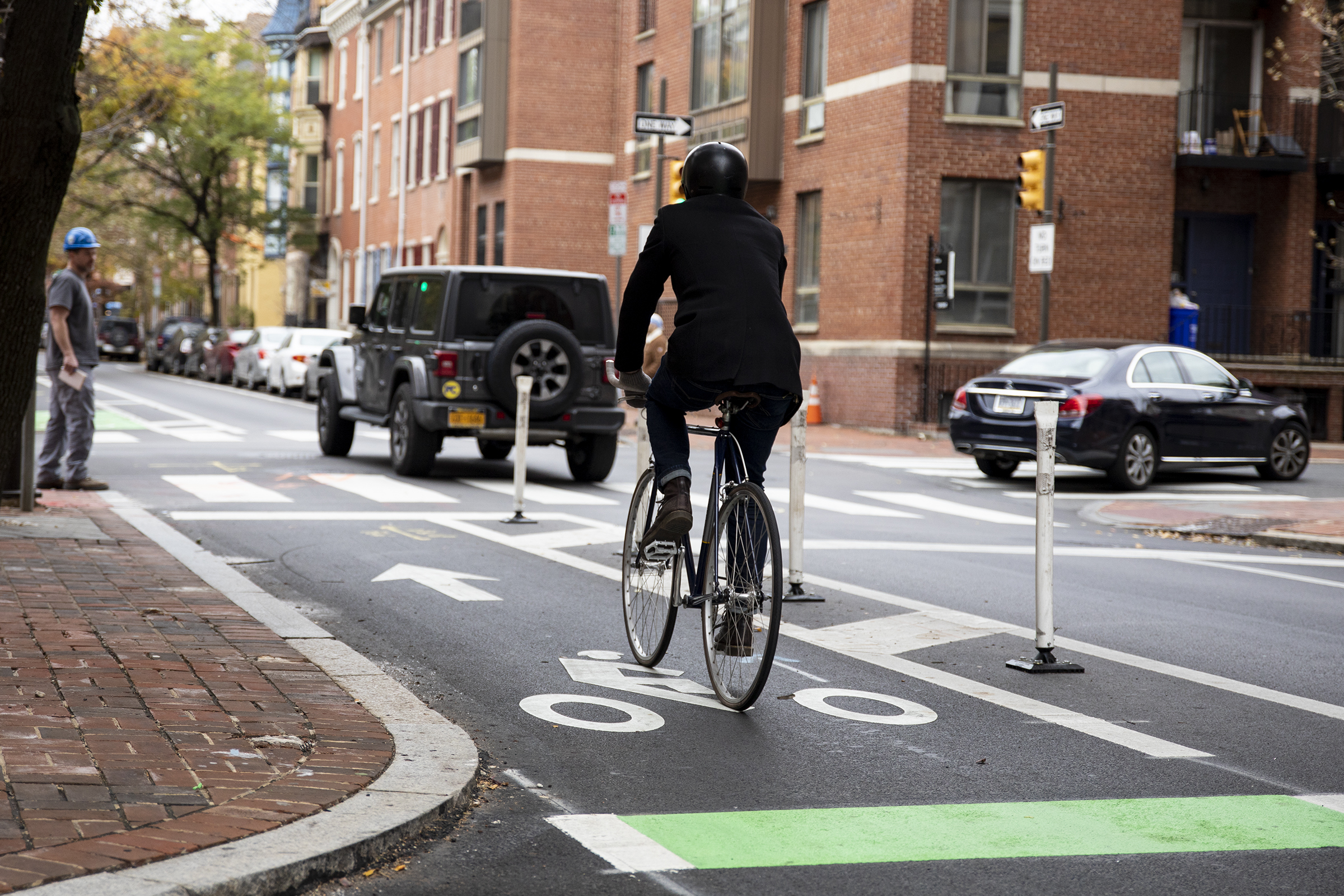
    A cyclist rides along Spruce Street.

    But Johnson and Councilmember Mark Squilla, whose districts include parts of Center City, at one point amended the bill so that it applied only to loading zone regulations and to the Spruce and Pine Streets corridors, which have bike lanes. They eventually reversed course on the geography of the bill, adopting a new amendment allowing it to affect all areas of their districts included in the old law. But they maintained the part of the original amendment narrowing its scope to loading zones and not other parking rules.

    Meanwhile, Councilmember Jeffery “Jay” Young Jr., whose 5th District also has a slice of Center City, removed his territory from the bill entirely.

    Next, Councilmember Jamie Gauthier is expected to work with the administration to fix the regulatory black hole in University City, which is part of her 3rd District. And Johnson said Thursday he may be open to revisiting whether the administration should be given explicit statutory authority to regulate other parking rules beyond loading zones in the affected area of his district.

    “We always have an open mind,” he said.

    Quotable: Honoring the late Philadelphia newspaper editor Michael Days

    Glory Days: Michael Days was a longtime editor of the Philadelphia Daily News, an executive at The Inquirer, and the inaugural president of the National Association of Black Journalists-Philadelphia.

    He died on Saturday in Trenton at 72 years old. Council on Thursday approved a resolution by Johnson and Majority Leader Katherine Gilmore Richardson honoring Days “for his extensive career serving Philadelphians.”

    Philadelphia Daily News Editor Michael Days celebrates with the newsroom after word of the Pulitzer win.

    A North Philadelphia native and devout Catholic, Days was revered as a principled reporter and editor, a mentor for young journalists of color, and a leader who helmed the Daily News when it won the 2010 Pulitzer Prize for investigative reporting.

    Staff writer Ellie Rushing contributed to this article.

  • Discovery of Kada Scott’s body at Germantown middle school has reignited debate over the vacant building

    Discovery of Kada Scott’s body at Germantown middle school has reignited debate over the vacant building

    When it opened in 1973, Ada H.H. Lewis Middle School was a source of deep pride for East Germantown, the kind of state-of-the-art educational facility that only suburban kids had at the time.

    But on Saturday, when police found Kada Scott’s corpse buried in a shallow grave in the woods of the long-ago vacated school grounds, ending a two-week search for the missing 23-year-old Mount Airy woman, the Rev. Chester H. Williams saw only decades of failure.

    “It’s a disgrace,” said Williams, a pastor who runs a neighborhood civic group. “We were very hurt to hear that this happened.”

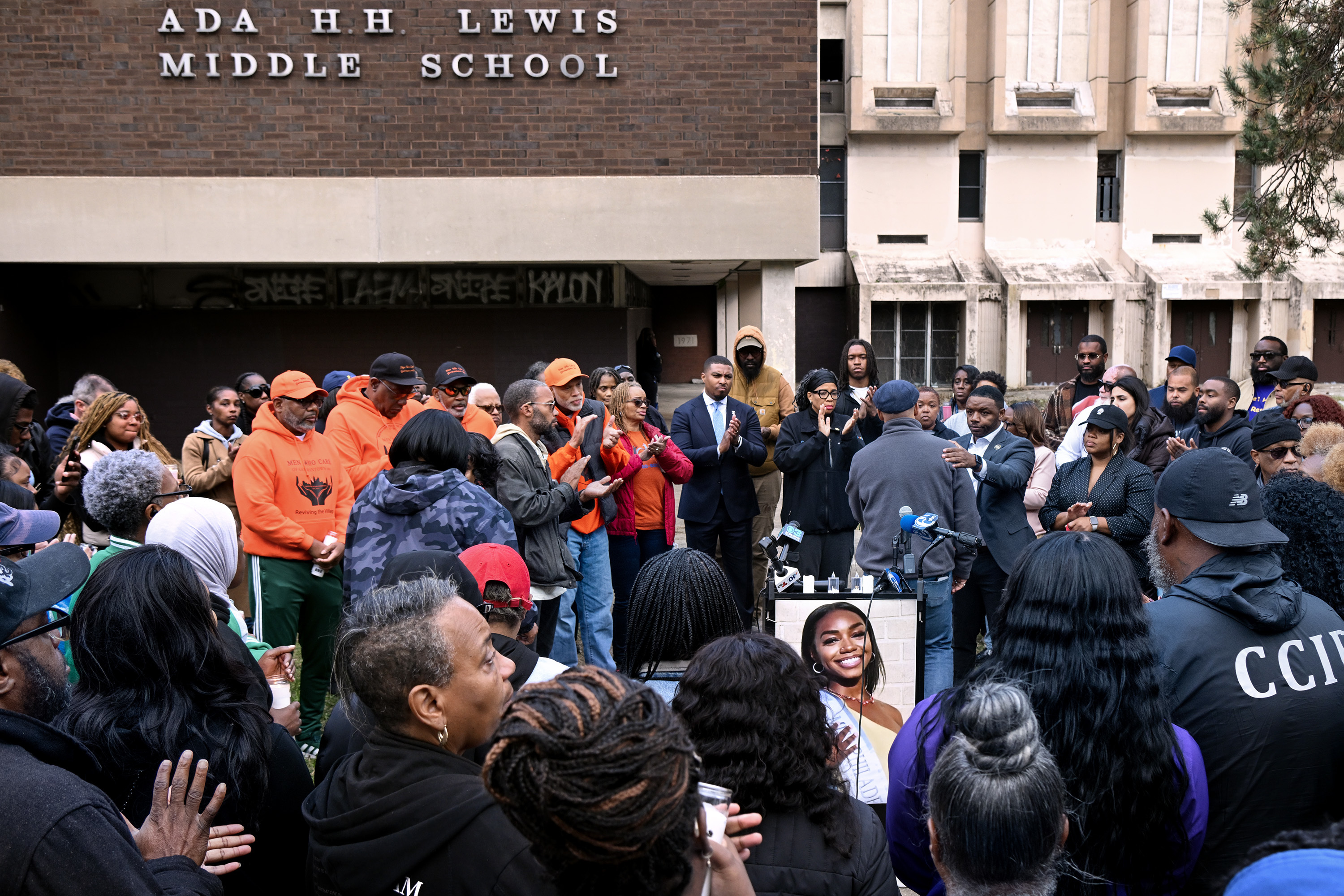
    Community members gather for a candlelight vigil in memory of Kada Scott on Monday at Ada H.H. Lewis Middle School.

    On top of the shock, Scott’s kidnapping and murder has renewed animus in some quarters about the Philadelphia School District‘s failure to repurpose the blighted property, one of dozens of schools shuttered by the district over the last 20 years.

    Since Lewis closed in 2008, local officials and civic leaders said the sprawling seven-acre campus has become a magnet for squatting, illegal dumping, and other criminal activity. City officials have cited the school district 10 times since 2020 for overgrown weeds, graffiti, and piles of trash that blanketed the property, public records show. And four years ago, the district passed on an opportunity to reverse course on the blight.

    A proposal to redevelop the land into new homes, championed by neighborhood leaders like Williams, sat before the school board for approval. But the district abandoned the plan at the eleventh hour without public explanation, which the developer alleged was due to meddling by City Councilmember Cindy Bass — a contention Bass denies.

    “The school district, for some reason, we don’t know why, they put a block on anything being built there,” Williams said.

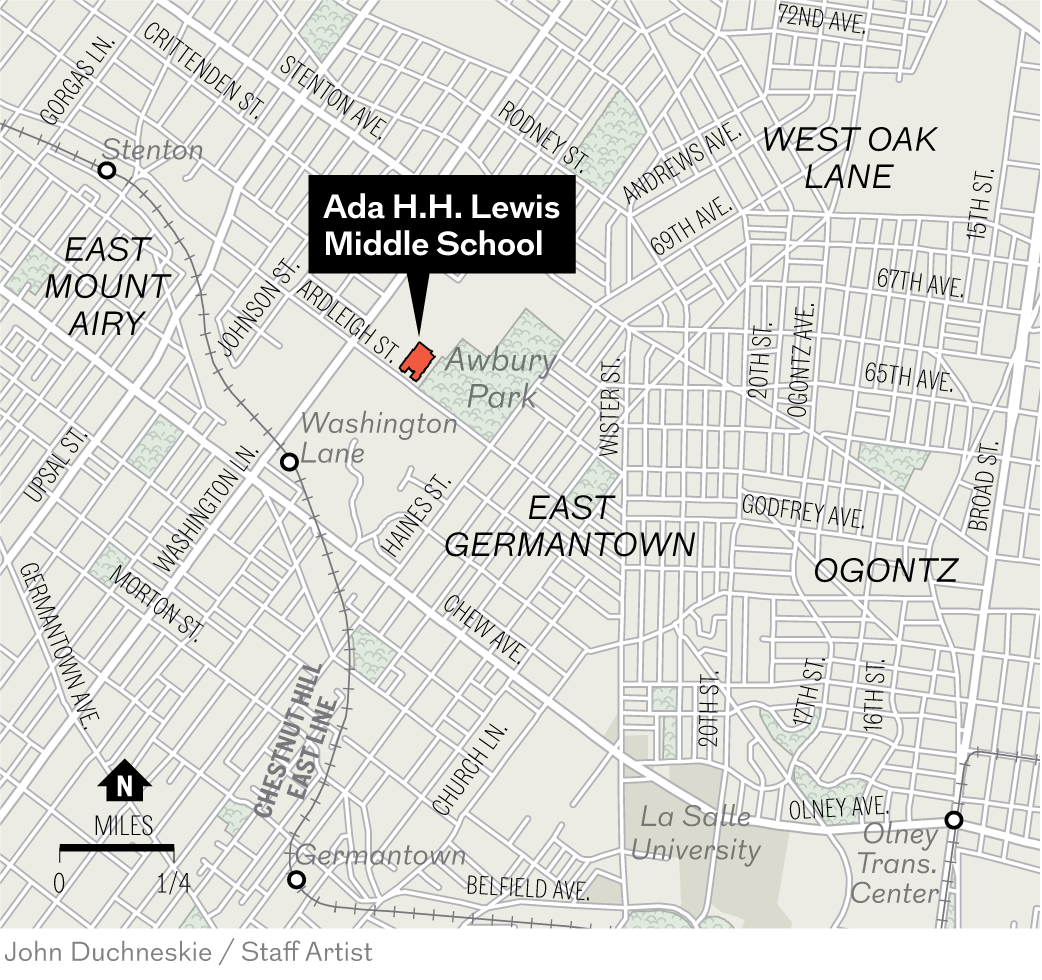
    Map of the former Ada H.H. Lewis Middle School in East Germantown

    Philadelphia Superintendent Tony B. Watlington Sr. extended “deepest sympathies” to Scott’s family and friends in a statement, and said the district’s operations and safety departments will review the vacant-property portfolio “to create and maintain safe and healthy spaces in every neighborhood.”

    While some call Lewis “abandoned,” the district is careful to call the building “vacant,” one of 20 such properties in the district’s portfolio. It says maintenance and inspection logs are kept about work on vacant properties; details were not immediately available.

    The debate over Lewis comes at a crucial time for the district: It is preparing to release recommendations about its stock of 300-plus buildings — and likely add to the list of decommissioned schools-turned-vacant public buildings. The district’s master planning process will contain recommendations for school closures and combining schools under one roof, officials have warned.

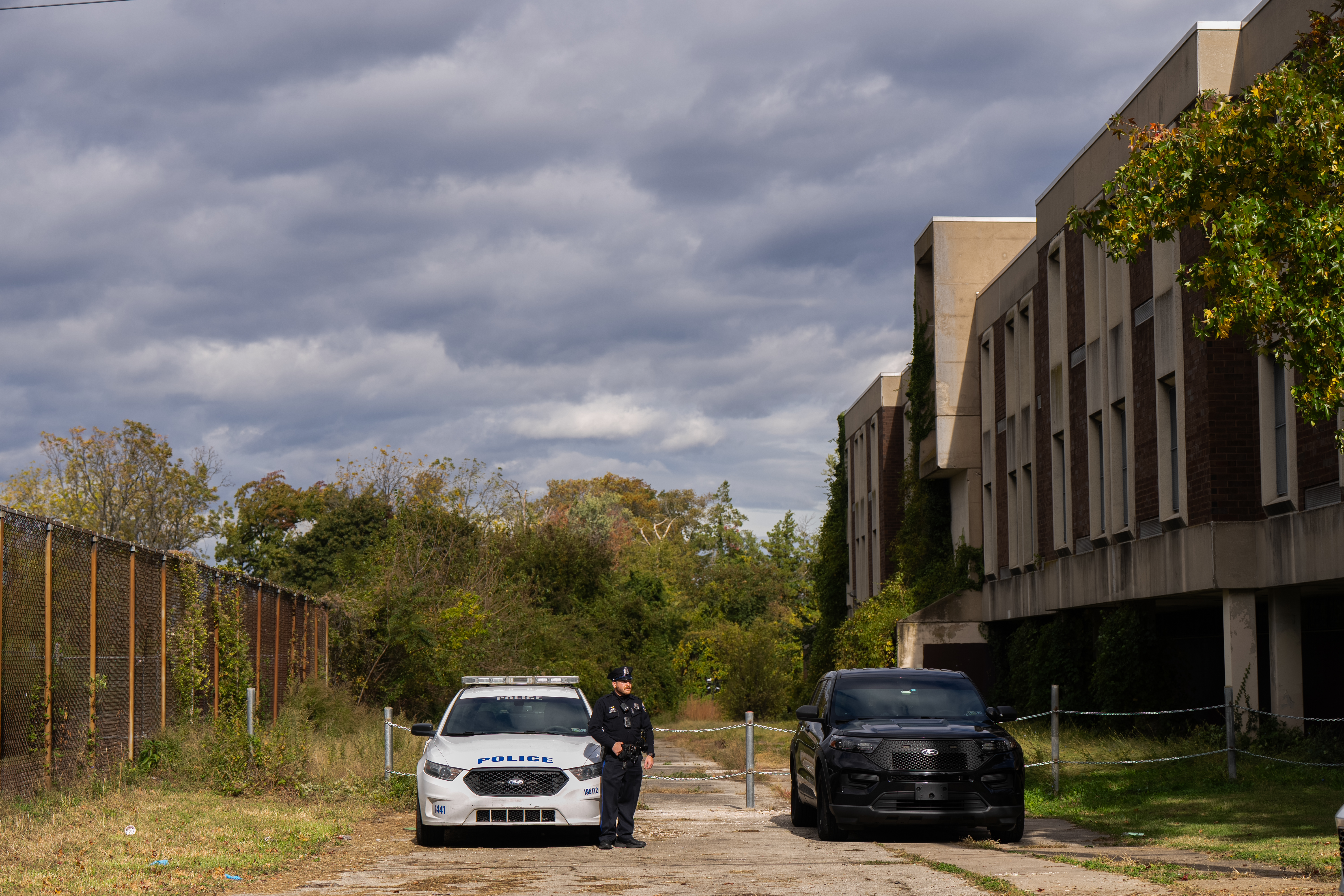
    Police at Ada H.H. Lewis Middle School.

    A fizzled redevelopment

    In 2011, then-City Controller Alan Butkovitz said the district’s vacant buildings were “catastrophes waiting to happen.

    Butkovitz, in a report released that year, said district inaction around such structures was dangerous and noted that the schools were magnets for criminal activity.

    Just before the pandemic hit in 2020, after years of pushback over Ada Lewis, the school district began accepting applications to redevelop the crumbling middle school. Germantown developer Ken Weinstein was one of three developers to place bids. He sought to buy the property for $1.4 million and build 76 new twin homes, at a density that neighbors felt complemented the surrounding area and resolved concerns about density brought by apartment buildings.

    Weinstein said he gathered letters of support from 60 neighborhood residents and elected officials, including U.S. Rep. Dwight Evans and then-State Rep. Stephen Kinsey. The school board seemed eager to move ahead and set a final vote for the proposal in May 2021.

    The vote never happened. The only explanation given that day was that “the Board had concern” about “what the long-term plan is for developing schools for the 21st century,” according to a district spokesperson.

    According to Weinstein, some school board members received calls from Bass asking them to table the vote. Bass has faced criticism for interfering in development projects, including other proposals made by Weinstein, as vacant properties languished for years in her district. Her district includes the Lewis property and parts of North and Northwest Philadelphia, where Weinstein has focused his development work.

    Bass, in an interview Monday, denied meddling in the vote. She acknowledged that she did not support Weinstein’s proposal because of the price of the homes — averaging around $415,000 — which she said would have triggered “immediate gentrification in the neighborhood.” But she said she had no involvement in the board’s reversal.

    “That was up to the school district,” Bass said. “I don’t sit on the school board.”

    While community groups in her district supported Weinstein’s project in 2021, Bass said she objected to market-rate housing as the sole alternative for East Germantown, arguing that it amounted to the district and developers saying “you should just take any old thing just so it’s not vacant.”

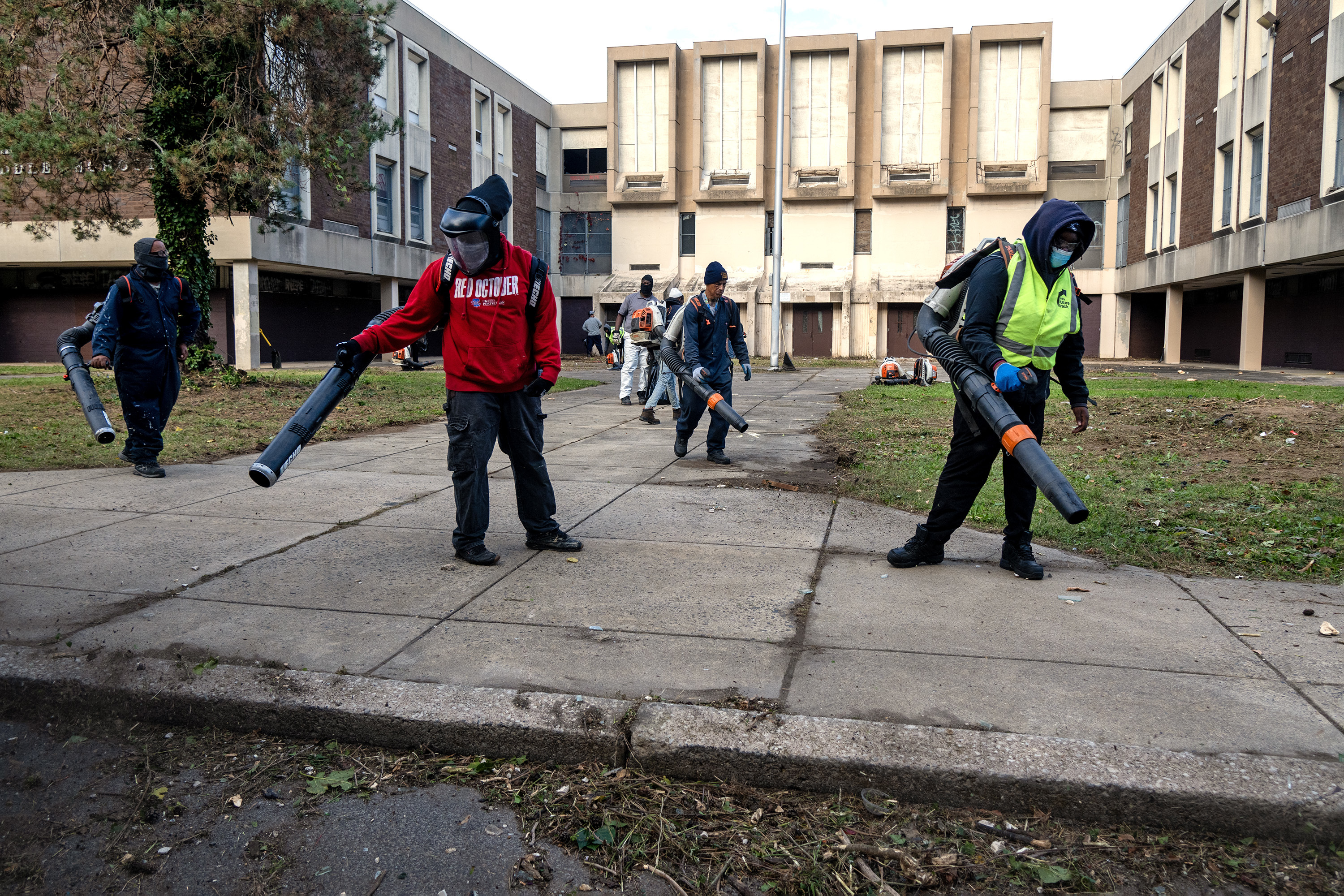
    City workers clean up in front of the vacant Ada H.H. Lewis Middle School Monday, just minutes before the start of a community candlelight vigil in memory of Kada Scott.

    A tragic turn for the property

    In a letter dated Friday, Bass called on the school district to demolish the vacant school, saying she was troubled by the evidence that led investigators to the property during the search for Scott.

    “The continued presence of this unsecured and deteriorating structure is simply unacceptable,” the Council member wrote in a statement, noting the site is now associated with “tragic violence.”

    Cell phone records and tips from the public first led police to the former Ada Lewis school last week, where they found Scott’s pink phone case and debit card, but nothing else. Then, late Friday, police received a new tip saying that they had missed something on their first search of the grounds, and that they should look along the wooden fence that divides the school from the neighboring Awbury Recreation Center. Officers returned to the property Saturday and found Scott’s body, buried in a shallow grave in a wooded area behind the school.

    Prosecutors expect to charge Keon King, 21, with the murder, though police continue searching for others who they believe may have helped dispose of evidence.

    Bass took office in 2012, when the school was already vacant. She said she pushed the school district for several years to take action, as nuisances piled up at the property. She said she still hopes that another “institution” could replace Lewis.

    “I think that having something that the community wants is not hard to figure out,” Bass said. “This is what the community’s interested in — they’re interested in another institution.”

    She said a proposal for a charter school is now in the works, though she said she was unable to provide details.

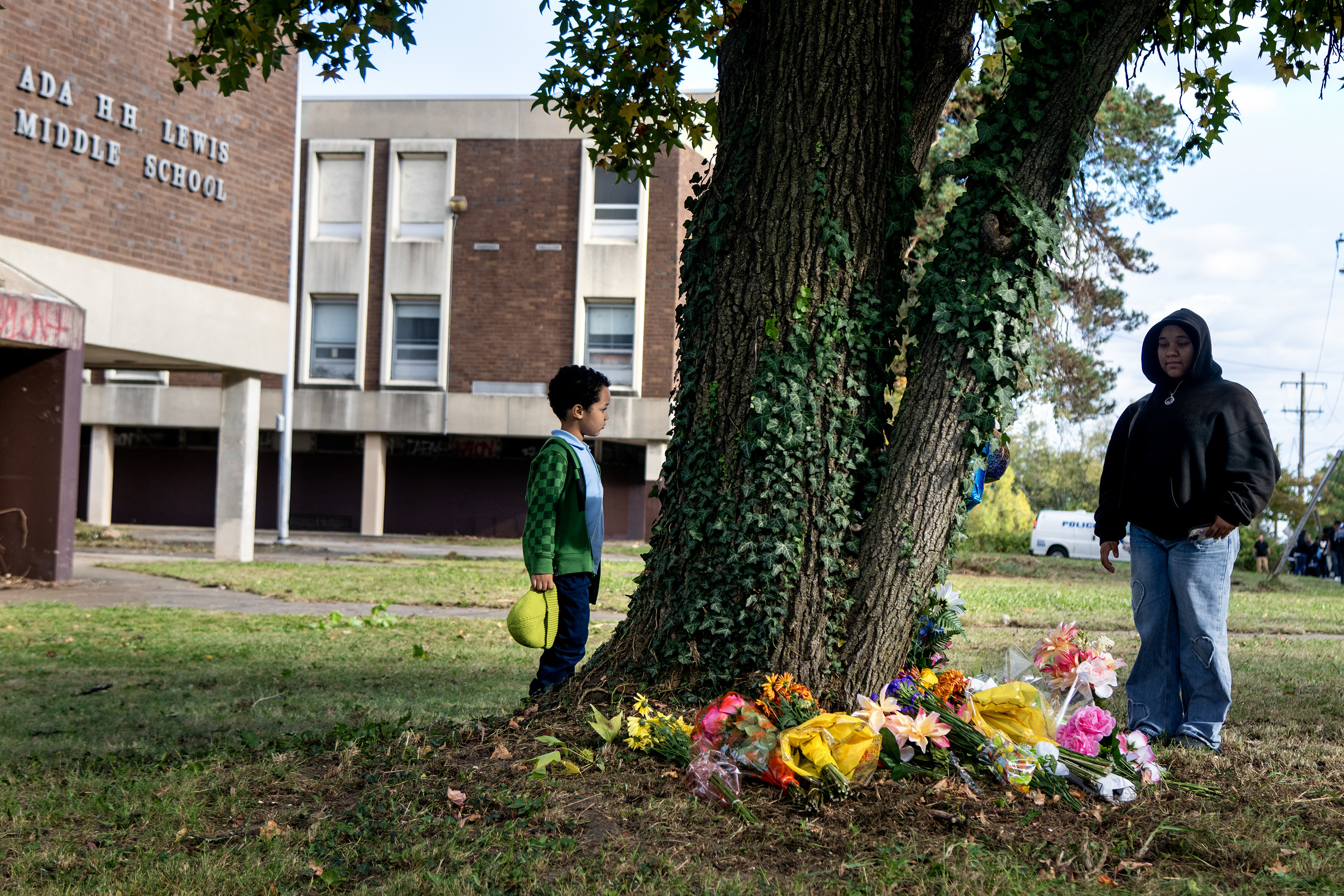
    Julius Peden, 5, and Jaihanna Williams Peden (right), 14, pause at a memorial for Kada Scott on Monday.

    A glut of vacant schools

    The school district still views Lewis as a potential “swing space” — a building that could be used to house students if another district building is closed due to environmental problems.

    There is precedent: The district has used other school buildings for such purposes, like Anna B. Pratt in North Philadelphia, which was also closed in 2013, to house early-childhood programs, and then students from other North Philadelphia schools whose buildings were undergoing renovation.

    Still, it remains unclear how much it would cost to bring the Lewis building back to an inhabitable state.

    The school system currently has about 70,000 more seats throughout the city than students enrolled. Though officials have said their first preference is to have closed schools reused for community benefit, it’s unlikely that all will be able to serve that purpose. And the timetable will surely be slow.

    City officials at times have expressed frustration with the pace at which the district is making decisions about how to manage its buildings. School leaders have said the wait is necessary given the district’s capacity and the need to make correct choices and not rush the process.

    Weinstein said the tragedy that culminated at Lewis reflected the conventional wisdom that blight breeds crime.

    “There’s always consequences to shutting down a proposal that the community supports,” Weinstein said. “In most cases, nothing bad happens. In this case, something very bad happened.”

    Staff writer Ellie Rushing contributed to this article.