Tag: gentrification

  • The share of Asian residents living in Philly’s Chinatown is decreasing, says a new report

    The share of Asian residents living in Philly’s Chinatown is decreasing, says a new report

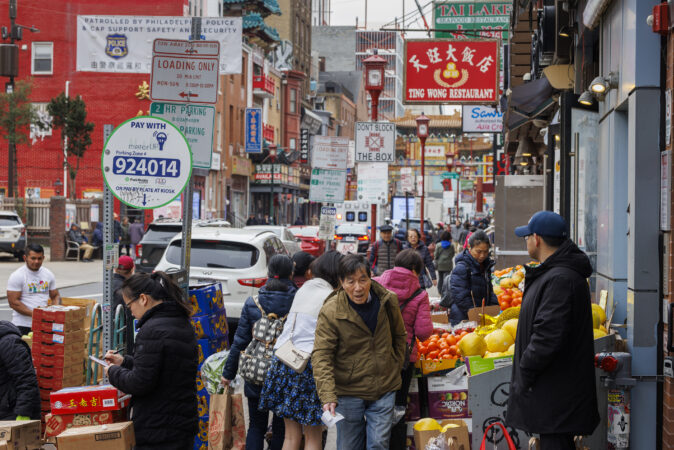
    Philadelphia’s Chinatown neighborhood has grown significantly over the last decade, but a majority of its gains in population and business have resulted in a decline in the share of Asian residents amid concerns over gentrification and displacement, according to a new report.

    And the situation is not unique to Philly, a study from the Asian American Legal Defense and Education Fund found. Its counterparts in New York City and Boston — both also historic Chinatowns — are facing similar pressures.

    All three cities’ Chinatowns, in fact, saw declines in their share of Asian residents from 2010 to 2020, the report found. The findings in Philly, meanwhile, come following years of the neighborhood staving off locally planned developments that may have resulted in additional challenges for residents — including the proposed billion-dollar Sixers arena effort abandoned in January after years of heated debate.

    “The Chinatown community is no stranger to fighting off large-scale and predatory development,” said the report from the fund, which provided legal support to community groups during the arena saga. “The arena would have devastated the neighborhood, bringing in a renewed wave of gentrifying pressure for residents and competition for local businesses.”

    The fund recommends that cities like Philadelphia enact community-focused rezoning efforts to protect their Chinatowns’ cultures from those pressures. But, as the report found, Philly’s Chinatown is already seeing substantial demographic shifts.

    For population and race data in 2000 and 2010, the study used the U.S. Census Bureau’s decennial census, which conducts a 100% count of the nation’s population. Figures for 2020 were drawn from estimates from the Census Bureau’s American Community Survey for the five-year period of 2018 to 2022, as the study’s authors cited possible data issues in the 2020 decennial census because of the pandemic and the proposed citizenship question.

    An Inquirer analysis that used the decennial census for both 2010 and 2020 shows that Asians remain the largest racial group in Chinatown, with their share of the population falling slightly, from 61% to 57%. White residents’ share of Chinatown’s population grew from 24% to 28%.

    Here are three takeaways from the fund’s report:

    An older, less Asian population

    Between 2010 and 2020, Chinatown’s population grew by 15%, from roughly 5,900 people to nearly 6,800. During that time, much of the growth was driven by an influx of white residents, with that group’s population growing by roughly 76% during that time — and becoming the largest racial group in the area — the report found.

    The overall number of Asian residents, however, remained roughly the same — 2,464 in 2010 vs. 2,445 in 2020. That proportion accounted for about 36% of the neighborhood’s population in 2020, decreasing from 42% in 2010. The white population, meanwhile, accounted for 44% of Chinatown’s residents in 2020, compared with 29% in 2010.

    As a result, the report notes, the area’s growth can be “entirely attributed” to a rush of non-Asian residents over the last decade covered by the U.S. Census. The proportion of Latino residents also increased significantly between 2010 and 2020, with that group growing by 36%, the report found.

    The neighborhood’s population also appears in part to be aging in place, with the number of people 65 and older almost doubling from 2010 to 2020, from 444 residents to 849. Simultaneously, its population of residents up to age 17 decreased by 15% during that time period, and the group ages 18 to 24 decreased by 37%. The group of residents ages 25 to 64, meanwhile, saw a “modest” increase of 22% from 2010 to 2020, the report found.

    Higher rent — and home values

    As the proportion of Chinatown’s Asian population decreased, its rent costs, house values, and homeownership rates all increased, the report found. House values in Chinatown, in fact, were more than double the citywide median in 2020, standing at more than $491,000 in the neighborhood compared with $236,000 in Philadelphia overall.

    Homeownership rates were lower in Chinatown than in the city at large, however, standing at 40% in 2020 compared with 52% citywide. Still, homeownership in Chinatown increased from 31% in 2010 while it fell marginally in the city overall from that year, when it stood at 54%. By comparison, Boston’s homeownership rate in its Chinatown stood at 7% in 2020, while New York’s Chinatown had a 15% homeownership rate that year, the report found.

    Rent in Chinatown was also higher in 2020 compared with the rest of the city, the fund’s report found. The neighborhood’s median rent stood at nearly $1,900, while the city’s was about $1,150 that year.

    Boston, New York, and Philadelphia, the report found, all saw the “transformation of former warehouses, tenement buildings, or rowhouses into luxury apartments and condominiums” over the last decade. Those developments, the fund noted, “fail to expand the housing supply for Chinatown community members” and contribute to rising rents and displacement of low-income residents.

    “Affordable housing is quickly disappearing in Philadelphia’s commercial core,” the fund’s report found.

    Largely local business

    In total, the study found that 92% of Chinatown’s commercial land parcels were small or local businesses in 2020, with restaurants and retail outlets making up a lion’s share of storefronts. Restaurants were the clear growth leader, increasing in number by 40% from the decade prior.

    Nearly all of Chinatown’s restaurants were located south of the Vine Street Expressway, the fund noted. Of those, Asian restaurants dominated the cuisine offered, with most eateries serving Chinese food.

    Still, despite the dominance of Asian restaurants in the neighborhood, Philadelphia did observe the largest shift in Asian to non-Asian restaurants of the three Chinatowns examined in the study. Over the last decade, the proportion of neighborhood Asian restaurants decreased from 85% to 62%, while the area’s non-Asian eateries more than doubled from 15% to 38%.

    The presence of national chains in Philly’s Chinatown doubled between 2010 and 2020, moving from 4% of all businesses to 8%, the study found. Retail stores, meanwhile, made up about 30% of commercial businesses in the neighborhood in 2020, the largest proportion of which were beauty and hair salons, followed by grocery stores and markets.

    Many newer businesses, the study noted, were tailored for younger customers, such as bubble tea and upscale dessert shops, as well as convenience stores that sell snacks rather than groceries — many of which lack indoor dining rooms. That shift may affect older residents, the fund noted.

    “As these types of indoor dining rooms disappear, Chinatown elders have fewer options to spend their time in safe and affordable spaces,” the study said.

    Clarification: This story has been updated to further explain the data used in the Asian American Legal Defense and Education Fund study.
  • A Philly tax loophole allows refunds for people who steal homes. A Council bill would direct that money to victims.

    A Philly tax loophole allows refunds for people who steal homes. A Council bill would direct that money to victims.

    City officials and housing advocates want Philadelphia to close a loophole in its tax code that allows people who forge deeds and steal homes to get a refund for taxes they paid to commit their crimes.

    Thieves commit deed fraud when they illegally transfer a property’s ownership and record a fraudulent deed with the city.

    This fraud often occurs after a homeowner dies but remains the legal owner of a property. Thieves use deceptive means, such as posing as fake heirs and forging documents, to take and sell properties, often flipping them to developers for large profits.

    To record a deed, property owners — including fraudsters — need to pay a realty transfer tax. If a judge later determines that a sale was fraudulent, the person who paid the tax can request a refund from the city. That includes thieves.

    A bill introduced by City Council Majority Leader Katherine Gilmore Richardson would allow the city to give refund money to deed fraud victims, who can spend thousands of dollars fighting to regain ownership of their properties.

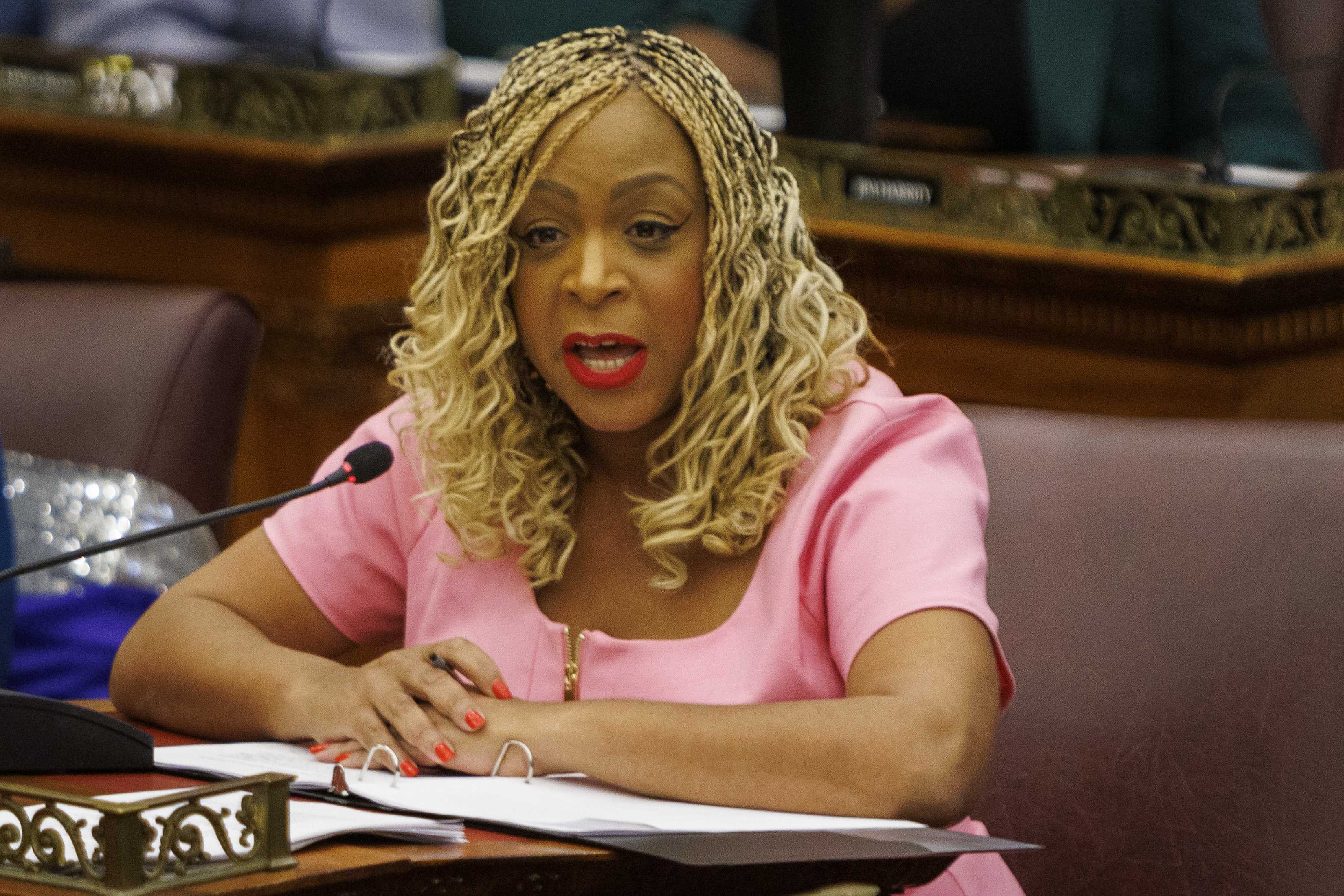
    “It’s a nightmare for victims of deed fraud, and while we can’t necessarily improve the situation, we can help to ease some of their financial burden,” Gilmore Richardson said during a Council hearing Wednesday.

    Philadelphia’s portion of the realty transfer tax is 3.578% of the value of a home sold. So for a stolen $100,000 home, a victim could receive a refund of about $3,500.

    A longstanding issue

    Deed fraud is a persistent problem in Philadelphia. The city’s records department received about 130 reports of deed fraud in 2023 and about 110 reports in 2024.

    Investigations by The Inquirer have shown that deed theft grew alongside gentrification in Philadelphia, as property values rose in neighborhoods that became more desirable. Victims of deed fraud disproportionately are people of color and seniors.

    City officials earlier this year launched a system that checks whether a home seller is dead in order to prevent deed thieves from stealing homes legally owned by dead people. Philadelphia was the first local government to roll out such a system, according to Mayor Cherelle L. Parker.

    James Leonard, commissioner of the Philadelphia Department of Records, said the Parker administration supports the Council bill, which “addresses a gap in how we help victims of deed fraud.”

    “We see these cases regularly,” he said. “They devastate families, they undermine confidence in our property system, and they impose significant costs on victims, who must fight in court to reclaim what was always rightfully theirs.”

    Victims face a long legal battle in which they must prove that a deed is fraudulent and often must pay attorney fees. And they have to keep paying mortgages while they fight to reclaim properties.

    “When they finally win, they get their property back. But they’re often financially and emotionally devastated by the process,” Leonard said.

    The new Council legislation allows a victim who gets a court order that voids a fraudulent deed to request a refund of the realty transfer taxes that a thief paid. Leonard estimates the city will see at most 25 to 50 cases per year, a “modest” fiscal impact for the city.

    And under current law, the city keeps tax payments that it never would have received if not for the deed fraud, he said, so the city has been benefiting from fraudsters’ payments.

    “From an equity standpoint, this bill is the right thing to do,” he said.

    Vincent Gilliam and his family were victims of deed fraud when his deceased mother’s home in North Philadelphia was stolen. Between the belongings that deed thieves took and the fight to reclaim the home, he estimates that the ordeal cost his family at least $5,000.

    He told Council members that getting some money back from the city through a realty transfer tax refund “would be a tremendous help.”

    Kate Dugan, a divisional supervising attorney at the legal aid nonprofit Community Legal Services of Philadelphia, said the problem of deed theft “is expensive and complicated to fix.”

    “Even when free representation is available, which is normally not the case, victims are stuck paying for costs like repairs, changing locks, filing fees … out of their own pockets,” she said. “It’s rare for a deed fraud victim to collect any meaningful money damages or restitution.”

    On Wednesday, Council’s Finance Committee sent the bill to the full Council for consideration.

  • A man died driving on Northwest Philly’s winding, wet roads. The neighborhood has tried addressing the danger for decades.

    A man died driving on Northwest Philly’s winding, wet roads. The neighborhood has tried addressing the danger for decades.

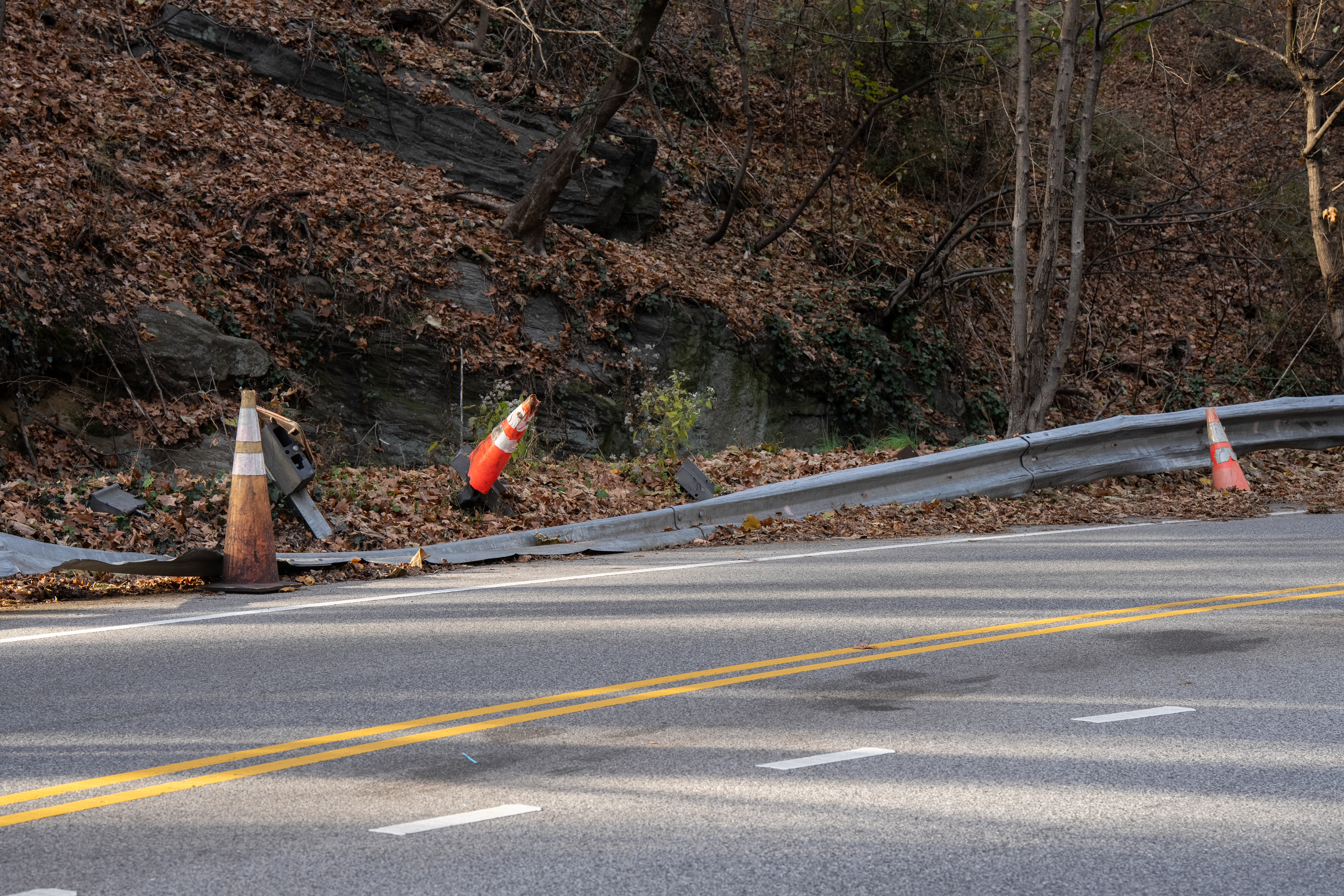
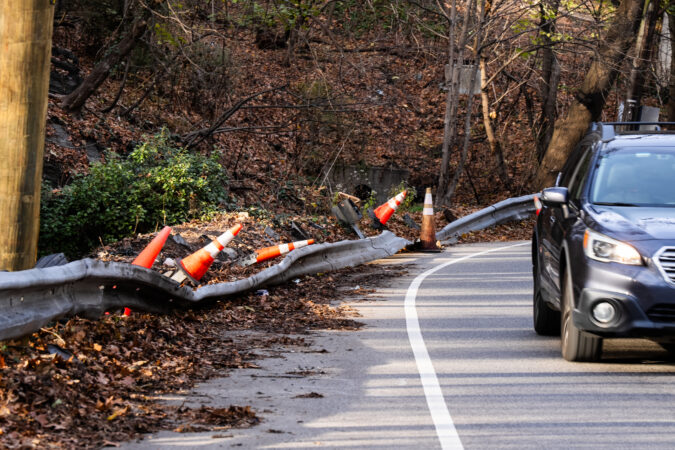
    A 65-year-old man died Sunday after he lost control of his vehicle on Cresheim Valley Drive in Chestnut Hill, striking a downed guardrail and flipping the car upside down into a creek. Just weeks before, another driver veered off the same road but survived.

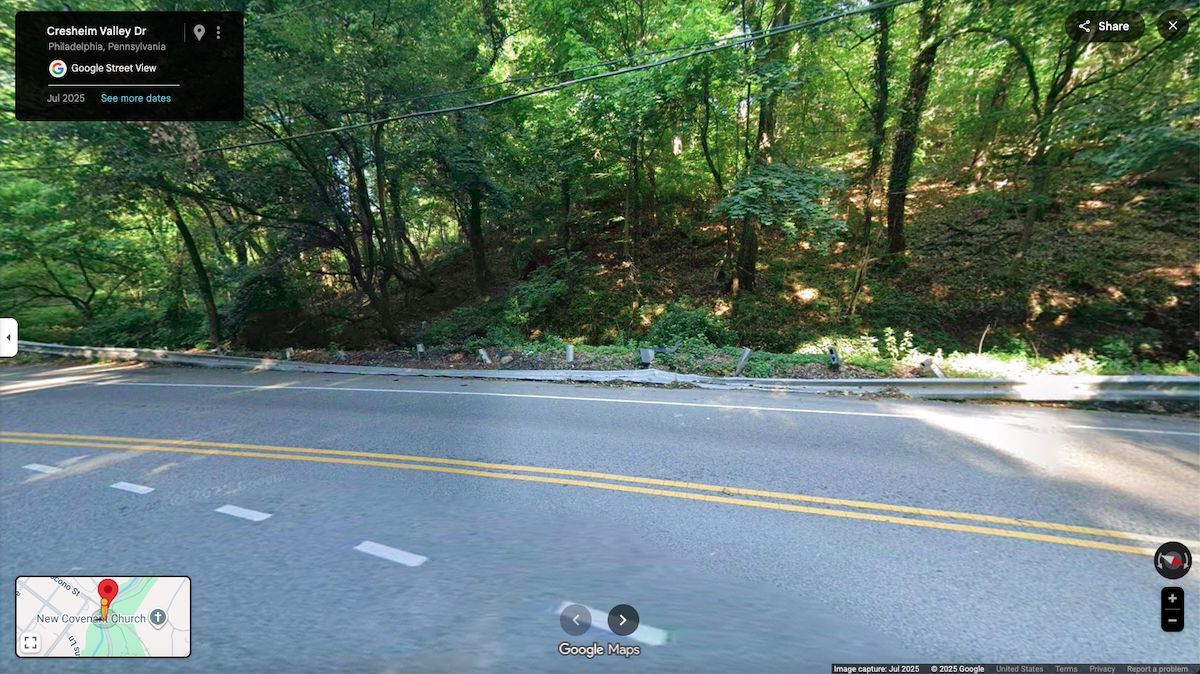
    Compounding this latest traffic death is the fact that the guardrail meant to prevent cars from swerving off the road was broken and nearly flattened from previous crashes, leaving a gap in the guardrails for months, said Josephine Winter, a Mount Airy resident and executive director of West Mount Airy Neighbors (WMAN). “The guardrail was down, and it was previously crumbled so it’s a frequent site of crashes,” she said. Images from Google Maps show the guardrail down as far back as July.

    The Philadelphia Streets Department is aware of the recent crash and is conducting an assessment of the guardrail on Cresheim Valley Road. “The streets department’s top priority is public safety,” a spokesperson said.

    A screenshot of a Google Map’s street view captured in July 2025 shows the downed guardrail on Cresheim Valley Drive in the Chestnut Hill neighborhood of Philadelphia. On Nov. 30, 2025, a 65-year-old man crashed and went over the guardrail, later succumbing to his injuries.

    Neighbors say accidents, sometimes fatal, have plagued the winding roadways in Chestnut Hill and Mount Airy for decades. These traffic safety concerns came to a head with Sunday’s deadly crash.

    “It’s a curvy, tricky road, especially when it’s wet, and people tend to speed on that road,” Winter said of roadways like Lincoln and Cresheim Valley Drives, which are lined with trees, have swooping dips and hills, and are prone to flooding.

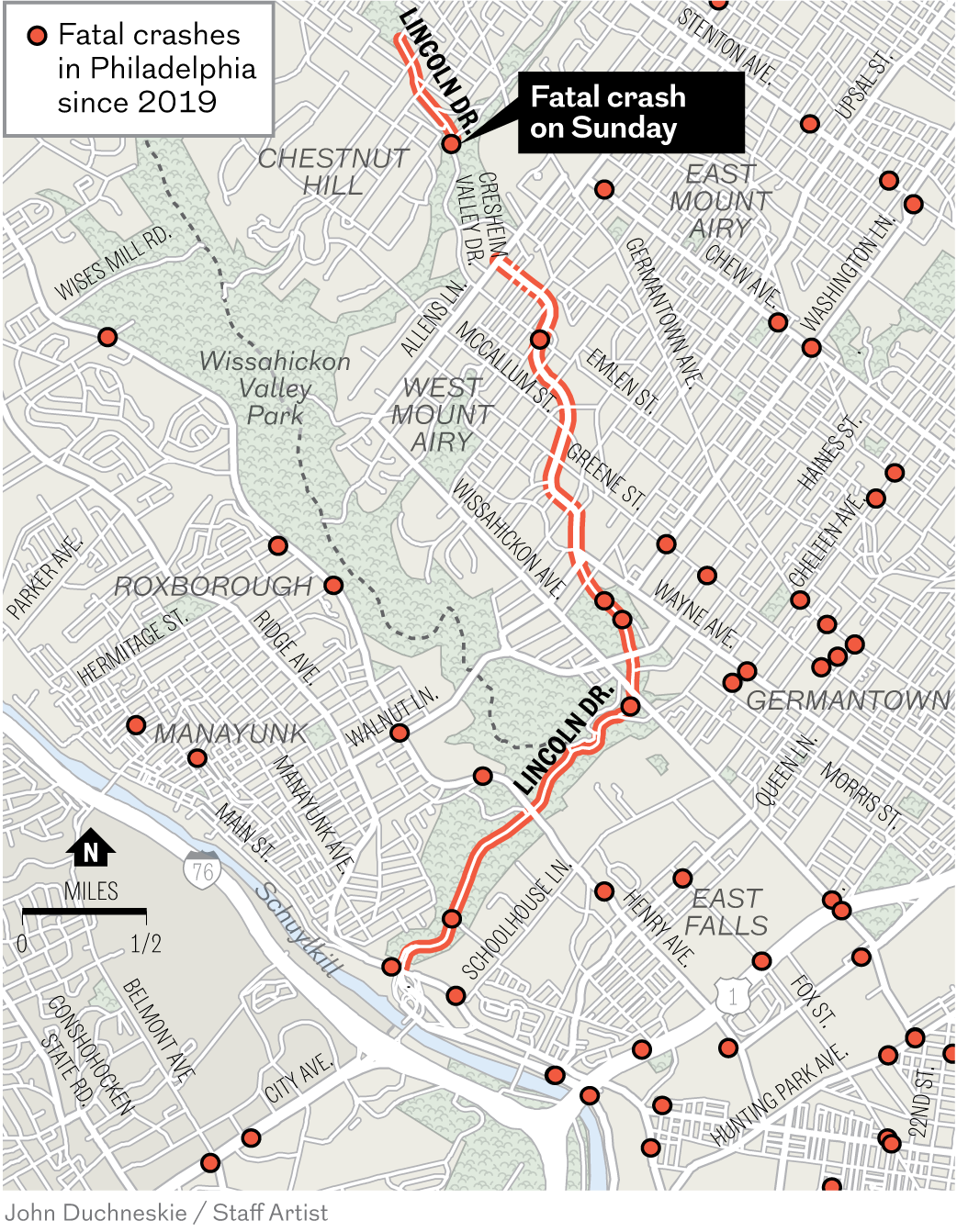
    Map of fatal crashes in Northwest Philadelphia since 2019.

    Since 2019, according to city crash data, at least five people have died while driving on the dark, winding sections of Lincoln Drive, which intersects with Cresheim Valley Drive, prompting many neighbors to fear walking down their street or leading them to invest thousands on giant boulders to protect their home and lawn.

    Winter, who leads WMAN’s traffic-calming committee, and other neighborhood organizations have petitioned for city support, urging the streets department to slow the speed of traffic on Cresheim Valley Drive, Lincoln Drive, and Wissahickon Avenue. The group’s efforts are so ingrained in the fabric of the neighborhood that, when digging through Temple University’s Urban Archives, Winter found an advertisement from 1968 stressing the need for cars in Mount Airy to “slow down to keep kids safe.”

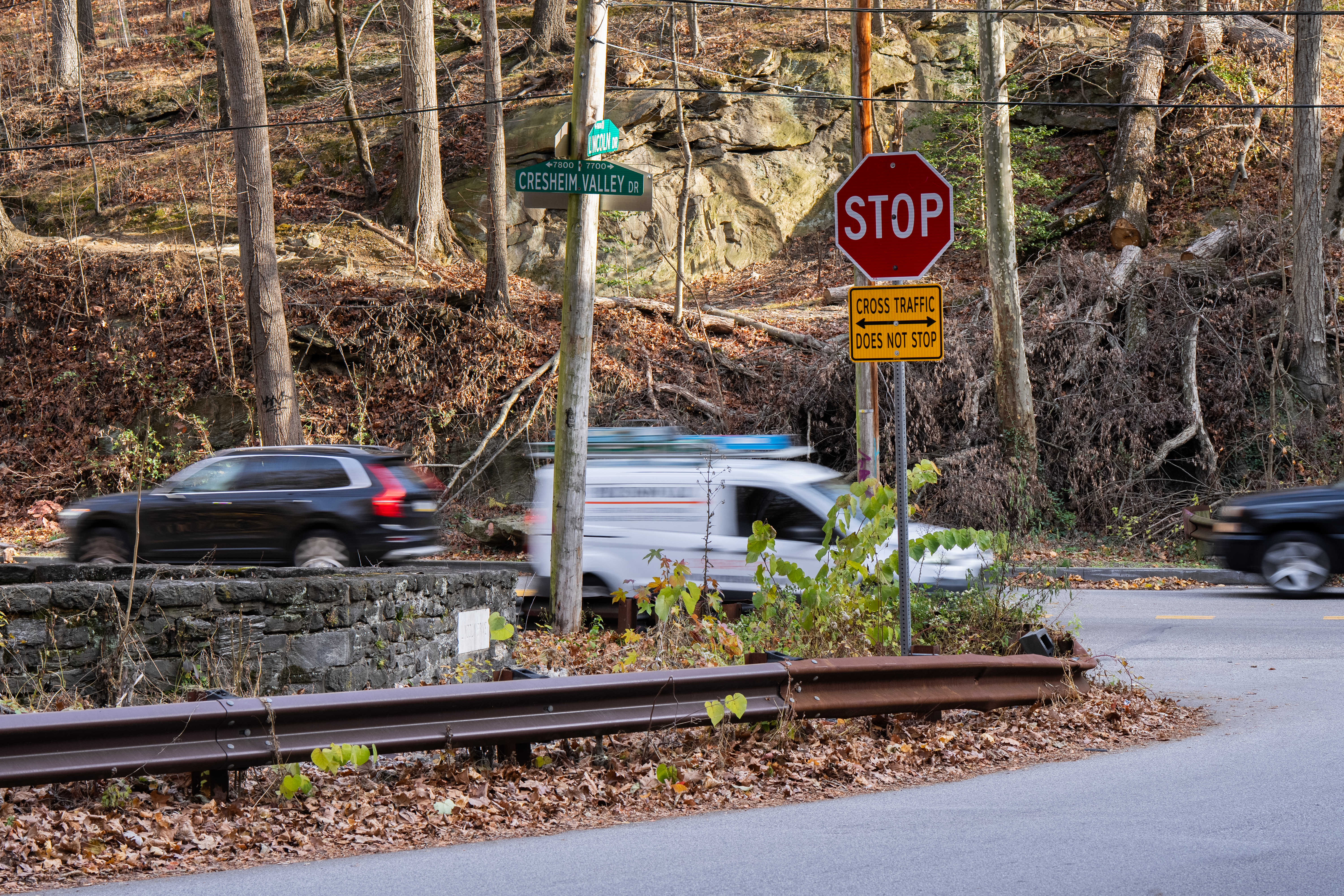
    The intersection of Cresheim Valley Drive and Lincoln Drive, in Philadelphia, PA, Dec. 1, 2025.

    The streets department installed “speed slots,” traffic-calming structures similar to speed bumps, earlier this year along Lincoln Drive between Allens Lane and Wayne Avenue. Along the same stretch of road, the Pennsylvania Department of Transportation installed rumble strips and speed tables to slow drivers down in 2023, in addition to traffic lane separators to keep drivers from using center lanes to pass other vehicles.

    In addition to the recently completed speed slots and traffic-calming measures on sections of Emlen Street, which becomes Cresheim Valley Road, signal upgrades are planned for Lincoln Drive as well.

    However, the work to improve these streets is not over, Winter said. Additionally, the streets department plans do not include changes to Cresheim Valley Drive, where Sunday’s crash happened.

    “We’ll need a collaborative approach as soon as possible to temporarily address the downed guardrail, and then see what the options are moving forward,” Winter said.

    The intersection of Cresheim Valley Drive and Lincoln Drive, in Philadelphia, PA, Dec. 1, 2025.

    Throughout the last decade, locals have suggested better-timed signals, more speed tables, and reducing the number of driving lanes from two in either direction down to one. They also want to see more roundabouts and curb bump-outs in the neighborhood to keep traffic flowing, but at a reasonable speed.

    A mere 50 to 100 feet from Cresheim Valley Drive is a parallel bike trail, where trail organizers like Brad Maule are accustomed to the crashes on the road nearby. Before Sunday’s fatal crash, he remembers two other cars that drove off the side of the road in recent months, not counting the crashes on the roadway itself. The city recently installed pedestrian crossing signs and repainted the crosswalk on nearby Cresheim Road, but Maule hopes speed bumps will follow.

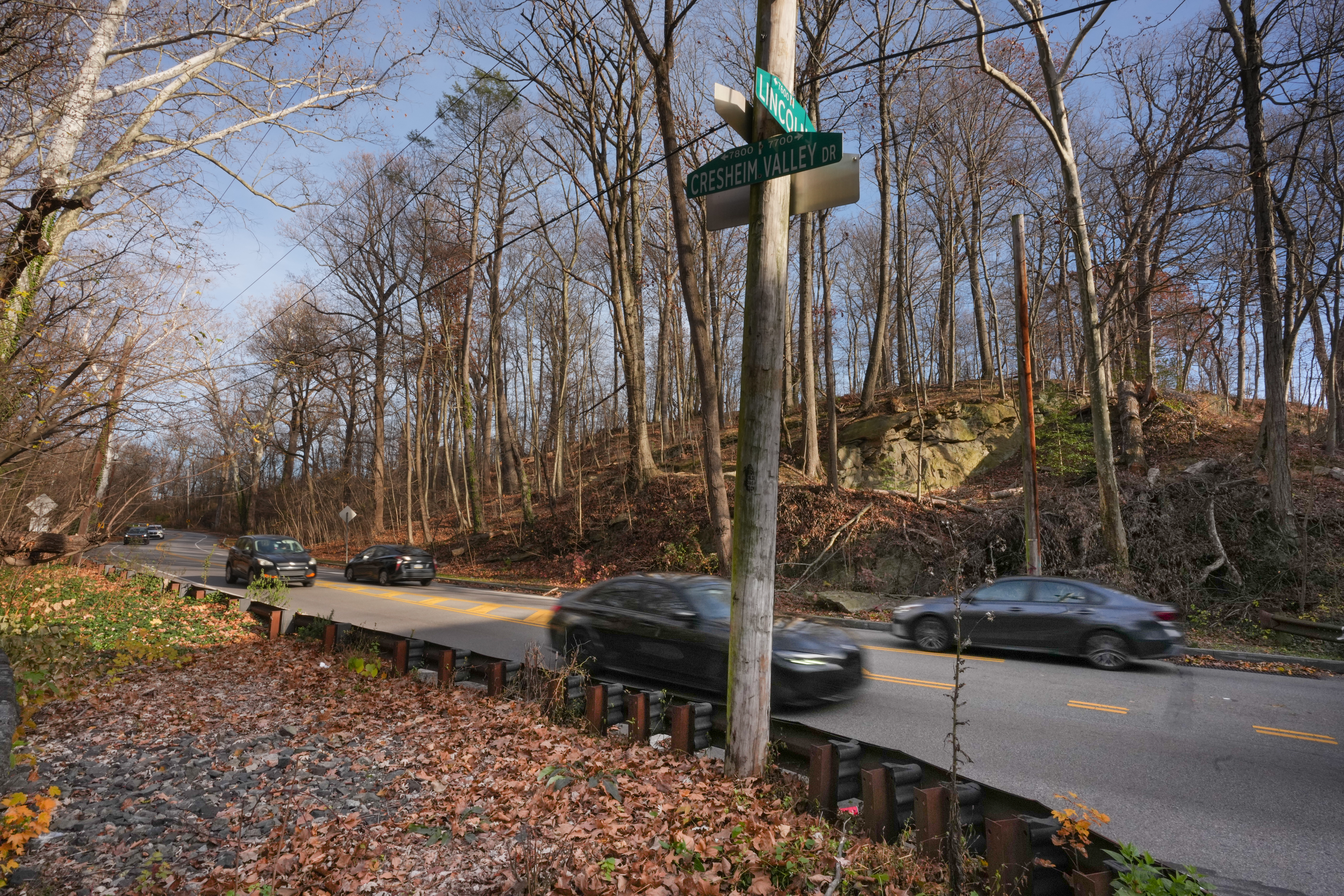
    Cresheim Valley Drive near where it intersects with Lincoln Drive, in Philadelphia, PA, Dec. 1, 2025.

    While Winter said that engineers from the Philadelphia Streets Department were among the first calls she received Monday morning responding to the crash, and that the community appreciates the response, she, Maule, and other neighbors hope that more safety improvements will be considered to save more lives.

    “I’m just looking forward to the new measures of safety that come here,” Maule said. “Hopefully, people will abide by them.”

    Staff writers Max Marin and Dylan Purcell contributed to this article.

  • West Philly affordable housing project could finally advance, almost 6 years after it was proposed

    West Philly affordable housing project could finally advance, almost 6 years after it was proposed

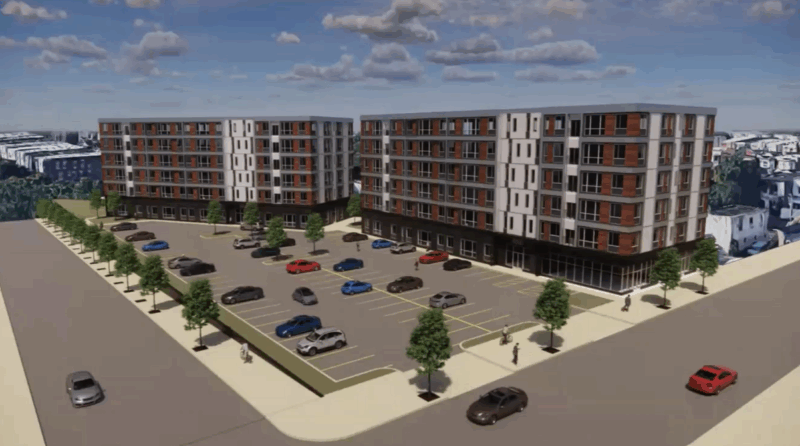
    An affordable housing project slated for a junkyard in Cedar Park took a step forward Wednesday, when a Philadelphia judge rejected a neighbor’s challenge. The courtroom victory brings the 104-unit, two-building project, which was conceived in 2020, closer to reality.

    Common Pleas Court Judge Idee Fox ruled that the new zoning of a triangular group of parcels on Warrington Avenue, which allows for buildings up to seven stories, was legal.

    Melissa Johanningsmeier, who lives next to the planned development, sued the city to stop the project in 2023, arguing that the building was inconsistent with the city’s goal of preserving single-family homes in Cedar Park.

    Johanningsmeier said in court filings she would be harmed by the parking, traffic, and loss of green space if the project were to proceed.

    The homeowner told Fox during a two-day October bench trial that there was widespread discontent with the project in the neighborhood.

    The judge seemed skeptical, as Johanningsmeier’s attorney didn’t provide witnesses or evidence to support claims of widespread backlash to the project that has been promoted by City Councilmember Jamie Gauthier.

    It was not for her to decide whether the project was the best idea, Fox said, but whether the zoning was constitutional.

    “If the community is unhappy with what’s being done, they have the right to express their concerns to the councilwoman at the ballot box,” Fox said.

    Junkyard controversy

    The project dates to 2020, when New York affordable housing developer Omni formulated plans to add 174 reasonably priced apartments to the West Philadelphia neighborhood.

    But the developer’s plans for the junkyard at 50th and Warrington met opposition due to the proposed buildings’ height — six stories — and parking spaces for less than a third of the units.

    Omni’s plan required permission from the Zoning Board of Adjustment to move forward, which was more likely to succeed with neighborhood support. So they compromised.

    A new design unveiled in 2021 pushed the buildings back to the edge of the site, to avoid putting neighboring homes in shadow. A surface parking lot would offer 100 spaces for the 104 affordable apartments.

    These concessions appeased almost all of the critical neighbors and community groups. Many of them supported Omni before the Zoning Board of Adjustment, which granted the project permission to move forward.

    But Johanningsmeier remained a critic. She lives on the border of the property and challenged the zoning board’s ruling in Common Pleas Court. Judge Anne Marie Coyle ruled in her favor, arguing the new building “would unequivocally tower over the surrounding family homes.”

    In the aftermath, Gauthier passed a bill to allow the project to move forward without permission from the zoning board. Johanningsmeier then sued over that legislation as well.

    Councilmember Jamie Gauthier in City Council in 2024.

    Affordable housing and fruit analogies

    The issue at the heart of the case was whether a zoning change to allow for large multifamily buildings was considered spot zoning on the small parcel, which Johanningsmeier’s lawyer argued was inconsistent with the types on buildings on surrounding properties.

    Just because the “mega apartment buildings” are for residential use doesn’t make the project similar to the surrounding zoning, which mostly allows single-family homes and duplexes, Edward Hayes, a Fox Rothschild attorney representing Johanningsmeier, told Judge Fox on Wednesday.

    “A cranberry and a watermelon are fruit,” Hayes said. “They are not the same.”

    And while affordable housing is a laudable cause, the attorney said, that doesn’t mean that the city should “shove it down the throat of a community” in the form of large buildings that are out of character with the rest of the neighborhood.

    An attorney representing the developer, Evan Lechtman of Blank Rome, told the judge existing buildings of similar height are nearby, across the railroad track in Kingsessing.

    “We are transforming a blighted, dilapidated junkyard into affordable housing,” the developer’s attorney said.

    Johanningsmeier’s lawyer, Hayes, declined to comment after the ruling, which could be appealed.

    Gauthier celebrated the outcome as a victory against gentrification.

    “Lower-income neighbors belong in amenity-rich communities like this one, where they can easily access jobs, healthcare, groceries, and other necessities,” said Gauthier. ”I hope the court’s ruling puts an end to gratuitous delays.”

    Housing advocates note that the years of neighborhood meetings and lawsuits over the project are an example of why housing, and especially affordable units, has become so expensive to build in the United States.

    In the face of determined opposition from even a single foe, projects can incur millions in additional costs.

    “It’s a travesty that one deep-pocketed opponent has been able to block access to housing for over 100 families in my neighborhood for years,” said Will Tung, a neighbor of the project and a volunteer with the urbanist advocacy group 5th Square. “It’s more expensive than ever to rent or buy here, and this project would be a welcome change to its current use as a derelict warehouse.”

  • It’s essential that Mayor Parker’s H.O.M.E. plan prioritize resources for ‘people-first’ housing

    It’s essential that Mayor Parker’s H.O.M.E. plan prioritize resources for ‘people-first’ housing

    After months of state and federal budget stalemates that have threatened essential services for Philadelphia’s most vulnerable, we now know those budget outcomes don’t address critical housing needs, and as such, we have an opportunity right now as a city to meet the moment through the first year of spending in Mayor Cherelle L. Parker’s housing affordability plan.

    As a city, we are currently scrambling to decide what to do with $200 million per year for four years to address housing, when just last year we were discussing spending $1.3 billion on a Sixers arena in Chinatown. Clearly, the issue is not a lack of resources, but where we choose to direct them.

    Housing in Philadelphia has rarely been people-first in its approach; rather, it’s been about extraction from communities in one form or another. One could argue that the first great Philadelphia housing plan started with the city’s founding in 1682 and was built on the displacement of the Lenape people, who had inhabited the region for generations.

    In a neighborhood like Kensington — where I live and work — housing was developed at the turn of the 20th century to advance industry, and the profits to be made from it, by putting factories in formerly rural spaces and then surrounding those workplaces with as many homes as possible. This was a housing plan meant to extract as much as possible — rental payments, increased worker productivity, patronage of local businesses — from those who lived and worked here.

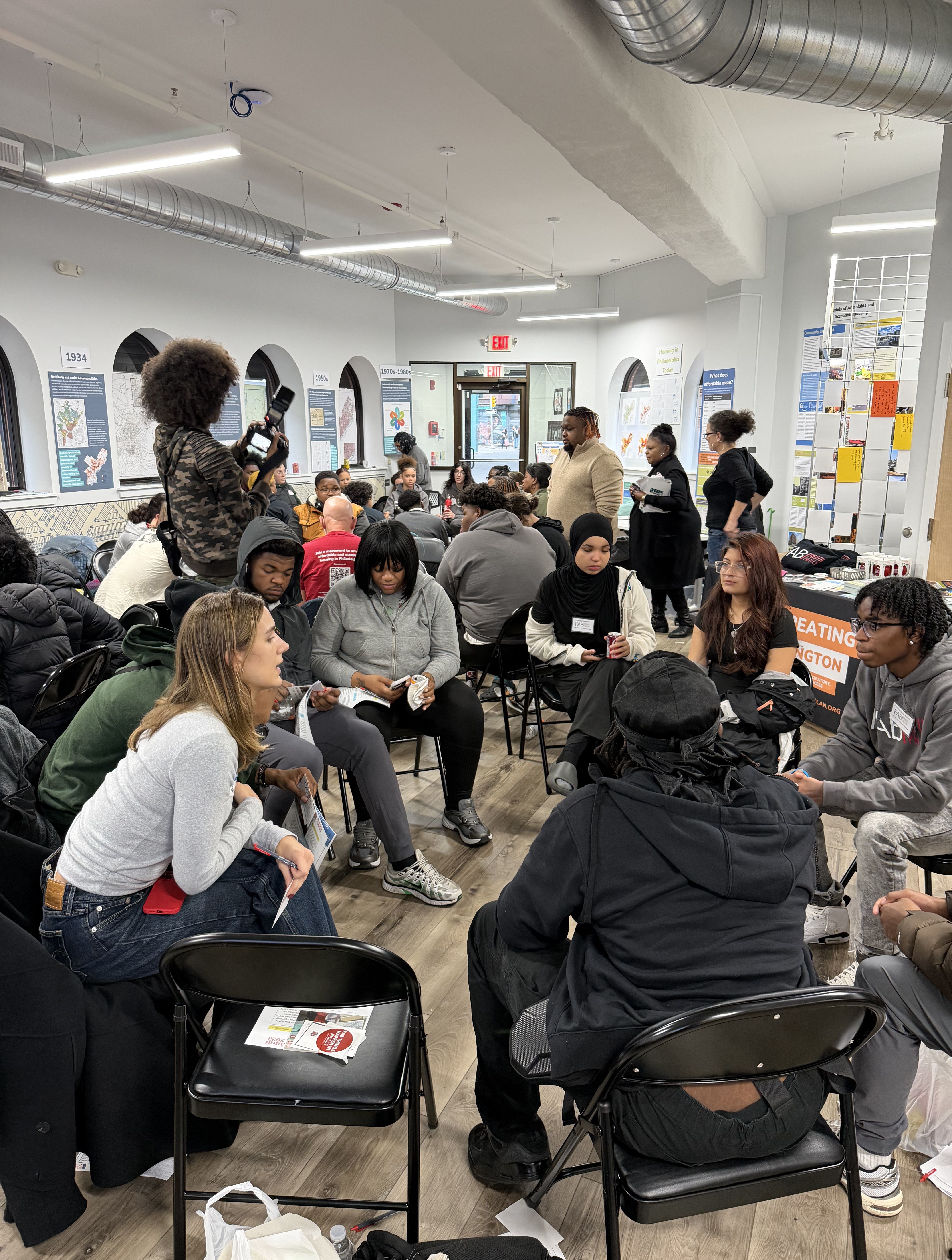
    Fab Youth Philly brings together young people for a teen town hall to discuss housing issues on Nov. 15 at the Kensington Engagement Center.

    Profit-first models aren’t only relegated to the past. Just a few weeks ago, the Reinvestment Fund reported that corporate investors are most active in Black and brown — often intentionally disinvested — neighborhoods, where they are responsible for one in four residential purchases, creating more extraction through landlords rather than creating and maintaining wealth among homeowners.

    Any transformative housing plan must be built on values: to address historical and current misaligned missions that continue to drive exploitative forces in our neighborhoods. The start of the mayor’s H.O.M.E. program is a moment to ensure the plans that we will be paying for over the next 30 years are people-first in their mission, purpose, and function.

    Real change happens when we are collectively grounded in hope, community, facts, and information about where we have been, all of which can serve as a guide to where we’d like to go.

    Over the last few years, New Kensington Community Development Corp. has been facilitating the Co-Creating Kensington planning and implementation process, in which we have received feedback from 700 residents about their priorities. In January, we completed the rehabilitation of a three-story building at 3000 Kensington Ave., converting it into the Kensington Engagement Center, a meeting place and exhibition space that was designed to facilitate conversations with the community on their priorities.

    Conversations with our neighbors and partners revealed that housing is an increasingly pressing issue for Kensington residents (as well as for the rest of Philadelphia). We collectively recognized a moment of alignment with the release of the Philadelphia H.O.M.E. Initiative and the soon-to-be-released Pennsylvania Housing Action Plan.

    We convened several organizations already prioritizing housing affordability across the city, including Philly Boricuas, Green Building United, the Philadelphia Coalition for Affordable Communities, the Women’s Community Revitalization Project, Fab Youth Philly, and the Philadelphia Community Land Trust. Together, we codesigned a 14-part people-first housing workshop series and exhibit.

    This deep-dive approach is based on an understanding that community engagement needs to go beyond pizza parties and setting up tables at events. For a community to truly participate in its future, it needs to be informed, there needs to be shared power, and there needs to be collaboration and collective visioning.

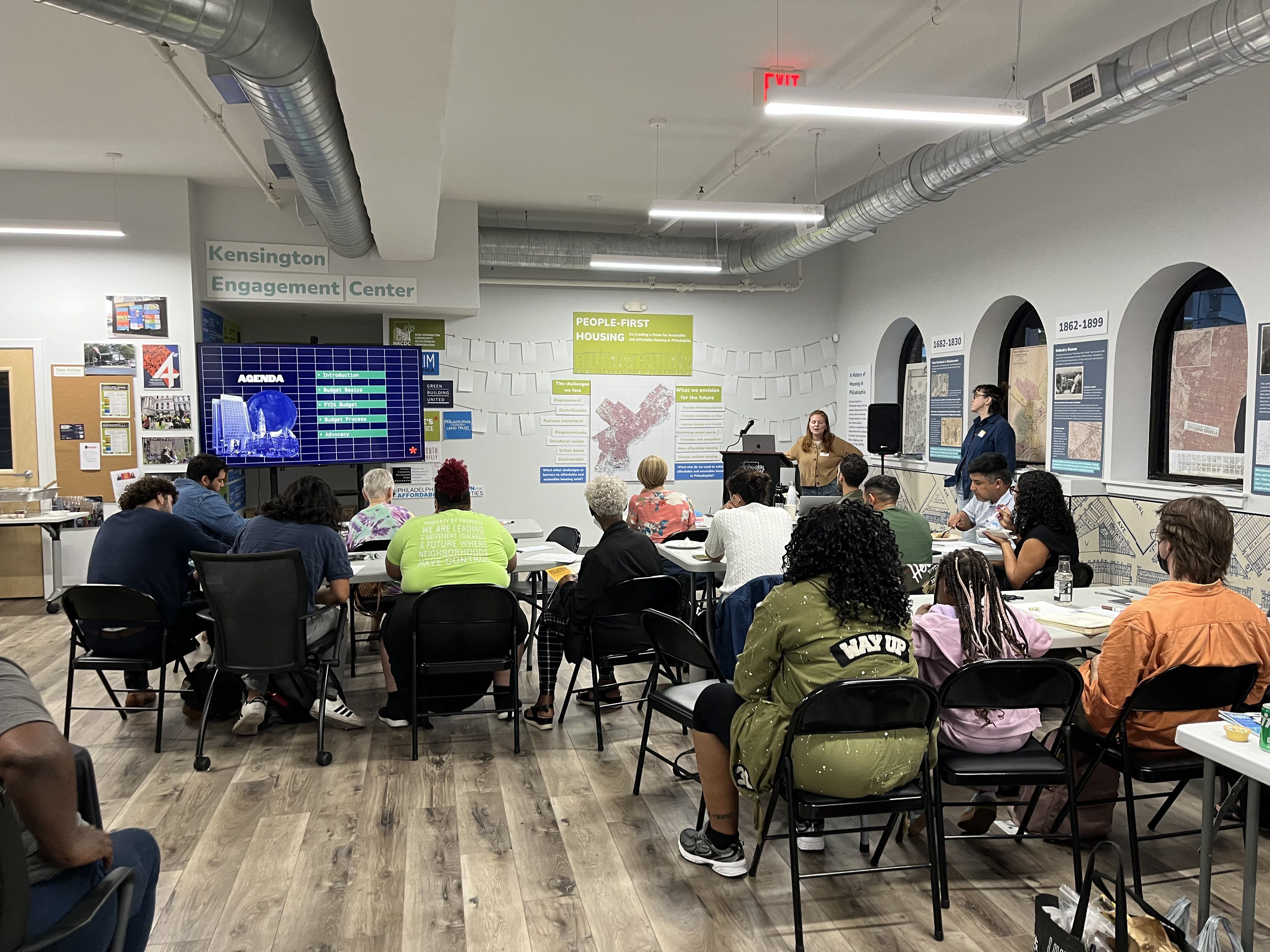
    The People’s Budget Office facilitates a Budget 101 Workshop at the Kensington Engagement Center on Oct. 7.

    The workshop series has engaged more than 175 residents from 15 neighborhoods and has covered topics from housing wins, gentrification and displacement, how municipal resources are directed toward housing, environmental concerns, tenants’ rights, illegal evictions, and more.

    Angela Brooks, Philadelphia’s chief housing and development officer and new chair of the board of the Land Bank, came out for a workshop on the H.O.M.E. plan to help residents understand how the initiative will work and to hear resident feedback.

    Most recently, we hosted a teen town hall facilitated by Fab Youth Philly, in which more than 70 young people came together to share their hopes, dreams, and concerns and gave guidance on how the city can support young people — for example, looking at how the McKinney-Vento Homeless Assistance Act implements programs that serve youth.

    What we’ve learned so far is that the best way to build momentum for change is through informed, collective action and leveraging strategic pressure points by investing in relationships early. Creativity and diversity in leadership and lived experience are critical to ensuring movements are resilient, and we need to question the status quo.

    Communities must be built for the people who live in them, so that they aren’t just about four walls built by colonizers and conquerors, but about communities of choice and relevance so people can thrive.

    Trickle-down approaches do not work. The city’s H.O.M.E. plan needs to concretely prioritize resources for residents whose households earn no more than 30% of the area’s median income. We need to serve those on housing program wait lists before adding more and higher earners. We need to preserve the affordable housing we already have, and we need to invest more deeply in home repair programs like Built to Last.

    As someone serving on the H.O.M.E. advisory board and as a nonprofit leader of a community development corporation, I learned there are several housing issues we aren’t addressing at all in the city’s H.O.M.E. plan, such as those affecting young people and individuals impacted by the criminal justice system who have urgent needs but do not meet many of the traditional service categories.

    How do we move forward?

    For those of us who are currently centering housing, learning and being in community is essential. But we also need actionable moments.

    I recommend all these organizations because they put people first in housing plans — countering the notion that housing is just a commodity. Instead, they affirm the fundamental idea that housing is about people — and that people deserve a home.

    Bill McKinney is a Kensington resident and the executive director of the New Kensington Community Development Corp.

  • James Ijames may be teaching at Columbia, but he never wants to stop making art in Philly

    James Ijames may be teaching at Columbia, but he never wants to stop making art in Philly

    Philly theater darling James Ijames, the Pulitzer Prize-winning playwright of Fat Ham, will return to local stages with a special spotlight next spring, with a slate of three plays running at three theaters.

    Recognizing this scheduling synergy, the venues are partnering to offer a three-ticket pass, called “The Citywide James Ijames Pass.”

    The first collaboration of its kind dedicated to a contemporary playwright, the pass covers the Philadelphia premiere of Good Bones at the Arden Theatre (Jan. 22 to March 8), The Most Spectacularly Lamentable Trial of Miz Martha Washington at the Wilma Theater (March 17 to April 5), and the world premiere of Ijames’ latest work, Wilderness Generation, at Philadelphia Theatre Company (April 10 to May 3).

    Ijames wrote all of these plays in South Philadelphia, which he considers his artistic home. This year, he left his teaching position at Villanova University to run the playwriting program at Columbia University. While that means he’s spending most of his time in New York now — though his husband, Joel Witter, still works for the Philly school district — Ijames says Philadelphia is “still very much a place where I want to continue to make art.”

    “I’ve lived in Philly more than I’ve lived anywhere in my life, so it is incredibly special to me,” said the Tony-nominated playwright, a founding member of the local playwriting collective Orbiter 3.

    After growing up in North Carolina and attending Morehouse College in Atlanta, Ijames got his MFA in acting at Temple University. He performed on stages all over the city, including at the National Constitution Center, People’s Light, and all three theaters featured in the pass.

    It was during the 2012 production of Angels in America at the Wilma where he wrote Miz Martha Washington, one of his earliest plays, in the dressing room. Ijames went on to serve as one of three co-artistic directors of the Wilma, which premiered the digital production of Fat Ham — his incisive and irreverent queer reimagining of Hamlet — that earned him the 2022 Pulitzer Prize.

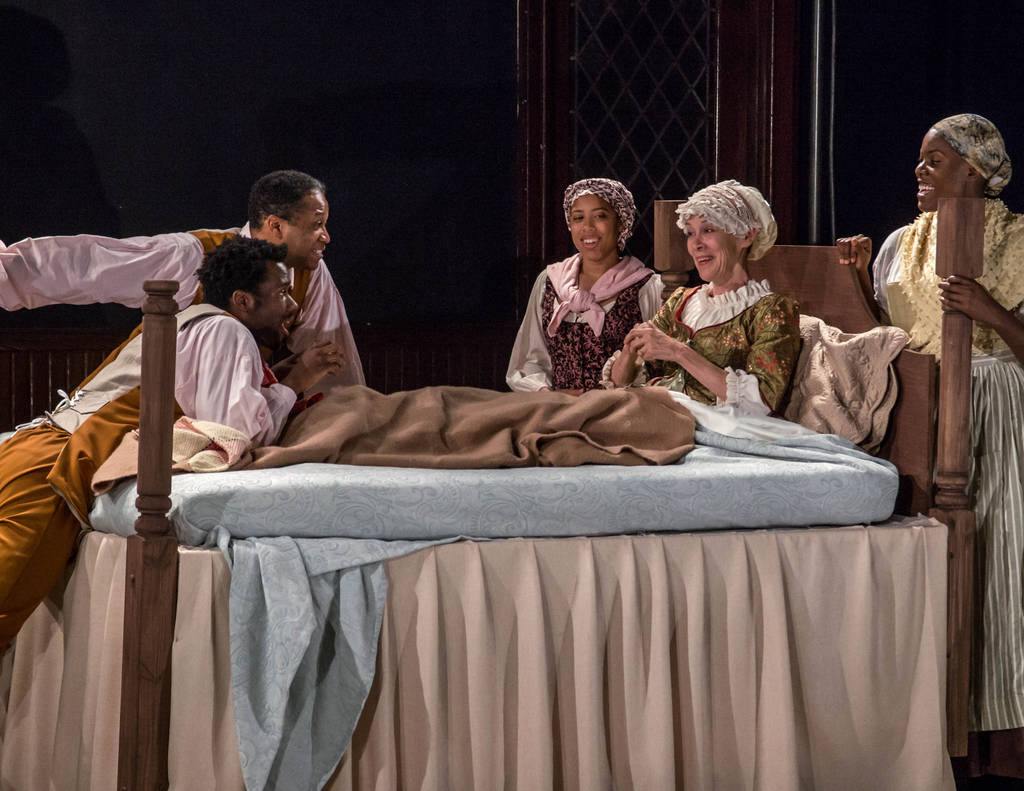
    Flashpoint Theatre Company’s Barrymore-nominated “The Most Spectacularly Lamentable Trial of Miz Martha Washington.” From left: Darryl Gene Daughtry Jr., Steven Wright, Taysha Canales, and Jaylene Clark Owens surround Nancy Boykin as Martha Washington.
    Photo by Ian Paul Guzzone.

    In the sharp satire Miz Martha Washington, the titular first lady is on her deathbed, surrounded by the people she and her husband enslaved. With freedom inching closer — George Washington’s will promised them liberty upon his widow’s death — the Black characters appear in various hallucinations, putting Martha and her family on trial.

    The play will come back to town amid Philadelphia’s celebrations for the 250th anniversary of the nation’s founding, apt timing for a sharp satire on the Founding Fathers’ legacy of slavery.

    “I think we were all kind of hoping that the world and the politics would be a little different when we first started thinking about it,” said Ijames. “But I always say, we have to look at the history directly in the face and, from that, try to imagine something different.”

    Good Bones is a more contemporary story about the development of a new stadium that stands to disrupt a city neighborhood (sound familiar?). The upper-class newcomer, haunted by those who were pushed out, gets into fiery debates over gentrification with her contractor.

    The Philly premiere will be directed by Ijames’ longtime friend and collaborator Akeem Davis, who starred in the Ijames-directed production of August Wilson’s King Hedley II at the Arden earlier this year.

    Arden Theatre producing artistic director Terry Nolen hopes audiences will come out to cheer on a “hometown hero.”

    “Philly audiences love Philly artists, and there is so much pride for James’ success,” Nolen said in a statement.

    Philly playwright James Ijames attends the 76th Annual Tony Awards at United Palace Theater on June 11, 2023, in New York City. His play “Fat Ham” had five nominations, including best play. (Photo by Cindy Ord /Getty Images for Tony Awards Productions)

    The playwright’s newest work, Wilderness Generation, examines the relationships between cousins as Ijames, who’s close to his own cousins, wanted to spotlight that kind of family dynamic. Five cousins reunite at their grandmother’s house in the South to help her downsize; while there, they unpack a painful family history and confront the damage of their relatives’ behavior as they try to forge a future together.

    Ijames wrote the work with Philadelphia Theatre Company co-artistic directors Taibi Magar and Tyler Dobrowsky in mind. Though Ijames has performed at PTC before, this world premiere marks the first time a play he wrote will grace its stage.

    “I am where I am because a lot of theaters in Philadelphia took a chance on me,” said Ijames. He hopes future collaborations can highlight more “really brilliant folks” writing new plays in Philly.

    “I hope a thing that happens as a result of this is a Jackie Goldfinger package one day, a Michael Hollinger package, an Erlina Ortiz package, [and] an AZ Espinoza package.”

    The three-play pass costs $130, about $43 per ticket, and includes preferred seating, flexible ticket changes, parking discounts, and member benefits at each theater, as well as exclusive swag — a yellow beanie, inspired by Ijames’ personal style. Passes are available online or at the TKTS booth at the Independence Visitor Center.

  • Killing of Kada Scott prompts hearing on Philly’s handling of domestic violence cases | City Council roundup

    Killing of Kada Scott prompts hearing on Philly’s handling of domestic violence cases | City Council roundup

    City Council will probe the Philadelphia justice system’s procedures for “protecting victims of abuse and domestic violence” following the killing of 23-year-old Mount Airy resident Kada Scott.

    Prosecutors have charged Keon King with murder and other crimes for allegedly kidnapping Scott, shooting her, and burying her body behind a closed East Germantown school in early October.

    King was arrested in two separate incidents in December and January in which authorities allege he violently assaulted an ex-girlfriend. In the second incident, he is accused of kidnapping her and choking her in his car.

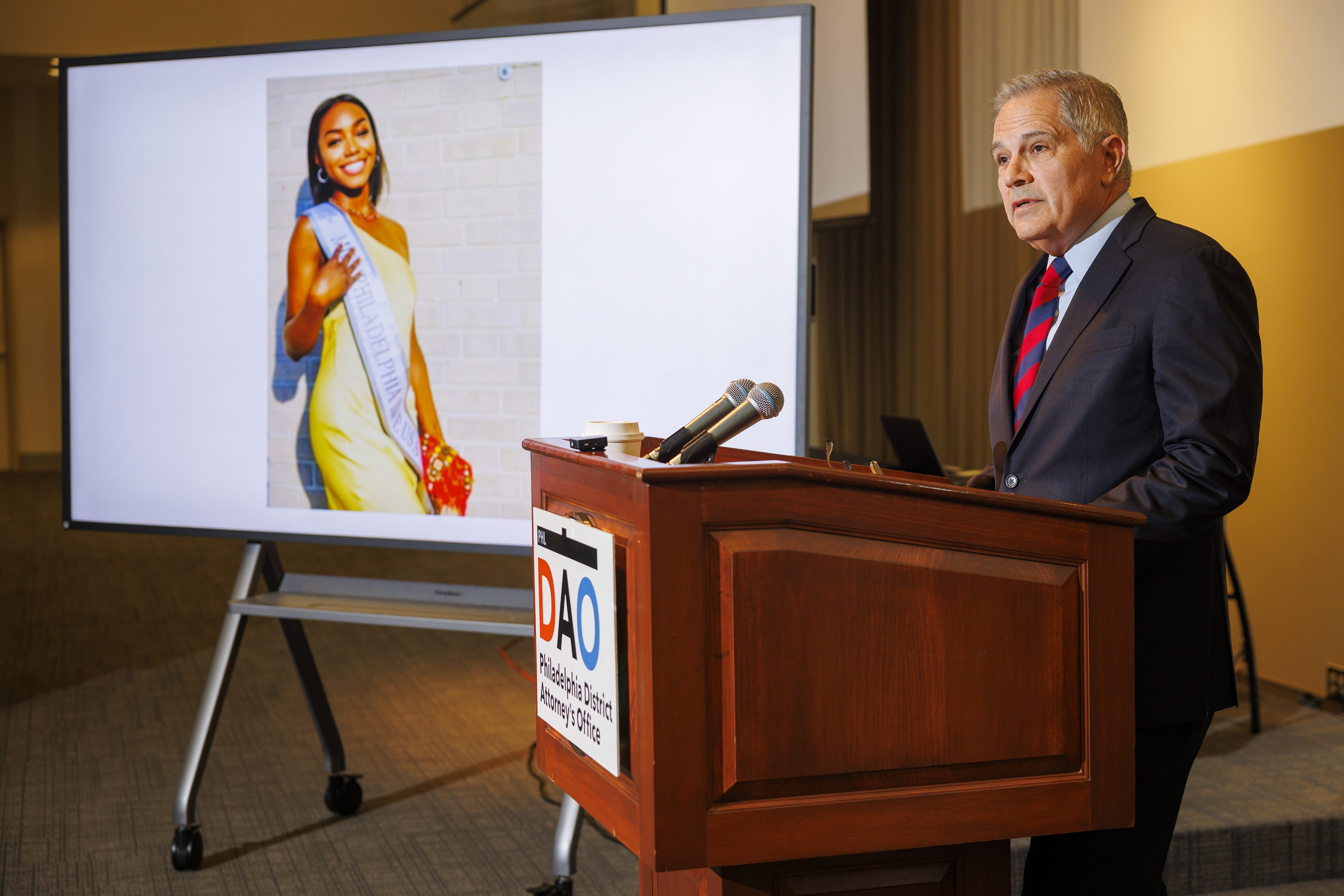
    Philadelphia District Attorney Larry Krasner held a press conference at his office regarding the death of Kada Scott on Monday, October 20, 2025.

    District Attorney Larry Krasner’s office requested bail to be set at just under $1 million in that case. A judge instead set bail at $200,000, allowing King to be released after posting the necessary $20,000. Krasner’s office did not appeal the bond decision.

    Prosecutors then withdrew both cases after the victim and witnesses failed to appear in court. Krasner has admitted that dropping charges against King for the second incident was a mistake because there was enough video evidence to proceed with the prosecution. But he also directed blame at the courts for letting King out on bail following each arrest.

    “As the City of Philadelphia, I think we failed the young lady, right?” Council President Kenyatta Johnson told reporters Thursday. “You got two agencies, two city departments, pointing fingers at one another, and at the end of the day, that’s not going to bring resolution to the family. And so at the end of the day, that needs to be addressed. And so we’ll look at the system as a whole.”

    Council approved a resolution authored by Johnson that will allow the Committee on Public Safety to hold hearings on how the courts, sheriff’s office, district attorney’s office, and police department work to protect domestic violence victims.

    Kada Scott ‘a beacon of light and love’

    Remembering Scott: Council also approved a resolution by Councilmember Anthony Phillips honoring Scott’s life and legacy, describing her as a “a beacon of light and love, remembered for her faith, kindness and countless lives she touched.“

    Scott, who opened a beauty spa in Mount Airy when she was 19 years old, “was the kind of person who made others feel seen,” said Phillips, whose 9th District includes Mount Airy.

    Prosecutors have charged Keon King with the murder of Kada Scott, pictured.

    “Kada was a young woman whose light and kindness reflect the very best of us,” Phillips said in a speech on the Council floor. “She had vision and determination. She believed in the power of self-care, community, and purpose.”

    Councilmember Cindy Bass, whose 8th District includes the school where Scott’s remains were found, added that “it’s never been more important that we get our young men together.”

    “There is a vulnerability that exists, and protection is needed. Protection is important,” Bass said. “What we do and how we handle our situations in our community — there’s just so much to be done.”

    Childcare providers could get tax break

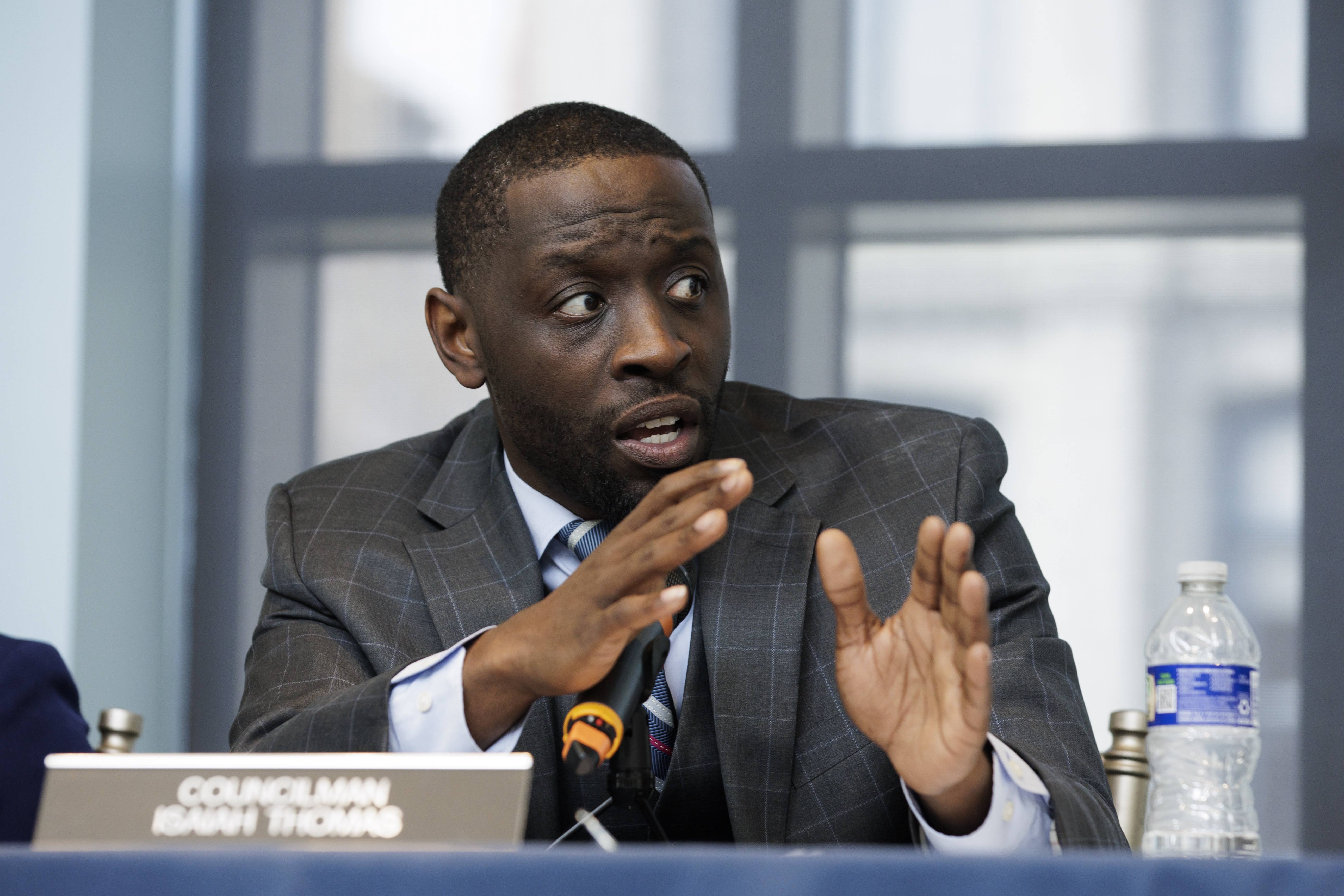
    Targeted relief: Councilmember Isaiah Thomas last spring pushed for the city to aggressively cut the business income and receipts tax, or BIRT.

    Johnson and Mayor Cherelle L. Parker ultimately went with a less aggressive schedule of tax cuts than Thomas had wanted. But the sophomore lawmaker is now trying another route to lighten the BIRT burden: cutting rates for a specific industry.

    Thomas on Thursday introduced a bill that would halve BIRT’s two tax rates for childcare providers, which are facing a nationwide crisis over costs, staffing, and financial viability. The gross receipts portion of BIRT would be reduced from 0.1415% to 0.07075% for daycare owners, and the net income rate would go from 5.81% to 2.805%.

    City Councilmember Isaiah Thomas wants to give daycares a tax break.

    “There’s one business and one industry in the city of Philadelphia that touches every district and a lot of families, especially working families, that are struggling,” Thomas said. “This legislation is another example of us trying to think through what we can do to support businesses who support families as well as families who are in need.”

    Regulatory bill sparked by Center City bike lane debate passes after arduous legislative process

    Unloading over loading zones: Heated fights over legislation with narrow impact are nothing new in City Council, where limited proposals often become battlegrounds in larger disputes over issues such as gentrification or the opioid crisis.

    But a bill on loading zones in parts of Center City, approved Thursday, may have set a new standard.

    The bill, which was proposed by the Parker administration and carried by Johnson, will allow the mayor’s administration to add or remove loading zones in parts of Center City without new ordinances from Council.

    It ultimately passed in a 16-0 vote, with Councilmember Brian O’Neill absent.

    But the journey to Thursday’s vote began with the high-profile death of a cyclist, involved a lawsuit, went through two rounds of amendments limiting and expanding its scope, and ended with plans for further proposals to tweak the law.

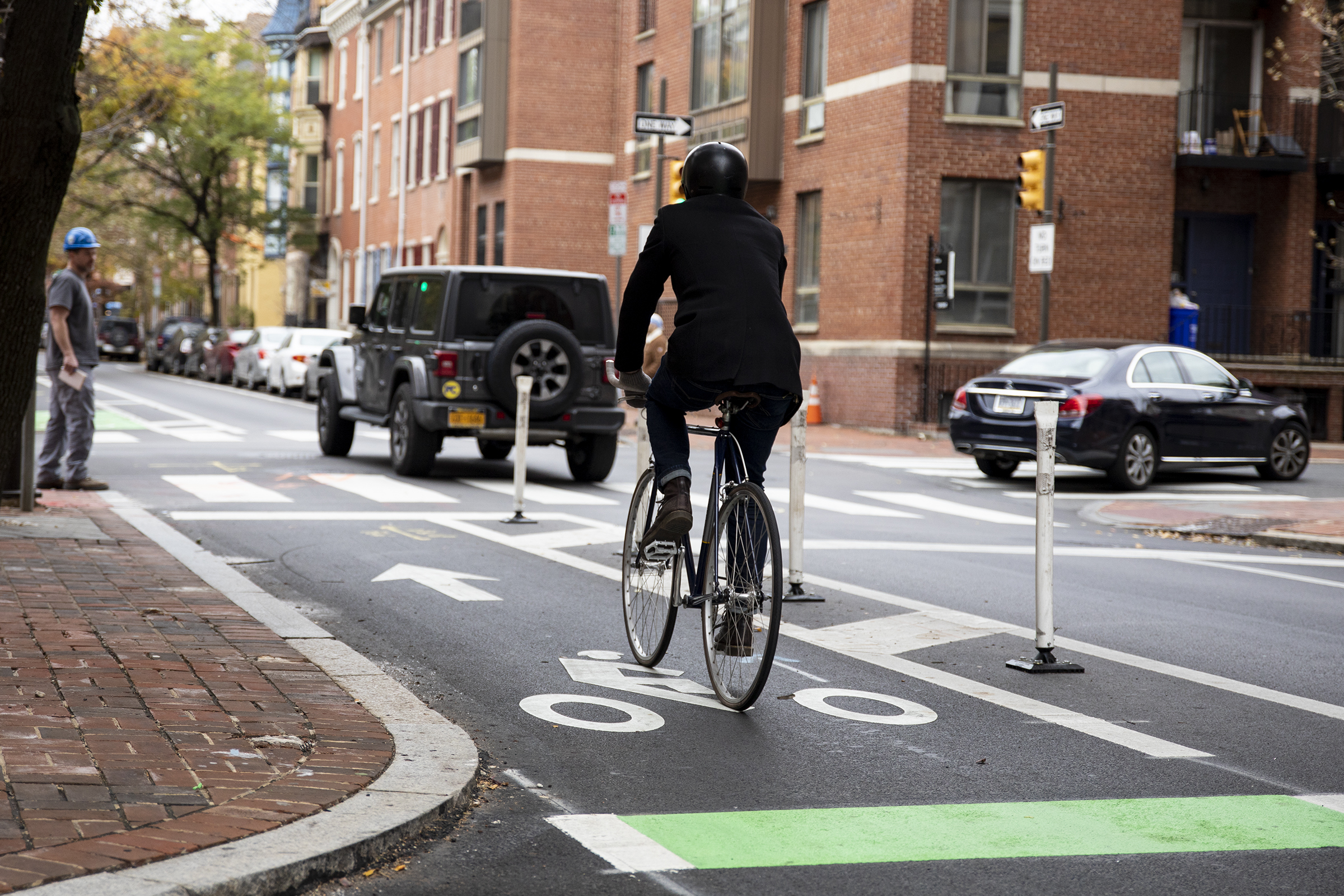
    The saga began when Johnson passed a bill making it illegal for vehicles to idle in bike lanes following the 2024 death of Barbara Friedes, who was killed while riding in a bike lane on the 1800 block of Spruce Street. Parker’s administration then adjusted loading zones in Center City streets with bike lanes, with the goal of providing spaces for residents who used the bike lanes for unloading their vehicles.

    After neighbors complained the loading zones would take away a handful of parking spots, attorney George Bochetto successfully sued the city, with Common Pleas Court Judge Sierra Thomas Street this summer ruling the administration did not have the authority to promulgate loading zone regulations without Council approval.

    The case led to the revelation that a 1980s city law granting that regulatory authority was somehow never officially codified, throwing into legal jeopardy hundreds of parking regulations promulgated over the last four decades. The bill passed Thursday was intended to fix that legal conundrum by reiterating Council’s intention to grant the administration that authority.

    A cyclist rides along Spruce Street.

    But Johnson and Councilmember Mark Squilla, whose districts include parts of Center City, at one point amended the bill so that it applied only to loading zone regulations and to the Spruce and Pine Streets corridors, which have bike lanes. They eventually reversed course on the geography of the bill, adopting a new amendment allowing it to affect all areas of their districts included in the old law. But they maintained the part of the original amendment narrowing its scope to loading zones and not other parking rules.

    Meanwhile, Councilmember Jeffery “Jay” Young Jr., whose 5th District also has a slice of Center City, removed his territory from the bill entirely.

    Next, Councilmember Jamie Gauthier is expected to work with the administration to fix the regulatory black hole in University City, which is part of her 3rd District. And Johnson said Thursday he may be open to revisiting whether the administration should be given explicit statutory authority to regulate other parking rules beyond loading zones in the affected area of his district.

    “We always have an open mind,” he said.

    Quotable: Honoring the late Philadelphia newspaper editor Michael Days

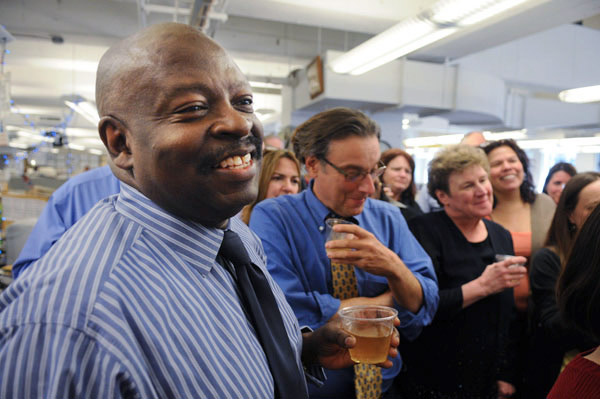
    Glory Days: Michael Days was a longtime editor of the Philadelphia Daily News, an executive at The Inquirer, and the inaugural president of the National Association of Black Journalists-Philadelphia.

    He died on Saturday in Trenton at 72 years old. Council on Thursday approved a resolution by Johnson and Majority Leader Katherine Gilmore Richardson honoring Days “for his extensive career serving Philadelphians.”

    Philadelphia Daily News Editor Michael Days celebrates with the newsroom after word of the Pulitzer win.

    A North Philadelphia native and devout Catholic, Days was revered as a principled reporter and editor, a mentor for young journalists of color, and a leader who helmed the Daily News when it won the 2010 Pulitzer Prize for investigative reporting.

    Staff writer Ellie Rushing contributed to this article.

  • Discovery of Kada Scott’s body at Germantown middle school has reignited debate over the vacant building

    Discovery of Kada Scott’s body at Germantown middle school has reignited debate over the vacant building

    When it opened in 1973, Ada H.H. Lewis Middle School was a source of deep pride for East Germantown, the kind of state-of-the-art educational facility that only suburban kids had at the time.

    But on Saturday, when police found Kada Scott’s corpse buried in a shallow grave in the woods of the long-ago vacated school grounds, ending a two-week search for the missing 23-year-old Mount Airy woman, the Rev. Chester H. Williams saw only decades of failure.

    “It’s a disgrace,” said Williams, a pastor who runs a neighborhood civic group. “We were very hurt to hear that this happened.”

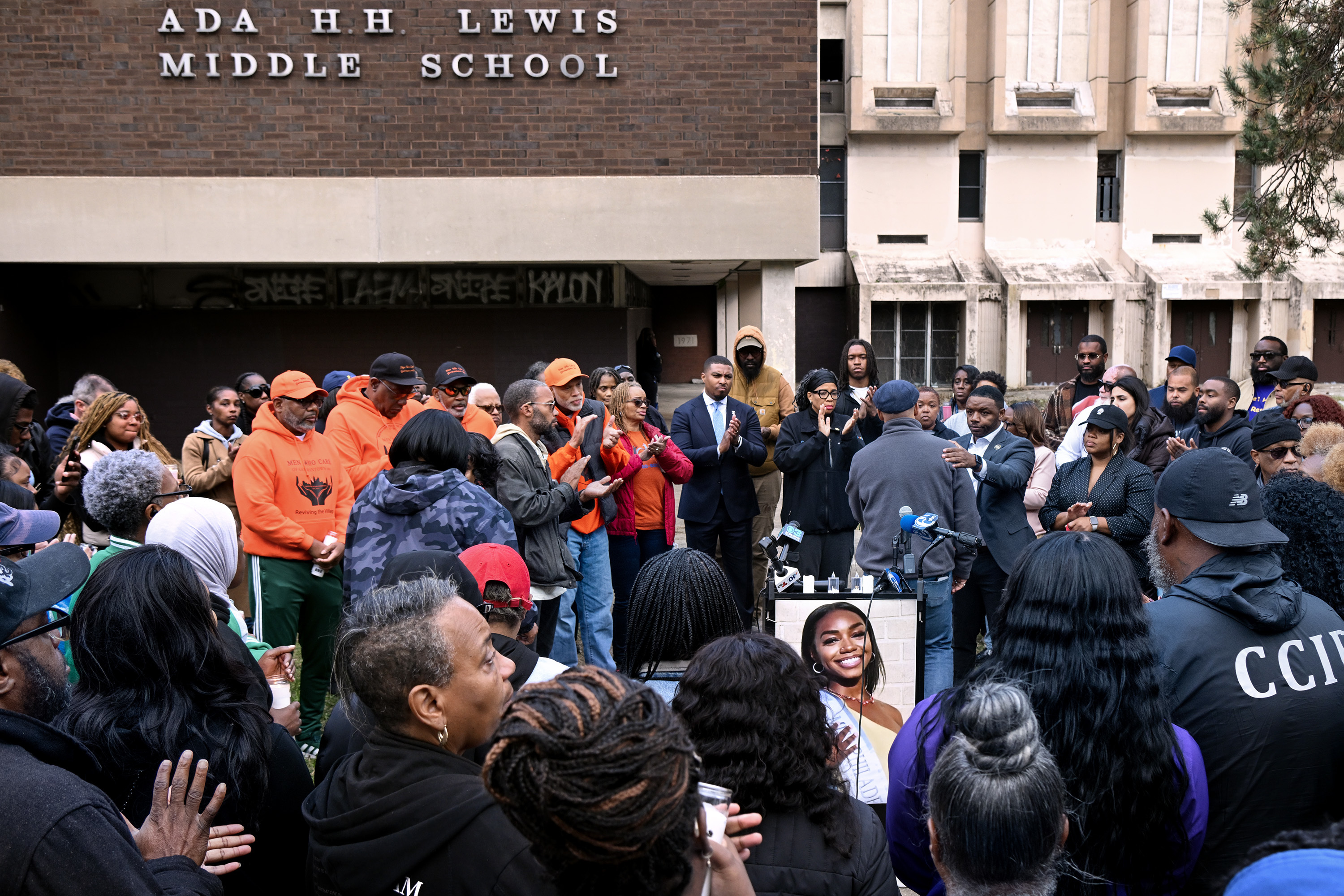
    Community members gather for a candlelight vigil in memory of Kada Scott on Monday at Ada H.H. Lewis Middle School.

    On top of the shock, Scott’s kidnapping and murder has renewed animus in some quarters about the Philadelphia School District‘s failure to repurpose the blighted property, one of dozens of schools shuttered by the district over the last 20 years.

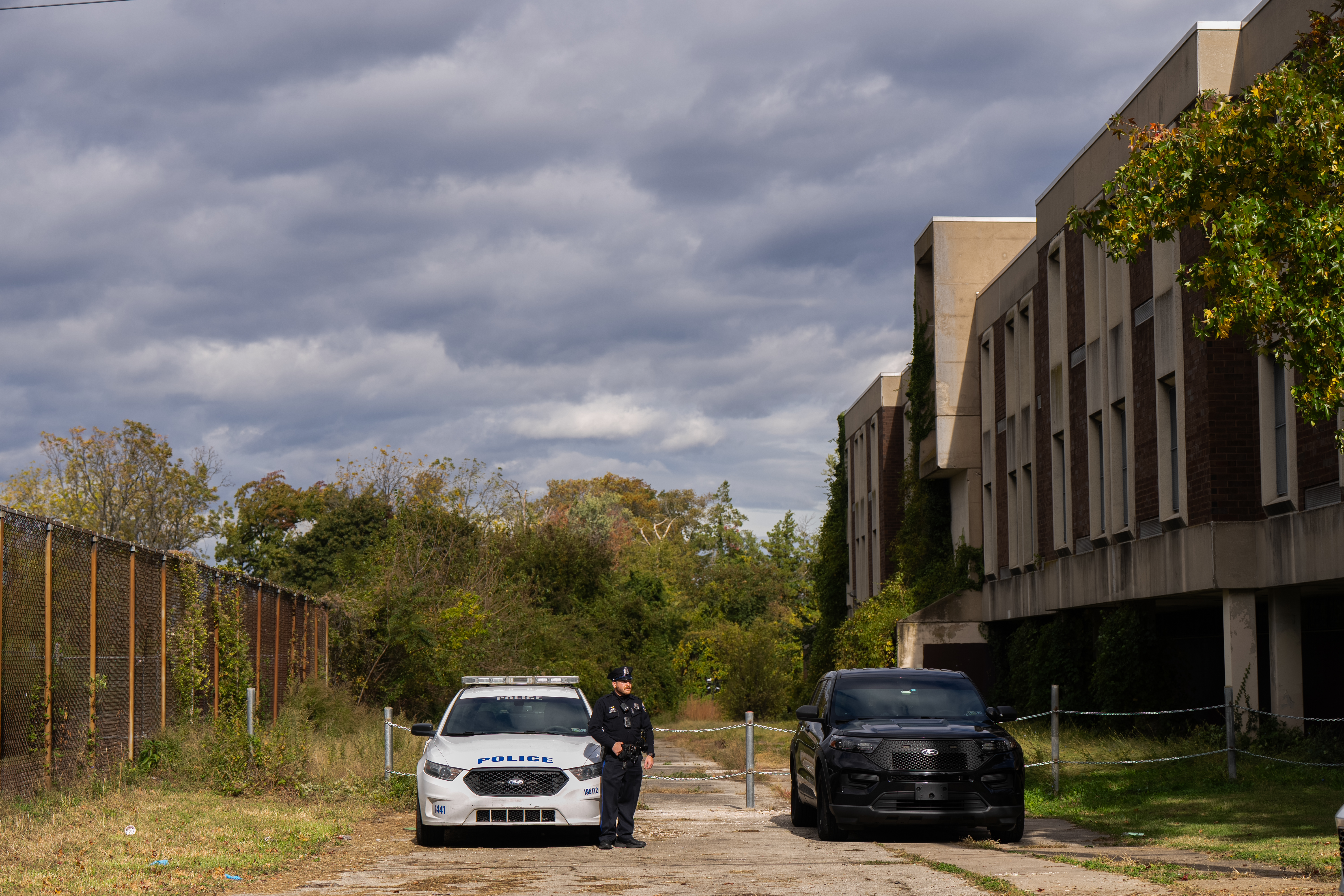
    Since Lewis closed in 2008, local officials and civic leaders said the sprawling seven-acre campus has become a magnet for squatting, illegal dumping, and other criminal activity. City officials have cited the school district 10 times since 2020 for overgrown weeds, graffiti, and piles of trash that blanketed the property, public records show. And four years ago, the district passed on an opportunity to reverse course on the blight.

    A proposal to redevelop the land into new homes, championed by neighborhood leaders like Williams, sat before the school board for approval. But the district abandoned the plan at the eleventh hour without public explanation, which the developer alleged was due to meddling by City Councilmember Cindy Bass — a contention Bass denies.

    “The school district, for some reason, we don’t know why, they put a block on anything being built there,” Williams said.

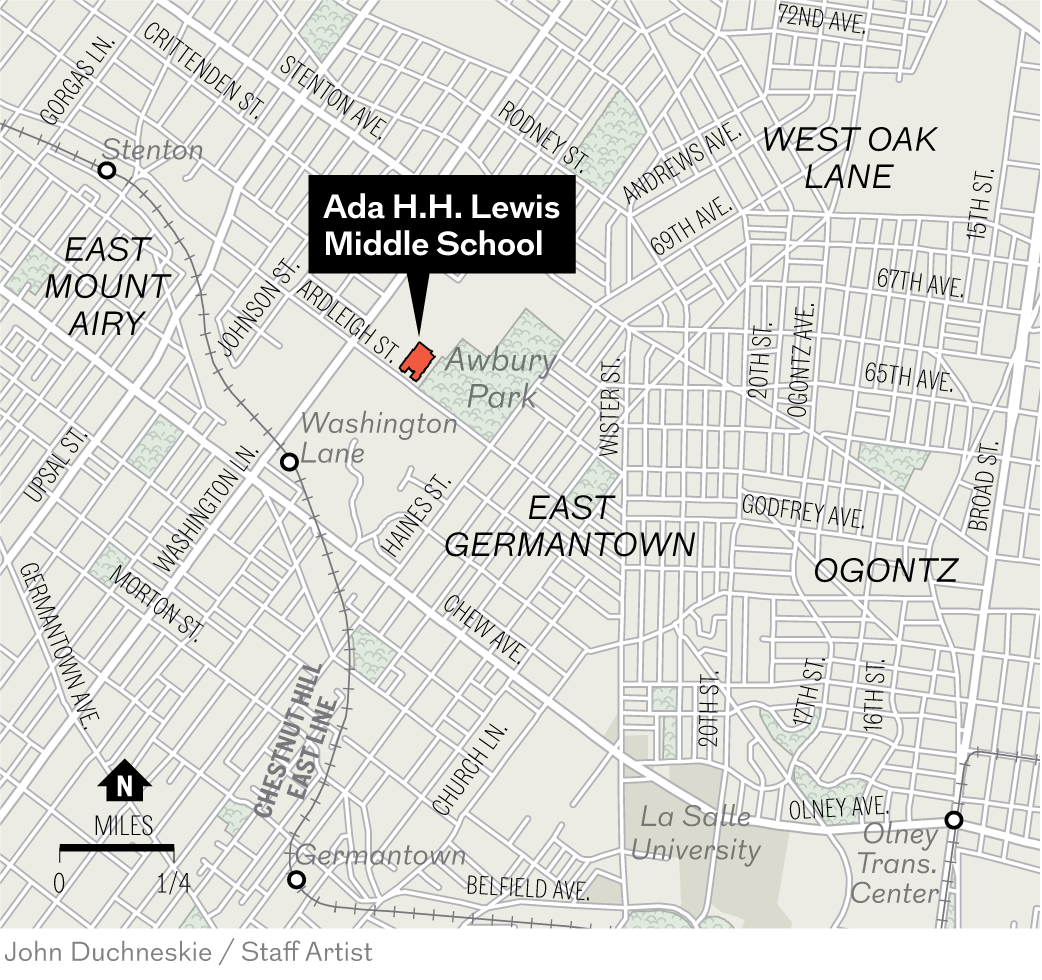
    Map of the former Ada H.H. Lewis Middle School in East Germantown

    Philadelphia Superintendent Tony B. Watlington Sr. extended “deepest sympathies” to Scott’s family and friends in a statement, and said the district’s operations and safety departments will review the vacant-property portfolio “to create and maintain safe and healthy spaces in every neighborhood.”

    While some call Lewis “abandoned,” the district is careful to call the building “vacant,” one of 20 such properties in the district’s portfolio. It says maintenance and inspection logs are kept about work on vacant properties; details were not immediately available.

    The debate over Lewis comes at a crucial time for the district: It is preparing to release recommendations about its stock of 300-plus buildings — and likely add to the list of decommissioned schools-turned-vacant public buildings. The district’s master planning process will contain recommendations for school closures and combining schools under one roof, officials have warned.

    Police at Ada H.H. Lewis Middle School.

    A fizzled redevelopment

    In 2011, then-City Controller Alan Butkovitz said the district’s vacant buildings were “catastrophes waiting to happen.

    Butkovitz, in a report released that year, said district inaction around such structures was dangerous and noted that the schools were magnets for criminal activity.

    Just before the pandemic hit in 2020, after years of pushback over Ada Lewis, the school district began accepting applications to redevelop the crumbling middle school. Germantown developer Ken Weinstein was one of three developers to place bids. He sought to buy the property for $1.4 million and build 76 new twin homes, at a density that neighbors felt complemented the surrounding area and resolved concerns about density brought by apartment buildings.

    Weinstein said he gathered letters of support from 60 neighborhood residents and elected officials, including U.S. Rep. Dwight Evans and then-State Rep. Stephen Kinsey. The school board seemed eager to move ahead and set a final vote for the proposal in May 2021.

    The vote never happened. The only explanation given that day was that “the Board had concern” about “what the long-term plan is for developing schools for the 21st century,” according to a district spokesperson.

    According to Weinstein, some school board members received calls from Bass asking them to table the vote. Bass has faced criticism for interfering in development projects, including other proposals made by Weinstein, as vacant properties languished for years in her district. Her district includes the Lewis property and parts of North and Northwest Philadelphia, where Weinstein has focused his development work.

    Bass, in an interview Monday, denied meddling in the vote. She acknowledged that she did not support Weinstein’s proposal because of the price of the homes — averaging around $415,000 — which she said would have triggered “immediate gentrification in the neighborhood.” But she said she had no involvement in the board’s reversal.

    “That was up to the school district,” Bass said. “I don’t sit on the school board.”

    While community groups in her district supported Weinstein’s project in 2021, Bass said she objected to market-rate housing as the sole alternative for East Germantown, arguing that it amounted to the district and developers saying “you should just take any old thing just so it’s not vacant.”

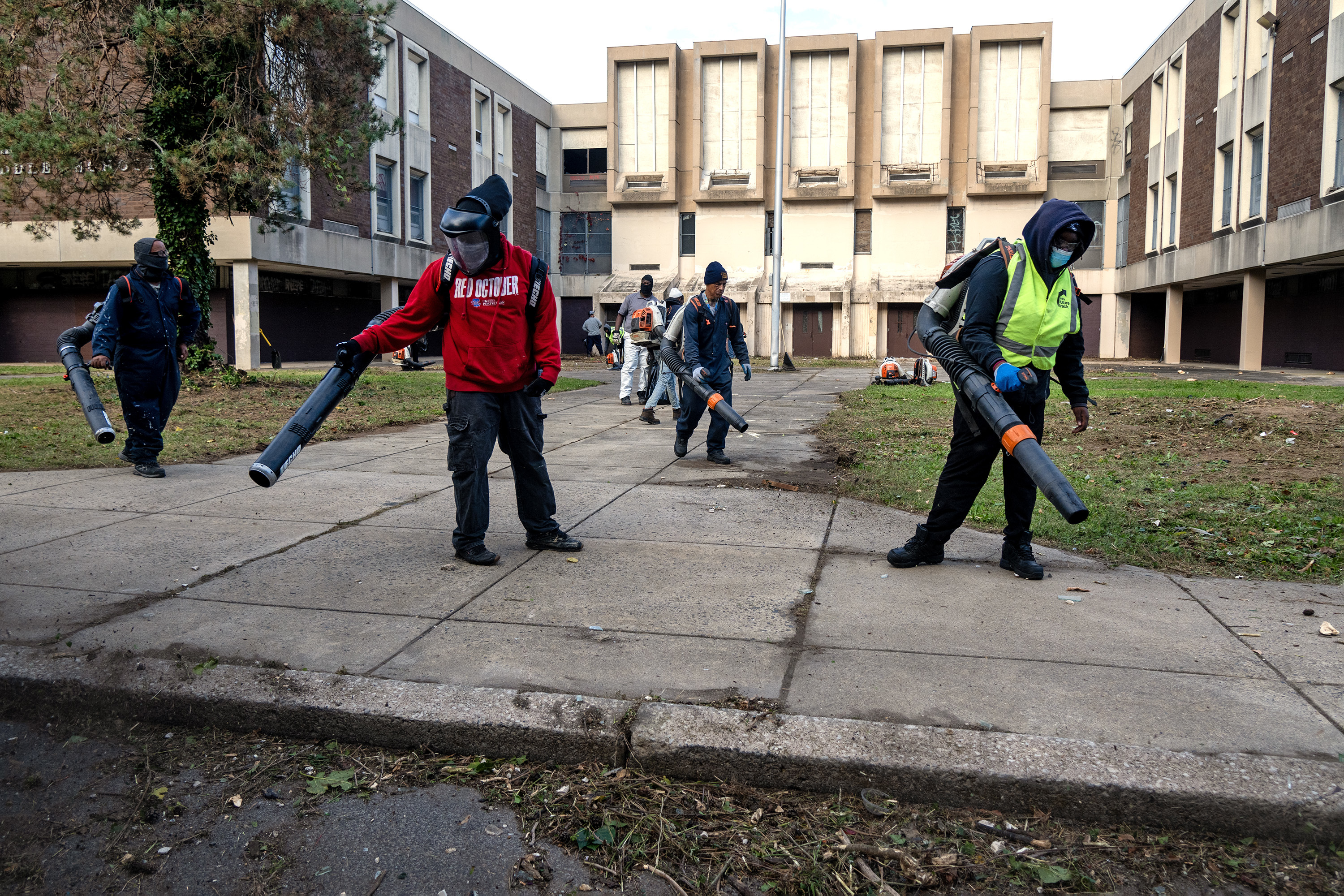
    City workers clean up in front of the vacant Ada H.H. Lewis Middle School Monday, just minutes before the start of a community candlelight vigil in memory of Kada Scott.

    A tragic turn for the property

    In a letter dated Friday, Bass called on the school district to demolish the vacant school, saying she was troubled by the evidence that led investigators to the property during the search for Scott.

    “The continued presence of this unsecured and deteriorating structure is simply unacceptable,” the Council member wrote in a statement, noting the site is now associated with “tragic violence.”

    Cell phone records and tips from the public first led police to the former Ada Lewis school last week, where they found Scott’s pink phone case and debit card, but nothing else. Then, late Friday, police received a new tip saying that they had missed something on their first search of the grounds, and that they should look along the wooden fence that divides the school from the neighboring Awbury Recreation Center. Officers returned to the property Saturday and found Scott’s body, buried in a shallow grave in a wooded area behind the school.

    Prosecutors expect to charge Keon King, 21, with the murder, though police continue searching for others who they believe may have helped dispose of evidence.

    Bass took office in 2012, when the school was already vacant. She said she pushed the school district for several years to take action, as nuisances piled up at the property. She said she still hopes that another “institution” could replace Lewis.

    “I think that having something that the community wants is not hard to figure out,” Bass said. “This is what the community’s interested in — they’re interested in another institution.”

    She said a proposal for a charter school is now in the works, though she said she was unable to provide details.

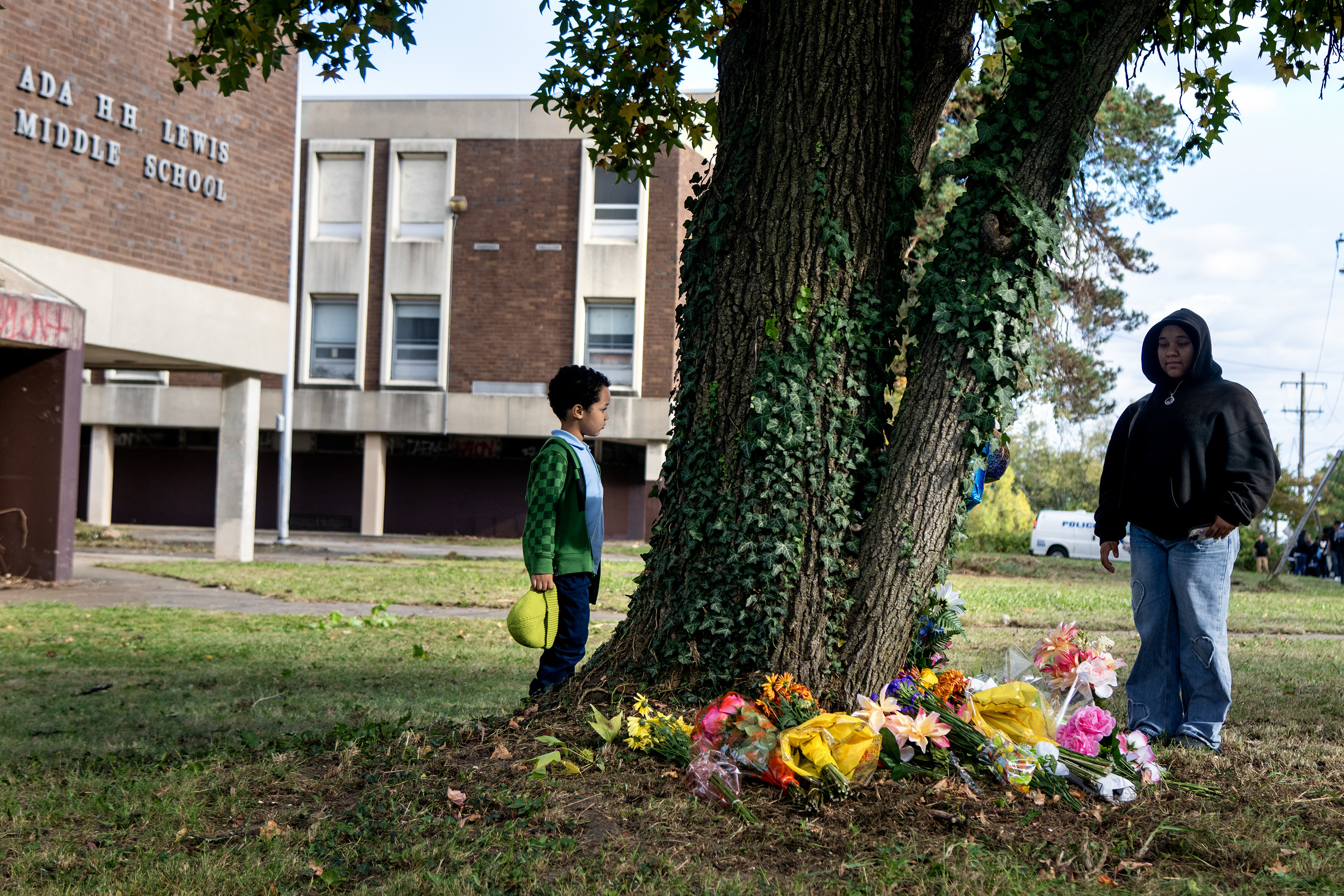
    Julius Peden, 5, and Jaihanna Williams Peden (right), 14, pause at a memorial for Kada Scott on Monday.

    A glut of vacant schools

    The school district still views Lewis as a potential “swing space” — a building that could be used to house students if another district building is closed due to environmental problems.

    There is precedent: The district has used other school buildings for such purposes, like Anna B. Pratt in North Philadelphia, which was also closed in 2013, to house early-childhood programs, and then students from other North Philadelphia schools whose buildings were undergoing renovation.

    Still, it remains unclear how much it would cost to bring the Lewis building back to an inhabitable state.

    The school system currently has about 70,000 more seats throughout the city than students enrolled. Though officials have said their first preference is to have closed schools reused for community benefit, it’s unlikely that all will be able to serve that purpose. And the timetable will surely be slow.

    City officials at times have expressed frustration with the pace at which the district is making decisions about how to manage its buildings. School leaders have said the wait is necessary given the district’s capacity and the need to make correct choices and not rush the process.

    Weinstein said the tragedy that culminated at Lewis reflected the conventional wisdom that blight breeds crime.

    “There’s always consequences to shutting down a proposal that the community supports,” Weinstein said. “In most cases, nothing bad happens. In this case, something very bad happened.”

    Staff writer Ellie Rushing contributed to this article.