Tag: Germantown

  • ‘Courage is contagious.’ How Philadelphia churches and neighborhood groups are preparing to confront ICE.

    ‘Courage is contagious.’ How Philadelphia churches and neighborhood groups are preparing to confront ICE.

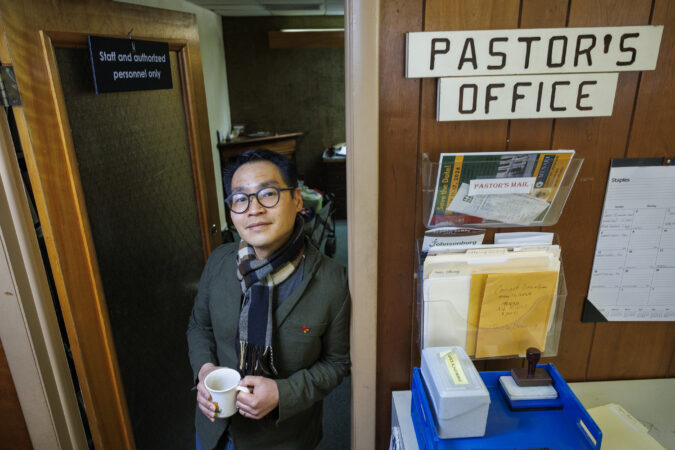
    Within the serpentine halls and stairways of Olivet Covenant Presbyterian Church, congregants have established several private, off-limits rooms ― each a potential last-stand space where members would try to shield immigrants from ICE, should agents breach the sanctuary.

    Church leaders call them Fourth Amendment areas, named for the constitutional protection against unreasonable search and seizure. The plan would be to stop ICE officers at the thresholds and demand proof that they carry legal authority to make an arrest, such as a signed judicial warrant.

    “It’s a protective space,” said the Rev. Peter Ahn, pastor of the Spring Garden church. “While you’re here, you’re safe, is what we want to assert.”

    Could it come to that? A pastor confronting armed Immigration and Customs Enforcement agents in the hallway of a church?

    It’s impossible to know. But across Philadelphia, churches, community groups, immigration advocates, and block leaders are actively preparing for the time ― maybe soon, maybe later, maybe never ― that the Trump administration deploys thousands of federal agents. People say they must be ready if the president tries to turn Philadelphia into Minneapolis ― or Los Angeles, Chicago, or Washington, D.C.
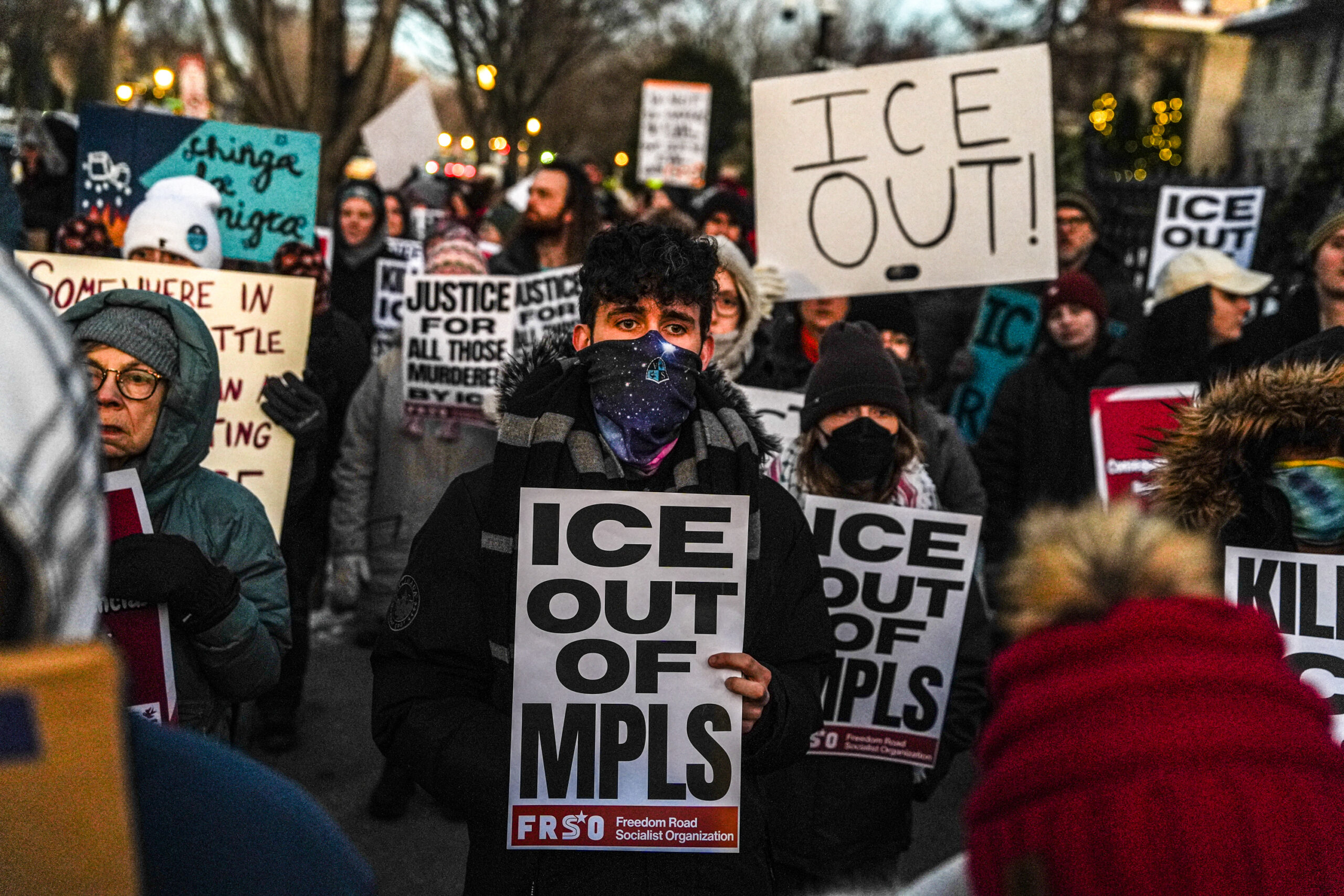
    People participate in an anti-ICE protest outside of the Governors Residence on Feb. 6, in St. Paul, Minn.

    Know-your-rights trainings are popping up everywhere, often to standing-room-only attendance, and ICE-watch groups are abuzz on social media.

    The First United Methodist Church of Germantown held a seminar last week to learn about nonviolent resistance, “so that we will be ready for whatever comes,” said senior pastor Alisa Lasater Wailoo.

    “That may mean putting our bodies in the path to protect other vulnerable bodies,” she said. “We’re seeing that in Minnesota.”

    In Center City, Temple Beth Zion-Beth Israel has ordered 300 whistles ― portable and efficient tools to immediately alert neighbors to ICE presence and warn immigrants to seek safety.

    “There was a sense of needing to support our neighbors if it comes down to it,” said Rabbi Abi Weber. “God forbid, should there start to be ICE raids in our neighborhood, people will be prepared.”

    In other places around the country, immigrant allies have similarly readied themselves for ICE’s arrival, and organized to react in concert when agents show up.

    In Washington state, the group WA Whistles has distributed more than 100,000 free whistles to create what it calls “an immediate first line of community defense.” Chicago residents set up volunteer street patrols to warn immigrants of ICE and to contact family members of those detained. In Los Angeles, people raised money to support food-cart vendors, and organized an “adopt a corner” program to protect day laborers who seek work outside Home Depot stores.
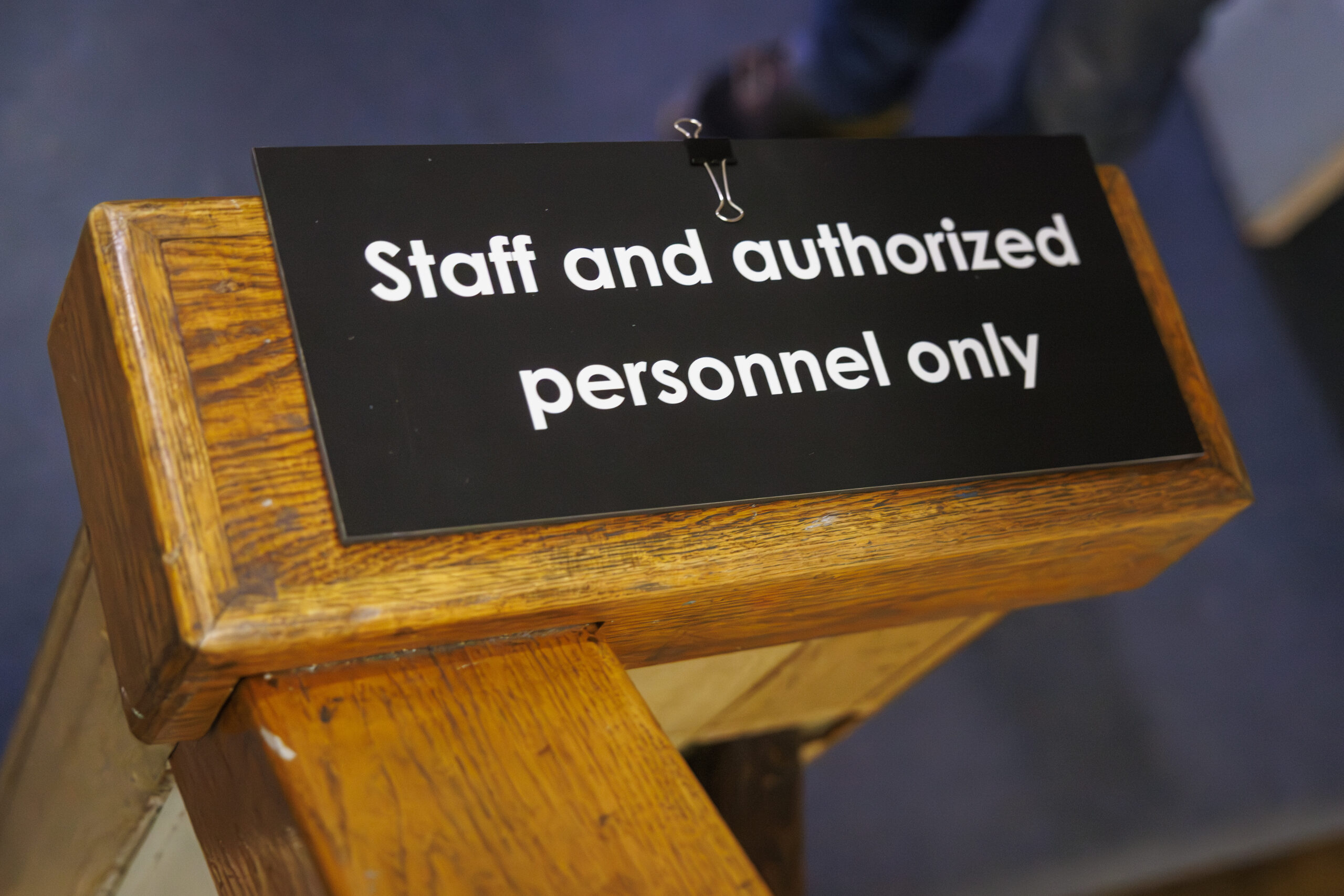
    A small sign at the Olivet Covenant Presbyterian Church, where the Rev. Peter Ahn is creating space to shield immigrants if necessary.

    Ask Philadelphia groups that advocate for immigrants — 15% of the population, including about 76,000 who are undocumented — and they say ICE isn’t about to land in the city. It’s been here.

    The agency’s Philadelphia office serves as headquarters not just for the city but for all of Pennsylvania and for Delaware and West Virginia as well. Arrests take place every day in the Philadelphia region.

    “You all seem to be ‘preparing’ for something that’s already happened,” veteran activist Miguel Andrade wrote on Facebook.

    What has changed, however, is the dramatic escalation in ICE enforcement, particularly visible in Democratic-run cities like Minneapolis, where agents fatally shot two U.S. citizens in January.

    ICE detained 307,713 people across the country in 2025, a 230% increase over the 93,342 in 2024. What federal immigration agencies record as detentions closely mirror arrests.

    Today residents in communities like Norristown and Upper Darby see ICE agents on the streets all the time. Cell phone videos have captured violent footage, including the smashed front door of a Lower Providence home after agents made an arrest on Feb. 9, and two people roughly pulled from a car in Phoenixville earlier this month.

    For immigrants who have no legal permission to be in the U.S. ― an estimated 14 million people ― the rising ICE presence steals sleep and peace of mind. They know not just that they could be arrested and deported at any moment, which has always been true, but also that the U.S. government is expending vast resources to try to make that happen.

    A woman who came to Philadelphia from Jamaica last year, and who asked not to be identified because she is undocumented, said she rarely leaves her home. She said she steps outside only to go to the grocery store, a doctor, or an attorney.

    She recently asked her daughter to check something on the computer, and the girl balked ― afraid to even touch the machine, worried that ICE could track her keystrokes and identify their location, the woman said.

    “How can I tell her it’s going to be OK when I don’t know it’s going to be OK?” asked the woman, who came to the U.S. to escape potential violence in Jamaica. “You come here expecting freedom, but here it’s like you’re in jail except for the [physical] barriers of the four walls.”

    Even as arrests have soared, Philadelphia has been spared the federal intrusions visited on other American cities.

    Why?

    Some say President Donald Trump doesn’t want to ruin the summer celebration of the nation’s 250th birthday, or spoil the grandeur of the World Cup or Major League Baseball’s All-Star Game. Others suggest that he might be timing an ICE deployment to do exactly that.
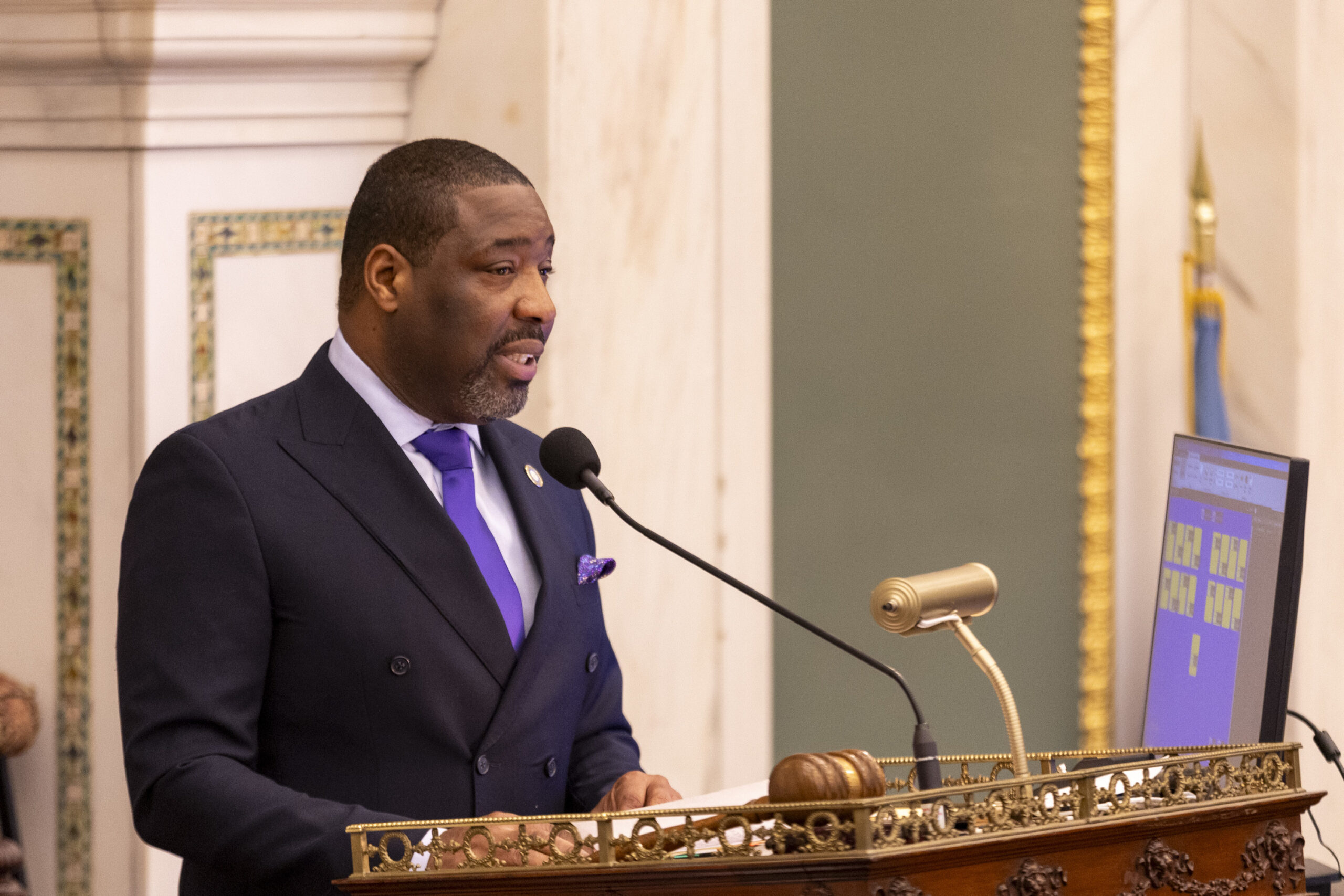
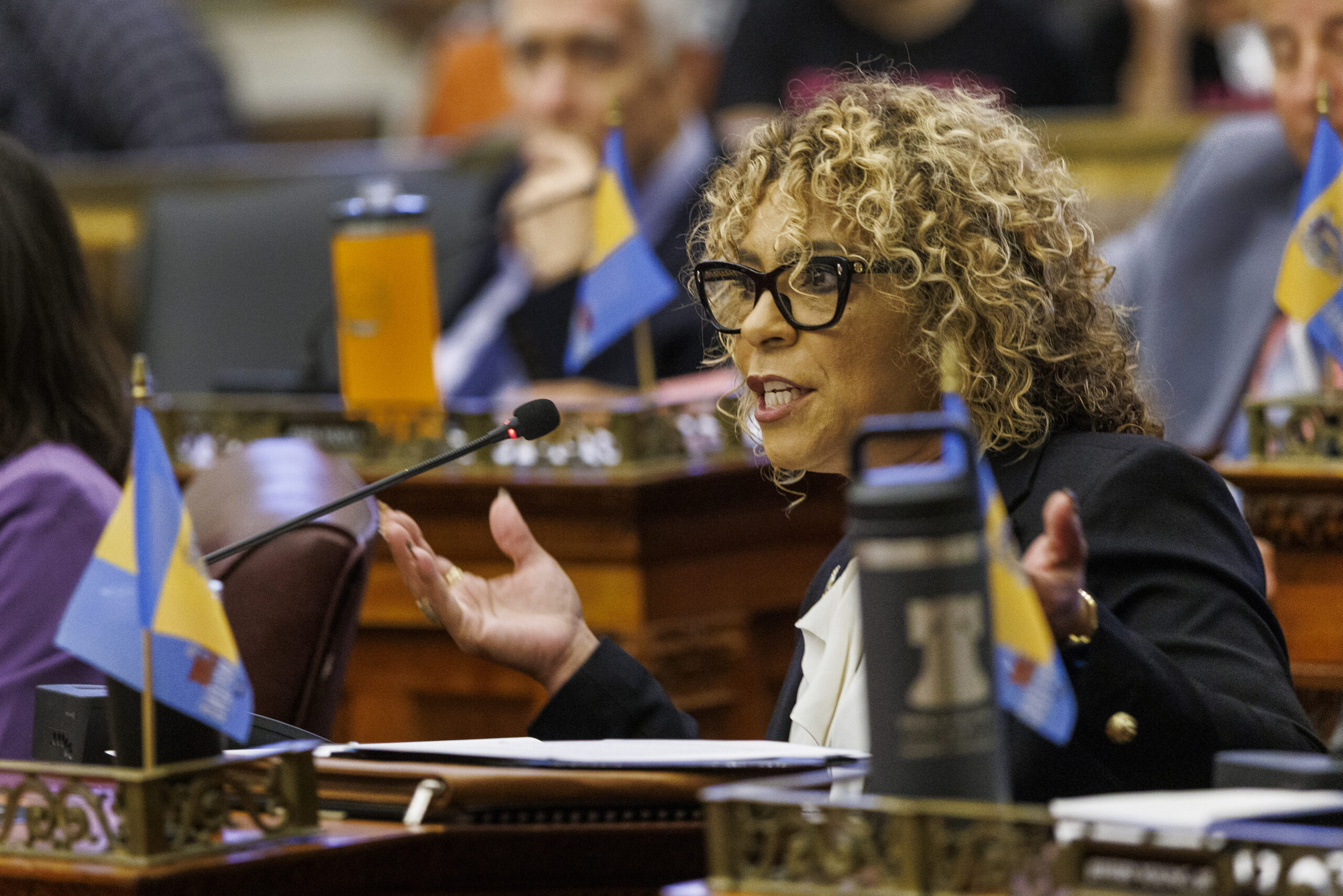
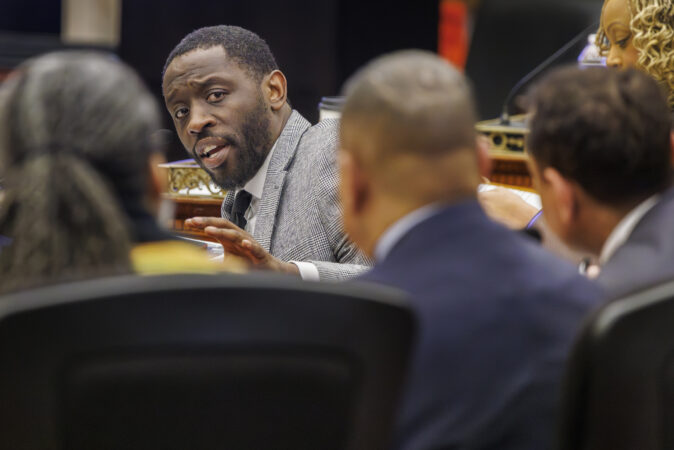
    City Council President Kenyatta Johnson speaking at the City Council’s first session of the year Jan. 22. He said this month that it’s time to stand up for immigrants in Philadelphia. “It’s my responsibility to step up in this space and be more vocal,” he said.

    That as Philadelphia City Council prepares to consider “ICE Out” legislation that would make it more difficult and complicated for the agency to operate in the city.

    Trump told NBC News this month that he is “very strongly” looking at five new cities.

    Some people are not waiting to see if Philadelphia is on the list.

    The monthly Zoom meeting of the Cresheim Village Neighbors usually draws about 20 people. But a hundred logged on in January to hear a presentation: What to do if/when ICE comes to our neighborhood.

    The short advice: If it happens, get out your phone and hit “record.”

    “If I see ICE agents, I will film,” said neighbors group coordinator Steve Stroiman, a retired teacher and rabbi. “I have a constitutional right to do that.”

    Federal immigration enforcement agents shatter a truck window and detain two men outside a Home Depot in Evanston, Ill., on Dec. 17, 2025.

    In a sliver of University City, Miriam Oppenheimer has helped lead three block meetings where neighbors gathered to discuss how they would respond.

    They set up a Signal channel so people can communicate. And they formulated a loose plan of action: People will come outside their homes and take video recordings ― and try to get the names and birth dates of anyone taken into custody, so they can be located later.

    “Courage is contagious,” Oppenheimer said. “Everybody is waiting for somebody else to do something, but we have to be the ones.”

    Inside Olivet Covenant Presbyterian Church, doorways to some rooms now bear black-and-white signs that say, “Staff and authorized personnel only.”

    Issues around ICE access to churches have become more urgent since Trump rescinded the agency policy on “sensitive locations,” which had generally barred enforcement at schools, hospitals, and houses of worship.

    Legal advocates such as the ACLU say ICE agents can lawfully enter the public areas of churches, including the sanctuaries where people gather to worship. But to go into private spaces they must present a warrant signed by a judge.

    “There are many front lines right now,” said Ahn, the Olivet pastor. “We’re not trying to be simply anti-ICE, or anti-anybody. We’re just trying to be for the rights of the Fourth Amendment.”

    Staff writer Joe Yerardi contributed to this article.
  • City Council members grill school district officials on plan to close 20 schools — and superintendent says he could have closed 40

    City Council members grill school district officials on plan to close 20 schools — and superintendent says he could have closed 40

    Philadelphia City Council may not have a vote on Superintendent Tony B. Watlington Sr.’s sweeping facilities plan, but it indicated Tuesday that it will have a say in school closings.

    As a packed hearing began in Council’s chambers Tuesday morning, both Council President Kenyatta Johnson and Isaiah Thomas, chair of the Education Committee, said Council refused to be a “rubber stamp” to Watlington’s proposal to close 20 schools, colocate six, and modernize 159.

    Though only the school board gets to vote directly on the plan, Johnson has indicated he is willing to hold up city funding to the district over the school closure plan. And his colleagues echoed that sentiment Tuesday.

    “I’m infuriated that we don’t get a say,” Councilmember Jimmy Harrity said, warning the district officials who appeared before him. “But, Council president, you and I both know we do get a say, because budget’s coming. And we will be looking. Mindful is the word I would use for today — be mindful.”

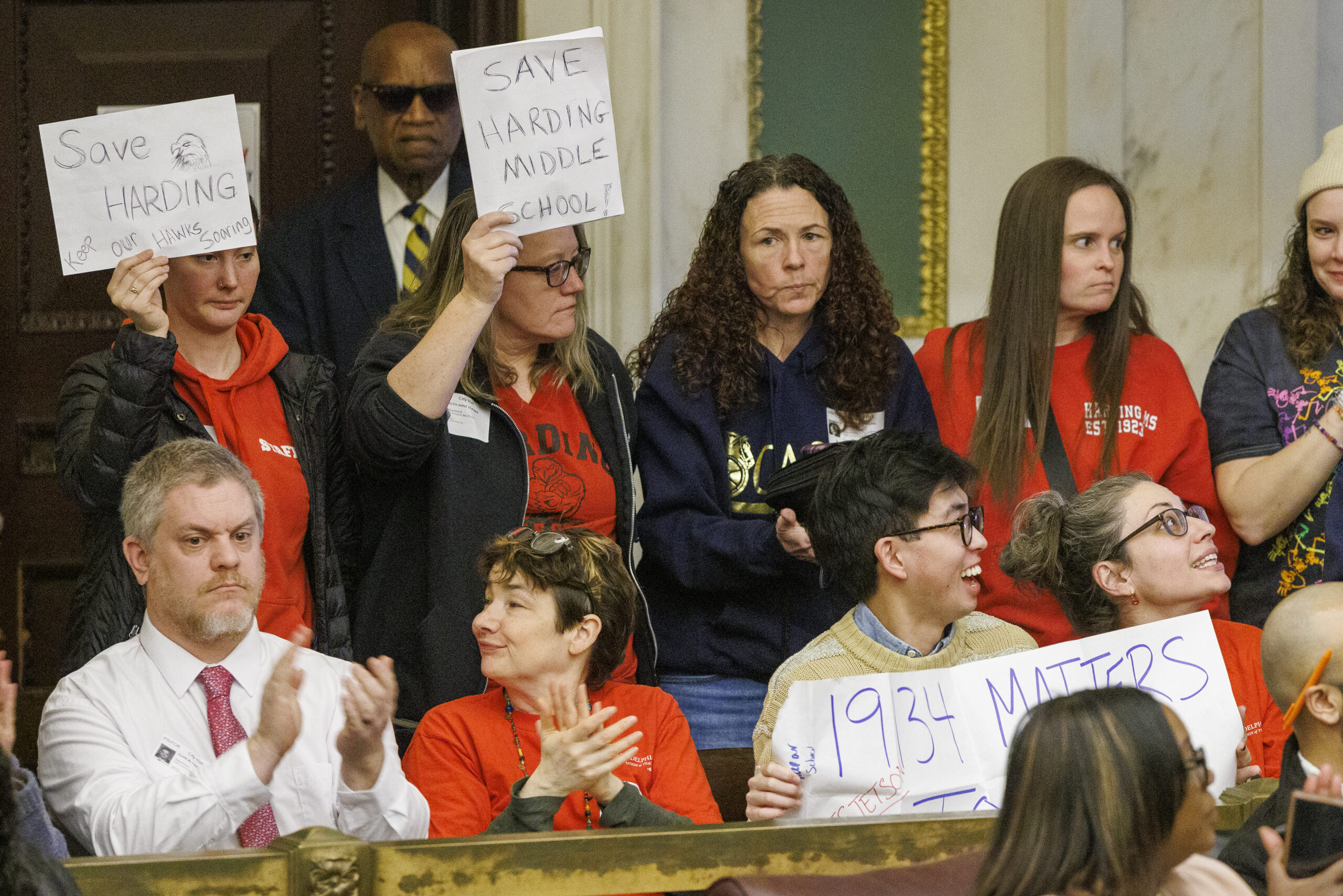
    Concerned citizens stand with signs in support of Harding Middle School before the start of a Philadelphia City Council hearing Tuesday at City Hall on the school district’s plan to close 20 schools.

    About 40% of the district’s nearly $5 billion budget comes from local revenue and city funding, which City Council and Mayor Cherelle L. Parker must approve in the annual city budget by the end of June.

    Harrity, an at-large Council member, said he was “tired that every time cuts come, they come from a certain neighborhood. You know, I live in Kensington, in the 7th District. I talk to these kids. They’re good kids. They deserve everything that other kids in other neighborhoods are getting. … You can see that this isn’t what our people want.” Watlington has proposed closing four schools in the 7th District.

    More than 100 community members holding babies and waving signs opposing the facilities plan filled Council chambers on the fourth floor of City Hall on Tuesday as Council members spent hours grilling Watlington and other district officials.

    Watlington, meanwhile, stood by his plan in testimony to Council on Tuesday, saying that 20 closings was a much smaller number than he could have settled on.

    “We could have come here and presented a plan that closed twice as many schools and been able to defend it,” Watlington said.

    A once-in-a-lifetime opportunity?

    District officials have said the facilities process is not about saving money, but about optimizing education and equity for the city’s 115,000 students.

    But it was clear Tuesday that finances played a part: The district has lost 15,000 students in the last 10 years, and over 80,000 since 1997, when charter schools were first authorized in Pennsylvania. It has 300 buildings, many of them 75 years and older and in poor repair, and some schools with more than 1,000 empty seats, while others are overcrowded.

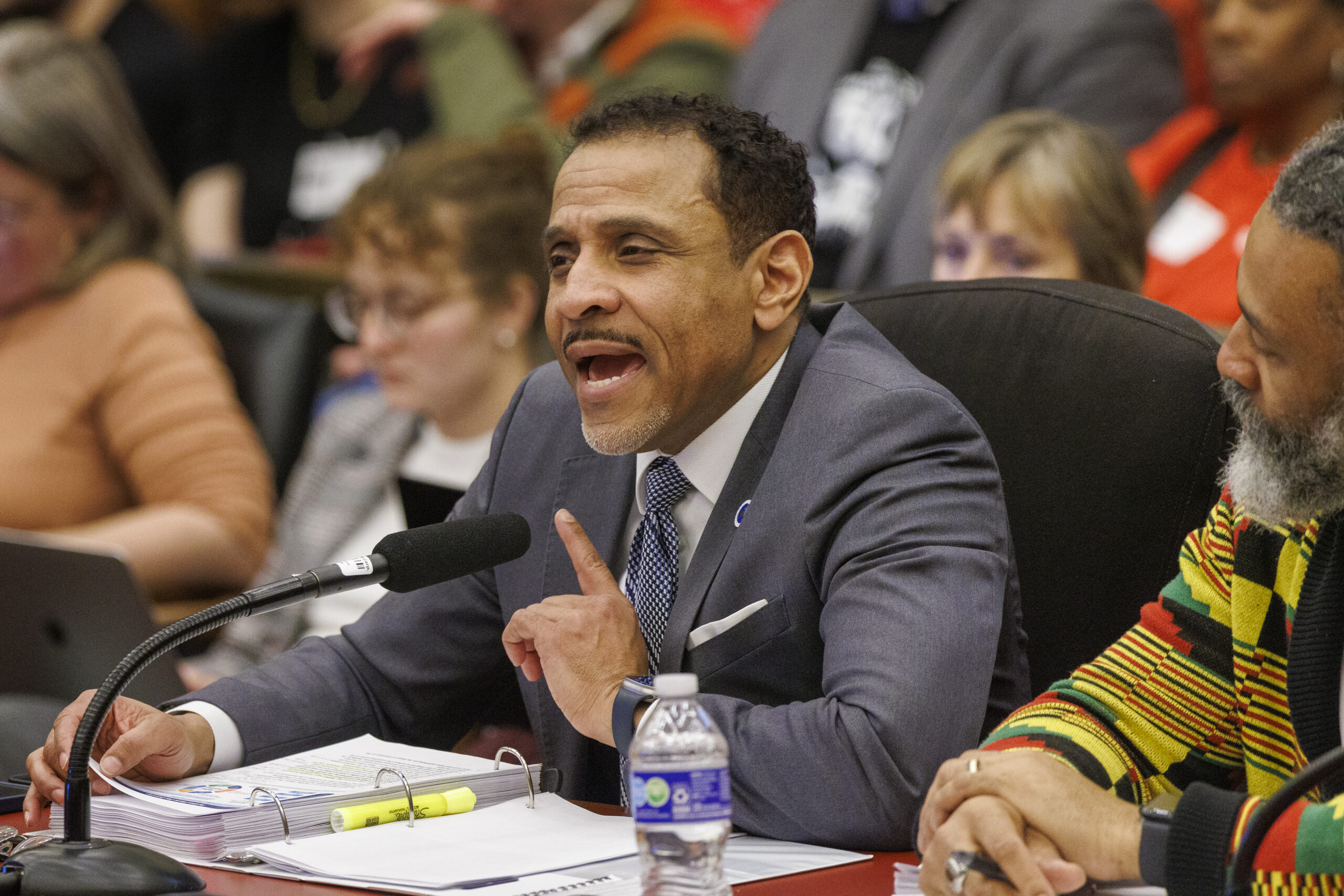
    Tony B. Watlington Sr., superintendent of School District of Philadelphia, speaks at a City Council hearing Tuesday on his proposal to close 20 schools.

    “We’ve got to be very careful with our limited resources in a historically underfunded district,” Watlington told Council.

    Watlington and board president Reginald Streater, who also testified, pitched the plan as a way to add things the district cannot now offer — Advanced Placement courses in every high school, the opportunity for all eighth graders to take algebra, more prekindergarten, and career and technical education programs.

    “I do not believe we’ll get this opportunity again in our lifetime,” Watlington said.

    The superintendent dropped a few previously undisclosed facts about the facilities road map, indicating that his recommendations could shift slightly before he presents the plan to the school board on Feb. 26. No date has been set for the board’s final vote, which is expected later this winter.

    “It’s premature to say how the final recommendations will land,” Watlington said.

    But, the superintendent said, “if there are schools that Council wants me to take off the list, and add others on that list, we are open to you telling me what those are, but we cannot get to a place where we address our 35% non-utilization rate in buildings if no changes are made.”

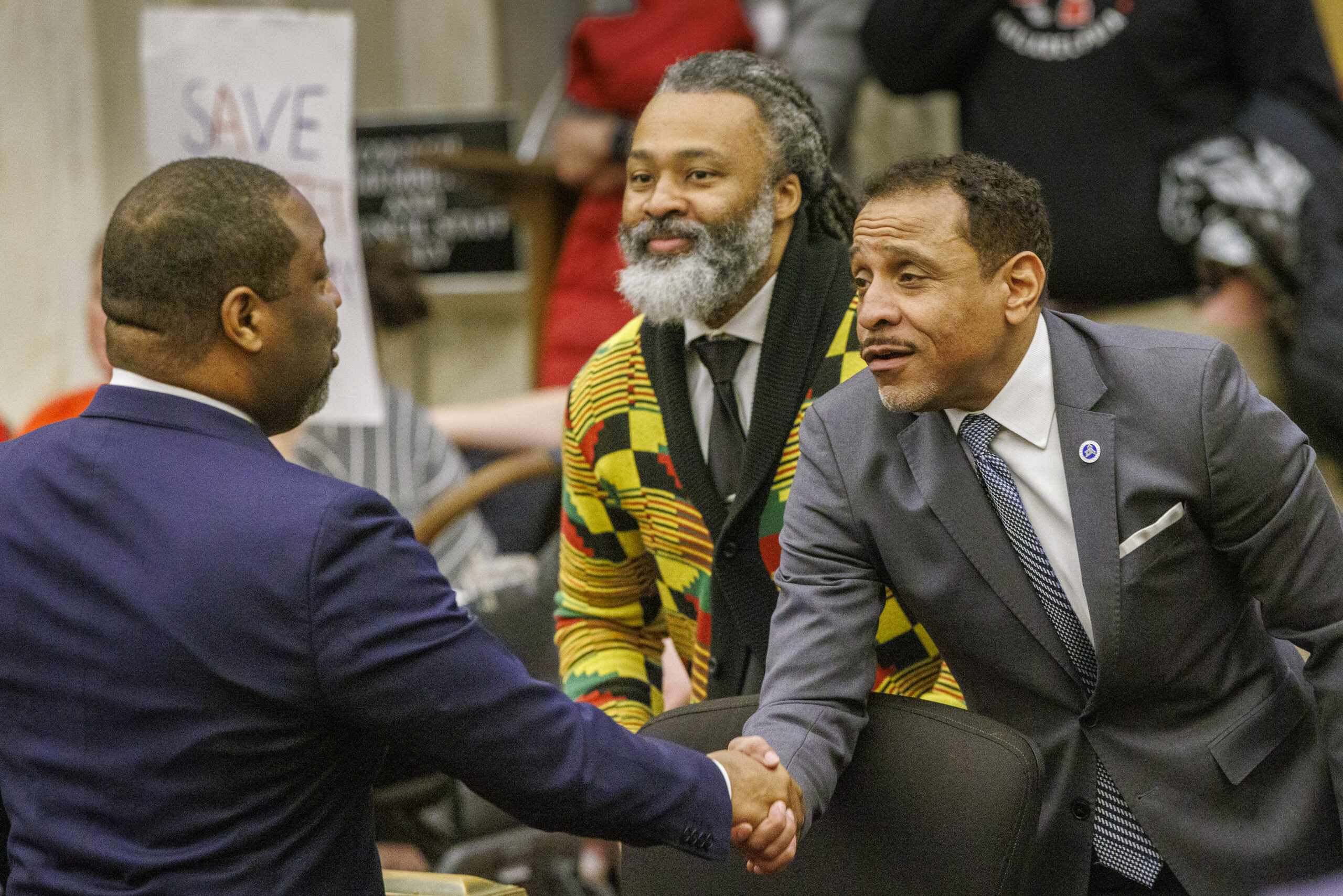
    Philadelphia City Council President Kenyatta Johnson (left) greets Dr. Tony Watlington, Superintendent of School District of Philadelphia Philadelphia City Council holds hearing with board members of School District of Philadelphia, Tuesday, Feb. 17, 2026. Reginald L. Streater, Esq., President Board of Education. (center)

    Debora Carrera, the city’s chief education officer, who spent three decades as a district teacher and administrator, told Council that Parker believes “the current district footprint is unsustainable.”

    Carrera said her own experience as principal of Kensington High School for Creative and Performing Arts shows that it is right for the district to focus resources on neighborhood high schools.

    “My high school was a small high school,” Carrera said. “I could only offer my children two AP courses, when other schools like Central — where my son went — could offer them over 20-plus AP courses.“

    ‘Breaking down of public education’

    The hearing got tense at times.

    “I feel like this is the breaking down of public education in Philadelphia,” said Councilmember Cindy Bass, who said some of the district’s own decisions had led to closures.

    Several members of Council raised questions about the plan’s price tag. Prior district and city estimates put the cost just under $8 billion, but members of Watlington’s team said they could they could actually do the work for $2.8 billion — $1 billion from district capital funds, and $1.8 from yet-unpromised state and philanthropic sources.

    In the past, the district had made public detailed facilities condition assessments for every school in the district, Councilmember Rue Landau noted.

    Residents could look up their school and see exactly what the condition of every system in the building was, and how much money would be required to fix those that needed repair.

    “We don’t have any of those details,” said Landau, who went so far as to say she believed the district should be spending more than $2.8 billion on the plan. “What is the increased investment, and why don’t we have any of those details? They are not out there in the public for us, so none of us have any understanding as to why this is happening, This should all be public so all of the public can see.”

    Jerry Roseman, the Philadelphia Federation of Teachers’ longtime environmental director, who has had a first-row seat to district facilities conditions for decades, said he believed the $2.8 billion figure was not realistic.

    “You need much more money than that,” Roseman told Council. “We need more money than this plan comes close to.”

    Some Council members pushed the district and the board on the plan’s timing.

    The city has been asking for a long-range facilities plan for years, Councilmember Quetcy Lozada pointed out.

    “It’s taken us all this time,” Lozada said. “Now, you guys have come up with a plan, and now we want to rush through it. Now all of a sudden there’s this urgency to get through this plan, which I don’t understand.”

    Streater said the board is moving forward with hearing Watlington’s plan on Feb. 26, but won’t vote until it hears more feedback.

    But ultimately, he said, the board will vote on “a plan that is dynamic, that can evolve over time. … I think that we all understand that things change, facts change, funding changes, enrollment trends change.”

    And, Streater said, there will also likely be policy changes based on redrawing some catchment areas, or boundaries that determine which neighborhood schools children attend.

    Streater, who introduced himself at the beginning of the hearing as “Reggie from Germantown,” underscoring his history as a graduate of two district schools that closed — Germantown High and Leeds Middle School — said that changes must be made.

    “I think if we continue doing the same thing, expecting a different result — which I would argue is chronic underachievement — we are doomed.”

  • These Philly schools are slated for big upgrades as the district works to modernize buildings

    These Philly schools are slated for big upgrades as the district works to modernize buildings

    Nearly $58 million for South Philadelphia High School. Over $27 million for Forrest Elementary in the Northeast. Almost $55 million for Bartram High in Southwest Philadelphia.

    Ahead of a Tuesday City Council hearing on the Philadelphia School District’s proposed facilities master plan, district officials have dangled the carrot that would accompany the stick of 20 school closings.

    The district released Monday morning how much it would spend on modernization projects at schools in each City Council District if Superintendent Tony B. Watlington Sr.’s plan is approved by the school board this winter.

    The totals range from $443 million in the 9th District — which includes parts of Olney, East and West Oak Lane, Mount Airy, and Oxford Circle — to nearly $56 million for the 6th District in lower Northeast Philadelphia, including Mayfair, Bridesburg, and Wissinoming.

    The district’s announcement comes as the plan has already raised hackles among some Council members, and City Council President Kenyatta Johnson has said he’ll hold up the district’s funding “if need be” if concerns are not answered to Council’s satisfaction.

    Tailoring the release to Council districts — including highlighting one major project per district — appears to be an effort to calm opposition ahead of Tuesday’s hearing.

    Details on every school that would get upgraded under Watlington’s plan — 159 in total — have not yet been released.

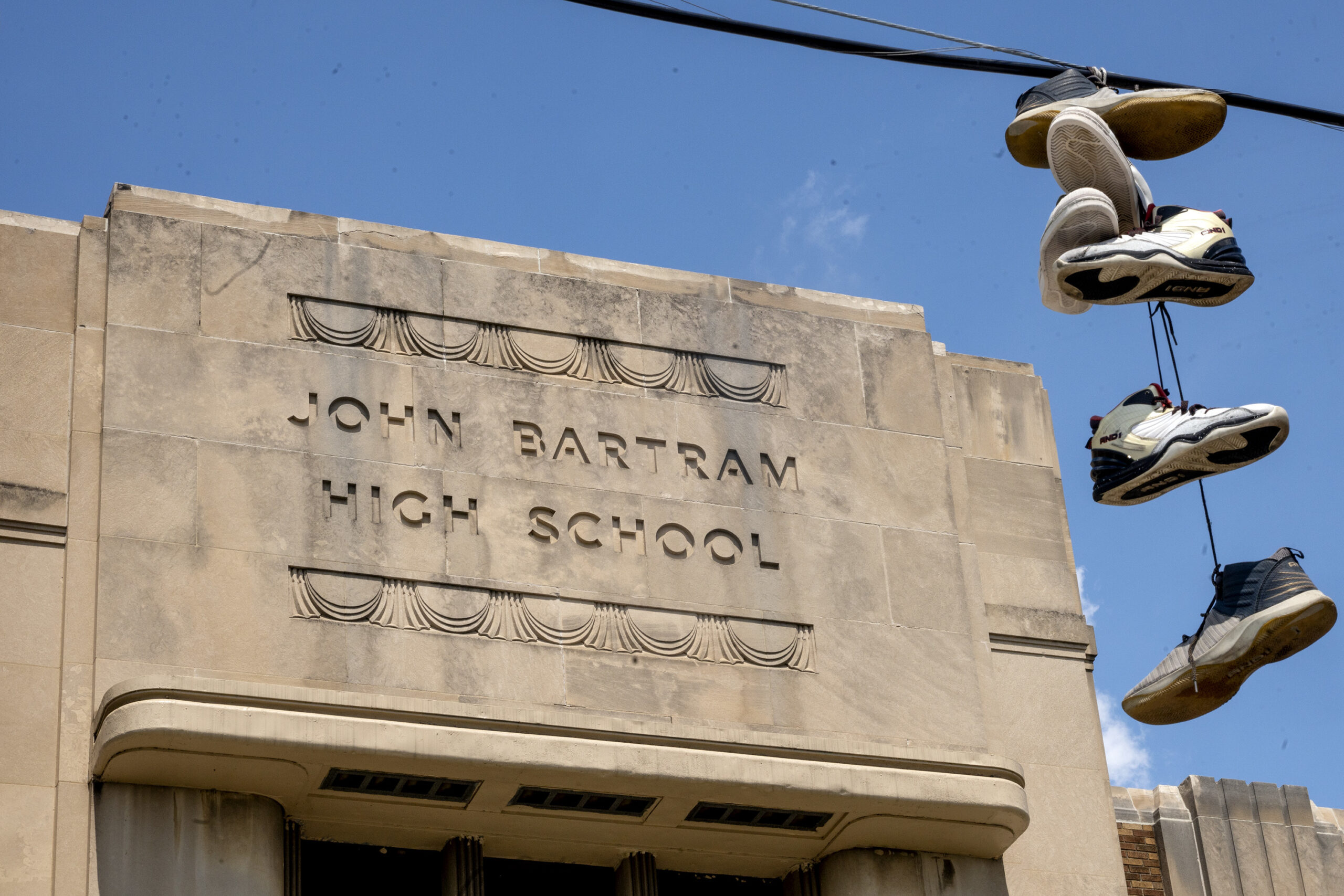
    John Bartram High School at 2401 S. 67th St in Southwest Philadelphia.

    Watlington has stressed that the point of the long-range facilities plan is not closing schools, but solving for issues of equity, improving academic programming, and acknowledging that many buildings are in poor shape, while some are underenrolled and some are overenrolled.

    “This plan is about ensuring that more students in every neighborhood have access to the high-quality academics, programs, and facilities they deserve,” Watlington said in a statement. “While some of these decisions are difficult, they are grounded in deep community engagement and a shared commitment to improving outcomes for all public school children in every ZIP code of Philadelphia.”

    But at community meetings unfolding at schools across the city that are slated for closure, Council members have expressed displeasure about parts of the plan — a preview, perhaps, of Tuesday’s meeting.

    Councilmember Quetcy Lozada, represents the 7th District, including Kensington, Feltonville, Juniata Park, and Frankford. Four schools in her district — Stetson, Conwell, Harding, and Welsh — are on the chopping block.

    “The fact that they are being considered for closure is very concerning to me,” Lozada said at a meeting at Stetson Middle School on Thursday.

    Councilmember Quetcy Lozada is shown in a 2025 file photo.

    Councilmember Cindy Bass, speaking at a Lankenau High meeting, objected to closing schools that are working well. (Three schools in Bass’ 8th District, Fitler Elementary, Wagner middle school, and Parkway Northwest High School, are proposed for closure. Lankenau is in Curtis Jones Jr.’s district but has citywide enrollment.)

    “I do not understand what the logic and the rationale is that we are making these kinds of decisions,” said Bass.

    While Council members will not have a direct say on the proposed school closures or the facilities plan, Council wields significant control over the district’s budget. Funding for the district is included in the annual city budget that Council must approve by the end of June.

    Local revenue and city funding made up about 40% of the district’s budget this year, or nearly $2 billion. Most of that is the district’s share of city property taxes which, unlike other school systems in Pennsylvania, are levied by the city and then distributed to the district.

    (function() {
    var l2 = function() {
    new pym.Parent(‘schools_districts2’,
    ‘https://media.inquirer.com/storage/inquirer/projects/innovation/arcgis_iframe/schools_districts2.html’);
    };
    if (typeof(pym) === ‘undefined’) {
    var h = document.getElementsByTagName(‘head’)[0],
    s = document.createElement(‘script’);
    s.type = ‘text/javascript’;
    s.src = ‘https://pym.nprapps.org/pym.v1.min.js’;
    s.onload = l2;
    h.appendChild(s);
    } else {
    l2();
    }
    })();

    Where will the money go?

    Despite city and schools officials saying in the past that the district has more than $7 billion in unmet facilities needs, Watlington has said the district could complete its plan — including modernizing 159 schools — for $2.8 billion.

    Officials said further details about modernization projects and the facilities plan will be released before the Feb. 26 school board meeting, where Watlington is expected to formally present his proposal to the school board.

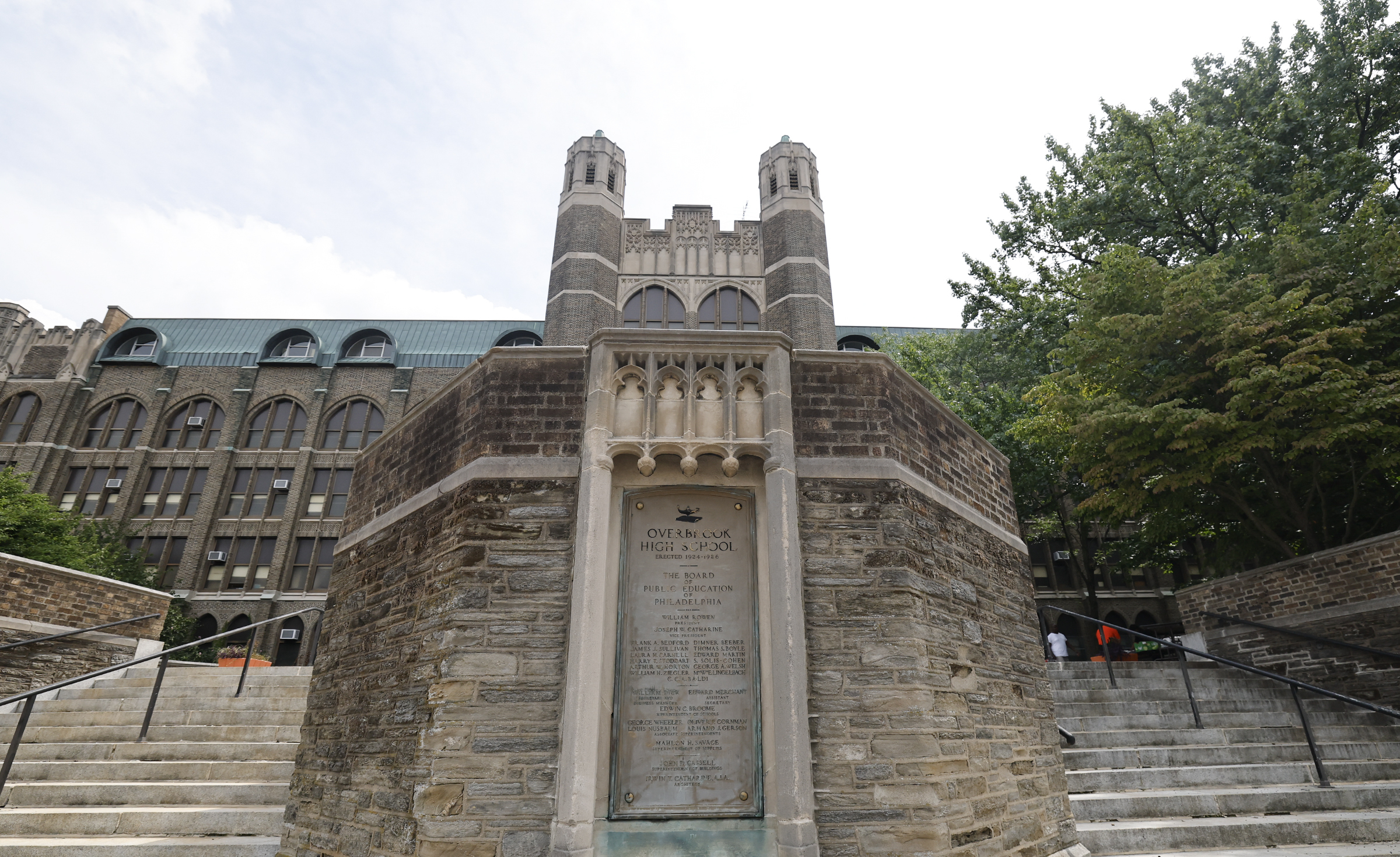
    Overbrook High School, in West Philadelphia, will get major renovations in preparation for The Workshop School, a small, project-based district school, colocating inside the building.

    Here are the total proposed dollar amounts per Council district and the 10 big projects announced Monday:

    • 1st District: $308,049,008. Key project: $57.2 million for South Philadelphia High, turning the school into a career and technical education hub and modernizing electrical, lighting, and security systems.
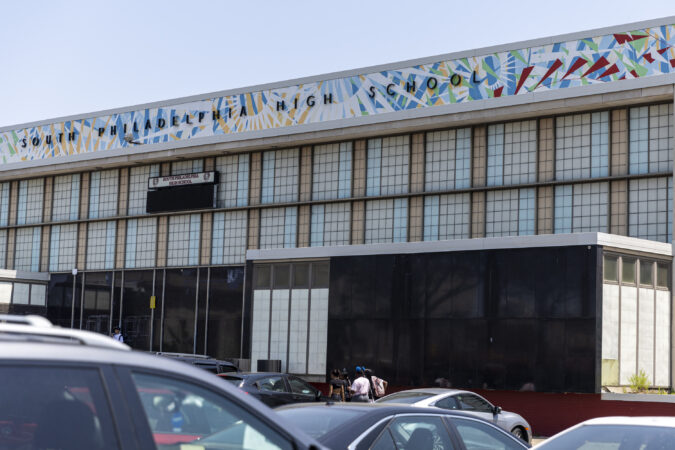
    • 2nd District: $302,284,081. Key project: $54.6 million for Bartram High, to renovate the school and grounds, career and technical education spaces, restroom and accessibility renovations, new painting, and new athletic fields and facilities (on the site of nearby Tilden Middle School, which is slated to close). Motivation High School would close and become an honors program inside Bartram.
    • 3rd District: $204,947,677. Key project: $19.6 million for the Sulzberger site, which currently houses Middle Years Alternative and is proposed to house Martha Washington Elementary. (It currently houses MYA and Parkway West, which would close.) Improvements would include heating and cooling and electrical systems, classroom modernizations, and the addition of an elevator and a playground.
    • 4th District: $216,819,480. Key project: $50.2 million for Overbrook High School, with updates including new restrooms, accessibility improvements, and refurbished automotive bays. (The Workshop School, another district high school, is colocating inside the building.)
    • 5th District: $290,748,937. Key project: $8.4 million for Franklin Learning Center, with updates including for exterior, auditorium, and restroom renovations, security cameras, accessibility improvements, and new paint.
    • 6th District: $55,769,008. Key project: $27.2 million for Forrest Elementary, including modernizations that will allow the school to grow to a K-8, and eliminate overcrowding at Northeast Community Propel Academy.
    • 7th District: $388,795,327. Key project: $32.3 million at John Marshall Elementary in Frankford to add capacity at the school, plus a gym, elevator, and schoolwide renovations.
    • 8th District: $318,986,215. Key project: $42.9 million at Martin Luther King High in East Germantown for electrical and general building upgrades and accommodations for Building 21, a school that will colocate inside the King building.
    • 9th District: $442,934,244. Key project: $42.2 million at Carnell Elementary for projects including an addition to expand the school’s capacity, restroom renovations, exterior improvements, and stormwater management projects.
    • 10th District: $275,829,539. Key project: at Watson Comly Elementary in the Northeast, an addition to accommodate middle grade students from Loesche and Comly, and building modernizations. District officials did not give the estimated cost of the Comly project.

    What’s next?

    The facilities Council hearing is scheduled for 10 a.m. Tuesday at City Hall. It will also be livestreamed.

    Members of the public also have the opportunity to weigh in on the facilities plan writ large at three community town halls scheduled for this week: Tuesday at Benjamin Franklin High from 4:30 to 6:30 p.m., Friday at Kensington CAPA from 4:30 to 6:30 p.m., and a virtual meeting scheduled for 2 p.m. on Sunday.

    Meetings at each of the schools proposed for closure continue this week, also; the full schedule can be found on the district’s website.

  • Lincoln Drive and dozens of other Philly roads get $13 million from PennDot

    Philadelphia is getting $13 million to support six traffic-safety projects in Philadelphia, courtesy of speeders caught and fined by automated enforcement cameras.

    The Pennsylvania Department of Transportation announced the grants Wednesday for an array of city projects, including $2 million for traffic-calming measures on Lincoln Drive between Kelly Drive and Wayne Avenue.

    Some of that money will help pay for speed humps at 100 additional public, parochial, and private schools in the city, PennDot said.

    Since taking office in 2023, the Shapiro administration has invested $49.7 million in city traffic-safety projects, all from revenues raised by speed cameras.

    Calming speeders

    Under the automated speed-enforcement program, grants are plowed back into the communities that generated the revenue. Philadelphia is so far the only municipality in the state where speed cameras are authorized.

    Next week, the Philadelphia Parking Authority is activating speed-enforcement cameras in five school zones under an expansion of the program.

    Pennsylvania also has automated speed enforcement in highway work zones, but that revenue goes to the Pennsylvania State Police for extra patrols and more troopers, the turnpike for safety projects and speeding counter-measures, and the general treasury.

    Lincoln Drive improvements

    Fed-up West Mount Airy residents pushed state and local officials for years to reduce speeding, aggressive driving, and near-daily crashes on and near Lincoln Drive, which has hairpin curves and a posted speed limit of 25 mph, and thick commuter traffic zipping through dense neighborhoods.

    It was a high-profile instance of Philadelphians rallying around and demanding projects from the city’s Complete Streets program, a road-design approach that seeks to make roadways safer for all users, including pedestrians and cyclists, as well as drivers of motor vehicles.

    The new grant is meant to continue traffic-safety work on Lincoln Drive that began a couple of years ago.

    That includes speed humps, speed slots, new phosphorescent paint, flexible lane delineators, a smoother merge point where the road narrows, and marked left-turn lanes.

    “It’s made a huge difference,” said Josephine Winter, executive director of the West Mount Airy Neighbors civic group, which organized residents.

    “People that live along Lincoln Drive are feeling positive,” she said — though there is a split between people who are angry at what speed bumps have done to their cars’ undercarriages and those who support what they say are life-saving improvements.

    “The city was wonderful, very responsive,” Winter said. “We’re been fortunate to get something done here.” Next up: working with other Northwest residents to get improvements on side streets, Wissahickon Avenue, and others.

    Other grants

    • $1.5 million for planning work to upgrade traffic signals, better lane and crosswalk markings, and intersection modifications.
    • $5 million for design and construction of safety improvements along commercial and transit corridors. Those include curb extensions, concrete medians, bus boarding bump-outs, and new crosswalks. Locations include: Frankford Avenue (Tyson Avenue to Sheffield Avenue); 52nd Street (Arch Street to Pine Street); Hunting Park Avenue (Old York Road to 15th Street); and Germantown Avenue (Indiana Avenue to Venango Street).
  • ArchWell Health is a new primary care provider for Philadelphians with Medicare Advantage

    ArchWell Health is a new primary care provider for Philadelphians with Medicare Advantage

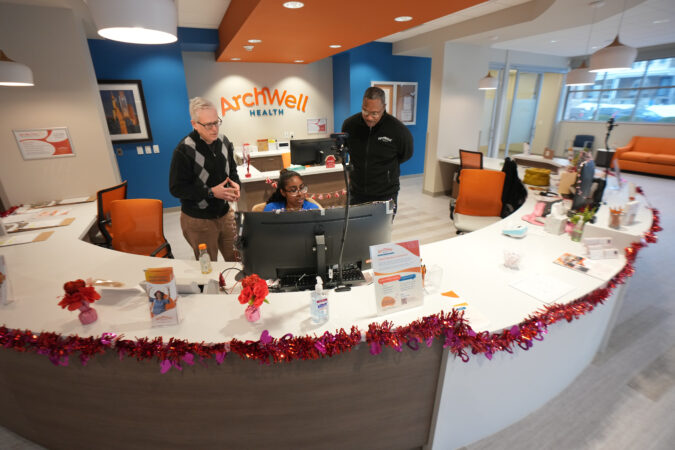
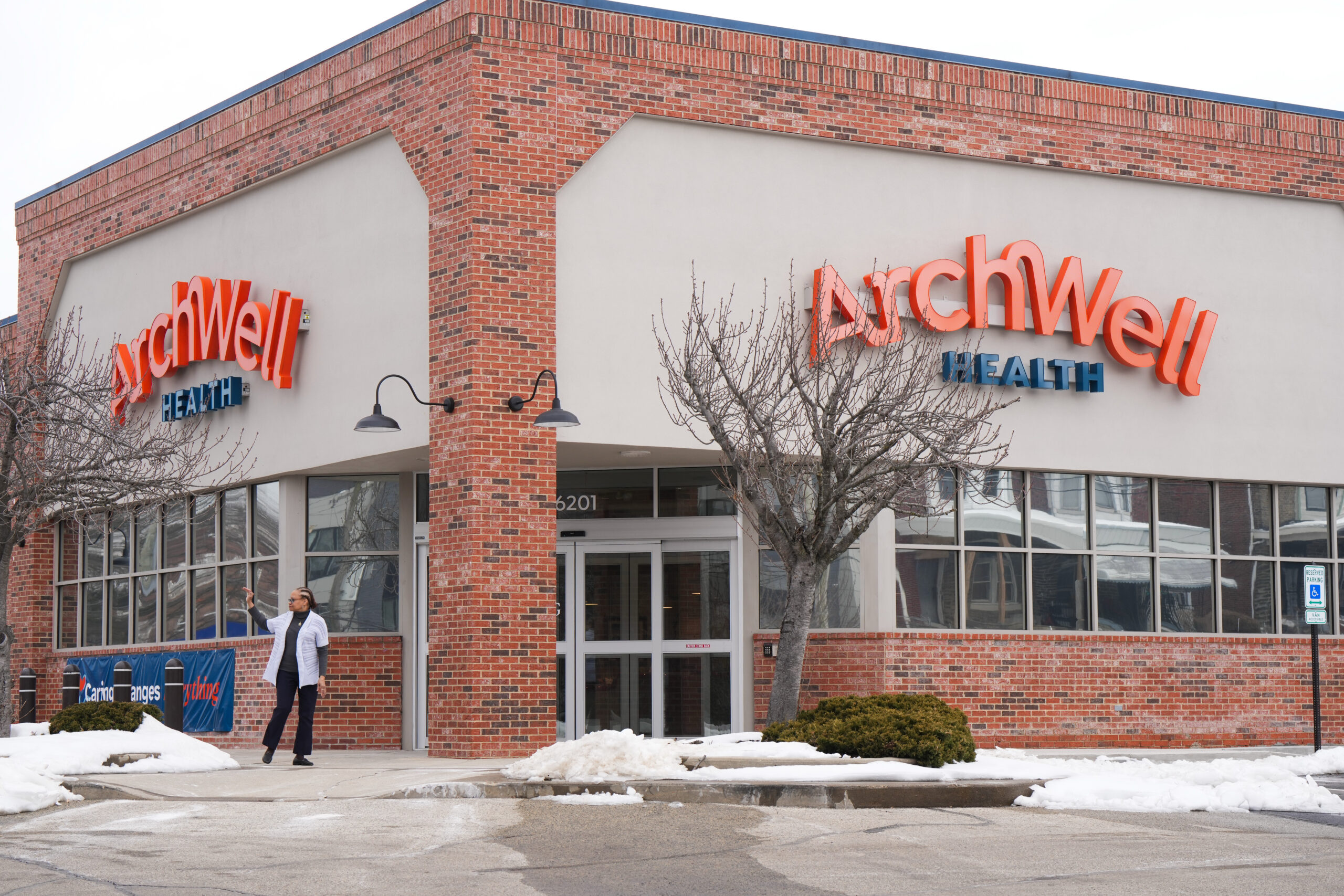
    A new sign with orange letters outside a former Rite Aid in Germantown announces the arrival of a primary care model new to the Philadelphia region.

    ArchWell Health recently opened its first three of eight planned primary care centers here for people with Medicare Advantage, promising convenient and personalized care in neighborhoods with a relative lack of doctors.

    Two others have opened on North Broad Street, near Stenton and Susquehanna Avenues, also in former Rite Aid stores.

    A privately held company based in Nashville, Tenn., ArchWell says it can offer patients greater access to healthcare through lower patient-provider ratios.

    It plans to limit each of its physicians to no more than 500 patients — about a fifth of the patient load for typical primary care doctors. Nurse practitioners working under the doctors will manage a maximum of 250 patients, officials said.

    The approach is built around a financial model that differentiates ArchWell from Medicare-focused competitors already in Philadelphia like Oak Street Health and ChenMed’s Dedicated Senior Medical Centers. ArchWell only accepts patients who have private Medicare or are willing to switch to it. Oak Street and ChenMed also accept traditional Medicare.

    Privately run Medicare Advantage plans are increasingly popular among people ages 65 and older who qualify for government-funded Medicare coverage. Advantage plans appeal to people by covering services, such as dental and vision care, left out of traditional Medicare, but have come under scrutiny for exaggerating how sick patients are to rack up more revenue.

    ArchWell sees exclusively working with Medicare Advantage plans as helping doctors to focus solely on the best outcomes for patients, rather than on providing more services to bring in more revenue, a criticism of traditional Medicare, said Doron Schneider, its medical director for the Philadelphia market.

    Melissa A. Herd, community relations specialist for ArchWell Health in Philadelphia, is shown outside the company’s Germantown location, which is in a former Rite Aid building.

    “You have different incentives, you have different care models, you have different case management models, you have different ways to treat one person versus the other,” Schneider said.

    Before starting at ArchWell in late 2024, Schneider worked at Tandigm Health, an Independence Health Group company founded in 2014 with the goal of helping primary care doctors manage costs and improve care for their patients. He learned there how hard it is for doctors to work with different types of insurers and the varied incentives that go with them.

    How ArchWell conducts business

    ArchWell, which opened its first clinic in 2021 in Birmingham, Ala., operates under contracts with Medicare Advantage plans. The plans give ArchWell a portion of the monthly payment they get from Medicare for each patient. That money is supposed to cover all of the person’s medical costs.

    Aetna, UnitedHealthcare, and Devoted Health have contracts with ArchWell to cover the Philadelphia market. ArchWell is close to getting contracts with HealthSpring and Humana, Schneider said. Those five companies had more than 90,000 people in their plans in December, according to federal data.

    Aetna and UnitedHealthcare said they work with clinics like ArchWell’s around the country to improve health outcomes and leave patients more satisfied with their experience.

    “We are pleased that they are now an option for Aetna Medicare Advantage members in the Philadelphia area,” Aetna said in a statement.

    ArchWell declined to provide financial details, such as annual revenue from the more than 80 clinics it had in a dozen states before coming to Philadelphia or how much it spends to open each center. ArchWell representatives also did not disclose who its owners are.

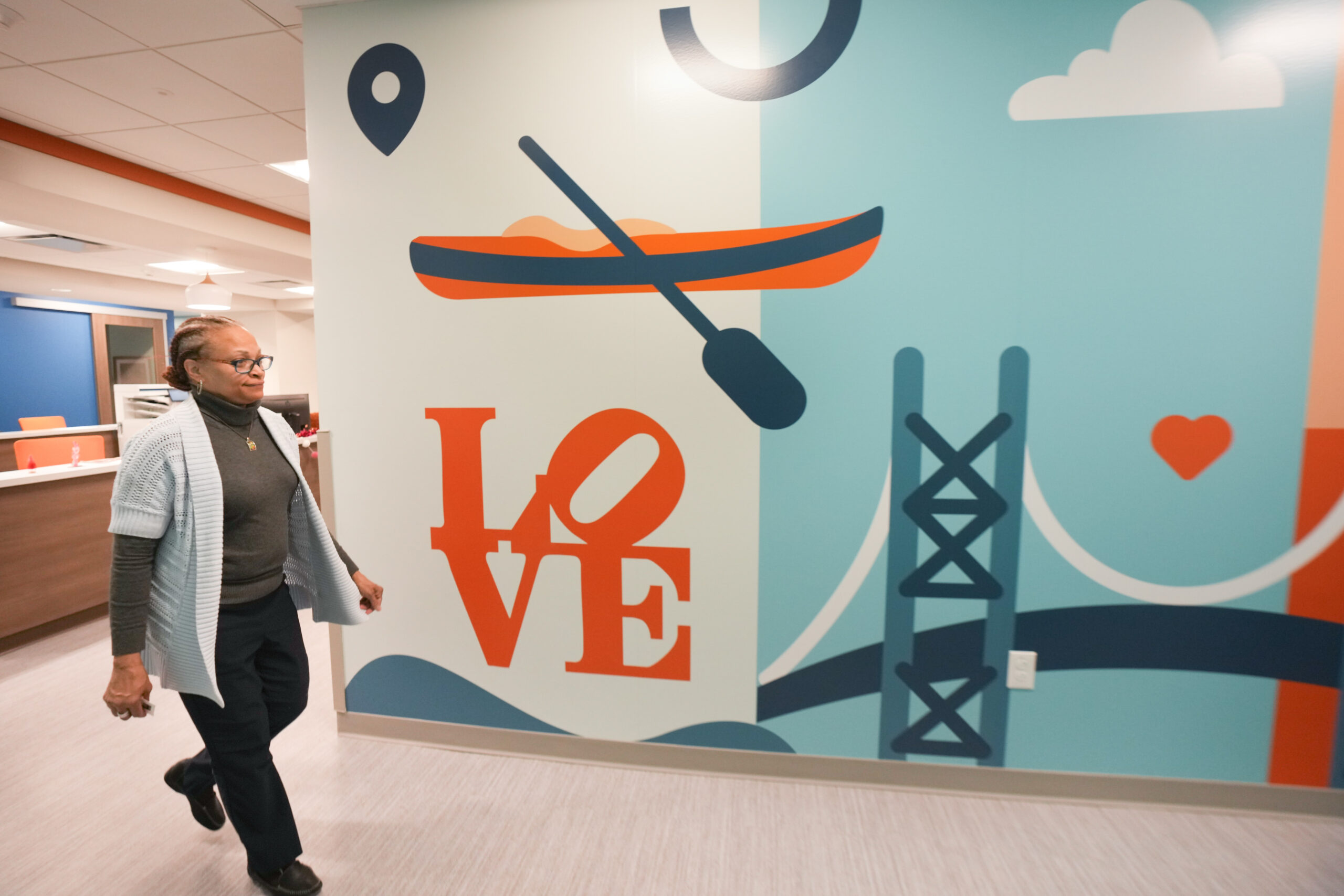
    The interior of Archwell Health’s Germantown primary care clinic has Philadelphia-centric images painted on the walls.

    Company founder Carl Whitmer worked at Clayton, Dubilier & Rice, a global private equity firm, before founding ArchWell.

    “We have partners that are focused on our sustainability and growth,” said Christina Cober, ArchWell’s vice president of marketing.

    But companies focused on primary care for seniors haven’t always been as successful as anticipated.

    Oak Street, founded in Chicago in 2012, grew rapidly and now services 450,000 patients at 230 centers across the country. It declined to say how many patients it has in Philadelphia. Oak Street arrived here in 2018.

    CVS Health bought Oak Street in 2023 for $10.6 billion, anticipating that it would expand to more than 300 centers by this year. Last fall, CVS announced it was closing 16 centers and taking a $5.7 billion write-down on its health-services business, largely because of slower anticipated growth at Oak Street.

    Patina Health, a Bala Cynwyd company that offered virtual and in-home primary care for Medicare Advantage patients through a partnership with Independence Blue Cross, shut down last year due to “unforeseen business challenges.”

    How ArchWell approaches patient care

    ArchWell says its lower patient-provider ratios allow more frequent interactions with patients. If a patient is diagnosed with high blood pressure, Schneider said, the message to the patient is: “We’ll see you back in a week. We’ll see you back in two weeks.”

    The repeat visits happen with no cost to the member and no extra revenue to ArchWell because all care is supposed to be covered by a monthly payment per member.

    ArchWell expects to add about 300 patients per year at each center, said Cober. Staffing at the centers starts out with a physician, a nurse-practitioner, two care navigators, two medical assistants, and a center manager.

    Among the early patients at ArchWell’s center on Germantown Avenue is Marcella James, 69, who lives across the street from the clinic and watched as the building was transformed from a shuttered Rite Aid.

    “I walked over there one day just to see what it was like and what they offer, and I signed up right away,” James said. James likes her doctor at Temple Health, but ArchWell was irresistibly convenient.

    “If I can get the same help or better help from ArchWell is to be seen because I just started with them,” she said.

  • A Main Line town leads the charge of new Philly-area restaurants for February

    A Main Line town leads the charge of new Philly-area restaurants for February

    February’s crop of restaurant openings includes two restaurants’ expansions to Narberth, a reopened brewery in South Jersey, a chic restaurant/lounge in Center City, an intriguing wine bar/bottle shop in Chestnut Hill, and two French newcomers.

    Restaurants can take awhile and owners are often hesitant to pinpoint an opening date. I’ve listed the targeted day where possible; for the rest, check social media.

    Duo Restaurant & Bar (90 Haddon Ave., Westmont): Brothers Artan and Arber Murtaj and Andi and Tony Lelaj, who own the Old World-style Italian Il Villaggio in Cherry Hill, are taking over Haddon Avenue’s former Keg & Kitchen with a pub serving a bar menu supplemented with seafood.

    Eclipse Brewing (25 E. Park Ave., Merchantville): Last August, food trucker Megan Hilbert of Red’s Rolling Restaurant became one of the youngest brewery owners in New Jersey when she bought this 9-year-old Camden County brewery, open as of Friday.

    Lassan Indian Traditional (232 Woodbine Ave., Narberth): The second location of the well-regarded Lafayette Hill Indian BYOB takes over the long-ago Margot space in Narberth.

    LeoFigs, 2201 Frankford Ave., as seen in January 2026.

    LeoFigs (2201 Frankford Ave.): Justice and Shannon Figueras promise the delivery of their long-awaited bar/restaurant, with an urban winery in the basement, at Frankford and Susquehanna in Fishtown. The food menu will be built around comfort-leaning small plates.

    The bubbly selection at Lovat Square in Chestnut Hill.

    Lovat Square (184 E. Evergreen Ave.): Damien Graef and Robyn Semien (also owners of Brooklyn wine shop Bibber & Bell) are taking over Chestnut Hill’s former Top of the Hill Market/Mimi’s Café property for a multiphased project: first a wine shop with indoor seating, then a courtyard with a full dinner menu, followed later by a cocktail bar/restaurant component. Opens Feb. 12

    Malooga (203 Haverford Ave., Narberth): The Old City Yemeni restaurant is expanding to Narberth with lunch and dinner service plus a bakery, with expanded indoor/outdoor seating and space for groups.

    Mi Vida (34 S. 11th St.): Washington, D.C.-based restaurant group Knead Hospitality + Design is bringing its upscale Mexican concept to East Market, next to MOM’s Organic Market. Target opening is Feb. 18.

    MOTW Coffee & Pastries (2101 Market St): Mahmood Islam and Samina Akbar are behind this franchise of Muslims of the World Coffee, offering a third-space experience at the Murano.

    Napa Kitchen & Wine (3747 Equus Blvd., Newtown Square): A California-inspired restaurant rooted in Midlothian, Va., opens in Ellis Preserve with an extensive domestic and international wine list in a polished setting. Opens Feb. 9.

    Ocho Supper Club (210 W. Rittenhouse Square): Chef RJ Smith’s Afro-Caribbean fine-dining supper club starts a six-month residency at the Rittenhouse Hotel, tied to the Scarpetta-to-Ruxton transition, serving tasting menus through July. Now open.

    Piccolina (301 Chestnut St.): A low-lit Italian restaurant and cocktail bar at the Society Hill Hotel from Michael Pasquarello (Cafe Lift, La Chinesca, Prohibition Taproom). Targeting next week

    Pretzel Day Pretzels (1501 S. Fifth St.): James and Annie Mueller’s pretzel-delivery operation is becoming a takeout shop in the former Milk + Sugar space in Southwark. Expect classic soft pretzels plus German-style variations (including Swabian-style) and stuffed options.

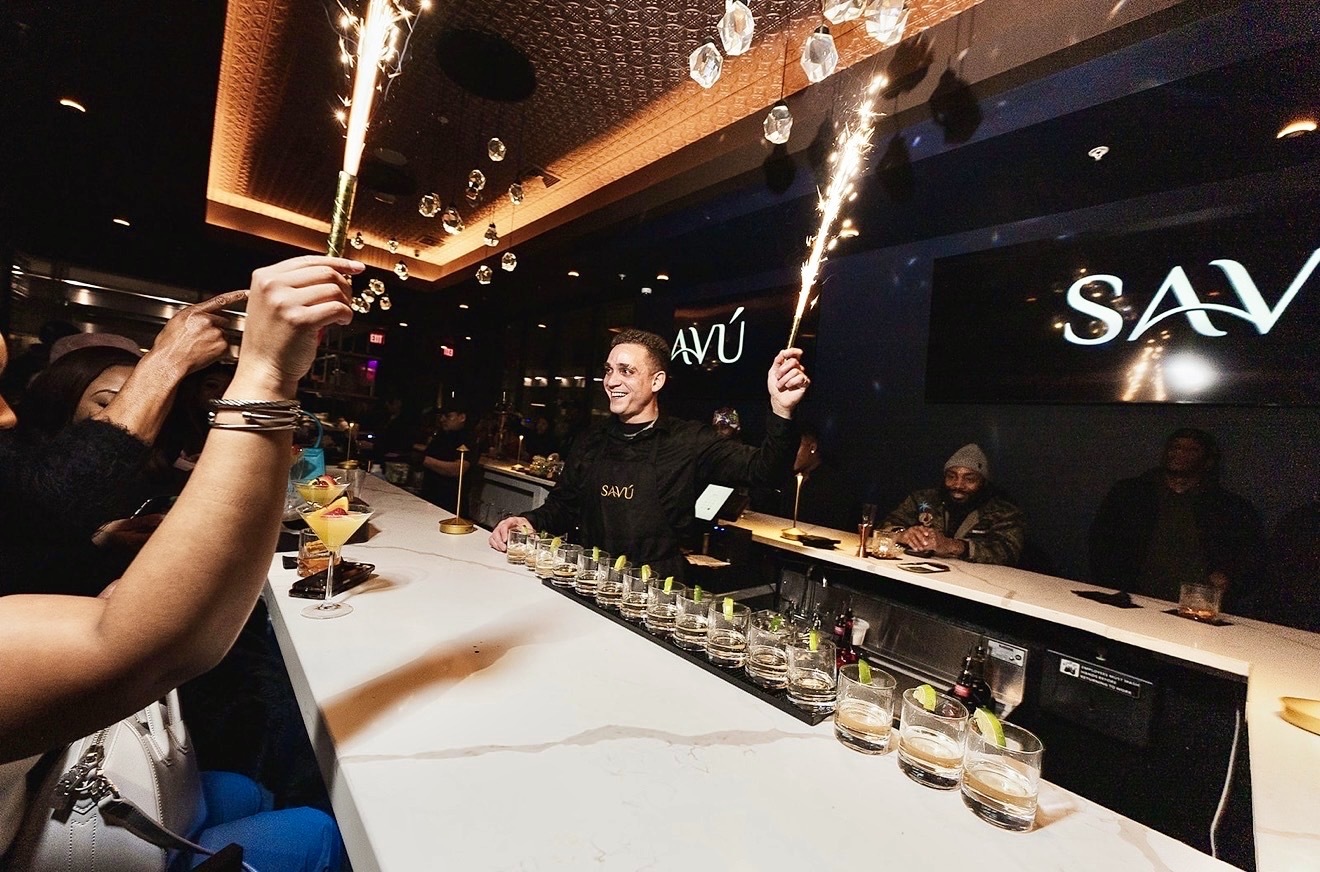
    Merriment at the bar at Savu, 208 S. 13th St.

    Savú (208 S. 13th St.): Kevin Dolce’s Hi-Def Hospitality has converted the former Cockatoo into a modern, bi-level dining and late-night lounge with a New American menu from chef Maulana Muhammad; it just soft-opened for dinner Thursday through Sunday and weekend brunch.

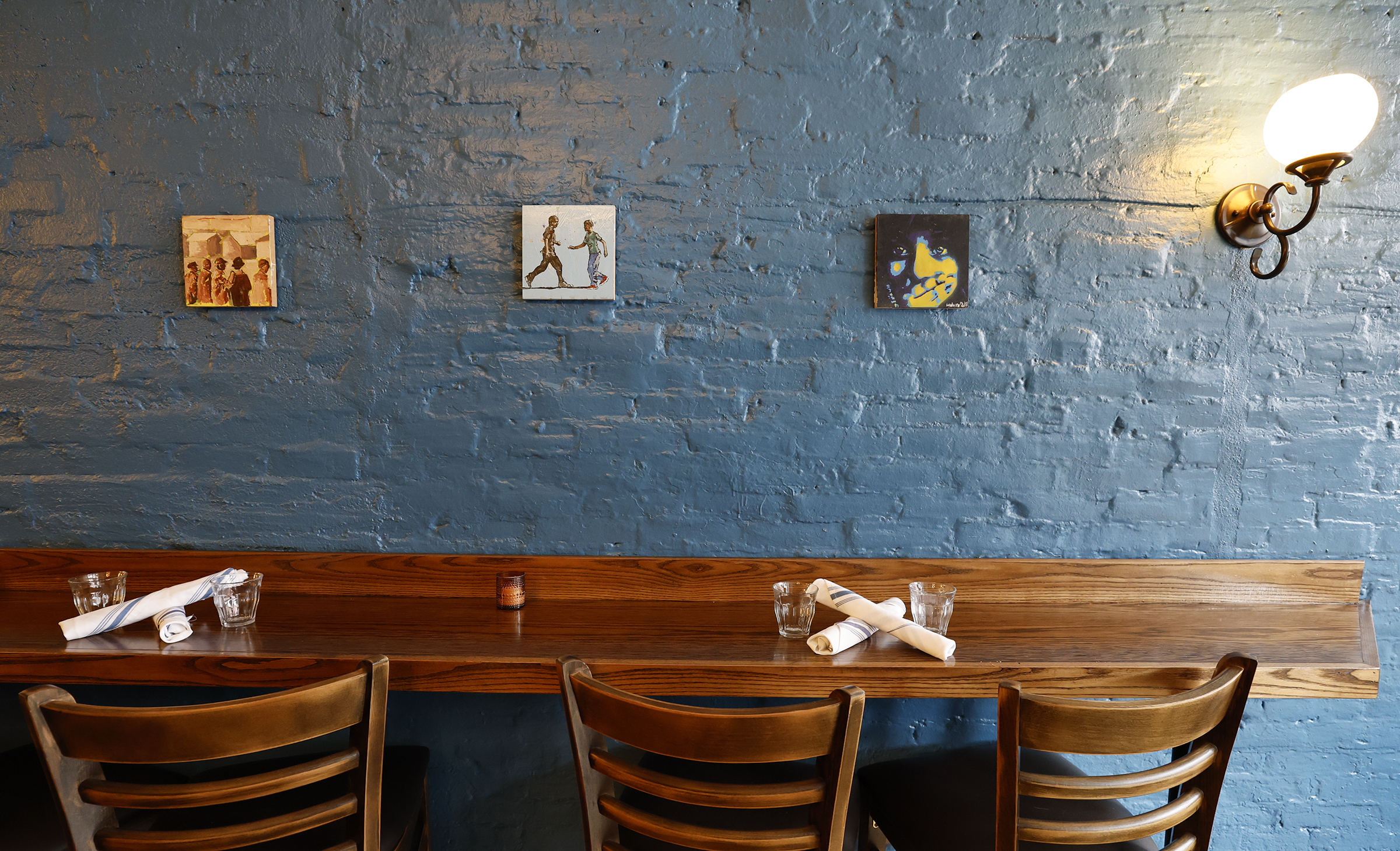
    Bar-adjacent seating at Side Eye.

    Side Eye (623 S. Sixth St.): Hank Allingham’s all-day neighborhood bar takes over for Bistrot La Minette with “French-ish” food from chef Finn Connors, plus cocktails, European-leaning wines, beer, and a late-night menu. Opens 5 p.m. Feb. 7 with 50% of the night’s proceeds going to the People’s Kitchen.

    Soufiane at the Morris (225 S. Eighth St): Soufiane Boutiliss and Christophe Mathon (Sofi Corner Café) say there’s a 90% chance of a February opening for their new spot at the Morris House Hotel off Washington Square. It’s billed as an elegant-but-approachable restaurant inspired by classic French bouillons/brasseries, with a menu spanning small plates and full entrées alongside Moroccan-influenced tagines. Expect evening service indoors, daytime service outdoors.

    South Sichuan II (1537 Spring Garden St.): A second location for the popular Point Breeze Sichuan takeout/delivery specialist, near Community College of Philadelphia; this one will offer more seating.

    Zsa’s Ice Cream (6616 Germantown Ave.): The Mount Airy shop’s end-of-2025 “grand closing” proved short-lived after a sale to local pastry chef Liz Yee. Reopened Feb. 7.

    Looking ahead

    March openings are in the offing for the much-hyped PopUp Bagels in Ardmore, as well as the long-delayed Terra Grill (a stylish room in Northern Liberties’ Piazza Alta) and ILU (the low-lit Spanish tapas bar) in Kensington.

  • ‘Sun Ra: Do the Impossible’ is headed to ‘American Masters’ on PBS

    ‘Sun Ra: Do the Impossible’ is headed to ‘American Masters’ on PBS

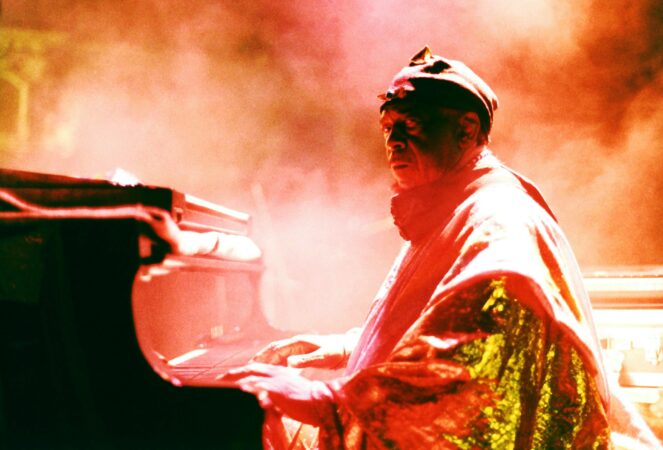
    Sun Ra, the Afrofuturist bandleader and intergalactic visionary who based his Arkestra in Philadelphia for decades, is heading to PBS.

    Sun Ra: Do the Impossible, the Christine Turner-directed documentary that screened at last year’s Black Star Film Festival in Philadelphia, will air as part of PBS’ American Masters series during Black History Month.

    It will be shown locally on WHYY at 9 p.m. Feb. 20.

    Sun Ra, who was born Herman Poole Blount in Birmingham, Ala., founded Arkestra, now led by 101-year-old saxophone player Marshall Allen after Sun Ra’s death in 1993. He moved with the band to a house in Germantown in the late 1960s, where Allen still lives. The Morton Street house was originally owned by Allen’s father.

    Turner’s film includes how Blount, who was known as “Sonny,” experienced a “transmolecularization” in 1936 in which he claimed to have been teleported to Saturn and returned to Earth with a musical mission to bring peace and understanding to the world.

    Sun Ra’s music encompasses the history of jazz — from its New Orleans beginnings to out-there experimentation with electronic instruments, King Britt, Philadelphia DJ-producer-turned Blacktronika professor at the University of California San Diego, explains in the film.

    Other Philadelphians who offer analysis in the documentary include poet-musician-activist Moor Mother, and critic and WRTI-FM (90.1) editorial director Nate Chinen.

    The film’s title is inspired by a Sun Ra quote that Turner kept on her desk while she worked on the documentary. It read: “The possible has been tried and failed. Now it’s time to try the impossible.”

    The American Masters treatment arrives at a time when Sun Ra’s presence is larger than ever.

    Since 2023, the organization has released five Sun Ra tribute albums. Sun Ra’s oeuvre was central to the Metropolitan Museum of Art’s recent “Flight into Egypt: Black Artists and Ancient Egypt” exhibit, and his image is featured prominently at the Institute of Contemporary Art’s “Entryways: Xenobia Bailey” exhibit currently on view.

    Do the Impossible adds to the growing Sun Ra film library that includes the 1972 movie Space is the Place, and Philly filmmaker Robert Mugge’s 1980 Sun Ra: A Joyful Noise. Another doc, coproduced by Allen along with his son Ronnie Boyd titled Sun Ra: Door to the Cosmos, is in the works.

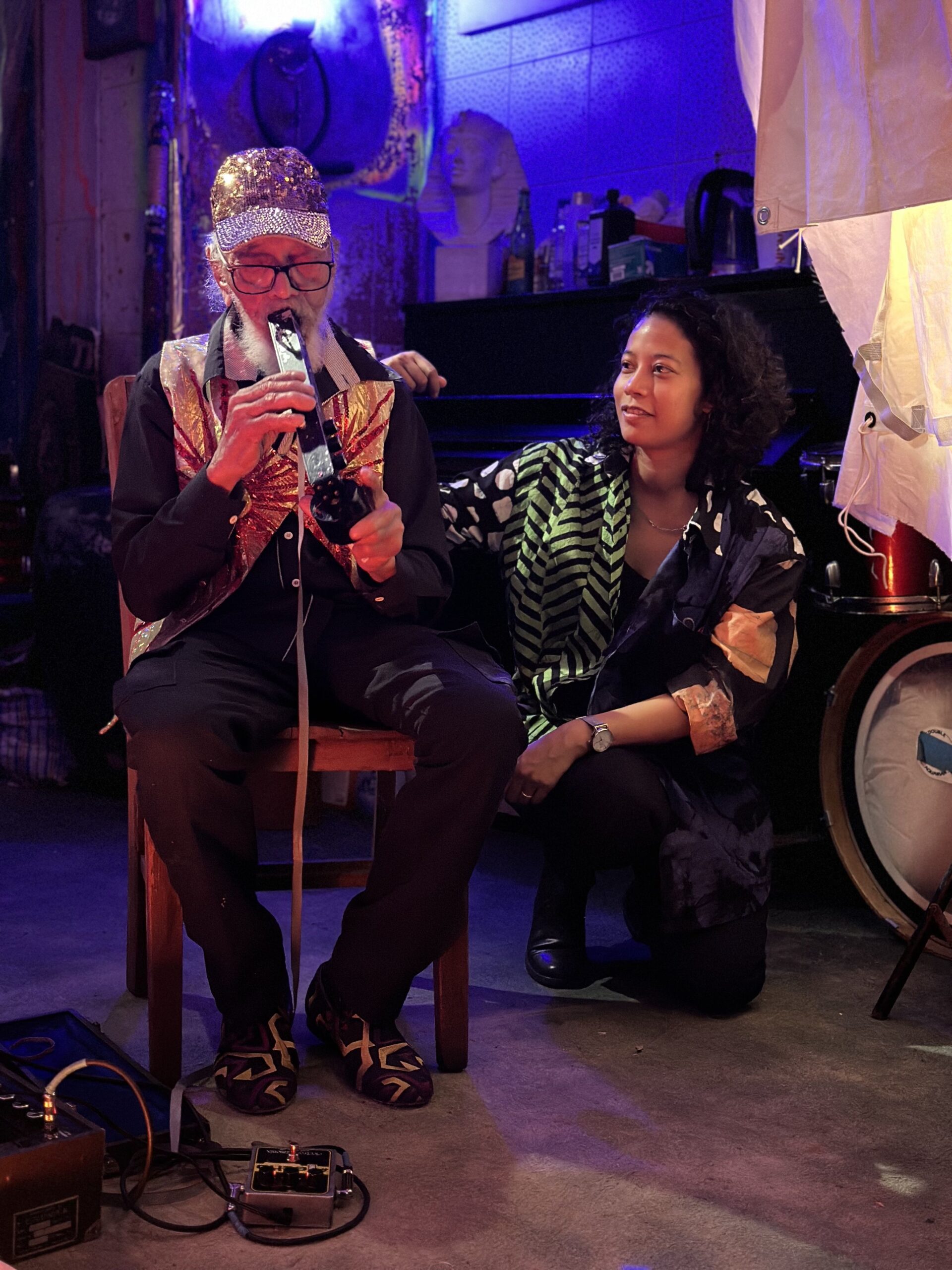
    Sun Ra Arkestra bandleader Marshall Allen with “Sun Ra: Do the Impossible” director Christine Turner at the Sun Ra house on Morton Street in Germantown. The documentary will be shown on PBS on Feb. 20.

    “As a culture, we’re just catching up with a lot of the ideas and the music that was so ahead of its time,” Turner said of her film’s subject in an interview with The Inquirer in July.

    “He’s become an icon of Afrofuturism, and I think that is resonating with people because we’re deeply in need of new ideas and radically imagining another kind of future. And I think people are really hungering for that.”

  • Dozens of surveillance videos and cell phone data led Philadelphia police to Kada Scott’s accused killer

    Dozens of surveillance videos and cell phone data led Philadelphia police to Kada Scott’s accused killer

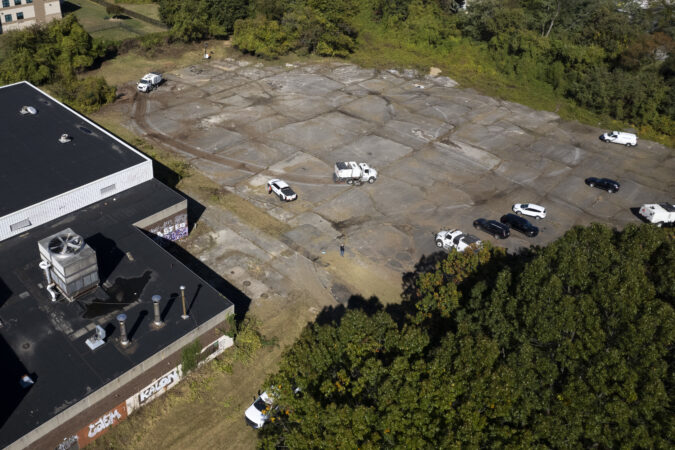
    Two weeks after Kada Scott vanished, Philadelphia Police Detective Joseph Cremen stood over a patch of disturbed ground in a wooded stretch near an abandoned school in East Germantown.

    He pushed aside a layer of loose twigs and pressed a six-foot branch into the soil. It sank only a few inches before stopping short.

    That, Cremen testified Monday, was when he realized he’d found a shallow grave.

    The Oct. 18 discovery ended a two-week search for Scott, 23, who disappeared on Oct. 4 after leaving the Chestnut Hill senior living center where she worked. An autopsy later determined that she had been shot in the head.

    Cremen testified that the location of the grave was not discovered at random, but emerged from weeks of reviewing surveillance footage, digital data, and tips that helped authorities trace a path from the Awbury Arboretum to the wooded area where Scott was buried — and that linked her killing to Keon King, who is charged with murder, abuse of a corpse, and related crimes.

    During a preliminary hearing Monday that stretched nearly five hours, prosecutors methodically laid out that evidence, replaying video after video on a courtroom TV as detectives testified about how they tracked Scott’s final movements and King’s efforts, they say, to conceal her death.

    At the conclusion of the hearing, Common Pleas Court Judge Karen Simmons ruled that prosecutors had presented sufficient evidence for the case to proceed and ordered it held for court.

    An attorney for Scott’s parents, Brian Fritz, called the ruling a “first step” in getting justice for their daughter.

    “Kada Scott’s family is grieving,” he said. “In fact, their grief is unimaginable. But, so is their commitment for accountability and justice for Kada.”

    Detectives testified that surveillance cameras at the Awbury Arboretum recorded a silver hatchback vehicle pulling into a parking lot less than an hour before Scott’s Apple Watch transmitted its final location at 1:14 a.m. on Oct. 5. Footage from the same cameras appeared to show two men removing an object from the car and walking in the direction investigators later followed to Scott’s burial site.

    An anonymous tip helped lead investigators into the woods nearby the Ada H.H. Lewis Middle School in East Germantown.

    Kim Matthews (second from left), mother of Kada Scott, holds a image of her daughter before a Domestic Violence Awareness walk at the Philadelphia Art Museum on Oct. 26, 2025.

    Additional street cameras, prosecutors said, captured the same hatchback parked in a driveway behind homes on the 2300 block of 74th Avenue. Moments later, video showed a sudden flash of light and flames as the car was set on fire, destroying what authorities believe may have been physical evidence inside.

    Investigators did not rely on any single camera, prosecutors emphasized. Instead, detectives testified that they reconstructed the timeline by stitching together footage from dozens of surveillance systems across the city. That effort, they said, led them to King, 21.

    Street cameras recorded a 1999 gold Toyota Camry registered to King traveling in the vicinity of the arboretum around the same times activity was captured there, they said. Police also tracked the movements of one of Scott’s Apple devices after she left work, comparing its location data with license plate readers and surveillance video, detective Robert Daly testified.

    “Everywhere this device went, Mr. King’s car went,” Daly said.

    Cell phone records presented at the hearing showed that King and Scott had exchanged text messages in the hours before her disappearance, Daly testified.

    The last message Scott sent asked King to call her when he arrived at the senior living center. The final incoming call on her phone, at 10:12 p.m. on Oct. 4, was from King, according to police.

    Before Simmons ruled, King’s defense attorney, Robert Gamburg, argued that the prosecution’s case relied too heavily on circumstantial evidence and failed to place his client directly at the scene of the killing.

    The surveillance footage, he said, did not clearly identify any faces and could not establish who was inside and around the vehicles.

    He also pointed to testimony from a senior living center employee who said she saw Scott leave work that night and noticed a dark-colored Jeep parked outside the facility, not a silver hatchback.

    “There is absolutely nothing connecting this young man to what happened to Ms. Scott,” Gamburg said, urging the judge to dismiss the case.

    “At this level, with this quantum of evidence, for this type of case, it should be discharged today,” he said.

    Assistant District Attorney Ashley Toczylowski countered that investigators had assembled a detailed and corroborated account of Scott’s final hours, one that showed not only King’s proximity to her disappearance, she said, but also steps taken afterward to destroy evidence.

    “This isn’t coincidence,” she told the court. “It’s corroboration.”

  • How Black History Month endures

    How Black History Month endures

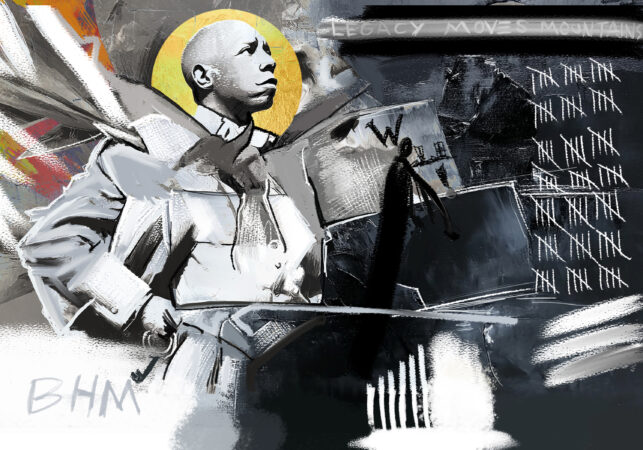
    I am not a huge fan of comic books and superheroes, but I appreciate the storytelling. In comics, the origin story is just as important as the hero saving the day. The same is true for Black History Month, which originated as Negro History Week.

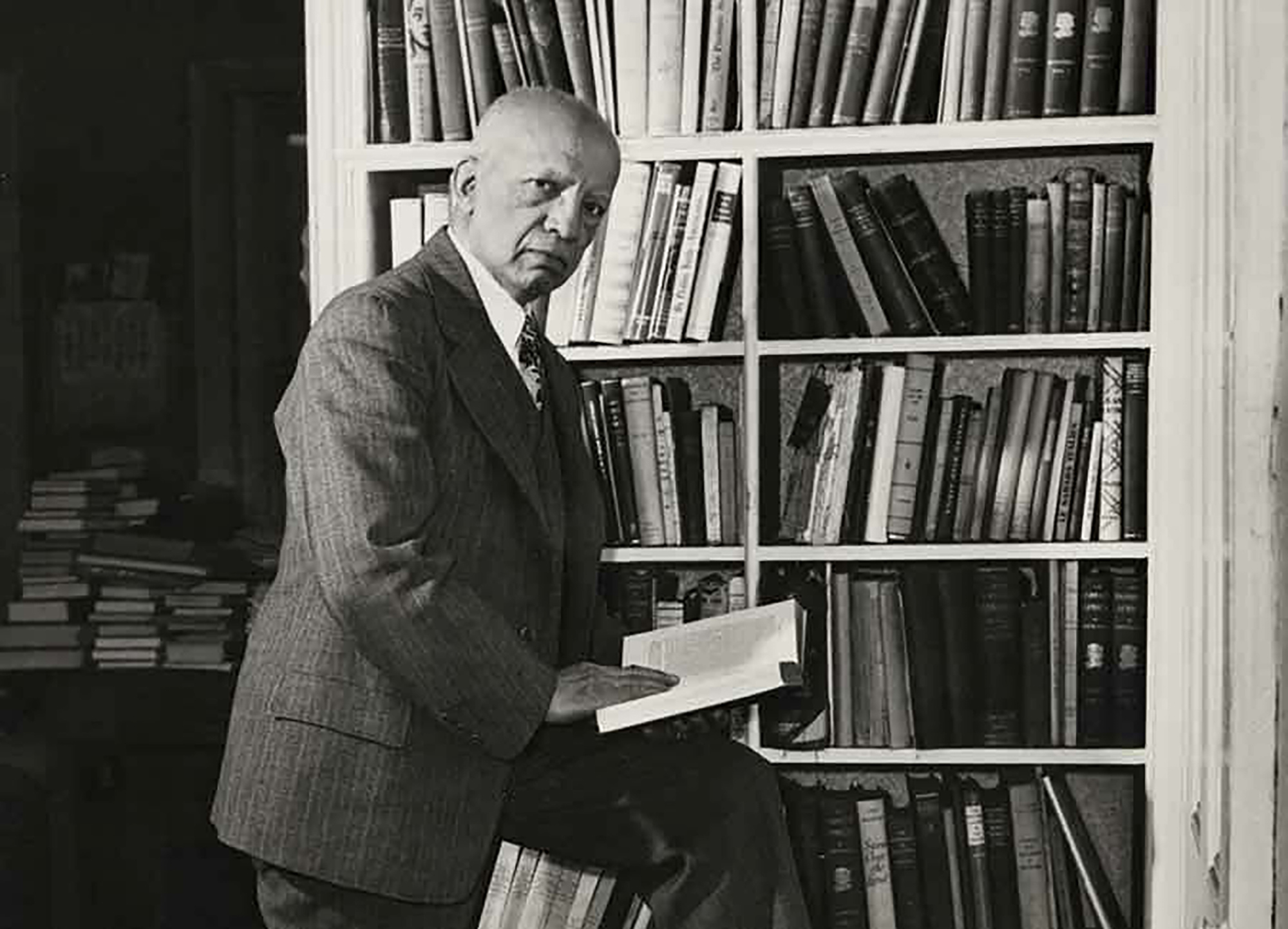
    Negro History Week was created by Carter G. Woodson, the child of two formerly enslaved parents. According to Harvard historian Jarvis R. Givens, Woodson was taught by his two uncles, John and James Riddle, his mother Anne Riddle’s brothers, who had also been enslaved. Both had been educated in a Freedmen School toward the end of Reconstruction, and they became Woodson’s first teachers.

    “As a student, [Woodson] witnessed the shared vulnerability of Black people through the story of his teachers and family,” writes Givens. “These first encounters taught Woodson more than just reading, writing, and arithmetic. He also inherited a political orientation to schooling informed by the lived history of the teachers standing before him … Here, Woodson encountered the project of Black education.”

    The historian and author Carter G. Woodson is widely regarded as the father of what has become Black History Month. Much of the observance’s origin can be traced to Philadelphia, writes Rann Miller.

    That project, which continues to this day, was the equipping of Black people with the practical knowledge to do a thing, and the historical memory to understand why they do it. This was the basis with which Woodson founded the Association for the Study of Negro Life and History (ASNLH) in 1915 and created Negro History Week in 1926, as a time for Black people to not only learn about Black history, but to take the time to reflect on it.

    In Woodson’s words: “It is evident from the numerous calls for orators during Negro History Week that schools and their administrators do not take the study of the Negro seriously enough to use Negro History Week as a short period for demonstrating what the students have learned in their study of the Negro during the whole school year.”

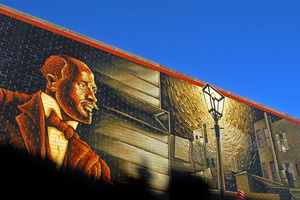
    A mural honoring W.E.B. Du Bois on a firehouse at Sixth and South Streets in Philadelphia. He was an early advocate of Black history events.

    The first Negro History Week took place from Feb. 7 to 13, 1926. The Philadelphia Tribune, in an article published Feb. 6, 1926, said: “It is essential to the future growth of the Negro race that we become acquainted with our past … We have passed the point in our advancement where we can afford to disregard our history.” That sentiment remains true today.

    In April 1928, the Germantown YMCA hosted an event called Negro Achievement Week for the Germantown community, featuring such prominent African Americans as Alain Locke, W.E.B. Du Bois, and James Weldon Johnson. The week’s events received little media attention but were robust, including a mass community meeting, a music night, an art night, and a history lecture, held in both Germantown and Center City, according to David Young, director of the Historical Society of Montgomery County.

    The events were aimed at educating white people, as well, with Du Bois’ pointedly noting that “he reminded the whites too often of their injustice to the Negro.”

    Planning for Negro Achievement Week in Philadelphia began in 1923 at the “Black Branch” of the Germantown YMCA, known as the “Colored Y,” under the guidance of Olivia Yancey Taylor and Eva del Vakia Bowles.

    Members of the Colored Y formed an interracial committee to plan the week’s activities, including a variety of African American heritage events.

    The first Negro Achievement Week, which became Negro History Week, happened in 1925, influenced by a partnership between Woodson and members of the Black fraternity Omega Psi Phi, who created Negro History and Literature Week, first celebrated in April of 1921.

    “Celebrations took the form of public programs in churches, schools, and events partnering with literary societies,” according to Givens. “Given the success of the program, a committee was established in 1923 to outline a strategic plan: to develop plans for fostering the study of Negro History in the schools and colleges of the country.”

    The week subsequently became a shared project between Woodson and Black schoolteachers.

    While Negro Achievement Week in Philadelphia didn’t take place after 1928, Negro History Week continued nationwide because Black people understood that they were past “the point in our advancement where we can afford to disregard our history.”

    Although President Gerald Ford officially expanded Negro History Week to become Black History Month in 1976, Black communities had already done so on their own, believing one week was not sufficient to contain their history.

    Philadelphia stands proudly in that tradition — from the Colored Y to educator Nellie Bright. Thanks to Carter G. Woodson and countless Black educators, their vision endures a century later.

    Rann Miller is an educator and freelance writer based in southern New Jersey. His “Urban Education Mixtape” blog supports urban educators and parents of children attending urban schools. urbanedmixtape.com @RealRannMiller

  • PHA says former Germantown Settlement properties will be reopened by 2029 — at great cost

    PHA says former Germantown Settlement properties will be reopened by 2029 — at great cost

    For over 15 years, dozens of properties once owned by disgraced nonprofit Germantown Settlement have sat derelict and mostly empty.

    In 2024, the properties were given to the Philadelphia Housing Authority (PHA). This month the agency finally announced its plans: $84 million will be spent to gut and rehabilitate 113 units and build 40 apartments for seniors.

    Most of the properties will be earmarked as rentals for very low-income Philadelphians at 30% of area median income, or roughly $32,000 for a family of three. The former Settlement buildings are a mix of rowhouses, duplexes, and small apartment buildings.

    “I was shocked and dismayed by the conditions,” said Kelvin Jeremiah, CEO of PHA. “It’s going to cost a lot of money to get it back to habitable use.”

    Some critics of the plans say the amount PHA plans to spend beggars belief. Spilt 153 ways, $84 million is almost $550,000 a property.

    Longtime Northwest Philadelphia developer Ken Weinstein says his company could build new units at $284,000 a unit, and small developers who are active in the neighborhood can rehab houses for $152,000 apiece.

    “We have limited government resources, and we have so many people that need subsidies to put a roof over their heads,” Weinstein said. “I don’t know why we wouldn’t stretch our dollars as far as possible.”

    (function() {
    var l2 = function() {
    new pym.Parent(‘GERMANTOWN.html’,
    ‘https://media.inquirer.com/storage/inquirer/projects/innovation/arcgis_iframe/GERMANTOWN.html’);
    };
    if (typeof(pym) === ‘undefined’) {
    var h = document.getElementsByTagName(‘head’)[0],
    s = document.createElement(‘script’);
    s.type = ‘text/javascript’;
    s.src = ‘https://pym.nprapps.org/pym.v1.min.js’;
    s.onload = l2;
    h.appendChild(s);
    } else {
    l2();
    }
    })();

    Weinstein emphasized that he thinks Jeremiah has been a transformative and innovative leader for PHA, but he doesn’t understand why the agency isn’t trying to get the properties back into productive use in a more cost-effective way.

    He noted that PHA has sold scattered site single-family units it owns in the area to small developers for low-cost revitalization, with deed restrictions in place to keep them affordable in the long term.

    Weinstein also points to PHA’s campaign to obtain struggling new apartment buildings as an example of its capacity for flexibility and cost sensitivity. Jeremiah has said the purchases are being made because they cut the agency’s costs in half in contrast to building new.

    “I thought it was brilliant that PHA set out to buy existing apartment buildings at $200,000 a unit. That is a much better way to address the affordability issue in housing,” Weinstein said. “I don’t know why PHA would go out of their way to spend 2½-times that to rehab and newly construct in Germantown.”

    The transfer of the former Germantown Settlement properties from the Redevelopment Authority to PHA was controversial in 2024. Some residents felt a community engagement campaign had been ignored. Many attendees had expressed a desire for more homeownership opportunities.

    Jeremiah says that after a community meeting earlier this month, he is open to using 16 of the properties for affordable homeownership.

    “We heard that they would like to see a more balanced community, and so we’re going to work through what that means,” Jeremiah said. “We are revisiting some of the suggestions that we heard from the community, and we are going to revise our plans.”

    But Jeremiah says that sales to small developers for homeownership units, even with deed restrictions, would not help the poorest Philadelphians.

    When PHA does sell scattered site homes for private redevelopment, the rebuilt houses primarily go to those making 60% of area median income or $64,000 for a family of three.

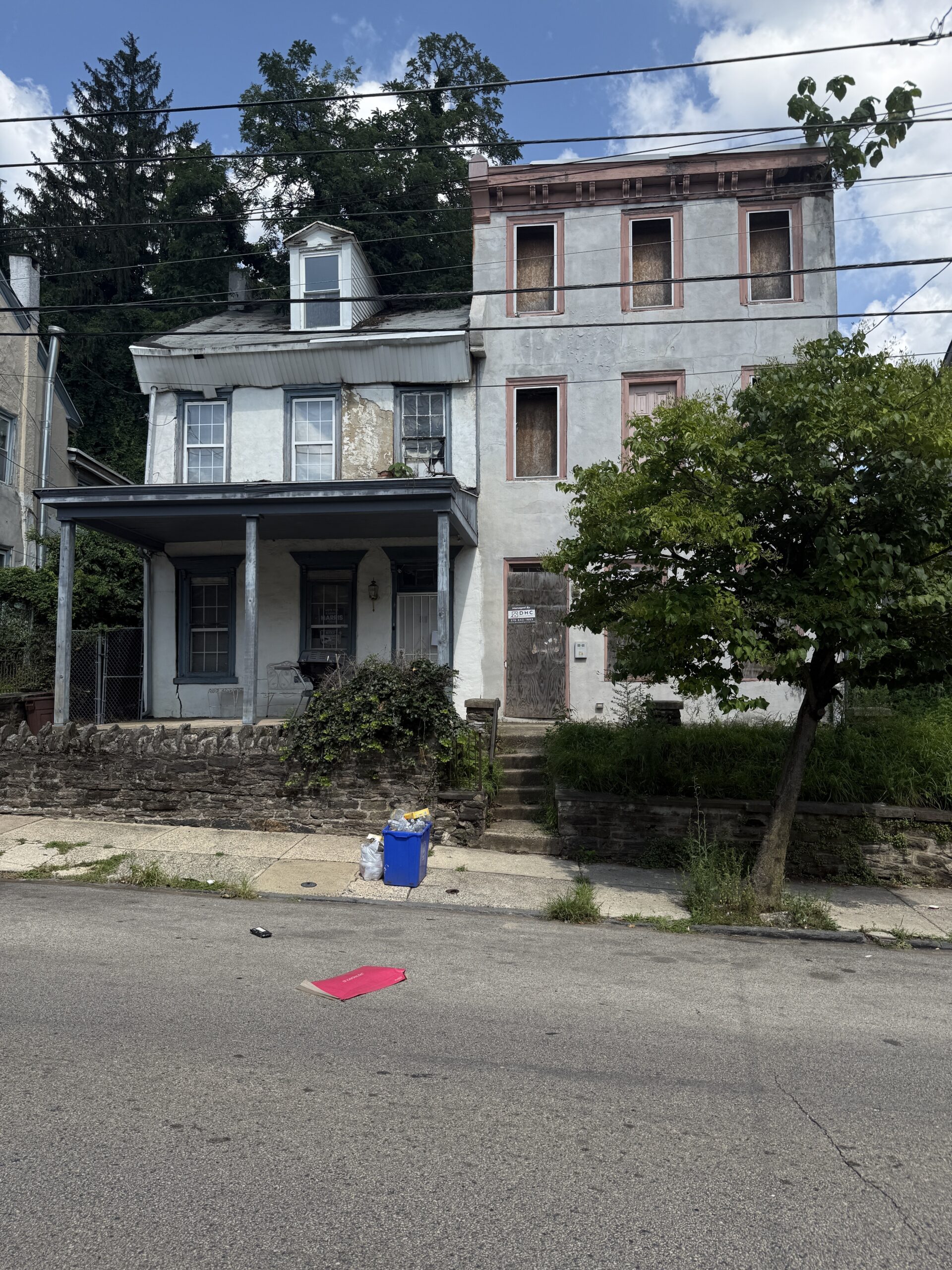
    A former Germantown Settlement property, courtesy of Kelvin Jeremiah.

    The lowest-income residents, who make half that, are the overwhelming majority of PHA’s tenants. They are not in a position to buy a home — even a subsidized and permanently affordable one.

    “A mom and pop [developer] would be hard-pressed to maintain permanent affordability,” Jeremiah said.

    Keeping the former Germantown Settlement properties as PHA-run rentals will guarantee a repository of affordable units no matter how this corner of Northwest Philadelphia evolves, he said.

    “Some of our assets are in communities that are rapidly becoming unaffordable,” Jeremiah said. “Our assets in those communities ensure we are maintaining some level of affordability.”

    Jeremiah himself has often criticized how much it costs PHA to build or gut rehabilitate projects, but he notes that the agency is restricted by a variety of federal regulations.

    “The construction costs are untenable for us, but it’s driven by the regulatory requirements that we must adhere to,” he said. “I have no flexibility.”

    Jeremiah estimates that the rehabilitation work will begin in 2027, after PHA hopefully secures Low Income Housing Tax Credits this year. Once begun, he expects the project to take 15 months, so at earliest the homes will be ready for habitation again in 2028.

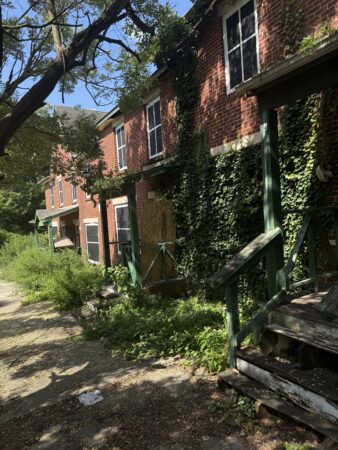
    Many of the former Germantown Settlement properties have fallen into ruin over the last 10 years, with copper wiring stripped out and mold or insect infestations harrowing their interiors.

    The city demolished the Blakemore Apartments because of their poor condition. Its site is where PHA will build a new 40-unit building for seniors. (PHA received 121 of 140 of the expired nonprofit’s units, with the rest going to smaller developers.)

    The former Germantown Settlement properties are heavily concentrated in two sections of East Germantown, creating pockets of dense vacancy near the intersection of Church Lane and Lena Street and on the 40th blocks of Wister and Garfield Streets.

    For Councilmember Cindy Bass, who represents the neighborhood, PHA is the right entity to redevelop these long troubled buildings.

    “It’s very important to preserve affordable housing, and that’s what we’re doing here,” Bass said. “This is not for profit. This is for people.”