Tag: Germantown

  • Bill Wine, Emmy Award-winning film and TV critic, and longtime La Salle professor, has died at 81

    Bill Wine, Emmy Award-winning film and TV critic, and longtime La Salle professor, has died at 81

    Bill Wine, 81, of Philadelphia, three-time Mid-Atlantic Emmy Award-winning film and TV critic, retired tenured associate professor of TV and film at La Salle University, onetime freelance TV critic for the Daily News, freelance writer, playwright, and popular lecturer, died Sunday, June 14, of complications from Parkinson’s disease at his home in Chestnut Hill.

    The son of two part-time amateur actors and a lifelong devotee of theater, film, TV, writing, and teaching, Mr. Wine was a film critic for WTXF-TV, Channel 29, for 12 years and KYW radio for 17 years. Known for his pithy, witty, and often acerbic reviews, and a breezy conversational style of writing, he worked at Channel 29 from 1990 to 2002 and KYW from 2001 to 2018.

    “Bill Wine was a character out of a Neil Simon comedy, more Oscar than Felix,” said Carrie Rickey, former Inquirer movie critic. “You didn’t have to wait long for the punchline.”

    Mr. Wine’s film reviews on Channel 29 were often funny and entertaining.

    At Channel 29, Mr. Wine was nominated for eight regional Emmy Awards for commentary and writing, and won three. He appeared regularly on the station’s Ten O’Clock News, in primetime movie preview and review programs, and later on Mondays, Wednesdays, and Fridays on Good Day Philadelphia.

    By 1990, he had already written hundreds of freelance film reviews for the Daily News and Courier-Post, done radio reviews for WPEN, and taught a variety of classes about film and writing for a decade at La Salle. So, despite no previous TV experience, he was hired at Channel 29 over 60 other film critic applicants.

    “I had never been on TV, but I wasn’t nervous,” he told the Daily News in 2001, “because I had been standing in front of 100 students for 10 years.”
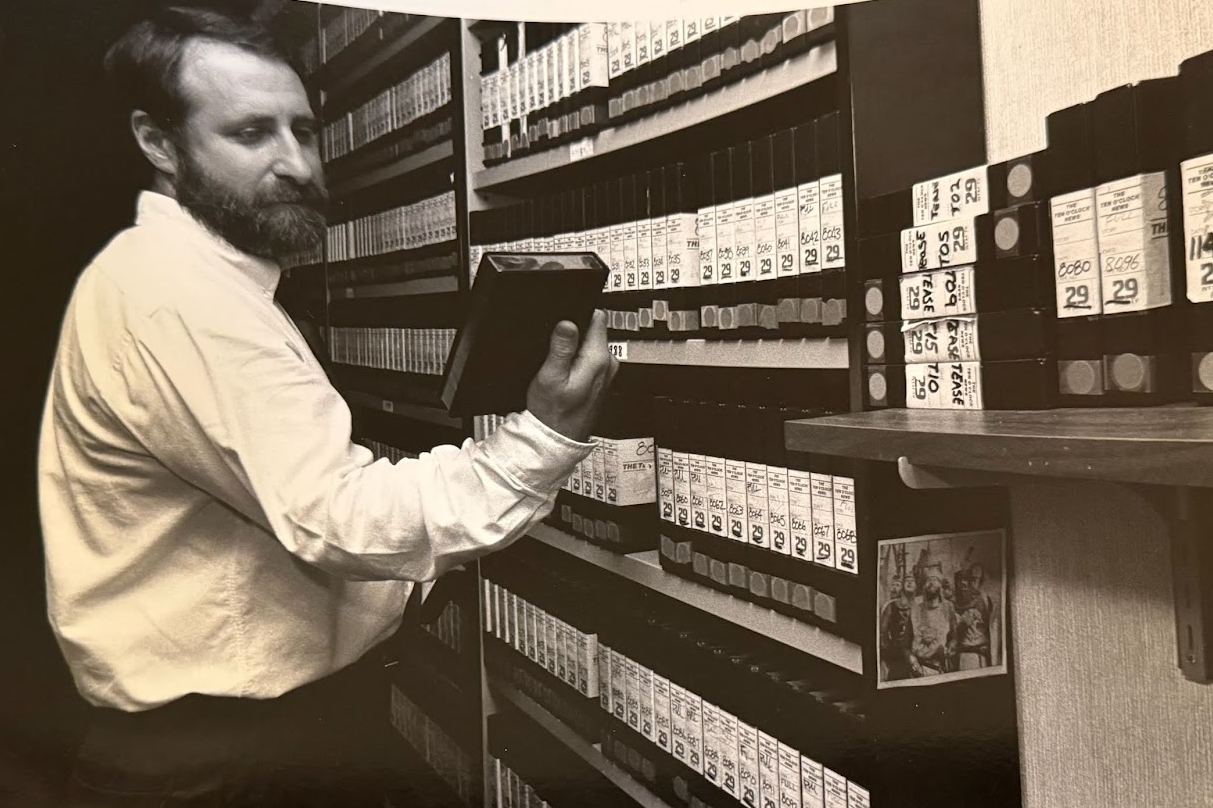
    Mr. Wine worked at at WTXF-TV, Channel 29, for 12 years.

    He started at KYW radio in 2001 and usually aired reviews and reports on Thursdays, Fridays, and Saturdays. Sometimes, he watched three movies in one day. He left Channel 29 in 2002 and KYW in 2018 only after both companies eliminated their local film critic position.

    “When I started [writing film reviews], it was before the internet,” he told The Inquirer in 2018. “A lot of people [now] feel like, ‘Who the heck is a movie critic to come on in a minute and to dismiss something that took hundreds of people and millions of dollars to create?’”

    In the 1970s and ‘80s, he wrote articles and reviewed films, TV shows, books, and plays for WPEN, The Inquirer, Courier-Post, Philadelphia Magazine, and other outlets. In 1975, he wrote dozens of freelance TV columns called “On the Air” for the Daily News.
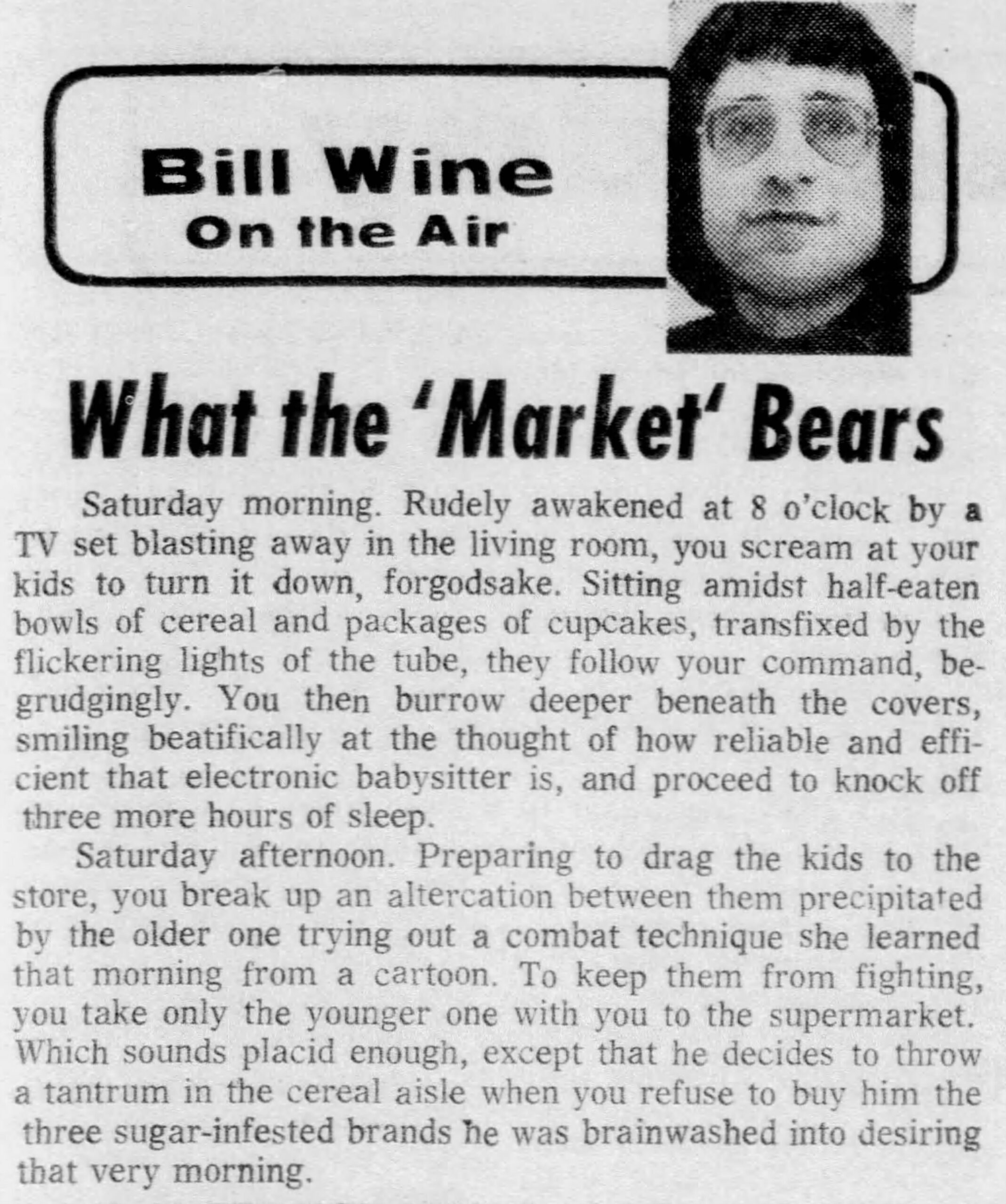
    Mr. Wine wrote dozens of columns as a freelance TV critic for the Daily News in 1975.

    He spent three years in California in the 1970s working on plays and film and TV scripts. He hobnobbed with famous writers, producers, and actors in Los Angeles, staged one of his own plays, and was a winning contestant on a new TV game show.

    He wrote 11 plays over the years, and several made it to the stage. “Now the people who disagree with my reviews can come and find out if I’m as dumb as they think I am,” he told The Inquirer in 2002.

    He aired reviews on WIP radio and lectured often at libraries, schools, community centers, theaters, and other venues about his favorite films, adapting books to film, and other topics. “He could be wickedly funny, especially when delivering a pan of a movie,” his family said in a tribute. “One of his favorite quotes was: ‘I had a bad seat. It was facing the screen.’”
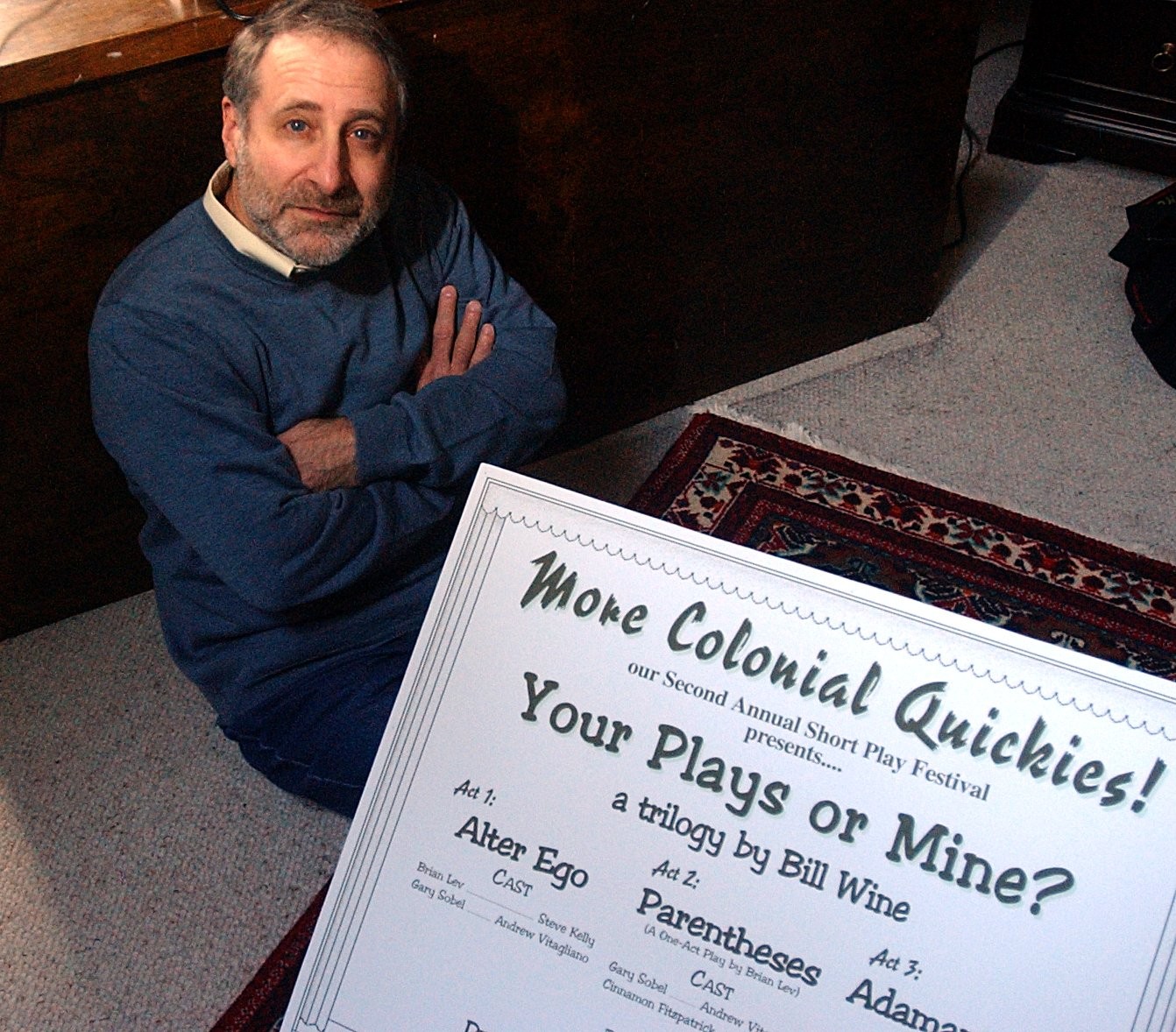
    Mr. Wine was a prolific playwright who enjoyed table readings with family and friends.

    Mr. Wine earned a bachelor’s degree in math at Drexel University and a master’s degree in communications at Temple University. He helped design La Salle’s nascent Communication Department in the 1980s, and school officials called him one of their “Founding Fathers.” He also taught briefly at Drexel, and came close to earning a doctorate at Temple.

    In 2001, he was featured in a Daily News story about “celebrity professors” and said: “You have to remind yourself that this is television, not the classroom. You mention, say, ‘film noir’ on TV, and you get a memo.”

    William David Wine was born June 21, 1944, in Germantown. He grew up in West Oak Lane and Cherry Hill, attended Central High School, and graduated from the old Cherry Hill High School.
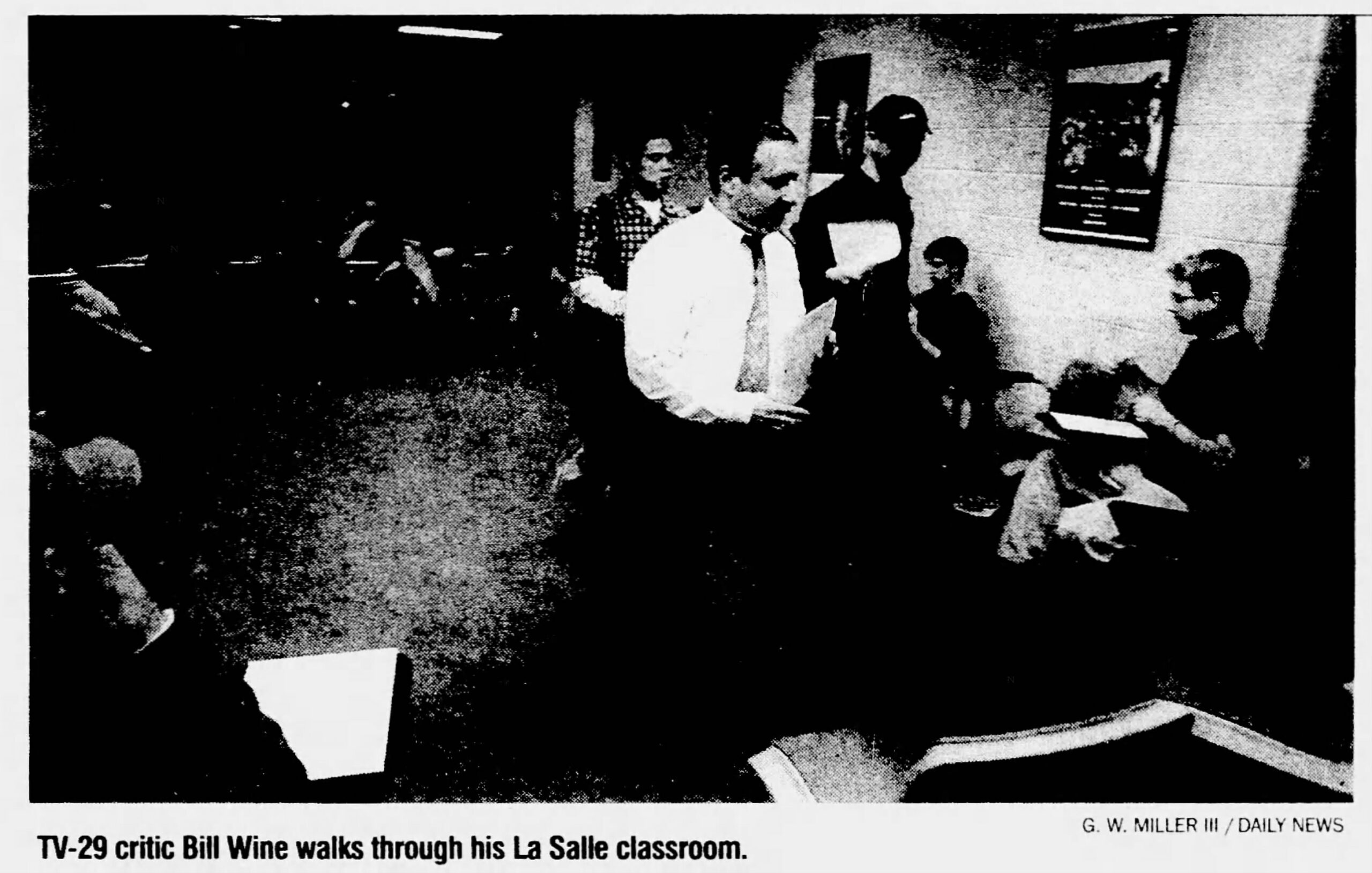
    A story and this photo of Mr. Wine about his time as a professor at La Salle appeared in the Daily News in 2001.

    As a boy, he devoured newspaper movie reviews and fell in love with film after seeing Alfred Hitchcock’s 1954 thriller Rear Window. He got positive reviews of his own freelance movie review when he was at Temple, and he knew then, he said later, that writing about movies was his creative niche.

    “The first time I saw my byline, I was hooked,” he told Drexel Magazine in 2016.

    He married Dina Lichtman, and they divorced later. He married Suzanne Monsalud in 1981, and they had daughters Simone and Paulina, and lived in Germantown, Wyncote, and Chestnut Hill.
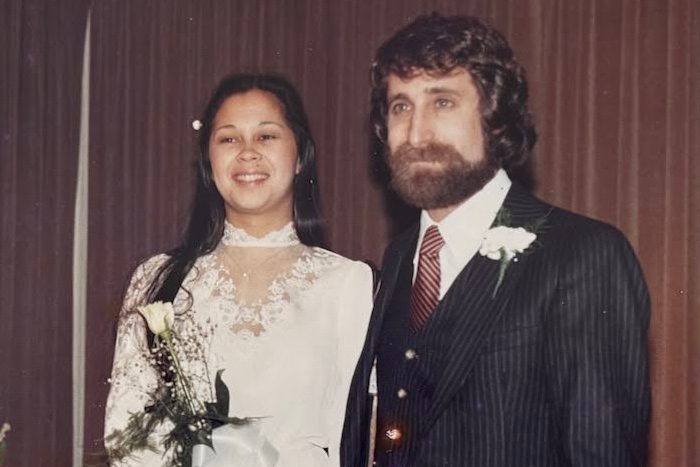
    Mr. Wine and his wife, Suzanne, married in 1981.

    Together, Mr. Wine and his family traveled to Paris and London, and he and his wife honeymooned in Rio de Janeiro, Brazil. He doted on his daughters and sometimes took them to his La Salle classroom, the Channel 29 TV set, and movie screenings.

    Friends, former colleagues, and former students called him “a force of nature,” “smart and gifted,” and “a rare combination of kindness, professionalism, and humor.” His daughter Simone said: “His humor, warmth, and presence made life brighter.”

    Mr. Wine played tennis, third base on adult softball teams, and pickup basketball into his 70s. He followed the Phillies, 76ers, and Eagles closely, and hit tennis balls with Hall of Famer Rod Laver at a publicity event in Los Angeles.
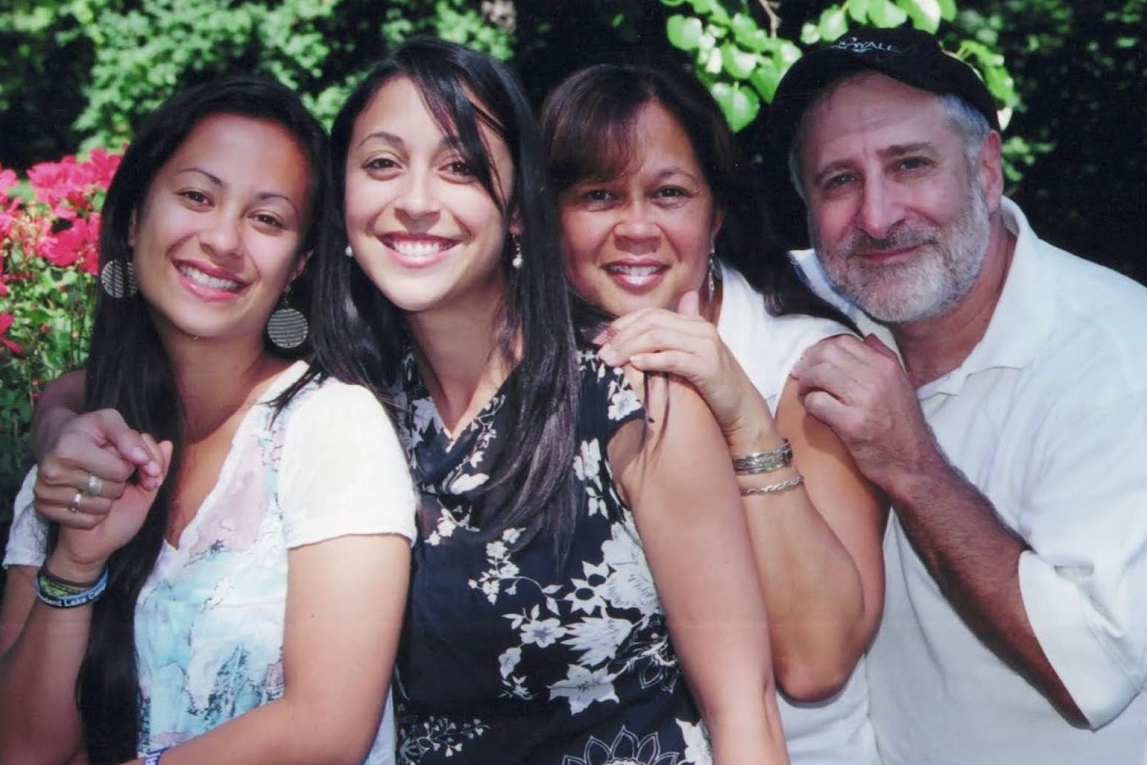
    Mr. Wine and his family made memorable trips to Paris, London, and elsewhere.

    “He was a wonderful father and a dedicated teacher,” his wife said. “He was a real Philadelphian, and we complemented each other.”

    His daughter Paulina said: “Dad, I think you cracked the code. We’ll see you at the movies.”

    In addition to his wife and daughters, Mr. Wine is survived by three grandchildren, a sister, Marcia, and other relatives. A sister died earlier.

    A celebration of his life was held earlier.

    Donations in his name may be made to the Bill Wine Scriptwriting Award at La Salle University, 1900 W. Olney Ave., Philadelphia, Pa. 19141.
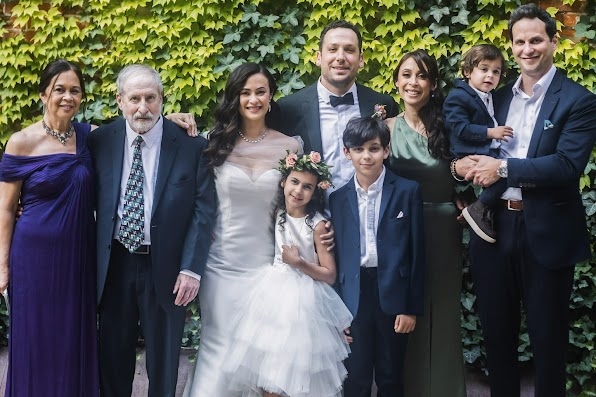

    Mr. Wine (second from left) enjoyed time with his family.
  • For his 70th birthday, bassist and Philly maverick Jamaaladeen Tacuma will party with 102-year-old Marshall Allen

    For his 70th birthday, bassist and Philly maverick Jamaaladeen Tacuma will party with 102-year-old Marshall Allen

    Jamaaladeen Tacuma isn’t particularly interested in dwelling on the fact that he has just turned 70. It may be one of the few things the veteran bassist, with a seemingly limitless capacity for fascination, isn’t interested in.

    “I was always the kind of person that looked ahead,” Tacuma said. “I like to say, ‘What am I going to be doing in the future? How will I be thinking in the future?’”

    He marked his June 13 birthday not with old friends, but performing at South,leading a never-before-assembled, multigenerational quintet with Pulitzer-winning drummer Tyshawn Sorey, saxophonist and Snacktime cofounder Yesseh Furaha-Ali, guitarist Keyanna Hutchinson, and pianist Yoichi Uzeki.

    On July 18, he’ll celebrate the release of a new all-star album with 102-year-old saxophonist Marshall Allen at Grounds for Sculpture in New Jersey. Two months later, he’ll be back at South with Quantum Blues, an unlikely quartet teaming him with longtime Pharoah Sanders guitarist Tisziji Munoz, Living Colour drummer Will Calhoun, and former Late Show with David Letterman keyboardist Paul Shaffer.

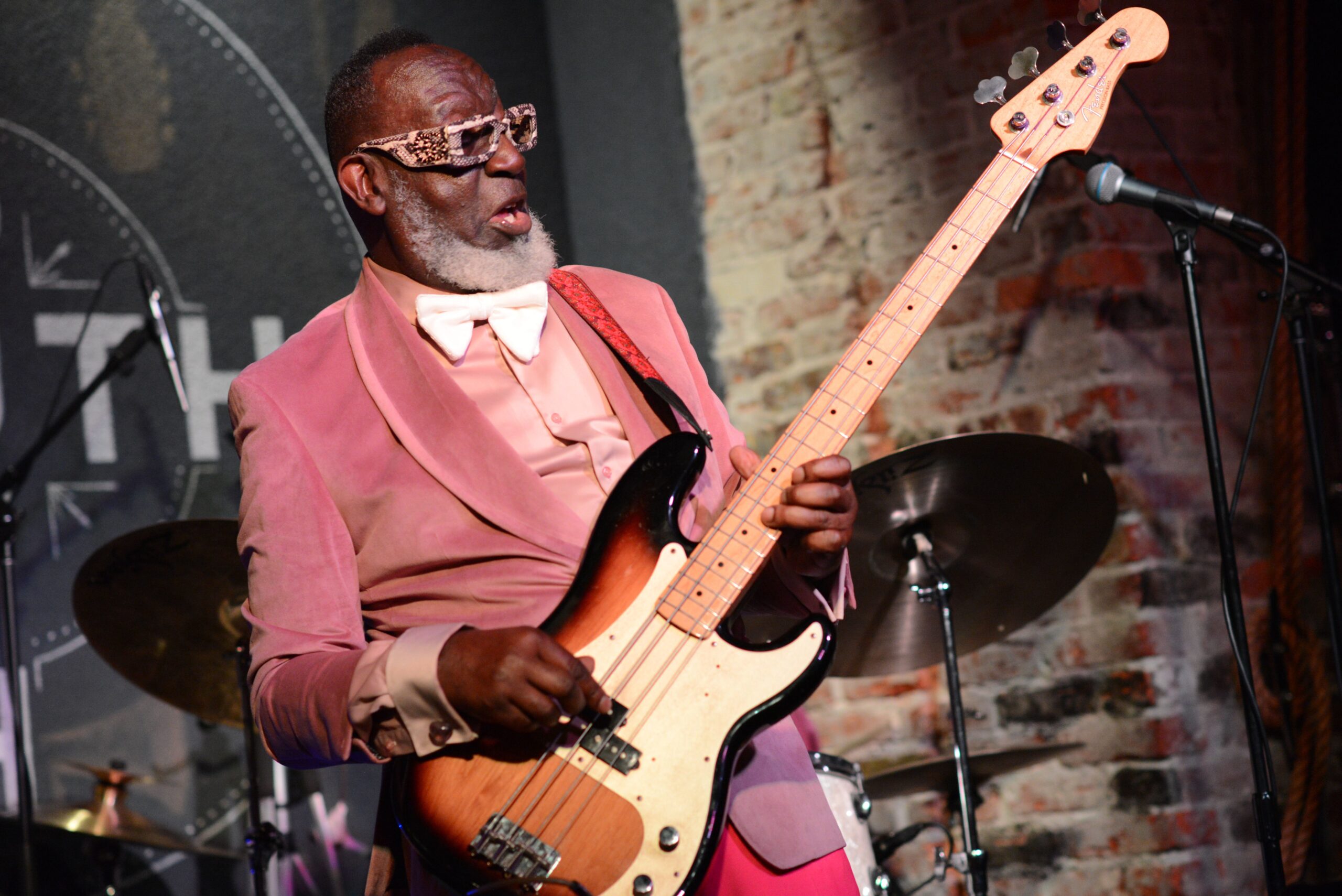
    Jamaaladeen Tacuma on stage at South. The bassist celebrated his 70th birthday at the club in a quartet featuring drummer Tyshawn Sorey.

    But it’s not just music that captures his imagination. Before settling in for our interview in May at a Mexican restaurant on Passyunk, Tacuma was gushing about his recent viewings of vintage films from Japan’s Toho studio, giant monster movies like the original Godzilla and The Mysterians.

    The lunch, he said, evoked memories of a visit to Mexico City, where he learned of the country’s lucha libre wrestling tradition. This, in turn, prompted the recording of an upcoming album, Bajo Libre.

    That sort of thing happens constantly with Tacuma, who has a Zelig-like ability to find himself in unexpected musical situations.

    On a recent trip to London, he was being shown around by drummer Sean Noonan, a frequent collaborator. While passing though the Liverpool Street tube station, his ear was caught by the guitar playing of a young busker. He immediately tasked Noonan with finding a studio and enlisted the 18-year-old guitarist, Michael Asukyle, to record an impromptu album he called Mind the Outsiders, which was released last February.

    Jamaaladeen Tacuma on stage with the Wiggles in Boston’s Wang Theater in 2023, where he presented band member Tsehay Hawkins with a special DiPinto bass.

    After taking his grandson to see the Australian children’s group the Wiggles a few years ago, he bumped into the band over breakfast at Sabrina’s Cafe the next morning. By the time he got home, they’d invited him into the studio to write and record the song “Play the Bass Guitar.”

    He’s since joined them on stage and on television, and plans to reunite with the band this summer at the Miller Theater.

    Tacuma’s friendship with Rolling Stones drummer Steve Jordan — they met, he recalls, copresenting an award to the Red Hot Chili Peppers — led to an eight-year gig in the house band for the Michael J. Fox Foundation’s annual gala fundraiser, where he’s played with the likes of Sheryl Crow, Stevie Nicks, Jackson Browne, and Bob Weir.

    Almost in spite of his compulsion to move perpetually forward, Tacuma’s 70th birthday year has occasioned a number of opportunities for revisiting the past, as well.

    In January, the bassist returned to the Norris Apartments housing project, where he grew up as Rudy McDaniel.

    Joined by a group of local singers and musicians, many of whom he’d known since his early days in North Philly, he presented his “The Dream Then & Now” suite, dedicated to the Rev. Dr. Martin Luther King Jr. As Lawrence “Weas” Newton recited the civil rights leader’s words, Tacuma struck up a funk groove in the complex’s community center, a poster board nearby displaying photos of him playing in the same room as a teenager.

    Bassist Jamaaladeen Tacuma on stage with vocalist Lawrence “Weas” Newton in January at the Norris Homes Community Center.

    “It was surreal,” Tacuma said with a laugh. “Weas and I grew up in the area. We used to play ball in the basketball courts right next door. A lot of groups came from that area, like Harold Melvin & the Blue Notes, the Stylistics, McFadden and Whitehead, Brenda & the Tabulations. And the Uptown Theater was right around the corner, so I saw everybody there whenever those shows would come to town — the Temptations, James Brown.”

    The neighborhood not only nurtured Tacuma’s passion for music but also inculcated his love of fashion.

    “If folks had money, they would go downtown and go to Boyds,” he explained. “But for the most part, we would go to the Avenue, Germantown and Lehigh. There you had all the stores, like Leo’s or Al Schaeffer’s Red Carpet Room.”

    Tacuma later borrowed the name of one of those shops for his boutique, the Redd Carpet Room. There he sells the finds he brings home from his travels; he can often be found at flea markets and vintage shops in the hours prior to a performance.

    “I don’t take bass guitars on tour anymore,” he said. “I just bring a suitcase to fill with clothes. I’m serious about helping guys look a bit better.”

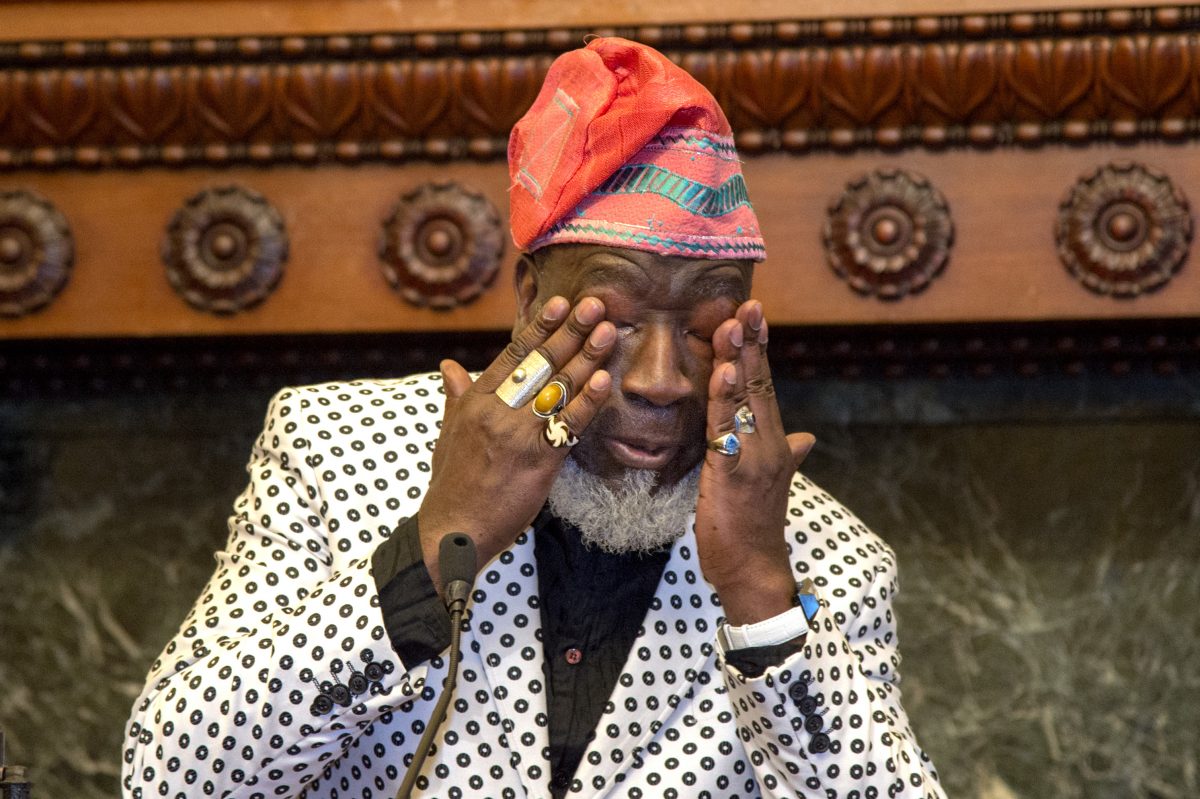
    Bassist Jamaaladeen Tacuma wipes away tears after he was presented with the 2018 Benny Golson Award by the mayor at City Hall on March 29, 2018.

    A month after his MLK Day performance, Tacuma played the Sons d’Hiver festival in Paris, where he revisited the hotel that had become the home base for Ornette Coleman’s Prime Time band 50 years earlier, during Tacuma’s first tour of Europe.

    “We were supposed to go to Paris for two weeks, and we wound up staying for three months,” he recalled. “I hadn’t been back to that place since that time. The same family owned it. We had lunch right next door, at the same restaurant where Ornette and I used to have lunch, sitting at the same table. It brought back a lot of memories.”

    Coleman played a foundational role in Tacuma’s musical life. After high school, he received a scholarship to attend Berklee School of Music but declined.

    “Because I wanted to be a musician that played on the road.”

    Instead of college, he joined organist Charles Earland’s band but was fired after a year. He moved home, wondering what to do next, until a week later he received a call to audition for Coleman’s band.

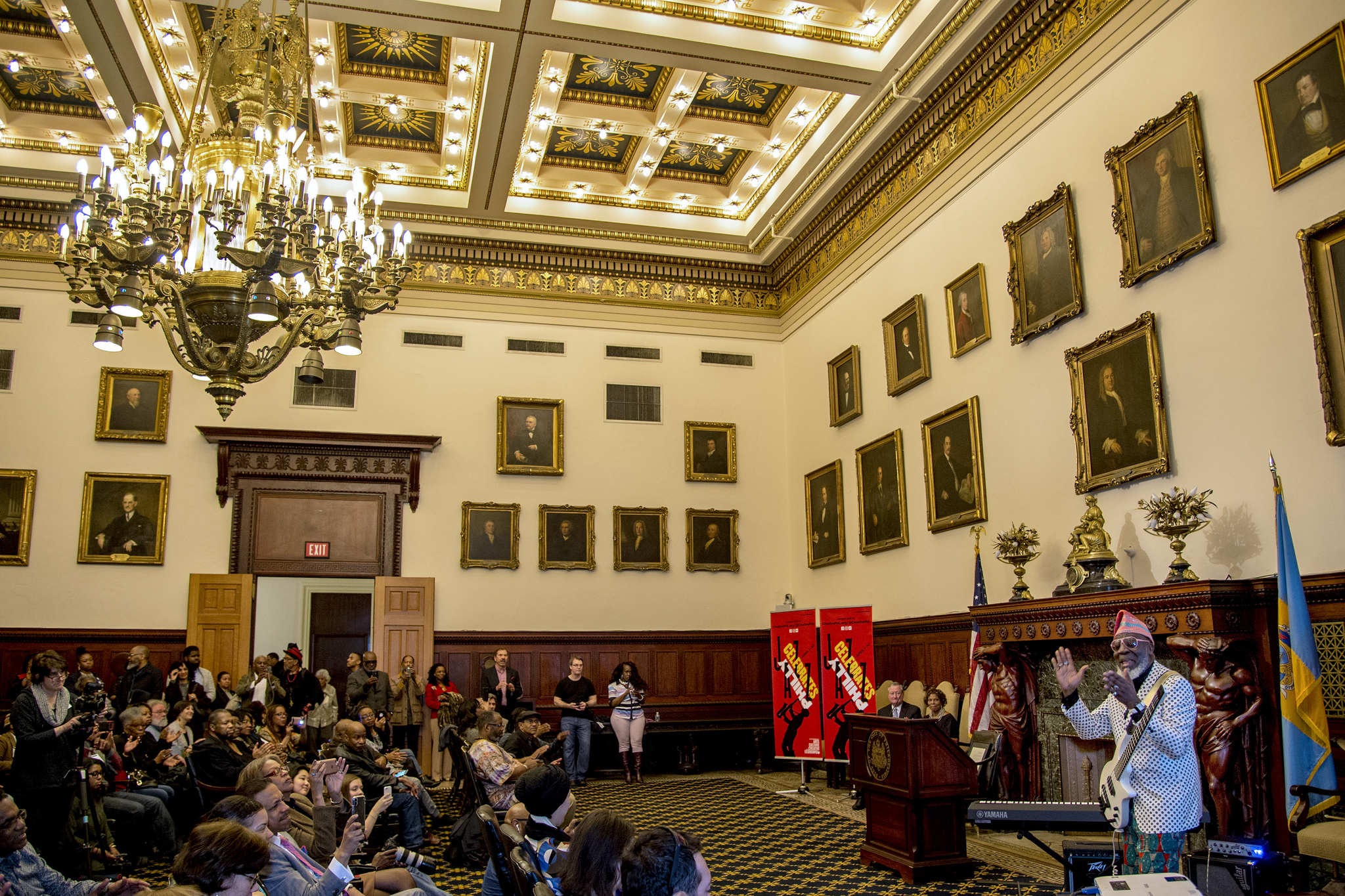
    Tacuma gives an impromptu solo performance in the Mayor’s Reception Room on March 29, 2018.

    “I learned so many things from Ornette,” he said. “As a bandleader, he wasn’t dictatorial, but he knew what he wanted and he knew how to extract that from the members of the band. Also there was a seriousness about sound, the idea that if you really, truly hear something different, then you should express it. You don’t have to follow a trend.”

    Those are lessons that Tacuma has carried with him over a remarkably diverse and unpredictable career spanning more than half a century. He has collaborated not just with a staggering variety of musicians but with visual artists, filmmakers, architects, and scientists.

    When asked to take a moment to look back over it all, even he has to marvel.

    “I think I’ve looked into the future so much,” he concluded, “that I have a lot of stuff now to look back on. I feel blessed that the creator has given me all this.”

  • Philadelphia budget’s ugly attack on the arts | Editorial

    Philadelphia budget’s ugly attack on the arts | Editorial

    At $5 million, Philadelphia’s primary arts and cultural fund is not one of its many substantial burdens for taxpayers, amounting to well under a thousandth of the multibillion-dollar municipal budget. And yet, the city’s politicians can’t seem to resist the allure of the minuscule expense as a canvas for their financial creativity.

    Having narrowly survived fiscal extinction during the pandemic, the Philadelphia Cultural Fund took another disproportionate cut in the city’s recently enacted budget for fiscal 2027, which begins next week. The spending plan recently passed by City Council and signed by Mayor Cherelle L. Parker appropriates $3.5 million for the fund, nearly a third less than this year, according to the fund’s executive director, Gabriela Sanchez. It’s hardly a rounding error in Philadelphia’s $7.1 billion budget, but it’s likely to devastate many of the tiny arts and cultural groups the line item supports citywide.

    Nearly 100 of the almost 300 arts organizations that depend on the fund are expected to lose the aid as a result, Sanchez said in a statement. She said the fund would halve its eligibility threshold, limiting grants to groups with budgets of no more than $1.5 million, among other “untenable decisions,” hobbling neighborhood theaters, festivals, music programs, and more. “In practice,” Sanchez added, “this means that community-based arts and culture groups … will lose essential operating funding that sustains their day-to-day work.”

    Created three decades ago to supplant more traditionally Philadelphian methods for distributing tax money — according to the whims and still less defensible motives of local politicians — the cultural fund brought a measure of evenhandedness and transparency to bear, offering clear rules and a fair process. Today, it funds groups ranging from A Book a Day, which has donated thousands of books to institutions serving young readers in West Philadelphia, to the Wyck Association, dedicated to preserving and interpreting the historic house of that name in Germantown.

    The impact of these groups, economic and otherwise, is far greater than their cost: A 2024 report by the Greater Philadelphia Cultural Alliance found that nonprofit arts groups generate more than $2 billion in yearly economic activity, providing $1 billion in household incomes and $265 million in tax revenues. The alliance also found that the sector suffers from inadequate, unreliable, and uneven public funding.

    The cut is cruelly contrary to what city arts groups and some Council members argued for amid the Trump administration’s retreat from federal arts funding, which was to increase the cultural fund’s allocation by 20%. It’s also at odds with a city budget that raises overall spending by about 3% over this fiscal year. At that rate, given the fund’s benefits, the city should at least be able to hold it harmless and maintain this year’s relatively meager contribution.

    Philadelphia’s arts groups shouldn’t be perpetually on the budgetary brink just because most of them are small and lack powerful political patrons, making them easy to pick on. The mayor and Council should find a way to restore this funding and stop creating trouble for the city’s invaluable creators.

  • Parts of Fairmount Park were not only the site of America’s first paper mill, but also the country’s first company town

    Parts of Fairmount Park were not only the site of America’s first paper mill, but also the country’s first company town

    We take paper for granted now. But in the late 1600s, when Pennsylvania’s founder William Penn recruited German papermaker and preacher William Rittenhouse to manufacture the writing parchment in the New World, paper was a luxury.

    England’s King William III made it difficult for his subjects — at home and in the Americas — to have it. Like many monarchs of his day, he believed it was the Crown’s duty to record history.

    The English imported paper from other European countries. So, to make matters worse, colonists who managed to appeal to the king for paper were double and triple taxed. They got fed up and went about securing their own paper to document the goings on in the government, inform citizens, record history, and ultimately plan a revolution.

    Artist Ava Haitz’s No. 1 honors the country’s first paper mill, celebrating the invention and craftsmanship that made widespread written communication possible.

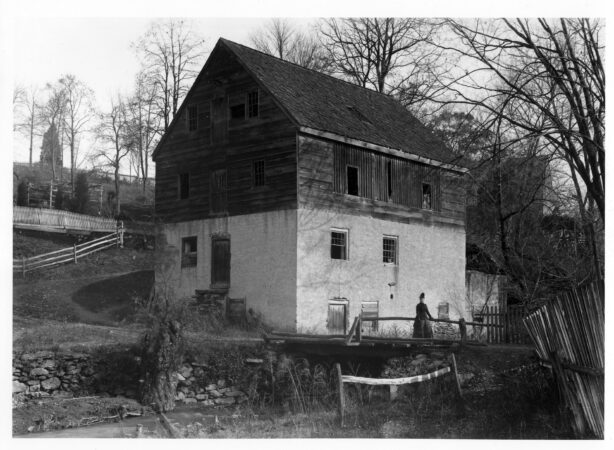
    In 1690, Rittenhouse partnered with Philadelphia’s first printer, William Bradford, to build America’s first paper mill, situated in northwest Philadelphia and powered by the Monoshone Creek, a tributary of the Schuylkill.

    The paper mill will be celebrated this Saturday at Historic RittenhouseTown, part of a series of weekly “Firstival” celebrations. Firstivals are the Philadelphia Historic District’s yearlong birthday nod to places and events with Philadelphia roots. The day parties are a hallmark of this year’s Semiquincentennial fetes.

    At the Rittenhouse mill, paper was made from linen rags fashioned from flax grown in Germantown, that were broken down and shaped into sheets. The mill grew quickly as Rittenhouse, America’s first Mennonite bishop, provided paper for Bibles and Quaker and Mennonite texts in German.

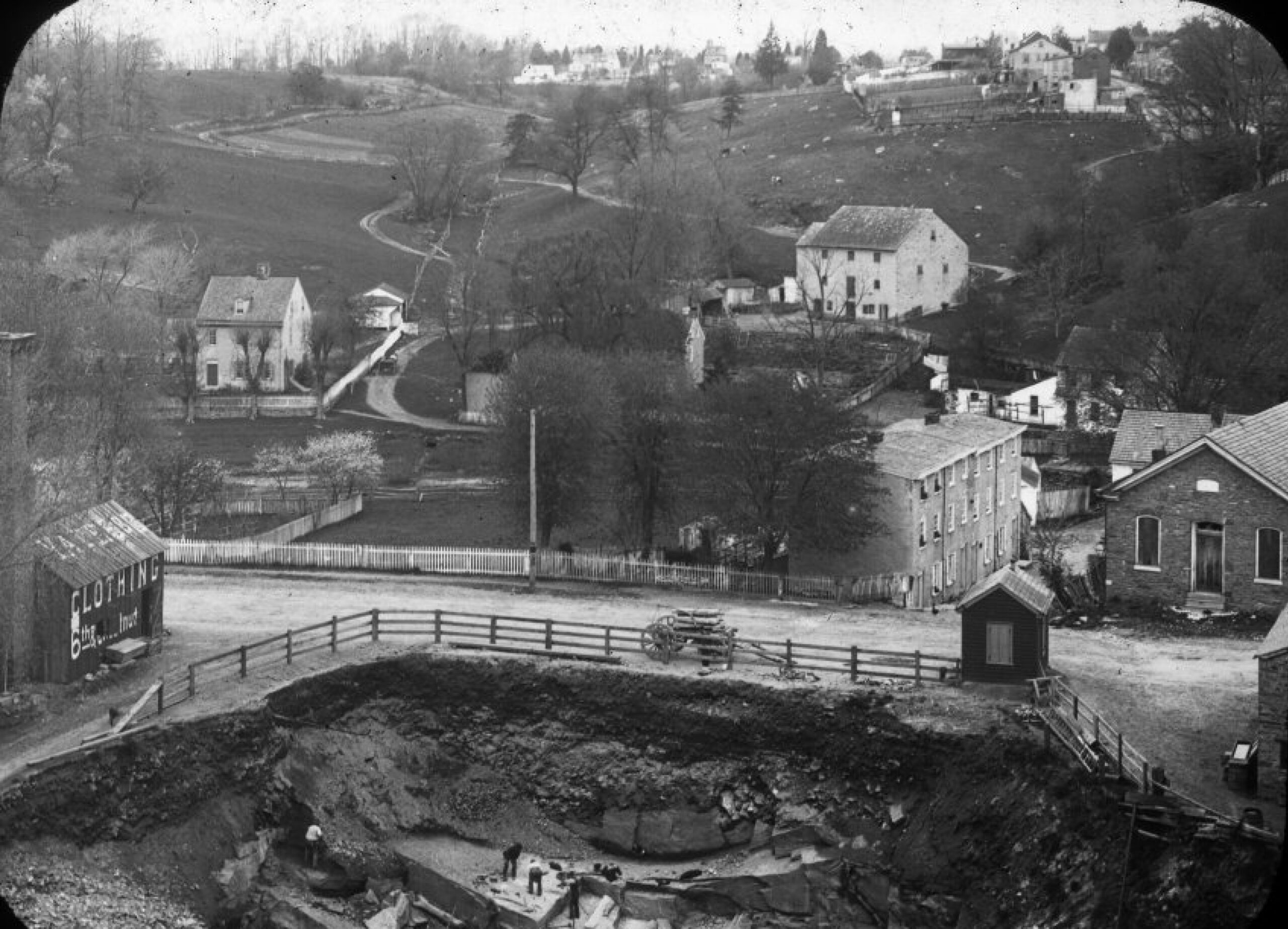
    An aerial view of RittenhouseTown circa 1840-1860. The site eventually grew to more than 200 acres.

    Rittenhouse’s first paper mill was destroyed by a flood, said Alexander Jones, preservation and education manager at Historic RittenhouseTown.

    Then “Rittenhouse rebuilds and he buys out his partner,” Jones said. “The paper mill becomes his sole enterprise. Instead of hiring workers, he recruits his family and it becomes a giant company town. There is a church, a blacksmith, stone houses, a bake house, and more than 40 buildings with five or six of them under what is now Lincoln Drive.”

    RittenhouseTown’s paper mill was the only source of paper in America for more than 40 years, Jones said. It would grow to more than 200 acres.

    David Rittenhouse — Rittenhouse’s great-grandson and the astrologer, clockmaker, and first director of the U.S. Mint after whom Rittenhouse Square is named — was born in his family’s RittenhouseTown homestead in 1732.

    The town thrived for more than a century.

    By the mid-1800s, the paper mill began to slow down as dyes from textile and carpet manufacturers and chemicals from blacksmithing started to pollute the Schuylkill. The filthy water made it nearly impossible to produce good quality paper at the mill.

    The Fairmount Park Commission began acquiring parts of RittenhouseTown through a series of purchases and donations from 1890 to 1917. The city demolished many of the town’s buildings, including a barn that, Jones said, was razed and rebuilt within a year.

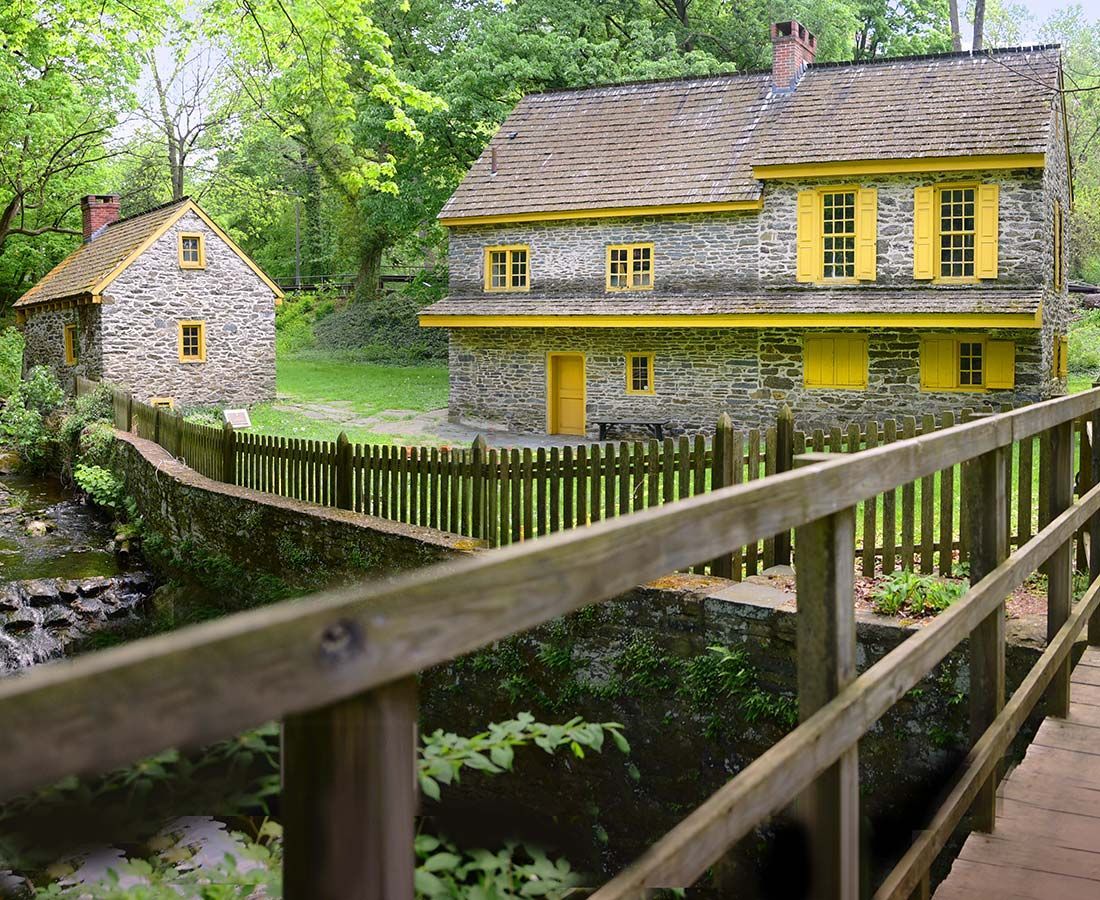
    RittenhouseTown’s homestead and bakehouse. The first permanent home for the Rittenhouse family and birthplace of David Rittenhouse, great-grandson of William Rittenhouse for whom Center City’s Rittenhouse Square is named.

    By that time, however, the Rittenhouse family had spread throughout the Philadelphia region from Center City to Blue Bell, Jones said.

    Today, RittenhouseTown spans 20 acres nestled in Fairmount Park right behind Lincoln Drive. Six of the original buildings remain, serving as a reminder that RittenhouseTown was the first building block of American industry.

    “The paper mill really got the ball rolling for Philadelphia,” Jones said. “And from that first came so many other American firsts in Philadelphia: the first Mennonite bishop, the first company town, and America’s first director of the U.S. Mint.”

    This week’s Firstival is Saturday, June 27, 11 a.m.-1 p.m., at Historic RittenhouseTown, 208 Lincoln Drive.

    The Inquirer is highlighting a “first” from the Philadelphia Historic District’s 52 Weeks of Firsts program each week. A “52 Weeks of Firsts” podcast, produced by All That’s Good Productions, drops every Tuesday.

  • A historic Philly mansion up for sale comes with an unusual easement: Revolutionary War battle reenactments on the front lawn

    A historic Philly mansion up for sale comes with an unusual easement: Revolutionary War battle reenactments on the front lawn

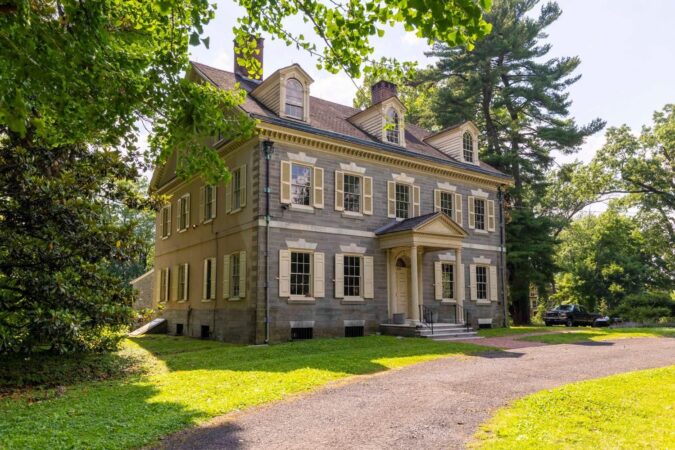
    Built at the end of the 18th century on the site of a major Revolutionary War battle in Philadelphia, Upsala mansion was listed on the National Register of Historic Places in 1972.

    This week, it was listed somewhere else: Zillow.

    The early Federal-style estate nestled on the border of Germantown and Mount Airy is listed at $995,000 and comes with nine bedrooms, 10 fireplaces, 15 parking spaces, and a 70-page easement agreement with a peculiar caveat — once a year, the owner must permit “a re-enactment of portions of the Battle of Germantown” on their front lawn.

    “The battle reenactment is actually written into the deed. That is something any future owner of the property would be obligated to allow to happen,” said current owner Alex Aberle, who’s also a real estate agent and the property’s listing agent.

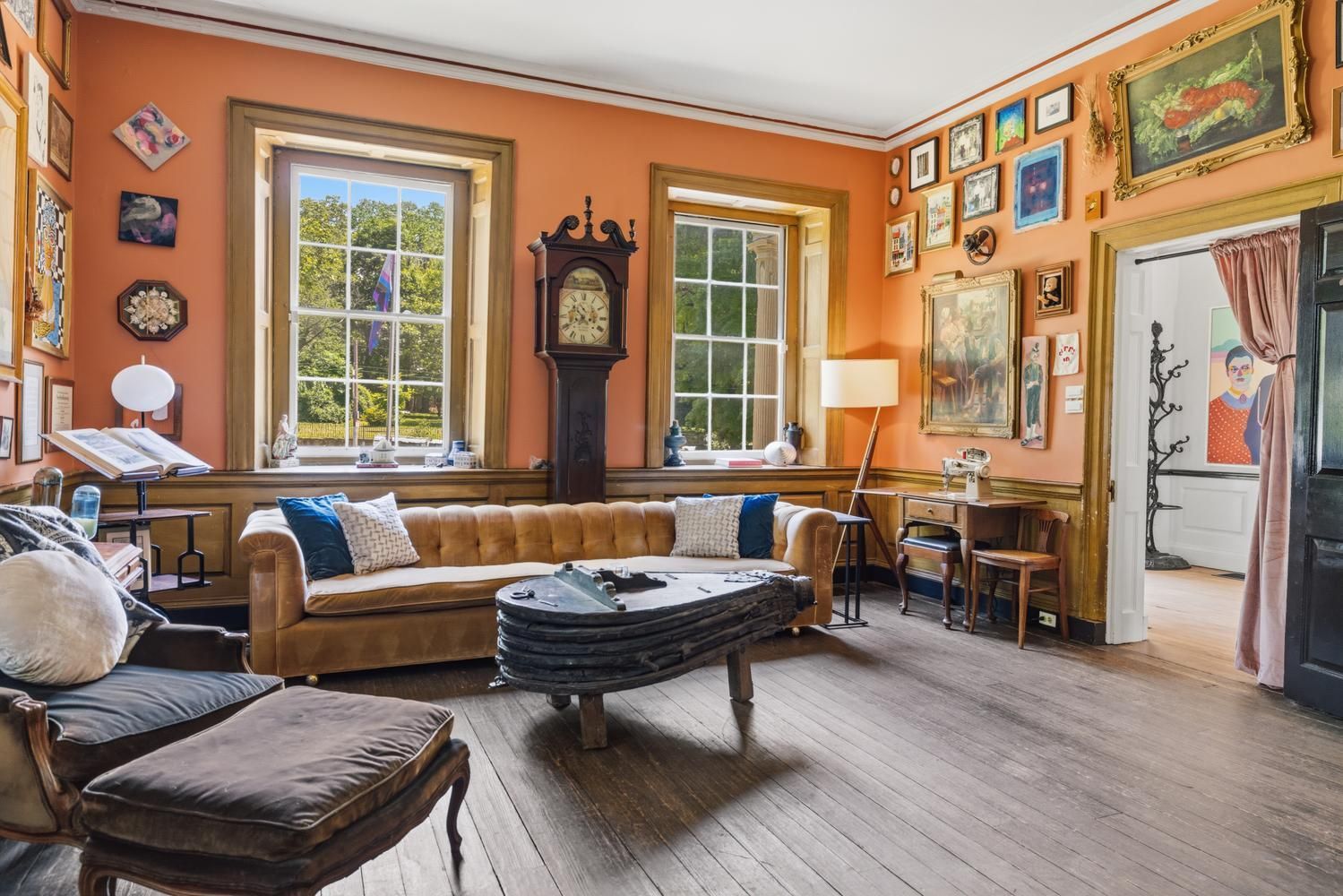
    A living room in Upsala mansion, an early Federal-style building on the 6400 block of Germantown Avenue.

    The easement was put in place by the National Trust for Historic Preservation when Aberle and his ex purchased the mansion on the 6400 block of Germantown Avenue in 2017 and became Upsala’s first private owners since it was converted into a historic house museum in the 1940s.

    As part of the Revolutionary Germantown Festival — which commemorates the 1777 Battle of Germantown — battle reenactments were held for decades on the lawns of Upsala and Cliveden, a National Historic Trust site and mansion across the street from Upsala.

    Though the mansion was built in 1798, two decades after the battle that sought to liberate Philadelphia from British control, the property served as the staging ground for the Continental Army during the Revolutionary War fight.

    Aberle said he loved having the reenactments in his front yard, but Cliveden and the sites of Historic Germantown, which host the festival, haven’t held a reenactment there since 2019.

    Carolyn Wallace, education director at Cliveden, said prior to the pandemic, organizers were reevaluating tactical demonstrations as part of the October festival in light of ongoing gun violence in the U.S. In 2020, organizers underwent a community engagement project called “Considering Re-enactments,” which sought to answer the question: “Is this still the best way to tell stories of the American Revolution?”

    “We found it was a mixed bag so we shifted more towards living history,” she said. “We still have military personnel (reenactors), but we have not done tactical demonstrations in a number of years, though I can’t say we won’t do them again.”

    And if they do, the easement still stands.

    “That runs with the land — for me and for everyone else for years to come, and hopefully, forever,” Aberle said.

    Built for John Johnson III, a fourth-generation descendent of the Janesen family, who were early Germantown settlers, Upsala stayed in the family until the 1940s, when it was seized due to financial issues.

    Preservationists worked to save the property from demolition and from the mid-1940s until the early 2000s, it was a historic house museum before it was closed due to dwindling attendance and revenue.

    The National Trust for Historic Preservation became Upsala’s owner in 2005 and Cliveden Inc., a co-stewardship organization of the National Trust, became its steward. After years of public engagement to find a new steward or use for Upsala, they put the 2.45-acre property up for sale in 2016.

    Aberle and his ex, Violette Levy, beat out eight other offers by purchasing it for $550,000 cash — $51,000 more than the asking price.

    They spent years doing extensive renovations like putting in central air, replacing the boiler, fixing the plumbing, and decorating.

    “When we bought it, the walls were mostly varying shades of yellow and cream and now there’s no yellow left, I’m happy to report,” Aberle said.

    They documented their journey on Instagram, where followers left comments about the memories they’d made at Upsala — from attending weddings there to attending a concert by the Hooters in the 1980s organized by one of the estate’s caretakers.

    “I loved hearing all those stories because that’s the kind of thing you don’t see in books,” Aberle said. “It’s super special because it only comes organically.”

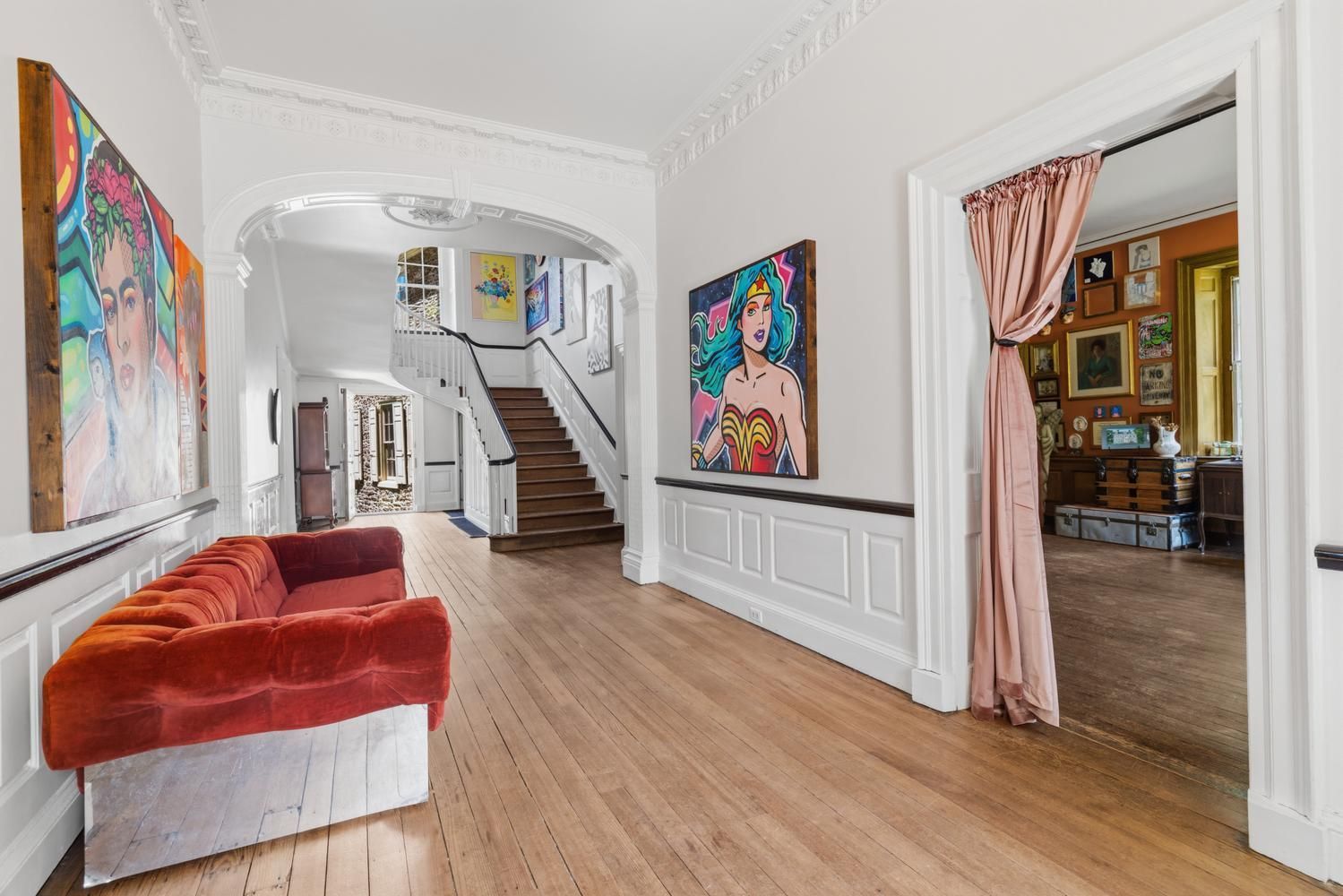
    View of a hallway inside of Upsala mansion.

    Aberle said he never had any intention of selling Upsala, but when his relationship with Levy ended and he became the sole owner of the home, it didn’t “really make sense to stay there as just one.”

    “It’s definitely a family house and that was always sort of my dream for the house,” he said.

    Aberle estimated that a little more than half of the mansion has been renovated. The back part of the house, where he’d planned to fix up the kitchen and put in a mother-in-law suite, is still in need of work, he said.

    “My relationship didn’t last quite as long as my project did so the space is ready for someone else to come in and finish it for their family,” he said.

    But another aspect of Aberle’s life did blossom because of Upsala. When he and his ex bought the mansion, it was listed by Louise D’Alessandro, a founding partner of Elfant Wissahickon Realtors. They invited her and others from the company to the first reenactment on Upsala’s front lawn after they took ownership of the property and within a year, Aberle left the real estate company where he worked and went to work for Elfant Wissahickon, where he remains.

    Aberle said he’s fallen in love with the Germantown and Mount Airy neighborhoods and is only moving just around the corner from Upsala, so he plans to make himself available for any questions from future potential owners.

    “The easement is really not as scary as the 70-page document might lead you to believe. I do mean it from the bottom of my heart. I spent nine years dealing with this document and working with this trust … and my plan is to make myself completely available to facilitate transition,” he said.

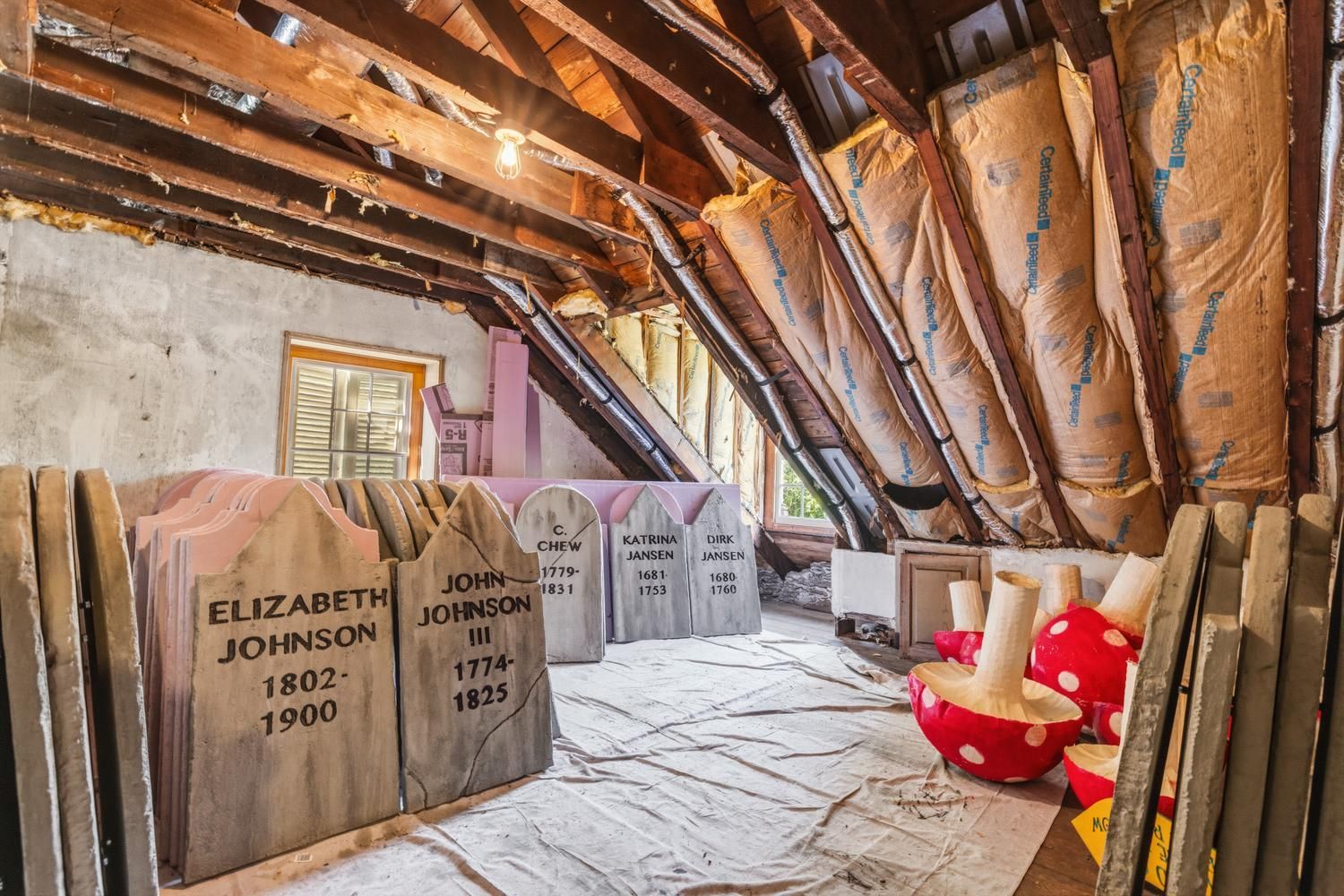
    Halloween decorations, including tombstones that have the names and dates of people who once lived in or near Upsala, are stored in the attic of the property and will be sold with it.

    And if you’re wondering about the listing photo that shows an attic room filled with tombstones and giant mushrooms, not to worry, those are Halloween decorations. The mushrooms are from an Alice and Wonderland-themed Halloween they did one year and the gravestones have historically-accurate names and dates on them of people who lived and died in and around Upsala.

    “We set those up for a few years and added more folks each year,” Aberle said of the tombstones. “I’m leaving them in hopes someone else will carry on the tradition.”

    He’s excited to see who will become Upsala’s next owner and what they will do with the historic property.

    “I think the most important thing, for me, is it’s someone who will love this place as much as I do and have the desire to take care of it and love it,” Aberle said. “That’s what it deserves.”


    For more information on Upsala, including the entire easement agreement, visit upsalamansion.com.

  • They went to Mount Airy ‘on a whim’ and found love to last decades

    They went to Mount Airy ‘on a whim’ and found love to last decades

    Over more than 25 years, Jean Miller and Craig Heim have transformed their East Mount Airy home, a 1907 Dutch Colonial, through countless renovation projects.

    “But no matter what state the house was in, whatever was torn apart or upended as we did a project, it’s always been an amazing house to come home to,” Heim said. “We are always happy to come in the front door.”

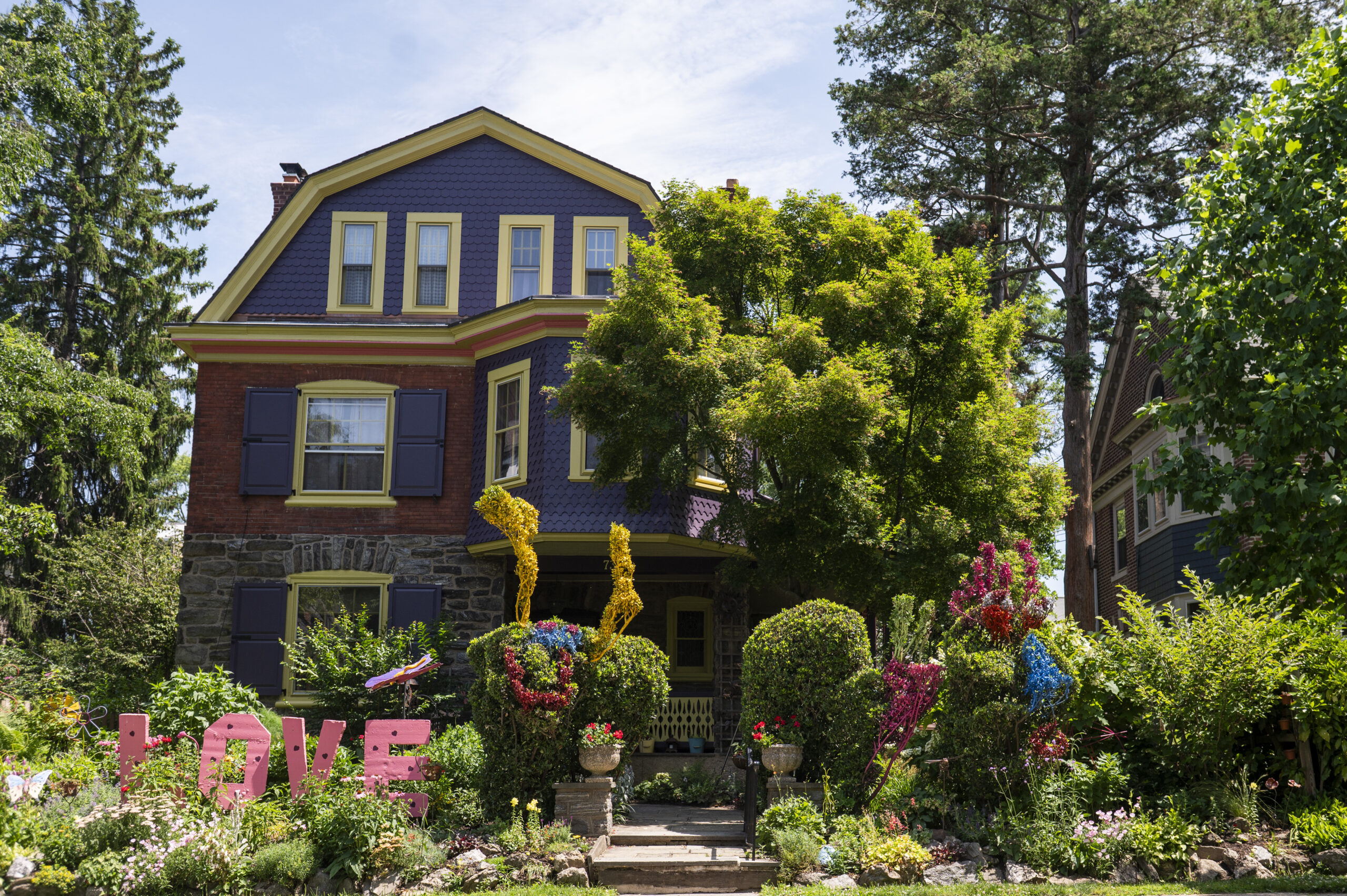
    The facade surrounding that front door was the most recent project. They painted it a bold purple and updated the porch, shutters, and shingles.

    Miller said she had always wanted a purple house. “It makes the house pop.”

    The exterior of Miller and Heim’s home and their front garden are bursting with color.
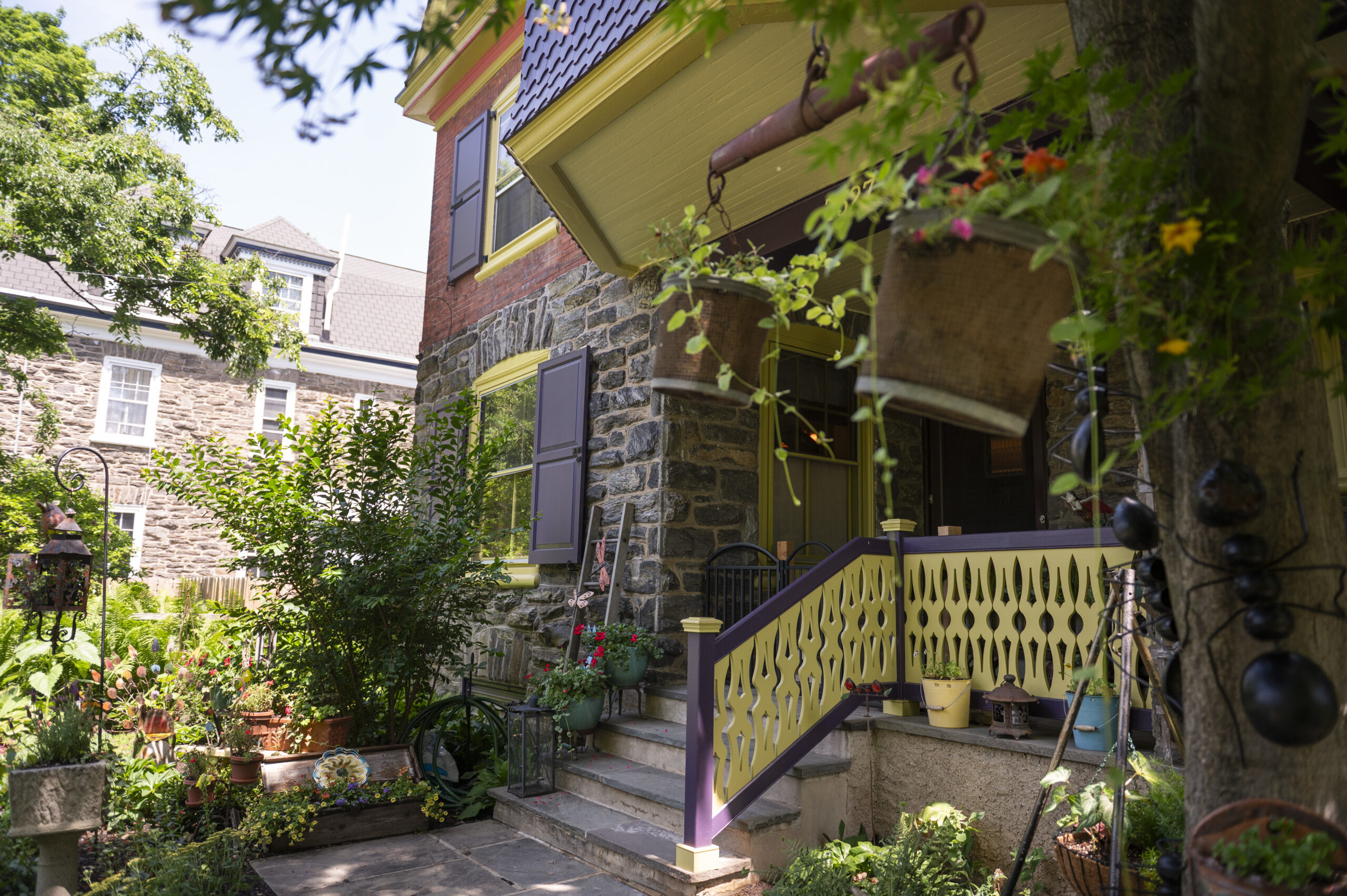
    The porch railing and soffit are painted purple and yellow.
    The home was covered in asbestos shingles when Miller and Heim bought it, and they uncovered the original cedar shakes.

    The couple bought the seven-bedroom, 2½-bath home in March 2000, and moved in that spring after some initial work. At the time, they were renting near the Italian Market in South Philly and planned to buy there.

    “On a whim, we looked in Mount Airy after friends mentioned a huge house for sale nearby. Once we saw the neighborhood and how much space we could afford — including a yard — we shifted our search to Mount Airy,” recalled Miller, a physician at the Hospital of the University of Pennsylvania. Heim works for human services nonprofit Face to Face in Germantown.

    Over the past two decades, they updated nearly every part of the 3,200-square-foot house and its garden, as they raised their two children. Sara, 22, is a Penn graduate who now lives in South Philly, and Pete, 20, is a sophomore at Michigan State.

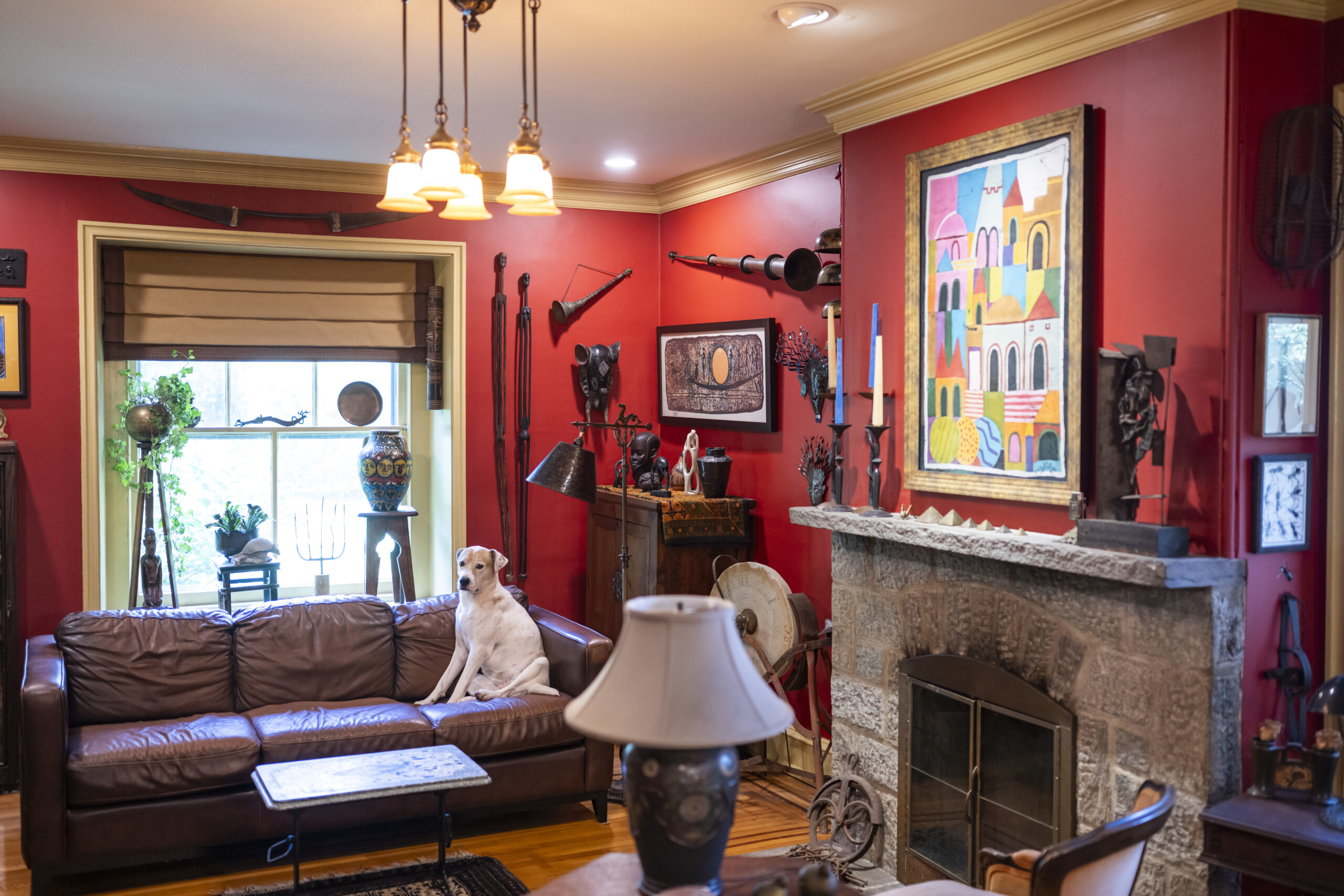
    Miller said the living room and dining room are favorites. The spaces are made cozy by a wood-burning fireplace, also a backdrop for entertaining.

    Art and instruments line the walls of the living room, as Maddie the dog enjoys the couch.
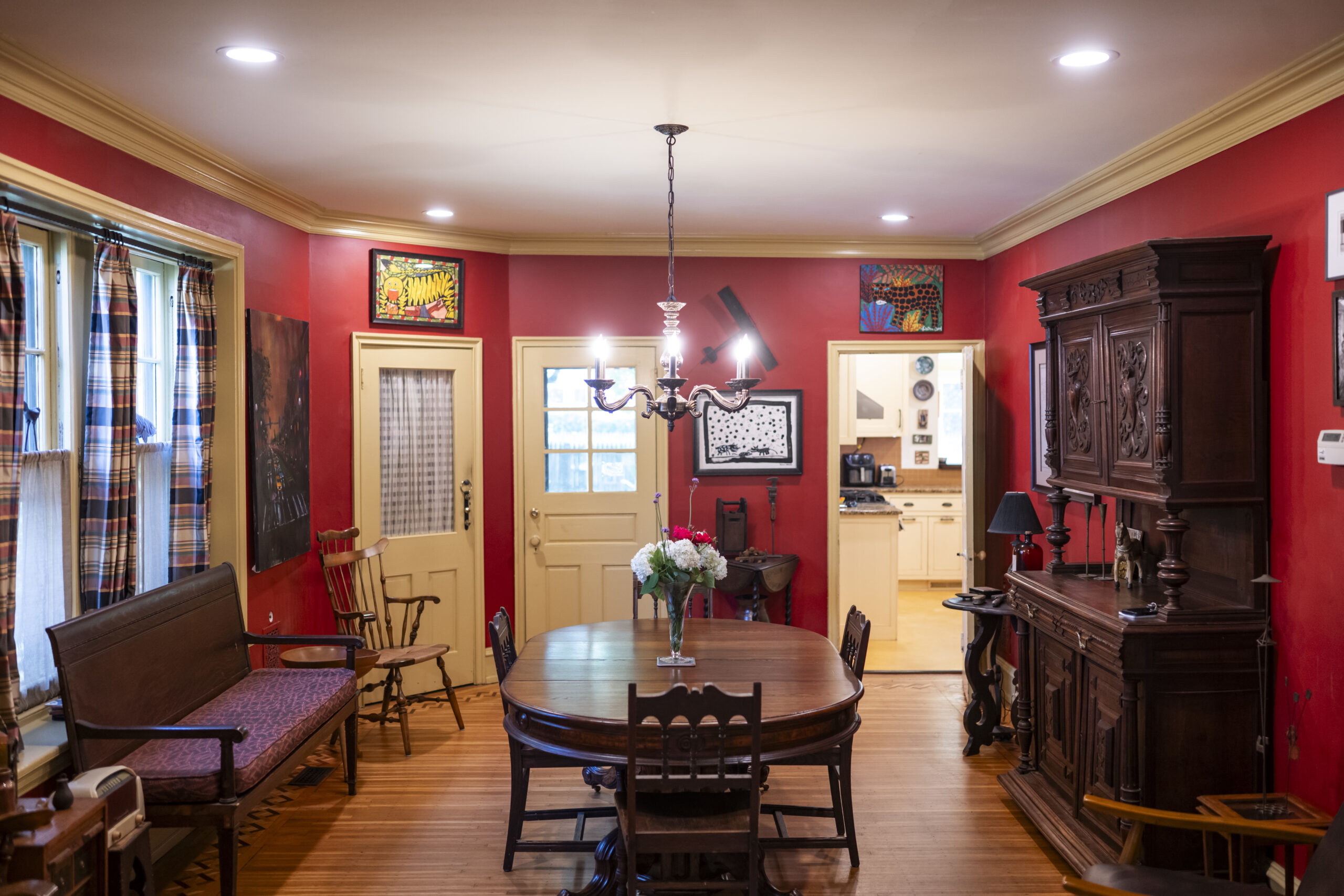
    The dining room has red walls and crown molding.

    When they moved in, Miller recounted, the home’s living and dining rooms had already been altered, losing their original woodwork. A wall with pocket doors had likely been removed and replaced with folding screen doors. The rooms were painted red with white trim.

    “We designed a wooden arch, installed larger crown molding, and removed a non-original built-in cabinet in the dining room,” said Miller. “Fortunately, the contractor removed it in sections and discovered it had been supporting the house’s main beam after studs had been taken out.”

    They decided to keep the red walls and, after testing many samples, chose a trim color in greenish gold that gave the rooms a completely different look.

    The home boasts an eclectic mix of furniture that they acquired from family, vintage shops, and what Miller described as “trash picking.”

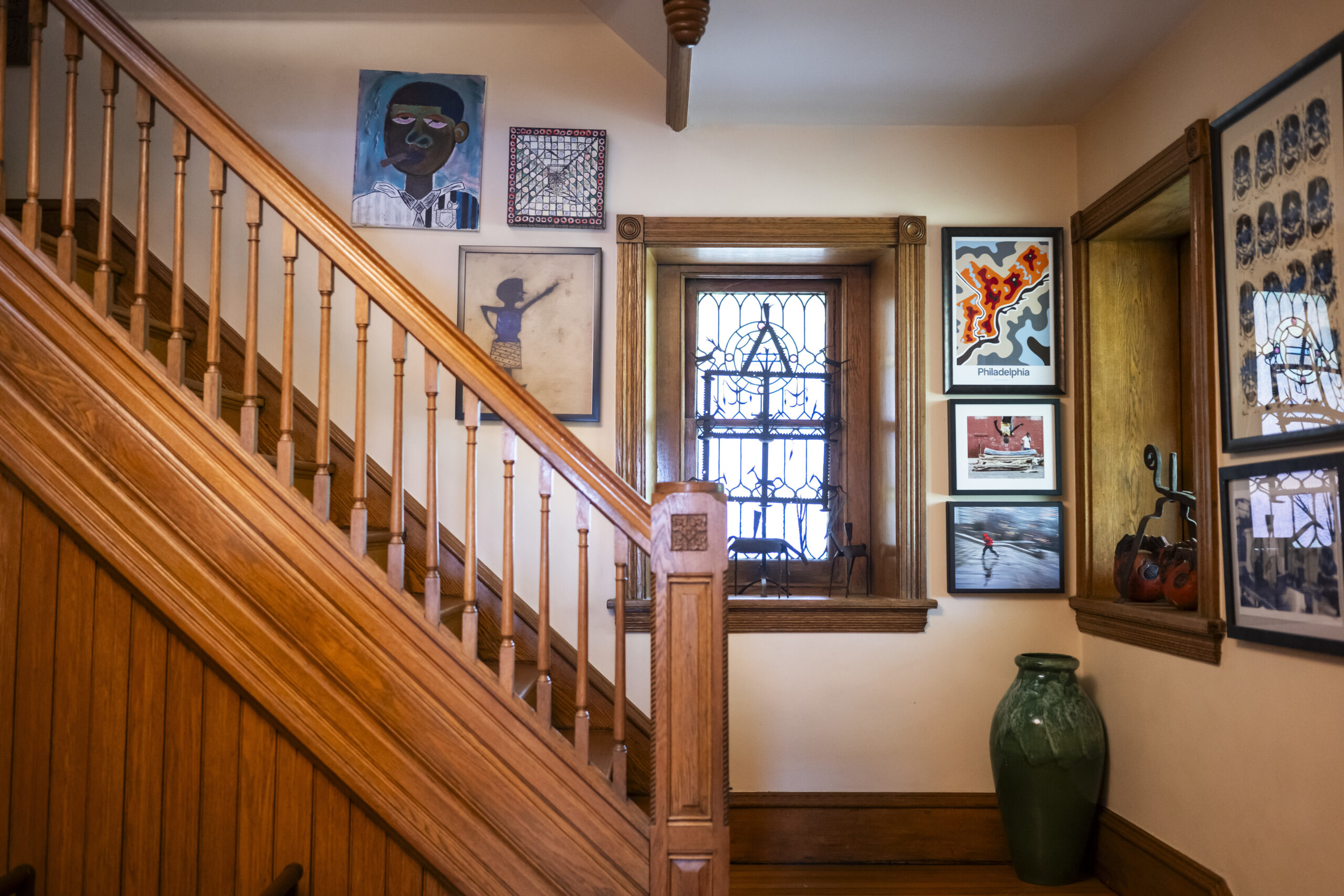
    Paintings and photographs by local artists line the walls along the staircase.
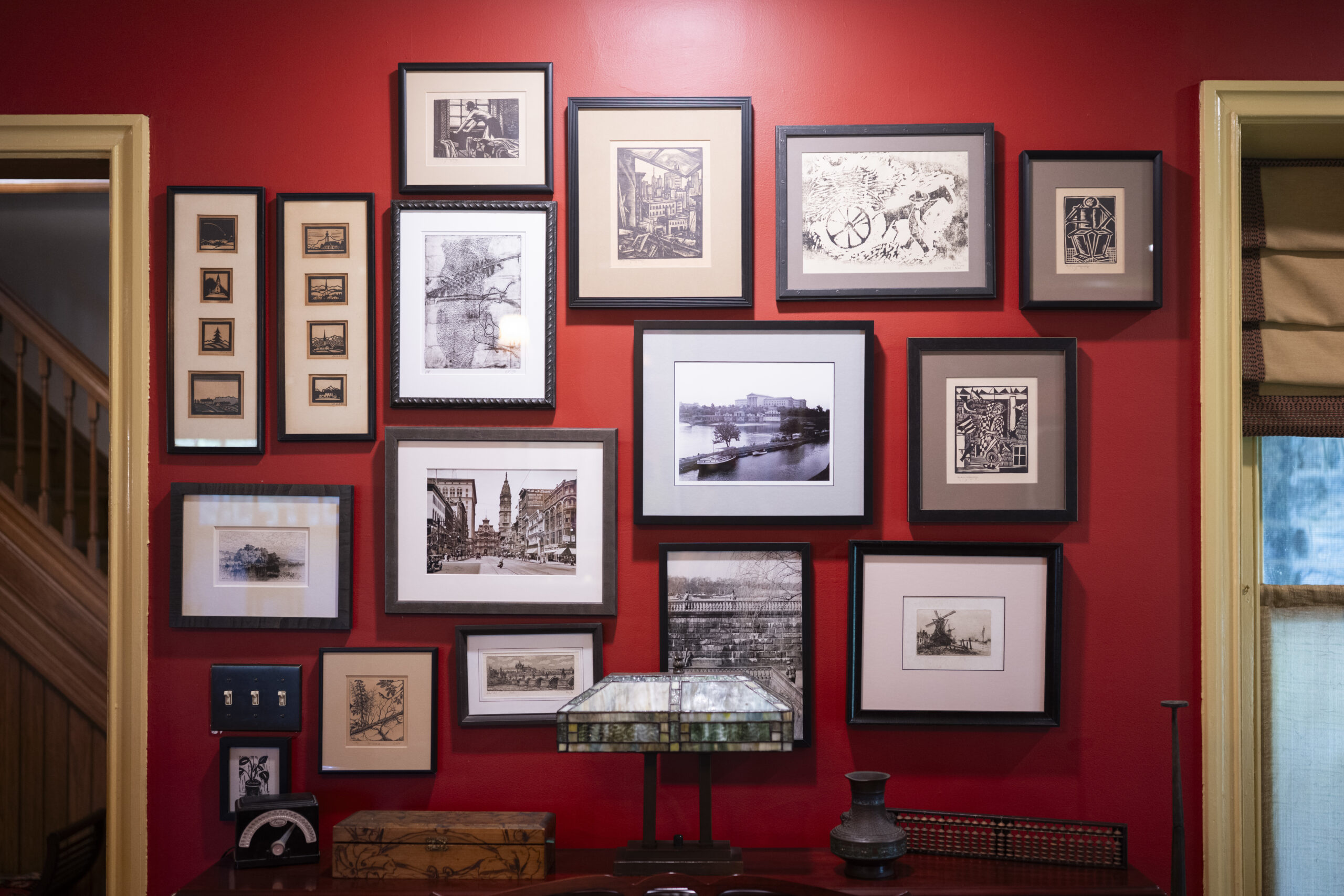
    Art fills nearly every inch of this wall in the living room.

    An abundance of art hangs on the walls, loosely grouped into collections. Miller has dedicated one whole wall to “works from family and local artists.”

    “We use every space to display art and objects.”

    Back when Miller and Heim bought the house, the kitchen appeared to have been last renovated in the 1960s. The sheet-vinyl floor was torn and the subfloor so soft, it crumbled to dust when they pulled it up, recalled Miller.

    As a temporary fix, they installed veneered plywood, adding lines and nail marks to mimic wide-plank hardwood, and sealed it with polyurethane. They also painted the cabinets and walls. Those quick fixes held them over until a full kitchen renovation. A neighbor who is an architect designed the new kitchen, transforming it to include a bright breakfast room filled with natural light.

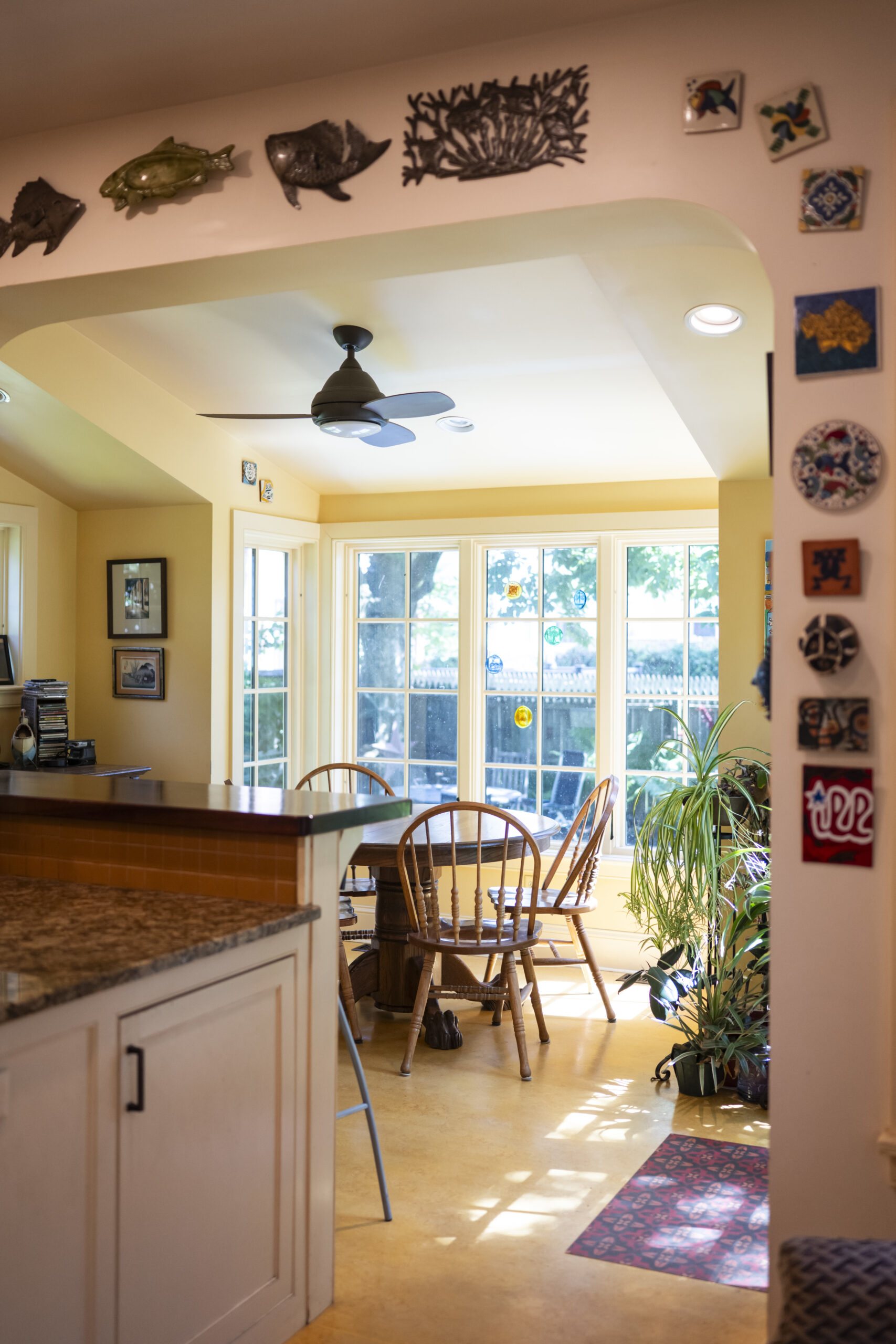
    Tiles and wall sculptures line an arch into the kitchen’s breakfast nook.
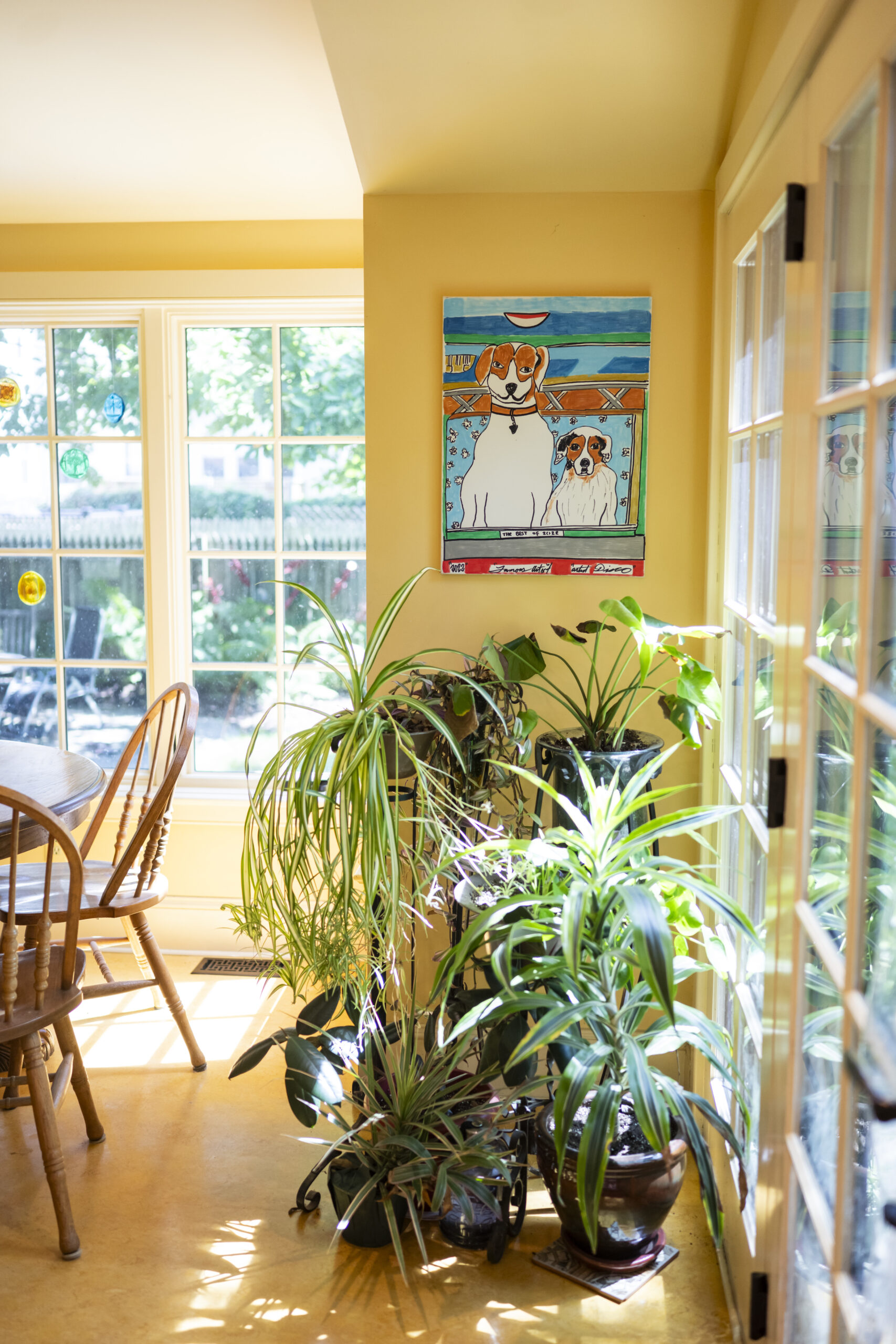
    A portrait of Jean Miller and Craig Heim’s dogs, Maddie and Mabel, is on display in the sun-filled breakfast area.

    “The kitchen was definitely a game changer, and it still feels new to me after 17 years. I love walking into it and feeling the brightness and natural light,” said Heim. “It’s the hub for so much of what happens every day and for special occasions, a very natural gathering place.”

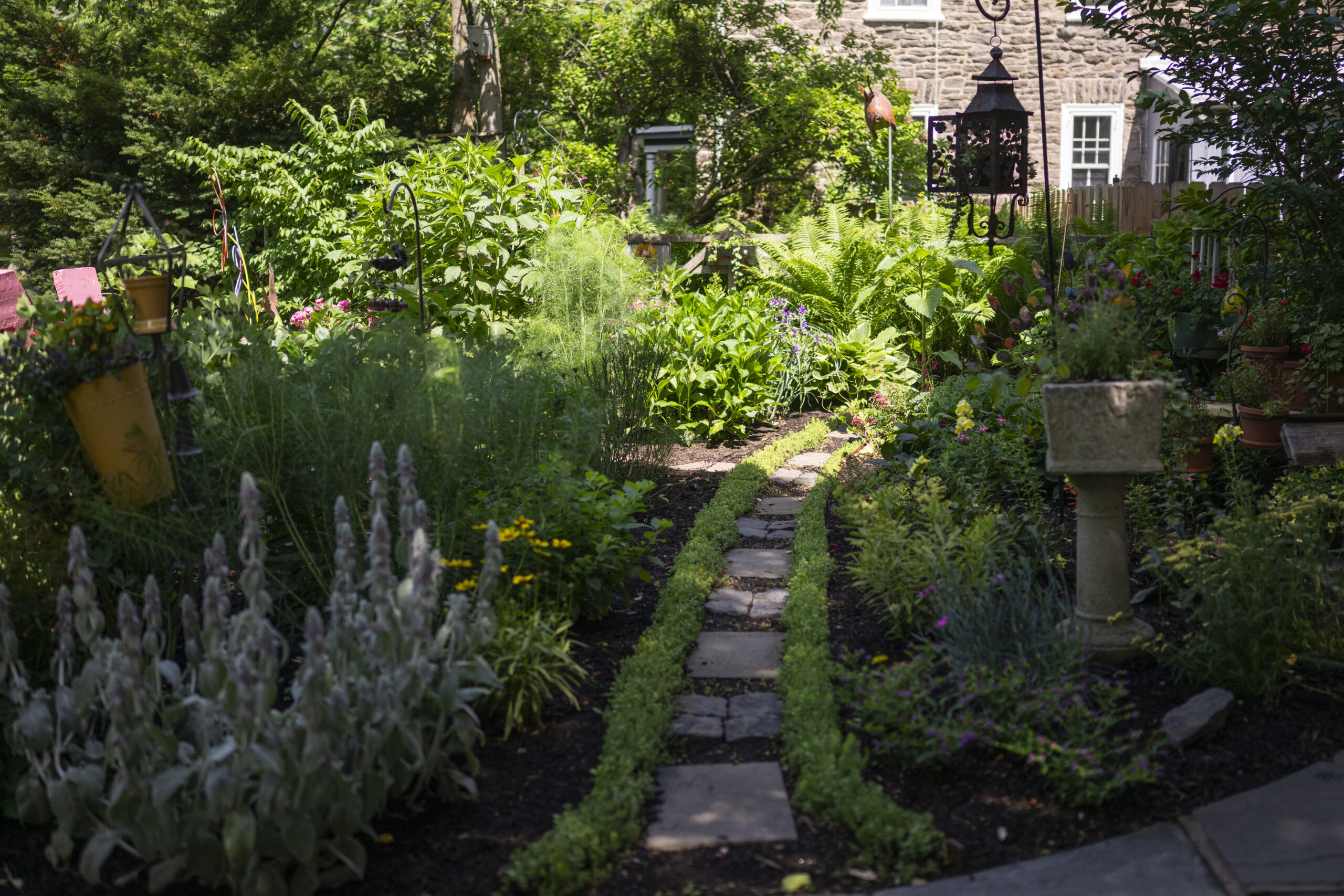
    Outdoors, the garden is a treasure trove of found objects combined with topiary and plantings to create an eye-catching mix. The large porch leads to the front garden.

    “It connects us to our neighborhood and neighbors,” Miller said. “Our garden is a destination for many on their walks and allows us to connect with people. It feels like an outdoor room.”

    A path of stones runs through the garden.
    A planter the family trash-picked is filled with and surrounded by potted flowers.

    The creativity inspiring the garden also shines through in the house’s bold facade.

    “When the house recently needed to be repainted, we wanted to do something with a bit more pop,” Heim said. “So, we added the golds and pink to give things a little more zip.”

    For holidays, they decorate the yard with inflatables, lights, and ornaments.

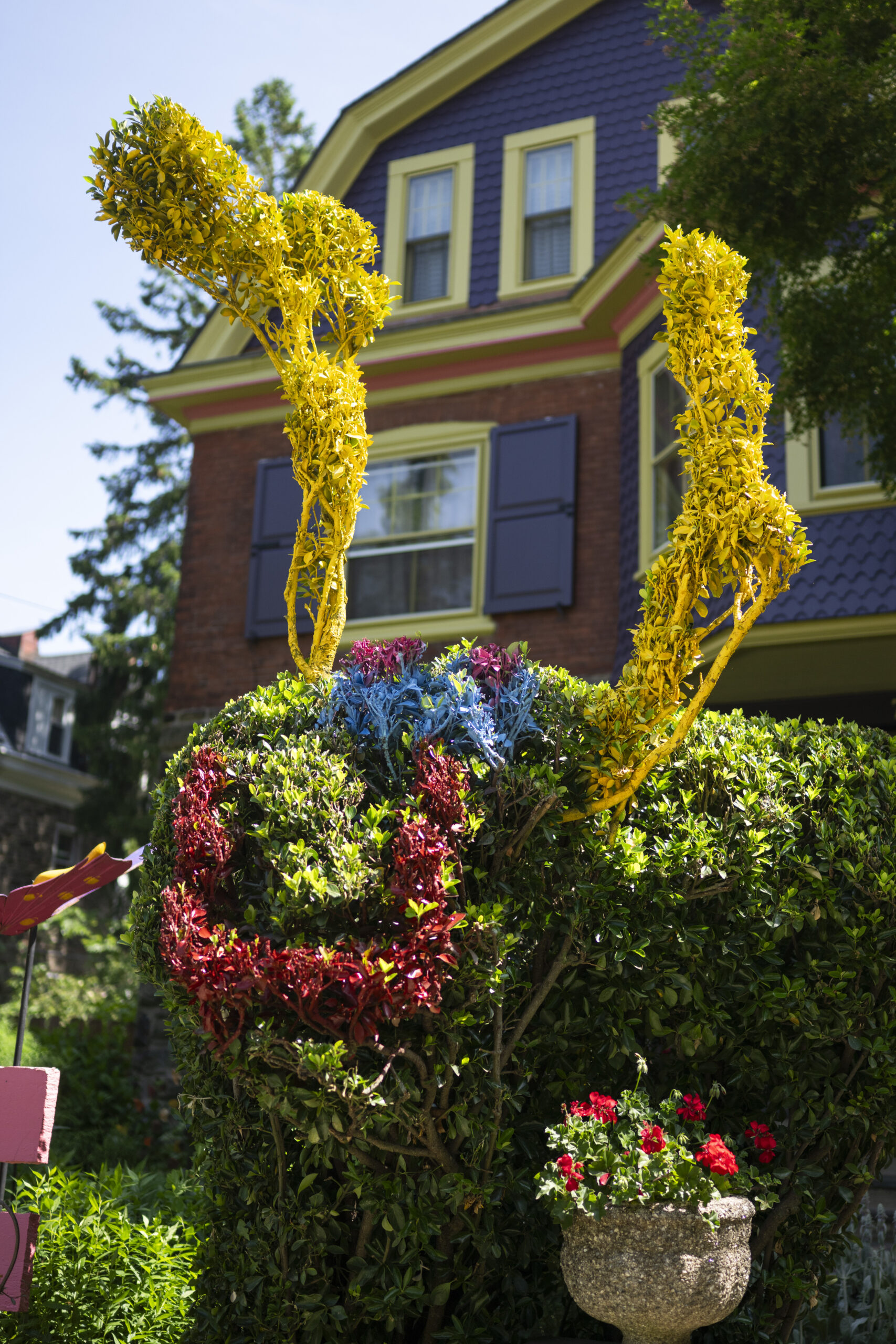
    A hedge painted and shaped into a “happy bull” grows in front of the home. Heim often spray paints and cuts the hedges into shapes or characters.
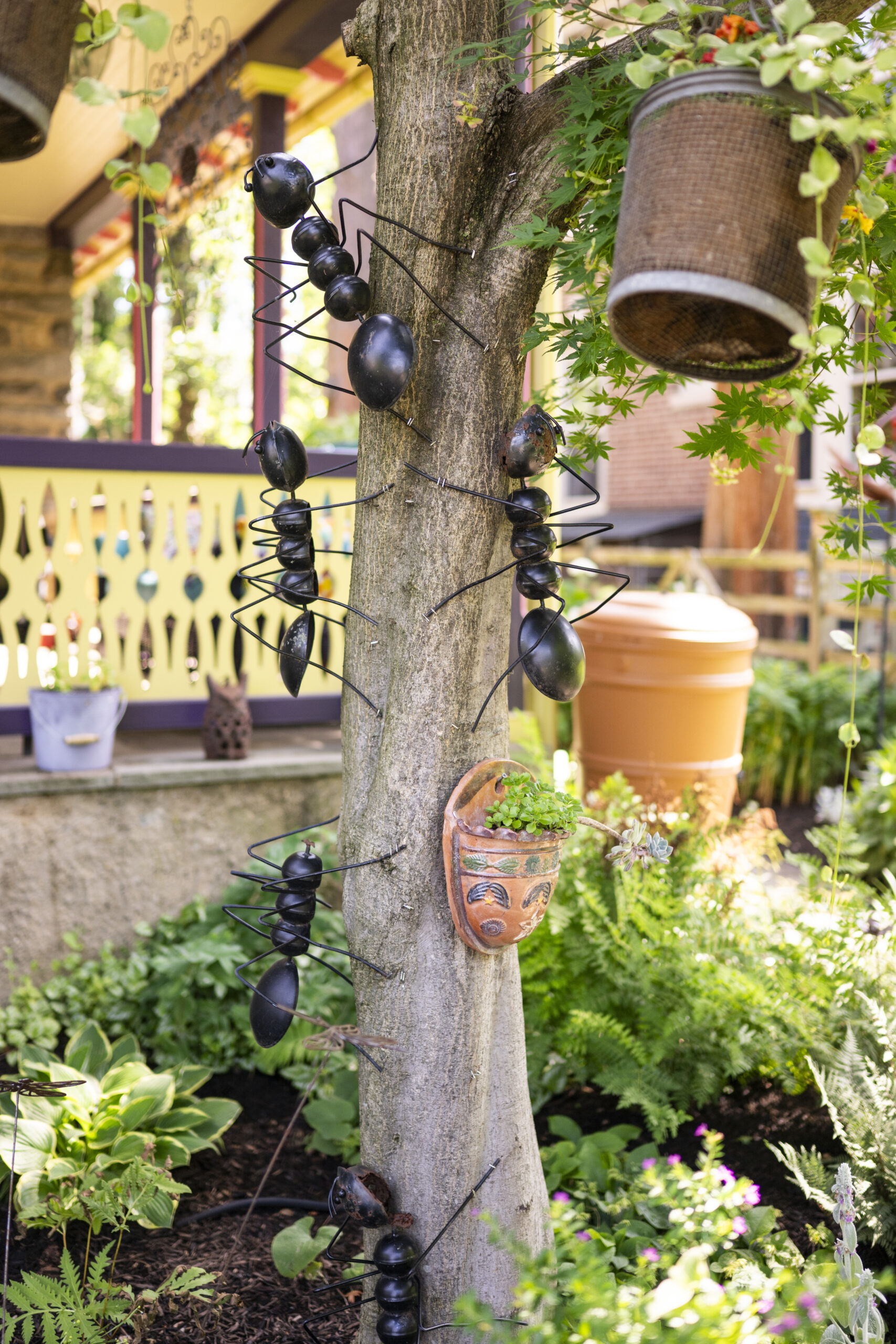
    Decorative oversized ants are arranged as though climbing up a tree in the front garden.

    Mount Airy now holds a special place in both of their hearts. They enjoy an easy walk to the train, Germantown Avenue’s commercial strip, the Wissahickon, and Chestnut Hill.

    “We have a tight-knit group of neighbors, many long-term residents from our era and even earlier, and a whole new generation of younger people with kids,” said Miller. “It’s a wonderful community.”

    Is your house a Haven? Nominate your home by email (and send some digital photographs) at properties@inquirer.com.

  • How Haverford High’s national teacher of the year is coaching aspiring teachers, on topics from racism to connecting with students

    How Haverford High’s national teacher of the year is coaching aspiring teachers, on topics from racism to connecting with students

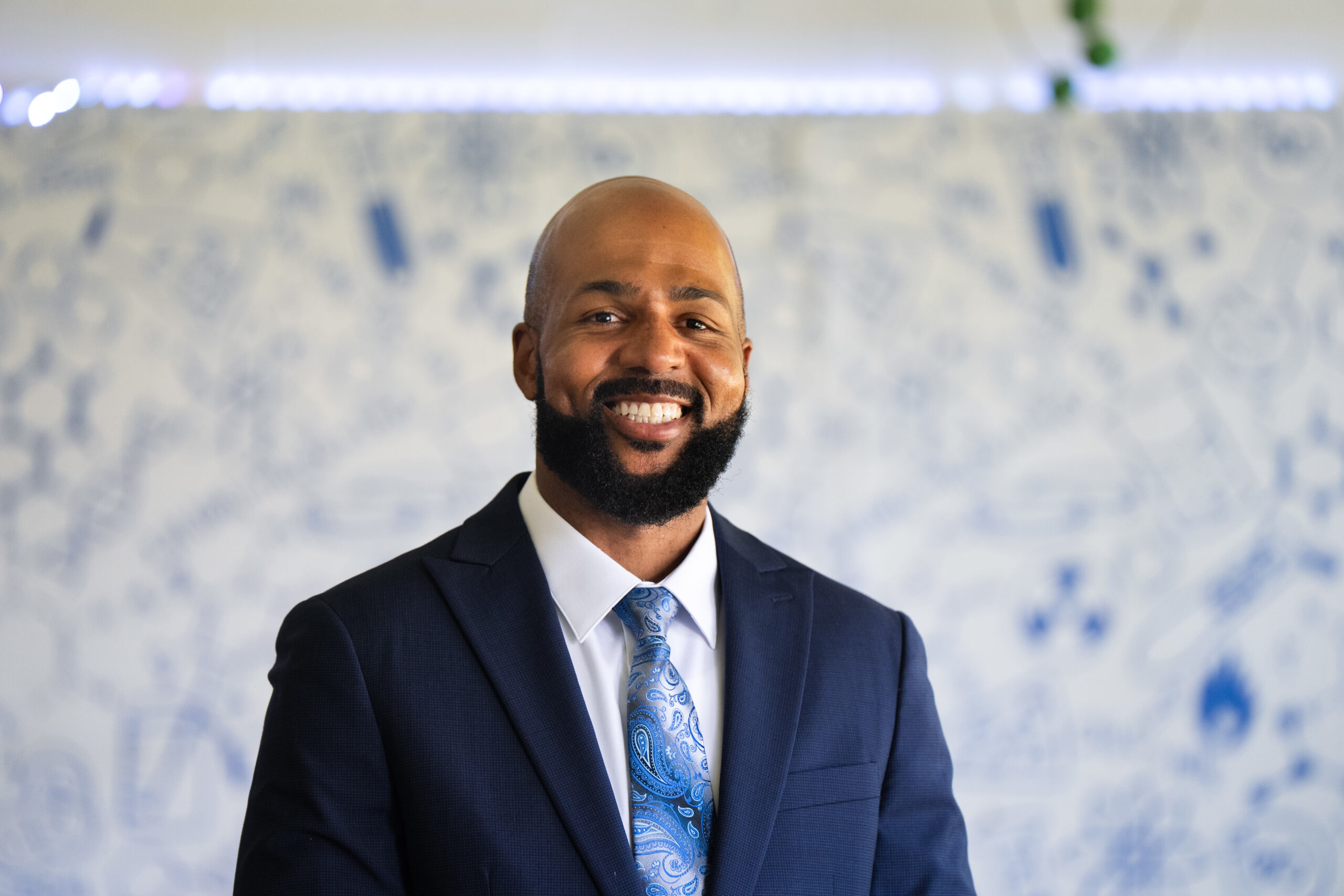
    As the newly appointed National Teacher of the Year, Haverford High School’s Leon Smith has been celebrated on television: from CBS Mornings and Good Morning America to the Kelly Clarkson Show.

    But as the lone Black teacher when he started teaching at Haverford 25 years ago, Smith got a different reception. He experienced racism, he told a group of young people interested in teaching, and if it weren’t for a Black vice principal that listened and supported him, he might not still be teaching today.

    “She would just be very honest with me, and be like, ‘First of all, you’re an excellent educator. … Keep being you. Somebody calls and says something crazy, I’m just hanging up,’” Smith told teaching fellows gathered in Germantown on Wednesday with Breakthrough of Greater Philadelphia, a nonprofit that trains aspiring teachers to lead enrichment programs for middle-school students.

    The event, sponsored by the Equitable Foundation, was just one of many for Smith during his yearlong stint as Teacher of the Year, a platform he was awarded in April by the Council of Chief State School Officers. In that role, he’s spending the year traveling the country to advocate for the teaching profession and growing its ranks.

    Smith, who teaches Advanced Placement U.S. History and Advanced Placement African American Studies at Haverford, spoke passionately to the fellows Wednesday about his motivation to be the teacher he didn’t have growing up, and the immense impact teachers can have on students’ lives — presenting the profession as a deeply rewarding opportunity to help kids recognize their talents.

    But he was also honest about the challenges. Fielding questions about his career from fellows gathered in an auditorium on the Germantown Friends School campus, Smith said he had struggled to find his way as a new teacher, staying up too late trying to perfect lessons.

    He described the sometimes lonely experience of being his predominantly white high school’s only Black teacher, and how he developed strategies to respond to racism, including learning when to walk away and when to speak out.

    He told fellows to find supportive colleagues and to be selective when they considered job offers.

    “Do your research. Make sure it’s a space that’s going to take care of you,” he said.

    Smith also described feeling self-conscious when he was younger about some of his lessons — worrying that students would say, “‘Oh, all he does is talk about Black history,’” Smith said. But he began hearing from students about how grateful they were to have learned about subjects that hadn’t been covered in other classes; an audit later identified African American studies as a class community members wanted to see added.

    ‘My why’

    His comments resonated with the teaching fellows, some of whom said they’re committed to careers in education.

    Dominique Sidae, a 23-year-old rising senior at Florida A&M University, is planning to become a special-education teacher. She said she was inspired by her appreciation for a teacher who helped her younger brothers, who have autism.

    Sidae said she is often the only Black person in teaching spaces. “It feels good to know this isn’t only happening to me,” she said. “You don’t really learn that in college.”

    Dominique Sidae, 23, a fellow with the Breakthrough of Greater Philadelphia, listens to a talk by Leon Smith last week.

    Miles Baldwin, an 18-year-old graduate of Harriton High School in Lower Merion, isn’t sure he wants to become a teacher. But he enjoyed working with students last summer in the Breakthrough program — “a lot of kids came in hating it, and left wanting more,” he said — and Smith’s pitch about being a mentor was compelling to him.

    “Honestly, yeah,” he said, when asked if hearing from Smith made him more interested in teaching.

    That’s part of the goal of Smith’s role as Teacher of the Year, as a dwindling pipeline has challenged recruitment efforts.

    Smith’s agenda this summer includes attending the National PTA Convention in Pittsburgh and giving a keynote speech at the Smithsonian’s National Education Summit. He also will be joining other state teachers of the year at Space Camp in Alabama and participating in professional development.

    But addressing the Breakthrough teaching fellows Wednesday “reminds me of my why,” Smith said in a brief interview. He said the fellows’ eagerness to ask questions “shows they want to be the best they can be,” and reflects qualities of good teachers: “You have to be curious, sometimes silent … often humbled,” Smith said.

    Leon Smith, a teacher at Haverford High School, was named National Teacher of the Year this spring.

    Teaching students to lead

    In a model lesson after his talk, Smith put some of those skills on display. He started by gathering the 34 fellows in a circle, asking them each to share their name and a brief story about it; the group periodically broke into laughter at humorous anecdotes.

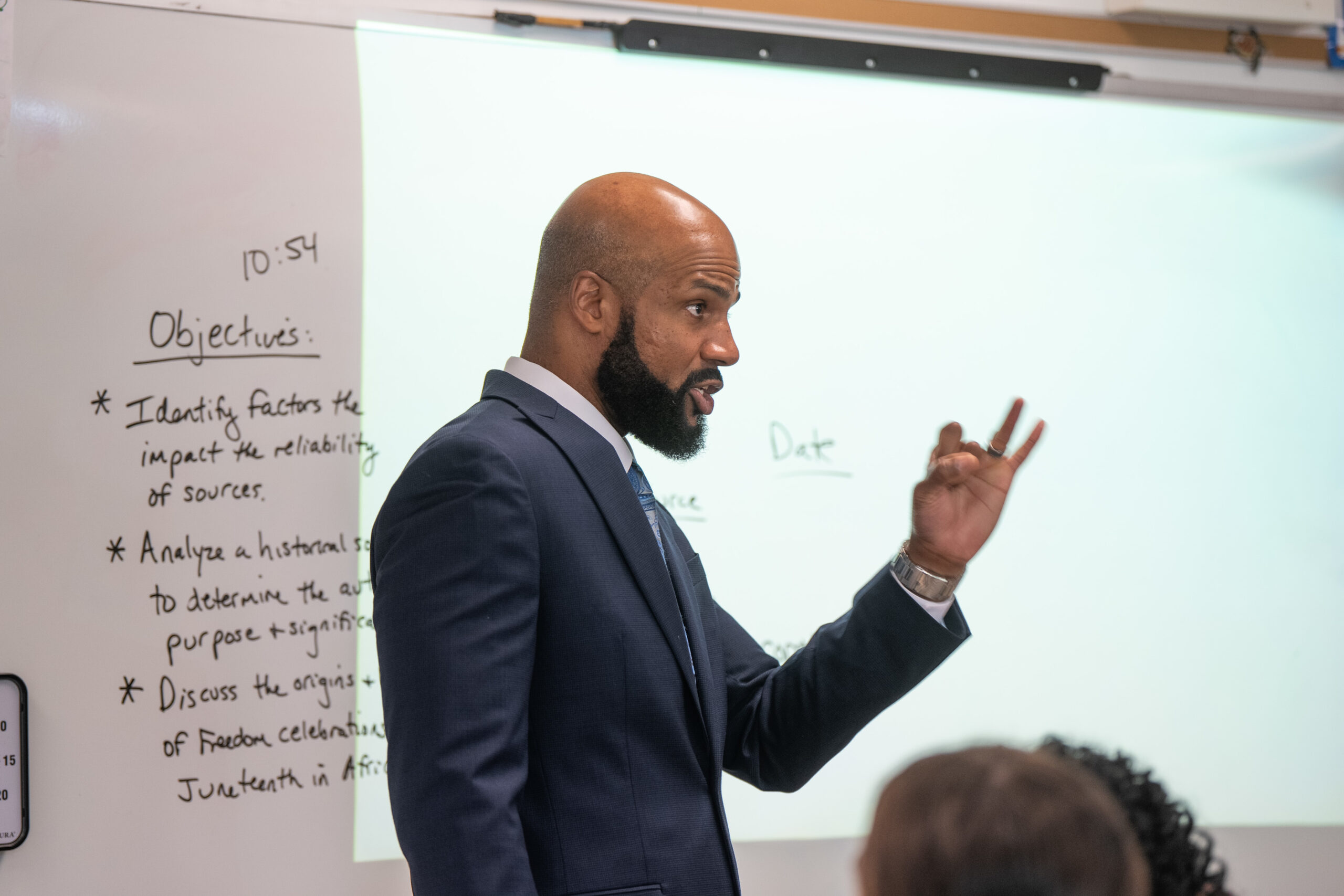
    Smith then outlined the objectives for his lesson about assessing the credibility of sources. He passed out copies of a photo, asking fellows to silently write and then discuss in small groups whether it provided strong evidence of the Fukushima power plant explosion.

    “I always tell my students, you want to be a leader,” Smith said, encouraging fellows to stand by their analyses, even if others disagreed. He then called on people, asking them to explain their thinking while challenging some of their points.

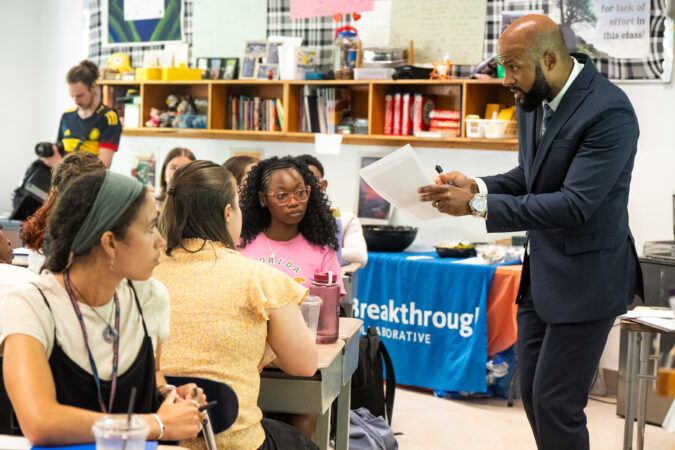
    Leon Smith talks to fellows at Breakthrough Collaborative last week.

    Matt Greenawalt, co-dean of faculty for the Breakthrough summer program and a teacher at Germantown Friends — which supports Breakthrough — was planning to breakdown Smith’s approach for the fellows after the lesson. He noted how Smith was walking through the room, engaging with the fellows as they talked, and Smith’s ability to affirm and redirect them when an answer wasn’t on point.

    Smith’s visit came on day three of a two-week orientation for the fellows, before they would begin teaching students during Breakthrough’s six-week free summer program.

    While access to academics is key for the program’s students, many of whom come from Germantown, “a big piece of it too is having role models,” Greenawalt said.

    Smith told fellows that when the students arrived, “they’re going to just admire you so much.”

    “You’re going to be able to see the light inside of them, and sometimes it just takes someone else to notice, right? … They’ll just kind of be doing their work, and then as you get to know them, you’ll notice certain characteristics and you’ll just pour into it.”

    What really helps make a connection with kids, Smith said, is “just you being yourself.”

    “You walking in there and walking in your own life, and bringing your passion and all the reasons why you wanted to become a teacher,” he said. “Your students are going to feel that.”

  • It’s not just about schools. It’s about neighborhoods.

    It’s not just about schools. It’s about neighborhoods.

    Reginald Streater, president of the Philadelphia Board of Education, opened his testimony before City Council last month by introducing himself as “Reggie from Germantown,” a graduate of two district schools that no longer exist. Germantown High and Leeds Middle both closed. He knows what it means to lose a building. He’s also voting to close 20 more.

    The conflict playing out in Philadelphia isn’t only about schools. It’s about the fact that the school district and City Council have different responsibilities for the same places, and the new facilities plan brings that conflict into sharp focus.

    On Jan. 22, Superintendent Tony B. Watlington Sr. released a facilities master plan proposing to close 20 schools, colocate six, and modernize 159 others. On Feb. 26, he presented an amended final plan to the Board of Education, which was updated from 20 school closures to 18. Russell Conwell Middle School and Motivation High School were removed from the closure list.

    The district has lost 15,000 students in a decade, carries 300 buildings, many of them 75 years and older, and runs some schools with more than 1,000 empty seats, while others are overcrowded. Concentrating students means Advanced Placement courses in every high school, algebra for every eighth grader, and real career and technical pathways. The current spread of half-empty buildings makes all of that impossible to deliver consistently or fairly.

    The facilities plan is doing exactly what it was designed to do. The trouble is that everything it was not designed to do.

    A Philadelphia neighborhood school isn’t just one institution. It’s four, sharing an address. There’s the instructional platform: courses, teachers, schedules, the district’s domain. There’s the civic anchor: the building that signals to a neighborhood that its children count, and they belong. There’s the distribution node: where meals are served, where social workers operate, and where there is, most days, someone watching. And there’s the pathway to the future: where a counselor knows a family by name, where a student learns there’s a college or a trade or a life beyond the block.

    In places like Kensington, schools have absorbed those responsibilities over time.

    When that school building closes, all of those other things close with it. Some of those functions were formal educational programs. Others accumulated because families had nowhere else to go for them. The school became the place where paperwork was explained, problems were addressed and solved, and someone always knew which door to knock on next.

    City Council doesn’t get to vote on the facilities plan, but it funds roughly 40% of the district’s $2 billion budget. Councilmember Jimmy Harrity, an at-large member who lives in Kensington, decried that lack of input, but said that “the budget’s coming, and we will be looking.” Council President Kenyatta Johnson has signaled he’s willing to hold up city funding entirely.

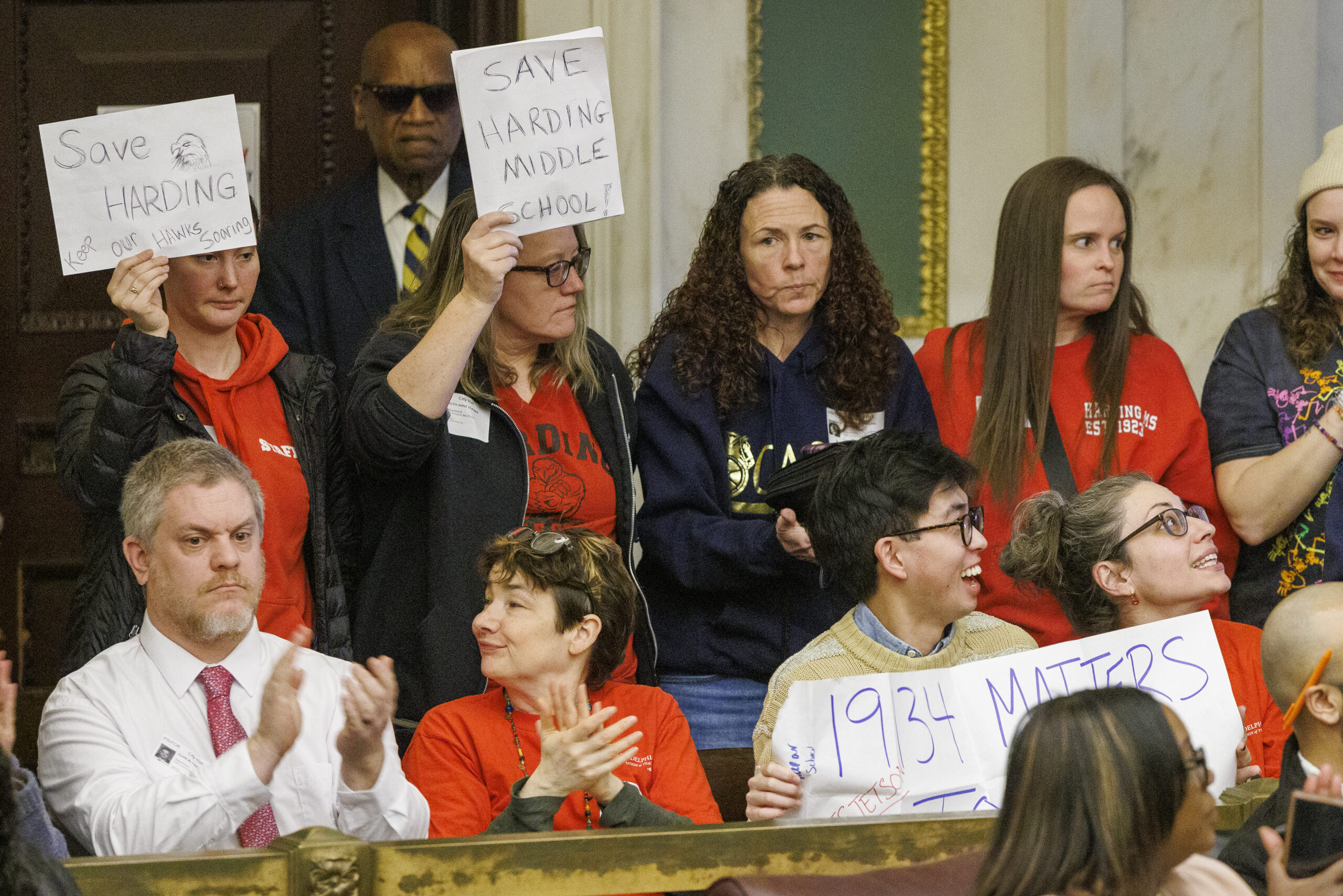
    Supporters of Harding Middle School protest at a City Council hearing with school board members earlier this month.

    Residents and families filled the chamber. Parents stood along the walls long after seats ran out, some holding infants, others carrying school backpacks. The hearing lasted hours.

    The debate sounded like a disagreement about the plan, but it was really a disagreement about who is responsible for what the plan leaves behind.

    What closes with a school building is not limited to instruction. Council’s budget is the instrument for the functions the facilities plan does not govern: housing investment, community infrastructure, colocated services, and neighborhood anchors that exist independent of school enrollment.

    The district held 47 public listening sessions and surveyed more than 13,000 people before releasing this plan. The fight at City Hall last month wasn’t because communities weren’t heard. It’s because what they described was a loss that the facilities plan was never designed to address. That’s not a failure of process. It’s a mismatch of jurisdiction.

    The district’s plan answers an educational question. What replaces the neighborhood functions housed in those buildings is a civic one.

    That answer does not sit with the school district.

    Amanda Soskin is a Philadelphia resident and consultant who writes about neighborhoods and civic infrastructure at Neighborhood Fundamentals.

  • Choose transparency, deliberation, and investment over closure

    Choose transparency, deliberation, and investment over closure

    Superintendent Tony B. Watlington Sr. and the Philadelphia School District have proposed 18 school closures, six colocations, and a vague, insufficiently transparent plan to reconfigure grade levels across numerous other schools, citing the need for “more efficient use of all of our resources” to deliver high-quality academic and extracurricular programming districtwide.

    The Inquirer Editorial Board has endorsed the plan, pending adjustments to several sites, including Lankenau Environmental Science Magnet High School.

    The district is right to pursue a comprehensive facilities plan that addresses toxic building conditions, overcrowding, and underutilization. But it is going about it the wrong way. Facilities planning should be an annual, longitudinal process grounded in sustained community engagement, not a punctuated moment of 24 mass closures that disrupt neighborhoods and sidestep the thoughtful incorporation of public input that only time and intention can provide.

    Mistakes of 2013

    Without such care, the district will repeat the mistakes of the 2013 closures, which led to students disappearing from school rolls in September, overcrowded receiving schools, and the racialized erasure of neighborhood histories and place-based educational traditions.

    First, significant questions remain about implementation and transparency. Ten properties are slated to be “conveyed” to the city, reportedly tied to Mayor Cherelle L. Parker’s H.O.M.E. plan. Amid speculation about a 20-year tax abatement connected to redevelopment, it is unclear what mechanisms will ensure the benefits of these transfers accrue to the communities that have borne the brunt of closure, rather than to private developers. A two-decade tax abatement would symbolically and materially reinscribe the racialized disinvestment, neglect, and manufactured crisis that have too often paved the way for school closures in the first place.

    Second, the data used to inform the closures have been called into question by many, and do not take into account the nuance of mixing school populations via colocation. For example, parents at Childs Elementary have cited the district’s plan to colocate a new Academy at Palumbo based on a building capacity of 1,000. However, a significant portion of the building’s classrooms is dedicated to special-education students. A colocation would displace SPED students from these classrooms while reinforcing a bifurcated culture among the catchment-based middle school students and Palumbo students in an already rapidly gentrifying neighborhood of Point Breeze.

    Third, closure and conveyance to the city for resale do not guarantee public-serving outcomes. With my collaborators — Ariel Bierbaum, Amy Bach, and Elaine Simon — I have studied how thoughtful reuse, rooted in restoring community access and public control, can begin to repair the racially inequitable legacy of past closures.

    Yet, private redevelopment has repeatedly failed to stabilize these properties. Selling off public assets does not guarantee revitalization; it often perpetuates stagnation or displacement. Developers frequently “flip” former school buildings, speculating on value rather than advancing community use.

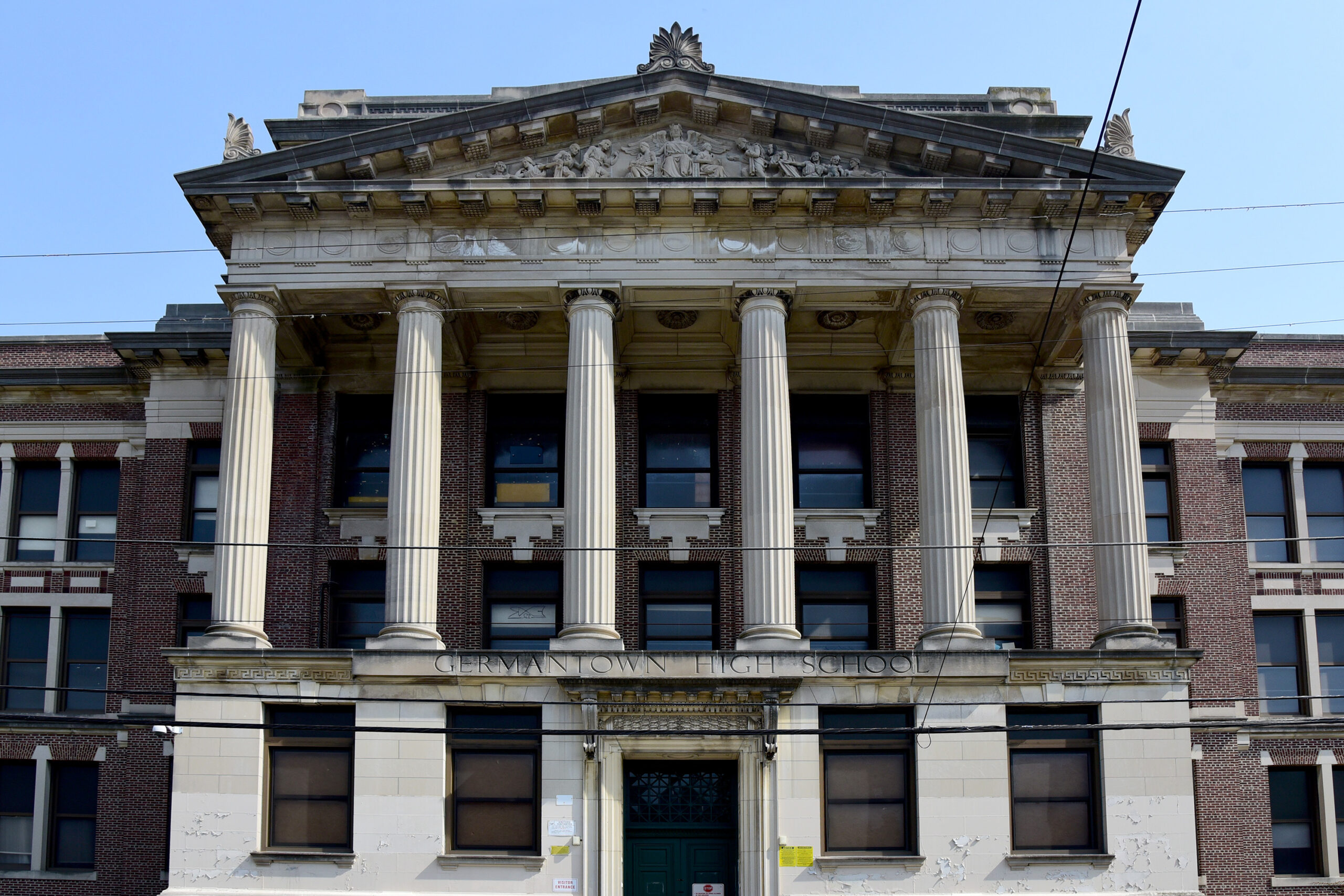
    After it closed in 2013, Germantown High School fell into decay and disrepair, a fate Julia McWilliams writes could be repeated.

    Take the former Germantown High School and Robert Fulton Elementary, for example. Concordia Group bought them in 2014, only to abandon its plans and resell the buildings three years later to local developer Jack Azran, whose opaque redevelopment has sparked concern.

    Moreover, once schools are sold to private entities, they are effectively lost to some communities and public education forever. South Philadelphia’s experience is a cautionary tale. As nearby elementary schools became overcrowded following the 2013 closures, the former Edward W. Bok Technical High School, once a public citywide admissions school, was transformed into a workspace for small-business owners, artists, and nonprofit organizations, closing classrooms forever.

    This reuse no longer serves the same community of students and families as when it was a high school, and raises important questions: What does it mean for a community’s future when former schools become symbols of gentrification rather than centers of education? And what options remain when demographic shifts create new demand for neighborhood schools that no longer exist?

    Had Bok remained in public hands, it could have flexibly adapted to those needs. Instead, it serves a much different population: South Philadelphia working artists, small-business owners, and local refugee-serving nonprofits, but also patrons who can afford $14 cocktails.

    Slow down

    Rather than defaulting to closure, the Board of Education should consider how underenrolled buildings might be repurposed for public-serving uses that retain community control. Could redevelopment proceed gradually, with clear commitments that investments in existing buildings benefit both local families and those who have chosen these schools?

    Such an approach would require genuine public engagement and sustained dialogue. It would require slowing down and rejecting a disruptive, thinly deliberated plan shaped by speculative capital and instead committing to participatory, long-term facilities planning.

    The district and the city face a choice. They can repeat a cycle of disinvestment and dispossession, or they can chart a more deliberative, community-rooted path. The question is whether they have the will to do so.

    Julia McWilliams is the codirector of the Urban Studies Program at the University of Pennsylvania and a member of Stand Up for Philly Schools. She coauthored the forthcoming book, “Schools for Sale: Disinvestment, Dispossession, and School Building Reuse in Philadelphia,” from the University of Chicago Press.

  • Don’t make Parkway Northwest a ‘sacrificial lamb’, those fighting its closure say

    Don’t make Parkway Northwest a ‘sacrificial lamb’, those fighting its closure say

    Lyric Jenkins is a strong student, with a report card full of As and Bs.

    She approached her high school selection process seriously, finally zeroing in on a school that checked all her boxes. Jenkins chose Parkway Northwest High School for Peace and Social Justice, she said, because it was an academically rigorous magnet school, safe — and not huge.

    “I wanted a small community where I could be seen,” said Jenkins, now a 10th grader at Parkway Northwest in East Germantown.

    Last month, Jenkins was “shocked” to find her school was being targeted for closure, in part because of the very size that drew her to choose it.

    Philadelphia School District officials have proposed closing Parkway Northwest and 19 other schools, colocating six more and modernizing 159 under a sweeping facilities plan. The proposal calls for closing Parkway Northwest in 2027 and making it an honors program inside Martin Luther King, a large comprehensive high school about half a mile away.

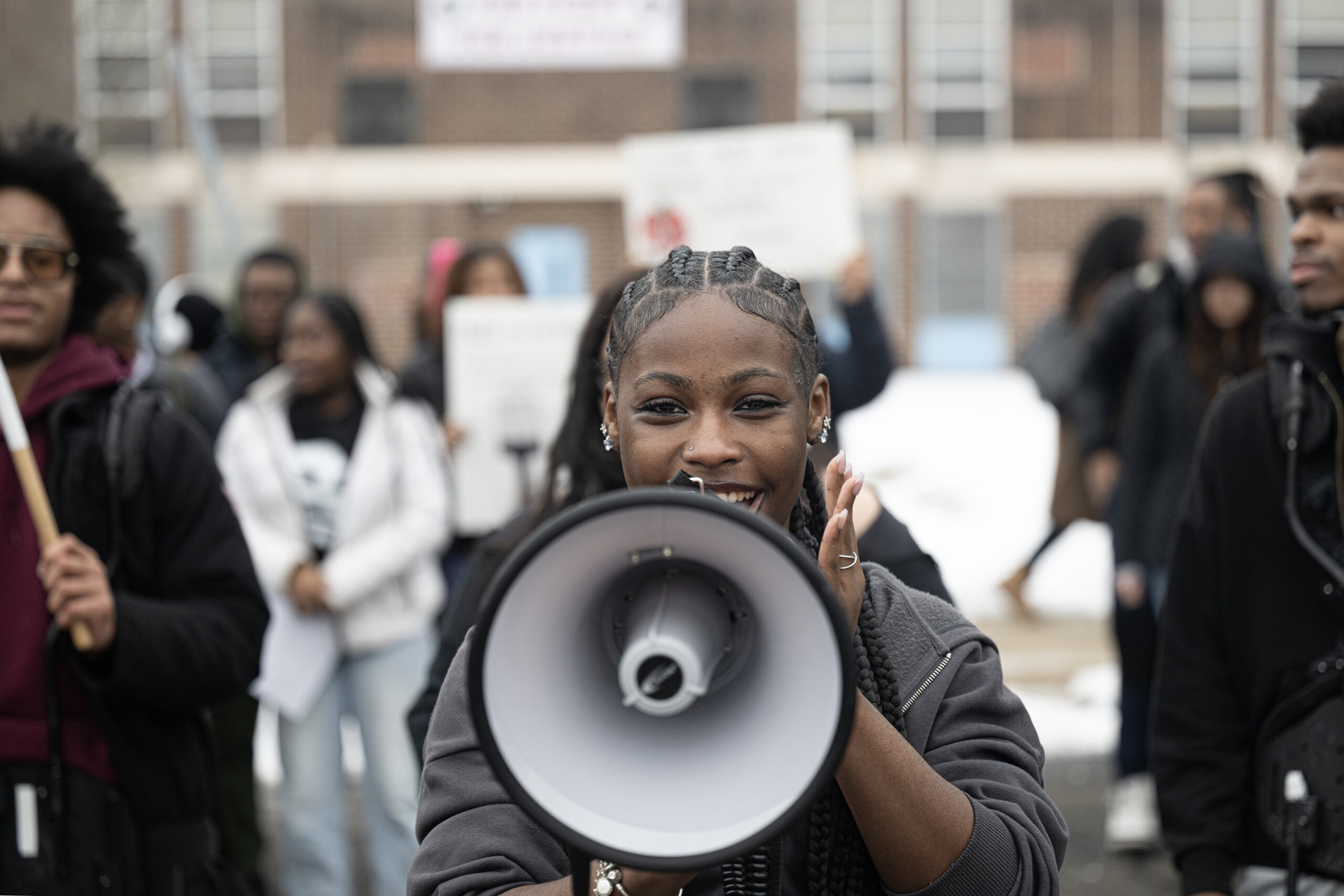
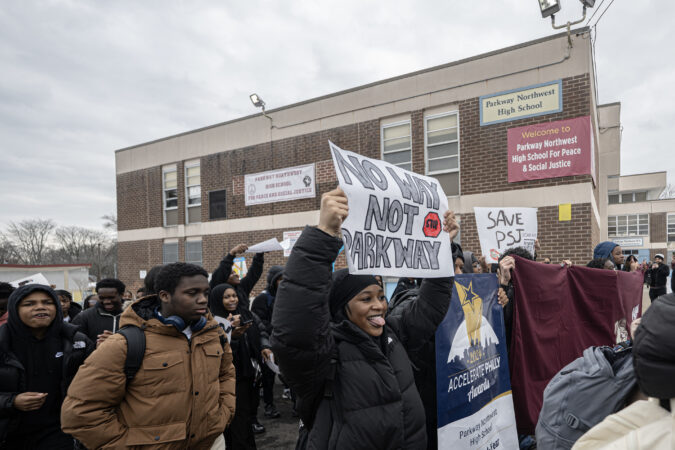
    Student Alasia Payne speaks during a rally for peace and social justice on Wednesday outside Parkway Northwest in protest of its potential closure.

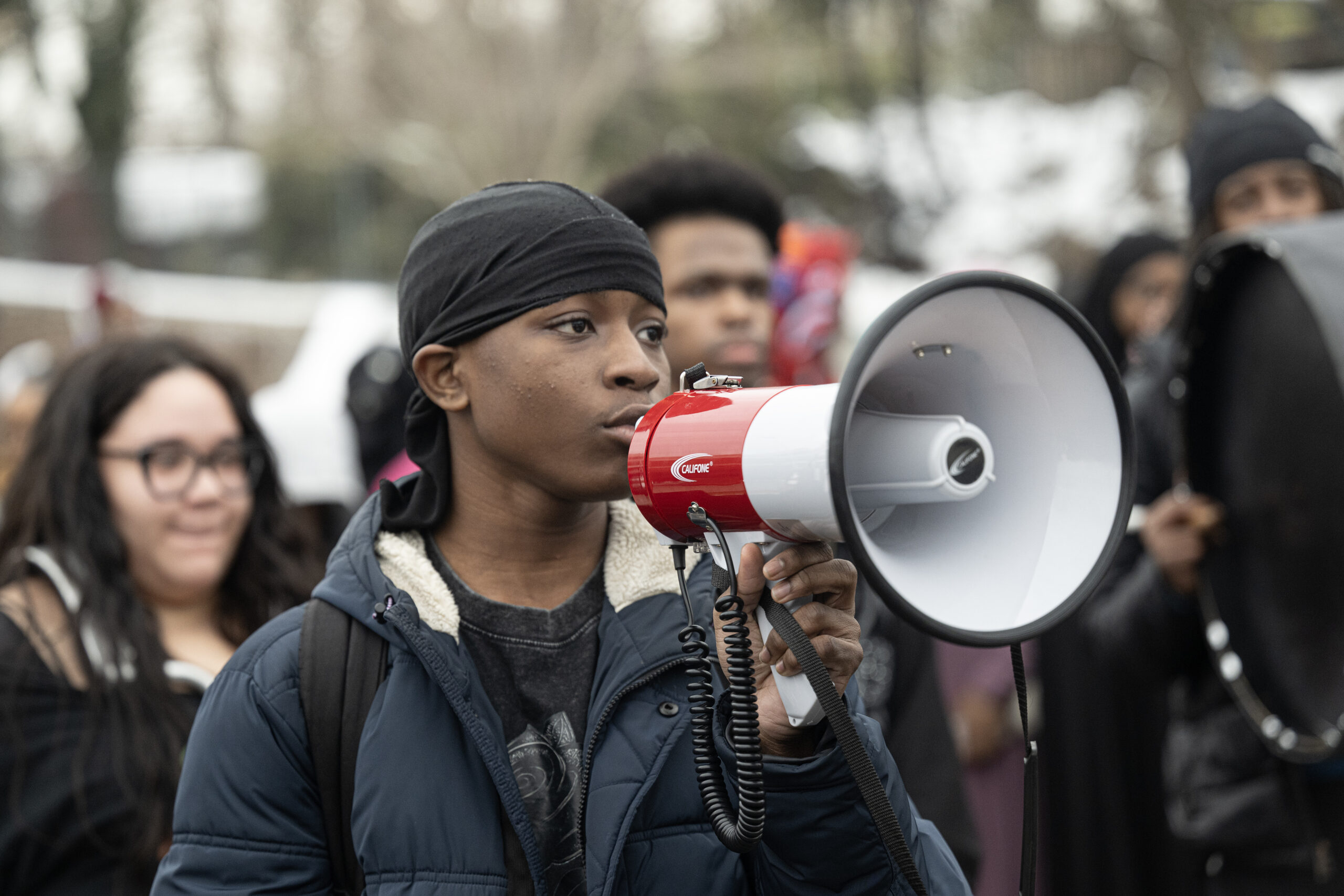
    That plan has drawn fire from many, including more than 100 Parkway Northwest students, who walked out of school en masse Wednesday to protest — waving signs, singing, and banging drums.

    Those fighting to save the school argue that its small size is an asset, and enrollment has been growing, and they have expressed safety concerns about sending children to Martin Luther King.

    More students choosing Parkway NW

    District leaders have said their plan is not motivated by finances, though there is clearly a desire to shrink the school system’s footprint, with 70,000 empty seats citywide. Some schools are less than a quarter full, and others, mostly in the Northeast, don’t have enough room to accommodate all the students enrolled.

    Superintendent Tony B. Watlington Sr. said the plan will provide a stronger and more equitable education for students citywide.

    Closing Parkway Northwest is part of a strategy to shut a handful of small district magnet or citywide schools, moving them into reinvigorate neighborhood high schools.

    That strategy has been uniformly denounced by staff, students, and parents at Parkway Northwest and the other schools that would be forced to surrender their independence — Parkway West, Motivation, Lankenau, and Robeson. All have been affected by changes to the district’s special admission process, which shifted the district to a strict centralized lottery, stripping away from schools the ability to have any discretion over their incoming classes.

    Parkway Northwest and the other magnets all saw enrollment tumble after the forced move to the lottery — a factor that’s now being used against them.

    Student Dane McFarland speaks during a rally outside Parkway Northwest High School on Wednesday.

    The school has worked diligently to build enrollment back up, said Beth Ziegenfus, Parkway Northwest’s school-based teacher leader and the coordinator of its robust dual enrollment program.

    “More students have been choosing Parkway,” Ziegenfus said. “If you think about what our projected enrollment is for next year, we’re looking at an extra 150 kids that we could have here.”

    The closure recommendation discounts that growth, Ziegenfus said, and it also threatens students like Jenkins.

    “These small schools offer something to students who don’t thrive in large environments,” said Ziegenfus. “There is something to be said about kids knowing every single adult in the school — it contributes to the safety. When every child knows you and you know every child, you’re able to offer support, or redirect behaviors, or offer assistance.”

    Ziegenfus spent years teaching at Frankford, another large neighborhood school. She said she cares about comprehensive high schools, sees their value, and believes they need more resources. But those resources shouldn’t come at the expense of Parkway and other small schools.

    “We should invest in King, but two things can be true at the same time. We need Parkway,” said Ziegenfus. “They’re really disrupting the children here, and the children at King, and the incoming kids who are going through the school selection process.”

    ‘They’re going to flee somewhere else’

    At recent district meetings about the proposed Parkway Northwest closure, anger bubbled over.

    Students, teachers, and community members disputed the district’s statistics around the school in a meeting with district officials, saying its 60% building capacity score was off.

    But mostly, they raised alarms about safety.

    “My question is, how will I be able to grow my education at a bigger school if I don’t even feel safe there?” said Sanai Williams, a Parkway Northwest 10th grader. “I don’t feel like I’m going to be able to grow my education if I’m watching my back, thinking I’m going to get attacked every which way at King.”

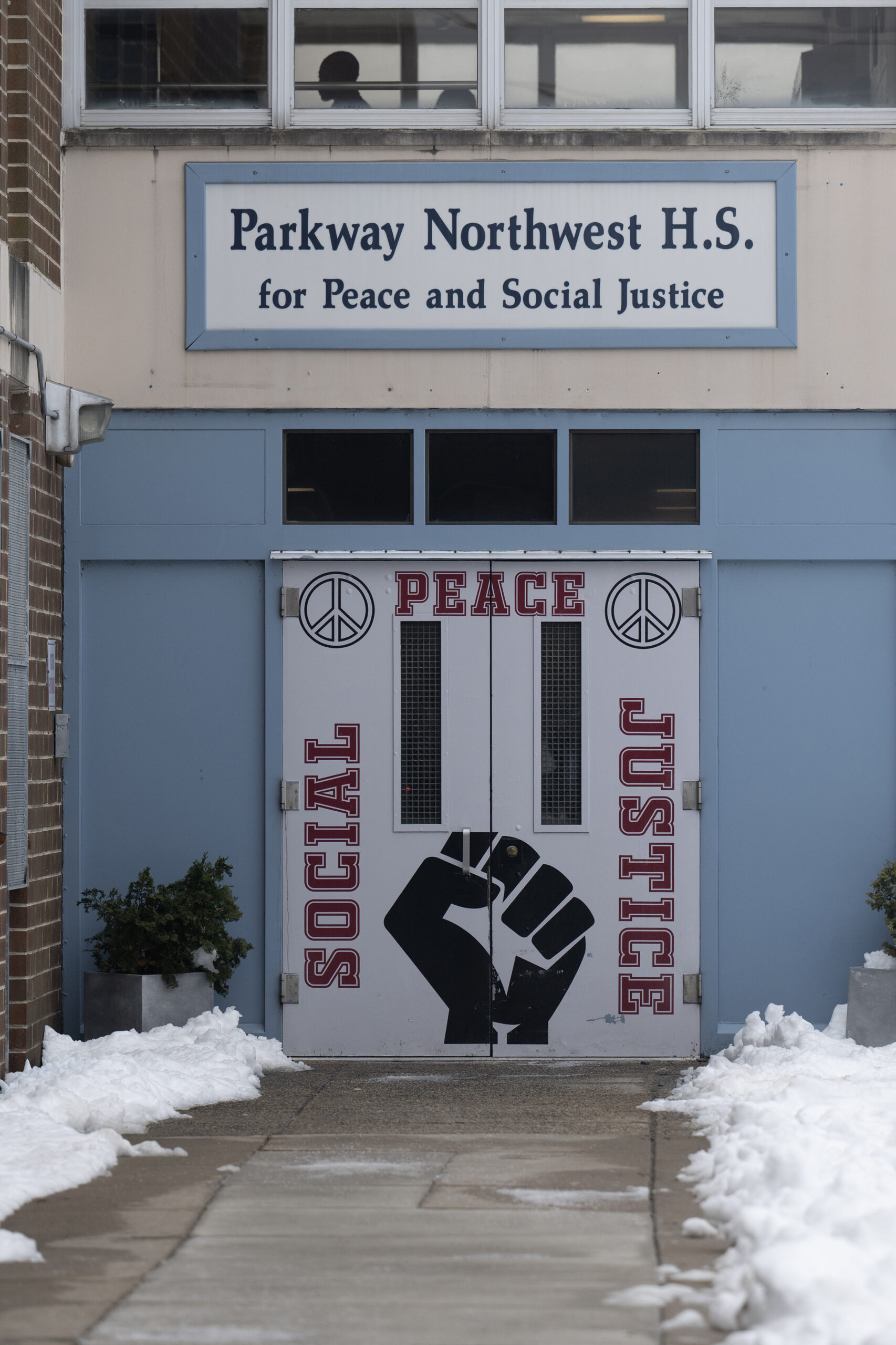
    Parkway Northwest High School in Philadelphia.

    Rodrigo Fernández, the Parkway Northwest Spanish teacher, said he was frustrated by a perceived lack of real opportunity to shape the plan.

    “You are not listening to us,” Fernández said. “You haven’t heard one single person saying, ‘I am excited about this plan.’ If you want to retain our students, you won’t retain them by doing this. They’re going to flee somewhere else. They didn’t choose that setting.”

    Over 1,500 community members have signed a Change.org petition calling for the district to reverse the closure recommendation.

    A peace and social justice mission

    Parkway Northwest, said Elliott Seif — a retired educator and author who’s volunteered at Parkway Northwest for 15 years — is being offered up as “sacrificial lamb to do something at Martin Luther King, which it may not be able to do.”

    And Paula Paul, another longtime Parkway Northwest volunteer, said the very nature of the school makes it essential in the city.

    Students walked out of Parkway Northwest on Wednesday to protest its closure.

    “Does not our city need a school devoted to peace, social justice, and violence prevention, and one where people have formed a community that is functional, a school that works, a school where kids want to be?” Paul asked district officials. “We’ve been struggling to get schools that are functioning, not to lose students, for students to feel safe, to feel connected. Why would we close this school?”

    Watlington is expected to present his plan to the school board Thursday, but the board will not vote then. A date for the final decision on closures and other changes has not yet been set.