At least 1,100 dead or sick birds, mostly Canada geese, have been reported across New Jersey in an outbreak that started on Valentine’s Day, according to state officials.
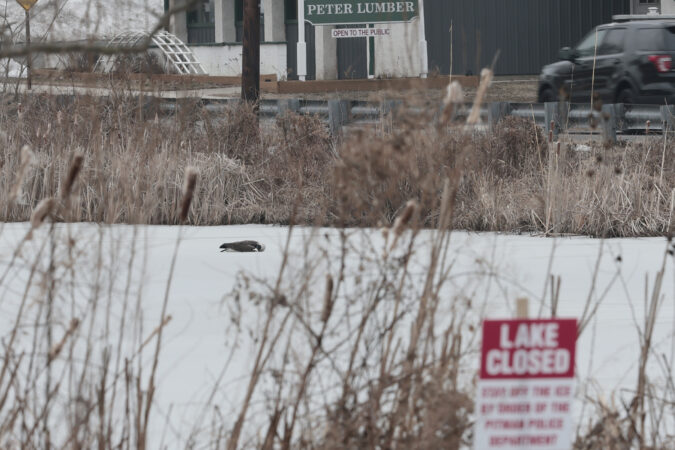
At least 50 geese have died at Alcyon Lake in Pitman, Gloucester County. Officials have closed the lake and the adjoining Betty Park out of precaution.
The fish and wildlife division within the New Jersey Department of Environmental Protection (DEP) and the U.S. Department of Agriculture are tracking them as suspected cases of highly pathogenic avian influenza (H5N1), or bird flu.
Bird flu is not new. But it began to spread in the U.S. in January 2022 and has infected wild and domestic birds in every state.
While bird flu can infect humans, the U.S. Centers for Disease Control and Prevention has said it is primarily a threat to animals and poses little risk to the public.
State officials say large numbers of dead geesemay be concentrated in areas where birds gather to look for open water as ice melts. They said that the 1,100 dead or sick wild birds were reported between Saturday and Monday.
Where have dead geese been found?
The DEP says it has received reports of dead Canada geese in South Jersey, including in Hainesport, Burlington County; Sicklerville, Camden County; and Pitman.
Annmarie Ruiz, Gloucester County’s health officer, said the dead geese were noticed in Pitman on Tuesday. She said that there were probably more than 50 at Alcyon Lake, but that there were reportsof dead geese elsewhere in the municipality.
“Right now, we have to presume that it is bird flu based on the signs the birds were exhibiting,” Ruiz said.
The New Jersey Department of Agriculture took some of the birds for testing. The results could take weeks, she said.
“Right now, we’re just erring on the side of caution,” Ruiz said.
Ruiz said workers use face shields and gloves when handling the birds, which are triple-bagged before being disposed.
She said people can report sick or dead wild birds to Gloucester County animal control at 856-881-2828 or the DEP at 877-927-6337.
A lifeless bird lays on the ice at Alcyon Lake in Pitman, N.J. on Wednesday, Feb. 18, 2026. Two adjacent parks, Betty Park (in background) and Alcyon Park (not in photo) are closed as a result of the mysterious birds deaths.
Caryelle Lasher, Camden County’s health officer, said there have been only a small number of reports of dead birds in the county.
Those were concentrated in the lake off Mullen Drive in the Sicklerville section of Gloucester Township, she said.
Overall, however, the county has not seen a spike in reports, she said.
Ruizand Lasher — as well as state officials — stress that people should not touch sick or dead wildlife of any kind. And they should keep pets away.
Even though the risk is low, the potential for human infection exists.
H5N1 is a respiratory bird disease caused by influenza A viruses. Wild birds, such as ducks, gulls, and shorebirds, can carry and spread these viruses but may show no signs of illness, according to the DEP.
The disease can kill domestic poultry such as chickens. Typical symptoms include diarrhea, nasal discharge, coughing, sneezing, and incoordination.
It continues to infect not only birds, but also mammals.
Tips to prevent infection:
Do not touch sick or dying animals, or bring them into your home.
Keep pets away from them, as well as away from droppings.
Wash hands frequently if you are near wildlife.
Do not eat undercooked eggs, poultry, or beef.
Prevent cross-contamination between cooked and raw food.
The developer behind a massive mixed-use project in South Jersey has filed a lawsuit accusing a “rogue” employee of derailing municipal approvals and plotting to steer the property to Rowan University and a rival firm.
For more than two years, Seth Gerszberg and his Englewood, N.J.-based firm Active Acquisitions have been pursuing a development at the intersection of Route 322 and Route 55 in Gloucester County including proposals for 10 warehouses, a wholesale retail club, a hotel, and 117 single-family homes.
An affiliate of Gerszberg’s firm agreed to buy the property — totaling 429 acres, about 29 times the footprint of Lincoln Financial Field — in May 2023 for $23 million from Madison Richwood Village LLC, the suit says.
But the government approval process hit a snag in recent months, the suit alleges, as Gerszberg’s project manager, Sean Earlen — a land-use consultant, former mayor of Lumberton, and chair of the Burlington County GOP — “leveraged his close personal relationship” with Harrison Township’s mayor, Republican Adam Wingate, “to sow doubt within the township” about the viability of the development.
Yearslong saga
It’s the latest twist in a development saga that dates to 2008, when plans for a walkable town center in Harrison’s Richwood section were unveiled, including talk of a new elementary school and liquor licenses for restaurants in what had been a dry town.
According to the suit, Earlen has been pushing the current property owner, Madison Richwood, to do a deal with Rowan and Ohio-based Fairmount Properties LLC, which has been pursuing a “wellness district” at the university featuring proposals for a headquarters for Inspira Health, a hotel, as well as shops and restaurants.
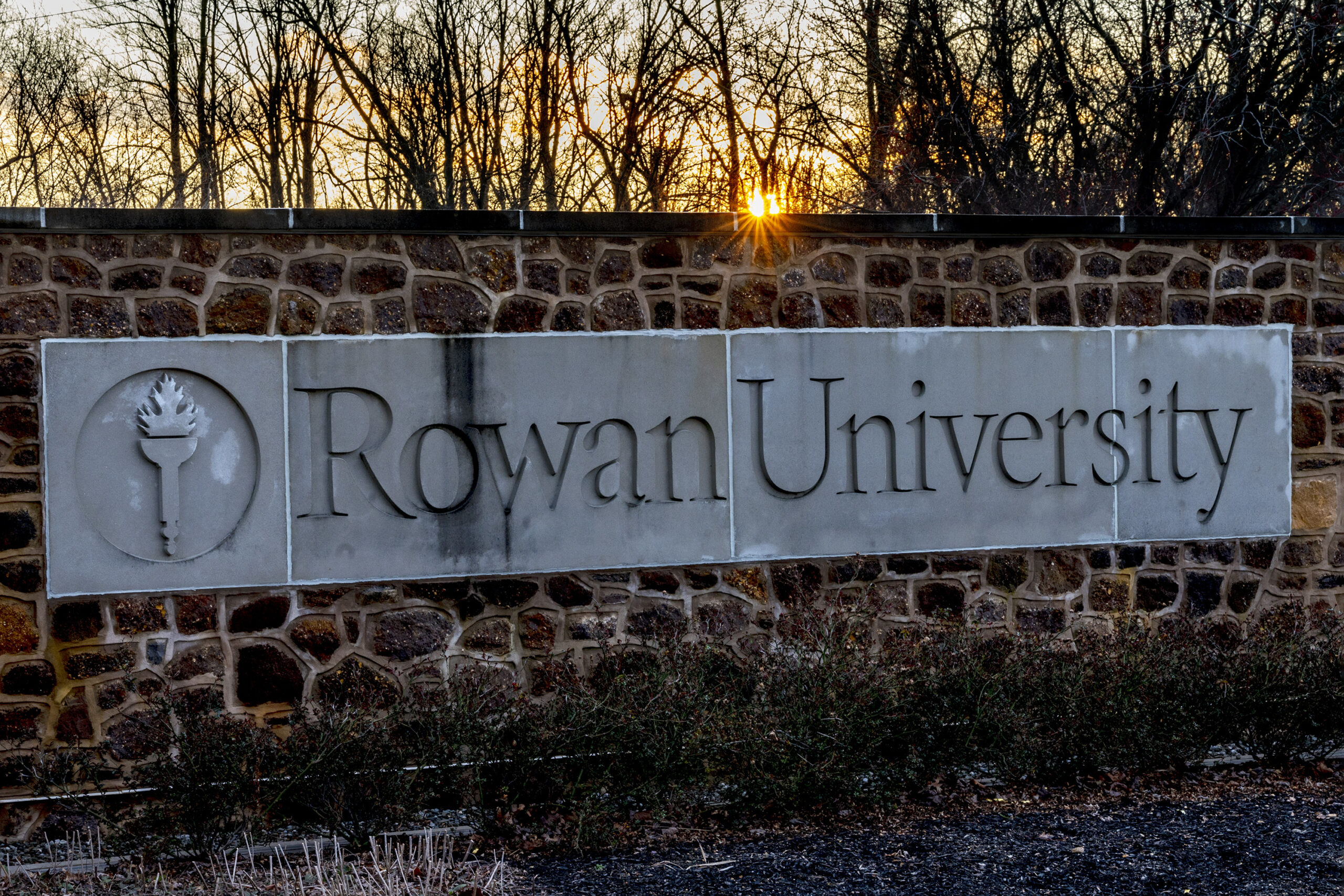
Rowan University in Glassboro.
At some point last year Rowan negotiated a deal with Madison Richwood to buy the property for $31 million, plus another $10 million in 2026, the complaint says, in an effort to “fulfill the university’s vision for a comprehensive plan at the Route 55/Route 322 interchange.”
As the township’s confidence in the warehouse project has eroded, the suit alleges, a neighboring property owner filed a lawsuit in October challenging Active’s government approvals.
The developer — which has industrial and residential projects across New Jersey — has sunk roughly $4 million to obtain the necessary approvals for the project and $7 million in “consultant and development expenses,” according to court records.
Gerszberg, who before his work in real estate was cofounder and president of hip-hop fashion brand Marc Ecko Enterprises, didn’t respond to requests for comment.
What does Rowan say?
The most recent suit, filed this month in Bergen County Superior Court by Active affiliate ActiveRWHA Property LLC, names Earlen and Fairmount Properties as defendants. It alleges interference with contractual rights, misappropriation of trade secrets, and defamation, among other counts.
Representatives for Fairmount and Rowan — a public research institution that isn’t a party to the suit — did not directly answer questions about whether they intend to buy the property. Neither Earlen nor Wingate — who took office as mayor last year — responded to requests for comment.
Randy Ruttenberg, a Fairmount principal, said the suit is “completely without merit” and called it an “ill-advised attempt to disrupt the very straightforward development process we continue to diligently pursue for the benefit of the entire region.”
“Fairmount Properties is focused fiercely on executing their own world-class development, and no matter what obstacle is placed in our path, we will not be distracted, bullied or deterred,” he said in a statement.
Joe Cardona, a spokesperson for Rowan, said it would be inappropriate to comment on pending litigation. “Rowan remains focused on its academic mission and on conducting all institutional planning activities responsibly and in accordance with applicable laws and governance standards,” he said in an email.
Madison Richwood affiliate Madison Marquette — a Washington, D.C.-based real estate investment and operating company — said in court papers that Gerszberg’s concern about a sale to Rowan is “without merit.”
Madison Marquette “will not sell the property, as defined in the [purchase and sale agreement], to Rowan, Fairmount, or any other entity while the PSA is in full force and effect,” firm president and managing principal William Sudow said in a court filing in a related case that has since been resolved.
Philadelphia is expected to see its most significant winter storm in years this weekend, with nearly a foot of snow and ice expected from a formidable low-pressure system sweeping across the eastern United States.
Official National Weather Service forecasts say six to 18 inches of snow is possible across most of New Jersey and Pennsylvania, including Philadelphia as the storm pushes through the region Saturday night to early Monday morning. More than 21 states are expected to experience at least moderate impacts from the storm, the weather service said.
Forecasters said that mixing with sleet and freezing rain could hold down overall snow totals across Philadelphia and South Jersey, but the storm is likely to hinder if not halt most travel on Sunday, regardless.
The National Weather Service puts out forecasts for every few square miles of land in the United States four times a day through a system called the National Digital Forecast Database.
The maps below display that data. Use it to find how much snow is expected anywhere in the eastern United States. It will show the most recent forecast for the next three days.
(function () {window.addEventListener(‘message’, function (e) { var message = e.data; var els = document.querySelectorAll(‘iframe[src*=”‘ + message.id + ‘”]’); els.forEach(function(el) { el.style.height = message.height + ‘px’; }); }, false); })();
A considerable amount of freezing rain and sleet may also fall during the storm, leading to icing concerns. The map below displays the forecast for ice accumulation, or accretion, over the next three days.
(function () {window.addEventListener(‘message’, function (e) { var message = e.data; var els = document.querySelectorAll(‘iframe[src*=”‘ + message.id + ‘”]’); els.forEach(function(el) { el.style.height = message.height + ‘px’; }); }, false); })();
The French developer of South Jersey’s first large-scale AI data center made his case to residents on Wednesday, saying his massive under-construction facility will benefit them in ways unprecedented in the emerging industry.
But at a contentious town hall, several residents said they’re not taking his word for it, especially given the timing at which the developer was asking for their input.
“You couldn’t do this before the building was built?” asked one resident, who spoke during public comment but declined to give their name. “You kind of took our voice away.”
Located on South Lincoln Avenue, off State Route 55, the site was formerly a private industrial park.
DataOne, a French company that manages advanced data centers, is the owner, operator, and builder. Its client, Nebius Group, an Amsterdam-based AI-infrastructure company, will operate the center’s internal technology, which will fuel Microsoft’s AI tools.
Located on South Lincoln Avenue, off State Route 55, the site was formerly a private industrial park. It was sold to DataOne in a private transaction, the details of which Charles-Antoine Beyney, DataOne’s founder and chief executive officer, declined to disclose.
At city council meetings and on social media, some residents have voiced concerns about the environmental, financial, and quality-of-life impacts of the site. Prior to Wednesday’s meeting, residents were prompted to submit questions online that were then addressed in a presentation. Dozens also took to the mic afterward.
Beyney said he understood their concerns, but they don’t apply to his center, which will use “breakthrough” technology to reduce its environmental impact.
“Most of the data centers that are being built today suck, big time,” Beyney said Wednesday. “They consume water. They pollute. They are extremely not efficient. This is clearly not what we are building here.”
“No freaking way am I am going to do what the entire industry is doing … just killing our communities and killing our lungs to make money,” he added.
Developers tout promises of data centers
Data centers house the technology needed to fuel increasingly sophisticated AI tools. In recent years, they have been proliferating across the country and the region.
In June, Gov. Josh Shapiro announced a $20 billion investment by Amazon in Pennsylvania data centers in Salem Township and Falls Township.
A 560,000-square-foot data center is being built in Logan Township, Gloucester County, and is set to have a capacity of up to 150 megawatts once completed in early 2027, according to the website of its designer, Energy Concepts. There are also smaller, specialized data centers in Atlantic City and Pennsauken, according to Data Center Map.
In Vineland, Beyney said his gas-powered center will have nearly net-zero emissions, not consume water while cooling the equipment, and generate 85% of its own power. He told residents: “You will not see your bill for electricity going and skyrocketing.”
Opponents of data centers worry their electric bills will rise due to the centers. The developer in Vineland says that won’t happen in South Jersey.
The facility will be 100% privately funded, he said, after the company turned down a nearly $6.2 million loan from the city amid resident backlash. The loan was approved at a December council meeting, and Beyney said DataOne would have paid about $450,000 in interest, money that could have gone back into the community.
“That’s a shame,” Beyney said, “but we follow the people.”
At a meeting next week, Vineland City Council could approve a PILOT agreement that would give DataOne tax breaks on the new construction in exchange for payments to the city.
Beyney said DataOne plans to be a good neighbor. Across the street from the data center, he said they will build a vertical farm — which grows crops indoors using technology — and provide free fruits and vegetables to Vineland residents in need.
Residents voice concerns about Vineland data center
Several residents expressed skepticism, and even anger, about Beyney’s data-center promises, noting that Cumberland County already has plenty of farms.
Regarding the data center itself, they asked how Beyney could be so confident about new technology, questioned the objectivity of his data, and accused him of taking advantage of a city where nearly 14% of residents live below the poverty line.
Beyney denied the allegations.
At least one resident said he was moved by Beyney’s assurances.
“I was a really big critic of [the data center all along], but I think what you said tonight has alleviated a lot of my concerns,” said Steve Brown, who lives about a mile away from the data center. He still had one gripe, however: The noise.
“What I hear every night when I wake up at 2, 3, 4 o’clock in the morning is this rumble off in the distance,” Brown said. “When I get out of my car every day when I get home, I hear it.”
Brown invited Beyney and his team to come hear the noise from his kitchen or back patio. Beyney said they would do so, and promised to get the sound attenuated as soon as possible, certainly by the end of the project’s construction.
A New Jersey school resource officer has been charged with misconduct and child endangerment after an altercation with a juvenile in 2024, Gloucester County prosecutors said.
Charles P. Rudolph, 51, of Franklinville, was indicted on second-degree official misconduct and second-degree endangering, abusing, or neglecting a child on Wednesday, according to the Gloucester County Prosecutor’s Office.
Both counts carry a maximum sentence of 10 years in state prison.
Prosecutors say that while employed as a school resource officer, on behalf of the Gloucester County Sheriff’s Office, Rudolph “forcefully pushed” a juvenile’s neck, face, and chest onto a table while the juvenile was handcuffed during an incident that occurred on Dec. 19, 2024.
Officials did not release moreinformation on the incident that led to the altercation between Rudolph and the juvenile, any identifying details about the child,or the school where Rudolph worked.
The Gloucester County Sheriff’s Office declined to comment on the case.
Rudolph’s lawyer could not be reached for comment.
A court appearance is preliminarily scheduled for Feb. 5, according to prosecutors.
In 2025, Philadelphians said goodbye to a beloved group of broadcasters, radio personalities, sports heroes, and public servants who left their mark on a city they all loved.
Some were Philly natives, including former Eagles general manager Jim Murray. Others, including beloved WMMR host Pierre Robert, were transplants who made Philly their adopted home. But all left their mark on the city and across the region.
Pierre Robert
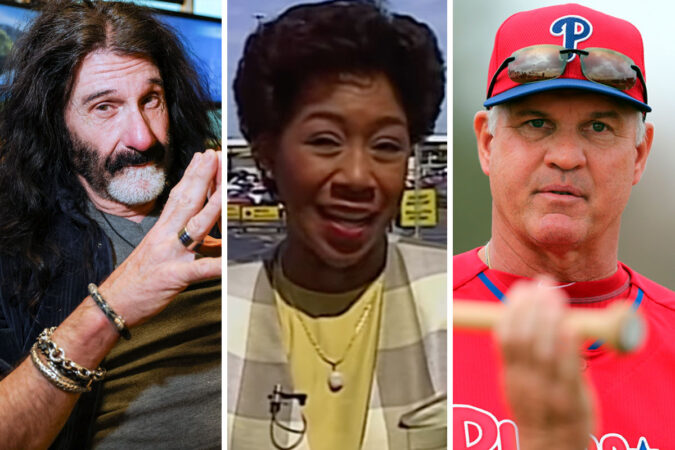
Former WMMR host Pierre Robert, seen in his studio in 2024.
A native of Northern California, Mr. Robert joined WMMR as an on-air host in 1981. He arrived in the city after his previous station, San Francisco’s KSAN, switched to an “urban cowboy” format, prompting him to make the cross-country drive to Philadelphia in a Volkswagen van.
At WMMR, Mr. Robert initially hosted on the weekends, but quickly moved to the midday slot — a position he held for more than four decades up until his death.
— Nick Vadala, Dan DeLuca
Bernie Parent
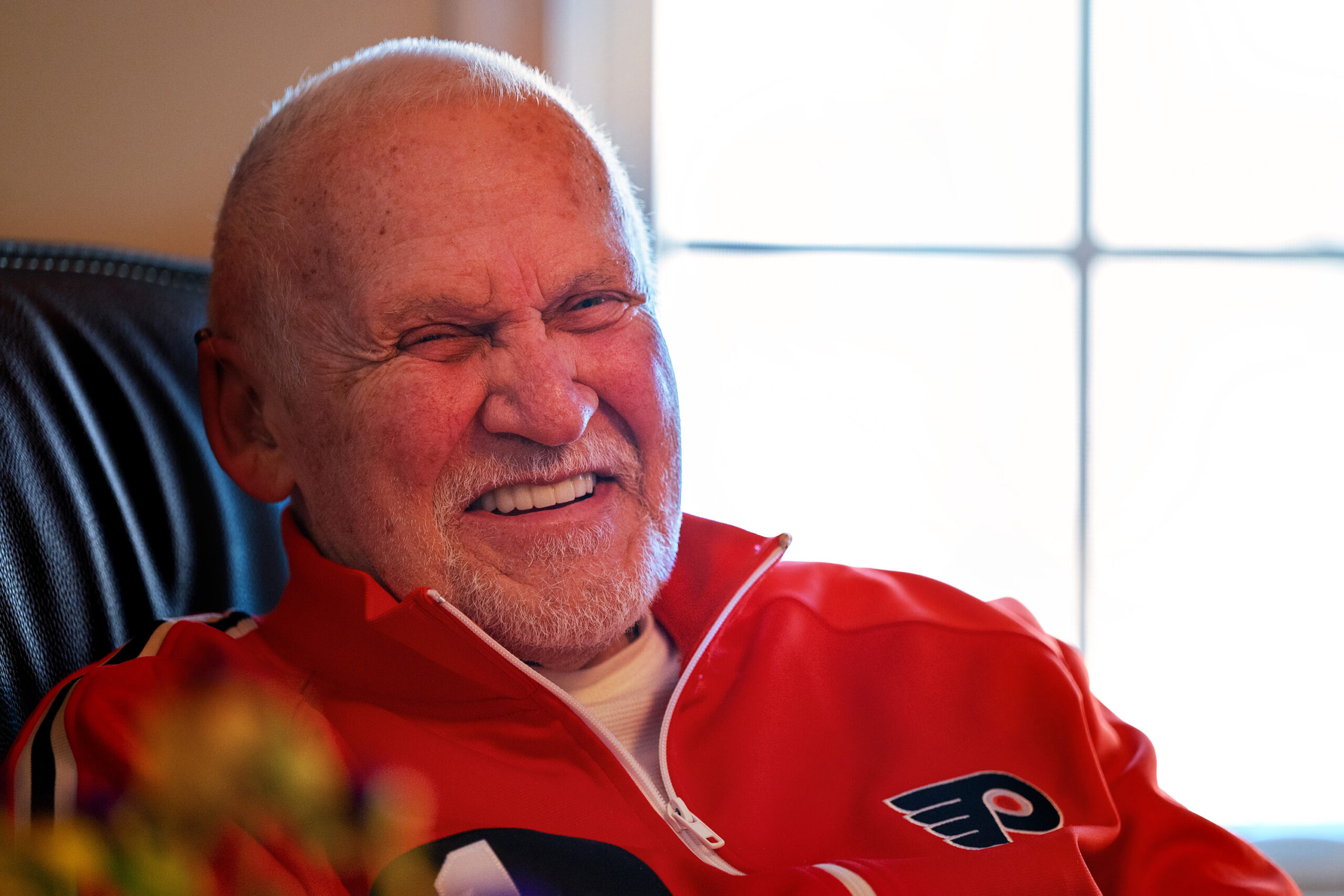
Former Flyers goaltender Bernie Parent, seen at his home in 2024.
Bernie Parent, the stone-wall Flyers goalie for the consecutive Stanley Cup championship teams for the Broad Street Bullies in the 1970s, died in September. He was 80.
A Hall of Famer, Mr. Parent clinched both championships with shutouts in the final game as he blanked the Boston Bruins, 1-0, in 1974 and the Buffalo Sabres, 2-0, in 1975. Mr. Parent played 10 of his 13 NHL seasons with the Flyers and also spent a season in the World Hockey League with the Philadelphia Blazers. He retired in 1979 at 34 years old after suffering an eye injury during a game against the New York Rangers.
He grew up in Montreal and spoke French as his first language before becoming a cultlike figure at the Spectrum as cars throughout the region had “Only the Lord Saves More Than Bernie Parent” bumper stickers.
— Matt Breen
David Lynch
David Lynch, seen here at the Governors Awards in Los Angeles in 2019.
David Lynch, the visionary director behind such movies as Blue Velvet and The Elephant Man and the twisted TV show Twin Peaks, died in January of complications from emphysema. He was 78.
Mr. Lynch was born in Missoula, Mont., but ended up in Philadelphia to enroll at the Pennsylvania Academy of the Fine Arts in 1965 at age 19. It was here he developed an interest in filmmaking as a way to see his paintings move.
He created his first short films in Philadelphia, which he described both as “a filthy city” and “his greatest influence” as an artist. Ultimately, he moved to Los Angeles to make his first feature film, Eraserhead, though he called the film “my Philadelphia Story.”
— Rob Tornoe
Ryne Sandberg
Former Phillies manager Ryne Sandberg, seen here at spring training in 2018.
Ryne Sandberg, the Hall of Fame second baseman who started his career with the Phillies but was traded shortly after to the Chicago Cubs in one of the city’s most regrettable trades, died in July of complications from cancer. He was 65.
Mr. Sandberg played 15 seasons in Chicago and became an icon for the Cubs, simply known as “Ryno,” after being traded there in January 1982.
He was a 10-time All-Star, won nine Gold Glove awards, and was the National League’s MVP in 1984. Mr. Sandberg was inducted into the Baseball Hall of Fame in 2005 and returned to the Phillies in 2011 as a minor-league manager and, later, the big-league manager.
— Matt Breen
Bob Uecker
Bob Uecker, seen here before a Brewers game in 2024.
Bob Uecker, a former Phillies catcher who later became a Hall of Fame broadcaster for the Milwaukee Brewers and was dubbed “Mr. Baseball” by Johnny Carson for his acting roles in several movies and TV shows, died in January. He was 90.
Mr. Uecker spent just six seasons in the major league, two with the Phillies, but the talent that would make him a Hall of Fame broadcaster — wit, self-deprecation, and the timing of a stand-up comic — were evident.
His first broadcasting gig was in Atlanta, and he started calling Milwaukee Brewers games in 1971. Before that, he called Phillies games: Mr. Uecker used to sit in the bullpen at Connie Mack Stadium and deliver play-by-play commentary into a beer cup.
— Matt Breen and Rob Tornoe
Harry Donahue
Harry Donahue, seen here at Temple University in 2020.
Harry Donahue, 77, a longtime KYW Newsradio anchor and the play-by-play voice of Temple University men’s basketball and football for decades, died in October after a fight with cancer.
His was a voice that generations of people in Philadelphia and beyond grew up with in the mornings as they listened for announcements about snow days and, later, for a wide array of sports.
— Robert Moran
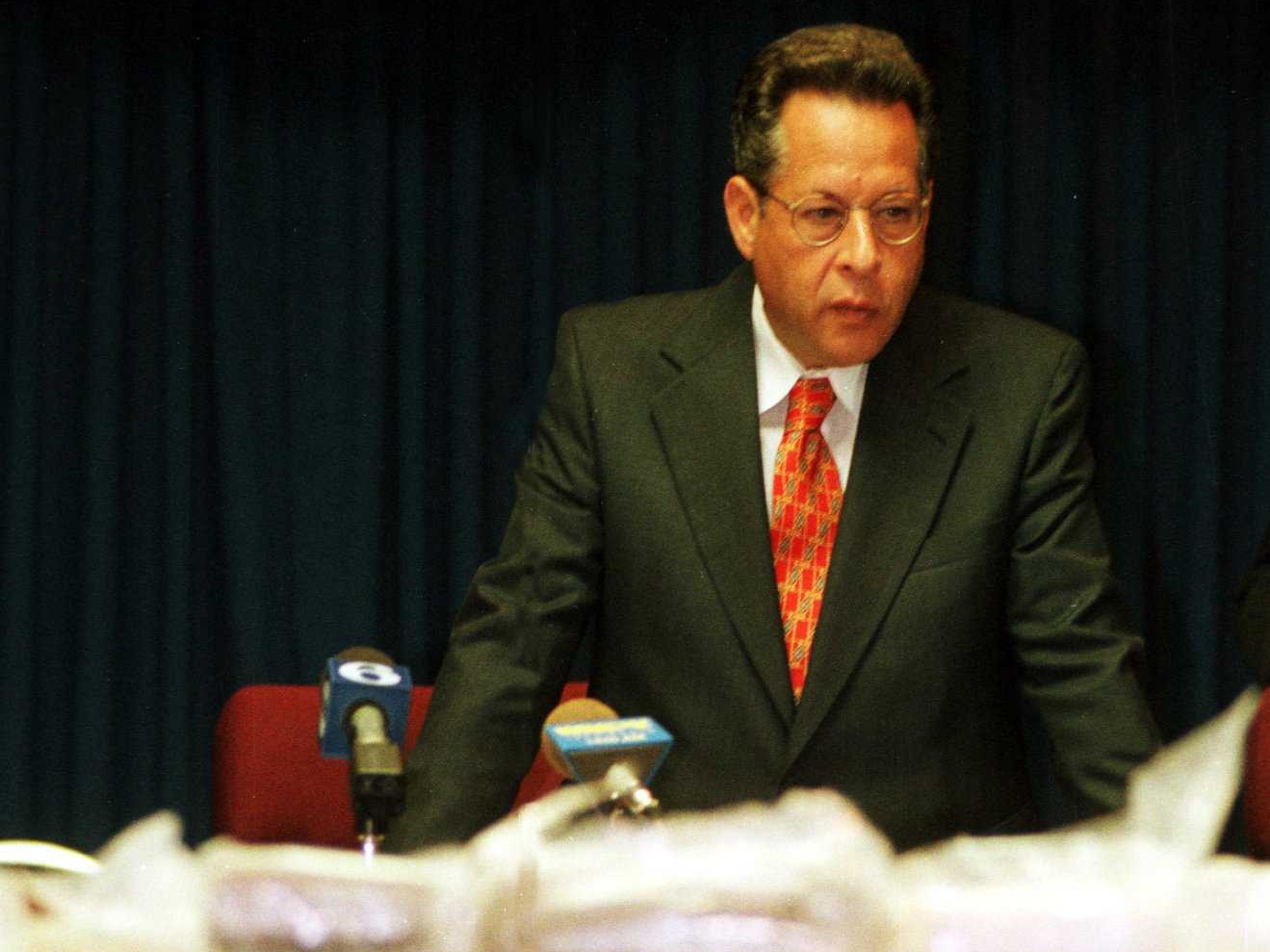
Alan Rubenstein
Judge Rubenstein, then Bucks County district attorney, talks to the media about a drug case in 1998.
Alan M. Rubenstein, a retired senior judge on Bucks County Common Pleas Court and the longest-serving district attorney in Bucks County history, died in August of complications from several ailments at his home in Holland, Bucks County. He was 79.
For 50 years, from his hiring as an assistant district attorney in 1972 to his retirement as senior judge a few years ago, Judge Rubenstein represented Bucks County residents at countless crime scenes and news conferences, in courtrooms, and on committees. He served 14 years, from 1986 to 1999, as district attorney in Bucks County, longer than any DA before him, and then 23 years as a judge and senior judge on Bucks County Court.
“His impact on Bucks County will be felt for generations,” outgoing Bucks County District Attorney Jennifer Schorn said in a tribute. U.S. Rep. Brian Fitzpatrick (R., Pa.) said on Facebook: “Alan Rubenstein has never been just a name. It has stood as a symbol of justice, strength, and integrity.”
— Gary Miles
Orien Reid Nix
Orien Reid Nix, seen here being inducted into the Broadcast Pioneers of Philadelphia Hall of Fame in 2018
Orien Reid Nix, 79, of King of Prussia, retired Hall of Fame reporter for KYW-TV and WCAU-TV in Philadelphia, owner of Consumer Connection media consulting company, the first Black and female chair of the international board of the Alzheimer’s Association, former social worker, mentor, and volunteer, died in June of complications from Alzheimer’s disease.
Charismatic, telegenic, empathetic, and driven by a lifelong desire to serve, Mrs. Reid Nix worked as a consumer service and investigative TV reporter for Channels 3 and 10 in Philadelphia for 26 years, from 1973 to her retirement in 1998. She anchored consumer service segments, including the popular Market Basket Report, that affected viewers’ lives and aired investigations on healthcare issues, price gouging, fraud, and food safety concerns.
— Gary Miles
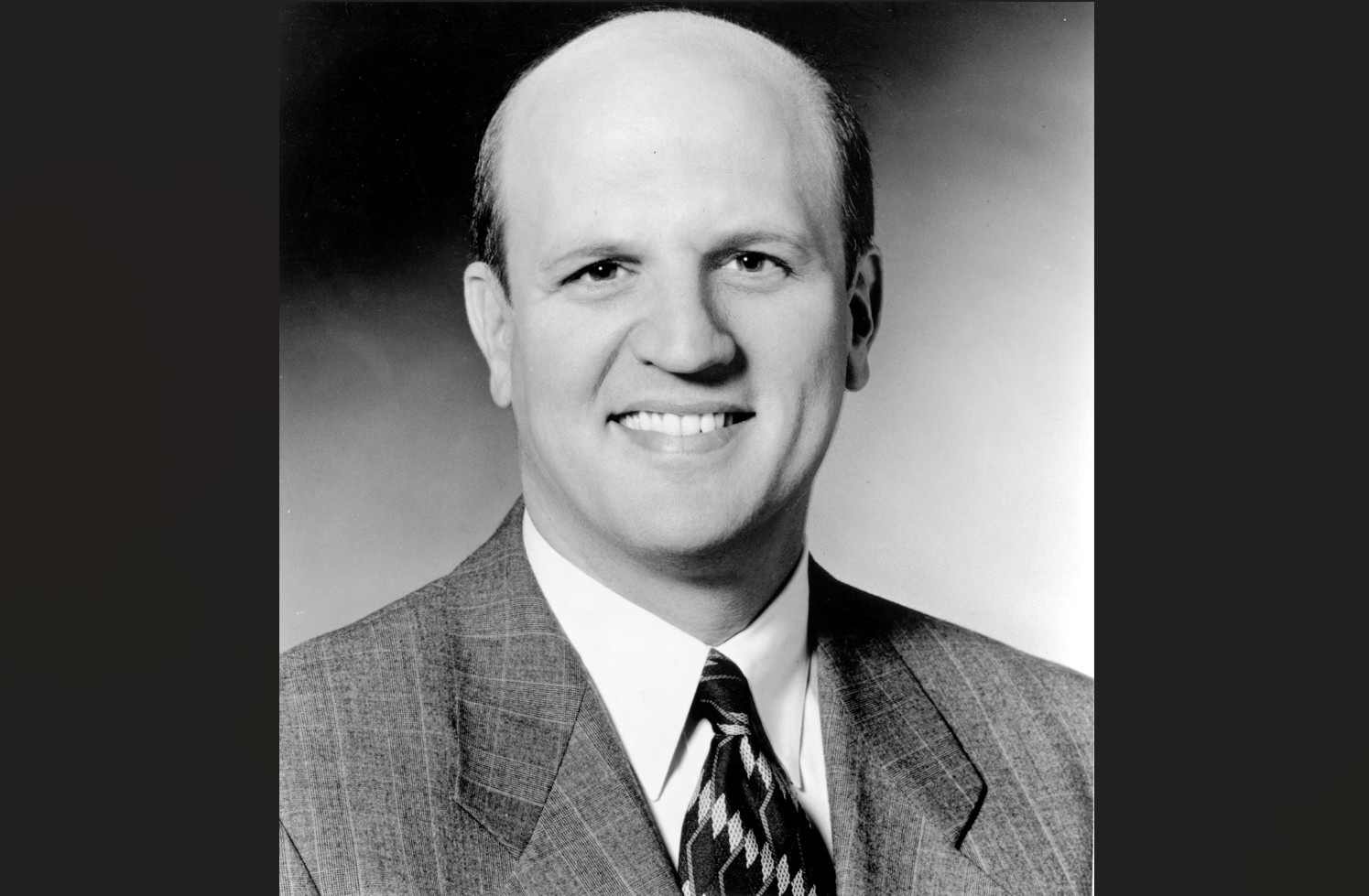
Dave Frankel
Dave Frankel in an undated publicity photo.
Dave Frankel, 67, a popular TV weatherman on WPVI (now 6abc) who later became a lawyer, died in February after a long battle with a neurodegenerative disease.
Mr. Frankel grew up in Monmouth County, N.J., graduated in 1979 from Dartmouth College, and was planning to attend Dickinson School of Law to become a lawyer like his father. But an internship at a local TV station in Vermont turned into a news anchor job and a broadcast career that lasted until the early 2000s.
— Robert Moran
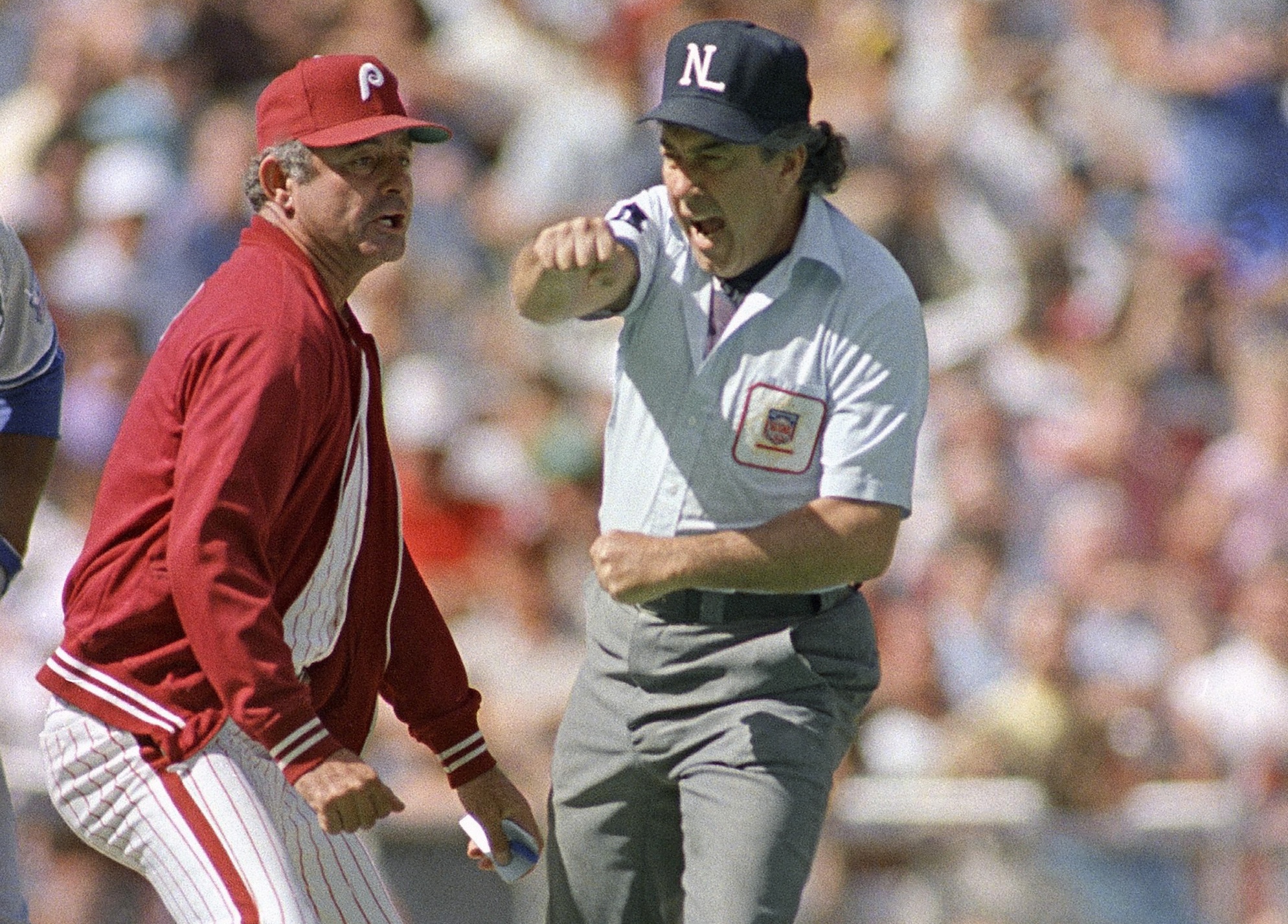
Lee Elia
Former Phillies manager Lee Elia, seen here being ejected from a game in 1987.
Lee Elia, the Philadelphia native who managed the Phillies after coaching third base for the 1980 World Series champions and once famously ranted against the fans who sat in the bleachers of Wrigley Field, died in July. He was 87.
Mr. Elia’s baseball career spanned more than 50 seasons. He managed his hometown Phillies in 1987 and 1988 after managing the Chicago Cubs in 1982 and 1983.
After his playing career was cut shot by a knee injury, Mr. Elia joined Dallas Green’s Phillies staff before the 1980 season and was coaching third base when Manny Trillo delivered a crucial triple in the clinching game of the National League Championship Series. Mr. Elia was so excited that he bit Trillo’s arm after he slid.
— Matt Breen
Gary Graffman
Gary Graffman, seen here playing at the Curtis Institute of Music Orchestra Concert at Verizon Hall in 2006.
Gary Graffman, a celebrated concert pianist and the former president of the Curtis Institute of Music, died in December in New York. He was 97.
The New York City-born pianist arrived at Curtis at age 7. He graduated at age 17 and played roughly 100 concerts a year between the ages of 20 and 50 before retiring from touring due to a compromised right hand. Diagnosed with focal dystonia (a neurological disorder), he went on to premiere works for the left hand by Jennifer Higdon and William Bolcom.
Mr. Graffman returned to Curtis as a teacher in 1980, became director in 1986, and was named the president of the conservatory in 1995, with a teaching studio encompassing nearly 50 students, including Yuja Wang and Lang Lang among others. He performed on numerous occasions with the Philadelphia Orchestra from 1947 to 2003.
— David Patrick Stearns
Len Stevens
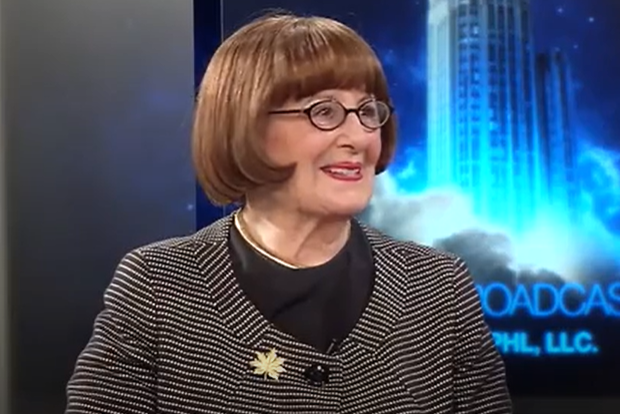
Len Stevens was the co-founder of WPHL-TV Channel 17.
Len Stevens, the cofounder of WPHL-TV (Channel 17) and a member of the Broadcast Pioneers of Philadelphia Hall of Fame, died in September of kidney failure. He was 94.
Born in Philadelphia, Mr. Stevens was a natural entrepreneur. He won an audition to be a TV announcer with Dick Clark on WFIL-TV in the 1950s, persuaded The Tonight Show and NBC to air Alpo dog food ads in the 1960s, co-owned and managed the popular Library singles club on City Avenue in the 1970s and ’80s, and later turned the nascent sale of “vertical real estate” on towers and rooftops into big business.
He and partner Aaron Katz established the Philadelphia Broadcasting Co. in 1964 and launched WPHL-TV on Sept. 17, 1965. At first, their ultrahigh frequency station, known now as PHL17, challenged the dominant very high frequency networks on a shoestring budget. But, thanks largely to Mr. Stevens’ advertising contacts and programming ideas, Channel 17 went on to air Phillies, 76ers, and Big Five college basketball games, the popular Wee Willie Webber Colorful Cartoon Club, Ultraman, and other memorable shows in the late 1960s and early ’70s.
— Gary Miles
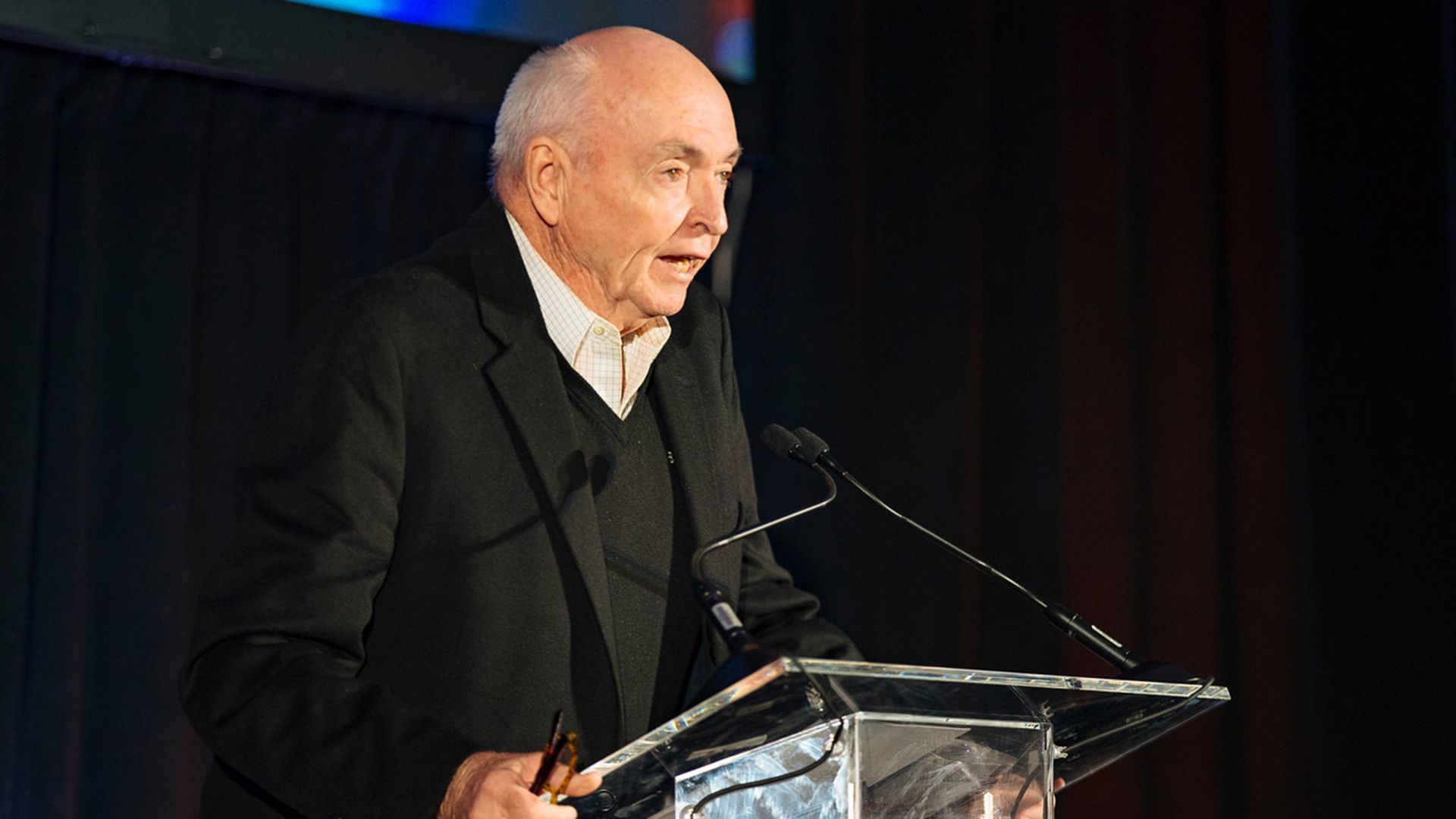
Jim Murray
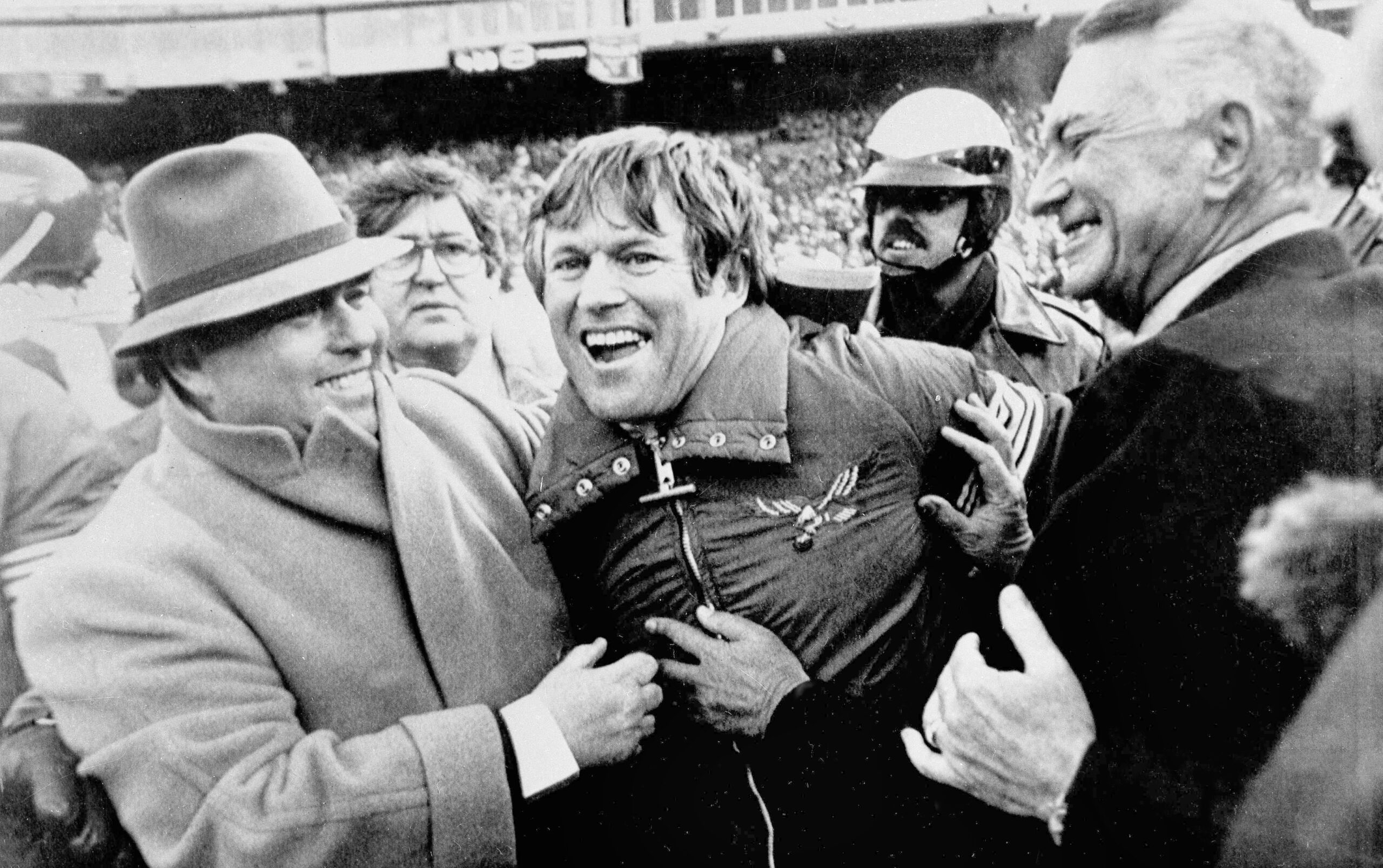
Former Eagles general manager Jim Murray (left), seen here with Dick Vermeil and owner Leonard Tose following the 1980 NFC championship game in January 1981.
Jim Murray, the former Eagles general manager who hired Dick Vermeil and helped the franchise return to prominence while also opening the first Ronald McDonald House, died in August at home in Bryn Mawr surrounded by his family. He was 87.
Mr. Murray grew up in a rowhouse on Brooklyn Street in West Philadelphia and watched the Eagles at Franklin Field. The Eagles hired him in 1969 as a publicist, and Leonard Tose, then the Eagles’ owner, named him the general manager in 1974. Mr. Murray was just 36 years old and the decision was ridiculed.
But Mr. Murray — who was known for his wit and generosity — made a series of moves to bring the Eagles back to relevance, including hiring Vermeil and acquiring players like Bill Bergey and Ron Jaworski. The Eagles made the playoffs in 1978 and reached their first Super Bowl in January 1981. The Eagles, with Murray as the GM, were finally back.
— Matt Breen
Michael Days
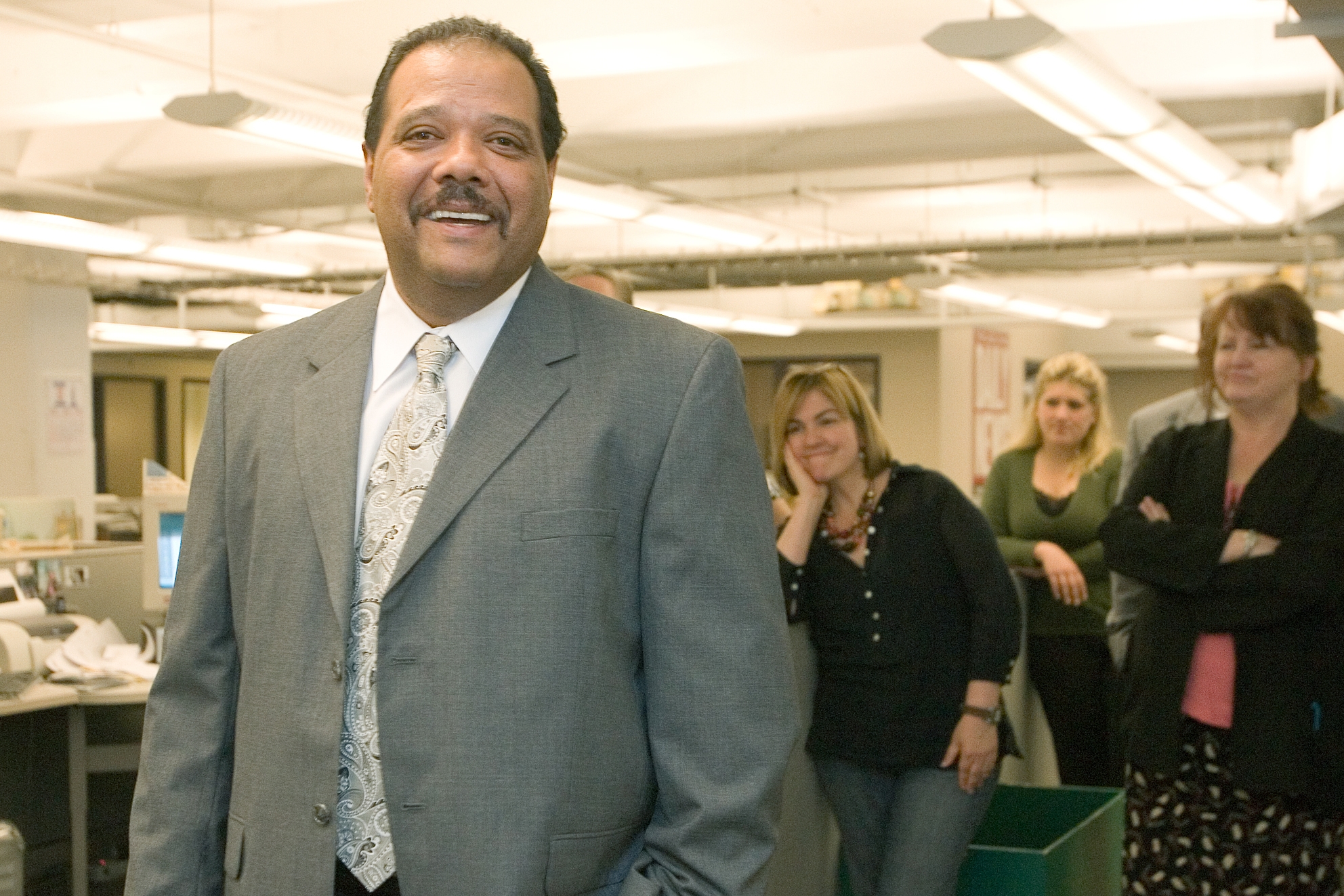
Philadelphia Daily News Editor Michael Days celebrates with the newsroom after word of the Pulitzer win.
Michael Days, a pillar of Philadelphia journalism who championed young Black journalists and led the Daily News during its 2010 Pulitzer Prize win for investigative reporting, died in October after falling ill. He was 72.
A graduate of Roman Catholic High School in Philadelphia, Mr. Days worked at the Wall Street Journal and other newspapers before joining the Daily News as a reporter in 1986, where he ultimately became editor in 2005, the first Black person to lead the paper in its 90-year history. In 2011, Mr. Days was named managing editor of The Inquirer, where he held several management roles until he retired in October 2020.
As editor of the Daily News, Mr. Days played an essential role in the decisions that would lead to its 2010 Pulitzer Prize, including whether to move forward with a story about a Philadelphia Police Department narcotics officer that a company lawyer said stood a good chance of getting them sued.
“He said, ‘I trust my reporters, I believe in my reporters, and we’re running with it,’” recounted Inquirer senior health reporter Wendy Ruderman, who reported the piece with colleague Barbara Laker. That story revealed a deep dysfunction within the police department, Ruderman said, and led to the newspaper’s 2010 Pulitzer Prize win.
— Brett Sholtis
Tom McCarthy
Tom McCarthy, seen here in 2002.
Tom McCarthy, an award-winning theater, film, and TV actor, longtime president of the local chapter of the Screen Actors Guild, former theater company board member, mentor, and veteran, died in May of complications from Parkinson’s disease at his home in Sea Isle City. He was 88.
The Overbrook native quit his job as a bartender in 1965, sharpened his acting skills for a decade at Hedgerow Theatre Company in Rose Valley and other local venues, and, at 42, went on to earn memorable roles in major movies and TV shows.
In the 1980s, he played a police officer with John Travolta in the movie Blow Out and a gardener with Andrew McCarthy in Mannequin. In 1998, he was a witness with Denzel Washington in Fallen. In 2011, he was a small-town mayor with Lea Thompson in Mayor Cupcake. Over the course of his career, Mr. McCarthy acted with Zsa Zsa Gabor, Harrison Ford, Kristin Scott Thomas, Cloris Leachman, Robert Redford, Donald Sutherland, John Goodman, and other big stars.
— Gary Miles
Carol Saline
Carol Saline, seen here at her Philadelphia home in 2021.
Carol Saline, a longtime senior writer at Philadelphia Magazine, the best-selling author of Sisters, Mothers & Daughters, and Best Friends, and a prolific broadcaster, died in August of acute myeloid leukemia. She was 86.
On TV, she hosted a cooking show and a talk show, was a panelist on a local public affairs program, and guested on the Oprah Winfrey Show, Inside Edition, Good Morning America, and other national shows. On radio, she hosted the Carol Saline Show on WDVT-AM.
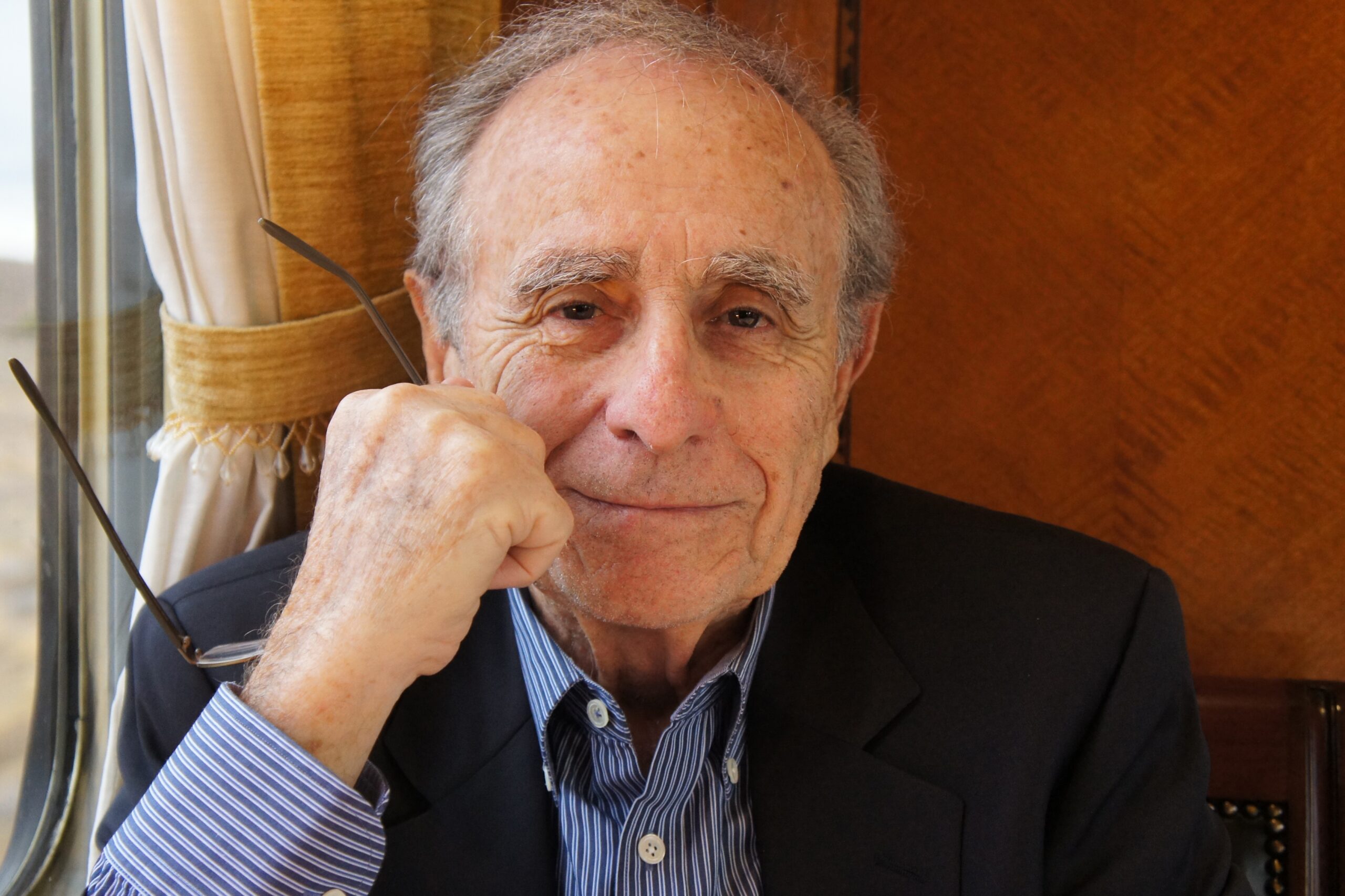
In June, she wrote to The Inquirer, saying: “I am contacting you because I am entering hospice care and will likely die in the next few weeks. … I wanted you to know me, not only my accomplishments but who I am as a person.
“I want to go out,” she ended her email, “with a glass of Champagne in one hand, a balloon in the other, singing (off key) ‘Whoopee! It’s been a great ride!’”
— Gary Miles
Richard Wernick
Richard Wernick, seen here before a concert at the 2002 Festival of Philadelphia Composers.
Richard Wernick, a Pulitzer Prize-winning composer, acclaimed conductor, and retired Irving Fine Professor of Music at the University of Pennsylvania, died in April 25 of age-associated decline at his Haverford home. He was 91.
Professor Wernick was prolific and celebrated as a composer. He wrote hundreds of scores over six decades and appeared on more than a dozen records, and his Visions of Terror and Wonder for a mezzo-soprano and orchestra won the 1977 Pulitzer Prize for music. In 1991, his String Quartet No. 4 made him the first two-time winner of the Kennedy Center’s Friedheim Award for new American music.
“Wernick’s orchestral music has power and brilliance, an emphasis on register, space, and scale,” Lesley Valdes, former Inquirer classical music critic, said in 1990.
— Gary Miles
Dorie Lenz
Dorie Lenz, seen here on Channel 17 in 2015.
Dorie Lenz, a pioneering TV broadcaster and the longtime director of public affairs for WPHL-TV (Channel 17), died in January of age-associated ailments at her home in New York. She was 101.
A Philadelphia native, Ms. Lenz broke into TV as a 10-year-old in a local children’s show and spent 30 years, from 1970 to 2000, as director of public affairs and a program host at Channel 17, now PHL17. She specialized in detailed public service campaigns on hot-button social issues and earned two Emmys in 1988 for her program Caring for the Frail Elderly.
Ms. Lenz interviewed newsmakers of all kinds on the public affairs programs Delaware Valley Forum, New Jersey Forum, and Community Close Up. Viewers and TV insiders hailed her as a champion and watchdog for the community. She also talked to Phillies players before games in the 1970s on her 10-minute Dorie Lenz Show.
— Gary Miles
Jay Sigel
Jay Sigel, seen here after winning the Georgia-Pacific Grand Champions title in 2006.
Jay Sigel, one of the winningest amateur golfers of all time and an eight-time PGA senior tour champion, died in April of complications from pancreatic cancer. He was 81.
For more than 40 years, from 1961, when he won the International Jaycee Junior Golf Tournament as an 18-year-old, to 2003, when he captured the Bayer Advantage Celebrity Pro-Am title at 60, the Berwyn native was one of the winningest amateur and senior golfers in the world. Mr. Sigel won consecutive U.S. Amateur titles in 1982 and ’83 and three U.S. Mid-Amateur championships between 1983 and ’87, and remains the only golfer to win the amateur and mid-amateur titles in the same year.
He won the Pennsylvania Amateur Championship 11 times, five straight from 1972 to ’76, and the Pennsylvania Open Championship for pros and amateurs four times. He also won the 1979 British Amateur Championship and, between 1975 and 1999, played for the U.S. team in a record nine Walker Cup tournaments against Britain and Ireland.
— Gary Miles
Mark Frisby
Mark Frisby, seen here in the former newsroom of the Daily News in 2007.
Mark Frisby, the former publisher of the Daily News and associate publisher of The Inquirer, died in September of takayasu arteritis, an inflammatory disease, at his home in Gloucester County. He was 64.
Mr. Frisby joined The Inquirer and Daily News in November 2006 as executive vice president of production, labor, and purchasing. He was recruited from the Courier-Post by then-publisher Brian Tierney, and he went on to serve as publisher of the Daily News from 2007 to 2016 and associate publisher for operations of The Inquirer and Daily News from 2014 to his retirement in 2016.
Mr. Frisby was one of the highest-ranking Black executives in the company’s history, and he told the Daily News in 2006 that “local ownership over here was the big attraction for me.” Michael Days, then the Daily News editor, said in 2007: “This cat is really the real deal.”
— Gary Miles
Leon Bates
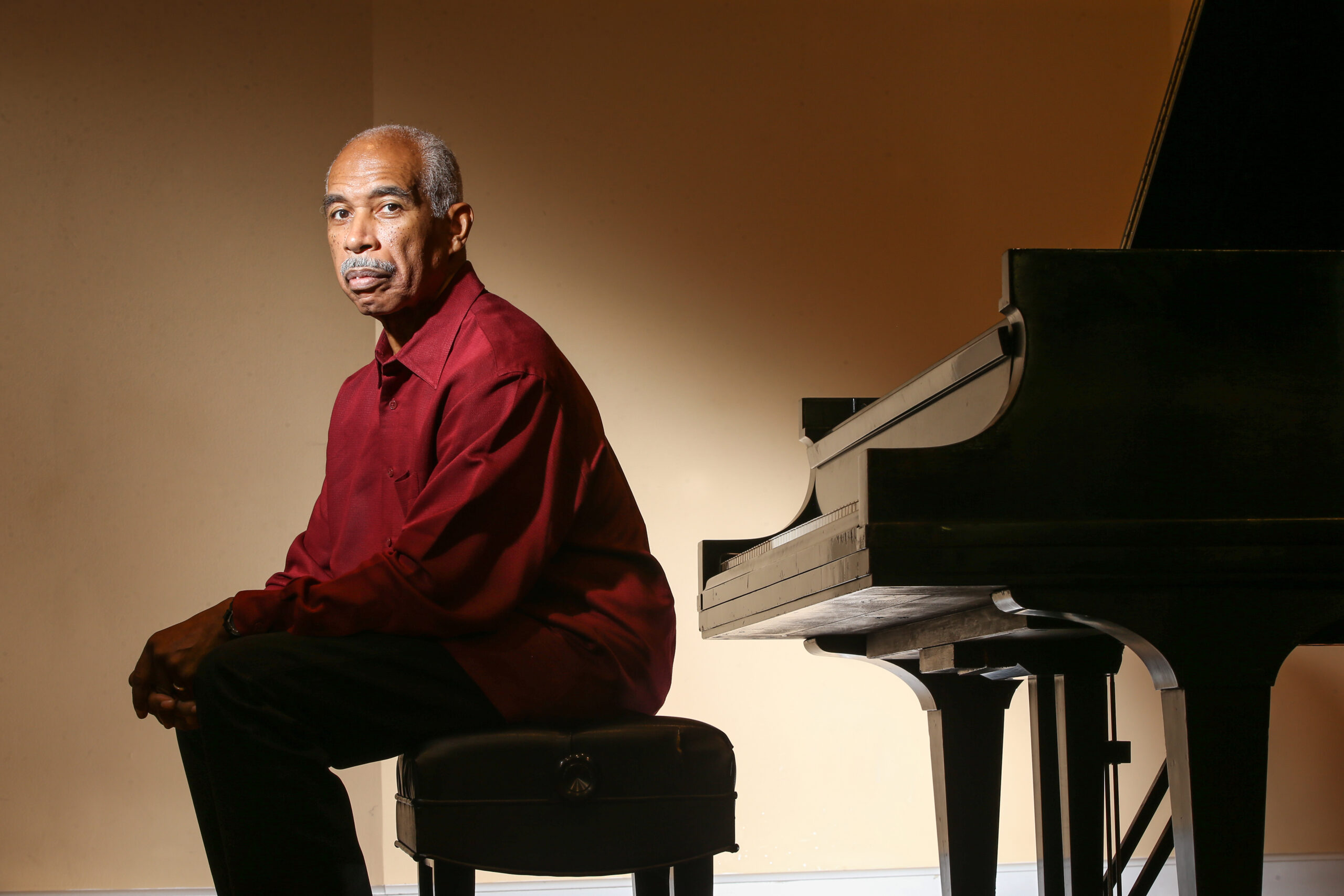
Leon Bates, seen here at the Settlement Music School in Germantown in 2018.
Leon Bates, a concert pianist whose musical authority and far-reaching versatility took him to the world’s greatest concert halls, died in November after a seven-year decline from Parkinson’s disease. He was 76.
The career of Mr. Bates, a leading figure in the generation of Black pianists who followed the early-1960s breakthrough of Andre Watts, encompassed Ravel, Gershwin, and Bartok over 10 concerts with the Philadelphia Orchestra between 1970 and 2002. He played three recitals with Philadelphia Chamber Music Society and taught master classes at Temple University, where he also gave recitals at the Temple Performing Arts Center.
In his WRTI-FM radio show, titled Notes on Philadelphia, during the 1990s, Mr. Bates was what Charles Abramovic, chair of keyboard studies at Temple University, described as “beautifully articulate and a wonderful interviewer. The warmth of personality came out. He was such a natural with that.”
— David Patrick Stearns
Lacy McCrary
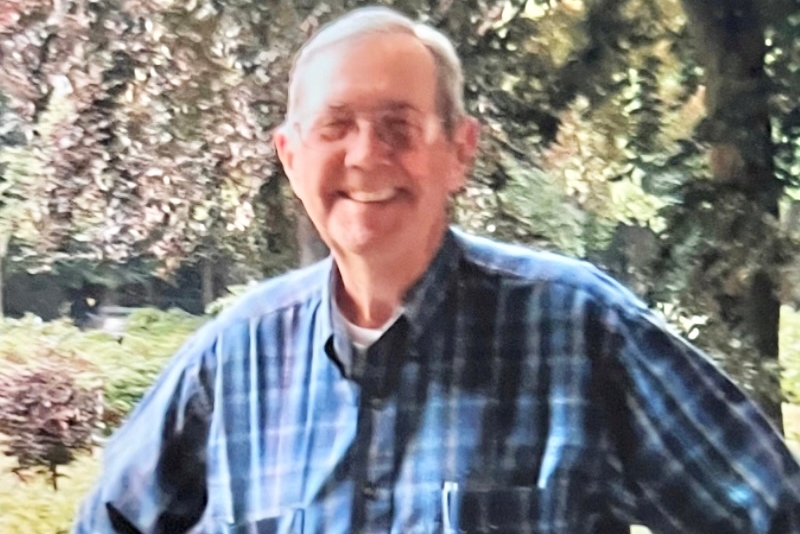
Lacy McCrary in an undated photo.
Lacy McCrary, a former Inquirer reporter who won a Pulitzer Prize at the Akron Beacon Journal, died in March of Alzheimer’s disease at his home in Colorado Springs, Colo. He was 91.
Mr. McCrary, a Morrisville, Bucks County native, won the 1971 Pulitzer Prize in local general or spot news reporting as part of the Beacon Journal’s coverage of the May 4, 1970, student protest killings at Kent State University.
He joined The Inquirer in 1973 and covered the courts, politics, and news of all sorts until his retirement in 2000. He notably wrote about unhealthy conditions and fire hazards in Pennsylvania and New Jersey boardinghouses in the late 1970s and early ’80s, and those reports earned public acclaim and resulted in new regulations to correct deadly oversights.
— Gary Miles
Roberta Fallon
Roberta Fallon, seen here in an undated photo.
Roberta Fallon, 76, cofounder, editor, and longtime executive director of the online Artblog and adjunct professor at St. Joseph’s University, died in December at Thomas Jefferson University Hospital of injuries she suffered after being hit by a car. She was 76.
Described by family and friends as empathetic, energetic, and creative, Ms. Fallon and fellow artist Libby Rosof cofounded Artblog in 2003. For nearly 22 years, until the blog became inactive in June, Ms. Fallon posted commentary, stories, interviews, reviews, videos, podcasts, and other content that chronicled the eclectic art world in Philadelphia.
— Gary Miles
Benita Valente
BENI26P Gerald S. Williams 10/18/00 2011 Pine st. Philadelphia-based soprano Benita Valente has sung all over the world. At age 65, she is making her Oct. 29 performance with the Mendelssohn Club at the Academy of Music her last. 1 of 3: Benita goes over some music at the piano in her upstairs music room.
Benita Valente, a revered lyric soprano whose voice thrilled listeners with its purity and seeming effortlessness, died in October at home in Philadelphia. She was 91.
In a remarkable four-decade career, Ms. Valente appeared on the opera stage, in chamber music, and with orchestras. In the intimate genre of lieder — especially songs by Schubert and Brahms — she was considered one of America’s great recitalists.
Voters in Shamong handily rejected a $25 million school bond question that would have raised property taxes, while a referendum in Mantua was too close to call, officials said Wednesday.
Shamong voters rejected the bond question 797-271, according to unofficial results from Tuesday’s election in the Burlington County school system.
If approved, the bond issue would have meant a $408 annual property tax increase on a home assessed at the township average of $309,500.
The district had said funding was needed for projects at the Indian Mills and Indian Mills Memorial schools that need immediate action. They included roofing and HVAC work.
Superintendent Mayreni Fermin-Cannon did not respond to a message seeking comment on next steps for the district.
Shamong Mayor Michael Di Croce, who tried unsuccessfully to block Tuesday’s election, hailed the results. Shamong residents make up 90% of the town’s tax base and could not afford an increase, he said.
Di Croce, an attorney, filed a complaint last week on behalf of several residents that contended school officials provided incorrect or misleading information about state funding for the project.
The complaint also alleged the district has refused to disclose why it could not earmark $4 million in capital reserves for renovations prior to seeking a bond referendum.
At a hearing Monday, Superior Court Judge John E. Harrington refused to invalidate the referendum.
“I’m very happy with the way things played out,” Di Croce said Wednesday. “Their whole sky is falling just was not credible and voters didn’t buy it.”
Mantua results too close to call
Meanwhile, the outcome of Tuesday’s vote in Mantua Township on a $39.1 million school bond referendum was too close to call Wednesday.
In preliminary results, there were 1,097 votes opposed and 1,074 votes in favor, the Gloucester County district said. The totals are expected to change over the next few days as officials count mail ballots and verify provisional ballots.
“Regardless of the result, our mission remains the same — to prepare our students for lifelong success through comprehensive academics, community partnerships, and character education,” Superintendent Christine Trampe said in a statement.
The bond issue would fund improvements at all three schools in the kindergarten-through-sixth-grade district, including renovations, roof repairs, and new classrooms.
Trampe called the renovations “true necessities.” Without the funding, the district may need to cut programs, she said.
If approved, the bond issue would increase property taxes about $336 annually on a home assessed at the township average of $311,993.
Elsewhere in the region, voters in Woodbine in Cape May County and Cumberland Regional district in Cumberland County approved bond questions, according to the New Jersey School Boards Association.
Tuesday was one of five times during the year that school boards may ask voters to approve a bond issue or special question. Bond referendums allow districts to pay for projects that cannot readily be funded through their annual operating budget.
“You don’t have to like the fact that merit pay was in there,” Hibbs said of his contract at the board’s most recent meeting. But, he said, he is legally entitled to the payment on top of his $215,000 annual base salary because he met the goals listed in his contract.
And he is not the only South Jersey superintendent who has negotiated merit pay or other bonuses as part of a contract. The measure is a little-known way for New Jersey superintendents to earn higher salaries.
About 54 of the state’s 600 public school chiefs, or about 9%, had perks negotiated in their contracts in the 2023-24 school year, according to data from the New Jersey Department of Education.
Here’s what to know about the practice of giving merit pay to New Jersey superintendents:
How many superintendents get merit pay and how much is it?
In South Jersey, at least eight of nearly 100superintendents had merit or bonus pay provisions in their contracts in the 2023-24 school year, the most recent available state data obtained under the Open Public Records Act. The information may be incomplete because it is compiled from self-reporting by districts, and some superintendents have left their jobs since the data were compiled.
Among the districts offering merit pay are: Barrington, Black Horse Pike Regional, Clayton, Salem County Vocational, Washington Township in Gloucester County, Woodlynne, and West Deptford. Merchantville had it also, but that superintendent has since left the position.
window.addEventListener(“message”,function(a){if(void 0!==a.data[“datawrapper-height”]){var e=document.querySelectorAll(“iframe”);for(var t in a.data[“datawrapper-height”])for(var r,i=0;r=e[i];i++)if(r.contentWindow===a.source){var d=a.data[“datawrapper-height”][t]+”px”;r.style.height=d}}});
How much money do superintendents make in bonus pay?
An Inquirer analysis of state data found that bonus compensation packages ranged from $2,000 to $56,989 for the 2023-24 school year.
They included additional pay granted for meeting performance goals or obtaining a doctorate, orlongevity bonuses for years of service.
The districts with the most lucrative merit packages were in North Jersey: $56,989 in Bergen County Vocational; $43,272 in Hudson, and $36,489 in Union.
Clayton Superintendent Nikolaos Koutsogiannis, in his ninth year as schools chief, received $4,350 in longevity pay. He joined the district in 2008 as a principal and is one of the longest-serving superintendents in Gloucester County.
“I enjoy my job here,” Koutsogiannis said. “They wanted to keep me here. I was more than willing to stay.”
The Barrington, Black Horse Pike Regional, Salem County Vocational, and West Deptford superintendents did not respond to numerous email messages.
Some South Jersey districtswhere superintendents are among the highest-paid in the region do not offer merit pay, including Winslow, Lenape Regional, Burlington City, Mount Laurel and Cherry Hill.
Because of the cap, dozens of superintendents left the state for higher salaries elsewhere and districts had difficulty recruiting educators. Others negotiated merit pay and bonuses to boost their earnings.
Gov. Phil Murphy speaks with members of the media after meeting with Gov.-elect Mikie Sherrill at the governor’s office in Trenton last month.
Superintendent salaries can vary, as boards negotiate contracts based on experience, district size, and other factors.
The New Jersey Department of Education must approve contracts,including merit pay provisions and goals. Executive county school superintendents review contracts for each district.
Purnell said his association, which provides guidance to more than 600 New Jersey school boards, generally steers them away from considering merit pay. Longevity pay, however, is encouraged as an incentive to keep quality superintendents, he said.
Many superintendents are less interested in pursuing additional goals because merit pay is not factored into pensions, Purnell said.
When merit pay is in a contract, the board and the superintendent establish merit goals at the beginning of the school year. At the end of the year, the superintendent must submit evidence that the goals were met. The executive county superintendent must sign off on the request before any bonuses are paid.
The state specifies quantitative and qualitative goals that may be included in merit pay. It also sets the value of each goal, a percentage of the superintendent’s base salary.
Based on a district’s needs, merit pay may be given for meeting goals such as reducing chronic absenteeism, increasing student achievement, setting up learning academies, or establishing a foundation.
Hibbs’ goals approved by the board include completing Google training presentations, taking online professional development courses, and beefing up security.
In September, records show, the executive county superintendent approved $9,072 in merit pay for Barrington Superintendent Anthony Arcodia for meeting two goals — improved parent communication and overhauling the parent-student handbook.
Barrington school board president Mark Correa said Arcodia waived his right to merit pay for the 2025-26 school year because of the district’s belt-tightening. He will be eligible for merit pay in future years, he said.
The district “believes in rewarding our high-achieving, long-serving superintendent when possible,” Correa wrote in an email this week.
Some school chiefs get a stipend for holding an additional administrative position, such as serving as superintendent and a school principal, typically in smaller districts.
What are the drawbacks of merit pay?
Purnell said merit goals can muddy the waters for districts because superintendents could become so focused on those goals that they lose sight of the overall strategic plan.
“The question would be why do you need to receive merit pay when it’s your responsibility to provide a thorough and efficient education,” Purnell said. “You don’t want the goal to become more important than the best interest of all children.”
“Student outcomes are the result of a whole system and are heavily influenced by factors outside one leader’s control,” Campbell said. “If a district uses merit pay at all, I recommend it be a small slice of compensation.”
West Deptford Superintendent Brian Gismondi poses for a portrait outside the West Deptford Child Development Center in West Deptford earlier this year.
How common is merit pay nationwide?
Merit pay does exist in other states.Earlier this year, the state-appointed superintendent for the Houston Independent School District received a $173,660 bonus based on his annual performance evaluation, which credited him with boosting standardized test scores. His annual base salary is $462,000.
Nationwide, the median salary for a school superintendent was $156,000 for the 2023-24 school year, according to the School Superintendents Association. The group does not track merit pay.
The median superintendent salary among 91 South Jersey school districts was $176,088 for the 2024-25 school year, an Inquirer analysis found.
In Philadelphia, Superintendent Tony B. Watlington Sr. recently received a contract extension that will keep him in the nation’s eighth-largest school district through 2030. He is paid $367,710. He does not get merit pay.
Philadelphia School District Superintendent Tony B. Watlington, Sr.
What’s happening with merit pay in Washington Township?
In Washington Township,Hibbs has the most lucrative merit package in South Jersey. He received $25,000 in bonus pay for the 2023-24 school year, according to district records obtained by The Inquirer under the state’s Open Public Records Act.
Hibbs has asked the board several times to approve $27,319 in merit pay for the 2024-25 school year, indicating he had met four of the five goals approved by the board. His contract allows an annual merit bonus of up to 14.99% of his salary, the maximum permitted by the state.
The request has been rejected by the board, failing to get five votes needed. The dispute is expected to lead to another legal showdown between Hibbs and the board.
During a heated exchange at a board meeting last month, Hibbs accused the board of retribution. He was suspended for five months earlier this year over an ethics complaint. A judge ordered his return and Hibbs was later cleared of any wrongdoing.
“My merit pay that was 100% approved and achieved has been consistently voted down by certain members,” Hibbs said at a recent school board meeting.
Hibbs was hired in 2023 with an annual base salary of $215,000, making him among the highest-paid superintendents in South Jersey. His contract runs through 2027.
Staff writer Kristen A. Graham contributed to this article.
Patti Smith has been associated with New York for her entire public life.
In 1971, her first poetry and music performance was at St. Mark’s Church in-the-Bowery with Lenny Kaye on the guitar. Along with the Ramones, Talking Heads, Television, and Blondie, she was a vital force in the mid-1970s CBGB music scene.
And in 1975, she recorded Horses at Electric Lady Studios. That galvanic debut album made her an instant punk rock and feminist hero. On Saturday, she’ll celebrate its 50th anniversary at the Met Philly, with a band that includes Kaye, drummer Jay Dee Daugherty, bassist Tony Shanahan, and her son Jackson Smith on guitar.
“People think of me as a New Yorker,” Smith said, in an interview with The Inquirer from her home in New York.
“Well, I’ve lived in New York. But I was pretty much formed by the time I got to New York. The places that helped form me were Philadelphia and rural South Jersey.”
At the Met, Smith and her band will perform Horses in its entirety, starting with the take on Van Morrison’s “Gloria” that introduced her as a brash, provocative artist with one of the most memorable opening lines in rock and roll history: “Jesus died for somebody’s sins … but not mine.”
“It’s going to be a special night, because I hardly ever get to play with my son and daughter,” said Smith, who turns 79 on Dec. 30. “So I’m really, really happy about that, bringing my kids to Philadelphia.”
Bread of Angels, unlike her 2010 National Book Award-winning Just Kids, doesn’t zero in on a particular episode in the storied career of the enduring punk icon.
“Bread of Angels: A Memoir” by Patti Smith. MUST CREDIT: Random House
Instead, Bread takes the full measure of her life. It begins in Chicago where she was born before her parents moved back to Philadelphia while she was a toddler, and turns on a late-in-life DNA revelation that shakes up her conception of her own identity.
“I didn’t plan to do this book,“ Smith said. “Truthfully, it came to me in a dream.”
In her dream, she had written a book telling the story of her life in four sections. She wore a white dress, just as she does on the cover of Bread of Angels, in a 1979 photo taken by Robert Mapplethorpe.
“It was so specific, this dream, that it sort of haunted me. And I felt like it was a sign that perhaps it was a book I should write. …. It took quite a while.”
Bread of Angels is “a love letter to certain places.”
“Philadelphia when I was young,” she said. “I love Philly. And then down in rural South Jersey, and the places in Michigan I lived with my husband.”
Summaries of Smith’s life typically cite that she lived in Germantown before moving first to Pitman and then Deptford Heights in South Jersey, before moving to New York in 1967.
But Smith’s childhood was actually much more peripatetic.
“I think we moved nine times while we were in Philly,” she recalled, including stops in Upper Darby and South Philadelphia.
“My mother had three of us in rapid succession,” said Smith. It was after the war, and a lot of the rooming houses we stayed in absolutely didn’t allow infants, so my mother was always hiding the pregnancy or hiding the baby. And then we’d get found out and have to move again.”
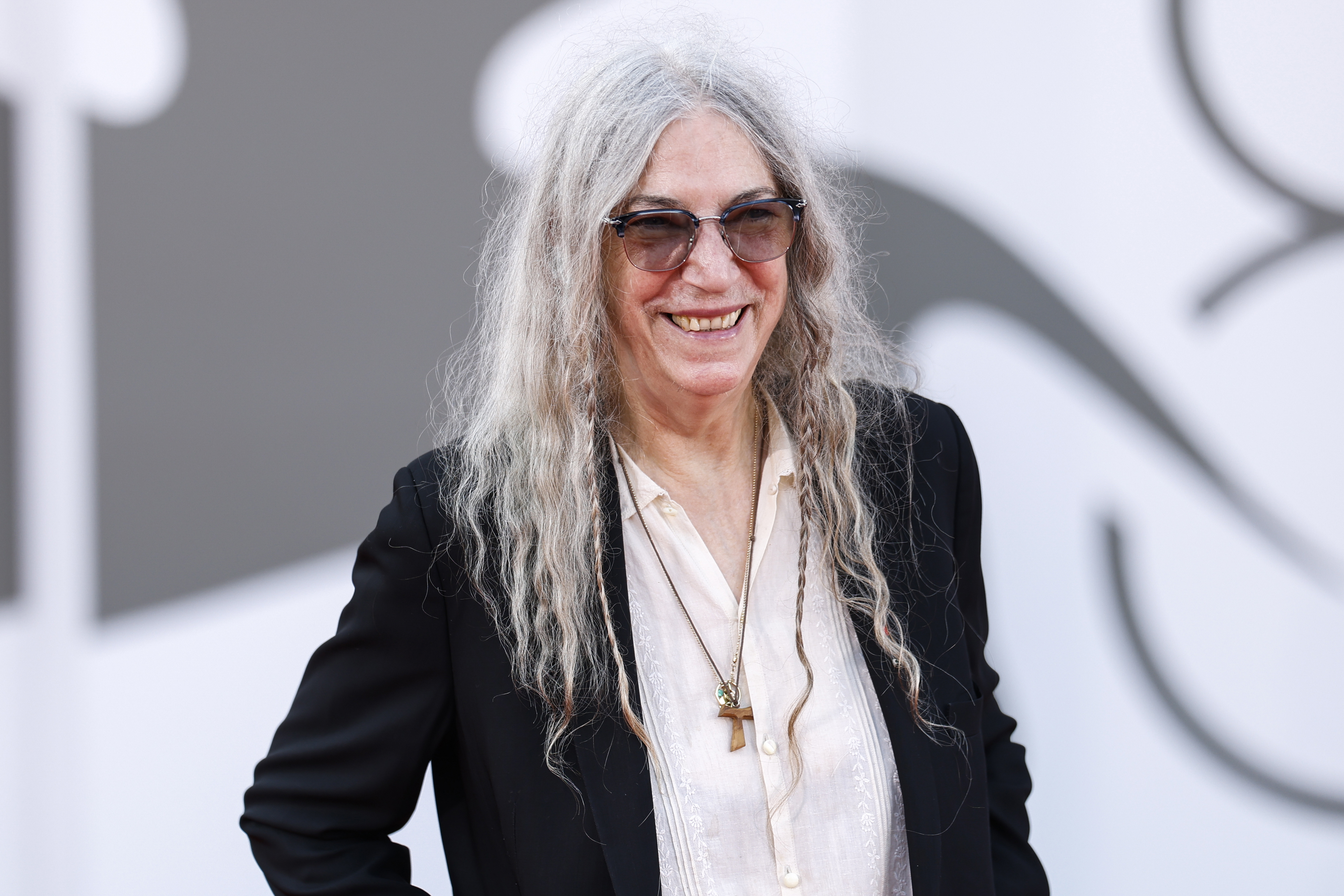
Patti Smith at the Venice Film Festival in Venice, Italy in 2024.
Her coming of age Philadelphia stories in the book evoke a happy, lower middle class childhood.
Living in a converted soldier’s barracks in Germantown she calls “the Patch,” she once beat all the boys and girls in a running race, but tripped and landed on a piece of glass, leaving blood rushing down her face. She was treated at Children’s Hospital, and rode a bicycle for the first time the following week.
“I left the perimeter of the Patch, pedaled up toward Wayne Avenue,” she writes. “I was six and half years old with seven stitches, and for that one hour, on that two-wheeler, I was a champion.”
On her seventh birthday, her mother, who then worked at the Strawbridge & Clothier department store at Eighth and Market, took her to Leary’s, the Center City bookshop that closed in 1968.
“Oh my gosh it was a wonderful bookshop,” she said. “On your birthday, you had to show your birth certificate and pay $1, and you could fill your shopping bag.”
Her bag, she said, was filled “with some very good books that I still own.”
A copy each of Pinocchio, The Little Lame Prince, an Uncle Wiggily book.
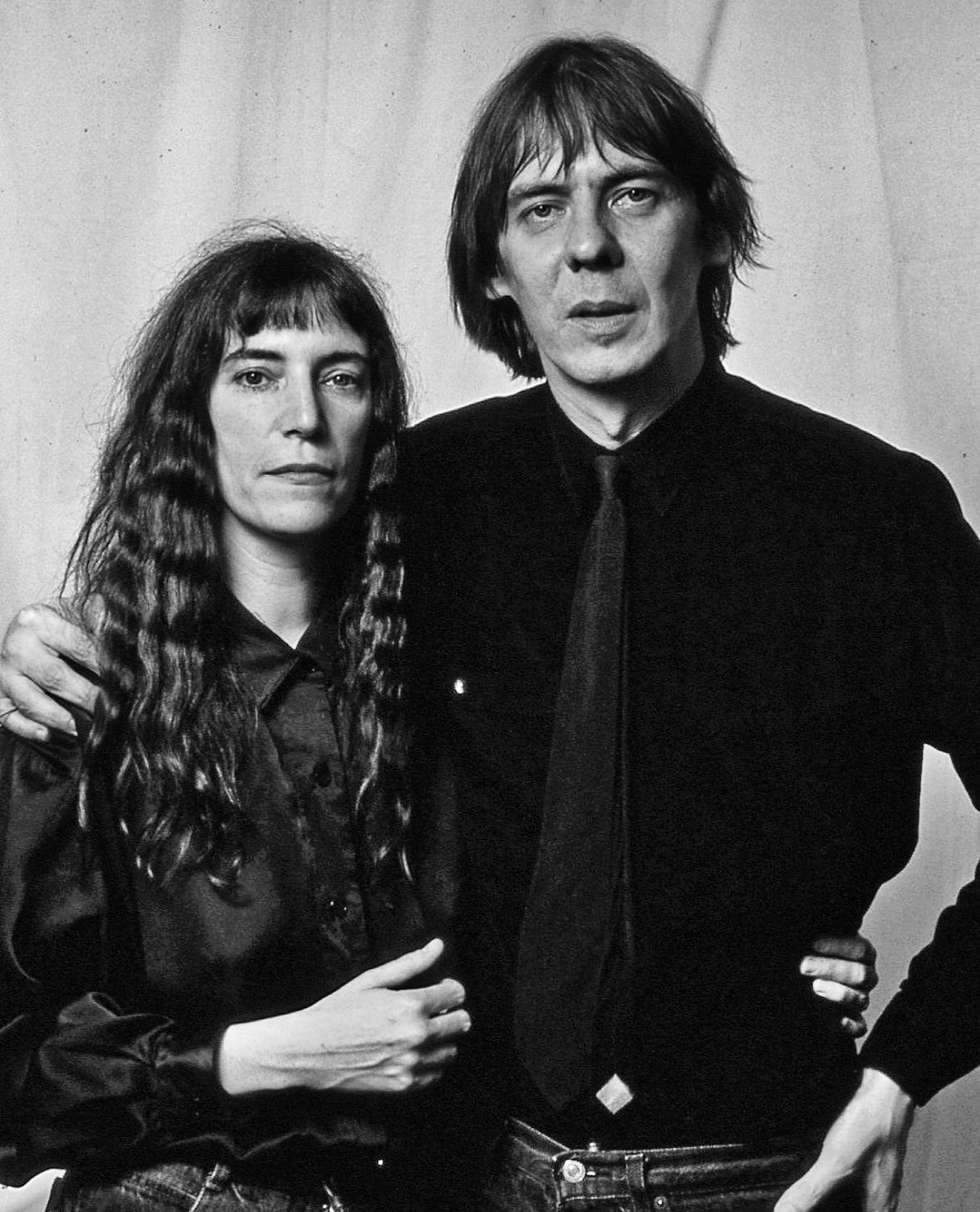
Patti Smith and her late husband Fred “Sonic” Smith, as pictured in “Bread of Angels,” her new memoir. Smith and her band will play the Met Philly on Nov. 29 on the final date of their tour celebrating the 50th anniversary of her 1975 debut album “Horses.” She will also appear on Dec. 1 at Marian Anderson Hall at the Kimmel Center in a Songs & Stories event on her Bread of Angels book tour.
As a Jersey teenager in the early 1960s, she had a crush on a South Philly boy named Butchy Magic. She once got stung by a hornet outside a dance, she writes in the book, and he looked deep into her eyes and pulled the stinger out from her neck.
“This is what the writer craves,” she writes. “A sudden shaft of brightness containing the vibration of a particular moment … Butchy Magic’s fingers extracting the stinger. The unsullied memory of unpremeditated gestures of kindness. These are the bread of angels.”
As in the book, Philadelphia loomed large over Smith’s childhood, well after the family moved to Gloucester County.
“It was our big city. It was where I discovered rock and roll,” she said.
She discovered art when her father Grant and mother Beverly took her and her younger siblings Linda, Kimberly, and Todd to the Philadelphia Museum of Art (now Philadelphia Art Museum). There, she fell for Pablo Picasso, John Singer Sargent, and Amedeo Modigliani.
“Culturally, it was the city that helped form me,” she said.
“It amazes me that half a century has gone by and people are still greatly interested in the material,” she said. “It’s a culmination of a period in my life.”
In 2012, when Smith and her sister Linda took DNA tests, Smith had already begun writing Bread of Angels. The result of the test was a shock: Grant Smith was not her biological father.
Her birth was actually the result of a relationship between Beverly Smith and a handsome Jewish pilot named Sidney who had returned to Philadelphia from World War II.
Bob Dylan and Patti Smith at the Electric Factory in Philadelphia in 1995.
“It was completely unexpected,” Smith said. “My mother was a great oral storyteller, but none of her stories gave any indication that I was fathered by a different man. … She certainly kept that a secret from everyone.”
Of the emotions Smith felt, one was “some sorrow,” she said. “Because I loved and admired my father. I felt sad because I didn’t have his blood. But I modeled myself after him so much. All of those things remain.”
She stopped work on Bread of Angels for two years.
“I didn’t know how to deal with it. Is this book false? Do I have to rewrite everything? And then I realized I didn’t have to rewrite anything. My father is still my father. But you can also show gratitude to the man who conceived with my mother. Who gave me life. So I figured it out. I have two fathers.”
Her mother, father, and biological father had all died by the time she learned the news of her parentage.
Some of Smith’s self-confidence — evident in the way she spells out “G-L-O-R-I-A!” — “might have come from the biological father I never knew,” she said. “He was a pilot. When he was young, he had this tough job. I’ve met a few people who knew him. They said he was very kind and good-hearted. He loved art, he loved to travel. He had not a conceited, but a self-confident air.
“I’ve always had that, and wondered where it came from,” she said. “I’ve always possessed that kind of self-confidence. I’ve never had trouble going on stage. So I think I have to salute my blood father, right?”
In Bread of Angels, Smith recalls her early life in Philly, and writes: “I did not want to grow up. I wanted to be free to roam, to construct room by room the architecture of my own world.”
Seven decades later, she’s still doing that, as she continues to create and perform for adoring audiences around the world.
“I have stayed in contact with my 10-year-old self, always,” she said. “I still carry around the girl that had her dog, and slept in the forest, and read [her] books, and got in trouble, and didn’t want to grow up.”
Patti Smith and daughter Jesse Paris Smith in Milan, Italy, in 2019.
She turns 80 next year.
“My hair is gray to platinum. I understand my age. I’ve had my children, and have gone through a lot of different things. But I still know where my 10-year-old self is. I still know how to find her.”
Patti Smith and Her Band perform “Horses” on its 50th anniversary at the Met Philly, 858 N. Broad St. at 8 p.m. Saturday, themetphilly.com.
“Patti Smith: Songs & Stories” at Marian Anderson Hall, 300 S. Broad St., at 7 p.m. Monday, ensembleartsphilly.org