Tag: Gloucester County

  • The best things to do in South Jersey this weekend

    The best things to do in South Jersey this weekend

    The weekend is so close. If you need help settling on plans, check out this list of our favorite things to do in South Jersey this weekend.

    Come back every week, and you’ll always have something on your radar for the end of your week.

    USA 250 Celebration

    Come to Evesham Township’s official party for America’s Semiquincentennial for live music, family-friendly activities, live music, barbecue, ice cream, and a car show.

    ⌚️ Saturday, July 11, 10 a.m.-2 p.m. 📍 The Promenade at Sagemore, 500 Route 73 South, Marlton 🌐 facebook.com/EveshamTownship 💵 Pay-as-you go

    Ben Franklin Bridge 100th Anniversary Celebration

    If you’ve never walked the length of the bridge, this is your chance. Celebrate the iconic bridge marking a century with food trucks and vendors, inflatable obstacle courses for kids, historical displays, and various speakers and live entertainment. The bridge will be closed to cars during the celebration.

    ⌚️ Saturday, July 11, 10 a.m.-2:30 p.m. 📍 The Camden side of the bridge near the toll plaza 🌐 drpa.org 💵 Pay-as-you go

    Mood’s Farm Market Blueberry Festival

    Compete in a blueberry dessert contest, listen to live jazz music, buy blueberry-themed treats, and peruse various craft vendors selling candles, flowers, antiques, and more.

    ⌚️ Saturday, July 11, 11 a.m.-4 p.m. 📍 Mood’s Farm Market, 901 Bridgeton Pike, Mullica Hill 🌐 moodsfarmmarket.com 💵 Pay-as-you go

    Butterfly Festival and Old-Fashioned Picnic

    Show your love for butterflies with historic house tours, crafts, live music, an art show, and more. Don’t miss the butterfly release and parade. Bring your own blanket and picnic lunch. If you skip bringing lunch from home, there are options from food trucks.

    ⌚️ Saturday, July 11, 11 a.m.-4 p.m. 📍 Red Bank Battlefield, 100 Hessian Ave., National Park 🌐 visitsouthjersey.com 💵 Free

    Haddonfield Crafts & Fine Art Festival

    The 32nd annual family-friendly festival in downtown Haddonfield showcases accessories, candles, ceramics, clothes, jewelry, fiber art, and so much more. Stroll through the festival while grabbing a bite to eat at one of the several food vendors.

    ⌚️ Saturday, July 11 and Sunday, July 12; 11 a.m.-6 p.m. on Saturday, 10 a.m.-5 p.m. on Sunday. 📍 Kings Highway and Tanner Street and in Kings Court, Haddonfield 🌐 renaissancecraftables.com 💵 Pay-as-you go

    Country in the Park Food & Music Festival

    Enjoy live country music, food trucks, child-friendly activities, and a bar. Line-dance the night away, and be sure to test your skills on the mechanical bull.

    ⌚️ Saturday, July 11, 11 a.m.-7 p.m. 📍 Washington Lake Park, 626 Hurffville Crosskeys Rd., Sewell 🌐 justjerseyfest.com 💵 $5.49 for pre-event ticket sales, $8 at the door

    Gloucester County’s Family Fun Shows

    Children and families are encouraged to sing and dance with scheduled performers. The interactive shows vary from magic to dinosaur puppets shows.

    ⌚️ Multiple dates from July 2 to Aug. 19; all shows begin at 10:30 a.m. 📍 Various park locations 🌐 gloucestercountynj.gov 💵 Free

    Yoga at Cooper River Park

    Take a free yoga class. All ages are welcome, but bring your own yoga mat.

    ⌚️ Mondays, 6-7 p.m.; Wednesdays, 9-10 am; and Thursdays, 6-7 p.m. 📍 Cooper River Park, 5300 North Park Dr., Pennsauken 🌐 camdencounty.com 💵 Free, but registration is required

    The Art of Lisa Hendrickson Exhibit

    Lisa Hendrickson is a Philly-area artist who combines traditional oil techniques with mixed media materials such as cardboard, newsprint, paper bags, and corks to share the beauty that can be found in ordinary objects. Her artwork often has themes of the issues related to gender inequality, homelessness, and gun violence.

    ⌚️ Multiple dates through Sunday, Aug. 30, 12 p.m-4 p.m. 📍 Warden’s House Gallery, 150 High St., Mount Holly 🌐 burlingtoncountynj.gov 💵 Free

    Collingswood Farmers Market

    The Saturday market brings fresh produce, meat, coffee, flowers, and live music to Collingwood and supports the regions farmers every week.

    ⌚️ Every Saturday from May through Nov. 21, 8 a.m.-noon 📍 Atlantic Avenue between Collings and Irvin Avenues (along PATCO), Collingswood 🌐 collingswoodmarket.com 💵 Pay-as-you-go

    Haddon Heights Farmer’s Market

    This Sunday farmer’s market offers multiple vendors selling fresh produce, crafts, and other entertainment from local businesses.

    ⌚️ Sundays from April 14 through Nov. 22, 9:30 a.m.–1p.m. 📍 The intersection of Station and Atlantic Avenues, Haddon Heights 🌐 haddonheightsfarmersmarket.com 💵 Pay-as-you-go

    This roundup will be updated every Wednesday.
  • Poverty in New Jersey is three times higher than the federal measure, experts say

    Poverty in New Jersey is three times higher than the federal measure, experts say

    Dana Brown-Toure, 52, says her life is in a place “somewhere between drowning and surviving.”

    A former health aide living on disability benefits, Brown-Toure contends with diabetes that threatens to blind her, while rising bills continue to overwhelm her. Brown-Toure shares an arduous existence with her two children, ages 8 and 21, in the house they rent in Camden, made harder by her former husband’s recent stroke, which hampers his ability to contribute money.

    Still, despite their troubles, the family takes in enough money to place Brown-Toure just above the official federal poverty level.

    That the U.S. government does not consider her to be living in poverty is hard for Brown-Toure to believe. “Life’s a struggle,” she said Monday. “I would say this feels below the poverty line.”

    So would the Poverty Research Institute (PRI) of Legal Services of New Jersey, a statewide legal aid nonprofit that has released a new report asserting that the actual rate of poverty in the state is about triple what the U.S. government calculates.

    That means, the report says, the official number of residents living in poverty in New Jersey in 2024 — the latest statistics available — was close to 3 million, rather than the federal figure of 859,000. Brown-Toure did not want her exact income to be disclosed, but the federal poverty level for a family of three such as hers in 2024 was just over $25,000.

    A person living below the official poverty level can more readily qualify for various assistance programs, such as SNAP (Supplemental Nutrition Assistance Program), Medicaid, Head Start, and school meals. The problem, experts say, is that even people with incomes that are twice the poverty rate need help, according to the Center on Budget and Policy Priorities.

    The government “severely understates poverty for high-cost states like New Jersey,” PRI director Shivi Prasad said.

    New Jersey’s cost of living ranks third-highest among states, behind California and Hawaii, according to the U.S. Bureau of Economic Analysis in the Department of Commerce. It also has the highest real estate property taxes in the United States, according to the Tax Foundation, a nonprofit that analyzes tax policy. The average annual tax bill in the state exceeds $10,000, compared with a national average of around $3,119, the foundation said.

    As the issue of affordability continues to plague Americans, thrusting many deeper into poverty, it’s becoming clear that the government‘s methods to measure deprivation are inadequate, PRI explains.

    The report, released in June and titled “2024 Poverty Data at a Glance: How the Federal Measurement Falls Short for New Jersey,” says that “the hard reality is that poverty remains deeply entrenched with millions left behind — a paradox for a state considered among the wealthiest in the nation.”

    The PRI measures what it calls True Poverty Level, described as the minimum income working families need to afford basic necessities without any public or private support, without making tradeoffs such as eating less to make rent payments.

    The basic flaw of the official federal poverty level, according to the PRI and other experts, is that it is a simplistic standard based on computations from 1964.

    “It’s a super-inadequate measure, like the federal minimum wage of $7.25 an hour,” said Laura Napolitano, a sociologist at Rutgers University-Camden. “We’re looking at a dated calculation that’s been unchanged for years.”

    Back in the mid-1960s, poverty thresholds were derived by taking the U.S. Department of Agriculture’s calculation for the minimum cost of food, then multiplying it by three to account for other family expenses. The thinking was that food was one-third of a family’s budget. Each year, the poverty level is updated to keep up with inflation, but the equation has remained the same for more than 60 years.

    Importantly, Prasad said in an interview, as the decades have gone by, the federal poverty level has not accounted for the actual costs of housing, childcare, food, transportation, healthcare, and other aspects of everyday life. And the federal poverty level does not allow for geographic differences in cost across the nation. For example, the average monthly rent for a two-bedroom apartment in Manhattan ($5,746) is vastly higher than it is in Omaha ($1,441), according to Apartments.com.

    “We look at all these realistic costs to see how much a family really needs to make it,” Prasad said. “We want to see how much you’d need to survive on your own, without help from the government or from family.”

    To determine how much basic survival costs in New Jersey, Prasad noted that an average monthly rent in the state is around $1,800 for a two-bedroom apartment. That would make a year’s rent more than $21,000.

    Now look at childcare, Prasad said, where the maximum monthly rate that can be charged for a toddler is $1,417, according to the New Jersey Department of Human Services, which comes to around $17,000 a year.

    With rent and childcare adding up to almost $40,000 annually, even if you are making $50,000 — almost twice the federal poverty rate for a family of three — “you really don’t have enough to survive,” Prasad said.

    And that says nothing about skyrocketing food costs, she added. The Food Bank of South Jersey reported that over the last four years in Burlington, Camden, Gloucester, and Salem Counties, the number of meals distributed to compensate for increasing food expenses grew by 34%.

    “More of our neighbors are turning to us amid an affordability crisis that’s hitting a high-cost state like New Jersey harder than poverty measures may show,” Jane Asselta, the food bank’s president and chief executive officer, said in a statement.

    For a more detailed analysis of the area the food bank serves, Prasad focused on South Jersey data for The Inquirer. In Burlington County in 2024, the true poverty rate was 27.2%, Prasad said. Similarly, Camden County’s true poverty rate was 38%, while Gloucester County’s sat at 29%. All rates as calculated by the PRI were more than three times the federal poverty levels for the counties in 2024, figures show.

    Ultimately, Brown-Toure said, no matter how the government classifies poverty, the one constant she endures is that life’s hardships are wearing her down.

    “I’m feeling depressed,” she said. “I miss working and my weekly paycheck. And the dream I once had to own a house is all gone.

    “There’s a lot of struggle right now, a lot trauma. It’s hard. And the hardship never stops.”

  • Rite Aid is gone. Its shells remain, with some becoming gyms and car washes.

    Rite Aid is gone. Its shells remain, with some becoming gyms and car washes.

    It’s been almost a year since the last Philly-area Rite Aids closed their doors for good after years of financial trouble.

    But the pharmacy chain’s distinct facade still dots the landscape — in suburban shopping centers, on the corners of congested intersections, sometimes even smack dab in the middle of city blocks.

    Some of these buildings are still vacant, surrounded by overgrown grass and empty parking lots. Others are getting new life as dollar stores, medical clinics, daycares, Spirit Halloweens, and a Rally House sports retailer.

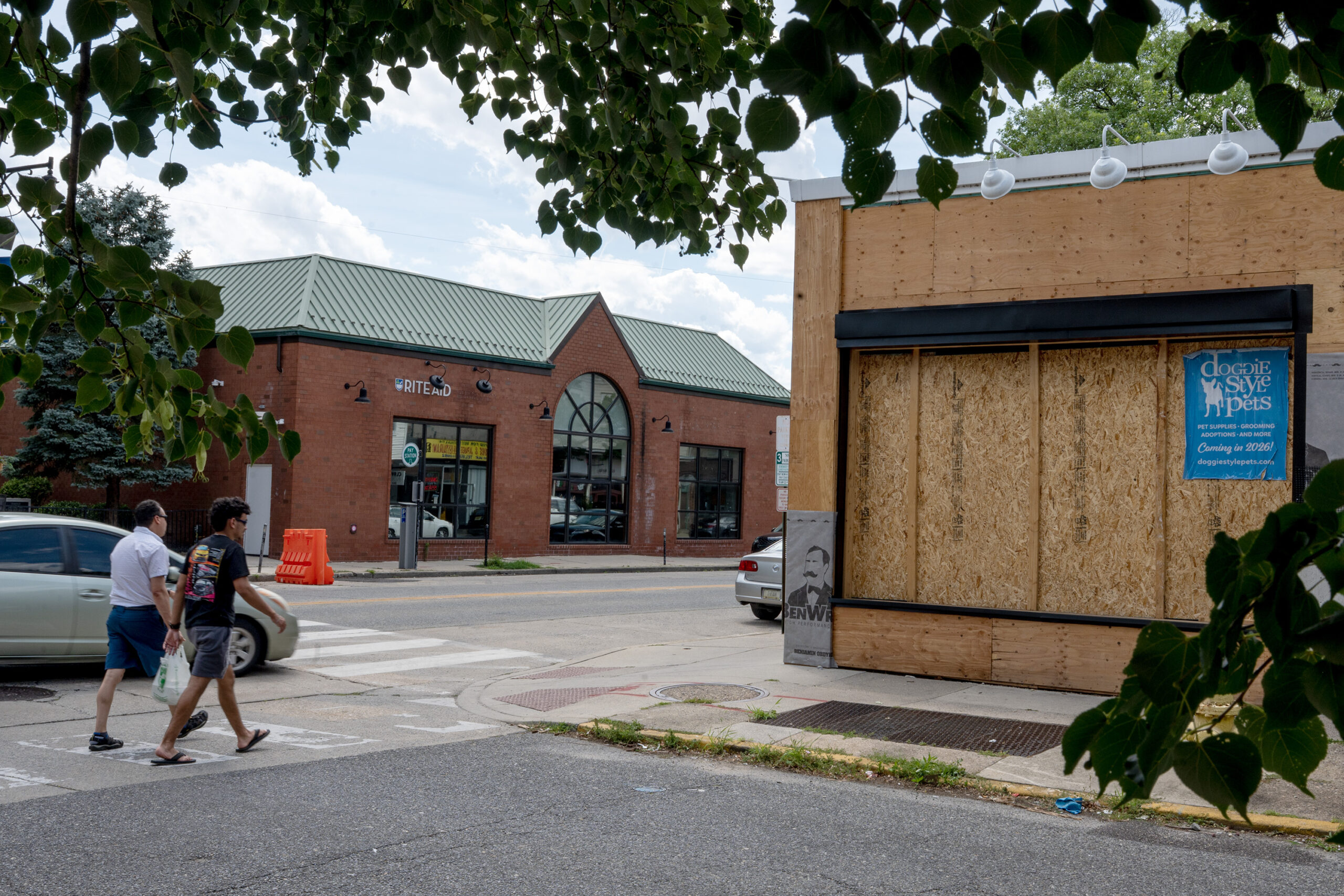
    A former Rite Aid (left, rear) and former Wawa (right) sat empty in Collingswood in June.

    The 8,000- to 16,000-square-foot shells are ideal for only so many tenants, real estate experts have said, and it is not unusual for these kinds of properties to take several months or more to lease.

    Here is a look at what’s happening at a few local zombie Rite Aids:

    South Jersey Rite Aids are becoming fitness centers

    A former Rite Aid in Blackwood, Camden County, has been a gym for more than a year, and its owners soon plan to open a second location at another old Rite Aid in Cherry Hill.

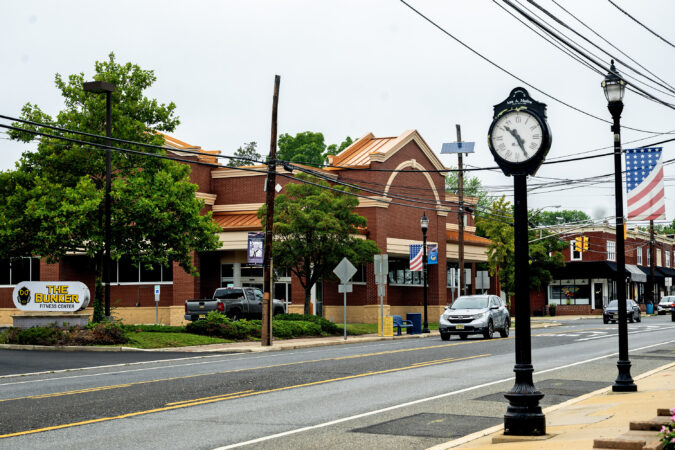
    Nick Bennett, CEO of the Bunker Fitness Center, said the owner of the Blackwood Rite Aid building approached him after seeing the gym’s content on TikTok. At the time, Bennett said, the gym was outgrowing its 3,000-square-foot space in Franklinville, Gloucester County.

    When he went to see the 13,000-square-foot former Rite Aid in Blackwood, he said, it had already been demolished inside.

    “It was just wide open,” Bennett said. “That floor plan works for our business model because gyms are open. You don’t really need to put up walls.”

    Steve Cristelli works out at the Bunker Fitness Center in Blackwood.

    Another plus, he said: Pharmacies have rows of refrigerators, which require electrical outlets, and the Bunker crew could use those outlets to plug in workout equipment.

    The old Rite Aid on Black Horse Pike needed “very little” work, just paint and rubber floors, Bennett said, and was easily transformed into the exercise and recovery space he had envisioned. The gym opened in 2025.

    “We’re smashing it,” Bennett said, with thousands of members who pay between $49 and $59 a month for the 24/7 gym, which has cardio and strength machines, weights, a sauna, and a cold plunge. He declined to provide specific sales or membership figures for competitive reasons.

    The Bunker Fitness Center operates inside a former Rite Aid in Blackwood.

    But Bennett said the business is doing so well that it is expanding into another former Rite Aid, 12 miles away in Cherry Hill with franchisee Jack Prendergast.

    That 10,000-square-foot pharmacy shell at Brace and Kresson Roads closed more recently and needs a bit more work inside, Bennett said. When they signed the lease, he said, it “looked like a Rite Aid.”

    Bennett said he and Prendergast are demolishing the interior, aiming for a September opening.

    In Delco, a Rite Aid could become a township’s first car wash

    The former Rite Aid in Newtown Square may get new life as a car wash.

    The store at West Chester Pike and St. Alban’s Circle closed last year. In February El Car Wash, a Florida-based chain looking to expand into Pennsylvania, New Jersey, and Maryland, applied to open there, said Newtown Township Solicitor Rich Sokorai.

    On its website, El Car Wash lists several other Philly-area locations as “coming soon,” including Cherry Hill, Drexel Hill, Feasterville, and Maple Shade.

    The Newtown Square Rite Aid operated a drive-through, Sokorai said, and drive-throughs are permitted in that commercial zone. After a June meeting, the township zoning hearing board is considering whether to permit the car wash, with a decision expected in the coming weeks.

    A Rite Aid with a “store closing” sign last summer.

    If approved, it would be the only car wash in Newtown Township, the solicitor said.

    Residents of the neighborhood behind the old Rite Aid have expressed concerns to local officials, Sokorai said, “because they fear traffic.”

    Others have said they are looking forward to a new business moving into the vacant space on a prime corner, Sokorai said. Even before the Rite Aid closed last summer, its shelves were often empty, the solicitor said, and “it was dying a slow death.”

    Temple University buys another old Rite Aid

    Temple “T” flags fly on North Broad Street.

    Temple University recently bought a second former Rite Aid on North Broad Street.

    The school recently closed on the old Rite Aid building on the 2100 block of North Broad for $9.25 million, according to spokesperson Stephen Orbanek. He said ArchWell Health, which operates a primary-care clinic for seniors there, will remain the tenant.

    “This property’s location, directly across the street from James S. White Residence Hall, supports the priorities of our campus safety and physical environment plan,” Orbanek said.

    This latest Rite Aid acquisition comes two years after Temple bought a Rite Aid and its surrounding shopping center near Temple University Hospital for $8.2 million. The Rite Aid is being converted into Temple Health neurology offices.

    The moves are part of a broader expansion of the university’s footprint on Broad Street, which includes the January acquisition of a vacant property at the site of a former McDonald’s for $8 million.

    Editor’s Note: This story has been updated to indicate that Temple Health plans to open neurology offices at the previously acquired Rite Aid building.

  • A 13-year-old boy has died after getting trapped beneath an overturned tractor in Gloucester County

    A 13-year-old boy has died after getting trapped beneath an overturned tractor in Gloucester County

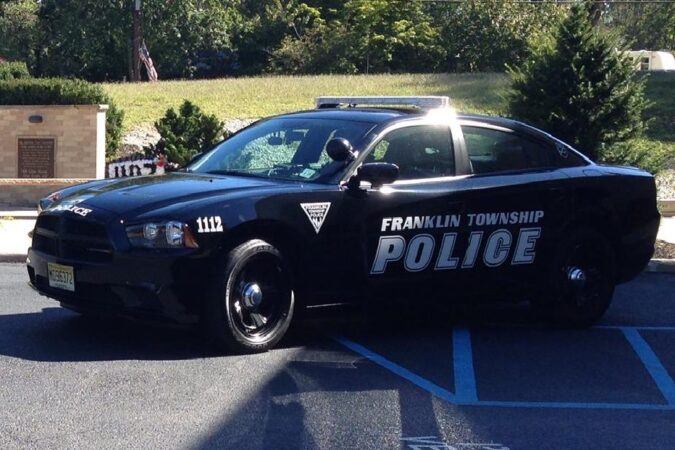
    A 13-year-old boy in Franklin Township died after getting trapped underneath an overturned farm tractor Monday night, according to officials.

    A statement released by Franklin Township police Tuesday morning said officers from Franklin and Elk Townships responded to the 1100 block of Swedesboro Road around 5:35 p.m. and found the teen unconscious and unresponsive beneath the tractor.

    Officers began lifesaving measures once the tractor was lifted, and the teen was taken to Cooper University Hospital, where he died of his injuries, according to the police statement.

    An initial investigation showed that the teen was helping a family member dig a hole with the tractor. While riding the equipment with an adult male, the tractor overturned, trapping the teen underneath and leaving the adult with minor injuries. The adult was treated at a local hospital.

    The adult who rode the tractor is a family member of the teen, though Police Chief Matthew DeCesari declined to share more about their relationship.

    “The incident remains under investigation by the Franklin Township Police Department and the Gloucester County Prosecutor’s Office,” the police statement said. “The investigation is ongoing, and any potential criminal charges will be determined upon its conclusion.”

  • What are South Jersey farmers doing to remedy lost crops? GoFundMes, bigger pumpkin patches, and higher prices

    What are South Jersey farmers doing to remedy lost crops? GoFundMes, bigger pumpkin patches, and higher prices

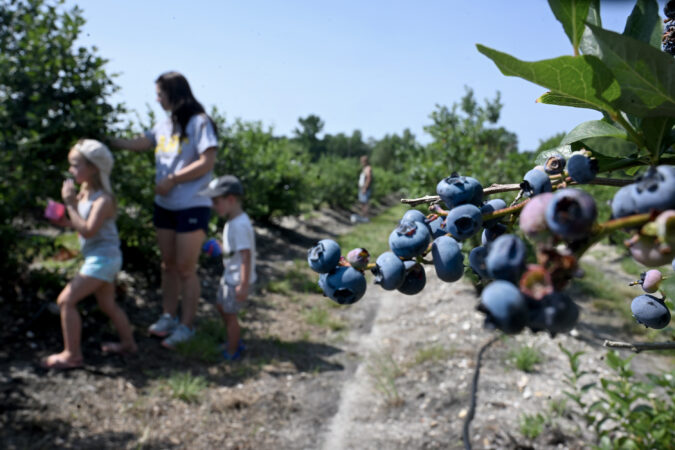
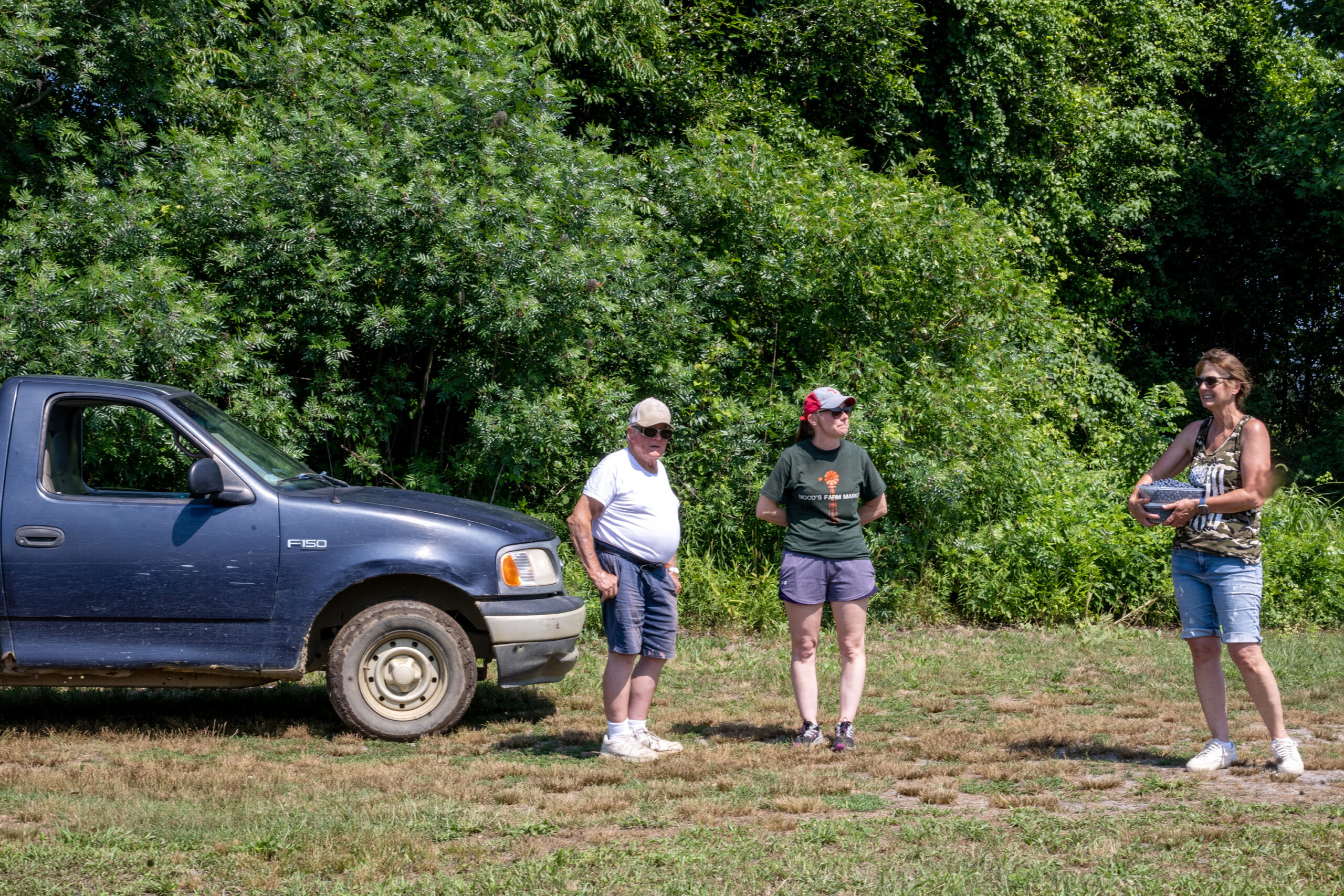
    Cynthia Martini of Mantua Township visits Mood’s Farm Market every year to pick blueberries. During a typical summer, she collects 40 pounds of them. She used to bring her kids, but now that they’re older, she goes solo.

    Her routine on June 30 didn’t look much different from the last 25 years. On a hot morning, she picked two Tupperware containers of blueberries in paint-streaked shorts.

    “In an hour I picked 10 pounds,” Martini said. “So not bad.”

    But rather than harvesting in the farm’s designated pick-your-own area, Martini kept to to an area typically reserved for staff.

    Mood’s, a 180-acre fruit farm in Elk Township, Gloucester County, opened the off-limits fields as one strategy to survive the summer after a spring crop freeze destroyed about two-thirds of its blueberries and all its cherries, plums, nectarines, pears, and peaches. The farm will likely have only a handful of healthy apples come fall. That means no apple hayrides, even though pick-your-own operations are one of its primary revenue streams. A skeleton crew is working the land rather than a full staff, and it’s taking workers longer to pick fruit since there’s less on the bush.

    After picking her own blueberries, Cynthia Martini (right) of Mantua talks with owners Richard Mood and daughter Patti Mood at Mood’s Farm in Gloucester County on June 30.

    The Elk farm isn’t alone. The freeze destroyed large swaths of fruit crops across the Northeast after temperatures rapidly dropped and spiked again in April. In May, New Jersey officials estimated losses of at least $300 million. A month later, the Garden State, which has nearly 450,000 acres of cropland, secured a disaster declaration that made farmers in all 21 counties eligible for emergency federal loans.

    But South Jersey farms like Mood’s are getting creative to survive a summer with depleted income and damaged crops. From promoting frozen fruit to temporary closures to raising prices, here’s how farms are keeping on.

    Spend less and plant more

    Rowand’s Farm, a 20-acre sweet and sour cherry orchard in Glassboro, Gloucester County, is going through unprecedented circumstances.

    Stephen Rowand, the farm’s third-generation owner, said he’s usually excited when a spring frost arrives, since the cold weather thins out the fruit and produces larger cherries.

    “This season is unique for us as a first with NO CROP at all,” Rowand said via Facebook Messenger. “No income.”

    Rowand decided to close the farm, but that hasn’t meant time off. To ensure the orchard blooms next season, the farm still needs mowing, irrigation, fertilizer, and trimming, and without the ability to hire farmworkers. Rowand, 60, is doing all that work himself through extreme heat. He said he’s currently living off his retirement savings and might have to get a job in the offseason next fall. He’s trying to stay frugal by avoiding vacations and eating out.

    But Rowand has managed to find some solutions to survive.

    To make sure they stay fed, his family planted a bigger garden of tomatoes, string beans, eggplants, cucumbers, greens, and herbs for their personal diets after figuring out the freeze had eliminated their income. He said he will likely apply for a loan from the USDA’s Farm Service Agency to pay bills, and a GoFundMe, which has raised $25,000 so far, has helped pay for some of Rowand’s farm expenses.

    “It’s really helping keep the farm from going into debt,” Rowand said, “which is usually what puts a farm out of business in the end.”

    Duffield’s Farm Market in Sewell, Gloucester County, like Mood’s, won’t have peach picking this summer and is still considering whether it’ll apply for loans. Since the freeze halved their apple crop, the farm won’t offer apple picking trips for local schools this fall, either. To ensure people have enough to pick in the fall, owner Tracy Duffield said, farmers planted a field of pumpkins early.

    As for labor, without peaches to pit, Duffield said there’s less to do, which means reducing hours for the farm’s migrant workers from Puerto Rico.

    “It’s not just us. Everybody is kind of in the same boat,” Duffield said. “Just support your local farm. We’ll recover.”

    ‘A silver lining’

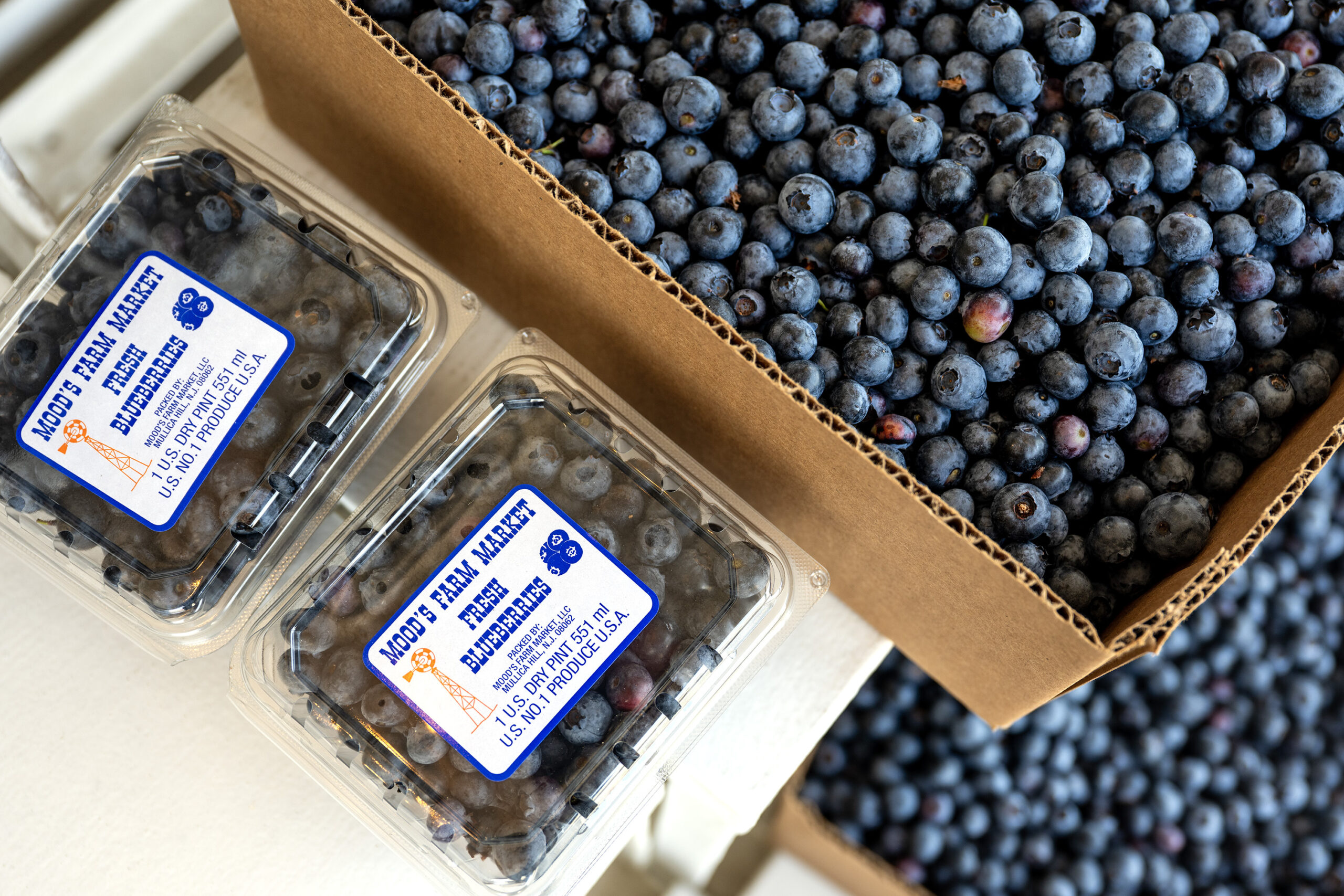
    South Jersey farmers say the natural laws of supply and demand mean fruit prices will rise this year. Mood said their farm’s blueberry prices have doubled, while Duffield’s increased the cost about 50 cents per pound.

    “We still have a business to run, and we have to support the families involved with the business,” Duffield said. “They just have to understand for this year, anyway, that things are going to be a bit higher.”

    Blueberries for sale at the farm stand at Mood’s Farm in Gloucester County.

    Anthony DiMeo owns DiMeo Farms and Blueberry Plants Nursery, which has a large pick-your-own blueberry operation in Hammonton, Atlantic County. With significant damage to his crop, DiMeo said, he anticipates the season to end a couple of weeks early.

    “But there’s a silver lining to this, and that is the price is very high,” DiMeo said. “Even for blueberries that might not be the biggest or might not be the best, the price is exceptional.”

    DiMeo, though, said he decided not to significantly raise prices this year, keeping blueberries at $2.50 per pint, a cheaper price than most grocery stores and farm markets. The choice to eat the losses was influenced by the price consumers are already paying to get through life right now.

    “They’re spending enough as it is with gas and tolls and everything else,” DiMeo said.

    ‘Just luck’

    Bob Fralinger of Fralinger Orchards, a fifth-generation peach and nectarine farm in Bridgeton, Cumberland County, said it was “just luck” that some of his peaches survived the freeze.

    His farm sits along the Cohansey River, and the heat emitting from the water kept the temperature a couple of degrees warmer for the crops. Fralinger said he still lost about half his peaches, but since nearby South Jersey farmers weren’t quite as lucky, nearly 100 farm markets, some hours away, have come to him for fruit. Duffield’s and Mood’s are on that list.

    The increased interest has meant Fralinger has to make sure he has enough peaches for everyone, including his typical wholesalers. And even though Fralinger is having no problem selling, the reduced harvest means he worries that the revenue won’t be enough to pay next year’s bills.

    “Your margins are so close that you can’t survive from one year to the next unless you do things just right, and that’s the problem,” Fralinger said.

    Like Fralinger, Robson’s Farm in Wrightstown, Burlington County, also managed to salvage some peaches from the harvest this year, but not nearly enough to meet the summer demand.

    Customers travel from out of state for Robson’s peaches, fourth-generation farmer Rose Robson said, and many will be disappointed to arrive to find no peaches in sight.

    But once she overcame her initial grief over the lost crops, Robson said, she quickly hatched a plan to adapt to a potentially peachless summer on the farm.

    “Just because the farm is really sad and not great in one way doesn’t mean the whole summer has to be,” Robson said. “This could be a really fun opportunity to be creative and to bring some new people to the farm and still have a really great summer.”

    Robson had already started developing ways to boost business during the farm’s offseason in the fall, like a walking club on the farm, she said. The spring freeze just forced her to consider starting sooner and making it active year-round.

    Plus, Robson’s is focusing on what they can still offer customers.

    “We doubled up on our U-pick cut flowers,” Robson said, “which has been growing over the years anyway, so that’s kind of fun.”

    But more than anything, Robson said her priority has remained the same: “making the farm as grand an experience as we can possibly make it,” she said.

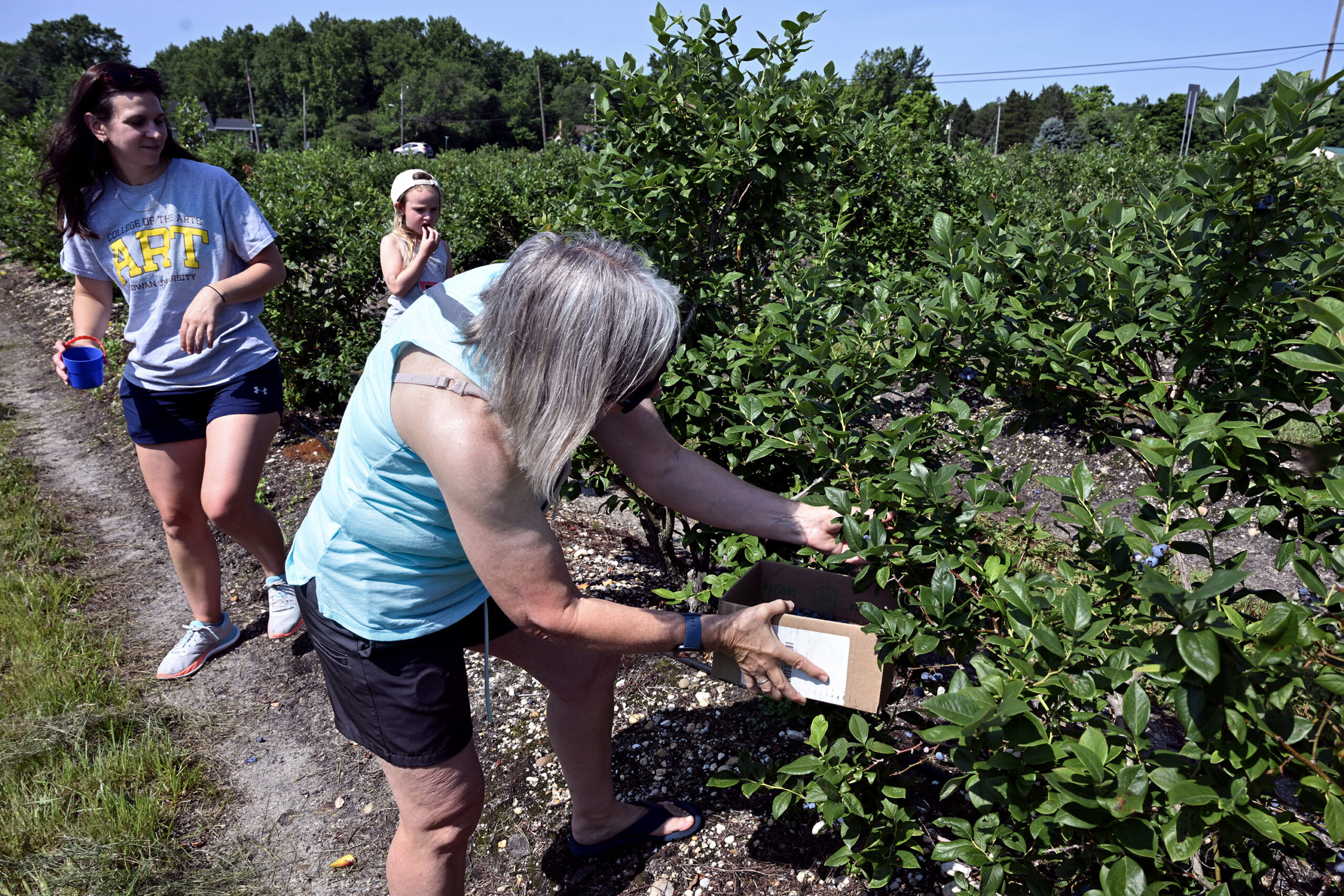
    Sandy Trifiletti (front) of Glassboro and her daughter Hope Welch and granddaughter Rosie, 6, of Pitman, pick their own blueberries June 30 at Mood’s Farm in Gloucester County.

    As farms scramble to adapt, South Jersey residents, whether they’re in the market for fresh fruit or flowers, continue to support their local markets.

    Back at Mood’s Farm, Hope Welch of Pitman picked blueberries with her two children and her mother, Sandy Trifiletti. The Welches have visited Mood’s for years.

    Hope Welch, whose son spoke some of his first words during an annual Apple Festival, asked Mood about the fate of this year’s event. Mood said one would still happen, but it probably wouldn’t revolve around apples, since they won’t have very many.

    “That hurts my heart,” Welch said. “We’ll be back for the fall festival. Whatever it’s called.”

  • Fatal crash on Route 55 in Deptford kills two, injures another

    Fatal crash on Route 55 in Deptford kills two, injures another

    A single-vehicle crash late Sunday night on southbound Route 55 in Deptford Township killed two women and injured another.

    New Jersey State Police responded to the crash at 10:55 p.m., Trooper Christopher Postorino said via email. A preliminary investigation shows some of what happened, though the crash is still under investigation.

    Ayzia J. Toledo, 22, of Bristol, Pennsylvania, was driving a BMW with Henrietta F. Carter, 22, of Darby, Pennsylvania, in the front passenger seat and another passenger in the rear when she lost control of the vehicle and ran off the roadway. The BMW overturned and struck a tree. Toledo and Carter died of their injuries, and the rear seat passenger was transported to an area hospital for minor injuries.

    The families of Toledo and Carter have been notified, Postorino said. No traffic delays were reported after the accident. A GoFundMe has been established in Toledo’s honor.

    Last March, three teens, including a student and a graduate of Delsea Regional High School, were killed in a car crash on northbound Route 55 in Elk Township.

    This is a developing story and may be updated.

  • Extreme heat leads to canceled and postponed July 4 plans across South Jersey

    Extreme heat leads to canceled and postponed July 4 plans across South Jersey

    Countless parades, fireworks, drone shows, and more are scheduled for this weekend to celebrate the Fourth of July and the nation’s 250th birthday across South Jersey, but extreme heat is beginning to complicate plans.

    With temperatures forecast to exceed 100 degrees through Independence Day, some South Jersey towns are taking steps to keep residents out of the heat — even if it means canceling their annual holiday events.

    Others that haven’t taken any major steps yet are advising residents to stay hydrated and out of the direct sunlight as much as possible over the weekend.

    Here are some South Jersey towns that have announced changes to their Fourth of July celebrations:

    Bordentown Township

    Bordentown Township postponed fireworks planned for Friday with plans to reschedule the show for Aug. 4.

    “This wasn’t an easy call to make, but the heat forecast is dangerous, and that’s not something we’re willing to gamble with, not with your families, our volunteers, and our first responders out there for hours,” the township posted on social media Thursday.

    Delanco Township

    Delanco’s summer concert featuring the Nathan Renson Quartet scheduled for Thursday evening was canceled due to the heat. It will be rescheduled for a later date, the township said on social media.

    Haddon Township

    Due to the heat and humidity forecast for Saturday, Haddon Township has canceled its July Fourth parade.

    “This was a difficult choice, but ensuring the health and safety of our participants and spectators alike is our highest priority,” the township wrote on social media.

    The township’s “Happy Birthday America Celebration” fireworks will still take place on Friday night at the Haddon Township High School stadium.

    Amid the heat wave, the township’s Crystal Lake Pool will be open and free to all township residents, their extended family, friends, and guests.

    Haddonfield Borough

    Haddonfield’s Independence Day Parade is taking place as scheduled on Friday morning, but due to the extreme heat forecast for later in the day, the block party and drone show scheduled to start at 5 p.m. have been postponed. A new date for the rescheduled events will be announced soon, according to the borough.

    Magnolia Borough

    Magnolia’s Fourth of July Fair is starting a bit earlier now because of the heat, the borough announced on social media. The fair, which includes food trucks, a beer garden, live music and more, will now take place from 10 a.m. to 2 p.m. on Saturday immediately after the parade.

    Oaklyn Borough

    Oaklyn is hoping to get ahead of the heat by moving up the start time for the borough’s annual July Fourth parade. The parade will now start at 9 a.m., two hours earlier than originally planned.

    Paulsboro

    In light of the heat, Paulsboro has also decided to cancel the borough’s annual Fourth of July parade.

    “We understand how much this annual tradition means to our community. For generations, the Fourth of July Parade has been a source of hometown pride and a celebration that brings families, friends, and neighbors together. We share the disappointment of having to cancel this cherished event, but the safety and well-being of our community must always come first,” the borough wrote on social media.

    Despite the parade cancellation, the borough’s 250th Anniversary Celebration at Fort Billingsport Park will continue as scheduled on Sunday from 9 a.m. to 2 p.m.

    Stratford Borough

    While Stratford will still be holding its annual Fourth of July parade, the borough has decided to cancel its plans for games, inflatables, and other activities scheduled for Mancini Field throughout the day.

    Washington Township

    Washington Township has canceled its annual parade on July 4 after recommendations from public safety and local meteorologists. The township’s fireworks will still proceed as planned at 9 p.m., launched from the Washington Township High School Complex.

    Staff writer Sarah Nicell contributed reporting.

  • Goodwill opens new medical equipment store in South Jersey

    Goodwill opens new medical equipment store in South Jersey

    The young woman with muscular dystrophy wanted a motorized scooter, but her health insurance would only cover a wheelchair.

    So she went to Goodwill’s only medical equipment store in South Jersey, where she found a dozen scooters to choose from. She test drove one she liked and bought it at a steep discount.

    “She burst into tears and said, `You have no idea what a difference this is going to make in my life,’” recalled Mark Boyd, Goodwill’s president and CEO.

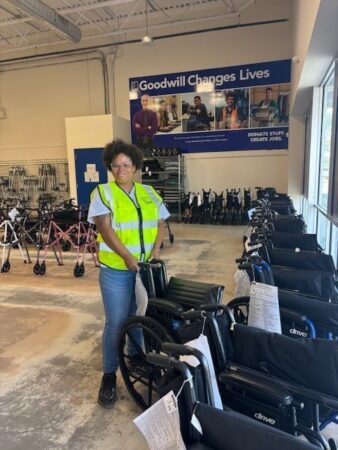
    Goodwill Home Medical Equipment on Wednesday opened the region’s second location. The new store is located in Gloucester County, while its flagship, 16,000-square-foot retail store and warehouse is in Camden County.

    Both sell sanitized and refurbished medical equipment, including power and manual wheelchairs, hospital beds, canes, walkers, and lift and shower chairs. The stores also offer unopened medical supplies, like adult diapers and colostomy bags.

    “When people go to a Goodwill store, they don’t really know what they are looking for — they’re on a treasure hunt,” Boyd said. “But when you get sick or somebody in your family gets sick, all of the sudden you need a specific piece of equipment, and it can be quite daunting.”

    The nonprofit thrift organization began offering used medical equipment at roughly one-third the retail price about 15 years ago, Boyd said.

    “Financially, it’s a break-even operation, but it’s such a great service to the community,” he said, adding they cater to people with no or limited insurance, or high deductibles.

    The new store on Mantua Pike in Woodbury Heights will be open Monday through Saturday from 9 a.m. to 6 p.m., and Sundays from 10 a.m. to 6 p.m. The location on Benigno Boulevard in Bellmawr is open Monday through Saturday from 9 a.m. to 3 p.m., and Sundays from 9 a.m. to 1 p.m.

    The two South Jersey stores are the only Goodwill Home Medical Equipment retail locations in the country, according to spokesperson Juli Lundberg.

    “The savings are so great that people do travel to us from New York City, the Philly burbs, and Jersey Shore,” Lundberg said. “We have had many other Goodwills across the country inquire about the concept.”

    People can donate their medical equipment and unopened supplies at any Goodwill location in New Jersey and Pennsylvania. Donation sites and regular thrift stores can be found at https://www.goodwillhomemedical.org/store-locator. Goodwill staff also will pick up home medical equipment that is too large for a car, according to Lundberg.

  • South Jersey school board again rejects $27K merit pay for its embattled superintendent

    South Jersey school board again rejects $27K merit pay for its embattled superintendent

    Embattled Washington Township school Superintendent Eric Hibbs has lost another battle with the South Jersey school system to get $27,000 in merit pay.

    A motion to award Hibbs the bonus pay for performance failed by a 4-3 vote with two abstentions at a contentious meeting Tuesday night. Five favorable votes are needed for adoption.

    This was the third time since August that the nine-member board has not approved the merit pay, likely setting up another legal showdown between Hibbs and the board. He has a pending whistleblower lawsuit against several board members.

    Hibbs has said he had met four of the five goals approved by the board and listed with his contract for the 2024-25 school year. He earned $220,375 during the 2023-24 school year.

    The board voted on the request, with little public discussion. Hibbs did not comment at the meeting. He did not respond to a message seeking comment Wednesday.

    In order to vote, the board had to invoke a rarely used “doctrine of necessity” because it otherwise would not have a quorum. Six of nine members have a conflict of interest with Hibbs, whom they suspended last year until he was reinstated by a judge. The board remains roiled by infighting over its superintendent.

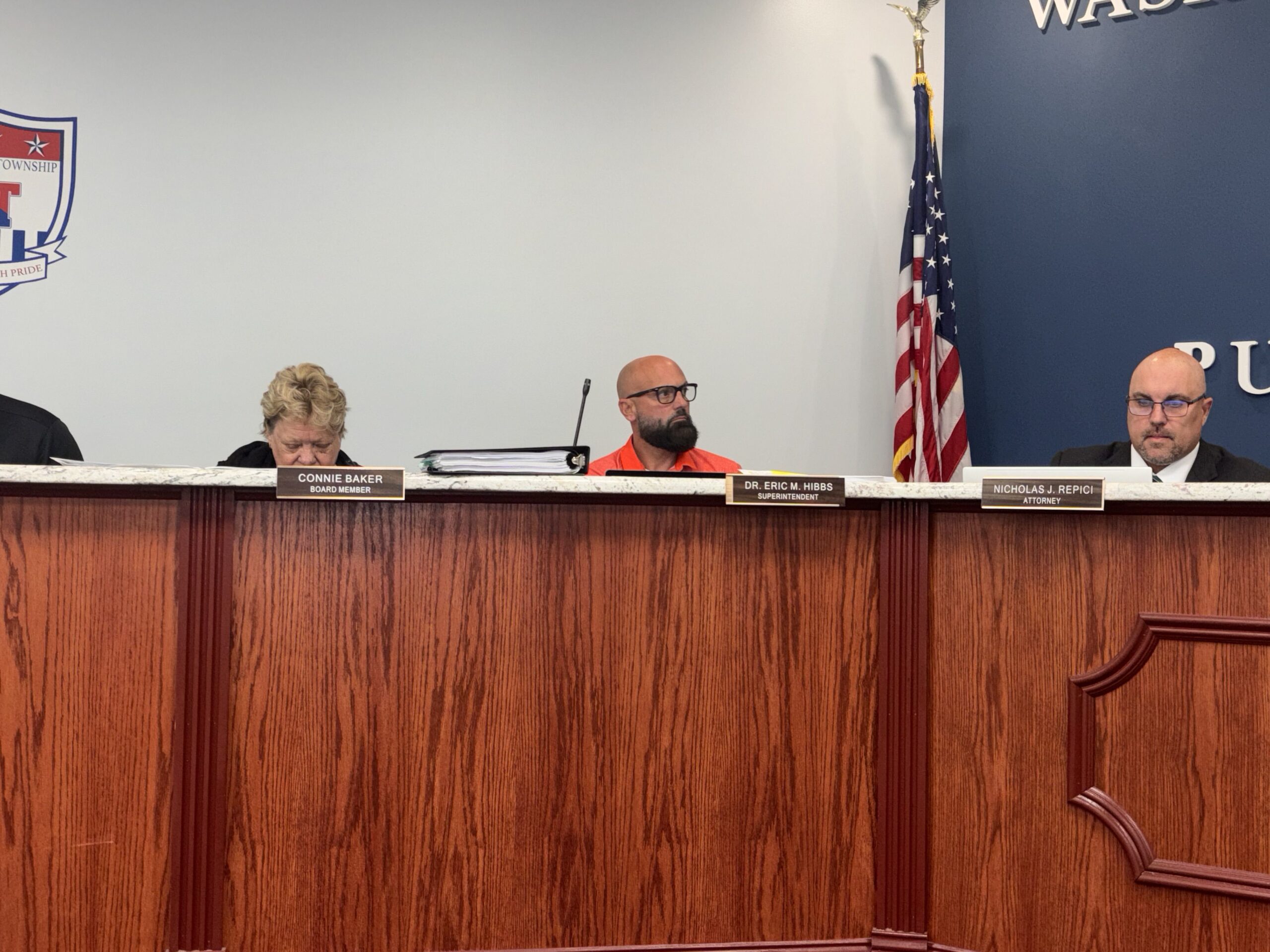
    Washington Township School Superintendent Eric Hibbs (middle) listens during a school board meeting Tuesday night.

    Here’s what’s to know about the situation:

    Why is Hibbs seeking merit pay?

    Hibbs initially requested the merit pay last August, five months after he was suspended by the board with pay. He was reinstated in July after a judge found that the board had violated the Open Public Meetings Act when it suspended him.

    According to his contract, if he meets goals set by the board, Hibbs is entitled to an annual merit bonus of up to 14.99% of his salary. Hibbs is among the highest-paid school chiefs in South Jersey.

    Interim Executive Gloucester County Superintendent Robert Bumpus approved the merit pay, as required by state law. The board must also give its approval to disburse the funds.

    Tuesday’s motion also would have allowed Hibbs to carry over up to 20 unused vacation days in addition to receiving a $27,000 bonus.

    Hibbs has been superintendent in the Washington Township district since 2023. His contract runs through 2027.

    What were the merit goals?

    Hibbs’ goals, approved by a previous board, include completing Google training presentations, taking online professional development courses, and beefing up security processes.

    He received $25,000 in merit pay for similar goals for the 2023-24 school year, according to district records obtained by The Inquirer under N.J.’s Open Public Records Act.

    The merit pay has been an ongoing issue between Hibbs and the board and has escalated since last year. The dispute has raised questions about his fate when his contract expires. The board must notify Hibbs by December if his contract will not be renewed; otherwise, the contract automatically renews for four years.

    Why was the doctrine of necessity necessary?

    Six board members were deemed ineligible to discuss Hibbs’ employment because of conflicts, board solicitor Nicholas J. Repici said. They either have family members who work for the district or are named defendants in Hibbs’ lawsuit against the district, he said.

    The doctrine of necessity allowed the conflicted board members to participate in the vote. But they were barred from any deliberations in executive session or public discussions.

    Board vice president Terri Schechter chaired a special committee of the board members without conflicts that discussed the Hibbs matter. She brought forward the motion to approve the merit pay.

    “Any discussion?” Schechter asked.

    “We’re not allowed,” board member Julie Kozempel said. She abstained along with board President Pat Blome.

    A petition launched by a parent called for the board to invoke the doctrine and vote on Hibbs’ contract renewal. It asked those who “agree that the district needs a clean break and less expensive contract for its superintendent” to consider signing the petition, which a community member spoke about at the board meeting Tuesday night.

    What is the dispute between Hibbs and the board?

    A complaint filed by local union leaders against Hibbs with the New Jersey School Ethics Commission alleged that the superintendent provided preferential treatment to a board member’s relative by changing a failing grade in September 2023.

    The board suspended Hibbs and hired a conflict lawyer to investigate the allegations. Hibbs was eventually cleared of any wrongdoing.

    In his own ethics complaint, Hibbs accused Kozempel and board member Elayne Clancy of not following procedures when the board hired Insurance Consulting Services LLC in 2021, prior to his tenure as superintendent.

    Hibbs filed a whistleblower lawsuit in May 2025, alleging his suspension was in retaliation for raising questions about the insurance contract. He alleged that the selection procedure was “procedurally flawed.”

    His employment has remained a point of contention among school board members.

    Here are other takeaways from Tuesday’s meeting

    During public comment Tuesday, there were also emotional appeals to the board to reinstate three guidance counselor positions that were cut to help balance the budget for the 2026-27 school year.

    Several school nurses and a student also expressed concern that the district has reduced the workday for several nursing assistants in cost-saving moves. They cited health and equity concerns.

    Board members were surprised to learn that first-level French and German classes were being cut at the high school due to the budget. They were told that the classes would resume next year.

    Hibbs said the district, which enrolls about 7,200 students, faced a $10 million deficit for the upcoming school year. More cuts are likely in future years without additional revenue, he said.

    “This is the reality of where we are,” Hibbs said. “We have no other place to go.”

  • N.J. hospitals could lose an estimated $3.6 billion from Medicaid changes through 2032

    N.J. hospitals could lose an estimated $3.6 billion from Medicaid changes through 2032

    New Jersey hospitals could lose an estimated $3.6 billion from Medicaid changes through 2032, forcing them to bring their expenses in line, Inspira Health Network CEO Amy Mansue said Friday during a panel discussion in Cherry Hill.

    “That will only happen with dramatic changes in how we look at our business,” she said during the Southern New Jersey Development Council’s Annual Health Care Leadership Forum at the Legacy Club of Woodcrest.

    Mansue predicted that health systems will close little-used programs. “There is no way to cut that much money out of the hospitals without doing some of that,” she said.

    The $3.6 billion estimate from the New Jersey Hospital Association does not include hospitals’ losses from the growing population of uninsured people who show up at emergency departments because they can’t afford to pay cash for a doctor visit.

    Already nearly 69,000 people have allowed their individual coverage from New Jersey’s Affordable Care Act marketplace to lapse after temporarily enhance tax subsidies expired at the end of last year. Thousands more are expected to lose Medicaid coverage next year when new requirements to stay enrolled take affect.

    New Jersey’s regulatory burden

    The hospital executives pleaded for state officials to reduce the red tape that makes it hard to implement programs needed to meet community needs.

    “We need to be more nimble, we need to be more adaptable, we need to be more flexible,” said Aaron Chang, president of Jefferson Health NJ, which includes hospitals in Cherry Hill, Stratford, and Washington Township.

    Jennifer Khelil (left), Virtua Health’s chief clinical Officer; Aaron Chang (center), president of Jefferson Health New Jersey; and Amy Mansue, CEO of Inspira Health spoke Friday at the Southern New Jersey Development Council’s Health Care Leadership Forum.

    Inspira is adding a $220 million patient tower at Inspira Mullica Hill in Harrison Township, near the intersection of Routes 55 and 322. Construction is expected to be completed Oct. 1, Mansue said. “The reality is we’re not going to open until March” because it will take that long to get all the regulatory approvals, she said.

    Inspira operates three other hospitals in Cumberland and Salem Counties.

    Raynard E. Washington, who heads the N.J. Department of Health, spoke after the panel and said Gov. Mikie Sherrill is serious about making it easier to do business in the state. She told state agencies “to limit additional regulations and to look for opportunities to streamline,” he said.

    Workforce development is a top priority

    Six years ago, Virtua and Rowan University started working together to create the Virtua Health College of Medicine & Life Sciences out of Rowan’s School of Osteopathic Medicine, Rowan’s School of Nursing & Health Professions, and Virtua’s Our Lady of Lourdes Nursing School, plus a new school of translational biomedical engineering and sciences.

    The institution officially launched in 2022 with $85 million in support from Virtua and $125 million from Rowan and has seen its class sizes grow steadily.

    “We are now training about 360 nurse graduates every year, 300 medical students,” said Jennifer Khelil, Virtua’s chief clinical officer. Virtua operates five hospitals in South Jersey.

    Workforce efforts also reach into high schools, Chang said. Jefferson Cherry Hill Hospital has a relationship with Cherry Hill West High School that brings 12 to 15 interns to the hospital.

    “Because of the internship, their exposure to the hospital environment, whether it’s the ancillary departments and or the clinical areas, over 95% of those individuals get a healthcare job as a first foray into the workforce,” Chang said.

    Editor’s note: This story has been updated to correct the time period for the Medicaid cuts.