Tag: Good Reads

  • ‘Sometimes it’s hard to breathe.’ One year later, the Northeast Philly plane crash stirs feelings of loss and fear

    ‘Sometimes it’s hard to breathe.’ One year later, the Northeast Philly plane crash stirs feelings of loss and fear

    Every day, sometimes several times a day, the 7-year-old girl wants to talk about the mother she lost in the Northeast Philadelphia plane crash.

    “She’s missing her all the time and she’ll ask me, `Do you think I look like my mom? Do you think I dress like my mom? Do you see my bag? This is my mom’s bag,’” said 35-year-old Shantell Fletcher, the girl’s godmother.

    It has been a year since a medical jet crashed on Cottman Avenue near the Roosevelt Mall, killing all six people onboard. The explosion cast a plume of plane shrapnel and fire over the neighborhood. At least 16 homes were severely damaged and about two dozen people were injured that night.

    The girl’s mother, Dominique Goods Burke, and her fiance, Steven Dreuitt Jr., along with Dreuitt’s 10-year-old son, Ramesses Dreuitt Vazquez, were driving on Cottman Avenue on Jan. 31, 2025, just after 6 p.m. when the plane slammed into the ground at more than 278 mph, within feet of their car.

    Flames instantly engulfed the vehicle. Dreuitt, 37, trapped in the car with his legs crushed beneath the steering wheel, died at the scene, but Goods Burke and Ramesses escaped with severe burns.
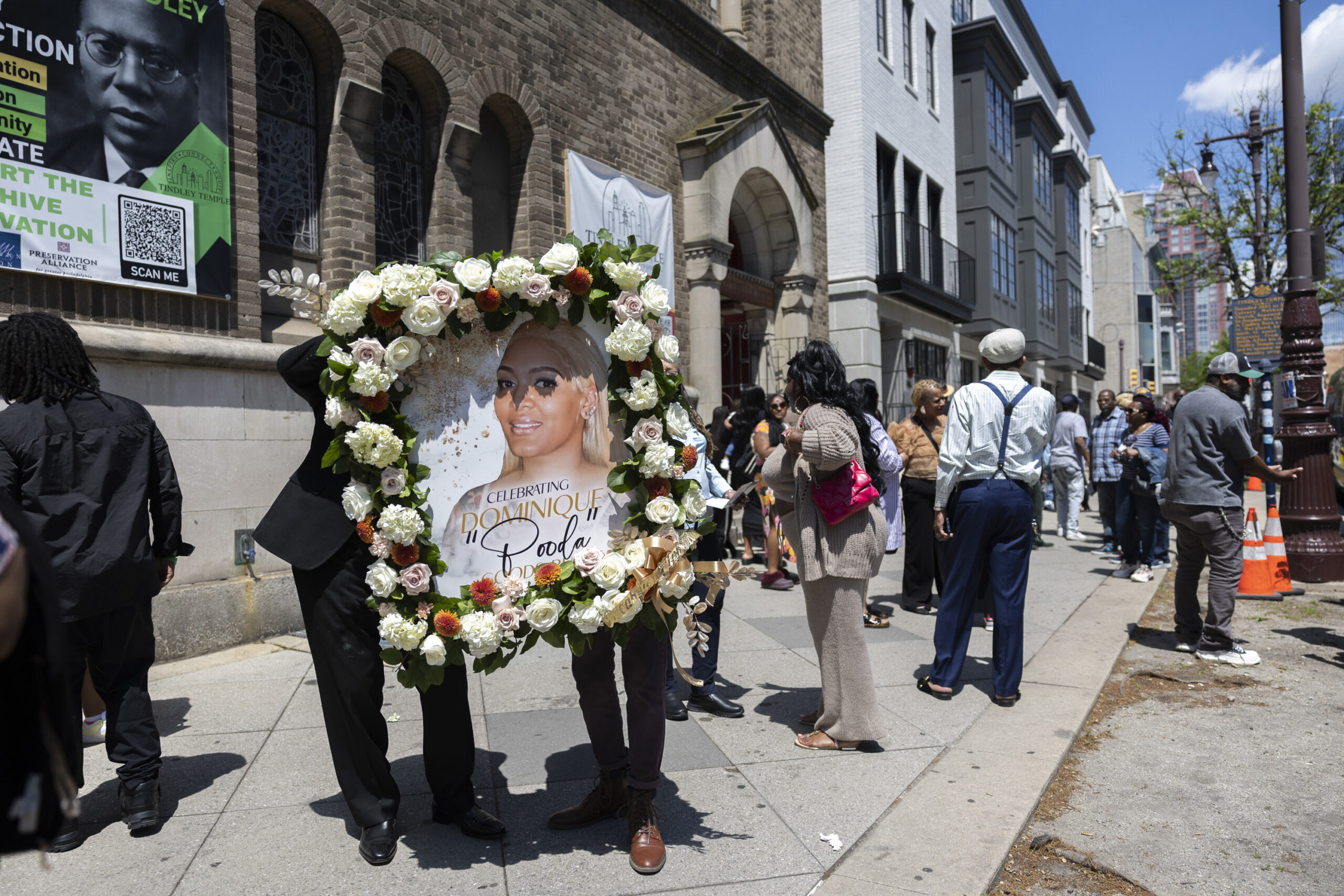
    A floral photo of Dominique Goods Burke is carried out after the funeral service as family, friends and community members gather outside at Tindley Temple UM Church in Philadelphia, Pa., on Thursday, May 8, 2025. Dominique passed away at Jefferson hospital on April 27 due to the critical burns from the Roosevelt Mall Learjet crash along Cottman Avenue.

    Goods Burke, 34, died of her injuries in April at Thomas Jefferson University Hospital, leaving behind her daughter and her 16-year-old son, Dominick Goods. (The family asked The Inquirer to withhold her daughter’s name to protect her privacy.)

    On Saturday evening, Mayor Cherelle L. Parker and other city officials planned to place a wreath at the crash site. About 100 people gathered inside Engine 71 Fire Station on Cottman, the station closest to the crash site.

    The plane’s impact had left a bomb-like crater in a driveway apron between a Raising Cane’s restaurant and a Dunkin’ Donuts. The 8-foot-deep hole has since been filled in and paved over, but the loss and devastation are irreparable.

    “I don’t know how we made it through a year. It feels fresh, raw. Sometimes it’s hard to breathe,” said Fletcher, who was Goods Burke’s first cousin and best friend. “Losing her, I’ve felt alone and empty. I miss laughing with her. I miss joking with her. I miss celebrating life with her.”

    Fletcher is helping to raise Goods Burke’s daughter and her son, Dominick, an 11th grader at Imhotep Institute Charter High School in East Germantown. Dominick’s father was Dreuitt, so he lost both parents.

    “My godson doesn’t have his mother or his father. My goddaughter doesn’t have her mamma,” Fletcher said. “Other than them coming back, nothing could ever give us a reprieve from the pain.”

    Dominick’s half brother, Ramesses, suffered burns over 90% percent of his body. He spent about 10 months in the hospital, undergoing more than 40 surgeries. Doctors had to amputate his fingers and ears.
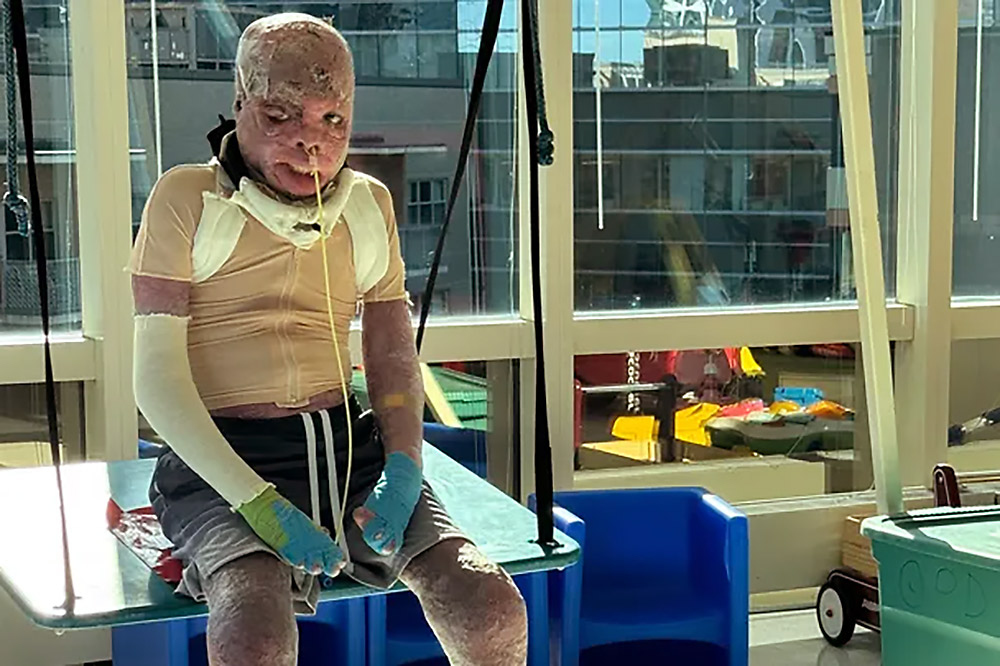
    Ramesses Dreuitt Vazquez, 10, spent months in a Boston hospital recovering from burns to more than 90% of his body when the car he was riding in caught fire in the Jan. 31, 2025 plane crash in Northeast Philadelphia.

    “I have my moments of still struggling. It’s been really tough,” said Dreuitt’s 61-year-old mother, Alberta “Amira” Brown, whose grandchildren are Ramesses and Dominick. “The life that we once had, we can never get it back.”

    An irreplaceable booming voice

    Dreuitt worked as a kitchen manager and team leader at the Philadelphia Catering Co. in South Philadelphia for more than seven years. Co-owner Tim Kelly said it was Dreuitt’s job to call staffers to lunch, which the company served to its 45 employees each day at noon.

    “Steve would always call lunch, which basically was him just yelling, ‘LUNCH,’ three times loudly,” Kelly said. “His deep booming voice. Many of the guys here have tried to replicate it, but to no avail.”

    “Time does help. It softens the blow,” Kelly said. “It was very difficult for a long time for a lot of us, but we’re at the point where we can remember him with a little less sadness and we can smile a bit.”

    Goods Burke, whom loved ones affectionately called “Pooda” and colleagues called “Dom,” worked at High Point Cafe as a day bakery manager for years.

    Cafe founder Meg Hagele said the staff treats her former work space, dubbed “Dom’s table,” with a shrine-like reverence. Seeing Goods Burke’s handwriting on recipes, scribbles in margins, stirs memories of her vibrancy and creativity.

    “She’s very present with us still,” Hagele said. “This accident was just a shock to the entire city, but to be touched so personally by it is just freakish and profound.”

    NTSB investigation continues

    The National Transportation Safety Board is still investigating the crash’s cause. The plane — a medical transport Learjet 55 owned by Jet Rescue Air Ambulance, headquartered in Mexico City — had taken off at 6:07 p.m. from Northeast Philadelphia Airport. It climbed to 1,640 feet before nosediving just three miles away around 6:08 p.m.

    NTSB investigators recovered the cockpit voice recorder at the scene, but after repairing it and playing it back, they found the device “had likely not been recording audio for several years,” according to a preliminary report released in March.

    Brown, of Mount Airy, said she got a letter from the NTSB a few weeks ago saying investigators were making progress.

    “That’s hope right there,” Brown said in a recent interview. ”It will help to know exactly what happened to make that plane come down. Does it change anything? No.”
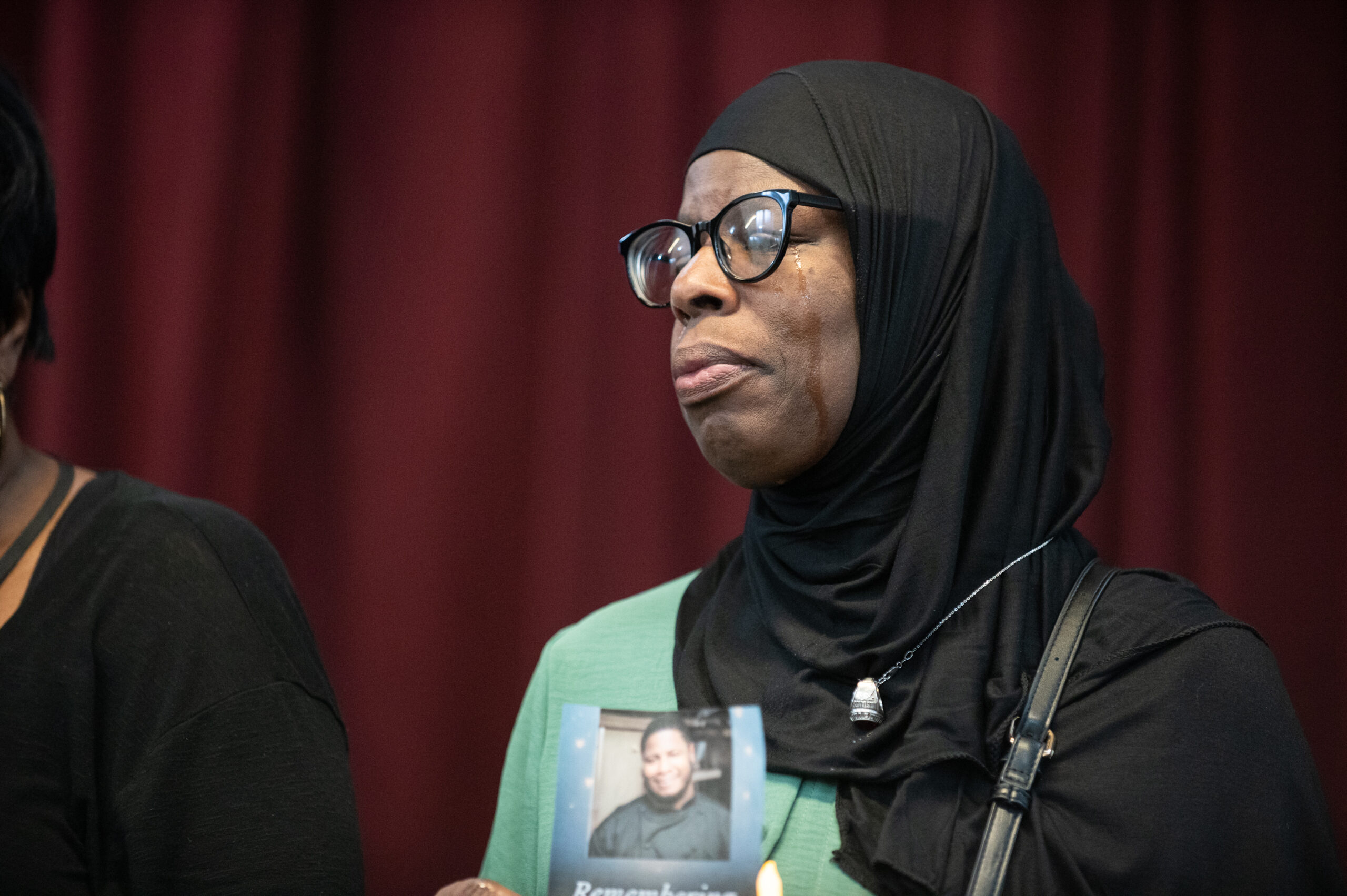
    Alberta “Amira” Brown remembers her son, Steven Dreuitt Jr., who died in the Jan. 31, 2025, plane crash in Northeast Philadelphia. In November, Brown attended a memorial service at Oxford Presbyterian Church in North Philadelphia.

    The cremated remains of the six Mexican nationals who died aboard the plane were returned to loved ones in Mexico City last spring. Among the passengers were 11-year-old Valentina Guzmán Murillo and her 31-year-old mother, Lizeth Murillo Osuna. They were returning home after Valentina had spent four months undergoing treatment for a spinal condition at Shriners Children’s Philadelphia.

    Also killed were the pilot, Alan Montoya Perales, 46; his copilot, Josue de Jesus Juarez Juarez, 43; a Jet Rescue doctor, Raul Meza Arredonda, 41; and paramedic Rodrigo Lopez Padilla, 41.
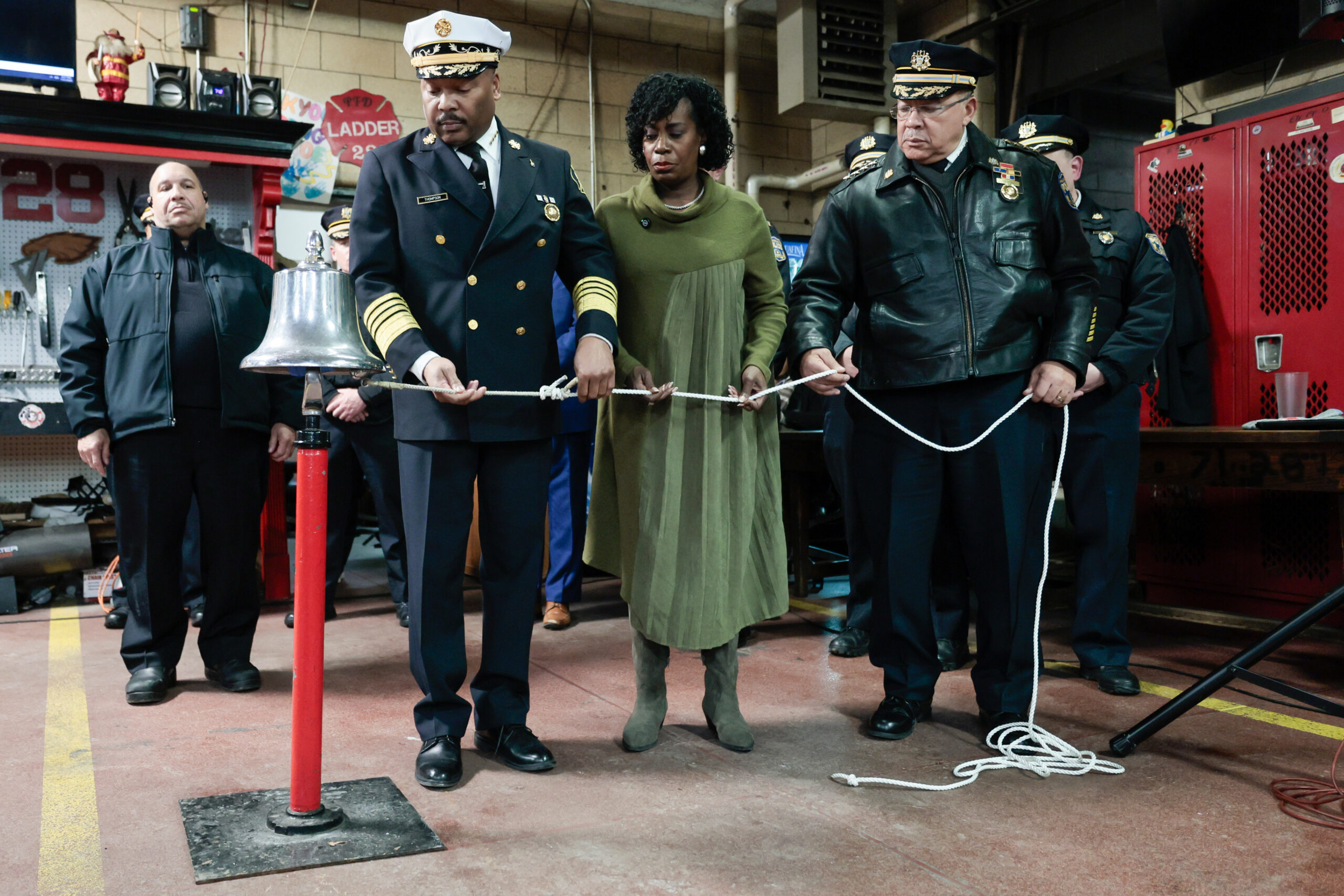
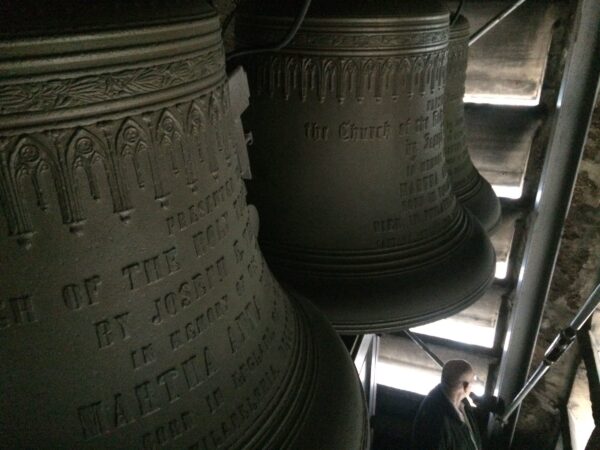
    Philadelphia Fire Commissioner Jeffrey Thompson (from left) Mayor Cherelle L. Parker, and Police Commissioner Kevin J. Bethel ring a ceremonial bell at the one-year anniversary memorial observance of the Northeast Philly plane crash Saturday, Jan. 31, 2026, at Engine 71 Fire Station on Cottman Avenue in Philadelphia.

    In the moments after the crash, hundreds of firefighters and rescue workers swarmed the area to put out homes and cars on fire from the jet fuel or burning pieces of aircraft that struck them.

    Philadelphia Fire Commissioner Jeffrey Thompson, a 36-year veteran of the city’s fire department, said the plane crash “was without a doubt the biggest thing that I’ve ever responded to.”

    In an interview on Thursday, Thompson recalled rushing to the scene from his Fishtown home, filled with dread and adrenaline.

    “I remember it was dark. It was cold, and it was raining — it was like something out of a disaster movie,” Thompson said. “As I got closer, I could just see a sea of lights.”

    He arrived to find multiple homes and cars on fire. Pools of jet fuel everywhere. And so many pieces of debris that he initially had no idea of the plane’s size. He said he and other first responders will never forget seeing body parts strewn among the wreckage.

    “This still affects all of us. Just to see that is so unnatural,” Thompson said. “And the work that they did that night — that’s indelibly etched in their memories.”

    More than 150 firefighters scoured “blocks and blocks” of homes, entering each one and every room, to make sure everyone was accounted for. He said he is amazed how multiple agencies worked together to bring “order to chaos.”

    “That just gives me goose bumps,” Thompson said. He added, “This is actually therapeutic — me talking to you has been therapeutic because there was a lot there that night and I don’t often talk about this.”

    Miracles, luck, and skill

    As tragic as that night was, Thompson said, there was some miraculousness, including the fact that the plane struck a patch of empty pavement between two busy restaurants.

    “Sometimes in this life, there’s luck,” Thompson said. “It was rush hour. You had a shopping mall and a densely populated neighborhood. It could have been infinitely worse.”
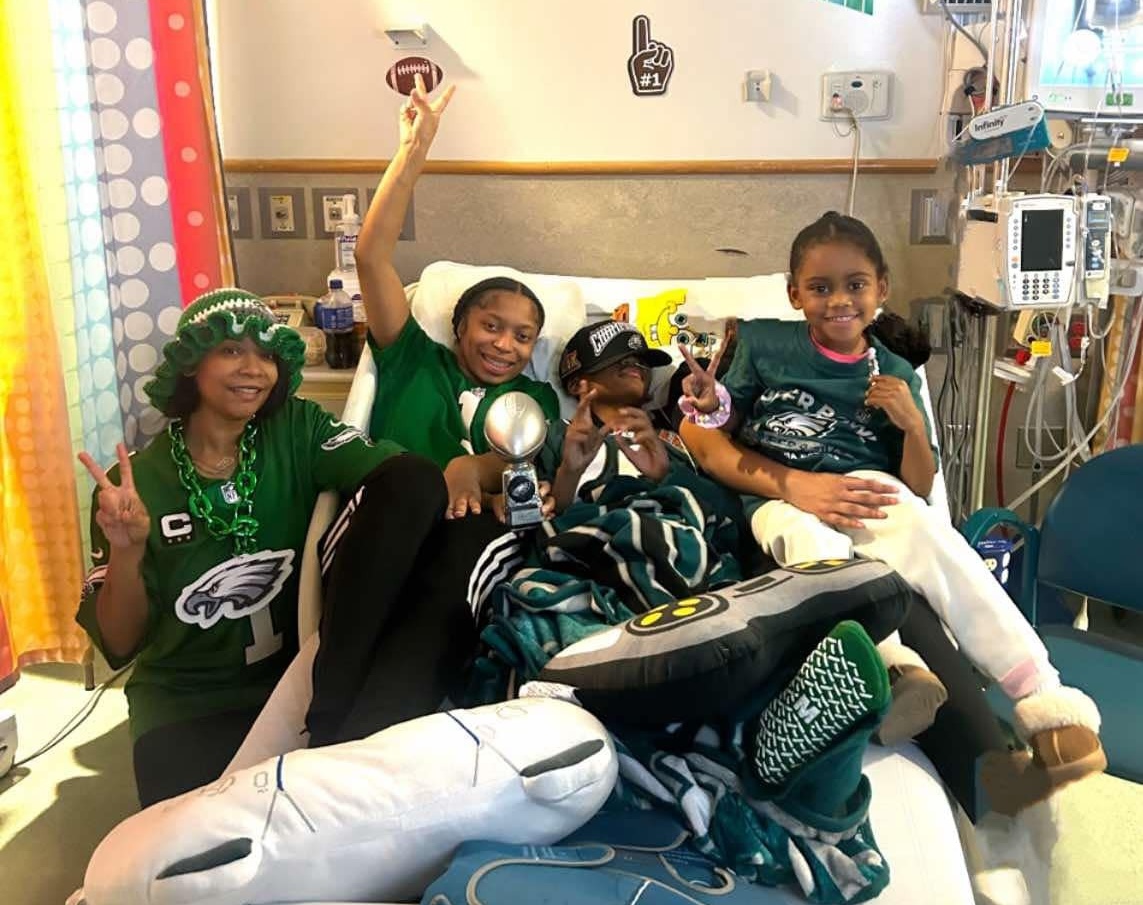
    Lashawn ‘Lala’ Hamiel, Andre “Tre” Howard III, and his family cheer on the Eagles during Super Bowl LIX.

    Andre Howard Jr. had just picked up his three kids — then ages 4,7, and 10 — from aftercare at Soans Christian Academy. They headed to Dunkin’ for strawberry doughnuts. As they were leaving the parking lot in Howard’s car, the plane exploded a few feet away. A plane part crashed through the car’s window. Howard’s 10-year-old son, Andre “Tre” Howard III, used his body to shield his 4-year-old sister and a piece of metal struck his head.

    Tareq Yaseen, a neurosurgeon at Jefferson Torresdale Hospital, was having dinner with his family, including his kids, ages 10 and 6, at Dave & Buster’s at Franklin Mall when he rushed back to the hospital to perform emergency surgery on Tre.

    The boy had two gashes in the right side of his head, and his skull had been shattered into more than 20 pieces, Yaseen recalled.

    “My son is the exact age as Tre, which made things very personal and emotional to me,” Yaseen said. “He’s gonna die. He was basically losing consciousness and going in a bad direction.”

    “I felt for a moment that I would not be able to help him,” Yaseen said. “I was very scared that I’m gonna fail. There’s too much on the line and it’s a little boy.”

    Yaseen said he worked fast to relieve the pressure on Tre’s brain and remove bits of broken skull. The surgery was a success. More than 60 relatives and friends in the hospital waiting room hugged and thanked him, Yaseen recalled.

    “It’s a moment that would happen in the movies,” Yaseen said. “I was very lucky to take part in saving his life.”

    Tre was transferred to the Children’s Hospital of Philadelphia, where he made a near-full recovery. He celebrated his 11th birthday in December.

    “With time, he’ll grow up and forget about it. God gave us a gift to forget, which is great,” Yaseen said. “But I will never forget.”
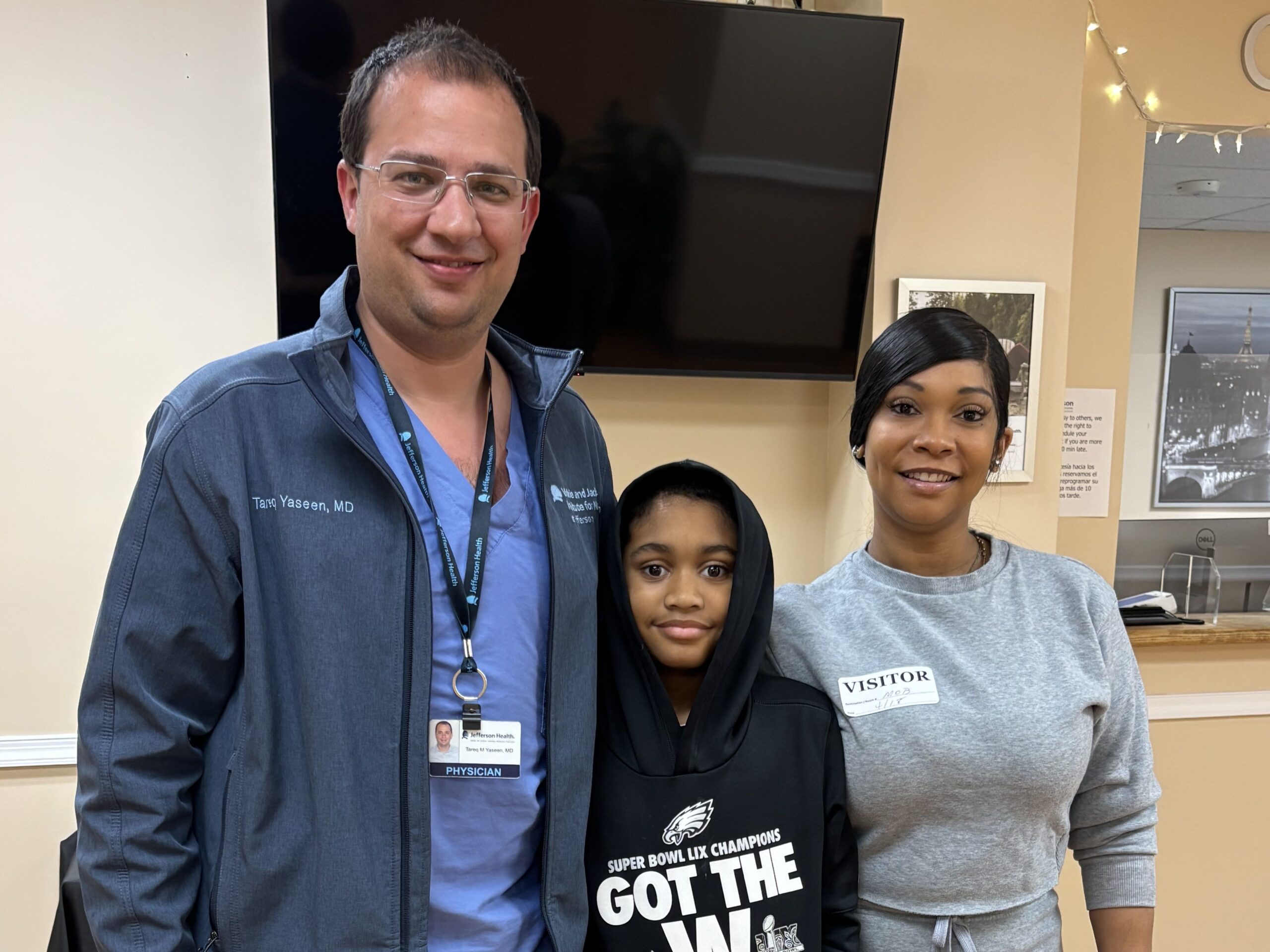
    Jefferson neurosurgeon Tareq Yaseen poses for a photo with Andre “Tre” Howard III and his mother, Lashawn “Lala” Hamiel at Jefferson Torresdale Hospital.

    A memorial

    At the memorial Saturday, Mayor Parker read aloud the names of all eight who perished that night.

    “To all the families who continue to carry this grief everyday, that until you’ve walked a mile in their shoes, you can’t begin to understand what it’s like,” Parker said. “It is important for us to affirm that they know that Philadelphia stands with you today and we will always.”

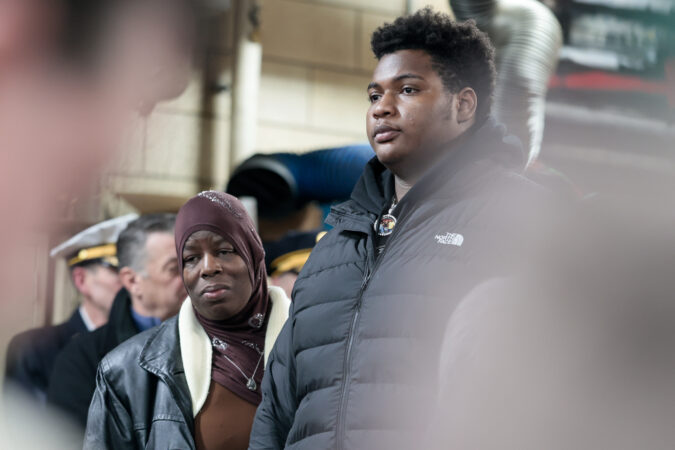
    She asked the victims’ family members in attendance to stand and be recognized, including Brown, her grandson, Dominick, and Lisa Goods, the aunt of Goods Burke.

    The mayor said she plans to keep close tabs on Dominick.

    “Now he knows he belongs to me — don’t try to take him from me,” Parker said as she looked at Dominick seated in the front row.

    Parker also recognized first responders for their “extraordinary bravery and selflessness.”

    “In a moment of unimaginable tragedy, you all ran towards danger to protect others.”
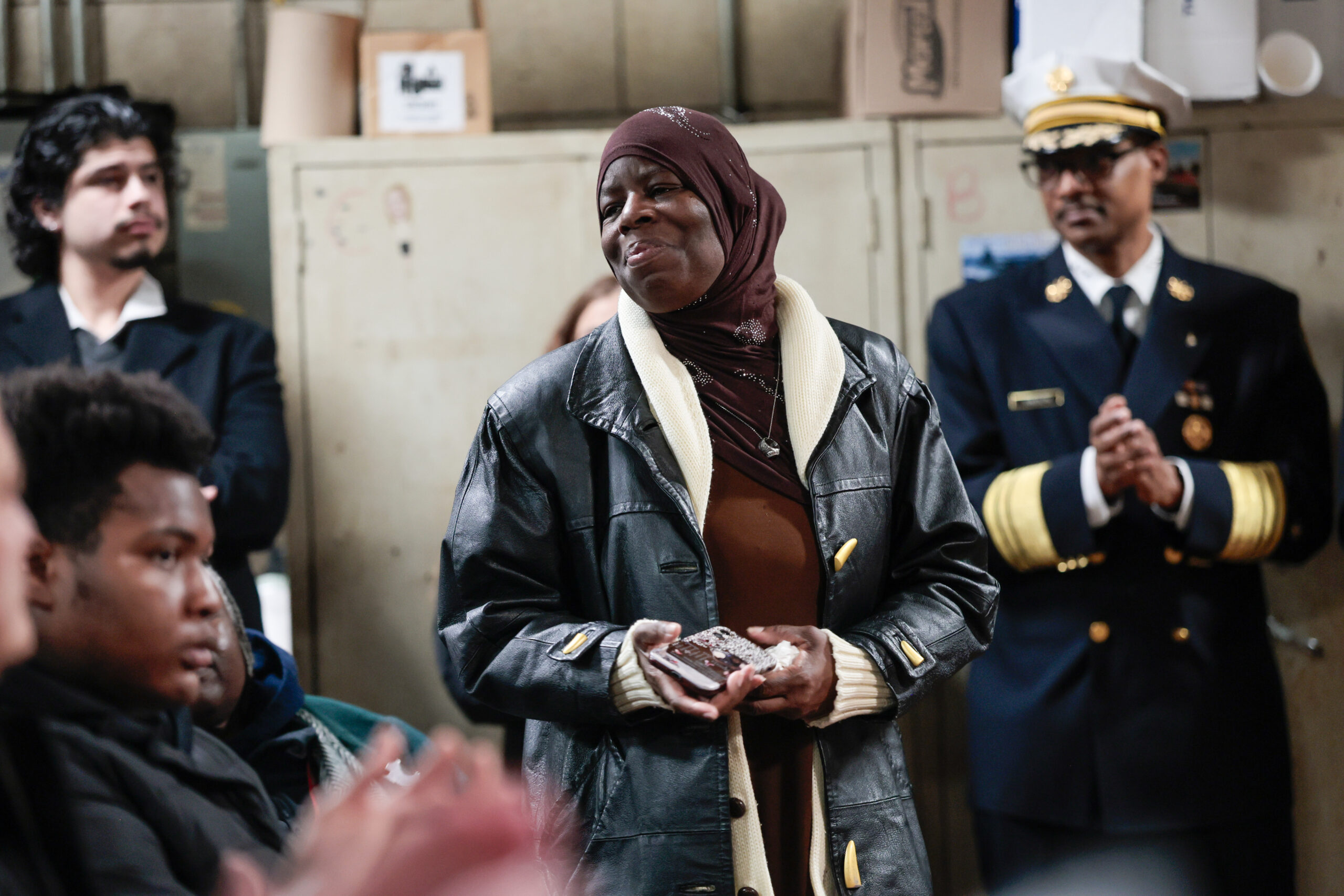
    Alberta “Amira” Brown (center), the grandmother of 10-year-old Ramesses Dreuitt Vazquez, who was severely burned after a plane crashed into his North Philadelphia neighborhood last year at the one year anniversary memorial observance of the Northeast Philly plane crash Saturday, Jan. 31, 2026, at Engine 71 Fire Station on Cottman Ave., in Philadelphia
  • A Philly priest’s soon-to-be-famous Christmas song was played on this week in Philly history

    A Philly priest’s soon-to-be-famous Christmas song was played on this week in Philly history

    One of America’s great Christmas songs grew out of procrastination.

    Two friends — a rector and his organist at the Church of the Holy Trinity on Rittenhouse Square — found the inspiration in the run-up to the Christmas celebration in 1868.

    The result of their delayed creativity was “O Little Town of Bethlehem,” composed and heard in a Philadelphia church.

    It was a song that spread across the world, and put the 19th-century church on the map.

    The silent stars

    Three years before, in 1865, the church’s vicar visited the Holy Land.

    So moved by what he saw on that trip, the Rev. Phillips Brooks put pen to paper.

    The result was a poem:

    O little town of Bethlehem,

    How still we see thee lie.

    Above thy deep and dreamless sleep

    The silent stars go by.

    In totality, as a piece of music, the song is not exactly upbeat.

    The lyrics reflect on the darkness found after midnight. Cries of misery reverberating through dark streets under cover of ink-black skies.

    But there’s also everlasting light.

    A Christmas miracle

    Three years later in 1868, Brooks asked the church’s organist, Lewis Redner, a real estate agent who played the organ for four churches, to set music to those lyrics Brooks penned.

    It was to be part of a song that would play during the Christmas holiday in 1868.

    And then Brooks waited.

    To his congregation, Brooks was an inspiring preacher. In the throes of the American Civil War, he would ride on a wagon to the battlefields around Gettysburg to perform last rites on dying soldiers and offer words of comfort to wounded soldiers — Union and Confederate.

    Days turned to weeks, and Brooks was still waiting for the completed song.

    But as the holiday approached, the procrastination had reached a fever pitch.

    Two days before the Christmas service, on a Friday, Brooks nervously asked about the song.

    “Have you ground out the music yet?”

    “No,” Redner said.

    But he assured Brooks: “I’ll have it by Sunday.”

    On Saturday night, Redner wrote in his diary that his brain was in knots over the tune, according to The Inquirer.

    Once asleep, he woke with a start.

    He wrote that he heard an angel whispering in his ear.

    Redner then scribbled down the tune.

    And before the Sunday service, he layered on the harmony.

  • Forty years after a brain injury changed this veteran’s life, a Jefferson program helped him rebuild

    Forty years after a brain injury changed this veteran’s life, a Jefferson program helped him rebuild

    When Scott Edgell was discharged from the military after a service-related head injury at age 20, he thought he would resume life as normal.

    But over the next four decades, the Lancaster County man was troubled by frequent migraines, memory problems, dizziness, irritability, and balance issues. Even everyday activities, like grocery shopping or eating at a restaurant, became overwhelming.

    “I didn’t understand what was happening to my body,” said Edgell, who is now 57.

    He realized the head injury he suffered while serving in the military was to blame after watching the 2015 movie Concussion, but struggled to find doctors who knew how to help him.

    Just as he started to lose hope in late 2023, he learned about a Jefferson Health program in Willow Grove for veterans and first responders with traumatic brain injuries (TBIs). The clinic provides physical and cognitive rehabilitation to participants over a three-week intensive outpatient program.

    Edgell is among the estimated one in four veterans who have had a TBI. More than half a million U.S. military members have been diagnosed with the injury since 2000, according to the Department of Defense.

    Many suffer TBIs as a result of combat-related incidents, exposure to blasts during explosions, training accidents, and vehicle crashes.

    While some patients can recover completely, up to 30% of those with mild TBIs, also commonly called concussions — which account for the vast majority of TBI cases — experience long-term symptoms.

    The lasting effects of TBIs are often overlooked among veterans because of the injury’s invisibility. Yet they can be life-altering, affecting employment, personal relationships, and overall quality of life.

    Veterans with a TBI had suicide rates 55% higher than veterans without the injury, one study found.

    Jefferson’s program, called the MossRehab Institute for Brain Health, was founded in 2022 and has treated roughly 100 patients. It runs on donations — the biggest being from the veterans’ wellness nonprofit Avalon Action Alliance, which has provided $1.25 million annually.

    Donations allow them to offer the program at no out-of-pocket cost to veterans and first responders, and cover housing, transportation, and meals during the three weeks.

    “I walked in those doors at the lowest part of my life,” said Edgell, who participated in June 2024.

    Though there’s no cure for his injury, the program has helped him rebuild his life.

    “All you can do is learn to manage your symptoms,” he said.

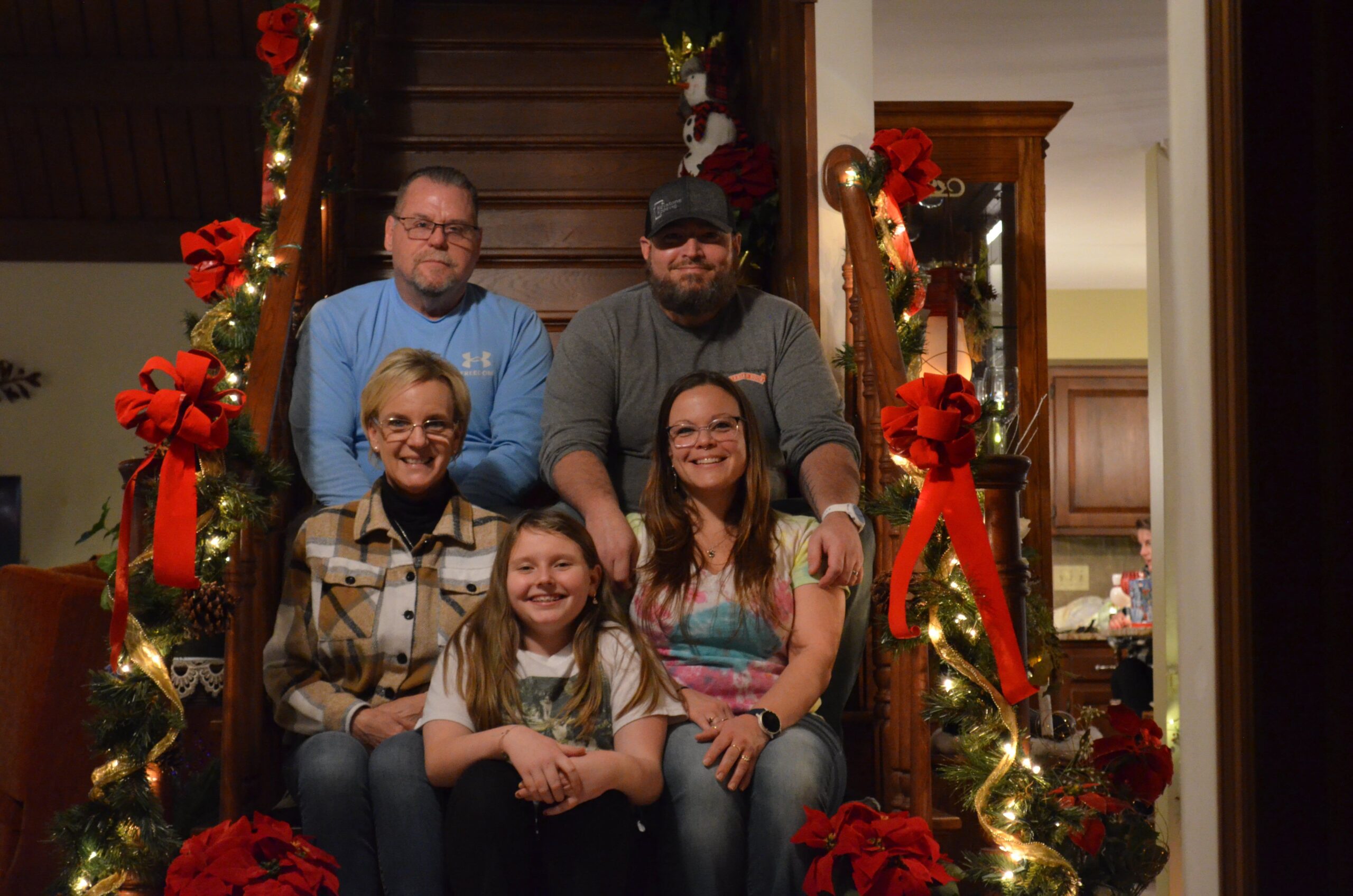
    Edgell and his family, including his wife Tami, stepdaughter Monica Bressler, son-in-law Kenny Bressler, and granddaughter Hayvin.

    The program

    Edgell entered the MossRehab program in June 2024 as part of a cohort of four.

    The first step in his rehab was learning about what was happening to his brain.

    His accident occurred back in 1989, when a steel hatch swung shut and hit him in the back of the head during a training exercise at Fort Riley, Kan.

    Doctors at the time provided memory exercises, mental health support, and physical rehabilitation to improve his gait, but nothing brought him back to baseline.

    Edgell managed to push through his memory problems in college by putting in extra effort into studying, and ultimately became an electronics engineer.

    However, it became harder to cope with the symptoms as he got older.

    Even brief outings would exhaust him to the point of needing days to recover.

    When his wife, Tami, would ask what she could do to help him, he wouldn’t know what to say.

    One therapist at the program offered him a helpful analogy: If a normal brain is like a six-burner stove, then having a brain injury is like being down to only three burners.

    “You’re trying to do everything with two or three burners that you would normally do with six, and your brain just becomes very fatigued and overwhelmed,” Edgell said.

    The program teaches participants to adapt to their brain’s new way of functioning, whether through physical rehabilitation for symptoms such as dizziness, or cognitive rehabilitation to address issues affecting attention, concentration, memory, and mood.

    “We’re basically retraining the brain to do something that it’s having difficulty doing because of an injury,” said Yevgeniya Sergeyenko, a physical medicine & rehabilitation physician and clinical director of the program.

    Since treatment for TBIs revolves around managing the symptoms — which can vary widely between patients — the program has staff across an array of specialties that patients see throughout their three-week stay.

    One provider helped Edgell, who was struggling to get more than a few hours of sleep a night, find medication to help him sleep.

    A physical therapist, meanwhile, assisted with his balance and core structure, so he could walk and move around more easily.

    Others taught Edgell exercises to improve his dexterity, speech, and memory.

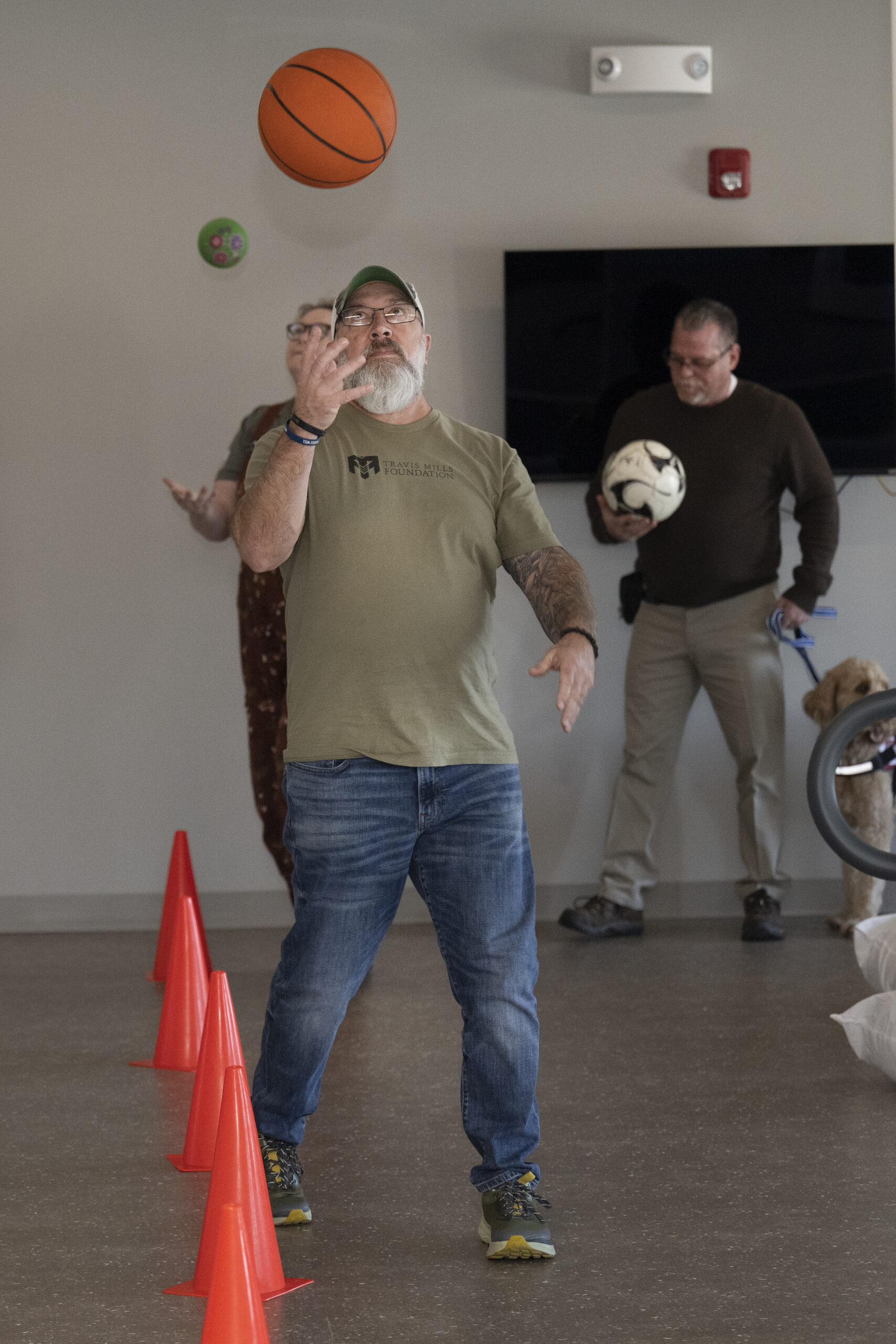
    Army veteran Scott Edgell participates in a cohort session at the MossRehab Institute for Brain Health.

    Some forms of therapy were less conventional.

    There was horticultural therapy — a therapy that involves working with plants — which Sergeyenko said has been shown to lower blood pressure and is intended to help with emotional regulation.

    Patients also did yoga and other mindfulness and movement activities intended to calm the nervous system.

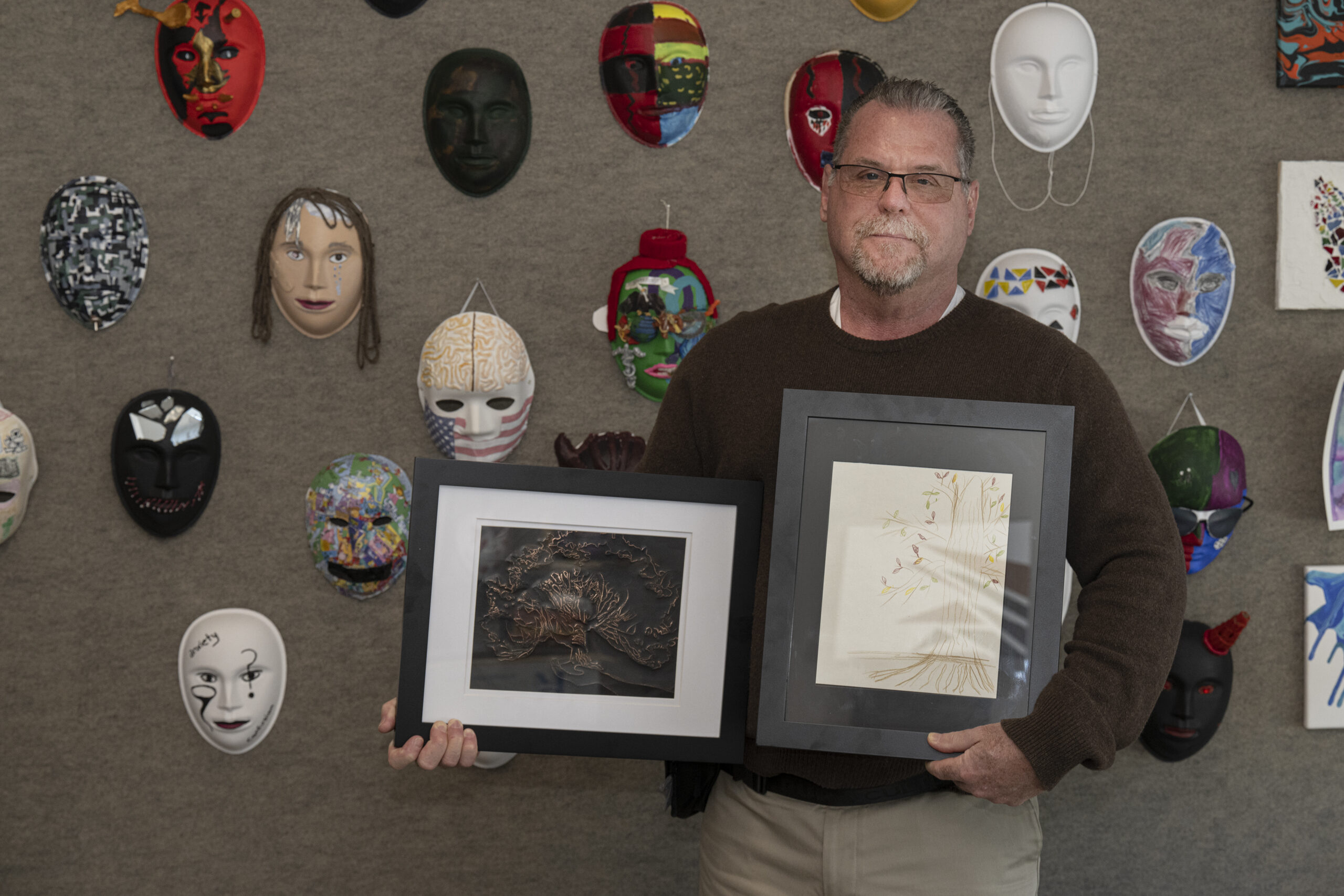
    Edgell said yoga wasn’t his favorite, but he found art therapy helped him communicate more openly.

    One of the exercises at the start of the program asked him to draw a tree. He drew one that “was not doing very well,” he said.

    At the end of the three weeks, he drew a lush version full of leaves. The framed drawing now hangs in his dining room.

    “I look at that everyday to see where I came from,” he said.

    Army veteran Scott Edgell shows drawings of trees representing himself during a cohort session at the MossRehab Institute for Brain Health.

    Outcomes

    Program organizers say returning to a pre-injury baseline is not always a realistic goal.

    “There’s not a medicine that you can give that’s going to make all of your brain injury symptoms subside,” said Kate O’Rourke, the program director at the clinic.

    The program aims to improve function and quality of life.

    As of September, the last time outcome statistics were compiled, 82 patients had gone through the three-week intensive. Sixty-five percent saw significant reduction in their symptoms, as measured by their Neurobehavioral Symptom Inventory scores — which assesses a patient’s severity of neurobehavioral symptoms from 0 to 88. The average reduction was 13.26 points.

    Ninety-nine percent of patients reported that they personally felt they improved after the program.

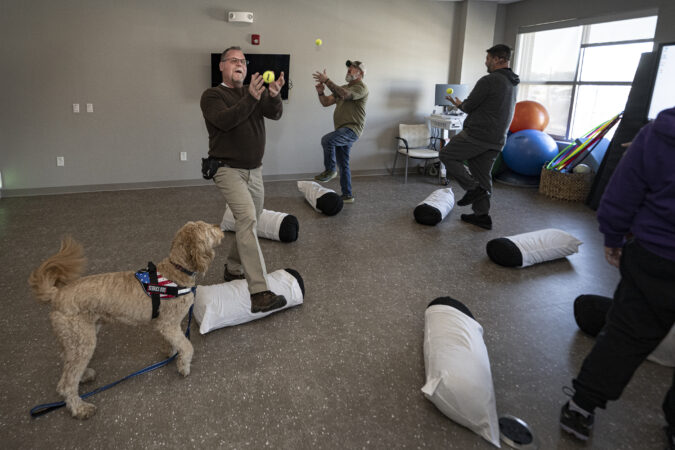
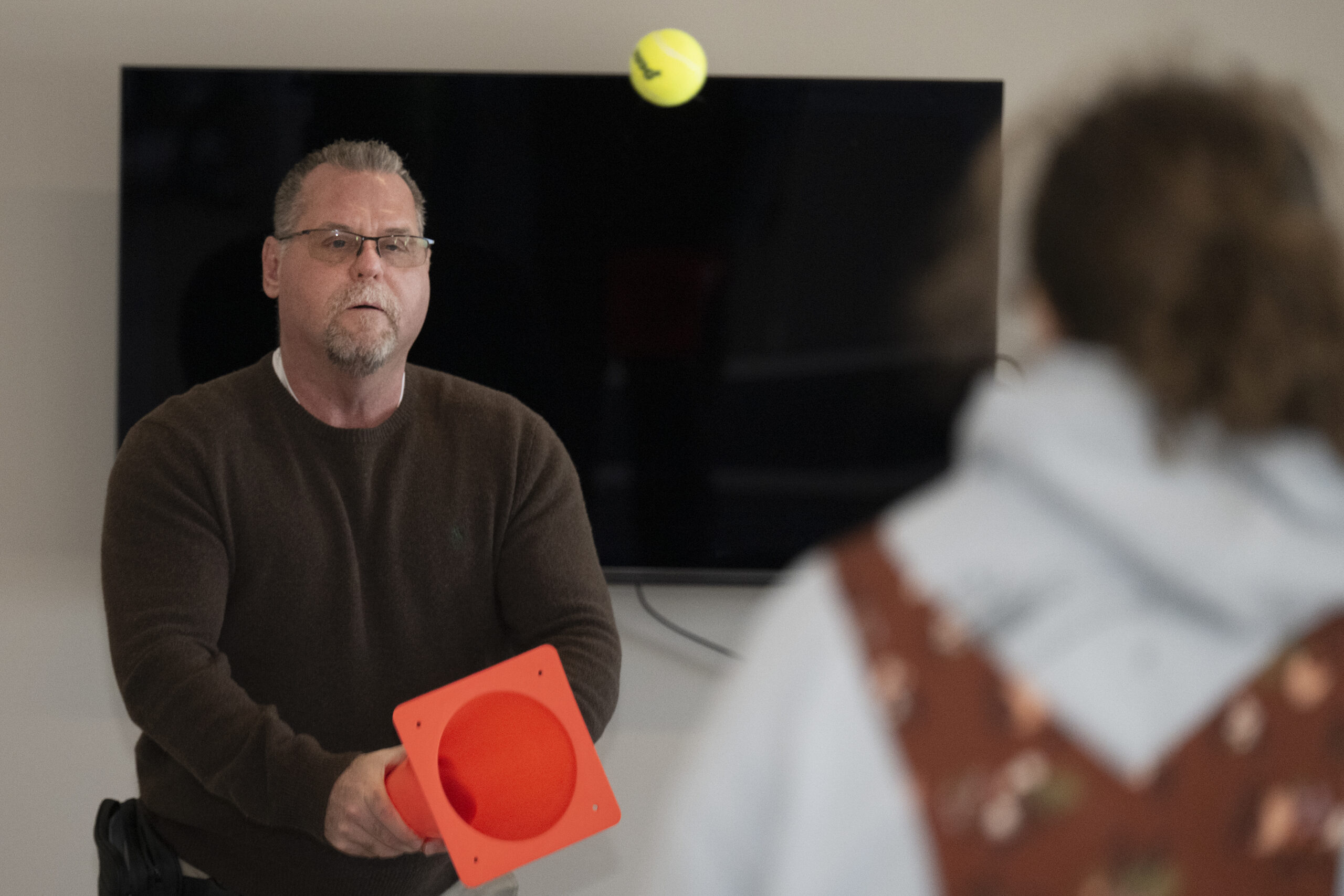
    Current patients (Jeff Todd Malloch and Jessica Mack) and Army veteran Scott Edgell participate in a cohort session with his therapy dog, Lars, at the MossRehab Institute for Brain Health.

    Edgell regularly reaches out to staff for advice, and meets with the program’s alumni in monthly conference calls.

    He still has bad days sometimes, but he’s able to manage them better.

    Before, when he would go to a grocery store or restaurant, he would become overwhelmed by the noise, lights, and commotion.

    “I couldn’t catch my triggers before I fell off the cliff,” Edgell said.

    He was only able to leave the house four to five times a month.

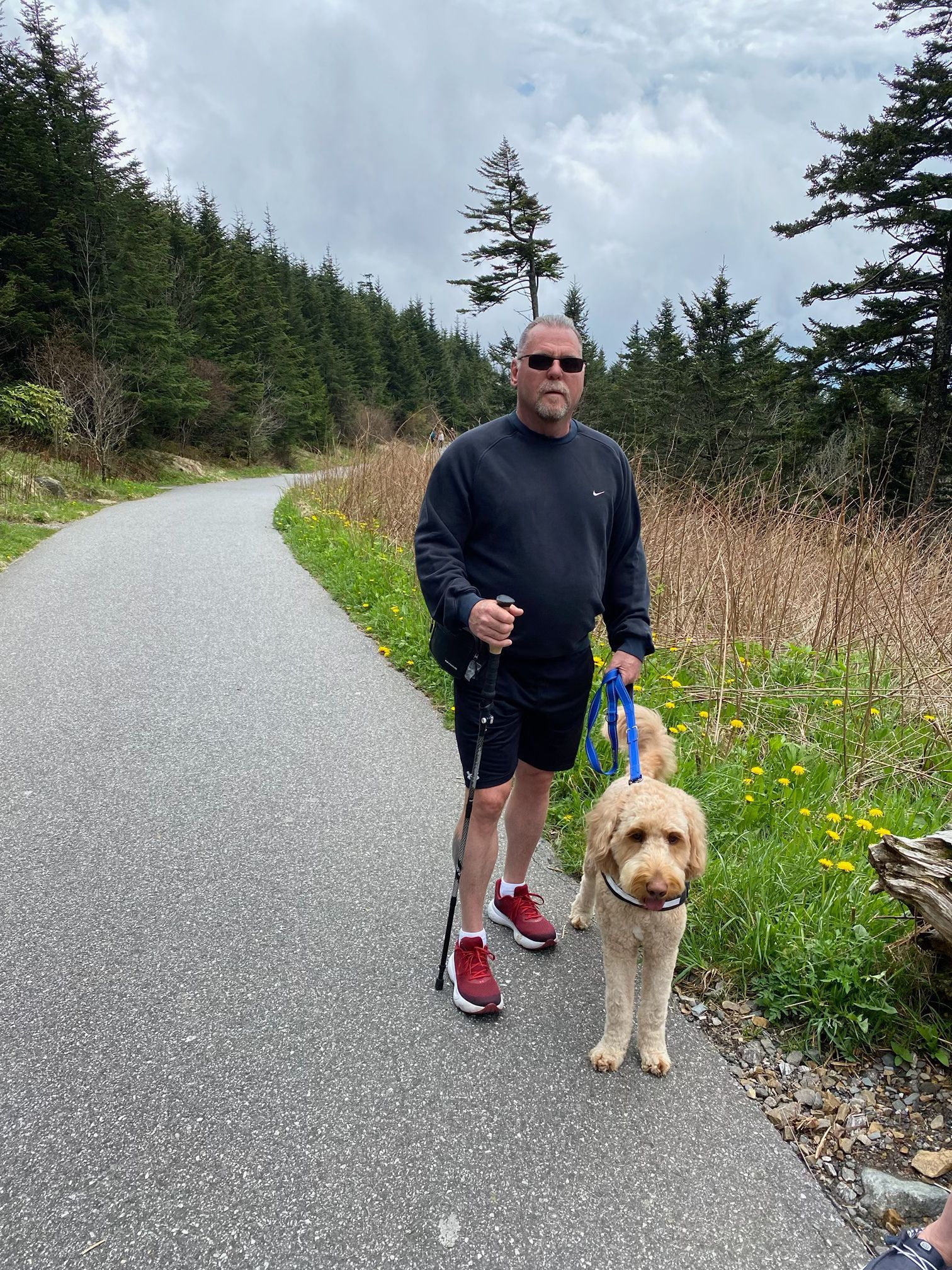
    Working with a service dog at MossRehab inspired him to get one of his own.

    Now, when he starts to react, a golden doodle named Lars will nudge him, giving him a moment to let his brain calm down.

    Edgell and his service dog, a golden doodle named Lars.

    Today, he’s able to leave the house more frequently and for longer.

    He and his wife have reconnected with friends and engaged more in social activities.

    “I still get tired, I still need breaks, but my recovery time is a lot faster, and it’s not nearly as devastating,” Edgell said.

  • As The Inquirer closes its printing plant, a ‘family’ of employees marks the end of an era

    As The Inquirer closes its printing plant, a ‘family’ of employees marks the end of an era

    Special Report

    Turning the page

    As The Philadelphia Inquirer closes its printing plant, a ‘family’ of employees marks the end of an era

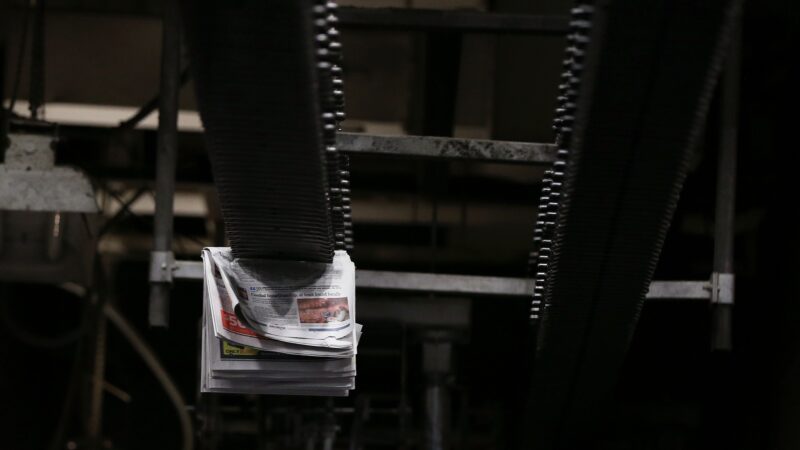
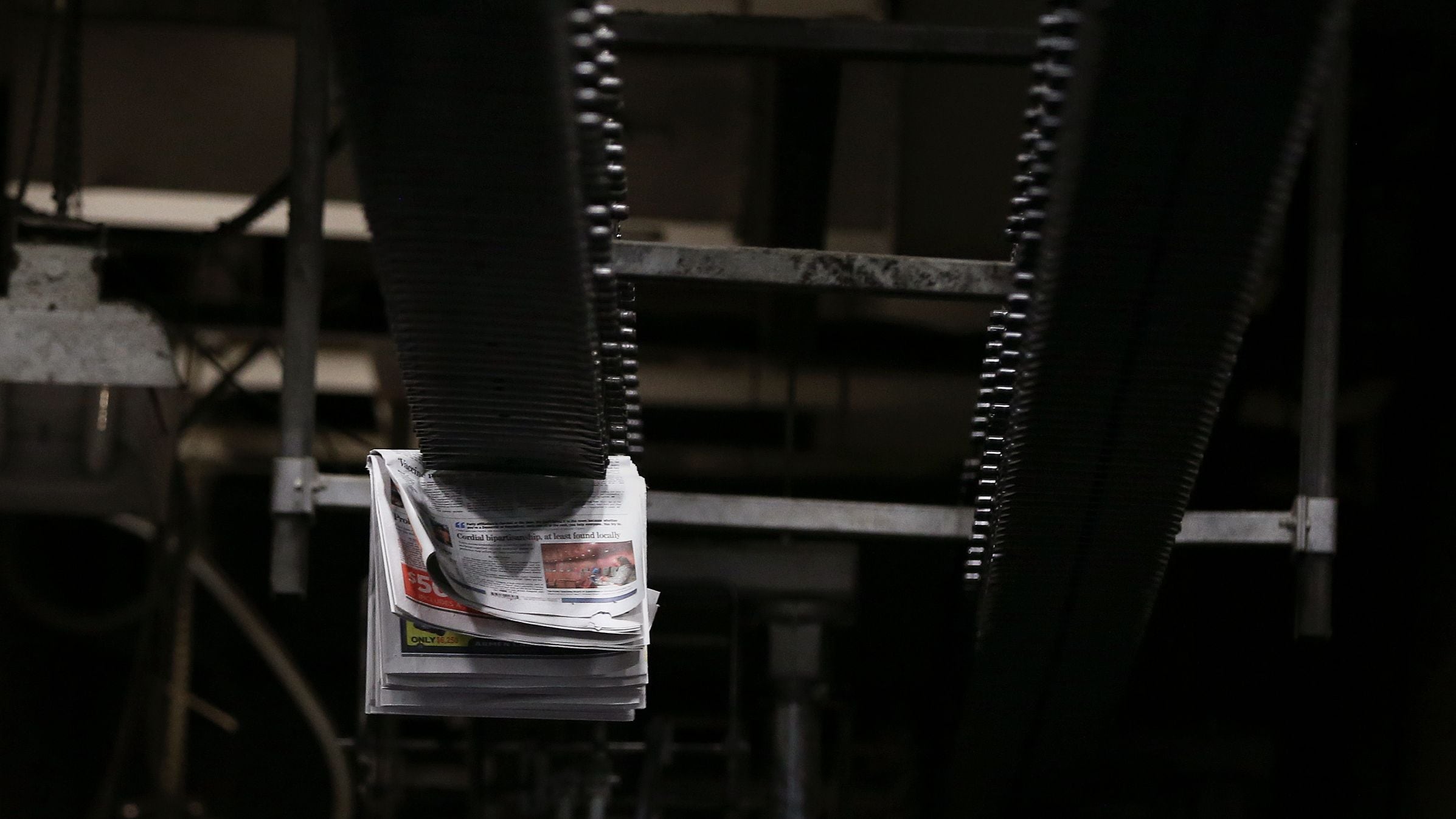
    A tattered copy of The Inquirer is the last to ride the grippers from the pressroom to the mailroom at the Schuylkill Printing Plant in Upper Merion Township on March 28.TIM TAI / Staff Photographer

    Tom “Three Bars” Lafauci had no chance of disappearing quietly into the howling winds of the night.

    “Lafauci!”

    Sybil White, a longtime security officer, summoned him before he could reach the only available exit at The Philadelphia Inquirer’s Schuylkill Printing Plant, the mammoth newspaper factory that was about to call it an era.

    “Come on, get in the picture,” she commanded him. Almost reflexively, Len Leach and Tanya Rockeymore, who were working the lobby security detail that night, stuck their heads in the frame. They might not see him again. One of 500 who lost their jobs with the building’s sale, this was Lafauci’s last work shift.

    At the age of 192, The Inquirer is stopping its own presses for good — the April 1 issues marked the last official runs — and will be outsourcing its print operations in line with newspapers across the country that are cutting costs and fighting a media universe changing at the speed of breaking news.

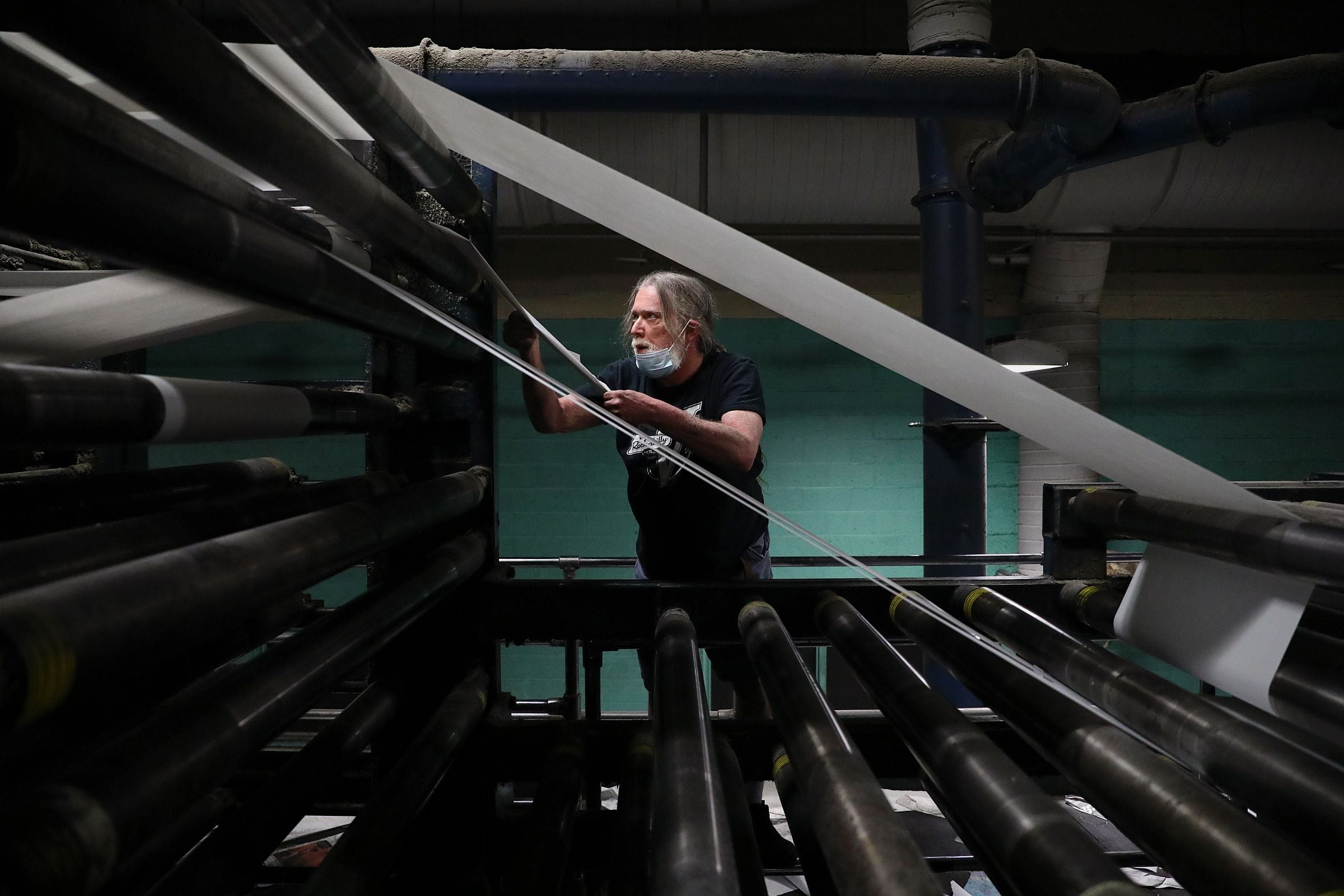
    Aaron Krakovitz, a third-generation, 47-year pressman, threads paper through a set of rollers as he prepares for the night's press run. TIM TAI / Staff Photographer
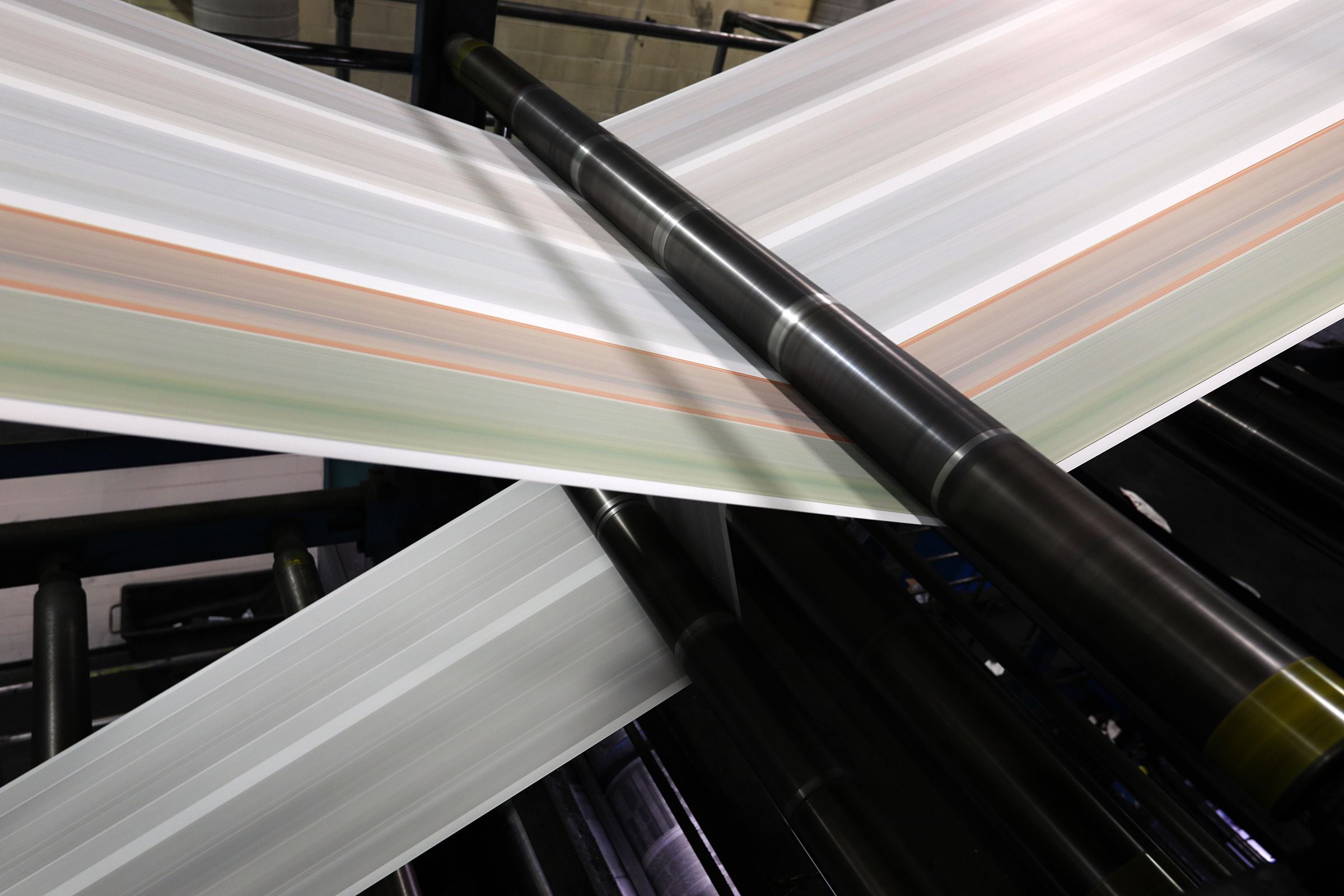
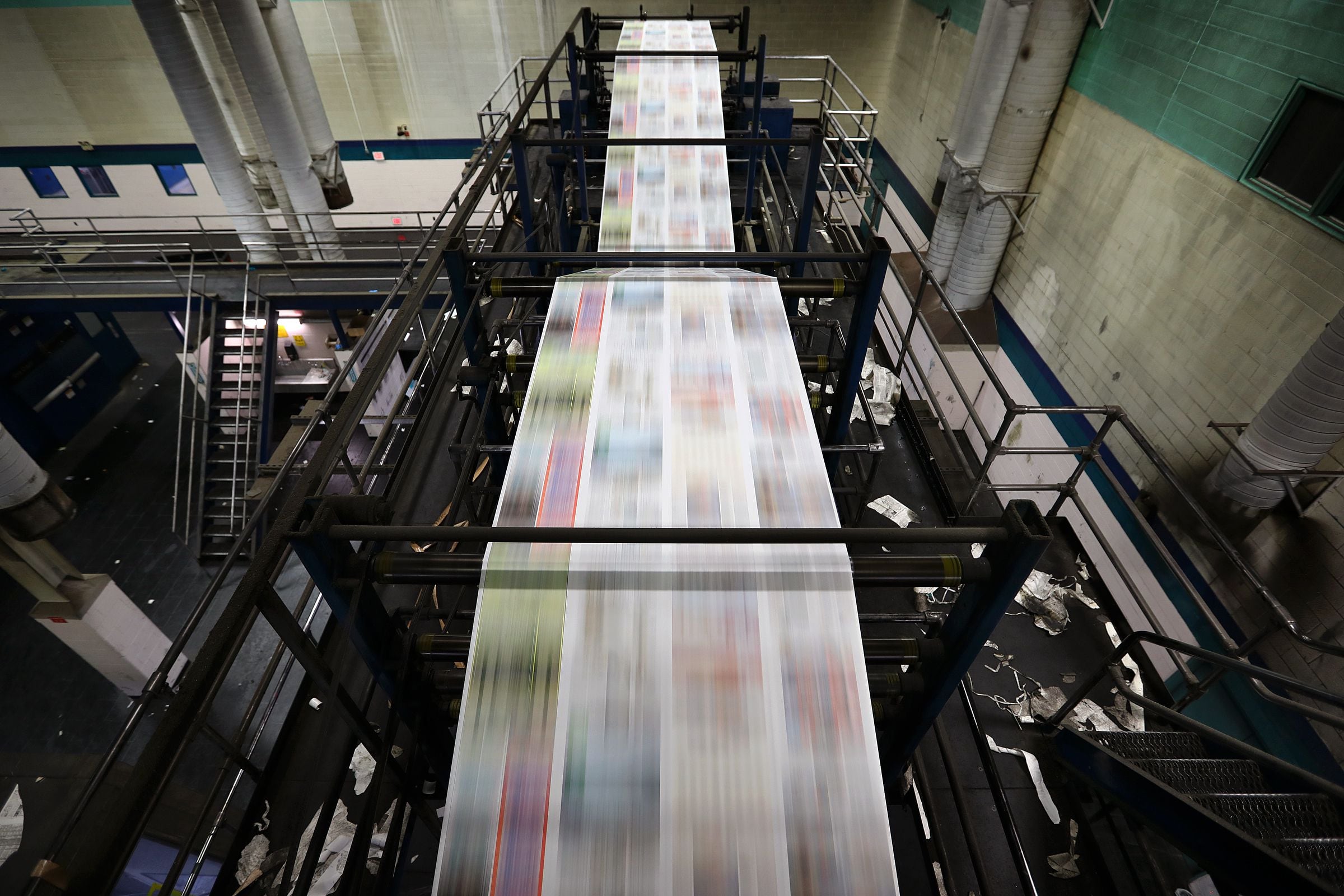
    A blur of paper courses along rollers during a Sunday advance run; some sections of the Sunday paper are printed ahead of time. TIM TAI / Staff Photographer
    Color pages speed across rollers for a Sunday advance run. TIM TAI / Staff Photographer

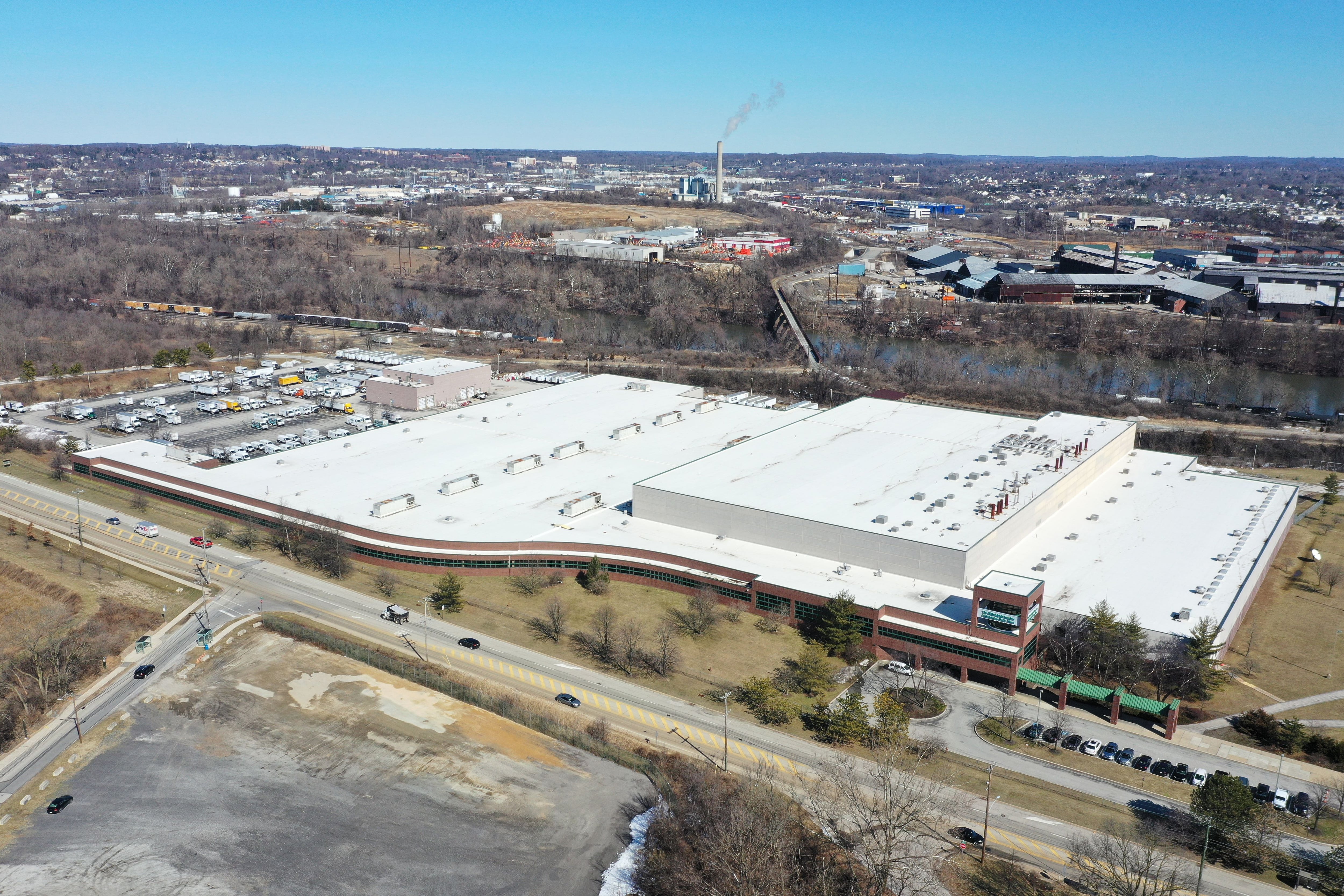
    The guards seemed to be well-acquainted with Three Bars. Actually, they seemed to be well-acquainted with everyone exiting and entering the brick, curving structure built for $299.5 million (about $600 million in today’s dollars) 30 years ago, and sold to developer J. Brian O’Neill for $37 million to become part of his burgeoning biotech-health science empire.

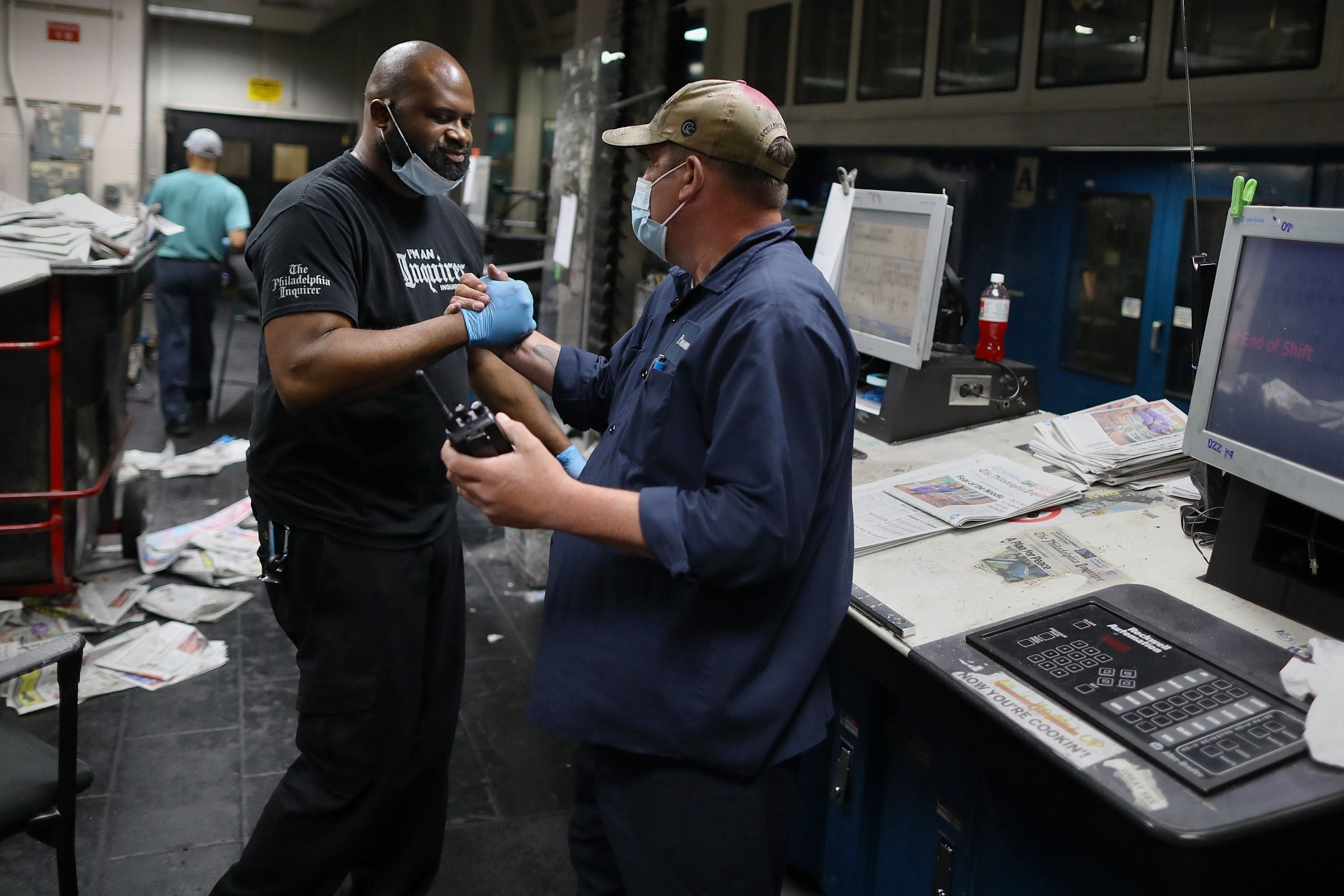
    “You get to know everybody,” said White. “It’s like family,” a leitmotif sentiment among the guards, engravers, pressmen, mailers, and drivers who worked in the immense, quirk-infested complex that was marinated in the vague odors of paper and the ink that blackwashed the floors and layered the handrails.

    A production theme park

    The printing plant, a 681,023-square-foot complex along the river, was built to house $160 million worth of “state of the art” presses. FRANK WIESE / Staff
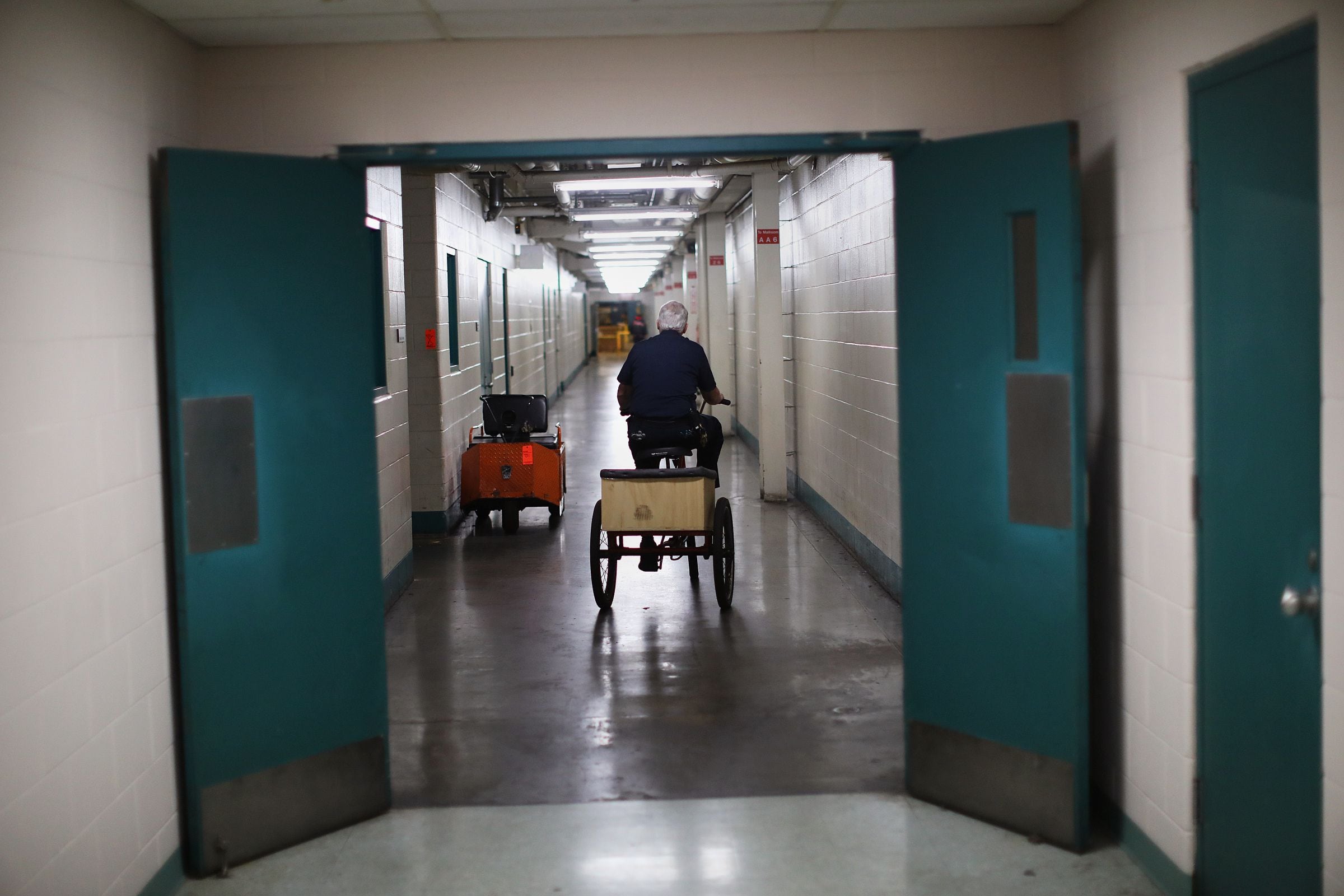
    Second childhood? No, engineer Joe Hoban is riding a tricycle that can carry tools while navigating the building’s lengthy corridors. TIM TAI / Staff Photographer

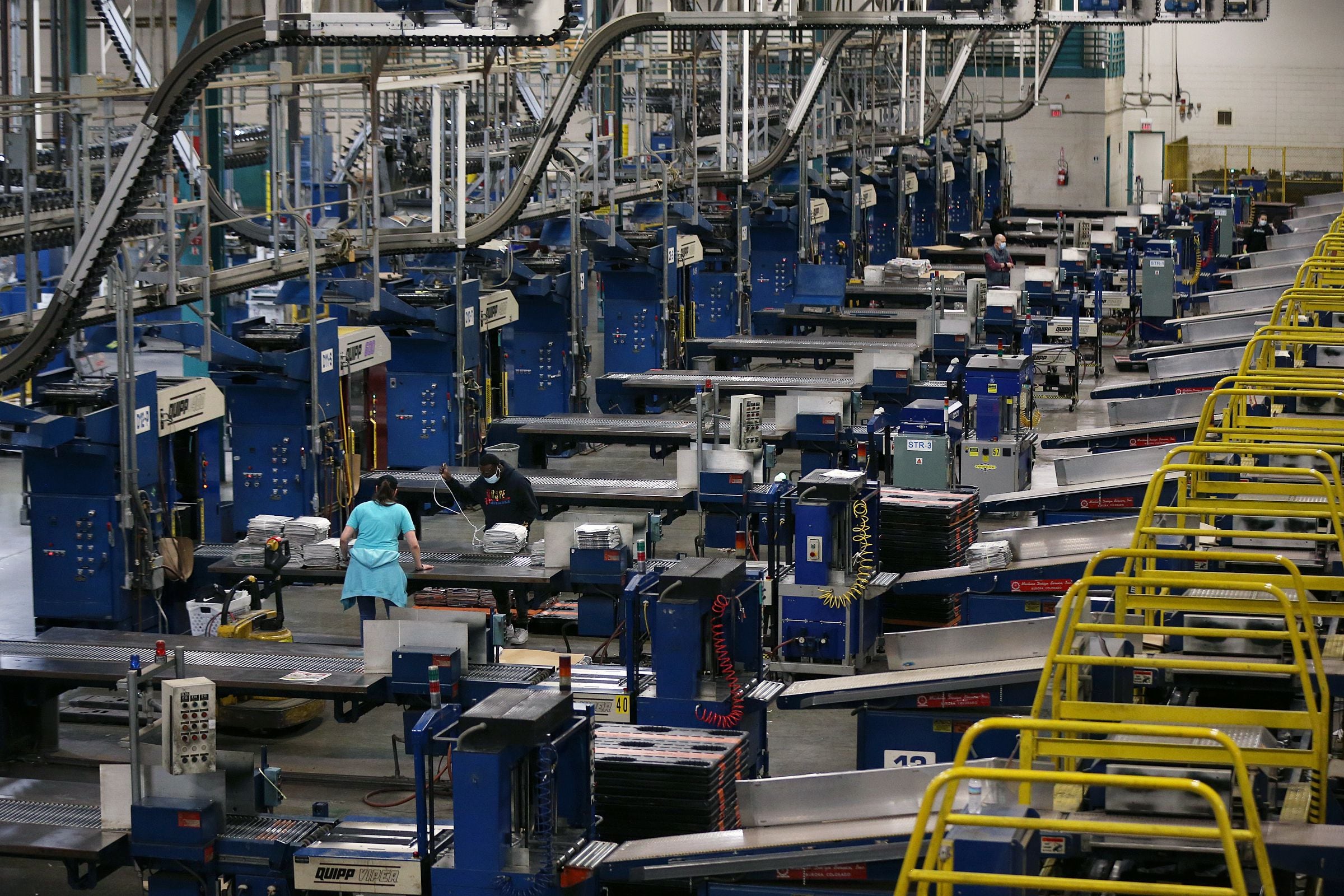
    This was a thundering production theme park of impossible intricacy, where paper-carrying freight cars rumbled and rammed into the rail bay, where newspaper pages rolled off presses that collectively weighed as much as a Navy destroyer.

    They were folded and collated, and commuted on cars and conveyors as though they had purchased tickets on amusement rides. Ultimately they landed in trucks that ferried The Inquirer and Daily News to hundreds of locations while most readers slept.

    All it took to get them their papers, said Fred Lehman, vice president of operations, was about two million moving parts.

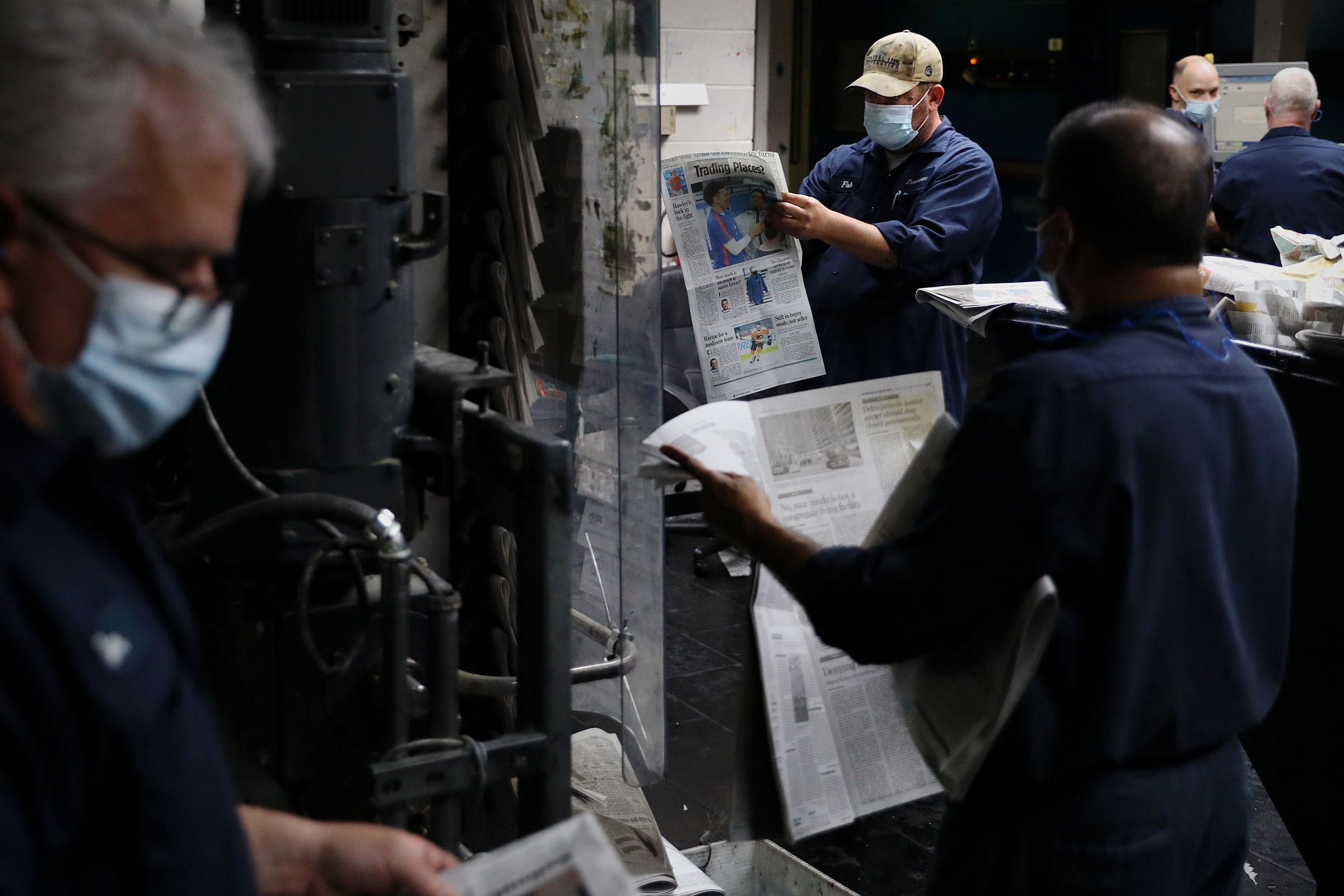
    Pressroom supervisor Jim Fish (top) flips through Inquirer pages as a quality check. TIM TAI / Staff Photographer

    Somehow amid the often hellish cacophony in this 681,023-square-foot behemoth, people got to know each other.

    In many cases, they knew each other already. “Family” was more than metaphoric in White’s case. Her uncle got her the job 25 years ago; he worked at the company. Her father was a driver.

    >>PHOTOS: See how The Inquirer printed its newspapers over the years

    Lafauci, a mailer, said his nickname had no association with happy hour. “Three Bars … my grandfather worked here, my father worked here.” Yes, he was the third bar. Bill Burk, a transportation manager, worked with all three bars, and at one time or another, The Inquirer employed 20 of Burk’s family members.

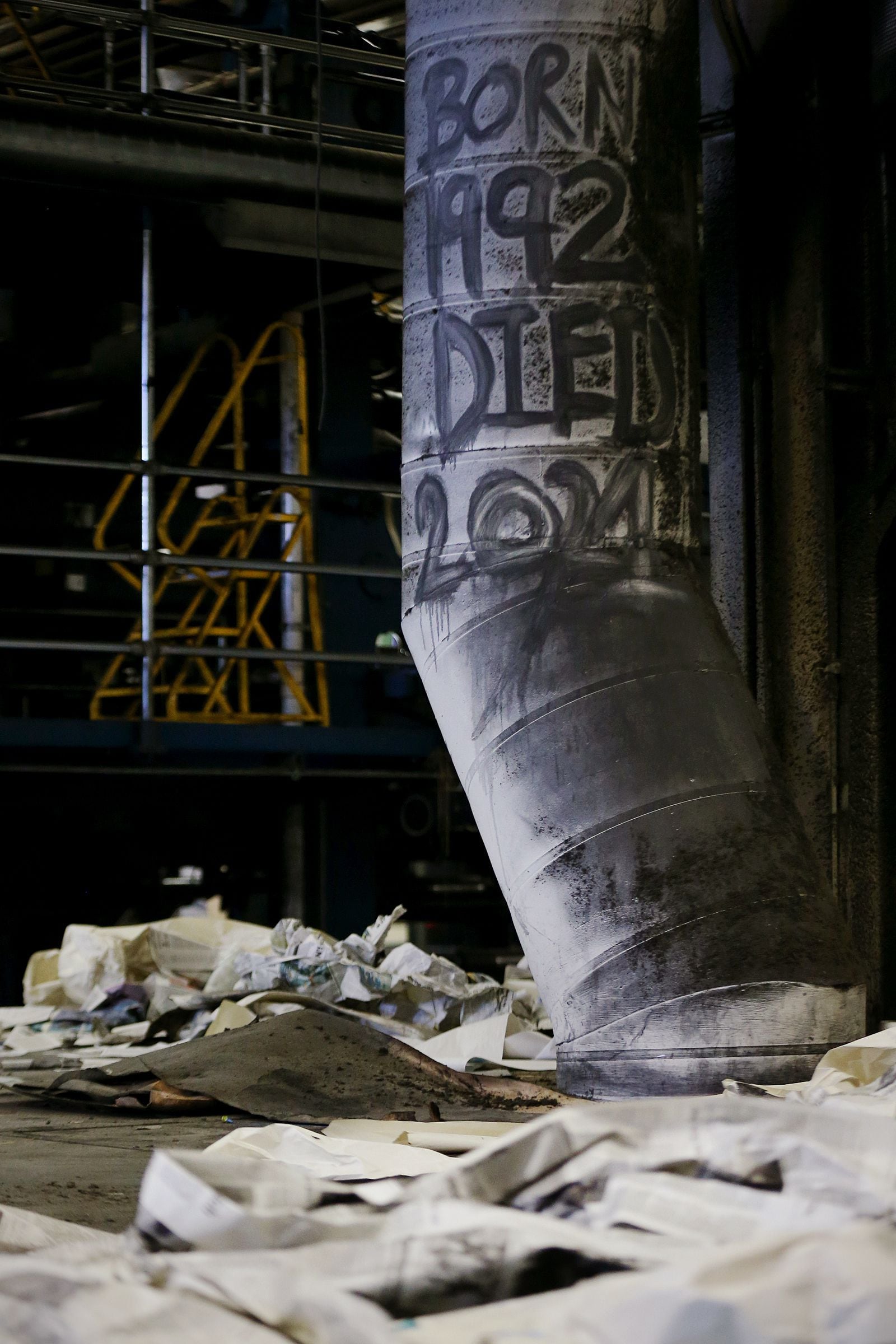
    Epitaph for an era: "BORN 1992 DIED 2021" is traced in the grime on an air duct inside the pressroom. TIM TAI / Staff Photographer
    “My grandfather worked here, my father worked here.”
    Tom “Three Bars” Lafauci

    ‘It was family’

    Those days are history, as soon will be the printing plant, located in Upper Merion Township at the junction of Routes 23 and 320, a location a reporter once described as “centrally isolated.”

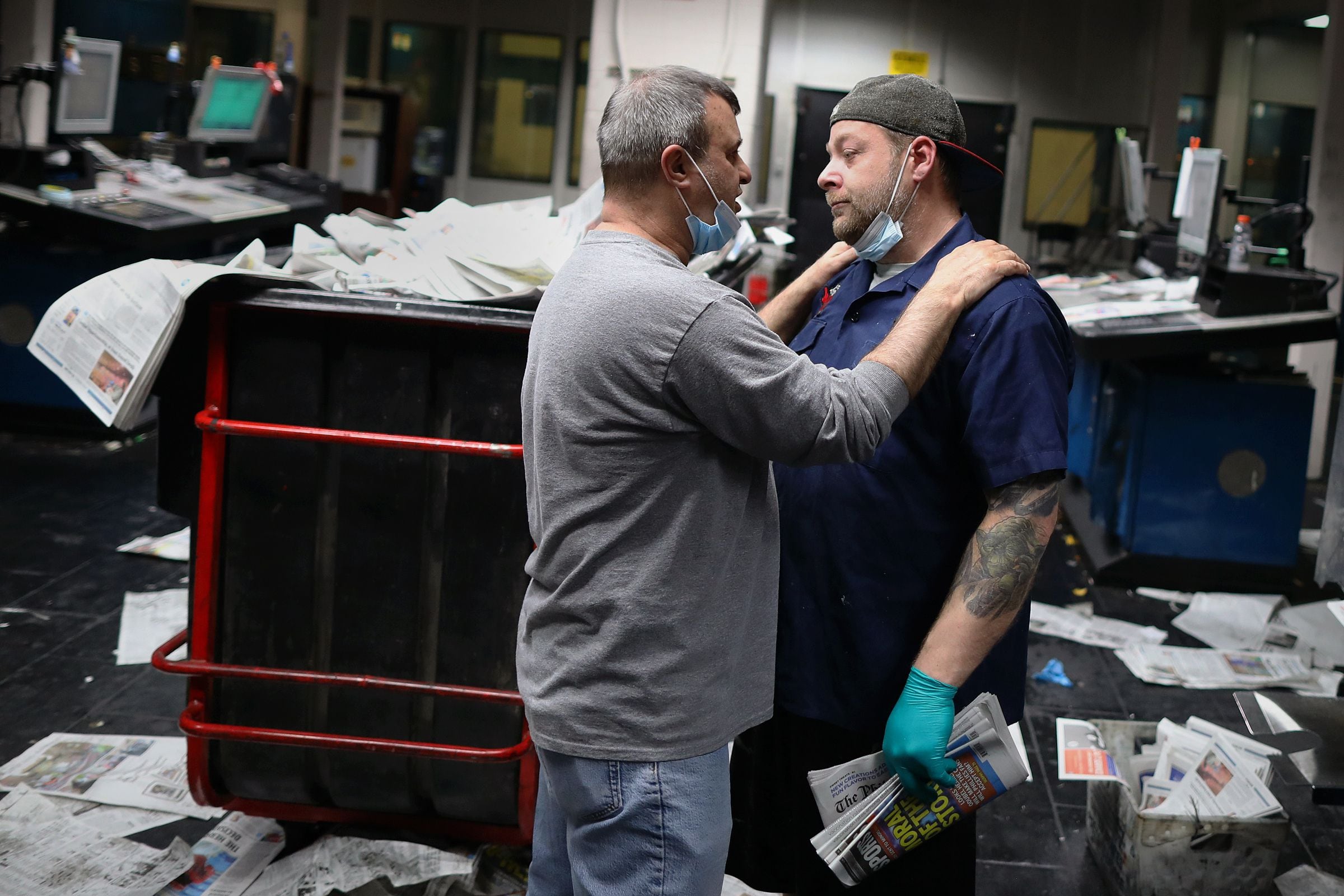
    Rather than a death in the family, October’s announcement that SPP would be sold was more like deaths in multiple families, and the sense of loss — a mix of resignation, equanimity, sadness, with a dash of bitterness — condensed as employees were leaving the building for the last time.

    “It was family,” Lafauci said. There’s that word again.

    Mailer Jessica Tayoun, who started working for The Inquirer in 1992, stacks a bundle of Daily News issues. TIM TAI / Staff Photographer
    Tayoun and Lionel Shaw, a 37-year Inquirer veteran, prepare bundles of the newspaper's last scheduled edition to be printed at SPP. TIM TAI / Staff Photographer
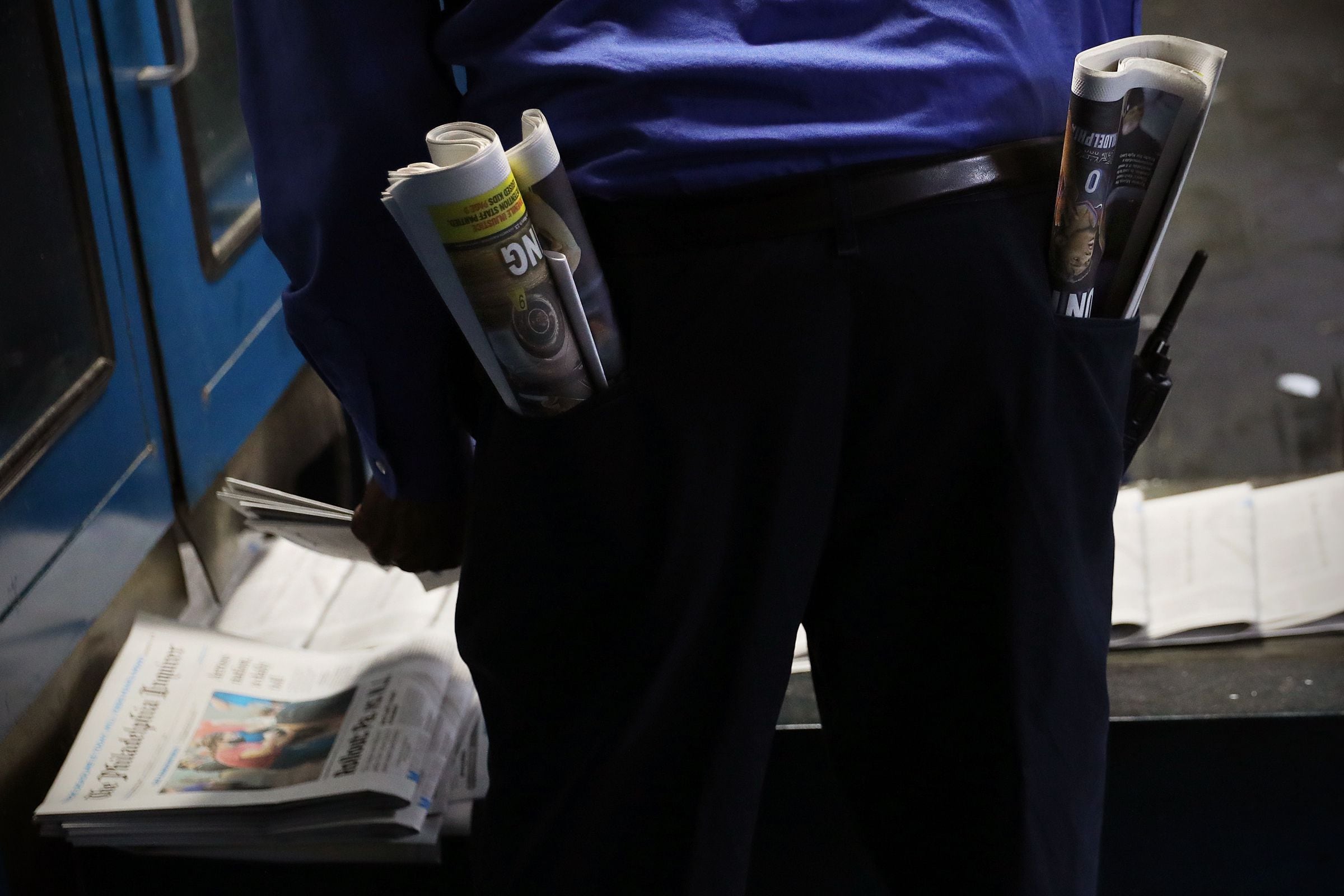
    Pressroom supervisor Tom Addison, hired in 1979, carries in his rear pockets rolled-up Daily News issues that he will examine later for quality. TIM TAI / Staff Photographer

    About the only problems they had at the plant, the guards said, involved intra-family disputes that reasoned discussion failed to resolve. Said White, “We tried to calm them down.”

    The writers and editors reported and crafted the stories — from seven presidential elections in the SPP era, to a World Series title and a Super Bowl championship, to the 9/11 terrorist attacks, to one tenacious pandemic — but the SPP workforce made sure people got to read them on paper that they could hold in their hands, and perhaps even save.

    During the last run of the Inquirer's own presses, a “family” of employees say goodbye as the company transitions to an outsourced printing operation.Kristen Balderas, Raishad Hardnett, Astrid Rodrigues, Lauren Schneiderman and Frank Wiese / Staff

    All the news that fits

    In the pre-SPP days, type and advertisements were posted on flats by hand. Editors marked last-minute cuts with blue pencils, and the compositors would surgically consign them to the cutting-room floor.

    The job evolved rapidly with “pagination,” as computer screens replaced the flats and workers such as Kathleen Griffiths moved from the composing room to a video terminal. Inspecting the pages to make sure that the ads are properly placed and error-free, and that the display type and copy are correctly confined to a page is a critical step in the “prepress” process.

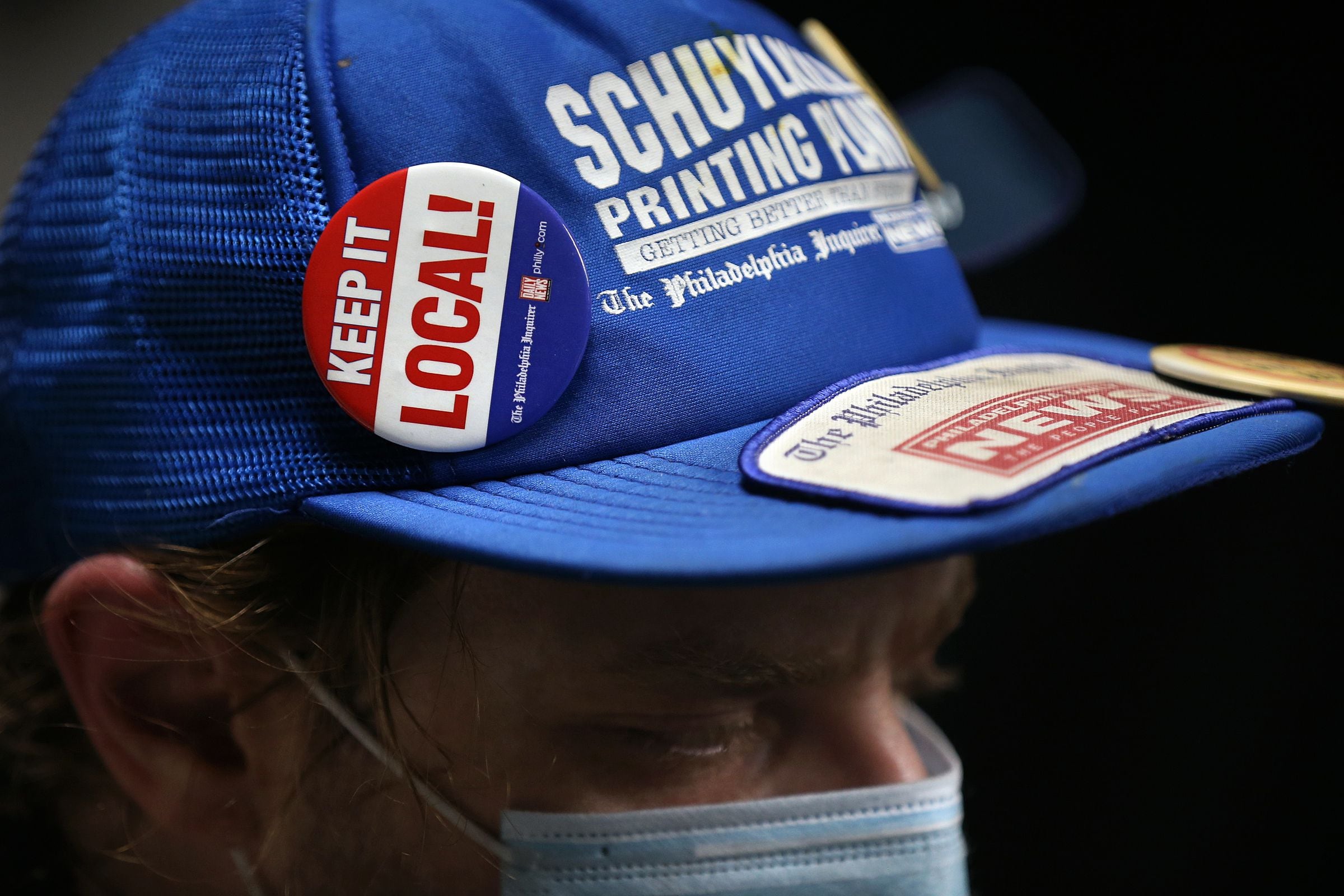
    Pressman Brett Nick, who started working at The Inquirer in 2003, wears a hat with an old Inquirer campaign slogan: "Keep It Local!" TIM TAI / Staff Photographer
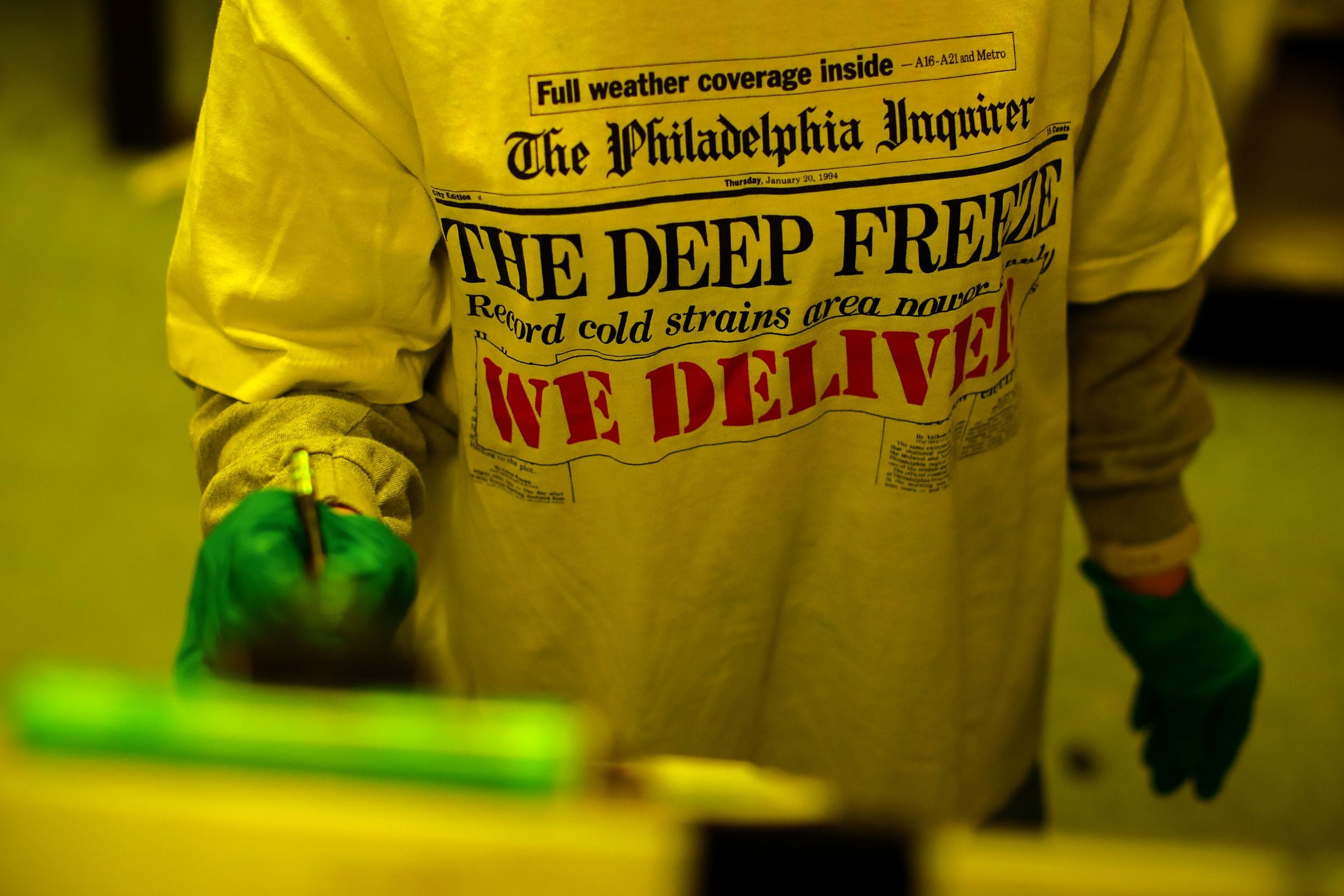
    Platemaker Debbie Dougherty wears a T-shirt stamped with a front-page image from Jan. 20, 1994, the year she was hired. TIM TAI / Staff Photographer
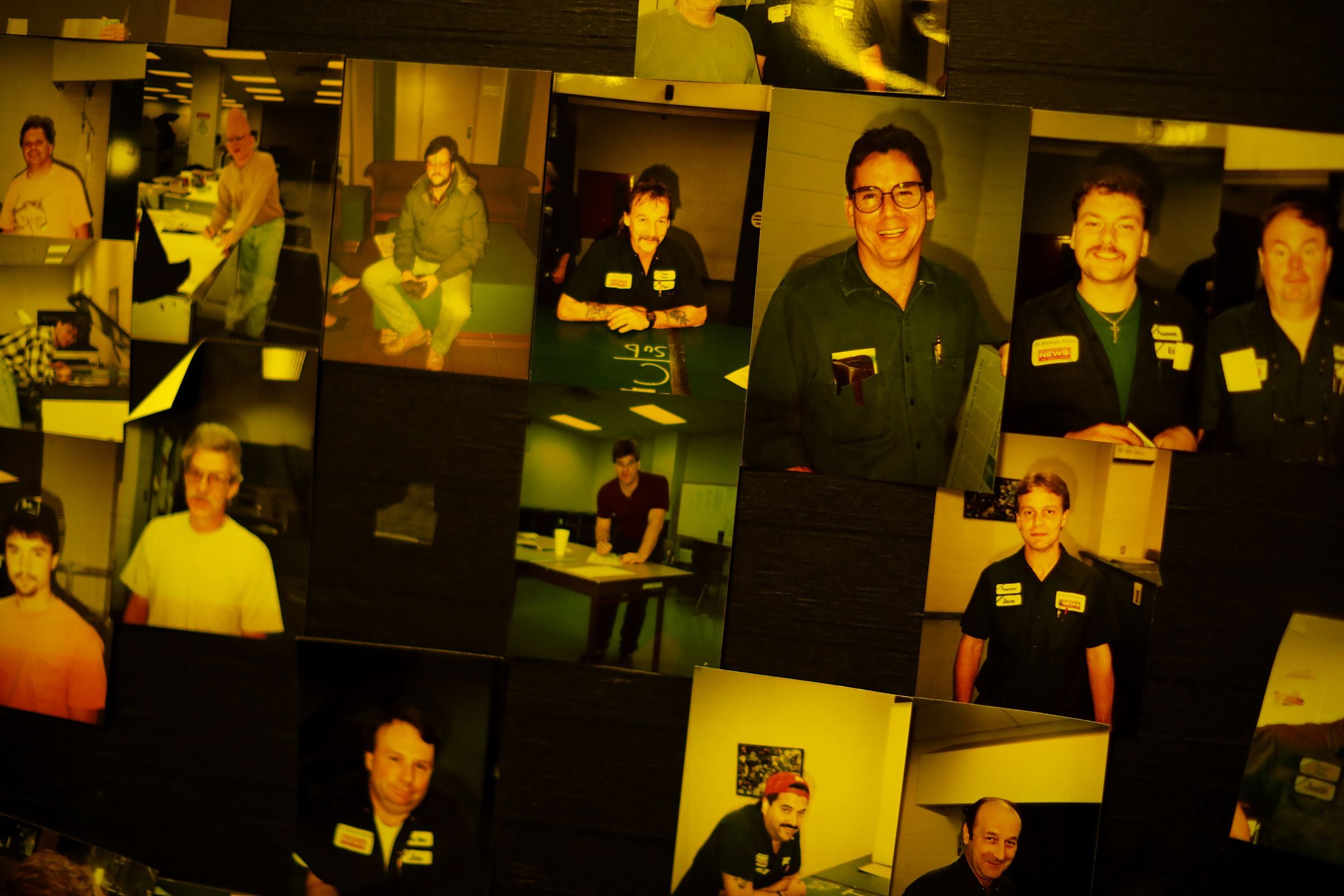
    Engraved in memory: A board inside the plate room features photos of former employees. TIM TAI / Staff Photographer
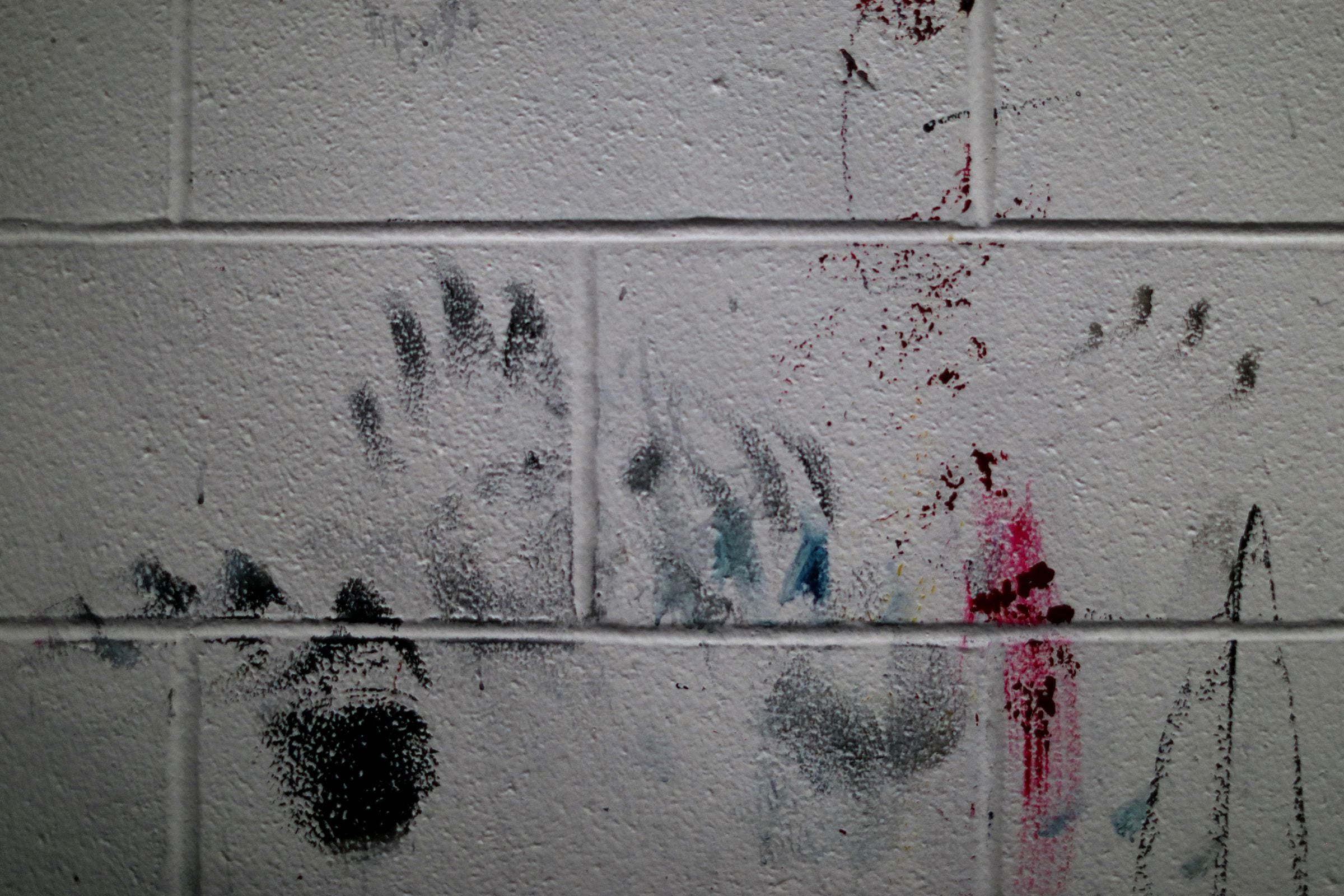
    Ink-stained handprints decorate a pressroom wall. TIM TAI / Staff Photographer

    “It’s like putting a puzzle together,” said Tom Chambers, who has worked for the company for 31 years. He and the other platemakers imprint those completed-puzzle images on wafer-thin aluminum plates that bear the images of the pages of The Inquirer and Daily News.

    On any given day those images would be stamped on paper rolls whose linear footage would reach halfway around the world — all the way on Sundays.

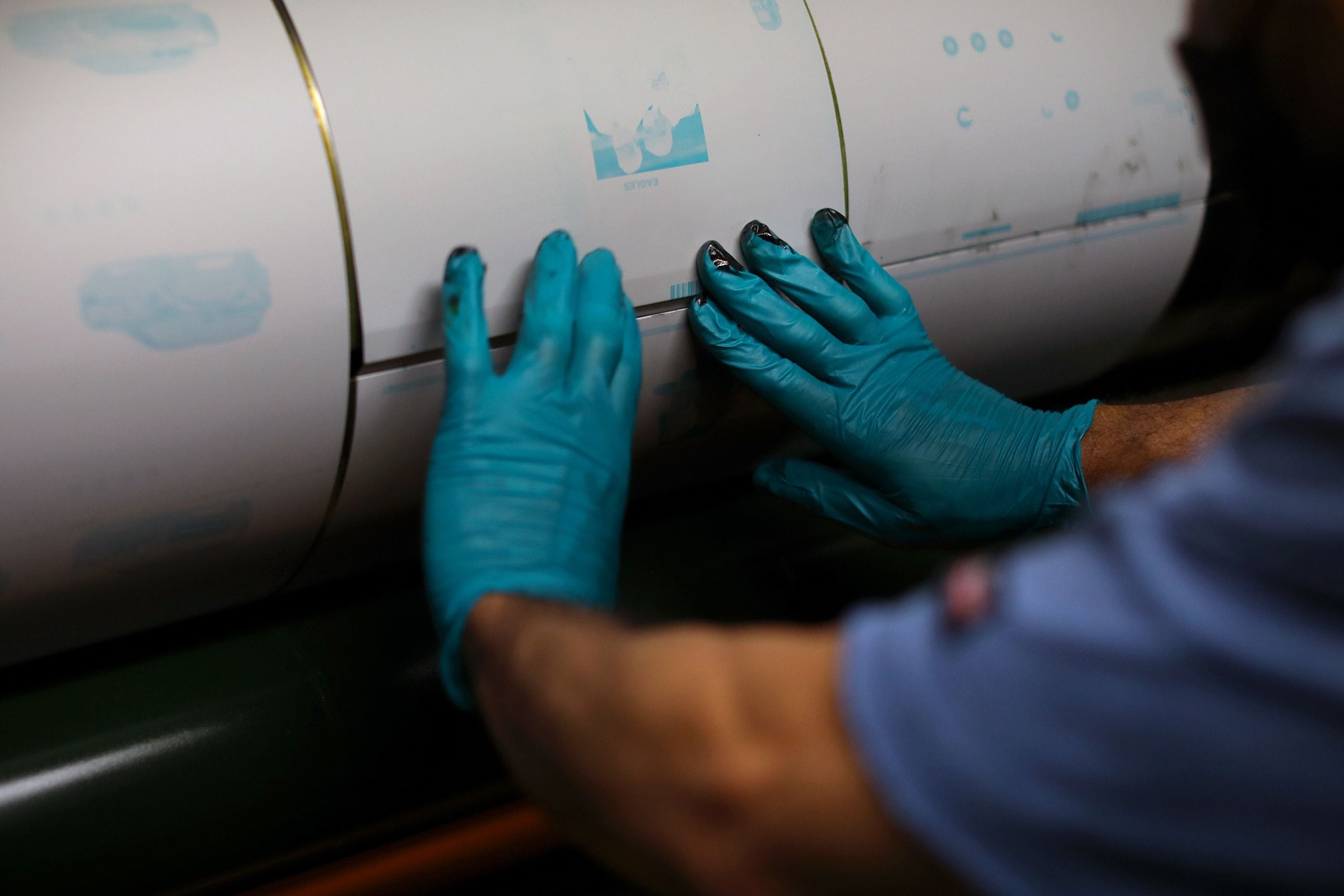
    Pressman Hayden Darrabie, hired in 1998, presses plates into place before the night's run. TIM TAI / Staff Photographer

    Roll ‘em

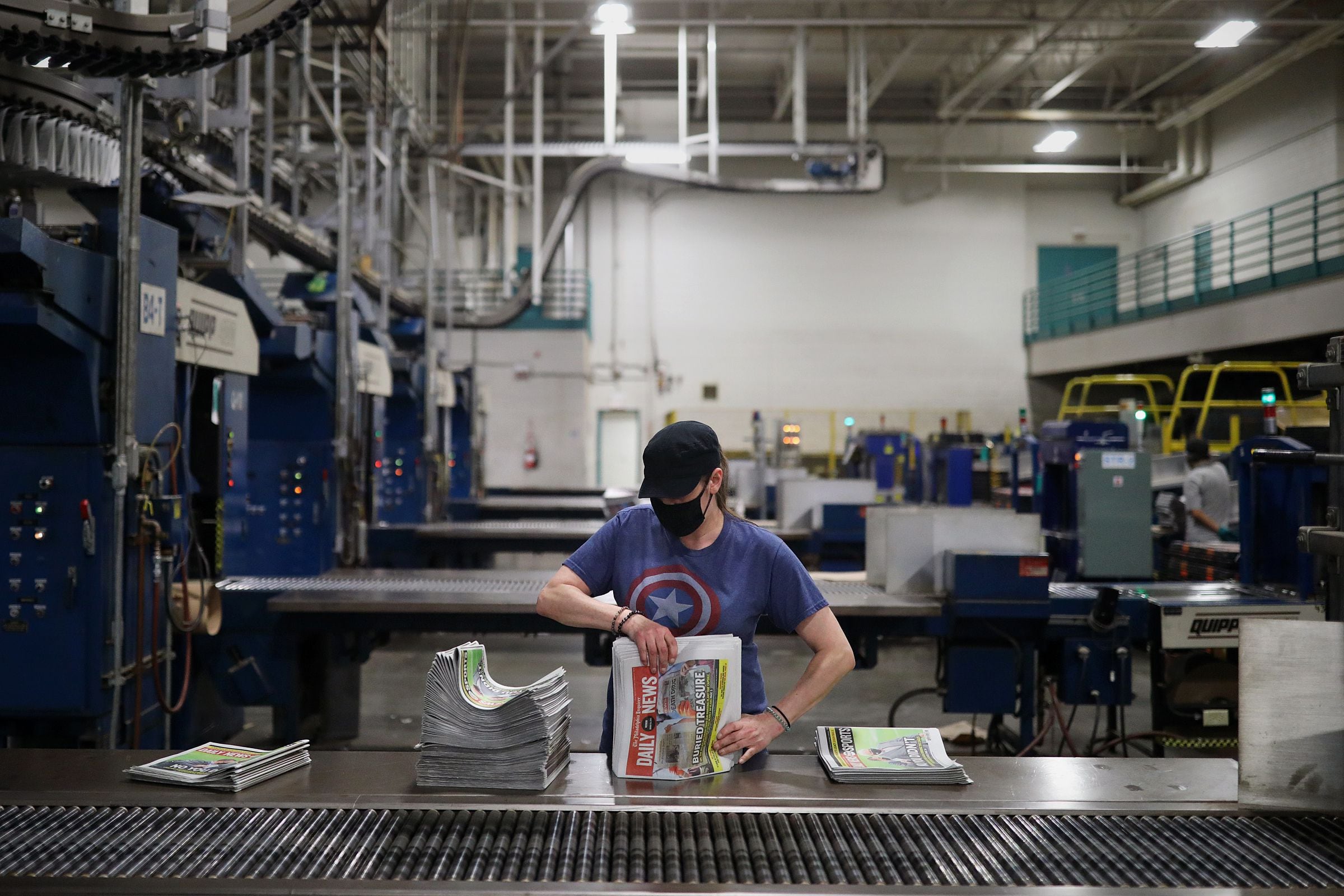
    SPP is more or less a prodigious shell built around $160 million worth of presses, said Pat McElwee, the production supervisor. When the plant started operating in the summer of 1992, “It was fantastic,” he said.

    The Goss Colorlink “offset” presses were radically different from the 45-year-old “letterpress” predecessors in which plates were pressed directly onto the paper. With offset, the plates roll against rubber “blankets” that press against the paper. For the first time The Inquirer and Daily News could publish photographs and ads in color.

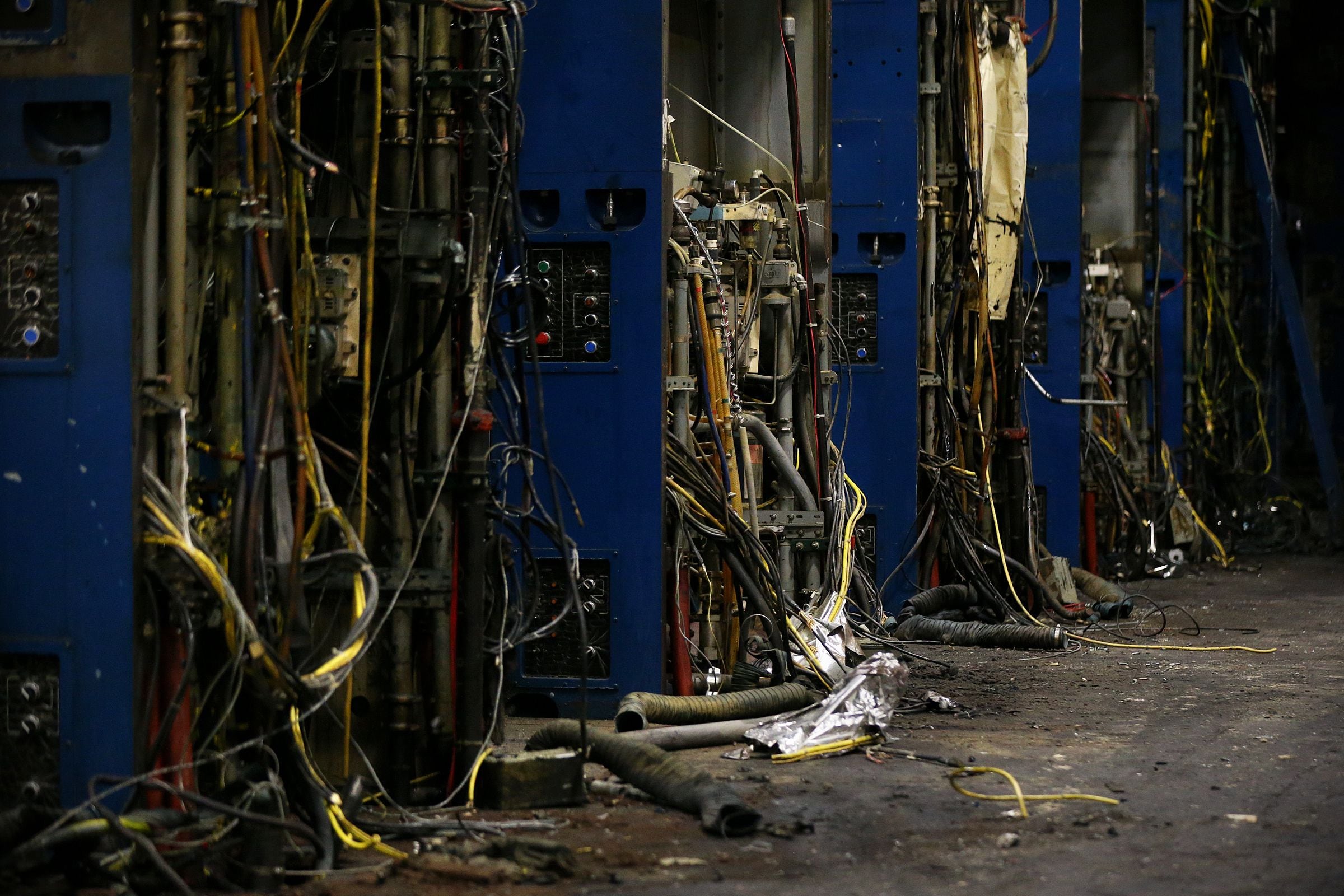
    Wiring dangles from one of the nine Goss Colorliner presses. TIM TAI / Staff Photographer
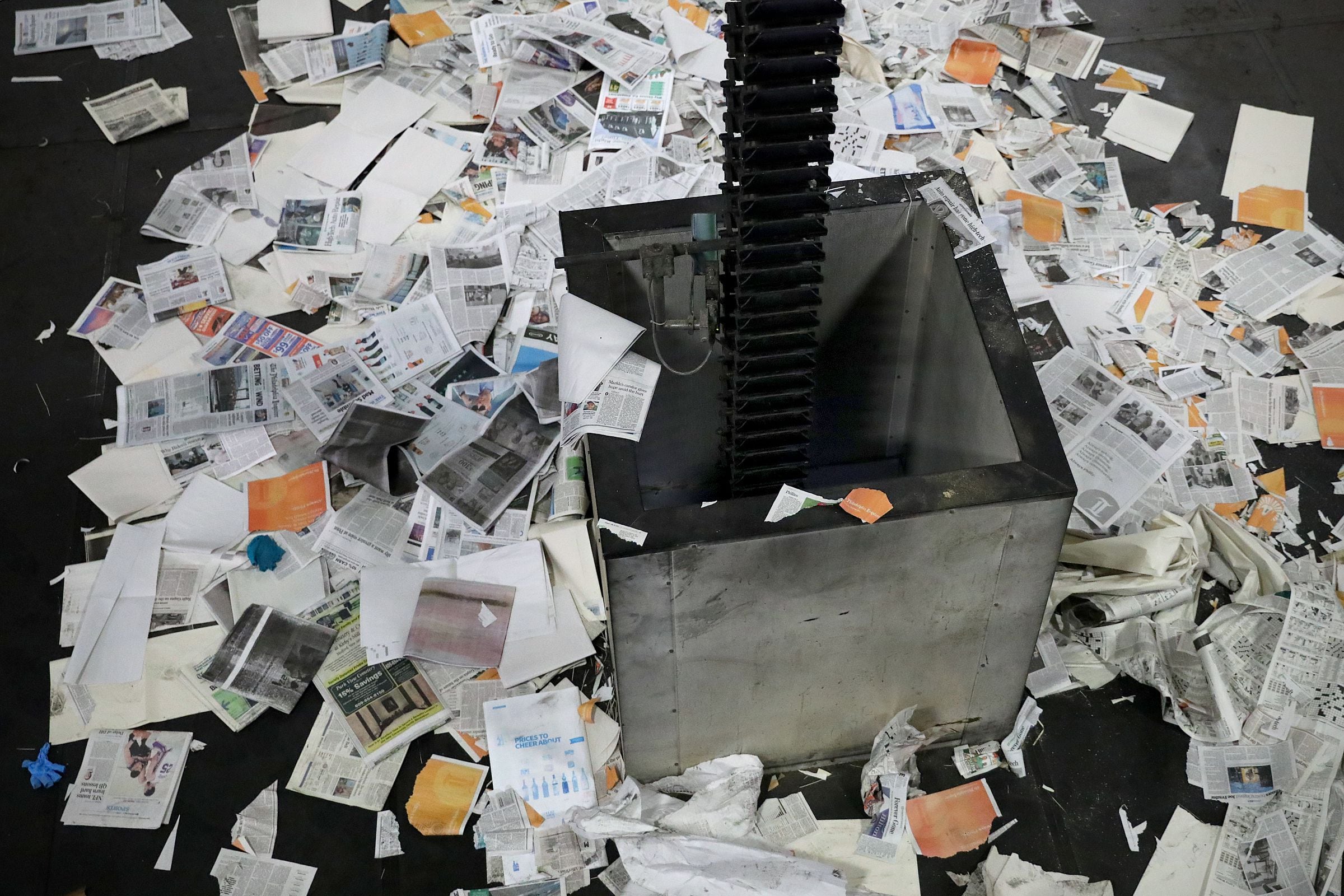
    Loose papers are scattered across the base of the gripper chute from which papers are conveyed from the pressroom to the mailroom for packaging. TIM TAI / Staff Photographer
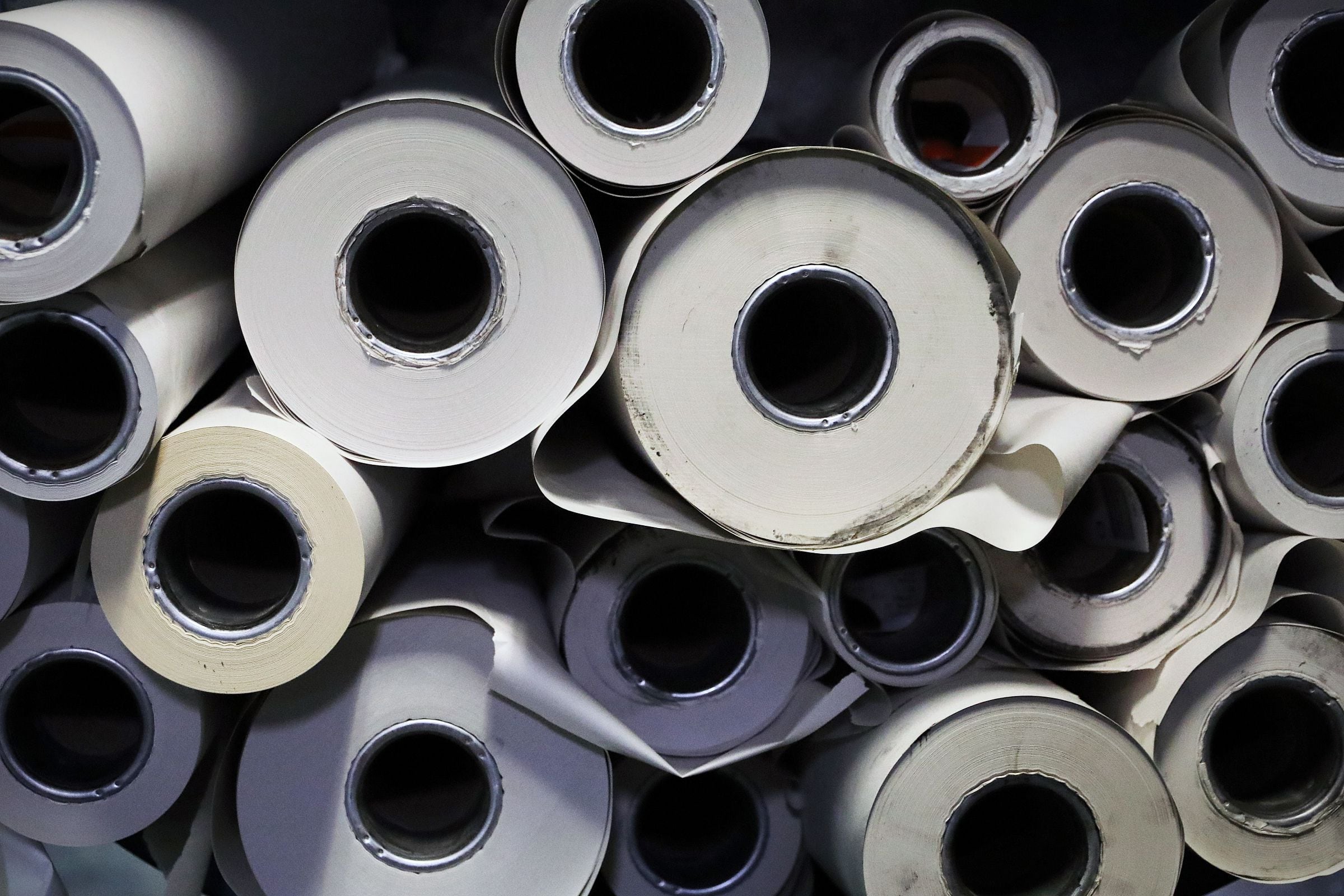
    Partial rolls of leftover paper from press runs, known as "butt rolls," are stored in the reel room. TIM TAI / Staff Photographer

    “It was all new,” said Tom Addison, the company pressroom foreman. With novelty came mishaps. More than once the papers published “To our readers” apology notes for delivery issues.

    Like so many employees on the production side, Addison was a lifer, having started in 1979.

    And to Aaron Krakovitz, Addison was a newcomer: Krakovitz already had been there five years, starting as a high school senior, recruited to fill in on a short-staffed weekend. He was child labor whose own father was a pressman.

    The pressmen developed a familial and literal closeness, said Jim Fish, the union foreman: In the heydays, he said, “You worked with six to seven guys on the press.”

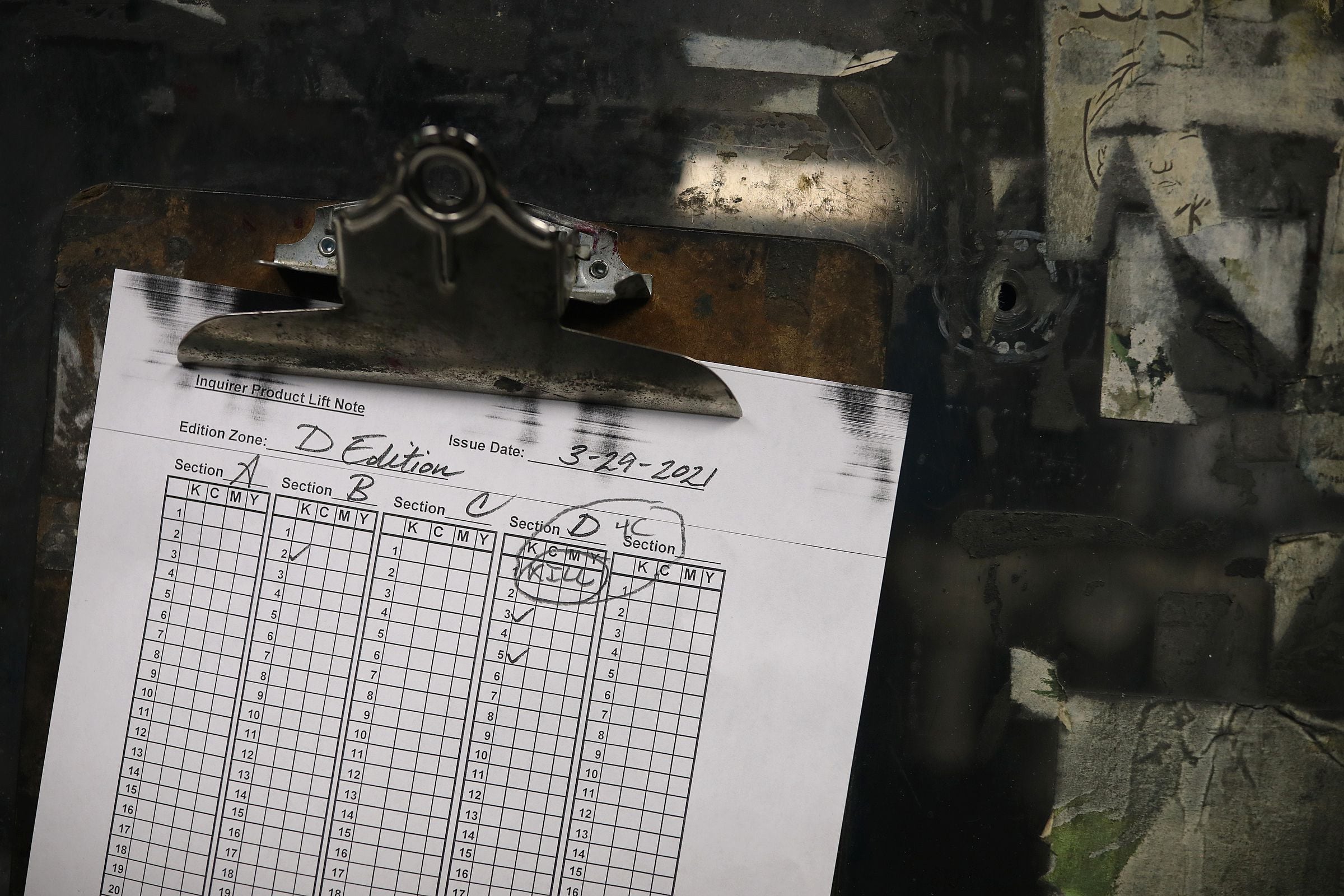
    A clipboard in the quiet room informs pressmen about the plates that need to be switched out for a "lift" for a later edition. TIM TAI / Staff Photographer
    Pressman Keith Jones (left), who was hired in 2005, and Jim Fish prepare to embrace as they are about to depart after the last scheduled press run. TIM TAI / Staff Photographer

    Fold ‘em, stuff ‘em

    Among all his family members who ever worked in the mail room, a 187,000-square-foot canyon where the printed sections and advertising inserts were added and prepared for the trucks, Devin Leidy counted 150 years’ experience.

    “When I was 12 years old, my father said, ‘You’re going to be delivering newspapers. You’re going to learn how to hand-stuff,’ ” said Leidy.

    Pressroom supervisor David Creek (left), hired in 1984, chats with colleague Bobby Nick, who joined The Inquirer in 2002, as Nick gets ready to sign off. TIM TAI / Staff Photographer
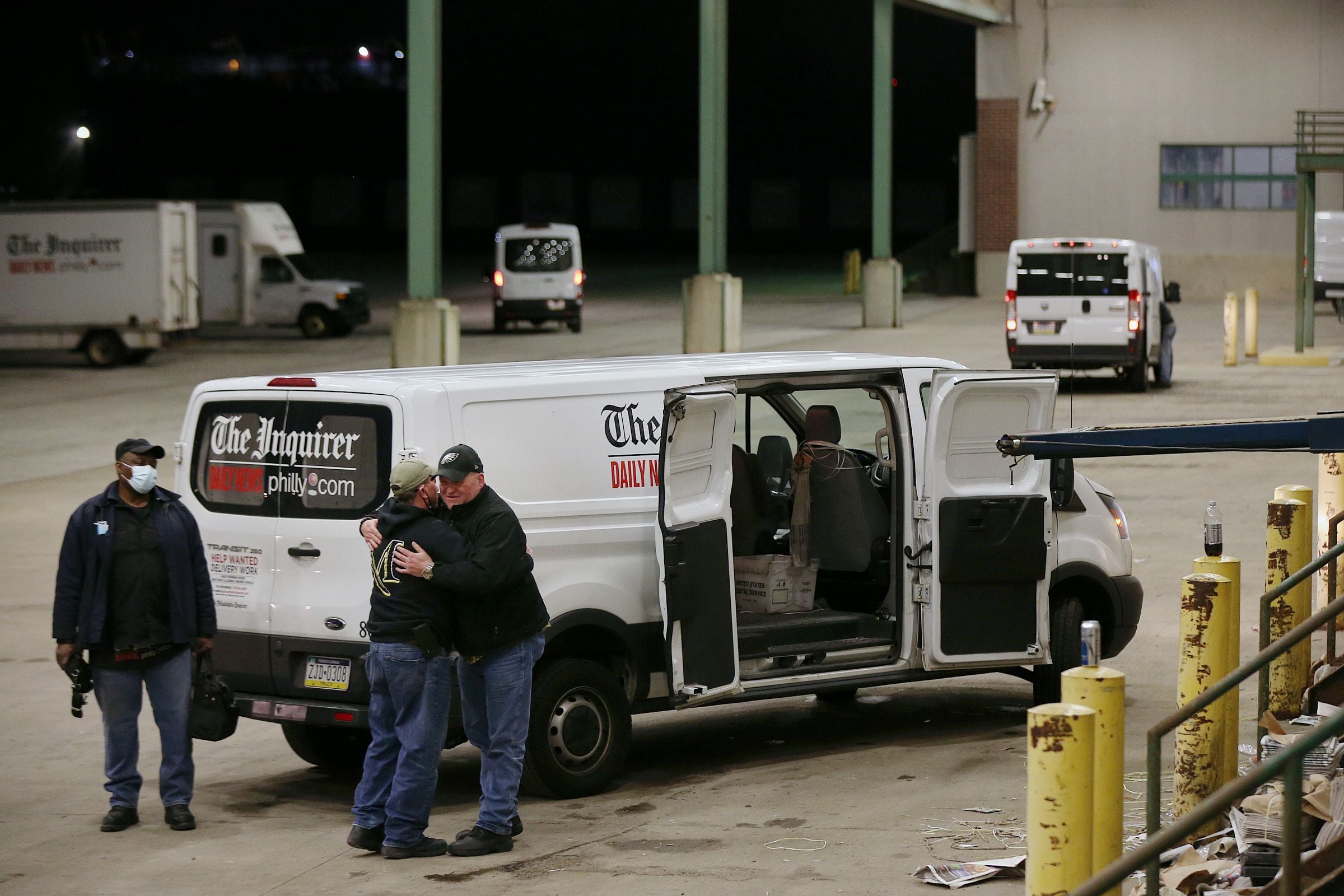
    Driver Darryl Jackson (left) looks toward dispatcher George Young (center) hugging driver Dominic Delvecchio, all of whom started in 2000. TIM TAI / Staff Photographer
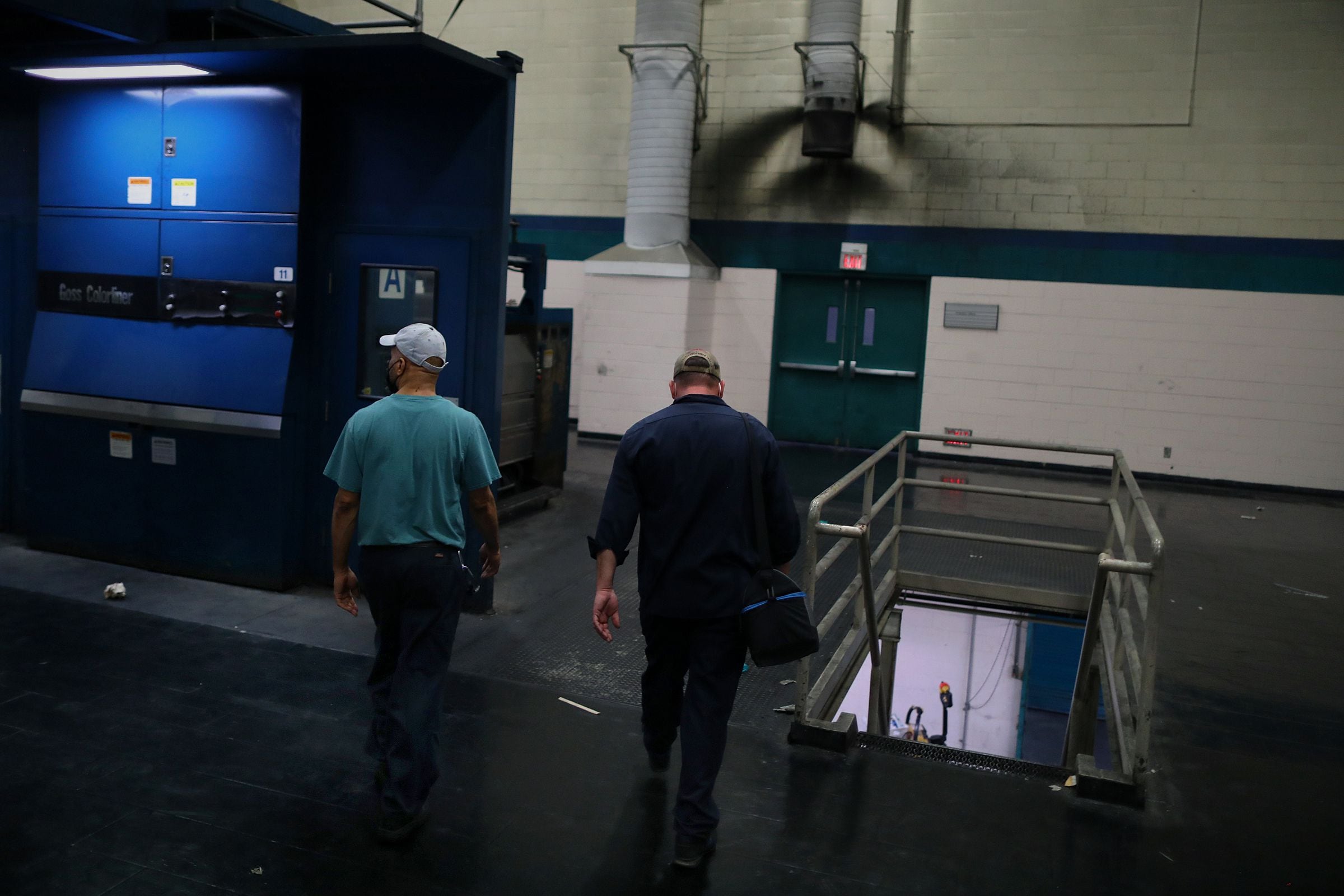
    Pressman Hayden Darrabie (left) and Jim Fish walk out of the press room after the last scheduled run. TIM TAI / Staff Photographer

    Leidy, who would grow up to be a mailroom supervisor, said the assembly and presentation of the papers were critical to sales: “You’re trying to put it out correctly … neatly.”

    Evie Lang, a mailer who (stop if you heard this before) was the daughter and granddaughter of mailers, derived satisfaction from her labor as she left the house on Sunday mornings. “The newspaper would fall out the door and you’d go, ‘Oh, I helped to make that.’ ”

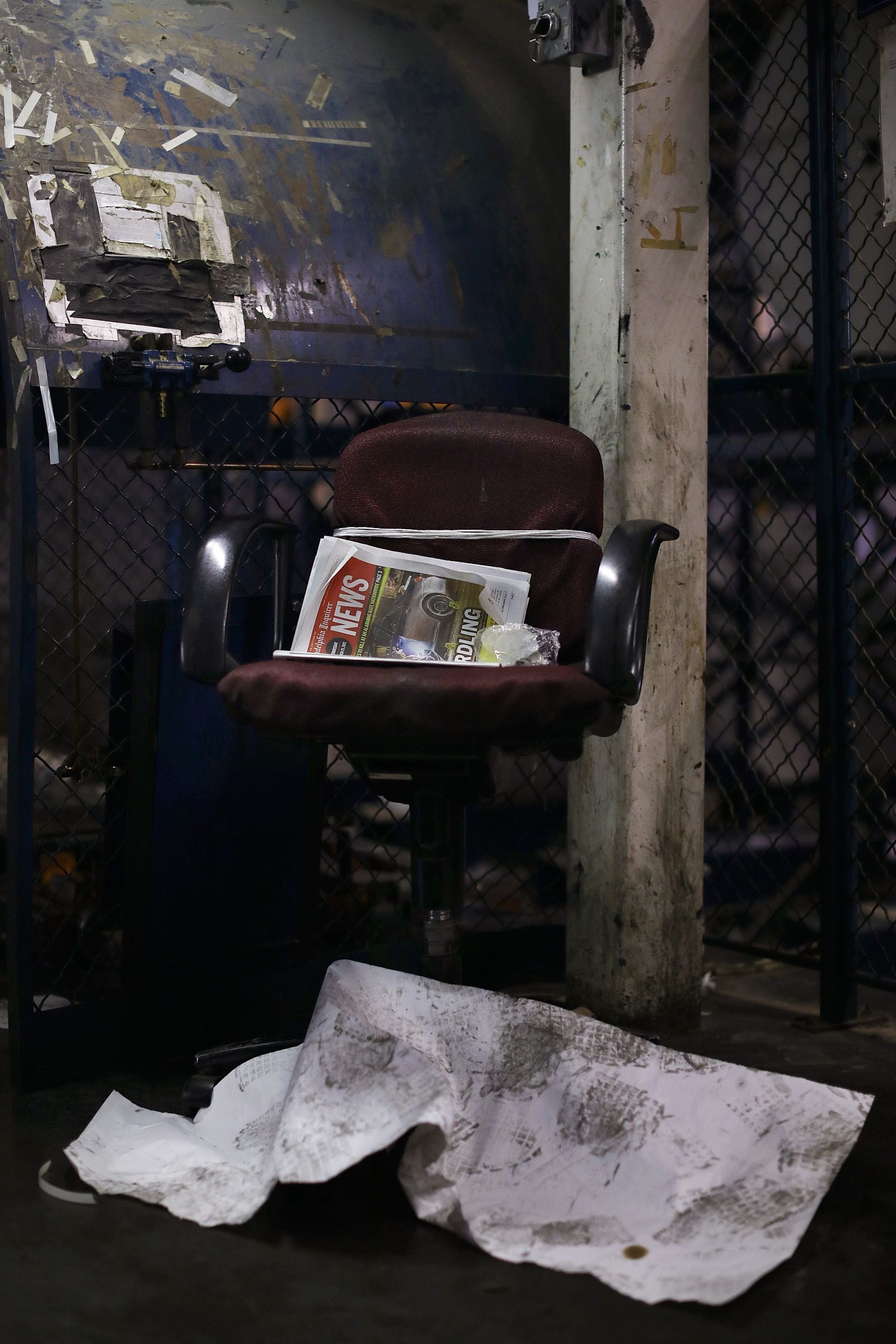
    A discarded Daily News rests in a chair in the reel room, where paper had been loaded onto the presses that had been operating since 1992. TIM TAI / Staff Photographer
    “My whole life. I wanted to yell, ‘Stop the presses.’ But now, when I think about it, I don’t want to stop them. I wish they could keep going.”
    Pat McElwee

    The last rides

    Budd Emmett got hired in an antiquarian fashion: through a newspaper ad. That was in 1971.

    Emmett became a transportation supervisor in 1988, overseeing a truck fleet that at one time exceeded 325.

    “It’s all family,” Emmett said. It wasn’t an echo; it just sounded like one. The mood at the building in the closing days was similar to that of a pre-funeral viewing, only in this case the subject of conversation wasn’t yet deceased and had the benefit of hearing the praise.

    Emmett said he plans to retire, as does pressman Krakovitz and others.

    The furloughed SPP workers generally were pleased with what they viewed as generous severance packages. Lehman said those who wanted to keep working have found jobs.

    Lehman and McElwee are among those who plan to call it a career. McElwee is anxious to spend more time with his grandchildren, but the end is profoundly bittersweet.

    “My whole life. I wanted to yell, ‘Stop the presses.’ ” he said. “But now, when I think about it, I don’t want to stop them. I wish they could keep going.”

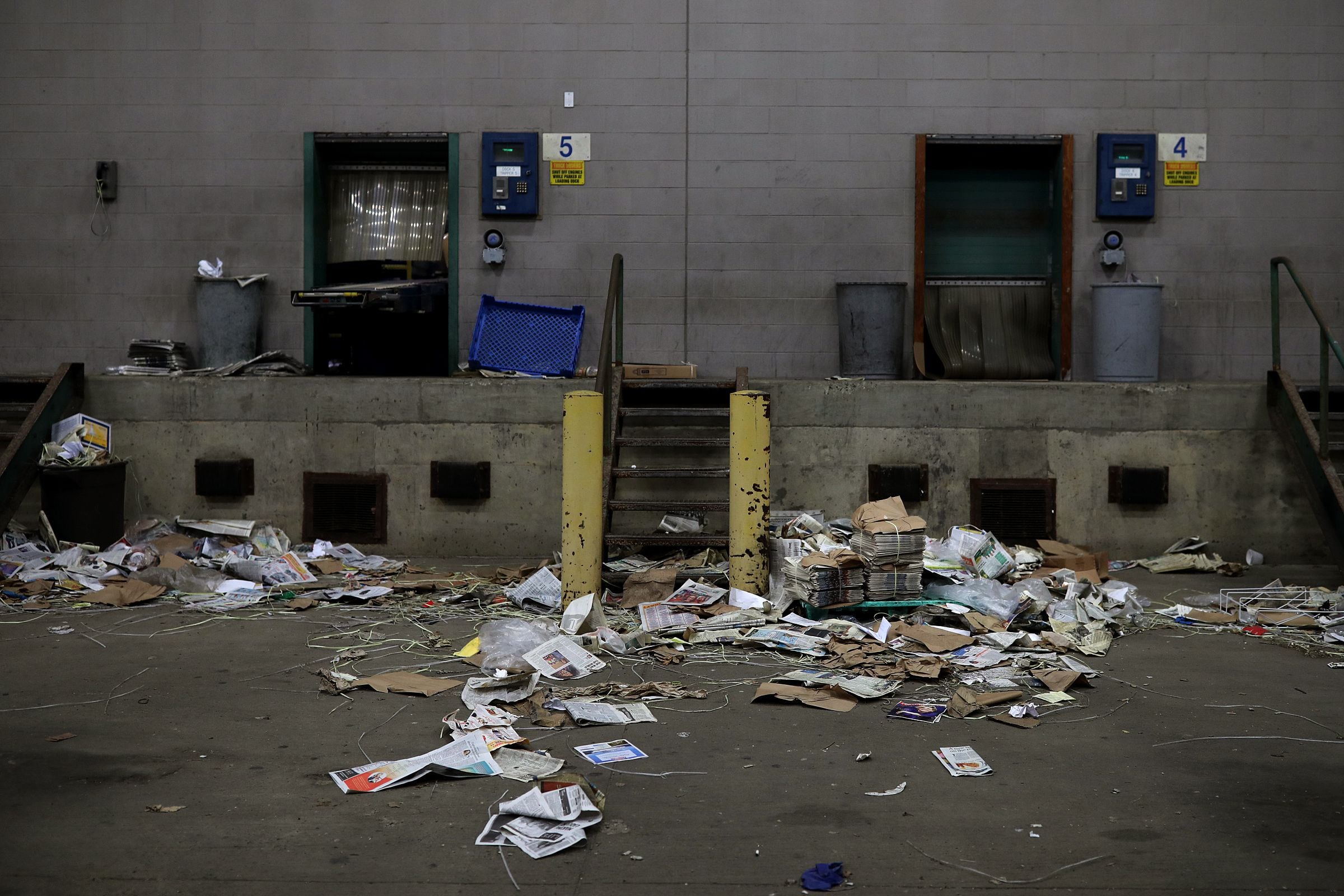
    In the early morning hours of March 29, newspapers litter the docks that no longer will be used for loading The Inquirer and Daily News onto delivery trucks while most of us slept. TIM TAI / Staff Photographer

    Staff Contributors

    Reporting: Anthony R. Wood

    Visuals: Tim Tai, Frank Wiese, Danese Kenon, Astrid Rodrigues, Kristen Balderas, Lauren Schneiderman, and Raishad Hardnett

    Design & Development: Dain Saint and Jessica Parks

    Editing: Emily Babay and Diane Mastrull

    Digital: Kerith Gabriel, Patricia Madej, Lauren Aguirre, and Caryn Shaffer

    Copy editing & Print: Brian Leighton and Sterling Chen

    .arcad.placeholder{width:600px;max-width:100%;height:90px;background:#333;margin:48px auto;text-align:center;font-size:14px;font-weight:bold;letter-spacing:5px;line-height:90px;text-transform:uppercase;color:#FFF;font-family:”Ringside Regular SSm”,”Verdana”,sans-serif}.arcad.placeholder::after{content:’ad placeholder’}#article-body .ad-responsive{min-height:0}.project-credits{color:#595760;margin-bottom:48px}.project-credits .block-content{padding:10px}.project-credits p{font-family:”Ringside Regular SSm”,”Verdana”,sans-serif;font-size:12px;line-height:1.8em}.project-credits .credit-content{columns:2}.project-credits h3.credit-header{font-family:”Ringside Regular SSm”,”Verdana”,sans-serif;font-size:14px;text-transform:uppercase;font-weight:700;border-bottom:1px solid #dcdcdc;padding-bottom:2px;margin-bottom:10px}.project-credits .credit-section{padding-bottom:20px;break-inside:avoid}.project-credits strong{text-transform:uppercase}.inq-p-endmark p::after{content:” “;display:inline-block;background:url(“https://media.inquirer.com/storage/inquirer/projects/assets/i-circle_navy.png”) center center no-repeat;background-size:contain;height:1.1em;width:1.1em;margin-left:5px;vertical-align:text-bottom}.hero-eyebrow{font-family:”Ringside Regular SSm”,”Verdana”,sans-serif;text-transform:uppercase;font-size:10px;font-weight:normal;padding:5px;background:#16183a;color:#fff;width:max-content;margin-bottom:5px;text-decoration:none}.splash-intro-hero__outer .inq-image{transition:none}.splash-intro-hero__outer figcaption{max-width:700px;margin:0px auto;padding-left:20px;padding-right:20px}.splash-hero-text{max-width:700px;margin:0px auto;padding-left:20px;padding-right:20px}.splash-intro-hero__inner{margin:0px auto}.splash-intro-hero__inner.headlines{text-align:center;padding:60px 20px}.splash-intro-hero__inner.text{max-width:700px;margin:0px auto;padding:60px 20px}.splash-intro-hero__inner.text.after{padding:20px 20px}.splash-intro-hero__inner h2{font-size:3em}.splash-intro-hero__inner .title-subhead{display:block;font-size:1.2em;max-width:1200px;margin:0px auto;font-family:”Ringside Regular SSm”,”Verdana”,sans-serif}.splash-intro-hero__inner .inq-story__meta{margin-bottom:24px}.split-screen-hero{color:#16183a}.split-screen-hero .hero-splash{background:#65ccff;position:relative}.split-screen-hero .hero-title-subhead{padding-top:10px;font-family:”Ringside Regular SSm”,”Verdana”,sans-serif;font-size:18px;letter-spacing:1;line-height:1.8em}.split-screen-hero .hero-content{display:grid;grid-template-columns:50% 50%;max-width:2000px;margin:0px auto}.split-screen-hero .hero-title-pane{display:flex;flex-direction:row;justify-content:flex-end;box-sizing:border-box;padding:20px}.split-screen-hero .hero-title-pane .hero-title-content{width:330px;display:flex;flex-direction:column;justify-content:flex-end}.split-screen-hero .hero-splash-pane{background:#16183a top center no-repeat;background-size:cover;height:calc(90vh – 130px);overflow:hidden;position:relative}.split-screen-hero .hero-splash-pane video,.split-screen-hero .hero-splash-pane img{height:calc(100% + 1px);object-fit:cover;position:absolute;top:50%;left:50%;transform:translate(-50%, -50%)}.split-screen-hero .hero-splash-caption{padding-top:24px}@media (max-width: 700px){.split-screen-hero .hero-content{display:flex;flex-direction:column-reverse}.split-screen-hero .hero-splash-pane{height:calc(80vh – 130px)}.split-screen-hero .hero-title-pane{justify-content:flex-start}.split-screen-hero .hero-title-pane .hero-title-content{width:100%;max-width:400px}}.split-screen-hero__inner{max-width:700px;margin:0px auto;padding:0px 20px}.photo-essay__section-break{text-align:center;text-transform:uppercase;margin-bottom:24px;margin-top:48px}.photo-essay__section-break .section-break-subtitle{font-family:”Ringside Regular SSm”,”Verdana”,sans-serif;color:#89848b;letter-spacing:.1em}.photo-essay__photo-section{display:flex;flex-wrap:wrap;align-content:baseline;align-items:baseline;justify-content:center;margin:60px auto;box-sizing:border-box}.photo-essay__photo-section figure{max-width:1200px;min-width:min( 100%, 400px );width:100%;flex:1 1 20%;margin:0px 10px;margin-bottom:20px;transition:none}@media (max-width: 800px){.photo-essay__photo-section figure{margin-left:0px;margin-right:0px}}.photo-essay__photo-section[class~=’3-up’]{flex-flow:row wrap}.photo-essay__photo-section[class~=’3-up’]::before{content:”;flex-basis:100%;order:1}.photo-essay__photo-section[class~=’3-up’] figure:nth-child(1){order:0}.photo-essay__photo-section[class~=’3-up’] figure:nth-child(2){order:2}.photo-essay__photo-section[class~=’3-up’] figure:nth-child(3){order:3}.photo-essay__photo-section .photo-essay-quote{align-self:center;font-family:”Ringside Regular SSm”,”Verdana”,sans-serif;color:#16183a}@media (min-width: 900px){.photo-essay__photo-section .photo-essay-quote:first-child{text-align:right}}.photo-essay__photo-section .photo-essay-quote .quote-text{font-family:”Ringside Condensed”,”HelveticaNeue-CondensedBold”,”Helvetica Neue”,”Helvetica”,”Arial”,sans-serif;font-size:32px;line-height:1.2em;letter-spacing:0;margin-bottom:10px}.photo-essay__container{padding:0px 20px;margin-bottom:60px}.photo-essay__container p,.photo-essay__container>figure,.photo-essay__container .project-credits{max-width:700px;margin:auto;margin-bottom:10px}.inq-card-story–open{margin-top:0px;transition:none}.splash-intro-hero__inner .inq-headline{font-size:50px !important}.inq-p–has-dropcap::first-letter{color:#16183a;background:#dcdcdc;font-family:”GT Alpina Extended”,”Times”,”Times New Roman”,serif} .inq-image { width: 100% }