Tag: Havertown

  • Josh Shapiro’s clergy abuse investigation boosted his reputation. Years later, some survivors feel he abandoned them.

    Josh Shapiro’s clergy abuse investigation boosted his reputation. Years later, some survivors feel he abandoned them.

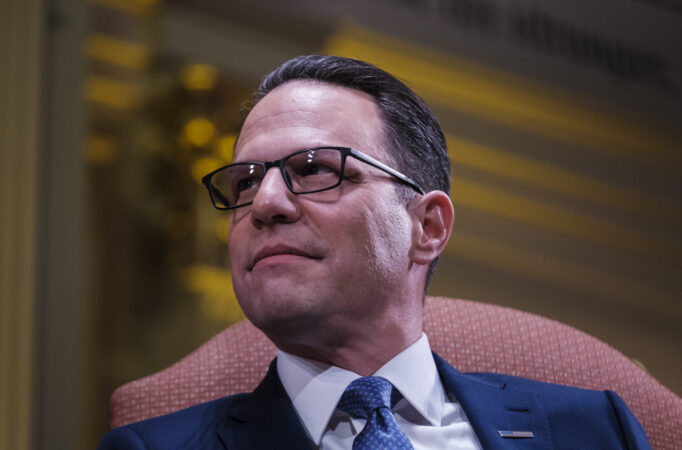
    Sitting onstage in an echoey historic synagogue, next to a U.S. senator and a cardboard cutout of his newly released memoir, Gov. Josh Shapiro reflected on the Pennsylvanians who give him hope.

    As he had in other stops on his book tour up and down the East Coast, Shapiro often referred to his book’s title, Where We Keep The Light, and the ways he finds hope in the “extraordinary impact” of Pennsylvanians. Among them, he said, were those who were sexually abused by Catholic priests in crimes covered up by the church until they were illuminated by the victims’ unrelenting quest for justice.

    In his book, Shapiro details his work as Pennsylvania attorney general to compile and release a bombshell grand jury report that in 2018 revealed thousands of cases of abuse by priests across the state.

    “I find hope in the people I met who were abused over years and years and years,” Shapiro told U.S. Sen. Raphael Warnock (D., Ga.) last month at an event at Sixth and I, a synagogue in Washington, “who still had the courage to show up in a grand jury room to testify and to challenge me to do something to make sure we righted a wrong and brought justice to them.”

    The nearly 900-page report was lauded as the most comprehensive review of clergy abuse across a single state and prompted new laws clarifying penalties for failure to report abuse and allowing survivors more time to pursue criminal or civil cases against their abusers.

    But a key step in delivering justice to those survivors — establishing a two-year window for the filing of lawsuits over decades-old abuse that falls outside the statute of limitations under existing law — remains unfinished.

    The proposal has become one of the most fraught issues in Harrisburg. After a devastating clerical error by Gov. Tom Wolf’s administration killed a proposed constitutional amendment in 2021, lawmakers have been unable to come together on a new path forward. Republicans who control the state Senate have tied the proposal to policies Democrats will not support. All the while, the Catholic Church and the insurance industry have lobbied hard against it.

    Nearly a dozen interviews with survivors, their family members, and advocates reveal a deep frustration with the inaction in Harrisburg. Even as Shapiro renews calls for the Senate to act, survivors are divided over whether he has done enough to use his power as governor to advocate for them.

    A key pledge in Shapiro’s bid for reelection — and his pitch to a national audience — is that he can “get stuff done” by working across the aisle. But some abuse survivors in Pennsylvania say the unfinished business in getting justice for them brings that record into question.

    “He got to where he’s at on the back of victims and survivors, and now he’s forgotten,” said Mike McIlmail, the father of a clergy abuse victim, Sean McIlmail, who died of an overdose shortly before he was supposed to testify in a criminal case against his alleged abuser.

    Shapiro, his spokesperson Will Simons said, has fought for survivors “publicly and in legislative negotiations” since 2018. He has promised to sign any bill that reaches his desk establishing the window.

    With a reelection campaign underway and his eyes on flipping the state Senate, the governor renewed that fight earlier this month. He used his budget address to blame Senate Republicans for the inaction thus far.

    “Stop cowering to the special interests, like insurance companies and lobbyists for the Catholic Church,” he said, his voice thundering in the House chamber. “Stop tying justice for abused kids to your pet political projects. And start listening to victims.”
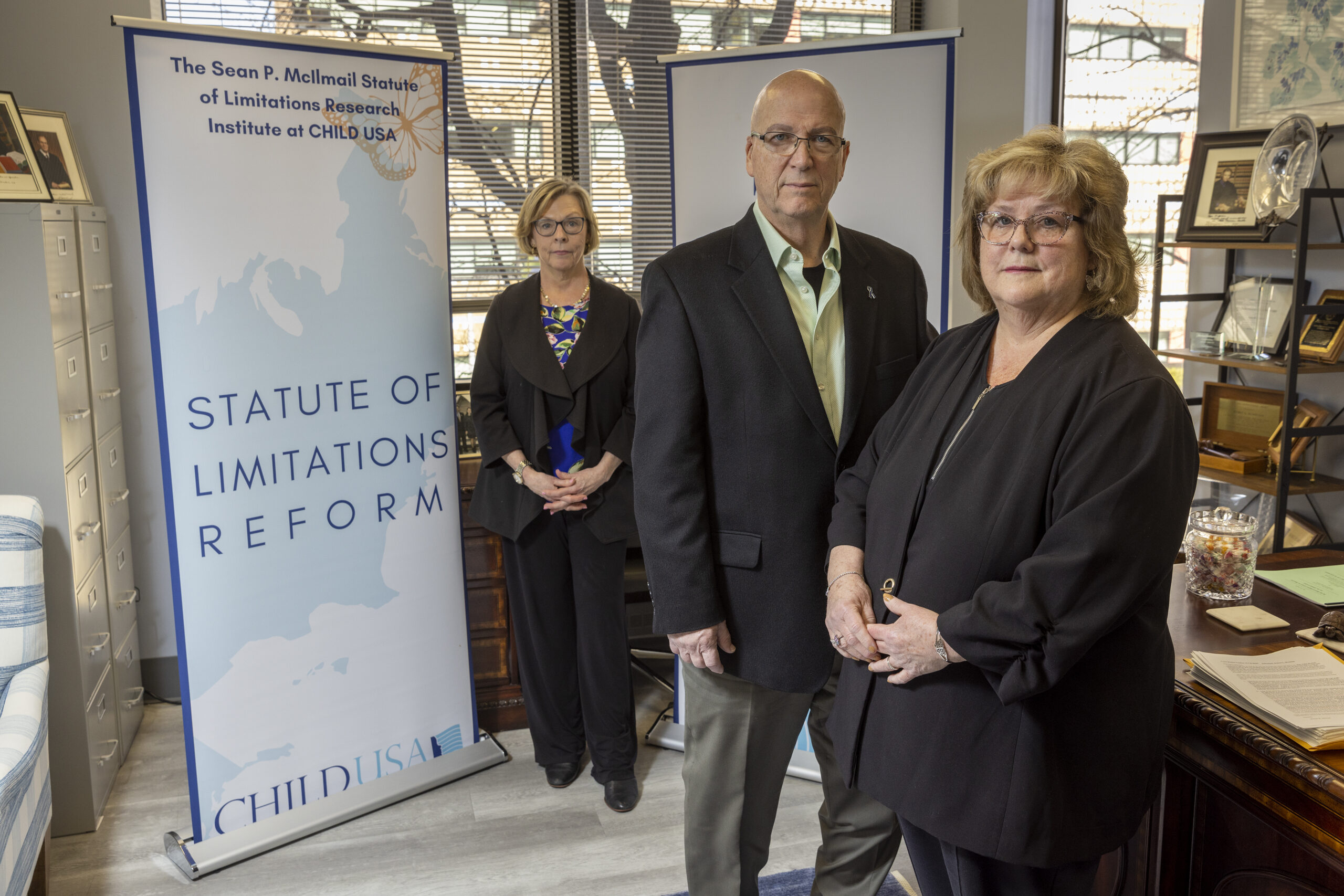
    Mike and Debbie McIlmail, parents of Sean McIlmail, in the office of (left) Marci Hamilton, in Philadelphia on March 29, 2022.

    Years of delay

    Pennsylvania’s extensive investigation, which Shapiro inherited when he became attorney general in 2017, chronicled more than 1,000 cases of abuse by more than 300 priests across the state dating back to the 1940s.

    For most of the cases in the report, the statute of limitations had passed, leaving no legal recourse for survivors.

    The report proposed that lawmakers create a two-year window to allow the filing of civil suits over cases that happened years, if not decades, ago. Despite Shapiro’s advocacy since releasing the grand jury report, the proposal has been trapped in a stalemate for years.

    Pennsylvania trails more than 30 other states that have approved similar legislation.
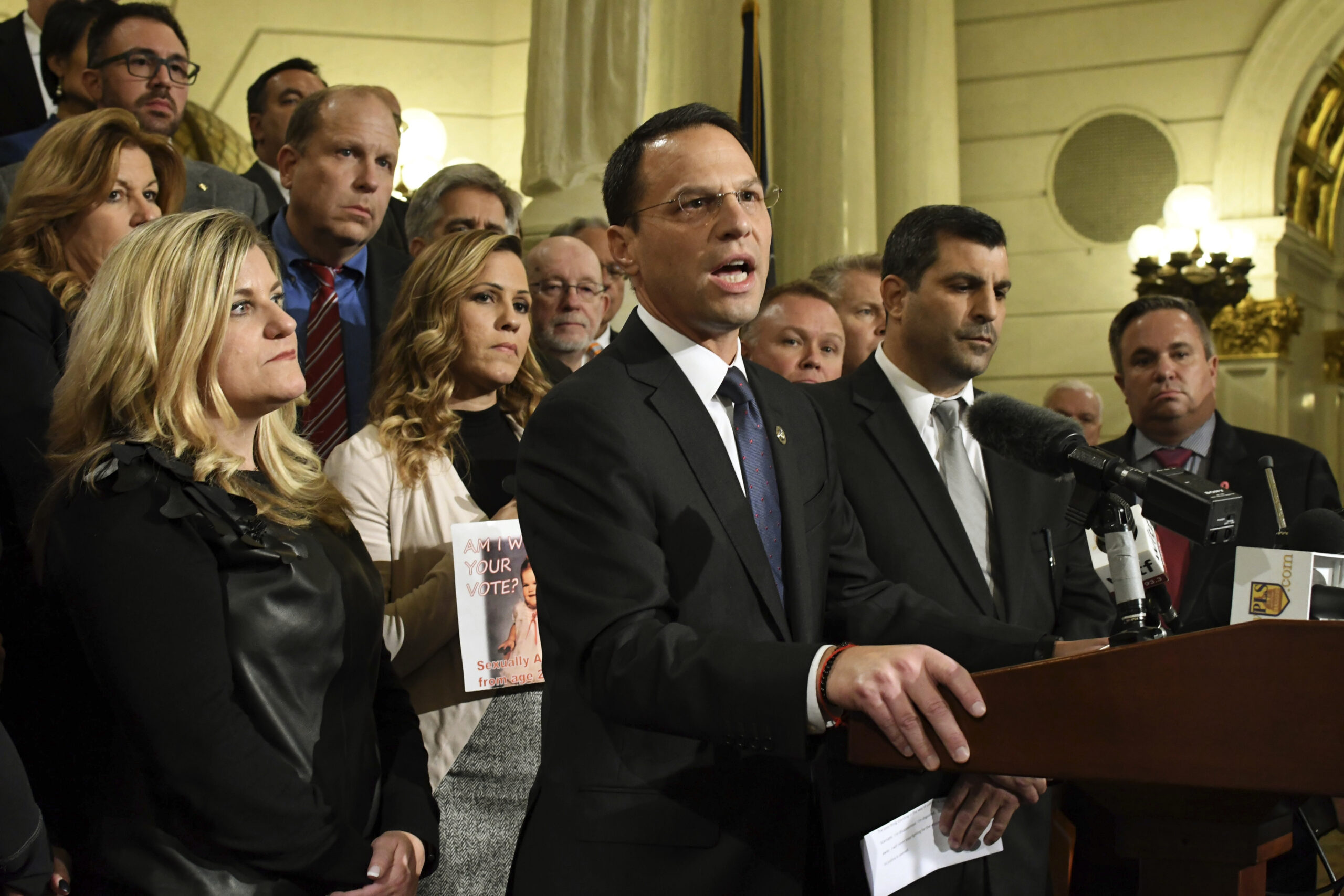
    Then-Attorney General Josh Shapiro speaks at a news conference in the state Capitol in 2018 about legislation to respond to a landmark grand jury report accusing hundreds of priests of sexually abusing children over decades stalled in the legislature.

    “It’s maddening to have people say, ‘We’re committed to this, this is going to happen, we’re committed to it,’ from both sides of the political spectrum and nothing ever gets done,” said Jay Sefton, who says he was abused by a priest in Havertown as a middle schooler in the 1980s. “It does start to feel like these are lives being used as its own sort of theater.”
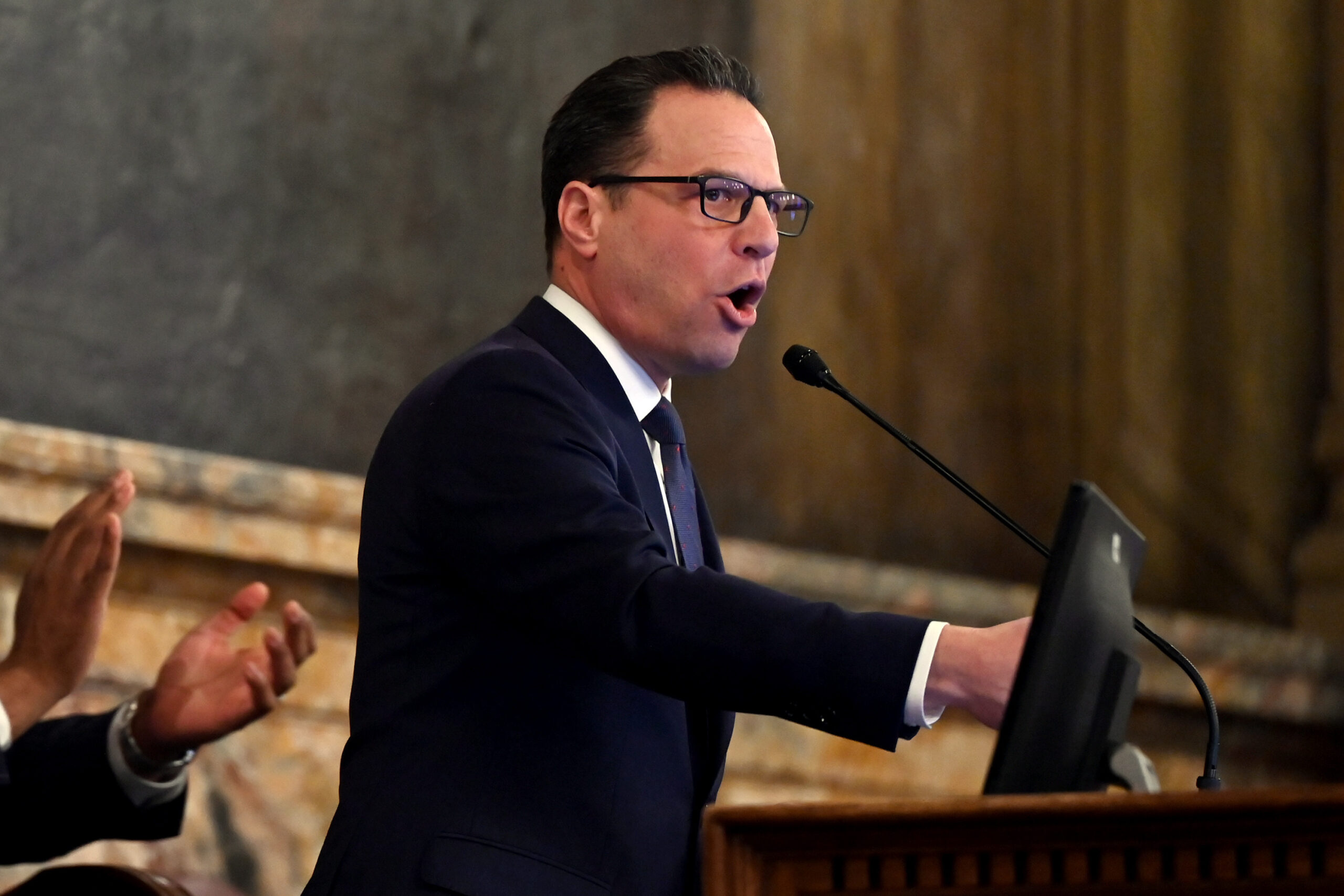
    Gov. Josh Shapiro makes his annual budget proposal in the state House chamber Tuesday, Feb. 3, 2026.

    Speaking to journalists in Washington days before he targeted Republicans in his budget address, Shapiro tied the window’s prospects to Democrats’ ability to win the state Senate for the first time in more than three decades.

    “I’m confident with a Democratic Senate that will be one of the first bills they put on my desk,” Shapiro said.
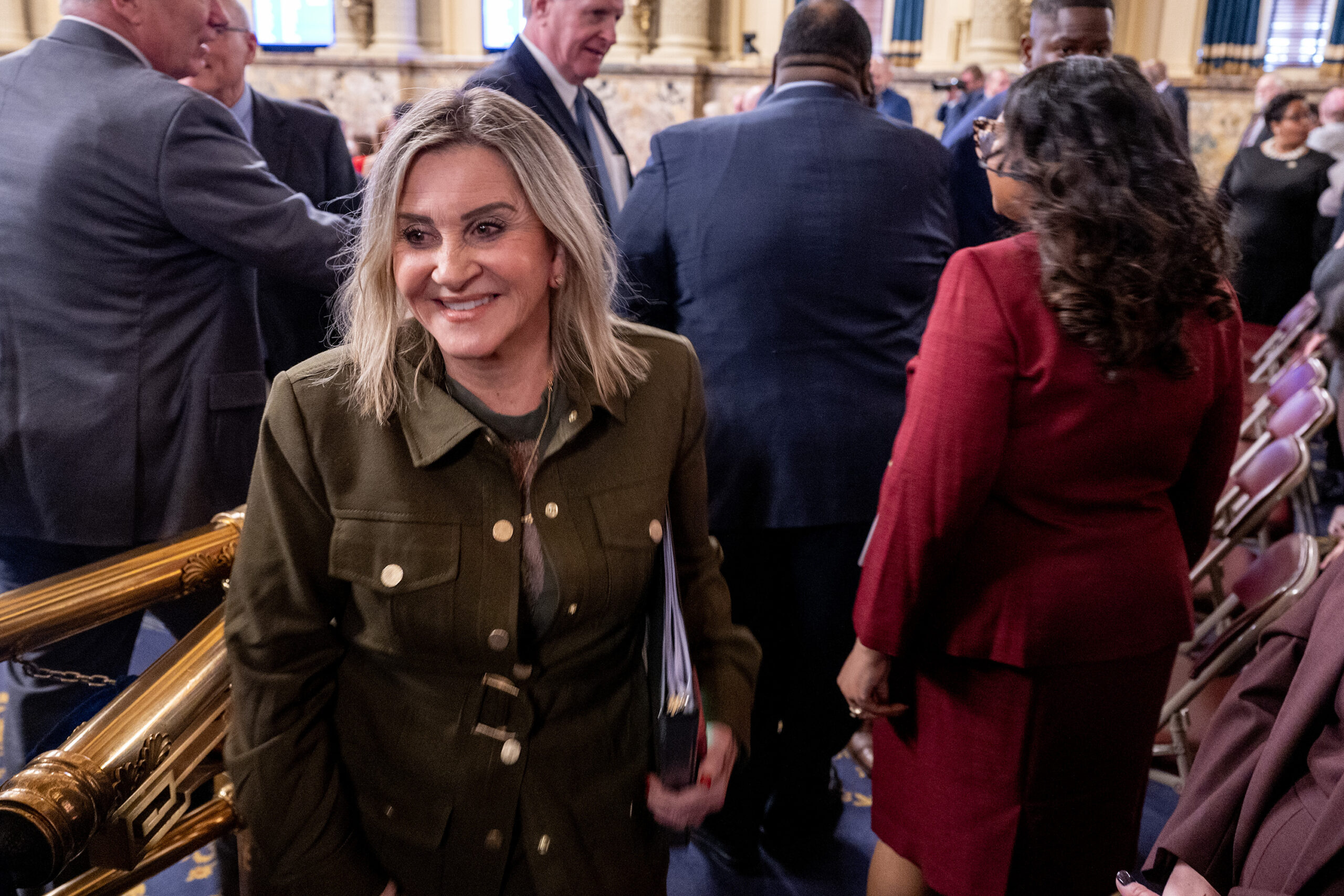
    Senate President Pro Tempore Kim Ward, a Republican, leaves the House chamber following Democratic Gov. Josh Shapiro’s annual budget proposal speech in Harrisburg on Feb. 3.

    In an interview, Senate President Pro Tempore Kim Ward (R., Westmoreland) noted that the GOP-controlled Senate had approved a constitutional amendment to establish the window several times before, although it ultimately failed to ever reach the voters.

    She declined to say whether the state Senate would take up the amendment up this year but said creating the window through legislation, as Shapiro requested, would be unconstitutional.

    She accused the governor of using survivors to score political points as he tries to raise his profile for his reelection this year and rumored 2028 presidential ambitions.

    “He has decided that he’s going to be moral instead of follow the law. Look at his record in his own office,” Ward said, arguing Shapiro has a track record of fighting for some survivors but not others. She pointed to his office’s handling of sexual harassment allegations brought against a former top staffer and close ally. Documents showed that complaints about the staffer were made months before his abrupt resignation.

    For some clergy abuse survivors, the blame lands squarely on Ward and her Republican allies as they insist on a constitutional amendment, which requires two votes by both the House and Senate along with a ballot measure.

    “It’s the Republicans that are blocking it, and I think they’re blocking it because of the church,” said Julianne Bortz, a survivor who testified before the grand jury and whose experience was featured in the report.

    A portrait of former Pa. House Speaker Mark Rozzi hangs alongside painting of other former speakers in hallway at the state Capitol.

    Debate among survivors

    Despite Shapiro’s recent statements, there is a sense among some survivors that lawmakers, and Shapiro, have forgotten about them.

    Former state House Speaker Mark Rozzi, a Berks County Democrat and clergy abuse survivor, said Shapiro “betrayed” survivors and should be playing “hardball” with the Senate to ensure that the bill makes it to his desk.

    “Talk is cheap. Unless you come to the table and cut a deal, nothing else gets done,” Rozzi said.
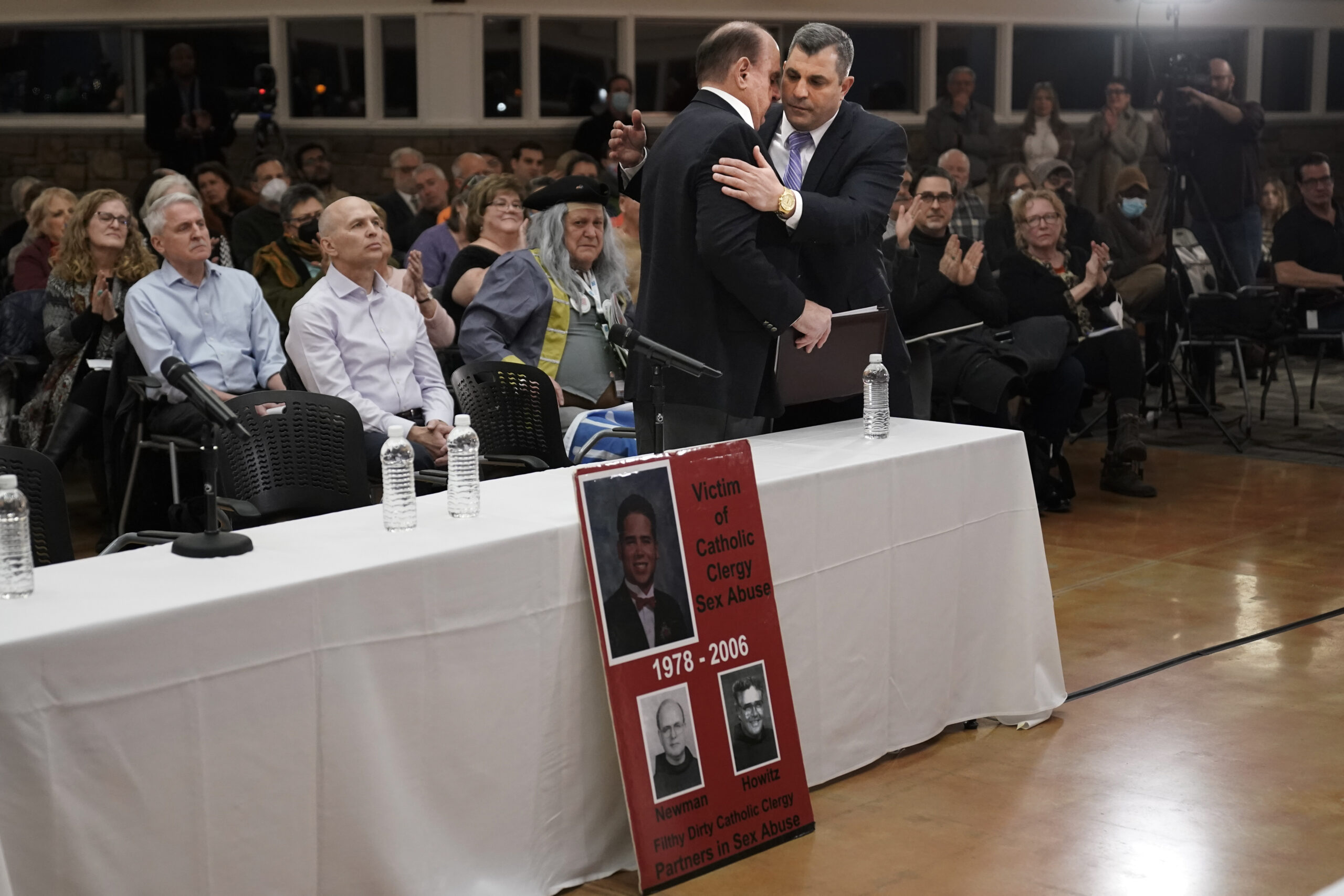
    Then-Pennsylvania House Speaker Mark Rozzi, center right, embraces Arthur Baselice, the father of Arthur Baselice III, after he testified at a hearing in Philadelphia on Jan. 27, 2023.

    Advocates have spent years pushing lawmakers in Harrisburg and have grown increasingly frustrated with the lack of movement.

    “We, being the victims, have always held our end of the bargain. Always. We’ve always shown up when we’ve asked to, we’ve testified when we were asked to, we interviewed, we discussed the worst moments of our lives when asked,” said Shaun Dougherty, who said he was abused by an Altoona-Johnstown priest.

    Now, he said, it’s the governor’s turn to get the work done.

    Former State Rep. Bill Wachob, a Democrat who worked in politics after leaving elected office in the 1980s, is convinced the governor could make it happen through negotiations if he wanted.

    “He and his team have made a calculated political decision that they have gotten as much mileage out of this issue as they’re going to get and they’re not doing anything more,” Wachob said.

    In Shapiro’s memoir, however, he wrote he expected that going up against the Catholic Church in pursuing the 2018 report “was likely the end of the road for me politically.”

    “I’d made my peace with being a one term Attorney General, if it meant that I could put my head on the pillow at night knowing I did my job and made good for these victims,” he wrote.

    Since Shapiro became governor in 2023, his efforts to fight for survivors have been waylaid by an increasingly tense relationship with the GOP-controlled Senate, as evidenced by last year’s nearly five-month bitter budget impasse.

    “I have no doubt that the governor has been doing what he can,” said Marci Hamilton, the founder of Child USA, which advocates for child sex abuse victims. She blamed the challenges in reaching a deal on Harrisburg’s partisan dynamics.

    Recent criticism of Shapiro has driven division within the survivor community in recent weeks, said Mary McHale, a survivor who was featured in a 2022 Shapiro campaign ad.

    “He cares. But he also has a state to run. This can’t be the No. 1 issue,” she said.

    Diana Vojtasek, who said she was abused by the same Allentown priest as McHale, said she worries frustration is being misdirected at Shapiro instead of Republicans.

    “I just don’t see the value in attacking the one who has vowed publicly that he will sign this legislation for us as soon as it’s across his desk,” she said.
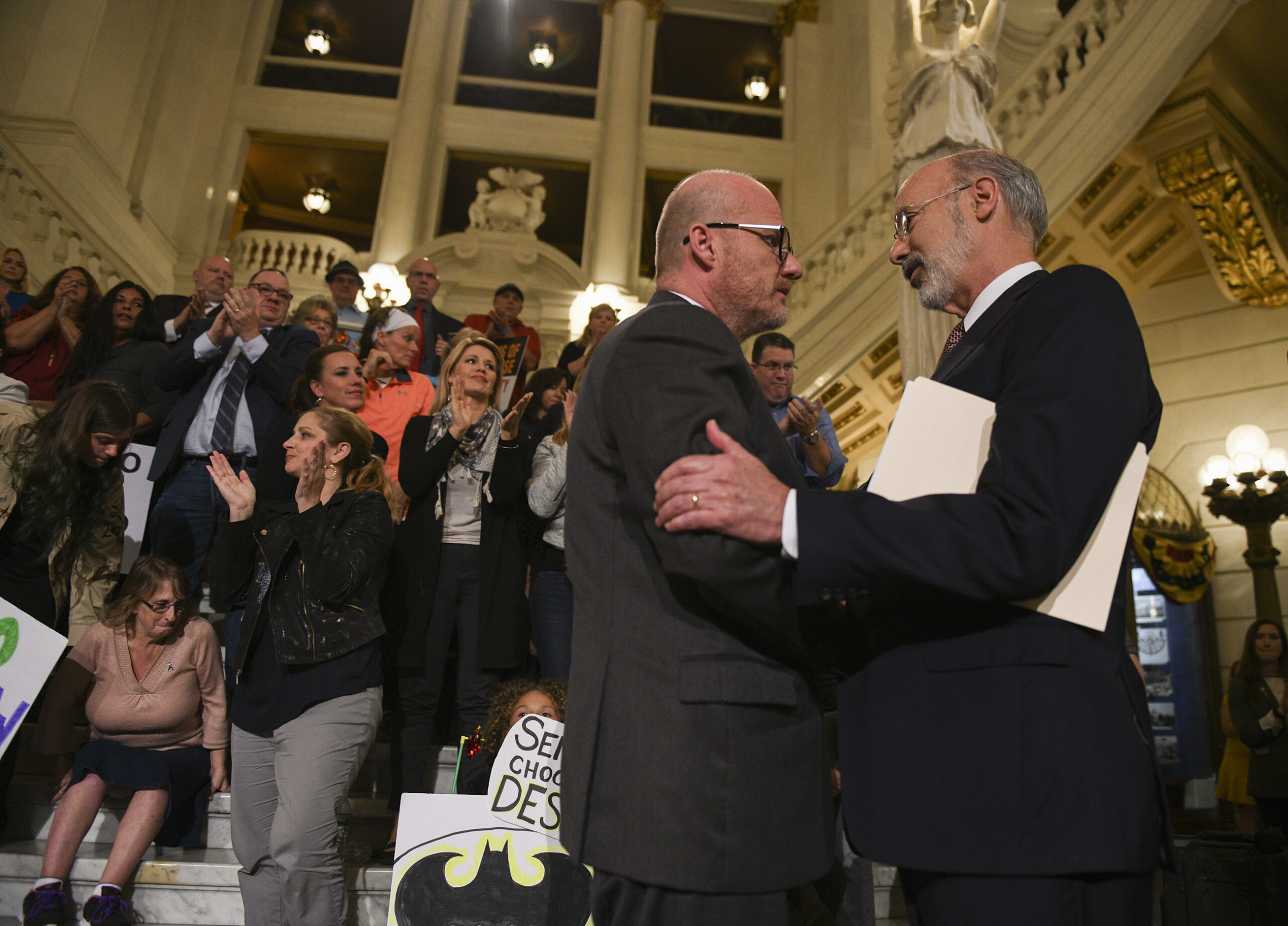
    Abuse survivor Shaun Dougherty (left) greets then-Gov. Tom Wolf in the State Capitol on Sept. 24, 2018.

    Could progress come this year?

    Advocates are hopeful that the national bipartisan effort to force President Donald Trump’s administration to release FBI files related to serial abuser and trafficker Jeffrey Epstein may spur new motivation to protect abuse victims in the state.

    “What the Epstein transparency act showed us is we are finally at a point where the protection of sexual abuse victims is nonpartisan,” Hamilton said. “I fully expect to see that that understanding for victims will happen in Harrisburg.”

    Rep. Nathan Davidson, a Dauphin County Democrat who introduced the House legislation to create the window, has scheduled hearings in April to bring renewed attention to the issue.

    Sefton, who said he was abused as a middle schooler in Havertown in the 1980s, will perform a one-man show about his experience in a theater just steps from the state Capitol the week of the hearings.

    He is done hoping lawmakers will establish the window but said it would make the state safer if they did.

    “Nobody is going to give anyone their childhood back. It can’t happen,” Sefton said.

    “There’s always going to be a part of me that’s filled with some rage about people blocking the energy here. If that were to go through, it’s a piece of energy that gets finally freed up.”

  • All Amazon Fresh stores, including six in the Philly area, are closing

    All Amazon Fresh stores, including six in the Philly area, are closing

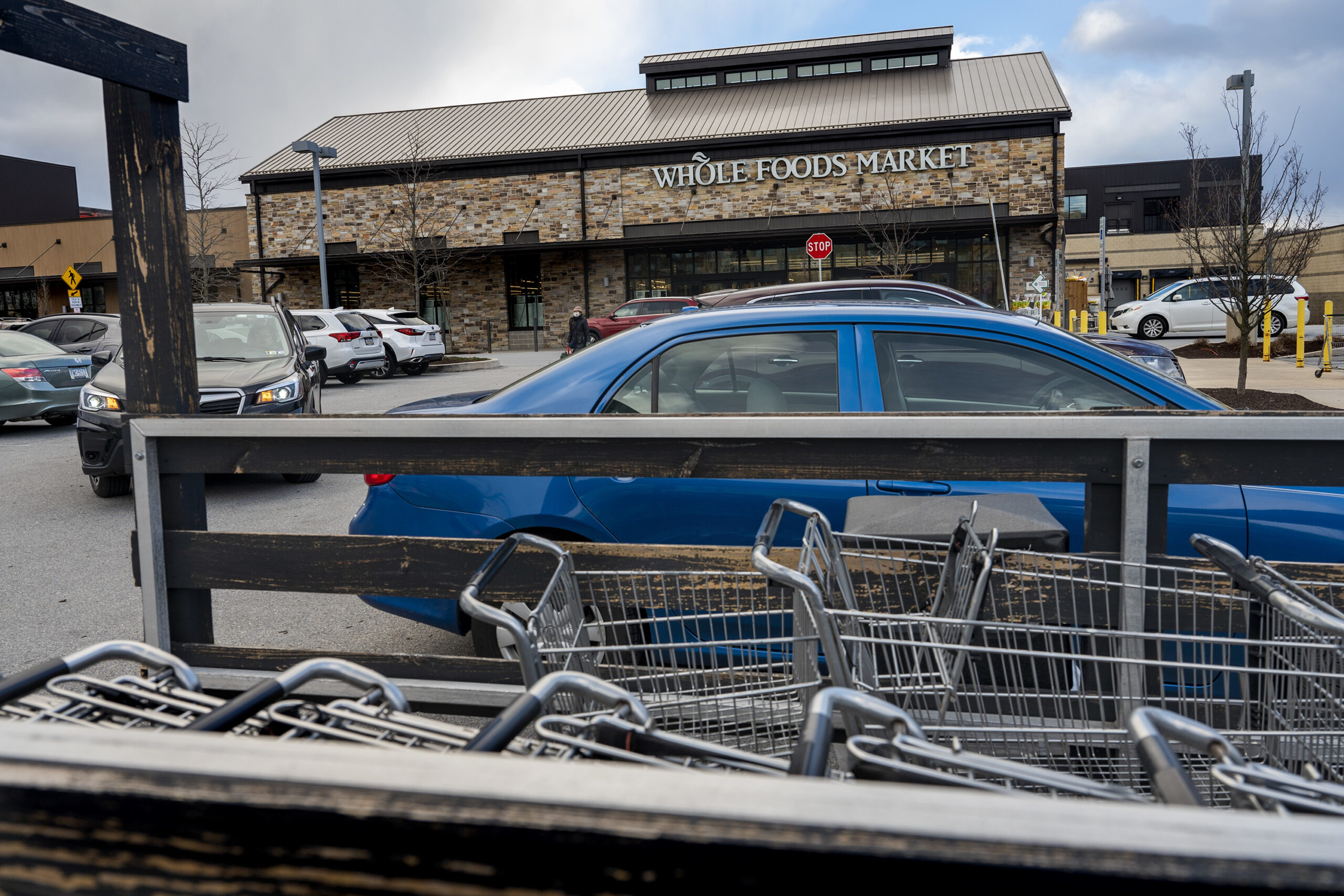
    Amazon will be closing all its physical Amazon Fresh stores, including six in the Philadelphia region, as it expands its Whole Foods footprint and grocery delivery services.

    The e-commerce giant made the announcement in a statement Tuesday, noting that it would convert some Amazon stores into Whole Foods Markets.

    “While we’ve seen encouraging signals in our Amazon-branded physical grocery stores, we haven’t yet created a truly distinctive customer experience with the right economic model needed for large-scale expansion,” the company said.

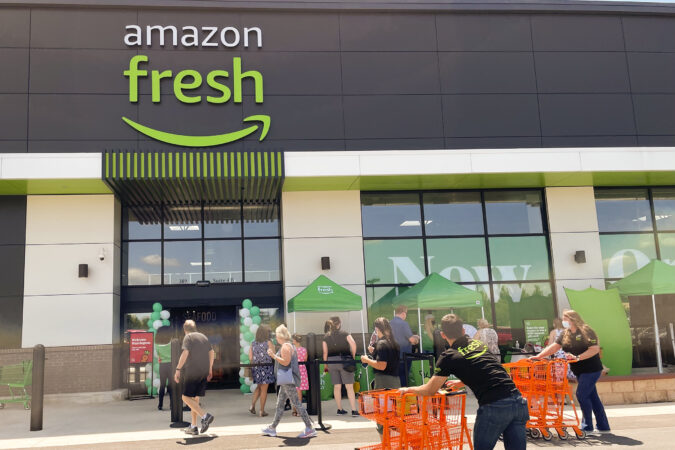
    People shop inside the Amazon Fresh in Warrington in August 2021. The store and all other Amazon-branded grocers are closing.

    The statement did not specify which Amazon Fresh stores would become Whole Foods, and company spokespeople did not answer questions about whether any Philadelphia-area locations would be converted.

    Amazon Fresh has stores in Broomall, Bensalem, Langhorne, Northern Liberties, Warrington, and Willow Grove. The Northern Liberties location on Sixth and Spring Garden Streets opened this summer after years of construction.

    Two more potential Amazon Fresh stores seemed to be in the works in Havertown and Northeast Philadelphia as of the summer, according to PhillyVoice.

    Customers use the Amazon Dash Cart at the Amazon Fresh grocery store in Warrington in 2021.

    Smaller-format Amazon Go stores, the closest of which are in New York, will also be shuttered or converted.

    As the company winds down its Amazon-branded physical stores, it says it will “double down” on online grocery delivery, including by expanding its same-day services to more communities.

    Amazon’s same-day delivery has been available in the Philadelphia market since 2009. Since December, Amazon has been testing “Amazon Now” delivery — which aims to get groceries to customers in 30 minutes or less — in parts of Philadelphia and Seattle.

    Amazon also said it plans to invest more in physical Whole Foods stores, adding more than 100 stores nationwide in the coming years.

    The Whole Foods store in Exton, as pictured in 2022.

    Amazon said Tuesday that Whole Foods has seen a 40% growth in sales since Amazon purchased the organic-grocery chain in 2017.

    Whole Foods has 550 locations nationwide, including more than a dozen in the Philadelphia area. Amazon spokespeople did not answer questions about whether more Whole Foods stores were in the works in the Philly region.

    Amazon also expects to open at least five more smaller-format Whole Foods Market Daily Shop stores by the end of the year. The company said that decision was based on “strong performance” at the five existing shops in the New York City area and Arlington, Va.

    The Center City Whole Foods Market as pictured in February 2025.

    The online retailer said it plans to continue to experiment with new ways of shopping at its physical stores.

    In its statement, Amazon gave a shout-out to one such test in the Philadelphia area: “The store within a store” experience at the Whole Foods in Plymouth Meeting.

    Since November, customers at that store have been able to browse the physical aisles of Whole Foods, while digitally ordering unique products from Amazon and Whole Foods. The orders are then packaged in minutes in an automated micro-fulfillment center within the grocer’s back-of-house area.

  • Smaller portions, fewer second drinks: How restaurateurs are adapting to changing consumer trends

    Smaller portions, fewer second drinks: How restaurateurs are adapting to changing consumer trends

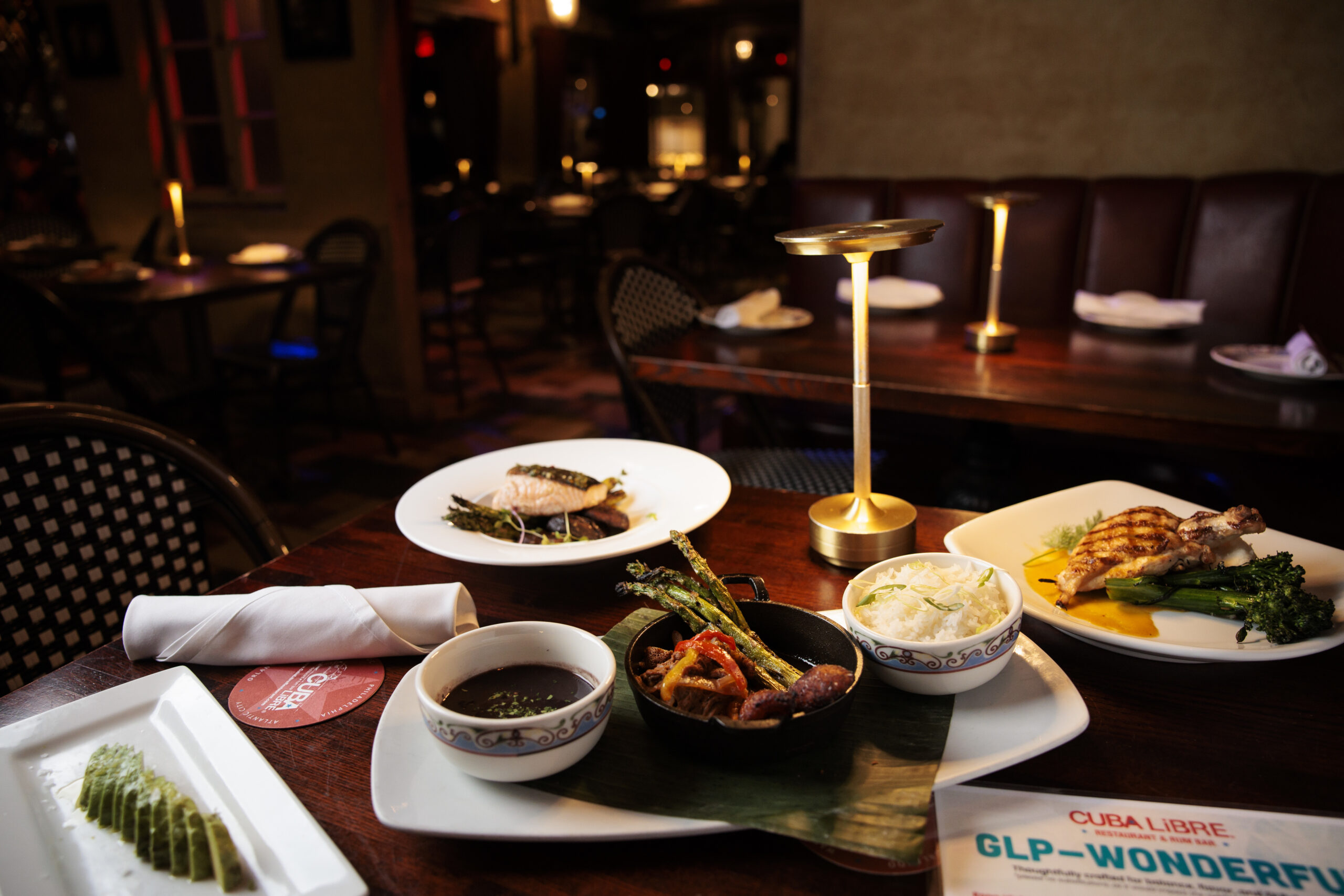
    In October, Cuba Libre became one of the country’s first full-service restaurants to unveil a GLP-1 menu, available at the request of diners on the increasingly popular weight-loss medications.

    Next month, the Old City establishment will also roll out a “lighter portions, lighter prices” section of its regular menu.

    This is all to keep up with the evolving preferences of Philly-area diners, said Barry Gutin, cofounder of Cuba Libre.

    “We said, ‘We should put something on the menu for all sorts of people watching their diet and their money,’” said Gutin, whose staff has noticed GLP-1 users and nonusers alike requesting these options more over the past year. This trend has also been seen at Cuba Libre restaurants in Atlantic City, Washington, and Orlando, as well as at its Paladar Latin Kitchen and Bomba Tacos locations in the Philadelphia suburbs.

    For customers, an added perk is that they pay less for these smaller-portioned menu items, Gutin added. He said diners have become more focused on value amid broader financial uncertainty.

    “The economy dictates that we have a diversity in pricing that meets more people’s needs,” Gutin said. “You think about the way people look at menus online. They’re scanning through prices as well.”

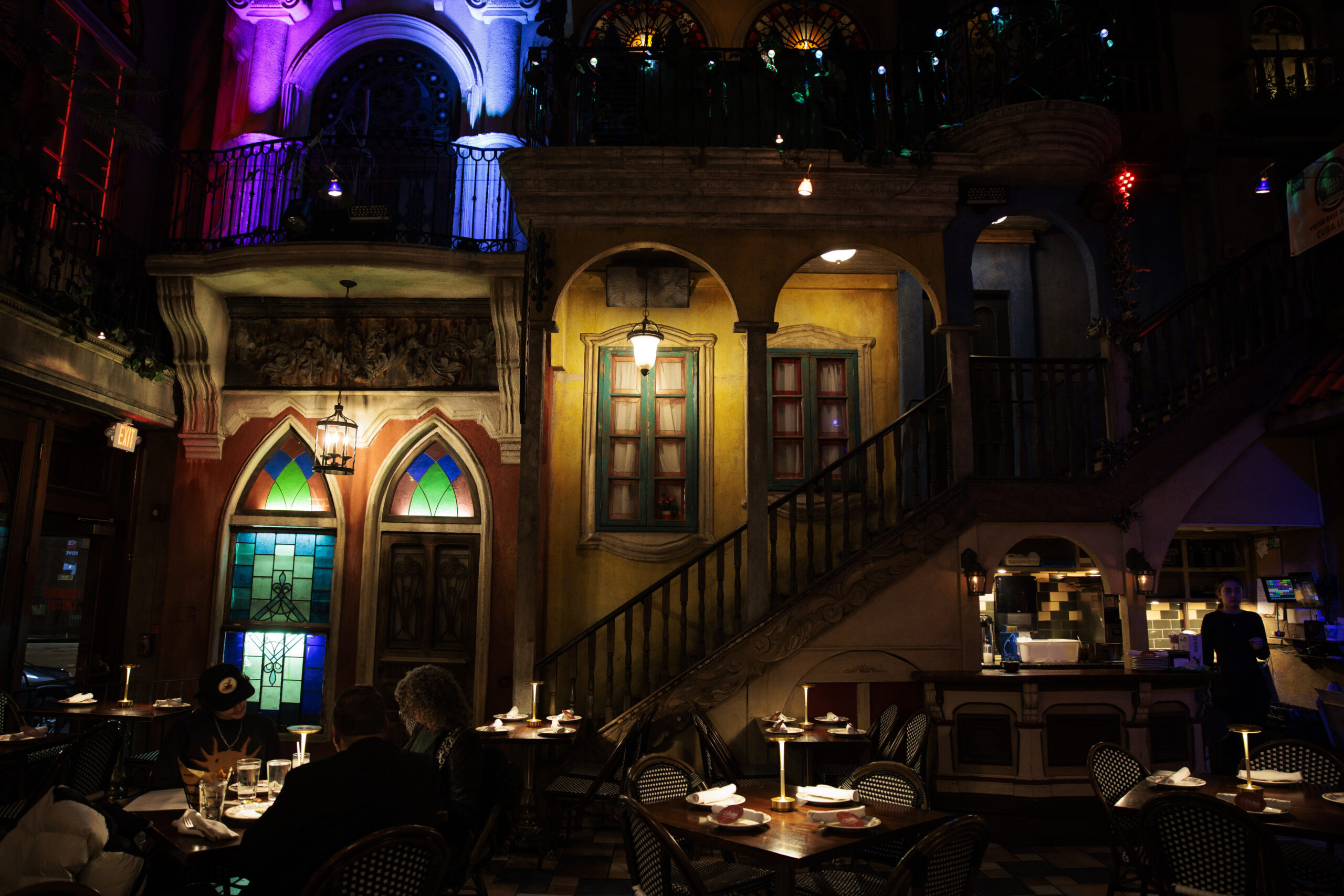
    The dining room at Cuba Libre in Philadelphia. A cofounder says staff has noticed GLP-1 users and nonusers alike requesting smaller-portioned, less expensive options more over the past year.

    In August, more than a third of U.S. diners said they were dining out less frequently than they did a year ago, according to a survey from YouGov. Of the less-frequent diners, 69% said they were eating out less in part because of the perceived cost of restaurant meals, the survey found.

    Lower-income consumers were most likely to have cut back on dining out, according to the survey, while middle- and higher-income folks hadn’t changed their habits substantially.

    This jibes with what executives at the Federal Reserve Bank of Philadelphia are hearing, too.

    “Even individuals with discretionary income to spend are being careful,” Anna Paulson, president of the Federal Reserve Bank of Philadelphia, said Wednesday. “For example, although people are still eating out in Philadelphia, contacts tell us that less expensive options on the menu are becoming more popular.”

    “The only exception to this trend is at more upscale restaurants,” Paulson added. “High-income households, bolstered by a strong stock market, appear to be driving elevated consumption growth.”

    The Ropa Vieja meal from the GLP-Wonderful menu at Cuba Libre as shown on Jan. 14.

    At the same time, restaurants nationwide are rethinking their menus amid a rise in the use of GLP-1 medications like Ozempic and Wegovy, which suppress appetite. In recent weeks, Olive Garden, Shake Shack, and Chipotle are among chains that have rolled out special menus with higher-protein, smaller-portioned meals. Smoothie King launched a GLP-1 Support Menu in October 2024.

    As of November, about 1 in 8 U.S. adults were taking a GLP-1, according to a survey from the nonprofit Kaiser Family Foundation. GLP-1s can be used for weight loss and to treat chronic conditions such as diabetes.

    At the bar, consumer habits have also changed.

    Alcohol use among adults has plummeted, with just 54% of respondents saying they drink in a July Gallup survey. That’s the lowest percentage in at least 90 years. It likely drops even lower this month as some people abstain from alcohol as part of the Dry January trend.

    Philly-area diners are spending ‘differently’

    All of these trends are on display at Philly-area bars and restaurants. And owners are trying to keep up.

    “We’re definitely at a time of dramatic shift in people’s preferences and tastes,” said Avram Hornik, owner of FCM Hospitality, which runs about a dozen venues in the region. They include Morgan’s Pier, Harper’s Garden, Craft Hall, and Concourse Dance Bar, as well as seasonal cocktail and beer gardens such as the traveling Parks on Tap.

    “I don’t think people are spending less or going out less,” Hornik said, “but I just think they are doing it differently.”

    Customers dine at Liberty Point, one of Avram Hornik’s restaurants, in 2023.

    At Hornik’s restaurants, overall sales have been consistent year over year, he said. Some customers are looking for smaller portions, he said, and late-night business has dropped precipitously. But group dining and special events have made up for losses in other areas, he said.

    When customers decide an outing is worthwhile, Hornik said, they generally aren’t sparing expenses.

    People are “looking for more of an experience when they go out to eat,” Hornik said. “It’s really about value: Am I getting a good value for the money that I’m spending?”

    To retain customers, Hornik said his restaurants are leaning into weekly specials, such as $1 tacos at Rosy’s, and happy-hour deals.

    At Cuba Libre, Gutin said he sees the GLP-1 menu, as well as the forthcoming lighter-portions menu, as a way to make his restaurants as appealing as possible for all diners.

    At each location, only about a dozen people request the GLP-1 menu each week, he said. But if a group is considering dining at Cuba Libre and one person is on a GLP-1, the special menu could make or break their decision. He said it could keep the GLP-1 user from exercising their “veto vote,” sending the entire group to dine elsewhere.

    Dining trends differ by location

    In the Philadelphia suburbs, restaurateurs said dining trends vary depending on location and type of restaurant.

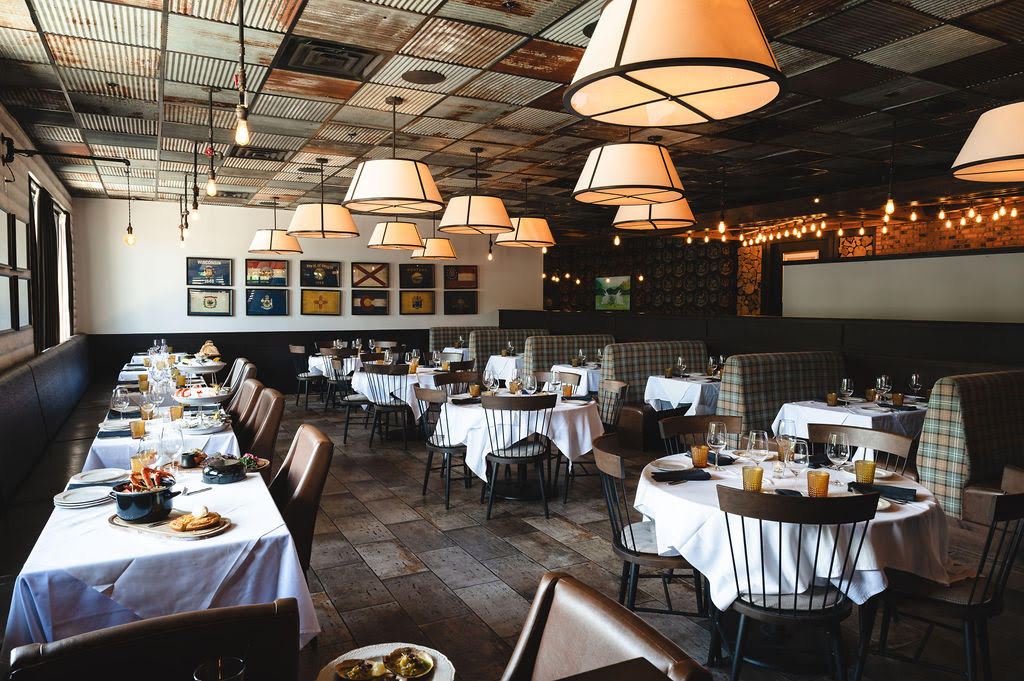
    The dining room at Joey Chops, the Malvern steakhouse that Stove & Co. restaurants co-owner Joe Monnich said has been least impacted financially by changing consumer habits.

    Joe Monnich, co-owner of Stove & Co. restaurant group, said food sales are up at his higher-end restaurants, including Joey Chops steakhouse in Malvern. But farther from the Main Line, in more “blue-collar” Lansdale, he said, Stove & Tap’s business is less steady of late.

    There, “I feel more economic up and downs,” Monnich said. He felt similarly about his Al Pastor restaurant in Havertown, which is now closed after a local buyer came in last month and offered Monnich cash on the spot for the building.

    At his more casual concepts all over the region, people are spending less on average, he said, and about the same at the higher-end spots. Recently, he added, staff have noticed diners being more mindful of how much they’re consuming.

    “People aren’t getting that second drink,” Monnich said. “People aren’t getting dessert. People aren’t getting that appetizer.”

    Changing drinking habits have hurt alcohol sales, too, Monnich said. In recent years, many customers have turned away from local microbrews and gravitated toward canned cocktails and “macro beers” like Michelob Ultra and Miller Lite.

    “Three years ago I barely sold Michelob Ultra and right now it’s one of my top sellers,” Monnich said. As are canned cocktails. “Surfsides are expensive, and I don’t make a lot of money off them.”

    Stove & Co. executives have talked about creating special menus catering to these evolving consumer preferences, Monnich said, but he gets anxious about making portions smaller. So for now, he too is leaning into happy-hour deals and other value-focused items.

    “I try not to be too focused on trends because trends come and go,” Monnich said. “I do see the current trend, these weight-loss drugs, I don’t see that going anywhere … [and] people are going to be drinking less-octane alcohol.”

    Staff writer Ariana Perez-Castells contributed to this article.

  • S&P downgraded ChristianaCare’s credit rating

    S&P downgraded ChristianaCare’s credit rating

    ChristianaCare, Delaware’s largest health system, received a one-notch credit-rating downgrade from Standard & Poor’s, to “AA” from “AA+’.

    S&P attributed the downgrade of the nonprofit health system’s rating to inconsistent operating performance in recent years and the planned addition of $350 million in debt early this year through a bond offering, according to a report Tuesday.

    In the year ended June 30, 2025, ChristianaCare’s financial results were weaker than expected because of low surgical volume related to physician turnover, S&P said. Another factor was higher-than-anticipated medical malpractice reserves, S&P said.

    One of ChrisitianaCare’s financial strengths is that it typically gets half of its revenue from private insurers, which pay higher rates and are more profitable than Medicare and Medicaid, S&P noted.

    Despite its strong financial condition, ChristianaCare has a relatively small service area, given its concentration in northern Delaware, compared to other health systems with “AA” ratings, S&P said. If ChristianaCare’s expansion into Southeastern Pennsylvania is successful, it would help alleviate that problem, the agency said.

    ChristianaCare opened a micro-hospital in western Chester County last summer and is building a second one in Aston, Delaware County. It also has plans to put one in Springfield Township. In addition, ChristianaCare spent $50 million to step into the leases that the bankrupt Crozer Health had at five outpatient facilities in Broomall, Glen Mills, Media, and Havertown.

    S&P said ChristianaCare has no plans for significant acute-care hospital expansion.

    Last month, ChristianaCare and Virtua Health, South Jersey’s largest health system, ended negotiations on a possible merger.

  • Gluten-free bakery Flakely levels up with a new and bigger storefront in Bryn Mawr

    Gluten-free bakery Flakely levels up with a new and bigger storefront in Bryn Mawr

    A popular gluten-free bakery is coming to the Main Line.

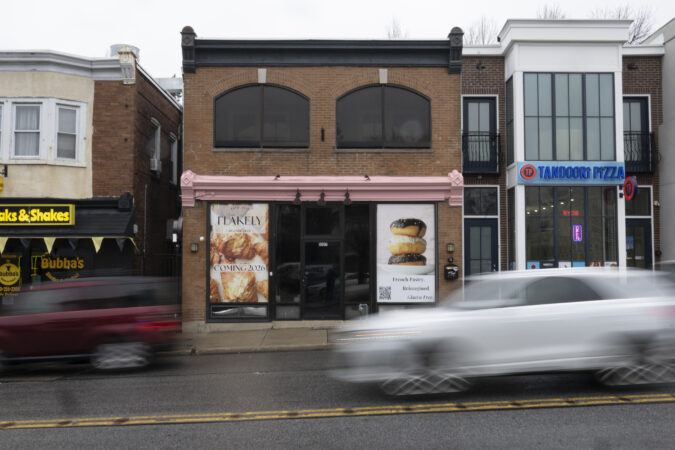
    Flakely is moving from behind the bright pink door at 220 Krams Ave. in Manayunk to a Bryn Mawr storefront in early February, said owner Lila Colello. The new takeout-only bakery will replace a hookah lounge at 1007 W. Lancaster Ave.

    “We’ve really outgrown our space,” Colello told The Inquirer. Manayunk “wasn’t ever meant to be for retail.”

    A trained pastry chef who worked for the Ritz Carlton and Wolfgang Puck Catering, Colello was afraid she’d have to give up the best things in life — bread and her career — when she was diagnosed in 2010 with celiac disease, an inflammatory autoimmune and intestinal disorder triggered by eating gluten.

    Instead, Colello spent the next seven years finding ways to get around gluten, a protein found in grains like wheat, rye, and barley (and thus most breads, bagels, and pastries). She perfected kettle-boiled bagels and pastry lamination before starting Flakely in 2017 as a wholesaler.

    Colello moved into the commercial kitchen at Krams Avenue in 2021, where customers have spent the last four years picking up buttery chocolate croissants, brown sugar morning buns, and crusty-yet-chewy bagels from a takeout window in an industrial parking lot. Inquirer restaurant critic Craig LaBan has called Colello’s bagels “the best he’s tasted outside of New York,” and in 2024, Flakely was voted one of the best gluten-free bakeries in the United States by USA Today.

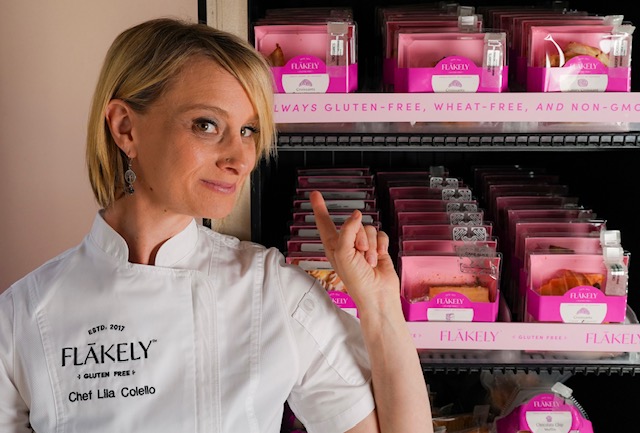
    Lila Colello, owner and head baker at Flakely, helped patent a way to laminate gluten free dough for croissants.

    Flakely’s industrial Manayunk location has required some concessions, Colello said: The majority of their goodies are par-baked and frozen by Colello and three full-time employees for customers to take and bake at home. Otherwise, Colello explained, the lack of steady foot traffic would lead to lots of wasted product.

    In Bryn Mawr, Flakely will be a fully functional takeout bakery with a pastry case full of fresh-baked goods, from full-sized baguettes and browned butter chocolate chip cookies to danishes and Colello’s signature sweet-and-savory croissants. A freezer will also include packs of Flakely’s take-and-bake doughs, bagels, and eventually, custom cake orders.

    Once she’s settled in, Colello said, she hopes to run gluten-free baking classes and pop-up dinners out of the storefront — offerings (besides the ingredients) that she hopes will differentiate her from other bakeries in the area.

    While the Main Line only has one dedicated gluten-free bakery (The Happy Mixer in Wayne), Lancaster Avenue is already lined with sweet shops: Malvern Buttery opened up a coffee and pastry combo down the street from Flakely in June, and Colello’s storefront is on the same strip as The Bakery House and an outpost of popular Korean-French chain Tous Les Jours.

    “My vision is for this to be a magical space where people can come in and leave with a fresh croissant, which people can’t really do” when they’re gluten-free, said Colello, who lives in Havertown. “We offer our customers things they miss. That’s kind of our thing.”

    Flakely owner Lila Colello poses in front of one of Flakely’s pink gluten free pastry ATMs, which vend take-and-bake goods at four locations in the Philly area.

    What about the pastry ATMs?

    The permanent storefront does not mean Flakely’s signature pink pastry ATMs will disappear, said Colello. But they will move.

    Colello installed Flakely’s first pastry vending machine inside South Philly’s now-shuttered Salt & Vinegar. With the tap or swipe of a credit card, the smart freezer would open to let customers choose their own take-and-bake pack of croissants, pop-tarts, muffins, or danishes. Using it felt like a sweet glimpse into the future.

    Flakely currently operates pastry ATMs inside Collingswood grocer Haddon Culinary, the Weaver’s Way Co-op in Ambler, Ardmore smoke shop Free Will Collective, and Irv’s Ice Cream in South Philly, where enterprising customers top their pastries with scoops fresh out the freezer.

    Irv’s ATM will make the move to Reap Wellness in Fishtown on Jan. 5 when the ice cream shop closes for the season, Colello said. And come February, the smoke shop’s ATM will transition to Lucky’s Trading Co., a food hall at 5154 Ridge Ave. in Roxborough. The hope, Colello said, is to space the locations out enough so she’s not competing with herself.

    “We’re finally in the middle of where everything is,” Colello said. “And that’s kind of the goal.”

    Flakely, 1007 W. Lancaster Ave., Bryn Mawr, 484-450-6576. Hours: 9 a.m. to 4 p.m. Tuesday to Saturday.

  • The Philly concerts that’ll get you through Christmas week and into the new year

    The Philly concerts that’ll get you through Christmas week and into the new year

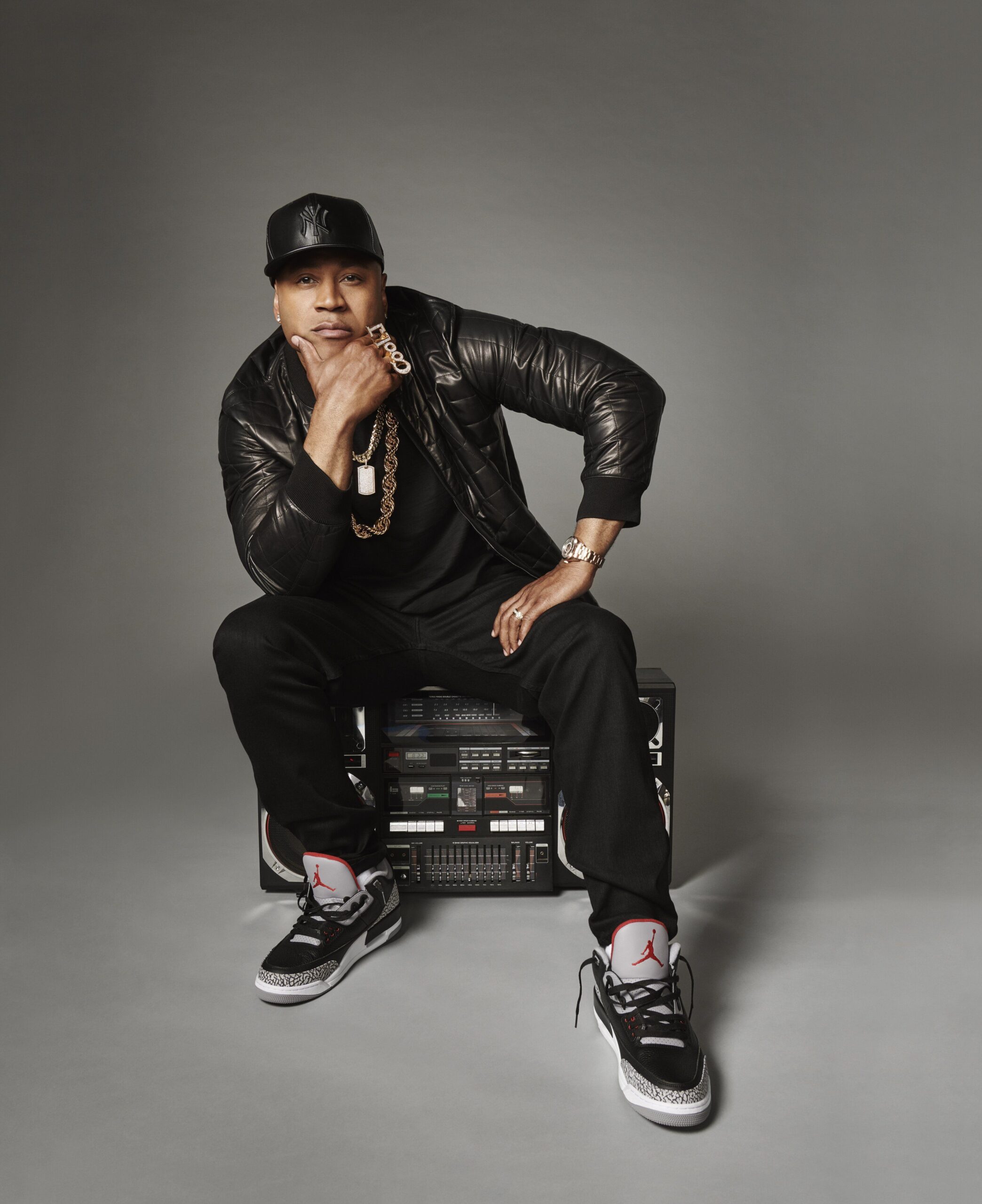
    This week in Philly music is all about the plentiful live music options on New Year’s Eve, including LL Cool J, Snacktime, Ben Arnold, Low Cut Connie, and Kindred the Family Soul.

    But before we get to the final blowout of 2025, there’s also some action with touring and local Philly bands in the days after Christmas. Not to mention: Wayne Newton!

    Friday, Dec. 26

    Wayne Newton

    Center City will become Sin City with this rare Philly appearance by the longtime denizen of the Las Vegas Strip. “Wayne Newton, Mr. Las Vegas: Memories and Melodies” is how the 83-year-old entertainer who released 165 albums in his day — and scored a signature hit in 1963 with “Danke Schoen” — bills the show he’s bringing to City Winery for two nights. (7 p.m., City Winery Philadelphia, 990 Filbert St., CityWinery.com/philadelphia)

    Saturday, Dec. 27

    Jealousy Curve / John Faye

    On Saturday at Underground Arts, Philly rock band Jealousy Curve shares a bill with John Faye, the longtime musician on the local scene. Faye played reunion dates with his ‘90s alt-rock band the Caulfields last month and was on stage at last week’s Pierre Robert tribute at the Fillmore as a member of David Uosikkinen’s band, In The Pocket. Faye’s latest is The Long Game, released on Uosikkinen’s ITP Entertainment last year. (8 p.m., Underground Arts, 1200 Callowhill St., undergroundarts.org)

    Gogol Bordello play the Archer Music Hall in Allentown on Dec. 28.

    Sunday, Dec. 28

    Gogol Bordello

    Gogol Bordello, and its charismatic Ukrainian American lead singer, Eugene Hutz, have a long tradition of playing Philly shows in the week between Christmas and New Year’s. This time, the New York punk band, which mixes Romani and traditional Ukrainian music into their raucous blend, is bound for a different Pennsylvania location with a date at Archer Music Hall, the new Live Nation venue in Allentown. (8 p.m. Archer Music Hall, 939 Hamilton St., Allentown, archermusichall.com)

    A Jam Without Borders

    Yesseh Furaha-Ali of Snacktime, Camden trumpeter Arnetta Johnson, and the Bul Bey are among the artists who’ll be playing at Ortlieb’s at this event hosted by Corey Bernhard and Friends. It’s a fundraiser for Philadelphia families impacted by ICE. (8 p.m., Ortlieb’s, 847 N. Third St., ortliebsphilly.com)

    Monday, Dec. 29

    “Fear of Heights”

    Philly rocker Alan Mann regularly played South Street clubs like J.C. Dobbs and Ripley Music Hall before his death in 1987. Rich Murray, who directed the video for Mann’s song “Christmas on the Block,” which became the first indie video played on MTV and a subsequent Philly holiday music favorite, has made a documentary about his relationship with Mann and his legacy. Called Fear of Heights, the movie, which begins with a 2015 clip of the late DJ Pierre Robert dropping the needle on “Christmas on the Block” on WMMR-FM (93.3), will have its Philly premiere at Film Society East. It will be followed by a discussion with Murray and his co-filmmakers moderated by WMGK-FM DJ Cindy Drue. (7 p.m., Film Society East, 125 S. Second St., filmadelphia.org)

    Low Cut Connie at Concerts Under the Stars in King of Prussia on Aug. 1, 2025. Left to right: Rich Stanley, Nick Perri, Adam Weiner, Jarae Lewis (on drums, partially hidden), Amanda “Rocky” Bullwinkel, and Kelsey Cork. The band will play Ardmore Music Hall on Dec. 30 and 31.

    Tuesday, Dec. 30

    Dark Star Orchestra

    The longstanding Grateful Dead tribute band is marking the transition from 2025 to 2026 on a short East Coast tour, which includes a date at Franklin Music Hall on NYE’s eve. (8 p.m., Franklin Music Hall, 421 N. Seventh St., franklinmusichall.com)

    The Samples

    And for a further jam band experience, veteran Colorado 10-piece band the Samples, which blends a Dead influence with more pop-rock shadings, does two nights at 118 North in Wayne. (8 p.m., 118 North, 118 N. Wayne Ave., Wayne, 118 NorthWayne.com)

    Low Cut Connie

    Adam Weiner and Miss Rocky of Low Cut Connie distinguished themselves with their take on David Bowie’s “Young Americans” at last week’s Pierre Robert tribute. Let’s hope they put it in the playlist for their two end-of-the-year blowouts on Dec. 30 and New Year’s Eve.

    The band didn’t put out a new album this year but had an eventful 2025, getting caught up in to pop-and-politics brouhahas in D.C. and Luzerne County, and releasing some high-quality protest songs. Bluegrass band Shelby Means Trio, led by the eponymous bassist formerly in Molly Tuttle’s band, opens on Tuesday, and Philly rock and roller Roberta Faceplant opens Wednesday. (8 p.m., Ardmore Music Hall, 23 E. Lancaster Ave., Ardmore, ardmoremusichall.com)

    LL Cool J will headline a free concert on the Ben Franklin Parkway on New Year’s Eve. The show will also feature DJ Jazzy Jeff, Adam Blackstone, and Dorothy.

    Wednesday, Dec. 31

    LL Cool J, DJ Jazzy Jeff, Adam Blackstone

    This is the big new party on the Parkway and maybe the start of a new Philadelphia tradition? The city will officially usher in the year of the Semiquicentennial with its first-ever free NYE music and fireworks spectacle. Rock and Roll Hall of Famer and “Mama Said Knock You Out” hitmaker LL Cool J is making good on his commitment to play Philly after he opted out of this year’s July 4 Welcome America show in solidarity with striking municipal city workers. DJ Jazzy Jeff is, of course, the master of the Wheel of Steel, and Adam Blackstone has become one of the leading ambassadors for Philly music, and plans to debut a new civic pride song called “Brotherly Love” at the show. Dorothy and Technician the DJ are also on the bill. (8 p.m., Benjamin Franklin Parkway, phila.gov)

    Snacktime

    Philly R&B and soul party band par excellence Snacktime is the NYE Brooklyn Bowl Philadelphia house band. This is the third consecutive year that the horn-happy outfit has closed out the season at the Fishtown bowling alley/music venue. The band that started out busking in Rittenhouse Square during the pandemic has a new single. It is a sweetly sung and inventively arranged version of Brian Wilson and the Beach Boys’ “God Only Knows.” (8 p.m., Brooklyn Bowl Philadelphia, 1009 Canal St., brooklynbowl.com/philadelphia)

    Ben Arnold

    Ben Arnold was another standout at this month’s tribute to the late Pierre Robert. The Philly songwriter covered Robert Hazard’s “Change Reaction” and then led a singalong finale of the Youngbloods’ “Get Together.” Arnold put out a top-shelf album called XI this year, featuring the terrific single “Catch the Lightning,” and also toured Europe with the band U.S. Rails. He’ll be singing his own songs and some by U.S. Rails at his Kelly Center NYE show in Havertown. (7:30 p.m., Kelly Center, 4 E. Eagle Road, Havertown, kellycenter.org.)

    Kindred the Family Soul performs on the Presser Stage during The Roots Picnic Day 2 at the Mann Center for the Performing Arts on June 4, 2023. The group will do two shows at the City Winery Philadelphia on New Year’s Eve.

    Kindred the Family Soul

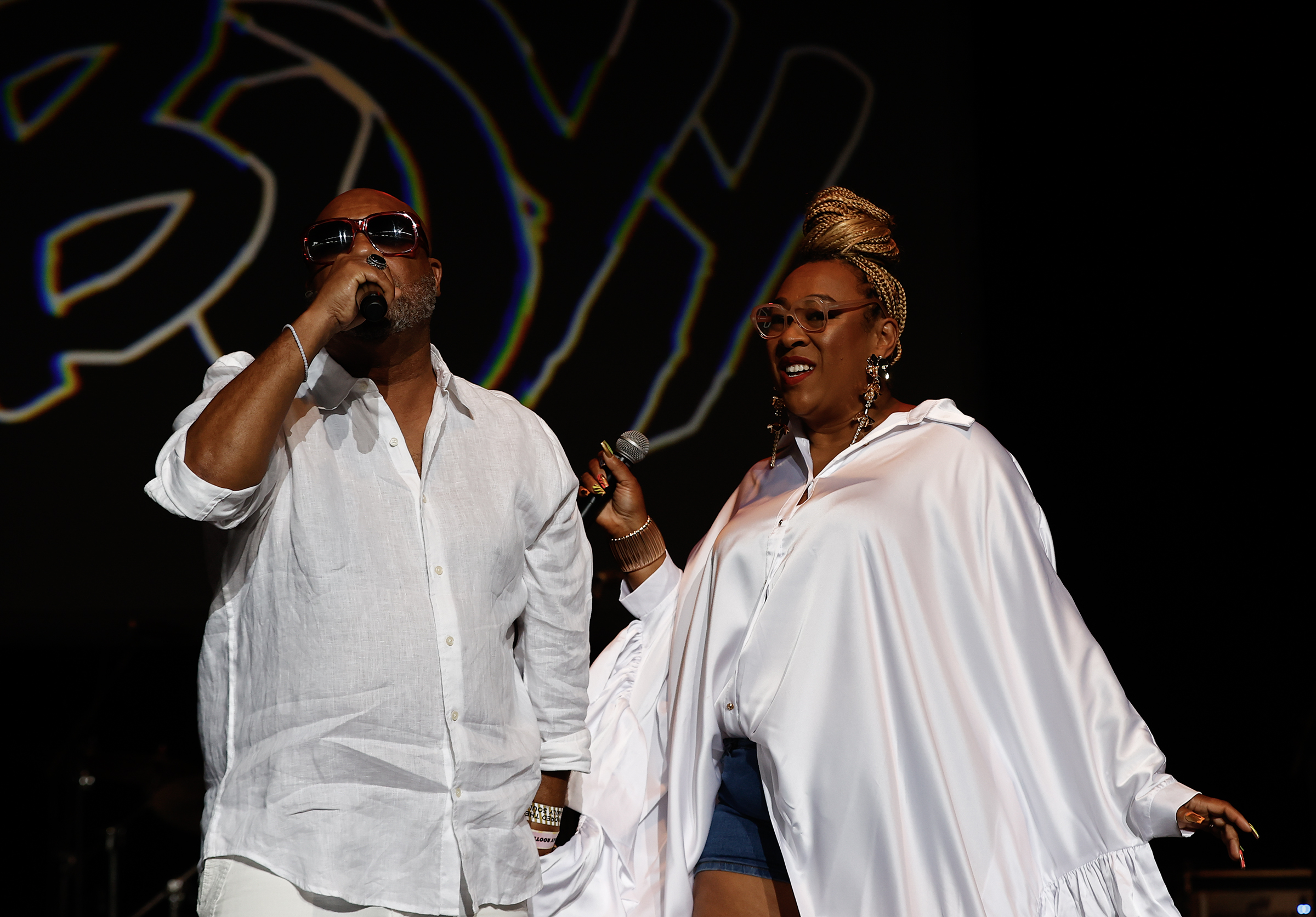
    The wife-and-husband team of Aja Graydon and Fatin Dantzler appeared last month at the Met Philly with John Legend, with whom they shared salad days at the Black Lily showcases in the early 00s. The veteran neo-soul act is back as City Winery NYE headliners, playing early and late shows at the Filbert Street club on Thursday. (7 p.m. and 10:30 p.m. City Winery Philadelphia, 990 Filbert St., citywinery.com/philadelphia)

    Felice Brothers plays Brooklyn Bowl Philadelphia on Jan. 2.

    Friday, Jan. 2

    Felice Bros.

    Upstate New York-born sibling act the Felice Brothers’ winning, ramshackle sound has mixed folk and rock and roll into a satisfying blend over the course of 10 albums. The most recent is 2024’s The Valley of Abandoned Songs. Brother Ian and James Felice make their annual holiday season stop at Brooklyn Bowl Philly on Friday, with Canadian songwriter Charlotte Cornfield opening. (8 p.m., Brooklyn Bowl Philadelphia, 1009 Canal St., brooklynbowl.com/philadelphia)

    Candy Volcano

    Philly Loves Bowie Week will kick off with two shows by tribute band Candy Volcano at Ardmore Music Hall. The first show will be at WXPN-FM Free at Noon, and then a nighttime show at the venue in which the band will cover Bowie’s 1976 album Station to Station. (Noon, Ardmore Music Hall, 23 E. Lancaster Ave., Ardmore, xpn.org/freeatnoon, and 8 p.m., ardmoremusichall.com)

  • Kathleen A. Case, longtime writer, pioneering medical journal editor, and award-winning historian, has died at 80

    Kathleen A. Case, longtime writer, pioneering medical journal editor, and award-winning historian, has died at 80

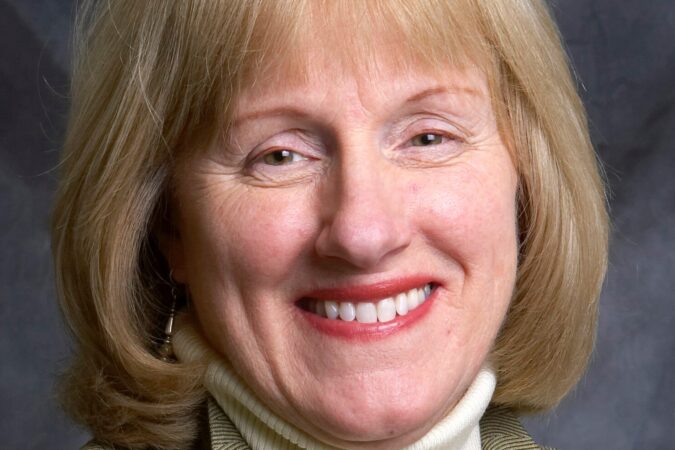
    Kathleen A. Case, 80, of Bryn Mawr, longtime writer, pioneering medical journal editor, award-winning historian, researcher, and volunteer, died Friday, Nov. 14, of heart failure at Bryn Mawr Hospital.

    A natural wordsmith who was interested in the origins and nuances of language as well as its use, Ms. Case spent 24 years as a top editor for the Annals of Internal Medicine and vice president for publishing at the Philadelphia-based American College of Physicians. Later, for 15 years, she was publisher, archivist, historian, and director of strategic planning for the publishing division of the Philadelphia-based American Association for Cancer Research.

    She was adept at understanding and organizing complex research and other medical information, and helped Annals of Internal Medicine digitize its production process and content, expand its reach, and become one of the world’s most influential and cited medical journals. “She loved precise, concise, and unambiguous writing,” her family said in a tribute.

    She was one of the few female editors in the medical publishing industry when she joined Annals as an assistant editor in 1977, and she rose to managing editor, executive editor, and senior vice president for publishing by 1998. She attended many international medical publishing conferences around the world, and other journals tried unsuccessfully to lure her away from Philadelphia.

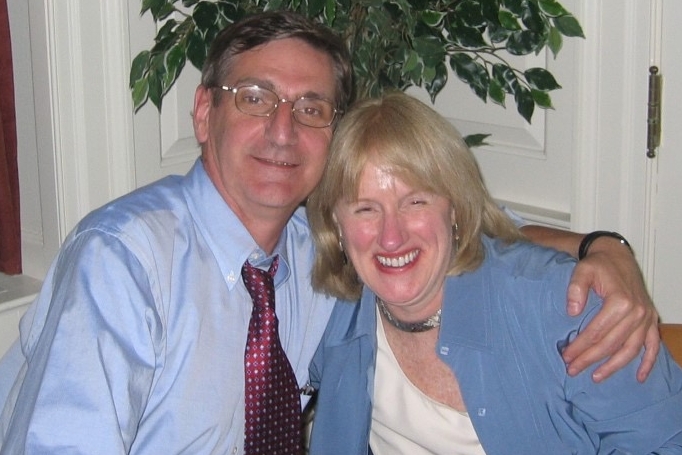
    Ms. Case and her husband, Jacques Catudal, married in 1995.

    “She set the highest editorial standards in medical publishing and expected the best from everyone around her,” a former colleague said in an online tribute. “But she also took the time to teach. … The lessons I learned from her have shaped my work ever since.”

    Ms. Case joined the American Association for Cancer Research in 2001, served two stints as head of the publishing division, and supervised its marketing campaigns, advertising sales, and product development. She retired in 2008 but continued part time as the AACR archivist, historian, and director of strategic planning until retiring for good in 2016.

    Away from her day jobs, Ms. Case was past president of the Society for Scholarly Publishing and what is now the Council of Science Editors. She also served on boards and committees for the American Medical Association, the American Chemical Society, the American Heart Association, and the International Committee of Medical Journal Editors.

    Even in retirement, she continued to work as a board member, writer, researcher, and historian for the Haverford Township Historical Society. She served on the Haverford Township Historical Commission, was a member of the Historical Society of Pennsylvania, chaired the Friends of the Polo Field, and helped establish the Brynford Civic Association.

    Ms. Case graduated from Radnor High School and Pennsylvania State University.

    “She was always busy, always involved with some project,” said her husband, Jacques Catudal. She edited his published academic papers, he said, and routinely marked up her two sons’ school reports in red ink for years.

    In 2019, she won a historic preservation award from the Heritage Commission of Delaware County. “She was an endlessly inspiring woman whose intelligence was matched only by her sharp wit and her extraordinary cultural sensitivity,” a friend said in a tribute.

    Kathleen Ann Case was born Sept. 13, 1945, in Westfield, N.J. The youngest of three children, her family moved to Omaha, Neb., and then Radnor when she was young.

    She graduated from Radnor High School, studied journalism at Pennsylvania State University, and earned a bachelor’s degree in English in 1967. She was a reporter and editor for the Penn State student newspaper and so active that school officials waived their prohibition of female students living alone off campus so she could reside near the paper’s office. In 1987, she earned a master’s degree in technical and science communication at Drexel University.

    Ms. Case (second from left) enjoyed time with her family

    She married D. Benjamin van Steenburgh III, and they had sons Ben and Jason. After a divorce, she married Peter Moor. They divorced, and she married Catudal in 1995.

    Ms. Case raised her sons as a single mother in Avondale, Chester County, for years and moved to Bryn Mawr in 1979. She read voraciously about history, collected antiques, and enjoyed travel, classic rock, and Irish folk music.

    She rode horses, was an expert archer, and followed the local sports teams. She tended her garden and investigated her genealogy.

    She liked to refinish and paint furniture and discuss current events. She and her husband camped, hiked, and canoed all over the world.

    Ms. Case enjoyed hiking and the outdoors.

    She also dealt with metastatic breast cancer and three heart attacks. “She always gave as much honesty, opinion, perspective, experience, literary acumen, word knowledge, help, advice, comfort, and love as could be needed,” said her son Jason.

    Her husband said: “She was brilliant and extremely funny. She was an organizer and always giving of herself.”

    In addition to her husband, sons, and former husbands, Ms. Case is survived by four grandchildren, a sister, a brother, and other relatives.

    A celebration of her life was held earlier.

    Donations in her name may be made to The American Association for Cancer Research, 615 Chestnut St., 17th Floor, Philadelphia, Pa. 19106; and the Haverford Township Historical Society, P.O. Box 825, Havertown, Pa. 19083.

    Ms. Case (right) rode horses, was an expert archer, and followed the local sports teams.
  • Philly radio shuffle: Paul Kelly takes over Matt Cord’s WMGK slot

    Philly radio shuffle: Paul Kelly takes over Matt Cord’s WMGK slot

    The sudden death of Pierre Robert has forced a Philly radio shuffle, with veteran host and Sixers PA announcer Matt Cord returning to 93.3 WMMR to take over the midday show, which Robert hosted for 44 years.

    Taking over Cord’s morning show at 102.9 WMGK will be another radio veteran — the versatile Paul Kelly, who’s been a utility infielder at the station since 2019, hosting just about every shift.

    Now Kelly will take over WMGK’s morning show, the former home of famed Philly radio host John DeBella, who retired in 2023.

    Both Cord and Kelly will begin their new hosting gigs Monday.

    “This has been a dream come true — rocking in the same building I visited on my bike as a kid,” Kelly said in a statement. “It’s been amazing working alongside the personalities I grew up listening to — Matt Cord, Tony Harris, John DeBella, Debbi Calton, and Andre Gardner!”

    Kelly, a Philadelphia native, has been working on the air since 1989, hosting shows in Atlantic City, Wilkes-Barre, Scranton, and Poughkeepsie, N.Y. He also runs his own radio consultancy firm and is a founding member of Kelly Music For Life, a nonprofit that turned an old retail store in Havertown into the Kelly Center, a home for concerts, festivals, and shows.

    “Paul’s deep Philadelphia roots, his lifelong love of classic rock, and the genuine connection he’s built with our listeners over the years make him the ideal choice for mornings on WMGK,” said program director Chuck Damico. “He understands this city, he understands this music, and he brings an energy and authenticity that resonate with our audience every time he cracks the mic.”

    Pierre Robert, seen here broadcasting on WMMR in 2017.

    Robert, 70, was found dead in his Gladwyne home on Oct. 29 after failing to show up for his midday show. The cause of Robert’s death was not disclosed and officials don’t plan to release additional information. Caroline Beasley, the CEO of WMMR’s parent company, Beasley Media Group, said foul play was not suspected.

    “Everything seemed to be natural,” Preston Elliot said on air following Robert’s death. “It just appears he passed overnight.”

    Robert was beloved by musicians, who are hosting a memorial concert in his honor at the Fillmore on Dec. 17, with a portion of the proceeds going to MANNA, the Metropolitan Area Neighborhood Nutrition Alliance.

    The show will feature bands and musicians near and dear to the former WMMR host’s heart, including the Hooters, Brent Smith and Zach Meyers of Shinedown, Lizzy Hale and Joe Hottinger of Halestorm, and Ed Roland of Collective Soul.

    “Nobody replaces Pierre — let’s make that clear,” Cord said in a statement. “I promise to carry his amazing spirit into the studio bearing his name and do my best to make him proud.”

  • Did a $10M bribe break the soul of America? | Will Bunch Newsletter

    The sense of loss that has permeated 2025 struck again this weekend when we learned of the sudden death of a Philly journalism legend, Michael Days, who guided the Philadelphia Daily News during most of its last dozen freewheeling and Pulitzer-winning years before we merged with The Inquirer in 2017. He was just 72, far too young. The top-line of Mike’s obituary was how, as the first African American to lead a newsroom in America’s founding city, he paid it forward by mentoring the next generation of rising Black journalists. But people like me who worked for him remember him more simply as the wisest and most empathetic human being we ever had as a boss. He leaves right when the nation’s newsrooms need decent souls like Mike Days more than they ever did.

    If someone forwarded you this email, sign up for free here.

    What a $10M bribe rumor says about Trump, Middle East peace, and America’s fall

    President Donald Trump talks with Egypt’s President Abdel-Fattah el-Sissi during a summit to support ending the more than two-year Israel-Hamas war in Gaza after a breakthrough ceasefire deal, Oct. 13 in Sharm El Sheikh, Egypt.

    The thing about being a 79-year-old president is that sometimes you just blurt stuff out, with no filter as to whether your words might be embarrassing, undiplomatic — or potentially incriminating.

    Consider the case of Donald John Trump, the 47th U.S. president and the oldest one on the day of his election. Last week, in what may prove to be a fleeting moment of triumph as Trump celebrated a Gaza peace deal that included the release of 20 Israeli hostages, POTUS arrived at an Egyptian resort town for a Middle East summit. He kicked off the day with a one-on-one sit-down with Egypt’s strongman ruler, Abdel-Fattah el-Sissi.

    “There was a reason we chose Egypt [for the summit] because you were very helpful,” Trump said as a gaggle of reporters and photojournalists entered their meeting room.

    Really? Helpful in what way?

    “I want to thank you,” the American president told Sissi, who seized power in a 2013 coup. “He’s been my friend right from the beginning during the campaign against Crooked Hillary Clinton. Have you heard of her?”

    Here Trump was pushing, ever so absurdly, for the Nobel Peace Prize, and then he had to spoil it all by saying somethin’ stupid like, you bribed me. Well, he almost spoiled it, if more journalists — aside from MSNBC’s brilliant Rachel Maddow, who seized on the remark hours later — had grasped the potential import of this presidential prattle.

    It’s certainly legal, if gross, for Trump to be close pals with Sissi, even if Human Rights Watch reports that the Egyptian dictator is “continuing wholesale repression, systematically detaining and punishing peaceful critics and activists and effectively criminalizing peaceful dissent.” What would not be legal is the Middle Eastern nation interfering in the 2016 election, in which Trump narrowly defeated Clinton in the handful of swing states that tipped the Electoral College.

    What made Trump’s comments last week so jaw-dropping is that U.S. federal investigators worked for several years trying to prove exactly that scenario. In August 2024, days after Trump was nominated by the GOP for his second reelection bid, the Washington Post reported that the Justice Department investigated a tip that Sissi’s Egypt provided Trump with $10 million the candidate desperately needed in the 2016 homestretch to defeat Clinton. That happened right before Trump, as 45th president, reopened the spigot of foreign aid that had been halted because of Sissi’s human rights abuses.

    It’s known that Trump did put $10 million into the campaign, which he listed as a loan. The Post in 2024 offered a tantalizing, if circumstantial, piece of evidence — that the Cairo bank had received a note from an agency believed to be Egyptian intelligence to “kindly withdraw” nearly $10 million in two, 100-pound bags full of U.S. $100 bills, five days before Trump took the oath of office.

    But the investigative trail ran cold. In 2019, then-special counsel Robert Mueller turned the matter over to Trump’s appointees in the Justice Department, who of course didn’t pursue the president’s bank records. Neither — inexplicably — did Joe Biden’s attorney general, Merrick Garland, as the statute of limitations expired in January 2022. That’s where things stood last week before Trump started blathering in Sharm El Sheikh.

    One reason I’m writing about this is the sheer frustration that Trump — yes, allegedly, possibly — might have gotten away with bribery to the point where he’s almost bragging about it in public. But I also think the mysterious case of the Egyptian bags of cash speaks to the present, dire American moment in a couple of ways.

    For one thing, it casts a light on what’s really behind what Trump hopes will be viewed as the signature achievement of his second presidency. That would be the fragile peace deal that aims to end the last two years of bloodshed in Gaza that started with the Hamas terror attack of Oct. 7, 2023 and has resulted in at least 67,000 dead Palestinians and the utter destruction of their seaside homeland.

    How did Trump get a deal that had eluded his predecessor Biden, in a region that has vexed every American president from both parties? It certainly helped that most of the power brokers with the clout and the cash to help end the fighting in Gaza are repressive strongmen — or, as Trump might call them, role models. And they all seem to speak the same language of corrupt back-scratching.

    If those bags with $10 million in greenbacks did make their way to Trump in 2017, it looks like small change in today’s cross-Atlantic wheeling-and-dealing. After all, a key go-between in the negotiations — Qatar, which has good relations with Hamas and has hosted its exiled leaders — gifted America a $400 million jet that Trump plans to use not just as Air Force One but in his post presidency, while his regime has promised to protect the Qatari dictators if they are ever attacked.

    Another key supporter of the plan is the United Arab Emirates, which also backs the UAE firm that recently purchased a whopping $2 billion in cryptocurrency from a firm owned by Trump’s family as well as the family of Steve Witkoff, the regime’s lead Middle East negotiator. At the same time, Trump’s U.S. government allowed UAE to import highly sensitive microchips used in artificial intelligence.

    Witkoff’s negotiation endgame brought in Trump’s son-in-law, Jared Kushner, who forged close ties during his father-in-law’s first term with Saudi Arabia’s murderous de facto ruler Prince Mohammed bin Salman, who pulled the levers for a $2 billion investment in a hedge fund created by Kushner despite no prior expertise.

    Those Saudi ties could prove critical to future stability in the region, and in a joint interview with CBS’ 60 Minutes Sunday night, Kushner and Witkoff made no apologies for mixing billion-dollar deals with the pursuit of world peace. “What people call conflicts of interest,” Kushner said, “Steve and I call experience and trusted relationships.”

    OK, but those “trusted relationships” are built on a flimsy mountain of cash that could collapse at any minute. Look, I’m thrilled like everyone else that 20 Israeli hostages are finally reunited with their loved ones, and to the extent Trump and his regime deserve any credit, I credit them. But the art of the deal that the president is bragging about is all about the Benjamins — more worthy of applause on the floor of the New York Stock Exchange than a Nobel Peace Prize.

    Real peace is based on hard work and trust, not Bitcoin — so is it any wonder that the ceasefire is already collapsing with two dead Israeli soldiers and fresh, lethal airstrikes in Gaza? The only thing with any currency among a rogues’ gallery of world dictators is currency, and that transactional stench has fouled everything from Cairo to K Street.

    Is it any surprise that a regime whose origin story allegedly includes bags of Egyptian cash would do absolutely nothing when it was told that its future border czar, Tom Homan, was captured on an audiotape accepting $50,000 in a fast-food bag from undercover FBI agents who said they wanted government contracts?

    In hindsight, the failure to pursue that report of the $10 million Egyptian bribe opened up a floodgate of putrid corruption, wider than the Nile. It signaled a sick society where everything is for sale — even world peace — but nothing is guaranteed.

    Yo, do this!

    • The 1970s and ‘80s are having a cultural moment right now, and this boomer is here for it! On Apple TV (they’ve dropped the “+,” probably after paying some consultant $1 million for that pearl of wisdom) comes the long-awaited five part docuseries about the life and times of filmmaker Martin Scorsese, the savior who rose from NYC’s mean streets to give us Goodfellas, Raging Bull, Taxi Driver, and so much more. Watching Mr. Scorsese is going to make the eventual death of the baseball season so much easier to take.
    • The earthy, urban musical equivalent of Scorsese would have to be Bruce Springsteen, who has been marking the 50th anniversary of his breakthrough Born to Run LP with all kinds of cool stuff, capped with Friday’s long-awaited release of the first-ever biopic about “The Boss,” Deliver Me from Nowhere. Staring The Bear’s Jeremy Allen White as Springsteen, the film’s unlikely narrative — focusing on the making of 1982’s highly personal and acoustic Nebraska as the rock star seeks release from a bout of depression — sounds like exactly the uplift that America needs right now.

    Ask me anything

    Question: As someone living in Ireland and looking across the ocean. Trump won’t be in power forever, but how is anyone going to deal with the MAGA crowd that helped elect him? That level of stupidity, hatred and racism cannot be fixed. How is [t]he USA ever going to heal? — Stephen (@bannside@bsky.social) via Bluesky

    Answer: That’s a great question, Stephen, and like most great questions there’s no easy answer. Although I’m optimistic that the 2026 midterms and the 2028 presidential election will happen and that the anti-Trump coalition that we witnessed at “No Kings” will prevail, I agree with you that it’s only a partial and temporary fix. I’d fear an Iraq-level resistance could rise up in the regions we call “Trump country.” My long-term solution would be along the lines of what I proposed in my 2022 book After the Ivory Tower Falls: Fix higher education — broadly defined as from the Ivy League to good trade schools — to made it a public good that reduces inequality instead of driving it. And promote a universal gap year of national service for 18-year-olds, to get young people out of their isolated silos. There are ways to prevent the next generation from becoming as stupid or hateful or racist as the Americans who came before them, but it will take time and patience that we seem to lack right now.

    What you’re saying about…

    Remember the Philadelphia Phillies? When I last saw you here two weeks ago, their annual postseason collapse and the fate of manager Rob Thomson was a hot topic. As expected, there was minimal response from you political junkies, and opinions were split — even before the team defied the conventional wisdom and announced he’ll be returning in 2026. Thomson’s supporters were more likely to blame the Phillies’ inconsistent sluggers, with John Braun asking “who could you hire who could guarantee clutch hits?” Personally, I’m with Kim Root: “I follow the Philly Union, who just won the Supporters Shield — that is all.”

    📮 This week’s question: Back to the issue at hand: I’m curious if newsletter readers attended the “No Kings” protest last Saturday, and what you see as the future of the anti-Trump movement. Are more aggressive measures like a nationwide general strike needed, or is the continued visibility of nonviolent resisters enough? Please email me your answer and put the exact phrase “No Kings future” in the subject line.

    Backstory on who the “No Kings” protesters really were

    Demonstrators gather for a ’No Kings’ rally in Philadelphia on Saturday.

    They clogged city plazas and small-town main streets from San Diego to Bangor on Saturday, yet the more than 7 million Americans who took part in the massive “No Kings” protest — the second-largest one day demonstration in U.S. history, behind only the first Earth Day in 1970 — seemed to mystify much of the befuddled mainstream media. Just who were these people protesting the Donald Trump presidency, and why are they here?

    Instead of a journalist, it took a sociologist to get some answers. Dana Fisher — the Philadelphia-area native who teaches at American University and is the leading expert on contemporary protest movements — was out in the field Saturday at the large “No Kings” march in Washington, D.C., collecting data with a team of researchers. She’s shared her early top-line results with me, aiming to both give a demographic and ideological snapshot and also compare Saturday’s crowd with her findings at other recent rallies.

    If you were among the 7 million on Saturday, some of this data won’t surprise you. The protesters were, on the whole, older than the average American, with a median age of 44 (compared to 38 for the nation as a whole.) Once again, the “No Kings” participants were overwhelmingly white (87%) with women (57%) in the majority. But it’s also worth noting that men (39%) were more likely to take part than earlier protests tracked by Fisher, and the 8% who identified as Latino is double the rate of Hispanic participation in the 2017 Women’s March.

    That last finding may reflect the passions of the “No Kings” protesters, who listed immigration as a key motivation at a rate of 74%, second only to their general opposition to Trump (80%, kind of a no brainer). That certainly jibed with the demonstrators at the rally I attended in suburban Havertown, who again and again mentioned the sight of masked federal agents grabbing migrants off the street as what compelled them to come out.

    Fisher’s most telling findings may have been these: The people out in the streets are mad about what they see happening to America, with 80% listing “anger” as an emotion they are feeling, trailed closely by “anxiety” at 76%. Yet few of those who spoke with her team believed that will translate into violence. The number of demonstrators who agreed with the statement that “because things have gotten so off track, Americans may have to resort to violence in order to save our country” was only 23% — lower than other protests her team has surveyed. It seems like the larger the public show of resistance to Trump’s authoritarianism, the more optimism that the path back to democracy can be nonviolent.

    What I wrote on this date in 2021

    I hate to say I told you so but… On this date four years ago, Joe Biden was still clinging to dreams of a presidential honeymoon after ousting Donald Trump in the 2020 election, but there were dark clouds on the horizon. On Oct. 21, 2021 I warned that sluggish action on key issues was starting to hurt his standing with under-30 voters. I wrote that “while the clock hasn’t fully run out on federal action around issues like student debt or a bolder approach on climate — the disillusionment of increasingly jaded young voters could change the course of American history for the next generation, or even beyond.” How’d that turn out? Read the rest: “From college to climate, Democrats are sealing their doom by selling out young voters.”

    Recommended Inquirer reading

    • I returned from a much-needed staycation this weekend by leaving the sofa and spending a glorious fall morning at the boisterous “No Kings” protest closest to home in Delaware County, which lined a busy street in Havertown. I wrote about how the protests are winning back America by getting under the skin of Donald Trump and the GOP, who can no longer pretend to ignore the widespread unpopularity of their authoritarian project.
    • Every election matters, even the ones that are dismissed as “off-year” contests. In today’s heated and divisive climate, even what used to be a fairly routine affair — the retention of sitting judges on the state and local level — has taken on greater importance. Here in Pennsylvania, the state’s richest billionaire, Jeff Yass, is spending a sliver of his vast wealth to convince voters to end the tenure of three Democrats on the state Supreme Court. The Inquirer’s Editorial Board is here to explain why that’s a very bad idea. On the other hand, some judges up for retention in the city of Philadelphia — where jurists haven’t always lived up to the promise of America’s cradle of democracy — deserve closer scrutiny. The newsroom’s Samantha Melamed revealed a leaked, secret survey detailing what Philadelphia attorneys think of some of the judges on the November ballot, and it is not pretty. The bottom line is that you need to vote this year, and subscribing to The Inquirer is the best way to stay informed. Sign up today!

    By submitting your written, visual, and/or audio contributions, you agree to The Inquirer‘s Terms of Use, including the grant of rights in Section 10.