Tag: Hunting Park

  • The first week of July is typically Philly’s most violent. This year, the holiday weekend was markedly calmer.

    The first week of July is typically Philly’s most violent. This year, the holiday weekend was markedly calmer.

    The first week of July has typically been one of Philadelphia’s most violent, with recent Independence Day weekends marked by mass shootings, police officers shot, and bursts of violence that left a dozen dead.

    But this year, amid a dramatic decline in violence and a flood of visitors to the city, the holiday weekend was noticeably calmer than in years past, offering another encouraging sign that the dramatic decline in shootings held through one of its toughest tests.

    Twenty-three people were shot from July 1 through July 7 — a slightly higher total than most weeks in 2026, but nearly half the average number of shooting victims during the same period over the last decade, according to city data. In 2021, at the height of the city’s gun violence crisis, more than 70 people were shot in that week alone.

    If the current pace continues, Philadelphia is on track to record fewer than 200 homicides for the first time since the 1960s, a remarkable turnaround from just five years ago, when nearly three times as many people were killed.

    (function(){function e(){window.addEventListener(`message`,function(e){if(e.data[`datawrapper-height`]!==void 0){var t=document.querySelectorAll(`iframe`);for(var n in e.data[`datawrapper-height`])for(var r=0,i;i=t[r];r++)if(i.contentWindow===e.source){var a=e.data[`datawrapper-height`][n]+`px`;i.style.height=a}}})}e()})();

    Philadelphia Police Commissioner Kevin Bethel said in an interview that the July Fourth weekend is historically one of the most challenging for urban police departments.

    In each of the last four years, Philadelphia’s celebrations were overshadowed by violence: Last year, 13 people were shot in South Philadelphia; nine people were struck by bullets at a teen party in Southwest Philadelphia in 2024; five people were killed at random by an armored gunman in Kingsessing the year before; and in 2022, two officers were grazed by bullets on the Benjamin Franklin Parkway, sparking a stampede of fireworks spectators.

    Bethel said he and other city, state, and federal law enforcement officials spent about two years planning for this holiday weekend, preparing for potential crises that never came.

    Anticipating hundreds of thousands of visitors for FIFA Club World Cup events and the nation’s 250th birthday celebrations, the department canceled many officers’ vacation requests over the last month and, on the Fourth, deployed more than 2,000 members of local and state law enforcement across the city, he said.

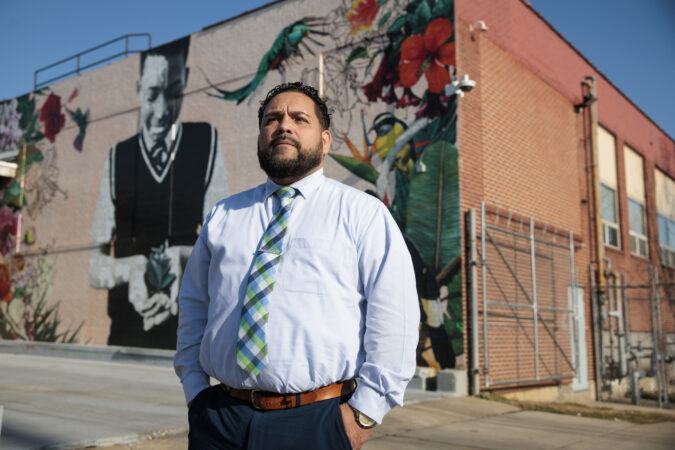
    Philadelphia Police Commissioner Kevin J. Bethel, speaks at a press conference on the details for the Roots Picnic in May 2026.

    Reinforcements from the Pennsylvania State Police and neighboring municipalities helped the city maintain staffing levels in neighborhoods that have historically seen more violence, Bethel said. Officers worked in the record-breaking heat, he said, with some starting their shifts at 7 a.m. and clocking out only after the concert on the Parkway ended at 3 a.m.

    The FBI took the lead on monitoring the skies, Bethel said, intercepting several drones that were flying illegally. (None of the drones, he said, was flying with “nefarious” intent.)

    He called the weekend a validation of the city’s planning and broader work that has contributed to the decline in gun violence.

    “I can’t tell you how many people grabbed me and said they felt welcomed and felt safe,” he said of the events over the last month. “Let’s own the win. Let’s not hide from it.”

    Bethel also said there had been no acts of violence around the approximately two dozen bars that were approved to stay open until 4 a.m. from June 11 to July 19 to accommodate crowds attending the FIFA, July Fourth, and MLB All-Star celebrations.

    “We’re seeing zero issues,” he said.

    Soccer fans gather to watch Mexico play South Africa on a giant screen during the opening day of the FIFA Fan Festival at Lemon Hill on Thursday, June 11, 2026, in Philadelphia.

    The reduction in violence over the holiday weekend fits a broader pattern. Shootings and homicides in the city began to decline in 2023, mirroring a national trend, and have continued to fall. So far this year, 90 people have been killed in homicides — less than a third of the number recorded at the same time three years ago, according to police data.

    Just as there was no clear explanation for the spike in crime that began in 2019, criminologists and law enforcement officials say, it is similarly difficult to pinpoint the reasons for its decline. But there are theories: an overall return to normal life after the pandemic, expanded community-based violence prevention programs, more arrests in shootings and homicides, and targeted prosecutions of some of the city’s most violent gangs.

    One measurable change has been the police department’s improved clearance rates, which researchers have long viewed as a potential deterrent to future violence.

    The homicide clearance rate — the share of killings solved, including arrests made this year in both new and older cases — has climbed to nearly 99%, up from about 47% in 2022. The clearance rate for nonfatal shootings has risen to about 41%, roughly double what it was in 2021.

    Bethel said those arrests take would-be shooters and victims off the streets and interrupt cycles of violence.

    “We’re impacting retaliation, we’re impacting somebody being shot again, we’re impacting someone who may shoot and kill somebody,” he said.

    Jeff Asher, a New Orleans-based national crime analyst, said because the decline is likely driven by many programs and societal changes, it is hard to know what will sustain the progress.

    “I keep expecting [the crime rate] to stop falling, and it’s just not,” he said in an interview. “So, maybe this is the new normal. We just can’t say with a ton of confidence.”

    Still, the quieter weekend was not wholly peaceful.

    Three men were killed between Friday and Monday morning, leaving families and neighbors to mourn loved ones even as the city showed signs of sustained progress.

    On Monday morning, Shawn Caddell, 32, was killed during a robbery inside a Logan beer deli, police said. And on Sunday, two men were slain in areas that have long been hot spots for shootings: Emanuel Aguirre, 27, was fatally shot in the Hunting Park section of North Philadelphia, and Donald McPhaul, 51, was gunned down on Salford Street in West Philadelphia.

    A 16-year-old in South Philadelphia was among more than a dozen people who were shot and survived.
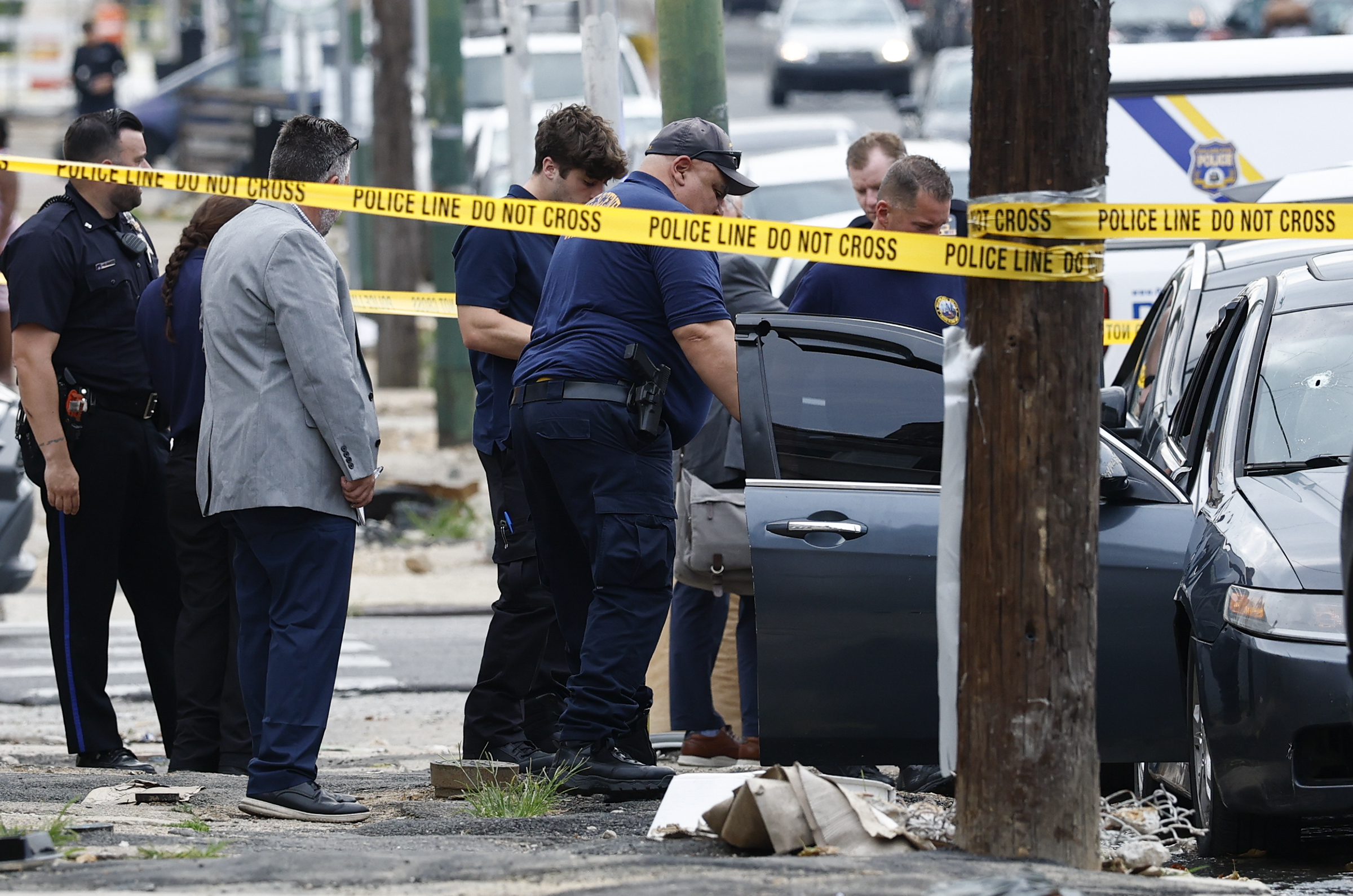
    Philadelphia police examine a car with a bullet hole after a man was fatally shot along the 500 block of East Wyoming Avenue on July 5, 2026.

    Bethel said the pockets of the city that have long experienced higher rates of violence — and that continue to see shootings, albeit fewer, today — remain a priority.

    “We are never going to give up in those communities,” he said. “We are going to keep working in those areas.”

    Recent polls have found that a majority of Philadelphians have noticed the decline and feel safer. But for residents on blocks where shootings remain a recurring threat, a citywide trend line can feel distant from daily life.

    Chantay Love, president of the victim-advocacy organization EMIR Healing Center, said the communities seeing recurring violence are still grappling with “the trauma and collateral damage that is left behind” from the last six years.

    Along the stretch of Market Street near where McPhaul was killed, more than 100 bullets were fired into a party on July 4, 2021, leaving two men dead. Earlier this year, 20-year-old Imani Ringgold was walking down the block with a slice of pizza when she was caught in the crossfire of an escalating gang feud and killed.

    Linda Days, 72, who lives in the area, said the shooting that killed McPhaul was another reminder of the violence she has come to expect since moving there seven years ago from Olney.

    Standing in her doorway on Tuesday, Days said it feels as if gunfire has become part of the soundtrack outside her home. But during the Fourth of July weekend, she said, she is especially careful to stay inside.

    “I don’t even come out to watch the fireworks,” she said.

  • Police are searching for a man who shot and killed two men and injured a third near Hunting Park Rec Center

    Police are searching for a man who shot and killed two men and injured a third near Hunting Park Rec Center

    Police have identified a man who they say shot and killed two men near the Hunting Park Recreation Center within days last month and shot and wounded a third man in May in what investigators believe are linked crimes.

    Jahylin Melchur, 21, is wanted in connection with two homicides and the shooting near the large North Philadelphia park, according to police.

    He is accused of killing 45-year-old Martin Higgins in the park on June 20. Officers found Higgins on the bleachers of the baseball field around 10 p.m. that evening suffering from a gunshot wound to the torso, police said. He was pronounced dead at the scene.

    Less than a week later, police said, Melchur shot and killed 29-year-old Sharef Holman not far from where Higgins was killed.

    Officers responded there on June 26 just before 11 p.m. and found Holman suffering from multiple gunshot wounds near the basketball courts. He was taken to Temple University Hospital, where he died a short time later.

    And on May 29, investigators said, Melchur shot a 55-year-old man in Juniata Park, about two miles from the recreation center. The victim told police Melchur had attempted to rob him before shooting him in the elbow and torso.

    Police are seeking the public’s help in finding Melchur, who they say is considered armed and dangerous and whose image, captured on surveillance footage at a Broad Street Line station, was circulated widely last week in an effort to locate him.

    Law enforcement sources said the victims were found partially clothed, and that they were looking into whether they had met the suspect through a dating app.

    Deputy Police Commissioner Frank Vanore declined to address that aspect of the investigation in a news conference last week and said police were looking into whether the incidents were related to robberies.

    Who were the victims?

    Sharef Holman’s loved ones said the 29-year-old lived a life of faith and compassion, and that he was the life of any party he attended.

    His mother, Danielle, said her son was beloved on both sides of his large family.

    “He was tall in stature, and the children in our family loved to climb him,” she said. “The reason why I start there is because Sharef had a heart for the youth.”

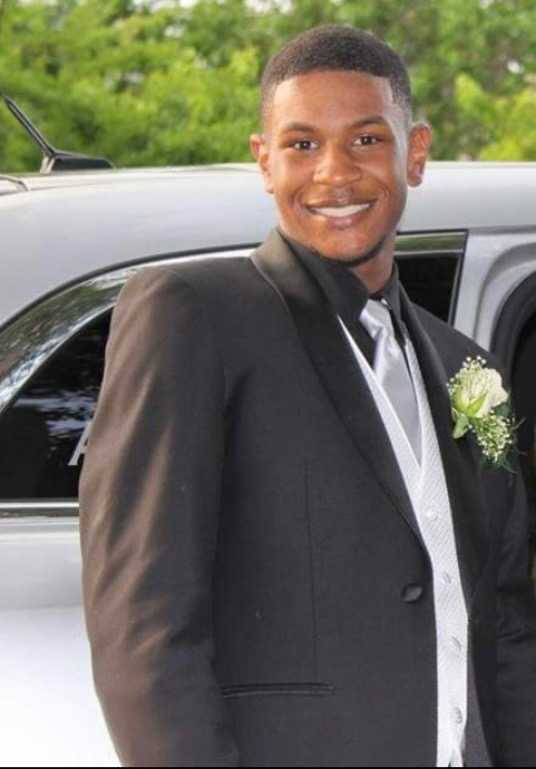
    Sharef Holman, a 29-year-old man who was shot and killed near the Hunting Park Recreation Center in June.

    Holman, who was born in Philadelphia and graduated from Samuel Fels High School in Crescentville, loved playing the saxophone and dancing, his mother said. He excelled in his school’s musical theater program, and once played Ebenezer Scrooge, the lead role in A Christmas Carol.

    He had most recently worked at The Belvedere nursing home in Chester, where he assisted residents with recreational programs, and he tutored schoolchildren with the Greenhouse Project, a nearby Christian nonprofit.

    For a time, his mother said, Holman struggled with drug addiction, and she remembers the pride she felt when he graduated from a rehab program two years ago.

    “He had been fighting addiction for some years, and this last one was the one where he was the most successful,” she said, adding that her son’s progress allowed him to get an apartment of his own.

    Danielle Holman said she and her family are planning a celebration of her son’s life this weekend. As they prepare to honor and remember him, she said, they hope police will find and bring their son’s killer to justice.

    The family of Martin Higgins, who was shot and killed days before Holman, declined to be interviewed as they deal with their loss.

    Higgins, 45, was a graduate of Temple University’s business school and worked as an inspector for the city’s Community Life Improvement Program, according to his obituary.

    He had a “kind heart, generous spirit, and unwavering support for those he loved,” the obituary said, and he “was the person who showed up when someone needed him, always making time for family and friends no matter what was going on in his own life.”

    Police ask that anyone with information about Melchur contact the homicide unit at 215-686-3334 or submit an anonymous tip by calling 215-686-TIPS (8477).

  • Three men have been shot near Hunting Park Rec Center over the last month in what appear to be linked crimes, officials say

    Three men have been shot near Hunting Park Rec Center over the last month in what appear to be linked crimes, officials say

    Philadelphia police are investigating whether three men shot near the Hunting Park Recreation Center in the last month — two of them fatally and just six days apart — were targeted by the same gunman, according to law enforcement sources.

    The two men killed this month were found partially undressed and shot in the torso inside the large North Philadelphia park, said the sources, who spoke on the condition of anonymity to discuss an ongoing investigation. A third man was shot in late May and survived.

    Police believe the same person was involved in both killings, the sources said, and are looking into whether the men had met the suspect through a dating app.

    Deputy Police Commissioner Frank Vanore said investigators have identified a person of interest interest in the case, a man in his late teens or early 20s, after capturing his image on surveillance footage as he entered and exited a Broad Street Line station.

    The man — whom investigators did not identify — is considered armed and dangerous, Vanore said at a news conference Monday.

    Philadelphia police said this man is a person of interest in the shooting deaths of two men near the Hunting Park Recreation Center in separate incidents within the last 10 days.

    “All three incidents are perpetrated very similarly, in the same geographic area,” he said. “We’re believing now that they’re all connected and being done by the same person.”

    On June 20, officers responded to the park, at 1101 W. Hunting Park Ave., shortly after 10 p.m. and found Martin Higgins, 45, on the bleachers of the baseball field, suffering from a gunshot wound to the torso. He died at the scene, police said.

    Then, on June 26, police responded and found another man just before 11 p.m. suffering from multiple gunshot wounds near the basketball courts. Police have not yet identified the man but said he was 29-years-old.

    Police now believe a third shooting last month is linked to the gunman.

    In that May 29 incident, a 55-year-old man was shot in the elbow and torso in the park just before 10 p.m. The victim later told investigators that a man wearing all black who appeared to be in his 20s approached and told him that he was being robbed, according to Vanore.

    Vanore said investigators had yet to determine a motive tying the cases together, though they believe robbery is the motivation behind the shooting that was not fatal.

    Asked whether the victims had met the suspect on a dating app — a detail law enforcement sources said they are investigating — Vanore declined to comment, citing the ongoing investigation.

    “If that is [part of the case], that’s something we’ll have to develop moving forward,” he said. “But at this point we know that this individual appears to be preying on people.”

    Higgins’ relatives could not be immediately reached for comment Monday. An obituary shared online said he was a graduate of Temple University’s business school and worked as an inspector for the city’s Community Life Improvement Program.

    “Marty was known for his passion for clothing, style, and self-expression,” the obituary said. He had a “kind heart, generous spirit, and unwavering support for those he loved” and “was the person who showed up when someone needed him, always making time for family and friends no matter what was going on in his own life,” his family wrote.

    He was one of six children and was an uncle to many nieces and nephews.

    Meanwhile, as investigators continue to search for the gunman, they are asking anyone with information about the crimes to contact the homicide unit at 215-686-3334 or submitting an anonymous tip at 215-686-TIPS (8477).

  • Project HOME adds new beds for homeless patients leaving the hospital

    Project HOME adds new beds for homeless patients leaving the hospital

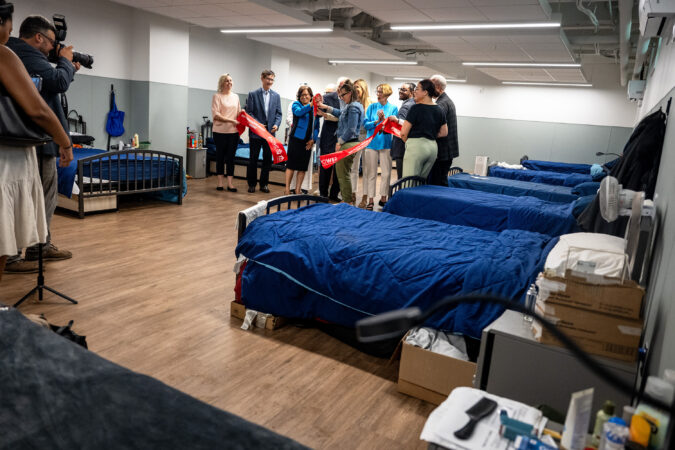
    Project HOME is adding 20 beds to a Hunting Park shelter to house hospital patients who have nowhere to go once they’re discharged.

    The new center, Hawthorne House Respite, expands the respite beds available at the housing nonprofit’s Sacred Heart Recovery Residence on Old York Road.

    Renovations to the building, a former nursing home for cancer patients run by Dominican nuns, added 20 beds in dormitory-style housing — 10 for men, 10 for women — and cost $3.4 million. Funds came in part from $2.3 million raised at the behest of Jon Bon Jovi, a longtime Project HOME collaborator, at the organization’s 35th anniversary gala in 2024.

    “We can’t stress enough how much housing is healthcare, and that respite beds at every level is so important as part of the ecosystem,” said Donna Bullock, Project HOME’s CEO, after a ribbon-cutting ceremony for the new beds Wednesday.

    “People need different levels of care for healing, different levels of housing for stability.”

    Sacred Heart, which also offers longer-term housing for people in recovery, already had 10 respite beds for residents.

    Now, providers can refer more patients directly from the hospital to Sacred Heart. The program is part of the Project HOME Collaborative, a partnership to address homelessness and substance use recovery with Jefferson Health, Penn Medicine, Temple Health, and Prevention Point.

    Project HOME officials say respite beds are in high demand and short supply across Philadelphia. Another respite program run by the Public Health Management Corporation in northwest Philadelphia offers 40 beds for patients with higher-level medical needs.

    “It’s not enough,” Bullock said.

    Gaps in the healthcare, shelter, and addiction treatment systems often make it difficult for homeless patients to heal after a hospital stay.

    Inpatient addiction rehabs and shelters often do not have the capacity to care for patients with ongoing medical needs, while hospitals cannot sustain long-term care for patients who have recovered enough to be discharged.

    “We know that recovery doesn’t stop when we discharge you and send you out into the community. Too often, individuals who are homeless face impossible challenges after they are discharged,” said Steve Carson, Temple Health’s senior vice president of population health.

    Patients placed in respite beds say such programs are crucial to their recovery and continued stability. Amber Moon arrived at Sacred Heart two years ago after she developed endocarditis from injection drug use, resulting in two heart surgeries.

    After months in the hospital, she was well enough to leave — but still needed support to heal. At Sacred Heart, staff arranged rides to doctors’ appointments and helped her navigate new medication regimens. Moon relished the opportunity to continue her recovery outside of a hospital room, surrounded by other residents who’d survived similar experiences.

    “I was happy that I was around other people — not just the girls that I was staying with, but staff that understood what I was going through,” she said. “They treat you with humanity, like a regular person.”

    Now a certified recovery specialist who helps other people with addiction navigate treatment, Moon is set to move into her own apartment soon.

    “I‘m very grateful to have met all the people I’ve met, and been through what I’ve been through, because now I’m able to help others who think that there’s no chance,” she said. “There always is.”

  • Lincoln Drive and dozens of other Philly roads get $13 million from PennDot

    Philadelphia is getting $13 million to support six traffic-safety projects in Philadelphia, courtesy of speeders caught and fined by automated enforcement cameras.

    The Pennsylvania Department of Transportation announced the grants Wednesday for an array of city projects, including $2 million for traffic-calming measures on Lincoln Drive between Kelly Drive and Wayne Avenue.

    Some of that money will help pay for speed humps at 100 additional public, parochial, and private schools in the city, PennDot said.

    Since taking office in 2023, the Shapiro administration has invested $49.7 million in city traffic-safety projects, all from revenues raised by speed cameras.

    Calming speeders

    Under the automated speed-enforcement program, grants are plowed back into the communities that generated the revenue. Philadelphia is so far the only municipality in the state where speed cameras are authorized.

    Next week, the Philadelphia Parking Authority is activating speed-enforcement cameras in five school zones under an expansion of the program.

    Pennsylvania also has automated speed enforcement in highway work zones, but that revenue goes to the Pennsylvania State Police for extra patrols and more troopers, the turnpike for safety projects and speeding counter-measures, and the general treasury.

    Lincoln Drive improvements

    Fed-up West Mount Airy residents pushed state and local officials for years to reduce speeding, aggressive driving, and near-daily crashes on and near Lincoln Drive, which has hairpin curves and a posted speed limit of 25 mph, and thick commuter traffic zipping through dense neighborhoods.

    It was a high-profile instance of Philadelphians rallying around and demanding projects from the city’s Complete Streets program, a road-design approach that seeks to make roadways safer for all users, including pedestrians and cyclists, as well as drivers of motor vehicles.

    The new grant is meant to continue traffic-safety work on Lincoln Drive that began a couple of years ago.

    That includes speed humps, speed slots, new phosphorescent paint, flexible lane delineators, a smoother merge point where the road narrows, and marked left-turn lanes.

    “It’s made a huge difference,” said Josephine Winter, executive director of the West Mount Airy Neighbors civic group, which organized residents.

    “People that live along Lincoln Drive are feeling positive,” she said — though there is a split between people who are angry at what speed bumps have done to their cars’ undercarriages and those who support what they say are life-saving improvements.

    “The city was wonderful, very responsive,” Winter said. “We’re been fortunate to get something done here.” Next up: working with other Northwest residents to get improvements on side streets, Wissahickon Avenue, and others.

    Other grants

    • $1.5 million for planning work to upgrade traffic signals, better lane and crosswalk markings, and intersection modifications.
    • $5 million for design and construction of safety improvements along commercial and transit corridors. Those include curb extensions, concrete medians, bus boarding bump-outs, and new crosswalks. Locations include: Frankford Avenue (Tyson Avenue to Sheffield Avenue); 52nd Street (Arch Street to Pine Street); Hunting Park Avenue (Old York Road to 15th Street); and Germantown Avenue (Indiana Avenue to Venango Street).
  • Lou Capozzoli, steward of Ray’s Happy Birthday Bar in South Philly, has died at 86

    Lou Capozzoli, steward of Ray’s Happy Birthday Bar in South Philly, has died at 86

    Lou Capozzoli, 86, of Southwest Philly, a dive bar owner and band front man with a penchant for telling jokes, died Sunday, Feb. 1, after battling a brief illness at Mercy Fitzgerald Hospital while surrounded by family.

    Mr. Capozzoli, born April, 4, 1939, was just one year younger than the bar he would eventually take over at the intersection of East Passyunk Avenue and Federal Street, then called Ray’s after the nickname bestowed on his father, Anthony.

    Almost immediately, the bar became the center of Mr. Capozzoli’s life. He grew up in the apartment upstairs and as a toddler would sit quietly on the bar downstairs, eating cornflakes, while his mom poured beers. His dad, meanwhile, would wish every customer a happy birthday, even if it wasn’t theirs to celebrate.

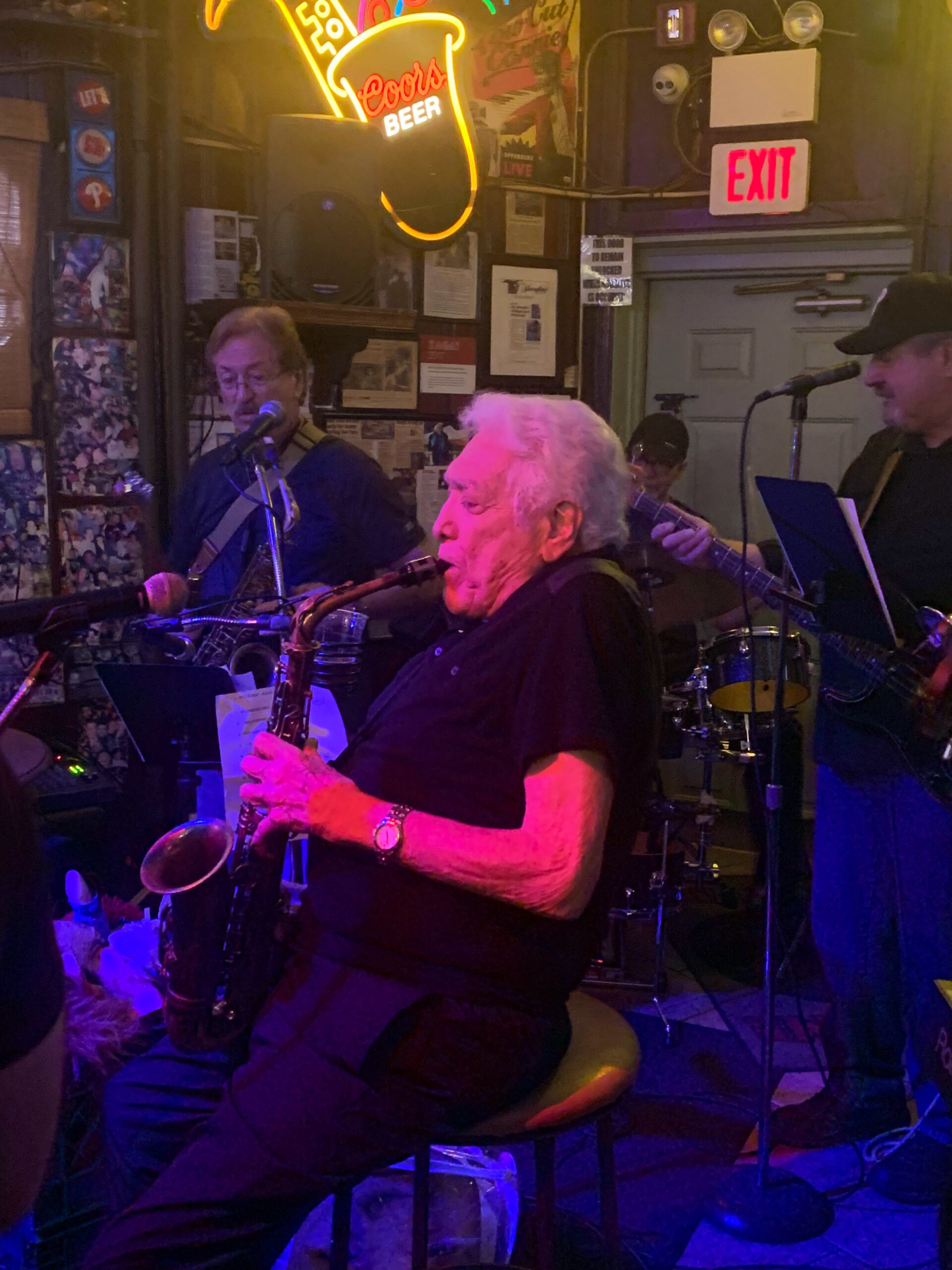
    It was a gesture that stuck with Mr. Capozzoli, who would go on to spend the rest of his life doing whatever he could to earn smiles from strangers, whether it meant serving birthday shots of cake-flavored vodka with a candle or performing to crowds as a singer and saxophonist across Las Vegas, the Jersey Shore, and South Philly.

    Mr. Capozzoli with a drawing of his father, Anthony “Ray” Capozzoli, who opened Ray’s Happy Birthday Bar in South Philadelphia in 1938. Mr. Capozzoli took over the bar when his father died in 1997.

    “That’s all he wanted, for his father to be proud of him,” said Rose Capozzoli,Mr. Capozzoli’s wife.

    And he would be, Rose is certain. Mr. Capozzoli took over the bar when his father died in 1997, rechristening it Ray’s Happy Birthday Bar in honor of his dad’s slogan. Under his stewardship, Ray’s would go on to become the gold standard of Philly dive bars, known for $4 citywides, Friday night karaoke, staying open on Christmas, and an unwavering adherence to theme. Mr. Capozzoli would call regulars on their birthdays to wish them well and maintained a calendar of seemingly all the birthdays in the world to help his staff keep tally on the outdoor chalkboard.

    As a boss, Mr. Capozzoli was “pretty silly,” said bartender T.C. Cole, who also played guitar in Mr. Capozzoli’s band. “He would call you at 1:45 in the morning when you’re trying to close just to tell you a joke.”

    The inside of Ray’s Happy Birthday Bar. Mr. Capozzoli was known for calling regulars on the mornings of their birthdays.

    If jokes were a currency, Mr. Capozzoli was a billionaire, friends and family said. He’d fire them off incessantly — during closing shifts, band performances, family dinners — and had enough discretion to whisper the most risqué in your ear. Mr. Capozzoli’s style was modeled after that of Buddy Hackett and Rodney Dangerfield, his favorite comedians, but the punch lines didn’t matter as much his delivery.

    Mr. Capozzoli “would laugh with the person he was telling the joke to,” his son Anthony Capozzoli, 55, said. “If you weren’t laughing with the punch line, you were laughing at how much he enjoyed getting to it.”

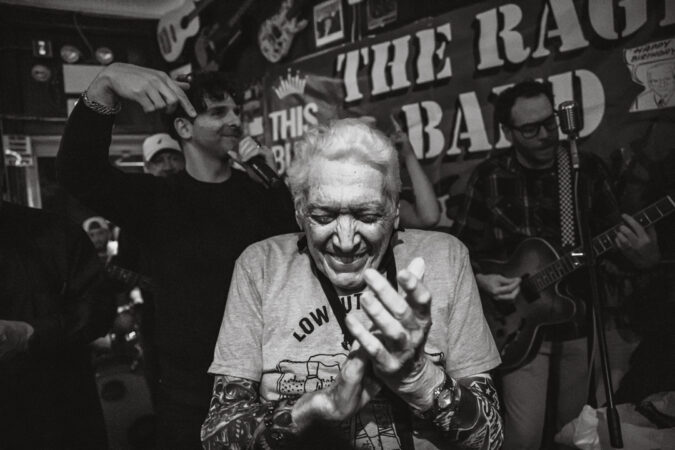
    More recently, Anthony said, his father would call him just to workshop material, most of which isn’t fit to print. Mr. Capozzoli’s favorite jokes were set to music in 2023 for a five minute-long comedy track as part of a studio EP for the Rage Band, the seven-piece group that Mr. Cappozoli sang with for 41 years alongside a rotating cast of characters.

    Low Cut Connie front man Adam Weiner recorded the EP. He and Mr. Capozzoli grew close after Weiner played a gig at Ray’s in 2012, bonding over their shared love of captivating a crowd.

    “Not everyone is about joy when they perform … People care about their ego, people care about fashion,” Weiner said. “But Lou was always about fun, just radiating 100% joy.”

    Mr. Capozzoli started performing professionally when he was 14, sneaking into clubs to accompany bands on the alto sax. The stage was a calling that helped him fall in love. It also took him to the edge of celebrity.

    After serving in the military in the early 1960s and playing for Sophia Loren as part of an army band, Mr. Capozzoli told jokes and sang standards at the Stardust and Flamingo casinos in Las Vegas. At the peak of his fame, he opened for Diana Ross at the Riptide Club in Wildwood in 1965. That same year Mr. Capozzoli met his wife, Rose, who was charmed by his talents at another Wildwood concert. They wed three years later.

    Mr. Capozzoli bonded with Low Cut Connie’s Adam Weiner over their shared love of performing.

    Mr. Capozzoli’s steadiest gig began in 1984 with the Rage Band, once the house act for Sea Isle City’s now-shuttered Springfield Inn. There, Mr. Capozzoli settled into his larger-than-life style, commanding a crowd of roughly 1,000 people a night on summer weekends. He’d serenade Burt and Ernie puppets for a medley of Sesame Street songs and show tunes, or don outlandish masks for a Mummers tribute. Both brought down the house, but never as much as when Mr. Capozzoli would cover “Those Were The Days” or ”Sweet Caroline,” which were always punctuated with jokes.

    “I call him the showman’s showman,” said Brian Saunders, one of band’s saxophonists. Tony DiMattia, a bassist for the band, concurred: “He didn’t just entertain the crowd. He entertained us as musicians.”

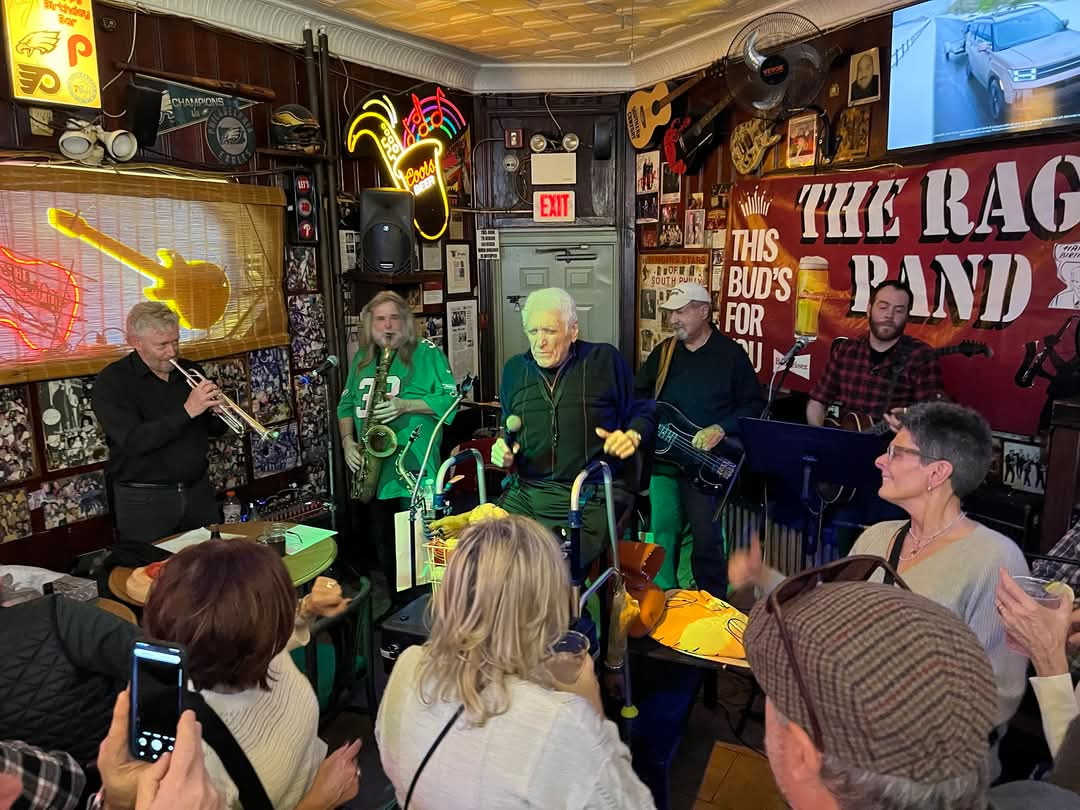
    The Rage Band stopped their Sea Isle residency in 1999, only to pick up at new one at Ray’s in 2003, where they have performed on the first Saturday of every month from October through April ever since. The band never rehearsed, DiMattia said. Mr. Capozzoli’s stage presence could smooth over just about any kink.

    Mr. Capozzoli played in The Rage Band for 42 years, performing for packed houses at the Springfield Inn in Sea Isle City and Ray’s Happy Birthday Bar.

    “There is no Rage Band without Lou,” Saunders said. “He was the glue that kept us together.”

    Outside of music, Mr. Capozzoli’s greatest loves were his wife and children. He was a dedicated father who enjoyed cooking large French toast breakfasts, organizing tee ball games, and ensuring the family always had a rescue dog to snuggle. Laughter — and his wife’s minding — kept Mr. Capozzoli going, even as the decades of working in a smoking bar wore on him.

    “I don’t think I’ve ever seen Lou angry,” said Saunders. “I don’t think he’d ever not had a smile on his face.”

    Mr. Capozzoli was an accomplished saxophonist who started playing professionally when he was 14 years old.

    In addition to his wife, Rose, and son, Anthony, Mr. Capozzoli is survived by his daughters, Dyan Wixted and Luann Capozzoli, and three grandchildren: Louis, Daniel, and Delaney.

    Visitation with the family will be held from 6 to 9 p.m. Feb. 6, and from 9:30 to 11 a.m. Feb. 7 at Pennsylvania Burial Company, 1327-31 S. Broad St., Philadelphia, Pa., 19147. Services will follow Saturday at 11 a.m.

    Donations in Mr. Capozzoli’s name may be made to an animal shelter of your choosing or ACCT-Philly, c/o Development, 111 W. Hunting Park Ave, Philadelphia, Pa., 19140. Alternatively, his wife said, stories about Mr. Capozzoli or jokes he would’ve enjoyed can be sent to the family via email at rayshappybirthdaybar1@gmail.com.

  • ‘He reached his limit.’ Immigrant father of 5-year-old with brain cancer accepts deportation to Bolivia after months in ICE detention.

    ‘He reached his limit.’ Immigrant father of 5-year-old with brain cancer accepts deportation to Bolivia after months in ICE detention.

    In the end, the pressure on the family simply became too great.

    Johny Merida Aguilara, the detained immigrant father of a 5-year-old son with brain cancer, has decided to drop efforts to stay in the United States and accept deportation to Bolivia.

    His wife and three American-citizen children will also leave the country, though they are not required to do so, departing their Northeast Philadelphia home to reunite with their husband and father in the central Bolivian city of Cochabamba.

    The decision to go comes as Merida Aguilara, 48, approaches his fifth month in immigration detention ― with no end in sight. The family’s forced separation has been emotionally devastating, friends and supporters said. And with Merida Aguilara in custody and unable to work, the financial situation for his wife and children was growing desperate.

    Merida Aguilara had been a main caregiver for his son, Jair, who has been treated at Children’s Hospital of Philadelphia, and whose future is now deeply uncertain. Quality healthcare can be lacking in Bolivia, where the U.S. State Department warns that “hospitals cannot handle serious conditions.”

    Jair has autism and a severe eating disorder, surviving on PediaSure nutrition drink delivered through a plastic syringe. He generally would accept food only from his father, and Merida Aguilara would leave work during the day to feed his son.

    The father was arrested by ICE for an immigration violation during a September traffic stop on Roosevelt Boulevard near Hunting Park Avenue, having lived in the United States without official permission for nearly 20 years.

    “I am tired,” Gimena Morales Antezana, his wife, said in an interview with The Inquirer. “We have been trying to survive, but it is difficult with the children because they miss their dad so much.”

    U.S. Immigration and Customs Enforcement officials did not reply to a request for comment on Thursday.

    The family has received strong community support, Morales Antezana said, but that could not continue indefinitely, and at this point she can no longer afford rent, water, or heat,

    Son Matias, 7, cries himself to sleep most nights, calling out for his father to come home. His sadness deepened after Christmas, turning into anger when Morales Antezana finally revealed that his father was not away on an extended work trip, but was being held by immigration authorities at the Moshannon Valley Processing Center, an ICE facility in central Pennsylvania.

    Gimena Morales Antezana and Johny Merida Aguilar’s wedding photos hang on the wall at their home in Northeast Philadelphia.

    Daughter Melany, 13, now feels unsafe in the U.S., her mother said. Teenage insecurities have bloomed into a persistent sense of danger, and she told her mom that leaving might be the only way to feel comfortable again.

    Jair cries inconsolably every time he sees or hears his father on the phone, asking why his dad can’t be home, Morales Antezana said.

    All three children were born in this country and are U.S. citizens by law.

    Some good news came this month. Doctors told Morales Antezana that Jair’s brain tumor had not grown, allowing time to try to find care in Bolivia.

    “This is going to be a constant struggle every day until God decides,” Morales Antezana said. “It’s scary to think that if something happens we don’t have a hospital to take him to, but knowing his dad will be there makes it a little lighter to bear.”

    Morales Antezana, 49, had to stop working in 2020 to handle the nearly full-time demands of Jair’s health, taking him to see specialists and undergo treatments while also caring for Melany and Matias.

    Jair Merida, 5, posed for a portrait at home in October. His father, Johny Merida Aguilar, was stopped and arrested by ICE in September.

    She has not been ordered deported while she has pursued legal means to stay in the country. Mother and children plan to voluntarily depart this month, while the precise timing of Merida Aguilara’s deportation is uncertain.

    “He couldn’t do it anymore; he reached his limit,” said Philadelphia immigration attorney John Vandenberg, who represents the family. “It’s a tough environment in the jail.”

    Vandenberg won relief in the U.S. Court of Appeals for the Third Circuit, which issued a Sept. 30 order to temporarily block Merida Aguilar’s deportation. The lawyer also applied on Morales Antezana’s behalf for a T visa, which can bestow a path to citizenship on victims of human trafficking and their families.

    But time has gone on with no sign from the government as to when that visa application might be considered.

    Merida Aguilar and his wife were given permission to legally work in the U.S. under her 2024 claim for asylum, which could enable both to live here permanently if granted. The Trump administration, however, has made it increasingly difficult for people to succeed on those claims.

    Vandenberg said Merida Aguilar has no criminal record in the U.S., and Bolivian authorities provided documentation showing he had committed no offenses in that country.

    His efforts to remain in the U.S. have been complicated by a previous deportation, when he tried to enter the U.S. east of San Diego in 2008. Immigration officials sent him to Mexico, but Merida Aguilar secretly crossed back into the U.S. almost immediately.

    Now he and his wife want their children to be in Bolivia in time for the new school year, which starts in February.

    “I want to make sure our kids can study,” Morales Antezana said, “so they can decide who they want to be in the future, and come back [to the U.S.] as professionals with a different story than us.”

    Her parents, and a son from a previous relationship, are eager to see them in Bolivia.

    She said she is looking forward to what many people might take for granted ― hugging her partner, watching him play with their children, enjoying a meal as a family. That helps ease the pain of saying goodbye to a city she sees as home and to the friends who tried to help.

    “They kept me strong and helped me not get more depressed,” Morales Antezana said. “I’m going to miss everything about Philadelphia. It hurts a lot to have to leave because there are good people here.”

  • After a shooting in Hunting Park, a police officer fired at the suspect before arresting him

    After a shooting in Hunting Park, a police officer fired at the suspect before arresting him

    A Philadelphia police officer opened fire on a man Monday night after the man critically injured another person in Hunting Park, police said. The man, police said, was not hit.

    Officers were called about 8:30 p.m. to a Sunoco gas station in the 4100 block of North Broad Street for a report of a man with a gun, according to police Tuesday.

    When they arrived, police said, the officers saw multiple men arguing. The men quickly left the gas station and walked toward the intersection of Broad and Jerome Streets, where the fight turned physical, police said.

    A 29-year-old man drew a handgun and shot another man in the chest and groin. One of the officers fired at the alleged shooter, police said, but did not strike him.

    The alleged shooter ran away, but the officer caught and arrested him in the 1300 block of Jerome Street, police said. Nearby, beneath a parked vehicle, officers found a 9mm handgun.

    Paramedics took the victim to Temple University Hospital, where police said he was in critical condition Tuesday. His name was not released.

    Police did not release the name of the alleged shooter, who had not yet been formally charged, they said.

    The officer, a 36-year-old man with nine years on the police force, was not injured in the incident, police said. He has been placed on administrative duty pending an internal investigation, as per department policy when an officer discharges his gun.

  • Hahnemann redevelopment may be another victim of councilmanic prerogative | Editorial

    Hahnemann redevelopment may be another victim of councilmanic prerogative | Editorial

    Since his 2023 election, 5th District Councilmember Jeffery “Jay” Young has earned a reputation as City Council’s quarrelsome contrarian. His penchant for swooping in and obstructing projects at the last minute has upset everyone from progressive community activists to affected developers.

    Young is a single vote on Philadelphia’s 17-member legislative body, but thanks to the tradition of councilmanic prerogative — where the rest of Council yields to district representatives regarding land-use decisions — he wields absolute power over an area that includes Rittenhouse Square and City Hall to the south, Strawberry Mansion to the west, part of Northern Liberties and Fishtown to the east, and Hunting Park to the north.

    Projects impacted by his objections include a long-standing proposal to build senior housing in Strawberry Mansion, a plan to protect students with speed cameras in school zones, and the renovation of the Cecil B. Moore Library.

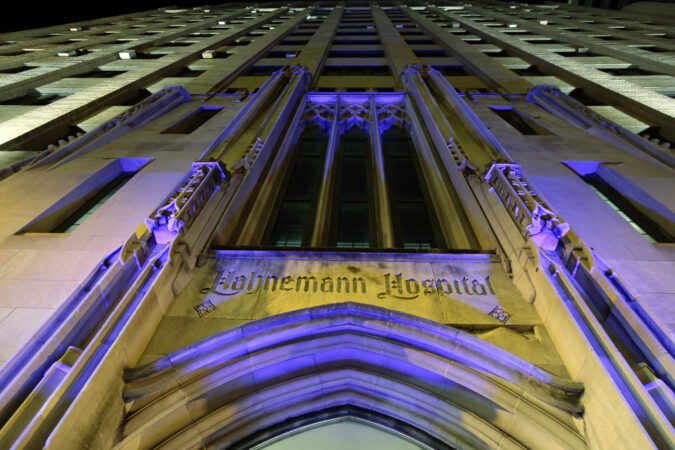
    Young’s latest disruptive gambit — ill-conceived and misguided — is a bill that targets the proposed redevelopment of the former Hahnemann University Hospital patient towers in Center City into hundreds of apartments.

    Established in 1885, the hospital healed generations of Philadelphians, and its south tower was the first skyscraper teaching hospital in America. Beyond the loss of medical services, when Hahnemann closed six years ago, it left a gaping hole in the heart of the city.

    Located along a stretch of North Broad Street that is heavily underutilized, the vacant buildings are begging for a new lease. Dwight City Group has proposed refilling the campus with housing. The plan would add hundreds of new residents right next to Center City and the Broad Street Line, and within walking distance of Suburban Station.

    To most housing, development, and planning experts, the idea is perfectly sound. Philadelphia would add workforce housing (around 1% of Mayor Cherelle L. Parker’s goal) in a location that already has the infrastructure and amenities residents require, and the city would not have to spend any taxpayer money to make it happen.

    And yet, Young is opposed.

    Jeffery “Jay” Young represents Philadelphia’s 5th District.

    In a statement to the Editorial Board last year, Young defended the move as being motivated by a desire to grow jobs in the city by limiting development in the area to commercial use. That’s an admirable goal. But who is going to buy the goods and services these hypothetical new businesses would offer? The redevelopment of Hahnemann into an apartment building would only increase local entrepreneurial opportunities.

    Thankfully, in this case, it looks like Young’s obstructive desires may be a moot point — at least when it comes to his proposed legislation.

    Because Council adjourned for its winter break without voting Young’s bill out of committee, the developer was able to secure zoning permits to build 361 apartments, with space for commercial use in the building’s ground floor.

    While the Dwight City Group did not want to comment, CEO Judah Angster earlier told Inquirer reporter Jake Blumgart they remain in negotiations with Young. Given the fact that the developer may have to deal with the councilmember in the future, there is a chance the Hahnemann project may be curtailed to avoid Young’s ire elsewhere.

    Were that to happen, it would mark another missed opportunity for positive growth in the city, thanks to councilmanic prerogative.

    For decades, Philadelphia has trailed peer cities in job growth and economic activity. While high business taxes, deep poverty, and other factors play a role, prerogative stands out as an impediment that is entirely self-inflicted.

    The practice — no matter how strongly it is defended by Young and his colleagues — is a constant detriment to the city. While there is merit in giving district representatives a strong voice to protect their constituents from unwanted development, councilmanic prerogative too often allows the whims of a single person to override the will of the people.

    The only thing Philadelphia would lose by eliminating councilmanic prerogative is the opportunity for Council members to grandstand and feed their egos.

  • A Philly charter just laid off 17 employees. Students, staff, and parents say it’s a sign of troubling changes at the school

    A Philly charter just laid off 17 employees. Students, staff, and parents say it’s a sign of troubling changes at the school

    Esperanza Academy Charter School laid off 17 employees this month — a move that officials say was necessary amid a challenging financial climate.

    But some Esperanza Academy veterans say the 4% reduction in the workforce — which came with no notice a few weeks before the holidays — is emblematic of troubling recent changes at the Hunting Park charter.

    Ten Esperanza Academy staffers, students, and parents spoke with The Inquirer and detailed concerns about changes at the school in the last year.

    Teachers say morale is low, particularly at the high school, where staff have filed paperwork to form a union for the first time in the school’s history. Student frustration bubbled over recently, with hundreds walking out to express their anger over the loss of teachers, a counselor, an administrator, and more.

    “Students are protesting,” Jarely Cruz-Ruiz, an Esperanza Academy ninth grader, wrote in a letter to the charter’s board of trustees, “because even we see the wrong being done.”

    School officials declined to be interviewed, but in a statement, CEO Evelyn Nuñez said: “Like many academic institutions across the commonwealth and nation, Esperanza Academy is navigating a challenging economic environment.”

    But, Nuñez said, the board and leadership team will ensure “the school will be a source of hope in this neighborhood for years to come.”

    An anchor, changing

    Esperanza has operated a charter school in North Philadelphia since 2000; the school has expanded to encompass grades K-12, and now serves more than 2,000 students in multiple buildings.

    The charter is part of the Nueva Esperanza organization, a sprawling nonprofit “opportunity community,” as its founder, the Rev. Luis Cortés Jr., has described it, a one-stop shop for neighborhood revitalization work, job training, legal services, and more.

    Esperanza opened a brand-new, 73,000-square-foot elementary building on the nonprofit’s campus at the beginning of this school year. Officials, in a statement released after the student walkout, said the project was planned for many years and noted that the broader organization, not the charter school, pays for campus improvements.

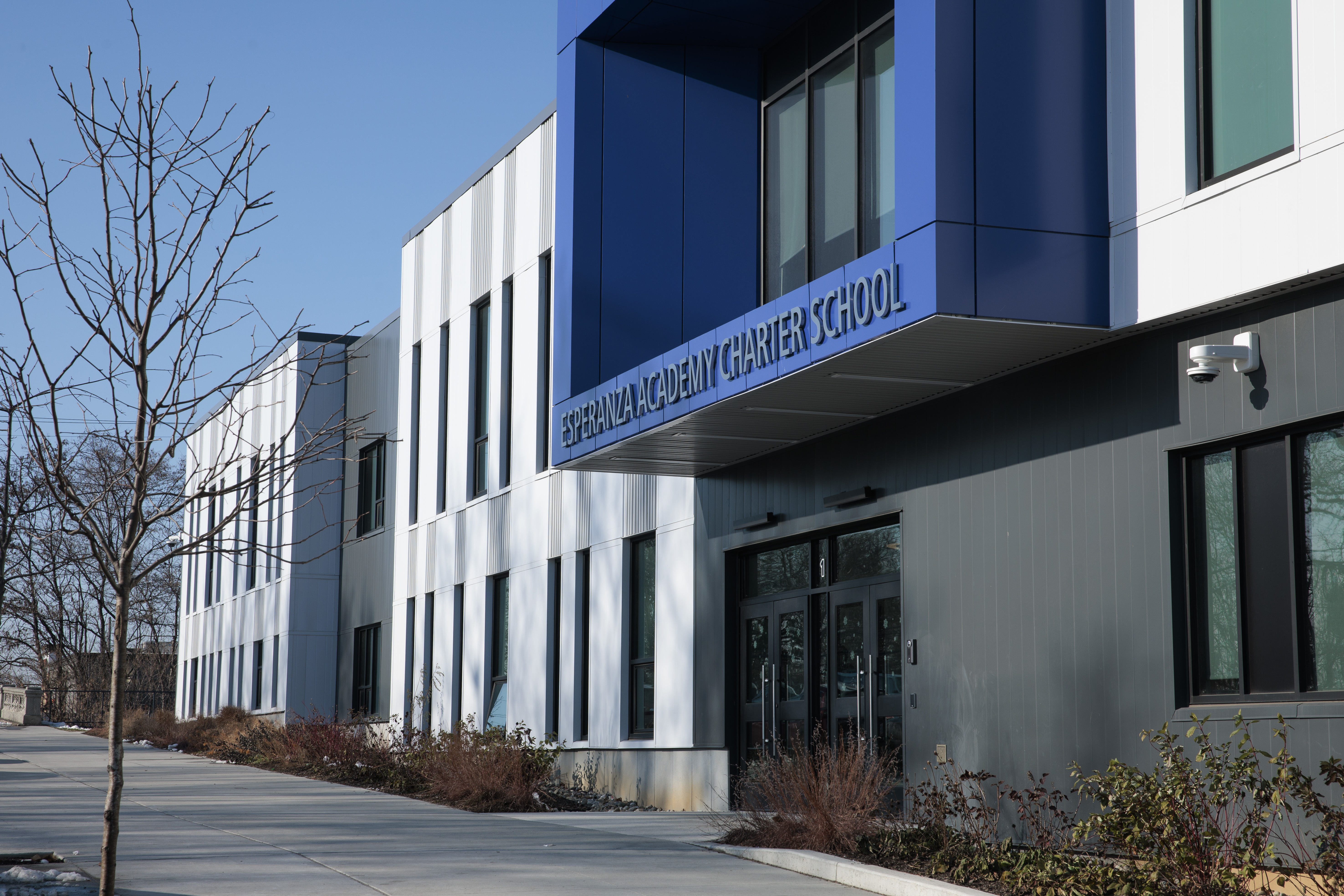
    The exterior of the new Esperanza Academy Charter elementary building at 201 West Hunting Park Ave.

    Esperanza has long been an anchor in the neighborhood and the larger Latino community, a place with a one-big-family feel.

    But Daniel Montes, who came to the school as a climate control officer in 2017 and worked his way up to be a teacher, said shifts began happening about a year ago. Montes was among those staffers laid off recently.

    Nuñez came to the school from the Philadelphia School District last year to become its CEO.

    “Things started to change when we got the new CEO,” Montes said. “I don’t know if it’s when you get a new broom, it sweeps clean.”

    At a staff retreat just before the start of this school year, Cortes, Esperanza’s founder, alluded to coming financial difficulties, said one staffer, who asked not to be named for fear of reprisal.

    “He said, ‘Stuff’s happening, you have to buy in or get out,’” said another staffer, who asked not to be identified because they did not want to be targeted by leaders. “He said it was politically driven [at the national level], and that funds would be tight.”

    ‘Three strikes’

    Tensions began to simmer among high school staff.

    “There are very unilateral changes being put into effect extremely quickly,” said another teacher, who also asked not to be named for fear or reprisal. “We’ve had major changes go into effect on a Monday after a meeting on a Friday. They said, ‘We don’t have subs and you’re going to be covering classes for free.’”

    Montes and others said teachers were frustrated over new schedules, lost prep time, and the order to cover classes without compensation — Esperanza Academy had, in the past, paid teachers for covering classes.

    “It was three strikes,” said Montes.

    “We just did not feel heard,” a third teacher, who also asked not to be named for fear of retribution, said. “We’re out of paper towels, and staples for the printer. The printer’s broken, but they hired six-figure administrators.”

    Most charter schools do not have unionized staff; in October, a majority of Esperanza Academy’s high school teachers signed union authorization cards and chose to affiliate with the American Federation of Teachers.

    Layoffs came Dec. 4, a Thursday, with no warning — some of the affected staff were pulled out midclass and given notice.

    Students weren’t told what was happening, but something seemed off that day, they said. And a basketball game was canceled.

    Those who remained at Esperanza Academy’s high school were told they would be absorbing the job responsibilities of the laid-off workers, including classes, coverages, and special-education caseloads.

    Some teachers got extra classes added to their schedules — with no extra pay. Other classes were combined, with class sizes growing.

    Interventionists — those charged with working with the neediest students — were laid off, and staffers said no plan has been articulated about who will do that work.

    In every staff meeting, teachers said they are reminded that the school’s focus is increasing attendance, boosting the number of students who meet state standards, and decreasing the number of students who score at the lowest levels.

    “How are we doing that if we don’t have any interventionists?” the second teacher said.

    Student protest

    The layoffs stunned students. They mobilized and held a walkout a few days later.

    Hundreds showed up, voicing their displeasure with the cuts and their support for the lost staff. They carried homemade signs and chanted.

    Nuñez acknowledged the walkout in an email to students and families the next day, saying students demonstrated “thoughtful advocacy and respect as they honored the staff members affected by the recent reductions, and we are proud of the way they used their voices to support their school community. School leadership will continue working closely with the [student government] on how we can best support our students as we move through this transition together.”

    Cruz-Ruiz, the Esperanza Academy ninth grader, said the school no longer felt like a family.

    “In this building,” Cruz-Ruiz wrote in her letter to the board, “data matters more than people. You named this school Esperanza. Hope. But hope doesn’t live here, scores do. Reputation does. Those graphs and percentages you stare at do.”

    ‘It’s affected so many of the kids’

    Francesca Castro, mother of an Esperanza Academy 10th grader, said she’s been very pleased with the education her daughter has received since middle school.

    But the layoffs were deeply unsettling, she said.

    “It’s affected so many of the kids,” said Castro. “I’m in the corporate world — I understand sometimes you need to make cuts. But there was no preparation, and it was right around the holidays. Couldn’t we find a different way, see what else we could cut?”

    Montes and other laid-off staff were some of the most important people in the building in terms of relationships with students, Castro said.

    “What worries my daughter and some of the students and parents is: If these changes were made all of a sudden, what other changes could happen?” she said. “Are the athletes going to get less? Are the after-school programs being cut? Are they going to start cutting academics?”

    Officials said in a statement that the layoff decision was not made lightly, and “our priority throughout this process has been to preserve the high-quality learning environment and supportive services that our students and families rely on. We remain fully committed to ensuring that the school year continues with minimal disruption to classrooms, instruction, or student support.”

    Students are aware of the larger changes at the school, said teachers, parents, and staff. They can’t understand why those closest to the students were taken away.

    “We’re broke, but we have all these new administrators, and we just built a new building? Students are savvy to that stuff — they’re angry,” said the third teacher.

    What’s next?

    Wendy G. Coleman, president of the American Federation of Teachers-PA, sent Nuñez a letter Dec. 10 asking Esperanza to formally recognize an AFT-affiliated union at the school.

    The staff wants a salary scale and a voice on working conditions and class sizes, Coleman said.

    “The overwhelming majority of the staff has signed cards,” said Coleman. “That is something I hope the administration of Esperanza will voluntarily recognize so that we can collaboratively bargain their first contract.”

    Esperanza Academy leaders on Friday told the AFT they will not voluntarily recognize the union; Coleman said she will soon file paperwork with the National Labor Relations Board seeking certification.

    “I would hope that we can work together to do this as amicably as possible,” Coleman said. “The staff has spoken, and the likelihood of Esperanza avoiding a union coming is pretty slim.”