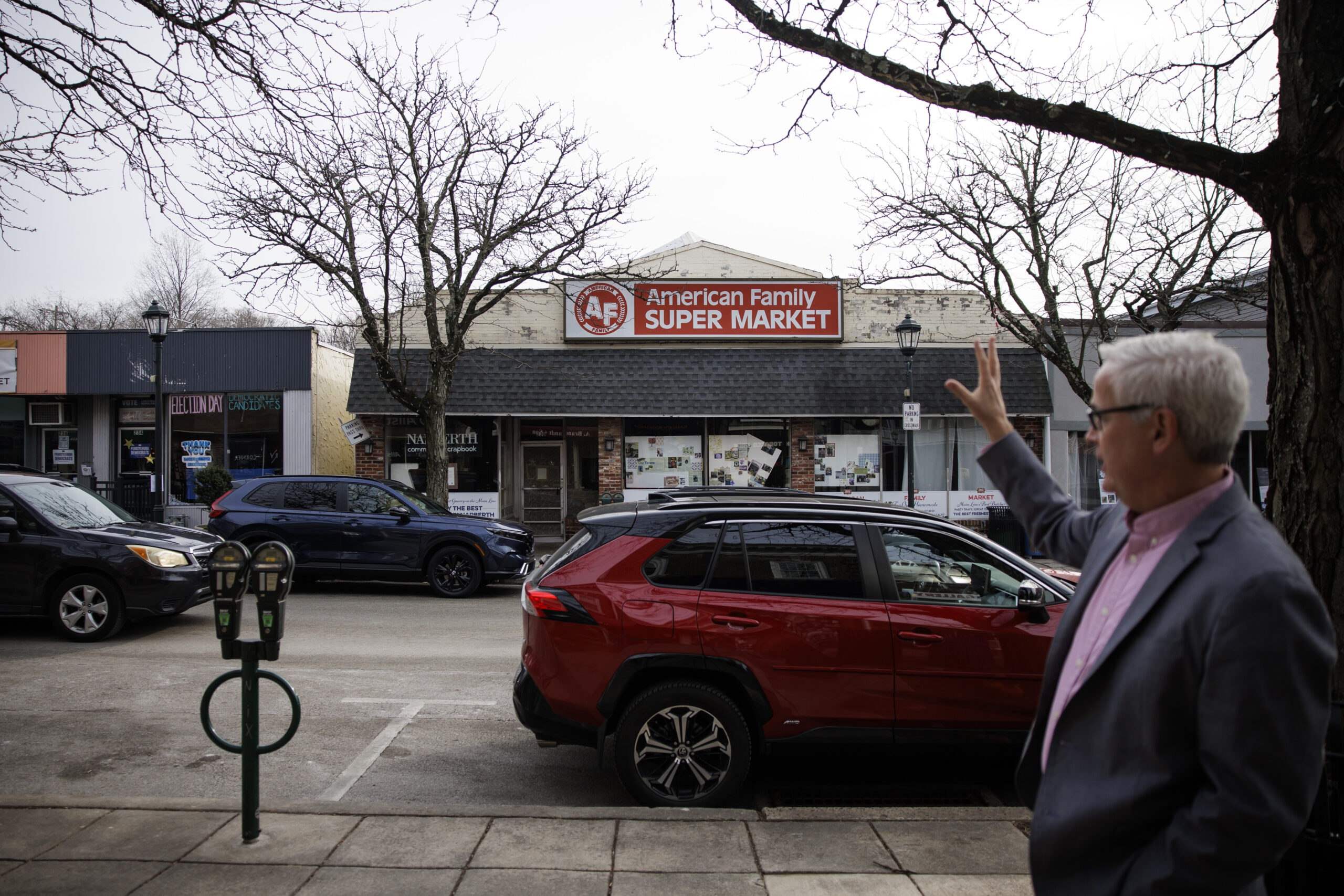
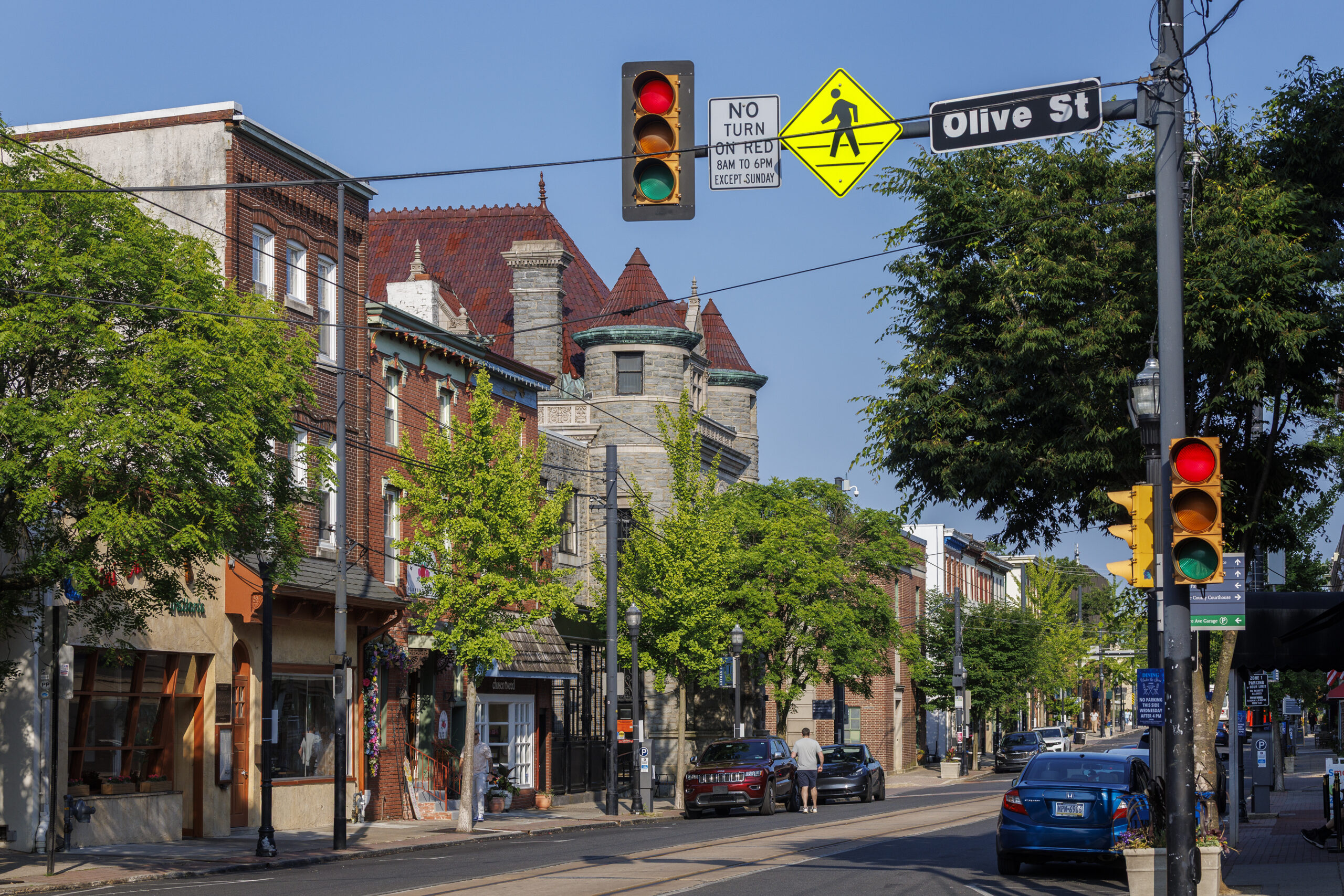
As he standsoutside the Narberth Bookshop on a frigid January afternoon, it’s clear Dana Edwards has a vision.
Imagine, he says, as he sweeps his hands toward the borough’s downtown corridor, getting off the train and stopping into a small grocery for a bite to eat before heading home on foot. Maybe you buy a gift, or an ice cream cone, or a bottle of wine.
Like anywhere, Narberth “could use a little bit of revitalization here and there,” Edwards said. But you can “see the potential.”
Edwards, 53, was sworn in as Narberth’s mayor earlier this month. The longtime financial technology officer moved there from Pittsburgh five years ago with his wife, Miranda. They have a 2-year-old son, and Edwards has two older children, 19 and 22, from his first marriage. Edwards had never run for office before, but after falling in love with the borough (and being encouraged by neighbors), he stepped into the public eye last year. He won the local Democratic Party’s endorsement, then ran unopposed in the primary and general election. This month, Edwards replaced Andrea Deutsch, who had served as Narberth’s mayor since 2017.
As the 0.5-square-mile, 4,500-person borough faces infrastructure challenges and debates over development, Edwards says he is ready to steer Narberth in the right direction through communication, thoughtful growth, and a social media presence he calls “purposely cringey and fun.”
Narberth Mayor Dana Edwards talks about the empty storefronts on Haverford Avenue on Tuesday, Jan. 6, 2026 in Narberth, Pa.
From San Juan to Narberth, with stops in between
Edwards grew up in San Juan, Puerto Rico. There, Edwards says, he saw power outages, infrastructure issues, and food shortages. It was a formative experience that taught him about the collective — what it means to come together in the face of persistent challenges.
He earned a degree in chemistry in 1994 from the College of Charleston in South Carolina. Though the goal was to become a doctor, Edwards was drawn to technology. He went back to school, and in 1997 earned a degree in computer science, also from the College of Charleston. Edwards has a master’s in business administration from Queens University of Charlotte in North Carolina.
Edwards has spent three decades in the world of information technology, working mostly for major banks. He was the chief technology officer of the Mitsubishi UFJ Financial Group, then for PNC Bank. He is now the group chief technology officer for Simply Business, a London-based online insurance broker. He has lived in Puerto Rico, South Carolina, Los Angeles, Pittsburgh, and now Narberth. He has over 18,000 followers on LinkedIn.
By his own admission, Edwards’ civic background is “a little bit light.” He has given to various causes over the years, and said he was involved in the ACLU in the early 2000s. He helped organize Narberth’s first Pride in the Park event in 2022 and said he has joined the Main Line NAACP chapter.
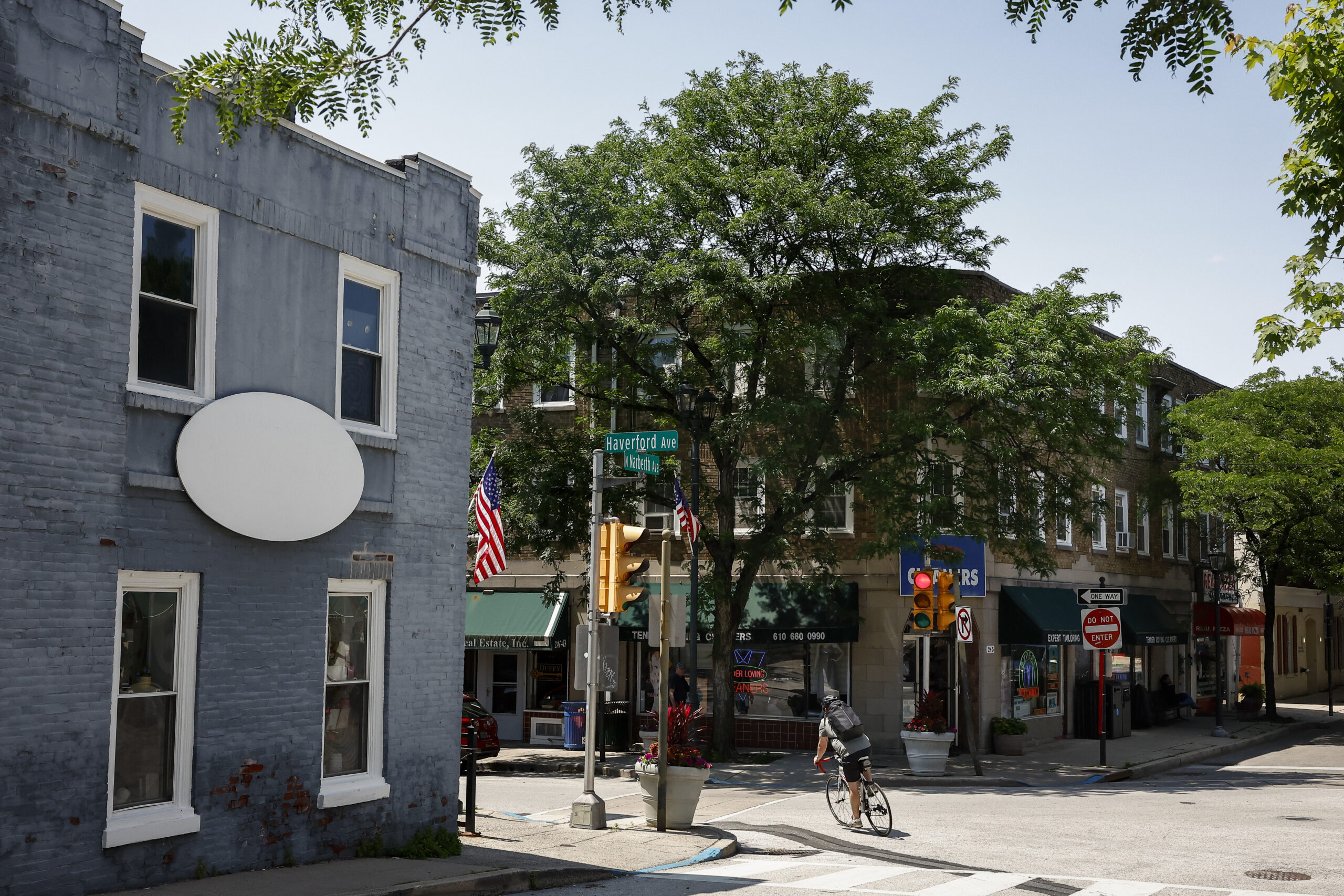
The corner of Haverford and North Narberth Avenues on Monday, June 2, 2025 in downtown Narberth, Pa.
Polarization happening ‘in our little town’
Edwards started thinking about running for office “when the national scene changed dramatically.”
He described beginning to sense a deep polarization both between and within America’s political parties.
“I felt like I saw it happening locally. I saw it happening in our little town,” he said.
As the mayoral race approached, neighbors began telling Edwards he had the right “thing” to run. He could build a strategic plan, lead an organization, and understand financials. At a candidate forum last year, Edwards said he originally planned to run for mayor in 2029, but decided to move his campaign up to 2025.
Edwards earned the backing of Narberth’s Democratic committee people last April, beating out attorney Rebecca Starr in a heated endorsement process.
During a March 2025 meeting, local Democrats squabbled over whether or not to endorse a candidate, citing “animosity” in the race (candidates are discouraged from running as Democrats if they do not receive the endorsement of the local committee). The committee ultimately voted to make an endorsement, which went to Edwards.
“I think [in] any good race, at some point, you have to have more than one candidate. Because otherwise, people are just getting selected, not elected,” Edwards said, referencing the endorsement process. “I do think that she would be a great candidate also, and I hope she runs again.”
Edwards believes the community has largely moved on from any division that colored the primary. Really, he added, it’s more important to get people talking about the issues the mayor can solve — streets, garbage pickup, infrastructure.
“I’m just really focused on Narberth,” he said.
The SEPTA train station on the Paoli/Thorndale Line on Monday, June 2, 2025 in Narberth, Pa.
There are two extremes, Edwards says. On one end, the borough could leave everything as it is. The buildings might fall apart, but they would be the same buildings that everyone knows and loves. On the other end, there is rapid growth, like bringing a Walmart Supercenter to Haverford Avenue.
“It’s that thing in the middle that we’re looking for,” he said — a “hometown feel” with “community-oriented” businesses.
Edwards is eager to get the 230 Haverford Ave. development across the finish line. The long-awaited project plans to bring 25 new apartment units and ground-floor retail to Narberth’s commercial core. The project, helmed by local real estate developer Tim Rubin, has been in the works for over five years, but faced pandemic-era setbacks that have left a number of vacant storefronts downtown.
Edwards plans to write a regular newsletter, hold town halls, and host coffee chats. He hopes to put together an unofficial advisory group to bring together people, and opinions, from across the small borough.
Edwards believes “the DNA of Narberth is alive and kicking,” from the Dickens Festival to the Narberth Outsiders baseball team. To keep it alive, though, the borough needs to bring business in and remind people why they love to live, shop, and work in Narberth.
“It’s all about relationships and commerce,” he said. “[That] is going to be what brings us together.”
This suburban content is produced with support from the Leslie Miller and Richard Worley Foundation and The Lenfest Institute for Journalism. Editorial content is created independently of the project donors. Gifts to support The Inquirer’s high-impact journalism can be made at inquirer.com/donate. A list of Lenfest Institute donors can be found at lenfestinstitute.org/supporters.
Changes are coming to several interchanges in Chester County that could affect commuters in roughly a decade, under projects aimed at improving a 7.5-mile stretch of U.S. Route 30.
Pennsylvania’s Department of Transportation is nearing the end of the conceptual design period for proposed changes to interchanges affecting Caln, East Brandywine, Easttown, West Brandywine, Uwchlan, and Downingtown in a project that seeks to reduce traffic congestion and collisions.
PennDot presented the alternatives for the eastern section of the bypass during an online session last week. An in-person poster session is scheduled for Tuesday evening at Pope John Paul II Regional Catholic Elementary School in West Brandywine. But breaking ground remains years out: Construction is expected to start in spring 2034, costing roughly $874 million. The federal government is slated to pick up the bulk of the cost, with the state taking a sliver, officials said last week.
“The purpose is to provide a safe and efficient transportation system by improving safety, reducing future congestion, accommodating planned growth, and improving deficiencies,” said Bruce Masi, consultant project manager with GFT, an engineering consulting firm.
The eastern section of the Coatesville-Downingtown bypass corridor runs from just west of the Reeceville Road interchange, east to the Quarry Road interchange, where it becomes the Exton Bypass, heading toward U.S. Route 202.
Changes to U.S. 30
Under the plan, PennDot would widen the road by up to 35 feet. It would also introduce flexible-use lanes on the left sides to function as needed during high traffic volume.
A regional transportation center, based in King of Prussia, would monitor the flexible lane through cameras along the route. The flexible lane would likely be used eastbound during the morning commutes, and westbound in the evenings. But it could also be used to facilitate traffic flow after crashes or incidents, Masi said.
Heading west, the flexible lane would begin around the Quarry Road interchange and taper back to a median as you approach State Route 82. Heading east, it would return to a median around the Exton Bypass.
Changes to access points
When it comes to actually getting on U.S. 30, changes are coming at different junction points: Reeceville Road, Pennsylvania Routes 340, 322, and 133, and Norwood Road.
Masi presented a slew of options for Norwood Road and Route 113’s interchange, which PennDot is accepting public comment on.
One alternative would leave the existing location for westbound and eastbound on- and off-ramps, updated to meet current standards. It would also create two new “movements” that do not currently exist: Drivers headed west would exit onto a bridge that crosses over U.S. 30, and then tie back in with State Route 113; another ramp would run drivers eastbound. This model has the fewest predicted crashes, and wiggle room for cars to weave, but would potentially have a higher environmental impact.
“What that does is creates a full interchange — all movements at 113, but in this alternative, we retain the Norwood Road ramps as well,” Masi said.
Other alternatives would remove the existing ramps at Norwood Road for the public, and traffic using those ramps would redistribute through the region, Masi said.
Removing the ramps on Norwood Road would also go against the wishes of the public, emergency services, and the municipalities. PennDot was looking to mitigate those effects, Masi said.
In another alternative, Norwood House Road would be relocated north of an existing apartment complex, into the side of a hill.
The last alternative would tweak the configuration of Norwood House Road to use it as a direct connection between Norwood Road and State Route 113.
While PennDot awaits public review and input on Norwood Road, its selected alternatives would affect several other interchanges.
Near Caln, at Reeceville Road, PennDot would replace the current structure and add traffic lights for westbound and eastbound drivers on Reeceville Road.
Fisherville Road would be relocated north, to sit between the CVS and Wawa, but a remnant of the road would connect to the existing properties.
On State Route 340 between Caln and Downingtown, PennDot would scale up the current interchange for longer ramps, and add a single-lane roundabout to eliminate the traffic signal at the U.S. 30 westbound intersection.
West Bondsville Road would be moved north to maintain access to residences.
Continuing east, State Route 322 around Downingtown would create a new traffic flow with traffic lights at either end of the interchange, to prevent left-turning cars from crossing paths with approaching vehicles. The change would affect drivers stopping for coffee or gas at the Royal Farms or heading to PennDot’s park-and-ride, however. It would become a right-turn-in and right-turn-out only traffic flow.
Lloyd Avenue would also be relocated.
What comes next
Electronic comments are being taken through Feb. 6. Paper comment forms are available at Tuesday’s open house.
Property impacts are not yet known, officials said. If a property is needed for the project, PennDot will reach out.
Once PennDot closes out its conceptual design, it will start preliminary engineering and environmental evaluation. The public will be able to weigh in again between that period and the final design period, before the plans go out for construction bids.
This suburban content is produced with support from the Leslie Miller and Richard Worley Foundation and The Lenfest Institute for Journalism. Editorial content is created independently of the project donors. Gifts to support The Inquirer’s high-impact journalism can be made at inquirer.com/donate. A list of Lenfest Institute donors can be found at lenfestinstitute.org/supporters.
In a small fictional town in Louisiana, the six women centered in Steel Magnolias have forged a community among — and an ever-deepening relationship with — each other. In a real town in southeastern Pennsylvania, a group of women who have worked together for decades are bringing those characters and those deep bonds to life at People’s Light in Malvern.
“You don’t have to worry about if that familiarity is there,” said Janis Dardaris, who portrays Clairee, the widow of the town mayor. “You just sit on the stage and it’s there. There’s no working at it. I sometimes wonder, what would it be like doing this play with completely different people that I didn’t know?”
As the women portray lifelong friendships, they have been able to find that depth and heart because of their own close connections. They’ve known each other for decades through their work in the arts — up to 50 years, in some cases, with some combination of them overlapping in at least a dozen shows in recent years.
Talking together in a room at the theater days before the Sunday opening, they occasionally finished each other’s sentences, extrapolating thoughts for each other.
Abigail Adams, the production’s director who has directed the women in several other performances, has a sense of how each of them works — how much time it takes for them to process, when to ask for something in their performance and when to hold back.
Claire Inie-Richards, who plays young nurse and newlywed Shelby, and Susan McKey, who plays her mother, M’Lynn, have portrayed a mother-daughter duo three times over 20 years.
Though with each role they learn each other anew, “There’s no substitute for time,” Inie-Richards said.
Marcia Saunders (left) and Brynn Gauthier are part of an all-women ensemble performing “Steel Magnolias.”
Brynn Gauthier, who makes her People’s Light debut in her portrayal of Annelle, is the new addition to a group of women whose history stretches back decades.
At first she thought it might be intimidating to work with people who have known each other and worked together for so long, but it felt like she got to be part of the journey of the cast getting to know each other in a new way through this show.
That familiarity is not without its challenges, though. Marcia Saunders sometimes feels “Marcia” surface in place of “crusty” Ouiser.
“That’s been challenging because of my relationship with these people and this institution, which is like a home to me,” she said.
Told as a series of moments in the women’s life within the safe confines of Truvy’s in-home hair salon, the play opens with Truvy and newcomer Annelle preparing Shelby for her wedding. Shelby and mother M’Lynn discuss wedding preparations, while local grouch Ouiser gripes about their property line.
Clairee arrives, windswept, from a dedication ceremony honoring her late mayor husband. Annelle, originally reluctant to give any information at all about herself, breaks down, admitting to the women that her husband has disappeared — with her money, her car, and her jewelry. She finds immediate support.
It’s just the start of how the relationships evolve and deepen in Robert Harling’s play, set in a southern town in the 1980s.
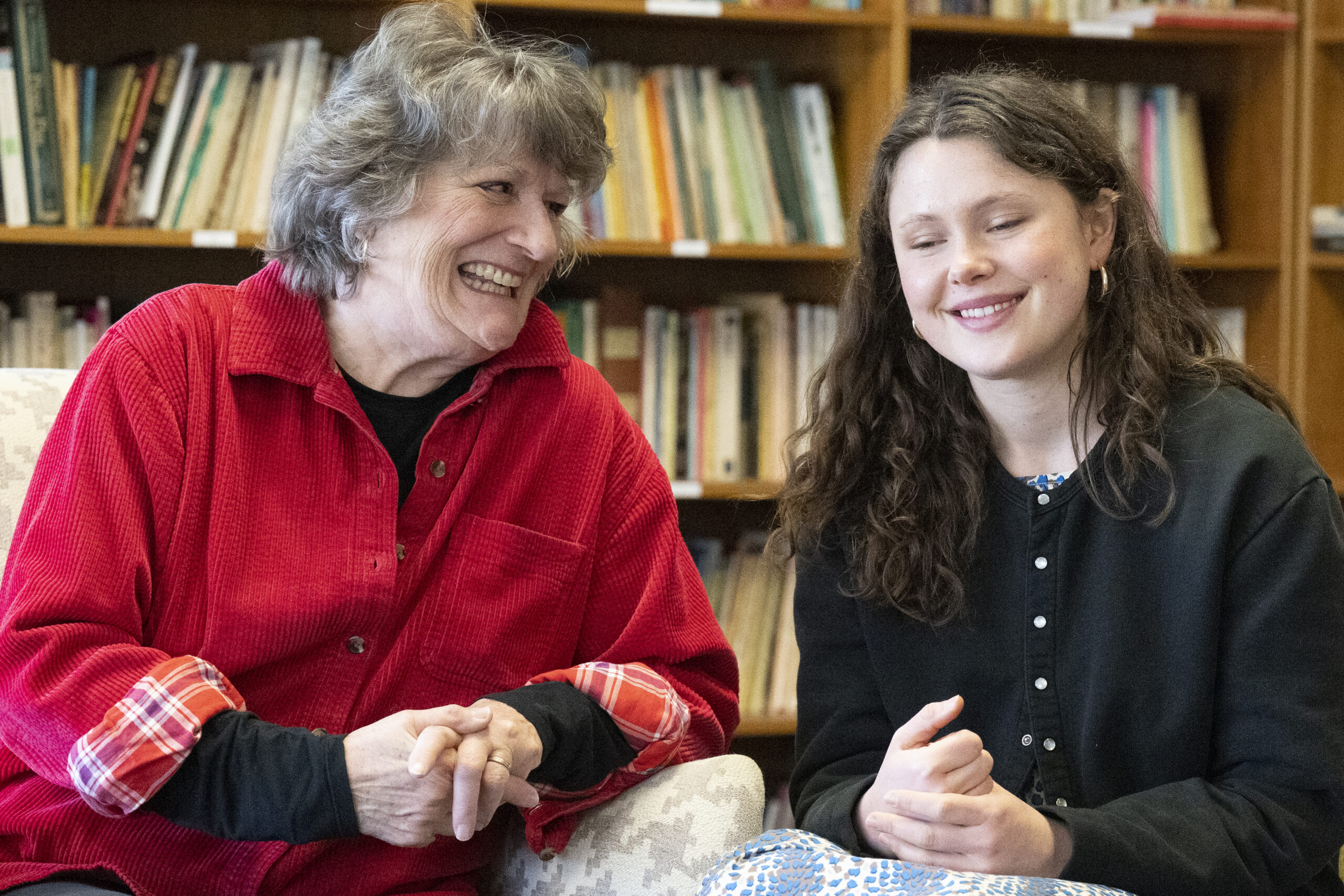
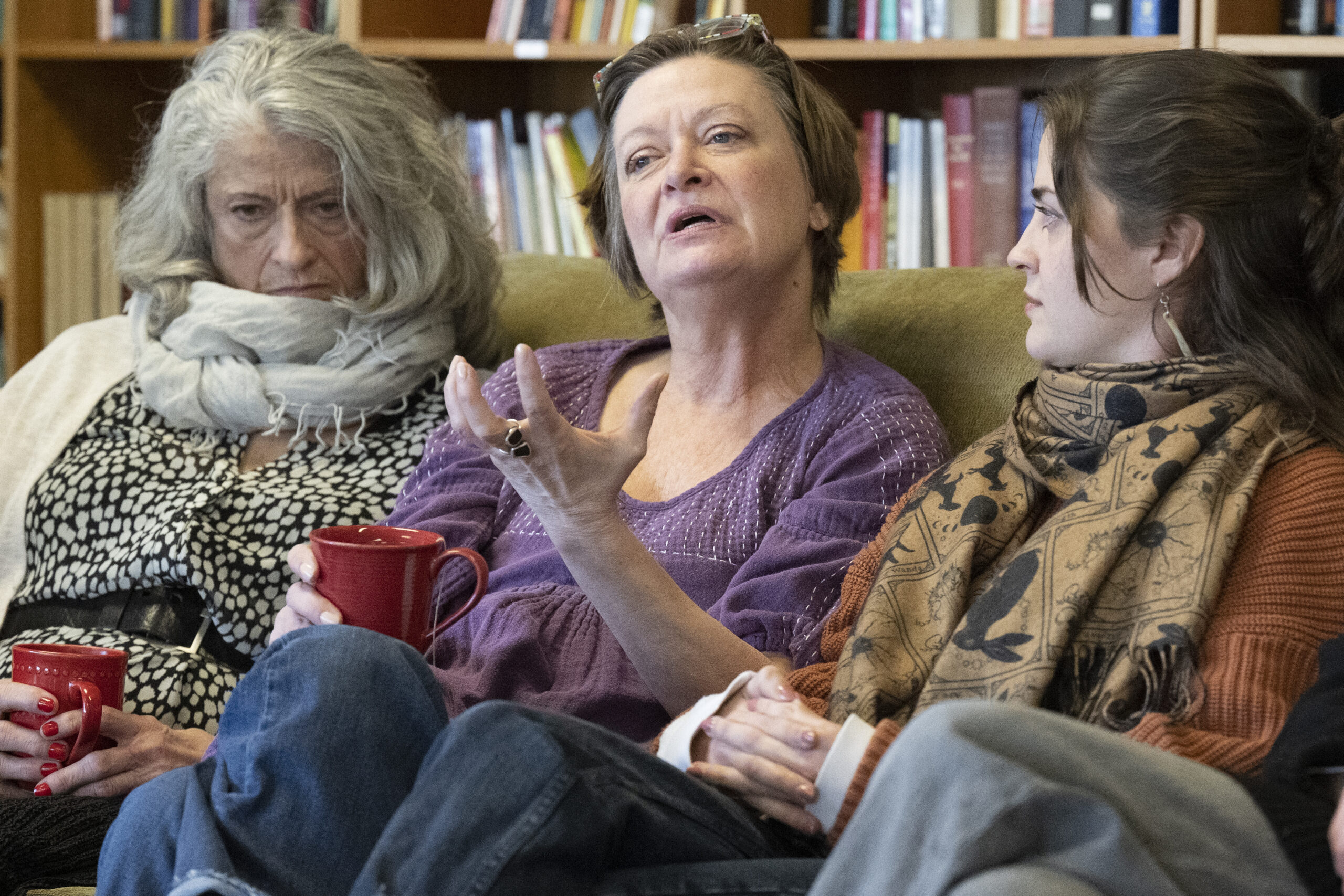
From left, Janis Dardaris, Susan McKey, and Claire Inie-Richards, members of an all-women ensemble performing “Steel Magnolias,” speak about working together for decades — some for more than 50 years — during an interview at People’s Light in Malvern.
Even though the viewer slowly learns more about the women’s external lives and pressures — confronting joys and tragedies — the play never leaves the salon.
“I love how this play – it’s about these women. It’s about this place. It’s about us. And I just think that makes for such a strong story, and I think more poignant than the movie,”McKey said.
Gauthier observed that there’s something inherent to women’s friendships in how they can discern when to tiptoe and when to confront in their care for each other.
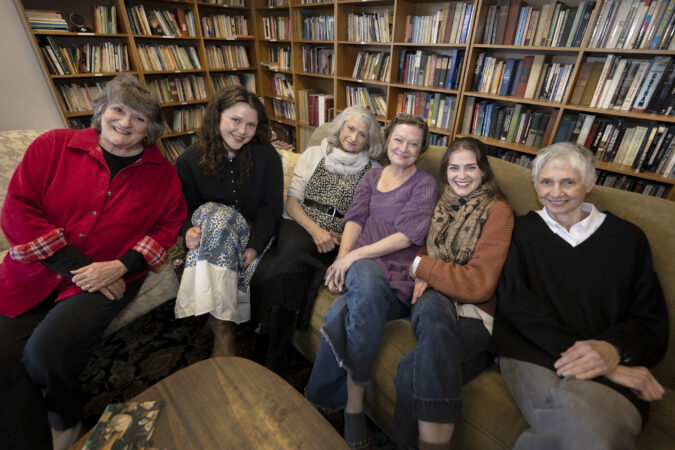
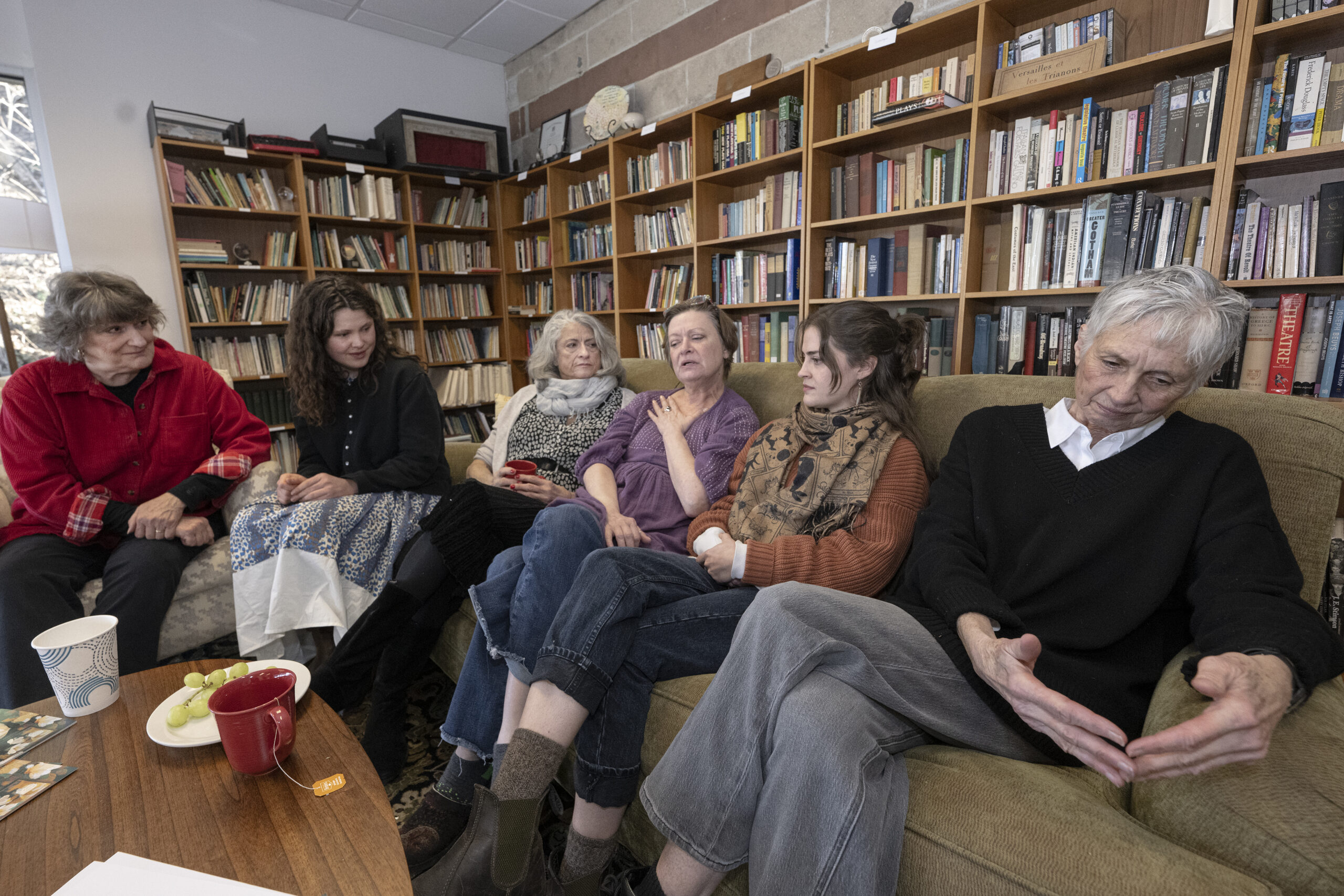
Marcia Saunders (from left), Brynn Gauthier, Janis Dardaris, Susan McKey, Claire Inie-Richards, and Abigail Adams speak of their performing “Steel Magnolias” at People’s Light in Malvern.
“Truvy’s place is the place where they can be fully themselves, and they really can’t be fully themselves in their domestic arrangements, not in the same way,” Adams said. “They can’t be as outrageous, and they can’t be as vulnerable.”
It’s the vulnerability, that unyielding support for each other despite personal differences, that the women think today’s audiences will connect with. Though the story — popularized by a film adaptation released in 1989 starring Julia Roberts, Sally Fields, and Dolly Parton — is often thought about as a sentimental tearjerker, it’s injected with lightness, Gauthier said. .
“It’s kind of like the best episode of like Friends or a TV show you really love, where you just are spending time with these people,” she said.
“There’s always going to be intrigue and interest and drama, but there’s an element of just sitting with these people that you really enjoy and getting to experience them really fully,” Gauthier said. “It’s really nice to just have these characters that are so easy to fall in love with.”
“Steel Magnolias” continues through Feb. 15 at People’s Light, 39 Conestoga Rd. in Malvern. Information: peopleslight.org or 610-644-3500.
The long-lost demo tape had always held a certain mythos in Charlotte Astor’s imagination.
For years, the Cherry Hill teen had heard stories about it, recorded about 30 years ago by her mother’s very loud, very short-lived, teenage hardcore band, Seed.
Shannon Astor, now 47, had been a vocalist for the group, just 14 or 15 years old, at a time when female representation within the genre was rare. Within a year or so, the group had disbanded — but before it did, the group, which typically practiced in a member’s parents’ basement, recorded a single demo. There had been only a few dozen copies produced back then, and they had all sold, scattering out around the South Jersey area.
For Charlotte, the tape became a kind of white whale — a relic of her mother’s hard-charging past, something the teen occasionally scoured the web for, to no avail.
She’d never heard her mother’s band. And she wanted to. Badly.
“Ninety-five percent of what I have about my mother is in the stories she tells me,” says Charlotte, 16, a junior at Cherry Hill High School East.
But a demo was something tangible. Something concrete.
“A demo,” she decided, “I can find.”
And so one night last spring, that’s what she set out to do.
She had little to go on: A rough estimate of when the demo would have been released (1993-94), a general geographic location (South Jersey), and a single lyric (“In the wind of the AM shadows cling to nearby trees as season shifts to satisfy the light from above”).
“I have been looking for this tape for 4 years,” she wrote in an appeal to her 1,000 or so Instagram followers, “… and it would mean the absolute world to me to find this tape.”
Butsomething about her search — this desire to connect with a parent, to bridge a gap three decades wide — resonated. It became, within the tight-knit confines of the hardcore music scene, a united pursuit.
At an age when most teenagers couldn’t get far enough away from their parents, here was one launching a quixotic quest to better understand hers.
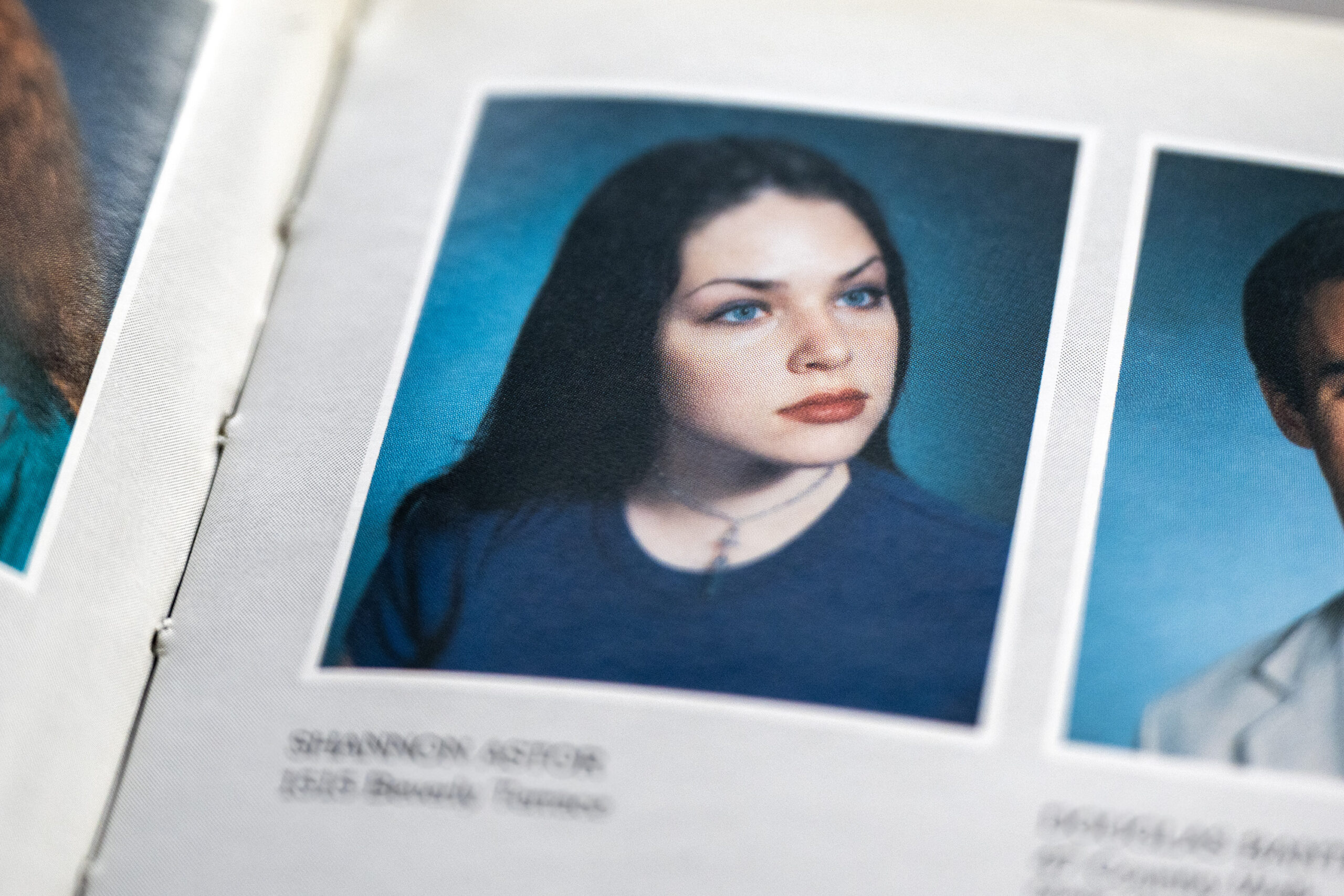
A senior class photo of Shannon Astor in the 1996 Cherry Hill High School East yearbook. Now 47, Shannon was previously in a hardcore band called Seed.
Soon, strangers from across the country were digging through old boxes in basements, or tagging old running buddies from Jersey’s 1990s hardcore scene in social media posts. Some reached out to old producers from the area, wondering whether the demo might have made its way into some dusty studio corner.
Messages poured in, too — hundreds of them — with suggestions ranging from the plausible to the outlandish. Had she tried getting in touch with Bruce Springsteen’s people? You never know what the Boss might have stowed away in some mansion closet.
“I suddenly had communication with so many people who I thought I would never in my life have any connection with,” Charlotte said. “California to Jersey, and everything in between.”
The lead singer of a well-known Jersey straight-edge band of the era, Mouthpiece, joined the search, messaging Charlotte after others reached out to him about the tape. (He vaguely remembered her mother, Shannon, but not the band.)
Much of the outside help, Charlotte notes, has come from the hardcore community.
Indeed, much of Charlotte’s young life is rooted in the same hardcore music scene that her mother’s once was. Like Shannon before her, Charlotte spends many nights at hardcore shows around the area, photographing the scene for the magazine she self-publishes, “Through Our Eyes.” And like her mother previously, she’s a member of the “straight-edge” hardcore community, a group with a shared collection of ideals that includes abstaining from drinking or drugs. (Her first flirtation with teenage rebellion came when she snuck out of the house one night to go to her favorite record store.)
And though her mother does not necessarily share Charlotte’s zeal for locating the old tape — “I’m not waiting for some garage band demo to be unearthed,” Shannon joked — she understands what it would mean to her daughter to have it.
“It’s special to me only because of how much she needed to hear it,” said Shannon. “I’m just so pro-Charli and everything that she does … But this is her journey, and something that was intrinsically important to her.”
To those in the scene, meanwhile, the response has been very hardcore.
“A bunch of people banding together to help this random girl find her mom’s thing,” said Quinn Brady, 19, of New York, and a friend of Charlotte’s. “Most people assume that hardcore people are not very nice or friendly. [But] there’s this inherent kinship. It connects people across the nation in a way that not a lot of other genres of music do.”
A recent selfie by Charlotte Astor (right) and her mother, Shannon Astor, taken at Reading Terminal Market.
Those outside the hardcore scene have been no less enthralled, however.
In December, after NJ.com picked up the story, further extending its reach, a documentary filmmaker reached out about the possibility of doing a film on her quest.
Last year, after posting in some “old-head” hardcore Facebook groups about the tape, Shane Reynolds — a member of the Philly-based hardcore band God Instinct — stumbled upon what appeared to be the most promising lead yet.
“I found the guy who allegedly made the demo,” Reynolds said.
But when she got the man on the phone, Reynolds says, it proved to be a dead end.
The closest Charlotte came was last year, not long after she first posted about the demo on Instagram. Her mom’s former bandmate in Seed, convinced he must have kept something from that period, recovered from storage an old cassette that featured a recording of a single Seed practice session.
Charlotte took it home, pushed it into the stereo in her bedroom. She stared at the ceiling as the tape began to play and 30 years fell away.
For the first time, she could put a sound to the stories she grew up hearing.
“The first thing I heard was a few seconds of my mom talking,” Charlotte said. “That’s my mom, when she was 16. I’m listening to a clip of my mother, listening to her at the same age I am.”
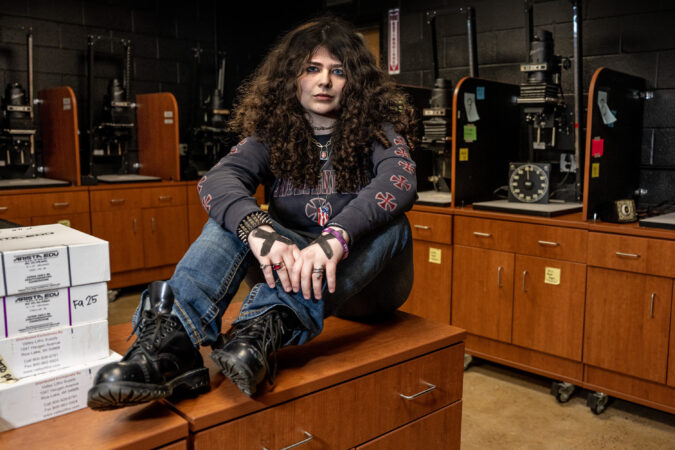
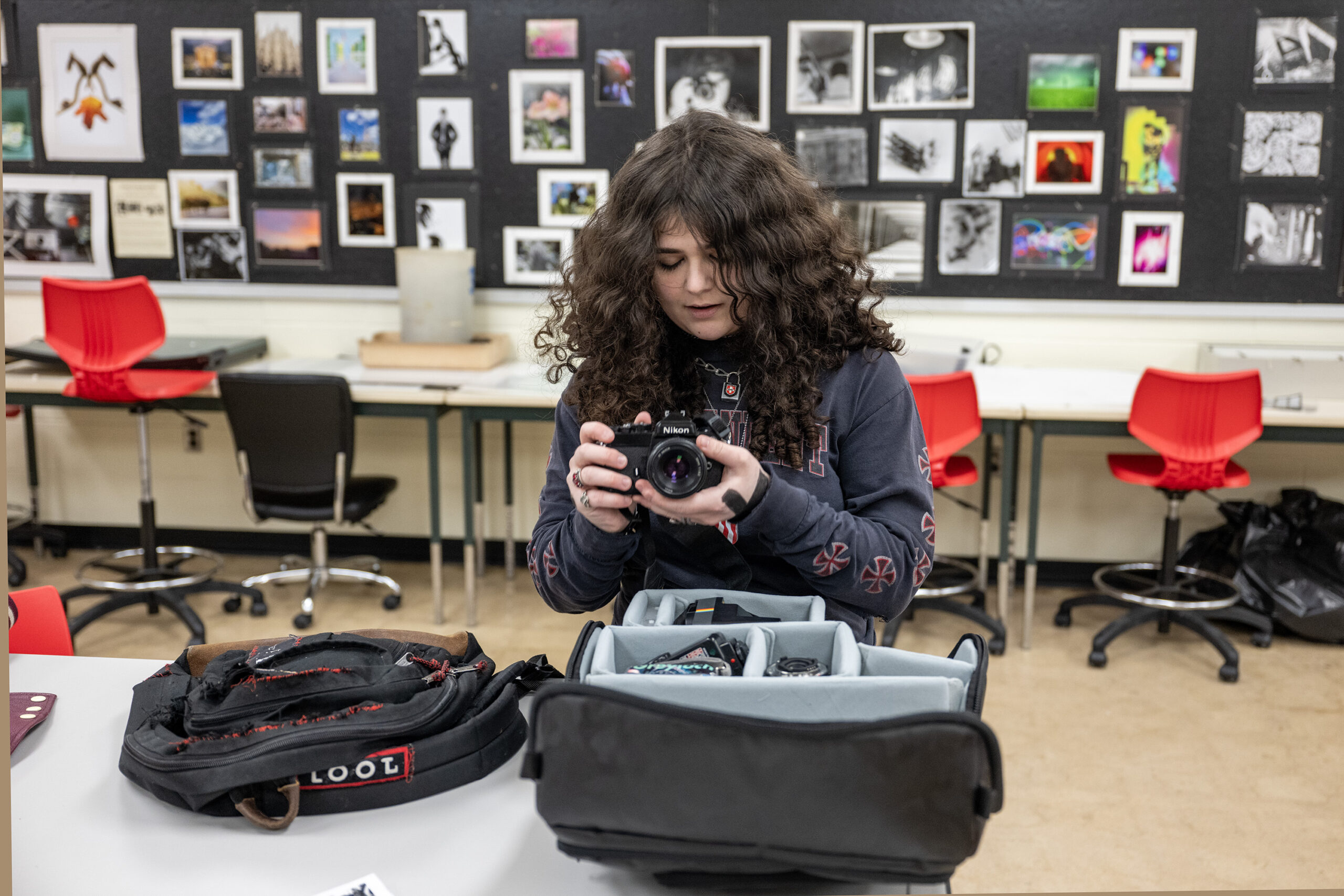
Charlotte Astor, a junior at Cherry Hill High School East, and her vintage 35mm film Nikon camera in the school’s photography classroom.
Still, that small taste has only reinforced her devotion to unearthing the actual demo.
Charlotte remains realistic about her odds of finding it. No, it’s not likely to be found in some radio station’s studio. And no, Bruce Springsteen is almost certainly not in possession of a three-decades old demo tape from her mother’s teenage years.
But some graying hardcore fan from the ’90s, with a penchant for hoarding and a cluttered garage?
Stranger things have happened.
“I have confidence — unwavering confidence — that someone has it,” Charlotte says. “And that I will get my hands on it.”
By all accounts, Malinda Hoagland was the kind of 12-year-old girl who would make any parent proud.
She received A’s in school, loved unicorns and going to Wawa with her older sisters, and wrote her lunch ladies notes thanking them for stocking the cafeteria with applesauce and milk.
But her father, Rendell, clearly didn’t see that little girl, prosecutors said Friday in Chester County Court.
Instead, Rendell Hoagland and his fiancee, Cindy Marie Warren, tortured Hoagland’s daughter for months in their West Caln home, depriving her of food and medical care.
They chained her to furniture and forced her into stress positions for hours, beating her if she moved or displeased them.
Once, when the girl forgot her jacket at school, they forced her to do push-ups in the kitchen late at night, striking her with a belt. Other times, the beatings came with a metal spatula.
The lack of care ultimately killed Malinda in May 2024.
Medical examiners found the girl died from severe malnutrition, her organs atrophied from starvation. More than 70 bruises, ulcers, and sores riddled her body, which by then weighed just 50 pounds.
It was the rare type of crime that brought tears even to a judge’s eyes.
On Friday, that judge, Anne Marie Wheatcraft, accepted a guilty plea from Hoagland on one count of first-degree murder and related crimes. The 54-year-old will be confined in prison for life without the possibility of parole.
“This was calculated, sustained cruelty inflicted on an innocent child,” said Malinda Hoagland’s maternal aunt, Christine Mayrhauser, as the girl’s family read tearful victim impact statements.
Rendell Hoagland, a bald man whose size tested the limits of a red prison jumpsuit, gazed on.
“A quick execution is too good for him,” Mayrhauser said.
Warren is also charged with first-degree murder and related crimes. Her trial, scheduled for early January, has been delayed and she will receive a pretrial hearing in May.
Lead prosecutor Erin O’Brien described Malinda Hoagland’s final years as a period of abuse no child should ever endure.
After Rendell Hoagland separated from his wife, he received custody of Malinda in 2020 and moved with the girl from Monroe County to West Caln.
He enrolled the girl at school, but she soon began missing day after day of classes. By 2023, Hoagland had pulled Malinda out of school entirely, and she was completing school online under his and Warren’s near-constant supervision.
After the girl’s death in 2024, investigators recovered photos, videos, and text messages from both Hoagland and Warren that detailed the girl’s horrific life at home.
She was often chained to an air hockey table or other pieces of furniture, even sleeping there, O’Brien said, or made to run in place or do jump squats at Hoagland and Warren’s command.
They punished her with scalding showers and ice baths, forced her to hold books over her head for hours, and poured hot sauce down her throat. The couple monitored the girl through security cameras they had installed throughout the home.
They also kept locks on the refrigerator and snack cabinet, and the girl lost more than a third of her body weight in the last two years of her life. She was often sleep-deprived or suffering open wounds; by the end of her life, she struggled to do her homework because of her eye injuries, O’Brien said
The abuse ended only with death, prosecutors said.
On May 3, 2024, Hoagland called 911 claiming that Malinda had fallen off her bike and had lost consciousness at a campground in Quarryville.
But prosecutors say that the girl had been unconscious for hours, and that Hoagland had driven to CVS the night before, looking for smelling salts in an attempt to wake her up. He propped up the girl’s body so that she did not raise the suspicions of passersby.
It was a common pattern in attempted cover-ups, O’Brien said, and Hoagland and Warren were also known to use makeup to cover up the girl’s bruises for the few people they allowed to see her.
One of the last people to see Malinda Hoagland alive was William Delmedico, an emergency medical responder who wrapped the barely conscious girl in his sweatshirt as he rushed her to a hospital, where she died after surgery.
“I kept telling her she’s not alone, she’s loved, and that we’re doing everything possible to help her,” Delmedico told the court, his voice breaking.
Hoagland and Warren managed to keep the abuse hidden from Malinda’s extended family, prosecutors said, including her three older sisters, his biological children. The women were not living in Southeastern Pennsylvania during the time of the abuse, they said.
In addition to murder, “You should also be facing several counts of robbery,” said Emily Lee, Malinda Hoagland’s older sister, addressing her father. “You robbed my baby sister’s future. You took a life she deserved.”
Jamie Hoagland, another sister, said she begged her father for access to Malinda, sending her sister cards and gifts and playing Minecraft with her online when possible.
“I fought for every inch of communication,” Jamie Hoagland said. She later lamented: “Instead of taking her to the movies, I visit her grave.”
When given the chance to speak, Rendell Hoagland told Wheatcraft he had “nothing to say at this time.”
Wheatcraft said she was not surprised that Hoagland did not express remorse.
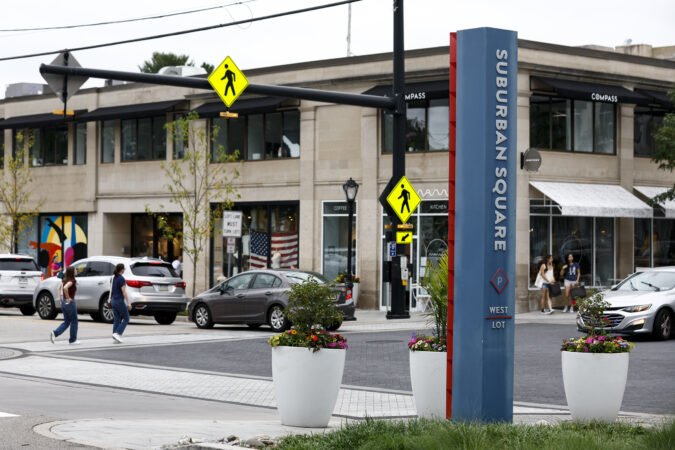
This week, owner Kimco Realty and developer Bozzuto Development announced the opening of Coulter Place, the first apartment community in the Ardmore shopping destination.
The five-story, mixed-use development includes 131 apartments with one to three bedrooms and about 20,000 square feet of ground-floor retail space. Amenities for residents include a fitness center, clubroom, game room, pool, coworking spaces, and pet-care spaces. It has two courtyards and garage parking with electric-vehicle charging stations.
The promise of apartment residents helped attract new retailers to Suburban Square, including New Balance, Sugared + Bronzed, and the apparel brand Rhone on the ground floor of the apartment building.
The complex is one of a few projects planned in recent years that have added or will add hundreds of apartments near Lancaster Avenue in Ardmore. One Ardmore, a 110-unit apartment complex, opened in 2019 after a yearslong campaign by residents to stop it. The long-awaited Piazza development is expected to add 270 apartments and almost 30,000 square feet of retail space when it opens in a couple of years.
This rendering shows the outdoor pool at Coulter Place.
Conor Flynn, CEO of Kimco Realty, said in a statement that Suburban Square is an “iconic, walkable destination” and that the addition of apartments creates “a more vibrant, connected experience for residents, retailers, and visitors alike.”
“Coulter Place represents the next chapter in Suburban Square’s evolution and a clear example of how we’re unlocking long-term value through thoughtful mixed-use development,” Flynn said.
The apartments are across from Trader Joe’s and the Ardmore Farmers Market and within walking distance to the Ardmore station for SEPTA and Amtrak trains.
Apartments available for lease at Coulter Place range from one-bedroom, one-bathroom units for about $3,030 per month to a three-bedroom, two-bathroom unit for $7,035 per month.
Philadelphia-based JKRP Architects designed the apartment building.
Suburban Square was developed in 1928 and now has about 80 shops, restaurants, fitness spaces, and more. Businesses include Apple, SoulCycle, Warby Parker, Van Leeuwen Ice Cream, CAVA, and Di Bruno Bros.
This rendering shows one of the courtyards for residents of Coulter Place.
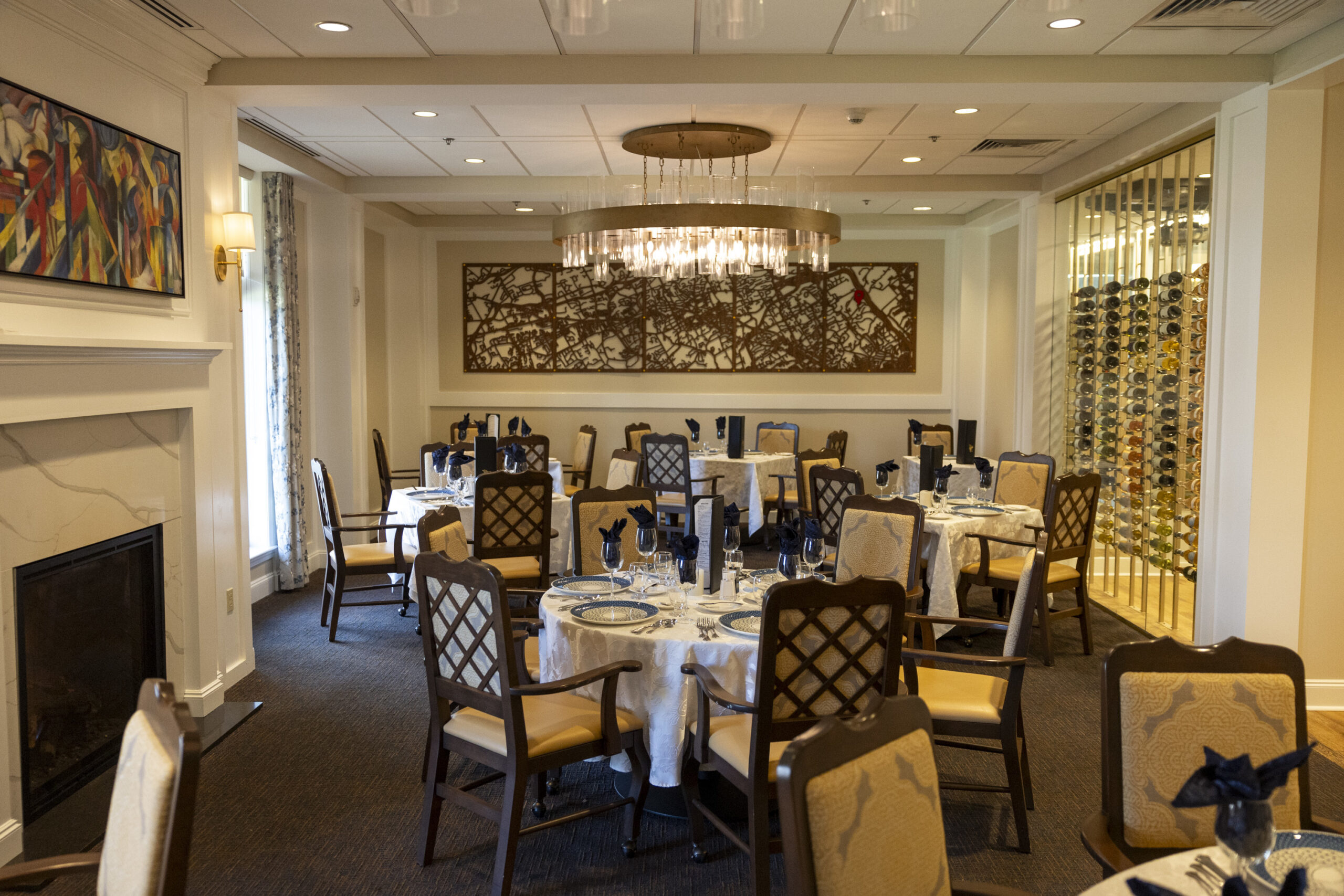
The intimate dining room is hushed but for the clinking of glasses and silverware clattering on gleaming plates. There are only 32 seats. The polished wooden chairs are plushly upholstered. The paintings and a stylized metalwork map that adorn the room are tasteful. A glass wine room, lit golden from within, casts soft light on the silver damask-swathed tables, as do the Napa winery-esque modern chandeliers.
This is Carlton Commons, the heart of senior-living, life-planning community Waverly Heights in Gladwyne.
The mansion in which this dining room is housed was once the elegant Main Line estate of a railway baron. Now, it has the air of a very quiet cruise ship, complete with a dress code: dresses for women, dinner jackets for men.
Dining room at the Waverly Heights in Gladwyne, Pa., on Tuesday, Dec. 30, 2025.
This is a restaurant that has a waiting list that’s ostensibly 710 people, about as long as Royal Sushi’s notorious Resy waitlist. But it‘s arguably far more difficult to get into. You need to be 62 years of age to be a resident (who can bring guests of any age), and the cost of admission for a one-bedroom dwelling requires a $336,000 minimum down payment. (Deluxe apartments start at over a million dollars — not a surprise for wealthy Gladwyne.)
An osso buco collapses into a tangle of tender fibers at the prod of a fork, melting into the slightly tangy goat cheese polenta puddled beneath. Crunchy fried potato slivers add pleasing texture to each bite. A butternut squash risotto is just as satisfying, a master class in texture, with creamy squash trapped in distinct grains of arborio, beset with balsamic-scented curls of slow-cooked sweet onion.
If I closed my eyes, I could very well think I was dining at Le Virtù.
Chicken cutlet with rigatoni and vodka sauce at Waverly Heights.
There’s a perfectly al dente rigatoni alla vodka upon which a crisp chicken cutlet is nestled, then topped with an oozing cloud of burrata. (It’s almost identical to the thoroughly satisfying one I just had at Center City’s Wine Dive.)
The specialty of the house is a curiously delicious tomato aspic, served with a tiny slice of cucumber and a dollop of Hellman’s mayo. No staff member was able to explain its origins, as it predated all of them. “It was always here,” said Waverly Heights’ white-toqued executive chef Michael F. Tiernan, 47. “And it is a fan favorite.”
Tomato aspic with mayo and cucumber.
When Tiernan interviewed for the position in 2017, he was expressly told to not touch the tomato aspic. He could change the shape — the kitchen’s cookie-cutter collection forms it into hearts, circles, and triangles — but he was not permitted to riff on the recipe, which consists of unflavored gelatin, tomato juice, vegetable juice, celery, onion, and olives. “It’s a very traditional, Old World-style recipe,” said CEO Tom Garvin.
Tiernan has worked at Waverly Heights for eight years, with a cumulative 18 years under his belt cooking at continuing-care facilities. In addition to managing Carlton Commons and changing its menu every three months, he cooks for a packed calendar of special events. On one of my visits, he was preparing for New Year’s Eve with poached lobster and filet mignon for a dinner that would be a prelude to dancing. The only major difference between a New Year’s party at Waverly Heights and a typical one: Their ball drops at 9 p.m. “We celebrate like we’re in Australia,” Garvin quipped.
Executive Chef Michael Tiernan at Waverly Heights in Gladwyne, Pa.
I dined at Carlton Commons twice, once as a guest of a friend’s parents who are residents and again after I contacted the life-plan community (the preferred term over retirement community, as I was informed by Garvin), who indulged my request for an interview with no small amount of incredulousness. But I loved my first meal there.
And I was deeply curious. A bookshelf in the community’s library is stacked with books written by residents, including volumes on psychology, cardiovascular disorders, and politics. Carlton Commons’ regular diners had careers as physicians, ambassadors, and scientists. How does one cook for residents like those of Waverly Heights?
Well, first, by changing the menu every 90 days, and then by packing it with global influences, frequently rendered into Italian-rooted comfort foods. And hosting lots of themed parties and events.
Wine cellar displayed near the entrance of the dining room at the Waverly Heights in Gladwyne, Pa., on Tuesday, Dec. 30, 2025.
The back of house is, by necessity, an institutional operation. Carlton Commons and Waverly Heights’ other dining rooms and cafes are executed in partnership with Unidine, the life-plan community’s version of Aramark, though Carlton Commons’ chef has significant creative control over the menus. The pasta that winds up on my plate tastes far less institutional at many places I’ve eaten, including the 100-layer lasagna at Borromini in Rittenhouse.
The prices for me, a single guest, are shockingly low. It’s $37.50 plus tax for a full meal, including an appetizer, soup or salad, entree, and dessert. No tipping is permitted. I am unable to pay more than $5.75 for a glass of chardonnay, and a nip of Maker’s Mark costs $4.75. (There’s no sommelier on staff, but there is a wine committee consisting of opinionated residents.)
My first dinner there had some slight hiccups. One of my dining companions ordered a steak “still pink inside” that arrived well done, but it was swiftly replaced by an appropriately cooked one. Another dining companion was startled to discover that her iced tea was presweetened, which took more than a few minutes to rectify.
The butternut squash risotto at Waverly Heights in Gladwyne, Pa., on Tuesday, Dec. 30, 2025.
My edamame dumplings swam in a too heavy-handed pour of bracingly salty soy sauce that would have worked better as a dipping sauce, but the dumplings themselves were delightful crispy golden pockets of gently mashed soybeans. My miso sea bass was pristinely roasted, flaking apart into succulent morsels with a gentle nudge.
Overall, the food is comforting, gently refined, and on trend in every which way, even to the surprise of Waverly Heights’ staff (down to the baked potatoes, available as a side every night). And the veryearly reservations — Carlton Commons seats diners between 5:30 and 7:15 p.m., and everyone is asleep by last call — reflect recent data that indicate diners are eating out earlier than ever. And I assure you, many of those residents listen to vinyl records, just like in Philly’s listening bars.
Dining at Carlton Commons reminded me that sometimes, the best meals aren’t found in the places you’d expect.
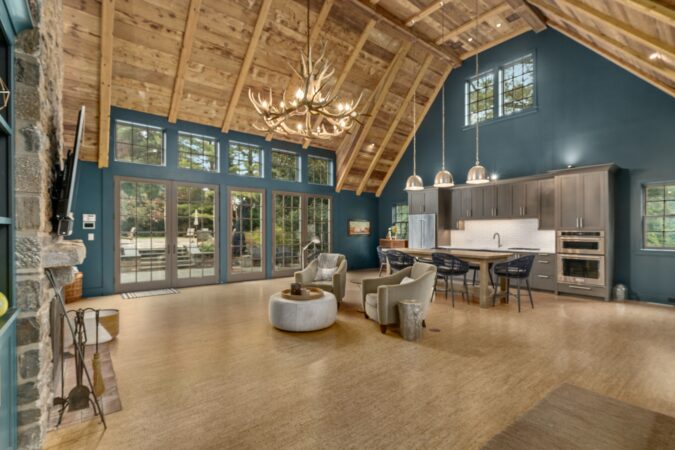
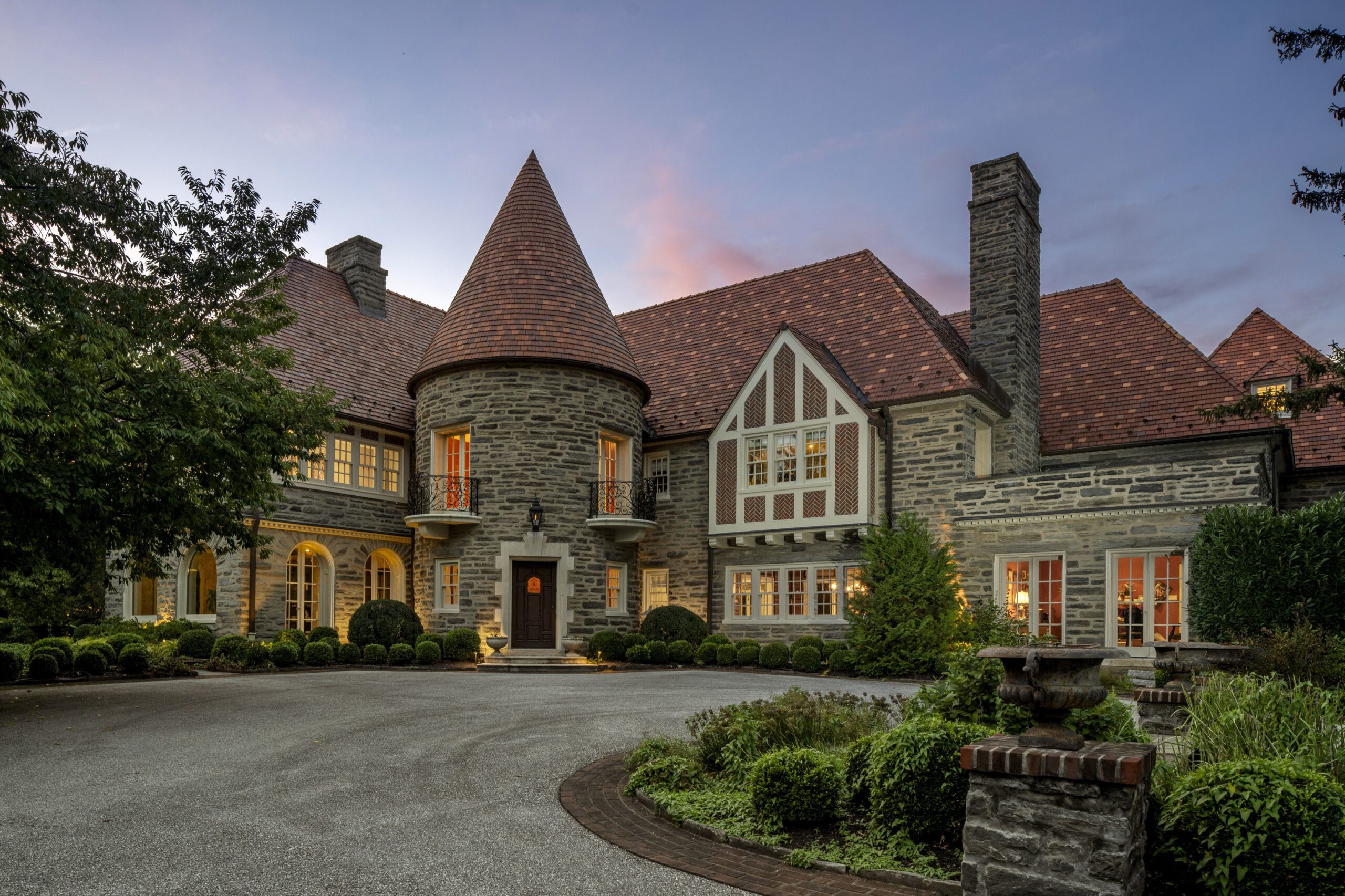
The listing includes the main fieldstone house, which spans over 11,000 square feet.
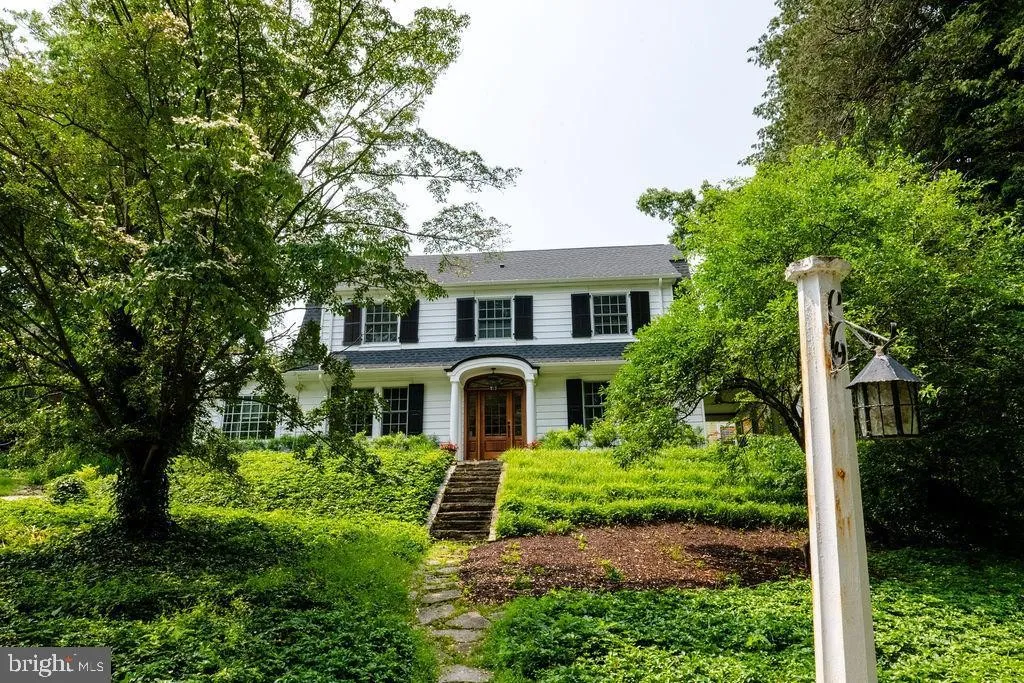
A 3.85-acre Villanova estate featuring a sprawling century-old, seven-bedroom home and a more modern carriage house have hit the market for a combined $9.9 million.
Located on Creighton Road, which the listing agent says has become known as the “estate street,” the properties are being sold together or separately, but with one caveat: If a buyer doesn’t want both, then the main home must sell first before the owners will entertain offers on the carriage house.
The main fieldstone house spans over 11,000 square feet and has a commercial kitchen, a solarium, a wine cellar, a movie room, and a gym, while the carriage house spans just over 1,000 square feet and has a heated saltwater pool.
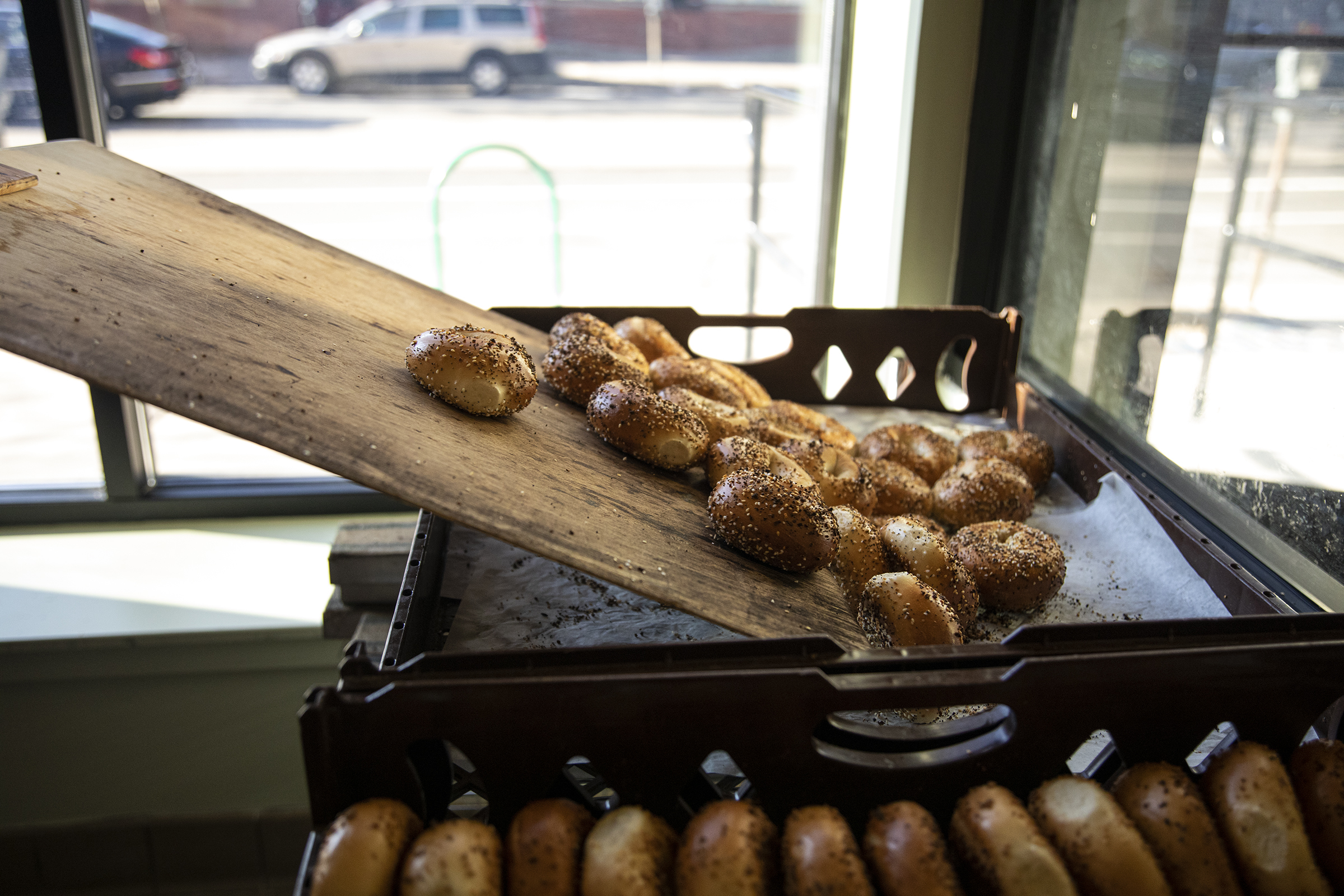
Bart’s Bagels specializes in kettle-boiled bagels.
Bala Cynwyd brothers Brett and Kyle Frankel are coming home. Sort of. The duo behind West and South Philadelphia shop Bart’s Bagels is expanding to a third location, this time in their hometown of Bala Cynwyd.
The new shop is planned to open this summer at 273 Montgomery Ave. There, the Lower Merion High School alums will dish up kettle-boiled bagels — which patrons can watch being made — along with smoked meats, egg sandwiches, and unique schmears.
Barbara Thomas, 46, was sentenced this week in Montgomery County Court for her role in a $1.76 million Medicaid fraud scheme at Bala Cynwyd-based ComfortZone Home Health Care. From 2020 to 2023, when Thomas was the office manager and a case manager, the home care agency allegedly submitted fabricated Medicaid reimbursement claims. Thomas has been sentenced to serve nine to 23 months in prison and ordered to pay $1.39 million in restitution in part with her co-defendants. So far, 18 people have pleaded guilty to involvement in the scheme.
The final phase of Ardmore’s Suburban Square redevelopment is set to open later this month. Developers spent $100 million to create Coulter Place, which has 131 apartments and 20,000 square feet of retail space that has been leased to New Balance, Rhone, Sugared + Bronzed, Skin Laundry, and Barry’s. Two retail spaces remain. Rent for a one-bedroom unit in the five-story building, which has a fitness center and pool deck for residents, starts at around $3,000 per month. (Philadelphia Business Journal)
Heads up for drivers and pedestrians: With work underway on the mixed-use Piazza development in Ardmore, there will be sidewalk closures on Lancaster Avenue between Greenfield and Ardmore Avenues through its completion, which is projected for early 2028.
Part of Lancaster Avenue, between Indian Creek Lane and Woodcircle Drive, will also have a weekday lane closure in both directions from 9 a.m. to 3 p.m. as PennDot installs new lane departure signage. Installation will begin tomorrow and run through next Friday.
Part of Elmwood and South Narberth Avenues in Narberth will be closed to traffic starting Monday for bridge construction. Pedestrians and cyclists will have designated access.
Thinking about a home renovation? Inquirer contributor Terri Akman recently spoke with couples who overhauled parts of their home for tips on protecting their relationships through what can be a stressful process. Wynnewood couple Jena and Brandon Fisher, who updated all of their home’s bathrooms, recognized their different approaches to decision-making up front. Here’s how other couples approached renovations.
Speaking of home renovations, the founders of Gladwyne interior design firm Bergman Vass recently launched a new minimalist furniture collection. The duo is planning to open a showroom in Philadelphia’s Navy Yard early this year where buyers can see the items in person. (Philadelphia Magazine)
Ever have a question about the township you can’t answer? Submit it to Curious Lower Merion and one of our reporters might try to track down the answer.
🏫 Schools Briefing
In honor of Martin Luther King Jr. Day, the school district is hosting a “Junior Afternoon of Service” today from 4 to 6 p.m., when students and their families can help with various community projects.
The district is closed Monday for Martin Luther King Jr. Day. There are several concerts today and tonight and Black Rock eighth graders will pose for their class photo tomorrow. Tuesday begins the midyear experience for Lower Merion and Harriton High students. See the district’s full calendar here.
After new Pennsylvania School Code requirements went into effect at the start of the year, LMSD is reminding families about how it will communicate about weapons found on school property, offering a three-tiered approach. See it here.
🍽️ On our Plate
Lower Merion’s restaurant scene is set to boom in 2026, with nearly a dozen openings in the coming months, including Dim Sum Factory, EMei, and Malooga. A little further along the Main Line, Salt Korean Barbecue Steakhouse/Yugo is planning a late summer opening in Devon, while Testa Rossa, from the team behind White Dog Cafe, is slated to open in Radnor this spring. The Inquirer’s Michael Klein has rounded up the region’s anticipated openings. With so many new restaurants on the way, the Main Line has landed among Klein’s “hot neighborhoods” for dining this year.
Speaking of openings, Love & Honey Fried Chicken, which opened last month at 1111 W. Lancaster Ave., is hosting a grand opening for its Bryn Mawr location on Saturday from 11 a.m. to 2 p.m. There will be giveaways, discounted food, a ribbon cutting, and music.
And with openings come some closings. Belmont Hills BYOB Core de Roma, which specialized in Roman cuisine, has closed after five years. In a note on its website, the team behind the restaurant said it had decided not to buy the space or extend its lease at 201 Jefferson St. In September, the real estate hit the market with an asking price of $599,000.
🎳 Things to Do
🎸 The Ledbetters: Hear the Pearl Jam tribute perform some of the band’s biggest hits. ⏰ Friday, Jan. 16, 8 p.m. 💵 $33.38 📍 Ardmore Music Hall
🧸 Paddington 2: Catch a screening of the sequel to the beloved children’s movie. There’s another screening on Jan. 31. ⏰ Saturday, Jan. 17, 11 a.m. 💵 $6.75-$7.75 📍 Bryn Mawr Film Institute
🍹 Wallace Dry Goods x Home Appetit Moms Night Out: Geared toward moms, including those who are pregnant or nursing, sample non-alcoholic beverages and light bites. Registration is required. ⏰ Wednesday, Jan. 21, 5-7 p.m. 💵 Free 📍 Wallace Dry Goods
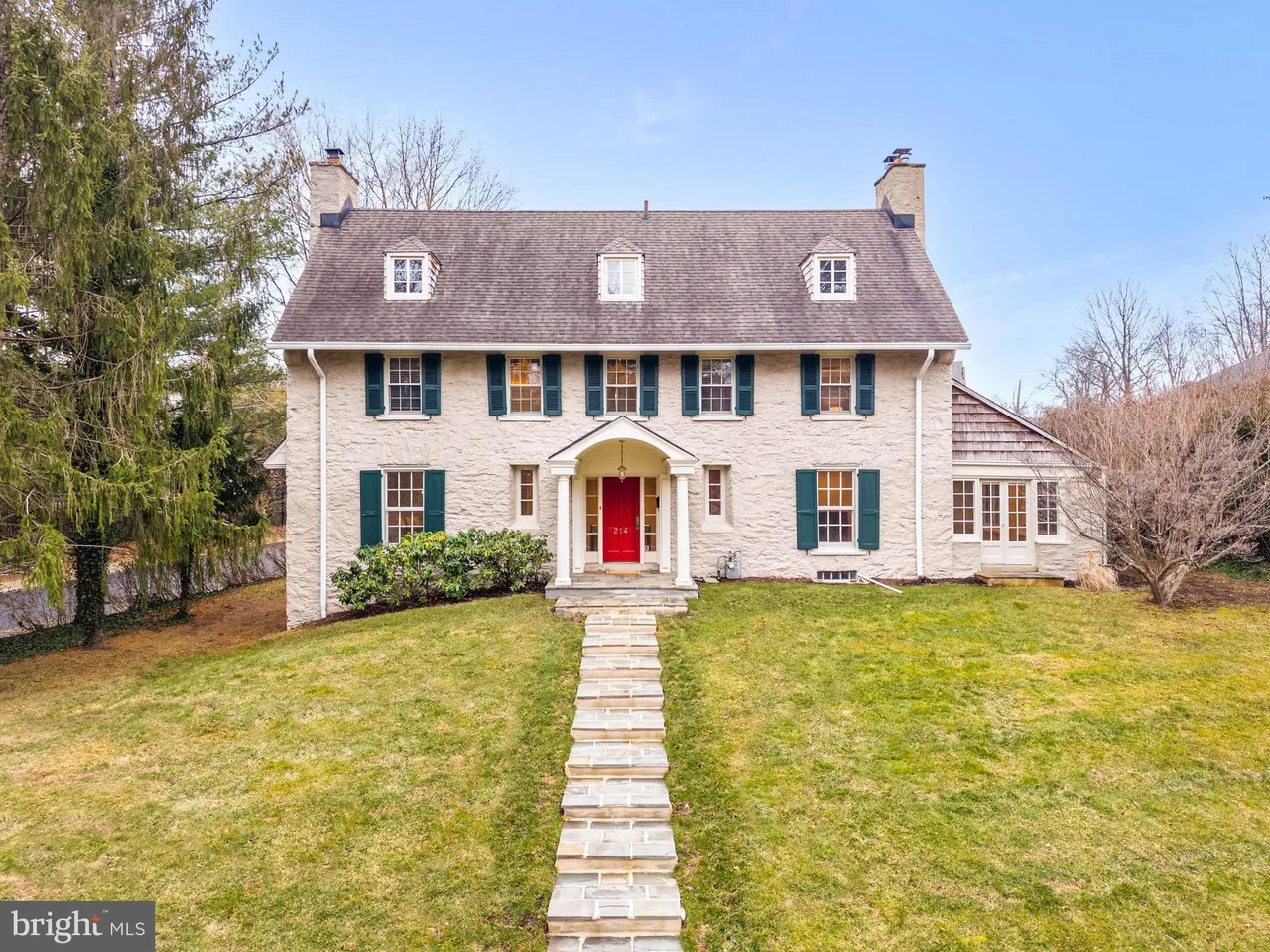
Built in 1900, this Ardmore Colonial blends classic design elements — like dormers and a portico — with modern living. There are a number of fireplaces throughout, including in the living room, dining room, and a bedroom. The five-bedroom home features original woodwork and crown moldings, has a sunroom leading to the patio, and a kitchen with granite countertops, including a large island. Its five bedrooms are spread across the second and third floors, including the second-floor primary suite which has a walk-in closet, a standalone tub, and a fireplace. Other features include a partially finished basement and a detached two-car garage with a studio apartment. There’s an open house Saturday from 1 to 3 p.m.
By submitting your written, visual, and/or audio contributions, you agree to The Inquirer’s Terms of Use, including the grant of rights in Section 10.
This suburban content is produced with support from the Leslie Miller and Richard Worley Foundation and The Lenfest Institute for Journalism. Editorial content is created independently of the project donors. Gifts to support The Inquirer’s high-impact journalism can be made at inquirer.com/donate. A list of Lenfest Institute donors can be found at lenfestinstitute.org/supporters.
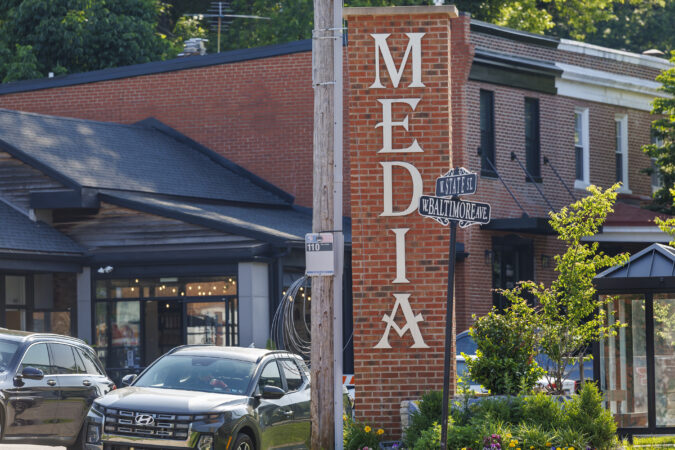
There are plenty of spots to enjoy happy hour in Media this winter.
Looking for a spot to grab a light bite or drink during happy hour this winter? Media has plenty of options to choose from — and with special pricing — whether you’re looking for a classic cocktail, a specialty sip, or shareable bites like tandoori chicken dumplings, buck-a-shuck oysters, or arancini.
The Inquirer’s Denali Sagner has rounded up eight spots in Media with happy hour offerings, including relative newcomers like Departure or Maris Mediterranean and longtime favorites like Spasso Italian Grill or Stephen’s on State.
Scores of demonstrators protesting the killing of Renee Good by an ICE officer gathered across the region over the weekend, including in Media. Protesters ranging in age chanted “United we stand, divided we fall” outside the Delaware County Courthouse on Sunday, while some children carried crayon-drawn signs with messages like “ICE Cream, not ICE.” One Wallingford woman brought her 8-year-old daughter and said she came out because “I want to show them it’s important to stand up to a bully.”
Could popular HBO series Mare of Easttown return for a second season? Kate Winslet seems to be ready for the Delaware County-set show, created by Berwyn native Brad Ingelsby, to return, and recently indicated filming could start as early as 2027. While the award-winning actor is on board, nothing official has been announced yet.
The offerings at the Promenade at Granite Run are growing. Retailer Nordstrom Rack plans to open a 30,000-square-foot shop there this fall, and SweatHouz, which specializes in contrast therapy, opened yesterday. Located in the ground floor retail section of apartment building eleven33, SweatHouz offers infrared sauna and cold plunge therapy in private suites. The Promenade is also adding a small-format Ikea this year and recently welcomed food hall Wonder.
Media Borough has been awarded nearly $600,000 in state grants to support the purchase of a new ambulance, pedestrian enhancements, and the Barrall Park Field and tennis courts project.
Heart & Soul’d, the nonprofit thrift store that supports foster care and adoption services, is now open at its new location at 407 Dartmouth Ave. in Swarthmore. It moved there from its previous home at 14 Park Ave., also in Swarthmore.
Kandy Kids Toys and Gifts, located at 5 S. Chester Rd. in Swarthmore, announced last week that it will close at the end of February after 10 years in business.
The GameStop at Marple Cross Roads in Springfield shuttered last week as part of a mass closure by the gaming retail store.
The rehab hospital at the site of the former Concordville Inn in Glen Mills is getting closer to opening. Encompass Health plans to open the 50-bed inpatient facility in May. It will offer care to patients recovering from strokes, brain and spinal cord injuries, amputations, and other orthopedic conditions. (Philadelphia Business Journal)
Certified Laughter Yoga Master Trainer Alexa Fong Drubay is helping area residents discover a lesser-known form of yoga that is intended to help with stress relief. Based in Media, Fong Drubay offers individual and group classes on laughter yoga, which focuses on poses that hone in on yogic breathing. Laughter yoga is credited to a doctor in India, who started it in 1995. “Don’t we all deserve a little bit more laughter in our life?” Fong Drubay told 6abc in a recent segment.
🏫 Schools Briefing
There are no classes tomorrow for Wallingford-Swarthmore School District, which has a teacher in-service day. The district is then closed Monday for Martin Luther King Jr. Day. See the full calendar here.
Rose Tree Media School District is closed Monday for Martin Luther King Jr. Day. There’s a winter talent show tomorrow evening, and next week is Springton Lake’s spirit week. See the district’s full calendar here.
🍽️ On our Plate
Terrain Cafe, which has a location in Glen Mills, is hosting a “bonus restaurant week” from Jan. 26 through Feb. 8, featuring prix fixe brunch and dinner menus for $30 and $45 per person, respectively. Both meals include a starter, half salad, and an entrée.
🎳 Things to Do
🩰 Ballet of Lights: Sleeping Beauty: Tickets are going fast for this ballet performance of the classic fairytale, where dancers will wear glow-in-the-dark costumes. ⏰ Friday, Jan. 16, 6:30 and 8:30 p.m. 💵 $44-$69 📍The Media Theatre
🎵 A Proud Monkey: Hear tunes from the Dave Matthews Band tribute. ⏰ Saturday, Jan. 17, 8-11:30 p.m. 💵 Pay as you go 📍Shere-E-Punjab, Media
🥾 Martin Luther King Jr. Day Mini-Adventure Camp: Kids in kindergarten through third grade will explore the arboretum, go hiking, play games, and make crafts. ⏰ Monday, Jan. 19, 9 a.m.-4 p.m. 💵 $30-$113 📍Tyler Arboretum
🎭 Draw the Circle: This one-person show by Mashuq Mushtaq Deenexplores the courage it takes to live as your authentic self. ⏰ Wednesday, Jan. 21-Sunday, Feb. 1, times vary 💵 $20-$35 📍Hedgerow Theatre, Rose Valley
The home was built in the Dutch Colonial style and sits on a hill.
This stately and historic home is just a short walk to the heart of downtown Media. Built in 1926, the Dutch Colonial has an updated interior, including living, dining, and family rooms, as well as a kitchen with granite countertops, an island, and double wall ovens. There are three bedrooms, including a primary suite with a walk-in closet on the second floor, and a fourth ensuite bedroom on the third floor. There’s plenty of living space outside, too, thanks to a covered side porch and a slate patio with a stone fireplace and built-in pizza oven.
By submitting your written, visual, and/or audio contributions, you agree to The Inquirer’s Terms of Use, including the grant of rights in Section 10.
This suburban content is produced with support from the Leslie Miller and Richard Worley Foundation and The Lenfest Institute for Journalism. Editorial content is created independently of the project donors. Gifts to support The Inquirer’s high-impact journalism can be made at inquirer.com/donate. A list of Lenfest Institute donors can be found at lenfestinstitute.org/supporters.
John Linehan and Kobe Bryant used to talk. A lot. This would not have been unusual for other AAU teammates, but these two were fierce high school rivals.
Linehan was a scrappy point guard for Chester. Bryant was a relentless shooting guard for Lower Merion. Both were competitive, almost to a fault, and in the days leading up to big games, they’d get chippy.
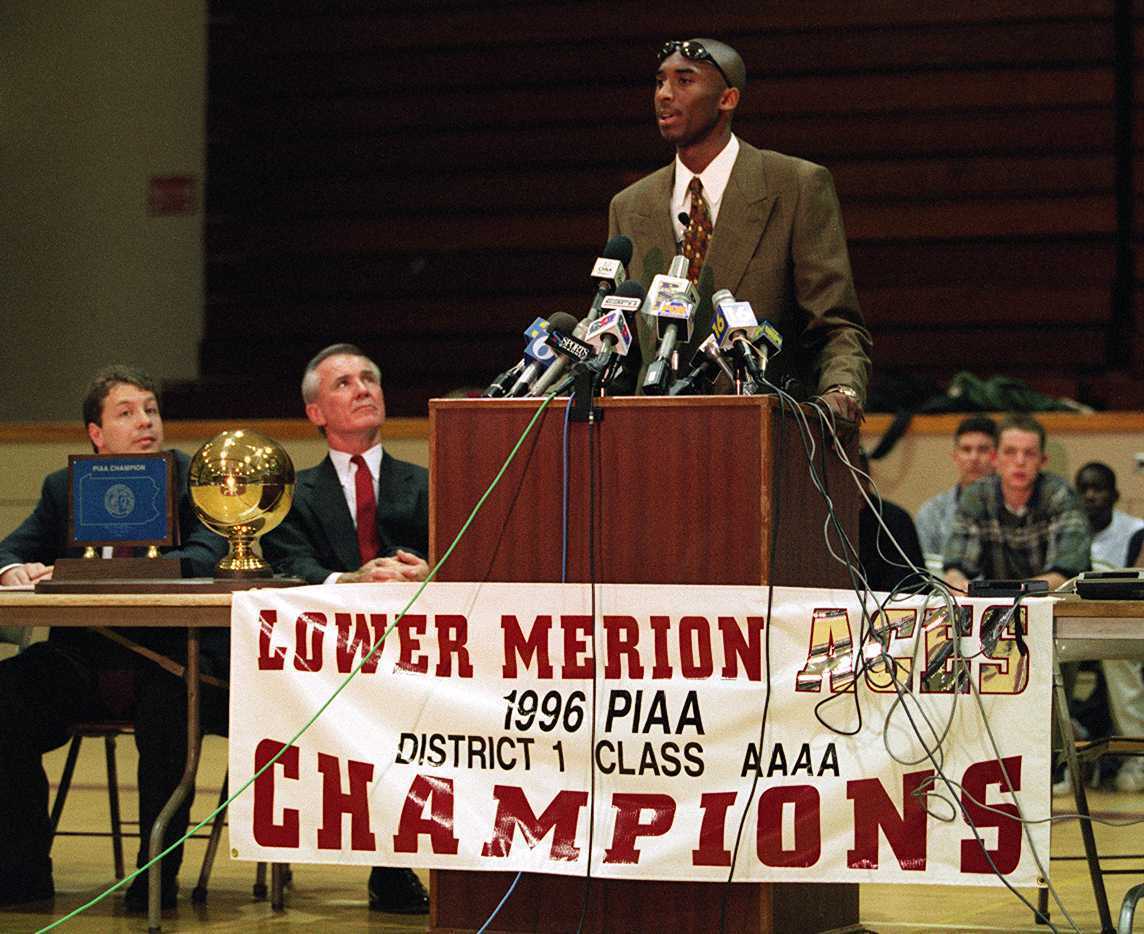
The week before the 1996 PIAA Class AAAA District 1 title game, for example, the players talked every day on bulky landline phones, with Bryant often calling Linehan at his home in Chester.
“I just said, ‘You know, John, I haven’t won a championship yet, and you have,’” Bryant told The Inquirer in 1996.
Linehan knew what his friend was doing. The future NBA star did the same thing a few weeks later, on March 19, a day before the teams met again in the state semifinal.
“He was trying to get me to trash talk,” Linehan said. “I think he needed a little edge. I didn’t want to give him too much. I was like, ‘Man, you crazy.’”
The late Kobe Bryant, a former Lower Merion basketball star, announcing he will go directly into the NBA draft out of high school.
Lower Merion wasn’t a basketball school when Bryant arrived in the fallof 1992. It paled in comparison to the local powerhouses like Simon Gratz, Coatesville, and Chester.
But Bryant changed that. Even in his freshman year, a season in which the Aces went 4-20, he brought a new standard, working out before class and introducing a level of toughness that was foreign to his teammates.
Bythe mid-1990s, Lower Merion was among the best high school teams in the Philadelphia area. Its players were more confident, celebrating after big shots, and talking loud on the court.
The Aces didn’t play as many games against Coatesville, a rising power led by Rip Hamilton. They couldn’t consistently measure themselves against Gratz, which didn’t participate in the PIAA playoffs untilthe 2004-05 season.
But they could against Chester. And so, a decades-long rivalry was born.
From 1996 through the mid-2010s, Chester and Lower Merion put on some of the greatest high school basketball games in the area. They’d often sell out venues like the Palestra and Villanova’s Pavilion. Some fans would even scalp tickets.
Their communities were almost diametrically opposed. Chester was predominantly Black; Lower Merion was predominantly white. Chester was plaguedby poverty; Lower Merion was considered affluent.
Chester, with its Biddy League, had a legacy of basketball greatness, and a steady pipeline of talent. Lower Merion had nothing comparable. But these differences melted away on the court.
And while the rivalry is not what it once was, it lives on today.
“The pride and the intensity and the history will never fade,” said Lower Merion coach Gregg Downer. “I mean, if we played them tomorrow night, that would be an intense game.”
The Bryant-Linehan era
When Downer was named head coach in 1990, he already was well-aware of Chester’s tradition. He’d played youth basketball growing up in Media and had heard about the stars who’d come out of the Biddy League.
It was obvious that his team would have to go through the Clippers to win any sort of accolade. But it wasn’t until Bryant’s arrival that Downer’s aspirations became a real possibility.
The shooting guard, who was the son of former 76er Joe “Jelly Bean” Bryant, was mature for his age. He’d demand more, mentally and physically, of older teammates. Doug Young, a former Lower Merion forward, remembered seeing Bryant leaving the locker room at 7 o’clock one September morning in 1993.
He’d been at the high school gym since 5 a.m., working out by himself. To the Lower Merion basketball team, this was a “crazy” concept, so Young and his cohorts decided to join him.
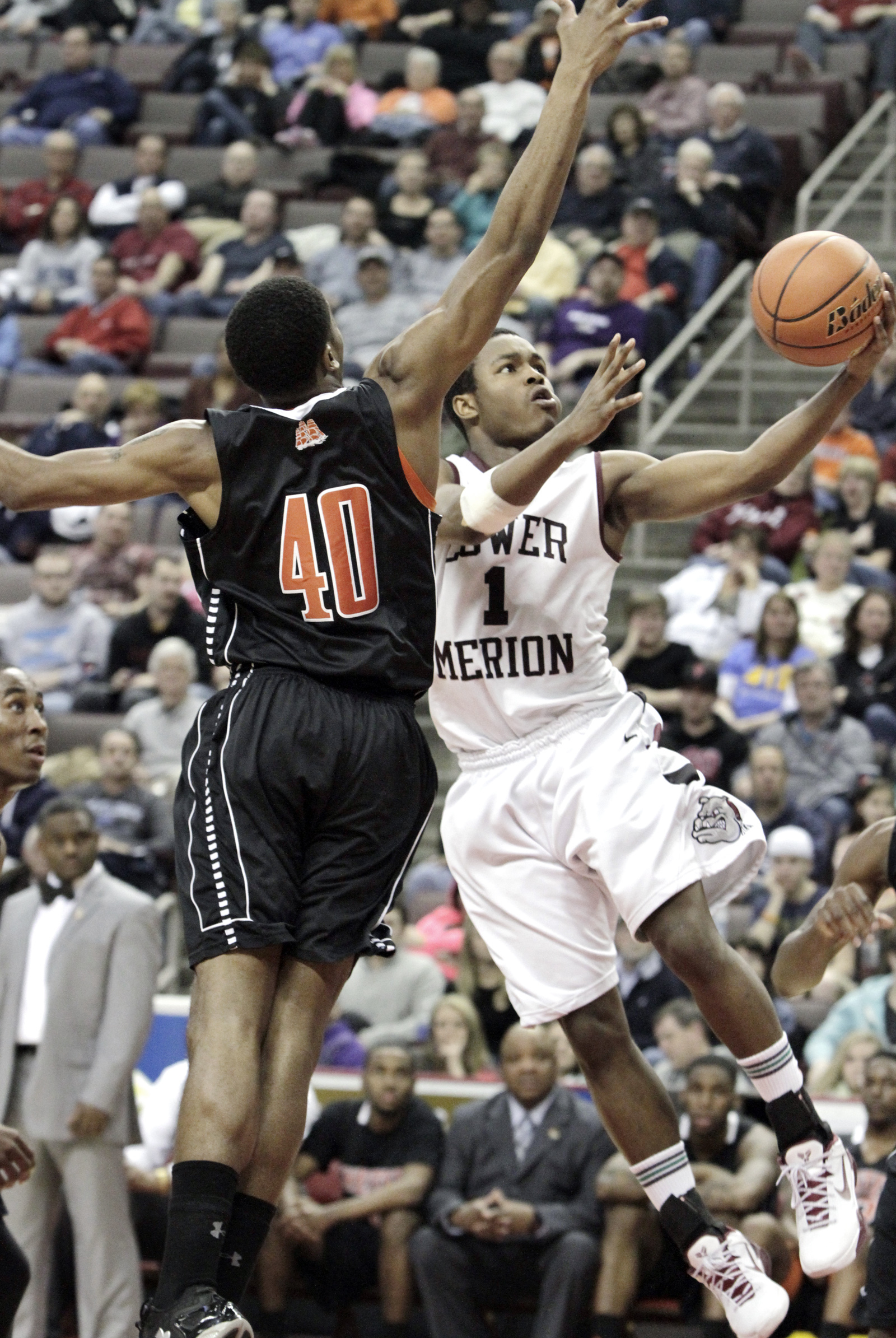
In the District 1 championship game against Chester, Kobe Bryant goes to the hoop over the Clippers’ John Linehan.
They arrived the next day at 5:06 a.m. The players knocked on the door. Bryant didn’t answer.
“He wouldn’t open it,” said Young, who graduated in 1995. “You’re either there or you’re not. We were six minutes late.”
His teammates waited outside until 6:30 a.m., when the school opened. They made sure to show up before 5 a.m. from that day on.
Downer was wired the same way. The coach — and his NBA-bound pupil — would push the team in practice. Losses were particularly tough. The players would go through endless sprints and rebounding drills that sent them running to the trash can.
It wasn’t fun. But over time, the method created a newfound tenacity.
“No one walked into high school saying, ‘Oh, yeah, I want to win a state championship,’” Young said. “But [Kobe] knew what that was. He was like, ‘I don’t know any other way. If we’re not going to win a championship, what the heck are we playing for?’”
Chester was always going to be an obstacle, so Downer tried to play into the battle. He’d use analogies for the tough, hard-nosed team, comparing it to an animal stalking its prey.
The coach began to screen movies to underscore this point. Together, in a Lower Merion classroom, Downer’s players watched Jaws and other tales of survival, like The Edge, a 1997 thriller about a plane that crashes in the Alaskan wilderness.
“This bear is stalking them, and the couple is saying, ’What are we going to do about this bear?’” Downer said. “And one of them says, ‘The only thing we can do is kill the bear.’
“And I remember being like, ‘We can do this.’ But the only solution is to — not to be overly graphic — but to kill them.”
(The bear in this analogy was Chester.)
He added: “We tried everything humanly possible to get through to this team.”
The first few games were ugly. In 1995, Lower Merion met the Clippers in the District 1 championship, only to lose by 27 points. But they came back with a renewed focus the following year, in 1995-96, going 25-3 in the regular season to earn a district final rematch against Chester.
The Aces showed up at the arena with “27″ printed on their warmup shirts. Bryant, armed with fresh bulletin board material from Linehan, dropped 34 points against the Clippers en route to a 60-53 Aces win.
The shooting guard scored 39 points later that month — with a broken nose — in a 77-69 state semifinal win over Chester. Lower Merion went on to beat Erie Cathedral Prep, 48-43, to win its first state championship since 1943.
Kobe Bryant celebrates after defeating Chester at the Palestra in 1996 to advance to the state final.
To Linehan, the difference Bryant made was obvious. He joked that he’d “never heard of Lower Merion” before his friend arrived. But once he did, Chester realized it would have to go to great lengths to prepare for the phenom.
Ahead of a big game against Lower Merion in the mid-1990s, the coaching staff reached out to Clippers alumnus Zain Shaw. He played at West Virginia and in Europe and possessed some of the same characteristics as Bryant — a tall frame and an athletic build with strong ballhandling skills.
The Clippers invited Shaw to practice, where he played the role of Bryant (to the best of his ability).
“Kobe was so special, we had to bring in a pro to help us prepare,” said Linehan, who later starred at Providence.
But there was another impact the future Lakers star had, one that had nothing to do with his own prowess. Linehan noticed that Bryant’s Lower Merion teammates started to take on some of his qualities. Suddenly, they were playing brash, confident basketball.
“We didn’t have reason to believe, until Kobe got there, that we belonged on the court with Chester,” Young said. “The fear was real. Teams were afraid of Chester because they’d run you out of the building.
“The idea of Lower Merion being on the court in a meaningful game against [them] was such a crazy thought. But then, you started to believe.”
The buzzer-beater heard ’round Chester
Bryant never got over the rivalry, even after he embarked on his Hall of Fame NBA career in 1996. Sometimes, he’d call the coaching staff before big games against Chester, leaving expletive-laden voicemails to use as motivation.
The Lakers shooting guard also created an incentive structure for his former team.
“You couldn’t get a pair of Nike sneakers unless you qualified for the playoffs,” Young said. “If you don’t earn it, you don’t get it.”
He became especially involved in 2005-06. After a lull in the early 2000s, Chester and Lower Merion found themselves neck-and-neck again. The Aces were led by the duo of Ryan Brooks and Garrett Williamson, and the Clippers boasted a deep roster, headlined by Darrin Govens. All of them eventually played in the Big 5.
(Chester was so stacked that it brought a 1,000-point scorer off the bench in Noel Wilmore.)
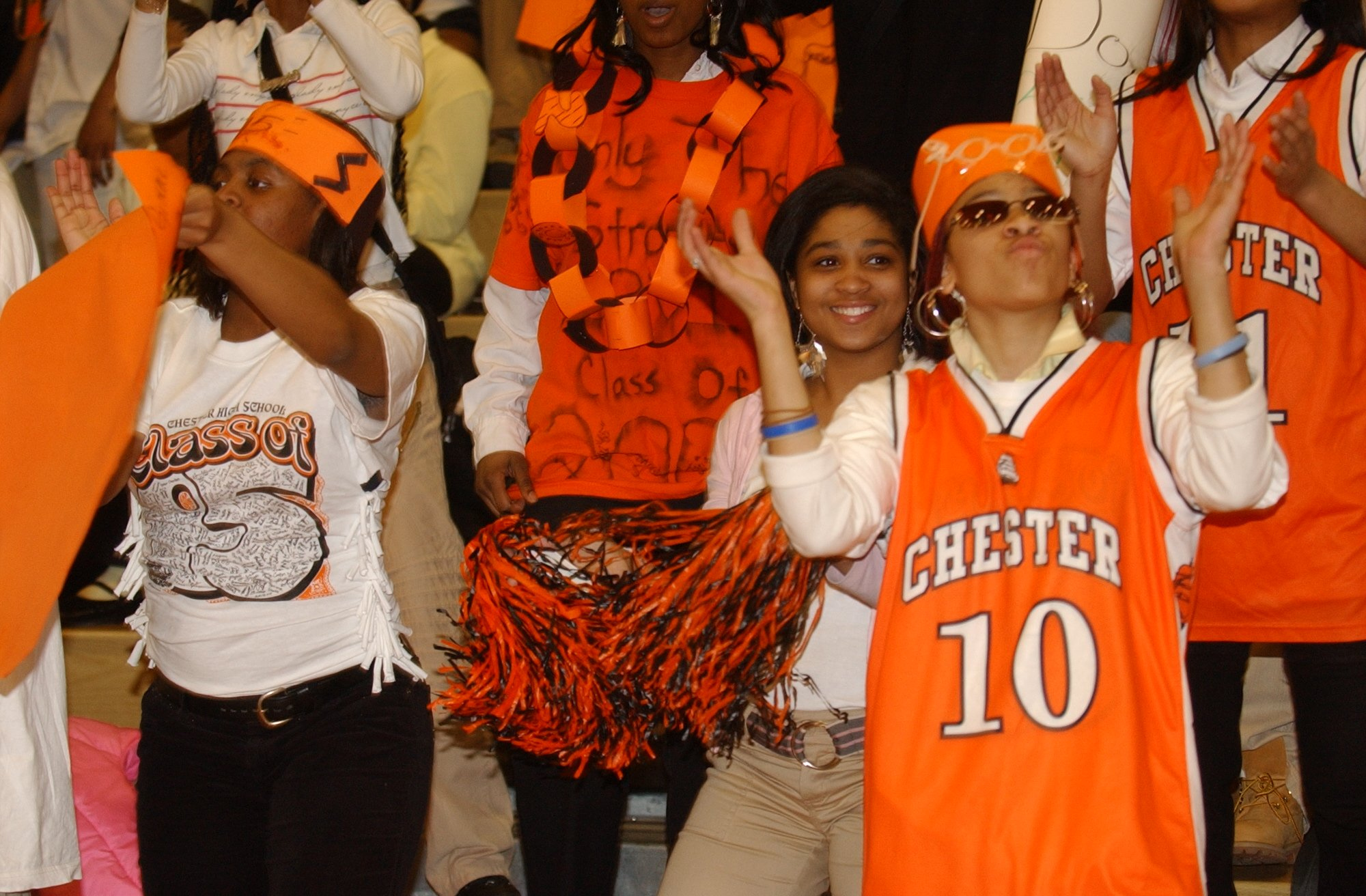
Students from the class of 2005 show their support as Chester and Lower Merion play in the state final.
The rivals met in the state championship on March 19, 2005. Despite strong performances from Williamson and Brooks, the Clippers pulled away in the second half thanks to a dominant third quarter from Govens. Chester won, 74-61.
The teams reconvened the following season with their competitive spark fully reignited. They faced each other three times that year. Chester took Round 1, a one-point regular-season victory on Dec. 27.
Round 2 was in the district final on March 3. Before the game, in front of a packed crowd at the Pavilion, Chester sophomore Karon Burton walked up to the layup line.
Lower Merion’s student section caught his ear with a chant about coach Fred Pickett’s stout stature.
The dig didn’t intimidate Burton. If anything, it fueled him. He grew up playing street ball in Chester and always loved trash talk.
Instead of cowering, like the crowd hoped, the sophomore delivered an unforgettable outing. The game went into overtime, and was tied at 80 with only a few seconds remaining.During a timeout, assistant coach Keith Taylor pulled Burton aside.
“He was like, ‘Hey, listen,’” Burton said. “They’re going to double Darrin. If you get that ball, do your thing.’”
Taylor’s words proved prescient. As Lower Merion’s defenders swarmed Govens, the Clippers inbounded the ball to Burton.
He took a pull-up jumper from beyond the arc and drilled it for an 83-80 win. The Chester fans stormed the court. Burton, who later joined Wilmore in the 1,000-point club, said he felt like a celebrity in his hometown.
“It was like watching a buzzer-beater in the NBA,” he said. “I just ran to my teammates, they picked me up. It was a crazy feeling.
“I’m a big Kobe fan, too. Kobe’s my favorite player ever. So when I came and I hit the game-winner on that team …”
Round 3 took place a few weeks later, in a state semifinal rematch at the Palestra on March 22. Bryant called Lower Merion’s coaches before the game.
“I don’t remember specifically what he said, but I’m sure there were a lot of [expletives] dropped,” said Young. “Like, ‘Don’t call me back if you don’t beat those [expletives].’ That was a line we heard from him a couple times.”
This one didn’t go Chester’s way. After trailing the Clippers, 47-37, at the end of the third quarter, the Aces came roaring back in the fourth and put up 33 points to eke out a 70-65 win.
The celebration in the locker room was cathartic. Water sprayed into the air. Players sat atop each other’s shoulders and turned the showers into a slip ‘n slide. Bryant called in, again, as other members of the 1996 team filtered through.
Darrin Govens scored his 1,000th point for Chester against Lower Merion in the state championship in 2005.
This was not how Govens wanted to end his high school career. And a few months later, when he arrived at St. Joseph’s on a basketball scholarship, he saw a familiar foe.
It was Williamson, his new Hawks teammate.
“We were sitting on the opposite side of the bench,” Govens said. “I didn’t want to sit next to him; he didn’t want to sit next to me. We’d kind of avoid each other and just head nod.
“Even in running drills, it was a competition. He looked to the left. I looked to the right. We tried to beat each other in sprints. But then we realized, ‘All right bro, we’re teammates now.’”
‘Hero status’
Chester had always rallied around its high school basketball team. Linehan said it was akin to playing for the Sixers. The teenagers were treated like professional athletes — especially those who had been a part of big wins.
The Clippers’ public address announcer, James Howard, called this “hero status.”
“All of a sudden, your money’s no good,” he said. “Barbers take care of you, make sure your hair looks nice before games. Free food. Little kids look up to you and ask for your autograph. That’s how it is.”
In Chester, there were plenty of heroes to draw from. There was Linehan, but also Jameer Nelson, who met a young Burton in the late 1990s. Nelson, a friend of Burton’s cousin, gave the aspiring basketball player a gift before he left for St. Joe’s: his MVP medal from the Chester summer league.
“He was one of the biggest guys in our city,” Burton said, “so it’s definitely something that I’ll always remember.”
By the early 2010s, when the rivalry was reignited for a third time, Lower Merion had built more of a basketball tradition. Aces guard Justin McFadden said he’d get stopped in Wawa before big games against the Clippers.
Chester celebrates its win over Lower Merion for the state championship in 2012.
“It became a community thing,” he said. “People would be asking, ‘What do you guys think about Chester? Do you think we can get it done?’”
In 2012, the schools met in the state championship for the first time since 2005. Junior forward and future NBA starter Rondae Hollis-Jefferson put up a double-double to lead the Clippers to a resounding 59-33 win over the Aces. It was their second straight title and their 58th straight victory.
A year later, after going 17-0 in the Central League, the Aces met the Clippers in the state final again. Chester had won 78 straight games against in-state opponents. Snapping that streak would be daunting, but Downer had a plethora of motivational tactics at his disposal.
Just as they had in the 1990s, The Aces again spent pockets of the season watching Jaws, The Edge, as well as an addition: Al Pacino’s “Inch by Inch” speech in Any Given Sunday.
“He would have that fired up on YouTube, ready to go,” McFadden said. “Looking back, [your reaction] is a chuckle, but in the moment, it worked. We knew that this was the hill that needed to be climbed.
“And every time they played that speech, we got goose bumps. We were ready to fire.”
Chester got out to an early lead, but Lower Merion rallied behind a 22-point, 11-rebound performance from B.J. Johnson, who later starred at La Salle. The Aces snapped the streak and won their seventh state title with a 63-47 victory.
Lower Merion’s Jaquan Johnson goes to the net as Diamonte Reason guards him in the Chester-Lower Merion state championship game in 2013.
The Clippers then were coached by Larry Yarbray. Pickett, who was diagnosed with cancer in2010, was in declining health. Just before he died in 2014, Downer decided to say goodbye.
He and his former assistant coach Jeremy Treatman drove out to Pickett’s home in Chester. They went to his bedside.
“And we talked,” Downer said. “And we held hands. It was a really touching moment for me. This is a man that carried Chester on his back. That tried to carry Lower Merion on his back. And I knew it was the last time I was going to see Fred.
“We walked out the door, and we told each other that we loved each other. And I never thought he would say that to me, or vice versa. But it was just kind of like, ‘You know what? We’ve had some amazing battles, and there’s a lot of respect there.’”
Keeping the tradition alive
In recent years, the Chester-Lower Merion rivalry has diminished.
There was a brief period when the teams were in different classifications. Both programs have lost players to private schools that can recruit, and the addition of the Philadelphia Catholic League to the PIAA has made the state playoffs more competitive.
One place the Aces and Clippers could meet is in the district tournament, where they reunited in 2024. But they haven’t played each other since. And Howard says the contests don’t have the same feel.
“Both teams have lost D-I talent,” he said. “It’s not as high-flying, above the rim, as it was in the past. But still a great game. Sold out at Lower Merion, and at Chester, same thing.”
The history will always be there, though, and Burton is doing his best to keep it alive. His 8-year-old son, Karon Burton Jr., is playing in the Biddy League. His father is his coach.
Sometimes, they go on YouTube and watch old Clippers games. Junior’s favorite, of course, is the 2006 district final.
Burton believes that his son has a promising future, but isn’t sure of where he’ll go to high school yet. He doesn’t want Karon Jr. to feel obligated to follow his father’s path.
But if it worked out that way, what a story that would be.
“I’d love to be the first father and son to have 1,000 points,” Burton said. “With the same name? That would be crazy.”