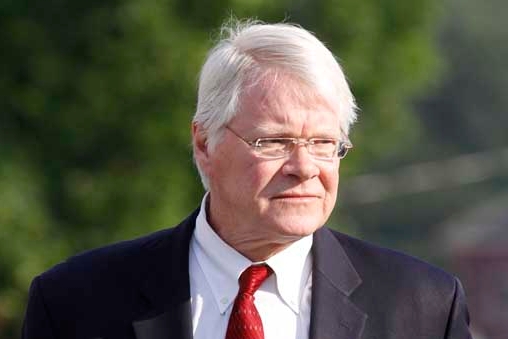
Joseph E. McGettigan III, 76, of Media, longtime trial lawyer and legal consultant, former Philadelphia assistant district attorney, former Pennsylvania chief deputy attorney general, former Delaware County first assistant district attorney, former assistant U.S. attorney in Philadelphia, former Philadelphia first assistant district attorney, and former Pennsylvania senior deputy attorney general, died Thursday, Dec. 31, of lung inflammation at Lankenau Medical Center.
Born in West Philadelphia and a graduate of Temple University, Mr. McGettigan was a legal expert in sexual assault and murder cases. He litigated in hundreds of trials over more than three decades as a prosecutor for city, county, state, and federal governments, and won notable convictions in the murder case against multimillionaire philanthropist John E. du Pont in 1997 and the child sexual abuse case against then-Pennsylvania State University assistant football coach Jerry Sandusky in 2012.
He was, then-Delaware County District Attorney Patrick L. Meehan said in 1998, like “a fascinating character in a crime novel.”
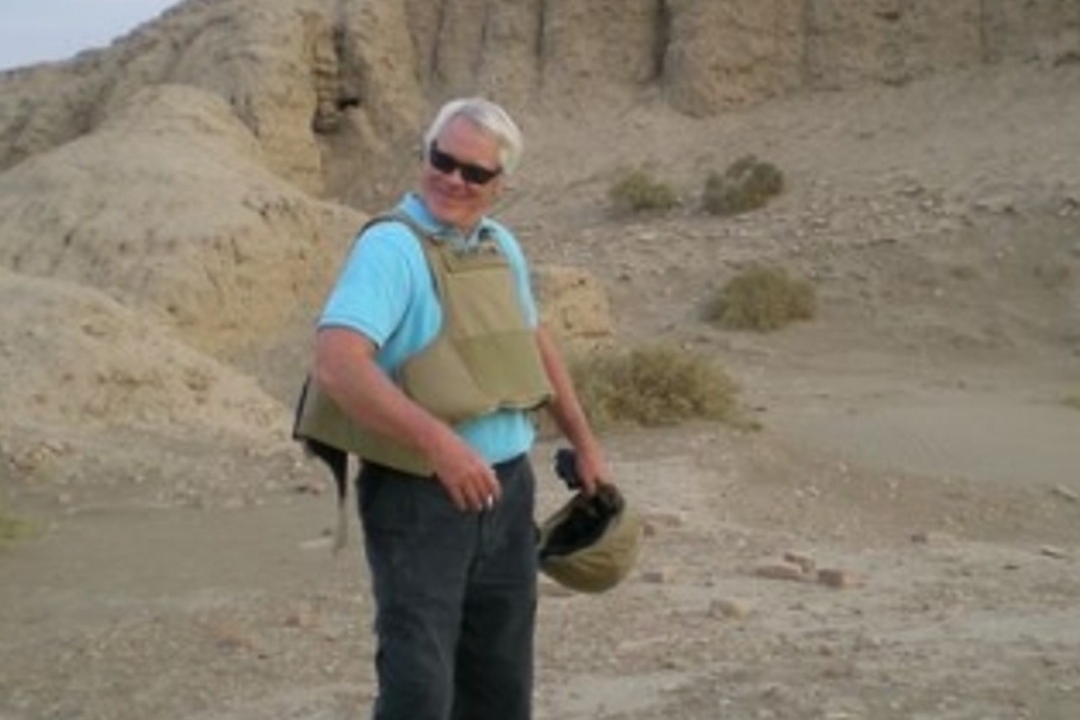
He worked for four Philadelphia district attorneys over two stints in City Hall and spent a year in Iraq in 2008 and 2009 as a U.S. government resident legal adviser working to reestablish a criminal justice system after the fall of Saddam Hussein. For most of the last decade, he worked for the Philadelphia law firm of McAndrews Mehalick Connolly Hulse & Ryan P. C. “He was a wonderful guy, a faithful citizen, and an incredible lawyer,” Dennis McAndrews, founder of the firm, said in an online tribute.
The grandson of a Philadelphia police officer and son of a lawyer, Mr. McGettigan prosecuted one of the first sex-abuse cases involving a priest from the Archdiocese of Philadelphia in 1985 and oversaw a state Senate absentee-ballot scam case in 1993. “I’m not shocked by much of human depravity,” he said in a 2018 video interview with lifelong friend Dom Irrera. “I’ve seen a fair amount of it.”
In an online tribute, Judge Jack Stollsteimer of Delaware County Court called Mr. McGettigan a “legendary prosecutor, a larger-than-life personality, and an avenging hero to crime victims across our Commonwealth.” He was a favorite of the City Hall crowd, and colleagues called him “a true public servant,” “a great guy with a wonderful heart,” and “an extraordinary presence in the courtroom.”
Mr. McGettigan (foreground) is shown in this courtroom sketch during the Jerry Sandusky trial in 2012.
Even those with whom he clashed praised Mr. McGettigan. Thomas A. Bergstrom, the Philadelphia lawyer who represented du Pont, said in 2011: “He’s a formidable adversary … very principled. If Joe doesn’t agree with you, he’ll let you know. If he’s going to hit you, it will be a punch in the nose, not a stab in the back.”
Witty and naturally engaging, Mr. McGettigan interrupted his legal career after the du Pont case to work briefly in Hollywood as a legal content adviser for the short-lived TV series Philly.The show starredKim Delaney as a tough defense attorney in Philadelphia, and Mr. McGettigan played a police detective, not a prosecutor, in a courtroom scene in one episode in 2002.
He also worked briefly as a consultant and manager for a private security company in Virginia, was a legal analyst for TV talk shows, and mentored other lawyers. He graduated summa cum laude with a bachelor’s degree in English literature from Temple and earned his law degree at the University of San Diego School of Law in 1982.
Mr. McGettigan played basketball in high school, on Philly playgrounds, and later whenever he could. Longtime college basketball coach and lifelong friend Fran O’Hanlon called him “a great friend who would do anything for you.”
His sister Mary said: “He was complex. He appeared often to be a hard-nose tough guy. But there was a soft side to him. He wanted to help people who were vulnerable.” His sister Patty said: “He left the world a better place.”
Joseph Edward McGettigan III was born March 5, 1949. An altar boy at church, he grew up with six sisters and a brother, and he instigated many dinner-table debates with his siblings and parents about all kinds of subjects.
“He kept us on our toes,” his sister Mary said. “He had a strong sense of justice, of doing the right thing.”
Mr. McGettigan (second from right) liked nothing better than playing hoops with friends.
He married Gay Warren, and they lived in Media and Naples, Fla. “Gay was Joe’s rock,” his sister Mary said. “He was devoted to her, and she to him.”
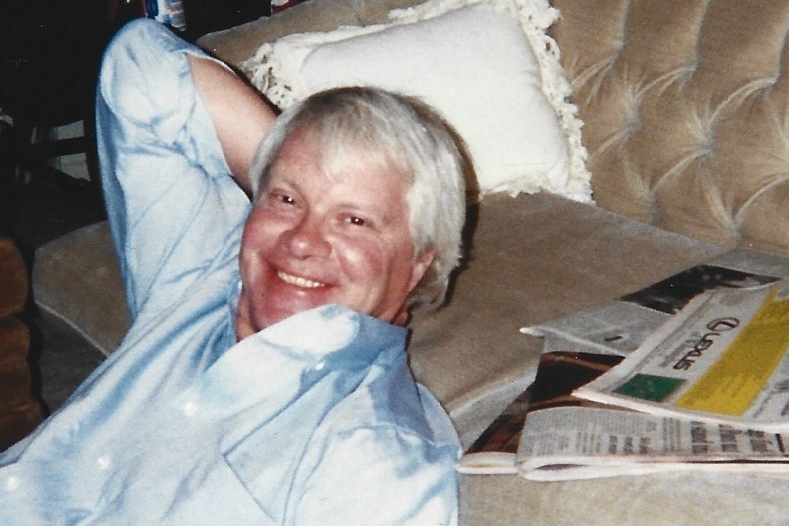
Mr. McGettigan loved music, reading, and writing, and told Irrera in 2018 that his favorite authors were William Shakespeare and Joseph Conrad. He was fun and funny, his siblings said, a raconteur with a large personality.
“Joe was an outlier in a family of bookish nerds,” his sister Jeanne said. “We followed his youthful adventures with great amusement and his later accomplishments with pride and respect. His generosity changed lives for the better.”
Mr. McGettigan spent a year in Iraq helping local officials revive their justice system.
One time, when they were young, his brother Michael tried to lie about losing Mr. McGettigan’s football. So Mr. McGettigan grilled him about the details and eventually extracted a confession.
“I gave it all up,” Michael McGettigan said, “the first of many malefactors to find relief in telling the whole truth and nothing but to Joseph E. McGettigan III.”
In addition to his wife and siblings, Mr. McGettigan is survived by his mother, Ruth, and other relatives. A sister died earlier.
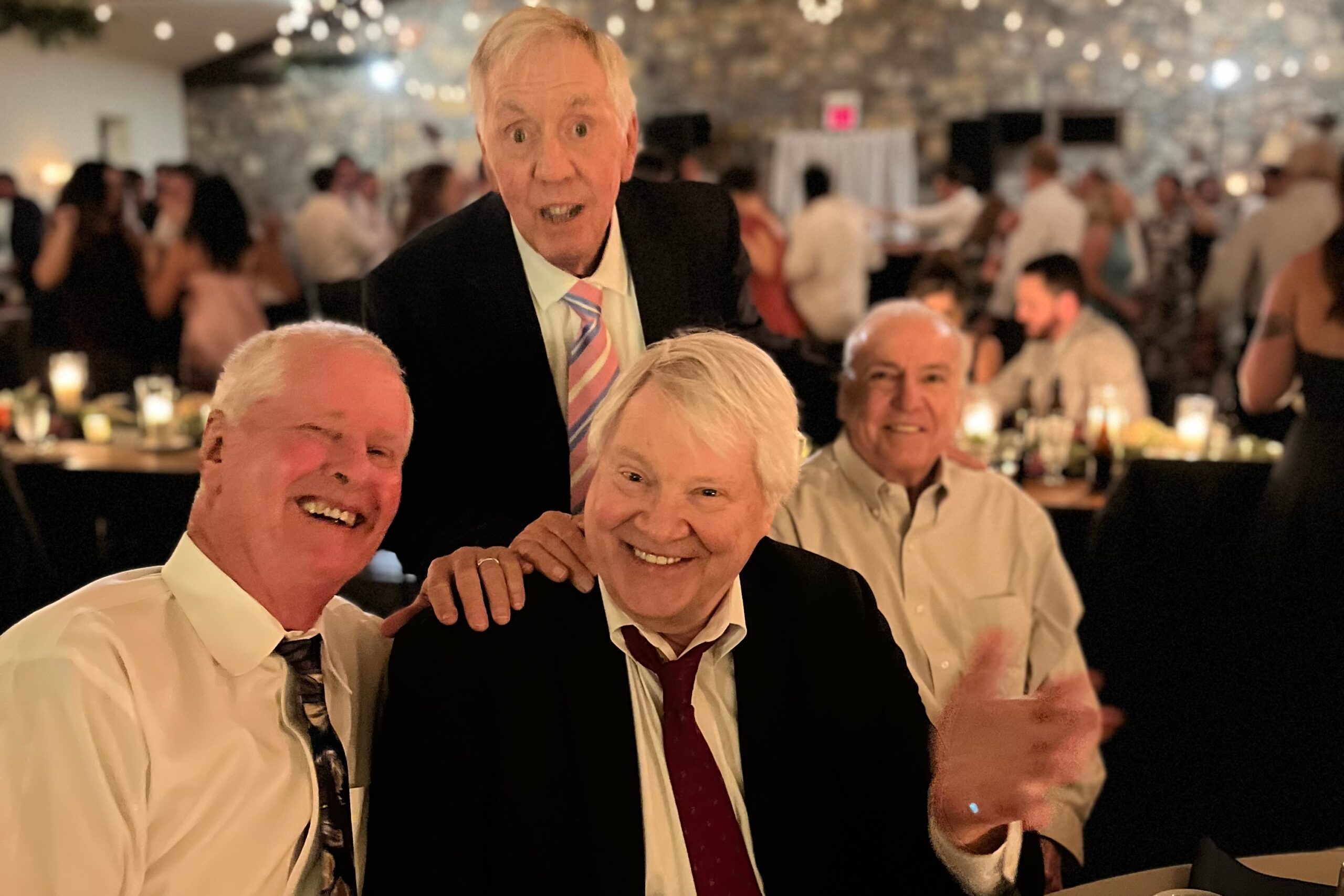
Mr. McGettigan (front right) always seemed to be surrounded by friends.
Visitation with the family is to be from 10 to 10:45 a.m. Saturday, March 7, at St. Francis de Sales Church, 4625 Springfield Ave., Philadelphia, Pa. 19143. A Funeral Mass is to follow at 11 a.m.
Donations in his name may be made to the Tunnel to Towers Foundation, 2361 Hylan Blvd., Staten Island, N.Y. 10306.
“Everyone wanted to be Joe’s friend,” a colleague said in a tribute.
As President Donald Trump directs military strikes on Iran, he is also fighting online attacks at home from some of the loudest voices in his MAGA political movement.
“This is Israel’s war. This is not the United States’ war,” former Fox News host Tucker Carlson said Tuesday on his weekly political podcast.
“No one should have to die for a foreign country,” Megyn Kelly, another former Fox News host with a massive online following, said on her podcast Monday.
Daily Wire podcaster Matt Walsh beseeched fellow conservatives on Monday to stop supporting Trump’s military campaign. “I can’t take the gaslighting, guys. I really can’t,” he wrote on X.
MAGA critics of Trump’s new military conflict say they are struggling to reconcile it with his “America First” principles and long record of criticizing costly and protracted American military interventions. The president has said operations against Iran could go on for four to five weeks, or longer.
“I think to them it feels legitimately like a betrayal on a fundamental tenet of Trumpism,” said Matthew Dallek, a professor at George Washington University’s Graduate School of Political Management.
Trump has dismissed the idea that his critics could speak for the Make America Great Again movement: “MAGA is Trump,” he said in an interview with independent journalist Rachael Bade on Monday.
Online infighting is common in political movements, but Dallek said the degree of open dissent among conservatives over Iran suggested it could be a “breaking point” for some of Trump’s most influential supporters. Carlson, Kelly, and Walsh together list more than 13 million subscribers among them on YouTube, with millions more on X and other platforms.
Trump claimed that he alone spoke for MAGA after Bade asked him about the rebellion in the ranks of his supporters, according to a post she published late Monday. “MAGA wants to see our country thrive and be safe. And MAGA loves what I’m doing — every aspect of it,” he said.
White House spokesperson Olivia Wales echoed the president’s comments in a statement to the Washington Post. “President Trump is MAGA and MAGA is President Trump,” she wrote in an email. “With Operation Epic Fury, President Trump is putting America first, eliminating the threat to our people, and securing our Nation and world for generations to come,” she added.
Trump has made opposition to foreign military intervention a cornerstone of his political platform since he first sought the presidency.In the 2016 Republican primary, he called the Iraq War “a big, fat mistake” as he sought to tie rival Jeb Bush to his brother George W. Bush’s unpopular legacy. Running against Democrat Kamala Harris in 2024, Trump called himself “the candidate of peace,” and said in his election night victory speech: “I’m not going to start a war.”
Stephen K. Bannon, Trump’s chief strategist for part of his first term in office, warned that turnaround could become a political problem for the president. He criticized the Iran operations after a guest on his War Room podcast over the weekend suggested the conflict could be “a hard slog.”
“I’m just going to be brutally frank,” Bannon said. “That was not pitched in the 2024 campaign. It just wasn’t. We’re going to bleed support.”
Whitney Phillips, a professor of information politics at the University of Oregon, said the president was severely testing his supporters’ loyalty.
“Trump has put these people in such an impossible position,” she said. “He’s not asking them to bend a little — he’s asking them to entirely reconfigure themselves into a new kind of balloon animal.”
Walsh, who has long urged Trump to take a hard line on immigration, transgender people, and diversity policies, is among the MAGA influencers refusing to reconfigure.
He criticized the administration’s “confused” messaging on the justification for the Iran operation in an X post on Monday that drew a lengthy response from Trump’s press secretary, Karoline Leavitt. Her X post listed what she called the “clear objectives” of Trump’s military campaign.
Instead of Walsh and others falling in line, an online fracas ensued. Some X users mused that Walsh might be fired by Daily Wire founder Ben Shapiro, who had opened his own podcast on Sunday by lauding the operation that killed Ayatollah Ali Khamenei. Shapiro did not respond to a request for comment. Walsh stepped up his online campaign against Trump’s strategy, taking aim at his fellow Trump supporters.
“Conservatives are now running around saying ‘Iran has been waging war on us for 47 years,’” Walsh posted Monday on X. “Okay, then why didn’t any of you call for an attack on Iran at any point until now? … You and I both know that almost every conservative influencer in the business was opposed to war with Iran until just now.”
Laura Loomer, a right-wing influencer who has described herself as “Trump’s loyalty enforcer,” has used her own online platform to attack critics of the war and sought to enlist Trump in hitting back at them. She posted on X that she had spoken to Trump and congratulated him, but also told him about the criticism he was receiving from Carlson, Kelly, Rep. Thomas Massie (R., Ky.) and former Rep. Marjorie Taylor Greene (R., Ga.) — a group she lumped in with “communist Democrats.”
“I’m so glad I was able to speak to President Trump after the strikes on Iran and show him what the Woke Reich, including Tucker, Megyn, and Marjorie Traitor Greene have been saying about him,” Loomer added Tuesday. “He was not happy when I showed him, but he told me he is focused on winning and they aren’t.”
Conservative figures opposing the war appear to be in the minority despite the attention their criticism has generated.
An analysis by the Post of about 5,000 online posts, podcasts, and newsletters from 79 conservative politicians and commentators since the Iran conflict began last weekend showed that most supported the operation, but that more than a dozen criticized it at least some of the time. Only a few were staunchly opposed to Trump’s new military intervention in Iran.
While Trump returned to office amid a wave of online loyalty from leading conservative voices, experts in political communication said that in just a few days the Iran attacks had begun to test the limits of his influence.
A.J. Bauer, a professor of journalism at the University of Alabama, said the pushback has gained traction in part because the administration has struggled to articulate a clear message on Iran for the right to rally around. That has left conservative influencers to chart their own course based on their personal beliefs, their loyalty to Trump, and their assessment of the risk that the conflict becomes unpopular with MAGA voters.
A flash poll conducted by the Post over the weekend found that Americans oppose Trump ordering airstrikes on Iran by 52% to 39%; 9% said they were unsure.
Sam Rosenfeld, a professor of political science at Colgate University, said the influencer backlash over Iran also speaks to wider problems emerging for Trump. His approval rating was 39% ahead of last month’s State of the Union address.
There is an “emerging sense that Trump’s centrality to right-wing politics has an endpoint in the not-so-distant future,” Rosenfeld said. “That all serves to loosen Trump’s symbolic grip on the right’s discourse.”
The Pentagon is rapidly burning through its stocks of precision weapons less than a week into the massive campaign of airstrikes against Iran, while also expending sophisticated air defense missiles at a rate that puts the U.S. military potentially “days away” from having to prioritize which targets to intercept, according to three people familiar with the matter.
The scope of “Operation Epic Fury,” which U.S. Central Command’s Adm. Brad Cooper says has hit more than 2,000 targets so far, is forcing U.S. military commanders to make difficult calculations about how quickly their Iranian adversaries will burn through their own munitions — even as President Donald Trump says the war may last four to five weeks.
Top Pentagon leaders dedicated considerable time at a news briefing Wednesday morning to addressing worries the military is reaching too deeply into its inventory at the cost of readiness. “We have sufficient precision munitions for the task at hand, both on the offense and defense,” said Gen. Dan Caine, chairman of the Joint Chiefs of Staff, without offering specifics or numbers.
The United States will rely on its larger stores of less-sophisticated weapons as Iranian defenses are degraded in the coming days, allowing American forces to get closer for their attacks, he said.
“The hardest hits are yet to come from the U.S. military,” Secretary of State Marco Rubio told reporters Monday before a classified briefing with select lawmakers.
In retaliation, Iran has launched thousands of one-way attack drones and hundreds of missiles at an array of U.S. military installations and civilian targets across the region, including in Bahrain, Kuwait, Iraq, Israel, and the United Arab Emirates. At least six U.S. troops were killed in a drone attack in Kuwait, and U.S. Embassies in Riyadh, Saudi Arabia, and Kuwait City have come under Iranian fire.
So far, the U.S. military has expended hundreds of its most sophisticated munitions, including Patriot and Terminal High Altitude Area Defense (THAAD) interceptors — considered the world’s premier missile defense systems — and Tomahawk cruise missiles aimed at Iranian leaders and ballistic missile sites, four people familiar with Pentagon assessments said, speaking on the condition of anonymity to discuss the highly sensitive numbers.
Late Monday night, Trump posted on social media that the U.S. inventories of “medium and upper medium grade” munitions are “virtually unlimited” and could sustain the pace of attacks in Iran indefinitely. He also wrote that weapons at “the highest end” are in “good supply, but are not where we want to be.”
A spokesperson with U.S. Central Command, which oversees operations in the Middle East, referred questions to the Pentagon.
A Pentagon spokesperson, Sean Parnell, said in a statement Tuesday that the military “has everything it needs to execute any mission at any time and place of the President’s choosing and on any timeline.” Trump and Defense Secretary Pete Hegseth, Parnell added, “have made restoring American military dominance their top priority from day one, and American dominance has been proved again and again following every major military operation under this administration.”
Behnam Ben Taleblu, who tracks Tehran’s weapons programs at the Foundation for Defense of Democracies, a think tank, said Iran had more than 2,000 ballistic missiles before the conflict began and “many more-fold” drones.
“It is very apparent it has learned lessons from the 12-day war” in June and is trying to use its weaponry more efficiently, Taleblu said.
Iran, he said, is targeting the United States’ Persian Gulf allies with low-cost drones to terrorize and exhaust limited air defenses, while focusing its ballistic missile attacks on Israel.
“Iran is firing smaller volleys of missiles, signaling an interest in preserving their stocks while still testing and attriting Israel’s air and missile defenses,” Taleblu said. “The goal over time is to make Israel focus its dwindling interceptor stocks on defending smaller patches of terrain.”
“Iran is conscious of missile math, perhaps more so than ever before,” he said.
For the U.S., the trends underscore the urgency of an “effective defanging operation” that aggressively destroys Iran’s missile caches and infrastructure, he added.
The rate at which the U.S. military is expending its most sophisticated munitions has slowed since the first day of the conflict, in which Iran fired many of its highest-end weapons, a U.S. official said, noting that the pace has not fallen “dramatically.”
In the days since, the U.S.and Israel have established air superiority, allowing fighter jets to soon fly closer to targets and use less expensive munitions such as precision-guided glide bombs, the official said, speaking on the condition of anonymity to describe ongoing operations.
Hegseth said Wednesday that the Pentagon would increasingly rely on massive GPS-guided gravity bombs, “of which we have a nearly unlimited stockpile,” and that the military would “no longer need” to dip into its inventory of more sophisticated weapons.
“Iran cannot outlast us,” Hegseth said.
U.S. munitions stocks have been depleted by years of trade-offs in the defense budget, aid to countries such as Ukraine, and more recently the Trump administration’s vast use of the military to carry out its foreign policy. After little more than a year in office, Trump has launched attacks in seven countries — Iraq, Iran, Nigeria, Somalia, Syria, Venezuela, and Yemen — and fired dozens of missiles in more than 40 strikes on alleged drug traffickers at sea around Latin America.
“When you combine the amount of munitions that we have spent over the last year attacking the Houthis, the amount of munitions that are spent on … the seven different military conflicts the president has put America into, our munitions are low,” Sen. Mark Warner of Virginia, the ranking Democrat on the Senate Intelligence Committee, said after attending the briefing with Rubio and other top Trump officials Monday.
The Washington Post previously reported that Caine warned Trump ahead of the operation that an extended campaign posed acute risks for the U.S. military, including a drain on its limited stores of precision weapons, according to multiple people familiar with the discussions.
Following classified briefings before each chamber of Congress on Tuesday, Sen. Andy Kim (D., N.J.) said he asked Caine about the number of munitions the U.S. has depleted compared with Iran. The general, Kim said, did not provide specifics but was not “raising alarms himself” while speaking with lawmakers.
Still, the scarcity could intensifya long-term problem for America’s ability to deter a conflict with China, particularly around the self-governing island of Taiwan, where Beijing has hosted increasingly complex and aggressive military drills in recent years.
Two of the people familiar with the U.S. inventories said that an extended conflict in the Middle East could require drawing down munitions stocks in the Indo-Pacific region. A separate U.S. official, speaking on the condition of anonymity to describe the sensitive state of munitions, said that inventories were so thin that a lengthy campaign against Iran would not leave enough munitions for other threats, especially China.
The first U.S. official said that senior U.S. military leaders around the world are making decisions now about where to reallocate munitions, based on assessments of how far they can dip into stockpiles.
Warner and House Speaker Mike Johnson (R., La.) said that the operation will almost certainly require Congress to pass supplemental money for the Defense Department to replace stocks spent during the attack, though the specific dollar figure would depend on the length of the ongoing campaign in Iran.
Sen. Chris Coons of Delaware, the top Democrat on the Senate Appropriations defense subcommittee, has asked the administration to provide the cost of munitions expended in the war, and said he expects the supplemental funding request to be “in the billions” of dollars.
Americans could start paying more at the gas pump, following the U.S.-Israel strikes on Iran.
West Texas Intermediate crude, an oil produced in the United States, surged 6.2% on Monday to $71.19 per barrel. As of Tuesday, it has spiked another 8%, hovering at around $77. It marks the oil’s highest point in over a year. But that’s just the beginning.
Experts say those surges reflect similar spikes in natural gas and at the gas station.
Here’s what we know.
Why are gas prices going up?
Known as the “crude oil effect,” when oil prices go up, so does the price of the fuel it makes. Crude oil must be processed at refineries to be turned into gasoline.
The conflict in the Middle East, which President Donald Trump said he anticipates could take longer than a few weeks, means the global supply of oil is disrupted, and, in turn, the price of a barrel of oil goes up. This causes the price of fuel to also rise.
“Whatever the time is, it’s OK,” Trump said. “Right from the beginning, we projected four to five weeks, but we have capability to go far longer than that. We’ll do it.”
Oil prices were already on the rise, up 17% this year. Experts say the increase is a direct effect of Trump’s rhetoric against Iran, along with his administration’s recent sanctions against the country.
And, as noted by John Quigley, a senior fellow at the University of Pennsylvania’s Kleinman Center for Energy Policy, it’s not just oil and gasoline; natural gas is also seeing a price increase.
And U.S. consumers will be hit hard, he says.
“It’s disrupting global oil and gas markets,” he said. “The war is quickly widening into a regional conflict, with the production capacity of multiple oil- and gas-producing nations being attacked by Iran in retaliatory strikes. This has already disrupted global oil and natural gas shipments.”
How much have gas prices increased since the strike on Iran?
As oil prices surged Monday, the impacts already started to trickle down to gas stations. This week, the national average of gas per gallon surpassed $3 for the first time since November.
Some states, including Illinois, Michigan, and Texas have already reported increases of about 5 cents per gallon.
As of Tuesday morning, the national average hit $3.11, marking the largest single-day increase since 2022, according to GasBuddy, a gas price tracking service.
Quigley says those increases could be just the beginning.
“Prices for natural gas in European and Asian markets have already spiked 50%. U.S. natural gas exporters will rush to take advantage of that, diverting domestic supplies to exports and pushing up domestic natural gas prices,” he said. “That will raise costs for home heating, and worsen already surging electricity costs, because over 40% of electricity generation in PJM, the nation’s largest grid, is fueled by natural gas.”
Do gas prices always rise during war?
Gas prices historically surge when conflicts happen because of a mix of supply disruptions, geopolitical uncertainty, and oil infrastructure attacks.
As detailed by NPR, major price surges occurred during the Gulf War, the 2003 Iraq invasion, and the 2022 Russia-Ukraine war.
How high could gas prices get?
GasBuddy petroleum analyst Patrick De Haan told multiple news outlets he believes some gas stations could charge as much as 30 cents more per gallon by the end of the week.
He estimated prices would be around $3.10 or $3.20 per gallon by the end of the week and anticipated they would hit $3.30 to $3.35 “in time.”
Based on the numbers at this moment (3/3/26, 945am ET), the average price of gasoline would likely climb to about $3.30-$3.35/gal in time. Any further changes in markets will change this, but if everything held still, that's where we'd likely be. Diesel closer to $4.25-$4.45.
What are the average gas prices in the Philadelphia region? How does that compare to the national average?
As of Tuesday morning:
The national average gas price: $3.11
The Pennsylvania average gas price: $3.21
The Philadelphia average gas price: $3.12
Which areas in the Philly region have the lowest gas prices?
The average price of gas in Philly is $3.12 per gallon as of Tuesday morning. Still, there are some spots with lower prices, according to GasBuddy.
Among the lowest appears to be an Eastcoast station in Fairmount (801 N. Broad St.) with gas going for $2.79 as of Monday evening. A Marathon in Southwest Philly (2450 Island Ave.) listed gas at $2.74 within the last 24 hours.
Among the highest appears to be a Gulf station in Kingsessing (5200 Woodland Ave.), priced at $3.29 as of Monday evening.
Who sets gas prices?
No one person sets gas prices. In reality, the price you see at pumps is the result of a combination of oil prices, supply and demand, oil refining costs, distribution, and competition.
I was cranking out the newsletter in Tuesday’s predawn darkness when we learned that the Rev. Jesse Jackson Sr., who’d been our greatest living bridge to the civil rights heroics of the 1960s and ‘70s, had died at age 84. Covering his groundbreaking 1984 campaign as a cub reporter at the Birmingham News is still a career highlight four-decades-plus later — a memory that was reinforced recently listening to Abby Phillip’s excellent new book on Jackson. He leaves us right when his victories for African Americans in arenas such as corporate hiring and college admissions are under attack, and it challenges us to fight to preserve them. RIP to an American original.
How ICE protest by ‘an average Joe’ from Haddon Heights went viral
“I never want to see a child run away from our own government again,” said this self-described first-time protester, Joseph Zobel from Haddon Heights, at a rally in Lindenwold, N.J., the day after children ran from a school bus stop after ICE appeared to conduct an operation in the area.
Last Friday, “an average Joe who grew up in Haddon Heights” named Joseph Zobel was at work when he saw a viral video from the nearby South Jersey town of Lindenwold that shocked the nation, and shocked him.
The clip from a Ring doorbell camera showed a gaggle of fourth and fifth graders running in a panic, screaming, “ICE! ICE!” as masked federal immigration agents had approached their morning bus stop the day before.
“I just thought, ‘How can that be happening here in the United States?’” Zobel told me Monday in his first media interview, conducted by email. When he got home from work, he saw online that the group Cooper River Indivisible was holding an “ICE Out” protest at the Lindenwold municipal building at 4 p.m.
He looked at the clock. It was 3:58.
“Something inside of me said, ‘Go up there and stand with these people,’” said Zobel, a 36-year-old school coach who said he’s never been to a protest before in his life. “I wanted to stand for what is right.” As he dashed out, Zobel also grabbed one thing — the American flag he flies in front of his house most of the time (except during football season, when an Eagles flag replaces it).
As many as 300 people were at the protest, as Indivisible organizer Amber Clemments asked the flag-bearing Zobel if he’d be willing to film a video. Zobel’s raw emotion, choking back tears as he said, “I watched fourth- and fifth-grade kids run away from our own government,” soon ignited across social media over the long Presidents Day weekend.
By Tuesday morning, the 47-second clip of Zobel had been watched an astronomical 2.9 million times on TikTok — and liked by some 709,000 viewers — even as it also went viral on Bluesky, X, Threads, and other social media platforms.
It’s not hard to understand why. Zobel, who described himself as a patriotic regular voter but never very political, instantly became the bearded, baseball hat-wearing, anguished face of a new American majority — an Everyman shocked into action by the horror of immigration raids, wondering how best to protect his neighbors.
The two South Jersey viral videos — the one depicting the raid itself and Zobel’s raw reaction — revealed how both the terrorizing tactics of masked immigration cops and the powerful reaction from often nonpolitical Americans, dubbed “neighborism,” are spreading far beyond the Minnesota tundra where this battle was initially met.
Indeed, local activists say Lindenwold — last stop on the heavily traveled PATCO line, just over 15 miles southeast of Philadelphia — has been under a relentless siege from U.S. Immigration and Customs Enforcement (ICE) and other federal agents since last spring, not long after Donald Trump became president. The transit hub has become a magnet for immigrants in recent years, with a local school population that is just under 60% Latino.
Craig Strimel, a leader of Cooper River Indivisible, a local chapter of the group that organized the large “No Kings” protests, said activists first learned of the ICE activity when a Lindenwold immigrant couple escaped agents last year by taking refuge in the local high school, where the principal blocked the feds at the doorway. Since then, Strimel said, ICE watchers have seen frequent activity in and around a cluster of five apartment complexes with large immigrant populations, but few known arrests.
“It was becoming apparent early on that this was all about creating terror,” said Strimel of the frequent ICE sightings. Some local residents stopped leaving their apartments, he said, and a once-popular restaurant in Lindenwold just closed its doors amid rumors that the couple that owned it has returned to Mexico.
All of this set the stage for last Thursday, when masked federal agents wearing tactical gear arrived early in the morning at Lindenwold’s Woodland Village Apartments just as 44 elementary school kids were waiting for their school bus. The sighting triggered a panic that saw some kids running away and others frantically hustling onto the bus as the driver arrived. No one was apprehended or reported hurt.
On Monday, U.S. Department of Homeland Security officials said the agents went to the complex hoping to arrest a Honduran immigrant who’d once been convicted of aggravated assault. The man was not taken on Thursday and remains free.
Although some outlets reported the large protest was in response to the high-profile raid — which has been covered by the CBS Evening News, MS Now’sMorning Joe, and elsewhere — that took place just a day and a half earlier, the rally actually had been in the works for several weeks.
It had been organized by a young woman from Lindenwold named Tatiana — a 20-year-old business major at Camden County Community College who spoke with me Monday on the condition that I not use her full name — who’d been seeing the ICE activity in her hometown and felt it was time local people spoke out.
Tatiana told me that the idea behind the Lindenwold protest was “to give the community a voice — to be able to say, ‘No, we don’t stand for this.’ That’s the most important thing for me. It’s just bringing community together and deciding we’re not OK with this at all.” But she agreed the bus stop raid had given the event a boost from residents believing “that children should not be scared of federal law enforcement.”
Zobel was one of those neighbors. In the email interview, he described himself as “just your average Joe who grew up in Haddon Heights.” He did volunteer that he’s voted in every election since he turned 18, and that his first ballot was cast for Barack Obama, “and I felt proud walking out of the booth that day.”
Fittingly, Zobel sounded somewhat Obama-esque when he described his dismay over America’s bitter partisan divide. “We as a nation are so angry with one another, and that makes me so sad,” he said. Not surprisingly, he’s as stunned as anyone at the millions of views for Friday’s video, and somewhat concerned about the impact, saying, “I just hope this video does not divide people.”
But Zobel’s words and teary-eyed emotion went viral because it was such a shot of hope — that in a moment when hate is on public display in the streets of the United States, “your average Joe” who’d once stood on the sidelines is now grabbing the American flag and taking the field to fight for their neighbors. An authoritarian movement dependent on rage simply never counted on the brotherly love that sent this nonpolitical Eagles fan to his first protest.
It might not be his last. “I am always happy,” he said, “to help support humanity.”
Yo, do this!
With several inches of snow still on the ground, it might shock you to hear this, but American soccer is back! The Philadelphia Union — despite winning the 2025 Supporters Shield and boasting Major League Soccer’s best winning percentage in the 2020s — radically shook things up during the offseason. With new strikers Ezekiel Alladoh and Agustín Anello looking to amp up their attack, the Union’s quest for the CONCACAF Champions Cup begins Wednesday in Trinidad against Defence Force FC at 6 p.m. on FS2. Saturday night at 7:30 p.m., it’s back to the chillier climes of Washington for the MLS opener against DC United on Apple TV (with no need in 2026 for an additional Season Pass subscription, as in past years).
In the quest for what’s new in American popular culture, sometimes we take for granted the established jewels in our midst. I’ve long felt that MS Now’s 9 p.m. (now just on Monday nights) host Rachel Maddow is our best TV commentator because of the way she weaves the historical past into the headlines of America’s tortured present. But since last summer, she has upped her game. Maddow’s coverage of two stories underreported in most of the mainstream media — grassroots resistance to the Trump regime, and now the push for a nationwide network of warehouse concentration camps — has created appointment television every Monday.
Ask me anything
Question: What is your take on the latest CBS censoring of [Stephen] Colbert? — @bcooper82.bsky.social via Bluesky
Answer: Another Tuesday morning breaking story on deadline: The CBS overseers of Late Night with Stephen Colbert — the top-rated talk show that’s nevertheless ending this year in what critics see as genuflecting to the Trump regime that the program frequently mocks — would not air a recorded interview with Texas state lawmaker and Democratic Senate primary candidate James Talarico. The backstory here is that the Federal Communications Commission has long exempted late-night talk shows from its equal time rule about political candidates on licensed broadcast outlets, but last month, FCC chair Brendan Carr — a pro-Trump MAGA pit bull — said this is changing. That apparently was enough for CBS’s new Trump-friendly management, which would not broadcast the interview (available on YouTube, now certain to get more views than if it hadn’t been censored). This new flap just highlights what a perilous moment this is for the First Amendment and American democracy writ large. Government limits on what viewpoints you can see or hear are a sign of dictatorship, full stop.
What you’re saying about …
Last week’s question about a winning Democratic strategy for the 2026 midterms drew a robust response, and almost all of the replies were thoughtful and nuanced. If there was a consensus, it was that Democrats should tailor their candidates to the divergent views of the congressional districts they hope to win. As Naomi Miller stated, “I think progressive candidates should run in progressive districts, and mainstream democrats in mainstream, purple, and red districts.” Still, a number of you think America’s bad experience with MAGA extremism means a sharp left turn is warranted in response. “I’d like for the Democrats to become more progressive and combative toward Trump than they already are,” wrote Benjamin Spohn, voicing an opinion many share these days.
📮 This week’s question: Tuesday’s passing of the Rev. Jesse Jackson is one more reminder that many icons of America’s tumultuous 20th century are disappearing. So who do you think is the current greatest living American, and why? Please email me your answer and put the exact phrase “greatest living American” in the subject line.
Backstory on the main reason the media is not trusted
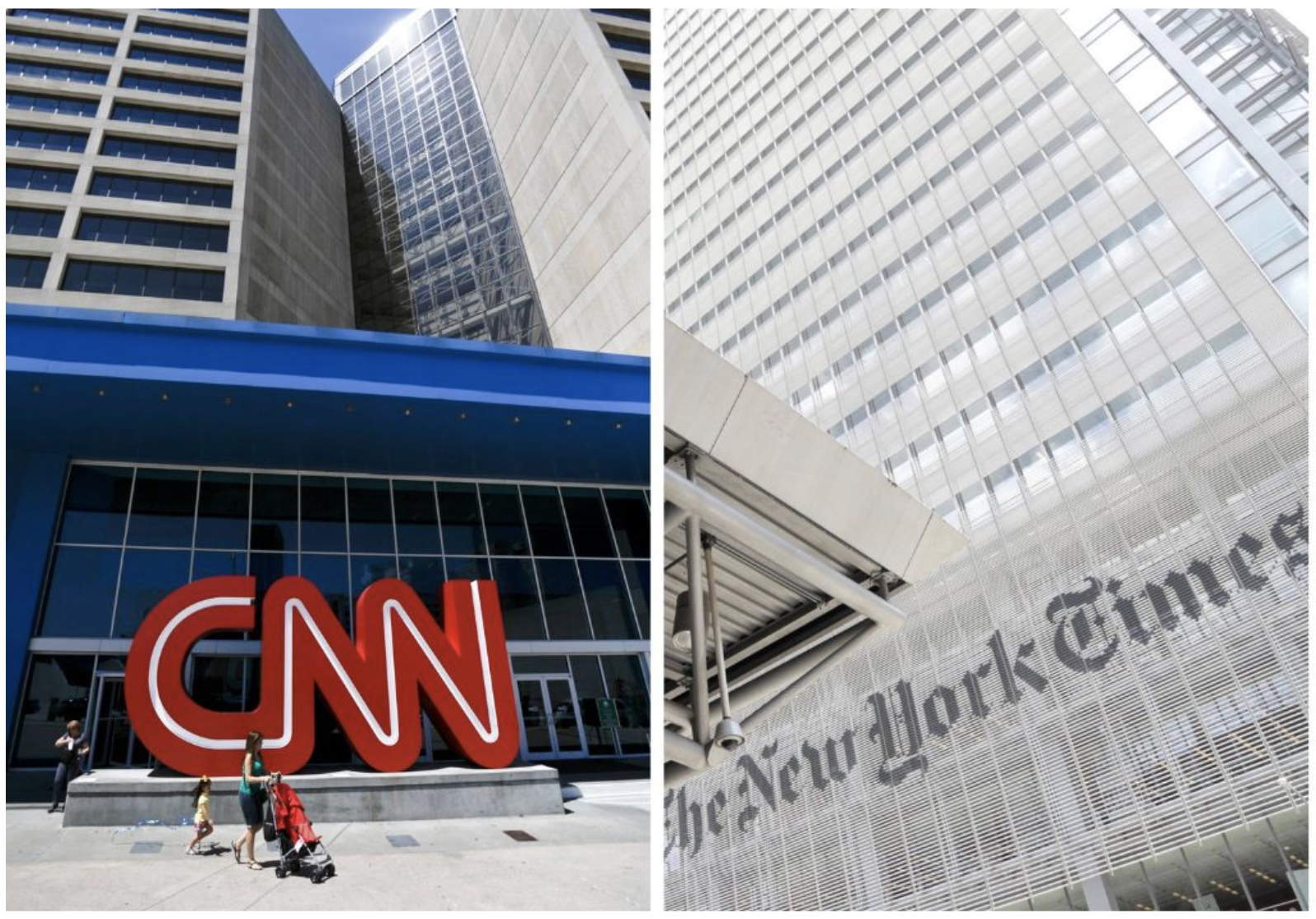
Exterior images of CNN headquarters in Atlanta and the New York Times Building in Manhattan.
It’s rare these days to write something that everyone can agree on, but here goes: Public trust in the media has never been lower than it is today. How low? A Gallup poll last fall found that public trust in the ability of newspapers, TV, and radio to fairly and accurately report the news had plunged to 28%, the lowest ever recorded. Why? It’s complicated. The people’s faith in every major institution has declined in the 21st century, after all. And it’s clear that in a deeply divided America, rage against the media machine looks different from the left than it does from the right.
This weekend, in a New York Times piece largely about the broken promises of one media-mogul billionaire — Washington Post owner and Amazon founder Jeff Bezos — columnist Lydia Polgreen put forth an explanation for sinking media trust that jibes with a lot of what I’ve witnessed since graduating into full-time journalism back in 1981. I believe it’s not the only reason — but the biggest, and maybe the most misunderstood.
Polgreen noted that the common theory for the public turning against Big Media — that journalists grew more partisan and biased after the tumult of the 1960s and ‘70s — doesn’t comport with the bigger reality. The era that peaked with the publication of the Pentagon Papers and the Watergate scandal launched a decades-long golden era of profitable news organizations spending big on investigative and accountability journalism — exactly what viewers and readers claimed they wanted.
Yet, trust declined as that happened. Polgreen cited a study in the late 1990s that compared then-contemporary media to 1960s newspapers and found the earlier times were “naïvely trusting of government, shamelessly boosterish, unembarrassedly hokey and obliging.” Polgreen wrote that moving “away from deferential stenography and toward fearless investigation … led to declining trust in the news media. Aggressive, probing and accountability-oriented journalism held up a mirror to American society — and many Americans didn’t like what they saw.”
I think this explanation is spot on, but before readers jump all over me, let me quickly add a couple of caveats. Starting way back in Ronald Reagan’s 1980s, there was also a response to the growing backlash — especially in elite, Beltway journalism — that resulted in too much groveling to authority, and thus stenography around government lies like the 2003 Iraq War. This has only gotten worse with the current wave of billionaire owners like the Post’s Bezos. This means many liberals now also distrust the media, but not for the same reasons as conservatives, who’ve long loathed journalism for probing America’s inequities around race or gender.
The explanation offered by Polgreen jumped out at me because it fit with what I explored in my 2022 book, After the Ivory Tower Falls, which looked at Americans losing trust in another large institution: colleges and universities. The liberal ideas that were nurtured on campuses in the postwar college enrollment boom — including the civil rights movement — triggered the same grievance-filled, largely white working-class backlash as did journalism about social injustice. Today, the only road back for the media is to hold the powerful to account — and understand that not everyone is going to like it.
What I wrote on this date in 2022
People can’t say they didn’t see America’s current crisis coming. On this date four years ago, I expressed my shock and amazement that little more than one year beyond Donald Trump’s attempted coup to stay in power, the right-wing’s creation of a political fantasy world was spiraling out of control, with lies about Hillary Clinton spying on Trump’s 2016 campaign and Joe Biden giving out free crack pipes (?!!). I wrote, “[Historian Ruth] Ben-Ghiat told me that the failure of the Jan. 6 insurrection only forced the GOP to double-down on embracing alternate realities, because ‘they have to reckon with the fact that [Trump] lost, that he’s no longer the leader.’”
There’s been no rest on themass deportation beat. In my Sunday column, I looked at the out-of-control lying from the Trump regime, with unbelievable fictions about everything from shootings and rampant brutality by masked immigration officers to Commerce Secretary Howard Lutnick’s whoppers about his friendship with Jeffrey Epstein. I argued that government lying is fundamentally unconstitutional and that the perpetrators need to be punished, including prison time. Over the weekend, I wrote about how, while Minneapolis was a victory for the forces resisting American authoritarianism, that won’t stop Homeland Security from putting thousands of new officers on the street and expanding its concentration camps. The fight for the soul of the nation has only just begun.
What was I saying higher up in this newsletter about accountability journalism? Ever since Lyndon B. Johnson’s Great Society push in the mid-1960s, community nonprofits have been a valuable source of urban renewal, yet aresometimes dragged down by waste, fraud, and abuse. It’s a problem that sadly persists, as shown last week by a major Inquirer investigation into Philadelphia’s NOMO Foundation, one of the best-funded nonprofits attacking youth violence and crime. Ace reporters Ryan W. Briggs and Samantha Melamed found that the foundation has received more than $6 million in public funds in recent years, but faced an IRS lien and eviction lawsuits while it was forced to close its housing program. This is why we have a First Amendment, so that a free press can report on the problems a corrupt or inept government refuses to deal with. Subscribing to The Inquirer gives you access to this type of essential journalism, and you’ll also feel good about supporting this vital work.
By submitting your written, visual, and/or audio contributions, you agree to The Inquirer’s Terms of Use, including the grant of rights in Section 10.
Even by the pitifully low standards of the fact-free government of the United States, this one was a whopper.
Last month, agents from U.S.Immigration and Customs Enforcement (ICE) showed up at a Minneapolis hospital emergency room with a 31-year-old Mexican immigrant named Alberto Castañeda Mondragón who’d suffered severe head injuries.
The ICE agents told the ER nurses, according to the Associated Press, that Mondragón “purposefully ran headfirst into a brick wall.” But doctors could immediately see that the official version made zero sense, since their patient had multiple head injuries on the front, back, and side — not consistent with a fall or a collision.
Under oath, the feds suddenly switched to passive voice, as an ICE deportation officer said only in a sworn statement that Mondragón “had a head injury that required emergency medical treatment.” A judge ruled the arrest was unlawful — Mondragón had come to the U.S. legally and overstayed his visa — and ordered the man freed. Mondragón, who survived his eight skull fractures and brain bleeds and is suing the government, weeks later told an AP reporter his story of what really happened.
“They started beating me right away when they arrested me,” he recounted, describing how immigration agents pulled him from a friend’s car at a St. Paul, Minn., shopping center on Jan. 8, then slammed him to the ground, handcuffed him, punched him, and whacked him with a steel baton. Mondragón said he was beaten again at a federal detention center, where his pleas for mercy were met by laughter and more blows.
“There was never a wall,” he said.
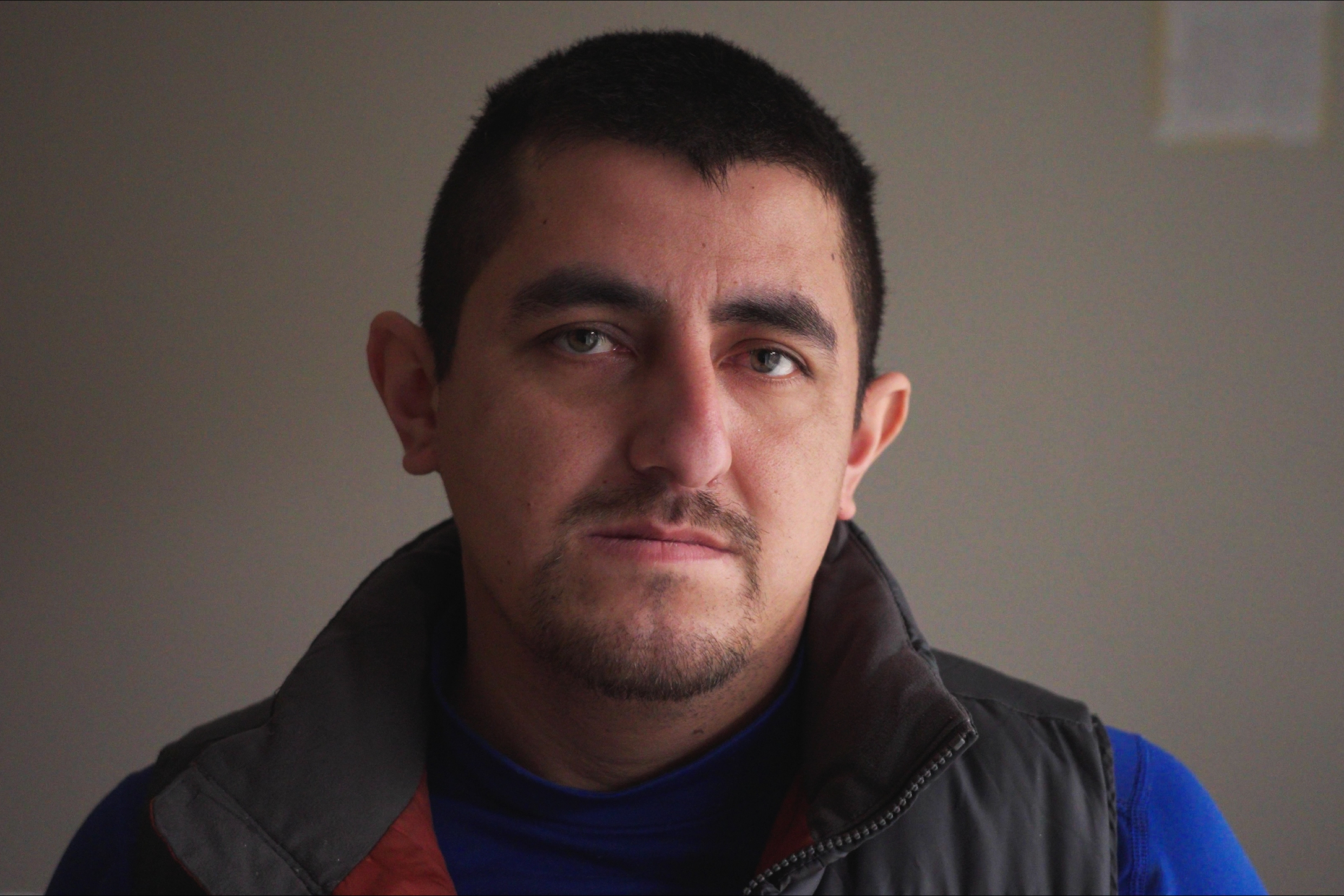
Alberto Castañeda Mondragón, who says in a lawsuit that he sustained eight skull fractures when he was beaten by ICE agents, poses for a portrait earlier this month in St. Paul, Minn.
Mondragón’s narrative would be outrageous if it were an isolated incident, but this is simply one of the most egregious examples of falsehoods by an American secret police regime that has been caught in high-profile lies again and again. The best-known cases are the Minneapolis killings of Renee Good — where officials up to the president falsely claimed an agent was struck by a car and rushed to a hospital — and Alex Pretti, who was accused of brandishing a gun at federal agents, a lie that was instantly demolished when videos emerged.
And these are just three of the many instances where a U.S. Department of Homeland Security (DHS) agent or top official has offered a version of events — often backed up by sworn testimony — that soon fell apart.
On Wednesday, another woman DHS had described as “a domestic terrorist” — Mirimar Martinez, the Chicago Montessori schoolteacher who was shot five times after a vehicle collision with ICE agents — presented powerful evidence of government lies as she pursues legal action against DHS and the agent who shot her, Charles Exum.
Marimar Martinez (center) is greeted by her family after being released from the Metropolitan Correctional Center in October, after being shot by immigration agents and charged with assaulting federal officers in an incident in Chicago’s Brighton Park.
Martinez, whose federal charges stemming from the encounter were later dropped, and her lawyer said that a federal diagram of the crash scene presented in court showed three other vehicles that do not exist, that the shots did not come through the front windshield as claimed by Exum, and that another claim — that Martinez had “rammed” Exum’s vehicle — was also false. Said her lawyer, Christopher Parente, “This is a time where you just cannot trust the words of our federal officials.”
Let’s not pretend to be so naive as to act as if official deceit began on the June 2015 day that Donald Trump descended on that Trump Tower escalator. It was the late 1960s — the era of Lyndon B. Johnson’s Vietnam “credibility gap” — when the investigative journalist I.F. Stone famously wrote, “All governments lie.” I became an opinion journalist because of my disgust over George W. Bush’s lies that drove the Iraq War.
That said, the outrageous, Soviet-caliber falsehoods of the Trump regime feel much worse. These are not “plausible denial” fairy tales to push an unpopular policy or cover up some dirty deeds, like Watergate, but a vast empire of Big Lies — easily disprovable, about everything from election results to economic statistics — with a much more ambitious goal of undermining the very notion of objective reality.
Trump: "California is more corrupt than Minnesota. And I won Minnesota." (Trump has lost Minnesota three times.) pic.twitter.com/umCFf121vg
This fish stinks from the head. That Trump was elected a second time after the Washington Post (remember them?) chronicled some 30,573 false or misleading claims during his first four years was essentially America’s drive-through order of a Double Whopper.
The nation seems to have all but given up on challenging Trump’s absurd claims that he won Minnesota three times (although he actuallylost three times), or his fact-free insistence that his tariff policies have sparked $18 trillion in new investments, just to name two instances. But America’s liar-in-chief has also offered fresh inspiration to his underlings.
One would be hard-pressed to find a more blatant case of highest-level lying than the matter of Commerce Secretary Howard Lutnick and his friendship with Jeffrey Epstein, the deceased financier and sex trafficker. When the Trump regime’s cover-up of its massive Epstein files became a big story last summer, Lutnick, a former Wall Street CEO who lived next door to Epstein in Manhattan, told a podcast that he’d briefly visited Epstein’s home in 2005, and was revulsed atthe sight of a massage table. He insisted that he then decided, “I will never be in the room with that disgusting person ever again.”
This was an epic lie.
We now know — thanks to thecongressionally mandated (but still incomplete) release of the Epstein files — that Lutnick and his family and entourage stopped for lunch at Epstein’s Caribbean island in 2012, and that this was one of many contacts — about meeting for drinks, or philanthropic contributions — the two men had almost up until Epstein’s arrest and jail cell death in 2019.
There’s no evidence Lutnick committed any crime — beyond telling a massive and now discredited lie to the American people he purportedly serves. In Europe, heads are rolling for far less, but Lutnick has “the full confidence” of the president. That fact, bobbing above a vast MAGA sea of lies, should make us ask some hard questions as a nation.
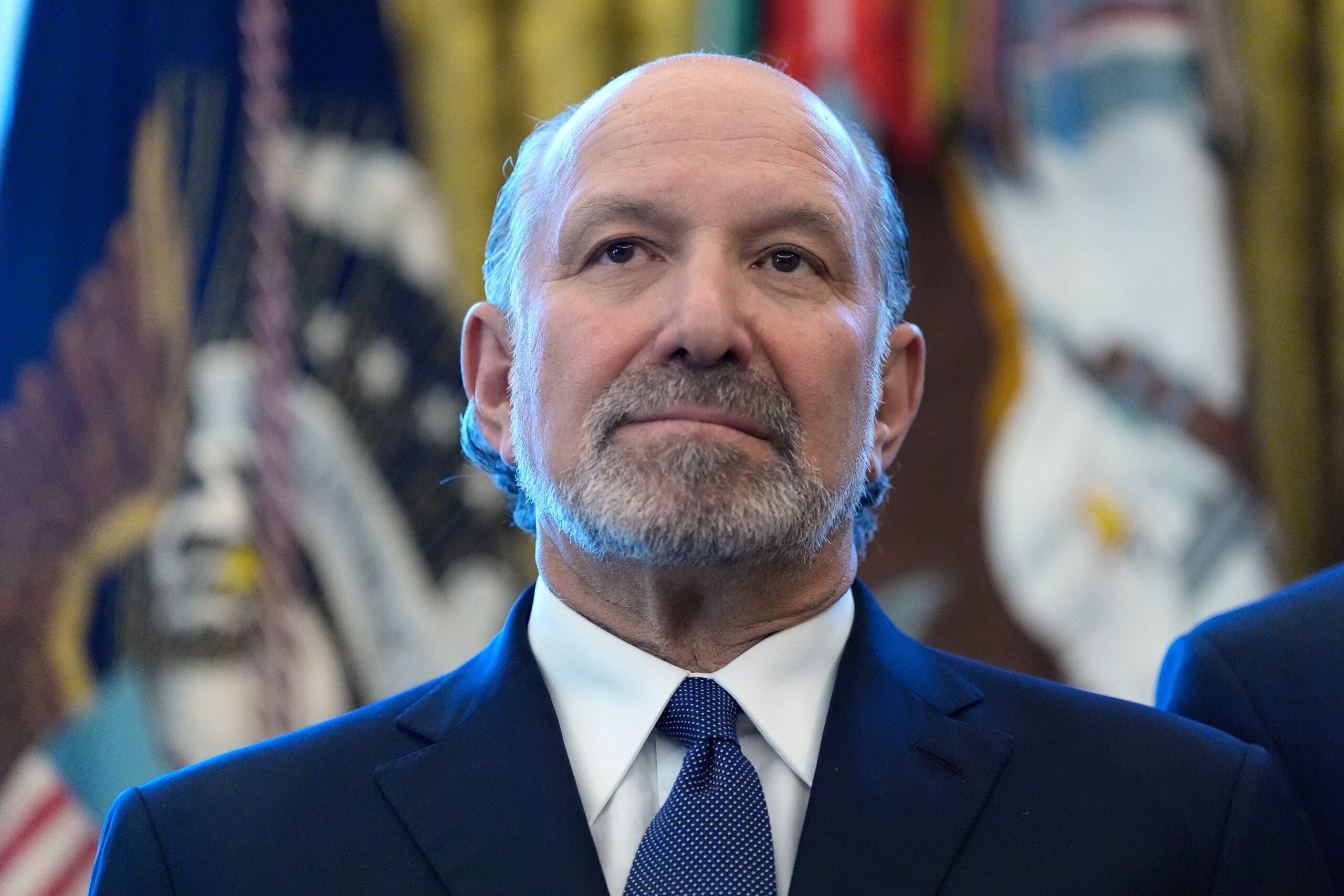
Commerce Secretary Howard Lutnick listens during an event with President Donald Trump in the Oval Office in February.
The current consensus — honored mainly in the breach — that lying is wrong, or bad, does not go nearly far enough. Perhaps it muddies the water that the U.S. Supreme Court has ruled it is First Amendment-protected free speech when private citizens utter things that aren’t true. But official deceit is a different category.
“The government’s lies can be devastating,” a leading scholar — University of Colorado law professor Helen Norton — wrote in a powerful 2015 article, arguing that official government dishonesty is fundamentally unconstitutional. Norton noted that false testimony and evidence in criminal cases — what we’ve seen frequently in the immigration terror campaign — is a violation of the Constitution’s due process clause, while invented allegations that aim to silence critics are offenses against constitutionally protected free speech.
It’s a felony to lie in federal court cases, or when testifying under oath before Congress, or in other types of governmental proceedings. And the federal statute of limitations for perjury is five years — plenty of time for a liberated U.S. Department of Justice to pursue these many cases if democratic forces can win back the White House in 2028.
But we should also recognize that top officials who tell deliberate lies are abusing their power in ways that, as Norton rightly argues, are grossly unconstitutional. When Noem lies to the American people about Good and how she was killed by ICE, she should resign or be impeached. When Lutnick looks into a camera and offers complete fiction about his friendship with the world’s most notorious sex trafficker, he, too, should quit immediately, or face impeachment.
Norton, in her prescient article from 11 years ago, notes that beyond the specific wrongs against individuals — such as Mondragón, Martinez, Good, and Pretti — that occur when the government lies, there is a much broader problem: the loss of public trust.
Indeed, the steep decline of public faith not only in government but in other civic institutions began with those official lies about Vietnam and Watergate, and the flawed probes into the John F. Kennedy assassination. It was those and other countless moments of scatheless lying by those in power that created the rubble Trump marched over in 2016.
We won’t get anything resembling democracy until we clear that widespread debris, and that means sending a bunch of these liars to prison, because they are the real criminals. America desperately needs truth and consequences.
Are you planning a vacation to Spain, Italy, France, Greece, or another country along the Mediterranean?
If so, you should know about a parasite that puts travelers at risk of a rare disease, called “visceral leishmaniasis,” that can be deadly when untreated. The parasite — leishmania — is transmitted by a bite from an infected sandfly. It can lie dormant in the body for years, then latercause severe illness, including persistent high fever.
A 34-year-old South Jersey resident, Louis-Hunter Kean, died from it in late 2023 after doctors at two South Jersey medical systems and later at Penn Medicine missed the diagnosis. His symptoms developed about a year after he vacationed in Tuscany, where parasitic disease experts now believe he was infected.
“Leishmania in the U.S. is underappreciated,” said Joshua A. Lieberman, assistant director of the molecular microbiology clinical laboratory at University of Washington in Seattle. “We want to get the word out that there’s a lot more of it than we think.”
Parasitic disease experts say most American doctors don’t know enough about leishmania. Here’s what you should know about leishmania:
Visceral leishmaniasis is caused by the most deadly species. At risk are travelers to Southern Europe, Brazil, East Africa, India, and military personnel who were deployed to Afghanistan and Iraq. Its primary symptom is fever, along with an enlarged liver and spleen, weight loss, and a low blood cell count. Each year, an estimated 50,000 to 90,000 new cases are reported globally, according to the World Health Organization (WHO).
The majority of healthy people who get infected never experience symptoms or sickness. However, the parasite can cause severe illness in small children, senior citizens, and people who are malnourished or immunocompromised. It can activate decades after exposure.
Cutaneous leishmaniasis is the most common and less dangerous form of the disease. This species is present in the countries that also have visceral leishmaniasis, as well as in Israel, Mexico, Central and South America — and in a few U.S. states, including Texas, Oklahoma, and Arizona. More than 80 cases have been reported in the U.S. since 2017, though experts believe that’s an undercount, according to a recent study published in the digital journal JMIR Dermatology.
People with active cases first see small, red bumps on the skin that can develop into skin ulcers, which may ooze or scab. These symptoms typically appear within weeks or months after exposure, but ulcers can surface years later. Worldwide, an estimated 600,000 to 1 million cases occur each year, according to the WHO.
“If you’re traipsing through the rain forest in Central America, you’re at huge risk,” said leishmania expert David L. Sacks, an immunologist and senior investigator with the National Institutes of Health (NIH). “We see patients all the time at the NIH hospital who have the cutaneous form from traveling.”
Mucosal leishmaniasis is most commonly found in parts of the Amazon basin, specifically Bolivia, Peru, and Brazil. Symptoms usually start as a skin sore, which can advance to the nose, mouth, or throat and cause severe facial disfigurement. It can be life-threatening.
Can leishmaniasis be treated?
All three typesare treatable with antiparasitic and antifungal medications.
Some forms of cutaneous leishmaniasis will heal on their own.
More than 90% of patients with visceral leishmaniasis will die without treatment. An estimated 20,000 to 50,000 people die from it each year, according to research published in the academic journal Tropical Diseases, Travel Medicine and Vaccines.
How prevalent is leishmaniasis in the U.S.?
An exact number of cases is unknown. The federal government does not require doctors to report the disease to the Centers for Disease Control and Prevention. Texas is the only state that requires medical providers to report cases to the state health department.
How can you protect yourself against leishmaniasis?
There are no vaccines or drugs for prevention, but people can take steps to protect themselves when visiting areas where the parasite is circulating.
Sandflies are most active from dusk until dawn, so consider staying indoors during that time. Wear long-sleeved shirts and long pants, and socks that cover ankles. Apply insect repellent, preferably with DEET, to clothing and exposed skin. Sandflies can slip through window and door screens, so it’s best to stay in accommodations with air-conditioning or sleep under insecticide-treated bed nets.
People who are immunocompromised may want toavoid travel to regions with leishmania.
Also, if you experience symptoms, especially a high fever that won’t go away, provide your doctor with a thorough travel history, going back decades.
Each night, Louis-Hunter Kean spiked a fever as high as 104.5. He would sweat through bedsheets and shiver uncontrollably. By morning, his fever wouldease but his body stillached; even his jaw hurt.
He had been sick like this for months. Doctors near his South Jersey home couldn’t figure out why a previously healthy 34-year-old was suffering high fevers plus a swollen liver and spleen. In early 2023, they referred Kean to Penn Medicine.
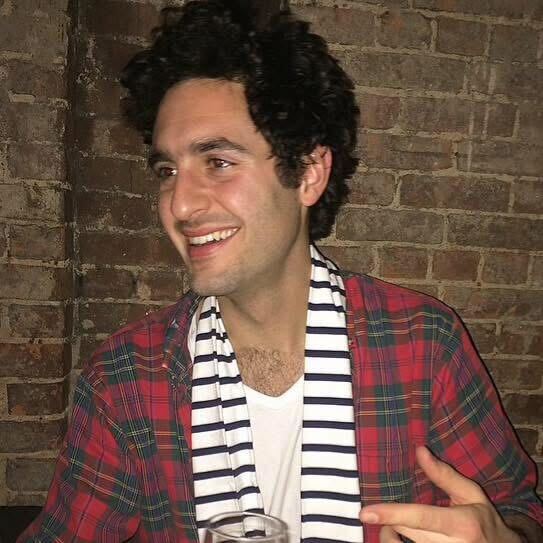
Louis-Hunter Kean visiting a winery in the Tuscany region of Italy in September 2021. He first spiked a mysterious and persistent fever about a year later in August 2022.
“These doctors are very sharp, and there are a lot of teams working on it,” Kean texted a friend after being admitted to the Hospital of the University of Pennsylvania (HUP) in West Philadelphia.
Was it an infection? An autoimmune disease? A blood cancer? Over the next six months, at least 34 HUP doctors — rheumatologists, hematologist-oncologists, gastroenterologists, infectious disease and internal medicine specialists — searched for an answer.
Kean was hospitalized at HUP five times during a six-month period in 2023. His electronic medical chart grew to thousands of pages.
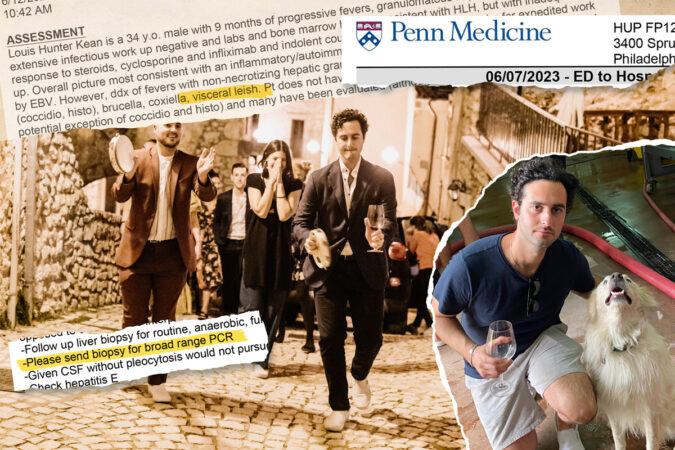
Along the way, doctors missed critical clues, such as failing to obtain Kean’s complete travel history. They recommended a pair of key tests, but didn’t follow up to make sure they got done, medical records provided to The Inquirer by his family show.
Doctors involved in Kean’s care, including at Penn, prescribed treatments that made him sicker, said four infectious disease experts not involved in his care during interviews with a reporter, who shared details about his treatment. Penn doctors continued to do so even as his condition worsened.
Louis-Hunter Kean receives a kiss from bride Ashley Greyson at the October 2021 wedding of his close friend, Joshua Green. Green and Kean graduated from Haddonfield High School in 2007.
“No one was paying attention to what the doctor before them did or said,” Kean’s mother, Lois Kean, said.
“They did not put all the pieces together,” she said. “It was helter-skelter.”
Kean’s family is now suing Penn’s health system for medical malpractice in Common Pleas Court in Philadelphia. The complaint identifies nearly three dozen Penn doctors, accusing them of misdiagnoses and harmful treatments. These physicians are not individually named as defendants.
In court filings, Penn says its doctors did not act recklessly or with disregard for Kean’s well-being, and his case is not indicative of any systemic failures within its flagship hospital. A Penn spokesperson declined further comment on behalf of both the hospital and the individual doctors involved in Kean’s care, citing the pending lawsuit.
The puzzle of Kean’s diagnosis finally came together in November 2023 after a Penn doctor, early in his career, sought help from the National Institutes of Health (NIH).
An NIH doctor recommended a test that identified the cause: a parasite prevalent in countries bordering the Mediterranean Sea. Kean likely got infected while vacationing in Italy, four parasitic disease experts told The Inquirer.
The infection, which is treatable when caught early, is so rare in the U.S. that most doctors here have never seen a case, the experts said.
By the time Penn doctors figured it out, Kean’s organs were failing.
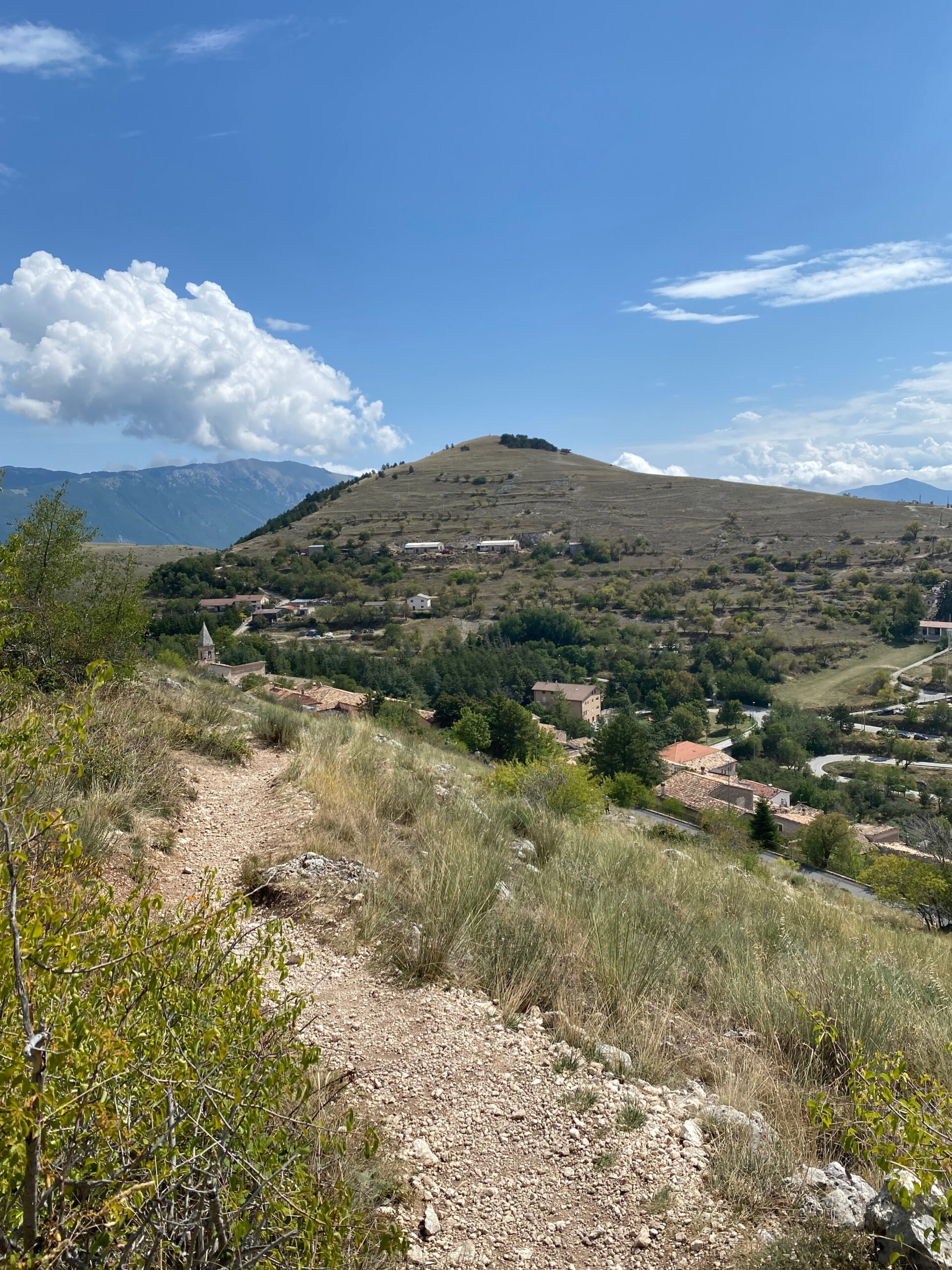
Louis-Hunter Kean and his then-girlfriend Zara Gaudioso at a friend’s wedding in Tuscany in September 2021. Kean and Gaudioso got engaged in early 2023. Gaudioso was smitten by Kean’s good looks and sense of humor.While vacationing in Italy in September 2021, Louis-Hunter Kean and his friends hiked in the foothills of the Apennine Mountains and visited Gran Sasso and Monti della Laga National Park.
A missed clue
When a patient has an ongoing and unexplained fever, an infectious disease doctor will routinely start by takinga thorough travel history to screen for possible illnesses picked up abroad.
A medical student took Kean’s travel history during his initial workup at HUP in June 2023. An infectious disease specialist reviewed the student’s notes and added a Cooper University Hospital doctor’s earlier notes into Kean’s electronic medical chart at Penn.
Those records show Kean had traveled to Turks and Caicos with his fiancée in May 2022. The next month, he took a work trip out West, including to California, where he visited farms, but didn’t interact with livestock.
This was not unusual for Kean, who worked with fruits and vegetables imported from around the world at his family’s produce distribution center on Essington Avenue in Southwest Philadelphia.
Kean’s fiancée, Zara Gaudioso, said she repeatedly told doctors about another trip: In September 2021, about a year before his fevers began, they traveled to Italy for a friend’s wedding in Tuscany.
The couple hiked remote foothills, danced all night in a courtyard, dined by candlelight surrounded by a sunflower farm, and slept in rustic villas with the windows flung open.
“We told everybody,” Gaudioso said. “A lot of Americans go to Italy — it’s not like a third-world country, so I could see how it could just go in one ear and out the other.”
But notes in Kean’s medical record from the Penn infectious disease specialist don’t mention Italy. Neither do the ones the specialist copied over from Kean’s infectious disease doctor at Cooper.
Kean “does not have known risk factors” for exposure to pathogens, the Penn specialist concluded, except possibly from farm animals or bird and bat droppings.
Still, the specialist listed various diseases that cause unexplained fever: Tick-borne diseases. Fungal infections. Tuberculosis. Bacteria from drinking unpasteurized milk.
The possible culprits included a parasitic disease, called visceral leishmaniasis, transmitted by a bite from an infected sandfly. It can lie dormant for a lifetime — or, in rare cases, activate long after exposure, so it’s important for doctors to take extensive past travel histories, parasitic experts say.
The parasite is widely circulating in Southern European countries, including Spain, Greece, Portugal, and Italy.
“Mostly, people living there are the ones who get it. But it’s just a lottery sandwich, and there’s no reason that travelers can’t get it,” said Michael Libman, a top parasitic disease expert and former director of a tropical medicine center at McGill University in Canada.
But few cases become severe. Hospitals in Italy reported only 2,509 cases of active infection between 2011 and 2016, affecting fewer than one in 100,000 people. Infections requiring hospital care in Italy began to decline after 2012, according a 2023 European study by the Public Library of Science (PLOS) journal Neglected Tropical Diseases.
Caught early, visceral leishmaniasis is treatable. Without treatment, more than 90% of patients will die.
In addition to fever, other telltale symptoms are swelling of the liver and spleen and low blood cell counts. Kean had all of those.
A missed test
The infectious disease specialist requested a test to examine tissue biopsied from Kean’s liver, which was damaged and enlarged. Lab results showed that immune cells there had formed unusual clusters — another sign that his body might be fighting off an infection.
In her notes, the specialist identified “visceral leish” as a possible diagnosis, which repeated — via copy and paste — seven times in his medical record. Her request to “please send biopsy for broad-range PCR” repeated five times.
That is a diagnostic (polymerase chain reaction) test that looks for the genetic fingerprint of a range of pathogens.
The test comes in different versions: One looks broadly for bacteria. The other is for fungi. The broad fungal test candetect leishmania, even though it’s not a fungus. However, it’s not always sensitive enough to identify the parasite and can produce a false negative, experts said.
The specialist’s chart note doesn’t specify which type she wanted done.
It’s not clear if anyone asked. The test wasn’t done.
Louis-Hunter Kean (right, with wine glass and tambourine) leads a wedding procession through the small stone village of Santo Stefano di Sessanio in Italy’s Abruzzo region in September 2021.
She did not order a low-cost rapid blood test that screens specifically for leishmaniasis by detecting antibodies made by the immune system after fighting it. She also didn’t order a leishmania-PCR, which is highly targeted to detect the exact species of the parasite.
Nor did the medical record show that the specialist followed up on the results of the broader test she requested, even though she saw Kean on nine of the 13 days of his first hospitalization at HUP in June 2023.
Penn has a policy that a lead doctor on the patient’s case is responsible for making sure that recommended tests get done. The specialist was called in as a consultant on Kean’s case. During that June hospitalization alone, his medical chart grew to 997 pages.
Patient safety experts have warned for years that electronic medical record systems — designed for billing and not for care — can become so unwieldy that doctors miss important details, especially with multiple specialists involved, or repeat initial errors.
A seemingly innocuous step in charting — copying and pasting previous entries and layering on new ones— can add to the danger, patient safety experts say.
That’s how the specialist’s mention of “visceral leish” and her test recommendation got repeated in Kean’s chart.
Marcus Schabacker, president of ECRI, a nonprofit patient-safety organization based in Plymouth Meeting, said “copy and paste” in electronic medical records puts patients at risk of harm.
“The reality is if you are reading something over and over again, which seems to be the same, you’re just not reading it anymore. You say, ‘Oh, yeah, I read that, let’s go on,’” said Schabacker, speaking generally about electronic medical record systems and not specifically about Kean’s case.
Louis-Hunter Kean plays guitar in his younger years. He loved music and shared eclectic playlists with his friends.
When treatments harm
Penn doctors believed Kean had a rare,life-threatening disorder, known as hemophagocytic lymphohistiocytosis (HLH), in which the immune system attacks the body. Instead of fighting infections, defective immune cells start to destroy healthy blood cells.
In most adults, the constellation of symptoms diagnosed as HLH gets triggered when an underlying disease sends the body’s immune system into overdrive. Triggers include a blood cancer like lymphoma, an autoimmune disease like lupus, or an infection.
Penn doctors across three specialties — hematology-oncology, rheumatology, and infectious disease — were searching for the cause within their specialties.
“His picture is extremely puzzling,” one doctor wrote in Kean’s chart. “We are awaiting liver biopsy results. I remain concerned about a possible infectious cause.”
As HUP doctors awaited test results, they treated Kean’s HLH symptoms with high doses of steroids and immunosuppressants to calm his immune system and reduce inflammation.
The treatments, however, made Kean highly vulnerable to further infection.And defenseless against another possible trigger of HLH: visceral leishmaniasis.
At the time, a Penn rheumatologist involved in Kean’s care before his first hospitalization warned about steroids “causing harm” to Kean if it turned out he had an infection. He wrote, “please ensure all studies requested by” infectious disease are done, medical records show.
Steroid treatments would allow the parasites to proliferate unchecked, experts said.
“It’s unfortunately exactly the wrong treatment for parasitic disease,” said Libman, the leishmania disease expert at McGill University.
As Kean grew sicker, he was readmitted to HUP for a third time in September 2023. He texted a friend: “I’m on more medications than I’ve ever been on and my condition is worse than it’s ever been.”
A sampling of Louis-Hunter Kean’s electronic medical records, which ballooned to thousands of pages over five HUP hospitalizations within six months in 2023.
Handoffs between doctors
No single doctor seemed to be in charge of Kean’s care, his family said. And the number of specialists involved worried them.
“Everyone just kept being like, ‘We don’t know. Go see this specialist. Go see that specialist,’” Kean’s sister, Priscilla Zinsky, said.
By fall 2023, rheumatologists hadn’t found a trigger of Kean’s symptoms within their specialty. They turned to doctors specializing in blood cancer.
During the handoff, three doctors noted that they didn’t see the results of the test requested by the infectious disease specialist back in June. They still thought it was possible that Kean had an infection, records show.
“An additional consideration to rule out infectious cause would be blood-based Karius testing (though this would be fraught with false positives),” wrote that doctor, who was still training as a hematologist-oncologist.
A supervising physician reviewed the Sept. 8, 2023, note and signed off on it. The medical records don’t show any follow-up with infectious disease doctors, and the test wasn’t done at the time.
In the coming days, blood cancer specialists struggled to find a link between Kean’s symptoms and an underlying disease.
They thought he might have a rare form of leukemia, but tests weren’t definitive, Kean texted friends.
Untreated HLH symptoms can lead to rapid organ failure, so doctors often start patients on treatment while trying to figure out the underlying cause, said Gaurav Goyal, a leading national expert on HLH, noting that it can take days to get test results.
“You have to walk and chew the gum. You have to calm the inflammation so the patient doesn’t die immediately, and at the same time, try to figure out what’s causing it by sending tests and biopsies,” said Goyal, a hematologist-oncologist at the University of Alabama at Birmingham.
Medical records show that Penn doctors feared Kean was at “significant risk” of “irreversible organ failure.”
They suggested a more aggressive treatment: a type of chemotherapy used to treat HLH that would destroy Kean’s malfunctioning immune cells.
In his medical record, a doctor noted that beginning treatment without a clear diagnosis was “not ideal,” but doctors thought it was his best option.
Four parasitic disease experts told The Inquirer that chemotherapy, along with steroids and immunosuppressants, can be fatal to patients with visceral leishmaniasis.
“If that goes on long enough, then they kill the patient because the parasite goes out of control,” Libman said, explaining that ramping up the HLH treatments weakens the immune system. “The parasite has a holiday.”
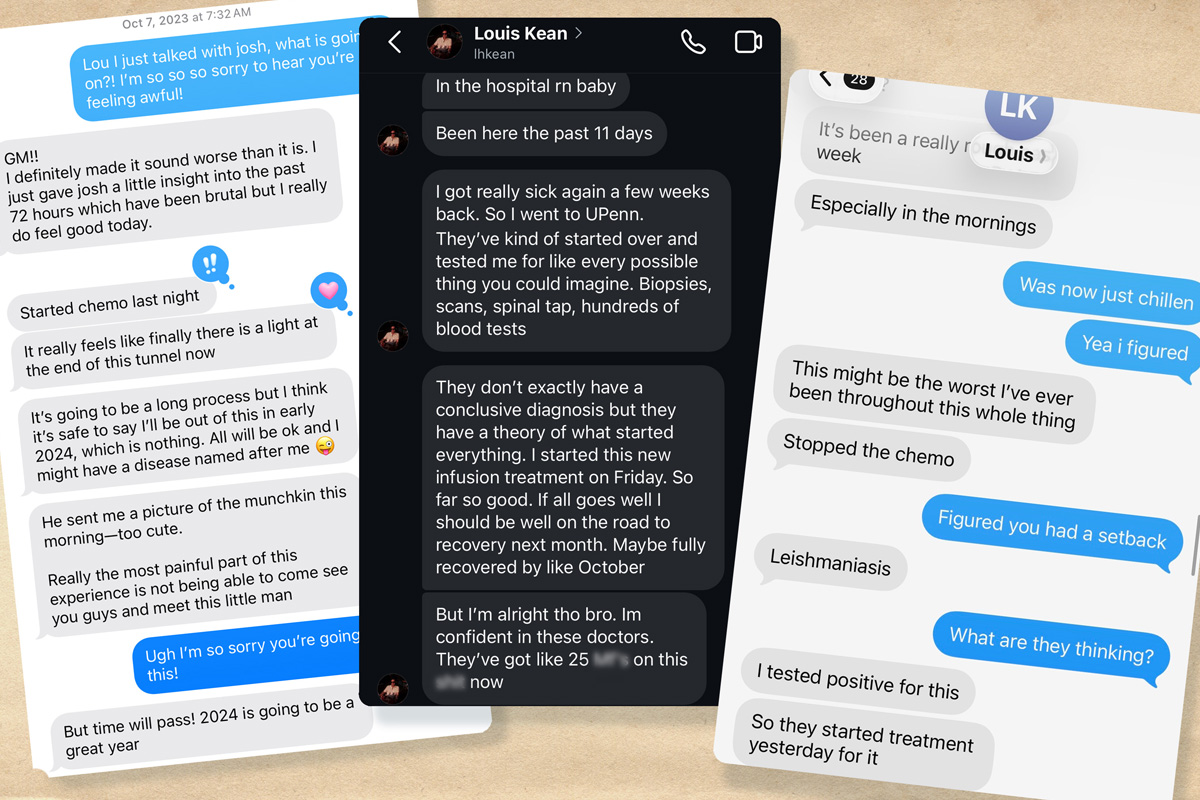
A sample of text messages from Louis-Hunter Kean to friends during separate HUP hospitalizations over a six-month period in 2023.
Chemo as last resort
Kean banked his sperm, because chemo infusions can cause infertility. He told friends he trusted his Penn team and hoped to make a full recovery.
“Started chemo last night. It really feels like finally there is a light at the end of the tunnel,” he texted a friend on Oct. 7, 2023.
“I’m gonna get to marry my best friend, and I think I’m going to be able to have children,” Kean wrote in another text to a different friend.
Kean spent nearly all of October at HUP getting chemo infusions. He rated his pain as a nine out of 10. His joints throbbed. He couldn’t get out of bed. He started blacking out.
Doctors added a full dose of steroids on top of the IV chemo infusion. By the end of the month, Kean told a friend he feared he was dying.
A year had passed since Kean first spiked a fever. He no longer could see himself returning to his former life — one filled with daily exercise, helping run his family’s produce store, nights out with friends at concerts and bars, and vacations overseas.
Lethargic and weak, he could barely feed himself. His sister tried to spoon-feed him yogurt in his hospital bed.
He started texting reflections on his life to friends and family, saying his illness had given him a “polished lens” through which he could see clearly. He wrote that their love felt “like a physical thing, like it’s a weighted blanket.”
“I’ve lived an extremely privileged life. I don’t think it’s possible for me to feel bad for myself,” he said in a text. “And I don’t want anyone else to either.”
Louis-Hunter Kean enjoying dinner out with his sister, Jessica Kean, in Manhattan in 2014. Friends and family described him as a “foodie” and health food advocate prior to the onset of his illness in August 2022.
Puzzle solved
One doctor involved in Kean’s care had seen him at Penn’s rheumatology clinic in early June 2023, just before his first HUP hospitalization. The doctor, a rheumatology fellow,urged him to go to HUP’s emergency department, so he could be admitted for a medical workup.
The fellowremained closely involved in Kean’s care, medical records show. Also in his 30s, this doctor shared Kean’s interests in music, fashion, and the city’s restaurant scene, according to Kean’s family.
“They had a rapport,” Kean’s father, Ted Kean, said. “Louis thought a lot of him, and he seemed to think a lot of my son.”
By early November 2023, the rheumatology fellow was extremely concerned, medical records show.
The chemo infusions weren’t helping. Kean still was running a fever of 103. The fellow wrote in his chart that he was worried Kean needed a bone-marrow transplant to replace his failing immune system.
And doctors still didn’t know the root of his symptoms.
The fellowcontacted the NIH, medical notes show.
An NIH doctor recommended a test to check for rare pathogens, including parasites that cause visceral leishmaniasis,according to family members present when the testing was discussed.
The NIH-recommended Karius test was the same one suggested two months earlier by the Penn hematologist-oncologist in training, but with no follow-up.
File of sign on front of Hospital of the University of Pennsylvania (HUP) taken on Tuesday, March 19, 2024.
On Nov. 16, the fellow got the results. He went to Kean’s bedside.
After five HUP hospitalizations over six months, a single test had revealed the cause of his illness: visceral leishmaniasis.
Kean cried with relief and hugged the fellow, joined by his mother and sister.
“‘You saved my life,’” Kean’s sister, Jessica Kean, recalled her brother telling the doctor. “‘Finally, we know what this is, and we can treat it.’”
Kean’s medical chart was updated to note that he traveled to “Italy in the past,” also noting he had visited Nicaragua and Mexico. A HUP infectious disease doctor consulted with the Centers for Disease Control and Prevention on antiparasitic medications.
Meanwhile, Kean’s nose wouldn’t stop bleeding. He felt light-headed and dizzy, with high fever. Even on morphine for his pain, his joints ached.
“I’ve been struggling, buddy,” he texted a friend on Nov. 20. “This might be the worst I’ve ever been.”
By Nov. 22, he stopped responding to text messages. He began hallucinating and babbling incoherently, family members recalled. “Things went downhill very, very quickly, like shockingly quickly,” his sister, Priscilla Zinsky, said.
When she returned on Thanksgiving morning, he was convulsing, thrashing his head and arms. “It was horrifying to see,” Zinsky said.
Her brother had suffered brain bleeds that caused a stroke. His organs were failing. He had a fungal infection with black mold growing throughout his right lung, medical records show.
Kean was put on life support, with a doctor noting the still-preliminary diagnosis: “Very medically ill with leishmaniasis.”
“Prognosis is poor,” read the note in his Nov. 29, 2023, medical records.
A few hours later, Kean’s family took him off life support. He died that day.
“All of his organs were destroyed,” said Kean’s mother, Lois Kean. “Even if he had lived, he had zero quality of life.”
Portraits of Lois and Ted Kean’s four children decorate a wall at their home in Haddonfield. Their son, Louis-Hunter, died after contracting visceral leishmaniasis, a parasitic infection he likely picked up in Italy. When caught early, it’s treatable with medication. It’s deadly without treatment.
It’s not clear why the parasites began to attack Kean a year after his return from Italy. Healthy people rarely develop severe disease from exposure to the deadly form of the parasite circulating outside the U.S., experts said.
Most people infected by a sandfly “are probably harboring small amounts of the parasite” in their organs, according to Naomi E. Aronson, a leishmania expert and director of infectious diseases at the Uniformed Services University of the Health Sciences in Bethesda, Md.
“Most of the time, you don’t have any problem from it,” Aronson said.
Children under age 5, seniors, and people who are malnourished or immunodeficient are most susceptible to visceral leishmaniasis. Aronson said she worries about people who might harbor the parasite without problems for years, and then become immunocompromised.
Libman, the parasitic expert from McGill, said he’s seen six to 10 patients die from visceral leishmaniasis because doctors unfamiliar with the disease mistakenly increased immunosuppressants to treat HLH during his 40 years specializing in parasite disease.
“That’s a classic error,” he said.
Kean’s case “should be a real clarion call” for infectious disease specialists and other doctors in the U.S., said Joshua A. Lieberman, an infectious disease pathologist and clinical microbiologist who pioneered the leishmania-PCR test at the Washington state lab.
“If you’re worried about an unexplained [fever], you have to take a travel history that goes back pretty far and think about Southern Europe, Iraq, Afghanistan, India, and maybe even Brazil,” Lieberman said.
In the wake of Kean’s death, his family was told that Penn doctors held a meeting to analyze his case so they could learn from it.
An infectious disease doctor called Zinsky, Kean’s sister, to let her know about the postmortem review and shared that doctors discussed that Kean had likely picked up the parasite in Tuscany.
“Why didn’t you guys have this meeting,” she asked, ”while he was alive?”
Editor’s note: This story has been updated to clarify that ECRI President Marcus Schabacker was not speaking specifically on Kean’s case.
Here’s the glaring sign of how drunk President Donald Trump has become on his own power: his ongoing threat to seize Greenland for security reasons, “whether they like it or not.” Anything else is “unacceptable,” Trump ranted last week.
Never mind that this icebound island is an autonomous territory of Denmark, one of our longest-standing and closest NATO allies. POTUS is trying to bludgeon Copenhagen, along with seven other European allies who back the Danes, by imposing new 10 per cent tariffs on them all unless they bow to his outrageous demands.
Never mind that seizing Greenland via economic coercion or force would destroy the NATO alliance, handing Russia and China a major victory at zero cost. Never mind that polls show that only one in four Americans want Trump to take control of Greenland, and only 6% of Greenlanders want to become part of the United States.
Yet, Trump is not only treating Denmark like an enemy but openly rebuffing the rights of Greenland’s government and people, who, according to Danish law have the final say about their future.
To learn more about what Greenlanders want and why Trump’s approach draws outrage, I turned to Galya Morrell, a Greenlander of Komi ethnic origins, who was raised in the Soviet Arctic. She has led an amazing life in journalism, the arts, and Arctic adventures, alongside her late husband, the renowned Greenlandic explorer Ole Jørgen Hammeken.
Our conversation has been edited for length and clarity.
Galya Morrell stands by her husband’s box sled, which was used to transport killed game, atop the frozen sea ice of Uummannaq Fjord in Northern Greenland.
What was the first reaction of most Greenlanders to Trump’s proposal to take control of Greenland?
When we heard about Trump’s proposal during his first term, everyone took it as a joke. Back then, we still lived in a world where logic mattered. How can you buy a country? What about people living there? Many people saw The Apprentice, that’s how they knew Trump, so they thought that maybe he was going to make a new season about Greenland after he retires from his presidency, and some young aspiring actors were asking if they can join the show.
Do they take Trump seriously now, especially after Venezuela?
Now it’s different. I don’t think that Venezuela played a big role in their perception, because already, people knew that Trump became obsessed with Greenland. At first, people thought that maybe it was even good for Greenland, because finally — finally — Denmark started taking Greenland seriously. Before, many Danes saw Greenlanders as a bunch of drunks and useless folks, which they aren’t, and a burden for Denmark. After Trump said he wanted it, many Danes changed their mind.
Trump also accidentally woke up Greenlandic nationalism because the Greenlandic independence movement was sleepy and divided. Now there was a foreign bully. Nothing unites people faster than someone who treats them like furniture in the new condo purchase. Suddenly even Denmark looked like a shield [against Trump] instead of a cage.
A 1951 pact with Denmark offers the U.S. almost unlimited military access on land, air, and sea. As for mining hard-to-access critical minerals, Greenland’s government would eagerly welcome U.S. investment. So what is your take on what Trump really wants?
About 20,000 U.S. soldiers and technicians were based in Greenland [after World War II] and then suddenly they were all gone. Today only Pituffik Space Base [the former Thule Air Base] is still around with some 150 personnel. So why did the US not bring them back when it was clear that Russia rebuilt and upgraded all the former Soviet bases in the Arctic and became a threat in the region?
The United States already had Greenland, quietly, through contracts, bases, and the gravitational pull of English. But none of that had Trump’s name on it. And if your name is not on something, do you even own it?
It appears that [Trump’s need for ownership] is not logical but psychological. I think that his understanding of success or power is only when “there is a deal,” and when someone loses face — very important! And when he gets credit — even more important. Soft power, which America had in Greenland until recently, looks like nothing to him. Because none of what existed had Trump’s name on it.
Donald Trump Jr. (center) smiles after arriving in Nuuk, Greenland, in 2025.
Are there Trump influencers (or suspected intelligence agents) roaming around, trying to find or buy supporters?
As a family, we have not seen or met the “agents,” but we certainly saw some people in Nuuk, following Donald Trump Jr.’s visit a year ago, giving money and red MAGA hats to the youngsters, schoolkids, and making them say things on camera. Parents were outraged when they saw their own kids on TV, but it was too late.
What really happened when Trump Jr. visited? Why was he so eager to talk about Greenland?
My late husband, an Inuit elder and explorer, was asked to meet Trump Jr. back in 2015. He wanted to hunt musk ox in Greenland, but not where average tourists hunt. So my husband said that there are a lot of musk oxen around Hammeken Point [a mountain named after him], and he could take him there and be his guide.
They were planning the expedition for a while, until one day Junior said that he can’t go because his dad decided to run for the presidency. Later, my husband thought that maybe it was all his fault for telling Junior exciting stories about Greenland and about what was hidden there under “all this ice,” and maybe that somehow affected Trump’s father’s interest.
Some Trumpers think Greenlanders can be bought. Are some interested?
We hear rumors that he is thinking of paying $100,000 to each Greenlander. Well, it’s not a lot of money, a boat costs around that, and who will sell the country for the price of a boat? But seriously speaking, today, everyone whom I know says firmly no. There is no price tag, no matter how much. The country is not for sale.
But we live in a strange world, so I don’t know what will happen for sure. [Opposition leader] Pele Broberg is saying out loud what many politicians think quietly: that Greenland is already being pulled into the American orbit, and that it might as well try to get paid for it.
Denmark’s Foreign Minister Lars Løkke Rasmussen (right) and Greenland’s Minister for Foreign Affairs Vivian Motzfeldt (left) prepare at the Danish Embassy for a meeting with Vice President JD Vance and Secretary of State Marco Rubio in Washington on Wednesday.
Do some Greenlanders feel that way?
Yes. Especially younger people, miners, business owners, and those who feel Denmark never gave Greenland a real economy, only a welfare system. For them, a deal with America sounds like a shortcut to dignity, jobs, and finally being taken seriously.
But there is no such thing as “a deal” between a superpower and a small Arctic society. There is only dependence, dressed up as partnership.
The United States already has what it needs in Greenland: military access, strategic geography, and preferential access to resources [such as rare earths]. What it doesn’t have is legal ownership or political control. A so-called “deal” would simply move Greenland’s dependency from Copenhagen to Washington. The question is whether Greenland would still be free after it is made.
Can you imagine a U.S. military takeover attempt? What would be the consequences? Denmark and many other NATO allies are already moving small numbers of troops to Greenland as a tripwire.
My husband and I had hoped to live the rest of our years in a small village, Siorapaluk. It is such a beautiful and peaceful place. Ironically, it is 92 miles from Pituffik Space Base. We honestly thought it was the most peaceful place on Earth.
At this moment, we all — I can only talk about our family and friends — hope for a peaceful solution. Any negotiations are better than the war in the Arctic. Real war in the Arctic will be the end to everything.
If the U.S. really wanted to secure its interests in Greenland what could Trump do legitimately?
Trump still can return to U.S. bases, build new ones, invest in the population, in their education and knowledge. I see how scientists, glaciologists, marine biologists — 15 different specialties — from Japan’s Hokkaido University work together side by side with the local Inuit hunters, elders, and children in Qaanaaq, very close to Pituffik Space Base. It is an ideal collaboration; they love each other and benefit from each other. But they have a very smart leader, Shin Sugiyama. I think that President Trump could learn from him.
People take part in a march ending in front of the U.S. consulate, under the slogan, Greenland belongs to the Greenlandic people, in Nuuk, Greenland, in March.
Trump claims that if the U.S. doesn’t take Greenland, China or Russia will. What is he talking about?
Russia is expanding its military presence in the greater Arctic region. This is their priority. I was once arrested by Chechen commandoes [on a floating Russian ice base, not part of Greenland but above the disputed underwater location of the North Pole]. So, yes, activity in Arctic waters is very real, and it is increasing. China has a major interest in Greenland. [But Greenlanders and Arctic experts see no signs of the Chinese and Russian ships Trump says are lurking around Greenland.]
Greenlanders have said no to Russia and China because we don’t want them. A year ago, the Chinese bought some mining rights, but said they would bring their own workers, like what they have done in Yakutia [a northern region of Russia]. Chinese men married Russian women in Yakutia. There is a growing Chinese presence in Siberia. Soon, a majority will be Chinese, but no one sees it. [Fearing a similar outcome, the Greenland government ultimately rejected the Chinese investment.]
[Russia’s invasion of Ukraine has also increased Greenlanders’ hostility to Moscow. They are painfully aware of “how poorly Russians treat their Arctic minorities” and how “Putin took the poorest people from Arctic villages” to fight and die in Ukraine].
Should NATO troops be stationed in Greenland alongside more U.S. troops?
Today the Arctic is becoming a place where three things overlap: military early warning systems, resource competition, and new shipping routes [due to melting ice]. That combination creates the possibility of accidents and miscalculations long before it creates a planned Russian or Chinese invasion.
The biggest risk is not that someone like Russia or China suddenly wakes up and “takes Greenland.” The risk is escalation. I think that Greenland’s best protection is not a sudden flood of troops. It is a predictable security architecture that everyone understands.
Greenland needs protection. But we are old enough to remember how conflicts were avoided during the Cold War: There were rules and restraint. There was clarity. Not theater.
What do you hope for (or dread) after the failure of last week’s meeting at the White House between Vice President JD Vance and Secretary of State Marco Rubio and the foreign ministers of Denmark and Greenland?
What I hope for is very simple: that adults will run the room. Secretary of State Marco Rubio is not a performer. So I really hope meetings will not be about headlines or symbolic victories. They should be a security conversation and not a dominance ritual.
As I said before, the U.S. already has what it needs in Greenland in terms of security. My husband said not long before he departed: “Greenland does not need to be rescued. It needs to be respected.”
As President Donald Trump threatens to acquire Greenland, Sen. Chris Coons is boarding a plane to Denmark to push back.
Coons (D., Del.), who opposes the president’s takeover proposal, is bringing a bipartisan group of House and Senate members on a mission to highlight the longstanding relationship between the U.S. and Denmark, which has control over defense and foreign policy in the semi-autonomous territory,located northeast of Canada.
Coons said in an interview Wednesday that the delegation will meet with Danish and Greenlandic government and business leaders to discuss issues including Arctic security and strengthening trade relations.
“Denmark has been a strong close and trusted ally for decades and this is a chance for a bipartisan and bicameral delegation from Congress to go and communicate our respect and appreciation for their close partnership,” he said.
He said he hopes the visit clarifies “there are folks in Congress who do not support an aggressive engagement.”
Coons noted Danish soldiers fought alongside Americans in Iraq and Afghanistan and suffered some of the highest casualties per capita. The delegation will lay a wreath to commemorate that sacrifice on their trip.
Joining Coons will be Democratic U.S. Reps. Sarah McBride of Delaware, Madeleine Dean of Pennsylvania, Gregory Meeks of New York, and Republican Sen. Thom Tillis from North Carolina. The delegation will be in Copenhagen Friday and Saturday. Some members of the delegation will continue on to the World Economic Forum in Davos, Switzerland.
Coons called that rationale “puzzling,” given leaders of Greenland and Denmark have assured him on previous visits that they are happy to collaborate with the U.S. to amp up American military presence in the country and work together on arctic security issues or to explore investments in mineral resources.
“I asked are you aware of any foreign threats, cyber, or other incursions?” Coons said of a previous conversation with Denmark Minister of Foreign Affairs Lars Løkke Rasmussen. “Nope, none.”
Leaders in Greenland this week said they wanted the territory to remain part of the kingdom of Denmark.
“Greenland does not want to be owned by the USA,” Greenland’s Premier Jens-Frederik Nielsen said at a news conference Tuesday in Copenhagen. “Greenland does not want to be governed by the USA. Greenland will not be part of the USA. We choose the Greenland we know today, which is part of the Kingdom of Denmark.”
Denmark officials have warned an attack on Greenland, which is part of Denmark and thus under the protection of the North Atlantic Treaty Organization, would destroy the alliance, which has been a pillar of U.S.-European relations since 1949.
Trump has been seemingly undeterred by foreign protestations. He said on social media Wednesday that “anything less” than U.S. control of Greenland is “unacceptable,” arguing the United States needs the territory for national security purposes, which could in turn strengthen NATO.
“NATO becomes far more formidable and effective with Greenland in the hands of the UNITED STATES,” Trump wrote in a Truth Social post. “Anything less than that is unacceptable.”
Dean, who also went on a trip to Denmark in April, said in an interview she hopes to convey “the president’s notion is wrongheaded, dangerous, inane and not something we support.”
Dean said if the president wants to boost security in Denmark he might consider increasing the number of U.S. military bases there, which has precipitously declined, rather than trying to take control of the country.
Dean also encouraged her Republican colleagues to speak out against the president’s comments.
“If somehow this president unleashes military action against Greenland, against the kingdom of Denmark — it will destroy 80 years of a NATO partnership that has kept the world in a more peaceful place,” she said. “It’s just a sick irony that this is the same president who so wishes he could win the Nobel Peace Prize.”
Coons and Dean’s trip comes as tensions have risen internationally.
The government of Greenland and Denmark’s Ministry of Defense said there would be an increased military presence in the territory starting Wednesday due to “security tensions,” CNN reported.
Elsewhere, European leaders continue to reject Trump’s calls to control the semi-autonomous territory. French President Emmanuel Macron warned Wednesday that the consequences of the US trying to seize Greenland from Denmark would be “unprecedented.”