Tag: JD Vance

  • Bad Bunny, MPLS, and the ‘neighborism’ saving America | Will Bunch Newsletter

    Maybe it’s because I’ve watched every blessed one of them, starting as a curious, nearly 8-year-old boy in 1967, but the Super Bowl has always felt like the ultimate barometer of where the American Experiment is at. Super Bowl LX (that’s 60, for those of you smart enough not to take four years of Latin in high school) was no exception. The actual game was something of a snoozefest, but the tsunami of commercials revealed us as a nation obsessed with artificial intelligence, sports betting, weight loss, and anything that can lift us from middle-class peonage without having to do any actual work. As Bad Bunny said, God bless America.

    If someone forwarded you this email, sign up for free here.

    Bad Bunny’s real message: From P.R. to Minnesota, we are neighbors

    Bad Bunny (center top) performs Sunday during the halftime show of the NFL Super Bowl XL football game between the Seattle Seahawks and the New England Patriots in Santa Clara, Calif.

    Right-wing media prattled on for months about how Bad Bunny, the Puerto Rican reggaeton superstar who is the world’s most streamed artist, would politicize and thus ruin the NFL’s halftime extravaganza at Super Bowl LX in Santa Clara, Calif.

    The babble became a scream seven days before the Big Game kicked off, when Bad Bunny won the record of the year Grammy Award and began his acceptance speech with the exhortation “ICE out!” adding, “We’re not savages, we’re not animals, we’re not aliens — we are humans, and we are Americans.”

    But on the world’s biggest stage Sunday night — seen by 135 million in the United States, a Super Bowl record — Bad Bunny sang not one word about Donald Trump, not that MAGA fans even bothered to hold up a translation app. The white-suited Benito Antonio Martínez Ocasio danced his way through the history of Puerto Rico and the Americas writ large, from the plantations of yore to the exploding power lines of the hurricane-wracked 21st century. He whirled past an actual wedding, stopped for a shaved ice, and for 13 spellbinding minutes turned a cast of 400 into what his transfixed TV audience craved at home.

    Bad Bunny built his own community — a place not torn asunder by politics, but bonded by love and music.

    Without uttering one word — in Spanish or English — about the dire situation in a nation drifting from flawed democracy into wrenching authoritarianism, the planet’s reigning king of pop delivered the most powerful message of America’s six decades of Super Bowl fever. Shrouded in sugar cane and shaded by a plantain tree, Bad Bunny sang nothing about the frigid chaos 2,000 miles east in Minnesota, and yet the show was somehow very much about Minneapolis.

    Bad Bunny finally gave voice to what thousands of everyday folks in the Twin Cities have been trying to say with their incessant whistles.

    We are all neighbors. The undocumented Venezuelan next door who toils in the back of a restaurant and sends his kids to your kids’ school is a neighbor. But Haiti is also a neighbor, as is Cuba. We are all in this together.

    The word I kept thinking about as I watched Bad Bunny’s joyous performance is a term that didn’t really exist on New Year’s Day 2026, yet has instantly provided a name to the current zeitgeist.

    Neighborism.

    The great writer Adam Serwer — already up for the wordsmithing Hall of Fame after he nailed the MAGA movement in 2018 in five words: “The cruelty is the point” — leaned hard into the concept of “neighborism” after he traveled to Minneapolis last month. His goal was to understand an almost revolutionary resistance to Trump’s mass deportation raids that had residents — many of whom had not been especially political — in the streets, blowing those warning whistles, confronting armed federal agents, and tracking their movements across the city.

    Serwer visited churches where volunteers packed thousands of boxes of food for immigrant families afraid to leave their homes during the U.S. Immigration and Customs Enforcement raids, and talked to stay-at-home moms, retirees, and blue-collar workers who give rides or money to those at risk, or who engaged in the riskier business of tracking the deportation raiders.

    “If the Minnesota resistance has an overarching ideology,” Serwer wrote, “you could call it ‘neighborism’ — a commitment to protecting the people around you, no matter who they are or where they came from.” He contrasted the reality on the ground in Minneapolis to the twisted depictions by Trump and his vice president, JD Vance, who’ve insisted refugees are a threat to community and cohesion.

    Of course, it’s not just Minneapolis, and it’s not just the many, liberal-leaning cities — from Los Angeles to Chicago to New Orleans and more — that were the incubators of the notion that concerned citizens — immigrant and nonimmigrant alike — could prevent their neighbors from getting kidnapped. Even small towns like rural Sackets Harbor, N.Y., the hometown of Trump’s border czar Tom Homan, rose up in protest to successfully block the dairy farm deportation of a mom and her three kids. It’s been like this everywhere regular folks — even the ones who narrowly elected Trump to a second term in 2024 — realize mass deportation doesn’t mean only “the worst of the worst,” but often the nice mom or dad in the house, or church pew, next to theirs.

    Only now that it’s arrived is it possible to see “neighborism” as the thing Americans were looking for all along, even if we didn’t know it. It is, in every way, the opposite vibe from the things that have always fueled fascism — atomization and alienation that’s easy for a demagogue to mold into rank suspicion of The Other.

    I’m pretty sure Bad Bunny wasn’t using the word neighborism when the NFL awarded him the coveted halftime gig last fall. But the concept was deeply embedded in his show. He mapped his native Puerto Rico as a place where oppression has long loomed — from the cruelty of the sugar plantations to the capitalist exploitation of the failed power grid — but where community is stronger.

    Then Benito broadened the whole concept. Reclaiming the word America for its original meaning as all of the Western Hemisphere, Bad Bunny name-checked “Chile, Argentina, Uruguay, Paraguay, Bolivia, Peru, Ecuador, Brazil,” and Canada, as well as the United States. These, too, are our neighbors. “God bless America,” he shouted — his only message of the night delivered in English.

    So, no, Bad Bunny never mentioned Minneapolis, but a tender moment when he seemingly handed the Grammy he’d won just a week ago to a small Latino boy had to remind viewers of the communal fight to save children like the 5-year-old, blue bunny hat-wearing (yes, ironic) Liam Conejo Ramos, who was just arrested, detained, and released by ICE. (A false rumor that the Super Bowl boy was Ramos went viral.)

    But arguably, this super performance had peaked a few moments earlier, when the singer exited the wedding scene stage with a backward trust dive, caught and held aloft by his makeshift community in the crowd below. Bad Bunny had no fear that his neighbors would not be there for him. Viva Puerto Rico. Viva Minneapolis. Viva our neighbors.

    Yo, do this!

    • Some 63 years after he was gunned down by a white racist in his own driveway, the Mississippi civil rights icon Medgar Evers has been having a moment. A fearless World War II vet whose bold stands for civil rights as local leader of the NAACP in America’s most segregated state triggered his 1963 assassination, Evers’ fight has become the subject of a best-selling book, a controversy over how his story is told at the Jackson, Miss., home where he was killed, and now a two-hour documentary streaming on PBS.com. I’m looking forward to watching the widely praised Everlasting: Life & Legacy of Medgar Evers.
    • After the Super Bowl, February is the worst month for sports — three out of every four years. In 2026, we have the Winter Olympics to bridge the frigid gap while we wait for baseball’s spring training (and its own World Baseball Classic) to warm us up. Personally, I try and sometimes fail to get too jacked up around sleds careening down an icy track, but hockey is a different story. At 2:10 p.m. on Tuesday (that’s today if you read this early enough), the puck drops on USA Network for the highly anticipated match between the world’s two top women’s teams: the United States and its heated rival Canada. Look for these two border frenemies to meet again for the gold medal.

    Ask me anything

    Question: How is it that some towns have been able to prevent ICE from buying warehouses and turning them into concentration camps, while others say they are helpless against the federal government? What does it mean that several are planned for within a couple of hours of Philly? — @idaroo.bsky.social via Bluesky

    Answer: Great question. It seems ICE and its $45 billion wad of cash are racing in near-secrecy to make this national gulag archipelago of 23 or so concentration camps a done deal. The places where they’ve been stopped, like one planned for Virginia, happened because locals were able to pressure the developer before a sale to ICE was concluded. That’s no longer an option at the two already purchased Pennsylvania sites in Schuylkill and Berks Counties. The last hope is pressure from high-ranking Republicans, which may (we’ll see) have stopped a Mississippi site. Pennsylvanians might want to focus, then, on GOP Sen. Dave McCormick. Good luck with that.

    What you’re saying about …

    It’s conventional wisdom that the best argument for a Gov. Josh Shapiro 2028 presidential campaign is his popularity in his home state of Pennsylvania, the battleground with the most electoral votes. So it’s fascinating that none of the dozen or so of you who responded to this Philadelphia-based newsletter wants Shapiro to seek the White House, although folks seem divided into two camps. Some of you just don’t like Josh or his mostly centrist politics. “I think he’s all ambition, all consumed with reaching that top pedestal, not as a public servant, but because he thinks he deserves it,” wrote Linda Mitala, who once campaigned for Shapiro, but soured on his views over Gaza protesters, New York Mayor Zohran Mamdani, and other issues. Yet, others think he’s an excellent governor who should remain in the job through 2030. “Stay governor of Pa. when good governance and ability to stand up to federal (authoritarian) overreach is dire,” wrote Kim Root, who’d prefer Kentucky Gov. Andy Beshear for the White House.

    📮 This week’s question: A shocking, likely (though still not declared) Democratic primary win for Analilia Mejia, the Bernie Sanders-aligned left-wing candidate, in suburban North Jersey’s 11th Congressional District raises new questions for the Dems about the 2026 midterms. Should the party run more progressive candidates like Mejia, who promise a more aggressive response to Trump, or will they lose by veering too far left? Please email me your answer and put the exact phrase “Dems 2026” in the subject line.

    Backstory on how the F-bomb became the word of the year

    Billie Joe Armstrong of Green Day performs Sunday before the start of Super Bowl XL in Santa Clara, Calif.

    I’m old enough to remember when the world’s most famous comedy riff was the late George Carlin’s “Seven Words You Can Never Say on Television” — its point driven home by Carlin’s 1972 arrest on obscenity charges that went all the way to the U.S. Supreme Court. A half century later, you still can’t say dirty words on broadcast TV — cable and streaming is a different story — but that fortress is under assault. In 2026, America is under seemingly constant attack from the F-bomb.

    It is freakin’ everywhere. When the top elected Democrat in Washington, House Minority Leader Hakeem Jeffries, cut a short video to respond to the president’s shocking post of a racist video that depicted Barack and Michelle Obama as apes, he said, “[F-word] Donald Trump!” If uttered in, say, 1972, Jeffries’ attack would have been a top story for days, but this barely broke through. Maybe because that word is in the lexicon of so many of his fellow Democrats, like Mayor Jacob Frey, who famously told ICE agents to “get the [F-word] out of Minneapolis,” or Minnesota Sen. Tina Smith, who begged federal agents to “leave us the (bleep) alone.” (Smith is retiring at year’s end and seems to no longer give a you-know-what.)

    The poor guys with their finger on the silence button at the TV networks, where you still can’t say Carlin’s seven words, can barely keep up. The F-bomb was dropped at this year’s Grammys, where award-winner Billie Eilish declared “(Bleep) ICE!” as she brandished her prize. The F-bomb was dropped, of course, at the Super Bowl, when the only true moment of silence during 10-plus hours of nonstop bombast came during Green Day’s pregame performance of “American Idiot,” when NBC shielded America’s tender ears from hearing Billie Joe Armstrong sing about “the subliminal mind(bleep) America.”

    We’re only about six weeks into the new year, but it’s hard not to think that Merriam-Webster or the other dictionary pooh-bahs won’t declare the F-bomb as word of the year for 2026, even if I’m still not allowed to use it in The Inquirer, family newspaper that we are. So what the … heck is going on here? One study found the F-word was 28 times more likely to appear in literature now than in the 1950s, so in one sense it’s not surprising this would eventually break through on Capitol Hill or on the world’s biggest stages.

    But the bigger problem is that America’s descent into authoritarianism and daily political outrage has devolved to such a point where, every day, permissible words no longer seem close to adequate for capturing our shock and awe at how bad things are. Only the F-bomb, it turns out, contains enough dynamite to blow out our rage over masked goons kidnapping people on America’s streets, or a racist, megalomaniac president who still has 35 months left in his term. Yet, even this (sort of) banned expletive is losing its power to express how we really feel. I have no idea what the $%&# comes next.

    What I wrote on this date in 2019

    What a long, strange trip for Amazon founder Jeff Bezos, one of the four richest people on the planet. Today, Bezos is in the headlines for his horrific stewardship of the Washington Post, which has bowed down on its editorial pages to the Trump regime, lost hundreds of thousands of subscribers, and laid off 300 journalists. It’s hard to recall that seven years ago, Bezos and Trump were at war, and there was evidence Team MAGA had enlisted its allies from Saudi Arabia to the National Enquirer to take down the billionaire. I wrote that “a nation founded in the ideals of democracy has increasingly fallen prey to a new dystopian regime that melds the new 21st century dark arts of illegal hacking and media manipulation with the oldest tricks in the book: blackmail and extortion.”

    Read how from Feb. 10, 2019: “Bezos, the National Enquirer, the Saudis, Trump, and the blackmailing of U.S. democracy.”

    Recommended Inquirer reading

    • My first and hopefully not last journalistic road trip of 2026 took me to Pennsylvania coal country, where ICE has spent $119.5 million to buy an abandoned Big Lots warehouse on the outskirts of tiny Tremont in Schuylkill County. I spoke with both locals and a historical expert on concentration camps about their fears and the deeper meaning of a gulag archipelago for detained immigrants that is suddenly looming on U.S. soil. It can happen here. Over the weekend, I looked at the stark contrast between Europe’s reaction to the Jeffrey Epstein scandal — where ties to the late multimillionaire sex trafficker are ending careers and even threatening to topple the British government — and the United States, where truth has not led to consequences so far. The Epstein fallout shows how the utter lack of elite accountability is driving the crisis of American democracy.
    • One last Super Bowl reference: Now that football is over, are you ready for some FOOTBALL? Now just four months out, it’s hard to know what to make of the 2026 World Cup returning to America and coming to Philadelphia for the very first time, and whether the increasing vibe that Donald Trump’s United States is a global pariah will mar the world’s greatest sporting event (sorry, NFL). Whatever happens, The Inquirer is ready, and this past week we published our guide to soccer’s biggest-ever moment in Philly. Anchored by our world-class soccer writer Jonathan Tannenwald and Kerith Gabriel, who worked for the Philadelphia Union between his stints at the paper, the package provides not only an overview of the World Cup in Philly, but previews the dozen teams who will (or might) take the pitch at Lincoln Financial Field, with in-depth looks at the powerhouses (France) as well as the massive underdogs (Curaçao). June is just around the corner, so don’t let the paywall become your goalkeeper. Subscribe to The Inquirer before the first ball drops.

    By submitting your written, visual, and/or audio contributions, you agree to The Inquirer’s Terms of Use, including the grant of rights in Section 10.
  • DA Larry Krasner forms coalition of progressive prosecutors committed to charging federal agents who commit crimes

    DA Larry Krasner forms coalition of progressive prosecutors committed to charging federal agents who commit crimes

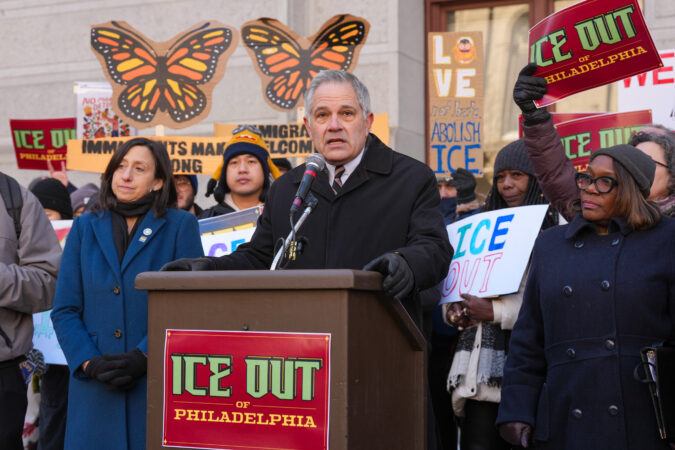
    District Attorney Larry Krasner on Wednesday announced the formation of a new coalition of progressive prosecutors committed to charging federal agents who violate state laws.

    Krasner joined eight other prosecutors from U.S. cities to create the Project for the Fight Against Federal Overreach, a legal fund that local prosecutors can tap if they pursue charges against federal agents.

    The abbreviation for the group, FAFO, is a nod to what has become one of Krasner’s frequent slogans: “F— around and find out.”

    The move places Krasner at the center of a growing national clash between Democrats and the Trump administration over federal immigration enforcement and whether local law enforcement can — or should — charge federal agents for actions they take while carrying out official duties.

    It is also the latest instance in which Krasner, one of the nation’s most prominent progressive prosecutors, has positioned himself as Philadelphia’s most vocal critic of President Donald Trump. He has made opposing the president core to his political identity for a decade, and he said often as he was running for reelection last year that he sees himself as much as a “democracy advocate” as a prosecutor.

    Krasner has used provocative rhetoric to describe the president and his allies, often comparing their agenda to World War II-era fascism. During a news conference Tuesday, he said federal immigration-enforcement agencies are made up of “a small bunch of wannabe Nazis.”

    The coalition announced Wednesday includes prosecutors from Minneapolis; Tucson, Ariz.; and several cities in Texas and Virginia. It was formed to amass resources after two shootings of U.S. citizens by federal law enforcement officials in Minnesota this month.

    Renee Good, 37, was shot and killed in her car by an ICE officer on Jan. 7 as she appeared to attempt to drive away during a confrontation with agents. The FBI said it would not investigate her killing.

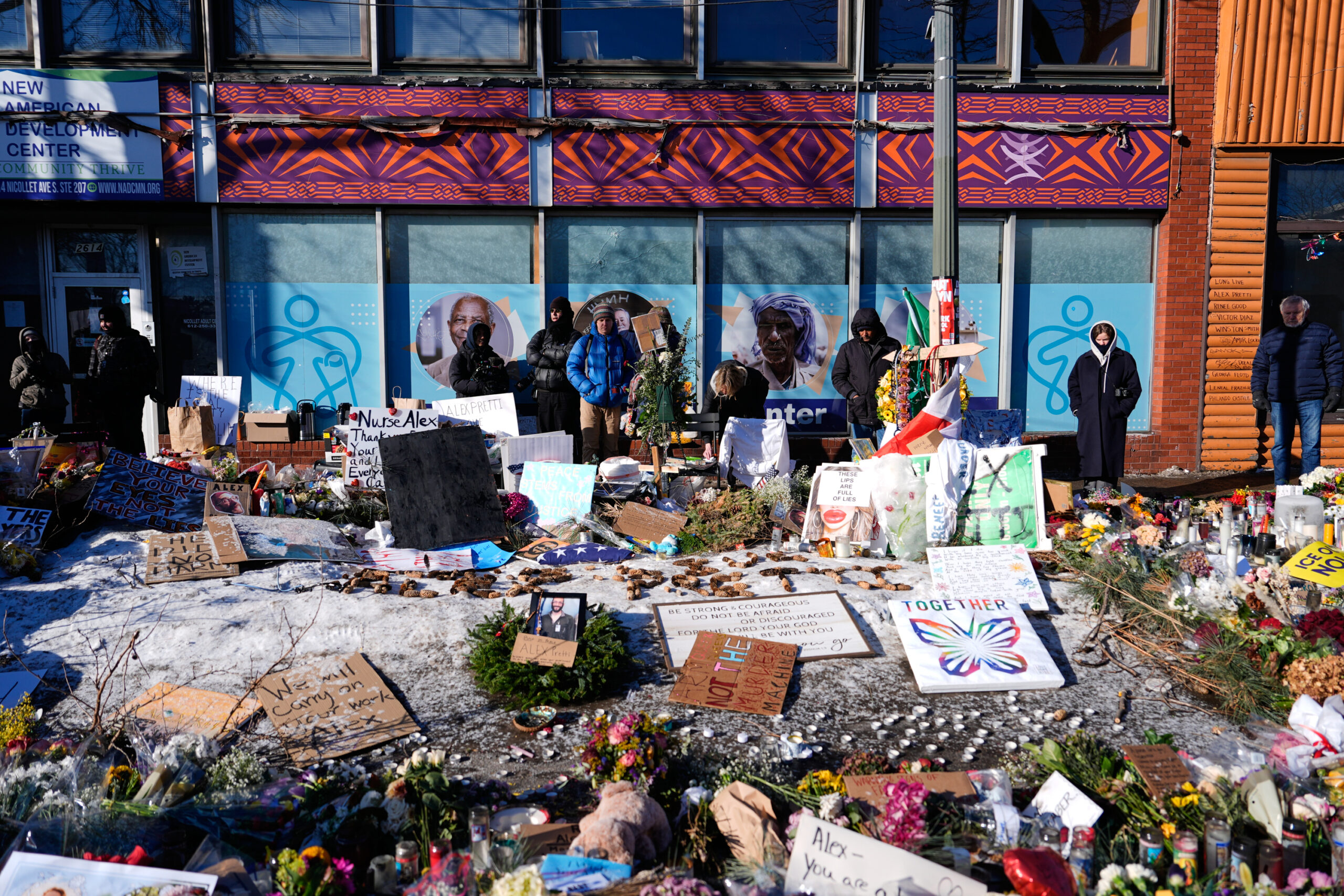
    People visit a memorial for Alex Pretti at the scene in Minneapolis where the 37-year-old was fatally shot by a U.S. Border Patrol officer.

    Then, on Saturday, Alex Pretti, 37, was killed after similarly confronting agents on a Minneapolis street. Video of the shooting, which contradicted federal officials’ accounts, appeared to show Border Patrol agents disarming Pretti, who was carrying a legally owned handgun in a holster. They then shot him multiple times. Federal authorities have attempted to block local law enforcement from investigating the shooting.

    Krasner said that, despite Vice President JD Vance’s recent statement that ICE officers had “absolute immunity” — an assertion the Philadelphia DA called “complete nonsense” — prosecutors in FAFO are prepared to bring charges including murder, obstructing the administration of justice, tampering with evidence, assault, and perjury against agents who commit similar acts in their cities.

    “There is a sliver of immunity that is not going to save people who disarm a suspect and then repeatedly shoot him in the back from facing criminal charges,” Krasner said during a virtual news conference Wednesday. “There is a sliver of immunity that is not going to save people who are shooting young mothers with no criminal record and no weapon in the side or back of the head when it’s very clear the circumstances didn’t require any of that, that it was not reasonable.”

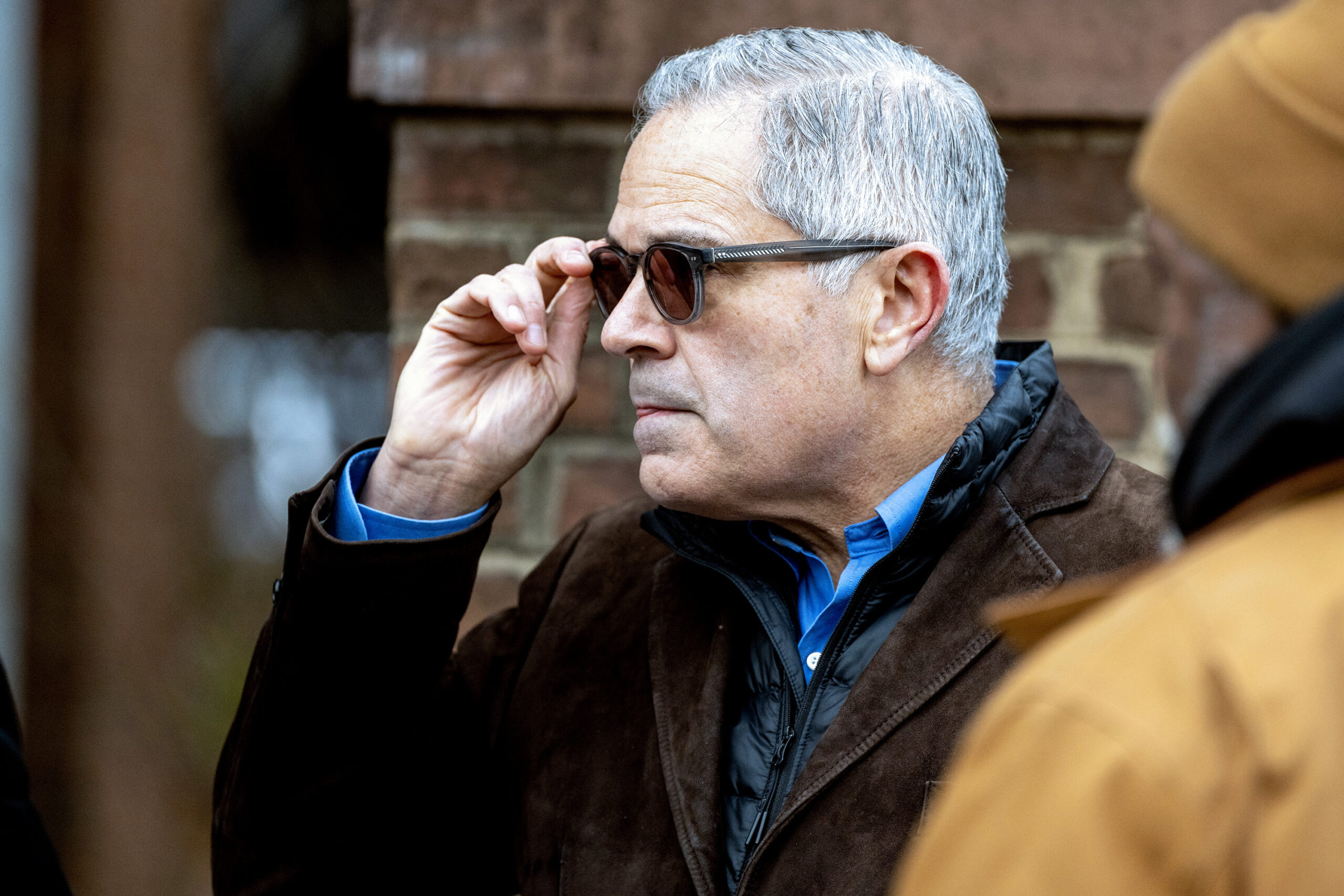
    Philadelphia District Attorney Larry Krasner attends an event at Independence National Historical Park on Dec. 21, 2025.

    How will FAFO work?

    The coalition has created a website, federaloverreach.org, and is soliciting donations.

    Prosecutors who spoke during the news conference said those donations would be toward a legal fund that would allow prosecutors to hire outside litigators, experts, and forensic investigators as they pursue high-profile cases against federal agents.

    “This will function as a common fund,” said Ramin Fatehi, the top prosecutor in Norfolk, Va., “where those of us who find ourselves in the tragic but necessary position of having to indict a federal law enforcement officer will be able to bring on the firepower necessary to make sure that the federal government doesn’t roll us simply through greater resources.”

    The money raised through the organization will not go to the individual prosecutors or their political campaigns, they said Wednesday.

    Scott Goodstein, a spokesperson for the coalition, said the money will be held by a “nonpartisan, nonprofit entity that is to be stood up in the coming days.” He said the prosecutors are “still working through” how the fund will be structured.

    Krasner said it would operate similarly to how district attorneys offices receive grant funding for certain initiatives.

    Most legal defense funds are nonprofit organizations that can receive tax-deductible donations. Those groups are barred from engaging in certain political activities, such as explicitly endorsing or opposing candidates for office.

    Goodstein said the group is also being assisted in its fundraising efforts by Defiance.org, a national clearinghouse for anti-Trump activism. One of that group’s founders is Miles Taylor, a former national security official who, during the first Trump administration, wrote under a pseudonym about being part of the “resistance.”

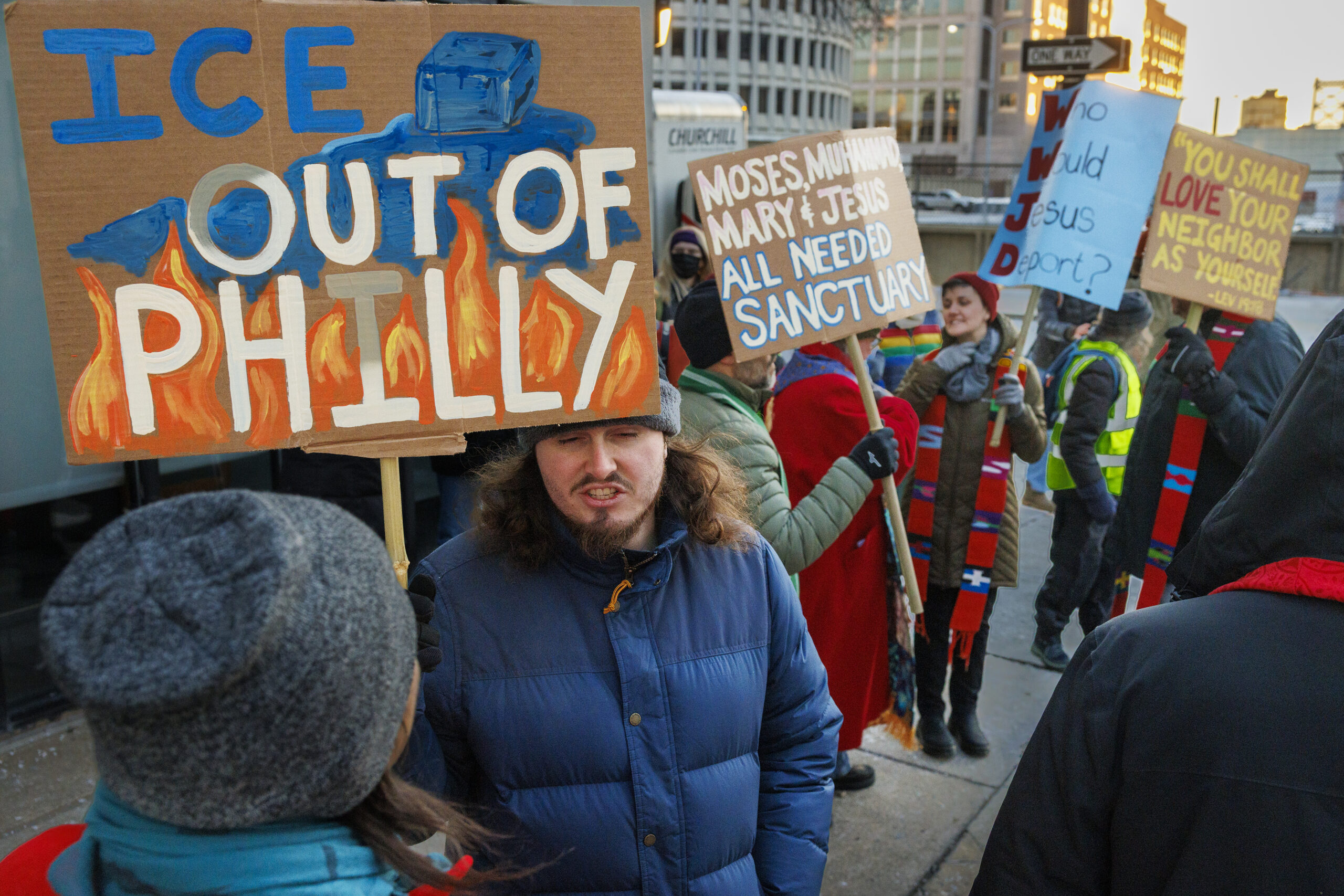
    Demonstrators from No ICE Philly gathered to protests outside the U.S. Immigration and Customs Enforcement, office at 8th and Cherry Streets, on Jan. 20.

    ‘Who benefits?’

    In forming the coalition, Krasner inserted himself into a national controversy that other city leaders have tried to avoid.

    His approach is starkly different from that of Mayor Cherelle L. Parker, a centrist Democrat who has largely avoided criticizing Trump. She says she is focused on her own agenda, and has not weighed in on the president’s deportation campaign.

    Members of the mayor’s administration say they believe her restraint has kept the city safe. While Philadelphia has policies in place that prohibit local officials from some forms of cooperation with federal immigration enforcement, the Trump administration has not targeted the city with surges of ICE agents as it has in other jurisdictions — such as Chicago and Los Angeles — where Democratic leaders have been more outspoken.

    Parker and Police Commissioner Kevin Bethel have at times been frustrated with Krasner’s rhetoric, according to a source familiar with their thinking who spoke on the condition of anonymity to discuss internal communications.

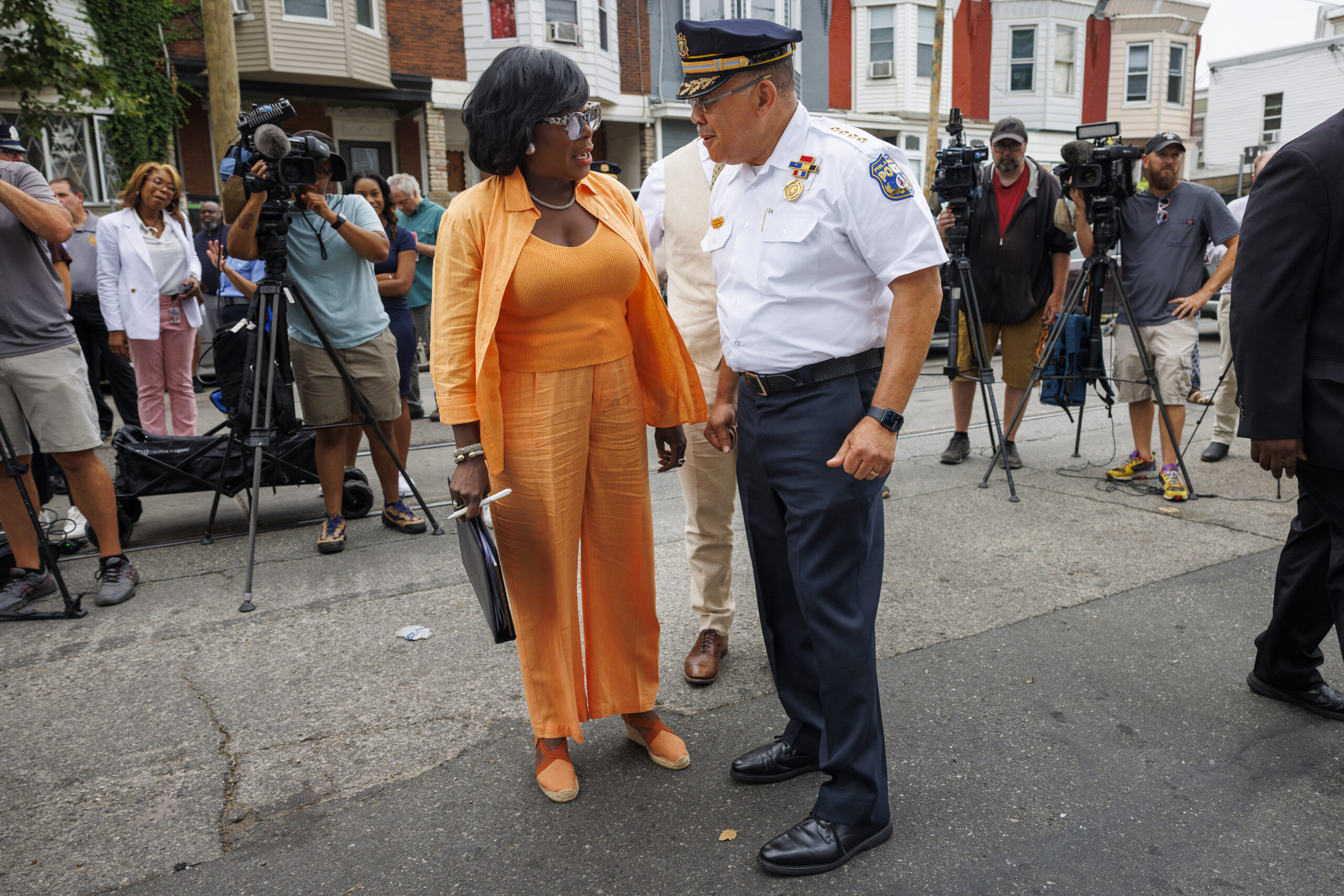
    Philadelphia Mayor Cherelle Parker and Police Commissioner Kevin Bethel speaking ahead of a July 2024 press conference.

    That was especially true this month when Krasner hosted a news conference alongside Sheriff Rochelle Bilal. The pair made national headlines after Krasner threatened to prosecute federal agents — something he has vowed to do several times — and Bilal called ICE a “fake” law enforcement agency.

    Bethel later released a statement to distance the Police Department from the Sheriff’s Office, saying Bilal’s deputies do not conduct criminal investigations or direct municipal policing.

    The police commissioner recently alluded to Parker’s strategy of avoiding confrontation with the federal government, saying in an interview on the podcast City Cast Philly that the mayor has given the Police Department instruction to “stay focused on the work.”

    “It is not trying to, at times, potentially draw folks to the city,” Bethel said. “Who benefits from that? Who benefits when you’re putting out things and trying to… poke the bear?”

    As for Krasner’s latest strategy, the DA said he has received “zero indication or communication from the mayor or the police commissioner that they’re in a different place.”

    “I feel pretty confident that our mayor and our police commissioner, who are doing a heck of a lot of things right,” he said, “will step up as needed to make sure that this country is not invaded by a bunch of people behaving like the Gestapo.”

  • Gov. Shapiro tells Stephen Colbert he’s planning for the possibility of federal troops entering Pa.

    Gov. Shapiro tells Stephen Colbert he’s planning for the possibility of federal troops entering Pa.

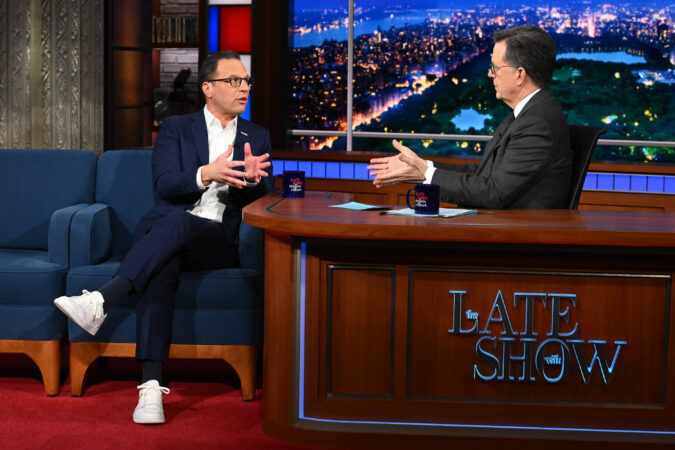
    Saying the Trump administration is using the federal government for “pure evil” in its immigration crackdown in Minneapolis, Gov. Josh Shapiro revealed on late-night television Monday that he’s preparing Pennsylvania to respond should the state face such an incursion.

    Shapiro’s wide-ranging remarks on The Late Show With Stephen Colbert — which included Shapiro deriding Vice President JD Vance as a “sycophant” and a “suck-up” — sounded at times like a speech before a studio audience that applauded him vigorously. Making the rounds to promote his new book, Where We Keep the Light: Stories from a Life of Service, Shapiro also appeared on CBS Sunday Morning, Good Morning America on Monday, and The View on Tuesday.

    On Colbert, the governor sharply criticized the Trump administration’s actions in Minneapolis, where he said “untrained” agents from U.S. Immigration and Customs Enforcement (ICE) have been creating “chaos” by fatally shooting two American citizens.

    “I think Americans are outraged by what they see,” Shapiro said, adding: “The mission in Minnesota must be terminated immediately.”

    When Colbert said there are “rumors” that federal troops will be sent to Philadelphia “to foment fear,” Shapiro nodded. On The View, he said troops could show up in Philadelphia, Pittsburgh, or Lancaster.

    “We have spent hours and hours and hours doing tabletop exercises to prepare for it,” Shapiro said, without being specific. The governor did not elaborate.

    He added that “it’s a sad day in America that a governor of a commonwealth needs to prepare for a federal onslaught where they would send troops in to undermine the freedoms and the constitutional rights of our citizens. This is un-American.”

    “But I want the good people of Pennsylvania to know — I want the American people to know — that we will do everything in our power to protect them from the federal overreach.”

    Asked for comment, Abigail Jackson, a White House spokesperson, said Tuesday: “It’s pure evil when Democrat leaders provide sanctuary to dangerous criminal illegal aliens who assault, murder, and rape innocent American citizens. President Trump is keeping his promise to the American people to deport criminal illegal aliens.”

    Referencing ICE agents wearing masks, Shapiro said that members of the Pennsylvania State Police “have strict rules on when they can wear a mask. You want to be identified as folks who are keeping people safe.”

    He added, “Of all the tools that we give our law enforcement in Pennsylvania, the most important tool you need to have is trust with the community that you police.”

    When the conversation turned to Vance’s statement that the ICE officer who shot and killed Minneapolis resident Renee Macklin Good on Jan. 7 has “absolute immunity,” Shapiro retorted that it was untrue.

    He added that Vance is “such a sycophant, such a suck-up. He embarrasses himself daily as he seeks the affirmation of Donald Trump.”

    ICE agents “are not above the law,” Shapiro added moments later. “I don’t care what B.S. Vance [says.]”

    The governor’s reelection bid this year, as well as rumors that he may be a presidential candidate in 2028, did not come up. Instead, Colbert touted Shapiro’s book.

    Shapiro said that the courts, Congress, and public opinion need to be marshaled to prevent the Trump administration from sending more troops to U.S. cities.

    “All of you have powerful voices,” Shapiro told the audience. He added: “The story of America is ordinary Americans rising up, demanding more, seeking justice.”

  • Trump and Greenland: All the questions you’re scared to ask your friends

    Trump and Greenland: All the questions you’re scared to ask your friends

    If you’re starting to absorb the headlines, or embarking on your early-week doomscroll, you’re probably seeing a lot about Greenland.

    President Donald Trump’s longtime interest in the Arctic island seems to be louder — and bolder — than ever, sparking a major geopolitical standoff.

    But how did it all start? And where do things stand? Here are all your questions answered, so you’re prepared the next time someone asks you about Greenland.

    How did Denmark acquire Greenland?

    Greenland has been home to native peoples who crossed the Arctic from what is now Canada, Norse settlers, Lutheran missionaries, and U.S. military personnel who used it as a base to protect the United States from Nazi Germany and the Soviet Union.

    As for when Denmark stepped in, the short answer is that Denmark’s control started with a colonial settlement, was formalized in 1953, and the agreement has since evolved into a self-governing structure with the Danish.

    In the 1700s, a Danish missionary arrived in Greenland and started lining up settlements and establishing Danish colonization. Through most of the 18th and 19th centuries, Greenland was controlled by the Danish. The relationship was formally recognized by Denmark after World War II. In 1953, the island was fully incorporated as a Danish territory, giving Greenlanders Danish citizenship.

    Things changed in the late 1970s. In 1979, Greenlanders voted in favor of home rule, establishing a local government. In 2009, Greenland earned even more autonomy, achieving self-government status. This stands today, with Greenland remaining part of Denmark but overseeing its own internal affairs. Denmark oversees defense and diplomacy issues, unless the regions opt to partner on an issue.

    Is Greenland bigger than the United States?

    Greenland is pretty big, but not bigger than the United States

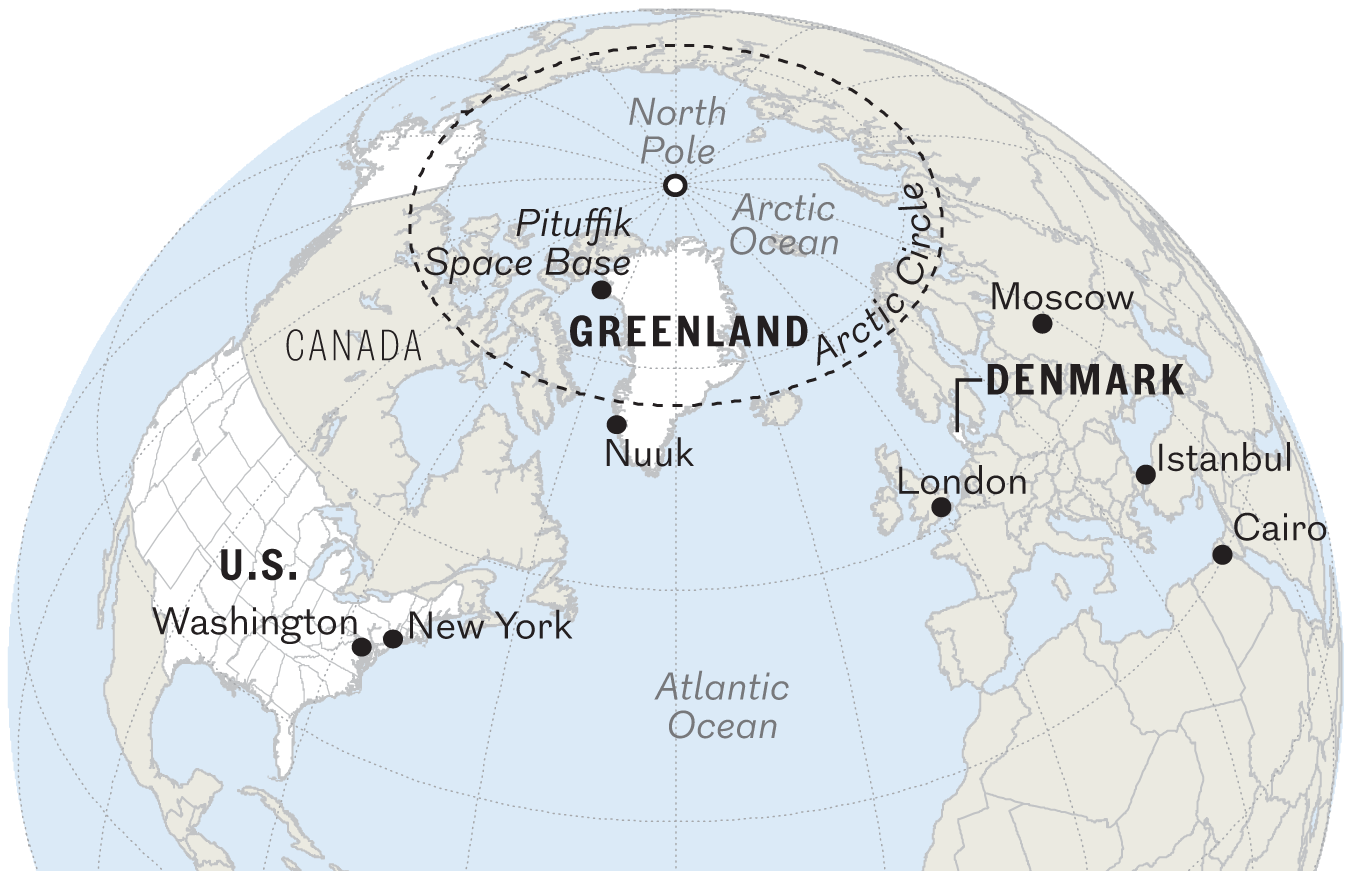
    It is considered one of the biggest places in the world by geography and is about 20 times the size of Denmark, according to the territory’s tourism website. The island stretches about 836,000 square miles.

    Map of Greenland, the U.S., and Denmark.

    It is the world’s largest island that isn’t a continent and is larger than France, Germany, Spain, and the United Kingdom combined. It is also larger than the state of Alaska.

    But, no, it’s smaller than the contiguous United States. All in all, the United States is about 4.5 times larger than Greenland.

    Still, a lot of people ask this question (it’s a top Google result surrounding Greenland) because map distortions make it appear a lot bigger than it is.

    The island has a population of roughly 56,480, according to the CIA. It is among the least densely populated countries in the world.

    What natural resources does Greenland have?

    Greenland is home to a bounty of natural resources, including oil, gas, and rare earth minerals. Those minerals are used for making batteries, electric vehicles, and other high-tech items, according to the New York Times. Currently, China dominates the global market for those minerals, meaning there is a reliance on China to source them.

    Vice President JD Vance has touted Greenland’s “incredible natural resources” in the past. Last year, Republican senators held a hearing focused on Greenland’s importance and its rare earths.

    But Greenland has only a few roads and ports, and environmentalists are opposed to developing on the island. That means mining and oil extraction in Greenland may not be productive.

    Does the U.S. military have a base in Greenland?

    Yep.

    Formerly known as the Thule Air Base, the Pituffik (pronounced bee-doo-FEEK) Space Base was renamed in 2023 during the Biden administration to honor the native Greenlandic community and history.

    It is the northernmost U.S. military installation and serves as an early warning missile detection site for North America. It is currently undergoing major upgrades.

    How long has Trump talked about wanting Greenland?

    It’s been awhile.

    Trump first floated the idea of “buying Greenland” during his first term, comparing it to a “real estate deal.” When Danish leaders rejected his idea, he canceled a scheduled visit to Denmark in 2019.

    When Trump began his second term, he spoke increasingly about his interest in the United States controlling Greenland, citing national security reasons.

    But critics say his real intentions stem from personal feelings.

    Is this really about Trump not winning the Nobel Prize?

    Trump linked his aggressive stance on Greenland to last year’s decision not to award him the Nobel Peace Prize, telling Norway’s prime minister that he no longer felt “an obligation to think purely of Peace,” in a text message released Monday and verified by the White House.

    Trump’s text to Jonas Gahr Støre, which he sent on Sunday, came a day after the president announced a 10% import tax on goods from the eight nations that have rallied around Denmark and Greenland, including Norway.

    The text exchange, which was released by the Norwegian government, said in part: “Considering your Country decided not to give me the Nobel Peace Prize for having stopped 8 Wars PLUS, I no longer feel an obligation to think purely of Peace.” He concluded, “The World is not secure unless we have Complete and Total Control of Greenland.”

    The Norwegian leader said Trump’s message was a reply to an earlier missive sent on behalf of himself and Finnish President Alexander Stubb, in which they conveyed their opposition to the tariff announcement, pointed to a need to de-escalate, and proposed a telephone conversation among the three leaders.

    White House deputy press secretary Anna Kelly said of the text exchange that Trump “is confident Greenlanders would be better served if protected by the United States from modern threats in the Arctic region.”

    Norway has since reaffirmed its support for Denmark and Greenland.

    Also, for what it’s worth, the Nobel Peace Prize is awarded by an independent committee, not the Norwegian government.

    Trump has openly coveted the peace prize, which the committee awarded to Venezuelan opposition leader María Corina Machado last year. Last week, Machado presented her Nobel medal to Trump, who said he planned to keep it, though the committee said the prize cannot be revoked, transferred, or shared with others.

    Speaking Monday night to reporters before boarding Air Force One on his way back from Florida to Washington, Trump backtracked and said he didn’t “care about the Nobel Prize.”

    What is Trump saying about Greenland now?

    He’s doubling down.

    Monday night, Trump took to his Truth Social platform and made a series of posts about how there was “no going back” when it comes to his push to take control of the island. He also posted private text messages he received from French President Emmanuel Macron and the head of NATO, and an AI-generated image of the American flag over Greenland and Canada.

    Following Macron’s questioning of Trump’s approach, Trump suggested he could impose a 200% tariff on French wines.

    Trump also announced he would meet with “various parties” to discuss Greenland during the World Economic Forum in Davos, Switzerland, this week.

    On Tuesday, Trump held a nearly two-hour news conference, but largely did not acknowledge his stance on Greenland until asked by reporters.

    He repeated his position that the U.S. needs to take control of the territory for the sake of national security.

    “I think that we will work something out where NATO is going to be very happy and where we’re going to be very happy,” Trump said toward the end of the news conference.

    Macron this week called for an emergency meeting in Paris with European leaders to address tensions with the U.S. over Trump’s pursuit to acquire Greenland in addition to increasing tariffs.

    Trump told reporters he did not plan to attend the meeting and mentioned that Macron would not be leading France for much longer. Macron’s term ends in May 2027.

    Do other politicians agree with Trump?

    There is widespread disagreement over how Trump wants to handle Greenland.

    Secretary of State Marco Rubio said the president wants to buy it, while top aide Stephen Miller suggested the U.S. could seize it by force. Vice President Vance’s discussion with Danish leaders last week ended in “fundamental disagreement.”

    Several lawmakers across party lines have criticized Trump’s approach. GOP members, including Sen. Rand Paul of Kentucky and Rep. Mike Turner of Ohio, say the raised tariff threats could harm NATO and U.S. interests.

    Rep. Don Bacon (R., Neb.) said last week that he would consider impeaching Trump if the U.S. invaded Greenland, describing the idea as “utter buffoonery.”

    Sen. Lisa Murkowski (R., Alaska) called Trump’s coercive threats dangerous for alliances and “bad for America.” She and Sen. Jeanne Shaheen (D., N.H.) introduced bipartisan legislation that would prohibit the use of U.S. Defense or State Department funds to take control of Greenland or the sovereign territory of any NATO member state without that ally’s consent or authorization from the North Atlantic Council.

    How are Greenland residents responding?

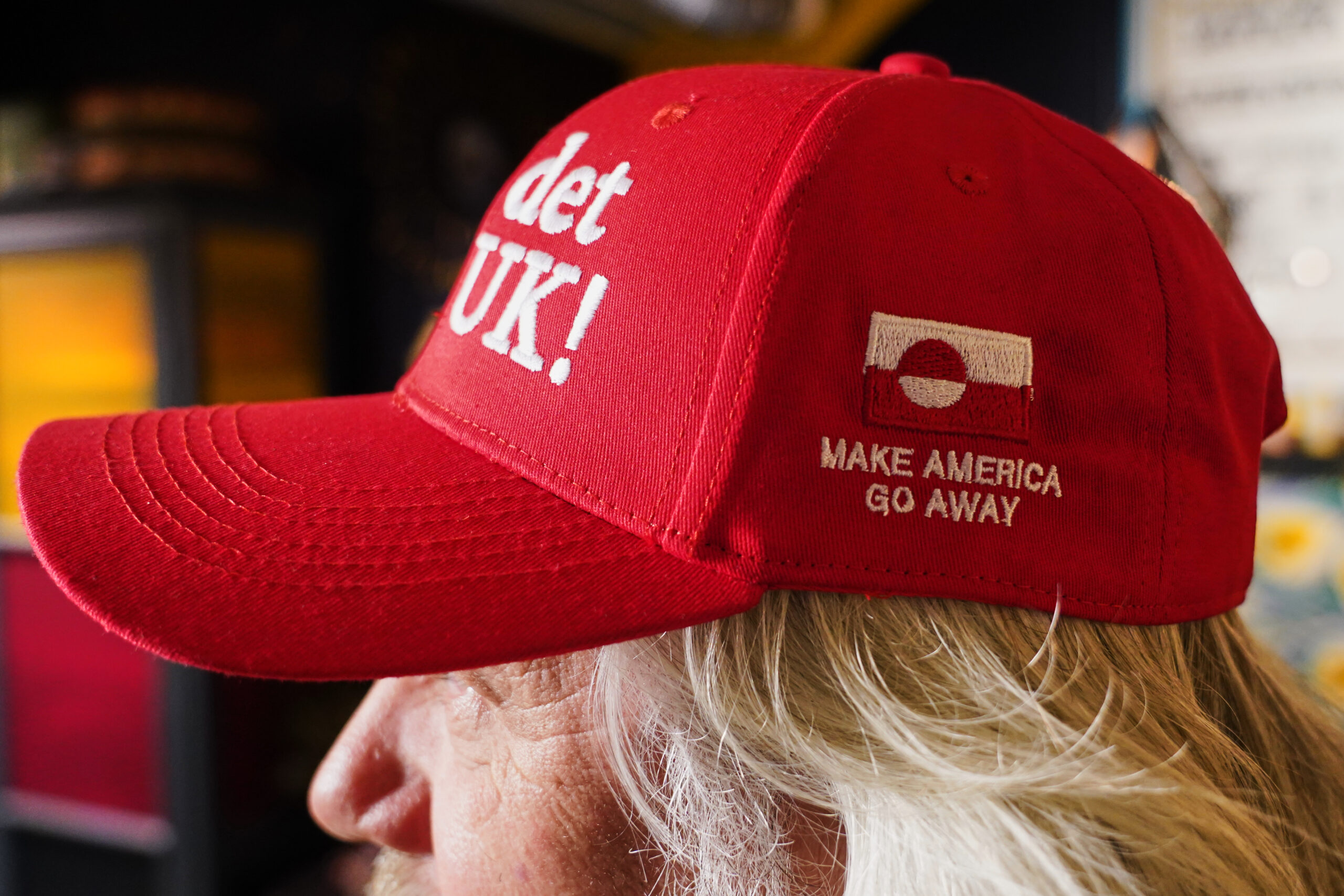
    Copenhagen store owner Jesper Rabe Tonnesen wears a red cap for sale that he created with the slogans “Make America go away,” on the side, and on the front: “Nu det NUUK!,” a twist on the Danish phrase “Nu det nok,” meaning “Now it’s enough.”

    Unsurprisingly, they’re not happy!

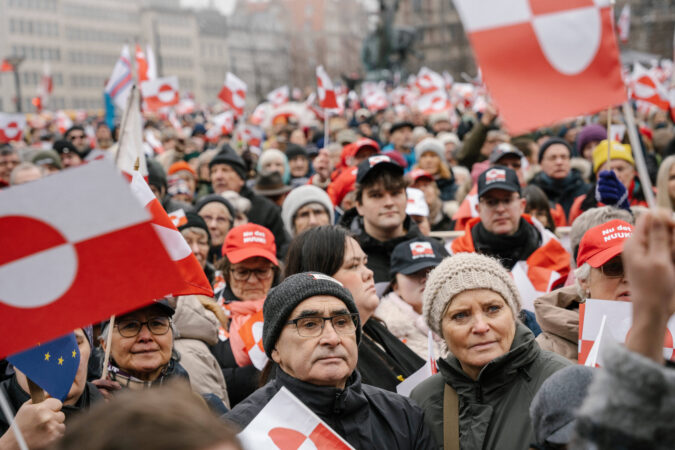
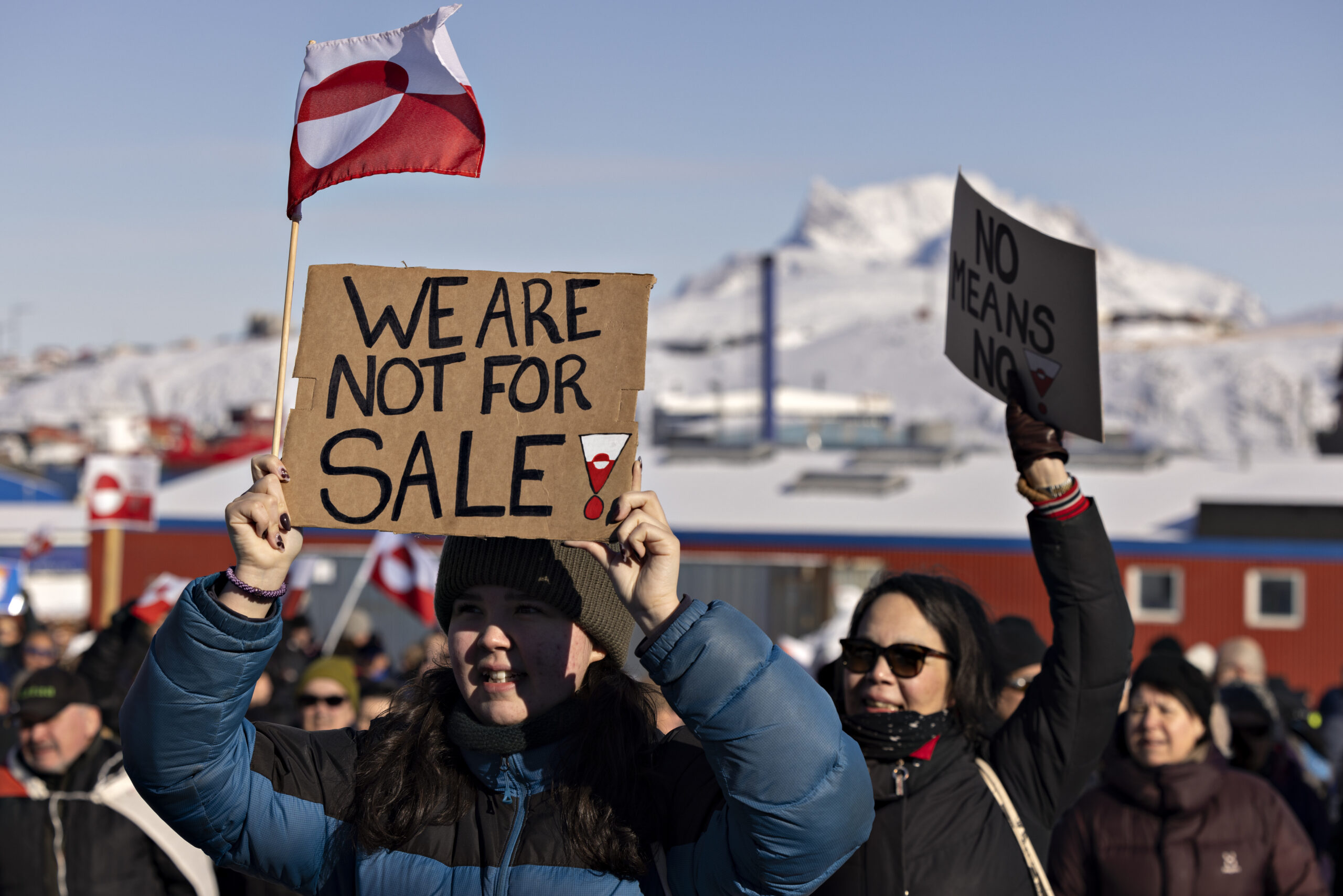
    Over the weekend, hundreds of people in Greenland’s capital, Nuuk, braved near-freezing temperatures, rain, and icy streets to march in a rally in support of their own self-governance.

    Thousands of people also marched through Copenhagen, many of them carrying Greenland’s flag. Some held signs with slogans such as “Make America Smart Again” and “Hands Off.”

    A spoof Make America Go Away red cap in the style of Trump’s original MAGA campaign hat is surging in popularity in Denmark and has become a symbol of Danish and Greenlandic resistance.

    “This is important for the whole world,” Danish protester Elise Riechie told the Associated Press as she held Danish and Greenlandic flags. “There are many small countries. None of them are for sale.”

    The rallies occurred hours after a bipartisan delegation of U.S. lawmakers, while visiting Copenhagen, sought to reassure Denmark and Greenland of their support.

    This article contains information from the Associated Press.

  • The view from Greenland: Trump’s yen to take over makes no economic or security sense

    The view from Greenland: Trump’s yen to take over makes no economic or security sense

    Here’s the glaring sign of how drunk President Donald Trump has become on his own power: his ongoing threat to seize Greenland for security reasons, “whether they like it or not.” Anything else is “unacceptable,” Trump ranted last week.

    Never mind that this icebound island is an autonomous territory of Denmark, one of our longest-standing and closest NATO allies. POTUS is trying to bludgeon Copenhagen, along with seven other European allies who back the Danes, by imposing new 10 per cent tariffs on them all unless they bow to his outrageous demands.

    Never mind that seizing Greenland via economic coercion or force would destroy the NATO alliance, handing Russia and China a major victory at zero cost. Never mind that polls show that only one in four Americans want Trump to take control of Greenland, and only 6% of Greenlanders want to become part of the United States.

    The most absurd part of Trump’s crusade is that there is no need to seize or buy Greenland for U.S. security or rare earths as we already have full access to both.

    Yet, Trump is not only treating Denmark like an enemy but openly rebuffing the rights of Greenland’s government and people, who, according to Danish law have the final say about their future.

    To learn more about what Greenlanders want and why Trump’s approach draws outrage, I turned to Galya Morrell, a Greenlander of Komi ethnic origins, who was raised in the Soviet Arctic. She has led an amazing life in journalism, the arts, and Arctic adventures, alongside her late husband, the renowned Greenlandic explorer Ole Jørgen Hammeken.

    Our conversation has been edited for length and clarity.

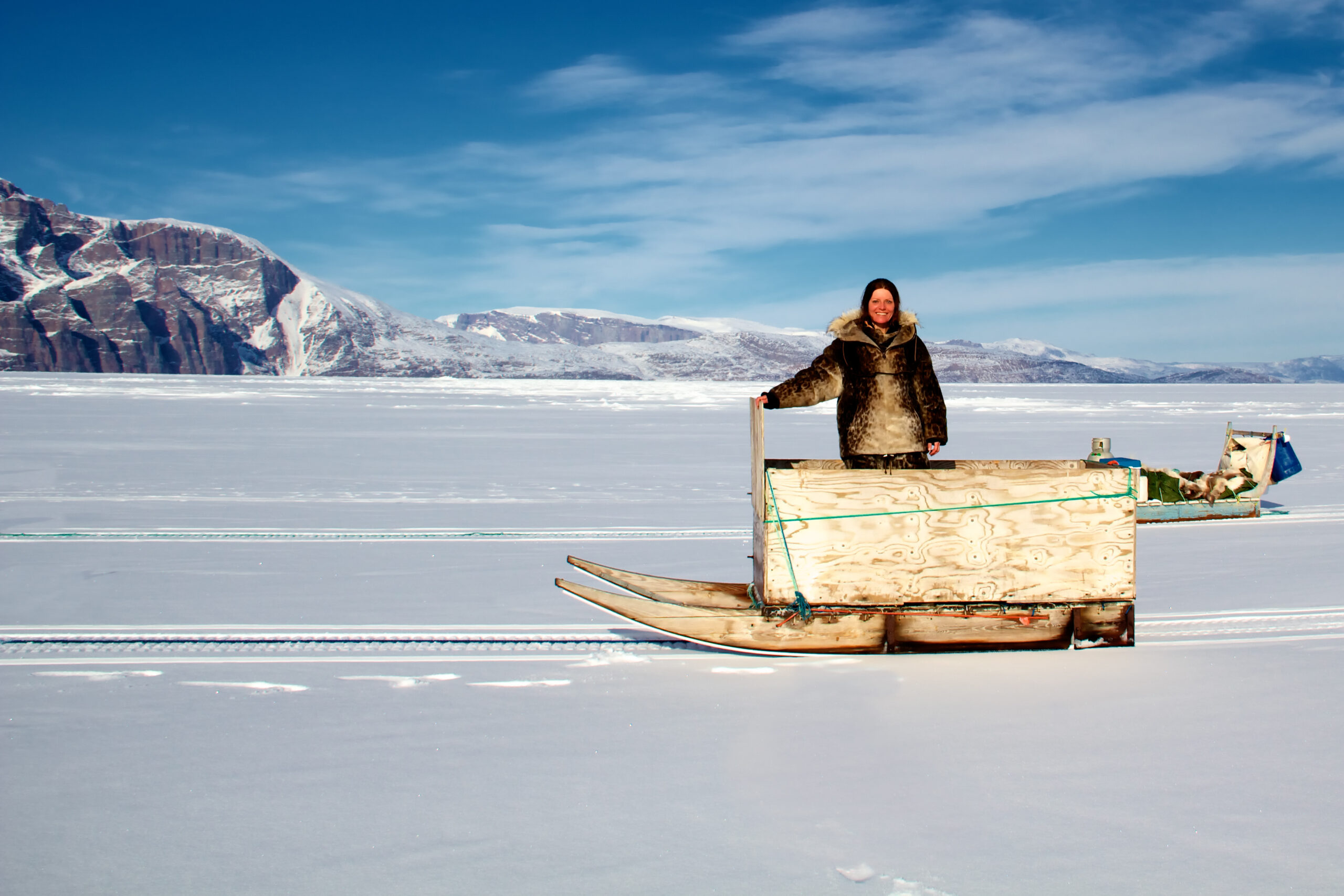
    Galya Morrell stands by her husband’s box sled, which was used to transport killed game, atop the frozen sea ice of Uummannaq Fjord in Northern Greenland.
    ⁠What was the first reaction of most Greenlanders to Trump’s proposal to take control of Greenland?

    When we heard about Trump’s proposal during his first term, everyone took it as a joke. Back then, we still lived in a world where logic mattered. How can you buy a country? What about people living there? Many people saw The Apprentice, that’s how they knew Trump, so they thought that maybe he was going to make a new season about Greenland after he retires from his presidency, and some young aspiring actors were asking if they can join the show.

    ⁠Do they take Trump seriously now, especially after Venezuela?

    Now it’s different. I don’t think that Venezuela played a big role in their perception, because already, people knew that Trump became obsessed with Greenland. At first, people thought that maybe it was even good for Greenland, because finally — finally — Denmark started taking Greenland seriously. Before, many Danes saw Greenlanders as a bunch of drunks and useless folks, which they aren’t, and a burden for Denmark. After Trump said he wanted it, many Danes changed their mind.

    Trump also accidentally woke up Greenlandic nationalism because the Greenlandic independence movement was sleepy and divided. Now there was a foreign bully. Nothing unites people faster than someone who treats them like furniture in the new condo purchase. Suddenly even Denmark looked like a shield [against Trump] instead of a cage.

    A 1951 pact with Denmark offers the U.S. almost unlimited military access on land, air, and sea. As for mining hard-to-access critical minerals, Greenland’s government would eagerly welcome U.S. investment. So what is your take on what Trump really wants?

    About 20,000 U.S. soldiers and technicians were based in Greenland [after World War II] and then suddenly they were all gone. Today only Pituffik Space Base [the former Thule Air Base] is still around with some 150 personnel. So why did the US not bring them back when it was clear that Russia rebuilt and upgraded all the former Soviet bases in the Arctic and became a threat in the region?

    The United States already had Greenland, quietly, through contracts, bases, and the gravitational pull of English. But none of that had Trump’s name on it. And if your name is not on something, do you even own it?

    It appears that [Trump’s need for ownership] is not logical but psychological. I think that his understanding of success or power is only when “there is a deal,” and when someone loses face — very important! And when he gets credit — even more important. Soft power, which America had in Greenland until recently, looks like nothing to him. Because none of what existed had Trump’s name on it.

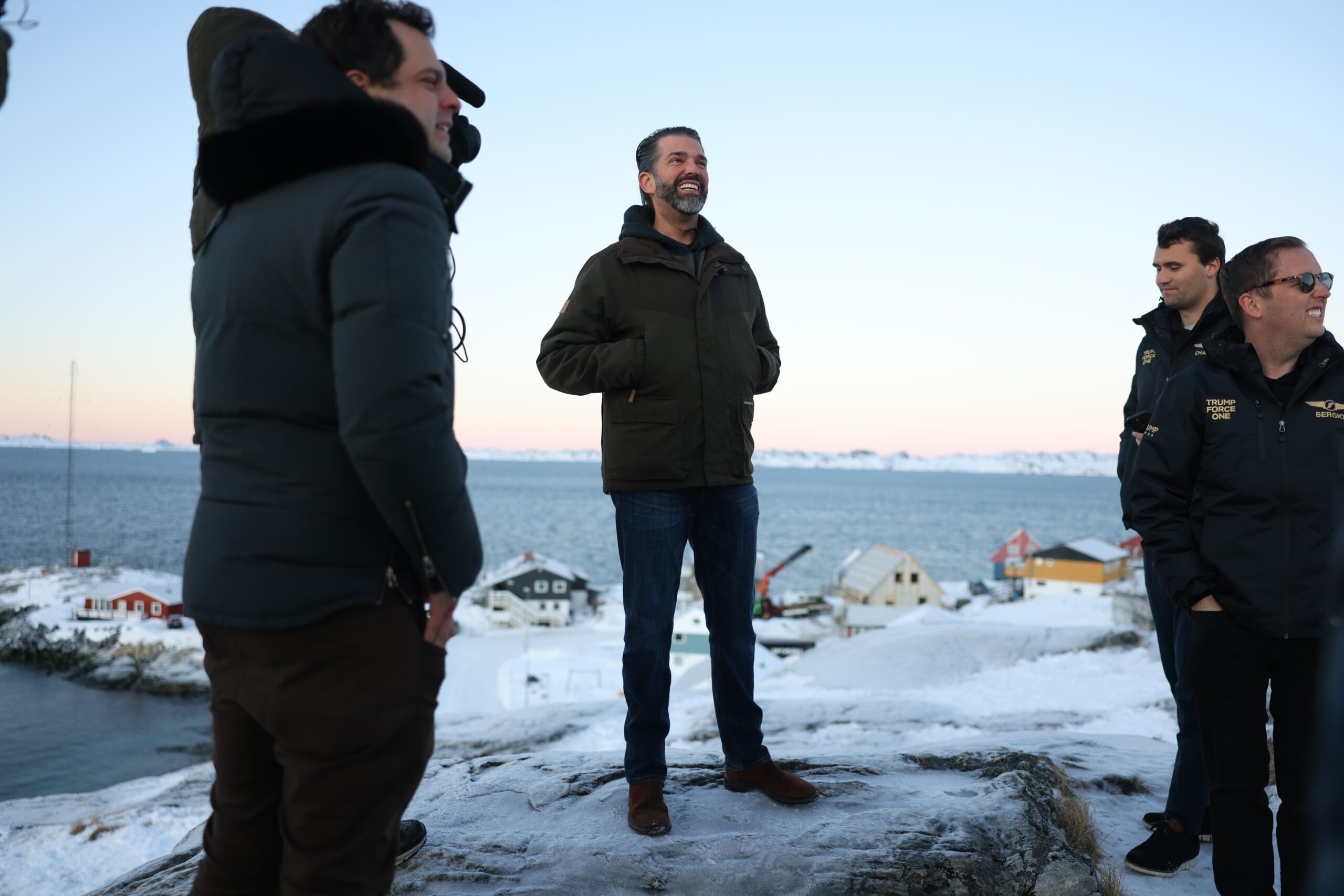
    Donald Trump Jr. (center) smiles after arriving in Nuuk, Greenland, in 2025.
    Are there Trump influencers (or suspected intelligence agents) roaming around, trying to find or buy supporters?

    As a family, we have not seen or met the “agents,” but we certainly saw some people in Nuuk, following Donald Trump Jr.’s visit a year ago, giving money and red MAGA hats to the youngsters, schoolkids, and making them say things on camera. Parents were outraged when they saw their own kids on TV, but it was too late.

    ⁠What really happened when Trump Jr. visited? Why was he so eager to talk about Greenland?

    My late husband, an Inuit elder and explorer, was asked to meet Trump Jr. back in 2015. He wanted to hunt musk ox in Greenland, but not where average tourists hunt. So my husband said that there are a lot of musk oxen around Hammeken Point [a mountain named after him], and he could take him there and be his guide.

    They were planning the expedition for a while, until one day Junior said that he can’t go because his dad decided to run for the presidency. Later, my husband thought that maybe it was all his fault for telling Junior exciting stories about Greenland and about what was hidden there under “all this ice,” and maybe that somehow affected Trump’s father’s interest.

    ⁠Some Trumpers think Greenlanders can be bought. Are some interested?

    We hear rumors that he is thinking of paying $100,000 to each Greenlander. Well, it’s not a lot of money, a boat costs around that, and who will sell the country for the price of a boat? But seriously speaking, today, everyone whom I know says firmly no. There is no price tag, no matter how much. The country is not for sale.

    But we live in a strange world, so I don’t know what will happen for sure. [Opposition leader] Pele Broberg is saying out loud what many politicians think quietly: that Greenland is already being pulled into the American orbit, and that it might as well try to get paid for it.

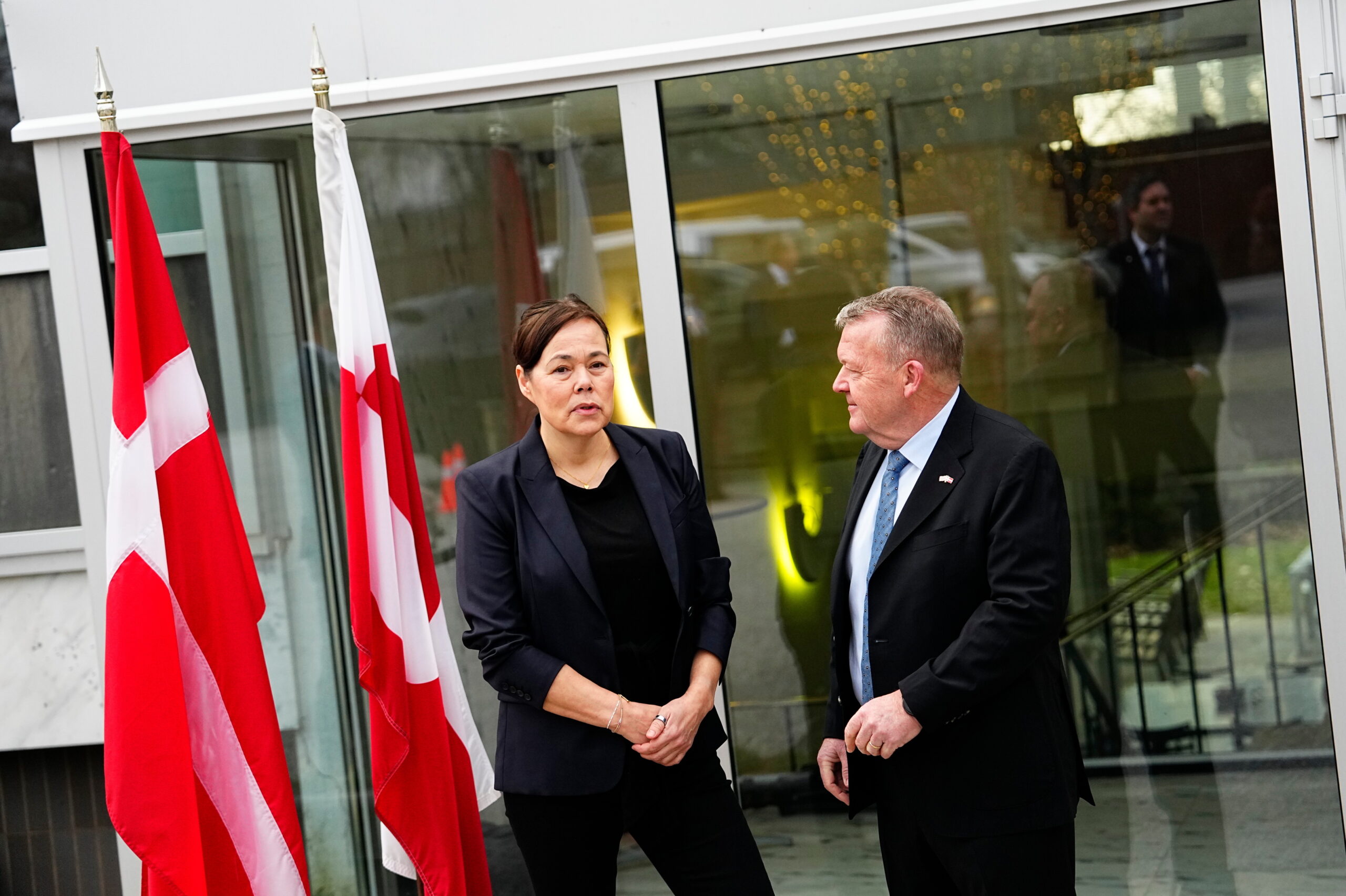
    Denmark’s Foreign Minister Lars Løkke Rasmussen (right) and Greenland’s Minister for Foreign Affairs Vivian Motzfeldt (left) prepare at the Danish Embassy for a meeting with Vice President JD Vance and Secretary of State Marco Rubio in Washington on Wednesday.
    Do some Greenlanders feel that way?

    Yes. Especially younger people, miners, business owners, and those who feel Denmark never gave Greenland a real economy, only a welfare system. For them, a deal with America sounds like a shortcut to dignity, jobs, and finally being taken seriously.

    But there is no such thing as “a deal” between a superpower and a small Arctic society. There is only dependence, dressed up as partnership.

    The United States already has what it needs in Greenland: military access, strategic geography, and preferential access to resources [such as rare earths]. What it doesn’t have is legal ownership or political control. A so-called “deal” would simply move Greenland’s dependency from Copenhagen to Washington. The question is whether Greenland would still be free after it is made.

    Can you imagine a U.S. military takeover attempt? What would be the consequences? Denmark and many other NATO allies are already moving small numbers of troops to Greenland as a tripwire.

    My husband and I had hoped to live the rest of our years in a small village, Siorapaluk. It is such a beautiful and peaceful place. Ironically, it is 92 miles from Pituffik Space Base. We honestly thought it was the most peaceful place on Earth.

    At this moment, we all — I can only talk about our family and friends — hope for a peaceful solution. Any negotiations are better than the war in the Arctic. Real war in the Arctic will be the end to everything.

    If the U.S. really wanted to secure its interests in Greenland what could Trump do legitimately?

    Trump still can return to U.S. bases, build new ones, invest in the population, in their education and knowledge. I see how scientists, glaciologists, marine biologists — 15 different specialties — from Japan’s Hokkaido University work together side by side with the local Inuit hunters, elders, and children in Qaanaaq, very close to Pituffik Space Base. It is an ideal collaboration; they love each other and benefit from each other. But they have a very smart leader, Shin Sugiyama. I think that President Trump could learn from him.

    People take part in a march ending in front of the U.S. consulate, under the slogan, Greenland belongs to the Greenlandic people, in Nuuk, Greenland, in March.
    Trump claims that if the U.S. doesn’t take Greenland, China or Russia will. What is he talking about?

    Russia is expanding its military presence in the greater Arctic region. This is their priority. I was once arrested by Chechen commandoes [on a floating Russian ice base, not part of Greenland but above the disputed underwater location of the North Pole]. So, yes, activity in Arctic waters is very real, and it is increasing. China has a major interest in Greenland. [But Greenlanders and Arctic experts see no signs of the Chinese and Russian ships Trump says are lurking around Greenland.]

    Greenlanders have said no to Russia and China because we don’t want them. A year ago, the Chinese bought some mining rights, but said they would bring their own workers, like what they have done in Yakutia [a northern region of Russia]. Chinese men married Russian women in Yakutia. There is a growing Chinese presence in Siberia. Soon, a majority will be Chinese, but no one sees it. [Fearing a similar outcome, the Greenland government ultimately rejected the Chinese investment.]

    [Russia’s invasion of Ukraine has also increased Greenlanders’ hostility to Moscow. They are painfully aware of “how poorly Russians treat their Arctic minorities” and how “Putin took the poorest people from Arctic villages” to fight and die in Ukraine].

    Should NATO troops be stationed in Greenland alongside more U.S. troops?

    Today the Arctic is becoming a place where three things overlap: military early warning systems, resource competition, and new shipping routes [due to melting ice]. That combination creates the possibility of accidents and miscalculations long before it creates a planned Russian or Chinese invasion.

    The biggest risk is not that someone like Russia or China suddenly wakes up and “takes Greenland.” The risk is escalation. I think that Greenland’s best protection is not a sudden flood of troops. It is a predictable security architecture that everyone understands.

    Greenland needs protection. But we are old enough to remember how conflicts were avoided during the Cold War: There were rules and restraint. There was clarity. Not theater.

    What do you hope for (or dread) after the failure of last week’s meeting at the White House between Vice President JD Vance and Secretary of State Marco Rubio and the foreign ministers of Denmark and Greenland?

    What I hope for is very simple: that adults will run the room. Secretary of State Marco Rubio is not a performer. So I really hope meetings will not be about headlines or symbolic victories. They should be a security conversation and not a dominance ritual.

    As I said before, the U.S. already has what it needs in Greenland in terms of security. My husband said not long before he departed: “Greenland does not need to be rescued. It needs to be respected.”

  • Sen. Chris Coons and U.S. Rep. Madeleine Dean are headed to Denmark as Trump pushes to acquire Greenland

    Sen. Chris Coons and U.S. Rep. Madeleine Dean are headed to Denmark as Trump pushes to acquire Greenland

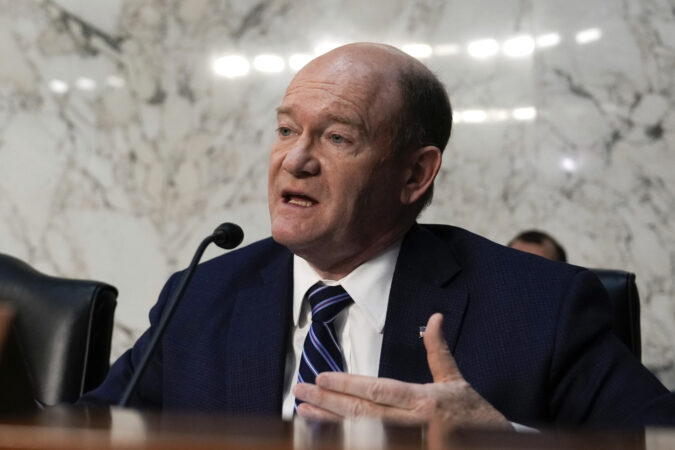
    As President Donald Trump threatens to acquire Greenland, Sen. Chris Coons is boarding a plane to Denmark to push back.

    Coons (D., Del.), who opposes the president’s takeover proposal, is bringing a bipartisan group of House and Senate members on a mission to highlight the longstanding relationship between the U.S. and Denmark, which has control over defense and foreign policy in the semi-autonomous territory, located northeast of Canada.

    Coons said in an interview Wednesday that the delegation will meet with Danish and Greenlandic government and business leaders to discuss issues including Arctic security and strengthening trade relations.

    “Denmark has been a strong close and trusted ally for decades and this is a chance for a bipartisan and bicameral delegation from Congress to go and communicate our respect and appreciation for their close partnership,” he said.

    He said he hopes the visit clarifies “there are folks in Congress who do not support an aggressive engagement.”

    Coons noted Danish soldiers fought alongside Americans in Iraq and Afghanistan and suffered some of the highest casualties per capita. The delegation will lay a wreath to commemorate that sacrifice on their trip.

    Joining Coons will be Democratic U.S. Reps. Sarah McBride of Delaware, Madeleine Dean of Pennsylvania, Gregory Meeks of New York, and Republican Sen. Thom Tillis from North Carolina. The delegation will be in Copenhagen Friday and Saturday. Some members of the delegation will continue on to the World Economic Forum in Davos, Switzerland.

    Trump has threatened to annex Greenland, a self-governing territory of Denmark, into the United States, contending it’s an issue of national security to prevent Russia or China from taking it over.

    Coons called that rationale “puzzling,” given leaders of Greenland and Denmark have assured him on previous visits that they are happy to collaborate with the U.S. to amp up American military presence in the country and work together on arctic security issues or to explore investments in mineral resources.

    “I asked are you aware of any foreign threats, cyber, or other incursions?” Coons said of a previous conversation with Denmark Minister of Foreign Affairs Lars Løkke Rasmussen. “Nope, none.”

    Leaders in Greenland this week said they wanted the territory to remain part of the kingdom of Denmark.

    “Greenland does not want to be owned by the USA,” Greenland’s Premier Jens-Frederik Nielsen said at a news conference Tuesday in Copenhagen. “Greenland does not want to be governed by the USA. Greenland will not be part of the USA. We choose the Greenland we know today, which is part of the Kingdom of Denmark.”

    Denmark officials have warned an attack on Greenland, which is part of Denmark and thus under the protection of the North Atlantic Treaty Organization, would destroy the alliance, which has been a pillar of U.S.-European relations since 1949.

    Trump has been seemingly undeterred by foreign protestations. He said on social media Wednesday that “anything less” than U.S. control of Greenland is “unacceptable,” arguing the United States needs the territory for national security purposes, which could in turn strengthen NATO.

    “NATO becomes far more formidable and effective with Greenland in the hands of the UNITED STATES,” Trump wrote in a Truth Social post. “Anything less than that is unacceptable.”

    Dean, who also went on a trip to Denmark in April, said in an interview she hopes to convey “the president’s notion is wrongheaded, dangerous, inane and not something we support.”

    Dean said if the president wants to boost security in Denmark he might consider increasing the number of U.S. military bases there, which has precipitously declined, rather than trying to take control of the country.

    Dean also encouraged her Republican colleagues to speak out against the president’s comments.

    “If somehow this president unleashes military action against Greenland, against the kingdom of Denmark — it will destroy 80 years of a NATO partnership that has kept the world in a more peaceful place,” she said. “It’s just a sick irony that this is the same president who so wishes he could win the Nobel Peace Prize.”

    Vice President JD Vance and Secretary of State Marco Rubio hosted the foreign ministers of Denmark and Greenland Wednesday, a meeting that ended with plans for a working group but also highlighted the “fundamental disagreements” between the nations.

    Coons and Dean’s trip comes as tensions have risen internationally.

    The government of Greenland and Denmark’s Ministry of Defense said there would be an increased military presence in the territory starting Wednesday due to “security tensions,” CNN reported.

    Elsewhere, European leaders continue to reject Trump’s calls to control the semi-autonomous territory. French President Emmanuel Macron warned Wednesday that the consequences of the US trying to seize Greenland from Denmark would be “unprecedented.”

  • A man who broke windows at JD Vance’s home in Ohio has been detained, the Secret Service said

    A man who broke windows at JD Vance’s home in Ohio has been detained, the Secret Service said

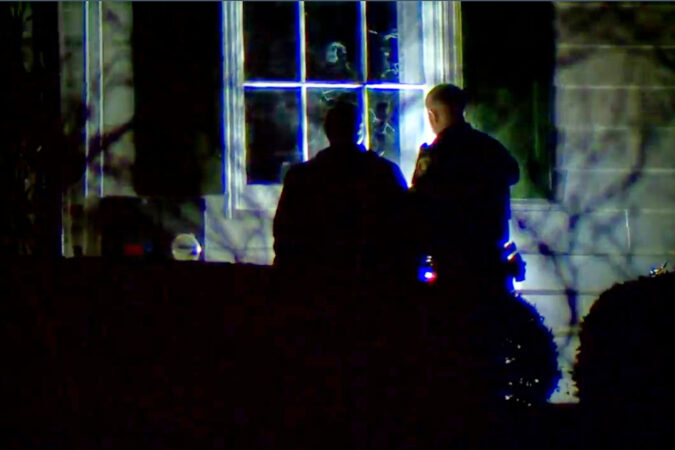
    A man who broke windows at Vice President JD Vance’s Ohio home and caused other property damage was detained early Monday, the U.S. Secret Service said.

    The man was detained shortly after midnight by Secret Service agents assigned to Vance’s home, east of downtown Cincinnati, agency spokesperson Anthony Guglielmi said in a statement emailed to The Associated Press. He has not been named.

    The Secret Service heard a loud noise at the home around midnight and found a person who had broken a window with a hammer and was trying to get into the house, according to two law enforcement officials who were not publicly authorized to discuss the investigation into what happened and spoke on the condition of anonymity. The man had also vandalized a Secret Service vehicle on his way up the home’s driveway, one of the officials said.

    The home, in the Walnut Hills neighborhood, on hills overlooking the city, was unoccupied at the time, and Vance and his family were not in Ohio, Guglielmi said.

    The Secret Service is coordinating with the Cincinnati Police Department and the U.S. attorney’s office as charging decisions are reviewed, he said.

    Vance, a Republican, was a U.S. senator representing Ohio before becoming vice president. His office said his family was already back in Washington and directed questions to the Secret Service.

    Walnut Hills is one of the city’s oldest neighborhoods and is home to historic sites, including the Harriet Beecher Stowe House.

  • JD Vance says America is a ‘Christian nation.’ Is it?

    JD Vance says America is a ‘Christian nation.’ Is it?

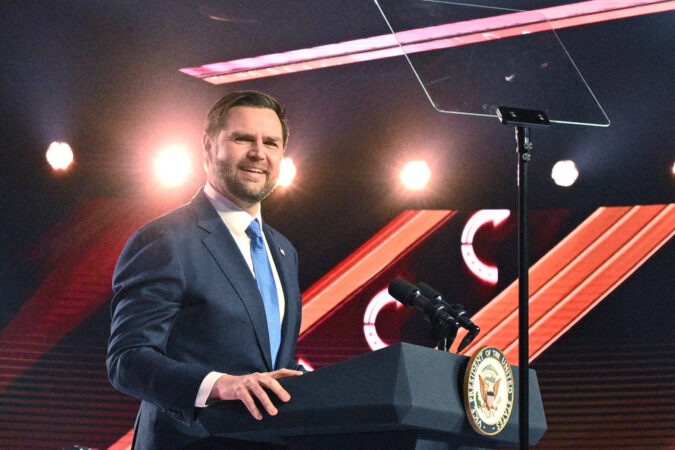
    During Turning Point USA’s AmericaFest 2025, held on Dec. 21, I heard Vice President JD Vance say that America was founded as, and always will be, a Christian nation. I strongly disagree.

    Not because we have failed to live up to that standard (we have), but because no nation-state can rightly claim that title. Scripture never supports such claims. Nations may be influenced by God, restrained by God, or even blessed by God, but they are not the Kingdom of God.

    Two hundred and fifty years ago, 13 British colonies did something unprecedented in human history.

    Their most remarkable act was not just rebellion itself — rebellions had happened before — but the nature of their rebellion. They did not cast off one king to enthrone another. They rejected the very premise that sovereignty ultimately belonged to any earthly monarch.

    Instead, they declared that all people are created equal and endowed with certain “unalienable rights” not by a crown, but by God, our creator. These were not merely political claims; they were moral assertions rooted in a Judeo-Christian worldview that affirmed human dignity as a gift, not a privilege.

    This declaration was, of course, an act of war not just against England, but the feudal worldview. Over the next eight years, these colonies fought the most powerful military force on Earth for the right to govern themselves — and they won.

    What followed was one of the most remarkable political achievements in history: a constitutional framework designed not to grant rights, but to protect rights already given by Almighty God.

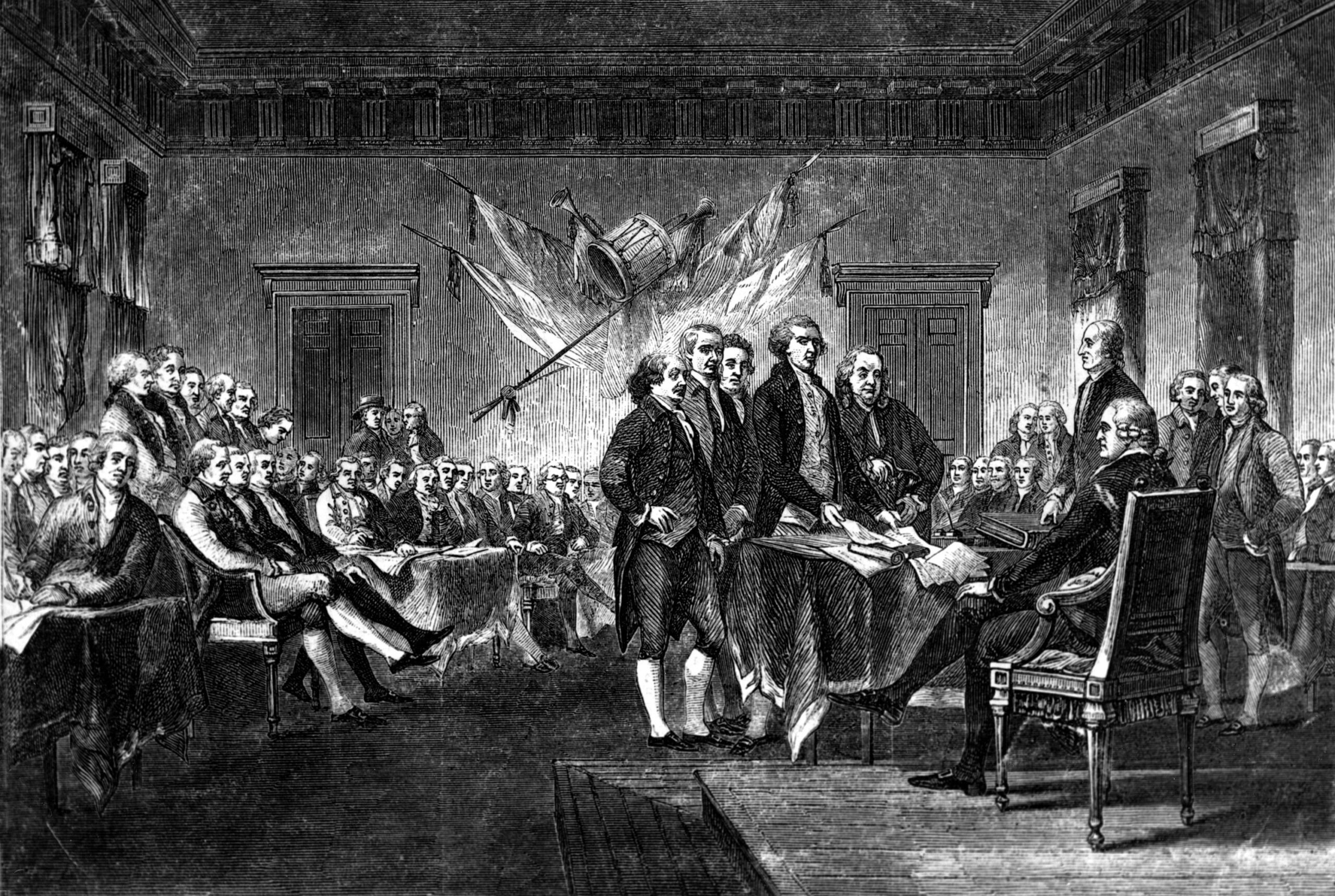
    This undated engraving shows the scene on July 4, 1776, when the Declaration of Independence, drafted by Thomas Jefferson, Benjamin Franklin, John Adams, Philip Livingston, and Roger Sherman, was approved by the Continental Congress in Philadelphia.

    Governing powers were divided, totalitarian authority was restrained, and freedom was placed in the hands of the people. John Adams captured this intent with striking clarity when he wrote: “Our Constitution was made only for a moral and religious people. It is wholly inadequate to the government of any other.”

    The founders understood that liberty could not survive without moral virtue — and that virtue could not be legislated.

    These principles still work today — but only when we the people take an active role in self-government. Our freedom is not self-sustaining. It requires discipline, restraint, and moral courage from each generation. When citizens abdicate responsibility, power inevitably consolidates. Self-rule depends upon self-control.

    The founders also stumbled grievously over the question of slavery. Many knew it was morally wrong, yet they compromised, deferred, and left its resolution to future generations. That failure should never be minimized. But neither should it be used to dismiss the ideals of freedom themselves. The principles were sound. The people were flawed.

    History reminds us that liberty must be defended, expanded, and, at times, redeemed by those willing to pay the price.

    Many of the original signers were Christians, and they understood a core principle of God’s Kingdom: It is transcendent. When Jesus was questioned by political authority, he stated plainly, “My kingdom is not of this world” (John 18:36). Jesus did not come to establish a nation-state or seize political power. He formed a people whose true citizenship transcends borders, flags, and governments.

    This truth must direct how, as Christians, we live as Americans. As citizens of a nation-state, we have real obligations. Citizenship is not passive. It requires obedience to just laws, respect for civil authority, and a commitment to the common good.

    It also demands vigilance. We must be willing to challenge laws and policies that violate the God-given freedoms of others — especially religious liberty. Obedience without conscience is not virtue; it is mere compliance.

    America was shaped by Judeo-Christian principles, but it was never intended to be a theocracy. America’s unity is powerful precisely because we do not have a state religion. Faith compelled by law is no faith at all. Genuine belief cannot be coerced; it must be chosen. The Gospel advances by witness, persuasion, and sacrificial love, not by legislation or force.

    I say this as a Christian and a follower of Jesus Christ: The church does not need the power of the state to fulfill its mission. History shows that when the church weds itself too closely to political power, it loses its prophetic voice and relinquishes its spiritual authority.

    America is not the Kingdom of God, and it was never meant to be.

    But neither is it a historical accident nor a moral improvisation. It is something far more fragile: A people united in the conviction that liberty flows from God, not the state, that government exists to safeguard rights it did not create, and that faith must remain free.

    If we confuse America with the Kingdom of God, we will ultimately diminish both — robbing the nation of its moral responsibility and the Gospel of its eternal power.

    The Rev. Dr. Michel J. Faulkner, a former NFL player, community leader, pastor, and registered Republican, is chair of the board of directors of the Philadelphia Council of Clergy.

  • How RFK Jr. upended the public health system

    How RFK Jr. upended the public health system

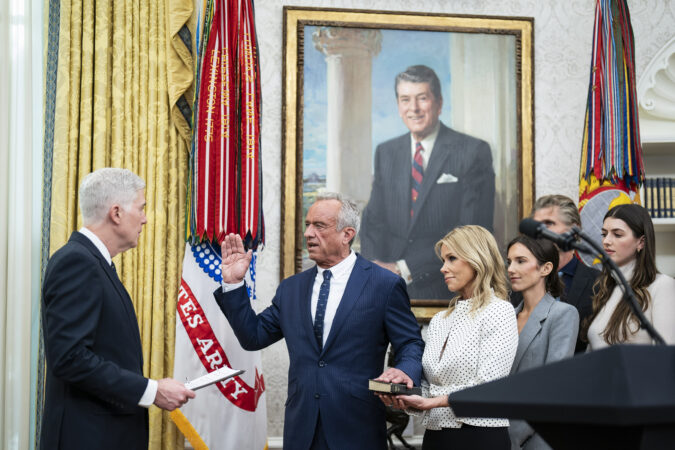
    On his way to being confirmed as the nation’s top health official, Robert F. Kennedy Jr. promised lawmakers he would do nothing that “makes it difficult or discourages people from taking vaccines.”

    Almost 100 days into the job, amid rising measles outbreaks and congressional scrutiny of his messaging on vaccines, Kennedy made clear behind the scenes that he wanted to reshape the nation’s immunization system.

    Kennedy, the founder of a prominent anti-vaccine group, presented several top federal health officials with a new vision.

    “Bobby has asked for the following changes,” Kennedy’s deputy chief of staff for policy at the time, Hannah Anderson, wrote to the officials in a May 19 email later reviewed by the Washington Post.

    Among his requests was to replace the entire membership of an influential independent committee of experts that makes recommendations for how and when to vaccinate Americans. Kennedy also asked the panel to reconsider a long-standing recommendation that all newborns get a hepatitis B vaccine and to revisit the use of multidose flu shot vials, which contain a mercury-based preservative.

    Anti-vaccine activists have criticized those vaccines for years, claiming they unnecessarily endanger children. Career federal scientists who learned of Kennedy’s asks said they represented a sea change for shots that have been extensively studied and deemed safe.

    “At that point we were just bracing for upheaval,” said Demetre Daskalakis, who was then the CDC’s top respiratory diseases and immunization official.

    Kennedy would get what he wanted. The May 19 email reveals his previously undisclosed influence on some of these changes in a highly unusual way, according to legal experts and former and current health officials, showing how Kennedy has wielded government power to overhaul a public health system he has blasted as corrupt and ineffective.

    Andrew Nixon, a spokesperson for the Department of Health and Human Services, said of the email: “All this was was a suggestion.”

    “This was a newly reconstituted committee, and the secretary was providing a North Star to make sure suggestions were communicated to the members for consideration,” Nixon said.

    Over the course of the year, Kennedy’s actions have alarmed public health experts, medical associations, and current and former health officials, who say he is eroding trust in science and dismantling confidence in long-standing public health measures.

    “I do feel shocked by how quickly he has been able to implement these things that he has clearly been pretty passionate about for many years,” said Kerry Kennedy Meltzer, Kennedy’s niece and a physician who this year released email exchanges with her uncle in an attempt to foil his Senate confirmation to lead HHS.

    Kennedy has challenged years of public health messaging on vaccines, including instructing the CDC to contradict the long-settled scientific conclusion that vaccines do not cause autism. His once-fringe views have moved to the center of the nation’s health strategy amid a growing distrust in the medical establishment after the coronavirus pandemic.

    “It is now acceptable to talk about all these issues,” said Leslie Manookian, a leader in the “medical freedom” movement, which opposes vaccine mandates. “The person that we have most to thank for that is Bobby Kennedy, together with President Trump.”

    Kennedy has maintained the backing of the White House and a warm relationship with President Donald Trump, whom he speaks to often, as the two aligned on their Make America Healthy Again initiative to encourage better nutrition and address chronic disease and childhood illness, according to two people familiar with the matter.

    Besides his heavy focus on immunizations, Kennedy has also taken on the food industry. Next year will test, ahead of the midterms, whether he can deliver sweeping change on this more broadly popular agenda.

    This account of Kennedy’s ascent and leadership since becoming HHS secretary is based on interviews with almost 100 current and former federal health officials, Kennedy allies, public health experts, and others. Many spoke on the condition of anonymity to detail private conversations or internal deliberations, or out of fear of retaliation.

    In response to an interview request, Kennedy said in a text message: Wapo has been more consistently unfair, biased, and inaccurate, and it’s reporting about me than any other major outlet. Im not inclined to validate that bias with an interview.”

    He referred the request to Stefanie Spear, a top aide, who said Kennedy wanted to share a Substack article with a Post reporter that described the “invisibility of vaccine injury,” adding Kennedy could perhaps do an interview after the first of the year.

    The HHS media relations office did not answer detailed questions for this article but in a statement commented on the email from Anderson and identified what Kennedy has done so far.

    “Under Secretary Kennedy’s leadership, HHS is exercising its full authority to deliver results for the American people,” Nixon said.

    “In 2025, the Department confronted long-standing public health challenges with transparency, courage, and gold-standard science — eliminating petroleum-based food dyes from the nation’s food supply, removing the black box warning for many menopause hormone therapies, lowering drug prices, advancing [Organ Procurement and Transplantation Network] reform, streamlining prior authorization, investing in rural health, accelerating biosimilars, doubling funding for childhood cancer research, launching an agency-wide AI strategy, and increasing transparency in drug advertising,” Nixon added. “HHS will carry this momentum into 2026 to strengthen accountability, put patients first, and protect public health.”

    RFK Jr.’s rise to power

    In August 2024, Kennedy strode onto a stage in Arizona to suspend his long-shot independent presidential bid. Flanked by American flags, he explained why the scion of a famous Democratic family was endorsing a Republican, Trump.

    “I asked myself what choices must I make to maximize my chances to save America’s children and restore national health,” Kennedy said.

    Kennedy quickly became viewed as one of the campaign’s top surrogates, bringing along some voters who might not have backed Trump. Before winning the presidency, Trump promised to let Kennedy “go wild on health.”

    Although some Trump aides had weighed making Kennedy, a lawyer, a White House health czar, Kennedy told Trump he wanted to be considered as HHS secretary, according to three people familiar with the matter. Donald Trump Jr. and Charlie Kirk, the conservative activist who was fatally shot this year, advised Kennedy that he needed to be in charge of an actual bureaucracy to make lasting change and avoid being sidelined, one person said. Trump Jr. and Turning Point USA, Kirk’s organization, did not respond to requests for comment.

    Just over a week after Election Day, Trump tapped Kennedy to helm the nation’s sprawling health department, an almost $2 trillion portfolio responsible for administering health insurance, approving drugs and medical devices, and responding to infectious-disease outbreaks.

    The luxury Florida beach house of Mehmet Oz — a physician and former daytime television star who is now the nation’s Medicare and Medicaid chief — quickly became ground zero for pushing MAHA’s agenda and securing Kennedy’s position in Washington, according to multiple attendees. Those weeks forged an alliance among some who challenged the medical establishment, including Del Bigtree, head of the anti-vaccine group Informed Consent Action Network (ICAN), and Spear, a longtime ally to Kennedy in his environmental and anti-vaccine advocacy, and newer people in Kennedy’s orbit, such as Calley Means, a health entrepreneur.

    One night, several of those at the beach house bonded over listening to the Grateful Dead, according to Michael Caputo, who was Trump’s HHS spokesperson in 2020. They viewed the book Good Energy — a bestseller, written by now-surgeon general nominee Casey Means along with her brother Calley, that promotes healthy eating and exercise to optimize metabolic health — as MAHA’s bible, he said.

    “Food expanded the movement overnight,” Bigtree, who was Kennedy’s communications director during his presidential campaign, said in an interview.It was an easier topic to sell to moms across America.”

    On Capitol Hill, Kennedy’s messaging pushing for healthier, less-processed foods proved far more popular than his views on immunization.

    Kennedy’s confirmation largely hinged on Sen. Bill Cassidy (R., La.), a physician and chair of the Senate health committee, who begged Kennedy to disavow his false claims linking vaccines and autism and raised concerns about Kennedy’s involvement in vaccine safety litigation.

    “[Does a] 71-year-old man who has spent decades criticizing vaccines and who’s financially vested in finding fault with vaccines, can he change his attitudes and approach now that he’ll have the most important position influencing vaccine policy in the United States?” Cassidy asked during Kennedy’s confirmation hearing.

    As Cassidy vacillated, Vice President JD Vance stepped in to help negotiate his eventual support, according to two people familiar with the matter.

    In a speech on the Senate floor, Cassidy detailed the commitments he received from Kennedy in exchange for his vote, including to protect the nation’s vaccine infrastructure. All but one Republican voted yes: Sen. Mitch McConnell of Kentucky, a childhood polio survivor who said he would “not condone the re-litigation of proven cures.” A week later, McConnell announced he would not seek reelection.

    Cassidy’s doubts proved prescient. Within months, Kennedy found ways to bypass some of his pledges.

    A fierce critic becomes the boss

    Kennedy has called for the ouster of what he describes as “corrupt, industry-captured” federal health officials, arguing the health department had failed to keep Americans healthy.

    “I’m not scared to disrupt things,” Kennedy said at a recent event at George Washington University.

    Since February, health agencies have been inundated by continuous waves of departures involving more than 30 high-ranking senior career leaders — representing decades of experience on managing infectious-disease outbreaks, administering billions in research dollars, and overseeing the nation’s drug supply, according to a Post review.

    Thousands more staffers were laid off in what some called the “April Fools’ Day massacre,” a sweeping purge and proposed reorganization of the health agencies. Some including lead poisoning specialists and lab scientists were rehired, but many administrative support staff, communications staffers, and program officers are among those who remain laid off.

    As secretary, Kennedy brought in fierce critics of the public health COVID-19 response and federal health agencies more broadly. Bigtree told the Post that candidates for top health roles were questioned to see whether they agreed with some of Kennedy’s longtime vaccine safety priorities.

    Under Kennedy, prominent figures in the anti-vaccine movement have been working within the department on vaccine safety issues, including Lyn Redwood, a former leader of the anti-vaccine group Kennedy founded, Children’s Health Defense, and David Geier and Mark Blaxill, two longtime proponents of false claims that vaccines can cause autism. The three did not return requests for comment.

    In a statement, White House spokesperson Kush Desai said Kennedy and his team at HHS are restoring “Gold Standard Science and accountability to our public health bodies” after the medical establishment pushed “unscientific lockdowns and mask mandates” during the coronavirus pandemic.

    Kennedy has accused public health agencies of being dishonest during the pandemic. He repeated that criticism, arguing the government overreached on COVID vaccines, when a reporter asked how to avoid the violence the CDC witnessed in August, when a gunman incensed by coronavirus vaccines attacked the agency’s Atlanta campus.

    Public health and medical experts say the turnover in staff and leadership has hollowed out the federal government’s scientific capacity to anticipate and respond to health threats.

    “For people who are still left at the [CDC], there is chaos and confusion, and morale is at an all-time low,” Aryn Melton Backus said at a November rally in support of public health. She was a health communication specialist placed on administrative leave as part of pending layoffs from the CDC’s Office on Smoking and Health, which has funded state tobacco control programs.

    The reduction of CDC staff and programs is being felt across the country. In Georgia, where smoking is the leading cause of preventable death, state officials cut a tobacco control and prevention program. An online concussion training that many school youth sports coaches must complete will no longer be updated with the latest research. Local officials who want to fluoridate their drinking water to improve oral health no longer have access to technical experts who can help calibrate the proper levels.

    As Kennedy upended the public health workforce, he leaned into his more broadly popular messaging around overhauling the food industry. He has posted on social media more than twice as frequently about food than vaccines while in office, according to the Post’s analysis of his personal accounts and official HHS accounts. Last summer, almost 1 in 3 social media posts focused on food.

    He often highlights posts about companies pledging to remove artificial dyes from food products, which has been one of his signature efforts.

    Some in the food sector have been trying to accommodate Kennedy and downplay differences with his initiatives, in hopes of avoiding MAHA criticism, according to two people involved in the industry. That is a stark shift for an industry accustomed to viewing the GOP as an ally.

    “Wanting to eat simpler foods, more real foods, look at the ingredients, all of that is not a Democrat hippie thing anymore,” said Vani Hari, an author, activist, and Kennedy ally who also writes under the name of the Food Babe. “It’s a Republican thing, too, now.”

    Kennedy returns to his core issue: Vaccines

    As Kennedy sought senators’ support to become health secretary, he told them he supported the childhood immunization schedule, including the shot for measles, which he had previously described falsely as increasing the odds of spreading the virus.

    In the past, Kennedy had decried the “exploding vaccine schedule,” claiming that the series of vaccines recommended to children is linked to the rise of autism, chronic disease, and food allergies. Medical experts have argued that these purported links have no basis in evidence and that the increase in vaccinations has successfully combated more disease. He wrote a book in 2014 calling for removal of the mercury-based preservative thimerosal from vaccines. He questioned why newborns should get the hepatitis B vaccine, which health authorities say is safe, claiming on an online show that it “poisoned” kids.

    Kennedy faced his first big test on vaccines soon into his tenure. A measles surge had started in an under-vaccinated region of Texas, driving the country’s largest annual case tally in at least 33 years and threatening to end the nation’s measles elimination status.

    At first, Kennedy downplayed the severity of the outbreak and later, under pressure, acknowledged vaccines prevent the virus’ spread. But he muddled that message by also falsely claiming the vaccines were not safety-tested and contained aborted fetal debris — a stark contrast from the first Trump administration’s unequivocal support for vaccination during a 2019 outbreak.

    He repeatedly offered to send Texas doses of vitamin A, an unproven measles treatment in the U.S. embraced by vaccine skeptics as an alternative to immunization, even though the vitamin is primarily used for malnourished children abroad and public health workers and doctors said their focus was vaccination, according to a top state health official, Jennifer Shuford.

    In June, he fired every member of the Advisory Committee on Immunization Practices, which makes vaccine recommendations, setting in motion plans to remake the vaccine system. Kennedy argued the panel had become “little more than a rubber stamp for any vaccine” with members too closely tied to the pharmaceutical industry. He selected new members, some of whom had histories of criticizing vaccine guidance. The former CDC director, Susan Monarez, said she was fired in August for refusing to be a “rubber-stamp” to the new committee.

    The panel has voted on some of Kennedy’s requests detailed in the May email from Anderson, who is no longer with HHS and did not respond to requests for comment.

    The vaccine panel voted in June to remove thimerosal — which the CDC had concluded is safe but Kennedy and his allies have decried as unnecessarily exposing children to mercury — from the rare multidose flu shot vials that contain it. In that same meeting, they vowed to form a work group to look at vaccines that have not been subject to review in more than seven years, in line with Kennedy’s request.

    The panel over several months grappled with how to revise the guidance for all newborns to receive a hepatitis B vaccine. It ultimately voted in December to stop recommending the shot when the mother tests negative and instead to encourage those parents to consult doctors about whether and when to begin vaccination.

    José Romero, who began serving on ACIP in 2014 and chaired the panel from 2018 to mid-2021, described Kennedy’s asks to the committee as “extremely” unusual.

    “The secretary is within his legal rights to make these suggestions or requests, but it’s unheard of as far as I know,” said Romero, who was a top health official in Arkansas during the pandemic and then at the CDC. He now consults for the pharmaceutical industry on vaccines and is a member of the American Academy of Pediatrics infectious diseases committee.

    An HHS official, who spoke on the condition of anonymity because of legal concerns, said that the career CDC official who oversees ACIP sets its agenda and that members of the committee are ultimately responsible for writing the questions they vote on.

    In reference to the May email, the official said HHS officials worked with the CDC’s administrative officer for the vaccine panel to communicate the suggestions to the members, but those suggestions were not directives.

    Joseph Hibbeln, a neuroscientist who has become a dissenting voice on the vaccine panel, said committee members have not been given clear answers when they have asked who is determining which vaccines they are scrutinizing.

    Robert Malone, a prominent critic of coronavirus vaccines who is now the panel’s vice chair, said that he did not know how the agenda items were developed but that there would be nothing “nefarious” about Kennedy or other top Trump administration officials “contributing” to agenda items because the panel’s job is to provide advice.

    During the panel’s December meeting, Kirk Milhoan, chairman of the vaccine committee, was overheard telling another member that he felt “a little bit like puppets on a string as opposed to really being an independent advisory panel,” according to a transcript of the exchange captured by videoconferencing software and reviewed by the Post. He later told the Post he was referring to pressure from outside groups critical of changes to vaccine recommendations, not the administration.

    ‘Raise the risk, bury the benefits’

    Kennedy and his aides have repeatedly said the Trump administration is not limiting access to vaccines for those who want them, but is instead working to help people make informed decisions. Critics say they are exaggerating the downsides and obfuscating the value of immunization.

    “The secretary and his committee have stopped doing the hard job of balancing the risks and benefits of vaccines,” said Dan Jernigan, who oversaw the CDC’s vaccine safety office. He described their playbook as “raise the risk, bury the benefits, sow confusion, drive down use.”

    In the late summer, Jernigan and two other high-ranking officials resigned in protest over what they called an unscientific and politicized approach to vaccines.

    In one instance that alarmed career staff, Kennedy wanted Aaron Siri, a top lawyer for the anti-vaccine movement, and perhaps Paul Offit, a scientist at Children’s Hospital of Philadelphia who is a prominent proponent of vaccines and critic of Kennedy, to speak publicly during the June meeting of the new vaccine advisers, according to three former health officials familiar with a meeting where a CDC senior adviser relayed the secretary’s request. Siri has been involved in legal challenges to school vaccine mandates and petitioned the government to reconsider its approval of Sanofi’s stand-alone polio vaccine.

    But the plan to invite Siri fell apart after objections from career CDC staff and legal advisers who raised concerns about providing a platform to a man who has repeatedly sued the agency seeking data about vaccine safety on behalf of ICAN, the anti-vaccine group. Kennedy was informed of those concerns, one of the officials said.

    After almost six months and an exodus of CDC leaders, Siri was invited to the agency’s headquarters for the December meeting of the vaccine advisers and spent more than 90 minutes arguing that the history of childhood immunization in the U.S. is marred by insufficient research and improperly performed vaccine clinical trials. HHS did not answer questions from the Post about Siri’s appearance.

    Siri said he has a “significant knowledge base” about vaccines based on his legal work, including regularly suing health authorities and deposing and cross-examining leading vaccinologists. “If you were standing in my office with me right now, you would be looking at a bookshelf that is filled with medical textbooks on vaccinology, immunology, infectious disease, and pediatrics,” he said.

    Cassidy, the Republican senator, reacted with shock to Siri’s appearance at ACIP.

    It was his latest frustration with the health department’s handling of vaccine issues under Kennedy, including the revisions to the CDC website language on autism. The page includes an asterisk after the header “Vaccines do not cause Autism,” explaining that the header was not removed as part of an agreement with Cassidy. But the revised webpage also claims that the assertion that vaccines do not cause autism is not evidence-based and that health authorities ignored studies supporting a link.

    Cassidy’s office declined repeated requests for a formal interview. Approached at the Capitol and asked about Kennedy’s vaccine commitments, Cassidy said, “You can compare those actions to those commitments I enumerated in my floor speech, and I’ll let you draw your own conclusions.”

    But what were his conclusions? “I’ll leave it at that,” he said.

    The looming fight

    Kennedy has spent much of this year laying the groundwork for bigger changes to the nation’s vaccine and food policy.

    Findings from investigations Kennedy commissioned into the causes of autism, the safety of vaccines, and whether fluoridated water harms children are expected to be released.

    The Trump administration is weighing plans to shift the federal government away from directly recommending most vaccines for children and to more closely align with Denmark’s immunization model of suggesting fewer shots, according to two people familiar with the matter.

    Kennedy plans to release revised federal dietary guidelines for healthy eating habits early next year, which will be partly tied to when Americans are making New Year’s resolutions, according to a federal health official. Kennedy has said the guidelines will focus on eating whole foods.

    The health department is also hoping to finalize a plan as soon as next year to require labels on the front of food and drink packages to alert Americans about unhealthy foods. Under Kennedy, health officials are working internally to determine the best approach to the labels, which were first proposed in the Biden administration, according to two people familiar with the matter.

    Meanwhile, Kennedy has crisscrossed the country to support governors who have restricted using food stamps to buy soda and candy and signed bills to remove artificial dyes from school meals. Some MAHA proponents want to see another wave of policies next year that would promote nutrition education and also challenge long-standing public health practices such as vaccine mandates. The nonprofit advocacy group MAHA Action has met with almost 20 top state officials as it pushes for states to embrace the movement.

    “Bobby Kennedy is doing the work he was put on the planet to do,” said Tony Lyons, president of MAHA Action.

    Kennedy’s allies say he’s just getting started. They hope he will be secretary for eight years.

  • Susie Wiles, White House chief of staff, criticizes Bondi and opines on Trump in Vanity Fair

    Susie Wiles, White House chief of staff, criticizes Bondi and opines on Trump in Vanity Fair

    WASHINGTON — Susie Wiles, President Donald Trump’s understated but influential chief of staff, criticized Attorney General Pam Bondi’s handling of the Jeffrey Epstein case and offered an unvarnished take on her boss and those in his orbit in interviews published Tuesday in Vanity Fair that sent the West Wing into damage control.

    The startlingly candid remarks from Wiles, the first woman ever to hold her current post, included describing the president as someone with “an alcoholic’s personality” and Vice President JD Vance as a calculating “conspiracy theorist.” The observations from Wiles, who rarely speaks publicly given the behind-the-scenes nature of her job running the White House, prompted questions about whether the chief of staff might be on her way out.

    Wiles pushed back after the piece’s publication, describing it as a “hit piece” that lacked context, and White House press secretary Karoline Leavitt said the “entire administration is grateful for her steady leadership and united fully behind her.”

    As for Trump, he told the New York Post that he had not read the piece and, when asked if he retained confidence in Wiles, said: “Oh, she’s fantastic.”

    Trump also agreed that he does have the personality of an alcoholic, describing himself as having “a very possessive personality.”

    A senior White House official, who spoke on condition of anonymity to describe internal thinking, dismissed the notion that Wiles might leave because of the profile, saying if top staffers were rattled by negative news coverage, “none of us would work here.”

    Wiles’ candor was so unusual that Rahm Emanuel, who served as chief of staff to former President Barack Obama, said that when he first saw her comments, he thought he was reading a spoof. He said he could not recall a chief of staff giving such a candid interview — at least “not while you hold the title.”

    Emanuel said the role often involves public remarks that promote the president’s agenda, but not sharing personal views about “everything, everybody” in the White House.

    His advice to Wiles: “Next time there’s a meal, bring a food taster.”

    Candor from the ‘ice maiden’ who stays behind the scenes

    The interviews with Vanity Fair were themselves uncharacteristic for Wiles, who cut her reputation as someone who brought order to the president’s chaotic style and shunned the spotlight so much that at Trump’s 2024 election night victory party, she repeatedly shook her head and avoided the microphone as Trump tried to coax her to speak to the crowd.

    “Susie likes to stay sort of in the back,” said Trump, who has repeatedly referred to her as the “ice maiden.”

    Most members of his cabinet, along with former and current White House officials, posted statements praising Wiles and criticizing the media as dishonest.

    But neither Wiles nor the members of the administration who came to her defense on Tuesday disputed any details in the two-part profile, including areas where she conceded mistakes and seemed to contradict the administration’s official reasoning for its bombing of alleged drug boats in the waters off the coast of Venezuela.

    Though the Trump administration has said the campaign is about stopping drugs headed to the U.S., Wiles appeared to confirm that the campaign is part of a push to oust Venezuela’s authoritarian leader, Nicolas Maduro, saying Trump “wants to keep on blowing boats up until Maduro cries uncle.”

    Wiles pushed back but without any denials

    After the comments were published, Wiles disparaged the Vanity Fair report as a “disingenuously framed hit piece on me and the finest President, White House staff, and Cabinet in history.”

    “Significant context was disregarded and much of what I, and others, said about the team and the President was left out of the story,” she wrote in a social media post. “I assume, after reading it, that this was done to paint an overwhelmingly chaotic and negative narrative about the President and our team.”

    Trump, in an interview with the New York Post, said he was not offended by Wiles’ remarks, including her description of him as someone with “an alcoholic’s personality,” which she said she recognizes from her father, the famous sports broadcaster Pat Summerall.

    The president, who is a teetotaler and had a brother who struggled with alcohol, said: “I’ve said that many times about myself. I’m fortunate I’m not a drinker. If I did, I could very well, because I’ve said that — what’s the word? Not possessive — possessive and addictive-type personality. Oh, I’ve said it many times, many times before.”

    Vance, speaking in Pennsylvania on Tuesday about the president’s economic agenda, said that he had not read the Vanity Fair piece. But he defended Wiles and joked that “I only believe in the conspiracy theories that are true.”

    “Susie Wiles, we have our disagreements. We agree on much more than we disagree, but I’ve never seen her be disloyal to the president of the United States, and that makes her the best White House chief of staff that I think the president could ask for,” Vance said.

    He said his takeaway was that the administration “should be giving fewer interviews to mainstream media outlets.”

    The chief of staff criticizes the attorney general

    Wiles, over the series of interviews, described the president behind the scenes very much as he presents himself in public: an intense figure who thinks in broad strokes yet is often not concerned with the details of process and policy. She added, though, that he has not been as angry or temperamental as is often suggested, even as she affirmed his ruthlessness and determination to achieve retribution against those he considers his political enemies.

    Wiles described much of her job as channeling Trump’s energy, whims, and desired policy outcomes — including managing his desire for vengeance against his political opponents, anyone he blames for his 2020 electoral defeat, and those who pursued criminal cases against him after his first term.

    On Epstein, Wiles told the magazine that she had underestimated the scandal involving the disgraced financier, but she sharply criticized how Bondi managed the case and the public’s expectations.

    Wiles faulted Bondi’s handling of the matter, going back to earlier in the year when she distributed binders to a group of social media influencers that included no new information about Epstein. That led to even more calls from Trump’s base for the files to be released.

    “I think she completely whiffed on appreciating that that was the very targeted group that cared about this,” Wiles said of Bondi. “First she gave them binders full of nothingness. And then she said that the witness list, or the client list, was on her desk. There is no client list, and it sure as hell wasn’t on her desk.”

    Bondi did not address the criticism when she released a statement supporting Wiles.

    Wiles also said at one point that Trump’s tariffs had been more painful than expected. She conceded some mistakes in Trump’s mass deportation program and suggested that the president’s retribution campaign against his perceived political enemies has gone beyond what she initially wanted.