Tag: JD Vance

  • The America-turns-250 column Donald Trump doesn’t want me to write

    The America-turns-250 column Donald Trump doesn’t want me to write

    It was right after birthright citizen Folarin Balogun tapped in another game-winning goal for U.S. men’s soccer in the World Cup Wednesday night that I had a moment of clarity about where things are in America as our nation turns 250.

    I’d gone to Union Yards, the outdoorsy beer hall adjacent to Chester’s soccer palace, Subaru Park, not only to catch the game but also a vibe that I’d wanted to turn into this column.

    The euphoria after Balogun’s goal — a red-bearded man in a colonial tri-corner hat and the two older veterans who’ve saluted through all of the prematch “Star-Spangled Banner” jumping to their feet, as a little girl in cornrows danced on a table — was the bucket-list moment I’d come there for.

    I saw a beer-recipe melting pot of Americans cheering the immigrant-heavy rainbow coalition of U.S. soccer, showing yet again — just as we did in 1976, when I was 17 — that the people instinctively know how to celebrate what’s actually great about our country no matter how much our leaders try to muck it up.

    I’d joked with my editors earlier in the week that I might lose my columnist license (not an actual thing, although maybe it should be) if my piece that runs on the weekend of the United States Semiquincentennial wasn’t a Big Think essay on what the American Experiment all means — to the extent that anyone can actually think through the fireworks, traffic jams, and 100-degree temperatures.

    That’s when it hit me. That was exactly the column Donald Trump was counting on from me and every other opinion writer in America ahead of Independence Day. The 47th president needed a week when the pundits put on their wide-angle lenses and put away the magnifying glasses, while his “forgotten Americans” headed off to the beach or the fireworks show, or gorged themselves on six hours of World Cup soccer every day, and stopped watching the news.

    An international jewel thief needs to create a distraction. Because if you’d been paying attention during the nation’s summer vacation week, you’d have seen that Trump is robbing us blind.

    The July Fourth holiday gave the Trump regime an opportunity for the ultimate Friday news dump, the now time-honored tradition of releasing the worst stuff when people will be unplugged for a few days. In this case, the dump was a federally mandated financial disclosure form that revealed the stunning extent to which Trump has cashed in on his power and influence as president since taking office in January 2025.

    The top-line numbers defy belief. Trump, who reported earning at least $622 million in 2024, his last year as an out-of-power businessman, revealed that he made at least $2.2 billion in 2025, and it’s hard not to see a lot of this as coming from turning the institution of the American presidency into a cash cow.

    Consider the $636 million Trump made by releasing a so-called meme coin — an asset whose value is tied to nothing beyond its own hype — that depicted his fist-pumping reaction to the 2024 assassination attempt in Butler, Pa., and which was released literally hours before he took the oath of office again. Not only is this a staggering amount, but Trump pocketed this cash by fleecing thousands of middle-class folks who voted for him.

    Publicly available information from last year showed that some 764,000 individuals who bought the Trump meme coin after its launch lost money. How many investors profited from the $TRUMP coin? Just 58 — and no one got nearly as rich as the man pictured on the coin.

    Yet, Trump’s other sources of wealth are almost as troubling — especially the real estate and crypto deals with foreign nations that have an enormous stake in the president’s policy decisions. That’s especially true when the investment arm of the United Arab Emirates bought nearly half of the Trump family’s main crypto venture, World Liberty Financial, contributing to his at least $1.4 billion in crypto-related earnings. The U.S. and the UAE are (or were) key allies in the war-torn Persian Gulf.

    But the important thing to understand about Trump’s money: It’s not a case in which the issue is that these deals are a lot shadier than the financial profiteering by, say, Jimmy Carter or Warren G. Harding or whomever. None of Trump’s 44 White House predecessors seriously profited from the presidency while they were still in office.

    Carter put his peanut farm in a blind trust. On the flip side, Spiro Agnew pleaded no contest to a felony charge for accepting just a few thousand dollars in the White House — not billions. There is absolutely no precedent for Trump’s naked greed and for how he trades on his office for personal profit.

    Yet, the president thinks that by declaring his crimes on a public document, voters will think it isn’t a crime — even if he releases that form over July Fourth to hedge his bets.

    Indeed, the scale and scope of the president’s grift is vast and overwhelming, which is the point. I’m just now getting to a different Trump family scandal, in which the president approved a lucrative tungsten mining deal with Kazakhstan whereby his sons are key investors, propped up with up to $1.6 billion in loans from Trump’s Pentagon.

    Trump took questions about his family’s 2025 cash bonanza as — and you can’t make this up — he prepared to fly for the first time in the $400 million luxury jet that was gifted by Qatar and which, after a brief stint as Air Force One, is slated to go to Trump’s presidential library (a.k.a. Trump) in 2029.
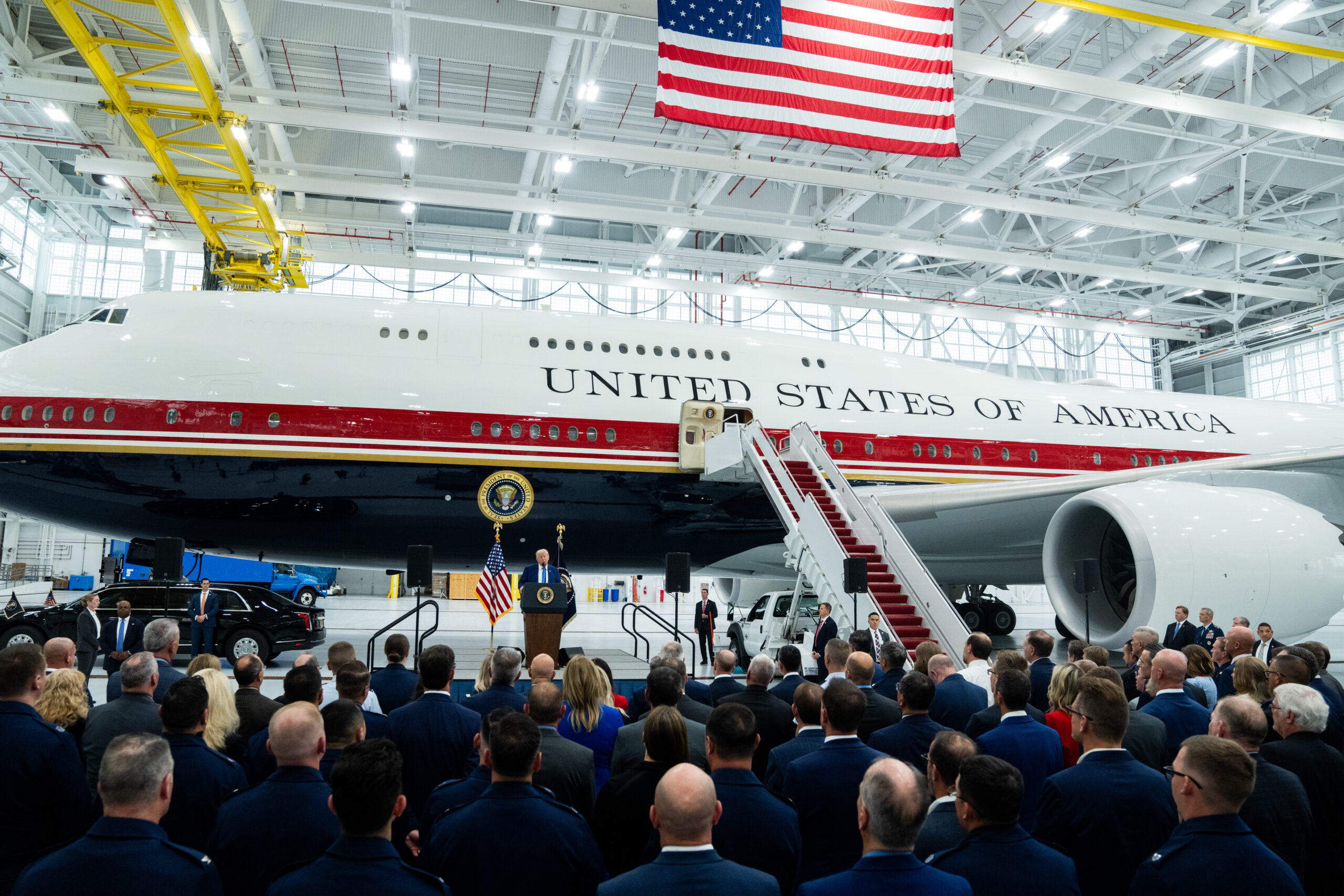
    President Donald Trump delivers remarks next to the new red, white, and blue Boeing 747 jetliner donated by the government of Qatar that will be used as Air Force One, at Joint Base Andrews, Md., in June.

    Still, the national media — and a lot of social media, as well — gave more attention to the Trump disasters that are easier to visualize, including troops guarding his green algae swamp at the Lincoln Memorial Reflecting Pool and empty fields at his Freedom 250’s disastrous Great American State Fair, which sits nearly empty while thousands pack bars for the international joy of the World Cup, or line the rainbow-colored routes of Pride Month parades.

    One of the many ironies here is that Trump is inadvertently doing America a July Fourth favor by highlighting a key part of the flawed wisdom of the nation’s founders. In declaring independence in 1776 and creating a government that aimed for people-powered democracy with checks and balances on unbridled autocracy, the mad scientists of the American Experiment also expressed their fears for our future.

    “The only path to a subversion of the republican system of the Country is, by flattering the prejudices of the people, and exciting their jealousies and apprehensions, to throw affairs into confusion, and bring on civil commotion,” Alexander Hamilton wrote in 1790. “When a man unprincipled in private life, desperate in his fortune, bold in his temper … is seen to mount the hobby horse of popularity, he may ‘ride the storm and direct the whirlwind.’”

    This Fourth of July week, I’ve been thinking a lot about the 1770s, but also the 1970s. For the second-half baby boomers like myself, it’s impossible not to experience the nation’s 250th anniversary without sepia-toned memories of July 4, 1976 — the U.S. Bicentennial.

    Things were both so similar and so different.

    Just as democracy stares into the abyss now, the assassinations, riots, and bombings of the late 1960s and early ’70s felt like the apocalypse to those who lived through it. But the Watergate scandal — yes, the very thing JD Vance and others on the far-right are dismissive of now — and the way courts and newsrooms and members of Congress responded had created a new hopeful yearning in the summer of 1976.
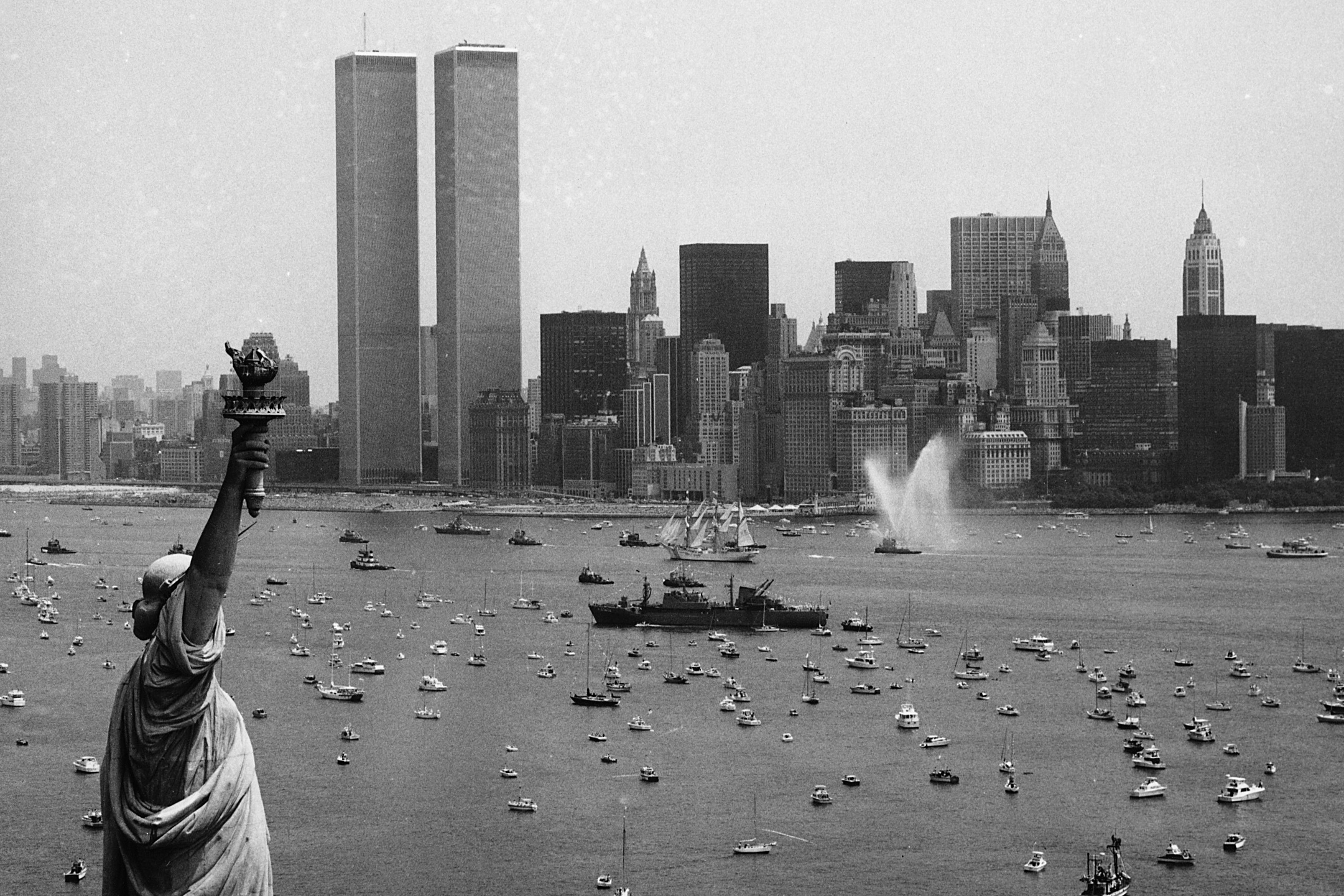
    Ships participate in Operation Sail between the Statue of Liberty and the Twin Towers to celebrate the U.S. Bicentennial in New York on July 4, 1976.

    That feeling is what made the day I enjoyed with my family as a 17-year-old a half-century ago — watching those glorious tall ships glide down the Hudson River from my dad’s high-rise office on 10th Avenue, then cramming into a subway to get to the fireworks over the Statue of Liberty — still bring back chills today. There was an unexpected sense of togetherness — and, naively in hindsight, that a storm had passed.

    It’s different in 2026. The whirlwind that Hamilton warned us about is directly overhead, and the man is still riding, however clumsily, the hobby horse. The institutions that saved us ahead of 1976 are shells of their former selves, as if a neutron bomb had struck.

    And yet, the fundamental essence of what can make America actually great someday remains intact: its people. This summer, millions of us are showing that Americans want things that can bring us together, and also to celebrate what makes us all different and all special, whether on a soccer pitch or a parade route laced with pink.

    The question is, how do we take this positive energy and stop the whirlwind? How do we celebrate a 250-year slow-bending of the arc of the moral universe without losing our focus on the ongoing crime scene at 1600 Pennsylvania Avenue?

    When the president’s Freedom 250 sets off 850,000 fireworks over Washington on Saturday, think of every single blast as about $2,000 that Trump pocketed for himself, and then it might be possible to comprehend the scope of his crime against our citizenry.

    Don’t let the president hijack the Fourth of July to rob the focus from what matters most, the things we need to write and discuss and march against every week: his unprecedented criminality. The bombs are bursting in air, but only when we unleash our people power and seek justice will we see the dawn’s early light of a new nation again.

    Happy birthday, America.
  • Trump administration cuts off tuition assistance for Army officers at 22 schools, but Penn isn’t among them

    Trump administration cuts off tuition assistance for Army officers at 22 schools, but Penn isn’t among them

    Military officers will see their tuition assistance cut off at 22 schools and institutions, but the University of Pennsylvania is not among them.

    The Ivy League institution, which counts President Donald Trump among its alumni, was on an initial list of 34 schools “at risk” of losing Pentagon-funded tuition assistance. But Penn was not part of the 22-university list released by Defense Secretary Pete Hegseth on Friday.

    Penn did not immediately respond to a request for comment Tuesday.

    Hegseth previously said he intended to cut off schools where faculty members have “leftist political leanings” and “openly loathe our military,” but he cited no specific examples of bias or misconduct at the 22 schools that will lose tuition assistance beginning with the 2026-27 academic year.

    “We will no longer invest in institutions that fail to sharpen our leaders’ warfighting capabilities or that undermine the very values they are sworn to defend,” Hegseth wrote in a letter released Friday with the final list.

    It was not immediately clear why Penn and other schools were removed from the initial draft list.

    Among the schools still set to lose access to the tuition-assistance program is Princeton University, where Hegseth obtained a bachelor’s degree in 2003. Carnegie Mellon University in Pittsburgh is also on the list, as is Yale University, where Vice President JD Vance obtained a law degree.

    The move means members of the military will be banned from using Department of Defense tuition assistance to pay for Senior Service College Fellowship programs at those schools.

    The impact will not be large — the Department of Defense said fewer than 100 military students are enrolled in programs at schools that will lose funding. Military personnel currently enrolled may complete their courses of study, Hegseth said, though it is unclear if they will have to change schools to continue receiving financial assistance.

    Hegseth’s announcement did not mention several other financial assistance programs for undergraduates, including the GI Bill, which is administered by the Department of Veterans Affairs.

    Here is the full list of schools losing tuition assistance from the Pentagon:

    Educational institutions

    • Harvard University
    • St. Louis University
    • Massachusetts Institute of Technology
    • Tufts University
    • Georgetown University
    • Carnegie Mellon University
    • Brown University
    • Columbia University
    • Yale University
    • Middlebury College
    • Princeton University
    • George Washington University
    • College of William and Mary

    International institution

    • Queen’s University (Canada)

    Nonprofit institutions

    • Center for Strategic and International Studies
    • New America Foundation
    • Brookings Institution
    • Atlantic Council
    • Center for a New American Security
    • Council on Foreign Relations
    • Henry L. Stimson Center

    Senior Service College

    • Johns Hopkins University School of Advanced International Studies West Space Scholars Program
  • Pope Leo’s pointed message to Catholics the day after the U.S. bombed Iran

    Pope Leo’s pointed message to Catholics the day after the U.S. bombed Iran

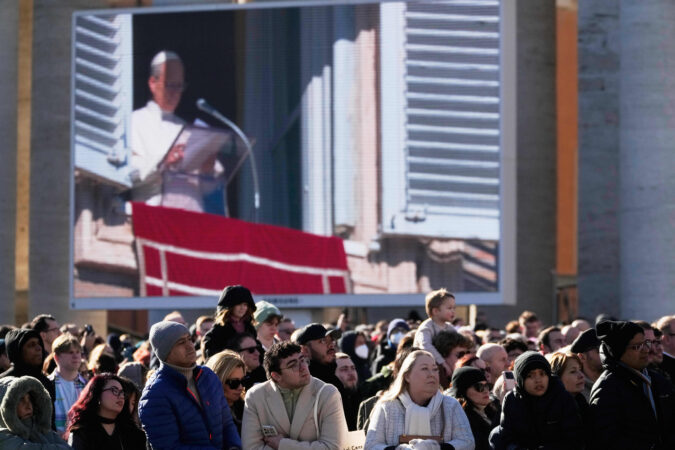
    The day after the United States bombed Iran in a military effort to forcibly change the nation’s regime, the most famous American global leader — outside of President Donald Trump — was speaking out about it.

    “Faced with the possibility of a tragedy of enormous proportions, I am making a heartfelt appeal to the parties involved to assume their moral responsibility to stop the spiral of violence before it becomes an irreparable abyss,” Pope Leo XIV said in his weekly Angelus address Sunday morning.

    The American-born pope wasn’t speaking only to the thousands gathered in St. Peter’s Square, but to the more than 1.4 billion Roman Catholics in the world, including those in the Trump administration who self-identify as Catholics, such as Vice President JD Vance or Secretary of State Marco Rubio.

    “Stability and peace are not built with reciprocal threats or with weapons that sow destruction, pain, and death,” the pontiff said, “but only through reasonable, authentic, and responsible dialogue.”

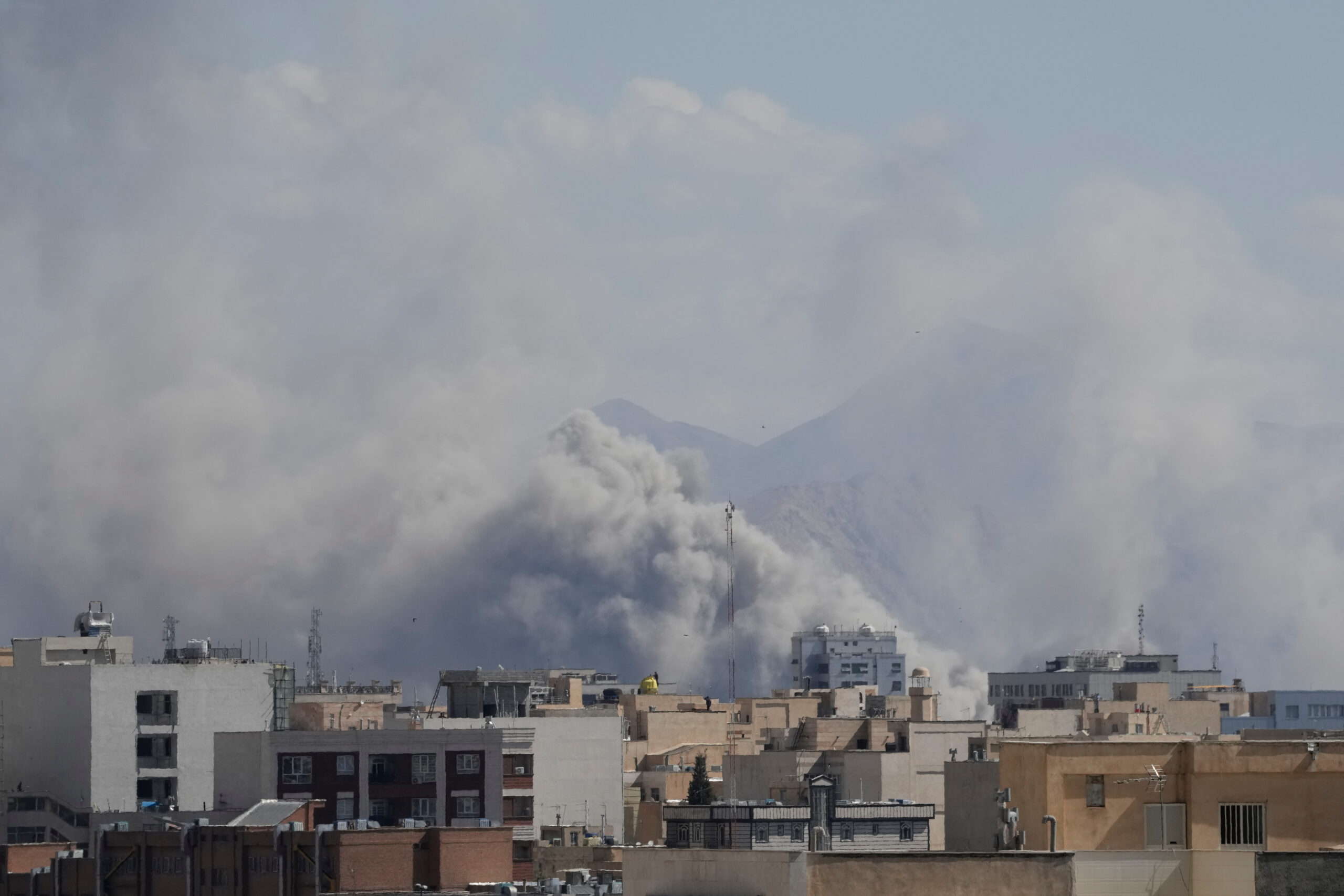
    The joint U.S.-Israeli strikes have already claimed the lives of Iran’s Supreme Leader Ali Khamenei and numerous civilians, including, reportedly, more than 100 girls at an elementary school.

    Smoke rises up after a strike in Tehran, Iran, on Sunday.

    While the pope doesn’t wield the sort of temporal power that presidents and prime ministers do, his words carry moral weight for those within his religious tradition, and cannot be easily dismissed by politicians, nor the 52% of U.S. Catholics who still have a favorable view of Trump, according to a recent poll by the conservative EWTN News and RealClearPolitics.

    It is not the first time Pope Leo has called out the Trump administration’s efforts to force regime change in sovereign nations with leaders who have been accused of human rights abuses.

    “The good of the beloved Venezuelan people must prevail over every other consideration and lead us to overcome violence and to undertake paths of justice and peace, safeguarding the country’s sovereignty, ensuring the rule of law enshrined in the Constitution, respecting the human and civil rights of each person,” the pope said during the Angelus address Jan. 4.

    I often write about how religion impacts the lives of Latinas like me, who are trying to navigate a world that often seems to have eschewed moral clarity for political dissolution. As a Roman Catholic, I pay particular attention to the guidance offered not only by Pope Leo but also by the bishops who are tasked with providing moral counsel to their flock.

    No one who has remained a Catholic as the church has been wracked by an ongoing, self-made crisis of clerical abuse can ignore the fact that some bishops are as opportunistic and power-hungry as our politicians. But under the leadership of Pope Leo, more U.S. bishops than ever have chosen to speak out from a place of genuine moral authority, untainted by the gross partisan and ideological bias that had previously infected the U.S. Conference of Catholic Bishops.

    In January, three U.S. cardinals — whom some consider progressives — called on the administration to adopt a “genuinely moral” foreign policy with respect to Venezuela, Ukraine, and Greenland. Meanwhile, the archbishop for the U.S. military — widely considered a staunch conservative — reminded Catholic military personnel that it is “morally acceptable” for them to disobey an order that violates their conscience.

    At the same time, 18 bishops asked for the government to cut U.S. military spending to invest in eradicating poverty instead, and across the world, bishops have disavowed the appetite for war and domination by military force that the Trump administration has modeled.

    For example, the pope has declined to participate in a Trump-led “Board of Peace” that seems to be about anything other than peace. “A diplomacy that promotes dialogue and seeks consensus among all parties is being replaced by diplomacy based on force by either individuals or groups of allies,” Pope Leo said on Feb. 17.

    “War is back in vogue, and the zeal for war is spreading.”

    Cardinal Pierbattista Pizzaballa, Latin patriarch of Jerusalem, was more direct in his criticism of the board: “What do I think of the Board of Peace? I think it is a colonialist operation: others deciding for the Palestinians,” he told the Italian newspaper Il Sole 24 Ore.

    While the Vatican releases Pope Leo’s Angelus addresses without much fanfare, it is important for Catholics seeking moral guidance on world events like the U.S. war on Iran to listen to the address directly rather than rely on the interpretation of those who might alter the pope’s words for political convenience.

    In the instance of the pope’s Angelus address on Venezuela, for example, the Trump administration’s U.S. ambassador to the Holy See reportedly omitted the pope’s reference to safeguarding that nation’s sovereignty because it could not be aligned with the administration’s actions.

    And Vance last year offered a justification of Trump’s mass deportation policies based on his misunderstanding of a Catholic theological concept. The vice president’s error was corrected and addressed by Pope Francis shortly before his death in April.

    During Lent, we as Catholics are called to examine our habitual excuses, our profane tendencies, and our susceptibility to the spin of those with a stake in worldly power, to instead focus deeply on our spiritual life and its obligations.

    For Catholics, in particular, Pope Leo’s words Sunday cannot be explained away. We must demand that our nation’s leaders stop the spiral of violence and acknowledge that peace cannot be built with weapons.

    Swords into plowshares, mi gente, swords into plowshares. And we shall study war no more.

  • Forget State of the Union sideshow, MAGA’s real chilling message was delivered by Marco Rubio in Munich

    Forget State of the Union sideshow, MAGA’s real chilling message was delivered by Marco Rubio in Munich

    As a matter of journalistic duty, I forced myself to watch the endless State of the Union reality show.

    Punting on all serious issues, President Donald Trump stoked the applause meter by delivering awards to a 100-year-old vet and a brave U.S. pilot, and inviting the entire U.S. men’s Olympic hockey team to celebrate their gold medal win.

    Trump was relentlessly racist (with disgusting slurs against all Somali Americans in Minnesota). His lies were dangerously predictive about the 2026 elections, never tiring of the Big Whopper about winning in 2020 and claiming Democrats must be stopped because they “only win if they cheat.”

    In short, the union is in a dangerous state under an amoral, unprincipled, delusional commander in chief.

    What disturbed me most as I watched Trump rant on is how a president could be so wholly indifferent to the liberal democratic values that underlie the existence of our nation. Although often honored in the breach, they are what have made this country unique. Yet, the sycophants in his administration, along with most GOP legislators, have chosen to abandon those values, or never believed in them from the start.

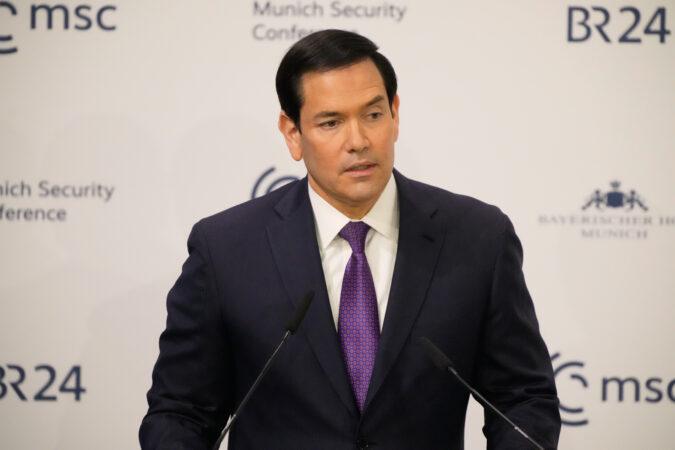
    For that reason, I’d rank Secretary of State Marco Rubio’s speech at the recent Munich Security Conference as far more important than Trump’s sad State of the Union guff.

    That’s because Rubio laid out an alternative set of U.S. values promoted abroad and at home by the political theologians of the Trump regime. Precepts that would make the Founding Fathers revolt anew.

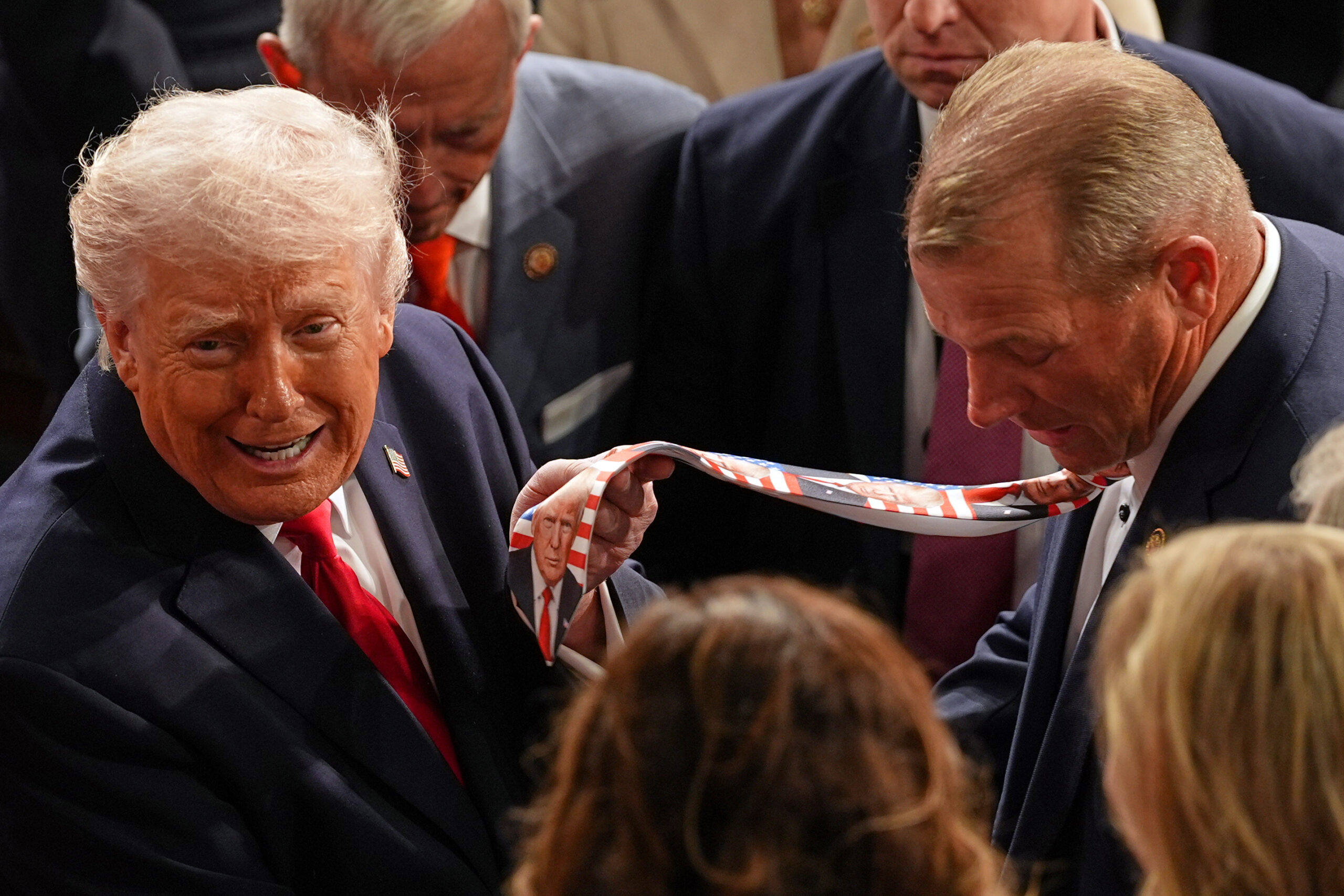
    President Donald Trump holds up U.S. Rep. Troy Nehls’ (R., Texas) tie with his face on it as he departs after delivering the State of the Union address to a joint session of Congress in the House chamber at the U.S. Capitol in Washington, Tuesday.

    The new theology revolves around the theme of saving “thousands of years of Western civilization” from the depredations of “woke” liberal democracy. It is an extension of language long used by white nationalists, and which came back to prominence during the rise of Islamist terrorism in the Mideast, which led to an influx of Syrian and Afghan immigrants into Europe fleeing civil wars at home. It became even more useful to Trumper populists when fanning fears of immigrants at home.

    Former Trump adviser Steve Bannon and current Deputy White House Chief of Staff Stephen Miller latched onto the “saving Western civilization trope” a decade ago, and have embraced its transition into saving Western “Christian civilization.” Somehow, the term, which had been commonly used to describe shared Western religious and cultural identity for decades — Judeo-Christian civilization — has conveniently been shortened.

    Never mind the historical inaccuracy of a term that tries to combine thousands of years of shifting, melding populations, ideas, and religions into one neat sum.

    Yes, there are obvious philosophical threads from Athens to Rome to the Magna Carta, and ultimately to the values of the Enlightenment. But there are centuries of religious, ethnic, and philosophical wars, as well.

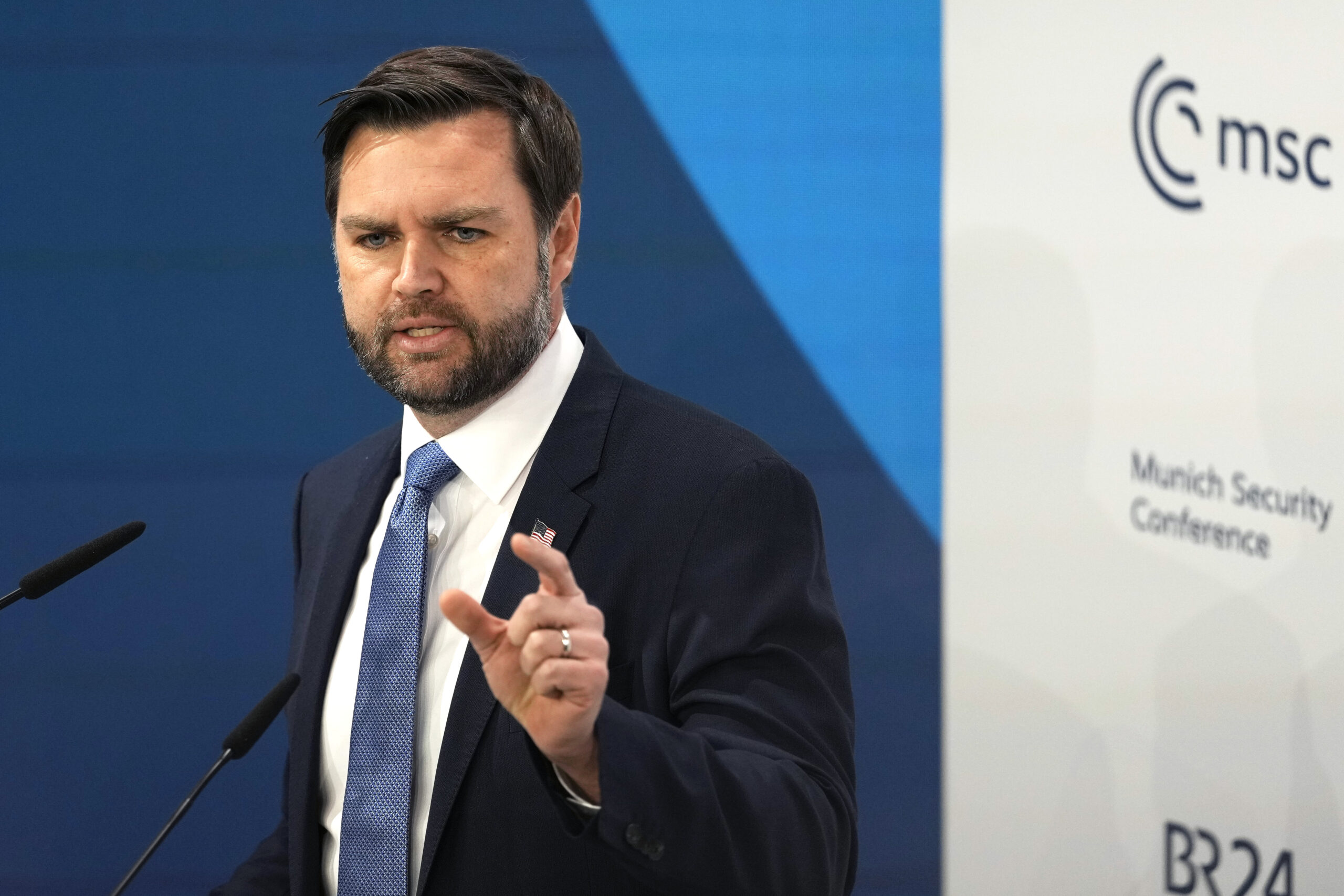
    When Vice President JD Vance tried to promote the concept at the Munich Security Conference last year — and to promote white Christian populist parties in Europe as the saviors of “Western civilization” — the audience of European leaders, officials, and think tankers reacted with shock. More so when he berated German leaders for not inviting the neofascist Alternative für Deutschland (AfD) party into the government, even though its leaders have downplayed Adolf Hitler’s crimes. To add insult to injury, he pointedly paid a visit to the AfD’s political leader.

    Vice President JD Vance addresses the audience during the 2025 Munich Security Conference at the Bayerischer Hof Hotel in Munich.

    But Rubio was supposed to be different: the realistic, savvy foreign policy adviser who tried to save Trump from his worst instincts. When the secretary of state delivered remarks that praised U.S.-European ties, the eager audience was at first won over — until reality sank in, and many participants read the text of his speech.

    Indeed, Rubio was warmed-over Vance, blaming liberal democracy (which, in the Enlightenment sense, means individual freedoms, human rights and rule of law, and observance of science) for all the West’s ills, and urging Europeans to junk “the global rules-based order.”

    It got tiresome hearing Rubio tout the dangers of Western “civilizational erasure.” As Hillary Clinton noted — on a panel titled “The West-West Divide” — “When Rubio talks about Western ‘civilization,’ I never knew he was so supportive of Native Americans.” Then she added, “He is wrong historically.”

    Indeed. “Western civilization” has become the MAGA dog whistle that stands for bashing all immigration and playing to racial fears.

    No surprise, Rubio had not a word of criticism for the Russian invasion of Ukraine as an attack on “Western civilization,” although Vladimir Putin’s war crimes have upended the relatively peaceful, post-World War II order. And not a word of apology for Trump’s threat to seize Greenland from a NATO ally, which also threatened that order.

    Nor any word of recognition that a dog-eat-dog world of unrestrained big power dominance resulting from an end to global “rules” will lead back to the violent era preceding World War II.

    Instead, Rubio urged the Europeans not to be “shackled by guilt and shame,” which is a key buzz phrase for the AfD, which urges its members to stop apologizing for Nazi crimes.

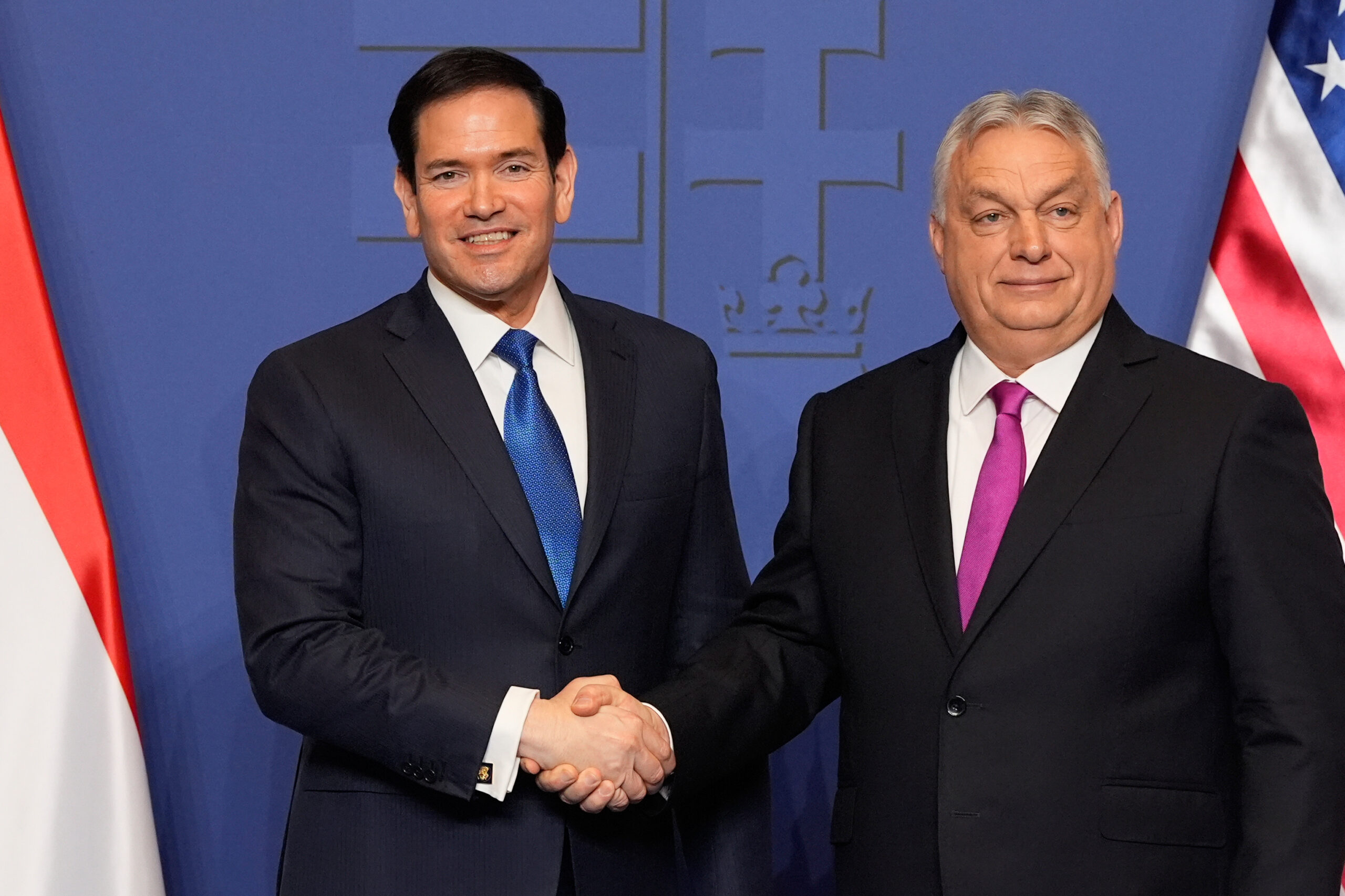
    Secretary of State Marco Rubio (left) and Hungarian Prime Minister Viktor Orbán shake hands after a news conference in Budapest, Hungary, on Feb. 16.

    And right after his speech, the secretary rushed off to Hungary to praise the pro-Putin Prime Minister Viktor Orbán, a Trump ally who has done his best to destroy Hungarian democracy, including press and judicial freedom — and is trying to block European Union aid to Ukraine.

    Yet, Orbán’s corruption and Hungary’s economic decline have become so overwhelming that he may be defeated in an April election. But Trump sent Rubio to bolster this antisemitic autocrat who repeats the “saving white Christian civilization” line.

    It is no wonder the Munich scene erupted into debate about the West-West division over democratic values. As Germany’s Green Party coleader and Bundestag member, Franziska Brantner, stated: “Our values are rooted in the Enlightenment, in reason, science, freedom of religion, equal rights. The Enlightenment is a project, not a period in history. It is about very concrete individual freedoms, about free elections dependent on the will of the people, not run by oligarchs.”

    “I don’t want to go back in history,” Brantner said flatly.

    Norwegian Finance Minister Jens Stoltenberg added, in a restrained poke at Trump, “For all those who believe in liberal values and protection of the truth, it is difficult when we see that not all of our allies agree on these values.”

    In Europe, at least, there is an active debate about the consequences of the junking of rules and history by the world’s most powerful democracy. The dangers to democracy are more immediately apparent to those who live closer to Russia and Ukraine.

    Watching Trump’s performance and Rubio’s subservience, those dangers may seem obvious to many Americans. But they must find a way to get that message across more clearly to those who still doubt the danger here.

  • ‘MAGA, ICE Is’ | The Drawing Board

    ‘MAGA, ICE Is’ | The Drawing Board

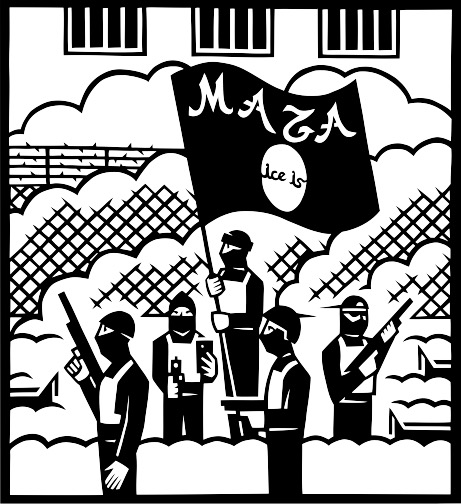
    When I put pencil to paper and let my imagination run, I’m often surprised by certain discoveries and associations that emerge. While sketching in the aftermath of Renee Good’s and Alex Pretti’s recent killings, I began to conjure images of ISIS rolling out over the Levant in 2013.

    Not wanting to commit to a ham-fisted metaphor, I put my sketchbook away, only to find the idea too sticky to relinquish. As I embarked on the labor-intensive process of making the paper cutout you see printed here, the parallels became all too clear: the uniforms, the masks, the military armaments, the extremism, the rigid ideology. This is what ICE is.

    This MAGA army, paid for by 2025’s “Big Beautiful Bill,” is the highest-funded law enforcement agency in the nation. It is only partly intended to expel and terrify what the regime perceives as undesirable immigrants. It is becoming apparent that it was also created to impose the movement’s fundamentalist values on American society writ large.

    That is why Good and Pretti were perceived as such a threat. Good was a liberal woman in a same-sex marriage who wouldn’t bow to ICE tyranny. Pretti was a legally armed citizen determined to protect his neighbors from agents’ overreach and abuse.

    Both represent a challenge to the MAGA movement’s extremist interpretation of religious law, embodied by JD Vance’s Catholic integralism and Mike Johnson’s radical evangelicalism.

    As the flow of immigrants over the nation’s southern border has abated, Republicans have resurrected their panic over Sharia Law. Sen. John Cornyn of Texas has been campaigning on his fight against “radical Islam,” while his colleagues at the state level have created a “Sharia-Free America Caucus.” This is pure projection. Similar to Islamic extremists, conservative Republicans strive to impose their retrograde worldview on the rest of us.

    The artist Joe Boruchow.

    They have fought to prevent child marriage bans, and in the Heritage Foundation’s newest banger, “Saving America by Saving the Family: A Foundation for the Next 250 Years,” it implores the government to subsidize religious institutions “to preach and affirm God’s design for the human body, sex, marriage and the family.”

    It continues: “This includes pastors publicly reinforcing the truth that there are only two sexes — male and female — and that reason and revelation agree that marriage … consists of the exclusive union of one man and one woman and is ordered toward the spouses and the children that can and, if so blessed, should come from that union.”

    Although they don’t explicitly say it, I believe Kristi Noem’s Department of Homeland Security, with U.S. Immigration and Customs Enforcement and U.S. Customs and Border Protection under her command, is positioned to be the enforcers of this ideology, using the state’s monopoly of violence against transgressors.

    “MAGA, ICE Is” — a paper-cut illustration by the artist Joe Boruchow.

    As ICE and CBP expand their operations to other cities and the government builds out its archipelago of concentration camps, I expect we will see more scenes that evoke the violent tactics and aesthetics of fundamentalist extremist groups of the past.

    If we are unable to stop this project at the ballot box, and America’s elites continue to roll over to this administration, these antidemocratic forces will continue their race to entrench their power and strip us of the freedoms we take for granted.

    MAGA continues to show us what they are: MAGA, ICE is.

    If you have an idea for a drawing, editorial cartoon, multipanel comic strip, or other illustration that might serve as a visual op-ed, please email oped@inquirer.com.

  • Bad Bunny, MPLS, and the ‘neighborism’ saving America | Will Bunch Newsletter

    Maybe it’s because I’ve watched every blessed one of them, starting as a curious, nearly 8-year-old boy in 1967, but the Super Bowl has always felt like the ultimate barometer of where the American Experiment is at. Super Bowl LX (that’s 60, for those of you smart enough not to take four years of Latin in high school) was no exception. The actual game was something of a snoozefest, but the tsunami of commercials revealed us as a nation obsessed with artificial intelligence, sports betting, weight loss, and anything that can lift us from middle-class peonage without having to do any actual work. As Bad Bunny said, God bless America.

    If someone forwarded you this email, sign up for free here.

    Bad Bunny’s real message: From P.R. to Minnesota, we are neighbors

    Bad Bunny (center top) performs Sunday during the halftime show of the NFL Super Bowl XL football game between the Seattle Seahawks and the New England Patriots in Santa Clara, Calif.

    Right-wing media prattled on for months about how Bad Bunny, the Puerto Rican reggaeton superstar who is the world’s most streamed artist, would politicize and thus ruin the NFL’s halftime extravaganza at Super Bowl LX in Santa Clara, Calif.

    The babble became a scream seven days before the Big Game kicked off, when Bad Bunny won the record of the year Grammy Award and began his acceptance speech with the exhortation “ICE out!” adding, “We’re not savages, we’re not animals, we’re not aliens — we are humans, and we are Americans.”

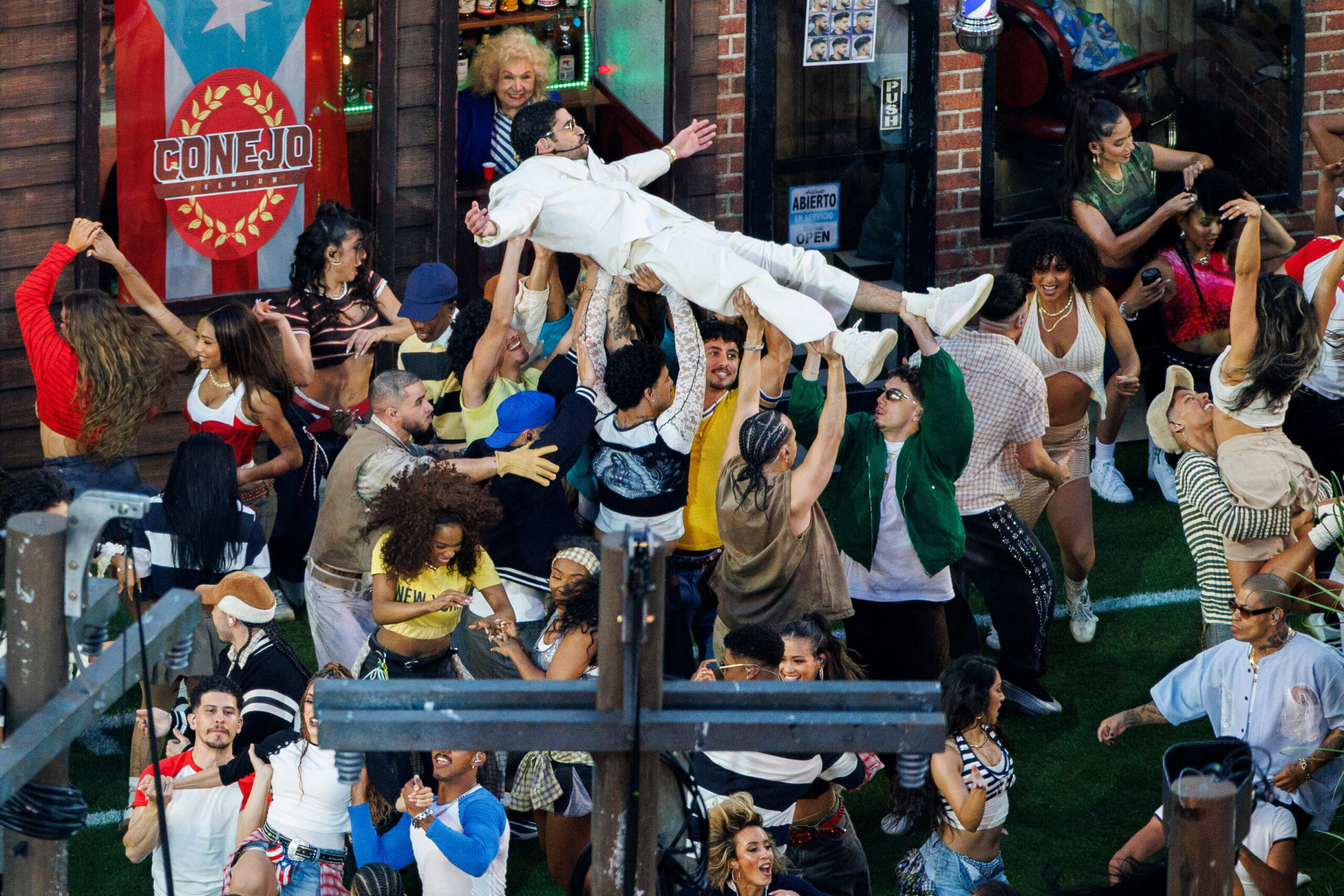
    But on the world’s biggest stage Sunday night — seen by 135 million in the United States, a Super Bowl record — Bad Bunny sang not one word about Donald Trump, not that MAGA fans even bothered to hold up a translation app. The white-suited Benito Antonio Martínez Ocasio danced his way through the history of Puerto Rico and the Americas writ large, from the plantations of yore to the exploding power lines of the hurricane-wracked 21st century. He whirled past an actual wedding, stopped for a shaved ice, and for 13 spellbinding minutes turned a cast of 400 into what his transfixed TV audience craved at home.

    Bad Bunny built his own community — a place not torn asunder by politics, but bonded by love and music.

    Without uttering one word — in Spanish or English — about the dire situation in a nation drifting from flawed democracy into wrenching authoritarianism, the planet’s reigning king of pop delivered the most powerful message of America’s six decades of Super Bowl fever. Shrouded in sugar cane and shaded by a plantain tree, Bad Bunny sang nothing about the frigid chaos 2,000 miles east in Minnesota, and yet the show was somehow very much about Minneapolis.

    Bad Bunny finally gave voice to what thousands of everyday folks in the Twin Cities have been trying to say with their incessant whistles.

    We are all neighbors. The undocumented Venezuelan next door who toils in the back of a restaurant and sends his kids to your kids’ school is a neighbor. But Haiti is also a neighbor, as is Cuba. We are all in this together.

    The word I kept thinking about as I watched Bad Bunny’s joyous performance is a term that didn’t really exist on New Year’s Day 2026, yet has instantly provided a name to the current zeitgeist.

    Neighborism.

    The great writer Adam Serwer — already up for the wordsmithing Hall of Fame after he nailed the MAGA movement in 2018 in five words: “The cruelty is the point” — leaned hard into the concept of “neighborism” after he traveled to Minneapolis last month. His goal was to understand an almost revolutionary resistance to Trump’s mass deportation raids that had residents — many of whom had not been especially political — in the streets, blowing those warning whistles, confronting armed federal agents, and tracking their movements across the city.

    Serwer visited churches where volunteers packed thousands of boxes of food for immigrant families afraid to leave their homes during the U.S. Immigration and Customs Enforcement raids, and talked to stay-at-home moms, retirees, and blue-collar workers who give rides or money to those at risk, or who engaged in the riskier business of tracking the deportation raiders.

    “If the Minnesota resistance has an overarching ideology,” Serwer wrote, “you could call it ‘neighborism’ — a commitment to protecting the people around you, no matter who they are or where they came from.” He contrasted the reality on the ground in Minneapolis to the twisted depictions by Trump and his vice president, JD Vance, who’ve insisted refugees are a threat to community and cohesion.

    Of course, it’s not just Minneapolis, and it’s not just the many, liberal-leaning cities — from Los Angeles to Chicago to New Orleans and more — that were the incubators of the notion that concerned citizens — immigrant and nonimmigrant alike — could prevent their neighbors from getting kidnapped. Even small towns like rural Sackets Harbor, N.Y., the hometown of Trump’s border czar Tom Homan, rose up in protest to successfully block the dairy farm deportation of a mom and her three kids. It’s been like this everywhere regular folks — even the ones who narrowly elected Trump to a second term in 2024 — realize mass deportation doesn’t mean only “the worst of the worst,” but often the nice mom or dad in the house, or church pew, next to theirs.

    Only now that it’s arrived is it possible to see “neighborism” as the thing Americans were looking for all along, even if we didn’t know it. It is, in every way, the opposite vibe from the things that have always fueled fascism — atomization and alienation that’s easy for a demagogue to mold into rank suspicion of The Other.

    I’m pretty sure Bad Bunny wasn’t using the word neighborism when the NFL awarded him the coveted halftime gig last fall. But the concept was deeply embedded in his show. He mapped his native Puerto Rico as a place where oppression has long loomed — from the cruelty of the sugar plantations to the capitalist exploitation of the failed power grid — but where community is stronger.

    Then Benito broadened the whole concept. Reclaiming the word America for its original meaning as all of the Western Hemisphere, Bad Bunny name-checked “Chile, Argentina, Uruguay, Paraguay, Bolivia, Peru, Ecuador, Brazil,” and Canada, as well as the United States. These, too, are our neighbors. “God bless America,” he shouted — his only message of the night delivered in English.

    So, no, Bad Bunny never mentioned Minneapolis, but a tender moment when he seemingly handed the Grammy he’d won just a week ago to a small Latino boy had to remind viewers of the communal fight to save children like the 5-year-old, blue bunny hat-wearing (yes, ironic) Liam Conejo Ramos, who was just arrested, detained, and released by ICE. (A false rumor that the Super Bowl boy was Ramos went viral.)

    But arguably, this super performance had peaked a few moments earlier, when the singer exited the wedding scene stage with a backward trust dive, caught and held aloft by his makeshift community in the crowd below. Bad Bunny had no fear that his neighbors would not be there for him. Viva Puerto Rico. Viva Minneapolis. Viva our neighbors.

    Yo, do this!

    • Some 63 years after he was gunned down by a white racist in his own driveway, the Mississippi civil rights icon Medgar Evers has been having a moment. A fearless World War II vet whose bold stands for civil rights as local leader of the NAACP in America’s most segregated state triggered his 1963 assassination, Evers’ fight has become the subject of a best-selling book, a controversy over how his story is told at the Jackson, Miss., home where he was killed, and now a two-hour documentary streaming on PBS.com. I’m looking forward to watching the widely praised Everlasting: Life & Legacy of Medgar Evers.
    • After the Super Bowl, February is the worst month for sports — three out of every four years. In 2026, we have the Winter Olympics to bridge the frigid gap while we wait for baseball’s spring training (and its own World Baseball Classic) to warm us up. Personally, I try and sometimes fail to get too jacked up around sleds careening down an icy track, but hockey is a different story. At 2:10 p.m. on Tuesday (that’s today if you read this early enough), the puck drops on USA Network for the highly anticipated match between the world’s two top women’s teams: the United States and its heated rival Canada. Look for these two border frenemies to meet again for the gold medal.

    Ask me anything

    Question: How is it that some towns have been able to prevent ICE from buying warehouses and turning them into concentration camps, while others say they are helpless against the federal government? What does it mean that several are planned for within a couple of hours of Philly? — @idaroo.bsky.social via Bluesky

    Answer: Great question. It seems ICE and its $45 billion wad of cash are racing in near-secrecy to make this national gulag archipelago of 23 or so concentration camps a done deal. The places where they’ve been stopped, like one planned for Virginia, happened because locals were able to pressure the developer before a sale to ICE was concluded. That’s no longer an option at the two already purchased Pennsylvania sites in Schuylkill and Berks Counties. The last hope is pressure from high-ranking Republicans, which may (we’ll see) have stopped a Mississippi site. Pennsylvanians might want to focus, then, on GOP Sen. Dave McCormick. Good luck with that.

    What you’re saying about …

    It’s conventional wisdom that the best argument for a Gov. Josh Shapiro 2028 presidential campaign is his popularity in his home state of Pennsylvania, the battleground with the most electoral votes. So it’s fascinating that none of the dozen or so of you who responded to this Philadelphia-based newsletter wants Shapiro to seek the White House, although folks seem divided into two camps. Some of you just don’t like Josh or his mostly centrist politics. “I think he’s all ambition, all consumed with reaching that top pedestal, not as a public servant, but because he thinks he deserves it,” wrote Linda Mitala, who once campaigned for Shapiro, but soured on his views over Gaza protesters, New York Mayor Zohran Mamdani, and other issues. Yet, others think he’s an excellent governor who should remain in the job through 2030. “Stay governor of Pa. when good governance and ability to stand up to federal (authoritarian) overreach is dire,” wrote Kim Root, who’d prefer Kentucky Gov. Andy Beshear for the White House.

    📮 This week’s question: A shocking, likely (though still not declared) Democratic primary win for Analilia Mejia, the Bernie Sanders-aligned left-wing candidate, in suburban North Jersey’s 11th Congressional District raises new questions for the Dems about the 2026 midterms. Should the party run more progressive candidates like Mejia, who promise a more aggressive response to Trump, or will they lose by veering too far left? Please email me your answer and put the exact phrase “Dems 2026” in the subject line.

    Backstory on how the F-bomb became the word of the year

    Billie Joe Armstrong of Green Day performs Sunday before the start of Super Bowl XL in Santa Clara, Calif.

    I’m old enough to remember when the world’s most famous comedy riff was the late George Carlin’s “Seven Words You Can Never Say on Television” — its point driven home by Carlin’s 1972 arrest on obscenity charges that went all the way to the U.S. Supreme Court. A half century later, you still can’t say dirty words on broadcast TV — cable and streaming is a different story — but that fortress is under assault. In 2026, America is under seemingly constant attack from the F-bomb.

    It is freakin’ everywhere. When the top elected Democrat in Washington, House Minority Leader Hakeem Jeffries, cut a short video to respond to the president’s shocking post of a racist video that depicted Barack and Michelle Obama as apes, he said, “[F-word] Donald Trump!” If uttered in, say, 1972, Jeffries’ attack would have been a top story for days, but this barely broke through. Maybe because that word is in the lexicon of so many of his fellow Democrats, like Mayor Jacob Frey, who famously told ICE agents to “get the [F-word] out of Minneapolis,” or Minnesota Sen. Tina Smith, who begged federal agents to “leave us the (bleep) alone.” (Smith is retiring at year’s end and seems to no longer give a you-know-what.)

    The poor guys with their finger on the silence button at the TV networks, where you still can’t say Carlin’s seven words, can barely keep up. The F-bomb was dropped at this year’s Grammys, where award-winner Billie Eilish declared “(Bleep) ICE!” as she brandished her prize. The F-bomb was dropped, of course, at the Super Bowl, when the only true moment of silence during 10-plus hours of nonstop bombast came during Green Day’s pregame performance of “American Idiot,” when NBC shielded America’s tender ears from hearing Billie Joe Armstrong sing about “the subliminal mind(bleep) America.”

    We’re only about six weeks into the new year, but it’s hard not to think that Merriam-Webster or the other dictionary pooh-bahs won’t declare the F-bomb as word of the year for 2026, even if I’m still not allowed to use it in The Inquirer, family newspaper that we are. So what the … heck is going on here? One study found the F-word was 28 times more likely to appear in literature now than in the 1950s, so in one sense it’s not surprising this would eventually break through on Capitol Hill or on the world’s biggest stages.

    But the bigger problem is that America’s descent into authoritarianism and daily political outrage has devolved to such a point where, every day, permissible words no longer seem close to adequate for capturing our shock and awe at how bad things are. Only the F-bomb, it turns out, contains enough dynamite to blow out our rage over masked goons kidnapping people on America’s streets, or a racist, megalomaniac president who still has 35 months left in his term. Yet, even this (sort of) banned expletive is losing its power to express how we really feel. I have no idea what the $%&# comes next.

    What I wrote on this date in 2019

    What a long, strange trip for Amazon founder Jeff Bezos, one of the four richest people on the planet. Today, Bezos is in the headlines for his horrific stewardship of the Washington Post, which has bowed down on its editorial pages to the Trump regime, lost hundreds of thousands of subscribers, and laid off 300 journalists. It’s hard to recall that seven years ago, Bezos and Trump were at war, and there was evidence Team MAGA had enlisted its allies from Saudi Arabia to the National Enquirer to take down the billionaire. I wrote that “a nation founded in the ideals of democracy has increasingly fallen prey to a new dystopian regime that melds the new 21st century dark arts of illegal hacking and media manipulation with the oldest tricks in the book: blackmail and extortion.”

    Read how from Feb. 10, 2019: “Bezos, the National Enquirer, the Saudis, Trump, and the blackmailing of U.S. democracy.”

    Recommended Inquirer reading

    • My first and hopefully not last journalistic road trip of 2026 took me to Pennsylvania coal country, where ICE has spent $119.5 million to buy an abandoned Big Lots warehouse on the outskirts of tiny Tremont in Schuylkill County. I spoke with both locals and a historical expert on concentration camps about their fears and the deeper meaning of a gulag archipelago for detained immigrants that is suddenly looming on U.S. soil. It can happen here. Over the weekend, I looked at the stark contrast between Europe’s reaction to the Jeffrey Epstein scandal — where ties to the late multimillionaire sex trafficker are ending careers and even threatening to topple the British government — and the United States, where truth has not led to consequences so far. The Epstein fallout shows how the utter lack of elite accountability is driving the crisis of American democracy.
    • One last Super Bowl reference: Now that football is over, are you ready for some FOOTBALL? Now just four months out, it’s hard to know what to make of the 2026 World Cup returning to America and coming to Philadelphia for the very first time, and whether the increasing vibe that Donald Trump’s United States is a global pariah will mar the world’s greatest sporting event (sorry, NFL). Whatever happens, The Inquirer is ready, and this past week we published our guide to soccer’s biggest-ever moment in Philly. Anchored by our world-class soccer writer Jonathan Tannenwald and Kerith Gabriel, who worked for the Philadelphia Union between his stints at the paper, the package provides not only an overview of the World Cup in Philly, but previews the dozen teams who will (or might) take the pitch at Lincoln Financial Field, with in-depth looks at the powerhouses (France) as well as the massive underdogs (Curaçao). June is just around the corner, so don’t let the paywall become your goalkeeper. Subscribe to The Inquirer before the first ball drops.

    By submitting your written, visual, and/or audio contributions, you agree to The Inquirer’s Terms of Use, including the grant of rights in Section 10.

  • DA Larry Krasner forms coalition of progressive prosecutors committed to charging federal agents who commit crimes

    DA Larry Krasner forms coalition of progressive prosecutors committed to charging federal agents who commit crimes

    District Attorney Larry Krasner on Wednesday announced the formation of a new coalition of progressive prosecutors committed to charging federal agents who violate state laws.

    Krasner joined eight other prosecutors from U.S. cities to create the Project for the Fight Against Federal Overreach, a legal fund that local prosecutors can tap if they pursue charges against federal agents.

    The abbreviation for the group, FAFO, is a nod to what has become one of Krasner’s frequent slogans: “F— around and find out.”

    The move places Krasner at the center of a growing national clash between Democrats and the Trump administration over federal immigration enforcement and whether local law enforcement can — or should — charge federal agents for actions they take while carrying out official duties.

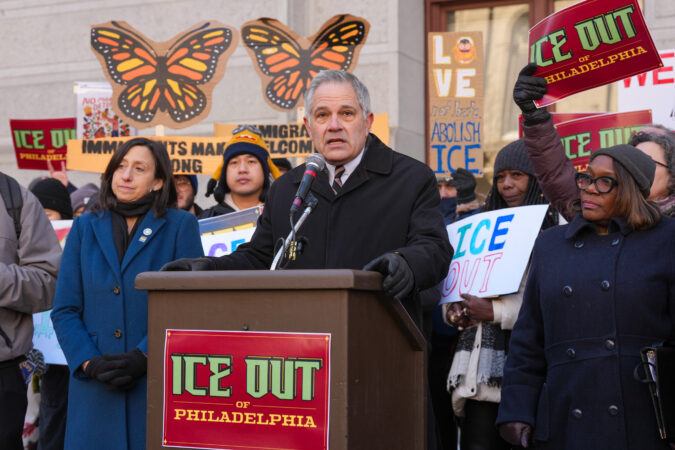
    It is also the latest instance in which Krasner, one of the nation’s most prominent progressive prosecutors, has positioned himself as Philadelphia’s most vocal critic of President Donald Trump. He has made opposing the president core to his political identity for a decade, and he said often as he was running for reelection last year that he sees himself as much as a “democracy advocate” as a prosecutor.

    Krasner has used provocative rhetoric to describe the president and his allies, often comparing their agenda to World War II-era fascism. During a news conference Tuesday, he said federal immigration-enforcement agencies are made up of “a small bunch of wannabe Nazis.”

    The coalition announced Wednesday includes prosecutors from Minneapolis; Tucson, Ariz.; and several cities in Texas and Virginia. It was formed to amass resources after two shootings of U.S. citizens by federal law enforcement officials in Minnesota this month.

    Renee Good, 37, was shot and killed in her car by an ICE officer on Jan. 7 as she appeared to attempt to drive away during a confrontation with agents. The FBI said it would not investigate her killing.

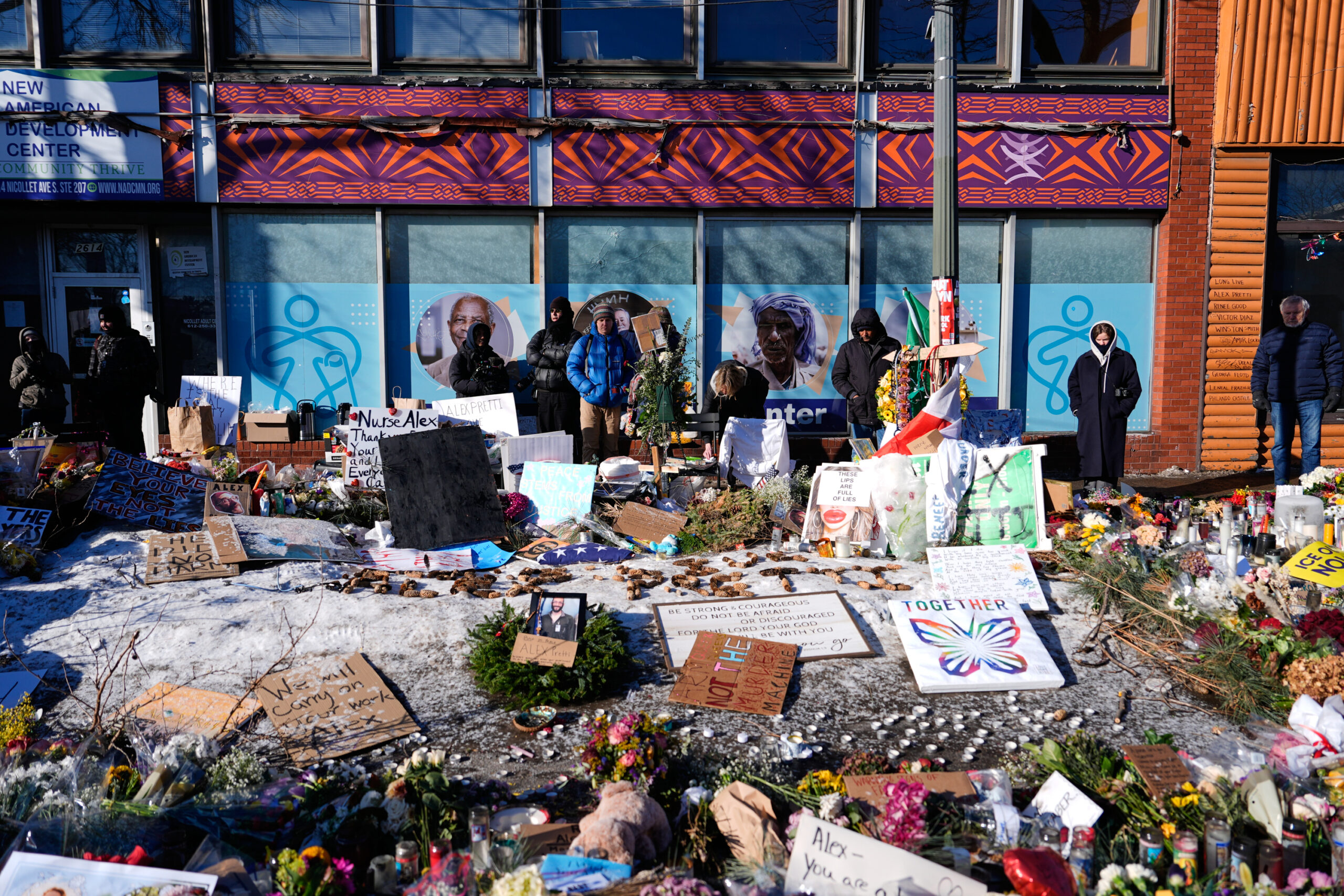
    People visit a memorial for Alex Pretti at the scene in Minneapolis where the 37-year-old was fatally shot by a U.S. Border Patrol officer.

    Then, on Saturday, Alex Pretti, 37, was killed after similarly confronting agents on a Minneapolis street. Video of the shooting, which contradicted federal officials’ accounts, appeared to show Border Patrol agents disarming Pretti, who was carrying a legally owned handgun in a holster. They then shot him multiple times. Federal authorities have attempted to block local law enforcement from investigating the shooting.

    Krasner said that, despite Vice President JD Vance’s recent statement that ICE officers had “absolute immunity” — an assertion the Philadelphia DA called “complete nonsense” — prosecutors in FAFO are prepared to bring charges including murder, obstructing the administration of justice, tampering with evidence, assault, and perjury against agents who commit similar acts in their cities.

    “There is a sliver of immunity that is not going to save people who disarm a suspect and then repeatedly shoot him in the back from facing criminal charges,” Krasner said during a virtual news conference Wednesday. “There is a sliver of immunity that is not going to save people who are shooting young mothers with no criminal record and no weapon in the side or back of the head when it’s very clear the circumstances didn’t require any of that, that it was not reasonable.”

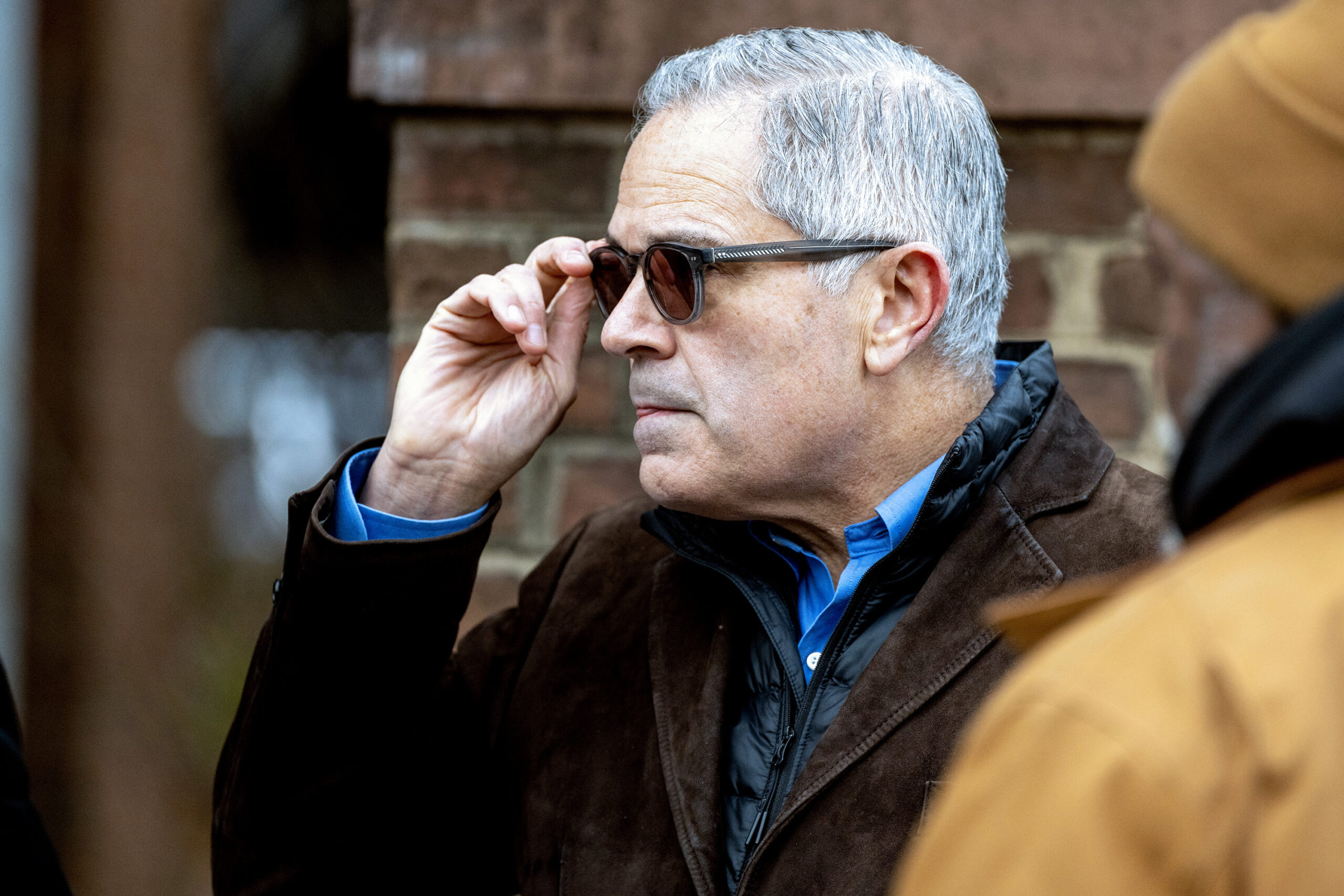
    Philadelphia District Attorney Larry Krasner attends an event at Independence National Historical Park on Dec. 21, 2025.

    How will FAFO work?

    The coalition has created a website, federaloverreach.org, and is soliciting donations.

    Prosecutors who spoke during the news conference said those donations would be toward a legal fund that would allow prosecutors to hire outside litigators, experts, and forensic investigators as they pursue high-profile cases against federal agents.

    “This will function as a common fund,” said Ramin Fatehi, the top prosecutor in Norfolk, Va., “where those of us who find ourselves in the tragic but necessary position of having to indict a federal law enforcement officer will be able to bring on the firepower necessary to make sure that the federal government doesn’t roll us simply through greater resources.”

    The money raised through the organization will not go to the individual prosecutors or their political campaigns, they said Wednesday.

    Scott Goodstein, a spokesperson for the coalition, said the money will be held by a “nonpartisan, nonprofit entity that is to be stood up in the coming days.” He said the prosecutors are “still working through” how the fund will be structured.

    Krasner said it would operate similarly to how district attorneys offices receive grant funding for certain initiatives.

    Most legal defense funds are nonprofit organizations that can receive tax-deductible donations. Those groups are barred from engaging in certain political activities, such as explicitly endorsing or opposing candidates for office.

    Goodstein said the group is also being assisted in its fundraising efforts by Defiance.org, a national clearinghouse for anti-Trump activism. One of that group’s founders is Miles Taylor, a former national security official who, during the first Trump administration, wrote under a pseudonym about being part of the “resistance.”

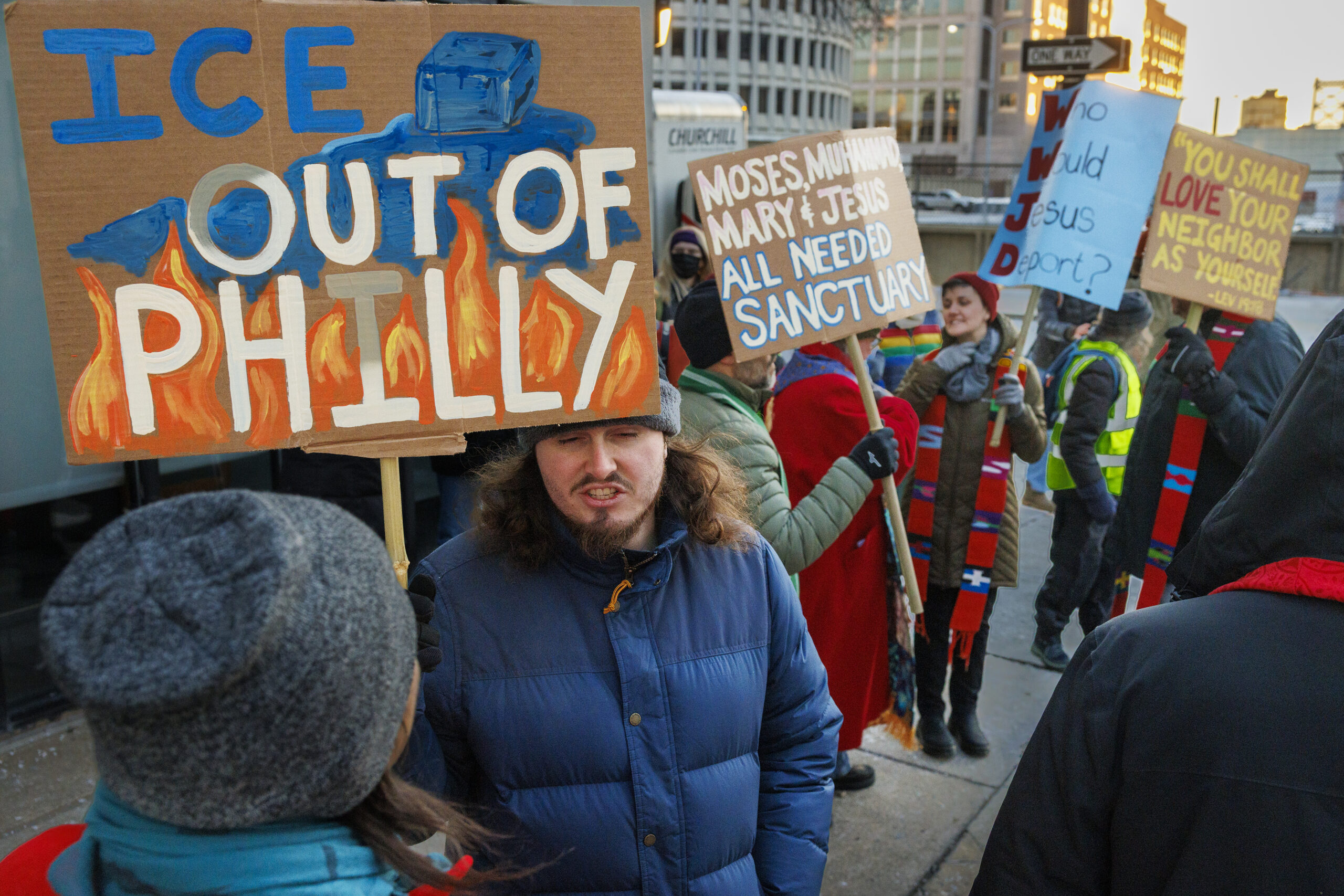
    Demonstrators from No ICE Philly gathered to protests outside the U.S. Immigration and Customs Enforcement, office at 8th and Cherry Streets, on Jan. 20.

    ‘Who benefits?’

    In forming the coalition, Krasner inserted himself into a national controversy that other city leaders have tried to avoid.

    His approach is starkly different from that of Mayor Cherelle L. Parker, a centrist Democrat who has largely avoided criticizing Trump. She says she is focused on her own agenda, and has not weighed in on the president’s deportation campaign.

    Members of the mayor’s administration say they believe her restraint has kept the city safe. While Philadelphia has policies in place that prohibit local officials from some forms of cooperation with federal immigration enforcement, the Trump administration has not targeted the city with surges of ICE agents as it has in other jurisdictions — such as Chicago and Los Angeles — where Democratic leaders have been more outspoken.

    Parker and Police Commissioner Kevin Bethel have at times been frustrated with Krasner’s rhetoric, according to a source familiar with their thinking who spoke on the condition of anonymity to discuss internal communications.

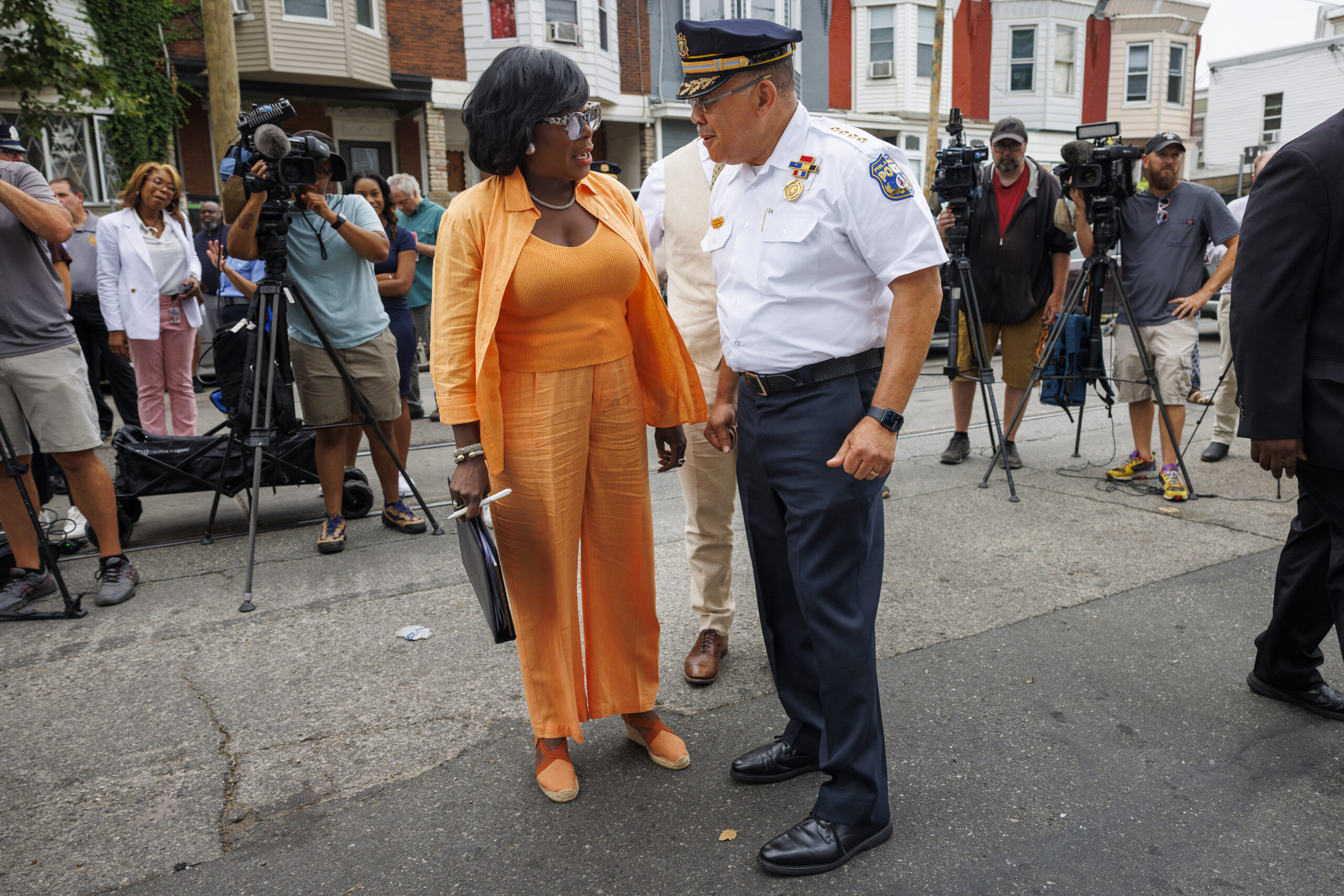
    Philadelphia Mayor Cherelle Parker and Police Commissioner Kevin Bethel speaking ahead of a July 2024 press conference.

    That was especially true this month when Krasner hosted a news conference alongside Sheriff Rochelle Bilal. The pair made national headlines after Krasner threatened to prosecute federal agents — something he has vowed to do several times — and Bilal called ICE a “fake” law enforcement agency.

    Bethel later released a statement to distance the Police Department from the Sheriff’s Office, saying Bilal’s deputies do not conduct criminal investigations or direct municipal policing.

    The police commissioner recently alluded to Parker’s strategy of avoiding confrontation with the federal government, saying in an interview on the podcast City Cast Philly that the mayor has given the Police Department instruction to “stay focused on the work.”

    “It is not trying to, at times, potentially draw folks to the city,” Bethel said. “Who benefits from that? Who benefits when you’re putting out things and trying to… poke the bear?”

    As for Krasner’s latest strategy, the DA said he has received “zero indication or communication from the mayor or the police commissioner that they’re in a different place.”

    “I feel pretty confident that our mayor and our police commissioner, who are doing a heck of a lot of things right,” he said, “will step up as needed to make sure that this country is not invaded by a bunch of people behaving like the Gestapo.”

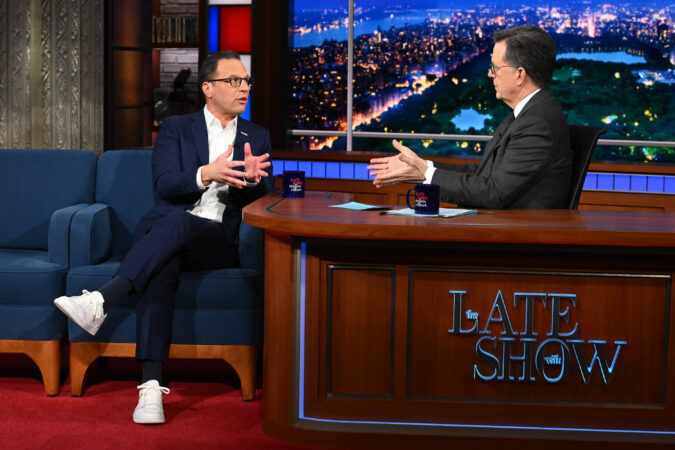
  • Gov. Shapiro tells Stephen Colbert he’s planning for the possibility of federal troops entering Pa.

    Gov. Shapiro tells Stephen Colbert he’s planning for the possibility of federal troops entering Pa.

    Saying the Trump administration is using the federal government for “pure evil” in its immigration crackdown in Minneapolis, Gov. Josh Shapiro revealed on late-night television Monday that he’s preparing Pennsylvania to respond should the state face such an incursion.

    Shapiro’s wide-ranging remarks on The Late Show With Stephen Colbert — which included Shapiro deriding Vice President JD Vance as a “sycophant” and a “suck-up” — sounded at times like a speech before a studio audience that applauded him vigorously. Making the rounds to promote his new book, Where We Keep the Light: Stories from a Life of Service, Shapiro also appeared on CBS Sunday Morning, Good Morning America on Monday, and The View on Tuesday.

    On Colbert, the governor sharply criticized the Trump administration’s actions in Minneapolis, where he said “untrained” agents from U.S. Immigration and Customs Enforcement (ICE) have been creating “chaos” by fatally shooting two American citizens.

    “I think Americans are outraged by what they see,” Shapiro said, adding: “The mission in Minnesota must be terminated immediately.”

    When Colbert said there are “rumors” that federal troops will be sent to Philadelphia “to foment fear,” Shapiro nodded. On The View, he said troops could show up in Philadelphia, Pittsburgh, or Lancaster.

    “We have spent hours and hours and hours doing tabletop exercises to prepare for it,” Shapiro said, without being specific. The governor did not elaborate.

    He added that “it’s a sad day in America that a governor of a commonwealth needs to prepare for a federal onslaught where they would send troops in to undermine the freedoms and the constitutional rights of our citizens. This is un-American.”

    “But I want the good people of Pennsylvania to know — I want the American people to know — that we will do everything in our power to protect them from the federal overreach.”

    Asked for comment, Abigail Jackson, a White House spokesperson, said Tuesday: “It’s pure evil when Democrat leaders provide sanctuary to dangerous criminal illegal aliens who assault, murder, and rape innocent American citizens. President Trump is keeping his promise to the American people to deport criminal illegal aliens.”

    Referencing ICE agents wearing masks, Shapiro said that members of the Pennsylvania State Police “have strict rules on when they can wear a mask. You want to be identified as folks who are keeping people safe.”

    He added, “Of all the tools that we give our law enforcement in Pennsylvania, the most important tool you need to have is trust with the community that you police.”

    When the conversation turned to Vance’s statement that the ICE officer who shot and killed Minneapolis resident Renee Macklin Good on Jan. 7 has “absolute immunity,” Shapiro retorted that it was untrue.

    He added that Vance is “such a sycophant, such a suck-up. He embarrasses himself daily as he seeks the affirmation of Donald Trump.”

    ICE agents “are not above the law,” Shapiro added moments later. “I don’t care what B.S. Vance [says.]”

    The governor’s reelection bid this year, as well as rumors that he may be a presidential candidate in 2028, did not come up. Instead, Colbert touted Shapiro’s book.

    Shapiro said that the courts, Congress, and public opinion need to be marshaled to prevent the Trump administration from sending more troops to U.S. cities.

    “All of you have powerful voices,” Shapiro told the audience. He added: “The story of America is ordinary Americans rising up, demanding more, seeking justice.”

  • Trump and Greenland: All the questions you’re scared to ask your friends

    Trump and Greenland: All the questions you’re scared to ask your friends

    If you’re starting to absorb the headlines, or embarking on your early-week doomscroll, you’re probably seeing a lot about Greenland.

    President Donald Trump’s longtime interest in the Arctic island seems to be louder — and bolder — than ever, sparking a major geopolitical standoff.

    But how did it all start? And where do things stand? Here are all your questions answered, so you’re prepared the next time someone asks you about Greenland.

    How did Denmark acquire Greenland?

    Greenland has been home to native peoples who crossed the Arctic from what is now Canada, Norse settlers, Lutheran missionaries, and U.S. military personnel who used it as a base to protect the United States from Nazi Germany and the Soviet Union.

    As for when Denmark stepped in, the short answer is that Denmark’s control started with a colonial settlement, was formalized in 1953, and the agreement has since evolved into a self-governing structure with the Danish.

    In the 1700s, a Danish missionary arrived in Greenland and started lining up settlements and establishing Danish colonization. Through most of the 18th and 19th centuries, Greenland was controlled by the Danish. The relationship was formally recognized by Denmark after World War II. In 1953, the island was fully incorporated as a Danish territory, giving Greenlanders Danish citizenship.

    Things changed in the late 1970s. In 1979, Greenlanders voted in favor of home rule, establishing a local government. In 2009, Greenland earned even more autonomy, achieving self-government status. This stands today, with Greenland remaining part of Denmark but overseeing its own internal affairs. Denmark oversees defense and diplomacy issues, unless the regions opt to partner on an issue.

    Is Greenland bigger than the United States?

    Greenland is pretty big, but not bigger than the United States

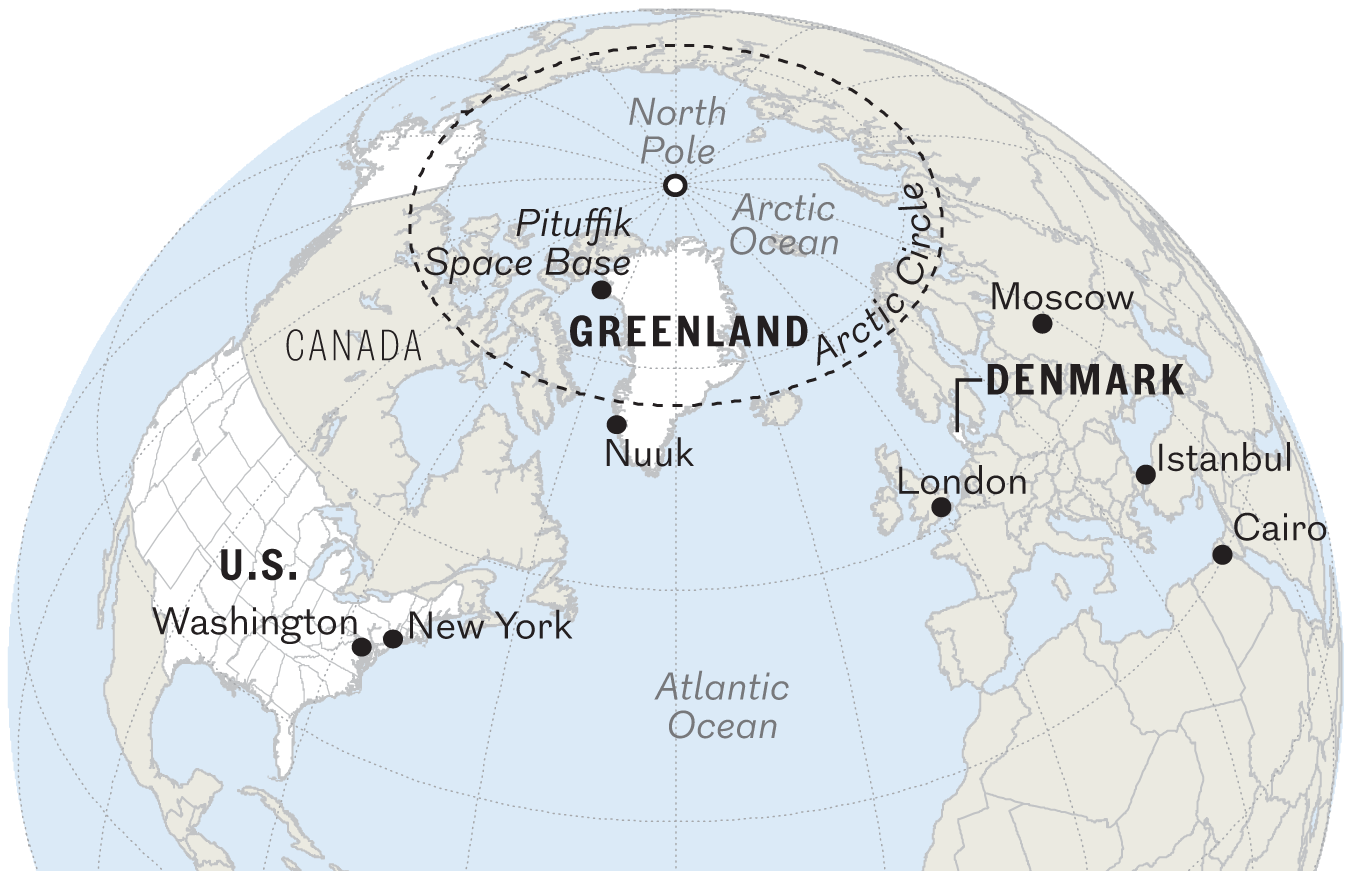
    It is considered one of the biggest places in the world by geography and is about 20 times the size of Denmark, according to the territory’s tourism website. The island stretches about 836,000 square miles.

    Map of Greenland, the U.S., and Denmark.

    It is the world’s largest island that isn’t a continent and is larger than France, Germany, Spain, and the United Kingdom combined. It is also larger than the state of Alaska.

    But, no, it’s smaller than the contiguous United States. All in all, the United States is about 4.5 times larger than Greenland.

    Still, a lot of people ask this question (it’s a top Google result surrounding Greenland) because map distortions make it appear a lot bigger than it is.

    The island has a population of roughly 56,480, according to the CIA. It is among the least densely populated countries in the world.

    What natural resources does Greenland have?

    Greenland is home to a bounty of natural resources, including oil, gas, and rare earth minerals. Those minerals are used for making batteries, electric vehicles, and other high-tech items, according to the New York Times. Currently, China dominates the global market for those minerals, meaning there is a reliance on China to source them.

    Vice President JD Vance has touted Greenland’s “incredible natural resources” in the past. Last year, Republican senators held a hearing focused on Greenland’s importance and its rare earths.

    But Greenland has only a few roads and ports, and environmentalists are opposed to developing on the island. That means mining and oil extraction in Greenland may not be productive.

    Does the U.S. military have a base in Greenland?

    Yep.

    Formerly known as the Thule Air Base, the Pituffik (pronounced bee-doo-FEEK) Space Base was renamed in 2023 during the Biden administration to honor the native Greenlandic community and history.

    It is the northernmost U.S. military installation and serves as an early warning missile detection site for North America. It is currently undergoing major upgrades.

    How long has Trump talked about wanting Greenland?

    It’s been awhile.

    Trump first floated the idea of “buying Greenland” during his first term, comparing it to a “real estate deal.” When Danish leaders rejected his idea, he canceled a scheduled visit to Denmark in 2019.

    When Trump began his second term, he spoke increasingly about his interest in the United States controlling Greenland, citing national security reasons.

    But critics say his real intentions stem from personal feelings.

    Is this really about Trump not winning the Nobel Prize?

    Trump linked his aggressive stance on Greenland to last year’s decision not to award him the Nobel Peace Prize, telling Norway’s prime minister that he no longer felt “an obligation to think purely of Peace,” in a text message released Monday and verified by the White House.

    Trump’s text to Jonas Gahr Støre, which he sent on Sunday, came a day after the president announced a 10% import tax on goods from the eight nations that have rallied around Denmark and Greenland, including Norway.

    The text exchange, which was released by the Norwegian government, said in part: “Considering your Country decided not to give me the Nobel Peace Prize for having stopped 8 Wars PLUS, I no longer feel an obligation to think purely of Peace.” He concluded, “The World is not secure unless we have Complete and Total Control of Greenland.”

    The Norwegian leader said Trump’s message was a reply to an earlier missive sent on behalf of himself and Finnish President Alexander Stubb, in which they conveyed their opposition to the tariff announcement, pointed to a need to de-escalate, and proposed a telephone conversation among the three leaders.

    White House deputy press secretary Anna Kelly said of the text exchange that Trump “is confident Greenlanders would be better served if protected by the United States from modern threats in the Arctic region.”

    Norway has since reaffirmed its support for Denmark and Greenland.

    Also, for what it’s worth, the Nobel Peace Prize is awarded by an independent committee, not the Norwegian government.

    Trump has openly coveted the peace prize, which the committee awarded to Venezuelan opposition leader María Corina Machado last year. Last week, Machado presented her Nobel medal to Trump, who said he planned to keep it, though the committee said the prize cannot be revoked, transferred, or shared with others.

    Speaking Monday night to reporters before boarding Air Force One on his way back from Florida to Washington, Trump backtracked and said he didn’t “care about the Nobel Prize.”

    What is Trump saying about Greenland now?

    He’s doubling down.

    Monday night, Trump took to his Truth Social platform and made a series of posts about how there was “no going back” when it comes to his push to take control of the island. He also posted private text messages he received from French President Emmanuel Macron and the head of NATO, and an AI-generated image of the American flag over Greenland and Canada.

    Following Macron’s questioning of Trump’s approach, Trump suggested he could impose a 200% tariff on French wines.

    Trump also announced he would meet with “various parties” to discuss Greenland during the World Economic Forum in Davos, Switzerland, this week.

    On Tuesday, Trump held a nearly two-hour news conference, but largely did not acknowledge his stance on Greenland until asked by reporters.

    He repeated his position that the U.S. needs to take control of the territory for the sake of national security.

    “I think that we will work something out where NATO is going to be very happy and where we’re going to be very happy,” Trump said toward the end of the news conference.

    Macron this week called for an emergency meeting in Paris with European leaders to address tensions with the U.S. over Trump’s pursuit to acquire Greenland in addition to increasing tariffs.

    Trump told reporters he did not plan to attend the meeting and mentioned that Macron would not be leading France for much longer. Macron’s term ends in May 2027.

    Do other politicians agree with Trump?

    There is widespread disagreement over how Trump wants to handle Greenland.

    Secretary of State Marco Rubio said the president wants to buy it, while top aide Stephen Miller suggested the U.S. could seize it by force. Vice President Vance’s discussion with Danish leaders last week ended in “fundamental disagreement.”

    Several lawmakers across party lines have criticized Trump’s approach. GOP members, including Sen. Rand Paul of Kentucky and Rep. Mike Turner of Ohio, say the raised tariff threats could harm NATO and U.S. interests.

    Rep. Don Bacon (R., Neb.) said last week that he would consider impeaching Trump if the U.S. invaded Greenland, describing the idea as “utter buffoonery.”

    Sen. Lisa Murkowski (R., Alaska) called Trump’s coercive threats dangerous for alliances and “bad for America.” She and Sen. Jeanne Shaheen (D., N.H.) introduced bipartisan legislation that would prohibit the use of U.S. Defense or State Department funds to take control of Greenland or the sovereign territory of any NATO member state without that ally’s consent or authorization from the North Atlantic Council.

    How are Greenland residents responding?

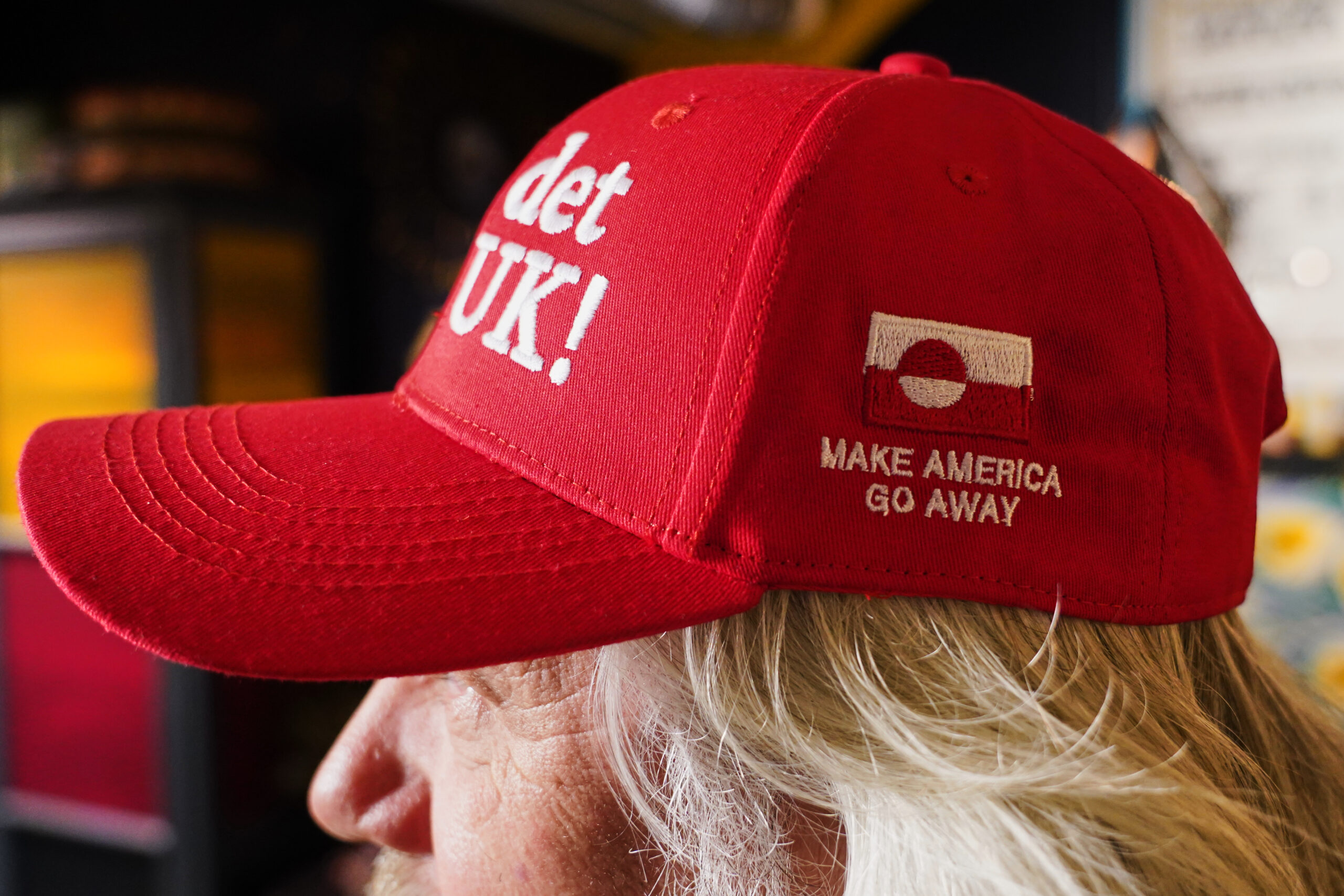
    Copenhagen store owner Jesper Rabe Tonnesen wears a red cap for sale that he created with the slogans “Make America go away,” on the side, and on the front: “Nu det NUUK!,” a twist on the Danish phrase “Nu det nok,” meaning “Now it’s enough.”

    Unsurprisingly, they’re not happy!

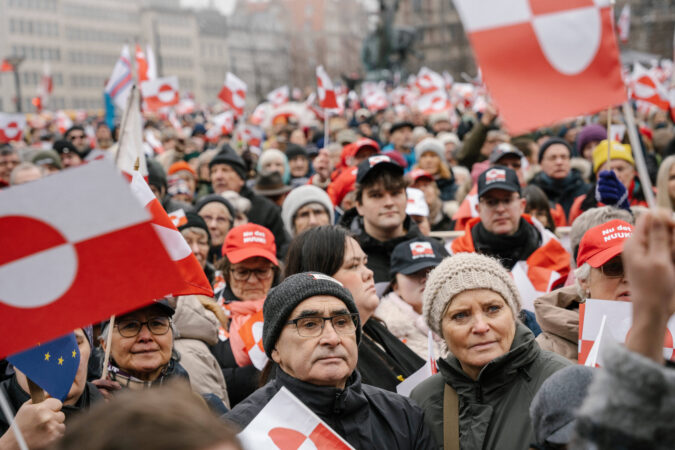
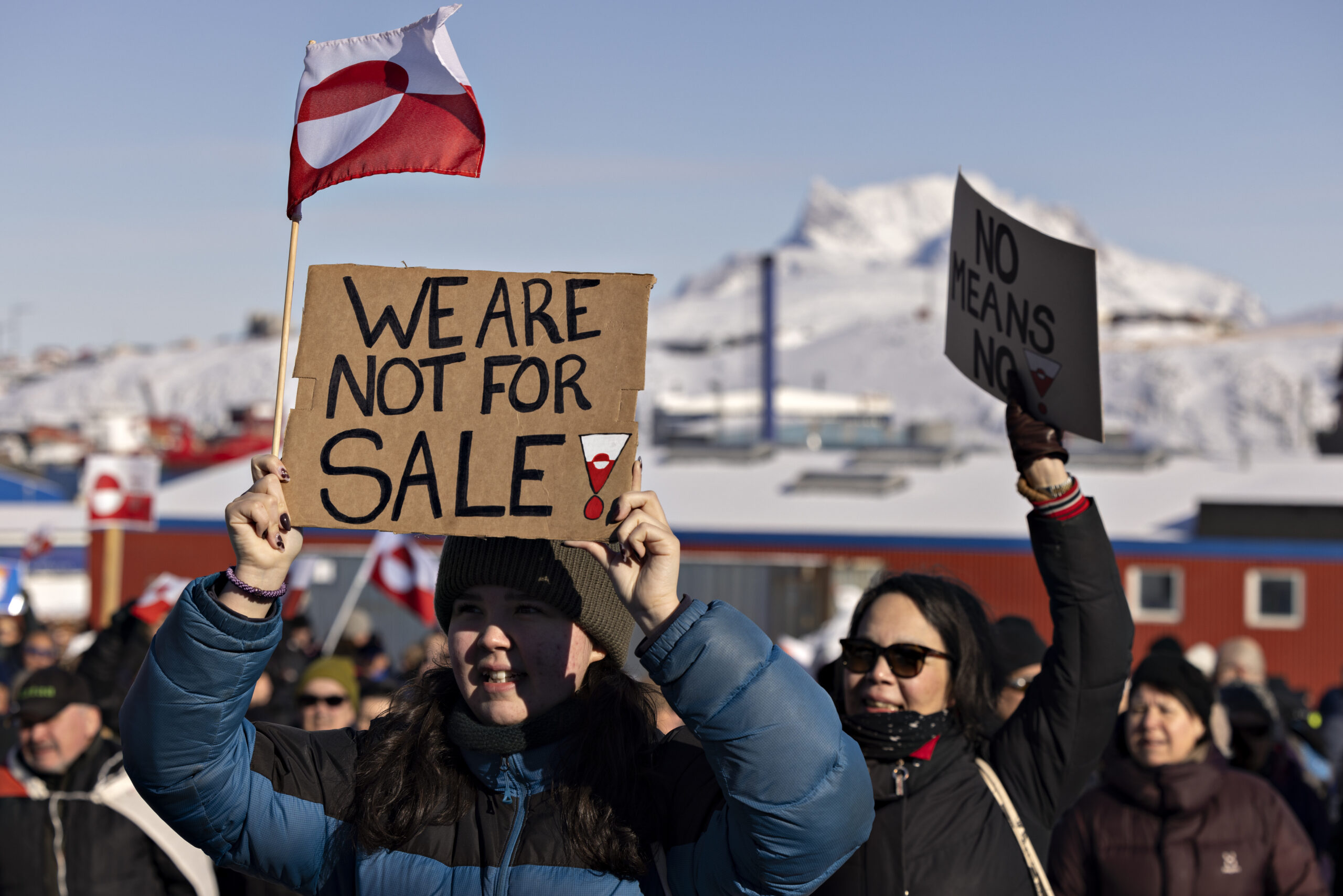
    Over the weekend, hundreds of people in Greenland’s capital, Nuuk, braved near-freezing temperatures, rain, and icy streets to march in a rally in support of their own self-governance.

    Thousands of people also marched through Copenhagen, many of them carrying Greenland’s flag. Some held signs with slogans such as “Make America Smart Again” and “Hands Off.”

    A spoof Make America Go Away red cap in the style of Trump’s original MAGA campaign hat is surging in popularity in Denmark and has become a symbol of Danish and Greenlandic resistance.

    “This is important for the whole world,” Danish protester Elise Riechie told the Associated Press as she held Danish and Greenlandic flags. “There are many small countries. None of them are for sale.”

    The rallies occurred hours after a bipartisan delegation of U.S. lawmakers, while visiting Copenhagen, sought to reassure Denmark and Greenland of their support.

    This article contains information from the Associated Press.

  • The view from Greenland: Trump’s yen to take over makes no economic or security sense

    The view from Greenland: Trump’s yen to take over makes no economic or security sense

    Here’s the glaring sign of how drunk President Donald Trump has become on his own power: his ongoing threat to seize Greenland for security reasons, “whether they like it or not.” Anything else is “unacceptable,” Trump ranted last week.

    Never mind that this icebound island is an autonomous territory of Denmark, one of our longest-standing and closest NATO allies. POTUS is trying to bludgeon Copenhagen, along with seven other European allies who back the Danes, by imposing new 10 per cent tariffs on them all unless they bow to his outrageous demands.

    Never mind that seizing Greenland via economic coercion or force would destroy the NATO alliance, handing Russia and China a major victory at zero cost. Never mind that polls show that only one in four Americans want Trump to take control of Greenland, and only 6% of Greenlanders want to become part of the United States.

    The most absurd part of Trump’s crusade is that there is no need to seize or buy Greenland for U.S. security or rare earths as we already have full access to both.

    Yet, Trump is not only treating Denmark like an enemy but openly rebuffing the rights of Greenland’s government and people, who, according to Danish law have the final say about their future.

    To learn more about what Greenlanders want and why Trump’s approach draws outrage, I turned to Galya Morrell, a Greenlander of Komi ethnic origins, who was raised in the Soviet Arctic. She has led an amazing life in journalism, the arts, and Arctic adventures, alongside her late husband, the renowned Greenlandic explorer Ole Jørgen Hammeken.

    Our conversation has been edited for length and clarity.

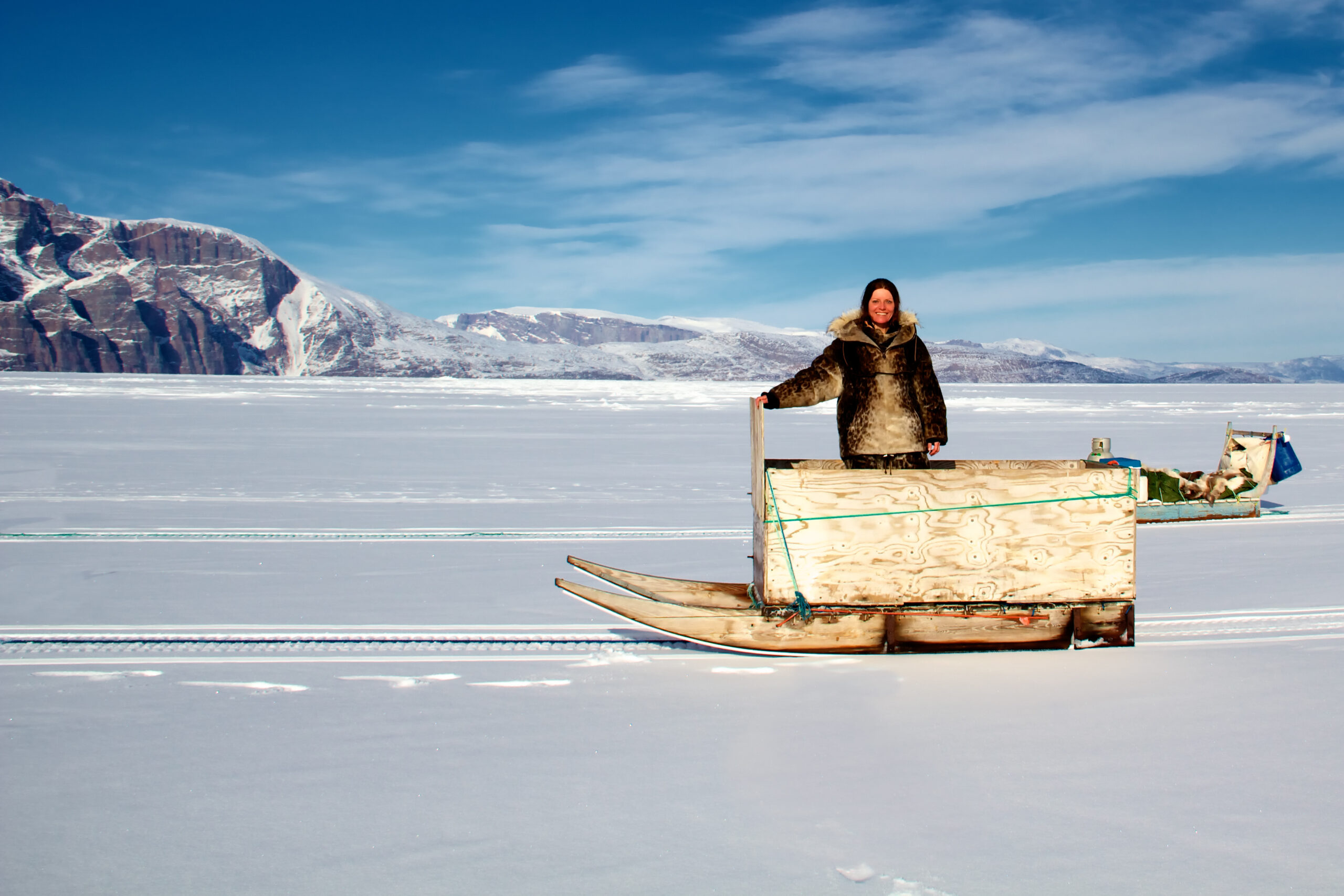
    Galya Morrell stands by her husband’s box sled, which was used to transport killed game, atop the frozen sea ice of Uummannaq Fjord in Northern Greenland.
    ⁠What was the first reaction of most Greenlanders to Trump’s proposal to take control of Greenland?

    When we heard about Trump’s proposal during his first term, everyone took it as a joke. Back then, we still lived in a world where logic mattered. How can you buy a country? What about people living there? Many people saw The Apprentice, that’s how they knew Trump, so they thought that maybe he was going to make a new season about Greenland after he retires from his presidency, and some young aspiring actors were asking if they can join the show.

    ⁠Do they take Trump seriously now, especially after Venezuela?

    Now it’s different. I don’t think that Venezuela played a big role in their perception, because already, people knew that Trump became obsessed with Greenland. At first, people thought that maybe it was even good for Greenland, because finally — finally — Denmark started taking Greenland seriously. Before, many Danes saw Greenlanders as a bunch of drunks and useless folks, which they aren’t, and a burden for Denmark. After Trump said he wanted it, many Danes changed their mind.

    Trump also accidentally woke up Greenlandic nationalism because the Greenlandic independence movement was sleepy and divided. Now there was a foreign bully. Nothing unites people faster than someone who treats them like furniture in the new condo purchase. Suddenly even Denmark looked like a shield [against Trump] instead of a cage.

    A 1951 pact with Denmark offers the U.S. almost unlimited military access on land, air, and sea. As for mining hard-to-access critical minerals, Greenland’s government would eagerly welcome U.S. investment. So what is your take on what Trump really wants?

    About 20,000 U.S. soldiers and technicians were based in Greenland [after World War II] and then suddenly they were all gone. Today only Pituffik Space Base [the former Thule Air Base] is still around with some 150 personnel. So why did the US not bring them back when it was clear that Russia rebuilt and upgraded all the former Soviet bases in the Arctic and became a threat in the region?

    The United States already had Greenland, quietly, through contracts, bases, and the gravitational pull of English. But none of that had Trump’s name on it. And if your name is not on something, do you even own it?

    It appears that [Trump’s need for ownership] is not logical but psychological. I think that his understanding of success or power is only when “there is a deal,” and when someone loses face — very important! And when he gets credit — even more important. Soft power, which America had in Greenland until recently, looks like nothing to him. Because none of what existed had Trump’s name on it.

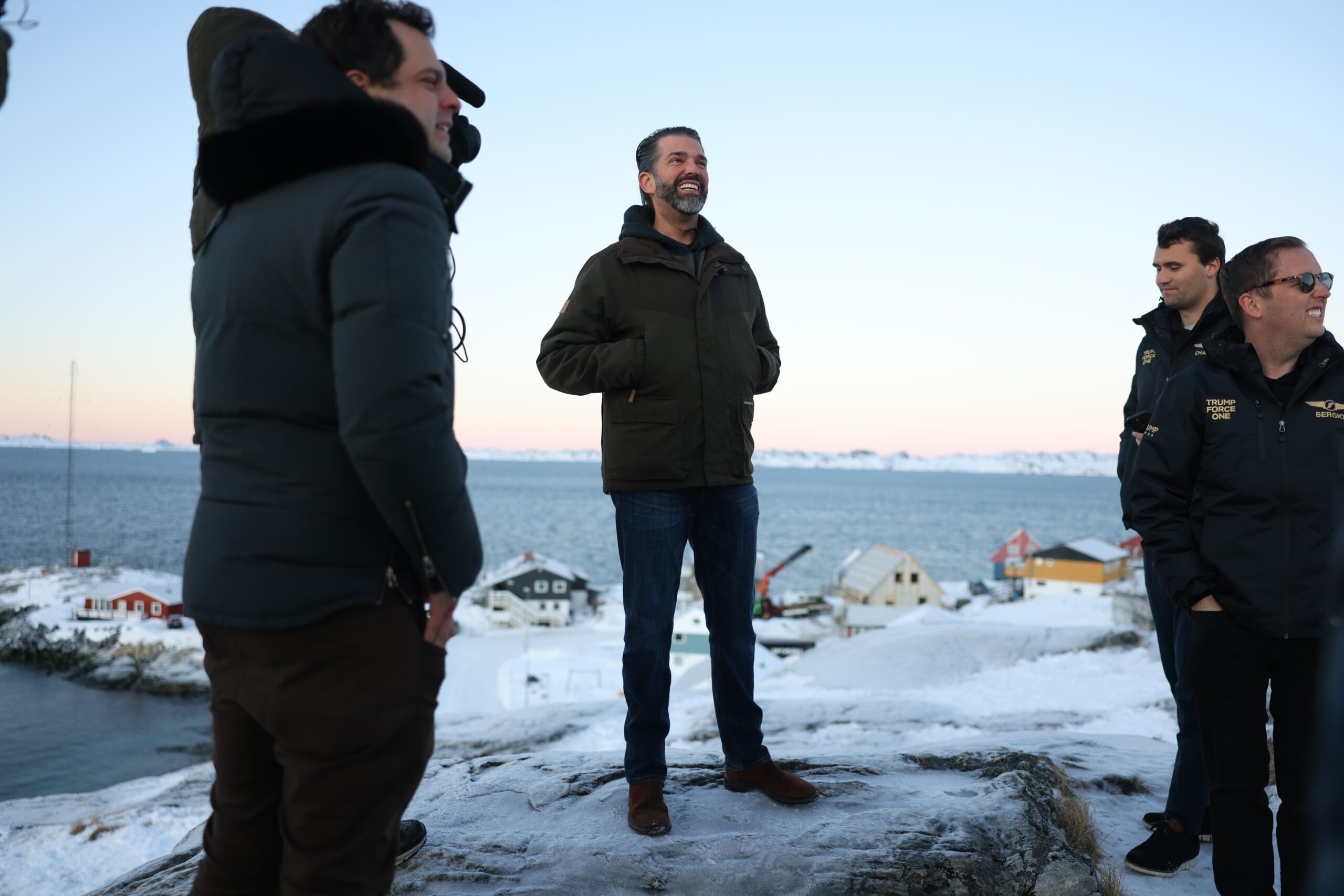
    Donald Trump Jr. (center) smiles after arriving in Nuuk, Greenland, in 2025.
    Are there Trump influencers (or suspected intelligence agents) roaming around, trying to find or buy supporters?

    As a family, we have not seen or met the “agents,” but we certainly saw some people in Nuuk, following Donald Trump Jr.’s visit a year ago, giving money and red MAGA hats to the youngsters, schoolkids, and making them say things on camera. Parents were outraged when they saw their own kids on TV, but it was too late.

    ⁠What really happened when Trump Jr. visited? Why was he so eager to talk about Greenland?

    My late husband, an Inuit elder and explorer, was asked to meet Trump Jr. back in 2015. He wanted to hunt musk ox in Greenland, but not where average tourists hunt. So my husband said that there are a lot of musk oxen around Hammeken Point [a mountain named after him], and he could take him there and be his guide.

    They were planning the expedition for a while, until one day Junior said that he can’t go because his dad decided to run for the presidency. Later, my husband thought that maybe it was all his fault for telling Junior exciting stories about Greenland and about what was hidden there under “all this ice,” and maybe that somehow affected Trump’s father’s interest.

    ⁠Some Trumpers think Greenlanders can be bought. Are some interested?

    We hear rumors that he is thinking of paying $100,000 to each Greenlander. Well, it’s not a lot of money, a boat costs around that, and who will sell the country for the price of a boat? But seriously speaking, today, everyone whom I know says firmly no. There is no price tag, no matter how much. The country is not for sale.

    But we live in a strange world, so I don’t know what will happen for sure. [Opposition leader] Pele Broberg is saying out loud what many politicians think quietly: that Greenland is already being pulled into the American orbit, and that it might as well try to get paid for it.

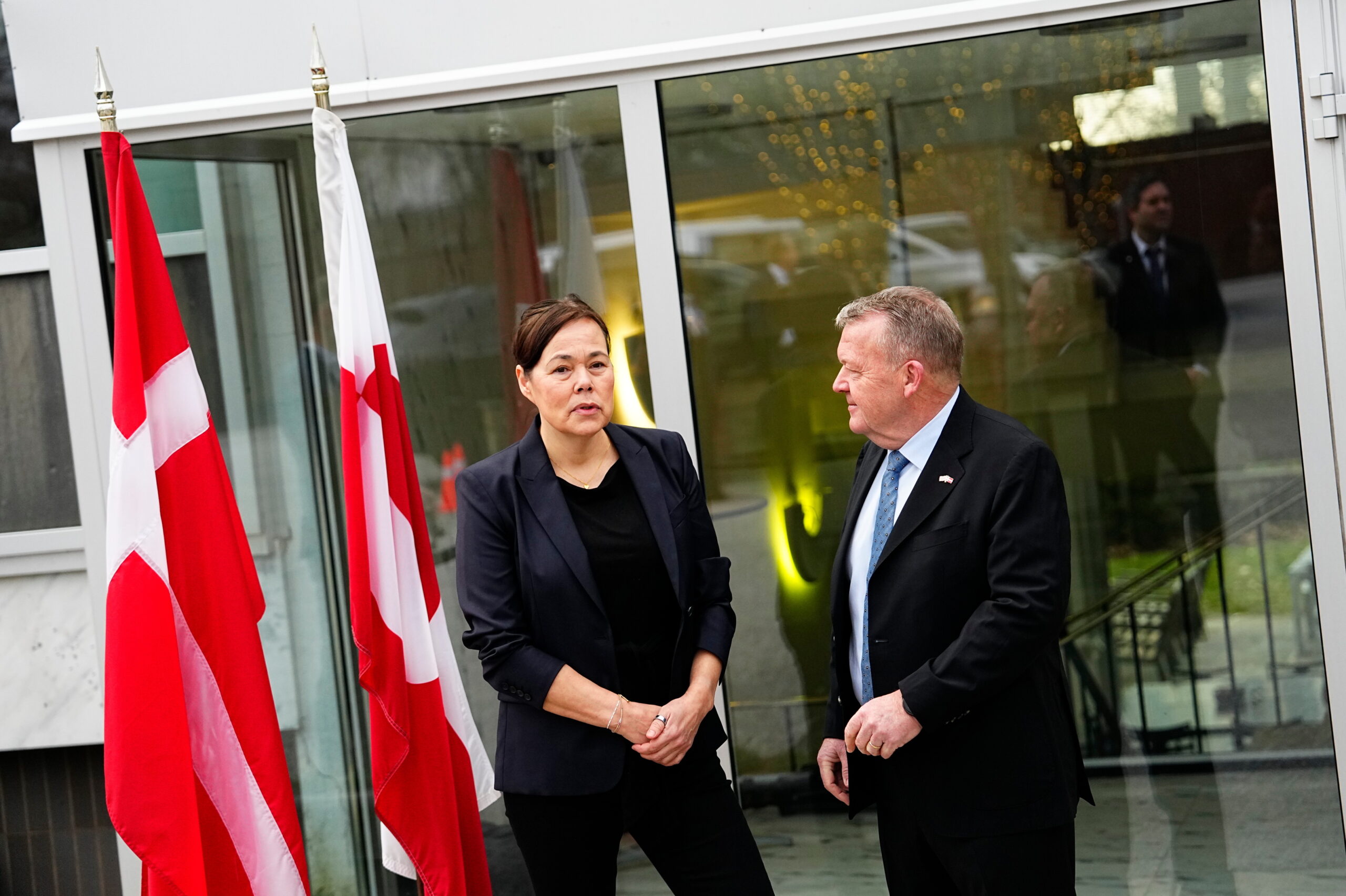
    Denmark’s Foreign Minister Lars Løkke Rasmussen (right) and Greenland’s Minister for Foreign Affairs Vivian Motzfeldt (left) prepare at the Danish Embassy for a meeting with Vice President JD Vance and Secretary of State Marco Rubio in Washington on Wednesday.
    Do some Greenlanders feel that way?

    Yes. Especially younger people, miners, business owners, and those who feel Denmark never gave Greenland a real economy, only a welfare system. For them, a deal with America sounds like a shortcut to dignity, jobs, and finally being taken seriously.

    But there is no such thing as “a deal” between a superpower and a small Arctic society. There is only dependence, dressed up as partnership.

    The United States already has what it needs in Greenland: military access, strategic geography, and preferential access to resources [such as rare earths]. What it doesn’t have is legal ownership or political control. A so-called “deal” would simply move Greenland’s dependency from Copenhagen to Washington. The question is whether Greenland would still be free after it is made.

    Can you imagine a U.S. military takeover attempt? What would be the consequences? Denmark and many other NATO allies are already moving small numbers of troops to Greenland as a tripwire.

    My husband and I had hoped to live the rest of our years in a small village, Siorapaluk. It is such a beautiful and peaceful place. Ironically, it is 92 miles from Pituffik Space Base. We honestly thought it was the most peaceful place on Earth.

    At this moment, we all — I can only talk about our family and friends — hope for a peaceful solution. Any negotiations are better than the war in the Arctic. Real war in the Arctic will be the end to everything.

    If the U.S. really wanted to secure its interests in Greenland what could Trump do legitimately?

    Trump still can return to U.S. bases, build new ones, invest in the population, in their education and knowledge. I see how scientists, glaciologists, marine biologists — 15 different specialties — from Japan’s Hokkaido University work together side by side with the local Inuit hunters, elders, and children in Qaanaaq, very close to Pituffik Space Base. It is an ideal collaboration; they love each other and benefit from each other. But they have a very smart leader, Shin Sugiyama. I think that President Trump could learn from him.

    People take part in a march ending in front of the U.S. consulate, under the slogan, Greenland belongs to the Greenlandic people, in Nuuk, Greenland, in March.
    Trump claims that if the U.S. doesn’t take Greenland, China or Russia will. What is he talking about?

    Russia is expanding its military presence in the greater Arctic region. This is their priority. I was once arrested by Chechen commandoes [on a floating Russian ice base, not part of Greenland but above the disputed underwater location of the North Pole]. So, yes, activity in Arctic waters is very real, and it is increasing. China has a major interest in Greenland. [But Greenlanders and Arctic experts see no signs of the Chinese and Russian ships Trump says are lurking around Greenland.]

    Greenlanders have said no to Russia and China because we don’t want them. A year ago, the Chinese bought some mining rights, but said they would bring their own workers, like what they have done in Yakutia [a northern region of Russia]. Chinese men married Russian women in Yakutia. There is a growing Chinese presence in Siberia. Soon, a majority will be Chinese, but no one sees it. [Fearing a similar outcome, the Greenland government ultimately rejected the Chinese investment.]

    [Russia’s invasion of Ukraine has also increased Greenlanders’ hostility to Moscow. They are painfully aware of “how poorly Russians treat their Arctic minorities” and how “Putin took the poorest people from Arctic villages” to fight and die in Ukraine].

    Should NATO troops be stationed in Greenland alongside more U.S. troops?

    Today the Arctic is becoming a place where three things overlap: military early warning systems, resource competition, and new shipping routes [due to melting ice]. That combination creates the possibility of accidents and miscalculations long before it creates a planned Russian or Chinese invasion.

    The biggest risk is not that someone like Russia or China suddenly wakes up and “takes Greenland.” The risk is escalation. I think that Greenland’s best protection is not a sudden flood of troops. It is a predictable security architecture that everyone understands.

    Greenland needs protection. But we are old enough to remember how conflicts were avoided during the Cold War: There were rules and restraint. There was clarity. Not theater.

    What do you hope for (or dread) after the failure of last week’s meeting at the White House between Vice President JD Vance and Secretary of State Marco Rubio and the foreign ministers of Denmark and Greenland?

    What I hope for is very simple: that adults will run the room. Secretary of State Marco Rubio is not a performer. So I really hope meetings will not be about headlines or symbolic victories. They should be a security conversation and not a dominance ritual.

    As I said before, the U.S. already has what it needs in Greenland in terms of security. My husband said not long before he departed: “Greenland does not need to be rescued. It needs to be respected.”