She has been staying there only for a few months, but Samantha Robinson knows why her grandparents loved their Elkins Park end-unit townhouse and the neighborhood.
“Everybody says hello,” she said. “Everybody looks out for each other.”
Her mother, Kerry Rosenthal, said her dad “really liked the wall space and the lighting. Being an end unit made it easier for my mom to grow things.”
Rosenthal said it’s possible to walk through the neighborhood and think you’re in a rural area until you hear the commuter rail train nearby .
Her parents — Beverly Green, a writing teacher, and Stephen Green, an attorney — bought the condo in the gated Breyer Woods development in 2011, expecting to renovate it so they could age in place. The Greens died in October.
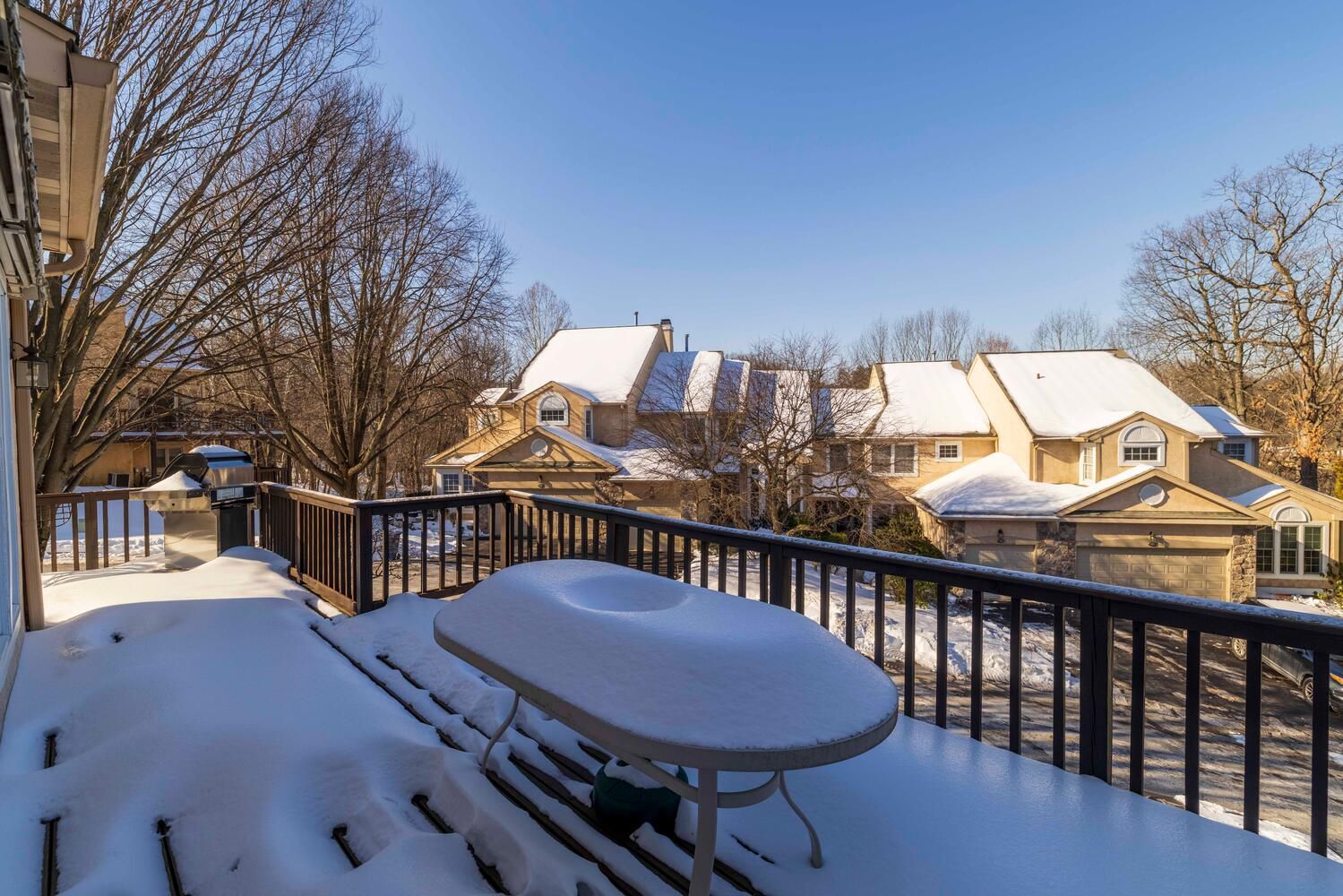
The back porch with a permanent gas grill.
The 2,936-square-foot house, built in 1993, has three bedrooms, two full bathrooms, and two half bathrooms.
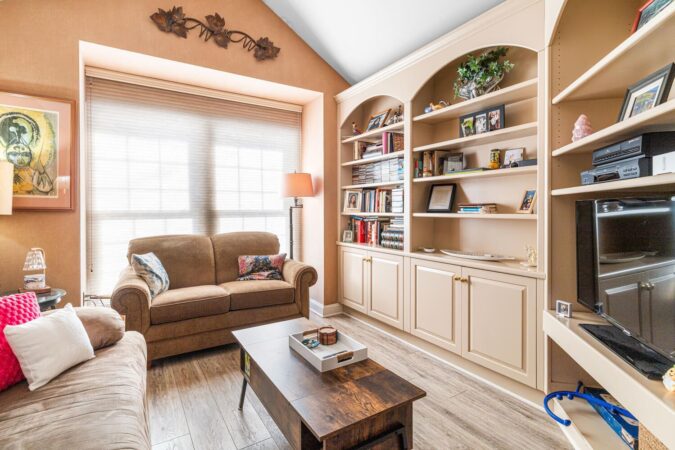
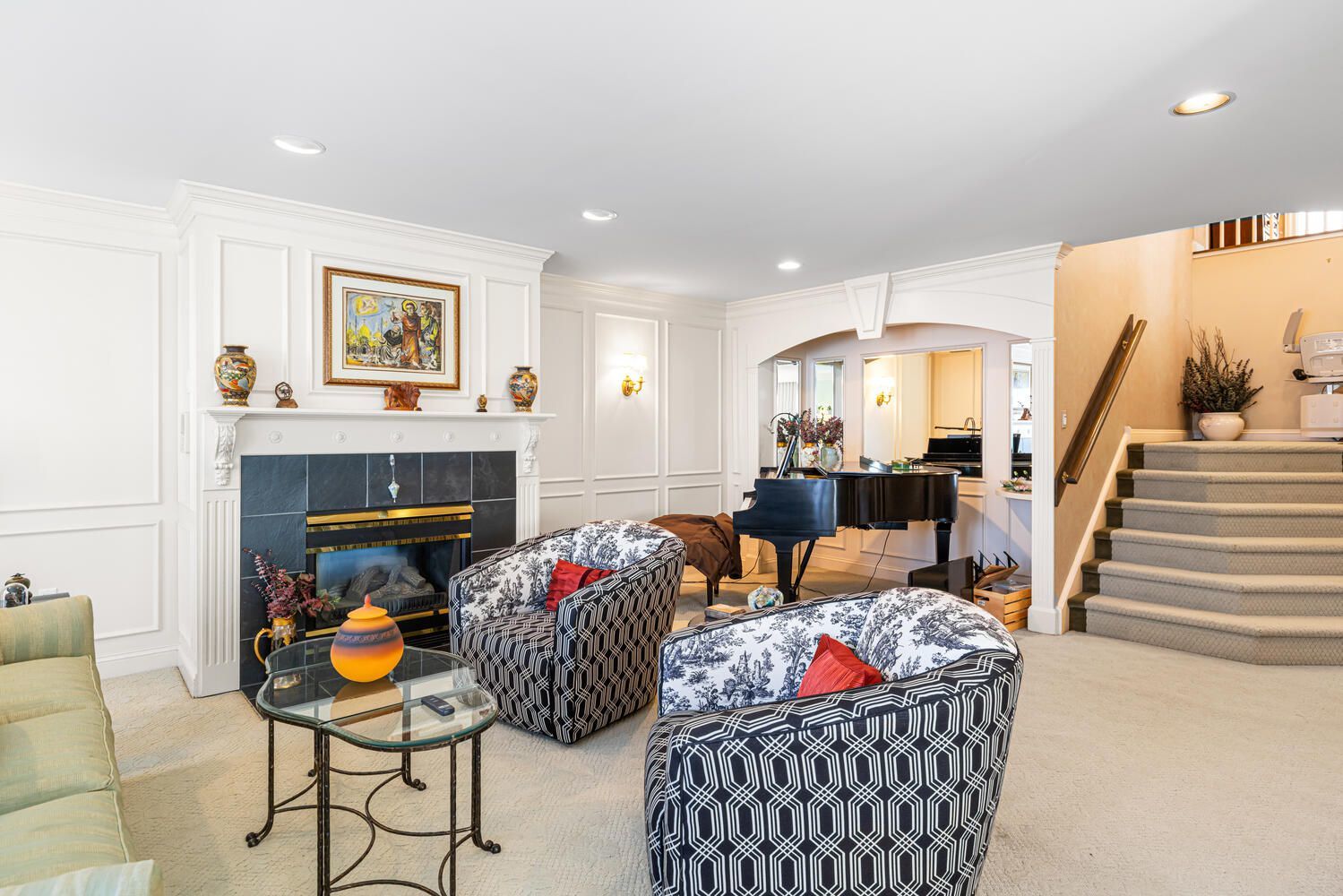
The main level has a living room with a working gas fireplace, a deck, and a dedicated home office that could serve as a fourth bedroom.
A two-car attached garage leads directly to the laundry room.
The living room has a working gas fireplace.
The upper level primary suite has vaulted ceilings and multiple closets.
The finished walk-out basement has a half bath and kitchenette and opens to a second private deck.
Community residents have access to a tennis court and can join the adjacent student center at the Elkins Park campus of Drexel University, which has a clubhouse and gym.
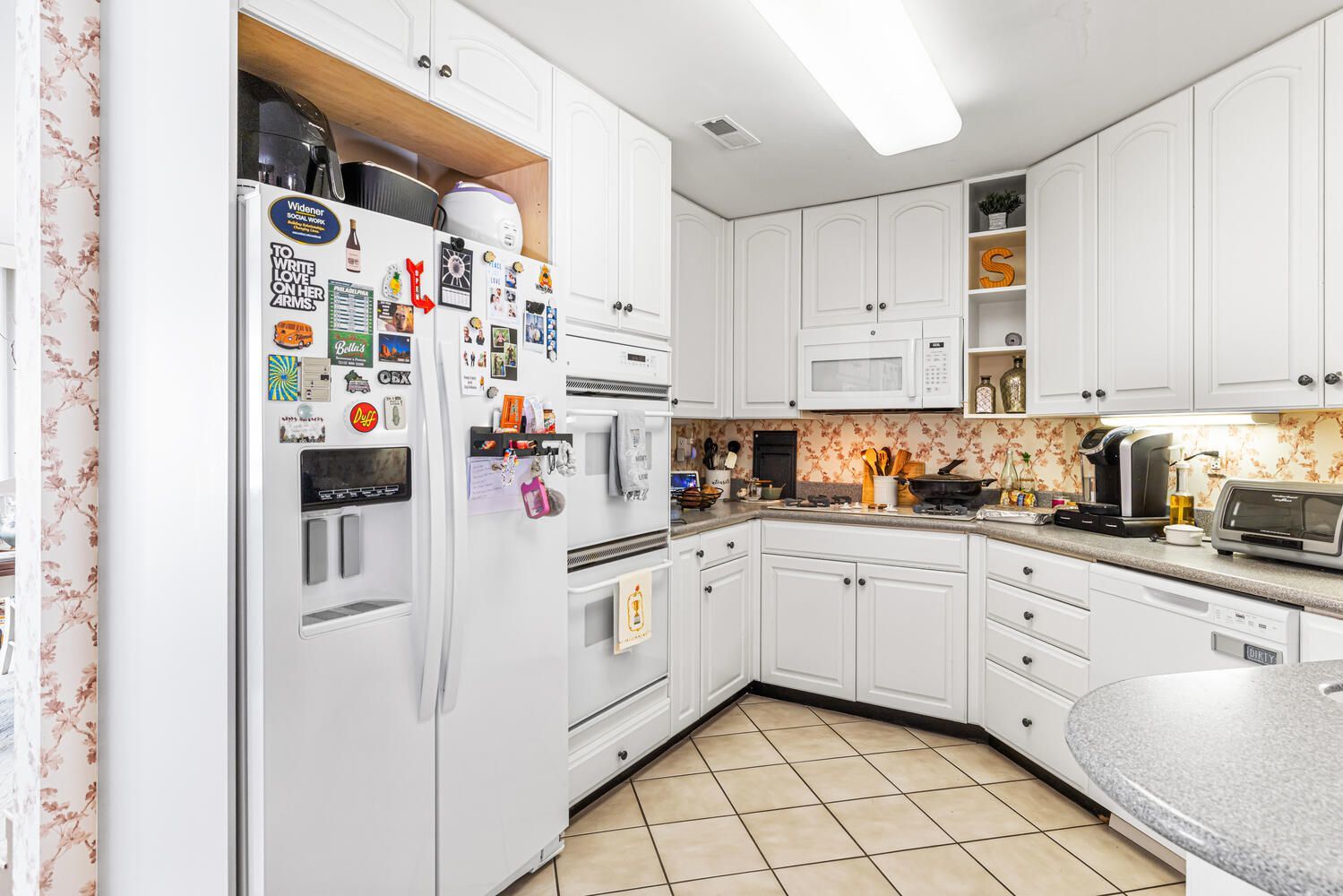
The kitchen.
The house is a short walk from the Jenkintown SEPTA station, and a supermarket is less than a half-mile away.
The house is listed by Frank Blumenthal at Keller Williams Real Estate Tri-County for $499,000.
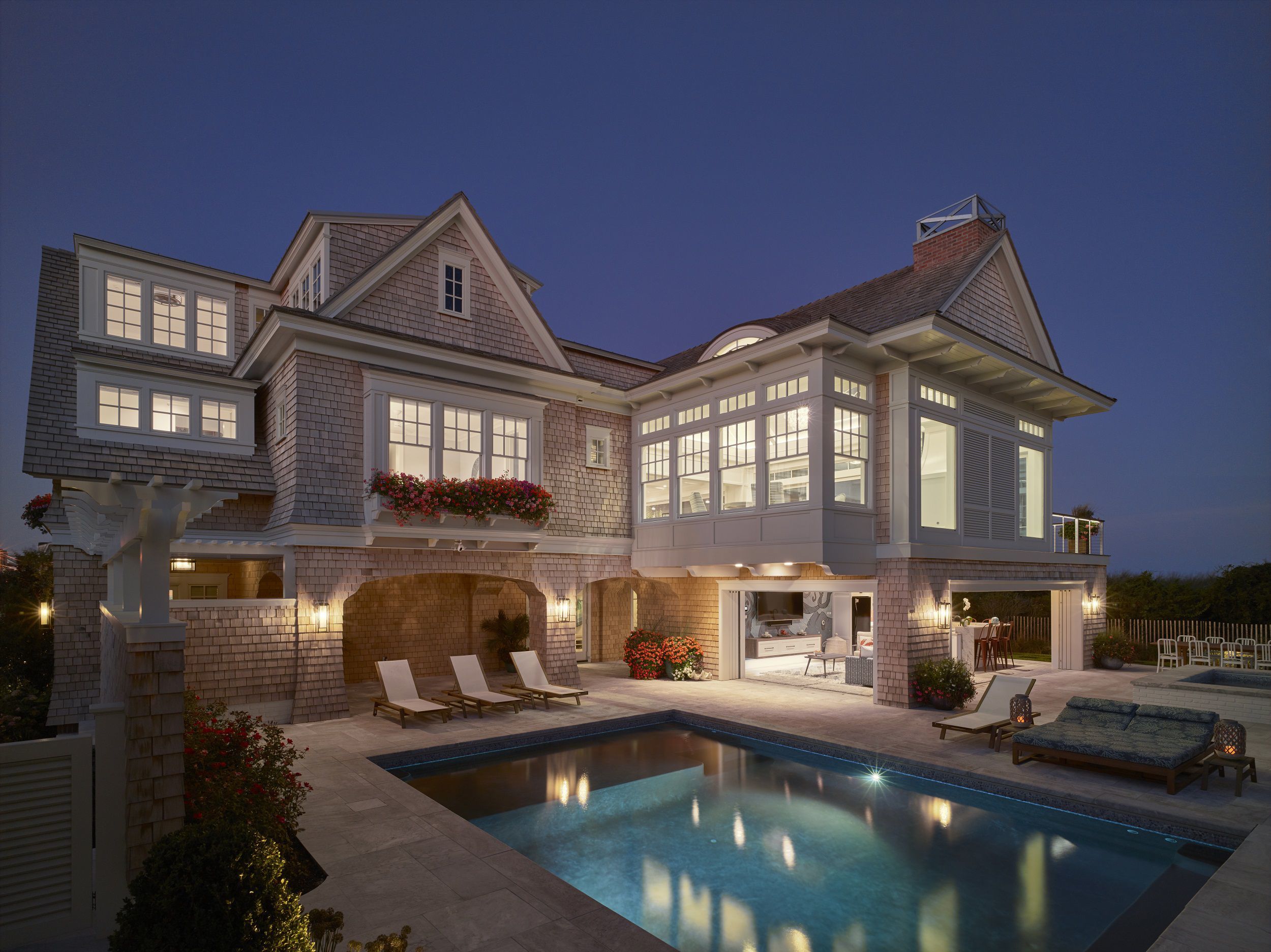
Coastal homes featuring wooden gambrel roofs, cedar siding, covered porches, and inside spaces that flow out to patios and pools are mainstays of Jersey Shore properties. The architect who brought that look to the area, arguably, is Mark Asher.
For more than four decades, Asher has left his imprint on homes from Cape May to Rumson to the Philly suburbs, everything from 1,200-square-foot cottages to 15,000-square-foot mansions.
Now principal of Asher Slaunwhite + Partners in Jenkintown, Asher has come a long way since designing his first house in 1986: an 1,800-square-foot Cape Cod in Ocean City for his parents.
“I suppose my parents were looking for a return on their investment,” Asher said. “The house was serviceable. It stood up and didn’t leak, which puts me well ahead of most architects’ first-house experience.”
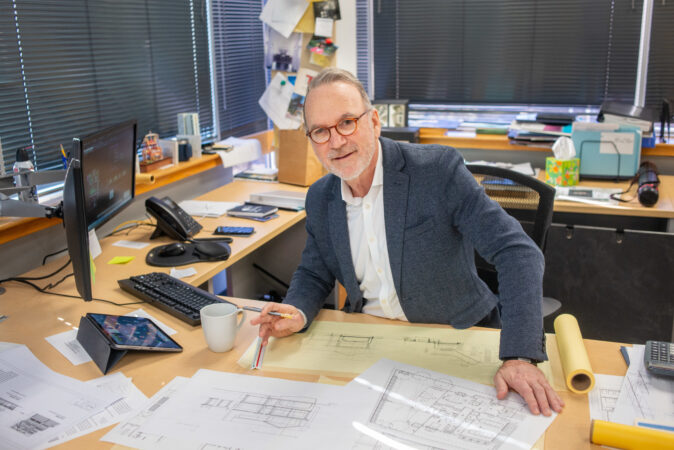
Architectural blueprints in Asher’s office.
That first solo experience taught him many lessons, mostly “that there was a lot to learn,” he said.
One of those lessons he acquired along the way was that many cultural myths about architects exist, beginning with the notion that architects are generalists who know a little bit about a lot of things. In fact, he said, the reality is that you have to become very, very good at many, many things.
“We are balancing the skills in land use, regulatory environment, technology, budget, and design,” Asher said. “And of course, client relationships. The house — the finished product — is the tip of an enormous iceberg.”
Those relationships have been the cornerstone of his business. He has a long list of repeat customers and takes pride in designing homes for the children of former clients.
Early in his career, Shore homes on Seven Mile Island, home to Avalon and Stone Harbor, were his bread and butter. Today, about 60% of his work comes from the Shore, and the rest from coastal clients who hire him for their inland homes.
Steve and Nancy Graham had Asher design two homes: their Avalon beach house in 2003, and their primary home in Wayne a year later. Nancy had worked for a builder at the time, and was a true collaborator during the design process.
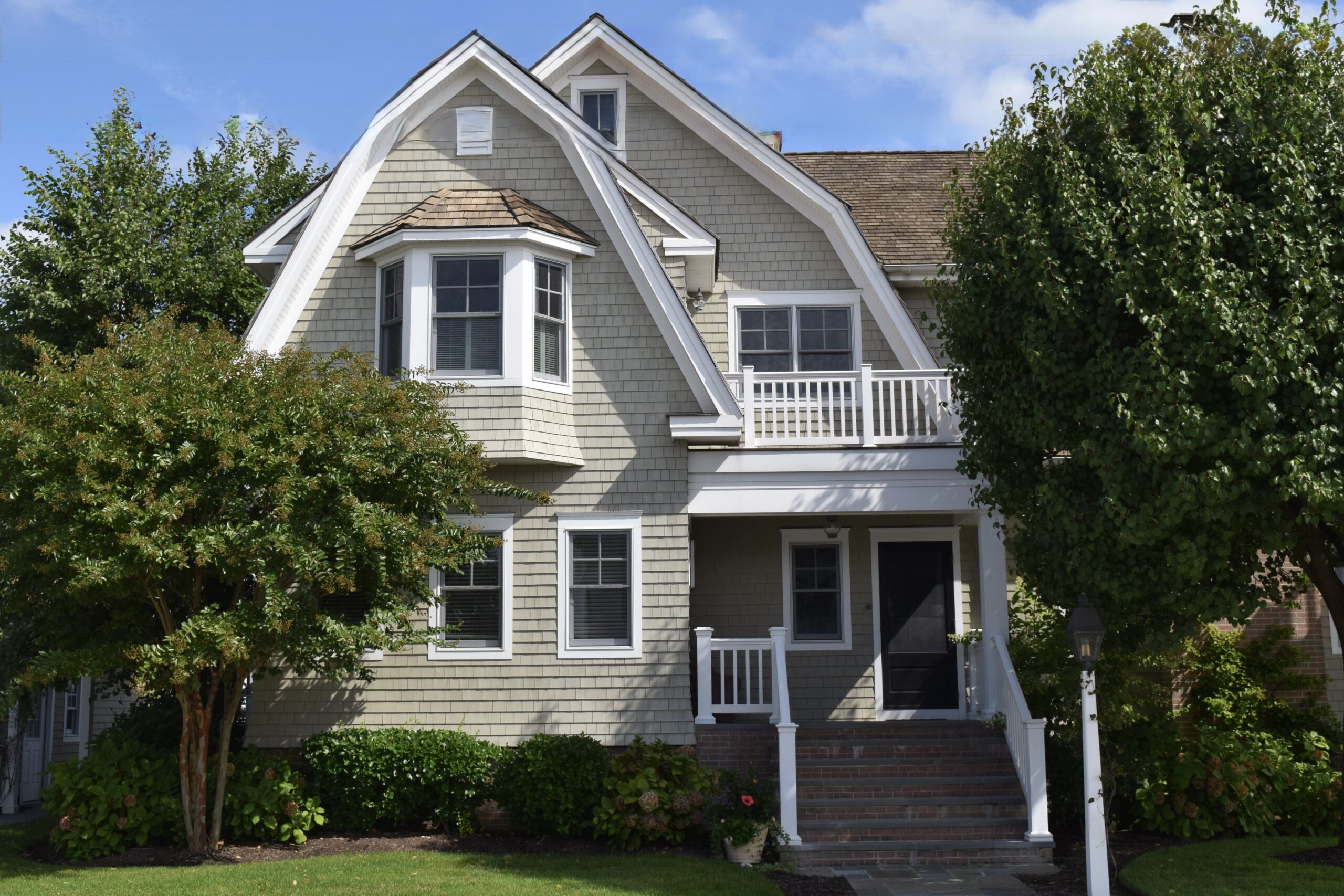
The house of Steve and Nancy Graham in Avalon, which architect Mark Asher designed for the family in 2003.
They razed an existing cottage, replacing it with a two-story, 4,000-square-foot, six-bedroom vacation home for their family, which at the time included their three children. Now, eight grandchildren make memories there.
The Graham’s Shore house was nothing like the Wayne house he designed for them, which replicated that house’s traditional, historical neighbors. Their Avalon property was Asher’s first foray into designing Shore homes and included a gambrel roof, cedar siding, and a covered porch.
“I had designed many houses like this before anyone built one, but I kept getting shot down,” Asher said. “Once it was done, it was like a hit song, and it was all people wanted.”
A childhood passion
As early as he can remember, Asher loved to sail. Spending his summers at the Shore, he’d tool around in a small dinghy, hugging the Jersey coast from Brigantine to Cape May.
“The sights and sounds, the feel, and even the smells of these coastal towns became etched in my memory,” Asher said. “So when I started to work in the various beach towns, it was really just going back to a place I’d already been.”
He had a similar passion for architecture at an early age, curious about old houses. He’d park himself on the curb, sketch pad in hand, and draw the houses he found most interesting. Those were his Architecture 101 lessons.
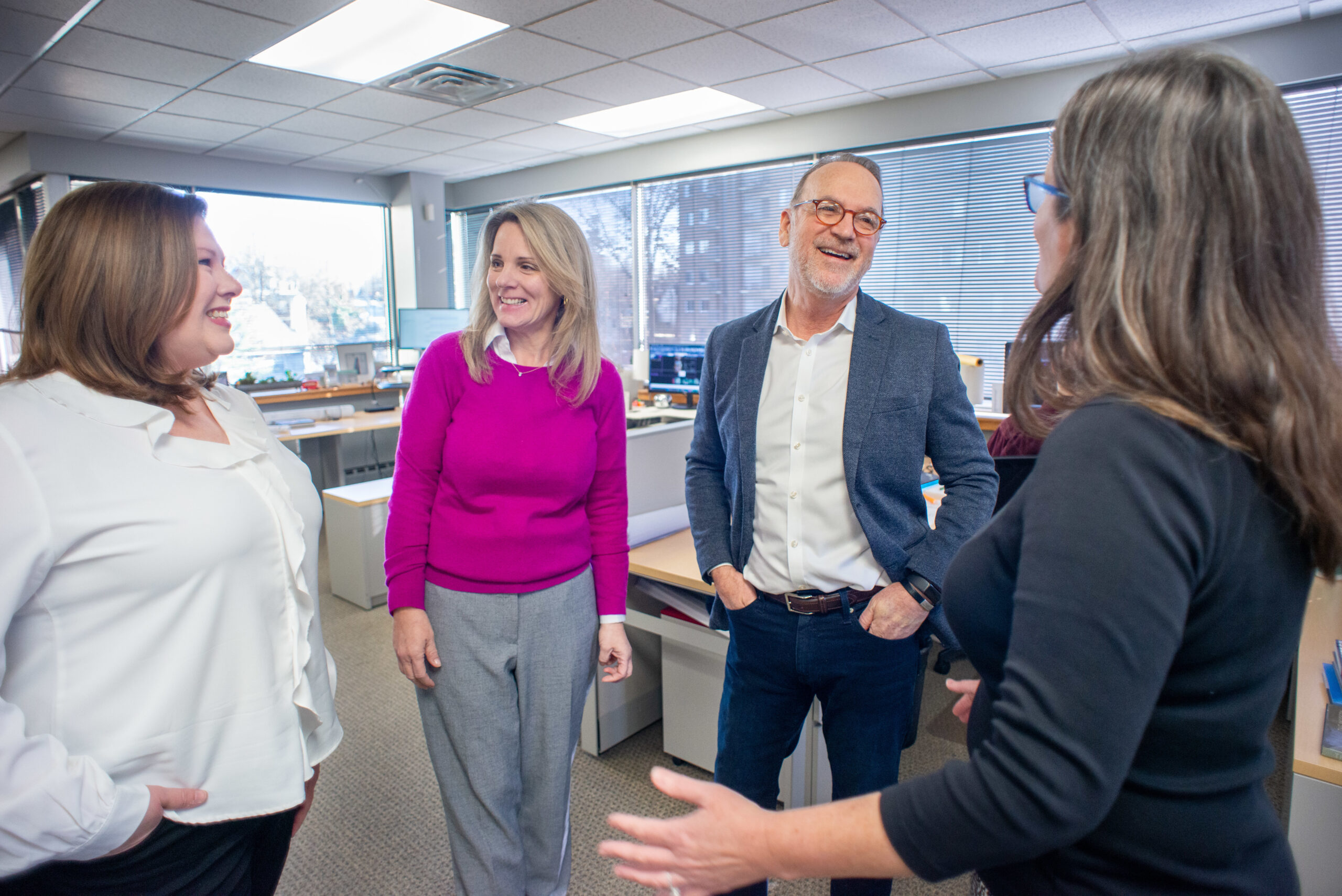
(From left) Laura Glantz, Jeanine Snyder, Mark Asher, and Deborah Slaunwhite chat in the office of Asher Slaunwhite + Partners in Jenkintown.
“I grew up in old houses, warts and all,” he recalled. “They were constantly being worked on. Saturday mornings invariably meant a trip to the lumberyard or the hardware store. And I love old houses still — their history and their stories.”
After graduating from Virginia Tech School of Architecture in 1982, he worked at various architecture firms, learning the subtleties of his profession. In 1992, the Ocean City Yacht Club hired Asher for a redesign, and in 1995 the Avalon Yacht Club followed suit.
“This was pre-computer, pre-Internet, so the OCYC project was drawn by hand,” he recalled. “Hard work and passion will cover the sins of inexperience.”
Building for today’s family dynamic
Asher’s first home design came in 2000, a relatively small two-coastal cottage that cost about $125 per square foot to build. Today, that same house would cost about eight times that, outpacing the inflation rate by 1,200%, Asher said.
His designs have evolved along with the needs of his clients. Shore houses today are often designed for three generations of living.
“Now you need areas for people to come together, but also to separate under the same roof,” said Michael Buck, president of Buck Custom Homes in Avalon and Ocean City, who has worked with Asher on about 30 projects.
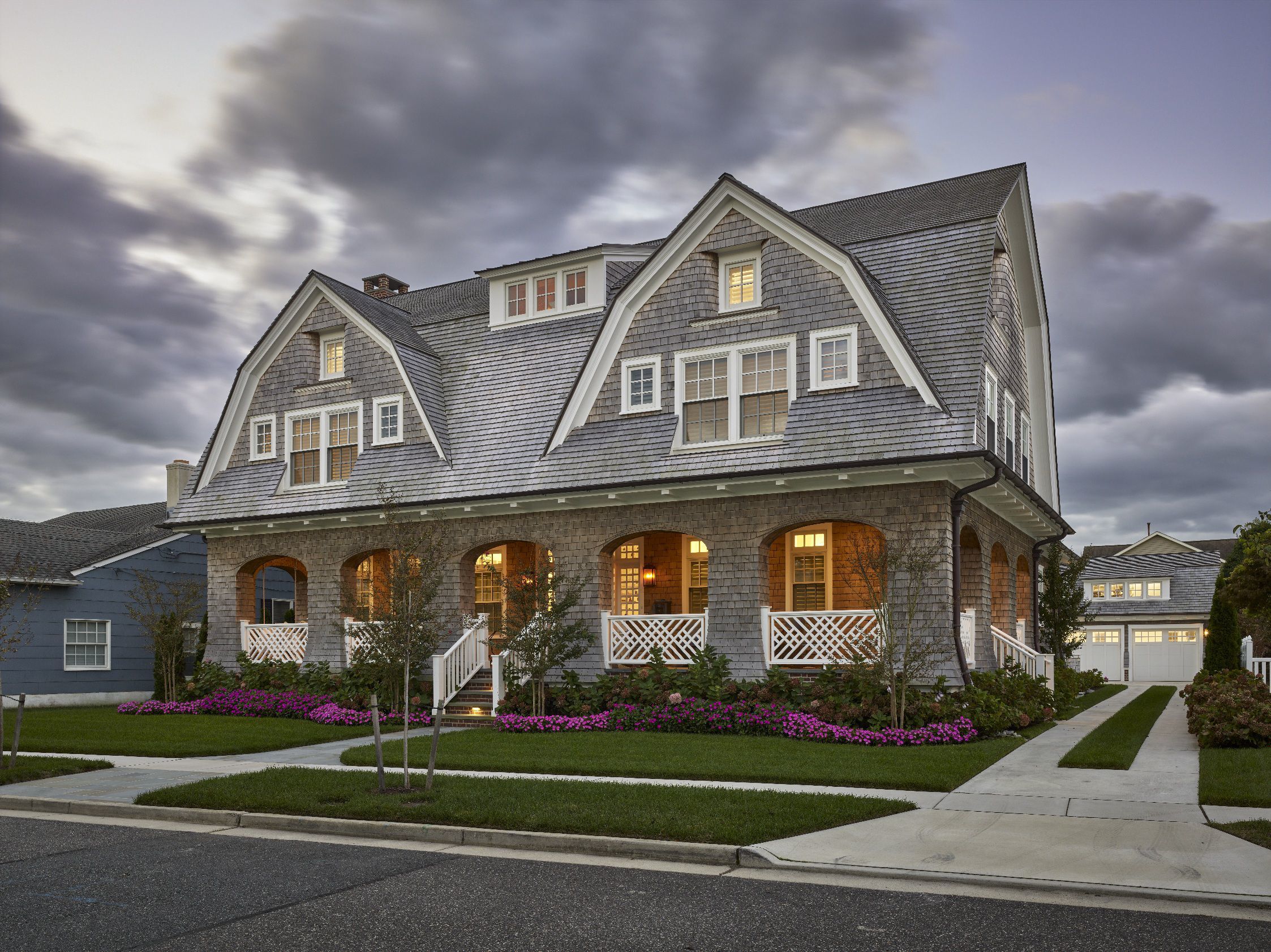
A home in Ocean City designed by architect Mark Asher.
Although homes previously housed multiple generations, they weren’t purposefully designed to accommodate the needs of extended families. In many cases, homes are shifting to a more contemporary style, with five en-suite bedrooms, an elevator, and dedicated HVAC closet.
“Mark’s plans capture a certain simplicity of the coastal environment of the home,” Buck said. “His architecture speaks to a classic, thoughtful approach to how a house blends in with its environment on a micro and macro level.”
Asher’s entry into coastal building brought a greater emphasis on the home’s exterior, both in beauty and function.
“When Mark came to town, the shift toward second homes from purely rental properties had already begun,” said Jack Binder Sr., broker at Ferguson Dechert Real Estate in Avalon. “The affluent, personal-use buyer wanted to express themselves through custom housing that stood apart from the rest and featured high-end amenities.”
“Mark married functional interior space that flowed to exterior entertaining areas allowing his clients to enjoy their home to the max,” Binder said.
One of the homes designed by Mark Asher in Avalon.
Asher’s home interiors are thoughtfully designed, said Allison Valtri, principal of Allison Valtri Interiors in Avalon.
“His windows are very carefully placed so that the light comes in in a way that is unexpected,” Valtri said. “Some of my favorite windows are ones that are capturing the sky. That fulfilling moment of peace is very thoughtful.”
Asher also brought a desire for lush, green lawns to replace the stones that had previously filled the yards. “The stones were hot in the summer, cold in the winter, and ugly all year round,” he said.
“When I began, I was working in a very traditional architectural palette,” he said. “The ’70s and ’80s were not very kind to beach architecture — think big hair and shoulder pads or stucco and a fondness for inexplicable round windows. So I was on a sort of reclamation project.”
If it’s true that imitation is the sincerest form of flattery, Asher should feel quite proud.
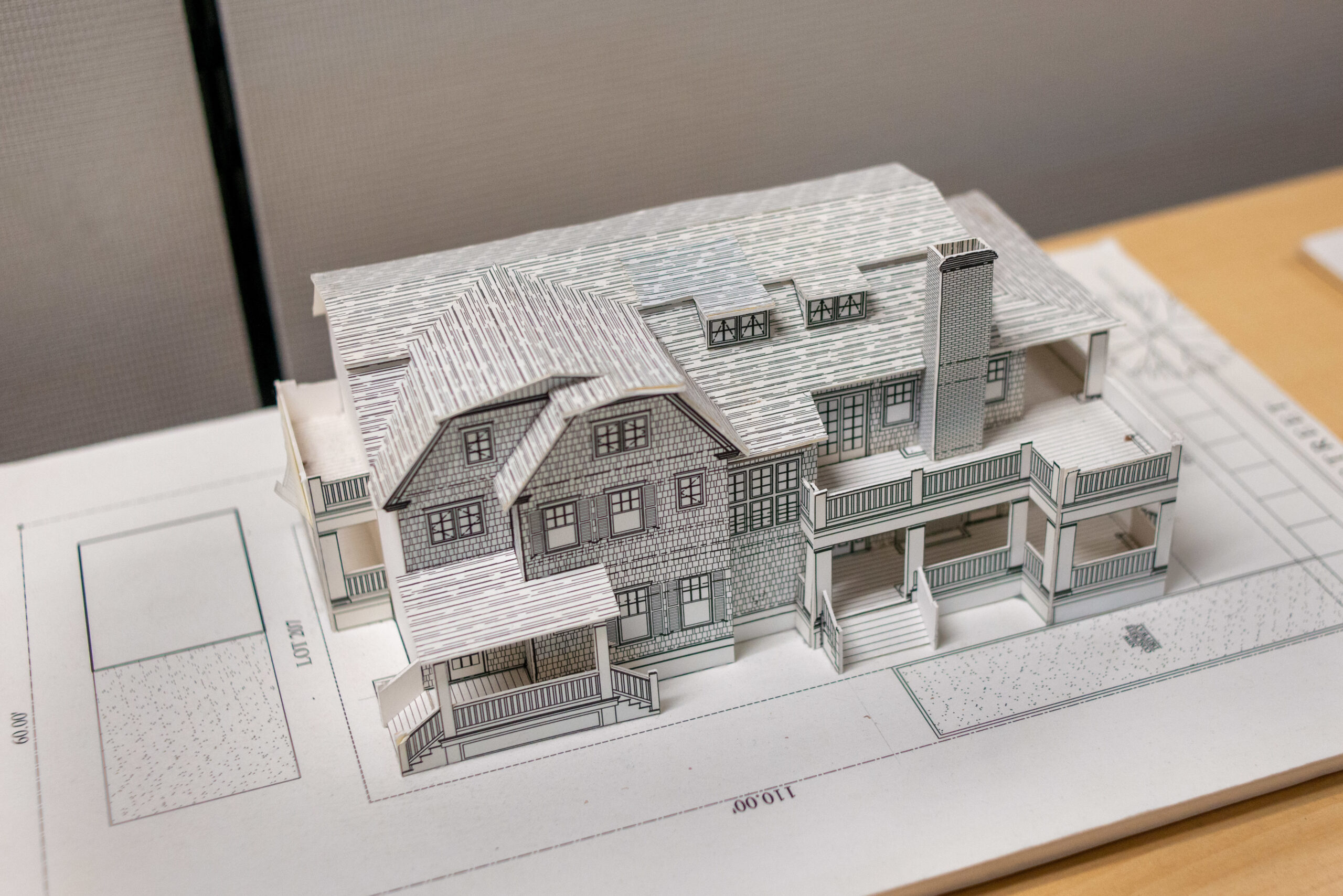
An architectural model at the offices of Asher Slaunwhite + Partners.
“He elevates and then watches everyone else catch up,” Buck said. “For example, not long ago, a wood roof was an anomaly, but now it’s mainstream.”
But Asher sees it differently. Imitation just means he needs to challenge himself to find something better.
He shares credit for his successes with those who have helped and inspired him, including his wife and longtime collaborator, Susan Asher, as well as his architect partners, Deborah Slaunwhite and Laura Glantz, and his business partner Jeanine Snyder. He also enjoys mentoring young architects.
“Any profession has a responsibility for the generation that comes after it,” Asher said. “And I’ve often believed that my own start was a little rockier than it might have been. Some early guidance would have been helpful. So you pay it forward.”
Najee Williams, 27, is considered armed and dangerous, police said. Homicide investigators say Williams is connected to the fatal shootings of 20-year-old David Garcia-Morales in December and 25-year-old Aaron Whitfield in January.
Williams faces charges of murder, conspiracy, and related crimes. There is a $20,000 reward for information that leads to his arrest and conviction.
The killings of Garcia-Morales and Whitfield, who police say worked for the Jenkintown-based towing company 448 Towing and Recovery, rattled the city and put a focus on the competitive business of towing.
Williams is the owner and operator of N.K.W Towing and Recovery, of North Philadelphia, according to a police source who asked not to be identified to discuss an ongoing investigation.
A Facebook page for N.K.W features photos of car accidents and messages urging potential customers to call the company.
“INVOLVED IN A ACCIDENT OR SEE ONE CALL ME” one message says.
Another post from 2024 says: “Left the streets in a patty wagon, came back home and got right to it! Been home for 2 years now & as I sit here and think how bless I’m to have my freedom back.”
It was not immediately clear who made the post.
Staff Inspector Ernest Ransom, commanding officer of the homicide unit, said forensic evidence collected from a stolen Honda used in the shooting of Whitfield led investigators to Williams.
The department’s fugitive task force and U.S. Marshals are assisting in the search for Williams, whose last known whereabouts were in Montgomery County, authorities say.
On Dec. 22, police were called to 4200 Torresdale Avenue to find Garcia-Morales shot and injured inside a Ford F-450 towing vehicle. He was struck in the neck and thigh, and died four days later at Temple University Hospital.
The second shooting, which took place on Jan. 11 on the 2100 block of Knorr Street, left Whitfield dead at the scene after he was struck by gunfire in the head and body.
Whitfield had also been sitting in a tow truck, according to police. His 21-year-old girlfriend was shot in the leg and survived her injuries.
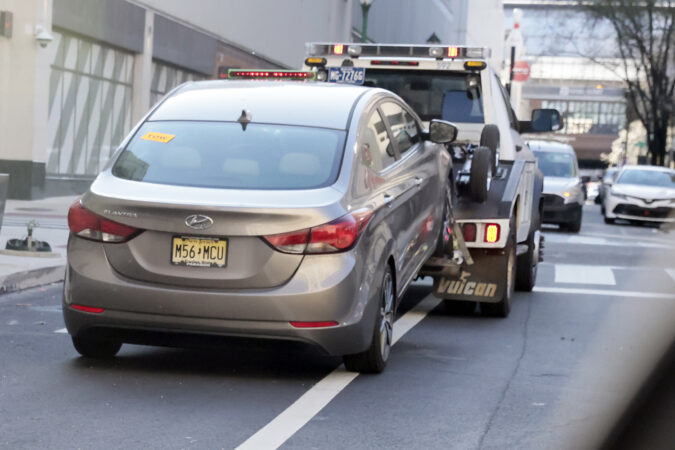
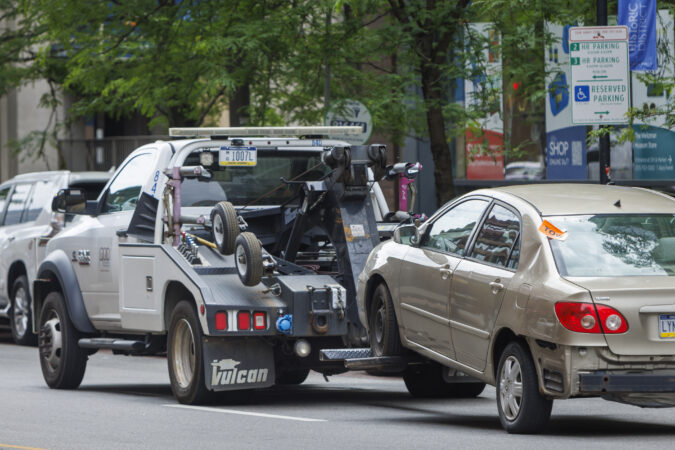
Philadelphia’s towing industry is competitive and drivers often traverse the city in search of car accidents, hoping to be the first to arrive at the scene.
That practice persists despite a city policy that requires police and dispatchers to cycle through a list of approved towing companies to contact when responding to accidents.
Philadelphia police are investigating whether theseparate slayings of three men, all of whom worked in the city’s towing industry, are connected, authorities said this week.
Two of the men, who were shot and killed in December and January respectively, worked as truck operators for the Jenkintown-based company 448 Towing and Recovery, according to police.
The other man, who was shot and killed in November, is connected to a different towing company and worked as a wreck spotter.
Investigators began looking at a possible connection between the killings after the shooting death of 25-year-old Aaron Whitfield Jr. on Sunday, according to Lt. Thomas Walsh of the department’s homicide unit.
“On the surface, there’s obviously some sort of connection,” Walsh said.
Whitfield was in a tow truck with his girlfriend outside of a Northeast Philadelphia smoke shop near Bustleton Avenue and Knorr Street that evening when two men pulled up in another vehicle. They fired at least a dozen shots at the truck before speeding off.
Whitfield died at the scene, while the woman was hospitalized with gunshot wounds to the leg.
The shooting came after another 448 Towing and Recovery driver, David Garcia-Morales, was shot on Dec. 22 while in a tow truck on the 4200 block of Torresdale Avenue, according to police.
Police arrived to find Morales, 20, had been struck multiple times. They rushed him to a nearby hospital, where he died from his injuries on Dec. 26.
While Walsh could not conclusively say whether investigators believe the killings were carried out by the same person or by multiple individuals, he noted that two different vehicles had been used in the crimes.
One of those vehicles, a silver Honda Accord used in the shooting of Whitfield, was recovered earlier this week after police found it abandoned in West Philadelphia, Walsh said.
Meanwhile, police are investigating whether the shooting death of 26-year-old Aaron Smith-Sims in November may also be connected to the killings of Whitfield and Garcia-Morales.
Smith-Sims, who Walsh said was connected to a different towing company, died after he was shot multiple times on the 2700 block of North Hicks Street in North Philadelphia the morning of Nov. 23.
Investigators are now looking to question the owners of both towing companies involved, according to Walsh.
So far, they have failed to make contact with the owner of 448 Towing and Recovery.
“Obviously the victims’ families are cooperating,” Walsh said. “They’re supplying all the information that they have.”
An industry that draws suspicion
Philadelphia’s towing industry can appear like something out of the Wild West, with operators fiercely competing to arrive first at car wrecks and secure the business involved with towing or impounding vehicles.
Police began imposing some order on the process in 2007, introducing a rotational system in which responding officers cycle through a list of licensed towing operators to dispatch to accident scenes.
But tow operators often skirt that system, employing wreck spotters — those like Smith-Sims — to roam the city and listen to police scanners for accidents, convincing those involved to use their service before officers arrive.
The predatory nature of the industry and, in some cases, its historic ties to organized crime make it rife with exploitative business practices and even criminal activity.
But Walsh cautioned the public against jumping to conspiracy theories about the killings, which have proliferated on social media in the days after Whitfield’s death and the news of a possible connection between the murders.
Those suspicions aren’t entirely unwarranted.
In 2017, several employees who worked for the Philadelphia towing company A. Bob’s Towing were shot within 24 hours of one another — two of them fatally.
Pressley admitted to accepting payment in exchange for killing one of the towing employees, 28-year-old Khayyan Fruster, who had been preparing to testify as a witness in an assault trial.
Pressley shot Fruster in his tow truck on the 6600 block of Hegerman Street, killing him and injuring one of his coworkers.
And in an effort to mask the killing — and to make it appear as if it had been the result of a feud between towing operators — Pressley earlier shot and killed one of Fruster’s coworkers at A. Bob’s Towing at random, according to prosecutors.
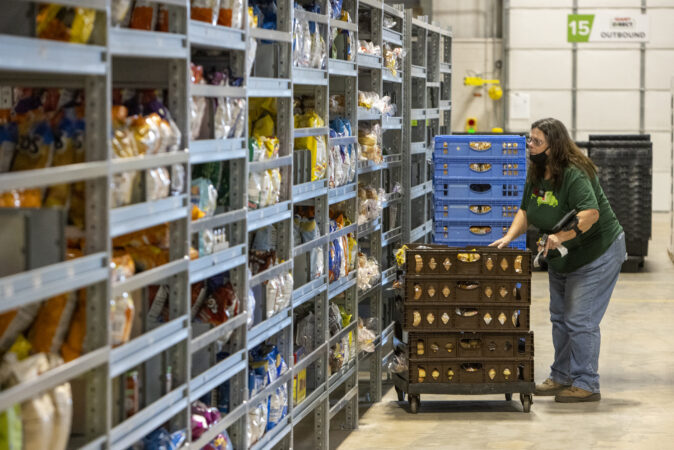
Giant is changing how it handles online orders as customers demand fast grocery delivery.
The supermarket chain, which got its start in 1923 in Carlisle, Cumberland County, is closing five e-commerce fulfillment centers in Pennsylvania as it transitions to a new business model.
“We’ve learned over the past few years that there isn’t a one-size-fits-all approach to our e-commerce business, particularly our fulfillment model,” said company spokesperson Ashley Flower. “With customers expecting faster delivery, we need to ensure we are operating as efficiently as possible to meet their ever-changing needs.”
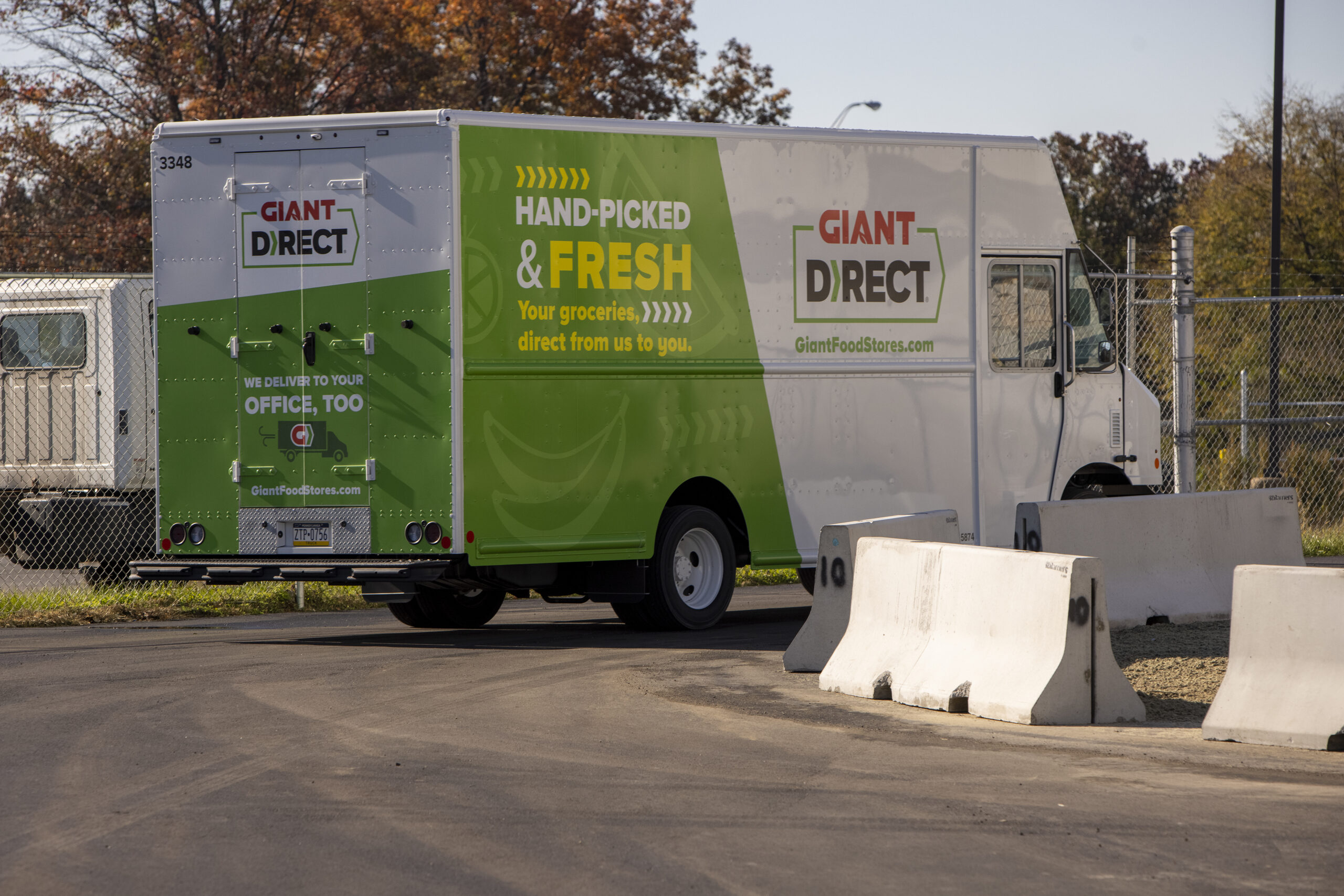
Under the new model, Giant employees will select the items for customers’ orders at Giant stores, instead of fulfillment centers, and the groceries will then be delivered by Instacart or DoorDash instead of GIANT Direct drivers.
The company will transition to the new model by the end of April and customers can continue to place their orders through the Giant app, said Flower.
The new model is intended to allow faster delivery, more product variety, and one-hour delivery windows, said Flower.
Customers will also be able to make changes to their orders closer to the scheduled delivery time.
Trucks leave the Giant Company e-commerce fulfillment center in Eastwick in November 2021, when the center had just opened. Going forward under the new delivery model, grocery orders will be delivered by a third-party company instead.
During the pandemic, more consumers turned to online shopping for their groceries. Today, consumers in the Philadelphia area are able to shop from several supermarkets through the Instacart and DoorDash digital platforms, including ShopRite, Aldi, and Sprouts. Customers have been able to shop for Giant groceries with third-party providers prior to the announced e-commerce model change.
Giant will close its five area fulfillment centers, Flower said. They are at: 3501 Island Ave. in Philadelphia, 315 N. York Rd. in Willow Grove, 216 E. Fairmont St. in Coopersburg, 86 Glocker Way in Pottstown, and 235 N. Reservoir St. in Lancaster.
Some fulfillment centers share their address with a supermarket site but are not accessible to shoppers at those locations. At those sites, the fulfillment center will close, but there will be no change to store operations, said Flower.
The e-commerce facilities employ 493 workers, who will be offered “equivalent jobs within our stores, with the same pay and benefits.” But drivers who take on a new position at a store will no longer receive tips, noted Flower.
When Giant’s 124,000-square-foot Southwest Philadelphia fulfillment center opened in 2021, it allowed the company to expand online order delivery to South Jersey. That was part of a $114 million expansion.
Meanwhile, Giant has been expanding its store footprint with a new South Philly location opening in 2024, and a Jenkintown supermarket in 2025.
“E-commerce remains an important segment of our business strategy and key to our future omnichannel growth,” said Flower. “We remain committed to providing an outstanding experience to our customers by offering speedy delivery, more delivery windows, broad product assortment, and value.”
Locally filmed crime shows were everywhere, theaters opened but didn’t (thankfully) close, and Colman Domingo was (rightfully) ubiquitous. All that and more, in our roundup of movies in Philadelphia in 2025.
The year was lighter on Hollywood movie productions shooting in town, but among them was a basketball movie with Mark Wahlberg, at various times given the titles Cheesesteak and Weekend Warriors.I Play Rocky, a movie about the making of the original 1976 Rocky, also filmed in the city.
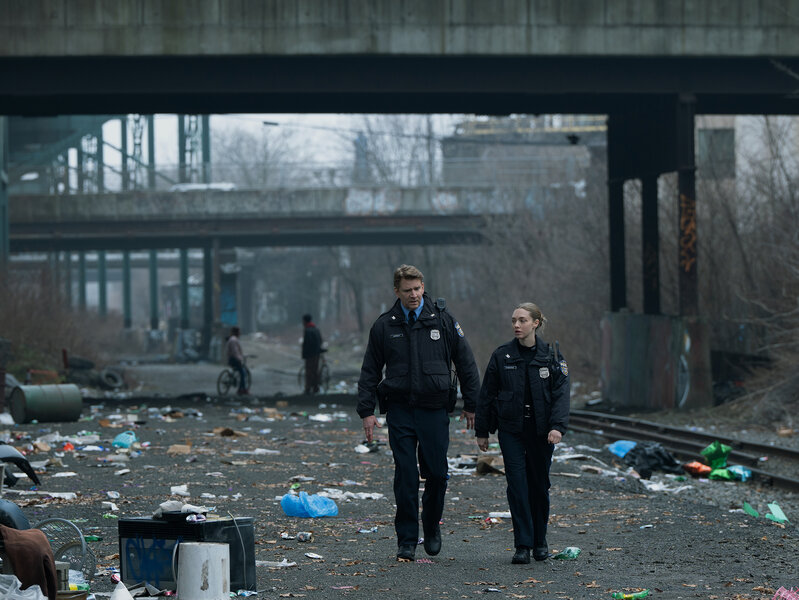
In Peacock’s “Long Bright River,” Allentown native Amanda Seyfried plays Michaela “Mickey” Fitzpatrick, a Kensington patrol police officer who discovers a string of murders in the neighborhood’s drug market.
Gearing up for Rocky 50
It wouldn’t be a year in Philly film without Rocky making its way in.
I Play Rocky is expected to arrive in theaters in 2026, in what will likely serve as one of many commemorations of the 50th anniversary of Rocky.
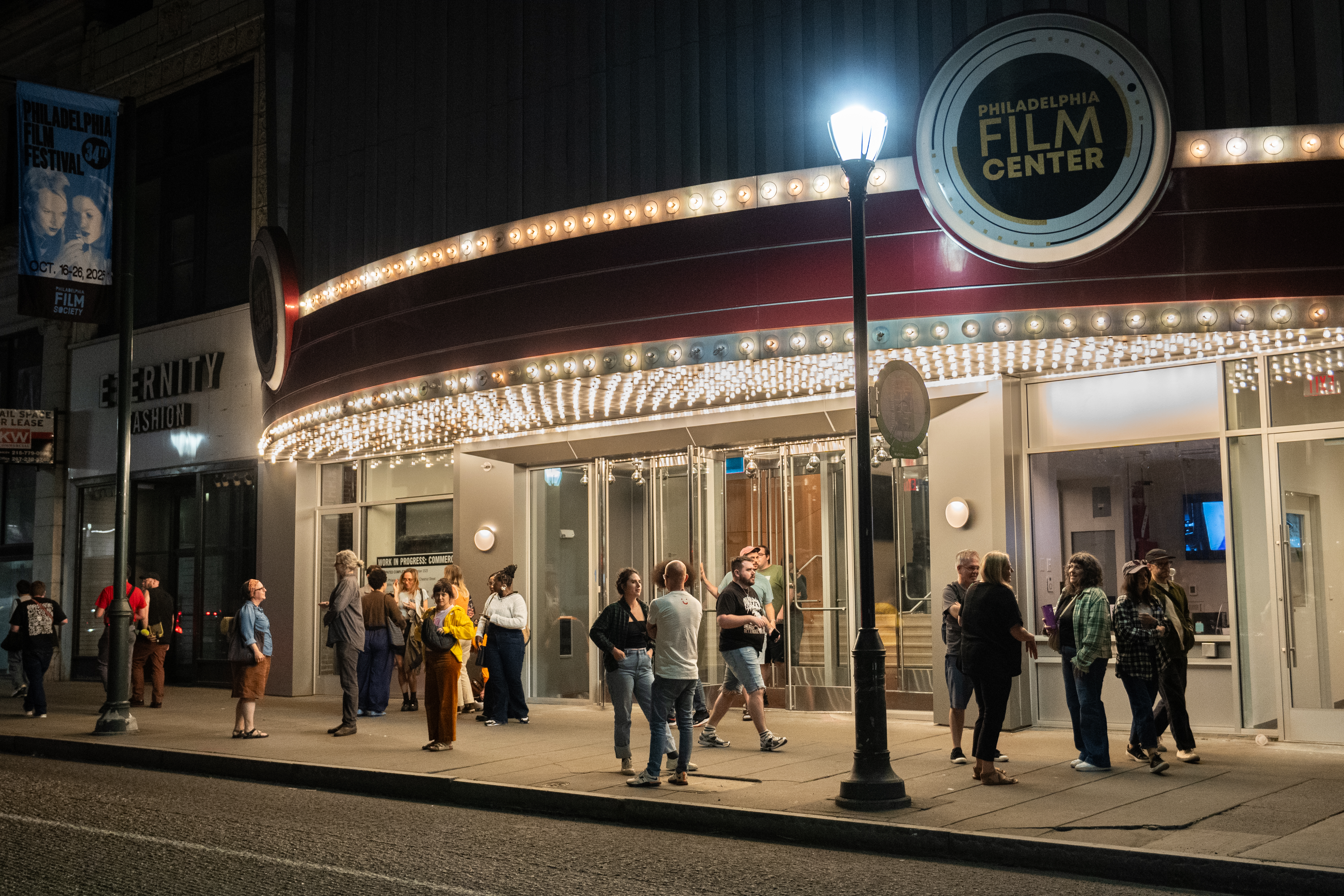
Also, Rocky was among the many movies and area film institutions included in Films Shaped by a City, a new mural by Marian Bailey, that debuted in October on Sansom Street, on the back of the Film Society Center. Mural Arts Philadelphia, BlackStar Projects, and the Philadelphia Film Society had worked on the project for more than two years.
Outside the filming of “Eraserhead” by David Lynch at the Film Society Center, in Philadelphia, Oct. 5, 2025.
The Film Society’s big year
The new mural on the back of its building was part of an eventful year for the Philadelphia Film Society, which completed a big new entrance and lobby renovation of the Film Society Center.
The Philadelphia Film Festival, in October, welcomed 33,000 attendees, which PFS calls its highest turnout ever, while the three theaters welcomed 200,000 customers throughout the year, also a record.
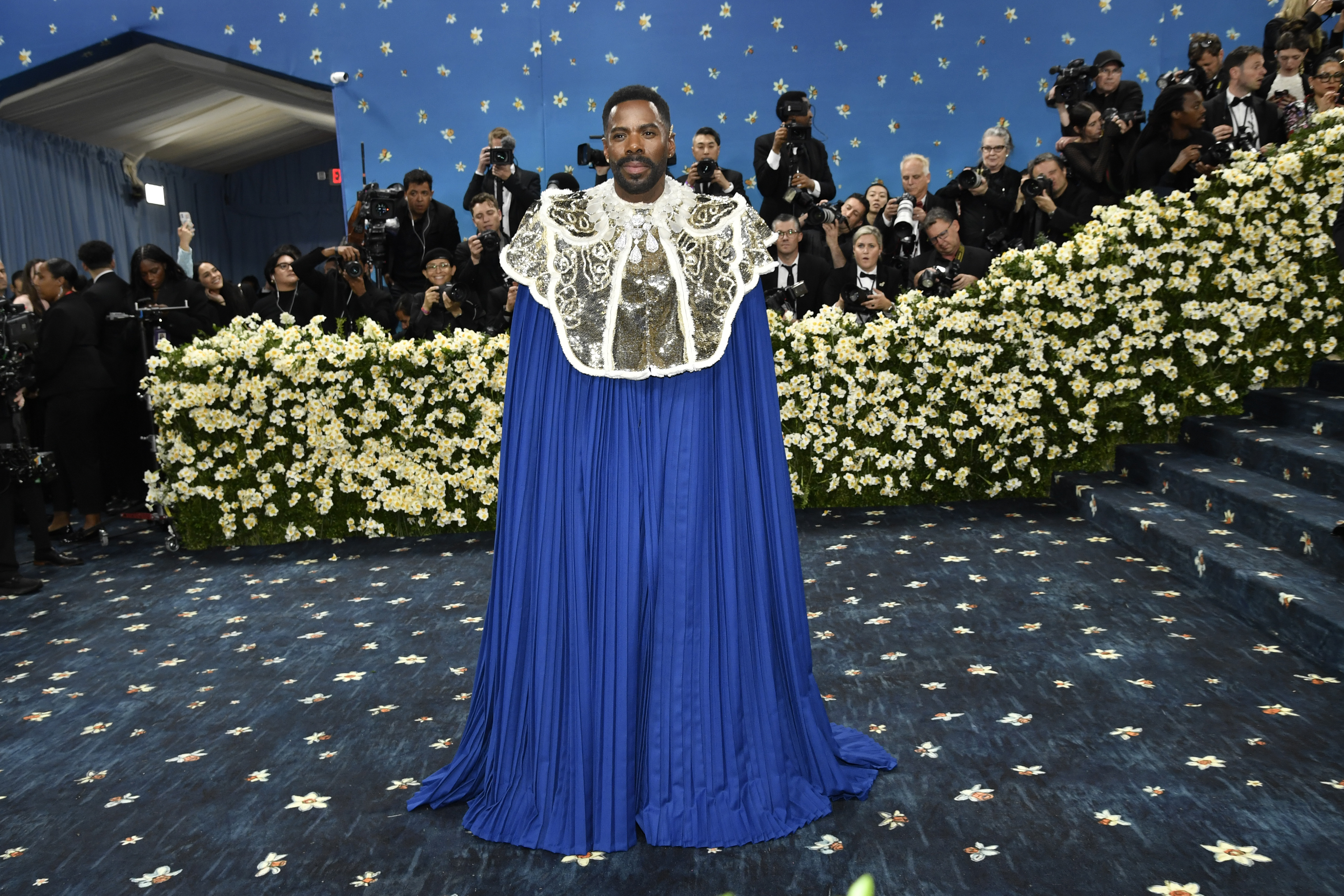
Colman Domingo attends the Metropolitan Museum of Art’s Costume Institute benefit gala celebrating the opening of the “Superfine: Tailoring Black Style” exhibition on Monday, May 5, 2025, in New York.
The very busy Colman Domingo
It was another eventful year for the Temple alum and West Philly native, who was nominated for the best actor Oscar for the second straight year, for last year’s Sing Sing. In 2025, he was in four movies — Dead Man’s Wire, The Running Man, and voice roles in The Electric State and Wicked: For Good. He also appeared in the TV series The Four Seasons — created by and costarring Upper Darby’s Tina Fey — and Your Friendly Neighborhood Spider-Man. He even guest-judged on RuPaul’s Drag Race and cochaired the Met Gala.
In 2026, Domingo is set to appear in both the Michael Jackson biopic Michael and Steven Spielberg’s new sci-fi film, Disclosure Day. He’s also at work on his feature directorial debut, Scandalous!, and said at PFF that he hopes to finish the film in time to bring it to next year’s festival.
This image released by Warner Bros. Pictures shows David Corenswet in a scene from “Superman.” (Warner Bros. Pictures via AP)
Local actors and filmmakers shine
The Philadelphia-born Penn alum David Corenswet debuted as Superman this summer, a film that also featured a small appearance by Jenkintown’s Bradley Cooper. Cooper directed and played a supporting role in In This Thing On?
Mount Airy native and Temple alum Da’Vine Joy Randolph followed up her Oscar win by appearing in three movies, Shadow Force, Bride Hard, and Eternity — the latter of which also starred Downingtown’s Miles Teller — and continuing on Only Murders in the Building.
Willow Grove’s Dan Trachtenberg directed not one but two films in the Predator franchise, the animated Predator: Killer of Killers and the live-action Predator: Badlands. Penn alum Gavin O’Connor directed The Accountant 2. In addition to creating Task, Berwyn’s Brad Ingelsby wrote the movies Echo Valley and The Lost Bus, both for Apple TV.
West Philadelphia’s Quinta Brunson continued to star in Abbott Elementary, which had her filming in Citizens Bank Park the night of Kyle Schwarber’s historic four home runs. She also played a voice role in Zootopia 2.
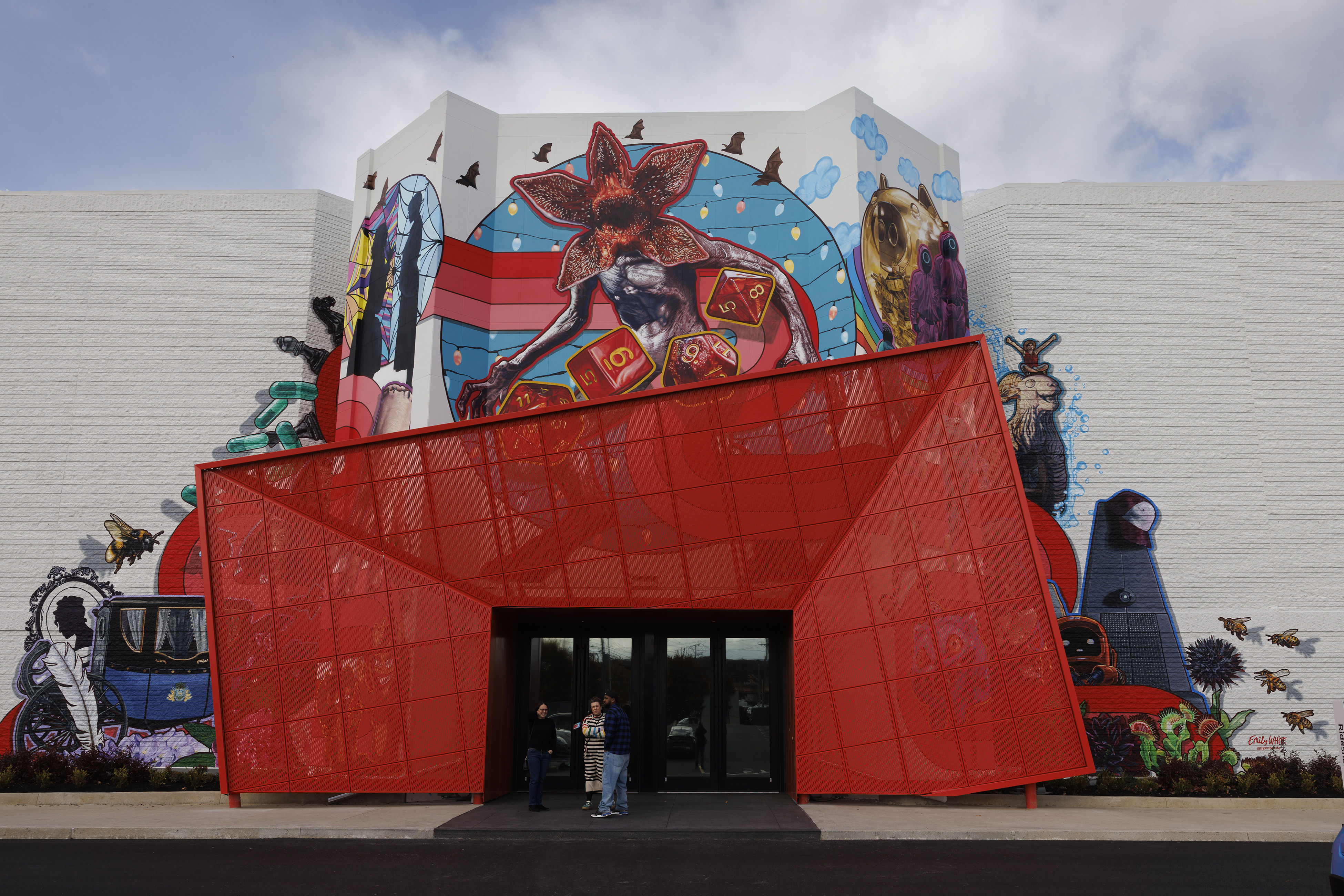
Exterior entrance to Netflix House, King of Prussia Mall, Tuesday, November 11, 2025.
No theater loss
Philadelphia, in a rarity, did not lose any movie screens in 2025.
Then, in August, it was announced that the Riverview movie theater on Columbus Boulevard, which has sat empty since 2020, would reopen in 2026 under the auspices of Apple Cinemas, with the city’s only IMAX screen. However, recently it didn’t appear that any construction work had begun there yet, and the Riverview’s impending return had also been announced in 2024.
In February, an effort was announced to revive the Anthony Wayne Theater in Wayne. Ishana Night Shyamalan, the film director and daughter of M. Night, is a member of the board seeking to bring the theater back.
In November, the first-ever Netflix House “fan destination” opened in King of Prussia, and it includes a theater that will feature such special events as Netflix’s NFL games on Christmas Day and the Stranger Things series finale on New Year’s Day.
And about two hours north of the city, in the town of Wind Gap, the Gap Theatre reopened in March after it was closed for five years. The theater shows more than 50 films a month, mostly sourced from the collection of Exhumed Films.
A still from Mike Macera’s “Alice-Heart,” part of the 2025 Philadelphia Film Festival’s “Filmadelphia” section.
Indie-delphia
It was also an eventful year for local independent film.
Delco: The Movie, which was in the works for several years, had its premiere in January. Two other films, both of which premiered at the 2022 Philadelphia Film Festival, finally saw their release this year: The Golden Voice, directed by Brandon Eric Kamin, and Not For Nothing, from Tim Dowlin and Frank Tartaglia, who died in 2022.
Mike Macera’s Alice-Heart, featuring a cast and crew full of Drexel and Temple alumni, premiered at PFF and won the Filmadelphia Best Local Feature Film Award.
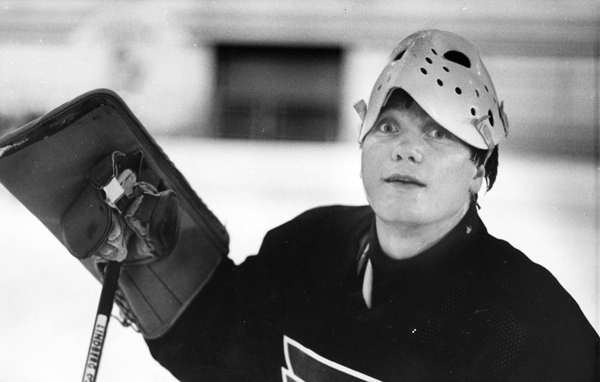
To mark the 40th anniversary of the 1985 death of Flyers goalie Pelle Lindbergh, the documentary “The Swede of Philadelphia” opened in area theaters in November.
Documenting sports stars
There were, once again, several prominent sports documentaries about Philadelphia athletes of the past and present. CNN aired Kobe: The Making of a Legend, about Lower Merion’s Kobe Bryant, to coincide with the fifth anniversary of his death. To mark the 40th anniversary of the 1985 death of Flyers goalie Pelle Lindbergh, the documentaryThe Swede of Philadelphia opened in area theaters in November.
Amazon’s Prime Video premiered Saquon, which followed the Eagles’ Saquon Barkley for several years, in October. This year’s Eagles team is featured on HBO’s Hard Knocks for the first time as part of the currently-airing Hard Knocks: In Season with the NFC East.
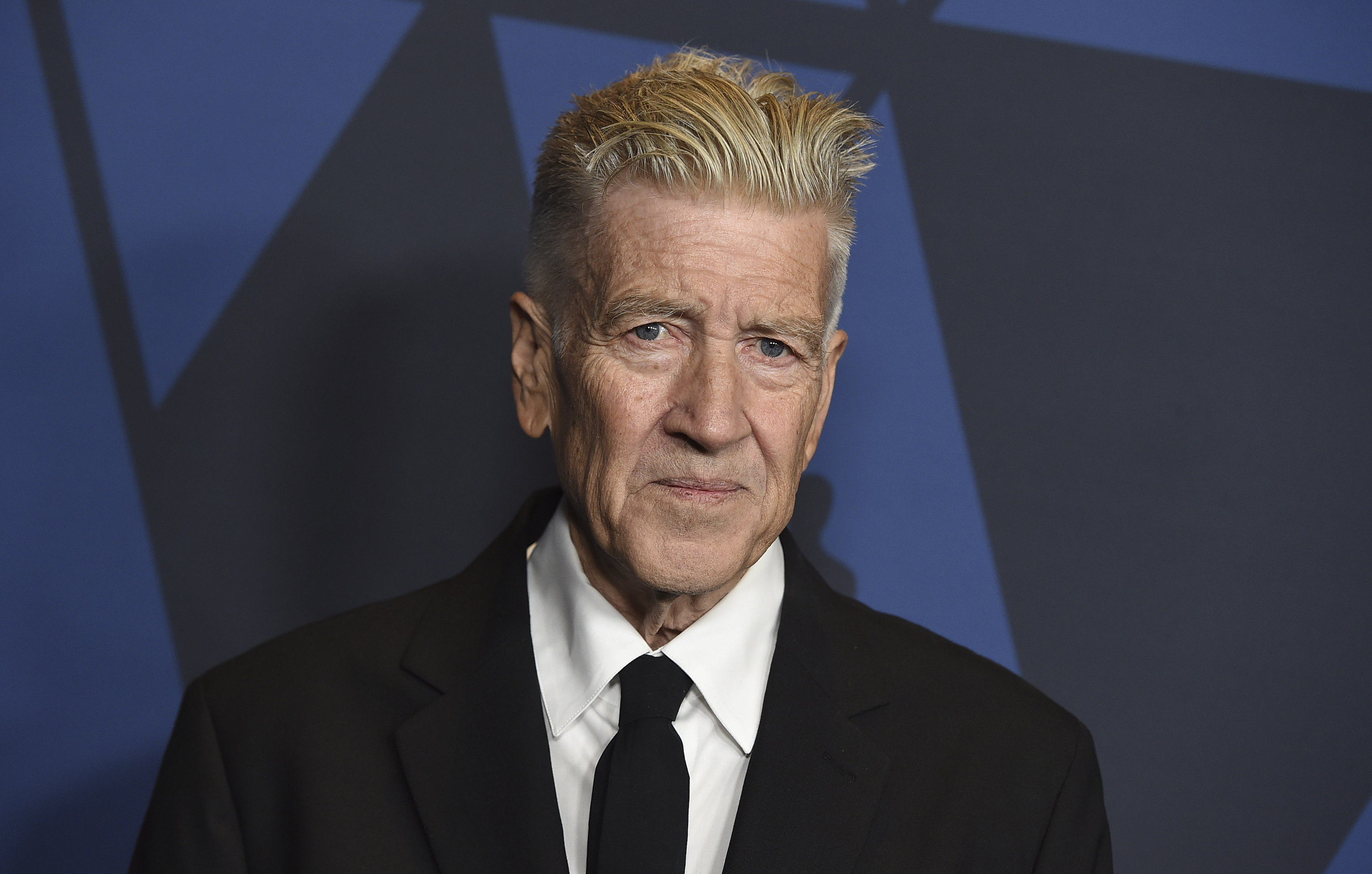
David Lynch appears at the Governors Awards in Los Angeles on Oct. 27, 2019.
Remembering David Lynch
The January death of David Lynch, who lived in Philadelphia as a young art student and was inspired by the city in his work, was commemorated locally with everything from a new mural in the “Eraserhood” to showings of his movies at most area theaters that feature repertory fare.
When the Film Society Center reopened after the renovation, the first showing was a 35mm screening of Lynch’s Callowhill-inspired Eraserhead.
A second woman is accusingPhiladelphia doctor John Smyth Michel, the medical director and owner of Excel Medical Center, of sexual abuse. She said Michel touched her inappropriately when she worked for him several years ago, according to a recent court filing by the Philadelphia District Attorney’s Office.
Prosecutors charged Michel with felony rape and sexual assault earlier this yearafter a female patient said he raped her during an October 2024 office visit.
Michel, 55,of Jenkintown, told police and state medical licensing authorities that he had sex with the 39-year-old patient, but he claimed it was consensual, criminal and state licensing records show.
The new accusations involve a former female employee who worked for Michel as a medical assistant from 2015 to 2019 at his East Mount Airy office on Stenton Avenue and at another location in Germantown on Chelten Avenue.
She recently told law enforcement authorities that beginning in 2018 Michel touched her breasts over her clothing on multiple occasions while she was working in the office. He additionally groped her vagina over her clothing before she quit in 2019.
The accusations have not resulted in new charges at this time, but the investigation remains ongoing, according to Marisa Palmer, a spokesperson for the DA’s office.
Prosecutors are seeking to introduce the groping accusations as evidence to bolster its sexual assault case against Michel, given there were no witnesses to the alleged rape.
“The incidents reveal a common plan, scheme or design on the part of the defendant to engage in unlawful and similar nonconsensual sexual conduct with vulnerable women in his medical offices,” Assistant District Attorney Eamon Kenny wrote in a Nov. 24 court motion.
The judge presiding over the criminal case must decide whether to grant Kenny’s motion and put the 34-year-old former employee’s accusations before jurors at trial.
The Inquirer does not identify alleged victims of sexual assaultwithout their permission.
Michel did not return phone calls and emails from The Inquirer this week. His criminal defense lawyer, Andrew Gay Jr., declined to comment Wednesday.
Michel founded Excel Medical Center, whichgrew to more than a dozen medical clinics located throughout the city, with about 20,000 patients and 200 employees.
Last month, Excel’s general manager wrote a letter to patients informing them the practice “will be ceasing operations” as of Dec. 1. “We truly value the trust you have placed in us for your care,” the manager stated in the Nov. 11 letter obtained by The Inquirer.
A woman who answered the phone at Excel’s main location in West Mount Airy on Thursday said the practice was not taking any new patients in preparation of closing. She said the practice might resume operations and accept new patients after the new year. Michel’s lawyer declined to comment when asked about the practice’s status.
The criminal case, which is pending in Common Pleas Court, involves a then-38-year-old patient.
According to police and court records, she accused Michel of kissing her during a May 2024 exam at his East Mount Airy location.
She told him “no,” left the office, and did not report the kissing incident.
About five months later, she went to an appointment at Michel’s North Philadelphia office on West Diamond Street. During the Oct. 14, 2024, visit, she says Michel raped her with such force that her head banged twice against the exam room wall.
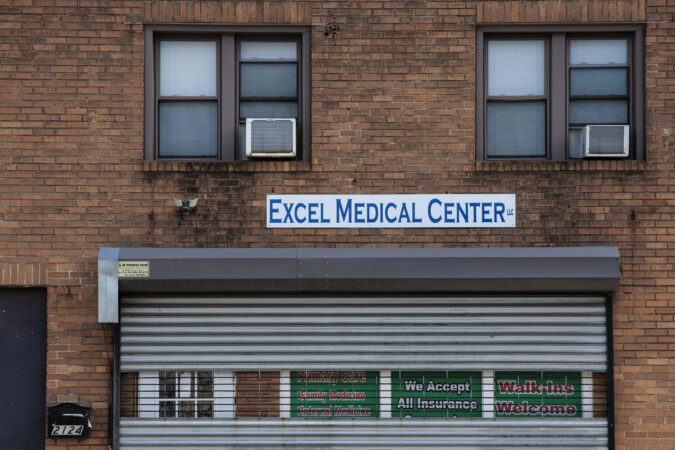
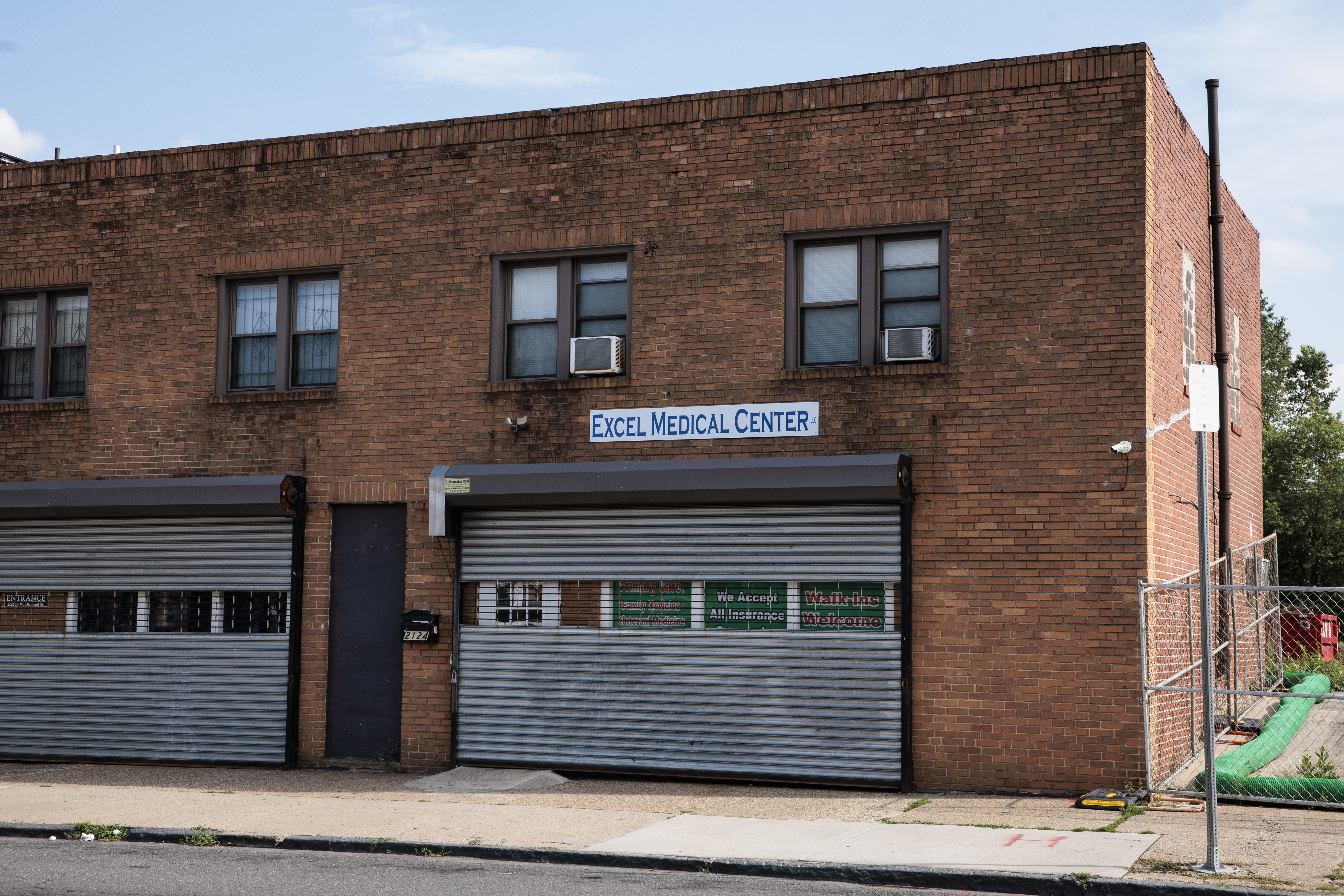
The exterior of Excel Medical Center at 2124 Diamond Street in Philadelphia.
In early November 2024, she told her husband what had happened and subsequently filed a police report. Michel was arrested and charged about three months later.
Michel’s trial was initially slated for Dec. 9, but during a hearing on Monday, a judge postponed it until Feb. 17 after the DA’s office asked for more time to investigate, court records show.
Michel’s suspension nears end
In June, the State Board of Osteopathic Medicine, which regulates and oversees licensure of osteopathic doctors like Michel, disciplined him for having sex with a patient — a violation of state regulations.
He apologized to the board in a letter, saying, “I fully acknowledge that I crossed a professional boundary” and is “profoundly contrite.”
The board suspended his medical license for six months, followed by 18 months of supervised probation, and fined him $4,000. Michel’s suspension is set to end on Dec. 11.
If convicted in the criminal case, Michel could permanently lose his medical license.
In an e-mailed statement on Thursday, the Pennsylvania Department of State, which oversees professional licensing boards, said its prosecution division “continues to closely monitor Dr. Michel’s criminal charges and review his compliance with the terms of the consent agreement.”
Abuse in office hallways
The accusations outlined in Kenny’s motion include new details of sexual misconduct. The former employee said Michel approached her from behind to “grab her breast over her shirt.”
She was stunned and “hated the feeling,” but she feared losing her job so she didn’t say anything to him.
Once, he simultaneously “cupped” her breast and vagina over her clothes with his hands. She turned around and screamed at him to stop touching her, according to the motion. He replied, “`You know you want it and you know you like it,’” she recounted.
She said she couldn’t quit because she needed the income and told her co-workers about the abuse. Those colleagues helped her “avoid him” while at work. She also told her husband, though she persuaded him not to confront Michel.
She resigned in 2019 after landing a new job. They had no contact until this year when he texted her.
When she asked why he wanted to talk to her after so much time had passed, Michel texted nevermind, the former medical assistant told prosecutors. She then wrote back, “explaining how she felt about his abuse all these years later, that the thoughts of it still traumatized her.”
Inquirer staff writer Chris Palmer contributed to this article.
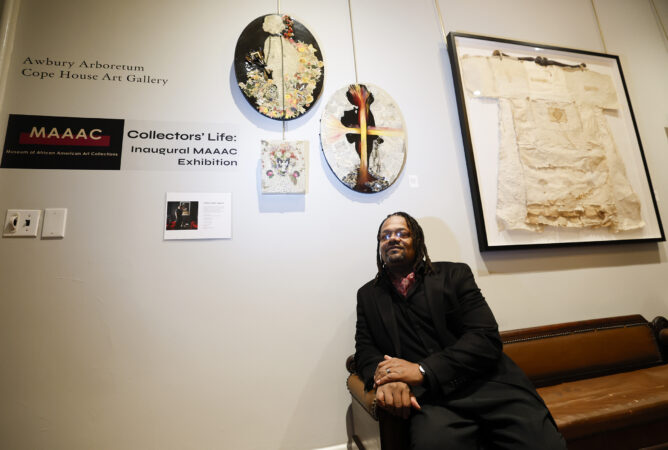
On a recent Thursday evening, Philadelphia art collector William Skeet Jiggetts sat in the foyer of Awbury Arboretum’s Francis Cope House surrounded by grand collages taken from the walls ofhisEast Falls home.
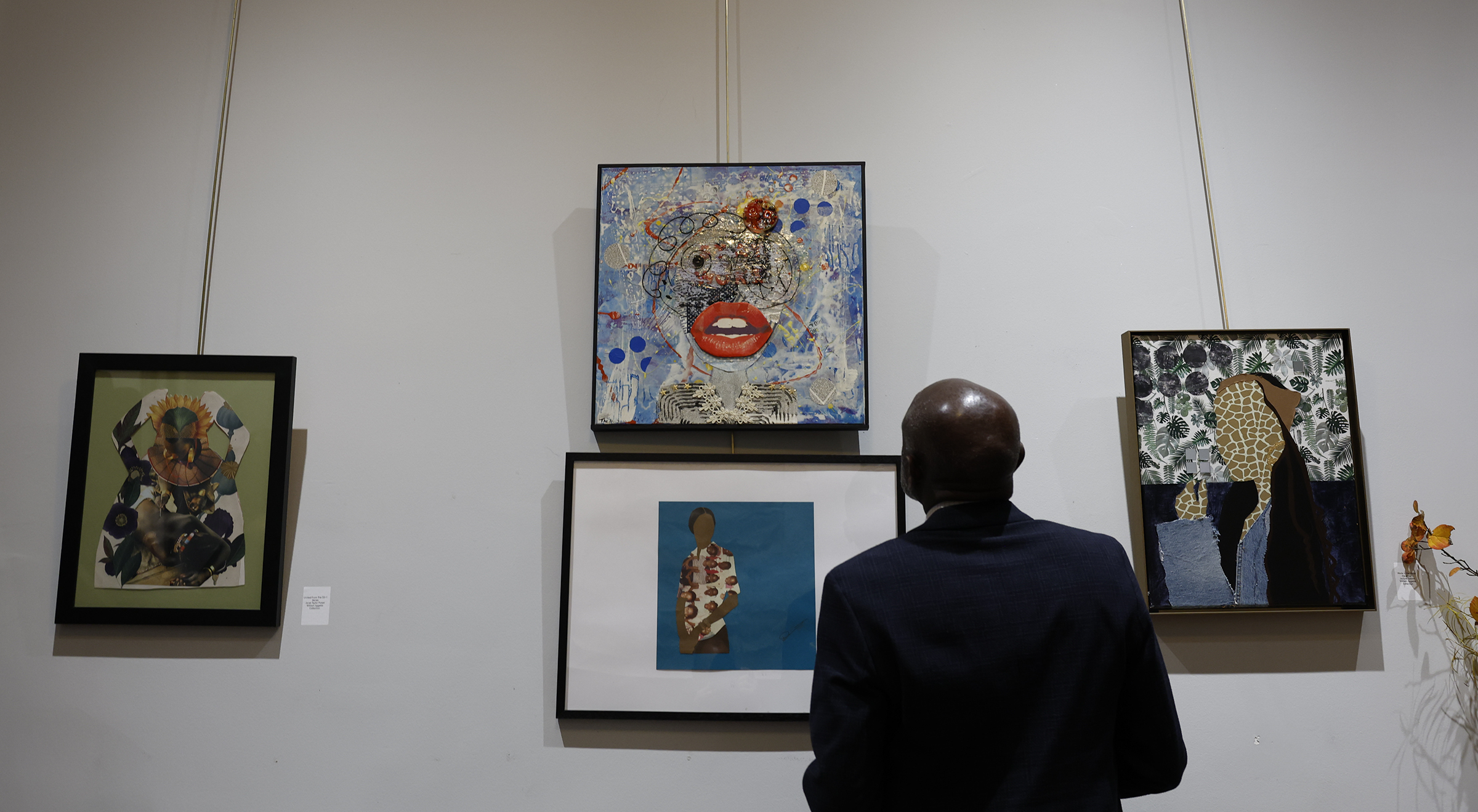
The art — all made by living artists and friends of Jiggetts — is striking. A framed paper and antique lace dress by textile artist Rosalind “Nzinga” Vaughn-Nicole sits next to portrait-size cameos that mixed media artist Danielle Scott fashioned from newspapers and other found objects.
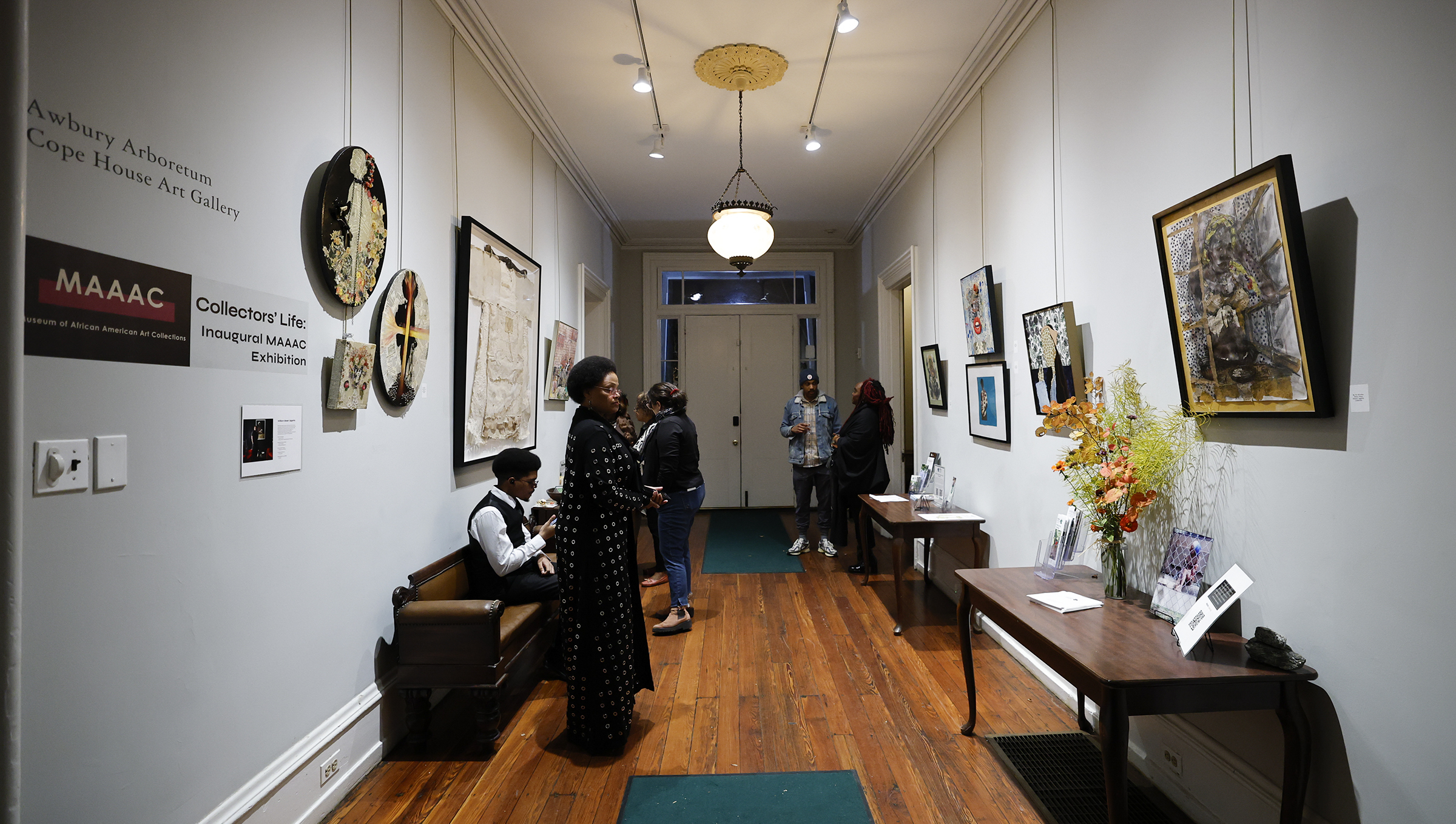
A guest looks at artwork collected by William Skeet Jiggetts during the Museum of African American Art Collections’ inaugural exhibit at the Awbury Arboretum in East Germantown.
Jiggetts, 57, an art collector for more than 30 years, has had pieces from his collection on display in small shows, but never in his wildest dreams did he think that they would anchor an exhibition — in a traveling museum that he founded.
While the Barnes Foundation houses the late chemist and art collector Albert C. Barnes’ collection, there are very few other — if any — museums whose walls are solely dedicated to the collections of collectors. Nomadic, traveling museums, at that.
“It got to the point where I had more art than walls,” Jiggetts said looking over his black-framed glasses. “Nobody saw it … I didn’t even see it. I thought, ‘Wouldn’t it be cool for a bunch of collectors to get together and create a space to show our work. Tell our story?’”
Guest look at art work during the Museum of African American Art Collections inaugural exhibit at the Awbry Arboretum in East Germantown on Thursday, Nov. 6, 2025.
Jiggetts got the itch to show his collection in the early 2020s after talking with colleagues who wanted to show theirs, too. In 2023 he set up a foundation, started approaching collectors, and began nailing down locations.
“There is a treasure trove of African American art in our living rooms, in our reading rooms, and in our dens that need to be shared,” Jiggetts said. “The Museum of African American Art Collections is a forum to host these collections and tell the stories that come with them.”
That’s how the Museum of African American Art Collections began.
A $200 frame and an obsession
Jiggetts, who works as a tax accountant, grew up in Germantown and spent Sunday afternoons at the Philadelphia Art Museum gazing at the impressionist works of Manet and Monet.
When he was in his 20s, he bought a poster of Vincent van Gogh’s Sunflowers. “I spent $200 of 1989 money on that frame,” he said with a laugh. That purchase marked the beginning of an obsession. He bought his first piece of original art from Germantown painter Lucien Crump Jr., who, according to a 2006 Inquirer obituary, owned the first gallery in the city dedicated to Black art.
Jiggetts scoured galleries and festivals for original art, buying any piece that tickled his fancy for under $500. In the early 2000s, his mentors — well known Philadelphia appraiser Barbara Wallace and the late African American collector Ronald Ollie — urged him to start evaluating his choices and he became a serious art collector.
“I figured out what it was I really liked,” Jiggetts said, describing his favorite pieces as ones that marry impressionist and abstract art, like the ones on display at Awbury Arboretum. “I realized I enjoyed the experience of buying art as much as the art. I like the company of artists.”
His collection is comprised of mostly living artists like the mixed media artist Danielle Scott; abstract painter Ben F. Jones; and Paul Goodnight, who is known for his colossal oil paintings featured in the backdrops of TV shows like Seinfeld and The Fresh Prince of Bel-Air. (Although Jiggetts does have a pencil sketch by the late Bahamian artist Purvis Young.)
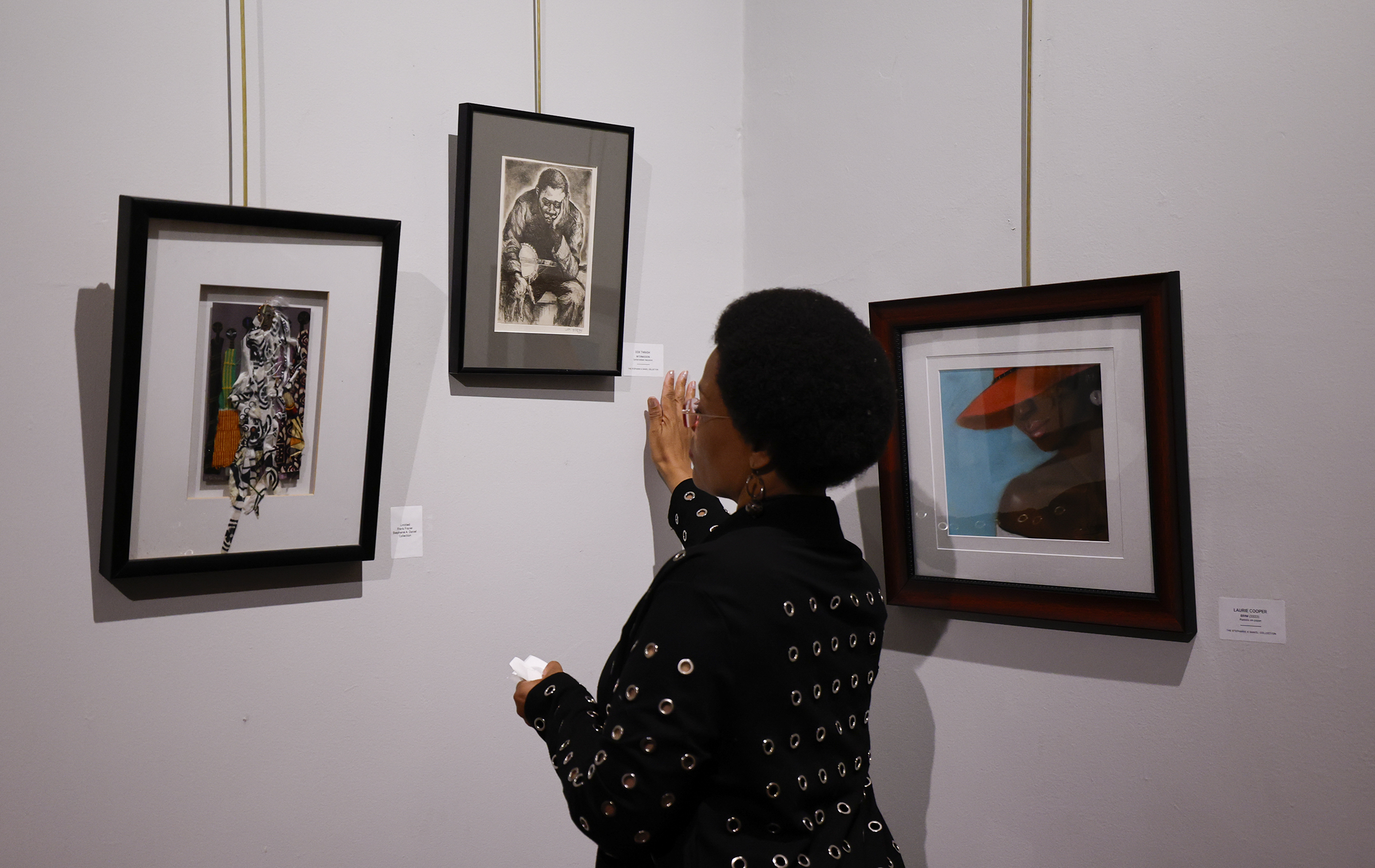
Graphic designer for the Museum of African American Art Collections, Staci Cherry, places labels for the art collection from Stephanie Daniel during the Museum of African American Art Collections inaugural exhibit at the Awbry Arboretum in East Germantown on Thursday, Nov. 6, 2025. The piece in the center is the Dox Thrash mezzotint.
Keepers of history
Collectors are the glue that keep the fine arts ecosystem — artists, patrons, buyers, gallerists, and museum creators — connected and running.
They are often patrons of the arts like James J. Maguire and his late wife, Frances, investing in artists and art institutions, building impressive art collections in their homes. Collectors Adrian Moody and Robyn Jones connect artists to buyers at Jenkintown’s Moody Jones Gallery, but their personal collection has more than 400 pieces.
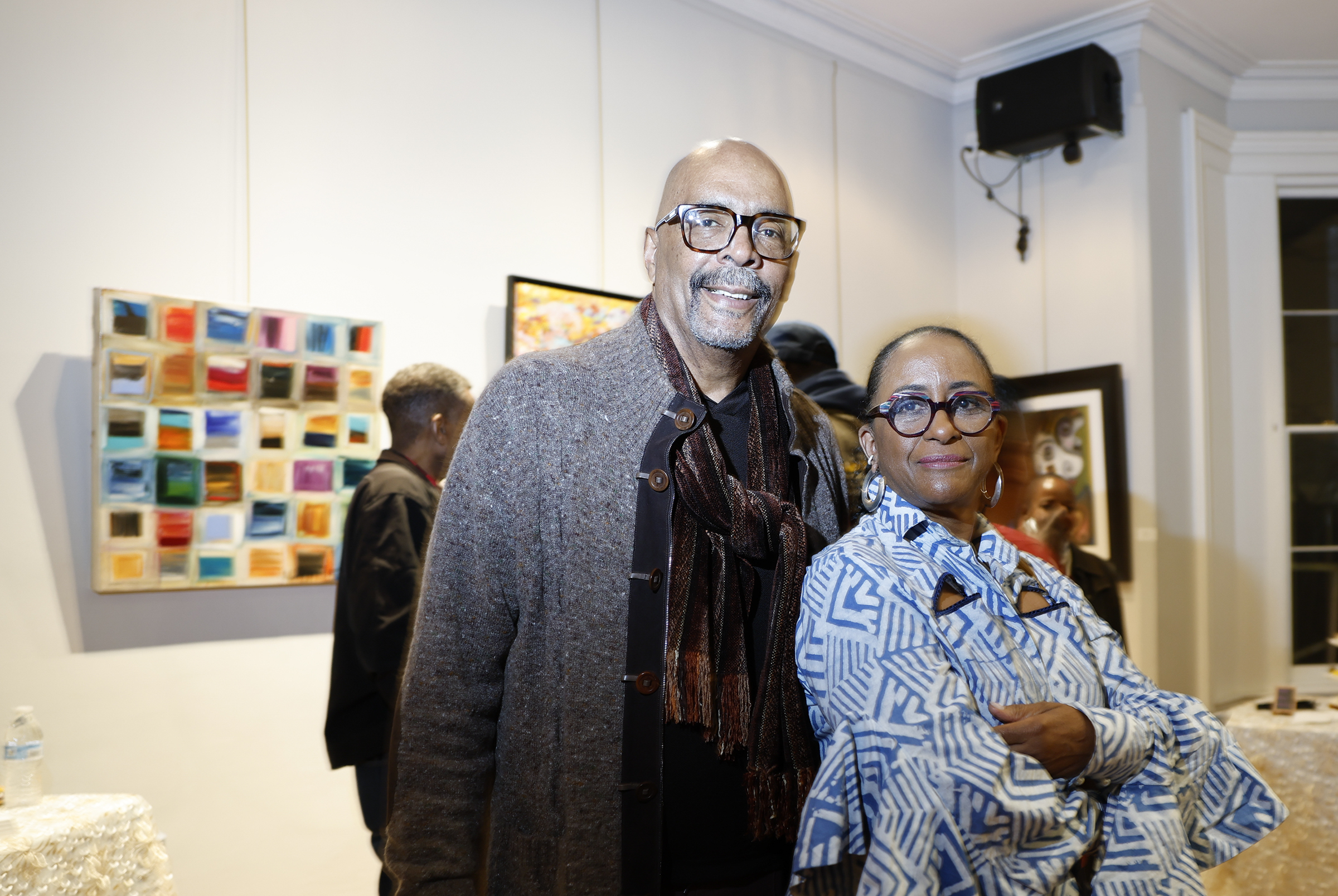
Art collectors Adrian Moody and Robyn Jones during the Museum of African American Art Collections’ inaugural exhibit at the Awbury Arboretum in East Germantown.
“Collectors drive the market,” said Valerie Gay, chief cultural officer for the city of Philadelphia. “They have the power to catapult an artist from obscurity to a household name.”
It’s the Black collector who discovers artists at street fairs, off-the-beaten-path galleries, hair salons, and their friend’s basement.
Their interest — like mid-20th-century author Ralph Ellison’s enthusiasm for Harlem Renaissance-era oil on canvas master Romare Bearden — brings artists’ work to a wider audience that can lead to cementing an artist’s place in the fine arts canon. Their picks speak to the collective Black experience, shaping Black America’s historical image.
“They are the keepers of our history,” Green said. “Mediators who carry the work forward and continue the legacy.”
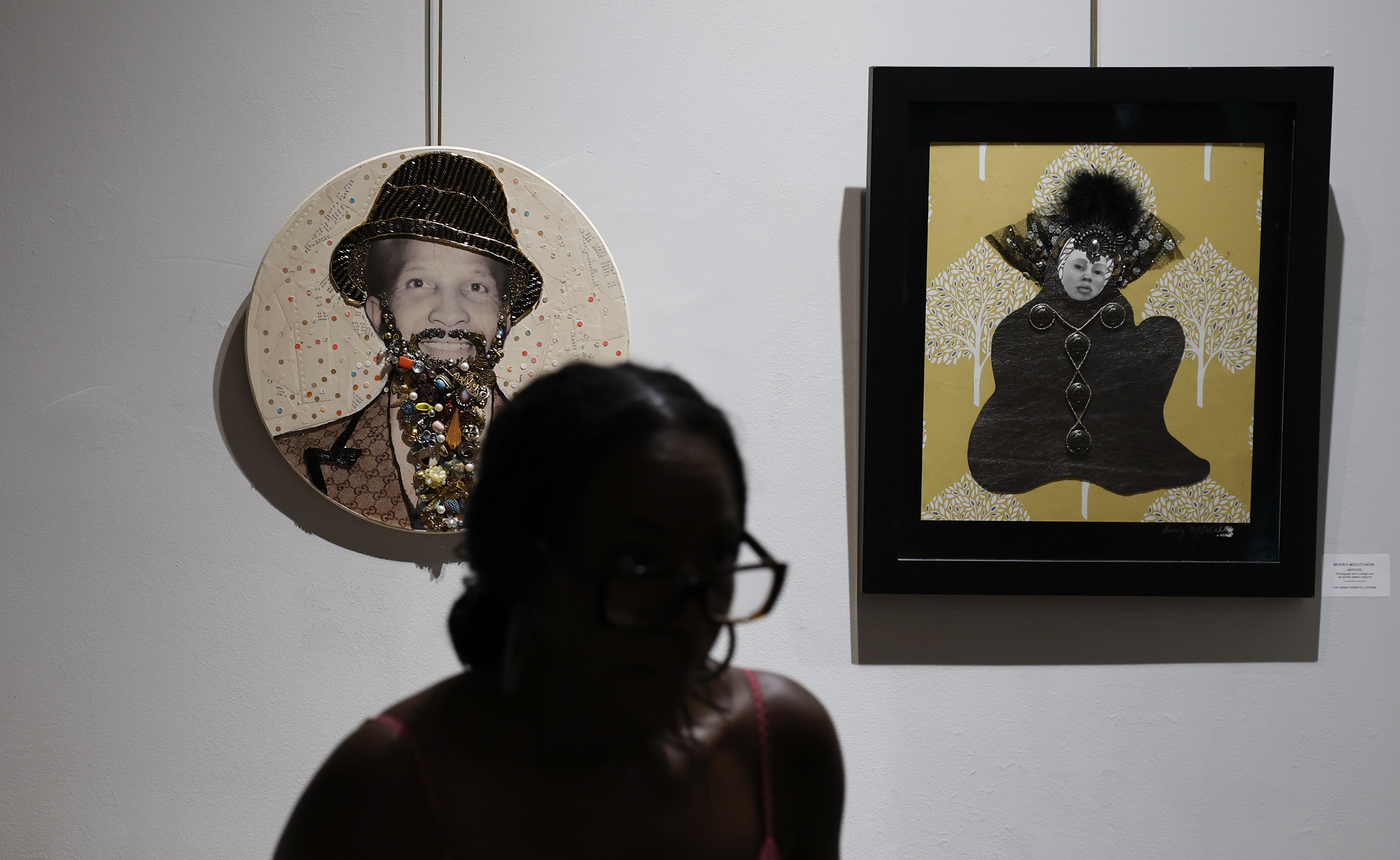
A guest walks past art collected by Diana Tyson during the Museum of African American Art Collections inaugural exhibit at the Awbry Arboretum in East Germantown on Thursday, Nov. 6, 2025. Artis Beverly McCutcheon created Dad (left) and a piece titled Untitled.
Setting value
The Black collectors’ library, Jiggetts says, is the first stop on living artists’ journeys to corporate boardrooms or the walls of major museums. “Our role is that of an economist,” Jiggetts said. “We set the value.”
Collectors shared their experiences over white wine and sweet potato cupcakes on opening night.
Daniel — whose collection features local masters — spoke effusively about her Dox Thrash mezzotint. She will never let the print by the important early 20th-century Black artist go, she said. Robyn Jones interpreted the Jesse Read and Antoinette Ellis-Williams vibrant abstracts. (This reporter thought both of those pieces were images of shoes.)
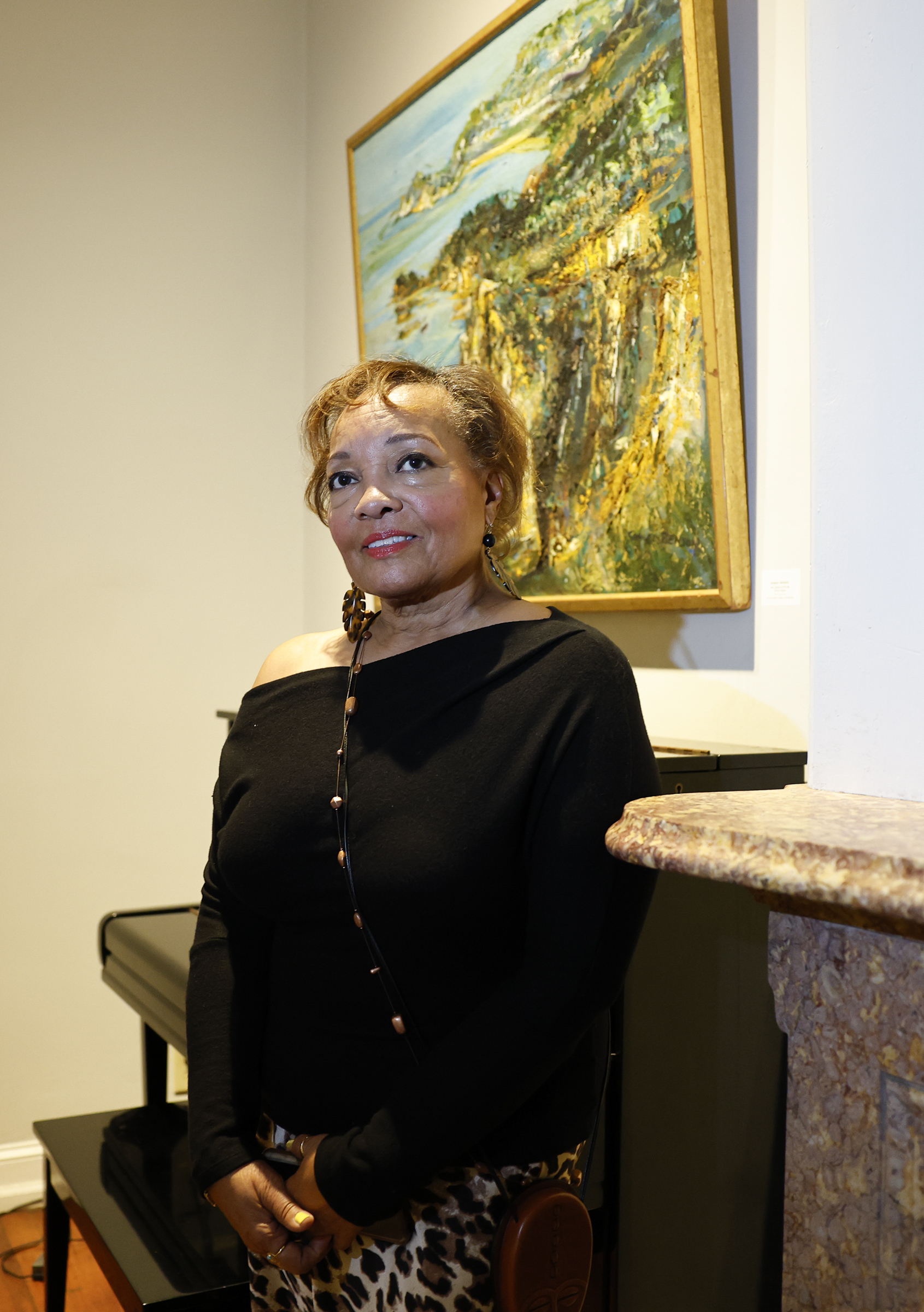
Art collector Stephanie A. Daniel with Samuel Benson’s.Gay Head Cliffs MV painting during the Museum of African American Art Collections inaugural exhibit at the Awbry Arboretum in East Germantown on Thursday, Nov. 6, 2025.
The concept of a collectors museum is a new one. Black collectors are not.
“We’ve always collected our work,” Jiggetts said, stressing that these times require Black people to be stewards of their own stories.
“At the Museum of African American Art Collections, no one can tell us what to do, what not to do, and what we need to do differently. We don’t have to worry about having it being taken away. It’s ours.”
The Museum of African American Art Collections, through Dec. 31, Awbury Arboretum’s Francis Cope House, 1 Awbury Rd., Phila.Monday to Thursday, 10 a.m. to 4 p.m.; Saturday and Sunday, 10 a.m. to 2 p.m. Admission is free.