Every December and January, the World Junior Championship delivers exhilarating hockey, unrivaled drama, and a lot of debate surrounding the sport’s top under-20 prospects, some of whom have been drafted and others who are about to be.
While the 10-day tournament in isolation is far from a perfect way to evaluate prospects, it does provide a snapshot to gauge players’ development and a chance to see how they perform in a best-on-best environment.
“It’s not a be-all, end-all. Especially in Canada, it gets so blown up on the stage, people get crazed if guys don’t make it or make it,” Flyers assistant general manager Brent Flahr recently told The Inquirer of the tournament.
“But the thing that fans don’t understand is that the coaches of those teams and management have different goals than what we have. … There’s been lots of great players who have been cut [or have lesser roles] that go on to have great careers,” Flahr said.
That brings us to the Flyers, who were well represented in Minnesota’s Twin Cities. Amid the team’s ongoing rebuild and the high-end nature and sheer volume of the team’s draft picks in recent years, the Flyers sent six prospects — tied for third-most among NHL teams — to this year’s edition of the tournament.
Here’s a look at how each of the six performed relative to expectations. (These grades are purely based on performance at the World Juniors and are not reflective of prospect rankings or the players’ seasons overall.)
Jack Berglund, C, Sweden
Jack Berglund’s skating has come on over the past year but the rest of his game is well-rounded.
Captain Jack led Sweden to its first World Junior gold in 14 years and only its second in the past 45, and was dominant along the way. Berglund plays well-rounded and winning hockey and is almost impossible to get the puck off of.
While Anton Frondell scored more goals, and 2026 draft eligibles Ivar Stenberg and Viggo Björck earned most of the headlines, Berglund was the unquestioned heartbeat of Team Sweden and led by example like a captain should from the opening puck drop.
The 2024 second-round pick tallied three goals and a joint team-high 10 points in the tournament and delivered several clutch moments in the knockout rounds, including scoring a do-or-die penalty shot to keep Sweden in the tournament in the semis and delivering assists on Sweden’s first two goals in the gold medal game.
Berglund’s skating and lack of speed will always come under scrutiny, but he plays at his own pace, and his strength and reach at 6-foot-4 and 210 pounds allowed him to get where he needed to go at this level.
Berglund’s a horse when it comes to puck protection and wall work, and after some early skepticism, he has now aced his last three major test: Flyers development camp, the World Junior Summer Showcase, and the World Juniors.
Grade: A
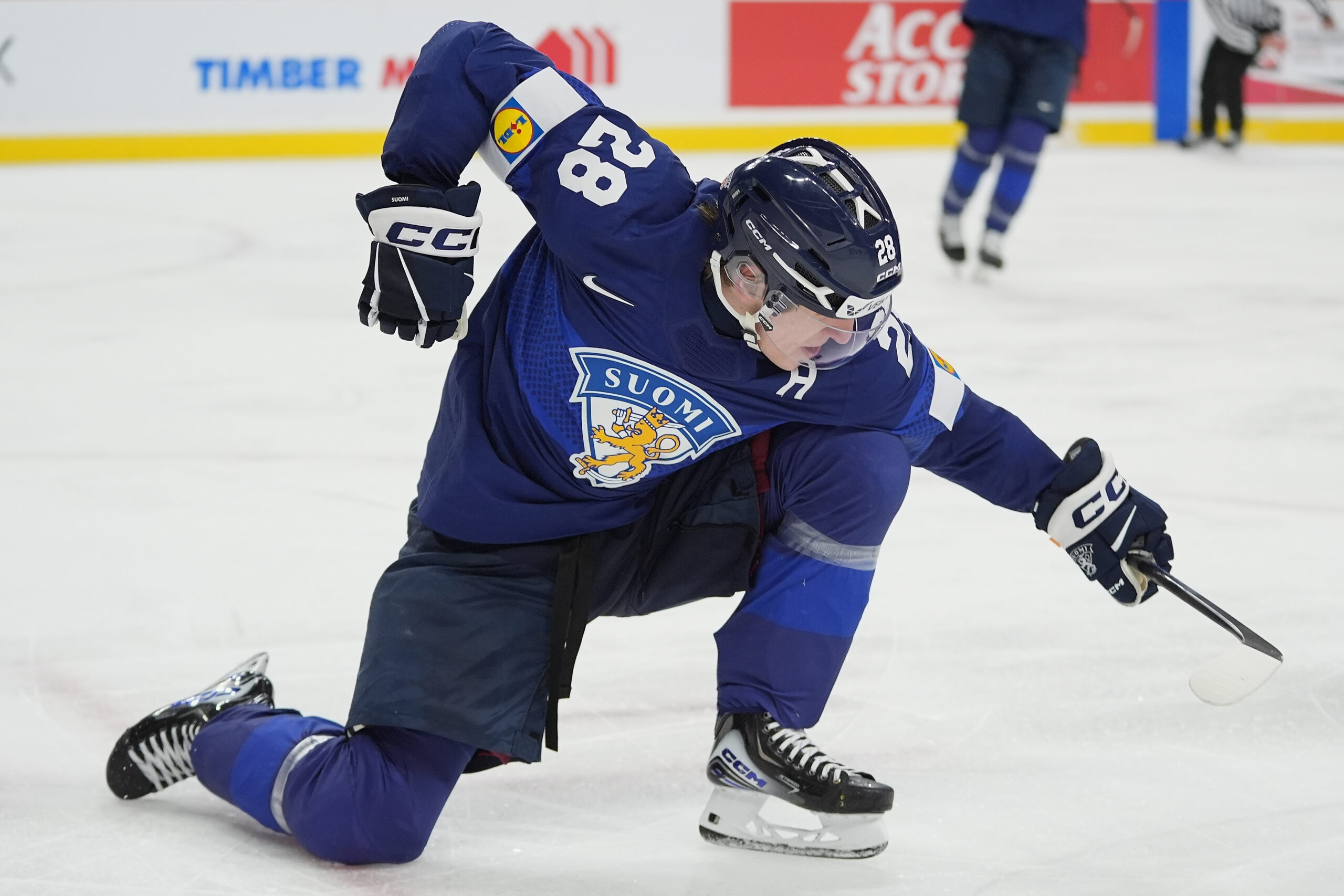
Heikki Ruohonen, C, Finland
Finland center Heikki Ruohonen always seems to save his best for international competition.
Ruohonen, a player the Flyers’ brass has gone out of its way to namecheck the past few years when asked for under-the-radar prospects, backed up that praise in Minnesota with a strong tournament.
For my money Finland’s top player at the event, the 2024 fourth-rounder led Suomi with nine points (three goals, six assists) across seven games and was a plus-six.
Not the flashiest guy, Ruohonen has great hockey sense and always seems to make the right play. He’s also very calm with the puck under pressure and empties the tank shift to shift from a competitiveness perspective.
The Harvard freshman impressed me here with his ability to transport the puck, and I think he has a little more skill and cleverness with the puck than he gets credit for. Though still a few years away, he’s definitely one to monitor.
Grade: B+
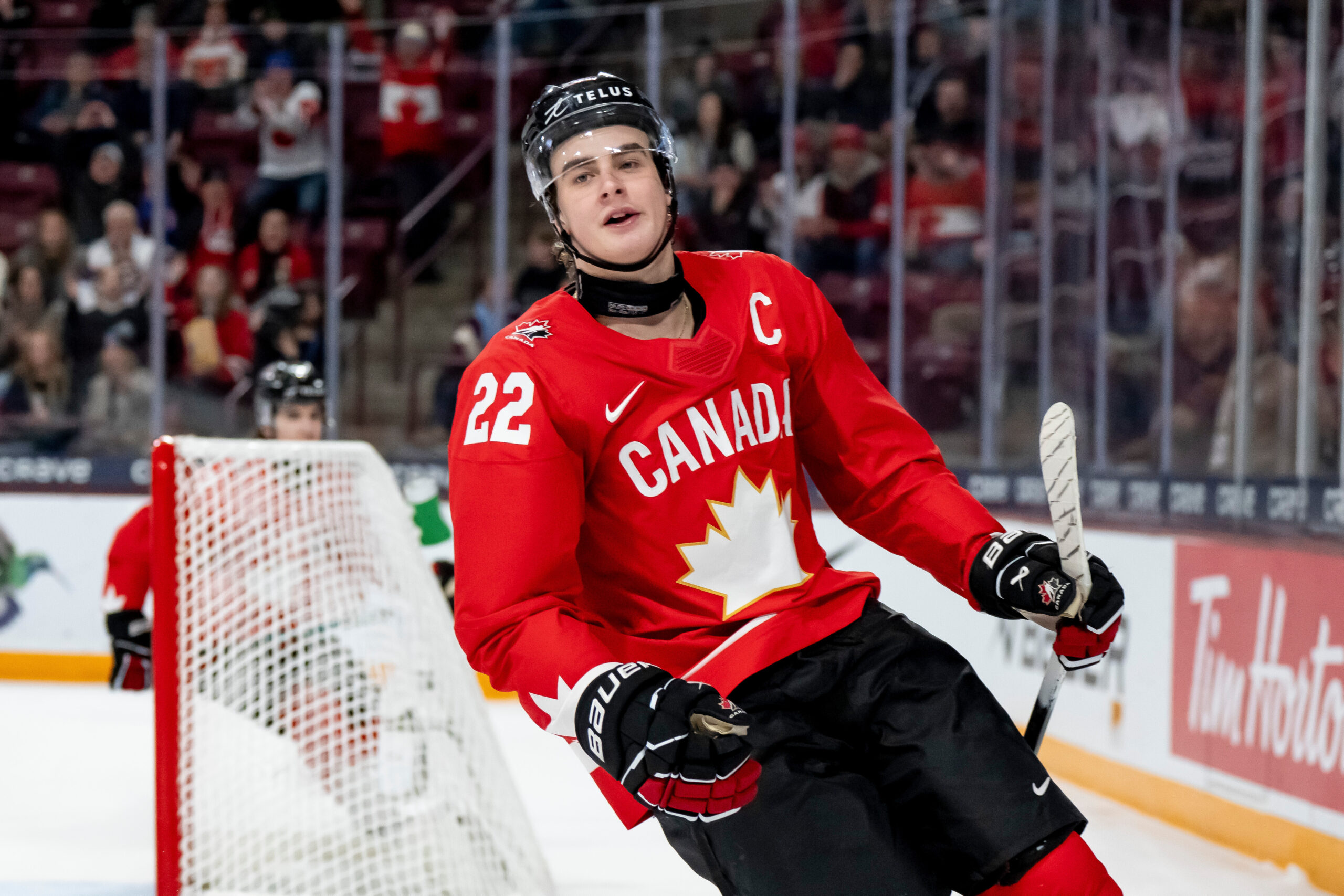
Porter Martone, RW, Canada
Canada’s Porter Martone was good but not great at the recent World Junior Championship.
Martone was good: He led the tournament with six goals and had nine points in seven games. But he wasn’t nearly as impressive or impactful as those numbers might suggest while captaining a Canada team that fell short of the expectation of winning gold.
Three of Martone’s goals and five of his points came in 7-1 and 9-1 blowouts of overmatched Slovakia and Denmark, and another one of his goals was an empty-netter against Czechia.
Speaking of that empty-netter, his controversial butt tap of a Czech player afterward earned him a silly unsportsmanlike conduct penalty and ultimately came back to bite him and Canada when Czechia got the last laugh and knocked them out in the semifinals.
Martone did score a clutch tying goal late in that semifinal, which was a huge moment and should not be discounted, but big-time plays in the biggest games were few and far between across the tournament for a player whom many expected to dominate.
This grade might seem a tad harsh, but I thought Martone, who has the potential to be a truly special player given his combination of size, skill, and snarl, disappeared at times and wasn’t the consistent driver Canada needed atop its lineup.
Grade: B
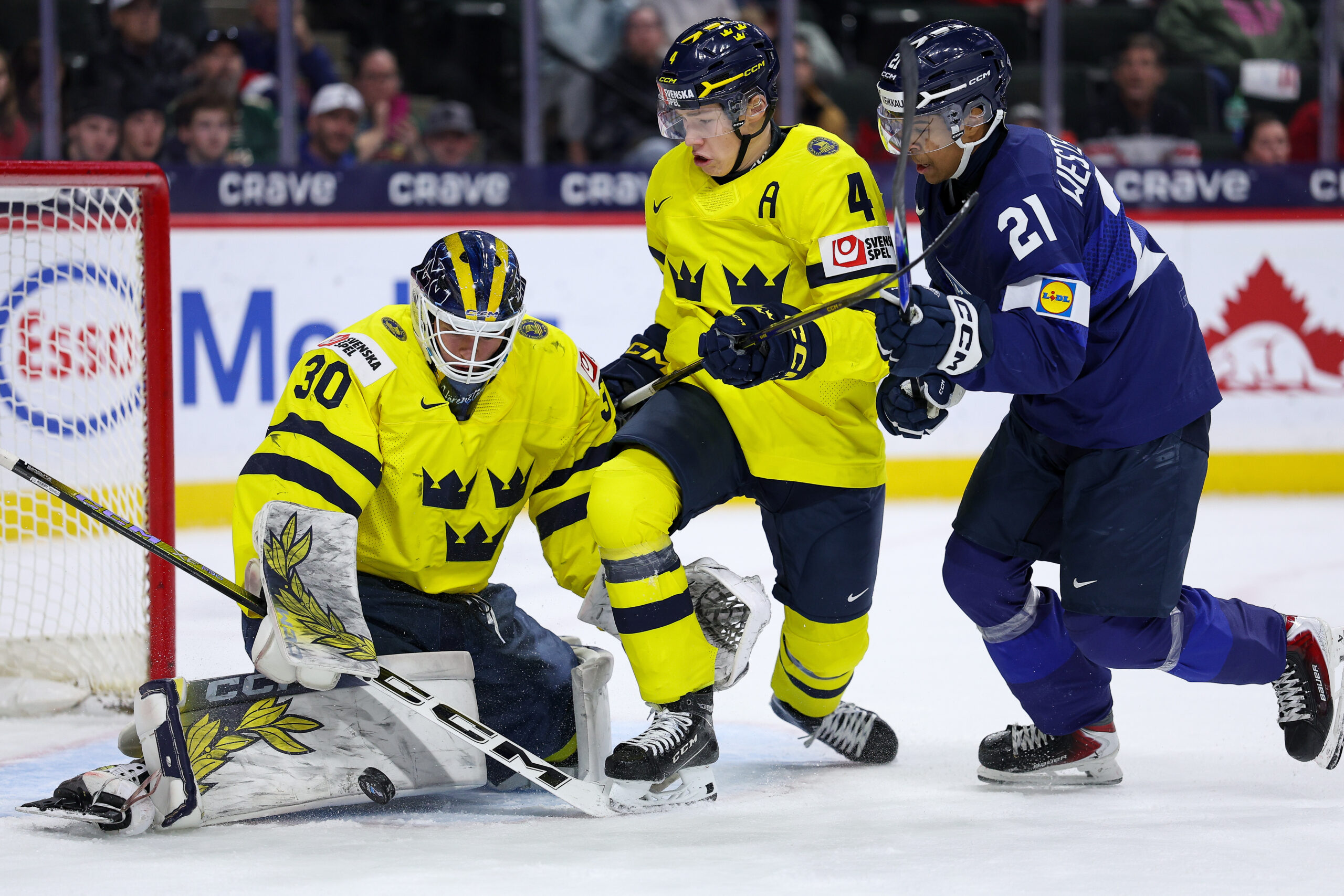
Max Westergård, LW, Finland
Max Westergård has some intriguing offensive skills and already has a fan in former Flyers star and current team adviser John LeClair.
It’s early, but the Flyers might have found something in Westergård, a 2025 fifth-round pick. One of the youngest players in his draft class, Westergård was noticeable on almost every shift and consistently made things happen offensively with his speed, vision, and skill.
Max Westergard might legitimately be my favorite prospect in the organization. He's mesmerizing to watch skate with the puck. Almost got a breakaway goal here off his pure speed.#LetsGoFlyerspic.twitter.com/uW36hYjRyj
Westergård looked threatening in transition throughout and also worked hard below the goal line to retrieve and keep the puck. He had a goal and four points in six-plus games — he probably deserved a few more — before being knocked out of the bronze medal game early after taking a big hit from Canada’s Kashawn Aitcheson.
Relative to expectations, Westergård improved his stock the most in my eyes and should be a leading contributor for Finland at next year’s tournament.
Grade: B
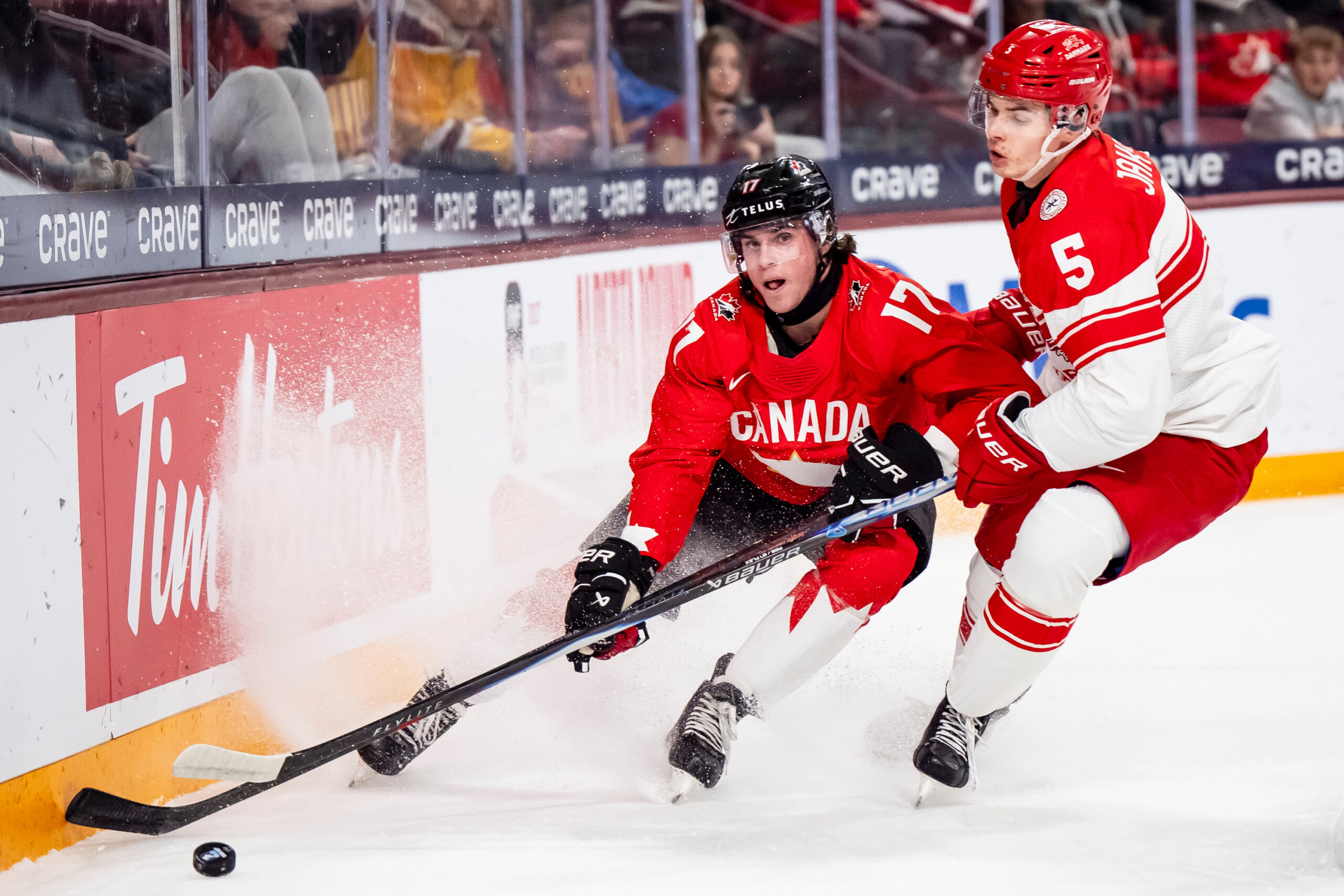
Jett Luchanko, RW, Canada
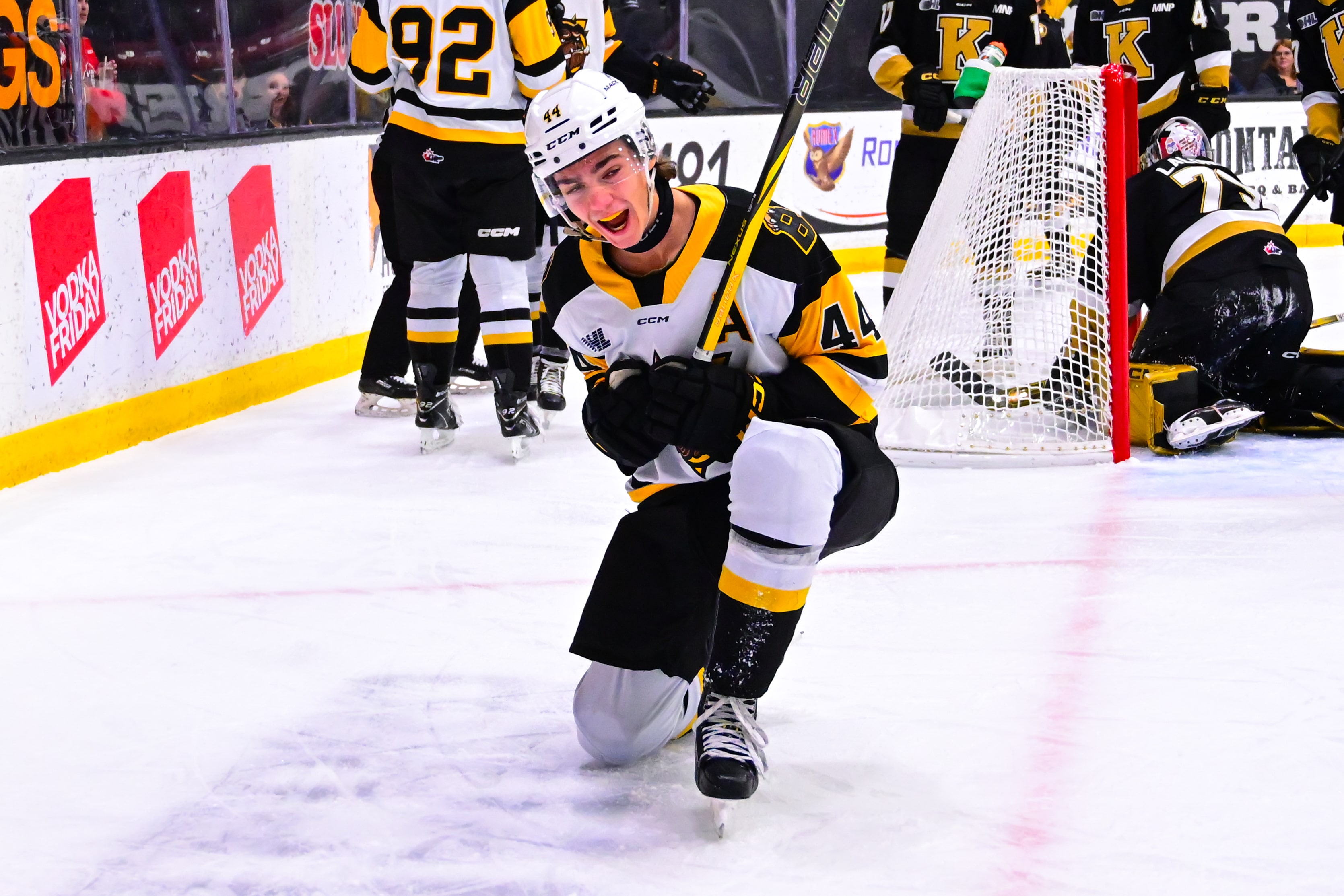
Canada’s Jett Luchanko (17) underwhelmed for the second consecutive World Juniors.
Flyers general manager Danny Brière was vocal about his disappointment in Luchanko’s use at last year’s tournament, but this year more of the blame has to fall on the 19-year-old’s shoulders. Playing out of position on the wing, Luchanko had an unspectacular tournament while filling a depth role.
In seven games, Luchanko had just one assist — battling in front to dig out a puck in the lead up to Tij Iginla’s opener in the semis — and was a minus-four, including being tagged with a minus-three in that semifinal loss to the Czechs.
Luchanko’s details and speed are real positives, but his play with the puck left a lot to be desired here, as he was largely a non-factor offensively despite being on one of star-studded Canada’s power-play units.
It’s far too early to give up on Luchanko as a prospect, but more was expected in Minnesota. His second half with new OHL team, Brantford, will be intriguing to follow.
Grade: C-
Shane Vansaghi, RW, United States
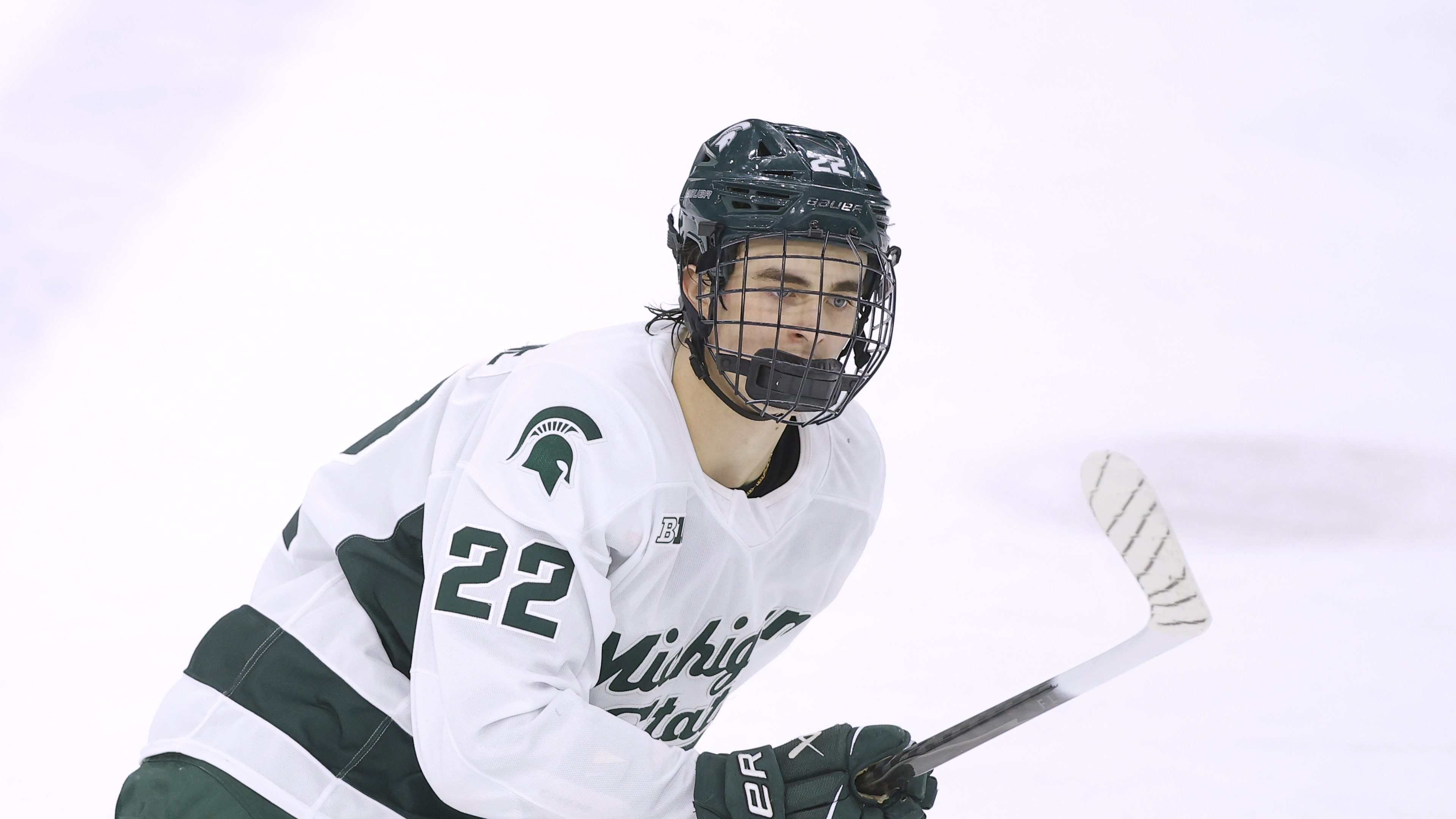
Flyers prospect Shane Vansaghi wasn’t the physical presence many expected him to be for the United States.
It would be hard to say anything other than Vansaghi had a disappointing tournament. Deployed in a bottom-six role, the Michigan State sophomore averaged a team-low 5 minutes and 11 seconds of ice time and was a healthy scratch in two of Team USA’s five games.
Vansaghi’s hallmarks of grit, physicality, and net-front activity were curiously absent in this tournament, as he was a minus-four despite his limited ice time. He was particularly exposed in a 6-3 loss to Sweden.
With the Flyers nearing the midway point and the World Junior Championship around the corner on Dec. 26, it’s time for our annual midseason prospect check-in with assistant general manager and scouting chief Brent Flahr. In Part 1 of a two-part series, we asked Flahr about the team’s prospects that are playing NCAA or Canadian junior hockey, headlined by Porter Martone at Michigan State.
Flahr believes Porter Martone, who is averaging 1.25 points per game, which is third among freshmen, has improved his pace in the faster college game. Flahr believes Martone is on track to challenge for an NHL opening-night roster spot next season.
Flahr name-checked Jack Berglund, Heikki Ruohonen, and Max Westergård as less-talked-about prospects who have impressed him over the past few months.
While Flahr said Jett Luchanko wasn’t unhappy in Guelph, he thinks the move to Brantford is in the best interest of both Luchanko and the organization, as the center will play alongside better players and should benefit from not having to be “the guy” all the time.
Disclaimer: This interview, which was conducted on Dec. 10, has been edited for clarity and length.
More Details
With the Flyers nearing the midway point and the World Junior Championship around the corner on Dec. 26, it’s time for our annual midseason prospect check-in with assistant general manager and scouting chief Brent Flahr. In Part 1 of a two-part series, we asked Flahr about the team’s prospects that are playing NCAA or Canadian junior hockey, headlined by Porter Martone at Michigan State.
Disclaimer: This interview, which was conducted on Dec. 10, has been edited for clarity and length.
Q: We are heading into the midway point of the season. How would you assess the Flyers’ prospect pool right now?
A: It’s pretty good. Obviously, we had a lot of picks last year. We’ve had some guys emerging from previous drafts that have played well and are trending in the right direction. So overall, pretty excited.
Q: Is there anyone who has stood out to you thus far?
A: I think Porter Martone gets a lot of the attention because of where he was picked and whatnot, and he’s had a terrific start at a good program. I think [among] the lesser talked about guys, Jack Berglund and Heikki Ruohonen. Those two guys in the summer at the World Junior Showcase in Minnesota were both really good. Max Westergård played well. So I think those guys overseas have done their part to be big parts of their teams going to the World Juniors, which would be fun to see. And then obviously with Jack Nesbitt, Shane Vansaghi, a number of the guys we drafted last year, they’re big parts of their really good teams, and it’s been exciting for them.
Q: We’ll start with Martone because he is the one everyone talks about. What have you seen from this year with Michigan State, and how do you think it’s helping him prepare for the NHL?
A: His biggest challenge, and what we’ve talked about, is his pace. He was a really good junior [player], obviously, but he could slow things down all the time and kind of do what he wanted. In the college game, he’s playing against older kids, bigger, stronger, faster, and the way they practice, the way they play games, it’s all out and all full speed. So I think it’s forcing him to move his feet. Obviously, you can’t teach the brain he has, the skill set he has, and the size and whatnot. I think even he’s the first one to tell you, he’s in better shape. He’s playing faster. And I think it’ll really help him adjust to the pro game faster.
Flyers top prospect Porter Martone has 11 goals and 20 points in 16 games for the third-ranked Michigan State Spartans.
Q: Outside of Martone, Nesbitt is probably the most important player from the 2025 draft class. What have you made of his start in the OHL this season?
A: Yeah, I’ve seen him a number of times. He plays his game. The biggest thing with him is we’re going to have to be a little patient. He’s just a tall drink of water right now, and he’s got to get put on weight. He’s got to get stronger, which we’re well aware of that. But he is a competitive kid. He’s got skill, and he’s very sound defensively.
He plays with an edge — he’s been suspended a couple times already — but he plays to the identity of a Flyer, what we think of a Flyer. I think he’s going to be a very well-rounded centerman when he gets here. His details are good, good net-front on the power play, and he’s a good penalty killer. But the thing with him, I think the strength and skating is what you can wear down, so that’s a big focus with him. He’s got a good program there, where they have the trainer, and he’s drinking as many shakes as he can and doing all the things he needs to do.
But it’s going to take some time. His offseason is going to be critical this year and next, but he’s shown that he’s willing to put in the work. But so far so good, really positive, and hopefully next year he’ll get his chance at World Juniors. He’s part of a really good team there in Windsor, and they have a chance, I think, with a few additions to go on a pretty good run there this year as well.
Flyers center Jett Luchanko was recently traded from Guelp to OHL favorites Brantford. Brent Flahr believes that move will serve his development well.
Q: What have you seen from Jett Luchanko, and how important was the trade to Brantford for his development?
A: I don’t think he was unhappy in Guelph; he had friends there, guys he played with and played a ton. But I think his lack of offseason — he had injuries he was dealing with — so he wasn’t able to train and do his thing. So I think out of the gates, he was slow here in camp. He was fine, but really didn’t knock the door down. His details are good enough, skates good enough, where our coaches were like, we would like to give this guy a chance. But for us, long-term, we felt the necessity [for him] to go back to junior.
I think going to Brantford now, he’s not the guy. He’s one of many guys there, and I don’t know if there’s a better team in Canada. They have a really good coaching staff there, and he has a chance to just play and be a big part of the team there. Jett doesn’t get too high or low ever. He’s always going to take care of the defensive side of things, but I think playing with some good offensive players there and in a lot of situations is only going to help him be confident.
The one thing with him is, he’s unselfish to a fault. He can really make plays, but at the same time, he passes up opportunities to shoot it, which is what Riley Armstrong and Johnny LeClair, and Patrick Sharp want to get him going and shooting the puck more, being a little more selfish and taking more chances. But he’s in a good spot, good spot mentally, and I think he’s finally feeling back to normal again.
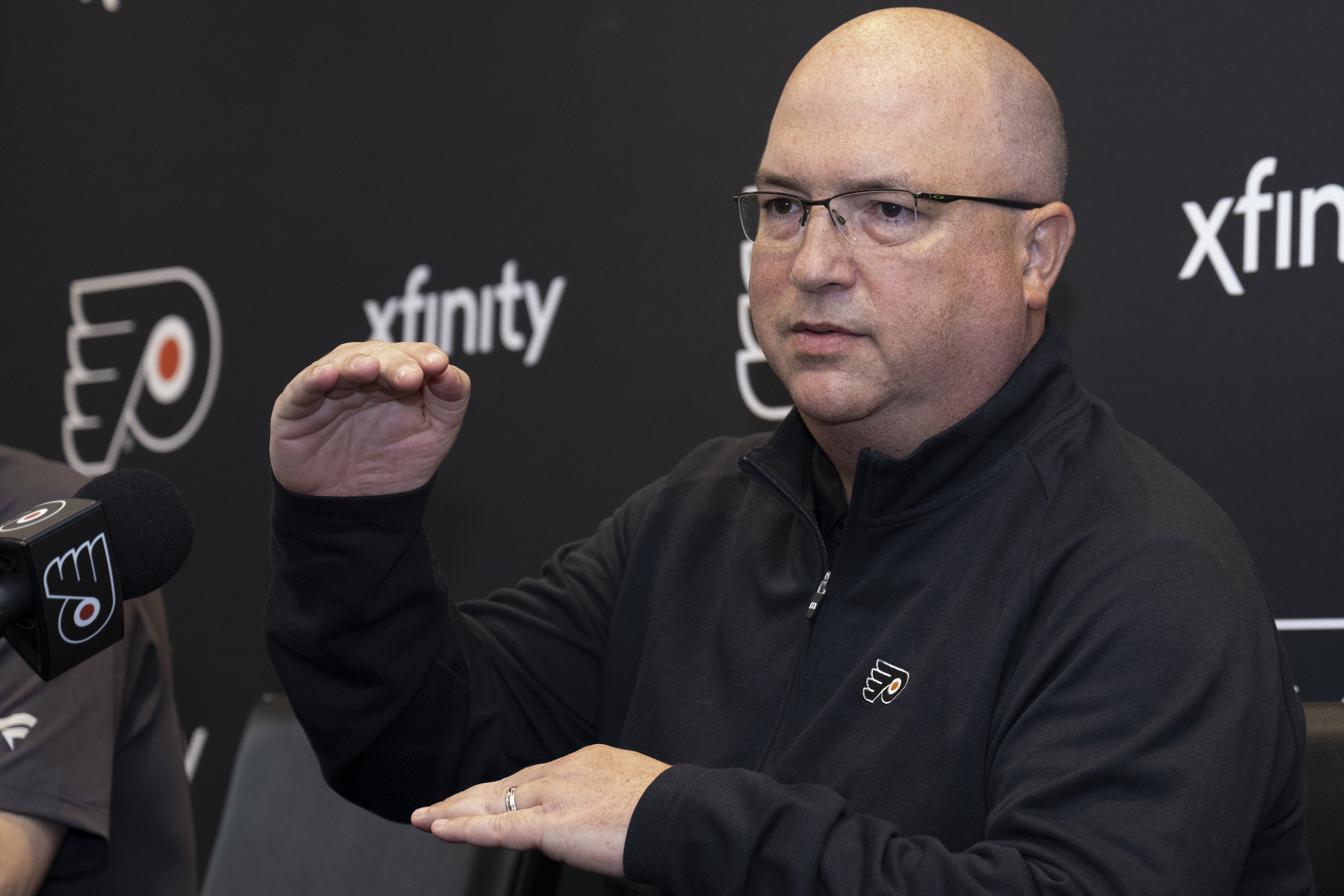
Flyers Asst. GM Brent Flahr is excited about the progress of many of the team’s top prospects.
Everything
With the Flyers nearing the midway point and the World Junior Championship around the corner on Dec. 26, it’s time for our annual midseason prospect check-in with assistant general manager and scouting chief Brent Flahr. In Part 1 of a two-part series, we asked Flahr about the team’s prospects that are playing NCAA or Canadian junior hockey, headlined by Porter Martone at Michigan State.
Disclaimer: This interview, which was conducted on Dec. 10, has been edited for clarity and length.
Q: We are heading into the midway point of the season. How would you assess the Flyers’ prospect pool right now?
A: It’s pretty good. Obviously, we had a lot of picks last year. We’ve had some guys emerging from previous drafts that have played well and are trending in the right direction. So overall, pretty excited.
Q: Is there anyone who has stood out to you thus far?
A: I think Porter Martone gets a lot of the attention because of where he was picked and whatnot, and he’s had a terrific start at a good program. I think [among] the lesser talked about [guys], Jack Berglund and Heikki Ruohonen. Those two guys in the summer at the World Junior Showcase in Minnesota were both really good. Max Westergård played well. So I think those guys overseas have done their part to be big parts of their teams going to the World Juniors, which would be fun to see. And then obviously with Jack Nesbitt, Shane Vansaghi, a number of the guys we drafted last year, they’re big parts of their really good teams, and it’s been exciting for them.
Flyers top prospect Porter Martone has 11 goals and 20 points in 16 games for the third-ranked Michigan State Spartans.
Q: We’ll start with Martone because he is the one everyone talks about. What have you seen from this year with Michigan State, and how do you think it’s helping him prepare for the NHL?
A: His biggest challenge, and what we’ve talked about, is his pace. He was a really good junior, obviously, but he could slow things down all the time and kind of do what he wanted. In the college game, he’s playing against older kids, bigger, stronger, faster, and the way they practice, the way they play games, it’s all out and all full speed. So I think it’s forcing him to move his feet. Obviously, you can’t teach the brain he has, the skill set he has, and the size and whatnot. I think even he’s the first one to tell you, he’s in better shape. He’s playing faster. And I think it’ll really help him adjust to the pro game faster.
Q: Aside from his pace of play, is there anything else that you want to see him work on? And what do you see as his strengths already?
A: Just the pace of play is the biggest thing for me. His food speed, working on that. His conditioning, and being able to play hard and not coasting like you can get away with in juniors. In college and especially in the NHL, he’s not going to be able to get away with that. But he’s a quick study. He’s a really smart player and skilled. His ability to go to the right spots, and he knows where to be on the ice. He has the ability to process the game at the level that a lot of guys can’t. So whether it’s scoring goals or making plays. Defensive side of things, he’s being forced to work harder at stuff like that, which just helps him when he gets here.
Q: Do you foresee him pushing for an NHL spot next year?
A: I think so. But at the same time, we don’t get too far ahead. I don’t even like talking about it. I just want him focusing on his season there and not getting ahead of things. He’s got a good group, and he has a chance to do something special; they’re one of the top teams, and hopefully win it all. And I don’t want him focusing on the end of the season or next year. I just told him, go there with the right attitude and work, and earn your spot, and he has. And, obviously, he’s had success. So I think he gets it, but I want to make sure he makes the most of it and has a chance to have a real special year with World Juniors, and potentially, if you win a national championship and things like that, that really helps build a player going into their pro career.
Q: Martone will play for Canada at World Juniors. How important is that for him, or any player really, to get that experience?
A: Well, it can be great. It’s not a be-all, end-all. Especially in Canada, it gets so blown up on the stage, people get crazed if guys don’t make it or make it. But the thing that fans don’t understand is that the coaches of those teams and management have different goals than what we have. We have players that we envision in the NHL in a couple of years — and there’s been lots of great players who have been cut that go on to have great careers — but they’re building a team to win a 10-day tournament in January this year. So they look at it a little differently. But if you are a part of it and you win, just the experience, I think, is great. Especially when it’s in Canada or in a full building, and to play it’s exciting and usually, a lot of times, it translates.
Flyers Asst. GM Brent Flahr is excited about the progress of many of the team’s top prospects.
Q: Vansaghi is teammates with Martone on the Spartans and will play for the U.S. at World Juniors. He’s not someone who is talked about as much, but maybe he should be?
A: You go to a game at Michigan State, you understand what he brings and how he impacts games. He’s a tank. He’s physically engaged. He wins every battle, but his details are really good. And more importantly, off the ice, the way he conducts his business is extremely mature for a young player. It’s contagious to the people around him with how hard he works and the intensity he works. So, you know, he’s a guy that it’s different roles, probably, when they get here, but he could be a very valuable piece to a good team we hope.
Q: Outside of Martone, Nesbitt is probably the most important player from that draft class. What have you made of his start in the OHL this season?
A: Yeah, I’ve seen him a number of times. He plays his game. The biggest thing with him is we’re going to have to be a little patient. He’s just a tall drink of water right now, and he’s got to get put on weight. He’s got to get stronger, which we’re well aware of that. But he is a competitive kid. He’s got skill, and he’s very sound defensively.
He plays with an edge — he’s been suspended a couple times already — but he plays to the identity of a Flyer, what we think of a Flyer. I think he’s going to be a very well-rounded centerman when he gets here. His details are good, good net-front on the power play, and he’s a good penalty killer. But the thing with him, I think the strength and skating is what you can wear down, so that’s a big focus with him. He’s got a good program there, where they have the trainer, and he’s drinking as many shakes as he can and doing all the things he needs to do.
At 6-foot-5, Jack Nesbitt’s skill popped at this year’s offseason camps.
But it’s going to take some time. His offseason is going to be critical this year and next, but he’s shown that he’s willing to put in the work. But so far so good, really positive, and hopefully next year he’ll get his chance at World Juniors. He’s part of a really good team there in Windsor, and they have a chance, I think, with a few additions to go on a pretty good run there this year as well.
Q: What have you seen from Jett Luchanko, and how important was the trade to Brantford for his development?
A: I don’t think he was unhappy in Guelph; he had friends there, guys he played with and played a ton. But I think his lack of offseason — he had injuries he was dealing with — so he wasn’t able to train and do his thing. So I think out of the gates, he was slow here in camp. He was fine, but really didn’t knock the door down. His details are good enough, skates good enough, where our coaches were like, we would like to give this guy a chance. But for us, long-term, we felt the necessity [for him] to go back to junior.
I think going to Brantford now, he’s not the guy. He’s one of many guys there, and I don’t know if there’s a better team in Canada. They have a really good coaching staff there, and he has a chance to just play and be a big part of the team there. Jett doesn’t get too high or low ever. He’s always going to take care of the defensive side of things, but I think playing with some good offensive players there and in a lot of situations is only going to help him be confident.
Flyers center Jett Luchanko was recently traded from Guelp to OHL favorites Brantford. Brent Flahr believes that move will serve his development well.
The one thing with him is, he’s unselfish to a fault. He can really make plays, but at the same time, he passes up opportunities to shoot it, which is what Riley Armstrong and Johnny LeClair, and Patrick Sharp want to get him going and shooting the puck more, being a little more selfish and taking more chances. But he’s in a good spot, good spot mentally, and I think he’s finally feeling back to normal again.
Q: You also have a trio at Boston University in Jack Murtagh, Owen McLaughlin, and Carter Amico. What have you seen from them?
A: They’re finding their way. McLaughlin is actually having a pretty good year.
Amico is coming off the knee injury, so he’s just finding his way. Saw him there the other night, and he’s a huge kid. He’s going to hopefully get more and more as we go along here.
And Murtagh, he’s a freshman; they don’t get put into top offensive roles right away, so he’s going to have to earn it. I think the things that he needs to work on, he’s going to have to figure out there, which is good. With the U.S. program, he was the goal scorer. Now he’s learning the details of the game, not only defensively, but where to be on the ice, and whether it’s forechecking, playing within the system, and it’s not just about him, but his attitude is great, and he works hard.
Jett Luchanko has been traded. Luchanko, the Flyers’ 2024 first-round pick and the co-captain for Guelph of the Ontario Hockey League, is on the move to the OHL’s Brantford Bulldogs. In exchange for Luchanko, Guelph will receive center Layne Gallacher and four future draft picks.
General Manager George Burnett has announced today that the club has traded forward Jett Luchanko to the Brantford Bulldogs in exchange for forward Layne Gallacher and picks.
The trade was expected after the Storm were awarded the 2027 Memorial Cup late last week. Guelph was willing to move Luchanko, one of its top players, to recoup assets that will help it build for next season, when the Storm will participate in the tournament as hosts.
The prestigious trophy, which was originally awarded by the Ontario Hockey Association in 1919, is awarded to the best team in Canadian junior hockey. The annual four-team tournament features the champions of the OHL, Western Hockey League, and the Quebec Maritimes Junior Hockey League, as well as that season’s host city’s team.
Kelowna, British Columbia, will host this year’s tournament, which will conclude right before the start of the NHL’s Scouting Combine in early June. There’s a good chance the Bulldogs will be there. Coached by Flyers general manager Danny Brière’s former Buffalo Sabres teammate Jay McKee, Brantford sits atop the OHL’s Eastern Conference and has yet to lose in regulation in 23 games (18-0-4-1).
Jake O’Brien, the No. 8 pick in June’s draft, will now be teammates with Jett Luchanko with the Brantford Bulldogs.
After breaking camp for the second straight season with the Flyers, Luchanko skated in four NHL games and did not register a point before being sent back to Guelph on Oct. 27. He has 17 points (two goals, 15 assists) in 11 games for the 11-11-2-0 Storm.
“He’s going to play in the NHL, there’s no doubt about that. Now, how high does he get? That’s really up to him, but it’s in there,” Brière said when Luchanko was sent down. “The speed alone is going to scare a lot of teams eventually — when he gets more comfortable, when he gets more assertive out there. The speed alone is probably his biggest asset. … From our end, we need patience.”
Luchanko, who turned 19 in August, was ineligible to play in the American Hockey League due to the longstanding NHL-CHL agreement, which prevents Canadian Hockey League players under 20 years old from going to the AHL. That rule will change next season when each team is expected to be granted at least one exemption.
With Luchanko unable to play in the AHL or the NCAA, a trade to Brantford will be viewed by many as the next best thing for his development, as he will play alongside better players and in more important games, including maybe the Memorial Cup.
The London, Ontario, native joins a stacked team led by Jake O’Brien, the No. 8 overall pick in the 2025 draft by the Seattle Kraken, and Adam Benák, a fourth-round selection by Minnesota this past summer. Those two rank first and second in the OHL in points, respectively. O’Brien, a playmaking center, was thought to be in consideration for the Flyers at No. 6 before the team landed on Porter Martone.
But how Luchanko will be deployed by McKee will be interesting. The focus for the center’s return to juniors was to get him ice time, and there’s only so much to go around.
“Very simple, we want him to play high minutes,” Brière said when Luchanko was sent down. “We liked what we’ve seen. He could have stayed here; he showed that he can play. But we want more than that for him in the long run.
“And we felt at this point it was time for him to start playing high minutes and more of an offensive role, get back to playing power play, killing penalties, facing the top opposition on the other team, on a nightly basis.”
With Guelph, he did have seven power-play assists, and one of his two goals was scored while shorthanded, but the Flyers want to see him shoot the puck more. He had 25 shots on goal across those 11 games with Guelph.
Skating with the Flyers, Luchanko averaged 8 minutes, 58 seconds of ice time, registering one shot on goal and a plus-minus of minus-3. He had just three shots on goal in five preseason games, and an NHL scout told The Inquirer in early October that Luchanko, who is listed at 6-foot, 190 pounds, doesn’t look NHL strong yet and needs to play a harder, more confident game.
“It’s a comfort thing. He just needs to feel comfortable,” Brière said. “I know how you feel as an 18- or 19-year-old. You’re coming in, you’re trying to please everybody around you. You’re on the ice with guys you’ve been watching on TV. You have a Travis Konecny beside you, obviously, you’re going to force a pass there. It’s human nature. That’s just how it is.
“It takes time, and hopefully he’s going to get out of that pretty soon. And we’ve seen him play in juniors. He can shoot the puck. He’s got a good shot. It’s just the confidence that he needs to do it here now.”
Luchanko is expected to also get a chance to work on his game at World Juniors. A Hockey Canada scout was at the game the day after he was sent down, hoping to see Luchanko; instead, he watched Ben Kindel of the Pittsburgh Penguins, who should be joining him in Minnesota when the tournament starts on Boxing Day.
When he is eventually named to the team, Luchanko will represent Canada for the second time at the tournament. He skated last year, averaging 12:22 of ice time across five games, scoring one goal, and while Brière thought “he performed great,” the Flyers were “disappointed” in the small role Canada gave Luchanko. This year, Dale Hunter, who just coached Flyers prospects Oliver Bonk and Denver Barkey to the Memorial Cup with London of the OHL, is the head coach for Canada.
Guess who’s going back, back again. Jett Luchanko is returning to juniors.
The Flyers announced Monday that the center has been returned to Guelph of the Ontario Hockey League after he skated in four of the Flyers’ first eight games. According to a team source, there has been no decision yet on who will be recalled from the Lehigh Valley Phantoms to take Luchanko’s spot on the roster.
The team could have played Luchanko in as many as nine games before triggering his NHL contract.
“Very simple, we want him to play high minutes,” Flyers general manager Danny Brière said. “We liked what we’ve seen. He could have stayed here; he showed that he can play. But we want more than that for him in the long run.
“And we felt at this point it was time for him to start playing high minutes and more of an offensive role, get back to playing power play, killing penalties, facing the top opposition on the other team, on a nightly basis.”
Transaction: We have returned forward Jett Luchanko to his junior team, @Storm_City (OHL).
Luchanko averaged 8 minutes, 58 seconds of ice time with the Flyers, registering one shot on goal and a plus-minus of minus-3. Last season, also in four games, he tallied three shots on goal across an average of 14:03 with the same plus-minus.
The only difference is that last season, under former coach John Tortorella, Luchanko was playing higher up the lineup. Under new coach Rick Tocchet, Luchanko had been slotted in on the fourth line, often between Garnet Hathaway and Nikita Grebenkin.
“He’s going to play in the NHL, there’s no doubt about that. Now, how high does he get? That’s really up to him, but it’s in there,” Brière said. “The speed alone is going to scare a lot of teams eventually — when he gets more comfortable, when he gets more assertive out there. The speed alone is probably his biggest asset. … It took me a while to feel comfortable enough to make those plays, so I know exactly what he’s going through. It takes time.
“From our end, we need patience; we need to give him time to find that comfort, and on his end, his job is just to find a way to break through.”
Luchanko struggled to find his footing this season despite his high hockey IQ and passing ability. He missed development camp because of a groin injury and was held out of rookie camp for precautionary reasons.
He also continued to grapple with the Flyers’ push to see the 19-year-old shoot more; he also had only threeshots on goal in five preseason games. As an NHL scout told The Inquirer in early October, Luchanko, who is listed at 5-foot-11, 190 pounds, doesn’t look NHL strong yet and needs to play a harder, more confident game.
“I wouldn’t say shooting’s his thing,” Riley Armstrong, the Flyers’ director of player development, told The Inquirer in April. “I think that’s one thing that we’re working on with him. He’s always been kind of that pass-first guy. … And a lot of it is confidence, having confidence that you can beat a goalie.”
Added Brière: “It’s a comfort thing. He just needs to feel comfortable. I know how you feel as an 18- or 19-year-old. You’re coming in, you’re trying to please everybody around you. You’re on the ice with guys you’ve been watching on TV. You have a Travis Konecny beside you, obviously, you’re going to force a pass there. It’s human nature. That’s just how it is.
“It takes time, and hopefully he’s going to get out of that pretty soon. And we’ve seen him play in juniors. He can shoot the puck. He’s got a good shot. It’s just the confidence that he needs to do it here now.”
Drafted 13th overall in 2024, Luchanko tallied 21 goals and 56 points in 46 OHL games last season with Guelph. After his season ended with the Storm, he had a 16-game stint with the Phantoms in the American Hockey League, which included seven playoff games. He racked up nine assists in the AHL, including two in the first-round series clincher against Wilkes-Barre/Scranton.
While there was a thought to send him to the AHL on a conditioning stint, it meant he would have had to sit for some time to be eligible. But the Flyers were happy with his progression with the Phantoms and at training camp as well.
“We saw a big progression last season when he came in to play in Lehigh — he was pretty impressive. He played really well,” Brière said. “He was arguably our best player down the stretch and into the playoffs. So that was really encouraging to see.
“He was able to put up points as well, but that was the product of playing heavy minutes in junior to feeling comfortable on the ice … and that takes time.”
Because of the NHL-CHL agreement, which prevents CHL players under 20 years old from going to the AHL, he could only be returned to the Storm. That rule will change next season when each team will be granted one exemption.
“Well, it [stinks] because he’s in that mushy [middle]. … There’s certain things that, [to be fixed], he just has to go play a lot,” Tocchet said. “You can’t do it up here, whether you play 10, 11, minutes: more decisive with the puck, more shooting mentality, use his speed offensively, not just defensively. … Because of the rules of it is what it is, he has to go somewhere where we can just get settled and play.”
The expectation is that Luchanko will play for Canada at the World Junior Championship, which begins after Christmas. Luchanko suited up last year in a limited role, despite being one of the better players, for the squad that lost to Czechia in the quarterfinals. A native of London, Ontario, he had one goal in five games.
“We also want to prepare him for the World Junior Championship because it’s tough if he’s playing 7, 8 minutes a night for the first three months of the season, and you send him to the World Juniors, and they expect to play him 15 to 18, maybe 20 minutes,” Brière said.
“It’s a tough adjustment to change like that. So you’ve got to get used to those minutes, and it should give him plenty of time to get conditioned to play in high minutes.”
Entering Monday, Guelph is 6-5-2-0 in 13 games and has won three straight.