Tag: Joe Biden

  • Another Jan. 6 coup? Trump is screaming it out loud. | Will Bunch Newsletter

    What amazes me about the fact that America turns 250 on Saturday is that I’ve been alive now for 27% of U.S. history. When I was 17 and watched the Bicentennial parade of tall ships down the Hudson River from my dad’s conveniently located Manhattan skyscraper office on July 4, 1976, I thought I was celebrating ancient history. I was wrong. In a big, diverse world, the United States remains a young adult among nations. Like most young adults, we have a lot of issues.

    If someone forwarded you this email, sign up for free here.

    Trump thinks anything besides stealing the election is ‘a big yawn’
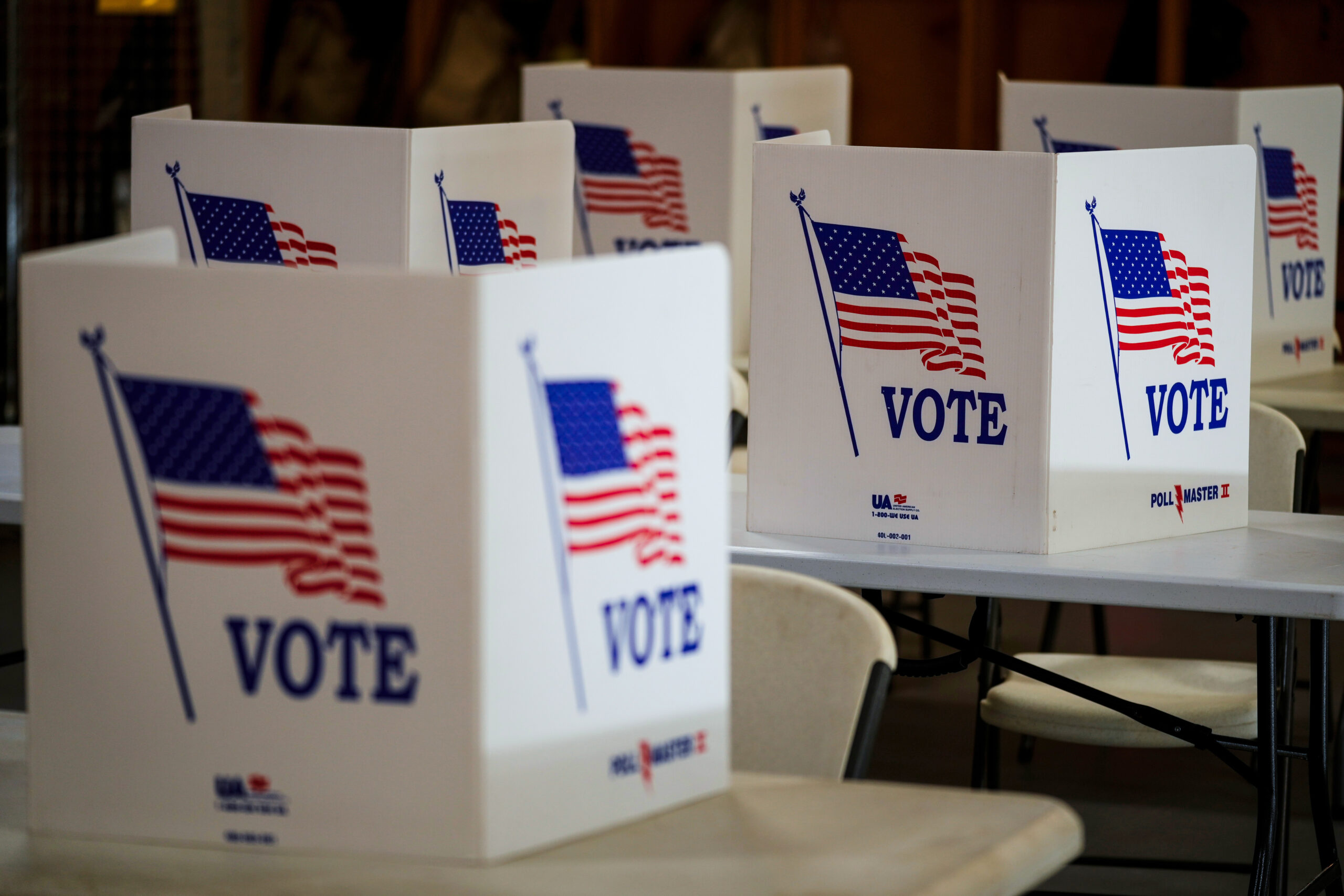
    Voting booths are set up at a polling place in Newtown in 2024.

    Donald Trump gets a lot of flak, and deservedly so, for telling so many lies. On Monday, he held an Oval Office press availability, and much of what he said — false claims that other nations don’t have birthright citizenship or mail-in voting — was flat-out untrue.

    But nothing is scarier than when the 47th president speaks the truth about what’s really on his mind. Because the only thing that’s in Trump’s brain right now is stealing the November midterm election by changing the rules in his favor … or worse. If Trump’s vocal cords were not so weak and diminished, he’d have been screaming the quiet part out loud.

    A reporter asked the president about last week’s abrupt cancellation of a ceremony to sign a popular and surprisingly bipartisan bill to lower the cost of housing. Trump tied that move to an extortionary threat that Congress must pass his bill, which is called the SAVE America Act, but which could ruin democracy by suppressing votes.

    “Here’s what I would like to say,” Trump said of the still-unsigned housing bill, which passed in the House by a 396-13 vote. “It’s a yawn. Some people say it’s wonderful. To me, compared to the SAVE America Act, just about everything is a big yawn.”

    In quainter times, Trump’s disrespect for the housing bill — a grab bag of measures all geared toward encouraging contractors to build more units, which would lower both purchase prices and rents — might be the political gaffe of the year. Currently, only 29% of Americans think it’s a good time to buy a house, and nearly two-thirds are more likely to vote for a Congress member who helped lower prices. Republicans who voted for the bill are desperate for a win.

    Trump doesn’t care. He’s forgotten his “forgotten Americans” who think the rent is too damn high, not to mention the GOP members of Congress who’ve followed him off the cliff. But that’s not even close to the most alarming thing about Trump’s Oval Office moment of truth.

    The president says the only thing he cares about — even with his conflict in Iran becoming another “forever war,” and with the economy down the toilet for everyone who’s not a tech trillionaire — is a bill that critics say would be a disaster for free and fair U.S. elections. One report found that some 12 million people who fairly and successfully voted in the 2020 presidential election don’t have the documentation — such as a birth certificate or passport — that the bill requires.

    We don’t know how such a massive drop in turnout would change the election results, or whether a weakened Trump can pressure the GOP to find a way to pass a bill with zero Democratic support. But we do know this: The president’s maneuvers are not even the worst thing Trump has done this month on the steal-this-election front. Not by a long shot.

    The Trump regime has been signaling for months that it sees the U.S. intelligence community — spy agencies like the CIA — not as a tool for finding out what comes next in the Persian Gulf, or if or when China is invading Taiwan, or when Vladimir Putin’s Russian empire will fall. No, Trump wants secret agents who can creatively invent theories of foreign-born election fraud that would demand a strongman response.

    We saw this coming back in January, when the regime dispatched Trump 47’s first director of national intelligence, Tulsi Gabbard, to Fulton County, Ga., to oversee an FBI raid of voting materials from the 2020 election that Trump, with no evidence, continues to dispute. That link made it clear the regime is looking to create links to foreign actors.

    When Gabbard left the administration this spring, Trump named a temporary replacement who can serve through the November election: Bill Pulte, who also continues to lead the Federal Housing Finance Agency. Pulte lacks a key prerequisite for his new job — any experience in intelligence whatsoever — but has the only quality that matters to Trump: undying loyalty. Pulte’s main focus in the housing job has been combing through the mortgage records of the president’s political enemies, looking for undotted i’s and uncrossed t’s that could be used to manufacture criminal charges from nothing.

    In just a few days at intelligence, Pulte has not disappointed his boss. He showed up Monday and immediately began firing current staffers, with a rumored list of hundreds. The steep reduction in eyeballs on the world’s trouble spots is disturbing, but what’s even more alarming is the one person Pulte has hired.

    The newsletter SpyTalk described Pulte’s new chief of staff, Christina Norton, as “a party-loving MAGA activist with no background in national security issues but who last year boasted of running ‘the largest election integrity operation the Republican Party has ever seen’ …”

    The pairing of Pulte and Norton is an alarm bell that the national intelligence team under Trump will have one job: investigating fantastical “foreign election plots” that will be cited to justify radical measures like sending troops to polling places, seizing voting machines, or worse.

    SpyTalk noted that Norton, in her active Instagram feed, “talks about supervising more than 200,000 Republican poll watchers ‘standing guard’ at polling booths and vote-counting stations across the country” during her 2024 stint at the Republican National Committee.

    Yet, intelligence is just one of many tools in the federal government that the obsessive Trump is working to activate ahead of a November election that polls suggest will be a “blue wave” for Democrats hoping to retake Capitol Hill. Trump has issued several executive orders seeking to assert federal control over voting, which has been a state and local function throughout 250 years of American history.

    That effort suffered a bit of a setback Monday, when the U.S. Supreme Court ruled that states can continue to count mail-in ballots that are postmarked before Election Day but arrive after the polls have closed. But that will not stop the Trump regime from politicizing the U.S. Postal Service ahead of November.

    Last week, Postmaster General David Steiner told Congress that USPS plans not to deliver mail-in ballots in states that don’t turn their voter rolls over to the Trump regime, a demand many governors have resisted so far. “President Trump does not believe that elections he loses are valid,” Democratic Michigan Sen. Elisa Slotkin said after the hearing. “It’s all part of his authoritarian playbook.”

    This all feels very familiar. In the lame-duck days after Trump’s 2020 election loss to Joe Biden, the 45th president — instead of packing up to return to Mar-a-Lago — got busy putting in a new team at the Pentagon, ordering the U.S. Department of Justice to probe alleged voter fraud, challenging vote count certifications in court, and urging state lawmakers to seat rival slates of electors. Most pundits laughed this off, but I wrote a column — “So, is President Trump staging a coup, or what?” — that ran on Nov. 10, 2020, nearly two months before the actual attempted coup on Jan. 6, 2021.

    Now Trump is not only staging another coup, but he is yelling about it, in your face. There is nothing he won’t try over the next five months to prevent a Democratic Congress from investigating how he and his family have made billions of dollars off the American presidency.

    When Trump says anything that’s not election meddling is a “big yawn,” this should be our wake-up call. The time for a full-court press — lawsuits, public hearings, and investigative journalism — can’t wait until after the election. The new putsch has already begun.

    Yo, do this!

    • If you didn’t think I raced to download the new audiobook of Zayd Ayers Dohrn’s tale of growing up in the radical Weather Underground in the 1970s and ’80s — Dangerous, Dirty, Violent, and Young: A Fugitive Family in the Revolutionary Underground — then you must be new around these parts. Dohrn had already used his unique access to his parents — Bernardine Dohrn and Bill Ayers, revolutionary royalty — and their friends to tell a history of that era’s far left in 2022’s award-winning podcast, Mother Country Radicals. His new book aims to go deeper into the psychology of what it was like to be raised as a toddler on the run from the FBI, or whether bombings and bank robberies can change the world. That’s a question — also explored in this viral essay — with new resonance in the Trump era.
    • A few weeks ago, I suggested that folks see the new movie The Sheep Detectives. The film is already streaming on Amazon Prime (which produced it), and Sunday’s rare night off for the World Cup offered the excuse to finally watch. I can now highly recommend it. The movie — with an adapted script by the acclaimed showrunner of HBO’s Chernobyl, Craig Mazin — manages to merge police procedural cliches with moving thoughts about prejudice, existentialism, and what it means to belong to a flock. Even a flock of talking sheep.

    Ask me anything

    Question: Is Markwayne [Mullin, the Homeland Security secretary and former Oklahoma senator] the least qualified cabinet level official in American history? — Richard McGovern (@richardmcgovern.bsky.social) via Bluesky

    Answer: Good question from Richard, a fellow long-suffering Philadelphia Union fan. Not because I know the answer, when there are rivals for the title like Donald Trump’s war-losing “Secretary of War” Pete Hegseth, to name just one. But Mullin is now behind a move so outlandish that it showed me I haven’t lost my capacity for shock after all. This weekend, Trump nominated a previously unknown former Oklahoma state trooper named Lance Schroyer to run U.S. Immigration and Customs Enforcement, a powerful agency with 22,000 agents and a budget of around $30 billion a year. It turns out that just recently, Schroyer was heading a security detail for Mullin in Washington, D.C., and has become a close enough friend that he is an occasional dinner guest. Yes, he hired his bodyguard to run the equivalent of a large corporation. Stay tuned for all of this to unravel.

    What you’re saying about …

    I guess we’re not as close as we thought, as very few of you were eager to share your July Fourth plans with me or discuss what America’s 250th birthday means at such a dark moment. The ones who did reply are looking forward to spending time with family and friends, but all that patriotic jazz, not so much. “Probably, we will have our usual picnic and take the grandkids to see the local fireworks, but I have no intention to watch any special programming or parades, etc.” Marianne Zollers wrote. “It will just make me sad. Such a different feeling compared with the Bicentennial which was such a joyous and happy occasion for my entire family.”

    📮 This week’s question: One of the big stories of 2026 that’s finally getting a lot of attention is the success of more progressive Democrats, including democratic socialists, in key primary races against party moderates. Is this a good thing, lifting up candidates who’ll fight against Trump and for the working class? Or do you worry Republicans will capitalize against their opponents with more left-wing views? Please email me your answer and put the exact phrase “2026 progressive Democrats” in the subject line.

    Backstory on crossing the World Cup off my bucket list

    The Ivory Coast team celebrates their win in the middle of the field against Curaçao with a score of 2-0 for the FIFA World Cup at the Lincoln Financial Field in Philadelphia on Thursday.

    I can’t say exactly when, but at some point during my first-ever in-person World Cup match between Côte d’Ivoire and Curaçao, watching from the thin air of the top deck of the temporarily renamed Philadelphia Stadium, it struck me: My decades-long dream of being there for the world’s greatest sporting event was not like what I’d imagined.

    And yet, in some weird, quasi-religious acid test kind of way, it was even better.

    I’ve been to countless sporting events going back to 1968, but never one where the vibe was basically: So happy to be here. I’ve certainly never been to a game where the PA announcer uttered something before the match about giving a big hand to both teams — and the sold-out crowd obliged. Fans would have burned down Section 220, Row 27, where I was sitting, if this had happened during an Eagles-Cowboys game. During a tense match with a place in the Round of 32 on the line, the gathering repeatedly did the wave and threw their vocal cords more behind the halftime singalong of the Bruce Channel 1961 oldie “Hey! Baby” than either of the two decisive goals by Côte d’Ivoire’s Les Éléphants.

    Up in nosebleed country, many of the fans repped soccer jerseys, but they were for club teams like Liverpool or Christian Pulisic’s USA No. 10, joined by me in my Philadelphia Union T-shirt. We were Philly’s soccer aficionados, desperate to be a part of maybe the only time in our lives the World Cup would take place in the City of Brotherly Love. A match pitting the smallest nation to ever qualify for the FIFA tourney (Curaçao, population 158,000) and an African underdog was pretty much the only way to crash the party without a bank loan. (Full disclosure: I paid about $280 apiece for two seats on StubHub — much like buying a stock, it could have been more or less, depending on how one timed it.)

    No, this wasn’t much like the Eagles games played here, where excitement merges with pins and needles of anxiety. On a picture-perfect late afternoon in June, bookended by the Philadelphia skyline and a lazy Delaware River, it felt more like a rock concert. It wouldn’t have seemed out of place if folks had started batting a beachball around at this soccer Woodstock. There was a mind-meld of the faithful, who saw FIFA and its commercialization as the devil, with the loudest boos for the TV-ad-laden “hydration breaks,” but with — I swear to God — a loud roar for the announcement of the attendance: 68,324. In a city where a 1976 Bicentennial match of some of the world’s best players took place in a mostly empty stadium, soccer is indisputably here to stay.

    Fans walked out of Philadelphia Stadium beaming less over the final score and more about the instant karma of the afternoon. After years of tavern taunts and ridicule from sports-talk radio, local soccer die-hards lived long enough to see America’s founding city become the world’s co-capital of the sport that, for its true believers, passes all understanding. It was all too beautiful. If I can somehow make it to Spain or Portugal or Morocco in 2030 (because, hey, I need a new bucket list now), I will be sure to wear some flowers in my hair. Soccer time will be a love-in there.

    What I wrote on this date in 2019

    I’ve been writing about the topic of journalism reform since the mid-2000s, or around the time it became clear to me and a lot of other folks that newsrooms needed to change or die. My fear, circa 2006 or so, was that we’d start seeing entire communities without newspapers or the accountability journalism that flows from that — which is exactly what happened in Youngstown, Ohio, when its paper closed seven years ago. I wrote: “The loss of the Youngstown Vindicator every morning doesn’t mean that the region’s 200,000 people will no longer be getting information. It just increases the likelihood they’ll be getting bad information — intentionally manipulated, and sometimes out-and-out fakery.”

    Read the rest: “How the first U.S. city with no daily newspaper will help Trump in 2020.”

    Recommended Inquirer reading

    • Only one column this week, as I took a well-deserved day off to attend the World Cup. In that piece, I looked at the sorry state of justice in America on the eve of its 250th birthday, with an emphasis on the outrageous sentences — ranging from 30 to 100 years — handed down to left-wing anti-ICE protesters convicted of rioting in North Texas. The U.S. Department of Justice that pushed these virtual life sentences is also pardoning the right-wing rioters of Jan. 6, 2021, as well as billionaire fraudsters who donate money to MAGA players and causes. They’ve made a mockery of liberty and justice for all.
    • Let’s be honest: People — not to mention sheep (see above) — can’t get enough of a murder mystery, especially a real-life true crime. It’s been a while since a crime saga has riveted Philadelphia readers as much as the stench of possible foul play that is growing at a home on West Chew Avenue in the city’s Olney section that police have branded a crime scene as they search for clues in the disappearance of two local women. Since the case broke open last week, nearly a dozen Inquirer reporters have produced riveting articles about the discovery of drugs, chemicals, and “a significant amount of blood” at the Horsch family residence, profiles of the two missing women — Amy McHale and Blair Tonzelli — and interviews with neighbors who talked about living next door to “a house from a scary movie.” The backstory here is that — whatever you may have heard about AI — it still takes a lot of human shoe-leather to get to the bottom of a story like this. Subscribing to The Inquirer is a twofer: You get to hurdle the paywall to read compelling journalism and feel good about being a supporter.

    By submitting your written, visual, and/or audio contributions, you agree to The Inquirer’s Terms of Use, including the grant of rights in Section 10.

  • Trump’s Reflecting Pool debacle mirrors what’s ailing America

    Trump’s Reflecting Pool debacle mirrors what’s ailing America

    WASHINGTON — I arrived in Washington, D.C., on Wednesday and headed straight to the Reflecting Pool on the National Mall to see for myself what it looked like.

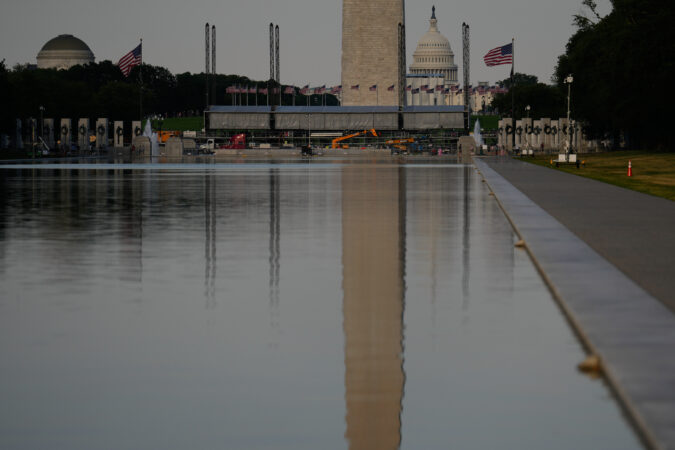
    At first glance, it appeared as if sand had been tossed into the newly renovated water basin located between the Lincoln Memorial and the Washington Monument. But my eyes were mistaken. “The sand” was actually the underlying surface showing through as the coating at the bottom started peeling off.

    Peeling is seen in the blue coating on the bottom of the Lincoln Memorial Reflecting Pool, Wednesday, June 24.

    As I bent down to get a closer look, I made a point to keep my hands close to my body. I knew better than to touch so much as a drop of that water, since people have allegedly been arrested for vandalism after touching the floating detritus.

    President Donald Trump blames “radical lunatics” for defacing his latest renovation project. “This isn’t random mischief — it’s targeted sabotage by anti-American crackpots who despise a strong, proud, and beautiful country. They cannot build; they can only destroy. They cannot celebrate our heritage; they can only deface it,” reads a statement released by the White House.

    I walked around the pool’s entire perimeter. I didn’t notice any stench, not even a whiff. But the reports are true, and Trump’s $14 million no-bid boondoggle to renovate the Reflecting Pool in advance of the nation’s 250th anniversary has faced one stumbling block after another.

    Depending on the angle of the sun and where you’re standing, the combination of the newly added dark paint that’s already chipping away and the algae blooms gives the illusion that the pool is a beautiful aquamarine color. I didn’t expect that.

    But it’s not what the president ordered.

    Nor is it what the American people want or need right now. We want the war with Iran to be over, but Trump is more concerned with putting a Mar-a-Lago-esque stamp on the nation’s capital. He has barely acknowledged that Americans are most concerned about how to pay for gas, food, and healthcare insurance premiums.

    The Lincoln Memorial Reflecting Pool was fine the way it was. Trump should have followed President Joe Biden’s lead and just left it alone. Same thing with the White House East Wing that Trump ordered torn down for a $600 million ballroom project. Same thing with the Kennedy Center for the Performing Arts before Trump made himself chair and slapped his name on the living memorial built to honor the late President John F. Kennedy.

    Trump’s gonna trump, though.

    Back in April, he announced plans to install an industrial-grade surface on the Reflecting Pool. He originally wanted it to be turquoise, but took the contractor’s advice and went with a darker color that he calls “American Flag Blue.” In typical Trump fashion, he claimed it would only take a week to rehab and cost about $1.5 million, only for the project to take months to complete and the cost to balloon to $14 million.

    Workers refilled the pool on June 9. The water quickly turned green, which the U.S. Department of the Interior blamed on “residual algae from the supply lines.” It has since been treated with hydrogen peroxide and ozone nanobubbles. And the blue material coating the bottom has started coming off.

    The century-old Reflecting Pool has had issues for years. But it’s still a beautiful thing to behold.

    Civil rights activists famously flanked it while listening to the Rev. Dr. Martin Luther King Jr. deliver his famous “I Have a Dream” speech in 1963. Same thing when Marian Anderson performed on the steps of the Lincoln Memorial in 1939, after the Daughters of the American Revolution refused to let the African American contralto sing in their concert hall because of her race.

    Under Trump, the Reflecting Pool has become a Rorschach test of where we are right now as a nation. Some only see its beauty, while for others, the bumbling rehab symbolizes yet another Trump failure.

    “I came to see for myself. I wanted to see what all the hoopla was about,” said Cedric Jackson, an Atlanta resident whom I spotted taking photos. “It’s not as green as I thought it was going to be. So they’ve obviously been doing some kind of work.”

    But then he added, “I think this is probably something that could have been avoided.”

    I couldn’t agree more. Like so much damage and harm the Trump administration has inflicted during this second term, it didn’t have to be this way.

  • Rachel Maddow recalls her ‘formative’ time in Philly and the city’s most overlooked hero ahead of MS NOW event

    Rachel Maddow recalls her ‘formative’ time in Philly and the city’s most overlooked hero ahead of MS NOW event

    Rachel Maddow’s brief turn as a Philadelphian began with her bicycle being stolen on the first day of a new job.

    “I got to work at 9 a.m. and I got out for lunch before noon, because I didn’t have anything to do,” Maddow said. “My bike was already gone.”

    MS NOW’s top star was in Center City on Thursday night to interview constitutional legal expert Sherrilyn Ifill live in front of nearly 2,000 people at the Academy of Music.

    But prior to the event, she reminisced about her brief time in Philly in the early 1990s, shortly after she came out as gay during her freshman year of college at Stanford University.

    “It didn’t go well at home, so it was a bit of a scramble in terms of like paying for college, figuring out what I was going to do, where I was going to live,” Maddow said. “And I got an internship at a think tank at Penn.”

    Maddow lived in West Philadelphia and basically ate nothing but Ethiopian food for a few months, though she can’t remember the name of the street: “It was in the 40s and it was one of the tree-named streets.”

    In college she was an AIDS activist and focused on healthcare policy, so landing at the University of Pennsylvania’s Leonard Davis Institute of Health Economics seemed liked an ideal fit.

    Maddow said her job was to answer the phone. But the internship didn’t last long.

    “I was not an additive,” Maddow said. “I don’t think I was an asset to the organization.”

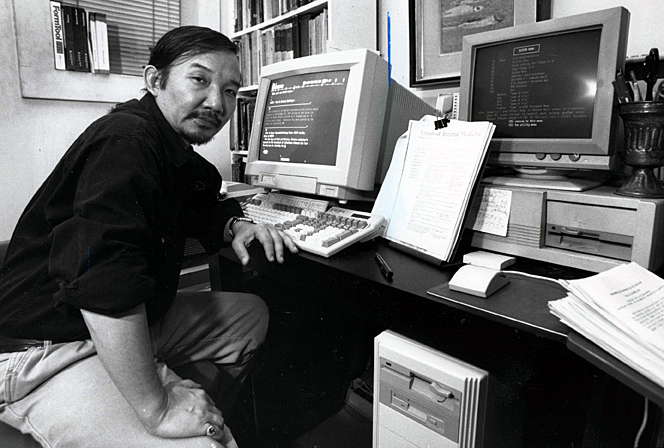
    Kiyoshi Kuromiya seen here in 1992, was a gay civil rights activist who helped establish ACT UP Philly.

    Maddow’s activism began when she was still in high school, when she began working at a hospice for people who were dying during the AIDS epidemic.

    Still, those few months living in Philadelphia influenced Maddow’s developing political voice. She idolized ACT UP Philly, an activist organization fighting for people with HIV/AIDS, and thinks that gay civil rights activist Kiyoshi Kuromiya is the city’s most overlooked hero for the work he did helping connect people with hard-to-find information about the virus and treatment.

    “He saved millions of lives,” Maddow said. “The city needs to build a statue for Kiyoshi Kuromiya.”

    Maddow has returned to Philly a number of times over the years, and every time she does, it makes her feel like she’s 19 again. Things have changed — seeing Indego bicycles to rent on street corners after hers was stolen is pretty jarring — but though her time living here was brief, she didn’t hesitate saying, “Philly was really formative for me.”

    “The thing I loved about Philly at the time, and that I kind of fell in love with, even before I really knew what to do with it, was the really sparky, edgy, impolite activist spirit,” Maddow said. “I think I’m just a middle-class polite kid who doesn’t like to offend anybody, and Philly kind of shook me out of that a little bit, and made me aspire to edgier things.”

    More live events and a new app coming from MS NOW

    Nearly 2,000 people attended Thursday night’s event at the Academy of Music.

    A strong Philly current ran through MS NOW’s event Thursday night, which highlighted the messy history of the American experiment leading up to the country’s 250th anniversary next week.

    MS NOW president Rebecca Kutler, who oversaw the event, is a Philly native who grew up in Center City and later Montgomery County. Host Ali Velshi lives in Bryn Mawr and commutes to New York every day to host The 11th Hour, which he recently took over as part of a lineup change.

    Former White House press secretary for then-President Joe Biden and current MS NOW host Jen Psaki was also part of Thursday event, where she interviewed Pennsylvania Gov. Josh Shapiro, who was raised in Upper Dublin Township in Montgomery County. Psaki doesn’t have any connection to the area other than friends who live here — and

    “My mother’s best friend of 70 years lives here,” Psaki said.

    Thursday’s event was part of a larger strategy of engagement at the network after breaking away from NBC and becoming part of Versant, hence the name change from MSNBC to MS NOW. Ratings are up, but the cord-cutting trend is undeniable, so MS NOW is attempting to secure a digital future while it remains a popular TV destination.

    The network has now hosted three large fan events since 2024 and another is planned for Sept. 26 ahead of the midterm elections, though further details have not been announced. Attendees in Philly on Thursday night received a free, one-year subscription to MS NOW’s membership product that is set to launch soon. It will act as a streaming platform and online community for the network’s progressive fans and provide access to its biggest stars.

    “We’re always looking for ways to connect with our MS NOW community, to meet more viewers where they are, and to engage them in new ways,” said Lauren Peikoff, the network’s executive producer of live events.

    Cecil Parker, a Philadelphia musician, said the state of affairs in Washington compelled him to attend Thursday’s event.

    “Urgency. That’s the all-encompassing word,” Parker said, who often tunes into MS NOW to get their take on the news. “They have their opinions, but it’s based on the facts. So I dig that.”

    Some audience members traveled from as far as Arizona and California to have a chance to hear Maddow and her MS NOW colleagues in person.

    Tony Clyburn and his wife, Lisa, drove more than 10 hours from West Columbia, S.C., to take part. A radio host back home, Clyburn said it was inspiring being in a room with people from different walks of life who want what’s best for their neighbors and their country.

    “These gatherings are good because they’re as close to a town hall as we can get,” Clyburn said.

  • A Philadelphia high schoolers’ production of ‘1776’ is former Gov. Ed Rendell’s dream come true

    A Philadelphia high schoolers’ production of ‘1776’ is former Gov. Ed Rendell’s dream come true

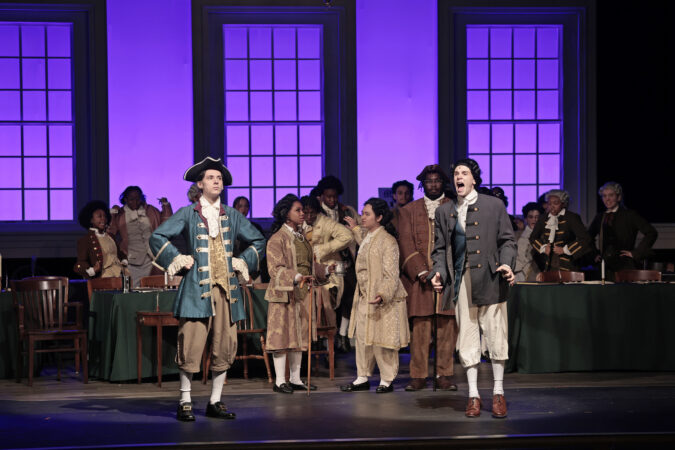
    In tricorn hats and tail coats, their locs, microbraids, and wavy tresses gathered into 18th-century low ponytails, 27 Philadelphia-area high school students transformed into America’s Founding Fathers on Wednesday evening at the Philadelphia High School for Creative and Performing Arts.

    The young thespians debated and deliberated the benefits of forming a sovereign nation. Their well-practiced Southern accents and New England inflections echoed in the full auditorium.

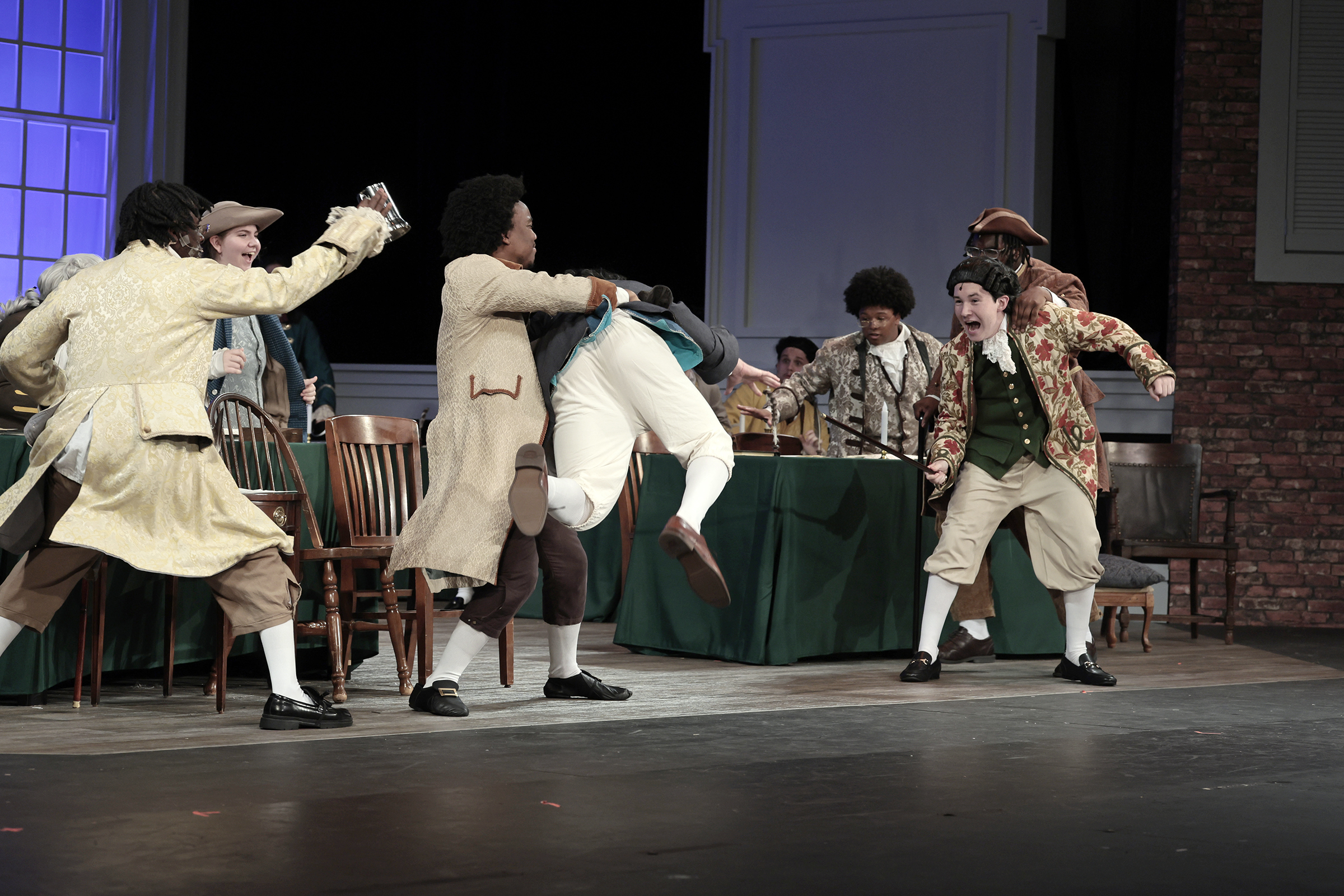
    In 2½ hours, Massachusetts congressman John Adams (played by Jackson Preisser), Ben Franklin (Jayden Duvene), and Thomas Jefferson (Maxwell Henderson) made the case for liberty, overcoming the petty aristocratic concerns of Pennsylvania delegate John Dickinson (Greg Rist).

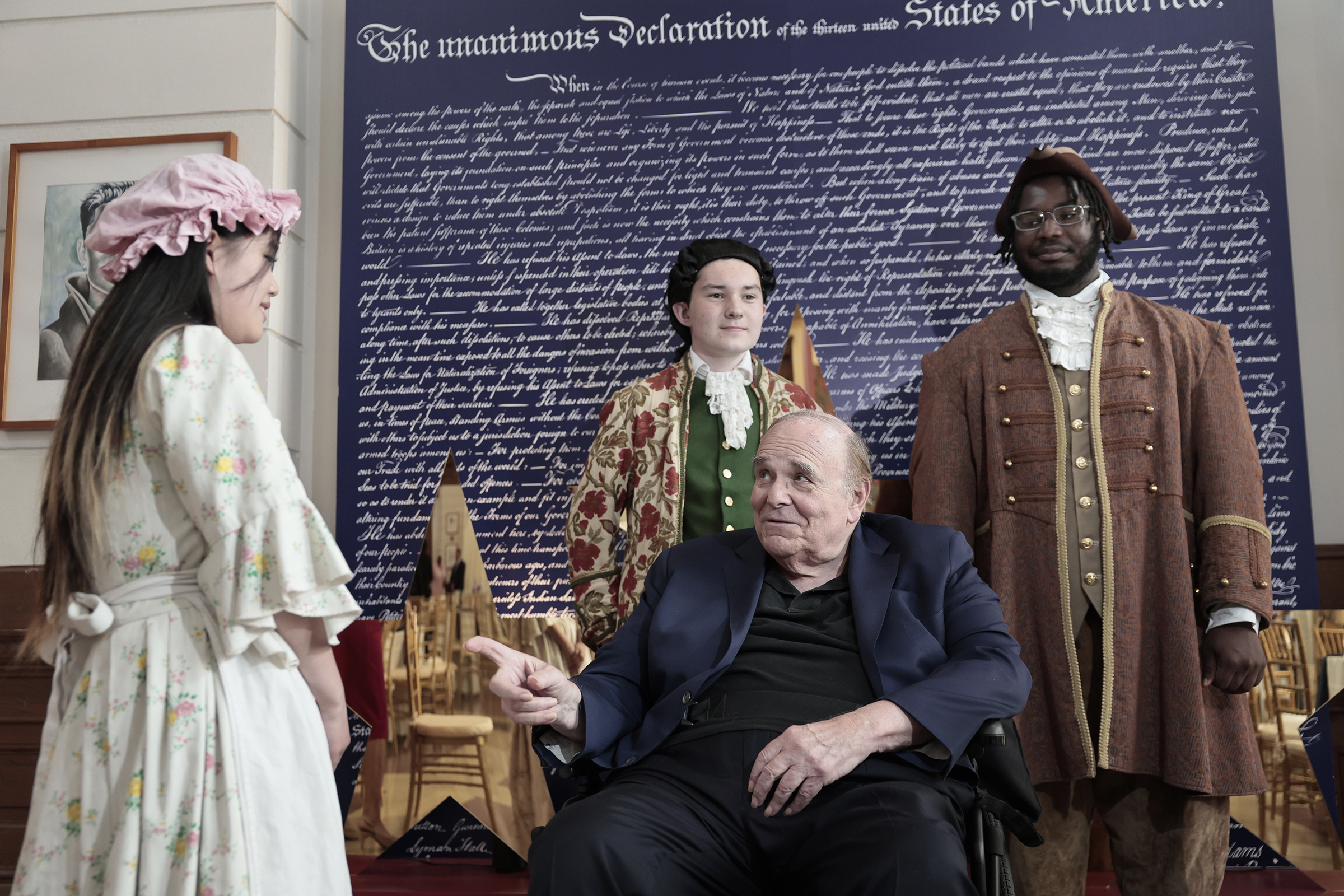
    Former Mayor Ed Rendell meets cast members (L-R) Abigail Adams (played by Chloe Chau), John Dickinson (played by Greg Rist) and Ben Franklin (played by Jayden Duvene) during opening night of 1776: The Musical at the Philadelphia High School for Creative and Performing Arts on Wednesday, June 24, 2026.

    On a set that looked remarkably like Independence Hall, the students staged the Tony Award-winning 1969 Broadway musical 1776 and argued for and against liberty with witty songs and sophisticated dialogue.

    The reenactment of the signing of the Declaration of Independence was everything Ed Rendell, the elder statesman and the brain behind the production, wanted it to be.

    “It’s been my dream for quite some time to see this production happen,” Rendell said to The Inquirer, his voice a raspy whisper, worn and weary from Parkinson’s disease. Sitting in his wheelchair at the red, white, and blue step and repeat, Rendell smiled as CAPA’s lobby was turned into a dining room for dignitaries hours before the play began.

    “In honor of America’s 250th birthday, we wanted to use 1776 to teach high school students the sacrifices and compromises it took to form this great nation,” he said.

    Rendell’s love for 1776 is rooted to the night in 1969 when he watched the colonial drama unfold on Broadway, starring William Daniels as John Adams, Ken Howard as Thomas Jefferson, and Howard da Silva as Benjamin Franklin. Daniels, Howard, and da Silva starred in the 1971 Oscar-nominated film of the same name.

    “I loved it,” Rendell said, whose favorite ballads from the play are Franklin, Adams, and Jefferson’s quirky performance of “The Egg,” in which the forefathers humorously choose the bald eagle as America’s national bird. (That didn’t really happen during the Second Continental Congress, but it’s a nice touch.)

    Another of Rendell’s favorite songs is “Is Anybody There?,” a melancholy number during which Adams asks himself if his dedication to the cause of independence is worth it.

    “It struck the right chord, giving all the facts about how we came to our freedom, our independence,” Rendell said. “When I became mayor, I went back and studied it and began to think of it as an important civics lesson. There were so many things I didn’t even know.”

    A former president, a mayor, a speaker walk into a play

    The 1776 opening night saw the attendance of a who’s who in Philadelphia politics, business, and civics.

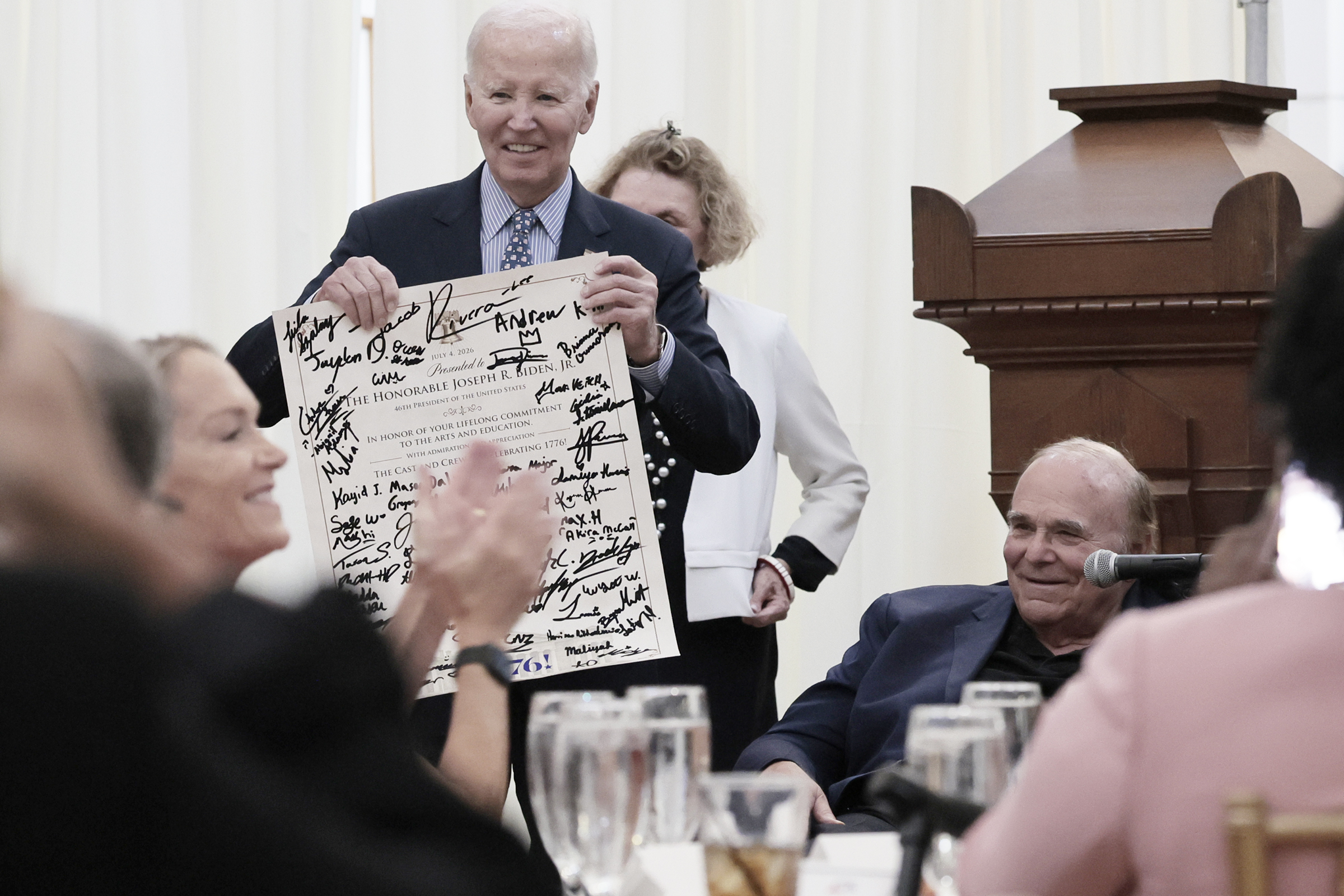
    Former President Joe Biden was in the house on the opening night of Rendell’s theatrical milestone. After he was presented with a copy of the declaration signed by the cast, the former president delivered a nine-minute speech about the importance of teaching American history in present-day America, although he did not mention President Donald Trump by name.

    “What I can tell you is that from the moment the Founding Fathers signed the Declaration of Independence, we have been in a consistent battle for the soul of the nation,” Biden said as guests prepared to dig into barbecued chicken, brisket, and ribs, Rendell’s favorite.

    Former President Joe Biden displays a signed poster from the cast as former Mayor Ed Rendell looks on during the opening night celebration of 1776: The Musical at the Philadelphia High School for Creative and Performing Arts on Wednesday, June 24, 2026.

    “Even when there is darkness,” Biden said, “we’ve summoned our angels and crawled back from the brink. We are trying to do that now.”

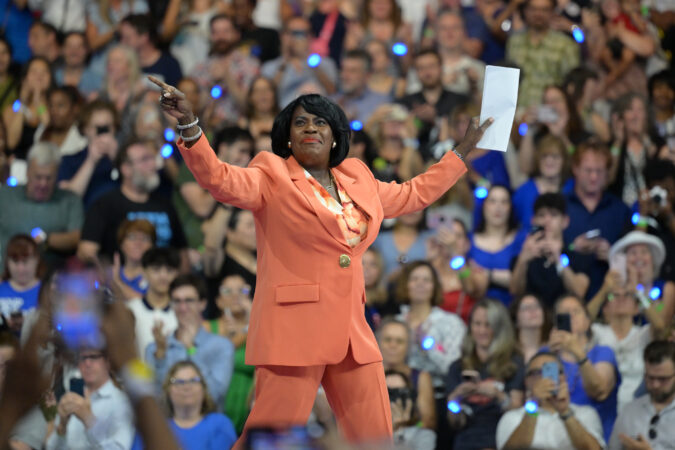
    Mayor Cherelle L. Parker, Pennsylvania House Speaker Joanna McClinton (D., Philadelphia), and State Rep. Joe Ciresi (D., Montgomery) were also in attendance. Philadelphia School Superintendent Tony B. Watlington Sr.; Temple University president John Fry; and David L. Cohen, the former senior executive vice president to Comcast and U.S. ambassador to Canada, were on hand, too.

    “When Mr. Rendell calls, people come out,” said Adrian R. King, a partner at Philadelphia-based law firm Ballard Spahr and a former Rendell staffer.

    Their attendance reflected their respect for Rendell, a former governor of Pennsylvania and mayor of Philadelphia who, in his political heyday in the 1990s, led the efforts to reimagine South Broad Street as the now-bustling Avenue of the Arts. CAPA’s 1997 opening was a part of that plan.

    John Adams (played by Jackson Preisser, middle) and John Dickinson (played by Greg Rist, right) are seperated during a scene from the opening night of 1776: The Musical at the Philadelphia High School for Creative and Performing Arts on Wednesday, June 24, 2026.

    Rendell’s baby

    Rendell has dreamed of this production for years. He began working on it in earnest last year, bringing on veteran Philadelphia arts administrator Karen Corbin to executive produce. Phillip Sean Brown, director of theater at Bryn Mawr’s Shipley School, was roped in to direct.

    “The governor had very specific ideas of what he wanted,” Brown said. “He wanted to show the history of our country, show the drama of the birth of a nation, and have the students learn everything they could about the craft of theater.”

    The first order of business was securing the rights to the late composer Sherman Edwards’ script and music. That will cost about $45,000 by the end of the run, Corbin said.

    Casting began in February and auditions began in March. Forty actors from eight area high schools were picked for the multicultural, gender-fluid rotating cast, giving the revival of the 57-year-old production Hamilton vibes.

    In addition, Brown said, more than 30 students were hired as musicians and production crew.

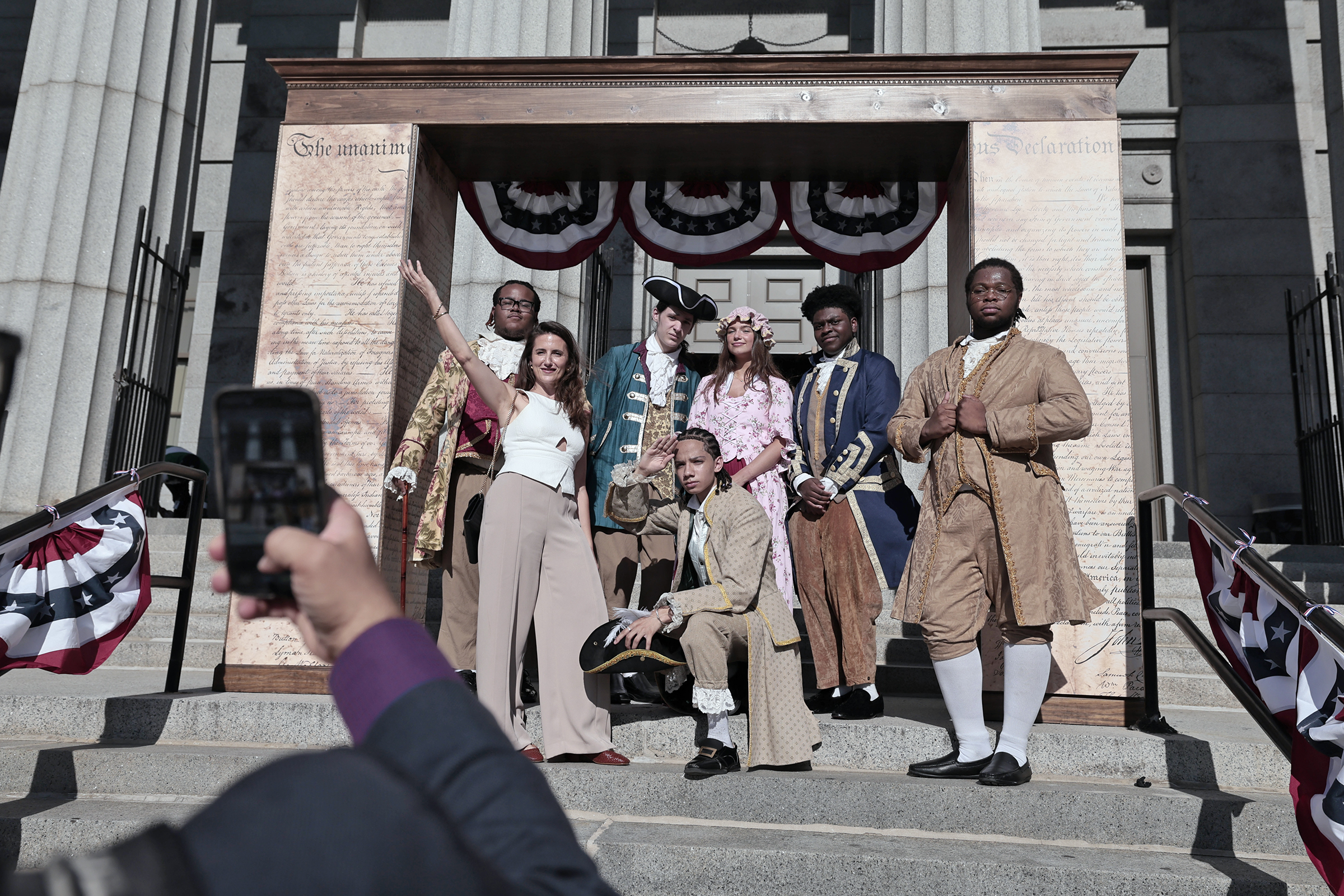
    Cast members posed with guests before opening night of 1776: The Musical at the Philadelphia High School for Creative and Performing Arts on Wednesday, June 24, 2026.

    “They worked with professionals in theater lighting, costume, sound, and props,” Brown said.

    Students were paid $150 a week during rehearsal weeks, and will make $300 a week through the eight-week performance. The entire production cost $850,000 including a $150,000 grant from the state.

    There will be 50 shows through Aug. 15 at CAPA. Actors will also perform vignettes of the musical throughout Philadelphia’s historic district, including Carpenters Hall.

    ‘All good things take compromise’

    Students’ exposure to the arts and history has been priceless.

    “This experience represents striving forward — as an actor with my cast,“ said Mason Daly, a CAPA graduating senior whose biting Southern accent for South Carolina congressman and segregationist Edward Rutledge was chilling.

    Daly’s role as Rutledge is particularly eye-opening. 1776 tells us that Jefferson’s original draft of the declaration included a clause abolishing slavery in America. Rutledge, however, would support America only if that part of the declaration were struck.

    Jefferson laments to Franklin, saying, “Mark me, Franklin … if we give in on this issue, posterity will never forgive us.” But he does give in.

    “Playing him, I learned to value the nuances of the perspectives of even those we disagree with,” Daly said.

    “It’s about his personal compromises to get to the yea vote that allowed independence to go forward. That dialogue, that discussion, that back-and-forth between him and the various colonial representatives is the basis of our democracy and government.”

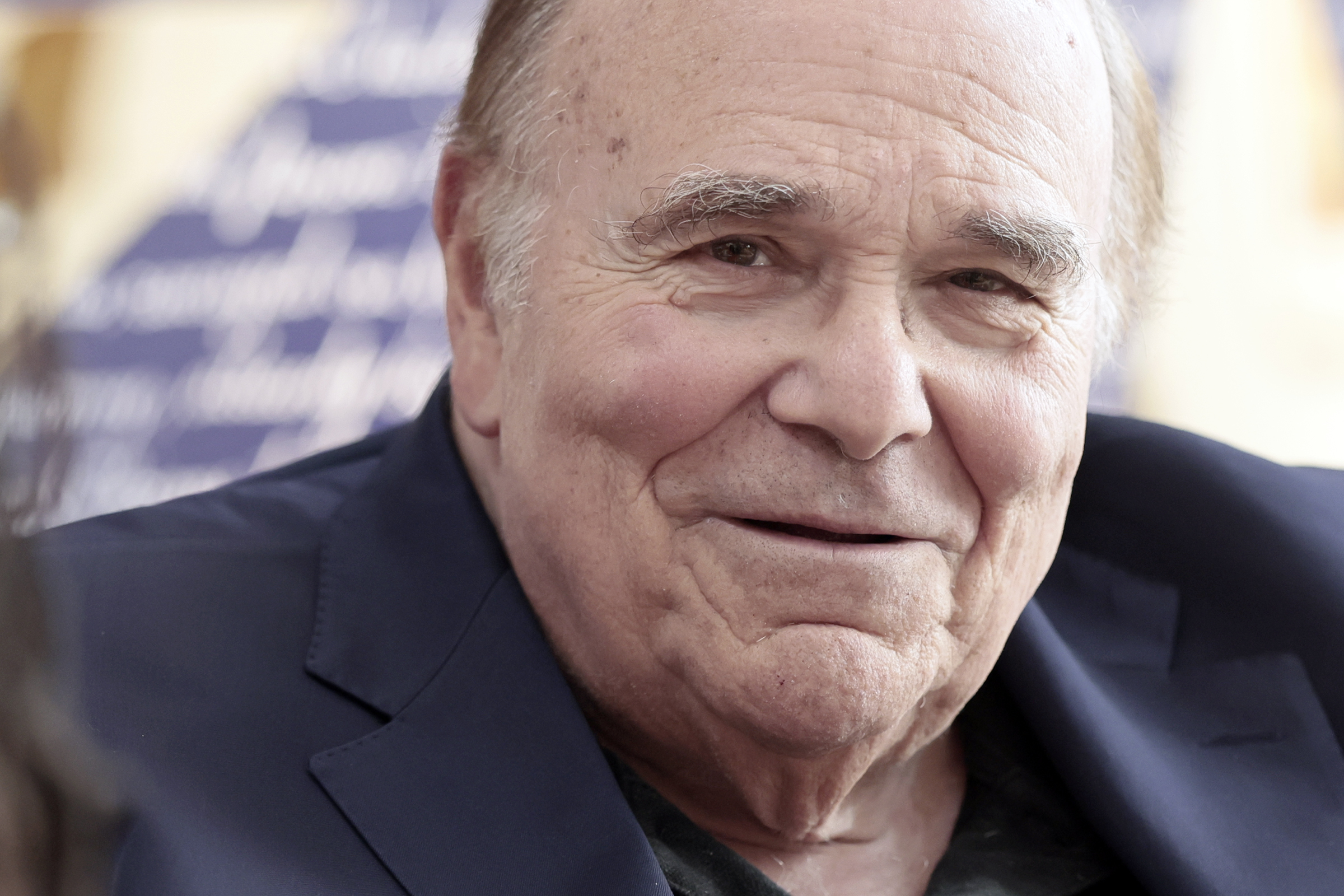
    Former Mayor Ed Rendell during opening night of 1776: The Musical at the Philadelphia High School for Creative and Performing Arts on Wednesday, June 24, 2026.

    The actors’ parents bubbled with excitement.

    “My child is really being taken seriously as an actor in this production,” said Justina Barrett, chief learning and engagement officer at the Historical Society of Pennsylvania, and mother to Sage Wentz, who played Col. Thomas McKean of Delaware. “This whole play is about the messy business of making the United States. It was hard. These guys weren’t nice. It wasn’t pretty. In many ways, we are divided then as we are now.”

    Although difficult, this idea of forming a new nation through compromise is what Rendell hopes is the ultimate lesson for all involved.

    “We can’t get anything done without compromise,” Rendell said. “We have to get back to a government that is working toward the good of the government. The Civil Rights Act took compromise. Women’s rights took compromise. All good things take compromise.”

    “1776″ will be performed at CAPA, 901 S. Broad St., through Aug. 15. Tickets start at $11. For more information, go to the Celebrating 1776! website.

  • Ala Stanford is banking on a healthcare message to break through in crowded Philly primary for Congress

    Ala Stanford is banking on a healthcare message to break through in crowded Philly primary for Congress

    At times, Ala Stanford feels like she doesn’t quite fit in.

    She’s a pediatric surgeon — albeit very well-known — who is running for political office for the first time, trying to win a seat in Congress that for decades has been held by a seasoned Philadelphia politician.

    At campaign events, when the top Democrats in the congressional race are chit-chatting among themselves, Stanford has found herself on the margins. Often, she feels more comfortable talking medical procedures with Dave Oxman, the other physician in the race, than whatever the sitting state representatives have going on in Harrisburg.

    The trail may get lonelier. Oxman is planning to drop out Wednesday and endorse Stanford, making her the hands-down most prominent outsider in a race that is stacked with political veterans.

    To amass support ahead of the crowded May 19 primary election — the likely deciding contest in one of the nation’s bluest congressional districts — Stanford will have to chart a path that beats both the Democratic establishment and the progressive left, which have chosen other candidates in the wide-open race.

    Stanford, 55, knows her lack of political experience makes her stand out, and she’s accentuating it on the campaign trail. She is highlighting her career as a physician, and she says she’ll fix a healthcare system her opponents failed to address in their years as public officials. Her candidacy comes as an increasing number of medical professionals are running for office across the country, and as thousands of Pennsylvanians have dropped their healthcare coverage due to rising costs.

    She has kept pace with three sitting lawmakers who are also running for the seat, in part by lending her campaign $250,000 of her own money.

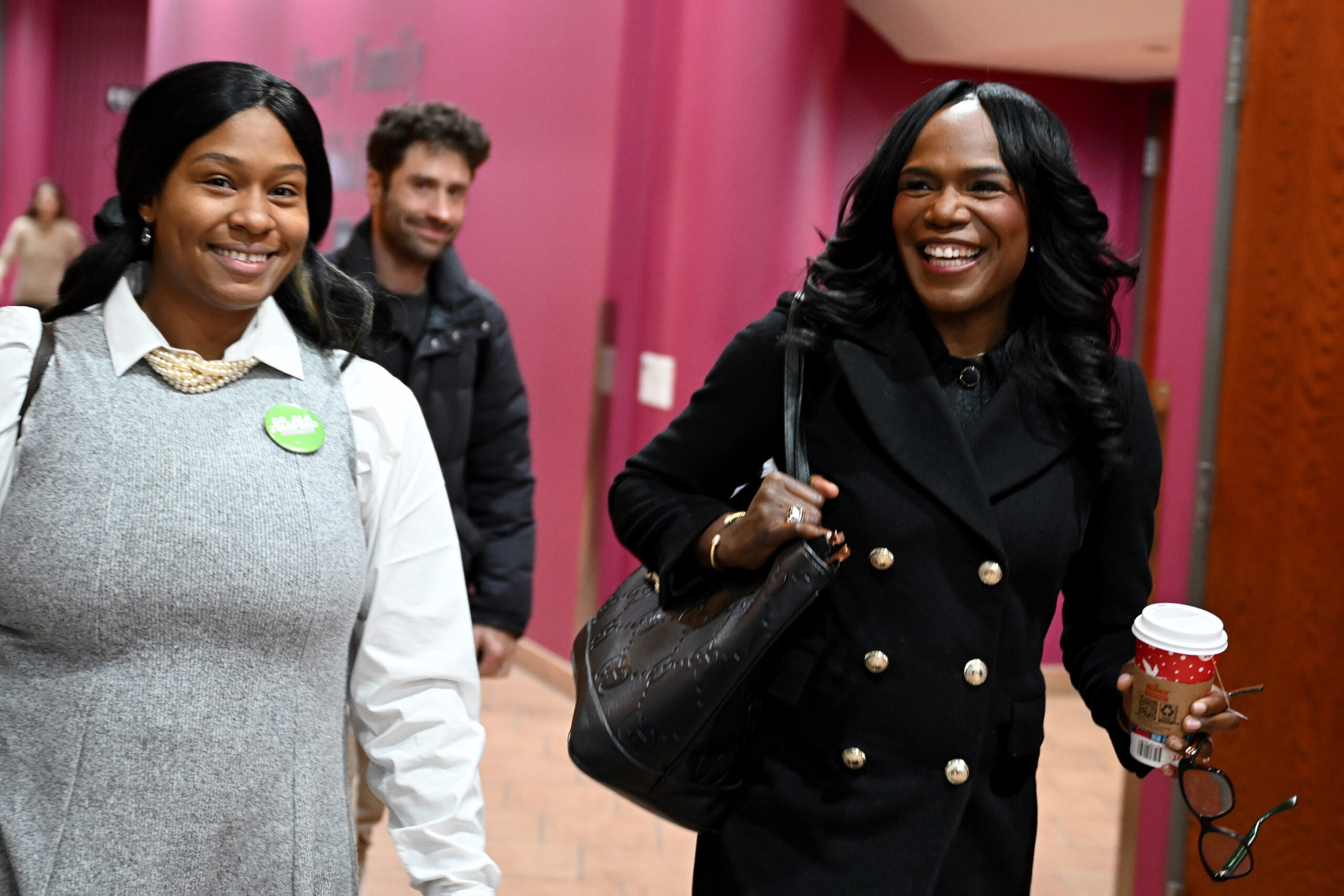
    Candidates (from left) State Rep. Morgan Cephas; physician David Oxman; State Rep. Chris Rabb; physician Ala Stanford and State Sen. Sharif Street appear at a forum hosted by the 9th Ward Democratic Committee in Mt. Airy Thursday, Dec. 4, 2025.

    Stanford also has a cadre of healthcare workers uplifting her. She has won endorsements from prominent doctors, as well as a national super PAC, 314 Action, which backs candidates with backgrounds in science and has poured $1.5 million into a pro-Stanford campaign.

    The group so far funded five weeks of television commercials reminding voters that Stanford founded the Black Doctors COVID-19 Consortium. In the throes of the pandemic, she set up mobile testing sites in majority-Black communities and ran vaccination clinics to inoculate thousands of Philadelphians, a grassroots effort to fill gaps left by government-funded programs.

    Today, she runs a primary care health clinic in North Philadelphia that bears her name.

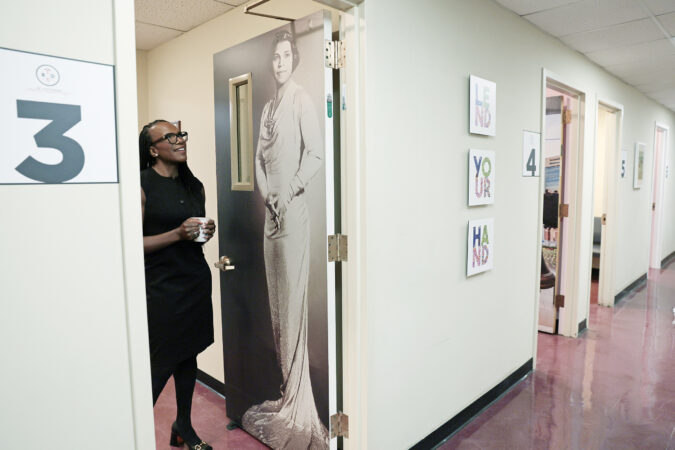
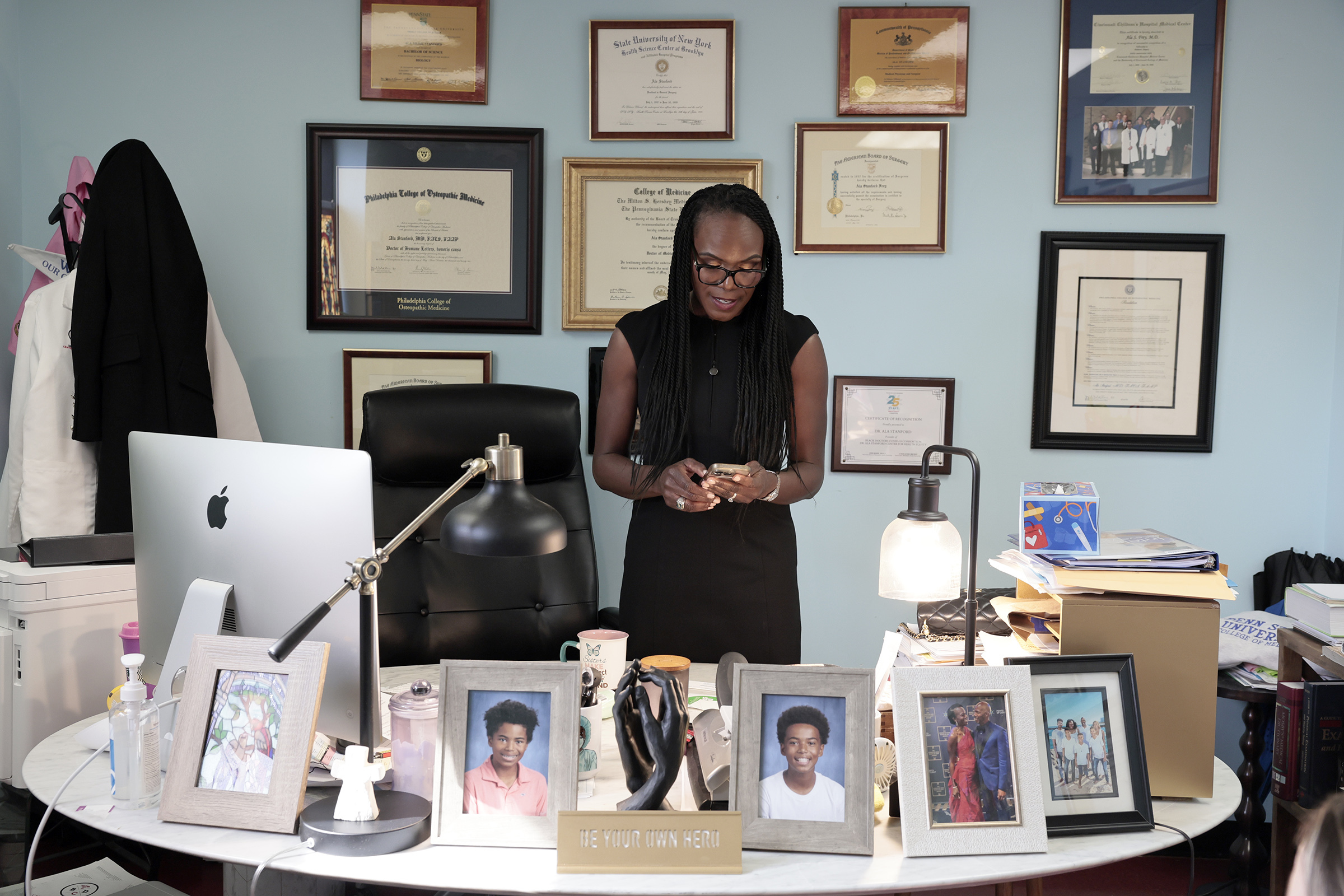
    Ala Stanford texts her son while in her office at the Dr. Ala Stanford Center for Health Equity, 2001 W Lehigh Ave. in Philadelphia on Friday, March 13, 2026

    It is a compelling story that has been told many times — across national media, on podcasts, and in Stanford’s own memoir.

    What hasn’t been told is why it means she should represent the 3rd Congressional District, which covers much of Philadelphia, over her opponents who have spent years in politics.

    “People get so comfortable doing things the same way, the same way, the same way,” she said in a recent interview at her health clinic. “And no one likes change. But the city needs this. The city needs some change.”

    Other candidates say Stanford doesn’t have a monopoly on talking about healthcare. State Sen. Sharif Street, another front-runner in the race, has touted that he and other government officials helped secure funding for Stanford’s pandemic operation.

    “During COVID, he was very proud of his work,” Street spokesperson Anthony Campisi said, “to ensure that Doctor Stanford’s vaccination efforts received the support they needed so that we could get vaccines into arms quickly.”

    Stanford’s opponents also clearly know that her status as a physician may be an asset.

    She submitted paperwork to appear on the ballot as “Dr. Ala Stanford.” But on Tuesday, a member of the Democratic City Committee — which endorsed Street — filed a petition in state court, saying Stanford’s name should appear without the “Dr.” in front of it.

    In the coming days, a judge will decide.

    Leaning on healthcare as a core issue

    Stanford does not fit neatly onto the ideological spectrum.

    Of course, she is not conservative. She doesn’t call President Donald Trump by his name — he’s “47″ — and she uses words like “tyranny” and “running amok” to describe the current White House.

    But unlike some of her opponents, she is not of the Philadelphia Democratic establishment. She said she feels like the city’s long-entrenched party apparatus had always planned to endorse Street, the former head of the state party and the son of a Philadelphia mayor.

    Stanford is also not of the populist left. She believes Palestinians “deserve to have safety and freedom,” but thinks it’s inflammatory when her progressive opponent, State Rep. Chris Rabb, calls Israel’s war in Gaza a “genocide.”

    “I know when you use the G-word how hurtful it is to a group of people,” she said. “It’s like someone saying the N-word around me. I don’t want to hear that. And every time you shout that from the rooftops, how many people are you hurting?”

    What she does believe is that government systems have failed underserved communities, and that most domestic issues can be traced back to inequities in healthcare — points she has consistently emphasized in her campaign.

    Physician Ala Stanford (right) arrives at a forum hosted by the 9th Ward Democratic Committee Dec. 4, 2025. She is a Democratic candidate running to represent Philadelphia’s 3rd Congressional District.

    She has hammered Republicans for not extending pandemic-era subsidies that ensured people on Affordable Care Act health plans did not pay more than 8.5% of their income for care. She has advocated for universal healthcare. And she has harshly criticized Health and Human Services Secretary Robert F. Kennedy Jr., who has long been skeptical of vaccines.

    “In this country, wealth is linked to homeownership, home ownership is linked to education, education is linked to health outcomes, and health outcomes are all exacerbated by racial injustice,” Stanford said during a recent candidates forum. “So when you talk about one, you talk about all.”

    Stanford is careful to say that her focus on healthcare doesn’t mean she can’t discuss housing, immigration, or the war in Iran.

    But it is clear that she feels most comfortable talking about what she knows best. Her supporters say that’s an asset in the 3rd Congressional District, which has a disproportionately high number of people who rely on public healthcare systems.

    More than a third of the district’s residents, or more than 284,000 people, were on Medicaid as of December, according to the state Department of Human Services. Among Pennsylvania congressional districts, that’s the second-highest proportion of residents on Medicaid. (The first highest is the 2nd Congressional District, which also includes parts of Philadelphia.)

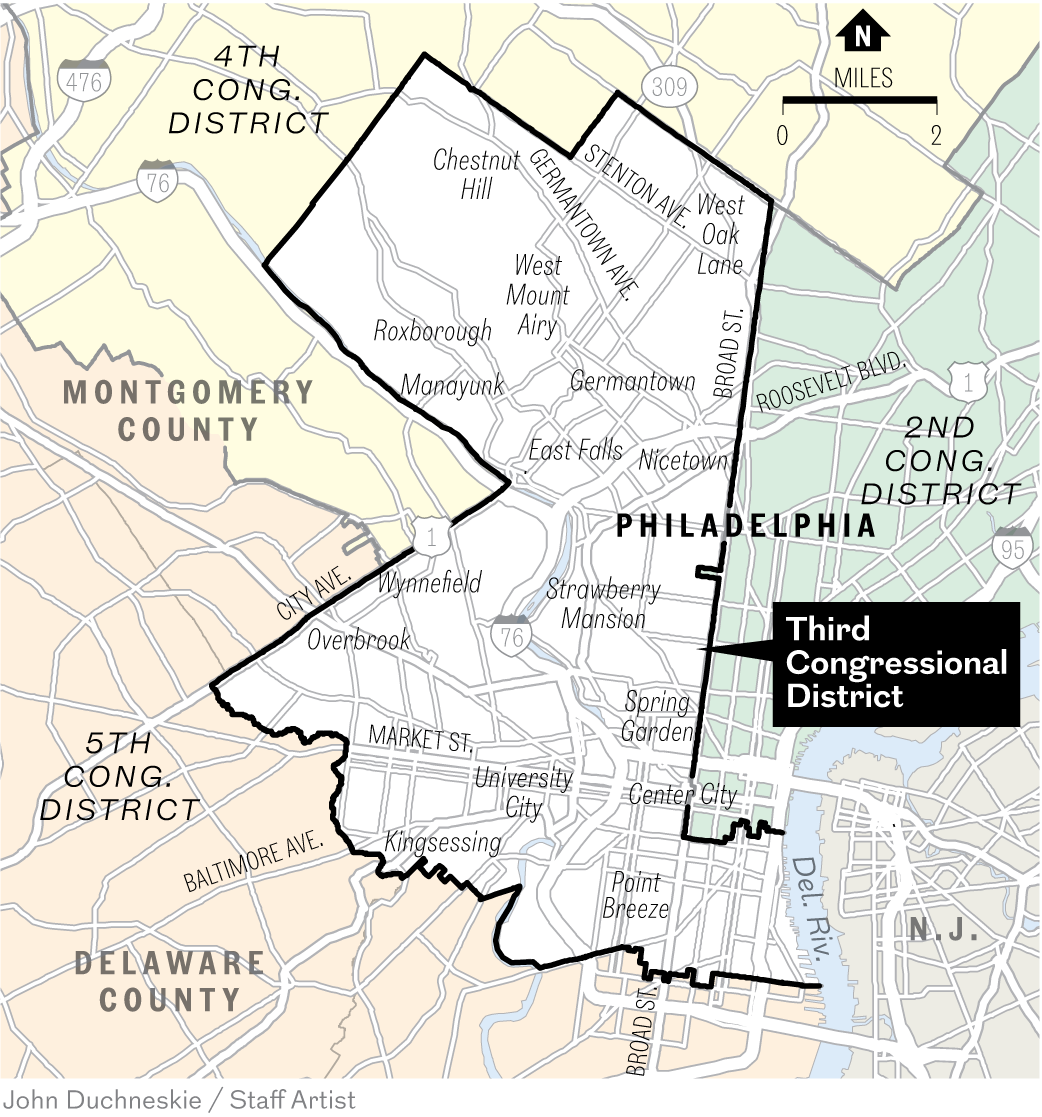
    Map of Pennsylvania’s 3rd Congressional District.

    The state estimates that more than 30,000 people in the district could lose their healthcare as a result of changes to Medicaid eligibility and coverage under Trump’s One Big Beautiful Bill Act.

    There were also more than 80,000 people in the district who last year had health coverage under the Affordable Care Act, either through expanded Medicaid eligibility or a plan they purchased through the marketplace.

    That number is also likely lower now since ACA subsidies expired this year and premiums rose. Statewide, one in five people who bought plans last year from Pennsylvania’s marketplace, Pennie, opted out for 2026.

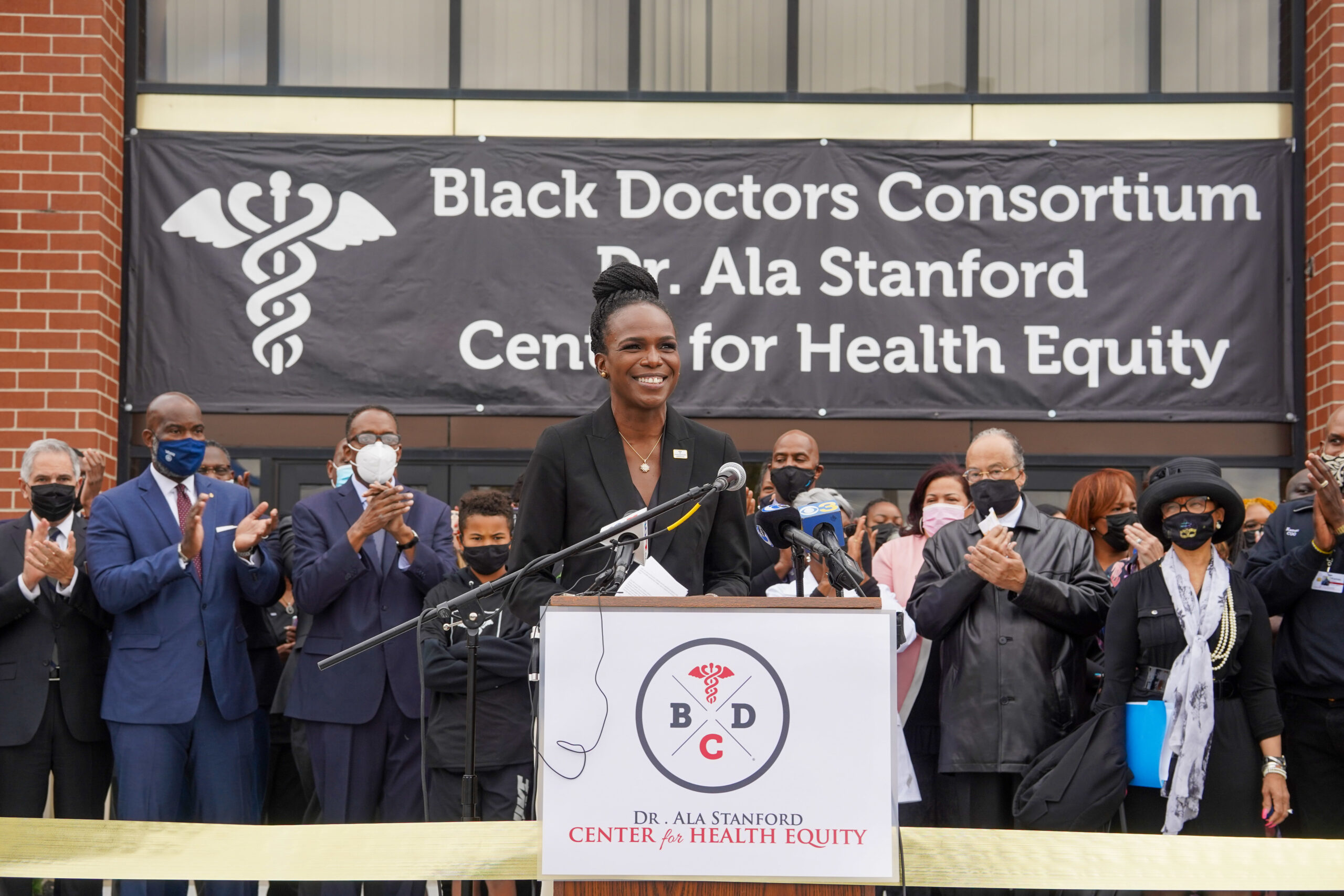
    Ala Stanford speaks at the Black Doctors Consortium Dr. Ala Stanford Center for Health Equity in Philadelphia, Pa., on October 27, 2021. The center was opened with the goal of making healthcare accessible for those in communities who might struggle to get proper healthcare treatment.

    Stanford’s supporters think Philadelphia voters will trust a doctor to ensure affordable healthcare access. They point to a survey released this month by the Annenberg Policy Center at the University of Pennsylvania that found 86% of respondents said their primary healthcare provider is trustworthy.

    Erik Polyak, the executive director of 314 Action, said Stanford’s background differentiates her in a Democratic primary in which most candidates align on key issues.

    “Voters want healthcare decisions made by people who understand patients and the science,” he said, “and not politicians chasing headlines.”

    Oxman, Stanford’s now-former opponent, said physicians running for office can help rebuild a Democratic Party that has “lost the trust of so many people.”

    “So many people see us as not centered on their needs, particularly their economic needs,” he said. “If the Democrats are going to build a party that has a chance of winning in Center City Philadelphia and in central Pennsylvania, it’s got to regain the trust of the voters.”

    New to politics, but not government

    It was the spring of 2020, and the bills were piling up.

    Stanford, who was born in Germantown, had given up her well-paying day job as a surgeon to work full-time with the Black Doctors Consortium. She ran COVID-19 testing clinics in Philly parking lots and churches, and amassed some $200,000 in bills, saying she couldn’t “let one person lose their life for a test that costs $100.”

    That was the beginning of her pandemic experience with government.

    A lot of it was begging. As Stanford tells it, she peppered government officials with emails, telling them how many people she and her volunteers had tested that day, and asking for help securing funding.

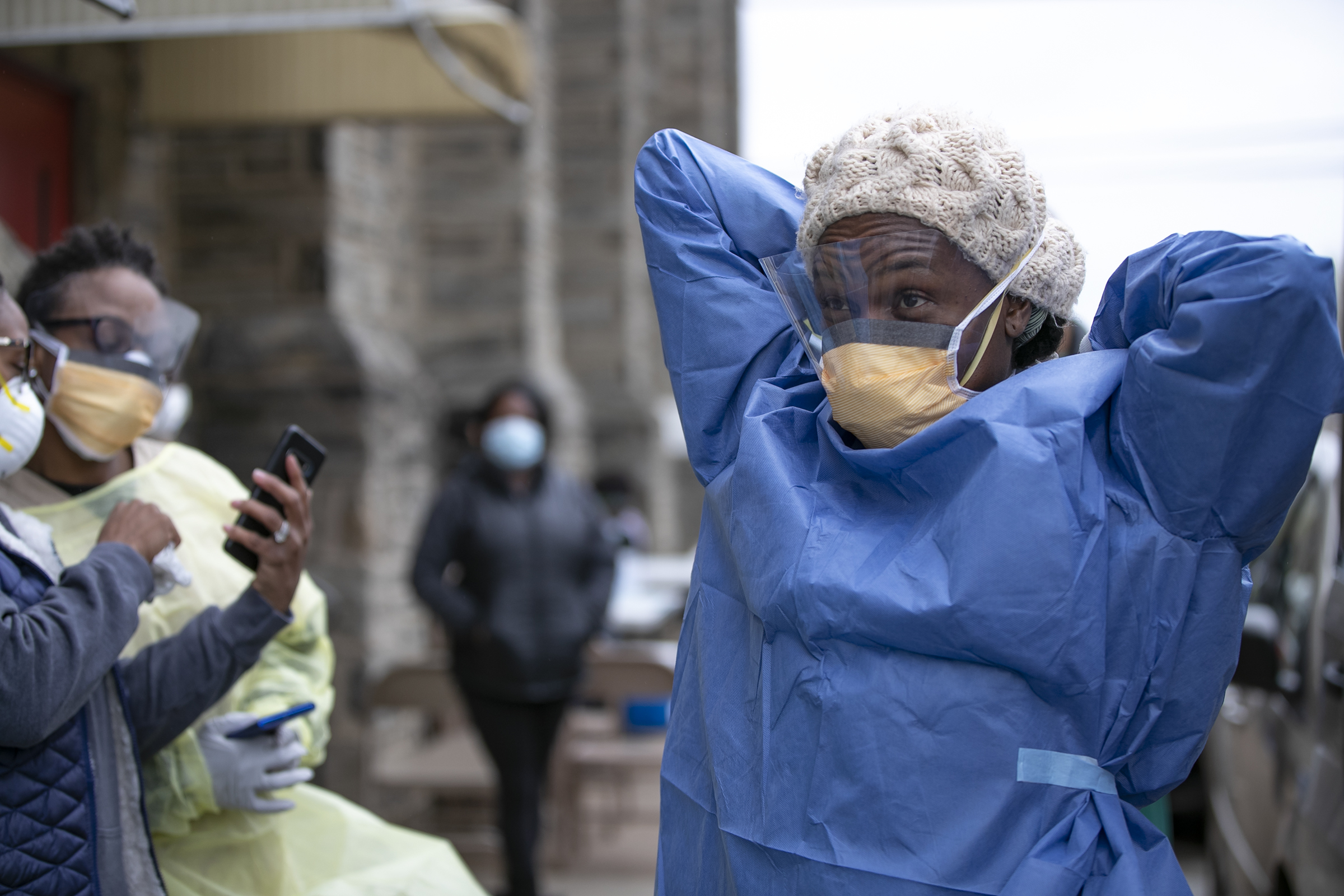
    In this April 2020 file photo, Ala Stanford puts on her mask before running a coronavirus (COVID-19) testing site at the Miller Memorial Baptist Church in Philadelphia.

    U.S. Rep. Dwight Evans was immediately responsive. He connected Stanford with the White House, other members of Congress, and top insurance companies. And he publicly called on former Gov. Tom Wolf and then-Mayor Jim Kenney to allocate funding to Stanford’s organization, citing the group’s outreach to predominately Black communities and its work to address distrust of medical institutions.

    The money came in several months later. It was finally enough for Stanford to pay for testing, compensate her staff, and prepare to vaccinate thousands of Philadelphians.

    Fast-forward five years, and Evans has endorsed Stanford to replace him in Congress as he retires after decades of public service. His backing has been invaluable to Stanford, and it surprised some political observers who figured he might endorse one of the politicians whom he’d served alongside.

    Stanford said Evans’ support has not convinced some Democratic voters. Some tell her they plan to vote for Street, citing his family name, or they say that “it’s his turn now.”

    “What about if he is not what’s best for the people?” Stanford said. “Doesn’t that factor in?”

    She tells voters that despite being new to the campaign trail, she isn’t new to government. She worked as a regional director for the Department of Health and Human Services under former President Joe Biden, who appointed her to the role. And she leads medical services at the Riverview Wellness Village, the city-owned drug recovery center opened last year by Mayor Cherelle L. Parker’s administration.

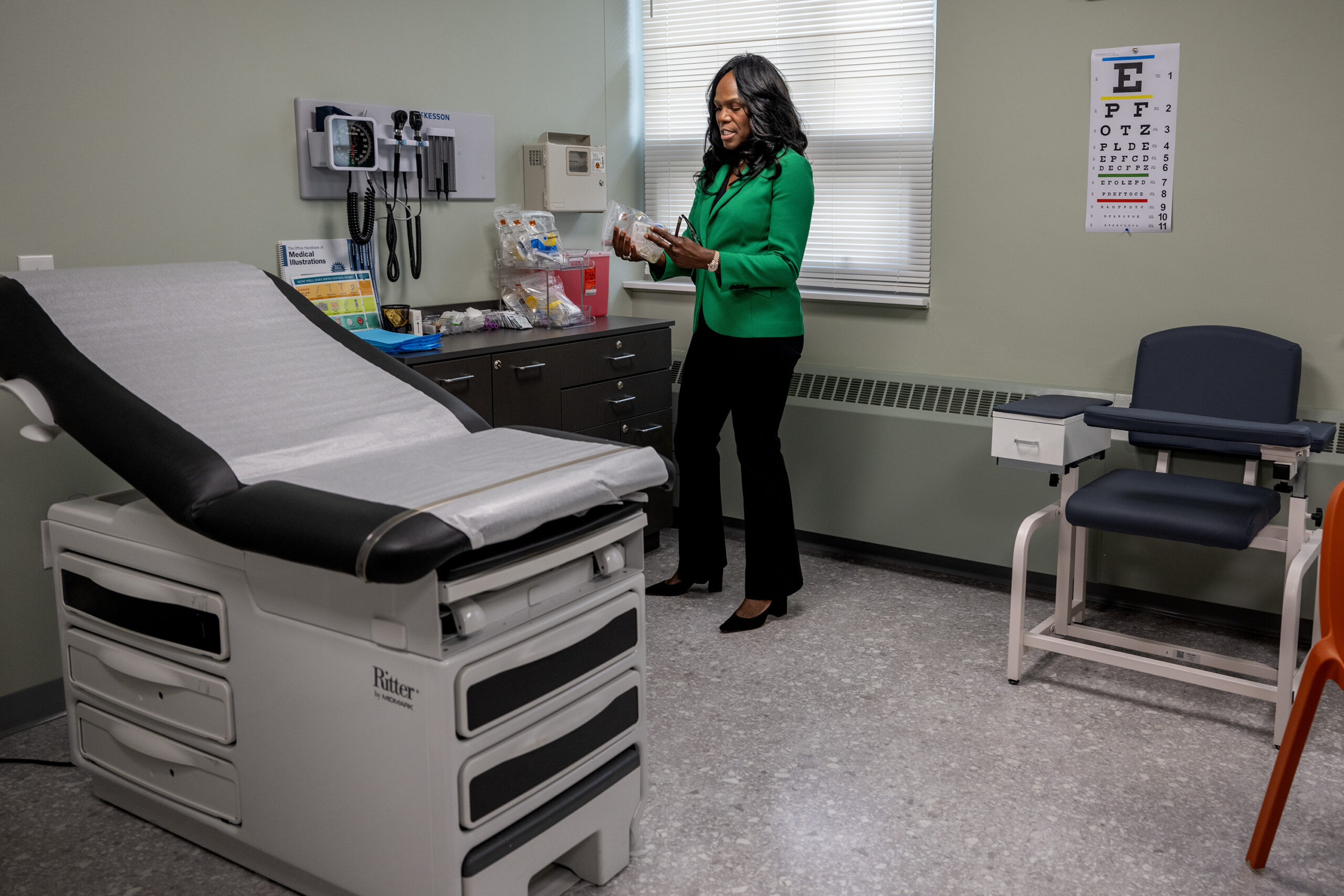
    Physician Ala Stanford in an examination room at the primary medical care center run by her Black Doctors Consortium at Riverview Wellness Village, a city-owned drug recovery home in Northeast Philadelphia Tuesday, Nov. 25, 2025.

    Still, Stanford very much sees herself as a doctor.

    She often works out of a corner office in the North Philadelphia health center, and she still is alerted when the temperature of the vaccine refrigerator dips a degree too low. She has, on more than one occasion, tended to someone experiencing a medical emergency while she was campaigning.

    She knows that overseeing day-to-day operations at the health clinic won’t be possible if she’s in Congress. There’s a succession plan in place.

    “It’s just about, how can I have more significance at a larger scale? Congress is definitely a way to do it, but it might be somewhere else,” Stanford said. “That is, if I don’t win. But I want to win. I should win.”

  • A statue of a founding father who enslaved people was taken down in Wilmington. It’s moving to D.C.’s Freedom Plaza.

    A statue of a founding father who enslaved people was taken down in Wilmington. It’s moving to D.C.’s Freedom Plaza.

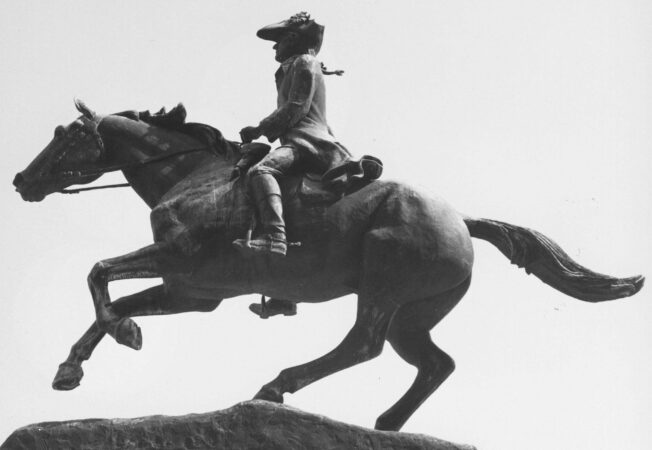
    The statue of a founding father who enslaved Black people in Delaware is moving from a New Castle storage facility to a venerated spot in Washington’s Freedom Plaza as part of President Donald Trump’s celebration of America’s 250th birthday.

    Wilmington officials took down the statue of Caesar Rodney in 2020 amid Black Lives Matter protests and a national reckoning over racism in America, taking it out of public view at the same time as the city removed a statue of Christopher Columbus for similar reasons.

    It wasn’t clear when the bronze monument of Rodney on a horse will be put on temporary display in the plaza on Pennsylvania Avenue, near the White House, according to the New York Times, which learned of the story from a Feb. 3 National Park Service memo.

    The statue had stood in Wilmington’s Rodney Square for around 100 years.

    Rodney’s legend includes a partially disputed story about riding two horses 82 miles from Dover to Independence Hall to sign the Declaration of Independence — a trip five times longer than Paul Revere’s more famous ride a year earlier.

    Rodney arrived spent and mud-spattered on July 2, 1776, to sign the Declaration before its formal adoption on July 4, breaking the tie between two other Delaware delegates, one of whom wouldn’t sign, said Dick Carter, chairman of the Delaware Heritage Commission. The near last-minute inscribing is true, Carter and others say, but it’s possible that Rodney, who suffered from facial cancer and was quite ill, may have covered some of the mileage in a carriage.

    Giving his life to public service, Rodney was a brigadier general in the Continental Army, a sheriff, a justice on the Delaware Supreme Court, and a delegate from Delaware to the Continental Congress.

    Rodney was also among the 41 out of 56 Declaration signers who enslaved people. He was a complex and contradictory figure, especially when viewed through a 21st-century lens, Carter said, adding that it is not fair to “judge historical figures by the norms and mores of the present day.”

    Rodney enslaved anywhere from 20 to 200 people on his estate near Dover. But his legacy also includes a bill he introduced in the state legislature to end the practice of importing enslaved people into Delaware. And upon his death, he freed the 18 people he’d enslaved at the time.

    Trump, during his first term in 2020, praised Rodney in a proclamation issued on the founding father’s birthday.

    In the proclamation, Trump condemned the removal of Rodney’s statue “as part of an ongoing, radical purge of America’s founding generation.”

    Trump said it was a “re-education attempt” and the “end result of an extreme anti-American historical revisionism,” generated by “critical race theorists … [and] mobs on city streets” who say that America is not an exceptional country “but an evil one.”

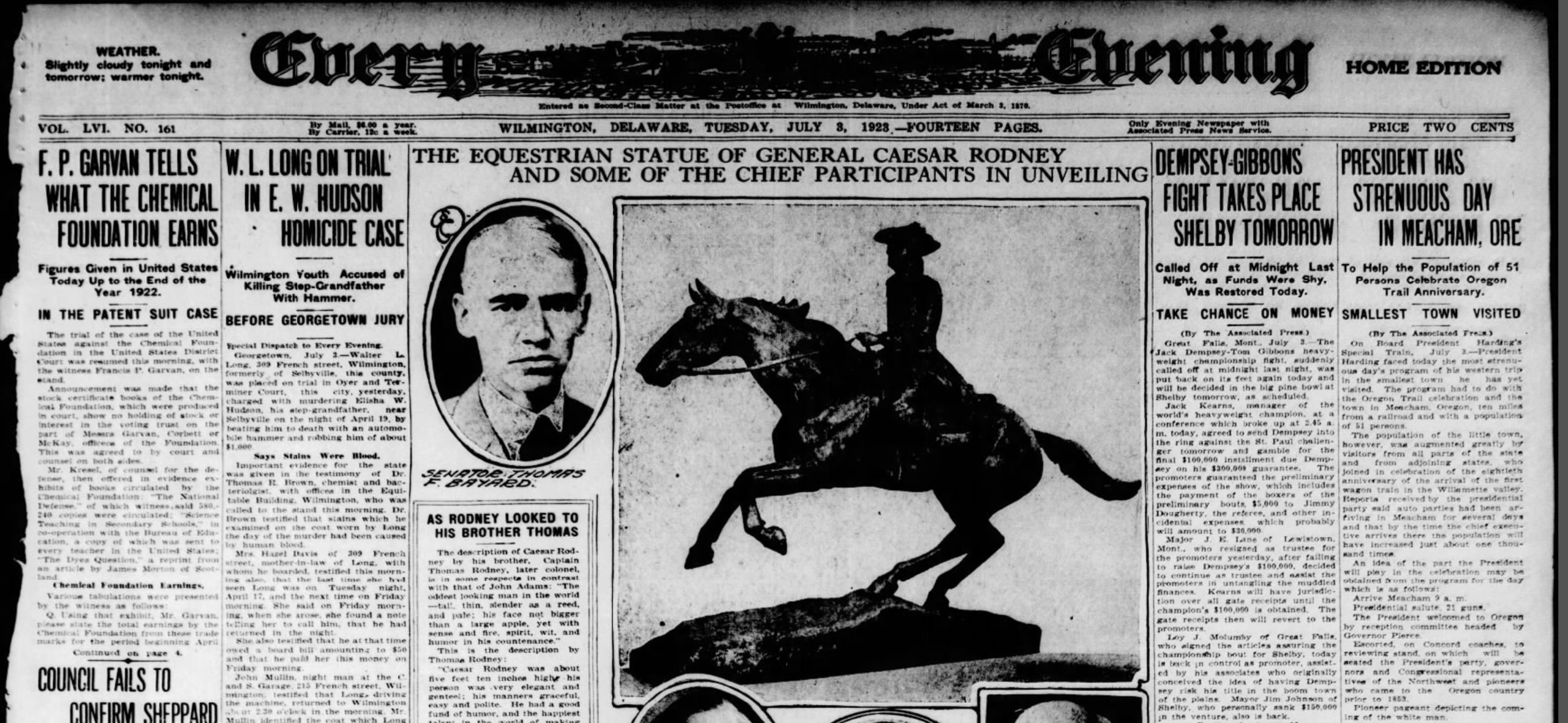
    An image of the front page of the July 3, 1923, edition of the News Journal of Wilmington, Del., which makes note of the dedication of the Caesar Rodney statue on the following day.

    Trump has expressed similar views during his second term and taken steps to change the way Americans are educated about the nation’s history.

    In January, the administration ordered the removal of exhibits depicting slavery at the President’s House in Independence National Historical Park. The U.S. Department of Interior said that the slavery-related materials were being reviewed “to ensure accuracy, honesty, and alignment with shared national values.” Last month, a federal judge ordered the exhibit’s restoration, though the administration is still pursuing the matter.

    In the summer of 2025, the administration restored two statues in the D.C. area that commemorated the Confederacy. One was a statue of Confederate Gen. Albert Pike, the only outdoor statue of a Confederate military leader in the nation’s capital.

    “We see a pattern of celebrating enslavers while reducing teaching about slavery in the United States and limiting diversity, equity, and inclusion,” said Timothy Wellbeck, director of the Center for Anti-Racism at Temple University. “Caesar Rodney has components of character not worth celebrating despite his contributions to America’s founding.”

    Shané Darby, a councilwoman from Wilmington, told the Times that glorifying Rodney was “a slap in the face of Black and brown people of this city… . You can have him, D.C.”

    That’s a view shared by other people in the Black community, said Syl Woolford, a member of the Delaware Heritage Commission. “Some folks in Wilmington are saying, ‘Get that white boy out of here,’” Woolford said. “They tell you there’s no place here for the statue of a slave owner.”

    But, he and other historians say, Rodney’s place in history shouldn’t be completely ignored. Even with the statue gone, elements of Rodney remain. He still appears on the quarter that honors Delaware. And his square continues to bear his name, although there’s discussion it’ll be renamed after President Joe Biden, whose ties to Delaware run deep, Carter said.

    The Department of Interior didn’t answer a request from The Inquirer to comment on criticism from Wellbeck and others that the Trump administration is exalting an enslaver. Instead, a spokesperson said, “Rodney’s journey itself reflected extraordinary courage.”

    “By telling the full story … we strengthen our shared understanding and ensure that future generations inherit not just the land we love, but the truth of the journey that brought us here,” the spokesperson added.

    To avoid further consternation in Wilmington, there’s a plan to send Rodney’s statue to Dover, not Wilmington, after the 250th celebration is over, said Republican State Sen. Eric Buckson.

    “Dover is Rodney’s birth and resting place,” Buckson said.

    He added, however, that “in this climate, folks are rightfully concerned about having monuments minimizing slavery.”

    So, whenever Rodney comes back, his statue will be amended, Buckson said.

    “It’ll include a plaque,” he added, “and that will have the story that, along with everything else, Caesar Rodney was a slave holder.”

  • As Josh Shapiro seeks reelection, his business-friendly brand has drawn millions from CEOs — including some with interests in Harrisburg

    As Josh Shapiro seeks reelection, his business-friendly brand has drawn millions from CEOs — including some with interests in Harrisburg

    A Florida developer who is building data centers in Pennsylvania. A Chicago crypto trader whose company was sued by the Biden administration. And a Southwestern Pennsylvania coal magnate whose firm received a permit from state regulators last year to expand operations — and is now seeking approval to open a new mine.

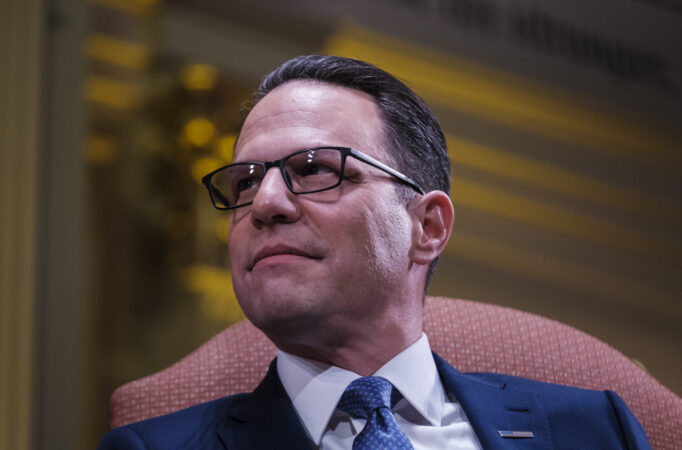
    These are some of the dozens of CEOs backing Pennsylvania Gov. Josh Shapiro, a Democrat, as he seeks a second term this fall in Harrisburg — with an eye on a possible run for president in 2028.

    Shapiro’s gubernatorial campaign raised at least $8.5 million last year from nearly 240 CEOs, founders, business owners, and other top executives, according to an Inquirer analysis of campaign-finance records that were made public last month.

    That includes the single biggest donation to the campaign: $2.5 million from billionaire and former New York City Mayor Michael Bloomberg. Shapiro’s haul from top executives represents 50.8% of the $16.8 million he raised from donors who listed their occupation in campaign finance filings.

    window.addEventListener(“message”,function(a){if(void 0!==a.data[“datawrapper-height”]){var e=document.querySelectorAll(“iframe”);for(var t in a.data[“datawrapper-height”])for(var r,i=0;r=e[i];i++)if(r.contentWindow===a.source){var d=a.data[“datawrapper-height”][t]+”px”;r.style.height=d}}});

    During his first three years in office, Shapiro, 52, has sought to build a profile as a pragmatic, business-friendly governor, focusing on speeding the permitting process and promoting economic development through government grants and tax breaks.

    At the same time, the governor has proven adept at raising campaign cash from people who have business interests before state government in Harrisburg. Those include a skill game developer who staved off a major policy defeat this year and a waste coal power plant owner who gave $100,000 to Shapiro two days before the governor pulled out of a multistate program that requires such facilities to pay for their greenhouse gas emissions.

    It’s a contrast with the rising populism on both the left and right, marked by a “Fighting Oligarchy” tour by progressive leaders and the MAGA movement’s deep suspicion of elites.

    It’s not unusual for corporate executives to make contributions to candidates from both parties. But the practice could invite scrutiny for Shapiro in a White House run — particularly among voters and activists who are dismayed by the role of money in politics.

    “We are concerned about any elected leaders taking monetary donations from corporate interests, regardless of who they are,” said Ashley Funk, executive director of the Mountain Watershed Association, a nonprofit that opposes a Shapiro donor’s coal mining expansion.

    “I think that it influences decision-making,” she said.

    ‘The speed of business’

    For now, Shapiro’s pledge to make Pennsylvania’s government run “at the speed of business” appears to have won over many executives, helping him build a massive fundraising advantage in his reelection bid. Shapiro raised $23.2 million overall in 2025, compared with the $1.5 million reported by his likely Republican opponent, State Treasurer Stacy Garrity.

    “I’ve long admired the way the commonwealth approaches economic development and innovation, and I have deep respect for Gov. Shapiro’s leadership,” said Bob Clark, executive chairman and founder of Clayco, a Chicago-based real estate and construction firm that is redeveloping a site at the industrial hub known as the Bellwether District in South Philadelphia.

    Clark gave Shapiro’s campaign $100,000 last year. “I consider him both a trusted colleague and an effective leader,” he said.

    In recent weeks, the governor has celebrated pledges by pharmaceutical companies to invest billions of dollars in new facilities in Montgomery County and the Lehigh Valley, secured with tens of millions of dollars in state incentives. And last year, Amazon said it would spend $20 billion in Pennsylvania to build two new artificial intelligence data centers, in what officials called the single largest private investment in state history.

    Shapiro’s allies say he stands up to big business, too, highlighting how he successfully prodded PJM Interconnection LLC — the Valley Forge-based regional electric grid operator whose voting members largely consist of companies in the electricity industry — to impose and extend a price cap. He has also received support from organized labor.

    Shapiro argues that the way to restore faith in institutions is not by railing against billionaires but by showing that the government can fix real problems — “get s— done,” in his parlance.

    Garrity, the Republican state treasurer, says Shapiro’s actions don’t live up to the hype.

    Under Shapiro’s watch, she said, the state budget now has a $4.3 billion shortfall and Pennsylvania’s economy is on the wrong track.

    “Liberal national donors may be investing in Josh Shapiro’s political vanity project, but hardworking Pennsylvanians are seeing nothing in return,” she said in a statement.

    Garrity received nearly $380,000 from more than 60 CEOs and other top business executives. That figure represents about 41% of her contributions from donors who listed their occupation in campaign-finance filings.

    Shapiro’s campaign said his coalition is “reflective of a governor who is delivering for all Pennsylvanians — and of a campaign that is fighting to win up and down the ballot.”

    window.addEventListener(“message”,function(a){if(void 0!==a.data[“datawrapper-height”]){var e=document.querySelectorAll(“iframe”);for(var t in a.data[“datawrapper-height”])for(var r,i=0;r=e[i];i++)if(r.contentWindow===a.source){var d=a.data[“datawrapper-height”][t]+”px”;r.style.height=d}}});

    The governor has “focused on growing our economy and creating jobs, and he has delivered — creating tens of thousands of jobs, winning major deals, and building the only growing economy in the Northeast,” campaign spokesperson Manuel Bonder said in a statement.

    Shapiro highlighted one such deal in July, when he appeared alongside executives at defense contractor Rhoads Industries at the Navy Yard in South Philly to announce the firm’s $100 million plan to build a new manufacturing facility, create 450 jobs, and boost production of submarine parts.

    To help secure the investment, the Shapiro administration approved $4 million in grants and, along with the City of Philadelphia, extended a tax designation around the project site known as a Keystone Opportunity Zone, a program that voids most state and local taxes.

    “One of the things that Rhoads is known to do is get things done. … We want to turn out product; we want to turn it around; we want to get it done,” president Mike Rhoads said.

    Looking toward Shapiro, he said, “Somebody standing to my left has the kind of same attitude.”

    Gov. Josh Shapiro (right) with Rhoads Industries CEO Dan Rhoads in July 2025 at the Navy Yard.

    Taking his turn at a lectern that read “Rebuilding America’s Fleet,” Shapiro said Rhoads’ investment — with help from the state — would “ensure the future of submarine manufacturing, shipbuilding, and all things important to securing our freedom is going to run right through the Philadelphia Shipyard.”

    Three months later, in October, CEO Dan Rhoads contributed $10,000 to Shapiro’s campaign — the single largest donation he made to a candidate for state office in the last decade, records show. Rhoads did not respond to requests for comment.

    Data centers and ‘skill games’

    Shapiro donors’ business interests include everything from data center construction to state regulation of slot machine-style games and approvals for a nuclear reactor.

    • Dan Hilferty, CEO of Philadelphia-based Comcast Spectacor — which owns the Flyers and the Xfinity Mobile Arena in South Philly — gave $40,000. A political action committee affiliated with parent company Comcast also gave $50,000. Comcast Spectacor and the 76ers are building a new arena at the South Philadelphia sports complex, and Shapiro last year did not rule out offering state incentives. Hilferty, a former CEO of Independence Blue Cross, previously gave Shapiro’s campaigns $27,500 over the last decade. Other Comcast Spectacor executives contributed about $95,000 during that period.
    • Top executives at Pace-O-Matic, the Georgia-based developer of so-called skill games that have proliferated across convenience stores and bars, gave $50,000. Operators for Skill, a PAC affiliated with the firm, contributed $10,000. The company successfully fended off a push in 2025 by Shapiro and lawmakers to tax the games at a level the industry considered too high. The governor has renewed a push to regulate the games, which some Philadelphia lawmakers say they would prefer to see banned. Pace-O-Matic contributes to both parties and remains “committed to fighting for fair regulation and taxation of Pennsylvania skill games,” said Mike Barley, chief public affairs officer for Pace-O-Matic.
    • Joseph Dominguez, president of Baltimore-based Constellation Energy, gave $25,000. The company is seeking to restart a nuclear reactor at Three Mile Island, just outside Harrisburg, and needs state and federal approvals. The plant would supply power to Microsoft to support the tech company’s data centers. “Constellation executives contribute to policymakers on both sides of the aisle who, like Gov. Shapiro, prioritize results and pragmatic solutions over politics,” a company spokesperson said.
    • Brian Patten, CEO of Next Generation Land Co. LLC, gave $10,000. He is a Florida data center developer who says he is pursuing projects in Pennsylvania. Data centers that power companies’ cloud storage and computing needs have drawn backlash across the U.S. over fears of rising electricity rates. In his February budget address, Shapiro said he wants data centers to supply their own energy and pay for any new generation they need. He has also said the U.S. needs to win the AI race against China.
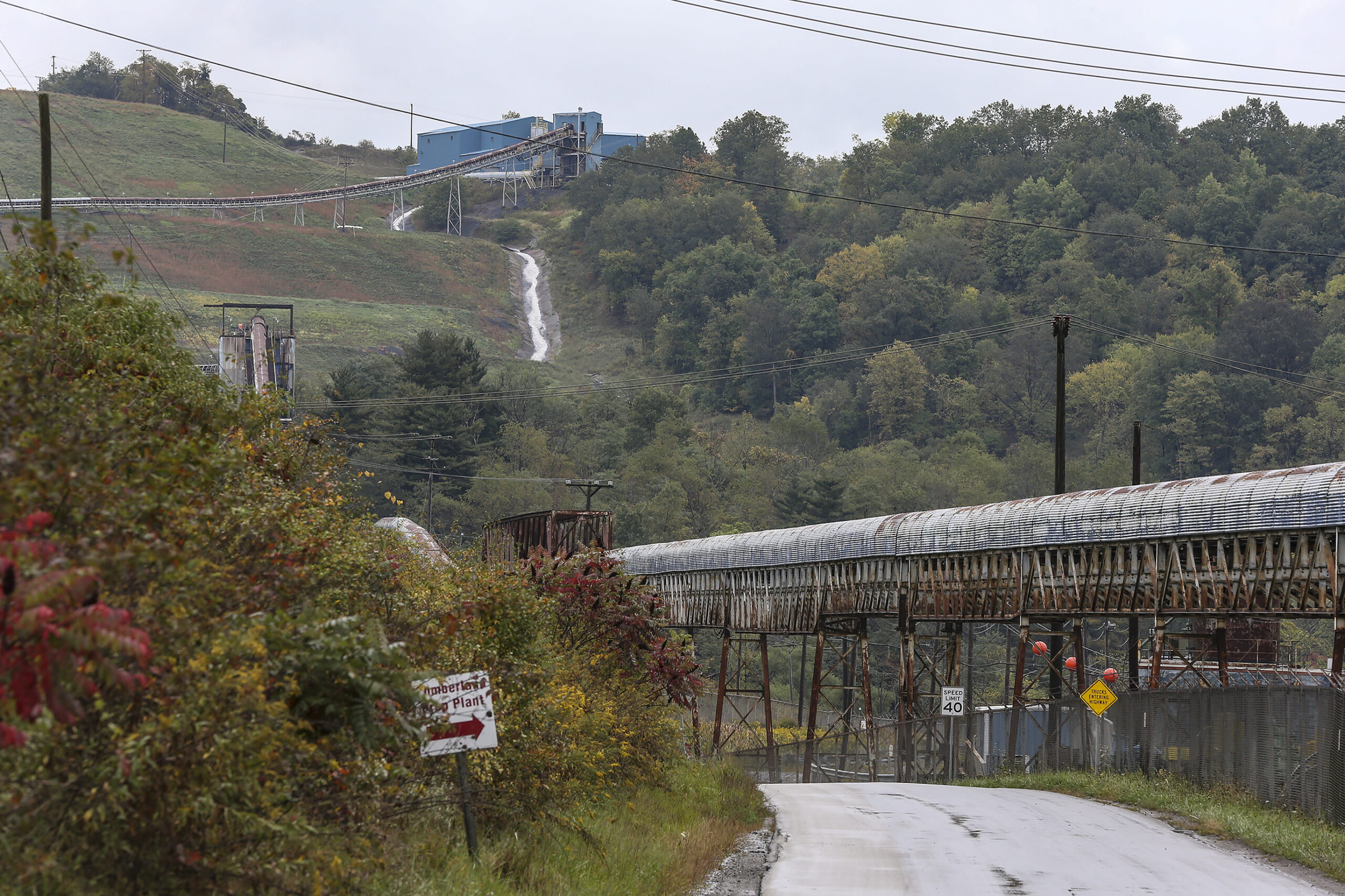
    • Justin Thompson, CEO of Iron Senergy, a coal operator, gave $10,000. His firm owns the Cumberland Mine in Greene County. When Pennsylvania applied to the U.S. Environmental Protection Agency for a $400 million grant, it mentioned several firms — including Iron Senergy — that could use the money for decarbonization projects, the Pittsburgh Post-Gazette reported in 2024. The EPA awarded the grant, and the Pennsylvania Department of Environmental Protection is tasked with administering it. The state is now reviewing applications, which it says are confidential.
    The Cumberland Coal Mine in Greene County seen in 2020.

    Local and national donors

    Shapiro drew on a mix of executives from local and national firms. In Pennsylvania, he raised money from health system CEOs (Joseph Cacchione of Thomas Jefferson University, $10,000), bankers (Richard J. Green of Philly-based Firstrust Bank, $125,000), and a home remodeler (Asher Raphael of Power Home Remodeling in Chester, $100,000). Josh Kopelman — founder of First Round Capital and chairman emeritus of The Inquirer’s board of directors — and his wife, Rena, each gave $50,000.

    There were private equity investors (San Francisco billionaire John Pritzker, cousin of Illinois Gov. JB Pritzker, $50,000), Hollywood producers (Jimmy Miller of talent management and production firm Mosaic, $75,000), professional sports team owners (telecom billionaire Robert Hale, minority owner of the Boston Celtics, $50,000), and a Massachusetts sports betting executive (Jason Robins of DraftKings, $10,000).

    For his part, Bloomberg is “a big fan of Gov. Shapiro and a big believer in his leadership, and thinks he’s done a great job for Pennsylvania,” adviser Howard Wolfson told Axios.

    At least one donor had ties to President Donald Trump, whom Shapiro often criticizes.

    Don Wilson Jr., CEO of Chicago-based trading firm DRW Holdings LLC, gave $10,000 to Shapiro in September.

    The Securities and Exchange Commission filed civil charges against a unit of Wilson’s firm while President Joe Biden, a Democrat, was in office. The SEC accused it of operating as an unregistered cryptocurrency dealer.

    Biden-era regulators said that firms were dodging that rule by claiming crypto was a commodity, not a security. The enforcers argued this exposed investors to extra risks associated with digital currencies.

    Then last March, a couple of months after Trump took office, the new administration dropped the charges against Wilson’s firm. Nine weeks later, Wilson invested $100 million into a Trump bitcoin project, the Financial Times reported.

    The company told the newspaper it engages in a “variety of strategies in the crypto ecosystem” and saw value in holding bitcoin. “This transaction was viewed purely through that lens,” it said.

    Trump denies having conflicts of interest.

    That didn’t stop the Democratic National Committee from flagging the news on its “CORRUPTION WATCH” page.

    The Trump administration, the Democrats’ post said, “now appears to be engaged in blatant pay-to-play politics.”

    Power plants and coal mines

    Among corporate executives, two of the eight biggest donors to Shapiro’s campaign last year were the father-and-son owners of privately held Robindale Energy Services, which owns about 20 companies involved in waste coal reclamation, power generation, mining, and logistics. Robindale’s assets include multiple power plants fueled by waste products from abandoned coal mines.

    CEO Scott Kroh and his son Judson, the Latrobe-based company’s president, gave a total of $271,000.

    That included a $100,000 contribution from Scott Kroh two days before Shapiro signed the annual budget, which came after a monthslong stalemate. The deal with Senate Republicans included language pulling the state out of the Regional Greenhouse Gas Initiative, a multistate effort to generate cleaner power that Robindale had vocally opposed.

    Robindale’s executives did not respond to requests for comment.

    In June 2023, Judson Kroh spoke out against RGGI at a public hearing, telling Pennsylvania lawmakers that Robindale’s power plants have enough capacity to power 500,000 homes. “Our main concern is you’ll see a significant decrease in power exports out of the state due to RGGI, as well as a significant decrease in coal production,” Kroh said.

    Other energy industry firms, Republican lawmakers, and building trades unions have also long opposed the initiative, which requires power plants to buy allowances to cover their carbon emissions. They call it a job killer and an electricity tax. Environmental groups say it has reduced pollution and led to investments in clean energy in other states.

    Shapiro had for years expressed concerns about the greenhouse gas initiative, which Pennsylvania joined under his predecessor but never implemented due to litigation. Shapiro said in 2021 during his first run for governor that “it’s not clear to me” that the program protected jobs, addressed climate change, or ensured energy reliability.

    The Kroh family donated a total of $55,000 to his 2022 campaign and $21,000 the following year. Judson Kroh was among the more than 300 people who served on Shapiro’s transition team.

    Many of Robindale’s operations are regulated by the state, and the company spent $150,000 lobbying state government officials last year, records show. Company executives in recent years have largely donated to Republicans in Harrisburg, though they have also supported some Democrats, including Shapiro.

    window.addEventListener(“message”,function(a){if(void 0!==a.data[“datawrapper-height”]){var e=document.querySelectorAll(“iframe”);for(var t in a.data[“datawrapper-height”])for(var r,i=0;r=e[i];i++)if(r.contentWindow===a.source){var d=a.data[“datawrapper-height”][t]+”px”;r.style.height=d}}});

    In addition to its power generation business, Robindale owns coal mines that are subject to state inspections and oversight. When two people died in a Somerset County mine operated by subsidiary LCT Energy, DEP required the company to update its safety protocols. The deaths in 2022 and 2023 came during a time in which there were 20 coal mining fatalities nationwide, according to federal data.

    Johnstown-based LCT is currently expanding.

    About 30 miles west of Maple Springs, LCT opened another mine in 2018 in Westmoreland County called Rustic Ridge 1, which produces 600,000 tons of coal a year.

    The state renewed the permit for the 2,800-acre underground mine in January last year, and from that month through March, the Kroh family donated $70,000 to Shapiro’s campaign.

    In April, after a yearslong review, the Pennsylvania Department of Environmental Protection approved a permit authorizing LCT to expand its operations there, adding 1,400 acres under the Pennsylvania Turnpike — the equivalent of 93 Lincoln Financial Fields. The permit allows LCT to mine coal up to 600 feet underground. The company sells the coal for production of steel.

    The nonprofit Mountain Watershed Association is appealing the DEP’s approval to the Pennsylvania Environmental Hearing Board — whose judges are appointed by the governor, subject to confirmation by the state Senate — arguing that the expansion could harm groundwater and streams.

    Others say the mine supports jobs and helps the local economy. Before opening, the company said in 2014 that it would invest $50 million to develop the mine, according to local news reports.

    LCT is now also seeking federal and state approvals to open a new, 2,300-acre underground mine nearby.

    That process could soon speed up.

    The state budget Shapiro signed in November expanded a program for expedited permitting involving approvals from the DEP, which reviews 40,000 permits a year. Introduced in 2024, the program is currently available for eligible permits such as air quality, dam safety, and oil and gas erosion and sediment control.

    The budget legislation — cheered by Shapiro and GOP lawmakers — added more permit types, including one for mining, “which DEP is in the process of adding to the program,” a department spokesperson said.

    Funk — the executive director of the watershed association, which has spent millions of dollars over the last 30 years repairing the environmental damage of legacy coal mining — said she is concerned the Krohs’ political giving “might be having an influence over Shapiro and his administration as we work to permit some of Robindale’s projects such as LCT Energy.”

    Shapiro says permitting reform reflects his governing ethos.

    “When you think about getting stuff done … it requires focus and speed,” he said in December at a National Governors Association event. “We’ve gotta be speedier as a country.”

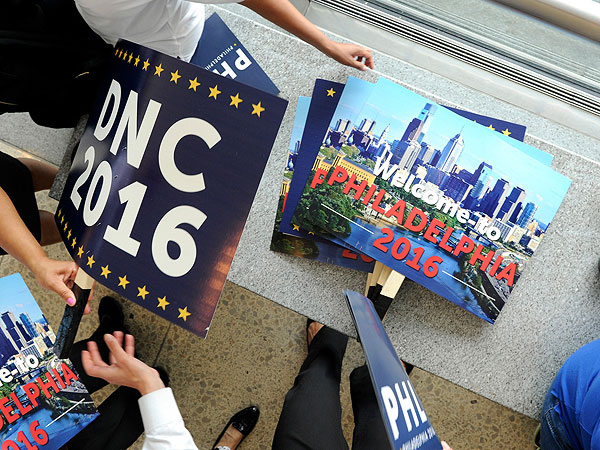
  • Inside Philly’s high-stakes charm campaign to lure the 2028 Democratic National Convention

    Inside Philly’s high-stakes charm campaign to lure the 2028 Democratic National Convention

    It was at the end of last year in the hazy stretch between Christmas and New Year’s when time doesn’t feel real, and some of Philly’s top Democrats were huddled around a secret proposal, racing to meet a deadline.

    The group — convened by Mayor Cherelle L. Parker, her aides, and some key Philadelphia boosters — was preparing a lengthy bid to bring the Democratic National Convention back to the city in either 2028 or 2032, a potential economic boon and a chance to show off in front of lawmakers, celebrities, and international media.

    The confidential proposal to the Democratic National Committee included everything from the city’s hotel space to police outfitting to nitty-gritty details about the electrical grid and voltage capacity at Xfinity Mobile Arena. SEPTA officials drafted a section about the public transportation Philadelphia could offer visitors, and tourism agencies chipped in with insights on hotels and restaurants.

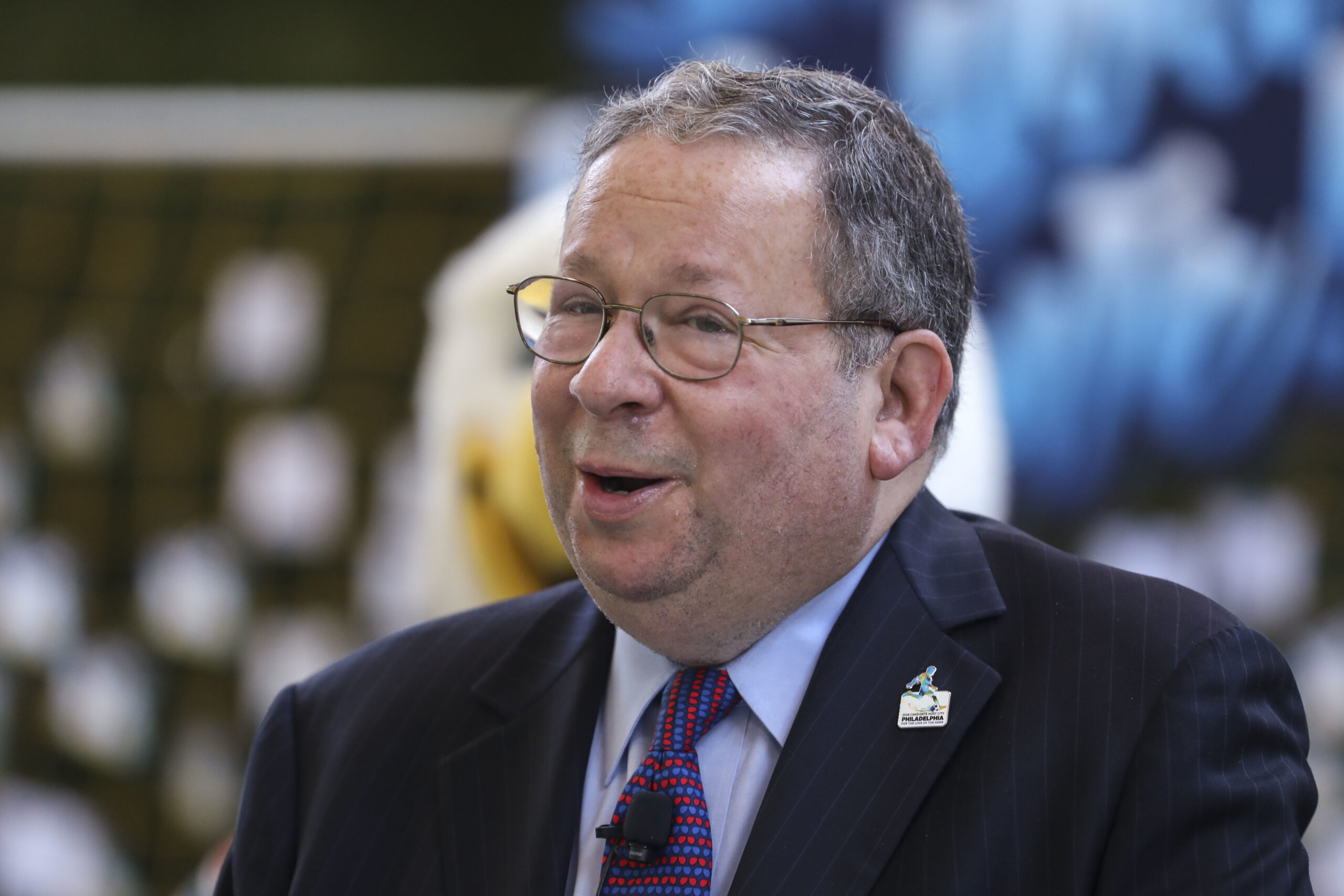
    David L. Cohen, a longtime Democratic fundraiser and the president of the recently formed nonprofit host committee called Pick Pennsylvania, said that while the mayor led the effort, the bid also emphasized the “unity of the region and the commonwealth.”

    “She wanted it to be really clear this is more than a Philadelphia bid,” he said. “This is a unified Pennsylvania bid.”

    It appears the Democratic National Committee was impressed. On Monday, the DNC announced that it is considering five cities, including Philadelphia, to host the 2028 convention, where a Democratic presidential nominee will be coronated. The party is also looking closely at Atlanta, Denver, Chicago, and Boston to hold the early August event.

    What comes next is a campaign to lure the convention to Philly, complete with a carefully coordinated public relations effort and a significant fundraising push. Philadelphia’s host committee for 2016, the last time the city held a presidential nominating convention, raised more than $85 million.

    The DNC has asked host cities to raise $5 million before being selected. Philly’s fundraising, Cohen said, “will be substantially higher than that number.”

    In this 2021 file photo, David L. Cohen speaks as Philadelphia Soccer 2026, the city’s World Cup 2026 bid committee, launched an interactive exhibit at the Independence Visitors Center in Philadelphia. He is now heading an effort to bring the Democratic National Convention to Philadelphia.

    Cohen, a former Comcast executive and erstwhile chief of staff to former mayor Ed Rendell, is leading the effort alongside Daniel J. Hilferty, now the CEO of Comcast Spectacor.

    Hilferty and Cohen have worked together repeatedly over the last two decades to bring major events to Philadelphia, including a successful bid to become one of a handful of North American cities to host World Cup games this year.

    Also involved in coordinating the DNC proposal was Erin Wilson, a Philadelphia native who was a top aide to former Vice President Kamala Harris. She was the national political director for former President Joe Biden’s campaign and planned his 2021 inauguration.

    When the DNC comes to town

    DNC officials are expected to make a final decision on the 2028 site later this year. That call will likely be made by chair Ken Martin in consultation with top advisers and the committee’s Technical Advisory Group, which assesses logistics and operational matters.

    Philadelphia could also have an advocate in State Rep. Malcolm Kenyatta, who represents parts of North Philadelphia and is a DNC vice chair. He is known to have a close relationship with Martin.

    Committee officials and the advisory group will tour each of the five finalist cities for a yet-to-be-scheduled site visit this spring.

    If history is any indication, the city will roll out the red carpet. In 2014, when 18 members of the DNC came to Philly to check out the city ahead of the 2016 convention, the host committee spent six figures to charm them.

    The trip included a tour of Philly’s most popular sites, like Reading Terminal Market and the Philadelphia Museum of Art, as well as a swanky rooftop party and a breakfast at the Comcast Center. Predictably, cheesesteaks were also involved.

    “The site visits are as much about feel as they are about technical details,” Cohen said. “After site visits, the teams who are making choices leave here and they have their socks knocked off. They can’t believe how vibrant the city is.”

    In this 2014 file photo, Congressman Bob Brady, left, talks with DNC CEO Amy Dacey, center, as they have lunch at Pat’s Steaks in South Philadelphia.

    Ryan Boyer, the head of the Philadelphia Building and Construction Trades Council and a close Parker ally, said one of Philadelphia’s best assets might be its mayor. Parker is an unabashed cheerleader for the city and is leading preparations for several major events this year, including World Cup games, the MLB All-Star Game, and the commemoration of America’s 250th anniversary.

    “She’s the most effective advocate for bringing people together,” Boyer said, “with just her level of passion, her love of the city, and her love of the job.”

    Cohen said he spoke to Parker last year about the potential to bid for the convention, and when she asked him to lead the host committee, he said yes because the city has “a serious chance.”

    “As a friend and longtime supporter of hers, if I didn’t think we had a legitimate shot, I would try to talk her out of it,” Cohen said. “If anything, I have poured gasoline on her flames of enthusiasm and said, ‘We should be all in for this.’

    ”I said, ‘Do what you do best,’” he added. “Get everyone excited about this.’”

    Gov. Josh Shapiro could also play a role in wooing the party. He is one of the most well-known Democratic governors in the country, and is seen by many as a contender for the 2028 Democratic nomination for president.

    That means there is a chance that Shapiro, who was raised in Montgomery County and whose family still lives there, could be nominated in what is essentially his hometown.

    Pennsylvania Gov. Josh Shapiro speaks during the Democratic National Convention Aug. 21, 2024, in Chicago.

    In a letter to Martin, Shapiro wrote that Philadelphia “would see substantial economic benefits” from hosting the convention and vowed that the state would be “prepared to ensure our infrastructure, public safety agencies, workforce, and business community are equipped to host thousands of delegates and attendees.”

    What’s next: a close look at security and logistics

    Behind the pomp of the DNC’s spring site visit will be a serious evaluation of security, transportation, hotels, and arena logistics.

    The DNC said in a statement Monday that it will value “new and innovative approaches” to hosting a large-scale event that is likely to bring thousands of tourists. In 2016, the convention drew more than 5,000 attendees and an additional 29,000 visitors — nearly 20,000 of whom were media members.

    Nominating conventions are typically designated as National Special Security Events, meaning the federal government leads security because the event is deemed at high risk for terrorism or other criminal activity. That means planners need to know specifics about law enforcement staffing, gear, and other capabilities.

    Placards promoting Philadelphia as the host city of the Democratic National Convention in 2016, while the Democratic National Committee was touring the city in August.

    Support will also have to come from outside the city. During past conventions, federal law enforcement teamed up with Philadelphia police to secure the venue, and they were joined by officers from across the region.

    The DNC also said in its announcement Monday that the committee would prioritize “the importance of forging a strong partnership between the DNC and the host city, including its community, political, and business leaders.”

    To that end, the host committee and Parker asked elected officials and civic leaders from across the state to write letters of support that accompanied the city’s bid.

    Authors ranged from City Council President Kenyatta Johnson, whose district includes the South Philadelphia stadium complex, to labor leaders to Democrats from the Philadelphia collar counties.

    Montgomery County Commissioner Neil Makhija, who wrote a letter to the DNC boosting the bid, said it is important for the committee to see that local governments and law enforcement agencies outside the city are willing to offer support, because “pulling something like this off requires a lot of cooperation on many different fronts.”

    “A real concern now when you’re thinking about hosting a political convention is ‘How are we going to manage public safety and a threat environment?’” he said. “There are a number of reasons to point to our region and see a level of collaboration that inspires confidence.”

  • Death to prediction markets profiting on war | Will Bunch Newsletter

    Iranian schoolgirls, U.S. troops, Israeli villagers, random Emiratis, Pakistani rioters, and maybe a couple of folks in a bar in Texas. The deadly fallout from Donald Trump’s war of choice in Iran has spread halfway around the globe and back again. With each passing hour, it feels like more of the entire world is sucked into this war. If only there were a name for something like that.

    If someone forwarded you this email, sign up for free here.

    Why are Americans allowed to place bets on death and destruction?

    An advertisement by the American company Polymarket shows Zohran Mamdani and Andrew Cuomo ahead of the New York City mayoral election on Nov. 4, 2025, in New York.

    Donald Trump’s splendid and not-so-little war that started during a Saturday rush hour in Tehran and has spread like a coronavirus to numerous other countries is entering its fourth day on Tuesday — far too early for one of journalism’s oldest clichés: the “winners and losers” piece.

    Except for these winners: a few “lucky” — if that word can even apply to such a ghoulish enterprise — gamblers who woke up Saturday morning and learned that the first deadly explosions across Iran had already made them a lot richer, regardless of who wins or loses on the battlefield.

    The initial weekend of war wasn’t even over before we learned that Polymarket, one of the two leading prediction markets that are the inevitable next downward spiral of our national sports gambling addiction, was hit by suspicious trading by six individuals who showed up to bet big on when the war would commence.

    One trader up for particular attention earned a reported $553,000 over the weekend by placing large bets on when Iran’s supreme leader, Ayatollah Ali Khamenei — killed in the war’s initial minutes, reportedly — would be deposed. The handle on that well-timed, if macabre, gambler? “magamyman.”

    My man, you aren’t even trying to hide it.

    Polymarket’s brush with possible insider trading on predictive bets over the Iran war that is now a reality came as its customers bet a stunning half a billion dollars on the long-rumored conflict.

    Many of them, presumably, are just regular schlubs desperate to get ahead in a dog-eat-dog economy. But it’s also hard not to contemplate that some may have had real advance knowledge of Pentagon war planning that loose-lipped insiders were audibly discussing in Joe’s Stone Crab just hours before the first cruise missile was fired.

    I know … it’s shocking that something in America’s death spiral of late-stage capitalism is actually a rigged game, right? Still, it’s hard to decide which is worse about this new low of predictive betting on a war that’s already killed scores of innocent schoolgirls and hospital patients, and at least six U.S. service members: the rank immorality of wagering on death and destruction, or the insider trading that corrupts this already unholy process even further?

    Over the weekend, even with the main focus on the latest missile attacks and changing Trump regime explanations for this undeclared war, there was growing outrage over the popularity of predictive betting on the news, especially when the news is deadly. Or, there’s the word the chief U.S. government official tasked with regulating Polymarket, Kalshi, or their rival firms has used to describe what’s happening.

    Exciting.”

    Michael Selig, the lawyer tapped by Trump last year to head the U.S. Commodity Futures Trading Commission (CFTC), which — controversially — regulates these prediction markets, seems less a regulator and more of a cheerleader, maybe as much as “magamyman.” As several states have pushed to regulate or ban predictive markets as akin to sports betting sites, also under its purview, Selig has worked hard to override them with a claim of federal supremacy.

    “The CFTC will no longer sit idly by while overzealous state governments undermine the agency’s exclusive jurisdiction over these markets by seeking to establish statewide prohibitions on these exciting products,” Selig wrote in a Wall Street Journal op-ed.

    It’s worth noting Selig’s moves came at the same time that six Democratic senators wrote the CFTC chair to urge him to ban gambling on outcomes that result in death or physical harm — inspired by outrage that people were betting on whether a NASA spacecraft would fail to launch, as well as predictions around the fate of the former Venezuelan strongman Nicolás Maduro, seized in January by U.S. troops. Not surprisingly, the high volume of Iran war betting has sparked fresh calls to ban predictive market betting altogether.

    “Life stops being something we live, but something we sell and trade,” Connecticut Democratic Sen. Chris Murphy posted on X, before saying he is studying legislation to ban prediction markets. “It will breed both corruption [and] emptiness.”

    Unlike sporting events, betting on political or social developments whose occurrence and timing are controlled and known by humans is incredibly prone to insider trading. In a case that seems to typify the fundamental flaw of non-sports prediction markets, and which Kalshi was forced to acknowledge in an internal investigation, an editor for the wildly popular YouTube star Jimmy Donaldson, better known as MrBeast, was caught betting $4,000 on predictions about what MrBeast would say in his next video.

    Because betting on influencer video topics is how far off the deep end we are going here. The addictive nature of online sports betting, which was once mostly banned until elite schemers realized how much money was to be made from increasingly desperate people, was always pointing American society in this warped direction.

    Zoom out and there’s a much bigger picture here: A society where the traditional pathways to prosperity are rigged for the Epstein class has created an entire ethos that seeks to match that level of wealth through unconventional not-40-hour-workweek paths, like online influencers, or by hitting the big one, whether that’s through buying a meme stock, betting on college basketball, loading up on the right crypto, or — now — gambling on stuff like when Israel is going to bomb women and children in Gaza.

    It seems no one near the top of the American kleptocracy is immune to cashing in, including — sigh — Big Media. It was bad enough that CNN partnered with Kalshi to promote predictive odds on events like Tuesday’s Texas primary, but now the venerable Associated Press picked Monday — amid all the negative publicity about the Iran war wagers — to announce its own deal with the site.

    Meanwhile, the only safe bet would be a prediction that no one in Washington, D.C., will be able to successfully stop this in the near future. It’s not only that reckless and potentially corrupt get-rich-quick maneuvers like crypto, artificial intelligence, and now these “exciting” predictive markets are simply in the Trump regime’s toxic money-grubbing DNA.

    To seal the deal, Donald Trump Jr. joined the advisory board of Polymarket last August, and his venture capital firm, called 1789 Capital, has reportedly invested tens of millions of dollars in the firm, as well. In a remarkable coincidence, two federal investigations into predictive markets that began during the Joe Biden presidency were shut down around the same time.

    Today’s dollars stained with blood from the Middle East are the, dare I say it, predictable result. Why merely wage war when you can also wager on it? Our leaders, whether in D.C. or our 50 statehouses, can’t shut down Polymarket, Kalshi, and all their imitators fast enough.

    Yo, do this!

    • Escaping from a global crisis is always a good time to get back to the basics, and for boomers of a certain age, nothing is more fundamental than the power chords and pounding drums of Led Zeppelin. Listening to and thoroughly enjoying Andrew Hickey’s A History of Rock Music in 500 Songstwo-part episode on how the most classic of all classic rock bands came together at the end of the 1960s made me discover that there’s also an acclaimed 2025 documentary, Becoming Led Zeppelin, streaming on Netflix. Let’s watch it together.
    • The rising thermometer this week should serve as your reminder that the arrival of March means it’s also time for some baseball that actually counts. The World Baseball Classic, the sport’s World Cup knockoff that comes every three years, starts Thursday and runs through the March 17 final in Miami — site of 2023’s thrilling conclusion in which Japan’s Shohei Ohtani struck out the USA’s (and South Jersey’s) Mike Trout. Some 10 Phillies are competing, including Bryce Harper, Kyle Schwarber, and Brad Keller — on this year’s Team USA — and Dominican Republic ace Cristopher Sánchez, so let the games begin.

    Ask me anything

    Question: So one school of thought is that they are already trying to steal the midterms; another is that they really can’t. Where are you on the spectrum from mildly worried to totally anxious about this? Especially with Pa. being rather swingy. — Penthesilea (@hansklocker.bsky.social) via Bluesky

    Answer: Yes, this is something I’ve already thought about quite a bit, and my answer — for now, anyway — is pretty much smack in the middle of the spectrum. It’s clear Donald Trump intends to use every implement in the voter suppression toolbox — extreme gerrymandering, executive orders aiming to require voter ID, or banning mail-in ballots — that would warp the voting outcomes, without going full Mussolini and canceling the election altogether. But I don’t think that can work for him — partly because any orders will almost certainly be struck down in the courts, but mainly because it looks like a Democratic landslide too large to easily suppress is building momentum. Just look at Texas, where the scheme to gerrymander five new GOP seats depended heavily on Latinos continuing to shift Republican, when polls show the exact opposite happening. Of course, in 2020-2021, few folks thought he would go so far as an attempted coup (I did). Who knows how far he’ll go to maintain power this time around?

    What you’re saying about …

    Last week’s question about how to handle the new prediction markets — anticipating the mess that occurred with the wagers on the start of the Iran war — and the surge in sports betting drew a tepid response. But it was pretty unanimous that sites like Polymarket and Kalshi should, at the bare minimum, be regulated under state gambling laws, and not as commodities trades — if not banned altogether. Wrote Mary Clare Gumbleton, who would ban Polymarket and Kalshi: “It’s just unregulated corruption and an incredibly awful incentive to both lose your shirt (as it were) and game the system where a handful of corrupt people can make a lot of money.”

    📮 This week’s question: There’s only one thing on everyone’s mind: That crazy war in the Middle East. Now that Donald Trump and Benjamin Netanyahu have started it, how on earth do we end it? Please email me your answer and put the exact phrase “Iran war end” in the subject line.

    History lesson on when the Iran thing really started

    A crowd of demonstrators tear down the Iran Party’s sign from the front of its headquarters in Tehran on Aug. 19, 1953, during the CIA-backed coup that ousted Prime Minister Mohammad Mosaddegh and his government. The operation cemented the rule of Shah Mohammad Reza Pahlavi for more than 25 years before the 1979 Islamic Revolution.

    It’s been a while since the last history lesson in this space, but the poor quality of the TV punditry about the four-day-and-counting Iran war screams out for better information. A lot of the folks advocating for this war of choice in the Middle East argue that we didn’t start the fire, that the roots go all the way back to the 1979 Iranian Revolution. That’s the year when Americans who never paid much mind to foreign affairs were shocked to see huge throngs in the streets of Tehran chanting “Death to America” and taking 52 hostages at the U.S. Embassy.

    What did we do to deserve this? Well …

    For most historians, and for many Iranians, the year that matters is not so much 1979, but 1953. In a post-World War II geopolitical environment where many nations sought to break free of imperialism, Iran in 1951 democratically elected a surprisingly left-leaning prime minister, Mohammad Mosaddegh, whose main project was to nationalize the then-British-controlled oil industry. This sparked great alarm in London, where U.K. leaders spent months lobbying Washington to join them in an effort to depose Mosaddegh in a coup that would advance Western oil interests.

    It’s a messy story. The United States wavered and even flirted with backing Mosaddegh for a time, according to histories of the period, but ultimately British leaders leaned on the Eisenhower administration and America’s ongoing anti-left “Red Scare” of that era to get the relatively new CIA and its man in Tehran — Kermit Roosevelt Jr., grandson of Teddy Roosevelt — on board with the plot. The Americans threw around money and anti-Mosaddegh propaganda, and eventually organized street protests ahead of the government’s ouster.

    To be sure, there is a never-ending debate over whether the U.S. involvement was central or just a subplot to the coup that gave power to the shah of Iran, Mohammad Reza Pahlavi, who ruled the nation with ruthless brutality for the next 26 years. Certainly, the nation’s Islamic clerics — powerful then, as now — played a key part in ousting a secular government. But the American role was so great that Barack Obama apologized in his 2009 Cairo speech, stating as fact that the CIA played a key role in the “overthrow of a democratically elected Iranian government.”

    Whether the U.S. led the coup or was a bit player, the Iranian people have never forgotten our involvement or our close ties to the eventually despised shah. “The rancor has never melted,” a 24-year-old Iranian woman told the Associated Press in 2023, on the 70th anniversary of the coup, as she compared the American meddling to being “like wishing for an earthquake to get rid of a bad neighbor.”

    So did a state of war between the United States and Iran start in 1979, as some GOP lawmakers insist, or in 1953, or on Feb. 28 of this year? In arguably the world’s most violent neighborhood, the cycles of violence often seem to have no beginning and no end. An imperial America chose to jump into the middle of this mess 73 years ago, and now getting out feels more impossible than ever.

    What I wrote on this date in 2016

    He’s all but forgotten now, but up until his mysterious death 10 years ago, the flamboyant Oklahoma natural gas mogul Aubrey McClendon had reshaped the Pennsylvania landscape as king of the commonwealth’s fracking boom. The company that McClendon (known to sports fans as an owner of the NBA’s Oklahoma City Thunder) cofounded, Chesapeake Energy, promised riches to Pennsylvania landowners, but left a trail of lawsuits and pollution. Less than 24 hours after his indictment by a federal grand jury, McClendon drove at full speed into a bridge embankment and was killed instantly. I wrote: “In Pennsylvania, Aubrey McClendon is survived by a legacy mostly of conflict, of thick lawsuits, of protesters facing off against armed marshals, of lawmakers and a governor at war over the taxes that gas drillers never had to pay, of brackish water and leaking methane adding to the greenhouse gases that may someday strangle the planet — of a promise of buried treasure that wasn’t really all it was cracked up to be.”

    Read the rest:The Greek tragedy of the billionaire who fracked up Pa.

    Recommended Inquirer reading

    • America is now at war on two fronts. In one column, I tackled the ongoing conflict in the streets of America, and looked at the tragic death on a frigid Buffalo street of the Rohingya refugee, Nurul Amin Shah Alam — a disabled and nearly blind man who was arrested by Border Patrol agents, and then dumped at a closed coffee shop five miles from his family’s home. It was a low point that spotlighted the unrelenting cruelty of a xenophobic mass deportation crusade by the Trump regime that has brought a mounting death toll. On Saturday morning, I knocked out my instant reaction to the news that the Trump regime had joined Israel in an all-out attack on Iran, which was that the war is both unconstitutional without the consent of Congress and also a clear violation of international law.
    • In moments of national and global crisis such as this, it’s easy to forget that many of the political decisions that shape people’s everyday lives occur on the local level. Here in Philadelphia, the school district’s plan to modernize its schools while closing 20 older buildings came as a shock to city parents, and The Inquirer’s coverage, anchored by our Pulitzer Prize-winning city public schools reporter, Kristen A. Graham, has been all over this story. The newsroom has explained the plan in detail, and covered the community protests and the fights over individual buildings, as well as Philly’s move away from middle schools. One advocate told me The Inquirer’s aggressive coverage of the story is why two schools have now been removed from the plan. A healthy community is one that has a vibrant news media. You nurture a better Philadelphia when you support The Inquirer by subscribing.

    By submitting your written, visual, and/or audio contributions, you agree to The Inquirer’s Terms of Use, including the grant of rights in Section 10.
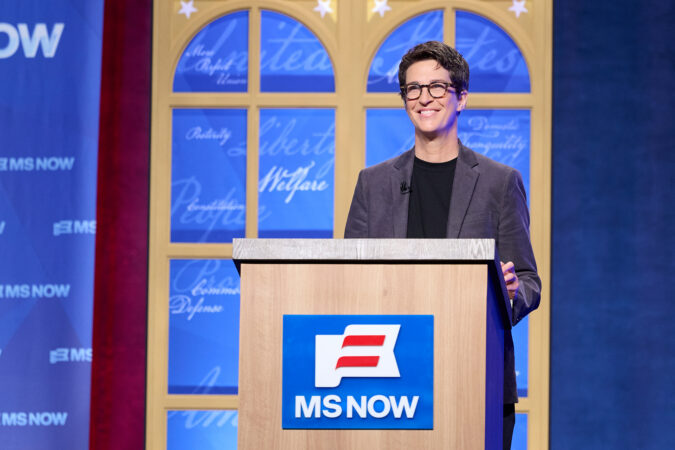
  • A Rohingya refugee wanted freedom. America left him for dead in frigid Buffalo.

    A Rohingya refugee wanted freedom. America left him for dead in frigid Buffalo.

    Like most of his Rohingya people — stripped of citizenship by Myanmar’s ruling junta and targeted by a brutal 2017 genocide — Nurul Amin Shah Alam and his family spent the last decade yearning to breathe free.

    A nomadic quest for liberty took Shah Alam, his wife, and the two youngest of his six children through the crowded camps of Bangladesh, on a boat escape to Malaysia, and finally to apparent refuge in the United States on Christmas Eve 2024.

    But the 56-year-old immigrant was almost never free on American soil.

    In February 2025, just 53 days after his family arrived in the refugee hub of Buffalo, Shah Alam — nearly blind, apparently lost, and using a curtain rod as a walking stick — found himself in an encounter with Buffalo police. He was tased during a scuffle that ended with the refugee charged with felony assault.

    After one year behind bars and a plea deal, relatives paid his bail on Feb. 19, and then waited for hours at the Erie County, N.Y., lockup, only to learn he’d instead been handed over to U.S. Customs and Border Protection (CBP) on an immigration detainer.

    During a frantic, five-day search on the streets of one of America’s coldest big cities, Shah Alam’s family and supporters were stunned to learn that Border Patrol agents — apparently after learning the stateless refugee could not be legally deported — drove this disabled and nearly sightless man with no phone to a Tim Horton’s doughnut shop and dumped him there, five miles from his family’s home.

    A Border Patrol spokesperson would later call this “a courtesy ride.”

    Finally, on Tuesday, Buffalo police were called to recover a dead body on a city street.

    It was Shah Alam.

    “He never had freedom in his life,” Imran Fazal, a leader of the Rohingya diaspora in Buffalo who knows his family, told me by phone Wednesday night. “He came to this country because he wanted to experience freedom. He didn’t have that chance … He came to this nation that was supposed to save his life — and that nation destroyed his life.”

    Sham Alam’s name will be added to the growing death toll of a dishonorable Donald Trump regime, alongside Ruben Ray Martinez, Renee Nicole Good, Silverio Villegas González, Alex Pretti, Keith Porter, Geraldo Lunas Campos, and scores of others who’ve been shot, chased down, or sickened and neglected in squalid camps.

    And now, abandoned on the subfreezing February streets of the snow capital of America. Because there is really only one point to the ethnic cleansing crusade that began with rabid Trump partisans waving their “Mass Deportation Now!” placards in a Milwaukee arena and ended with a cold, lonely corpse on Perry Street.

    That point is cruelty.

    Somehow, in this downward spiral that has seen Americans grow accustomed to masked, heavily armed goons in tactical gear snatching day laborers or Uber drivers off once-placid urban streets, the abandonment and death of Shah Alam still hits like a gut punch to the soul of a once-welcoming nation. Yet, it somehow feels even more inhumane when viewed through the tortured prism of the Rohingya people, among the most persecuted ethnic minorities on earth.

    Rohingya refugee children carry banners during a visit by U.N. Secretary-General António Guterres at the Ukhiya camp in Cox’s Bazar, in Bangladesh, in March 2025.

    The roughly 1.4 million, mostly Muslim, Rohingya people in Myanmar, formerly Burma, have been targeted for repression by that nation’s Buddhist majority for decades, culminating in the stripping of their citizenship in 1982 and its military rulers driving hundreds of thousands across the border into Bangladesh during 2017’s brutal campaign.

    In March 2022, during the Joe Biden administration, which was a brief window between the anti-refugee xenophobia of the two Trump presidencies, the U.S. government recognized the Rohingya as victims of genocide and, among other moves, expanded their resettlement opportunities in America. It’s estimated that at least 12,000 came to the United States during that short opening, and as many as 2,000 of them — perhaps lured by lower housing costs — have moved to Buffalo in the last couple of years.

    It has not been an easy journey. Denied schooling in their native Myanmar and lacking a formal written script for their language, the majority of Rohingya who arrive in the United States are illiterate and unable to speak English.

    The short, tragic American experience of Shah Alam reads like an allegory for the Rohingya plight on U.S. soil.

    The version of what happened to him on the night of Feb. 15, 2025, as told to me by Fazal and also recounted by his family and lawyers in the media, is that Shah Alam, walking in his new neighborhood with the aid of that curtain rod and likely getting lost, took shelter under a porch perhaps without realizing he was on private property.

    The woman who owned the property called the Buffalo police, who viewed the rod as a weapon and — when the non-English speaking Shah Alam failed to follow their commands — tased him and aggressively tried to arrest him. In a fight with the nearly blind immigrant whose awareness of the situation is in question, police said two officers suffered minor injuries. The ensuing criminal charges against Shah Alam — assault, trespassing, and possession of a weapon — were just the start of his Kafkaesque journey through American injustice.

    Trump had just become the 47th president, and family members didn’t post bail at first, mainly because of fears the new regime would seek to deport him. Fazal said the already ailing Shah Alam lost considerable weight in his year behind bars, as much of the food didn’t meet his Muslim dietary restrictions.

    Supported by the Rohingya diaspora community — Fazal said about 50 people attended one of his hearings — Shah Alam’s legal-aid attorneys eventually struck a misdemeanor plea deal. Then, on Feb. 19, family members arrived at the Erie County detention center expecting to take him home for a warm meal.

    After a number of hours, Fazal said, the family called the police and said, “‘He was supposed to come here. He’s not coming.’ And they said, ‘You know, he was taken by the [U.S.] Customs and Border [Protection].’ And they said, ‘What?!’”

    A CBP spokesperson told People magazine that Shah Alam was offered a “courtesy ride” from Border Patrol agents, “which he chose to accept to a coffee shop, determined to be a warm, safe location near his last known address, rather than be released directly from the Border Patrol station. … He showed no signs of distress, mobility issues, or disabilities requiring special assistance.”

    In fact, Shah Alam — completely blind in one eye and with limited sight in the other, according to family members, who didn’t have a cell phone and had never used one — was five miles from his family’s current home. When his relatives and attorneys learned belatedly of the Tim Horton’s drop-off and could not find him, they filed a missing persons report that — in one final injustice — was, for a time, accidentally listed as resolved by an officer who mistakenly thought he was at an immigration detention site.

    Instead, his body was found Tuesday night. The preliminary finding after an autopsy by the Erie County medical examiner is that Shah Alam died from medical causes and not from either exposure to the cold or intentional homicide. Nonetheless, his death is under investigation — yes, by the same Buffalo police who initiated this nightmare — and has sparked justifiable outrage from local officials like Buffalo Mayor Sean M. Ryan, who called the CBP actions “unprofessional and inhumane.”

    That’s a gross understatement. It’s not just that Shah Alam’s abandonment and death is a new twist on the roughly 40 immigrants who’ve died in federal detention since the start of 2025 from a mix of medical neglect, suicidal despair, and at least one homicide, along with the eight people fatally shot by CBP or U.S. Immigration and Customs Enforcement (ICE). All of it is proof that Trump’s immigration policy is written with the blood of innocents.

    We also need to ask ourselves how and why a nation that so blithely uses the Statue of Liberty for everything from car insurance ads to a morally empty 250th birthday party is now repressing some of the most mistreated humans on earth — people who honestly believed America would offer the freedom they were denied in their nation of birth.

    It’s a moral abomination to see the Hmong people who risked everything to side with the United States in Southeast Asia now dragged from their homes in Minnesota, or the Venezuelans who fled a strongman dictator only to be branded as criminal gang members, or the Haitians who escaped relentless violence only to now huddle in fear in heartland Ohio.

    And now the Rohingya, who were able to survive a genocide and inhumane refugee camps some 8,000 miles away, only to now find themselves in a country that is building concentration camps and forging a 21st-century Trail of Tears.

    Fazal — a 30-year-old recent Buffalo State grad whose seven-year stateless flight to freedom passed through Bangladesh, Malaysia, Indonesia (where he was detained for 17 months in an immigration prison), Australia, and Papua New Guinea — told me he feels anger over Shah Alam’s death, but also guilt, because he has gained U.S. citizenship while Shah Alam did not.

    “The system and the police should be accountable,” he said. “We need justice to be served.”

    When this newest stain on human existence is finally over, there won’t be enough courtrooms to try every masked idiot who shot an unarmed protester, or beat up an immigrant and swore he “ran into a wall,” or slammed a brain-injured woman to the asphalt.

    But years in prison would be too good for the soulless monsters who went on a doughnut run and left a good man to die. If there is any justice under God’s universe, they will be consigned for all of eternity to a snowdrift as large as Lake Erie in an unending and fruitless quest for the warmth and liberty they deprived Nurul Amin Shah Alam.