Tag: Kendra Brooks

  • Josh Shapiro doesn’t need Pa. Society, the Parker-Johnson relationship, Kim Ward’s budget ballad, and more takeaways from Pa.’s weekend in NYC

    Josh Shapiro doesn’t need Pa. Society, the Parker-Johnson relationship, Kim Ward’s budget ballad, and more takeaways from Pa.’s weekend in NYC

    NEW YORK — Pennsylvania’s political class schmoozed their way across Midtown Manhattan this past weekend, bouncing from cocktail parties to swanky receptions organized to woo the elite ahead of a big midterm election year.

    Hundreds of Pennsylvania politicos made their way for the state’s annual weekend of civility, bipartisanship, fundraising, and more than a few hangovers.

    Four Inquirer political writers were among those who traveled to the Pennsylvania Society gathering, chatting with lawmakers and interviewing candidates inside the moody bars and penthouse parties. Here are our takeaways.

    Maybe Shapiro doesn’t need Pa. Society anymore

    Gov. Josh Shapiro this year has hosted fundraisers in New Jersey and Massachusetts for his unannounced reelection campaign.

    But he didn’t need to make the rounds this weekend among Pennsylvania’s political elite as he emerges as a top contender for the 2028 Democratic nomination for president.

    Shapiro traveled to New York City only to deliver his annual speech to the Pennsylvania Society and honor former U.S. Ambassador to Canada, David L. Cohen, who received the society’s top award.

    Instead of handshaking and fundraising like most incumbent governors would, Shapiro has largely avoided Pennsylvania Society mingling during his time as governor. His reelection campaign did not appear to change that.
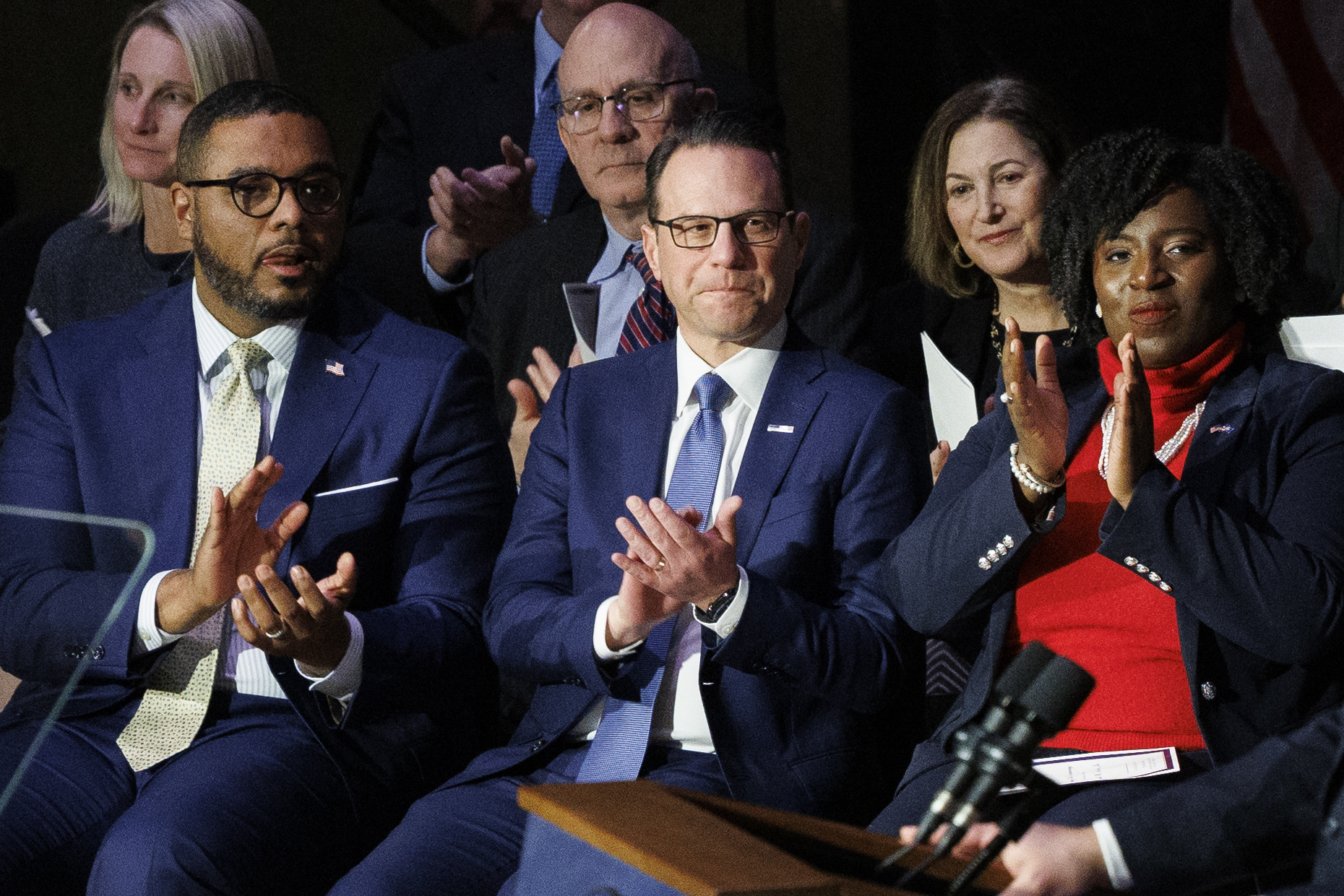
    Pennsylvania politicians (from left) Lt. Gov. Austin Davis, Gov. Josh Shapiro and State House of Representatives Speaker Joanna E. McClinton last January attending the swearing-in ceremony of Attorney General David W. Sunday, Jr. in Harrisburg.

    Instead, Lt. Gov. Austin Davis hosted a solo fundraiser for their joint reelection ticket.

    “There’s a lot of demands on the governor’s time,” Davis said following a speech at the annual luncheon hosted by the Pennsylvania Manufacturers’ Association.

    The Third Congressional District race was the talk of the town

    Three of the candidates vying to replace retiring U.S. Rep. Dwight Evans in the Third Congressional District had a busy weekend in New York. State Sen. Sharif Street, pediatric surgeon Ala Stanford, and State Rep. Morgan Cephas made the rounds.
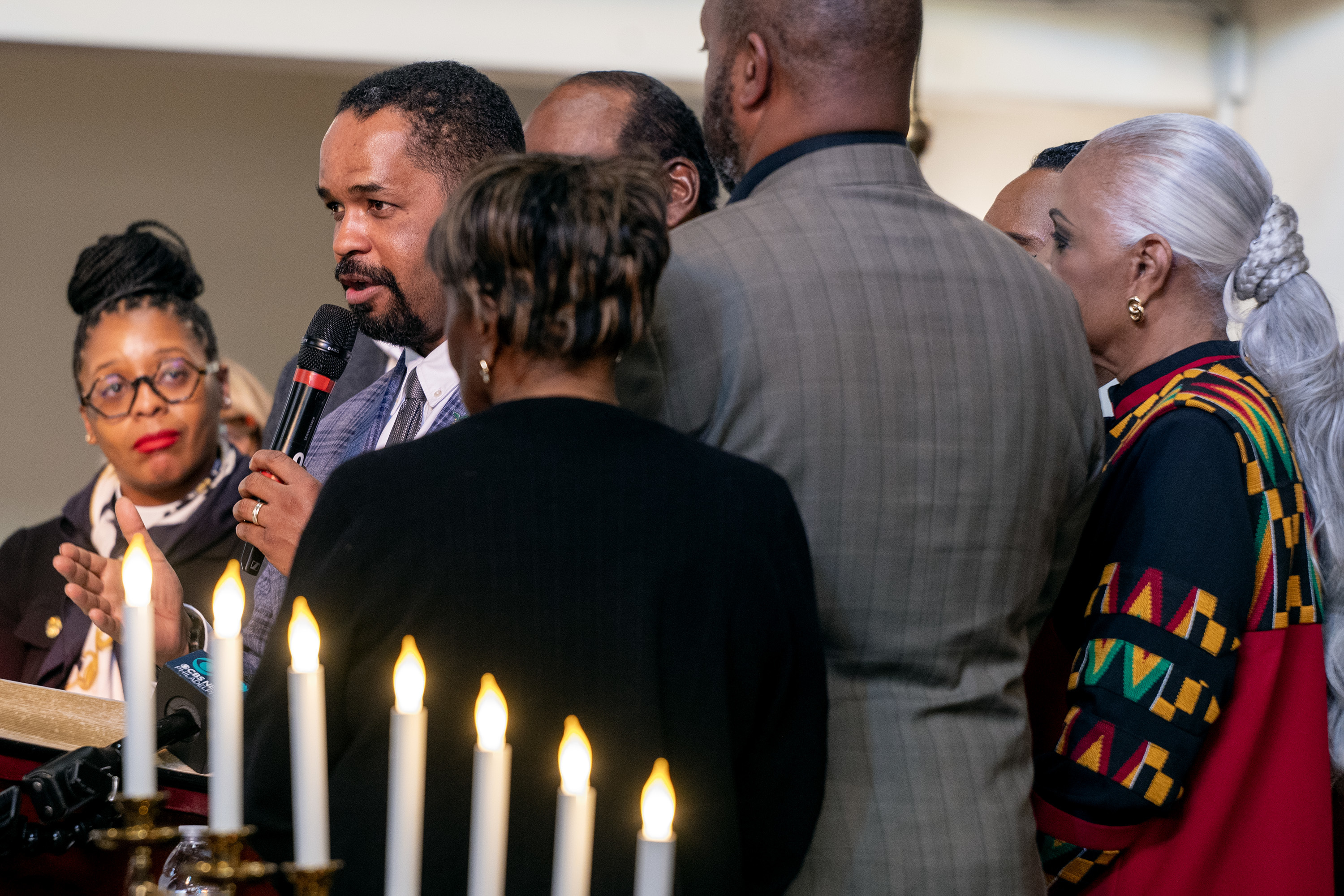
    Sharif Street speaks from the pulpit of Mother Bethel A.M.E. church Sunday, Nov. 2, 2025 as the Black Clergy of Philadelphia and Vicinity holds a press conference with other community and political leaders to discuss the negative impacts of the ongoing government shutdown. Mother Bethel Pastor Rev. Carolyn Cavaness is at left.

    Stanford held a somewhat star-studded fundraiser Thursday evening, hosted, according to a posted listing for the private event, by Hamilton actor Leslie Odom Jr. (who did not attend but lent his name).

    Street, the former state party chair and a longtime attendee at Pennsylvania Society, held two fundraisers in Manhattan, fresh off his endorsement last week by former Gov. Ed Rendell.

    Not spotted: State Rep. Chris Rabb, who is running as an anti-establishment progressive.

    “That’s not really my thing,” he said in a text message.

    The Parker-Johnson relationship was a hot topic

    Philadelphia City Council wrapped up its final meeting of the year the day before the Pennsylvania Society began, and the lawmakers gave the chatterati plenty to talk about in Manhattan, with a dramatic close to the session.

    One major topic of conversation in New York: What did Council’s recent conflict with Mayor Cherelle L. Parker over her housing plan mean for the unusually tight relationship between Council President Kenyatta Johnson and the mayor?

    The consensus: Mom and Dad were fighting, but they’ll probably patch things up.

    “Disagreements between Council and mayor — it happens,” said Larry Ceisler, a Philadelphia-based public affairs executive whose firm hosted a packed party in Midtown on Saturday. “It’s the way the system is set up.”

    But Ceisler said he’s not worried that Parker and Johnson will abandon their goal of emulating then-Mayor Rendell’s close working relationship with Council President John F. Street in the 1990s.

    “The fact is they’re certainly in sync more than they’re not,” Ceisler said.

    City Council president Kenyatta Johnson speaking with Philadelphia Mayor Cherelle Parker in June 2024.

    Johnson, he said, likely improved his standing with members by holding firm against a last-minute amendment Parker proposed to alter Council’s version of the housing plan’s budget.

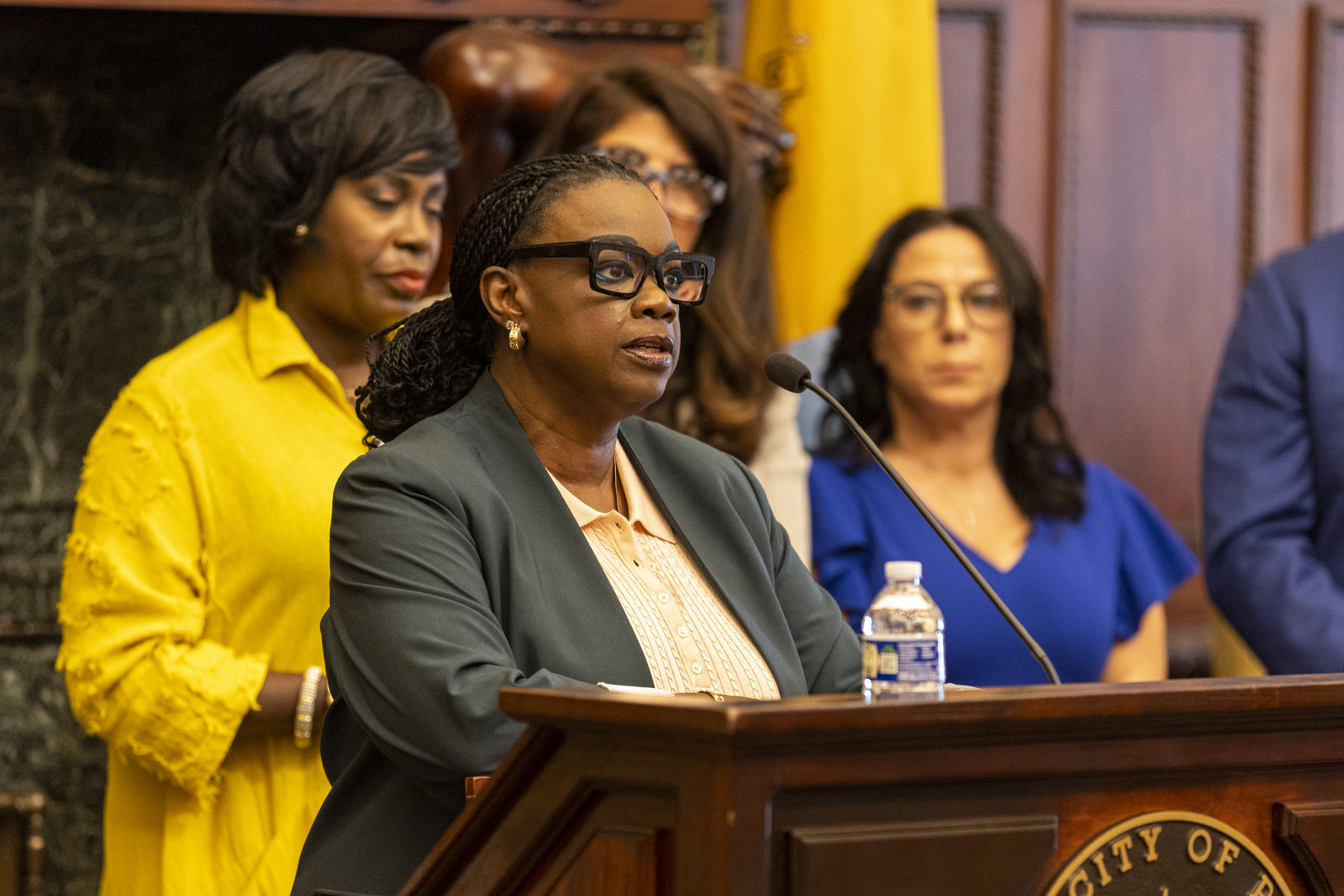
    Parker and Johnson both made the trek to Manhattan, along with Councilmembers Rue Landau, Nina Ahmad, Jamie Gauthier, Jeffery “Jay” Young Jr., Kendra Brooks, Katherine Gilmore Richardson, Jim Harrity, Cindy Bass, and Quetcy Lozada.

    The mayor also took the opportunity to engage in a bit of bipartisanship. She has often touted her ability to build relationships across the aisle, despite Philadelphia politics being dominated by Democrats.

    At the PMA luncheon, Parker embraced former Gov. Tom Corbett and gave a warm greeting to Auditor General Tim DeFoor, both Republicans.
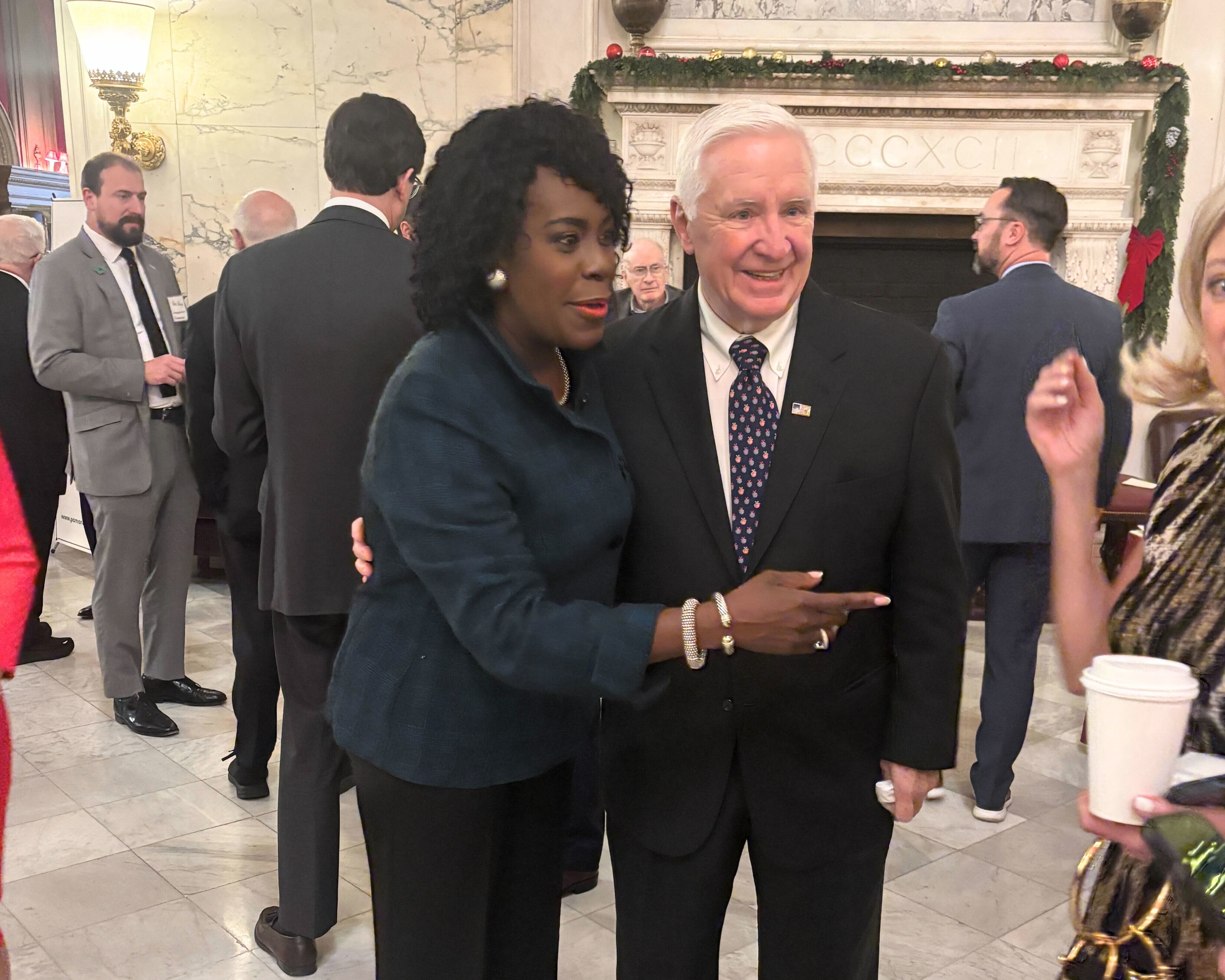
    Mayor Cherelle L. Parker (left) and former Gov. Tom Corbett at the luncheon hosted by the Pennsylvania Manufacturers’ Association on Saturday in New York.

    At the same event, Republican U.S. Sen Dave McCormick shouted out Parker multiple times during his prepared remarks. The pair have forged a working relationship despite their partisan differences.

    “We talk about challenges in the city that we’re facing right now, and the hope is that we can count on some folks as allies,” Parker said of meeting with members of the GOP.

    She added: “It’s great to try to maintain those lines of communication.”

    Special interests woo political elite

    Many of the events were hosted by special-interest groups and corporations that have business with the government and are looking to win influence over glasses of Champagne.

    There were the usual suspects and big law firms: Duane Morris always hosts a marquee late-night event on Friday in the sprawling Rainbow Room atop Rockefeller Center. Other firms including Cozen O’Connor, Ballard Spahr, and Saul Ewing also hosted cocktail parties.

    One notable newcomer to the party scene was Pace-O-Matic, the Georgia-based operator of “skill games” at the center of negotiations over regulation and taxing of the machines.

    The company, which has spent millions on political contributions and lobbying, threw a cocktail reception Thursday night at an Italian restaurant attended by a sizable contingent of state lawmakers.

    Legislators have yet to agree on how to regulate and tax skill games, which remain entirely unregulated and untaxed.

    But solutions seemed possible at the Pace-O-Matic party, as Central Pennsylvania Republicans and Philadelphia Democrats milled about the bar in an unlikely alliance.

    Another bipartisan event — this one in a sunny room atop the vintage Kimberly Hotel — was hosted by Independence Blue Cross and AmeriHealth Caritas, insurance companies that have Medicaid contracts with the state.

    Lawmakers often credit the weekend of partying in New York as a time for civil conversations in a neutral territory that ultimately benefit a philanthropic cause at the Pennsylvania Society’s annual dinner.

    But Rabbi Michael Pollack, who leads the government accountability group March on Harrisburg, said the civility seems to come only when special interests are footing the bill.

    “It’s absolutely embarrassing that our legislators can only interact with each other when a lobbyist sets up a playdate for them,” he said.

    A Christmas budget ballad by DJ Ward

    Senate President Pro Tempore Kim Ward debuted a hidden musical talent on stage at the annual bipartisan Pennsylvania Chamber of Business and Industry breakfast: She can write a Harrisburg holiday hit.

    “I did live in Nashville for six years and no one discovered me,” she joked, before launching into a three-minute budget balladto the tune of “Deck the Halls.”

    Ward (R., Westmoreland) debuted her song after an ugly budget battle that lasted 135 days and ended just last month. Punctuated by fa-la-las, she called out each of the top leaders who were in the closed-door budget talks.
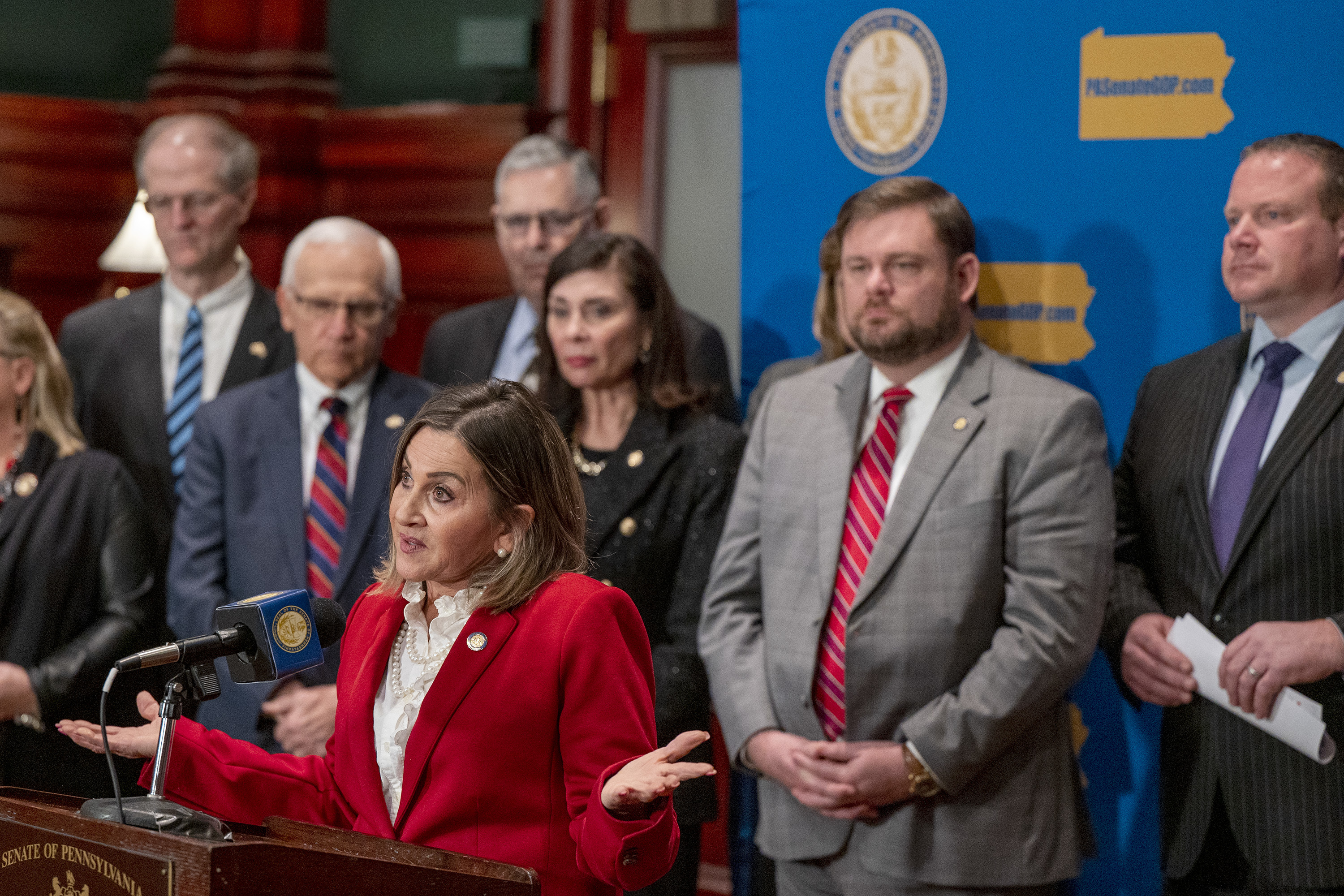
    Senate President Pro Tempore Kim Ward (R., Westmoreland) speaking in February 2024 at the Capitol in Harrisburg.

    Ward is among Shapiro’s top critics. The two had hardly spoken since 2023 until Ward joined in-person budget negotiations at the end of October.

    During those negotiations, Ward has said Shapiro gave her a special heart-shaped cookie to break the ice. And it appears that she’s not yet letting that go, dedicating a moment in her song to the encounter:

    Mr. Shapiro give me a break

    You know you gave me that heart cookie cake

    Why are you saying that you didn’t do it?

    Ward’s jingle wasn’t the first time a Pennsylvania Republican leader leaned on the power of song during the bitter budget battle.

    At the peak of the clash over transit funding in August, Senate Majority Leader Joe Pittman quoted heavily from the lyrics of John Mellencamp’s “Small Town” in recalling his upbringing in rural Western Pennsylvania.

    Shapiro will propose a new budget in February, restarting the budget negotiation process. Ward urged the group of leaders to take a break from fighting during the holiday season.

    It’s Christmas and we’re all here together

    Republicans and Democrats, and all who matter

    Let’s celebrate the birth of Jesus

    For the next three weeks, let’s not be egregious

    Perhaps next budget season will inspire a mixtape.
  • Internal documents shed light on Mayor Cherelle L. Parker’s decision to end Philadelphia’s racial diversity goals in contracting

    Internal documents shed light on Mayor Cherelle L. Parker’s decision to end Philadelphia’s racial diversity goals in contracting

    Mayor Cherelle L. Parker has said her administration relied on expert advice from a top law firm when it decided to end a Philadelphia policy prioritizing businesses owned by women or people of color in city contracting following recent court rulings that limited affirmative action-style government programs in hiring and contracting.

    “I call them my genius attorneys because they all clerked for Supreme Court justices, and they handle the hardest cases throughout the country,” City Solicitor Renee Garcia, the city’s top lawyer, recently said of the New York-based firm Hecker Fink.

    “And we went back and forth,” Garcia said. “Can we do this? Can we do this? What about this? What about that?”

    But when it came time to replace the city’s old program with a new policy, the Parker administration didn’t adopt all of the suggestions it received from Hecker Fink, internal administration documents obtained by The Inquirer show.

    Hecker Fink attorneys suggested that Philadelphia replace its old contracting system with one that favors “socially and economically disadvantaged” businesses, the documents show. Parker instead created a new policy favoring “small and local” companies.

    The differences between Parker’s program and alternatives the city could have adopted are highly technical but hugely important, attorneys and researchers who study government contracting told The Inquirer.

    Critics say the new policy indicates Philadelphia took the easy way out in the face of conservative legal attacks, instead of fighting to preserve the spirit of the old program: promoting equity and diversity in city contracting.

    Parker, however, is adamant that her “small and local” policy will achieve that goal, given that many small companies in the city are owned by Black and brown Philadelphians who have faced discrimination.

    “Our small and local business program is our disadvantage program,” Garcia said in a written statement. “Considering counsel’s advice, the City determined that a small and local business program is the best way to incorporate social and economic disadvantage in a way that is objective, content-neutral, consistent, demonstrable, and could be stood up very quickly.”

    The documents, which include confidential legal memos from Hecker and internal administration emails, show how top city officials attempted to navigate a new legal landscape after the U.S. Supreme Court in 2023 upended decades of jurisprudence on affirmative action and other race-conscious policies.

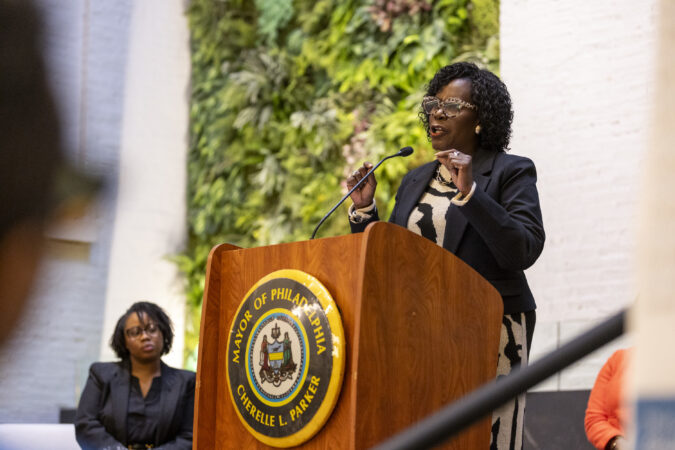
    Mayor Cherelle L. Parker said her “small and local” contracting policy will boost Philadelphia companies.

    In early 2025, the Law Department provided a spreadsheet of line-by-line edits to the city’s Five Year Plan, a long-term budgeting document, to remove language about racial and gender-equity goals submitted by city departments.

    When the Office of Community Empowerment and Opportunity, for instance, wrote that its mission involved “advancing racial equity,” the Law Department simply wrote, “remove racial,” as it did for several other agencies.

    The edits signify a stark contrast to the city’s approach under former Mayor Jim Kenney, who in 2020, operating under very different circumstances, instructed all departments to craft comprehensive racial-equity plans.

    There is no indication in the internal documents, which are primarily from 2024 and 2025, that Parker, the city’s first Black female mayor, or administration officials were eager to make those changes. And no city officials appeared in the documents to view the “small and local” policy as less aggressive or safer than the other options at Parker’s disposal when she replaced the city’s race-conscious contracting system.

    But for Wendell R. Stemley, president of the National Association of Minority Contractors, the mayor’s choice was revealing.

    “The cities that want to cave in on this issue without doing the hard work are just doing small [and] local, race- and gender-neutral,” Stemley said.

    ‘Disadvantaged’ vs. ‘small and local’

    The documents obtained by The Inquirer show that Hecker recommended the city abandon its decades-old contracting system — responsible for allotting more than $370 million each year in city contracts to historically disadvantaged firms — due to the threat of potential legal challenges, as Parker and Garcia have said.

    But they also show that the firm proposed replacing that policy with a system “setting mandatory goals for hiring socially and economically disadvantaged businesses or persons,” a race- and gender-neutral standard based on the federal Small Business Administration’s 8(a) business development program.

    Like the city’s contracting policies, the federal program previously had a stated policy of aiding business owners who were members of specific historically disadvantaged groups, such as women and Black people. But a 2023 federal court ruling in Washington, D.C., prohibited the SBA from presuming that members of those groups had faced barriers and required 8(a) applicants to demonstrate social and economic disadvantages.

    The change allowed the program to pass legal muster by not favoring race or gender groups, while still allowing the agency to consider whether each applicant had faced discrimination on an individual basis.

    Hecker, a litigation and public interest firm, suggested that Philadelphia adopt a similar approach.

    “Adopting mandatory goals for hiring socially or economically disadvantaged individuals or businesses, defined along the same race-neutral lines as in the SBA’s 8(a) program, would likely be defensible if challenged,” Hecker lawyers wrote in a May 5 memo to the city.

    An internal administration memo analyzing the city’s options on May 16 said that Hecker “recommended taking a look at the federal SBA 8(a) Business Development Program as a model.”

    “This is a program to recognize small and disadvantaged businesses,” the city’s memo said, adding that the SBA defines socially disadvantaged individuals as “those who have been subjected to racial or ethnic prejudice or cultural bias within American society because of their identities as members of groups and without regard to their individual qualities.”

    The executive order governing the city’s old minority contracting program, which aimed to award 35% of contracts to historically disadvantaged firms, expired at the end of 2024, and the city quietly ended it at some point earlier this year.

    Parker did not announce that the program had been discontinued or that it would be succeeded by her “small and local” policy until an Inquirer story published last month revealed the change.

    ‘They are different’

    The key difference between Parker’s program and the 8(a) model is that the city’s new policy gives no explicit consideration for social disadvantage, prejudice, or cultural bias.

    Garcia, the city solicitor, firmly pushed back against the notion that the city had ignored Hecker’s advice on reshaping its contracting landscape and contended that the “small and local” policy will result in equitable outcomes because many of Philadelphia’s small businesses are owned by people of color and have faced discrimination and other barriers to growth.

    “The City’s small and local business program … is more aggressive [than an SBA 8(a)-style policy] in that it is broadly applicable to small and local businesses, without creating unnecessary hurdles and confusion over the word ‘disadvantage’ or requiring onerous paperwork” for business owners to demonstrate their disadvantages, she said.

    City Solicitor Renee Garcia is the Parker administration’s top lawyer.

    Although Parker’s new program is not exclusively available to disadvantaged firms, Garcia said it “has built-in elements of social and economic disadvantaged programs like the SBA 8(a) and [U.S. Department of Transportation] programs, such as utilizing SBA business size standard caps, examining years in business, examining employee count, and personal net worth considerations.”

    But Andre M. Perry, a senior fellow at the Brookings Institution, said that while the city may be intending to help disadvantaged businesses with its “small and local” approach, specifying that goal in writing is important. The mayor’s executive order does not use the word disadvantage.

    “They are different,” said Perry, the author of Black Power Scorecard, an examination of access to property, education, and business success. “The downside of any approach that does not use some criteria for being disadvantaged is that you can ignore them.

    “There is a history that suggests that you absolutely need some process to identify groups of people who have been ignored by the city. It’s certainly not a given that you will touch those communities that have been denied opportunities in the past under ‘small and local,’” Perry said.

    ‘Too early to tell’

    Parker’s move to abandon the city’s goal of prioritizing businesses owned by women and Black and brown people has become the latest flashpoint in the debate over the centrist Democrat mayor’s approach to the new political reality under President Donald Trump’s second administration, as critics like progressive City Councilmember Kendra Brooks have accused her of “caving” to Trump.

    Parker, however, said the city had little choice but to end the old system following Students for Fair Admissions v. Harvard, a 2023 Supreme Court ruling that prohibited affirmative action in college admissions and has had widespread consequences for race-conscious government programs.

    “There were people who told us that leadership meant justifying the [old] law,” Parker said at a recent news conference announcing the contracting policy changes. “They said, ‘Forget about the Supreme Court ruling. Philadelphia should just continue functioning and operating its program even if your Law Department and these genius lawyers at [Hecker] who have clerked for Supreme Court justices [recommended abandoning it.]’

    “I want to take some advice from somebody to interpret the Supreme Court ruling right for some folks who have worked there.”

    The U.S. Supreme Court upended the legal landscape for race-conscious government programs with a 2023 case ending affirmative action in college admissions.

    But Parker also said she felt that the city’s old system was “broken” long before the Harvard decision because it failed to achieve its goal of boosting the number of “Black and brown and women and disabled business owners” in Philadelphia.

    Chief Deputy Mayor Vanessa Garrett Harley added that an administration review found that only 20% of the firms in Philadelphia’s registry of businesses owned by women, people of color, or people with disabilities were getting city contracts.

    Parker, who as a lawmaker worked on policies aimed at boosting economic opportunities for minority- and women-owned firms, said she was optimistic that pivoting to a focus on “small and local” firms would produce better results.

    Parker has not publicly discussed suggested alternatives to her new policy, including the 8(a)-style approach.

    Several government contracting attorneys and researchers interviewed by The Inquirer said that both “small and local” and “socially disadvantaged” programs have downsides and that the success of either would primarily depend on how well it is executed. Details are scant on what the new policy will actually look like, making it difficult to evaluate the potential impact.

    But experts said choosing a policy that seeks to favor disadvantaged businesses rather than any small Philadelphia firm would indicate the mayor was fighting to maintain the spirit of the old program, which sought to boost companies owned by women and people of color who have long been underrepresented among business owners and government contractors.

    “Adopting an 8(a)-style program with language prioritizing contracts for socially disadvantaged businesses would signal a desire to maintain the pre-2024 understanding that cities can procure goods deliberately, intentionally, in different ways, with preferences from disadvantaged businesses,” said Brett Theodos, a senior fellow at the Urban Institute who has written a paper about how governments can use contracting to promote equity, despite recent court decisions. “Having an (8)a-style [program] would signal that the mayor wanted to try something more.”

    Parker has defended her policy shift by invoking the bona fides of the Hecker attorneys who worked with the city. She and other city officials have noted that one clerked for liberal U.S. Supreme Court Justice Sonia Sotomayor and now works for the American Civil Liberty Union — “not somebody who would have had a conservative mindset,” as Garrett Harley put it. (Those comments later prompted the ACLU-PA to distance itself from what it described as the city’s “DEI rollback.”)

    To be sure, adopting a program in which contractors need to demonstrate social disadvantages, such as past instances of discrimination, has its own drawbacks.

    Following the 2023 federal court decision, the SBA now requires 8(a) applicants to submit “social disadvantage narratives,” or essays, increasing administrative burdens and potentially favoring savvier contractors. The U.S. Department of Transportation has a similar essay-based approach.

    The U.S. Small Business Administration’s 8(a) business development program is aimed at helping “socially and economically disadvantaged” firms.

    “We have heard from our businesses it is already too hard to do business in Philadelphia; these kinds of additional requirements will exacerbate an already difficult and burdensome process,” Garcia said.

    And despite being a race- and gender-neutral federal policy, the current 8(a) standard, which was adopted in President Joe Biden’s administration, may still be challenged in court.

    The lawyers at Hecker Fink, however, believed that a Philadelphia version of the policy could withstand scrutiny.

    “The next wave of conservative litigation in this space may target such programs, arguing that social or economic disadvantage is a proxy for race,” Hecker attorneys wrote in the May 2025 memo. “However, based on our assessment of the current legal landscape, the City would have a strong chance of defeating such challenges.”

    Like many diversity, equity, and inclusion initiatives cast as discriminatory by the president, the 8(a) program has come under siege since Trump took office in January. On the agency’s website, hyperlinks to guidelines on how companies can demonstrate social disadvantage have gone dead, and the Trump administration has launched an audit of the program in the wake of an alleged bribery scheme.

    None of those issues, however, address the question of whether a similar policy crafted for the city would be legally defensible. Despite Trump’s attacks, the current version of the 8(a) program’s focus on “socially disadvantaged” firms has not been overturned in court.

    Regina Hairston, president and CEO of the African-American Chamber of Commerce of PA, NJ, and DE, said the organization will wait and see how Parker’s new policy shakes out.

    “It’s too early to tell if the mayor’s policy is the right policy, but from what I’ve seen across the country, other cities are moving to [prioritize] small, medium enterprises,” Hairston said. “We don’t know if that’s the answer, but we will be monitoring it.”

    Staff writer Anna Orso contributed to this article.

  • Mayor Cherelle Parker defends ending racial diversity goals for Philly contracts: ‘Fighting the fight the way I know best’

    Mayor Cherelle Parker defends ending racial diversity goals for Philly contracts: ‘Fighting the fight the way I know best’

    Mayor Cherelle L. Parker faced criticism last week for quietly eliminating racial diversity goals from city contracting in what appeared to be a preemptive concession to the conservative legal movement’s dismantling of affirmative action.

    But this week, Parker is going on the offensive. The mayor said she was eager to eliminate the city’s racial participation targets long before the current legal threats to the policy emerged, saying the city’s 40-year-old effort to use its contracting process to boost diverse businesses had failed.

    “Did the Supreme Court ruling have anything to do with our decision-making? Absolutely,” Parker said Monday, referring to a 2023 ruling that threatened race-based affirmative action programs. “But it wasn’t the impetus for it. I ran on providing access to economic opportunity for all here in the city of Philadelphia.”

    That case, Students for Fair Admissions v. Harvard, could mark the beginning of the end for a wide variety of government programs that seek to boost diversity or aid people of color.

    In her first extensive comments since The Inquirer reported Parker’s administration had ended race- and gender-conscious contracting policies, the mayor defended her decision Monday at a last-minute “roundtable” meeting she organized in Northwest Philadelphia with business leaders.

    And she doubled down during a news conference Tuesday at the African American Chamber of Commerce headquarters, where she signed an executive order codifying the city’s shift to favoring firms that are registered as “small and local.”

    “We knew the system was broken years before,” Parker, the city’s first Black female mayor, said. “Because every time we would look at the numbers and we would want to see how many Black and brown and women and disabled business owners were growing in the city of Philadelphia, the numbers became stagnant.”

    Historically disadvantaged firms win city contracts worth more than $370 million annually, and supporters of the program criticized Parker for not fighting to preserve it.

    City Councilmember Kendra Brooks of the progressive Working Families Party said Parker was “caving” to President Donald Trump, whose administration has sought to roll back policies on diversity, equity, and inclusion.

    “People want to see leaders fighting for something,” Brooks said last week, “and right now we don’t see our city fighting for anything.”

    But Chief Deputy Mayor Vanessa Garrett Harley said Monday that the administration examined the Philadelphia Office of Economic Opportunity’s registry of disadvantaged businesses that should get a leg up in city procurement opportunities, and found that only 20% were actually winning contracts.

    “Obviously, it was not working,” Garrett Harley said.

    Deputy Mayor Vanessa Garrett Harley speaks during a press conference in Philadelphia, Pa., on Thursday, June 27, 2024.

    Parker said that setting diversity goals was not enough to grow women- and minority-owned businesses. Instead, she said, they need technical assistance, access to capital, and other tools so that they can develop to the point where they are able to regularly compete for city contracts without relying on set-asides.

    Her administration is focused on providing those resources, she said, and not just “checking boxes.”

    “I’m fighting,” Parker said. “But I’m fighting the fight the way I know best: to achieve the results and act and extract the tangible results that I need for the people who live in this city, who own businesses in the city.”

    ‘Small and local:’ A new world for city contracting

    Parker on Tuesday signed an executive order detailing city’s new contracting system. As previously detailed in The Inquirer, the city will now give preference to “small and local” firms rather than requiring participation for businesses owned by women, minorities, and people with disabilities.

    The executive order does not set a target goal for what share of city contracting dollars should go to “small and local” businesses.

    The city’s previous goal of directing 35% of contracting dollars to disadvantaged firms was similarly not enumerated in law. Instead, Parker’s order outlines a structure for setting benchmarks and providing assistance to firms seeking to do business with the city.

    For example, it charges the economic opportunity office with setting overall contracting goals, as well as establishing “participation ranges” for individual contracts. Those ranges will be used to give contractors benchmarks for money that should be set aside for subcontractors and suppliers that are considered disadvantaged businesses.

    The office is also responsible for maintaining the registry of small and local businesses. Garrett Harley said the “overwhelming majority” of businesses that are registered with the city as minority-, women-, or disabled-owned will qualify as “small and local.”

    Nadir Jones, the city’s director of business impact and economic advancement, said firms already registered with the city will be “grandfathered in” and will not need to register again as small or local.

    To qualify as “local,” a business must either be headquartered in Philadelphia city limits or meet two of three other criteria:

    • More than 60% of employees live in Philadelphia.
    • More than half of the business’ employees work in the city at least 60% of the time.
    • More than 75% of the business’ gross receipts came from Philadelphia.

    To qualify as “small,” Jones said, a business must have fewer than 750 employees.

    Parker said her administration is working with outside advisers to hone the program. That includes the African American Chamber of Commerce, which announced Tuesday it had established a Special Task Force on Economic Access and Procurement in response to the contracting changes.

    “We will continue to advocate for policies that are not only measurable and defendable, but also those that produce real impact,” said Regina Hairston, the organization’s president and CEO. “However, as we have recently learned, these policy changes are happening whether we fully support them or not.”

    A risk-averse legal strategy

    Parker’s elimination of racial diversity targets in city contracting — due in part to the hypothetical threat of litigation raised by City Solicitor Renee Garcia — in some ways parallels the mayor’s decision earlier this year to settle a lawsuit challenging a city tax break that primarily benefited small businesses.

    In both instances, critics said that the Parker administration overstated the legal jeopardy the programs faced and gave up without a fight. But there are key differences between Parker’s handling of the contracting goals and the tax break, which exempted firms’ first $100,000 in revenue from the business income and receipts tax, or BIRT.

    If anything, there was less of an immediate threat to the city’s contracting diversity goals, which are not facing any legal challenge. The administration instead preemptively abolished its racial diversity targets due to rulings on separate issues, such as affirmative action in college admissions or the city’s project labor agreements.

    The catalyst for Parker eliminating the BIRT exemption was a 2024 lawsuit filed by a Massachusetts medical device manufacturer challenging the constitutionality of the tax break. Critics of Parker’s decision argued that if the city had fought it in court, the case could have been thrown out because the company may have struggled to demonstrate harm, given that the tax break actually benefited the firm.

    Instead, the city settled with the company, and Parker pressed Council to remove the tax break from city law.

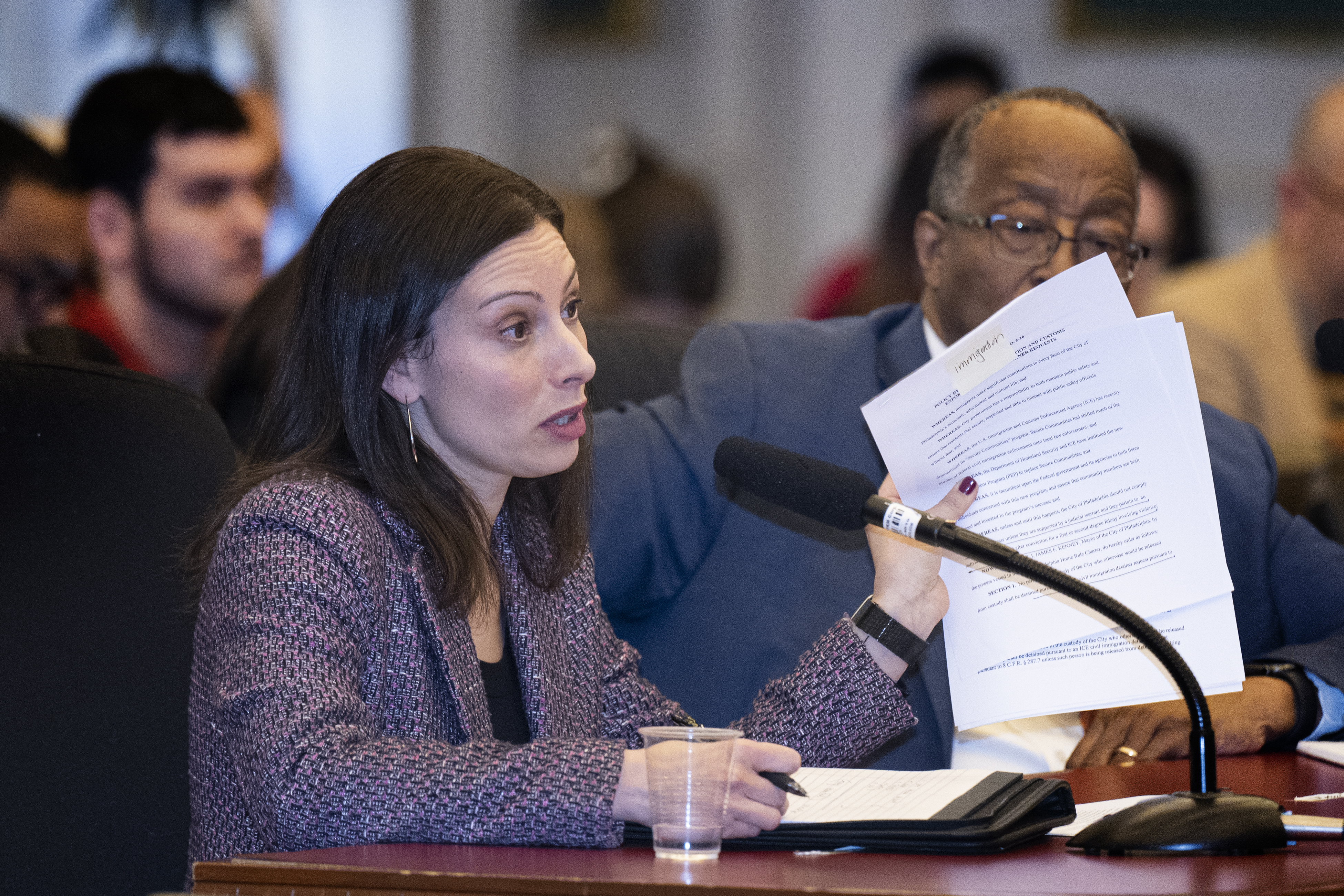
    Renee Garcia, Philadelphia City Solicitor speak on Jan 22, 2025 during a hearing exploring Philadelphia’s readiness and commitment to protecting immigrant, LGBTQ+, and other marginalized communities in preparation for the impending Trump administration.

    During the debate over the BIRT exemption, Garcia said Philadelphia could potentially lose hundreds of millions of dollars in tax revenue if it didn’t cave to the legal challenge. Critics of the city’s approach cast doubt on whether that was a realistic outcome.

    But in the case of the contracting DEI goals, the potential risks articulated by the administration are far less dire.

    Garcia said Monday the primary financial risk involved in maintaining the contracting diversity program is that if the city ever did get sued, and then lost a protracted court battle, it may have to pay the plaintiff’s attorney’s fees.

    She also cited the possibility of creating unwanted legal precedent if the hypothetical lawsuit against the city reached the U.S. Supreme Court and lost — something that could still happen if a suit is filed against any of the hundreds of jurisdictions across the country that still have racial participation goals in contracting.

    “This way, we do it on our terms,“ Garcia said. ”We have time to build it. We have a plan.”

    The most important difference between the business tax and contracting issues is that Parker was in favor of the BIRT exemption but does not support the old contracting system.

    In her budget address in March, Parker said she was begrudgingly seeking to end the tax break because state judicial rulings, in the administration’s view, had forced the city’s hand. But when it comes to the city’s contracting practices, Parker’s aims in some ways align with those seeking to undo longstanding city policy on diversity in contracting.

    The administration’s messaging on the issue has become somewhat mixed. On one hand, Garcia said Parker was “anguished” when she realized she had to make changes to the contracting system due to the legal environment.

    “She did not want to do this,” Garcia said.

    On the other hand, Parker said she has long planned to reform the contracting system. Asked if her policy goals or new legal rulings were driving the decision, Parker said: “It’s both. It’s not either/or.”

    “We are building something that does not exist here in the city of Philadelphia,” she said. “We are asking you to join the fight with us.”

  • Pennsylvania’s Working Families Party pledges to support a primary challenger against Sen. John Fetterman

    Pennsylvania’s Working Families Party pledges to support a primary challenger against Sen. John Fetterman

    Pennsylvania’s Working Families Party is recruiting candidates to run against Pennsylvania’s Democratic senator, John Fetterman.

    Fetterman has not announced whether he will run for reelection in 2028, but the progressive party put out a public declaration Tuesday pledging to endorse — and, if necessary, recruit and train — a challenger.

    The announcement, first reported by The Inquirer, is a remarkable step for the left-leaning organization to take more than two years before an election and speaks to the degree of frustration with Fetterman among progressives.

    “At a time when Donald Trump and Republicans in Congress are doing everything they can to make life harder for working people, we need real leaders in the Senate who are willing to fight for the working class,” Shoshanna Israel, Mid-Atlantic political director for the Working Families Party, said in a statement.

    “Senator Fetterman has sold us out, and that’s why the Pennsylvania Working Families Party is committed to recruiting and supporting a primary challenge to him in 2028.”

    Fetterman did not immediately return a request for comment about the Working Families Party’s announcement.

    The Working Families Party is a progressive, grassroots political party that is independent from the Democratic Party, but it often endorses and supports Democratic candidates.

    Israel noted in her statement that Fetterman voted last week in support of the Republican plan to end the government shutdown — along with seven other Senate Democratic caucus members who crossed the aisle.

    Democratic lawmakers in the House, including several from Pennsylvania’s delegation, railed against the decision as caving to the GOP and President Donald Trump without any substantive wins on healthcare, rendering a 35-day shutdown pointless.

    Though he supports extending federal healthcare subsidies, Fetterman has long said he is against government shutdowns as a negotiating tactic and will always vote to get federal coffers flowing and federal employees paid.

    “I’m sorry to our military, SNAP recipients, gov workers, and Capitol Police who haven’t been paid in weeks,” Fetterman said in a post on X after the vote. “It should’ve never come to this. This was a failure.”

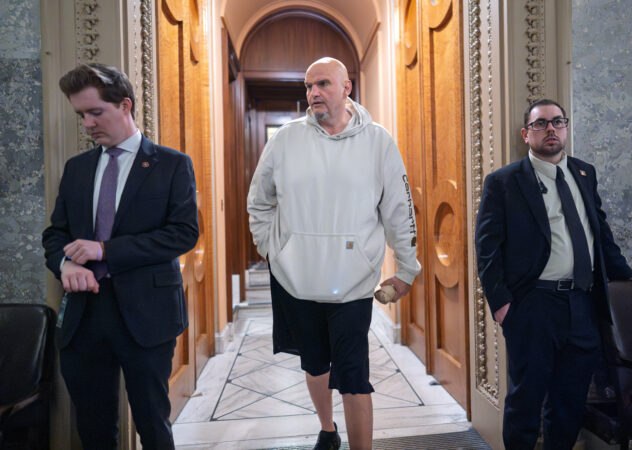
    Already one of the most well-known and scrutinized senators in Washington, Fetterman was back in the spotlight this week as he returns to work following a hospitalization after a fall near his home in Braddock. His staff said he suffered a “ventricular fibrillation flare-up” and hit his face, sustaining “minor injuries.”

    Ventricular fibrillation is the most severe form of arrhythmia — an abnormal heart rhythm — and the most common cause of sudden cardiac death.

    It’s the latest in a string of serious health incidents that have marked the Democratic senator’s time in the public eye. The fall comes three years after he recovered from a near-fatal stroke just days before he won the 2022 Senate primary, which was caused by a blood clot that had blocked a major artery in his brain.

    He spent Thursday and Friday in the hospital and was released Saturday, saying he was feeling good and grateful for his care with plans to be back in the Senate this week.

    Working Families on the offensive

    Israel said in addition to the online portal, the party will hold a number of recruitment events across Pennsylvania in the coming months to train candidates and campaign staff on the basics of running for office and managing a campaign with hopes of finding quality candidates for a variety of races ahead of 2028.

    The party is also pledging a robust ground game and fundraising for a potential challenger it supports.

    It wouldn’t be the first time the Working Families Party has opposed Fetterman. In the 2022 Democratic Senate primary, WFP endorsed State Rep. Malcolm Kenyatta (D., Philadelphia) over Fetterman, who was lieutenant governor at the time.

    The Working Families Party has grown its influence in the region since then. In 2023, WFP became the minority party on Philadelphia’s City Council, defeating Republicans in seats the party had held for over 70 years by electing Councilmembers Kendra Brooks and Nicolas O’Rourke.

    Fetterman has been promoting his book, Unfettered, recounting his stroke during the 2022 Senate run, subsequent struggles with depression, and adjustment to life in the U.S. Senate.

    The book makes no mention of a reelection bid but laments the ugly politics he experienced in both the Democratic primary and his general election race against Mehmet Oz.

    Fetterman said in the book that Oz’s attacks during his rehabilitation from his stroke became so mentally crushing he felt he should have quit the race.

    And he grapples with criticism he faced during the primary surrounding a 2013 incident in which he wielded a shotgun and apprehended a Black jogger he suspected of a shooting. Fetterman calls the backlash an early trigger of his depression.

    Fetterman has said he will remain a Democrat even as Republicans have lauded his independent streak and willingness to work with the GOP.

    Earlier this year, Fetterman was the first Senate Democrat to support the Laken Riley Act, a Republican immigration bill that requires U.S. Immigration and Customs Enforcement to detain and take into custody individuals who have been charged with theft-related offenses, even without a conviction. Critics of the law say it severely cracks down on due process for immigrants.

    Fetterman was the sole Senate Democrat to vote to confirm Attorney General Pam Bondi, who was one of Trump’s attorneys when he tried to overturn the results of the 2020 election.

    And he has been the Senate’s most outspoken defender of Israel during its war in Gaza, sponsoring a resolution with Sen. Dave McCormick (R., Pa.) against antisemitism and appearing for the first time since his fall at an event hosted by the Jewish Federations of North America in Washington on Monday.

    He also received recognition from Israeli Prime Minister Benjamin Netanyahu, who called him the country’s “best friend” and gifted him a silver pager inspired by Israel’s attack on Hezbollah in Lebanon that exploded pagers.

    “He has repeatedly shown disregard for the rights of Palestinians,” the Working Families Party release said. “Refusing to support a two-state solution and breaking with the rest of the Democratic caucus on Israel’s illegal annexation of the West Bank.”

    Staff writer Aliya Schneider contributed to this article.

  • Philly has had a ‘soda tax’ since 2017. One lawmaker wants the city to consider repealing it.

    Philly has had a ‘soda tax’ since 2017. One lawmaker wants the city to consider repealing it.

    City Councilmember Jimmy Harrity wants to revisit the contentious debate that led to the 2017 creation of Philadelphia’s sweetened beverage tax, arguing that the levy has cost the city jobs and will eventually prove insufficient to pay for the programs it was enacted to support, such as subsidized prekindergarten.

    “We‘re going to keep on pulling more money out of the general fund each year, taking away from other programs,” Harrity, a Democrat, said Monday at a hearing of Council’s Labor and Civil Service Committee, which he chairs. “If we were in business and these numbers were the numbers of the business, we wouldn’t be in business long.”

    The tax, which is paid by distributors of sweetened beverages sold in Philadelphia, is 1.5 cents per ounce. Council approved it in 2016 despite vociferous opposition from the beverage industry and Teamsters Local 830, which testified Monday the tax has led to 1,000 of its members who drove trucks for distributors losing work.

    Harrity, an ally of the Teamsters, noted that revenue from the tax has declined as Philadelphians either drink fewer sweetened beverages or find ways to purchase them outside the city. The tax produced about $73.4 million in the 2023 fiscal year, but only $64.4 million last year, he said.

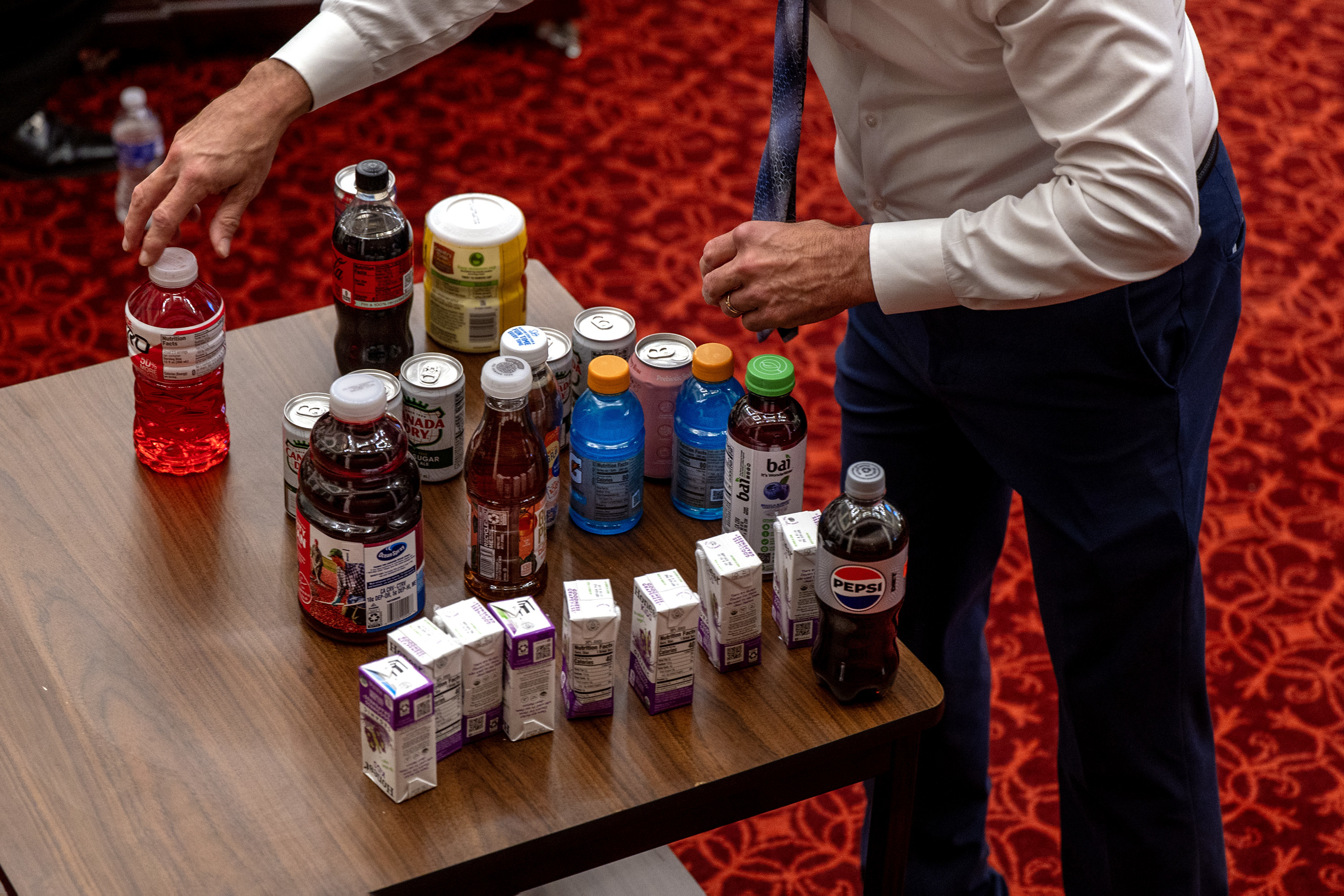
    A Council staffer arranges a table of sugary drinks before Councilmember Jimmy Harrity (not shown) holds a hearing in City Council Monday, Oct. 27, 2025 on former Mayor Jim Kenney’s tax on sweetened beverages.

    For Harrity, that means that the city should consider eliminating the “soda tax,” as it is widely known, in favor of a more “sustainable” funding stream. He did not offer any alternatives.

    But based on his colleagues’ reactions, it is unlikely the tax will be reconsidered in a serious way any time soon.

    Several Council members, public health advocates, and childcare industry representatives defended the tax, which was championed by former Mayor Jim Kenney. They noted that research by the University of Pennsylvania indicates it has been a public health success story that has helped to keep down obesity rates.

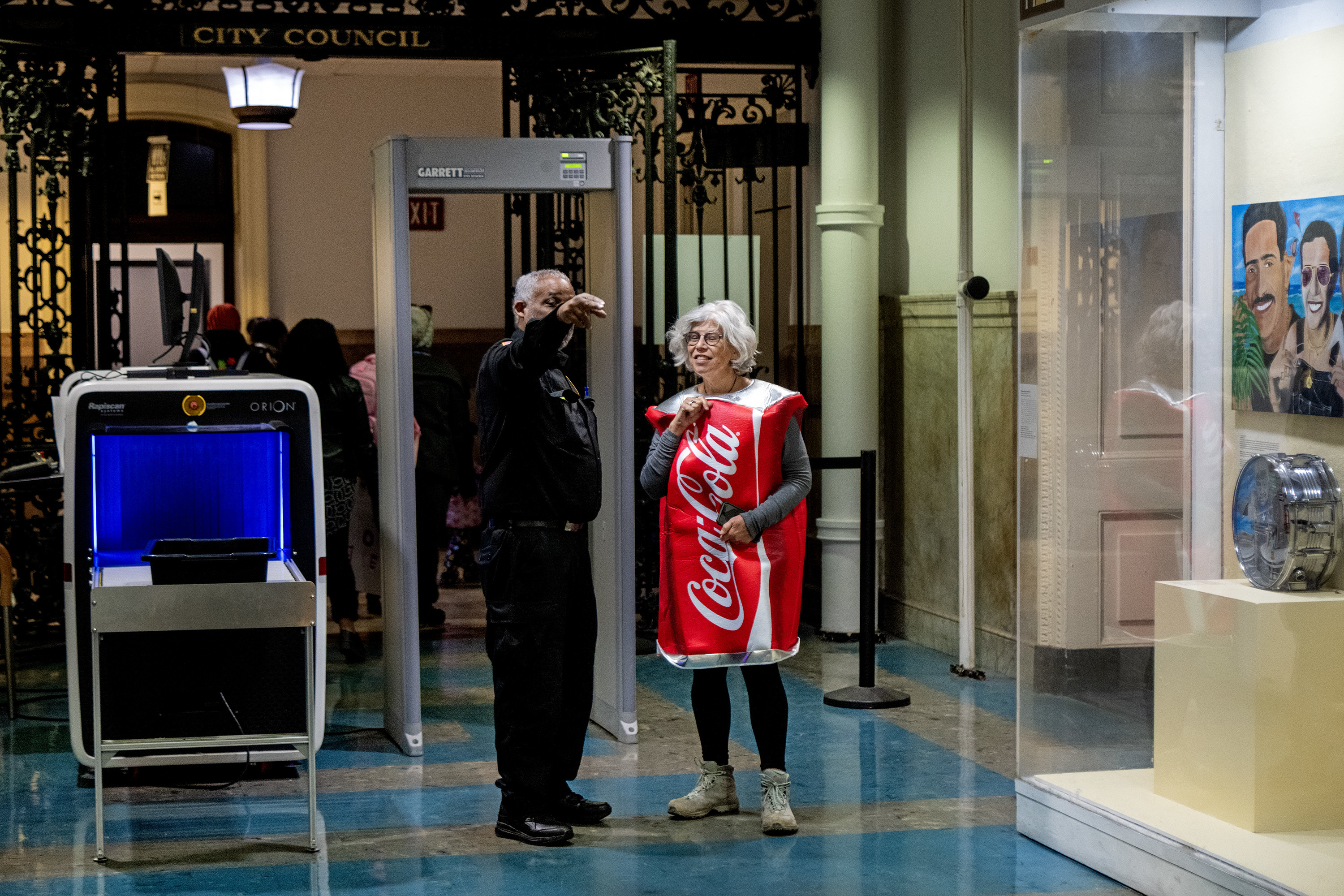
    Marcy Boroff with Children First dresses as a coke can for a City Council hearing Monday, Oct. 27, 2025 on former Mayor Jim Kenney’s tax on sweetened beverages. She was there to support the tax. Children First advocates for policy changes to improve child health, education, and welfare, especially for low-income children. .

    And they stressed its critical role in paying for the three initiatives that Kenney launched alongside the tax: PHL Pre-K, which provides free childcare to 5,250 kids; community schools, which offer a multitude of services to families in 20 Philly schools; and the Rebuild program, which renovates and improves recreation centers and playgrounds.

    “We have to make tough decisions that will actually benefit the greater good, and that’s what we did here,” Democratic Councilmember Rue Landau said during the hearing, adding that “the majority of us up here on this panel think this is a great investment.”

    ‘What we always intended’

    Mayor Cherelle L. Parker, a Democrat who voted for the tax as a Council member, also remains supportive of it.

    “We would not have been able to fund these programs without that beverage tax money,” said city Finance Director Rob Dubow, who has held his role under Parker, Kenney, and former Mayor Michael A. Nutter. Nutter twice tried unsuccessfully to implement a “soda tax” before Kenney succeeded.

    Dubow told lawmakers that the decline in the tax’s revenue over time was always part of the plan and that city leaders intended for the regular city budget to make up the difference for funding Rebuild, pre-K, and community schools when they created the tax. The moment when the soda tax began taking in less money than the city pays out for the three programs it helped launch was the 2024 fiscal year, he said.

    “We pay for it out of the general fund, which is what we always intended we would do,” Dubow said.

    This year, Rebuild, pre-K, and community schools are projected to cost $110 million, Dubow said. Of that, $73 million pays for the 5,250 slots in the city’s pre-K program.

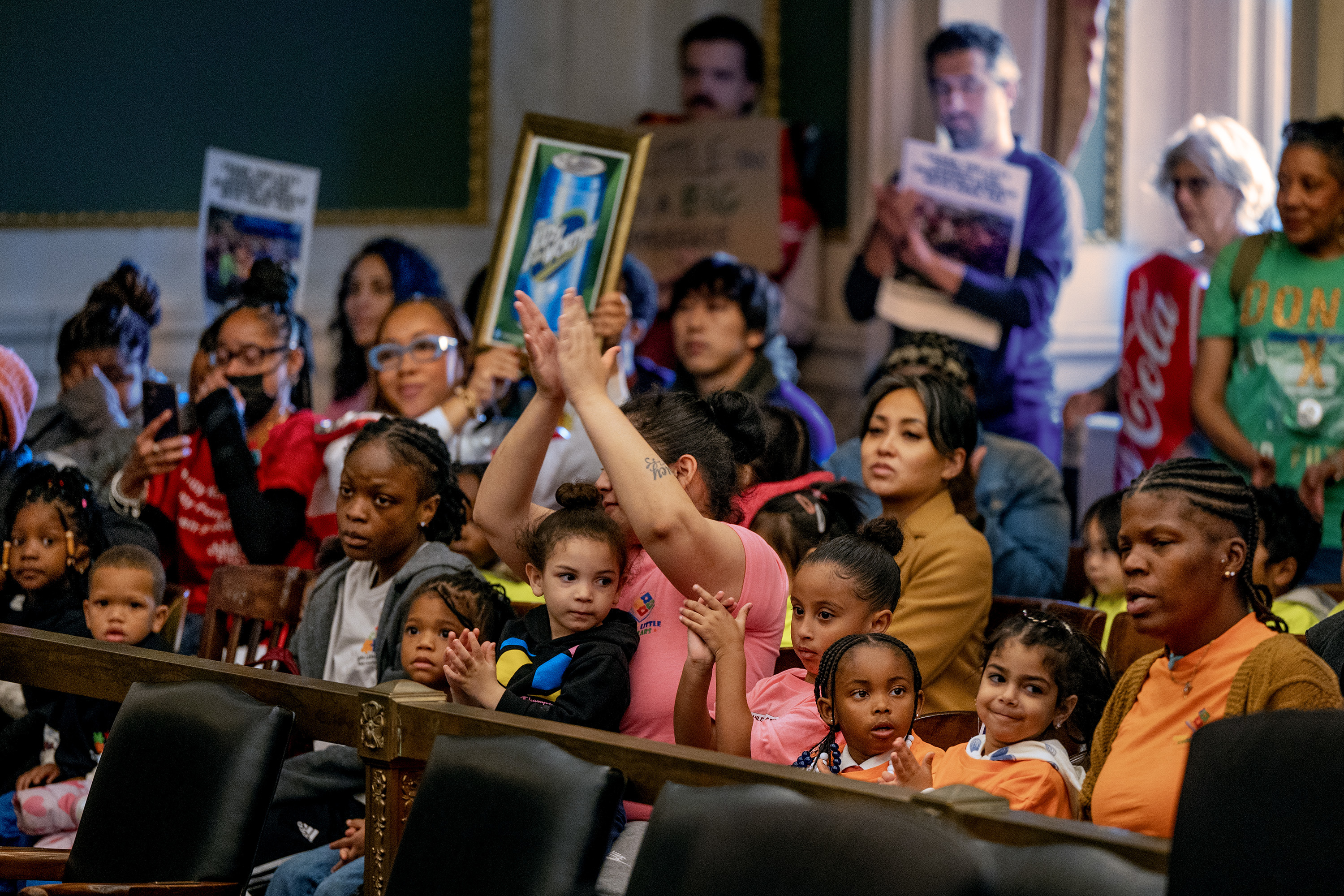
    Preschoolers and their caregivers attend a City Council hearing held by Councilmember Jimmy Harrity Monday, Oct. 27, 2025 on former Mayor Jim Kenney’s tax on sweetened beverages. The tax funds the city’s universal pre-kindergarten program

    ‘Why not Taj Mahals?’

    Councilmember Brian O’Neill was the only other Council member besides Harrity to vocally criticize the tax at Monday’s hearing.

    O’Neill, Council’s lone Republican, noted that Council members have traditionally had control over capital funding for Philadelphia Parks and Recreation projects in their districts. That money, he noted, is split evenly among the 10 district Council members.

    Rebuild, he lamented, instead gives the power to decide which projects move forward to the mayor’s administration. Consequently, he said, the program has produced uneven results and overbudget and unnecessarily ambitious playground and recreation center renovations.

    “This program — Rebuild, they call it — they didn’t decide to bring playgrounds up to some minimum level where people over the years may not have spent their money well,” O’Neill said. “They decided to build Taj Mahals in many cases. … You know what happens when you build a playground and spend tons of money on it? … All the playgrounds around it look terrible.“

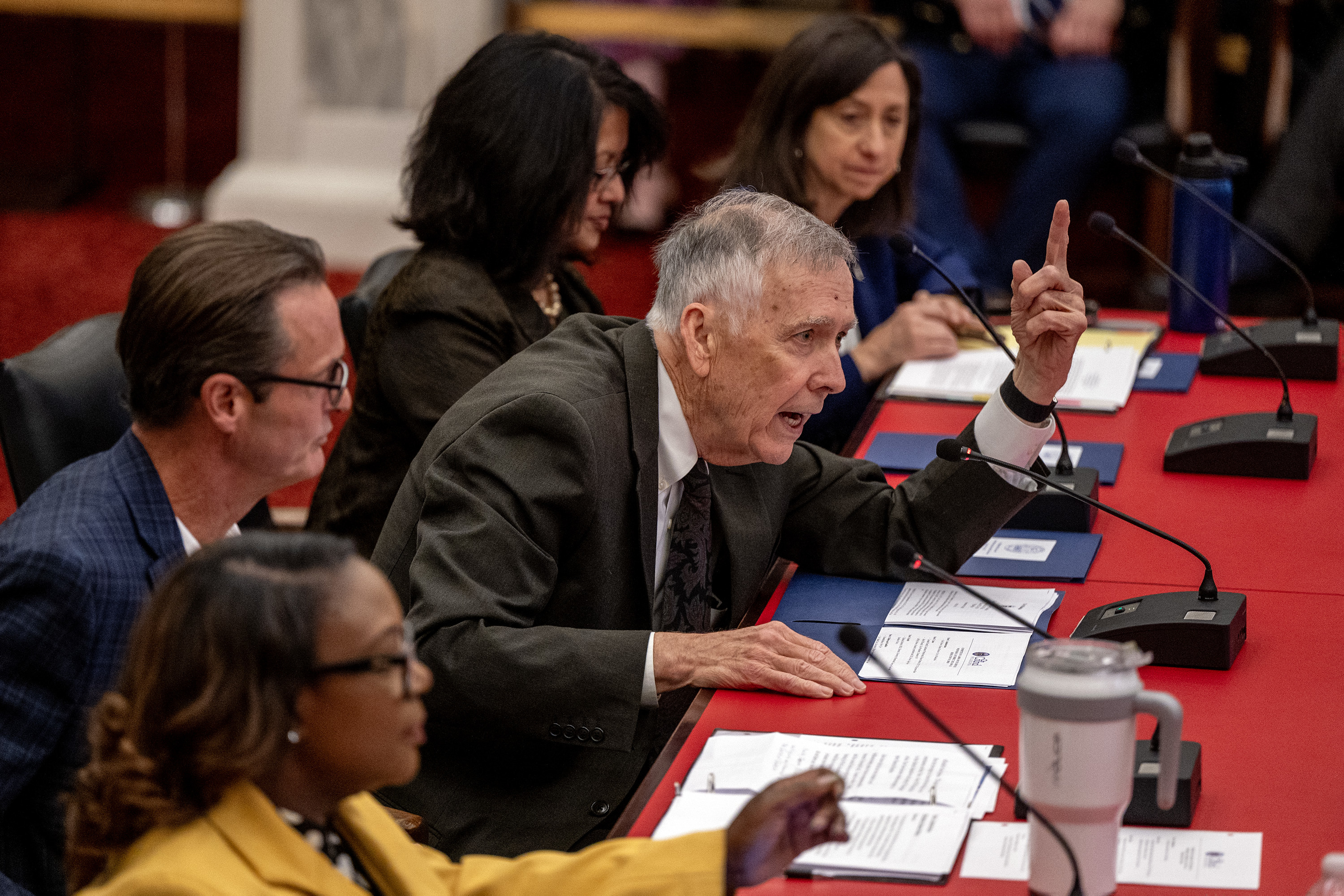
    Councilmember Brian J. O’Neill (center) speaks during a hearing in City Council Monday, Oct. 27, 2025 on former Mayor Jim Kenney’s tax on sweetened beverages. Behind him, front to rear, are: Councilmembers Kendra Brooks, Jimmy Harrity, Nina Ahmad, and Rue Landau.

    That comment did not go over well with some of his colleagues.

    “My community benefited from a rec center that was through the Rebuild program,” said Councilmember Kendra Brooks, a member of the progressive Working Families Party who lives in Nicetown. “It’s not a Taj Mahal. It’s a quality rec center in the middle of North Philadelphia. It does not have everything, because I personally went and bought a refrigerator.”

    And Councilmember Nina Ahmad, a Democrat, questioned why building grandiose rec centers would be a problem in the first place.

    “Why not Taj Mahals for all our folks? Why not have the best-quality rec centers so our children want to go there, our children want to spend time there?” Ahmad said. “We live in a first-world country and yet we are begging for scraps for our youngest citizens.”