Tag: Kensington

  • Poll: Philadelphians feel safe and see a cleaner city under Mayor Parker — but schools remain a major concern

    Poll: Philadelphians feel safe and see a cleaner city under Mayor Parker — but schools remain a major concern

    An overwhelming majority of Philadelphians feel safe in their neighborhoods and more than 40% believe that the city has become cleaner under the leadership of Mayor Cherelle L. Parker, according to a new poll, suggesting that city residents see significant progress on the mayor’s key campaign promises.

    However, there is not a broad citywide consensus on Parker’s tenure as she heads into an expected reelection campaign next year, and there were also red flags for her and the city, including alarmingly bad evaluations of the public school system.

    That is according to a recent Suffolk University/Philadelphia Inquirer poll that surveyed 500 Philadelphians across the city on issues including crime, quality of life, city services, and education. More than half of those surveyed said they would rate Philly as a “good” or “excellent” place to live.

    About 83% of residents reported feeling safe in the city just five years after record-high rates of gun violence in Philadelphia, with respondents in neighborhoods most affected by violent crime most likely to say they feel that crime has decreased since Parker took office in 2024.

    However, the persistent opioid crisis in Kensington remains a sore spot for the city, with more than half of respondents saying that the mayor’s strategy to address the entrenched open-air drug market in the neighborhood is not working.

    And the city’s public school system emerged as a primary concern, with 45% saying they would rate Philadelphia’s schools as of “poor” quality, while more than half of the poll’s respondents said that schools play an important role in whether they stay in the city or move out.

    The survey was conducted last week, after the financially struggling Philadelphia School District and its controversial school closure plan dominated local headlines for more than a month.

    David Paleologos, director of the Suffolk University Political Research Center in Boston, said the poll provides Philadelphia policymakers with a blueprint for how to keep people in the city: continue progress on crime and improve the public schools.

    “If that happens,” he said, “then Philadelphia is poised to be a renaissance city.”
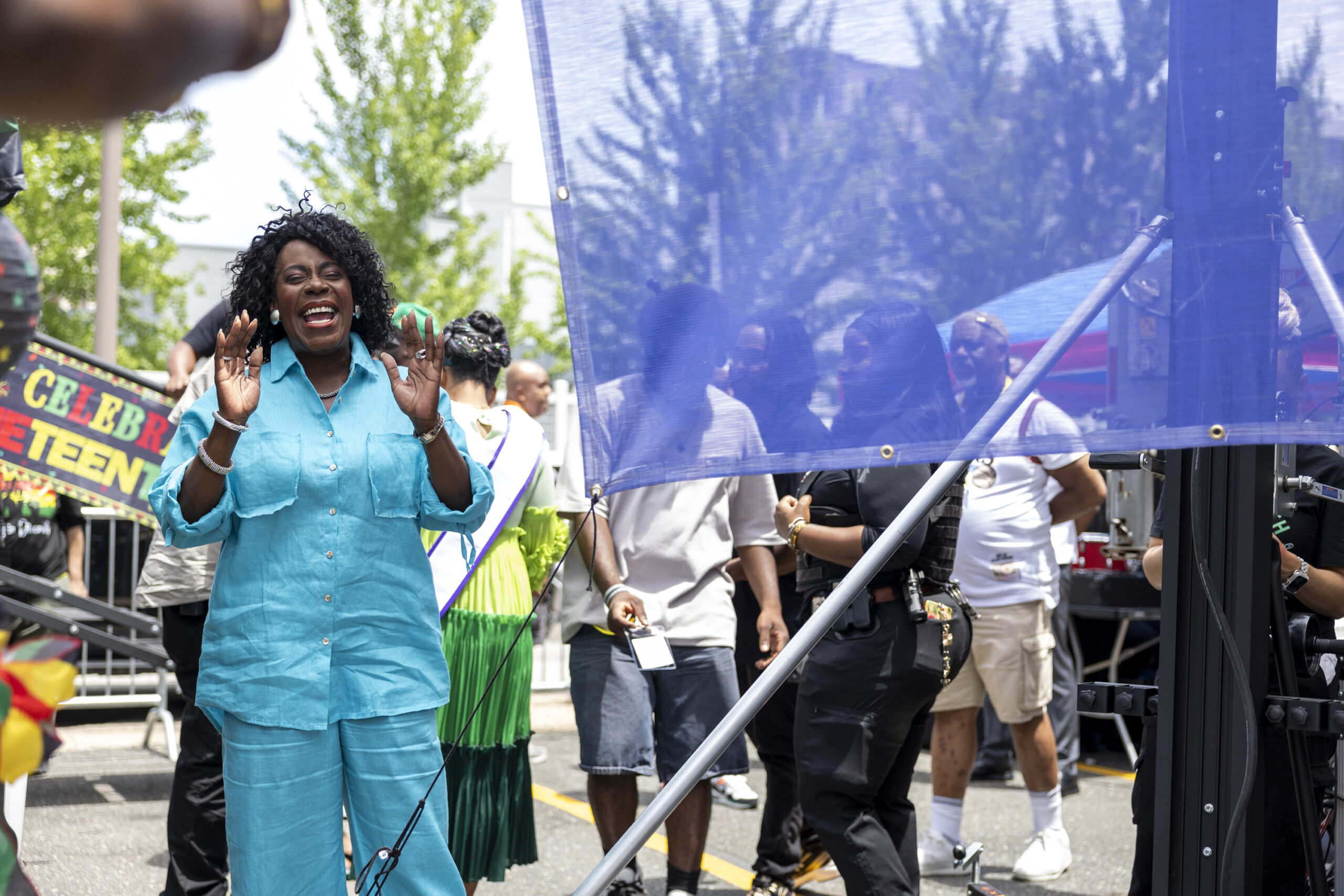
    Mayor Cherelle L. Parker attending the Juneteenth Block Party at the African American Museum in Philadelphia on June 19.

    Parker said in a statement that her administration “values both qualitative and quantitative information.”

    “The real-life, lived experiences of people in this city are what matters most,” she said. “Polling is not my North Star in how I govern. My solutions always come from the ground up, from what people can see, touch, and feel.”

    For Parker’s political fortunes, the poll represents mixed results. It showed that the substantial base of support that lifted the mayor to office in 2023 is holding up, with Black residents and older Philadelphians most likely to say they have a favorable view of her and see progress on her campaign promises.

    But Parker has not consolidated broad citywide enthusiasm, with 44% of respondents saying that they have a favorable view of the mayor and 35% saying they have an unfavorable one. That is positive territory for Parker more than halfway through her first term, but not overwhelmingly so.

    Her biggest vulnerability is with young people — respondents under age 45 were more likely to say that they had an unfavorable view of the mayor than a favorable one. White residents were also more sour on Parker.

    (function(){function e(){window.addEventListener(`message`,function(e){if(e.data[`datawrapper-height`]!==void 0){var t=document.querySelectorAll(`iframe`);for(var n in e.data[`datawrapper-height`])for(var r=0,i;i=t[r];r++)if(i.contentWindow===e.source){var a=e.data[`datawrapper-height`][n]+`px`;i.style.height=a}}})}e()})();

    Paleologos said that the poll shows there are “pockets of strength” that make Parker, a centrist Democrat, electorally strong, but that he would not consider her support broad-based.

    Those results come as the city’s most prominent progressive political groups are weighing whether to mount a challenge against Parker next year. As the incumbent, Parker would be the hands-down favorite in any contest, as no Philadelphia mayor has lost a campaign for reelection in modern history.

    But some leaders of the city’s left-leaning coalition see an opening amid gains in Philadelphia and elsewhere. For example, New York City voters last year elected progressive Mayor Zohran Mamdani, and last week, Democrats in Washington, D.C., picked Janeese Lewis George, like Mamdani a democratic socialist.

    Aren Platt, the executive director of People for Parker, the mayor’s political arm, said in a statement that Parker’s support “has always been under-counted, especially in public polling.” He cited polling conducted during the 2023 mayor’s race that showed her tied with or trailing her top opponents in the Democratic primary, in which Parker prevailed by a commanding 10 percentage points.

    Platt also said the Suffolk University/Inquirer poll is not necessarily predictive of how the mayor could perform in a theoretical reelection race. The poll was of Philadelphia residents, not likely primary voters.

    “This poll may reflect the demographics of Philadelphia, but elections are decided by the people who show up to vote on election day,” he said. “In Philadelphia, those are two very different universes.”

    The poll also showed relatively positive marks for one of Parker’s potential successors: City Council President Kenyatta Johnson. He has said that he supports Parker for reelection, but Philadelphia mayors are limited to two terms and Johnson is widely seen as a potential future contender for the city’s top office.

    Overall, 48% of respondents said they had a favorable view of Johnson and only 12% had an unfavorable one. Johnson is also far less publicly known than Parker, with 40% of those surveyed saying they had either never heard of him or were undecided on their view of him.

    Negative reviews of the Philadelphia School District

    About one in five respondents said that schools and education are the most important issue in the city, making it second only to crime. Paleologos said that is somewhat unique to Philadelphia — in other major cities where he has polled public opinion, he said, respondents often rank jobs and the economy as greater concerns.

    (function(){function e(){window.addEventListener(`message`,function(e){if(e.data[`datawrapper-height`]!==void 0){var t=document.querySelectorAll(`iframe`);for(var n in e.data[`datawrapper-height`])for(var r=0,i;i=t[r];r++)if(i.contentWindow===e.source){var a=e.data[`datawrapper-height`][n]+`px`;i.style.height=a}}})}e()})();

    Nearly 75% of respondents said they would rate the quality of Philadelphia’s public schools as “fair” or “poor.” Younger residents were far more likely than older ones to rate the schools as “poor,” and more than half of all respondents said the public schools are an important factor in determining whether they and their family stay in the city or move away.

    “That’s a big number,” Paleologos said. “That research alone gives the policymakers a bird’s-eye view of what they need to do to keep people here in Philadelphia.”

    The survey also shows that residents see issues across the school system. When asked what should be the highest priority in improving the schools, there was little consensus among respondents: About a third said teacher pay, while a quarter said school safety, and another quarter said building repairs.

    Just 4.4% said the highest priority should be instituting year-round school, an initiative that Parker campaigned on and that the district is piloting.
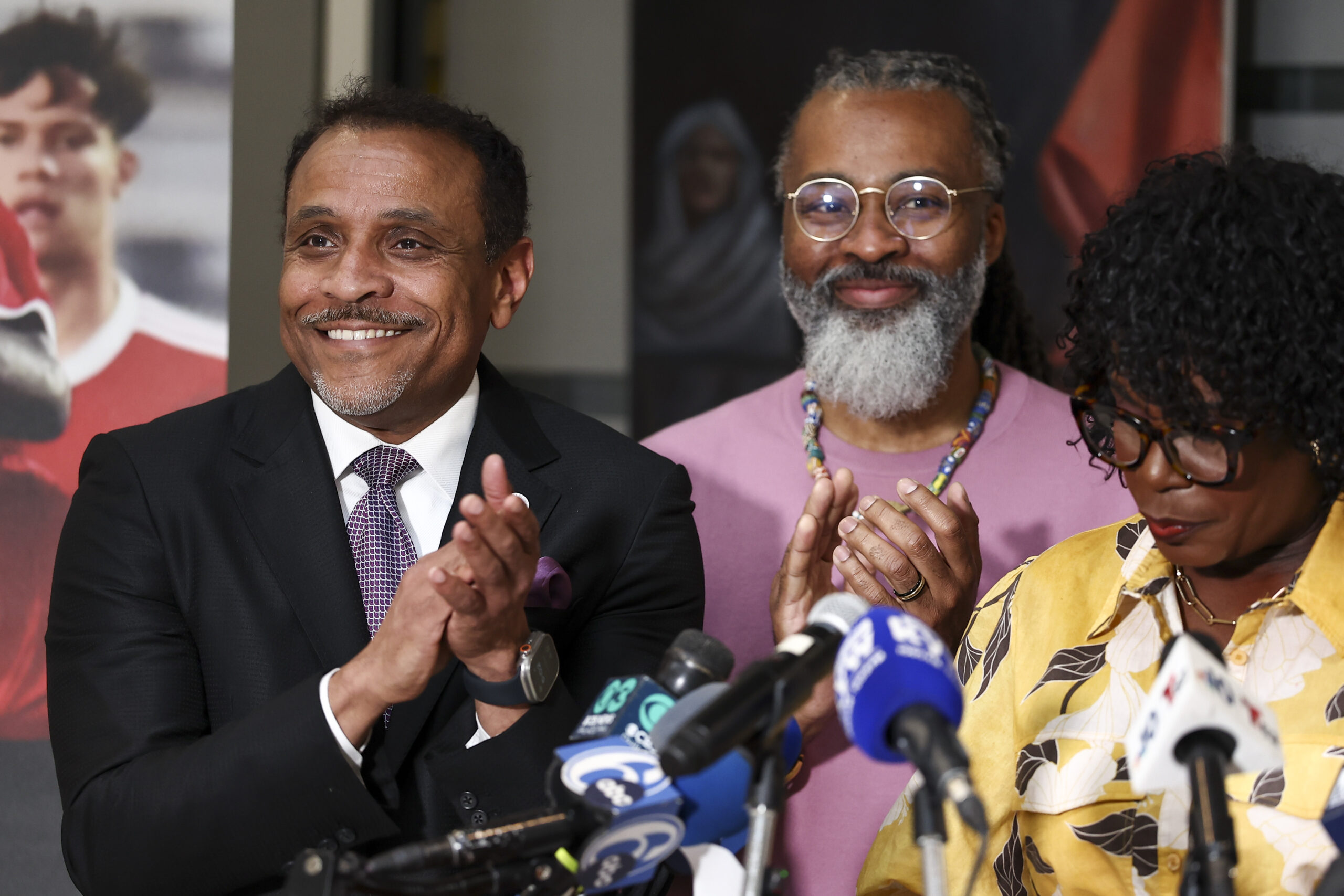
    Superintendent Tony B. Watlington Sr., School Board President Reginald L. Streater, and Mayor Cherelle L. Parker stand together during an announcement at the School District of Philadelphia Headquarters on June 10.

    In a statement provided to The Inquirer after the initial publication of this story, Monique Braxton, a spokesperson for the School District of Philadelphia, said district leaders share “the public’s sense of urgency to significantly improve public schools in the City of Philadelphia.”

    She said the district is making progress toward the superintendent’s goal of making the district the “fastest improving large urban district in the nation.”

    Braxton added that the district’s own survey suggests most parents are satisfied. The district’s 2024-25 survey, Braxton said, found that 90.3% of more than 26,000 parents whose students attend district schools said they were pleased with the quality of education their child received.

    The quality of Philadelphia’s public schools has been a perennial concern, and city leaders have long pointed to the chronic underfunding of the Philadelphia School District. In 2023, the state Commonwealth Court ruled that Pennsylvania had for years unconstitutionally deprived students in low-wealth districts of an adequate education, and state lawmakers are now funding schools under a new formula.

    District leaders have undertaken significant efforts in recent years to improve academic performance. There have been some positive results, including improvement on test scores and a recent report that said Philadelphia School District students’ learning post-pandemic was tops in the nation among large urban districts.

    The district also earlier this year adopted a sweeping, $3.3 billion effort to renovate and modernize 169 schools. That multiyear plan was hotly debated, as it included the closure of 17 schools.
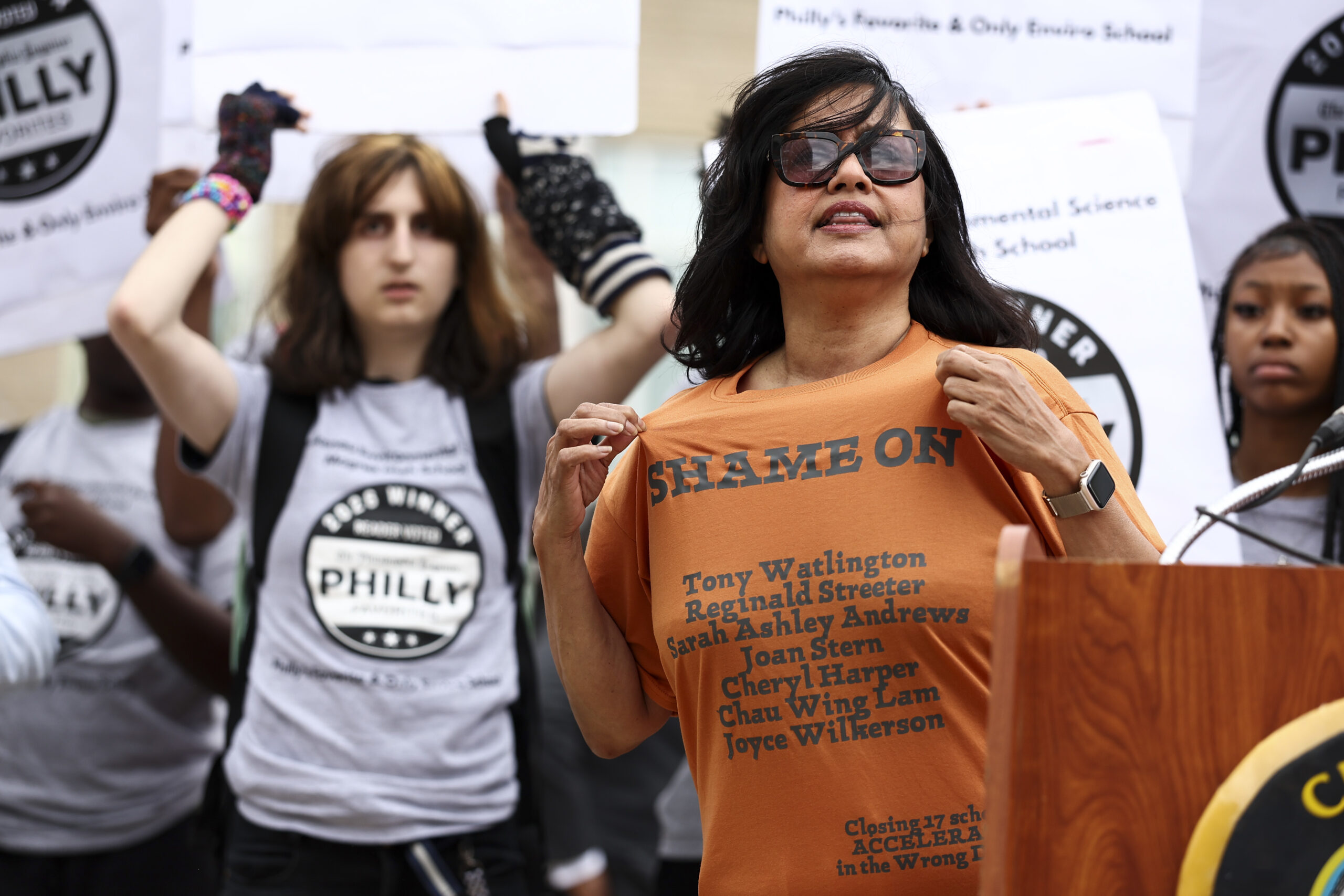
    Councilmember Nina Ahmad shows off her T-shirt during a rally outside of the School District of the Philadelphia School District headquarters building on May 28. Council members rallied to oppose the school closure plan.

    Parker has expended significant political capital on the school district this year. She unsuccessfully fought for a $1-per-ride tax on rideshare services like Uber to generate recurring revenue for the district so that it could stave off hundreds of planned staff cuts.

    After City Council rejected that plan, she agreed with lawmakers to divert existing money out of the city budget and commit $216 million in additional funding to the district over the next five years.

    Parker said the Commonwealth Court “got it right” in declaring that low-wealth districts like Philadelphia’s are chronically underfunded.

    “If we had all the resources we need, we’d see even more enhanced improvements in our schools,” Parker said. “I’ll never stop fighting for our children and their right to a high-quality education.”

    Crime is the top concern, but most residents feel safe

    Despite rates of violent crime in the city plummeting to record lows under Parker, public safety remains the top concern for three in 10 Philadelphia residents, suggesting that people who live in the city are still anxious about crime.

    When asked about whether they believe crime in their neighborhood has increased or decreased over the last two years, a third of respondents said they believe it has increased, about 32% said it has decreased, and 28% said they believe it has stayed the same.

    (function(){function e(){window.addEventListener(`message`,function(e){if(e.data[`datawrapper-height`]!==void 0){var t=document.querySelectorAll(`iframe`);for(var n in e.data[`datawrapper-height`])for(var r=0,i;i=t[r];r++)if(i.contentWindow===e.source){var a=e.data[`datawrapper-height`][n]+`px`;i.style.height=a}}})}e()})();
    (function(){function e(){window.addEventListener(`message`,function(e){if(e.data[`datawrapper-height`]!==void 0){var t=document.querySelectorAll(`iframe`);for(var n in e.data[`datawrapper-height`])for(var r=0,i;i=t[r];r++)if(i.contentWindow===e.source){var a=e.data[`datawrapper-height`][n]+`px`;i.style.height=a}}})}e()})();

    A closer look at the results shows that a plurality of respondents in the neighborhoods most affected by violent crime, including North and West Philadelphia, believe that crime has decreased.

    The respondents most likely to say that they believe crime in their area has increased live in Northeast Philly. But public data maintained by the Philadelphia District Attorney’s Office show overall crime has decreased there, too. There are five Northeast Philadelphia police districts, and the total number of crime incidents reported to police declined in all of them between 2023, the year before Parker took office, and last year.

    Despite the mixed poll results, a vast majority of Philadelphians — nearly 83% — said that they feel safe in their own neighborhood.

    That is good news for Parker, who ran for office as a tough-on-crime Democrat amid a historic wave of gun violence and who vowed often to “bring order back to our city.”
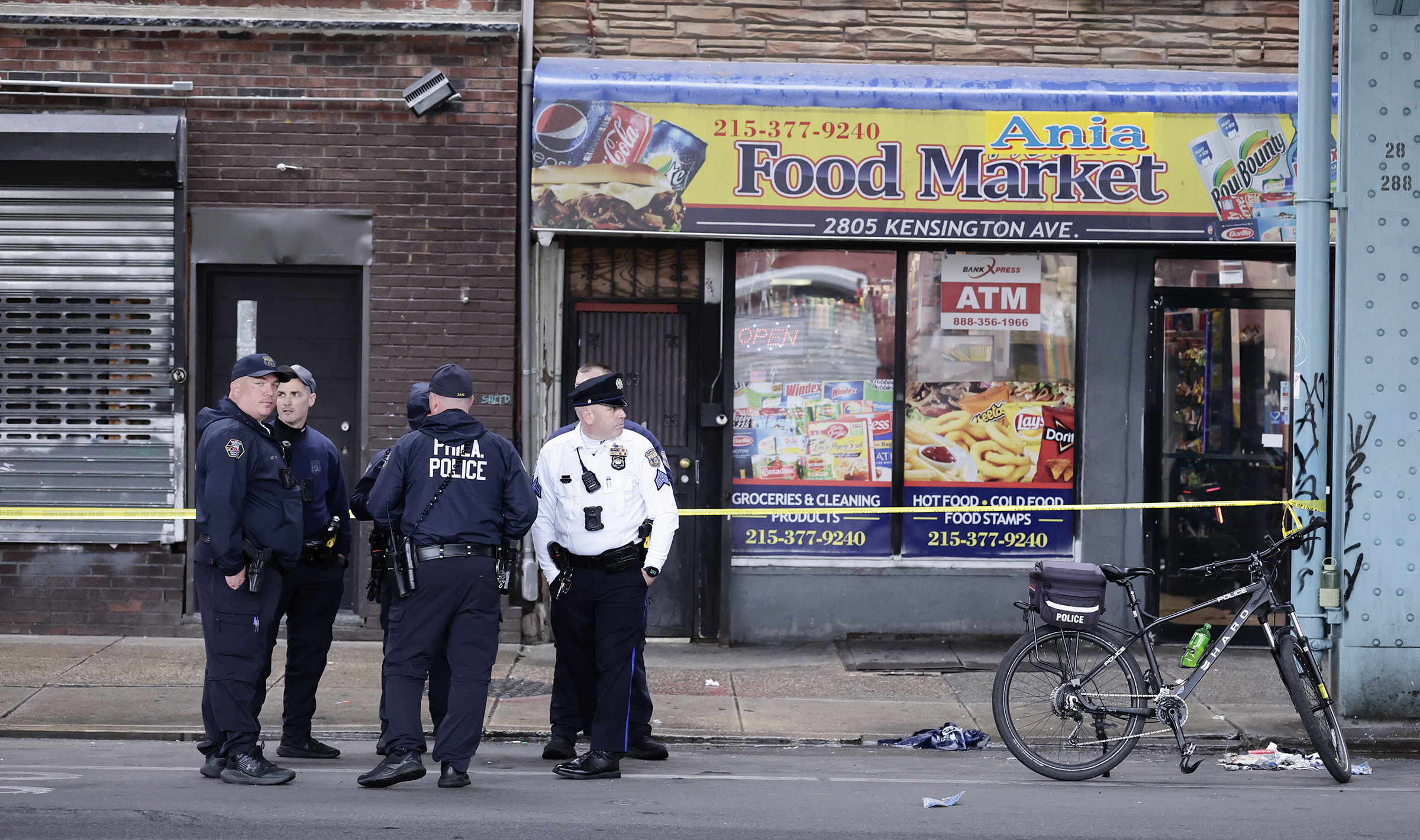
    Philadelphia police officers stand along the 2800 block of Kensington Ave. after a police involved shooting on May 23. Police shot a robbery suspect.

    Parker said in a statement that the polling results are evidence that her public safety strategy is working, calling it her “number one priority.”

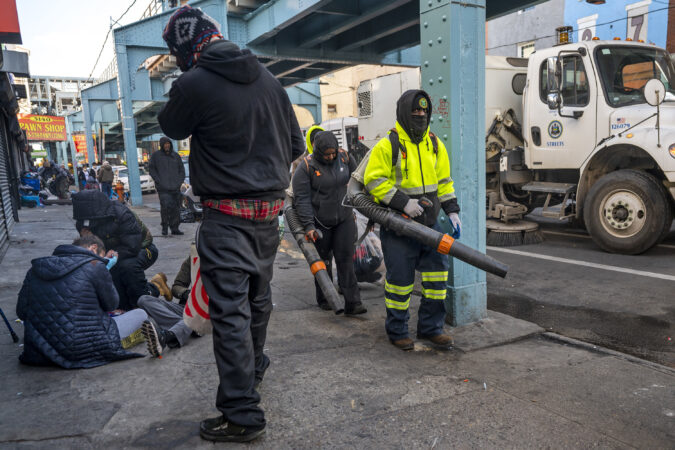
    She also vowed to continue her administration’s efforts in Kensington, the epicenter of the city’s opioid crisis. The Parker administration has deployed a multipronged approach, including increased police patrols in the neighborhood and an expansion of offerings for people in addiction.

    There have been some signs of progress in Kensington, including the lowest gun violence rate in a generation.

    But 53% of poll respondents said they do not believe the mayor’s efforts there are working, and those who live closest to the problem were the least supportive. In the region that encompasses the Lower Northeast and the river wards, where Kensington is located, 68% of people said Parker’s strategy is not working while only 18% said it is.

    The mayor’s overall favorability was also lowest in that area of the city, the only region where more respondents said they had an unfavorable view of the mayor than a favorable one.

    (function(){function e(){window.addEventListener(`message`,function(e){if(e.data[`datawrapper-height`]!==void 0){var t=document.querySelectorAll(`iframe`);for(var n in e.data[`datawrapper-height`])for(var r=0,i;i=t[r];r++)if(i.contentWindow===e.source){var a=e.data[`datawrapper-height`][n]+`px`;i.style.height=a}}})}e()})();

    Parker acknowledged that there is “much more work to do” in Kensington and said that “changing culture and going to war with the status quo is never easy.“

    Parker’s ‘clean and green’ message is landing

    For a city derisively called “Filthadelphia” and where cleanliness has been a longtime concern, a significant number of people seem to think Philadelphia is getting cleaner.

    When asked about trash and litter, 41% of poll respondents said they believe the city has gotten cleaner over the last two years. Just 19% said Philadelphia has gotten dirtier, and 38% said it has stayed the same.
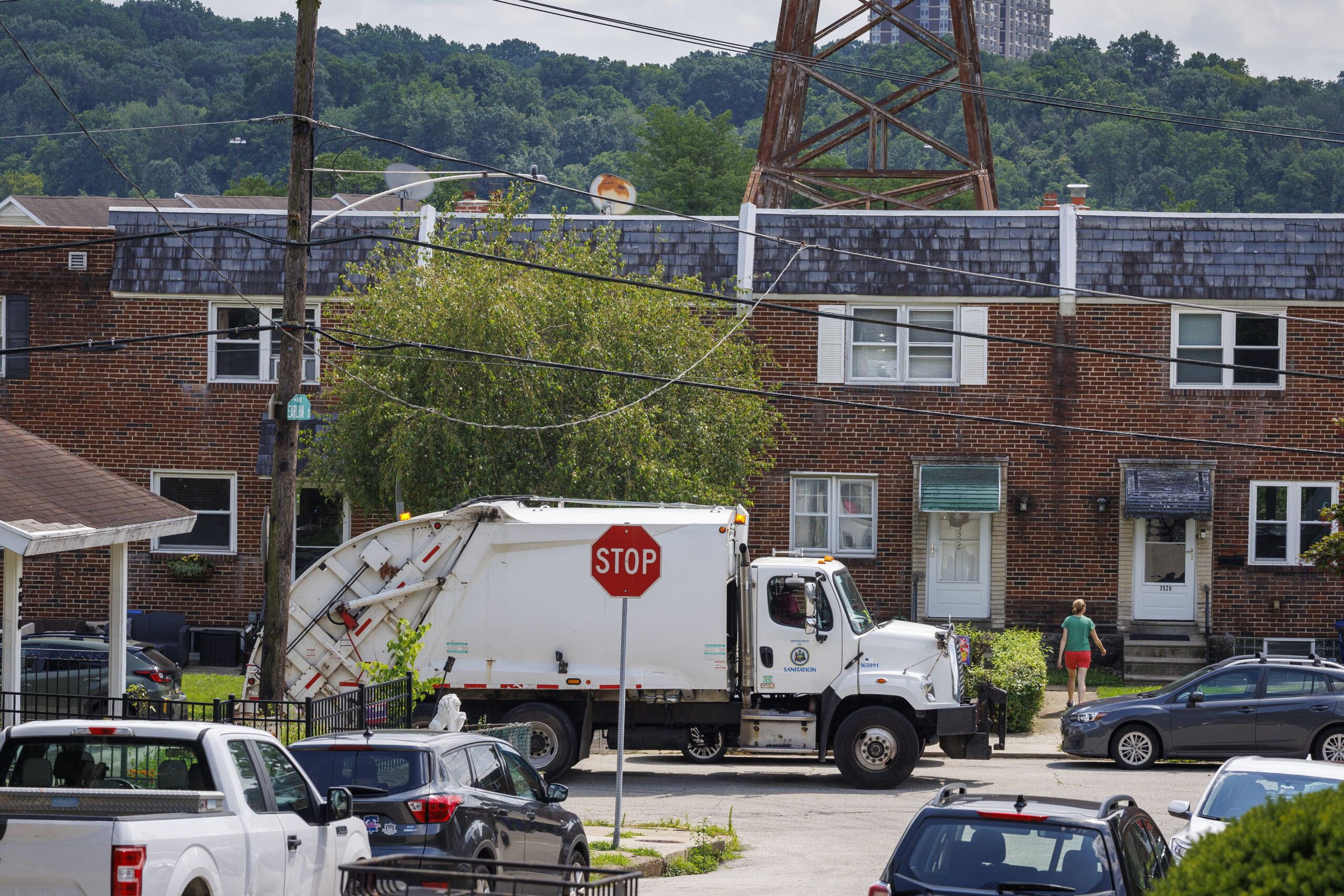
    A sanitation department truck is seen along Cresson Street at West Earlham Street in Philadelphia on the first day of trash collection after a strike on July 14, 2025.

    Those are positive marks for a mayor whose slogan is “safer, cleaner, greener” and who has instituted new programs including twice-weekly trash pickup in the densest parts of the city.

    Despite those efforts, Philadelphians gave worse reviews to the overall quality of city services in their neighborhood. About six in 10 respondents said the quality was either “fair” or “poor,” while 40% said “good” or “excellent.”

    Staff writer Michelle Baruchman contributed to this article.
  • Every bottle of this Kensington-made NA spirit is packaged by hand. At local bars, it’s already a hit.

    Every bottle of this Kensington-made NA spirit is packaged by hand. At local bars, it’s already a hit.

    A non-alcoholic Philly spirits brand is finding early success by doing everything — from blending to bottling — by hand.

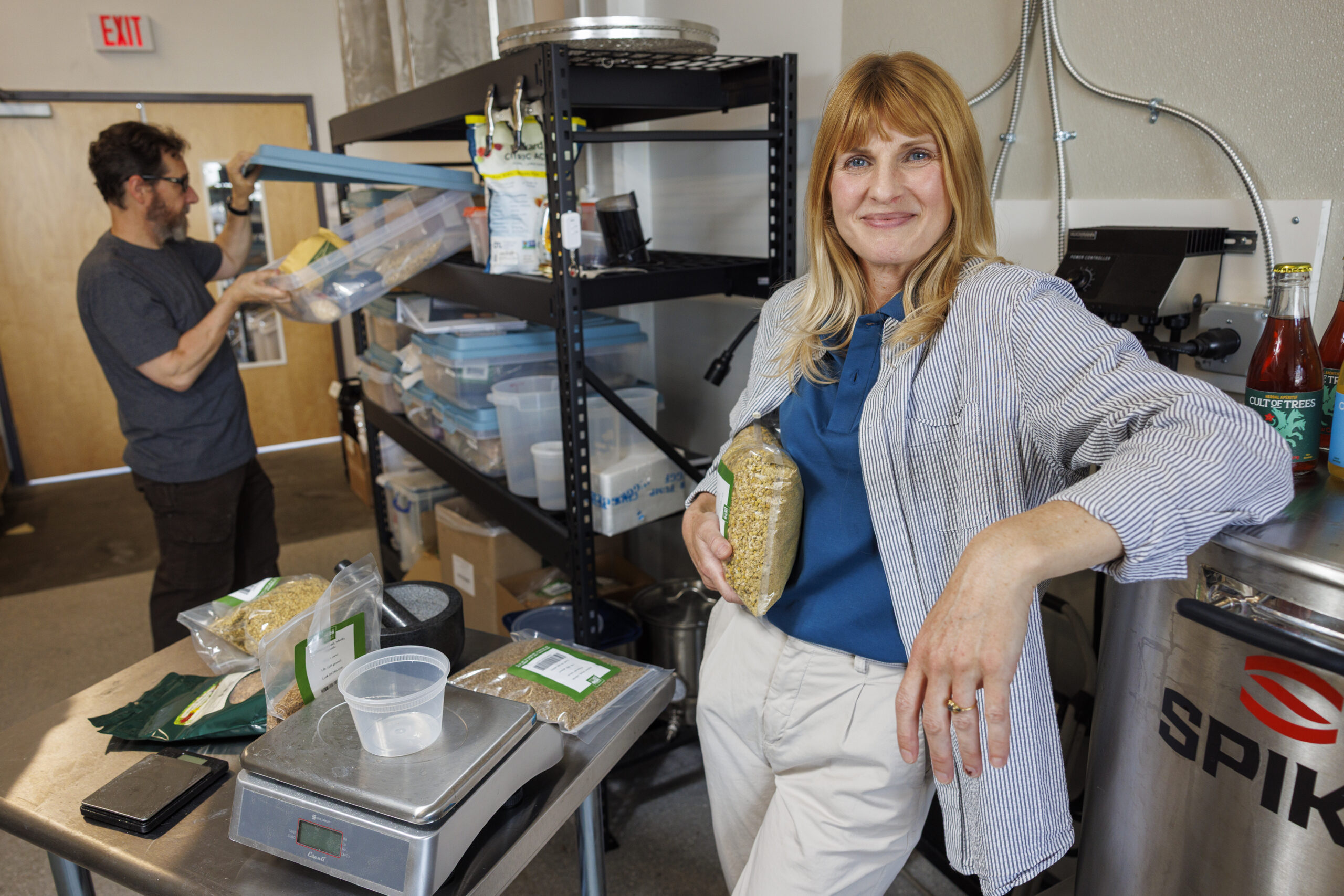
    Cult of Trees is a new line of alcohol-free aperitifs produced at Maken Studios in Kensington. Inside the sunny production space, founder Meredith Sheehy spends hours each week distilling homemade herb blends into a line of zero-proof cocktails that taste like fizzy spritzes.

    The brand’s three flavors include Hare Brain, which is akin to a cola-spiked negroni; Meadow Core, a citrusy and floral blend of red fruits; and Billy Goat, which tastes like rolling in a field of wildflowers thanks to a mixture of herbs, honey, and elderflower. Since sales began in January, Cult of Trees has been selling well at local grocery stores and bars, such as Solar Myth and Enswell, where the drinks are served straight or floated with sparkling water or cold brew.

    For Sheehy, who moved to Philly in 2022, the city is as much an inspiration for the brand as the ingredients themselves. After closing her Brooklyn-based Mezcal bar La Loba Cantina due to the pandemic, Sheehy began bartending at Philadelphia Distilling. Philly, she said, had a refreshing scene.

    “People will answer questions and pour tastes of curiosities on their back bars, with genuine excitement to share,” said Sheehy. “It’s a beautifully welcoming culture here.”

    From left: Hare Brain, Billy Club, and Meadow Core, Cult of Trees’s three flavors of non-alcoholic aperitifs. Bottles are sold at Riverwards Produce in Old City and Herman’s Coffee in Pennsport.

    Fascinated by distilling alcohol, yet increasingly conscious of her own dwindling consumption, Sheehy was inspired by the growing sober curious movement to start her own non-alcoholic cocktail brand.

    Fewer and fewer young people are building their social lives around drinking, and more zero-proof drink brands are available than ever. But, Sheehy noticed, most of them showcased the same styles on repeat — one-to-one spirits replacements like zero-proof whiskeys or gins, and spritzes as far as the eye could see. Many also weren’t transparent about where their ingredients came from.

    Sheehy wanted to create something that wasn’t just about emulating the experience of drinking alcohol. Abstaining “shouldn’t mean that you need to take away flavor or an interesting story,” she said.

    At Cult of Trees, each aperitif is made with ingredients sourced from Pennsylvania farms and requires a multiday routine of distillation, carbonation, and bottling. It’s an analog process that contrasts with that of large scale brands, which Sheehy said often rely on commercial flavor extracts — as opposed to dried botanicals or herbs — to quicken production and lower costs.

    Meredith Sheehy, owner of Cult of Trees, sprinkles caraway seed into a mortar and pestle to make one of the herb blends for her line of zero-proof spirits.

    Getting started, then getting set back

    While at Philadelphia Distilling, Sheehy became close with Jack Falkenbach, the expert distiller and legendary Philly bartender that died last year at 44. Falkenbach, she said, was always “willing to explain specialized process details at the distillery. We both liked deep-diving on things like acid phosphate,” she said. “I deeply trusted his style of drink making and technical know-how.”

    Falkenbach was among Cult of Tree’s earliest supporters, Sheehy said, and one of the first people she involved in building the company. Around this time last year, the pair was making test batches together; Falkenbach was focused on nailing the carbonation as Sheehy refined the packaging.

    Then the first real workday arrived. Falkenbach did not.

    Meredith Sheehy, owner of Cult of Trees, poses for a photo while preparing one of the herb bases for her line of zero-proof spirts, which is based at Maken Studios in Kensington.

    His passing, Sheehy said, was doubly “heartbreaking,” but launching Cult of Trees left little time to grieve. “I did what all business owners have to do,” she said. “You recover and pivot, or you don’t and you lose the idea.”

    Sheehy went on to launch the business with a single employee: Gordon Grubb, a veteran brewer who had been put out of work by Iron Hill’s sudden closures. Together, they make each batch of aperitifs.

    Hand-bottled and hand-carbonated

    Zero-proof spirits still require distillation to get the right flavors and mouthfeel, which is why many come with a higher price tag.

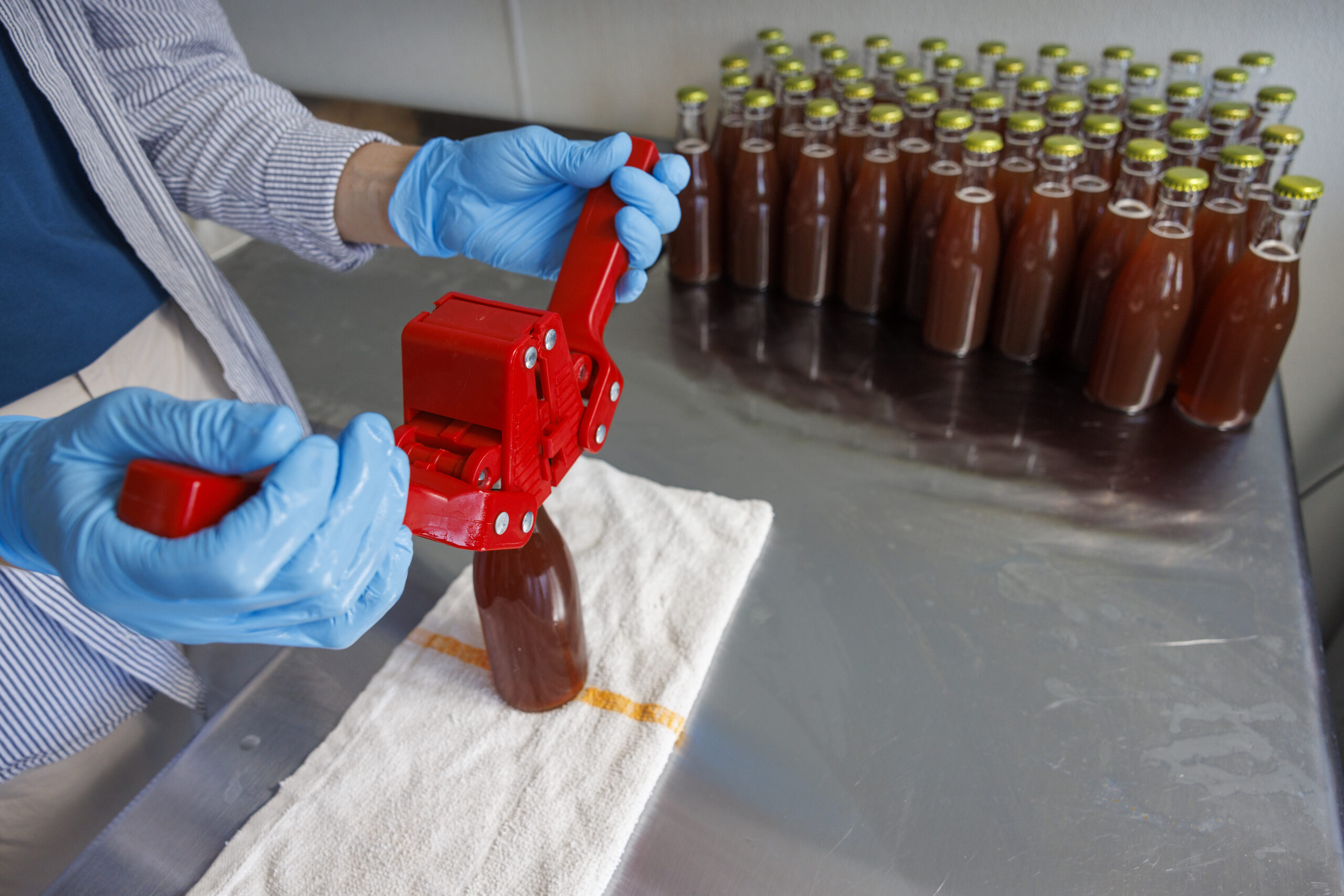
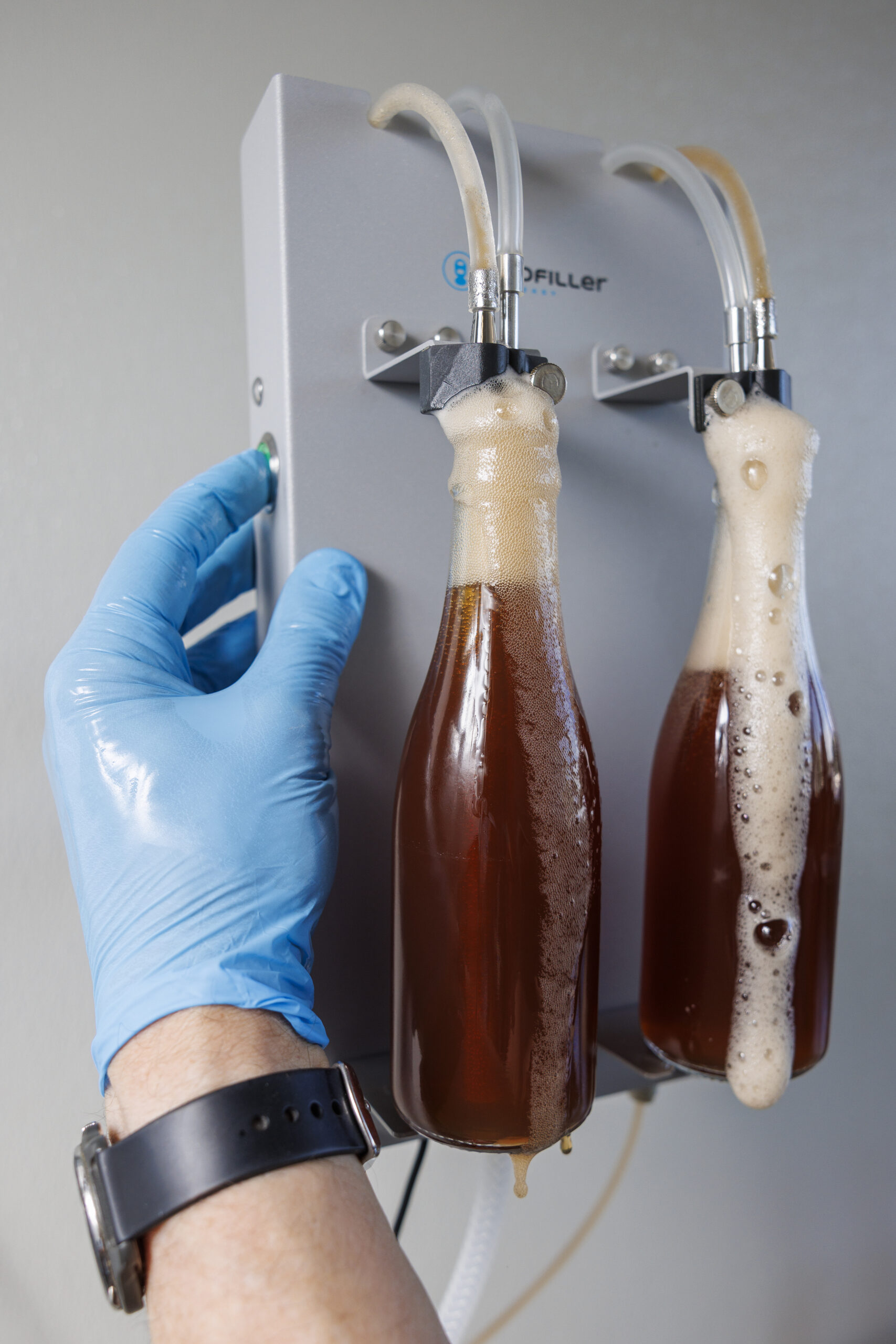
    Each batch of aperitifs takes at least three days to produce, Sheehy said, and begins with her macerating and boiling the original herb blends that serve as the base for each beverage. Distillation is the longest part of the make process and can take upwards of several hours. After, Sheehy and Grubb carbonate and bottle each beverage by hand.

    Hare Brain from Cult of Trees, a zero-proof aperitif that tastes like cola.

    A single batch yields only 18 to 20 cases, according to Sheehy. “It’s labor intensive right now,” she said, “but will start to get more turnkey as we grow and are able to incorporate more equipment.”

    Already, Cult of Trees can be found on the beverage menus at Solar Myth, Tulip Pasta & Wine Bar, Enswell, and the International Bar.

    “It’s a popular suggestion from our entire team when guests are looking for a unique and local NA option,” said Enswell manager Chelsea Boyer, who often pairs Hare Brain with Rival Bro’s Whistle & Cuss espresso. “The bitter nature and gentle carbonation of the Hare Brain pairs perfectly with the candied nuttiness of the espresso.”

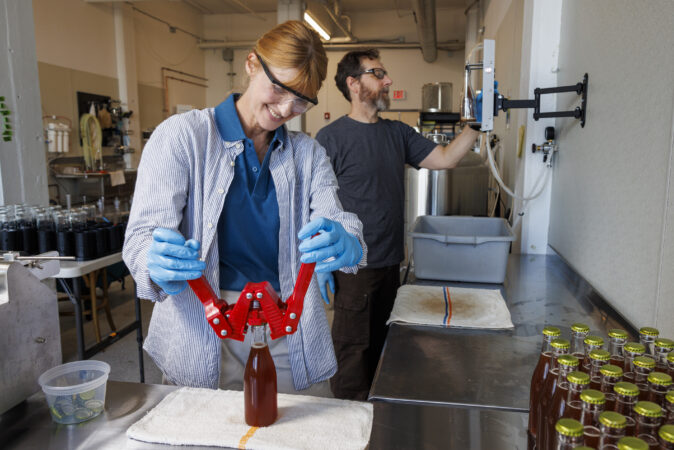
    Meredith Sheehy, owner of Cult of Trees, caps a bottle of Hare Brain at her Kensington production facility. Each bottle of the non-alcoholic spirit is packaged by hand.

    Retail placements at Riverwards Produce, Herman’s Coffee, and Queen Village’s Moon & Arrow are also new, but a sign of growth.

    The drinks have been selling well at Riverwards’ Old City location, said CEO Dan Morgan, buoyed by an April pop-up where Sheehy poured samples for guests. “I think their great flavors and beautiful packaging will really help them stand out,” Morgan said.

    Cult of Trees production manager Gordon Grubb fills bottles of Hare Brain during the carbonation process at the brand’s Kensington studio.

    Sheehy is betting on the same. “In my opinion, consumers increasingly want transparency, local sourcing, and a story behind what they drink,” she said. “That’s what we’re trying to do.”

  • What to the oppressed is the Semiquincentennial?

    What to the oppressed is the Semiquincentennial?

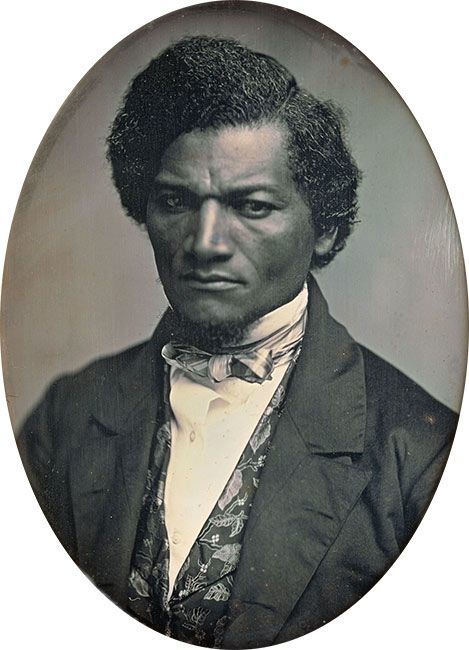
    I’ve been thinking a lot about the speech Frederick Douglass gave on the 76th anniversary of the signing of the Declaration of Independence. Posed as a question, “What to the Slave is the Fourth of July?” the answer written in commentary form hasn’t lost its power or relevance in Philadelphia in 2026: “What, to the American slave, is your Fourth of July? I answer: a day that reveals to him, more than all other days in the year, the gross injustice and cruelty to which he is the constant victim.”

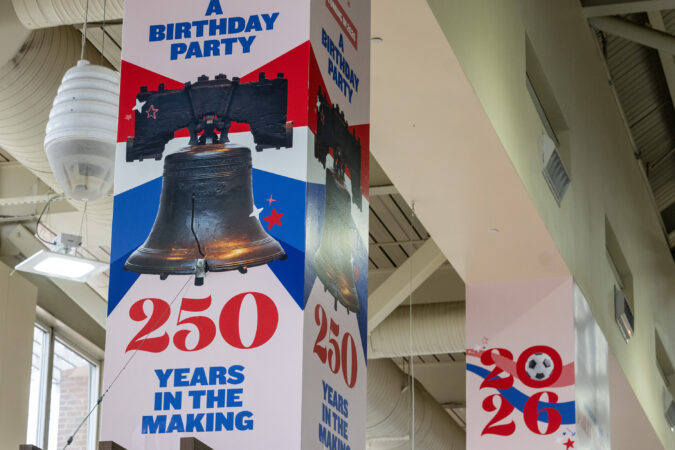
    This summer will place Philadelphia in the spotlight not only with the celebration of America’s Semiquincentennial, but also as a host city for the FIFA World Cup, the PGA Championship, and the MLB All-Star Game.

    Frederick Douglass, ca. 1847-1852.

    Just as Douglass decried our delusions of progress and challenged why victims of a broken system would celebrate their own oppression, we see that patterns repeat.

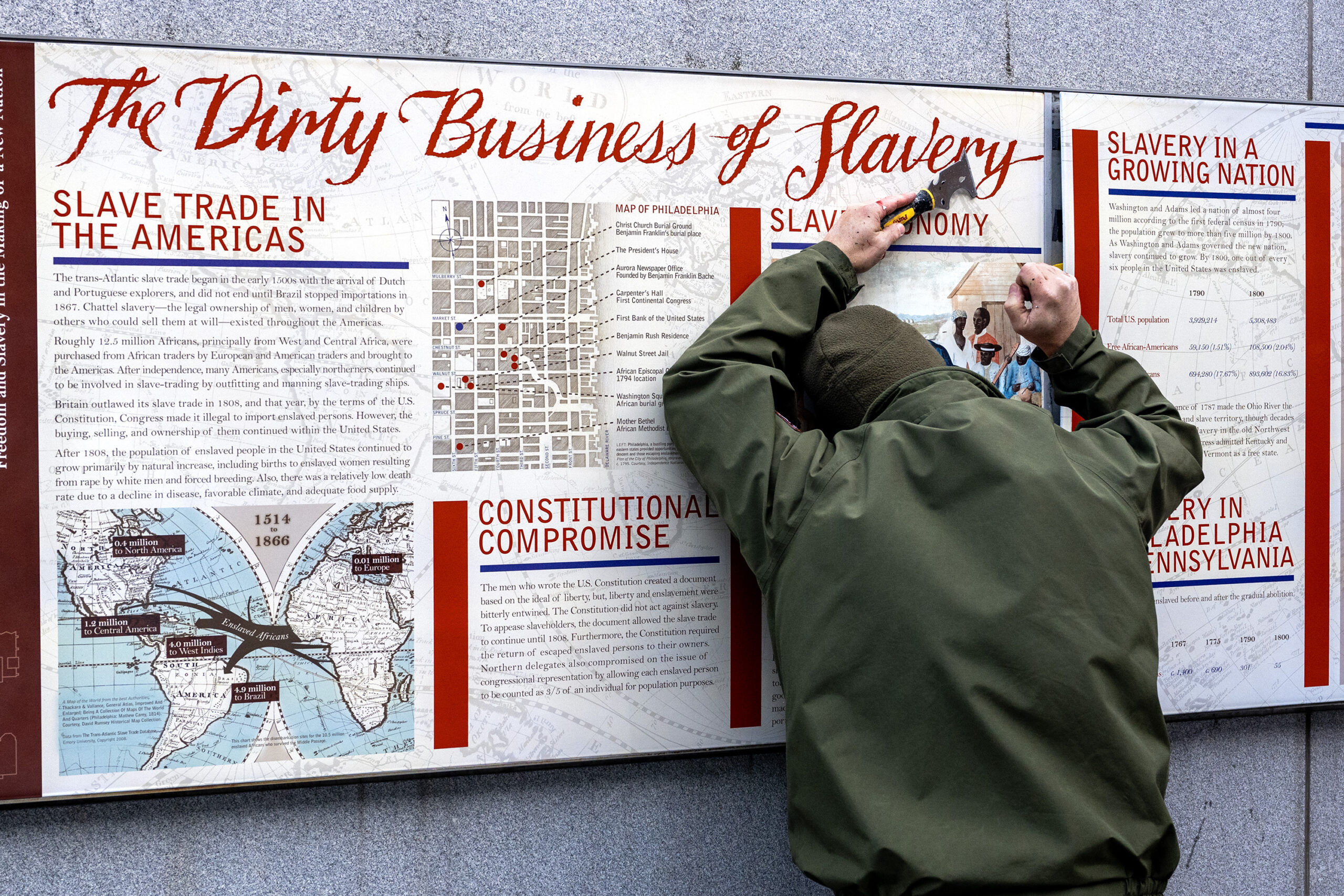
    Philadelphia will be center stage, celebrated as having birthed the nation, while the federal government wages war on its own cities, defunds basic services for its people, whitewashes and rewrites history in spaces such as the President’s House at Independence National Historical Park, and, despite describing itself as an avatar of freedom, bombs sovereign nations.

    A National Park Service worker removes an interpretive panel at the President’s House Site.

    As we invite the world to celebrate the World Cup with us, we have banned residents of some of the participating countries and unleashed a year of domestic terrorism by agents of U.S. Immigration and Customs Enforcement and the U.S. Department of Homeland Security, which will make it unsafe for people of color from throughout the world to attend.

    Soccer jerseys on exhibit at at the National Liberty Museum.

    The events themselves will serve as an excuse for an influx of federal security agents — and there is nothing that makes me feel safe about them coming to Philadelphia this summer to keep us “safe.”

    In Philadelphia, while we want to accentuate the positive and celebrate our standing as a great city, we continue to see an increase in the unhoused population, a lack of affordable housing, underfunded and ineffective education and transportation, and a lack of economic opportunity for our residents.

    And we continue to ignore our broken carceral system, which hungrily awaits the failures of everything listed above.

    As Douglass wrote in his famous speech: “I say it with a sad sense of the disparity between us. I am not included within the pale of this glorious anniversary! Your high independence only reveals the immeasurable distance between us. The blessings in which you, this day, rejoice, are not enjoyed in common.”

    We hold these truths …

    This summer is not just about the nation, but about Philadelphia trying to put its best foot forward to show the few gleaming spots in our house, while keeping visitors from seeing the dirt inside the closet or under the couch.

    As Douglass likely experienced in 1852, I can already see the faces of some reading this and thinking, This is not the time for all your talk. We cannot allow Philadelphia to be disparaged.

    I am not disparaging Philadelphia — I am holding onto the city’s multiple truths.

    This is a great city and is the birthplace of independence for some — but instead of serving as the cheerleaders for despots and a city that submits to our nation’s current “king,” we should be the city that serves as the vanguard of resistance. Our city cannot stand on both sides of history and hold hands with our oppressors simply because we are desperate to be noticed.

    As it was with Douglass 175 years ago, where we stand today will be remembered tomorrow.

    The need for plain speaking

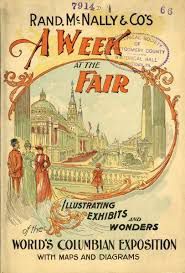
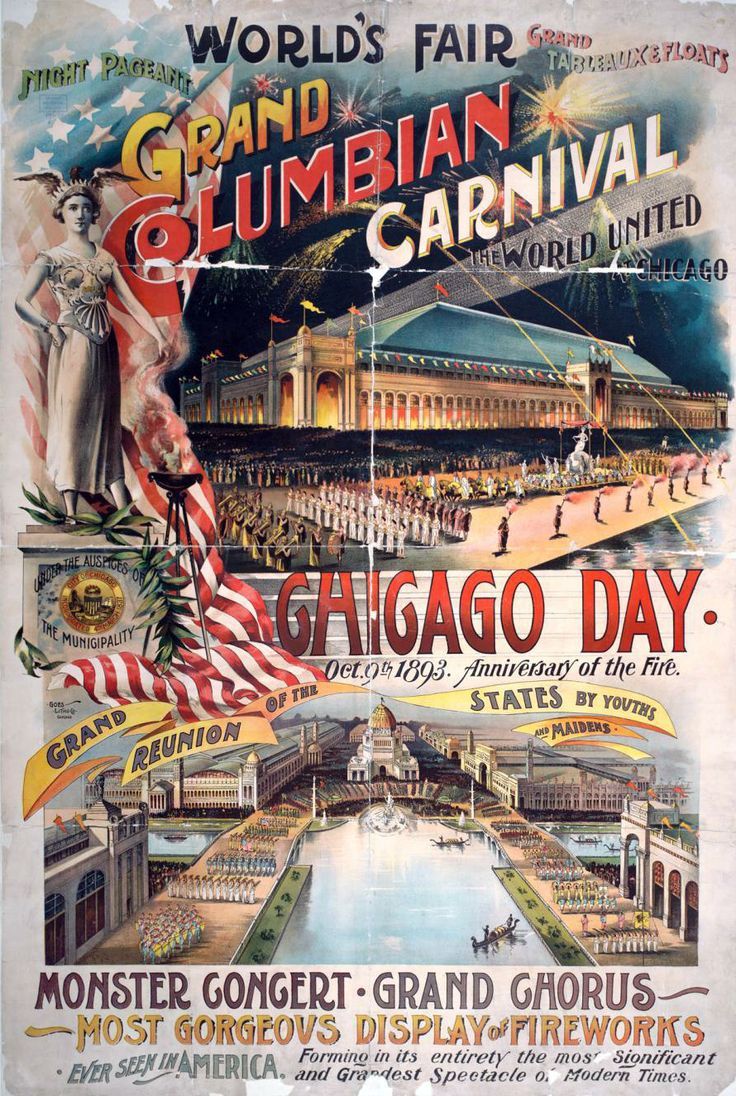
    Forty years after Douglass shared his words about the Fourth of July, America had once again chosen to celebrate its history and place in the world — this time through the 1893 World’s Fair in Chicago, which marked the 400th anniversary of Christopher Columbus’ landing in the Americas.

    Program from the 1893 World’s Fair in Chicago.
    Program from the 1893 World’s Fair in Chicago.

    Just four years earlier, the event had been held in Paris, and marvels such as the Eiffel Tower were shared with the world, showing the importance and ingenuity of the host nation.

    This era is often referred to as the “Gilded Age,” a time our current president fondly looks back on and wishes we would return to. “We were at our richest from 1870 to 1913. That’s when we were a tariff country,” President Donald Trump said in March. But it was also a time defined by government corruption, inequality, and exploitation, and it took place only 28 years after the end of slavery in America.

    While Paris gave the world the Eiffel Tower, the 1893 World’s Fair in Chicago introduced the world to Cracker Jack, the first dishwasher, and the first Ferris wheel — which stood 264 feet tall and carried 2,000 passengers — a monument to America’s greatness!

    While the fair was about all of America, the only space for Indigenous peoples was in the exotic exhibits of peoples from around the world. While the fair was about all of America, white women asked for their place within the fair and, after initially being denied a role, were eventually granted one through the creation of the World’s Congress of Representative Women.

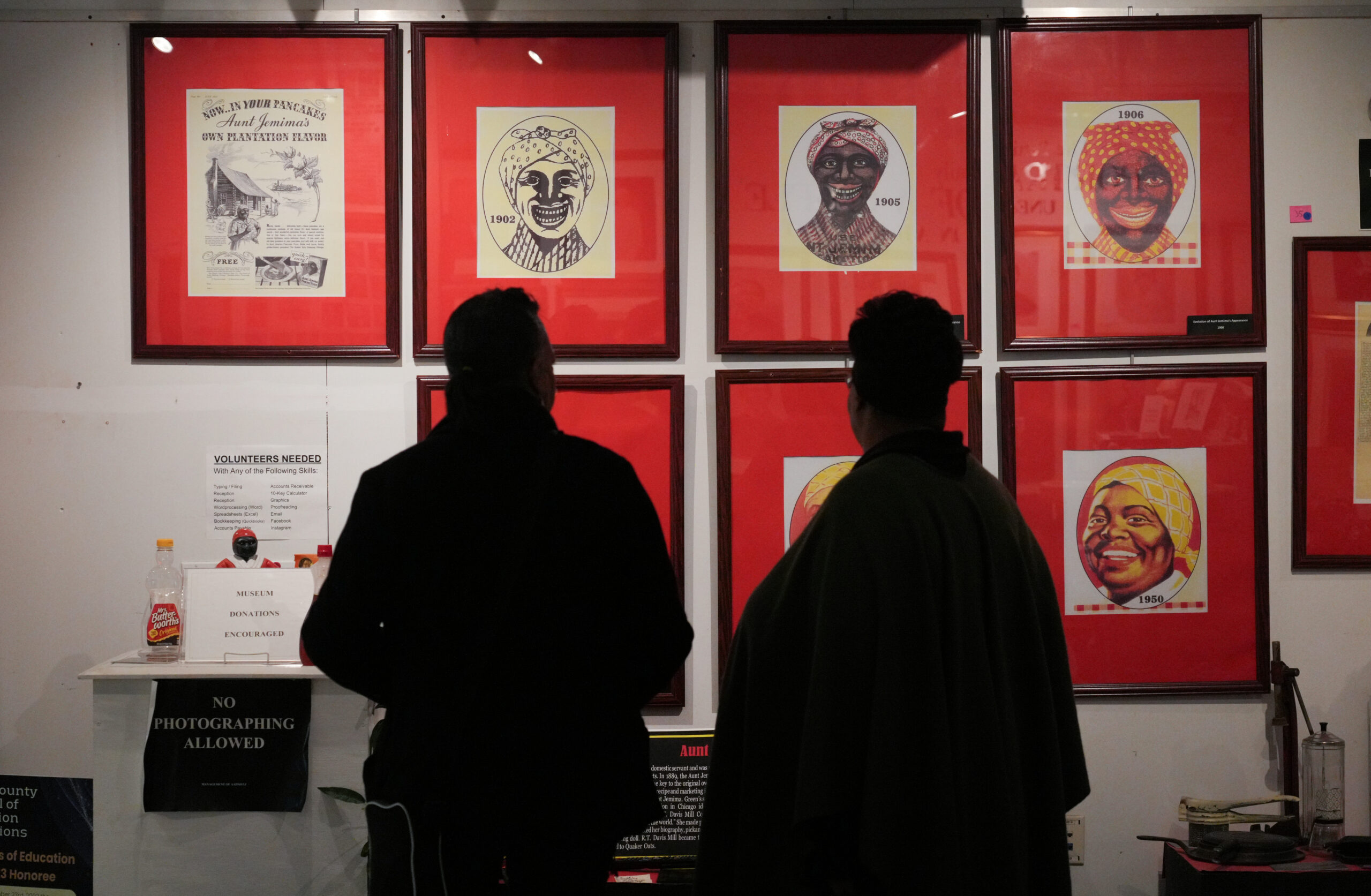
    Aunt Jemima in ads at the African American Heritage Museum of Southern New Jersey.

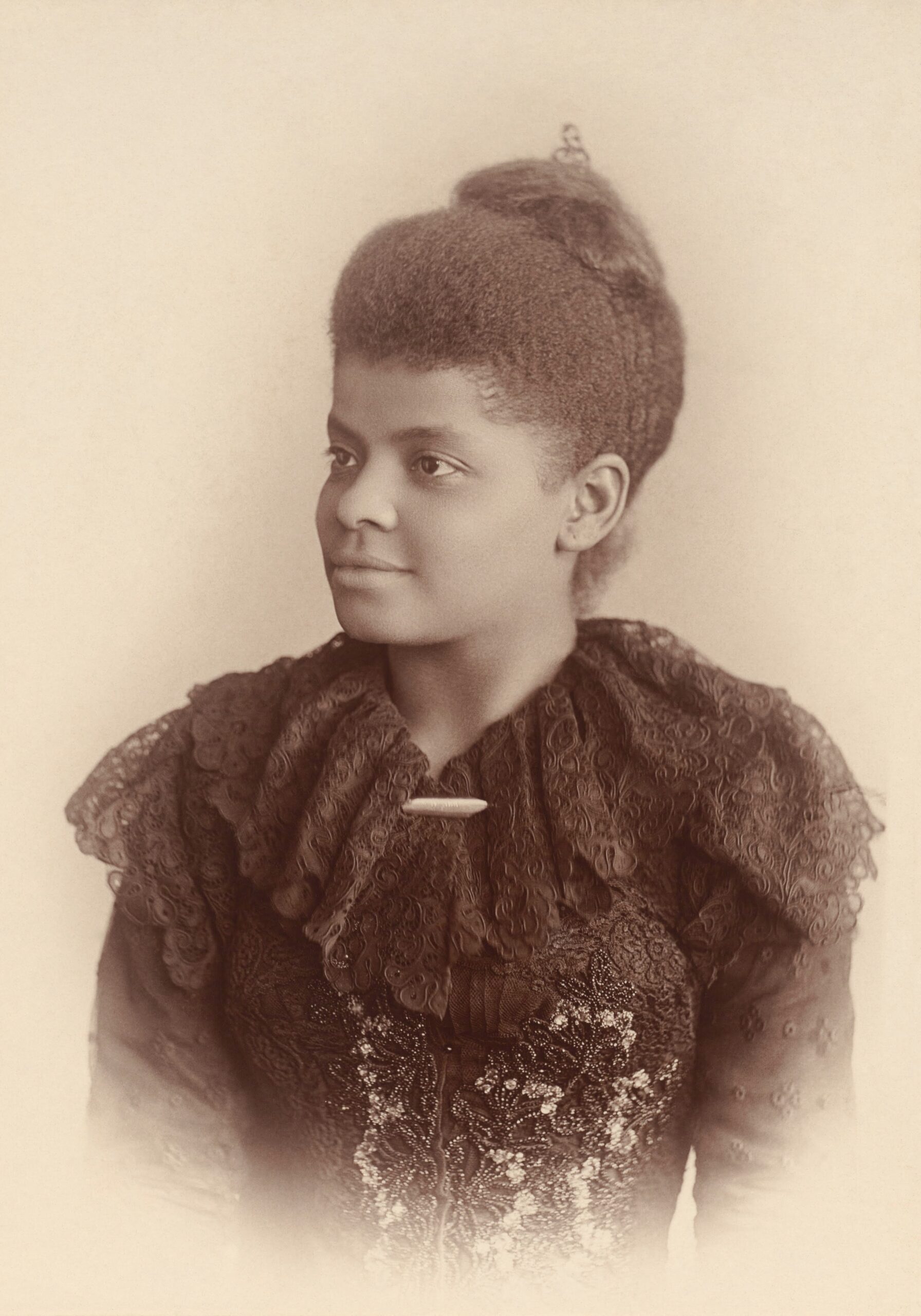
    While the fair was about all of America, African American luminaries such as Douglass and Ida B. Wells were denied any formal space or role. Instead, it was determined by organizers that participation of African Americans would be marked by introduction to the character Aunt Jemima — a fictional depiction playing to all fantasies of the happy slave and the way of life lost after emancipation — and through Negro Day, during which the organizers of the fair gave away 2,000 free watermelons to visitors.
    After being denied any real role within the fair, African American leaders appealed for sponsorship to the newly recognized World’s Congress of Representative Women, and that group said no — foreshadowing the next 150 years of American politics. With that denial, African American leadership turned to the Haitian delegation and received support from the only country that successfully established a new government from a slave revolt.

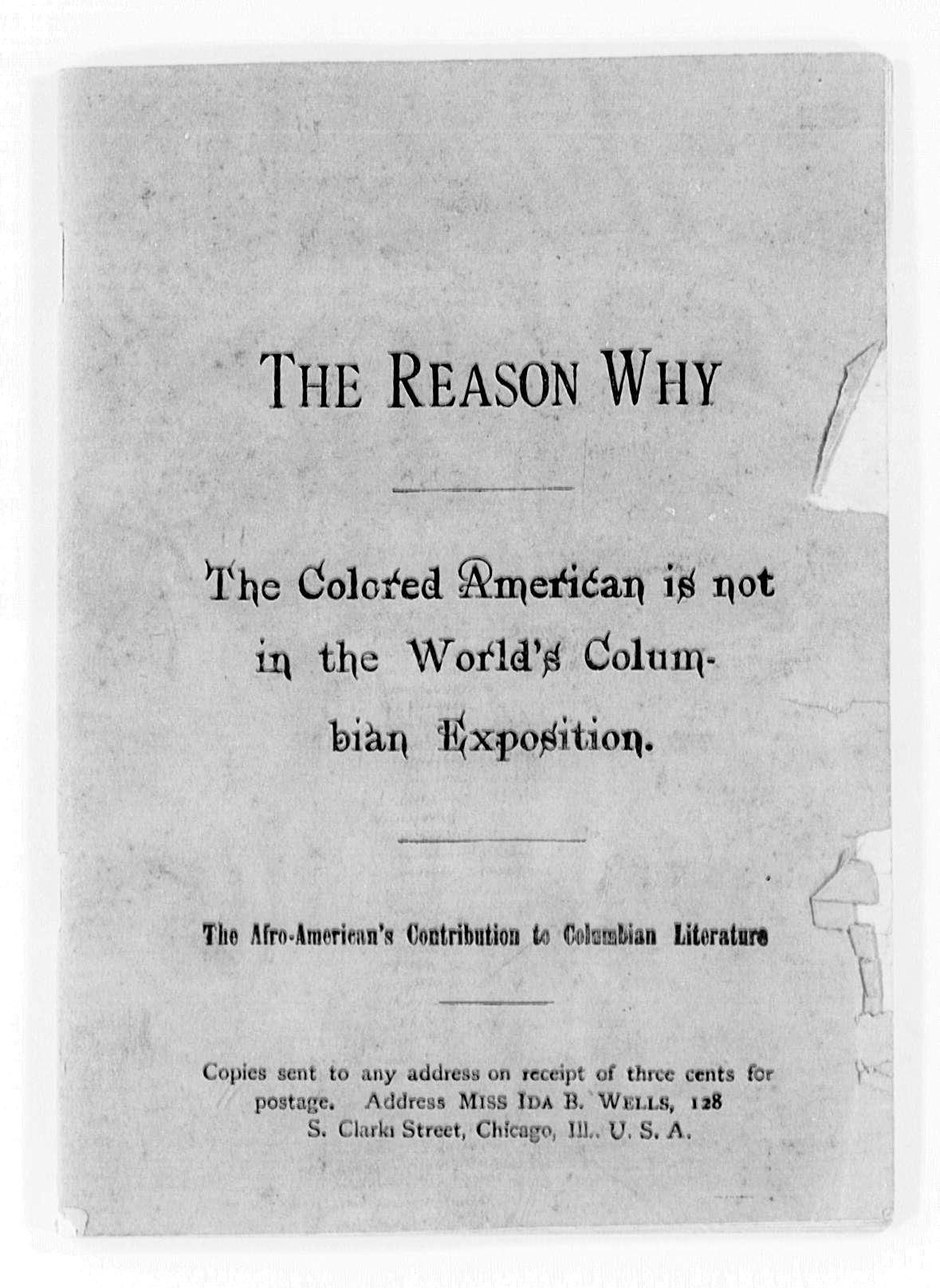
    The pamphlet distributed from the Haitian exhibition space at the 1893 World’s Fair in Chicago.
    Ida B. Wells Barnett, c. 1893.

    It was from the Haitian exhibition space that an alternative conversation took place, one that started with “The Reason Why: The Colored American is not in the World’s Columbia Exhibition,” a pamphlet which explained the current condition of the American Negro, but also spoke to the history, the successes, and a vision for the future.
    In it, Douglass wrote that “it involves the necessity of plain speaking of wrongs and outrages endured, and of rights withheld, and withheld in flagrant contradiction to boasted American Republican liberty and civilization. It is always more agreeable to speak well of one’s country and its institutions than to speak otherwise; to tell of their good qualities rather than of their evil ones.”

    I live and work in Kensington, an area of Philadelphia built during the Gilded Age to create wealth for a few. Our community is literally still trying to recover from that era; we have no interest in bringing it back or celebrating the destruction it caused.

    Just as during the Gilded Age — when a false history was celebrated in order to justify and whitewash the failures of America — we are walking into the trap of reproducing our mistakes without recognizing the current conditions, or centering the voices of those most affected by them.

    The 1893 World’s Fair in Chicago promotional flier.
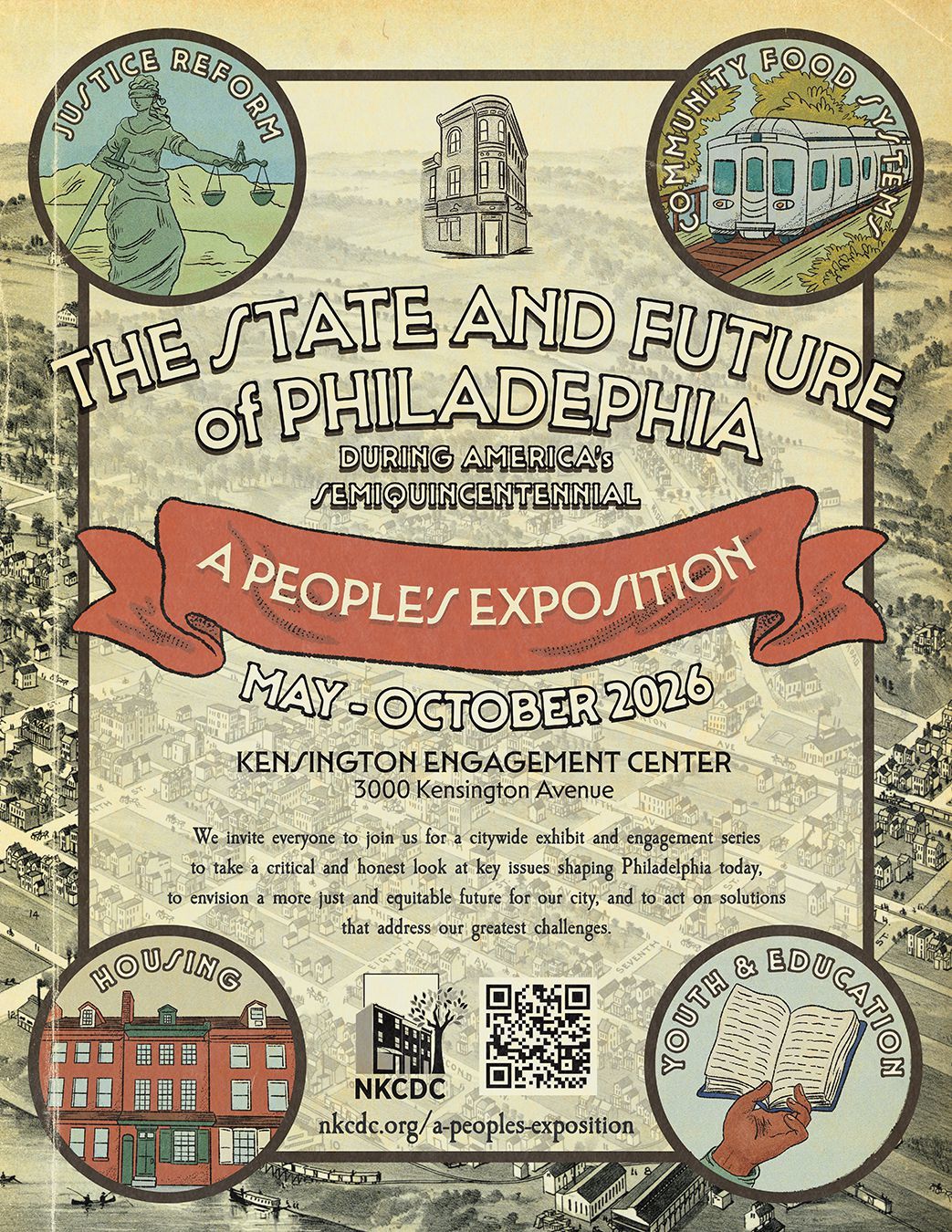
    “A People’s Exposition” 2026 promotional flier.

    Welcome to ‘A People’s Exposition’

    In the spirit of Douglass and Wells, and the ways they challenged “the celebration of oppression,” New Kensington Community Development Corp., along with partners throughout the city, invite you to participate in “A People’s Exposition” at the Kensington Engagement Center — to take a critical and honest look at our city’s challenges, to envision a just and equitable future, and to act on cocreated solutions.

    Opening on May 20 and running through October, partners from across the city will collectively create a welcoming space where we can learn about the status of Philadelphia’s most pressing issues, including the housing crisis, poverty and workforce development, the criminal justice system, youth and education, and community food systems and transportation.

    We invite you into a space of the curious and the committed, to learn and connect to current efforts and campaigns that are working toward addressing our city’s greatest needs.

    Leaving off with hope

    We all need and deserve celebration and joy. Philly has many things to be proud of — be it housing wins, Chinatown wins, or the daily wins of just making it another day on the right side of the grass — but we can and should hold two truths at once.

    While many in our city will only want to take part in performative displays of national and civic pride without facing the true underbelly of our nation and city, I encourage us all to resist whitewashing and to support participatory processes to fight the oppressive and exploitative machine that continues to be built and executed 250 years after independence. As a true patriot would.

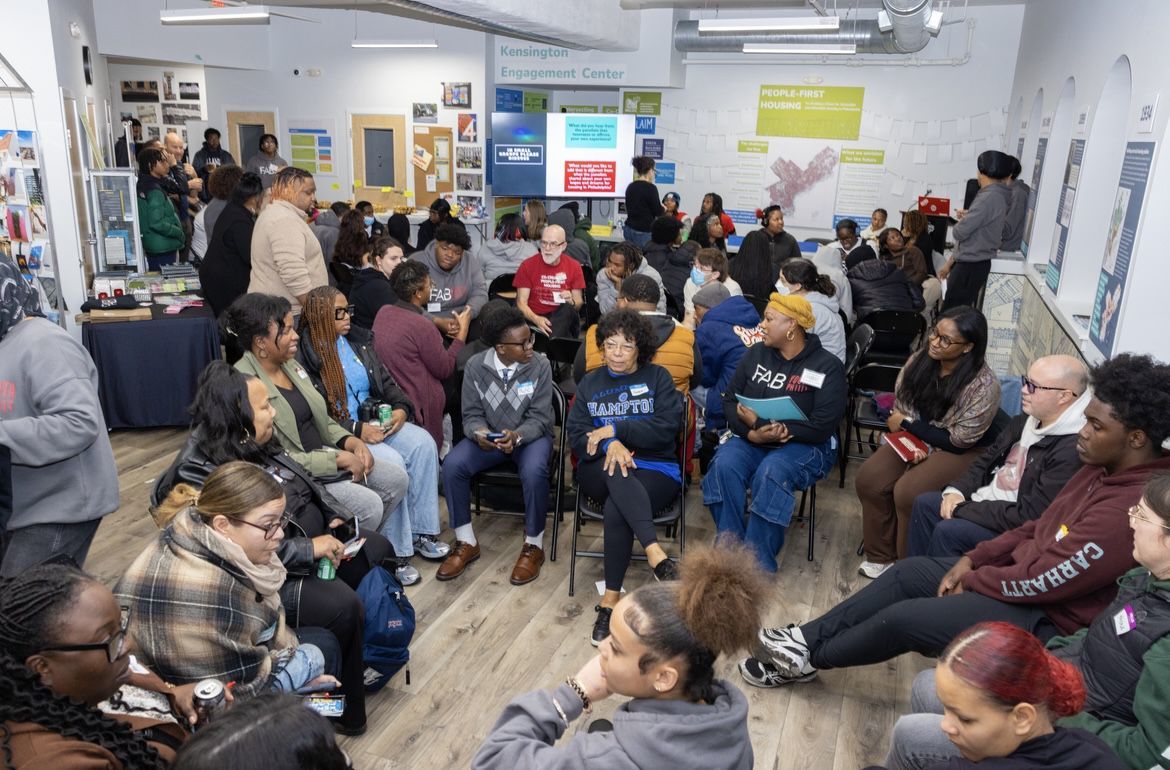
    Participants in a teen town hall at the Kensington Engagement Center.

    And as Frederick Douglass did on the Fourth of July.

    He challenged us to remember that for many, there is very little, if anything, to celebrate, and we should instead be engaged in reflection and organizing to put into action what is necessary to create a just society for all.

    “I do not despair of this country,” he wrote. “There are forces in operation, which must inevitably, work the downfall of slavery … I, therefore, leave off where I began, with hope.”

    Bill McKinney is a Kensington resident and the executive director of the New Kensington Community Development Corp.


    All images courtesy of the New Kensington Community Development Corp., except where noted.

  • Philadelphia asks Pa. judges to approve opioid settlement spending on Kensington revitalization projects

    Philadelphia asks Pa. judges to approve opioid settlement spending on Kensington revitalization projects

    More than three years ago, Philadelphia officials decided to direct part of a multimillion-dollar settlement with opioid drug makers toward fixing harm done in Kensington. They developed projects to repair homes and help small businesses in the neighborhood long at the center of the city’s overdose crisis.

    After the money was spent, the state trust overseeing the settlement said it was not an appropriate use of the funds. Philadelphia appealed, and the dispute landed before a panel of three Commonwealth Court judges on Tuesday.

    The panel also heard appeals from three other counties, including Chester County, which appealed the trust’s rejection of its plan to spend settlement money on a prosecutor in its drug treatment court.

    The hearing was the latest step in a yearslong debate over how Philadelphia and other counties chose to spend opioid settlement money. The Pennsylvania Opioid Trust was created to oversee their spending decisions for more than $2 billion in settlement funds from lawsuits against opioid painkiller manufacturers and distributors accused of fueling a deadly addiction crisis.

    At times on Tuesday, the panel of judges questioned the trust’s decision-making process, which has been criticized for a lack of transparency. Work groups meet privately to discuss spending priorities before the trust delivers a decision.

    “Apparently, the procedure you’ve adopted is, ‘If we like it, we’ll say yes, and if we don’t, we’ll say no,’” said President Judge Emerita Bonnie Brigance Leadbetter. “How can we review that?”

    Jayson Wolfgang, a lawyer representing the trust, said the group’s members joked at times that “we were building the plane as we were flying it.”

    He noted that the trust has approved hundreds of programs, and that many counties have accepted the trust’s decision to reject some spending priorities.

    Counties do not have to return money already spent, but the trust can reduce or withhold future opioid settlement payments if it determines that a county is spending funds outside the settlement’s purview.

    Philadelphia’s appeal centered on portions of the $7.5 million “Kensington Project,” a package of community improvement plans that included a home repair program, supports for small businesses, and park and school improvements.

    In 2024, the trust ruled it was not an appropriate use of the funds.

    The city appealed, and the trust partially reversed the decision, approving park and school improvements but continuing to reject spending on the home repair program and small business supports.

    Ryan Smith, a lawyer representing Philadelphia, said the city did not receive detailed communications about why its spending was being rejected during the trust’s review process.

    The city appealed to the Commonwealth Court in December to approve funding for the remaining projects, arguing that the trust’s idea of permissible spending was too narrow and that research shows efforts to improve blighted lots and abandoned buildings decrease fatal overdoses.

    Lawyers for the trust countered that the city failed to convince the trust that its plans fall under the parameters of a document from the opioid settlement lawsuits that outlines how counties can spend the money, including on overdose prevention strategies — referred to in court as “Exhibit E.”

    Lawyers for other counties also argued that the trust had erred in rejecting their spending.

    In Somerset County, on the western side of the state, it rejected spending on an outdoor program for young people aimed at improving mental health. County officials argued that the program was permitted funding under Exhibit E’s provisions for youth-focused prevention programs.

    But a lawyer for the county said that six of seven members of a trust committee that rejected the spending “had no background in drug or alcohol anything.” The seventh was the only member who voted to fund the program, she said.

  • Closing this North Philly school would be ‘severing a lifeline’ for special-education students, supporters say

    Closing this North Philly school would be ‘severing a lifeline’ for special-education students, supporters say

    James R. Ludlow Elementary School in North Philadelphia educates a substantial population of special-education students.

    And the learning environment for those students would be upturned by the school district’s recommendation to close Ludlow after next school year, teachers say.

    “For our children in special education, that consistency isn’t a luxury, but a requirement for them to learn. If we relocate our students, we aren’t just changing their school address; we’re breaking their routines and undoing their progress,” Vanessa Martin, an autistic support teacher in kindergarten through second grade at Ludlow, said at a community meeting last month with school district officials.

    “This building isn’t just a facility. It’s the one predictable place where our students feel safe and supported every single day,” she said.

    The district says Ludlow was slated for closure because of an “unsatisfactory” building quality score, a lack of appropriate space for programming, and only utilizing 47% of its capacity. Ludlow has 237 students enrolled across general and special education, of whom 75% are Black and 20% are Hispanic.

    The K-8 school will celebrate its 100th anniversary in what could be its final school year of operation. The district, which has proposed closing 18 schools, plans to convey the building at 550 Master St. to the city so it could be converted into affordable housing or used for job creation. Ludlow students would be reassigned to one of three schools: Paul L. Dunbar School, Spring Garden School, and Gen. Philip Kearny School.

    ‘Severing a lifeline’

    The Ludlow community is strong and connected, and about a hundred people packed the school’s cafeteria for the community meeting on a recent Thursday evening to show their support for the school and fight against the district’s plan.

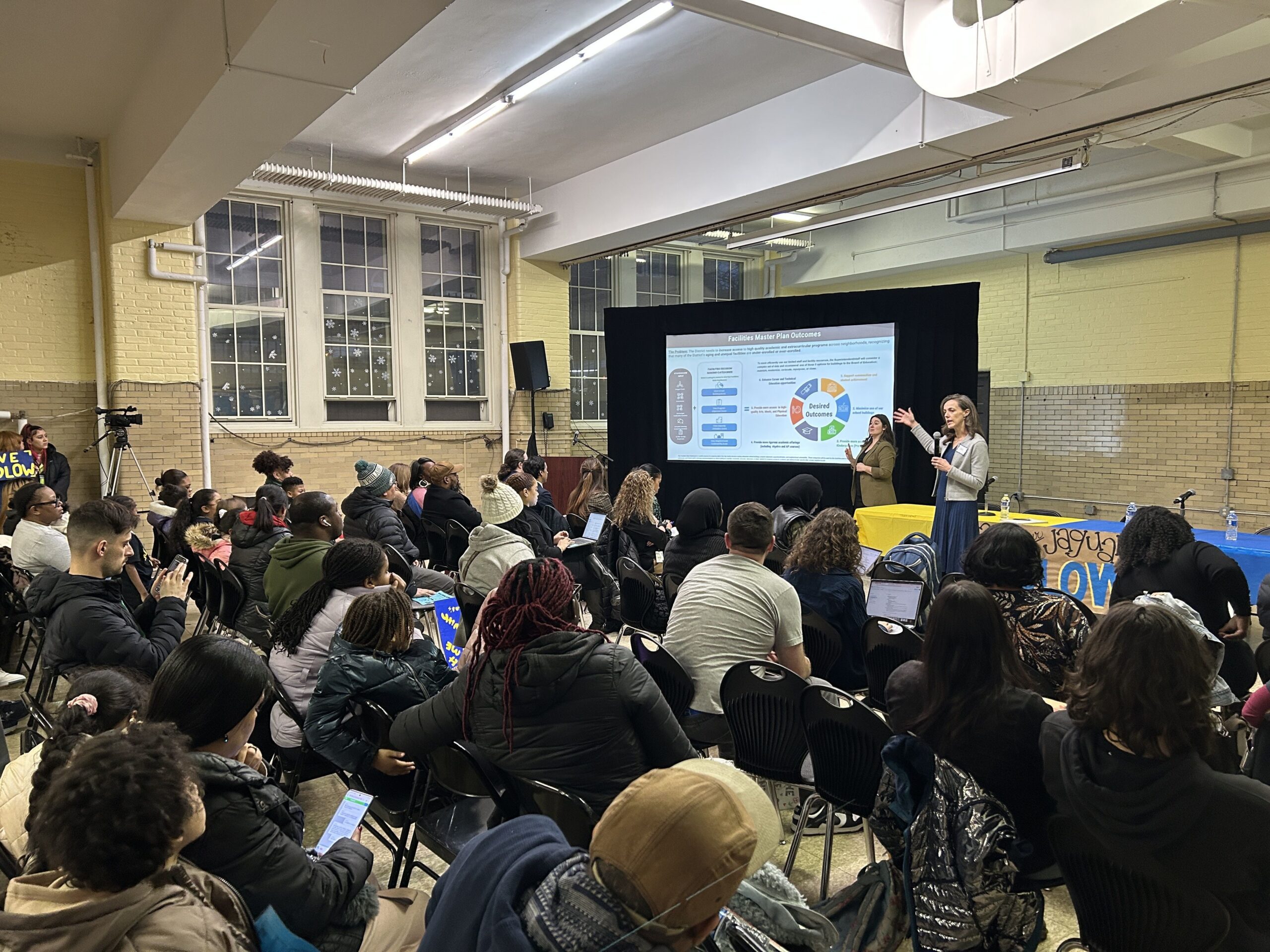
    District officials present their plan for closing Ludlow at the February community meeting.

    “I felt very angry. I felt upset. I felt like they were taking something away that was a part of me,” said Deilyhanix Vazquez, a Ludlow eighth-grade student who has attended the school since kindergarten. She said her teachers “feel like home,” and she had been planning to continue visiting the school even after she graduates.

    “I’m worried that the students will have to travel far just to get an education. Something they have to do on the daily starts to feel like a burden,” said Savannah Lindsay, another Ludlow eighth grader.

    Another young student broke down into tears as she spoke into the microphone, saying she had planned to attend Ludlow for “my whole life.”

    If the plan goes forward, she said, she may have to split up from her friends as they get assigned to one of three different schools.

    “I don’t want to leave them,” she said, as others in the room clapped and cheered her on.

    Should Ludlow close, the neighborhood and the wider school district would lose a valuable special-education resource and hub. Its offerings include autistic and other learning support for all grades, and emotional support for grades three through eight.

    Ludlow often receives student referrals from other schools and catchments across the district, staff members said, including from the schools that would take in Ludlow students in the closure plan. It can feel like the district dumps its most difficult students on Ludlow, Martin said, but those children are accepted and become like family.

    District officials have said that in addition to closing buildings that are not operating at full capacity, another goal is focusing on K-8 schools over middle schools to reduce transitions. That goal especially doesn’t square with the plan to close Ludlow, critics said.

    “Ludlow is an exceptional school that works. By moving forward with this proposal, the district would be doing more than just closing Ludlow’s doors — it would be severing a lifeline and dismantling a support system that children and families depend on for their stability,” Martin said.

    Affordable for whom?

    Community members questioned the plan to turn Ludlow into affordable housing. They doubted whether those units would actually be affordable for the people living in the neighborhood, where the annual median household income is about $58,000.

    The area sits next to Fishtown and Olde Kensington, where gentrification has made living more expensive for longtime residents.

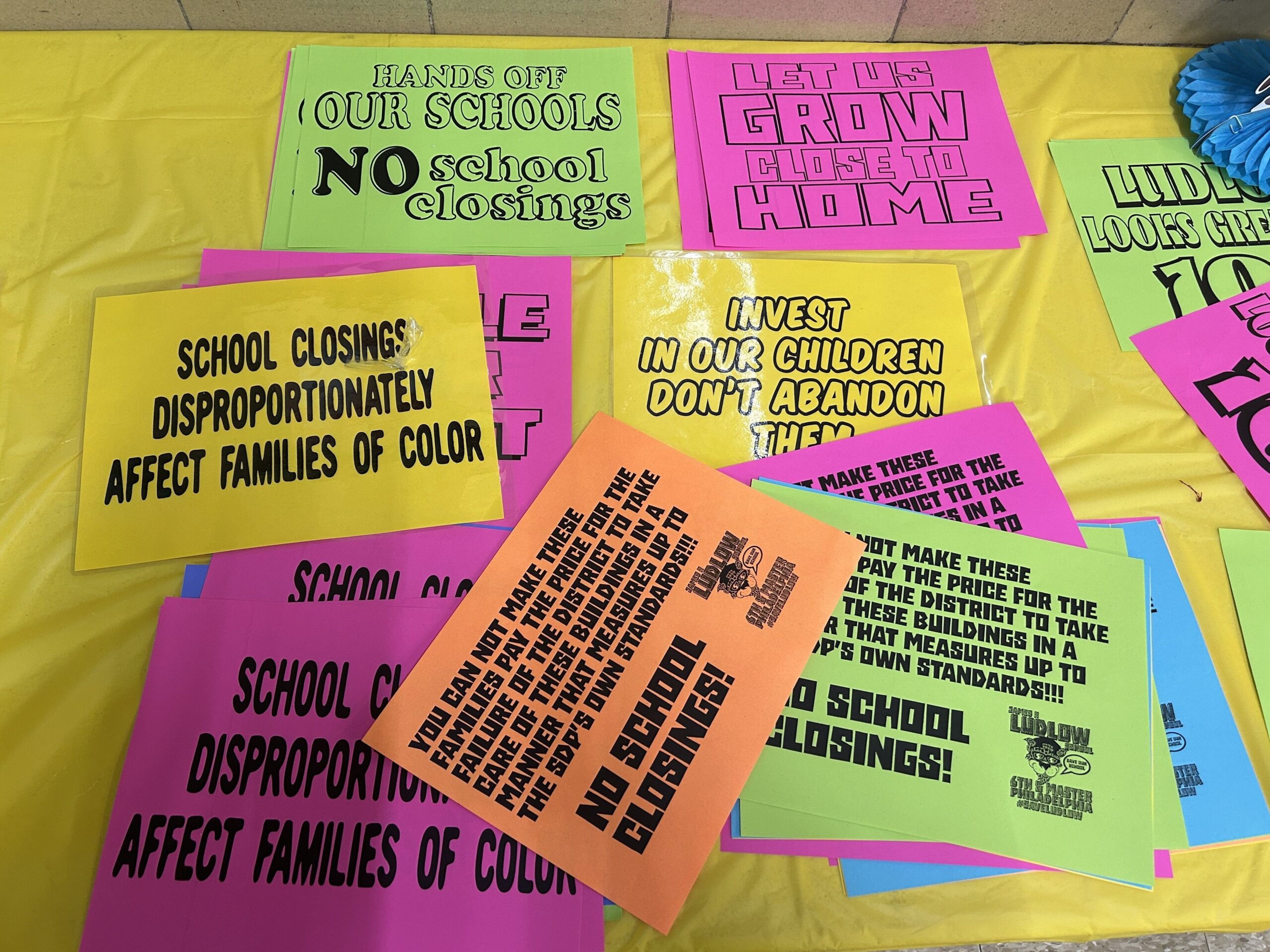
    Various signs protesting the closure of James R. Ludlow School, available at a community meeting with district officials in February.

    Ludlow community members said they did not want or need more housing. They wished the district would instead invest in the building for learning purposes, and said the district had let it fall into its poor condition.

    “It’s money before our kids,” said Valerie Johnson, known better as Valerie Brown, a beloved former Ludlow staff member who worked at the school for more than 30 years.

    While housing may bring new residents and investment to the neighborhood, the loss of Ludlow could drive some to leave, one mother said.

    “I stay in this neighborhood because of Ludlow,” said Darlene Abner, a mother of six whose children have attended the school, including a kindergartner enrolled this school year.

    Abner herself was born in the neighborhood, and she said she does not want her children to attend any school but Ludlow.

    She wears a nearly full face-covering niqab, and credited the school and its teachers for never letting that be a barrier to building a relationship with her and caring for her children.

    “They know me. They see me,” she said.

  • Philly Parks & Rec introduces summer camp lotto at five in-demand locations, causing headaches for some parents

    Philly Parks & Rec introduces summer camp lotto at five in-demand locations, causing headaches for some parents

    At some Philadelphia Parks and Recreation centers, a grim tradition has developed over the years amid the winter scramble to secure some sort of summer programming for kids: Parents wait in line hours before enrollment even begins to snag a first-come, first-served camp spot.

    This year, the city hopes to remedy that with the introduction of a lottery system at a handful of the most in-demand camps.

    “We’re just learning from past years, trying to be flexible and give parents more time to come in,” said Rob Jackson, the department’s deputy commissioner of programs.

    Yet some parents bemoaned what they described as a poorly communicated change, hearing about it a week before enrollment began with no explanation as to why, becoming just one more logistical quirk to navigate in the summer camp enrollment chaos.

    That’s because, as with daycare, snagging a spot in any daylong summer program can feel like building a plane midflight. Applying to multiple summer camps is a must, setting aside a pool of money for application fees is necessary, and, oh, you’ll likely have to make a quick decision on whether to accept a spot despite not having heard back from everyone.

    Even applying to the Philadelphia Parks and Recreation-run summer camps, one of the most affordable options in the city for kids ages 6 to 12, has its quirks. Because weekly rates start at $90, compared with the hundreds some other camps charge, spots in the department-run programs are some of the most coveted in the city.

    Some rec centers are so popular that parents have resorted to waiting in line for hours on enrollment day to secure a spot. It’s a system that the city has heard feels unfair to families that cannot afford to take a morning off from work to do that.

    In an attempt to make the registration process more equitable, the city rolled out a lottery system this week for potential first-time campers at some of the hardest-to-get-in sites: Fishtown, Northern Liberties, Shissler, Hancock, and Towey Recreation Centers. These sites are in the Fishtown, Northern Liberties, and South Kensington sections of the city.

    Jackson said the change was inspired by staff, who described coming into work with long lines of parents already formed. If a parent could not make it on that day, it was one less summer camp option. And because younger siblings were given priority in an attempt to keep siblings together, one family could take up multiple camp spots in one go. With the lottery system, younger siblings have the same odds as other new registrants. Jackson recognized that might mean multiple camp drop-offs for some families, but he said the change was to “accommodate as many families in the community as possible.”

    The lottery system has allowed sites like Hancock and Shissler to extend registration for new campers over the course of four days, giving all kids the same chance of snagging whatever few spots are available within the program as children age out or choose to go elsewhere.

    One Fishtown parent this week, who asked to remain anonymous so as not to hamper their kid’s chances of snagging a spot, described the change as poorly communicated. The parent was left deflated by submitting applications at various locations, paying $50 per application, unsure what the odds were for getting into any of these camps.

    Asked if the city has ever considered moving the applications online, Jackson said the city has not gotten to that point. So for now, the in-person site-by-site registration is the best the department can do for the more than 7,000 kids who attend camps across 120 to 130 host recreation centers.

    The city could not say just how many camp spots would be freeing up this year, as it depends on how many children from what are considered “returning families” claim spots.

    The summer childcare scramble

    Even if a child can secure a spot in a city-run summer camp, it does not fully solve summer childcare needs for families.

    The camps run for six weeks and have age restrictions. Parents often have to shell out hundreds more to fill in gaps in care.

    Other summer camp operators have issues of their own. This year, the Academy of Natural Sciences of Drexel University and the Penn Museum announced they will not host their popular summer camps, citing budget constraints.

    Dena Ferrara Driscoll, a mother of two who lives in South Philadelphia, has been a public advocate for more investment in summer camps and after-care programs. Her children attended city-run camps and now her son works at one in the summer.

    Driscoll was not surprised by the continued demand for camp spots. The programs are “affordable, safe, and deeply loved,” she said.

    “A lottery might change who gets a spot, but it doesn’t address the real issue: Families need more affordable camp options provided by the city, not just a new system to distribute the ones we already have,” she said.

  • It’s not just about schools. It’s about neighborhoods.

    It’s not just about schools. It’s about neighborhoods.

    Reginald Streater, president of the Philadelphia Board of Education, opened his testimony before City Council last month by introducing himself as “Reggie from Germantown,” a graduate of two district schools that no longer exist. Germantown High and Leeds Middle both closed. He knows what it means to lose a building. He’s also voting to close 20 more.

    The conflict playing out in Philadelphia isn’t only about schools. It’s about the fact that the school district and City Council have different responsibilities for the same places, and the new facilities plan brings that conflict into sharp focus.

    On Jan. 22, Superintendent Tony B. Watlington Sr. released a facilities master plan proposing to close 20 schools, colocate six, and modernize 159 others. On Feb. 26, he presented an amended final plan to the Board of Education, which was updated from 20 school closures to 18. Russell Conwell Middle School and Motivation High School were removed from the closure list.

    The district has lost 15,000 students in a decade, carries 300 buildings, many of them 75 years and older, and runs some schools with more than 1,000 empty seats, while others are overcrowded. Concentrating students means Advanced Placement courses in every high school, algebra for every eighth grader, and real career and technical pathways. The current spread of half-empty buildings makes all of that impossible to deliver consistently or fairly.

    The facilities plan is doing exactly what it was designed to do. The trouble is that everything it was not designed to do.

    A Philadelphia neighborhood school isn’t just one institution. It’s four, sharing an address. There’s the instructional platform: courses, teachers, schedules, the district’s domain. There’s the civic anchor: the building that signals to a neighborhood that its children count, and they belong. There’s the distribution node: where meals are served, where social workers operate, and where there is, most days, someone watching. And there’s the pathway to the future: where a counselor knows a family by name, where a student learns there’s a college or a trade or a life beyond the block.

    In places like Kensington, schools have absorbed those responsibilities over time.

    When that school building closes, all of those other things close with it. Some of those functions were formal educational programs. Others accumulated because families had nowhere else to go for them. The school became the place where paperwork was explained, problems were addressed and solved, and someone always knew which door to knock on next.

    City Council doesn’t get to vote on the facilities plan, but it funds roughly 40% of the district’s $2 billion budget. Councilmember Jimmy Harrity, an at-large member who lives in Kensington, decried that lack of input, but said that “the budget’s coming, and we will be looking.” Council President Kenyatta Johnson has signaled he’s willing to hold up city funding entirely.

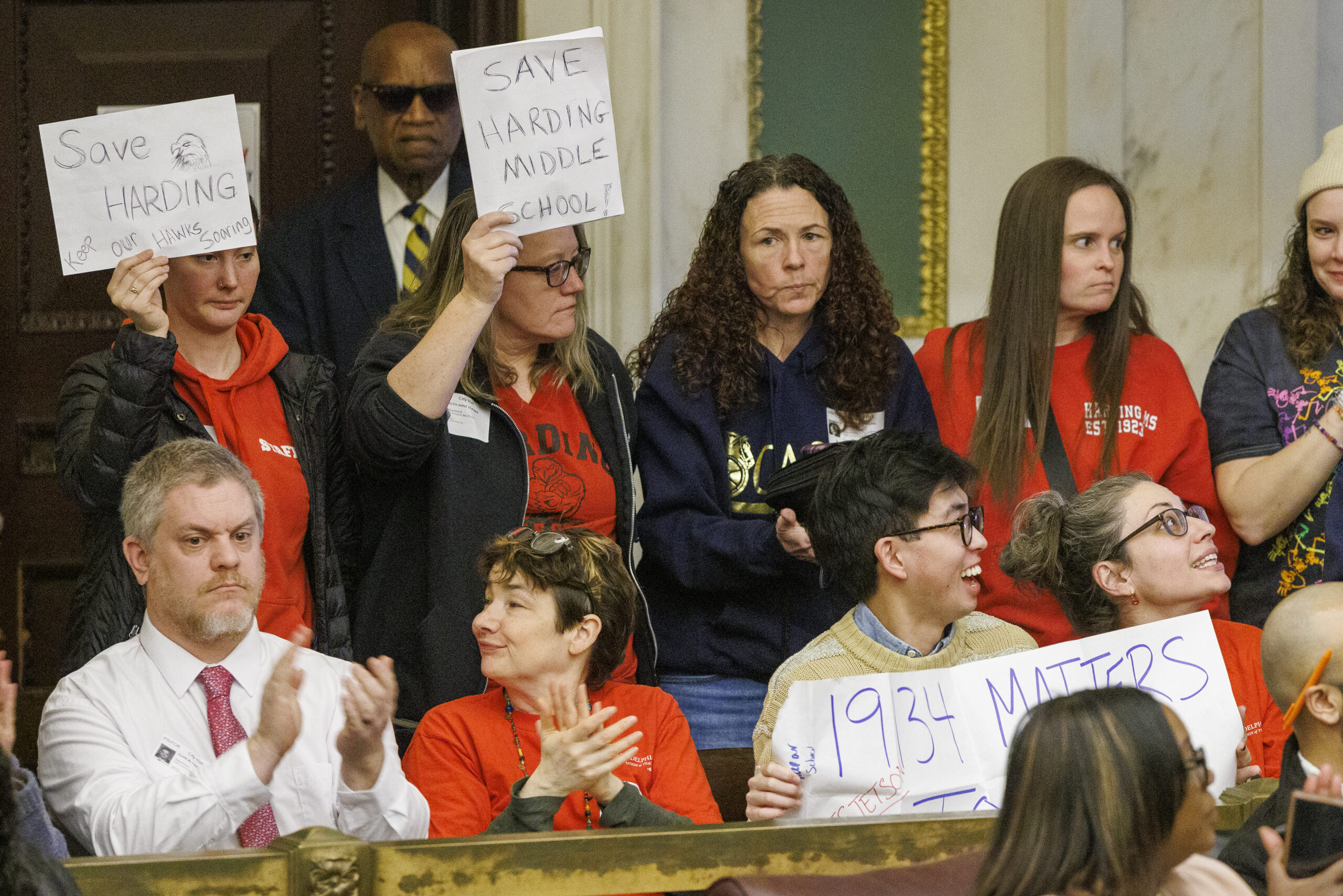
    Supporters of Harding Middle School protest at a City Council hearing with school board members earlier this month.

    Residents and families filled the chamber. Parents stood along the walls long after seats ran out, some holding infants, others carrying school backpacks. The hearing lasted hours.

    The debate sounded like a disagreement about the plan, but it was really a disagreement about who is responsible for what the plan leaves behind.

    What closes with a school building is not limited to instruction. Council’s budget is the instrument for the functions the facilities plan does not govern: housing investment, community infrastructure, colocated services, and neighborhood anchors that exist independent of school enrollment.

    The district held 47 public listening sessions and surveyed more than 13,000 people before releasing this plan. The fight at City Hall last month wasn’t because communities weren’t heard. It’s because what they described was a loss that the facilities plan was never designed to address. That’s not a failure of process. It’s a mismatch of jurisdiction.

    The district’s plan answers an educational question. What replaces the neighborhood functions housed in those buildings is a civic one.

    That answer does not sit with the school district.

    Amanda Soskin is a Philadelphia resident and consultant who writes about neighborhoods and civic infrastructure at Neighborhood Fundamentals.

  • The Philly school board finally began considering the superintendent’s school-closing plan — and the community is not happy

    The Philly school board finally began considering the superintendent’s school-closing plan — and the community is not happy

    Frustration and anguish spilled over Thursday night as Superintendent Tony B. Watlington Sr. presented his sweeping, $2.8 billion facilities plan to the school board at a heated, lengthy meeting.

    Watlington revised the plan to include 18, not 20 school closings — saving Conwell Middle School and Motivation High — and still wants to modernize 159 schools over a decade. He pitched it as a “once-in-a-lifetime” opportunity to drive academic improvement.

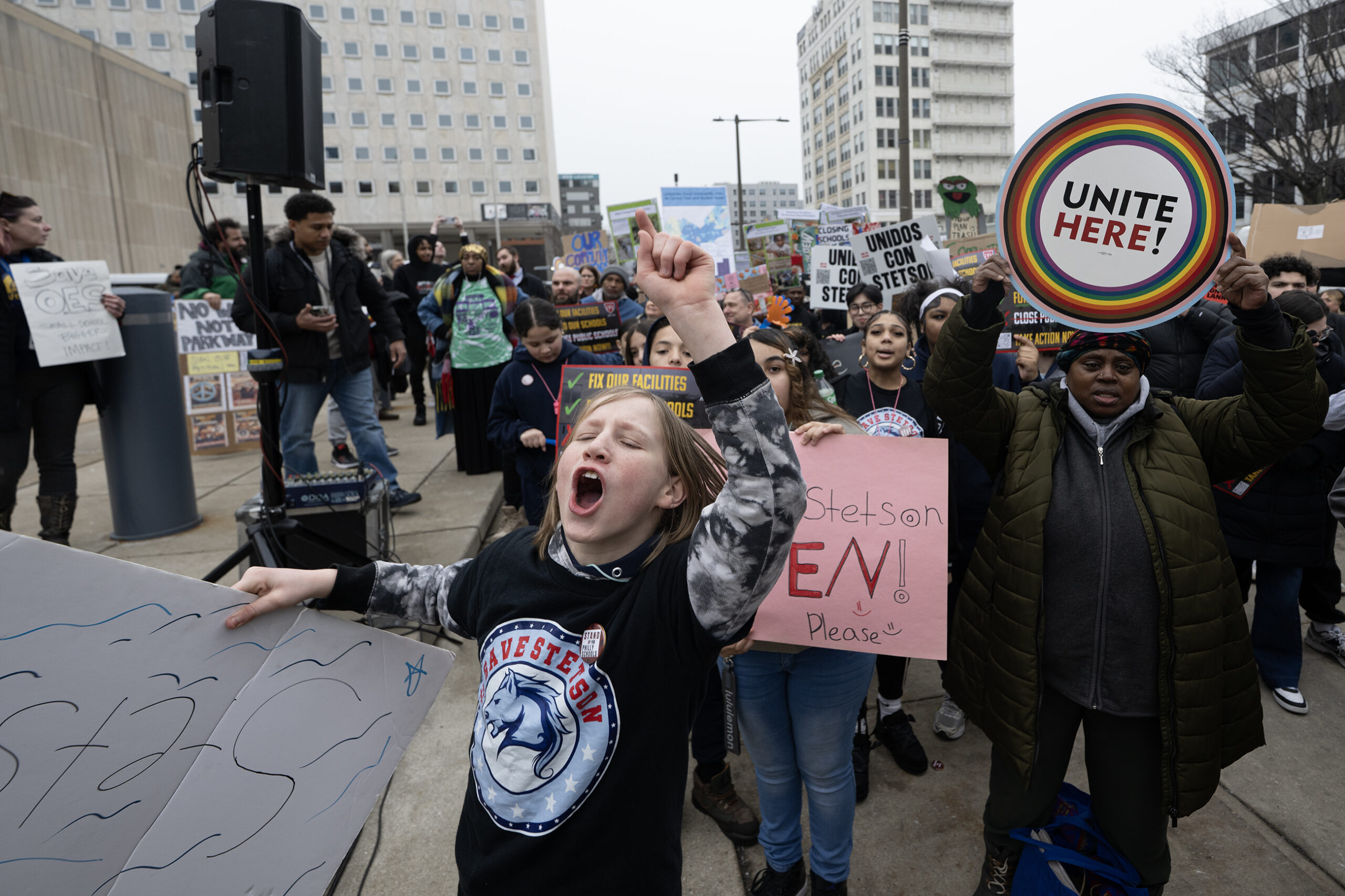
    But the community did not seem impressed — at an anti-school-closure rally prior to the meeting, and at the public session itself, which stretched on for more than eight hours, into the early hours of Friday morning.

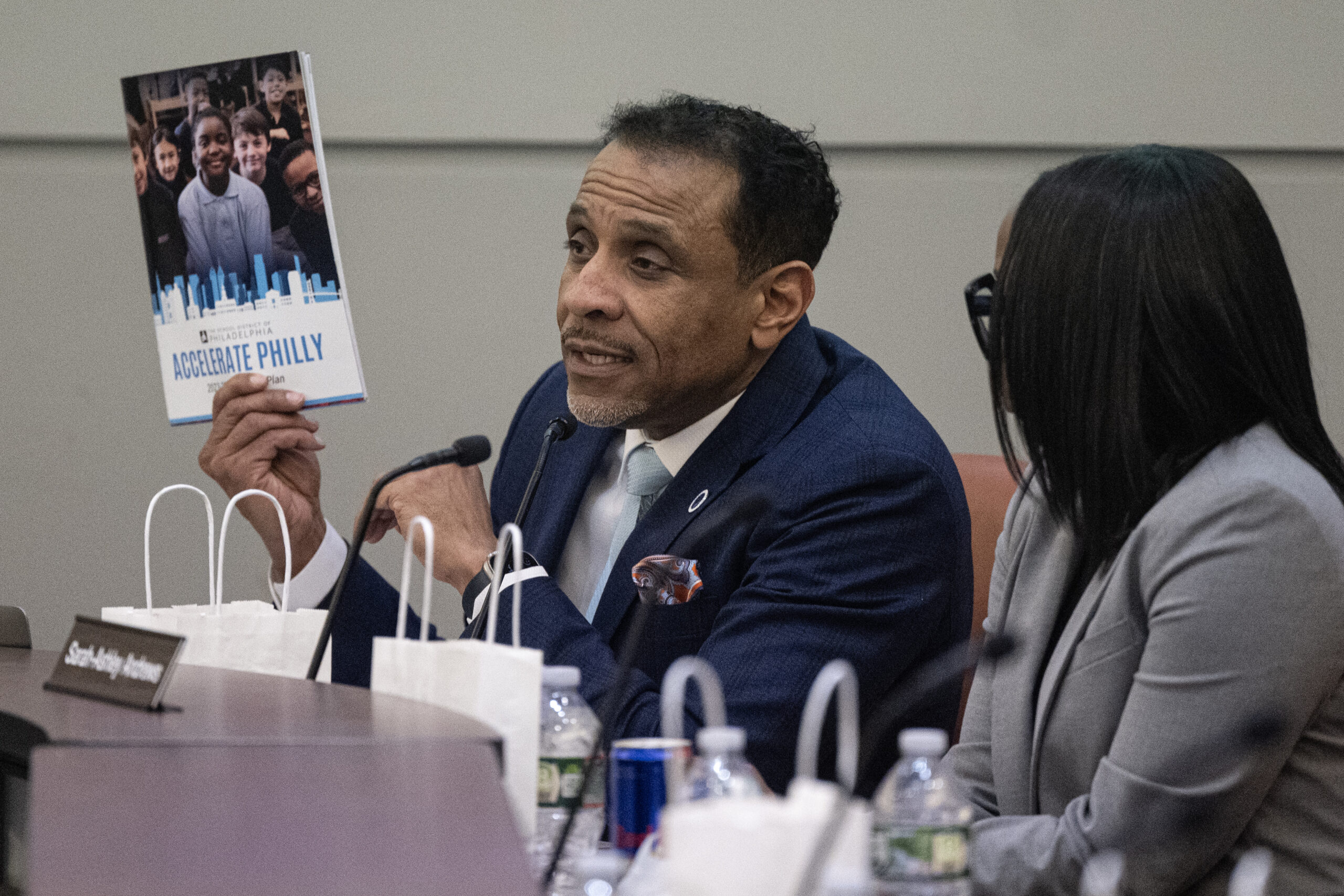
    Tony B. Watlington Sr., superintendent of the School District of Philadelphia, presents his facilities plan during Thursday’s board meeting.

    “Dr. Watlington, you’re breaking my heart,” said Amanda Chandler, a teacher at Harding Middle School, one of the schools on the chopping block.

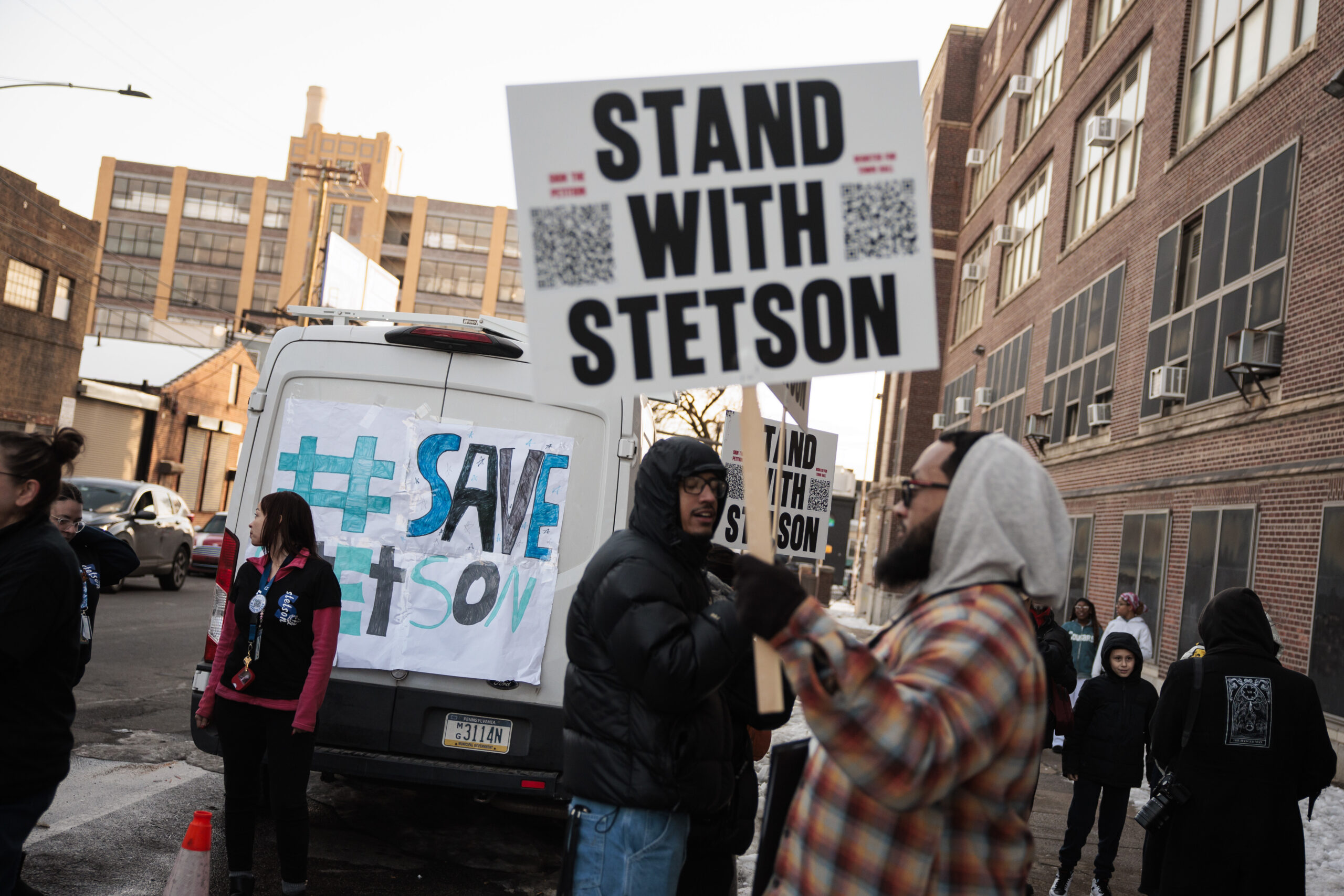
    The district’s plan “isn’t an opportunity — it’s calculated abandonment,” said Beth Cole, a teacher at Stetson Middle School, which is also slated to close.

    Watlington first unveiled the facilities plan, which was years in the making, in January. After weeks of community meetings, the superintendent formally presented the blueprint — with some tweaks — to the school board Thursday. The board has not yet said when it will vote on the plan, but has scheduled a March 12 town hall to hear more public feedback.

    ‘Massive upheaval’

    The district has 70,000 empty seats in schools citywide. For example: Watlington said he recently watched a recording of a 1969 Overbrook High graduation. The school educated 5,000 students then. Now, it has fewer than 500.

    And while some schools are underenrolled, some are overfull, particularly those in the Northeast. Inequities are widespread, also. For instance, only half of city students have access to Algebra 1 in eighth grade, barring them from admission to Masterman, a top city magnet that requires algebra for admission.

    The board must address all those issues, said Reginald Streater, school board president.

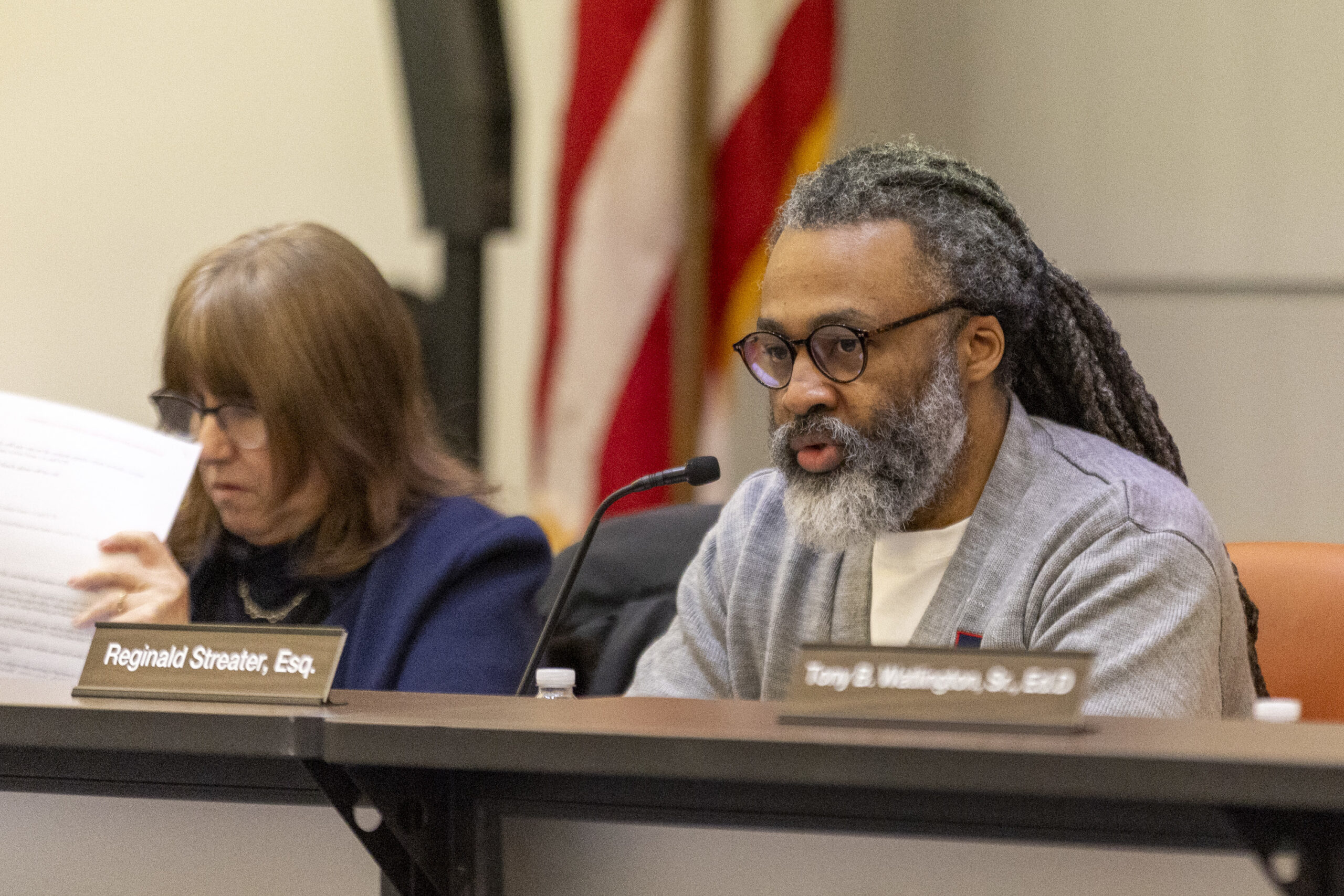
    School board president Reginald Streater said the board must deal with 70,000 empty seats in city schools.

    “We have chronic underfunding, coupled with enrollment shifts that have materially created structural challenges that no district board can simply absorb without consequence to the district,” Streater said. “These realities have materially affected our ability to accelerate our fight against systemic chronic underachievement within the School District of Philadelphia.”

    Streater did not weigh in on the details of the plan, but some other board members did, indicating there may be some pushback when it comes time to vote.

    Board member Crystal Cubbage said she wanted a “bolder plan” including more new buildings. (Watlington’s version proposed a single new building in the lower Northeast for the Arts Academy at Benjamin Rush.)

    “I’m struggling to reconcile this massive upheaval, and the $2.8 billion price tag, with the fact the plan is not explicitly designed to produce better outcomes for all of our children,” Cubbage said.

    Audience members in the packed board room cheered as board member Wanda Novales voiced criticisms of the plan.

    Novales said she recognized the complex challenges the board and district face, but “the standard cannot simply be operational efficiency,” Novales said. “I am struggling to see the heart …that sees the lived realities of our neighborhoods.”

    Areas like Kensington and Fairhill have long been underresourced, Novales said, and the plan falls short in providing opportunities to students there.

    “This conversation cannot just be about buildings. It must be about students,” Novales said.

    Joyce Wilkerson, the longest-serving member of the school board, and a member of the School Reform Commission, the board’s predecessor, said the district has known it had to “rightsize” for years.

    “We can’t afford to be locked in inaction,” Wilkerson said.

    More pushback

    Students from the affected schools spoke pointedly about the proposed changes.

    Jade Colon, a student at Stetson Middle School, in Kensington, said her school’s roof has leaked for years. It’s never been properly fixed.

    “We are told this plan is about equality, yet we see our neighborhood — one that has already faced decades of disinvestment — being asked to sacrifice yet again,” said Colon. “True equality isn’t found in a swing space or a longer walk to a different building across dangerous intersections like Kensington and Allegheny. True equality is found in investing in schools we already have.”

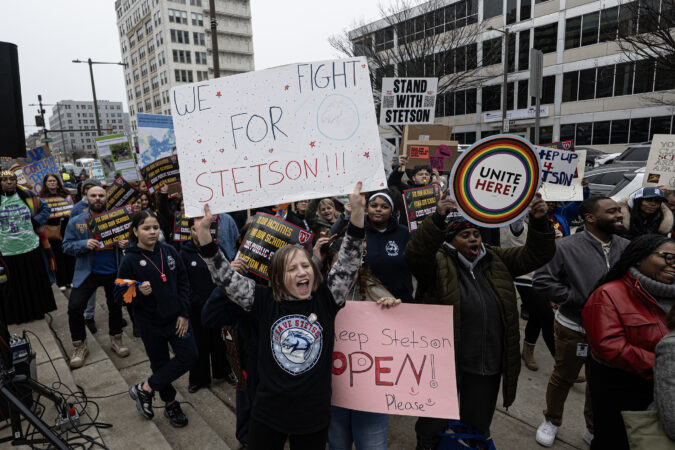
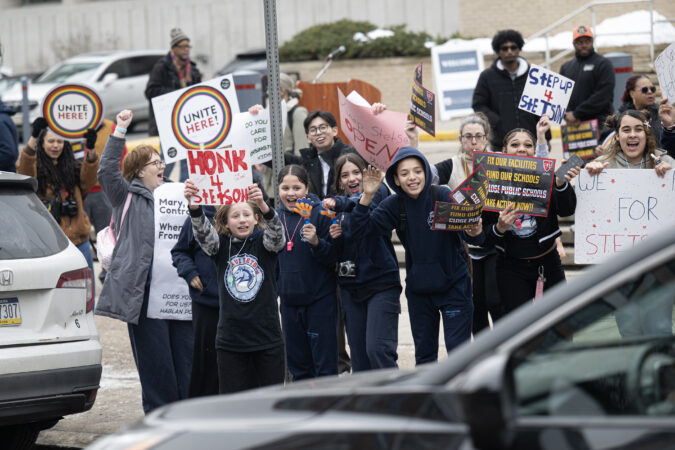
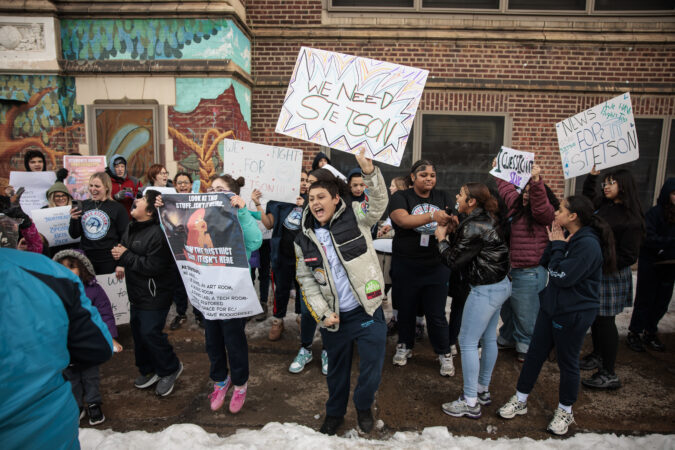
    Students rally before a School District of Philadelphia board meeting Thursday outside the district’s headquarters in Philadelphia, as community members protest proposed school closures.

    David Samuel, who attends Parkway Northwest, another school on the closing list, said the school is “building strong children.”

    Virtually all Parkway Northwest students are on track to graduation.

    “Those are lives being moved forward,” Samuel said. “Closing Parkway Northwest wouldn’t be closing a school; it would be closing my home.”

    The plan drew pushback from a number of politicians who showed up to voice displeasure to the board.

    “I do not have the words to describe how disappointed I am by the district’s proposal today,” City Councilmember Jamie Gauthier said, underscoring concerns about harm to Black and brown students.

    Removing Motivation from the closing list is a good step, said Gauthier, who represents a West Philadelphia district. But she wants Watlington to consider removing Robeson, Blankenburg, and Parkway West, too.

    “Robeson did send a student to Harvard, and you still want to close it,” said Gauthier.

    The superintendent said the district has done its best to spread opportunity, but he acknowledged the difficulty of the decisions in front of the board.

    “In an ideal world, I never believe in closing schools,” Watlington said, a remark met with some groans from the crowd. “I would never want my child’s school to be closed, to be frank.”

  • Two of 20 Philly schools slated for closure would be spared under a revised district plan

    Two of 20 Philly schools slated for closure would be spared under a revised district plan

    Two of the 20 Philadelphia schools originally targeted for closure under Superintendent Tony B. Watlington Sr.’s facilities plan have been spared and will remain open.

    Conwell Middle School in Kensington and Motivation High in Southwest Philadelphia will not close after all, Watlington announced at a charged school board meeting Thursday.

    As communities advocated to save their schools in the weeks since Watlington unveiled his plan, Conwell and Motivation, both magnet schools that accept students citywide, had powerful political allies. Several members of City Council opposed the Conwell closure, and Pennsylvania House Speaker Joanna McClinton (D., Philadelphia) spoke out against shutting down Motivation.

    Watlington said the change from 20 to 18 school closures was not because of politicians, though.

    “We pored through thousands of feedback loops from a number of Philadelphians, to include parents, students, grassroots organizations, and certainly elected officials,” the superintendent told reporters during a briefing this week. “We took all of that feedback together and, in tandem, we landed on these recommended changes, not reflecting one voice or sector more than the others.”

    Watlington’s $2.8 billion facilities plan, which now includes closing 18 schools, colocating six, and upgrading 159, is not yet final and continues to face strong opposition from affected school communities. He formally presented it to the school board Thursday, and the board is expected to vote in the coming weeks, though no date has been set. Schools would begin closing in 2027, and school building upgrades would take several years.

    Under the revisions Watlington presented Thursday:

    • Conwell would remain open and continue to be a magnet, but would also add a neighborhood admissions component. Students from nearby Elkin Elementary, a K-4, would move to Conwell beginning in fifth grade, and the school would still accept students from around the city.
    • Motivation would absorb students from Paul Robeson High, which is on the closure list. Robeson and Motivation are both citywide admissions schools, and Motivation would remain so under the plan. Robeson had previously been scheduled to move into Sayre, another citywide admissions school.
    • Lankenau High, the city’s environmental science magnet, had been targeted for closure and would have moved into Roxborough High. It would still close under the revised plan, but would instead move into Saul High School, the city’s agricultural science magnet. Both are in Roxborough.

    ‘Accelerating Opportunity’

    In his presentation to the board, Watlington called the 10-year plan “Accelerating Opportunity.”

    The proposed changes were spurred not by finances — though the district has 70,000 empty seats and has indicated it needs to shrink its footprint — but by a desire to accelerate progress, Watlington said.

    (function() {
    var l2 = function() {
    new pym.Parent(‘schools6’,
    ‘https://media.inquirer.com/storage/inquirer/projects/innovation/arcgis_iframe/schools6.html’);
    };
    if (typeof(pym) === ‘undefined’) {
    var h = document.getElementsByTagName(‘head’)[0],
    s = document.createElement(‘script’);
    s.type = ‘text/javascript’;
    s.src = ‘https://pym.nprapps.org/pym.v1.min.js’;
    s.onload = l2;
    h.appendChild(s);
    } else {
    l2();
    }
    })();

    The district is making gains in academics, attendance, and dropouts, but still, the superintendent said, “the majority of our young people still don’t perform at grade level of reading and math.”

    Philadelphia, Watlington told reporters, “must multiply that acceleration curve by five or 10. Because we can’t wait for generations to improve these outcomes and opportunities for all of our children. And we know that there’s a huge disparity based on where you live in Philadelphia.”

    The 159 modernization projects to upgrade schools range from new roofs and fresh paint in some buildings to larger projects, including a $58 million refresh at South Philadelphia High. The district released the full list of proposed modernization project details this week. But funding for them is not yet certain; the district plans to pay $1 billion of the $2.8 billion cost and hopes state and philanthropic funding will cover the rest.

    How did Conwell and Motivation get spared?

    Students, parents, and staff at each of the 20 schools proposed for closure have made cases for why Watlington should change his mind since their schools landed on the closure list last month.

    In Conwell’s case, Watlington told reporters the advocacy work of the “large, historic alumni base” of the magnet middle school helped move the needle.

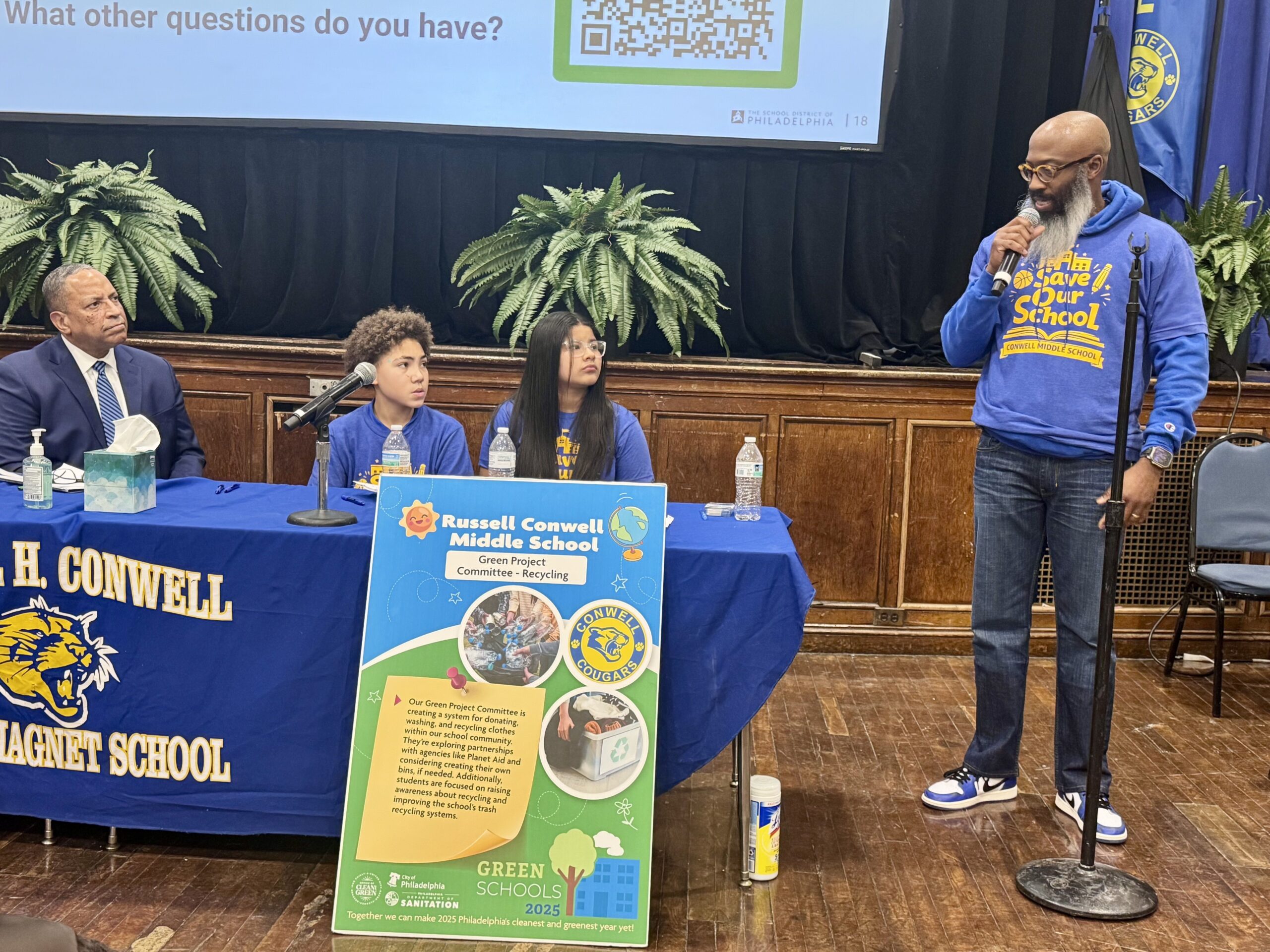
    Philadelphia School District Deputy Superintendent Oz Hill and student moderators listen to Andre Sanford-Adams, the school’s health and physical education teacher, speak about why he thinks it’s a mistake to close Conwell at a meeting at the school.

    So, too, did “significant feedback from individuals about a part of the city where individuals felt very strongly that we have to figure out how to invest more in.” Conwell supporters spoke out strongly against divesting from a school in Kensington, the center of the city’s opioid epidemic. Councilmember Quetcy Lozada, for example, said at a meeting at Conwell that “we are saying to these families, we are punishing them because as a city, we can’t respond to the public safety issues that we have on the outside, and that is just not fair.”

    Also, Watlington said, the distance between Conwell and the school its students would have been sent to — AMY at James Martin, more than two miles away in Fishtown — was significant.

    Instead, officials decided to build Conwell’s enrollment by routing students from Elkin. Elkin students now attend Stetson Middle School, which remains on the closure list.

    Conwell would remain a magnet school, open to students citywide only through the school selection process. Elkin students would be in separate classes, and Conwell would continue to offer accelerated classes to its magnet students.

    Closing Motivation would have left Southwest Philadelphia with no magnet school. Watlington said officials liked the idea of routing Robeson, a strong citywide school in West Philadelphia, to Motivation.

    “The building itself at Motivation is not at the bottom of the heap in terms of programmatic ratings,” the superintendent said. “The problem with Motivation is that we’ve lost enrollment.”

    Relocating Robeson inside Motivation solves “the number one problem we’re solving for, is how do we build our enrollments, address under- and overenrollment so we can push in more high-quality academic and extracurricular programs. Our community, quite frankly, made some suggestions that had merit.”

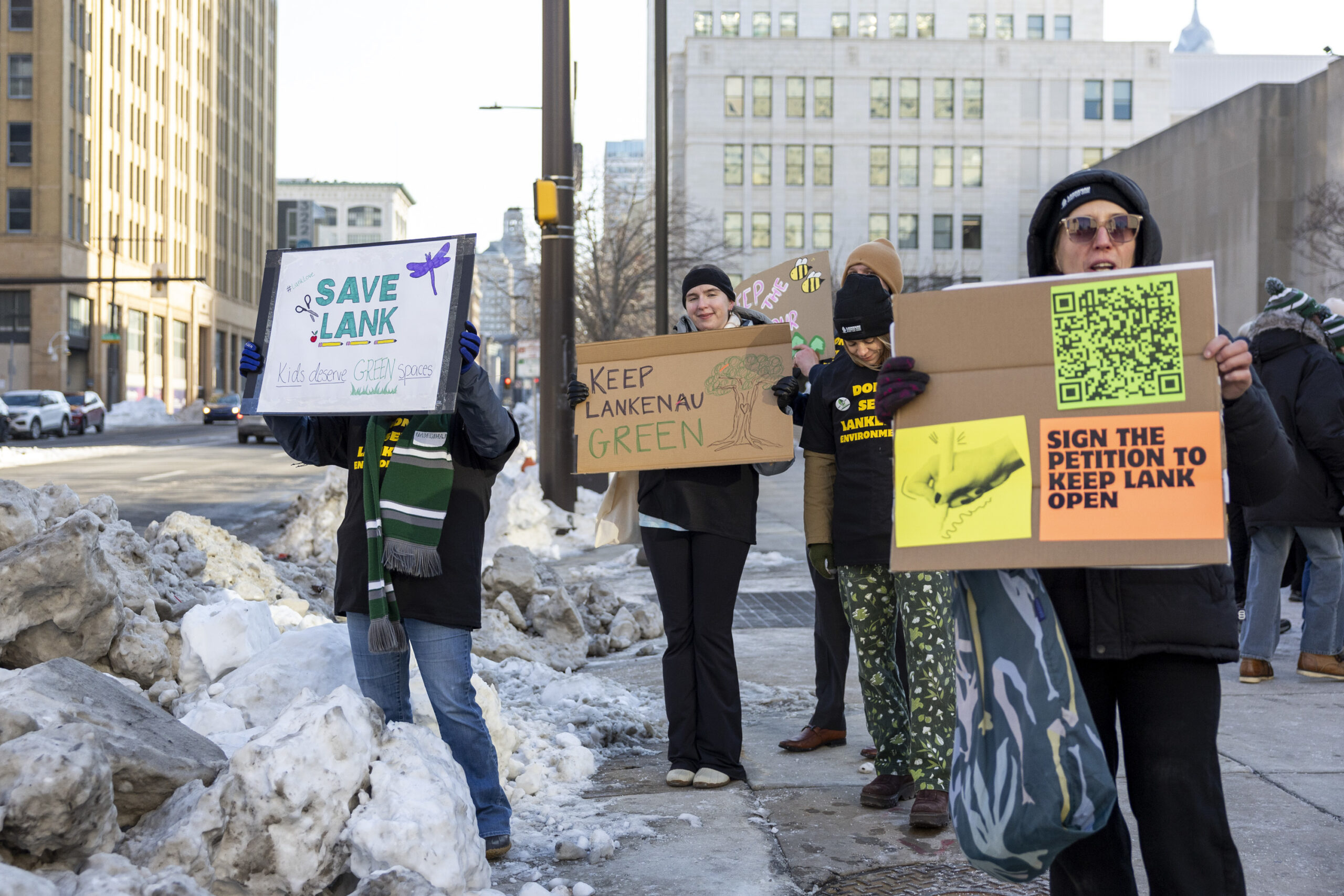
    Teachers, students and community members rally against closing Lankenau High School on North Broad Street outside the school board meeting last month.

    Disappointment for Lankenau and other schools

    The outcry around closing Lankenau was also significant; Watlington’s team did not retreat from a closure recommendation, but now wants to locate the school at Saul, another magnet with a complementary mission.

    Saul has room to accommodate Lankenau, Watlington said. But he said district lawyers are reviewing a recent revelation that the Lankenau site must be offered back to the Schuylkill Center for Environmental Education as a result of a 1973 deal. The district had proposed giving that school property to the city.

    “We have to do our due diligence, and those sometimes can be a bit complicated, but we’ll work through all of the details as appropriate,” he told reporters.

    The ball is in the school board’s court now. It has not set a date for a vote on the plan or said whether it will consider further public engagement.

    But, Watlington said, “we look forward to the board of education receiving these recommendations and doing some thoughtful digesting of these very well-thought-out recommendations that reflect our community at large’s feedback.”

  • Philly’s school closure plan targets middle schools. Here’s why the district is moving away from them.

    Philly’s school closure plan targets middle schools. Here’s why the district is moving away from them.

    The Philadelphia School District is walking away from middle schools — mostly.

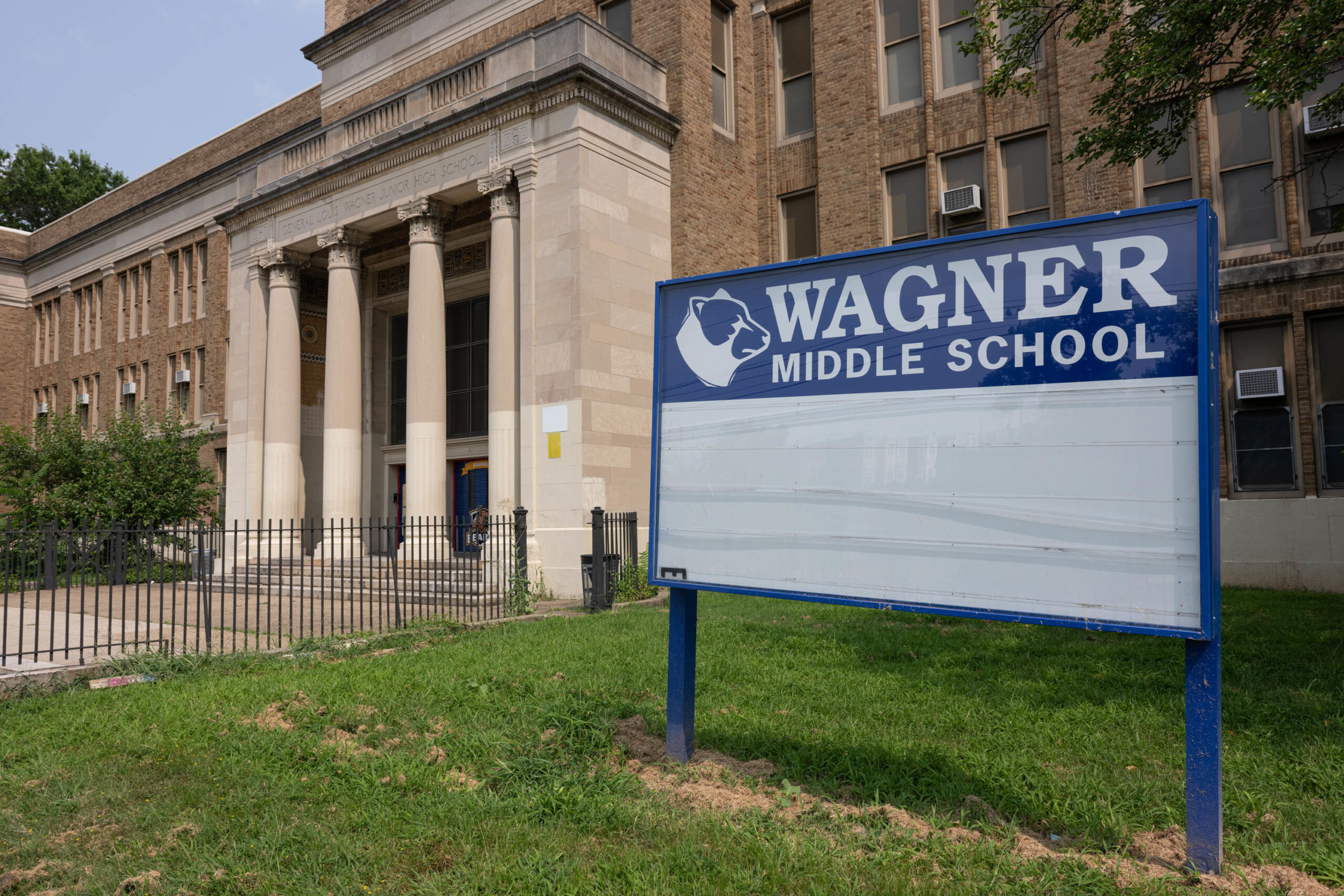
    Of the 20 schools Superintendent Tony B. Watlington Sr. has recommended to close, six are middle schools — AMY Northwest, Conwell, and Stetson in Kensington; Harding in Frankford; Tilden in Southwest Philadelphia; and Wagner in West Oak Lane.

    The district plans to expand elementary schools to take in those students in most cases, and Conwell, a magnet middle school, would send students to AMY at James Martin.

    “Our research does not say that traditional middle school children in Philadelphia perform better academically than K-8 students,” Watlington said when he rolled out his tentative plan in January. “Nationally, and in Philadelphia, there’s a mixed bag.”

    While the school district says the K-8 model reduces transitions for students and helps maximize resources, critics of the district’s plan say closing middle schools will uproot their children and abandon successful schools.

    Education experts, meanwhile, say instructing middle school-age students has long been a complex and controversial issue — and it’s a debate that Philadelphia district officials are reigniting with their sweeping facilities proposal.

    Among the top complaints from critics of the plan: The pivot isn’t absolute. Though many middle schools are disappearing, Philadelphia will still have 13 standalone middle schools and secondary-middle schools if those six close. And some will even grow.

    Middle-grades students from Masterman, the popular and elite city magnet, would take over the closing Laura Wheeler Waring school building in Spring Garden “to expand access” to Masterman, officials said.

    The district is also adding a new Academy at Palumbo Middle School to give students a feeder pattern into the South Philadelphia high school magnet. The new middle school will co-locate with Childs Elementary in Point Breeze.

    And in the Northeast, where schools are bursting at the seams, two standalone middle schools — Castor Gardens and Baldi — will be untouched. So will a handful of others, including Roberto Clemente in North Philadelphia, Feltonville School of Arts and Sciences, Grover Washington in Olney, AMY at James Martin in Fishtown, and MYA and Science Leadership Academy Middle School in West Philadelphia.

    Why is the district targeting middle schools?

    Though officials said the facilities plan is not driven by finances, it’s clear that the underfunded school system needs to shrink its footprint.

    With 70,000 empty seats citywide and an inequitable distribution of programs and opportunities, system officials say they need to make changes to do better for all kids.

    “We can more efficiently distribute our limited resources in a K-8 model by operating 13 grade spans as opposed to six,” Watlington told City Council at a hearing on March 17. “This is an efficiency issue.”

    At present, the district has 13 different grade spans throughout its schools — from a single K-2 to K-4s, K-5s, K-8s, 5-8s, 6-8s, and others. It is proposing shrinking, mostly, to six different grade bands, and emphasizing K-8 or 5-12 as preferred models.

    Students, teachers, and supporters rally before a community meeting at John B. Stetson Middle School this month. It’s one of six middle schools that is slated for closure.

    Officials say they’re also relying on feedback received in surveys taken and meetings held prior to the plan’s release, despite critics’ worry that the feedback was crafted to give the district the answers it wanted.

    Hilderbrand Pelzer III, an associate superintendent, told a crowd of more than 100 people gathered at a Stetson Middle School meeting this month that in the surveys, families told the district they wanted to minimize transitions.

    “Think of safety in the sense that young people should remain in one place longer, pre-K to 8,” Pelzer said. “Hence why we want to recommend some of our K-4s, K-5 schools grow to K-8. Now that may not be the answer you want to hear, but the voices that have informed that have allowed us to make that a recommendation.”

    But critics of the district’s plan say they worry that the feedback was crafted to give the district the answers they wanted. And the audience at Stetson that day pushed back: Minimizing transitions is not what they want. They want their middle school to stay at their current school.

    “Why can’t you inform recommendations from people at Stetson?” one person shouted.

    The long and thorny history of middle schools

    Wrestling with where middle-grades learners should attend school is nothing new, said Penny Bishop, dean of Boston University’s Wheelock College of Education and Human Development.

    “We have been struggling to figure out how to provide appropriate schooling for this age group for well over a century,” Bishop said. “It’s a question with a long and thorny history” dating to the 1800s, she said, with much back and forth.

    Philadelphia School District Deputy Superintendent Oz Hill (left) and student moderators listen to Andre Sanford-Adams, Conwell Middle School’s health and physical education teacher, speak during a recent community meeting about why he thinks it’s a mistake to close Conwell.

    Many of Philadelphia’s middle schools began as junior highs. Middle schools as a concept first surfaced in the United States in the 1960s and took off in the 1980s as part of an explicit attempt to create schools “designed based on the developmental needs of this particular age group, as opposed to saying, they’re short high schoolers or they’re tall elementary students,” Bishop said.

    But tweens and early adolescents can be a tough age group to educate well, and middle schools got a bad rap among some, said Bishop. As school choice and shifting birth rates caused belt-tightening in some places, some districts began to shift grade configurations.

    Boston recently shut its last standalone middle school as that district contracted amid enrollment losses, for instance.

    Both Bishop and Katie Powell, director for middle level programs at the Association for Middle Level Education, said that research doesn’t support one kind of grade configuration or another.

    “What matters most for middle school-age students is that we understand that they are going to need a different experience than their elementary counterparts in a K-8 building, and having a defined middle school, even within that K-8 school — that’s what tends to be most successful,” Powell said.

    And, Bishop said, “a lot of this is tied up in the degree to which the leadership understands the developmental needs of the students.”

    At a recent meeting at slated-to-close Wagner Middle School, Kim Newman, another Philadelphia associate superintendent, vowed that the district will spend time and resources planning thoughtful transitions as grade configurations change.

    Adding middle grades to elementary schools hasn’t always been done well in the district, Newman said.

    “In the past, what we’ve done is said, ‘Let’s just add some furniture and books, great,’ grow a grade each year, and that’s really not what children need,” said Newman.

    She said she hopes receiving schools and closing middle schools will work together on what middle-grades learners need in the newly expanded elementary schools.

    Philly skepticism

    Claire Andrews has taught at Wagner Middle School for 40 years — years ago, it had 1,000 students, but today, fewer than 300 are enrolled.

    In the past, “we had opportunities for students, and as the years have gone on, they have just disappeared,” Andrews said. “Over the years, everything has just been pulled away.”

    Wagner Middle School is one of six middle schools that is facing potential closure in Philadelphia.

    Andrews, like others in the city, raised questions of equity.

    “Are they closing schools in the Northeast?” Andrews said.

    Councilmember Isaiah Thomas, chair of City Council’s education committee, highlighted Philadelphia’s complicated middle school position at a Council hearing last week.

    The district’s talking points around middle school sound good, he said. But he questioned decisions to expand middle grades at magnet schools, like Masterman and Carver High School of Engineering and Science, while closing a number of neighborhood middle schools.

    “I want us to have nuanced dialogue around where we are and what we need to do,” said Thomas, who has spoken out against closing Conwell, of which he’s an alumnus. “And I also recognize that there’s pushback on every decision you made. I understand that we have to make tough decisions somewhere else, there is no real facilities plan, and we do need a plan.

    But the reality is that we’re still not sending the right message to people, and I think our position around middle school is problematic.”

    Watlington stressed the research around middle schools and the surveys.

    The superintendent said the district is committed to modernizing and expanding receiving schools, where needed, and was not just focused on the Northeast.

    “We absolutely will not present a plan that just pushes resources in parts of the cities that’s growing fastest,” Watlington said. “I think this is as strategic a plan as we could create.”