Tag: Kevin Bethel

  • This beloved Kensington middle school just celebrated its 100th year. It may not be open much longer.

    This beloved Kensington middle school just celebrated its 100th year. It may not be open much longer.

    Russell H. Conwell Middle School celebrates its 100th anniversary this year.

    It may not remain open to see many more.

    The Philadelphia School District has proposed closing Conwell and 19 other schools as part of its facilities planning process, which will shake up schools citywide.
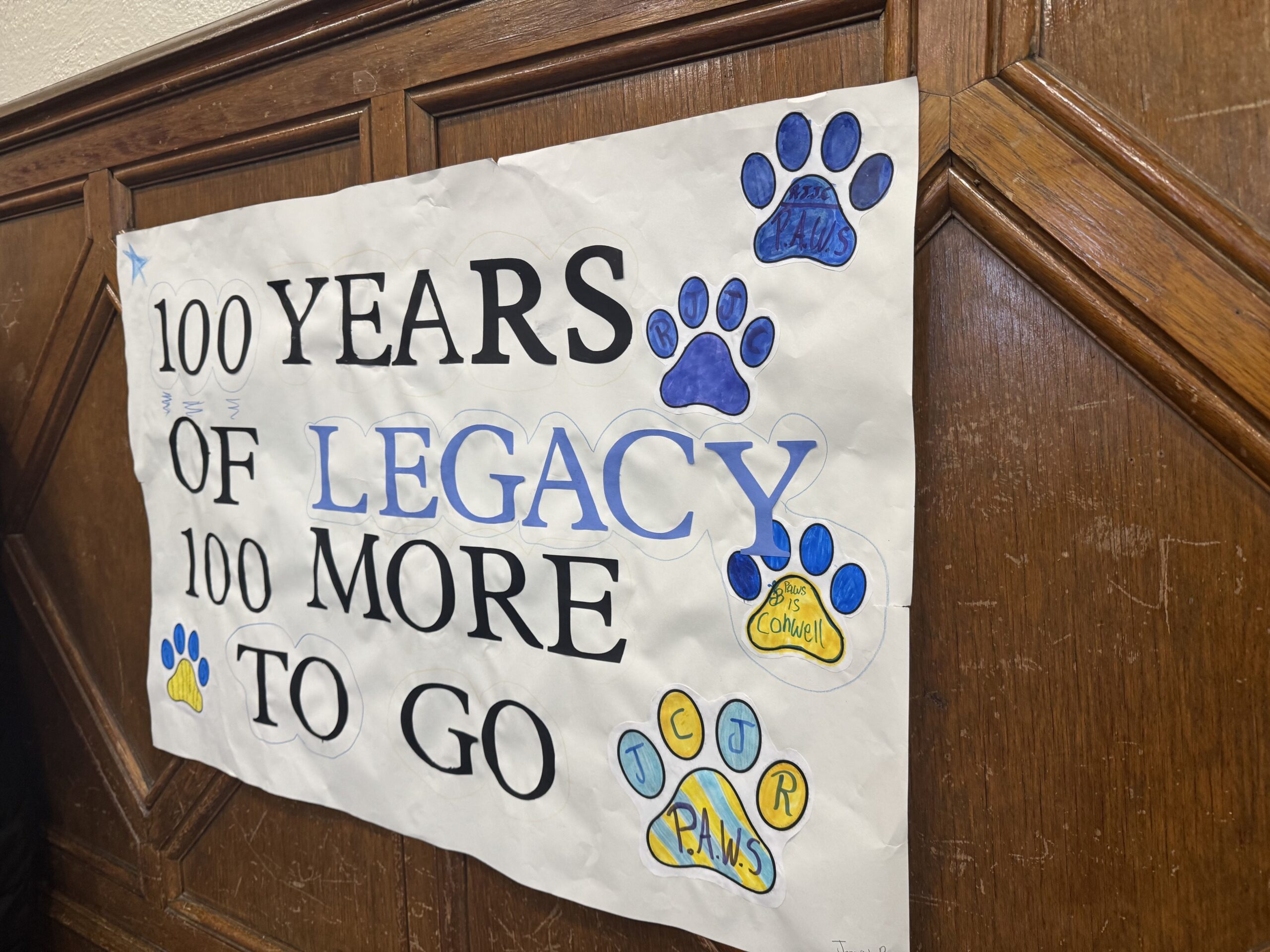
    A student-made sign hangs in the Conwell Middle School auditorium. The Philadelphia School District is attempting to close Conwell, a magnet 5-8 school in Kensington, and 19 other schools. The community is fighting the closure.

    Conwell, in Kensington, is a very small school by any standard. This year, just 109 students are enrolled in a building that holds 500. That’s down from 490 students in the 2015-16 school year and 806 in 2009-10. The school used to occupy two buildings; it has since shrunk to one.

    But it is also a rarity — a standalone magnet middle school. Community members and local officials are mounting a fight against closing the school, which they say has committed teachers and staff members who help students excel against the odds.

    The district’s plan, which the school board is expected to vote on this winter, calls for Conwell students to move to AMY at James Martin, another citywide admissions magnet in Port Richmond, which just opened in a new building with only 200 students. Meanwhile, the district has proposed closing its only other free-standing magnet middle school, AMY Northwest. No changes have been proposed for Philadelphia’s four other magnet middle schools, all of which are attached to high schools.

    Neighborhood issues, enrollment declines

    Conwell’s enrollment issues are tied closely to its setting.

    The building sits on Clearfield Street in the heart of Kensington. Fewer and fewer parents have been choosing to send their kids into ground zero of the city’s opioid epidemic, despite Conwell’s myriad partnerships, the outside investments it has attracted into its facility in recent years, and the school’s long history of excellence.
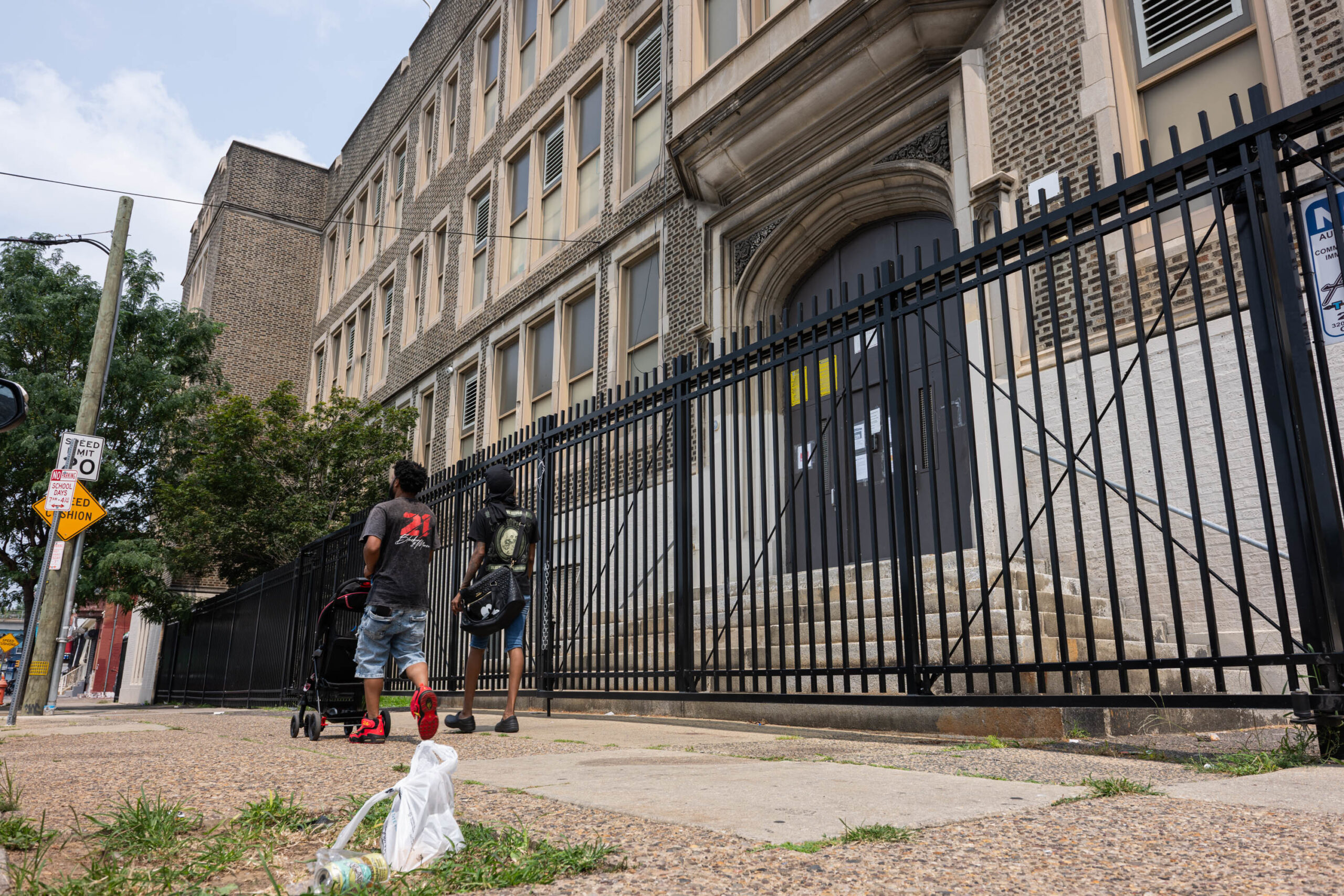
    The exterior of Conwell Middle School in Kensington, photographed in August.

    Parents, neighbors, students, and politicians, however, are furious that the district is choosing to abandon Conwell and the neighborhood.

    “If this school closes, it won’t just be students who feel the loss,” Conwell student Nicolas Zeno told officials at a district meeting Thursday. “It’ll be the community. If the concern is safety, then invest. If the concern is environment, then repair.”

    Community member Vaughn Tinsley, who runs Founding Fatherz, a nonprofit mentoring group, suggested closing Conwell would harm its students.

    “These students have been victims,” Tinsley said. “These students have seen and witnessed things they shouldn’t have witnessed. Most adults haven’t seen some of the things that these kids have seen, and yet still they come here, yet they’re still committed to excellence, yet they still stand up and still do what they’re supposed to do in the classroom. How dare we take that away from them?”

    Watlington has proposed using Conwell as “swing space” — district property that other schools can move into temporarily if their buildings require repairs.

    Tosin Efunnuga, Conwell’s nurse, wiped tears from her eyes as she beseeched district officials to keep the school open.

    “To have those doors close would be such a disservice,” Efunnuga said. “We need 100 years more.”

    Councilmember Quetcy Lozada, whose district includes Conwell, said she was “angry” and “frustrated” by the recommendation to close the school.

    “It’s underutilized because of what’s happening on the outside,” Lozada said at the Conwell meeting. “There’s nothing wrong with what is happening on the inside other than successful academic learning, support for families. We are saying to these families, we are punishing them because as a city, we can’t respond to the public safety issues that we have on the outside, and that is just not fair.”

    ‘What are y’all doing?’

    Emotions ran high inside the Conwell auditorium last week.

    Even before Deputy Superintendent Oz Hill finished his presentation about the rationale for the closures and the specific plan for Conwell, parents burst out with concerns.

    “What are y’all doing? Y’all making a mess,” one parent shouted. “You say the building is old. So what? It’s clean in here.”

    Another said her child would not be going to AMY at James Martin, formerly known as AMY5.

    “I don’t think you understand how much of a battle there is between Conwell and AMY5,” the parent said. “You don’t know the battles these kids have with each other.”

    Conwell has a strong alumni network — a rarity for a middle school — that has turned out in force to support the school since the proposed closure was announced.

    Alexa Sanchez, Class of 2017, grew up in Kensington and came to Conwell as a bright but unruly student — she acknowledges that she got in fights, egged the school, and disrespected teachers. But Conwell is rooted in its neighborhood, Sanchez said, with dedicated staff who helped her rise to earn a college degree and a good job in business.

    “They didn’t give up on students like me,” Sanchez said. “My future didn’t look promising at first, but in the long run, it did. You shouldn’t really close the school on a community that doesn’t look promising if you’re not from here.”

    Other alumni, including Robin Cooper, president of the district’s principals union, and Councilmember Isaiah Thomas, chair of Council’s Education Committee, have spoken out for Conwell.

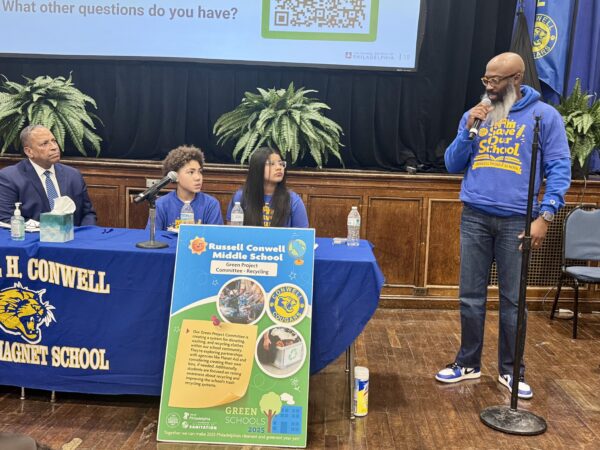
    Conwell “shows up” for Kensington and the city, running a food pantry, hosting Police Commissioner Kevin Bethel’s swearing-in ceremony and an event marking Cherelle L. Parker’s 100th day as mayor, noted Erica Green, the school’s award-winning principal. Staff and students participate in neighborhood cleanups and advocate for help amid the opioid crisis.

    “We are what the city needs,” Green told the school board recently. During Green’s tenure, she has helped win money for a new schoolyard, a new science, technology, engineering, and math lab, and more.

    “These investments were made for Kensington students,” Green said. “We owe it to them, to their neighborhood. Do not push them out once the neighborhood changes and thrives. Conwell’s success is rooted in its people, its history, and its impact.”
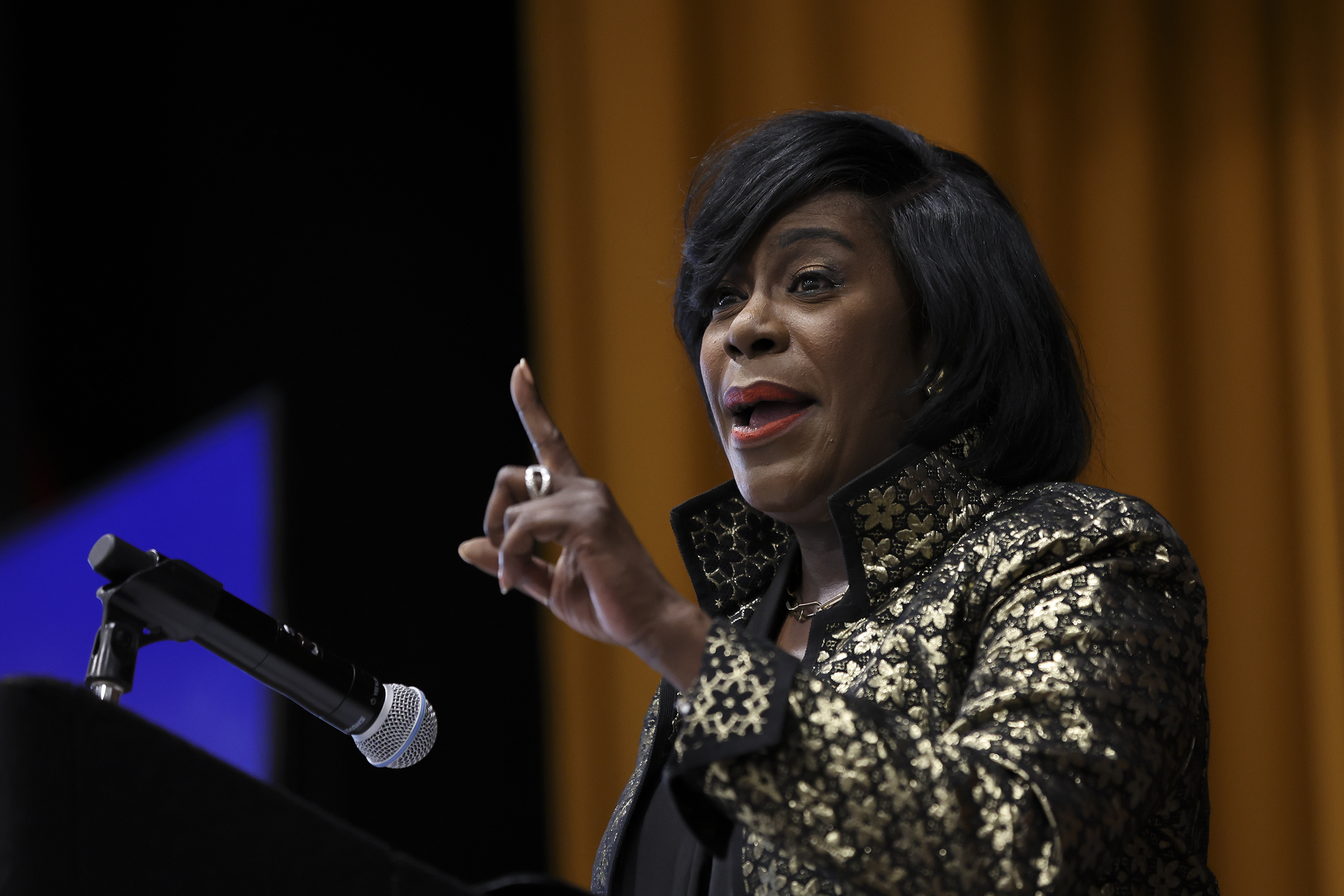
    Mayor Cherelle L. Parker speaks during an event to mark her 100th day in office at Conwell Middle School in Kensington in April 2024.
  • DA Larry Krasner forms coalition of progressive prosecutors committed to charging federal agents who commit crimes

    DA Larry Krasner forms coalition of progressive prosecutors committed to charging federal agents who commit crimes

    District Attorney Larry Krasner on Wednesday announced the formation of a new coalition of progressive prosecutors committed to charging federal agents who violate state laws.

    Krasner joined eight other prosecutors from U.S. cities to create the Project for the Fight Against Federal Overreach, a legal fund that local prosecutors can tap if they pursue charges against federal agents.

    The abbreviation for the group, FAFO, is a nod to what has become one of Krasner’s frequent slogans: “F— around and find out.”

    The move places Krasner at the center of a growing national clash between Democrats and the Trump administration over federal immigration enforcement and whether local law enforcement can — or should — charge federal agents for actions they take while carrying out official duties.

    It is also the latest instance in which Krasner, one of the nation’s most prominent progressive prosecutors, has positioned himself as Philadelphia’s most vocal critic of President Donald Trump. He has made opposing the president core to his political identity for a decade, and he said often as he was running for reelection last year that he sees himself as much as a “democracy advocate” as a prosecutor.

    Krasner has used provocative rhetoric to describe the president and his allies, often comparing their agenda to World War II-era fascism. During a news conference Tuesday, he said federal immigration-enforcement agencies are made up of “a small bunch of wannabe Nazis.”

    The coalition announced Wednesday includes prosecutors from Minneapolis; Tucson, Ariz.; and several cities in Texas and Virginia. It was formed to amass resources after two shootings of U.S. citizens by federal law enforcement officials in Minnesota this month.

    Renee Good, 37, was shot and killed in her car by an ICE officer on Jan. 7 as she appeared to attempt to drive away during a confrontation with agents. The FBI said it would not investigate her killing.

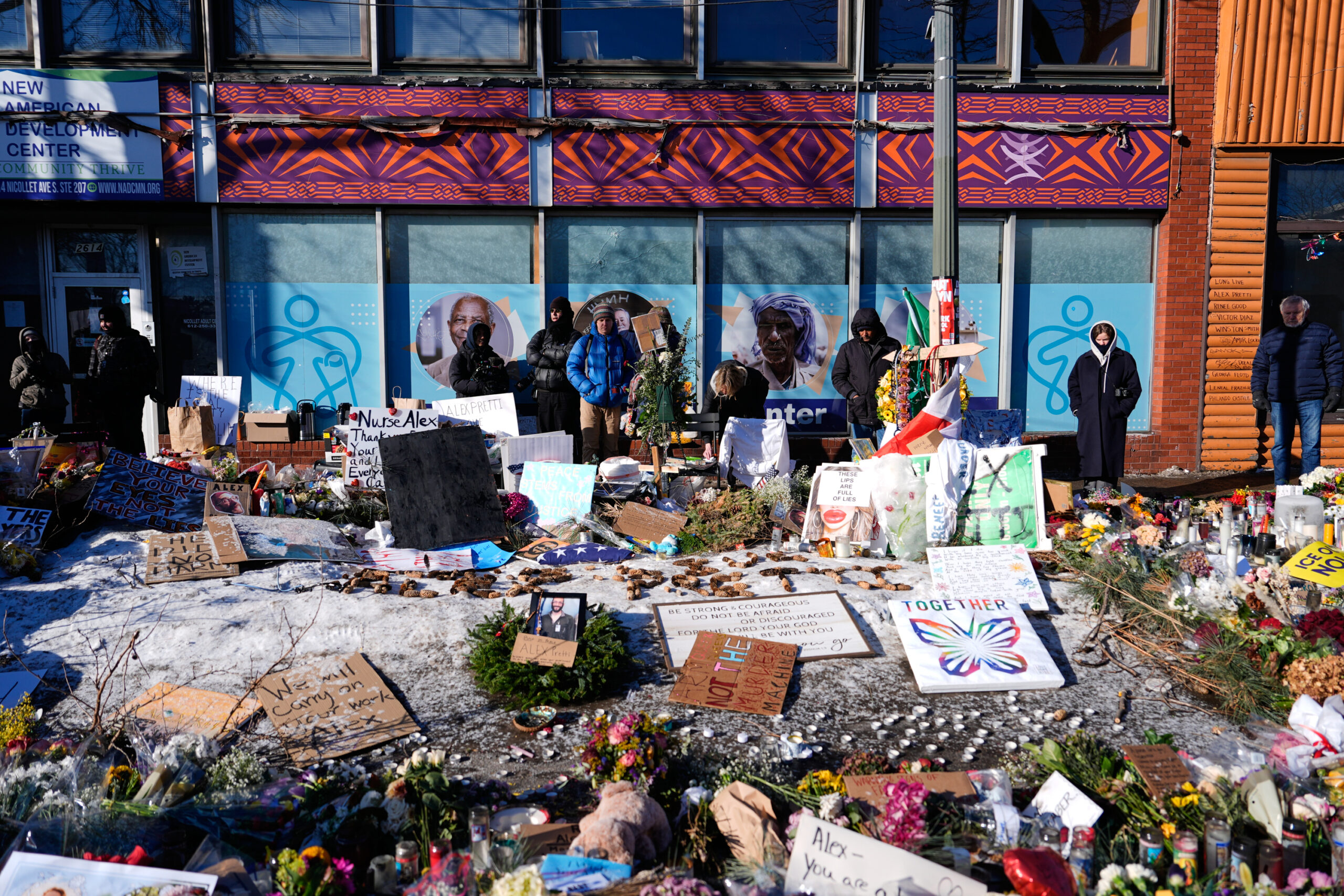
    People visit a memorial for Alex Pretti at the scene in Minneapolis where the 37-year-old was fatally shot by a U.S. Border Patrol officer.

    Then, on Saturday, Alex Pretti, 37, was killed after similarly confronting agents on a Minneapolis street. Video of the shooting, which contradicted federal officials’ accounts, appeared to show Border Patrol agents disarming Pretti, who was carrying a legally owned handgun in a holster. They then shot him multiple times. Federal authorities have attempted to block local law enforcement from investigating the shooting.

    Krasner said that, despite Vice President JD Vance’s recent statement that ICE officers had “absolute immunity” — an assertion the Philadelphia DA called “complete nonsense” — prosecutors in FAFO are prepared to bring charges including murder, obstructing the administration of justice, tampering with evidence, assault, and perjury against agents who commit similar acts in their cities.

    “There is a sliver of immunity that is not going to save people who disarm a suspect and then repeatedly shoot him in the back from facing criminal charges,” Krasner said during a virtual news conference Wednesday. “There is a sliver of immunity that is not going to save people who are shooting young mothers with no criminal record and no weapon in the side or back of the head when it’s very clear the circumstances didn’t require any of that, that it was not reasonable.”

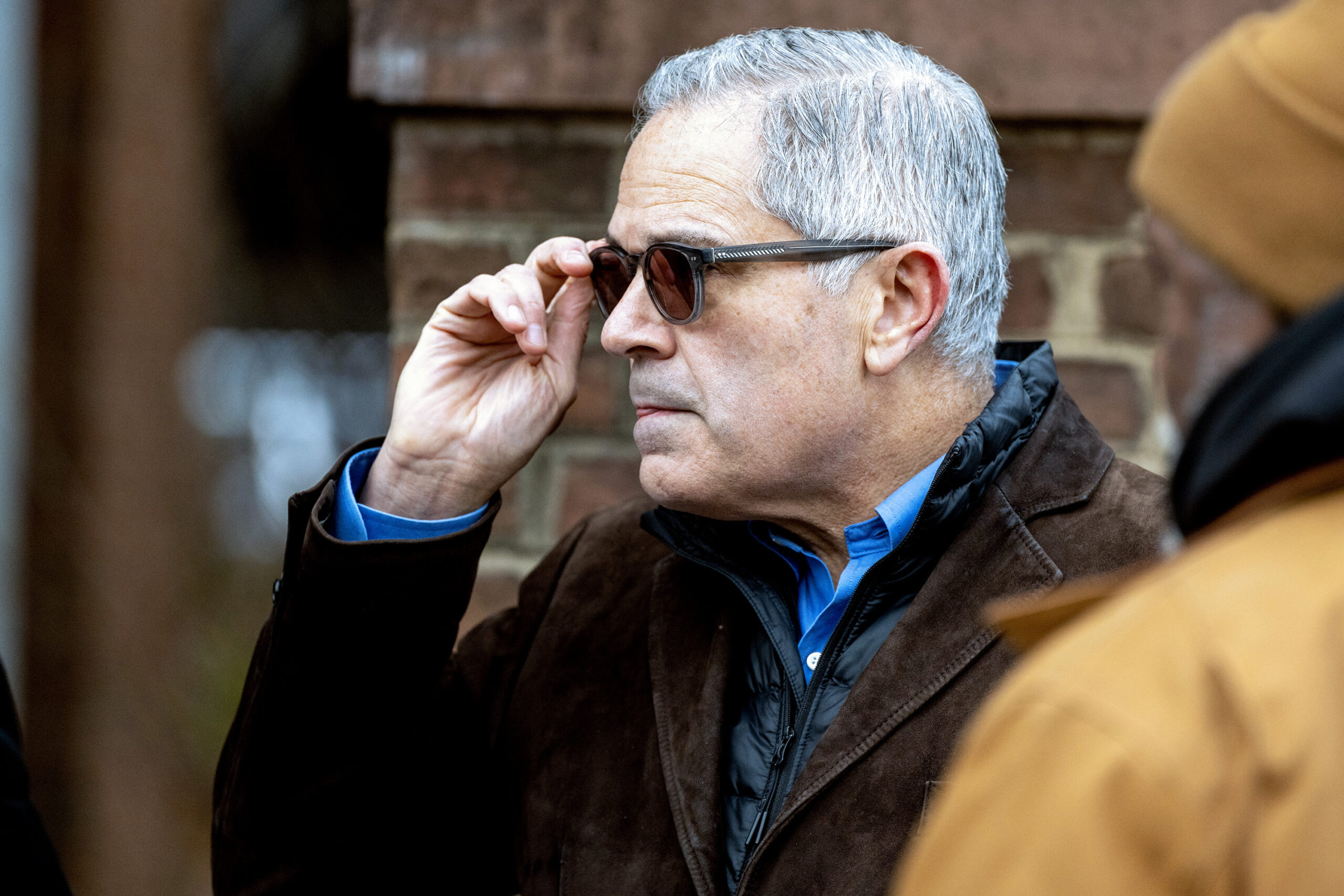
    Philadelphia District Attorney Larry Krasner attends an event at Independence National Historical Park on Dec. 21, 2025.

    How will FAFO work?

    The coalition has created a website, federaloverreach.org, and is soliciting donations.

    Prosecutors who spoke during the news conference said those donations would be toward a legal fund that would allow prosecutors to hire outside litigators, experts, and forensic investigators as they pursue high-profile cases against federal agents.

    “This will function as a common fund,” said Ramin Fatehi, the top prosecutor in Norfolk, Va., “where those of us who find ourselves in the tragic but necessary position of having to indict a federal law enforcement officer will be able to bring on the firepower necessary to make sure that the federal government doesn’t roll us simply through greater resources.”

    The money raised through the organization will not go to the individual prosecutors or their political campaigns, they said Wednesday.

    Scott Goodstein, a spokesperson for the coalition, said the money will be held by a “nonpartisan, nonprofit entity that is to be stood up in the coming days.” He said the prosecutors are “still working through” how the fund will be structured.

    Krasner said it would operate similarly to how district attorneys offices receive grant funding for certain initiatives.

    Most legal defense funds are nonprofit organizations that can receive tax-deductible donations. Those groups are barred from engaging in certain political activities, such as explicitly endorsing or opposing candidates for office.

    Goodstein said the group is also being assisted in its fundraising efforts by Defiance.org, a national clearinghouse for anti-Trump activism. One of that group’s founders is Miles Taylor, a former national security official who, during the first Trump administration, wrote under a pseudonym about being part of the “resistance.”

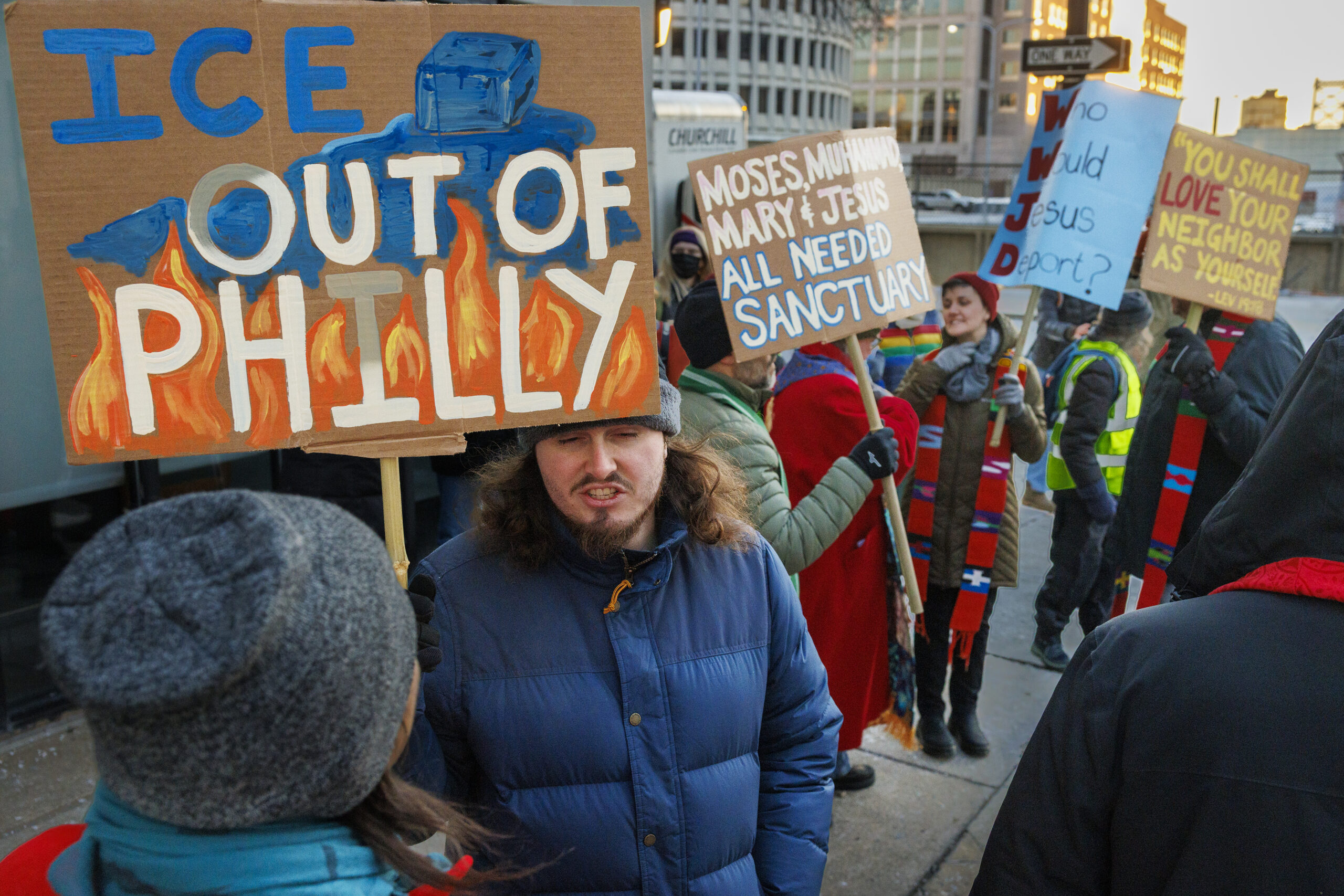
    Demonstrators from No ICE Philly gathered to protests outside the U.S. Immigration and Customs Enforcement, office at 8th and Cherry Streets, on Jan. 20.

    ‘Who benefits?’

    In forming the coalition, Krasner inserted himself into a national controversy that other city leaders have tried to avoid.

    His approach is starkly different from that of Mayor Cherelle L. Parker, a centrist Democrat who has largely avoided criticizing Trump. She says she is focused on her own agenda, and has not weighed in on the president’s deportation campaign.

    Members of the mayor’s administration say they believe her restraint has kept the city safe. While Philadelphia has policies in place that prohibit local officials from some forms of cooperation with federal immigration enforcement, the Trump administration has not targeted the city with surges of ICE agents as it has in other jurisdictions — such as Chicago and Los Angeles — where Democratic leaders have been more outspoken.

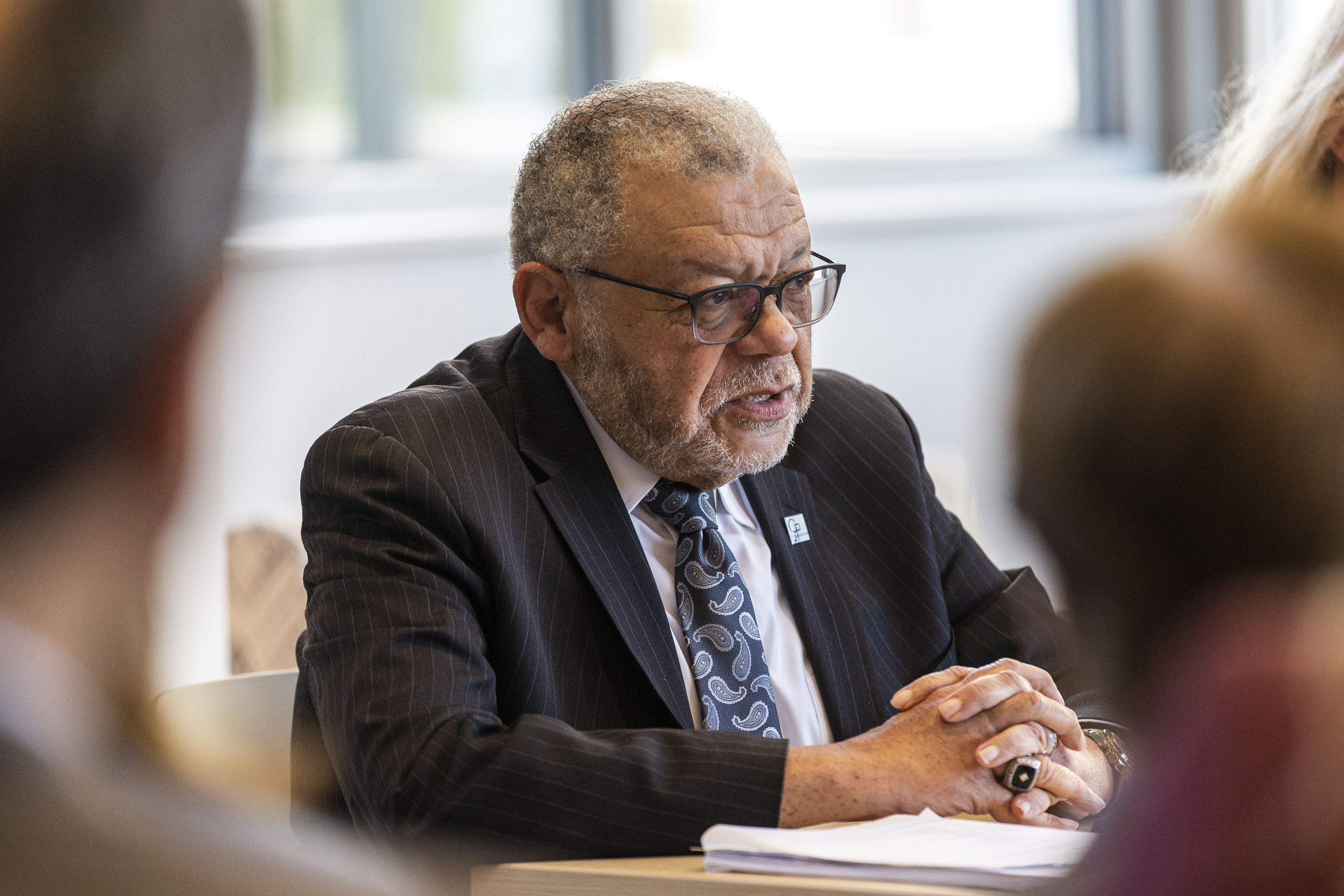
    Parker and Police Commissioner Kevin Bethel have at times been frustrated with Krasner’s rhetoric, according to a source familiar with their thinking who spoke on the condition of anonymity to discuss internal communications.

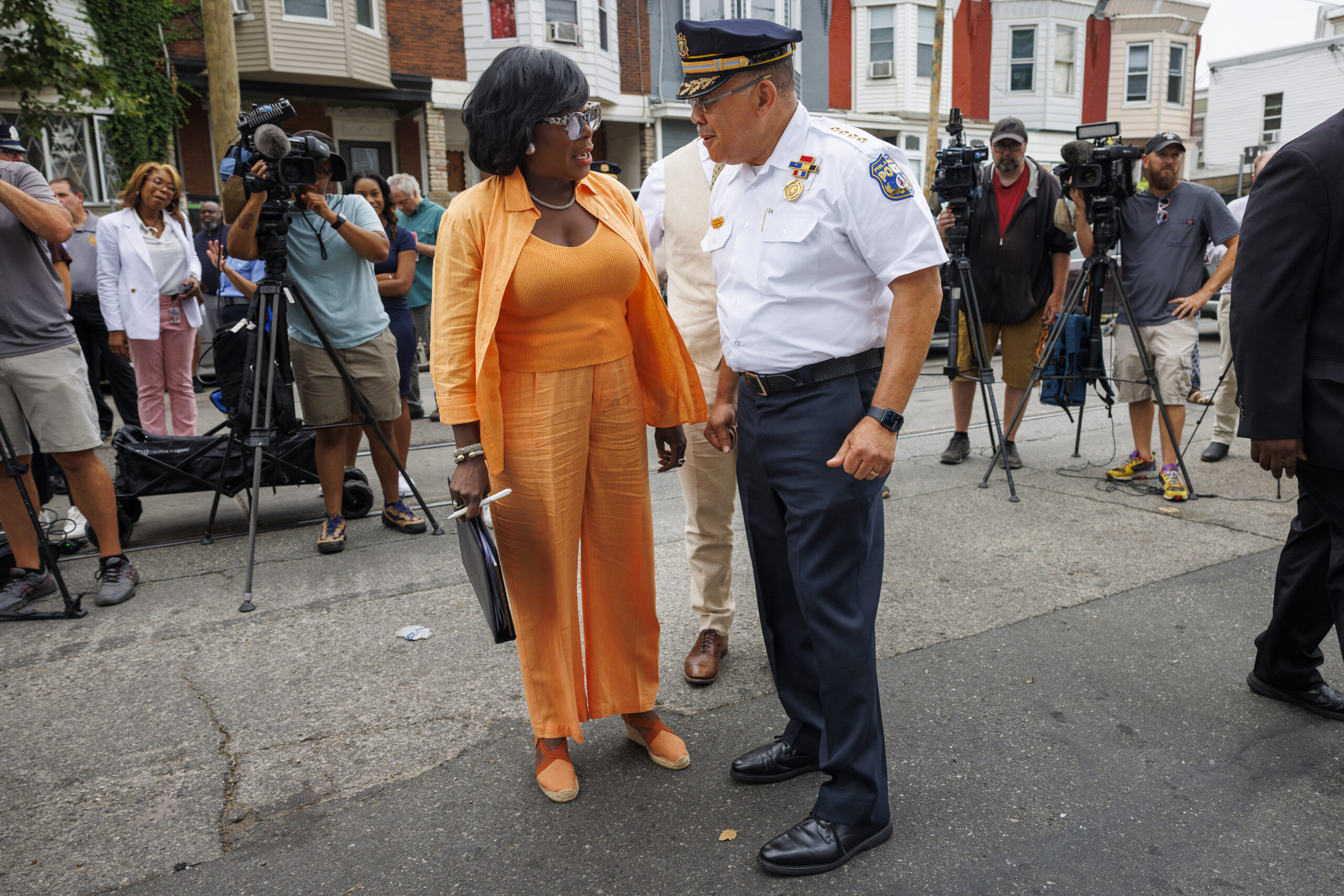
    Philadelphia Mayor Cherelle Parker and Police Commissioner Kevin Bethel speaking ahead of a July 2024 press conference.

    That was especially true this month when Krasner hosted a news conference alongside Sheriff Rochelle Bilal. The pair made national headlines after Krasner threatened to prosecute federal agents — something he has vowed to do several times — and Bilal called ICE a “fake” law enforcement agency.

    Bethel later released a statement to distance the Police Department from the Sheriff’s Office, saying Bilal’s deputies do not conduct criminal investigations or direct municipal policing.

    The police commissioner recently alluded to Parker’s strategy of avoiding confrontation with the federal government, saying in an interview on the podcast City Cast Philly that the mayor has given the Police Department instruction to “stay focused on the work.”

    “It is not trying to, at times, potentially draw folks to the city,” Bethel said. “Who benefits from that? Who benefits when you’re putting out things and trying to… poke the bear?”

    As for Krasner’s latest strategy, the DA said he has received “zero indication or communication from the mayor or the police commissioner that they’re in a different place.”

    “I feel pretty confident that our mayor and our police commissioner, who are doing a heck of a lot of things right,” he said, “will step up as needed to make sure that this country is not invaded by a bunch of people behaving like the Gestapo.”

  • Tackling gun violence as our shared purpose

    Tackling gun violence as our shared purpose

    As we start the new year, many of the challenges that persisted in 2025 remain on our horizon for 2026. Sadly, gun violence is one such challenge, but our city has demonstrated what the power of working together can do in making progress in such a significant way.

    Philadelphia made history in 2025, recording the fewest homicides in almost 60 years, and it is true that many cities nationwide are also experiencing this trend. But Philadelphia’s gains are noteworthy in that it is seeing these tremendous public safety gains despite continuing to struggle with issues like deeply entrenched poverty.

    There are many factors driving these numbers, and Mayor Cherelle L. Parker’s public safety strategy of prevention, intervention, and enforcement (PIE) has brought vital focus and intention driven by data. Working together — the Philadelphia Police Department and the Office of Public Safety working in tandem, along with organizations like the group I lead, the Civic Coalition to Save Lives — enable the sum to become greater than the parts in their overall effectiveness in bolstering the city’s strategy.

    For our part, we represent nonprofit and private-sector partners by activating resources like subject matter experts, new data infrastructure, and innovative cross-jurisdictional collaborations.

    The results are compelling: One analysis found that Philly had the best community safety infrastructure of any of the nation’s 10 largest cities, and a Pew poll found that public perception of safety is improving. That means the Office of Public Safety — an entity only two years old — is leading other major cities in its comprehensive approach to violence prevention and intervention.

    This is something our city should be proud of and raise up.

    Just a few years ago, the city was struggling with record-high shooting and homicide rates coming out of the pandemic, and while many individuals and organizations from every sector had meaningful tools to address the issue, it lacked one cohesive, well-coordinated approach to save the maximum number of lives from gun violence in the near term.

    From this gap, both the coalition and the Office of Public Safety were derived, the latter via mayoral executive order, and have grown intertwined in expanding the reach and capacity of Philadelphia’s vast network of anti-violence and cognitive behavioral health approaches deployed to reduce shootings.

    The credit for the success of these many violence prevention and intervention strategies lies with our leaders who have the focus and political will, the practitioners and participants in these programs relentlessly choosing to do this hard work, the public and private funders, and informed and engaged nongovernmental partners.

    Looking to the future, maintaining success and remaining focused on Mayor Parker’s and City Council’s goal of being the safest city will require continued vigilance and commitment to what works. Unfortunately, many organizations are already facing historic budget challenges exacerbated by losses of funding at the federal level that had incentivized proven, focused violence intervention practices.

    As we confront this reality, let’s keep in mind the adage that an ounce of prevention is always worth a pound of cure.

    According to a report by the city, every fatal shooting in Philadelphia can cost as much as $1.5 million in related policing, healthcare, job/property loss, and that is not even accounting for the indirect lost tax revenue or economic activity in high crime areas, or the most important cost: the human impact and intergenerational trauma carried through families and communities.

    A report by the City Controller’s Office also estimated that an investment of $43 million over five years could reduce homicides by 35%, which would translate into a more than $70 million return on investment in increased property tax revenue alone.

    Our call to action for Philadelphians when it comes to reducing violence is this: Stay tuned in and keep showing up, however you can. As Mayor Parker often says, don’t just listen to what is said, watch what people do.

    The unified, coordinated effort to reduce gun violence is working (for context, 2025 saw fewer than half of the record-high homicides and shootings seen in 2021). Mayor Parker, Police Commissioner Kevin J. Bethel, and Public Safety Director Adam Geer have said it, too: “We can’t let up off the gas pedal.”

    We agree.

    There is an African proverb that says: “If you want to go fast, go alone. If you want to go far, go together.” Reducing gun violence can only be achieved over time — not overnight. And the only way we’ll be able to solve it is by working together.

    Here’s to the promising journey ahead.

    David W. Brown serves as the executive director of the Civic Coalition to Save Lives.

  • Americans take their heroes where they can get them, but they should look past Philly’s sheriff | Shackamaxon

    Americans take their heroes where they can get them, but they should look past Philly’s sheriff | Shackamaxon

    This week’s column talks about heroes with feet of clay, SEPTA’s starts and stops, and America’s 250th birthday celebrations.

    No one’s hero

    Philadelphia Sheriff Rochelle Bilal is having her 15 minutes of fame this week, with her comments at a news conference alongside District Attorney Larry Krasner spreading across social media. After the killing of Renee Good by U.S. Immigration and Customs Enforcement agent Jonathan Ross in Minneapolis, Krasner stated that he would hold federal officers accountable for any violation of the law. Bilal warned that the feds “don’t want that smoke” and called ICE “fake wannabe law enforcement.” She even scored an interview with CNN’s Erin Burnett.

    That’s all well and good, but there’s one big problem with Bilal’s position: The sheriff ultimately has no ability to protect Philadelphians from ICE.

    Despite her title and natty uniform, it is Police Commissioner Kevin J. Bethel who serves as the city’s top law enforcement official, not Bilal. This is a good thing because the sheriff’s track record is disastrous.

    Despite running for the office in 2019 as a reformer, Bilal began her tenure by firing Brett Mandel, her chief financial officer, just five weeks into his tenure. Mandel had flagged her use of what he described as a slush fund. A longtime good government advocate, Mandel objected to using city funds to pay for things like parking tickets and six-figure media consulting contracts.

    Things haven’t improved in the years since. Bilal was publicly criticized by the city’s judges for her failure to protect courtrooms, turning over foreclosure sales to an online operator with little notice, covering up the theft of a department-issued vehicle, one of her deputies was caught selling guns illegally, and her office wasted nearly $10,000 on a new mascot no one asked for. The list goes on, yet city officials have mostly steered clear of criticizing the sheriff for her missteps.

    While Bilal was basking in the media spotlight of talking tough against ICE, Bethel was not amused. Given Mayor Cherelle L. Parker’s clear strategy to avoid poking the orange bear, Bilal’s comments forced the commissioner to make clear in a statement that it is the Philadelphia Police Department that runs law enforcement in the city, not the sheriff.

    If people are looking for a genuine local hero in the national crisis over immigration enforcement, why not opt for Keisha Hudson instead? Hudson, who leads the local Defenders Association, has put together a new unit specializing in immigration cases. An immigrant from Jamaica herself, Hudson has both the right job and the right life experience to help residents who have been mistreated by ICE.

    Bilal, on the other hand, can’t even keep ICE from turning the courts she’s responsible for into a hunting ground for the feds.

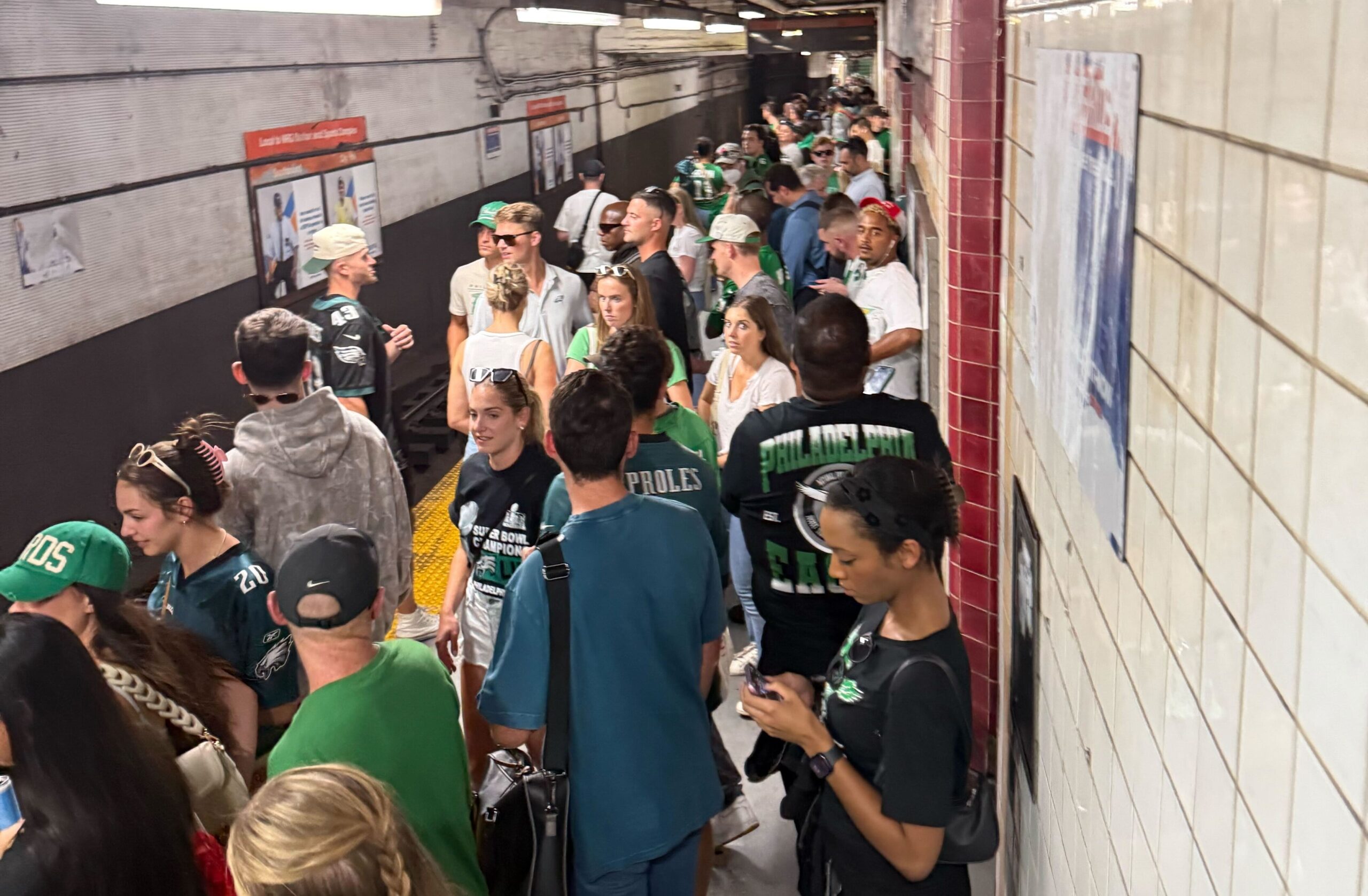
    Eagles fans wait for a Broad Street Line train at City Hall station.

    The wheels on the bus

    During the yearslong debate over transit funding in Pennsylvania, one consistent drumbeat is that SEPTA needed to become more efficient if it wanted to get more support.

    Of course, SEPTA already does more with less when compared with other major agencies, with cost-per-ride lower than in Boston and Washington, D.C. Additionally, trying to save money can sometimes cost agencies in the long run, or at the very least cost scarce political capital.

    In fact, most of the current crises SEPTA faces are the result of trying to save money or insufficient political will. For example, better capitalized agencies would have replaced the Regional Rail fleet a decade or so ago. Meanwhile, the weekslong closure of the trolley tunnel happened because the agency tried using a new part — in the hope that it would be replaced less frequently and cost less.

    Perhaps the Broad Street Line felt left out of the chaos because operations there have become a new pain point for riders. The 1980s Kawasaki trains are well-built. They are also nearly 45 years old. When I first started at The Inquirer five years ago, then-SEPTA General Manager Leslie Richards told me she hoped to avoid replacing the trains until the 2040s. Recent issues on that line make me question that timeline.

    For weeks, the trains have struggled with mechanical issues. Riders have reported jam-packed trains that have been forced to skip stops, line adjustments, and other delays. According to a spokesperson, door faults and general vehicle malfunctions have contributed to the problems.

    It all came to a head at the end of Sunday’s Eagles game.

    After a door issue disabled a train near Snyder Station, already dejected fans were forced to wait until 9 p.m. to catch a ride home. SEPTA is spending $5 million to upgrade the traction motors, which should help. What’s really needed, however, are new trains.

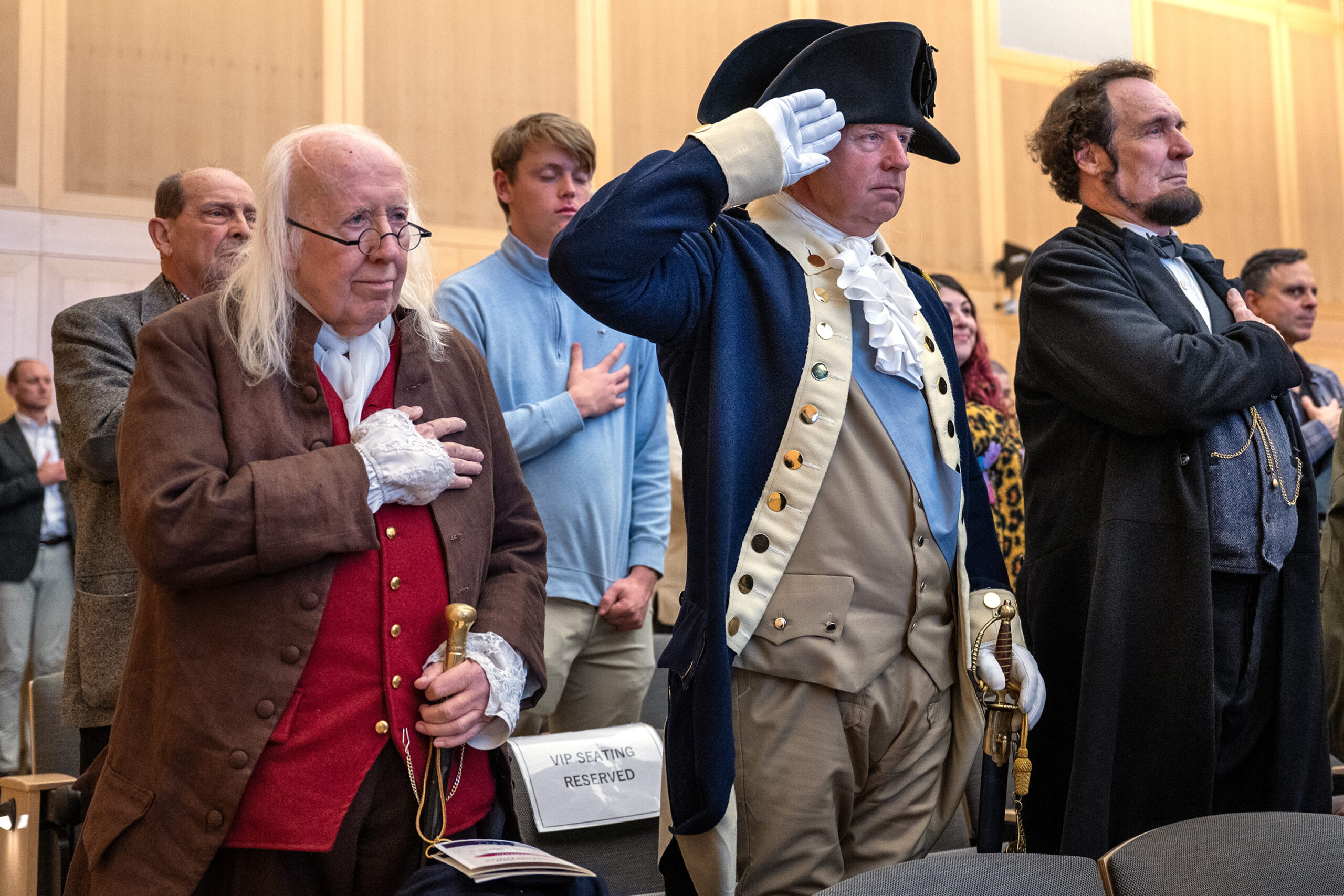
    Historical interpreters (from left) Benjamin Franklin, Gen. George Washington, and President Abraham Lincoln stand with other audience members for the Presentation of the Colors, as the U.S. Mint unveils new coins for the Semiquincentennial at the National Constitution Center in Philadelphia in December.

    Let’s get this party started

    The United States is celebrating a big one this year. America’s big 250th birthday party is here … can you tell?

    I can’t. While big events like the World Cup are planned for later this year, there is currently little to indicate that 2026 is any different from 2025. The patriotic bunting that sprouted all over Philadelphia during the Civil War and the Centennial has yet to appear.

    Still, help is on the way. City and state officials announced an $11.5 million initiative to remove graffiti, plant flowers, and otherwise beautify the city.

    At that price, we should probably do it every year.

  • More Philadelphia police live outside the city than ever before

    More Philadelphia police live outside the city than ever before

    When Cherelle L. Parker was a City Council member, she championed a strict residency rule that required city employees to live in Philadelphia for at least a year before being hired.

    Amid protest movements for criminal justice reform in 2020, Parker said stricter residency requirements would diversify a police force that has long been whiter than the makeup of the city, and ensure that officers contribute to the tax base.

    “It makes good common sense and good economic sense for the police policing Philadelphia to be Philadelphians,” she said then.

    But today, under now-Mayor Parker, more police live outside Philadelphia than ever before.

    About one-third of the police department’s 6,363 full-time staffers live elsewhere. That share — more than 2,000 employees — has roughly doubled since 2017, the last time The Inquirer conducted a similar analysis.

    (function() {
    var l2 = function() {
    new pym.Parent(‘ppd_zips’,
    ‘https://media.inquirer.com/storage/inquirer/projects/innovation/arcgis_iframe/ppd_zips.html’);
    };
    if (typeof(pym) === ‘undefined’) {
    var h = document.getElementsByTagName(‘head’)[0],
    s = document.createElement(‘script’);
    s.type = ‘text/javascript’;
    s.src = ‘https://pym.nprapps.org/pym.v1.min.js’;
    s.onload = l2;
    h.appendChild(s);
    } else {
    l2();
    }
    })();

    Today, the percentage of nonresidents is even higher among the top brass: Nearly half of all captains, lieutenants, and inspectors live outside the city, according to a review of the most recent available city payroll data.

    Even Commissioner Kevin Bethel keeps a home in Montgomery County, despite officially residing in a smaller Northwest Philadelphia house that he owns with his daughter.

    Most municipal employees are still required to live within city limits. Across the city’s 28,000-strong workforce, nearly 3,200 full-time employees listed home addresses elsewhere as of last fall. Most of them — more than 2,500 — are members of the police or fire departments, whose unions secured relaxed residency rules for their workers in contract negotiations. About a quarter of the fire department now lives outside the city.

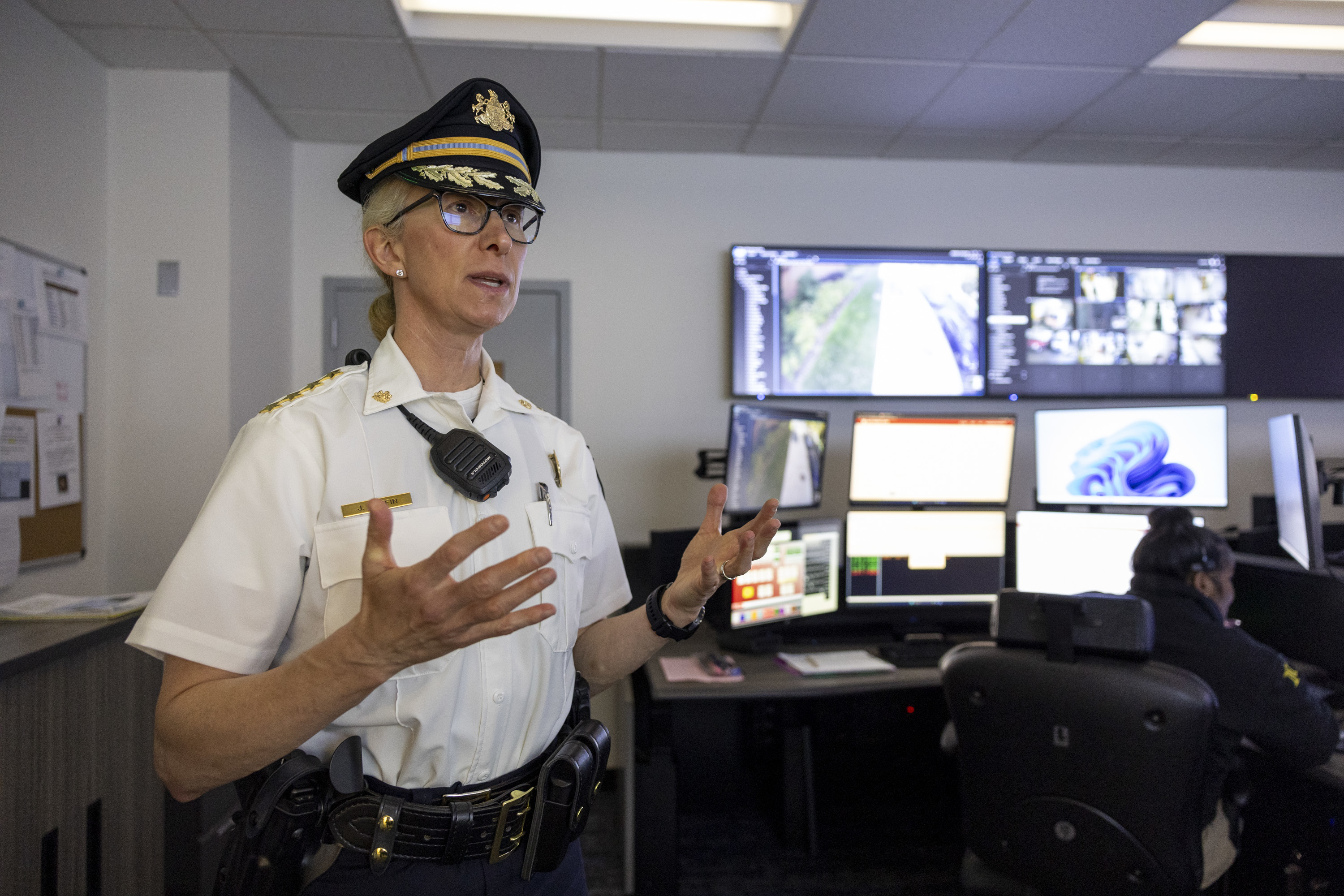
    Philadelphia Mayor Cherelle L. Parker and Police Commissioner Kevin Bethel speak before the start of a news conference.

    Proponents of residency rules in City Hall have long argued they improve rapport between law enforcement and the communities they serve, because officers who have a stake in the city may engage in more respectful policing.

    But experts who study public safety say there is little evidence that residency requirements improve policing or trust. Some say the rules can backfire, resulting in lesser quality recruits because the department must hire from a smaller applicant pool.

    A survey of 800 municipalities last year found that residency requirements only modestly improved diversity and had no measurable effect on police performance or crime rates.

    “It’s a simple solution thrown at a complex problem,” said Fritz Umbach, an associate professor at John Jay College of Criminal Justice. “It doesn’t have the impact people think it will.”

    Parker, a Philadelphia native who lives in the East Mount Airy neighborhood, says she would still prefer all municipal employees live in the city.

    “When I grew up in Philadelphia, it was a badge of honor to have police officers and firefighters and paramedics who were from our neighborhood,” she said in a statement. “They were part of the fabric of our community. I don’t apologize for wanting that to be the standard for our city.”

    ‘Where they lay their heads at night’

    What qualifies as “residency” can be a little pliable.

    Along with his wife, Bethel purchased a 3,600-square-foot home in Montgomery County in 2017 for over a half-million dollars. Although he initially satisfied the residency rule by leasing a downtown apartment after being named commissioner by Parker in late 2023, he would not have met the pre-residency requirement the mayor championed for other city employees while she was on Council.

    Today, voter registration and payroll data shows that Bethel resides in a modest, 1,800-square-foot rowhouse in Northwest Philadelphia, which he purchased with his daughter last year. While police sources said it was common for Bethel to sleep in the city given his long work hours, his wife is still listed as a voter in Montgomery County.

    Police Commissioner Kevin Bethel speaks during the 22nd District community meeting at the Honickman Learning Center on Dec. 2, 2025.

    Sgt. Eric Gripp, a spokesperson for the department, said in a statement that Bethel is a full-time resident of Philadelphia, and that while he owns a property outside the city, his “main residence” is the home in Northwest Philly.

    Although sources say it was not unheard of for rank-and-file officers to use leased apartments to satisfy the requirement on paper, Gripp said “only a small number” of residency violations had required formal disciplinary action following an investigation by the department’s Internal Affairs Division.

    That likely owes to officers’ increasing ability to reside elsewhere legally. The Fraternal Order of Police Lodge 5, which represents thousands of active and retired Philadelphia Police officers, won a contract provision in 2009 allowing officers to live outside the city after serving on the force for at least five years.

    The union didn’t respond to a request for comment.

    Few of the cops who left the city went very far.

    While Northeast Philly and Roxborough remain the choice neighborhoods for city police, the top destinations for recent transplants were three zip codes covering Southampton, and Bensalem and Warminster Townships, according to city payroll data.

    A few officers went much farther than the collar counties.

    Robert McDonnell Jr., a police officer in West Philadelphia’s 19th district with 33 years on the force, has an official address at a home in rural Osceola Mills, Pa., about 45 minutes north of Altoona in Centre County.

    A person who answered a phone number associated with McDonnell — who earned $124,000 last year between his salary, overtime, and bonus pay — declined to speak to a reporter.

    Asked about the seven-hour round-trip commute McDonnell’s nominal residence could entail, Gripp said the department doesn’t regulate the manner in which employees travel to and from work.

    “Our members serve this city with dedication every day,” he said, “regardless of where they lay their heads at night.”

    A long and winding history

    Versions of residency rules can be found as far back as the 19th century, when police recruits were required to live in the districts they sought to work in.

    But when Mayor Joseph S. Clark pushed to reform the city charter in the 1950s, he sought to abolish the rules as an impediment to hiring, saying “there should be no tariff on brains or ability.”

    Instead, City Council successfully fought to expand the restrictions. And, for more than five decades, the city required most of its potential employees to have lived in Philadelphia for a year — or obtain special waivers that, in practice, were reserved for the most highly specialized city jobs, like medical staff.

    Many other big cities enacted similar measures either to curb middle-class flight following World War II or to prioritize the hiring of local residents. But the restrictions were frequently blamed for causing chronic staff shortages of certain hard-to-fill city jobs.

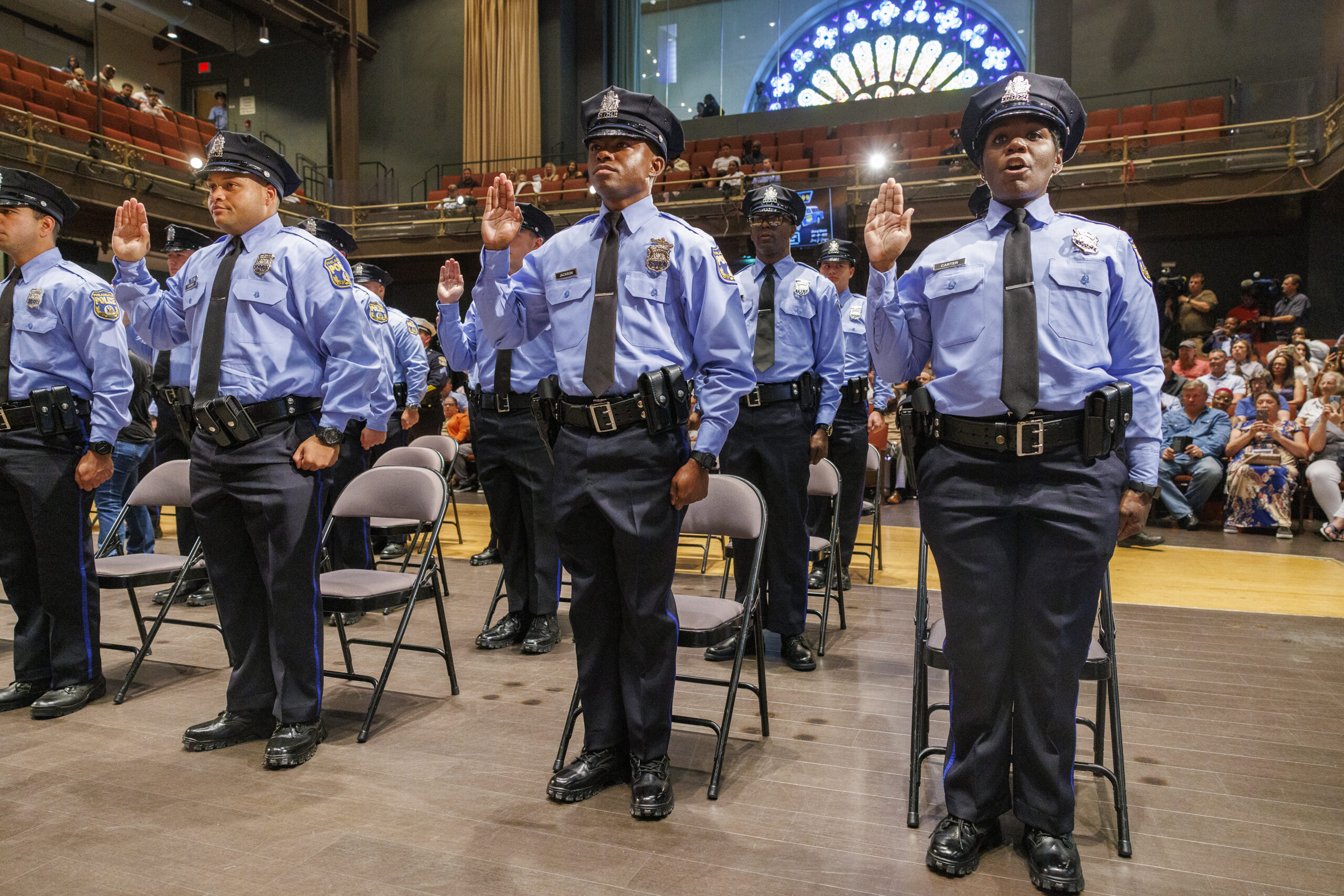
    Officers Azieme Lindsey (from left), Charles T. Jackson, and Dalisa M. Carter taking their oaths in 2023.

    Citing a police recruit shortage in 2008, former Mayor Michael A. Nutter successfully stripped out the prehiring residency requirement for cadets. Recruits were required only to move into the city once they joined the force.

    A year later, the police union attempted to have the residency requirement struck from its contract entirely.

    Nutter’s administration objected. But an arbitration panel approved a compromise policy to allow officers to live elsewhere in Pennsylvania after five years on the job. By 2016, firefighters and sheriff’s deputies secured similar concessions.

    Then, in 2020, Parker and then-Council President Darrell L. Clarke successfully fought to have the one-year, prehire residency requirement reinstated. They said it would result in a more diverse force and an improved internal culture.

    But experts say there’s little research showing that to be true.

    “I am unsure if requiring officers to reside in the city is a requirement supported by evidence,” said Anjelica Hendricks, an assistant law professor at the University of Pennsylvania who worked for the city’s Police Advisory Commission. “Especially if that rule requires a city to sacrifice something else during contract negotiations.”

    Residency requirements have been a point of contention for organized labor over decades.

    FOP leaders have long opposed the rule and said it was partly to blame for the department’s unprecedented recruitment crisis and a yearslong short-staffing problem that peaked in the aftermath of the COVID-19 pandemic.

    In 2022, facing nearly 1,500 unfilled police jobs, former Mayor Jim Kenney loosened the prehire residency rule for the police department again, allowing the force to take on cadets who lived outside the city, so long as they moved into Philadelphia within a year-and-a-half of being hired.

    Since then, recruiting has rebounded somewhat, which police officials attribute to a variety of tactics, including both the eased residency rules and hiring bonuses. The force is still short 20% of its budgeted staffing and operating with 1,200 fewer officers than it did 10 years ago.

    Umbach, the John Jay professor, said the impact on recruiting is obvious: Requiring officers to live in a city where the cost of living may be higher than elsewhere amounts to a pay cut, which shrinks candidate pools.

    “Whenever you lower the standards or lower the appeal of the job, you’re going to end up with people who cause you problems down the road,” he said. “A pay cut is just that.”

  • Philadelphia records the fewest homicides in nearly 60 years, plus other insights to 2025’s crime

    Philadelphia records the fewest homicides in nearly 60 years, plus other insights to 2025’s crime

    For the first time in more than half a century, Philadelphia has recorded fewer than 225 homicides in a single year.

    In 2025, 222 people were killed — the fewest since 1966, when there were a fraction of as many guns in circulation and 178 homicides.

    It is a milestone worth commemorating — and mourning: Violence has fallen to its lowest level in decades, yet 222 deaths in a single city is still considered progress.

    window.addEventListener(“message”,function(a){if(void 0!==a.data[“datawrapper-height”]){var e=document.querySelectorAll(“iframe”);for(var t in a.data[“datawrapper-height”])for(var r,i=0;r=e[i];i++)if(r.contentWindow===a.source){var d=a.data[“datawrapper-height”][t]+”px”;r.style.height=d}}});

    The drop mirrors a national reduction in violence and follows years of sustained declines after Philadelphia’s annual homicide totals peaked during the pandemic, and it reflects a mix of likely contributing factors: Tech-savvy police are solving more shootings, violence prevention programs have expanded, and the city has emerged from pandemic instability.

    No single policy or investment explains it, and officials caution that the gains are fragile.

    “The numbers don’t mean that the work is done,” said Adam Geer, the city’s director of public safety. “But it’s a sign that what we’re doing is working.”

    The impact is tangible: fewer children losing parents, fewer mothers burying sons, fewer cycles of retaliation.

    “We are saving a life every day,” District Attorney Larry Krasner said.

    Still, the violence hit some. Victims ranged from a 2-year-old girl allegedly beaten to death by her mother’s boyfriend to a 93-year-old grandfather robbed and stabbed in his home. They included Ethan Parker, 12, fatally shot by a friend playing with a gun, and Said Butler, 18, killed just days before starting his first job.

    Police say street-level shootings and retaliatory violence fell sharply, in part because some gang conflicts have burned out after key players were arrested or killed. Killings this year more often stemmed from long-standing drivers — arguments, drugs, and domestic violence — and were concentrated in neighborhoods that have borne the brunt of the crisis.

    “These same communities are still traumatized,” said Police Commissioner Kevin Bethel. “One gunshot is a lot. We can’t sit or act like we don’t see that.”

    window.addEventListener(“message”,function(a){if(void 0!==a.data[“datawrapper-height”]){var e=document.querySelectorAll(“iframe”);for(var t in a.data[“datawrapper-height”])for(var r,i=0;r=e[i];i++)if(r.contentWindow===a.source){var d=a.data[“datawrapper-height”][t]+”px”;r.style.height=d}}});

    The number of domestic-related killings nearly doubled this year compared with last, making up about 20% of homicides, Geer said. The disappearance and killing of Kada Scott, a 23-year-old woman from Mount Airy, was among them, and led to a citywide outcry and renewed scrutiny of how authorities handle violence against women.

    And mass shootings on back-to-back holiday weekends — 11 people shot in Lemon Hill on Memorial Day, and 21 shot in a pair of incidents in South Philadelphia over July Fourth — left residents reeling.

    Still, a 2025 survey from Pew Charitable Trusts showed that a majority of Philadelphians feel safer in their neighborhoods than they have in years.

    <iframe title="Philadelphians’ Perceptions of Safety at Night" aria-label="Line chart" id="datawrapper-chart-GRrTN" src="https://datawrapper.dwcdn.net/GRrTN/1/" scrolling="no" frameborder="0" style="width: 0; min-width: 100% !important; border: none;" height="556" data-external="1"></iframe><script type="text/javascript">window.addEventListener("message",function(a){if(void 0!==a.data["datawrapper-height"]){var e=document.querySelectorAll("iframe");for(var t in a.data["datawrapper-height"])for(var r,i=0;r=e[i];i++)if(r.contentWindow===a.source){var d=a.data["datawrapper-height"][t]+"px";r.style.height=d}}});</script>

    The progress comes even as the police department remains 20% below its budgeted staffing levels, with about 1,200 fewer officers on the force than 10 years ago.

    The city’s jail population has reached its lowest level in recent history. It dipped below 3,700 in April for the first time in at least a decade, and remains so today.

    <iframe title="Philadelphia’s Jail Population" aria-label="Line chart" id="datawrapper-chart-73NZP" src="https://datawrapper.dwcdn.net/73NZP/1/" scrolling="no" frameborder="0" style="width: 0; min-width: 100% !important; border: none;" height="527" data-external="1"></iframe><script type="text/javascript">window.addEventListener("message",function(a){if(void 0!==a.data["datawrapper-height"]){var e=document.querySelectorAll("iframe");for(var t in a.data["datawrapper-height"])for(var r,i=0;r=e[i];i++)if(r.contentWindow===a.source){var d=a.data["datawrapper-height"][t]+"px";r.style.height=d}}});</script>

    And arrests citywide, particularly for drug crimes, have cratered and remain far below pre-pandemic levels, mirroring a nationwide trend.

    Experts say the moment demands persistence.

    “We can’t look at this decline and turn our attention to other problems that we have to solve. We have to keep investing and keep pushing to get this number even lower, because it could be even lower,” said Jason Gravel, an assistant professor of criminal justice at Temple University.

    ‘Unheard of’ clearance rates

    After shootings exploded during the pandemic, and Philadelphia recorded 562 homicides in 2021 — the most in its history — violence began to decline, slowly at first.

    But then, from 2023 to 2024, killings fell by 35% — the largest year-over-year reduction among U.S. cities with the highest homicide rates, according to an analysis by Pew.

    The decline continued into 2025.

    Police Commissioner Kevin Bethel arrives at a North Philadelphia community meeting on Dec. 2.

    Bethel has pointed to a host of potential reasons for the decline: the reopening of society post-pandemic — kids returned to school and adults reconnected with jobs, courts, and probation officers — as well as police resources focused in hot spot crime areas and improved coordination among city leaders.

    Most notably, he said, detectives are making more arrests in nonfatal shootings and homicides. Experts say that arresting shooters is a key violence-prevention strategy — it prevents that shooter from committing more violence or from ending up as a victim of retaliation, sends a message of accountability and deterrence, and improves the relationship between police and the community.

    The homicide clearance rate this year ended at 81.98%, the highest since 1984, and the clearance of nonfatal shootings reached 39.9%.

    “That’s unheard of,” said Geer, the public safety director. “The small amount of people who are committing these really heinous, violent crimes in our neighborhood[s] are being taken off the street.”

    window.addEventListener(“message”,function(a){if(void 0!==a.data[“datawrapper-height”]){var e=document.querySelectorAll(“iframe”);for(var t in a.data[“datawrapper-height”])for(var r,i=0;r=e[i];i++)if(r.contentWindow===a.source){var d=a.data[“datawrapper-height”][t]+”px”;r.style.height=d}}});

    Still, more than 800 killings from between 2020 and 2023 remain without an arrest, according to an Inquirer analysis.

    That has had a significant impact on the police department’s relationship with the community over the years, something Bethel has sought to repair since he was appointed commissioner in 2024.

    In 2025, he created an Office of the Victim Advocate, hired a 20-person team to communicate with and support victims, and hosted 35 meetings with residents of the most challenged neighborhoods.

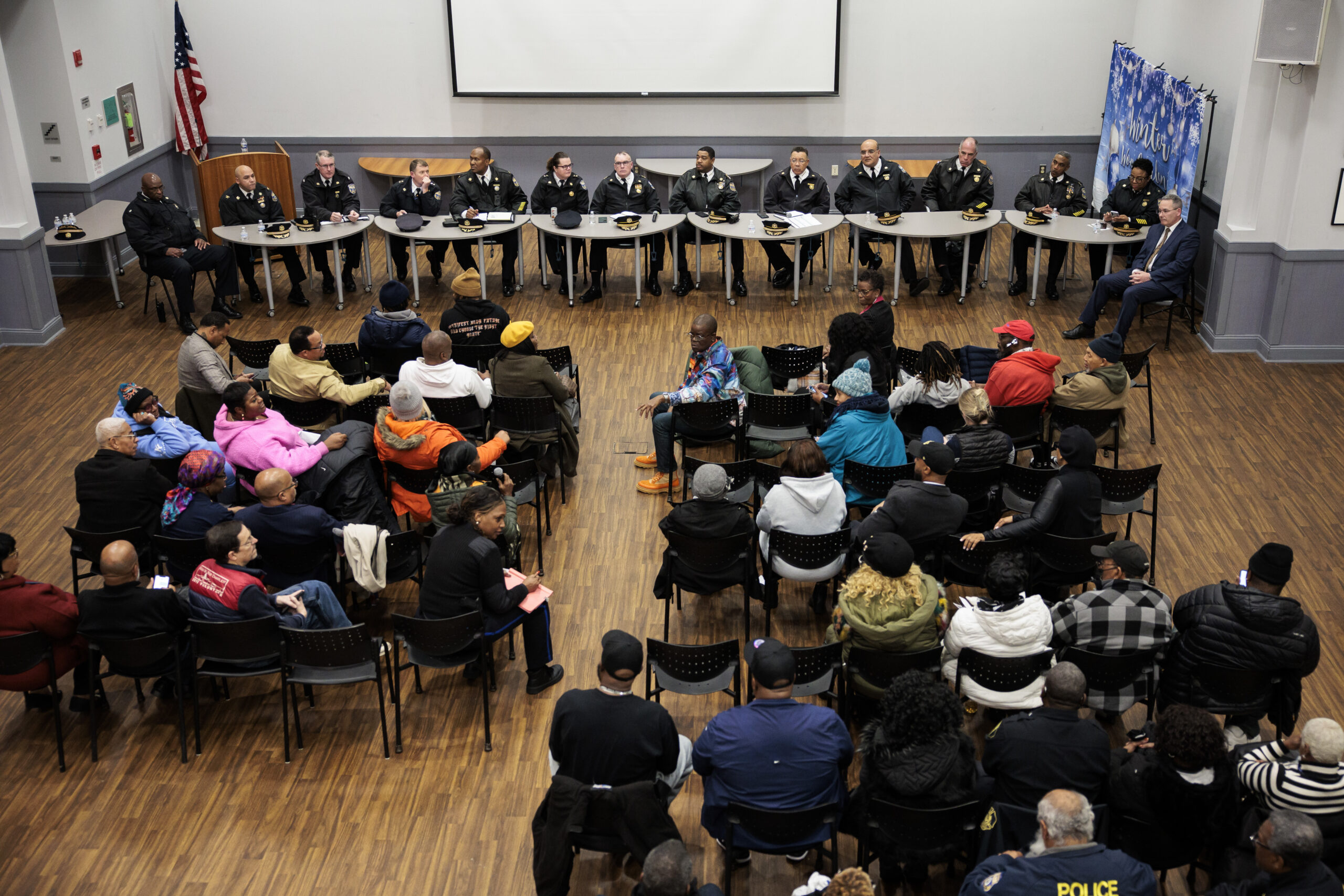
    A few dozen community members gathered with top police brass in North Philadelphia on Dec. 2.

    Yet Bethel has grappled with the challenge of convincing residents that the city is safer today than four years ago, while questioning whether today’s gains can outweigh years of devastation.

    That challenge was on display on a recent cold December night, as Bethel gathered with a few dozen residents inside a North Philadelphia church and asked what they wanted him to know.

    Person after person stood and told him what gun violence had taken from them in recent years.

    My son. My brother. My nephew.

    Both of my sons.

    Investing in violence prevention

    The city’s network of violence prevention strategies has expanded greatly since 2020, when the city began issuing tens of millions of dollars in grants to grassroots organizations.

    Early on, the city faced criticism that its rollout of the funds was chaotic, with little oversight or infrastructure to track impact. Today, Geer said, the city has stronger fiscal oversight, better organizational support, and a data-driven approach that targets neighborhoods experiencing the most violence.

    In 2024, Community Justice, a national coalition that researches violence-intervention strategies, said that Philadelphia had the most expansive violence-prevention infrastructure of the 10 largest U.S. cities. When evaluating 100 cities, it ranked Philadelphia as having the third-best public-health-centered approach to preventing violence, falling behind Washington and Baltimore.

    Geer said the work will continue through 2026. Starting in January, the city will have a pool of about $500,000 to help cover the funeral expenses for families affected by violence.

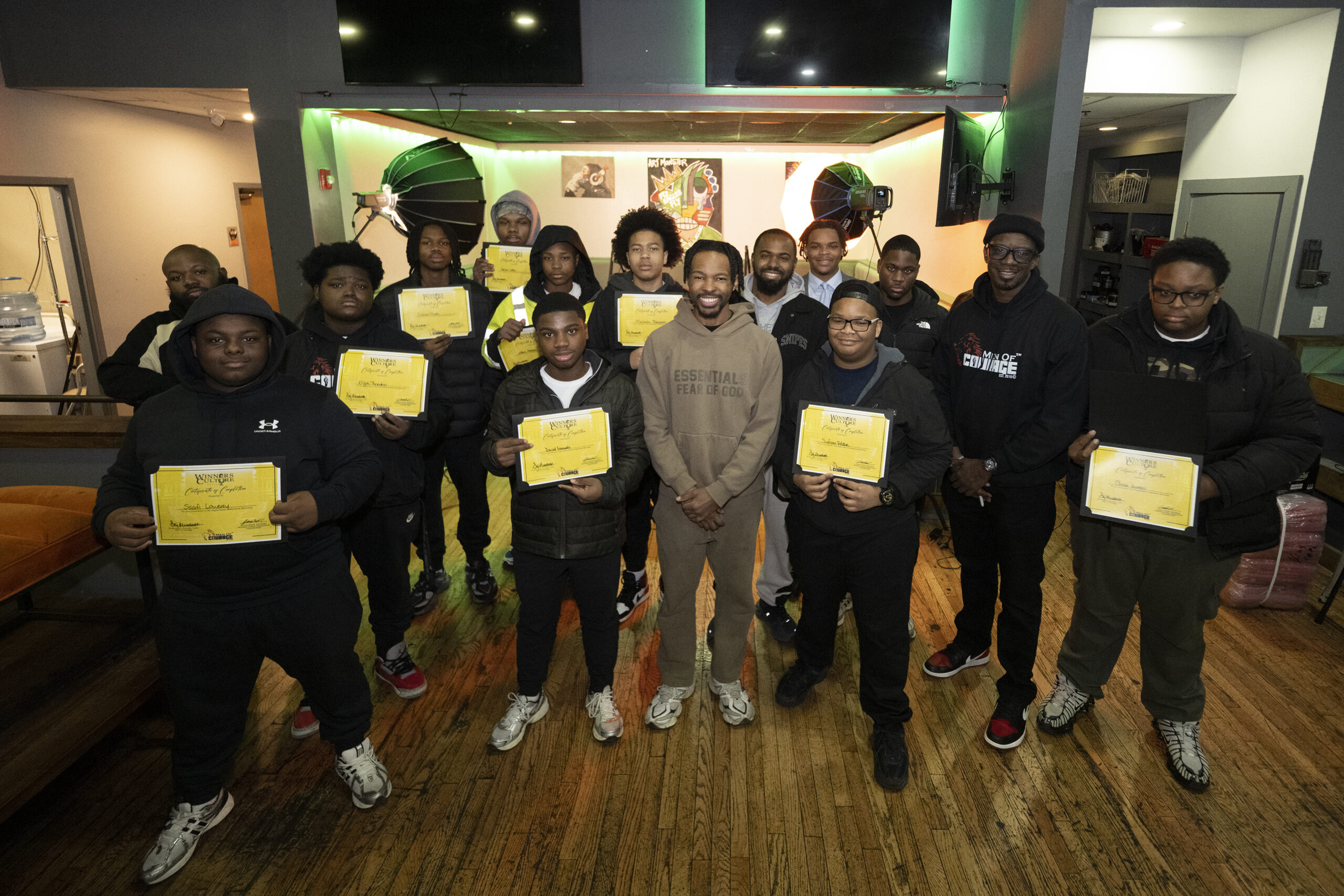
    Members of Men of Courage pose with the certificates of accomplishment after completing a 16-week program on multi-media work and podcasting, one of multiple programs the community organization uses to help Black teens build their confidence.

    One of those organizations that has benefited from the city’s funding is Men of Courage, a Germantown-based group that mentors young Black men ages 12 to 18 and focuses on building their confidence, resilience, and emotional intelligence.

    “We want them to know that one decision can affect your entire life,” said founder Taj Murdock. “Their environment already tells them they’ll be nothing. … We have to shift their mindsets.”

    Arguments are a leading cause of shootings, and teaching teens how to de-escalate conflicts and think through long-term consequences can prevent them from turning disputes violent, he said.

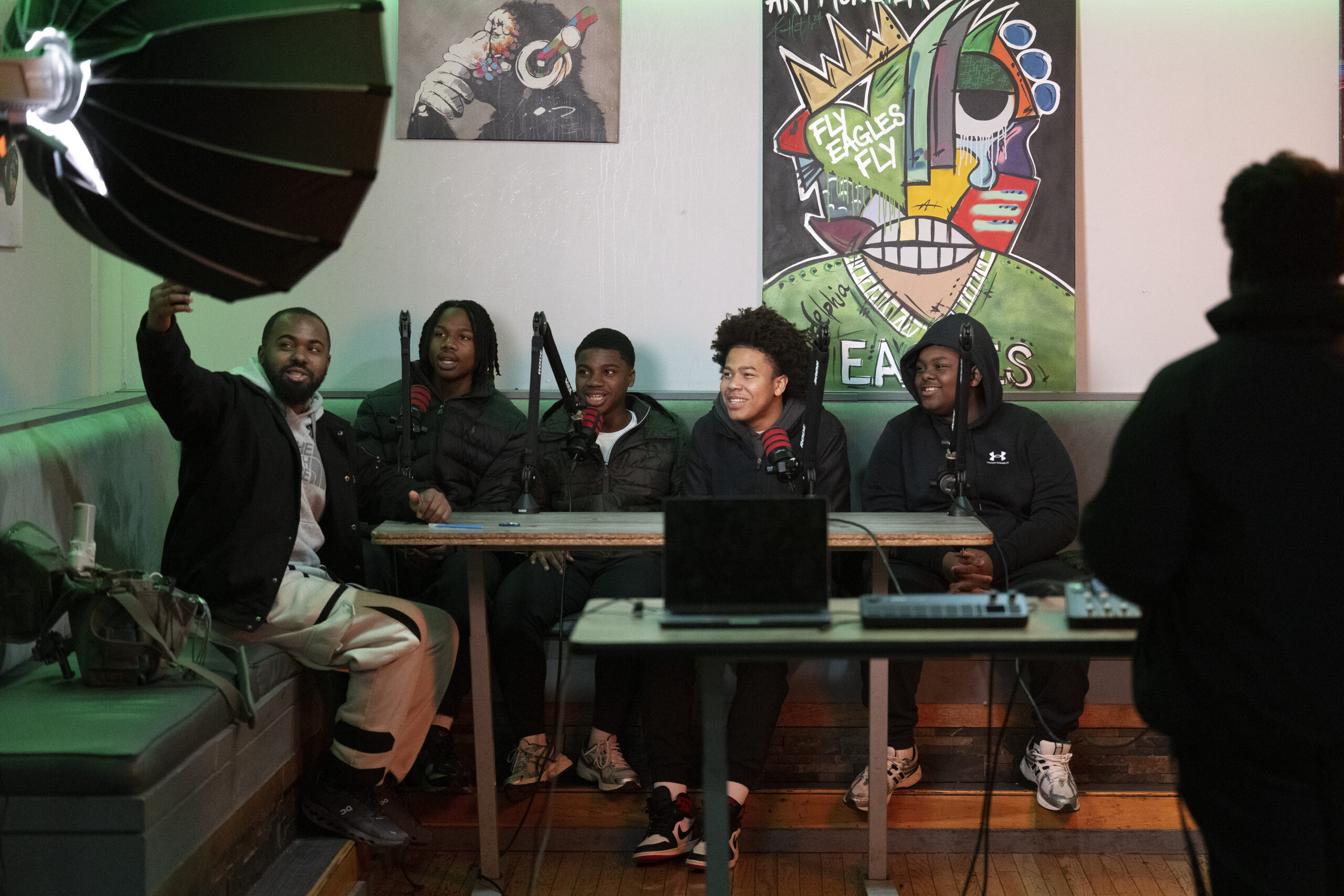
    Isaiah Clark-White, second to left, and David Samuel, middle, pose for a photo with other members of Men of Courage before recording a podcast.

    Isaiah Clark-White, 16, a sophomore at Hill Freedman World Academy in East Mount Airy, said that in his three years working with Men of Courage, he has grown more confident and has improved his public speaking.

    And David Samuel, 15, of Logan, said he has learned how to better control his emotions and identify those of the people around him. Both said they feel safer today than three years ago, but remain vigilant of their surroundings.

    Samuel said his dad watches the news every day and talks about the overnight crimes and shootings.

    “He’s always telling me,” he said, “‘David, I don’t want this to happen to you.’”

  • Philly’s new U.S. attorney has largely avoided the chaos swirling around other parts of Trump’s Justice Department

    Philly’s new U.S. attorney has largely avoided the chaos swirling around other parts of Trump’s Justice Department

    When President Donald Trump announced earlier this year that he was nominating David Metcalf to be Philadelphia’s U.S. attorney, it initially seemed as if the move was in line with Trump’s chaotic and contentious attempt to upend the nation’s justice system.

    The decision was abrupt, apparently made without advanced input from Sen. Dave McCormick (R., Pa.), who’d set up a commission to identify candidates to serve as the region’s top federal prosecutor.

    Metcalf was 39 and, unlike many of his predecessors, didn’t have deep roots in the region — but did have some reported ties to officials who’d sought to help Trump adviser Roger Stone years earlier.

    And the appointment was announced as Trump was openly pledging to “clean house” in the Justice Department and pull the agency more directly in line with the White House.

    But in the months since Metcalf has assumed control over the office and its 140 lawyers, what has stood out so far has been the serious temperament the veteran prosecutor has brought to the role, and the relative lack of drama he’s overseen — particularly in comparison to nearby jurisdictions, where U.S. Attorney’s Offices have been embroiled in controversies over leadership appointments and whether to indict Trump critics.

    During a recent interview with The Inquirer at his Center City office, his first since being appointed in March, Metcalf said his deliberate approach toward his first few months in the job has been influenced by his decade-plus career as a Justice Department lawyer — one that included stints in Baltimore, Philadelphia, and Washington, D.C.

    He has met with a host of other local stakeholders since taking over — including Police Commissioner Kevin J. Bethel, District Attorney Larry Krasner, and federal judges — and has avoided ushering in drastic upheaval within his office.

    U.S. Attorney David Metcalf outside the federal courthouse in July, with Police Commissioner Kevin Bethel standing behind him.

    Instead, he said, a key focus has been to encourage his prosecutors to pursue large, ambitious, complex investigations targeting violent crime, synthetic opioid abuse, and healthcare fraud — subjects he said were critical to public safety in the Philadelphia region.

    “I do not feel some personal impulse to burn my brand on this office by restructuring and reorganizing it,” he said, later adding: “The greatest offices and the greatest cases come from prosecutors who are hunting them down and competing for them … and that’s the breed of prosecutor we’re trying to create here.”

    Composed and self-assured, Metcalf was uninterested in commenting on the broader political landscape surrounding his job. He instead concentrated on the work of his office, whose lawyers prosecute matters including drug trafficking, political corruption, and terrorism across nine counties from Philadelphia to Allentown and west past Reading. They also litigate civil matters on behalf of the federal government.

    “I don’t want to say that I’m … bound by precedent or a devotee to the status quo,” he said. “But I do believe in stability, and I’m certainly not going to change things just for the sake of changing them.”

    That approach has been generally well-received by many lawyers in his office, particularly given the volatile environment across other parts of the Justice Department.

    Even Krasner — an outspoken progressive Democrat who rarely misses an opportunity to criticize Trump, and who was engaged in a long-running feud with a Trump-appointed U.S. attorney four years ago — said he had a “professional and pleasant lunch” with Metcalf earlier this year.

    “We have always worked well with the career prosecutors at the U.S. Attorney’s Office, and our teams seem to be continuing to work well together,” Krasner said in an interview.

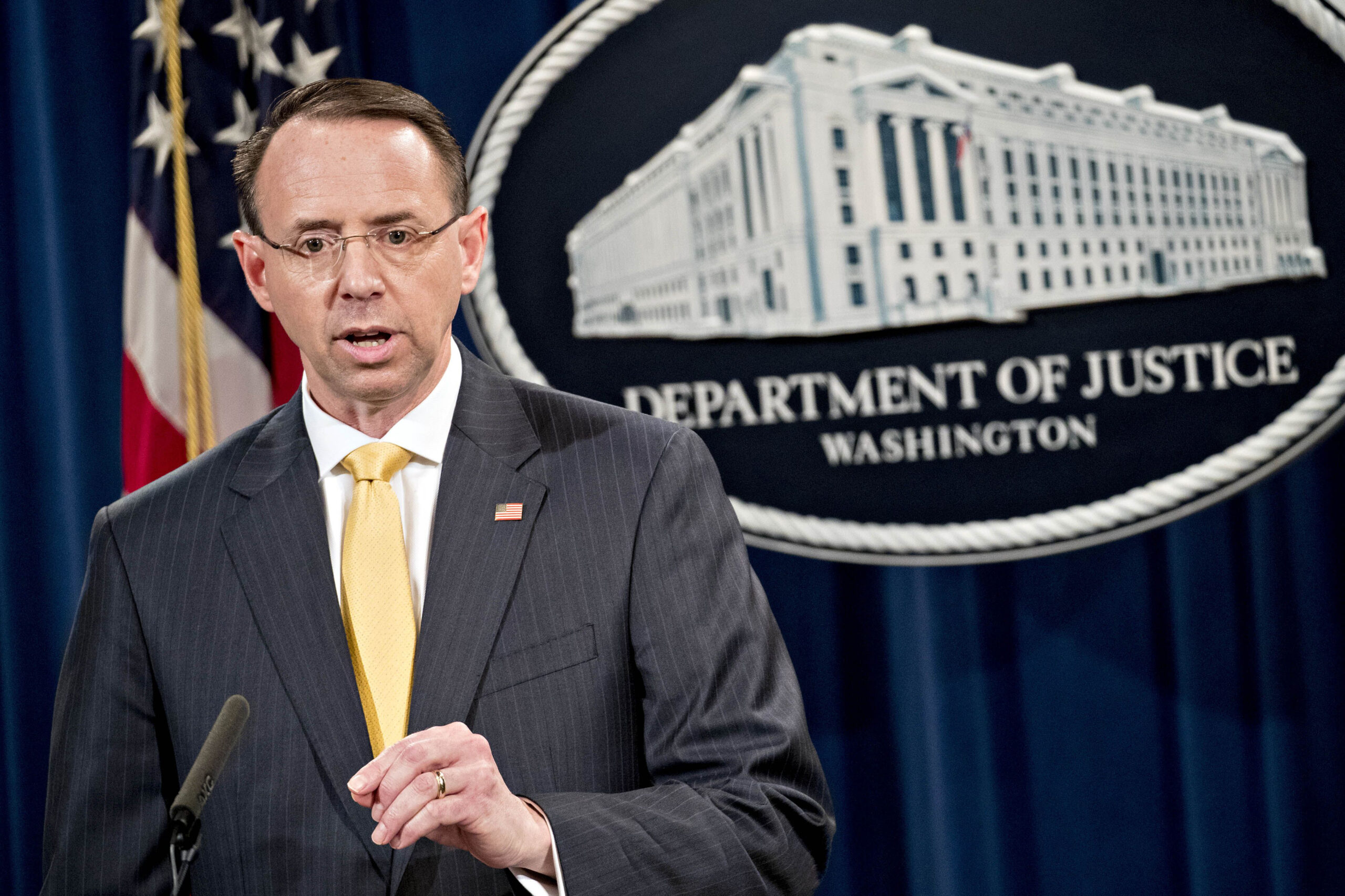
    Rod Rosenstein, who was the deputy attorney general during Trump’s first term, said in an interview that he hired Metcalf a decade ago, when Rosenstein was the U.S. attorney in Maryland. And their paths continued to intersect over the years as their careers wound through the Justice Department.

    Rosenstein said Metcalf had “superb legal skills” and “excellent judgment” — two qualities he views as critical for leading a U.S. attorney’s office.

    “I think people recognize he’s got the right qualifications,” Rosenstein said.

    U.S. Attorney David Metcalf in his Center City office.

    ‘An exhilarating vocation’

    Metcalf grew up in northern Virginia and graduated from The Wakefield School, a private prep school about an hour west of Washington, D.C. His father was once an Army colonel, he said, and his grandfather was Joseph Metcalf III, the Navy vice admiral who led the 1983 invasion of Grenada.

    Metcalf was a standout soccer player in high school, and was recruited to play by more than 80 college teams, the Washington Post reported in 2003. He used the situation to his advantage, the paper reported — making a deal with his mother that he could let his hair grow down past his shoulders once Division I colleges started sending him letters.

    He ended up attending Princeton — playing soccer all four years — and then went on to graduate from the University of Virginia’s law school.

    After clerking for U.S. Circuit Judge Albert Diaz, Metcalf spent a few years in private practice before becoming an assistant U.S. attorney in Maryland under Rosenstein.

    Metcalf said he didn’t have a single epiphany that made him realize he wanted to become a prosecutor. But he said he was quickly drawn to the work, which he found more interesting and important than other legal jobs.

    “I thought it was really just an exhilarating vocation in a profession that doesn’t always have the most glamorous applications,” he said.

    High-profile connections

    From 2015 through 2022, Metcalf worked as a line prosecutor in Baltimore and, later, in Philadelphia — the office he now leads. The two years he spent here were unusual, he said, because they unfolded during the peak of the pandemic, when many aspects of the court system were disrupted and most people were working from home.

    Metcalf also spent time during the first Trump administration in Washington, D.C. While there, he worked closely with prominent Justice Department officials including Rosenstein; Deputy Attorney General Jeffrey A. Rosen; Timothy Shea, the onetime U.S. Attorney for Washington, D.C.; and then-Attorney General William Barr.

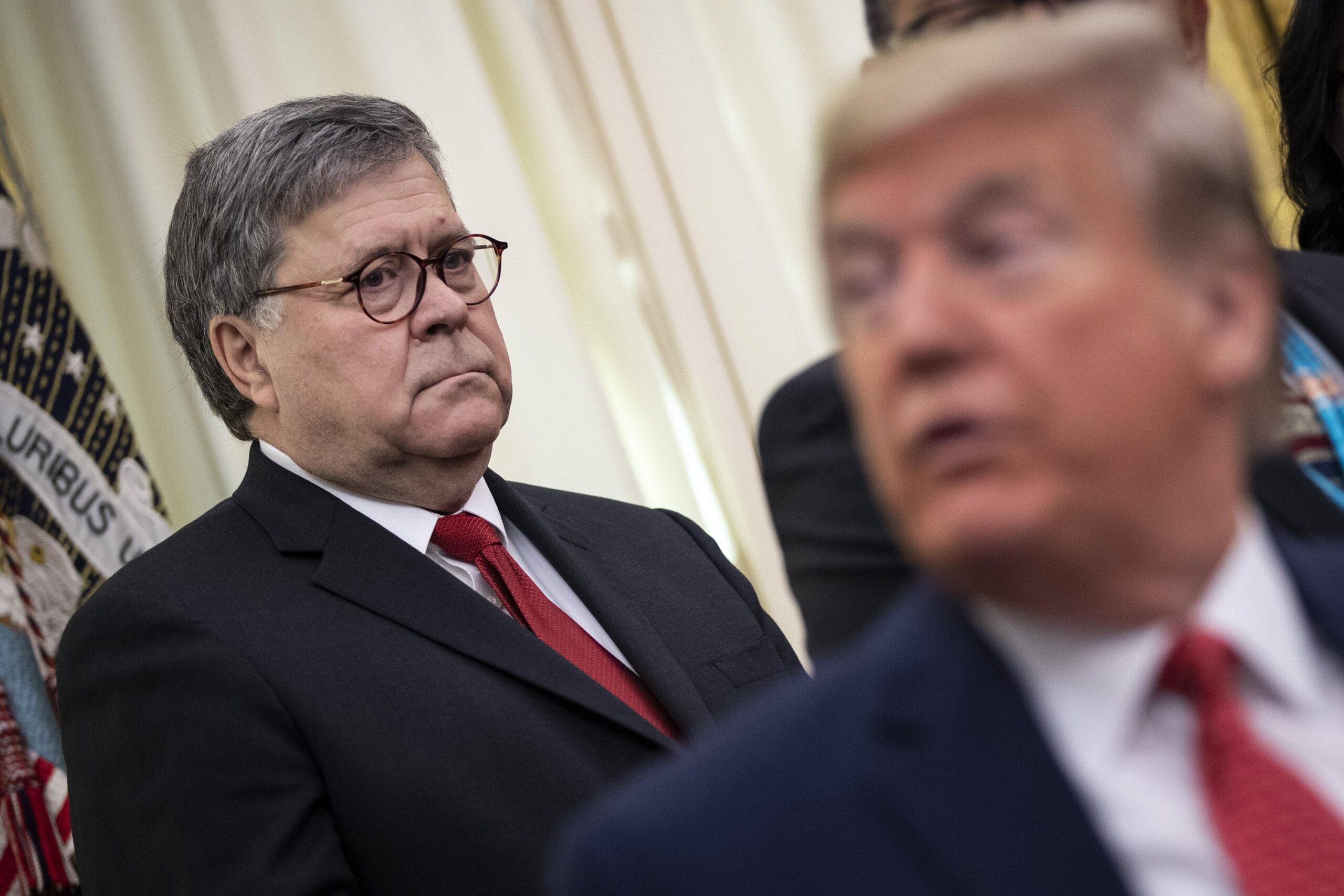
    Attorney General William Barr and President Donald Trump in the Oval Office of the White House on Nov. 26, 2019.

    Metcalf’s name was briefly in the news in 2020, when Barr and Shea, Metcalf’s then-boss, intervened in the prosecution of Stone, Trump’s longtime ally, who had been convicted of lying to Congress. After the trial prosecutors wrote in court documents that Stone should be sentenced to at least seven years in prison, Barr and Shea ordered them to walk that back and reduce their recommendation.

    Some assigned to the case viewed that as political interference and an attempt to placate Trump. A Justice Department investigation later faulted “ineffectual” leadership by Shea for how the episode unfolded, not politics.

    In 2022, Metcalf left the public sector and went to work as a corporate counsel for Amazon. But this March — after Trump was reelected for a second term — Metcalf was suddenly thrust back into the Justice Department, as the White House announced it was nominating him to be Philadelphia’s U.S. attorney.

    From nominee to confirmation

    The decision came as something of a surprise.

    McCormick, Pennsylvania’s newly elected GOP senator, had made a point of publicly announcing that he’d formed a committee to review and vet potential candidates for federal law enforcement positions across the state. And other GOP-connected lawyers in the region had been jockeying for months to try to figure out who might be able carve a path toward the coveted position.

    When the White House named Metcalf its permanent nominee, the process was effectively short-circuited.

    Metcalf said he couldn’t speak to how or why the process played out the way it did. He said he applied for the job, and “had relationships with folks in the Trump administration” due to his time in Washington during Trump’s first term.

    He didn’t specify who those people were. And some of his former bosses — particularly Barr — had fallen out of favor with Trump after his first term.

    But Rosenstein said “it’s a mistake to think that people are the people they work for. It’s a big government, and not everyone agrees all the time.”

    And in any case, Rosenstein said, he believed Metcalf was nominated “on merit, not on connections.”

    Rod Rosenstein, deputy attorney general during President Donald Trump’s first term, says Metcalf has “superb legal skills” and “excellent judgment.”

    William McSwain, who served as U.S. attorney during Trump’s first term, said he believed Metcalf was “extremely well-qualified for the position.”

    It took the U.S. Senate six months to vote to confirm Metcalf along with a host of other Trump nominees, but by then, the Philadelphia region’s federal judges had already voted to extend Metcalf’s appointment indefinitely while the process played out.

    That move stood in contrast to several other jurisdictions, including New Jersey, where the judiciary declined to extend the tenure of Trump’s nominee, Alina Habba. For months afterward, that office was thrust into turmoil as questions swirled about who could legally serve as its leader.

    Pursuing notable cases

    During his tenure so far, Metcalf said, he’s been seeking to focus his prosecutors on finding what he called “nationally significant” cases, particularly those targeting violence, drugs, and healthcare fraud, which he views as priorities for the region.

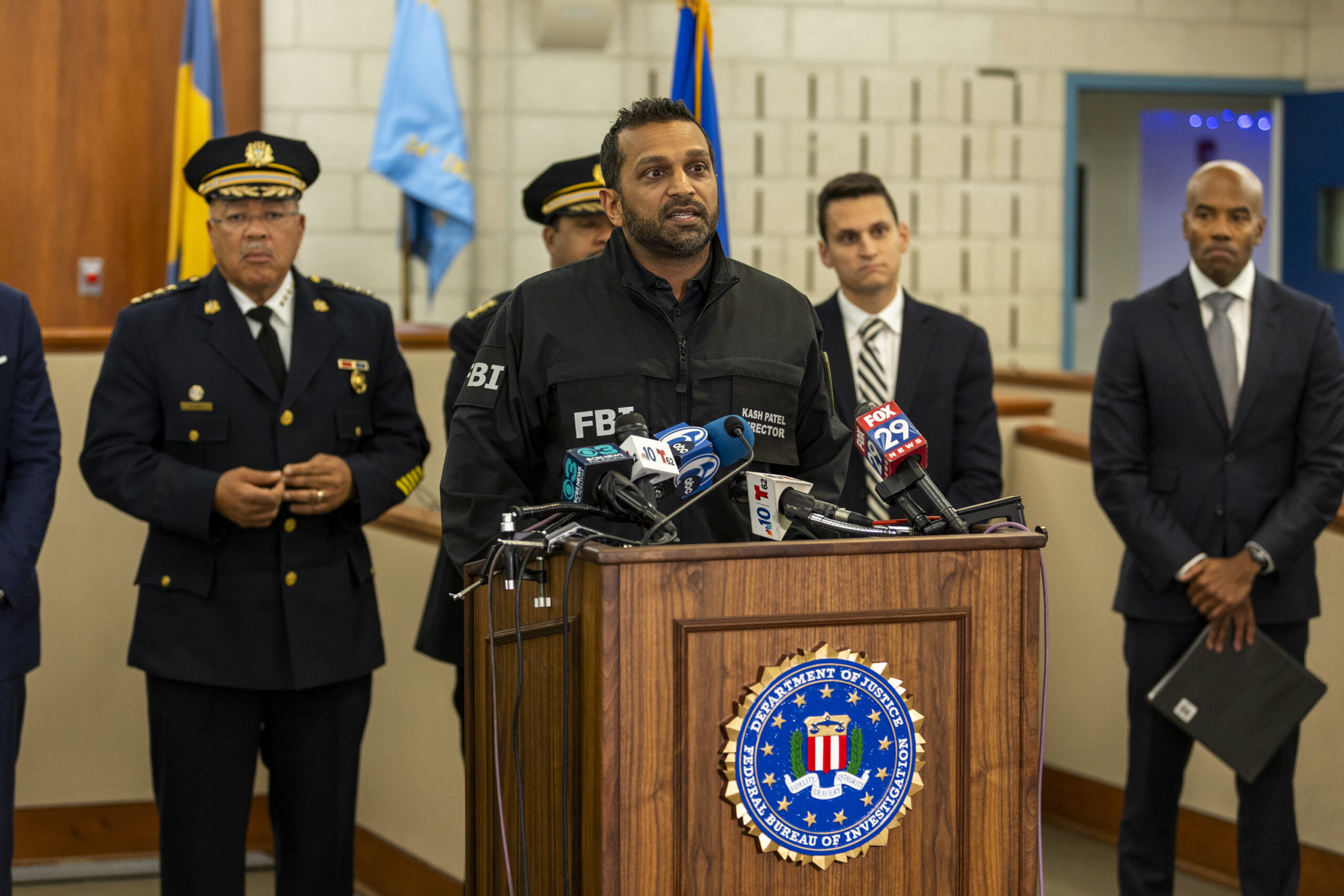
    One of the first big indictments he announced was in October when FBI Director Kash Patel visited Philadelphia to help reveal that 33 people had been charged with being part of a Kensington-based drug gang. Metcalf said the case was the largest single prosecution in the region in at least two decades.

    FBI Director Kash Patel helping announce the arrest of dozens of suspects in a Kensington drug case.

    He also helped create a new program dubbed PSN Recon, an initiative designed to help Philadelphia Police more readily share intelligence with state and federal agencies about which groups or suspects should be investigated.

    Prosecutions overall have increased on his watch, according to the Transactional Records Access Clearinghouse (TRAC), a research organization that collects federal courts records.

    So far this fiscal year, prosecutions in the Eastern District of Pennsylvania were up 32% compared to last year, TRAC found, and were on their highest pace since 2019. The most common types of cases charged this year were immigration violations, drug offenses, and illegal firearm possession, according to TRAC.

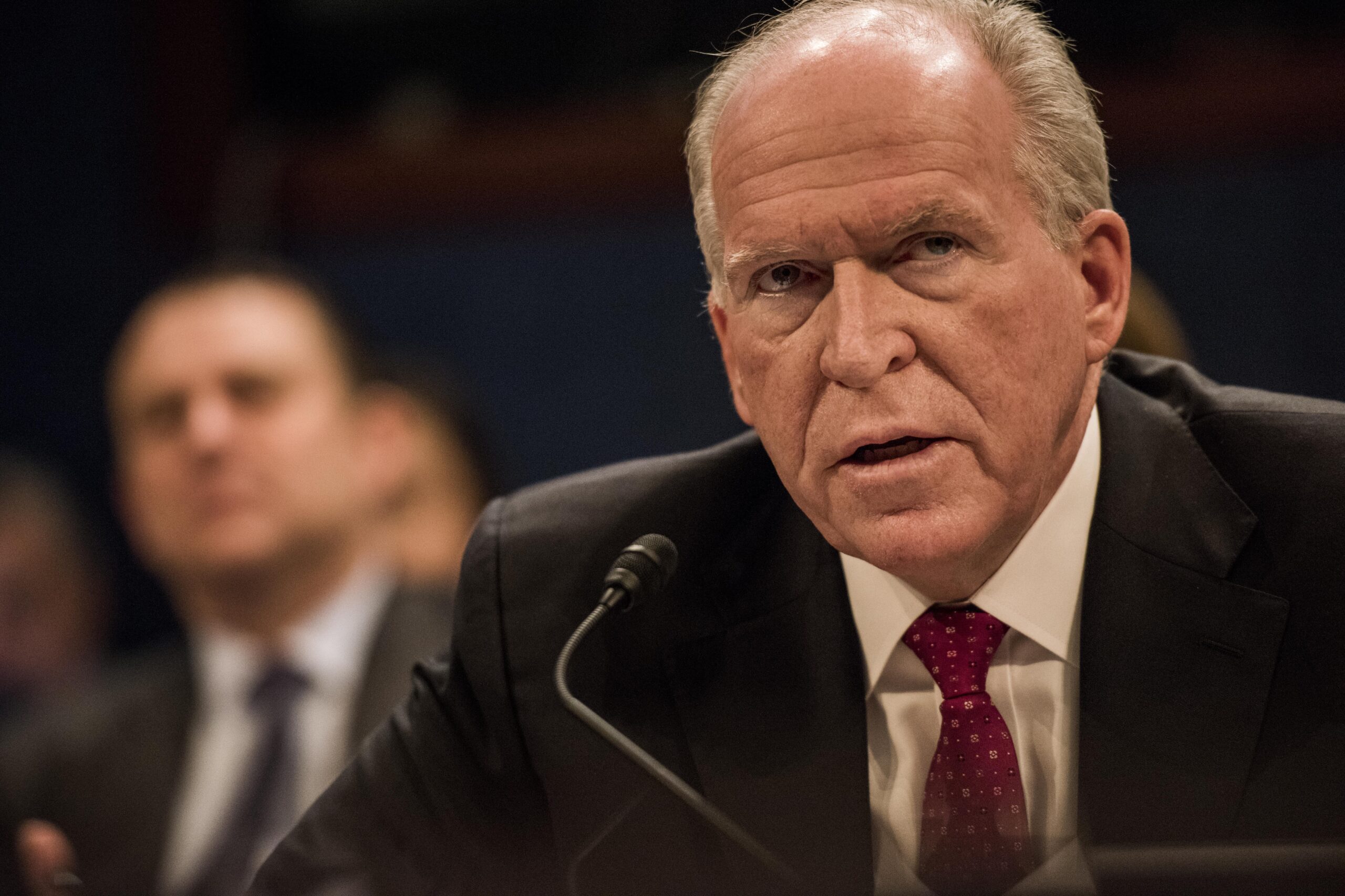
    Earlier this year, Metcalf was reportedly involved in one particularly significant case: an investigation into former CIA Director John Brennan and his role in producing an intelligence assessment about Russian interference in the 2016 election. Brennan went on to become a prominent Trump critic.

    Former CIA director John Brennan testifies before the House Intelligence Committee in 2017.

    National outlets including Axios and the New York Times reported that Metcalf had been leading the probe, and that he had concerns about its viability — a notable development given Trump’s public demands to prosecute other adversaries, including former FBI Director James Comey.

    Metcalf never commented publicly on his purported involvement in the Brennan case, and declined to do so again during his interview with The Inquirer. The investigation is now reportedly being handled by federal prosecutors in Florida.

    Metcalf did allow a short peek into his professional mindset when he was asked more broadly if he’d ever felt pressure from Washington to sign off on a decision he didn’t agree with.

    After declining to comment on any discussions he may or may not have had with Justice Department leaders, he paused for a moment and added one final point.

    “I will also say that I would be very surprised if that ever happened to me,” he said. “I don’t see it as a problem here.”

  • Temple pledges to boost police patrol officers by 58% over five years following staffing study

    Temple pledges to boost police patrol officers by 58% over five years following staffing study

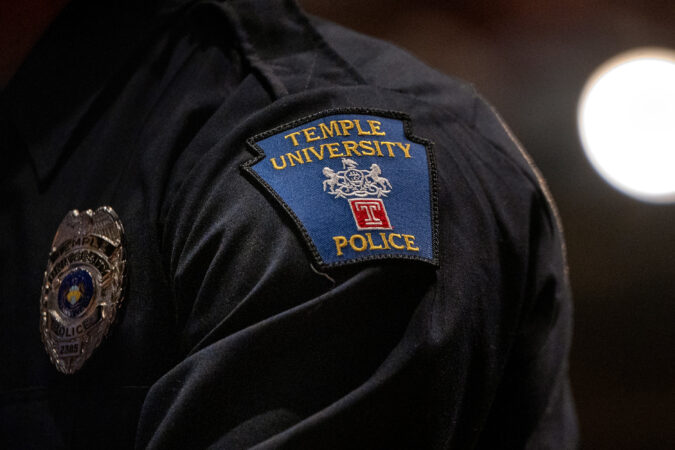
    Temple University plans to increase its patrol officer ranks by 58% over five years after a study assessing staffing levels showed the school was below the middle tier of a framework that rates law enforcement agencies.

    The university currently has 77 sworn officers — 50 of them patrol officers — and president John Fry pledged to add 29 patrol officers, one detective, six sergeants, and one lieutenant. That would increase the overall number of sworn officers to 114.

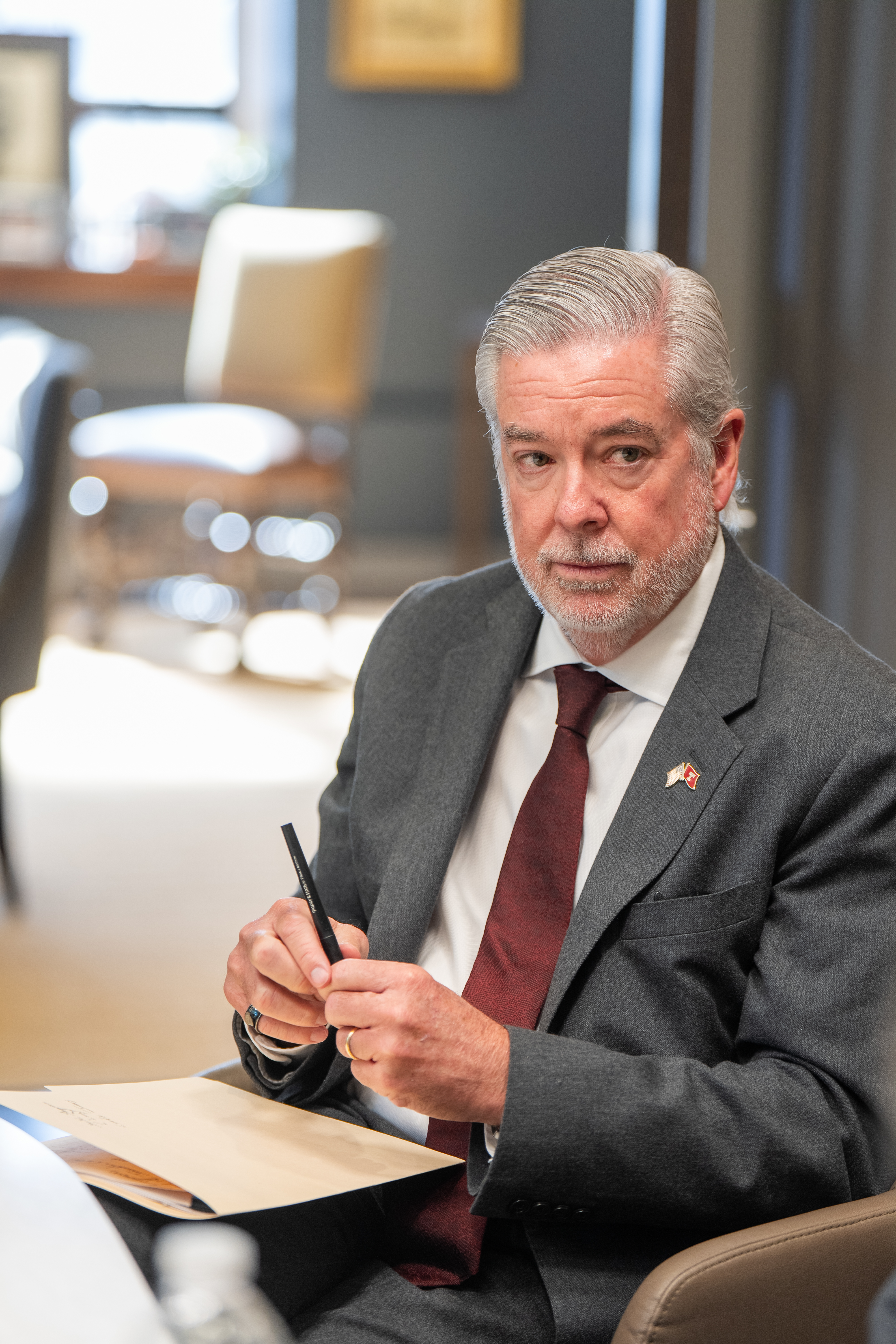
    Temple president John Fry said safety was his first priority. Now he plans to increase patrol officers by 58% over five years.

    No target has been set for how many officers will be hired per year, but those discussions are underway, said Fry, who named public safety a top priority when he started in November 2024.

    The university’s declaration comes amid a particularly difficult time for police hiring, with departments nationally — including the Philadelphia Police Department — continuing to face shortages. Temple has been working for several years to attract more officers, including increasing salaries and benefits, adding signing and retention bonuses and higher contributions to retirement accounts, and hiring an associate director to focus solely on hiring, recruitment, retention, and training. The department also moved to 12-hour shifts to give officers more days off.

    Yet, the number of sworn officers has decreased from 81 in March 2024 to the current 77, despite additional hires being made, including four new officers from the Temple University Municipal Police Academy in October.

    “We must, and we will, deploy ever more compelling and creative incentives to make Temple’s Department of Public Safety a destination employer for law enforcement in our region,” Fry said. “Our plan is to look closely at what we are doing in the areas of recruitment and retention over the next several months and see what improvements can be made.”

    Temple plans to hire former Philadelphia Police Commissioner Charles H. Ramsey’s 21CP Solutions company to assist, including with how best to recruit and retain more officers, Fry said. The university had hired Ramsey to assess safety following the shooting death of student Samuel Collington in November 2021 and has implemented almost all of the 68 recommendations from his report released in April 2023.

    The staffing study was one of the final recommendations that Temple had to complete.

    Former Philadelphia Police Commissioner Charles Ramsey speaks at a press conference on the Temple safety audit his firm completed in April 2023.

    New bike patrol officers

    In addition, Philadelphia Police Commissioner Kevin Bethel has committed to providing six bike patrol officers and a sergeant assigned to Temple, beginning Jan. 5. That’s up from the current four officers and supervisor, who were not always the same personnel.

    “The ability to have relationships and collaborations … will be better because it’ll be a consistent group,” said Jennifer Griffin, Temple’s vice president for public safety.

    “The ability to have relationships and collaborations … will be better because it’ll be a consistent group,” Jennifer Griffin, vice president for public safety at Temple University, said about the city’s six bike patrol officers that will be dedicated to Temple.

    Members of the Temple University Police Association, the officers union, have complained for years of inadequate staffing. In a social media post about a year ago, the union said the department had lost more than 50 officers since 2022.

    But Andrew Lanetti, president of the union, said he is pleased with the direction outlined by Fry.

    “From our talks here in the past few days, I am happy with where we’re going in the future,“ he said. ”I believe this is going to be a very positive experience and it’s going to help our community a lot.”

    University and union officials already have been discussing ways to recruit and retain more officers, and a more positive working relationship between the union and the university could help move the needle on hiring and retention.

    “We’re going to work together and our goal is all the same,” Griffin said. “We want a safer Temple and a safer community.”

    Budget woes

    The move also comes as the university attempts to close a budget deficit, made worse this fall when the school missed enrollment projections for its main campus that translated to about $10 million in lost revenue.

    “It will be a challenge,” Fry said of the new police officer hiring, “but it’s a priority, so we will meet that challenge.“

    He said money for the new staffing will be built into the university’s five-year budget plan.

    Temple last February hired safety and security consulting companies Healy+ and COSECURE, ancillary businesses of the Cozen O’Connor law firm, to conduct the staffing study. They used a tiered framework “to assess the capacity and effectiveness of law enforcement agencies,” Temple said. The university declined to release the full report, citing its proprietary information.

    “Temple is positioned below the middle tier of the framework, meaning the department is presently staffed to meet the essential public safety and emergency response needs of our community,” Fry said. “However, additional personnel would allow the department to organize and coordinate its activities to focus on additional proactive and community engagement activities that would position it higher in the consultant’s framework.”

    With the additional police officers that Temple plans to hire, the school would rise from just below the third of five tiers in the consultant’s rating system to the second tier, Fry said. The second tier, he said, connotes “higher levels of proactive enforcement, more presence, more mitigation strategies, and then more outreach, more community engagement.”

    Public safety is extremely important as the university plans to release its strategic plan and campus development plan early next year and as Fry seeks to spur economic development along the Broad Street corridor, from Temple’s new Terra Hall location in Center City to the health campus in North Philadelphia.

    “There’s going be a campus development plan, which clearly is going to put more activity on this campus, which means we’re going to have to support our police,” Fry said.

    Potential investors, he said, are watching.

    “When they’re about to commit significant investment, they want to know the area is safe,” he said.

    ‘Hold ourselves accountable’

    Former Temple president Jason Wingard pledged to increase the police force by 50% the month that Collington was killed, and those numbers never materialized. In fact, the number of officers dropped.

    Fry said what is different this time is that he has specified the exact numbers that will be added over a distinct time frame.

    “This is not something we’re just sort of speculating about,” he said. “This is based on a professional study. … We’ll be able to hold ourselves accountable.”

    The university already has made a host of changes that were recommended by Ramsey in the 2023 report. They include more foot patrols and security cameras and increased technology in the communications center.

    The university in 2024 touted a decrease in aggravated assaults, robberies, and thefts in its patrol zone. Despite improvements, Temple has continued to face safety challenges in its North Philadelphia neighborhood, including large groups of juveniles that sometimes gather on or near campus — a challenge in other areas of the city, too.

    And a student was shot and killed by another student near off-campus housing in February.

    Griffin said she stands behind the efforts to grow the department and make further improvements in training and operations.

    “I truly believe it will help position us as one of the highest-performing university police departments in the country,” Griffin said.

    Fry said once the university reaches its five-year hiring target, it will reevaluate its needs and figure out next steps.

  • A Philadelphia police officer critically injured in a motorcycle crash six years ago has died

    A Philadelphia police officer critically injured in a motorcycle crash six years ago has died

    Andy Chan, a Philadelphia Highway Patrol officer who suffered a devastating brain injury in a motorcycle crash while on his way to work six years ago, has died.

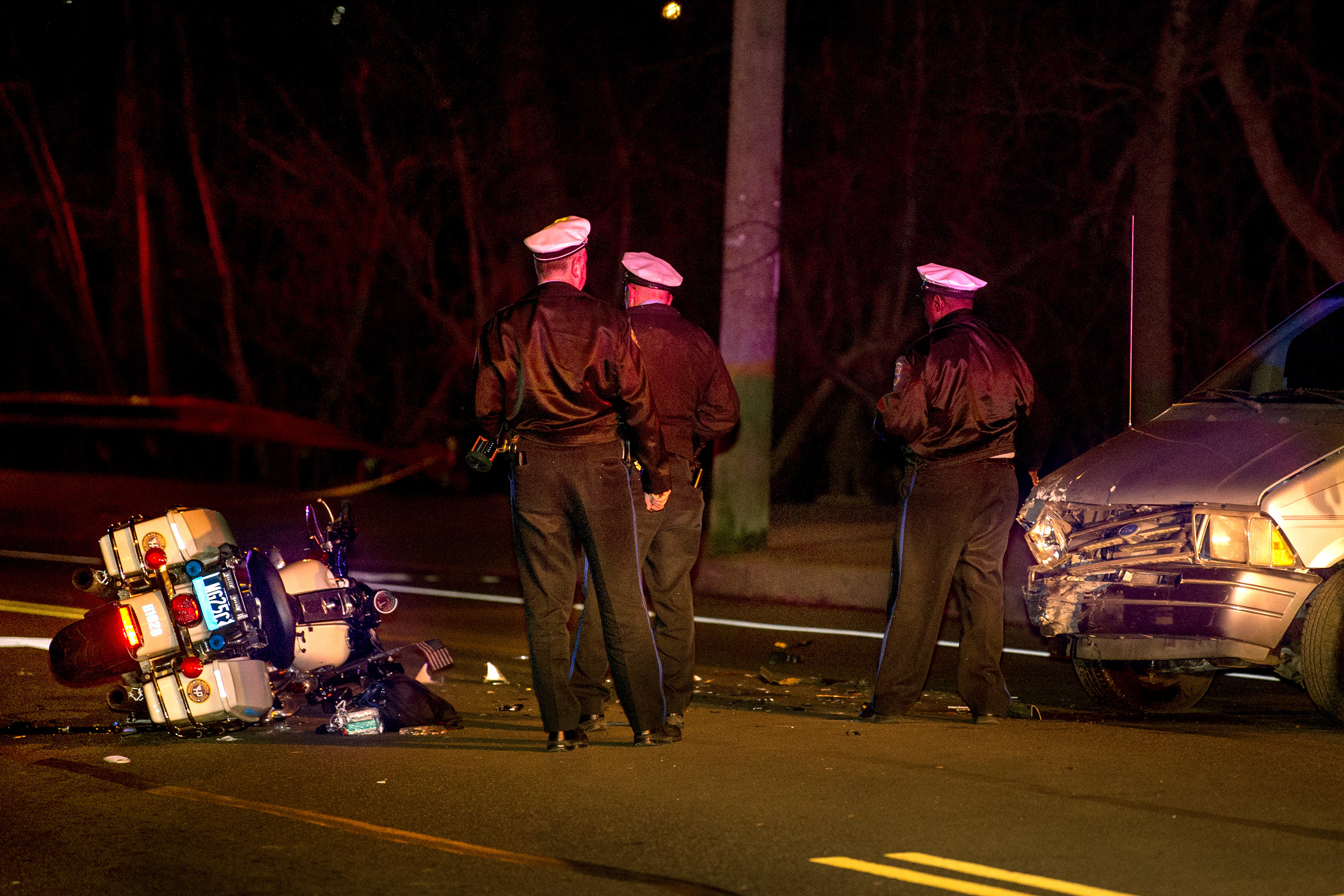
    Chan, 48, was riding through Northeast Philadelphia one evening in January 2019 when an elderly driver unintentionally struck him on the 3300 block of Rhawn Street. He was thrown about 20 feet, police said, and was critically injured.

    Chan, a 24-year veteran of the force, was in a prolonged coma and was hospitalized for weeks on a ventilator. In the years since, his injuries have required around-the-clock care, with family, friends, and colleagues in the Philadelphia Police Department regularly at his side.

    The Fraternal Order of Police Lodge 5 announced Chan’s death on Tuesday. The cause of death was not immediately clear.

    “Andy died a hero and we will always remember and honor his sacrifice,” the union wrote on Facebook.

    Andy Chan was thrown from his highway patrol motorcycle and critically injured in a crash on the 3300 block of Rhawn Street on January 3, 2019.

    Chan, a father of three, grew up in Chinatown and had always dreamed of being a highway patrolman. His family recalled how he watched with awe when the leather-clad officers approached his parents’ restaurant on their motorcycles.

    He decided, they said, that would be him one day.

    “That was the only place he strived to be in,” his wife, Teng, said years ago.

    After becoming a Philadelphia police officer in 1996, he was first assigned to the 39th District, working as a bike cop. Eight years later, he was promoted to the elite highway unit.

    He took such pride in his work that when he walked into police headquarters, instead of yelling, “Hi,” he would shout, “Highway!”

    And even when he met Teng nearly two decades ago, he introduced himself as such: “I’m Highway.”

    Chan and his partner, Kyle Cross, were among the first officers who responded to the Amtrak crash in 2015 that left eight people dead and nearly 200 injured. Cross, in an earlier interview, recalled how Chan kept his composure as he sought to rescue survivors from the wreckage.

    “What I remember from Andy was his poise — he stayed so calm, he really just led the way,” Cross recalled. “I followed his lead.”

    Police Commissioner Kevin Bethel, in an email to the department Tuesday morning, described Chan as “larger than life, not because of what he did, but because of who he was.”

    “He was the kind of officer whose reputation reached every corner of this Department and City; not because he sought attention, but because his work, his character, and his heart made him impossible to forget. Andy represented the very best of who we are and what we aspire to be: skilled, humble, kind, and unfailingly courageous,” Bethel wrote.

    “Andy,” he said, “will forever remind us of why this work matters.”

    Funeral arrangements have not been announced.

    Since Chan was injured, police and community members have gathered each December to support his family and raise money for his recovery. Supporters will continue to gather in his honor this year, on Dec. 12 at Craft Hall at 4 p.m., for the sixth annual Andy Chan Block Party.