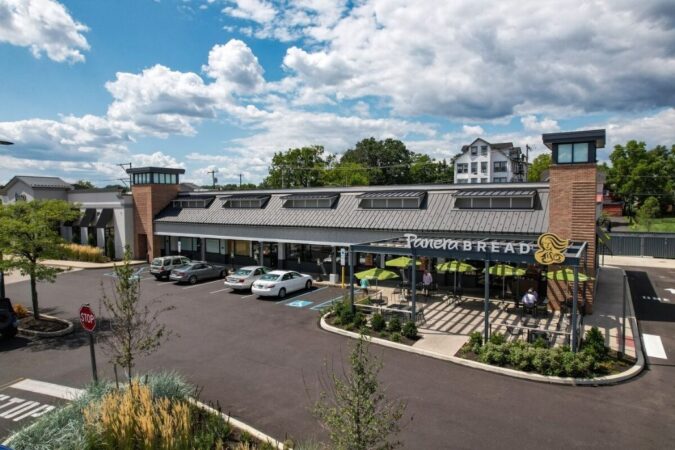
A shopping center in the shadow of Willow Grove Park Mall will soon undergo a $105-million “transformation” with new apartments and shops, says the developer behind the project.
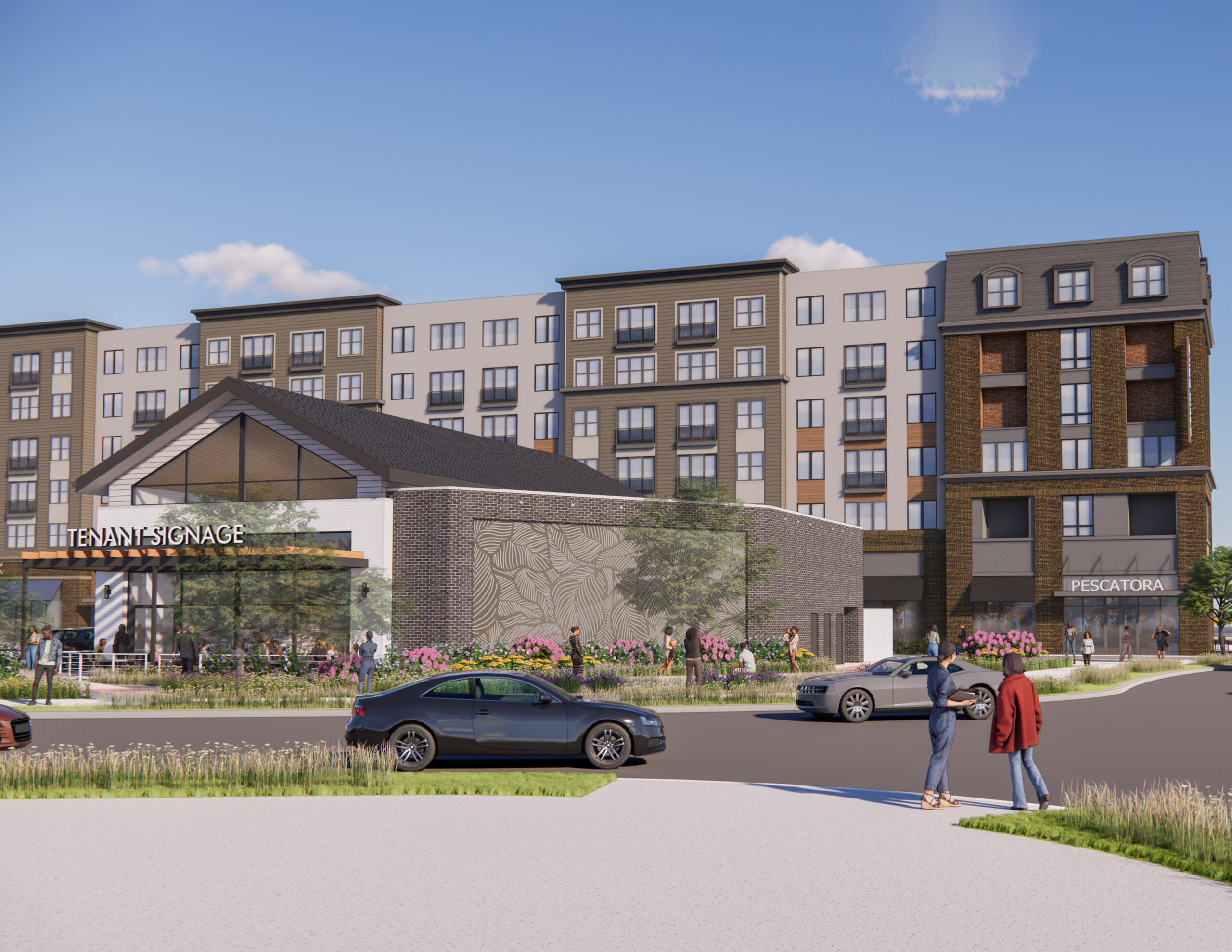
Starting this summer, about 130,000 square feet of the Willow Grove Shopping Center will be demolished to build a mixed-used complex with 261 residential units and 35,000 square feet of new retail space, said Mark Brennan, vice president of regional development for Federal Realty Investment Trust.
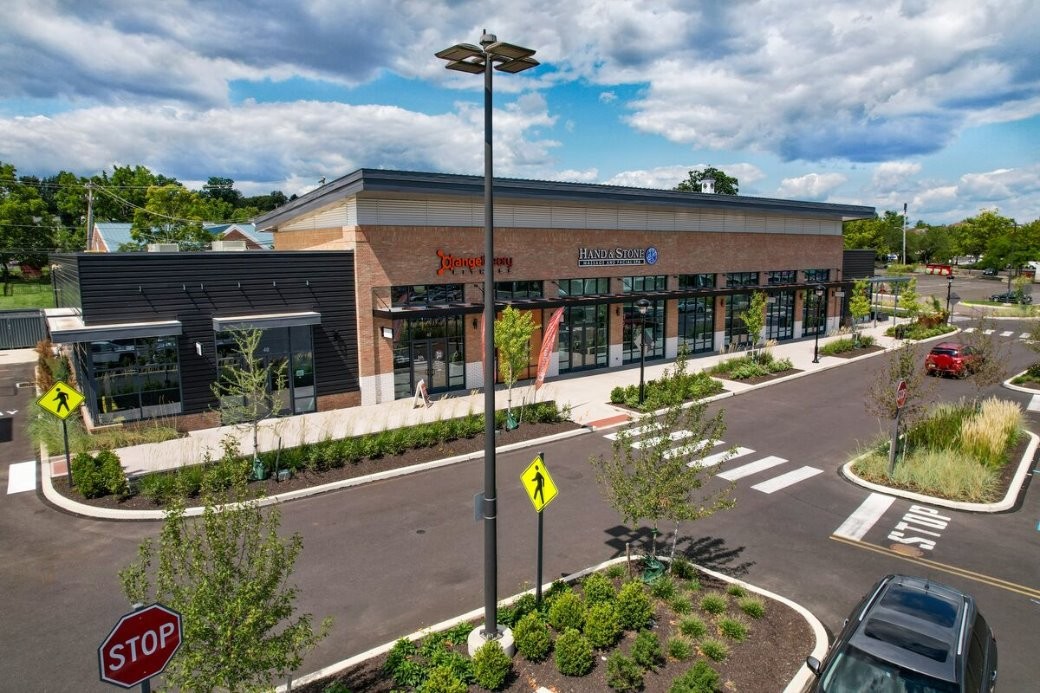
It will mark the latest stage in a multiphase redevelopment of the outdoor center, which is located across the street from the mall.
A rendering of what Federal Realty Investment Trust plans to build at the Willow Grove Shopping Center.
Across the Philadelphia region, similar mixed-use complexes have increasingly been built around thriving shopping destinations, such as King of Prussia, where thousands of new apartments have risen in recent years.
A spokesperson for PREIT, which owns Willow Grove Park Mall, did not return a request for comment. In a 2022 shareholders’ report, PREIT executives called the complex “one of our leading suburban Philadelphia assets,“ with an occupancy rate of more than 96%.
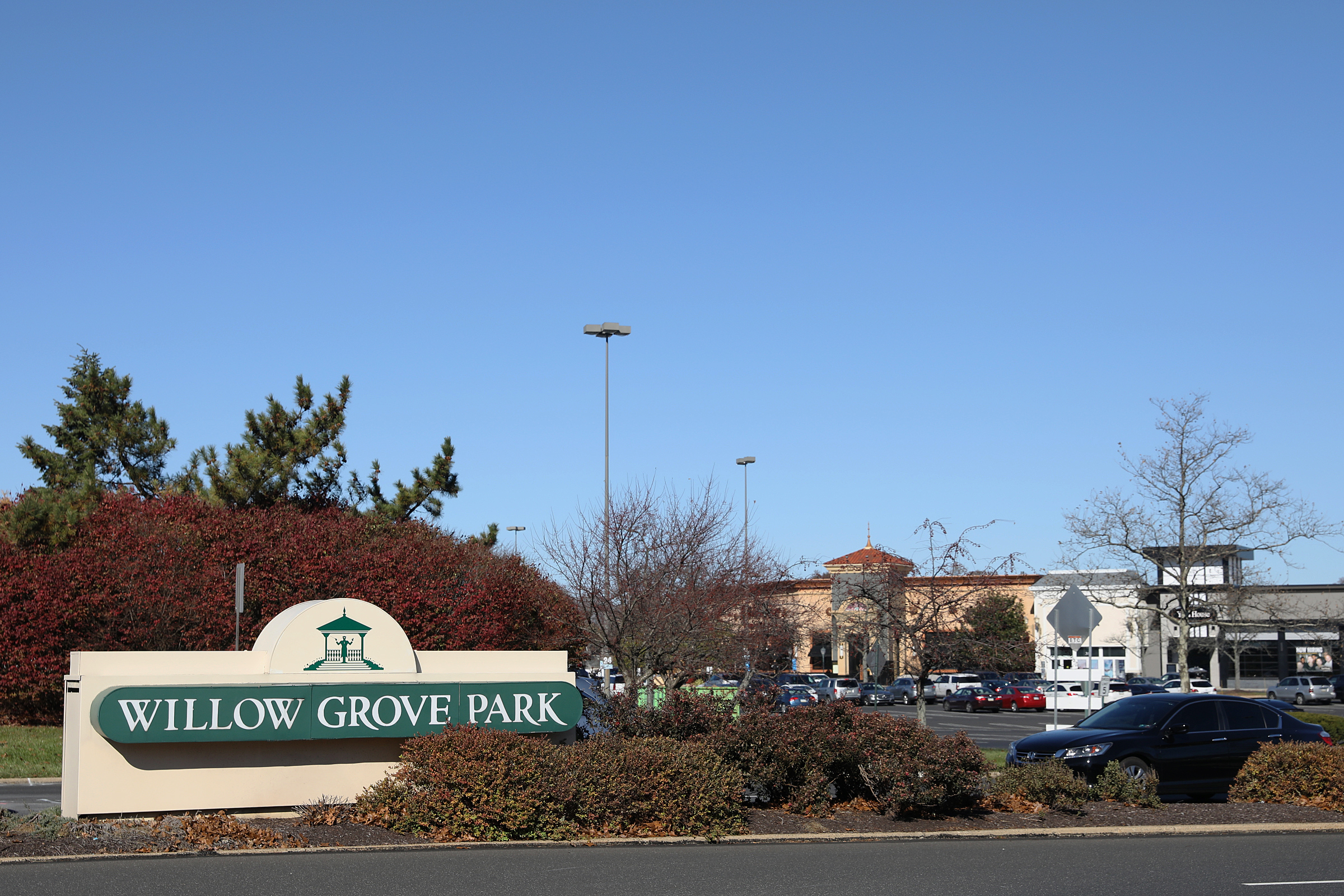
The Willow Grove Park Mall is pictured in 2019.
Across Moreland Road, Brennan is confident his shopping-center redevelopment will be met with high demand.
Since the pandemic, the Montgomery County community has “really come alive,” due in part to its proximity to the city and to suburban employment centers, said Brennan, who is based in Wynnewood. And people who are moving out of the city or looking to downsize are particularly interested in moving to mixed-use developments, he said.
The center’s proximity to SEPTA’s Willow Grove train station, and major highways, including the Pennsylvania Turnpike, will make it particularly appealing, as will its mix of “highly curated” shops, Brennan said.
Across the street from the mall, the Willow Grove Shopping Center is set to undergo a $105-million transformation with apartments and new retail.
The center’s existing tenants, which include Marshalls and Five Below, will remain open during construction, Brennan said.
He expects the project to be complete sometime in 2028.
“These sort of multifaceted, multiphased development projects do take quite a bit of time and planning,” Brennan said. “We’re really excited to get to the next phase of this transformation.”
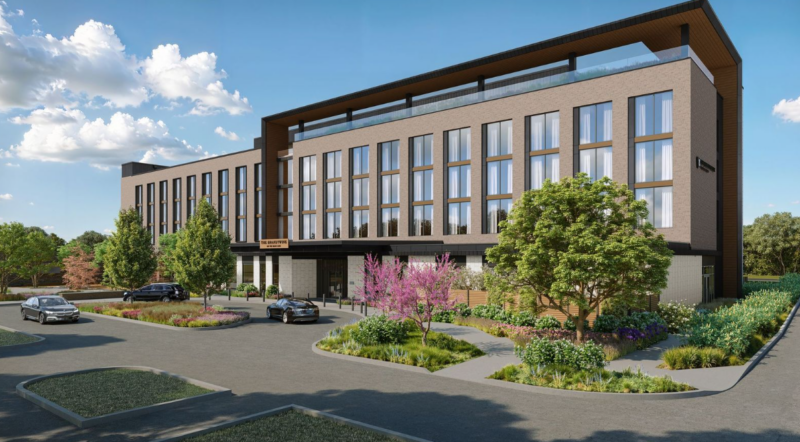
Brandywine Realty Trust plans to open a 121-room Marriott Tribute Portfolio hotel this spring in Radnor.
The company is the region’s largest office building owner, and the five-story project at 165 King of Prussia Rd. is meant to cater to their tenants in the suburbs.
Dubbed The Brandywine, itcost $60 million to develop and will include an expansiveroof deck and two restaurants with almost 260 seats between them.
The 80,000-square-foot hotel will be in the midst of the company’s 2.1 million square feet of holdings in Radnor, its largest suburban cluster.
“We were constantly hearing from our tenant base that as they were bringing people in from out of town, there was no real high-end, luxury hotel for them to spend time in,” said Jerry Sweeney, Brandywine’s CEO.
Brandywine’s other large suburban office holdings are in King of Prussia and Conshohocken.
“We saw a real window of opportunity to really upscale the hospitality experience available on the Main Line,” Sweeney said. “That’s very important to us because we have 3 million plus square feet of office space in the Pennsylvania suburbs, and over 2 million is concentrated within walking distance of this hotel.”
Sweeney estimates that over a quarter of the hotel’s business will come from Brandywine’s tenants in their Radnor office buildings, which include Lincoln Financial Group, Arkema, and Penn Medicine among many others.
In Brandywine’s second-quarter earnings call last year, Sweeney said he anticipates additional demand will be drawn from the seven colleges, including Villanova University, that are within a five-mile radius and from nearby healthcare facilities.
The Brandywine is expected to be open in time for graduation this year, and the company anticipates a boost from sporting events and celebrations this summer, which include World Cup games, a PGA tournament, the MLB All-Star Game, and the 250th anniversary of the United States.
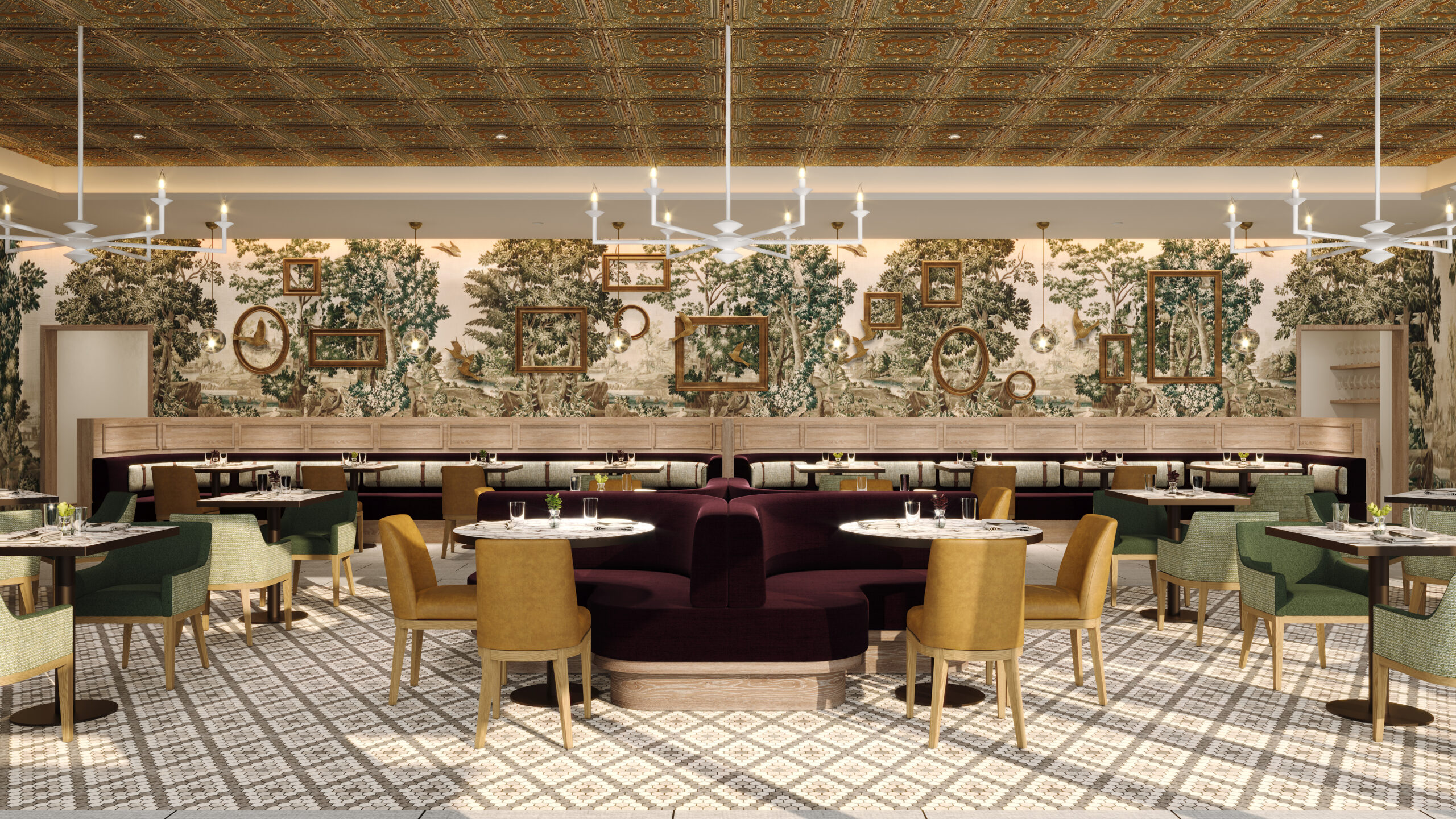
The hotel’s ground floor will include the 114-seat Merrick’s Tavern, serving regional American dishes, a cocktail list anchored by bourbon and rye, local beer, and what is billed as a wine program. It’s intended for everyday dining and groups.
The 145-seat Pomelo Rooftop Terrace will operate year-round, serving botanical-forward cocktails and a locally sourced menu.
Merrick’s Tavern is named after Samuel Vaughan Merrick, the first president of the Pennsylvania Railroad and a founder of the Franklin Institute.
“With this hotel we really used the historical evolution of the Main Line as a theme, which is tied to the history of the Pennsylvania Railroad,” Sweeney said. “Even some of the motif and interior space designs we have are very reminiscent of the great age of American railroads, where travel was upscale.”
A rendering of Merrick’s Tavern within Brandywine Realty Trust’s new hotel, opening this spring in Radnor.
The hotel is next to the Radnor stop on SEPTA’s Norristown High Speed Line and close to two Regional Rail stations.
The building’s architect is the DLR Group, while interior design is by Restoration Hardware and Bergmeyer. The Brandywine will be operated by Aimbridge Hospitality.
As part of the Marriott Bonvoy Tribute portfolio, the brand is a boutique hotel within the larger chain, which allows more flexibility for decor and furnishings.
Brandywine Realty Trust has developed hotels before, notably the AKA University City in the FMC Tower, in partnership with Korman Communities.
“For us, it was really brand building, expanding our tenant service program to our tenants and creating more connective tissue between us and our customers,” Sweeney said.
“We saw a great window of economic opportunity to build a high-end hotel that was positioned along two interstates, two train lines that would appeal to a much broader base of customers beyond just the Brandywine universe,” he said.
The Brandywine will be just the latest hotel added to the Main Line.
New venues have been opening in recent years in municipalities like Newtown Square and Conshohocken.
“It wasn’t all that long ago when you just had the [65-year-old] Radnor hotel, but wherever there’s a big business presence, you’re going to need hotel rooms,” said Ed Grose, CEO of the Greater Philadelphia Hotel Association. “These aren’t your typical limited-service hotels. They’re nice. They’re hotels that cater to businesses that are also growing in that area.”
Shareholders of Camden-based American Water Works and Bryn Mawr-based Essential Utilities, which owns the Aqua water and sewer companies, voted overwhelmingly Tuesday to merge and create a combined company with nearly $30 billion in yearly water and sewer sales.
More than 99% of the 161 million American Water shares that were voted were cast in favor of the deal, the company told the Securities & Exchange Commission. Essential’s online proposal to merge was approved by around 95% of voting shareholders.
The planned combination of these rivals, which have competed for more than 100 years to manage water and sewer for the small number of U.S. communities that allow for-profit operators, still needs approval from state public utility commissions.
The combined companies’ sales are concentrated in Pennsylvania and New Jersey. In suburban Philadelphia, Aqua serves West Chester, northern Delaware County, parts of Lower Bucks, and Main Line communities. American Water serves Abington, King of Prussia, Norristown, Phoenixville, and nearby towns.
New Jersey American Water serves towns along the PATCO rail line in Camden County, in northern and central Burlington County, and in Shore communities such as Absecon and Ocean City. Aqua New Jersey has customers in the three suburban South Jersey counties and at the Shore.
American Water’s 14 million U.S. customers include systems in 12 other states, and on 18 U.S. military bases. Essential has around 3 million customers, including systems in six other states,and Pittsburgh-based Peoples Gas, which serves 750,000 in western Pennsylvania and Kentucky.
American Water is already the nation’s largest private operator of water and sewer systems, and the deal will make it a larger player in competition with Florida-based NextEra Water Group and France-based Veolia’s U.S. operations, among other private systems that have been seeking to expand.
A separate vote on an Essential executive pay package drew some opposition, with 85%approving.
That package included more than $17 million in severance compensation and stock grants for departing Essential CEO Christopher H. Franklin, plus medical benefits and up to three years’ professional assistance helping him land another job, plus millions more for his four top deputies.
The merged company’s larger size, as big as many of the leading natural-gas companies that dominate utility stock-index funds, will boost its visibility to investors, John C. Griffith, the American Water chief executive who will run the combined companies, said in announcing the deal last fall.
The companies disclosed the approvals Tuesday afternoon and said more details on the vote and their plans would come later this week.
Deal backers say the combination should enable Griffith to cut management costs, boost profits, drive up the share price, and could ease pressure to keep raising water rates.
Regulators in New Jersey and Pennsylvania are weighing the company’s latest rate increase requests. American Water’s New Jersey affiliate is asking the state Board of Public Utilities for an average 10% water and 8% sewer rate hike on Jan. 16 for 2.9 million customers, which it said would fund improvements to aging water and sewer systems. Customers would pay an average of $18 more a month.
Pennsylvania’s Public Utility Commission said last month that it would consider the company’s request to boost water and sewer rates on 2.4 million customers by an average 15%, or $20 a month.
Critics had urged Essential to seek rival buyers to drive up the share price and shareholder profits from the sale, noting that both stocks had dropped after the merger was proposed last year.
Tim Quast, founder of Colorado-based ModernIR, a consultant the companies hired to help explain the merger, said share price declines are now typical, even for merger-target companies like Essential whose shares command a premium from buyers like American Water because index-fund investors such as Vanguard and BlackRock tend not to buy more shares of merging companies until a deal is completed.
Even after long competition from U.S. and foreign utility owners, private water companies serve only about one in six Americans. In recent years, customers of public utilities serving parts of Chester, Delaware, and Bucks Counties have defeated privatization campaigns, though some towns in Pennsylvania and New Jersey have signed on. Pennsylvania also has asked private operators to take over small, troubled public systems.
When Justin Burkhardt heard that his neighborhood grocery store was closing, just months after it had opened, he felt a pang of sadness.
The emotion surprised him, he said, because that store was the Northern Liberties Amazon Fresh.
“Amazon is a big corporation, but [with] the people that worked there [in Northern Liberties] and the fact that it was so affordable, it actually started to feel like a neighborhood grocery store,” said Burkhardt, 40, a public relations professional, who added that he is not a fan of Jeff Bezos, Amazon’s billionaire owner.
“I don’t feel bad for Amazon,” said Burkhardt, who spent about $200 a week at Amazon Fresh. “I feel bad for the workers. … I feel bad for the community members.”
Burkhardt said he and his wife have been forced to return to their old grocery routine: Driving 20 minutes to the Cherry Hill Wegmans, where they feel the prices are cheaper than their nearby options in the city.
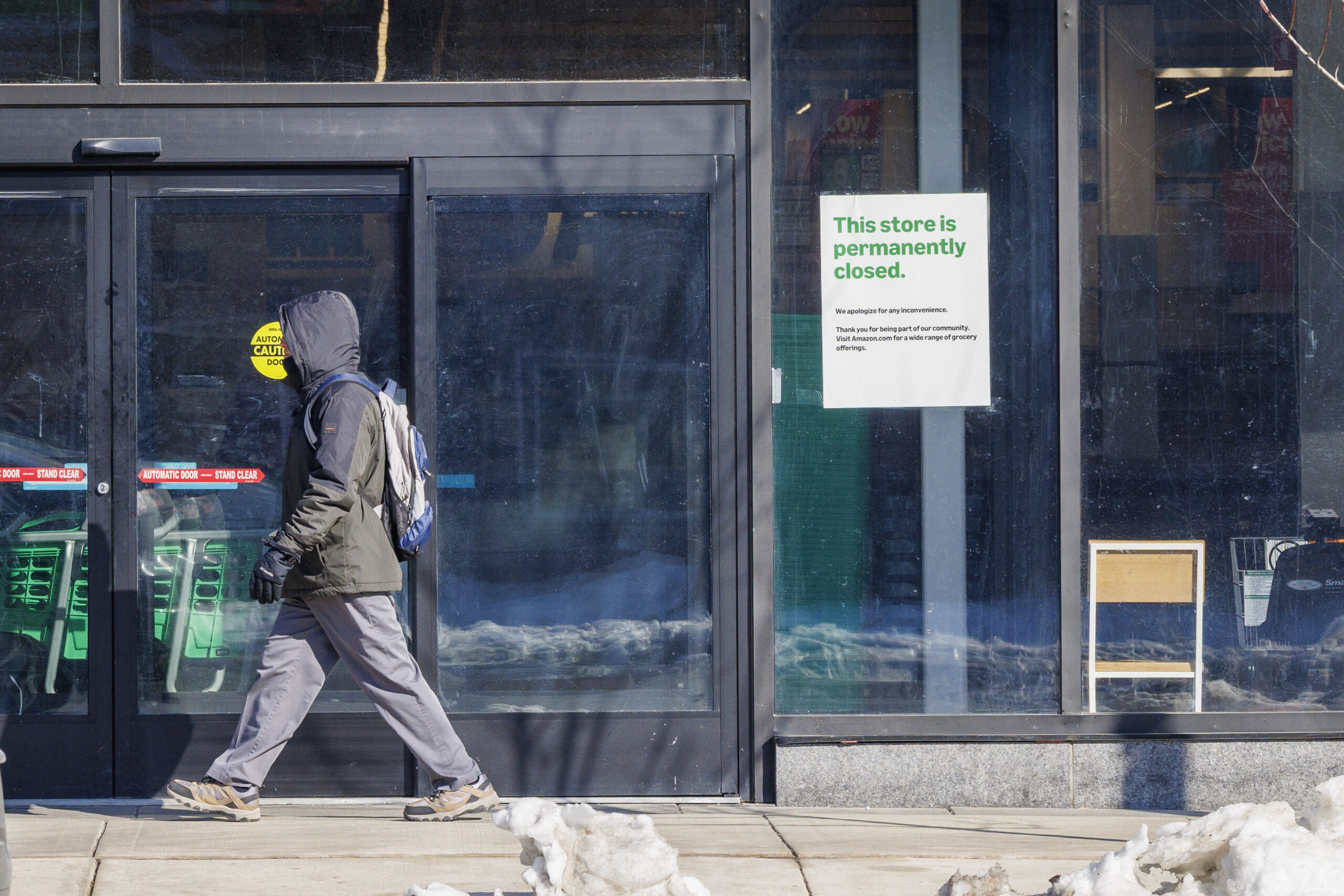
Last week, signs informed customers that the Northern Liberties Amazon Fresh was permanently closed.
In Philadelphia and its suburbs, many former Amazon Fresh customers are similarly saddened by the closure of neighborhood stores where they had developed connections with helpful workers. Several said they are most upset about the effects on their budgets amid recent years’ rise in grocery prices.
“I wasn’t happy about it closing for the simple fact that it was much cheaper to shop there,” said Brandon Girardi, a 30-year-old truck driver from Levittown (who quit a job delivering packages for Amazon a few years ago). Girardi said his family’s weekly $138 grocery haul from the Langhorne Amazon Fresh would have cost at least $200 at other local stores.
At the Amazon Fresh in Broomall, “they had a lot of organic stuff for a quarter of the price of what Giant or Acme has,” said Nicoletta O’Rangers, a 58-year-old hairstylist who shopped there for the past couple years. “They were like the same things that were in Whole Foods but cheaper than Whole Foods.”
She paused, then added: “Maybe that’s why they didn’t last.”
In response to questions from The Inquirer, an Amazon spokesperson referred to the company’s original announcement. In that statement, executives wrote: “While we’ve seen encouraging signals in our Amazon-branded physical grocery stores, we haven’t yet created a truly distinctive customer experience with the right economic model needed for large-scale expansion.”
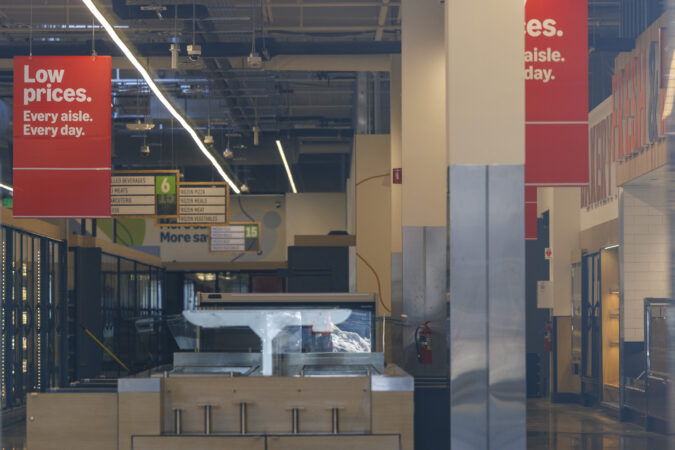
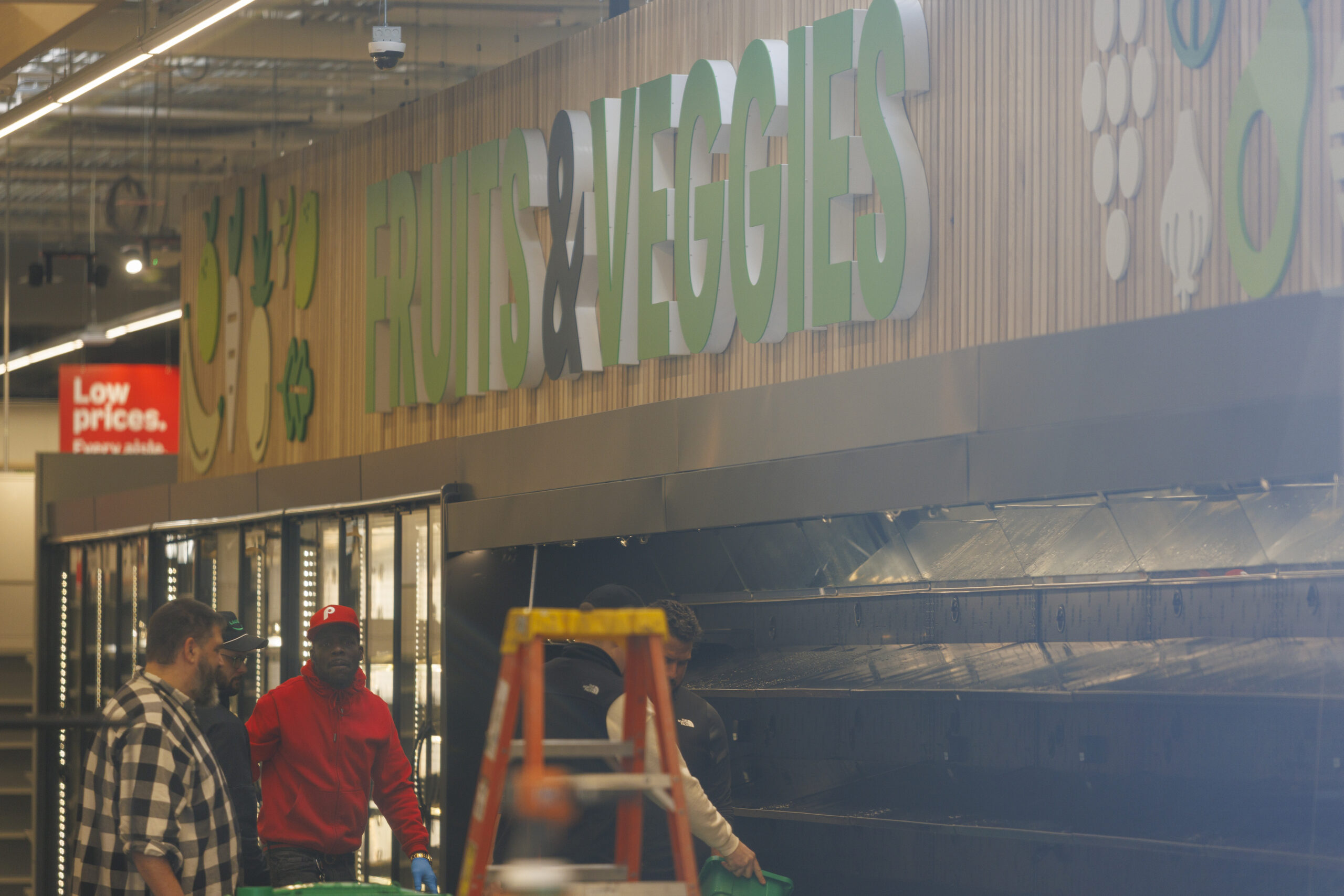
Workers could be seen inside the closed Amazon Fresh in Northern Liberties last week.
What makes a Philly shopper loyal to a grocery store?
Former Amazon Fresh customers say they’re now shopping around for a new grocery store and assessing what makes them loyal to one supermarket over another.
Last week, one of those customers, Andrea “Andy” Furlani, drove from her Newtown Square home to Aldi in King of Prussia. The drive is about an hour round trip, she said, but the prices are lower than at some other stores. Her five-person, three-dog household tries to stick to a $1,200 monthly grocery budget.
As she drove to Aldi, she said, she’d already been alerted that the store was out of several items she had ordered for pickup. That’s an issue Furlani said she seldom encountered at the Amazon Fresh in Broomall, to which she had become “very loyal” in recent years.
“It was small, well-stocked,” said Furlani, 43, who works in legal compliance. “I don’t like to go into like a Giant and have a billion options. Sometimes less is more. And the staff was awesome,” often actively stocking shelves and unafraid to make eye contact with customers.
“Time is valuable to me,” Furlani said. At Amazon Fresh, “you could get in and out of there quickly.”
Shoppers learned how to use the Amazon Dash Cart at an Amazon Fresh in Warrington in 2021.
Girardi, in Levittown, said he is deciding between Giant and Redner’s now that Amazon Fresh is gone. The most cost-effective store would likely win out, he said, but product quality and convenience are important considerations, too.
“We used to do Aldi, but Amazon Fresh had fresher produce,” Girardi said. “I used to have a real good connection with Walmart because my mom used to work there. But I don’t see myself going all the way to Tullytown just to go grocery shopping.”
Susan and Michael Kitt, of Newtown Square, shopped at the Broomall Amazon Fresh for certain items, such as $1.19 gallons of distilled water for their humidifiers and Amy’s frozen dinners that were dollars cheaper than at other stores.
But Giant is the couple’s mainstay. They said they like its wide selection, as well as its coupons and specials that save them money.
“I got suckered by Giant on their marketing with the Giant-points-for-gas discounts. I figured if I’m going to a store I may as well get something out of it,” said Michael Kitt, a 70-year-old business owner who has saved as much as $2-per-gallon with his Giant rewards. “I really at the time didn’t see that much of a difference between the stores.”
How Whole Foods might fare in Amazon Fresh shells
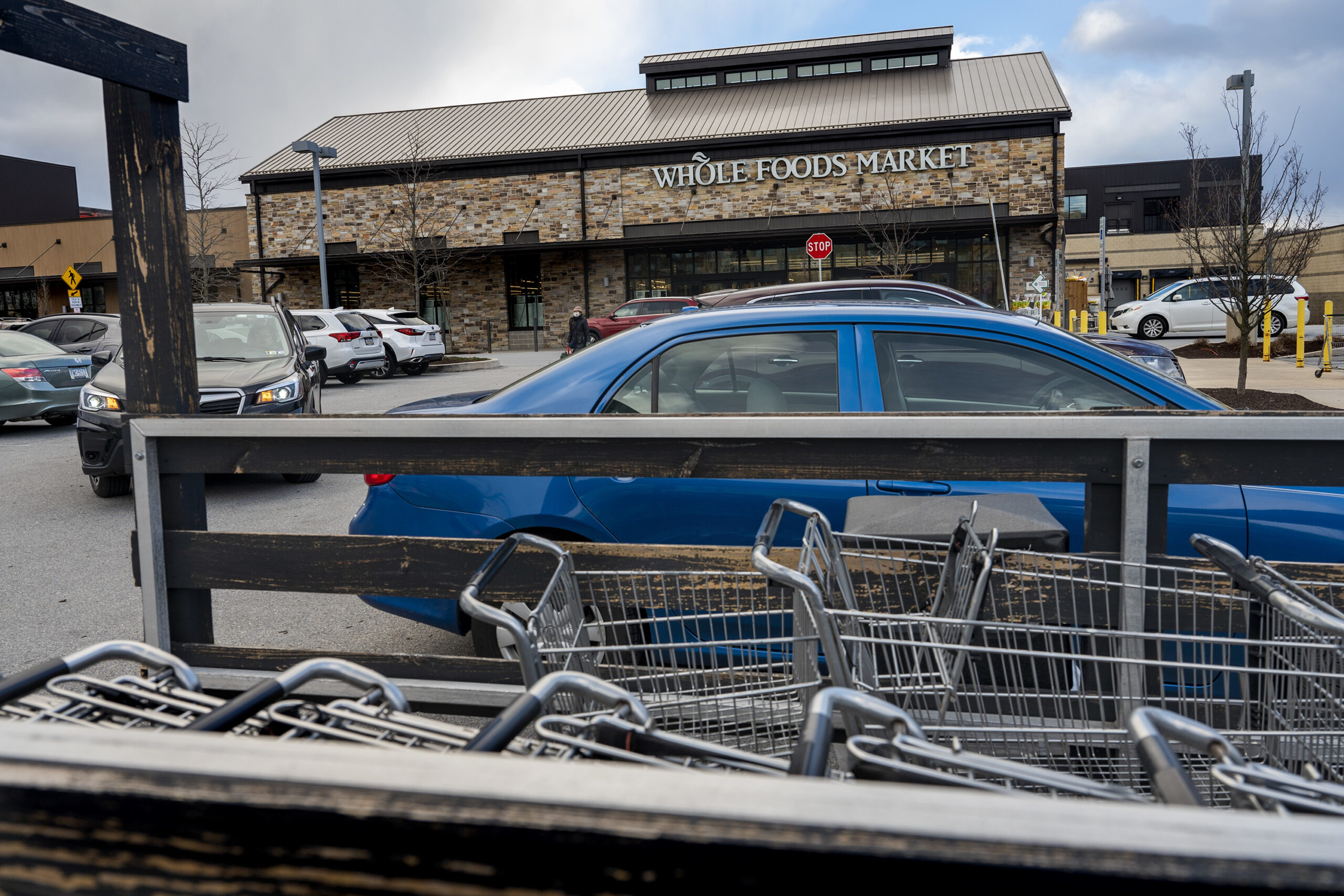
The Whole Foods store on the Exton Square Mall property is shown in 2022.
If any of these local Amazon Fresh stores were to become a Whole Foods, several customers said they’d be unlikely to return, at least not on a regular basis.
Natoya Brown-Baker, 42, of Overbrook, said she found the Northern Liberties Amazon Fresh “soulless,” and she didn’t “want to give Jeff Bezos any more money.” But the prices at Amazon Fresh were so low, she said, that she couldn’t resist shopping there sometimes.
Brown-Baker, who works in health equity,said she came to appreciate that it represented an affordable, walkable option for many in the neighborhood, including her parents, who are on a fixed income.
If a Whole Foods replaces the store at Sixth and Spring Garden Streets, which was under construction for years, Brown-Baker said the area would be “back at square one.”
Burkhardt, who also lives in the neighborhood, noted that Northern Liberties has a mix of fancy new apartment complexes and low-income housing.
“The grocery store should be for everyone,” he said. Whole Foods “doesn’t feel like it’s for the neighborhood. It feels like it’s for a certain class of people.”
The Kibitz Room in Cherry Hill, which shut down abruptly about two weeks ago after 25 years, has filed for bankruptcy protection, seeking to liquidate its assets.
An attorney for the deli filed paperwork Friday in U.S. Bankruptcy Court in Camden, claiming assets of less than $50,000 and liabilities of $100,001 to $500,000. A hearing on the Chapter 7 petition was scheduled for March 3.
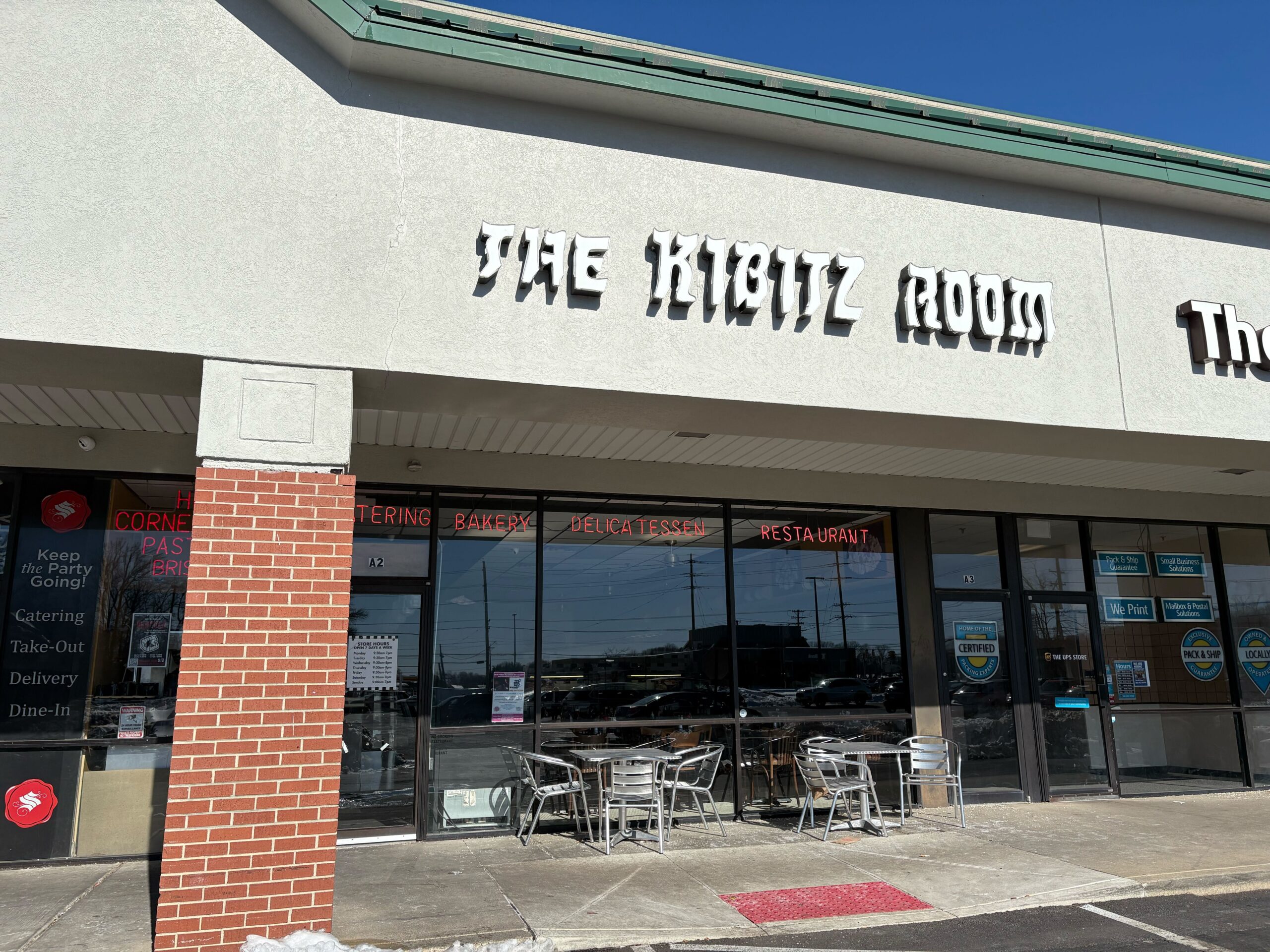
The Kibitz Room, in Holly Ravine Plaza at 100 Springdale Rd. in Cherry Hill, on Feb. 2, 2026.
Social media posts on Jan. 30 noted that the deli, owned by Sandy Parish, had apparently closed without notice.
Meanwhile, former owner Neil Parish — Sandy’s ex-husband — told Patch in an article published Monday morning that he was talking to the landlord about reopening the deli. Their son Brandon commented on a public Facebook post midday Monday that he was working on reopening “under a new entity. Unfortunately the previous ownership was out of my hands but I did run the store for the last nine years until I left to open the other location. … It surely wasn’t from lack of business!!”
Veteran deli operator Russ Cowan opened the Kibitz Room in Holly Ravine Plaza in 2001. Two years later, Neil Parish bought it using their daughter’s bat mitzvah gifts as the down payment. “She got four years at Syracuse, all covered,” Neil Parish said in an interview last year. “It was a good investment.”
After Neil and Sandy Parish split up in 2016, Sandy ran the Kibitz Room with their son Brandon, now 32. Neil moved to the Baltimore area, where heran delis before returning to Philadelphia.
Sandy Parish did not return messages seeking comment, nor did her son.
In an interview last year, Brandon Parish said he had worked at the Cherry Hill deli since he could stand on a milk crate and wash dishes.
“I didn’t want to be in camp,” Parish said. “I didn’t want to be at school. If it wasn’t the lacrosse field, I wanted to be at the shop. It was just the whole environment. The people who worked there were a second family.”
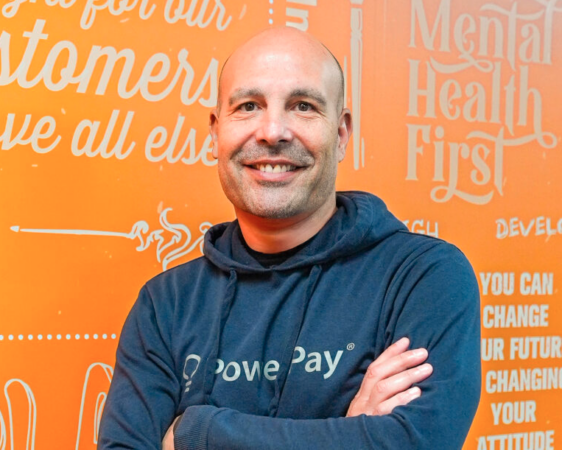
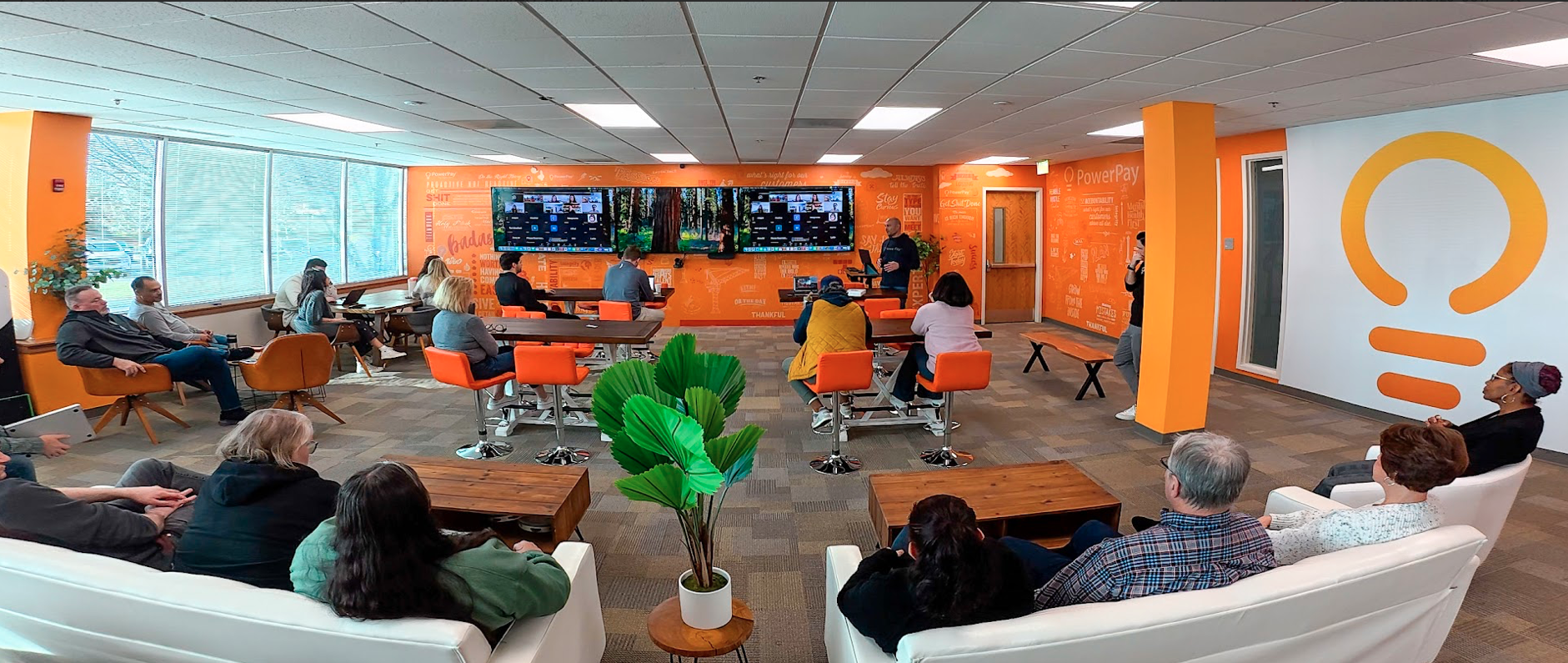
The Philadelphia region, once a banking center, is still home to financial innovators. One of the growing digital lenders based nearby is seven-year-old PowerPay, whose 225 staff members build a software platform tofinance home improvement loans, personal loans for hearing aids and other medical needs, and a growing list of services, from its new offices just off U.S. 202 near King of Prussia.
PowerPay revenues more than doubled to $200 million last year, as the company processed $6 billion in loan applications.
Founder Mike Petrakis, a native of Northeast Philadelphia and Archbishop Ryan High School graduate, played varsity soccer at Drexel University and briefly went pro in England. He settled in Doylestown and a sales career, which led him to start PowerPay in 2017. Early backers included hoteliers Jay Shah and Eustace Mita.
He agreed to talk to The Inquirer about his company’s growth and prospects. Questions and answers edited for clarity and brevity.
What’s the difference between your company and a bank?
A lot of people think banks are inconvenient. Their loan docs are thirty-some pages. With fintechs, someone applies in seconds, and in milliseconds you can get an offer back.
We collect thousands of data points — email transmissions, phone checks, geotagging, information in databases that is available. Social media, not so much. We make sure we can recognize the device from which they are putting in the application. We put all this into our models.
We are onboarding more artificial intelligence. We take a driver’s license and check — does the signature match the customer on the platform? is that image theirs? It is done in an instant.
Lending has become an automated business. Why do you still do so much business by phone?
You get a loan with us, you are going to be connected to us for the next 15 years, and we need to be connected to each other. We are deploying digital routing that moves them from an initial inquiry to a specialized team member without the traditional “on hold.” And we have engineers on premise and around the world.
The goal is to work so hard to get the consumer that we can keep them in perpetuity.
PowerPay has its headquarters just off U.S. 202 near King of Prussia.
Since you’re not a bank, how do you fund these loans?
Credit unions financed our loans early on. Now we have KeyBanc and Capital One and other major lenders.
We aren’t a bank, so we don’t have the same oversight, and we can move faster. But we work with banks, so our processes are built to be fully compatible with bank regulations. We process half a billion dollars’ worth of loans a month, which is larger than most banks.
What do you do any better than a bank?
We just built a new product, PowerPay 360. You pay interest only for 12 months, then interest and principal for 14 years. Leaves a little extra cash in their pocket for a year. We set that up in 30 days.
We are adding credit card and mortgage products, and healthcare loans, too. We just opened a relationship with U.S. Bank to grow that relationship to half a billion dollars.
Credit cards have moved from plastic into a whole digital landscape for the consumer. We are making it so [in late 2026] you can tap your smartphone or mobile device at Home Depot and not just buy supplies but also hire your installer or service provider, and get an installment loan to pay for the whole project.
What else are you preparing to sell?
We now have an insurance business. We sell credit-default insurance for the benefit of our financial sponsors. Our underwriter is domiciled in the Cayman Islands under their financial regulations. We aggregate the risk into asset-backed securities [and sell loans in risk-based pieces to get higher returns]. We sell those to investors, and the insurance comes off.
We’re going to grow insurance. Involuntary unemployment, disability, credit, life. We would domicile that in the U.S. We are talking to large insurance carriers we could front for and share the risk.
How did you get into this business?
In 2017, I was a national contractor, [helping buyers finance] home generators for Generac, Cummins, Kohler, Briggs & Stratton. You pay $99 a month for 10 years, and we’d get them a loan with Synchrony or GreenSky [two online-lending pioneers].
Generac came to me and said, how can we make these loans, too? I said start a national call center. It took me six months to find a software platform and a credit union to finance us.
At first we were just a couple of people, sitting in the Whole Foods beer garden in Plymouth Meeting. We’d have breakfast, then set up our laptops that we bought at Best Buy, initiating loans and writing the code on third-party platforms. Then we grew out of Whole Foods, and we got our first office at the Life Time fitness club in Ardmore.
We took over an auto-loan platform and converted it to make home-equity loans. We were ready to really build it up, and then Generac backed out.
So we said, what else can we finance with this? We approached the big home improvement companies, Renewal by Andersen window installations, and others.
What was it like, launching into the pandemic?
The home improvement companies were sitting on millions in applications they couldn’t get funded. We underwrote those loans and got them funded, at first, by credit unions.
We onboarded 100,000 users overnight, and we nearly blew up the software platform we were using. So we built our own, and now we own all our intellectual property.
We went at first to many credit unions, and they shared participation with other credit unions, but then they would get scared and pull out. We still weren’t big enough for Goldman or JPMorgan. Even the second-tier banks would only lend part of the money. Finally, we found one credit union, Chartway [based in Virginia], they kept the doors open.
In 2023, we were ready to sell loans in our first securitization. We kept servicing rights. That legitimized us in the eyes of the bankers. Capital One agreed to help us with the securitization.
There were 50 lawyers involved! We only did a $118 million deal. But we have done much larger ones since, and now I can get it done with a lawyer on each side in a couple of days. We underwrite the loans, we insure them, and then we sell them, de-risking.
It becomes a cost-of-funds game — the lower the cost, the less onerous the rates we can offer consumers.
But the Rochester, N.Y.-based supermarket chain won’t say whether it’s collecting biometricdata on shoppers at eight Philly-area stores. There are Wegmans stores in Cherry Hill and Mount Laurel in New Jersey and in Glen Mills, Malvern, King of Prussia, Collegeville, Warrington, and North Wales in Pennsylvania.
Patrons at some New York City Wegmans locations learned earlier this month that the supermarket chain had begun to collect, retain, store, and share data on their faces, eyes, and voices. The information, Wegmans said, was being used for “safety purposes.”
“This is information that can be used to identify or help identify you,” a sign posted at Wegmans in New York City said, according to reporting from the online news site Gothamist. “We use facial recognition technology to protect the safety and security of our patrons and employees, and do not lease, trade or otherwise profit from the transfer of biometric identifier information.”
Wegmans does not “get into the specific measures used at each store” for “safety and security purposes,” Wegmans spokesperson Marcie Rivera said in an email.
Rivera said Wegmans has deployed cameras equipped with facial recognition technology in “a small fraction of our stores that exhibit an elevated risk.” Wegmans is using the technology in a “handful of states.” It posted mandated signage in New York City to comply with local regulations, Rivera said.
Wegmans has previously said that the surveillance software is used to help identify individuals who “pose a risk to our people, customers, or operation.”
Biometric surveillance is becoming increasingly common but is not yet widespread, said Gus Hurwitz, senior fellow and academic director of the Center for Technology, Innovation and Competition at Penn’s Carey Law School.
Companies that use biometric surveillance do so for a number of reasons, but seldom tell consumers what their data is being collected for. Data collection can help companies understand what consumers are purchasing and how they’re moving through stores, Hurwitz said. Biometric data collection can also be used for dynamic pricing, when retailers change prices in real-time depending on a number of factors, including time of day, demand, weather, and consumer behavior.
Hurwitz said it’s important to distinguish between real-time and non-real-time biometric screening. Non-real-time screening has been happening for decades in the form of security cameras and other data collection tools, often used for market research purposes.
Real-time screening, however, is a newer frontier with a far murkier regulatory landscape.
Businesses in New York City that collect biometric data are required to post signage notifying customers, per a 2021 city law, however the agency in charge of implementing the law has no enforcement mechanism for noncompliant businesses, a city official told Gothamist.
A bipartisan bill regulating biometric data collection is currently moving through the Pennsylvania legislature. A recently introduced bill in the New Jersey Legislature would require any entity collecting biometric information to post a “clear and conspicuous notice” at every entryway to their business, like in New York City.
Hurwitz said we’re “still very much in the development era of these sorts of technologies,” and that he expects more and more government entities to hone in on regulating them in the near future.
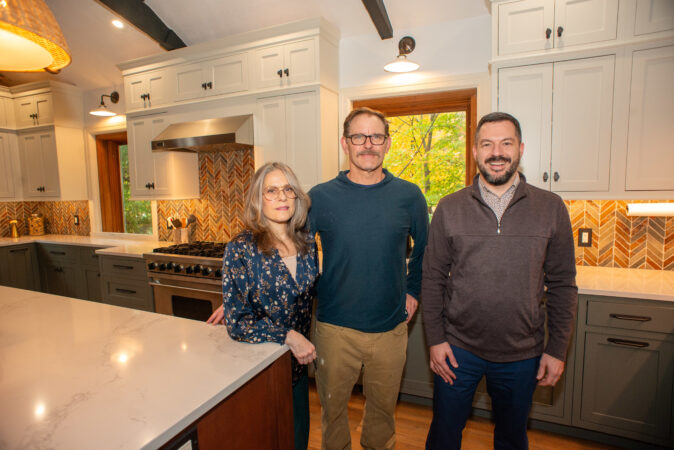
When Diane and Keith Reynolds moved back to the Philadelphia area from Austin, Texas, in 2023, and bought their house in Rydal, Montgomery County, they knew immediately that they wanted to remodel the kitchen.
But they also knew that project alone wouldn’t make a home they’d be satisfied with.
“We wanted to keep it craftsman style,” said Diane, referring to the arts and crafts movement of the late 19th century. The style is characterized by simplicity, emphasis on natural materials, and closeness to nature.
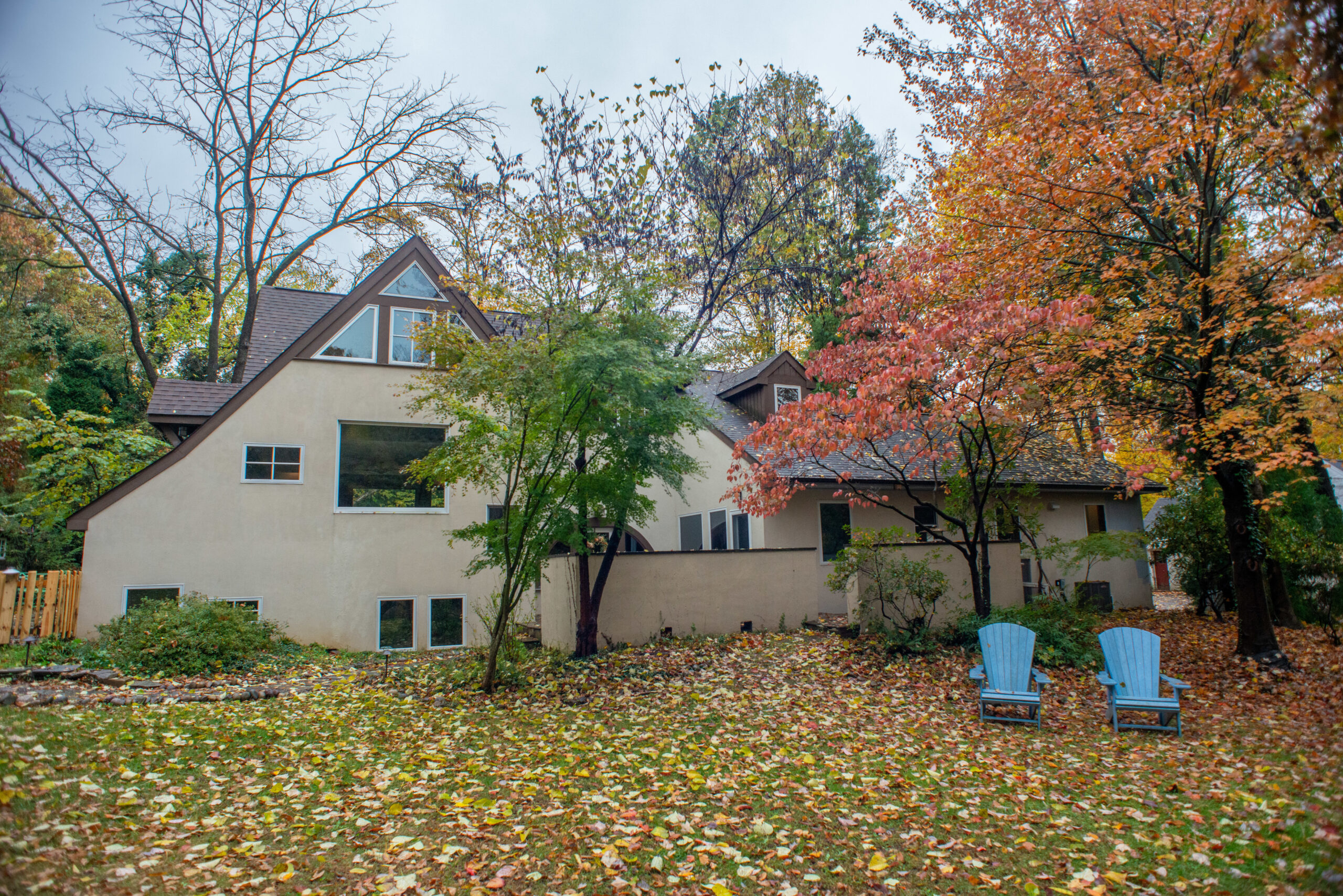
An exterior view of the Reynolds’ home. It was originally built as a Cape Cod, and a later addition brought in the craftsman style.
Keith, a software sales engineer for a technology company, said he specifically wanted to avoid a “cutesy” environment in the home. Diane, executive assistant for a trade association, called it “bringing nature inside.” It was the third house they’d lived in since they married.
Through an internet search, the couple found Philadelphia-based Airy Kitchens and designer Sean Lewis for the remodel.
“It was an interesting design dilemma,” Lewis said.
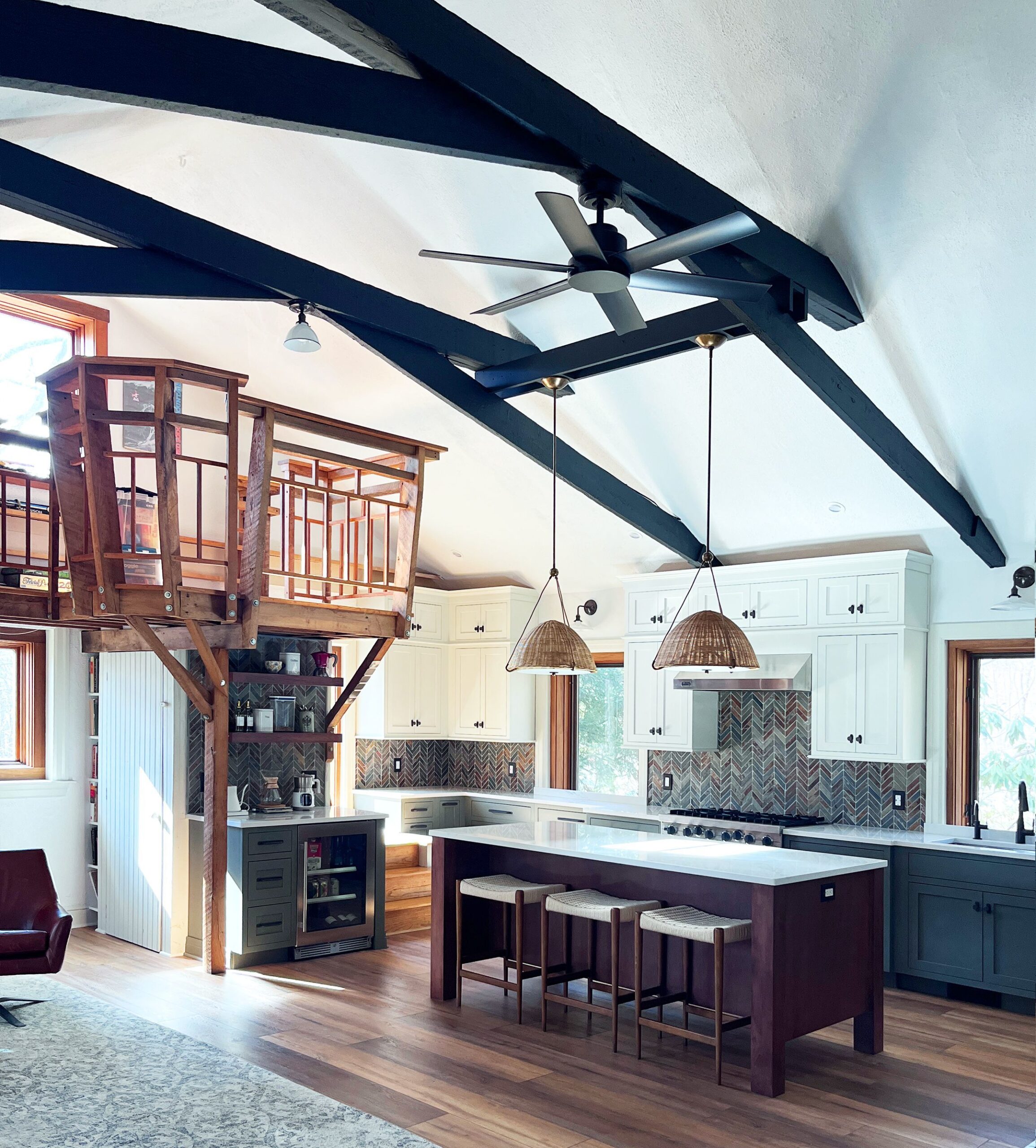
The house was originally built in the Cape Cod style in 1914, but when the previous owner added onto the home, he chose the craftsman style. By 2023, the kitchen needed significant updating for practical use. It had an unusual layout, opening up into a larger great room with high ceilings and a loft built from reclaimed wood towering over one side of the space.
The loft over the kitchen created a unique design task. The range had previously been placed underneath it, but it was relocated to another wall.
The loft was retained, but many other details were changed. “We changed a lot of the symmetry,” Lewis said.
For example, a full bathroom tucked behind the kitchen was made into a powder room, giving Lewis more kitchen space to play with.
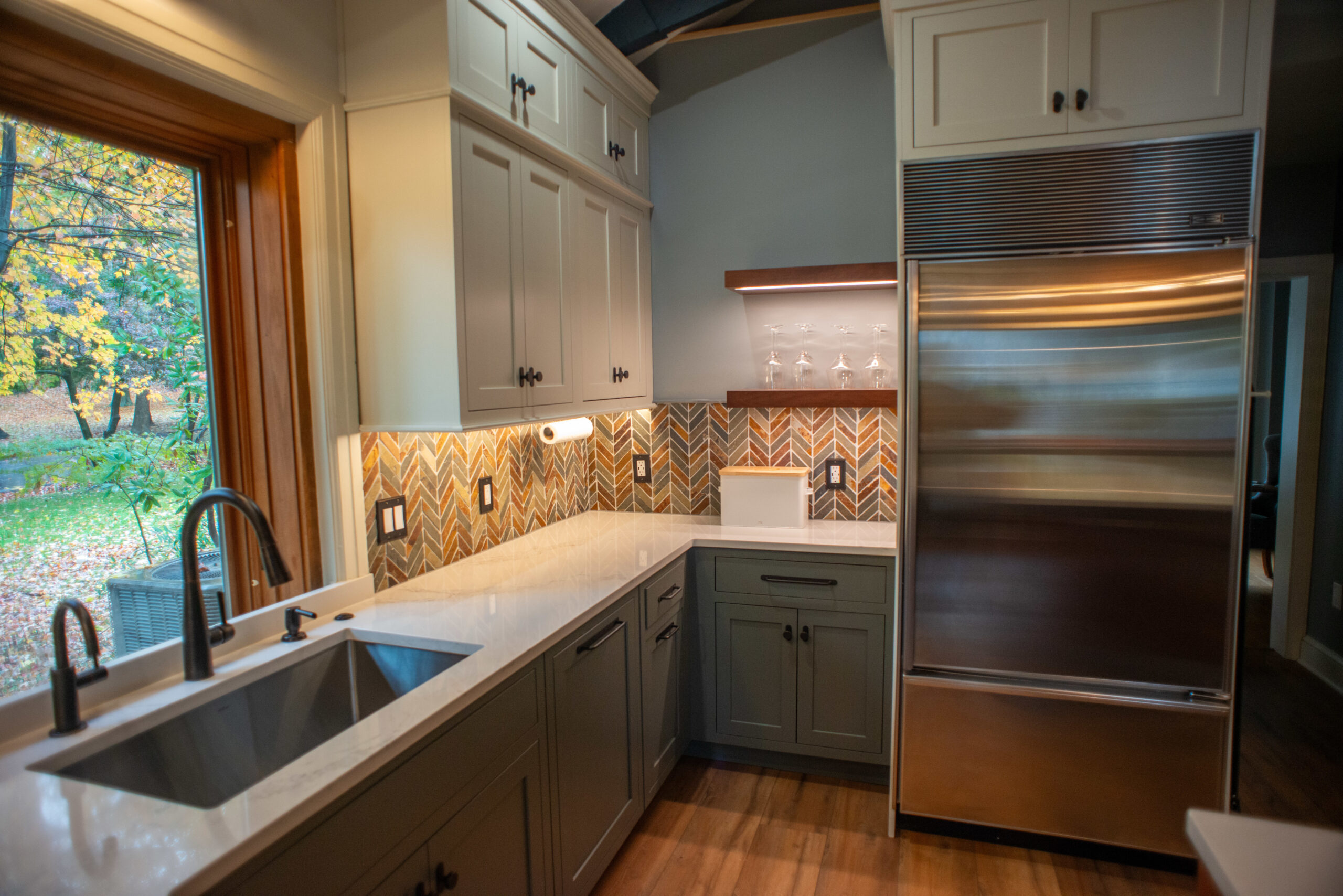
The home’s kitchen after renovations. At the upper left, the reclaimed wood loft remains.
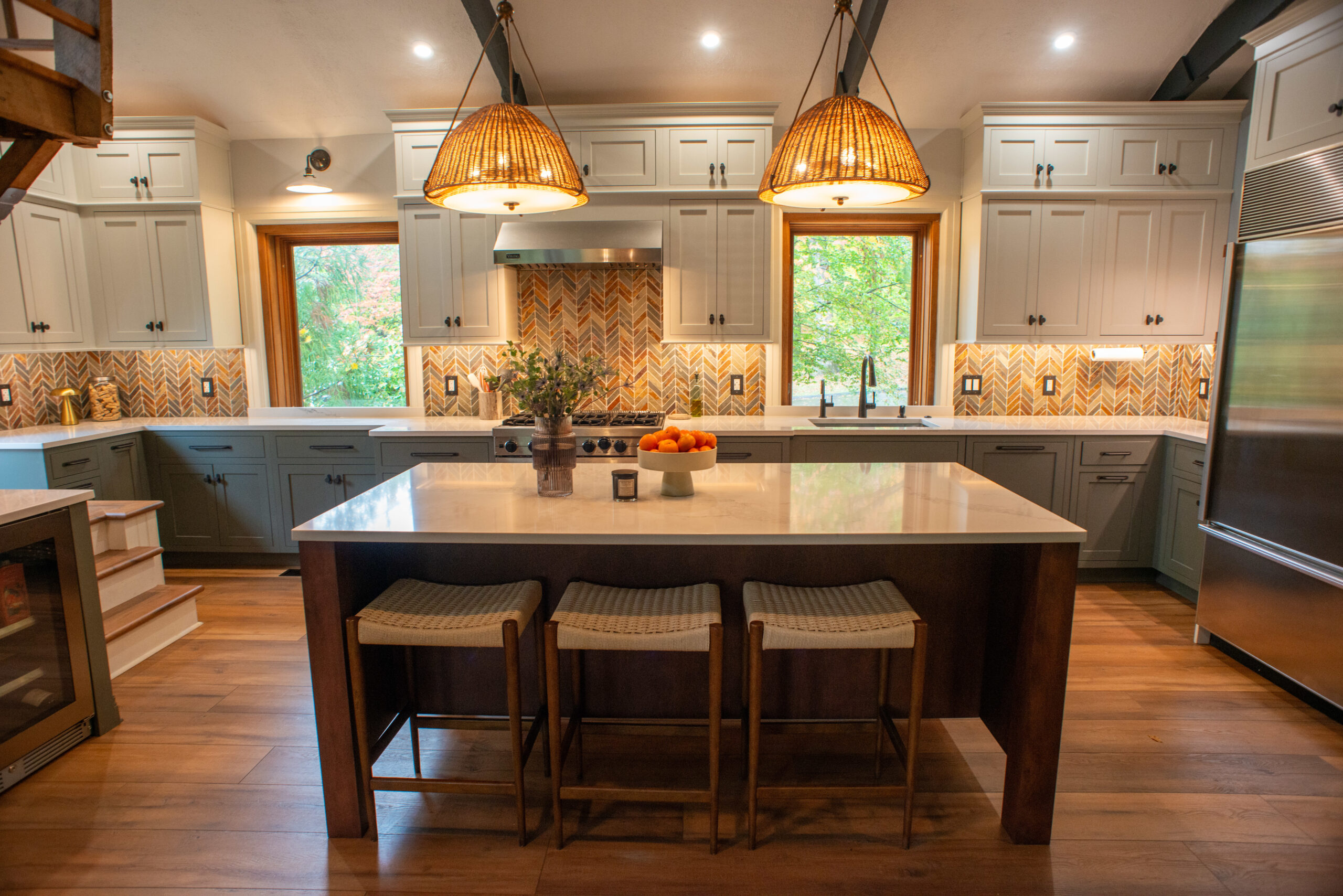
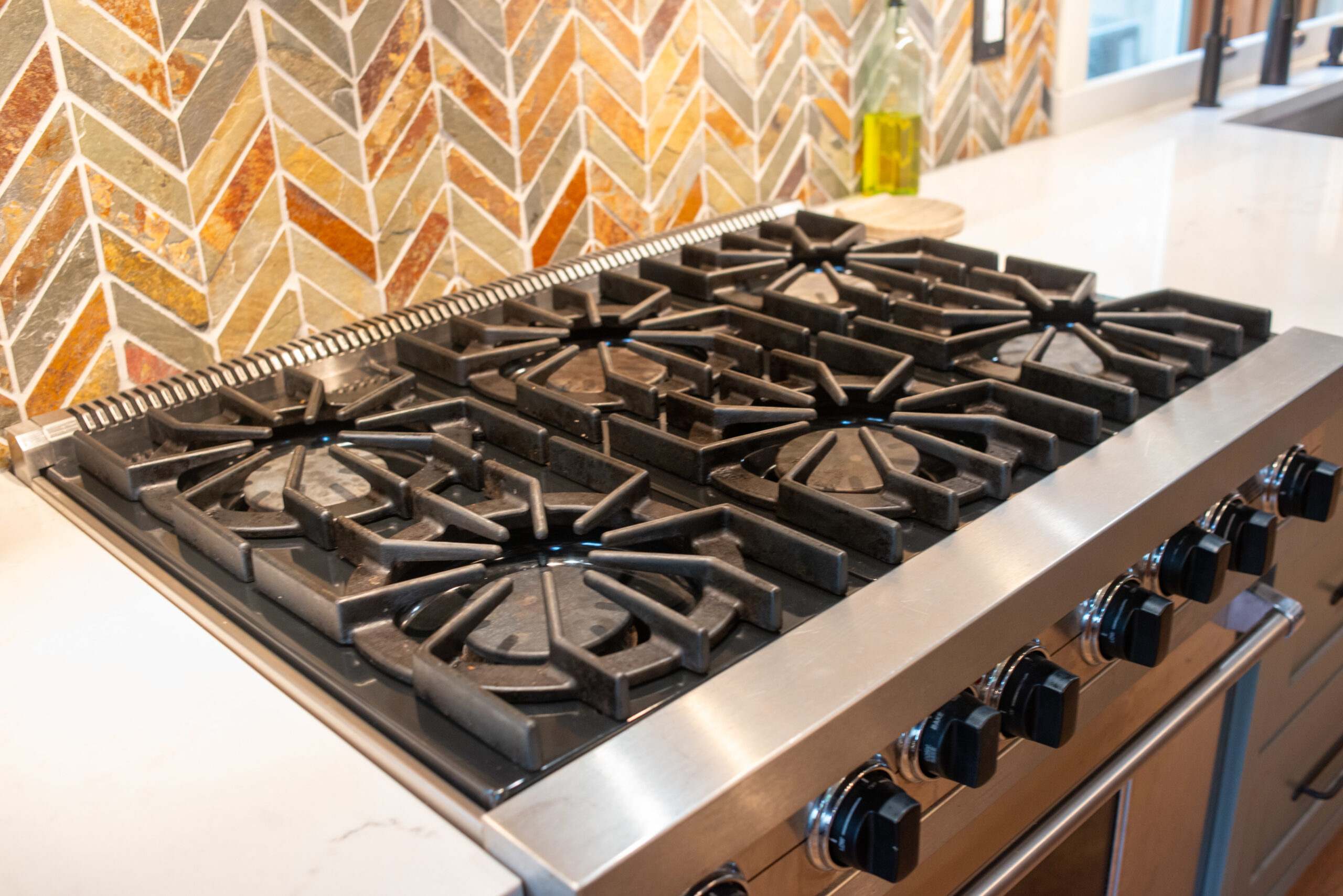
The refrigerator and gas range were reused. A new hood, dishwasher, and beverage refrigerator were added. The custom island — larger than its predecessor — is a stained cherry wood that was chosen to match the natural wood trim on the existing windows.
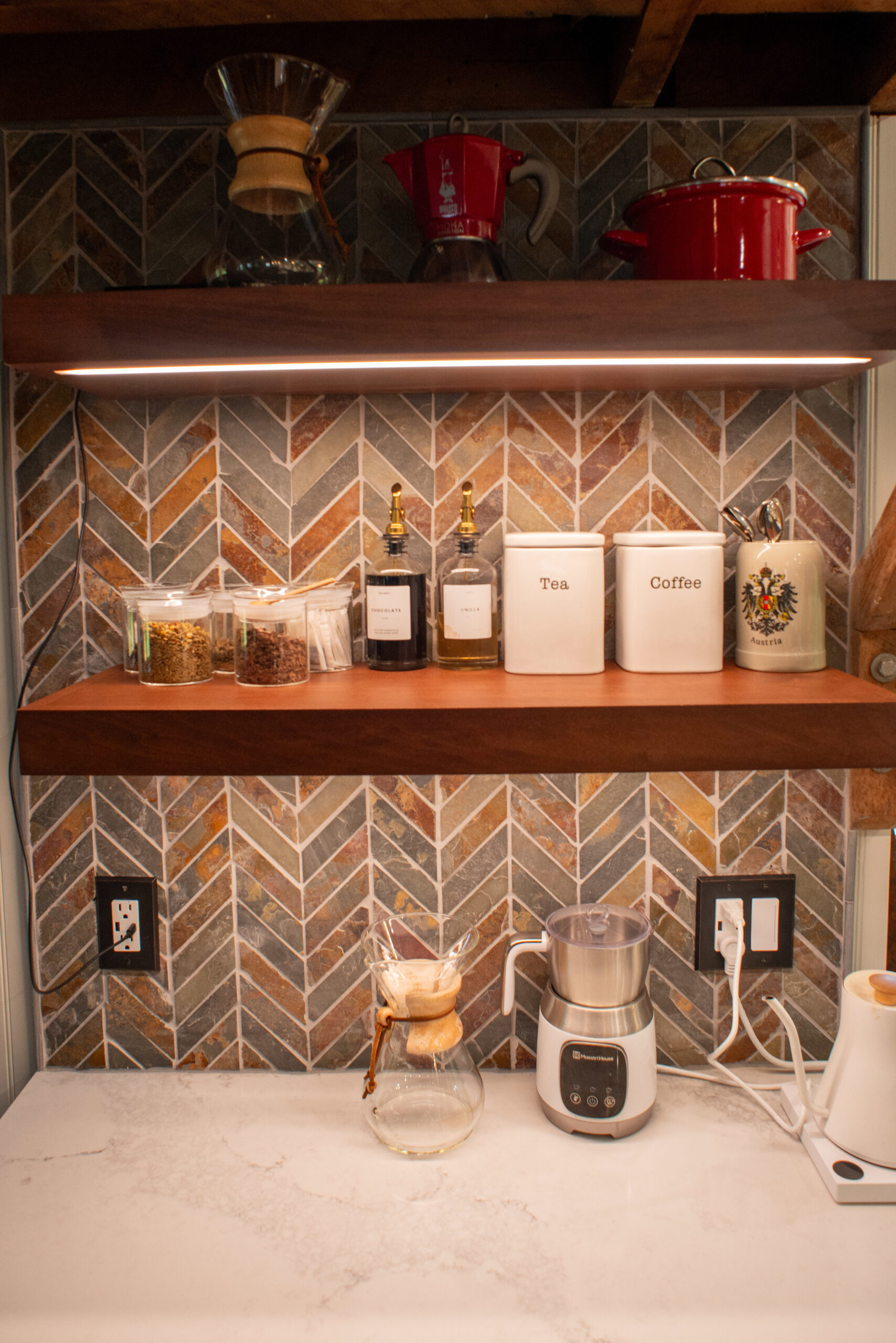
The backsplash is a multicolored earth-toned slate material in a chevron pattern, evoking the outdoors from within their kitchen.
“It’s the first time we’ve seen or used that material as a backsplash,” Lewis said, and it was the jumping-off point for choosing the colors in the kitchen.
“The assignment of rethinking a kitchen space is not unusual for us,” he said. But the home’s disparate styles and unique features, like the loft, beams, and open floor plan, created an “unusual design problem.”
“It’s quite unusual for a 100-year-old home to have a great-room layout with a vaulted ceiling,” Lewis said. “The reclaimed wood loft installed by the previous architect is something I’ve never seen before, and I’m sure will never see again.”
Maximizing storage was a no-brainer, and they accomplished that simply by adding cabinets.
One of the key challenges was providing counter space around the range. The range was previously located below the loft, but is now centered on the kitchen’s longest wall, between two windows, with the sink off to the right, just below a window. This allowed Lewis to add counter space around the range, for more practicality.
The backsplash tiles and wood stain were chosen to match colors from the surrounding yard.
The windows were left untreated in the Craftsman style.
Inside, woodwork was stained to match the outside.
The stove was relocated so it would be surrounded by counter space.The refrigerator was reused in the remodeled kitchen.
Diane said she and Keith looked at the house as a “homecoming” from their time in Austin, “a little bit like reclaiming our roots.” He grew up in the nearby neighborhood of Meadowbrook, and she is from King of Prussia.
“From the second we walked into the house it was so warm — we felt immediately connected. There’s something grounding about watching the seasons change,” she said. “It’s colors and leaves and movement. Every day it just restores me.”
Is your house a Haven? Nominate your home by email (and send some digital photographs) at properties@inquirer.com.
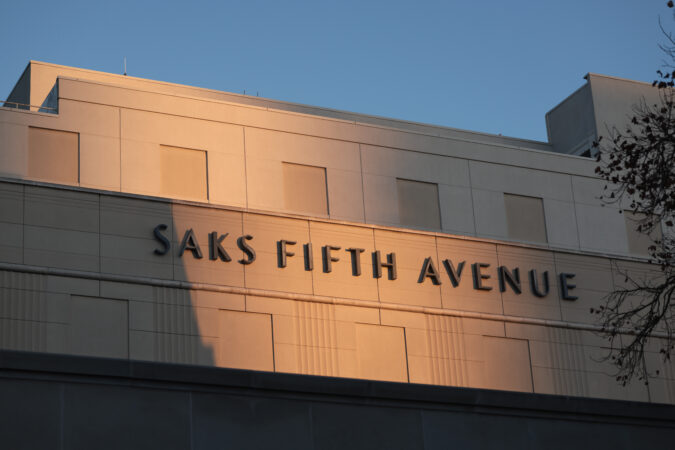
In the Philadelphia region, Saks Global has long operated an expansive Saks Fifth Avenue store off City Avenue in Bala Cynwyd. The company also has a Neiman Marcus at the King of Prussia Mall, as well as Saks Off 5th discount outlets at the Franklin Mall in Northeast Philadelphia and at the Metroplex shopping center in Plymouth Meeting.
Both local Saks Off 5th locations are slated to close soon, as was reported this fall by several news outlets, including the Philadelphia Business Journal.
Here’s what the bankruptcy filing means for local Saks shopper.
Is Saks Fifth Avenue in Bala Cynwyd closing?
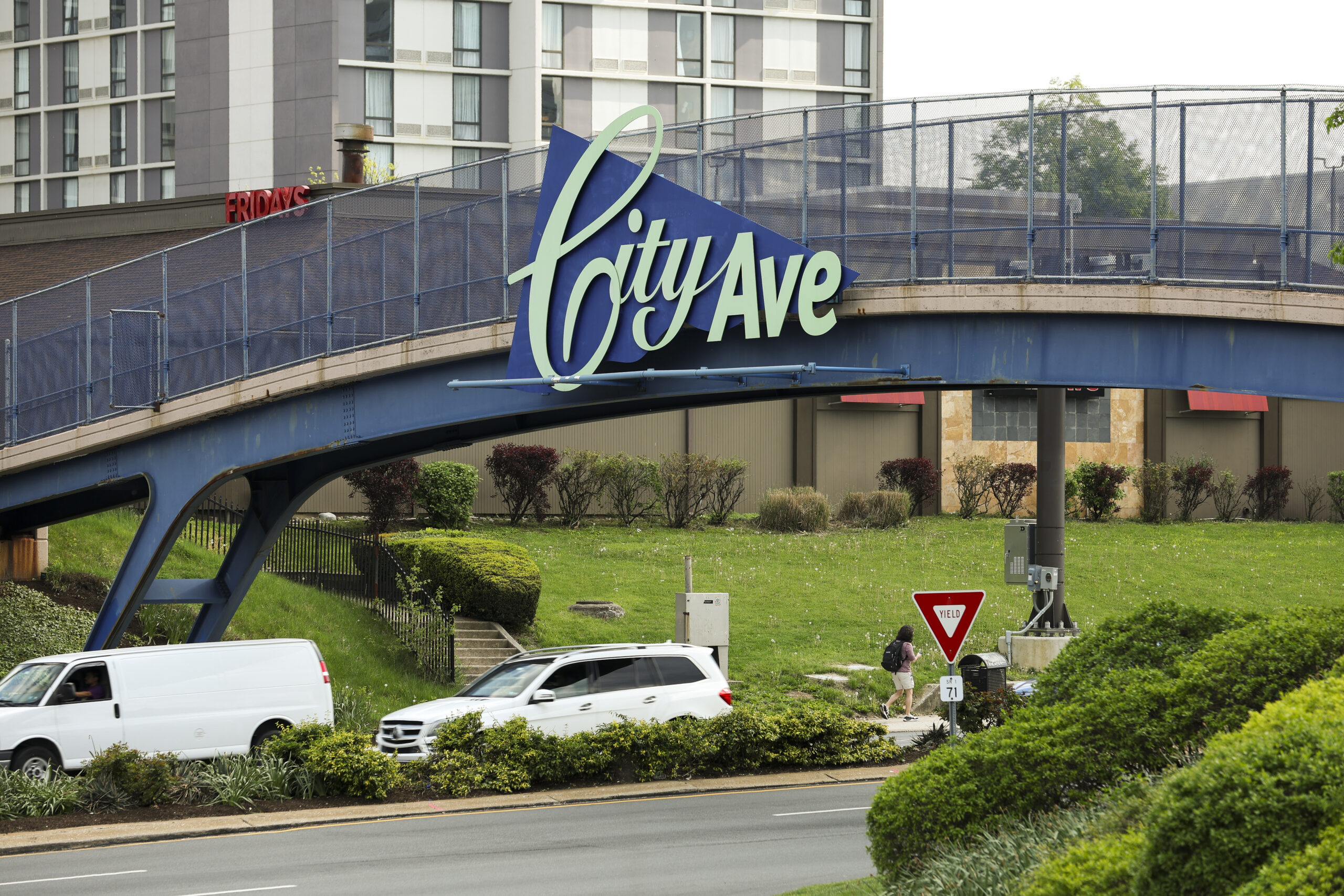
Saks Fifth Avenue has been a retail success along City Avenue in Bala Cynwyd, as shown in April 2024.
No. At least not in the immediate future.
Saks has filed for Chapter 11 bankruptcy, which means the company intends to reorganize financially and stay in business. That’s opposed to Chapter 7 bankruptcy — as is the Iron Hill Brewery case — through which businesses liquidate all their assets and close locations.
“To be clear, a Chapter 11 filing does not mean that Saks Global is going out of business,” Saks wrote in a bankruptcy FAQ on its website.
But when companies reorganize through bankruptcy, they sometimes do close stores, particularly underperforming ones.
Saks executives alluded to the possibility of this in its statement, which read in part: “As part of the Chapter 11 process, the company is evaluating its operational footprint to invest resources where it has the greatest long-term potential. This approach reflects an effort to focus the business in areas where the company’s luxury retail brands are best positioned for sustainable growth.”
The Inquirer reported in 2024 that business at the store was strong and that the chain had resisted offers to move to King of Prussia, according to the City Ave District.
In response to questions from The Inquirer about the future of Philadelphia-area stores, Saks Global said: “Our footprint evaluation is underway, and we have already begun to work collaboratively with our real estate partners to find future-facing solutions, where possible, to achieve a stable and sustainable business model and optimized portfolio on the other side of this process.”
Is Neiman Marcus in King of Prussia closing?
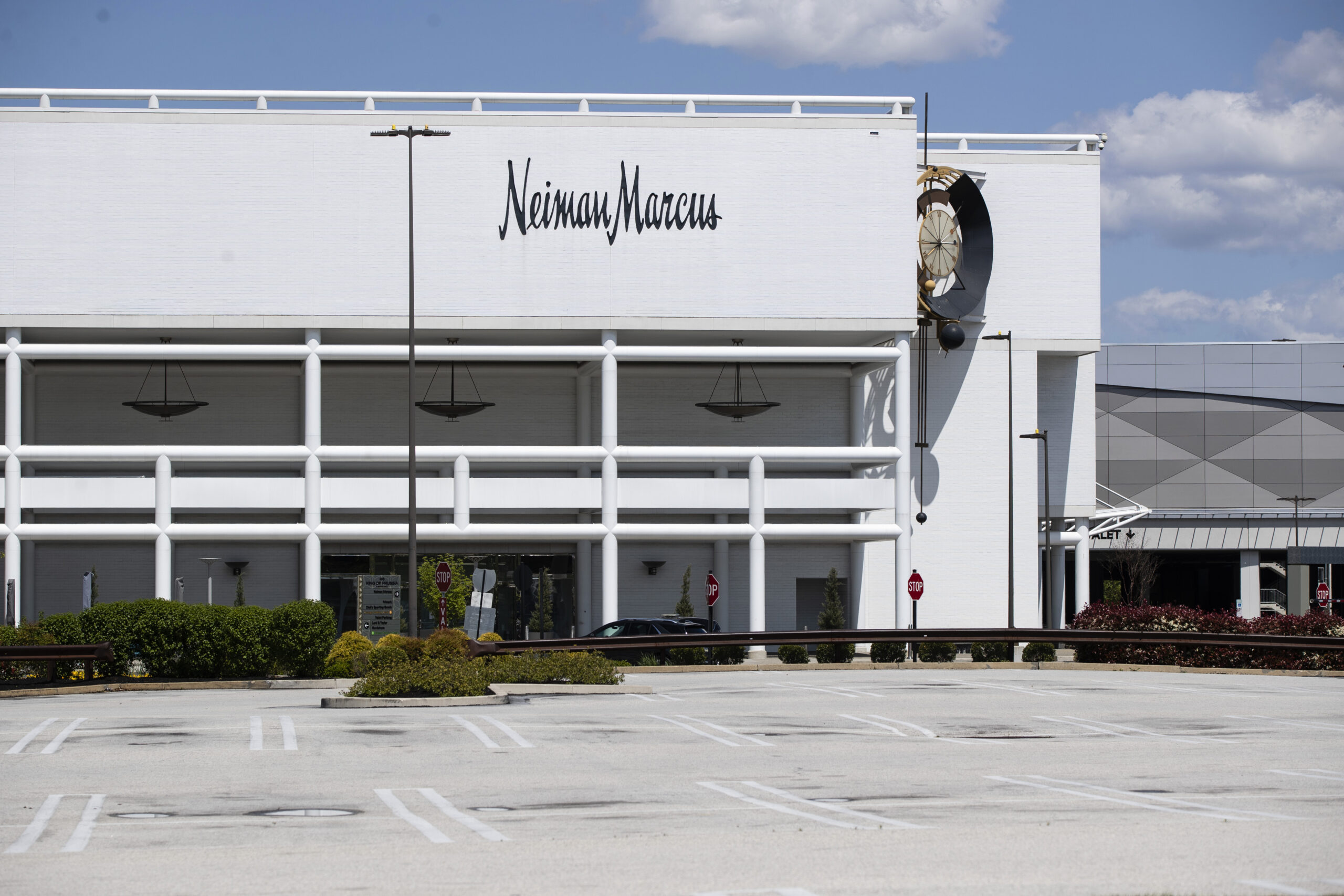
The Neiman Marcus store in King of Prussia, as shown in May 2020.
Are Saks credit cards or gift cards impacted by the bankruptcy?
No, the company says.
“There are no changes to our credit card programs and rewards, with customers continuing to shop, earn and redeem benefits as usual,“ the company wrote in the FAQ. ”We continue to accept payments as usual, including credit cards and gift cards, with no changes to how customers transact with us.”
Are Saks’ return policies impacted by the bankruptcy?
No, according to the company.
“Our refund and exchange policy is expected to remain unchanged, with refunds and exchanges being accepted and issued as usual,” the company wrote.
I am waiting on a package from Saks. Will my order still arrive?
Yes, all current and future orders will be delivered as usual, the company said.
What’s next for Saks?
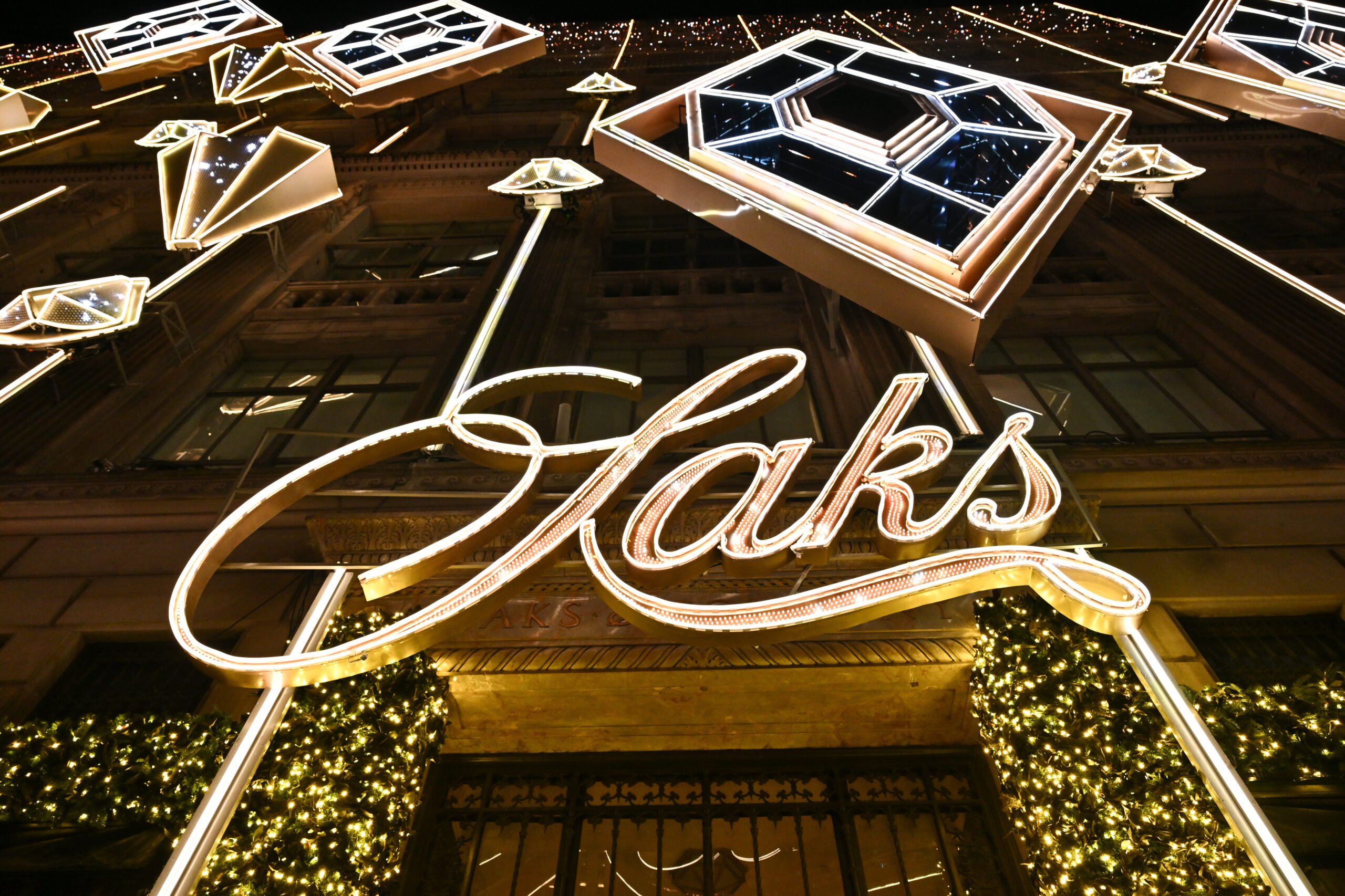
In New York, Saks Fifth Avenue’s holiday light show and window was revealed in November.
The company says it is not going anywhere.
“Saks Global is firmly focused on the future, and we look forward to continuing to serve customers and deliver for our stakeholders,” the company wrote in the FAQ.
As of Wednesday, Saks was waiting for court approval of a $1.75 billion financing deal that would come with an immediate $1 billion debtor-in-possession loan from an investor group.
If approved, the deal “will provide ample liquidity to fund Saks Global’s operations and turnaround initiatives,” the company said in a statement.
Saks estimates its assets and liabilities at between $1 billion and $10 billion, according to court documents filed in U.S. Bankruptcy Court in Houston. Saks has between 10,001 and 25,000 creditors, including luxury brands like Chanel, to which Saks owes $136 million, according to the documents.
To lead the company during this transition, Saks also announced a new chief executive, with former Neiman Marcus CEO Geoffroy van Raemdonck replacing Richard Baker.
Saks said it hopes to emerge from bankruptcy later this year.
The company said in its FAQ: “With new capital and a stronger financial foundation on the other side of this process, we are confident that we can play a central role in shaping the future of the luxury retail industry while delivering the elevated shopping experience our customers expect from our dedicated team.”
You can’t turn around these days in Philly without someone telling you this is going to be a big year for the city, including me. You get it, things are happening, people are coming, but I bet you mostly just want to know how you can either join in on the parties or figure out how much they’re going to annoy you.
I usually try to temper my expectations — one, because I’ve learned a few things in 18 years here and two, because I like to be pleasantly surprised. But I’ve recently found myself imagining what the big moments will be like: the NCAA Division I men’s basketball tournament in March; the PGA Championship in May; the FIFA World Cup and MLB-All Star games this summer; and the yearlong celebrations marking the 250th anniversary of the signing of the Declaration of Independence.
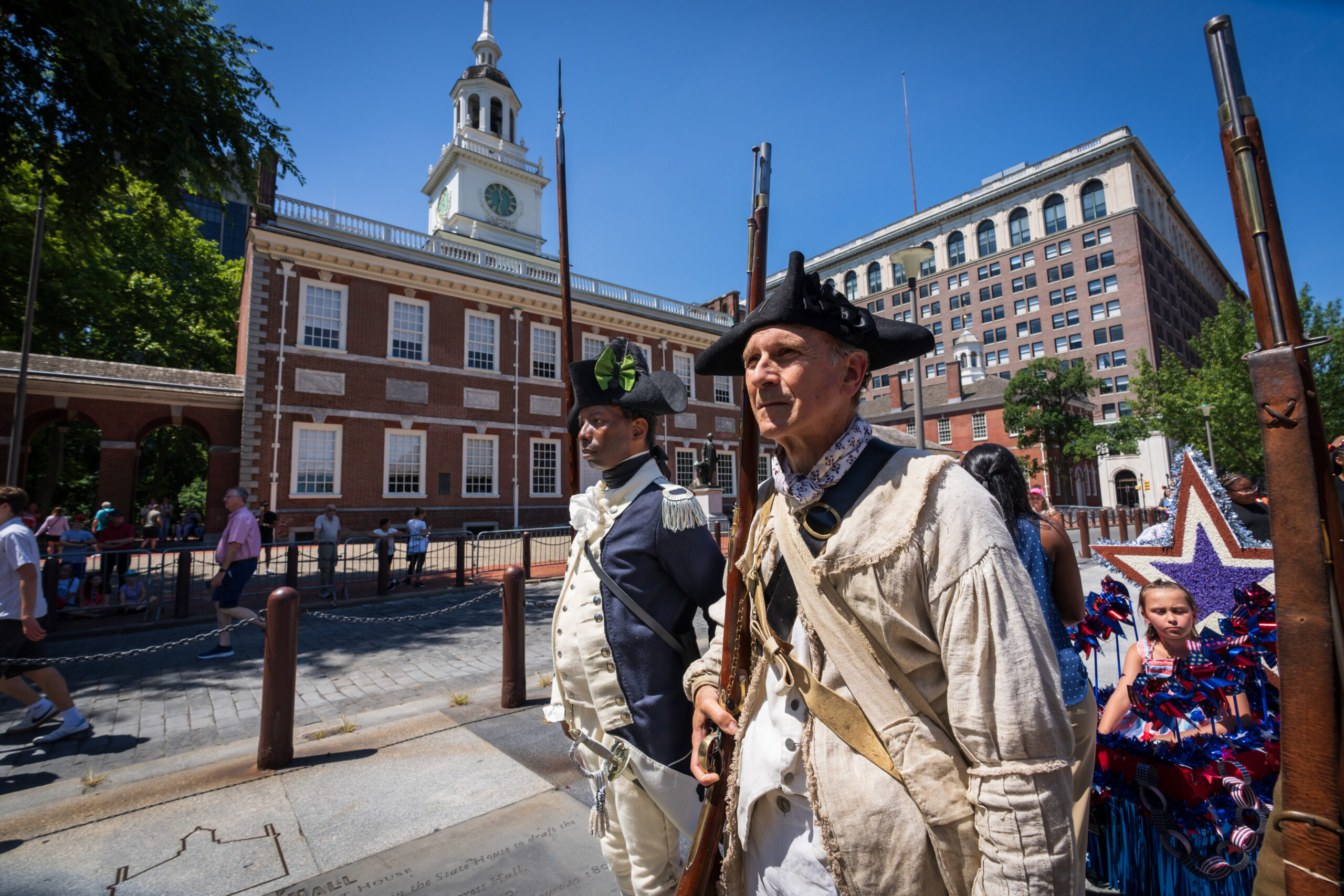
Antoine Watts, back left, and Michael Clement, front center, participate in the Red, White, and Blue To-Do Pomp & Parade at Independence Hall in 2024.
I have big hopes and some worries for Philadelphia, just like I do for everything I love.
And while the stuff above is a lot, it’s not everything going on here this year, not even close. So if you’re seeking alternatives to the big to-dos, looking to keep your calendar full all year long, or just hoping to run into Mark Ruffalo, here are 14 more Philly happenings to look forward to this year.
(Dates are subject to change. Check related websites for updates.)
Jan. 30: Philly is Unrivaled
The first big event features incredible athletes you won’t see in any of the major sporting events I mentioned above: women.
Unrivaled, a three-on-three format women’s basketball league, is holding a doubleheader at Xfinity Mobile Arena to kick off its first tour later this month.
Rose BC guard Chelsea Gray (12) drives past Lunar Owls wing Rebecca Allen (9) in their Unrivaled 3-on-3 basketball game Jan. 5 in Medley, Fla.
The games will undoubtedly hype up fans for when Philly gets its own WNBA expansion team in 2030 and prove to any doubters that Philly is a women’s sports town (we even have a shirt that says it).
The Milano Cortina 2026 Winter Olympics in northern Italy will feature a host of local athletes and at least one famous Philly podcaster. Watching it also doesn’t require you to leave your house, so win-win.
Four Philadelphia Flyers will be playing Olympic hockey: Travis Sanheim for Canada, Rasmus Ristolainen for Finland, Dan Vladar will represent Czechia, and Rodrigo Abols will take the ice for Latvia.
People take photos in front of the Milan Cortina Winter Olympics and Paralympics rings, in Cortina D’Ampezzo, Italy.
Other local athletes will undoubtedly qualify, but I don’t have a full list yet so don’t email me asking why I didn’t mention your cousin-in-law on the U.S. Curling Team.
Kylie Kelce will also serve as a digital content creator for NBCUniversal’s Creator Collective and she’ll have on-the-ground access to the games to produce social media content.
Go Birds. Go Team U.S.A.
Feb. 14: ‘Universal Theme Parks: The Exhibition’
How much fun can learning about theme parks be without the roller coaster rides, immersive lands, or concession stands? Philly will find out next month when the Franklin Institute premieres: “Universal Theme Parks: The Exhibition.”
An artists’ conceptual rendering of the Franklin Institute’s “Universal Theme Parks: The Exhibition,” which is slated to open Feb. 14.
The new exhibit spans eight galleries and tracks the history and world-building of Universal’s theme parks. It was created by the team at the Franklin, who hope it will introduce young visitors to science and tech careers in the theme park industry.
I’m hoping there’s a section about whatever alien incantation protects the E.T. Adventure ride, which opened in 1990 and is the last remaining original ride at Universal Studios Florida. The high-tech stuff is awesome, but there’s nothing that beats the nostalgia of that flying bicycle ride and the flashlight-fingered alien.
March 14: Ministry of Awe opens
The more I hear about the Ministry of Awe the less I understand it, and the more intrigued I become.
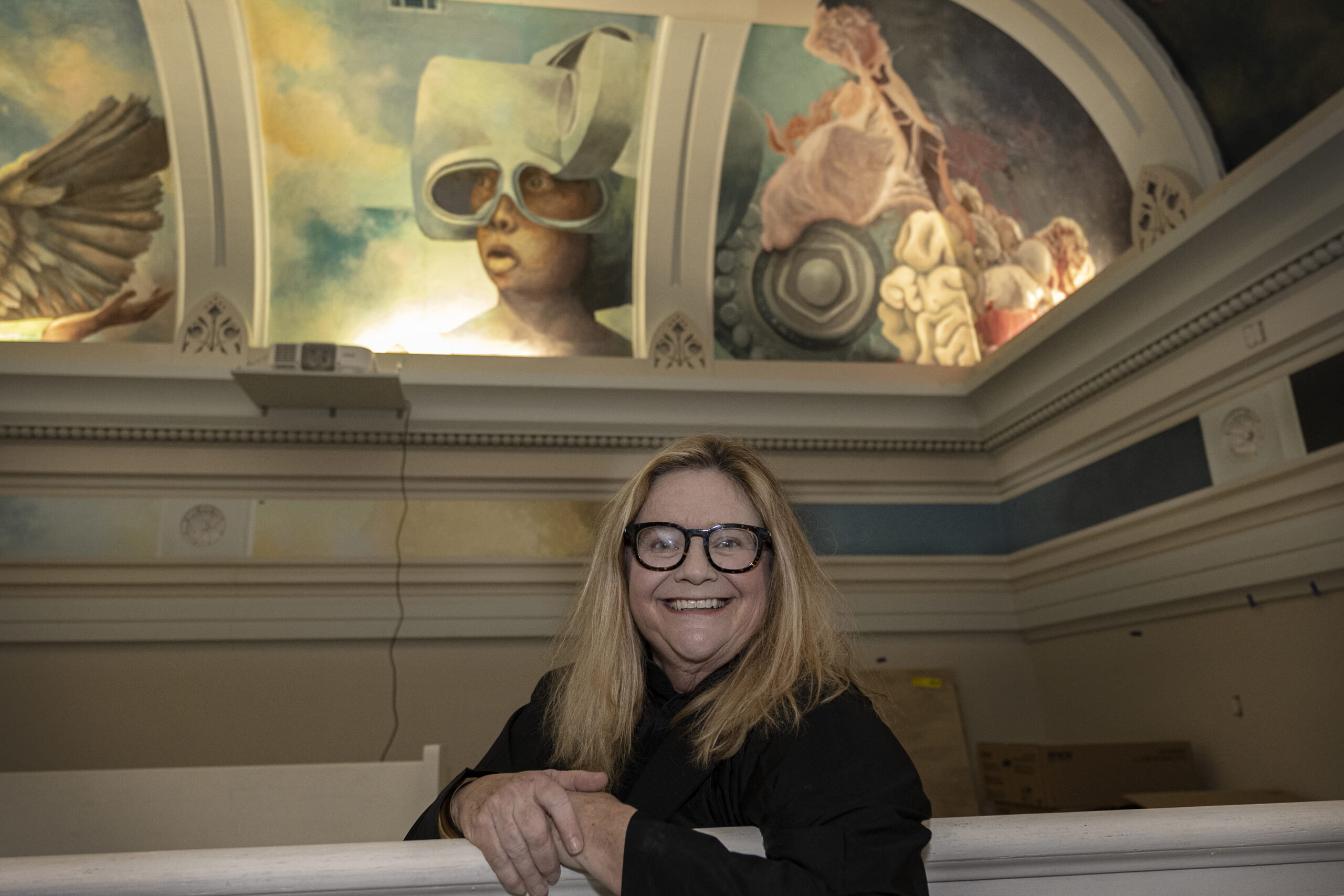
The permanent, six-story immersive art experience helmed by Philly muralist Meg Saligman inside of Manufacturers National Bank in Old City “transforms an abandoned 19th-century bank into a fantastical, seemingly impossible institution that trades in the many enigmatic facets of humanity,” according to its website.
Guests will be encouraged to question what they value and to wander the multimedia art space, which will lean into a banking theme and includes a room for counterfeiting. Actors will be on hand to enliven their experiences.
Muralist Meg Saligman inside of the still-under-construction Ministry of Awe in November. Opening date is March 14.
“There’s a teller that smells you. You will walk through and be delighted and surprised along the way,” Saligman told The Inquirer.
The Ministry of Awe says we all already have accounts open there and one thing is for certain, my interest rate is sky-high.
April 14 — May 31: ‘1776 The Musical’
There are not many musicals set in Philadelphia and the one thing you can say about 1776 is that it’s one of them.
The production about the events that led to the signing of the Declaration of Independence never became a juggernaut like Hamilton and didn’t produce any smash songs. But after rewatching the film version last Independence Day, I can safely say it’s still a pretty good musical. Especially if you hate John Adams, or love watching people hate on him.
While it would have been epic if this production could have been staged at Independence Hall this year, seeing it at the Walnut Street Theatre — the country’s oldest theater, which opened just 32 years after 1776 — is a close second.
April 16: Cruise ships begin sailing out of Philly
For the first time in nearly two decades, cruise ships will return to the region this spring, offering locals a chance to seas the day with an aquatic trip abroad.
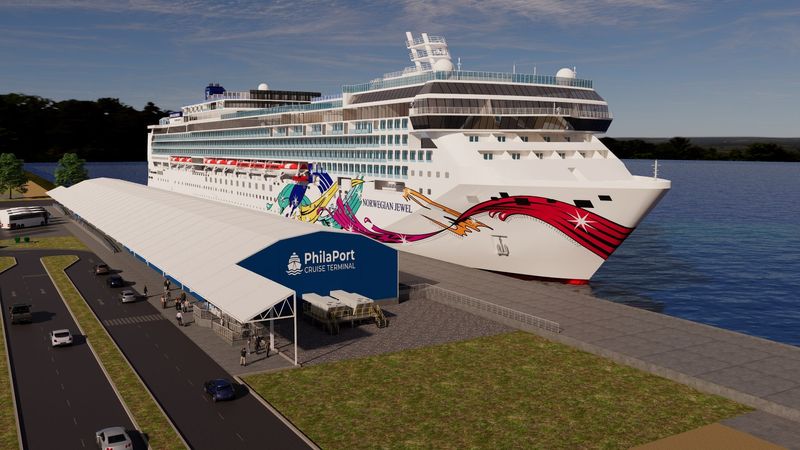
Construction of the Port of Philadelphia (PhilaPort) Cruise Terminal began last month in Tinicum Township, Delaware County, at a site adjacent to the Philadelphia International Airport that was formerly known as the Hog Island Dock Terminal Facility.
(How’s that for a local word salad — a Philly port in Delco at a dock named after the place that may have inspired the word hoagie.)
A conceptual rendering of the future PhilaPort Cruise Terminal, a 16-acre site adjacent to Philadelphia International Airport.
Norwegian Cruise Lines has exclusive rights to sail out of the PhilaPort Cruise Terminal through March 2033. According to its website, the first voyage will be a seven-day round-trip to Bermuda.
Fear not the Bermuda Triangle, my fair Philadelphians, for we’ve weathered far stranger things here following Super Bowl wins, and on an average Tuesday.
April 18: Monster Jam at the Linc
If you think the Birds are beasts on their home turf, buckle up, because 12,000-pound trucks are coming to Lincoln Financial Field this spring as part of Monster Jam’s Stadium Championship Series.
Foam teeth line the front of the Megalodon monster truck at Monster Jam at Lincoln Financial Field in 2023.
When I hear Monster Jam my first thought is “It’s probably boysenberry,” or “I wonder if it’s as fun as a mash?” but if you have little ones who love things that go vroom — or you do — this auto be wheelie good time.
May: The Greyhound station reopens
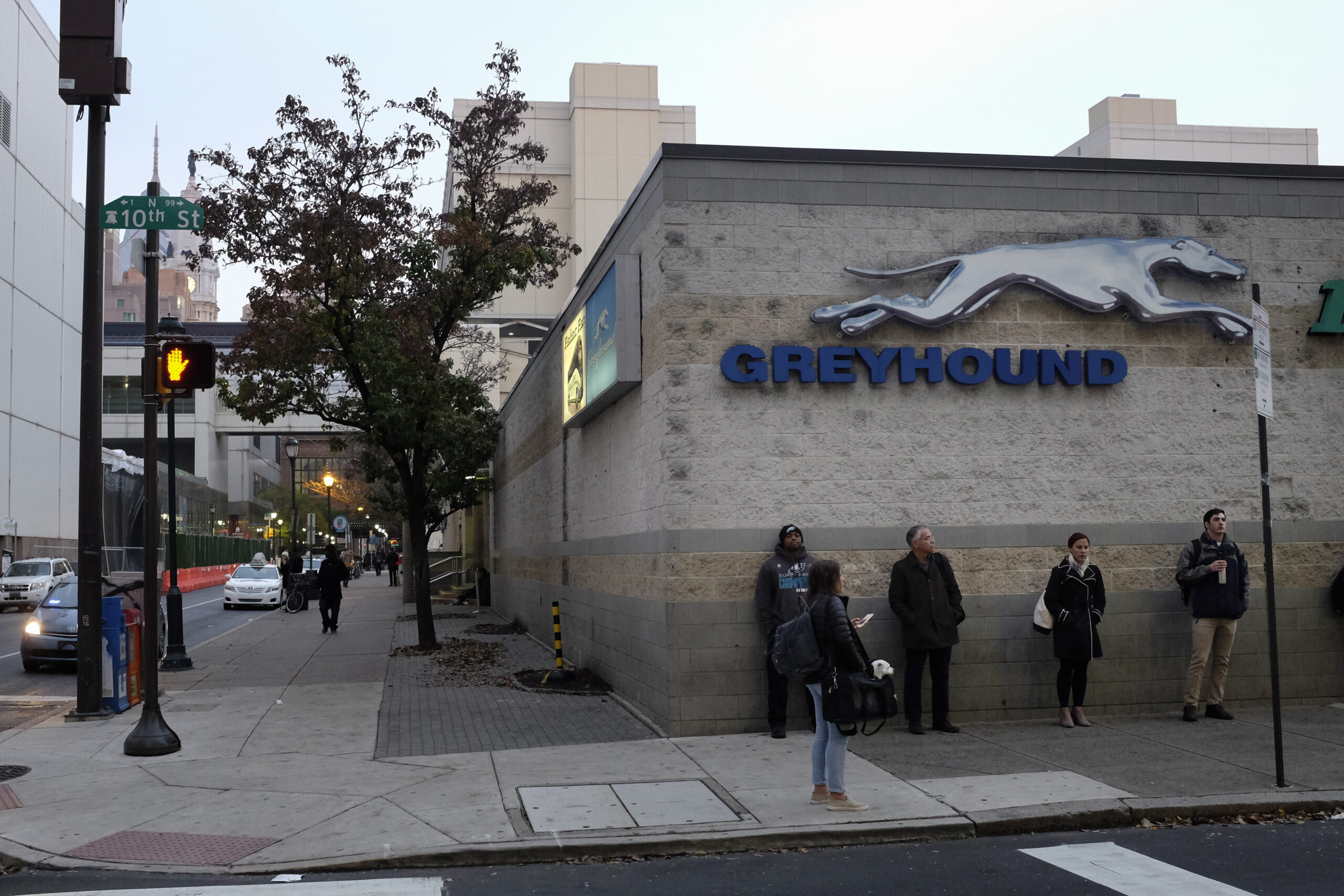
Slated to come back from the dead this spring like it was Kenny or Jon Snow will be Philly’s intercity bus terminal, formerly known as the Greyhound station.
The Philadelphia Parking Authority will operate the terminal on behalf of the city, which has gone more than two years without a facility since Greyhound left the terminal at 10th and Filbert Streets in 2023 after 35 years.
Corner of the former Greyhound station at North 10th and Filbert Streets in 2018.
In the aftermath, buses used public street curbs to pick up travelers, who were forced to wait outdoors in the elements and had very little access to basic amenities, like bathrooms. The whole situation was bus-ted and I’ll be glad to see it fixed.
June 12: ‘Disclosure Day’ premieres
Filmed in parts of South Jersey last year and featuring Philly’s own Colman Domingo, Disclosure Day is an alien thriller from director Steven Spielberg that I can’t wait to get my tentacles on.
I love good sci-fi and this one has a screenplay by David Koepp, who also wrote the screenplay for Jurassic Park, one of my favorite movies of all time. The trailer for Disclosure Day is intriguing, unsettling, and reveals little about the plot, but I already find the movie authentic: If aliens were to land anywhere, South Jersey seems like a fitting place.
At the end of the trailer, a nun says “Why would He make a vast universe yet save it only for us?” which hearkens to a famous Carl Sagan quote:“The universe is a pretty big place. If it’s just us, seems like an awful waste of space.”
Aug. 30: Philadelphia Cycling Classic returns
If there’s one thing Philadelphians love doing, it’s partying while watching other people exercise and this year they’ll get to do it again at the Manayunk Wall when the Philadelphia Cycling Classic returns after a 10-year hiatus.
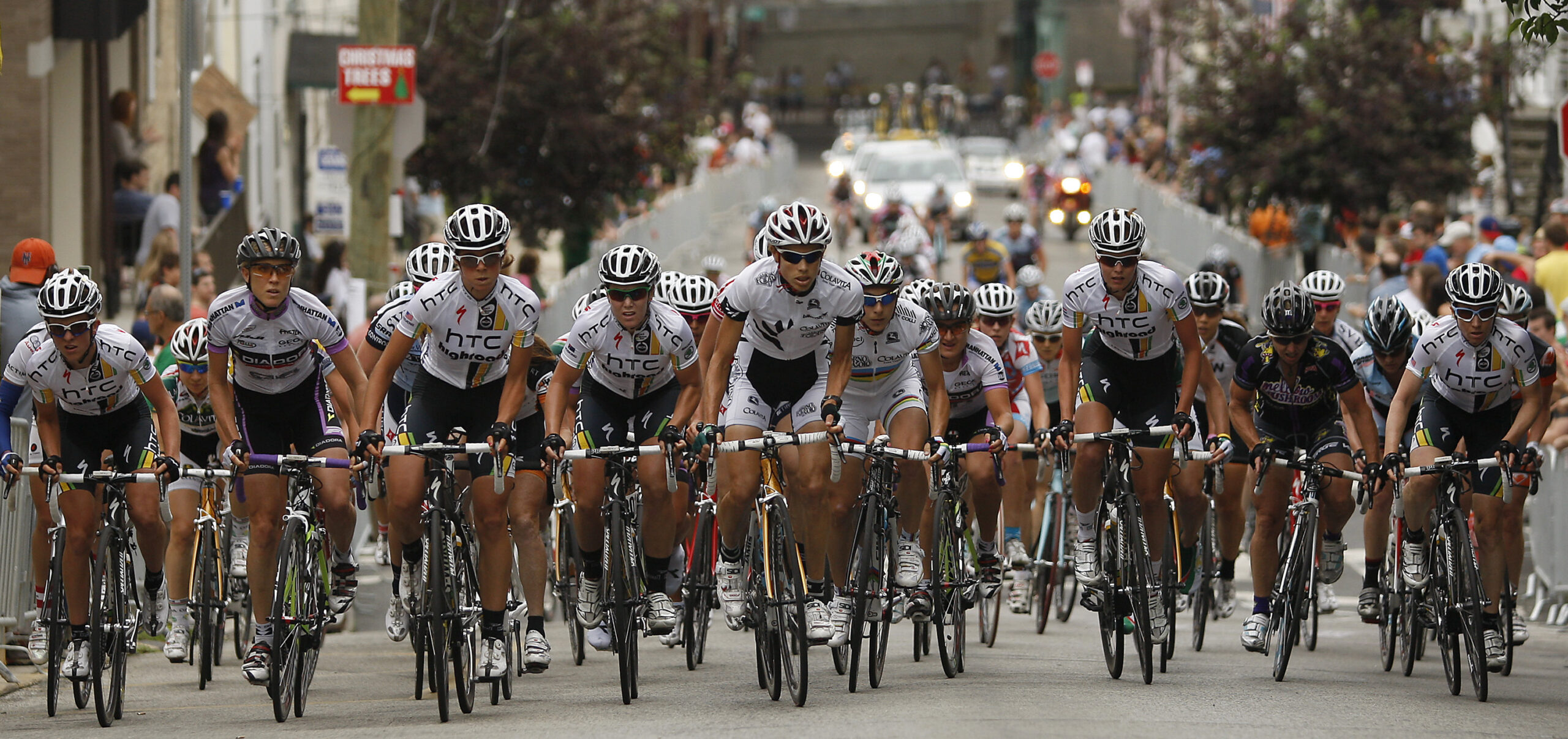
Held for 30 years before it was canceled in 2016 due to lack of sponsorship, the race follows a 14.4-mile course from Center City to Manayunk, where cyclists must climb the “Manayunk Wall,” a stretch of Levering Street with a 17% gradient.
Women cyclists pedal up Levering Street, aka the “Manayunk Wall,” during the Liberty Classic TD Bank International Championship race in 2011. The race is returning this year as the Philadelphia International Cycling Classic.
Back in the day, people partied like it was Two Street on New Year’s along the route in Manayunk, particularly at the Wall. As bikers cycled through the course, spectators cycled through kegs and cowbells, with some folks on Levering Street charging admission to their house parties and others hanging beer banner ads on their porches for a fee.
Also slated in 2026, but dates remain unknown:
A conceptual rendering of FloatLab, set to be installed at Bartram’s Garden on the Schuylkill in 2026.
Opening of Mural Arts’ FloatLab: Located in the Schuylkill at Bartram’s Garden, FloatLab is a 75-foot installation and environmental center that will be “a convergence of art, architecture, and nature,” according to its creator, J. Meejin Yoon. The sloped, ADA-compliant circular platform, which allows visitors to look eye-level at the river while standing in it, will serve as both an educational and artistic space.
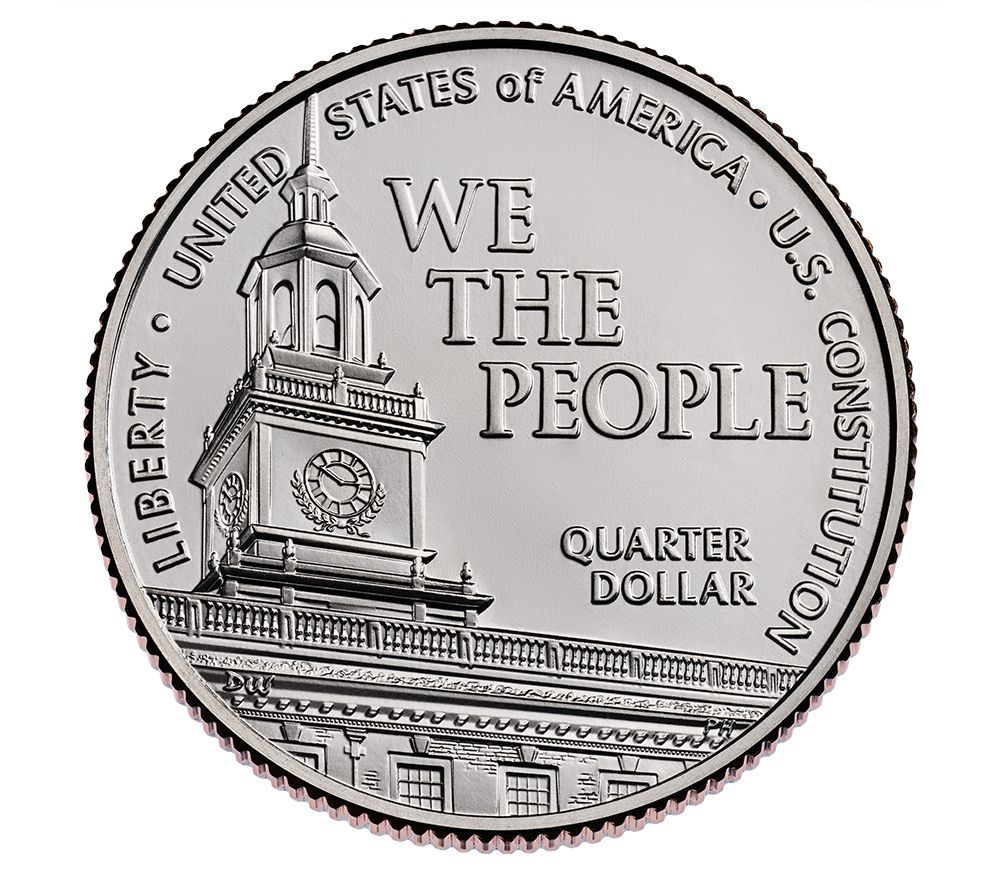
Gimme my Philly money: To mark the nation’s 250th, the U.S. Mint is releasing quarters with Independence Hall and the Liberty Bell on them this year and I’m going to need some of those for my piggy bank. Just to be clear, this does not change the fact that I’m still salty at the Mint for stopping penny production. What will people put in their loafers? How will Penny from Pee-Wee’s Playhouse see? It’s just cents-less.
This new design for the quarter commemorates the U.S. Constitution and depicts Independence Hall in Philadelphia, where the Declaration of Independence and U.S. Constitution were signed. The other side of this quarter has a depiction of President James Madison.
Rumored in 2026, but in no way confirmed:
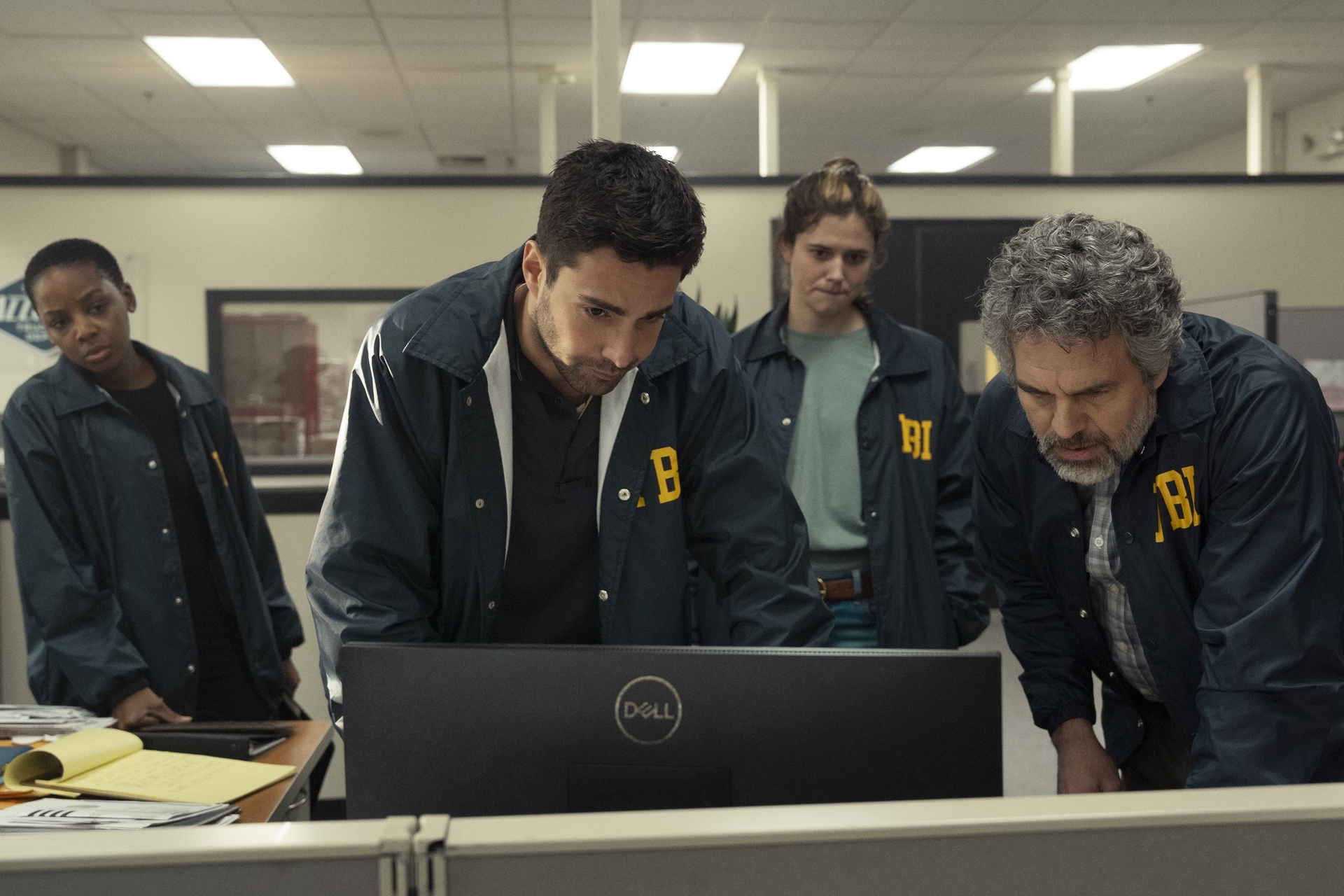
From left: Thuso Mbedu (Aleah Clinton), Fabien Frankel (Anthony Grasso), Alison Oliver (Lizzie Stover), and Mark Ruffalo (Tom Brandis) in “Task.”
Task season 2: The Delco-set HBO thriller starring Mark Ruffalo was renewed for a second season and I’m hoping they start filming around Philly’s weirdest suburb this year (though creator Brad Ingelsby may have to write the script first). While it’s unclear if Ruffalo will reprise his role as FBI agent Tom Brandis, one of my resolutions this year is to frequent more local hoagie shops in the hopes of running into him, but also because I love hoagies.
Stranger Things spinoff?: Philly was named-dropped in the finale of the beloved sci-fi show, which got fans hypothesizing that the home of one of the greatest urban legends of all time — the Philadelphia Experiment — might be the setting for one of the confirmed spinoffs. Or it could just be subliminal advertising for Netflix House Philadelphia (which is actually in King of Prussia). An Instagram post from the show and Netflix on Wednesday only fueled rumors, with its caption: “meet me in philly.”