Tag: Kingsessing

  • Her brother was killed in the Kingsessing mass shooting. Now her only son is dead from gun violence, too.

    Her brother was killed in the Kingsessing mass shooting. Now her only son is dead from gun violence, too.

    In December, Katrina Williams watched as the man who killed her brother was sentenced to decades in prison and felt, she said, as if a two-year nightmare was coming to an end.

    But weeks later, another shooting took the life of her only son.

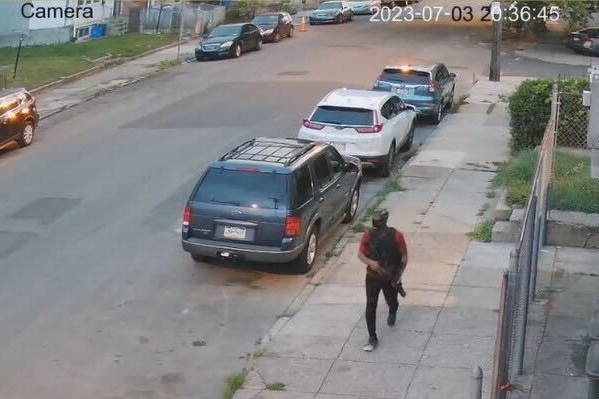
    Williams’ brother, Lashyd Merritt, 21, was one of five people killed in a mass shooting in Kingsessing in July 2023, when Kimbrady Carriker walked through the Southwest Philadelphia neighborhood with an AR-15 rifle and fired at random passersby.

    Then, in January, her 19-year-old son, Russell, was killed by a man who, like the Kingsessing shooter, committed a spree of crimes, police say.

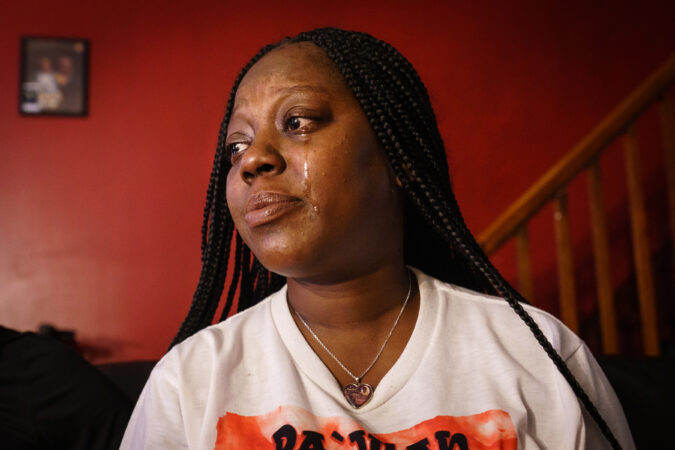
    “I’ll never understand it,” said Williams, 43. “There’s no reason for it.”

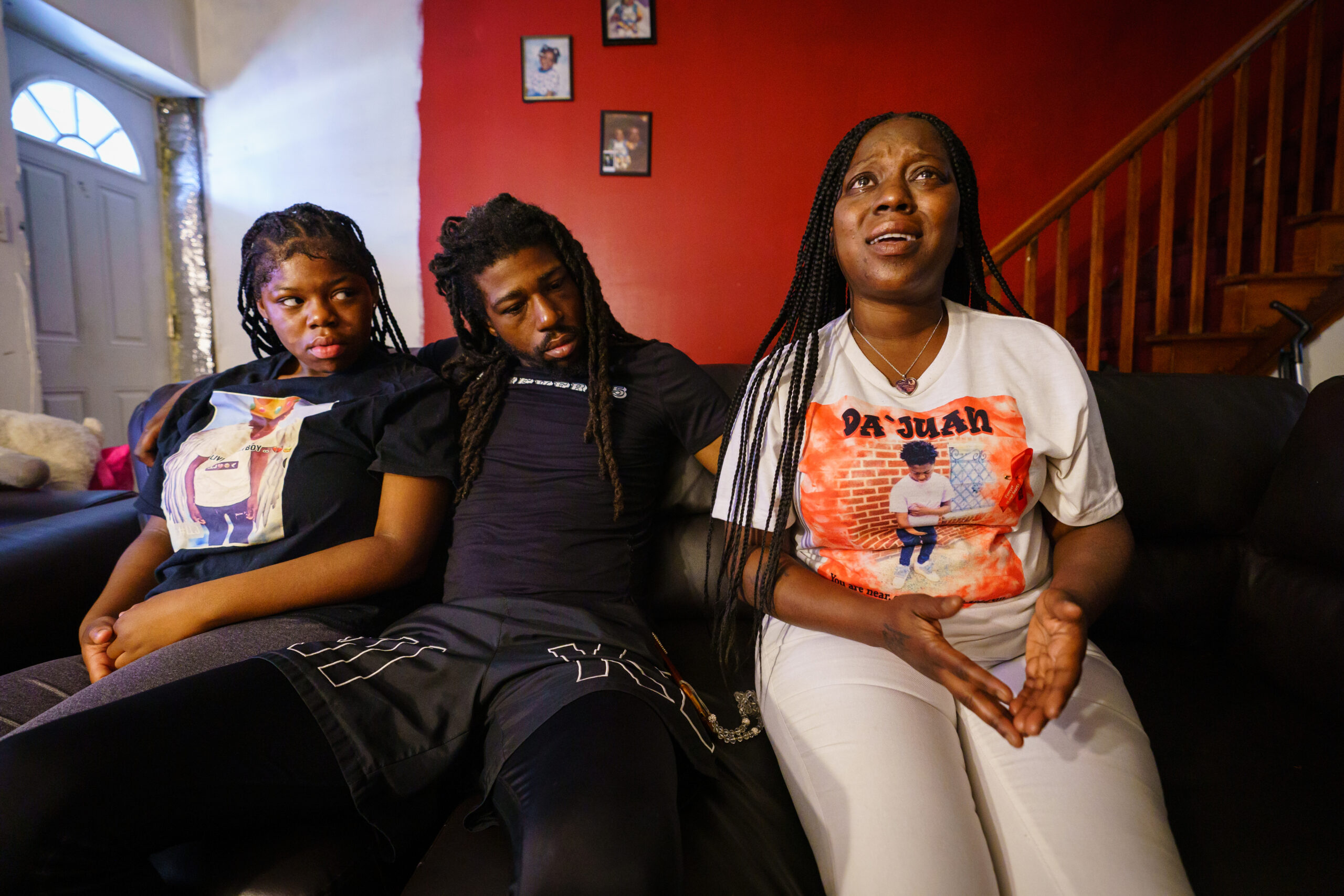
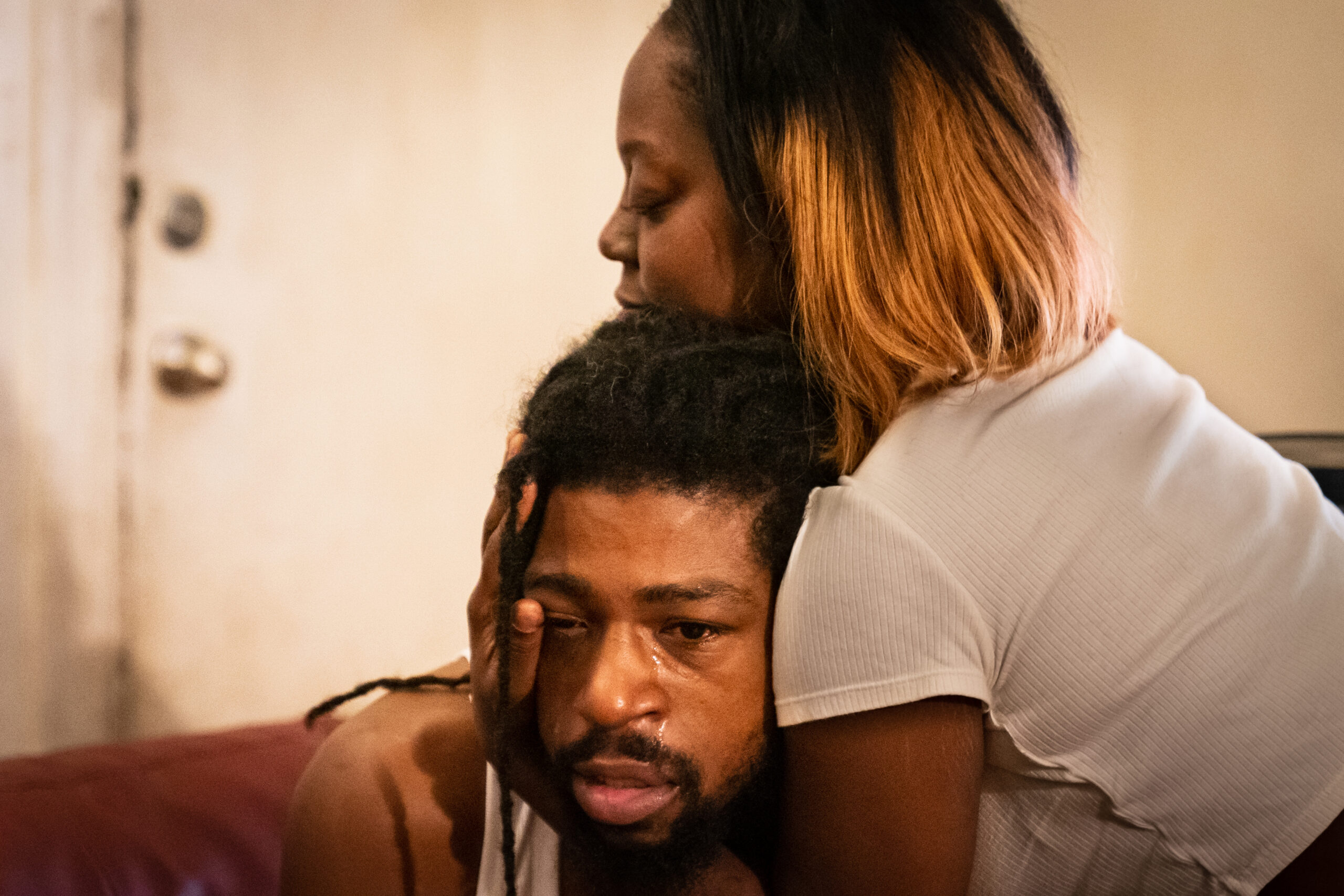
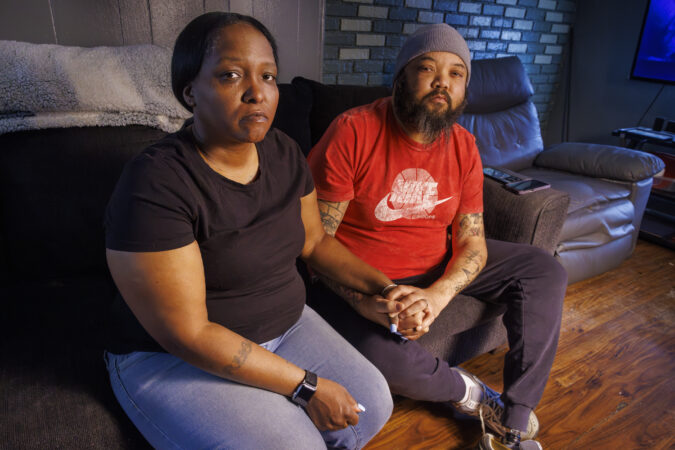
    A high school photograph of Russell Williams being held by his father and mother, Katrina and Russell Williams Sr. at their home in Southwest Philadelphia on Feb. 6.

    For Williams, the trauma of Merritt’s violent death never fully dissipated, she said, and the fatal shooting of her son only compounds her pain.

    It’s a cycle of violence that is not unfamiliar in the city.

    For others with relatives killed in the Kingsessing attack, the traumatic impact of gun violence did not end on that July day. Nyshyia Thomas lost her 15-year-old son, DaJuan Brown, to the gunfire and, while she was still mourning, her 21-year-old son, Daquan Brown, was arrested last year in connection with another mass shooting in Grays Ferry.

    Asked about the evening of Jan. 28, when she and her husband, Russell Williams Sr., learned of their son’s death, Williams said two things came to mind:

    “Déjà vu,” she said, and “hell.”

    A seemingly random crime

    Around 10 p.m. near 64th Street and Lindbergh Boulevard, police said, 19-year-old Zaamir Harris stepped off a SEPTA bus and stole a bike from the vehicle.

    He rode up to Russell Williams, who was walking home from night school, where the teen was studying to become a commercial truck driver. Harris then pulled a gun and fired at Williams multiple times, striking him in the throat, police said.

    Williams collapsed near 66th Street and Dicks Avenue, just three blocks from home. After the shooting, Harris ditched the bike and stole an e-scooter before fleeing, according to police.

    Police tracked Harris to a Wawa at 84th Street and Bartram Avenue, where he was arrested. He was charged with murder and gun crimes. Investigators recovered three fired cartridge casings from the scene, as well as a 9mm handgun, according to police.

    A spokesperson for the Philadelphia Police Department declined to say whether investigators have determined a motive for the shooting, citing the ongoing investigation.

    Katrina Williams said her son did not know Harris, and a police detective told her the shooting was random.

    After he was shot, Russell Williams was rushed to Penn Presbyterian Medical Center, where he died from his injuries. It was the same hospital where Williams’ brother, Merritt, was taken after being shot in Kingsessing, she said.
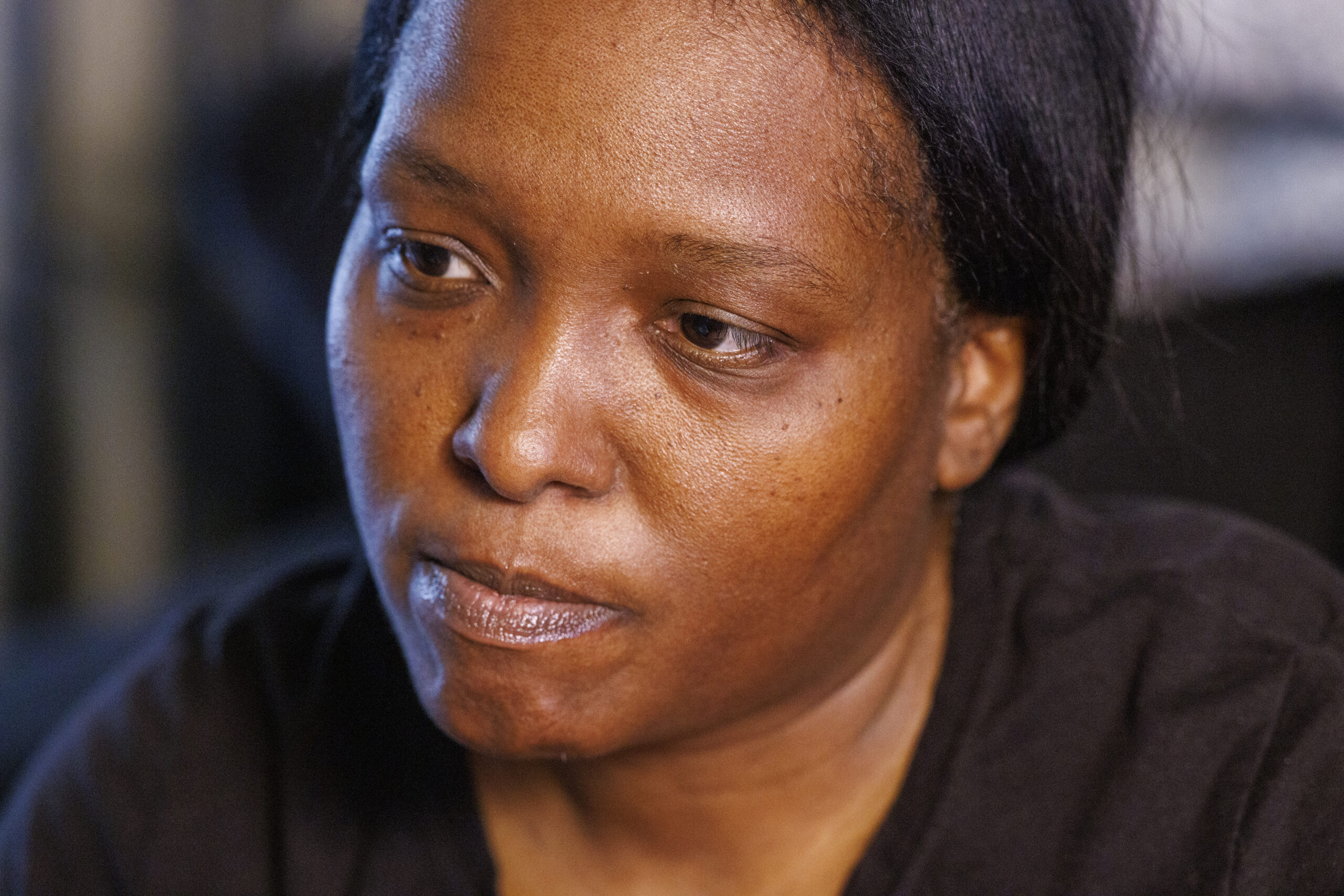
    Katrina Williams, whose son, Russell, 19, was shot and killed not far from family home in Southwest Philadelphia.

    Russell Williams had recently graduated from Philadelphia Electrical and Technology Charter School and dreamed of an entrepreneurial career in stock trading.

    Like her son, Williams said, Merritt was a hard worker who wanted to better his life. He worked for the IRS, had a girlfriend, and wanted to travel the world, she said.

    “We lost two great people,” Williams said. “Two of them.”

    That police made an arrest in the slaying of their son has brought little solace, Williams and her husband said as they sat in their Southwest Philadelphia living room on a recent February day. Family photos filled the space, and a portrait of Russell, smiling and wearing a tuxedo, hung on the wall.

    As the case against her son’s accused killer proceeds, Williams said, she will be in court every step of the way, just as she was when Carriker pleaded guilty in the death of her brother.

    In December, as Carriker faced sentencing, Williams said, she could not bring herself to address the judge and ask for a long prison sentence, as relatives of other victims did. She was so overcome with anger, she said, that she feared she might physically attack her brother’s killer.

    But she was in the room when Common Pleas Court Judge Glenn B. Bronson sentenced him to 37½ to 75 years in prison. In Williams’ view, Carriker should have received a life sentence for each person he killed, she said, even if no punishment could make up for the loss of Merritt.

    Now, Williams is preparing to head back to court as she once again seeks justice.

    Since her son’s death, Williams said, she has taken comfort in the kindness of friends and family. She was touched, she said, to see a “block full of people” gather to honor his life and release balloons in his memory. But the ache of her loss remains.

    “It’s like pain on top of pain — it’s just always gonna be hard,“ Williams said. ”I just gotta deal with it the best way I can.”
  • Man dies in North Philadelphia house fire

    Man dies in North Philadelphia house fire

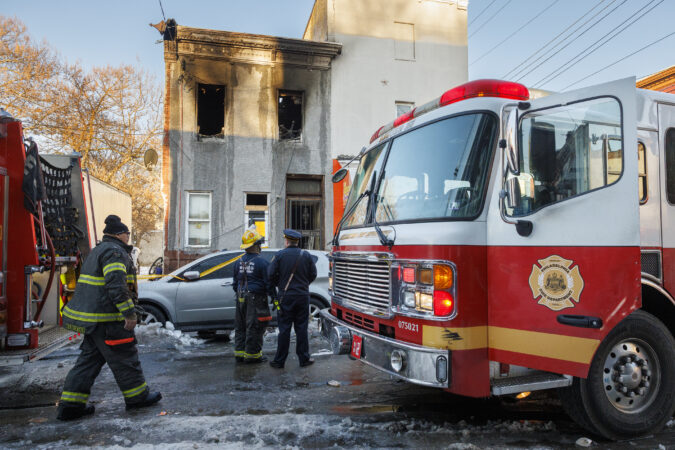
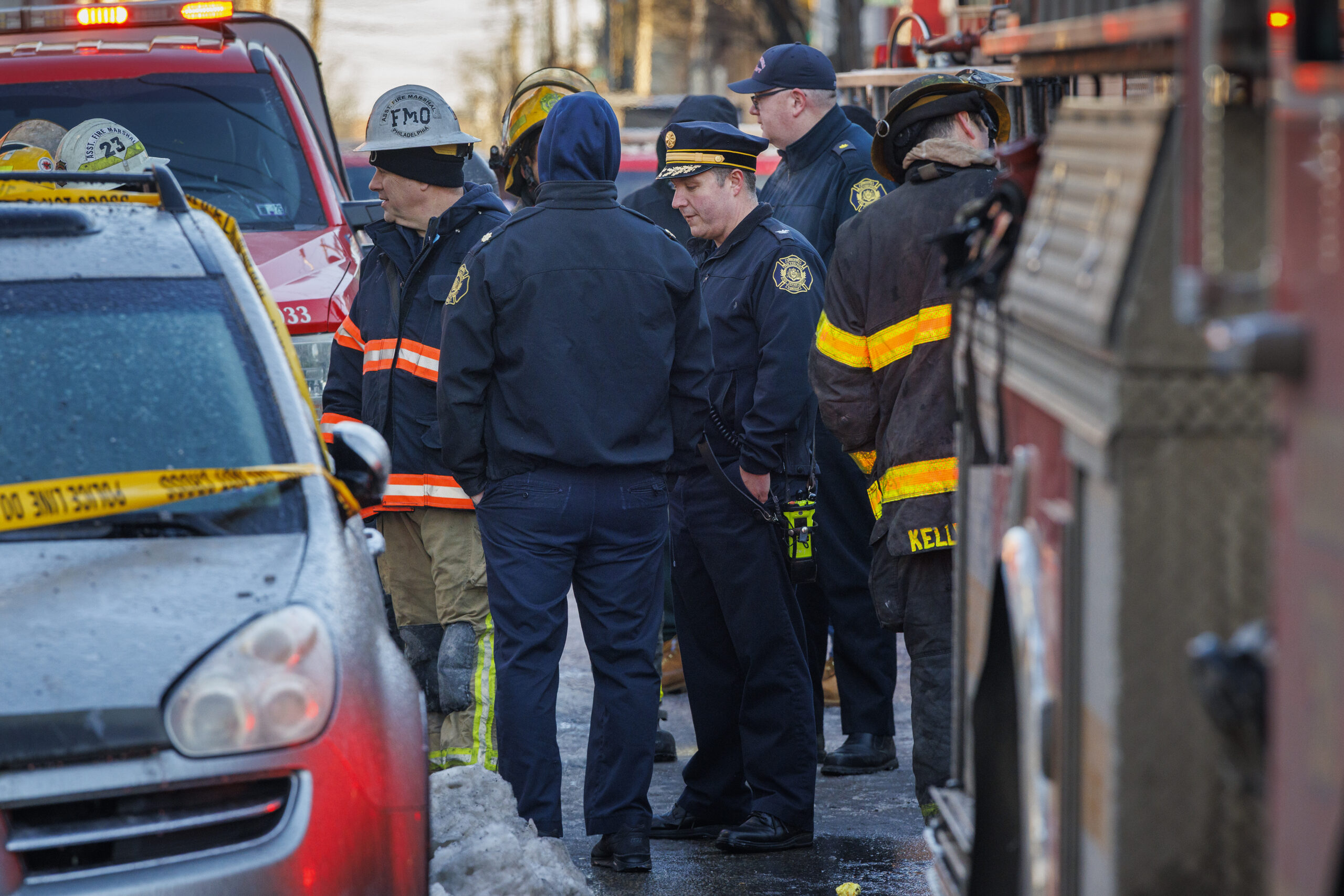
    A man died Thursday morning in a fire inside a North Philadelphia home.

    The fire started around 5:15 a.m. on the 2500 block of North 12th Street, where crews found heavy smoke and fire coming from the two-story rowhouse, according to the Philadelphia Fire Department. Firefighters witnessed fire coming from the second floor, where they found a person dead inside the home.

    Philadelphia fire department personnel at scene of fatal fire 2500 block N. 12th Street, early Thursday, Feb. 5, 2026.

    Firefighters placed the fire under control by 5:45 a.m. The cause of the fire remained under investigation.

    The Thursday morning blaze followed a fatal house fire in Kingsessing on Wednesday morning, which the fire marshal’s office determined was intentionally set, and another fatal fire in early January that claimed the life of a woman in the Ogontz section.

  • Her youngest son was killed in a mass shooting. Now, her eldest is charged with committing one.

    Her youngest son was killed in a mass shooting. Now, her eldest is charged with committing one.

    Two mass shootings, just years apart, forever altered Nyshyia Thomas’ life.

    In July 2023, her 15-year-old son, DaJuan Brown, was shot and killed when a mentally ill man dressed in body armor gunned down five people at random on the streets of Kingsessing.

    Then, two years later, almost to the day, police say Thomas’ son, Daquan Brown, was one of at least 15 people who fired guns aimlessly down the 1500 block of Etting Street, leaving three dead and 10 others wounded.

    It’s a symmetry almost too painful for the mother to reconcile: one son killed in a mass shooting, another behind bars, charged with committing one.

    Last month, Thomas, 37, sat inside the Philadelphia courthouse and faced the man who killed her youngest son and set in motion the crumbling of her family.

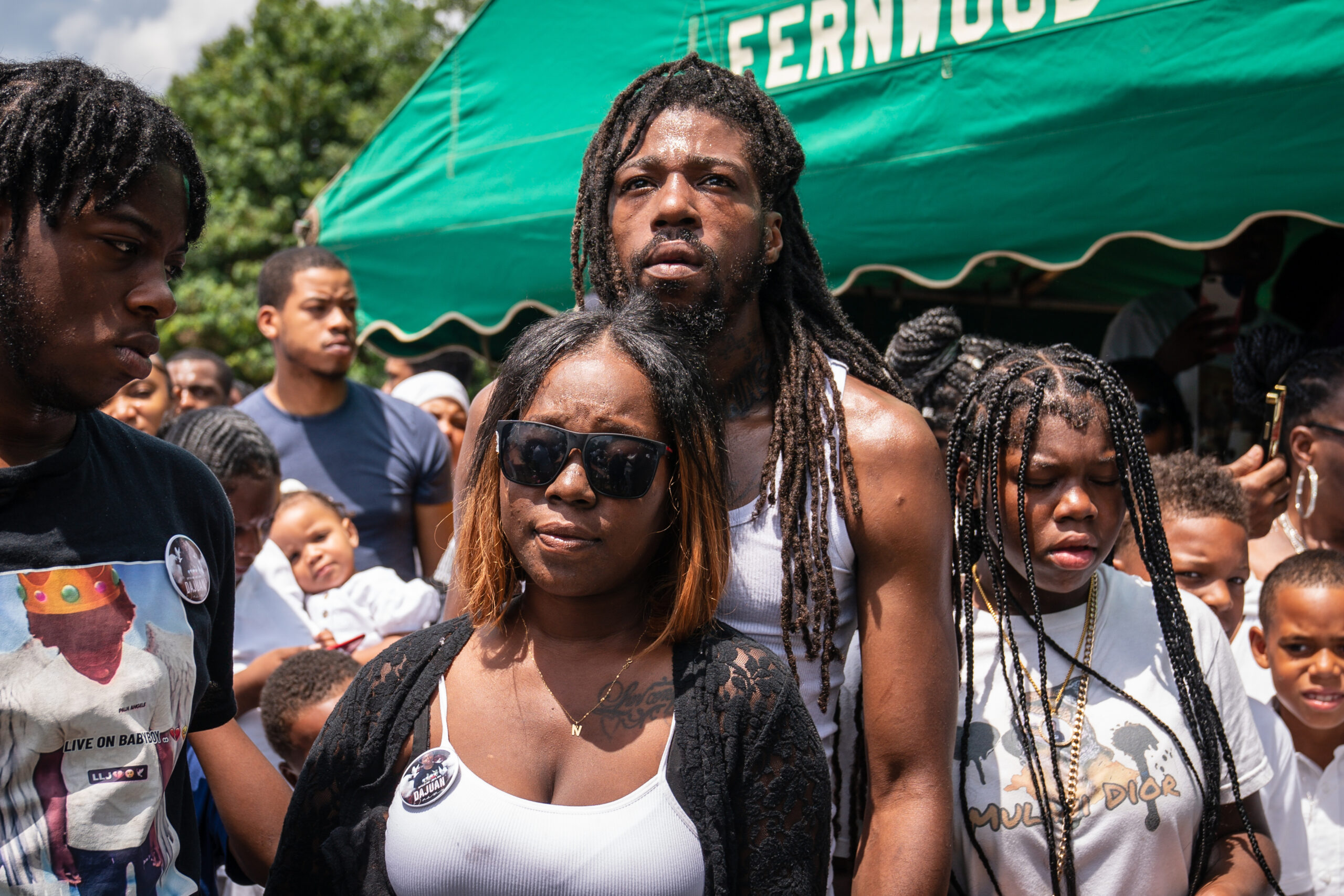
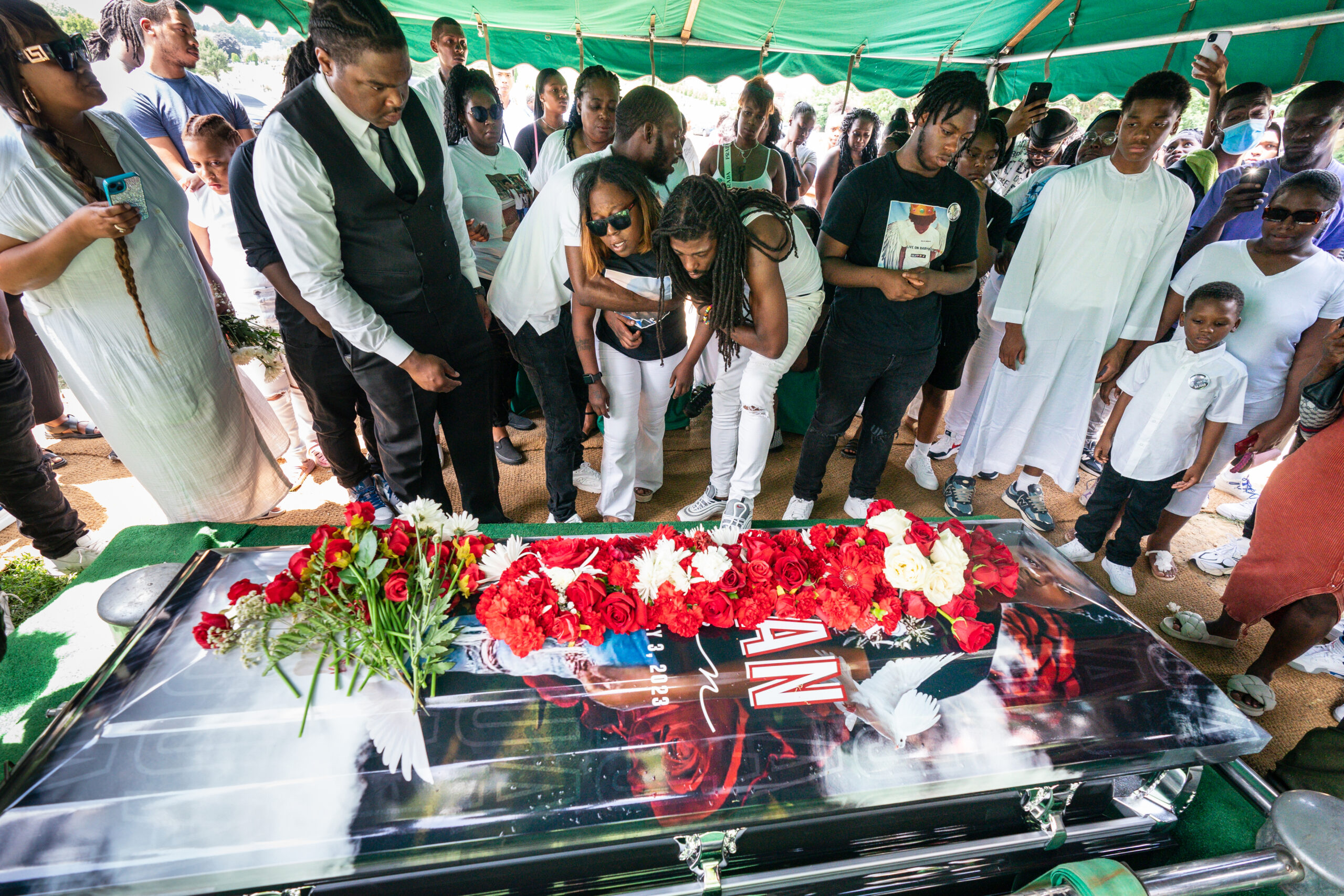
    From left to right: Daquan Brown, Nyshyia Thomas, Tyejuan Brown, and Nesiyah Thomas-Brown, at the funeral for 15-year-old DaJuan Brown in July 2023.

    This week, she will return, but to sit on the other side of the room — to see her eldest son in shackles, seated behind plexiglass, charged with three counts of murder, nine counts of attempted murder, and causing a catastrophe and riot.

    She said her 21-year-old son feared for his life when he fired his legally owned gun twice down Etting Street the night of July 7, and that prosecutors have charged him with killings he didn’t commit.

    But she also feels for the families of the victims — one of them her son’s close friend — and imagines that, if she were in their shoes, she would want everyone who fired a gun to face consequences.

    “From being on both sides of this, it’s overwhelming, it’s unfair,” she said. “But I understand.”

    Nyshyia Thomas (right) with Tyejuan Brown and Nesiyah Thomas-Brown inside their South Philadelphia home.

    The July 7 party on Etting Street was one of two on the block that weekend celebrating the July Fourth holiday and the lives of some young men from the neighborhood who had been killed in recent years. Daquan Brown grew up about a block away and went to see childhood friends, his mother said.

    Shortly after 1 a.m., police said, gunfire erupted. Officers responded to find that more than 120 bullets had been fired down the street in nearly all directions, striking neighbors’ homes and cars — and 13 partygoers.

    Three men died. Zahir Wylie, 23, was struck in the chest, and Jason Reese, 19, was shot in the head. Azir Harris, 27, who used a wheelchair after being paralyzed in an earlier shooting, was struck in the back.

    Initially, police thought someone had shot up the party in a targeted attack. But after reviewing video footage, interviewing witnesses, and analyzing ballistics, detectives now believe the partygoers may have unintentionally shot each other.

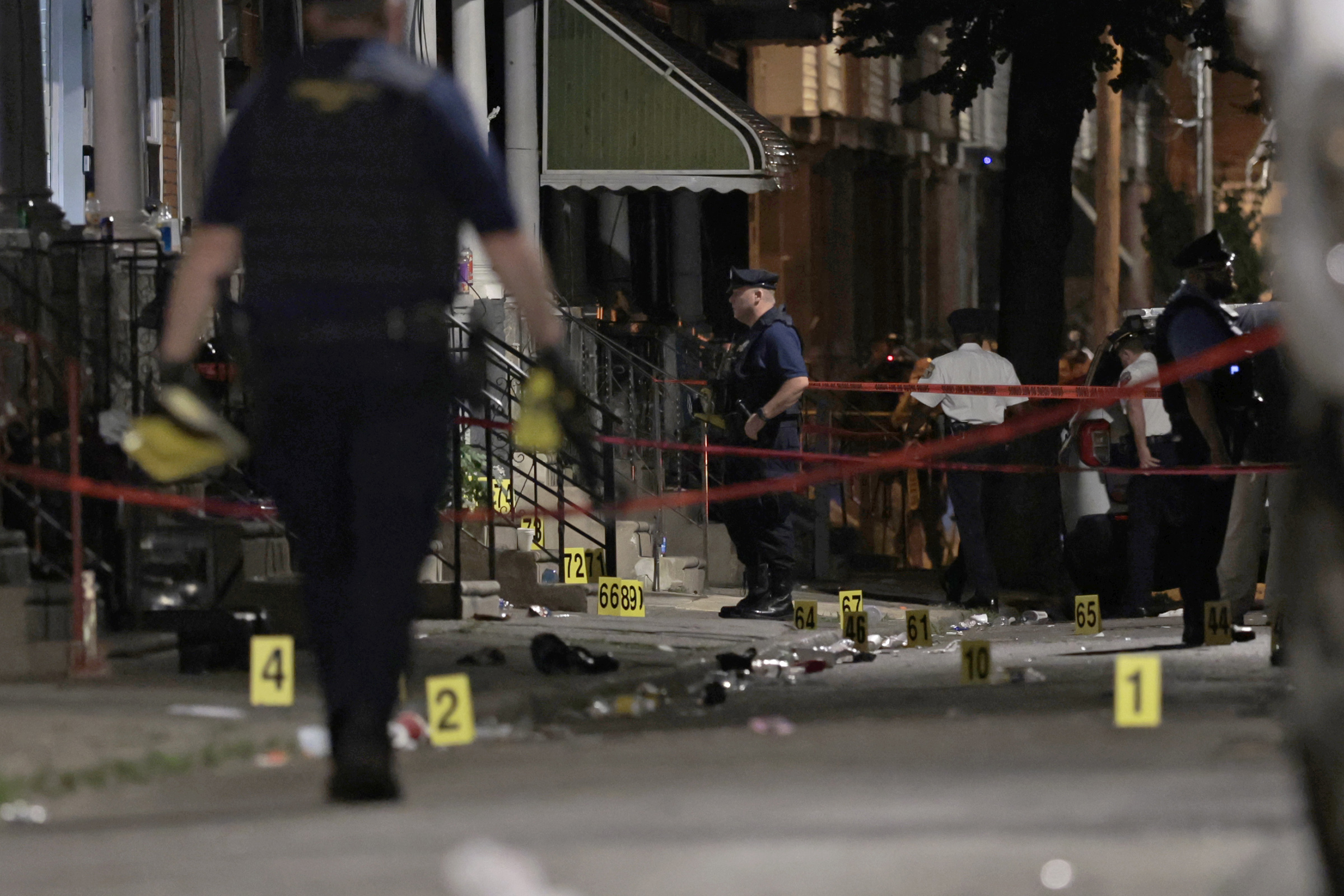
    Police investigate a mass shooting on the 1500 block of South Etting Street on July 7, 2025.

    After people heard what they thought was the sound of gunfire — someone at the gathering may have shot once into the air or a car passing by may have backfired — at least 15 people pulled out their weapons and sprayed dozens of shots down the block, police said.

    Brown, police said, was among them. As gunfire erupted, he took cover between cars and fired two shots down the block, according to two law enforcement sources who asked not to be named to discuss an ongoing investigation.

    Investigators don’t know whether any of the shots Brown fired struck or killed anyone, the sources said. A full ballistics report is still pending, though it may never be able to determine whose bullets struck each victim.

    Four other men have also been charged with murder and related crimes.

    Thomas has tried to come to terms with the police narrative. She is adamant that her son, having fired only two shots, shouldn’t be charged with three counts of murder and 10 counts of attempted murder. He feared for his life and acted in self-defense, she said.

    At the same time, she said, had it been her son who was shot and killed that night, she would not want to hear from anyone trying to make sense of it.

    Tyejuan Brown and a family member hold Nyshyia Thomas at the funeral of their son, DaJuan Brown, on July 15, 2023. DaJuan’s brother, Daquan, stands to right of Tyejuan.

    Still, she finds herself doing that. Brown, who worked as a security guard and has no criminal record, only started carrying the 9mm handgun because of what happened to his brother, she said.

    She remembered talking to him before he bought the weapon last year.

    “Mom, I lost my brother,” Thomas said he told her. “Y’all not burying me.”

    “I kissed him,” she said. “I told him I respect it.”

    Brown’s father, Tyejuan, is also jailed with him.

    On the night of July 7, she and Tyejuan, the father of her three children, were talking on the porch of her home when they heard dozens of gunshots coming from Etting Street. Tyejuan Brown, she said, took off running toward the party where his son was gathered.

    When Thomas reached the block, she said, she found Tyejuan and Daquan covered in blood from carrying bodies to police cruisers.

    But police said that when they reviewed surveillance footage from that night, they saw Tyejuan Brown rushing down the street holding a gun, which he is barred from owning because of drug, gun, and assault convictions.

    He was arrested in early August and charged with illegal gun possession.

    Nyshyia Thomas holds Tyejuan Brown during an interview in 2023 about the loss of their youngest son, DaJuan.

    Four days later, they came for his son.

    Until recently, Daquan Brown and his father were housed in the same block at Curran-Fromhold Correctional Facility and would speak to each other through a shared cell wall.

    Brown is held without bail. Thomas said her family has gathered the $25,000 necessary for the father’s bail, but he has told them not to post it.

    “I’m not coming out without my son,” Thomas said he told her.

    On the outside, Thomas and her 15-year-old daughter, Nesiyah, are left to grapple with the absence of the three men in their lives they love most.

    “I lost one son to gun violence,” Thomas said. “I’ll be damned if I let the system take my other one from me.”

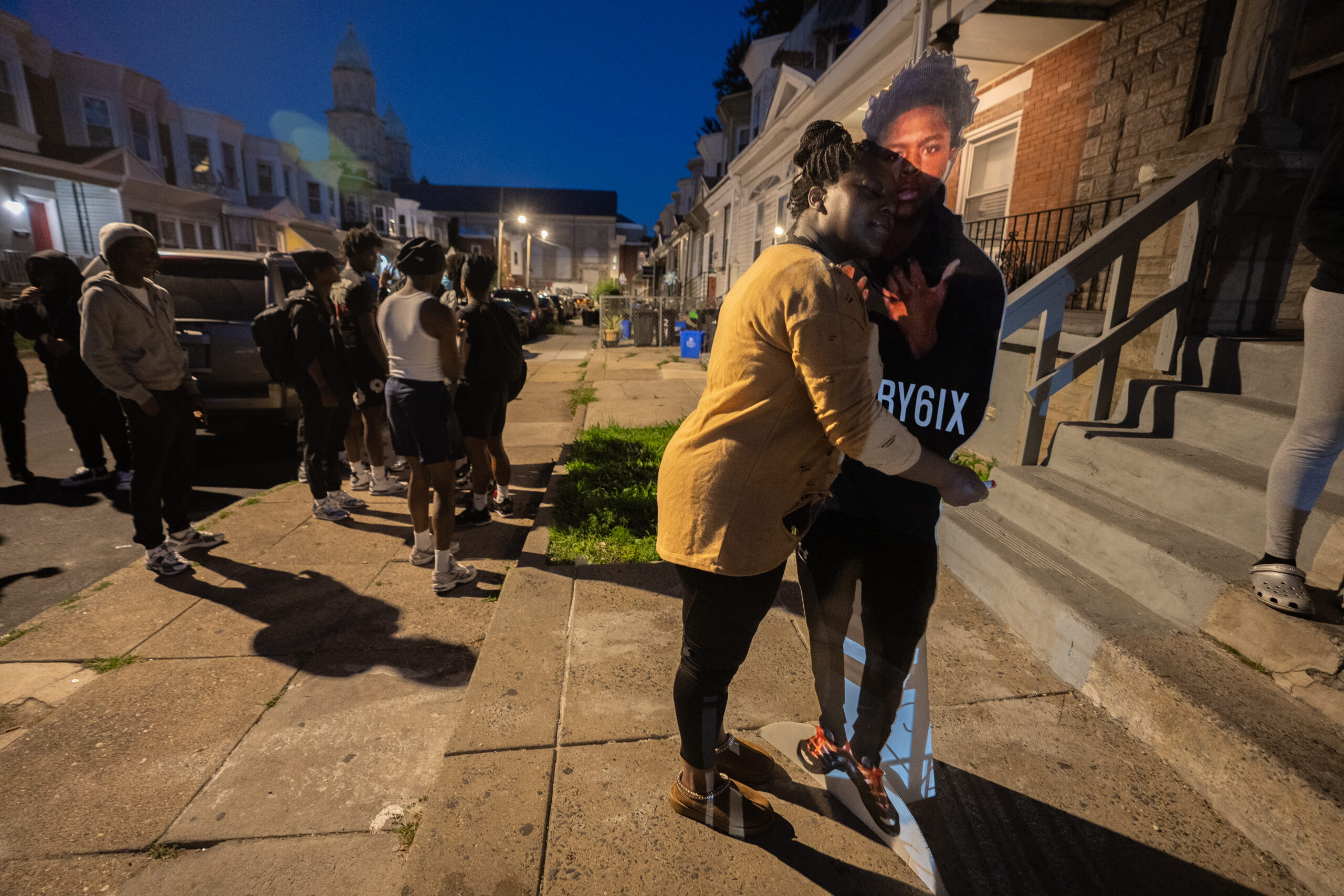
    Nyshyia Thomas hugs a photo of her son, DaJuan Brown, on what would have been his 18th birthday in September. Brown was shot and killed in a random mass shooting in July 2023.
  • Man who killed five people in the Kingsessing mass shooting pleads guilty, is sentenced to decades in prison

    Man who killed five people in the Kingsessing mass shooting pleads guilty, is sentenced to decades in prison

    The man who walked through the streets of Kingsessing and shot people at random in 2023, killing five and wounding five others in one of Philadelphia’s deadliest mass shootings, pleaded guilty Wednesday to multiple counts of murder and was sentenced to decades in prison.

    Kimbrady Carriker, 43, admitted that on the evening of July 3, 2023, he calmly walked through a Southwest Philadelphia neighborhood dressed in body armor and wearing a ski mask, and pointed his AR-15-style rifle at seemingly random passersby — then pulled the trigger.

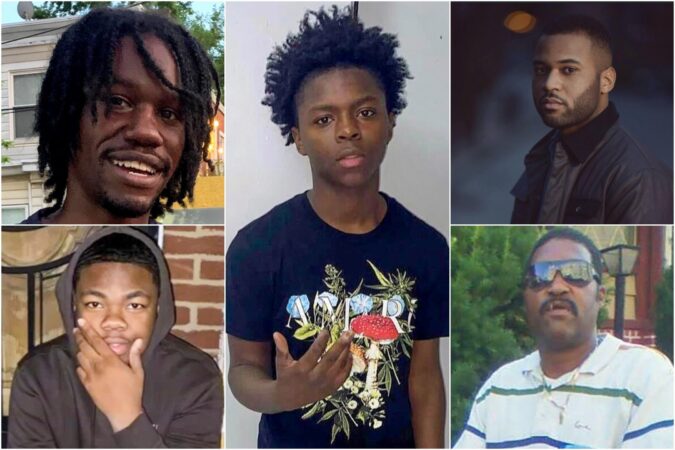
    He killed five people: DaJuan Brown, 15; Lashyd Merritt, 21; Dymir Stanton, 29; Ralph Moralis, 59; and Joseph Wamah Jr., 31.

    Five others were injured: a 13-year-old boy he shot multiple times in the legs, and a mother who was driving with her 2-year-old twins and 10-year-old niece when he fired more than a dozen bullets into her car.

    Wamah was killed first in the early morning of July 2, targeted in his home for reasons that remain unclear. Carriker returned to Wamah’s block nearly two days later, armed with the same gun, and shot the others.

    Carriker’s admission to the killings marks the end of the legal saga in a shooting that shocked the city, shattered families’ lives, and traumatized a community.

    “This was 14 minutes of terror for the residents of the Kingsessing neighborhood,” Assistant District Attorney Robert Wainwright said of Carriker’s carnage.

    Prosecutors say surveillance video showed Kimbrady Carriker, dressed in a ballistic vest and ski mask, walking through Southwest Philadelphia shooting people at random on July 3, 2023.

    Carriker’s attorneys had been expected to argue at trial that he was legally insane when he gunned down his victims, and that he should be housed in a secure psychiatric facility for most of his life, not state prison.

    Carriker suffered from “severe delusions and religious preoccupations” and “had a fixed illusion that he was working for the National Security Agency,” said Gregg Blender, assistant defender at the Defender Association of Philadelphia.

    Even after he was arrested, taken to Norristown State Hospital, and medicated, he believed that he had done something wrong only because the “National Security Association personnel did not come and rescue me,” Blender said he told doctors.

    Prosecutors disagreed that Carriker was legally insane and said his actions were deliberate and he should spend the rest of his life in state prison. But as they prepared for trial, an expert hired by the Philadelphia District Attorney’s Office interviewed Carriker and agreed with defense lawyers that he did not appear to know that what he was doing that night was wrong.

    Prosecutors did not want to risk that a jury might find Carriker not guilty by reason of insanity, Wainwright said. So they offered Carriker the opportunity to plead guilty to five counts of third-degree murder, five counts of attempted murder, and gun crimes. They asked a judge to sentence him to 37½ to 75 years in prison.

    On Wednesday, Carriker agreed.

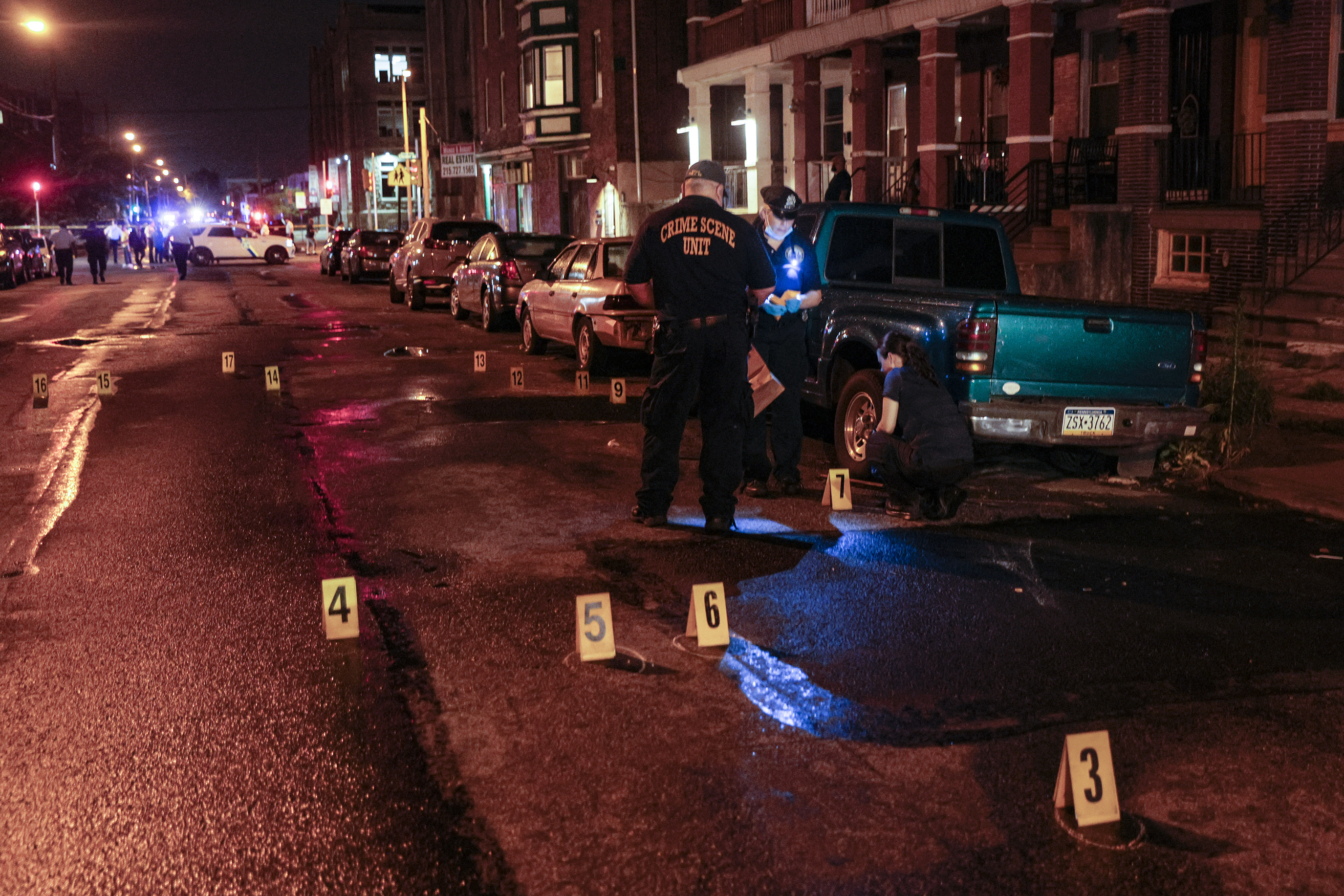
    Police gather evidence near 56th Street and Chester Avenue after the mass shooting on July 3, 2023.

    Common Pleas Court Judge Glenn B. Bronson sentenced Carriker to the agreed-upon decades behind bars. The judge said that, in his 15 years of handling homicide cases, this was the worst he had seen, but that he would respect the deal reached by prosecutors and Carriker’s defense team.

    “It traumatized an entire community,” the judge said of the shooting. “It traumatized an entire city.”

    Survivors of the shooting, and loved ones of the people who died, spoke emotionally in court Wednesday of the devastation of that July night, and the lasting impact on their lives.

    The father of Joseph Wamah Jr., consumed by the trauma of finding his son’s dead body inside his home, died earlier this year. His daughter said he could not mend his broken heart, and spiraled into a health crisis.

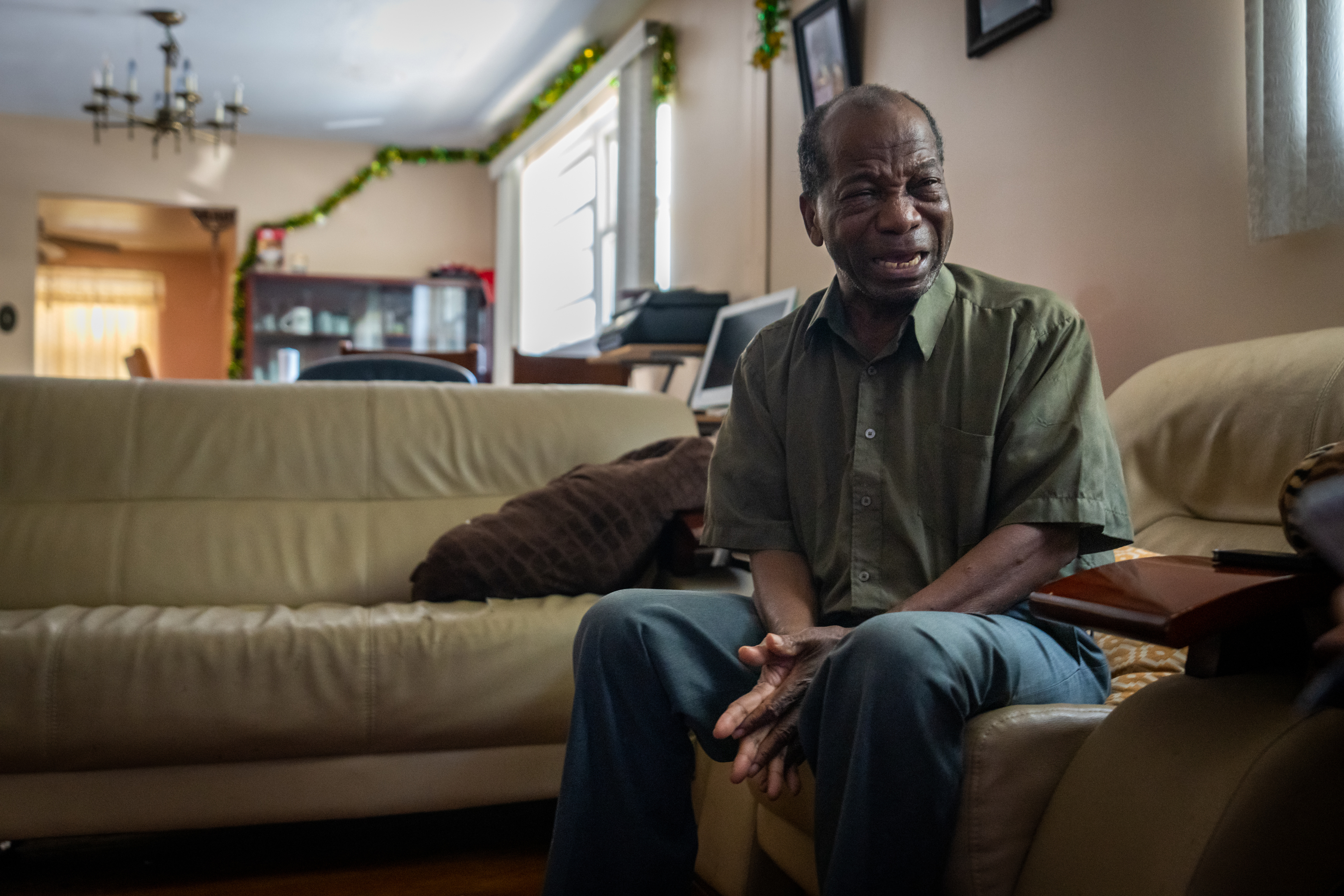
    Jonah Wamah, the father of Joseph Wamah, one of the victims in the Kingsessing mass shooting, spoke of the impact of losing his son in June 2024. He died earlier this year, in September, after his family said he could not recover from the grief of his son’s killing.

    “He faded in front of my eyes,” Jasmine Wamah said of her father.

    Other family members spoke of being hospitalized for their mental health, of looking after children without fathers and caring for kids with bullet scars in their legs.

    Odessa Brown spoke of holding her 15-year-old grandson as he bled out from his injuries.

    “When DaJuan was born, he was given to me and I held him in his arms,” she said. “And that day, I held him when he was on the ground, dying, praying, asking God, please save my child.”

    Ralph Moralis’ daughter, Taneisha Moralis, said that, at six months pregnant, she can’t stop thinking about how her child will never know their grandfather.

    And Charlotte Clark, the girlfriend of Dymir Stanton, said she struggles to get up each day to care for their daughter, who was only 3 when her father was killed.

    “I am still yearning for him from my soul. It makes me crazy,” she said, shaking.

    She said she hoped Carriker would rot in prison for what he took from her family.

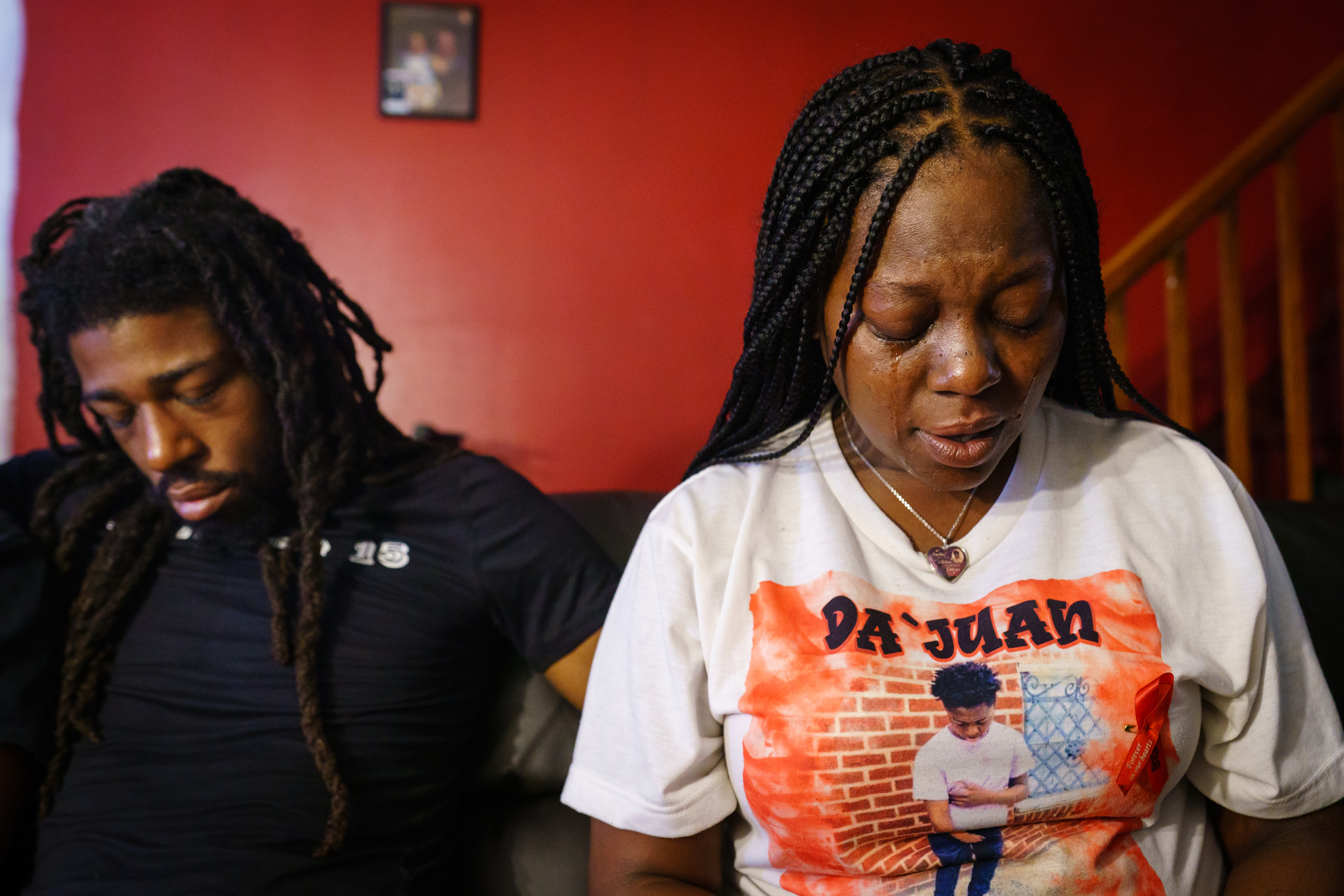
    Nyshyia Thomas misses her son, DaJuan, every day. At the sentencing of her son’s killer on Wednesday, she said: “I will never get to see his face as a grown man. I will always just know the child.”

    A killing spree

    Carriker’s killing spree began shortly after midnight on July 2, when he showed up at Wamah’s home on the 1600 block of South 56th Street. He shot multiple bullets through the door, then walked in and shot Wamah nine times.

    It remains unclear why Carriker targeted Wamah. Police did not know he had been killed until days later.

    Nearly two days later, just before 8:30 p.m., Carriker returned to that block with the same rifle and a semiautomatic handgun. First, he fired 18 shots into the Jeep of Octavia Brown, a young woman driving her 2-year-old twins and 10-year-old niece to a family barbecue.

    One of the toddlers was shot multiple times in the leg, and the other twin was grazed by a bullet. Glass shards exploded into Brown’s face and eye. The boys survived their injuries, but the family was traumatized. Brown said Wednesday that her son still has pain in his legs from the shooting.

    As nearby police rushed to the scene, Carriker walked south down 56th Street, coming across 13-year-old Ryan Moss and shooting him multiple times in the legs. His friend, DaJuan Brown, was on his grandmother’s porch and ran out to help his friend. DaJuan and a responding officer found the boy screaming for help behind a car.

    As DaJuan ran home for help, Carriker shot him multiple times, killing him.

    Carriker continued on, next shooting Moralis as he got out of his car. Then, as he reached Greenway Avenue, he came to face Lashyd Merritt leaving his home, and shot him. Both men died.

    Carriker then turned up South Frazier Street, where he shot and killed Dymir Stanton. Stanton’s brother, Kaadir, shot at Carriker in self-defense as he tried to get to his brother.

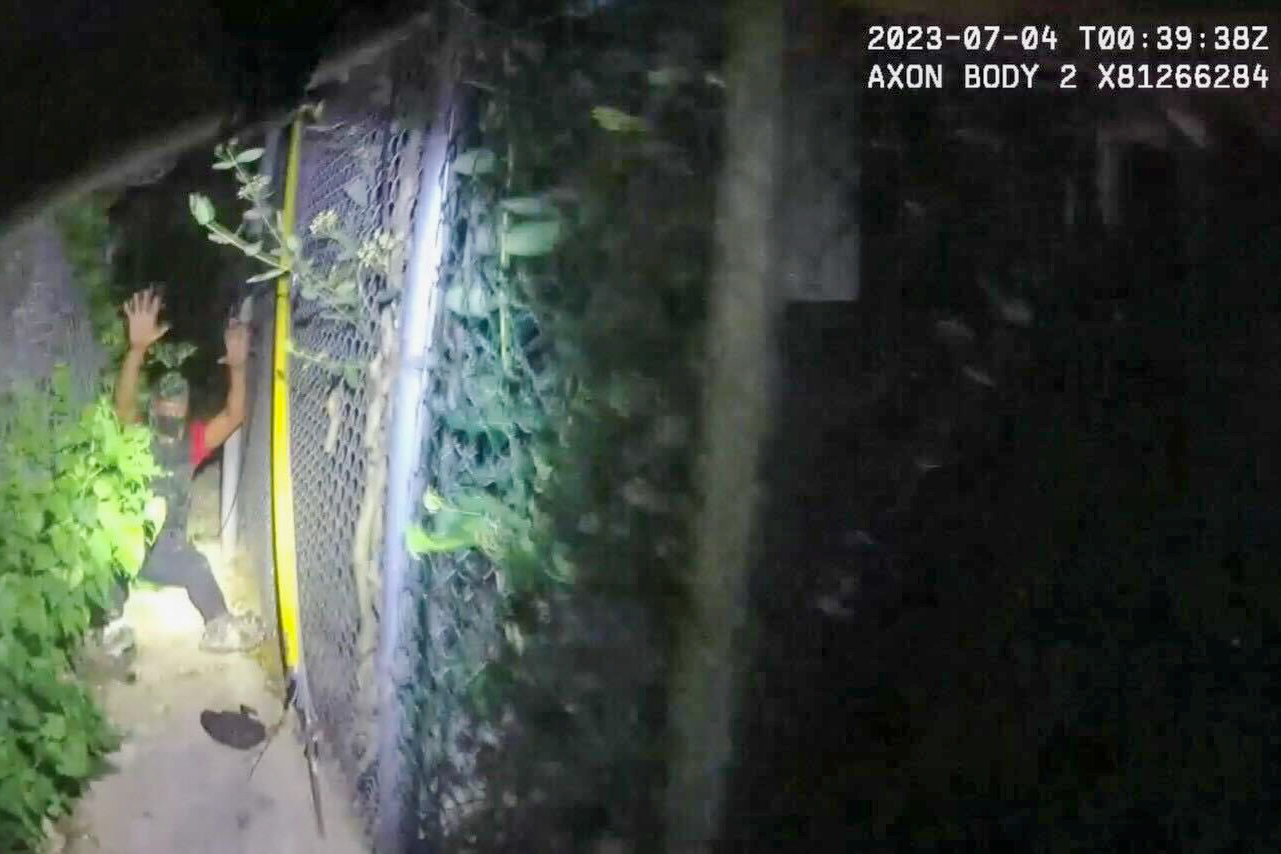
    Philadelphia police responded to a sprawling scene nearly a mile long. Officer Ryan Howell ran toward the sounds of gunfire, then found Carriker in a dark alleyway. The gunman quickly surrendered.

    Police Officer Ryan Howell’s body worn camera footage showed how he found Kimbrady Carriker surrendering in a narrow alleyway.

    ‘I am sorry’

    Prosecutors said Carriker told Howell “good job” as he took him into custody, and said, “I’m out here helping you guys.” Law enforcement sources have said Carriker told police that the shooting spree was an attempt to help authorities address the city’s gun violence crisis, and that God would be sending more people to help.

    Carriker’s attorneys said he was profoundly delusional and did not understand the impact of his actions.

    Blender, of the defender association, said Wednesday that there was nothing he could say to comfort to the victims’ families — or the relatives of Carriker, who live with their own guilt.

    “He was under a mental health disease that prevented him from understanding what was going,” Blender said. “It is not an excuse. It is not to justify this horrific, horrific behavior.”

    Later in the sentencing, Carriker, dressed in a red jumpsuit, attempted to apologize.

    “All I ever wanted to do was help my community. I never meant to cause this harm,” he said. “I am sorry for the pain I have caused. I would take it back, but I can’t, so I will say that I am sorry and maybe one day you can forgive me.”

    After the hearing, the heartbroken families poured into the streets.

    A man who said he was like a father to Carriker said: “All families are hurting. If there’s anything that we could ever say, it’s that we are sorry that this happened.”

    And the loves ones of the victims left with little comfort. Wamah’s sister did not get the answer to the question that she says haunts her every day: “Why?”

    When she asked Carriker in court, he said nothing.

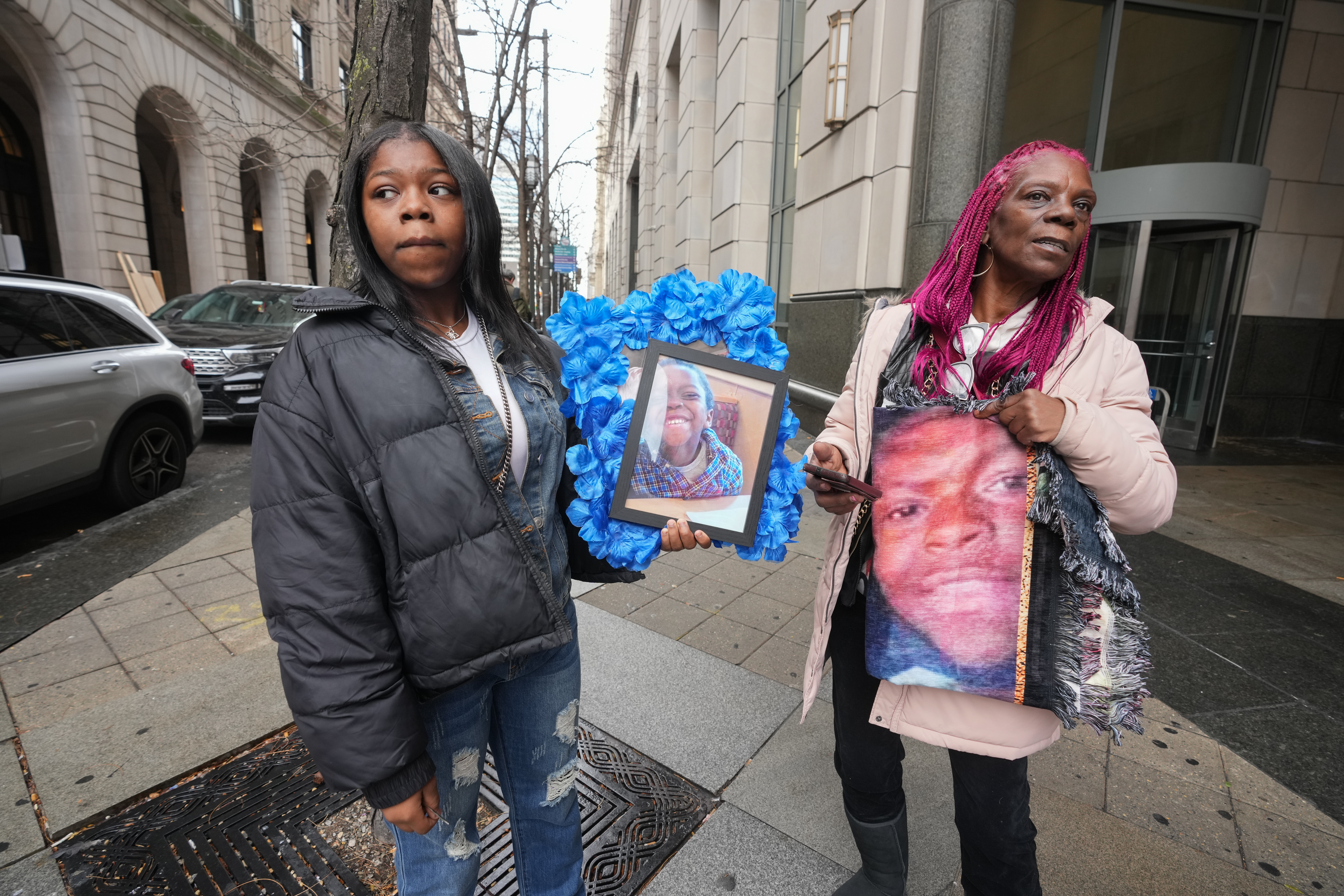
    Ne’siyah Thomas-Brown, left, sister of Da’Juan Brown, and, Odessa Brown, right, grandmother, outside the Juanita Kidd Stout Center for Criminal Justice, in Philadelphia, December 17, 2025.
  • A flier showing the KKK was posted in Southwest Philly. A ward leader wants to calm fears.

    A flier showing the KKK was posted in Southwest Philly. A ward leader wants to calm fears.

    When a Southwest Philly resident reported a KKK flier had been taped to a pole outside their home this week, people got angry.

    The Pennsylvania Human Relations Commission looked into the incident and put out a statement denouncing hate. Angry commenters on the 51st Ward’s Facebook page about the flier dared white supremacists to show their faces.

    But 51st Ward Democratic leader Gregory Benjamin said while he understands the alarm and does not intend to dismiss people’s concerns, he believes this all may be some kind of misunderstanding.

    “We want to calm that,” he said.

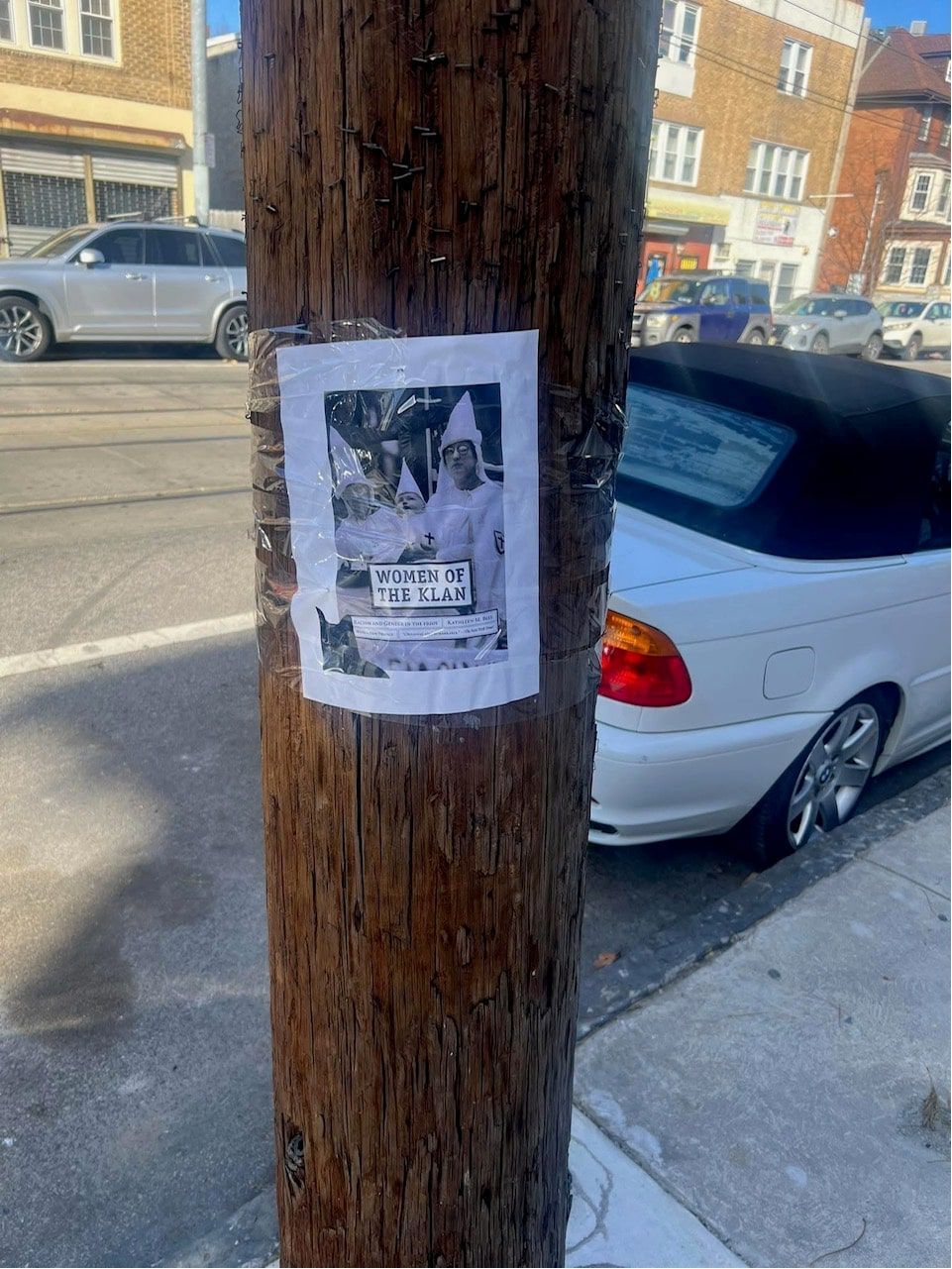
    On Tuesday, a neighbor called Benjamin to let him know that they’d discovered a flier depicting members of the KKK on an electrical pole outside their home on the 5100 block of Chester Avenue.

    A flier posted earlier this week in Southwest Philly is a copy of the cover from a book titled “Women of the Klan: Racism and Gender in the 1920s”.

    The flier is black-and-white copy of the cover of a book written by University of Pittsburgh sociologist Kathleen M. Blee, Women of the Klan: Racism and Gender in the 1920s. The cover features a photograph of three generations of klans-people — an older woman, a younger adult woman, and a baby — all wearing white pointed robes, with a cross and American flag behind them.

    It’s unclear what message whoever put up the flier intended to send. Blee’s book, originally published in 1991, is a study of the role that women played in the Jim Crow-era KKK and the covert ways they carried out the Klan’s mission, not an endorsement of the group’s ideology. The first page of the book describes the Klan as “one of U.S. history’s most vicious campaigns of prejudice and hatred.”

    The flier still raised concerns. Residents contacted the Human Relations Commission, and its Philadelphia advisory council was notified, as well as police. It’s possible another identical flier was posted nearby around the same time, Benjamin said, but all fliers have since been removed.

    No person or group has taken responsibility for the flier so far. While there is no indication the flier was put up by a white supremacist group, the manner in which it was posted can still be harmful, said Chad Dion Lassiter, executive director of the Pennsylvania Human Relations Commission.

    “These things, they take an emotional toll on individuals,” he said.

    Even if the flier was a piece of trolling or a message targeted at white people, Lassiter said it was crucial not to ignore it.

    “We take all of these things [seriously]… we’re in a moment where people want to continue to deny the surge of white nationalism and white supremacy,” he said.

    Representatives of the Pennsylvania Human Relations Commission will attend the 51st Ward’s monthly community meeting on Saturday at noon at the Kingsessing Library, located at 1201 S. 51st St.

    Benjamin said the meeting would be an opportunity for community members to share more information about the incident and ease any remaining tension. He said he hopes this experience will encourage neighbors to connect more and communicate better.

    “Maybe we can bring something constructive out of this. Demonstrate that the community is more interested in [doing] something positive than anything else,” he said.

    Correction: An earlier version of this article misstated the publication date of Blee’s book. It was originally published in 1991.

  • West Philly affordable housing project could finally advance, almost 6 years after it was proposed

    West Philly affordable housing project could finally advance, almost 6 years after it was proposed

    An affordable housing project slated for a junkyard in Cedar Park took a step forward Wednesday, when a Philadelphia judge rejected a neighbor’s challenge. The courtroom victory brings the 104-unit, two-building project, which was conceived in 2020, closer to reality.

    Common Pleas Court Judge Idee Fox ruled that the new zoning of a triangular group of parcels on Warrington Avenue, which allows for buildings up to seven stories, was legal.

    Melissa Johanningsmeier, who lives next to the planned development, sued the city to stop the project in 2023, arguing that the building was inconsistent with the city’s goal of preserving single-family homes in Cedar Park.

    Johanningsmeier said in court filings she would be harmed by the parking, traffic, and loss of green space if the project were to proceed.

    The homeowner told Fox during a two-day October bench trial that there was widespread discontent with the project in the neighborhood.

    The judge seemed skeptical, as Johanningsmeier’s attorney didn’t provide witnesses or evidence to support claims of widespread backlash to the project that has been promoted by City Councilmember Jamie Gauthier.

    It was not for her to decide whether the project was the best idea, Fox said, but whether the zoning was constitutional.

    “If the community is unhappy with what’s being done, they have the right to express their concerns to the councilwoman at the ballot box,” Fox said.

    Junkyard controversy

    The project dates to 2020, when New York affordable housing developer Omni formulated plans to add 174 reasonably priced apartments to the West Philadelphia neighborhood.

    But the developer’s plans for the junkyard at 50th and Warrington met opposition due to the proposed buildings’ height — six stories — and parking spaces for less than a third of the units.

    Omni’s plan required permission from the Zoning Board of Adjustment to move forward, which was more likely to succeed with neighborhood support. So they compromised.

    A new design unveiled in 2021 pushed the buildings back to the edge of the site, to avoid putting neighboring homes in shadow. A surface parking lot would offer 100 spaces for the 104 affordable apartments.

    These concessions appeased almost all of the critical neighbors and community groups. Many of them supported Omni before the Zoning Board of Adjustment, which granted the project permission to move forward.

    But Johanningsmeier remained a critic. She lives on the border of the property and challenged the zoning board’s ruling in Common Pleas Court. Judge Anne Marie Coyle ruled in her favor, arguing the new building “would unequivocally tower over the surrounding family homes.”

    In the aftermath, Gauthier passed a bill to allow the project to move forward without permission from the zoning board. Johanningsmeier then sued over that legislation as well.

    Councilmember Jamie Gauthier in City Council in 2024.

    Affordable housing and fruit analogies

    The issue at the heart of the case was whether a zoning change to allow for large multifamily buildings was considered spot zoning on the small parcel, which Johanningsmeier’s lawyer argued was inconsistent with the types on buildings on surrounding properties.

    Just because the “mega apartment buildings” are for residential use doesn’t make the project similar to the surrounding zoning, which mostly allows single-family homes and duplexes, Edward Hayes, a Fox Rothschild attorney representing Johanningsmeier, told Judge Fox on Wednesday.

    “A cranberry and a watermelon are fruit,” Hayes said. “They are not the same.”

    And while affordable housing is a laudable cause, the attorney said, that doesn’t mean that the city should “shove it down the throat of a community” in the form of large buildings that are out of character with the rest of the neighborhood.

    An attorney representing the developer, Evan Lechtman of Blank Rome, told the judge existing buildings of similar height are nearby, across the railroad track in Kingsessing.

    “We are transforming a blighted, dilapidated junkyard into affordable housing,” the developer’s attorney said.

    Johanningsmeier’s lawyer, Hayes, declined to comment after the ruling, which could be appealed.

    Gauthier celebrated the outcome as a victory against gentrification.

    “Lower-income neighbors belong in amenity-rich communities like this one, where they can easily access jobs, healthcare, groceries, and other necessities,” said Gauthier. ”I hope the court’s ruling puts an end to gratuitous delays.”

    Housing advocates note that the years of neighborhood meetings and lawsuits over the project are an example of why housing, and especially affordable units, has become so expensive to build in the United States.

    In the face of determined opposition from even a single foe, projects can incur millions in additional costs.

    “It’s a travesty that one deep-pocketed opponent has been able to block access to housing for over 100 families in my neighborhood for years,” said Will Tung, a neighbor of the project and a volunteer with the urbanist advocacy group 5th Square. “It’s more expensive than ever to rent or buy here, and this project would be a welcome change to its current use as a derelict warehouse.”

  • Corporations bought 1 in 4 homes sold in Philly from 2017 to 2022, new report says

    Corporations bought 1 in 4 homes sold in Philly from 2017 to 2022, new report says

    Roughly one in four small residential buildings bought in Philadelphia from 2017 and 2022 were purchased by corporations, according to a new report about investor activity in the city.

    Most of these corporate buyers are renting out the properties, which have one to four housing units, according to a report about corporate investors that was released Monday by researchers at Reinvestment Fund, a Philadelphia-based community investment nonprofit, and the Center for Law, Inequality, and Metropolitan Equity at Rutgers Law School in Newark.

    Investors compete with low-income homebuyers. They are more likely to pay with cash and less likely to be denied mortgages. They sometimes pursue properties before they hit the market.

    “There are a lot of neighborhoods that are seeing investor activity, that are raising concerns,” said Emily Dowdall, president of policy solutions at Reinvestment Fund. “Our hope is that this report, that other reports, are going to help inform a strategy going forward.”

    Smaller operators are buying most Philadelphia homes purchased by investors. But researchers have seen an increase in larger corporate landlords.

    Researchers looked at sales of residential buildings with one to four housing units. Most were single-unit homes, but the city records that researchers classified properties with one to four units as single-family housing.

    Researchers found that 13 investors bought 100 or more properties and eight bought more than 200 from 2017 through 2022.

    Here are some other takeaways from the new study.

    No sign of big national players

    From 2020 through 2022, 91% of homes purchased by corporations were bought by smaller investors.

    Researchers said they found no evidence that the biggest national investors in single-family homes — such as the private equity firm Blackstone and Invitation Homes, one of the country’s largest landlords of single-family homes — are active in Philadelphia.

    Private equity-backed national investment organizations have bought single-family homes in bulk in places such as the southeastern United States, which has been targeted because it has newer housing stock and fewer tenant protections, Dowdall said.

    These types of investors have been tied to rent increases and fewer opportunities for first-time homebuyers and buyers with low and moderate incomes.

    Philadelphia is less likely to see these organizations operating here because of the city’s many renter protections and an older housing stock that needs a lot of investment, Dowdall said. The city’s foreclosure prevention program and the relatively long foreclosure process in Pennsylvania also deter these organizations, which like to quickly buy and lease homes on a large scale.

    “It’s still possible that we could see more national players, as they have already saturated the easier markets to get into,” she said.

    During the pandemic, some larger regional and national companies started to come to Philadelphia, researchers found.

    Investor activity is concentrated in certain areas

    Corporate investors mostly buy single-family homes in areas of the city where prices are lowest. Those neighborhoods also are predominately Black and Hispanic, including Brewerytown, Germantown, Juniata Park, and Kingsessing.

    From 2020 to 2022, the median purchase price for an investor was $129,000, compared to the citywide median purchase price of $225,000 and individual buyers’ median purchase price of $247,000.

    During this time, investors were most active in North, West, and Southwest Philadelphia and sections of Lower Northeast and Northwest Philadelphia. Investors bought more than half of all homes sold in these areas.

    Before sheriff sales paused because of the pandemic, investors often bought a chunk of their properties that way.

    The share of foreclosed homes purchased by investors grew from 31% of properties sold in sheriff sales in 2012 to 60% in 2019.

    From 2017 to 2019, high-volume investors got about a third of their single-family properties through sheriff sales.

    From 2020 through 2022, fewer than 40 properties were auctioned off each year. So investors relied more on other ways of acquiring properties, including buying directly from homeowners, “potentially creating more direct competition with individual homebuyers,” the report said.

    More eviction filings and code violations

    Large corporate landlords were more likely to file in court to evict tenants than smaller investors.

    About one in seven homes bought by high-volume investors were associated with eviction filings within five years, compared to less than one in 20 homes bought by smaller investors.

    Investors of all sizes were more likely than individual homebuyers to have code violations. About 20% of properties bought by investors had violations within five years of the purchase. The share of violations in owner-occupied properties was 9%.

    Researchers plan to learn more about the types of code violations these properties generate, since violations can range from trash issues to unsafe conditions.

    More work on properties

    Researchers also uncovered “potentially positive findings” about large investors, Dowdall said.

    Philadelphia’s aging housing stock needs investment for renovations and maintenance, and the report found that larger investors were more likely to get permits to alter their properties than smaller investors. “Bringing much needed dollars in to refurbish our housing stock,” she said.

    Large corporate investors received alteration permits for 42% of the properties they bought, compared to 29% for smaller investors and 13% for individual homebuyers.

    Like code violations, projects that need permits can range from the minor to the major, from adding electrical outlets to total renovation.

    In future analyses, researchers plan to drill down on the specific work being done on investors’ properties.

    Researchers’ recommendations

    Many investors purchase properties using a variety of corporate names, so identifying who is in control of corporations can be challenging, researchers said. That makes it difficult to hold operators accountable for problems at their properties.

    Researchers recommend state lawmakers require limited liability companies to disclose who is in control.

    They also recommended that the city:

    • Enforce rental license requirements to create a more complete inventory of rental properties
    • Use public data to understand how investors operate and their effects on the market and renters
    • Prioritize individuals and nonprofits at sheriff sales
    • Help individual homebuyers compete in the housing market, including by giving more money to homebuyer assistance programs