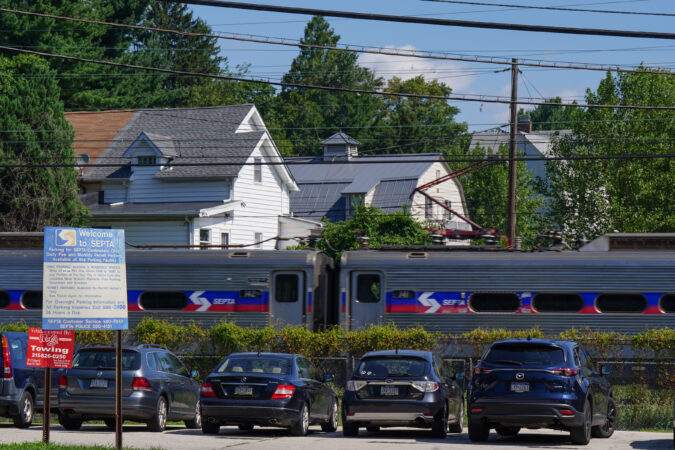
SEPTA is trading Glenside Regional Rail riders three daytime trains for new off-peak options, more train cars, and new schedules aimed at reducing congestion between Glenside and Wayne Junction.
The Warminster Line, which runs through southeastern Montgomery County, is the only Regional Rail line losing multiple trains under systemwide changes that began on July 5 to make trains more consistent and prevent delays.
The new schedule cuts two weekday trains that left Glenside at 8:40 a.m. and 2:47 p.m. for Center City, and one weekday train that left Suburban Station at 4:53 p.m. toward Warminster.
The morning train cut leaves a 27-minute gap in service to Center City from Glenside, while the afternoon cuts each add five minutes or less to the wait for the next train.
SEPTA also added a train to the Warminster Line that leaves Suburban Station at 11:35 p.m. on weekdays, and a train on the West Trenton Line that leaves Suburban Station at 5:28 a.m.
The late-night train will serve airport workers, and the dawn departure is convenient for people who commute into the suburbs, SEPTA spokesperson Kelly Greene said.
The changes SEPTA made across the commuter rail system this week are aimed at improving consistency and reliability, the agency said.
“As SEPTA continues to increase the number of train cars available for service, trains will be longer and provide more space for riders,” officials wrote in a statement.
Between Wayne Junction and Glenside, SEPTA said, it hopes the new schedule will help “prevent trains from bunching together, which can cause delays.”
The 8:40 a.m. train from Glenside was cut to reduce congestion, Greene said, and had the lowest ridership of the trains running around that time.
Other changes affecting the Abington area include new departure times for some trains on the Lansdale/Doylestown, Warminster, and West Trenton Lines.
SEPTA put out a full list last month of what is changing on each line, along with updated train schedules.
This suburban content is produced with support from the Leslie Miller and Richard Worley Foundation and The Lenfest Institute for Journalism. Editorial content is created independently of the project donors. Gifts to support The Inquirer’s high-impact journalism can be made at inquirer.com/donate. A list of Lenfest Institute donors can be found at lenfestinstitute.org/supporters.
🍦 Stella’s Ice Cream out of Idaho (yes, Idaho) just opened on Front Street in Fishtown/Kensington, and Bea has the early scoop.
🍦 Winners, rocking a feel-good message, is new on South Street in Graduate Hospital. As Kiki Aranita says, Winners’ appeal is more than just the flavors, like Sweet Success S’mores.
🍦Our guide to our favorite ice cream is right here.
Critic Craig LaBan is back from his annual Jersey Shore exploration, and he’s shaking the sand out of his notebook. In Part One of his roundup, he heads to the mainland to find some gems. Read that here.
Looking ahead: Part Two, Craig’s reviews from Long Beach Island and thereabouts, will be online this weekend. On July 11, he’ll share his discoveries from points farther south in Part Three.
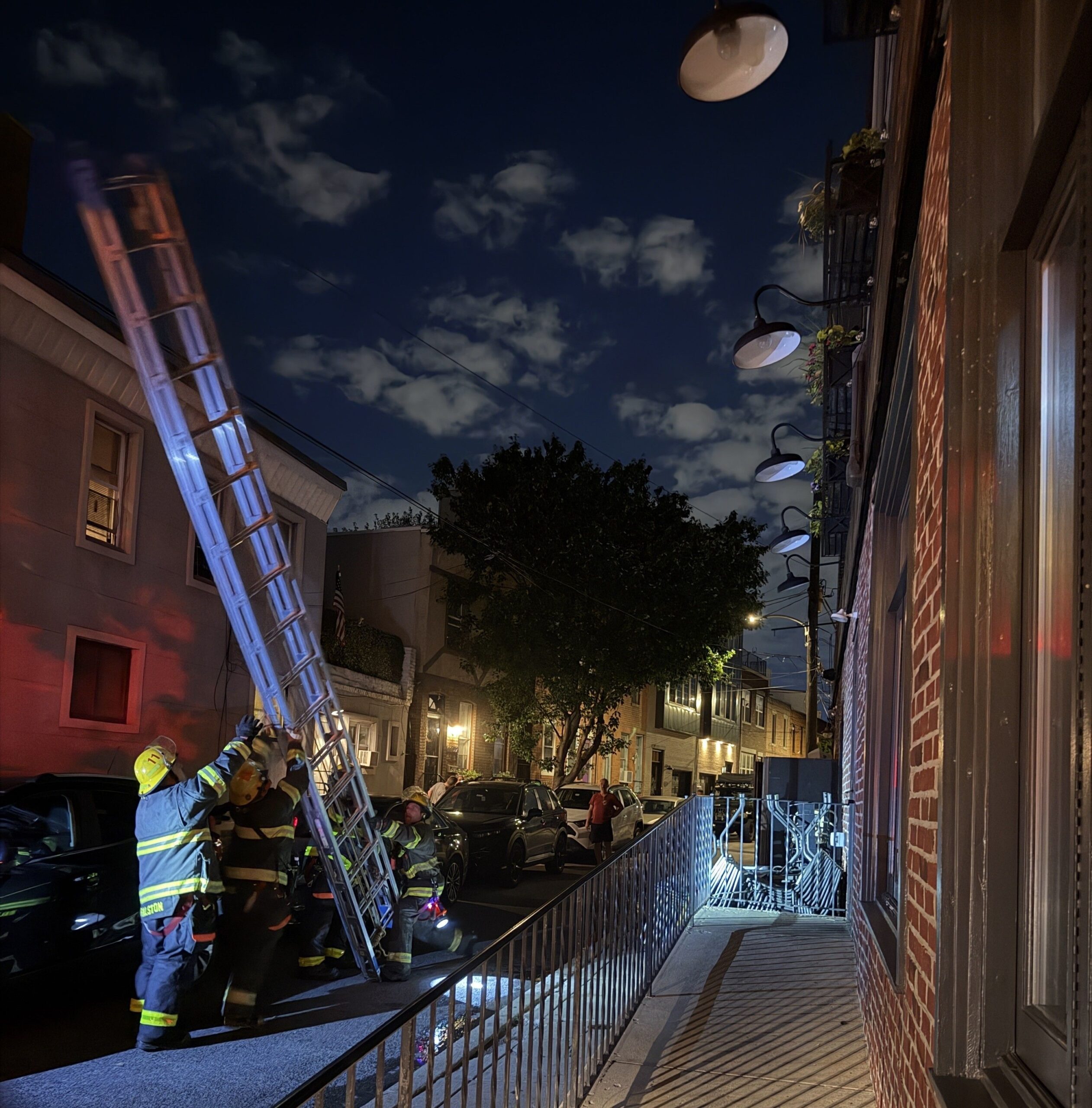
Ember & Ash on East Passyunk Avenue will be closed for an undetermined period after smoke and flames shot up through the ventilation last week just after closing time. No injuries were reported.
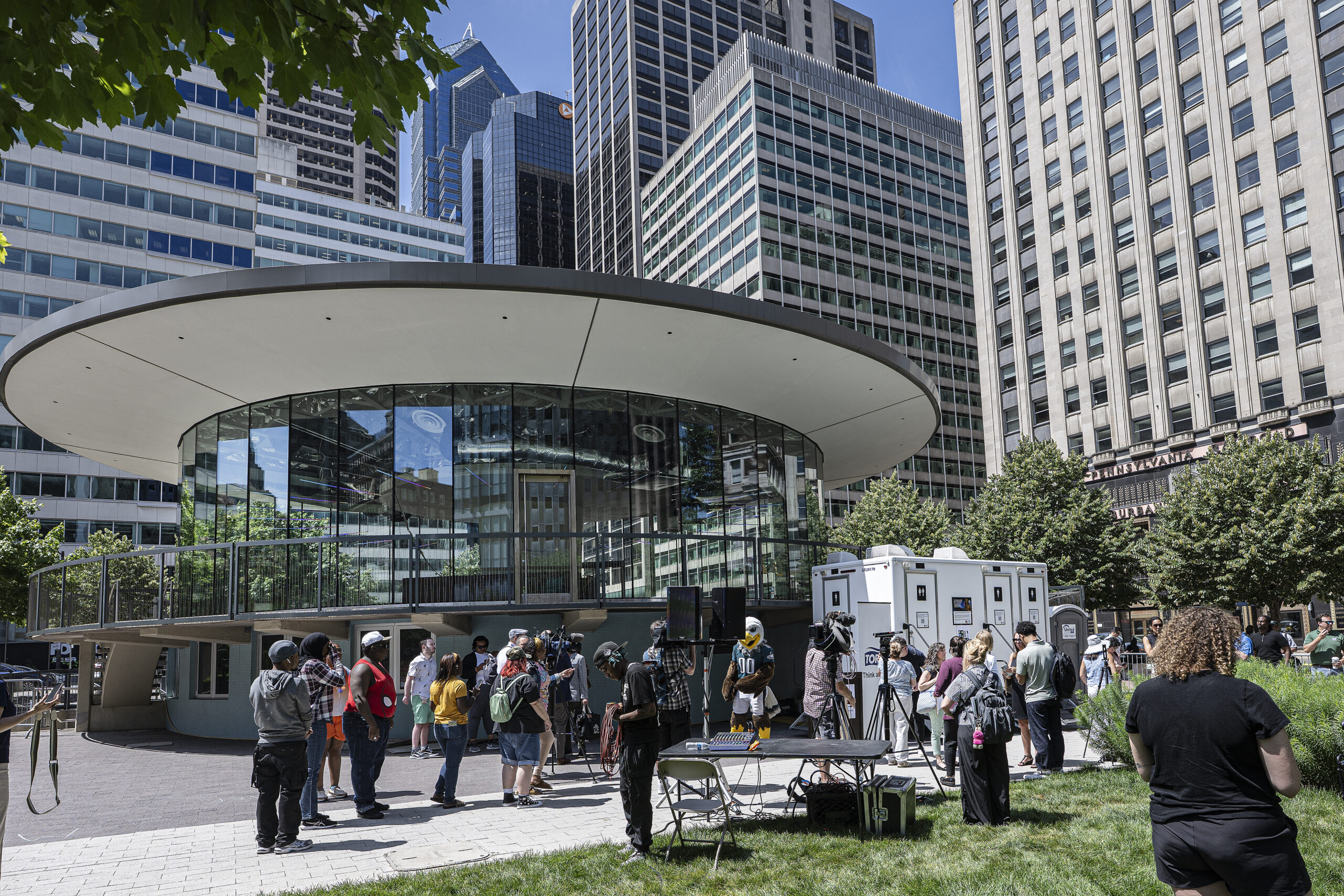
This weekend will see the debut of Broad Street Beer Garden at LOVE Park, the first phase of a planning reuse of the so-called flying saucer building at 16th and JFK. Here’s the long history of the city landmark.
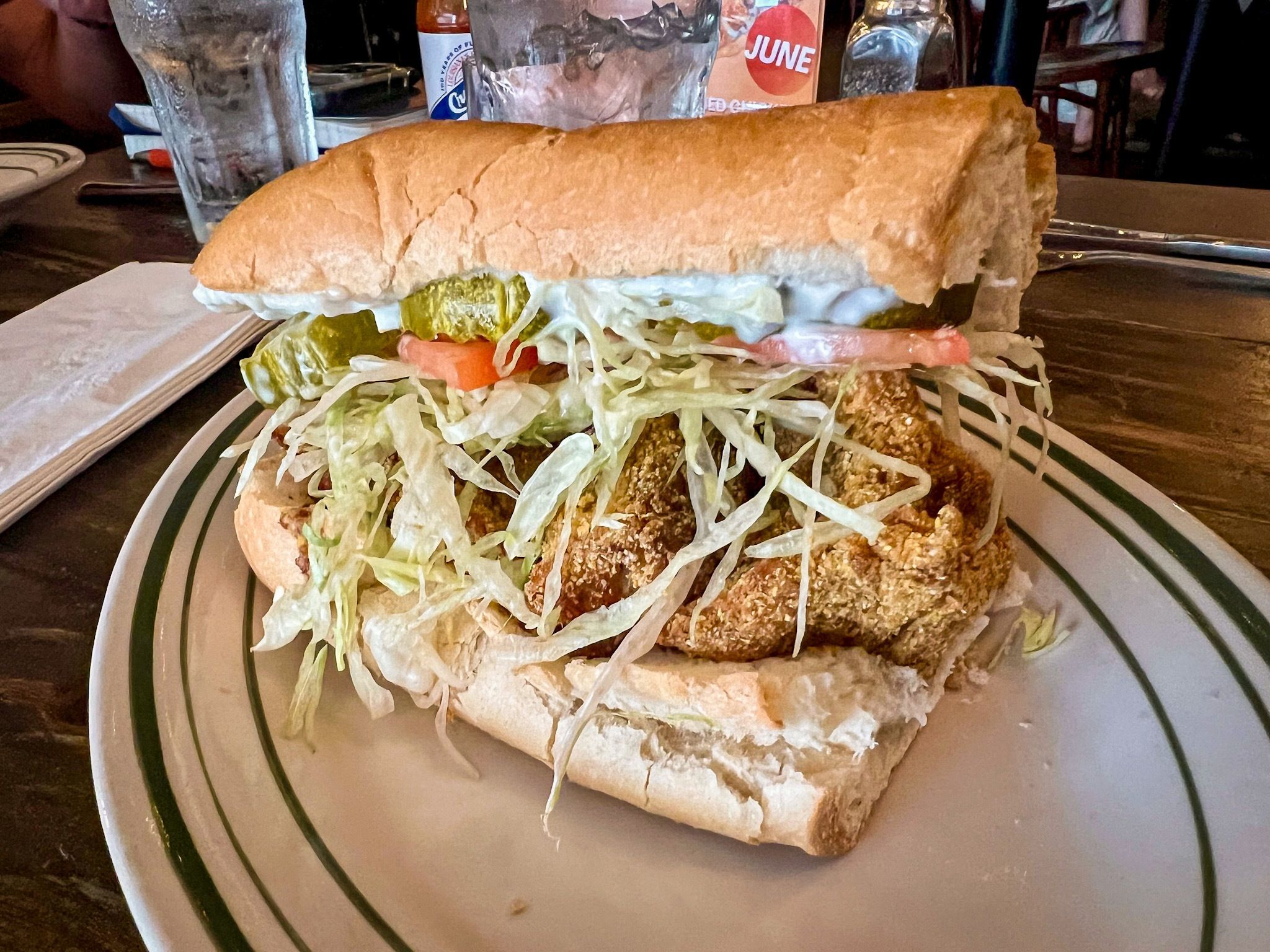
We munched on fried silverfish that reminded us of French fries in Little Saigon, Argentine empanadas in West Philly, and a vegan po’ boy in Old City that tasted like the original.
Scoops
Intrigue! Albert Zheng, whose holdings include Javelin in Fairmount, is backing a yet-to be-named dual concept on the way to 808 Chestnut St., formerly a Dunkin’ Donuts. In front, the feature will be wagyu omakase, while the rear will be what he calls a Cambodian speakeasy. He says it’s six or seven months out.
Mylar Bar, a cocktail bar inspired by the spirit of South Philly’s Dino’s Party Center, is expected to open later this summer from hospitality veterans Liv Arterbridge and Gina Piccari. They bought the former building at Ninth and Morris Streets where Dino’s sold balloons, decorations, and party supplies for decades before it moved across the street. “We want the whole thing to feel like a party,” Arterbridge said. “Nostalgic, fun, a little silly, intentionally unserious — but not a theme bar,” Piccari said. Cocktails will include martinis, punches, and classic drinks, alongside draft beer and familiar favorites. A full kitchen, led by chef Colin White, formerly of Sally and Emmett, will serve shareable “party snacks” and larger plates. They plan to offer late-night desserts, so food will be available until 1 a.m. with the bar wrapping at 2. Arterbridge, whose resume includes Cry Baby, Poison Heart, and a.bar, met Piccari while working at Boot & Saddle, where Piccari was manager. Piccari is now behind the bar at Le Virtù.
Restaurant report
Sixteen restaurants, bakeries, cafes, and bars — including Lillian’s, shown above — are opening in July. Read on for the rundown.
Penny’s Bagels, on its way (for the last two years) to 212 Kings Highway East in Haddonfield, will hand out 250 red, white, and blue bagels on July 3 at the borough’s parade. The shop is eyeing an August opening, says owner Chris Fetfatzes.
Maru, a fast-casual Korean-inspired restaurant from David Backhus and the team behind the now-closed Oori, is expected to open in August in what is now Collective Coffee & Bakery, which Backhus also owns, at 2922 Conestoga Rd. in Glenmoore. Maru’s menu will feature Korean fried chicken sandwiches, wings, tenders, house-made mochi doughnuts, and specialty coffee, while continuing to serve Collective Coffee and honor existing coffee subscriptions.
Briefly noted
Ota-Ya in Newtown has announced that Friday will be its last day after 30 years with the retirement of owners Jeff Wong and Cindy Tam.
PETA is launching its “Nice Cream Trail,” highlighting 10 shops across the state serving vegan ice cream, and there are five local spots on the list: Dreams Ice Cream Factory in Glenside, Lu & Aug’s in Ardmore, the Main Freeze in Lansdale, Milk Jawn in South Philadelphia and Northern Liberties, and Scoop DeVille in Center City and Queen Village. The first Pennsylvania resident to complete the trail by visiting all 10 participating shops through August will win a vegan ice cream party with PETA’s “iScream” truck for themselves and up to 50 guests. Details are here.
Two local BBQ chefs, Matt Groark (Medford Lakes, N.J.) and Maxwell McGibbon (Newark, Del.), are competing on Food Networks’ Pitmasters, premiering July 13 at 9 p.m.
Diner en Blanc registration is still open. This year’s version of the pop-up picnic is Aug. 20.
Miller’s Ale House, in the shopping center next to the Home Depot in Springfield, Delaware County, closed this week after 13 years, while Fishtown is abuzz with speculation that Bottle Bar East, which opened at 1308 Frankford Ave. around the same time in late 2012, has closed. The phone is down, and owners could not be reached for comment
When is Adda ever going to open in Fishtown? — Rich C.
True, Adda has been a long time coming, since I initially wrote about it in June 2025 with an end-of-2025 target. Adda — from New York City’s Unapologetic Foods, whose establishments are acclaimed for their bold, no-holds-barred approach to Indian cooking — is now looking at a late-fall opening at 1700 Frankford Ave., the new building across from the Fishtown post office.
Corrigendum: Reader Stephanie points out that Kalaya is the third Philadelphia restaurant, not the second, to win the James Beard Award for outstanding restaurant, as I wrote two weeks ago. Zahav was the first in 2019, while Friday Saturday Sunday won in 2023.
📮 Have a question about food in Philly? Email your questions to me at mklein@inquirer.com for a chance to be featured in my newsletter.
By submitting your written, visual, and/or audio contributions, you agree to The Inquirer’s Terms of Use, including the grant of rights in Section 10.
Pest control companies routinely use traps baited with rodenticide to kill rats and mice found in homes, restaurants, and businesses throughout the Philadelphia area, but a recent Rutgers University study suggests those companies face a gnawing problem.
Researchers discovered that mice in Philadelphia, Trenton, and suburbs like Levittown and New Hope harbor genetic mutations that shield them from standard chemical baits.
In fact, a majority of house mice sampled from Northeast urban areas, including Manhattan and other New York City boroughs, carried at least one mutation linked to rodenticide resistance — a clear sign that pests are actively evolving to survive common poisons.
Rats presented a different problem. While they lacked the chemical-resistant mutations found in mice, the study’s author suggests they possess the cognitive sophistication to outsmart and evade traps entirely.
Lead author Jin-Jia Yu, a postdoctoral researcher in Rutgers’ entomology department, said the findings indicate that pest control companies might need to develop different strategies.
Yu conducted his research with the supervision of another of the paper’s authors, Changlu Wang, an entomologist in the same department.
Published in the April issue of Pest Management Science, the peer-reviewed study was launched after frustrated pest control professionals repeatedly approached the Rutgers lab, reporting that rodents routinely survived multiple treatments.
“For the house mouse, we saw much more mutations rather than Norway rats,” Yu said. Norway rats are the common brown rat often seen in sewers.“Genetic mutation is not that special in these creatures. But we found that the house mouse shows a lot of genetic mutations related to rodenticide resistance.”
Rodents are a bigger problem in cities
This study focused on urban rodents. It found that mice in bigcities such as Philly and New York had a high frequency of mutations of a certain gene.
Rodents are a bigger problem in cities than more rural areas. Data cited in the study indicate that an average of 12% of all households experience rodent sightings. But major metropolitan areas reporter higher rates, including Philadelphia (29%), Washington (20%), and Manhattan (15%).
Yu said that similar studies of mutations in house mice and Norway rats were conducted in Europe and that research in the U.S. has been limited. One study in 2009 did find some rats in England with mutations that made them resistant.
However, Yu said there had been no such studies in the Northeast.
It has long been known that rodents developed resistance to the rodenticides developed in the 1950s. So more potent compounds were created in the 1970s and include brodifacoum, bromadiolone, difenacoum, and difethialone.
The poisons contain anticoagulants that interfere with the activation of vitamin K reductase (VKOR), an enzyme essential for blood to clot. Eating the bait leads to fatal internal bleeding.
The Rutgers team looked for mutations in the gene known as VKORC1 that makes the enzyme.
Pest control companies, as well as the Philadelphia Department of Public Health, sent the researchers the tails of caught rodents. Yu said his research was possible only with their help.
A rare mouse mutation in Philly
The researchers analyzed DNA from 147 house mice and 143 Norway rats collected in New York, New Jersey, Pennsylvania, and Washington, D.C.
Among house mice, 84% carried at least one mutation in the VKORC1 gene. Nearly 70% carried mutations known to help mice survive rodenticides.
Of 24 mice collected in Philadelphia, the majority had a mutation and five had two. One mouse had a rare mutation.
Of 20 mice collected in Trenton, 10 had two mutations. Lansdale, Levittown, and New Hope had one mouse each with a mutated VKORC1 gene.
About 35% of the Norway rats also carried mutations. However, scientists do not yet know whether those mutations result in resistance in the rats.
Mice, Yu said, might be genetically adapting faster than rats because they are curious and more likely to eat unfamiliar food, including rodent bait.
However, rats will avoid new objects, including live traps, and learn from their encounters.
In other words, not only aremice mutating to survive, but ratsmay be learning to avoid entrapment.
Shelly Gaither, 51, of Cheltenham, makes sure her three sons, ages 6, 9, and 18, get their meals while she manages with whatever is left over — if anything ever is.
“Oh, my God, groceries are too expensive,” said Gaither, a former data analyst who suffers from a disability that makes working difficult. She visits a food pantry regularly to make sure her kids eat chicken when they can. Her monthly SNAP (Supplemental Nutrition Assistance Program) benefits were reduced from $400 to $200 earlier this year because of changes to the programunder President Donald Trump’s One Big Beautiful Bill Act.
“I don’t think there’s hope,” she said. “I feel guilty for bringing children into a world that doesn’t want them to exist because the government makes cuts that take away their food and their healthcare.”
For people like Gaither throughout the United States, levels of food insecurity have seen a “remarkable” rise since the pandemic in 2020, according to a national survey taken earlier this year and released in late May by the Federal Reserve Bank of New York.
Around 10% of 1,300 heads of households polled in February reported a lack of enough food and said their children were missing meals, according to the survey. Nearly 16% relied on food donations. Among families taking in less than $50,000 a year, almost 20% reported being forced to skip meals or go without.
In 2020, when the federal government stepped in to help families at the height of the pandemic, just 4% of households reported missing meals, including less than 7% of families earning less than $50,000 a year, according to the survey.
At that time, temporary supplemental unemployment benefits, expanded SNAP payments, and direct government relief payments helped stave off hunger among Americans. Food insecurity increased after COVID-19 relief expired, according to the Urban Institute.
But the recent surge in hunger has also been attributed to the sweeping law Trump signed last year, whichreduces SNAP benefits and other safety net programs to help pay for his tax cut.
Findings in the bank’sreport also reflect Gaither’s sense of despair, a pessimism about personal finances and the overall economy among people with low incomes. That same group exhibits diminished expectations for finding a job and declining levels of consumer confidence, the survey says.
(function(){function e(){window.addEventListener(`message`,function(e){if(e.data[`datawrapper-height`]!==void 0){var t=document.querySelectorAll(`iframe`);for(var n in e.data[`datawrapper-height`])for(var r=0,i;i=t[r];r++)if(i.contentWindow===e.source){var a=e.data[`datawrapper-height`][n]+`px`;i.style.height=a}}})}e()})();
According to thereserve bank’s report, non-white Americans have been especially hard hit. The number of such households that reported missing meals increased from 4% in 2020 to 19% in February. At the same time, the number of non-white people receiving SNAP benefits jumped from 14% to more than 26%.
Overall, the survey found food insecurity was particularly acute among lower-educated and lower-income households, as well as households with young children. Many families are experiencing financial stress due to the high cost of living, persistent inflation, and high interest rates, even as the stock market has been steadily rising, according to the survey.
Pantries struggle to keep up with demand
More people are flocking to food pantries, but they are not equipped to take up the slack of reduced SNAP benefits.
“Pantries across the state are in perpetual crisis mode,” said Stuart Haniff, CEO of Hunger-Free Pennsylvania in Pittsburgh. Add to that the advent of summer, when kids are no longer receiving free breakfast and lunch at school. “Families must now provide those 60 to 80 meals a month,” Haniff said.
In Norristown, “immense need” has increased the number of people frequenting Martha’s Choice Marketplace, the largest food pantry in Montgomery County, by 100% since 2022, said Patrick Walsh, director of programs. “And I don’t expect things to get better.”
Food prices are also up 3.2% this spring over last, according to U.S. Department of Agriculture figures,exacerbating the issue.
In South Jersey, “we are seeing record numbers at our food distributions,” said Jane Asselta, president and CEO of the Food Bank of South Jersey, in a statement to The Inquirer. “Life is getting harder to afford for more and more people.”
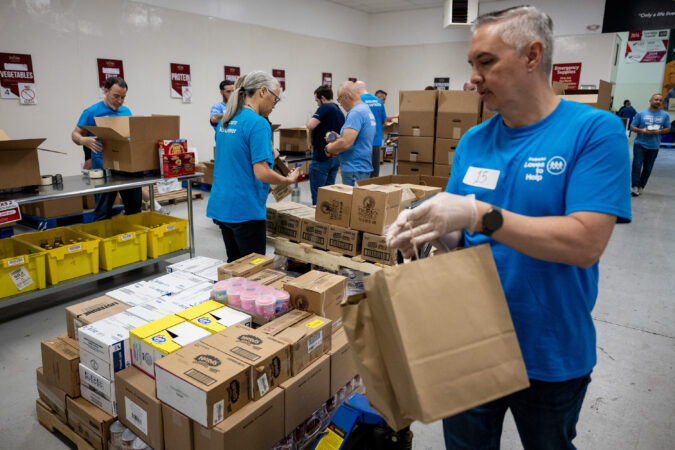
Matt McDevitt (left) and Michael Hickey load their vehicle at the Food Bank of South Jersey Thursday, June 11, 2026. The men are volunteers at the Temple Lutheran Church in Pennsauken and their food bank is open from 5-6 p.m. every Thursday.
Asselta said the Federal Reserve Bank’s report “mirrors” what her organization has observed through its network of 300 community partners.
“Hunger has never been higher,” said Pastor Sonita Johnson, who runs the food pantry at St. John’s Pentecostal Outreach Church in Salem City, Salem County. “Food prices are high, and the lines you see you would not believe — a 50% increase in people just over the last two months.”
Nationwide, between January 2025 and January 2026, SNAP rolls decreased by more than 4 million people — from 42 million to 38 million — according to USDA figures.
Between last September and April of this year, nearly 90,000 Pennsylvanians lost SNAP benefits due to new eligibility requirements stipulated by the Trump administration, according to an analysis by the Pennsylvania Department of Human Services (DHS).
And between December 2025 and last month, more than 32,000 Philadelphians lost benefits, DHS figures show.
In New Jersey, SNAP participation has fallen by more than 50,000 individuals between March 2025 and March of this year, New Jersey Department of Human Services figures show.
The Trump administration’s SNAP changes include an expansion of work requirements for people who receive SNAP benefits and increased documentation requirements “designed to make maintaining eligibility increasingly difficult,” according to the Food Research and Action Center (FRAC), the largest anti-hunger lobby in the United States.
Deputy White House press secretary Anna Kelly said in a statement that Trump signed the changes to strengthen SNAP and to ensure that it is “sustainable for future generations.” She added that Trump was “elected to eliminate runaway spending across the federal government.”
William Meo works on the loading dock at the Food Bank of South Jersey Thursday, June 11, 2026.
For people like Shelley Gaither, how her reduced SNAP benefits could be seen as part of “runaway spending” is tough for her to figure, given her needs. To survive this precarious moment, Gaither said, she will do whatever she can.
“We eat more vegetarian meals and I don’t buy my kids cookies or snacks,” she said. “If I drink enough coffee, maybe I just need one meal a day. This is our existence now. This is how we live.”
Philip C. Ricci, 90, formerly of Conshohocken, retired Catholic monsignor, founding pastor emeritus at Mary, Mother of the Redeemer Parish in North Wales, talented pianist, singer, artist, and mentor, died Saturday, Feb. 14, of complications after a fall at Villa St. Joseph senior living community in Darby.
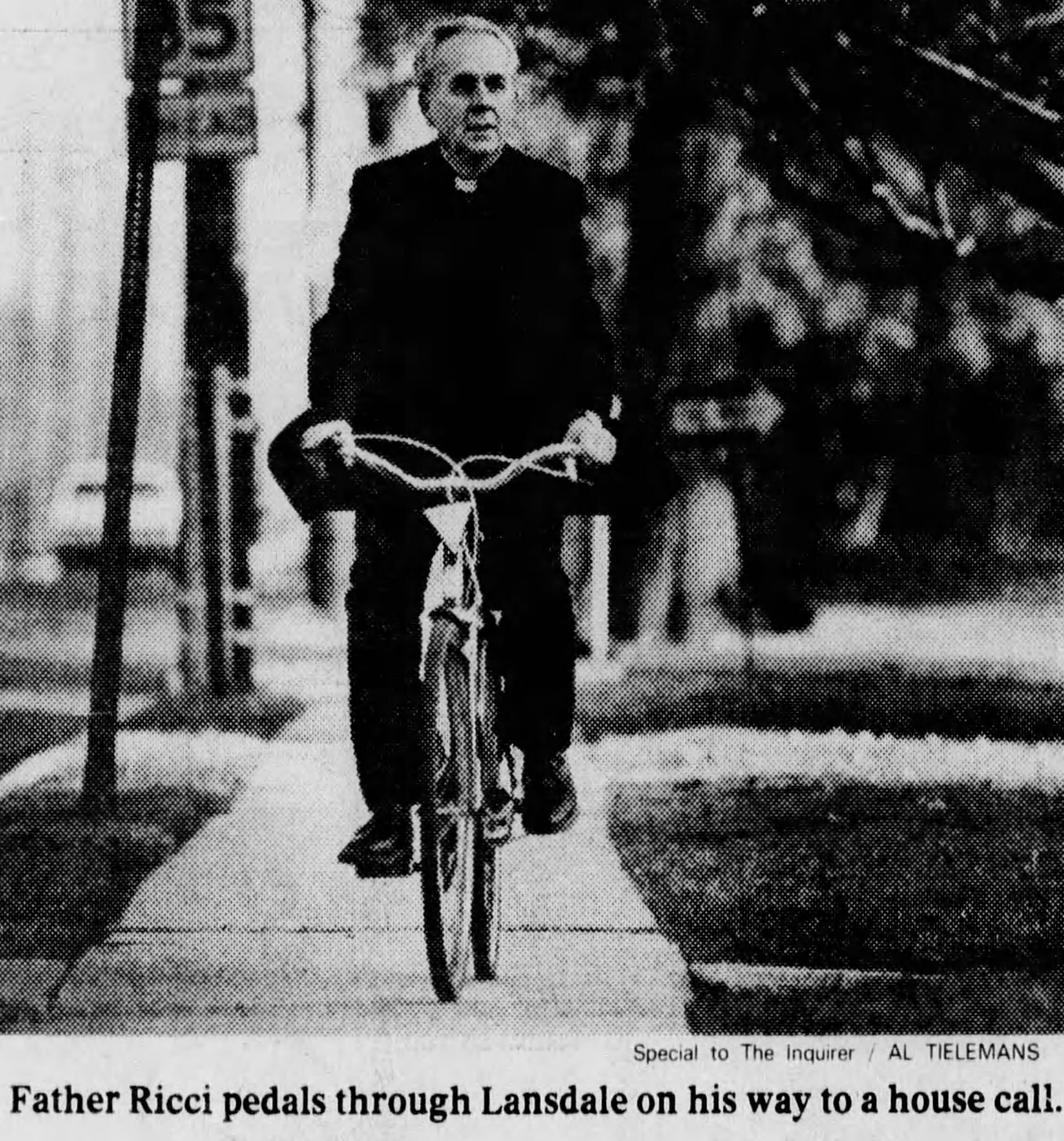
Ordained in 1965 by Cardinal John Krol, Msgr. Ricci was named founding pastor of Mary, Mother of the Redeemer Parish in 1987. Over the next 23 years, until his retirement in 2010, Msgr. Ricci worked many 16-hour days, made spiritual house calls on bicycle, spurred significant fundraising, and helped grow the Montgomery County parish from 600 founding families to 3,500.
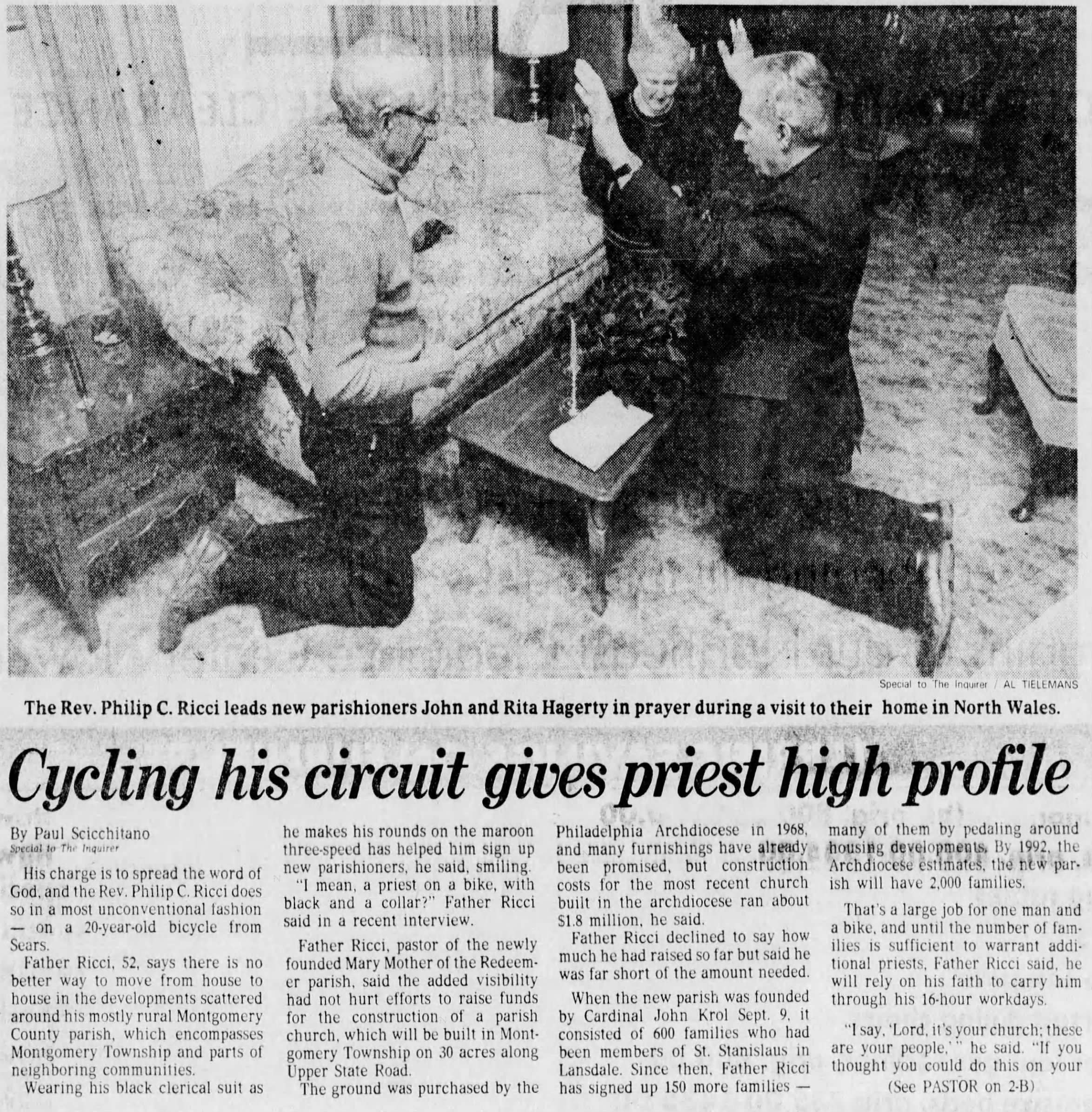
The Inquirer wrote about his house calls in 1987 and opened the story with: “His charge is to spread the word of God, and the Rev. Philip C. Ricci does so in a most unconventional fashion — on a 20-year-old bicycle from Sears.”
His niece, Christine, said: “He could talk to anybody about anything.”
Msgr. Ricci lived and held services in a 200-year-old farmhouse from 1987 until the new church building was completed. Pope John Paul II elevated him to monsignor in 2003.
He was active with school activities, and his homilies were often about mercy and compassion. In 2010, he told members of his congregation at a retirement celebration: “We must always accept people where they are and then allow God’s grace to work in patient understanding.”
In an online tribute, colleagues at St. Matthew Parish in Conshohocken said his “kindness, wisdom, and steady presence touched countless lives.” Others called him “the perfect priest” and “the epitome of what a Catholic priest should be.” One friend said: “He was without a doubt the nicest person I have ever met.”
In a tribute, his family said: “His priesthood was not simply a role. It was the core of who he was.”
Msgr. Ricci first served in the 1960s as a chaplain at the old Holmesburg Prison in Philadelphia and pastor at the Riverview Home for the Aged and St. Margaret’s Home for Girls. He went on to be assistant pastor at St. Joseph Parish in Ambler, St. Stanislaus Parish in Lansdale, St. Anastasia Parish in Newtown Square, and St. Margaret Parish in Narberth.
In 1974, he became spiritual director of the college division at St. Charles Borromeo Seminary. He also earned a master’s degree in spirituality from Creighton University in Nebraska.
Ministering to people, no matter where he was, he told the Main Line Times in 2010, was personal. “You don’t go out forming community,” he said. “You go out and form one-on-one. I can’t separate who I am as a man, as a Christian, and as a priest.”
The Inquirer published a story about Monsignor Ricci making spiritual house calls on his bicycle in 1987.
Msgr. Ricci played piano and sang before church services and after Communion. He directed choirs, and friends presented him with his own piano at his retirement.
He returned to his family home in Conshohocken after leaving Mary, Mother of the Redeemer but continued to assist others at nearby parishes and visit those in hospitals and nursing homes. “Father was a Renaissance man, an artist, musician, writer, deep thinker,” a former colleague said on Facebook. “He could speak about the liturgy or the Eagles, the football team or the band. He related well to everyone regardless of age, religion, or background.”
Philip Cosmo Ricci was born Sept. 26, 1935, in Conshohocken. He graduated from the old Conshohocken High School, took night classes at the University of Pennsylvania’s Wharton School, and, inspired by his parents, entered St. Charles Borromeo Seminary to study the priesthood.
“When the Lord wants you, he gets you,” he told the Main Line Times. “I couldn’t fight it. It was always there.”
Monsignor Ricci’s house calls were featured in this 1987 Inquirer article.
He played piano in a dance band when he was young and enjoyed gardening. He was good at drawing and cooking. He followed the Eagles, Phillies, and 76ers, and invented a beanbag toss game the family played at gatherings.
It was fitting, his niece said, that he died on Valentine’s Day because he embraced love and service to others. “Faith for Uncle Phil was never theoretical,” she said. “It was lived. It was action. It was presence.”
In addition to his niece, Msgr. Ricci is survived by his brothers, John and Francis, and other relatives. A sister died earlier.
State Rep. Steven Malagari (D., Montgomery) plans to introduce a bill that could put THC drinks in beer stores, while State Sen. Dan Laughlin (R., Erie), a major proponent of weed legalization — unlike his party’s leaders — is working on legislation that would open the door to hemp-derived THC being regulated like medical marijuana. Pennsylvania hemp businesses look toward these efforts with optimism, but as the clock races down, stakeholders are asking for urgency.
Representatives from the hemp, medical marijuana, and beer wholesaler industries spoke to state regulators at January’s Pennsylvania Farm Show about shielding the hemp industry from the Nov. 12 deadline that would outlaw all intoxicating hemp products, including Delta-9 THC and CBD, which is what the majority of hemp is grown for in Pennsylvania. Under new rules, many of the state’s hemp farmers would be out of business by fall.
Across all competing interests, industry representatives said one thing was clear: Lawmakers need to regulate the billion-dollar state hemp market.
Testifying before the Center for Rural Pennsylvania, stakeholders, including Montgomery County District Attorney Kevin Steele, agreed, stressing the need for safeguards.
“It’s not about taking away people’s livelihoods in hemp farming and people working in this industry,” Steele said during his testimony. “It’s about community safety and establishing guardrails through legislation to oversee that safety.”
But, as Congress disagrees on when and if it will regulate hemp-derived THC — including if the ban deadline should be extended — those delays cascade to the states, where local lawmakers await federal guidance before regulating it themselves. While any state proposals for regulation are purely speculative until Congress passes hemp legislation, Laughlin’s and Malagari’s efforts in Pennsylvania imagine what is possible.
It is important to note, however, that regulating intoxicating hemp products is an uphill battle in a state where recreational marijuana legalization is opposed by Republican state leadership.
Whether these bills become law or save the state’s hemp industry as it currently stands is up in the airwith federal delays, but local hemp businesses choose to be optimistic.
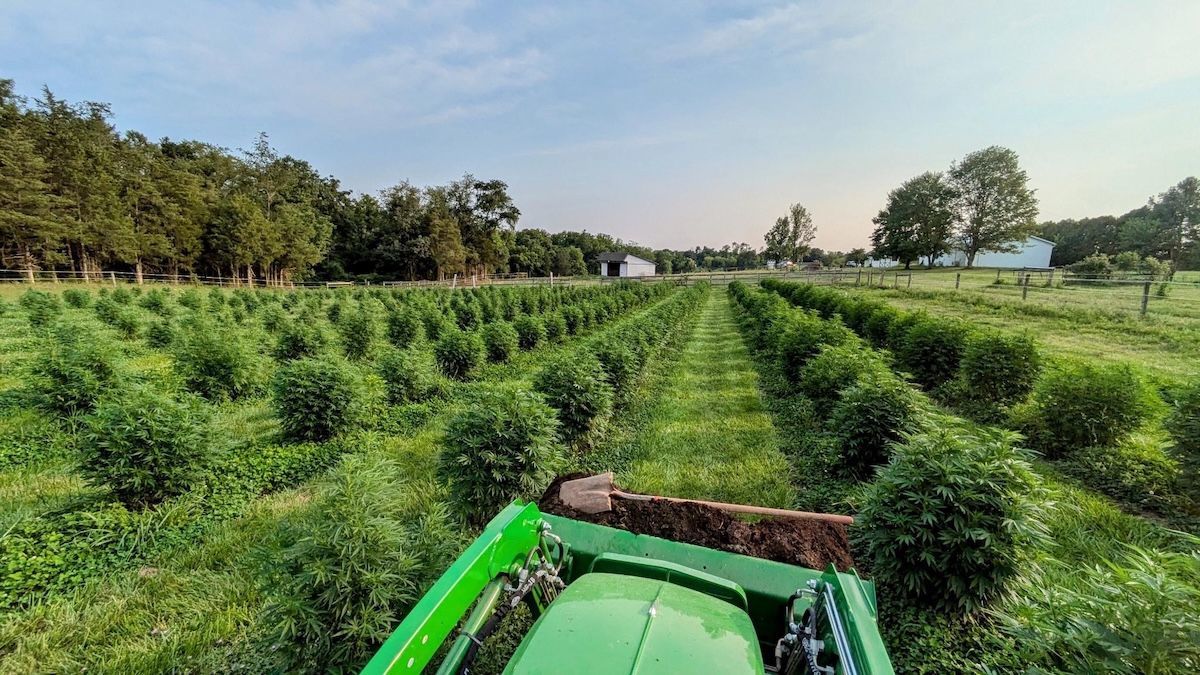
A view of Tyler Shannon’s Adams County hemp farm. Unless regulations change, he will have to shut down his hemp farm by next year.
What does any of this mean for Pennsylvania hemp?
For Tyler Shannon, an Adams County hemp farmer, a full ban on hemp products would be devastating. With the vast majority of Pennsylvania’s hemp grown for cannabinoids, such as Delta-9 THC and CBD, it means that “if hemp is not saved, my family will lose everything, including our farm,” Shannon said.
Shannon is not alone. Beau Whitney, a leading cannabis market analyst who testified at the January hearing, estimated that Pennsylvania’s cannabinoid market generates just under $1 billion in revenue annually. In his latest report, he found that the majority of Pennsylvania’s hemp-derived THC and CBD products were sold “legally” through semi-regulated channels, in stores or online. “As a result, there were 9,500 jobs, generating $382 million in wages in Pennsylvania,” Whitney said.
Those in the local hemp industry are confident that a deadline extension will help protect them, but planting season is fast approaching, while hemp farmers have no reassurance that their crops will be legal come fall, Shannon said. His family farm is holding off on a planned $175,000 facility expansion due to the looming ban.
As of now, no federal or state legislation has been passed to avert the impending doomsday scenario for hemp, and despite the constant regulatory discussions, small hemp farmers and businesses don’t feel on solid ground, Sebastian Stelmach of Manayunk’s Keystone Dispensary said.
“It’s just scary to think that come November, I might be unemployed and close up shop,” Stelmach said. “A lot of lawmakers realize that we can’t let this industry die. I believe that they’re going to do something, but what that is, I don’t know.”
Trade organizations, like the U.S. Hemp Roundtable, are lobbying Congress to extend the federal ban deadline by one year, giving regulators time to flesh out less restrictive standards for hemp products.
“Even [federal agencies] said they don’t have enough time to enforce the rules under the current bill,” said Jonathan Miller, U.S. Hemp Roundtable’s general counsel. “We’ve created a mess here, and we really need this extension to be more deliberate and responsible.”
In this 2019 file photo, Steve Groff is getting ready to harvest his first crop of hemp plants at his farm in Holtwood, Lancaster County.
Intoxicating hemp regulated like marijuana
Laughlin’s bill to establish a Cannabis Control Board would see the state’s medical marijuana program come under new oversight, similar to the liquor and gaming control boards.
While hemp is not the primary focus of that legislation, organizations like the Pennsylvania Cannabis Coalition (PCC), which represents the state’s medical marijuana industry, hope to see hemp included in Laughlin’s bill to open the doors for more responsive hemp regulation.
“The Cannabis Control Board would have the authority to deal with hemp products and decide what is safe for consumers as a single regulatory body,” said Meredith Buettner, executive director of PCC. Buettner said it makes the most sense for intoxicating hemp products to be regulated alongside cannabis.
Laughlin argues that “if it’s a consumable cannabis product, it should fall under one clear regulatory structure.”
How and where specific hemp THC products would be sold will be worked out in the legislation, but “intoxicating products should be sold through appropriate, regulated channels,” he said.
Jake Sitler, who owns Lancaster-based Endo THC drinks and testified at the January regulatory hearing, is ready to support any regulation that saves the current hemp framework, like incorporating hemp into a control board, but worries small businesses will get cut out of the deal.
“The hemp industry concern is where our seat is at the table and to make sure new laws are appropriate for our farmers and our industry,” Sitler said. “And that any new regulation isn’t used as a guise to out-regulate small business down the road.”
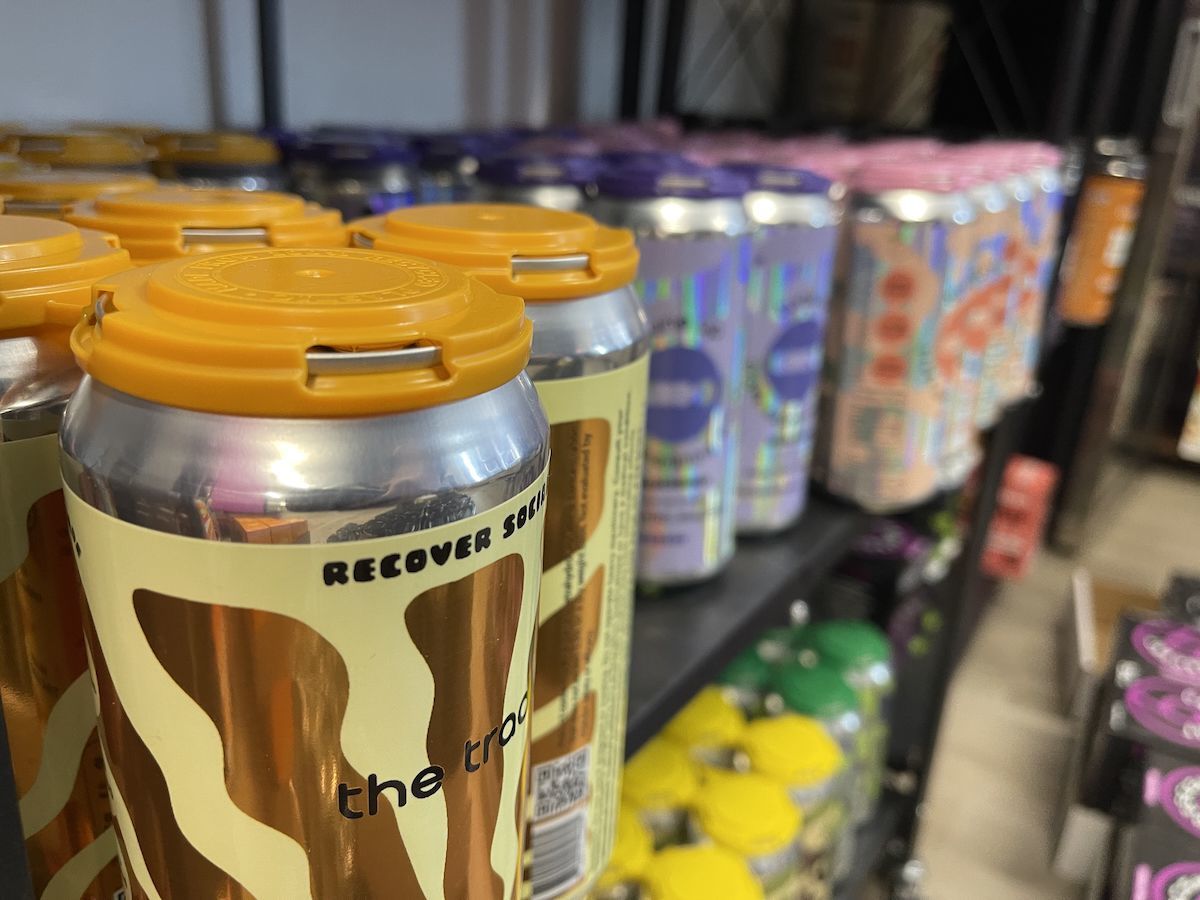
THC and CBD-infused beverages on the shelves of Free Will Collective, an Ardmore smoke shop and wellness store owned by Will Angelos. As Congress moves to ban most intoxicating hemp products, business owners like Angelos aren’t sure they will be able to keep the doors open long past 2027 if current regulations go into effect.
Delta-9 THC drinks in Pennsylvania beer stores
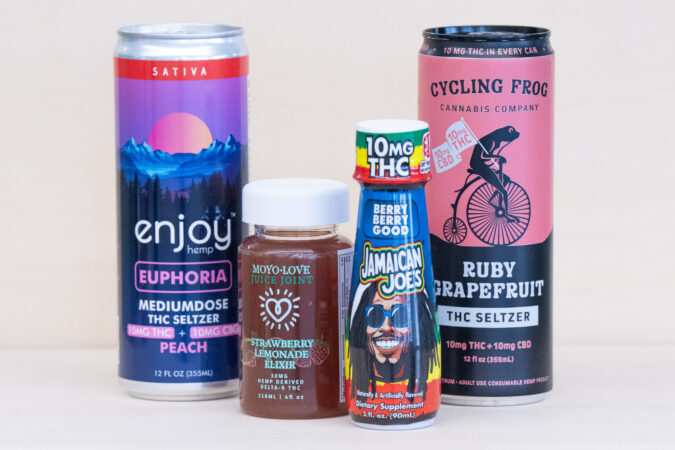
The bill from Malagari would carve out regulation for hemp-derived Delta-9 THC drinks, which are among some of the most popular intoxicating hemp products, with a national market of $1.5 billion in annual sales.
Malagari, who previously worked in beverage wholesale, wants to see THC drinks regulated similarly to beer and malt-beverage products in Pennsylvania.
Pennsylvania operates a three-tiered system for beer, with licenses at the manufacturing level, distribution level, and retail level. THC drinks would be incorporated into this system, which would begin by allowing established three-tiered license holders to manufacture and sell hemp-derived Delta-9 THC drinks.
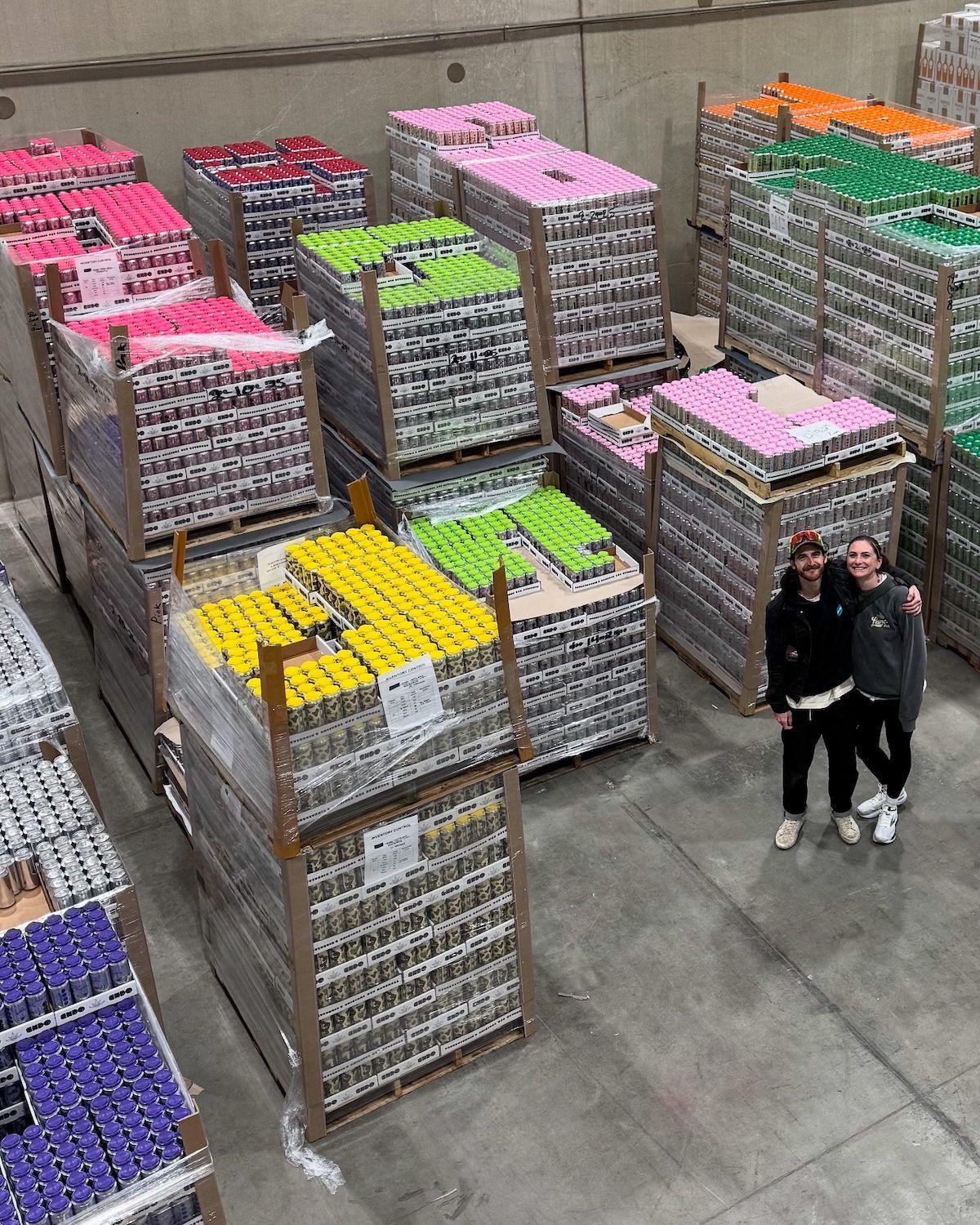
Jake Sitler and his wife, Jamie, standing inside the Endo drinks warehouse. The Lancaster couple founded one of Pennsylvania’s first hemp-derived THC drinks and is grappling with the fact that their business might have to shut down if Congress doesn’t rework its hemp regulations.
Common retail spaces for beer and malt beverages include beer distributors, grocery stores, restaurants, and bars.
This legislation, if passed and signed into law, would not prohibit THC drinks from being sold in medical marijuana dispensaries and could work alongside Laughlin’s CCB bill, Malagari said. But he believes that lawmakers should approach THC beverages differently from hemp-derived flower and vapes.
As an owner of a hemp beverage company, Sitler could benefit from Malagari’s bill, but also wonders if it is too early for beverage carve-outs before a fuller state framework is in place. “A hemp beverage bill with no overarching regulation is putting the cart a bit before the horse,” Sitler said.
Chill Moody didn’t plan on writing a children’s book.
A story about a young athlete was bubbling in his head. And the West Philly-born rapper and serial entrepreneur wanted to turn it into a screenplay, mirroring the upbeat, have-faith vibe of fellow rapper Bow Wow’s 2002 film, Like Mike.
“Instead of basketball [in Like Mike], I wanted the story to be about golf,” said Moody, whose real first name is Eric.
“And instead of a little boy, I wanted my main character to be a little girl.”
But movies take forever to become a reality. Moody, always ready to churn out his next nice thing, wanted to get this fictional little girl, who rocks a red golf tee and wields golf clubs passed down from the ancestors, into the world quickly.
So Moody, and his coauthor and cousin, Danielle Kellogg, decided a children’s book would be their best bet. This way, Moody could share his message of inspiration directly with his target audience. His character would come alive with every page turn; and a skilled rapper, Moody could write a story that rhymed.
“There had to be alliteration,“ he said. ”So, I named her Gia,”
Gia the Golfer was released in December.
The 36-page picture book, featuring vibrant illustrations by local artist Stephen Hatala, is available on the Barnes & Noble website and Amazon, where it sells for $14.99.
So far, Moody said, he’s sold a few hundred copies of Gia the Golfer. And, he said, 100% of the profits will fund his nonprofit We Golf Now. The two-year-old nonprofit encourages Philadelphia’s Black and brown youth to develop confidence, social, and networking skills through playing golf.
Zane King, 6, get advice from Chill Moody during a We Golf Now event at Five Iron Golf in Philadelphia, Pa., on Sunday, March 30, 2025.
“We serve over 100 kids,” Moody said. “We teach kids how to play golf, the business of golf, and introduce them to careers and job opportunities.”
Moody sees Gia’s spark and optimism in all of his young golfers.
When we meet Gia, her grandfather, Geo, has just died. She and her mother are going through his things when Gia discovers golf clubs that belonged to Geo, a star golfer and winner of a lot of tournaments. She takes the clubs and practices on her own and seems to be a natural. Her mother signs her up for golf classes and, following in her grandfather’s footsteps, she excels and decides to compete in a tournament.
But, on the day of the tournament, the golf clubs — that twinkle like they could be magical — disappear. Gia has to play without them.
“I wanted to teach children about memories and dealing with grief,” Moody said. “And that even if you lose something that you think is important, you aren’t at a loss.”
Moody, 40, finished writing the book in 2024. He shopped it to publishers for nearly a year before taking the self-publishing route.
“I didn’t want to sell the books out of my trunk like I did with my music,” Moody said. “But then I remembered I did this so we could tell our children’s stories. I remembered I could do this … I bet on myself.”
In September, he partnered with Lansdale’s Boardroom Spirits and released Tequila Transfusion, a mix of tequila, grape, ginger, and lime — his version of the country club cocktail.
Just like his drinks, Moody has big plans for Gia.
“I’m thinking animated cartoons and plush toys,” Moody said. “I want her to blow up as a brand. Seriously, I’m thinking Gia will be the next Dora the Explorer.”
SEPTA Regional Rail riders experienced significant delays — at times, 30 minutes to an hour — at the peak of morning rush hour on Tuesday morning, after a train pulled electrical wires down.
A West Trenton Line train struck overhead electrical wires near Wayne Junction train station in the Nicetown section of Philadelphia at 7:45 a.m., said SEPTA officials.
The train lost power and was tangled in the wires it had pulled down.
Marie Pollock, 24, who was on board, felt the train start to gradually slow down before quickly and forcefully coming to a stop. Pollock could see wires hitting the train windows and noted that other passengers were startled during the collision.
“We were keeping the doors closed because it was so cold,” Pollock said. “We were on kind of a hill, so there wasn’t any room for SEPTA to get a shuttle, and the power was out on both tracks, so we couldn’t get a typical rescue train to us.”
Pollock, who had already been waiting a half-hour in 20-degree chill for her 6:17 a.m. West Trenton Line train before the ordeal, said passengers waited inside the stuck train for an hour and a half.
SEPTA crews had to cut through the downed wires to free the train and then used a diesel-powered train to tow the disabled one to Wayne Junction, where passengers took other trains into Center City.
Pollock’s four-hour journey didn’t end until 10 a.m. when she finally arrived at Jefferson Station.
Since then, service interruptions have been occurring primarily on the Warminster, Lansdale/Doylestown, and West Trenton lines. However, delays cascade throughout the rail system, leading to 15 to 45-minute delays on other lines, said SEPTA spokesperson Andrew Busch.
“Repairs are still continuing,” Busch said Tuesday afternoon, “but service has improved. Some minor delays, and we are advising passengers to plan for some extra time during rush hour, but we expect the evening commute to be better than this morning.”
There is currently no timeline for completed repairs.
Next month, the Old City establishment will also roll out a “lighter portions, lighter prices” section of its regular menu.
This is all to keep up with the evolving preferences of Philly-area diners, said Barry Gutin, cofounder of Cuba Libre.
“We said, ‘We should put something on the menu for all sorts of people watching their diet and their money,’” said Gutin, whose staff has noticed GLP-1 users and nonusers alike requesting these options more over the past year. This trend has also been seen at Cuba Libre restaurants in Atlantic City, Washington, and Orlando, as well as at its Paladar Latin Kitchen and Bomba Tacos locations in the Philadelphia suburbs.
For customers, an added perk is that they pay less for these smaller-portioned menu items, Gutin added. He said diners have become more focused on value amid broader financial uncertainty.
“The economy dictates that we have a diversity in pricing that meets more people’s needs,” Gutin said. “You think about the way people look at menus online. They’re scanning through prices as well.”
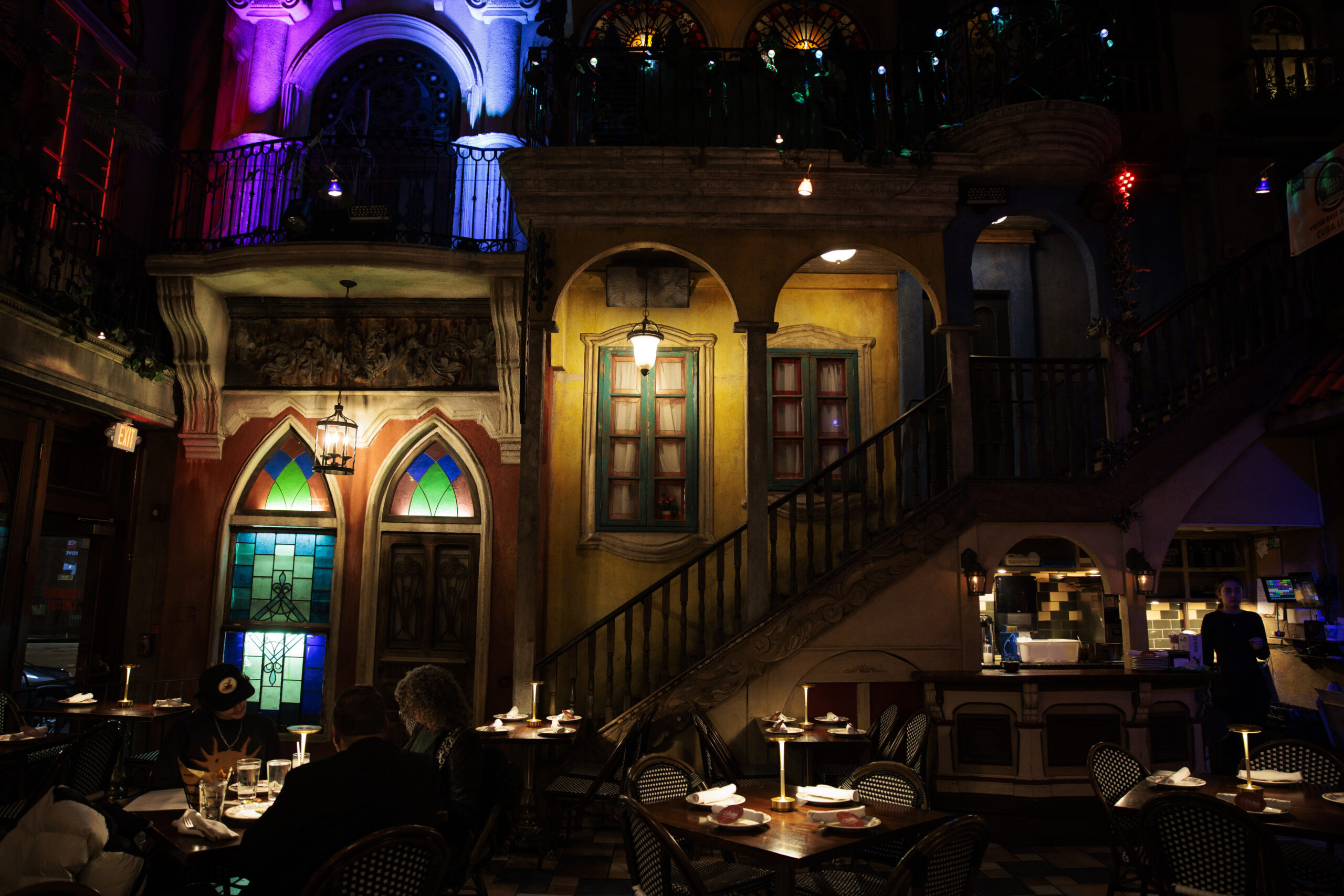
The dining room at Cuba Libre in Philadelphia. A cofounder says staff has noticed GLP-1 users and nonusers alike requesting smaller-portioned, less expensive options more over the past year.
In August, more than a third of U.S. diners said they were dining out less frequently than they did a year ago, according to a survey from YouGov. Of the less-frequent diners, 69% said they were eating out less in part because of the perceived cost of restaurant meals, the survey found.
Lower-income consumers were most likely to have cut back on dining out, according to the survey, while middle- and higher-income folks hadn’t changed their habits substantially.
This jibes with what executives at the Federal Reserve Bank of Philadelphia are hearing, too.
“Even individuals with discretionary income to spend are being careful,” Anna Paulson, president of the Federal Reserve Bank of Philadelphia, said Wednesday. “For example, although people are still eating out in Philadelphia, contacts tell us that less expensive options on the menu are becoming more popular.”
“The only exception to this trend is at more upscale restaurants,” Paulson added. “High-income households, bolstered by a strong stock market, appear to be driving elevated consumption growth.”
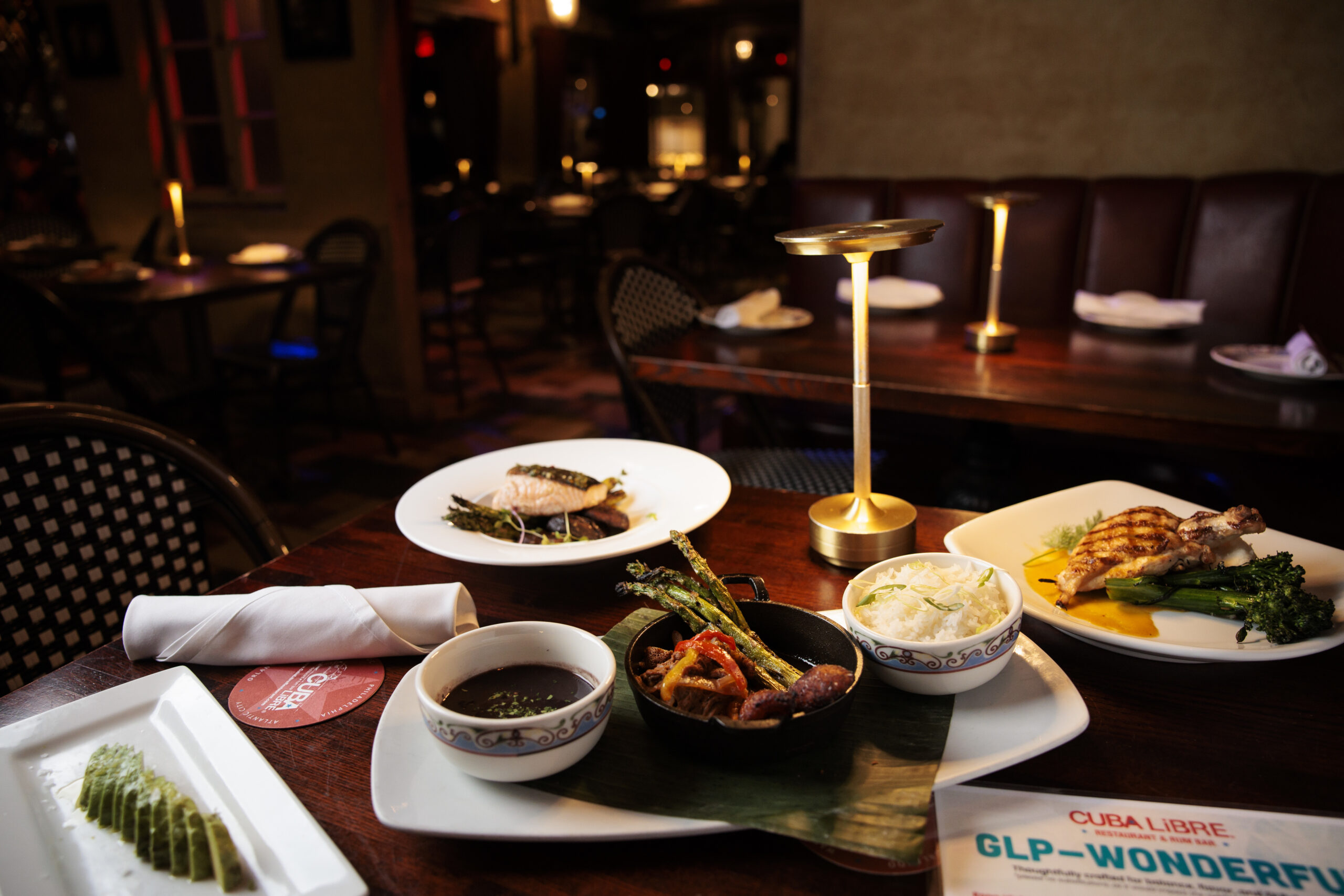
The Ropa Vieja meal from the GLP-Wonderful menu at Cuba Libre as shown on Jan. 14.
Alcohol use among adults has plummeted, with just 54% of respondents saying they drink in a July Gallup survey. That’s the lowest percentage in at least 90 years. It likely drops even lower this month as some people abstain from alcohol as part of the Dry January trend.
All of these trends are on display at Philly-area bars and restaurants. And owners are trying to keep up.
“We’re definitely at a time of dramatic shift in people’s preferences and tastes,” said Avram Hornik, owner of FCM Hospitality, which runs about a dozen venues in the region. They include Morgan’s Pier, Harper’s Garden, Craft Hall, and Concourse Dance Bar, as well as seasonal cocktail and beer gardens such as the traveling Parks on Tap.
“I don’t think people are spending less or going out less,” Hornik said, “but I just think they are doing it differently.”
Customers dine at Liberty Point, one of Avram Hornik’s restaurants, in 2023.
At Hornik’s restaurants, overall sales have been consistent year over year, he said. Some customers are looking for smaller portions, he said, and late-night business has dropped precipitously. But group dining and special events have made up for losses in other areas, he said.
When customers decide an outing is worthwhile, Hornik said, they generally aren’t sparing expenses.
People are “looking for more of an experience when they go out to eat,” Hornik said. “It’s really about value: Am I getting a good value for the money that I’m spending?”
To retain customers, Hornik said his restaurants are leaning into weekly specials, such as $1 tacos at Rosy’s, and happy-hour deals.
At Cuba Libre, Gutin said he sees the GLP-1 menu, as well as the forthcoming lighter-portions menu, as a way to make his restaurants as appealing as possible for all diners.
At each location, only about a dozen people request the GLP-1 menu each week, he said. But if a group is considering dining at Cuba Libre and one person is on a GLP-1, the special menu could make or break their decision. He said it could keep the GLP-1 user from exercising their “veto vote,” sending the entire group to dine elsewhere.
Dining trends differ by location
In the Philadelphia suburbs, restaurateurs said dining trends vary depending on location and type of restaurant.
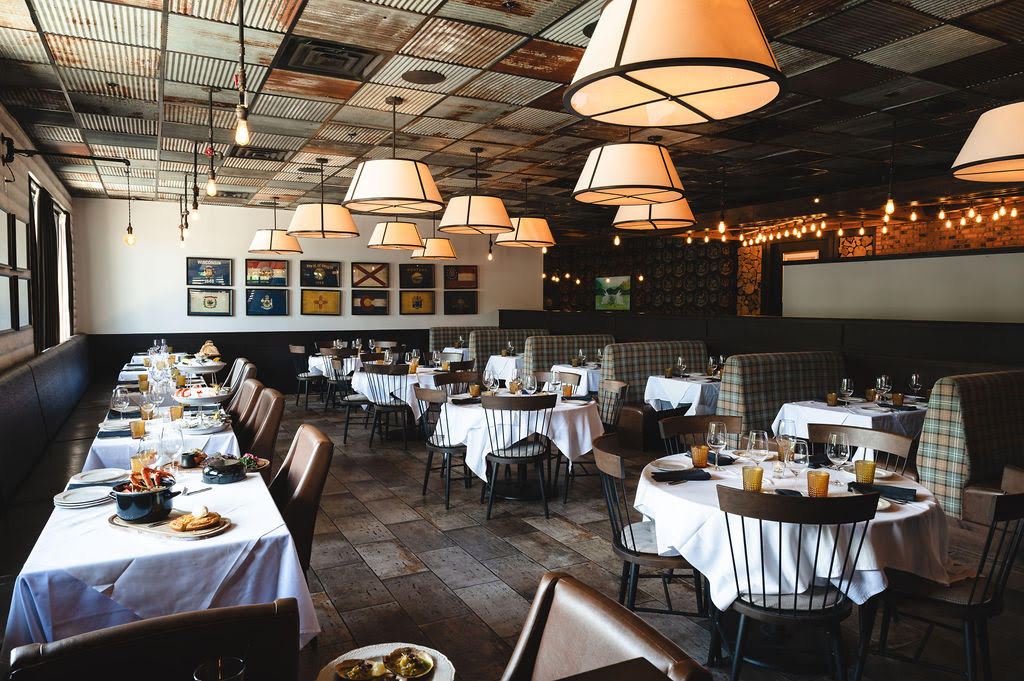
The dining room at Joey Chops, the Malvern steakhouse that Stove & Co. restaurants co-owner Joe Monnich said has been least impacted financially by changing consumer habits.
Joe Monnich, co-owner of Stove & Co. restaurant group, said food sales are up at his higher-end restaurants, including Joey Chops steakhouse in Malvern. But farther from the Main Line, in more “blue-collar” Lansdale, he said, Stove & Tap’s business is less steady of late.
There, “I feel more economic up and downs,” Monnich said. He felt similarly about his Al Pastor restaurant in Havertown, which is now closed after a local buyer came in last month and offered Monnich cash on the spot for the building.
At his more casual concepts all over the region, people are spending less on average, he said, and about the same at the higher-end spots. Recently, he added, staff have noticed diners being more mindful of how much they’re consuming.
“People aren’t getting that second drink,” Monnich said. “People aren’t getting dessert. People aren’t getting that appetizer.”
Changing drinking habits have hurt alcohol sales, too, Monnich said. In recent years, many customers have turned away from local microbrews and gravitated toward canned cocktails and “macro beers” like Michelob Ultra and Miller Lite.
“Three years ago I barely sold Michelob Ultra and right now it’s one of my top sellers,” Monnich said. As are canned cocktails. “Surfsides are expensive, and I don’t make a lot of money off them.”
Stove & Co. executives have talked about creating special menus catering to these evolving consumer preferences, Monnich said, but he gets anxious about making portions smaller. So for now, he too is leaning into happy-hour deals and other value-focused items.
“I try not to be too focused on trends because trends come and go,” Monnich said. “I do see the current trend, these weight-loss drugs, I don’t see that going anywhere … [and] people are going to be drinking less-octane alcohol.”
Staff writer Ariana Perez-Castells contributed to this article.
By the end of thisyear, Montgomery County will have three emergency short-term shelters with beds for 190 people in Pottstown, Lansdale, and Norristown.
In late 2024, it had zero full-time shelters, even as homelessness soared to new heightsin the county — Pennsylvania’ssecond wealthiest.
The three-member board of commissioners is currently composed of two Democrats and one Republican, but in the past year they have operated with an unusual degree of cohesion on both the challenge of homelessness and on a county budget that included a small property tax increase.
“We came in with similar goals around addressing the homeless problem throughout the county,” said Tom DiBello, the Republican commissioner. “We all heard it when we were campaigning [in 2023] and when we got elected, we felt that we needed to do something. We can’t continue doing it the way it’s always been done in the past, where people just kept talking about it.”
Although the Montgomery County commissioners have formed a united front on many issues last year, housing policy issues are more likely to divide them in 2026.
But the Democrat commissioners, Neil Makhija and Jamila Winder, have ideas about how to get around those limitations to directly fund more affordable housing and encourage local governments to allow more building.
DiBello is not excited about many of the proposals being considered by the two Democrats. He opposes creating new county-level taxes and says zoning powers should be left to localities.
Still, DiBello has further housing policy goals he would like to pursue — such asdeveloping more affordable homes for senior citizens.
As the county releases its 2026 housing blueprint, expected early this year, the first round of these debates will begin in earnest. This planning document, created by county government staff with commissioner feedback, lays out goals for the county based on a comprehensive housing policy — the first its seen in recent memory, Makhija says.
“It’s going to be the first time that the entire board has had a voice and a view on what our role is to address a crisis in the cost of housing,” said Makhija. “There are things we can do to help people.”
How the shelters got built
Making policy to address homelessness is difficult because many municipalities and community groups fight against having shelters placed in their neighborhoods.
The number of people in Montgomery County experiencing homelessnesshas grown with the cost of housing. In 2024, there were 435 people living without a roof over their heads. In 2025, the number grew to 534.
Meanwhile, Montgomery County’s last full-service homeless shelter closed in 2022.
Opposition to new shelters or affordable housing bloomed in Norristown, where officials said the rowhouse-dominated municipality was already asked to shoulder too many social services, and in Lower Providence where the local government denied a shelter application (the legal fallout is ongoing).
The county commissioners decided to get involved by courting local governments and personally attending zoning hearings about potential placements. DiBello attended meetings in Pottstown, near where he lives. Winder went to hearings in Norristown, including one that stretched past midnight, then stuck around to discuss neighbors’ concerns.
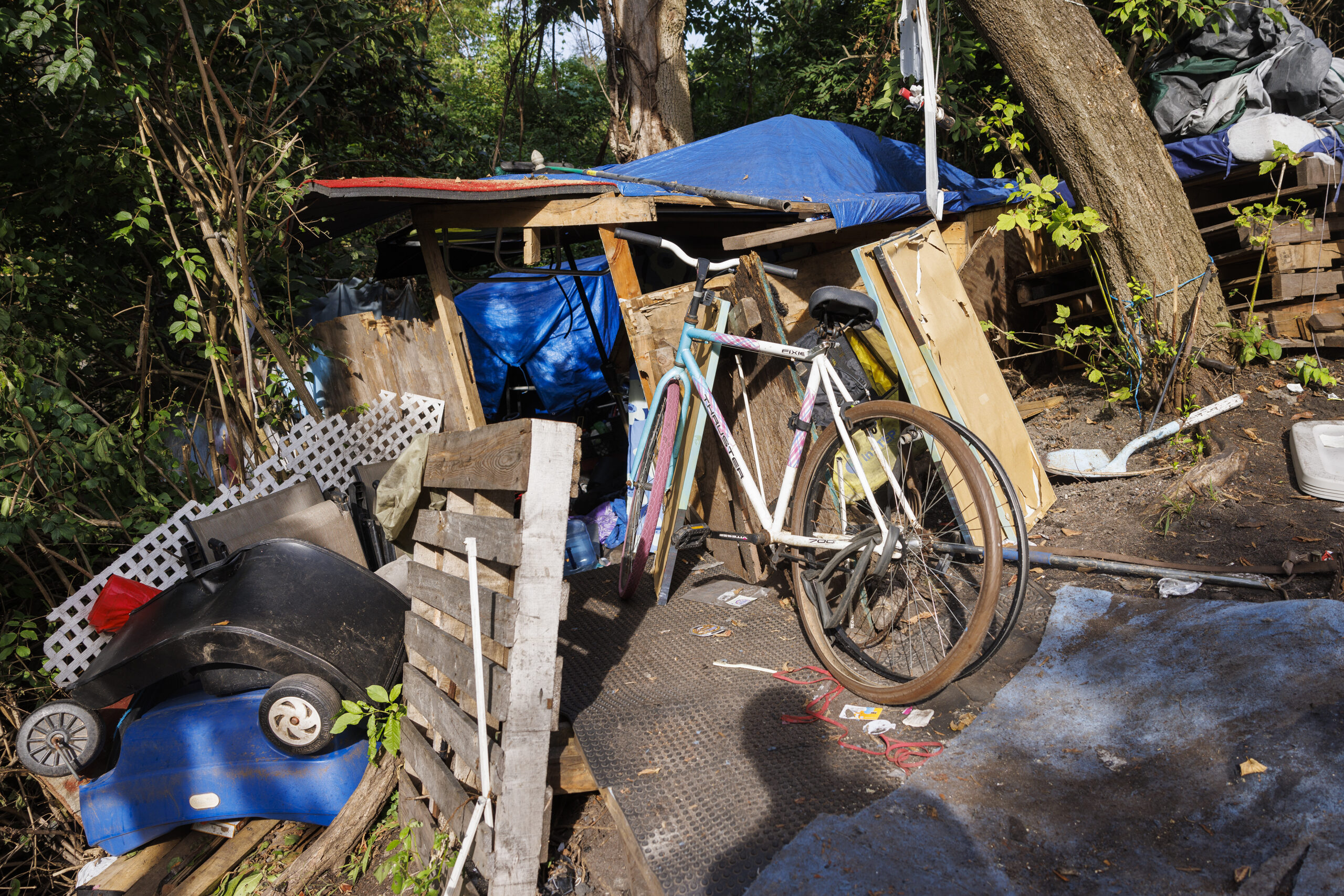
A homeless encampment near the Schuylkill River Trail and Norristown in Montgomery County.
In some parts of the county, efforts to address the issue overcame opposition.
Communities like East Norriton have established more code blue shelters, which only operate during freezing weather, and inwealthy Lower Merion, a new affordable housing complex for seniors and people with disabilities, called Ardmore House II, is under construction.
“It takes political courage in these moments,” Winder said,referring to local officials who have embraced shelters and affordable housing. “Sometimes you have loud voices in the room and just have to say, well, this is the right thing to do.”
The commissioners provided $5.3 million in county funding for the shelters. The county also provided a quarter of Ardmore House II’s $20 million budget. And as federal funding cuts loom under President Donald Trump’s administration, the commissioners have also been engaging with philanthropists and foundations.
Earlier this month, Nand Todi, president of Montgomery County-based Penn Manufacturing Industries, announced a $1 million donation to the Lansdale shelter.
Nand Todi, president of Montgomery County-based Penn Manufacturing Industries, and County Commissioner Neil Makhija at a walk-through of the completed Lansdale shelter.
Winder hopes this example of generosity is just the beginning.
“I come from the private sector, so I believe in public-private partnerships,” said Winder. “We’re home to some of the largest corporations in the southeast area. We know that companies have social responsibility goals. So how do we partner with corporations?”
What can a county government do?
Thisyear, the commissioners want to continue to tackle housing issues.
But county-level politicians do not have large budgets at their command, and unlike their municipal-level counterparts, they do not set zoning policy.
Makhija and Winder wantto push those limits.
For example, the county dispenses infrastructure grants, and Makhija says the rules around that funding could be rewritten to incentivize municipalities to reform their zoning codes, perhaps using model ordinances established by the county.
Such ordinances could, for example, allow more transit-oriented development. Or they could legalize accessory dwelling units — small living spaces such as a garage apartment or in-law suite that can be rented out.
“If you have a grant program and it says these are the requirements, then people are going to prioritize getting those things done,” said Makhija, though, he said, he still has to make the case to his colleagues.
He also noted that county planning staff can help implement new municipality policies.
DiBello is skeptical of the county getting involved in local zoning policy.
“The governing structure in Pennsylvania is that municipalities are autonomous to county and state when it comes to zoning,” said DiBello. “It’s up to the communities.”
The Democrats would also like to find revenue sources to pay for more housing projects without increasing the property tax, which would cut against their goal of affordability.
“There are opportunities for us to advocate to the state legislature, to give counties like ours other means to generate revenue,” said Winder. “It’s not sustainable to continue to burden taxpayers by increasing property taxes, and we can’t fund these programs unless we have the money to do so.”
DiBello is also opposed to creating new taxes (if Harrisburg allows it), and doesn’t want to see more property tax increases either. But he still wants to see proactive housing investments by county government.
These debates will unfold next year as the housing blueprint dominates the commissioners’ agenda.
“We’re the second wealthiest county in Pennsylvania, and people struggling to find housing can be quite invisible in these communities,” said Winder. “We’ve got an embarrassment of riches, but there are people that are struggling and so we’re trying to be on the ground helping to solve these issues.”