Tag: Larry Krasner

  • Philadelphia records the fewest homicides in nearly 60 years, plus other insights to 2025’s crime

    Philadelphia records the fewest homicides in nearly 60 years, plus other insights to 2025’s crime

    For the first time in more than half a century, Philadelphia has recorded fewer than 225 homicides in a single year.

    In 2025, 222 people were killed — the fewest since 1966, when there were a fraction of as many guns in circulation and 178 homicides.

    It is a milestone worth commemorating — and mourning: Violence has fallen to its lowest level in decades, yet 222 deaths in a single city is still considered progress.

    window.addEventListener(“message”,function(a){if(void 0!==a.data[“datawrapper-height”]){var e=document.querySelectorAll(“iframe”);for(var t in a.data[“datawrapper-height”])for(var r,i=0;r=e[i];i++)if(r.contentWindow===a.source){var d=a.data[“datawrapper-height”][t]+”px”;r.style.height=d}}});

    The drop mirrors a national reduction in violence and follows years of sustained declines after Philadelphia’s annual homicide totals peaked during the pandemic, and it reflects a mix of likely contributing factors: Tech-savvy police are solving more shootings, violence prevention programs have expanded, and the city has emerged from pandemic instability.

    No single policy or investment explains it, and officials caution that the gains are fragile.

    “The numbers don’t mean that the work is done,” said Adam Geer, the city’s director of public safety. “But it’s a sign that what we’re doing is working.”

    The impact is tangible: fewer children losing parents, fewer mothers burying sons, fewer cycles of retaliation.

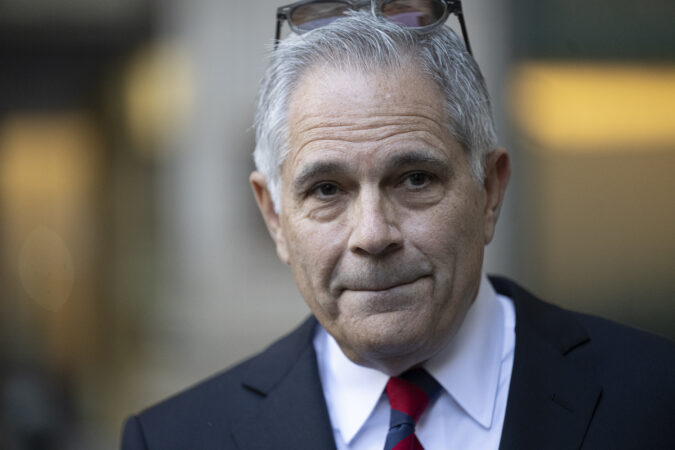
    “We are saving a life every day,” District Attorney Larry Krasner said.

    Still, the violence hit some. Victims ranged from a 2-year-old girl allegedly beaten to death by her mother’s boyfriend to a 93-year-old grandfather robbed and stabbed in his home. They included Ethan Parker, 12, fatally shot by a friend playing with a gun, and Said Butler, 18, killed just days before starting his first job.

    Police say street-level shootings and retaliatory violence fell sharply, in part because some gang conflicts have burned out after key players were arrested or killed. Killings this year more often stemmed from long-standing drivers — arguments, drugs, and domestic violence — and were concentrated in neighborhoods that have borne the brunt of the crisis.

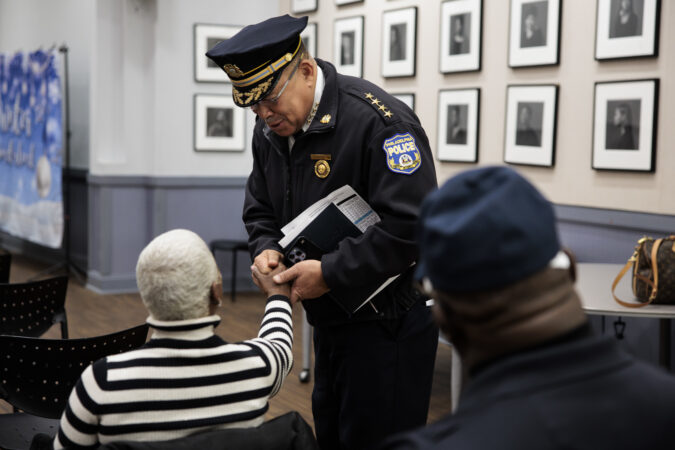
    “These same communities are still traumatized,” said Police Commissioner Kevin Bethel. “One gunshot is a lot. We can’t sit or act like we don’t see that.”

    window.addEventListener(“message”,function(a){if(void 0!==a.data[“datawrapper-height”]){var e=document.querySelectorAll(“iframe”);for(var t in a.data[“datawrapper-height”])for(var r,i=0;r=e[i];i++)if(r.contentWindow===a.source){var d=a.data[“datawrapper-height”][t]+”px”;r.style.height=d}}});

    The number of domestic-related killings nearly doubled this year compared with last, making up about 20% of homicides, Geer said. The disappearance and killing of Kada Scott, a 23-year-old woman from Mount Airy, was among them, and led to a citywide outcry and renewed scrutiny of how authorities handle violence against women.

    And mass shootings on back-to-back holiday weekends — 11 people shot in Lemon Hill on Memorial Day, and 21 shot in a pair of incidents in South Philadelphia over July Fourth — left residents reeling.

    Still, a 2025 survey from Pew Charitable Trusts showed that a majority of Philadelphians feel safer in their neighborhoods than they have in years.

    <iframe title="Philadelphians’ Perceptions of Safety at Night" aria-label="Line chart" id="datawrapper-chart-GRrTN" src="https://datawrapper.dwcdn.net/GRrTN/1/" scrolling="no" frameborder="0" style="width: 0; min-width: 100% !important; border: none;" height="556" data-external="1"></iframe><script type="text/javascript">window.addEventListener("message",function(a){if(void 0!==a.data["datawrapper-height"]){var e=document.querySelectorAll("iframe");for(var t in a.data["datawrapper-height"])for(var r,i=0;r=e[i];i++)if(r.contentWindow===a.source){var d=a.data["datawrapper-height"][t]+"px";r.style.height=d}}});</script>

    The progress comes even as the police department remains 20% below its budgeted staffing levels, with about 1,200 fewer officers on the force than 10 years ago.

    The city’s jail population has reached its lowest level in recent history. It dipped below 3,700 in April for the first time in at least a decade, and remains so today.

    <iframe title="Philadelphia’s Jail Population" aria-label="Line chart" id="datawrapper-chart-73NZP" src="https://datawrapper.dwcdn.net/73NZP/1/" scrolling="no" frameborder="0" style="width: 0; min-width: 100% !important; border: none;" height="527" data-external="1"></iframe><script type="text/javascript">window.addEventListener("message",function(a){if(void 0!==a.data["datawrapper-height"]){var e=document.querySelectorAll("iframe");for(var t in a.data["datawrapper-height"])for(var r,i=0;r=e[i];i++)if(r.contentWindow===a.source){var d=a.data["datawrapper-height"][t]+"px";r.style.height=d}}});</script>

    And arrests citywide, particularly for drug crimes, have cratered and remain far below pre-pandemic levels, mirroring a nationwide trend.

    Experts say the moment demands persistence.

    “We can’t look at this decline and turn our attention to other problems that we have to solve. We have to keep investing and keep pushing to get this number even lower, because it could be even lower,” said Jason Gravel, an assistant professor of criminal justice at Temple University.

    ‘Unheard of’ clearance rates

    After shootings exploded during the pandemic, and Philadelphia recorded 562 homicides in 2021 — the most in its history — violence began to decline, slowly at first.

    But then, from 2023 to 2024, killings fell by 35% — the largest year-over-year reduction among U.S. cities with the highest homicide rates, according to an analysis by Pew.

    The decline continued into 2025.
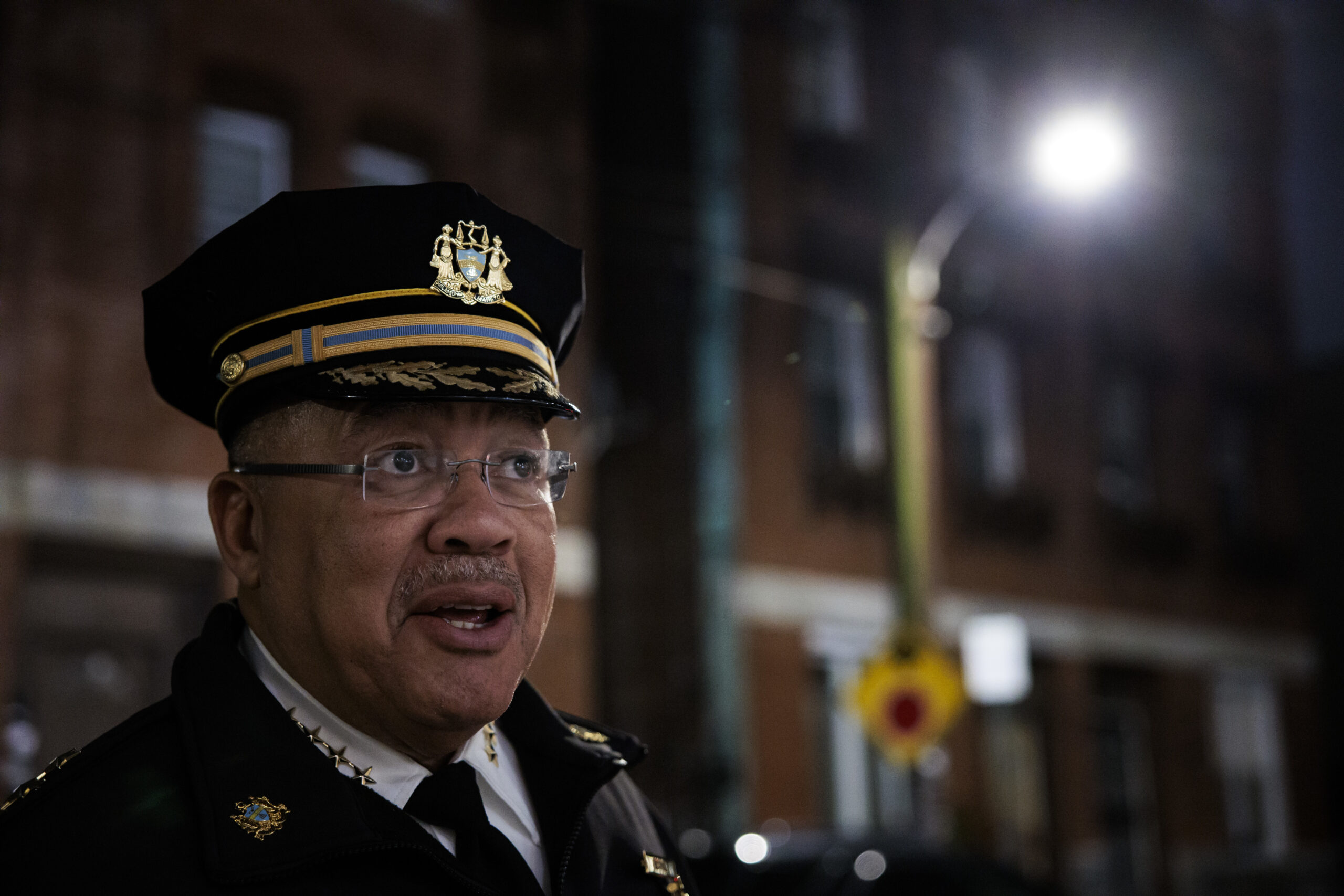
    Police Commissioner Kevin Bethel arrives at a North Philadelphia community meeting on Dec. 2.

    Bethel has pointed to a host of potential reasons for the decline: the reopening of society post-pandemic — kids returned to school and adults reconnected with jobs, courts, and probation officers — as well as police resources focused in hot spot crime areas and improved coordination among city leaders.

    Most notably, he said, detectives are making more arrests in nonfatal shootings and homicides. Experts say that arresting shooters is a key violence-prevention strategy — it prevents that shooter from committing more violence or from ending up as a victim of retaliation, sends a message of accountability and deterrence, and improves the relationship between police and the community.

    The homicide clearance rate this year ended at 81.98%, the highest since 1984, and the clearance of nonfatal shootings reached 39.9%.

    “That’s unheard of,” said Geer, the public safety director. “The small amount of people who are committing these really heinous, violent crimes in our neighborhood[s] are being taken off the street.”

    window.addEventListener(“message”,function(a){if(void 0!==a.data[“datawrapper-height”]){var e=document.querySelectorAll(“iframe”);for(var t in a.data[“datawrapper-height”])for(var r,i=0;r=e[i];i++)if(r.contentWindow===a.source){var d=a.data[“datawrapper-height”][t]+”px”;r.style.height=d}}});

    Still, more than 800 killings from between 2020 and 2023 remain without an arrest, according to an Inquirer analysis.

    That has had a significant impact on the police department’s relationship with the community over the years, something Bethel has sought to repair since he was appointed commissioner in 2024.

    In 2025, he created an Office of the Victim Advocate, hired a 20-person team to communicate with and support victims, and hosted 35 meetings with residents of the most challenged neighborhoods.
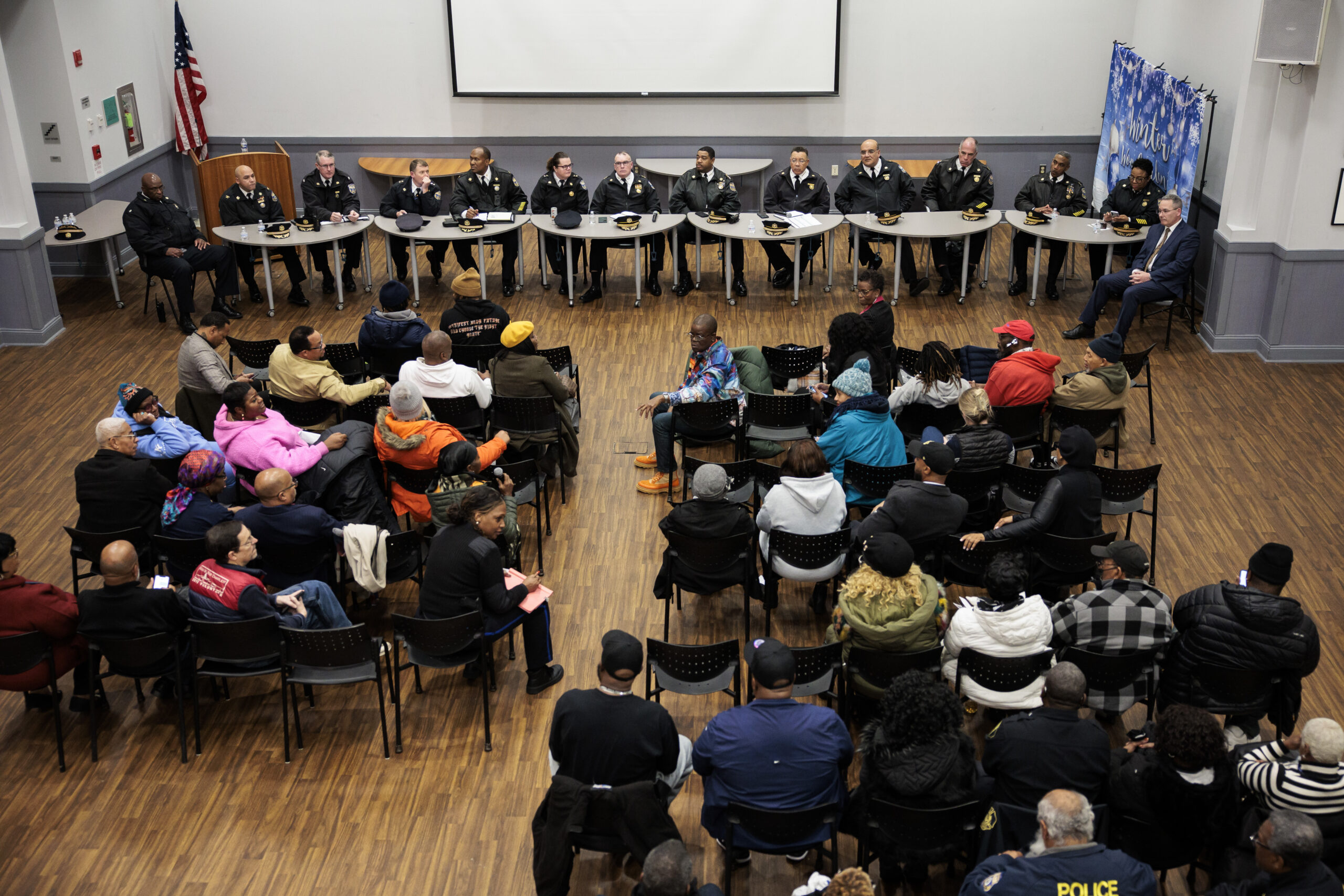
    A few dozen community members gathered with top police brass in North Philadelphia on Dec. 2.

    Yet Bethel has grappled with the challenge of convincing residents that the city is safer today than four years ago, while questioning whether today’s gains can outweigh years of devastation.

    That challenge was on display on a recent cold December night, as Bethel gathered with a few dozen residents inside a North Philadelphia church and asked what they wanted him to know.

    Person after person stood and told him what gun violence had taken from them in recent years.

    My son. My brother. My nephew.

    Both of my sons.

    Investing in violence prevention

    The city’s network of violence prevention strategies has expanded greatly since 2020, when the city began issuing tens of millions of dollars in grants to grassroots organizations.

    Early on, the city faced criticism that its rollout of the funds was chaotic, with little oversight or infrastructure to track impact. Today, Geer said, the city has stronger fiscal oversight, better organizational support, and a data-driven approach that targets neighborhoods experiencing the most violence.

    In 2024, Community Justice, a national coalition that researches violence-intervention strategies, said that Philadelphia had the most expansive violence-prevention infrastructure of the 10 largest U.S. cities. When evaluating 100 cities, it ranked Philadelphia as having the third-best public-health-centered approach to preventing violence, falling behind Washington and Baltimore.

    Geer said the work will continue through 2026. Starting in January, the city will have a pool of about $500,000 to help cover the funeral expenses for families affected by violence.
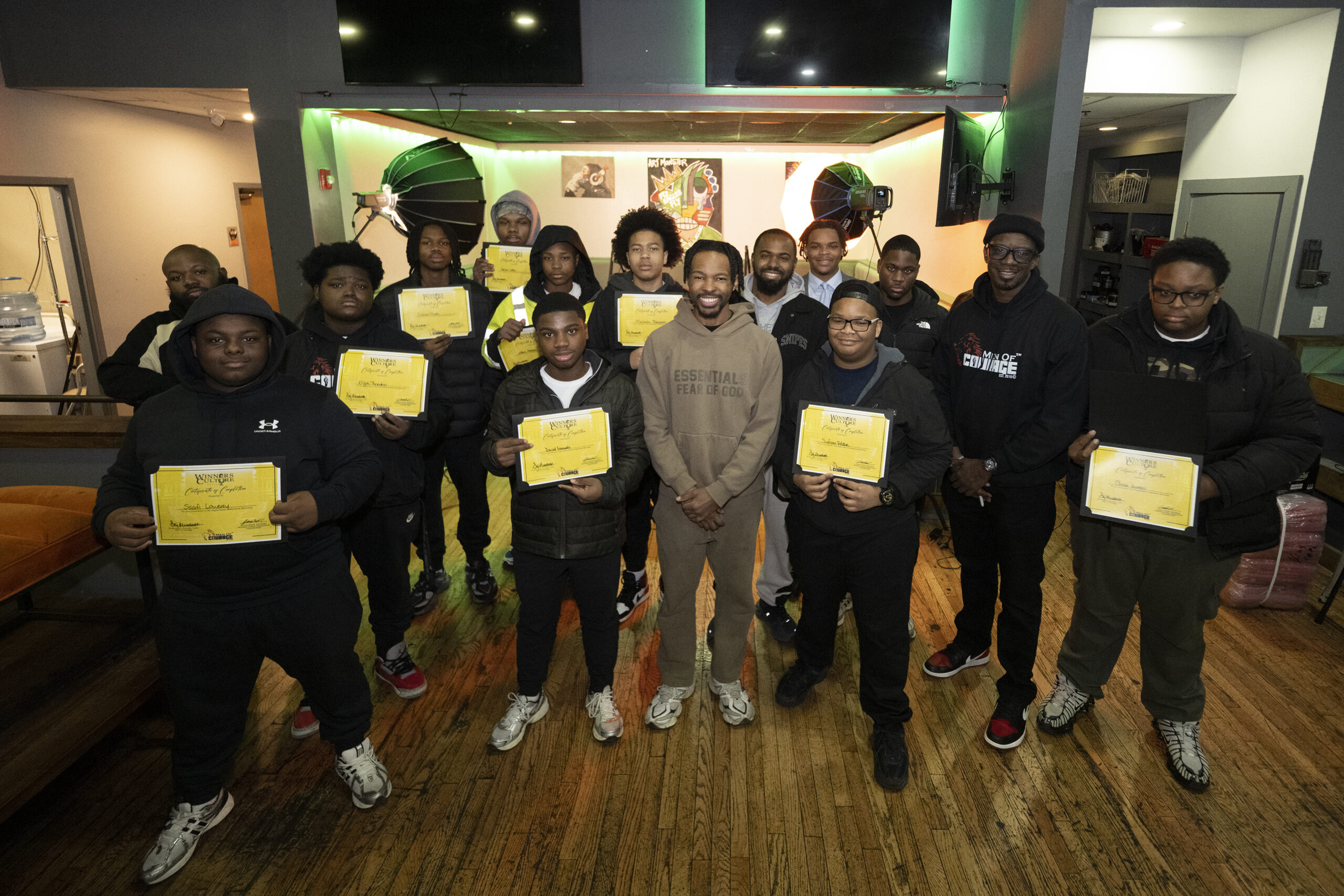
    Members of Men of Courage pose with the certificates of accomplishment after completing a 16-week program on multi-media work and podcasting, one of multiple programs the community organization uses to help Black teens build their confidence.

    One of those organizations that has benefited from the city’s funding is Men of Courage, a Germantown-based group that mentors young Black men ages 12 to 18 and focuses on building their confidence, resilience, and emotional intelligence.

    “We want them to know that one decision can affect your entire life,” said founder Taj Murdock. “Their environment already tells them they’ll be nothing. … We have to shift their mindsets.”

    Arguments are a leading cause of shootings, and teaching teens how to de-escalate conflicts and think through long-term consequences can prevent them from turning disputes violent, he said.

    Isaiah Clark-White, second to left, and David Samuel, middle, pose for a photo with other members of Men of Courage before recording a podcast.

    Isaiah Clark-White, 16, a sophomore at Hill Freedman World Academy in East Mount Airy, said that in his three years working with Men of Courage, he has grown more confident and has improved his public speaking.

    And David Samuel, 15, of Logan, said he has learned how to better control his emotions and identify those of the people around him. Both said they feel safer today than three years ago, but remain vigilant of their surroundings.

    Samuel said his dad watches the news every day and talks about the overnight crimes and shootings.

    “He’s always telling me,” he said, “‘David, I don’t want this to happen to you.’”
  • Philly’s new U.S. attorney has largely avoided the chaos swirling around other parts of Trump’s Justice Department

    Philly’s new U.S. attorney has largely avoided the chaos swirling around other parts of Trump’s Justice Department

    When President Donald Trump announced earlier this year that he was nominating David Metcalf to be Philadelphia’s U.S. attorney, it initially seemed as if the move was in line with Trump’s chaotic and contentious attempt to upend the nation’s justice system.

    The decision was abrupt, apparently made without advanced input from Sen. Dave McCormick (R., Pa.), who’d set up a commission to identify candidates to serve as the region’s top federal prosecutor.

    Metcalf was 39 and, unlike many of his predecessors, didn’t have deep roots in the region — but did have some reported ties to officials who’d sought to help Trump adviser Roger Stone years earlier.

    And the appointment was announced as Trump was openly pledging to “clean house” in the Justice Department and pull the agency more directly in line with the White House.

    But in the months since Metcalf has assumed control over the office and its 140 lawyers, what has stood out so far has been the serious temperament the veteran prosecutor has brought to the role, and the relative lack of drama he’s overseen — particularly in comparison to nearby jurisdictions, where U.S. Attorney’s Offices have been embroiled in controversies over leadership appointments and whether to indict Trump critics.

    During a recent interview with The Inquirer at his Center City office, his first since being appointed in March, Metcalf said his deliberate approach toward his first few months in the job has been influenced by his decade-plus career as a Justice Department lawyer — one that included stints in Baltimore, Philadelphia, and Washington, D.C.

    He has met with a host of other local stakeholders since taking over — including Police Commissioner Kevin J. Bethel, District Attorney Larry Krasner, and federal judges — and has avoided ushering in drastic upheaval within his office.

    U.S. Attorney David Metcalf outside the federal courthouse in July, with Police Commissioner Kevin Bethel standing behind him.

    Instead, he said, a key focus has been to encourage his prosecutors to pursue large, ambitious, complex investigations targeting violent crime, synthetic opioid abuse, and healthcare fraud — subjects he said were critical to public safety in the Philadelphia region.

    “I do not feel some personal impulse to burn my brand on this office by restructuring and reorganizing it,” he said, later adding: “The greatest offices and the greatest cases come from prosecutors who are hunting them down and competing for them … and that’s the breed of prosecutor we’re trying to create here.”

    Composed and self-assured, Metcalf was uninterested in commenting on the broader political landscape surrounding his job. He instead concentrated on the work of his office, whose lawyers prosecute matters including drug trafficking, political corruption, and terrorism across nine counties from Philadelphia to Allentown and west past Reading. They also litigate civil matters on behalf of the federal government.

    “I don’t want to say that I’m … bound by precedent or a devotee to the status quo,” he said. “But I do believe in stability, and I’m certainly not going to change things just for the sake of changing them.”

    That approach has been generally well-received by many lawyers in his office, particularly given the volatile environment across other parts of the Justice Department.

    Even Krasner — an outspoken progressive Democrat who rarely misses an opportunity to criticize Trump, and who was engaged in a long-running feud with a Trump-appointed U.S. attorney four years ago — said he had a “professional and pleasant lunch” with Metcalf earlier this year.

    “We have always worked well with the career prosecutors at the U.S. Attorney’s Office, and our teams seem to be continuing to work well together,” Krasner said in an interview.

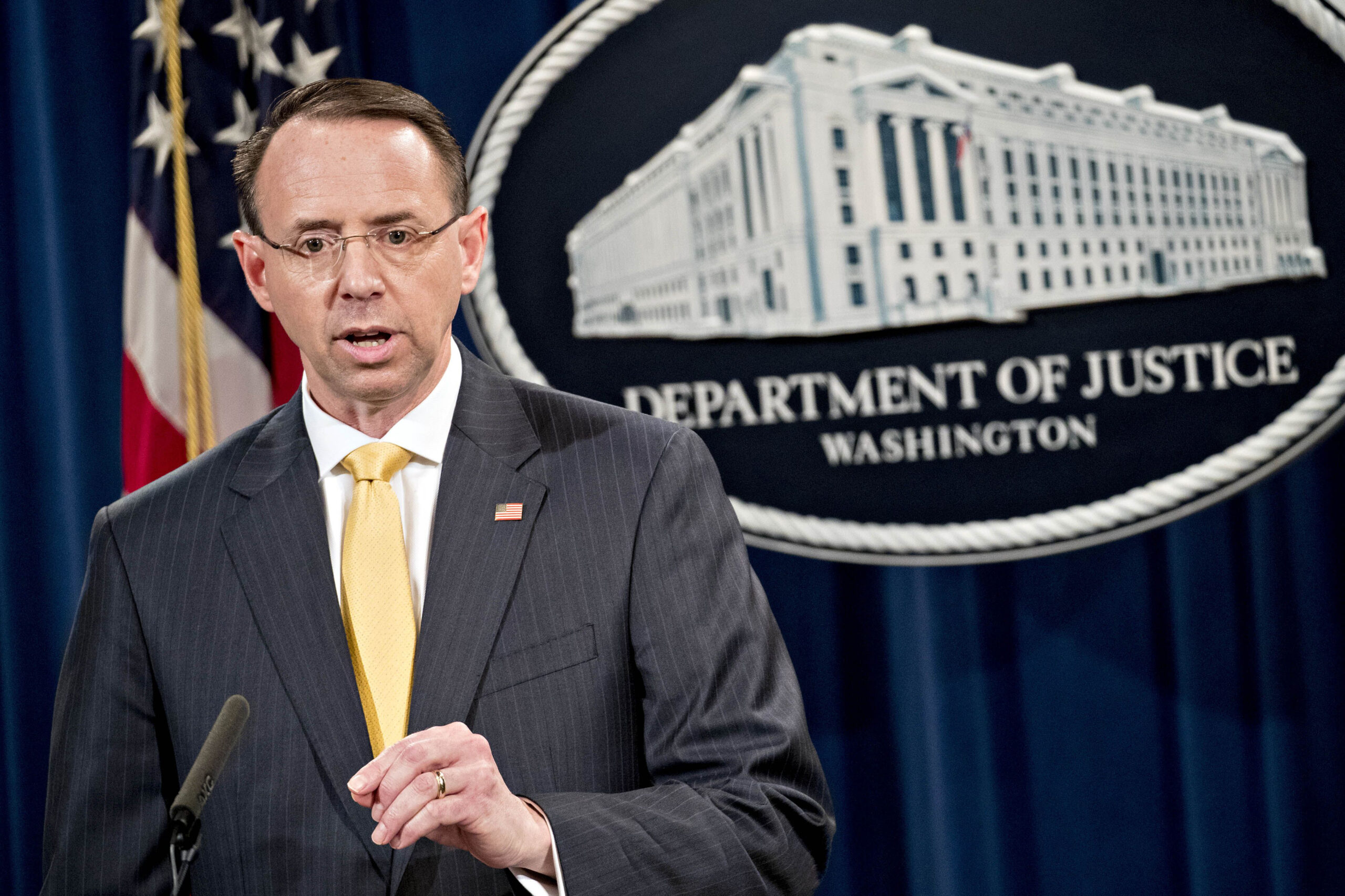
    Rod Rosenstein, who was the deputy attorney general during Trump’s first term, said in an interview that he hired Metcalf a decade ago, when Rosenstein was the U.S. attorney in Maryland. And their paths continued to intersect over the years as their careers wound through the Justice Department.

    Rosenstein said Metcalf had “superb legal skills” and “excellent judgment” — two qualities he views as critical for leading a U.S. attorney’s office.

    “I think people recognize he’s got the right qualifications,” Rosenstein said.

    U.S. Attorney David Metcalf in his Center City office.

    ‘An exhilarating vocation’

    Metcalf grew up in northern Virginia and graduated from The Wakefield School, a private prep school about an hour west of Washington, D.C. His father was once an Army colonel, he said, and his grandfather was Joseph Metcalf III, the Navy vice admiral who led the 1983 invasion of Grenada.

    Metcalf was a standout soccer player in high school, and was recruited to play by more than 80 college teams, the Washington Post reported in 2003. He used the situation to his advantage, the paper reported — making a deal with his mother that he could let his hair grow down past his shoulders once Division I colleges started sending him letters.

    He ended up attending Princeton — playing soccer all four years — and then went on to graduate from the University of Virginia’s law school.

    After clerking for U.S. Circuit Judge Albert Diaz, Metcalf spent a few years in private practice before becoming an assistant U.S. attorney in Maryland under Rosenstein.

    Metcalf said he didn’t have a single epiphany that made him realize he wanted to become a prosecutor. But he said he was quickly drawn to the work, which he found more interesting and important than other legal jobs.

    “I thought it was really just an exhilarating vocation in a profession that doesn’t always have the most glamorous applications,” he said.

    High-profile connections

    From 2015 through 2022, Metcalf worked as a line prosecutor in Baltimore and, later, in Philadelphia — the office he now leads. The two years he spent here were unusual, he said, because they unfolded during the peak of the pandemic, when many aspects of the court system were disrupted and most people were working from home.

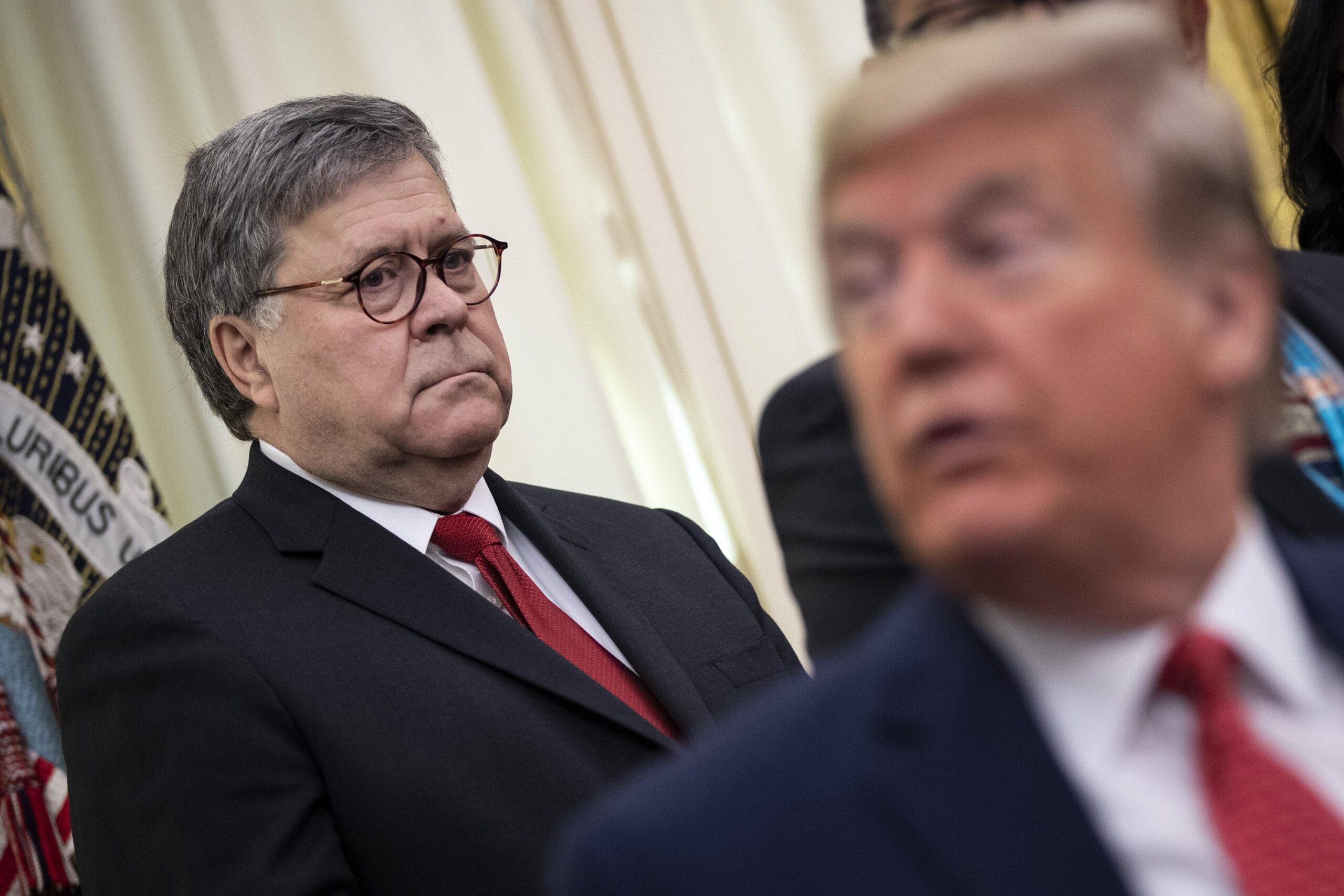
    Metcalf also spent time during the first Trump administration in Washington, D.C. While there, he worked closely with prominent Justice Department officials including Rosenstein; Deputy Attorney General Jeffrey A. Rosen; Timothy Shea, the onetime U.S. Attorney for Washington, D.C.; and then-Attorney General William Barr.

    Attorney General William Barr and President Donald Trump in the Oval Office of the White House on Nov. 26, 2019.

    Metcalf’s name was briefly in the news in 2020, when Barr and Shea, Metcalf’s then-boss, intervened in the prosecution of Stone, Trump’s longtime ally, who had been convicted of lying to Congress. After the trial prosecutors wrote in court documents that Stone should be sentenced to at least seven years in prison, Barr and Shea ordered them to walk that back and reduce their recommendation.

    Some assigned to the case viewed that as political interference and an attempt to placate Trump. A Justice Department investigation later faulted “ineffectual” leadership by Shea for how the episode unfolded, not politics.

    In 2022, Metcalf left the public sector and went to work as a corporate counsel for Amazon. But this March — after Trump was reelected for a second term — Metcalf was suddenly thrust back into the Justice Department, as the White House announced it was nominating him to be Philadelphia’s U.S. attorney.

    From nominee to confirmation

    The decision came as something of a surprise.

    McCormick, Pennsylvania’s newly elected GOP senator, had made a point of publicly announcing that he’d formed a committee to review and vet potential candidates for federal law enforcement positions across the state. And other GOP-connected lawyers in the region had been jockeying for months to try to figure out who might be able carve a path toward the coveted position.

    When the White House named Metcalf its permanent nominee, the process was effectively short-circuited.

    Metcalf said he couldn’t speak to how or why the process played out the way it did. He said he applied for the job, and “had relationships with folks in the Trump administration” due to his time in Washington during Trump’s first term.

    He didn’t specify who those people were. And some of his former bosses — particularly Barr — had fallen out of favor with Trump after his first term.

    But Rosenstein said “it’s a mistake to think that people are the people they work for. It’s a big government, and not everyone agrees all the time.”

    And in any case, Rosenstein said, he believed Metcalf was nominated “on merit, not on connections.”

    Rod Rosenstein, deputy attorney general during President Donald Trump’s first term, says Metcalf has “superb legal skills” and “excellent judgment.”

    William McSwain, who served as U.S. attorney during Trump’s first term, said he believed Metcalf was “extremely well-qualified for the position.”

    It took the U.S. Senate six months to vote to confirm Metcalf along with a host of other Trump nominees, but by then, the Philadelphia region’s federal judges had already voted to extend Metcalf’s appointment indefinitely while the process played out.

    That move stood in contrast to several other jurisdictions, including New Jersey, where the judiciary declined to extend the tenure of Trump’s nominee, Alina Habba. For months afterward, that office was thrust into turmoil as questions swirled about who could legally serve as its leader.

    Pursuing notable cases

    During his tenure so far, Metcalf said, he’s been seeking to focus his prosecutors on finding what he called “nationally significant” cases, particularly those targeting violence, drugs, and healthcare fraud, which he views as priorities for the region.

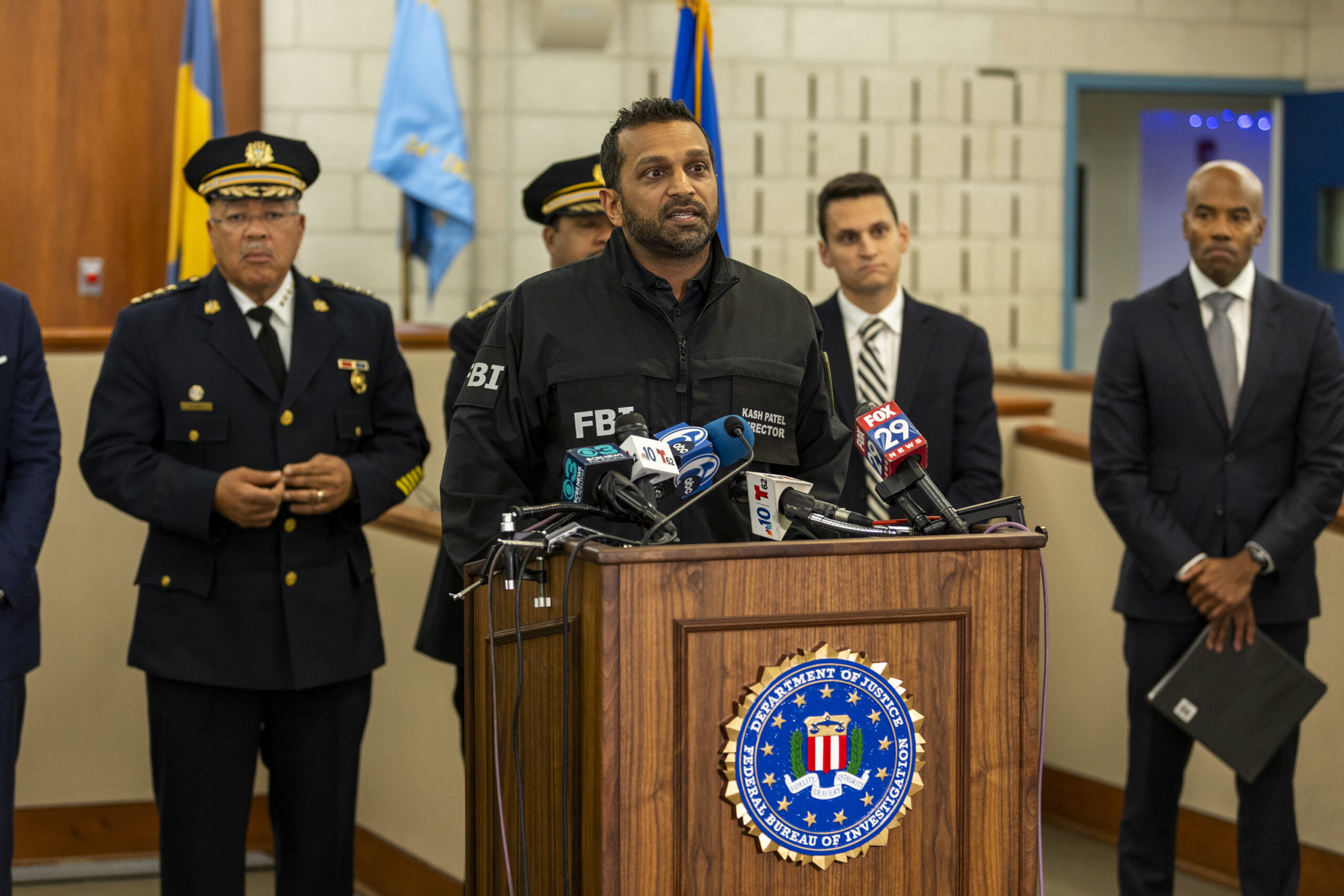
    One of the first big indictments he announced was in October when FBI Director Kash Patel visited Philadelphia to help reveal that 33 people had been charged with being part of a Kensington-based drug gang. Metcalf said the case was the largest single prosecution in the region in at least two decades.

    FBI Director Kash Patel helping announce the arrest of dozens of suspects in a Kensington drug case.

    He also helped create a new program dubbed PSN Recon, an initiative designed to help Philadelphia Police more readily share intelligence with state and federal agencies about which groups or suspects should be investigated.

    Prosecutions overall have increased on his watch, according to the Transactional Records Access Clearinghouse (TRAC), a research organization that collects federal courts records.

    So far this fiscal year, prosecutions in the Eastern District of Pennsylvania were up 32% compared to last year, TRAC found, and were on their highest pace since 2019. The most common types of cases charged this year were immigration violations, drug offenses, and illegal firearm possession, according to TRAC.

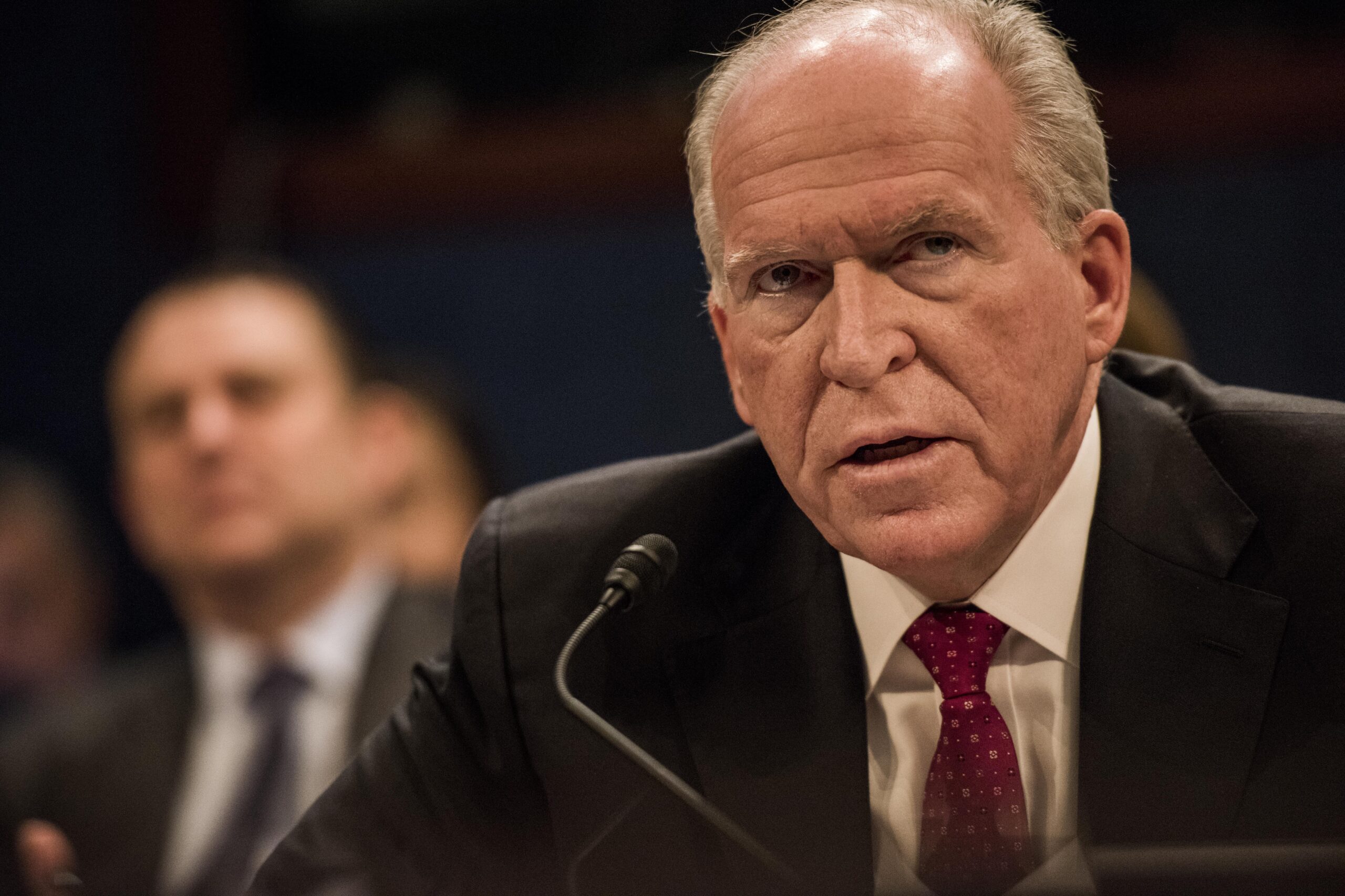
    Earlier this year, Metcalf was reportedly involved in one particularly significant case: an investigation into former CIA Director John Brennan and his role in producing an intelligence assessment about Russian interference in the 2016 election. Brennan went on to become a prominent Trump critic.

    Former CIA director John Brennan testifies before the House Intelligence Committee in 2017.

    National outlets including Axios and the New York Times reported that Metcalf had been leading the probe, and that he had concerns about its viability — a notable development given Trump’s public demands to prosecute other adversaries, including former FBI Director James Comey.

    Metcalf never commented publicly on his purported involvement in the Brennan case, and declined to do so again during his interview with The Inquirer. The investigation is now reportedly being handled by federal prosecutors in Florida.

    Metcalf did allow a short peek into his professional mindset when he was asked more broadly if he’d ever felt pressure from Washington to sign off on a decision he didn’t agree with.

    After declining to comment on any discussions he may or may not have had with Justice Department leaders, he paused for a moment and added one final point.

    “I will also say that I would be very surprised if that ever happened to me,” he said. “I don’t see it as a problem here.”

  • Philadelphia sues drugmakers and pharmacy benefit managers over high insulin costs

    Philadelphia sues drugmakers and pharmacy benefit managers over high insulin costs

    Philadelphia is suing a host of drug manufacturers and pharmacy benefit managers in federal court, alleging that they conspired to increase insulin prices to drive sky-high profits as patients struggled to afford life-saving medications.

    City officials said rising diabetes medication prices have caused the city to “significantly overpay” for diabetes medication for city employees and their families, noting in a news release that insulin prices have increased from $20 per vial in the 1990s to $300 to $700 per vial today.

    About 14% of adults in Philadelphia have diabetes, the city said.

    “Philadelphia suffers from one of the highest rates of diabetes in the United States, especially in our Black and brown communities,” Health Commissioner Palak Raval-Nelson said in a statement.

    “When people cannot afford their insulin, they frequently go without or cut back, leading to disastrous consequences both for themselves and Philadelphia as a whole. Their lives are degraded, and we all pay the associated health costs.”

    The suit, filed Tuesday, follows similar litigation filed by District Attorney Larry Krasner in 2024. Hundreds of companies, unions, and other local and state governments, including Bucks County, have also filed suit alongside Philadelphia as part of a wide-ranging lawsuit in federal court in New Jersey, the city said.

    In the suit, the city accuses drugmakers and pharmacy benefit managers, or PBMs, of colluding to drive up profits on diabetes drugs. PBMs work with drug manufacturers, insurers, and pharmacies, negotiating prices and developing formularies — lists of prescription drugs that are available on a given insurance plan.

    To ensure their drugs were included on formularies, drug manufacturers increased prices on diabetes drugs and then paid “a significant, yet undisclosed” portion of the resulting profits back to the PBMs, the city’s lawsuit said.

    That meant lower-priced or generic diabetes medications received “less favorable placement” on formularies, passing higher costs onto consumers, according to the lawsuit.

    The suit names nearly two dozen prominent drugmakers and PBMs, including Eli Lilly & Co., Optum RX, Sanofi, Novo Nordisk, and CVS Caremark. Optum officials did not immediately return a request for comment.

    In a statement, a Lilly spokesperson said the company has worked for years to lower costs for people with diabetes by capping prices at $35 per month. The average out-of-pocket Lilly insulin cost was $14.86 a month for patients in 2024, the spokesperson said.

    “These copycat lawsuits are baseless,” the spokesperson wrote.

    Sanofi officials declined to comment on the allegations but said in a statement their “pricing practices have always complied with the law.” The company said it works to lower costs for patients, but that in the U.S. healthcare system, “savings negotiated by health insurance companies and PBMs” aren’t often reflected in patients’ co-pays.

    CVS officials said in an email that “pharmaceutical companies alone” are responsible for setting insulin prices and that they would welcome efforts from drug manufacturers to lower prices.

    “Allegations that we play any role in determining the prices charged by manufacturers for their products are false, and we intend to vigorously defend against this baseless suit,“ officials said.

    Novo Nordisk officials similarly called the allegations in the suit “meritless” and said the company has a number of initiatives to make insulin more affordable for patients.

    Staff writer Sarah Gantz contributed to this article.

  • The new Delco DA talks victories, ambitions, and the importance of mentorship

    The new Delco DA talks victories, ambitions, and the importance of mentorship

    Tanner Rouse will be Delaware County’s new top law enforcement officer, but he’s not new to the work.

    Rouse will be sworn in on Jan. 5 as district attorney after his predecessor, Jack Stollsteimer, steps down to assume the county judgeship he won in November. Rouse, 42, will finish out the final two years of Stollsteimer’s term after working as his first assistant since 2020.

    In a recent interview, Rouse discussed the strides in reducing violent crime he and his colleagues have made under Stollsteimer — the first-ever Democrat to serve as district attorney in Delaware County — as well as how he plans to continue those advances.

    The short answer: Keeping the same playbook, but “putting a personal stamp on it,” as an offensive coordinator does when he takes over as head coach, said Rouse, an avid Eagles fan and ambitious Little League coach.

    A former Philadelphia prosecutor under Seth Williams, Rouse credited the lessons he learned from investigating gun violence in the city, along with the recruitment of several former colleagues he brought over the county line, with improving the way crime is prosecuted in Delaware County.

    “We have demonstrated you can reform the criminal justice system and that it doesn’t have to come at the expense of stopping violent crime,” Rouse said. “They’re not mutually exclusive.”

    Who is Tanner Rouse?

    Rouse, a Phoenixville-area native, is the son of the late Willard Rouse III, the prominent Philadelphia developer behind One and Two Liberty Place. After graduating from the University of Wisconsin and Fordham Law School, Rouse spent seven years in the Philadelphia District Attorney’s Office, prosecuting crimes in Center City and North Philadelphia.

    Rouse left the office in 2017, months before Larry Krasner took over. He practiced civil law for a time and ran an ultimately failed campaign to unseat then-State Sen. Tom McGarrigle before Stollsteimer called and offered him the first assistant job.

    At the time, Rouse said, the offer was unexpected. But, looking back, he now considers it one of the greatest opportunities of his career.

    What is Rouse most proud of from his tenure as first assistant?

    The most notable achievement of his tenure to date in the district attorney’s office, Rouse said, is the steep reduction of gun violence in Chester. Shootings are down 75% since 2020. Rouse credits community outreach efforts for that, especially through the Chester Partnership for Safe Neighborhoods program, overseen by veteran homicide prosecutor Matt Krouse, whom Rouse worked with in Philadelphia and recruited to join him in Delaware County.

    The partnership’s fundamental philosophy is a combination of focused deterrence programs Rouse helped oversee in Philadelphia that target repeat offenders, as well as community outreach efforts run by trusted neighborhood figures.

    Rouse said he never wanted to be a faceless presence in the county and made it his priority to get out and form relationships in all of the municipalities he served, visiting community meetings, block parties, and even a few pickup basketball games.

    “I don’t do this job from behind a desk,” he said, speaking in his county courthouse office. “And I think demonstrating that commitment and that care by being more present in those communities, and not just being kind of the big, scary law enforcement agency on a hill is incredibly important.”

    Rouse said he is proud of other reforms including creating a diversionary unit in the office, revamping its drug court and instituting a special “child’s court,” created by Kristen Kemp — Rouse’s chosen first assistant and an expert in special-victims’ cases — that allows young victims to testify against adult offenders in a more comfortable environment.

    The county’s jail population is down 50% as well, something Rouse says is a result of approaching prosecuting crimes in a humane, logical way.

    What are his priorities as district attorney?

    Rouse said he plans to create a similar community outreach program in Upper Darby, a community he said is “on the verge of some big things.”

    “It’s not as if we’re saying, ‘We’re coming in here to take on Upper Darby and what goes on there,’ but more of, ‘Guys, look, we’re not just the people you pick up and call when there’s a crime.’”

    He also expressed interest in creating reciprocity agreements with his counterparts in the other collar counties around Philadelphia, specifically when it comes to handling drug cases and providing treatment to the people caught up in them.

    How has his time in Philadelphia influenced his work in Delco?

    Rouse said he cut his teeth in the city working alongside veteran prosecutors, and he’s worked to bring that environment of mentorship to Delaware County.

    He said he and his more senior deputies often sit in on trials, giving feedback to younger staff members just as his mentors did for him nearly two decades ago.

    “That’s how I got better, and that’s one of the roles I most cherish here,” he said.

  • A man ‘ransacked’ a 93-year-old’s Philly home before killing him and selling his car for $900, prosecutors say

    A man ‘ransacked’ a 93-year-old’s Philly home before killing him and selling his car for $900, prosecutors say

    In the days after the killing of 93-year-old Lafayette Dailey on Dec. 3, authorities said, street surveillance cameras captured Coy Thomas behind the wheel of Dailey’s white 2007 Chrysler 300.

    Then, they said, Thomas sold the car for $900.

    On Monday, prosecutors with the Philadelphia District Attorney’s Office released new details in their case against Thomas, who is charged with murder, robbery, and related crimes in connection with a slaying that unfolded quietly inside Dailey’s Logan home.

    Surveillance footage from that day showed a man police believe to be Thomas walking through the front door of Dailey’s house in the 4500 block of N. 16th St. About 10 minutes later, prosecutors said, the man reemerged, slid behind the wheel of Dailey’s sedan, and drove away.

    Two days later, police found Dailey dead inside the home. He had been stabbed several times in the chest.

    His house had also been “ransacked,” said Assistant District Attorney Ashley Toczylowski, with “things thrown around,” indicating “there was a struggle” before Dailey was killed.

    Police found no signs of forced entry. Thomas’ unhindered entrance into the home suggested that the men knew one another “in a neighborly way,” Toczylowski said. Thomas, 53, previously lived near Dailey, she said.

    Thomas is also accused of stealing and using Dailey’s debit card before he was taken into custody on Sunday.

    District Attorney Larry Krasner called the killing “evil,” adding: “Even the mob didn’t target seniors.”

    Krasner asked anyone with information about the killing to call police.

    “It’s in your hands to make sure that your energy and your eyes and your ears are tuned in, so that we can prevent this next time and we can get a just and appropriate remedy this time,” he said.

  • A supervisor in Philly DA Larry Krasner’s office has been disbarred in federal court

    A supervisor in Philly DA Larry Krasner’s office has been disbarred in federal court

    A veteran lawyer in the Philadelphia District Attorney’s Office has been disbarred in the region’s federal courts after a panel of judges concluded he “lied repeatedly” while seeking to overturn the death sentence of a man who killed an East Mount Airy couple in their home and left their infant daughter inside to die.

    Paul George, an assistant district attorney who handles appellate cases, was a key player in his office’s attempts to have Robert Wharton’s death penalty reversed so he could serve a life sentence instead.

    U.S. District Judge Mitchell Goldberg denied that request, but not before finding that District Attorney Larry Krasner’s office had provided incomplete and misleading information in its efforts to free Wharton from death row.

    After Goldberg made his decision, George and a colleague who handled the case faced federal disciplinary proceedings to examine whether their conduct — which was also criticized by an appeals court — was intentionally deceptive.

    As part of that process, three federal judges concluded earlier this year that George’s actions were “misleading and dishonest,” saying he had lied to Goldberg about key facts, “flouted the interests of the public and the victims’ families,” and acted as the “quarterback” of efforts by the district attorney’s office to undo or undermine all death penalty cases.

    “George’s conduct was the result of a ‘selfish or dishonest motive’ — placing the DAO’s policy priorities above its professional and prosecutorial responsibilities,” wrote U.S. District Judges Paul S. Diamond, Gerald J. Pappert, and John M. Gallagher. They recommended that George be barred from practicing in the region’s federal courts, and Chief Judge Wendy Beetlestone affirmed that in an October order.

    George has denied the accusations and last month filed an appeal. His attorneys acknowledged in court documents that he had made mistakes in his handling of Wharton’s case, but said the opinion recommending his disbarment was based on a broader set of “extraordinary allegations” that lacked evidence and targeted the office he worked for.

    George has displayed “exceptional legal skills and the highest level of professional ethics and honesty” during his 48-year legal career, his attorneys wrote. He is scheduled to retire at the end of this year.

    Krasner said in an interview that he was largely unable to comment because most of the disciplinary matter had unfolded under seal. But he said that George’s career “has been conducted vigorously and ethically,” and that he believed the appeals court would find that the opinion criticizing George was filled with “factually and legally incorrect” statements.

    “We will continue to try to be fair each and every day, and, as change makers often do, we will face the consequences of making change from people who could’ve made it, but didn’t, in their day,” Krasner said.

    The disciplinary saga is the latest chapter in the unusually protracted fallout from Wharton’s death penalty appeal, and it might not be the last.

    George’s colleague Nancy Winkelman — another supervisor in the district attorney’s law division — has also been the subject of a disciplinary inquiry in federal court for her role in the Wharton matter. Records in her case remain under seal.

    The documents connected to George’s case were also supposed to remain secret, but they became public this week when aspects of his appeal were publicly filed in court. On Thursday, his attorney, David Rudovsky, filed court documents to have the entire record of the underlying disciplinary proceeding made public.

    George became involved in the Wharton matter in 2019, while Wharton was appealing his death sentence in federal court.

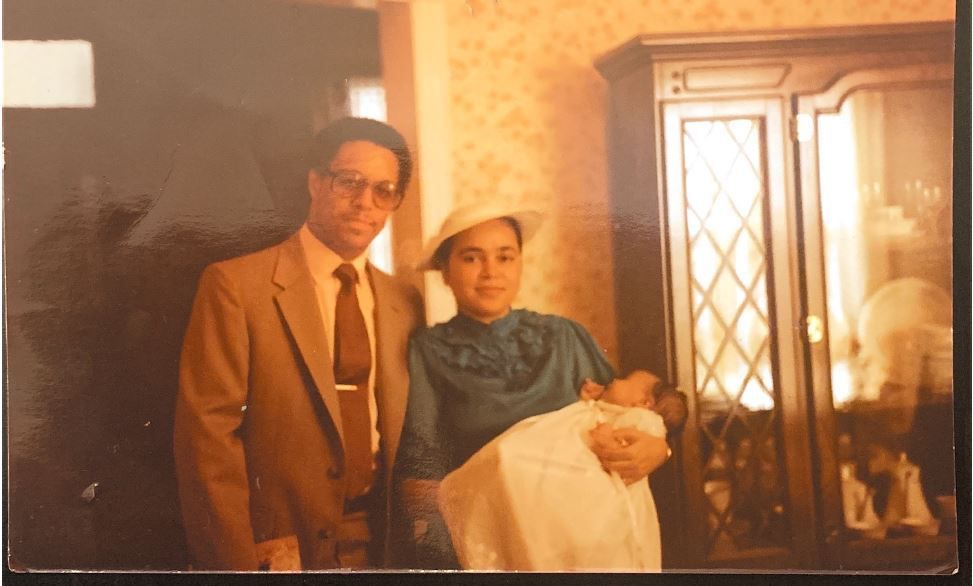
    Wharton had been convicted along with a codefendant in the January 1984 strangulation and drowning deaths of Bradley and Ferne Hart. A jury concluded that Wharton killed the couple over a disputed debt, then turned off the heat in their home and left the couple’s 7-month-old baby, Lisa, to freeze to death. She survived.

    Bradley and Ferne Hart in a 1983 photo with their baby daughter, Lisa, on her christening day. The husband and wife were murdered in their East Mount Airy home in January 1984 by Robert Wharton and Eric Mason. The baby was unharmed, but left to die in the house. She survived.

    In the decades before Krasner took office, the district attorney’s office had consistently opposed Wharton’s attempts to overturn his conviction and sentence.

    But Krasner said on the campaign trail that he would “never pursue a death sentence in any case.” And after he was sworn in, his office changed its stance on the Wharton case, saying it had “carefully reviewed the facts and the law” and agreed that Wharton should be spared from death row.

    Goldberg did not immediately agree, and wrote in court documents at the time that the district attorney’s office had not sufficiently explained its reasoning for its “complete reversal of course.”

    He then asked the Pennsylvania Attorney General’s Office to provide materials he said the district attorney’s office was not sharing. And after investigating, the attorney general’s office said it found evidence including documents detailing Wharton’s past attempts to escape from a courtroom — information that Goldberg said would have been crucial to his decision, but that George and Winkelman later said they were not aware of.

    The attorney general’s office also said Krasner’s office had misled Goldberg about its communications with the victims’ relatives. Although the district attorney’s office gave the impression that the Hart family supported its change in stance on the death penalty, the truth was that prosecutors had spoken only to one relative, and never contacted the couple’s only surviving child, Lisa Hart-Newman, who vehemently opposed the idea of lessening Wharton’s sentence.

    George later acknowledged that was a mistake, and Goldberg ordered Krasner to write apology letters to the Harts’ relatives.

    In the disciplinary opinion filed earlier this year, the three-judge panel criticized George’s conduct throughout the case, saying that he “repeatedly lied” to Goldberg and that his efforts nearly undercut the integrity of a duly imposed jury verdict.

    And, in an unusually pointed fashion, they ascribed a motive to his actions — accusing George of flouting legal guardrails to advance the policy interests of Krasner’s office.

    “Upon the current District Attorney’s first election … the DAO established a policy, with Paul George at quarterback, to undermine duly imposed death sentences challenged in post-conviction proceedings,” the judges wrote. “George filed the concession in Wharton pursuant to that policy, not as the result of any review, careful or otherwise, of the facts and the law.”

    George said in court documents that was not true, and his attorneys denied there has ever been an office policy opposing all capital sentences.

    Krasner also said it was “flatly untrue” that his office has ever had a policy against the death penalty, and he denied that the committee he formed to review capital cases — which George once served on — was designed to undo such sentences.

    “We follow essentially the same process as our predecessors, who routinely supported the death penalty and who were usually wrong,” Krasner said. “We actually try to be fair all the time. And that committee has concluded on many occasions that the death penalty should be reversed; it has also concluded with the law division in individual cases that the death penalty had to be affirmed. Those are the facts.”

    George’s disbarment in federal court has not affected his ability to practice in state court, though George, 75, has already begun to wind down his office duties ahead of his retirement, his attorneys wrote in court documents.

    They said that the penalty imposed against him was unwarranted and should be reversed.

    “To label Mr. George as a liar, and by disbarment, place him among the worst of the worst lawyers in our community, is highly disproportionate and offends basic tenets of justice,” his lawyers wrote.

    The federal judges who recommended his discipline disagreed.

    “In the final years of his career,” they wrote, George “used [his] experience to circumvent and subvert, in misleading and dishonest ways, verdicts rendered by judges and juries who heard the evidence and applied the law.”

  • Three Philly cops who defenders say ‘straight up lied’ cause 134 drug cases to be dismissed, hundreds more expected

    Three Philly cops who defenders say ‘straight up lied’ cause 134 drug cases to be dismissed, hundreds more expected

    More than 130 drug cases were dismissed Friday — and hundreds more are expected to collapse in the coming months — after prosecutors said three Philadelphia narcotics officers repeatedly gave false testimony in court.

    Common Pleas Court Judge Lillian Ransom vacated 134 cases during the first in a series of hearings that could see nearly a thousand criminal prosecutions collapse because the testimony of three officers on the Narcotics Strike Force has been deemed unreliable.

    Philadelphia Police Officers Ricardo Rosa, Eugene Roher, and Jeffrey Holden were found to have repeatedly given false testimony against people suspected of selling drugs after lawyers with the Defender Association of Philadelphia recovered video footage that contradicted their statements, the district attorney’s office said.

    The defenders said the officers regularly watched surveillance cameras to monitor suspects in drug investigations in real time, then didn’t disclose it to prosecutors or defense attorneys in court, officials said. The video footage later showed they also testified to things that never happened or that they could not have seen from where they were positioned, according to court filings.

    Prosecutors later conceded that they could no longer vouch for the officers’ credibility and are expected to dismiss scores of cases built on their testimony.

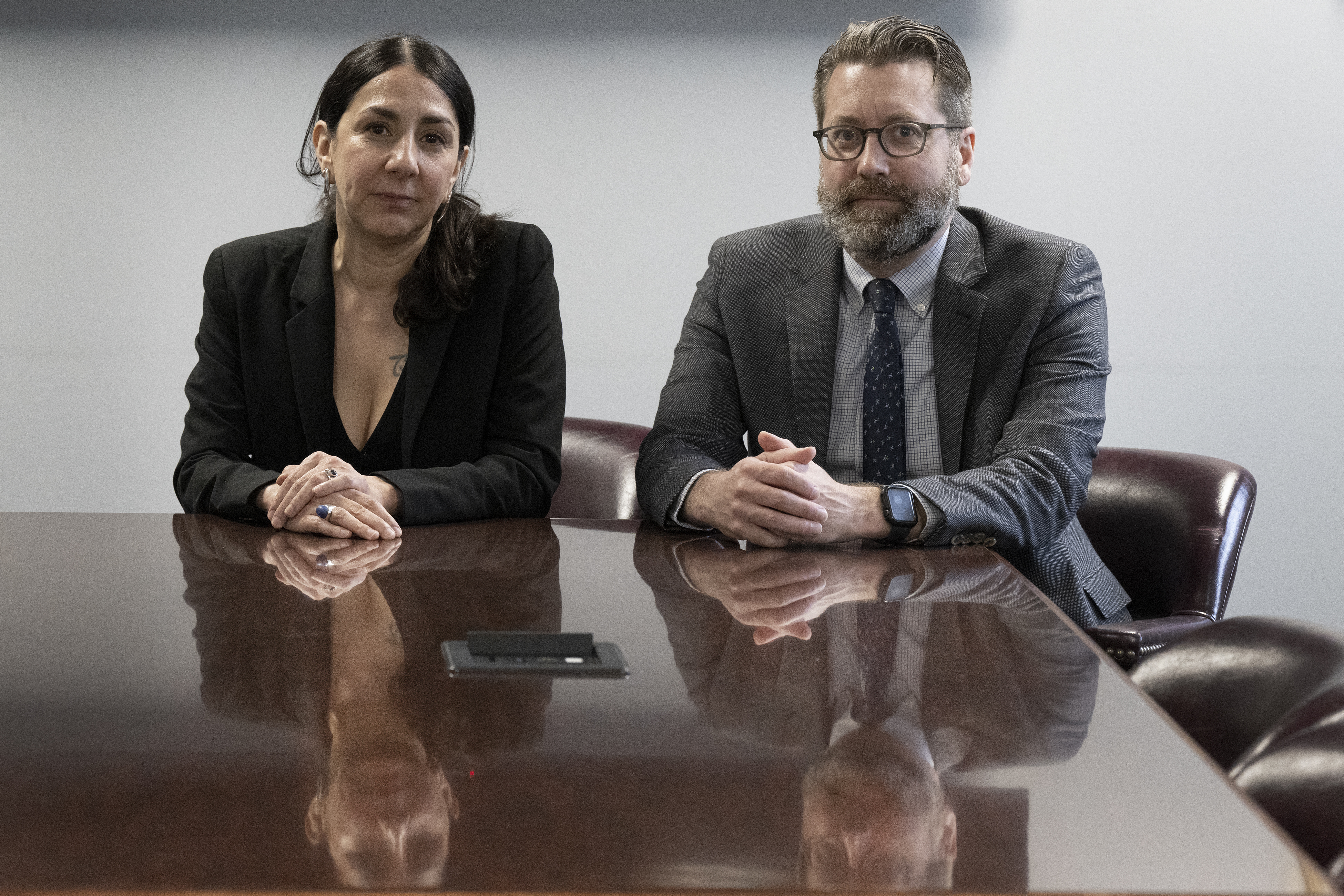
    Michael Mellon and Paula Sen, of the Defender Association, began looking into whether officers on the narcotics squad were lying in court starting in 2019.

    After a review of cases and convictions involving the officers’ testimony, lawyers for the defender association and prosecutors identified more than 900 cases and expect to ask the judge to dismiss them over the next year. It was not immediately clear how many people, if any, served time in jail, or are still in custody, as a result of the prosecutions that are now in question.

    Holden, reached by phone Friday, said he was shocked to learn that his cases and testimony were under scrutiny, and said he had not been told of the move to end the cases at Friday’s hearing. He declined to comment further.

    Rosa and Roher did not immediately respond to requests for comment. The officers remain assigned to their narcotics squads.

    The district attorney’s office said it provided the police department’s internal affairs unit with details of the officers’ false statements in multiple cases last March.

    Police Commissioner Kevin Bethel, in a statement, said the department takes “potential credibility issues with our officers extremely seriously.”

    An internal affairs investigation into the matter was launched last March and remains ongoing, he said.

    The department requested and reviewed cases flagged by prosecutors, he said, but “thus far we have not identified any evidence that would raise concerns of misconduct or criminal behavior on the part of those officers.”

    He added: “We will, as always, take appropriate action if and when evidence supports such action, but we will not preemptively sideline officers absent some verified findings.”

    Bethel said he learned of the plans to dismiss the cases on Thursday, and has asked prosecutors to provide additional information to assist with their review. He also said the police department has been working with the district attorney to develop a clearer protocol on how officers can use surveillance cameras during investigations.

    District Attorney Larry Krasner on Friday declined to say whether his office was investigating the officers’ conduct, but noted that “the statute of limitations for police officers in their capacity is much longer than the statue of limit for other offenses.”

    “I have dealt extensively with Commissioner Bethel. I know he and the mayor are committed to rooting corruption, lying, stealing, and cheating out of the police department,” he said.

    District Attorney Larry Krasner declined to say whether his office was investigating the officers’ conduct as criminal in nature.

    ‘They’re lying’

    Assistant District Attorney David Napiorski, who reviewed the cases for the office, stopped short of accusing the officers of lying, but said “there’s enough of a pattern of inconsistencies across testimony that we can’t rely on them as critical witnesses in court.”

    But Paula Sen and Michael Mellon of the Defenders’ Police Accountability Unit disagreed.

    “It’s a fancy way of saying they’re lying,” said Sen, who has worked with Mellon to uncover the officers’ credibility issues since 2019.

    The unfolding scrutiny is the latest in a series of large-scale conviction reversals in Philadelphia tied to misconduct in the narcotics unit. Over the past three decades, judges have thrown out thousands of drug cases after officers were found to have fabricated evidence, lied on the stand, or stolen money from dealers.

    Bradley Bridge, a longtime public defender, was often the driving force behind those reviews and estimates he’s worked to overturn about 2,500 drug convictions since 1995.

    In 2015, Bridge filed a petition to vacate more than 1,400 drug convictions tied to six ex-narcotics cops after they were charged with robbing and beating drug dealers, then altering police paperwork to cover their tracks. The officers were later acquitted by a jury and got their jobs back through arbitration, but more than 950 cases were thrown out after officials agreed they couldn’t trust their testimony.

    Bridge, who returned from retirement to handle the cases tied to Rosa, Roher, and Holden, said, “Tragically, nothing is unique about this. It’s exactly the same problems that keep arising since 1995, including the lack of supervision and oversight of police officers on the street.”

    A video camera used by Philadelphia police located at Somerset Street in Kensington.

    Sen and Mellon said they first noticed a pattern of false testimony in 2019 after they reviewed surveillance footage that contradicted statements Rosa gave about drug cases. As time passed, they said, they continued to monitor his narcotics squad, and found inconsistencies with Holden and Roher’s testimony, too.

    They said the officers used the city’s surveillance camera systems to monitor suspected drug activity in real time, but didn’t disclose it as part of their investigation — a violation of due process because the evidence wasn’t shared with defense attorneys.

    In court, the officers denied using the cameras, Mellon said, and often said they witnessed hand-to-hand drug transactions that video later showed either never happened or that they could never have seen because the suspect was out of sight.

    “They just straight up lied and invented acts of criminality,” Sen said.

    ‘Who are they gonna believe?’

    In one case, Roher said he was seated in an unmarked police car when he saw Darrin Moss sell drugs to two people near Somerset and Helen Streets in Kensington in April 2022. He said he could see Moss inside the fenced lot retrieve drugs, then hand them to a buyer and accept money in return.

    Prosecutors later said in court filings that video footage captured by a surveillance camera on the end of the block showed that one drug deal never happened, and the other supposed deal was behind a building and would have been impossible to see.

    The charges against Moss were withdrawn.

    When prosecutors learned of the discrepancies, they asked Roher to meet and discuss the case, but he failed to appear in court twice without explanation, they said in a court filing.

    Prosecutors said this became a pattern — once the officers seemed to learn their testimony was under scrutiny, they stopped showing up to court.

    Court filings identify at least nine cases in which the three officers allegedly gave false testimony. Napiorski, of the district attorney’s office, said prosecutors reviewed a few dozen videos from other cases that suggested a systemic pattern of false information in court.

    Sen, of the defenders association, said it was troubling that the officers remained assigned to the narcotics squad and have been able to continue making arrests.

    “How is the public supposed to have trust in a department that continues to employ people who have so clearly proved themselves to be liars, that has resulted in thousands of people being arrested and jailed?” she asked.

    Most of the cases dismissed Friday were drug crimes that led to a sentence of probation, prosecutors said. Seven included a gun charge.

    The drug charge against Ramoye Berry was among them.

    Berry, 29, from North Philadelphia, said that in April 2023, he was standing on the 1300 block of West Boston Street talking to some friends when a group of officers tackled him and accused him of selling drugs.

    When they searched his car, he said, they found a small amount of weed, but he wasn’t selling it. He was charged with possession with intent to sell drugs.

    Berry couldn’t recall which officer testified against him in court, but he said he remembered telling his lawyer that the officer wasn’t telling the truth.

    He said he pleaded guilty to drug possession and accepted a year of probation because he didn’t think he could prove his innocence, and the court dates were challenging to keep up with. It kept him from being able to get a job, he said.

    When he learned on Friday that the officer had a history of giving false information and that his conviction would be vacated, he said he felt vindicated — but frustrated by the time and jobs he lost to the case.

    “This is what I was saying from the beginning,” he said, shaking his head. “But who are they gonna believe? The cops, or me?”

  • DA Larry Krasner is unusually silent after charging a record number of Philly cops in grant theft scandal

    DA Larry Krasner is unusually silent after charging a record number of Philly cops in grant theft scandal

    Late in the afternoon on Nov. 7, a Friday, the Philadelphia Police Department announced that nine current and former police officers had been charged with conspiring to defraud the city by using a grant-funded youth boxing program to pad their salaries.

    It was the largest number of Philly officers charged together with misconduct in nearly 40 years — a seemingly splashy case for District Attorney Larry Krasner, a progressive prosecutor who has made charging cops a cornerstone of his two terms in office.

    Yet Krasner has been unusually quiet about it.

    The district attorney was traveling in Switzerland for a conference when the charges became public. His office declined to comment, held no news conference, and issued no public statements — in stark contrast to his trumpeting of police misconduct cases in the past.

    Krasner has charged dozens of police officers since taking office in 2018. But he did not publicly acknowledge his largest booking to date until The Inquirer approached him at an unrelated news conference, nearly a week after these most-recent charges were filed.

    And even then, he was reluctant to talk about it.

    “We had probable cause that they committed the crimes,” Krasner said Thursday. “Having said that, I wanna be very clear: There are a lot of great cops in the city. … I don’t think that this group of nine should in any way taint the rest of them.”

    Prosecutors accuse Nashid Akil, former captain of the 22nd District in North Philadelphia, and eight of his officers of stealing $44,576 in taxpayer-funded anti-violence grant money between January and September 2022, according to charging documents.

    Those funds came from a $392,000 city grant awarded to Epiphany Fellowship Church to support Guns Down, Gloves Up, a boxing and youth mentorship program that Akil founded at his nearby district building. No one from the church was charged, and Krasner said Thursday the church should not be “tainted” by the allegations against police.

    Former Captain Nashid Akil, shown here while at the boxing program Guns Down Gloves Up, at the 22nd District, in Philadelphia, Friday, October 7, 2022.

    City employees are prohibited from receiving grant dollars. Yet after vowing in the grant application that police time would be volunteered, Akil, using the church as a pass-through, allegedly paid himself and eight district officers for their work as boxing instructors, an arrangement that came to light through an Inquirer investigation in 2023.

    Police now say some officers were paid during their scheduled shift hours.

    A law enforcement source familiar with the case said the district attorney’s office concluded its probe into the grant scheme months ago. Krasner did not approve the charges until Oct. 31, according to a police department spokesperson. That was days before the Nov. 4 election, when Krasner was handily reelected to a third term. The defendants began surrendering to authorities three days later.

    Police Commissioner Kevin Bethel issued a statement after the arrests saying he was “deeply troubled” by the officers’ alleged actions and “particularly disappointed by the involvement of a former commanding officer.”

    But neither Krasner nor his spokesperson responded at the time to repeated requests for comment.

    On Thursday, Krasner attributed the timing of the charges to logistical issues with bringing in the nine codefendants.

    Akil was forced to resign in February 2023 after The Inquirer’s reporting on the boxing program, and three other officers who allegedly took the money had since resigned. Bethel has moved to fire the five active officers.

    Only one of the nine officers listed an attorney in court records, and that lawyer could not be reached for comment.

    Officials at Epiphany Fellowship Church did not respond to a request for comment.

    An unusual silence

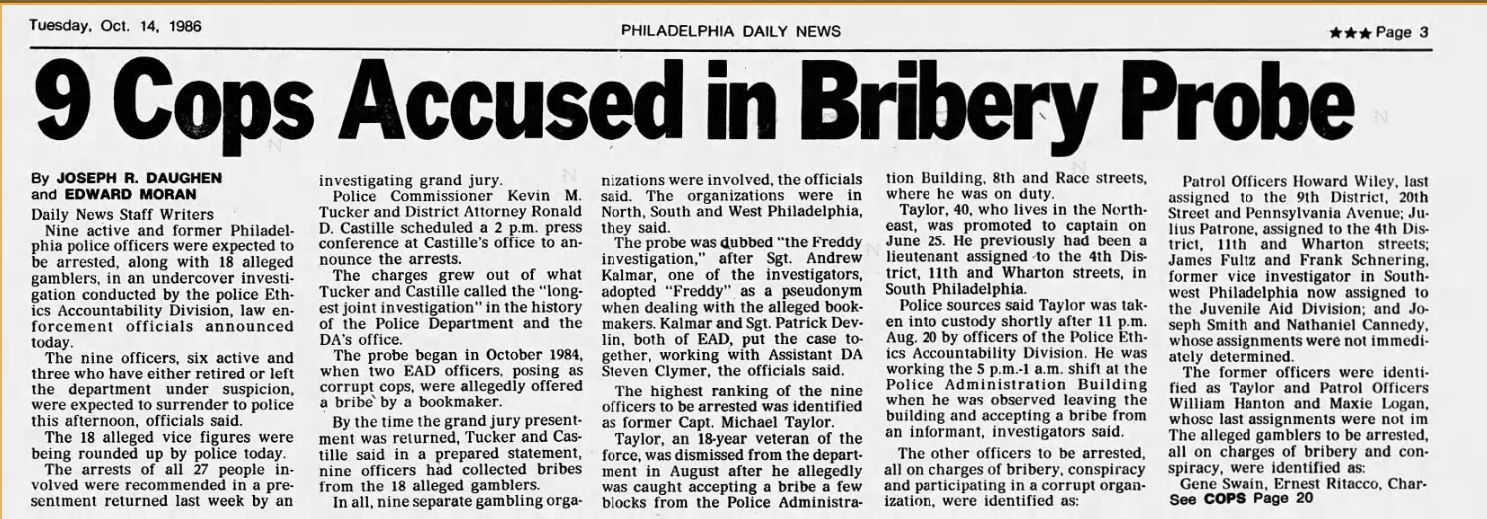
    The last time nine officers were charged together in Philadelphia was in 1986, for taking bribes to conceal an underground gambling ring.

    An Oct. 14, 1986 article in the Philadelphia Daily News shows the last time nine current and former Philadelphia police officers were charged following a single investigation.

    Since the charges were filed in the boxing program scandal, Krasner’s office has put out nine news releases — but nothing on the nine officers charged.

    It’s a departure from how the typically loquacious district attorney has handled previous allegations of police misconduct.

    In 2021, for example, when The Inquirer was reporting on widespread abuse of the department’s injured-on-duty program, Krasner said he believed some officers were “gaming the system, and in my opinion, committing crimes by engaging in fraudulent practices to stay home.” The disability system was reformed and hundreds of officers returned to work, but no criminal charges were filed.

    The next year, Krasner issued a lengthy news release after the arrest of Officer Daniel Levitt on perjury and related charges, stemming from an allegedly illegal search that led to the recovery of a handgun. The charges against Levitt were initially dismissed but have since been refiled.

    In 2023, Krasner was again out front in announcing the arrest of former Officer Patrick Henon for sexually assaulting young girls. Henon pleaded guilty.

    In May, Krasner called a news conference after a jury convicted two former detectives convicted of making false statements about DNA evidence.

    A month later, when Donald Suchinsky, a former homicide detective, was sentenced to prison for sexually assaulting relatives of murder victims, Krasner appeared outside the Criminal Justice Center to condemn Suchinsky’s conduct and urge any other victims to come forward.

    And in July, Krasner again held a news conference to criticize what he called a lenient sentence of former Officer Mark Dial, who was paroled following his voluntary manslaughter conviction in the shooting of Eddie Irizarry.

    “I am deeply disappointed with a verdict that I think makes people lose faith in the criminal justice system,” Krasner said.

    A sensitive issue

    In contrast, when approached by reporters Thursday, Krasner requested an advance list of questions about the alleged grant misappropriation, then huddled privately with two of his top prosecutors for several minutes before offering little comment.

    Asked about his reticence toward this case compared with past cases, Krasner alluded to outside concerns.

    “We have to do certain things in court in a certain kind of way, and we have to operate with our partners, and that’s what we’re going to do,” he said.

    He declined further questions.

    Krasner’s uncharacteristic silence has not gone unnoticed by nearly a dozen communications consultants, lawyers, and law enforcement officials, who spoke with The Inquirer on the condition that they not be named.

    They speculated that Krasner might be downplaying the arrests due to political sensitivities or because — unlike in cases of wrongful arrests and shootings — there is not a clear victim in this case, outside of city taxpayers. Some acknowledged that there could also be legal reasons why Krasner would decline to draw additional attention to the arrests.

    Carl Day, a pastor who runs Culture Changing Christians, noted that Krasner is allied with Black clergy members who have supported his political campaigns. Day suggested that the district attorney might be trying to avoid further scrutiny into the church that was in charge of the grant.

    “My hope and belief is that it’s a level of respect,” Day said. “In this work, you become scrutinized a ton and placed under microscopes, especially when you are a Black-led organization and getting government money.”

    The boxing program scandal is one of several incidents that have raised concern about the city’s oversight of millions of anti-violence grants, scores of which have been awarded to small nonprofits in the Black community.

    Day said nonprofit leaders need to be held accountable for misspent funds, but he argued that Black-led nonprofits, many of which do not have the financial resources of large organizations that typically get city grants, face heightened scrutiny.

    If that is the case, Day said, he is puzzled why Krasner wouldn’t come out and say so.

    “It’s to be continued,” he said.

  • Party soul-searching, the Latino vote, and a South Jersey strategy: Takeaways from Tuesday’s election

    Party soul-searching, the Latino vote, and a South Jersey strategy: Takeaways from Tuesday’s election

    A Navy pilot in New Jersey. A democratic socialist in New York City. Three Pennsylvania jurists who never wanted to hit the campaign trail in the first place.

    The Democrats who scored big wins in Tuesday’s elections came from across the political spectrum and succeeded in disparate campaign environments.

    The results were momentous for a party hungry for wins in President Donald Trump’s second term. But they are also likely to revive longstanding debates on how the party should present itself to the American people going into the 2026 midterms and 2028 presidential race.

    Should Democrats embrace a bold vision and tack left? Are left-of-center candidates with bipartisan appeal still the way to win statewide races? Or could the party simply embrace the reality of being a big-tent party?

    Here are five takeaways from Tuesday’s elections, including the state of play for both parties’ soul-searching exercises.

    Democrats gained momentum, but received no clear signs about the future of the party

    The energy is clearly there.

    Turnout soared on Tuesday, despite being an off-year election, and Democrats won by surprisingly large margins up and down the ballot.

    Even Montgomery County, where there were no competitive elections for county offices, saw its highest-ever off-year turnout at 50.7% of registered voters, and Democrats flipped every contested school board race.

    At the top of the ticket, New Jersey’s Mikie Sherrill and Virginia’s Abigail Spanberger, both U.S. representatives with national security backgrounds, ran up the scores in their gubernatorial races while portraying themselves as pragmatists.

    window.addEventListener(“message”,function(a){if(void 0!==a.data[“datawrapper-height”]){var e=document.querySelectorAll(“iframe”);for(var t in a.data[“datawrapper-height”])for(var r,i=0;r=e[i];i++)if(r.contentWindow===a.source){var d=a.data[“datawrapper-height”][t]+”px”;r.style.height=d}}});

    Zohran Mamdani, meanwhile, handily defeated former Gov. Andrew Cuomo in the New York City mayor’s race by promising radical change and progressive policy solutions.

    So where does that leave Democrats as they try to find a recipe for success in next year’s congressional races?

    For Philadelphia’s progressive District Attorney Larry Krasner, who won a third term Tuesday, the answer is clear.

    “There’s a new politics,” Krasner said Wednesday. “It’s pretty clear that the American people, Philadelphians, are tired of insiders who promise them things they don’t do. They’re tired of political dynasties.”

    window.addEventListener(“message”,function(a){if(void 0!==a.data[“datawrapper-height”]){var e=document.querySelectorAll(“iframe”);for(var t in a.data[“datawrapper-height”])for(var r,i=0;r=e[i];i++)if(r.contentWindow===a.source){var d=a.data[“datawrapper-height”][t]+”px”;r.style.height=d}}});

    Democratic strategist Brendan McPhillips, who has worked for progressive candidates as well as Joe Biden’s and Kamala Harris’ campaigns in Pennsylvania, said the party should embrace the ideological diversity of its constituencies.

    “People have tried to ask this question of who represents the soul of the party, and I just think it’s a bad question,” he said. “The party is a huge tent, and last night proves you can run for Democratic office in New York City and New Jersey and Bucks County and Erie, Pa., and each of those races can look entirely different.”

    Democrats made gains with Latino voters

    One of the more worrying signs for Democrats in the Trump era has been the president’s increasing popularity among Latino voters.

    They flipped that narrative Tuesday.

    After 10 months of aggressive U.S. Immigration and Customs Enforcement raids under Trump that are seen by many in the Latino community as indiscriminate and cruel, Democrats appear to have undone some of Trump’s gains in what has long been a blue constituency.

    In New Jersey, the two counties where Sherrill made the biggest gains compared with Harris in the 2024 presidential election were Passaic and Hudson, both of which are more than 40% Hispanic, according to the U.S. Census.

    Sherrill won Hudson by 50 percentage points, which represents a 22-point swing from Harris. And she won Passaic by 15 percentage points after Trump surprisingly carried the county with a 3-point margin in 2024.

    In Philadelphia, Krasner won eight wards that the more conservative Patrick Dugan — Krasner’s opponent in both the general election and the Democratic primary — had won in their first round in May.

    All were in or near the Lower Northeast, and the biggest swing came in the heavily Latino 7th Ward, which includes parts of Fairhill and Kensington. Krasner’s share of the vote there grew from 46% in the primary to 86% in the general.

    It’s really hard to unseat Pennsylvania judges

    Only one Pennsylvania Supreme Court justice since 1968 has failed to win a retention election, in which voters face a yes-or-no decision on whether to give incumbents new 10-year terms, rather than a choice between candidates.

    Tuesday’s results will be discouraging for anyone hoping to increase that number soon.

    Hoping to break liberals’ 5-2 majority on the state’s highest court, Republicans spent big in an attempt to oust three justices who were originally elected as Democrats. Democratic groups then poured in their own money to defend the incumbents.

    In the end, Justices Christine Donohue, Kevin Dougherty, and David Wecht all won by more than 25 percentage points.

    Ciattarelli’s South Jersey strategy failed

    In his third attempt to become governor, Republican Jack Ciattarelli bet big on South Jersey, the more conservative but less populous part of the Garden State.

    It didn’t work.

    In his 2021 campaign against Democratic Gov. Phil Murphy, Ciattarelli carried Atlantic, Cape May, Cumberland, Gloucester, and Salem Counties with a combined 56.8% of the vote. Trump then went on to sweep all five counties last year.

    But on Tuesday, Ciattarelli performed 8 percentage points worse in the region, giving Sherrill a narrow lead in South Jersey, where she won three of the five counties south of Camden.

    (function() { var l = function() { new pym.Parent( ‘sj-shift__graphic’, ‘https://media.inquirer.com/storage/inquirer/ai2html/sj-shift/index.html’); }; if(typeof(pym) === ‘undefined’) { var h = document.getElementsByTagName(‘head’)[0], s = document.createElement(‘script’); s.type = ‘text/javascript’; s.src = ‘https://pym.nprapps.org/pym.v1.min.js’; s.onload = l; h.appendChild(s); } else { l(); } })();

    Republicans now face their own soul-searching question: How to win without Trump?

    In 2024, Trump’s coattails helped Republicans win control of Congress and other elected offices across the country — including in two Pennsylvania swing districts.

    With the president in his second and final term, how will the GOP win without him on the ballot?

    For Jim Worthington, the Trump megadonor and owner of the Newtown Athletic Club in Bucks County, Tuesday’s results show that the GOP needs to do more work on the ground if it wants to succeed without the man who has dominated Republican politics since 2015.

    Elections, he said, are “not about the policies as much they’re just turnout. Red team, blue team.”

    The blue team won Tuesday, he said, because the red team didn’t do enough of the legwork needed to get its voters to cast mail ballots and to drive in-person turnout on Election Day. Worthington said the results left him concerned about Republican Treasurer Stacy Garrity’s chances of unseating Democratic Gov. Josh Shapiro next year.

    “If we don’t get a robust vote-by-mail, paid-for program, it’s going to be very difficult, very difficult, if not impossible for Stacy Garrity to win,” Worthington said. “During this whole 2025 year when we could have been building this toward 2026, we lost a year because we didn’t do it.”

    Staff writer Anna Orso contributed to this article.

    This suburban content is produced with support from the Leslie Miller and Richard Worley Foundation and The Lenfest Institute for Journalism. Editorial content is created independently of the project donors. Gifts to support The Inquirer’s high-impact journalism can be made at inquirer.com/donate. A list of Lenfest Institute donors can be found at lenfestinstitute.org/supporters.

  • Killing of Kada Scott prompts hearing on Philly’s handling of domestic violence cases | City Council roundup

    Killing of Kada Scott prompts hearing on Philly’s handling of domestic violence cases | City Council roundup

    City Council will probe the Philadelphia justice system’s procedures for “protecting victims of abuse and domestic violence” following the killing of 23-year-old Mount Airy resident Kada Scott.

    Prosecutors have charged Keon King with murder and other crimes for allegedly kidnapping Scott, shooting her, and burying her body behind a closed East Germantown school in early October.

    King was arrested in two separate incidents in December and January in which authorities allege he violently assaulted an ex-girlfriend. In the second incident, he is accused of kidnapping her and choking her in his car.

    Philadelphia District Attorney Larry Krasner held a press conference at his office regarding the death of Kada Scott on Monday, October 20, 2025.

    District Attorney Larry Krasner’s office requested bail to be set at just under $1 million in that case. A judge instead set bail at $200,000, allowing King to be released after posting the necessary $20,000. Krasner’s office did not appeal the bond decision.

    Prosecutors then withdrew both cases after the victim and witnesses failed to appear in court. Krasner has admitted that dropping charges against King for the second incident was a mistake because there was enough video evidence to proceed with the prosecution. But he also directed blame at the courts for letting King out on bail following each arrest.

    “As the City of Philadelphia, I think we failed the young lady, right?” Council President Kenyatta Johnson told reporters Thursday. “You got two agencies, two city departments, pointing fingers at one another, and at the end of the day, that’s not going to bring resolution to the family. And so at the end of the day, that needs to be addressed. And so we’ll look at the system as a whole.”

    Council approved a resolution authored by Johnson that will allow the Committee on Public Safety to hold hearings on how the courts, sheriff’s office, district attorney’s office, and police department work to protect domestic violence victims.

    Kada Scott ‘a beacon of light and love’

    Remembering Scott: Council also approved a resolution by Councilmember Anthony Phillips honoring Scott’s life and legacy, describing her as a “a beacon of light and love, remembered for her faith, kindness and countless lives she touched.“

    Scott, who opened a beauty spa in Mount Airy when she was 19 years old, “was the kind of person who made others feel seen,” said Phillips, whose 9th District includes Mount Airy.

    Prosecutors have charged Keon King with the murder of Kada Scott, pictured.

    “Kada was a young woman whose light and kindness reflect the very best of us,” Phillips said in a speech on the Council floor. “She had vision and determination. She believed in the power of self-care, community, and purpose.”

    Councilmember Cindy Bass, whose 8th District includes the school where Scott’s remains were found, added that “it’s never been more important that we get our young men together.”

    “There is a vulnerability that exists, and protection is needed. Protection is important,” Bass said. “What we do and how we handle our situations in our community — there’s just so much to be done.”

    Childcare providers could get tax break

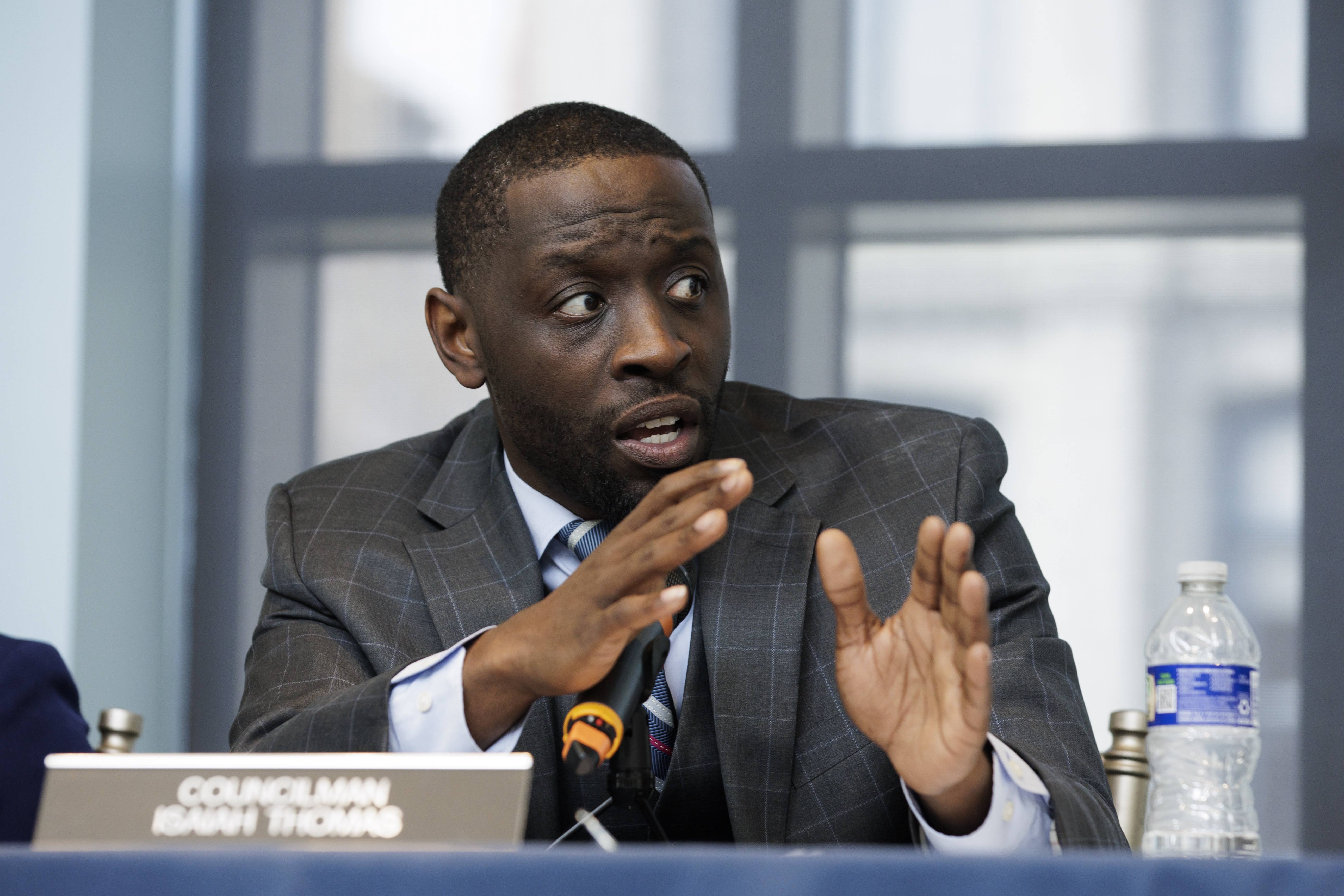
    Targeted relief: Councilmember Isaiah Thomas last spring pushed for the city to aggressively cut the business income and receipts tax, or BIRT.

    Johnson and Mayor Cherelle L. Parker ultimately went with a less aggressive schedule of tax cuts than Thomas had wanted. But the sophomore lawmaker is now trying another route to lighten the BIRT burden: cutting rates for a specific industry.

    Thomas on Thursday introduced a bill that would halve BIRT’s two tax rates for childcare providers, which are facing a nationwide crisis over costs, staffing, and financial viability. The gross receipts portion of BIRT would be reduced from 0.1415% to 0.07075% for daycare owners, and the net income rate would go from 5.81% to 2.805%.

    City Councilmember Isaiah Thomas wants to give daycares a tax break.

    “There’s one business and one industry in the city of Philadelphia that touches every district and a lot of families, especially working families, that are struggling,” Thomas said. “This legislation is another example of us trying to think through what we can do to support businesses who support families as well as families who are in need.”

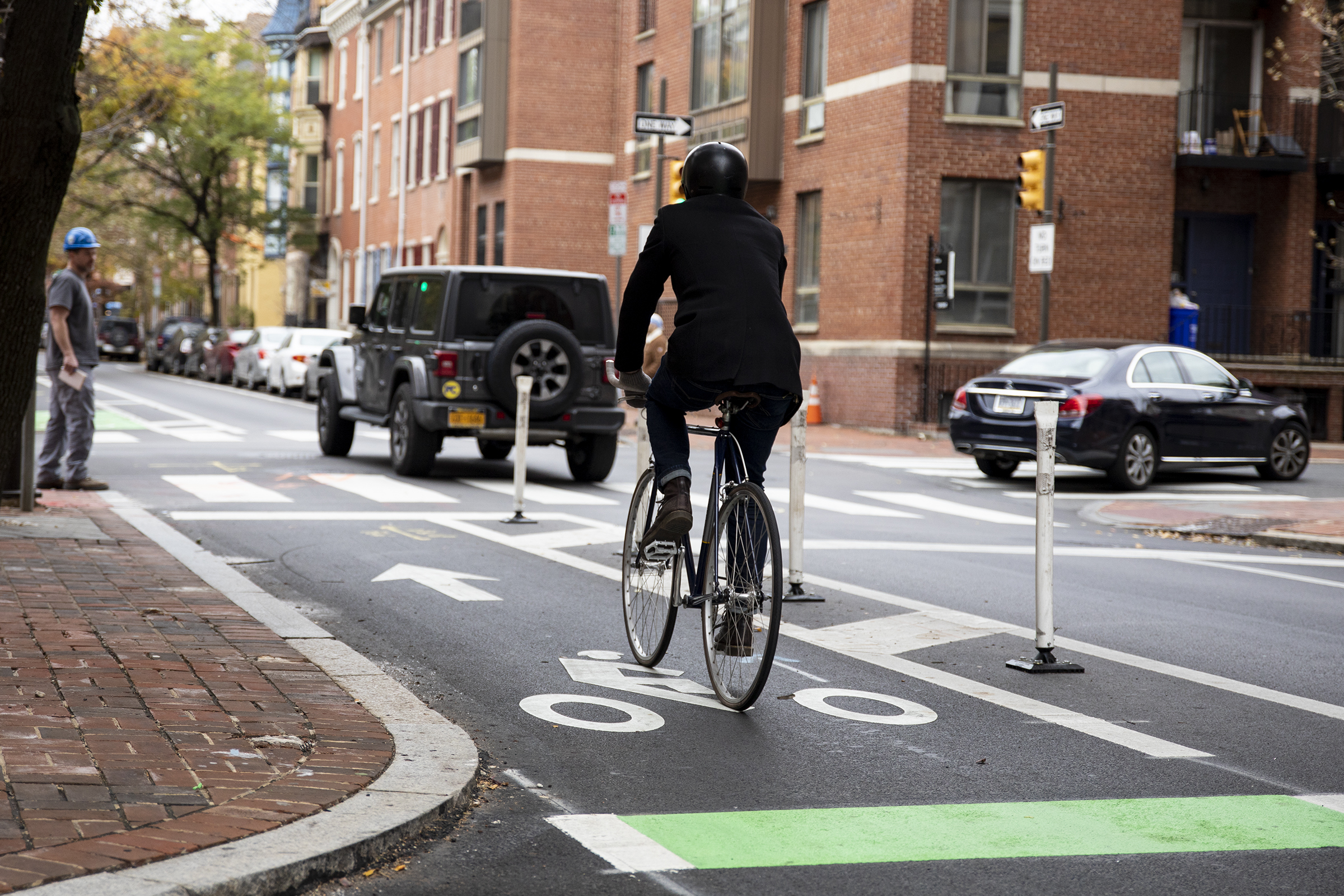
    Regulatory bill sparked by Center City bike lane debate passes after arduous legislative process

    Unloading over loading zones: Heated fights over legislation with narrow impact are nothing new in City Council, where limited proposals often become battlegrounds in larger disputes over issues such as gentrification or the opioid crisis.

    But a bill on loading zones in parts of Center City, approved Thursday, may have set a new standard.

    The bill, which was proposed by the Parker administration and carried by Johnson, will allow the mayor’s administration to add or remove loading zones in parts of Center City without new ordinances from Council.

    It ultimately passed in a 16-0 vote, with Councilmember Brian O’Neill absent.

    But the journey to Thursday’s vote began with the high-profile death of a cyclist, involved a lawsuit, went through two rounds of amendments limiting and expanding its scope, and ended with plans for further proposals to tweak the law.

    The saga began when Johnson passed a bill making it illegal for vehicles to idle in bike lanes following the 2024 death of Barbara Friedes, who was killed while riding in a bike lane on the 1800 block of Spruce Street. Parker’s administration then adjusted loading zones in Center City streets with bike lanes, with the goal of providing spaces for residents who used the bike lanes for unloading their vehicles.

    After neighbors complained the loading zones would take away a handful of parking spots, attorney George Bochetto successfully sued the city, with Common Pleas Court Judge Sierra Thomas Street this summer ruling the administration did not have the authority to promulgate loading zone regulations without Council approval.

    The case led to the revelation that a 1980s city law granting that regulatory authority was somehow never officially codified, throwing into legal jeopardy hundreds of parking regulations promulgated over the last four decades. The bill passed Thursday was intended to fix that legal conundrum by reiterating Council’s intention to grant the administration that authority.

    A cyclist rides along Spruce Street.

    But Johnson and Councilmember Mark Squilla, whose districts include parts of Center City, at one point amended the bill so that it applied only to loading zone regulations and to the Spruce and Pine Streets corridors, which have bike lanes. They eventually reversed course on the geography of the bill, adopting a new amendment allowing it to affect all areas of their districts included in the old law. But they maintained the part of the original amendment narrowing its scope to loading zones and not other parking rules.

    Meanwhile, Councilmember Jeffery “Jay” Young Jr., whose 5th District also has a slice of Center City, removed his territory from the bill entirely.

    Next, Councilmember Jamie Gauthier is expected to work with the administration to fix the regulatory black hole in University City, which is part of her 3rd District. And Johnson said Thursday he may be open to revisiting whether the administration should be given explicit statutory authority to regulate other parking rules beyond loading zones in the affected area of his district.

    “We always have an open mind,” he said.

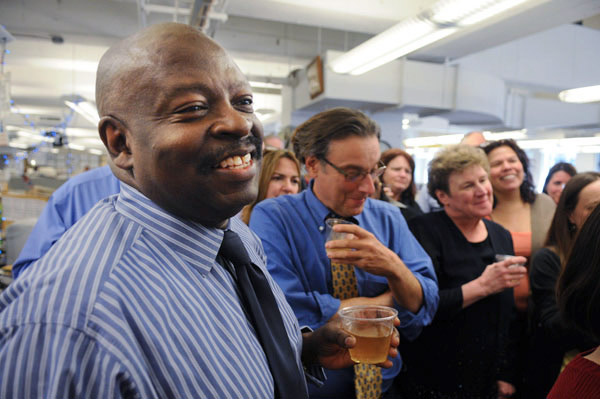
    Quotable: Honoring the late Philadelphia newspaper editor Michael Days

    Glory Days: Michael Days was a longtime editor of the Philadelphia Daily News, an executive at The Inquirer, and the inaugural president of the National Association of Black Journalists-Philadelphia.

    He died on Saturday in Trenton at 72 years old. Council on Thursday approved a resolution by Johnson and Majority Leader Katherine Gilmore Richardson honoring Days “for his extensive career serving Philadelphians.”

    Philadelphia Daily News Editor Michael Days celebrates with the newsroom after word of the Pulitzer win.

    A North Philadelphia native and devout Catholic, Days was revered as a principled reporter and editor, a mentor for young journalists of color, and a leader who helmed the Daily News when it won the 2010 Pulitzer Prize for investigative reporting.

    Staff writer Ellie Rushing contributed to this article.