Tag: Matt Freese

  • The hype train of a ‘golden generation’ of U.S. players and their $6 million coach crashes out of the World Cup

    The hype train of a ‘golden generation’ of U.S. players and their $6 million coach crashes out of the World Cup

    SEATTLE — The hype around this World Cup didn’t just start when the last one ended four years ago. It took off as soon as the U.S. was picked as host, on the eve of the 2018 edition for which they failed to qualify.

    By the time this summer arrived, there was enough evidence to believe these players could make the history they dreamed of, wanting to do things no U.S. men’s team had done before on soccer’s biggest stage.

    So a bar was set for them. The program had just one knockout game win in its history. Winning two would mean a quarterfinal berth. It also presumably would mean toppling a giant somewhere along the way.

    Once the draw was made last fall, the name of that giant was Belgium, the nation that sent the U.S. home in 2014. That made an easy measuring stick for this generation. If they were that much better, they’d do what their predecessors hadn’t.
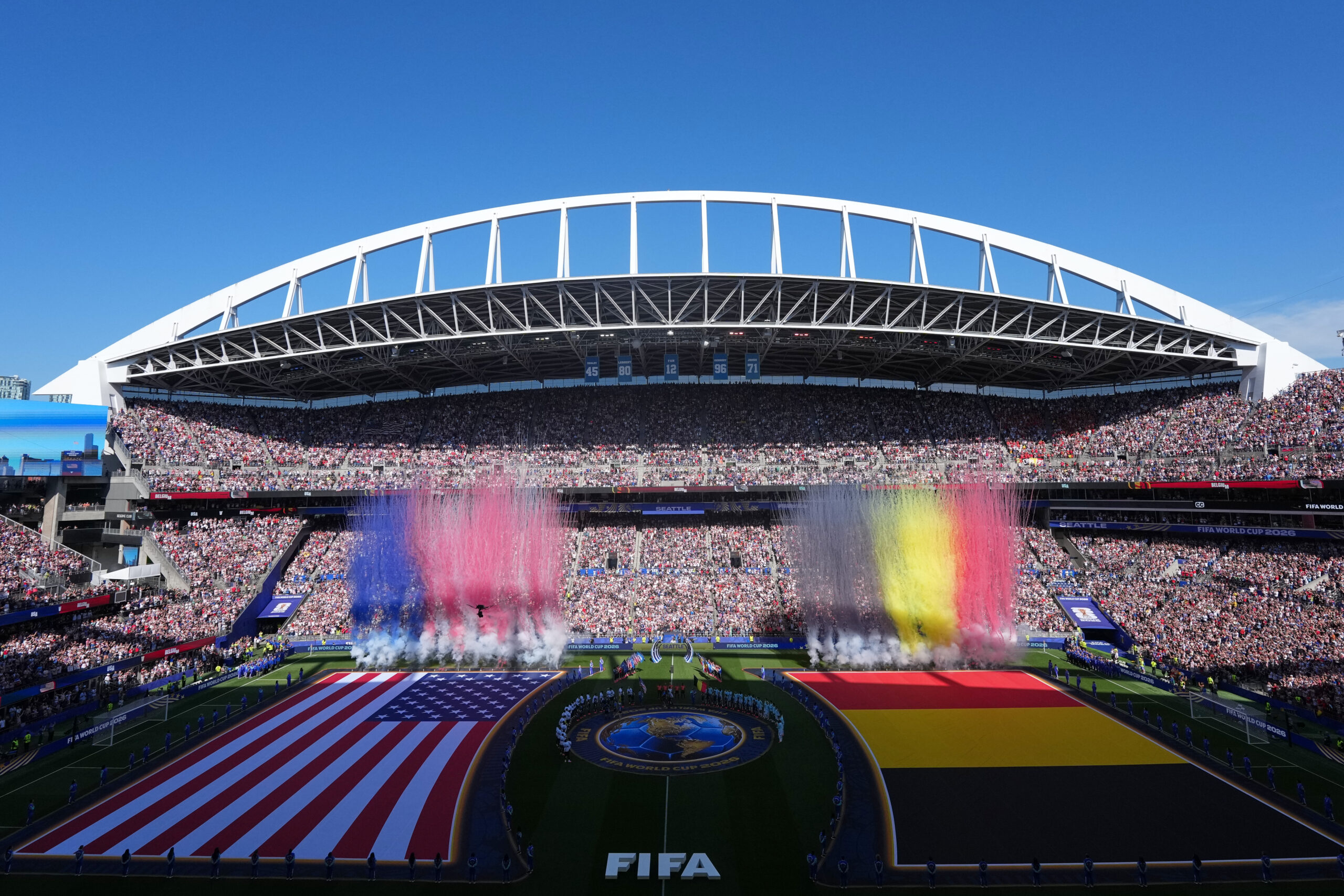
    The scene just after the national anthems in Seattle, when the packed crowd of U.S. fans hoped for a historic win.

    By kickoff, the pieces were in place: Seattle’s cauldron atmosphere, the Red Devils’ inconsistency in prior games, and Folarin Balogun’s unexpected availability after President Donald Trump lobbied FIFA president Gianni Infantino.

    Much has been said about that last part, of course. But by the final whistle of the U.S.’ 4-1 blowout loss, it mattered far less than it had two hours earlier.

    For this game turned out to not be just about Balogun on the American side. The whole squad blew it on the biggest stage, and they knew it.

    “This moment hurts more, stings more, than probably any other moment in my life,” Wayne-born goalkeeper Matt Freese said after a horror game, especially on Belgium’s third goal that blew the game open, when he was stripped of the ball after straying out of his 18-yard box.

    “Yes, it stings,” midfielder Tyler Adams said. “This was a moment to have the opportunity to advance and really try and do something special, and we fell short.”

    Asked why the team was so flat, he answered: “It’s a great question. I wish I had the answer right now. I don’t know.”

    Christian Pulisic tried to lift the mood, but he took some tough questions after leaving a game injured for the second time in this tournament. Along with that, the team’s most important attacker didn’t play the entirety of any game, though at least in the Bosnia win he played 88 minutes.

    His stats for the tournament: four games, 224 minutes, zero goals, one assist, four shots (two on target), and three chances created for others. After a first half against Paraguay that perhaps was the best of his career, he largely was muted.
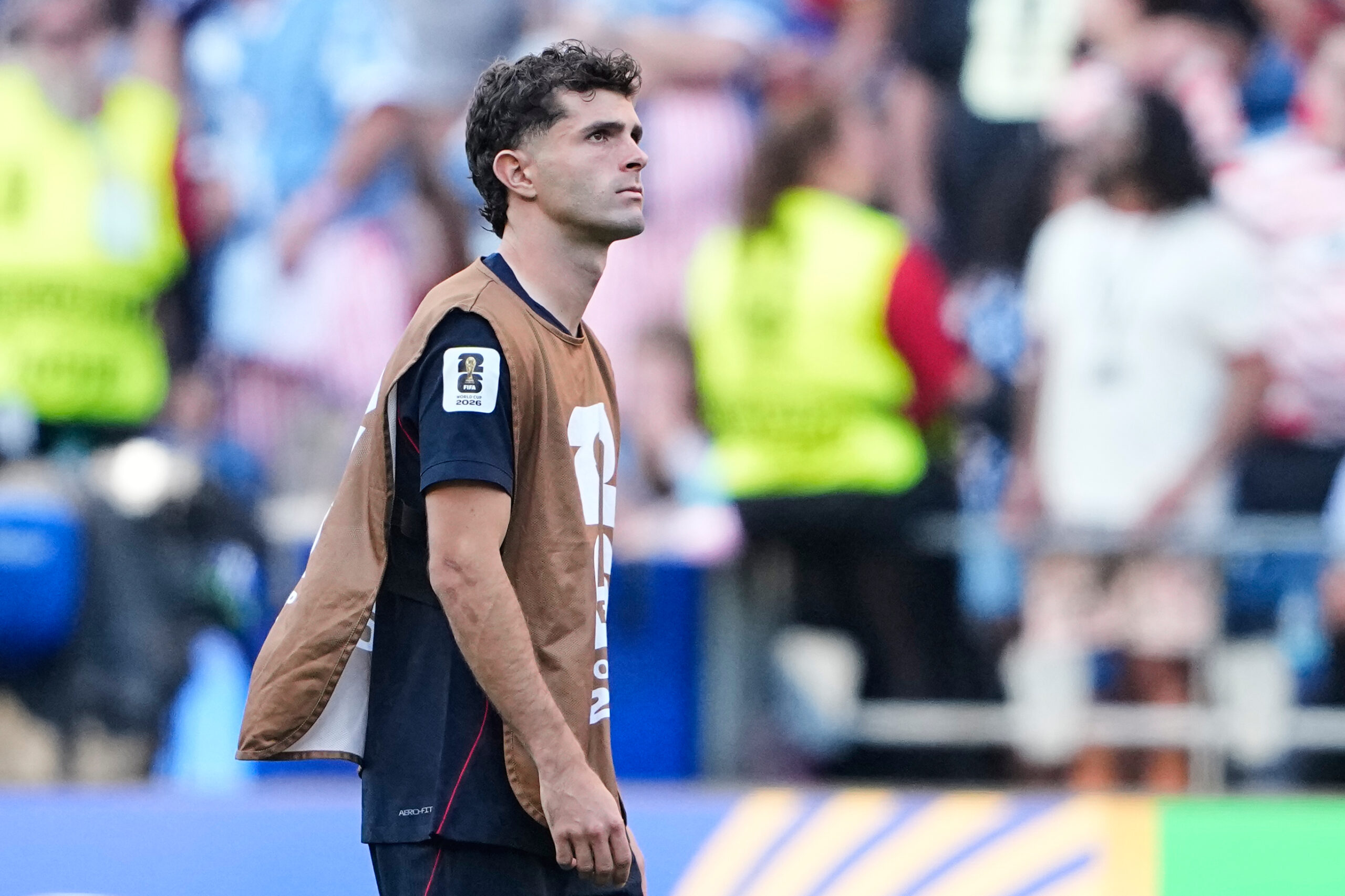
    Christian Pulisic played 224 minutes across four games in this World Cup.

    “I didn’t quite have the moments I was hoping to, to try to help us to really push and get over this next step of beating a really good team,” he said. “So I’m disappointed with myself, of course, but I’m going to try to stay positive. I did a lot of good things, and the team did as well.”

    Gio Reyna also was underwhelming. After earning enough of Pochettino’s affection to make the World Cup team, he played just 131 minutes over the five games, took two shots, created one chance, and scored a goal that was beautiful, but in a game that already was won.

    “If we lose to Bosnia, it’s obviously a big disappointment, and then if we win today, it’s probably a very big achievement for the group,” he said. “So it felt like we kind of just almost did what was expected. … It’s hard to say, I guess, what’s needed to make the next steps to really push through.”

    One thing would be the biggest stars delivering in the biggest moments. That has happened for Kylian Mbappé’s France, Lionel Messi’s Argentina, Jude Bellingham’s England, and Erling Haaland’s Norway.

    But it did not happen for the United States.
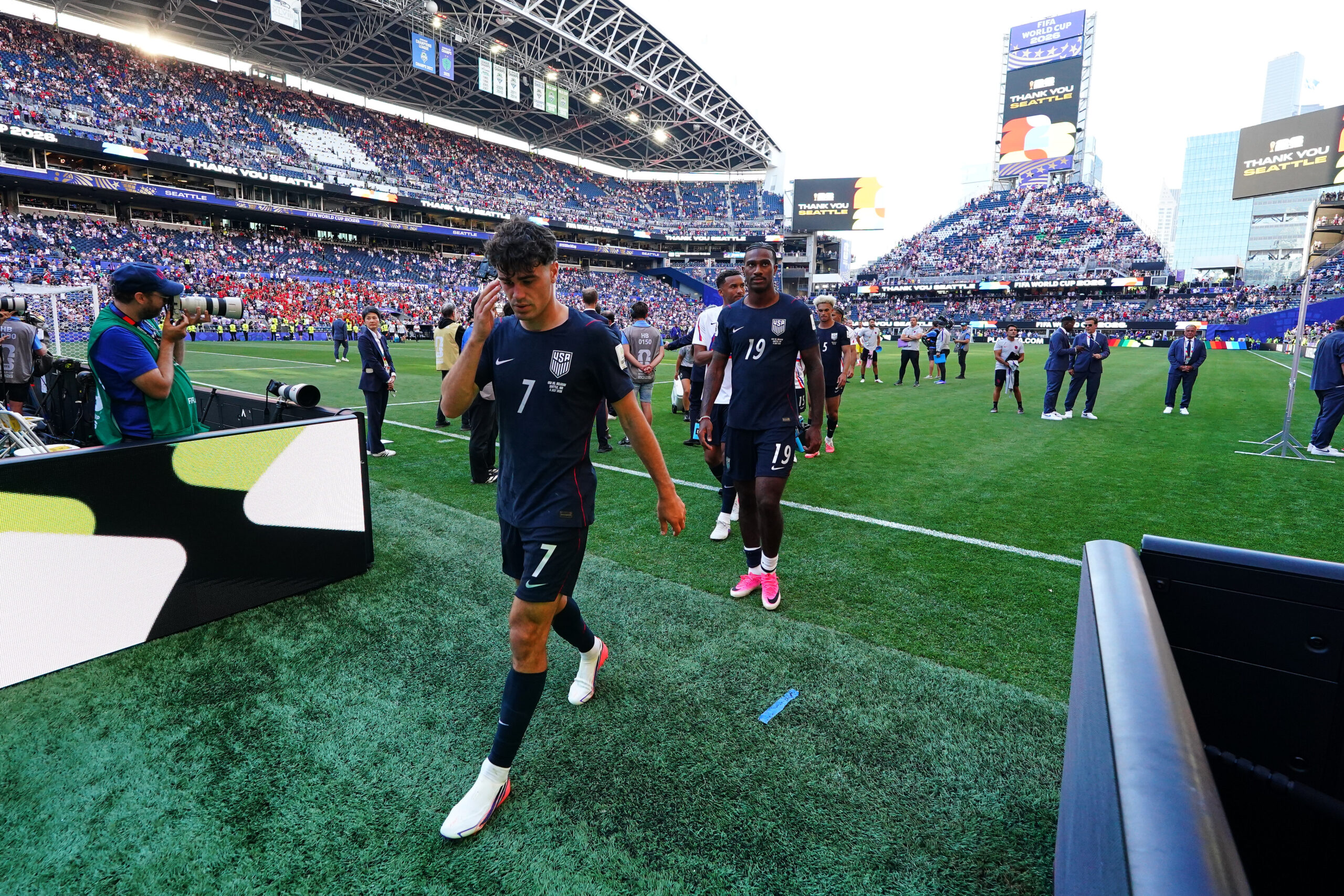
    Gio Reyna (left) walks off the field after the loss to Belgium.

    The Pochettino questions

    Questions must also be asked about manager Mauricio Pochettino. Among them: Was his $6 million salary, paid largely by U.S. Soccer donors from the hedge fund world, worth it?

    The short answer is yes, for what he did to raise the team from the depths it was in when he began. But the other questions are harder.

    Will it be worth splashing cash on another big name? Or, since he wasn’t clearly better in the biggest moments than his American predecessors, should there be a serious conversation about whether it’s necessary?
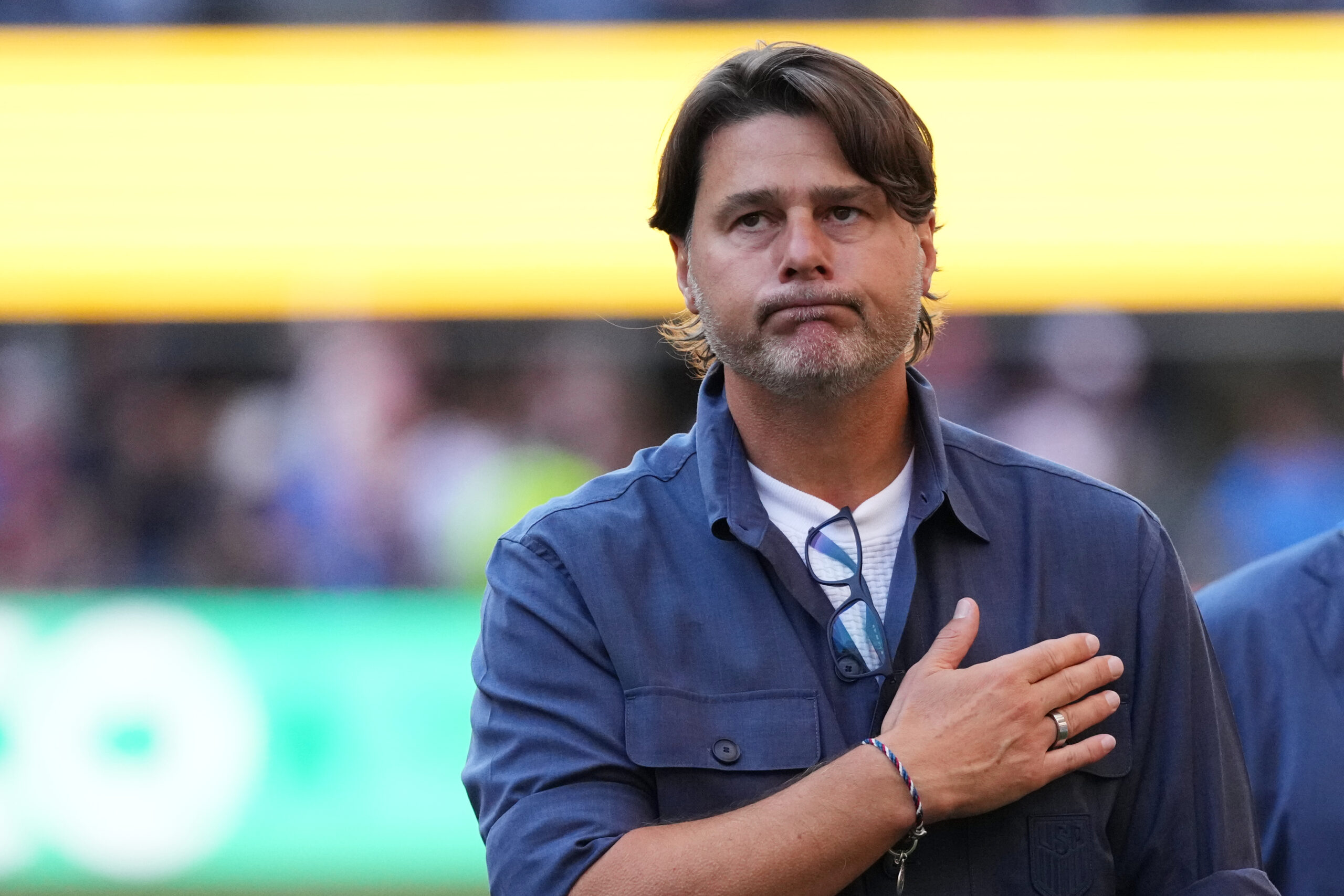
    Mauricio Pochettino’s gesture of thanks to U.S. fans after the final whistle.

    There are good candidates on the men’s side, starting with Ventnor City, N.J., native B.J. Callaghan. His success with Nashville SC combined with his past national team experience make him clearly qualified.

    Former Los Angeles FC manager (and longtime stalwart U.S. player) Steve Cherundolo also is on the list. New Jersey native Pellegrino Matarazzo, who has made his coaching name at European clubs, is too, though he might want more time overseas before coming home. Former Union coach Jim Curtin would be on the list if he hadn’t just been hired by Austin FC.

    But will the donors lean on U.S. Soccer to go for another famous name?

    One of those donors, Scott Goodwin, has quite a few friends in the soccer world — and some at the White House, too: The New York Times reported that he called them to complain about Balogun’s red card.
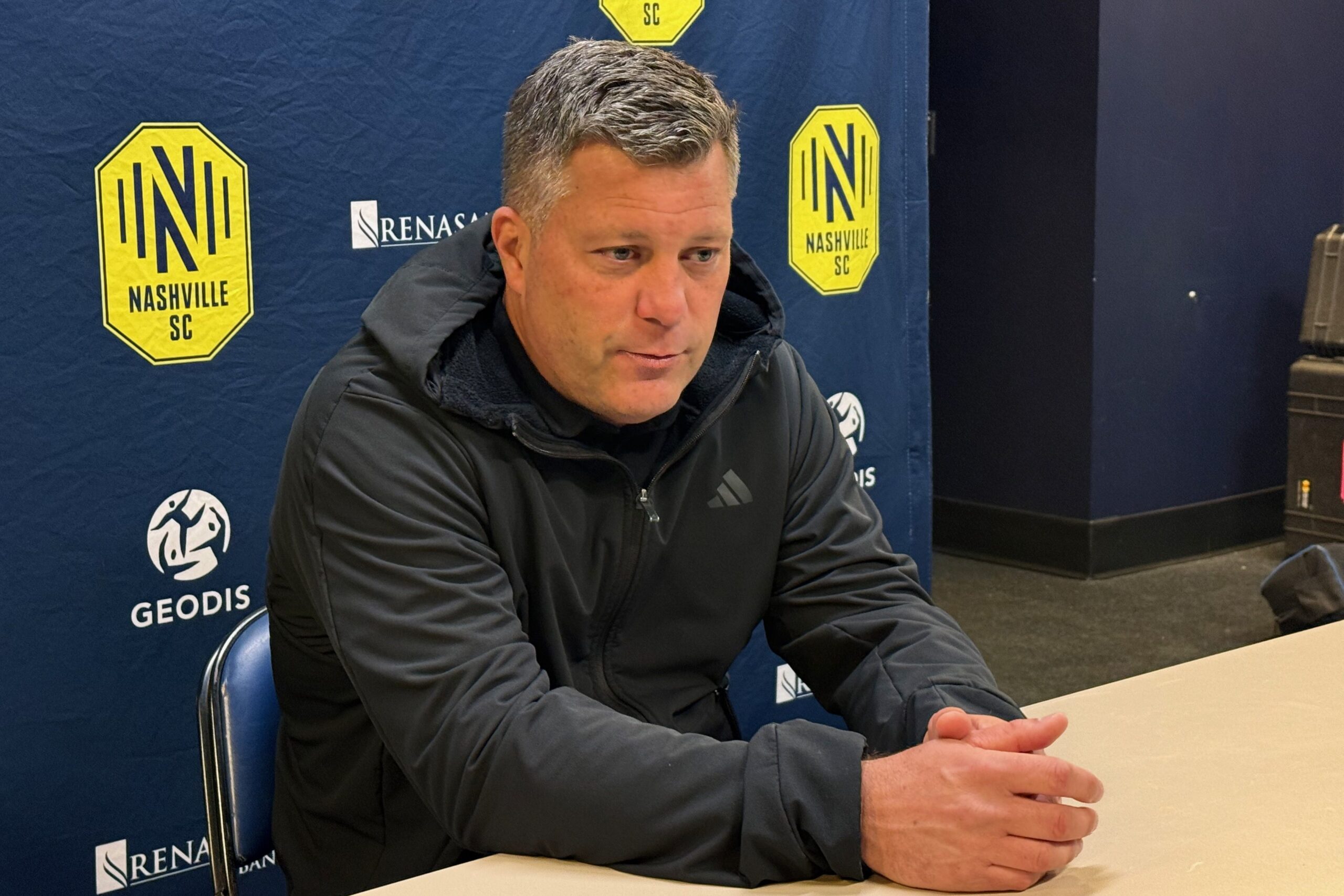
    B.J. Callaghan talking with the media when Nashville SC visited the Union earlier this year.

    Two years ago, Goodwin called his soccer friends to complain about the U.S. team’s flop at the Copa América. They included two former U.S. players who remain well-known in soccer circles, MLS executive Alecko Eskandarian and broadcaster-turned-investor Kyle Martino.

    Goodwin was so angry at the U.S. team’s performance that he said, as he recalled to the New York Post last month: “This is a chance to get an amazing coach.”

    Then, as The Athletic put it just before the World Cup started, “To Goodwin, there were three names that fit the bill: Klopp, Pochettino and Manchester City’s Pep Guardiola.”

    None of them were American. None had ever coached in the United States. Was there an implicit view there that no American could be good enough for the job?

    Good questions for U.S. Soccer CEO JT Batson and chief operating officer Dan Helfrich: Do they think the difference between a big-name foreigner and a qualified American is worth another $6 million bet? And how much sway will the donors hold this time?

    U.S. Soccer declined to make leadership available to the media on Tuesday. A spokesperson told The Inquirer that there might be an availability in the coming days.

    And what about a second term for Pochettino, who’s now out of contract? The players grew attached to him, but that happens with almost any manager. He has talked with U.S. Soccer about another term, but there also have been plenty of hints that he’d like to go back to Europe.

    “I think now, because we were talking with the federation, it’s about to rest a little bit, to think, to have conversation, and then see what the decision is from the federation and from us,” Pochettino said Monday night. “I think we’ve built a very good relationship, but now is not a moment to talk about that. … For sure, in the next weeks, we can start to talk — if the federation wants to talk.”

    Late Tuesday morning, U.S. Soccer issued a statement about its side of those talks.

    “We had positive conversations with Mauricio before the World Cup about the future,” the federation said. “We agreed we would continue those conversations following a chance to rest and reflect post-World Cup.”

    It hinted at the future, but only barely.

    “We have a great deal of respect and gratitude for Mauricio, his staff and everyone part of the program,” it said. “We have shared excitement about our potential and also shared clarity about the amount of work at all levels still required to achieve our ambition.”
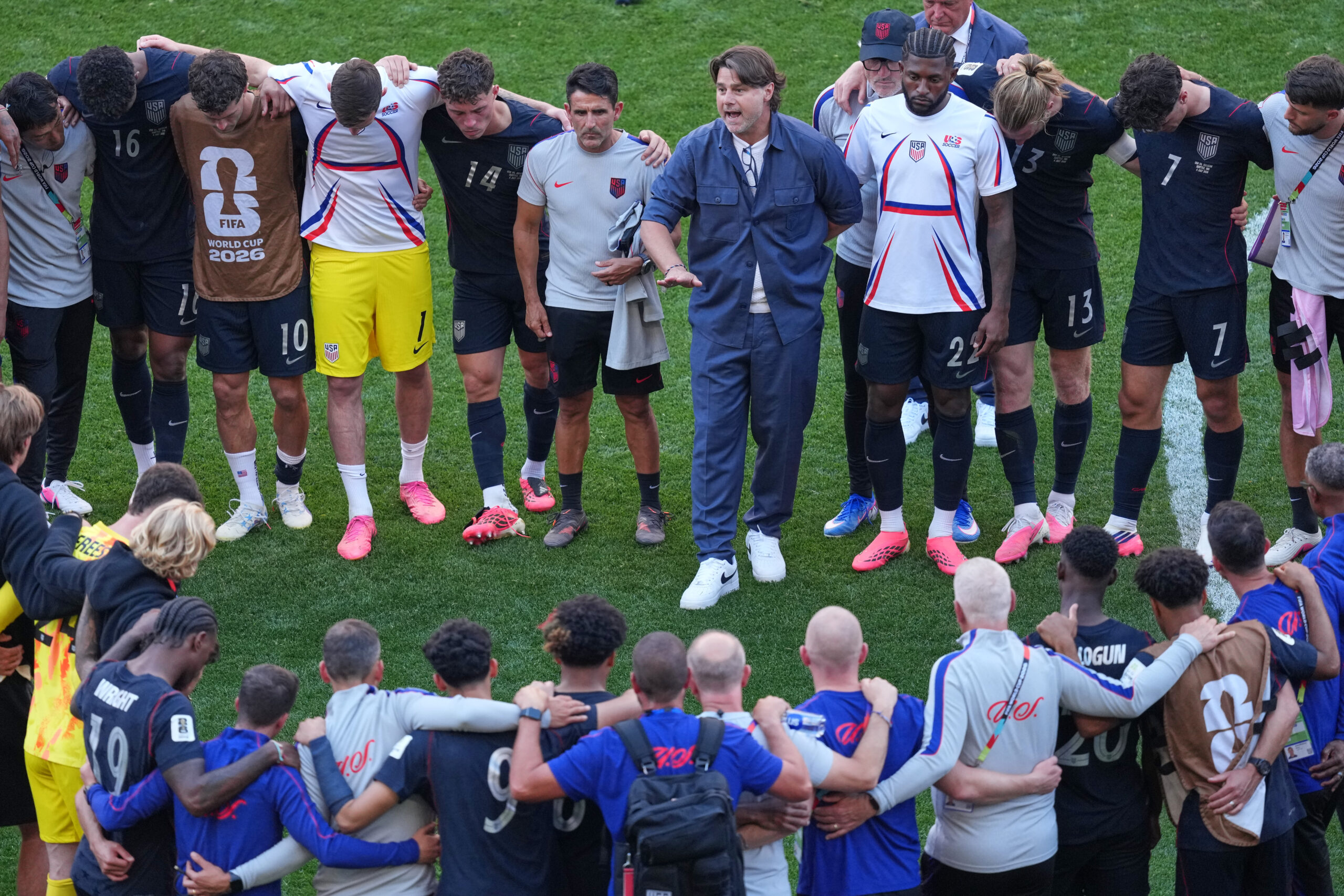
    Mauricio Pochettino (center) addressing players and staff after the loss.
  • USMNT fight past Bosnia and Herzegovina for its first World Cup knockout win in 24 years

    USMNT fight past Bosnia and Herzegovina for its first World Cup knockout win in 24 years

    SANTA CLARA, Calif. — The U.S. men’s soccer team finally ended its 24-year wait to win a World Cup knockout game, though it came at a cost.

    Wednesday’s 2-0 win over Bosnia and Herzegovina featured goals by Folarin Balogun and Malik Tillman, but also a red card to Balogun that means he’ll miss the round of 16 matchup against Belgium in Seattle on Monday (8 p.m., Fox29, Telemundo 62).

    When the 11th minute passed, the U.S. had gone the longest it had in any game of this World Cup without scoring a goal. That was a low bar to clear in the big picture, but there also definitely were nerves on both sides of the field. Matt Freese had to make two big stops early, but it took until the 18th minute for the Americans to really test Bosnian goalkeeper Nikola Vasilj.

    Balogun was the first player to find the back of the net, in the 31st minute, and not long after he’d gone down inside Bosnia’s 18-yard box, though without enough contact to earn a penalty kick. He was then frustrated a second time by the offside flag, and that call was also correct.

    The breakthrough finally came in the 45th minute. Tim Ream intercepted a Vasilj clearance and knocked the ball forward to Tyler Adams, who made a backheel flick into space. The ball rolled to Tillman, who turned and played the ball forward toward Balogun. He had some work to do, but a misplay by Bosnian centerback Tarik Muharemović gave the striker room to collect the ball and slot it home.

    As the crowd of 68,827 roared, Balogun celebrated with LeBron James’ “Silencer” dance move. The basketball star — quite a soccer fan himself — returned the compliment on social media right away.

    Balogun then came inches from doubling the lead in first-half stoppage time, at the end of a lovely teamwide sequence. Alas, his close-range flick hit the crossbar and flew out of bounds.

    The U.S. held a 5-1 advantage in shots halftime, a sign of how they’d come into the game but also how many nerves there were.

    The game’s first substitutions came in the 51st minute, in a triple-move from Bosnia manager Sergej Barbarez, one of which was star striker Edin Džeko, after pulling up lame. The other moves were tactical, including the much-anticipated arrival of winger Esmir Bajraktarević — a 21-year-old winger who grew up in Wisconsin to parents who fled the Bosnian war of the 1990s.

    Balogun’s ejection came in the 64th, after the video review officials watched him rake the studs of his right cleat down the back of Muharemović’s right calf in a tussle. It looked like a 50/50 challenge at first, but the replays clearly showed a cardinal sin for a soccer player — even if he didn’t intend it. By the time Raphael Claus left the monitor, it wasn’t too surprising that he pulled the red card out.

    The ejection meant Balogun would miss not just the rest of this game, but will miss the U.S.’s round-of-16 showdown with the Belgians.

    Now, it was about playing defense, and every U.S. player did his part. Even Tillman, usually much more of an attacking player, got stuck into a loose ball in the 77th.

    Soon after that, the U.S. broke free on a counterattack and Christian Pulisic forced the ball in, but he was clearly offside when Tillman passed to him.

    The biggest break finally came in the 82nd. Stjepan Radeljić held back Sergiño Dest, Claus booked the Bosnian defender, and the U.S. had a free kick on the edge of the 18. Tillman spun it right past Bosnia’s defense and into the net, unleashing a huge celebration from U.S. players and fans alike.

    U.S. manager Mauricio Pochettino finally made his first substitutions in the 88th minute, sending in Ricardo Pepi and Sebastian Berhalter for Pulisic and Dest. In stoppage time, Gio Reyna replaced Weston McKennie.

    There were still plenty of nerves from there, including 10 minutes of stoppage time. But the Americans held on, with the crowd cheering every save, block, and sequence of passes — and exhaling as two Bosnian shots in the final moments went inches wide of Freese’s net.

    Then, at the final whistle, there was the biggest unleashing of all. Thirty-two years after the U.S. men played the first World Cup knockout game of their modern era in the Bay Area, they finally delivered the sight that everyone here had waited so long for.

    This generation of American players finally has its biggest World Cup win.

  • ‘It’s a dream’: Union goalkeeper Andrew Rick is helping the U.S. World Cup team

    ‘It’s a dream’: Union goalkeeper Andrew Rick is helping the U.S. World Cup team

    IRVINE, Calif. — It was the day after Andrew Rick played in the one MLS game he had featured in for the Union this year, and it had not gone well. The 20-year-old was in net for a 4-3 loss at Orlando City, with the decisive goal landing in the 90th minute after the Union had rallied from 3-1 down to tie the score.

    Rick was still in a bad mood when he got home, so he decided to distract himself by playing video games.

    Then the phone rang.

    “It wasn’t a saved contact, and I just saw that it was U.S. Soccer,” he said.

    He picked up, of course, and found veteran U.S. men’s national team staffer Sam Zapatka on the line. The program wanted to have some extra goalkeepers on hand for practices, and wanted Rick to be one of them.

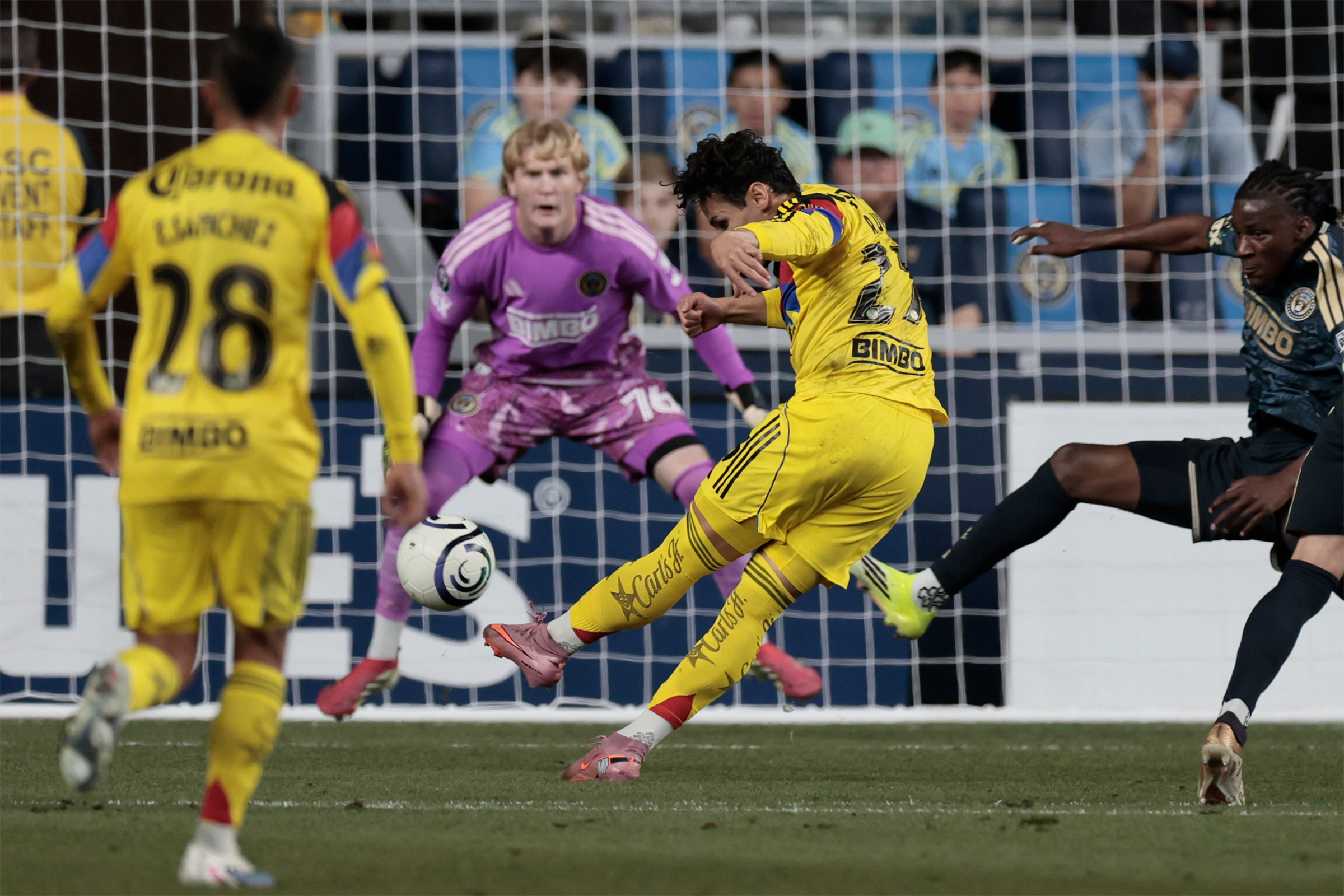
    Andrew Rick (second from left) watching a shot come his way in the Union’s Concacaf Champions Cup home game against Mexico’s Club América in March.

    “It was not a great day for me up until that call,” Rick said. “He let me know the news, and I changed my mood immediately, to say the least.”

    Two weeks later, he set off for the journey of — well, maybe not a lifetime, since the point is he might play in a World Cup some day. But certainly his lifetime to date.

    “It’s a dream,” Rick said. “I wouldn’t think that at this stage of my career, I would be in the place that I am in now, and to have the ability to train with all these [players] — and a lot of them I’ve watched play when I was pretty young — to now get this experience to train with them and be a part of the group, it’s unbelievable to say the least.”

    Rick is one of three goalkeeper prospects, all the same age, who have been with the U.S. team this summer. At first, it was him and Diego Kochen of Spanish superpower FC Barcelona, a highly-touted player who has been to a few senior camps already. Kochen left in the first week of the tournament, amid news of a potential loan move for next season, and Julian Eyestone of English Premier League club Brentford came in.

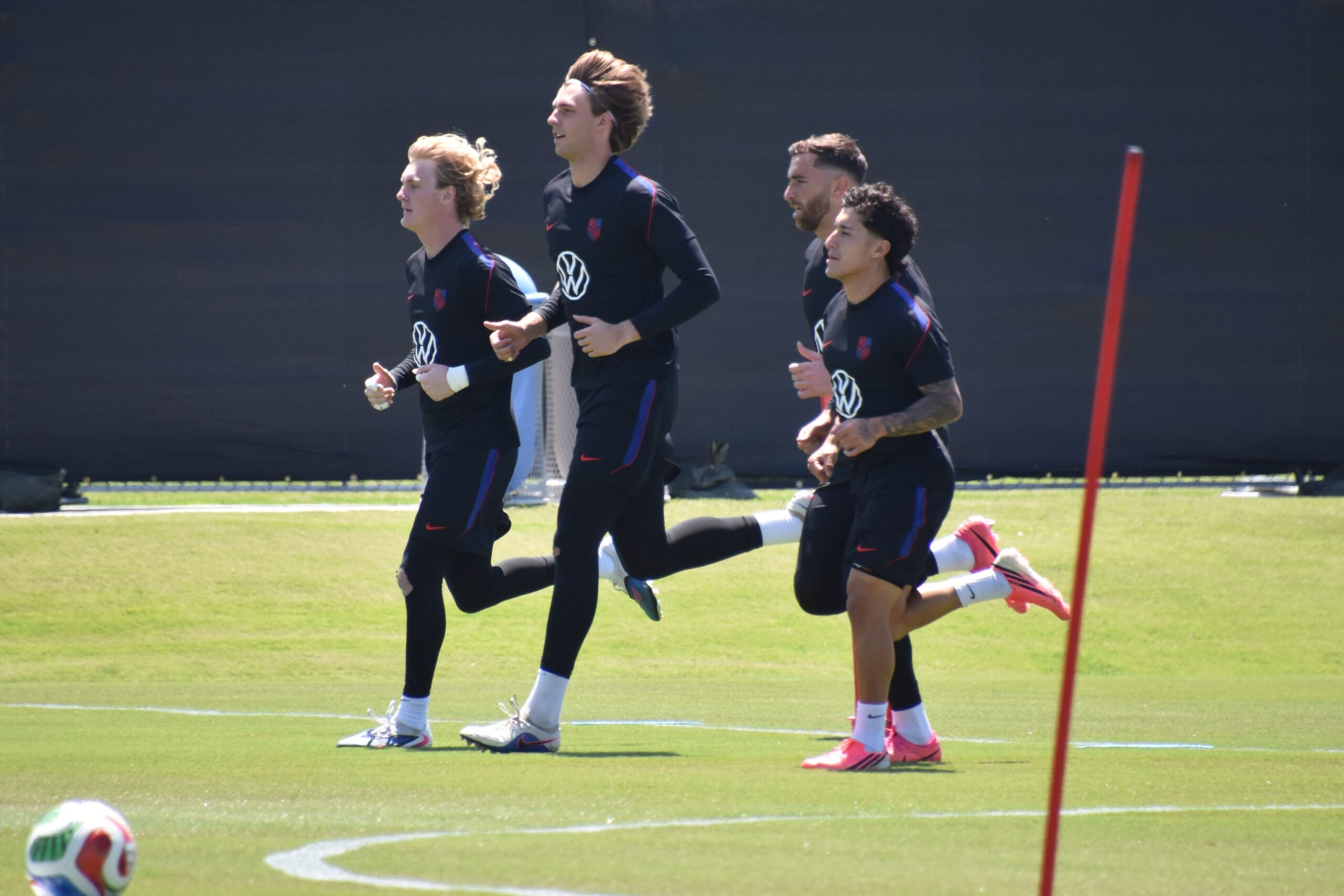
    Andrew Rick (left), Julian Eyestone (second from left), and other players jogging at a recent U.S. practice.

    So not only has Rick gotten to hang with the stars, but he’s the only one of the trio who will have been there the whole time.

    New and old friends

    “Me and Julian are super-close,” he said, noting they were roommates on a U.S. under-20 squad that went to Argentina in March. He had not met Kochen until now, but they got along well too.

    “We have a lot in common just from age alone, and there’s not a lot of other guys here that are our age,” Rick said. “So just being able to be around those guys and have someone closer to my age is nice, just because we can talk a bit more and fit in together. And Diego, he’s been in this environment before, so he also kind of helped me fit in with the other guys and reach out and talk to them a bit.”

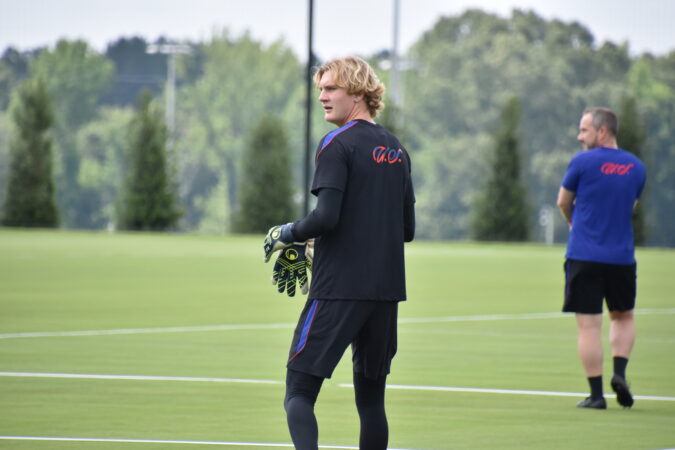
    Among the senior players, none means more to Rick than Matt Freese. They’ve known each other for around eight years, and Rick watched Freese on a similar journey to his: from the Union’s youth academy to becoming Andre Blake’s backup on the first team.

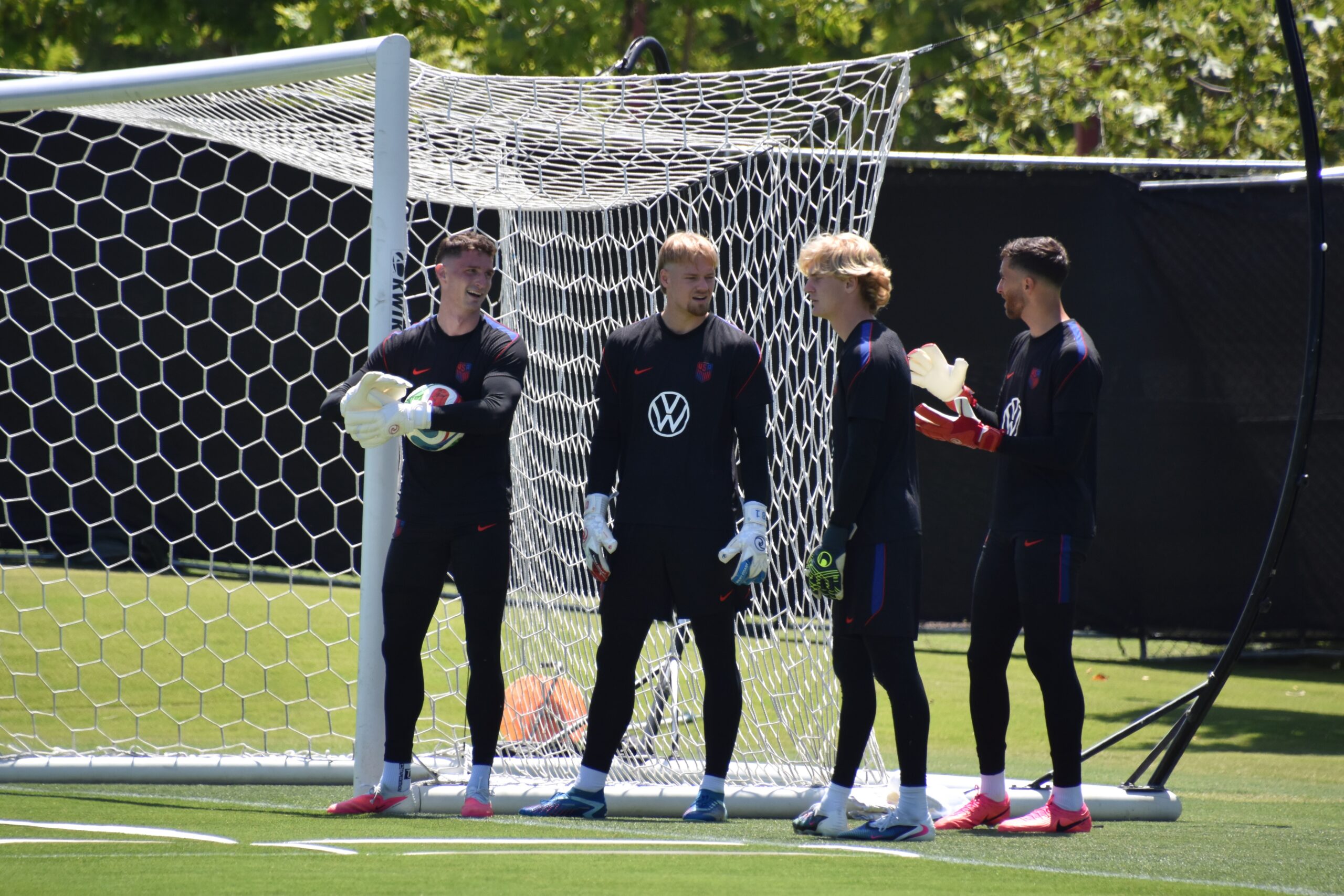
    Andrew Rick (second from right) with the three U.S. goalkeepers on the World Cup team: from left, Matt Freese, Chris Brady, and Matt Turner.

    “Freese has been there for my first Union II training, my first [Union] first team training, and my first men’s national team training,” Rick said. “I’ve known of him for probably, I don’t know, since I’ve been a Union fan. When he was joining was kind of when I started to really get into it, and when I was joining the academy … And obviously he’s a great role model, amazing person.”

    Freese returned the favor, joking that Rick “might have been, like, two when I met him.” But the praise that ensued was sincere.

    “He’s doing a great job,” Freese said. “I think for [all of] them, it’s such a unique experience to be able to be within the group in an environment like this, training every day but also getting to know us off the field. Certainly on the field as well, and being tested and seeing what the future may hold for them.”

    Manager Mauricio Pochettino has been paying attention too. There’s certainly a practical side to having extra bodies on hand, but Pochettino is also happy to do something for the bigger picture.

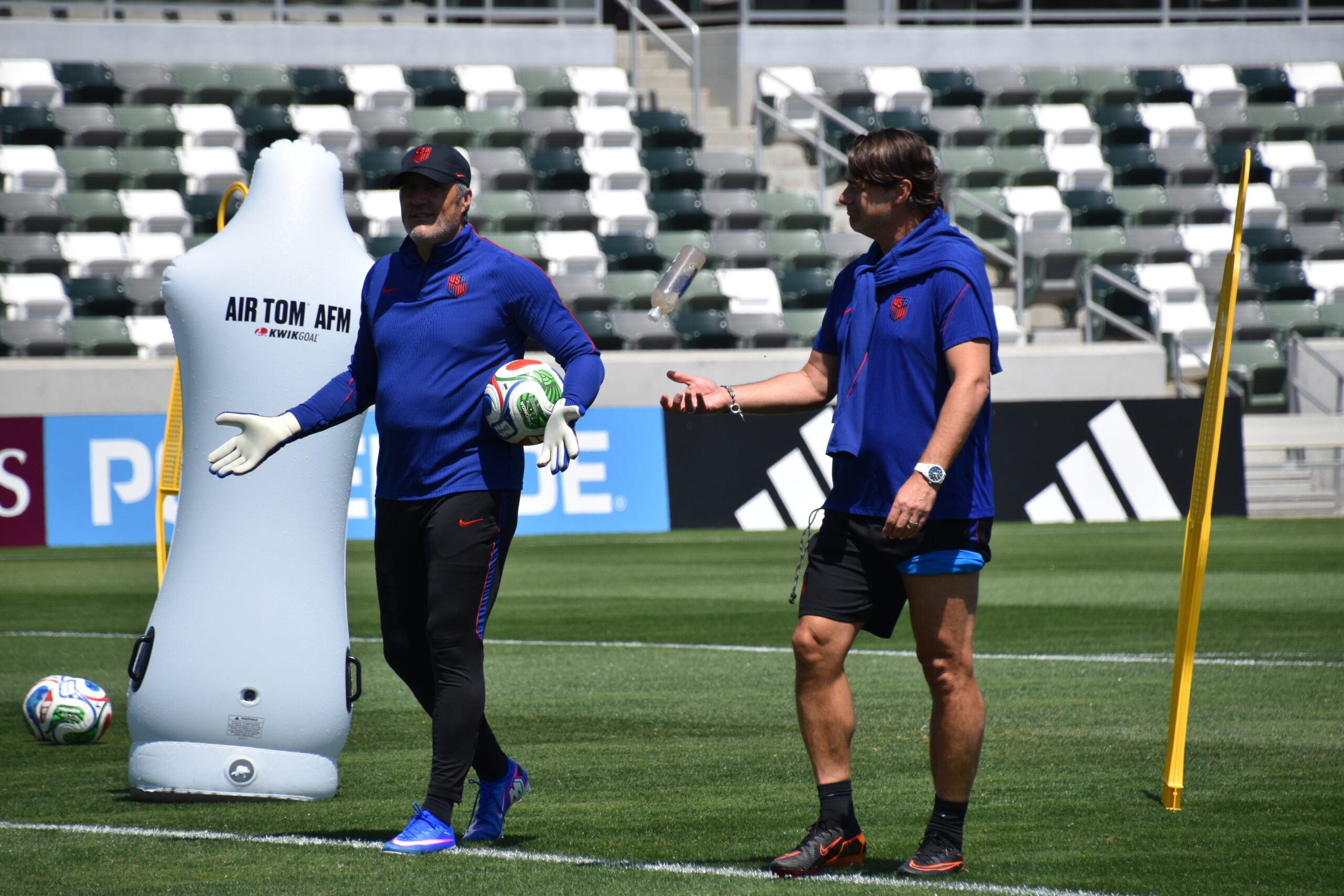
    Mauricio Pochettino (right) with goalkeeper coach Toni Jiménez.

    “I think, always, we’re thinking to try to help develop young players, even if we don’t know if we’re going to be here or not in the future,” Pochettino said, referring to his contract expiring after the World Cup. “But I think we need to work like we are going to be forever here, on a long-term process. That is why one thing is to get the result today, and provide everything to the federation and the team [for] the possibility to perform now, today or yesterday; but at the same time, to help, in parallel, the evolution and development of the young kids that are going to be the important players for the future of this country.”

    Rick confessed to being an extra level of thrilled because he’s a fan of English club Tottenham Hotspur, perhaps the best-known former home for Pochettino.

    “My first day he welcomed me. We just a quick conversation about just where I’m at and all that,” Rick said. “I was a huge ‘Poch’ fan as a kid, now I get to to be coached by him. So it’s an honor.”

    A day in the life

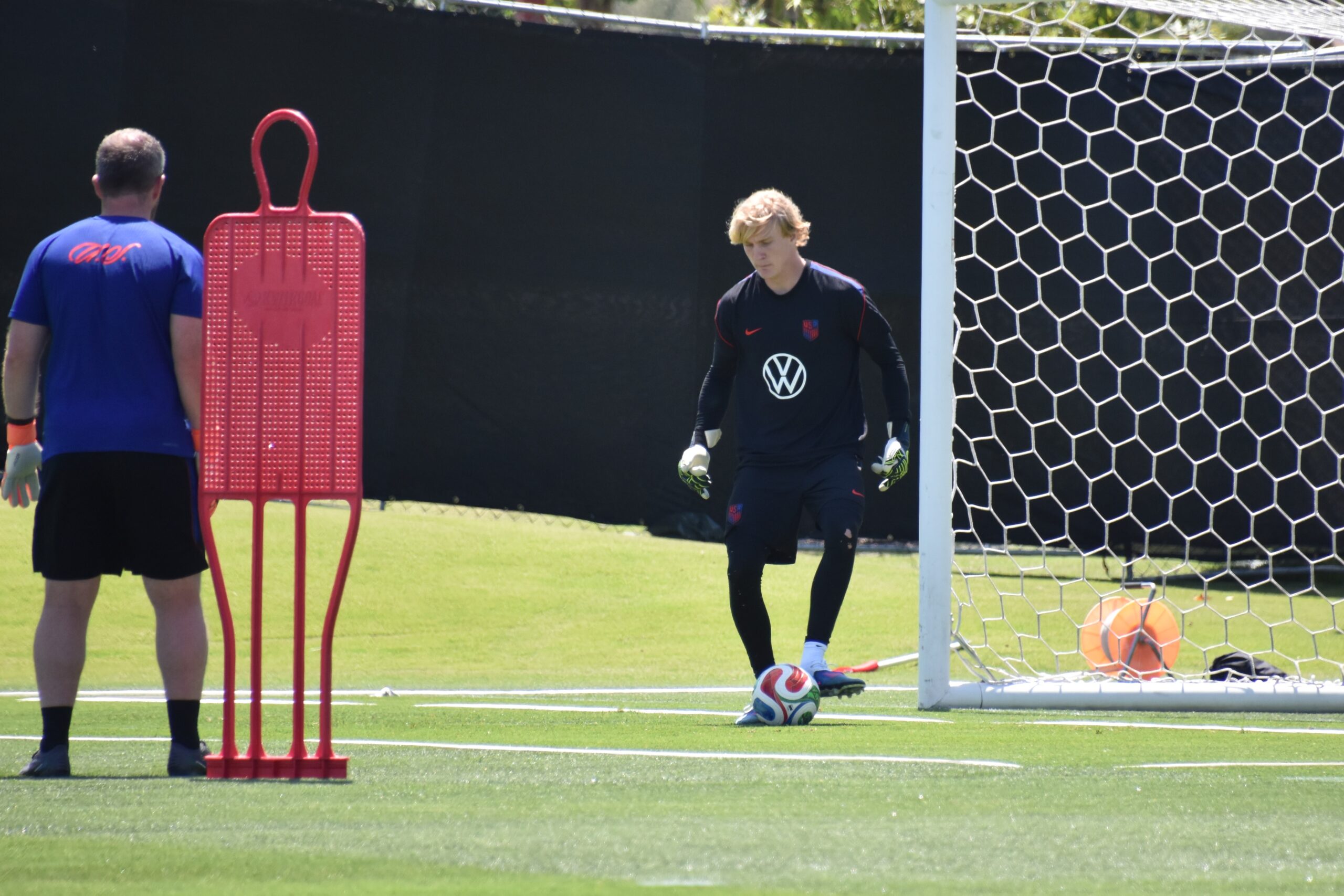
    On most practice days — and there have been more than usual, with a week between games so far in the first 48-team World Cup — Rick has been amid the first team’s action. Other days, the prospects work separately with assistant goalkeeper coach Jack Robinson.

    Andrew Rick getting some work in with the ball at his feet.

    “I think this World Cup’s a bit different to the last, at least talking to some of the other guys, and just seeing it in general,” he said. “But I think the main thing is just being exposed to the environment. If I ever want to get back to this level — and hopefully when I do get back to this level — just knowing what it’s like, and knowing some of these guys and building that relationship with them now while I’m here, is going to be so important down the road for me.”

    When game day arrives, Rick and Eyestone get to spend most of it with the first team.

    “We’re basically with the team until they walk out, and then we go into these seats that are right behind the bench,” Rick said. “So we’ll walk in with the team, we’ll watch warm-ups from the pitch. We’ll be in there for the team talk before the game, and then once they walk out, we’ll go to a separate section that’s right behind the bench and watch from there.”

    At halftime, it’s back to the locker room, then back to the stands, then on to the field to join what have so far been celebrations and applause for the big crowds.

    He’s well aware that his up-close perch would cost a fan thousands of dollars.

    “The ticket prices are crazy, but the good thing is it’s not affecting attendance,” Rick said. “I’m not going to lie, I was a little surprised — I was expecting a lot of people to be scared of $3,000 tickets for one [person], but it seems thankfully I’m wrong. Because, I mean, Seattle was amazing. Best experience I’ve ever had with a crowd, there.”

    Keeping up with the Union

    He has talked with colleagues back in Chester, naming goalkeeper coach Phil Wheddon (who worked with U.S. national teams in the past), Nathan Harriel, and fellow goalkeeper George Marks. Rick also was well aware that he’ll come home to a new manager, as Bradley Carnell was fired a few days after he left town.

    Rick knows interim manager Ryan Richter well, since Richter was promoted from coaching the Union’s reserve squad. But it turns out their relationship goes back much farther.

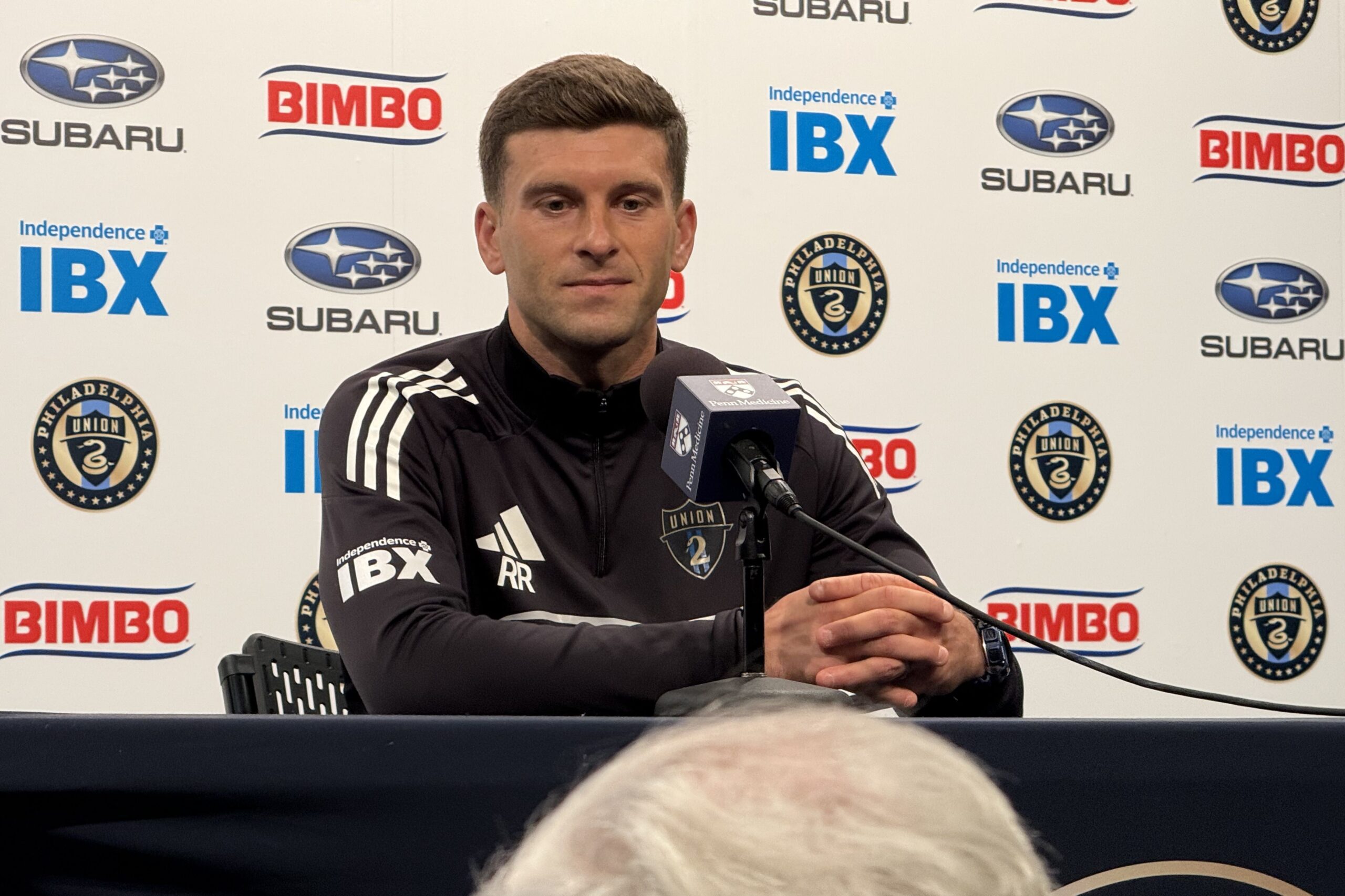
    After the Union fired manager Bradley Carnell, Union II head coach Ryan Richter was promoted to the top job for the time being.

    “He was my Union Juniors coach when I first started, he was my u-12, coach. He was my u-15 coach, he was my union first team assistant coach, then he was Union II coach, and now he’s the first team head coach,” Rick said. “So I feel like I’ve kind of been there every step of the way through the pathway with him. He’s a great guy, and I know how he wants to play and all that super-well just. … I’m proud of him.”

    That moment of reflection led to Rick looking back at his own growth along the way.

    “If I’m being honest, coaching u-12 Andrew is very frustrating, and then coaching u-15 Andrew is also very frustrating,” he said. “But I give him credit, because he’s been dedicated through it all, and now he’s got the ultimate goal which is being the first team head coach.”

    At a moment like this, Rick can dream of his ultimate goal, too. However long it takes him to get there, at least this summer has given him a special way to see the path.

  • USMNT players are waiting with everyone else to learn what changes will come in the group stage finale

    USMNT players are waiting with everyone else to learn what changes will come in the group stage finale

    IRVINE, Calif. — Trying to guess what’s on U.S. men’s soccer team manager Mauricio Pochettino’s mind when it comes to starting lineups is usually a fruitless endeavor. He likes to keep his cards close to the chest, and doesn’t reveal them until he has to on game day.

    But all of his players, not just outsiders, know the four players sitting on a yellow card suspension threat heading into Thursday’s group stage finale against Turkey (10 p.m., Fox29, Telemundo 62): Tyler Adams, Folarin Balogun, Chris Richards, and Antonee Robinson. And they know the risk of playing Christian Pulisic as he finishes recovering from a calf injury.

    That opens the door for backups who haven’t featured much yet to get a shot. Two of them have talked with the media so far this week, left wingback Max Arfsten and attacking midfielder Alejandro Zendejas. They both said they’re ready to jump in if called.

    “Training hard, been waiting for the opportunity, but I’m sure it’ll come,” Zendejas said. “That’s obviously a coach’s decision, and something I’ve got to respect, but I’ve always said it all depends how I’m on the field. I’m working hard, having fun, really enjoying this dream that I’m living right now, so I couldn’t ask for more.”

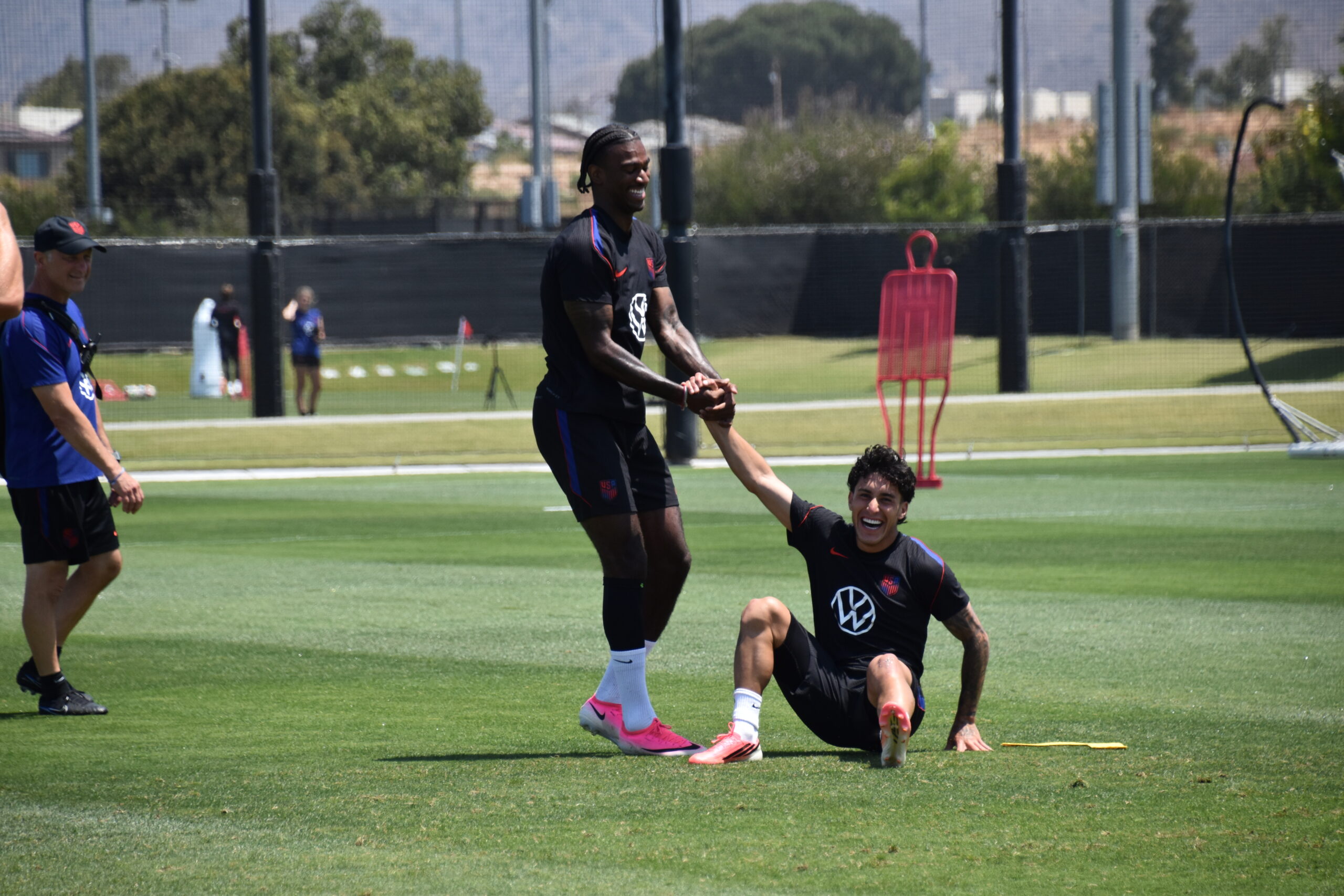
    Alejandro Zendejas (right) shares a laugh with Haji Wright after hitting the deck during a drill.

    Arfsten said before Tuesday’s practice that as of then, the players “haven’t heard anything about” who will start Thursday.

    “That’s obviously the coach’s decision and whatever he decides, obviously we’re going to be on the same page with that,” he added.

    As Arfsten continued at the mic, he left no doubt that all 26 players are well-trained at handling pesky inquiries from the media.

    “It’s a tough question — good thing I’m not a coach,” he said at one point. “But honestly, I think the most important thing is, no matter who’s playing, to go out and try and get three points. Just because I think the momentum of the two wins is what’s keeping the energy high right now, and three would be even more.”

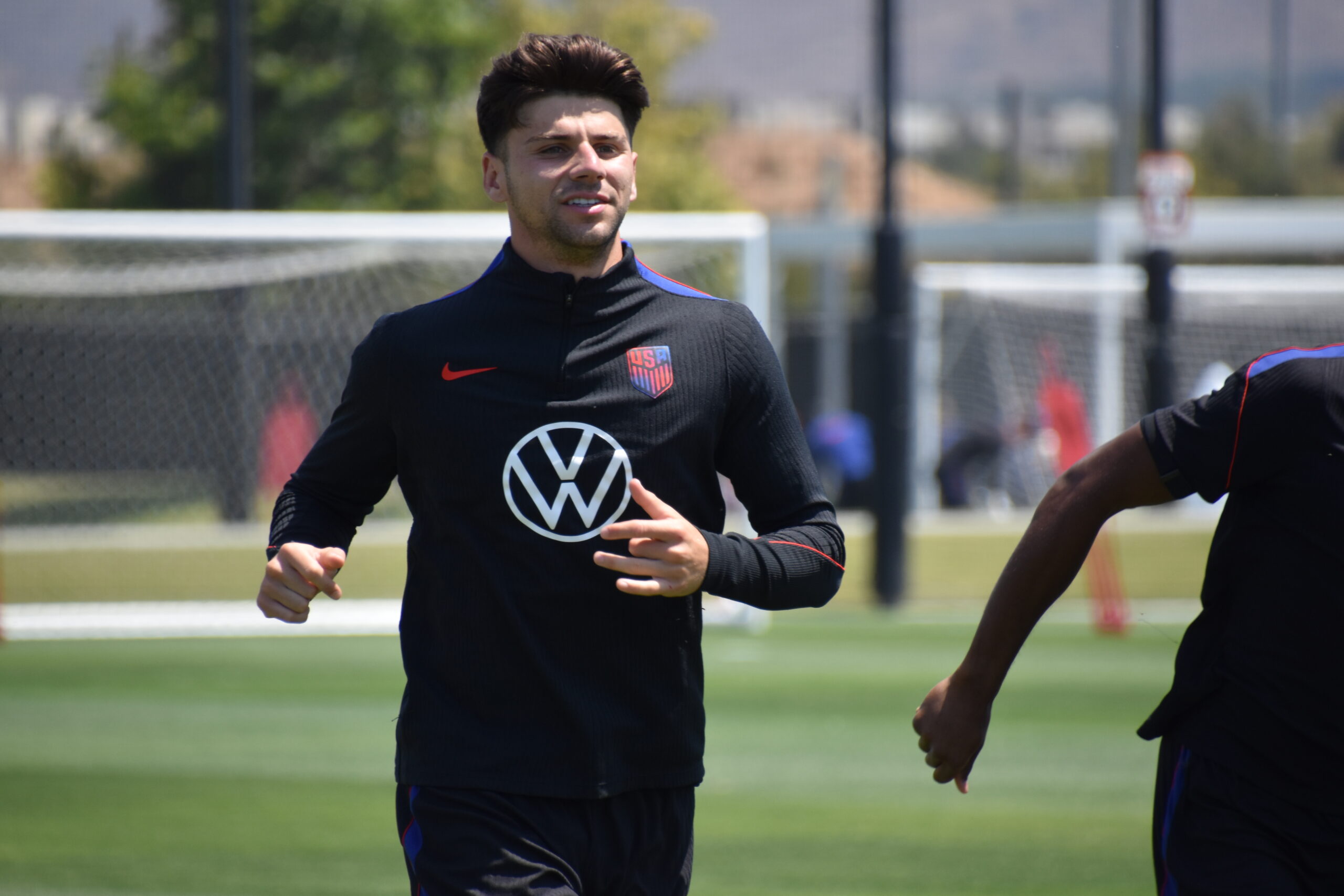
    Max Arfsten jogging during Tuesday’s practice.

    He at least signaled that the tone of training sessions hasn’t changed with first place in the group sealed.

    “Obviously everyone’s happy that we’ve already advanced, but at the same time, regardless of if we’ve advanced or not, training is still very competitive, it’s very intense,” Arfsten said. “And I think that’s the culture that the coach has created: no matter what, that everyone’s still trying to prove something.”

    One starter likely to keep his place is goalkeeper Matt Freese. The Wayne native showed in the first two games why he earned Pochettino’s trust as the No. 1 in net.

    He is also perhaps the team’s most steadfast player when it comes to a one-day-at-a-time mentality. So when he was asked about potential lineup rotations in front of him, he barely flinched.

    “It’s a coach’s decision, obviously, and we’ve got 26 guys here who all want to play, and who all are ready to play, and are working hard every day in training,” Freese said. “And we as a group have full confidence in all 26 of us. So really, we’re focused on continuing to prepare and work hard in training, and be ready for whatever.”

  • ‘Two Delco-heads,’ Matt Freese and Auston Trusty, helped the USMNT make World Cup history

    ‘Two Delco-heads,’ Matt Freese and Auston Trusty, helped the USMNT make World Cup history

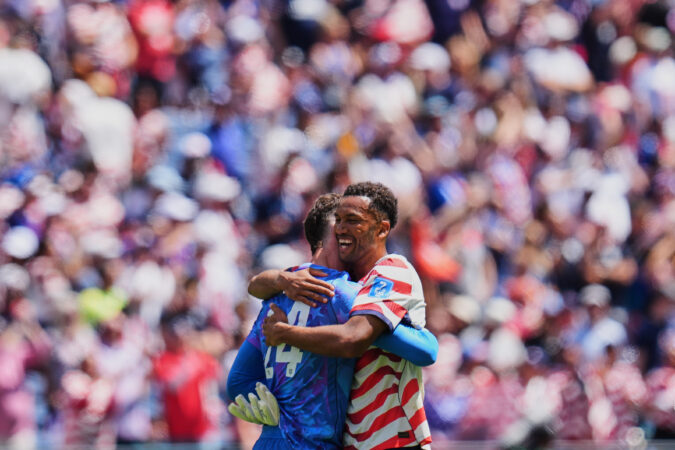
    SEATTLE — At the final whistle of the U.S. men’s soccer team’s 2-0 win over Australia on Friday, Auston Trusty walked over to Matt Freese to offer a big hug.

    They didn’t know that a photographer from the Associated Press was standing nearby to capture the moment. But soon enough, everyone found out.

    Yes, Delco was very much mentioned on the world’s biggest stage.

    “He came over to me and said, ‘Two Delco-heads just had a shutout in the World Cup together. That’s fate,’” the Wayne-born Freese said after his shutout in net. “And I laughed and I said, ‘Yeah, who would have thought?’”

    Perhaps Jim Curtin, or other coaches across the Union ranks who worked with the duo over the years. But not too many people beyond Chester, or Wayne in those days, since that was YSC Academy’s first home.

    “It’s obviously such a cool thing to have known him for so long, and I knew him outside of the soccer world too,” Freese said of Trusty. “We were just friends. So it’s incredible.”

    That wasn’t the only karmic coincidence of the day. Trusty made his World Cup debut in front of not just his wife, daughter, in-laws and cousins, but also two of his first youth soccer coaches with the old Nether United club in Nether Providence, Delaware County: Tor Hotham and John Waraksa.

    Like so many people around American soccer, they circled this day in this soccer-mad city and decided they had to be there. The reward was beyond measure.

    “To have them fly here, not knowing if I’m going to play or not, to come here and be here for this game where I actually make my World Cup debut, it’s just all meant to be,” Trusty said.

    The Media native beamed with pride again when he reflected on finally reaching this moment at age 27, 11 years after going to an under-17 World Cup with Christian Pulisic, Tyler Adams, Alejandro Zendejas, and Haji Wright.

    “When you’re a little kid, dreaming about the stadiums you play in and the atmospheres and everything involved, to play in a home turf World Cup, get minutes, it’s a dream come true,” Trusty said.

    Freese had his family in attendance too, plus his girlfriend’s family, and old friends from high school at Episcopal Academy. He shouted out one of the closest, Michael Hinkley, a soccer teammate back then who went on to play basketball at Dickinson.

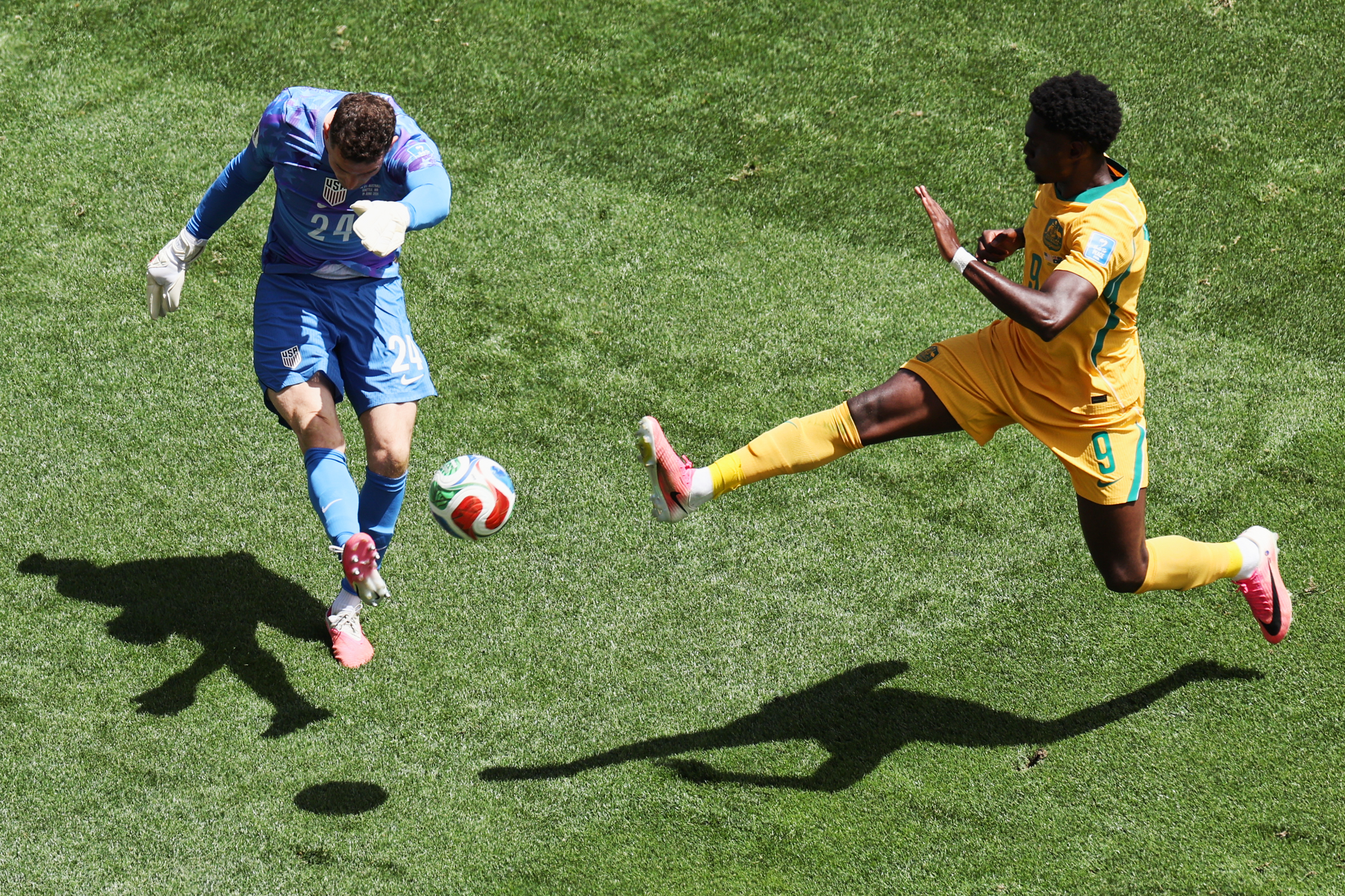
    Matt Freese (left) clearing the ball in front ofAustralia’s Mo Touré during the first half.

    “Obviously incredible support,” Freese said. “It means a lot to play in front of them, and play in front of everyone in this country.”

    That support fueled the U.S. team all day, with the stands full and roaring well before kickoff. Trusty said the atmosphere “gives you chills,” especially when the crowd sang The Star-Spangled Banner over the orchestral rendition on the speakers.

    “The atmosphere is one of those things you dream of,” Freese said. “I’ve heard ‘the 12th man’ is what they call the crowd here. It was definitely a 12th man for us — I think it was a 12th, 13th, 14th, 15th man for us today.”

    But things were getting dicey when Trusty and Joe Scally entered the game in the 80th minute as defensive reinforcements. Australia was gaining momentum even though it hadn’t scored, and an already physical game was getting even more fractious.

    Auston Trusty (left) tussling with Australia’s Cristian Volpato.

    It got especially chippy in the last few minutes, but those two and the rest of the Americans kept their heads and finished the job. They did so at both ends, ensuring Australia didn’t score while also keeping a foot on the gas pedal in attack.

    “Just keep the pressure up,” Trusty said. “They weren’t really pressing too much, they kind of had like a halfway-block [formation], and obviously in a back five [defensively], they want pressure on them. So just continue the press that we had and the movement we had, and really just keep momentum.”

    Mission accomplished on all counts. Not only did the U.S. men qualify for the knockout rounds before the group stage finale against Turkey, but the program has two wins in one World Cup group stage for the first time since the inaugural tournament in 1930. And thanks to Turkey’s loss at the end of the night, the U.S. clinched first place with a game to spare.

    “We came into the tournament wanting to make a statement,” Freese said. “The first part of that’s done, but, you know, there’s a lot more statements we want to make.”

  • The USMNT clinches advancing in the World Cup with a 2-0 win over Australia

    The USMNT clinches advancing in the World Cup with a 2-0 win over Australia

    SEATTLE — It turned out that the U.S. men’s soccer team didn’t need Christian Pulisic to beat Australia, and make history in doing so.

    With the star playmaker unable to shake off a calf injury, the Americans used two first-half tallies and a raucous atmosphere in Seattle to earn a 2-0 win, before a packed-to-the-roof crowd of 66,925.

    The win clinched qualification for the knockout rounds, and marked the first time since 1930 that the U.S. men’s program has won two games in a World Cup group stage.

    U.S. manager Mauricio Pochettino started Ricardo Pepi in the open lineup spot, leading to a tactical change. The Americans rolled out a 3-5-2 formation, with Pepi and Folarin Balogun paired up top.

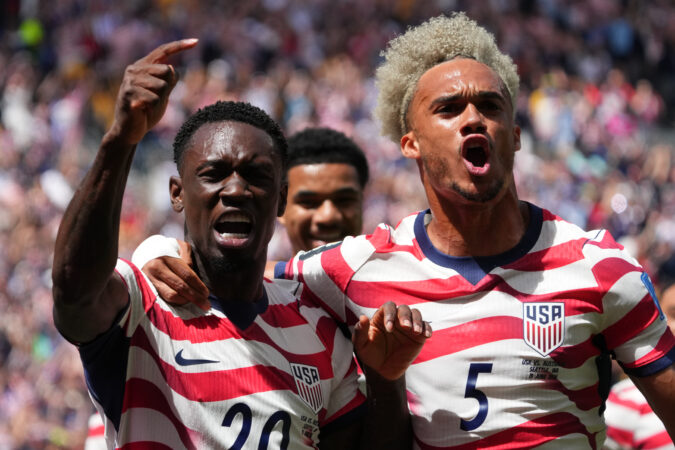
    It didn’t take long for that to pay off. In the 11th minute, Antonee Robinson sprung Balogun down the left flank. He ran almost to the end line, then laid a pass into an onrushing crowd that included Pepi, Sergiño Dest, and three Australian defenders. The ball hit one of them, Cameron Burgess, and pinged into the net.

    The statisticians at TruMedia noted this marked the first time in World Cup history that one team benefited from own goals in consecutive games, following the opening tally of the U.S.’ win over Paraguay.

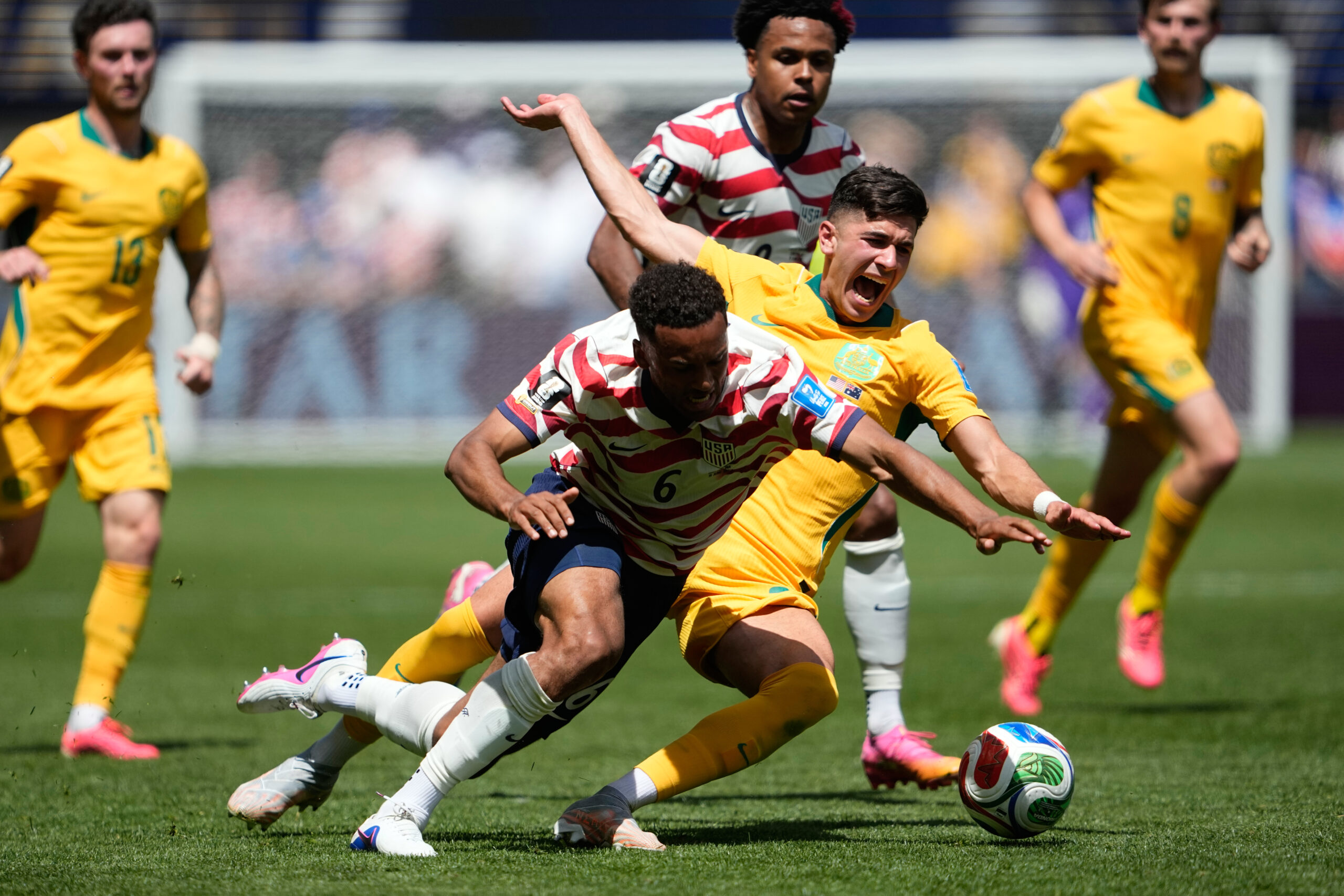
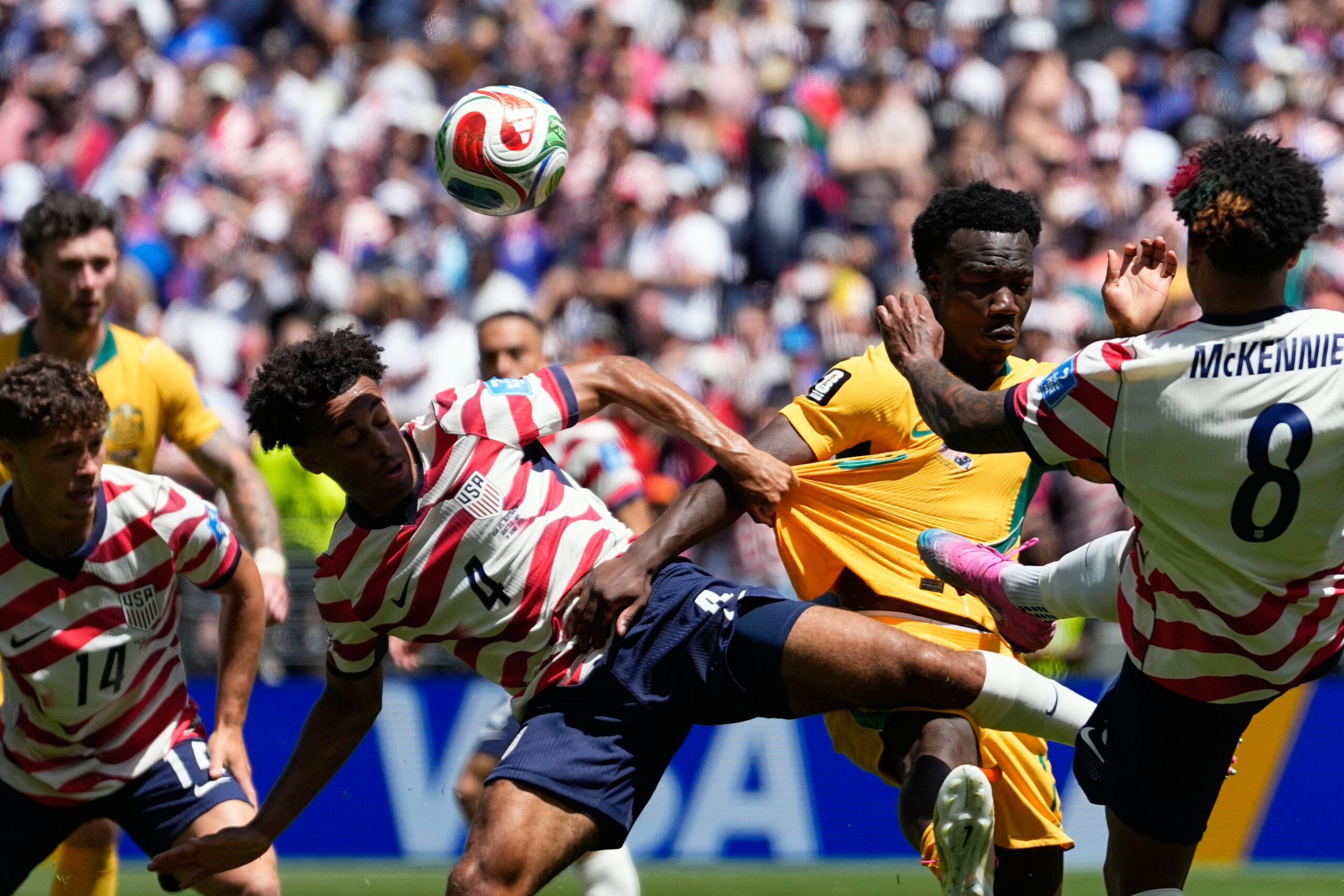
    During the rest of the first half, the action was as physical as expected. Each team committed eight fouls in the period, and German referee Felix Zwayer left more potential ones uncalled. There were two yellow cards, for Jordan Bos’ tackle on Tyler Adams in the 16th minute, and Alessandro Circati’s hard hit on Malik Tillman in the 32nd.

    The mood came to a boil in the 38th when Alex Freeman collided head-to-head with Paul Okon-Engstler, and both players stayed down for a while. Fortunately, neither had to leave the game.

    The Americans got their second in the 43rd, and in controversial fashion. After Dest and Tillman combined to draw a foul on the right wing, Robinson served the free kick wide to Dest at the top of the 18-yard box. He ripped a shot that hit the crowd, flew up in the air, and Freeman jumped to head it past Matt Beach.

    The controversy was that the flag was up for offside, and it sure looked at first like there was good reason. Balogun and Weston McKennie were indeed off when Dest shot. But Freeman wasn’t, and since Balogun didn’t touch the ball, the video review officials called it a good goal.

    Australia manager Tony Popovic admitted how deep a hole his team was in by making three substitutions at halftime, including taking out Burgess. Another, replacing striker Mohamed Touré with Nestory Irankunda, raised the question of why Irankunda surprisingly hadn’t started.

    Popovic had another complaint in the 63rd when Adams, who was risking a suspension for yellow card accumulation, knocked Connor Metcalfe over in the box off the ball and it went uncalled.

    This was the start of the Socceroos gaining momentum, and Wayne’s Matt Freese was forced into his first proper save of the day in the 65th. A few seconds later, Chris Richards shoved Irankunda outside the box as Freese was charging off his line toward them, Zwayer didn’t blow his whistle, and Popovic was angry again.

    Pochettino finally made his first substitution in the 74th, sending in Sebastian Berhalter for Pepi and taking the U.S. back to a one-striker setup.

    Tyler Adams (left) and Weston McKennie (right) battling with Australia’s Nestory Irankunda during the second half.

    The crowd might have preferred hometown hero Cristian Roldan, and a lot of people wanted to see Adams taken off before picking up that feared second booking.

    Instead, there were two other defensive substitutions in the 80th: Joe Scally for Dest and Media’s Auston Trusty for Robinson.

    Tempers flared again in the 88th when Australia’s 6-foot-6 centerback Harry Souttar and Balogun got each other in mutual headlocks. There was a brief coming together of the teams, and both players were booked. Australia’s Jacob Italiano was also booked amid the scuffling.

    As six minutes of stoppage time began, the crowd gave another hearty “USA!” chant. Then they had a brief laugh in the 93rd when Zwayer cramped up on the field, and needed some medical assistance. Players from both teams came over to lend a hand.

    Pochettino then made two last substitutions, withdrawing Balogun for Haji Wright and McKennie for Gio Reyna.