Losers of five straight, the Flyers are spiraling.
To be clear, it’s not that they’re spiraling because they’ve lost five straight. The issue is how the Flyers have been playing during this stretch.
And have they been facing some adversity regarding injuries? Yes. Across the past five games, defenseman Jamie Drysdale missed three with an upper-body injury; forward Bobby Brink (upper-body) has missed five and is now on injured reserve; defenseman Rasmus Ristolainen is day-to-day with an upper-body injury; and Dan Vladař was injured against the Buffalo Sabres on Wednesday.
But all teams face adversity. The Flyers just need to play better.
Saturday, the Flyers face a New York Rangers team that is not just spiraling but plummeting. Facing the Rangers is a prime opportunity to get back in the win column, but it won’t happen unless the Flyers correct a bunch of things.
Aside from the power play, which is at 12.5% during the slide, and goaltending — the Flyers went from 2.80 goals-against per game in the first 41 to 5.00 in the past five — needing to, be better, here are five things they need to do to right the ship.
1. Stop taking bad penalties
Is every penalty a bad penalty? No. Is every penalty the correct call by the officials? Absolutely not, and there have been some horrendous calls this season against the Flyers.
But when the penalty kill has been struggling — it went from 80.2% across the first 41 games and is at 61.1% during the five-game losing streak — you have to stay out of the box.
The Flyers have taken 28 penalties during this stretch, which is the most by any team, have been shorthanded 18 times, tied for the second most, and have been shorthanded more than 5 minutes per game. They’ve also allowed the most power-play goals against (seven), three of which came on Thursday in the 6-3 loss to the Pittsburgh Penguins.
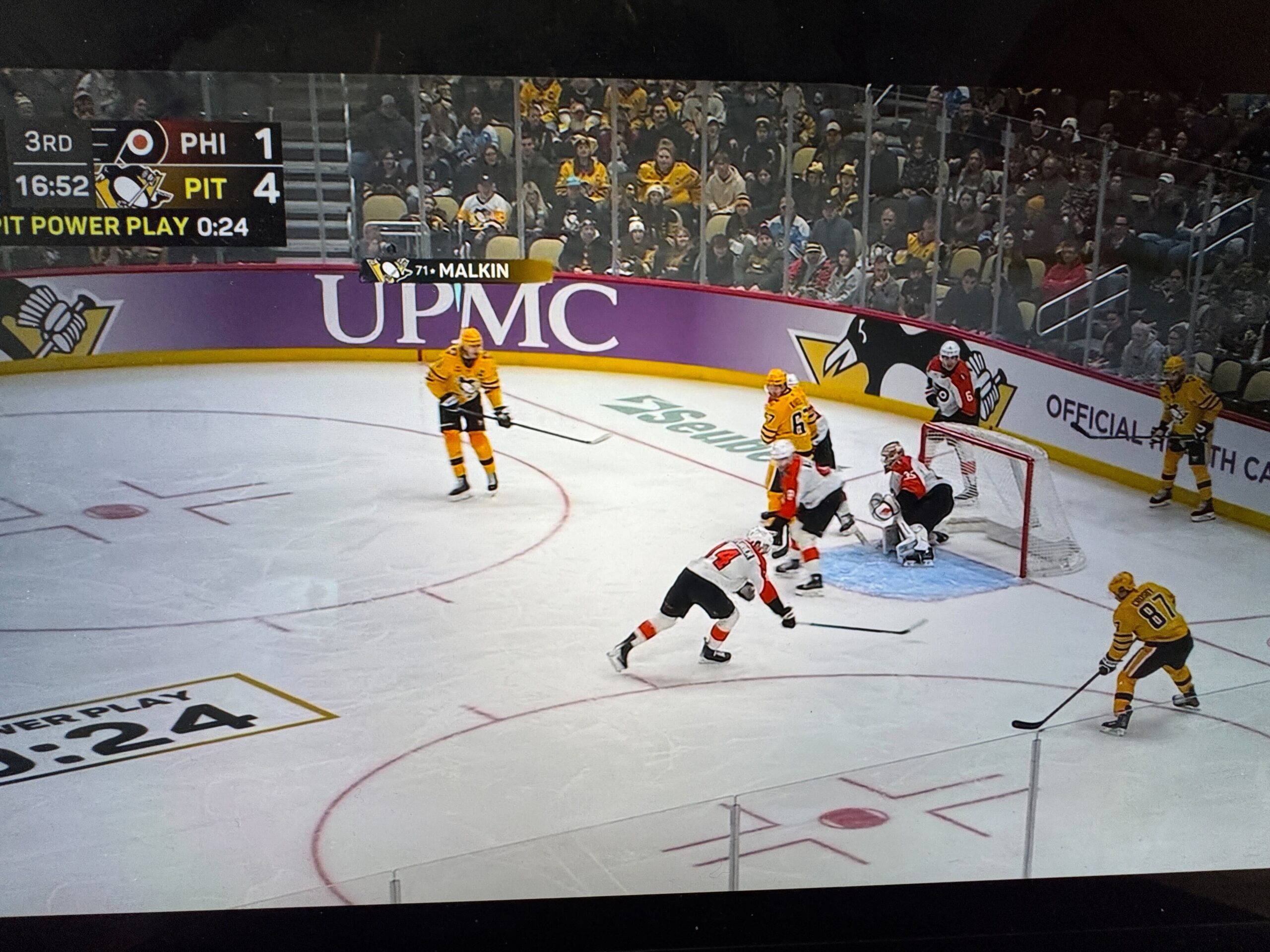
The Flyers left Sidney Crosby all alone to score a power-play goal in Thursday’s 6-3 loss to Pittsburgh.
“Yeah, I think it’s just being smarter, not letting frustration creep in. I think it’s, I don’t know, a lot of away from the puck stuff that’s kind of creeped in recently, and I think that’s due to frustration,” forward Owen Tippett said after Wednesday’s game when the Sabres scored twice on the man advantage.
2. Maintain the diamond on the penalty kill
What’s going wrong on the penalty kill? A lot. But the biggest issue is that it has lost its structure.
“Yeah, just really disappointed, like, I’m pretty disappointed,” said coach Rick Tocchet after the Sabres game. “I’m a PK guy, and the reads that we gave them weren’t good. They’re just unacceptable for me, so we’re going to have to tidy that up.”
Tocchet prefers the diamond PK setup to take away point shots, the player in front of the net, and passes to the bumper. The diamond shape is designed to take away specific passing lanes from the player who is typically set up right in the slot in the 1-3-1 structure typically employed by NHL teams.
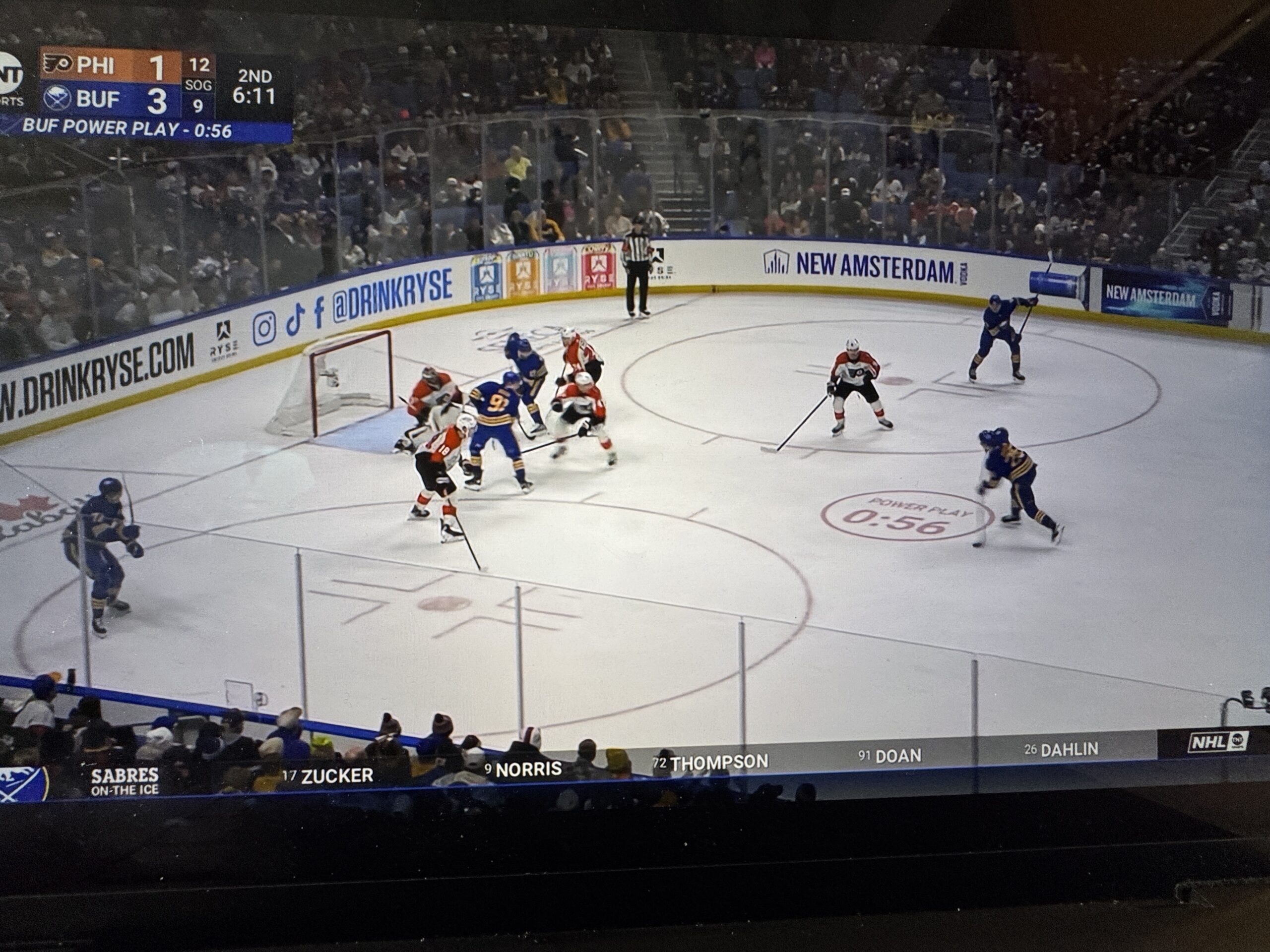
Buffalo scored two power-play goals on Wednesday, including this one, where all four of the Flyers’ penalty killers got caught too tight together in front of the net, allowing Rasmus Dahlin to walk in and score.
Of course, that doesn’t mean you should ignore the other guys — see Sidney Crosby’s goal Thursday from the right flank. But the Flyers’ structure has fallen apart, and if you’re going to be a team to take penalties, this needs to be airtight.
Remember the good old days of fans yelling, “Shoot the puck?” It was always kind of annoying and probably didn’t come at the right time, but maybe it’s time to start doing that again because, as Wayne Gretzky and Michael Scott said: “You miss 100% of the shots you don’t take.”
The Flyers have never poured the shots on in Tocchet’s system. They averaged 26.3 in the 41 games before the losing streak, which had them ranked 25th in the NHL. And they have only put more than 30 shots on goal in a game 11 times.
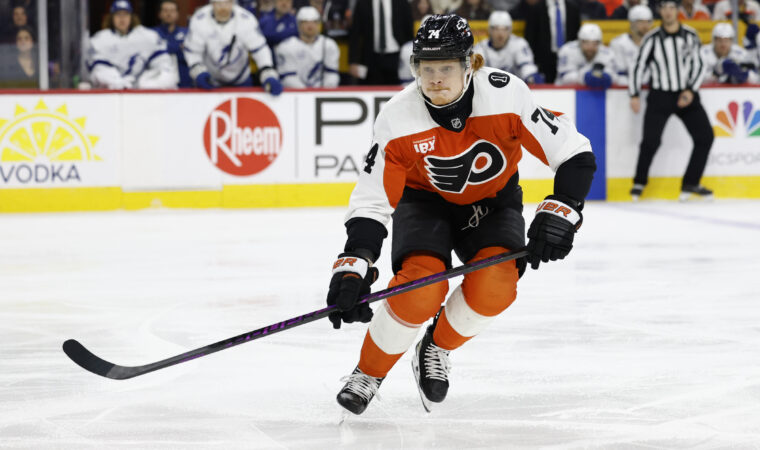
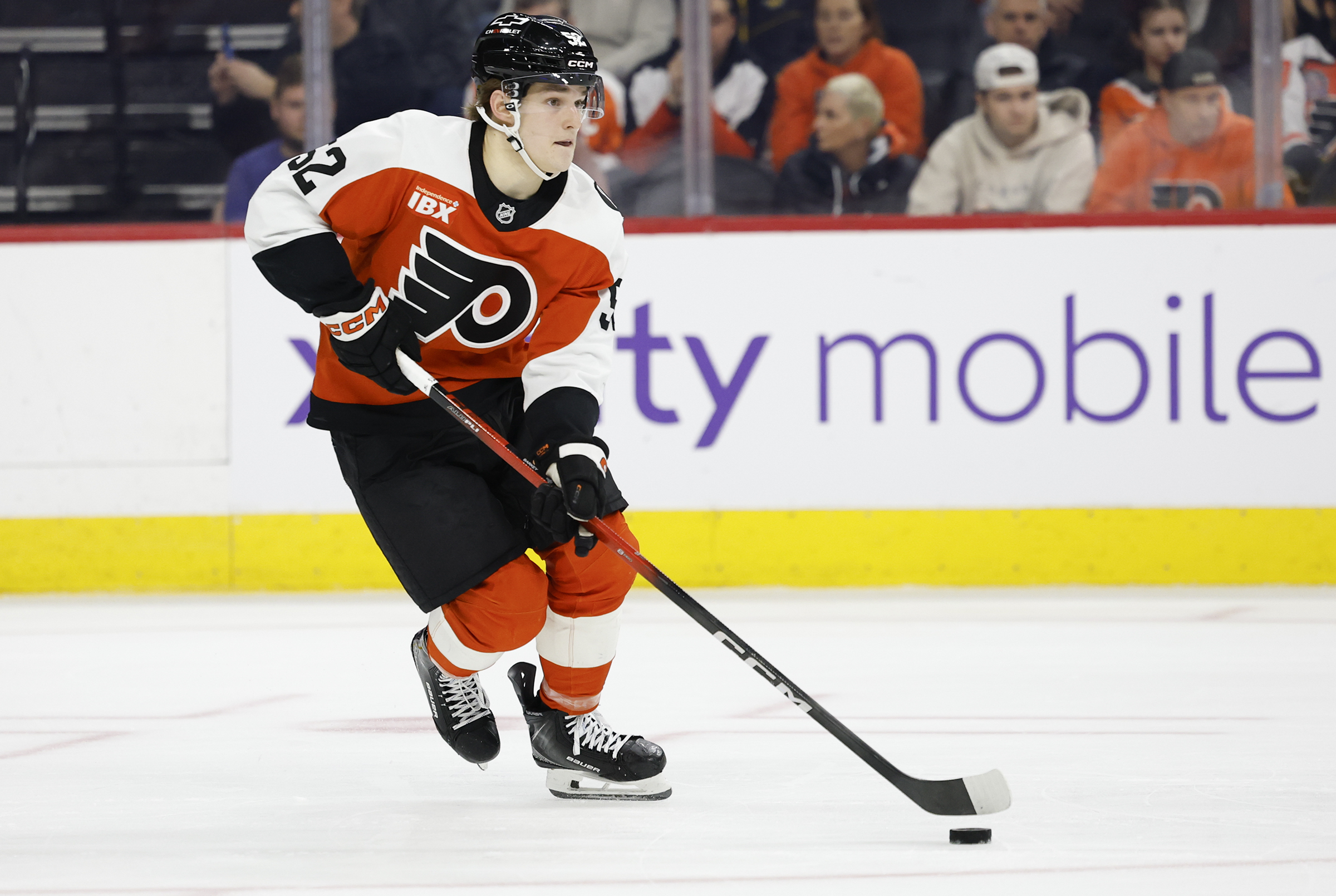
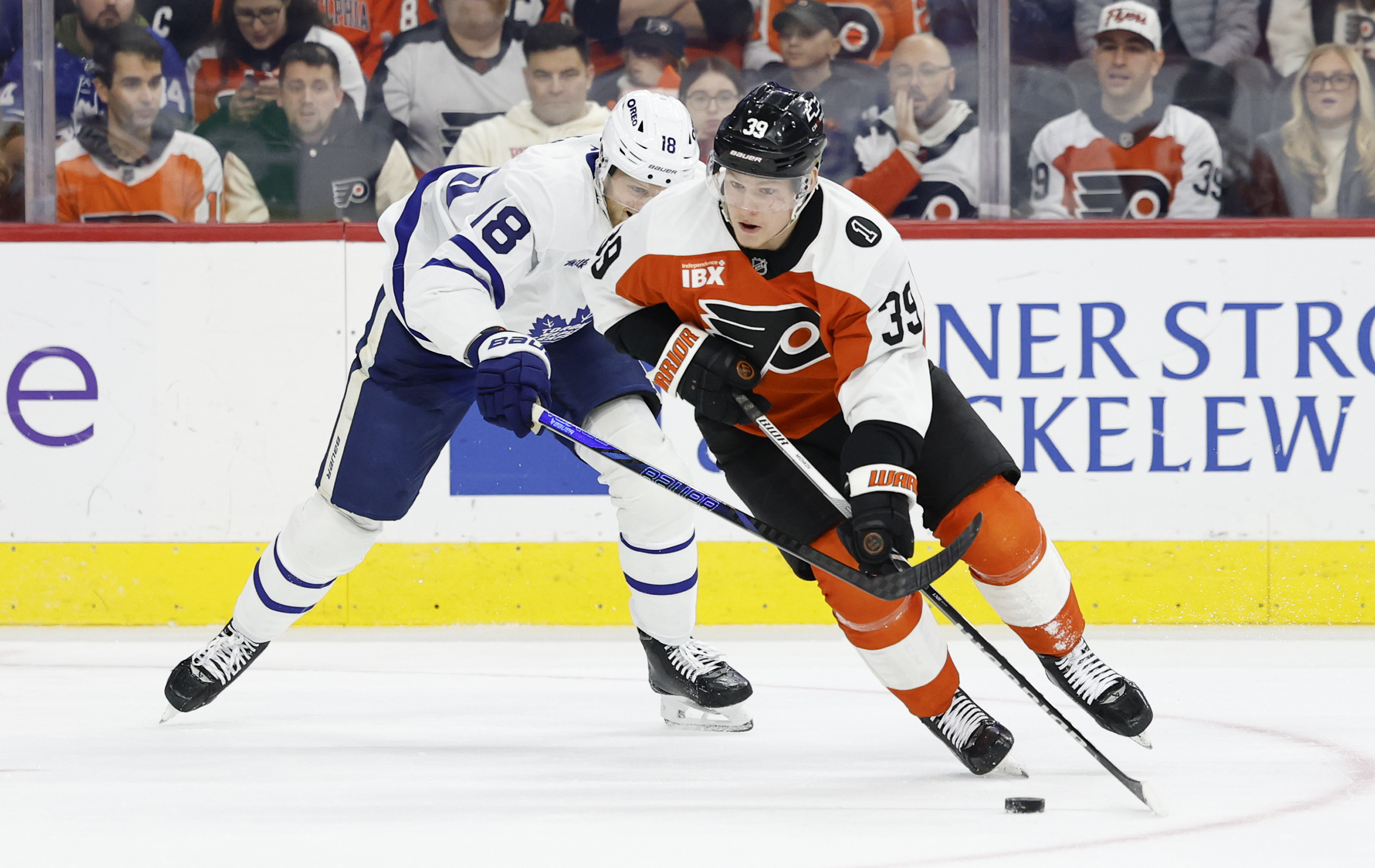
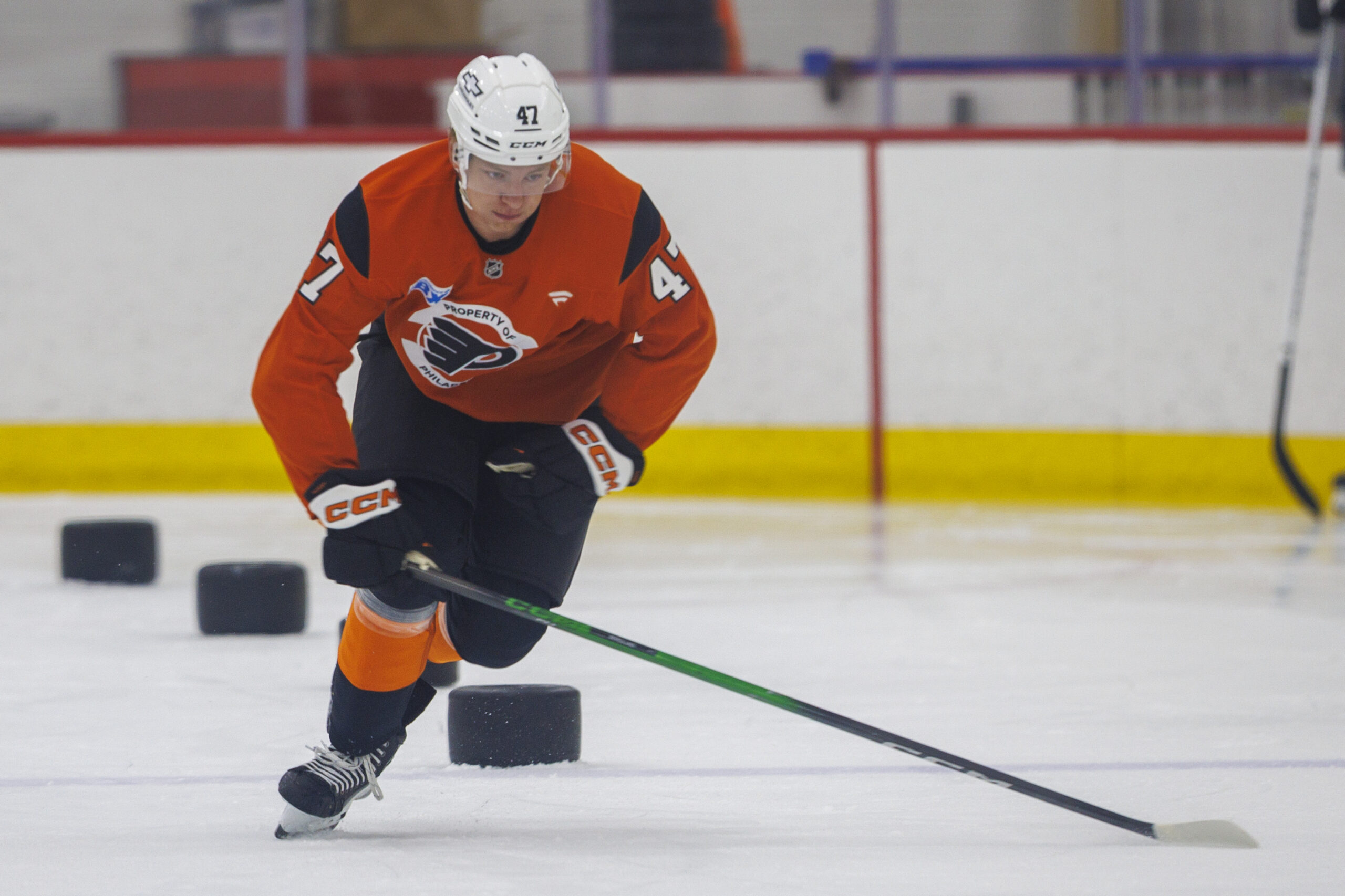
Flyers center Denver Barkey skates with the puck against the Tampa Bay Lightning on Monday, January 12, 2026 in Philadelphia.
Across the losing streak, that average has dipped to 23.8, which is the sixth-fewest — and only looks better than it is because of the 33 shots they put on Stuart Skinner on Thursday night, including 17 in the second period.That’s by far the most in a single period during a stretch in which the Flyers did not have more than 23 shots on goal in a game; in 12 of their previous 13 periods, the Flyers hit double digits just once.
The problem is that at five-on-five, they are getting chances but not scoring. Natural Stat Trick has the Flyers tied for 13th in the NHL at shot attempts (205), but with only 86 shots and six goals during the losing streak. The Flyers are also No. 2 in missed shots during that span (92).
“I think there were a few chances tonight that could have changed, maybe the momentum of the game, but at the end of the day, that’s the part of it, you’ve got to score more goals than the other team,” Drysdale said in Buffalo. “So I think we got better [as the night wore on]. We will be better.
4. Follow Owen Tippett’s lead
Tocchet has long talked about Tippett being a guy he can unlock and how, with his size, speed, and scoring ability, he can be a power forward in the NHL. He just hadn’t put it all together — until maybe now.
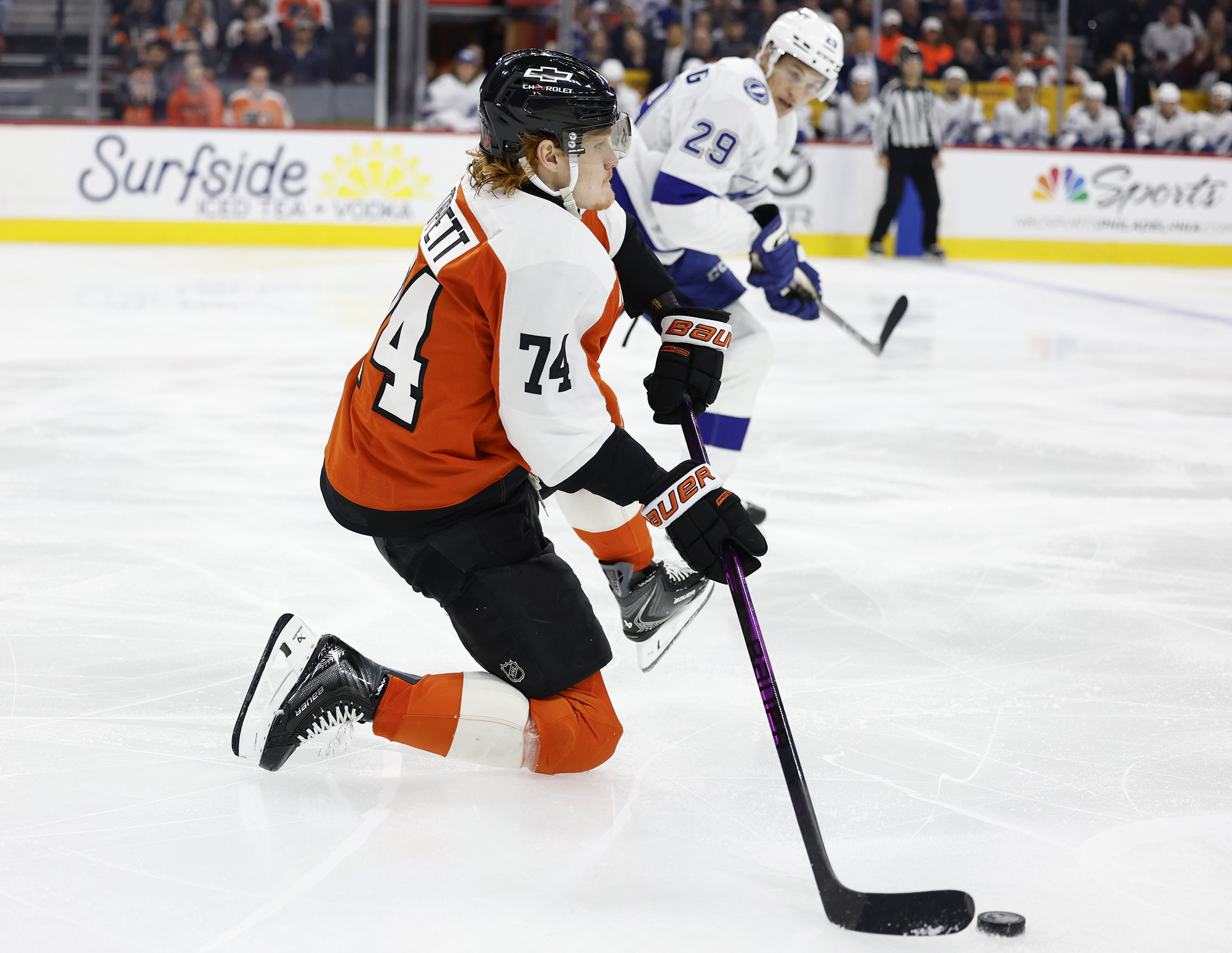
The winger has been using his size to lay timely hits — he has 10 in the past five games — that create turnovers, and speed and footwork to drive to the net.
During the Flyers’ loss to Tampa Bay on Monday, he used his speed and body to drive down the boards and set up Sean Couturier for a Grade A chance that went off the post.
And in the overtime loss to Toronto, he was the one who turned on the jets and tried a wraparound that just missed before Trevor Zegras thought he scored an insurance goal on the power play.
His speed pushes defenses back, which led to another Grade A scoring chance, this time for Denver Barkey as he streaked to the net against the Leafs.
Owen Tippett has six goals in his last 13 games.
Now, does Tippett miss the net too much still? Yes. But he has 31 shot attempts across the five games with 18 shots on goal. He also has two goals and one assist.
According to Natural Stat Trick, the Flyers have 60 shot attempts to 43 when he is on the ice at five-on-five across the slide. Individually, he leads the team in five-on-five in individual scoring chances (12), shots (14), and individual shot attempts (25).
5. Let the kids play
The Flyers have three kids 22-and-under who bring different elements but have shown they can add to the lineup.
Barkey, 20, was a healthy scratch on Wednesday and bounced back with a two-assist performance against the Penguins. He set up Nick Seeler for a goal and connected with Matvei Michkov on a two-on-one after Couturier made a nice play along the boards to spring them.
Matvei Michkov had a goal and an assist on Thursday. Could he be coming out of his slump?
Despite playing juniors last year, Barkey has shown he has an extremely high hockey IQ and a motor that gets him up and down the ice with efficiency. Did he have two not-so-great games with turnovers leading to goals by the Lightning? Absolutely. But it’s obvious what he can bring, whether teaming up with Tippett or Michkov.
Grebenkin, 22, is a fireplug. He’ll make coverage mistakes and is still uncertain as to when to jump into piles vs. staying back, but he drives to the net, throws the body around, and stands up for his teammates. Considering Tocchet wants his team to go to the net more, he’s heeding the bench boss’s edict — and as noted, he did just that on Tippett’s goal against Buffalo.
And then there’s the polarizing Michkov. The 21-year-old is still learning the North American game, and does appear to be “stuck in mud” at times — watch his skating in the overtime against the Toronto — but his vision and desire for the puck is unmatched.
He scored against a goalie for the first time in 20 games in Buffalo, playing it perfectly by driving to the net on a two-on-one and shooting right off the pass. It’s what the Flyers need to do as a whole, as a lot of their shots are not quick enough, giving the opposition and goalies a chance to stop the play or make the save.
Across the past five games, he has shown that he can provide offense, but he also needs to work on his defensive game. Across all strengths, according to Natural Stat Trick, the Flyers have a 63.99% expected goal share when he is on the ice; Barkey is No. 1 at 81.86%, and Tippett is No. 2 at 67.50%.
And although he’s been on the ice for two goals by the Flyers and six against at even strength — plus the short-handed goal by Laughton — he has the second-highest expected goals for on the Flyers (4.27) behind Zegras 4.99. He even made a nice defensive play on Peyton Krebs in the first period on Wednesday, and has seemingly stopped taking bad penalties
The Flyers need offense — going from 3.02 goals per game in the first 41 to 1.80 the past five — and the Russian has shown he can bring that, whether scoring himself or setting up his teammates.
The Flyers are free fallin’. And not in a fun Tom Petty way, although they may want to leave this world for a while.
Skating on the second night of a back-to-back, the Flyers were handed a 6-3 loss by their Keystone State rivals, the Pittsburgh Penguins. It is the Flyers’ fifth straight loss, in which they have been outscored 25-9. They lost 5-2 to the Buffalo Sabres on Wednesday in Western New York.
Yikes.
A lot of the blame falls at the feet of special teams. The power play went 0-for-4 and had 12 shot attempts, with five shots on goal. But it’s the penalty kill that has struggled, and add some extra emphasis when you say struggled.
Between Wednesday and Dec. 31, when they allowed two goals on three chances to the Calgary Flames, the Flyers’ penalty kill was brutal at 59.1%. It ranked second-worst, with nine goals allowed in 22 opportunities across seven games. In the 38 games before that, the Flyers ranked sixth-best (83.1%).
So you’d think when facing the third-best power play in the NHL (27.9%), they’d be more disciplined. Instead, by the 13-minute mark of the game, the Flyers had already taken three penalties and were trailing 2-0 via power-play goals.
The first tally came off the stick of Pittsburgh’s Justin Brazeau after Cam York was called for hooking Rickard Rakell on the hands right after he walked in front and got a shot on goal. Before Brazeau scored, the Flyers actually had two shots on goal during the Penguins’ power play; however, with seven seconds left of their man advantage, Brazeau was left alone in front to tap in the puck past Sam Ersson.
Philly then killed off a high-sticking penalty to Travis Sanheim, taken 3 minutes, 53 seconds into the game. But 12:11 into the first period, Garnet Hathaway was called for tripping Kris Letang behind the play. Hathaway didn’t sit long in the box, as nine seconds in, Bryan Rust scored to make it 2-0.
Sean Couturier won the faceoff, but the Penguins recovered the puck, and Rust eventually got it in the left circle. He curled at the top before sending the puck past Ersson’s glove. It looked like York may have been used as a screen.
Early in the second period, after Jamie Drysdale got a shot on goal, the Penguins got the puck, and Thomas Novak sent a stretch pass up to Evgeni Malkin at the Flyers’ blue line. The future Hockey Hall of Famer sent a pass over to Egor Chinakhov, who got past the defense and scored short side past Ersson to make it 3-0.
According to Natural Stat Trick, although they were outscored 2-1 in the second period, the Flyers dominated in shot attempts 34-19. Sixty-one seconds after Chinakov’s goal, Rodrigo Ābols scored his third of the season. After Carl Grundström got the puck along the boards, he sent it to an open York, and Ābols tipped in the point shot as he cut across the crease to make it 3-1.
It was Ābols’ third goal of the season and eighth point (two goals, six assists) in the past 13 games. The Flyers had one goal on 17 shots in the middle frame.
Flyers goaltender Aleksei Kolosov replaced Sam Ersson in the second period and allowed three goals.
Then came an interesting move: coach Rick Tocchet decided to pull Ersson after the Flyers scored. Aleksei Kolosov, who was recalled from Lehigh Valley of the American Hockey League on Thursday after Dan Vladař was injured on Wednesday, entered after Ersson allowed three goals on 14 shots.
Kolosov allowed three goals on 16 shots in his first NHL appearance since he started in a 2-1 loss to the Flames on Nov. 2.
He did make two big saves, one on Brazeu from 12 feet out and another on Anthony Mantha’s quick shot from the right circle, to keep it close. But with less than two minutes to go in the second period, Pittsburgh’s Blake Lizotte stole the puck from Travis Konecny deep in the Flyers’ end. Noel Acciari got it and crashed the net, putting two whacks on the puck. It popped up, and Lizotte knocked in the floating puck past Kolosov to make it 4-1 Pittsburgh.
In the third period, Sidney Crosby added yet another power-play goal for the Penguins to extend their lead to 5-1. He was sitting all alone on the right side and got a cross-crease pass from Malkin for his 60th goal and 138th point in 93 games against the Flyers.
Connor Dewar made it a touchdown after getting a cross-crease saucer pass from Novak 77 seconds later.
The Flyers did get two more goals in the final frame.
Nick Seeler made it 6-2 with his second goal of the year and his second in the past seven games. Denver Barkey, who was a healthy scratch on Wednesday for the first time in his short NHL career, responded with a pair of assists, beginning with the setup to Seeler.
Barkey took a touch pass off the skate from Noah Cates and fed the Flyers defenseman above the left circle. Seeler skated in and sent a sharp wrister past the glove of Penguins goalie Stuart Skinner.
Later in the period, Barkey set up Matvei Michkov for his 10th goal of the season. Couturier started the play when he got the puck along the boards and attracted two Penguins. It allowed the Flyers to have some space in the neutral zone, and the captain sent a backhand pass to Barkey, who skated into the Penguins’ end with Michkov and just Parker Wotherspoon back. Barkey sent a perfect pass over to the 21-year-old, and Michkov shot the puck off the pass for his first goal past a goalie since Nov. 30. He had an empty-netter against the Vancouver Canucks on Dec. 22.
Michkov dropped the gloves in the second period when he went after Lizotte for a hard, high hit on Barkey. He earned an extra for roughing on the play, and Crosby scored his goal on the ensuing power play. Michkov also had four shots on goal, with three coming in short succession atop the crease in the second period. … Owen Tippett had a game-high five shots on goal and nine shot attempts. He also had two hits. … Grundström had a team-high seven hits. His season-high of eight was set on Jan. 8 against the Toronto Maple Leafs. … Forward Nic Deslauriers was a healthy scratch with Barkey back in the lineup.
Up next
The good news for the Flyers is that they face a New York Rangers team spiraling on Saturday (1 p.m., NBCSP). New York has also lost five straight, getting outscored 27-10 in the last four since No. 1 goalie Igor Shesterkin went down with a lower-body injury.
The Flyers have been one of the NHL’s biggest surprises this season with a 22-13-8 record and are seeking a first postseason appearance since 2019-20. With the midway point of the season having just passed, Jackie Spiegel recently caught up with Flyers president Keith Jones to discuss the team’s strong start, timeline for contention, Matvei Michkov’s development, and more.
While Jones says the Flyers are still focused on building something “sustainable,” he did say the players deserve to be rewarded for their strong start and that the team needs to “enhance what they’ve done” as they push for the playoffs.
Jones called Denver Barkey one of the organization’s biggest bright spots in the prospect pool, and also mentioned Porter Martone, Oliver Bonk, Alex Bump, Jack Berglund, and Heikki Ruohonen as others who are making strides.
While Matvei Michkov’s decreased usage and lack of production have been hotly debated, Jones believes this season and the lessons he is learning will be invaluable to his ultimate ceiling in the future.
Note: This interview, which was conducted on Dec. 31, has been edited for brevity.
The Flyers have been one of the NHL’s biggest surprises this season with a 22-13-8 record and are seeking a first postseason appearance since 2019-20. With the midway point of the season having just passed, Jackie Spiegel recently caught up with Flyers president Keith Jones to discuss the team’s strong start, timeline for contention, Matvei Michkov’s development, and more.
Note: This interview, which was conducted on Dec. 31, has been edited for brevity.
Q: Close to the midway point. How would you assess things so far?
A:It’s been a really good, basically, first half of the season for us. Players have advanced, and have kind of fit in and found chemistry, which you figured would take a little bit of time with the number of new faces that we added. The coaching staff has done an excellent job of trying a few different combinations and then figuring out what worked and sticking with it. I think it’s been, from that perspective, a really good beginning to this season.
Q: What have you liked so far about Rick Tocchet as a head coach with the Flyers?
A: A lot. I like the way he communicates with his players. I like the way that he is straightforward, honest, doesn’t allow things to fester, addresses things immediately, and then works really hard to, from a game-to-game basis, improve on things that we may have struggled with in the previous game. His practices or his video [work] with his assistant coaches are very focused on correcting and encouraging, and I think that’s really important, especially with a young team.
Q: When someone is writing a TV script for a series, they sometimes write the ending in advance. Outside of winning the Stanley Cup, what does the end goal look like?
A: The only plan would be to create something that’s sustainable. And there are all kinds of variables, with any professional sport; injuries play a major part. So you can plan all you want and have things that just kind of change those plans, but overall, our goal is to become a playoff team that is a sustainable one. Not just a one-and-done.
So you build that through the foundation of your team, and I’m really pleased with what Danny [Brière] has done, along with Brent Flahr, in starting to really build up our prospect pool. We’re starting to see a couple of those guys arrive, and others getting closer to arriving. And it’s always good when you can have players develop together, build those relationships that can last them a decade or more, playing in the same organization, and that’s what we envision.
Keith Jones believes this season of learning will be good for Matvei Michkov in the long run.
Q: So you prefer to hold on to the assets right now?
A: Yes. In general, we’re not going to mortgage the future in order to have one year and say, ‘Oh, we figured this out. We’re a playoff team.’ So that’s still something that I know Danny’s very focused on and [governor Dan Hilferty] and I will encourage him to stay on that path.
Q: Is there anyone in the prospect pool who stands out to you?
A: I would have liked to tell you it was Denver Barkey, but he’s already arrived on the scene. We’re obviously very happy with the way that he’s progressed. And Oliver Bonk has started to get into form now with the American League team in Lehigh, and it’s been fun to see that team have some success as well.
Alex Bump continues to push and develop … And then we have Jack Berglund, watching him perform extremely well, which we expected at the World Junior tournament. … [With] his size, he has the ability to play in front of the opposition’s net, so he’s very good on the power play in that regard. So, as you build a team, you’re looking for pieces that can take over roles that you feel are necessary in order for you to advance. And he’s one of those guys.
Porter Martone, obviously, is very similar in that regard. He’s an outstanding playmaker for a player of his size, great set of hands. Another leadership type personality. … Heikki Ruohonen is doing an outstanding job for Finland, learning his way at Harvard, which is awesome.
Keith Jones believes Jack Berglund can be a big part of the Flyers’ future.
Q: Matvei Michkov is always a hot topic. How would you evaluate his season thus far?
A: I think it’s going to be a very important year in his career. I think that there’s going to be a lot of development. I think he’s doing a great job of working on the things that he’s being asked to work on. I love his level of compete. I love his ability to stay in there, stay in the fight, and I’m really pleased with the way he’s started to pick things up lately.
His attitude’s been outstanding, and I think when he looks back on his career in 15 years, he’s going to be pretty happy about some of the things that he went through this year in order to get to where he needs to go.
Q: The free agency market is so different today, with so many players already locked up. And you’ve previously discussed the need to upgrade at center. Is it more via trades now?
A: Yeah, there’s a lot that goes into it. You can see what Danny did this offseason, really calculated, smart additions to the team. And then you get to know the players even better when they’re under your watch. So a lot that has to do with internal growth and then also having the ability, whether it’s cap space, whether it’s prospects, whether it’s draft choices, to jump and go after something that’s really enticing. So we’re always looking.
Q: Can you just take us quickly through the Trevor Zegras trade and how you think his season is going thus far?
A: He’s done a great job. And it’s really proof of Danny’s willingness to wait for the right time, and he was really patient on this one with Anaheim. It’s been well documented that it was a long process. Trevor kind of fit what we were looking for, and he has been all that and more with what he’s done for us. So I give Danny a lot of credit on that one as well as he waited for the right time to find the right deal that worked for both teams at that time, and we’ve been able to really see the benefits of that in our lineup.
The Flyers have been one of the NHL’s biggest surprises this season with a 22-13-8 record and are seeking a first postseason appearance since 2019-20. With the midway point of the season having just passed, Jackie Spiegel recently caught up with Flyers president Keith Jones to discuss the team’s strong start, timeline for contention, Matvei Michkov’s development, and more.
Note: This interview, which was conducted on Dec. 31, has been edited for brevity.
Q: Close to the midway point. How would you assess things so far?
A:It’s been a really good, basically, first half of the season for us. Players have advanced, and have kind of fit in and found chemistry, which you figured would take a little bit of time with the number of new faces that we added. The coaching staff has done an excellent job of kind of trying a few different combinations and then figuring out what worked and sticking with it. I think it’s been, from that perspective, a really good beginning to this season.
Q: What have you liked so far about Rick Tocchet as a head coach with the Flyers?
A: A lot. I like the way he communicates with his players. I like the way that he is straightforward, honest, doesn’t allow things to fester, addresses things immediately, and then works really hard to, from a game-to-game basis, improve on things that we may have struggled with in the previous game. His practices or his video [work] with his assistant coaches are very focused on correcting and encouraging, and I think that’s really important, especially with a young team.
Q: You talk about staying in the moment, but you are sitting in a playoff spot. Are you still looking at things through the glass, that this is still a rebuild?
A: I think we’ve been clear that the players will decide. So obviously, it’s a very important stretch over the next six to eight weeks of play. And the players have done a really good job of putting themselves in a position where we’re going to look to enhance what they’ve done. Previously, that was not the approach. It’s really important that we reward our players for playing so hard for one another and for us.
Keith Jones and Danny Brière say that the team’s rebuild and no upward trajectory has been a collaborative effort.
Q: Two years ago, management had a similar statement about the players deciding the approach. But then Sean Walker was traded, and things kind of fell apart. Do you use that as a warning now?
A: I think it’s just a different time for us now in our development. So I think it’s a combination of things. I think looking back on what we did there was the right thing to do, and that’s why we did it. Same as last year. But this year feels different. And we’re a couple more years into what we’re trying to eventually accomplish. So it’s just about being there for one another to remind each other where we’re at in this process, and having the support of [governor] Dan Hilferty and [Comcast CEO] Brian Roberts on top of that, really makes it a job that we want to get right.
Q: When someone is writing a TV script for a series, they sometimes write the ending in advance Beyond winning a Stanley Cup, what’s the end goal here look like?
A: The only plan would be to create something that’s sustainable. And there are all kinds of variables, with any professional sport; injuries play a major part. So you can plan all you want and have things that just kind of change those plans, but overall, our goal is to become a playoff team that is a sustainable one. Not just a one-and-done.
So you build that through the foundation of your team, and I’m really pleased with what Danny [Brière] has done, along with Brent Flahr, in starting to really build up our prospect pool. We’re starting to see a couple of those guys arrive, and others getting closer to arriving. And it’s always good when you can have players develop together, build those relationships that can last them a decade or more, playing in the same organization, and that’s what we envision.
Q: Do you look at things from the perspective that the first step is playoffs, and then being a sustainable playoff team, and then, after all that, building a Stanley Cup contender? Or does it all happen at once?
A: If you’re a consistent playoff team, you’re a contender in my eyes. There are always tweaks that can take place when you’re in that position. You’ll see teams that are there right now; they’ll trade some of their draft equity and younger players in order to really enhance their opportunity of winning. So eventually we’ll get to that place. We’re not there right now, but I look forward to when we are there.
Q: So you prefer to hold on to the assets right now.
A: Yes. In general. We’re not going to mortgage the future in order to have one year and say, ‘Oh, we figured this out. We’re a playoff team.’ So that’s still something that I know Danny’s very focused on and [Hilferty] and I will encourage him to stay on that path.
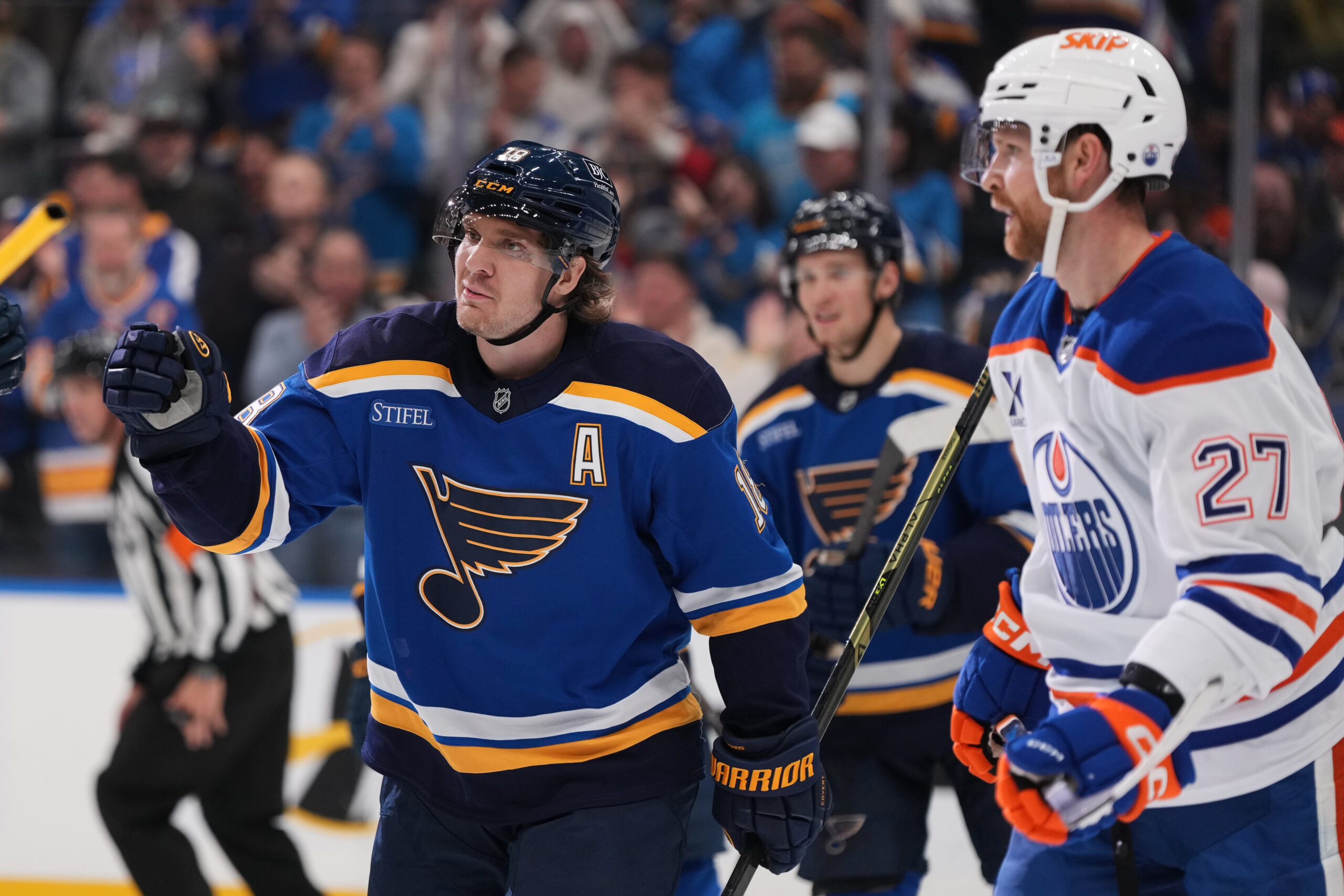
Could St. Louis Blues center Robert Thomas be the type of player the Flyers cash in some of their future chips for?
Q: In working with Brière, how much is it his vision or is it a team vision with you, Hilferty, and him?
A: Well, he’s the general manager. When it comes to players and acquisitions, that’s Danny’s job. My job is to help him with that, enhance that, give him the resources that he needs to make that happen. But Danny’s a general manager, and he’s a really good one.
Q: Is there anyone in the prospect pool who stands out to you?
A: Yeah, I would have liked to tell you it was Denver Barkey, but he’s already arrived on the scene. We’re obviously very happy with the way that he’s progressed. And Oliver Bonk has started to get into form now with the American League team in Lehigh, and it’s been fun to see that team have some success as well.
Alex Bump continues to push and develop … And then we have Jack Berglund, [we’ve been] watching him perform extremely well, which we expected at the World Junior tournament. He’s the captain of Team Sweden, and he’s producing at a high rate. That’s really exciting for us. With his size, he has the ability to play in front of the opposition’s net, so he’s very good on the power play in that regard. So, as you build a team, you’re looking for pieces that can take over roles that you feel are necessary in order for you to advance. And he’s one of those guys.
Porter Martone, obviously, is very similar in that regard. He’s an outstanding playmaker for a player of his size, great set of hands. Another leadership type personality. He is the captain of the Canadian team. It’s a great honor for him, and we’re thrilled about that.
Just like Denver Barkey, he was the captain of the London Knights that won the Memorial Cup. Oliver Bonk was an assistant captain. These are the type of players that we want in our organization. That’s a handful of them. Heikki Ruohonen is doing an outstanding job for Finland, learning his way at Harvard, which is awesome.
Q: Max Westergård has also looked impressive at World Juniors. What have you seen from him?
A: Yeah, he can fly. Brent Flahr shines in the fifth round. He’s had some great fifth-round picks.
Q: Speaking of the fifth round, let’s talk Alex Bump. Why wasn’t he the one to get the call-up recently?
A: He just needs more seasoning, that’s all. There are just little parts of the game that he’s going to figure out, and it’s much easier to figure out down there before you come up here. He’s doing everything we’re asking him to do. He continues to improve. He’s done some amazing things offensively, which we know he can do, and he’s not far off. But he’s an exciting prospect for us.
He’s showing great patience as well. He demonstrated that last year at the end of his college season, not burning a year on his entry-level contract and electing to go down and play in the American Hockey League. He’s sharp. He gets it. And he’s going to be rewarded for his patience, and we will be for ours as well.
Rookie Alex Bump, who is second on the Lehigh Valley Phantoms with 20 points in 28 games, could be close to earning an NHL debut.
Q: How do you balance development then? Using Alex Bump as an example. He’s building his game, and maybe he is finally ready to make the next step, but there’s no room. How do you balance that?
A: You want the player to force you to make room, so that’s affecting his game in the minors to the point where you can’t keep them down there anymore. So they’ll let you know, just like our team up here lets us know where they’re at. Just by observing and watching, and paying attention, the players will tell you when it’s time to come up.
Q: Matvei Michkov is always a hot topic. How would you evaluate his season thus far?
A: I think it’s going to be a very important year in his career. I think that there’s going to be a lot of development. I think he’s doing a great job of working on the things that he’s being asked to work on. I love his level of compete. I love his ability to stay in there, stay in the fight, and I’m really pleased with the way he started to pick things up lately.
His attitude’s been outstanding, and I think when he looks back on his career in 15 years, he’s going to be pretty happy about some of the things that he went through this year in order to get to where he needs to go.
Q: How would you gauge your defense now with Rasmus Ristolainen back?
A: Solid’s a good word. Underrated is probably another good word too. There’s a really good mix of intelligence and athleticism, size. I like the balance that’s there.
And I like having the option of Noah Juulsen there as well; I like that he brings physicality, has a tremendous attitude, and doesn’t change whether he’s in the lineup or not. He’s a really good team guy, and those are important parts of the puzzle, too, because there are not enough chairs when the music stops on a nightly basis. So you need players who are not so much accepting of that, but are willing to do whatever it takes to get back in the lineup.
Q: Are there any areas you want to improve on with the roster?
A: As it jumps out to me right now, there’s nothing immediately. We’re always looking to get better. If something’s there, we’re going to do it to get better.
Q: The free agency market is so different today, with so many players already locked up. And you’ve previously discussed the need to upgrade at center. Is it more via trades now?
A: Yeah, there’s a lot that goes into it. You can see what Danny did this offseason, really calculated, smart additions to the team. And then you get to know the players even better when they’re under your watch. So a lot that has to do with internal growth and then also having the ability, whether it’s cap space, whether it’s prospects, whether it’s draft choices, to jump and go after something that’s really enticing. So we’re always looking.
Q: How do you handle the salary cap rising? Does it change things?
A: We love it. We think it’s great. I wish it would go up another 50 million. But we’re lucky, because we have great ownership, that’s the one huge advantage that we have. So we welcome it.
Flyers forward Trevor Zegras has been a revelation in his first season with the team.
Q: You were the team’s president when Travis Sanheim almost got traded to the St Louis Blues. He was just named to Hockey Canada’s roster for the Olympics. What’s it been like watching his development and growth, and looking back, are you happy you didn’t make that trade?
A: It’s been awesome. The only reason you would ever make a trade like that is because you’re getting a boatload back, and depending on where you’re at in your evolution, those trades sometimes do happen. But are we surprised that Travis is doing the things that he’s doing? No. So we’re really pleased for him. He’s obviously a huge minute-muncher for us on the back end. It’s a joy to watch him skate and come barreling up the ice. He’s just a super good kid, and we’re all really proud of him.
Q: Brière seems to be finding diamonds in the rough. For example, there was Walker, Ryan Poehling, and now Carl Grundström. Can you explain what Danny Brière is doing?
A: He’s very patient and methodical, thoughtful, and there are 1,000 phone calls a day that he’s making. So it’s from a relentless work ethic and a really high level of intelligence in the hockey world. Yeah, not surprised that he’s doing as well as he is.
Q: Can you just take us quickly through the Trevor Zegras trade and how you think his season is going thus far?
A: He’s done a great job. And it’s really proof of Danny’s willingness to wait for the right time, and he was really patient on this one with Anaheim. It’s been well documented that it was a long process. Trevor kind of fit what we were looking for, and he has been all that and more with what he’s done for us. So I give Danny a lot of credit on that one as well as he waited for the right time to find the right deal that worked for both teams at that time, and we’ve been able to really see the benefits of that in our lineup.
Q: Can you just expand on what you mean by he fit what we were looking for?
A: You’re always looking for high skill level, talented players, and at the time, he was a distressed asset. So that’s what you have to do. You have to be thoughtful and a little bit lucky, and provide an environment where the player can shine. Our players help in that regard, too. So it’s a full organizational effort, starting at the top.
Q: What would be your message to the fans right now?
A: First of all, thank you. I see our fans all the time, and I appreciate them supporting us. I think that we’re trying to get it right for them. We’ve [Danny and I] played in front of them, in playoff positions, and we want our guys to experience that as well because I know they’re just terrific hockey fans that can really bring you to another level when you play in front of a packed house, and that’s what we’re working towards.
I thank them for continuing to come out to games, follow the team, and I just would let them know that, which we do often when we see them, we’re going to do everything we can to try to get this right.
The Flyers returned home to the friendly confines of their training center in Voorhees after a solid 3-2-0 road swing, one that included three stops in Western Canada.
But they are a man down Tuesday night against the Anaheim Ducks (7 p.m., NBCSP) with Matvei Michkov out due to injury. The Flyers announced before puck drop that Michkov is out day-to-day with a lower-body injury.
Earlier in the day, coach Rick Tocchet said Michkov, who did not practice Monday but returned to the ice for an optional morning skate Tuesday, was a game-time decision with a foot injury.
“Mich had an X-ray that was negative yesterday. He’s got a little bit of swelling, but he’s going to skate. It’d probably be a game-time decision on him,” Tocchet said on Tuesday.
It’s worth noting that Michkov stayed on the ice late Tuesday with the expected healthy scratches, so that indicated he was unlikely to play tonight.
According to Tocchet, the winger took a puck off his foot on Saturday against the Edmonton Oilers. “We didn’t know until [Monday],” Tocchet said.
Per #Flyers coach Rick Tocchet, Matvei Michkov took a shot off his foot and mentioned it today. He is getting checked out. https://t.co/dhb9dBmtCI
It appears to have happened Saturday during the Flyers’ power play in the third period of their 5-2 win. Skating in the neutral zone, Trevor Zegras went to zing a cross-ice pass to Christian Dvorak standing at the opposite end of the blue line. Instead, the pass attempt went off the left skate of Michkov as he skated by. Michkov picked up his leg and seemed to wince after the contact.
The apparent injury happened seven seconds into a one-minute power-play shift by Michkov. The 21-year-old winger did skate two more shifts, including a 43-second shift that started with 70 seconds left in the game.
Michkov has nine goals and 23 points in 40 games this season, with his best game coming against the Vancouver Canucks on Dec. 30. He had the secondary assist on Bobby Brink’s goal, the eventual game-winner against the Oilers, when he took his time and hit Cam York as he skated down the middle. York’s shot went in off the leg of Brink.
It is the first time in his NHL career that he will miss a game due to injury. Michkov was a healthy scratch for two games last season under then-coach John Tortorella.
Breakaways
The Pittsburgh Penguins waived former Flyers defenseman Egor Zamula on Monday for the purpose of terminating his contract, and he cleared on Tuesday. Zamula, who was traded by the Flyers last week, was suspended by the Penguins for refusing to report to the team’s American Hockey League affiliate in Wilkes-Barre/Scranton. An unrestricted free agent, Zamula signed a one-year deal with the Columbus Blue Jackets on Tuesday.
In mid-October, Flyers coach Rick Tocchet said the quiet part out loud.
“I know he’s the lightning rod for everybody around here,” he said of Matvei Michkov.
A talented offensive player, the recently turned 21-year-old Russian, who arrived in North America two years earlier than expected, led the Flyers — and all NHL rookies — with 26 goals and finished second on the team with 63 points last season. He also won the league’s rookie of the month award twice, becoming the first Flyer in 30 years to do so.
But this season, Michkov has struggled to find that spark with 19 points (eight goals, 11 assists) in 34 games. He has also taken several unnecessary penalties and seen his ice time decrease from 16 minutes, 41 seconds last season to 14:43 this year.
Although Natural Stat Trick has the Flyers with 51.74% of the shot attempts when Michkov is on the ice — tops on the team — and an expected goal-share of 53.6%, which is No. 2 among players who have played at least five games, he has struggled defensively and shown a tendency to cherry-pick at times.
As Tocchet said, he is a lightning rod, so, of course, he is often a topic of conversation.
On Saturday, the television broadcast caught Michkov, Tocchet, and assistant coach Jaroslav “Yogi” Svejkovský having an animated conversation on the bench. The conversation appeared to happen right after Michkov drew a minor penalty when New York Rangers winger Will Cuylle cross-checked him from behind.
“It happens all the time. It’s not Mich, it’s just a story, because it’s Mich. It wasn’t even an argument. It was about when he should switch, and not with [Denver] Barkey. And he’s getting it, when to switch and when not to on the power play,” Tocchet said, although it’s not clear if he meant to say power play as he did appear to stop himself, and the Flyers were heading to their first power play of the game.
“But that was all. He was just getting frustrated on when to switch and when he shouldn’t switch. I know it’s a lot of media people like to let him do what he wants. But there’s a time to switch and when not to switch, and that’s really what it comes down to.”
It is worth noting that Michkov and Barkey picked up assists on Travis Sanheim’s power-play goal directly following the Russian’s animated conversation with Tocchet.
Michkov has five assists in December but does not have a goal this month. A follow-up question asked the bench boss about Michkov having the right attitude but getting frustrated when he’s not scoring.
Flyers right wing Matvei Michkov, 21, has just 19 points in 34 games this season.
“Guys who want to score goals get frustrated, but you can’t let it affect your overall game,” Tocchet said. “You’ve got to continue to go to the spots, you keep going to the middle, keep getting to that slot area when you already have two guys down low, like — don’t go behind the net — like things like that.
“He’s just got to stay with it, because he’ll get those chances. He had some chances against the Rangers. … Now he’s got [to] play a little faster and separate himself. That’s what it comes down to. You can’t get frustrated, and just keep working.”
Barkey and Michkov switched one time before the bench interaction. It came with 11:49 left in the first period, and it occurred after Rangers goalie Igor Shesterkin froze the puck. So was it about switching shifts and the short shifts by Michkov that have been discussed recently?
“We tell our players, when you’re tired, get off. So if he’s tired after 20 seconds, get off. I don’t know. I don’t know what you want me to say. Yeah, he’s getting enough shifts. He’s coming off short because sometimes he’s tired. I don’t know what the big deal of that is,” Tocchet snapped.
The fourth question about Michkov noted that Tocchet and the Russian winger were seen speaking before practice. Does the coach like that he’s willing to work on things, showing his sheer competitiveness?
“We’re 17-10[-7], we have a good record. I’ve answered six Michkov questions. I mean, enough is enough,” Tocchet said.
“We’ve got [Dan] Vladař having a great year. [Jamie] Drysdale is playing really good five-on-five for us. [Cam York’s] doing a really good job. We’ve got a lot of other players playing good and a team game.
“I mean, this is the fifth question. I appreciate it, but you’re trying to make something that it’s not. He’s got to learn to play the game, and he’s trying. He’s a lot better defensively. He’s a lot better playing a team game, and that’s how you win hockey. It’s not about catering to one person. I hate to tell you guys. That’s it.”
Breakaways
Goalie Aleksei Kolosov was sent back to Lehigh Valley of the American Hockey League on Monday morning. Vladař (upper-body injury) and Christian Dvorak (lower-body injury), who both missed Saturday’s game against the Rangers, were at the team’s morning skate. Tocchet expects Dvorak to play, but said Vladař is a game-time decision. … Barkey will make his Xfinity Mobile Arena debut on Monday against the Vancouver Canucks (7:30 p.m., NHLN, NBCSP). … Defenseman Noah Juulsen and forwards Garnet Hathaway and Nic Deslauriers are expected to be healthy scratches.
BUFFALO ― Flyers coach Rick Tocchet likes his pairs.
Trevor Zegras and Christian Dvorak have been attached at the hip since almost the start of the season. Noah Cates and Bobby Brink have been a duo dating back to the John Tortorella era, as have Matvei Michkov and Sean Couturier.
But Michkov was recently switched to the left wing with Cates and Brink — and it paid off with a Brink goal in Tuesday’s 4-1 win over the Montreal Canadiens.
“Bobby and Noah have been together last year and this year, and they have a little chemistry. I just wanted to switch, get a little juice,” Tocchet explained on Thursday before the Flyers take on the Buffalo Sabres (7:30 p.m., ESPN+, Hulu).
“Noah and Bobby play a little bit more north,” he added. “They’ve got some speed, so that could help Matvei and his game.”
Michkov’s season started slowly, but his game has certainly picked up as the schedule builds. After leading all rookies in goals last season with 26, he had just one tally, along with five assists, in the first 13 games this season. Since then, he has seven goals and 12 points in 19 games.
Tocchet has seen an improvement in the young Russian’s game.
“Well, he’s obviously making less turnovers,” he said of Michkov, who has seen his giveaways drop from almost two a game (22 in the first 13 games) to one a game (19 in the last 19).
“He’s trying to understand. He’s getting his shifts. He’s doing 30-second shifts, which is fine. I have no problem with it. I know he’s coming off early sometimes, and I think there’s a number of reasons why, but I don’t mind the progression when it comes to that. We’ll work on the other stuff, and he’s still building his game.”
Although Michkov’s ice time has been a point of contention with fans, he is often the one opting to skate a short shift, as he goes to the bench with his linemates still on the ice.
According to Natural Stat Trick, he is tied with Cates and defenseman Nick Seeler for the second shortest average shift length at 41 seconds; only Garnet Hathaway and Noah Juulsen average fewer seconds per shift (39). And while the 21-year-old winger ranks ninth in average time on ice among Flyers forwards at 14:40, there are several factors leading to it, like the fact that he leads the team with 32 penalty minutes in 32 games.
Flyers head coach Rick Tocchet and Matvei Michkov (middle) are still trying to come to an understanding of what the Russian needs to do to earn more ice.
Among the forwards, he ranks eighth with 555 shifts, trailing Travis Konecny (623), Tippett (593), Christian Dvorak (591), Cates (582), and Couturier (573), who all serve on the penalty kill and have all played on the power play too at some point this season. The only two players above him who do not kill penalties, but are on the power play, are Trevor Zegras (589) — who leads the team in goals (14) and points (33) — and Brink, who has only just six more shifts than Michkov.
“I do like short shifts, but there’s sometimes you’ve been out there for 30, but you still got juice. You can still stay out there. It’s time and place. It’s a lot of different things,” Tocchet said, speaking in a general sense about short shifts.
“Shift lengths are anywhere from 30 to 40, 45 seconds, and you get up a minute, 55 seconds, it can happen. Sometimes when you have the puck, and you’re just moving around, and you’re not really tired, stay out there and try to score. But I think for the most part, every coach preaches short shifts. I mean, that’s how you drive play.”
The Flyers need Michkov to drive play, and thus far, he has looked better as he gets back into shape and builds his game. Although he doesn’t have a goal in December, he does have four assists in eight games — along with 10 penalty minutes.
And while he is one of five forwards who have played at least half the games this season with a negative plus-minus (minus-2), he has an even rating in December. That was helped by setting up Brink on Monday during his 20 five-on-five shifts and 14:06 of ice time, which was one more shift than Brink and one fewer than Konecny, who played 16:08 and 17:50, respectively.
“He’s got that skill and that vision,” Cates said before the game in Montreal. “I think, just for me, to get him in good spots, get him the puck with time and space … [and] going to the net or getting open, because, you know, he’s special, and he’ll find you.
“So obviously just got to talk with him and work with him a little bit with some things, but just the kind of special skills that he has, you know, we’ve got to try to take advantage of.”
Breakaways
Sam Ersson will start in goal against the Sabres. He is 4-1-0 against with a 1.87 goals-against average and a .917 save percentage against Buffalo for his career. Ersson’s first career shutout came in Western New York, when he made 28 saves on Jan. 9, 2023. … Tocchet said there are game-time decisions, but forward Nikita Grebenkin and defensemen Juulsen and Egor Zamula were the only ones on the ice for the optional morning skate. The Flyers later placed Zamula on waivers Thursday.
It’s the time of the year to be thankful and Flyers fans have several reasons to be overflowing with gratitude.
Or at least you would think so …
The Flyers, whose front office made clear its desire for the team to take a positive step forward in its rebuild this year and be more competitive, are 15-8-3 under new coach Rick Tocchet, and have the seventh-most points and the seventh-best points percentage in the NHL. If the season ended Thursday morning, the Flyers would occupy the third spot in the Metropolitan Division based on points percentage and be in the playoffs for the first time in five seasons.
“We expect more of a fight internally, and we hope that it’s going to make us better, it’s going to hopefully make us more competitive throughout the season, and maybe push to get closer to the playoffs,” general manager Danny Brière said in September. “At the end of the day, we want to make the playoffs.”
Beyond their record, the Flyers have struck gold with inexpensive offseason acquisitions Trevor Zegras and Dan Vladař, the former flashing his puck handling wizardry and superstar potential, and the latter playing like a bona fide Vezina Trophy candidate over the first third of the season. The Flyers’ checkered history between the pipes is well documented, but maybe, just maybe, Vladař, who is 28 and signed through next year, can bring some consistency to the position for the next few seasons. And in the 24-year-old Zegras, a restricted free agent at season’s end who leads the team with 26 points, the Flyers hope they have identified part of their long-term solution down the middle.
The positives don’t end there. Zegras’ close friends Cam York (24) and Jamie Drysdale (23) have leveled up after surviving John Tortorella’s wrath, and so had fellow first-rounder Tyson Foerster (23), who had 19 goals in his last 30 games dating back to last season before suffering an upper-body injury on Monday that will sideline him for two to three months. York was banged up on Wednesday but is listed as “day-to-day.”
Owen Tippett, 26, has had more good moments than bad this season as he strives for consistency, while Matvei Michkov, who is still just 20, is coming on strong after a slow start. Noah Cates (26) and Bobby Brink (24) have also picked up where they left off last season, while the exciting Emil Andrae (23) looks to have made himself into an everyday NHL defenseman. In other words, the kids are getting better.
The Flyers have high hopes for 2025 first-round picks Porter Martone (right) and Jack Nesbitt (left).
The Flyers have more on the way as they boast a top-10 prospect pool in hockey and probably couldn’t have dreamed up better starts for their potential future stars. Porter Martone, the No. 6 overall pick in June, is dominating college hockey with Michigan State; Alex Bump and Denver Barkey are off to fast starts in their first full pro seasons with Lehigh Valley; and Egor Zavragin continues to put up historic numbers for a 20-year-old goalie in Russia. Even Jett Luchanko got the trade many felt he needed to further his development in the Ontario Hockey League. Martone, Bump, and Luchanko will all be expected to break camp with the Flyers next season.
So all is good in Flyers land, right?
Not if you scroll through X or find yourself wading through the ever dark and gloomy depths of Flyers Twitter:
“I hate Rick Tocchet hockey man…,“ tweeted @aftern_alex earlier this month.
or
“I DO NOT LIKE TOCCHET AT ALL. IF BREIRE AND JONES R ON BOARD WITH MICHKOV GETTING 13 MINUTES A GAME. FIRE THEM ALL,” wrote @Philly4everrr.
So why is a large portion of the fan base so unhappy amid the team’s surprising start? Well, it largely boils down to three things: (1) Tocchet’s style of play; (2) Michkov’s usage under Tocchet; and (3) the Flyers not tanking for a No. 1 center or No. 1 defenseman. Let’s explore those three points further.
Tocchet’s teams will never be confused with the ‘80s Edmonton Oilers, the ‘90s Pittsburgh Penguins, which he played on, or the Detroit Red Wings around the turn of the century. He’s a defensive coach first and has said as much. The Flyers are 25th in the NHL in scoring (2.85 goals per game) and are fourth-to-last in shots per game (25.2), which matches with previous Tocchet teams’ low volume of shots.
On the other hand, the Flyers are much improved defensively and have taken a lot of the “risk” out of their game. Some of that is thanks to better goaltending from Vladař, who has saved almost 11 goals above expected, per Money Puck. But the Flyers are also conceding fewer shots, high-danger chances, and rush attempts. They have allowed the eighth-fewest shots per game (26) and have surrendered the 13th-fewest high-danger shots at five-on-five (64), per Money Puck. They also rank 10th in the league in fewest expected goals against at five-on-five (54.9).
Flyers head coach Rick Tocchet has helped bring defensive stability to Broad Street.
Sure, everyone would love for the Flyers to score a few more goals and shoot a little more, but there also has to be an expected tradeoff there, as the Flyers last season were historically bad at keeping the puck out of their net (28th in goals against), and partly due to bad goalie environments had the league’s worst save percentage (.879). Tocchet’s philosophy centers around keeping opponents to the outside and allowing his goalies to see the initial shot, and the Flyers have largely executed that plan.
New coaches also tend to focus on laying a defensive foundation first and then building out from there. The Flyers, while improved, are far from a finished product offensively and weren’t this high-flying team that scored a ton of goals last year either — they averaged 2.83 goals per game. Making permanent judgments or broad assertions about Tocchet and the Flyers’ future after 26games and where the roster stands hardly seems fair.
The Michkov dilemma is probably the biggest criticism of Tocchet, as the Russian winger is ninth among Flyers in average ice time at 14 minutes, 51 seconds per game. There’s no way around saying Michkov started the season slowly — one goal in his first 13 games — as his conditioning was not up to par after an offseason ankle injury, and he made several ill-advised decisions with and without the puck. So it was hardly surprising to see him play less than other forwards.
Tocchet clearly wants the youngster to earn his ice time and kick some of his bad habits. He also wants to win games and, at times, has felt that he couldn’t trust Michkov in tight games when the team is protecting a lead. While it’s easy for fans to yell “Play Michkov more!” Tocchet has a responsibility to the rest of his players to hold everyone accountable and look out for the best interests of his team.
“I know he’s the lightning rod for everybody around here. He’s got to relax,” Tocchet said in mid-October. “He’s got to get himself into shape. He’s got to be in positions … you can’t just leave the zone. And it’s OK, he’s gotten better at it.”
Flyers right wing Matvei Michkov is coming on strong after a slow start.
Michkov has “gotten better at it” of late and has seen more ice time as a result. His better decisions with the puck and cheating less has coincided with his offensive uptick; he has four goals and seven points in his last seven games and is playing his best hockey of the season. Tocchet is rewarding Michkov’s improved play, as the Russian winger has skated at least 15:37 in three of his last four games.
While it can be frustrating to see a talent like Michkov playing less, it looks as if the message has been received and the winger will likely be better in the long run for it. That said, there needs to be a balance and Tocchet has to teach Michkov good habits without curbing his creativity or reprogramming such a talented player.
Despite what you may read online, Tocchet has no personal vendetta against Michkov or desire to see him fail. He simply wants him to play winning hockey and learn from his mistakes. While this relationship, language barrier included, remains a work in progress, don’t be surprised to see Michkov continue to get more ice time as the season wears on and for this to eventually become a whole lot of nothing.
Why aren’t they tanking?
Should the Flyers have tanked more and kept rebuilding for at least one more season, especially without obvious solutions for their future No. 1 center and No. 1 defenseman holes? This is a completely reasonable take, if not the most feasible one, considering how the roster is and was constructed.
Could the Flyers have bottomed out more and stripped their roster thinner over the past years to get more/better bites at the draft apple? I guess so, but they did largely do the latter.
Brière inherited many of the team’s salary cap problems and actually did some impressive work to get out from players like Ivan Provorov, Kevin Hayes, and Tony DeAngelo, and net high-end drafts picks and prospects in deals for Provorov, Sean Walker, Scott Laughton, Morgan Frost, Joel Farabee, and Andrei Kuzmenko. The only other three obvious and needle-moving subtractions would have been to trade well-paid veterans Sean Couturier, Travis Konecny, and Travis Sanheim. Rasmus Ristolainen is another player they might have moved, but bad injury timing has largely tied Brière’s hands there, not to mention the GM could still move him.
Flyers general manager Danny Briere has taken a patient and measured approach to rebuilding. Now, he wants the Flyers to take a step forward.
Given Couturier’s contract, which still has 4½ seasons remaining at a $7.75 million average annual value, he was and remains all but impossible to trade. Regarding Sanheim, Brière DID try to move him before his new deal kicked in but that move was nixed due to a St. Louis player opting not to waive his no-move clause. That nontrade might be the best move Brière didn’t make, as Sanheim has blossomed into a top-pairing defenseman and the Flyers’ leader on the backend. Whether the Flyers should have traded Konecny before extending him can be debated, but most teams usually try to hold onto 30-goal, almost-point-per-game players who are in their mid-20s and on an upward trajectory.
In other words, the Flyers largely carried out their rebuild the right way, they subtracted when it made sense, stockpiled assets, and didn’t jeopardize their long-term vision for short-term success, a la trading Walker amid pushing for the playoffs in 2023-24. But what about landing that all-important 1C and a 1D?
Those problems are not isolated to the Flyers, as those two holes, along with the starting goalie, are the three hardest to find. There is a shortage of true No. 1 centers across the league, and the teams that have them don’t usually like to give them up. The Flyers have also drafted centers in the top half of the past two drafts in Luchanko and Jack Nesbitt to try and address the position, and also have several young defensemen — York, Drysdale, Oliver Bonk, Spencer Gill — they believe could one day play in their top four.
Listening to Brière and president Keith Jones, the Flyers were prepared to pay up and probably envisioned finding that No. 1 center in what was once a rich 2026 free agent class. That crop has since dried up, but that doesn’t mean all hope has.
Armed with a deep prospect pool, future draft picks, including Toronto’s first in 2027, and a plethora of young wingers and defensemen, the Flyers have valuable pieces to package in a deal for a top-end center when one becomes available. Wouldn’t Tage Thompson look nice in burnt orange? Could things between William Nylander and Toronto turn sour? Might St. Louis be blown away to move on from Robert Thomas and tear it down? Is Quinton Byfield untouchable? The Flyers can bide their time for now and can feel good that they have the type of assets to compete with most offers.
Or on the backend, Norris Trophy winner Quinn Hughes, a huge fan of Tocchet from their time together in Vancouver, could soon be available. As could younger options like Bowen Byram, Brandt Clarke, and Šimon Nemec, for the right price.
The Flyers are set up well for the long term, whether they make the playoffs this season or not, so let’s just enjoy them for a while and see where this season goes. It’s been a long time since this city has had a hockey team it could be proud of. The complaining can wait.
Could Buffalo Sabres center Tage Thompson be the answer to the Flyers’ 1C conundrum?
When did things start getting better for Matvei Michkov?
“When I start scoring,” he said with a smile through a team translator on Thursday.
“When you score, when you make a play, when you make an assist, that’s when you feel more confident.”
Across the first 19 games of the season, the winger had four goals and nine points, and a plus-minus of minus-4. In the last seven games, he leads the team with seven points (four goals, three assists) and is plus-2.
“A little bit better than the beginning,” Michkov said about his game. “Feels better, feels faster. Every game, [I] have to make a little bit better. It’s not my maximum.”
Five of Michkov’s last seven points have come at even strength. On Wednesday night, he made a slick pass to Owen Tippett for his goal, peering over his shoulder seconds before Buffalo Sabres defenseman Mattias Samuelsson, the son of former Flyers defenseman Kjell Samuelsson, converged on him.
But his power-play points are still finding their way. Last season, when Michkov led all NHL rookies in goals and tied for second in points, eight of his 26 goals and 17 of his 63 points were on the power play.
He’s still learning and adapting to his new position on the power play. On a unit with Trevor Zegras, Travis Konecny, Travis Sanheim, and Tippett, Michkov’s role is now focused on being a net-front presence and screening the goalie.
“Try to be a universal player, [and] if it will help the team, I’m willing to work on it and get better at it,” said Michkov, who was the one cutting across the crease when Zegras’ pass attempt went off a skate and past Sabres goalie Colten Ellis.
Since Nov. 8, Michkov has also primarily played as a left winger. The shift started amid a three-game goal streak. He says there’s no difference in his game by playing the left side, but coach Rick Tocchet disagrees.
Flyers head coach Rick Tocchet and winger Matvei Michkov (left) are working hard to improve their communication.
“I think playing him on the left side has made him go more north,” Tocchet said. “He’s not backward skating as much through the neutral zone. I’m trying to explain to him, the faster he can go north with [the puck] you get more rush plays.
“When you take it back, and you’re opening up, playing backwards, you’ve just got to beat structure again. If we’ve just beat structure, why do we want to go back so we have to beat structure again. … But the more north he can play, the faster he looks, too.”
Michkov tried not to think too much about his early struggles. When you have a heavy head and start overthinking, and therefore not creating or getting points, he hates it.
But a big part of his slow start can be attributed to the fact that he did not train well this offseason and, because of it, as he noted in November, he “lost concentration” at the beginning of the season. Michkov, who turns 21 on Dec. 9, knows he is talented and that he just needs to keep working and building his craft.
“I think I will start training here [in Voorhees]. Maybe will go home for [short time],” he said. “What’s happening right now is I’m not feeling good about it. I’m not happy about my points. I’m sure I can do much better and make a lot more and make better for my team and, of course, score.
“You cannot score in every game, but physically, I need to be ready for it. And in February [during the Olympic break], I need to spend the time to be ready for the rest of the season. If you’re going to have good physical form, everything else will come along.”
“If that’s his choice, we can help him,” Tocchet said when told of Michkov’s summer plans.
“As for his play, I don’t want him to worry about points. He was focused on goals and assists. He’s got to be careful. Those things will come by doing the right things, and I think he’s tried to do the right things. Where to go in certain areas, he’s getting better at definitely.”
Although he may not be ready to be interviewed without Slava Kuznetsov, the Flyers interpreter, Michkov’s English is progressing. It is noticeable that he is understanding and responding more when speaking with teammates and the media.
Matvei Michkov says he plans to train next summer in Voorhees.
And the coach and player are still learning how to work together.
“I think in real time, it’s harder. I can bark at someone, ‘Hey, on a D dive, you’ve got to remember, this is your quad,’” Tocchet said. “With Matvei, you’ve got to take your time, and you’ve got to get a [white]board. Or intermission time, I’ve done it a few times, called him in to show video.”
“I think earlier on, we were giving him so much information, I think we could frustrate him a little bit,” Tocchet added. “I think the last three weeks, we’ve really dialed in how we do it. OK, one coach has him for today. Hey, let’s give him a break today. Let’s not talk even systems; let’s talk to him about something else.
“I think we just, collectively, [figured out] how to manage how we give him information, because he seems to be grasping it more these last three weeks than he did the first three weeks.”
And it’s showing on the ice.
It also helps that he has his mother, Maria, and his brother, Prokhor, in the area because if he were to be by himself, “I would go nuts,“ he said.
But there is one rule.
“I like to talk about everything,” he said, “but when I’m mad, she knows not to talk about hockey.”
SUNRISE, Fla. — Standing outside the locker room on Wednesday night in the bowels of Amerant Bank Arena, Flyers coach Rick Tocchet asked if his team was done playing the Florida Panthers.
When told the season series was complete, he said, “Thank God.” But hold on there. The Flyers took two of three games against the two-time defending Stanley Cup champion Florida Panthers with a last-minute 4-2 victory on Thanksgiving Eve.
Tyson Foerster scored the game-winning goal with 45.2 seconds left in regulation, and Sean Couturier added a deflection up and over goalie Sergei Bobrovsky with 25 seconds left to give the Flyers the win.
Foerster’s goal came after his initial shot was blocked by Panthers defenseman Aaron Ekblad, and the puck went right back to him. He patiently waited and picked his spot to give the Flyers a 3-2 lead.
Couturier’s goal came off a heads-up play by Christian Dvorak to put the puck on net. Up by a goal, Tocchet also had Noah Cates on the ice, and the center was ready to pounce just in case.
The Flyers have won three of their past four games and four of their past six. They also lead the NHL with 10 comeback wins.
The Flyers came out ready to play. Before the Panthers got their first shot on goal 4 minutes, 33 seconds into the game, the Flyers had four shots on goal and six more that were either blocked or missed the net.
But, like usual, the Flyers fell into a 1-0 hole in the first period.
“Yeah, I liked our start, and then obviously they flipped the table on us. [Dan Vladař] was unreal, and of course, he saved our bacon,” Tocchet said. “Getting out of [the first period down] 1-0, kind of regrouped, and made a couple of adjustments, and stuff like that. But I thought the resilience of the guys, give them a lot of credit.”
The ice started tilting when Emil Andrae skated out from behind the net, and the puck slid off his stick. It led to a barrage of shots by the home team.
Within 19 seconds, the Panthers put six shots on Dan Vladař, with another hitting the crossbar. The Flyers got the puck out, and at the other end, Nick Seeler had his stick break on a point shot, creating a turnover.
The Panthers skated out with Sam Bennett eventually getting the puck back in the Flyers’ end. Bennett skated around Matvei Michkov, who got back but pulled down the forward as he cut across the crease with the puck sliding under Seeler. Michkov would have been called for a penalty if Brad Marchand hadn’t buried the puck.
It is the 16th time this season the Flyers have trailed 1-0. They have played only 22 games. They are 9-5-2 when trailing first.
“Yeah, we always get scored on first, it seems like,” Foerster said. “But it’s not a good thing, but it’s great that we always come back and we give a good effort every night.”
Flyers right wing Matvei Michkov scored his fifth goal over his last nine games on Wednesday night against the Panthers.
Andrae the Giant
The Hockey Gods certainly love to dole it out. Andrae had a rough start and was also on the ice for the Panthers’ second goal in the second period, with Carter Verhaeghe finishing off a pretty passing play.
But he bounced back with authority.
“What I really like about that is, yeah, he had a tough first, right? But the game’s not over. There’s 40 minutes left, and he was a factor,” Tocchet said.
Andrae cut the Panthers’ lead in half with his first goal of the season. After some sustained pressure by the Flyers, Andrae got the puck at the left point and threw it on net. With a ton of traffic in front, which included Trevor Zegras, Dvorak, and two Panthers, the puck threaded the needle and got past the former Flyers goalie Bobrovsky, who did not have his stick.
“Obviously, you have your ups and downs in your season and in the game. So it was a little slow start in the first there, and just trying to get back to simple and hard, and let the game come to me,” Andrae said. “So think that worked pretty well tonight.”
Less than a minute later, Andrae was in the penalty box for high-sticking, but the Flyers entered the night with the fourth-best penalty kill (85.5%) — it finished a perfect 3-for-3 — and held the Panthers to one shot on goal and one blocked shot.
On his next shift after serving his time, Andrae helped tie the game up. Controlling the puck, Andrae and Jamie Drysdale used their best commodity — their footwork — to cross atop the circles. Andrae then got the puck back and sent a shot on goal that Michkov deflected in. The goal is Michkov’s sixth of the year and his fifth in the last nine games.
“I think that’s something we’re trying to emphasize in our offensive game as a team. So yeah, I mean, we’re both good at moving our legs and trying to create shooting lines that way,” Andrae said. “So, yeah, it was a great play, and glad it went in.”
Andrae’s miscue tilted the ice away from the Flyers, but his offensive game tilted it right back as the visitors started to take over control of the game.
Vladař comes up big again
People questioned the signing of goaltender Vladař on July 1, but he has been nothing short of the Flyers’ best player this season.
“Just from the beginning of the year, just the buy-in, the excitement he brings to our team as a goalie, coming by the bench [during the] timeouts and obviously standing tall for us when it wasn’t good for the last 10 minutes of the first,” Tocchet said. “We had a little rope-a-dope, and he kind of held it together for us.”
The Panthers put 15 shots on goal in the first period, with several coming from high-danger areas, and he allowed just one goal. He stopped a Gustav Forsling point shot with his pad before robbing Verhaeghe from seven feet out. Vladař also stopped Noah Gregor as he weaved through the Flyers’ defense.
Despite trailing 1-0 after the first period, Vladař stayed positive.
“At the end of the day, it’s just hockey,” he said. “We are here for each other. And I’m pretty sure if we’re going to keep sticking up for each other, then good things are going to happen to a good team. So I think we are a good team.”
In the second period, things settled down, and he faced just five shots on goal. But it’s about quality and not quantity, and Vladař robbed A.J. Greer as he sneaked behind the defense and tried to score on the backhand.
And with the game tied 2-2, he reached back to make a sliding glove save on Uvis Balinskis. Vladař finished with 25 saves to earn his ninth win of the season in 13 games.
While there is the “Great 8,” in Alexander Ovechkin, according to Foerster, his teammates call Vladař, “The Great 8-0.”
“Don’t want to get it too high and at the same time too low,” the goalie said. “As I’ve said a lot of times, [it’s] a long year. So got to keep grinding, keep getting better every day. And, hopefully, we are going to accomplish something till Game 82.”
Flyers goaltender Dan Vladar earned his ninth victory Wednesday night in 13 games this season.
Breakaways
Defenseman Egor Zamula and forward Nic Deslauriers were the healthy scratches. … Forward Owen Tippett had the secondary assist on Andrae’s goal for the 100th of his NHL career. … Couturier snapped a 17-game goal drought with his third of the year.
A little nugget from NHL stats on the #Flyers win.
Five games into the season, Matvei Michkov has one goal, which he scored Thursday against the Winnipeg Jets.
But more significant isn’t necessarily the goal, it’s that he played 18 minutes, 48 seconds. In the first three games of the season, Michkov ranked ninth in average minutes (14:26) among Flyers forwards who skated in all three, with only Garnet Hathaway below him.
On Saturday against the Minnesota Wild, Michkov was on the ice for 12:07, his lowest total since Jan. 30. Across his 80 games as a rookie, Michkov played fewer minutes four times. He was benched in the third period for the third game this season.
The 20-year-old winger did not play in the final 1:56 of regulation or in overtime in the loss to the Carolina Hurricanes. He did not play the final 7:43 against the Florida Panthers in the Flyers’ win on Monday. And on Saturday, he did not play the final 11:48 of regulation or in overtime.
“I know he’s the lightning rod for everybody around here,” said coach Rick Tocchet, who previously said that some of Michkov’s drop in ice time has been related to the Flyers taking so many penalties — and the winger is not on the penalty kill. “Just got to relax. He’s got to get himself into shape.”
Tocchet said last week that the Russian suffered an ankle injury this offseason. Michkov confirmed Wednesday through a team translator that he “was training in the summer, got a little injury, minor injury in the ankle,” and now is getting back into playing form.
Flyers right wing Matvei Michkov (center) celebrates his goal against the Jets with Owen Tippett (left) and Noah Juulsen.
Just over a week into the season, Tocchet is starting to sound like former coach John Tortorella, who would often stress that Michkov needed to be accountable on the ice and be a pro.
Under Tocchet’s defensive-zone system, wingers have a setup in which “the wingers really have your quadrant, and that’s kind of your job … Just got to make sure you’re in the slot, covering certain people, because you don’t want those slot shots.” But it is becoming clear that while Michkov is a high-end hockey player who sometimes sees the play two steps ahead, he often puts his team at a disadvantage by leaving the zone early.
“He’s been in video sessions asking the right questions, and he’ll tell you, ‘Yeah, no, I’m in the wrong spot.’ He’s just got to know when is the time to cheat and when not,” said Tocchet, who added that Michkov has gotten better at it and is working hard on supporting the puck.
“We don’t have the puck, you can’t be at center ice. That’s the rules of hockey. It’s black and white for me.”
Tocchet wants his players to go north and not dawdle. He clearly also wants Michkov to stop cherry-picking, hoping for an outlet pass that could spring him alone on the goalie. Saturday night, the Wild’s only goal was a clear example of the youngster misreading the play.
Earlier on the shift, when it was a 50-50 battle along the wall, Michkov cheated a little and drifted into the neutral zone — when it’s a 50-50 puck, it’s not as terrible — and he did come right back into the Flyers’ end. But the issue is that as Vladimir Tarasenko put his shot on goal from the blue line, Michkov was skating backward in the neutral zone. There was no clear indication the Flyers would get the puck back — and they didn’t.
This is about two to three seconds before the Vladimir Tarasenko goal last night. You can see Michkov is pretty far out of the zone as the Flyers don't have the puck in their own zone. You've got to think Tocchet wants more support there. Said Michkov has gotten better at it. pic.twitter.com/TDDTmKbMxk
“I’m not trying to change his whole game,” Tocchet stressed. “But he has to support the puck. That’s all. You can’t go away from the puck. You have to go to the puck, right? And there’s a lot of support issues. … He likes to play on the outside and kind of, he skates backward a lot when he gets the puck. I want him to skate forward. That’s the gift of him and he can make his plays.”
Thinking about transitioning to offense isn’t a bad thing, it just has to be at the proper time and place. Regardless of whether the Flyers would get the puck back on the shot by Tarasenko, it was sent too deep to make that read in that situation.
It happened again in the third period when Michkov misread the play as three Flyers went to Wild forward Ryan Hartman after a shot was blocked again by Jamie Drysdale. It was not a great read overall by the Flyers on the ice, but Michkov disappears off screen and, had he not, he would have been in a good spot for the errant pass by Hartman. Instead, it allowed Minnesota’s Jake Middleton to pinch in and keep the puck in the zone.
“We talk about everybody wants to win around here, and everybody wants to build a culture, and you’ve got to do that first, right? I’m a big believer in that,” Tocchet said. “And, yeah, not everybody’s a system guy. Now, you don’t want robots out there, and I don’t want them to be a robot, but there’s also things you have to participate on the team part.
“Everyone has to have somewhat the same standard. You can’t let people do what they want — then you’ll lose all the time. So that’s just we have to do. And there’s growing pains with it.”
Breakaways
Practice on Sunday had Owen Tippett on the top line with Sean Couturier and Travis Konecny. The trio finished the game against the Wild together when Tippett was elevated after scoring the tying goal. Michov was moved to the wing with Trevor Zegras and Christian Dvorak. Zegras and Michkov showed offensive chemistry in the preseason and Dvorak, a noted defensive-minded forward who has been playing center on the line, could provide needed support for the two creative forwards.