A trail planned in Montgomery County is getting new funding to take the project to the next step.
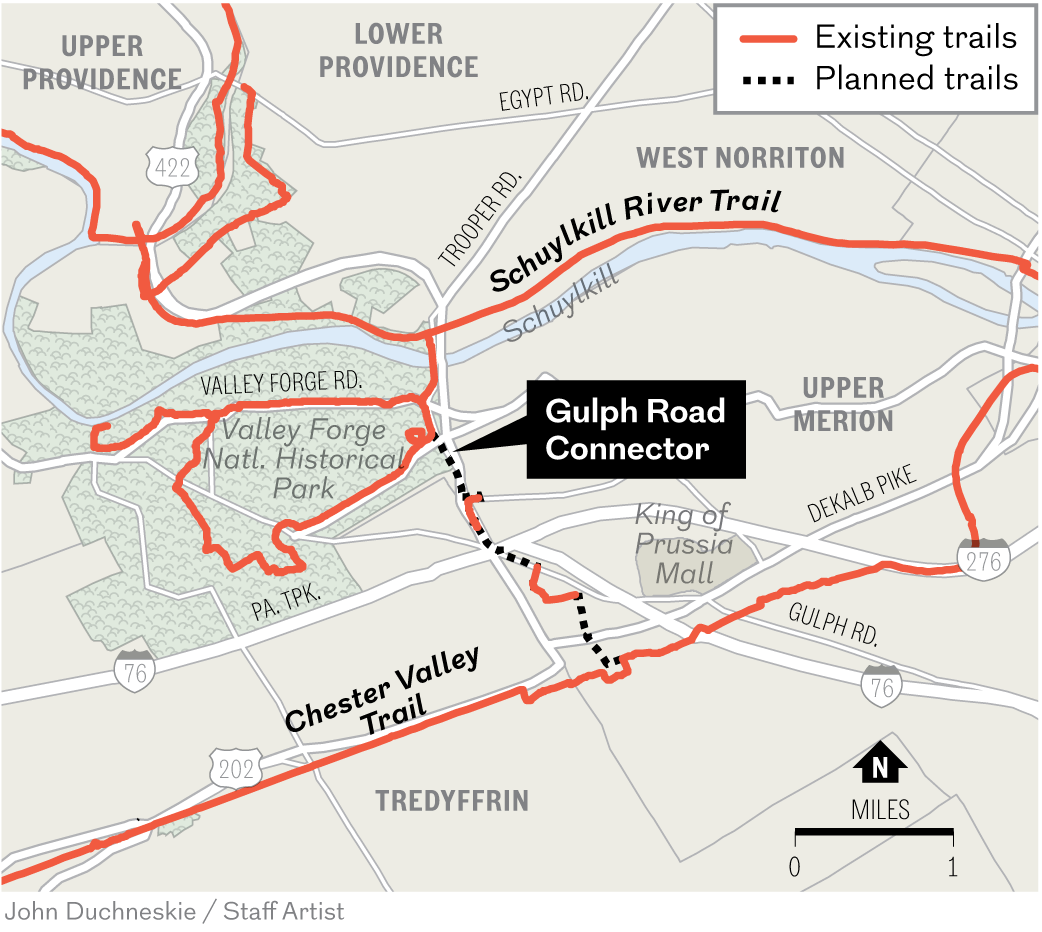
The “Gulph Road Connector,” as it is currently called, is slated to connect to the Chester Valley Trail near the King of Prussia Mall, cross through Valley Forge National Historical Park, and link with the Schuylkill River Trail when completed.
The project was recently awarded a three-year $326,900 grant from the William Penn Foundation, which will begin in January, said Eric Goldstein, president and CEO of the King of Prussia District, which is leading the project. The official name of the trail has not been determined.
The influx of funds is slated for education, advocacy, and marketing, said Goldstein, who noted that the foundation is supporting “efforts to build a coalition of advocates” for the trail. The money will not be used for design or construction.
Segments of the planned 2.8-mile trail connector are in stages of design and construction, with some already built, Goldstein said.
“What we’re trying to do is ultimately fill in the blanks to make the 2.8-mile section complete,” he said.
Goldstein said the new funds will allow the King of Prussia District to work with different partners along the trail. The aim is to build a coalition and raise awareness of the proposed trail, which ideally would lead to more grant money down the line for design and construction, he said.
Map of the planned Gulph Road Connector trial near King of Prussia.
The new funding is “the impetus for this trail to start moving toward completion,” said Molly Duffy, executive director of the Valley Forge Park Alliance, a partner organization in the trail’s development.
There is no estimate yet for the total cost of the project, Goldstein said.
The project is part of the Circuit Trails, a regional network that aims to have more than 850 miles of trails through nine counties. Once the trail is built out, Goldstein said, he expects it will be managed by multiple entities, depending on the section.
He hopes to be able to complete the trail in the next 10 years.
Some parts of the trail are “enormously complex,” he noted, adding that pedestrian bridges over sections of highway would require complex engineering and be costly — which requires raising funds.
While the trail is expected to be used for recreation, it could also be an option for commuting to work.
“The second audience of this proposed trail network is employees that work in Upper Merion Township that are seeking alternative modes of transportation to get to and from work,” he said.
The trail also could make Valley Forge National Historical Park more accessible by ways other than driving, Duffy said.
“We want people to be able to get here,” Duffy said. “Knowing where this is — in this super densely populated suburban area — we know that there’s this missing link, really, between these two major trails that, once built, will literally connect thousands and thousands of people who live in the area, work in the area, are visiting the area.”
U.S. Rep. Brian Fitzpatrick, a Republican, introduced a bill Thursday with a Democratic co-sponsor to modernize pipelines and emergency responses in the wake of a leak of a Sunoco pipeline detected this year in Bucks County.
The bill is named after the Wojnovich family, whose well was tainted with 12½ feet of jet fuel.
It would set aside $500 million in grants spread over five years to replace or upgrade high-risk hazardous liquid lines, “to facilitate the improved safety and modernization of hazardous liquid distribution infrastructure.”
In addition, it would require that prospective homeowners be made aware of nearby pipelines, what fuel they carry, any history of incidents, and who operates the lines.
Fitzpatrick introduced the bill, H.R. 6187, the Wojnovich Pipeline Safety Act of 2025, with U.S. Rep. Tom Suozzi, a Democrat from New York.
Fitzpatrick is up for reelection in 2026 in the 1st Congressional District, which includes all of Bucks County and a sliver of Montgomery County. As the last remaining Republican representing the Philadelphia suburbs in the U.S. House, Democrats believe he is vulnerable.
Fitzpatrick — as well as other federal, state, and local elected officials — has been involved since January, when a jet fuel leak from the Sunoco Twin Oaks pipeline was detected.
He and others have called for the line to be shut down. Fitzpatrick has called for independent testing of wells and “complete remediation” in the Mt. Eyre Manor neighborhood where the leak was detected.
“What families endured during this leak exposed areas where the state response was not fully equipped to meet the moment,“ Fitzpatrick said Friday in an email, ”which is why I have called on the responsible state agencies to produce a codified and consistently enforced plan that will guarantee clean water and long-term protections.”
He credited a neighborhood task force from Mt. Eyre with helping him write the bill,“from the ground up.”
The Wojnoviches live in the suburban Bucks County neighborhood near the popular Delaware Canal State Park towpath and only a few thousand feet from the Delaware River. Theirs was one of six wells thattested above state maximum contaminant levels. Other wells tested positive for contaminants, but under those levels.
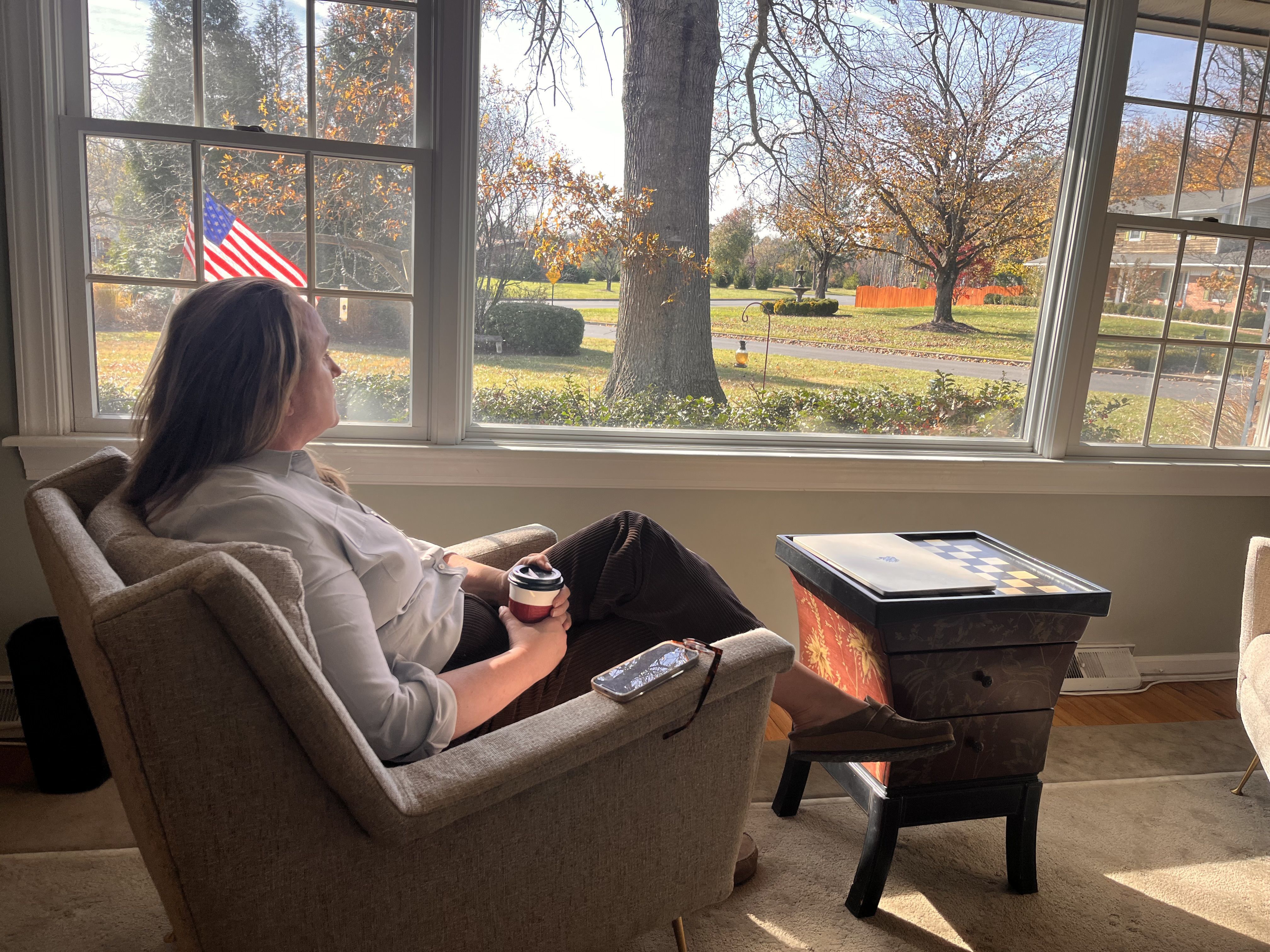
Kristine Wojnovich at home in the Mt. Eyre neighborhood in Washington Crossing, Bucks County on Nov. 7, 2025. Just out of view, is the top of a 400 foot drinking water well contaminated after a Jan. 2024 jet fuel leak was detected in Sunoco’s Twin Oaks pipeline.
The family began noticing a petroleum odor in their tap water as far back as September 2023 and reported it to Sunoco, which is owned by Energy Transfer. However, the company initially informed the Wojnoviches that their water simply had bacteria.
It wasn’t until an inspection by the state Department of Environmental Protection in late January 2025 that a leak was confirmed.
“Every page of this bill is shaped by what Upper Makefield families lived through,” Fitzpatrick said in the release, noting, “the gaps in testing, the delays in information, the uncertainty about their water, and the absence of clear standards for communication and emergency response.”
Specifically, the bill would also require:
That real estate contracts include disclosure of any hazardous liquid pipeline easements within one-half mile of a property, whether the line has undergone repairs in the past 10 years, and a list ofany leaks or failures.
Overhaul of the U.S. Department of Transportation’s and the Pipeline and Hazardous Materials Safety Administration’s current online pipeline viewer so that leak, inspection, and remediation data are readily available.
Updates to local emergency alert systems and response plans.
Pipeline operators to conduct in-person tests of water, soil, or air for potential pipeline leaks or failures.
Penalties for leaks, failures, and delayed reporting, ranging from $2.5 million to $5 million.
The reimbursement of fire departments and EMS for equipment, overtime, and cleanup costs.
Establishing an Office of Public Engagement and regular federal reporting.
Kristine Wojnovich said she’s honored by the bill’s introduction, and credits both Fitzpatrick and the neighborhood task force that’s pushed for legislation.
“Aging pipelines and outdated leak detection methods are all over this country,” Wojnovich said. “And the leak and contamination that happened in our community could have happened anywhere. This legislation is a meaningful step forward.”
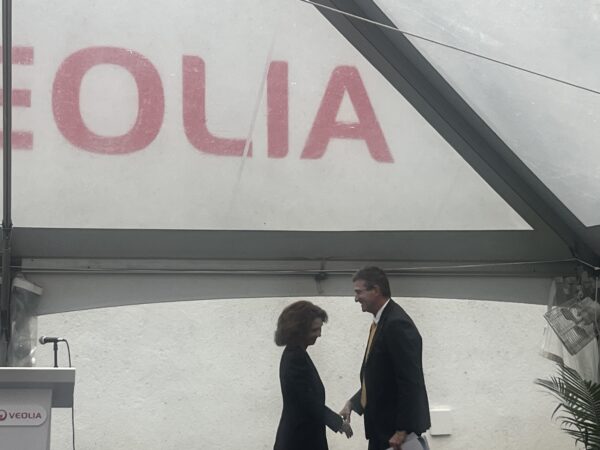
Clean Earth, based in King of Prussia, serves manufacturers such as Boeing, Merck, computer-chip makers, and hospitals. Veolia operates local water utilities in towns across the U.S., including a slice of Delaware County and northern Delaware.
Clean Earth employs around 1,800, and already uses Veolia incinerators to burn hazardous medical waste and other refuse. Enviri bought that business for $625 million in 2019. Veolia says it plans to cut $120 million in spending as it integrates Clean Earth, to make the deal more profitable.
Combined with Veolia’s existing hazardous-waste business, Veolia says it will be among the largest businesses of its kind. Veolia also bought medical-waste companies in New England and California earlier this year, and it has incinerators in Texas, Illinois, and Arkansas.
Clean Earth includes tar-contaminated soil collection treatment centers on the Schuylkill in Southwest Philadelphia; in Morrisville, Bucks County; and New Castle, Del.; and a hazardous-waste and chemical disposal site in Hatfield, Montgomery County, among 82 waste-management and 19 federally-permitted treatment sites, along with hundreds of trucks. Veolia has industrial facilities in Bridesburg and Pennsauken, among other area locations.
Veolia will pay cash worth around $15.50 a share, or $1.3 billion, to Enviri shareholders for Clean Earth; plus $1.35 billion to pay down some of Enviri’s debt load; and around $400 million to help finance Enviri as it restructures as a smaller company and issues new shares. Both boards have approved the deal, pending a vote by Enviri shareholders next spring.
The price to shareholders is a premium to Enviri’s recent share value, and triple what it was worth at its recent low in March. But it’s also less than the stock was worth as recently as 2022, before the company changed its name from Harsco and moved from central Pennsylvania to Philadelphia, where its leaders said it’s easier to recruit engineers and managers.
The sale leaves Enviri with two remaining business lines: steel-mill slag management and railroad track equipment and maintenance. The latter business faces large environmental expenses, and Enviri had earlier tried to sell it.
After selling Clean Earth to Veolia and reducing management costs, Enviri will spin off the remaining businesses into a new company, under the same name.
Announcing the deal, Enviri chief executive F. Nicholas Grasberger also said he’ll be stepping down from the company’s top job, to be succeeded by Russell Hochman, a ten-year Enviri veteran who already serves as the company’s senior vice president, top lawyer, and compliance officer.
F. Nicholas Grasberger, chairman & CEO of Enviri, at the company’s Philadelphia headquarters in 2023. He will be stepping down as the company sells its hazardous-waste division to France’s Veolia.
The restructured Enviri will have more cash to invest in its businesses and lower finance costs, Grasberger said in a statement. He praised successor Hochman’s “deep business acumen and proven ability to navigate mergers and acquisitions, regulatory matters, and transformation efforts.”
The boost in Enviri’s capital “will create enhanced opportunities” for both slag and rail, Hochman said in a statement.
Rape crisis centers in the Philadelphia region are sounding the alarm that the slight increase in funding in the recently passed state budget won’t be enough to sustain or improve crucial services for survivors of sexual assault.
The Pennsylvania Coalition to Advance Respect (PCAR), which funds rape crisis centers via the state allocation, estimates centers will only see an average increase of $5,300 from the state to support their work assisting victims of sexual violence.
The Philadelphia Center Against Sexual Violence had to lay off most of its staff and reduce services due to the nearly five-month state budget impasse. And while leaders in the region appreciate the funding — the first increase for rape crisis centers in years — it’s only a fraction of what Philly’s only rape crisis center says it needs to survive.
“Even with the budget now passed, the funding increase is minimal compared to the overwhelming need,” said LaQuisha Anthony, senior manager of advocacy at the center, in a news release last week. The center is known as WOAR, the initials of its former name, Women Organized Against Rape.
Now advocates in Philadelphia and the suburbs are turning their focus to next year’s budget, pushing for an $8 million increase in state funding to rape crisis centers, which, among other services, offer victim advocacy, legal services, and crisis hotlines. A surge in funding will help provide stability for survivors and adequately compensate staff who dedicate their lives to this work.
“An $8 million increase would help ensure that every survivor across the Commonwealth, urban, suburban, and rural, has access to care, advocacy, and prevention,” said Joyce Lukima, coalition director and chief operating officer at PCAR, in a statement.
More than $12 million of a $50.1 billion state budget was allocated to rape crisis this year, a $250,000 increase from last year. Lukima said this $250,000 will be split among 47 rape crisis centers in the state.
In a statement, a spokesperson for the Pennsylvania Department of Human Services, which oversees rape crisis center funding, highlighted Gov. Josh Shapiro’s history of support for survivors of sexual violence.
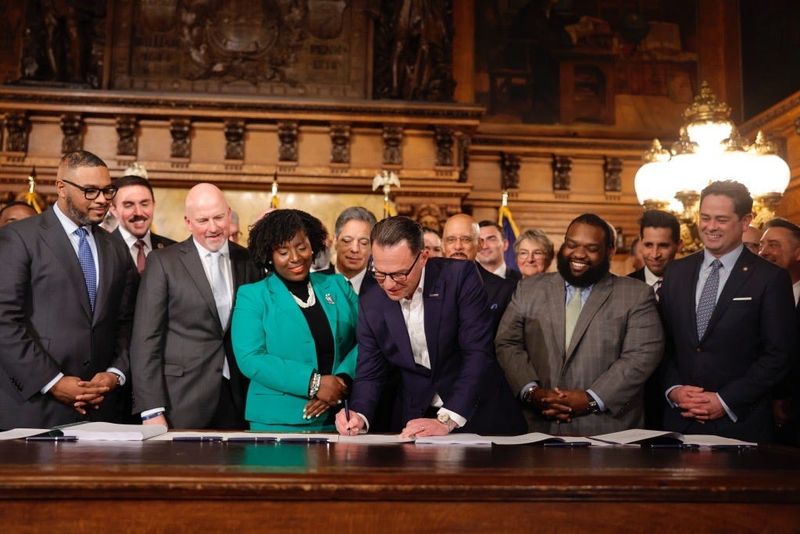
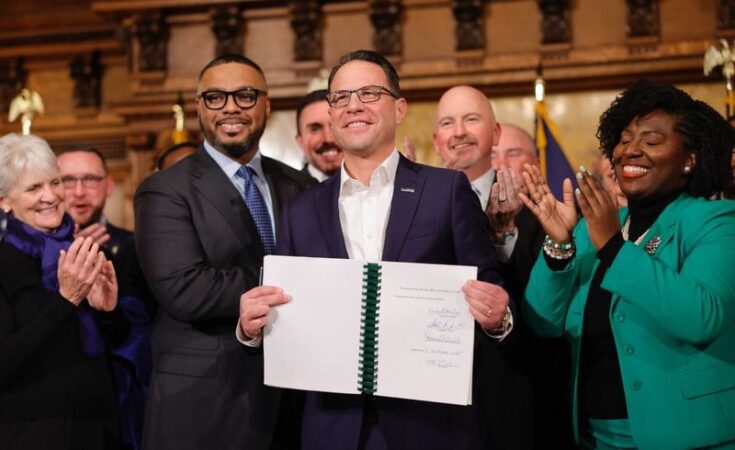
Gov. Josh Shapiro signs the fiscal year 2025-26 budget surrounded by General Assembly members on Nov. 12 at the Capitol in Harrisburg. The state budget had been due June 30, and Pennsylvania is the final state in the country to approve a funding deal.
“The final budget reflects the realities of working with one of the only divided legislatures in the entire country – but Gov. Shapiro will continue to fight for survivors and the Commonwealth’s rape crisis centers,” said Ali Fogarty, the DHS spokesperson.
Victim services centers in the suburbs, which also offer rape crisis services, are echoing WOAR and PCAR’s message, highlighting the urgent need for greater funding. These suburban centers receive funding from additional sources because they support victims of other crimes.
“For now, we’re doing OK, but another year of no increase in funding while the cost of living is going up has a significant impact on our staff as well as our organization,” said Penelope Ettinger, executive director of Network of Victim Assistance – Bucks County.
Trying to stay afloat
While Pennsylvania lawmakers were failing to come to an agreement on a far overdue state budget last month, rape crisis centers in Philadelphia and the suburbs were trying to make ends meet and provide services to survivors of sexual violence.
For instance, the Victim Services Center of Montgomery County had to use a line of credit, delay bill payments, institute a hiring freeze, increase the number of interns, and commit to “triaging services,” said Mary Onama, executive director.
“If they hadn’t passed the budget the time that they did, by December or January, we would have had to close, because we couldn’t go much longer,” Onama added.
At the Crime Victims’ Center of Chester County, it “added a layer of stress to an already very stressful job,” though the center did not have to reduce services, said Christine Zaccarelli, the organization’s CEO.
WOAR’s release last week said the closure of therapy and counseling services left “106 individuals wait-listed, 33 group clients waiting for services to resume, and eight child clients referred elsewhere for care.”
The center has been serving Philadelphia since 1971 and was one of the first rape crisis centers in the United States, according to the organization. Between January and October, the center said it responded to 3,820 calls on its crisis hotline.
The dysfunctional approval of the state budget, though, will have lingering effects on WOAR, warning in the news release that without a “long-term, sustainable investment,” the center won’t be able to meet a rising demand for resources.
The Bridge Loan, from the Pa. Treasury Department, provided WOAR funding owed for July through September, but it still wasn’t enough to return WOAR to full capacity, said Demetrius Archer, PCAR’s communications director. The center also brought back two employees this month, but it’s still in need of community support and is hoping to bring back more staff when possible.
“When services are underfunded, survivors and entire communities feel the impact,” said Fontan in the news release. “In a city as large and diverse as Philadelphia, every minute counts when someone is in crisis. Survivors deserve to know that when they reach out for help, someone will be there to answer.”
All eyes on Harrisburg
At Temple University’s campus Tuesday, student advocates bundled up in their coats, hats, and scarves and gathered at the Bell Tower to discuss an anti-sexual violence state bill they helped develop.
The Every Voice Bill, which primarily focuses on sexual violence prevention resources on college campuses, is even more important now that survivor services from WOAR are “unstable,” said Bella Kwok, a senior criminal justice major and president of Temple’s Student Activists Against Sexual Assault, in an interview prior to Tuesday’s event
“This bill would ensure that stability at least on an institutional level,” Kwok said.
Temple University students Emma Wentzel, left, and Bella Kwok speak at a podium on Polett Walk on Tuesday, Nov. 18, 2025, about campus sexual assault and a state bill they helped craft to strengthen protections against sexual violence at colleges.
Kwok is not the only one who is turning their attention to Harrisburg. PCAR and other rape crisis centers are continuing their push for next year’s budget to include an $8 million increase in the Pa. DHS line item for rape crisis.
As the first increase for rape crisis centers in a few years, the new budget’s funding gives advocates “hope,” even if the amount is “disappointing,” said Zaccarelli, of the Crime Victims’ Center of Chester County.
“Maybe our advocacy is making a little bit of a difference and shining a light on survivors and their needs and how important our centers are in the community,” Zaccarelli said.
Ettinger said that Bucks County’s state lawmakers have been supportive of NOVA Bucks, which had to place a hiring freeze on some positions and issue “significant” restrictions on spending due to the impasse, but that a lack of increased funding from the state is “very telling.”
“I believe that the fact that the state did not allocate a significant increase is very telling to what they believe, where they put it on the priority list,” Ettinger said.
For his part, Shapiro signed Act 122 in October 2024, which aimed to increase transparency by requiring a statewide electronic system to track evidence kits for sexual assaults, Fogarty, the DHS spokesperson said. And in December 2023, he signed Act 59, which aims to improve access to treatment for survivors of sexual assault.
It’s a “societal” problem, not a government problem, said Vincent Davalos, interim executive director of the Delaware County Victim Assistance Center.
“When we talk about sexual violence, the first thought is, of most people, is to say ‘Maybe this didn’t happen,” Davalos said. “And even if they do believe it happens… it’s just a really difficult topic for people to engage and talk about it plainly.”
This week, victim services leaders across Pennsylvania will gather in Harrisburg for an annual conference to address funding challenges among other concerns, Davalos said, noting that with more funding, his center could improve staff retention.
But this year, the newly passed state budget is likely to be top of mind.
“I think money is going to be a big topic,” Davalos said.
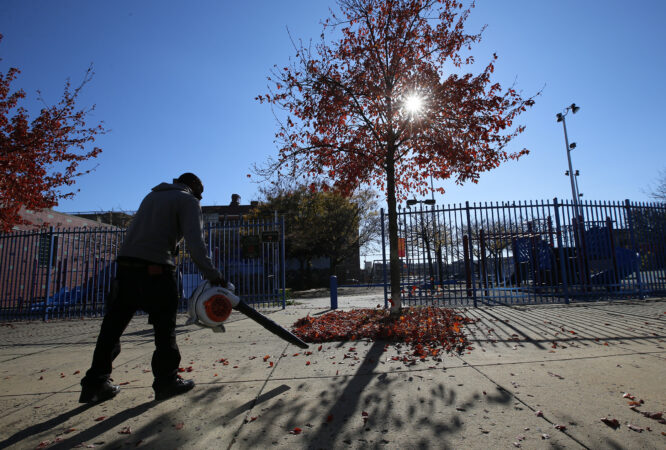
The Montgomery County township on Wednesday became the first in Pennsylvania to ban gas-powered leaf blowers, commissioners said, taking a phased approach that will begin with a seasonal prohibition and transition to an all-out ban over the next four years.
“Together, we will bring us a step closer to providing our residents the right to clean air, pure water, and to the preservation of the natural, scenic, historic, and aesthetic values of the environment as guaranteed by the Pennsylvania Constitution,” Commissioner Gilda Kramer said, addressing a packed house of attendees at the board meeting.
The commissioners passed the ordinance 10-4.
Starting on June 1, 2026, gas-powered leaf blowers will be banned seasonally during the summer (June 1-Oct. 1) and winter (Jan. 1-April 1). The use of portable generators to power electric leaf blowers or charge their batteries will also be banned.
Starting on Jan. 1, 2028, the use of gas-powered leaf blowers will be permitted only during the fall. They will be banned from Jan. 1 to Oct. 1.
On Jan. 1, 2029, a full-fledged ban will take effect.
Residents will still be able to use gas-powered leaf blowers during snowfall and within 24 hours after snow has ceased to fall.
Dozens of residents testified in favor of the ban, citing the noise pollution, environmental impacts, and health consequences associated with the use of gas-powered leaf blowers. One third grader presented a petition with 141 signatures collected at Penn Valley Elementary School.
While the majority of commissioners characterized the ordinance as a step in the right direction — one that prioritizes safety and environmental health — others dissented, warning that the electric leaf blower technology is not currently strong enough to supplant gas-powered blowers and that the costs of the transition are still unknown.
“The ordinance that we’re considering tonight is based on an aspiration that the technology is going to be there,” Commissioner Joshua Grimes said. “Right now, staff has told us it is not there. Staff has not told us when it will be there, and no one knows when it’s gonna be there.”
An amendment to implement a seasonal ban only, not a full ban, failed. The amendment was brought by Commissioner Daniel Bernheim.
Board President Todd Sinai said that while electric leaf blower technology is not yet fully advanced, the ordinance should be seen as Lower Merion setting ambitious, and important, goals for the future.
“Some town has to go first. Some town has to be the one that is the starting point for all the other municipalities to coalesce around,” Sinai said. “… If we have to backfill things because we’ve discovered things that are friction points, we will fix them, but at least let’s set an objective and try to accomplish it.”
Commissioners Bernheim, Grimes, Louis Rossman, and Scott Zelov voted against the ordinance.
This suburban content is produced with support from the Leslie Miller and Richard Worley Foundation and The Lenfest Institute for Journalism. Editorial content is created independently of the project donors. Gifts to support The Inquirer’s high-impact journalism can be made at inquirer.com/donate. A list of Lenfest Institute donors can be found at lenfestinstitute.org/supporters.
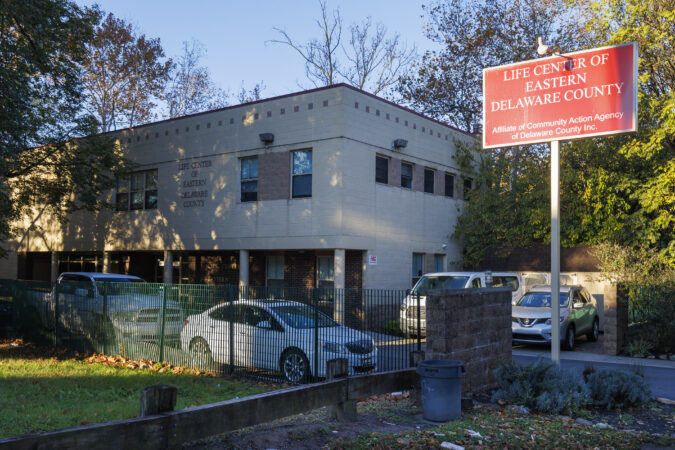
For the first time in months, the director of the Community Action Agency of Delaware County, which operates three homeless shelters and a rental assistance program, isn’t thinking about service cuts.
The organization was forced to reduce capacity at one of its shelters to 50% in October and close the other two on Nov. 1 as a result of the state budget impasse. Delaware County, which had been backfilling for missing state dollars, had to cut the funds it delivered to social service organizations in half last month.
Now, the agency is beginning to reopen its doors and its rental assistance program.
“[Employees] have been busy kind of preparing for the residents to come back,” said Ed Coleman, the nonprofit’s executive director.
The Community Action Agency is one of several nonprofit organizations across the region that were stretched and stressed over the last several months as state dollars stopped flowing in the absence of a budget. Since January, they have grappled with uncertainty over federal funds as President Donald Trump’s administration cancels grants and Congress considers major cuts to social service programs.
The dynamics exposed the vulnerabilities facing philanthropic organizations while threatening the assistance they provide to those they serve.
Last week the Pennsylvania General Assembly finally passed a budget, ending one source of uncertainty. At the Community Action Agency, this meant employees began swapping out bedding and restocking toiletry bags given to incoming residents this week, undoing significant reductions in service.
By Wednesday, Wesley House Shelter, a facility for families and single women that Community Action manages, was able to take in a senior citizen whom a church had placed in a hotel amid the budget stalemate. A former resident who had to stay with a relative until the shelter could reopen also returned to the facility.
The promise of state funds could not have come soon enough.
Coleman said since Nov. 13, the agency received a little more than 250 rental assistance requests — including almost 80 on Tuesday alone.
The organization, Coleman said, is now assessing how much it can spend on services as it waits for state dollars to begin flowing again — which is expected to happen in the next 30 to 90 daysas state agencies catch up on millions in missed payments to counties, schools, and nonprofits.
“We really don’t get paid very quickly with most of the contracts we have,” Coleman said.
The rebuilding mirrors what nonprofits across the Philly region are managing after the state budget impasse. Several nonprofit organizations told The Inquirer they had to freeze hiring and take out lines of debt. Nearly all reported burnout among staff as need increased and uncertainty over funding loomed large.
“In many ways, it felt similar to the early months of COVID,” said Jennifer King, executive director of the Council of Southeast Pennsylvania.
The Bucks County Opportunity Council was forced to reduce the number of individuals it could provide rent assistance to.
And at A Woman’s Place, a domestic violence shelter in Montgomery County, more people were showing up at the shelter door, even if they weren’t domestic violence survivors, asking for help the shelter was not equipped to provide. Often, she said, staff did not even have an answer of where to send people because of the reduction in services across the board.
“That takes a toll on staff, and they start thinking, ‘Do I really want to do this work?’” said Beth Sturman, the shelter’s executive director.
Providers worried most about the impact the freeze had on those they served. Jill Whitcomb, presidentand CEO of Surrey Senior Services in Delaware County, said older adults are facing greater stress and anxiety as a result of state and federal services being rolled back.
“Our mission is to help people remain at home and independent and engaged as long as they possibly can or want to,” Whitcomb said. “That becomes really hard on a limited income when those incomes are already tenuous, and then they’re living with the anxiety about losing their Social Security.”
Jeannine Litski, president of Mental Health Partnerships, said the closure of shelters in the region resulted in greater trauma to unhoused people.
“Imagine you’re just holding on by a thread, and you have at least a place you can lay on a cot for the night and you have a little food, and now that’s taken away,” she said.
While philanthropic organizations were grateful for the state budget deal, they remained anxious about the possibility of another federal government shutdown at the end of January and questioned how much more they could take.
“We got through COVID. Let’s see if we can get through this,” Whitcomb said. “It’d be interesting to talk five years from now and see where everybody is.”
This suburban content is produced with support from the Leslie Miller and Richard Worley Foundation and The Lenfest Institute for Journalism. Editorial content is created independently of the project donors. Gifts to support The Inquirer’s high-impact journalism can be made at inquirer.com/donate. A list of Lenfest Institute donors can be found at lenfestinstitute.org/supporters.
Nearly 1 million Pennsylvanians are expected to qualify for a new state tax credit that is meant to ease the burden of making ends meet.
The new Working Pennsylvanians Tax Credit will allow eligible low- and moderate-income filers to receive a state tax credit that is equal to 10% of what they qualify for through the federal Earned Income Tax Credit (EITC). Like the EITC, the state credit will depend on income and number of children. The highest credit will be $805 and, according to Gov. Josh Shapiro’s office, the average credit will be around $240.
In Philadelphia alone, 175,393 people are estimated to benefit from the new state tax credit totaling $41.7 million, according to Shapiro’s office. Statewide, it is expected to provide a total of $193 million in tax relief to 940,000 Pennsylvanians.
The policyhad bipartisan support since 2023, and was led by State Rep. Christina Sappey, a Chester County Democrat. Sappey and a team of Democrats sponsored a bill that passed the Democratic-led House in May that would have allowed a 30% credit, but that figure waslowered to 10% as a result of budget negotiations with the Republican-led Senate and Shapiro.
It’s one of the measures being hailed as a major win for Democrats in the $50.1 billion state budget deal, which was approved last week after a more than four-month impasse.
Sappey saidthat she was approached by the United Way of Pennsylvania “several years ago” about the idea.
“I think of all of the folks who are really just struggling right now to make ends meet — but they’re working,” Sappeytold The Inquirer.
“They get thrown a curveball, like an unexpected healthcare expense, get in a car accident, need a giant car repair, something like that,” she added. “They really get kind of knocked off the rails, and then they kind of spiral.”
At a news conference on Tuesday, Shapiro listed examples of Pennsylvanians who will qualify for the tax credit.
“That single mom who’s raising three kids whose making about $25,000 a year as a waitress, she can get $770 back on her state taxes on top of whatever relief she was going to get from the federal government,” Shapiro said.
“This isn’t some giveaway … we’ve come together on a bipartisan basis to say, ‘If you’re working, if you’re doing everything right by the book, we’re going to put money back in your pockets,’” he added.
Who is the Working Pennsylvanians Tax Credit for?
The tax credit is designed for working Pennsylvanians with a total income up to $61,555 if filing alone, and up to $68,675 if filing jointly as a married couple, according to the IRS guidelines for the EITC.
Eligibility for the state credit is based on thefederal EITC, which is meant for low- to moderate-income workers. Workers with kids can qualify for a bigger credit that increases with the number of children up to three or more kids.
Individuals must be employed and earn income to qualify.
Households that can benefit from this program may earn too much to qualify for public assistance while not earning enough to be able to handle an unplanned financial emergency, according to the United Way. About 28% of Pennsylvanians fall into this group, according to testimony from the United Way of Pennsylvania president Kristen Rotz.
How does the tax credit work, and how much is it for?
Pennsylvania’s state credit will be 10% of the EITC amount a filer qualifies for. Filers will automatically qualify for the state credit.
“This is probably one of the more easy tasks you’re going to have to deal with as you’re helping people fill out their taxes,” Shapiro told a group of Widener University students Tuesday.
The program will begin for tax year 2025, so Pennsylvanians can use it this forthcoming tax season. The credit is refundable, so taxpayers will get money back if the credit exceeds how much they owe.
The credit amount initially increases based on how much money the earner makes and then decreases after it reaches a certain amount, resembling a bell curve, said Montgomery County accountant David Caplan. That “tipping point” differs depending on the tax filer’s status and number of dependents, he said.
The maximum state credit for filers with no kids is $65, and about 261,739 Pennsylvanians are expected to fall in that tier, according to the Office of state House Speaker Joanna McClinton, a Philadelphia Democrat.
That maximum raises to $432 for households with one child, $715 for two children, and $805 for households with three or more kids. About 133,641 Pennsylvanians are expected to fall in that maximum credit tier, according to McClinton’s office.
There were 802,000 claims for the federal EITC in Pennsylvania for the 2023 tax year, totaling $2.086 billion, according to the IRS. The average federal credit amount was $2,600. Under the new state credit, that would amount to $260.
“While it’s not much, it’s certainly a help, and that’s something that’s tangible,” said State Rep. Tarik Khan, a Democrat who cosponsored the state tax credit bill and represents parts of Philadelphia.
Do other states have a credit like this?
According to the National Conference of State Legislatures, 31 states, D.C., Guam, Puerto Rico, and some municipalities have their own version of the EITC.
Most of those states calculate their credit as a percentage of the federal program, ranging from 4% in Wisconsin to 125% in South Carolina, according to the group.
Neighboring New Jersey offers a 40% credit and Delaware has 4.5% refundable and 20% nonrefundable credits.
State Rep. Steve Samuelson, a Northampton County Democrat who chairs the House Finance Committee and cosponsored the tax credit bill, called the credit a “commonsense” measure. He pointed out how existing states have varying political leanings, from the redder Oklahoma, Indiana, and Kansas to bluer states like New York, Hawaii, and California.
“Better now than never,” Samuelson said.
Is a 10% tax credit the right amount?
Sappey and other Democrats see the 10% credit as a starting point. They hope to increase the size of the credit in future years.
“If this is a program that both sides can agree to, getting a program established is more important than, you know, how big it is at the beginning,” she said in an interview.
Caplan, who chairs the Pennsylvania Institute of Certified Public Accountants’ Local Tax Thought Leadership Committee, said he believes the 10% tax credit could be higher, but maybe not as high as the 30% initially approved by the House.
“I don’t think the 10% is outrageously low that it’s kind of chintzy,” he said. “I think it’s just a nice thing to do.”
Sen. Lynda Schlegel Culver, a Republican from Northumberland County who said she championed the policy, lauded the program for helping taxpayers who work.
“This credit rewards work, strengthens household stability, and helps those doing everything right, working, paying their bills, and supporting their families,” she said in a statement. “This is a commonsense investment in both our workforce and the future of our Commonwealth.”
Concerns from other Republicans about the program were related to the cost and its size.
Sappey said “that’s legitimate” but contends that the program helps people “increase their earning power” and that the hope is, in turn, for them to no longer be eligible for the credit. And when they get it, she argues, “they are spending it in really good ways.”
“We’re keeping people in the workforce, we’re generating revenue, and we’re keeping them out of social safety net programs,” she said.
Rotz, of the United Way, said in her testimony that EITC recipients often spend their credit on grocery stores, vehicle and home repairs, paying off debt, and sometimes education.
Khan lauded HouseDemocratic leaders for holding onto the tax credit in negotiations — and compared their long-delayed negotiations to the Eagles’ season, which has seen the team rack up wins despite offensive struggles.
“You love them, and then you watch the game, and you’re like, ‘Goddamn it. Why can’t you just play like a normal team?’ But then they win in the end, and you’re like, ‘You know what? That was a tough game, but damn it, I’m so happy right now,’ and so that’s how I feel with this.”
An East Germantown man admitted he struck and killed a woman in a wheelchair with his car in Lower Merion last year, then fled without helping her or calling police.
Jamal McCullough, 38, pleaded guilty to accidents involving death for hitting Tracey Carey outside the Taco Bell restaurant on City Avenue in November of last year.
McCullough entered the plea Tuesday — the day he was expected to go to trial — as Carey’s relatives looked on. The family later expressed frustration at their belief that the man who killed her showed little remorse.
McCullough will serve three to six years in state prison, the mandatory minimum sentence for the crime to which he pleaded guilty.
McCullough’s attorney, Michael Parkinson, did not immediately respond to a request for comment.
McCullough struck Carey, 61, with his Toyota Camry on Nov. 11, 2024, as she attempted to cross the highway in her wheelchair. And while prosecutors noted that McCullough was not at fault in the fatal collision because Carey was crossing outside of a posted crosswalk, they said his actions after the crash constituted a crime.
Surveillance footage taken from the scene showed that McCullough hit Carey with enough force to send her body into the air and push it several feet away, according to the affidavit of probable cause for his arrest.
The collision occurred around 2:14 a.m., as McCullough was on his way to begin his shift as a sanitation worker with Waste Management. Afterward, surveillance cameras recorded him pulling into a nearby parking lot to assess the damage to his vehicle and then walking back to the scene of the crash.
Investigators said McCullough walked within feet of Carey’s body, but did not stop to help her.
Another driver who witnessed the crash called 911 and used his vehicle to block traffic and protect Carey, the affidavit said.
She was later pronounced dead at Lankenau Medical Center.
Investigators identified McCullough’s vehicle through broken pieces of the vehicle that were left at the scene, as well as the surveillance footage from the area, according to the affidavit
McCullough’s coworkers told police that in explaining the visible damage to his car, he initially said the vehicle had been hit while it was parked. After his photo was included in news reports about the crash, McCullough told his coworkers he hit a person in a wheelchair and promised to turn himself in.
When detectives came to interview him at his workplace, McCullough said he wanted to take full responsibility for his actions, the affidavit said, and was making arrangements to surrender his vehicle to police.
Philadelphia’s nonprofit Center for Advocacy for the Rights and Interests of Elders, known as CARIE, is closing next Wednesday after nearly 50 years, the organization’s board announced Tuesday in an email to supporters.
Few details were available on what led to the decision to close abruptly the day before Thanksgiving. CARIE’s new executive director, Brian Gralnick, did not reply to an email or voicemail asking for more information.
Board chair Joan Davitt, an associate professor and geriatric scholar at the University of Maryland School of Social Work who lives in the Philadelphia area, also did not respond to requests for comment.
The organization lists 26 employees on its website. Its most recent audited financial statements show that it had $2.9 million in revenue and a $177,307 operating loss in the year that ended June 30, 2024.
An unaudited financial report for the seven months that ended in January warned that CARIE “was facing financial risks, including the potential default on its line of credit.” At the end of January, CARIE only had enough cash to pay its bills for two weeks, the report obtained by The Inquirer said.
This year, CARIE lost two of its largest contracts, effective next year. Those contracts were to provide long-term care ombudsman services for the elderly in most of Philadelphia and in Montgomery County. An ombudsman’s job is to provide independent advocacy for residents of long-term care facilities and to help resolve complaints about care and living conditions.
In Philadelphia, CARIE had provided the service since 1981, four years after its founding. Philadelphia Corporation for Aging, which manages the contracts, is still finalizing the selection of the new providers.
CARIE started providing ombudsman services in Montgomery County in 2022, but the county’s Office of Aging Services is taking the service back in-house on Feb. 1.
Menio’s successor, Whitney Lingle, lasted just 19 months. She was followed by an internal acting executive director for a year. Gralnick took over in September.
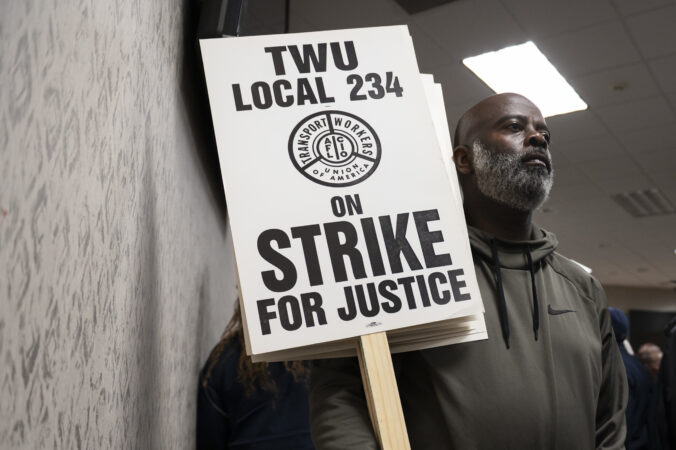
Members of the Transport Workers Union Local 234 on Sunday, Nov. 16 voted to authorize a strike if union and SEPTA negotiators can’t reach an agreement on a new contract.
Shortly before the current contract ran out at 11:59 p.m. on Nov. 7, TWU’s new president, Will Vera, urged union members to stay on the job. In an unusual move, he delayed a strike vote at the time of contract expiration, saying he had hope that a deal could be reached without the usual brinksmanship.
“We’re asking you to please continue to come to work and put money aside. We want you to be prepared in case we have to call a work stoppage,” he told members in a video at the time.
Local 234 leaders say they’re prioritizing a two-year deal with raises and changes to what the union views as onerous work rules, including the transit agency’s use of a third party that Vera said makes it hard for members to use their allotted sick time.
In a statement, SEPTA said it was aware of the authorization vote and is committed “to continue to engage in good-faith negotiations, with the goal of reaching a new agreement that is fair.”
2023 Fraternal Order of Transit Police Lodge 109 (three days)
SEPTA police officers walked off the job after bargaining with the transit agency for almost nine months, largely over the timing of a 13% pay raise for members. The agreement, partially brokered by Gov. Josh Shapiro, came amid heightened fears about safety on public transit and a funding crisis for SEPTA.
TWU Local 234 walked off the job for six days; the biggest issue was retirement benefits. SEPTA’s contributions toward union members’ pensions did not rise in tandem with wages when workers made more than $50,000. Managers’ pension benefits were not capped. The union also wanted to reduce out-of-pocket health-care costs and win longer breaks for bus, trolley, and subway operators between shifts and route changes.
SEPTA and the union reached an agreement Nov. 7, the day before the general election. Democrat Hillary Clinton’s presidential campaign was worried about voter turnout, and the city sought an injunction to end the strike. It proved unnecessary.
Talk about leverage. TWU was ready to strike just before the first home game of the World Series between the Phillies and the New York Yankees. Gov. Ed Rendell pushed the two sides to continue talking, and the transit workers waited to walk out until three hours after the end of Game 5, the last in the series played at Citizens Bank Park.
It was a bitter strike, coming just a year after the stock market’s meltdown started the Great Recession. TWULocal 234 President Willie Brown called himself “the most hated man” in Philadelphia. Mayor Michael Nutter was harshly critical. Brown called him “Little Caesar.”
The strike was settled Nov. 7 with a deal on a five-year contract. Transit workers got a $1,250 bonus, a 2.5% raise in the second year, a graduated increase in SEPTA pension contributions from 2% to 3.5%, and the maximum pension benefit was raised to $30,000 from $27,000.
2005: TWU Local 234 and United Transportation Union Local 1594 (seven days)
Negotiations collapsed mostly over SEPTA’s insistence that workers pay 5% of medical insurance premiums. At that point, the authority paid 100% of the workers’ premiums for family coverage.
In the end, it was solved by Gov. Rendell, a Democrat who had been Philadelphia mayor in the 1990s. He agreed to give promised state money to SEPTA early, so it could pay premiums in advance, reducing its costs.
In the resulting four-year deal, the unions had to pay for 1% of their medical premiums. They also received 3% yearly raises.
Pedestrians and cars in a chaotic dance at the intersection of Market and 30th Streets during the afternoon commute on the first day of the SEPTA city workers’ strike Nov. 1, 2016.
1998: TWU Local 234 (40 days)
City transit workers’ contract expired in March, but they did not strike until June — and then stayed out for 40 days. The two sides reached an agreement in July, but it fell apart. TWU members had returned to their jobs and kept working under an extension of their old contract. A final agreement was signed Oct. 23.
The union agreed to SEPTA’s demand that injured-on-duty benefits be limited. The old contract gave them full pay and benefits while on leave after a work injury. SEPTA wanted to hire an unlimited number of part-time workers. The union agreed to 100 part-timers to drive small buses.
SEPTA’s chief negotiator was David L. Cohen, famous for reining in unions representing city workers during Philadelphia’s bankruptcy in 1992, as Rendell’s mayoral chief of staff.
A two-week strike stilled city buses, trolleys and subways until an agreement was reached April 10. Transit workers would get 3% raises per year over the three-year span of the new contract, as well as increases in pension benefits and sick pay.
The union agreed to several cost-reduction measures, including a restructuring of SEPTA’s workers compensation policies.
Mayor Ed Rendell, a villain to many in labor for winning givebacks from city unions in 1992, pushed SEPTA to offer more generous terms to TWU than it had initially. Cohen, who was his chief of staff, crunched the numbers to make it work. Three years later, out of the city administration and working as a lawyer, he was hired as SEPTA’s chief negotiator.
1986: TWU Local 234 (four days) and UTU Local 1594 (61 days)
When TWU struck the city transit division in March 1986 over a variety of economic issues and work rules, some bus drivers pulled over mid-route and told passengers to dismount, The Inquirer reported.
Members were particularly incensed at what they considered SEPTA’s draconian disciplinary procedures. Union leaders said the issue was a basic lack of respect. The strike was settled in four days.
Drivers for 23 suburban bus routes, two trolley lines in Delaware County and the Norristown High-Speed Line — all members of the United Transportation Union — struck for just over two months, affecting about 30,000 passengers a day.
Employees in what was then known as SEPTA’s Red Arrow Division — after the private transit company that used to own the routes and lines — made considerably less than their city counterparts and had weaker pension benefits. They won raises and pension changes that brought them closer to parity.
1983: Regional Rail (108 days)
Thirteen separate unions walked off the job on the commuter rail lines that SEPTA had taken over at the beginning of the year from Conrail, successor to the bankrupt Pennsylvania and Reading Railroads.
In addition to wages, a key issue was SEPTA’s demand that union train conductors accept pay cuts. The authority had already cut the number of those workers by more than half.
Eventually SEPTA reached deals with a dozen of the unions. The 13th local, which represented 44 railroad signalmen, held out longer. Main issue: Whether SEPTA had the right to contract with outside firms for some types of signal work.
The Regional Rail strike remains SEPTA’s longest work stoppage since 1975.
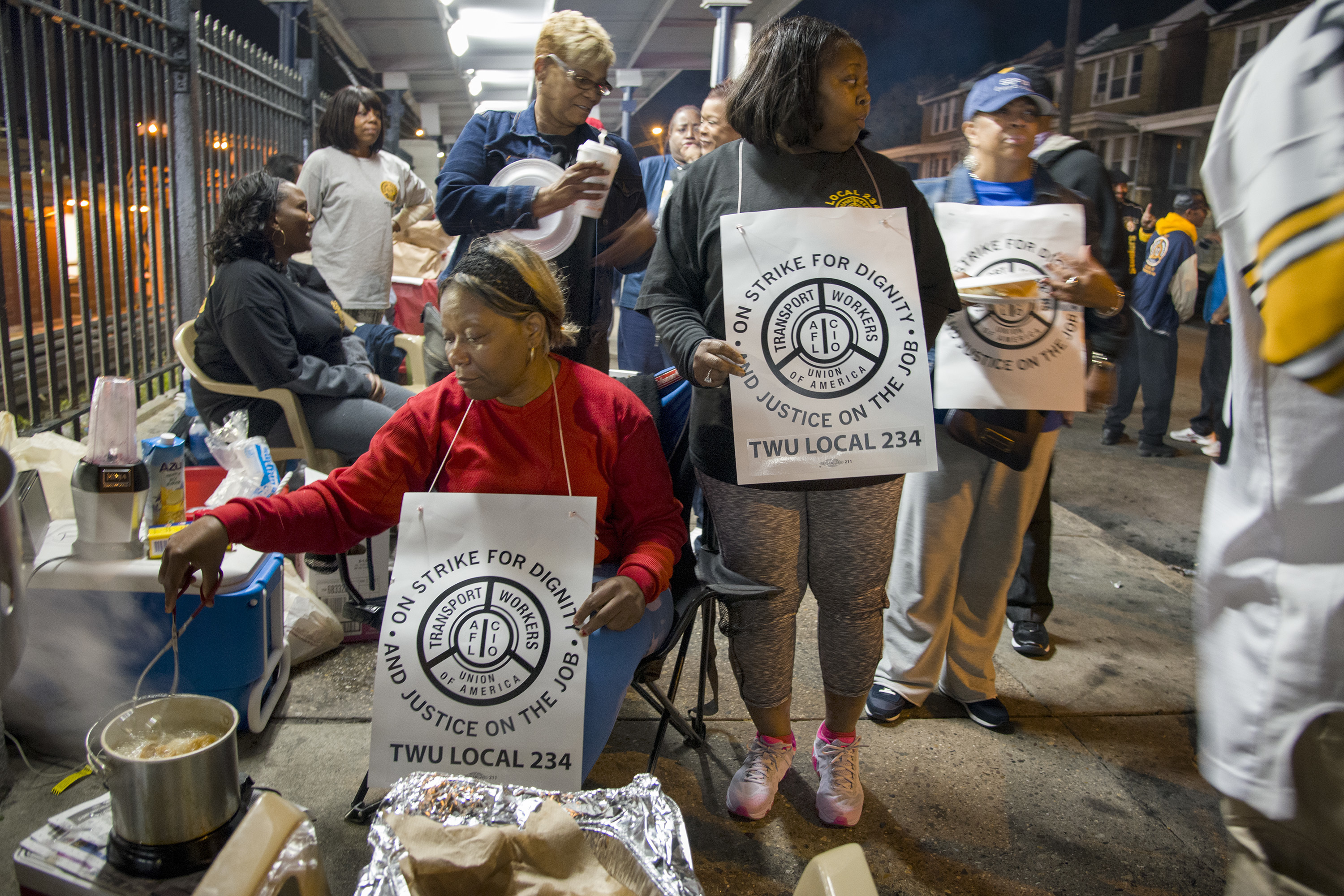
Joyce Woodford (center), a 25-year veteran cashier on SEPTA’s Broad Street Line, serves up fried fish for her fellow striking cashiers outside the Fern Rock Transportation Center during dinnertime on the third day of the SEPTA strike in 2016.
1982: TWU Local 234 (34 days)
About 36 suburban bus drivers and mechanics operating routes primarily in Montgomery County, and some routes in Bucks, won an 8.5% wage increase over three years.
The bus routes were the descendants of the Schuylkill Valley Lines and the Trenton-Philadelphia Coach Lines, which SEPTA acquired in 1976 and 1983, respectively. Service has grown, and the collection of bus routes is known as the Frontier Division today.
1981: TWU Local 234 (19 days) and UTU Local 1594 (46 days)
Transit workers shut down buses, trolleys and subways in the city on March 15, seeking job security in the form of a no-layoff clause, wage increases and a bar on SEPTA hiring part-time workers.
And the Red Arrow division went out for 46 days seeking higher wages and better medical benefits. SEPTA also backed down a demand for permission to hire private contractors for some work on the suburban buses, trolleys, and the Norristown High Speed Line.
1977: TWU Local 234 (44 days)
After a bitter strike, union members who run the city transit division got higher wages and more benefits, after rejecting an arbitrator’s proposed contract that was portrayed in news reports as generous.
A furious Mayor Frank Rizzo told reporters the strike “can last 10 years for all I care.” He said of the union’s rejection of the earlier offer: “It is outrageous, and I hope the people won’t forget it.”
1975: TWU Local 234 (11 days)
Transit workers, concerned about the ravages of inflation, wanted a clause giving them cost-of-living increases and enhancements to health-care benefits. Those were granted after Rizzo agreed to add $7.5 million to the city’s annual SEPTA contribution. Perhaps that’s one reason the mayor was so annoyed two years later.
Staff writer Erica Palan contributed to this article.