Tag: NCAA Tournament

  • UConn coach Geno Auriemma takes aim at the NCAA over women’s double-regional format in March Madness

    UConn coach Geno Auriemma takes aim at the NCAA over women’s double-regional format in March Madness

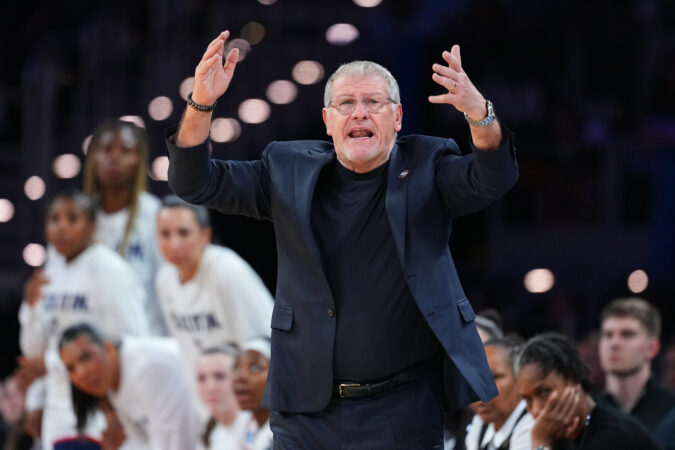
    FORT WORTH, Texas — UConn coach Geno Auriemma is ripping the double-regional format being used in the women’s NCAA Tournament, saying it doesn’t make sense for the teams still playing or for efforts to grow the game.

    Auriemma brought up attendance, bad shooting percentages, and teams having to come to the arena early and late on the same day when taking aim at the format that’s in place for the fourth year and set to continue for at least five more.

    “Well, I think the first question you’d have to ask is why did they go from four [sites] to two. What was the rationale?” the 12-time national champion coach, who grew up in Norristown and graduated from Bishop Kenrick High School and West Chester University, said Saturday. “If they can explain it legitimately and then prove that it works, then great. So what was the reason?”

    NCAA officials didn’t immediately respond to a request for comment from ghe Associated Press.

    The defending national champion Huskies (37-0), the overall No. 1 seed, play Hannah Hidalgo and Notre Dame (25-10) in the Fort Worth Regional 1 final on Sunday (1 p.m., 6abc).
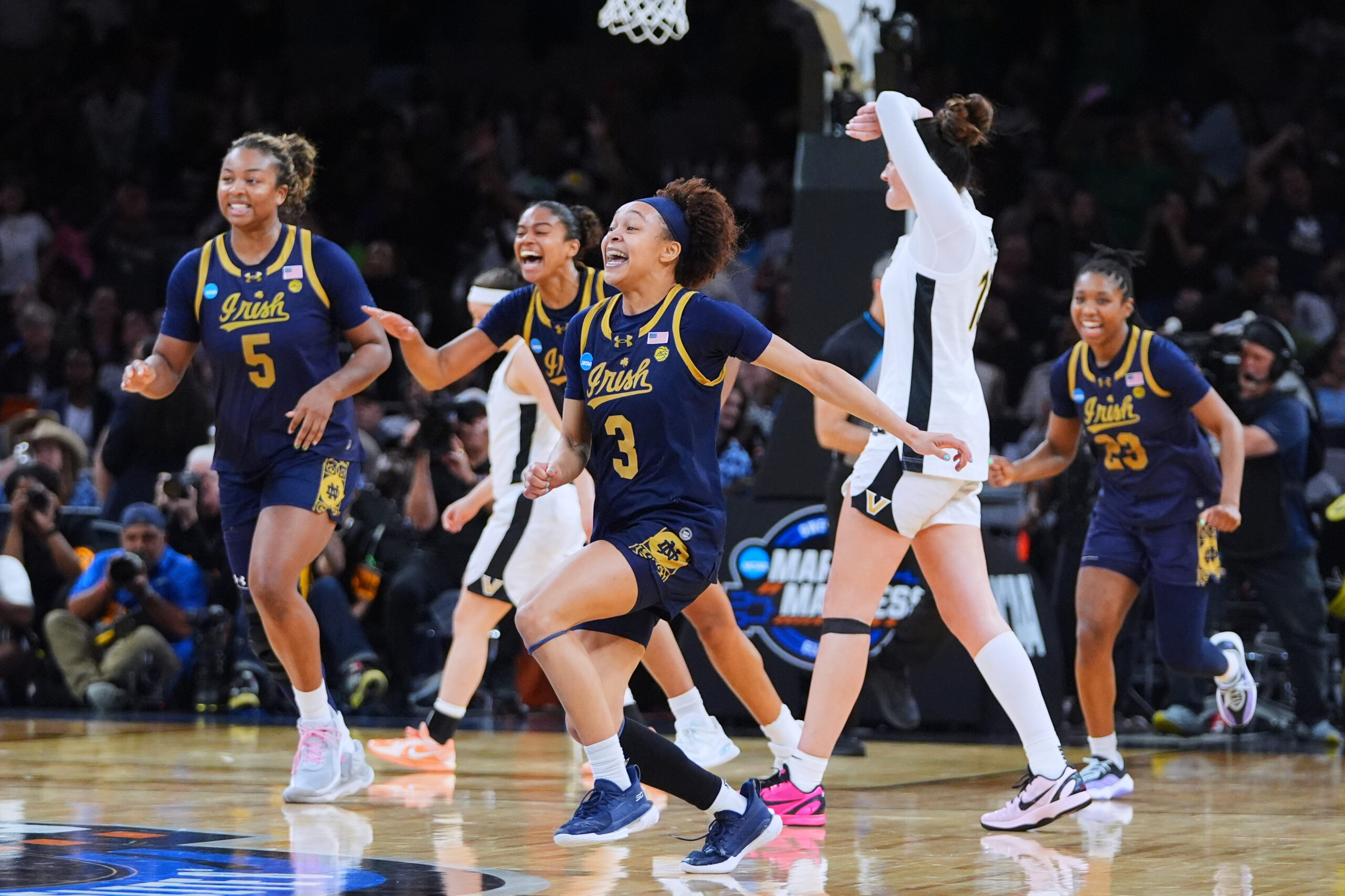
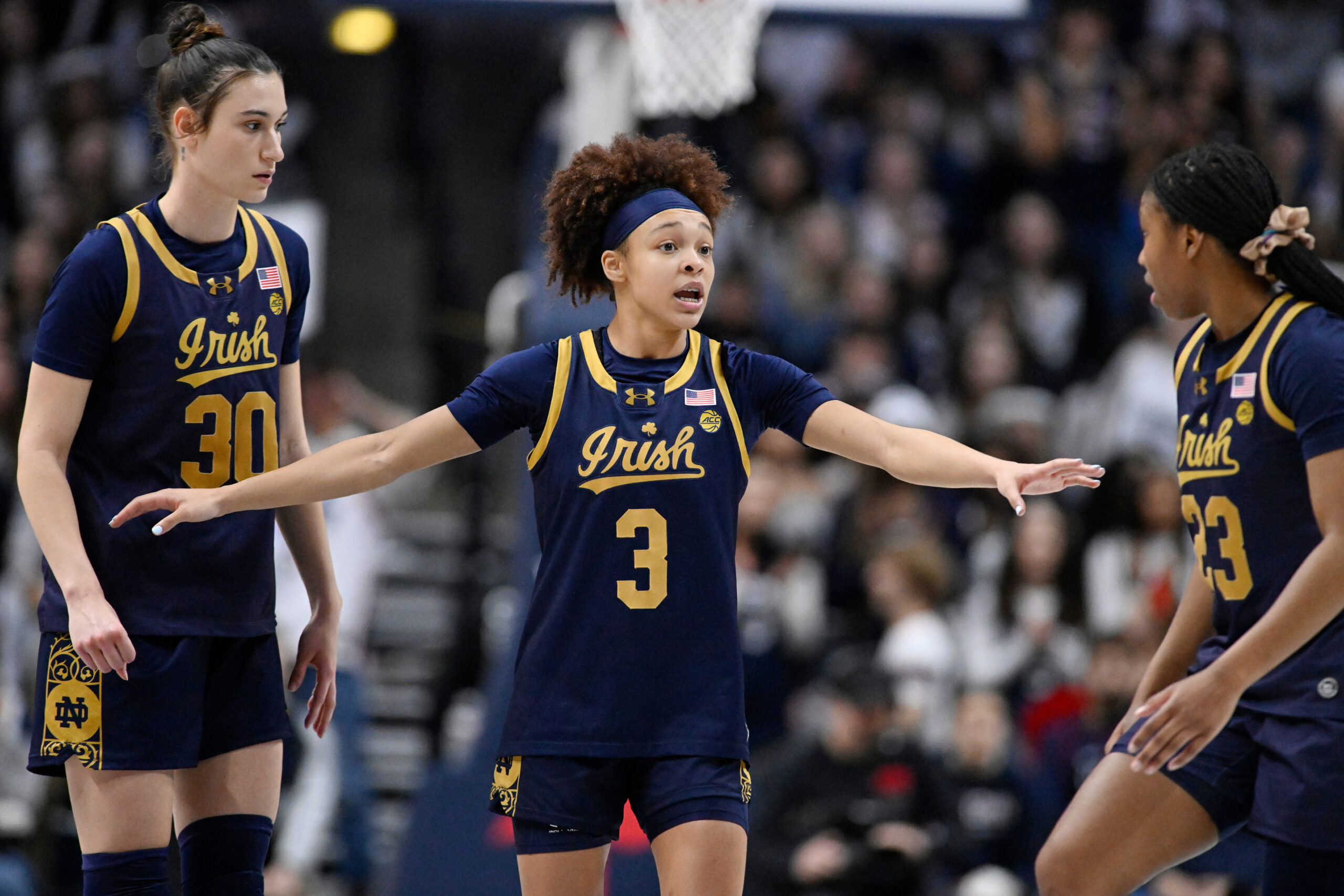
    Hannah Hidalgo (3), Malaya Cowles (5), Iyana Moore (23), and their Notre Dame teammates will face UConn on Sunday.

    The Huskies held their required media availability Saturday morning, after the Fighting Irish had already completed their session and before two Sweet 16 games in Fort Worth Regional 3 were played at Dickies Arena. UConn and Notre Dame had scheduled practice times there later in the evening.

    “So we had to get our kids up, come over here. You already knew who we were playing last night, but we can’t get on the court, and neither can the other teams,” Auriemma said. “Does anybody who makes these decisions ever ask the coaches and the players, ‘Hey, does this work?’”

    AP All-American teammates Azzi Fudd and Sarah Strong agreed with their coach’s strong sentiment.

    “Everyone’s trying to figure that out right now,” Fudd said. “Every team is going through that. There’s no excuse in that. So we’ll figure it out. We’re making it work, but it definitely isn’t the most ideal setup.”

    Auriemma, the winningest men’s or women’s NCAA basketball coach with 1,287 victories, didn’t wait for a question from reporters to share his thoughts on the format, opening his session by reading a sequence of numbers off a piece of paper: 4 for 20, 4 for 22, 1 for 17, 5 for 17, 4 for 16, 7 for 26.

    “That’s the three-point shooting yesterday across the country. How many arenas are we going to sell out with that [expletive]?” he said. “Now, maybe it was just a bad day shooting by everybody. These are all teams that average probably 30 [percent], over 30, for the season. Know what time our shootaround was yesterday? Six in the morning, 6:20, I think, for half an hour.”

    He also mentioned the total combined attendance (18,821 announced) at the two venues Friday, in Fort Worth and Sacramento, Calif.

    UCLA coach Cori Close, whose team is the top seed in Sacramento Regional 2 and plays Duke in an Elite Eight game on Sunday, said it is important to get maximum exposure and coverage while also looking for the best setup to have high-level basketball played on the court.

    “I think that I was in favor of going to the two regional sites when that happened,” Close said. “I think every year we should look and go, Where are we in our game? How did this play out, efficiency-wise, from a student-athlete wellbeing side. Is there some ways in which we can organize to make things a little bit more cohesive so teams aren’t going back and forth from media coverage to practices later and those kinds of things?’”

    Auriemma said there is a lack of input from coaches, and that nothing changes, even when the NCAA sends representatives to schools every year after the tournament.

    “Hopefully I’m speaking for the other coaches,” he said. “Some coaches might think I’m full of it. And this is not about UConn. I hope everybody understands that. This is not about us, because we’ve managed to go to the Final Four and win national championships, no matter where they’re played, when they’re played, what time they’re played, whatever.

    “I think there is a level of frustration right now among the coaches that’s higher than any time I’ve ever seen it.”

    Duke coach Kara Lawson would like more practice time on the game court, especially more than the designated half-hour on game days for shootarounds, which routinely last about an hour the rest of the season.

    “That would be the only thing I’d change. I mean two regionals, I think the arena thing is the thing that’s hard,” Lawson said. “It’s not that we’re in the same city, it’s that we don’t get long enough practice or shootaround times in the venue for your most important games of the season.”

    For the second day in a row, Auriemma mentioned new rims and new basketballs being used during NCAA Tournament games and the impact those have on shooting.

    “It’s hard to make shots in the postseason. They just break out these new baskets, new rims, and then it gets in the kids’ heads,” Auriemma said Friday after UConn’s 63-42 win over North Carolina, in which the teams were a combined 8 of 42 on three-pointers.

    The coach on Saturday again brought up “new basketballs right out of the box” and the rims.

    “Got people dribbling the ball off their feet,” he said. “You got people missing layups all over the place. You bounce the ball, and it goes up to the ceiling. There’s just no concept of how basketball is played. Not that I have any of the answers. Believe me, I just have questions.”
  • Rounding up the local women’s basketball players competing in the NCAA Tournament

    Rounding up the local women’s basketball players competing in the NCAA Tournament

    Villanova is the only school representing the Big 5 in the women’s NCAA Tournament. The Wildcats, a No. 10 seed, are set to play No. 7 seed Texas Tech on Friday (8:30 p.m.) in Baton Rouge, La.

    But players connected to the Philadelphia area are competing on rosters across this year’s March Madness bracket.

    Here are the local women’s basketball players to watch:

    Philly names in the Big Dance

    While many know graduate guard Olivia Miles as one of the nation’s top players with No. 3 seed TCU, Miles got her start with the Philadelphia Belles, an AAU team. The Phillipsburg, N.J., native is a three-time All-American who spent her first four years of college at Notre Dame.

    Several Catholic League standouts will also be taking the court during March Madness.

    Three players will represent Cardinal O’Hara: senior forward Annie Welde of Villanova, Richmond senior forward Maggie Doogan, and Fairfield’s Sydni Scott, a senior guard. From Archbishop Wood, sophomore guard Ava Renninger will compete with Fairleigh Dickinson and senior guard Ryanne Allen with Villanova.

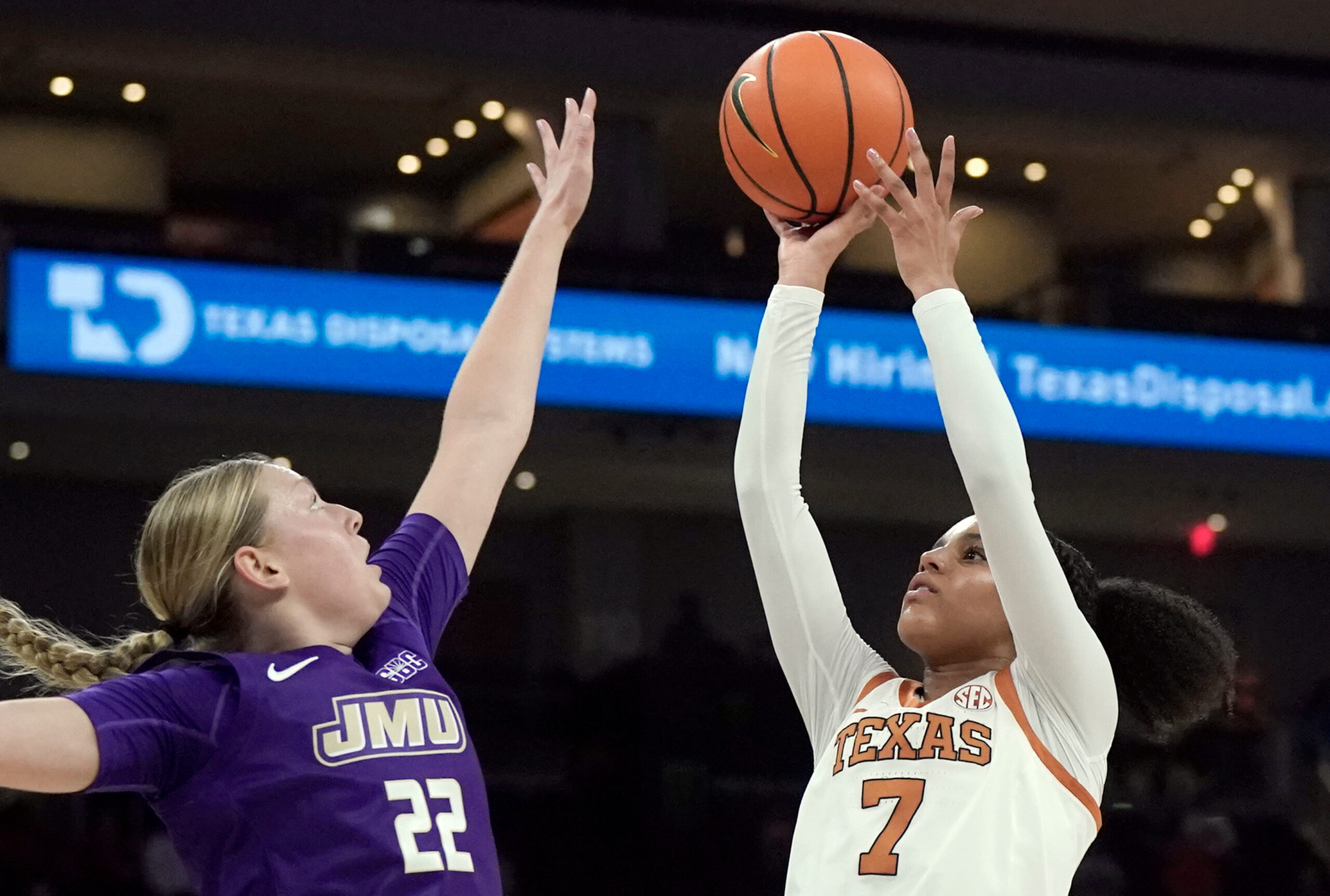
    James Madison forward Grace McDonough was a standout at Lansdale Catholic.

    Also for Villanova, senior guard Maggie Grant is an Archbishop Carroll graduate. And freshman forward Grace McDonough, who attended Lansdale Catholic, will compete with James Madison.

    No. 1 seed Connecticut looks to defend last year’s national championship with Tonya Cardoza on staff as an assistant coach. Cardoza was Temple’s head coach from 2008 to 2022.

    Other local names

    • Navy: Freshman forward Quinn Boettinger, Schenksville, Perkiomen Valley
    • Howard: Senior foward Nile Miller, Woodbury, Woodbury High
    • FDU: Freshman forward Akeelah Lafleur, Willingboro, Burlington County Institute of Technology
    • FDU: Junior forward Bella Toomey, Philadelphia, Penn Charter
    • FDU: Sophomore forward Sydney Stokes, Linwood, Mainland Regional
    • FDU: Freshman forward Madison Stuart, Voorhees, Eastern Regional
    • Villanova: Graduate forward Kylee Watson, Linwood, Mainland, previously Notre Dame
    • Villanova: Senior forward Denae Carter, Philadelphia, St. Basil Academy, previously Mississippi State
    • Notre Dame: Junior guard Hannah Hidalgo, Merchantville, Paul VI
    • Illinois: Junior guard Maddie Webber, Bridgeville, South Fayette, previously Villanova
    • Colorado: Freshman forward Logyn Greer, Lansdowne, Friends’ Central School
    • Colorado: Junior guard Maeve McErlane, Philadelphia, Academy of Notre Dame de Namur, previously DePaul
    • Holy Cross: Senior guard Kaitlyn Flanagan, Plymouth Meeting, Plymouth Whitemarsh
    • Holy Cross: Junior guard Hannah Griffin, Conshohocken, Gwynedd Mercy Academy
    • Louisville: Senior forward Laura Ziegler, Herlev (Denmark), previously St. Joseph’s
    Paul VI graduate Hannah Hidalgo looks to lead Notre Dame in the NCAA Tournament.
  • The stars, storylines, and potential upsets to know in the NCAA women’s tournament

    The stars, storylines, and potential upsets to know in the NCAA women’s tournament

    The NCAA women’s tournament is usually pretty chalky, and this one likely won’t be any different. But that’s not just because of the perennial early-round home advantage for the top four seeds in each region. Or even because the bracket hasn’t set up many potential upsets where they more likely happen: in games between two teams traveling to someone else’s floor.

    This time, it’s because of the strength of the four No. 1 seeds: Connecticut, UCLA, South Carolina, and Texas. They are so far ahead of almost the entire rest of the field that they’ll all be clear favorites to reach the Final Four. And if they do, that will make up for some of the dullness along the way.

    The star names will only become more well-known from now until then. UConn has expected national player of the year Sarah Strong and potential No. 1 WNBA draft pick Azzi Fudd. UCLA has Lauren Betts, Kiki Rice, and Gabriela Jaquez. South Carolina has Joyce Edwards and Raven Johnson, and Texas has Madison Booker and Rori Harmon.

    The alignment of regions means there would be a UConn-South Carolina matchup in the semifinals, which has never happened. Geno Auriemma and Dawn Staley have met three times in the tournament before: the 2025 and 2023 title games and the 2018 East Regional final.

    Connecticut’s star trio of (from left) KK Arnold, Sarah Strong, and Azzi Fudd.

    Who can challenge the top quartet? The list starts with No. 2 seed LSU. The Tigers are led by veteran guards Flau’jae Johnson and South Carolina transfer MiLaysia Fulwiley, and coached by four-time national champion Kim Mulkey. She’s as controversial as she is successful, but she knows how to win in March.

    LSU finished fourth in the ultra-competitive SEC, thanks to a January swoon when they lost to Kentucky and Vanderbilt. They also lost at Texas and twice to South Carolina, at home in the regular season, then in the conference tournament semifinals. But the rest of the record is stacked with big wins: at Duke, home vs. Texas, and two over Oklahoma.

    Expect the Tigers to eat up either Villanova or Texas Tech in the second round, on the way to the Elite Eight. (And yes, Villanova can win that first-round game.)

    No. 2 seeds have interesting stories

    UCLA might be quite annoyed that the best No. 2 seed landed in its region. Not only would anyone want to avoid the Tigers, but the 31-1 Bruins believe they deserved the No. 1 overall seed.

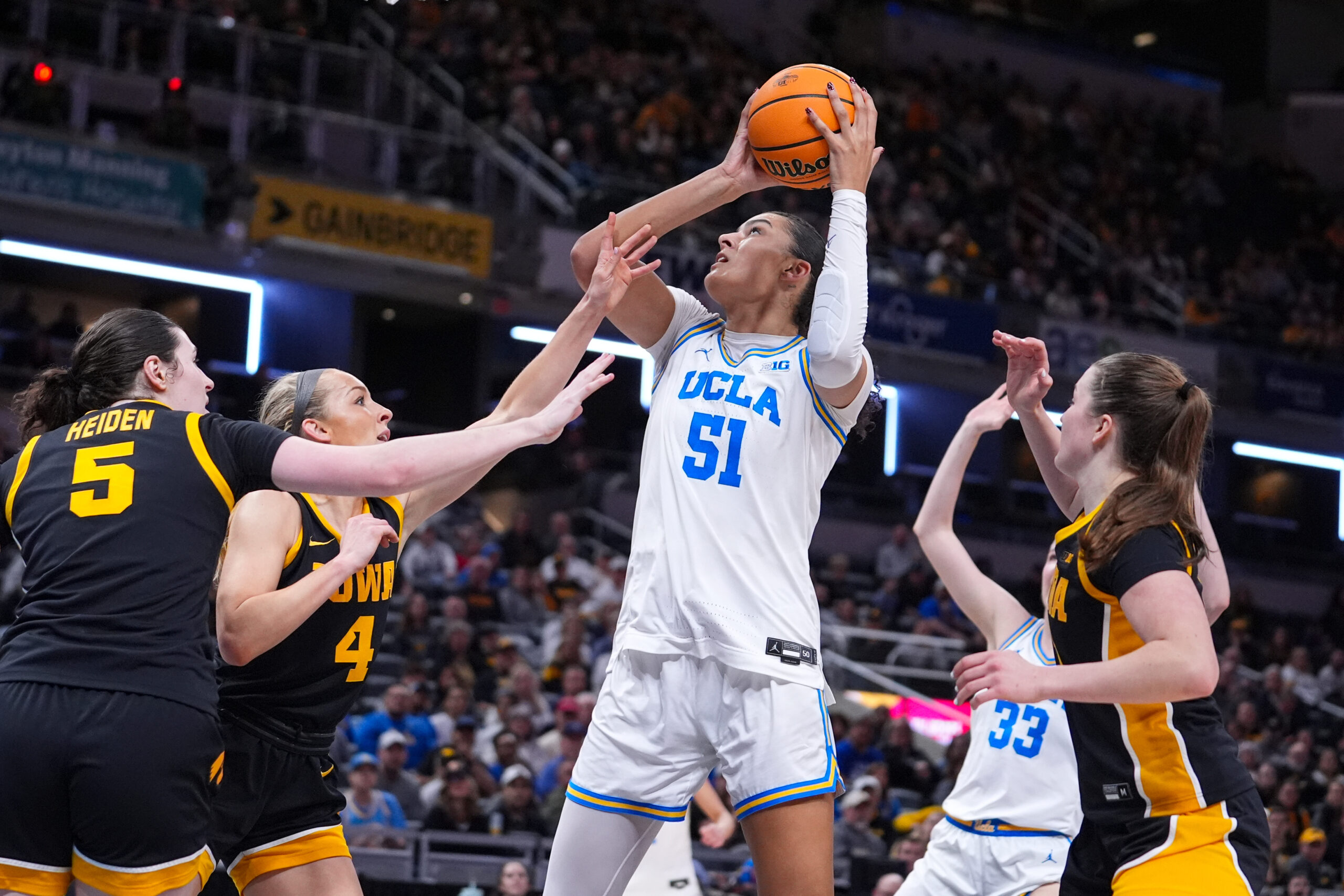
    UCLA’s Lauren Betts goes up for a basket during the Big Ten women’s tournament title game.

    They took the regular season and tournament in the Big Ten, a tougher conference than the Big East, with 12 wins over teams ranked at the time of the contest. Their only loss was to Texas on a neutral floor, and it was back on Thanksgiving.

    LSU might in turn be annoyed that a rematch with Duke looms in the Sweet 16. Though the Blue Devils had six nonconference losses — including South Carolina, UCLA, and LSU in one seven-day stretch — they won the ACC regular season and tournament. They finished No. 8 in the NCAA’s NET rating, and the fourth No. 2 seed, Iowa, finished 10th.

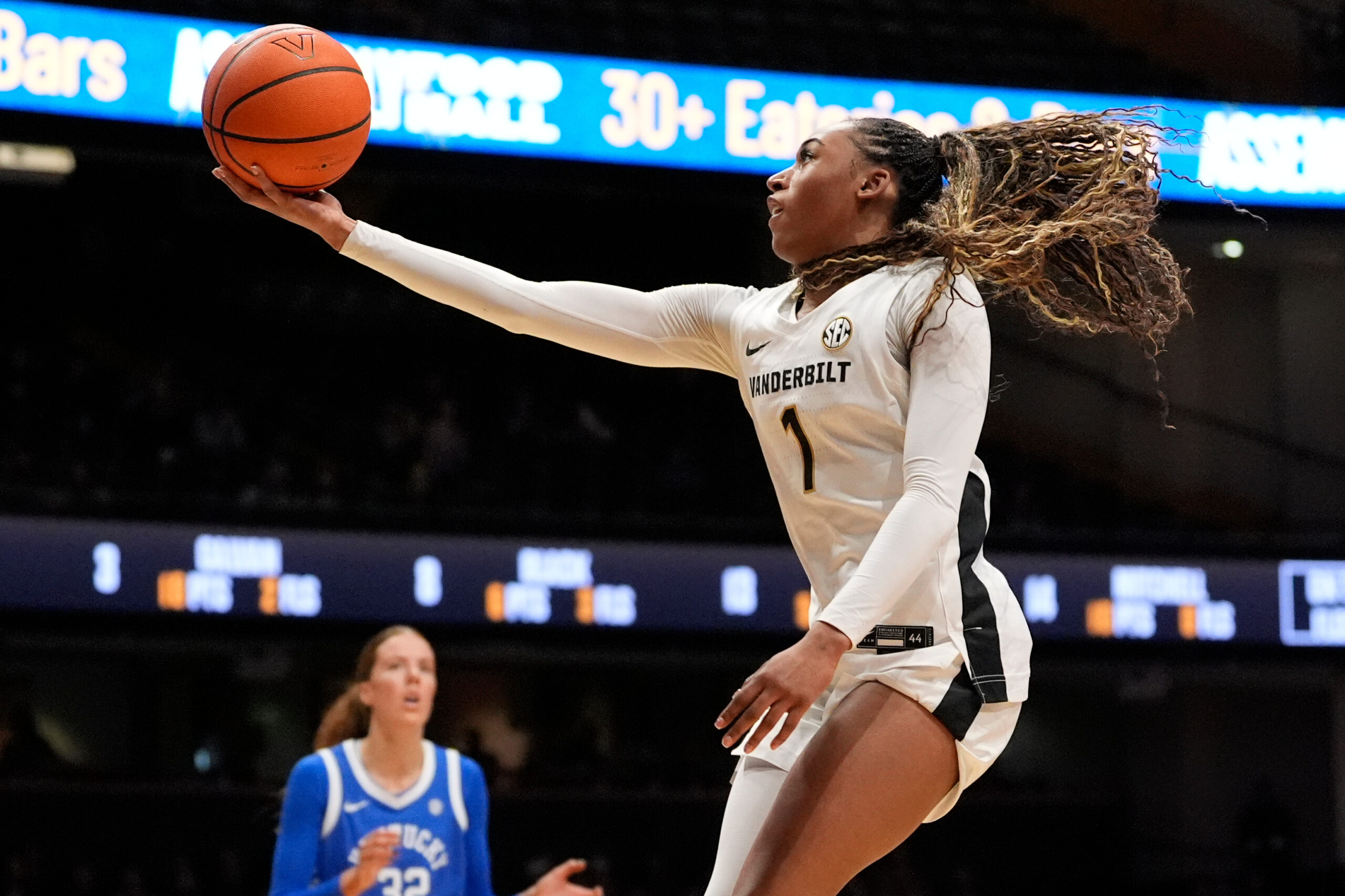
    Another No. 2 seed, Vanderbilt, will get a lot of attention. Guard Mikayla Blakes is the nation’s top scorer at 27 points per game, and also averages 4.4 assists, 3.8 rebounds, and 2.9 steals.

    The Commodores started the season 20-0, including wins over LSU at home and Michigan on a neutral floor. Then came a trip to South Carolina, and Staley reminded them who runs the show with a 103-74 flattening.

    Vanderbilt’s head coach is UConn legend Shea Ralph. If you think the selection committee has a sense of humor, you might think it’s no coincidence that the Huskies are the No. 1 in that region.

    Vanderbilt’s Mikayla Blakes is the nation’s leading scorer.

    Michigan is the No. 2 in Texas’ region, and has a high-ceiling pair of sophomores in Syla Swords and Olivia Olson. But the Wolverines could be tested early by the N.C. State-Tennessee winner, with a little extra juice if it’s the Lady Vols.

    Further down the field

    There are storylines among the No. 3 seeds, too. We’ve mentioned Duke already, and two others deserve attention.

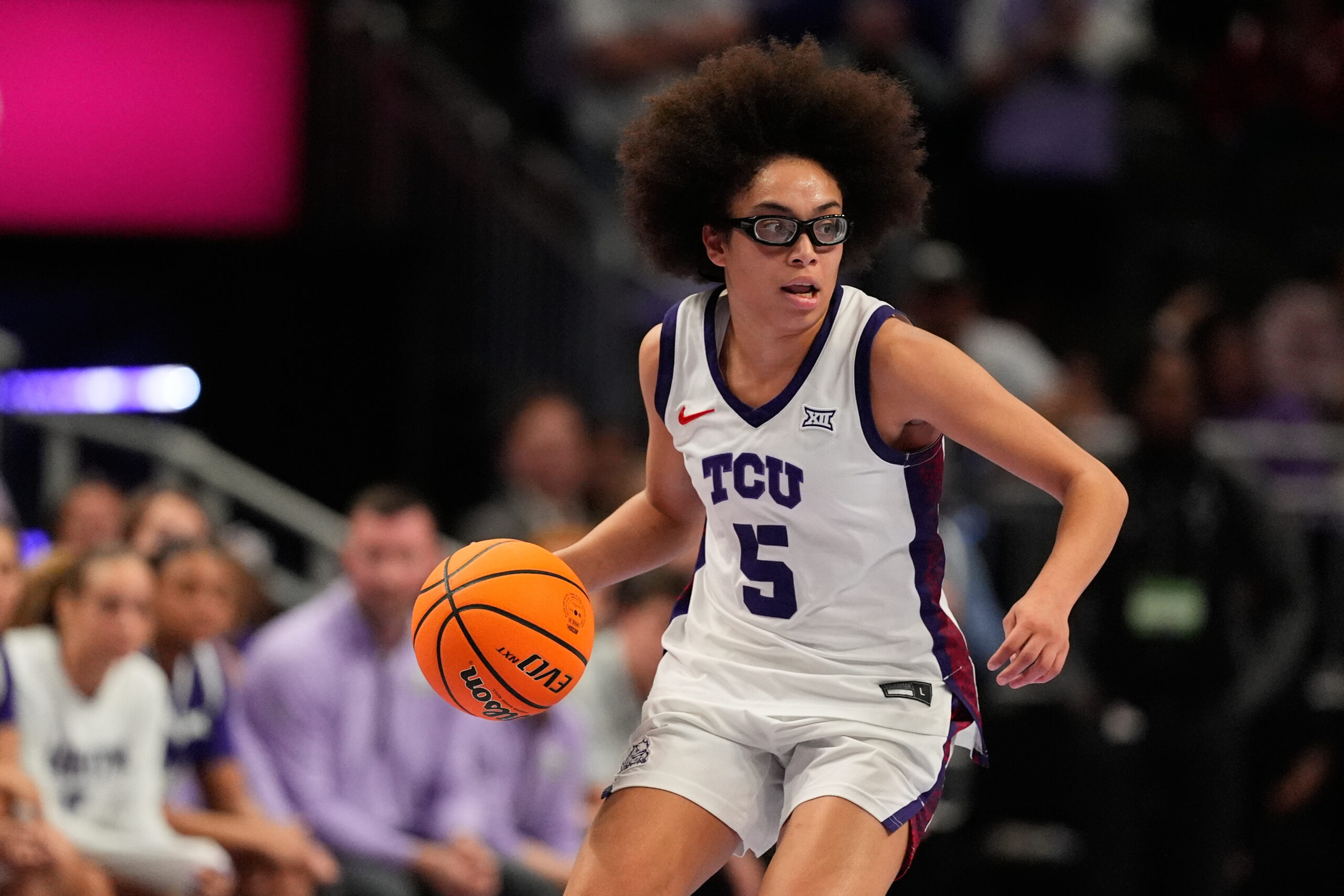
    First is TCU. Guard Olivia Miles earned fame at Notre Dame, and this season led the Horned Frogs to the Big 12 regular-season title. She’ll be another marquee WNBA draft pick, and forward Marta Suárez could join her in the first round. Add that to Iowa being arguably overseeded, and there’s a recipe for an Elite 8 run.

    The other is Ohio State. The Buckeyes are stuck with Notre Dame as the nearby No. 6 seed and Vanderbilt as the No. 2. But Jaloni Cambridge has pro potential, and Notre Dame will have its hands full with Fairfield.

    Olivia Miles could take TCU on a long March run before heading to the WNBA.

    That’s the cue to turn to where the real upsets could lurk.

    Fairfield went 28-4 this season, won at Villanova early, and tested itself later with losses to North Carolina on a neutral floor and at Iowa. The AP poll’s voters recognize the Stags’ quality, putting them two spots outside the top 25.

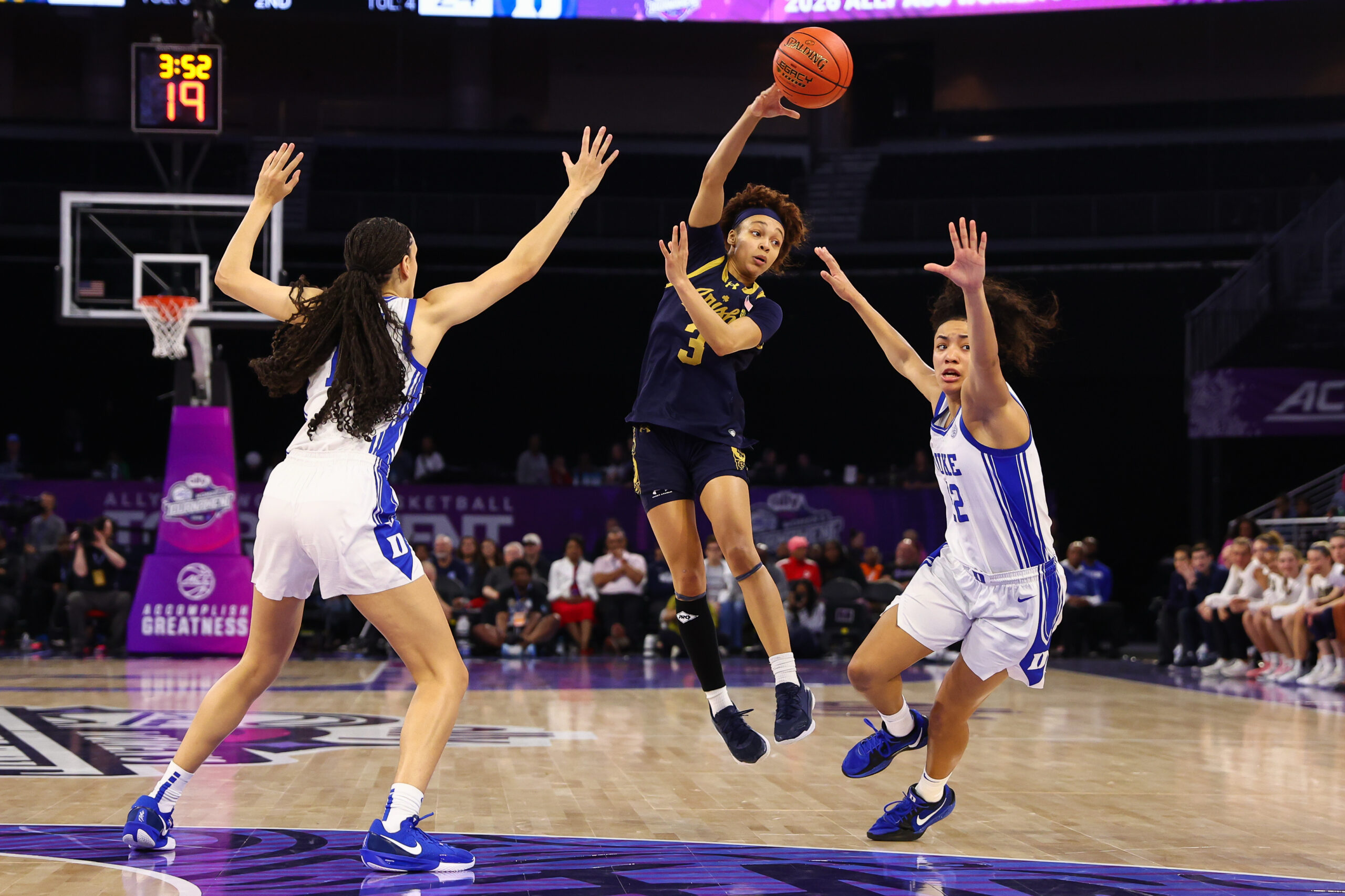
    South Jersey native Hannah Hidalgo has the Fighting Irish getting back on track after some ugly stretches in conference play. She’s third in the nation in scoring at 25.2 points per game, is leading the nation again with 5.41 steals per game, and is averaging 5.3 assists and 6.4 rebounds too.

    How will it go on a neutral floor? Well, let’s see how neutral it actually is. The game will be played at Ohio State right after the Buckeyes’ opener, and if the home fans stick around, they’ll give Notre Dame an earful.

    Hannah Hidalgo (center) lining up a pass during the ACC tournament.

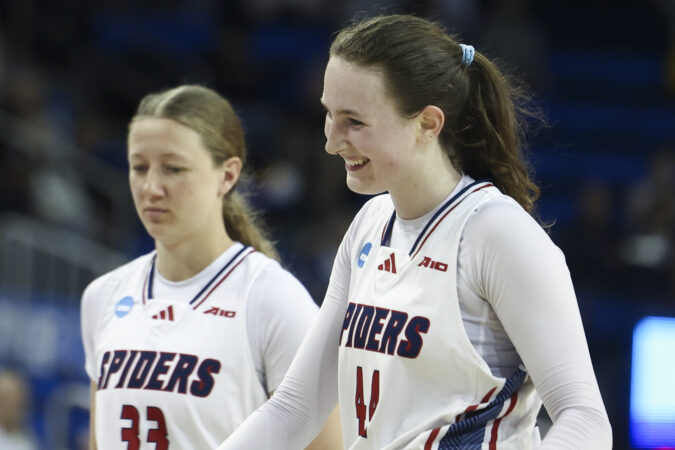
    Richmond, led by former Cardinal O’Hara star Maggie Doogan, got stuck in the play-in game after losing to George Mason in the conference semifinals. But we’ll back the Spiders to beat a Nebraska team that got in despite finishing 12th in the Big Ten with an 18-12 record, including 7-11 in conference play. After that, if Doogan’s on, the Spiders can take a swing at Baylor in a game that Duke will host.

    If you don’t count an 8-9 game as an upset, then you won’t count Princeton beating Oklahoma State. But we will on the principle of an Ivy League team beating a Big 12 team, even if that Ivy League team is deservedly No. 23 in the AP poll. The Cowgirls didn’t even receive votes this week, though they are 29th in the NET to the Tigers’ 38.

  • Villanova’s Matt Hodge deals with the bittersweet nature of an NCAA Tournament he can’t play in

    Villanova’s Matt Hodge deals with the bittersweet nature of an NCAA Tournament he can’t play in

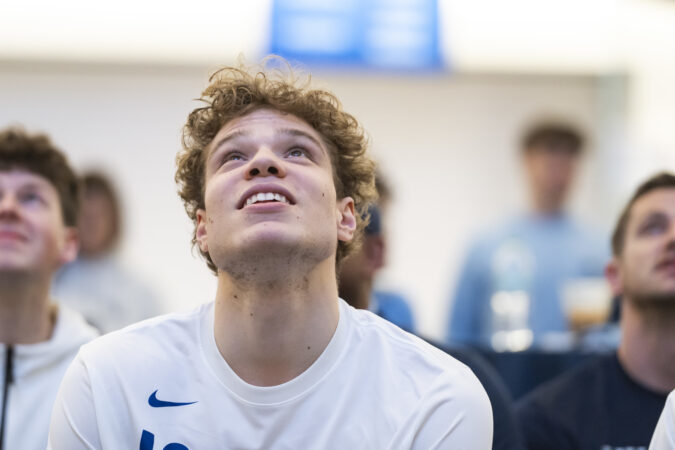
    Matt Hodge stared up at the screen Sunday night at a private Selection Sunday watch party and smiled and cheered with the rest of his Villanova teammates when their name and number were called.

    Villanova’s return to March Madness, the first NCAA Tournament appearance by the men’s basketball team since 2022, is a first for much of the team, and would be for Hodge, a redshirt freshman, if he didn’t have his right leg heavily wrapped in a brace following surgery last week to repair a torn ACL.

    He was understandably dealing with mixed feelings on what was a celebratory night for players, coaches, their families, and program donors.

    “It’s fun to get to see our name get called,” Hodge said, “but at the same time I won’t be able to go and I won’t be able to play. So it’s a feeling of regret and of timing.”

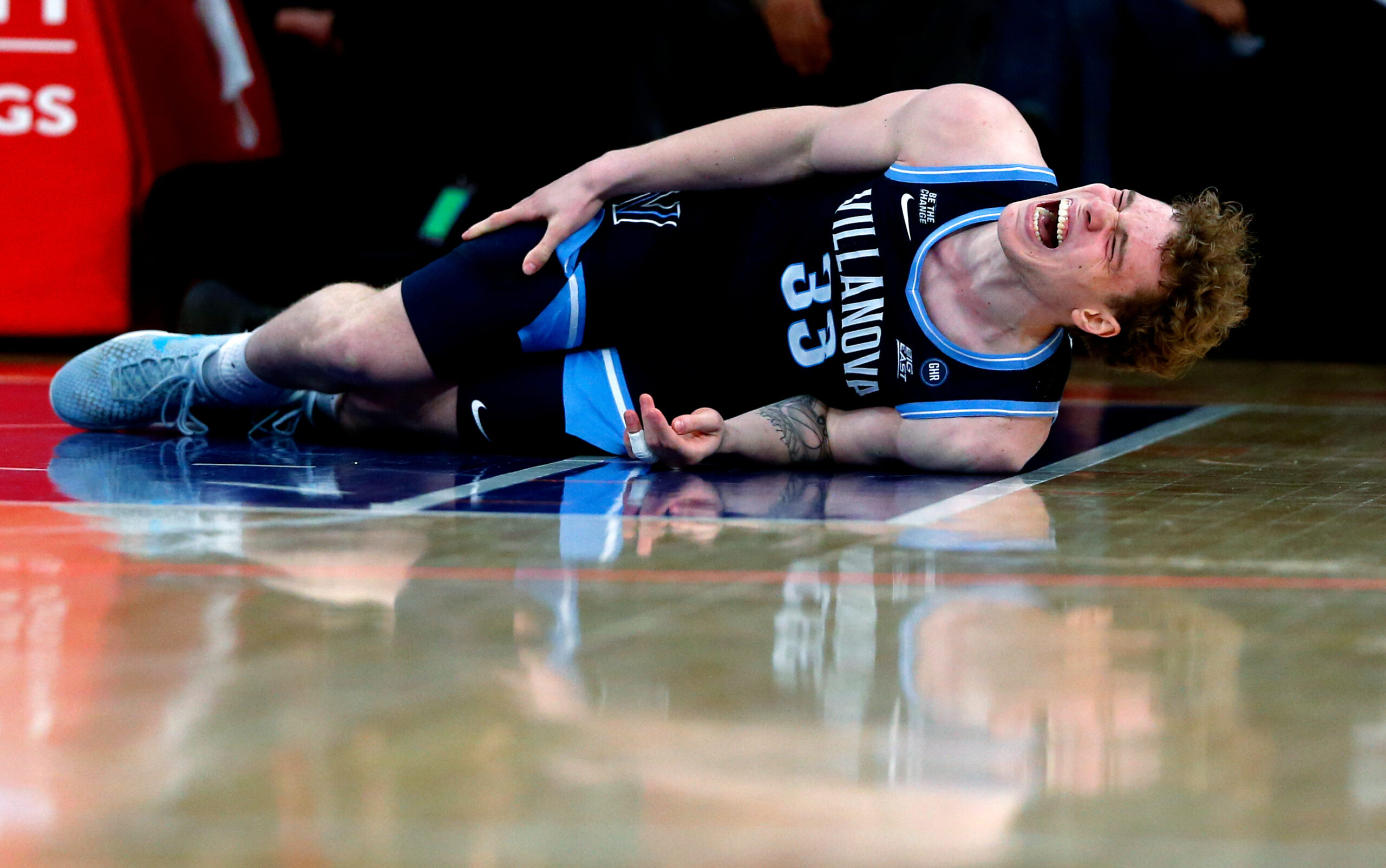
    His season came to an abrupt end early in the second half of Villanova’s Feb. 28 loss to St. John’s at Madison Square Garden. Hodge, a power forward who started in all 29 Villanova games to that point, got the ball in the post against Big East player of the year Zuby Ejiofor and tried to make a move.

    Instead, he collapsed to the floor and writhed in pain.

    “It was a typical basketball play,” Hodge said. “I just knew the moment I planted my foot and I tried to spin off Zuby, I felt something and I knew right away it was wrong.”

    Villanova forward Matt Hodge reacts in pain after suffering a torn ACL during the game against St. John’s on Feb. 28.

    His mind went instantly to his younger brother, Jayden, a high school star who suffered a torn ACL and meniscus in early January.

    “The first thing I said was, ‘I think I tore my ACL like my brother,’” Hodge said.

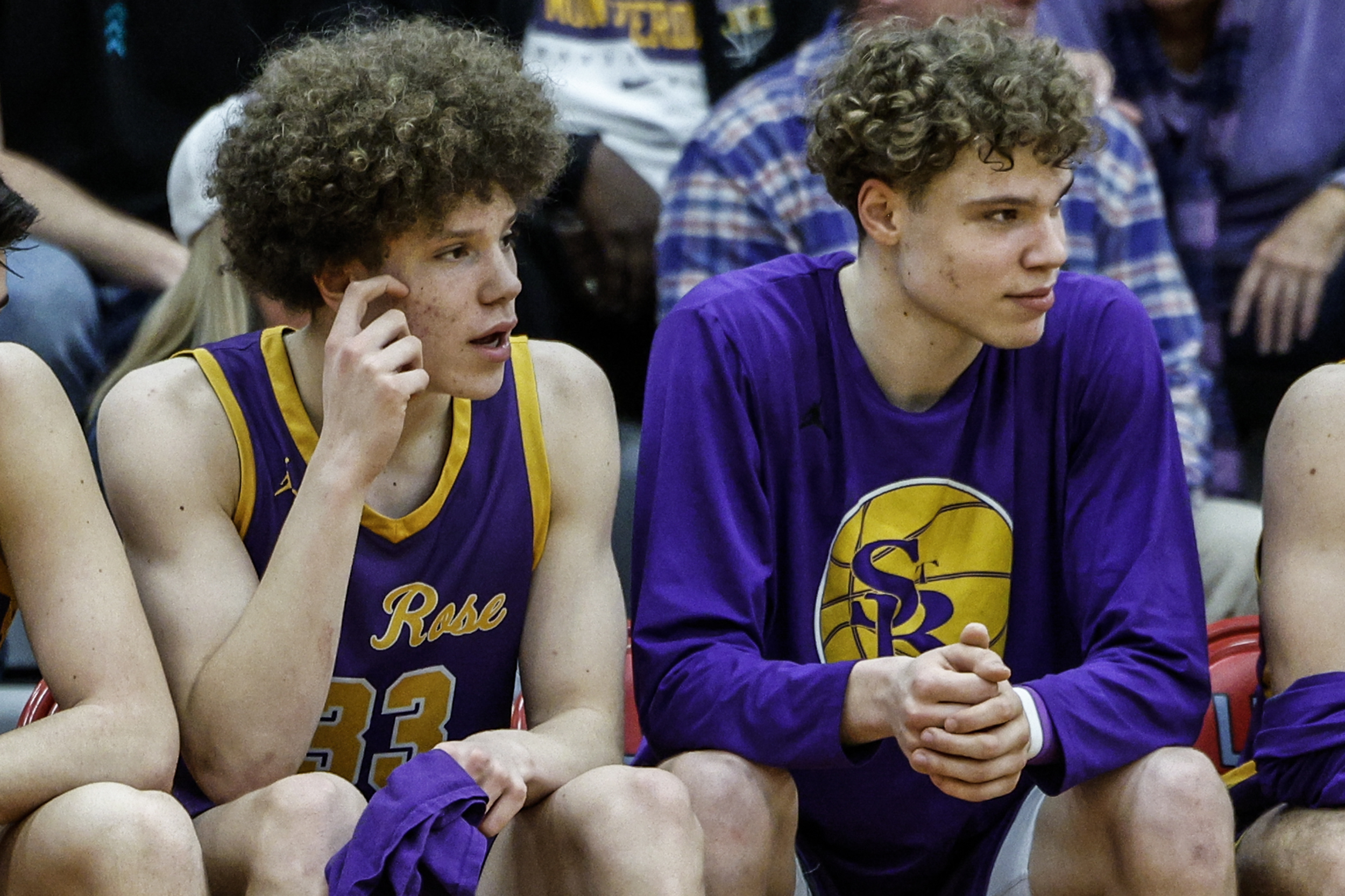
    Further testing proved his words to Villanova’s athletic training staff true. It’s a cruel result, but Jayden’s experience and recovery have given Hodge someone close to talk to and go through the emotional roller coaster with. The brothers, born in Belgium, came to the U.S. and won a state championship together at St. Rose High School in Belmar, N.J. Jayden, a senior who now plays at Montverde Academy in Florida, is committed to Northwestern.

    “I ask him every day for tips and stuff,” Hodge said. “We can go through it together. He’s a little bit ahead of me, but he also tore his meniscus, so in like a week or so I’ll be ahead of him.”

    St. Rose’s Jayden (left) and Matt Hodge watch their team play Bishop Eustace during the fourth quarter of a playoff game on March 4, 2024.

    Hodge’s recovery right now is mostly just relaxing in the immediate aftermath of surgery. He walks by using crutches and keeps his right leg stiffened. Soon, he’ll begin flexing the knee more and will work on building back strength in his quadriceps since his surgery required a nerve blocker. In about six weeks, he said, he’ll shed his current brace to a walking brace and can begin activities like riding a bike.

    It’s a long road back to the basketball court, but Hodge reiterated what Villanova coach Kevin Willard said earlier this month, that the aim is for him to be back to normal basketball activities by mid-to-late October and the goal is to be ready for the beginning of the 2026-27 basketball season.

    “I feel like obviously it’s still a long way ahead of me, but I want to have a goal and I think that goal is pretty realistic,” Hodge said. “I’m just working toward that and I know, in my head and deep down, anything is possible. I might not be ready yet, or I might be ready quicker.”

    Of course, he wishes he was ready by Friday afternoon, when eighth-seeded Villanova faces No. 9 Utah State in a first-round West Regional game in San Diego. The Wildcats could certainly use him. After missing his freshman season because of an NCAA ruling on his academic eligibility following his high school transfer from Belgium to St. Rose, Hodge had an impressive first season of college basketball.

    He averaged 9.2 points and 3.6 rebounds while shooting nearly 37% from three-point range.

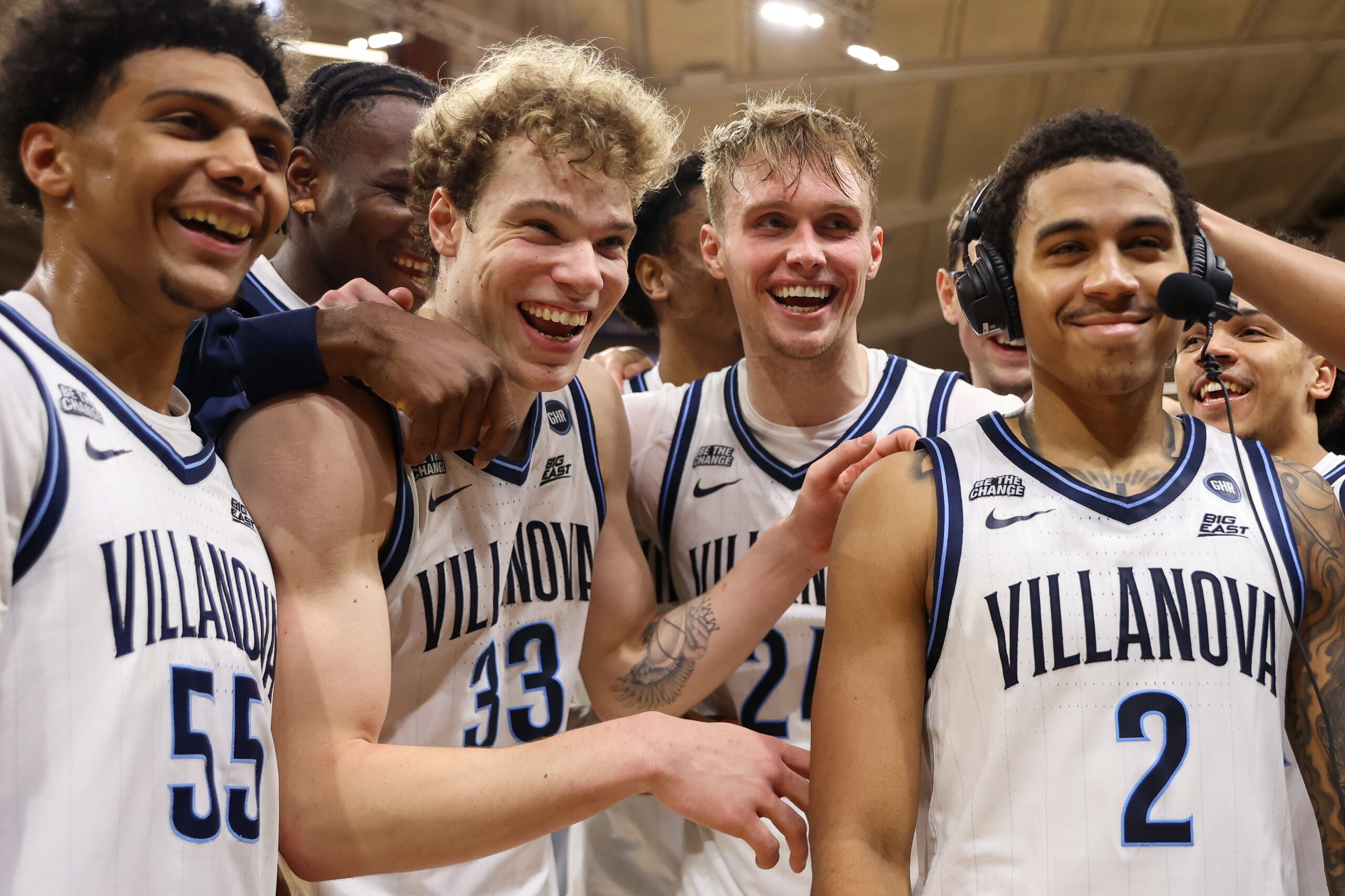
    From left, Villanova’s Acaden Lewis, Matt Hodge, Duke Brennan, and Bryce Lindsay after a 79-61 win against Pittsburgh on Dec. 13,

    Without him, Villanova’s depth has taken a hit, especially in a frontcourt where only two players, centers Duke Brennan and Braden Pierce, are taller than Hodge, who is 6-foot-8. Villanova starts Malachi Palmer (6-6) at the power forward spot and sometimes has lineups on the court with four guards and one center, harkening back to the early days of Jay Wright. This quartet, however, doesn’t sing the same way as that one did.

    Willard has mentioned changing things up. He said again Sunday said he could see Villanova opting to have Brennan and Pierce on the floor at the same time, but they haven’t done so in the three games since Hodge went down. But Villanova’s first-round loss in the Big East tournament featured a rebounding disadvantage of 46-25, and it might be time to adjust against a Utah State team that isn’t huge but attacks the offensive glass.

    A win on Friday likely means a date Sunday with top-seeded Arizona, the ninth-best offensive rebounding team in the country that has a 7-2 center and a pair of 6-8 forwards who cause havoc on the glass.

    Hodge was at home watching Thursday night as Villanova crumpled under the bright lights. The days after the injury have been isolating, but his family has been in town, his girlfriend is on campus, and his teammates and coaches have been supportive.

    The pain is “more mentally than anything physically,” Hodge said.

    “I just got to keep my head up now and support the team.”

  • Natasha Cloud thrilled that ‘Young Tash’ gets Philly hoops homecoming with Unrivaled: ‘I carry this city everywhere I go’

    Natasha Cloud thrilled that ‘Young Tash’ gets Philly hoops homecoming with Unrivaled: ‘I carry this city everywhere I go’

    Natasha Cloud will never forget Mr. Ross.

    The youth coach used to hold 6 a.m. workouts inside a Baptist church on City Avenue, where Cloud first learned how to be disciplined in basketball and in life.

    “I hope he sees this,” Cloud said Thursday afternoon, while facing a slew of television and phone cameras inside the Alan Horwitz “Sixth Man” Center. “… He set a standard. He set an expectation. And he set a work ethic for my skill set, my career.”

    Cloud brings all of that back to Philly on Friday night for the Unrivaled offseason league’s two games at Xfinity Mobile Arena. The 33-year-old Broomall native called it a “dream come true” to help lead the return of professional women’s basketball to her city ahead of the WNBA’s arrival in 2030. Yet Cloud is most elated for “Young Tash,” who has blossomed into a WNBA champion, an 11-year professional, a dynamic personality, and an activist on and off the court.

    “I carry this city everywhere I go,” Cloud said following practice for the Phantom, her Unrivaled team. “… I just never thought I would be here, so I think the most gratifying thing is just trusting God’s journey for my life. Doing it my way, too. Because I don’t think a lot of people get to do their careers their way.”

    Before Mr. Ross, Cloud credits her Aunt Dawn as one of her first sports role models. A Delaware County basketball and softball star, she helped Cloud embrace being a tomboy — and a “powerful, badass woman.”

    So Cloud honed that athleticism on the basketball hoop on the side of her home, which became a neighborhood gathering spot on school half-days. She played King — nah, Queen — of the Court against the boys. They lowered the rim so they could dunk. They idolized Allen Iverson and Dawn Staley.

    When Linus McGinty, the legendary Cardinal O’Hara girls’ basketball coach, first watched Cloud play as an eighth grader, he believed she had WNBA potential because “she could do everything.” And Cloud wanted to play for that program because, in her words, “in Linus we trust.”

    Cloud also appreciated O’Hara’s structure, from the nuns on campus to McGinty’s “strict” practices. She became an immediate starter on a talented team immersed in the competitive Philadelphia Catholic League.

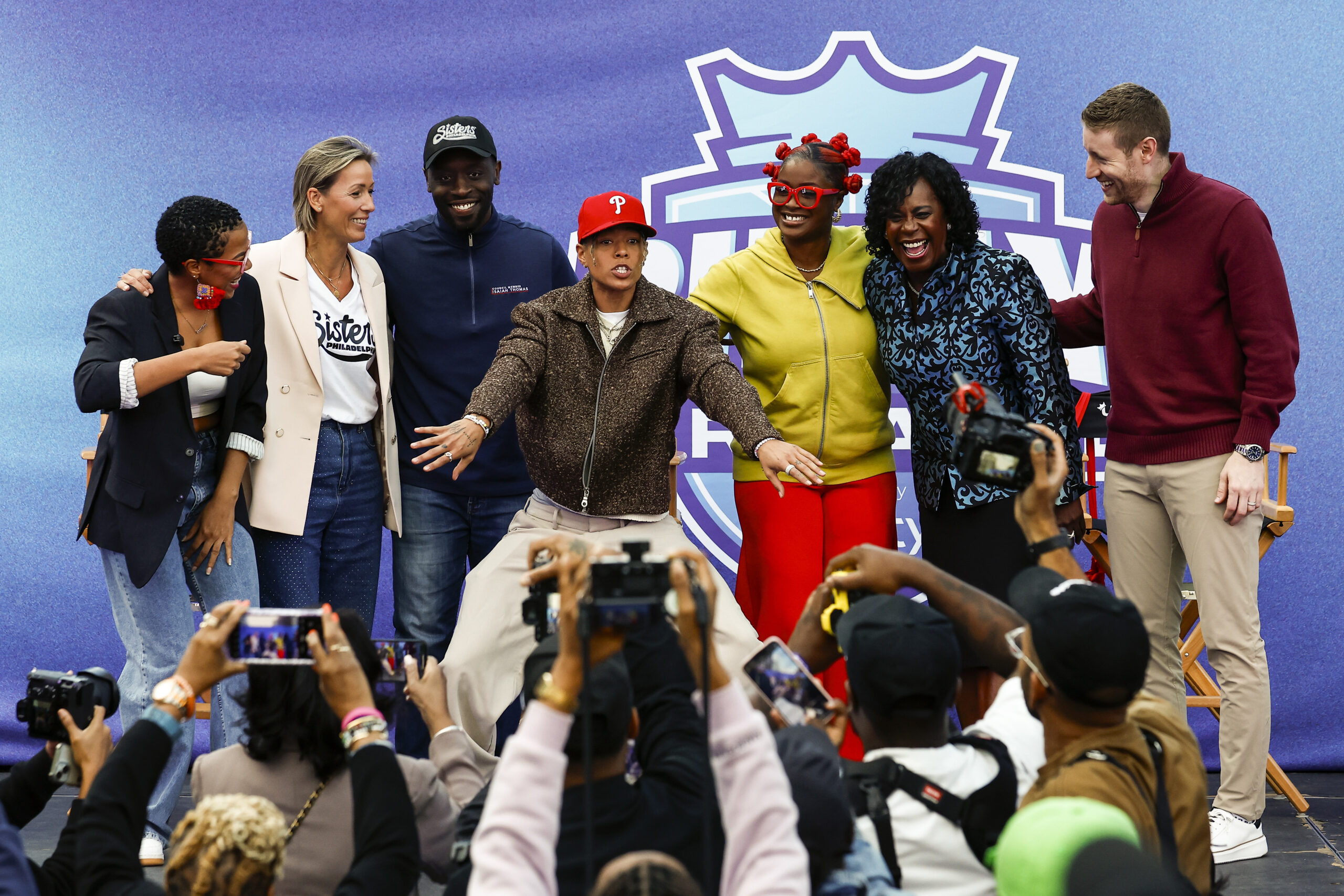
    New York Liberty player Natasha Cloud dances while standing with other officials during an announcement about the Unrivaled Women’s Basketball League 2026 Philly tour stop.

    McGinty’s one gripe about Cloud? She was almost too unselfish as the point guard.

    “She never tried to score first,” the coach told The Inquirer by phone last week.

    But Cloud made up for that in defensive prowess. The 5-foot-10 Cloud guarded the much more imposing Morgan Tuck and Elena Delle Donne, then elite recruits who became college and WNBA stars. Cloud preserved O’Hara’s 2008 PCL title victory by blocking a three-point attempt at the buzzer.

    Then when Cloud was the only starter who returned her senior year, she finally carried more of O’Hara’s offensive load. She was an All-State selection after averaging 12.3 points, 7.9 rebounds, 5.2 assists, and four steals, before beginning her college career at Maryland in 2010-11.

    After her freshman season, she transferred to St. Joseph’s to be closer to home. Her sister had been diagnosed with stomach cancer, and she was looking for a similar family atmosphere within her next college program.

    “Tash is a very compassionate person,” St. Joe’s coach Cindy Griffin recently told The Inquirer by phone. “So if there’s anything going on at home, she feels that. She would have to learn how to manage that, and she did an unbelievable job doing that.”

    While sitting out the 2011-12 season because of NCAA transfer rules at the time, Cloud worked on refining her jumper. Her energy filtered to teammates and staff, Griffin said, even when she was playing on the scout team. That perhaps was most evident on defense, where she consistently covered ground (and others’ mistakes) while understanding how to rotate sharply and when to take risks on the ball. She was the Atlantic 10 Defensive Player of the Year in 2014.

    “That just fueled fire for all of her teammates,” Griffin said, “and it just elevated everybody around her. … They really appreciated that, and they wanted to play hard for her and with her.”

    Then when the Hawks needed more scoring punch from Cloud as her career progressed, she delivered.

    Before her WNBA career, Natasha Cloud starred at St. Joe’s.

    She totaled 15 points, six assists, and six rebounds in a comeback win over Fordham in the 2013 A-10 tournament championship game, and “looked like a pro out there, finishing in transition, taking and making tough shots,” the coach said. That carried over to the next season, when Cloud hit timely buckets to propel the ninth-seeded Hawks’ to upset eighth-seeded Georgia in the first round of the NCAA Tournament.

    “Came down to a 1-5 ball screen,” Griffin said, “and [Cloud] being able to put us on her shoulders and win the game for us. … The answer is yes she can, and yes she will.”

    Cloud’s impact has now stretched far beyond Philly.

    She won the 2019 WNBA championship with the Washington Mystics and led the league in assists in 2022. She has made a WNBA All-Defensive team three times. She has played overseas in Turkey and Australia. She opted out of the 2020 WNBA “bubble” season to focus on social justice issues and remains outspoken on such topics.

    But she has stayed connected to her roots.

    She still has a house in town, meaning one might catch her during the offseason at the local Wawa or driving her truck. She regularly visits St. Joe’s to work out and chat with the team, reminding them how special college bonds can be. Unprompted, she told The Inquirer last week that she hopes to have her jersey number retired by St. Joe’s and O’Hara — preferably while her parents are still around to celebrate with her.

    And now, she finally gets to play professional basketball in Philly. When she learned Unrivaled would be making a tour stop here, she knew fans would “show up and show out” for the showcase event. She stepped onstage wearing a Phillies cap for the October announcement at LOVE Park and pumped up the crowd. She hopes local kids getting to watch her play in person is a jolt of inspiration.

    Among those in attendance Friday will be the Hawks, “shouting as loud as we can for Natasha Cloud and the Phantom,” Griffin said. An intrigued McGinty said he also might need to get down to South Philly. Mr. Ross surely is welcome, too. And it will be the first time Cloud plays in front of her family here since 2015.

    They all helped develop “Young Tash.” And that is why she carries the city with her everywhere she goes — including back home.

    “I’ve stayed true to myself,” Cloud said. “True to my character, my morals, my values through all of it. And that’s just a testament to, I feel like, being from Philly. We stand on our [stuff]. We’re going to talk our [stuff]. You can’t tell us otherwise. We know who we are.

    “We’re confident in who we are, and a lot of people take it as arrogance. But it’s just, like, ‘Man, God has blessed me so abundantly. Who am I to not walk out in this light every single day?’”