Tag: Nicetown

  • Philly’s unplowed snow has slowed SEPTA and frustrated residents and businesses

    Philly’s unplowed snow has slowed SEPTA and frustrated residents and businesses

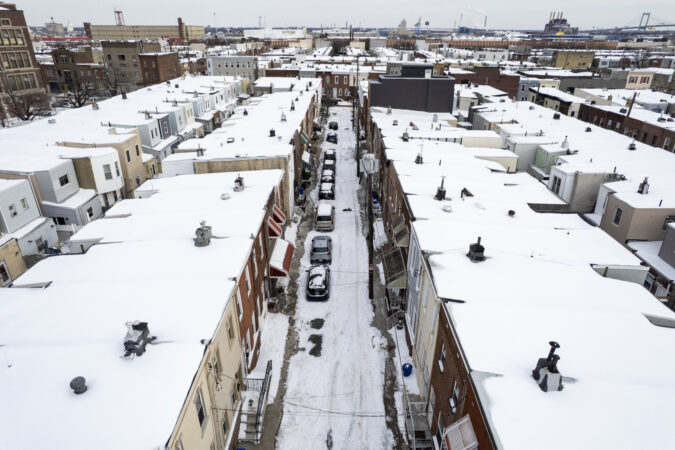
    With more than 60 hours since the last bit of snow descended upon Philadelphia, the widespread complaints about the conditions of secondary and tertiary streets have reached a fever pitch.

    The Philadelphia Streets Department has tried to quell the public’s concerns with daily videos of excavators diligently filling dumpsters with snow. Yet evidence of icy streets and snow banks blocking lanes dominate social media, with city data showing the street conditions vary block by block.

    Between 3 p.m. Tuesday and 3 p.m. Wednesday, the city’s GPS data show, about 30% of city streets had been visited by plows. Some areas, like Center City and South Philadelphia west of Broad Street, saw most numbered streets and cross streets hit by plows during that time. Meanwhile, South Philly and Center City neighborhoods east of Broad Street saw little to no reported activity.

    The same was true for large swaths of North and West Philadelphia. And neighborhoods like Overbrook, Wynnefield, and Nicetown, which have seen the fewest reported visits from city plow trucks since the storm began, saw only a handful of streets plowed between Tuesday and Wednesday afternoon, according to city data.

    On the neighborhood line of Grays Ferry and Devil’s Pocket, Dani Hildebrand was one resident who felt forgotten as the streets around him were plowed and garbage picked up. Hildebrand’s block was supposed to have trash collection come through Tuesday with the one-day delay announced by the city. But on Wednesday, bags of garbage lined his block.
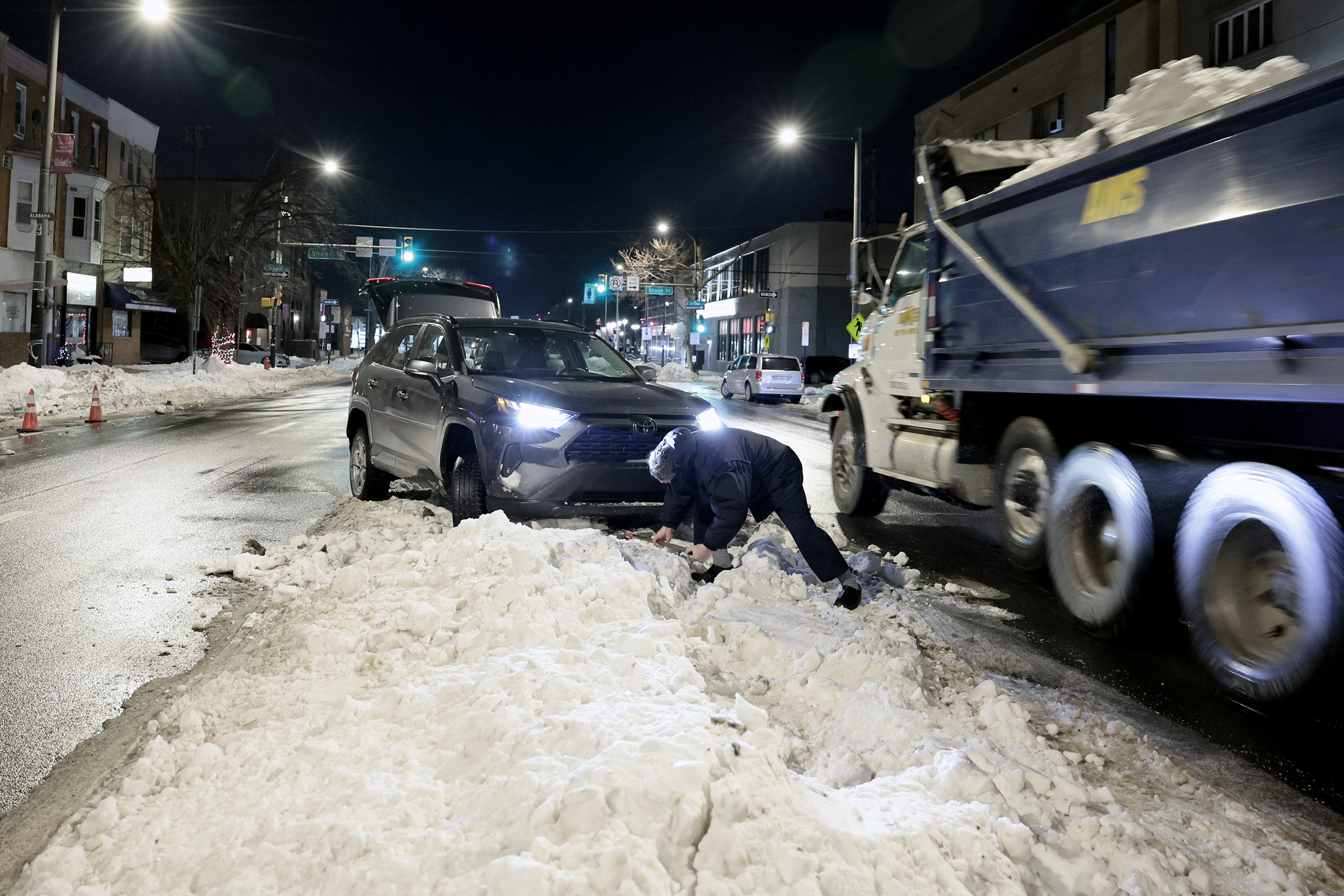
    An unidentified man shovels snow from underneath his car after it became hung up when he was trying to park in the middle of South Broad Street in Philadelphia in the early morning hours of Wednesday, Jan. 28, 2026. Dump trucks filled with snow from the city’s snow removal operations were zooming by as he worked to get his car free.

    The 41-year-old father of three said his school-age children yearn to leave the house, even if for an errand, but it’s not in the cards.

    “Between piles of snow, trash, and dog pee and poop, it’s not ideal,” he said. “We’ve been stuck in since Sunday, and while I’m close to a market, it’s not safe to walk there with my three kids and I can’t get my car out.”

    The city, for its part, has said the snow clearing would take as long as it needs to and the work would continue until all roads are dug out. Residents should expect trash-collection delays as crews navigate the snow and ice. At the same time, officials have consistently asked for patience, noting that the frigid temperatures were not aiding snow-removal efforts.

    They have pointed to the 14 teams with more than 200 vehicles and excavators that are trying to move the snow and ice into storage facilities using dumpsters. Future Track trainees with the Philadelphia Streets Department have also taken up shovels to help clear crosswalks in the city.

    But, the city notes, this is time-consuming work.

    Wanted: Private plowers

    Chris DiPiazza, owner of the Passyunk Square bakery Mighty Bread, could not afford to wait for city plows and paid for a private service to clear his street Tuesday afternoon.

    After the storm, the bakery was unable to make or receive deliveries because the city had not plowed Gerritt Street, the narrow road it’s on. Adding to frustrations, DiPiazza said, snowplows that had come through the adjacent 12th and 13th Streets had left giant snow piles on both ends of the block.
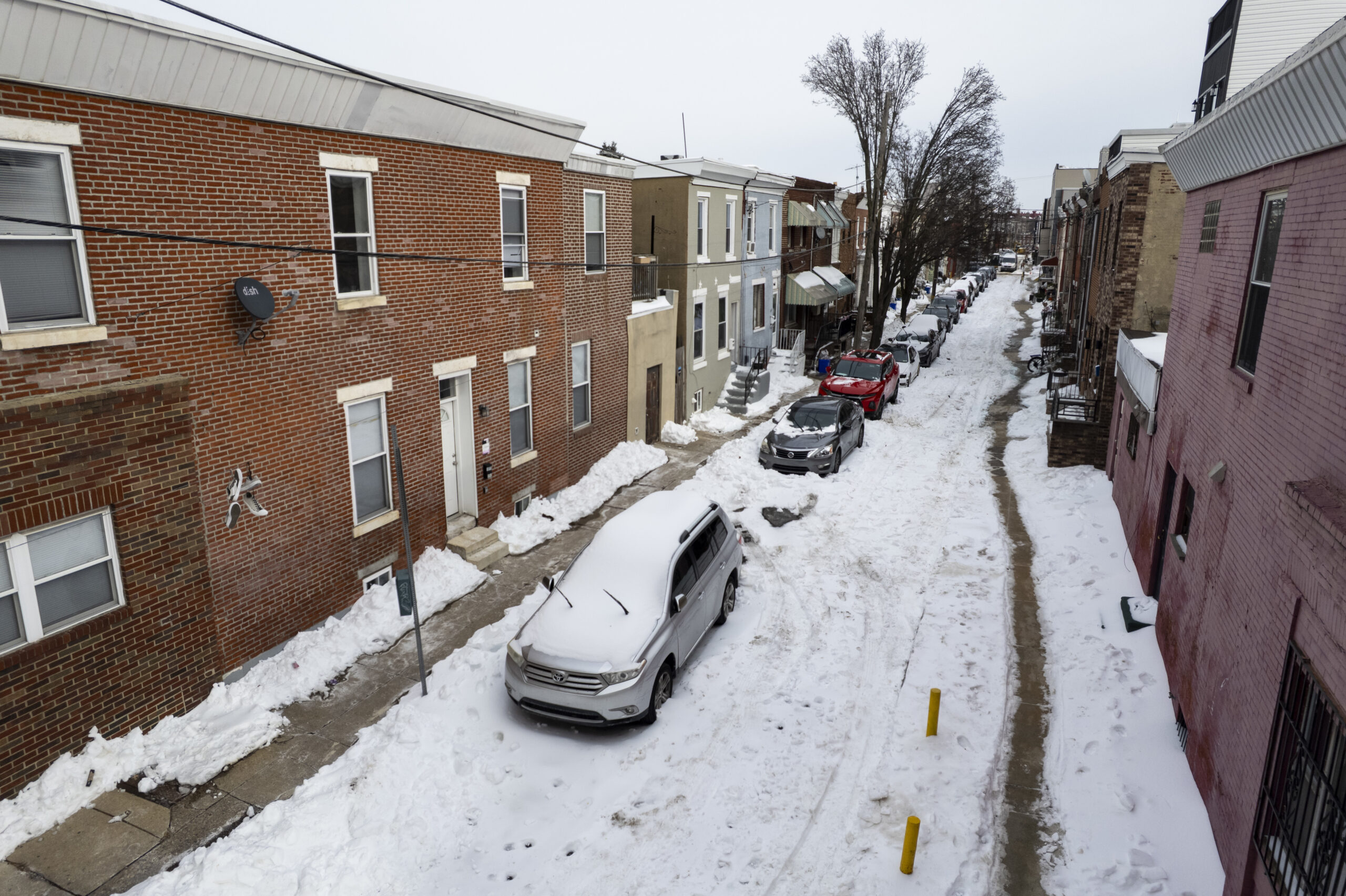
    The 700 block of Hoffman is still covered in snow on Wednesday, Jan. 28, 2026 in South Philadelphia.

    A 311 operator said it could take upward of three days for plowing to occur, DiPiazza said.

    That news was especially frustrating when residents are expected to do their part by shoveling sidewalks in front of their homes within six hours of snowfall stopping, but the city is not fulfilling its own end of that promise, DiPiazza said.

    “The city’s responsibility is to make the streets safe for people to drive, and they didn’t do that,” he said.

    SEPTA vs. ice

    For SEPTA’s size and reach, the organization is not so different from the average Philadelphian living without a plowed street.

    The snow-covered roads were especially difficult for bus routes through secondary and tertiary streets after the storm, SEPTA spokesperson John Golden said.

    “Those streets are hard to navigate on a good day,” he said.

    The lagging plow service made SEPTA pause service for many bus routes.

    “Some of our buses just aren’t able to navigate the streets because of lack of plowing,” Golden said.
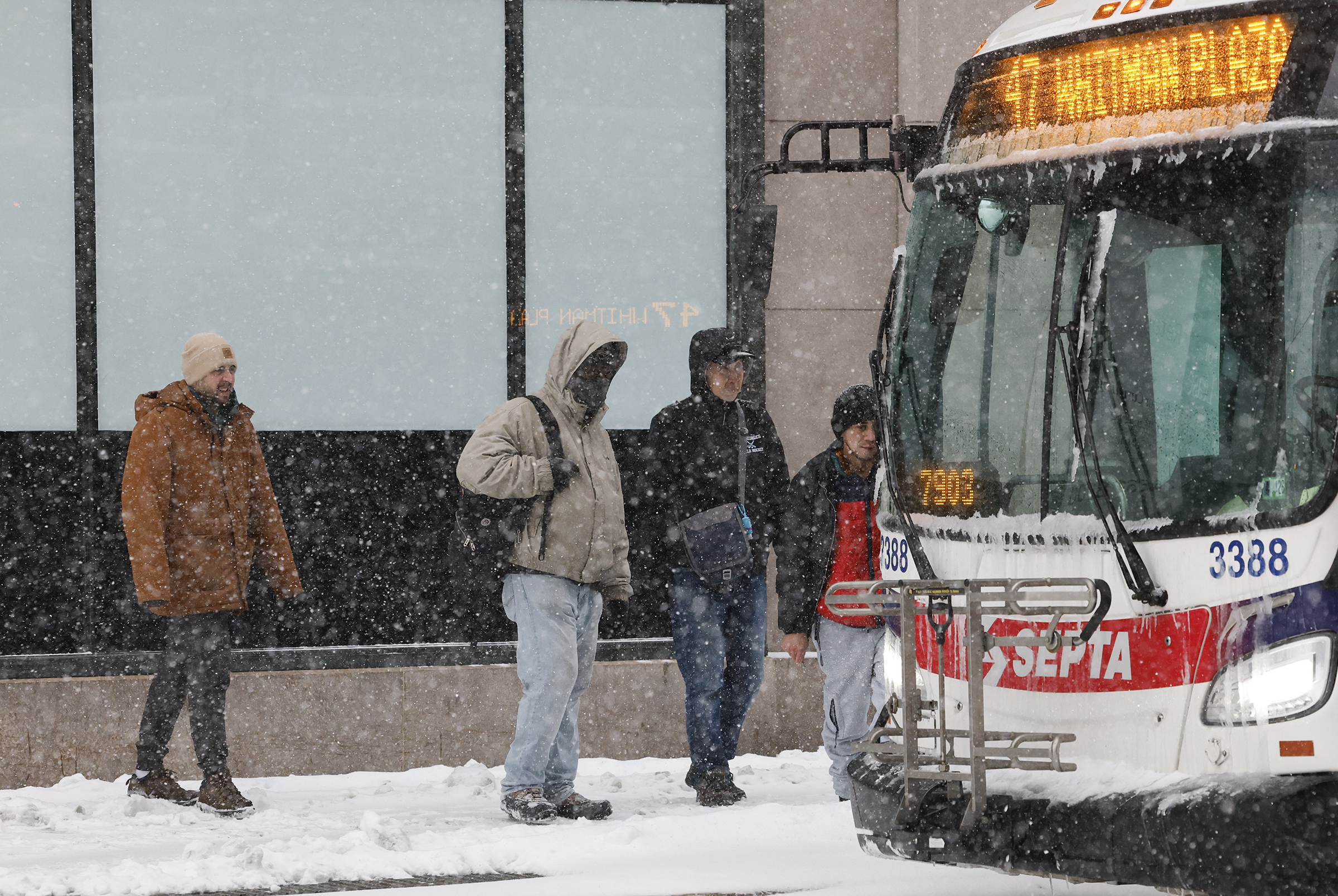
    SEPTA riders board the 47 bus at 8th and Market Streets with the snow falling on Sunday, January 25, 2026.

    But service had returned to all but a handful of routes by Wednesday afternoon. The weekend storm was not particularly onerous for SEPTA compared with other large storms in years past, Golden said, but he noted the frigid temperatures in the days following have made things difficult. Ice is not melting as quickly as it usually does, leaving the roads treacherous.

    Golden said that while SEPTA officials have been in frequent contact with the streets department about problem spots, they don’t have any special recourse besides waiting for the city to clear the streets.

    How does 2026 compare with 2016?

    When the city was smacked with 22.5 inches of snow in January 2016, it was the fourth-largest snowfall in Philly history, and newly sworn-in Mayor Jim Kenney’s first major test in office.

    At the time, many side street residents issued the same complaints heard with this most recent storm — they were the last to be dug out, and entire blocks were locked in.

    But by the fourth day of storm cleanup, a Kenney spokesperson claimed 92% of all residential streets “were plowed and passable” and the administration was taking in kudos for what many — though not all — said was a job well done.
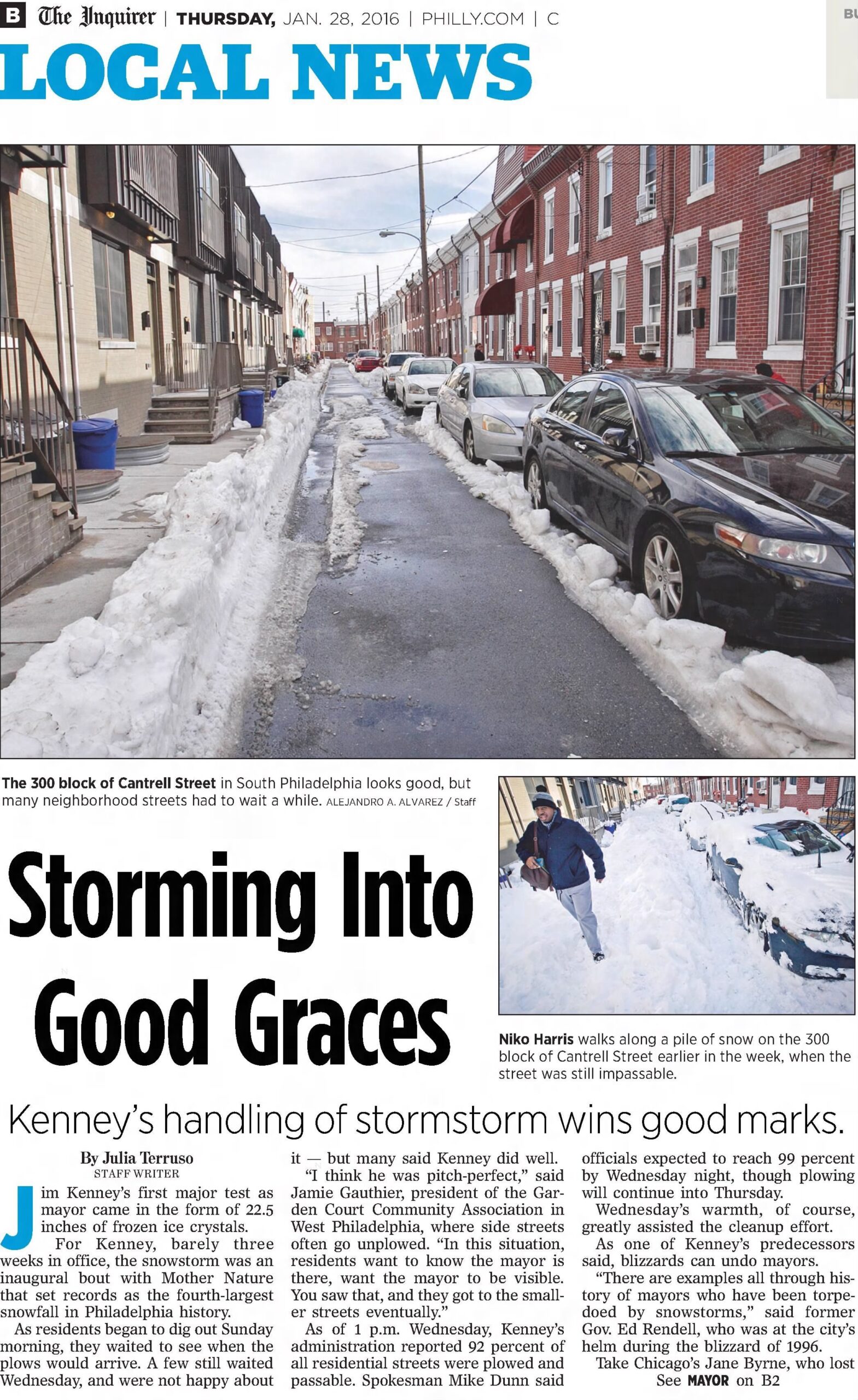
    The front page of The Philadelphia Inquirer’s B section in January 2016, following a major snowstorm that was similar to the January 2026 storm. The article reported some complaints of snow plow delays, but residents were largely complimentary of then new Mayor Jim Kenney’s handling of the storm.

    Though 9.3 inches fell this time around, city officials have said the conditions were very different. The temperature drop has been the largest hurdle so far, providing no help in melting the ice. The city still urges patience and says teams are working nonstop.

    For parents whose children took part in virtual learning Wednesday and residents who were sick of parking wars and icy crosswalks with another potential snowfall on the way, patience was almost gone.

    Residents in North and West Philly shared frustrations on social media of parking shortages because mounds of ice left people nowhere to go; some were even parking at an angle in parallel spots, to the chagrin of others. Bus stops were piles of dirty, frozen ice, and crosswalks remained icy.

    For Hildebrand, it was all very discouraging.

    “A plan could have been made and implemented, since the city knew about this a week before it happened, but it truly seems like bare minimum effort,” he said.
  • SEPTA Regional Rail delays this morning are due to a train pulling down overhead wires

    SEPTA Regional Rail delays this morning are due to a train pulling down overhead wires

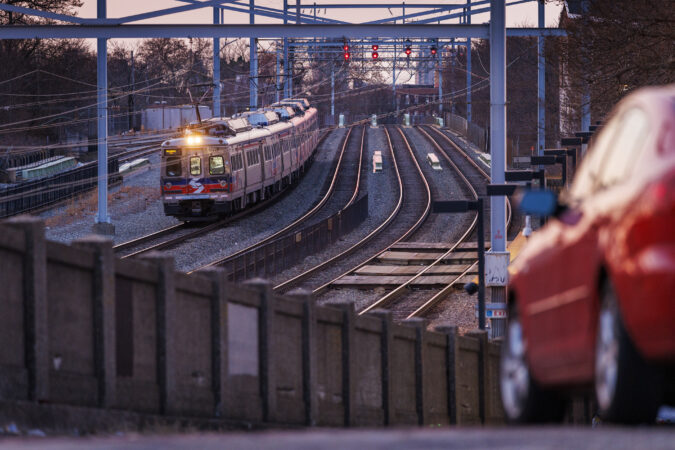
    SEPTA Regional Rail riders experienced significant delays — at times, 30 minutes to an hour — at the peak of morning rush hour on Tuesday morning, after a train pulled electrical wires down.

    A West Trenton Line train struck overhead electrical wires near Wayne Junction train station in the Nicetown section of Philadelphia at 7:45 a.m., said SEPTA officials.

    The train lost power and was tangled in the wires it had pulled down.

    Marie Pollock, 24, who was on board, felt the train start to gradually slow down before quickly and forcefully coming to a stop. Pollock could see wires hitting the train windows and noted that other passengers were startled during the collision.

    “We were keeping the doors closed because it was so cold,” Pollock said. “We were on kind of a hill, so there wasn’t any room for SEPTA to get a shuttle, and the power was out on both tracks, so we couldn’t get a typical rescue train to us.”

    Pollock, who had already been waiting a half-hour in 20-degree chill for her 6:17 a.m. West Trenton Line train before the ordeal, said passengers waited inside the stuck train for an hour and a half.

    SEPTA crews had to cut through the downed wires to free the train and then used a diesel-powered train to tow the disabled one to Wayne Junction, where passengers took other trains into Center City.

    Pollock’s four-hour journey didn’t end until 10 a.m. when she finally arrived at Jefferson Station.

    Since then, service interruptions have been occurring primarily on the Warminster, Lansdale/Doylestown, and West Trenton lines. However, delays cascade throughout the rail system, leading to 15 to 45-minute delays on other lines, said SEPTA spokesperson Andrew Busch.

    “Repairs are still continuing,” Busch said Tuesday afternoon, “but service has improved. Some minor delays, and we are advising passengers to plan for some extra time during rush hour, but we expect the evening commute to be better than this morning.”

    There is currently no timeline for completed repairs.

    SEPTA urges riders to use the SEPTA mobile app and septa.org for the latest updates.

    Today’s service interruptions follow a streak of solid performance by SEPTA after months of disruptions while SEPTA rushed to inspect and repair a fleet of 223 trains after five caught fire last year.

  • Gov. Shapiro asks Pennsylvania voters to choose ‘getting stuff done’ over ‘chaos’ as he kicks off 2026 reelection bid

    Gov. Shapiro asks Pennsylvania voters to choose ‘getting stuff done’ over ‘chaos’ as he kicks off 2026 reelection bid

    Pennsylvania Gov. Josh Shapiro officially launched his widely expected bid for reelection Thursday, spending his first day back on the campaign trail in one of the nation’s most politically divided states by touting his achievements for workers, seniors, and schools while contrasting himself against Republicans in President Donald Trump’s Washington.

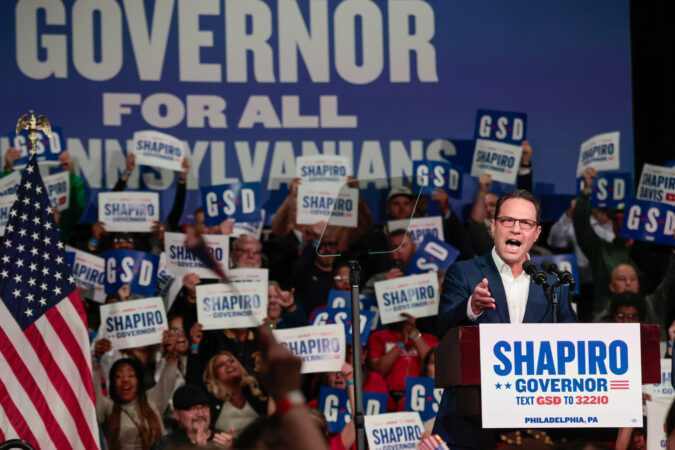
    The Montgomery County Democrat presented his opening argument to voters Thursday afternoon in a highly produced campaign rally at a Pittsburgh union hall, before appearing Thursday night before Philadelphia voters at the Alan Horwitz “Sixth Man” Center in Nicetown.

    Shapiro, 52, of Abington Township, will pursue his reelection bid by crisscrossing the state, boasting a high approval rating that Republicans hope to damage as talk of his potential 2028 candidacy continues to build.

    Shapiro took the stage in Pittsburgh and Philadelphia following speeches from Lt. Gov. Austin Davis and a parade of public officials, labor leaders, and community advocates who touted his first term accomplishments, all delivering a similar message: Shapiro shows up and delivers for residents across the commonwealth.

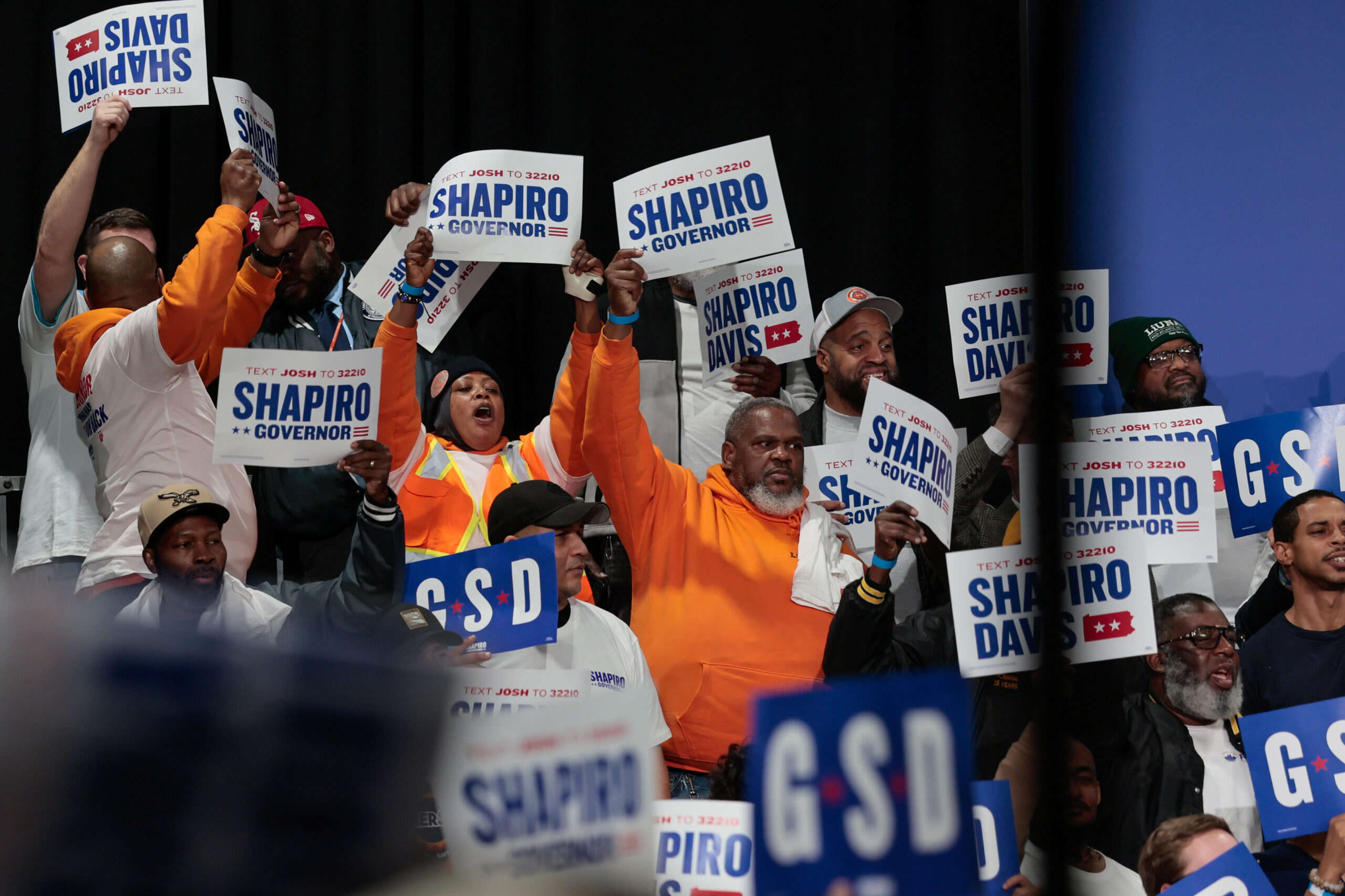
    At the Sixth Man Center, supporters and local leaders packed the event space in the youth sports center where Shapiro delivered a speech next to a huge mural of 76ers star Joel Embiid. Shapiro joked about his midrange jumper as he praised the center’s work.

    “I am proud to be here on today to say that Josh Shapiro as governor of the commonwealth has delivered for us in a way that some thought … was impossible,” said Philadelphia Mayor Cherelle L. Parker to an excited crowd.

    The rollout signaled Shapiro’s campaign will be anchored in his administration’s motto, “Get S— Done,” emphasizing that state government should be able to solve residents’ problems effectively.

    “You deserve someone who goes to work every day focused on you and on getting stuff done,” Shapiro said.

    He is not expected to face a primary challenger, just like in 2022, when he later cruised to victory in the general election against far-right State Sen. Doug Mastriano (R., Franklin). Mastriano, who had been teasing another run, announced Wednesday he would not join the race for governor.

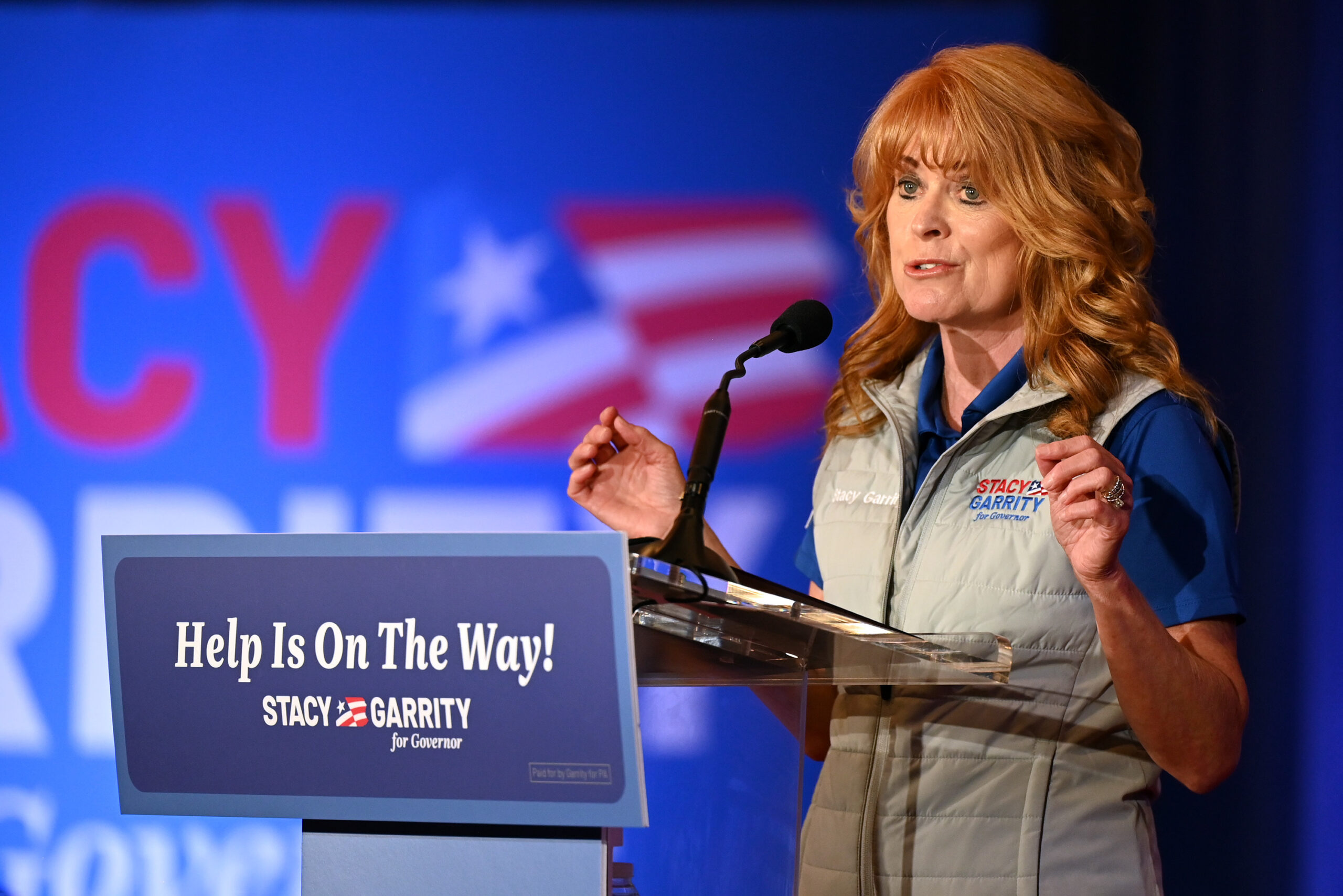
    This time, Republicans hope to take a stronger swing at Shapiro by coalescing around one candidate early. The state GOP endorsed State Treasurer Stacy Garrity more than a year in advance of November’s midterm election.

    State Treasurer and Republican candidate for governor Stacy Garrity holds a rally on Sept. 25, 2025 at the Newtown Sports & Events Center in Bucks County.

    State Republican Party Chair Greg Rothman said in a statement Thursday that Pennsylvanians have had “enough of Josh Shapiro’s lack of leadership and broken promises,” noting several of Shapiro’s missteps in his administration such as his reneging on school vouchers, a $295,000 payout over a sexual harassment claim against a former top aide, and failing to send a month’s worth of state agency mail.

    “[Garrity] actually gets stuff done, she doesn’t just talk about it on the campaign trail,” Rothman added.

    Garrity has contended that Shapiro — a former attorney general, county commissioner, and state representative — is more focused on running for president in 2028 than leading the state.

    “Josh Shapiro is more concerned with a promotion to Pennsylvania Avenue than serving hardworking Pennsylvanians,” Garrity said in a statement earlier this week, noting the state fared poorly in U.S. News and World Report rankings on the economy and education.

    But that’s part of the appeal for some of Shapiro’s supporters.

    Fernando Rodriguez, who works at Fox Chase Farm in Philadelphia, was eager to hear Shapiro’s stump speech. The 37-year-old didn’t vote for Shapiro in 2022 and had cast only one ballot for a presidential election, voting for President Barack Obama in 2008.

    But he wanted to see Shapiro win reelection and, more importantly, go on to run for president in 2028.

    “There seems to be some maturity, some presidential qualities to him,” Rodriguez said, noting that is particularly important given the direction of national politics.

    Shapiro has not publicly acknowledged any presidential ambitions and is expected to keep a local focus as he campaigns for reelection. But on Thursday at his rally, he reminded voters that they have the ability to deliver not only a resounding reelection victory for him, but also the chance to flip control of the U.S. House and state Senate as Democrats target four congressional districts in Pennsylvania and other down-ballot offices.

    Shapiro has already raised $30 million to support his reelection, which is likely to boost the entire ticket.

    State Democrats hope Shapiro will be able to leverage his popularity and growing national brand to bring more voters out to the polls, in what is already likely to be an advantageous midterm year for the party.

    “We’ve got a lot of work to do and it’s not just about reelecting the governor,” Eugene DePasquale, the chair of the state Democratic Party, said Thursday in Pittsburgh.

    Gov. Josh Shapiro’s supporters cheer as he makes his way to the stage during a reelection announcement event event at the Alan Horwitz “Sixth Man” Center in Philadelphia on Thursday, Jan. 8, 2026.

    ‘The hard work of bringing people together’

    Offering an opening pitch to voters, Shapiro highlighted key themes he is expected to repeat during the next 10 months on the campaign trail: He’s protected Pennsylvanians’ freedoms and created jobs, with more work to do.

    He noted several bipartisan achievements passed by the state’s divided legislature during his time in office, including a long-sought increase to the state’s rent and property tax rebate, historic funding increases for public education, and more. Pennsylvanians, he argued, have a simple choice in November.

    “Will we continue to do the hard work of bringing people together to get stuff done, or will we descend into the chaos and extremism that has gripped too many other places across our nation?” Shapiro asked in his stump speech in Pittsburgh and Philadelphia.

    In Philly, the crowd gave this question a resounding “No.”

    Shapiro’s launch drew a distinction between his style of leadership and that of Trump — whom Shapiro repeatedly called a danger to democracy prior to his reelection in 2024. Shapiro did not name the president during his announcement, but alluded to Trump — while noting his legal challenges against the Trump administration.

    The move followed Shapiro’s oft-repeated tactic since Trump took office for a second time: Criticize his policies, while not alienating Trump’s supporters in Pennsylvania, as the state swung in favor of Trump in 2024.

    In addition to his two campaign rallies, Shapiro kicked off his reelection bid in a video advertisement posted on social media. He led that off with footage from one of his biggest accomplishments from his first three years in office: rebuilding a collapsed section of I-95 in 12 days, in what was expected to take months.

    The quick rebuild also featured in his speech in Philly, where he heaped praise on organized labor for its role in the reconstruction.

    Rob Buckley with Buckley & Company, Inc., shakes hands with Gov. Josh Shapiro (right) at the end of a 2023 news conference before the reopening of I-95.

    Notably, Shapiro’s video announcement included a focus on several issues important to rural or conservative voters, such as signing a law that ended the ban on Sunday hunting, hiring 2,000 more law enforcement officers, and removing college degree requirements for most state agency jobs. He also highlighted his work in helping to reopen the lone gas pump in Germania, Potter County, following an Inquirer report about its closure.

    During his speech on the glossy basketball court in Nicetown, supporters began chanting “Four more years!”

    “I like the sound of that,” Shapiro said, with a smile.

  • How Philly-area grocery workers handle the holiday stress — and find joy along the way

    How Philly-area grocery workers handle the holiday stress — and find joy along the way

    Crowds of last-minute shoppers, customers looking for seasonal ingredients, sappy hands from tying Christmas trees to cars, and of course, hours and hours of cheery holiday music playing on a loop.

    Such is the life of a grocery worker during the holidays.

    “Everyone wants to get, like, the biggest tree on, like, the smallest car,” said Edward Dupree, who has worked at the Center City Whole Foods for over nine years.

    Working at a grocery store during the holiday season can be hectic and intense, requiring a lot of patience, he said.

    “It’s, I think, definitely under-appreciated,” said Dupree.

    Grocery employees from across the region say this time of year brings a surge of stressed shoppers making larger purchases, even in the age of DoorDash, grocery delivery, and curbside pickup.

    Customers rush into the store for their last-minute shopping, said Erika Keith, who works at the Fox Street ShopRite in Nicetown. And they’re often hurried as they fill their carts, said Charletta Brown, of the Acme in Trooper, juggling year-end demands at work and pressures at home as they prepare for the holidays.

    “Those three days moving into Thanksgiving are just insane,” said Dupree. He said the store starts getting busier in September as students return to the area, and it stays hectic through the end of the year.

    Customers aren’t just getting their regular groceries and Christmas trees. They’re looking for specialty seasonal items including cranberries, decorative gourds, chestnuts, eggnog, and black-eyed peas for the New Year.

    “Even in spite of the current economy — we do hear a lot that things are a little rougher than they have been in past years — people still want that tradition,” said Brown.

    Specific holiday wishes

    As the holidays approach, the Philadelphia Whole Foods bakery makes hundreds of pies and a slew of custom orders, said baker Jasmine Jones. During the holidays, they said, “the cakes get bigger.”

    Many are seeking out pie crusts and fillings, as well as phyllo dough to make hors d’oeuvres, said Brown, of Acme. These freezer items are hidden “way in the back” for most of the year, but they get the star treatment, “front and center” for the holidays.

    Keith, of ShopRite, said the holidays bring in more business for the store’s Western Union service, as people send money to loved ones as gifts.

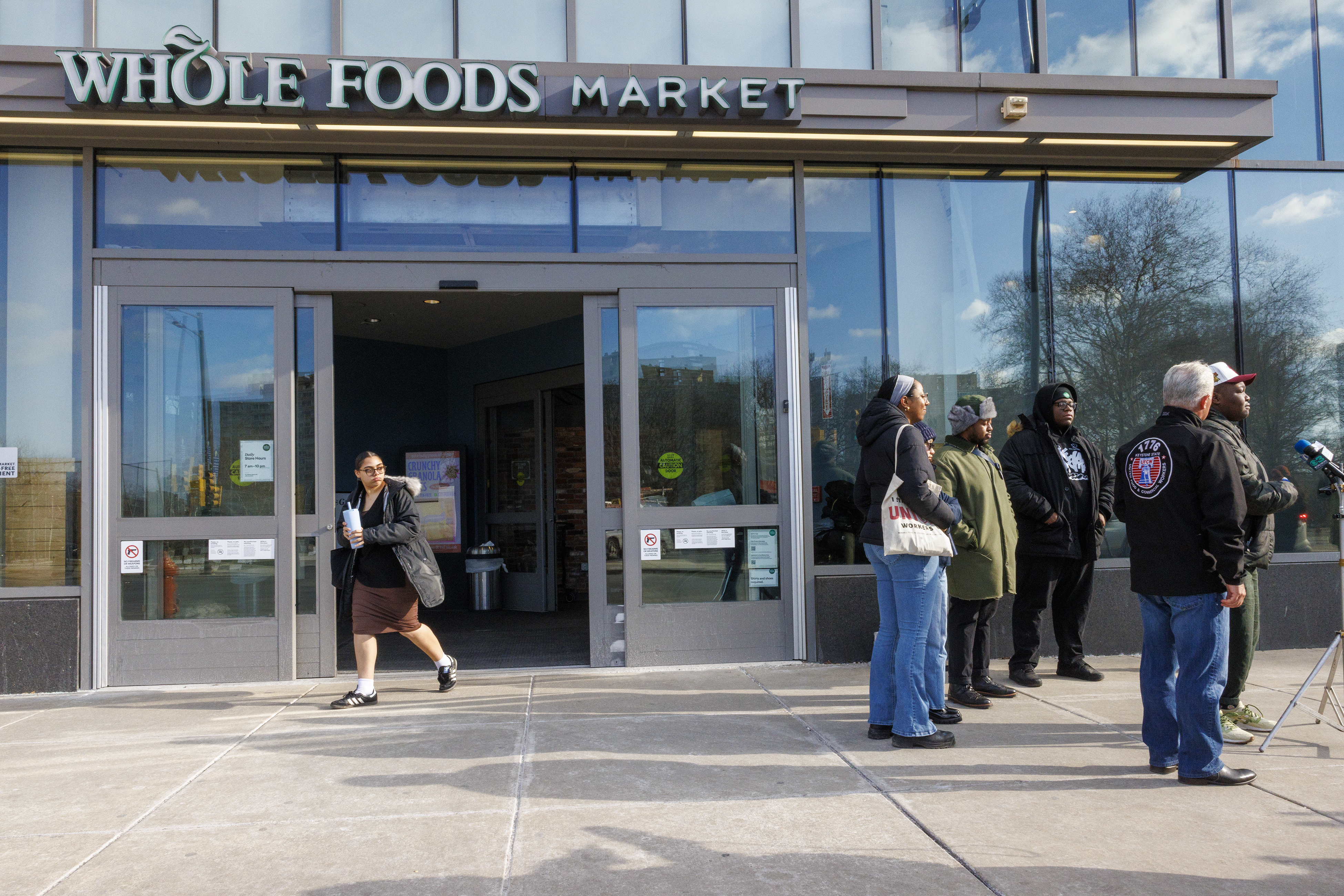
    Union workers gather outside the Center City Whole Foods Market in January.

    At the Trooper Acme, Brown said, shoppers start looking for Ivins Famous Spiced Wafers starting around Halloween, and as the holiday season progresses, they’re looking for specific nostalgic sweets to fill their candy dishes — minty After Eight chocolates or the multicolored, straw-shaped Plantation hard candies, for example.

    “Some people say, ‘We don’t eat them, but we just want them to sit out in the candy dish, because I had that as a kid, and my mother and father always had it out,’” she said.

    Holiday gripes

    For Jones, Whole Foods is a second job on weekends. They said they’re “stretched kind of thin” during the holidays as they juggle another full-time job. Jones sometimes volunteers to work extra hours for the money during the holidays, but they don’t like losing the time with loved ones.

    And, Jones added, the holiday music is not a perk.

    “It kind of makes me angry,” said Jones, adding that they’re “still an overworked worker.”

    “It kind of just reminds me that I could be home if you paid me more.”

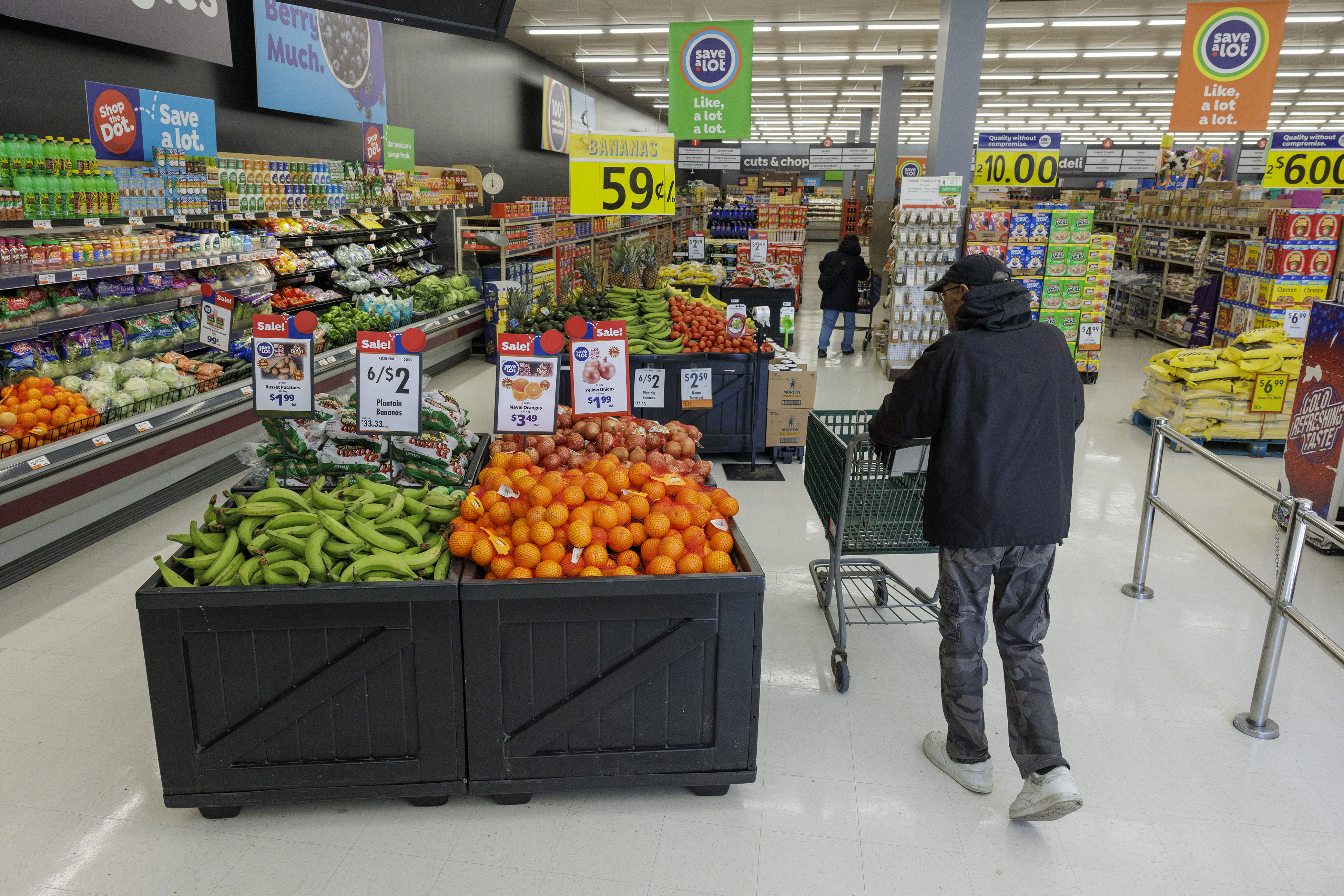
    Shoppers peruse the Save-a-Lot grocery store in Atlantic City in this Jan. 2024 file photo.

    Dupree, also of Whole Foods, isn’t a fan of the constant seasonal music either.

    “If I want to go listen [to the song] ‘This Christmas,’ I’ll listen to it on my own — don’t play it 82 times a day,” he said. “It’s a bit intrusive.”

    The customers

    Some customers, for their part, avoid the busiest times at the grocery store.

    In Wayne, Lisa Goldschmidt has become dependent on Instacart grocery deliveries most of the year. But when it’s time to shop for her holiday dinners, she makes a couple in-person trips to her local Acme. For her sanity, she keeps to a personal code, she said: “Avoid the weekends and the after-work times when it typically gets crazy.”

    Goldschmidt, a 58-year-old attorney who works from home, said she’s fortunate that she can run out midday on weekdays to buy her holiday essentials, which include an expansive antipasto assortment that her family eats on Christmas Eve and the prime rib they make on Christmas Day.

    April Beatty, 51, of Broomall, also tries to avoid peak shopping times at her go-to stores — Wegmans, Trader Joe’s, and Gentile’s produce market. She aims to pick up all her groceries at least a couple days before Christmas, and she also buys more this time of year with her two children home from college.

    But her job, too, keeps her busy during this season — she works in supply-chain logistics — so shopping the way she prefers, at “off times, just because it’s more efficient,” isn’t always an option.

    This year, her Wegmans trip for Thanksgiving happened during a shopping rush: “aisles packed, parking lot packed,” she said. During the holidays, she added, “at least people are polite.”

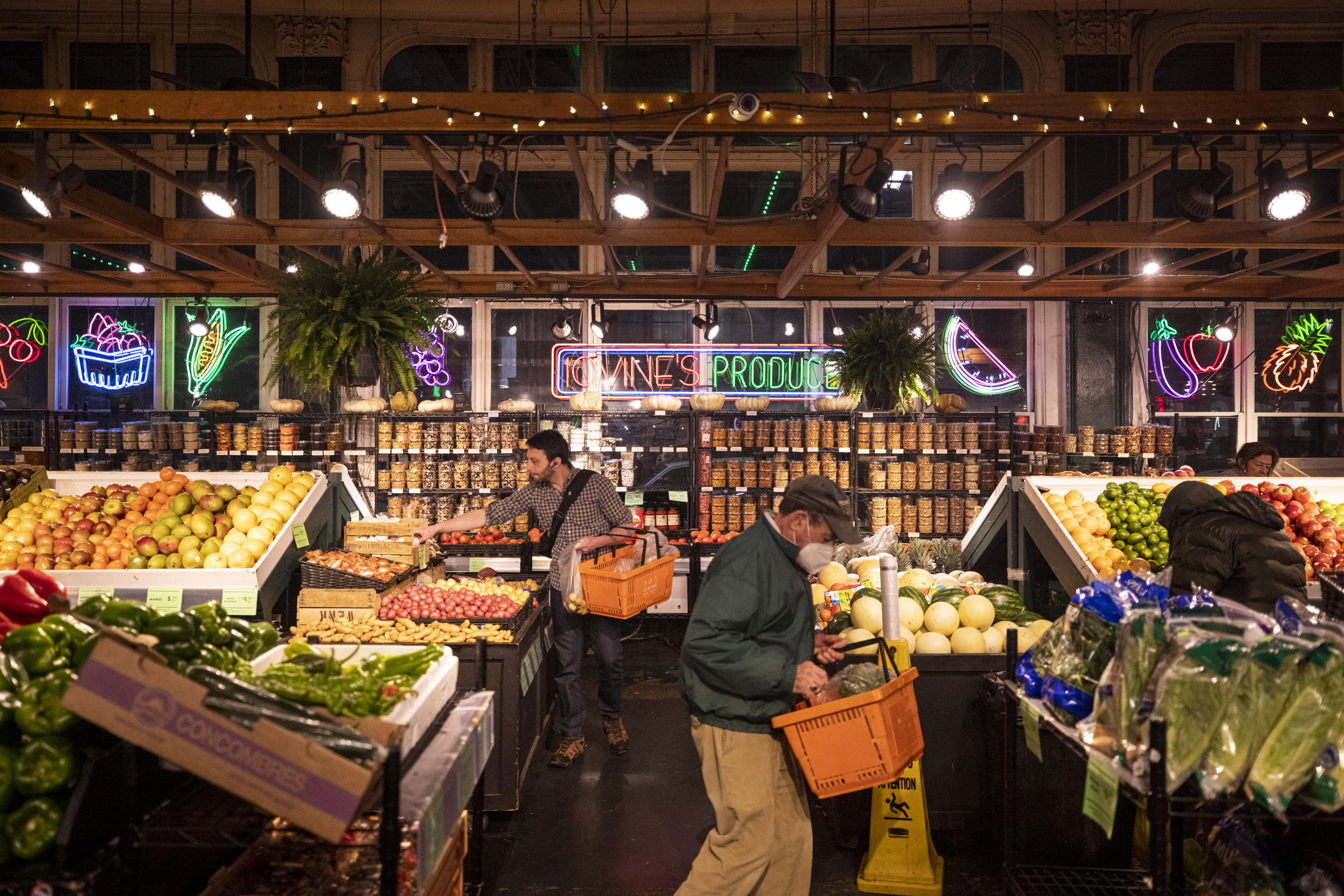
    Customers browse Iovine Brothers Produce at Reading Terminal Market in this 2022 file photo.

    Customers at Whole Foods are more outgoing during the holidays, said Dupree, part of a kind of jolly Christmas mentality around this time of year.

    The days leading up to Thanksgiving are usually the busiest — more so than Christmas — but he didn’t notice quite as much Thanksgiving hustle this year.

    “I wonder if this is because, you know, people’s pockets are hurting,” Dupree pondered aloud.

    At ShopRite, Keith said, some of the busiest shopping days she recalls are the day before Thanksgiving and Christmas Eve.

    “We have our last-minute shoppers — and, you know, I get it. I get the busy life,” she said.

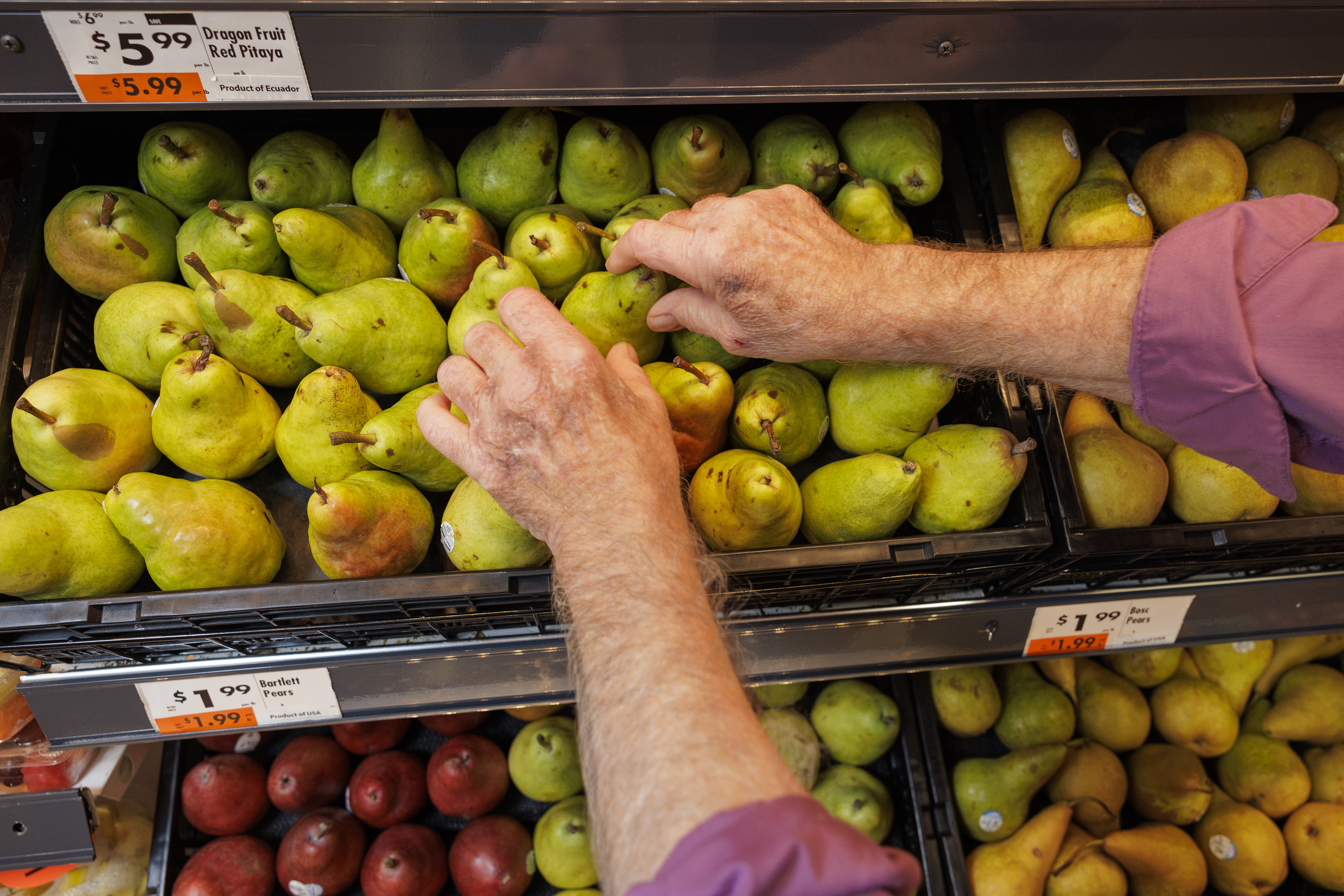
    A Save-a-Lot supermarket employee arranges pears at the chain’s Camden store in this January 2024 file photo.

    At Acme, Brown sees pressure and stress on some customers.

    “Being sympathetic to that, listening to them, is probably half the battle of dealing with any stresses or strain that I might be under — and also what they might be under,” she said.

    Brown said she tries to get a head start on her own holiday decorating and planning each year because there isn’t a lot of downtime once the store gets busy.

    “I have to manage that time effectively in order to be able to really decompress and enjoy the holidays myself,” she said.

    This year, for the first time in a while, she won’t be working on Christmas Eve because it‘s on a Wednesday, her usual day off.

    But Brown said she actually loves working Christmas Eve, “because it just seems to me like everybody’s just so happy.”

  • Philly has had a ‘soda tax’ since 2017. One lawmaker wants the city to consider repealing it.

    Philly has had a ‘soda tax’ since 2017. One lawmaker wants the city to consider repealing it.

    City Councilmember Jimmy Harrity wants to revisit the contentious debate that led to the 2017 creation of Philadelphia’s sweetened beverage tax, arguing that the levy has cost the city jobs and will eventually prove insufficient to pay for the programs it was enacted to support, such as subsidized prekindergarten.

    “We‘re going to keep on pulling more money out of the general fund each year, taking away from other programs,” Harrity, a Democrat, said Monday at a hearing of Council’s Labor and Civil Service Committee, which he chairs. “If we were in business and these numbers were the numbers of the business, we wouldn’t be in business long.”

    The tax, which is paid by distributors of sweetened beverages sold in Philadelphia, is 1.5 cents per ounce. Council approved it in 2016 despite vociferous opposition from the beverage industry and Teamsters Local 830, which testified Monday the tax has led to 1,000 of its members who drove trucks for distributors losing work.

    Harrity, an ally of the Teamsters, noted that revenue from the tax has declined as Philadelphians either drink fewer sweetened beverages or find ways to purchase them outside the city. The tax produced about $73.4 million in the 2023 fiscal year, but only $64.4 million last year, he said.

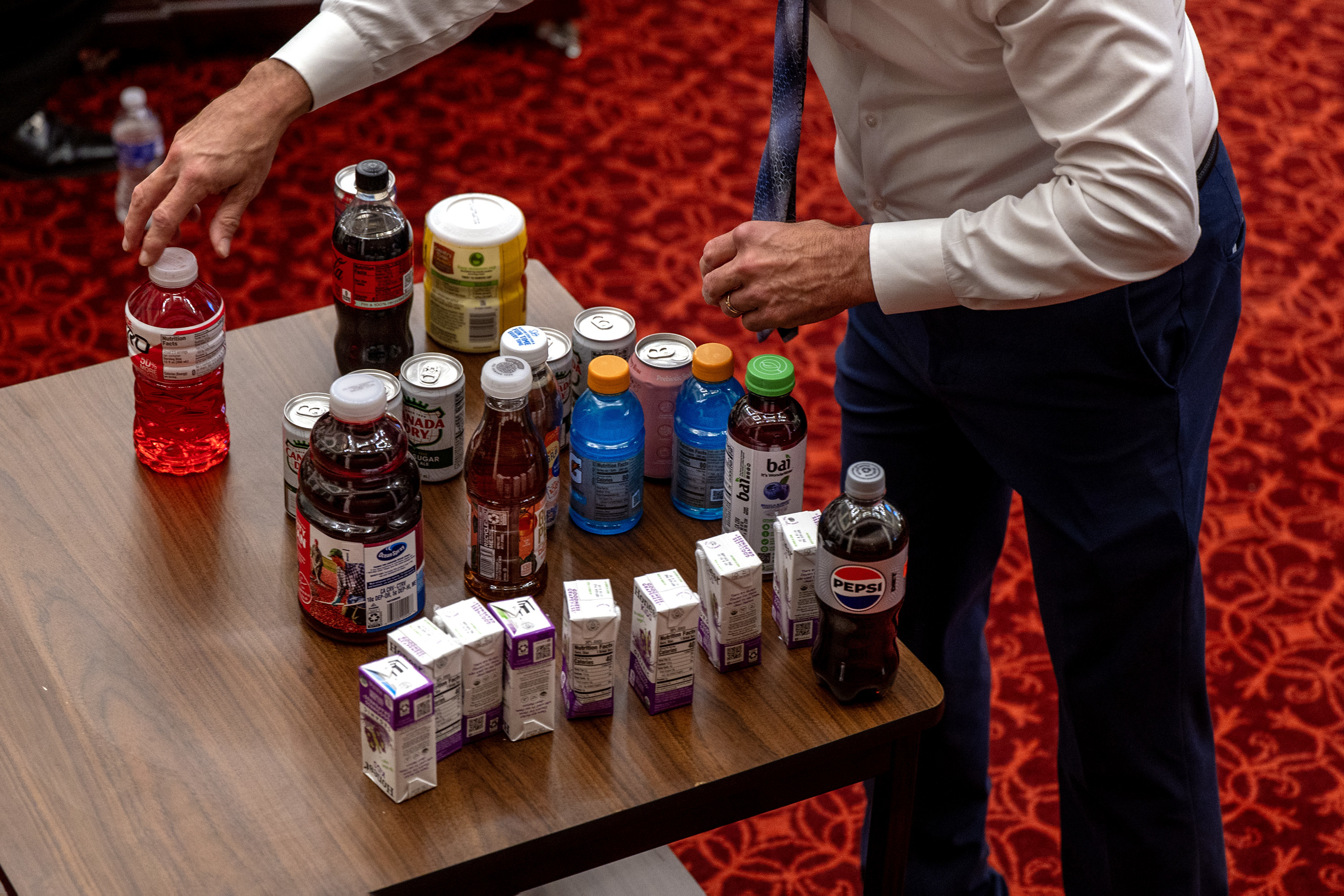
    A Council staffer arranges a table of sugary drinks before Councilmember Jimmy Harrity (not shown) holds a hearing in City Council Monday, Oct. 27, 2025 on former Mayor Jim Kenney’s tax on sweetened beverages.

    For Harrity, that means that the city should consider eliminating the “soda tax,” as it is widely known, in favor of a more “sustainable” funding stream. He did not offer any alternatives.

    But based on his colleagues’ reactions, it is unlikely the tax will be reconsidered in a serious way any time soon.

    Several Council members, public health advocates, and childcare industry representatives defended the tax, which was championed by former Mayor Jim Kenney. They noted that research by the University of Pennsylvania indicates it has been a public health success story that has helped to keep down obesity rates.

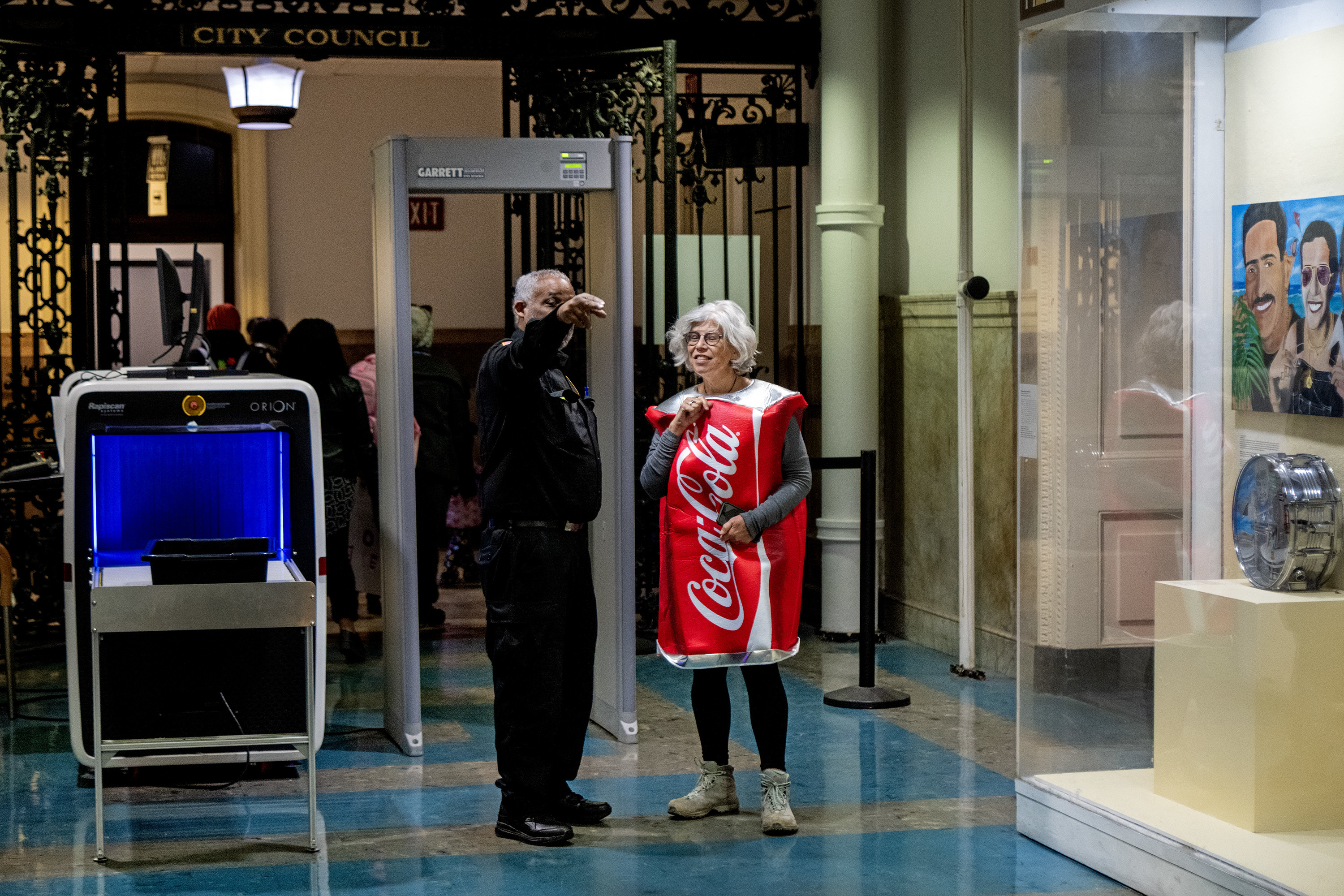
    Marcy Boroff with Children First dresses as a coke can for a City Council hearing Monday, Oct. 27, 2025 on former Mayor Jim Kenney’s tax on sweetened beverages. She was there to support the tax. Children First advocates for policy changes to improve child health, education, and welfare, especially for low-income children. .

    And they stressed its critical role in paying for the three initiatives that Kenney launched alongside the tax: PHL Pre-K, which provides free childcare to 5,250 kids; community schools, which offer a multitude of services to families in 20 Philly schools; and the Rebuild program, which renovates and improves recreation centers and playgrounds.

    “We have to make tough decisions that will actually benefit the greater good, and that’s what we did here,” Democratic Councilmember Rue Landau said during the hearing, adding that “the majority of us up here on this panel think this is a great investment.”

    ‘What we always intended’

    Mayor Cherelle L. Parker, a Democrat who voted for the tax as a Council member, also remains supportive of it.

    “We would not have been able to fund these programs without that beverage tax money,” said city Finance Director Rob Dubow, who has held his role under Parker, Kenney, and former Mayor Michael A. Nutter. Nutter twice tried unsuccessfully to implement a “soda tax” before Kenney succeeded.

    Dubow told lawmakers that the decline in the tax’s revenue over time was always part of the plan and that city leaders intended for the regular city budget to make up the difference for funding Rebuild, pre-K, and community schools when they created the tax. The moment when the soda tax began taking in less money than the city pays out for the three programs it helped launch was the 2024 fiscal year, he said.

    “We pay for it out of the general fund, which is what we always intended we would do,” Dubow said.

    This year, Rebuild, pre-K, and community schools are projected to cost $110 million, Dubow said. Of that, $73 million pays for the 5,250 slots in the city’s pre-K program.

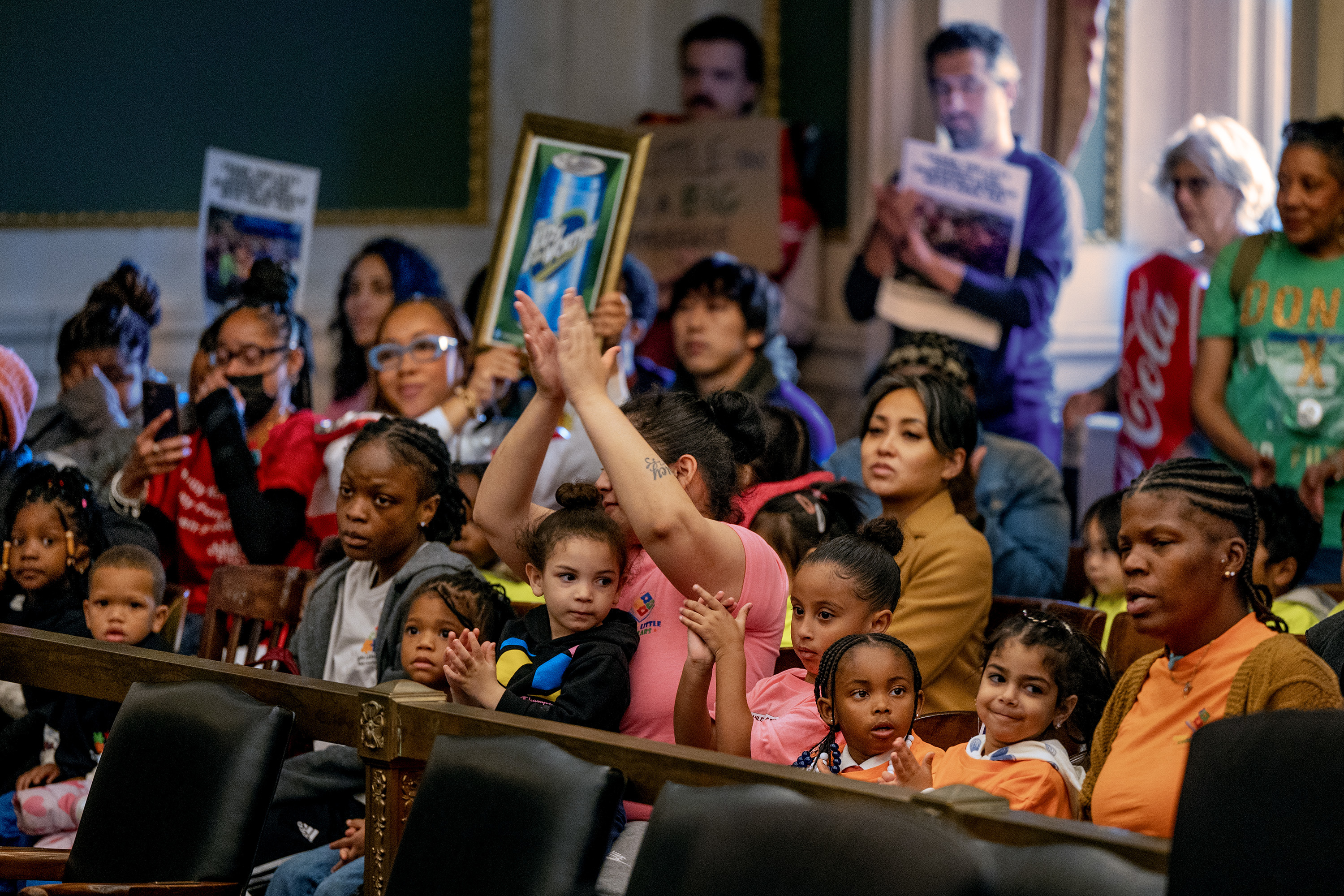
    Preschoolers and their caregivers attend a City Council hearing held by Councilmember Jimmy Harrity Monday, Oct. 27, 2025 on former Mayor Jim Kenney’s tax on sweetened beverages. The tax funds the city’s universal pre-kindergarten program

    ‘Why not Taj Mahals?’

    Councilmember Brian O’Neill was the only other Council member besides Harrity to vocally criticize the tax at Monday’s hearing.

    O’Neill, Council’s lone Republican, noted that Council members have traditionally had control over capital funding for Philadelphia Parks and Recreation projects in their districts. That money, he noted, is split evenly among the 10 district Council members.

    Rebuild, he lamented, instead gives the power to decide which projects move forward to the mayor’s administration. Consequently, he said, the program has produced uneven results and overbudget and unnecessarily ambitious playground and recreation center renovations.

    “This program — Rebuild, they call it — they didn’t decide to bring playgrounds up to some minimum level where people over the years may not have spent their money well,” O’Neill said. “They decided to build Taj Mahals in many cases. … You know what happens when you build a playground and spend tons of money on it? … All the playgrounds around it look terrible.“

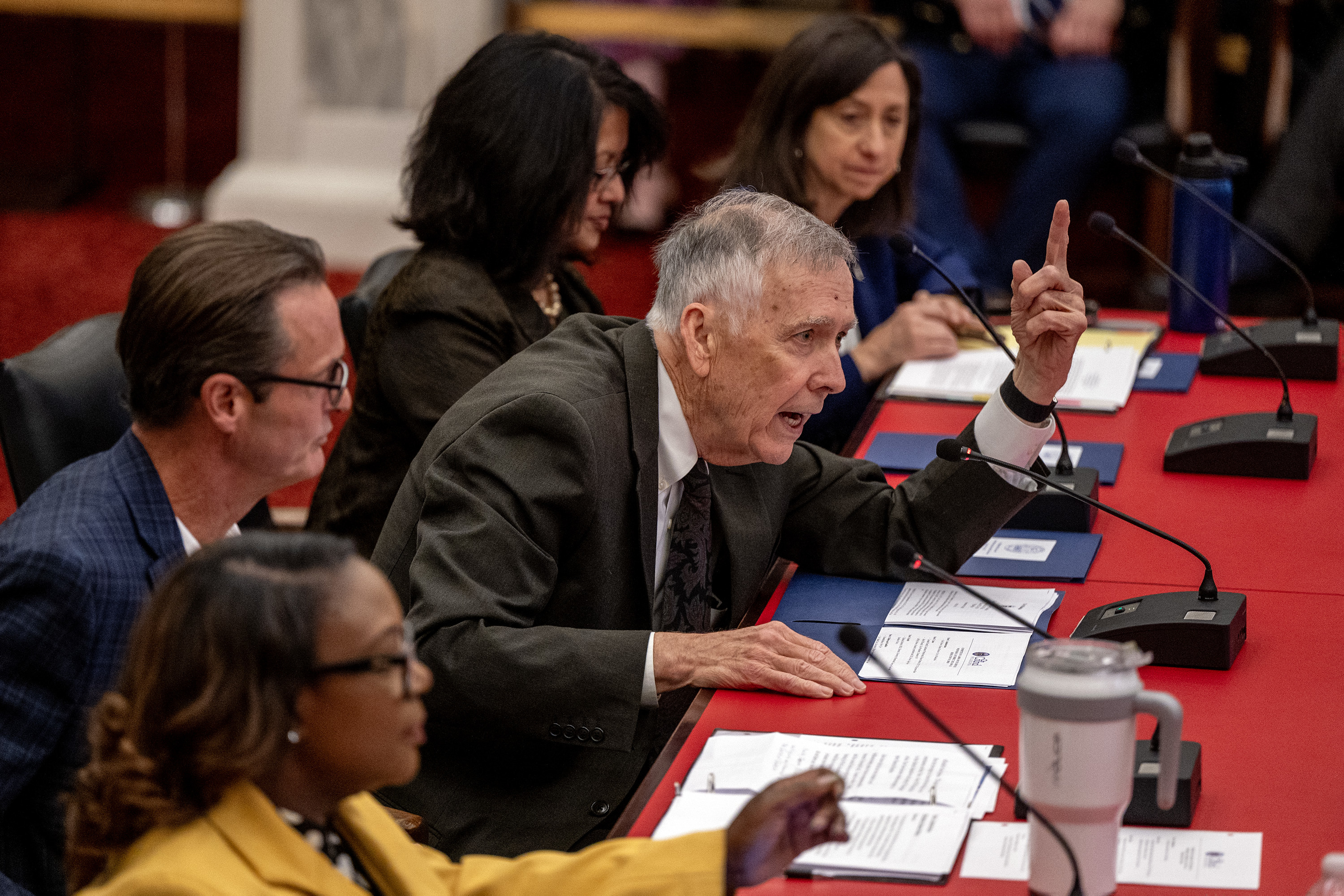
    Councilmember Brian J. O’Neill (center) speaks during a hearing in City Council Monday, Oct. 27, 2025 on former Mayor Jim Kenney’s tax on sweetened beverages. Behind him, front to rear, are: Councilmembers Kendra Brooks, Jimmy Harrity, Nina Ahmad, and Rue Landau.

    That comment did not go over well with some of his colleagues.

    “My community benefited from a rec center that was through the Rebuild program,” said Councilmember Kendra Brooks, a member of the progressive Working Families Party who lives in Nicetown. “It’s not a Taj Mahal. It’s a quality rec center in the middle of North Philadelphia. It does not have everything, because I personally went and bought a refrigerator.”

    And Councilmember Nina Ahmad, a Democrat, questioned why building grandiose rec centers would be a problem in the first place.

    “Why not Taj Mahals for all our folks? Why not have the best-quality rec centers so our children want to go there, our children want to spend time there?” Ahmad said. “We live in a first-world country and yet we are begging for scraps for our youngest citizens.”

  • Mayor Parker shakes up the Philadelphia Land Bank board to try to further her housing plan

    Mayor Parker shakes up the Philadelphia Land Bank board to try to further her housing plan

    Mayor Cherelle L. Parker is shaking up the board of the Philadelphia Land Bank, which helps control the sale of city-owned land but hasn’t been moving fast enough to advance her housing priorities.

    Parker’s first land bank board chair, Herb Wetzel, has been asked to step down as well as board member Majeedah Rashid, who leads the Nicetown Community Development Corp. The board has 13 members.

    Angela D. Brooks, who serves as the city’s chief housing officer, will be joining the board. Earlier this year Parker appointed Brooks to lead the mayor’s campaign, Housing Opportunities Made Easy, or H.O.M.E., to build or renovate 30,000 houses over the course of her administration.

    The mayor has long championed the Turn the Key program as part of that plan, a policy that depends on getting inexpensive city-owned land to developers so they can build houses that are affordable to working and middle-class families.

    Rashid is being replaced by Alexander Balloon, who formerly served on the Land Bank’s board and is the executive director of the Passyunk Avenue Revitalization Corp.

    “It is clear from the Land Bank’s success with its Turn The Key program: A strong and effective Land Bank is essential for reaching the H.O.M.E. initiative’s goal to produce and preserve 30,000 homes,” Parker said in a statement.

    Several Turn the Key proposals have been held up by the Land Bank board, which has been riven between factions that are either more or less friendly to private-sector developers.

    Rashid and other board members who come from a nonprofit development background have argued that scarce city-owned land should be earmarked for affordable housing, community gardens, and similar projects.

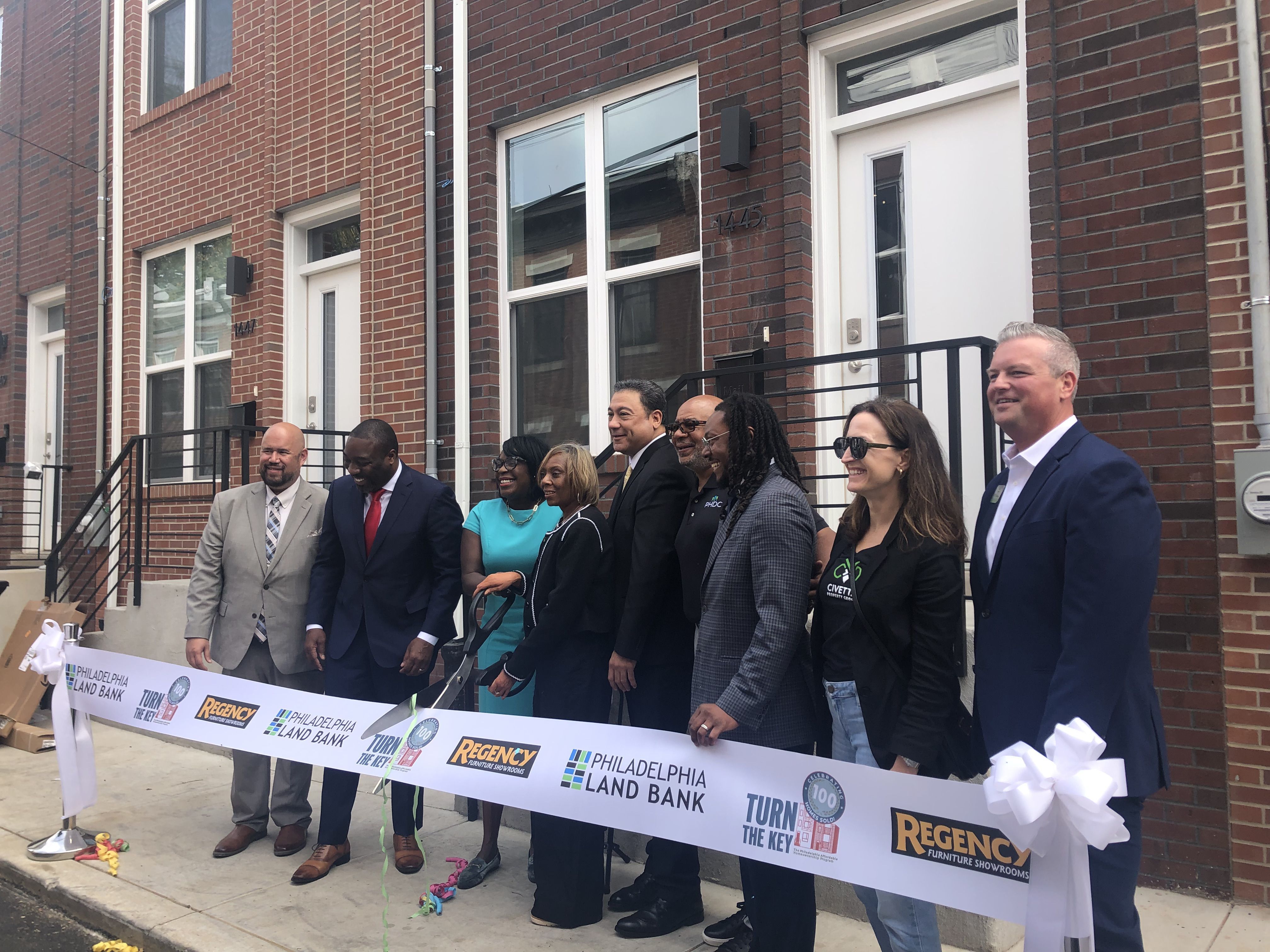
    Mayor Cherelle L. Parker and Turn the Key’s 100th homebuyer hold giant scissors as they prepare to cut a ceremonial ribbon.

    Although the Turn the Key program produces units that are more affordable than market-rate homes, many of the projects are built by private-sector developers and still unaffordable to Philadelphians with low incomes.

    “Majeedah Rashid has worked with me on economic development issues dating to my time in the Pennsylvania General Assembly, and her advice has been invaluable,” Parker said in a statement. “Our city is stronger for Herb’s and Majeedah’s public service.”

    Rashid did not respond to a request for comment.

    During Balloon’s previous tenure on the board, he was among members who pushed for vacant city-owned land to be put back into productive use as quickly as possible because empty lots attract crime and litter and are a drag on city services.

    Private-sector developers often can build more — and faster — than their nonprofit counterparts because they are less reliant on public funds, which are increasingly unreliable from the federal level.

    “I’m excited to rejoin the Philadelphia Land Bank and help Mayor Parker deliver on her bold vision to build and preserve 30,000 homes across our city,” Balloon said in an email statement. “This is an inspiring moment for Philadelphia’s growth and the success of the Turn the Key program and other initiatives.”

    Wetzel’s role as Land Board chair was the latest in a long tenure of municipal housing policy positions, including his lengthy service as a close aide to former Council President Darrell L. Clarke, who created the Turn the Key program and was one of its most enthusiastic proponents.

    “Herb Wetzel has been a subject matter expert for me on any housing issue that I’ve worked on throughout my career as an elected official, and I have always relied on his counsel,” Parker said in a statement. “He will continue to be part of my circle of advisers on housing issues, just in a different capacity.”

    But according to three City Hall sources, who did not have permission to speak to the media, Parker’s team felt Wetzel sought to play peacemaker between the factions and was not always able to get their favored Turn the Key projects moving. As a recent arrival to the city and leader of the administration’s housing initiative, Brooks is expected to pursue the mayor’s priorities.

    Brooks said in an interview that her appointment was no reflection on Wetzel’s performance and that he would continue to serve on the H.O.M.E. advisory board.

    “I don’t have any thoughts on what he didn’t do or didn’t other than he’s been a great supporter of both the mayor and me and this housing plan,” Brooks said. “He’ll continue to be a part of that as we move it forward. [It’s just that] historically, we have had a city staff person to sit on the Land Bank board, and since I’m spearheading the H.O.M.E. Initiative, it seemed to be time.”

    Frequent stalemates on the board were not the only challenge facing Turn the Key projects. Under the tradition of so-called councilmanic prerogative, the Land Bank requires action from City Council to release property for development even if the mayor backs a particular proposal.

    For example, the administration sent over a 50-unit Turn the Key proposal in North Philadelphia to City Council last November, and District Councilmember Jeffery Young simply never introduced it, effectively killing the deal.

    Or in Kensington, Councilmember Quetcy Lozada declined to endorse several Turn the Key proposals, leading developers to abandon them.

    Parker sought to loosen Council’s grip on some city-owned land during budget negotiations earlier this year, but the campaign was largely unsuccessful. National land bank experts have long argued that land banks like Philadelphia’s are much less effective than counterparts that do not have political veto checkpoints.

    During budget hearings this year, Council asked for an organization assessment of the Land Bank, and some members questioned why its staff wasn’t more robust.

    Brooks said that an assessment will be released soon from the consultant group Guidehouse and that the Land Bank “is in the process of filling positions.”