Tag: no-latest

  • Empowering Philadelphia’s Latino Communities

    Empowering Philadelphia’s Latino Communities

    The youngest of seven children, Jannette Diaz, 59, grew up a few blocks from Congreso de Latinos Unidos, whose mission is “to enable individuals and families in predominantly Latino neighborhoods to achieve economic self-sufficiency and well-being.” Her professional journey within Congreso spans more than a decade. Before her promotion to chief executive in March 2023, she served for two years as chief experience officer, a role created “to boost the organization’s culture.” Diaz also led the organization’s Health Promotion & Wellness division from 2015 to 2021, overseeing the Congreso Health Center, Esfuerzo HIV/AIDS Program, Latina Domestic Violence Program, East Division Crime Victims Services, and Breastfeeding Program.

    Diaz leans into the words “Mi casa es su casa” that appear on a mural near the front door of the nonprofit’s office. “We want folks who come in to feel like they’re coming home,” she said. Her forward-thinking leadership of Congreso’s 200-plus staffers is evident in the organization’s achievements. In the past year, the nonprofit has served nearly 14,000 individuals across education, health, workplace, housing, and parenting and family services. Congreso has been recognized with a Top Workplace Award for seven years running.

    Diaz recently served on Gov. Josh Shapiro’s Advisory Commission on Women, where she helped identify and advance solutions for aging with dignity across the Commonwealth. Here, Diaz discusses her upbringing and her advice for young leaders.

    What experiences led you to dedicate your career to social services?

    Growing up, I was always surrounded by family … the essence of learning what community is, the values of giving back, being compassionate — that all shaped me. I got a degree in sociology with a concentration in juvenile and criminal justice.

    I have a soft spot for youth, especially those who are challenged or are either in a dependent or delinquent stream in the court system. That sparked my work. It ties back to leading with heart and knowing I’m helping someone else along the way.

    How has your upbringing influenced the way you lead Congreso?

    I’m the youngest of seven. There was a lot of love in our home, a lot of resilience. Sometimes it was challenging for my parents, but my father was really good at budgeting and ensuring that he tapped into any available services that were in the community if we needed support.

    Education was first and foremost, for all of us. This was a requirement. We didn’t know if we could afford college. We had this saying in Spanish, “Todo se resuelve.” We resolve everything. I was able to learn about opportunities to go to school, and I ended up going to college.

    I’m still working in the very community we grew up in. Congreso has been around for 48 years. My father knew that he could tap into whatever Congreso was offering for services, but he was also really good at being a connector. In the community, [if] someone came into the grocery store [where he worked] and needed something, he would say, “Hey, there’s that program where they offer this. Hey, go down here — they’ll offer you assistance with your LIHEAP [Low Income Home Energy Assistance].” Those are some of the things I learned from him just by listening to the conversations.

    What qualities do you admire in your staffers?

    They’re caring individuals. It doesn’t matter where they sit in the organization. They want to help, whether it’s direct services [to clients] or their colleagues. I work really hard with our executive team to create spaces where they feel they have a voice of influence, that we are all leaders in our own right.

    We host resource seminars, and sometimes those are just [about] understanding ourselves and [learning about] self-care, [and] psychological safety. The work they do is really heavy. Sometimes it could be triggering. We do hire people from our community. There are folks in the community who know [the] people who are coming in to get service. So we try to be mindful and make sure that we invest in them.

    I say to new hires, “Thank you for saying yes to Congreso.”


    Are there particular areas you’re hoping to address in the coming years?

    Economic self-sufficiency [and] mobility [are] key for all of us. When we designed our services we wanted to make sure that we took a holistic approach. We have five core pillars [for] programming: education, workforce development, family parenting services, health, and housing.

    In the housing space, the team supports individuals with preventing [the] loss of homes, like foreclosures, and also supports them in [what] we call “vital living.” [For instance,] we have a tax support site, and we help bring in over a million dollars back [in refunds] into the community almost every year. [The service] is free for folks on the tax site. We also support folks who want to become first-time homebuyers. We take them through counseling and credit building, and we partner with mortgage lenders and banks. Last year, we had 100 individuals purchase a home for the first time here in Philadelphia — and it’s amazing.

    We want to make sure that we are designing and integrating services for greater impact that [will then] scale. Well-being and mental health, we need to explore that. And we don’t have to recreate the wheel; it’s [about] collaboration and partnerships. We have the partnership with PHMC [Public Health Management Corporation]. So what else can we do? We want to strengthen our relationships, and then we want to scale up those programs.

    How are you addressing health and education?

    One of the greatest assets Congreso has instituted in the past couple of years is to bring a health center on site that we operate in partnership with PHMC that serves over 3,000 patients a year in general medical care [and] preventive care. [We] do it in a way where it’s built into the community, where we’re a trusted partner, and it’s really helpful for folks to get care. We have a small panel of pediatricians, and I would like to expand that, but we’re able to provide [care for everyone] from children to adults.

    In education, we provide OST [out-of-school time] services. It’s not just, “Let’s play basketball.” There’s a bit of that, but we have STEM curriculums. We also provide their home tutoring.

    The William Penn Foundation supports our work with two schools where we are [supporting] kindergartners through the third grade with Read by 4th, a program that encourages families to read together. We’re [also] going to be [supporting] the students through a homegrown model that we call Éxito, whose goal is to reduce high school dropout rates and increase graduation rates. The data says that when a child is on track by fourth grade, the chances are better for them to succeed in school [longterm].

    Federal cuts have meant that many nonprofit organizations are losing funding. Has this affected Congreso?

    At this juncture, we are leaning into our reserves. We are heavily government-funded. So we are feeling this every day, compounded by the other [cuts] that are happening nationally with Medicaid and SNAP benefits. This is why it’s so critical to have the ability to fundraise for flexible funding that you can put in reserves and be really fiscally prudent. We did implement a hiring freeze for some roles.

    We have some funding from some of our city contracts and feel confident that as long as we are still getting paid by the city, our runway will take us through this calendar year. But we are still looking at different scenarios should this go into 2026, and I’m sure that we’re not the only nonprofit that will be making some really tough decisions at that point.

    In 2018 Congreso updated its mission, with outcomes tied to its “womb-to-work” service model. Explain the evolution of its mission since its founding 48 years ago.

    It is important that organizations remain agile, remain relevant to their community. We’re here for the community; the community is not here for us. In 2018, we took a look at our mission and a hard look at our data. At that time, we were serving over 17,000 individuals with over 30 programs, and yet only between 10-12% were accessing another service within Congreso. We went on what we now call our “Mission to Impact.” It’s focused on program design, integration, and data, because we need that data to let us know if this is truly working.

    The motivation was [someone] needing a service but having to go to five different places. That’s exhausting. We also took a look at who we were serving and how we wanted to make an impact. That’s when we started saying we need to start from [the] “womb to work” [i.e., offer a range of support to people from pre-infancy to adulthood].

    Explain Congreso’s human-centered design approach. How has it helped transform program outcomes?

    We’re working on becoming a learning institution around innovation. We brought in a consultant who taught us human-centered design [HCD] work. HCD is a problem-solving approach that prioritizes people’s needs, behaviors, and contexts. Congreso applies the technique, called “mapping,” to many of its processes, including intake. We all learned how to map problems. When there’s an issue, we start mapping.

    We’ve developed our own Congreso Human Service Design Toolkit to design our services. We use that to facilitate conversations [with] clients to ensure that what they need aligns with what we can provide. We are really, really intentional now about what we say yes to as an organization.

    For example, we have multiple workforce development programs and what we’re seeing is folks want to get a certification but sometimes what’s happening in their lives prevents them from doing that. We can have case management services support [them] … so that [they] can then focus on working to get that certification.

    What is your greatest wish for the next generation of leaders serving the Latino communities in Philly?

    There’s a lot of pressure, now more than ever. Always be rooted in your purpose, even through the most challenging times. It’s okay to adapt, but you don’t have to assimilate.


    PHILLY QUICK ROUND

    Favorite Philly restaurant? My Philly cheesesteak [place] is Steve’s and my food [place] is Tierra Colombiana.

    You don’t know Philly until you’ve… experienced a live Mummers Parade [on New Year’s Day] and had a real Philly cheesesteak.

    What do you wish people knew about the people who call Philly home? Behind our grit, we have a lot of heart and resilience, and we show up for one another.

    Favorite Philly artist, performer, musician and/or band? Boyz II Men. “A Song for Mama” was the mother-son dance at my son’s wedding.

    What’s one place in Philadelphia everyone should visit? Go up and down North Philadelphia Fifth Street on El Centro de Oro, [the] Golden Block. You will feel and hear (and if you want, taste) the richness of Puerto Rican culture.

    You grew up in the North Philadelphia area. What has changed the most and what is still the same? When I look out my window here, I’ll look to one side and see gentrification: the new buildings. When I look to the other side, I see my childhood. I see the bodegas, I hear the honking and the music. I see that richness of community.


  • Medical Mysteries: For years she was told it was stress. Then a brain scan revealed the real cause.

    Medical Mysteries: For years she was told it was stress. Then a brain scan revealed the real cause.

    In the spring of her senior year at college, Annie Sedoric woke up with jaw pain. It was March 2020, and there was a lot to worry about at the start of the COVID pandemic, so she tried to ignore the pain, even as it grew worse.

    “My jaw kept popping and popping and popping,” said Sedoric, who was 22 at the time. “The pain was getting more intense, less bearable, to the point that I had to do something.”

    A visit to the dentist ended with a referral to an oral surgeon, who concluded that Sedoric had developed a TMJ disorder from grinding her teeth due to stress. Fixing the problem required a procedure under anesthesia to manipulate her jaw back into position, doctors told her. The recovery extended over several weeks, she said, and during that time opening her mouth was difficult.

    “I remember shoving soft food between the cracks of my teeth,” Sedoric added.

    But the “fix” didn’t last. The pain persisted and her jaw popped out of place again, later requiring a second procedure by the oral surgeon. In the meantime, Sedoric stopped getting her period.

    “It was concerning for me,” Sedoric said. “I’d always been regular, never on birth control.”

    Her gynecologist suggested Sedoric’s running and workouts — and stress – were the culprits. But that didn’t make sense: Sedoric had been a three-varsity-sport athlete in high school and continued working out with her college sports teams, so she hadn’t been exercising any more than usual. The doctor ordered a blood test, which showed slightly low estrogen levels. She was prescribed progestin, a form of the hormone progesterone, for a week to reset her menstrual cycle. When that failed, the doctor said it might take some time and to “come back in a few months.”

    But a few months later, still without her period, Sedoric began experiencing severe hip pain.

    Odd, disparate symptoms continued to accrue, including pelvic floor pain, for which she received a series of nerve-blocker injections through her vagina, and leg pain, which required physical therapy. And the jaw pain never stopped. A new oral surgeon suggested “breaking my jaw and putting it back in place,” she said.

    Then, after moving from her parents’ home in New Hampshire to an apartment in Lower Manhattan, Sedoric noticed subtle changes in her body: Her face seemed to be broadening, her lips got puffier, and her fingers swelled to the point that the cherished gold ring belonging to her grandmother that she always wore snapped. “My body was deforming before my eyes,” she said. She attributed the shifts to routine aging, living in New York City, drinking with friends, and the ongoing stress of the pandemic.

    After two years, several misdiagnoses and some painful treatments that didn’t help, Sedoric was about to give up on solving her health problems. Then, in desperation, she decided to seek help at a private medical clinic, which, for a hefty fee, conducted an exhaustive battery of tests. What emerged from those tests eventually put her on the path to figuring out that she had a rare, life-altering condition that would undermine her sense of self in profound ways.

    “I lived in pain and was gaslit for years,” Sedoric said. “But the experience gave me a different perspective, like, you almost died but now you get to live.”

    Desperate for answers

    In 2021, during a Christmas holiday in New Hampshire, Sedoric said her best friend’s father, an orthopedic surgeon, recommended a privately run clinic in Colorado that conducts comprehensive testing and full physical workups for people with difficult-to-diagnose conditions. The catch: a price tag that would ultimately top $21,000 — no insurance accepted. Sedoric’s parents agreed to pay, and in February 2022, she flew to the Resilience Code headquarters in Englewood, Colo., for four days of testing.

    She met with neurosurgeon Chad J. Prusmack, the company’s founder and CEO, for about 90 minutes to review her medical history. Then she spent the following days undergoing tests. She had an MRI of her brain and a biomarker panel looking at thousands of conditions. Blood work tested her for a variety of potential problems, including viral and gut conditions, as well as inflammatory, immune, and hormone imbalances.

    “When you get a whole bunch of labs, it tells a story of the patient,” Prusmack said. “It doesn’t take a snapshot and leave out some of the important details.”

    Before the results came in, she said, Prusmack told her he predicted she had Lyme disease, and then prescribed several medications to treat her symptoms. None of the pain medicines worked, she said.

    “Except for the ketamine: For 30 minutes I was in no pain but I couldn’t function, so it wasn’t really a long-term solution.”

    One month later, on a Zoom call with Prusmack, she got the news: It wasn’t Lyme disease. It was, most likely, a condition related to the substantially elevated level of IGF-1, a marker for growth hormone, picked up on a test Sedoric had not previously been given. The upper limit of IGF-1 for a person Sedoric’s age is about 200, Prusmack said, but hers was 523, which suggested an endocrine-related problem.

    In addition, the MRI showed a tumor on Sedoric’s pituitary gland, a pea-size structure that sits at the base of the brain and is often called the “master gland” because it releases hormones responsible for many critical functions, including growth, metabolism, sex and reproduction, and the body’s response to stress.

    The news stunned her. She said it was a relief to pinpoint the problem, but “not in my wildest dreams did I think I had a brain tumor, and I had no idea how bad it was.” Sedoric texted her roommates, and together they ran through the streets of the Lower East Side, screaming and crying.

    The next day, she started interviewing surgeons.

    Sedoric secured an appointment with Tim Smith, a neurosurgeon at Brigham and Women’s Hospital in Boston.

    Smith said a follow-up MRI showed that Sedoric’s tumor was a 1.4-cm “macroadenoma.” Doctors also finally gave her an official diagnosis that explained her years of frustration and pain. She had acromegaly, a rare condition that, in adults, causes certain bones, organs, and other soft tissue in the face, jaw, hands, and feet to grow far beyond what is typical. In children, whose growth plates have not yet closed, the condition can cause excessive height and is known as “gigantism.” Among the most famous people with gigantism was André the Giant.

    Smith said Sedoric did not appear with many of the telltale signs of acromegaly, which afflicts about 30 to as many as 120 people out of a million, according to various analyses that show prevalence to be higher than previously thought. She didn’t have an obviously prominent jaw, for example, or a massively larger shoe size. Still, her arthritislike joint pain was unusual for a fit, young adult, he said.

    “At her age, and with her athleticism, this [collection of symptoms] was just very strange,” Smith said.

    She did display some classic symptoms, he said, including swelling in her face and hands and what’s known as frontal bossing, a prominent or bulging forehead.

    This happens, Smith said, because the excessive growth hormone secreted by the pituitary causes overgrowth of cartilage, bone, and a form of connective tissue called synovium, which first makes the joints look bigger and then causes them to stop working normally.

    On April 26, Smith successfully removed Sedoric’s tumor. About an hour after the operation, however, Sedoric said she got out of bed to use the bathroom and suddenly felt nauseated and off-balance. The next thing she remembers is waking up covered in vomit with about a dozen medical professionals staring at her.

    She had apparently thrown up and breathed it in through her nose, causing the vomit to travel up through the surgical cavity. Soon, she was in the intensive care unit with a high fever and throwing up blood; a spinal tap confirmed she had bacterial meningitis. Bacteria from her gut had infected her brain and spinal fluid; doctors performed a second surgery to clear out the infected area.

    Sedoric returned home after two weeks.

    Living with uncertainty

    It hasn’t been an easy recovery. She has less jaw pain, and the swelling and puffiness in her body transitioned back to normal. But she’s developed headaches, still has pain in her legs and suffers lingering trauma from the surgery complications.

    And her future remains uncertain. An analysis of Sedoric’s tumor found she has a more aggressive form of the disease; there’s a 20-40% risk of a recurrence within 10 years, Smith said, and a lifetime risk “close to 100%.”

    Sedoric sees endocrinologist Nidhi Agrawal, the director of pituitary disease at the Holman Division of Endocrinology, Diabetes and Metabolism at NYU Langone Health, every six months to closely monitor her symptoms.

    Agrawal says in certain ways, Sedoric is lucky. While some of the bone growth she experienced is irreversible, much of the soft tissue expansion has resolved because her acromegaly was diagnosed just a couple of years after symptoms began. The typical diagnostic delay for acromegaly is generally about five to six years, Agrawal said, which is an improvement from a few years ago, when the delay was closer to 15 years.

    “These are patients who have been just hopping around seeing different practitioners and just not getting the diagnosis,” she said.

    Agrawal said she now tries to educate medical students, dentist groups, and other specialists to let them know that if patients come in complaining of unexplained pain in disparate body parts, it could be acromegaly.

    Sedoric, now 28, has tried to integrate her illness into daily life. She remains active — she ran the New York and Chicago marathons recently, and plans on completing the Boston Marathon in April — and enjoys her job as a sustainability consultant. Currently she’s not taking medication for her condition.

    From the outside, her life looks fairly typical.

    “I hang with friends, run marathons, look pretty normal,” she said. “But it’s hard when you have an invisible disease with no cure that comes with constant pain and could deform your body at any time.”

    She is learning to live with uncertainty.

    “The most difficult thing is trusting myself,” Sedoric said. “Like having to look in the mirror and decide if I have a swollen face because I didn’t get enough sleep or if I have a tumor. It’s trusting when to take it seriously and when to let go.”

    Just before this story was published, Sedoric learned that the tumor is growing back. She is working with her endocrinologist on a treatment plan that could include surgery, life-long medication, or radiation.

    Rachel Zimmerman is a journalist and writer based in Cambridge, Mass. Her book, “Us, After: A Memoir of Love and Suicide,” was published in 2024.

  • Letters to the Editor | Dec. 10, 2025

    Letters to the Editor | Dec. 10, 2025

    Normalizing evil

    On March 23, 1933, the Nazis passed the Enabling Act, which allowed Adolf Hitler and his cabinet to pass any laws — without approval from the Reichstag — even if they were unconstitutional. The Trump administration is effectively doing the same thing by ignoring court orders, disappearing people based on how they look without regard to their citizenship or legal status to reside here, and blowing them out of the water with impunity. Now the U.S. Supreme Court “shadow docket” is allowing racial gerrymandering to try to steal the 2026 midterms. If this is not fascism, it is certainly not democracy.

    James Hohmann, Langhorne

    . . .

    What has happened to the United States of America? Have we become so inured to the craziness of President Donald Trump that we barely seem to bat an eye while the situations and pronouncements become more and more bizarre and evil? Yes, evil. What else can you call what is happening all around us? The bombing of reputed drug smugglers at sea was terrifying. Planes swooping down and obliterating the boats and crew. Now we find out we murdered the survivors. What we did was a war crime. America does not do that, do we? If that news did not shake you to your emotional core, President Trump called the people of Somalia “garbage“ and wants them all out of the country. Where is the moral outrage? Where are we Americans standing up to protect other Americans? Have we become so used to Trump that we accept evil behavior as normal? His behavior, his deputies’ behavior, is not normal; it is not OK. None of it — the drug boat bombings, the U.S. Immigration and Customs Enforcement raids, the racism — none of it is normal, and “We the People “ must stand against it.

    Sheryl Kalick, Philadelphia

    Congressional maps

    The use of the term minorities regarding the gerrymandering of congressional maps in Texas seems inaccurate. A slightly larger number of Texans identify as Hispanic than those who say they are not. And while voters in Texas do not register by party, more Texans choose to participate in primaries as Democrats than as Republicans. In Texas, gerrymandering may be more accurately described as an increasingly extreme attempt to impose the will of a minority on the majority. And that is true regardless of whether the U.S. Supreme Court sees the motivation as racial or political.

    Kris J. Kolo, Philadelphia

    Retirement stability

    Philadelphia’s workers deserve the chance to build real financial security, and I appreciate The Inquirer’s recent coverage of the city’s retirement savings proposal. Too many Philadelphians go their entire careers without access to a basic plan. That gap leaves families vulnerable, and it places additional strain on our social safety net.

    The goal of PhillySaves is simple. It makes it easier for employees who want to save and avoids adding new burdens for small businesses that already manage enough responsibilities. There are no employer fees and no complicated reporting. Just an easy, portable option that follows workers from job to job.

    Before joining City Council, I worked in Harrisburg as a state representative on retirement security issues and legislation. I saw how many Pennsylvanians age into poverty without access to a plan. PhillySaves reflects that experience and the importance of helping workers save steadily.

    Council President Kenyatta Johnson has been clear that improving economic stability for working people is a priority for this Council. PhillySaves is one part of that broader effort. It will not solve every challenge, but it gives thousands of residents a fair chance to start building long-term savings.

    Mike Driscoll, 6th District, Philadelphia City Council

    Dems need direction

    The Democratic Party is a rudderless ship. Its irrational opposition to President Donald Trump has caused it to lose its moral compass and common sense. It no longer works in the best interest of the American people. Its misguided effort at “leverage” betrayed the trust of its constituents and caused unnecessary pain for many. It focused on extending subsidies to the ironically named Affordable Care Act while ignoring the hundreds of billions of dollars in additional spending that it attached to its proposal. Using that time to explore viable alternatives for affordable healthcare would have served everyone better. Extending subsidies implemented during the pandemic is throwing good money after bad.

    Democrats pontificated that nobody was above the law while stressing the importance of upholding the rule of law. For years, they ignored immigration laws and allowed millions to cross our borders. They now demonize law enforcement and encourage active resistance when enforcing those same laws. Anyone who crosses the border illegally has broken federal law and is subject to deportation. Democrats are more concerned with the plight of illegal immigrants than the safety of the American citizens they are sworn to protect. They show little sympathy for victims of crime committed by many of those same people whom they failed to vet.

    Now, Democratic lawmakers are “reminding” armed service members that they do not need to obey illegal orders. Without examples, their goal is to foment division and instability in our government. If national security is at risk or any lives are lost, those lawmakers have opened themselves up to prosecution. These stunts do nothing to move our country forward. Imagine the reaction if GOP lawmakers made a similar statement during the Biden years.

    It is very difficult to understand what Democrats actually stand for. It is painfully obvious what they are against.

    Mark Fenstemaker, Warminster, markfense@gmail.com

    Trade wars

    America is losing the trade wars because the president does not understand trade. While Donald Trump believes trade involves only manufacturing, which contributes about 10% of our economic output, he overlooks the service economy, which includes education and tourism. Trump’s tariffs-based trade war might have made sense in the 1960s, but it is out of step with the current world economy and is helping to fuel our affordability problems.

    The current CEOs of Microsoft, Alphabet (Google), and Nvidia, three of America’s biggest and most innovative companies, were educated here but born overseas. Education is one of America’s leading exports and helps contribute to our prosperity, but the administration devalues it and attacks and extorts our most prestigious universities. When Trump attacks Canada and other countries that contribute to American tourism, many of our destination areas, like the Jersey Shore, are diminished.

    Trump’s worldview is that all confrontations can be won and all collaboration is defeat. History has proven he’s wrong.

    Elliott Miller, Bala Cynwyd

    Another bended knee

    As he was sworn in just two days after his slim victory in the race for the U.S. House of Representatives, Tennessee Republican Matt Van Epps said, “I come to this body as a Christian.” He has also pledged himself to be firmly devoted to Donald Trump and his agenda. How does Rep. Van Epps square the two?

    Trump has expectorated upon the tenets of every religion. He is a thug, a bigot, and the most corrupt president ever to serve, enriching himself and his family of grifters to the tune of billions of dollars. He seeks to divide and conquer, and has clearly expressed his hatred and contempt for those who oppose him, embarking upon a campaign of revenge against them. He has contempt for people of color and immigrants, as he seeks to welcome only white people who seek to live here.

    Can Christian Rep. Epps cite any facet of his faith that is modeled by the president to whom he is so devoted? The question is rhetorical.

    Oren Spiegler, Peters Township

    Imperfect harmony

    I retired in 1999 after 31 years of teaching in Philadelphia. In 2003, I applied for a mortgage with several local banks. None of them would give me a mortgage based on my retirement income, despite my good credit rating. In the last two years, my prescription plan cost has gone up 60%. My wife’s prescription premium for 2026 has increased by 400%. Other costs have increased dramatically, as well. My retirement income is still the same as it was in 2003.

    I read in The Inquirer that Pennsylvania state legislators received a 3.25% cost-of-living raise, and that cost-of-living adjustments, or COLAs, each year are mandated for them. I know that eventually the state will give Pennsylvania teachers a COLA. I would prefer to get mine before I die.

    Mitchell Bernstein, Philadelphia

    Join the conversation: Send letters to letters@inquirer.com. Limit length to 150 words and include home address and day and evening phone number. Letters run in The Inquirer six days a week on the editorial pages and online.

  • Dear Abby | Wife thinks it’s too late to leave narcissist

    DEAR ABBY: I’ve been married to a narcissist for 28 years. He has gaslighted me for our entire 30 years together. He has had a “work wife” and a flirtation with the next-door neighbor hottie, and he paid for two sexy girls’ dinners (and pies to go) because they happened to be in line in front of us.

    After an argument, he even called the police on me. (An entire shift of sheriff officers surrounded our house.) I have developed severely negative emotions toward him, especially when he lies to me. We haven’t had sex in a year. We get along fairly well in day-to-day activities, although it bothers me that I have to be chauffeured everywhere I go, including him waiting while I have my hair and nails done.

    I’m 67 and feel it is too late to start over. My psychologist can’t understand why I don’t leave. We aren’t destitute, but we’re not wealthy either. I don’t know which way to turn.

    — HATING HIM IN MICHIGAN

    DEAR HATING HIM: I find it interesting that as threatened as you feel about your husband’s work relationship with his assistant, his flirtation with the hottie next door and two strangers he tried to impress by paying for their takeout dinners (pies included!), HE is so insecure that he must drive you everywhere you go outside the house.

    While you think it may be too late for you to start over, you need to clearly define what starting over means to you. I can think of worse fates than freedom from an insecure, possessive, lying narcissist. You are under the care of a licensed psychotherapist. The logical “way to turn” would be in the direction your therapist is trying to guide you.

    ** ** **

    DEAR ABBY: I am concerned about a dear friend who has a diagnosis of mild dementia. She has no family here. Her closest relatives are four hours away, and she has minimal contact with them. She was widowed 40 years ago and hasn’t dated. She always said she had no interest in that. She is deeply involved in our community and has a wide, varied circle of friends.

    My concern is that while she has always been active in different events — the arts, music, adult ed classes — she is now VERY interested in men. She has spoken to me about her desire for a sexual relationship. She’s 82. I am at a loss about what to tell her and worried about the consequences if she does find a man willing and able. I feel strongly that her desire is a personality change as a result of dementia. Any advice would be appreciated.

    — DIFFERENT NOW IN IOWA

    DEAR DIFFERENT: Your friend is well enough that she is active in your community. Talk further with your friend about this. She doesn’t have to worry about a pregnancy, but STDs among seniors have more than doubled in the United States in the last decade. Syphilis, gonorrhea and chlamydia are all on the rise. Lack of knowledge and low condom use are driving these statistics.

    Seniors have a right to a sex life if they wish, but they should be well-informed before starting one. Urge your friend to speak with her gynecologist before starting any intimate relationship.

  • Horoscopes: Wednesday, Dec. 10, 2025

    ARIES (March 21-April 19). When you count your blessings, you feel fortunate. Most of your problems would be considered minimal on a global scale. Knowing someone, somewhere, would relish your worst-case scenario really puts things in perspective.

    TAURUS (April 20-May 20). The right teacher will be the difference between picking up a skill or not. There are many who know the thing you want to learn, and a bit of shopping around will be well worth the time, effort and money.

    GEMINI (May 21-June 21). You’re feeling impulsive and adventurous, and that’s not a bad thing. When you act with joyful abandon instead of fear or hesitation, even your “mistakes” become stories worth telling. Passion purifies folly.

    CANCER (June 22-July 22). People relax around decisive energy. It feels like safety and direction. And when action begins, clarity follows. So take a breath, step back, and give your nervous system a moment to settle. Then, on your marks, get set … go!

    LEO (July 23-Aug. 22). Saying, “Tell me what you think I know” is a helpful directive because sometimes people think you are privy to information you just don’t have, and you’ll never know where the confusion lies until you ask more questions. You will learn something that sorts out the confusion.

    VIRGO (Aug. 23-Sept. 22). The gears you’ve been grinding are finally turning smooth. Don’t slow down now; stay in rhythm with the magic you’ve built. Momentum is a living thing; feed it gratitude and watch it spin gold from your effort.

    LIBRA (Sept. 23-Oct. 23). Rumors will fly. Don’t be bothered by any unverified information. While you could pursue further investigation, you could also benefit from staying out of it completely for now. What’s important will resurface more fully later, sparing you the work.

    SCORPIO (Oct. 24-Nov. 21). Cancel the noise and keep what’s really helping you execute your plans and stick with your purpose. Every time you prune a bill, habit or regret, your energy comes back doubled. Simplification is freedom.

    SAGITTARIUS (Nov. 22-Dec. 21). Emotional accounting brings surprising profits. Start the day by unloading the stories that weigh you down. When you clear your inner ledger, space opens for decisive action, strategic creation and measurable wins.

    CAPRICORN (Dec. 22-Jan. 19). You may be put on the spot, but it doesn’t mean you should scramble to come up with anything or pretend to be something you’re not. Just your truth, plus good manners, is enough. If they need you to put on a big show, they are the ones mistaking performance for connection.

    AQUARIUS (Jan. 20-Feb. 18). Breaking family patterns is sacred rebellion. It rewrites the DNA of love itself. Celebrate your small daily wins as generational miracles. Also, you may feel like you’re overanalyzing sometimes, but the fact that you care to analyze at all? That’s remarkable.

    PISCES (Feb. 19-March 20). You’re thinking about change, and much of it’s physical. Other plans go better when you feel strong. Training that builds stamina and steadiness builds power, too — the kind that supports every creative, emotional and practical goal you’ve set.

    TODAY’S BIRTHDAY (Dec. 10). Welcome to your Year of the Bright Bridge. With kind observations, a sharp mind and ever-improving communication skills, you’ll connect worlds — art and commerce, old and new, local and global — and find yourself in the sweet spot where magic meets momentum. More highlights: family peace, creative recognition and prosperity that reflects your growth. Aries and Scorpio adore you. Your lucky numbers are: 6, 19, 27, 38 and 21.

  • The Justice Department can unseal Ghislaine Maxwell’s sex trafficking case records, a federal judge said

    The Justice Department can unseal Ghislaine Maxwell’s sex trafficking case records, a federal judge said

    NEW YORK — The Justice Department can publicly release investigative materials from a sex trafficking case against Ghislaine Maxwell, the longtime confidant of Jeffrey Epstein, a federal judge said on Tuesday.

    Judge Paul A. Engelmayer ruled after the Justice Department in November asked two judges in New York to unseal grand jury transcripts and exhibits from Maxwell and Epstein’s cases, along with investigative materials that could amount to hundreds or thousands of previously unreleased documents.

    The ruling, in the wake of the passage last month of the Epstein Files Transparency Act, means the records could be made public within 10 days. The law requires the Justice Department provide Epstein-related records to the public in a searchable format by Dec. 19.

    Engelmayer is the second judge to allow the Justice Department to publicly disclose previously secret Epstein court records. Last week, a judge in Florida granted the department’s request to release transcripts from an abandoned federal grand jury investigation into Epstein in the 2000s.

    A request to release records from Epstein’s 2019 sex trafficking case is still pending.

    The Justice Department said Congress intended the unsealing when it passed the transparency act, which President Donald Trump signed into law last month.

    Three judges — two in New York and one in Florida — had previously refused an unusual department request to unseal grand jury transcripts.

    The latest request, though, dramatically enlarged the files that the department said it planned to release to encompass 18 categories of investigative materials gathered in the massive sex trafficking probe.

    Epstein, a financier, was arrested in July 2019 on sex trafficking charges, a month before he was found dead in a federal jail cell. The death was ruled a suicide. Maxwell was convicted of sex trafficking charges in December 2021. She is serving a 20-year prison sentence. Maxwell, a British socialite, was moved over the summer from a federal prison in Florida to a prison camp in Texas as her criminal case generated renewed public attention.

    In response to a request by the New York judges for more specifics on what it would release, the department said in recent submissions in Manhattan federal court that the materials would include 18 categories including search warrants, financial records, survivor interview notes, electronic device data and material from earlier Epstein investigations in Florida.

    The government said it was conferring with survivors and their lawyers and planned to redact records to ensure protection of survivors’ identities and prevent the dissemination of sexualized images.

    After the request to unseal investigative files last month, two judges in New York invited Maxwell, the Epstein estate and accusers to provide opinions about the request.

    Maxwell’s lawyer said his client took no position about the requested unsealing, except to note that her plans to file a habeas petition could be spoiled because the public release of materials “would create undue prejudice so severe that it would foreclose the possibility of a fair retrial” if the habeas request succeeded.

    Lawyers for the Epstein estate took no position. At least one outspoken Epstein accuser, Annie Farmer, said through her lawyer, Sigrid S. McCawley, that Farmer “is wary of the possibility that any denial of the motions may be used by others as a pretext or excuse for continuing to withhold crucial information concerning Epstein’s crimes.”

    In August, Judges Richard M. Berman and Paul A. Engelmayer in Manhattan denied the department’s requests to unseal grand jury transcripts and other material from Epstein and Maxwell’s cases, ruling that such disclosures are rarely, if ever, allowed.

    Tens of thousands of pages of records pertaining to Epstein and Maxwell have already been released through lawsuits, public disclosures and Freedom of Information Act requests.

    Many of the materials the Justice Department plans to release stem from reports, photographs, videos and other materials gathered by police in Palm Beach, Florida, and the U.S. attorney’s office there, both of which investigated Epstein in the mid-2000s.

    Last year, a Florida judge ordered the release of about 150 pages of transcripts from a state grand jury that investigated Epstein in 2006. On Dec. 5, at the Justice Department’s request, a Florida judge ordered the unsealing of transcripts from a federal grand jury there that also investigated Epstein.

    That investigation ended in 2008 with a then-secret arrangement that allowed Epstein to avoid federal charges by pleading guilty to a state prostitution charge. He served 13 months in a jail work-release program. The reques

  • Magnitude 7.6 quake triggers a tsunami on Japan’s northern coast

    TOKYO — A powerful 7. 6-magnitude earthquake struck late Monday off northern Japan, triggering a tsunami of up to 27 inches in Pacific coast communities and warnings of potentially higher surges, the Japanese Meteorological Agency said.

    Several people were injured, media reports said.

    The quake struck at about 11:15 p.m. (1415 GMT) in the Pacific Ocean about 50 miles off the coast of Aomori, the northernmost prefecture of Japan’s main Honshu island, the agency said.

    A tsunami of 27 inches was measured in Kuji port in Iwate prefecture, just south of Aomori, and tsunami levels of up to 20 inches struck other coastal communities in the region, the agency said.

    The agency issued an alert for potential tsunami surges of up to 10 feet in some areas, and chief cabinet secretary Minoru Kihara urged residents to immediately head to higher ground or take shelter inside buildings or evacuation centers until the alert is lifted.

    Several people were injured at a hotel in the Aomori town of Hachinohe and a man in the town of Tohoku was slightly hurt when his car fell into a hole, public broadcaster NHK reported.

    Kihara said nuclear power plants in the region were conducting safety checks and that so far no problems were detected.

    Several cases of fires were reported in Aomori, and about 90,000 residents were advised to take shelter at evacuation centers, the Fire and Disaster Management Agency said.

    Satoshi Kato, a vice principal of a public high school in Hachinohe, told NHK that he was at home when the quake struck, and that glasses and bowls fell and smashed into shards on the floor.

    Kato said he drove to the school because it was designated an evacuation center, and on the way he encountered traffic jams and car accidents as panicked people tried to flee. Nobody had yet come to the school to take shelter, he said.

    Prime Minister Sanae Takaichi, in brief comment to reporters, said the government set up an emergency task force to urgently assess the extent of damage. “We are putting people’s lives first and doing everything we can,” she said.

    The quake struck about 50 miles northeast of Hachinohe, below the sea surface, the meteorological agency said.

    It was just north of the Japanese coast that suffered the magnitude 9.0 quake and tsunami in 2011 that killed nearly 20,000 people.

  • Letters to the Editor | Dec. 8, 2025

    Letters to the Editor | Dec. 8, 2025

    No Kings, no results?

    I take issue with Rann Miller’s recent op-ed questioning the efficacy of the “No Kings” protests. I agree with Mr. Miller’s statement that in order for demonstrations to have impact, there have to be demands and real follow-through. However, I disagree that the “No Kings” protest lacked those elements.

    Millions of people took to the streets to demand that the U.S. have no king. The fact that there was fun and joy in these protests should not take away from that demand. In other words, we wanted to restore the balance of powers between the three federal branches of government and between the states and the federal government.

    The action that followed was a national rejection of our wannabe king in the election. From coast to coast, Democratic candidates in November did significantly better than the polls indicated they would. We need only look across the Delaware River to see this. The polls indicated the New Jersey governor’s race would be close. Instead, Mikie Sherrill, the Democrat, won in a landslide against Jack Ciattarelli, a Republican who pledged his loyalty to our wannabe king. Or, in Miller’s terminology, we boycotted those candidates who supported the wannabe king.

    As far as putting our bodies on the line, how many people have been assaulted by U.S. Immigration and Customs Enforcement agents or other federal officials in trying to stop ICE from disappearing people without a warrant for their arrest?

    These messages seem to be working with some elected officials. Witness that the wannabe king had to surrender to those who passed the law to release the Jeffrey Epstein files. Witness that the bipartisan leaders of the House and Senate Armed Services Committees had a telephone call with the chairman of the Joint Chiefs of Staff about the “integrity and legality” of the boat strikes. Witness the number of supporters of the wannabe king announcing their retirement from Congress rather than face the voters.

    The importance of the “No Kings” protests should not be discounted just because there was joy and fun during them.

    Jules Mermelstein, Dresher

    Seeking consistency

    As part of Robert F. Kennedy Jr.’s war on science, the Food and Drug Administration now claims — without citing any evidence at all — that COVID-19 vaccines “had contributed to the deaths of at least 10 children” and should be rethought. As part of this diktat, Vinay Prasad, the FDA official who issued it, said he remains “open to vigorous discussions and debate” of the new policy. Then, without a hint of embarrassment or self-awareness, added that “staff who did not agree with the core principles of his new approach should submit their resignations.” Which is it, Mr. Prasad? “Open to vigorous debate”? Or “My way or the highway”? Of course, I should realize that it’s foolish to expect logical consistency from a cabal of anti-science extremists who choose to ignore the effectiveness of vaccines that have spared hundreds of millions of people from devastating diseases like smallpox, polio, typhoid, tetanus, diphtheria, mumps, measles, yellow fever, cholera, and plague, in favor of “doing their own research.”

    I should add that the vaccines I just listed were those that I, along with every other Army recruit in 1967, queued up to get, in assembly-line style, one right after another. Of course, there were some pretty nasty side effects. These included: push-ups, KP, long walks with rifles and backpacks, predawn calisthenics, crawling through mud, and drill sergeants loudly hurling obscene insults inches from your face.

    Isaac Segal, Cherry Hill

    Join the conversation: Send letters to letters@inquirer.com. Limit length to 150 words and include home address and day and evening phone number. Letters run in The Inquirer six days a week on the editorial pages and online.

  • Trump slams pardoned Democratic congressman as ‘disloyal’ for not switching parties

    Trump slams pardoned Democratic congressman as ‘disloyal’ for not switching parties

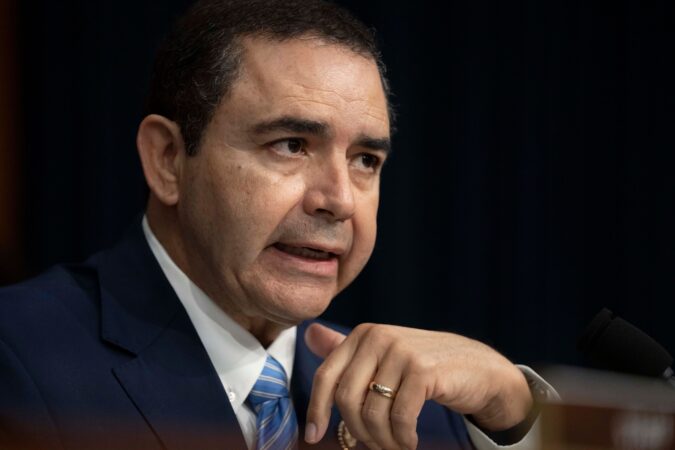
    Donald Trump is angry that Rep. Henry Cuellar is running again as a Democrat rather than switch parties after the president pardoned the Texas congressman and his wife in a federal bribery and conspiracy case.

    Trump blasted Cuellar for “Such a lack of LOYALTY,” suggesting the Republican president might have expected the clemency to bolster the GOP’s narrow House majority heading into the 2026 midterm elections.

    Cuellar, in a television interview Sunday after Trump’s social media post, said he was a conservative Democrat willing to work with the administration “to see where we can find common ground.” The congressman said he had prayed for the president and the presidency at church that morning “because if the president succeeds, the country succeeds.”

    Citing a fellow Texas politician, the late President Lyndon Johnson, Cuellar said he was an American, Texan, and Democrat, in that order. “I think anybody that puts party before their country is doing a disservice to their country,” he told Fox News Channel’s Sunday Morning Futures.

    Trump noted on his Truth Social platform that the Democratic President Joe Biden’s administration had brought the charges against Cuellar and that the congressman, by running once more as a Democrat, was continuing to work with “the same RADICAL LEFT” that wanted him and his wife in prison — “And probably still do!”

    “Such a lack of LOYALTY, something that Texas Voters, and Henry’s daughters, will not like. Oh’ well, next time, no more Mr. Nice guy!” Trump said. Cuellar’s two daughters, Christina and Catherine, had sent Trump a letter in November asking that he pardon their parents.

    Trump explained the pardon he announced Wednesday as a matter of stopping a “weaponized” prosecution. Cuellar was an outspoken critic of Biden’s immigration policy, a position that Trump saw as a key alignment with the lawmaker.

    Cuellar said he has good relationships within his party. “I think the general Democrat Caucus and I, we get along. But they know that I’m an independent voice,” he said.

    A party switch would have been an unexpected bonus for Republicans after the GOP-run Legislature redrew the state’s congressional districts this year at Trump’s behest. The Texas maneuver started a mid-decade gerrymandering scramble playing out across multiple states. Trump is trying to defend Republicans’ House majority and avoid a repeat of his first term, when Democrats dominated the House midterms and used a new majority to stymie the administration, launch investigations, and twice impeach Trump.

    Yet Cuellar’s South Texas district, which includes parts of metro San Antonio, was not one of the Democratic districts that Republicans changed substantially, and Cuellar believes he remains well-positioned to win reelection.

    Federal authorities had charged Cuellar and his wife with accepting thousands of dollars in exchange for the congressman advancing the interests of an Azerbaijan-controlled energy company and a bank in Mexico. Cuellar was accused of agreeing to influence legislation favorable to Azerbaijan and deliver a pro-Azerbaijan speech on the floor of the U.S. House.

    Cuellar has said he and his wife were innocent. The couple’s trial had been set to begin in April.

    In the Fox interview, Cuellar insisted that federal authorities tried to entrap him with “a sting operation to try to bribe me, and that failed.”

    Cuellar still faces a House Ethics Committee investigation.

  • Trump administration plays up pipe bomb suspect’s arrest. Jan. 6 violence goes unmentioned

    Trump administration plays up pipe bomb suspect’s arrest. Jan. 6 violence goes unmentioned

    WASHINGTON — After the arrest of a man charged with placing two pipe bombs outside the headquarters of the Republican and Democratic national parties on Jan. 5, 2021, the warning from the Trump administration was clear: If you come to the nation’s capital to attack citizens and institutions of democracy, you will be held accountable.

    Yet Justice Department leaders who announced the arrest were silent about the violence that had taken place when supporters of President Donald Trump stormed the Capitol and clashed with police one day after those bombs were discovered.

    It was the latest example of the Trump’s administration’s efforts to rewrite the history of the riot, through pardons and the firings of lawyers who prosecuted the participants of the siege, and of the disconnect for a government that prides itself for cracking down on violent crime and supporting law enforcement but has papered over the brutality of the Jan. 6 attacks on police officers.

    “The administration has ignored and attempted to whitewash the violence committed by rioters on Jan. 6 because they were the president’s supporters. They were trying to install him a second time against the will of the voters in 2020,” said Michael Romano, who prosecuted the rioters before leaving the Justice Department this year. “And it feels like the effort to ignore that is purely transactional.”

    The White House referred comment to the Justice Department, which referred comment to the FBI. The bureau did not immediately respond to an email from the Associated Press on Friday.

    Bongino once suggested pipe bomb incident was ‘inside job’

    FBI Director Kash Patel, as a conservative podcast host during the Biden administration, had called the Jan. 6 rioters “political prisoners” and offered to represent them for free. But on Thursday, he said the arrest of the pipe bomb suspect, 30-year-old Brian Cole Jr., was in keeping with Trump’s commitment to “secure our nation’s capital.”

    “When you attack American citizens, when you attack our institutions of legislation, when you attack the nation’s capital, you attack the very being of our way of life,” Patel said. “And this FBI and this Department of Justice stand here to tell you that we will always combat it.”

    Patel’s deputy, Dan Bongino, had suggested before joining the FBI that federal law enforcement had wasted time investigating Jan. 6 rioters and anti-abortion activists.

    “These are threats to the United States?” he said on a podcast last year. “Grandma is in the gulag for a trespassing charge on January 6th.”

    Bongino indicated last year he believed the pipe bomb incident was an “inside job” that involved a “massive cover-up.” After joining the FBI, Bongino repeatedly described the investigation as a top priority that was receiving significant resources and attention.

    “We were going to track this person to the end of the earth. There was no way he was getting away,” he said Thursday.

    No public link has emerged between the pipe bombs and the riot, and Cole’s arrest was a significant development in a long-running investigation that had confounded authorities, who are now are assembling a portrait of Cole. People familiar with the matter told the Associated Press that among the statements Cole made to investigators is that he believed conspiracy theories about the 2020 election, which Trump has insisted was stolen from him in favor of Democrat Joe Biden. The people were not authorized to discuss the ongoing investigation publicly and spoke on condition of anonymity.

    There was no widespread fraud in that election, which a range of election officials across the country, including Trump’s former attorney general, William Barr, have confirmed. Republican governors in key states crucial to Biden’s victory have also vouched for the integrity of the elections in their states. Nearly all the legal challenges from Trump and his allies were dismissed by the courts.

    Administration played down Jan. 6 and aftermath

    The tough-on-crime words heard during Thursday’s announcement about Cole’s arrest were at odds with the Republican administration’s repeated efforts to play down the violence of Jan. 6, absolve those charged in the insurrection, and target those who investigated and prosecuted the rioters.

    Trump’s clemency action on his first day back in the White House in January applied to all 1,500-plus people charged with participating in the attack on the foundations of American democracy. That included defendants seen on camera violently attacking police with makeshift weapons such as flagpoles, a crutch, and a hockey stick. More than 100 police officers were injured, including some who have described being scared for their lives as they were dragged into the crowd and beaten.

    Earlier this year, the Justice Department asked the FBI for the names of agents who participated in Jan. 6 investigations, a demand feared within the bureau as a possible precursor to mass firings. In August, Patel fired Brian Driscoll, who as the FBI’s acting director in the early days of the Trump administration resisted handing over those names.

    Trump’s administration, meanwhile, has fired or demoted numerous prosecutors who worked on Jan. 6 cases, including more than two dozen lawyers who had been hired for temporary assignments to support the investigation but were moved into permanent roles after Trump won the 2024 election.

    In October, two federal prosecutors were locked out of their government devices and told they were being put on leave after filing court papers that described those who attacked the Capitol as a “mob of rioters.” The Justice Department later submitted a new court filing that stripped mentions of the Jan. 6 riot.

    One man whose case was dismissed because of Trump’s pardons was accused of hurling an explosive device and a large piece of wood at a group of officers who trying to defend an entrance to the Capitol. Some officers later said they had “believed they were going to die,” prosecutors wrote in court papers, and several reported suffering temporary hearing loss.