Tag: no-latest

  • Trump’s imperial Venezuela policy based on lies and delusions

    Trump’s imperial Venezuela policy based on lies and delusions

    No one should mourn for Nicolás Maduro, and the U.S. military extraction of the Venezuelan dictator was a military tour de force.

    Those are the only two positive things to be said about President Donald Trump’s latest made-for-TV foreign operation, which has squandered American guns and taxpayer money on a lunatic venture based entirely on lies.

    Contrary to prior White House claims, the removal of Maduro had nothing to do with drug cartels, terrorism, or threats to U.S. security. Nor was it meant to restore democracy to Venezuela (as Trump stiffs exiled opposition leaders and stifles talk of future elections).

    Instead, based on the president’s own words, this monthslong exercise was aimed at taking control of Venezuela’s oil. It was also aimed at reinforcing Trump’s personal role as virtual emperor of the Western Hemisphere (and expediting the collapse of Cuba).

    Trump’s emperor complex has also renewed threats to seize Greenland or bludgeon longtime NATO ally Denmark into selling the autonomous island.

    In truth, the administration’s Venezuelan adventure threatens to drag America into another foreign quagmire and undermine U.S. security around the world.
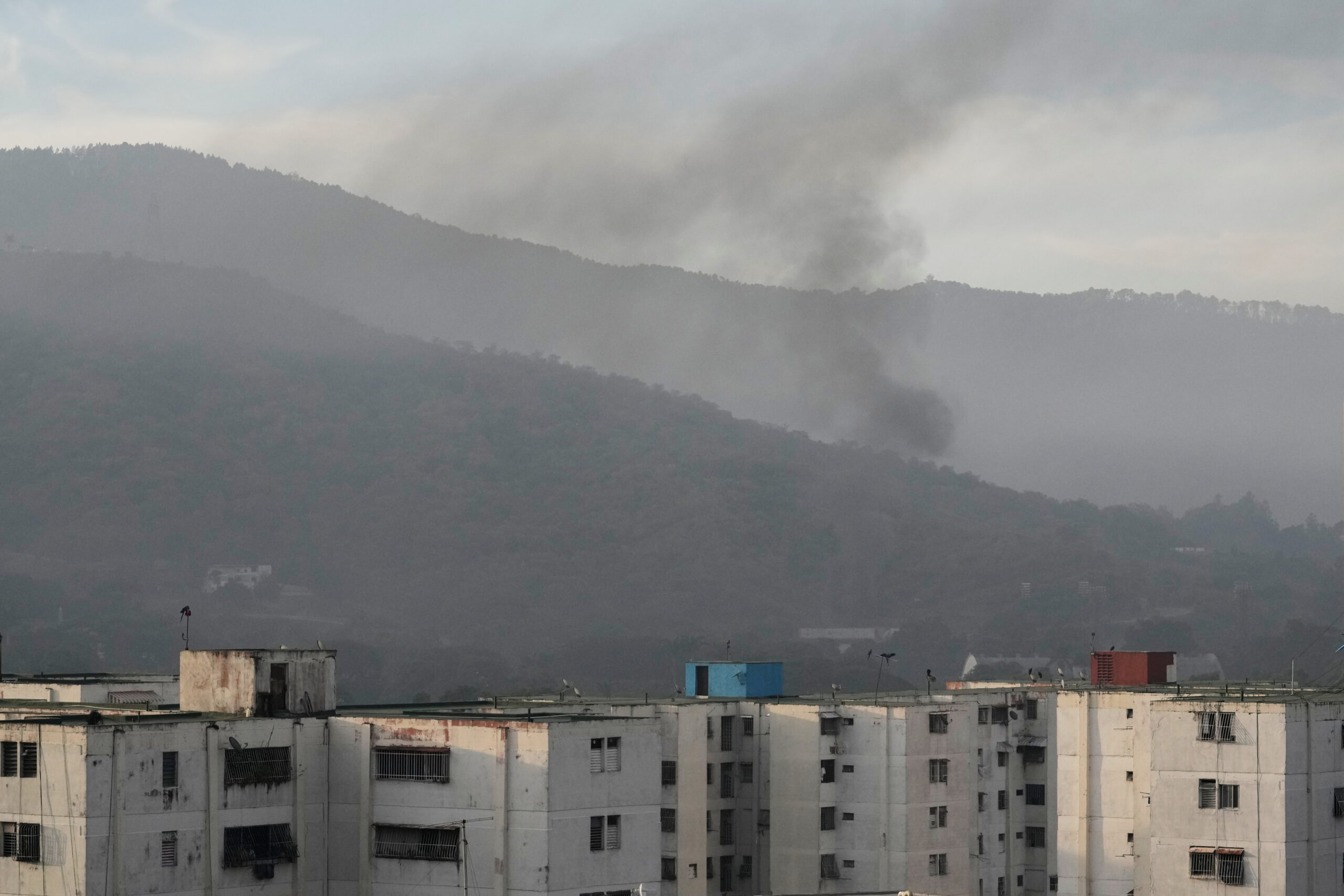
    Smoke rises from Fort Tiuna, the main military garrison in Caracas, Venezuela, after multiple explosions were heard and U.S. aircraft swept through the area Saturday.

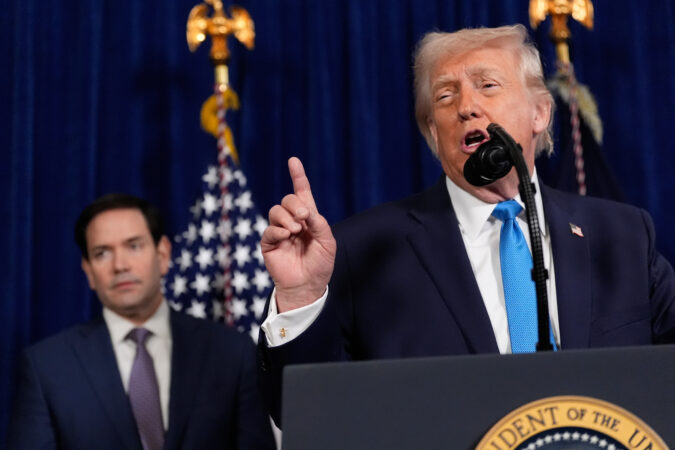
    After years of denouncing GOP hawks and Democrats over regime change gone bad in Baghdad and Kabul, Trump now says he intends to “run” Venezuela and manage its oil — indefinitely. While he fixates on the derring-do of the Maduro extraction, the president’s proposals for follow-up are incoherent and contradictory. His intense focus on our hemisphere distracts U.S. attention from the growing Russian and Chinese threats in Europe and the Indo-Pacific.

    As Anne Patterson, a former U.S. ambassador to Colombia and Ecuador who also served as assistant secretary of state for International Narcotics and Law Enforcement Affairs, asked, in frustration: “What is a carrier strike group doing in the Caribbean?

    “We’ve been fighting this drug war for decades,” she recounted, “but it is a huge public health problem, not a security threat. It is nothing like China circling around Taiwan” with warships and planes.

    Instead of facing reality, the White House is trying to sell Trump’s fantasies to the public with an endless stream of falsehoods and fake facts.

    For starters, the Venezuelan regime change will hardly affect the U.S. drug problem. Fentanyl is the drug that has killed hundreds of thousands of Americans and Venezuela neither makes nor exports fentanyl. That drug is manufactured in Mexico using precursor chemicals from China. (Some cocaine passes through Venezuela, but it goes mainly to Europe.)
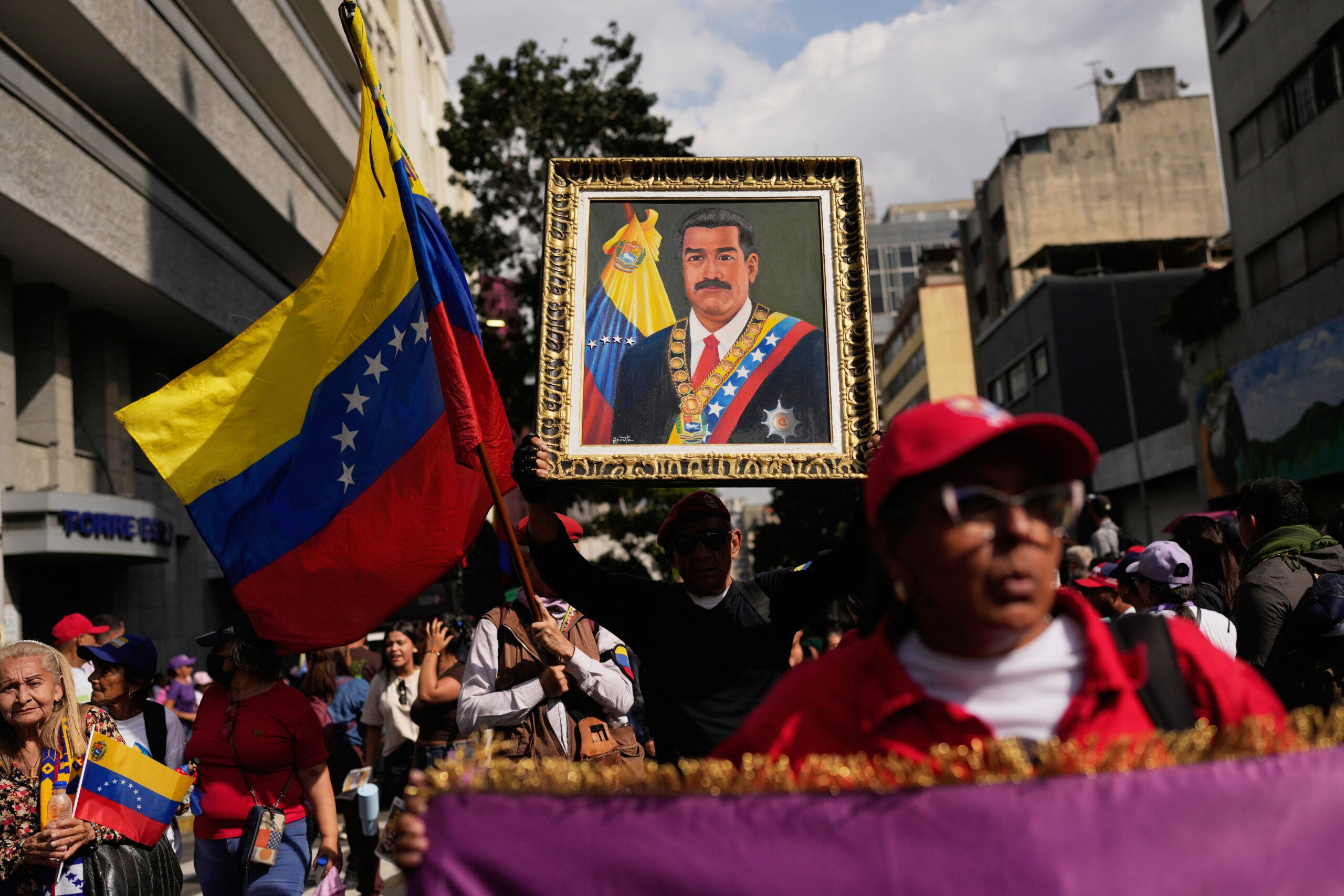
    A government supporter holds an image of President Nicolás Maduro during a women’s march to demand his return in Caracas, Venezuela, on Jan. 6, three days after U.S. forces captured him and his wife.

    In other words, the fentanyl problem Trump claims to be addressing can only be resolved via negotiations with Mexico and China.

    Moreover, the U.S. Department of Justice has just dropped criminal charges that Maduro led a drug cartel. The reason for this shift? As Latin America experts have long contended, the so-called Cartel de los Soles — cited by Trump officials as a terrorist threat — was not a real organization at all. It is a Venezuelan slang term used for officials corrupted by drug money, including the Maduro regime.

    Now that the Justice Department plans to bring Maduro to trial, perhaps Attorney General Pam Bondi realized she could not present fake facts about cartels under oath. Maduro is a corrupt thug who no doubt made money off drug dealers, but he did not lead a terrorist cartel.

    Again, a distinct downgrade from the monster threat the White House has painted as justification for its raid.

    The Trump team has also put forward no plan for a transition from Maduro’s corrupt, repressive government to one that might curb what drug dealing does go on. He has not even spoken to opposition leaders in exile who won the 2024 election before Maduro stole it.
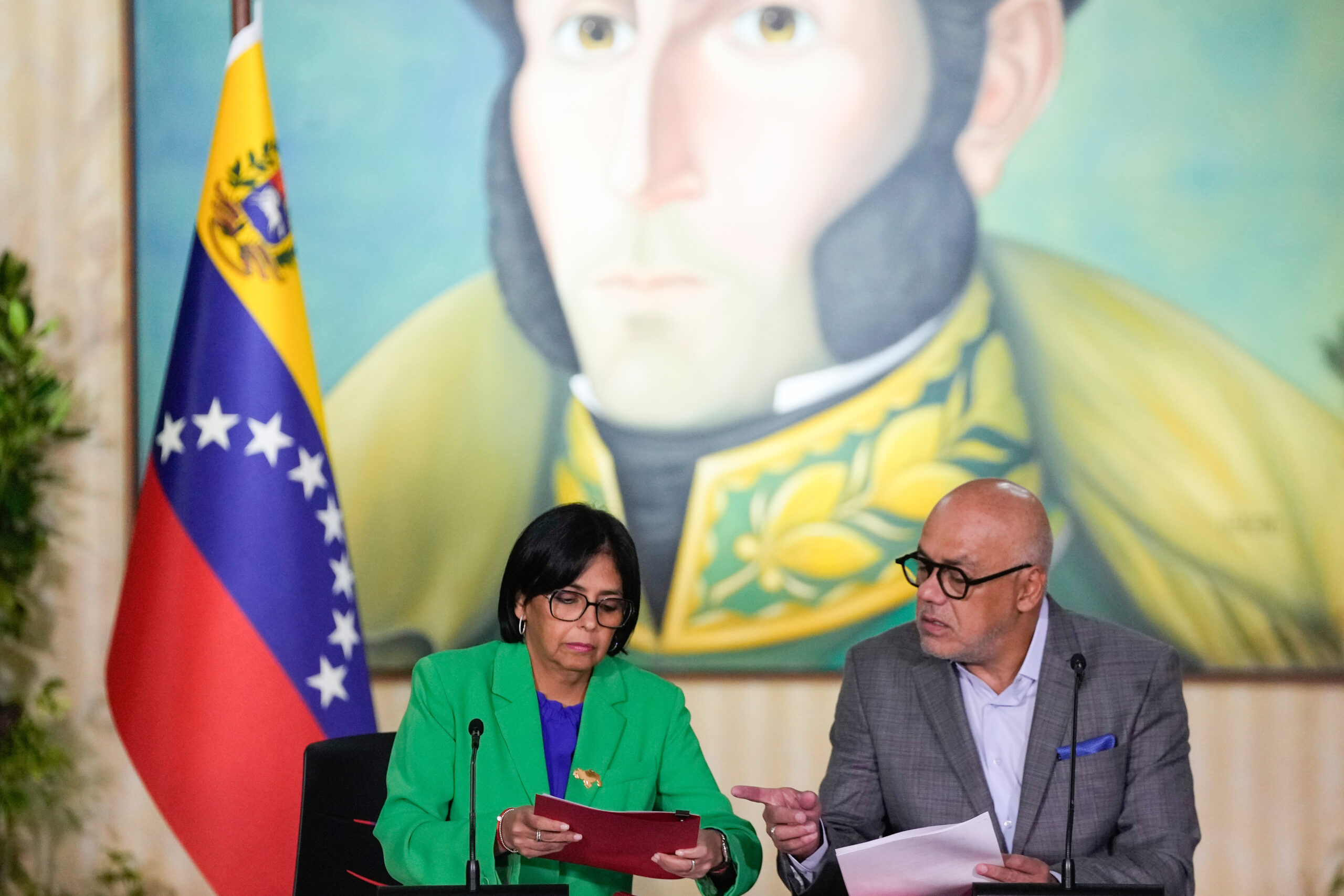
    Delcy Rodríguez meets with her brother, National Assembly President Jorge Rodríguez, at the Foreign Ministry in Caracas, Venezuela, in 2023. Delcy Rodríguez, Maduro’s vice president, has been sworn in as the leader of Venezuela.

    Instead, the president has chosen to recognize Maduro’s vice president, Delcy Rodríguez, and her brutal interior and defense ministers, who have increased repression against political opponents since Maduro was taken.

    “In fact, the government remains the same,” I was told by Venezuelan native Carolina Jiménez Sandoval, the head of the Washington Office on Latin America. “Are we seeing a transition without a transition for another strongman more conducive to American interests? Venezuelans want an answer.”

    In truth, Trump is himself acting like a strongman, insisting he will “run” Venezuela indefinitely. He seems to believe that by enforcing U.S. (and his personal) control of all Venezuelan oil sales and revenues, in a cockamamie scheme that appears both illegal and unmanageable, the repressive regime in Caracas can be forced to do U.S. bidding.

    When asked by the New York Times whether the U.S. would “remain Venezuela’s overlord” for more than a year, the president replied, “I would say much longer.”

    Why? What possible reason is there for Trump to expend U.S. resources on running Venezuela? Even the lure of oil money makes little sense.
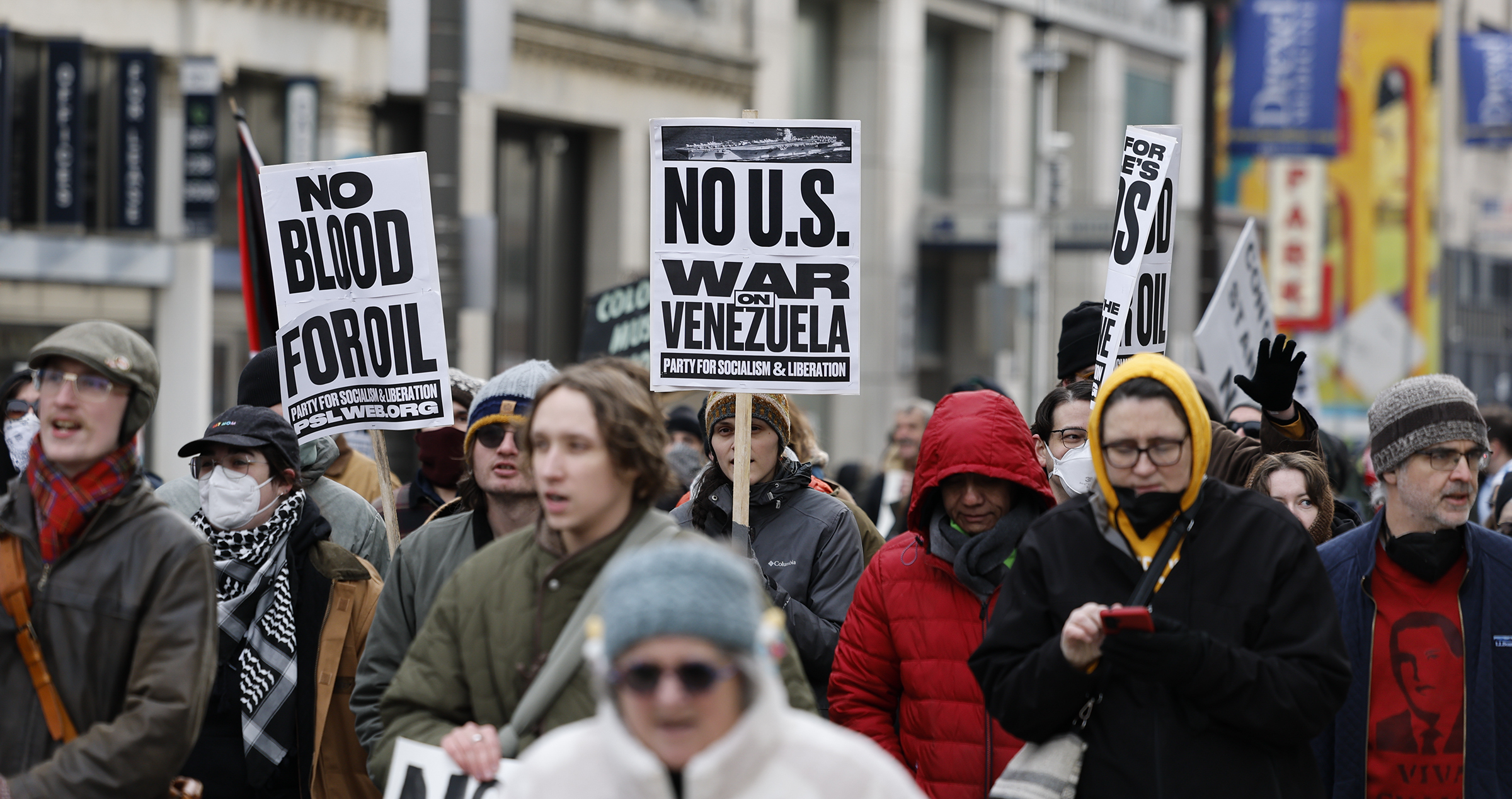
    Demonstrators march along North Broad Street reacting to U.S strikes on Venezuela on Saturday.

    The president insists there are fortunes to be made if U.S. oil firms return to develop its enormous oil reserves. But apart from Chevron, which has remained in the country, large U.S. companies are reluctant. That’s because it will take tens of billions of dollars in investment to make the country’s neglected fields viable, global oil is abundant, prices are low, and Venezuela’s future is uncertain.

    If Venezuela pumps more oil and drives global prices down further — as Trump is demanding — it will negatively affect the interests of oil producers on the U.S. mainland. In fact, large producers’ interest in Venezuela is so tepid that Trump is actually offering to use taxpayer money to subsidize the return of U.S. companies to the country.

    To sum up, neither drugs, nor cartels, nor terrorism, nor oil are valid or legitimate reasons for taking out Maduro, especially as we are leaving his thuggish government in place.

    What’s worse, his Venezuelan venture appears to be inspiring Trump to fantasize about other snatch operations or military takeovers — in tragic imitation of a Vladimir Putin or Xi Jinping.

    Asked in the Times interview if there were any limits on his global powers, Trump said: “Yeah, there is one thing. My own morality. My own mind. It’s the only thing that can stop me.”

    These are the words of a wannabe dictator.

    If they don’t awaken more GOP legislators to vote to curb his future use of military force in Venezuela — via a bipartisan bill now under Senate debate — then they will be complicit in the trashing of U.S. security by an egomaniac who believes his own lies.


  • The Eagles’ toughest playoff opponent won’t be the 49ers or Rams or Seahawks. It’ll be themselves.

    The Eagles’ toughest playoff opponent won’t be the 49ers or Rams or Seahawks. It’ll be themselves.

    Is anyone on or around the Eagles having any fun? It doesn’t seem that way. It hasn’t seemed that way all season. Sure, Jordan Davis has a personality as big and buoyant as he is, and Brandon Graham’s return from retirement has brought some effervescence back to the locker room. But on the whole, things have been pretty dour, or at least kind of grave and serious and humorless, for a team that’s coming off a championship.

    The examples are everywhere. Jalen Hurts has won a Super Bowl, was named the most valuable player in that Super Bowl, plays his best in the Eagles’ most important games, and has a smile that would stop a beauty shop. Yet in public, he often has a demeanor that suggests that, if he so much as grinned, his face would split open down the middle. Before he left the lineup because of his foot injury, Lane Johnson had not spoken after a game since the Eagles’ loss to the New York Giants on Oct. 9, when he called out the team’s offense for being “too predictable.” Not exactly Once more into the breach, dear friends stuff.

    Hurts’ relationship with A.J. Brown has been a source of speculation and tension for months. Brown has made his feelings about getting the ball — or, more accurately, not getting the ball — plain on social media, and his complaints sparked a ridiculous discussion about whether the Eagles might/should trade him in the middle of this season. Adoree’ Jackson and Kelee Ringo have, at various times, been considered the single worst cornerback in team history, as if Izel Jenkins, Nnamdi Asomugha, or Bradley Fletcher had never lined up against a decent receiver and immediately been burnt like toast. And if you want to be the ultimate Debbie Downer at a friendly get-together, just say the words Kevin Patullo, and you’re bound to start one of the partygoers ranting like a wing nut online influencer. Hell, your house might even wind up covered in egg yolk.

    Eagles quarterback Jalen Hurts, the Super Bowl LIX MVP, has come under criticism this season.

    The point here is not to suggest that the Eagles have been beyond criticism. Of course they haven’t. The point is that their entire season has felt like one of their offensive possessions. It has been a generally joyless slog that, even when it leads to a good outcome — a touchdown, a victory, a second straight NFC East title — hasn’t inspired much optimism or hope that the team will repeat or sustain that success.

    You don’t need to be a gridiron genius or a Philly sports sociologist to understand why. There are plenty of cities and markets where, if a team won a Super Bowl in the manner that the Eagles did last season — winning 16 of its final 17 games, dominating the conference championship game and the Super Bowl itself — the celebratory buzz would last for years. Championship? Who needs another championship? We just won one! That backup long-snapper never has to buy a drink in this town again.

    Philadelphia is not one of those cities or markets. Here, winning is the most addictive of drugs, and when it doesn’t happen, or when it doesn’t happen in the most satisfying manner, the entire region goes into a collective withdrawal, and a more powerful hit — a higher high — is required for everyone to level off.

    From Eagles fans to the players themselves, there has seemed to be an ever-present blanket of expectations weighing on them. It’s as if the only thing that would make anyone happy and relieved at any moment this season would be another Super Bowl victory — a benchmark so lofty that it virtually guarantees people will be worried at best and miserable at worst unless the Eagles win every game 49-0.

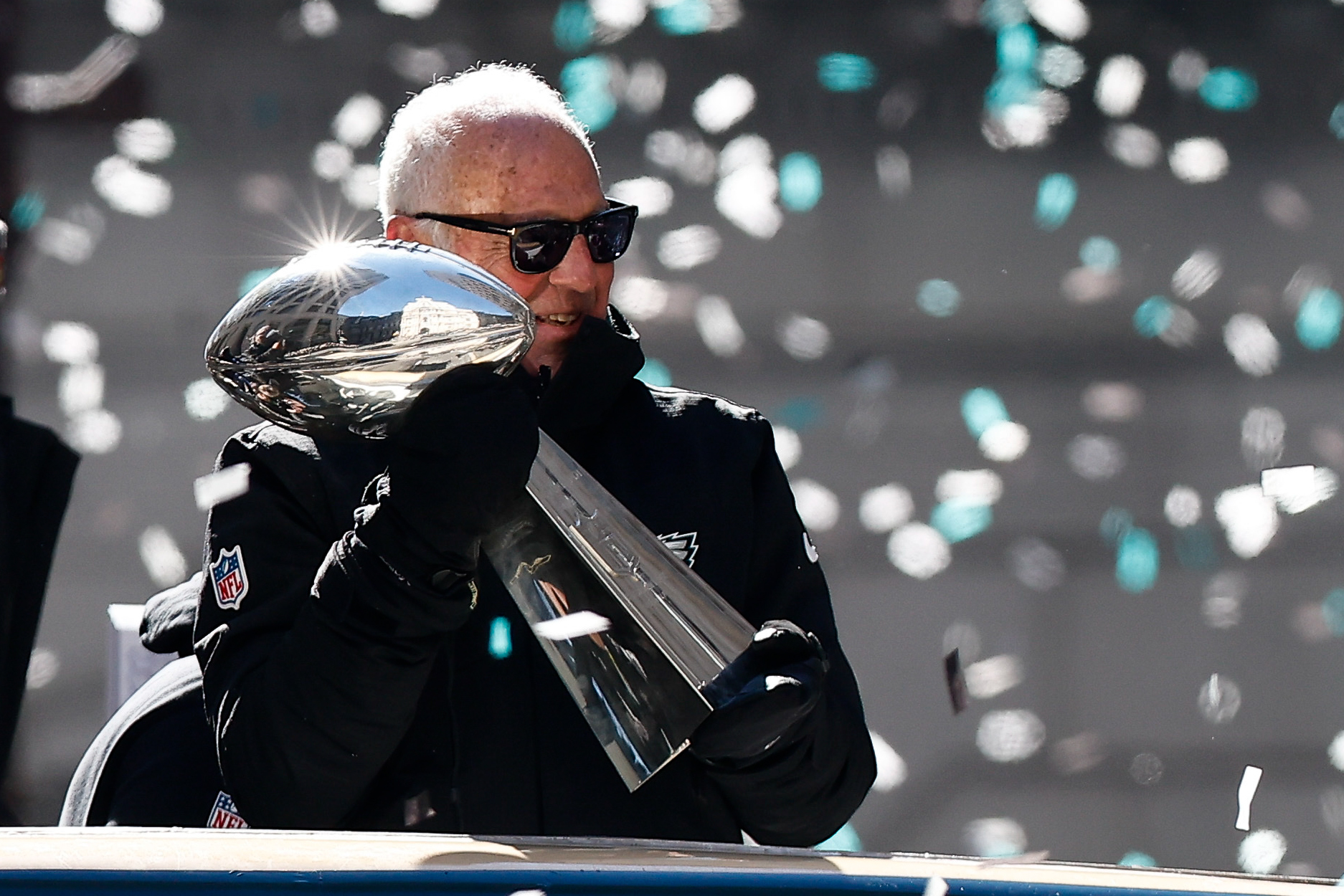
    Jeffrey Lurie and his Eagles are chasing that Super Bowl glow again.

    The one person who appears to acknowledge this dynamic, and appears to be fighting against it, is Nick Sirianni. He has spoken since the middle of last season about his attempts to “bring joy” to every practice, every game, every day of work, as if to lighten the burden that his staff and players were bearing.

    “In professional football,” he said recently, “there are all these pressures, these ups and downs and everything like this, but we got into this game because we loved it. I think that’s a really important thing. In the world, you can let things beat you down a lot and not really give knowledge to all the things you have going on that are really good.”

    Hanging on a wall in Sirianni’s office is a photograph of him and his three children. The photo was taken after the Eagles’ 20-16 victory over the Cleveland Browns last season — the game after which Sirianni brought the kids into his postgame news conference and was criticized bitterly for it. I did some of the criticizing, and I stand by it. The gesture was silly and tone-deaf at the time, mostly because the Eagles were 3-2 and playing terribly and Sirianni’s career-dissipation light was flickering. No one was about to give him or them the benefit of the doubt then.

    But now that they have won a championship, it’s easier to see that moment as part of a continuing effort by a head coach to keep the pressure of meeting that standard from crushing his team. In that way, the Eagles’ toughest opponent in this postseason won’t be the San Francisco 49ers or the Los Angeles Rams or the Seattle Seahawks or whatever team they meet in Super Bowl LX if they happen to make it that far. Their toughest opponent will be, and has been all along, themselves.

  • Letters to the Editor | Jan. 9, 2026

    Letters to the Editor | Jan. 9, 2026

    ICE fatal shooting

    As a former city councilwoman in Easton, Pa., I believe moments of national crisis require serious reflection on how policy choices at every level of government contribute to real-world outcomes.

    The killing of a woman, who was a U.S. citizen, during a U.S. Immigration and Customs Enforcement operation in Minneapolis has prompted renewed scrutiny of the White House’s policies toward migrants nationwide. That scrutiny should extend to state legislatures that expanded ICE’s authority without sufficient accountability.

    In Pennsylvania, this expansion was not limited to one vote or one year. In 2018, lawmakers advanced bills aimed at penalizing municipalities labeled as “sanctuary cities” by withholding state funding unless they cooperated with ICE. Despite warnings from civil rights advocates and law enforcement leaders that such measures would erode public safety, State Sen. Lisa Boscola was among a small number of Democrats who voted with Republicans to support them.

    That pattern persisted. In 2024 and again in 2025, the legislature passed bills expanding cooperation with federal immigration authorities, including a measure requiring district attorneys to notify ICE when they encounter someone without legal status, even in nonviolent cases. Only four Democrats supported the 2025 bill. State Sen. Boscola was one of them.

    These decisions matter. Expanded enforcement fuels detention systems now planning warehouse-style facilities in Pennsylvania, while public investment in wages, housing, and healthcare lags behind.

    Public safety should be rooted in accountability, dignity, and community trust, not unchecked enforcement.

    Taiba Sultana, former city councilwoman, Easton, Pa.

    Share the wealth

    So the Affordable Care Act subsidies have officially expired. Here’s what I don’t understand: Congress gets subsidies from the federal government (in other words, you and me) up to 75% of the cost of their “gold” plan health insurance. Why won’t Republican lawmakers provide the same for their fellow Americans?

    Penny Stanger, Phoenixville

    Join the conversation: Send letters to letters@inquirer.com. Limit length to 150 words and include home address and day and evening phone number. Letters run in The Inquirer six days a week on the editorial pages and online.

  • Dear Abby | Boyfriend is in no hurry to make a commitment

    DEAR ABBY: I have been in a relationship for almost two years with an incredible man who makes my heart sing. We are both in our mid-30s. I have three children. He has one whom, for lack of better words, his own parents co-parent.

    We are at the point in our relationship where I want to marry, move in together and do the whole family thing. He often says he wants to marry me and wants that life, but “not yet.” When I ask him why, he says, “I wish I knew why. I wish I could snap my fingers and make it something I want to do now.”

    His parents are amazing, but they always come before anyone else. If he had to choose right now, it would be his parents over me or any of the kids. I feel like I’m in a never-ending cycle of “Is he going to?” or “When will he get there?” What should I do? We’ve had long and extensive conversations, but I don’t feel he is actually trying to “get there.”

    — WANNABE WIFEY

    DEAR WANNABE WIFEY: Your boyfriend clearly likes the status quo. After two years, it’s time to offer him the option of couples counseling. If he refuses and you still want to take the relationship to a higher level, you will have to recognize that nothing is likely to change and act accordingly.

    ** ** **

    DEAR ABBY: I’ve been with my boyfriend for 12 years. We have two children and a third on the way. Three years ago, we got our family a dog, “Astro,” the love of our lives. She passed away three months ago from heat exhaustion. She was only 2 years old. I was driving while my boyfriend held her as we drove to the vet. She died before we got there.

    I am now in grief therapy. I expressed my grief to my boyfriend, and he has expressed his to me. I’m adamant about not wanting another dog. He told me he wanted another one, but that I had nothing to worry about for a while — more than likely, a year. I was OK with it because I felt it would give me time to grieve.

    Well, this past weekend, my boyfriend came home with a new dog. He didn’t warn me. The new dog looks exactly like Astro, the same breed and color. I am heartbroken. I feel like my trust has been betrayed. I’ve been a wreck ever since, and I don’t think I can compromise.

    This is a no-win situation because one of us will end up unhappy. I’m thinking about ending our relationship over this. Am I being unreasonable or selfish?

    — OVERWHELMED IN KANSAS

    DEAR OVERWHELMED: You are neither unreasonable nor selfish. What your boyfriend did was inconsiderate and underhanded and showed disregard for your feelings. At the very least, you deserve an apology. That dog should be returned to the breeder or rescue from which it came. However, while I don’t blame you for having second thoughts about the relationship after this man’s display of insensitivity, after 12 years (and three kids), ending the relationship may be impractical.

  • Horoscopes: Friday, Jan. 9, 2026

    ARIES (March 21-April 19). Family dynamics are in play. This could feel complicated, political, inconvenient or even dramatic. But it also feels expected. There are no surprises here, so make your move in full awareness of the familiar pattern.

    TAURUS (April 20-May 20). Choose stability. Work with what you know and can control. Unpredictable elements are exciting but could derail you from making real progress. You just can’t risk it today. In predictable conditions, you’ll build brilliant systems and quickly move ahead.

    GEMINI (May 21-June 21). Fences can keep people apart or bring people together. When people feel like their boundaries are being respected and protected, they let down their guard and are more inclined to connect in their preferred ways.

    CANCER (June 22-July 22). Every decision offers a lesson, no matter how it turns out. When things go your way, you learn. When they don’t, you learn something different, and often more valuable. So as long as you stay engaged and aware, you’re winning.

    LEO (July 23-Aug. 22). You may finish a mountain of work only to notice an entire mountain range still ahead. That’s why the cycle can’t be just “work, work, work.” Try: work, pause, celebrate. The pause restores you; the celebration fuels you. All steps are essential.

    VIRGO (Aug. 23-Sept. 22). Each relationship is distinct. Let each connection serve its natural purpose. Some are only built for a shared laugh or a passing hug. Don’t try to get deep with someone who can only meet you on the surface of life.

    LIBRA (Sept. 23-Oct. 23). Your environment seeps into your imagination, your imagination fuels your behavior and your behavior shapes the environment right back. It’s a loop you can use to your advantage now by putting yourself somewhere beautiful, and the rest will follow.

    SCORPIO (Oct. 24-Nov. 21). Real allies help you succeed, whether by boosting you up or giving you honest critique. Today they’ll give you what you need — a confidence boost if you’re wavering, or a clear-eyed critique when something just needs a bit of tightening.

    SAGITTARIUS (Nov. 22-Dec. 21). You have a gift for prioritizing the right things today. You’ll figure out what’s actionable, handle what’s relevant and ask for what’s necessary. You’ll create order, and it will be so attractive to people who need that anchor in their lives and work.

    CAPRICORN (Dec. 22-Jan. 19). You have great timing today, mainly because you’re early. Giving yourself wide margins for not only error but for creativity, peace and preparation simply gets you into the groovy vibe from which the day’s loveliness unfolds.

    AQUARIUS (Jan. 20-Feb. 18). Today the “good guys” have quirks, and the “bad guys” have charm, and the same person can fall into either category as the days and deals progress. Stay tuned to nuance. Most truths will live in a gray area.

    PISCES (Feb. 19-March 20). Don’t demand brilliance from yourself on command. Lower the bar to “something, anything.” A scribble becomes a sketch becomes a draft… you just have to start and trust that the work will develop from there.

    TODAY’S BIRTHDAY (Jan. 9). Welcome to your Year of Bright Opportunities. Invitations find you — to travel, to collaborate and to be a part of something epic and possibly romantic. You’ll get access to places or people you once thought out of reach. Your optimism returns in full color. More highlights: A family milestone brings joy, wins in games, and you’ll balance ambition and affection like a pro. Aquarius and Cancer adore you. Your lucky numbers are: 8, 1, 3, 22 and 37.

  • ICE shooting reinforces Minnesota’s grim role as Trump’s target

    ICE shooting reinforces Minnesota’s grim role as Trump’s target

    MINNEAPOLIS — Federal officers have encountered opposition in nearly all of the cities targeted by President Donald Trump’s immigration enforcement campaign. But it was in Minnesota — a state in daily conflict with the Trump administration this year — that a 37-year-old woman was shot and killed by an immigration officer.

    Trump has focused on several blue states in the divide-and-conquer campaign that has characterized his second term, and now he has turned to Minnesota, where the killing of George Floyd and the protests it sparked stained his first presidency.

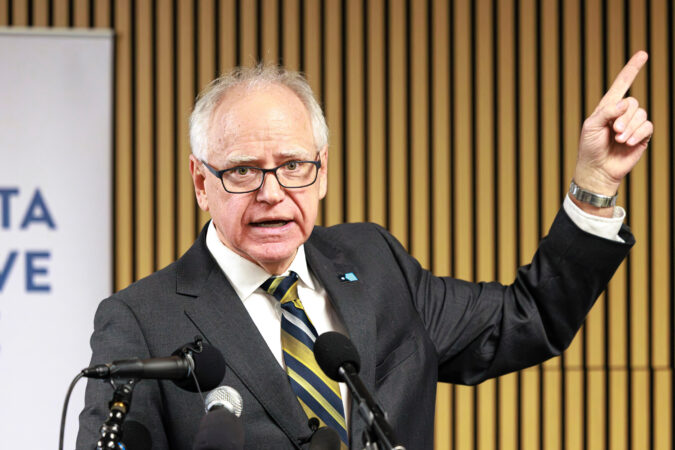
    Trump last month called the state’s Somali population “garbage” in the wake of a massive federal investigation into COVID-19 and medical aid fraud tied to organizations serving Somali immigrants, among others. The fraud cases led Minnesota’s Democratic governor, Tim Walz — former Vice President Kamala Harris’ 2024 running mate — to announce this week he will not run for reelection.

    In June, a Democratic state lawmaker and her husband were assassinated by a Trump supporter, although conservatives insist the gunman was actually a leftist working at Walz’s behest. On Sunday, the victims’ family begged Trump to take down a social media post echoing those conspiracy theories.

    Memories of the chaos that followed the killing of George Floyd

    Amid that mounting tension, the Trump administration announced Tuesday that it was sending more than 2,000 federal officers to the Twin Cities of Minneapolis and St. Paul in what it claimed would be the biggest immigration enforcement operation in history.

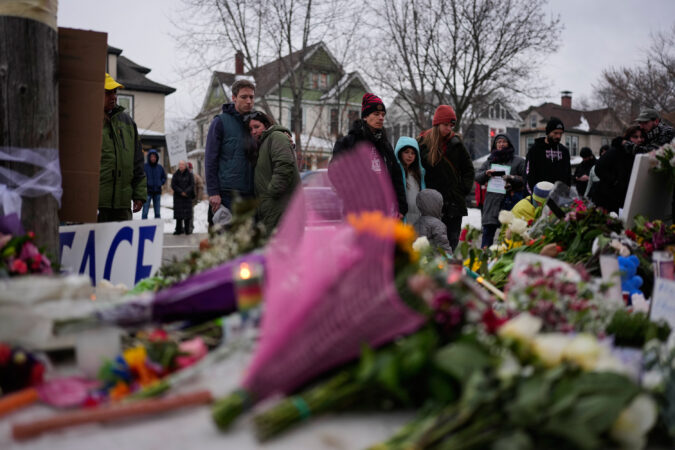
    The Immigration and Customs Enforcement officer who killed Renee Good during a protest Wednesday against the immigration raids opened fire just blocks from where, in 2020, a Minneapolis police officer killed George Floyd. The parallels were painful and frightening for many in the area, including Stephanie Abel, a 56-year-old Minneapolis nurse, who is keeping her gas tank full and cash handy in memory of the chaos that followed that slaying.

    “I thought the federal government would realize that now is not the time to be toying with people,” Abel said. “What are they going to try to do to get Minneapolis to ignite?”

    Floyd’s death sparked the biggest protests of Trump’s first term. The president, who is still publicly bitter about the unrest, contends it should have been met with a stronger show of force.

    That’s the approach Trump has adopted in his second term, trying to cow blue states by surging military and immigration agents into their cities and insisting that anyone who doesn’t comply with federal demands will face severe consequences.

    Immigration operations that started last summer in liberal strongholds such as Chicago,Los Angeles and Portland also generated large protests. Good is at least the fifth person killed during ICE enforcement efforts.

    On Thursday, Vice President JD Vance said Good’s death was “a tragedy of her own making,” blamed “leftist ideology” and said the media had encouraged protests against Trump’s immigration crackdown. Vance spoke at the White House to announce a new assistant attorney general position to prosecute the abuse of government assistance programs that will focus on Minnesota.

    Federal investigators have Somalis in their sights

    The Twin Cities operation is intertwined with a conservative effort to make Minnesota the poster child for government fraud. Though prosecutions for the fraudulent use of hundreds of millions of dollars of federal COVID-19 and health aid by social service groups began in the Biden administration, Trump and conservatives have seized on the scandal in recent weeks.

    In November, Trump called Minnesota “a hub of fraudulent money laundering activity” after a report by a conservative news site, City Journal, claimed federal money was fraudulently flowing to the militant group al-Shabab. There has been little, if any, evidence, proving such a link. Nevertheless, the president said he would end Temporary Protected Status for Somalis in Minnesota.

    The allegations got a new charge late last month when conservative influencer Nick Shirley posted an unconfirmed video claiming that day care centers in Minneapolis run by Somalis had fraudulently collected over $100 million in government aid.

    Jamal Osman, a Somali immigrant and Minneapolis city councilman who lives just a few blocks from the location of the ICE shooting, said he and other prominent Somalis in the area have been swamped with angry calls and messages since Trump made his statements. The vitriol, he said, mainly comes from out of state.

    “We have whole groups of people who’ve never been to Minnesota,” Osman said in an interview. “Minnesota is probably one of the nicest places to live. It’s a beautiful area with very nice people and we blended in, it’s all very nice. We don’t really see bad things happening here normally.”

    The Trump administration on Tuesday said is withholding funding for programs that support needy families with children, including day care funding, in five Democratic-led states over concerns about fraud. Joining Minnesota on the list were California, Colorado, Illinois and New York.

    ‘Leave our state alone’

    Minnesota’s place on a list of targeted blue states is not unexpected.

    Under Walz, Minnesota has become something of a beacon for liberals as an example of a state that expanded the public safety net even as the nation swung to the right. Since Trump’s first election, the state has seen large increases in education spending, free school breakfasts and lunches, and improved protection of abortion rights.

    Trump lost Minnesota by only 4 percentage points in 2024, making it significantly less liberal than California and New York. Still, it has been reliably Democratic throughout the Trump years, a rarity in the swingy upper Midwest.

    The state’s political tilt reflects the size of the Twin Cities metro area and its robust population of college-educated liberals, which overwhelm the state’s more conservative rural reaches.

    It’s the sort of cleavage that has defined national politics during Trump’s years in office.

    “Minnesota is a microcosm of a lot of the tensions we have in our society,” said David Schultz, a political scientist at Hamline University in St. Paul. “We’re a country that’s hugely polarized, Democrats-Republicans, urban-rural.”

    On Thursday, Minnesota was an ominous indicator of the damage those divisions can inflict. Minneapolis schools remained closed after immigration agents clashed with high school students at one campus on Wednesday. The state’s National Guard remained on standby at Walz’s directive.

    Walz begged Trump to ease up, saying Minnesota’s residents are “exhausted” by the president’s “relentless assault on Minnesota.”

    “So please, just give us a break,” Walz said during a news conference Thursday. “And if it’s me, you’re already getting what you want, but leave my people alone. Leave our state alone.”

  • Somalia denies U.S. allegation that it destroyed food aid warehouse

    Somalia denies U.S. allegation that it destroyed food aid warehouse

    MOGADISHU, Somalia — Somalia’s government on Thursday denied an allegation by the U.S. government that authorities in Mogadishu destroyed an American-funded warehouse belonging to the World Food Program and seized food aid earmarked for impoverished civilians.

    The U.S. State Department said Wednesday that it has suspended all assistance from Washington to Somalia’s federal government over the allegations, saying the Trump administration has “a zero-tolerance policy for waste, theft and diversion of life-saving assistance.”

    A senior U.S. State Department official said authorities at the Mogadishu port demolished the warehouse of the World Food Program, a Rome-based U.N. agency, at the direction of President Hassan Sheikh Mohamud “with no prior notification or coordination with international donor countries, including the United States.” The official spoke on condition of anonymity to discuss private reporting from American diplomats in the region.

    Somalia’s foreign ministry said that the food in question wasn’t destroyed and that “the commodities referenced in recent reports remain under the custody and control of the World Food Program, including assistance provided by the United States.”

    The foreign ministry said expansion and repurposing works at the Mogadishu port are underway as part of broader developments, but ongoing activities there have not affected the custody and distribution of humanitarian assistance.

    Somalia “remains fully committed to humanitarian principles, transparency, and accountability, and values its partnership with the United States and all international donors,” it said. It gave no other details.

    The WFP told The Associated Press in a statement that its warehouse in Mogadishu port had been demolished by port authorities. The organization said the warehouse contained 75 metric tones of specialized foods intended for the treatment of malnourished pregnant and breastfeeding women and girls and young children.

    In a later update, the WFP said it had “retrieved 75 metric tons of nutritional commodities” without explaining further details on how the material was retried.

    The U.S. State Department said: “We’re glad to hear reports that certain commodities have been recovered and continue our investigation into diversion and misuse of assistance in Somalia. We’ve urged the Federal Government of Somalia to promptly follow through on their commitment to provide an account of the incident.”

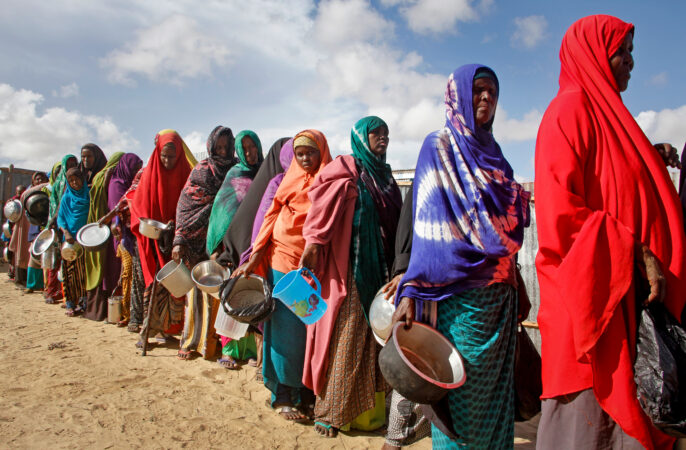
    Located in the Horn of Africa, Somalia is one of the world’s poorest nations and has been beset by chronic strife and insecurity exacerbated by multiple natural disasters, including severe droughts, for decades.

    The U.S. provided $770 million in assistance for projects in Somalia during the last year of Democratic President Joe Biden’s administration, but only a fraction of that went directly to the government.

    The U.S. suspension comes as the Trump administration has ratcheted up criticism of Somali refugees and migrants in the United States, including over fraud allegations involving child care centers in Minnesota. It has slapped significant restrictions on Somalis wanting to come to the U.S. and made it difficult for those already in the United States to stay.

    It wasn’t immediately clear how much assistance would be affected by the suspension because the Trump administration has slashed foreign aid expenditures, dismantled the U.S. Agency for International Development and not released new country-by-country data.

    South Sudan, another African country facing conflict and food shortage, is also heavily affected by U.S. aid restrictions. On Thursday, the U.S. suspended foreign assistance to a county in South Sudan’s Jonglei state, and similar assistance to Western Bahr el-Ghazal state was under review, the U.S. Embassy in South Sudan said in a statement.

    That statement charged that South Sudanese officials “take advantage of the United States instead of working in partnership with us to help the South Sudanese people.”

    The U.S. measures “follow continued abuse, exploitation, and theft directed against U.S. foreign assistance by South Sudanese officials at national, state, and county levels,” it said.

    There was no immediate comment from South Sudan’s government.

  • Senate pushes back on Trump’s military threats against Venezuela with war powers vote

    Senate pushes back on Trump’s military threats against Venezuela with war powers vote

    WASHINGTON — The Senate advanced a resolution Thursday that would limit President Donald Trump’s ability to conduct further attacks against Venezuela, sounding a note of disapproval for his expanding ambitions in the Western Hemisphere.

    Democrats and five Republicans voted to advance the war powers resolution on a 52-47 vote and ensure a vote next week on final passage. It has virtually no chance of becoming law because Trump would have to sign it if it were to pass the Republican-controlled House. Still, it was a significant gesture that showed unease among some Republicans after the U.S. military seized Venezuelan leader Nicolás Maduro in a surprise nighttime raid over the weekend.

    Trump’s administration is now seeking to control Venezuela’s oil resources and its government, but the war powers resolution would require congressional approval for any further attacks on the South American country.

    “To me, this is all about going forward,” said Missouri Sen. Josh Hawley, one of the five Republican votes. “If the president should determine, ‘You know what? I need to put troops on the ground of Venezuela,’ I think that would require Congress to weigh in.”

    The other Republicans who backed the resolution were Sens. Rand Paul of Kentucky, Lisa Murkowski of Alaska, Susan Collins of Maine and Todd Young of Indiana.

    Trump reacted to their votes by saying on social media that they “should never be elected to office again” and that the vote “greatly hampers American Self Defense and National Security.”

    Democrats had failed to pass several such resolutions in the months that Trump escalated his campaign against Venezuela. But lawmakers argued now that Trump has captured Maduro and set his sights to other conquests such as Greenland, the vote presents Congress with an opportunity.

    “This wasn’t just a procedural vote. It’s a clear rejection of the idea that one person can unilaterally send American sons and daughters into harm’s way without Congress, without debate,” said Senate Democratic leader Chuck Schumer of New York.

    Lawmakers’ response to the Venezuela operation

    Republican leaders have said they had no advance notification of the raid early morning Saturday to seize Maduro and his wife, Cilia Flores, but mostly expressed satisfaction this week as top administration officials provided classified briefings on the operation.

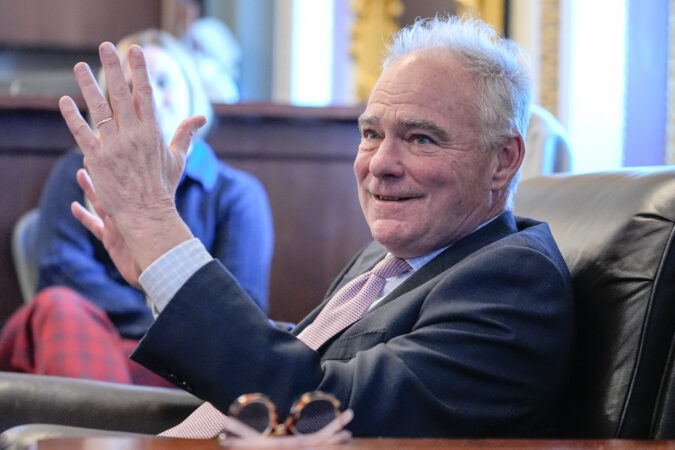
    Sen. Tim Kaine, D-Va., who forced the vote on the resolution, said he believes many Republicans were caught off guard by the outcome. He said that Trump’s recent comments to The New York Times suggesting U.S. oversight in Venezuela could last for years — combined with details revealed in the classified briefings — prompted some lawmakers to conclude that “this is too big to let a president do it without Congress.”

    The administration has used an evolving set of legal justifications for the monthslong campaign in Central and South America, from destroying alleged drug boats under authorizations for the global fight against terrorism to seizing Maduro in what was ostensibly a law enforcement operation to put him on trial in the United States.

    Republican leaders have backed Trump.

    “I think the president has demonstrated at least already a very strong commitment to peace through strength, especially in this hemisphere,” said Senate Majority Leader John Thune, R-S.D. “I think Venezuela got that message loudly and clearly.”

    A vote on a similar resolution in November narrowly failed to gain the majority needed. Paul and Murkowski were the only Republicans voting in favor then.

    Young in a statement said he supported the operation to capture Maduro, but was concerned by Trump’s statements that his administration now “runs” Venezuela.

    “It is unclear if that means that an American military presence will be required to stabilize the country,” Young said, adding that he believed most of his constituents were not prepared to send U.S. troops to that mission.

    House Democrats were introducing a similar resolution Thursday.

    The rarely enforced War Powers Act

    Trump criticized the Senate vote as “impeding the President’s Authority as Commander in Chief” under the Constitution.

    Presidents of both parties have long argued the War Powers Act infringes on their authority. Passed in 1973 in the aftermath of the Vietnam War — and over the veto of Republican President Richard Nixon — it has never succeeded in directly forcing a president to halt military action.

    Congress declares war while the president serves as commander in chief, according to the Constitution. But lawmakers have not formally declared war since World War II, granting presidents broad latitude to act unilaterally. The law requires presidents to notify Congress within 48 hours of deploying forces and to end military action within 60 to 90 days absent authorization — limits that presidents of both parties have routinely stretched.

    Democrats argue those limits are being pushed further than ever. Some Republicans have gone further still, contending congressional approval is unnecessary altogether.

    Republican Sen. Lindsey Graham of South Carolina, a close Trump ally who traveled with the president aboard Air Force One on Sunday, said he would be comfortable with Trump taking over other countries without congressional approval, including Greenland.

    “The commander in chief is the commander in chief. They can use military force,” Graham said.

    Greenland may further test the limits

    Graham’s comments come as the administration weighs not only its next steps in Venezuela, but also Greenland. The White House has said the “military is always an option” when it comes to a potential American takeover of the world’s largest island.

    Republicans have cited Greenland’s strategic value, but most have balked at the idea of using the military to take the country. Some favor a potential deal to purchase the country, while others have acknowledged that is an unlikely option when Denmark and Greenland have rejected Trump’s overtures.

    Democrats want to get out in front of any military action and are already preparing to respond. Arizona Sen. Ruben Gallego said he expected soon to introduce a resolution “to block Trump from invading Greenland.”

    Greenland belongs to a NATO ally, Denmark, which has prompted a much different response from Republican senators than the situation in Venezuela.

    On Thursday, Sen. Roger Wicker, chairman of the Senate Armed Services Committee, met with the Danish ambassador to the United States, Jesper Møller Sørensen. Also in the meeting were the top Democrat on the Senate Foreign Relations Committee, New Hampshire Sen. Jeanne Shaheen, and the head of Greenland’s representation to the U.S. and Canada, Jacob Isbosethsen.

    “There’s no willingness on their part to negotiate for the purchase or the change in title to their land which they’ve had for so long,” Wicker, R-Miss., said afterward. “That’s their prerogative and their right.”

    Wicker added that he hoped an agreement could be reached that would strengthen the U.S. relationship with Denmark.

    “Greenland is not for sale,” Isbosethsen told reporters.

  • Internet and phones cut in Iran as protesters heed exiled prince’s call for mass demonstration

    Internet and phones cut in Iran as protesters heed exiled prince’s call for mass demonstration

    DUBAI, United Arab Emirates — People in Iran’s capital shouted from their homes and raIran’s government cut off the country from the internet and international telephone calls Thursday night as a nighttime demonstration called by the country’s exiled crown prince drew a mass of protesters to shout from their windows and storm the streets.

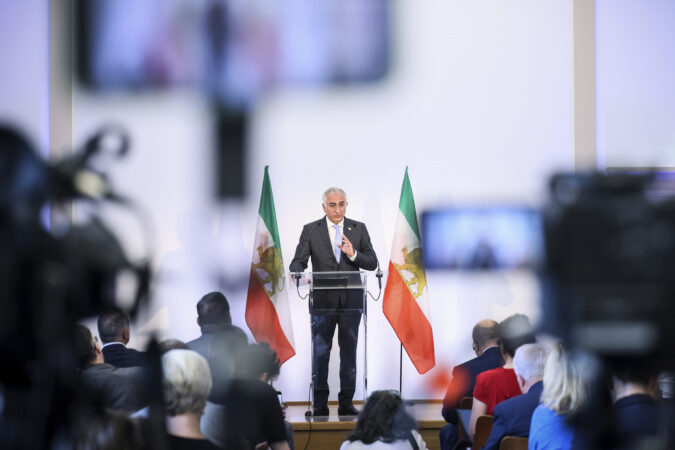
    The protest represented the first test of whether the Iranian public could be swayed by Crown Prince Reza Pahlavi, whose fatally ill father fled Iran just before the country’s 1979 Islamic Revolution. Demonstrations have included cries in support of the shah, something that could bring a death sentence in the past but now underlines the anger fueling the protests that began over Iran’s ailing economy.

    The demonstrations that have popped up in cities and rural towns across Iran continued Thursday. More markets and bazaars shut down in support of the protesters. So far, violence around the demonstrations has killed at least 42 people while more than 2,270 others have been detained, said the U.S.-based Human Rights Activists News Agency.

    The growth of the protests increases the pressure on Iran’s civilian government and its Supreme Leader Ayatollah Ali Khamenei. CloudFlare, an internet firm, and the advocacy group NetBlocks reported the internet outage, both attributing it to Iranian government interference. Attempts to dial landlines and mobile phones from Dubai to Iran could not be connected. Such outages have in the past been followed by intense government crackdowns.

    Meanwhile, the protests themselves have remained broadly leaderless. It remains unclear how Pahlavi’s call will affect the demonstrations moving forward.

    “The lack of a viable alternative has undermined past protests in Iran,” wrote Nate Swanson of the Washington-based Atlantic Council, who studies Iran.

    “There may be a thousand Iranian dissident activists who, given a chance, could emerge as respected statesmen, as labor leader Lech Wałęsa did in Poland at the end of the Cold War. But so far, the Iranian security apparatus has arrested, persecuted and exiled all of the country’s potential transformational leaders.”

    Thursday’s demonstration rallies at home and in street

    Pahlavi had called for demonstrations at 8 p.m. local (1630 GMT) on Thursday and Friday. When the clock struck, neighborhoods across Tehran erupted in chanting, witnesses said. The chants included “Death to the dictator!” and “Death to the Islamic Republic!” Others praised the shah, shouting: “This is the last battle! Pahlavi will return!” Thousands could be seen on the streets before all communication to Iran cut out.

    “Iranians demanded their freedom tonight. In response, the regime in Iran has cut all lines of communication,” Pahlavi said. “It has shut down the Internet. It has cut landlines. It may even attempt to jam satellite signals.”

    He went on to call for European leaders to join U.S. President Donald Trump in promising to “hold the regime to account.”

    “I call on them to use all technical, financial, and diplomatic resources available to restore communication to the Iranian people so that their voice and their will can be heard and seen,” he added. ”Do not let the voices of my courageous compatriots be silenced.”

    Pahlavi had said he would offer further plans depending on the response to his call. His support of and from Israel has drawn criticism in the past — particularly after the 12-day war Israel waged on Iran in June. Demonstrators have shouted in support of the shah in some demonstrations, but it isn’t clear whether that’s support for Pahlavi himself or a desire to return to a time before the 1979 Islamic Revolution.

    Iranian officials appeared to be taking the planned protests seriously. The hard-line Kayhan newspaper published a video online claiming security forces would use drones to identify those taking part.

    Iranian officials have not acknowledged the scale of the overall protests, which raged across many locations Thursday even before the 8 p.m. demonstration. However, there has been reporting regarding security officials being hurt or killed.

    The judiciary’s Mizan news agency report a police colonel suffered fatal stab wounds in a town outside of Tehran, while the semiofficial Fars news agency said gunmen killed two security force members and wounded 30 others in a shooting in the city of Lordegan in Chaharmahal and Bakhtiari province.

    A deputy governor in Iran’s Khorasan Razavi province told Iranian state television that an attack at a police station killed five people Wednesday night in Chenaran, some 700 kilometers (430 miles) northeast of Tehran. Late Thursday, the Revolutionary Guard said two members of its forces were killed in Kermanshah.

    Iran weighs Trump threat

    Iran has faced rounds of nationwide protests in recent years. As sanctions tightened and Iran struggled after the 12-day war, its rial currency collapsed in December, reaching 1.4 million to $1. Protests began soon after, with demonstrators chanting against Iran’s theocracy.

    It remains unclear why Iranian officials have yet to crack down harder on the demonstrators. Trump warned last week that if Tehran “violently kills peaceful protesters,” America “will come to their rescue.”

    Speaking to talk show host Hugh Hewitt, Trump reiterated his pledge.

    Iran has “been told very strongly, even more strongly than I’m speaking to you right now, that if they do that, they’re going to have to pay hell,” Trump said.

    Trump demurred when asked if he’d meet with Pahlavi.

    “I’m not sure that it would be appropriate at this point to do that as president,” Trump said. “I think that we should let everybody go out there, and we see who emerges.”

    Meanwhile, Nobel Peace Prize laureate Narges Mohammadi remains imprisoned by authorities after her arrest in December.

    “Since Dec. 28, 2025, the people of Iran have taken to the streets, just as they did in 2009, 2019,” her son Ali Rahmani said. “Each time, the same demands came up: an end to the Islamic Republic, an end to this patriarchal, dictatorial and religious regime, the end of the clerics, the end of the mullahs’ regime.”

  • Anger and outrage spills onto Minneapolis streets after ICE officer’s fatal shooting of Renee Good

    Anger and outrage spills onto Minneapolis streets after ICE officer’s fatal shooting of Renee Good

    MINNEAPOLIS — As anger and outrage spilled out onto Minneapolis’ streets Thursday over the fatal shooting of a woman the day before by an Immigration and Customs Enforcement officer, a new shooting by federal officers in Oregon left two people wounded and elicited more scrutiny of enforcement operations across the country.

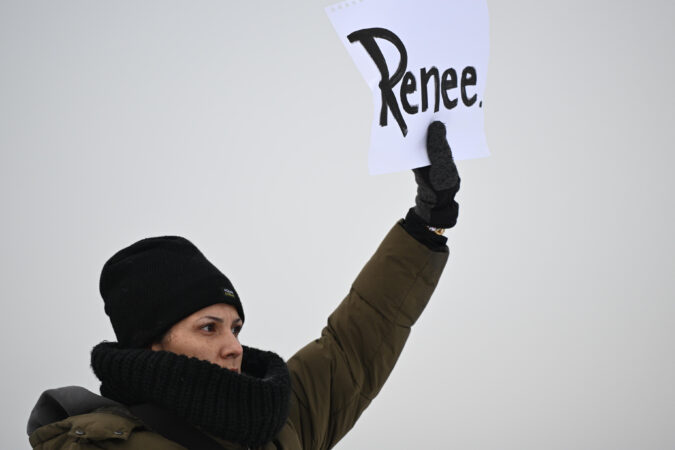
    Hundreds of people protesting the shooting of Renee Good as she tried to drive away marched in freezing rain Thursday night down one of Minneapolis’ major thoroughfares chanting “ICE out now” and holding signs saying, “killer ice off our streets.” Protesters earlier vented their outrage outside of a federal facility that’s serving as a hub for the administration’s latest immigration crackdown on a major city.

    The shooting in Portland, Oregon, took place outside a hospital Thursday afternoon and the conditions of the two people wounded were not immediately known. The FBI’s Portland office said it is investigating.

    Just as it did following the Minneapolis shooting, the Department of Homeland Security defended the actions of the officers in Portland, saying the shooting occurred after a Venezuelan man with alleged gang ties and who was involved in a recent shooting tried to “weaponize” his vehicle to hit the officers. It wasn’t clear yet if witness video corroborates that account.

    Homeland Security Secretary Kristi Noem, President Donald Trump and others in his administration have repeatedly characterized the Minneapolis shooting as an act of self-defense and cast Good as a villain, suggesting she used her vehicle as a weapon to attack the officer who shot her.

    Vice President JD Vance said the shooting was justified and that Good, a 37-year-old mother of three, was a “victim of left-wing ideology.”

    “I can believe that her death is a tragedy while also recognizing that it is a tragedy of her own making,” Vance said, noting that the officer who killed her was injured while making an arrest last June.

    But state and local officials and protesters rejected that characterization, with Minneapolis Mayor Jacob Frey saying video of the shooting shows the self-defense argument was “garbage.”

    An immigration crackdown quickly turns deadly

    The shooting happened on the second day of the Trump administration’s immigration crackdown on the Twin Cities of Minneapolis and St. Paul, which Homeland Security said is the biggest immigration enforcement operation ever. More than 2,000 officers are taking part, and Noem said they have already made more than 1,500 arrests.

    It provoked an immediate response in the city where police killed George Floyd in 2020, with hundreds of people turning up to the scene to vent their outrage at the ICE officers and the school district canceling classes for the rest of the week as a precaution.

    Good’s death — at least the fifth tied to immigration sweeps since Trump took office — has resonated far beyond Minneapolis, as protests took place or were expected this week in many large U.S. cities.

    “We should be horrified,” protester Shanta Hejmadi said. “We should be saddened that our government is waging war on our citizens.”

    Who will investigate?

    On Thursday, the Minnesota agency that investigates officer-involved shootings said it was informed that the FBI and U.S. Justice Department would not work with the department, effectively ending any role for the state to determine if crimes were committed. Noem said the state has no jurisdiction.

    “Without complete access to the evidence, witnesses and information collected, we cannot meet the investigative standards that Minnesota law and the public demands,” Drew Evans, the bureau’s superintendent, said.

    Gov. Tim Walz publicly demanded that the state be allowed to take part, repeatedly emphasizing that it would be “very difficult for Minnesotans” to accept that an investigation that excludes the state could be fair.

    Noem, he said, was “judge, jury and basically executioner” during her public comments about the confrontation.

    “People in positions of power have already passed judgment, from the president to the vice president to Kristi Noem — have stood and told you things that are verifiably false, verifiably inaccurate,” the governor said.

    Frey, the mayor, told The Associated Press: “We want to make sure that there is a check on this administration to ensure that this investigation is done for justice, not for the sake of a cover-up.”

    Deadly encounter seen from multiple angles

    Several bystanders captured footage of Good’s killing, which happened in a neighborhood south of downtown.

    The videos show an officer approaching an SUV stopped across the middle of the road, demanding the driver open the door and grabbing the handle. The Honda Pilot begins to pull forward, and a different ICE officer standing in front of it pulls his weapon and immediately fires at least two shots at close range, jumping back as the vehicle moves toward him.

    It isn’t clear from the videos if the vehicle makes contact with the officer, and there is no indication of whether the woman had interactions with ICE agents earlier. After the shooting the SUV speeds into two cars parked on a curb before crashing to a stop.

    Officer identified in court documents

    Noem hasn’t publicly named the officer who shot Good. But a Homeland Security spokesperson said her description of his injuries last summer refers to an incident in Bloomington, Minnesota, in which court documents identify him as Jonathan Ross.

    Ross got his arm stuck in the window of a vehicle of a driver who was fleeing arrest on an immigration violation, and was dragged roughly 100 yards (91 meters) before he was knocked free, records show.

    He fired his Taser, but the prongs didn’t incapacitate the driver, according to prosecutors. Ross was transported to a hospital, where he received more than 50 stitches.

    A jury found the driver guilty of assaulting a federal officer with a dangerous weapon.

    DHS assistant secretary Tricia McLaughlin said the officer involved in the shooting had worked more than 10 years as a deportation officer and had been selected for ICE’s special response team, which includes a 30-hour tryout and additional training.

    McLaughlin declined to confirm the identity of the officer as Ross. The AP wasn’t immediately able to locate a phone number or address for Ross, and ICE no longer has a union that might comment on his behalf.