Tag: no-latest

  • White House says admiral ordered follow-on strike on alleged drug boat, insists attack was lawful

    White House says admiral ordered follow-on strike on alleged drug boat, insists attack was lawful

    WASHINGTON — The White House said Monday that a Navy admiral ordered a second strike on an alleged drug boat in the Caribbean Sea and insists that a September attack that has come under bipartisan scrutiny was lawful.

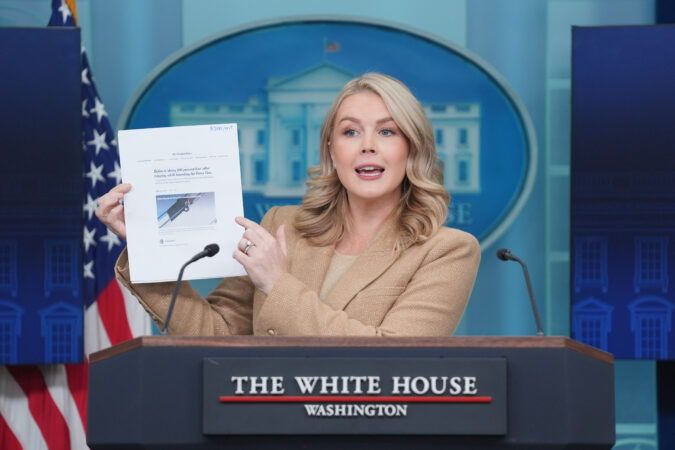
    White House press secretary Karoline Leavitt offered a justification for the Sept. 2 strike after lawmakers from both parties on Sunday announced support for congressional reviews of U.S. military strikes against vessels suspected of smuggling drugs in the Caribbean Sea and eastern Pacific Ocean, citing a published report that Defense Secretary Pete Hegseth issued a verbal order for a second strike that killed survivors on the boat in that incident.

    Leavitt in her comments to reporters on Monday did not dispute a Washington Post report that there were survivors after the initial strike in the incident. Her explanation came after President Donald Trump a day earlier said that he “wouldn’t have wanted that — not a second strike” when asked about the incident.

    “Secretary Hegseth authorized Admiral Bradley to conduct these kinetic strikes,” said Leavitt, referring to U.S. Navy Vice Admiral Frank Bradley, who at the time was the commander of Joint Special Operations Command. “Admiral Bradley worked well within his authority and the law, directing the engagement to ensure the boat was destroyed and the threat to the United States of America was eliminated.”

    The lawmakers said they did not know whether last week’s Post report was true, and some Republicans were skeptical. Still, they said the reports of attacking survivors of an initial missile strike posed serious legal concerns and merited further scrutiny.

    “This rises to the level of a war crime if it’s true,” said Sen. Tim Kaine (D., Va.).

    Rep. Mike Turner (R-Ohio), when asked about a follow-up strike aimed at people no longer able to fight, said Congress does not have information that happened. He noted that leaders of the Armed Services Committee in both the House and Senate have opened investigations.

    “Obviously, if that occurred, that would be very serious and I agree that that would be an illegal act,” Turner said.

    Trump on Sunday vigorously defended Hegseth.

    “Pete said he did not order the death of those two men,” Trump said. He added, “And I believe him.”

    Leavitt said Hegseth has spoken with members of Congress who may have expressed some concerns about the reports over the weekend.

    After the Post’s report, Hegseth said Friday on X that “fake news is delivering more fabricated, inflammatory, and derogatory reporting to discredit our incredible warriors fighting to protect the homeland.”

    “Our current operations in the Caribbean are lawful under both U.S. and international law, with all actions in compliance with the law of armed conflict—and approved by the best military and civilian lawyers, up and down the chain of command,” Hegseth wrote.

    Leavitt also confirmed that Trump later on Monday would be holding a meeting with his national security team to discuss the ongoing operations in the Caribbean Sea and potential next steps against Venezuela.

    The U.S. administration says the strikes in the Caribbean are aimed at drug cartels, some of which it claims are controlled by Venezuelan President Nicolás Maduro. Trump also is weighing whether to carry out strikes on the Venezuelan mainland.

    Trump on Sunday confirmed that he had recently spoken by phone with Maduro but declined to detail the conversation.

    The September strike was one in a series carried out by the U.S. military in the Caribbean Sea and eastern Pacific Ocean as Trump has ordered the buildup a fleet of warships near Venezuela, including the largest U.S. aircraft carrier.

    More than 80 people have been killed the strikes on small boats that the Trump administration alleges smuggle narcotics for drug cartels.

  • Doctor says Trump had preventative screening MRI on heart, abdomen with ‘perfectly normal’ results

    Doctor says Trump had preventative screening MRI on heart, abdomen with ‘perfectly normal’ results

    WASHINGTON — Donald Trump’s doctor says the president had MRI imaging on his heart and abdomen in October as part of a preventative screening for men his age, according to a memo from the physician released by the White House on Monday.

    Sean Barbabella said in a statement that Trump’s physical exam included “advanced imaging” that is “standard for an executive physical” in Trump’s age group. Barbabella concluded that the cardiovascular and abdominal imaging was “perfectly normal.”

    “The purpose of this imaging is preventative: to identify issues early, confirm overall health, and ensure he maintains long-term vitality and function,” the doctor wrote.

    The White House released Barbabella’s memo after Trump on Sunday said he would release the results of the scan. He and the White House have said the scan was “part of his routine physical examination” but had declined until Monday to detail why Trump had an MRI during his physical in October at Walter Reed National Military Medical Center or on what part of his body.

    “I think that’s quite a bit of detail,” White House press secretary Karoline Leavitt said Monday when announcing the memo’s release.

    The Republican president said Sunday during an exchange with reporters as he traveled back to Washington from Florida that the results of the MRI were “perfect.”

    “If you want to have it released, I’ll release it,” Trump said.

    Trump added Sunday that he has “no idea” on what part of his body he got the MRI.

    “It was just an MRI,” he said. “What part of the body? It wasn’t the brain because I took a cognitive test and I aced it.”

  • Land and security are the main sticking points as Russia and Ukraine mull Trump’s peace proposal

    Land and security are the main sticking points as Russia and Ukraine mull Trump’s peace proposal

    Diplomats face an uphill battle to reconcile Russian and Ukrainian “red lines” as a renewed U.S.-led push to end the war gathers steam, with Ukrainian officials attending talks in the U.S. over the weekend and Washington officials expected in Moscow early this week.

    U.S. President Donald Trump’s peace plan became public last month, sparking alarm that it was too favorable to Moscow. It was revised following talks in Geneva between the U.S. and Ukraine a week ago.

    Ukraine’s President Volodymyr Zelensky has said the revised plan could be “workable.” Russian President Vladimir Putin called it a possible “basis” for a future peace agreement. Trump said Sunday, “There’s a good chance we can make a deal.”

    Still, officials on both sides indicated a long road ahead as key sticking points — over whether Kyiv should cede land to Moscow and how to ensure Ukraine’s future security — appear unresolved.

    Here is where things stand and what to expect this week:

    U.S. holds talks with Kyiv then Moscow

    Trump representatives met the Ukrainian officials over the weekend and plan to meet with the Russians in coming days.

    Ukraine’s national security council head Rustem Umerov, the head of Ukraine’s armed forces Andrii Hnatov, presidential adviser Oleksandr Bevz, and others met with U.S. officials for about four hours on Sunday. U.S. Secretary of State Marco Rubio said the session was productive but more work remains. Umerov praised the U.S. for its support but offered no details.

    Zelensky’s former chief of staff and former lead negotiator for Ukraine, Andrii Yermak, resigned Friday amid a corruption scandal and is no longer part of the negotiating team. It was only a week ago that Rubio met with Yermak in Geneva, resulting in a revised peace plan.

    Trump said last week that he would send his envoy Steve Witkoff to Russia. Kremlin spokesperson Dmitry Peskov confirmed Monday that Putin will meet Witkoff today.

    Trump suggested he could eventually meet with Putin and Zelensky, but not until there has been more progress.

    Witkoff’s role in the peace efforts came under scrutiny last week following a report that he coached Yuri Ushakov, Putin’s foreign affairs adviser, on how Russia’s leader should pitch Trump on the Ukraine peace plan. Both Moscow and Washington downplayed the significance of the revelations.

    Where the two sides stand

    Eager to please Trump, Kyiv and Moscow have ostensibly welcomed the peace plan and the push to end the war. But Russia has continued attacking Ukraine and reiterated its maximalist demands, indicating a deal is still a ways off.

    Putin implied last week that he will fight as a long as it takes to achieve his goals, saying that he will stop only when Ukrainian troops withdraw from all four Ukrainian regions that Russia illegally annexed in 2022 and still doesn’t fully control. “If they don’t withdraw, we’ll achieve this by force. That’s all,” he said.

    The plan, Putin said, “could form the basis for future agreements,” but it is in no way final and requires “a serious discussion.”

    Zelensky has refrained from talking about individual points, opting instead to thank Trump profusely for his efforts and emphasizing the need for Europe — whose interests are more closely aligned with Ukraine’s — to be involved. He also has stressed the importance of robust security guarantees for Ukraine.

    The first version of the plan granted some core Russian demands that Ukraine considers nonstarters, such as ceding land to Moscow that it doesn’t yet occupy and renouncing its bid to become a member of NATO.

    Zelensky has said repeatedly that giving up territory is not an option. One of the Ukrainian negotiators, Bevz, told the Associated Press on Tuesday that Ukraine’s president wanted to discuss the territory issue with Trump directly. Yermak then told the Atlantic in an interview on Thursday that Zelensky would not sign over the land.

    Zelensky also maintains that NATO membership is the cheapest way to guarantee Ukraine’s security, and NATO’s 32 member countries said last year that Ukraine is on an “irreversible” path to membership. Since he took office, Trump has made it clear that NATO membership is off the table.

    Moscow, in turn, has bristled at any suggestion of a Western peacekeeping force on the ground in Ukraine, and stressed that keeping Ukraine out of NATO and NATO out of Ukraine was one of the core goals of the war.

    Putin seems to have time on his side

    Zelensky, meanwhile, has been under pressure at home.

    Yermak’s resignation was a major blow for Zelensky, although neither the president nor Yermak have been accused of wrongdoing by investigators.

    “Russia really wants Ukraine to make mistakes. There won’t be mistakes on our side,” Zelensky said. ”Our work continues, our struggle continues. We don’t have a right not to push it to the end.”

    An activist with Ukraine’s nongovernmental Anti-Corruption Center, Valeriia Radchenko, said letting go of Yermak was the right decision and would open a “window of opportunity for reform.”

    Putin, meanwhile, seeks to project confidence, boasting of Russia’s advances on the battlefield.

    The Russian leader “feels more confident than ever about the battlefield situation and is convinced that he can wait until Kyiv finally accepts that it cannot win and must negotiate on Russia’s well-known terms,” Tatiana Stanovaya of the Carnegie Russia and Eurasia Center wrote on X. “If the Americans can help move things in that direction — fine. If not, he knows how to proceed anyway. That is the current Kremlin logic.”

    Europe’s conundrum

    NATO and the EU are holding several meetings this week focused on Ukraine.

    Zelensky is holding talks with French President Emmanuel Macron in Paris on Monday. In Brussels, NATO Secretary-General Mark Rutte is hosting Ukrainian Defense Minister Denys Shmyhal and EU defense and foreign ministers are gathering to discuss European military support for Ukraine and Europe’s defense readiness.

    On Wednesday, NATO foreign ministers will gather again in Brussels.

    The main issue for the EU right now is what to do with the frozen Russian assets in Belgium that the Trump peace plan in its initial version sought to use for postwar investment in Ukraine.

    Those funds are central to European Commission President Ursula von der Leyen’s strategy to ensure continued help for Ukraine while also maintaining pressure on Russia. But Belgium’s prime minister is holding out, worried about the legal implications of tapping the frozen assets for Ukraine, the impact that could have on the euro — and of Russian retaliation.

    The diplomacy set in motion by Trump’s peace plan “painfully exposed” Europe’s weakness, Nigel Gould-Davies of the International Institute for Strategic Studies wrote in a recent commentary.

    “Despite being the main source of Ukraine’s economic and military support, it is marginal to the diplomacy of the war and has done little more than offer amendments to America’s draft peace plan,” Gould-Davies wrote.

  • Indiana lawmakers in state House to convene session with redistricting top of mind

    Indiana lawmakers in state House to convene session with redistricting top of mind

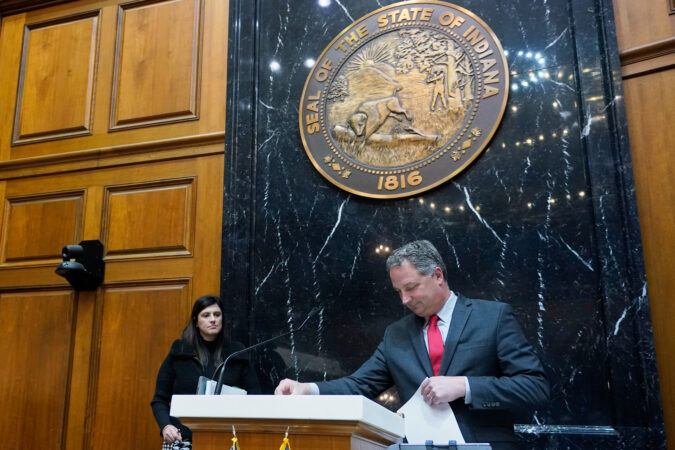
    Indiana House members are expected to press forward Monday with redrawing the state’s congressional districts in Republicans’ favor, increasing pressure on their defiant counterparts in the GOP-led Senate to meet President Donald Trump’s demands.

    Republicans who control the House have said there’s no doubt that redistricting will pass that chamber. But the fate of any proposal remains uncertain in the Senate. Republicans control that chamber, but caucus members have resisted pressure to redistrict for months.

    Senate leadership recently backed off its previous intentions not to meet at all, agreeing to convene next Monday. However, it’s still unclear whether enough senators will support a new map.

    Republicans hold seven of Indiana’s nine U.S. House seats. Trump and other Republicans want to make the map 9-0 in the GOP’s favor, seeking to give the party two extra seats in the 2026 elections that will determine control of the U.S. House. Democrats only need to flip a handful of seats to overcome the Republicans’ current margin.

    Indiana House Republicans published a draft of a map Monday morning still featuring nine congressional districts, but with new boundaries designed to oust the state’s two Democratic U.S. House members.

    The city of Indianapolis would be split among four congressional districts, a major change to the current map where the city makes up the entirety of the 7th District, which reliably backs Democrats.

    “It’s clear these orders are coming from Washington, and they clearly don’t know the first thing about our community,” longtime U.S. Rep. André Carson, a Democrat who represents Indianapolis, said in a statement.

    Indiana’s other current Democratic district is in the state’s northwest corner near Chicago. The new map would instead group a large portion of Republican counties in northern Indiana with the cities of East Chicago and Gary to make a new 1st Congressional District.

    The state House will meet Monday afternoon to begin the legislative process to advance the new map.

    Indiana lawmakers have been under mounting pressure from the White House to redistrict, as Republicans in Texas, Missouri, Ohio, and North Carolina have done. To offset the GOP gains, Democrats in California and Virginia have moved to do the same.

    But some Indiana Republicans have been far more resistant. Republicans in the state Senate rebelled against Republican Gov. Mike Braun in November and said they would not attend a special session he ordered on redistricting.

    The chamber’s top Republican, President Pro Tem Rodric Bray, at the time said the Senate did not have the votes. A spokesperson for Bray’s office did not respond Friday when asked if that is still the case.

    Meanwhile, Trump attacked Indiana senators on social media, particularly Bray. He swore to endorse primary opponents of defecting senators. A spree of threats and swatting attempts were subsequently made against lawmakers who either said they do not support redistricting or have not taken a stance. At least one lawmaker in favor of redistricting and Braun were also threatened.

    Last week, the House announced plans to convene in Indianapolis on Monday.

    “All legislative business will be considered beginning next week, including redrawing the state’s congressional map,” House Speaker Todd Huston said in a statement last week.

    The Indiana Senate, where several lawmakers objected to leadership’s refusal to hold a vote, then said members would reconvene Dec. 8.

    “The issue of redrawing Indiana’s congressional maps mid-cycle has received a lot of attention and is causing strife here in our state,” Bray said in a statement Tuesday. He said the Senate will finally decide the matter this month.

    Mid-cycle redistricting so far has resulted in nine more congressional seats that Republicans believe they can win and six more congressional seats that Democrats think they can win, putting the GOP up by three. However, redistricting is being litigated in several states, and there’s no guarantee that the parties will win the seats they’ve redrawn.

  • Luigi Mangione fights to exclude evidence from his trial over the killing of UnitedHealthcare’s CEO

    Luigi Mangione fights to exclude evidence from his trial over the killing of UnitedHealthcare’s CEO

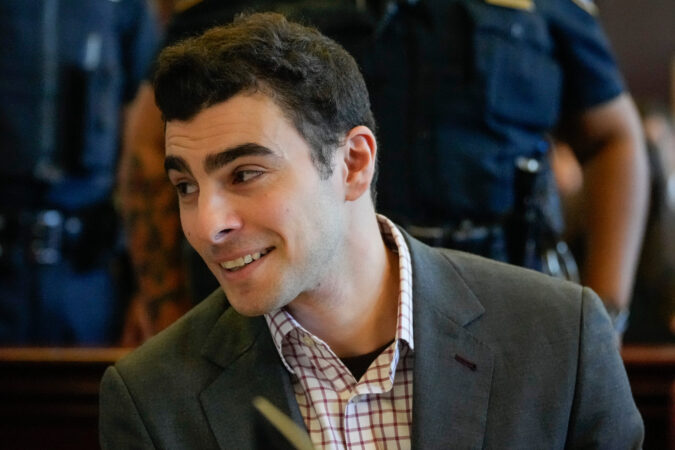
    NEW YORK — Luigi Mangione appeared in court Monday seeking to bar evidence from his state trial over the killing of UnitedHealthcare CEO Brian Thompson, including the gun that authorities say matches the one used in the brazen New York City attack.

    Among the evidence Mangione’s lawyers want to prevent the Manhattan District Attorney’s Office from presenting to jurors are a 9 mm handgun that prosecutors say matches the one used in the Dec. 4, 2024, killing and a handwritten notebook in which they say Mangione described his intent to “wack” a health insurance executive.

    After getting state terrorism charges thrown out in September, the defense lawyers are zeroing in on what they say was unconstitutional conduct that tainted his arrest and threatens his right to a fair trial.

    They contend that the gun and other items should be excluded because police lacked a warrant to search the backpack in which they were found. They also want to suppress some of Mangione’s statements to police, such as allegedly giving a false name, because officers started asking questions before telling him he had a right to remain silent.

    Eliminating the gun and notebook would be critical wins for Mangione’s defense and a major setback for prosecutors, depriving them a possible murder weapon and evidence they say points to motive. Prosecutors have quoted extensively from Mangione’s diary in court filings, including his praise for Unabomber Ted Kaczynski.

    In it, prosecutors say, Mangione mused about rebelling against “the deadly, greed fueled health insurance cartel” and said killing an industry executive “conveys a greedy bastard that had it coming.”

    Court officials say the hearings could last more than a week, meaning they would extend through Thursday’s anniversary of the attack.

    Mangione was allowed to wear normal clothing to the hearings instead of a jail uniform. He entered the courtroom Monday in a gray suit and a button-down shirt with a checkered or tattersall pattern. Court officers removed his handcuffs to allow him to take notes.

    The prosecution’s first witness, Sgt. Chris McLaughlin of the New York City Police Department’s public affairs office, testified about efforts to disseminate surveillance images of the suspect to the news media and on social media in the hours and days after the shooting.

    To illustrate the breadth of news coverage during the five-day search for the shooter, prosecutors played a surveillance video of the shooting that aired on Fox News Digital, footage from the network of police divers searching a pond in Central Park and clips from the network that included images of the suspected shooter that were distributed by police.

    Mangione looked up at a courtroom monitor as video of the shooting played, but he didn’t appear to have any reaction.

    A few dozen Mangione supporters watched the hearing from the back of the courtroom. One wore a green T-shirt that said: “Without a warrant, it’s not a search, it’s a violation.” Another woman held a doll of the Luigi video game character and had a smaller figurine of him clipped to her purse.

    Mangione, 27, has pleaded not guilty to state and federal murder charges. The state charges carry the possibility of life in prison, while federal prosecutors are seeking the death penalty. Neither trial has been scheduled yet.

    Mangione’s lawyers want to bar evidence from both cases, but this week’s hearings pertain only to the state case. The next hearing in the federal case is scheduled for Jan. 9.

    Defense lawyer Marc Agnifilo told a judge in an unrelated matter last week that Manhattan prosecutors could call more than two dozen witnesses.

    Thompson was killed as he walked to a Manhattan hotel for his company’s annual investor conference. Surveillance video showed a masked gunman shooting him from behind. Police say “delay,” “deny,” and “depose” were written on the ammunition, mimicking a phrase used to describe how insurers avoid paying claims.

    Mangione, the Ivy League-educated scion of a wealthy Maryland family, was arrested five days later at a McDonald’s in Altoona, Pa., about 230 miles west of Manhattan.

    Prosecutors in the state case have not responded to the defense’s written arguments.

    An officer searching a backpack found with Mangione was heard on a body camera recording saying she was checking to make sure there “wasn’t a bomb” in the bag. His lawyers argue that was an excuse “designed to cover up an illegal warrantless search of the backpack.”

    Federal prosecutors, fighting similar claims in their case, have said in court filings that police were justified in searching the backpack to make sure there were no dangerous items. His statements to officers, federal prosecutors said, were made voluntarily and before he was taken into police custody.

  • Former Trump lawyer Alina Habba has been disqualified as New Jersey’s top prosecutor, a U.S. appeals court ruled

    Former Trump lawyer Alina Habba has been disqualified as New Jersey’s top prosecutor, a U.S. appeals court ruled

    PHILADELPHIA — The Trump administration’s maneuvers to keep the president’s former lawyer Alina Habba in place as New Jersey’s top federal prosecutor were illegal and she is disqualified, a federal appeals court said Monday.

    A panel of judges from the 3rd U.S. Circuit Court of Appeals sitting in Philadelphia sided with a lower court judge’s ruling after hearing oral arguments at which Habba herself was present on Oct. 20.

    The ruling comes amid the push by President Donald Trump’s Republican administration to keep Habba as the acting U.S. attorney for New Jersey, a powerful post charged with enforcing federal criminal and civil law. It also comes after the judges questioned the government’s moves to keep Habba in place after her interim appointment expired and without her getting Senate confirmation.

    Habba said after that hearing in a statement posted to X that she was fighting on behalf of other candidates to be federal prosecutors who have been denied a chance for a Senate hearing.

    Messages were left Monday seeking comment from the U.S. attorney’s office in New Jersey, Habba’s personal staffer and the Justice Department.

    Habba is hardly the only Trump administration prosecutor whose appointment has been challenged by defense lawyers.

    Last week, a federal judge dismissed criminal cases against former FBI Director James Comey and New York Attorney General Letitia James after concluding that the hastily installed prosecutor who filed the charges, Lindsey Halligan, was unlawfully appointed to the position of interim U.S. attorney for the Eastern District of Virginia. The Justice Department has said it intends to appeal the rulings.

    The judges on the panel were two appointed by Republican President George W. Bush, D. Brooks Smith and D. Michael Fisher as well as one named by Demcoratic President Barack Obama: Luis Felipe Restrepo.

    A lower court judge said in August Habba’s appointment was done with a “novel series of legal and personnel moves” and that she was not lawfully serving as U.S attorney for New Jersey.

    That order said her actions since July could be invalidated, but he stayed the order pending appeal.

    The government argued Habba is validly serving in the role under a federal statute allowing the first assistant attorney, a post she was appointed to by the Trump administration.

    A similar dynamic is playing out in Nevada, where a federal judge disqualified the Trump administration’s pick to be U.S. attorney there.

    The Habba case comes after several people charged with federal crimes in New Jersey challenged the legality of Habba’s tenure. They sought to block the charges, arguing she didn’t have the authority to prosecute their cases after her 120-day term as interim U.S. attorney expired.

    Habba was Trump’s attorney in criminal and civil proceedings before he was elected to a second term. She served as a White House adviser briefly before Trump named her as a federal prosecutor in March.

    Shortly after her appointment, she said in an interview with a right-wing influence that she hoped to help “turn New Jersey red,” a rare overt political expression from a prosecutor.

    She then brought a trespassing charge, eventually dropped, against Democratic Newark Mayor Ras Baraka stemming from his visit to a federal immigration detention center.

    Habba later charged Democratic U.S. Rep. LaMonica McIver with assault stemming from the same incident, a rare federal criminal case against a sitting member of Congress other than for corruption. McIver denied the charges and pleaded not guilty. The case is pending.

    Questions about whether Habba would continue in the job arose in July when her temporary appointment was ending and it became clear New Jersey’s two Democratic U.S. senators, Cory Booker and Andy Kim, would not back her appointment.

    Earlier this year as her appointment was expiring, federal judges in New Jersey exercised their power under the law to replace Habba with a career prosecutor who had served as her second-in-command.

    Bondi then fired the prosecutor installed by the judges and renamed Habba as acting U.S. attorney. The Justice Department said the judges acted prematurely and said Trump had the authority to appoint his preferred candidate to enforce federal laws in the state.

    Brann’s ruling said the president’s appointments are still subject to the time limits and power-sharing rules laid out in federal law.

  • Reinvesting in Community

    Reinvesting in Community

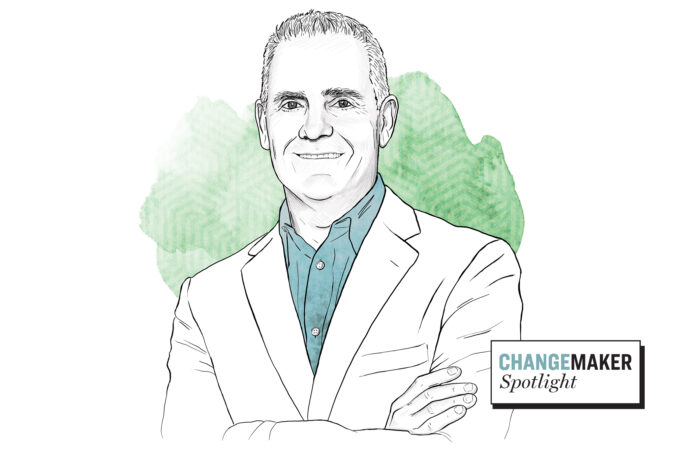
    A U.S. Navy veteran with a background in financial services, Citadel Credit Union president and CEO Bill Brown has made it his goal to ensure that Citadel is a trusted partner to its members who, as collective owners of the credit union, are more than just customers. The organization is focused on helping them improve their financial well-being and plan for a stronger financial future.

    Under his leadership, Citadel is expanding its presence across the greater Philadelphia region, with new branches like its upcoming Overbrook Park location, new partnerships, and a renewed focus on small business growth, financial education, and community empowerment. “I have a firm belief that people deserve a financial institution that cares about giving them a better experience and improving their financial well-being,” Brown said. “That’s exactly why I chose Citadel and what we’ll continue to prioritize.”

    Brown’s approach to leadership is rooted in creating partnerships that have impact. His vision for Citadel’s future is clear: create opportunities and help strengthen financial wellness for individuals, families, and businesses throughout the region.

    In this Q&A, Bill Brown talks about what inspires him and how Citadel’s mission of “Building Strength Together” shapes its work in Philadelphia and beyond.

    What inspired you to take on the role at Citadel?

    It was a chance to bring my experience in financial services to a not-for-profit organization. We have the opportunity to help individuals improve their financial lives. And as a result of helping those people, Citadel can strengthen their communities. That really appealed to me. It was a way to return to service, but this time through finance, helping families build financial stability and opportunity.

    Coming back to this region felt a bit like coming home. My wife and I first lived here years ago, near Rittenhouse Square, and we absolutely fell in love with Philadelphia — the energy, the people, the neighborhoods. Our son was born here, so the city has always held a special place in our hearts.

    You’re a U.S. Navy veteran who served at the Pentagon and as a naval flight officer. How has your military experience shaped your leadership style and approach to teamwork?

    Early in my military career, I learned an important lesson: rank matters, but it doesn’t automatically earn you trust and confidence. Those have to be earned. That idea has stayed with me throughout my career in banking, financial services, and now at Citadel.

    What really matters is that our employees feel they’re working with leaders who care, who have their best interests at heart, and who have a clear vision for how we can serve our members and communities. That comes directly from my time as a Naval Flight Officer. On a crew with people from all walks of life, you learn quickly that leadership isn’t about giving orders. It’s about communication, trust, and shared purpose. You explain the mission, you invite input, you listen. When people understand why we’re doing something and feel part of the process, they’re far more engaged and committed.

    You’ve led a variety of large financial organizations. What makes a credit union different from a bank?

    What makes credit unions different is their purpose. A credit union is a not-for-profit financial cooperative. We exist to serve our members, not shareholders.

    Credit unions began in the 1930s, when many people felt overlooked by traditional banks. Groups of employees and community members pooled their money to help one another, lending to coworkers, neighbors, and small businesses. That spirit still defines us today.

    In a publicly traded bank, the board’s fiduciary responsibility is to shareholders. Of course, banks care about their customers and communities, but their primary duty is to deliver shareholder value. At a credit union like Citadel, our responsibility is to our members, the people who trust us with their money.

    That perspective shapes every decision we make: the products we offer, how we serve, and how we give back. For example, through programs like our Home Help grants and small-business lending, we reinvest profits back into our members’ goals. We still must be financially sound and well-run, but our measure of success is how well we help our members and communities thrive.

    What drives you in your leadership of Citadel?

    What drives me is helping others find the same opportunities I’ve been fortunate to have. I don’t think of myself as particularly gifted or special. What’s helped me succeed is my ability to connect with people and bring them together. I want to create an environment where others can do the same, where they feel empowered to take chances and build fulfilling careers.

    When we help our employees grow professionally, that confidence and purpose often carry over into their personal lives, and that ripple effect is meaningful to me.

    When it comes to our members, my deeper purpose is helping people achieve financial well-being. To me, that’s not about wealth or status. It’s about peace of mind. It’s the ability to sleep at night knowing you’re on solid financial footing, that you’re making informed decisions for your family and your future. Not everyone has access to the same financial knowledge or resources. That’s where Citadel can make a difference, by filling those gaps, educating, and empowering people to feel in control of their finances.

    That same mindset extends to how we support our communities. One of the programs I’m most proud of is the Citadel Heart of Learning Award, which recognizes teachers who make an extraordinary impact on students’ lives. Teachers shape futures, often without much recognition or financial reward, so honoring their work feels deeply aligned with our mission. The awards we give may not change a school’s budget, but they can fund that next project or help one teacher make a difference for 30 kids in their classroom.

    Beyond education, we focus on areas like food security, housing, and financial literacy — the essentials that help people live stable, dignified lives. We can’t solve every issue, but we can partner with others to help move the needle.

    Citadel’s tagline, “Building Strength Together,” reflects its commitment to investing in members and communities. What does this actually look like day to day?

    When we talk about “Building Strength Together,” it’s more than a tagline; it’s our mission and how we measure success. I think of it as a lattice, an interconnected network of programs, partnerships, and volunteer efforts that reinforce one another. It’s not one single initiative; it’s the combined effect of many people and organizations working together to create a stronger safety net for our members and our communities.

    Because we’re a not-for-profit, member-owned credit union, our business model lets us reinvest directly in our members. That means consistently offering higher rates on savings and deposits and lower rates on loans compared to traditional banks. The difference is that instead of profits going to shareholders, the value goes right back to our members.

    We also invest heavily in digital tools and products that make banking simpler and more rewarding, things like higher cash-back cards, better digital experiences, and financial education resources. And through our wealth management division, we help people make informed, long-term decisions about their money, whether they’re rolling over a 401(k), starting an IRA, or planning for retirement.

    At the end of the day, “Building Strength Together” means making life a little easier for our members and stronger for our communities, one financial decision at a time.


    Citadel is expanding its presence into Philadelphia with new branches and initiatives. What is the goal with this growth?

    As we expand into Philadelphia with our first branch location in Overbrook Park, our focus isn’t on creating programs just for the sake of visibility. We want to partner with the best local nonprofits and community organizations, bringing our time, talent, and resources to support the great work that’s already making an impact.

    Our goal is simple: educate and empower people. That’s why we formalized our philanthropy group over the past year: to make our efforts more intentional and effective. As we grow, we aim to uplift the programs and people already doing great work. We’ve already committed more than $6 million in community lending and housing-access programs, and that work will continue citywide.

    Citadel recently became an authorized Small Business Administration lender and expanded its commercial banking services. How does supporting small businesses fit into your vision for community development and economic equity?

    Becoming an SBA lender to small businesses helps not just one business, but an entire community. We aim to empower small business owners, and we support them in every way, including educating them on operations and how to handle payroll and other aspects of running a successful business. We are helping bridge gaps in access to credit, financial literacy, and overall financial wellness for individuals and businesses.

    Who in your personal life inspires you to be the leader you are today?

    My kids inspire me every day. My son has a real passion for running, a test of will and perseverance that he didn’t get from me. And my daughter has been an incredible dancer since she was little — so fluid and creative. Watching them dedicate themselves to their passions is both humbling and inspiring.

    What do you do with a few hours of free time?

    My free time is sacred, and I spend it with my wife at our kids’ events whenever I can. Vacations are also important for us as a family, a chance to get away and reconnect. Skiing in the mountains is my favorite getaway because it’s family time. [It’s] a chance to disconnect from everything else. Those chairlift rides are some of my favorite moments to talk with the kids or just enjoy the view.

    I even use the idea in business: When I’m looking for people to join our team, I think about the kind of person I’d enjoy being stuck on a chairlift with for 30 minutes. If we can connect there, they’re probably the kind of person who’ll thrive on our team.


    PHILLY QUICK ROUND

    What’s your favorite Philly food splurge? My wife and I love a special dinner at Giuseppe & Sons. Sunday gravy is a must!

    Favorite small business in Philly? Salty Paws Philly on South Street.

    What’s the biggest misconception non-locals have about Philly? We have a reputation for being tough, but once you crack through the exterior, we’re really soft and gooey on the inside.

    What sports jersey do you wear most often? It just so happens that I got number 11, A.J. Brown [of the Eagles], because I can wear my last name!

    Who is the greatest Philadelphian in history? Nancy Johnson. She invented the hand-cranked ice cream machine in the 1850s. And really, who doesn’t love ice cream?

    I feel most like a Philadelphian when … I am packed in on the train, down in South Philly, with everyone else who’s coming back from a sporting event.
  • Hong Kong arrests more suspects in fire probe as the death toll hits 151

    Hong Kong arrests more suspects in fire probe as the death toll hits 151

    HONG KONG – Hong Kong authorities said on Monday they had arrested 13 people for suspected manslaughter in a probe into the city’s deadliest fire in decades, pointing to substandard renovation materials for fueling a blaze that has claimed at least 151 lives. Police continued to sweep the seven burnt-out towers engulfed in Wednesday’s disaster at the Wang Fuk Court estate, finding bodies of residents in stairwells and on rooftops, trapped as they tried to flee the flames.

    More than 40 people are still missing.

    “Some of the bodies have turned into ash, therefore we might not be able to locate all missing individuals,” police official Tsang Shuk-yin told reporters, choking up with emotion.

    Tests on several samples of a green mesh that was wrapped around bamboo scaffolding on the buildings at the time of the blaze did not match fire retardant standards, officials overseeing the investigations told a news conference.

    Contractors working on the renovations used these substandard materials in hard-to-reach areas, effectively hiding them from inspectors, said Chief Secretary Eric Chan.

    Foam insulation used by contractors also fanned the flames and fire alarms at the complex were not working properly, officials have said.

    Thousands have turned out to pay tribute to the victims, who include at least nine domestic helpers from Indonesia and one from the Philippines, with lines of mourners stretching more than a kilometer (a half-mile) along a canal next to the estate.

    Vigils are also due to take place this week in Tokyo, London and Taipei, authorities said.

    Amid pockets of public anger over missed fire risk warnings, Beijing has warned it would crack down on any “anti-China” protests.

    At least one person involved in a petition calling for an independent probe and a review of construction oversight among other demands was detained for around two days, sources familiar with the matter said.

    Police have declined to comment on the case.

    Hong Kong Security Chief Chris Tang also declined to comment on specific operations at a press conference on Monday.

    “I’ve noticed that some people with malicious intent, aiming to harm Hong Kong and national security, have taken advantage of this painful moment for society,” he said.

    “Therefore, we must take appropriate action, including enforcement measures.”

    Search moves to worst affect buildings

    The buildings being scoured for remains are the worst damaged and the search may take weeks, authorities have said.

    Images shared by police showed officers clad in hazmat suits, face masks and helmets, inspecting rooms with blackened walls and furniture reduced to ashes, and wading through water used to douse fires that raged for days.

    Throngs of officers arrived at the site early on Monday morning to continue their search of the burnt-out buildings.

    Members of the Disaster Victim Identification Unit work in an apartment in the aftermath of a deadly fire at Wang Fuk Court, a residential estate in Hong Kong.

    The apartment blocks were home to more than 4,000 people, according to census data, and those that escaped must now try to get their lives back on track.

    More than 1,100 people have been moved out of evacuation centers into temporary housing, with a further 680 put up in youth hostels and hotels, authorities said.

    With many residents leaving behind belongings as they fled, authorities have offered emergency funds of HK$10,000 ($1,284) to each household and provided special assistance for issuing new identity cards, passports and marriage certificates.

    Deadliest blaze since 1948

    Residents of Wang Fuk Court were told by authorities last year they faced “relatively low fire risks” after complaining about fire hazards posed by the renovations, the city’s Labour Department said.

    The residents raised concerns in September, 2024, including about the potential flammability of the mesh contractors used to cover the scaffolding, a department spokesperson said.

    Hong Kong’s deadliest fire since 1948, when 176 people died in a warehouse blaze, has stunned the city, where legislative elections are due to be held this weekend.

    Flowers are placed near the site of the deadly fire at Wang Fuk Court in Hong Kong.

    On Saturday, police detained Miles Kwan, 24, part of a group that launched a petition demanding an independent probe into possible corruption and a review of construction oversight, two people familiar with the matter said. Reuters could not establish whether he had been arrested.

    Kwan left a police station in a taxi on Monday afternoon, according to a Reuters witness.

    Two others have also since been arrested on suspicion of seditious intent, the South China Morning Post said. The police declined to comment on those reported arrests.

    China’s national security office warned individuals on Saturday against using the disaster to “plunge Hong Kong back into the chaos” of 2019, when massive pro-democracy protests challenged Beijing and triggered a political crisis.

    “We sternly warn the anti-China disruptors who attempt to ‘disrupt Hong Kong through disaster’,” the office said in a statement. “No matter what methods you use, you will certainly be held accountable and strictly punished.”

  • Woman’s mom is sabotaging her healthy eating habits

    DEAR ABBY: I am a stepgrandmother of a disabled granddaughter, “Laura,” who has Down syndrome. She is 38. A few years ago, she weighed more than 300 pounds at only 5 feet tall. She ended up in the hospital with blood clots and almost died. The courts gave guardianship to her dad, my son-in-law. Laura’s mother has visitation with Laura only one day a week for four hours.

    When they are together, she feeds Laura so much junk food that when Laura comes home, she gets sick. Her dad has spoken to his ex-wife about this issue, but she continues to do it even though she knows the doctors have said Laura has an eating disorder. In the past few years, my daughter has worked hard to help Laura, and now Laura is down to 140 pounds. How can they get her mother on board to help Laura and stop giving her all this stuff that makes her so sick?

    — LOOKING ON IN OHIO

    DEAR LOOKING ON: Laura’s mother appears to have mental problems, which may be why her visitations are limited. Although feeding her daughter junk food may be the way she tries to show love, preventing her from losing the weight she needs to in order to be healthy is dangerous. Your son needs to explain what’s going on to Laura’s doctors and to the judge who decided how long and how often Laura’s mother is allowed to see her. A solution might be that those visits must be SUPERVISED. Please suggest this.

    ** ** **

    DEAR ABBY: I’ve hosted a live podcast for years. It’s my creative outlet, my therapy. Recently, my wife gave me an ultimatum. I am not allowed to host the podcast anymore, or she’ll divorce me. She says it’s for “us,” not her. Her reason is mostly because I preach atheism as well as discuss many other topics.

    She’s a Christian. I was a Christian when we met and married, but I am no longer. I want to respect her faith, but I feel this is too much for her to ask. My show is a piece of what I want to share and document with the world. It’s only a few hours’ commitment a week, and I don’t do much else as far as recreation or hobbies. I am employed and responsible, and I fulfill all my duties as a husband.

    I’m terrified of losing either the show or my marriage. Is this a fair thing for my wife to demand? I have chosen to stop hosting the show for now, and I’m unhappy. I’d like my wife’s blessing so I can continue. Is there anything you would recommend?

    — HOST IN EXILE

    DEAR HOST: I don’t know how far away in exile you are, but if you live within the borders of the United States, there is a certain amount of freedom of speech here. Living according to your wife’s dictate leaves you frustrated and unhappy. You have the right to express yourself, and you have an audience who appreciates it. If she chooses to divorce you over this, you may find it’s a relief. Call her bluff. If you do, you may discover you are happier following your own path rather than hers.

  • Horoscopes: Monday, Dec. 1, 2025

    ARIES (March 21-April 19). Things aren’t clear-cut today. Since the “right” answer isn’t obvious, stop worrying about being perfect and just do what helps. Wisdom isn’t moral math. It’s an emergent property of motion. It’s acting in someone’s best interest.

    TAURUS (April 20-May 20). To understand you quickly, people may slot you into a category. That’s their limitation, not yours. Since you defy categorization, you may as well ignore these attempts. Keep exploring the whole array of you.

    GEMINI (May 21-June 21). Efficiency isn’t always best. Today you see a shortcut but may opt not to take it. The scenic route gives you something speed can’t: company, conversation and small moments that make the whole trip worth it.

    CANCER (June 22-July 22). If the rest of the week felt just like today, would you be happy about that? Don’t wait for something big to change the mood. Tweak the energy now. A small shift today shapes the whole stretch ahead.

    LEO (July 23-Aug. 22). Your big plans are getting bigger. Ironically, that means focusing on dozens of small, crucial details today. The care you take now is what will make the whole thing unforgettable later.

    VIRGO (Aug. 23-Sept. 22). Maybe these distractions should be the main event. They certainly will add color, texture and spice. They make good memories, and that gives you a chance to enjoy life repeatedly.

    LIBRA (Sept. 23-Oct. 23). When you’re not sure of the rules or the situation seems a bit chaotic, you go out of your way to make sure you’ve done the right thing. But put a limit on those efforts. Let other people assume some of the responsibility for how things evolve.

    SCORPIO (Oct. 24-Nov. 21). Using your talent is satisfying. It’s so good to do what you love. It may seem like you’re not using your gifts enough right now, but hopefully the little taste of satisfaction will be encouragement to take a bigger bite.

    SAGITTARIUS (Nov. 22-Dec. 21). You’re in pursuit of something exciting. The real fun isn’t in catching it; it’s in the chase. The buildup is delicious, the strategy engages your whole mind, and the flirtation is where the magic is. Savor!

    CAPRICORN (Dec. 22-Jan. 19). You shouldn’t have to impress anyone today, especially not the people who are already supposed to love and support you. If you’re always driven to do extra, perform or serve, consider there may be an imbalance in play. It’s worth pondering.

    AQUARIUS (Jan. 20-Feb. 18). You’ll learn a lot about someone from the usual questions, but the fun ones tell you even more. Ask something unexpected and see how they play. Their sense of humor will tell you what kind of soul you’re dealing with.

    PISCES (Feb. 19-March 20). What’s always available will not be properly valued no matter how intrinsically valuable it is. You can use this idea to motivate others today. If they have taken your attention for granted, holding back a bit will help them appreciate you.

    TODAY’S BIRTHDAY (Dec. 1). Welcome to your Year of the Golden Thread. You’ll trace connections between passions, people and projects and discover how everything meaningful in your life is already woven together. You’ll see your legacy develop in magical ways and know it’s directly related to how you show up daily. More highlights: a surprise promotion, a rekindled friendship and travel that opens a door to wealth. Taurus and Leo adore you. Your lucky numbers are: 4, 17, 22, 45 and 10.